WO2019113135A1 - Processing post-industrial and post-consumer waste streams and preparation of post-industrial and post-consumer products therefrom - Google Patents
Processing post-industrial and post-consumer waste streams and preparation of post-industrial and post-consumer products therefrom Download PDFInfo
- Publication number
- WO2019113135A1 WO2019113135A1 PCT/US2018/063944 US2018063944W WO2019113135A1 WO 2019113135 A1 WO2019113135 A1 WO 2019113135A1 US 2018063944 W US2018063944 W US 2018063944W WO 2019113135 A1 WO2019113135 A1 WO 2019113135A1
- Authority
- WO
- WIPO (PCT)
- Prior art keywords
- processing
- post
- composite ash
- ash
- paper
- Prior art date
- Legal status (The legal status is an assumption and is not a legal conclusion. Google has not performed a legal analysis and makes no representation as to the accuracy of the status listed.)
- Ceased
Links
Classifications
-
- C—CHEMISTRY; METALLURGY
- C10—PETROLEUM, GAS OR COKE INDUSTRIES; TECHNICAL GASES CONTAINING CARBON MONOXIDE; FUELS; LUBRICANTS; PEAT
- C10L—FUELS NOT OTHERWISE PROVIDED FOR; NATURAL GAS; SYNTHETIC NATURAL GAS OBTAINED BY PROCESSES NOT COVERED BY SUBCLASSES C10G OR C10K; LIQUIFIED PETROLEUM GAS; USE OF ADDITIVES TO FUELS OR FIRES; FIRE-LIGHTERS
- C10L5/00—Solid fuels
- C10L5/40—Solid fuels essentially based on materials of non-mineral origin
- C10L5/403—Solid fuels essentially based on materials of non-mineral origin on paper and paper waste
-
- B—PERFORMING OPERATIONS; TRANSPORTING
- B01—PHYSICAL OR CHEMICAL PROCESSES OR APPARATUS IN GENERAL
- B01J—CHEMICAL OR PHYSICAL PROCESSES, e.g. CATALYSIS OR COLLOID CHEMISTRY; THEIR RELEVANT APPARATUS
- B01J20/00—Solid sorbent compositions or filter aid compositions; Sorbents for chromatography; Processes for preparing, regenerating or reactivating thereof
- B01J20/02—Solid sorbent compositions or filter aid compositions; Sorbents for chromatography; Processes for preparing, regenerating or reactivating thereof comprising inorganic material
- B01J20/04—Solid sorbent compositions or filter aid compositions; Sorbents for chromatography; Processes for preparing, regenerating or reactivating thereof comprising inorganic material comprising compounds of alkali metals, alkaline earth metals or magnesium
- B01J20/041—Oxides or hydroxides
-
- B—PERFORMING OPERATIONS; TRANSPORTING
- B01—PHYSICAL OR CHEMICAL PROCESSES OR APPARATUS IN GENERAL
- B01J—CHEMICAL OR PHYSICAL PROCESSES, e.g. CATALYSIS OR COLLOID CHEMISTRY; THEIR RELEVANT APPARATUS
- B01J20/00—Solid sorbent compositions or filter aid compositions; Sorbents for chromatography; Processes for preparing, regenerating or reactivating thereof
- B01J20/02—Solid sorbent compositions or filter aid compositions; Sorbents for chromatography; Processes for preparing, regenerating or reactivating thereof comprising inorganic material
- B01J20/04—Solid sorbent compositions or filter aid compositions; Sorbents for chromatography; Processes for preparing, regenerating or reactivating thereof comprising inorganic material comprising compounds of alkali metals, alkaline earth metals or magnesium
- B01J20/043—Carbonates or bicarbonates, e.g. limestone, dolomite, aragonite
-
- B—PERFORMING OPERATIONS; TRANSPORTING
- B01—PHYSICAL OR CHEMICAL PROCESSES OR APPARATUS IN GENERAL
- B01J—CHEMICAL OR PHYSICAL PROCESSES, e.g. CATALYSIS OR COLLOID CHEMISTRY; THEIR RELEVANT APPARATUS
- B01J20/00—Solid sorbent compositions or filter aid compositions; Sorbents for chromatography; Processes for preparing, regenerating or reactivating thereof
- B01J20/02—Solid sorbent compositions or filter aid compositions; Sorbents for chromatography; Processes for preparing, regenerating or reactivating thereof comprising inorganic material
- B01J20/10—Solid sorbent compositions or filter aid compositions; Sorbents for chromatography; Processes for preparing, regenerating or reactivating thereof comprising inorganic material comprising silica or silicate
- B01J20/16—Alumino-silicates
-
- B—PERFORMING OPERATIONS; TRANSPORTING
- B09—DISPOSAL OF SOLID WASTE; RECLAMATION OF CONTAMINATED SOIL
- B09B—DISPOSAL OF SOLID WASTE NOT OTHERWISE PROVIDED FOR
- B09B3/00—Destroying solid waste or transforming solid waste into something useful or harmless
- B09B3/30—Destroying solid waste or transforming solid waste into something useful or harmless involving mechanical treatment
- B09B3/35—Shredding, crushing or cutting
-
- B—PERFORMING OPERATIONS; TRANSPORTING
- B09—DISPOSAL OF SOLID WASTE; RECLAMATION OF CONTAMINATED SOIL
- B09B—DISPOSAL OF SOLID WASTE NOT OTHERWISE PROVIDED FOR
- B09B3/00—Destroying solid waste or transforming solid waste into something useful or harmless
- B09B3/40—Destroying solid waste or transforming solid waste into something useful or harmless involving thermal treatment, e.g. evaporation
-
- B—PERFORMING OPERATIONS; TRANSPORTING
- B29—WORKING OF PLASTICS; WORKING OF SUBSTANCES IN A PLASTIC STATE IN GENERAL
- B29B—PREPARATION OR PRETREATMENT OF THE MATERIAL TO BE SHAPED; MAKING GRANULES OR PREFORMS; RECOVERY OF PLASTICS OR OTHER CONSTITUENTS OF WASTE MATERIAL CONTAINING PLASTICS
- B29B17/00—Recovery of plastics or other constituents of waste material containing plastics
- B29B17/02—Separating plastics from other materials
-
- B—PERFORMING OPERATIONS; TRANSPORTING
- B29—WORKING OF PLASTICS; WORKING OF SUBSTANCES IN A PLASTIC STATE IN GENERAL
- B29B—PREPARATION OR PRETREATMENT OF THE MATERIAL TO BE SHAPED; MAKING GRANULES OR PREFORMS; RECOVERY OF PLASTICS OR OTHER CONSTITUENTS OF WASTE MATERIAL CONTAINING PLASTICS
- B29B17/00—Recovery of plastics or other constituents of waste material containing plastics
- B29B17/04—Disintegrating plastics, e.g. by milling
-
- C—CHEMISTRY; METALLURGY
- C02—TREATMENT OF WATER, WASTE WATER, SEWAGE, OR SLUDGE
- C02F—TREATMENT OF WATER, WASTE WATER, SEWAGE, OR SLUDGE
- C02F1/00—Treatment of water, waste water, or sewage
- C02F1/52—Treatment of water, waste water, or sewage by flocculation or precipitation of suspended impurities
- C02F1/5236—Treatment of water, waste water, or sewage by flocculation or precipitation of suspended impurities using inorganic agents
-
- C—CHEMISTRY; METALLURGY
- C04—CEMENTS; CONCRETE; ARTIFICIAL STONE; CERAMICS; REFRACTORIES
- C04B—LIME, MAGNESIA; SLAG; CEMENTS; COMPOSITIONS THEREOF, e.g. MORTARS, CONCRETE OR LIKE BUILDING MATERIALS; ARTIFICIAL STONE; CERAMICS; REFRACTORIES; TREATMENT OF NATURAL STONE
- C04B14/00—Use of inorganic materials as fillers, e.g. pigments, for mortars, concrete or artificial stone; Treatment of inorganic materials specially adapted to enhance their filling properties in mortars, concrete or artificial stone
- C04B14/02—Granular materials, e.g. microballoons
- C04B14/04—Silica-rich materials; Silicates
-
- C—CHEMISTRY; METALLURGY
- C04—CEMENTS; CONCRETE; ARTIFICIAL STONE; CERAMICS; REFRACTORIES
- C04B—LIME, MAGNESIA; SLAG; CEMENTS; COMPOSITIONS THEREOF, e.g. MORTARS, CONCRETE OR LIKE BUILDING MATERIALS; ARTIFICIAL STONE; CERAMICS; REFRACTORIES; TREATMENT OF NATURAL STONE
- C04B18/00—Use of agglomerated or waste materials or refuse as fillers for mortars, concrete or artificial stone; Treatment of agglomerated or waste materials or refuse, specially adapted to enhance their filling properties in mortars, concrete or artificial stone
- C04B18/04—Waste materials; Refuse
- C04B18/06—Combustion residues, e.g. purification products of smoke, fumes or exhaust gases
- C04B18/10—Burned or pyrolised refuse
-
- C—CHEMISTRY; METALLURGY
- C08—ORGANIC MACROMOLECULAR COMPOUNDS; THEIR PREPARATION OR CHEMICAL WORKING-UP; COMPOSITIONS BASED THEREON
- C08J—WORKING-UP; GENERAL PROCESSES OF COMPOUNDING; AFTER-TREATMENT NOT COVERED BY SUBCLASSES C08B, C08C, C08F, C08G or C08H
- C08J11/00—Recovery or working-up of waste materials
- C08J11/02—Recovery or working-up of waste materials of solvents, plasticisers or unreacted monomers
-
- C—CHEMISTRY; METALLURGY
- C10—PETROLEUM, GAS OR COKE INDUSTRIES; TECHNICAL GASES CONTAINING CARBON MONOXIDE; FUELS; LUBRICANTS; PEAT
- C10L—FUELS NOT OTHERWISE PROVIDED FOR; NATURAL GAS; SYNTHETIC NATURAL GAS OBTAINED BY PROCESSES NOT COVERED BY SUBCLASSES C10G OR C10K; LIQUIFIED PETROLEUM GAS; USE OF ADDITIVES TO FUELS OR FIRES; FIRE-LIGHTERS
- C10L5/00—Solid fuels
- C10L5/40—Solid fuels essentially based on materials of non-mineral origin
- C10L5/48—Solid fuels essentially based on materials of non-mineral origin on industrial residues and waste materials
-
- B—PERFORMING OPERATIONS; TRANSPORTING
- B01—PHYSICAL OR CHEMICAL PROCESSES OR APPARATUS IN GENERAL
- B01D—SEPARATION
- B01D9/00—Crystallisation
- B01D9/005—Selection of auxiliary, e.g. for control of crystallisation nuclei, of crystal growth, of adherence to walls; Arrangements for introduction thereof
- B01D9/0054—Use of anti-solvent
-
- B—PERFORMING OPERATIONS; TRANSPORTING
- B29—WORKING OF PLASTICS; WORKING OF SUBSTANCES IN A PLASTIC STATE IN GENERAL
- B29B—PREPARATION OR PRETREATMENT OF THE MATERIAL TO BE SHAPED; MAKING GRANULES OR PREFORMS; RECOVERY OF PLASTICS OR OTHER CONSTITUENTS OF WASTE MATERIAL CONTAINING PLASTICS
- B29B17/00—Recovery of plastics or other constituents of waste material containing plastics
- B29B17/04—Disintegrating plastics, e.g. by milling
- B29B2017/0424—Specific disintegrating techniques; devices therefor
- B29B2017/0496—Pyrolysing the materials
-
- B—PERFORMING OPERATIONS; TRANSPORTING
- B29—WORKING OF PLASTICS; WORKING OF SUBSTANCES IN A PLASTIC STATE IN GENERAL
- B29L—INDEXING SCHEME ASSOCIATED WITH SUBCLASS B29C, RELATING TO PARTICULAR ARTICLES
- B29L2031/00—Other particular articles
- B29L2031/732—Floor coverings
- B29L2031/7322—Carpets
-
- C—CHEMISTRY; METALLURGY
- C02—TREATMENT OF WATER, WASTE WATER, SEWAGE, OR SLUDGE
- C02F—TREATMENT OF WATER, WASTE WATER, SEWAGE, OR SLUDGE
- C02F2101/00—Nature of the contaminant
- C02F2101/10—Inorganic compounds
- C02F2101/105—Phosphorus compounds
-
- C—CHEMISTRY; METALLURGY
- C02—TREATMENT OF WATER, WASTE WATER, SEWAGE, OR SLUDGE
- C02F—TREATMENT OF WATER, WASTE WATER, SEWAGE, OR SLUDGE
- C02F2101/00—Nature of the contaminant
- C02F2101/10—Inorganic compounds
- C02F2101/16—Nitrogen compounds, e.g. ammonia
- C02F2101/163—Nitrates
-
- C—CHEMISTRY; METALLURGY
- C02—TREATMENT OF WATER, WASTE WATER, SEWAGE, OR SLUDGE
- C02F—TREATMENT OF WATER, WASTE WATER, SEWAGE, OR SLUDGE
- C02F2101/00—Nature of the contaminant
- C02F2101/10—Inorganic compounds
- C02F2101/20—Heavy metals or heavy metal compounds
-
- C—CHEMISTRY; METALLURGY
- C08—ORGANIC MACROMOLECULAR COMPOUNDS; THEIR PREPARATION OR CHEMICAL WORKING-UP; COMPOSITIONS BASED THEREON
- C08L—COMPOSITIONS OF MACROMOLECULAR COMPOUNDS
- C08L23/00—Compositions of homopolymers or copolymers of unsaturated aliphatic hydrocarbons having only one carbon-to-carbon double bond; Compositions of derivatives of such polymers
- C08L23/26—Compositions of homopolymers or copolymers of unsaturated aliphatic hydrocarbons having only one carbon-to-carbon double bond; Compositions of derivatives of such polymers modified by chemical after-treatment
- C08L2023/40—Compositions of homopolymers or copolymers of unsaturated aliphatic hydrocarbons having only one carbon-to-carbon double bond; Compositions of derivatives of such polymers modified by chemical after-treatment by reaction with compounds changing molecular weight
- C08L2023/42—Depolymerisation, vis-breaking or degradation
-
- Y—GENERAL TAGGING OF NEW TECHNOLOGICAL DEVELOPMENTS; GENERAL TAGGING OF CROSS-SECTIONAL TECHNOLOGIES SPANNING OVER SEVERAL SECTIONS OF THE IPC; TECHNICAL SUBJECTS COVERED BY FORMER USPC CROSS-REFERENCE ART COLLECTIONS [XRACs] AND DIGESTS
- Y02—TECHNOLOGIES OR APPLICATIONS FOR MITIGATION OR ADAPTATION AGAINST CLIMATE CHANGE
- Y02E—REDUCTION OF GREENHOUSE GAS [GHG] EMISSIONS, RELATED TO ENERGY GENERATION, TRANSMISSION OR DISTRIBUTION
- Y02E50/00—Technologies for the production of fuel of non-fossil origin
- Y02E50/30—Fuel from waste, e.g. synthetic alcohol or diesel
-
- Y—GENERAL TAGGING OF NEW TECHNOLOGICAL DEVELOPMENTS; GENERAL TAGGING OF CROSS-SECTIONAL TECHNOLOGIES SPANNING OVER SEVERAL SECTIONS OF THE IPC; TECHNICAL SUBJECTS COVERED BY FORMER USPC CROSS-REFERENCE ART COLLECTIONS [XRACs] AND DIGESTS
- Y02—TECHNOLOGIES OR APPLICATIONS FOR MITIGATION OR ADAPTATION AGAINST CLIMATE CHANGE
- Y02P—CLIMATE CHANGE MITIGATION TECHNOLOGIES IN THE PRODUCTION OR PROCESSING OF GOODS
- Y02P40/00—Technologies relating to the processing of minerals
- Y02P40/10—Production of cement, e.g. improving or optimising the production methods; Cement grinding
-
- Y—GENERAL TAGGING OF NEW TECHNOLOGICAL DEVELOPMENTS; GENERAL TAGGING OF CROSS-SECTIONAL TECHNOLOGIES SPANNING OVER SEVERAL SECTIONS OF THE IPC; TECHNICAL SUBJECTS COVERED BY FORMER USPC CROSS-REFERENCE ART COLLECTIONS [XRACs] AND DIGESTS
- Y02—TECHNOLOGIES OR APPLICATIONS FOR MITIGATION OR ADAPTATION AGAINST CLIMATE CHANGE
- Y02W—CLIMATE CHANGE MITIGATION TECHNOLOGIES RELATED TO WASTEWATER TREATMENT OR WASTE MANAGEMENT
- Y02W30/00—Technologies for solid waste management
- Y02W30/50—Reuse, recycling or recovery technologies
- Y02W30/62—Plastics recycling; Rubber recycling
Definitions
- the present invention is directed generally to a system for, and method of, sustainable waste management and post-industrial and post-consumer product management.
- the present invention also is directed generally to sustainable water management for aqueous waste streams.
- These aqueous waste streams may be associated with post-industrial and post-consumer waste streams, or the aqueous waste streams may be independent from the post-industrial or post-consumer streams (i.e. , the aqueous waste streams may be municipal or agricultural aqueous waste streams, for example), all together referred to herein generally as waste streams.
- the sustainable water management realized by the present invention also may encompass open water treatments and treatment systems for, but not limited to, lakes, reservoirs, oceans, rivers, ponds, and streams.
- the present invention also is directed generally to a system for, and method of, producing or reducing the inputs necessary for waste stream processing. These inputs may be (1 ) energy, (2) fresh water, or (3) the active ingredients necessary for adequate processing, for example.
- the present invention also is directed generally to reducing the non-useful, or potentially toxic, outputs from the waste stream processing. These outputs may be post-consumer waste residues (laden with unrecovered or unrecycled resources that are too difficult to capture; both minerals and water alike) and haphazard processing ash, such as non-useful, potentially-toxic, heterogeneous, oxidation by-products - neither purposefully engineered nor designed to have any specific chemical structure, or to exhibit any particular chemical force.
- the aqueous outputs may be contaminated with phosphates and nitrates, and various other organic and inorganic solutes or particulates.
- the present invention also is directed generally to a system for, and method of evaluating and preparing a multipurpose, composite chemical precursor/platform for various useful and economically valuable, post-consumer or post-industrial products.
- the composite chemical precursor exhibits unique synergistic molecular attraction forces, including chemical bonding and absorption (chemisorption) forces, that are magnified when compared to the individual components of the composite.
- the chemical precursor may be one or more crystalline compositions comprised of calcium oxide, partially converted calcium carbonate, and/or meta-kaolin, including their common and amorphous crystalline structures.
- the chemical precursor may be specifically designed and prepared, via control of the necessary inputs, the necessary methodology, and the necessary equipment and systems, to function as a unique morphological capture platform, either in the form of a collector or collection/precipitation agent, or as a geopolymer precursor.
- the post-consumer products derived from the precursor may take the form of meta-kaolin, halloysite, pozzolans, soil additives, building materials, pigments, and fillers, and may, by virtue of the efficient and effective preparation of the precursor itself, be more economically- efficient to manufacture than to mine, leach, and/or harvest.
- the present invention also is directed generally to a system for, and method of, recycling and recovering phosphates or nitrates or heavy metals or combinations thereof from the aqueous waste streams. Further, the present invention also is directed generally to a method for evaluation, and preparation, of a useful and economically valuable, post-consumer product carrying these phosphorous or nitrogen groups or heavy metals from the aqueous waste.
- the post-consumer product may take the form of an agricultural fertilizer, or take the form of another useful, sustainable post-consumer material such as meta-kaolin, pozzolans, soil additives, building materials, pigments, and fillers.
- the system and method of the present disclosure is directed to technical fields including: processing post-consumer waste streams; reducing the output waste from the processing of the post-consumer waste, for example; producing energy from the processing of the post-industrial and post- consumer waste; recovering minerals from the post-industrial and post-consumer waste; and producing active ingredients for waste stream processing, including preparing and collecting a multipurpose capture platform from the post-industrial and post- consumer waste, etc.; processing aqueous waste streams; preparing and collecting a multipurpose chemical precursor from the post-industrial and post-consumer waste, for the preparation of a post-industrial or post-consumer product; reducing the output waste from the processing of the aqueous waste by, for example; removing phosphates and nitrates and other contaminants from the aqueous waste; and collecting and processing a post-industrial or post-consumer product from the resulting compositions of the waste stream processing, etc.; administering and positioning the assets and processes associated with the waste
- the present invention is applicable to a wide variety of wastes, such as, for example, carpet process waste, paper recycling waste, industrial waste, agricultural waste, material recovery waste, deinking waste, aqueous waste, heavy metal waste, styrene-butadiene rubber (SBR) waste, styrene-butadiene latex (SBL) waste, and polyurethane waste.
- SBR styrene-butadiene rubber
- SBL styrene-butadiene latex
- PC post-consumer
- PI post-industrial
- the PC or PI waste streams may be comprised of carpet third stream, carpet carcasses, whole carpet, and/or other carpet waste materials, or the PC or PI waste streams may be comprised of paper mill sludge, deinking residuals, and/or other paper waste processing and paper-recycling by- products.
- Typical whole carpet construction contains various fiber types that are tufted into a primary backing that is bound as a structural system by a back coating.
- Primary and secondary back coatings contain various polymers and fillers, such as styrene-butadiene rubber (SBR), ethylene vinyl acetate (EVA), polyethylene terephthalate (PET), polyvinyl chloride (PVC), calcium carbonate, clay, and glass.
- SBR styrene-butadiene rubber
- EVA ethylene vinyl acetate
- PET polyethylene terephthalate
- PVC polyvinyl chloride
- the face of the carpet is woven through a backing fabric and held in-place by an“adhesive” which is often a latex cross-linked polymer or thermoresin loaded with calcium carbonate and/or other mineral filler materials.
- the term“carpet third stream” is frequently used in the field in connection with PC and PI materials, and in general, refers to a waste stream of recovered materials containing the highest concentrations of fillers and binders, and, optionally, filler wetting agents, which are extracted from the recycling of whole carpet and the recovery of energy.
- the term“carcasses” in general refers to the remnants of the carpet backing structure with the fibers substantially shaved-off.
- US Patent No. 5,908,701 teaches the three stream concept in which the first stream reacts with the second stream and the third stream contains filler or fillers.
- the carpet third stream comprises petroleum and bio-based polymers and mineral fillers, which can potentially be recovered and reused. Additionally, the carpet third stream is exothermic in nature. Carpet polymeric fibers have been selectively recovered from the PC and PI carpet stream via grinding and shaving techniques. Other preliminary recovery techniques employed include the processing of the PC and PI carpet stream via the caprolactam-monomer process with Nylon 6 as the feedstock. The recovered fibers, known as“fluff, and caprolactam have value as thermoplastic resins and fiber resource materials in a range of applications.
- US Patent Publication No. 2010/0330288 discloses a method for reclaiming inorganic filler from waste carpeting, comprising the steps providing a waste carpeting composition comprising an inorganic filler component and an organic component, and heat treating the waste carpeting composition under conditions effective to separate at least a portion of the organic component from the waste carpeting composition and to provide a reclaimed inorganic filler composition at least substantially free of the organic component, but does not contemplate sufficiently treating the reactants so as to result in a mineral product having the desired features.
- US Patent Publication No. 2010/0044480 and US Patent No. 7,635,099 respectively teach mechanical separation and liberation. US Patent Publication No.
- US Patent Publication No. 2010/0044480 discloses a recovery process for recovering filler material from carpet waste comprising providing carpet; size-reducing the carpet waste into particulate matter comprising polymer fibers, filler material and adhesive material; separating the particulate matter into a first stream comprising substantially polymer fibers and a second stream comprising substantially filler material and adhesive material; and heating the second stream at a temperature sufficient to remove at least some of the polymer fibers remaining in the second stream to enrich the content of filler material in the second stream.
- US Patent No. 7,635,099 discloses a component recovery process comprising providing a material feed including fiber, filler and adhesive; shredding the material feed to liberate filler and adhesive from the fiber; screening the shredded material feed yielding at least two resultant streams, a first of which comprises fiber suitable for depolymerization feed stocks and a second of which comprises filler suitable for direct reinforcement in polymer resins; combining the first resultant stream with a liquid to form a slurry; and centrifuging the slurry at a G-Force of 30 G or less.
- US Patent No. 8,544,772 B2 teaches a method of recovering a mineral product from carpet by preparing a feed of carpet pieces; thermally separating organic components from mineral components in the carpet by heating the carpet pieces to a particle bed temperature in the range of 600°C to 1000°C, wherein the mineral component is oxidized to form a mineral oxide; slurrying the mineral oxide with water to produce 15% to 35% solids slurry within a period of approximately 30 minutes to 24 hours, whereby the mineral oxide forms a mineral hydroxide; stabilizing the pH of the slurry in the range between 6 and 10 by carbonation, resulting in a slurry containing mineral carbonates.
- the reference provides a process in which waste material containing mineral fillers and organics is subjected to thermal separation permitting energy recovery from the organics.
- the mineral filler portion is mechanically sized, slurried and stabilized.
- the stabilized product may be subjected to further, secondary stabilization followed by soluble salts removal, fltration, concentration, drying and further milling and pulverization as desired.
- the product may be utilized in polymer coatings in carpet backings and in other post-consumer coating/filler applications.
- pulp and paper sludge (a by-product of primary pulping operations, recycle streams, or waste paper pulping, and the like), as well as the products of its incineration, represent an environmental and disposal problem for manufacturers and recyclers of pulp and paper.
- pulp and paper sludge is unsuitable for paper making, although it generally includes the same components - lignin, cellulose, hemicellulose, calcium carbonate, clay, and other inorganic components - as those present in the paper pulp itself.
- the recycling of paper waste generally involves separation of a usable pulp fiber from the other components of the paper, such as mineral fillers, printing inks, laser toner particles, and adhesives, through a series of steps that may be carried out in any way that is suitable to the purpose of the deinking plant and its customers.
- a usable pulp fiber from the other components of the paper, such as mineral fillers, printing inks, laser toner particles, and adhesives
- two materials are always produced: (1 ) pulp fiber, called“secondary" fiber, that can be sold to a paper manufacturer for reuse as a raw material in the production of paper
- a composite waste material comprising a mixture of components that is removed as part of the deinking process.
- the composite waste material is typically called deink residue (DIR).
- the amount of DIR that is generated will vary depending on the quality of the incoming paper waste and the type of recycling process. Typically, on a dry basis, the fraction of DIR will be 15% to 40% by weight of the original paper waste before deinking. Since the DIR is typically produced in a wet state, before the waste leaves the deinking process, as much water as possible usually is removed to reduce handling and transportation costs. Generally, the waste is pressed to about 50% solids. Therefore, for every 100 tons of paper waste processed, between 30 and 80 tons of wet DIR, half of which is water, will be produced.
- the DIR plants are integrated with the mill.
- the DIR often is burned for its fuel content in the mill’s white liquor recovery boilers. This residual ash typically makes up about 15- 20% by weight of the original weight of DIR.
- DIR is generally considered a low-grade, inefficient fuel.
- the most common fate of the residue is placement in a landfill. Landfilling is generally undesirable because it is both expensive and environmentally unfriendly.
- paper sludge or DIR has traditionally been disposed of by landfilling, composting, utilization by the cement industry, and by incineration.
- the latter option creates another problem, namely, disposal of the resulting useless and potentially toxic ash, which often constitutes up to 50% (and sometimes as much as 80% or higher) of the volume of the sludge or DIR itself.
- Calcium carbonate in the form of precipitated calcium carbonate (PCC) or ground calcium carbonate (GCC), typically constitutes 20% and up to 75% of dry sludge content.
- PCC precipitated calcium carbonate
- GCC ground calcium carbonate
- calcium carbonate is a natural carbonate which is loaded, typically together with clay, into paper as a coating and filler to improve the mechanical characteristics as well as the appearance of paper.
- Calcium carbonate is the main mineral pigment used in paper manufacturing both as a filler and as a coating material. Calcium carbonate is also used extensively as a functional filler in materials such as paints, coatings, plastics, sealants, and inks.
- the manufacturer usually needs a pigment which gives good optical properties (high brightness, opacity and gloss) and good printability.
- the morphology of the pigment is important to give the appropriate rheological effects.
- the purity of the product and the absence therefrom of large particles are essential for a very low abrasivity.
- the mean particle size should be in the range 0.3 to 1 micron, with a very narrow particle size distribution.
- calcium carbonate with a mean particle size of 1.5 to 3.0 microns is typically used.
- the average mineral loading for uncoated paper is generally around 25% by weight while for the coated paper grades it is around 45% by weight.
- Calcium carbonate for use in paper operations may be in a form (so-called GCC) obtained by grinding of naturally occurring calcium carbonate.
- the calcium carbonate can also be produced by a "chemical route" in which carbon dioxide is added to a solution of calcium ions (a sub-process of the processing of paper waste streams like DIR, for example), resulting in precipitation of calcium carbonate, referred to as PCC.
- Such "chemical routes" can be attractive in that the solution of calcium ions may be generated from a waste lime (CaO) or lime hydroxide (Ca(OFI)2) material, thus allowing production of industrially valuable calcium carbonate from a waste material that would otherwise give rise to problems and/or expense for disposal purposes.
- the prior art generally teaches that calcium-derived compounds undergo chemical changes when paper sludge/DIR is incinerated.
- the expectation in the art is that the organic components of the paper waste streams are completely destroyed during incineration, and that thermal dehydration of clay results in calcined aluminosilicates, which form complex chemical compounds with decarboxylated calcium carbonate of general formula Ca n Al a Si b O c (namely, calcium aluminosilicates).
- silica may react with calcium oxide (derived from thermal decarboxylation of calcium carbonate) to form calcium silicate (CaSiOs).
- DIR paper waste sludge or DIR
- pigments, fillers, traces of flocculants, etc. make the composition of the mineral content even more complex.
- the particular species formed from said expected chemical changes depends mainly upon the relative amount and nature of clay in the mineral fraction of the sludge or DIR, the amount of calcium carbonate, and the conditions of the thermal treatment.
- inorganic materials such as titanium dioxide
- titanium dioxide is recognized as providing the maximum brightness and opacity development of all commercially available paper pigments. These materials can be incorporated into the paper in the form of anatase or rutile.
- Titanium dioxide is among the most expensive materials available for this purpose. Accordingly, in recent years, considerable efforts were made to develop satisfactory replacements for titanium dioxide.
- calcined kaolins have proven to be very effective titanium dioxide extenders and have enjoyed wide acceptance in the paper, paint, and plastics industries. As such, any discussion regarding paper waste, sludge, and DIR must include a discussion regarding these components.
- substantially anhydrous kaolin clays are substantially anhydrous kaolin clays.
- Materials of this type are generally prepared by partially or fully calcining a crude kaolin clay, which may have been subjected to prior beneficiation steps in order to remove certain impurities, such as, for example, for the purpose of improving brightness in the ultimate product.
- hydrophilous clays may be produced from crude kaolins, which have been subjected to various operations of beneficiation, for example froth flotation, magnetic separation, mechanical delamination, grinding, or comminution, but not to such heating as would impair the crystal structure.
- kaolinite is an aluminum hydroxide silicate of approximate composition written in the following Formula 2.
- the kaolin is subjected to calcination, which, for the purposes of this disclosure means being subjected to heating of 450°C or higher for a period that eliminates the hydroxyl groups, the crystalline structure of the kaolinite is destroyed.
- the term "calcined kaolin” shall refer to such kaolin.
- the calcined kaolin has been heated above the 980°C exotherm, and therefore is "fully calcined", as opposed to having been rendered merely a "metakaolin", as is also used herein.
- PSA paper sludge ash
- the ash contains a mixture of calcium carbonate, calcium oxide, and metakaolin along with some minor amounts of other minerals. In addition some carbon may remain from the burning of the organic constituents.
- fluid bed combustors are designed to run at high temperatures of between 800°C and 1000°C, but with very short residence times of less than 3 minutes. Under these conditions there is incomplete decomposition of the calcium carbonate and hard glassy silicate minerals may be formed. The incomplete decomposition is probably due to an insufficient time for the adequate transfer of heat into the middle of large agglomerates. Some of the calcium oxide formed immediately reacts with the kaolin and this further depletes the amount of free calcium oxide left in the ash. In addition, some carbon may still remain from the burning of the organic constituents.
- PSA cement production, lightweight concrete blocks, land spreading and cattle bedding.
- PSA has little or no value in these applications.
- the remaining PSA has traditionally gone to landfill, but increasingly this option is discouraged owing to the free lime (CaO) content of some PSA.
- some PSA is unsuitable for use in blended structural concrete due to the free lime content which will react with atmospheric carbon dioxide so weakening the concrete matrix over a period of time.
- US Patent No. 5,846,378 is concerned with removing the organic component while minimizing the decomposition of calcium carbonate to calcium oxide.
- not more than 50% (and desirably not more than about 25% by weight) of the calcium carbonate is converted to calcium oxide.
- hard minerals such as gehlenite
- a narrow temperature window is so specified whereby the fibres and ink bum off leaving a white inorganic fraction mainly consisting of calcium carbonate and metakaolin.
- Conditions are set to keep the temperature below 800°C.
- a two stage combustion process is proposed, in order to overcome localized exothermic heating as agglomerated fibers burn.
- the resultant ash is slaked and carbonated to convert any calcium oxide present to carbonate. This can be followed by intensive grinding to reduce the mineral particle size to that required for the paper making process.
- the product of this procedure a mixture of calcium carbonate and metakaolin, has an ISO brightness in the range of 70-75%, which is significantly inferior compared to virgin calcium carbonate and kaolin and is unsuitable for most applications.
- the product of the procedure has a relatively high Einlenherwire abrasion, in the region of 30-70 mg.
- US Patent No. 7,300,539 describes a route where DIR is treated with dilute acid that reacts with the calcium carbonate to form calcium salts soluble in water.
- the calcium salt containing solution is removed from the insoluble fraction and calcium carbonate precipitated by the addition of sodium chloride or sodium hydroxide.
- the insoluble fraction containing the fibers and predominately kaolin is dried and incinerated at high temperatures to remove organic components and to produce calcined kaolin.
- US Patent No. 5,868,829 relates to a combustion process specifically for the manufacture of a PSA containing a low amount of calcium oxide.
- Calcium oxide is known to have a detrimental effect on the long term strength of concrete as it will react with carbon dioxide to form calcium carbonate with an increased volume.
- the reduction of calcium oxide enables the pozzolanic properties of the metakaolin component to be utilized in concrete without the long term weakening of the concrete. This reduction is achieved by controlling the combustion temperature and introducing water into a second combustion chamber to convert the calcium oxide to hydroxide.
- US Patent Publication No. 2005/0223950 discloses a method of treating a material comprising a pozzolanic component to produce a product with enhanced pozzolanic activity.
- the material to be treated may, for example, be a paper ash containing approximately 30% metakaolin as the pozzolanic component.
- the ash itself is preferably prepared by thermal treatment of a paper sludge in accordance with the procedure described in International Patent Application No. PCT/NL1995/000280 (equivalent to US Patent No. 5,868,829).
- the method of US Patent Publication No. 2005/0223950 for treating the pozzolanic material e.g.
- the paper ash comprises treating the material with an aqueous liquid having a pH of less than 12.5 so as to extract calcium from the material and produce a calcium-enriched aqueous solution and a calcium-depleted solid residue, the latter being the product with enhanced pozzolanic effect.
- the aqueous liquid used in the treatment process may for example be water, but is more preferably an aqueous acidic solution (e.g. hydrochloric acid or acetic acid), optionally containing a chelating compound such as EDTA.
- the calcium enriched solution is separated from the solid residue which may be used with or without drying to prepare cement or concrete. It is disclosed that the calcium enriched aqueous solution may be treated with carbon dioxide to produce calcium carbonate but no details of the product quality are given.
- US Patent No. 4,932,336 teaches a wet dewatered collected product of solids consisting predominately of cellulosic material (wood and cellulose fibers) and a residue, which consists predominately of plastic pieces separated from paper waste prior to recycling, that are recovered separately.
- the collected product is dried to a residual water content of no more than 25% by weight of the product, and continuously layered to form a continuously advancing layer.
- a layer of the residue is deposited on the product layer to form a continuously advancing two layer bed, which is burned while bottom blowing the two layer bed with a gas containing air.
- US Patent No. 4,769,149 discloses a method for the recovery of energy from waste and residues comprising bacterial digestion of the paper waste followed by incineration, wherein the methane gas produced during the bacterial digestion is used to heat the furnace. The heat released in the combustion process can then be used in an industrial process where it is required.
- European Patent Application No. 0 604 095 discloses a process for treating a dilute aqueous suspension of particulate waste material, such as the material found in paper mill effluent. Kaolin clays are exemplified as typical waste materials. The process comprises precipitating an alkaline earth metal carbonate, for example calcium carbonate, in the aqueous suspension of particulate material, such that the particulate material present at the start of the process becomes entrained in the alkaline earth metal carbonate precipitate.
- FIG. 1 of European Patent Application No. 0 604 095 shows a scanning electron micrograph of flat“platy” kaolinite particles entrained in aggregations of precipitated calcium carbonate particles. The resulting agglomeration of calcium carbonate and entrained clay particles can be used as a paper filler or pigment.
- the present invention is applicable to a wide variety of aqueous waste streams, such as, for example, municipal wastewater, industrial wastewater, and contaminated open-, flowing-, or collected water.
- aqueous waste streams may derive from various sources, and may have various stages of preliminary processing.
- these aqueous waste streams may be associated with the PC or PI waste streams, or the aqueous waste streams may be independent from the post-consumer streams in source, composition, location, etc.
- the aqueous waste streams may be municipal or agriculture wastewater contaminated with phosphates, nitrates, heavy metals, and/or various other organic and inorganic solutes or particulates.
- Wastewater removal and treatment is critical to protect public health. Wastewater treatment processes improve water quality by reducing toxins that cause harm to humans and pollute rivers, lakes, and oceans. Wastewater enters the treatment system from households, business, and industry through public sewer lines and, in many places across the country, storm water drains. Wastewater treatment is typically overseen by a community utility or public works department that ensures water quality standards are met before the treated water is discharged back into the environment.
- the dosage rate required is a function of the phosphate removal required.
- the efficiency of coagulation falls as the concentration of phosphate decreases.
- an 80-90% removal rate is achieved at coagulant dosage rates between 50 and 200 mg/L.
- calcium is usually added in the form of Ca(OH) 2. It reacts with the natural alkalinity in the wastewater to produce calcium carbonate, which is primarily responsible for enhancing SS removal. As the pH value of the wastewater increases beyond about 10, excess calcium ions will then react with the phosphate, to precipitate in hydroxylapatite. Because the reaction is between the lime and the alkalinity of the wastewater, the quantity required will be, in general, independent of the amount of phosphate present. It will depend primarily on the alkalinity of the wastewater. The lime dose required can be approximated at 1.5 times the alkalinity as CaC03. Neutralization may be required to reduce pH before subsequent treatment or disposal. Re- carbonation with carbon dioxide is used to lower the pH value.
- Ferric ions combine to form ferric phosphate. They react slowly with the natural alkalinity and so a coagulant aid, such as lime, if added, would raise the pH and enhance the coagulation.
- a coagulant aid such as lime, if added, would raise the pH and enhance the coagulation.
- the required chemical dose is related to the liquid phosphate concentration.
- a dose of 1.0 mole of aluminum or iron per mole of phosphate is sufficient.
- the does can be in the range of 1.2 to 4.0 moles aluminum or iron per mole of phosphate.
- the pH value is an important factor for efficient removal of phosphate using alum or other salts, as the solubility of their precipitates vary with pH. Phosphate removal is most efficient in the pH range of 5 to 7 for alum and of 6.5 to 7.5 for ferric salts.
- Nitrates are also of concern as increased levels in surface water and groundwater lead to undesirable levels in drinking water supplies.
- the current drinking water nitrate limit is 10 mg/L as nitrate.
- Ammonia can be released into streams and rivers and thereby threaten aquatic life. Ammonia gas may also be discharged to the atmosphere from holding ponds or treatment facilities, resulting in environmental and public health concerns. Atmospheric ammonia forms small aerosol particles that have been linked to significant public health problems.
- ammonia fertilizer is made through the combustion of natural gas with air, which is known as the Haber process. Creation of ammonia fertilizer via this route is expensive, and produces carbon dioxide. Carbon dioxide is also a greenhouse gas.
- Nitrate removal has most often been accomplished via microbiological denitrification. This process requires the availability of denitrifying bacteria in a reduced oxygen environment. The bacteria metabolize the nitrate resulting in reduction to nitrite and ultimately nitrogen gas. More specifically, denitrification is a microbially facilitated process of nitrate reduction that may ultimately produce molecular nitrogen (N 2 ) through a series of intermediate gaseous nitrogen oxide products. This respiratory process reduces oxidized forms of nitrogen in response to the oxidation of an electron donor such as organic matter.
- the preferred nitrogen electron acceptors in order of most to least thermodynamically favor able include nitrate (NO3-), nitrite (NO2-), nitric oxide (NO), and nitrous oxide (N 2 0).
- denitrification completes the cycle by returning N 2 to the atmosphere.
- the process is performed primarily by heterotrophic bacteria, such as Paracoccus denitrificans and various pseudomonads, although autotrophic denitrifiers have also been identified, such as Thiobacillus denitrificans. Denitrifiers are represented in all main phylogenetic groups. Generally several species of bacteria are involved in the complete reduction of nitrate to molecular nitrogen, and more than one enzymatic pathway has been identified in the reduction process.
- genes known in microorganisms which denitrify include nir (nitrite reductase) and nos (nitrous oxide reductase) among others; organisms identified as having these genes include Alcaligenes faecalis, Alcaligenes xylosoxidans, many in the Pseudomonas genus, Bradyrhizobium japonicum, and Blastobacter denitrificans.
- Denitrification usually takes place under special conditions in both terrestrial and marine ecosystems. In general, it occurs where oxygen, a more energetically favorable electron acceptor, is depleted, and bacteria respire nitrate as a substitute terminal electron acceptor. Due to the high concentration of oxygen in our atmosphere, denitrification usually takes place in environments where oxygen consumption exceeds the rate of oxygen supply, such as in some soils and groundwater, wetlands, poorly ventilated corners of the ocean, and in seafloor sediments.
- anaerobic ammonia oxidation represented by the following Formula 7:
- anaerobic bacteria would convert the nitrate to nitrogen gas, which would then be vented into the atmosphere.
- methanol denitrification helped to reduce the usual number of tons per day, in some instances to half its original nitrogen discharge.
- methanol, ethanol, and acetate are expensive.
- methanol denitrification costs about $0.50 to $0.60 per pound of nitrogen removed (and that is without adjustments for inflation).
- potable water supplies are also typically treated with an anion exchange process to at least reduce the nitrate levels. During some point in an ion exchange process, it is necessary to regenerate the anion exchange resins by washing with a regenerant.
- NaCI brine Sodium chloride (NaCI) brine is most often utilized due to its low cost.
- Another method of removing nitrate ion from waste brine is biological recycling. Like biological denitrification, this method also suffers from the drawbacks associated with maintaining living organisms. These drawbacks include high nutrient costs to keep the bacterial culture alive, possible contamination to drinking water, and slow and/or unpredictable reaction rates. In addition, because the waste brine must be diluted to allow the microorganisms to denitrify it, the process requires the additional time-consuming step of reconcentrating the brine to regenerate the exchangers.
- any reference to an object of the present invention should be understood to refer to solutions and advantages of the present invention, which flow from its conception and reduction to practice, and not to any a prior i or prior art conception.
- the present invention is directed to a system for, and a method of, sustainable (1 ) waste management, (2) post-consumer (PC) or post-industrial (PI) product management, and (3) water management. Additionally, the present invention is directed to a system for, and a method of, (4) sustainably producing a multipurpose, chemical precursor, platform, or active-ingredient, and/or (5) sustainably utilizing the precursor, platform, or active-ingredient, as an intermediate, for at least the sustainable production of a final PC or PI product and/or the sustainable recovery of valuable residues or contaminants from a wide variety of waste streams, whereby any produced chemical precursor, platform, and/or PC or PI product is economically-efficient and valuable to domestic, municipal, agricultural, and commercial users. Additionally, the present invention is directed to a system for, and a method of, (6) open water treatment for lakes, reservoirs, oceans, rivers, ponds, and streams, as well as various other open water applications.
- the present invention is directed to a system for, and a method of, sustainably utilizing PC or PI waste streams and/or aqueous waste streams that, in certain embodiments, comprise: (a) exothermic processing waste streams having at least about 15.0% - 20% inorganics and at least about 20.0% organics (hydrous or anhydrous) and defined by an energy value element of at least about 2000.0 BTUs/lb., and (b) alkaline, acidic, or neutral municipal aqueous wastewaters - having phosphates and nitrates and/or heavy metal concentrations.
- the PC or PI exothermic processing wastes may be derived from a paper- recycling processing source (paper mill sludge, deinking sludge, or DIR, for example), or a carpet-processing source (carpet third stream, for example). Additionally, the PC or PI exothermic processing wastes may have various stages of preliminary processing prior to becoming an“input” for the inventive concept described herein.
- the municipal wastewaters may be entirely independent (in terms of source, location, etc.) from the PC or PI exothermic processing waste streams.
- the municipal wastewaters also may be derived from a municipal water treatment source.
- the municipal wastewaters may have various stages of preliminary processing - to remove biological particulates and non-biological debris, for example - prior to becoming an“input” for the inventive concept described herein.
- the municipal wastewaters does not require any pH adjustment, prior to becoming an “input” for the inventive concept, or after becoming an“input”, in order for the inventive concept to operate as intended.
- the system and method of the present invention is also directed to producing and/or reducing the fresh inputs necessary for waste stream processing, and related to reducing the non-useful, or potentially toxic, outputs from waste stream processing.
- the inventive concept described herein achieves sustainable elimination of pollution streams that, even when recycled or otherwise treated as taught in the prior art, currently produce (1 ) residues, (2) new wastes or pollutants, and/or (3) secondary waste or pollution streams.
- the system and method of the present invention efficiently and effectively consumes the substantial majority of the paper or carpet exothermic processing waste stream, with limited emissions, bi-products, and/or residues that cannot be captured, filtered, and/or reused or recycled. Further, the system and method of the present invention also efficiently and effectively produces a composite, ionic chemical precursor or platform, for example, from the consumption of the paper or carpet exothermic processing waste stream, and for the secondary (and possibly entirely independent) production of various useful and economically valuable PC or PI products.
- the post-consumer products derived from the precursor may take the form of meta-kaolin, halloysite, pozzolans, soil additives, building materials, pigments, and fillers, and may, by virtue of the efficient and effective preparation of the precursor itself, be more economically-efficient to manufacture than to mine, leach, or harvest a similar product.
- the system and process of the present invention also efficiently and effectively treats and decontaminates the municipal wastewater, with limited bi-products and/or residues that cannot be captured, filtered, and/or reused or recycled, and with limited quantities of new or fresh waste stream processing materials or reagents. Further, the system and process of the present invention efficiently and effectively treats and decontaminates the municipal wastewater without need for any secondary pH adjustment treatment steps; instead, benefiting from an inherent, built-in feature that raises the pH to above about 10, as required for efficient contaminant removal/precipitation.
- the outputs of the front end - the end dealing with paper or carpet waste stream processing, for example - may be used as PC recycled inputs or active-ingredients for the back end of the inventive concept - the end dealing with the processing of wastewaters, for example.
- the outputs of the front end may be used as PC recycled inputs for the inventive concept itself - whether the front end and/or the back end.
- the outputs of the front end may be used as PC recycled inputs for another, entirely separate, process; a process that would otherwise use fresh inputs or comparatively unsustainable inputs, which is evidenced by the described production of the multipurpose chemical precursor or platform, which also may happen to be useful as the input or intermediary for the production of an entirely independent end-product.
- the outputs of the back end of the inventive concept may be used as PC recycled inputs for the inventive concept itself, or may be used as post-consumer or recycled inputs for another, entirely separate, process. Again, a process that would otherwise use fresh inputs or comparatively unsustainable inputs.
- the outputs of the inventive concept itself may be (1 ) energy, (2) fresh or decontaminated water, (3) the active ingredients for sustainable waste stream processing of various sorts (e.g., treatment materials, chemical reagents, additives, capture materials, collectors, precipitation agents, and carriers), (4) multipurpose chemical precursors or platforms for the production of various unrelated PC or PI products, and/or (5) sustainably-sourced compositions, produced directly out of the inventive concept itself, for use in various other applications (e.g., sustainable post-consumer products like chemical fertilizers, soil additives, building materials, pozzolans, pigments, and fillers, with the caveat that these categories also are representative of the PC or PI products that may be derived from the chemical precursors or platforms by independent third-parties).
- the inventive concept described herein, for these exemplary embodiments is laden with layers of recycling and reuse from which the inventive concept derives its efficiencies and efficacies over the prior art.
- the outputs of the sludge processing portion of the inventive concept embodiment are (1 ) a composite ash, geopolymer precursor, or capture platform reactive with a pH greater than about 7.0, and (2) free energy for recovery-and-application to the grid, or for recycling into the sludge processing portion.
- the composite ash is primarily a mineral product or oxidized material of crystalline composition comprising mineral oxides, and/or mineral carbonates - whether converted or partially converted - and metakaolin.
- the composite ash being catalyzed via oxidation and/or combustion.
- Specific crystalline structure may be altered through composition variation and/or temperature and/or pressure variations. Spatial orientation of the atoms within the molecules may be altered resulting in changes in bond lengths and/or bond angle.
- the composite ash may also be considered a binary composite, containing both calcium components of about 60.0% and meta-kaolin components of about 30.0%.
- the composite ash may exhibit unique and synergistic molecular attraction forces, including chemical bonding and adsorption (chemisorption) forces, which are magnified when compared to the individual components of the composite ash.
- the composite ash may be manipulated, via control of the necessary inputs, the necessary methodology, and the necessary equipment and systems, in ways to make it adsorb, capture, and/or bind various cations and anions efficiently and effectively.
- the composite ash may be used as a post- consumer product or input for the inventive concept itself - whether in feedback with the front end and/or as a direct input - and as a substitute for less sustainable materials and chemical reagents. Additionally, the composite ash may be used as a post- consumer treatment material, chemical reagent, building material, filler, etc. for another, entirely separate system or process.
- the output of the wastewater processing portion of the inventive concept embodiment are (1 ) a precipitated composition that, when in solution with wastewaters, chemically binds or traps phosphates and nitrates and heavy metals, and (2) a decontaminated water stream for recovery and application to the grid, or for recycling into the sludge processing portion and/or the wastewater processing portion of the inventive concept.
- the precipitated composition may be used as a post-consumer product, and substitute for less sustainable comparable materials.
- the composite ash output of the sludge processing portion is configured as a collector and/or precipitation agent ideally suited for the collection and removal of phosphates and nitrates from aqeuous wastewaters.
- the composite ash may have a significant calcium carbonate and meta-kaolin component and, optionally, depending on the waste stream source type, may have aluminum oxide and iron oxide components as well.
- the multivalent metal ions operate as additional precipitation agents in this composite ash embodiment.
- the meta-kaolin component alongside the multivalent metal ions, may act as a primary collector, as the reactivity and surface area of meta-kaolin create a double-layer surface attraction to specific phosphate and nitrate ion species in aqueous solution.
- the collection and precipitation synergy between the meta-kaolin and the metal ions may drive the phosphate and nitrate separation in the wastewater treatment processing portion of the inventive concept.
- the separation may reach efficiencies of over 88%. For example, results have been obtained of about 98.4% removal of phosphates from a 5.0 mg/L concentration solution at a quantity of 200 ml_, of about 97.25% removal of phosphates from a 20.0 mg/L concentration solution at a quantity of 200 mL, of about 93.2% removal of phosphates from a 1.46 mg/L concentration solution at a quantity of 300 ml_, of about 90.4% removal of phosphates from a 1.25 mg/L concentration solution at a quantity of 80 L, of about 88.09% removal of phosphates from a 4.2 mg/L concentration solution at a quantity of 1 L, and of about 93.6% removal of phosphates from a 14.0 mg/L concentration solution at a quantity of 1 L.
- the separation may reach efficiencies of over 65%. For example, results have been obtained of about 67.6% removal of nitrates from a 3.4 mg/L concentration solution at a quantity of 200 mL, of about 70.6% removal of nitrates from a 3.4 mg/L concentration solution at a quantity of 200 mL, of about 73.5% removal of nitrates from a 3.4 mg/L concentration solution at a quantity of 200 mL, of about 89.7% removal of nitrates from a 2.43 mg/L concentration solution at a quantity of 200 mL, of about 95.1 % removal of nitrates from a 2.43 mg/L concentration solution at a quantity of 200 mL, and of about 93.0% removal of nitrates from a 2.43 mg/L concentration solution at a quantity of 200 mL.
- the system and method of the present invention is also related to administering and positioning the assets and processes associated with the waste stream processing described herein. At the broadest levels, this may involve scheduling operations and strategically positioning operations for sub- systems of the system as is described in greater detail herein.
- the composite ash in accordance with the present invention, may be utilized in a variety of practical applications or systems and/or practical implementations.
- the composite ash is utilized within a system wherein the composite ash is contacted with an aqueous solution containing phosphates, nitrates, heavy metals, and/or other contaminants in a reaction chamber that is designed to speed the rate of contact using centrifugal force.
- the reactor uses a Taylor vortex system operated under laminar flow conditions. In a system arranged in this manner, the reactor fluid dynamics are such that the unique vortex effect causes several layers of donut shaped levels of water spinning vertically through the donut hole and horizontally along the circumference of the reactor.
- Centrifugal force causes the crystalline composition and any other solutes to concentrate along the inner face of the reactor, increasing contact exposure and significantly reducing reaction time, and improving adsorption efficiency.
- the composite ash is contacted with an aqueous solution containing phosphates, nitrates, heavy metals, and/or other contaminants by way of a dry feed or slurry mix into the final processing stream, such as, for example, wastewater final treatment (WWTP - municipal or food processors).
- a composition is contacted with an aqueous solution containing phosphates, nitrates, heavy metals, and/or other contaminants by way of high concentration nutrient removal and filtration systems as is understood in the art.
- the composite ash in a slurry or liquid form is contacted with an aqueous solution containing phosphates, nitrates, heavy metals, and/or other contaminants by way of a direct portion injector.
- the embodiment can be for use with a urinal or toilet or direct-at-the-source of the contamination.
- the composite ash is contacted with an aqueous solution containing phosphates, nitrates, heavy metals, and/or other contaminants by way of dry or slurry broadcast or crop dusting, such as, for example, on the ground or on a surface water body.
- the crystalline composition can be spread over lakes and ponds, for example, by way of a barge, to adsorb and bind to nutrients, and to cause a precipitation that can be recovered and ecologically-managed.
- the crystalline composition can also be mixed directly into soils.
- the composite ash is contacted with an aqueous solution containing phosphates, nitrates, heavy metals, and/or other contaminants by way of a buried barrier.
- An exemplary barrier is a sheet comprising the composition buried below the surface of an animal farm or park or used to capture aquarium filtrate for removing phosphates within the aquarium.
- a system embodying the inventive concept may comprise a multipurpose and special purpose machine or system that, in certain embodiments, is spread out over a vast, operational network.
- the operational network may link various sub-process stations or locations that are intended to handle specific portions of the inventive method or process described herein.
- each sub-process station or location may handle one type of waste stream processing while another handles a different type of waste stream processing.
- one sub-process station or location may handle the carpet or deinking sludge waste processing while another sub- process station or location may handle the wastewater processing, while another sub- process station or location may handle the production of independent PC or PI products from the chemical precursors or platform.
- the sub-process stations or locations may be regional, in the sense that the sub-systems and equipment responsible for the production of the composite ash, may be situated in proximity (i.e. , within 50 miles, for example) to high-concentration DIR processing centers, and within a similar proximity to independent wastewater processing centers.
- the regional centers may be greenfield, or hosted by a strategic DIR processing partner, which subsequently facilitates secondary-servicing to nearby, independent DIR processors.
- the sub-process station or locations also may be integrated, in the sense that the sub-systems and equipment responsible for the production of the composite ash, may be fully integrated into the operations and infrastructure of a high-concentration DIR processing center.
- the integration model may go a step further by also facilitating even further integration, wherein the high-concentration DIR processing center, with integrated composite ash and chemical precursor operations, is also fully integrated with the municipal waste water processing operations. This implies cooperative and coordinated operations- managements and a sharing of physical space, land, equipment, technical personnel, and/or management.
- the network links may interconnect, via supply chains and continuous or interdependent processes, for example, various stages of the waste stream processing and, by so doing, create efficiencies and efficacious practices in comparison to the prior art.
- the system and method of the present disclosure is directed to: processing a paper or carpet exothermic waste stream; reducing the output waste from the processing by, for example; producing energy from the processing; recovering minerals from the waste; and producing active ingredients for waste stream processing, including preparing and collecting a composite ash, comprising calcium oxide, partially converted calcium carbonate, and meta-kaolin, including their common and amorphous crystalline structures, as a morphological and/or chemical capture platform, etc.; processing wastewater and producing a cleaned and purified water output; preparing and collecting the excess composite ash as a geopolymer precursor, from the post-consumer waste, for the preparation of a post-industrial or post-consumer product; reducing the output waste from the processing of the wastewater, for example by; removing phosphates and nitrates and/or heavy metals and other contaminants from the wastewater; and collecting and processing any precipitated phosphate-rich compounds,
- FIG. 1 is a schematic flow diagram showing the steps of an illustrative embodiment of the present invention, not all of which steps are necessarily employed in each and every situation.
- FIG. 2 is a schematic diagram showing the system, sub-systems, and equipment of an illustrative embodiment of a kiln that may be applicable to the schematic flow diagram of FIG. 1.
- FIG. 3 is a schematic diagram showing the system, sub-systems, and equipment of an illustrative embodiment of a calciner that may be applicable to the schematic flow diagram of FIG. 1 , and that may tie-in and share infrastructure with the kiln of FIG. 2.
- FIG. 4 is a schematic diagram showing the system, sub-systems, and equipment of an illustrative embodiment of a calcined-intermediate processor that may be applicable to the schematic flow diagram of FIG. 1 , and that may tie-in and share infrastructure with the calciner of FIG. 3.
- FIG. 5 is a schematic diagram showing the system, sub-systems, and equipment of an illustrative embodiment of a final composite-ash handler that may be applicable to the schematic flow diagram of FIG. 1 , and that may tie-in and share infrastructure with the kiln and/or calciner of FIGS. 2-4.
- FIG. 6 is a schematic diagram showing an illustrative embodiment of a regional-version of a system capable of practically implementing the present invention.
- FIG. 7 is a schematic diagram showing an illustrative embodiment of an integration-version of a system capable of practically implementing the present invention.
- FIG. 8 is a schematic diagram showing an illustrative embodiment of the integrated system of FIG. 7 practically implementing the present invention in a municipality.
- FIG. 9 is a schematic diagram showing an illustrative embodiment of a kiln layout for the integrated system of FIG. 8.
- FIG. 10 is a schematic diagram showing an illustrative embodiment of a kiln sub-system for the integrated system of FIG. 8.
- FIG. 11 is a schematic flow diagram showing the steps of an illustrative embodiment of a back-end grouping of processes, not all of which steps are necessarily employed in each and every situation.
- An exemplary embodiment of the present invention provides a system for and a method of (1 ) sustainable waste management, (2) PC and PI product management, (3) water management, (4) sustainably producing a chemical precursor, platform, or active ingredient, (5) sustainably producing a PC or PI agricultural fertilizer product from an exothermic processing waste stream and a municipal aqueous wastewater stream, via, at least, the produced chemical precursor, platform, or active ingredient, and (6) open water treatment for lakes, reservoirs, oceans, rivers, ponds, and streams, as well as various other open water applications.
- An exemplary exothermic processing waste stream has at least about 15.0% inorganics and at least about 20.0% organics, hydrous and/or anhydrous.
- An exemplary exothermic processing waste stream also is defined by an energy value element of at least about 2000.0 BTUs/lb. Further, an exemplary exothermic processing waste stream is derived from a paper mill sludge or deinking sludge (DIR) and/or a carpet third stream.
- DIR deinking sludge
- the paper mill sludge or deinking sludge or the carpet third stream processing waste stream may be characterized by the following information provided in Table 1.
- the municipal aqueous wastewater stream relevant to this exemplary embodiment, has contamination from phosphates and nitrates, primarily, and is derived from a municipal water treatment source.
- the paper mill sludge or deinking sludge or the carpet third stream processing waste stream may have various stages of preliminary processing (e.g., air drying of hydrous waste streams, physical shredding, de-lumping), and that the municipal aqueous wastewater stream may have various stages of preliminary processing (e.g., to remove biological particulates and non-biological debris), prior to becoming an“input” for this exemplary embodiment.
- preliminary processing e.g., air drying of hydrous waste streams, physical shredding, de-lumping
- the municipal aqueous wastewater stream may have various stages of preliminary processing (e.g., to remove biological particulates and non-biological debris), prior to becoming an“input” for this exemplary embodiment.
- preliminary processing e.g., air drying of hydrous waste streams, physical shredding, de-lumping
- the municipal aqueous wastewater stream may have various stages of preliminary processing (e.g., to remove biological particulates and non-biological debris), prior to becoming an“input” for this
- the paper mill sludge or deinking sludge or the carpet third stream processing waste stream has its latent energy liberated, separated, and/or recovered, and its minerals recycled and reused, as a function of controlled thermal reactions within a thermal reactor, that is, a rotary kiln, vertical kiln, calciner, flash calciner, etc.
- the front end of this exemplary embodiment provides a process in which the paper mill sludge or deinking sludge or the carpet third stream, with its constituent organics and mineral content, is subjected to thermal separation permitting energy recovery from the organics.
- this exemplary embodiment also is directed generally to a system for, and method of, recycling and recovering phosphates or nitrates from the municipal wastewater stream.
- the municipal wastewater is independent and separately situated and sourced when compared to the paper mill sludge or deinking sludge, or the carpet third stream waste stream, and the municipal wastewater may be alkaline, acidic, or neutral as it leaves the source and enters the inventive concept described herein.
- this exemplary embodiment also discloses a method for evaluation, and preparation, of a useful and economically valuable, PC or PI agricultural fertilizer product carrying these phosphorous or nitrogen groups from the aqueous waste, either in slurry or out of slurry.
- the aqueous waste does not require any pH adjustment, prior to becoming an“input” for the back-end grouping of processes, or after becoming an“input”, in order for the inventive concept to operate as intended.
- the precipitated PC or PI agricultural fertilizer product output operates as a mild and sustainable platform for domestic, commercial, and agriculture uses, or as a mild soil additive or soil conditioner.
- a person of ordinary skill in the art may see this use as a chemical precursor or platform as distinct from its use as an intermediate capture material, the differences primarily being whether the composite ash is immediately incorporated into a related, back-end grouping of process, or whether the composite ash is collected, sold, and marketed to independent, out-side entities for use in their own independent production operations.
- a person of ordinary skill in the art also understands that the PC or PI agricultural fertilizer produced from an integrated back-end grouping of processes, for example, may have various stages of preliminary processing prior to becoming an“output” (described in greater detail herein) of this exemplary embodiment.
- the composite ash and energy outputs of the front end are used as post-consumer or recycled inputs for the back-end process grouping, and can be looped into the front-end processing group to facilitate operations as well.
- the composite ash is catalyzed via oxidation/combustion, and the ash is a non-limiting example of an active ingredient for sustainable waste stream processing of various sorts, including wastewater processing, for example.
- the composite ash is primarily a mineral, crystalline, multi-component product comprising calcium oxide, partially converted calcium carbonate, and meta-kaolin, containing calcium components of about 60.0% and meta-kaolin components of about 30.0%.
- the composite ash exhibits unique and synergistic molecular attraction forces, including chemical bonding and chemisorption forces.
- the composite ash therefore, has the necessary structure and attractive forces and affinity to operate as a collector or precipitation agent ideally suited for the collection and removal of phosphates and nitrates from municipal wastewaters.
- FIG. 1 a schematic flow diagram of an illustrative process according to the present invention is shown. This flow diagram discloses steps, not all of which are necessarily employed in each and every situation, but which may have similarities to other exemplary embodiments provided herein.
- the exemplary embodiment of FIG. 1 is a method 10 comprising the steps of:
- the method 10 efficiently and effectively consumes the substantial majority of the paper or carpet exothermic processing waste stream, with limited emissions, bi-products, and residues that cannot be captured, filtered, or reused and/or recycled.
- the receiving and preliminarily processing step 102 of the method 10 relates to a paper or carpet exothermic processing waste stream (EWS).
- the EWS could be in a hydrous (water / moisture > air dried material) or anhydrous state (air dried or bone dry). If they are in a hydrous state, drying is performed prior to the thermal processing step 104.
- the material In the paper mill sludge example, the material is in a hydrous state and may require some dewatering and physical shredding and/or de-lumping, as preliminary processing, prior to the thermal processing step 104.
- carpet if it is an anhydrous state, then it generally requires no dewatering or drying prior to thermal processing step 104. Instead, preliminary processing involves comminuting the carpet into pieces, such as shredding, chopping, grinding, shaving, cutting, tearing, and/or shearing the carpet to produce pieces a smaller size.
- the thermal separation step 104 of the method 10 on the paper or carpet exothermic processing waste stream occurs at an average process bed temperature in the range of about 600°C to about 1000°C.
- the EWS is passed to the thermal separation stage 104, where various thermal separators (reactors) are employed including kilns, rotary kilns, grate furnaces, moving grate furnaces, fluidized beds, vertical or horizontal calciners, and the like.
- This controlled thermal separation step 104 is carried out to remove organics from the EWS materials. It is, in general, desirable to remove the organics from the minerals without decomposing the calcium carbonate present; however, other special products may be produced by allowing at least a temporary decomposition of the calcium carbonate.
- the carbon dioxide in calcium carbonate flashes off above 800°C, more specifically at about 825°C, the organics decompose below 700°C, and the calcium carbonate decomposes before 900°C.
- An exemplary temperature range for the thermal separation process 104 is 600°C to 1000°C average bed process temperature for a period of 30 minutes to 12 hours, preferably at 600°C to 825°C average bed process temperature for a period of 30 minutes to 2 hours, and more preferably at 600°C to 800°C average bed process temperature for a period of 30 minutes to 1 hour.
- the thermal separation may be carried out in an indirectly heated rotary kiln at approximately 700°C average bed process temperature for approximately a 30 minute resident time with adequate air flow to assure proper combustion.
- thermal separation steps 104 can be included depending on the efficiency of the thermal separation step 104, such as the reactors or reaction parameters used in the thermal separation step 104, or if a certain end product is desired.
- the thermal separation step 104 is carried out at an average bed process temperature in the ranges of from 600°C to 800°C, 800°C to 1000°C, and 825°C to 1000°C.
- At least a portion of the composite ash (the produced collecting or precipitating agent at step 108) is recycled into the thermal separation step 104.
- the EWS feed into feed step 102 can be polymer-based and if subjected to the thermal separation step, as is, may not oxidize (combust) efficiently. It has been found that adding some of the composite ash to the EWS feed, the composite ash preferably being mineral product previously having been subjected to the thermal separation step 104, increases the efficiency of the thermal separation step and the quality of the resulting mineral product. It has also been found that adding some of the composite ash to the EWS feed may help to obtain the proper dryness or moisture content prior to any thermal separation step 104.
- the thermal processing step 104 of the EWS is the most crucial step in the method 10.
- the controlled processing parameters include combustion, temperature, time, combustion atmosphere, etc.
- the thermokinetics of the process is contingent on the EWS, and the operational and design elements of the thermal processing system used, and the desired quality or material characteristics of the energy and mineral or material products desired.
- the primary purpose of the thermal processing step 104 is to separate and remove the organics from the inorganics through combustion and to create a sterile, bright, and reactive mineral oxide material.
- Critical processing parameters (CPP) for thermally processing paper mill sludge are as follows:
- the dwell or retention time for combustion, liberation, separation, and recovery of the energy and minerals or material elements within the reactor is in the range of 30 minutes to 4 hours specifically in the range of 30 minutes to 2 hours.
- the actual time parameter is a function of the chemical and thermokinetics of the system including specific product qualities desired;
- thermal reactors can be used for the thermal processing step 104 of the method 10. These reactors include but are not limited to:
- FIGS. 2 and 3 a schematic diagram of an illustrative kiln system according to the present invention is shown (FIG. 2), and a schematic diagram of an illustrative calciner system according to the present invention is shown (FIG. 3).
- the illustrative kiln can be applicable to the schematic flow diagram of FIG. 1 , for example, steps 104 through steps 108 of the method 10, and the diagram of the illustrative kiln can illustrate embodiments of kiln sub-systems and/or equipment, not all of which are necessarily employed in each and every situation, but which can have similarities to other exemplary embodiments referenced herein.
- the illustrative calciner can be applicable to the schematic flow diagram of FIG. 1 , for example, steps 104 through steps 108 of method 10, and can tie-in and share infrastructure with the kiln of FIG. 2 (see the margins of FIGS. 2 and 3 for possible cross-links between the diagrammed systems).
- the diagram of the illustrative calciner can illustrate embodiments of calciner sub-systems and/or equipment, not all of which are necessarily employed in each and every situation, but which can have similarities to other exemplary embodiments referenced herein.
- the exemplary embodiment of FIG. 2 is a kiln system 2 comprising various sub-systems, equipment, means of communication, conduits, etc., readily understood by a person of ordinary skill in the art interpreting the schematic diagram.
- the exemplary embodiment of FIG. 3 is a calciner system 4 comprising various sub-systems, equipment, means of communication, conduits, etc., readily understood by a person of ordinary skill in the art interpreting the schematic diagram.
- the thermal reactor, kiln, or calciner design should allow for the combustion gases to flow in co-current direction with the separated mineral or material products. This is the reverse case when compared to counter-current designs where the combustion gases flow in the opposite direction as the separated mineral and material products. Co-current systems are more energy efficient and safer when processing EWSs.
- energy from the combustion or oxidation of the EWS is recovered in the recovering energy step 106.
- energy is released in the form of heat.
- the renewable energy is generated from the combustion process and is recovered in an energy-recovery-heat- exchanger (waste heat recovery boiler).
- each EWS contains various energy values, and energy efficient systems are designed for maximum energy recovery.
- the recovered energy is used as is or the heat may be used as is.
- High and low pressure steam also may be produced, which may be used for electricity or other purposes.
- the recovering and producing the composite ash step 108 of the method 10 is related directly the thermal processing step 104.
- the chemical composition and physical characteristics of the ash product are functions of the EWS resources processed.
- the products are considered energy+ (e.g., 20X to 40X more energy generated than consumed), post-consumer, recycled, renewable, etc., which are in demand for life cycle-based companies.
- energy+ e.g., 20X to 40X more energy generated than consumed
- post-consumer e.g., recycled, renewable, etc.
- unique and valuable physical and chemical products are created for a range of applications, such as wastewater treatments, and as the building-blocks or precursors for other products.
- step 104 when paper mill sludge or deinking sludge is thermally processed as in step 104 under carefully controlled CPPs and properly designed reactors (such as kiln 2 and/or calciner 4 of FIG. 2 and 3, respectively), the resulting composite ash is reactive with a pH > 7.0.
- the paper mill EWS is transformed into an ash that is primarily composed of CaO (calcium oxide), partially converted calcium carbonate, and meta-kaolin.
- the composite ash material is designed into a“collector” or“collection / precipitation agent” (CA) ideally suited for the removal of nutrients (phosphates and nitrates) from wastewaters.
- Steps 110 - 114 specifically describe the processing methods when integrated into municipal wastewater treatment.
- the composite ash is used as a post-consumer active ingredient or input for the method 10 itself, whether in feedback with the front end and/or as a direct input, and as a substitute for less sustainable materials and chemical reagents. Additionally, the composite ash can be used as a post-consumer treatment material, chemical reagent, building material, filler, etc., for another, entirely separate system or process.
- the composite ash of the front-end (see steps 102 - 108) is specifically designed as nutrient removal collector, collection, or precipitation agent in wastewater streams including but not limited to municipal and industrial streams along with open-water applications such as lakes, oceans, and rivers.
- the derived ash has a significant CaO component as is described herein.
- the meta-kaolin component alongside any multivalent metal ions that might be present as constituents, may act as a primary collector, as the reactivity and surface area of meta-kaolin create a double-layer surface attraction to specific phosphate and nitrate ion species in aqueous solution.
- the collection and precipitation synergy between the meta-kaolin and the metal ions may drive the phosphate and nitrate separation in the wastewater treatment processing portion of the inventive concept.
- the derived ash with its significant CaO component, and with its produced hydroxide chemical intermediates inherently increases the pH in any treated municipal wastestream (whether coming-in as acid, alkaline, or neutral) to above about 10, as is usually required for efficient contaminant removal or precipitation, without need for any secondary pH adjusttment treatment step, as is understood in the art.
- the method 10 produces or reduces the “fresh” inputs (i.e., fresh or currently- uncontaminated inputs, like water, etc., as is described in steps 110 - 114) necessary for paper mill sludge, deinking sludge, or the carpet third stream waste stream processing, and also related to reducing the non-useful, or potentially toxic, outputs therefrom.
- the system and method of this exemplary embodiment achieves sustainable elimination of pollution streams that, even when recycled/treated, as taught in the prior art, would produce (1 ) residues, (2) new wastes or pollutants, and/or (3) secondary waste or pollution streams.
- Method 10 solves these problems when compared to the prior art as shown and disclosed in the following Examples including experimental results.
- this step involves subjecting the produced product through a milling processing, for example, or another process for reducing the structure of the composite ash, if desired and/or if necessary for producing a desired end product for a particular use.
- the composite ash produced in the thermal separation step 104 can be milled and pulverized using any of various known suitable dry milling techniques such as hammer mill pulverizers, ball mills, and the like. This pulverization, milling, or grinding is employed to expose as many distinct particle surfaces as possible for reaction in the following steps and stages of the process.
- the dried mineral product material may be further milled or pulverized in other substeps to assure uniformity and better dispersion and to give the desired oil absorption properties, if necessary. If oil absorption values are in excess of 40 or if lower oil absorption values are otherwise desired, ball milling may be employed.
- FIGS. 4 and 5 a schematic diagram of an illustrative calcined-intermediate processing system according to the present invention is shown (FIG. 4), and a schematic diagram of an illustrative final composite-ash handling system according to the present invention is shown (FIG. 5).
- the illustrative calcined- intermediate processing system can be applicable to the schematic flow diagram of FIG.
- steps 106 through steps 108 of method 10 can tie-in and share infrastructure with the calciner of FIG. 3 (see the margins of FIGS. 3 and 4 for possible cross-links between the diagrammed systems).
- the diagram of the illustrative calcined-intermediate processing system can illustrate embodiments of complementary and supplementary processing, refining, or handling sub-systems and/or equipment, not all of which are necessarily employed in each and every situation, but which can have similarities to other exemplary embodiments referenced herein.
- the illustrative final composite-ash handling system may be applicable to the schematic flow diagram of FIG.
- step 108 of method 10 can tie-in and share infrastructure with the kiln and/or calciner systems of FIGS. 2-4 (see the margins of FIGS. 2-4 for possible cross-links between the diagrammed systems).
- the diagram of the illustrative final composite-ash handling system can illustrate embodiments of complementary and supplementary handling, quality-control, or storage sub-systems and/or equipment, not all of which are necessarily employed in each and every situation, but which can have similarities to other exemplary embodiments referenced herein.
- the exemplary embodiment of FIG. 4 is a calcined- intermediate processing system 6 comprising various sub-systems, equipment, means of communication, conduits, etc., readily understood by a person of ordinary skill in the art interpreting the schematic diagram.
- the exemplary embodiment of FIG. 5 is a composite-ash handling system 8 comprising various sub-systems, equipment, means of communication, conduits, etc., readily understood by a person of ordinary skill in the art interpreting the schematic diagram.
- the processing the wastewater step 110 of the method 10 is directly related to the recovering and producing the composite ash step 108.
- the composite ash produced out of the front-end steps 102 - 108 is mixed with the municipal wastewater to form a partial lime Ca(OH) 2 slurry through a slaking process. It reacts with the wastewater in most cases to produce calcium carbonate, which is primarily responsible for enhancing phosphate and nitrate removal, as is generally characterized by the following Formula 8.
- the meta-kaolin acts as the primary Ca in the process.
- the reactivity and surface area of the meta-kaolin creates a double layer surface attraction to specific phosphorous and nitrate ion species.
- the collection and precipitation synergy between the meta-kaolin and the metal ions specifically but not limited to CaO drive the phosphorous and nitrate separation process. It is understand by a person of ordinary skill in the art that, as the reaction is between the lime and the alkalinity of the wastewater (after introduction of the derived ash with the municipal wastewater to be treated), the quantity required will be, in general, independent of the amount of phosphate present. Instead, it will primarily depend on the alkalinity of the wastewater. The lime dose required can be approximated at 1 - 2 times the alkalinity as CaC0 3.
- the mixing process usually requires that the composite ash is slaked prior to mixing with the wastewater effluent for better mixing; however, dry applications are also envisioned. Once the mixing is complete and thorough, reaction times range from 0.25 - 2 hours. Mixing is completed with inline mixers, agitated tanks, etc. In addition to the recovered composite ash product, other metal compounds and coagulants may be added to the slurry to further enhance separation and improve the separation kinetics of the process. ZnO and HMW separation polymers are two examples of the separation enhancers.
- the removing phosphates and nitrates from the wastewater step 112, and the associated pH adjusting the effluent slurry or the resulting clean water output step, of the method 10 is directly related to the processing the wastewater step 110.
- the pH may be adjusted prior to the separation step 114 to create additional valuable and enriched compounds within the recovered solids i.e. , pH adjustment with phosphoric, sulfuric, and/or stearic acid to add or enhance valuable components to the recovered solids.
- the outputs of the front end steps 102 - 108 may be used as post-consumer or recycled inputs for another, entirely separate, process; a process that would otherwise use fresh inputs or comparatively unsustainable inputs, or for the back-end steps 110 - 114.
- the precipitating, collecting, and processing a post-consumer product from the ash-effluent slurry step 114 of the method 10 is directly related to the removing phosphates and nitrates from the wastewater step 112.
- the precipitated and collected phosphate and/or nitrate compounds are separated from the effluent slurry using a range of separation techniques including but not limited to clarifiers, centrifuges, filters, etc.
- a range of separation techniques including but not limited to clarifiers, centrifuges, filters, etc.
- other known techniques for targeting and collecting the desired product may be implemented, including but not limited to flocculation, agglomeration, etc.
- the material is filtered and/or dried into a dry product or left in a liquid depending on various product applications. Further, once the phosphate and nitrate separation is complete, the pH adjusted/decontaminated water may be discharged into the watershed via river, ocean, lake, etc., or may be cycled back into the municipal system. At this point, optionally, the purified effluent may be pH adjusted using weak and/or strong acids including but not limited to phosphoric, sulfuric, hydrochloric, and stearic acid. Again, any secondary pH adjustment is optional before or after the separation processes.
- the final product generated from the removing phosphates and nitrates from the wastewater step 112 contains valuable and unique forms of chemical and minerals.
- the wastewater treatment process increased valuable phosphate and nitrate compounds by 1 %-30%.
- Chemical compounds that contain calcium, kaolin, phosphates, nitrates, and sulfates are excellent platforms for agricultural uses such as fertilizers, soil modifiers, soil enrichers, and soil enhancers.
- the unique materials and products recovered from the removing phosphates and nitrates from the wastewater step 112 contain valuable minerals and compounds. The materials and products also inherently retain reactive chemical complexes that are also unique and valuable in some product applications.
- Paper including pigments and fillers
- the outputs of the back-end process grouping of steps 108 - 114 may be used as post-consumer or recycled inputs for the inventive concept itself, or may be used as post-consumer or recycled inputs for another, entirely separate, process.
- the outputs of the back-end process grouping of steps 108 - 114 may also be useful in various different delivery methods.
- the composite ash may exhibit broadcast delivery or non-point source applications, e.g., aerial applications, barge and boat spreading systems (even broadcast or below- surface injection), and global positioning orientated systems.
- the composite ash may exhibit point-source application.
- point-source treatment plants are highly-engineered facilities with multi-step treatment vessels and mixing tanks, where the tanks are arranged in treatment sequences, well suited for direct injection of carefully calibrated amounts of the composite ash product, for example.
- a phosphate standard solution was prepared from 1000 mg/L phosphorous standard solution and distilled water to a concentration of 5 mg/L.
- a 0.2 mg sample of collection material was mixed with 200 mL of the 5 mg/L phosphate standard solution in a plastic beaker with a bench-top mixer set at 400 rpm. After 30 minutes of mixing, the solution was transferred to a centrifuge vessel and centrifuged for 7 minutes.
- a post treatment sample was collected with a pipette from the top half inch of post treatment solution. The post-centrifuged solution was analyzed for orthophosphate concentration using a Hach colorimeter. The post-treatment phosphate concentration was 0.08 mg/I representing a 98.4% removal of phosphate.
- a phosphate standard solution was prepared from 1000 mg/L phosphorous standard solution and distilled water to a concentration of 20 mg/L.
- a 0.1 mg sample of collection material was mixed with 200 mL of the 20 mg/L phosphate standard solution in a plastic beaker with a bench-top mixer set at 400 rpm. After 30 minutes of mixing, the solution was transferred to a centrifuge vessel and centrifuged for 7 minutes.
- a post treatment sample was collected with a pipette from the top half inch of post treatment solution. The post-centrifuged solution was analyzed for orthophosphate concentration using a Hach colorimeter. The post-treatment phosphate concentration was 0.55 mg/L representing a 97.25% removal of phosphate.
- a 2 g sample of collection material was mixed with 300 ml_ of effluent obtained from the Sandersville, Georgia, US wastewater treatment facility having an initial phosphate concentration of 1.46 mg/L.
- the sample and effluent was mixed in a plastic beaker with a bench-top mixer set at 400 rpm. After 30 minutes of mixing, the solution was transferred to a centrifuge vessel and centrifuged for 7 minutes.
- a post treatment sample was collected with a pipette from the top half inch of the post treatment solution.
- a post treatment sample was collected with a pipette from the top half inch of post treatment solution.
- the post-centrifuged solution was analyzed for phosphate concentration using a Hach colorimeter.
- the post-treatment phosphate concentration was 0.1 mg/L representing a 93.2% removal of phosphate.
- a 40 g sample of collection material was mixed with 80 liters of effluent obtained from the Milledgeville, Georgia, US wastewater treatment facility having a phosphate concentration of 1.25 mg/L.
- the sample and effluent was mixed in a plastic barrel with a barrel mixer. After 30 minutes of mixing, the solution was transferred to a centrifuge vessel and centrifuged for 7 minutes.
- a post treatment sample was collected with a pipette from the top half inch of post treatment solution. The post-centrifuged solution was analyzed for phosphate concentration using a Hach colorimeter.
- the post- treatment phosphate concentration was 0.12 mg/L representing a 90.4% removal of phosphate.
- a 1 g sample of collection material was mixed with 1 L of industrial wastewater obtained from XYZ Inc. having an initial phosphate concentration of 4.2 mg/L.
- the sample and effluent was mixed in a plastic beaker with a bench-top mixer set at 400 rpm. After 30 minutes of mixing, the solution was transferred to a centrifuge vessel and centrifuged for 7 minutes.
- a post treatment sample was collected within pipette from the top half inch of post treatment solution. The post-centrifuged solution was analyzed for phosphate concentration using a Hach colorimeter.
- the post- treatment phosphate concentration was 0.51 mg/L representing an 88.09% removal of phosphate.
- a 2 g sample of collection material was mixed with 1 L of industrial wastewater obtained from XYZ Inc. having an initial phosphate concentration of 14 mg/L.
- the sample and effluent was mixed in a plastic beaker with a bench-top mixer set at 400 rpm. After 30 minutes of mixing, the solution was transferred to a centrifuge vessel and centrifuged for 7 minutes.
- a post treatment sample was collected with a pipette from the top half inch of the post treatment solution.
- a post treatment sample was collected with a pipette from the top half inch of post treatment solution.
- the post- centrifuged solution was analyzed for phosphate concentration using a Hach colorimeter.
- the post-treatment phosphate concentration was 0.89 mg/L representing a 93.6% removal of phosphate.
- Table 2 illustrates individual trials (Test IDs) and their results, based on the use of the composite ash and various other prior art products.
- the composite ash trials are specifically labeled using“R Calcined”, “R calc pulv”, “R###”, wherein the“###” portion is indicative of the applied calcination temperature for production of that trial’s composite ash.
- Table 3 illustrates individual trials (Test IDs) and their results, based on the use of the composite ash and various other prior art products.
- Table 4 illustrates individual trials (Test IDs) and their results, based on the use of the composite ash.
- the composite ash trials are
- Table 7 illustrates individual trials (Test IDs) and their results, based on the use of the composite ash.
- the composite ash trials are specifically labeled using“R Calc Pulv”.
- Tables 8 and 9 illustrate individual trials (Test IDs) and their results, based on the use of the composite ash and various other prior art products.
- the composite ash trials are specifically labeled using“R Cal Pulv” and“r cal pulv”.
- other exemplary embodiments of the method of the present invention can also include the optimizing of the production and recycling of materials from a source of a waste or by-product stream which contain recoverable minerals, fillers, or pigments, recovering those materials, and recycling them to the source or other end users including the following non-limiting steps: a) locating and identifying sources of waste or by-product streams containing recoverable mineral, fillers, and/or pigments; b) determining the susceptibility of said streams to treatments producing a product for sale or recycling to the source of the waste or by-product streams or to other end users; c) gathering information and storing said information for retrieval and use from various sources and experts related to the construction and operation of an energy and minerals recovery facility on-site or adjacent to said source of said waste or by-product streams; d) analyzing the data produced by the determination of step b) and that data produced by step c); e) performing a cost benefit analysis of the data produced by the analysis of step d) with regard to: the
- the system and method of method 10 is also related to administering and positioning the assets and processes associated with the waste stream processing of the EWS and the municipal wastewaters.
- FIGS. 6 and 7 a schematic diagram of an illustrative regional system according to the present invention is shown (FIG. 6), and a schematic diagram of an illustrative integration system according to the present invention is shown (FIG. 7).
- the illustrative regional system may incorporate the various sub-systems and/or equipment of FIGS. 2-5, for example, the exemplary kiln, calciner, calcined-intermediate processor, and/or final composite-ash handler, and the diagram of the illustrative regional system may illustrate exemplary sub-systems, equipment, relative positionings, and/or interconnections, not all of which are necessarily employed in each and every situation.
- the illustrative integration system may incorporate the various sub- systems and/or equipment of FIGS. 2-5, for example, the exemplary kiln, calciner, calcined-intermediate processor, and/or final composite-ash handler, and the diagram of the illustrative integration system may illustrate exemplary sub-systems, equipment, relative positionings, and/or interconnections, not all of which are necessarily employed in each and every situation.
- the exemplary embodiment of FIG. 6 is a regional system 20 comprising various sub-systems, equipment, means of communication, conduits, etc., exhibiting strategic, relative positioning, readily understood by a person of ordinary skill in the art interpreting the schematic diagram, for applying the inventive method 10, for example.
- the system 20 is regional in the sense that the sub-systems and equipment responsible for the production of the composite ash, may be situated in proximity (i.e. , within 50 miles, for example) to high-concentration DIR processing centers, and within a similar proximity to independent, third-party, or remote, wastewater processing centers.
- the regional centers are greenfield, and hosted by a strategic DIR processing partner, which subsequently facilitates secondary-servicing to nearby, independent DIR processors.
- the regional system 20 and its sub-systems and equipments, etc. are spread out over a vast, operational network.
- the operational network may link various sub-process stations and locations that are intended to handle specific portions of method 10.
- the FRONT END GROUPING of method 10 (receiving and preliminarily processing a paper or carpet exothermic processing waste stream 102, thermally processing a paper or carpet exothermic processing waste stream 104, producing and recovering energy from the thermal processing of the paper or carpet exothermic processing waste stream 106, and recovering minerals from the waste and producing a composite ash, as a PC or PI collecting/precipitating agent 108) may be primarily handled at the high-concentration DIR processing center, while secondary efforts may be handled at the regional centers within proximity to the high- concentration DIR processing center.
- certain sub-process stations and locations of the regional system 20 may be entirely separate, in term of locations and operations and personnel and equipment, while others may be adaptable and movable to have the same location and operations infrastructure (at least partially) as another sub-process station or location, as needed or as required.
- the network links may interconnect, via supply chains and continuous/interdependent processes, for example, various stages of the waste stream processing.
- FIG. 7 is an integration system 40 comprising various sub-systems, equipment, means of communication, conduits, etc., exhibiting strategic, relative positioning, readily understood by a person of ordinary skill in the art interpreting the schematic diagram, for applying the inventive method 10, for example.
- the system 40 is integrative in the sense that the sub-systems and equipment responsible for the production of the composite ash, may be fully integrated into the operations and infrastructure of a high-concentration DIR processing center (no regional and geographically-distant operations needed).
- the system 40 is further characterized as integrated, in the holistic regional/municipal waste stream processing sense, as the system 40, with integrated composite ash/chemical precursor operations like system 20, is also fully integrated with nearby, municipal WWTP operations, for example.
- the system 40 inherently comprises cooperative and coordinated operations-managements and a sharing of physical space, land, equipment, technical personnel, and/or management to facilitate the efficiencies and efficacies of the present invention.
- the integration system 40 and its sub-systems and equipment, etc. are, unlike the regional system 20 of FIG. 6, not spread out over a vast, operational network. Flowever, this does not mean that the system 40 does not comprise operational-networks that link the various sub-process stations/locations, which are intended to handle specific portions of method 10. Instead, this means that the distances between the sub-systems and equipment of integration system 40 are minimized to squeeze as much efficiency as possible, and to yield as much recycled outputs as possible in positive feedback with the system 40.
- the FRONT END GROUPING of method 10 (receiving and preliminarily processing a paper or carpet exothermic processing waste stream 102, thermally processing a paper or carpet exothermic processing waste stream 104, producing and recovering energy from the thermal processing of the paper or carpet exothermic processing waste stream 106, and recovering minerals from the waste and producing a composite ash, as a PC or PI collecting or precipitating agent 108) may be handled at one specific location of the integrated system 40, while another nearby and functionally-linked location handles the BACK END GROUPING of method 10 (processing wastewater 110, removing phosphates and nitrates from the wastewater and pH adjusting the effluent slurry or the resulting water output 112, and precipitating, collecting, and processing a post- consumer product from the ash slurry with the wastewater 114).
- a person of ordinary skill in the art understands that this may allow efficiencies and efficacies to facilitate integrative, multi-purpose, waste-management, all in one place, without having to taint or burden another location or municipality with the downsides of another integrated system 40 and/or a regional system 20.
- a person of ordinary skill in the art understands that the efficiencies of the inventive concept allow for the integrated set-up, to make production of the active ingredients and geopolymer precursors for municipal wasterwater treatment, for example,“in house”,“a la carte”, and“to specific need and quantity” without wastes or inefficiencies.
- certain sub-process stations or locations of the integrated system 40 facilitate administering and positioning the assets and processes associated with various, distinct waste stream processing operations, all in one place.
- This may include: coordinating, including strategically positioning and situating, the sub-systems and equipment associated with any reduction of the output waste from the processing of paper or carpet exothermic waste stream. Further, it may include establishing and maintaining a grid for the introduction of the produced-energy (steam powered or direct thermal-reactor powered), including looping the energy back into the overall integrated system 40, for use at any of the near-by or on-site sub-systems. Further, it may include coordinating, including strategically positioning and situating, the sub-systems and equipment associated with any production of the active ingredient or composite ash for the waste stream processing.
- it may include coordinating, including strategically positioning and situating, the sub-systems and equipment associated with any processing of the wastewater, to make use of the output clean water available to the entire integrated system 40. Further, it may include establishing and maintaining a grid for the introduction of the produced-clean water output, including looping the clean water back into the overall integrated system 40. Further, it may include coordinating, including strategically positioning and situating, the sub-systems and equipment associated with any collection of the excess composite ash or geopolymer precursor, and/or any utilization of the excess composite ash to form a final PC or PI agricultural fertilizer product, or to collect, market, or sell to independent third-party PC or PI producers the precursor.
- it may include coordinating, including strategically positioning and situating, the sub-systems and equipment associated with any reduction, collection, and/or capturing of phosphates, nitrates, and heavy metals, and other contaminants, from the wastewater, and/or any collection and processing of any precipitated phosphate- or nitrate-rich compounds. Further, it may include scheduling operations for sub-systems of the overall integrated system 40 such that the process are performed in conjunction, and with the purpose of facilitating efficiencies, amongst the various components of the inventive concept described herein.
- FIGS. 8-10 a schematic diagram of an illustrative integrated system of FIG. 7, practically implementing the present invention in the Dalton, Georgia municipality, is shown (FIG. 8), a schematic diagram of an illustrative embodiment of a kiln layout for the integrated Dalton system of FIG. 8 is shown (FIG. 9), and a schematic diagram of an illustrative kiln sub-system for the integrated Dalton system of FIG. 8 is shown (FIG. 10).
- the illustrative integrated system 60 practically implements the present invention in the Dalton, Georgia municipality.
- the integrated system 60 represents the possible construction plans for a grassroots facility in Dalton system, on free- and available- land immediately adjacent to a pre-existing regional DIR processing plant.
- the DIR processing plant in the Dalton system has incoming DIR waste flows characterized as 150,000 Ibs/year on PC carpet and PC carpet waste.
- the DIR processing plant specifically comprises whole carpet processing, PC carpet waste, fluff, and carcass processing, and evergreen type carpet processing.
- the integrated system 60 is expected to recover energy in estimates of 4 to 6 MWe, plus spent steam of 110,000 to 120,000 Ibs/hr at 20 psig and 340°F.
- the integrated system 60 also is expected to recover energy in estimates of 130,000 to 150,000 Ibs/hr at 100 psig and 340°F.
- the integrated system 60 also is expected to recover composite ash product/precursor/capture material in estimates of 55,000,000 - 70,000,000 Ibs/year. Construction times for an integrated system 60 in the Dalton system is expected to take 15 - 18 months with a capital cost (+/- 30% estimate error) of about $22,000,000 to $26,000,000.
- FIG. 11 a schematic flow diagram of an illustrative sub- process according to the present invention is shown. This flow diagram discloses steps for the a sub-process directed to waste water treatment process, not all of which are necessarily employed in each and every situation, but which may have similarities to other exemplary embodiments provided herein.
- the exemplary embodiment of FIG. 11 discloses steps for the a sub-process directed to waste water treatment process, not all of which are necessarily employed in each and every situation, but which may have similarities to other exemplary embodiments provided herein.
- 11 is a method 1000 comprising the steps of: providing waste water (1010); blunging, liberating, mixing, and/or contacting the waste water with a chemically reactive amount/concentration of the inventive composite ash as described herein (1012); providing time and/or conditions for the composite ash to react and/or collect the phosphates and nitrates in the waste water, such that the resultant product precipitates out of solution, and provides the structure for chemisorption of the phosphates and nitrates (1014); separating and dewatering the nutrient-enriched precipitated and resultant products from the purified water (1016); and drying, agglomerating, pulverizing, and/or granulating the separated and dewatered, nutrient-enriched precipitated and resultant product (1018).
- the method 1000 efficiently and effectively consumes the substantial majority of the phosphates and nitrates in the waste water, with limited emissions, bi-products, and residues that cannot be captured, filtered, or reused and/or recycled.
- the method 1000 may be similar to the back end grouping of process of method 10 of FIG. 1 , specifically: processing wastewater (110); removing phosphates and nitrates from the wastewater and pH adjusting the effluent slurry or the resulting water output (112); and precipitating, collecting, and processing a post-consumer product from the ash slurry with the wastewater (114).
- the inventive composite ash embodiments described herein (produced out of the front-end steps 102 - 108 of FIG. 1 , for example) is mixed with the waste water to form a partial lime Ca(OH) 2 slurry through a slaking process.
- the blunging, liberating, mixing, and/or contacting the waste water with a chemically reactive amount/concentration of the inventive composite ash step (1012) usually requires that the composite ash be slaked prior to mixing with the waste water; however, dry applications are also envisioned.
- the composite ash may be added, dry or wet, at specific ratios, as functions of the nutrient concentration, as is shown and described herein. Mixing is completed with inline mixers, agitated tanks, etc. High to medium shear mixing may increase reactivity, surface area contact, and therefore collection performance.
- step (1014) may be similar to the removing phosphates and nitrates from the wastewater step 112, and the associated pH adjusting the effluent slurry or the resulting clean water output step, and the precipitating, collecting, and processing a post-consumer product from the ash- effluent slurry step 114, of the method 10 of FIG. 1. It however, does not have to be, and may in fact be more simplified.
- the pH may be adjusted during to the reacting and/or collecting step (1014) to create additional valuable and enriched compounds within the recovered solids i.e. , pH adjustment with phosphoric, sulfuric, and/or stearic acid to add or enhance valuable components to the recovered solids.
- the reacting and collecting step (1014) occuring in either a static or dynamic system with reaction time of about 30.0 minutes up to about 2.0 hrs.
- Step 1016 Next in the process is the separating and dewatering the precipitated/resultant products step (1016).
- the resultant products are separated from the effluent slurry using a range of separation techniques including but not limited to clarifiers, centrifuges, filters, rotary vacuum filtration, belt filters, etc.
- clarifiers including but not limited to clarifiers, centrifuges, filters, rotary vacuum filtration, belt filters, etc.
- filters rotary vacuum filtration, belt filters, etc.
- other known techniques for targeting and collecting the desired product may be implemented, including but not limited to flocculation, agglomeration, etc.
- the material undergoes the drying, agglomerating, pulverizing, and/or granulating the separated and dewatered precipitated and resultant product step (1018).
- the resultant nutrient-enriched product may be left in a liquid depending on the intended product application. It is appreciated that the final resultant product may be dried using conventional dryers, i.e. , rotary dryers, spray dryer, cage mills, etc.
- Example 22 specifically is performed for two objectives: (1 ) to determine if re-using the composite-ash/capture-material is capable of continued P0 4 removal; and (2) to determine if approximate max capacity can be approximated.
- the recycled composite-ash/capture-material was collected from dosage trials similar to those described in detail in this disclosure, post P0 4 collection.
- the recycled composite-ash/capture-material was then dried. The results shows that using recycled composite-ash/capture-material continues to remove P0 4. Next, cycles of re-use were studied until the resultant did not meet 1 mg/L [P0 4 ] (see Examples 23 and 24).
- Example 23 specifically is performed to repeat Example 22 and to determine if approximate end-point can be approximated.
- the recycled composite-ash/capture- material was collected from dosage trials similar to those described in detail in this disclosure, post P0 4 collection.
- the recycled composite-ash/capture-material was then dried.
- the results shows that using recycled composite-ash/capture-material continues to remove P0 4 to below 1 mg/L [P0 4 ].
- Example 24 specifically is performed to repeat Example 23 and to determine if approximate end-point can be better approximated and better methodology performed.
- the recycled composite-ash/capture-material was collected from dosage trials similar to those described in detail in this disclosure, post P0 4 collection.
- the recycled composite-ash/capture-material was then dried.
- the results shows that using recycled composite-ash/capture-material continues to remove P0 4 to below 1 mg/L [P0 4 ].
- Example 25 specifically is performed to determine how the use of fly-ash for P0 4 - removal compares to the use of the composite-ash/capture-material for P0 4 -removal.
- the fly ash was tested from different sources (e.g., Boral class ash - coal-fired/coal- sourced, Dublid/Butch ash - wood-fired/wood-sourced) and was used in dosage trials similar to those described in detail in this disclosure.
- the used solids were dried, and a portion of the samples were calcined at 1000 degrees C, and a chapelle test was performed.
- XRF Asis Chemistry analysis was performed on a portion of the calcined sample.
Landscapes
- Chemical & Material Sciences (AREA)
- Engineering & Computer Science (AREA)
- Environmental & Geological Engineering (AREA)
- Organic Chemistry (AREA)
- Mechanical Engineering (AREA)
- Chemical Kinetics & Catalysis (AREA)
- Inorganic Chemistry (AREA)
- Life Sciences & Earth Sciences (AREA)
- Oil, Petroleum & Natural Gas (AREA)
- Ceramic Engineering (AREA)
- Water Supply & Treatment (AREA)
- Hydrology & Water Resources (AREA)
- Analytical Chemistry (AREA)
- Thermal Sciences (AREA)
- Physics & Mathematics (AREA)
- Health & Medical Sciences (AREA)
- Medicinal Chemistry (AREA)
- Polymers & Plastics (AREA)
- Sustainable Development (AREA)
- Civil Engineering (AREA)
- Structural Engineering (AREA)
- Materials Engineering (AREA)
- Crystallography & Structural Chemistry (AREA)
- Combustion & Propulsion (AREA)
- Processing Of Solid Wastes (AREA)
- Treatment Of Sludge (AREA)
- Compounds Of Alkaline-Earth Elements, Aluminum Or Rare-Earth Metals (AREA)
Abstract
Description








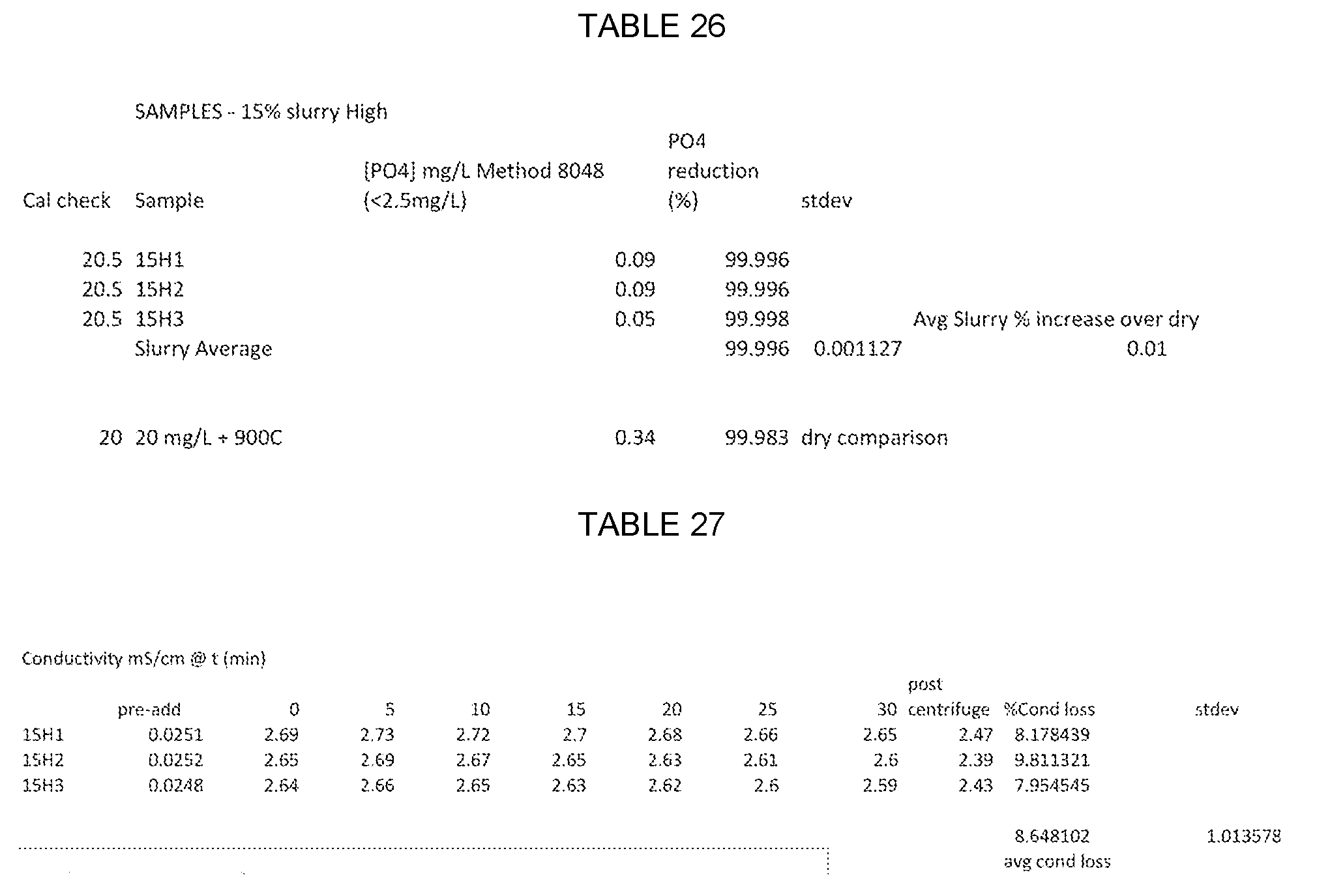


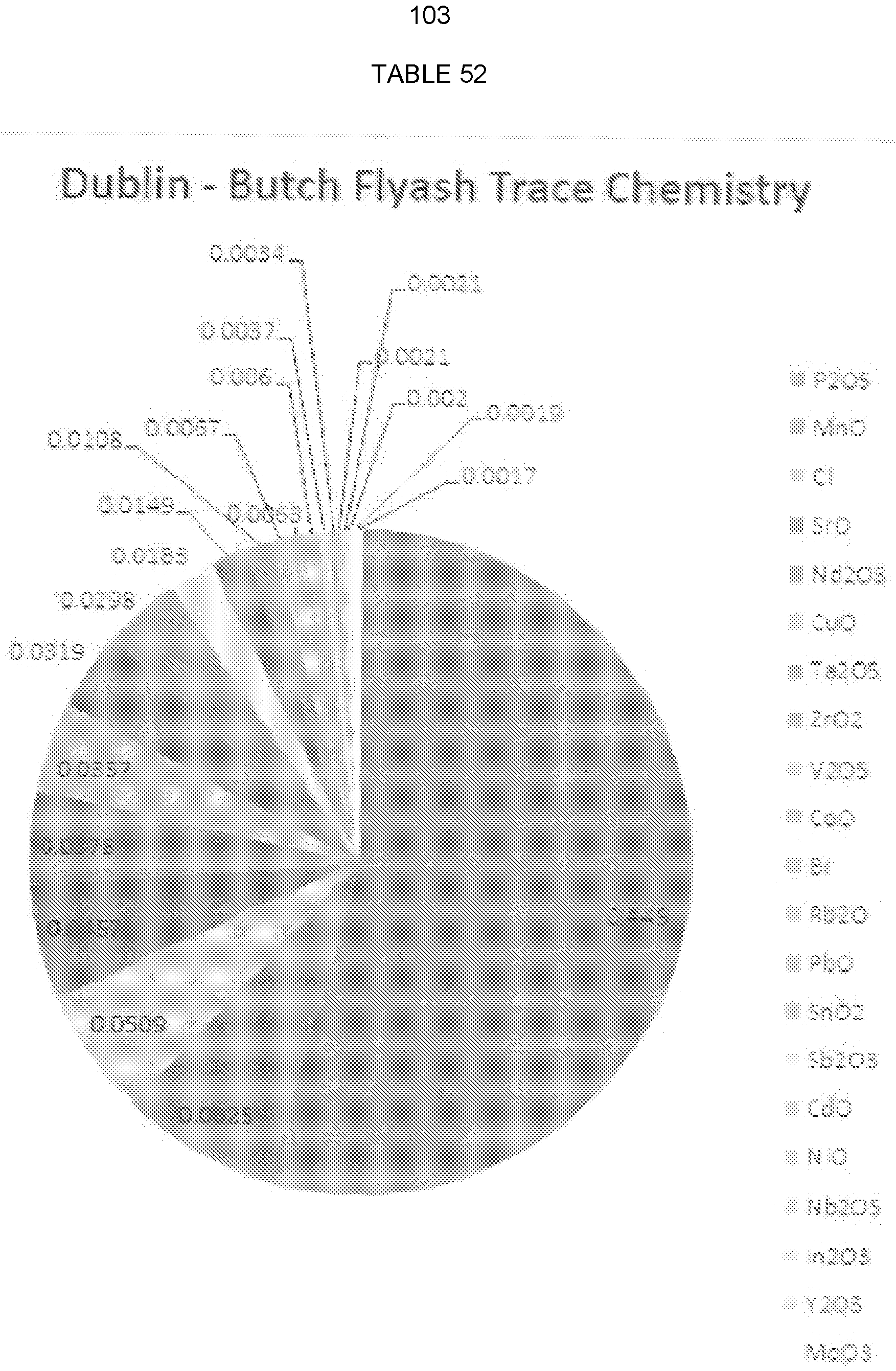


Claims
Priority Applications (5)
| Application Number | Priority Date | Filing Date | Title |
|---|---|---|---|
| CA3083262A CA3083262C (en) | 2017-12-04 | 2018-12-04 | Processing post-industrial and post-consumer waste streams and preparation of post-industrial and post-consumer products therefrom |
| US16/765,474 US11306269B2 (en) | 2017-12-04 | 2018-12-04 | Processing post-industrial and post-consumer waste streams and preparation of post-industrial and post-consumer products therefrom |
| KR1020207019083A KR20200089752A (en) | 2017-12-04 | 2018-12-04 | Treatment of waste streams after industrial disposal and after consumer use and production of products therefrom after industrial disposal and after consumer use |
| JP2020548898A JP2021505524A (en) | 2017-12-04 | 2018-12-04 | Composite ash produced by heat treating heat-generating waste from paper and / or carpet |
| EP18884947.5A EP3720583A4 (en) | 2017-12-04 | 2018-12-04 | Processing post-industrial and post-consumer waste streams and preparation of post-industrial and post-consumer products therefrom |
Applications Claiming Priority (4)
| Application Number | Priority Date | Filing Date | Title |
|---|---|---|---|
| US201762594248P | 2017-12-04 | 2017-12-04 | |
| US62/594,248 | 2017-12-04 | ||
| US16/209,949 US10975321B2 (en) | 2017-12-04 | 2018-12-04 | Processing post-industrial and post-consumer waste streams and preparation of post-industrial and post-consumer products therefrom |
| US16/209,949 | 2018-12-04 |
Publications (1)
| Publication Number | Publication Date |
|---|---|
| WO2019113135A1 true WO2019113135A1 (en) | 2019-06-13 |
Family
ID=66751800
Family Applications (1)
| Application Number | Title | Priority Date | Filing Date |
|---|---|---|---|
| PCT/US2018/063944 Ceased WO2019113135A1 (en) | 2017-12-04 | 2018-12-04 | Processing post-industrial and post-consumer waste streams and preparation of post-industrial and post-consumer products therefrom |
Country Status (5)
| Country | Link |
|---|---|
| US (4) | US10975321B2 (en) |
| JP (1) | JP2021505524A (en) |
| KR (1) | KR20200089752A (en) |
| CA (1) | CA3083262C (en) |
| WO (1) | WO2019113135A1 (en) |
Cited By (1)
| Publication number | Priority date | Publication date | Assignee | Title |
|---|---|---|---|---|
| WO2021006737A1 (en) * | 2019-07-10 | 2021-01-14 | Cdem B.V. | Recovery of phosphorous |
Families Citing this family (7)
| Publication number | Priority date | Publication date | Assignee | Title |
|---|---|---|---|---|
| KR102267024B1 (en) * | 2018-12-24 | 2021-06-18 | 문상우 | Method for producing complex minerals for the production of feed or fertilizer |
| US20220144679A1 (en) * | 2020-11-10 | 2022-05-12 | Complete Filtration Resources, Inc | Systems and methods for removing phosphorus from water |
| EP4288224A1 (en) | 2021-02-02 | 2023-12-13 | Ecogensus, LLC | Powders comprising solid waste materials |
| WO2022169916A1 (en) * | 2021-02-02 | 2022-08-11 | EcoGensus LLC | Compositions containing solid waste material |
| CA3234975A1 (en) * | 2021-10-12 | 2023-04-20 | John Joseph RICONOSCIUTO | Integrated center and process for recycling both polyolefin and polyester |
| CN116116379A (en) * | 2022-09-09 | 2023-05-16 | 沈阳航空航天大学 | A kind of geopolymer adsorbent, preparation method and application in heavy metal ion adsorption |
| CN115520955B (en) * | 2022-09-23 | 2023-08-25 | 清华大学 | Biological filler and its preparation method, application and removal method of nitrate in water quality |
Citations (4)
| Publication number | Priority date | Publication date | Assignee | Title |
|---|---|---|---|---|
| US5846378A (en) * | 1996-03-29 | 1998-12-08 | Ecc International Ltd. | Treatment of solid containing material derived from effluent of wastepaper treating plant |
| US20030159624A1 (en) * | 2001-02-19 | 2003-08-28 | Kinuthia John Mungai | Cementitious material |
| US20050223950A1 (en) * | 2002-03-19 | 2005-10-13 | Cdem Holland B.V. | Method of improving material comprising a pozzolanic component |
| US20120328497A1 (en) * | 2009-12-14 | 2012-12-27 | Robert Philip Higgs | Production and/or recovery of products from waste sludge |
Family Cites Families (10)
| Publication number | Priority date | Publication date | Assignee | Title |
|---|---|---|---|---|
| US20020079075A1 (en) | 1998-09-04 | 2002-06-27 | Imerys Minerals Limited | Treatment of solid containing material derived from effluent |
| NL1017206C2 (en) | 2001-01-26 | 2002-07-29 | Cdem Holland Bv | Method for removing mercury from a gas stream. |
| KR20050044342A (en) * | 2001-11-09 | 2005-05-12 | 이머리스 피그먼츠 아이엔시 | High surface area incineration product |
| US8007688B2 (en) | 2008-10-22 | 2011-08-30 | Southern Research Institute | Process for decontaminating syngas |
| US20100330288A1 (en) | 2009-05-08 | 2010-12-30 | Jeffery Segars | Methods for reclamation of inorganic filler from waste carpet and carpet manufactured from same |
| US20110132230A1 (en) * | 2009-12-08 | 2011-06-09 | Chan Han | Geopolymer precursor dry mixture, package, processes and methods |
| GB201019288D0 (en) | 2010-11-15 | 2010-12-29 | Imerys Minerals Ltd | Compositions |
| JP2012173672A (en) * | 2011-02-24 | 2012-09-10 | Panasonic Liquid Crystal Display Co Ltd | Liquid crystal panel and liquid crystal display device |
| EP3207002B1 (en) | 2014-10-16 | 2022-03-23 | Imertech Sas | Method for making fly ash |
| CN105921102B (en) * | 2016-06-01 | 2019-01-15 | 广东工业大学 | A kind of preparation method and application of geopolymer |
-
2018
- 2018-12-04 JP JP2020548898A patent/JP2021505524A/en active Pending
- 2018-12-04 WO PCT/US2018/063944 patent/WO2019113135A1/en not_active Ceased
- 2018-12-04 CA CA3083262A patent/CA3083262C/en active Active
- 2018-12-04 KR KR1020207019083A patent/KR20200089752A/en not_active Ceased
- 2018-12-04 US US16/209,949 patent/US10975321B2/en active Active
-
2021
- 2021-03-02 US US17/190,389 patent/US20210189274A1/en not_active Abandoned
- 2021-03-02 US US17/190,382 patent/US11359152B2/en active Active
- 2021-03-02 US US17/190,373 patent/US20210261876A1/en not_active Abandoned
Patent Citations (4)
| Publication number | Priority date | Publication date | Assignee | Title |
|---|---|---|---|---|
| US5846378A (en) * | 1996-03-29 | 1998-12-08 | Ecc International Ltd. | Treatment of solid containing material derived from effluent of wastepaper treating plant |
| US20030159624A1 (en) * | 2001-02-19 | 2003-08-28 | Kinuthia John Mungai | Cementitious material |
| US20050223950A1 (en) * | 2002-03-19 | 2005-10-13 | Cdem Holland B.V. | Method of improving material comprising a pozzolanic component |
| US20120328497A1 (en) * | 2009-12-14 | 2012-12-27 | Robert Philip Higgs | Production and/or recovery of products from waste sludge |
Non-Patent Citations (4)
| Title |
|---|
| BELL ET AL.: "Formation of ceramics from metakaolin-based geopolymers. Part II: K-based geopolymer", JOURNAL OF THE AMERICAN CERAMIC SOCIETY, vol. 92, no. 3, March 2009 (2009-03-01), pages 607 - 615, XP055615905 * |
| CHEUNG ET AL.: "Improving phosphate removal of sand infiltration system using alkaline fly ash", CHEMOSPHERE, vol. 41, no. 1-2, 1 July 2000 (2000-07-01), pages 243 - 249, XP055615904 * |
| FRIAS ET AL.: "Influence of activation temperature on reaction kinetics in recycled clay waste.calcium hydroxide systems", JOURNAL OF THE AMERICAN CERAMIC SOCIETY, vol. 91, no. 12, December 2008 (2008-12-01), pages 4044 - 4051, XP055615908 * |
| PERA ET AL.: "Development of highly reactive metakaolin from paper sludge", ADVANCED CEMENT BASED MATERIALS, vol. 7, no. 2, 1 March 1998 (1998-03-01), pages 49 - 56, XP055615907 * |
Cited By (1)
| Publication number | Priority date | Publication date | Assignee | Title |
|---|---|---|---|---|
| WO2021006737A1 (en) * | 2019-07-10 | 2021-01-14 | Cdem B.V. | Recovery of phosphorous |
Also Published As
| Publication number | Publication date |
|---|---|
| KR20200089752A (en) | 2020-07-27 |
| US11359152B2 (en) | 2022-06-14 |
| CA3083262C (en) | 2022-05-03 |
| US20190211279A1 (en) | 2019-07-11 |
| US20210189274A1 (en) | 2021-06-24 |
| CA3083262A1 (en) | 2019-06-13 |
| US10975321B2 (en) | 2021-04-13 |
| JP2021505524A (en) | 2021-02-18 |
| US20210261876A1 (en) | 2021-08-26 |
| US20210189273A1 (en) | 2021-06-24 |
Similar Documents
| Publication | Publication Date | Title |
|---|---|---|
| US11359152B2 (en) | Processing post-industrial and post-consumer waste streams and preparation of post-industrial and post-consumer products therefrom | |
| JP6397565B2 (en) | A method of purifying raw phosphoric acid (such as MGA acid) by adding ash derived from a waste incineration site, including the production of purified phosphoric acid, calcium sulfate, water-soluble calcium hydrogen phosphate and metal salt solution. | |
| Youcai | Pollution control technology for leachate from municipal solid waste: landfills, incineration plants, and transfer stations | |
| Vanotti et al. | Removing and recovering nitrogen and phosphorus from animal manure | |
| CN108883999A (en) | Phosphorus compound is recycled from waste water | |
| US7867398B2 (en) | Method to reduce wastewater treatment plant footprints and costs | |
| EP2998277B1 (en) | Method for treating biological materials associated with the wastewater purification cycle | |
| US11306269B2 (en) | Processing post-industrial and post-consumer waste streams and preparation of post-industrial and post-consumer products therefrom | |
| KR20120057883A (en) | Method and apparatus for compositing organic fertilizer using sewage sludge | |
| Lan et al. | Advances in biomass thermochemical conversion on phosphorus recovery: water eutrophication prevention and remediation | |
| CN105536753B (en) | A kind of mineral precursor adsorbent and its preparation method and application | |
| US7175683B2 (en) | Process for transforming sludge into NPK type granulated fertilizer | |
| KR100757518B1 (en) | Waste acid, waste alkali and sludge treatment and resources | |
| Seckin et al. | Acidification and alkali precipitation for phosphorus recovery from municipal digested sludge | |
| US7713416B2 (en) | Process for transforming sludge into NPK type granulated fertilizer | |
| EP3365310A1 (en) | A granular fertilizer or soil conditioner and its use | |
| CN101767843A (en) | Environment-friendly nanometer purifying agent and preparation method thereof | |
| Bazarnova et al. | Innovative technologies secondary use of processed active source | |
| KR20130123799A (en) | Method for treating organic waste matter | |
| Devatha et al. | Recovery of phosphorus as struvite from the dewatered liquor through crystallization using seawater as magnesium source | |
| Lebuf et al. | Nutrient recovery from digestates: techniques and end-products | |
| Politaeva et al. | A new approach for recycling of spent activated sludge | |
| Adelagun | Technological options for phosphate removal and recovery from aqua system: A review | |
| RU2162059C1 (en) | Method of removing heavy metals from waste waters from solid domestic waste dumps | |
| US6585900B2 (en) | Process for the treatment of sludge |
Legal Events
| Date | Code | Title | Description |
|---|---|---|---|
| 121 | Ep: the epo has been informed by wipo that ep was designated in this application |
Ref document number: 18884947 Country of ref document: EP Kind code of ref document: A1 |
|
| DPE1 | Request for preliminary examination filed after expiration of 19th month from priority date (pct application filed from 20040101) | ||
| ENP | Entry into the national phase |
Ref document number: 3083262 Country of ref document: CA |
|
| ENP | Entry into the national phase |
Ref document number: 2020548898 Country of ref document: JP Kind code of ref document: A |
|
| NENP | Non-entry into the national phase |
Ref country code: DE |
|
| ENP | Entry into the national phase |
Ref document number: 20207019083 Country of ref document: KR Kind code of ref document: A |
|
| ENP | Entry into the national phase |
Ref document number: 2018884947 Country of ref document: EP Effective date: 20200706 |