WO2019117136A1 - 動物細胞、動物細胞の製造方法および目的タンパク質の製造方法 - Google Patents
動物細胞、動物細胞の製造方法および目的タンパク質の製造方法 Download PDFInfo
- Publication number
- WO2019117136A1 WO2019117136A1 PCT/JP2018/045479 JP2018045479W WO2019117136A1 WO 2019117136 A1 WO2019117136 A1 WO 2019117136A1 JP 2018045479 W JP2018045479 W JP 2018045479W WO 2019117136 A1 WO2019117136 A1 WO 2019117136A1
- Authority
- WO
- WIPO (PCT)
- Prior art keywords
- culture
- cells
- cell
- gene encoding
- coa dehydrogenase
- Prior art date
- Legal status (The legal status is an assumption and is not a legal conclusion. Google has not performed a legal analysis and makes no representation as to the accuracy of the status listed.)
- Ceased
Links
Images








Classifications
-
- C—CHEMISTRY; METALLURGY
- C12—BIOCHEMISTRY; BEER; SPIRITS; WINE; VINEGAR; MICROBIOLOGY; ENZYMOLOGY; MUTATION OR GENETIC ENGINEERING
- C12N—MICROORGANISMS OR ENZYMES; COMPOSITIONS THEREOF; PROPAGATING, PRESERVING, OR MAINTAINING MICROORGANISMS; MUTATION OR GENETIC ENGINEERING; CULTURE MEDIA
- C12N15/00—Mutation or genetic engineering; DNA or RNA concerning genetic engineering, vectors, e.g. plasmids, or their isolation, preparation or purification; Use of hosts therefor
- C12N15/09—Recombinant DNA-technology
- C12N15/63—Introduction of foreign genetic material using vectors; Vectors; Use of hosts therefor; Regulation of expression
- C12N15/79—Vectors or expression systems specially adapted for eukaryotic hosts
- C12N15/85—Vectors or expression systems specially adapted for eukaryotic hosts for animal cells
-
- C—CHEMISTRY; METALLURGY
- C12—BIOCHEMISTRY; BEER; SPIRITS; WINE; VINEGAR; MICROBIOLOGY; ENZYMOLOGY; MUTATION OR GENETIC ENGINEERING
- C12P—FERMENTATION OR ENZYME-USING PROCESSES TO SYNTHESISE A DESIRED CHEMICAL COMPOUND OR COMPOSITION OR TO SEPARATE OPTICAL ISOMERS FROM A RACEMIC MIXTURE
- C12P21/00—Preparation of peptides or proteins
- C12P21/02—Preparation of peptides or proteins having a known sequence of two or more amino acids, e.g. glutathione
-
- C—CHEMISTRY; METALLURGY
- C07—ORGANIC CHEMISTRY
- C07K—PEPTIDES
- C07K16/00—Immunoglobulins [IG], e.g. monoclonal or polyclonal antibodies
-
- C—CHEMISTRY; METALLURGY
- C12—BIOCHEMISTRY; BEER; SPIRITS; WINE; VINEGAR; MICROBIOLOGY; ENZYMOLOGY; MUTATION OR GENETIC ENGINEERING
- C12N—MICROORGANISMS OR ENZYMES; COMPOSITIONS THEREOF; PROPAGATING, PRESERVING, OR MAINTAINING MICROORGANISMS; MUTATION OR GENETIC ENGINEERING; CULTURE MEDIA
- C12N15/00—Mutation or genetic engineering; DNA or RNA concerning genetic engineering, vectors, e.g. plasmids, or their isolation, preparation or purification; Use of hosts therefor
- C12N15/09—Recombinant DNA-technology
- C12N15/87—Introduction of foreign genetic material using processes not otherwise provided for, e.g. co-transformation
-
- C—CHEMISTRY; METALLURGY
- C12—BIOCHEMISTRY; BEER; SPIRITS; WINE; VINEGAR; MICROBIOLOGY; ENZYMOLOGY; MUTATION OR GENETIC ENGINEERING
- C12N—MICROORGANISMS OR ENZYMES; COMPOSITIONS THEREOF; PROPAGATING, PRESERVING, OR MAINTAINING MICROORGANISMS; MUTATION OR GENETIC ENGINEERING; CULTURE MEDIA
- C12N5/00—Undifferentiated human, animal or plant cells, e.g. cell lines; Tissues; Cultivation or maintenance thereof; Culture media therefor
- C12N5/06—Animal cells or tissues; Human cells or tissues
- C12N5/0602—Vertebrate cells
- C12N5/0681—Cells of the genital tract; Non-germinal cells from gonads
- C12N5/0682—Cells of the female genital tract, e.g. endometrium; Non-germinal cells from ovaries, e.g. ovarian follicle cells
-
- C—CHEMISTRY; METALLURGY
- C12—BIOCHEMISTRY; BEER; SPIRITS; WINE; VINEGAR; MICROBIOLOGY; ENZYMOLOGY; MUTATION OR GENETIC ENGINEERING
- C12N—MICROORGANISMS OR ENZYMES; COMPOSITIONS THEREOF; PROPAGATING, PRESERVING, OR MAINTAINING MICROORGANISMS; MUTATION OR GENETIC ENGINEERING; CULTURE MEDIA
- C12N9/00—Enzymes; Proenzymes; Compositions thereof; Processes for preparing, activating, inhibiting, separating or purifying enzymes
- C12N9/0004—Oxidoreductases (1.)
- C12N9/001—Oxidoreductases (1.) acting on the CH-CH group of donors (1.3)
-
- C—CHEMISTRY; METALLURGY
- C12—BIOCHEMISTRY; BEER; SPIRITS; WINE; VINEGAR; MICROBIOLOGY; ENZYMOLOGY; MUTATION OR GENETIC ENGINEERING
- C12Y—ENZYMES
- C12Y103/00—Oxidoreductases acting on the CH-CH group of donors (1.3)
- C12Y103/08—Oxidoreductases acting on the CH-CH group of donors (1.3) with flavin as acceptor (1.3.8)
- C12Y103/08004—Isovaleryl-CoA dehydrogenase (1.3.8.4)
Definitions
- the present invention relates to an animal cell that expresses a target protein.
- the present invention relates to a method of producing the above-mentioned animal cells, and a method of producing a target protein using the above-mentioned animal cells.
- fed-batch culture in which the condition of cells is improved by additionally adding nutrients to a culture solution.
- the culture solution in order to improve the productivity of antibodies, is continuously filtered and discharged, while a fresh medium containing nutrient components is continuously supplied to the culture tank Perfusion culture method is often used.
- isovaleric acid which is highly inhibitory, is an organic acid produced as an intermediate product by metabolism of leucine, and is generally known as a substance that produces an offensive odor.
- leucine is enzymatically converted to isovaleryl CoA (3-methylbutanoyl CoA) in cells.
- Isovaleryl CoA is converted to 3-methylbut-2-enoyl CoA by its downstream enzyme isovaleryl CoA dehydrogenase (also abbreviated as IVD).
- IVD isovaleryl CoA dehydrogenase
- Reduction or deletion of IVD activity non-enzymatically degrades the intermediate isovaleryl CoA to give isovaleric acid (FIG. 1).
- Patients who are genetically mutated or deficient in IVD genes accumulate isovaleric acid and develop neuropathy (isovaleric acidemia).
- Non-Patent Document 1 describes that in Chinese hamster ovary (CHO) cells, isovaleric acid secreted from the cells acts to inhibit growth.
- isovaleric acid secreted from the cells acts to inhibit growth.
- the amount of secretion of isovaleric acid is reduced by carrying out fed-batch culture using a low leucine medium, and the proliferation is improved.
- Patent Document 1 describes that by introducing an isovaleryl CoA dehydrogenase gene into a microorganism, the production amount of isovaleric acid is reduced, and a food with less unsettled odor is produced.
- Patent Document 2 describes that CHO cells are cultured in a leucine-reduced medium.
- cell culture In fed-batch culture, cell culture can be performed for a long time and at a high concentration compared to the case where nutrients are not added and added, but the survival of the latter half of culture decreases due to the accumulation of waste products secreted from cells There is a problem of Also, in order to culture at high density in the perfusion culture method, in addition to the supply of nutrition, in order to discharge waste products out of the system, culture is performed while exchanging the culture volume 1 to 3 times the culture volume per day. The problem is that the cost is high.
- An object of the present invention is to provide an animal cell having improved proliferation ability and survival rate. Another object of the present invention is to provide a method for producing the above-mentioned animal cells, and a method for producing a target protein using the above-mentioned animal cells.
- isovaleric acid and butyric acid can be obtained by forcibly expressing in CHO cells a gene encoding isovaleryl CoA dehydrogenase, which is an enzyme promoting downstream reaction of isovaleric acid metabolic pathway. It has been found that the production can be reduced.
- the present inventors have demonstrated that as a result of the above, the cell condition is improved, and the proliferative ability and the survival ability are improved. The present invention has been completed based on the above findings.
- an animal cell comprising a gene encoding a target protein and a foreign gene encoding isovaleryl CoA dehydrogenase and overexpressing isovaleryl CoA dehydrogenase.
- a foreign gene encoding isovaleryl CoA dehydrogenase is linked to a promoter.
- ⁇ 3> The animal cell according to ⁇ 1> or ⁇ 2>, wherein the animal cell is a CHO cell.
- the expression amount of isovaleryl CoA dehydrogenase is three or more times the above animal cell having no foreign gene encoding isovaleryl CoA dehydrogenase, according to any one of ⁇ 1> to ⁇ 3>.
- Animal cells. ⁇ 5> The animal cell according to any one of ⁇ 1> to ⁇ 4>, wherein a gene encoding a target protein and a foreign gene encoding isovaleryl CoA dehydrogenase are present on the same expression vector.
- ⁇ 6> The animal cell according to any one of ⁇ 1> to ⁇ 5>, including the step of introducing a gene encoding a target protein and a foreign gene encoding isovaleryl CoA dehydrogenase into an animal cell. Production method. ⁇ 7> The method according to ⁇ 6>, wherein the step of introducing a foreign gene encoding isovaleryl CoA dehydrogenase is performed by electroporation.
- ⁇ 9> A method for producing a target protein, comprising culturing the animal cell according to any one of ⁇ 1> to ⁇ 5>.
- ⁇ 10> The method according to ⁇ 9>, wherein the culture of animal cells is fed-batch culture or batch culture.
- the seeded cell density of the cell culture is 0.2 ⁇ 10 6 cells / mL or more and 5 ⁇ 10 6 cells / mL or less.
- the method as described in ⁇ 10> or ⁇ 11> whose living cell rate in ⁇ 12> culture periods is 60% or more in all the periods.
- ⁇ 13> The method according to any one of ⁇ 10> to ⁇ 12>, wherein the maximum concentration of isovaleric acid in the culture solution during the culture period is 3000 ⁇ mol / L or less.
- ⁇ 14> The method according to any one of ⁇ 10> to ⁇ 13>, wherein the amount of secreted isovaleric acid per cell during the culture period is 30 fmol / cell / day or less.
- ⁇ 15> The method according to any one of ⁇ 10> to ⁇ 14>, wherein the maximum concentration of butyric acid in the culture solution during the culture period is 3000 ⁇ mol / L or less.
- ⁇ 16> The method according to any one of ⁇ 10> to ⁇ 15>, wherein the amount of butyric acid secreted per cell during the culture period is 30 fmol / cell / day or less.
- ⁇ 17> The method according to ⁇ 9>, wherein the culture of animal cells is perfusion culture. ⁇ 18> seeding cell density of the cell culture is not more than 0.2 ⁇ 10 6 cells / mL or more 3 ⁇ 10 7 cells / mL, the method described in ⁇ 17>. The method as described in ⁇ 17> or ⁇ 18> whose living cell rate in a culture
- ⁇ 21> The method according to any one of ⁇ 17> to ⁇ 20>, wherein the amount of secreted isovaleric acid per cell is 30 fmol / cell / day or less.
- ⁇ 22> The method according to any one of ⁇ 17> to ⁇ 21>, wherein the concentration of butyric acid in the culture solution throughout the culture period is 3000 ⁇ mol / L or less.
- ⁇ 23> The method according to any one of ⁇ 17> to ⁇ 22>, wherein the butyric acid secretion amount per cell during the culture period is 30 fmol / cell / day or less.
- the animal cells of the present invention have high proliferation ability and high survival rate. According to the animal cell of the present invention, a target protein can be produced with high productivity.
- FIG. 1 shows the metabolic pathway of leucine in cells.
- chIvd represents CHO cell endogenous isovaleryl CoA dehydrogenase
- hIVD represents foreign human isovaleryl CoA dehydrogenase.
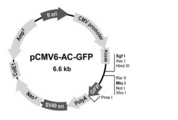
- FIG. 2 shows a schematic diagram of a vector (pCMV6-AC-GFP) containing the gene hIVD-GFP encoding human isovaleryl CoA dehydrogenase conjugated with green fluorescent protein (GFP).
- GFP green fluorescent protein
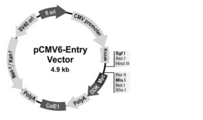
- FIG. 3 shows a schematic representation of the pCMV6-Entry vector.
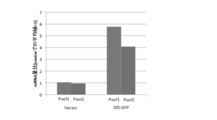
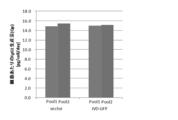
- FIG. 4 shows the results of measuring the fluorescence of cells after gene transfer and measuring the proportion of cells that emit a fluorescence signal.
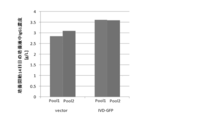
- FIG. 5 shows the results of confirmation of IVD gene expression in cells after gene transfer.
- FIG. 6 shows the results of measuring the viable cell density of cells after gene transfer over time.
- FIG. 7 shows the results of measuring the viable cell rate (viability rate) of cells after gene transfer over time.
- FIG. 8 shows the results of measurement of the IgG1 concentration in the culture solution on the 14th day of the culture start.
- FIG. 9 shows the amount of IgG1 production (Qp) per cell in the culture solution at 14 days after the start of culture.
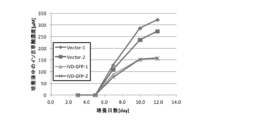
- FIG. 10 shows the results of measuring the concentration of isovaleric acid in the culture solution over time.
- FIG. 10 shows the results of measuring the concentration of isovaleric acid in the culture solution over time.
- FIG. 11 shows the results of measurement of isovaleric acid production per cell in the culture solution.
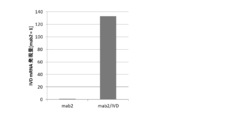
- FIG. 12 shows the results of measuring the expression of the IVD gene.
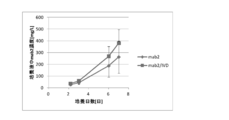
- FIG. 13 shows the results of measuring the viable cell density of cells over time.
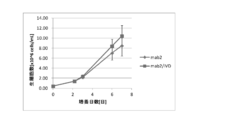
- FIG. 14 shows the results of measuring the concentration of the monoclonal antibody in the culture solution over time.
- FIG. 15 shows the amount of monoclonal antibody produced per cell.
- FIG. 16 shows the result of measuring the concentration of the organic acid in the culture solution.
- FIG. 17 shows the amount of organic acid produced per cell in the culture medium.
- FIG. 18 shows the results of measuring the viable cell density of cells over time.
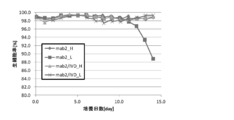
- FIG. 19 shows the results of measuring the viable cell rate (viability rate) of cells over time.
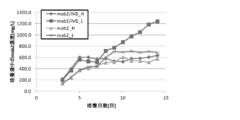
- FIG. 20 shows the results of measuring the concentration of the monoclonal antibody in the culture fluid on the permeate side with time.
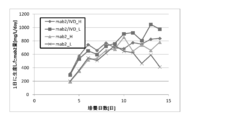
- FIG. 21 shows the results of measuring the amount of monoclonal antibody produced on one day.
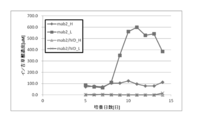
- FIG. 22 shows the results of measuring the concentration of isovaleric acid in the culture solution over time.
- FIG. 23 shows the results of measuring the concentration of butyric acid in the culture solution over time.
- a numerical range indicated by using “to” means a range including numerical values described before and after “to” as the minimum value and the maximum value, respectively.
- the animal cell of the present invention is an animal cell having a gene encoding a target protein and a foreign gene encoding isovaleryl CoA dehydrogenase, and overexpressing isovaleryl CoA dehydrogenase.
- Isovaleric acid like many low molecular weight organic acids, has been shown to arrest the cell cycle and inhibit proliferation by inhibiting histone deacetylase.
- isovaleric acid is accumulated due to the above-mentioned reason, and in the later stage of culture, cell proliferation is stopped and the survival rate is reduced. Decreased viability reduces protein production per cell.
- Non-Patent Document 1 the secretion amount of isovaleric acid is reduced by performing fed-batch culture using a low leucine medium.
- the method described in Non-patent Document 1 lacks versatility because the commercially available medium can not use a leucine reduction formulation.
- the proliferation of cells is improved, the viability in the second half of culture can not be maintained, and the amount of IgG production (Qp) per cell is decreased. There is no change in total antibody production.
- Qp IgG production
- the present invention by controlling the cells themselves, it is possible to suppress the secretion of isovaleric acid regardless of the type of medium.
- the cells of the present invention can maintain high viability in the second half of culture, and improve the proliferation while maintaining the amount of antibody production per cell, thereby improving the total amount of antibodies produced.
- Patent Document 1 reduction of isovaleric acid aims to reduce the offensive odor of food products, and no mention is made of the cell growth inhibitory property of isovaleric acid itself. Moreover, the object of Patent Document 1 is a microorganism, and the animal cell is not a target, and it is not related to the production of a target protein. On the other hand, in the present invention, by reducing the production of isovaleric acid, the growth of CHO cells can be increased, and the target protein can be efficiently produced.
- the isovaleryl CoA dehydrogenase gene is introduced into animal cells for the purpose of activating the metabolic pathway of leucine and eliminating accumulation of the intermediate isovaleryl CoA rather than reducing the addition amount of leucine.
- Cells that highly express isovaleryl CoA dehydrogenase can suppress the secretion of isovaleric acid regardless of the type of medium by rapidly converting isovaleryl CoA to 3-methylbut-2-enoyl CoA.
- highly proliferative and viable cultures can be performed using the cells of the present invention.
- cell viability can be kept high at the late stage of culture (after 10 days after the start of culture) in which waste products tend to accumulate.
- the protein productivity per cell can be increased, and the total protein production can be improved as compared to the conventional culture method.
- the number of dead cells will be reduced to reduce the amount of host-derived protein and DNA contamination, which is a problem during protein purification which is a downstream process.
- the amount of secreted butyric acid known to have a growth inhibitory activity like isovaleric acid is suppressed. Since isovaleryl CoA dehydrogenase is not directly involved in the metabolic pathway of butyric acid production, the ability to reduce the amount of butyric acid secreted in the animal cells of the present invention is an unexpected result.
- the effects of the present invention can be exhibited in both fed-batch culture, batch culture and perfusion culture.
- perfusion culture accumulation of waste products is a problem at the time of low perfusion ratio culture, but culture can be performed while maintaining proliferation and viability by using the animal cell of the present invention.
- secretion and accumulation of waste products can be suppressed, a high perfusion ratio becomes unnecessary even in high-density culture using perfusion culture. Therefore, it is possible to culture while maintaining the quality even in the low perfusion ratio state.
- high viability enables culture without causing cell debris, clogging of the separation membrane used in perfusion culture can be avoided.
- the type of target protein is not particularly limited.
- recombinant polypeptide chain recombinant secreted polypeptide chain, antigen binding protein, human antibody, humanized antibody, chimeric antibody, mouse antibody, bispecific antibody, Fc fusion Protein, fragmented immune immunoglobulin, single chain antibody (scFv).
- the protein of interest is preferably a human antibody, a humanized antibody, a chimeric antibody or a mouse antibody.
- Fragmented immunoimmunoglobulins include Fab, F (ab ') 2 , Fv and the like.
- the class of antibody is also not particularly limited, and may be any class such as IgG1 such as IgG1, IgG2, IgG3 and IgG4, IgA, IgD, IgE, IgM, etc. However, when used as a medicine, IgG and IgM are preferred.
- Human antibodies include all antibodies that have one or more variable and constant regions derived from human immunoglobulin sequences.
- all of the variable and constant domains are derived from human immunoglobulin sequences (a fully human antibody).
- a humanized antibody is less likely to elicit an immune response and / or elicits a severe immune response when administered to a human subject as compared to a non-human species antibody.
- certain amino acids within the heavy chain and / or light chain framework and constant domain of the non-human species antibody are mutated to produce a humanized antibody.
- constant domains from human antibodies are fused to variable domains of non-human species.
- a chimeric antibody is an antibody in which variable regions and constant regions derived from each other are linked.
- an antibody consisting of the variable regions of heavy and light chains of a mouse antibody and the constant regions of heavy and light chains of a human antibody is a mouse / human heterologous chimeric antibody.
- a recombinant vector expressing a chimeric antibody can be prepared by ligating a DNA encoding a variable region of a mouse antibody with a DNA encoding a constant region of a human antibody and incorporating it into an expression vector. By culturing a recombinant cell transformed with the above vector and expressing the incorporated DNA, a chimeric antibody produced during culture can be obtained.
- Bispecific antibodies are antibodies produced by chemical methods or cell fusion that recognize two different antigenic specificities.
- the bispecific antibody can be prepared by combining two immunoglobulin molecules with a crosslinker such as N-succinimidyl 3- (2-pyridyldithiol) propionate or S-acetyl mercapto succinic acid anhydride. Methods, methods of combining Fab fragments of immunoglobulin molecules, and the like have been reported.
- the Fc fusion protein refers to a protein having an Fc region and includes an antibody.
- Fab is a monovalent fragment having V L , V H , C L and C H 1 domains.
- F (ab ') 2 is a bivalent fragment having two Fab fragments joined by disulfide bridges in the hinge region.
- Fv fragments have the single arm V L and V H domains of antibody.
- Single-chain antibodies are antibodies in which the V L and V H regions are joined via a linker (eg, a synthetic sequence of amino acid residues) to form a continuous protein chain, wherein the linker is It is long enough to fold the protein chain on itself and form a monovalent antigen binding site.
- a gene encoding a target protein can be obtained by methods known to those skilled in the art.
- the target protein is an antibody
- DNA encoding the L chain of the antibody and DNA encoding the H chain can be used.
- the DNA encoding the L chain of the antibody and the DNA encoding the H chain can be prepared as follows. MRNA is extracted from hybridomas, cells, phages, ribosomes, etc. that have genes that express antibodies. From this mRNA, cDNA is prepared by reverse transcription using reverse transcriptase. The L chain gene or H chain gene is amplified by PCR using a primer having a complementary nucleotide sequence to the L chain gene or H chain gene and cDNA, and each gene is obtained by binding to a cloning plasmid.
- DNA encoding a fragment of L chain of antibody and DNA encoding a fragment of H chain can be prepared as follows. MRNA is extracted from hybridomas, cells, phages, ribosomes, etc. that have genes that express antibodies. From this mRNA, cDNA is prepared by reverse transcription using reverse transcriptase. The L chain gene fragment or H chain gene fragment is amplified by PCR using a primer having a complementary nucleotide sequence to the L chain gene fragment or H chain gene fragment and a cDNA, and each gene fragment is obtained by binding to a cloning plasmid.
- the source of isovaleryl CoA dehydrogenase is not particularly limited, and a foreign gene encoding isovaleryl CoA dehydrogenase from a mammal such as human, monkey, mouse, rat, hamster and the like can be used.
- the foreign gene refers to a gene introduced into animal cells from the outside. In addition, even when the endogenous gene is amplified and introduced, it is regarded as a foreign gene.
- the nucleotide and amino acid sequences of human isovaleryl CoA dehydrogenase are shown in SEQ ID NOS: 1 and 2 in the sequence listing.
- a foreign gene encoding isovaleryl CoA dehydrogenase (1) a gene encoding a protein consisting of the amino acid sequence set forth in SEQ ID NO: 2; (2) A gene encoding a protein having isovaleryl CoA dehydrogenase activity, consisting of an amino acid sequence in which one or several amino acids are deleted, substituted or added in the amino acid sequence of SEQ ID NO: 2; or (3) SEQ ID NO: A protein comprising an amino acid sequence having a sequence identity of 85% or more (more preferably 90% or more, particularly preferably 95% or more, most preferably 98% or more) with the amino acid sequence described in 2, and having isovaleryl CoA dehydrogenase activity
- a foreign gene encoding isovaleryl CoA dehydrogenase (4) a gene consisting of the nucleotide sequence set forth in SEQ ID NO: 1; (5) A gene encoding a protein having isovaleryl CoA dehydrogenase activity, comprising a nucleotide sequence in which one or several bases are deleted, substituted or added in the nucleotide sequence set forth in SEQ ID NO: 1; or (6) SEQ ID NO: A gene encoding a protein having isovaleryl CoA dehydrogenase activity, comprising a base sequence that hybridizes under stringent conditions to a complementary sequence of the base sequence described in 1; Can also be used.
- amino acid sequence in which one or several amino acids are deleted, substituted or added is preferably 1 to 20, more preferably 1 to 10, still more preferably 1 to 5 It means one, particularly preferably 1 to 3.
- the “longer alignment length” of the denominator means that the longer alignment length is used for the denominator when comparing the two alignments.
- the "one or several" in the "base sequence in which one or several bases are deleted, substituted or added” is preferably 1 to 20, more preferably 1 to 10, still more preferably 1 to 5. It means one, particularly preferably 1 to 3.
- stringent conditions in “hybridize under stringent conditions” means to hybridize under moderate or high stringency conditions, which are recognized by those skilled in the art. be able to.
- moderately stringent conditions Sambrook et al., Molecular Cloning: A Laboratory Manual, 3rd Edition, Vol. 1, 7.42-7.45 The conditions described in Cold Spring Harbor Laboratory Press, 2001 can be mentioned.
- Moderately stringent conditions are, for example, 5 ⁇ SSC, 0.5% SDS, 1.0 mmol / L EDTA (pH 8.0) pre-washing solution in a nitrocellulose filter, about 50 at about 40-50 ° C.
- % Of formamide 2 ⁇ SSC to 6 ⁇ SSC (or other similar hybridization solution such as Stark's solution in about 50% formamide at about 42 ° C.), and about 60 Washing conditions of 0.5 ⁇ SSC, 0.1% SDS can be mentioned.
- Conditions of high stringency can also be readily determined by one skilled in the art and include, for example, hybridization and / or washing at higher temperatures and / or lower salt concentrations than the moderately stringent conditions described above.
- hybridization conditions as described above, and washing with 68 ° C., 0.2 ⁇ SSC, 0.1% SDS can be mentioned.
- the composition of 1 ⁇ SSC is 150 mmol / L NaCl, 15 mmol / L sodium citrate, pH 7.4.
- SDS is sodium dodecyl sulfate and EDTA is ethylenediaminetetraacetic acid.
- non-human isovaleryl CoA dehydrogenase as in the case of human isovaleryl CoA dehydrogenase, (2A) A gene encoding a protein having isovaleryl CoA dehydrogenase activity, which comprises an amino acid sequence in which one or several amino acids are deleted, substituted or added in a predetermined amino acid sequence; (3A) An amino acid sequence having a sequence identity of 85% or more (more preferably 90% or more, particularly preferably 95% or more, most preferably 98% or more) with a predetermined amino acid sequence and having isovaleryl CoA dehydrogenase activity A gene encoding a protein; (5A) A gene encoding a protein having isovaleryl CoA dehydrogenase activity, comprising a nucleotide sequence in which one or several bases are deleted, substituted or added in a predetermined nucleotide sequence; or (6A) complementation of a predetermined nucleotide sequence A gene encoding a protein comprising a
- the foreign gene encoding isovaleryl CoA dehydrogenase is linked to a promoter.
- the promoter is not particularly limited as long as it can function in host animal cells to express isovaleryl CoA dehydrogenase.
- Promoters include CMV promoter (cytomegalovirus promoter), EF1 ⁇ promoter (promoter of human polypeptide chain elongation factor gene), SV40 promoter (cyamine virus 40 promoter), ⁇ -actin promoter, MMLV-LTR promoter (Moloney murine leukemia)
- the promoter of the long terminal repeat of the virus) or the mouse ⁇ globin promoter is preferred, and the CMV promoter is more preferred.
- isovaleryl CoA dehydrogenase is overexpressed.
- Overexpression means that the expression of a certain gene exceeds the normal expression level in the host.
- the expression amount of isovaleryl CoA dehydrogenase in the animal cell of the present invention is preferably 3 times or more, preferably 3.5 times or more to that of an animal cell having no foreign gene encoding isovaleryl CoA dehydrogenase. It is more preferably 4 times or more, still more preferably 4.5 times or more, still more preferably 5 times or more, and particularly preferably 5.5 times or more.
- the upper limit may not be necessary, but may be 30000 times or less, but may be 10000 times or less.
- the expression level of isovaleryl CoA dehydrogenase can be determined by RT-PCR (reverse transcription-polymerase chain reaction) or the like.
- the expression level of isovaleryl CoA dehydrogenase is preferably carried out by reverse transcription of mRNA and real time PCR.
- the expression level of isovaleryl CoA dehydrogenase is preferably a relative expression level calculated by normalization. Normalization can be performed by comparative quantification using, for example, the expression level of a housekeeping gene such as ⁇ -actin or HPRT1 as an endogenous control.
- Animal cells include Chinese hamster ovary (CHO) cells, BHK cells, 293 cells, myeloma cells (such as NS0 cells), PerC6 cells, SP2 / 0 cells, hybridoma cells, COS cells, 3T3 cells, HeLa cells, Vero cells, MDCK cells, PC12 cells, WI38 cells and the like can be mentioned.
- CHO cells, BHK cells, 293 cells, myeloma cells (such as NS0 cells), PerC6 cells, SP2 / 0 cells, and hybridoma cells are particularly preferable, and CHO cells are more preferable.
- CHO cells are widely used for the production of recombinant proteins such as cytokines, coagulation factors and antibodies.
- CHO cells deficient in dihydrofolate reductase (DHFR) are used, and as DHFR deficient CHO cells, CHO-DG44 can be used, for example.
- DHFR dihydrofolate reductase
- the gene encoding the target protein and the foreign gene encoding isovaleryl CoA dehydrogenase may be present on the same expression vector or may be present on different expression vectors. Good.
- the gene encoding the target protein and the foreign gene encoding isovaleryl CoA dehydrogenase are present on the same expression vector. Because the gene encoding the target protein and the foreign gene encoding isovaleryl-CoA dehydrogenase are present on the same expression vector, isovaleryl-CoA dehydrogenase suppresses the growth inhibitory substance of isovaleric acid to exert a proliferative effect.
- synergy positive selection
- synergy positive selection
- the ratio of the number of the above-mentioned genes becomes a 1: 1 relationship.
- the effect of the present invention may be exerted by correlating the introduction ratio of the foreign gene encoding isovaleryl CoA dehydrogenase with the expression efficiency of the target protein. As the expression of isovaleryl CoA dehydrogenase increases, it is expected that the expression of the target protein also increases accordingly.
- Method of producing animal cells which comprises the step of introducing into an animal cell a gene encoding a target protein and a foreign gene encoding isovaleryl CoA dehydrogenase.
- the gene encoding the target protein and the foreign gene encoding isovaleryl CoA dehydrogenase be introduced into a host animal cell in a form incorporated into a vector, respectively.
- a mammalian-derived expression vector can be used as a vector that can be used to introduce a gene into a host.
- a mammalian-derived expression vector can be used.
- pCMV6-Entry manufactured by OriGene
- pcDNA3 manufactured by Invitrogen
- pEGF-BOS Nucleic Acids. Res. 1990, 18 (17), p 5322
- pEF Nucleic Acids. Res. 1990, 18 (17), p 5322
- pEF Nucleic Acids. Res. 1990, 18 (17), p 5322
- pEF pCDM8
- INPEP 4 manufactured by Biogen-IDEC
- mRNA having poly A stabilizes in cells.
- the gene encoding the target protein and the foreign gene encoding isovaleryl CoA dehydrogenase are poly A signals necessary for addition of poly A to the gene, such as mouse ⁇ globin poly A signal, bovine growth hormone poly A signal, SV 40 poly A You may have a signal etc.
- the method of introducing the gene encoding the target protein and the foreign gene encoding isovaleryl CoA dehydrogenase into animal cells is not particularly limited, and can be carried out by methods known to those skilled in the art. For example, it can be performed by electroporation, lipofection, calcium phosphate method, DEAE dextran method, cationic liposome DOTAP (manufactured by Roche Life Sciences), or a method using a viral vector. Among the above, electroporation is preferred.
- a gene When a gene is introduced into animal cells, depending on the type of expression vector used and the gene introduction method, the gene is introduced only to some of the cells subjected to gene introduction.
- a gene encoding a marker selectable for resistance to antibiotics may be introduced into the host cell together with the gene of interest.
- Preferred selectable markers include those that confer resistance to drugs, such as G418, hygromycin and methotrexate.
- the gene encoding the target protein may be expressed in a transient expression system or may be expressed in a constitutive expression system, but is expressed in a constitutive expression system Is preferred.
- the foreign gene encoding isovaleryl CoA dehydrogenase may be expressed in a transient expression system or may be expressed in a constitutive expression system, but is expressed in a constitutive expression system
- the preferred ones are:
- the transient expression system is a method in which a cyclic plasmid is introduced into cells by calcium phosphate method, electroporation method, lipofection method or the like to be expressed.
- the gene encoding the target protein and the foreign gene encoding isovaleryl CoA dehydrogenase often exist extrachromosomally.
- a linear plasmid or a linear plasmid prepared by restriction enzyme treatment is incorporated into cells by the calcium phosphate method, electroporation, lipofection method, etc., and a part is inserted into the cell genome.
- Method for producing target protein comprising culturing the animal cell of the present invention.
- the target protein By culturing the animal cells of the present invention, the target protein can be produced. Culturing can be performed according to known methods.
- a culture medium used for culture of the animal cell of this invention the culture medium used by culture
- OptiCHO (Lifetechnologies, 12681011) medium, Dulbecco's modified Eagle's medium (DMEM), Eagle's minimal essential medium (MEM), RPMI-1640 medium, RPMI-1641 medium, F-12K medium, Ham's F12 medium, Iscove's modified method Dulbecco's Medium (IMDM), McCoy 5A Medium, Leibovits L-15 Medium, and EX-CELLTM 300 Series (JRH Biosciences), CHO-S-SFMII (Invitrogen), CHO-SF (Sigma-Aldrich) , CD-CHO (Invitrogen), IS CHO-V (Irvine Scientific), PF-ACF-CHO (Sigma-Aldrich), etc. That.
- the medium may be supplemented with serum such as fetal calf serum (FCS), more preferably in a serum free medium, and most preferably a completely synthetic medium.
- FCS fetal calf serum
- the medium may be supplemented with additional components such as amino acids, salts, sugars, vitamins, hormones, growth factors, buffers, antibiotics, lipids, trace elements, plant protein hydrolysates and the like.
- the pH of the culture medium varies depending on the cells to be cultured, it is generally pH 6.0 to 8.0, preferably pH 6.8 to 7.6, and more preferably pH 7.0 to 7.4.
- the culture temperature is generally 30 ° C. to 40 ° C., preferably 32 ° C. to 37 ° C., more preferably 36 ° C. to 37 ° C., and the culture temperature may be changed during the culture.
- Culturing is preferably performed under an atmosphere with a CO 2 concentration of 0 to 40%, preferably 2 to 10%.
- the culture time is not particularly limited, but generally 12 hours to 90 days, preferably 24 hours to 60 days, and more preferably 24 hours to 30 days. In culture, medium exchange, aeration, and agitation can be added as necessary.
- the culture of the animal cells of the present invention can be performed in a culture apparatus (also referred to as a bioreactor) or any other suitable container.
- a culture apparatus also referred to as a bioreactor
- a culture apparatus a fermenter type tank culture apparatus, an airlift type culture apparatus, a culture flask type culture apparatus, a spinner flask type culture apparatus, a microcarrier type culture apparatus, a fluidized bed type culture apparatus, a holofiber type culture apparatus, a roller bottle
- the culture can be performed using a mold culture apparatus, a filling tank type culture apparatus, or the like.
- the culture scale is generally 1 L to 20000 L, preferably 200 L to 2000 L, more preferably 500 L to 2000 L.
- the culture may be performed by any method such as batch culture, fed-batch culture (also referred to as fed-batch culture), perfusion culture, etc. However, fed-batch culture or perfusion culture is preferred. .
- Batch culture is a discontinuous method in which cells are grown in a fixed volume of culture medium for a short period of time and then harvested completely. Cultures grown using the batch method experience an increase in cell density until maximum cell density is reached, after which media components are consumed and survive as levels of metabolic byproducts (such as lactate and ammonia) accumulate. Cell density declines. Recovery typically occurs when maximum cell density (typically 5-10 ⁇ 10 6 cells / mL) has been achieved.
- the batch process is the simplest method of culture, but the viable cell density is limited by nutrient availability, and once the cells are at their maximum density, the culture is diminished and the production of the protein of interest is reduced. Since accumulation of waste products and nutrient depletion rapidly lead to culture decline (typically about 3 to 7 days), the production period of the target protein can not be extended.
- Fed-batch culture is a culture method that improves the batch process by supplying the medium in a bolus or continuously to replenish the consumed medium components.
- the culture form is a suspension culture, which provides additional components to the culture at one or more time points after the start of the culture process. Additional components include nutraceutical components for cells that are being depleted during the culture process, and may include other ancillary components (eg, cell cycle inhibitory compounds).
- fed-batch culture As additional nutrients are added throughout the culture period, higher cell density and higher yield of the protein of interest may be achieved as compared to batch culture.
- the feeding schedule and medium are such that the period of cell growth (growth phase) to achieve the desired cell density is distinguished from the phase of suspended or slow cell growth (production phase) By manipulating the components, a two phase culture can be made and sustained. Thereby, fed-batch culture may be able to achieve higher production of the protein of interest compared to batch culture.
- the seeding cell density of cell culture is generally 0.2 ⁇ 10 6 cells / mL or more and 1 ⁇ 10 7 cells / mL or less, preferably 0.2 ⁇ 10 6 cells / mL. mL or more and 5 ⁇ 10 6 cells / mL or less, more preferably 0.5 ⁇ 10 6 cells / mL or more and 2.5 ⁇ 10 6 cells / mL or less, still more preferably 0.5 ⁇ 10 6 cells / mL or less mL or more and 1.5 ⁇ 10 6 cells / mL or less.
- the viable cell rate during the culture period is preferably 60% to 100%, more preferably 70% to 100%, and still more preferably 75% to 100% in the whole period. It is below.
- the maximum concentration of isovaleric acid in the culture solution throughout the culture period is preferably 3000 ⁇ mol / L or less, more preferably 1500 ⁇ mol / L or less, still more preferably 1000 ⁇ mol / L or less Particularly preferably, it is 500 ⁇ mol / L or less, and most preferably 300 ⁇ mol / L or less.
- the lower limit of the maximum concentration of isovaleric acid in the culture solution through the culture period is not particularly limited, it is generally 1 ⁇ mol / L or more.
- the amount of secreted isovaleric acid per cell during the culture period is preferably 30 fmol / cell / day or less, more preferably 15 fmol / cell / day or less, still more preferably 5 fmol / cell. It is less than cell / day.
- the lower limit of the amount of isovaleric acid secretion per cell during the culture period is not particularly limited, but is generally 0.1 fmol / cell / day or more.
- the maximum concentration of butyric acid in the culture solution throughout the culture period is preferably 3000 ⁇ mol / L or less, more preferably 1500 ⁇ mol / L or less, and still more preferably 1000 ⁇ mol / L or less. Particularly preferably, it is 500 ⁇ mol / L or less, and most preferably 300 ⁇ mol / L or less.
- the lower limit of the maximum concentration of butyric acid in the culture solution over the culture period is not particularly limited, but is generally 1 ⁇ mol / L or more.
- the amount of butyric acid secretion per cell during the culture period is preferably 30 fmol / cell / day or less, more preferably 15 fmol / cell / day or less, still more preferably 5 fmol / cell / It is less than a day.
- the lower limit of the amount of butyric acid secretion per cell during the culture period is not particularly limited, it is generally 0.1 fmol / cell / day or more.
- Perfusion culture is a culture method in which fresh medium is added and at the same time spent medium is removed, which may further improve batch culture and fed-batch culture. With perfusion culture it is possible to achieve high cell densities above 1 ⁇ 10 8 cells / mL.
- a typical perfusion culture starts with a batch culture start-up lasting one or two days, after which fresh, fed media is added to the culture continuously, stepwise, and / or intermittently, and spent media is removed simultaneously Do.
- methods such as sedimentation, centrifugation or filtration can be used to remove spent media while maintaining cell density.
- perfusion culture An advantage of perfusion culture is that the culture in which the protein of interest is produced is maintained for a longer period of time than batch culture or Fedbat culture.
- perfusion culture in order to maintain long-term perfusion culture, especially perfusion culture at high cell density, preparation, use, storage and disposal of the culture medium are required.
- Perfusion culture requires a lot of nutrients, and tends to increase the production cost of the target protein as compared to batch culture and fed-batch culture.
- the antibody residence time in the culture solution is shortened, and the quality of the antibody is reduced by reducing the chemical change. Can be kept high.
- perfusion culture can be performed with high cell density culture by adding fresh culture medium while extracting culture medium to suppress accumulation of waste products, but high cell density culture is possible, but it is high because a large amount of culture medium is used. It was a problem that it became a cost.
- high cell density culture is possible even at a low perfusion ratio by reducing isovaleric acid and butyric acid which are causative agents of growth inhibition, and the amount of production of the target protein and Since productivity does not decrease, it can contribute to cost reduction.
- fed-batch culture with bolus feeding can be used to maintain cultures of growing cells, and then perfusion culture can be used to produce the protein of interest.
- the perfusion may be continuous, stepwise, intermittent or any combination of these.
- Animal cells may be retained in culture and the spent media removed may be substantially free of cells or have much fewer cells than cultures.
- the target protein expressed by cell culture can be retained or recovered in the culture by selection of membrane pore size.
- the cell density may be reduced (cell bleeding) by removing a part of the culture solution together with the cells and adding the same amount of fresh medium.
- the seeded cell density of the cell culture is generally 0.2 ⁇ 10 6 cells / mL or more and 3 ⁇ 10 7 cells / mL or less, preferably 0.5 ⁇ 10 6 cells / mL or more 1 It is 10 7 cells / mL or less.
- the viable cell ratio during the culture period is preferably 80% or more, more preferably 85% or more, and still more preferably 90% or more in the whole period.
- the highest cell density reached is preferably 2 ⁇ 10 8 cells / mL or less, more preferably 1.5 ⁇ 10 8 cells / mL or less, still more preferably 1.0 ⁇ 10 8 cells / mL. It is less than mL.
- the maximum concentration of isovaleric acid in the culture solution through the culture period is preferably 3000 ⁇ mol / L or less, more preferably 1500 ⁇ mol / L or less, and still more preferably 1000 ⁇ mol / L or less. Particularly preferably, it is 500 ⁇ mol / L or less, and most preferably 300 ⁇ mol / L or less.
- the lower limit of the maximum concentration of isovaleric acid in the culture solution through the culture period is not particularly limited, it is generally 1 ⁇ mol / L or more.
- the amount of secreted isovaleric acid per cell during the culture period is preferably 30 fmol / cell / day or less, more preferably 15 fmol / cell / day or less, still more preferably 5 fmol / cell / day It is below.
- the lower limit of the amount of isovaleric acid secretion per cell during the culture period is not particularly limited, but is generally 0.1 fmol / cell / day or more.
- the maximum concentration of butyric acid in the culture solution throughout the culture period is preferably 3000 ⁇ mol / L or less, more preferably 1500 ⁇ mol / L or less, still more preferably 1000 ⁇ mol / L or less, particularly preferably Is 500 ⁇ mol / L or less, and most preferably 300 ⁇ mol / L or less.
- the lower limit of the maximum concentration of butyric acid in the culture solution over the culture period is not particularly limited, but is generally 1 ⁇ mol / L or more.
- the amount of butyric acid secretion per cell throughout the culture period is preferably 30 fmol / cell / day or less, more preferably 15 fmol / cell / day or less, and still more preferably 5 fmol / cell / day or less is there.
- the lower limit of the amount of butyric acid secretion per cell during the culture period is not particularly limited, it is generally 0.1 fmol / cell / day or more.
- the perfusion ratio in the perfusion culture is preferably 0.3 vvd or more and 5.0 vvd or less, more preferably 0.3 vvd or more and 1.5 vvd or less.
- the seeded cell density of the cell culture and the highest cell density reached in the culture can be determined by routinely measuring the number of cells and dividing the number of cells by the amount of culture solution.
- the viable cell rate (viability rate) during the culture period is determined by dividing the number of viable cells by (the number of viable cells + the number of dead cells). For example, measurement of cell number can be measured using Vi-CELL XR (Beckman Coulter).
- the concentration of isovaleric acid in the culture solution can be measured by chromatographic separation (for example, chromatographic separation using ICS-2100 and Ion Pac AS11-HC column manufactured by DIONEX).
- the amount of isovaleric acid secretion and butyric acid secretion per cell can be determined from the mathematical formulas described in the examples below.
- the target protein produced by the above culture can be purified.
- the separation and purification of the target protein may be carried out using the separation and purification methods used for conventional proteins.
- a target protein can be obtained by appropriately selecting and combining chromatography columns such as affinity chromatography, filters, ultrafiltration, salting out, dialysis, sodium dodecyl sulfate (SDS) polyacrylamide gel electrophoresis, isoelectric focusing and the like.
- SDS sodium dodecyl sulfate
- the concentration measurement of the target protein obtained above can be performed by absorbance measurement, Enzyme-linked immunosorbent assay (ELISA) or the like.
- chromatography examples include a protein A column and a protein G column.
- chromatography other than affinity chromatography include ion exchange chromatography, hydrophobic chromatography, gel filtration, reverse phase chromatography, adsorption chromatography and the like. These chromatography can be performed using liquid phase chromatography such as HPLC (high performance liquid chromatography) or FPLC (fast protein liquid chromatography).
- the target protein can be modified or partially removed of the target protein by reacting with an appropriate polypeptide modification enzyme before or after purification.
- an appropriate polypeptide modification enzyme for example, trypsin, chymotrypsin, lysyl endopeptidase, protein kinase, glucosidase and the like are used.
- target protein When the target protein produced by the method of the present invention has biological activity useful as a pharmaceutical, it is formulated by mixing the target protein with a pharmaceutically acceptable carrier or additive. It can produce medicines.
- Examples of pharmaceutically acceptable carriers and additives include water, pharmaceutically acceptable organic solvents, collagen, polyvinyl alcohol, polyvinyl pyrrolidone, carboxyvinyl polymer, sodium carboxymethyl cellulose, sodium polyacrylate, sodium alginate, water soluble Dextran, carboxymethyl starch sodium, pectin, methylcellulose, ethylcellulose, xanthan gum, gum arabic, casein, agar, polyethylene glycol, diglycerin, glycerin, propylene glycol, petrolatum, paraffin, stearyl alcohol, stearic acid, human serum albumin (HSA) , Mannitol, sorbitol, lactose, pharmaceutically acceptable surfactants and the like.
- water pharmaceutically acceptable organic solvents
- collagen collagen
- polyvinyl alcohol polyvinyl pyrrolidone
- carboxyvinyl polymer sodium carboxymethyl cellulose, sodium polyacrylate, sodium alginate, water soluble Dextran, carboxymethyl star
- the purified target protein when used as a preparation for injection, is dissolved in a solvent such as physiological saline, buffer solution, glucose solution, etc., and an adsorption inhibitor such as Tween 80, Tween 20, gelatin, human serum albumin etc. is dissolved therein.
- a solvent such as physiological saline, buffer solution, glucose solution, etc.
- an adsorption inhibitor such as Tween 80, Tween 20, gelatin, human serum albumin etc.
- Tween 80, Tween 20, gelatin, human serum albumin etc. can be used.
- it may be lyophilized to obtain a dosage form to be dissolved and reconstituted before use, and as an excipient for lyophilization, for example, sugar alcohols such as mannitol and glucose and saccharides are used. be able to.
- the target protein may be administered orally or parenterally, preferably parenterally.
- injection for example, systemic or local administration by intravenous injection, intramuscular injection, intraperitoneal injection, subcutaneous injection and the like
- nasal administration for example, nasal administration, pulmonary administration, percutaneous administration and the like
- percutaneous administration for example, percutaneous administration and the like.
- the dose of the target protein is appropriately selected according to the type of target protein, the type of disease to be treated or prevented, the age of the patient, the severity of the disease and the like. Generally, it is in the range of 0.001 mg to 1000 mg per kg body weight per one dose, but is not particularly limited.
- Example 1 Preparation of Animal Cells CHO-DG44 cells expressing IgG1 were constructed by constructing a vector containing a nucleic acid sequence encoding a chimeric IgG1 (rituximab) and introducing the constructed vector into CHO-DG44 cells ( IgG1 cells were produced. Construction of the vector and introduction into cells were performed according to Example 2 of JP-A-2016-517691.
- a vector (pCMV6-AC-GFP: FIG. 2) containing the gene IVD-GFP encoding human isovaleryl CoA dehydrogenase conjugated with green fluorescent protein (GFP) was purchased (OriGene).
- pCMV6-Entry vector (pCMV6-Entry Vector: FIG. 3) (OriGene) was purchased and used as a control group not expressing IVD-GFP.
- CHO-DG44 cells IgG1 cells expressing IgG1 were cultured in an incubator at 37 ° C. in a 5% CO 2 atmosphere.
- the above vector was introduced into 1 ⁇ 10 6 cells of IgG1 cells using electroporation (Lonza, 4D-Nucleofector) and seeded in 2 mL of OptiCHO (Lifetechnologies, 12681011) medium.
- OptiCHO OptiCHO
- G418 Lifetechnologies
- the culture fluid volume was expanded to 1 mL and transferred to a 24-well plate.
- the fluorescence of IVD-GFP-expressing cells was measured using a flow cytometer (BD FACSCalibur, BDbiosciences), and cells emitting a fluorescence signal were sorted.
- the result of measuring the proportion of cells (GFP + cells) emitting a fluorescence signal is shown in FIG.
- FIG. 5 In the cells into which the IVD gene had been introduced, the expression of IVD was increased by about 4- to 6-fold (FIG. 5).
- FIG. 4 and FIG. 5 Vector indicates cells into which pCMV6-Entry Vector has been introduced, and IVD-GFP indicates cells into which a vector containing IVD-GFP has been introduced.
- Pool 1 and Pool 2 show the first and second experiments.
- the culture volume was expanded to 5 mL on day 22 after gene transfer, and shaking culture was performed at 37 ° C. at 180 rpm using Tubespin (SIGMA).
- SIGMA Tubespin
- the culture volume was expanded to 20 mL, inoculated into a 125 mL shake flask (Corning), and shake culture was performed at 140 rpm.
- the IgG1-hIVD-GFP (CHO-DG44) cells which forcibly express human isovaleryl CoA dehydrogenase were established by the method described above.
- gene transfer was carried out as a control group not expressing IVD-GFP also for the pCMV6-Entry vector to construct an IgG1-vector (CHO-DG44) cell.
- Each transgenic cell was established as two types of pooled cells.
- Example 2 Fed-batch culture experiment was performed using two levels each of IgG1-vector (CHO-DG44) cells and IgG1-hIVD-GFP (CHO-DG44) cells.
- the measurement method is as follows.
- Cell counting method Vi-CELL (Beckman Coulter) Method of measuring isovaleric acid: Chromatographic separation method using ICS-2100 and Ion Pac AS11-HC column manufactured by DIONEX Method of measurement of antibody concentration: Chromatographic separation using Prominence (Shimadzu) HPLC and POROS 50A 4.6 ⁇ 50 mm (applied biosystems)
- the cells were suspended in 40 mL of OptiCHO medium at a cell density of 5 ⁇ 10 5 cells / mL, seeded in a 125 mL flask, and cultured with shaking at 37 ° C. and 5% CO 2 atmosphere at a speed of 140 rpm.
- Feed medium Cellboost 7a, 7b, GE healthcare
- the cells could be cultured at 20% higher cell density (FIG. 6).
- both cells tended to gradually reduce cell viability, but on the 14th day of culture initiation, IgG1-hIVD-GFP (CHO-DG44) cells showed an average of 15% higher survival rate (FIG. 7) .
- the culture fluid was collected 14 days after the start of culture, and cells and cell debris were removed using a 0.22 ⁇ m depth filter (Merck Millipore).
- the antibody concentration in the supernatant and the amount of IgG produced per cell were measured by liquid chromatography, and the amount of IgG produced increased by an average of 20% (FIG. 8).
- Qp The antibody concentration in the supernatant and the amount of IgG produced per cell
- FIG. 6 and FIG. 10 Vector-1 and Vector-2 show cells transfected with pCMV6-Entry Vector, and IVD-GFP-1 and IVD-GFP-2 show vectors containing IVD-GFP. The introduced cells are shown. "-1" and “-2" respectively indicate cells of different pools.
- FIG. 8 FIG. 9 and FIG. 11, Vector indicates cells into which pCMV6-Entry Vector has been introduced, and IVD-GFP and IVD indicate cells into which a vector containing IVD-GFP has been introduced.
- Pool 1 and Pool 2 show cells of different pools, respectively.
- antibody production amount Qp [pg / cell / day] per cell
- isovaleric acid production amount Q IVA [fmol / cell / day] per cell
- butyric acid productivity Q BA [cell per cell] [fmol / cell / day] day] was obtained by the following equation.
- the approximation of the integral was calculated by determining the area under the growth curve from time t1 to t2 as the area of the trapezoid.
- Example 3 Preparation of Animal Cells
- a vector containing a nucleic acid sequence encoding Mab2 (anti-MUC-1 antibody) was constructed (pmab2), and a vector obtained by adding a nucleic acid sequence encoding IVD gene on pmab2 (pmab2 /) IVD was built.
- a vector obtained by adding a nucleic acid sequence encoding IVD gene on pmab2 pmab2
- CHO-DG44 cells mab2 cells
- CHO-DG44 cells mab2 / IVD cells
- All mab2 cells and mab2 / IVD cells were cultured in an incubator at 37 ° C. in a 5% CO 2 atmosphere.
- the above vector was introduced into mab2 cells and 5 ⁇ 10 6 cells of mab2 / IVD cells using electroporation (Lonza, 4D-Nucleofector), and diluted 100 times with HT Supplement (x 100) (Lifetechnologies, 11067-030) Was inoculated in 20 mL of OptiCHO (Lifetechnologies, 12681011) medium containing Transfection was performed 8 times independently, and after 1 day, the medium was changed to Opti-CHO medium to remove HT Supplement, and methotrexate was brought to a final concentration of 175 nmol / L (Wako Pure Chemical Industries, 139-13571) Was added.
- the culture volume was expanded to 20 mL, inoculated into a 125 mL shake flask (Corning), and shake culture was performed at 140 rpm.
- Batch culture test A batch culture test was carried out using mab2 cells (eight types) and mab2 / IVD cells (eight types), respectively.
- the cells are suspended in 30 mL of 20 mL OptiCHO (Lifetechnologies, 12681011) medium containing HT Supplement (x 100) (Lifetechnologies, 11067-030) at a cell density of 4 ⁇ 10 5 cells / mL, and seeded in a 125 mL flask, The shaking culture was performed at 37 ° C. in a 5% CO 2 atmosphere at a speed of 140 rpm.
- culture solution components and antibody concentration over time sampling was carried out at 0, 2, 3, 6, 7 days after the start of culture.
- the mab2 (CHO-DG44) cells and the mab2 / IVD (CHO-DG44) cells were each cultured for 7 days, and the mab2 / IVD (CHO-DG44) cells were able to be cultured at 19% higher cell density at 7 days after the initiation of culture ( Figure 13).
- the mab2 concentration in the supernatant was measured by CedexBio (Roche diagnostics)
- the mab2 production amount increased by an average of 31% at the 7th day of the culture start (FIG. 14).
- Qp decreases when proliferative activity is improved, but map2 / IVD (CHO-DG44) cells show no decrease in Qp, and conversely, an average improvement of 11% results (FIG. 15).
- the concentrations of isovaleric acid and butyric acid in the culture supernatant on the 7th day of culture start were measured by liquid chromatography, and show 59% and 45% lower values in mab2 / IVD (CHO-DG44) cells, respectively ( Figure 16).
- isovaleric acid and butyric acid are abundantly secreted in the logarithmic growth phase, the amount of isovaleric acid production per cell (Q IVA ) and butyric acid production (Q BA ) are calculated from the amount of isovaleric acid up to the 10th day of the culture start As a result, it was found that 70% and 61% were respectively reduced (FIG. 17).
- butyric acid is known to have growth inhibitory activity like isovaleric acid, it is an unexpected result that IVD could reduce the amount secreted though it was not directly involved in the metabolic pathway of butyric acid production Met.
- the mab2 / IVD (CHO-DG44) cells were able to maintain the viable cell count and high viable cell rate even in the perfusion culture even when the perfusion ratio was reduced, while the mab 2 (CHO-DG44) cells survived. A gradual decrease in cell rate was observed ( Figures 18 and 19). When the amount of mab2 produced by cells per day in the perfusion culture was calculated, mab2 / IVD cells did not reduce mab2 productivity even when the perfusion ratio was decreased (FIGS. 20 and 21).
- mab2 / IVD cells are a culture solution of isovaleric acid and butyric acid throughout the 14-day culture period No accumulation was seen therein ( Figures 22 and 23).
- the mab2 / IVD cells were able to maintain their proliferation even at a low perfusion ratio by not allowing growth inhibitors to accumulate in the culture tank, enabling high-density culture.
- the amount of medium used when the mab2 / IVD cells were cultured at a low perfusion ratio on a 2000 L scale was found to be able to save as much as 28800 L of medium after 24 days of culture (Table 2).
- the total amount of mab2 produced by cells per day Y mab2 was determined by the following equation
Landscapes
- Health & Medical Sciences (AREA)
- Life Sciences & Earth Sciences (AREA)
- Chemical & Material Sciences (AREA)
- Genetics & Genomics (AREA)
- Engineering & Computer Science (AREA)
- Organic Chemistry (AREA)
- Zoology (AREA)
- Wood Science & Technology (AREA)
- Bioinformatics & Cheminformatics (AREA)
- Biomedical Technology (AREA)
- Biotechnology (AREA)
- General Engineering & Computer Science (AREA)
- Biochemistry (AREA)
- General Health & Medical Sciences (AREA)
- Microbiology (AREA)
- Molecular Biology (AREA)
- Biophysics (AREA)
- Plant Pathology (AREA)
- Physics & Mathematics (AREA)
- Medicinal Chemistry (AREA)
- Proteomics, Peptides & Aminoacids (AREA)
- Reproductive Health (AREA)
- Cell Biology (AREA)
- Immunology (AREA)
- General Chemical & Material Sciences (AREA)
- Chemical Kinetics & Catalysis (AREA)
- Preparation Of Compounds By Using Micro-Organisms (AREA)
- Micro-Organisms Or Cultivation Processes Thereof (AREA)
Abstract
本発明の課題は、増殖能および生存率が向上した動物細胞、上記動物細胞の製造方法、および上記動物細胞を使用した目的タンパク質の製造方法を提供することである。本発明によれば、目的タンパク質をコードする遺伝子と、イソバレリルCoAデヒドロゲナーゼをコードする外来遺伝子とを有し、イソバレリルCoAデヒドロゲナーゼが過剰発現している、動物細胞が提供される。
Description
本発明は、目的タンパク質を発現する動物細胞に関する。本発明は、上記動物細胞の製造方法、および上記動物細胞を使用した目的タンパク質の製造方法に関する。
抗体などのバイオ医薬品の製造においては、抗体の生産性を向上するため、培養液に栄養を追添加することで細胞の状態を良化させるフェドバッチ培養がよく用いられている。また、抗体などのバイオ医薬品の製造においては、抗体の生産性を向上するため、培養液を連続的に濾過および排出し、一方で栄養成分を含むフレッシュな培地を連続的に培養槽に供給する、灌流培養法がよく用いられている。
細胞の増殖性、生存性を低下させる老廃物として、有機酸があげられる。その中でも特に阻害性の高いイソ吉草酸はロイシンの代謝による中間生成物として生じる有機酸であり、一般的に悪臭を生じる物質として知られている。ロイシンの代謝経路において、ロイシンは細胞内でイソバレリルCoA(3-メチルブタノイルCoA)に酵素的に変換される。イソバレリルCoAは、その下流酵素であるイソバレリルCoAデヒドロゲナーゼ(IVDとも略記する)によって3-メチルブタ-2-エノイルCoAへ変換される。IVD活性が低下または欠損すると中間体であるイソバレリルCoAが非酵素的に分解し、イソ吉草酸が生じる(図1)。遺伝的にIVD遺伝子が変異または欠損している患者はイソ吉草酸が蓄積し、脳神経障害が起こる(イソ吉草酸血症)。
非特許文献1においては、チャイニーズハムスター卵巣(CHO)細胞において、細胞から分泌されるイソ吉草酸が増殖阻害に働くことが記載されている。非特許文献1においては、低ロイシン培地を用いたフェドバッチ培養を実施することでイソ吉草酸の分泌量を低減し、増殖性を向上させている。
特許文献1には、微生物にイソバレリルCoAデヒドロゲナーゼ遺伝子を導入することにより、イソ吉草酸生産量を低減し、不精臭の少ない食品を生産することが記載されている。
特許文献2には、CHO細胞をロイシンを低減した培地で培養することについて記載されている。
Biotechnology and bioengineering, vol 114,2017,1779-1790
フェドバッチ培養においては、栄養を追加して添加しない場合に比べて長期間かつ高濃度に細胞培養が可能になるが、細胞から分泌される老廃物が蓄積することにより培養後半で生存性が低下するという問題がある。また、灌流培養法において高密度で培養するためには、栄養の供給のほか、老廃物を系外に排出するために培地を1日当たり、培養体積の1~3倍量を交換しながら培養するためコストが高くなることが問題となっている。
本発明は、増殖能および生存率が向上した動物細胞を提供することを解決すべき課題とする。本発明はさらに、上記動物細胞の製造方法、および上記動物細胞を使用した目的タンパク質の製造方法を提供することを解決すべき課題とする。
本発明者は上記課題を解決するために鋭意検討した結果、イソ吉草酸代謝経路の下流反応を促進する酵素イソバレリルCoAデヒドロゲナーゼをコードする遺伝子をCHO細胞に強制発現させることでイソ吉草酸および酪酸の生産を低減できることを見出した。また、本発明者らは、上記の結果として細胞の状態が向上し、増殖性および生存性が向上することを実証した。本発明は、上記の知見に基づいて完成したものである。
即ち、本発明によれば、以下の発明が提供される。
<1> 目的タンパク質をコードする遺伝子と、イソバレリルCoAデヒドロゲナーゼをコードする外来遺伝子とを有し、イソバレリルCoAデヒドロゲナーゼが過剰発現している、動物細胞。
<2> イソバレリルCoAデヒドロゲナーゼをコードする外来遺伝子がプロモーターに連結されている、<1>に記載の動物細胞。
<3> 動物細胞が、CHO細胞である、<1>または<2>に記載の動物細胞。
<4> イソバレリルCoAデヒドロゲナーゼの発現量が、イソバレリルCoAデヒドロゲナーゼをコードする外来遺伝子を有さない上記動物細胞に対して、3倍以上である、<1>から<3>の何れか一に記載の動物細胞。
<5> 目的タンパク質をコードする遺伝子と、イソバレリルCoAデヒドロゲナーゼをコードする外来遺伝子とが、同一の発現ベクター上に存在している、<1>から<4>の何れか一に記載の動物細胞。
<1> 目的タンパク質をコードする遺伝子と、イソバレリルCoAデヒドロゲナーゼをコードする外来遺伝子とを有し、イソバレリルCoAデヒドロゲナーゼが過剰発現している、動物細胞。
<2> イソバレリルCoAデヒドロゲナーゼをコードする外来遺伝子がプロモーターに連結されている、<1>に記載の動物細胞。
<3> 動物細胞が、CHO細胞である、<1>または<2>に記載の動物細胞。
<4> イソバレリルCoAデヒドロゲナーゼの発現量が、イソバレリルCoAデヒドロゲナーゼをコードする外来遺伝子を有さない上記動物細胞に対して、3倍以上である、<1>から<3>の何れか一に記載の動物細胞。
<5> 目的タンパク質をコードする遺伝子と、イソバレリルCoAデヒドロゲナーゼをコードする外来遺伝子とが、同一の発現ベクター上に存在している、<1>から<4>の何れか一に記載の動物細胞。
<6> 動物細胞に対して、目的タンパク質をコードする遺伝子と、イソバレリルCoAデヒドロゲナーゼをコードする外来遺伝子とを導入する工程を含む、<1>から<5>の何れか一に記載の動物細胞の製造方法。
<7> イソバレリルCoAデヒドロゲナーゼをコードする外来遺伝子を導入する工程が、エレクトロポレーションにより行われる、<6>に記載の方法。
<8> 目的タンパク質をコードする遺伝子と、イソバレリルCoAデヒドロゲナーゼをコードする外来遺伝子とを含む同一の発現ベクターを用いて、目的タンパク質をコードする遺伝子と、イソバレリルCoAデヒドロゲナーゼをコードする外来遺伝子とを導入する、<6>または<7>に記載の方法。
<7> イソバレリルCoAデヒドロゲナーゼをコードする外来遺伝子を導入する工程が、エレクトロポレーションにより行われる、<6>に記載の方法。
<8> 目的タンパク質をコードする遺伝子と、イソバレリルCoAデヒドロゲナーゼをコードする外来遺伝子とを含む同一の発現ベクターを用いて、目的タンパク質をコードする遺伝子と、イソバレリルCoAデヒドロゲナーゼをコードする外来遺伝子とを導入する、<6>または<7>に記載の方法。
<9> <1>から<5>の何れか一に記載の動物細胞を培養することを含む、目的タンパク質の製造方法。
<10> 動物細胞の培養がフェドバッチ培養またはバッチ培養である、<9>に記載の方法。
<11> 細胞培養の播種細胞密度が0.2×10⁶cells/mL以上5×106cells/mL以下である、<10>に記載の方法。
<12> 培養期間中の生細胞率が全期間において60%以上である、<10>または<11>に記載の方法。
<13> 培養期間を通した培養液中のイソ吉草酸の最大濃度が3000μmol/L以下である、<10>から<12>の何れか一に記載の方法。
<14> 培養期間を通した細胞あたりのイソ吉草酸分泌量が30fmol/細胞/日以下である、<10>から<13>の何れか一に記載の方法。
<15> 培養期間を通した培養液中の酪酸の最大濃度が3000μmol/L以下である、<10>から<14>の何れか一に記載の方法。
<16> 培養期間を通した細胞あたりの酪酸分泌量が30fmol/細胞/日以下である、<10>から<15>の何れか一に記載の方法。
<10> 動物細胞の培養がフェドバッチ培養またはバッチ培養である、<9>に記載の方法。
<11> 細胞培養の播種細胞密度が0.2×10⁶cells/mL以上5×106cells/mL以下である、<10>に記載の方法。
<12> 培養期間中の生細胞率が全期間において60%以上である、<10>または<11>に記載の方法。
<13> 培養期間を通した培養液中のイソ吉草酸の最大濃度が3000μmol/L以下である、<10>から<12>の何れか一に記載の方法。
<14> 培養期間を通した細胞あたりのイソ吉草酸分泌量が30fmol/細胞/日以下である、<10>から<13>の何れか一に記載の方法。
<15> 培養期間を通した培養液中の酪酸の最大濃度が3000μmol/L以下である、<10>から<14>の何れか一に記載の方法。
<16> 培養期間を通した細胞あたりの酪酸分泌量が30fmol/細胞/日以下である、<10>から<15>の何れか一に記載の方法。
<17> 動物細胞の培養が、灌流培養である、<9>に記載の方法。
<18> 細胞培養の播種細胞密度が0.2×10⁶cells/mL以上3×107cells/mL以下である、<17>に記載の方法。
<19> 培養期間中の生細胞率が全期間において90%以上である、<17>または<18>に記載の方法。
<20> 培養液中のイソ吉草酸の濃度が3000μmol/L以下である、<17>から<19>の何れか一に記載の方法。
<21> 細胞あたりのイソ吉草酸分泌量が30fmol/細胞/日以下である、<17>から<20>の何れか一に記載の方法。
<22> 培養期間を通した培養液中の酪酸の濃度が3000μmol/L以下である、<17>から<21>の何れか一に記載の方法。
<23> 培養期間を通した細胞あたりの酪酸分泌量が30fmol/細胞/日以下である、<17>から<22>の何れか一に記載の方法。
<18> 細胞培養の播種細胞密度が0.2×10⁶cells/mL以上3×107cells/mL以下である、<17>に記載の方法。
<19> 培養期間中の生細胞率が全期間において90%以上である、<17>または<18>に記載の方法。
<20> 培養液中のイソ吉草酸の濃度が3000μmol/L以下である、<17>から<19>の何れか一に記載の方法。
<21> 細胞あたりのイソ吉草酸分泌量が30fmol/細胞/日以下である、<17>から<20>の何れか一に記載の方法。
<22> 培養期間を通した培養液中の酪酸の濃度が3000μmol/L以下である、<17>から<21>の何れか一に記載の方法。
<23> 培養期間を通した細胞あたりの酪酸分泌量が30fmol/細胞/日以下である、<17>から<22>の何れか一に記載の方法。
本発明の動物細胞は、高い増殖能および高い生存率を有している。本発明の動物細胞によれば、目的タンパク質を高い生産性で製造することができる。
以下、本発明を実施するための形態を、詳細に説明する。
本明細書において「~」を用いて示された数値範囲は、「~」の前後に記載される数値をそれぞれ最小値および最大値として含む範囲を意味する。
本明細書において「~」を用いて示された数値範囲は、「~」の前後に記載される数値をそれぞれ最小値および最大値として含む範囲を意味する。
[動物細胞]
本発明の動物細胞は、目的タンパク質をコードする遺伝子と、イソバレリルCoAデヒドロゲナーゼをコードする外来遺伝子とを有し、イソバレリルCoAデヒドロゲナーゼが過剰発現している、動物細胞である。
本発明の動物細胞は、目的タンパク質をコードする遺伝子と、イソバレリルCoAデヒドロゲナーゼをコードする外来遺伝子とを有し、イソバレリルCoAデヒドロゲナーゼが過剰発現している、動物細胞である。
イソ吉草酸は、多くの低分子有機酸と同様に、ヒストン脱アセチル化酵素を阻害することで細胞周期を止め、増殖を阻害することが分かっている。CHO細胞を培養すると上記理由によりイソ吉草酸が蓄積することにより培養後期において、細胞の増殖が停止し、生存率が低下する。生存率の低下により、細胞あたりのタンパク質生産量が低下する。
非特許文献1においては、低ロイシン培地を用いたフェドバッチ培養を実施することによりイソ吉草酸の分泌量を低減している。しかし、市販培地ではロイシンの低減処方を用いることができないことから非特許文献1に記載の方法は汎用性に欠ける。また、非特許文献1においては、細胞の増殖性は向上しているが、培養後半の生存性を保つことができず、また細胞あたりのIgG生産量(Qp)が低下しているために、総抗体生産量には変化がない。これに対し、本発明では細胞自体を制御することで、培地種によらずイソ吉草酸の分泌を抑えることが可能である。また本発明の細胞は培養後半の生存性を高く保つことができ、細胞あたりの抗体生産量を保ちながら増殖性を向上させることで抗体の総生産量を向上させることができる。
特許文献1においては、イソ吉草酸の低減は食品生産物の悪臭を低減することを目的としており、イソ吉草酸自体の細胞増殖阻害性に関しては言及していない。また、特許文献1の対象は微生物であり、動物細胞は対象外であり、目的タンパク質の生産に関するものでもない。これに対し、本発明ではイソ吉草酸の生産を低減することでCHO細胞の増殖を増大させることができ、目的タンパク質を効率的に製造することができる。
本発明においては、ロイシンの添加量を減らすのではなく、ロイシンの代謝経路を活性化し、中間体であるイソバレリルCoAの蓄積を解消することを目的として、動物細胞にイソバレリルCoAデヒドロゲナーゼ遺伝子を導入する。イソバレリルCoAデヒドロゲナーゼを高発現する細胞は、イソバレリルCoAを速やかに3-メチルブタ-2-エノイルCoAに変換することにより、培地種によらずイソ吉草酸の分泌量を抑えることができる。上記の通り、培地種によらずイソ吉草酸の分泌の少ない細胞を提供することにより、本発明の細胞を用いて増殖性および生存性の高い培養を実施することができる。特に、老廃物が溜まりやすい培養後期(培養開始10日目以降)において、細胞の生存性を高く保つことができる。本発明においては、高い生存性を保つことにより、細胞あたりのタンパク質生産性を高めることができ、通常の培養法よりもタンパク質の総生産量を向上させることができる。さらに、副次的効果として、死滅細胞が減ることで下流工程であるタンパク質精製時に問題となる宿主由来タンパク質およびDNA混入量を減らすことが期待できる。さらに、本発明の細胞においては、イソ吉草酸と同様に増殖阻害活性を有することが知られている酪酸の分泌量を抑えられている。イソバレリルCoAデヒドロゲナーゼは酪酸生成の代謝経路には直接かかわっていないことから、本発明の動物細胞において酪酸の分泌量を低減できたことは予想外の結果である。
また、イソ吉草酸および酪酸はヒストン脱アセチル化酵素(HDAC)を阻害することにより細胞分裂を抑制する一方で、遺伝子の発現を活性化させることから目的タンパク質の生産性を向上させること、即ち、細胞あたりの抗体産生量(Qp)を増加させることが知られている。そのため、イソ吉草酸および酪酸の分泌量が低下すると、細胞あたりの抗体産生量(Qp)も低下することが予想された。しかし、本発明では、イソバレリルCoAデヒドロゲナーゼの高発現によってイソ吉草酸、酪酸を低減したにも関わらず、目的タンパク質の生産性(細胞あたりの抗体産生量(Qp))を低下させることはなく、細胞の増殖率が向上したことにより、目的タンパク質の生産量を向上させることができた。
また、本発明の効果は、フェドバッチ培養、バッチ培養および灌流培養の両方において発揮することができる。灌流培養では、低灌流比培養時には老廃物の蓄積が問題となるが、本発明の動物細胞を用いることで増殖性および生存性を保ちながら培養が可能である。さらに、老廃物の分泌・蓄積を抑えることができるため、灌流培養を用いた高密度培養時でも高い灌流比が不要となる。 そのため、低灌流比状態でも品質を保ったまま培養することが可能となる。また、高い生存性により細胞デブリを生じさせずに培養可能なため、灌流培養時に用いる分離膜の詰まりを回避可能となる。
<目的タンパク質>
本発明において、目的タンパク質の種類は特に限定されず、例えば、組み換えポリペプチド鎖、組み換え分泌ポリペプチド鎖、抗原結合タンパク質、ヒト抗体、ヒト化抗体、キメラ抗体、マウス抗体、バイスペシフィック抗体、Fc融合タンパク質、断片化免疫イムノグロブリン、一本鎖抗体(scFv)である。目的タンパク質は、好ましくはヒト抗体、ヒト化抗体、キメラ抗体、またはマウス抗体である。断片化免疫イムノグロブリンとしては、Fab、F(ab’)2、Fvなどが挙げられる。抗体のクラスも特に限定されるものではなく、IgG1、IgG2、IgG3、IgG4などのIgG、IgA、IgD、IgE、IgMなどいずれのクラスでもよいが、医薬として用いる場合はIgGおよびIgMが好ましい。
本発明において、目的タンパク質の種類は特に限定されず、例えば、組み換えポリペプチド鎖、組み換え分泌ポリペプチド鎖、抗原結合タンパク質、ヒト抗体、ヒト化抗体、キメラ抗体、マウス抗体、バイスペシフィック抗体、Fc融合タンパク質、断片化免疫イムノグロブリン、一本鎖抗体(scFv)である。目的タンパク質は、好ましくはヒト抗体、ヒト化抗体、キメラ抗体、またはマウス抗体である。断片化免疫イムノグロブリンとしては、Fab、F(ab’)2、Fvなどが挙げられる。抗体のクラスも特に限定されるものではなく、IgG1、IgG2、IgG3、IgG4などのIgG、IgA、IgD、IgE、IgMなどいずれのクラスでもよいが、医薬として用いる場合はIgGおよびIgMが好ましい。
ヒト抗体は、ヒト免疫グロブリン配列から誘導される1つまたは複数の可変および定常領域を有する全ての抗体を含む。一実施形態では、可変および定常ドメインの全てが、ヒト免疫グロブリン配列から誘導される(完全ヒト抗体)。
ヒト化抗体は、ヒト対象に投与されたときに、非ヒト種抗体と比較して、ヒト化抗体が免疫反応を誘発する可能性が低くなるように、および/または重篤な免疫反応の誘発がより少なくなるように、1つまたは複数のアミノ酸置換、欠失、および/または付加により非ヒト種から誘導された抗体の配列と異なる配列を有する。一実施形態では、非ヒト種抗体の重鎖および/または軽鎖のフレームワークおよび定常ドメイン内のある特定のアミノ酸は、ヒト化抗体を産生するように変異している。別の実施形態では、ヒト抗体からの定常ドメインは、非ヒト種の可変ドメインに融合される。
ヒト化抗体は、ヒト対象に投与されたときに、非ヒト種抗体と比較して、ヒト化抗体が免疫反応を誘発する可能性が低くなるように、および/または重篤な免疫反応の誘発がより少なくなるように、1つまたは複数のアミノ酸置換、欠失、および/または付加により非ヒト種から誘導された抗体の配列と異なる配列を有する。一実施形態では、非ヒト種抗体の重鎖および/または軽鎖のフレームワークおよび定常ドメイン内のある特定のアミノ酸は、ヒト化抗体を産生するように変異している。別の実施形態では、ヒト抗体からの定常ドメインは、非ヒト種の可変ドメインに融合される。
キメラ抗体とは、互いに由来の異なる可変領域と定常領域を連結した抗体である。例えば、マウス抗体の重鎖および軽鎖の可変領域と、ヒト抗体の重鎖および軽鎖の定常領域からなる抗体は、マウス・ヒト異種キメラ抗体である。マウス抗体の可変領域をコードするDNAをヒト抗体の定常領域をコードするDNAと連結させ、これを発現ベクターに組み込むことによって、キメラ抗体を発現する組換えベクターが作製できる。上記ベクターにより形質転換された組換え細胞を培養し、組み込まれたDNAを発現させることによって、培養中に生産されるキメラ抗体を取得できる。
バイスペシフィック抗体とは、2つの異なる抗原特異性を認識する、化学的方法または細胞融合によって作製された抗体である。バイスペシフィック抗体を作製する方法としては、2つのイムノグロブリン分子をN-サクシンイミジル 3-(2-ピリジルジチオール) プロピオネートまたはS-アセチルメルカプトサクシニックアシッドアンハイドライドなどの架橋剤を用いて結合して作製する方法、イムノグロブリン分子のFabフラグメントどうしを結合して作製する方法などが報告されている。
Fc融合タンパク質とは、Fc領域を有するタンパク質を示し、抗体を含む。
Fabは、VL、VH、CLおよびCH1ドメインを有する一価断片である。
F(ab’)2は、ヒンジ領域でジスルフィド架橋により結合された2つのFab断片を有する二価断片である。
Fv断片は、抗体のシングルアームのVLおよびVHドメインを有する。
一本鎖抗体(scFv)は、VLおよびVH領域がリンカー(例えば、アミノ酸残基の合成配列)を介して接合して、連続したタンパク質鎖を形成する抗体であり、ここでリンカーは、タンパク質鎖をそれ自身に折り重ね、一価抗原結合部位を形成させるのに十分な長さである。
Fabは、VL、VH、CLおよびCH1ドメインを有する一価断片である。
F(ab’)2は、ヒンジ領域でジスルフィド架橋により結合された2つのFab断片を有する二価断片である。
Fv断片は、抗体のシングルアームのVLおよびVHドメインを有する。
一本鎖抗体(scFv)は、VLおよびVH領域がリンカー(例えば、アミノ酸残基の合成配列)を介して接合して、連続したタンパク質鎖を形成する抗体であり、ここでリンカーは、タンパク質鎖をそれ自身に折り重ね、一価抗原結合部位を形成させるのに十分な長さである。
目的タンパク質をコードする遺伝子は、当業者に公知の方法により入手することができる。目的タンパク質が抗体である場合には、抗体のL鎖をコードするDNAおよびH鎖をコードするDNAを使用することができる。
抗体のL鎖をコードするDNAおよびH鎖をコードするDNAは、以下のようにして調製することができる。抗体を発現する遺伝子を持つハイブリドーマ、細胞、ファージ、リボソームなどからmRNAを抽出する。このmRNAより逆転写酵素を用いる逆転写反応によりcDNAを作製する。L鎖遺伝子またはH鎖遺伝子と相補塩基配列を持つプライマーとcDNAを用いるPCRによりL鎖遺伝子またはH鎖遺伝子を増幅し、クローニング用プラスミドと結合することにより各遺伝子を取得する。
抗体のL鎖の断片をコードするDNAおよびH鎖の断片をコードするDNAは、以下のようにして調製することができる。抗体を発現する遺伝子を持つハイブリドーマ、細胞、ファージ、リボソームなどからmRNAを抽出する。このmRNAより逆転写酵素を用いる逆転写反応によりcDNAを作製する。L鎖遺伝子断片またはH鎖遺伝子断片と相補塩基配列を持つプライマーとcDNAを用いるPCRによりL鎖遺伝子断片またはH鎖遺伝子断片を増幅し、クローニング用プラスミドと結合することにより各遺伝子断片を取得する。
<イソバレリルCoAデヒドロゲナーゼおよびイソバレリルCoAデヒドロゲナーゼ遺伝子>
本発明において、イソバレリルCoAデヒドロゲナーゼの由来は特に限定されず、ヒト、サル、マウス、ラット、ハムスターなどの哺乳動物由来のイソバレリルCoAデヒドロゲナーゼをコードする外来遺伝子を使用することができる。本発明において、外来遺伝子とは、動物細胞に外から導入された遺伝子のことを言う。また、内在遺伝子を増幅させて遺伝子導入した場合でも外来遺伝子とみなす。
本発明において、イソバレリルCoAデヒドロゲナーゼの由来は特に限定されず、ヒト、サル、マウス、ラット、ハムスターなどの哺乳動物由来のイソバレリルCoAデヒドロゲナーゼをコードする外来遺伝子を使用することができる。本発明において、外来遺伝子とは、動物細胞に外から導入された遺伝子のことを言う。また、内在遺伝子を増幅させて遺伝子導入した場合でも外来遺伝子とみなす。
ヒトイソバレリルCoAデヒドロゲナーゼの塩基配列とアミノ酸配列を配列表の配列番号1および2に示す。
イソバレリルCoAデヒドロゲナーゼをコードする外来遺伝子としては、
(1)配列番号2に記載のアミノ酸配列からなるタンパク質をコードする遺伝子;
(2)配列番号2に記載のアミノ酸配列において1若しくは数個のアミノ酸が欠失、置換若しくは付加されたアミノ酸配列からなり、イソバレリルCoAデヒドロゲナーゼ活性を有するタンパク質をコードする遺伝子;または
(3)配列番号2に記載のアミノ酸配列と85%以上(さらに好ましくは90%以上、特に好ましくは95%以上、最も好ましくは98%以上)の配列同一性を有するアミノ酸配列からなり、イソバレリルCoAデヒドロゲナーゼ活性を有するタンパク質をコードする遺伝子;
を使用することができる。
イソバレリルCoAデヒドロゲナーゼをコードする外来遺伝子としては、
(1)配列番号2に記載のアミノ酸配列からなるタンパク質をコードする遺伝子;
(2)配列番号2に記載のアミノ酸配列において1若しくは数個のアミノ酸が欠失、置換若しくは付加されたアミノ酸配列からなり、イソバレリルCoAデヒドロゲナーゼ活性を有するタンパク質をコードする遺伝子;または
(3)配列番号2に記載のアミノ酸配列と85%以上(さらに好ましくは90%以上、特に好ましくは95%以上、最も好ましくは98%以上)の配列同一性を有するアミノ酸配列からなり、イソバレリルCoAデヒドロゲナーゼ活性を有するタンパク質をコードする遺伝子;
を使用することができる。
イソバレリルCoAデヒドロゲナーゼをコードする外来遺伝子としてはさらに、
(4)配列番号1に記載の塩基配列からなる遺伝子;
(5)配列番号1に記載の塩基配列において1若しくは数個の塩基が欠失、置換若しくは付加された塩基配列からなり、イソバレリルCoAデヒドロゲナーゼ活性を有するタンパク質をコードする遺伝子;または
(6)配列番号1に記載の塩基配列の相補配列に対してストリンジェントな条件下でハイブリダイズする塩基配列からなり、イソバレリルCoAデヒドロゲナーゼ活性を有するタンパク質をコードする遺伝子;
を使用することもできる。
(4)配列番号1に記載の塩基配列からなる遺伝子;
(5)配列番号1に記載の塩基配列において1若しくは数個の塩基が欠失、置換若しくは付加された塩基配列からなり、イソバレリルCoAデヒドロゲナーゼ活性を有するタンパク質をコードする遺伝子;または
(6)配列番号1に記載の塩基配列の相補配列に対してストリンジェントな条件下でハイブリダイズする塩基配列からなり、イソバレリルCoAデヒドロゲナーゼ活性を有するタンパク質をコードする遺伝子;
を使用することもできる。
「1若しくは数個のアミノ酸が欠失、置換若しくは付加されたアミノ酸配列」における「1若しくは数個」とは、好ましくは1~20個、より好ましくは1~10個、さらに好ましくは1~5個、特に好ましくは1~3個を意味する。
本発明における配列同一性は、以下の式で計算される値を指す。
%配列同一性=[(同一残基数)/(長い方のアラインメント長)]×100
2つのアミノ酸配列における配列同一性は当業者に公知の任意の方法で決定することができ、BLAST((Basic Local Alignment Search Tool))プログラム(J.Mol.Biol.215:403-410,1990)等を使用して決定することができる。分母の「長い方のアラインメント長」とは、二つのアラインメントを比較した場合に、分母には長い方のアラインメント長を用いることを意味する。
%配列同一性=[(同一残基数)/(長い方のアラインメント長)]×100
2つのアミノ酸配列における配列同一性は当業者に公知の任意の方法で決定することができ、BLAST((Basic Local Alignment Search Tool))プログラム(J.Mol.Biol.215:403-410,1990)等を使用して決定することができる。分母の「長い方のアラインメント長」とは、二つのアラインメントを比較した場合に、分母には長い方のアラインメント長を用いることを意味する。
「1若しくは数個の塩基が欠失、置換若しくは付加された塩基配列」における「1若しくは数個」とは、好ましくは1~20個、より好ましくは1~10個、さらに好ましくは1~5個、特に好ましくは1~3個を意味する。
「ストリンジェントな条件下でハイブリダイズする」における「ストリンジェントな条件下」とは、中程度または高程度のストリンジェント条件下でハイブリダイズすることを意味し、これらは当業者であれば認識することができる。中程度のストリンジェントな条件としては、Sambrookら、Molecular Cloning: A Laboratory Manual、第3版、Vol.1、7.42-7.45 Cold Spring Harbor Laboratory Press, 2001に記載されている条件を挙げることができる。中程度のストリンジェントな条件は、例えば、ニトロセルロースフィルターにおいて5×SSC、0.5%SDS、1.0mmol/L EDTA(pH8.0)の前洗浄溶液、約40~50℃での約50%ホルムアミド、2×SSC~6×SSC(または約42℃での約50%ホルムアミド中の、スターク溶液(Stark’s solution)などの他の同様のハイブリダイゼーション溶液)のハイブリダイゼーション条件、および約60℃、0.5×SSC、0.1%SDSの洗浄条件を挙げることができる。高ストリンジェントな条件もまた当業者により容易に決定することができ、例えば、上記した中程度にストリンジェントな条件よりも高い温度および/または低い塩濃度でのハイブリダイゼーションおよび/または洗浄を含む。例えば、上記のようなハイブリダイゼーション条件、および68℃、0.2×SSC、0.1%SDSでの洗浄を挙げることができる。ここで、1×SSCの組成は、150mmol/L NaCl、15mmol/Lクエン酸ナトリウム、pH7.4である。SDSはドデシル硫酸ナトリウムであり、EDTAはエチレンジアミン四酢酸である。
ヒト以外のイソバレリルCoAデヒドロゲナーゼのアミノ酸配列と塩基配列の情報を以下に示す。以下の番号はNCBI (National Center for Biotechnology Information)のGene No.を示す。
ID: 24513 ラット
ID: 56357 マウス
ID: 368775 ゼブラフィッシュ
ID: 510440 ウシ
ID: 423011 ニワトリ
ID: 702867 アカゲサル
ID: 100856316 イヌ
ID: 100156047 ブタ
ID: 100759847 チャイニーズハムスター
ID: 24513 ラット
ID: 56357 マウス
ID: 368775 ゼブラフィッシュ
ID: 510440 ウシ
ID: 423011 ニワトリ
ID: 702867 アカゲサル
ID: 100856316 イヌ
ID: 100156047 ブタ
ID: 100759847 チャイニーズハムスター
ヒト以外のイソバレリルCoAデヒドロゲナーゼについても、ヒトイソバレリルCoAデヒドロゲナーゼの場合と同様に、
(2A)所定のアミノ酸配列において1若しくは数個のアミノ酸が欠失、置換若しくは付加されたアミノ酸配列からなり、イソバレリルCoAデヒドロゲナーゼ活性を有するタンパク質をコードする遺伝子;
(3A)所定のアミノ酸配列と85%以上(さらに好ましくは90%以上、特に好ましくは95%以上、最も好ましくは98%以上)の配列同一性を有するアミノ酸配列からなり、イソバレリルCoAデヒドロゲナーゼ活性を有するタンパク質をコードする遺伝子;
(5A)所定の塩基配列において1若しくは数個の塩基が欠失、置換若しくは付加された塩基配列からなり、イソバレリルCoAデヒドロゲナーゼ活性を有するタンパク質をコードする遺伝子;または
(6A)所定の塩基配列の相補配列に対してストリンジェントな条件下でハイブリダイズする塩基配列からなり、イソバレリルCoAデヒドロゲナーゼ活性を有するタンパク質をコードする遺伝子;
を使用してもよい。
(2A)所定のアミノ酸配列において1若しくは数個のアミノ酸が欠失、置換若しくは付加されたアミノ酸配列からなり、イソバレリルCoAデヒドロゲナーゼ活性を有するタンパク質をコードする遺伝子;
(3A)所定のアミノ酸配列と85%以上(さらに好ましくは90%以上、特に好ましくは95%以上、最も好ましくは98%以上)の配列同一性を有するアミノ酸配列からなり、イソバレリルCoAデヒドロゲナーゼ活性を有するタンパク質をコードする遺伝子;
(5A)所定の塩基配列において1若しくは数個の塩基が欠失、置換若しくは付加された塩基配列からなり、イソバレリルCoAデヒドロゲナーゼ活性を有するタンパク質をコードする遺伝子;または
(6A)所定の塩基配列の相補配列に対してストリンジェントな条件下でハイブリダイズする塩基配列からなり、イソバレリルCoAデヒドロゲナーゼ活性を有するタンパク質をコードする遺伝子;
を使用してもよい。
イソバレリルCoAデヒドロゲナーゼをコードする外来遺伝子はプロモーターに連結されていることが好ましい。
プロモーターとしては宿主の動物細胞において機能してイソバレリルCoAデヒドロゲナーゼを発現させることができるものであれば特に限定されない。プロモーターとしては、CMVプロモーター(サイトメガロウィルスプロモーター)、EF1αプロモーター(ヒトポリペプチド鎖伸長因子遺伝子のプロモーター)、SV40プロモーター(シアミンウイルス40プロモーター)、β-actinプロモーター、MMLV-LTRプロモーター(モロニーマウス白血病ウイルスの長い末端反復のプロモーター)、またはマウスβグロビンプロモーターが好ましく、CMVプロモーターがより好ましい。
プロモーターとしては宿主の動物細胞において機能してイソバレリルCoAデヒドロゲナーゼを発現させることができるものであれば特に限定されない。プロモーターとしては、CMVプロモーター(サイトメガロウィルスプロモーター)、EF1αプロモーター(ヒトポリペプチド鎖伸長因子遺伝子のプロモーター)、SV40プロモーター(シアミンウイルス40プロモーター)、β-actinプロモーター、MMLV-LTRプロモーター(モロニーマウス白血病ウイルスの長い末端反復のプロモーター)、またはマウスβグロビンプロモーターが好ましく、CMVプロモーターがより好ましい。
本発明の動物細胞においては、イソバレリルCoAデヒドロゲナーゼが過剰発現している。過剰発現とは、ある遺伝子の発現が、宿主における通常の発現量を超えていることを意味する。イソバレリルCoAデヒドロゲナーゼの外来遺伝子を宿主に導入し、上記外来遺伝子を宿主において発現させることにより、イソバレリルCoAデヒドロゲナーゼを過剰発現している動物細胞を得ることができる。
本発明の動物細胞におけるイソバレリルCoAデヒドロゲナーゼの発現量は、イソバレリルCoAデヒドロゲナーゼをコードする外来遺伝子を有さない動物細胞に対して、3倍以上であることが好ましく、3.5倍以上であることがより好ましく、4倍以上であることがより一層好ましく、4.5倍以上であることがさらに好ましく、5倍以上であることがさらに一層好ましく、5.5倍以上であることが特に好ましい。上限はなくてもよいが、30000倍以下でもよくが、10000倍以下でもよい。
イソバレリルCoAデヒドロゲナーゼの発現量は、RT-PCR法(逆転写-ポリメラーゼ連鎖反応)などによって調べることができる。イソバレリルCoAデヒドロゲナーゼの発現量は、mRNAの逆転写とリアルタイムPCRにより実施することが好ましい。イソバレリルCoAデヒドロゲナーゼの発現量は、ノーマライゼーションによって算出される相対的発現量であることが好ましい。ノーマライゼーションは、たとえば、β―アクチンやHPRT1などのハウスキーピング遺伝子の発現量を内在性コントロールとした比較定量によって行える。
<動物細胞>
本発明における細胞は、動物細胞であれば特に限定されない。動物細胞としては、チャイニーズハムスター卵巣(CHO)細胞、BHK細胞、293細胞、ミエローマ細胞(NS0細胞など)、PerC6細胞、SP2/0細胞、ハイブリドーマ細胞、COS細胞、3T3細胞、HeLa細胞、Vero細胞、MDCK細胞、PC12細胞、WI38細胞などを挙げることができる。上記の中でも、特にCHO細胞、BHK細胞、293細胞、ミエローマ細胞(NS0細胞など)、PerC6細胞、SP2/0細胞、ハイブリドーマ細胞が好ましく、さらにCHO細胞が好ましい。CHO細胞は、組換えタンパク質、例えば、サイトカイン、凝固因子、および抗体の産生に広く使用されている。ジヒドロ葉酸還元酵素(DHFR)を欠損したCHO細胞を使用することが好ましく、DHFR欠損CHO細胞としては、例えば、CHO-DG44を使用することができる。
本発明における細胞は、動物細胞であれば特に限定されない。動物細胞としては、チャイニーズハムスター卵巣(CHO)細胞、BHK細胞、293細胞、ミエローマ細胞(NS0細胞など)、PerC6細胞、SP2/0細胞、ハイブリドーマ細胞、COS細胞、3T3細胞、HeLa細胞、Vero細胞、MDCK細胞、PC12細胞、WI38細胞などを挙げることができる。上記の中でも、特にCHO細胞、BHK細胞、293細胞、ミエローマ細胞(NS0細胞など)、PerC6細胞、SP2/0細胞、ハイブリドーマ細胞が好ましく、さらにCHO細胞が好ましい。CHO細胞は、組換えタンパク質、例えば、サイトカイン、凝固因子、および抗体の産生に広く使用されている。ジヒドロ葉酸還元酵素(DHFR)を欠損したCHO細胞を使用することが好ましく、DHFR欠損CHO細胞としては、例えば、CHO-DG44を使用することができる。
本発明の動物細胞においては、目的タンパク質をコードする遺伝子と、イソバレリルCoAデヒドロゲナーゼをコードする外来遺伝子とが、同一の発現ベクター上に存在していてもよいし、異なる発現ベクターに存在していてもよい。好ましくは、目的タンパク質をコードする遺伝子と、イソバレリルCoAデヒドロゲナーゼをコードする外来遺伝子とが、同一の発現ベクター上に存在している。目的タンパク質をコードする遺伝子と、イソバレリルCoAデヒドロゲナーゼをコードする外来遺伝子とが、同一の発現ベクター上に存在していることにより、イソバレリルCoAデヒドロゲナーゼはイソ吉草酸という増殖阻害物質を抑制することにより増殖作用を発揮し、イソバレリルCoAデヒドロゲナーゼ遺伝子を保有する細胞は増殖しやすいと考えられる。イソバレリルCoAデヒドロゲナーゼ遺伝子を有する発現ベクター上に、発現させたい目的タンパク質をコードする遺伝子を存在させることにより、相乗効果(正のセレクション)が得られるものと考えられる。また、同一の発現ベクター上に、目的タンパク質をコードする遺伝子と、イソバレリルCoAデヒドロゲナーゼをコードする外来遺伝子を載せることにより、上記の遺伝子の数の比率は1:1の関係になる。イソバレリルCoAデヒドロゲナーゼをコードする外来遺伝子の導入比率と、目的タンパク質の発現効率とが相関することにより、本発明の効果が発揮される可能性がある。イソバレリルCoAデヒドロゲナーゼの発現が高くなれば、それに応じて目的タンパク質の発現も高くなることが予想される。
[動物細胞の製造方法]
本発明によれば、動物細胞に対して、目的タンパク質をコードする遺伝子と、イソバレリルCoAデヒドロゲナーゼをコードする外来遺伝子とを導入する工程を含む、本発明の動物細胞の製造方法が提供される。
本発明によれば、動物細胞に対して、目的タンパク質をコードする遺伝子と、イソバレリルCoAデヒドロゲナーゼをコードする外来遺伝子とを導入する工程を含む、本発明の動物細胞の製造方法が提供される。
目的タンパク質をコードする遺伝子、およびイソバレリルCoAデヒドロゲナーゼをコードする外来遺伝子はそれぞれベクターに組み込まれた形で、宿主である動物細胞に導入されることが好ましい。
遺伝子を宿主に導入するために使用できるベクターとしては、例えば、哺乳動物由来の発現ベクターを使用することができ、例えば、pCMV6-Entry(OriGene社製)、pcDNA3(Invitrogen社製)、pEGF-BOS(Nucleic Acids.Res.1990,18(17),p5322)、pEF、pCDM8(フナコシ社製)、INPEP4(Biogen-IDEC社製))などが挙げられるが、特に限定されない。
また、ポリAを持つmRNAは細胞内で安定することが知られている。目的タンパク質をコードする遺伝子、およびイソバレリルCoAデヒドロゲナーゼをコードする外来遺伝子は、ポリAを遺伝子に付加させるために必要なポリAシグナル、例えばマウスβグロビンポリAシグナル、ウシ成長ホルモンポリAシグナル、SV40ポリAシグナルなどを持っていてもよい。
動物細胞への、目的タンパク質をコードする遺伝子、およびイソバレリルCoAデヒドロゲナーゼをコードする外来遺伝子の導入方法は特に限定されず、当業者に公知の方法により行うことができる。例えば、エレクトロポレーション、リポフェクション、リン酸カルシウム法、DEAEデキストラン法、カチオニックリポソームDOTAP(ロシュ・ライフサイエンス社製)を用いた方法、またはウイルスベクターを用いた方法で行うことが可能である。上記の中でも好ましくは、エレクトロポレーションである。
動物細胞に遺伝子を導入する場合、使用する発現ベクターの種類および遺伝子導入法に応じて、遺伝子は、遺伝子導入に供された細胞のうちの一部の細胞のみに導入される。遺伝子を導入した細胞を同定および選択するために、例えば抗生物質に対する耐性について選択可能なマーカーをコードする遺伝子を、目的の遺伝子とともに宿主細胞内に導入してもよい。好ましい選択可能マーカーには、G418、ハイグロマイシンおよびメトトレキサートなどの、薬物に耐性を与えるものが含まれる。
本明細書中において上記した通り、本発明においては、目的タンパク質をコードする遺伝子と、イソバレリルCoAデヒドロゲナーゼをコードする外来遺伝子とを含む同一の発現ベクターを用いて、目的タンパク質をコードする遺伝子と、イソバレリルCoAデヒドロゲナーゼをコードする外来遺伝子とを導入することが好ましい。
本発明の細胞においては、目的タンパク質をコードする遺伝子は、一過性発現系で発現していてもよいし、恒常的発現系で発現していてもよいが、恒常的発現系で発現しているものが好ましい。
本発明の細胞においては、イソバレリルCoAデヒドロゲナーゼをコードする外来遺伝子は、一過性発現系で発現していてもよいし、恒常的発現系で発現していてもよいが、恒常的発現系で発現しているものが好ましい。
一過性発現系とは、環状プラスミドをリン酸カルシウム法,エレクトロポレーション法,リポフェクション法などにより細胞内に取り込ませ発現させる方法である。目的タンパク質をコードする遺伝子、およびイソバレリルCoAデヒドロゲナーゼをコードする外来遺伝子は染色体外に存在することが多い。
恒常的発現系とは、環状プラスミドまたは制限酵素処理などにより作成した直鎖上プラスミドをリン酸カルシウム法、エレクトロポレーション法、リポフェクション法などにより細胞内に取り込ませ、一部が細胞のゲノム中に挿入されることで目的タンパク質を発現させる方法である。目的タンパク質をコードする遺伝子、およびイソバレリルCoAデヒドロゲナーゼをコードする外来遺伝子の発現を長期間維持することが可能である。またプラスミドへの薬剤耐性遺伝子の導入を行えば薬剤選抜が可能となり、目的タンパク質をコードする遺伝子、およびイソバレリルCoAデヒドロゲナーゼをコードする外来遺伝子が染色体上に維持された細胞を効率的に選択することができる。
[目的タンパク質の製造方法]
本発明によれば、本発明の動物細胞を培養することを含む、目的タンパク質の製造方法が提供される。
本発明によれば、本発明の動物細胞を培養することを含む、目的タンパク質の製造方法が提供される。
本発明の動物細胞を培養することにより、目的タンパク質を製造することができる。培養は、公知の方法に従い行うことができる。
本発明の動物細胞の培養に用いる培地としては、通常の動物細胞の培養で使用されている培地を用いることができる。例えば、OptiCHO(Lifetechnologies社、12681011)培地、ダルベッコ変法イーグル培地(DMEM)、イーグル最小必須培地(MEM)、RPMI-1640培地、RPMI-1641培地、F-12K培地、ハムF12培地、イスコブ変法ダルベッコ培地(IMDM)、マッコイ5A培地、ライボビッツL-15培地、およびEX-CELL(商標)300シリーズ(JRH Biosciences社)、CHO-S-SFMII(Invitrogen社)、CHO-SF(Sigma-Aldrich社)、CD-CHO(Invitrogen社)、 IS CHO-V(Irvine Scientific社)、PF-ACF-CHO (Sigma-Aldrich社)などを使用することができる。
本発明の動物細胞の培養に用いる培地としては、通常の動物細胞の培養で使用されている培地を用いることができる。例えば、OptiCHO(Lifetechnologies社、12681011)培地、ダルベッコ変法イーグル培地(DMEM)、イーグル最小必須培地(MEM)、RPMI-1640培地、RPMI-1641培地、F-12K培地、ハムF12培地、イスコブ変法ダルベッコ培地(IMDM)、マッコイ5A培地、ライボビッツL-15培地、およびEX-CELL(商標)300シリーズ(JRH Biosciences社)、CHO-S-SFMII(Invitrogen社)、CHO-SF(Sigma-Aldrich社)、CD-CHO(Invitrogen社)、 IS CHO-V(Irvine Scientific社)、PF-ACF-CHO (Sigma-Aldrich社)などを使用することができる。
培地には牛胎児血清(FCS)等の血清を添加してもよく、より好ましくは無血清培地で培養してもよく、最も好ましくは完全合成培地がよい。
培地には、アミノ酸、塩、糖類、ビタミン、ホルモン、増殖因子、緩衝液、抗生物質、脂質、微量元素、植物タンパク質の加水分解物などの追加成分を補充してもよい。
培地には、アミノ酸、塩、糖類、ビタミン、ホルモン、増殖因子、緩衝液、抗生物質、脂質、微量元素、植物タンパク質の加水分解物などの追加成分を補充してもよい。
培地のpHは培養する細胞により異なるが、一般的にはpH6.0~8.0であり、好ましくはpH6.8~7.6であり、より好ましくはpH7.0~7.4である。
培養温度は、一般的には30℃~40℃であり、好ましくは32℃~37℃であり、より好ましくは36℃~37℃であり、培養中に培養温度を変更してもよい。
培養温度は、一般的には30℃~40℃であり、好ましくは32℃~37℃であり、より好ましくは36℃~37℃であり、培養中に培養温度を変更してもよい。
培養は、CO2濃度が0~40%、好ましくは2~10%の雰囲気下で行うことが好ましい。
培養時間は特に限定されないが、一般的には12時間~90日間であり、好ましくは24時間~60日間であり、より好ましくは24時間~30日間である。
培養においては、必要に応じて培地の交換、通気、攪拌を加えることができる。
培養時間は特に限定されないが、一般的には12時間~90日間であり、好ましくは24時間~60日間であり、より好ましくは24時間~30日間である。
培養においては、必要に応じて培地の交換、通気、攪拌を加えることができる。
本発明の動物細胞の培養は、培養装置(バイオリアクターとも言う)、またはそれ以外の好適な容器内で行うことができる。培養装置としては、発酵槽型タンク培養装置、エアーリフト型培養装置、カルチャーフラスコ型培養装置、スピンナーフラスコ型培養装置、マイクロキャリアー型培養装置、流動層型培養装置、ホロファイバー型培養装置、ローラーボトル型培養装置、充填槽型培養装置等を用いて培養することができる。
培養スケールは、一般的には1L~20000Lであり、好ましくは200L~2000Lであり、より好ましくは500L~2000Lである。
培養は、バッチ培養(batch culture)、フェドバッチ培養 (fed-batch culture;流加培養とも言う)、灌流培養(perfusion culture)などのいずれの方法を用いてもよいが、フェドバッチ培養または灌流培養が好ましい。
バッチ培養とは、細胞を固定体積の培養培地中で短期間増殖させ、その後、完全に回収する不連続な方法である。バッチ法を用いて増殖させた培養物は、最大細胞密度に達するまで細胞密度の増加を経験し、その後、培地成分が消費され、代謝副産物(乳酸塩およびアンモニア等)のレベルが蓄積するにつれて生存細胞密度が減退する。回収は、典型的には、最大細胞密度(典型的には、5~10×106細胞/mL)が達成された時点で生じる。バッチプロセスは、最も単純な培養方法であるが、しかしながら生存細胞密度は、栄養分利用能によって制限され、細胞が一度最大密度になると、培養は減退し、目的タンパク質の産生が低減する。廃棄産物の蓄積および栄養枯渇が培養減退に迅速につながるため(典型的には、約3~7日)、目的タンパク質の産生期間を延長することはできない。
フェドバッチ培養は、ボーラスまたは連続的に培地を供給して、消費された培地成分を補給することによって、バッチプロセスを改善する培養方法である。即ち、フェドバッチ培養においては、培養形態は懸濁培養であり、培養プロセスの開始後の一以上の時点において培養に追加成分を提供する。追加成分としては、培養プロセス中に枯渇している細胞のための栄養補助成分が挙げられ、その他の補助成分(例えば、細胞周期阻害化合物)を含めてもよい。
フェドバッチ培養では、培養期間を通して追加の栄養分を添加するため、バッチ培養と比較して、より高い細胞密度、および目的タンパク質の高い産生量を達成できる可能性がある。フェドバッチ培養では、バッチ培養とは異なり、所望の細胞密度を達成するための細胞増殖の期間(増殖期)を、中止したまたは遅い細胞増殖の期間(産生期)から区別するように供給スケジュールおよび培地成分を操作することにより二相培養を作製および持続することができる。これにより、フェドバッチ培養は、バッチ培養と比較して、目的タンパク質のより高い産生量を達成できる可能性がある。
フェドバッチ培養またはバッチ培養において、細胞培養の播種細胞密度は、一般的には0.2×10⁶cells/mL以上1×107cells/mL以下であり、好ましくは0.2×106cells/mL以上5×106cells/mL以下であり、より好ましくは0.5×106cells/mL以上2.5×106cells/mL以下であり、さらに好ましくは0.5×106cells/mL以上1.5×106cells/mL以下である。
フェドバッチ培養またはバッチ培養において、培養期間中の生細胞率は全期間において、好ましくは60%以上100%以下であり、より好ましくは70%以上100%以下であり、さらに好ましくは75%以上100%以下である。
フェドバッチ培養またはバッチ培養において、培養期間中の生細胞率は全期間において、好ましくは60%以上100%以下であり、より好ましくは70%以上100%以下であり、さらに好ましくは75%以上100%以下である。
フェドバッチ培養またはバッチ培養において、培養期間を通した培養液中のイソ吉草酸の最大濃度は、好ましくは3000μmol/L以下であり、より好ましくは1500μmol/L以下であり、さらに好ましくは1000μmol/L以下であり、特に好ましくは500μmol/L以下であり、最も好ましくは300μmol/L以下である。培養期間を通した培養液中のイソ吉草酸の最大濃度の下限は特に限定されないが、一般的には1μmol/L以上である。
フェドバッチ培養またはバッチ培養において、培養期間を通した細胞あたりのイソ吉草酸分泌量は、好ましくは30fmol/細胞/日以下であり、より好ましくは15fmol/細胞/日以下であり、さらに好ましくは5fmol/細胞/日以下である。培養期間を通した細胞あたりのイソ吉草酸分泌量の下限は特に限定されないが、一般的には0.1fmol/細胞/日以上である。
フェドバッチ培養またはバッチ培養において、培養期間を通した培養液中の酪酸の最大濃度は、好ましくは3000μmol/L以下であり、より好ましくは1500μmol/L以下であり、さらに好ましくは1000μmol/L以下であり、特に好ましくは500μmol/L以下であり、最も好ましくは300μmol/L以下である。培養期間を通した培養液中の酪酸の最大濃度の下限は特に限定されないが、一般的には1μmol/L以上である。
フェドバッチ培養またはバッチ培養において、培養期間を通した細胞あたりの酪酸分泌量は、好ましくは30fmol/細胞/日以下であり、より好ましくは15fmol/細胞/日以下であり、さらに好ましくは5fmol/細胞/日以下である。培養期間を通した細胞あたりの酪酸分泌量の下限は特に限定されないが、一般的には0.1fmol/細胞/日以上である。
灌流培養は、新鮮な培地を添加し、同時に使用済み培地を除去する培養法であり、バッチ培養およびフェドバッチ培養をさらに改善できる可能性がある。灌流培養によれば、1×10⁸細胞/mLを超える高い細胞密度を達成することが可能である。典型的な灌流培養は、1日間または2日間続くバッチ培養スタートアップで始まり、その後、培養物に新鮮な供給培地を連続的、段階的、および/または断続的に添加し、使用済み培地を同時に除去する。灌流培養においては、沈降、遠心分離または濾過などの方法を用いて、細胞密度を維持しながら使用済み培地を除去することができる。
灌流培養の利点は、目的タンパク質が生産される培養が、バッチ培養法またはフェドバット培養よりも長期間維持されることである。しかし、長期の灌流培養、特に高細胞密度での灌流培養を維持するためには、培地の調製、使用、保存および廃棄が必要である。灌流培養では、多くの栄養分が必要であり、バッチ培養およびフェドバッチ培養と比較して、目的タンパク質の生産コストが高くなる傾向にある。また、膜孔径の選択により、抗体を系外へ回収しながら培養を継続することが可能であるため、抗体の培養液中での滞留時間を短くし、化学的変化を減らすことで抗体の品質を高く保つことが可能である。
上記の通り、灌流培養は老廃物の蓄積を抑制するために培地を引き抜きながら新鮮な培地を足して培養を行うことにより高細胞密度培養が可能であるが、大量の培地を使用することから高コストになることが問題であった。しかし、本発明の動物細胞によれば、増殖阻害の原因物質であるイソ吉草酸および酪酸を低減させることで低灌流比であっても高細胞密度培養が可能であり、目的タンパク質の生産量及び生産性は低下しないことから、コスト低減に寄与することができる。
フェドバッチ培養および灌流培養を組み合わせた培養を行うことも可能である。 一例としては、ボーラス供給を伴うフェドバッチ培養を、増殖期の細胞の培養を維持するために使用し、次いで、灌流培養を目的タンパク質の産生のために使用することができる。
灌流は、連続的、段階的、断続的またはこれらの組み合わせの何れの形態でもよい。動物細胞は、培養物中に保持され、除去される使用済みの培地は、細胞を実質的に含まないか、または培養物よりもはるかに少ない細胞を有していてもよい。細胞培養によって発現される目的タンパク質は膜孔径の選択により、培養物中に保持または回収することができる。培養中の細胞密度が過剰にならないよう、培養液の一部を細胞ごと抜き取り、新鮮な培地を同量加えることにより細胞密度を減らす(セルブリーディング)ことを行っても良い。
灌流培養において、細胞培養の播種細胞密度は、一般的には0.2×10⁶cells/mL以上3×107cells/mL以下であり、好ましくは0.5×106cells/mL以上1×107cells/mL以下である。
灌流培養において、培養期間中の生細胞率は全期間において、好ましくは80%以上であり、より好ましくは85%以上であり、さらに好ましくは90%以上である。
灌流培養において、培養期間中の生細胞率は全期間において、好ましくは80%以上であり、より好ましくは85%以上であり、さらに好ましくは90%以上である。
灌流培養において、最高到達細胞密度は、好ましくは2×10⁸cells/mL以下であり、より好ましくは1.5×108cells/mL以下であり、さらに好ましくは1.0×108cells/mL以下である。
灌流培養において、培養期間を通した培養液中のイソ吉草酸の最大濃度は、好ましくは3000μmol/L以下であり、より好ましくは1500μmol/L以下であり、さらに好ましくは1000μmol/L以下であり、特に好ましくは500μmol/L以下であり、最も好ましくは300μmol/L以下である。培養期間を通した培養液中のイソ吉草酸の最大濃度の下限は特に限定されないが、一般的には1μmol/L以上である。
灌流培養において、培養期間を通した細胞あたりのイソ吉草酸分泌量は、好ましくは30fmol/細胞/日以下であり、より好ましくは15fmol/細胞/日以下であり、さらに好ましくは5fmol/細胞/日以下である。培養期間を通した細胞あたりのイソ吉草酸分泌量の下限は特に限定されないが、一般的には0.1fmol/細胞/日以上である。
灌流培養において、培養期間を通した培養液中の酪酸の最大濃度は、好ましくは3000μmol/L以下であり、より好ましくは1500μmol/L以下であり、さらに好ましくは1000μmol/L以下であり、特に好ましくは500μmol/L以下であり、最も好ましくは300μmol/L以下である。培養期間を通した培養液中の酪酸の最大濃度の下限は特に限定されないが、一般的には1μmol/L以上である。
灌流培養において、培養期間を通した細胞あたりの酪酸分泌量は、好ましくは30fmol/細胞/日以下であり、より好ましくは15fmol/細胞/日以下であり、さらに好ましくは5fmol/細胞/日以下である。培養期間を通した細胞あたりの酪酸分泌量の下限は特に限定されないが、一般的には0.1fmol/細胞/日以上である。
灌流培養における灌流比としては、好ましくは0.3vvd以上5.0vvd以下であり、より好ましくは0.3vvd以上1.5vvd以下である。但し、vvdは以下を表す。
vvd=(volume of fresh medium/working volume of reactor/day, 1日当たりの供給培養液量/培養液量)
vvd=(volume of fresh medium/working volume of reactor/day, 1日当たりの供給培養液量/培養液量)
細胞培養の播種細胞密度、および培養における最高到達細胞密度は、細胞数を常法により測定し、細胞数を培養液量で割ることにより求めることができる。
培養期間中の生細胞率(生存率)は、生細胞数を(生細胞数+死細胞数)で除算することで求められる。たとえば、細胞数の測定はVi-CELL XR(Beckman Coulter社)を用いて測定することができる。 培養液中のイソ吉草酸の濃度は、クロマト分離(例えば、DIONEX製ICS-2100および Ion Pac AS11-HCカラムを用いたクロマト分離)により測定することができる。
細胞あたりのイソ吉草酸分泌量および酪酸分泌量は、後記の実施例に記載の数式から求めることができる。
培養期間中の生細胞率(生存率)は、生細胞数を(生細胞数+死細胞数)で除算することで求められる。たとえば、細胞数の測定はVi-CELL XR(Beckman Coulter社)を用いて測定することができる。 培養液中のイソ吉草酸の濃度は、クロマト分離(例えば、DIONEX製ICS-2100および Ion Pac AS11-HCカラムを用いたクロマト分離)により測定することができる。
細胞あたりのイソ吉草酸分泌量および酪酸分泌量は、後記の実施例に記載の数式から求めることができる。
上記した培養により製造される目的タンパク質は精製することができる。目的タンパク質の分離および精製は通常のタンパク質で使用されている分離および精製方法を使用すればよい。例えば、アフィニティークロマトグラフィー等のクロマトグラフィーカラム、フィルター、限外濾過、塩析、透析、ドデシル硫酸ナトリウム(SDS)ポリアクリルアミドゲル電気泳動、等電点電気泳動等を適宜選択および組み合わせることにより、目的タンパク質を分離および精製することができるが、これらに限定されるものではない。上記で得られた目的タンパク質の濃度測定は、吸光度測定または酵素結合免疫吸着検定法(Enzyme-linked immunosorbent assay;ELISA)等により行うことができる。
アフィニティークロマトグラフィーに用いるカラムとしては、プロテインAカラム、プロテインGカラムが挙げられる。アフィニティークロマトグラフィー以外のクロマトグラフィーとしては、例えば、イオン交換クロマトグラフィー、疎水性クロマトグラフィー、ゲル濾過、逆相クロマトグラフィー、吸着クロマトグラフィー等が挙げられる。これらのクロマトグラフィーはHPLC(high performance liquid chromatography;高速液体クロマトグラフィー)またはFPLC(fast protein liquid chromatography)等の液相クロマトグラフィーを用いて行うことができる。
なお、目的タンパク質は、精製前または精製後に適当なポリペプチド修飾酵素を作用させることにより、目的タンパク質を修飾したり、部分的にペプチドを除去することもできる。ポリペプチド修飾酵素としては、例えば、トリプシン、キモトリプシン、リシルエンドペプチダーゼ、プロテインキナーゼ、グルコシダーゼなどが用いられる。
[目的タンパク質の利用]
本発明の方法により製造された目的タンパク質が、医薬品として有用な生物学的活性を有する場合には、目的タンパク質を、薬学的に許容される担体または添加剤と混合して製剤化することにより、医薬品を製造することができる。
本発明の方法により製造された目的タンパク質が、医薬品として有用な生物学的活性を有する場合には、目的タンパク質を、薬学的に許容される担体または添加剤と混合して製剤化することにより、医薬品を製造することができる。
薬学的に許容される担体および添加剤の例として、水、薬学的に許容される有機溶剤、コラーゲン、ポリビニルアルコール、ポリビニルピロリドン、カルボキシビニルポリマー、カルボキシメチルセルロースナトリウム、ポリアクリル酸ナトリウム、アルギン酸ナトリウム、水溶性デキストラン、カルボキシメチルスターチナトリウム、ペクチン、メチルセルロース、エチルセルロース、キサンタンガム、アラビアゴム、カゼイン、寒天、ポリエチレングリコール、ジグリセリン、グリセリン、プロピレングリコール、ワセリン、パラフィン、ステアリルアルコール、ステアリン酸、ヒト血清アルブミン(HSA)、マンニトール、ソルビトール、ラクトース、薬学的に許容される界面活性剤等が挙げられる。
例えば、注射用製剤として使用する場合、精製された目的タンパク質を溶剤、例えば生理食塩水、緩衝液、ブドウ糖溶液等に溶解し、これに吸着防止剤、例えばTween80、Tween20、ゼラチン、ヒト血清アルブミン等を加えたものを使用することができる。あるいは、使用前に溶解再構成する剤形とするために凍結乾燥したものであってもよく、凍結乾燥のための賦形剤としては、例えば、マンニトール、ブドウ糖等の糖アルコールや糖類を使用することができる。
目的タンパク質の投与方法は、経口投与または非経口投与のいずれでもよいが、好ましくは非経口投与である。例えば、注射(例えば、静脈内注射、筋肉内注射、腹腔内注射、皮下注射などによる全身または局所投与)、経鼻投与、経肺投与、または経皮投与などが挙げられる。
目的タンパク質の投与量は、目的タンパク質の種類、治療や予防の対象とする疾患の種類、患者の年齢、疾患の重篤度などにより適宜選択される。一般的には、一回につき体重1kgあたり0.001mgから1000mgの範囲であるが、特に限定されない。
以下の実施例により本発明をさらに具体的に説明するが、本発明は実施例によって限定されるものではない。
<実施例1>動物細胞の作製
キメラIgG1(リツキシマブ)をコードする核酸配列を含むベクターを構築し、構築したベクターをCHO-DG44細胞へ導入することにより、IgG1を発現させたCHO-DG44細胞(IgG1細胞)を作製した。ベクターの構築および細胞への導入は、特表2016-517691号公報の実施例2に準じて行った。
キメラIgG1(リツキシマブ)をコードする核酸配列を含むベクターを構築し、構築したベクターをCHO-DG44細胞へ導入することにより、IgG1を発現させたCHO-DG44細胞(IgG1細胞)を作製した。ベクターの構築および細胞への導入は、特表2016-517691号公報の実施例2に準じて行った。
緑色蛍光タンパク質(GFP)をコンジュゲートしたヒトイソバレリルCoAデヒドロゲナーゼをコードする遺伝子IVD-GFPを含むベクター(pCMV6-AC-GFP:図2)を購入した(OriGene社)。
また、pCMV6-Entryベクター(pCMV6-Entry Vector:図3)(OriGene社)を購入し、IVD-GFPを発現しない対照群として使用した。
また、pCMV6-Entryベクター(pCMV6-Entry Vector:図3)(OriGene社)を購入し、IVD-GFPを発現しない対照群として使用した。
IgG1を発現させたCHO-DG44細胞(IgG1細胞)はすべて37℃、5%CO2雰囲気下のインキュベーターで培養した。IgG1細胞1×10⁶cellsにエレクトロポレーション法(Lonza社、4D-Nucleofector)を用いて上記ベクターを導入し、2mLのOptiCHO(Lifetechnologies社、12681011)培地に播種した。1日後、終濃度200μg/mLとなるようにG418(Lifetechnologies社)を添加した。遺伝子導入後7日目に96ウェルプレート(IWAKI,3860-096)1枚分に5000cells/ウェルとなるように200μLの培地に播種し、終濃度200μg/mLとなるようにG418(Lifetechnologies社)を添加した。
遺伝子導入後18日目に培養液量を1mLに拡大し、24ウェルプレートへ移した。フローサイトメーター(BD FACSCalibur,BDbiosciences社)を用いてIVD-GFP発現細胞の蛍光を測定し、蛍光シグナルを発する細胞を選別した。蛍光シグナルを発する細胞(GFP+cells)の割合を測定した結果を図4に示す。
また、細胞をRNeasy plus mini kit(Qiagen)を用いて処理し、Total RNAを回収した。得られたTotal RNAをPrimeScriptTM RT Master Mix(Perfect Real Time, Takara)を用いて逆転写を実施した。内在性IVDおよび外来性IVDの両方に相同性のあるプライマー(配列番号3および4)および内部標準としてβ-actin遺伝子に対するプライマー(配列番号5および6)を設計し、SYBR(登録商標)Premix Ex TaqTM(Tli RNaseH Plus,Takara)を用いたリアルタイムPCR(ポリメラーゼ連鎖反応)を実施した。β-actinを標準化に用いてIVD遺伝子の発現を確認した結果を図5に示す。IVD遺伝子を導入した細胞ではIVDの発現が4~6倍程度に上昇していた(図5)。
図4および図5において 、Vectorは、pCMV6-Entry Vectorを導入した細胞を示し、IVD-GFPは、IVD-GFPを含むベクターを導入した細胞を示す。Pool1及びPool2は、1回目の実験と2回目の実験を示す。
図4および図5において 、Vectorは、pCMV6-Entry Vectorを導入した細胞を示し、IVD-GFPは、IVD-GFPを含むベクターを導入した細胞を示す。Pool1及びPool2は、1回目の実験と2回目の実験を示す。
チャイニーズハムスターおよびヒトIVDに対する特異的プライマー:
フォワードプライマー : AGTTGATGCAGGGGAAGATG(配列番号3)
リバースプライマー : TCATACAGCTTGGCATCTCG(配列番号4)
フォワードプライマー : AGTTGATGCAGGGGAAGATG(配列番号3)
リバースプライマー : TCATACAGCTTGGCATCTCG(配列番号4)
チャイニーズハムスターβactinに対する特異的プライマー:
フォワードプライマー : AGCTGAGAGGGAAATTGTGCG(配列番号5)
リバースプライマー : GCAACGGAACCGCTCATT(配列番号6)
フォワードプライマー : AGCTGAGAGGGAAATTGTGCG(配列番号5)
リバースプライマー : GCAACGGAACCGCTCATT(配列番号6)
図4および図5に示す結果から、IgG1-hIVD-GFP(CHO-DG44)細胞におけるIVDの発現が確認された。Pool1およびPool2ともにIVD-GFP発現細胞の割合は50%以上存在していた。Pool2の方が、存在割合が高いものの、qPCRによる発現量は低かった。GFP発現細胞×発現量で比較すると、両細胞とも同程度であり、イソ吉草酸低減効果は同程度である。
遺伝子導入後22日目に培養体積を5mLへ拡大し、Tubespin(SIGMA社)を用いて180rpm、37℃で振とう培養を実施した。
遺伝子導入後26日目に培養体積を20mLへ拡大し、125mL容振とうフラスコ(Corning)へ播種し、140rpmで振とう培養した。
上記の方法でヒトイソバレリルCoAデヒドロゲナーゼを強制発現するIgG1-hIVD-GFP(CHO-DG44)細胞を樹立した。また、pCMV6-Entryベクターについても、IVD-GFPを発現しない対照群として遺伝子導入を実施し、IgG1-vector(CHO-DG44)細胞を構築した。各遺伝子導入細胞はそれぞれ2種類のプール細胞として樹立した。
遺伝子導入後26日目に培養体積を20mLへ拡大し、125mL容振とうフラスコ(Corning)へ播種し、140rpmで振とう培養した。
上記の方法でヒトイソバレリルCoAデヒドロゲナーゼを強制発現するIgG1-hIVD-GFP(CHO-DG44)細胞を樹立した。また、pCMV6-Entryベクターについても、IVD-GFPを発現しない対照群として遺伝子導入を実施し、IgG1-vector(CHO-DG44)細胞を構築した。各遺伝子導入細胞はそれぞれ2種類のプール細胞として樹立した。
<実施例2>フェドバッチ培養実験
IgG1-vector(CHO-DG44)細胞およびIgG1-hIVD-GFP(CHO-DG44)細胞をそれぞれ2水準ずつ用いてフェドバッチ培養実験を実施した。測定方法は、以下の通りである。
細胞数測定方法:Vi-CELL (BeckmanCoulter)
イソ吉草酸測定方法:DIONEX製ICS-2100および Ion Pac AS11-HCカラムを用いたクロマト分離
抗体濃度測定方法:Prominence(島津) HPLCおよびPOROS 50A 4.6×50mm(applied biosystems )を用いたクロマト分離
IgG1-vector(CHO-DG44)細胞およびIgG1-hIVD-GFP(CHO-DG44)細胞をそれぞれ2水準ずつ用いてフェドバッチ培養実験を実施した。測定方法は、以下の通りである。
細胞数測定方法:Vi-CELL (BeckmanCoulter)
イソ吉草酸測定方法:DIONEX製ICS-2100および Ion Pac AS11-HCカラムを用いたクロマト分離
抗体濃度測定方法:Prominence(島津) HPLCおよびPOROS 50A 4.6×50mm(applied biosystems )を用いたクロマト分離
細胞を5×10⁵cells/mLの細胞密度でOptiCHO培地40mLに懸濁し、125mL容フラスコに播種し、37℃、5%CO2雰囲気下、140rpmの速度で振とう培養を行った。培養開始3日目から13日目まで、毎日フィード培地(Cellboost7a,7b,GE healthcare社)を初期培養体積比で2%ずつ加えた。経時的に細胞密度、培養液成分および抗体濃度を測定するため、1~3日おきにサンプリングを実施した。IgG1-vector(CHO-DG44)細胞およびIgG1-hIVD-GFP(CHO-DG44)細胞はそれぞれ培養開始10日目、および11日目でピーク細胞密度を観測し、IgG1-hIVD-GFP(CHO-DG44)細胞では20%高い細胞密度で培養できた(図6)。さらに、両細胞とも細胞生存率が徐々に低下する傾向があったが、培養開始14日目においてIgG1-hIVD-GFP(CHO-DG44)細胞が平均15%高い生存率を示した(図7)。培養開始14日目に培養液を回収し、0.22μmのデプスフィルター(メルクミリポア社)を用いて細胞および細胞デブリを除いた。上清中の抗体濃度および細胞あたりのIgG生産量(Qp)を液体クロマトグラフィーによって測定したところ、IgG生産量は平均20%増加していた(図8)。一般的に、増殖性を向上させた場合はQpが低下することが知られているが、IgG1-hIVD-GFP(CHO-DG44)細胞ではQpの低下は見られなかった(図9)。
培養開始12日目の培養上清中のイソ吉草酸の濃度を液体クロマトグラフィーで測定したところ、IgG1-hIVD-GFP(CHO-DG44)細胞では46.9%低い値を示していた(図10)。イソ吉草酸は対数増殖期に多く分泌されるが、培養開始10日目までのイソ吉草酸量から細胞あたりのイソ吉草酸生産量(QIVA)を計算したところ、49%低減できていることが分かった(図11)。
図6、図7および図10において 、Vector-1およびVector-2は、pCMV6-Entry Vectorを導入した細胞を示し、IVD-GFP-1およびIVD-GFP-2は、IVD-GFPを含むベクターを導入した細胞を示す。「-1」および「-2」はそれぞれ異なるプールの細胞を示す。
図8、図9および図11において 、Vectorは、pCMV6-Entry Vectorを導入した細胞を示し、IVD-GFPおよびIVDは、IVD-GFPを含むベクターを導入した細胞を示す。Pool1及びPool2は、それぞれ異なるプールの細胞を示す。
図8、図9および図11において 、Vectorは、pCMV6-Entry Vectorを導入した細胞を示し、IVD-GFPおよびIVDは、IVD-GFPを含むベクターを導入した細胞を示す。Pool1及びPool2は、それぞれ異なるプールの細胞を示す。
実施例において、細胞あたりの抗体生産量Qp[pg/cell/day]、細胞あたりのイソ吉草酸生産量QIVA [fmol/cell/day]および細胞あたりの酪酸生産性QBA[fmol/cell/day]は、以下の式で求めた。

Pti[g/L] = 培養日tiにおける精製物の濃度
Ati[μmol/L] = 培養日tiにおけるイソ吉草酸の濃度
Bti[μmol/L] = 培養日tiにおける酪酸の濃度
Xti[cell/day]= 培養日tiにおける生細胞密度
Ati[μmol/L] = 培養日tiにおけるイソ吉草酸の濃度
Bti[μmol/L] = 培養日tiにおける酪酸の濃度
Xti[cell/day]= 培養日tiにおける生細胞密度
積分の近似値は、時間t1からt2までの増殖曲線下面積を台形の面積として求めることで算定した。

イソ吉草酸を低減させることにより、Qpを低下させずに細胞濃度および細胞生存率を向上できたため、IgG生産量の向上をもたらしたと考えられる。細胞あたりのQpが下がることなく、増殖能が向上したことは予想外な効果である。
<実施例3>動物細胞の作製
Mab2(抗MUC-1抗体)をコードする核酸配列を含むベクターを構築し(pmab2)、pmab2上にさらにIVD遺伝子をコードする核酸配列を追加したベクター(pmab2/IVD)を構築した。構築したベクターをCHO-DG44細胞へ導入することにより、mab2を発現させたCHO-DG44細胞(mab2細胞)、並びにmab2とIVDを共発現させたCHO-DG44細胞(mab2/IVD細胞)を作製した。ベクターの構築および細胞への導入は、特表2016-517691号公報の実施例2に準じて行った。
Mab2(抗MUC-1抗体)をコードする核酸配列を含むベクターを構築し(pmab2)、pmab2上にさらにIVD遺伝子をコードする核酸配列を追加したベクター(pmab2/IVD)を構築した。構築したベクターをCHO-DG44細胞へ導入することにより、mab2を発現させたCHO-DG44細胞(mab2細胞)、並びにmab2とIVDを共発現させたCHO-DG44細胞(mab2/IVD細胞)を作製した。ベクターの構築および細胞への導入は、特表2016-517691号公報の実施例2に準じて行った。
mab2細胞およびmab2/IVD細胞はすべて37℃、5%CO2雰囲気下のインキュベーターで培養した。mab2細胞およびmab2/IVD細胞5×106cellsにエレクトロポレーション法(Lonza社、4D-Nucleofector)を用いて上記ベクターを導入し、100倍希釈したHT Supplement(x100)(Lifetechnologies社、11067-030)を含む20mLのOptiCHO(Lifetechnologies社、12681011)培地に播種した。トランスフェクションは独立に8回実施し、1日後、HT Supplementを除去するために培地をOpti-CHO培地に交換し、終濃度175nmol/Lとなるようにメトトレキサート(和光純薬工業、139-13571)を添加した。遺伝子導入後14日目に培養体積を20mLへ拡大し、125mL容振とうフラスコ(Corning)へ播種し、140rpmで振とう培養した。
また、細胞をRNeasy plus mini kit(Qiagen)を用いて処理し、Total RNAを回収した。得られたTotal RNAをPrimeScriptTM RT Master Mix(Perfect Real Time, Takara)を用いて逆転写を実施した。内在性IVDおよび外来性IVDの両方に相同性のあるプライマー(配列番号3および4)および内部標準としてHprt1遺伝子に対するプライマー(配列番号7および8)を設計し、SYBR(登録商標)Premix Ex TaqTM(Tli RNaseH Plus,Takara)を用いたリアルタイムPCR(ポリメラーゼ連鎖反応)を実施した。Hprt1を標準化に用いてIVD遺伝子の発現を確認した結果を(図12)に示す。IVD遺伝子を導入した細胞ではIVDの発現が平均136倍程度に上昇していた(図12)。実施例1と比較して、目的たんぱく質と同一ベクターにIVD遺伝子を導入したほうがよりIVD遺伝子発現の高い細胞を取得できた。
チャイニーズハムスターHprt1に対する特異的プライマー:
フォワードプライマー : TCGAGGATTTGGAAAAGGTG(配列番号7)
リバースプライマー : AATCCAGCAGGTCAGCAAAG(配列番号8)
フォワードプライマー : TCGAGGATTTGGAAAAGGTG(配列番号7)
リバースプライマー : AATCCAGCAGGTCAGCAAAG(配列番号8)
<実施例4>バッチ培養試験
mab2細胞(8種類)およびmab2/IVD細胞(8種類)をそれぞれ用いてバッチ培養試験を実施した。細胞を4×105cells/mLの細胞密度でHT Supplement(x100)(Lifetechnologies社、11067-030)を含む20mLのOptiCHO(Lifetechnologies社、12681011)培地30mLに懸濁し、125mL容フラスコに播種し、37℃、5%CO2雰囲気下、140rpmの速度で振とう培養を行った。経時的に細胞密度、培養液成分および抗体濃度を測定するため、培養開始0、2、3、6、7日にサンプリングを実施した。
mab2細胞(8種類)およびmab2/IVD細胞(8種類)をそれぞれ用いてバッチ培養試験を実施した。細胞を4×105cells/mLの細胞密度でHT Supplement(x100)(Lifetechnologies社、11067-030)を含む20mLのOptiCHO(Lifetechnologies社、12681011)培地30mLに懸濁し、125mL容フラスコに播種し、37℃、5%CO2雰囲気下、140rpmの速度で振とう培養を行った。経時的に細胞密度、培養液成分および抗体濃度を測定するため、培養開始0、2、3、6、7日にサンプリングを実施した。
mab2(CHO-DG44)細胞およびmab2/IVD(CHO-DG44)細胞はそれぞれ7日間培養し、mab2/IVD(CHO-DG44)細胞では培養開始7日目時点で19%高い細胞密度で培養できた(図13)。上清中のmab2濃度をCedexBio(ロシュダイアグノスティクス)によって測定したところ、mab2生産量は培養開始7日目時点で平均31%増加していた(図14)。一般的に、増殖性を向上させた場合はQpが低下することが知られているが、mab2/IVD(CHO-DG44)細胞ではQpの低下は見られず、逆に平均11%向上する結果であった(図15)。
培養開始7日目の培養上清中のイソ吉草酸および酪酸の濃度を液体クロマトグラフィーで測定したところ、mab2/IVD(CHO-DG44)細胞ではそれぞれ59%、45%低い値を示していた(図16)。イソ吉草酸、酪酸は対数増殖期に多く分泌されるが、培養開始10日目までのイソ吉草酸量から細胞あたりのイソ吉草酸生産量(QIVA)および酪酸生成量(QBA)を計算したところ、それぞれ70%、61%低減できていることが分かった(図17)。
酪酸はイソ吉草酸と同様に増殖阻害活性を有することが知られているが、IVDは酪酸生成の代謝経路には直接かかわっていないにもかかわらず分泌量を低減できたことは予想外の結果であった。
<実施例5>灌流培養実験
Mab2(CHO-DG44)細胞およびmab2-IVD(CHO-DG44)細胞を用いて灌流培養実験を実施した。
細胞を25×105cells/mLの細胞密度でバイオリアクターに播種し、37℃、5%CO2雰囲気下、200rpmの速度で攪拌培養を行った。培養槽内に細胞をとどめるための分離用に中空糸膜とATFポンプを用いた灌流により、灌流比を0.3VVDから1.2VVDまで徐々に増加させ、細胞数が8×107cells/mLを超えた時点で一部の水準において灌流比を段階的に低下させて培養した(表1)。細胞数が8x107cells/mLを超えた時点で、7.3x107cells/mLになるように培養液を引き抜き(セルブリーディング)、初期培地を引き抜いた分補てんすることにより、細胞密度が増えすぎないように調整しながら培養した。経時的に細胞密度、培養液成分および抗体濃度を測定するため、毎日培養槽内の培養液と透過側の培養液のサンプリングを実施した。
Mab2(CHO-DG44)細胞およびmab2-IVD(CHO-DG44)細胞を用いて灌流培養実験を実施した。
細胞を25×105cells/mLの細胞密度でバイオリアクターに播種し、37℃、5%CO2雰囲気下、200rpmの速度で攪拌培養を行った。培養槽内に細胞をとどめるための分離用に中空糸膜とATFポンプを用いた灌流により、灌流比を0.3VVDから1.2VVDまで徐々に増加させ、細胞数が8×107cells/mLを超えた時点で一部の水準において灌流比を段階的に低下させて培養した(表1)。細胞数が8x107cells/mLを超えた時点で、7.3x107cells/mLになるように培養液を引き抜き(セルブリーディング)、初期培地を引き抜いた分補てんすることにより、細胞密度が増えすぎないように調整しながら培養した。経時的に細胞密度、培養液成分および抗体濃度を測定するため、毎日培養槽内の培養液と透過側の培養液のサンプリングを実施した。
mab2/IVD(CHO-DG44)細胞は灌流培養において、灌流比を低減させた場合でも生細胞数、高生細胞率を保つことができた一方、mab2(CHO-DG44)細胞では生細胞数、生細胞率が徐々に低下することが観察された(図18および19)。灌流培養における、1日当たりに細胞が生産したmab2量を計算したところ、mab2/IVD細胞は灌流比が低下した場合でもmab2生産性を低下させることがなかった(図20および21)。mab2細胞は灌流比を低減させたday6付近から培養上清中のイソ吉草酸、酪酸が蓄積しているのに対し、mab2/IVD細胞は14日間の培養期間を通してイソ吉草酸および酪酸が培養液中に蓄積が見られなかった(図22および23)。mab2/IVD細胞は増殖阻害物質を培養槽内に蓄積させないことにより増殖性を低灌流比でも保つことができ、高密度培養が可能にできた。また。2000Lスケールでmab2/IVD細胞を低灌流比で培養した場合の培地使用量を見積ると、24日間の培養で28800Lもの培地を節約できることがわかった(表2)。
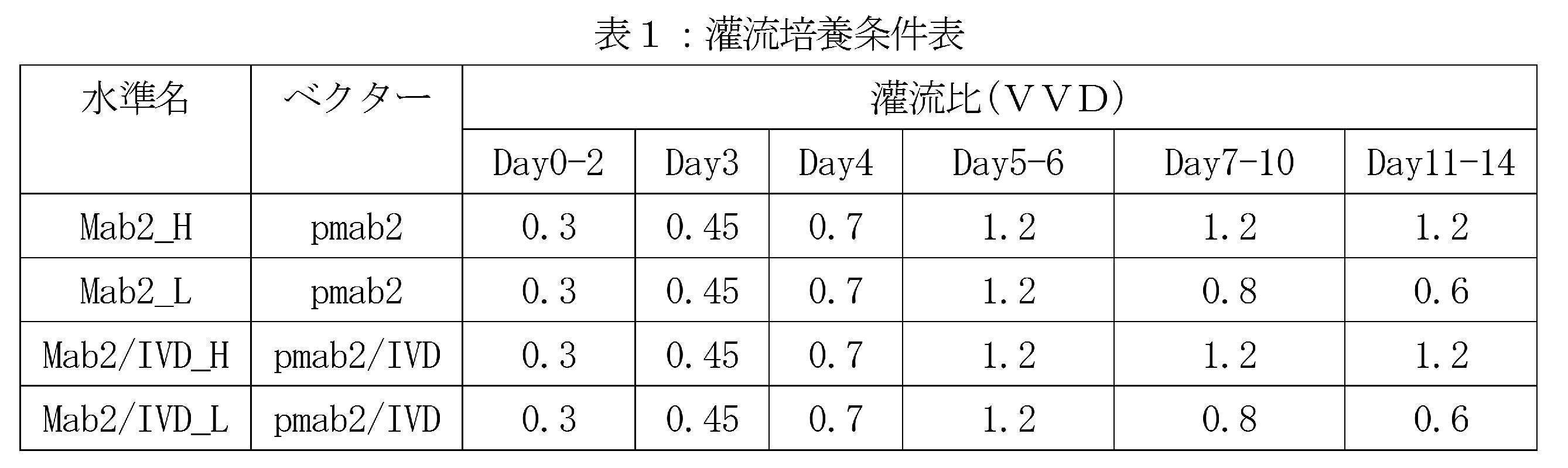
一日当たり細胞が生産した総mab2量Ymab2は以下の式で求めた

YTti [g/L] = 培養日tiにおける透過側の抗体濃度
YTti’ [g/L] = 培養日tiにおけるブリーディング後の透過側の抗体濃度
YBti [g/L] = 培養日tiにおける培養槽側の抗体濃度
Pti[VVD] = 培養日tiからt(i+1)までの灌流比
YTti’ [g/L] = 培養日tiにおけるブリーディング後の透過側の抗体濃度
YBti [g/L] = 培養日tiにおける培養槽側の抗体濃度
Pti[VVD] = 培養日tiからt(i+1)までの灌流比
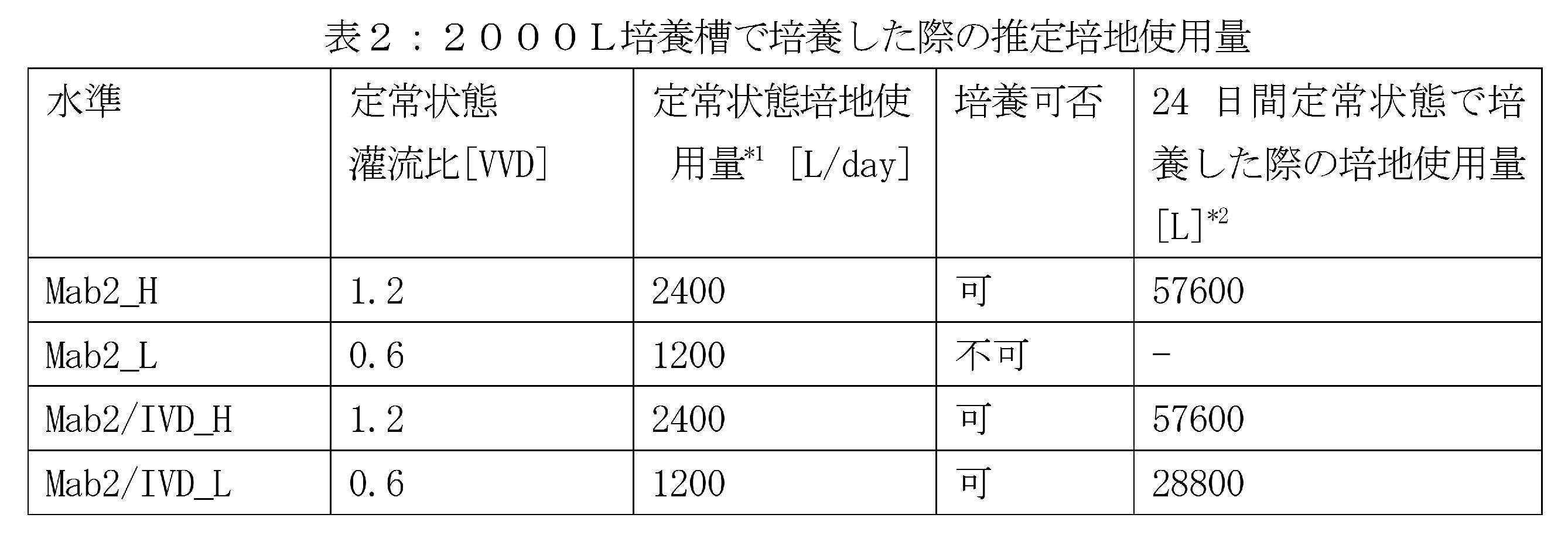
*1:セルブリーディング時に補填する培地量は除く
*2:24日間、定常状態が続いたと仮定
*2:24日間、定常状態が続いたと仮定
Claims (23)
- 目的タンパク質をコードする遺伝子と、イソバレリルCoAデヒドロゲナーゼをコードする外来遺伝子とを有し、イソバレリルCoAデヒドロゲナーゼが過剰発現している、動物細胞。
- イソバレリルCoAデヒドロゲナーゼをコードする外来遺伝子がプロモーターに連結されている、請求項1に記載の動物細胞。
- 動物細胞が、CHO細胞である、請求項1または2に記載の動物細胞。
- イソバレリルCoAデヒドロゲナーゼの発現量が、イソバレリルCoAデヒドロゲナーゼをコードする外来遺伝子を有さない前記動物細胞に対して、3倍以上である、請求項1から3の何れか一項に記載の動物細胞。
- 目的タンパク質をコードする遺伝子と、イソバレリルCoAデヒドロゲナーゼをコードする外来遺伝子とが、同一の発現ベクター上に存在している、請求項1から4の何れか一項に記載の動物細胞。
- 動物細胞に対して、目的タンパク質をコードする遺伝子と、イソバレリルCoAデヒドロゲナーゼをコードする外来遺伝子とを導入する工程を含む、請求項1から5の何れか一項に記載の動物細胞の製造方法。
- イソバレリルCoAデヒドロゲナーゼをコードする外来遺伝子を導入する工程が、エレクトロポレーションにより行われる、請求項6に記載の方法。
- 目的タンパク質をコードする遺伝子と、イソバレリルCoAデヒドロゲナーゼをコードする外来遺伝子とを含む同一の発現ベクターを用いて、目的タンパク質をコードする遺伝子と、イソバレリルCoAデヒドロゲナーゼをコードする外来遺伝子とを導入する、請求項6または7に記載の方法。
- 請求項1から5の何れか一項に記載の動物細胞を培養することを含む、目的タンパク質の製造方法。
- 動物細胞の培養がフェドバッチ培養またはバッチ培養である、請求項9に記載の方法。
- 細胞培養の播種細胞密度が0.2×10⁶cells/mL以上5×106cells/mL以下である、請求項10に記載の方法。
- 培養期間中の生細胞率が全期間において60%以上である、請求項10または11に記載の方法。
- 培養期間を通した培養液中のイソ吉草酸の最大濃度が3000μmol/L以下である、請求項10から12の何れか一項に記載の方法。
- 培養期間を通した細胞あたりのイソ吉草酸分泌量が30fmol/細胞/日以下である、請求項10から13の何れか一項に記載の方法。
- 培養期間を通した培養液中の酪酸の最大濃度が3000μmol/L以下である、請求項10から14の何れか一項に記載の方法。
- 培養期間を通した細胞あたりの酪酸分泌量が30fmol/細胞/日以下である、請求項10から15の何れか一項に記載の方法。
- 動物細胞の培養が、灌流培養である、請求項9に記載の方法。
- 細胞培養の播種細胞密度が0.2×10⁶cells/mL以上3×107cells/mL以下である、請求項17に記載の方法。
- 培養期間中の生細胞率が全期間において90%以上である、請求項17または18に記載の方法。
- 培養液中のイソ吉草酸の濃度が3000μmol/L以下である、請求項17から19の何れか一項に記載の方法。
- 細胞あたりのイソ吉草酸分泌量が30fmol/細胞/日以下である、請求項17から20の何れか一項に記載の方法。
- 培養期間を通した培養液中の酪酸の濃度が3000μmol/L以下である、請求項17から21の何れか一項に記載の方法。
- 培養期間を通した細胞あたりの酪酸分泌量が30fmol/細胞/日以下である、請求項17から22の何れか一項に記載の方法。
Priority Applications (4)
| Application Number | Priority Date | Filing Date | Title |
|---|---|---|---|
| JP2019559655A JP7032438B2 (ja) | 2017-12-11 | 2018-12-11 | 動物細胞、動物細胞の製造方法および目的タンパク質の製造方法 |
| EP18887753.4A EP3725877A4 (en) | 2017-12-11 | 2018-12-11 | ANIMAL CELLS AS WELL AS A METHOD FOR MANUFACTURING THE SAME, AND A METHOD FOR MANUFACTURING TARGET PROTEIN |
| CN201880079952.3A CN111465686B (zh) | 2017-12-11 | 2018-12-11 | 动物细胞、动物细胞的制造方法及靶蛋白的制造方法 |
| US16/897,860 US11542523B2 (en) | 2017-12-11 | 2020-06-10 | Animal cell, method for producing animal cell, and method for producing target protein |
Applications Claiming Priority (2)
| Application Number | Priority Date | Filing Date | Title |
|---|---|---|---|
| JP2017-236641 | 2017-12-11 | ||
| JP2017236641 | 2017-12-11 |
Related Child Applications (1)
| Application Number | Title | Priority Date | Filing Date |
|---|---|---|---|
| US16/897,860 Continuation US11542523B2 (en) | 2017-12-11 | 2020-06-10 | Animal cell, method for producing animal cell, and method for producing target protein |
Publications (1)
| Publication Number | Publication Date |
|---|---|
| WO2019117136A1 true WO2019117136A1 (ja) | 2019-06-20 |
Family
ID=66820862
Family Applications (1)
| Application Number | Title | Priority Date | Filing Date |
|---|---|---|---|
| PCT/JP2018/045479 Ceased WO2019117136A1 (ja) | 2017-12-11 | 2018-12-11 | 動物細胞、動物細胞の製造方法および目的タンパク質の製造方法 |
Country Status (5)
| Country | Link |
|---|---|
| US (1) | US11542523B2 (ja) |
| EP (1) | EP3725877A4 (ja) |
| JP (1) | JP7032438B2 (ja) |
| CN (1) | CN111465686B (ja) |
| WO (1) | WO2019117136A1 (ja) |
Cited By (4)
| Publication number | Priority date | Publication date | Assignee | Title |
|---|---|---|---|---|
| WO2021107123A1 (ja) * | 2019-11-29 | 2021-06-03 | 富士フイルム株式会社 | 細胞培養方法、抗体製造方法、有機酸除去方法、及び、抗体 |
| JP2022546230A (ja) * | 2019-08-14 | 2022-11-04 | ユニバーシティ オブ マサチューセッツ | 細胞培養方法 |
| WO2023053585A1 (ja) | 2021-09-30 | 2023-04-06 | 富士フイルム株式会社 | 学習用データの取得方法、学習用データ取得システム、ソフトセンサの構築方法、ソフトセンサ、学習用データ |
| WO2024248120A1 (ja) | 2023-05-31 | 2024-12-05 | 富士フイルム株式会社 | 生産物の生産方法 |
Families Citing this family (1)
| Publication number | Priority date | Publication date | Assignee | Title |
|---|---|---|---|---|
| WO2024040519A1 (en) * | 2022-08-25 | 2024-02-29 | Wuxi Biologics Co., Ltd. | Intermittent perfusion fed-batch culture |
Citations (3)
| Publication number | Priority date | Publication date | Assignee | Title |
|---|---|---|---|---|
| JP2006174786A (ja) | 2004-12-24 | 2006-07-06 | Kikkoman Corp | 不精臭が低減した飲食品 |
| JP2016517691A (ja) | 2013-05-03 | 2016-06-20 | フジフィルム・ダイオシンス・バイオテクノロジーズ ・ユーケイ・リミテッド | 発現方法 |
| WO2017051347A2 (en) | 2015-09-23 | 2017-03-30 | Pfizer Inc. | Cells and method of cell culture |
Family Cites Families (3)
| Publication number | Priority date | Publication date | Assignee | Title |
|---|---|---|---|---|
| US20090186358A1 (en) * | 2007-12-21 | 2009-07-23 | Wyeth | Pathway Analysis of Cell Culture Phenotypes and Uses Thereof |
| EP2296701A1 (en) * | 2008-06-11 | 2011-03-23 | Flugen, Inc. | Cell-based systems for producing influenza vaccines |
| WO2014022102A1 (en) * | 2012-08-01 | 2014-02-06 | Amgen Inc. | Methods of using anti-apoptotic compounds to modulate one or more properties of a cell culture |
-
2018
- 2018-12-11 CN CN201880079952.3A patent/CN111465686B/zh active Active
- 2018-12-11 WO PCT/JP2018/045479 patent/WO2019117136A1/ja not_active Ceased
- 2018-12-11 JP JP2019559655A patent/JP7032438B2/ja active Active
- 2018-12-11 EP EP18887753.4A patent/EP3725877A4/en active Pending
-
2020
- 2020-06-10 US US16/897,860 patent/US11542523B2/en active Active
Patent Citations (3)
| Publication number | Priority date | Publication date | Assignee | Title |
|---|---|---|---|---|
| JP2006174786A (ja) | 2004-12-24 | 2006-07-06 | Kikkoman Corp | 不精臭が低減した飲食品 |
| JP2016517691A (ja) | 2013-05-03 | 2016-06-20 | フジフィルム・ダイオシンス・バイオテクノロジーズ ・ユーケイ・リミテッド | 発現方法 |
| WO2017051347A2 (en) | 2015-09-23 | 2017-03-30 | Pfizer Inc. | Cells and method of cell culture |
Non-Patent Citations (7)
| Title |
|---|
| BIOTECHNOLOGY AND BIOENGINEERING, vol. 114, 2017, pages 1779 - 1790 |
| J. MOL. BIOL., vol. 215, 1990, pages 403 - 410 |
| MOHSEN, A.-W. A. ET AL.: "High-level expression of an altered cDNA encoding human isovaleryl-CoA dehydrogenase in Escherichia coli.", GENE, vol. 160, 1995, pages 263 - 267, XP004042156 * |
| MULUKUTLA, B. C. ET AL.: "Identification and control of novel growth inhibitors in fed-batch cultures of chinese hamster ovary cells", BIOTECHNOL. BIOENG ., vol. 114, no. 8, 2017, pages 1779 - 1790, XP055617764 * |
| SAMBROOK ET AL.: "Molecular Cloning: A Laboratory Manual", vol. 1, 2001, COLD SPRING HARBOR LABORATORY PRESS |
| See also references of EP3725877A4 |
| URANO, K. ET AL.: "Molecular defect of isovaleryl-CoA dehydrogenase in the skunk mutant of silkworm , Bombyx mori.", FEBS J., vol. 277, no. 21, 2010, pages 4452 - 4463, XP055617756 * |
Cited By (6)
| Publication number | Priority date | Publication date | Assignee | Title |
|---|---|---|---|---|
| JP2022546230A (ja) * | 2019-08-14 | 2022-11-04 | ユニバーシティ オブ マサチューセッツ | 細胞培養方法 |
| WO2021107123A1 (ja) * | 2019-11-29 | 2021-06-03 | 富士フイルム株式会社 | 細胞培養方法、抗体製造方法、有機酸除去方法、及び、抗体 |
| JPWO2021107123A1 (ja) * | 2019-11-29 | 2021-06-03 | ||
| JP7352650B2 (ja) | 2019-11-29 | 2023-09-28 | 富士フイルム株式会社 | 細胞培養方法、抗体製造方法、有機酸除去方法、及び、抗体 |
| WO2023053585A1 (ja) | 2021-09-30 | 2023-04-06 | 富士フイルム株式会社 | 学習用データの取得方法、学習用データ取得システム、ソフトセンサの構築方法、ソフトセンサ、学習用データ |
| WO2024248120A1 (ja) | 2023-05-31 | 2024-12-05 | 富士フイルム株式会社 | 生産物の生産方法 |
Also Published As
| Publication number | Publication date |
|---|---|
| CN111465686A (zh) | 2020-07-28 |
| JP7032438B2 (ja) | 2022-03-08 |
| JPWO2019117136A1 (ja) | 2020-12-17 |
| EP3725877A1 (en) | 2020-10-21 |
| US11542523B2 (en) | 2023-01-03 |
| CN111465686B (zh) | 2024-03-22 |
| EP3725877A4 (en) | 2021-02-17 |
| US20200299723A1 (en) | 2020-09-24 |
Similar Documents
| Publication | Publication Date | Title |
|---|---|---|
| US11827692B2 (en) | Mammalian cell culture | |
| JP6943972B2 (ja) | 灌流培地 | |
| JP7032438B2 (ja) | 動物細胞、動物細胞の製造方法および目的タンパク質の製造方法 | |
| CN110462054A (zh) | 灌注培养基 | |
| JPWO2020091041A1 (ja) | 液体培地の調製方法 | |
| JP7123168B2 (ja) | 動物細胞、動物細胞の製造方法および目的タンパク質の製造方法 | |
| WO2020122048A1 (ja) | 動物細胞、動物細胞の製造方法および目的タンパク質の製造方法 | |
| HK1206057B (en) | Mammalian cell culture | |
| HK1197081B (en) | Mammalian cell culture |
Legal Events
| Date | Code | Title | Description |
|---|---|---|---|
| 121 | Ep: the epo has been informed by wipo that ep was designated in this application |
Ref document number: 18887753 Country of ref document: EP Kind code of ref document: A1 |
|
| ENP | Entry into the national phase |
Ref document number: 2019559655 Country of ref document: JP Kind code of ref document: A |
|
| NENP | Non-entry into the national phase |
Ref country code: DE |
|
| ENP | Entry into the national phase |
Ref document number: 2018887753 Country of ref document: EP Effective date: 20200713 |