WO2019126532A1 - Battery electrode with solid polymer electrolyte and aqueous soluble binder - Google Patents
Battery electrode with solid polymer electrolyte and aqueous soluble binder Download PDFInfo
- Publication number
- WO2019126532A1 WO2019126532A1 PCT/US2018/066849 US2018066849W WO2019126532A1 WO 2019126532 A1 WO2019126532 A1 WO 2019126532A1 US 2018066849 W US2018066849 W US 2018066849W WO 2019126532 A1 WO2019126532 A1 WO 2019126532A1
- Authority
- WO
- WIPO (PCT)
- Prior art keywords
- polymer
- battery
- solid
- lithium
- electrolyte
- Prior art date
- Legal status (The legal status is an assumption and is not a legal conclusion. Google has not performed a legal analysis and makes no representation as to the accuracy of the status listed.)
- Ceased
Links
Classifications
-
- H—ELECTRICITY
- H01—ELECTRIC ELEMENTS
- H01M—PROCESSES OR MEANS, e.g. BATTERIES, FOR THE DIRECT CONVERSION OF CHEMICAL ENERGY INTO ELECTRICAL ENERGY
- H01M4/00—Electrodes
- H01M4/02—Electrodes composed of, or comprising, active material
- H01M4/62—Selection of inactive substances as ingredients for active masses, e.g. binders, fillers
- H01M4/621—Binders
- H01M4/622—Binders being polymers
-
- H—ELECTRICITY
- H01—ELECTRIC ELEMENTS
- H01M—PROCESSES OR MEANS, e.g. BATTERIES, FOR THE DIRECT CONVERSION OF CHEMICAL ENERGY INTO ELECTRICAL ENERGY
- H01M4/00—Electrodes
- H01M4/02—Electrodes composed of, or comprising, active material
- H01M4/62—Selection of inactive substances as ingredients for active masses, e.g. binders, fillers
-
- H—ELECTRICITY
- H01—ELECTRIC ELEMENTS
- H01M—PROCESSES OR MEANS, e.g. BATTERIES, FOR THE DIRECT CONVERSION OF CHEMICAL ENERGY INTO ELECTRICAL ENERGY
- H01M4/00—Electrodes
- H01M4/02—Electrodes composed of, or comprising, active material
- H01M4/36—Selection of substances as active materials, active masses, active liquids
- H01M4/362—Composites
-
- H—ELECTRICITY
- H01—ELECTRIC ELEMENTS
- H01M—PROCESSES OR MEANS, e.g. BATTERIES, FOR THE DIRECT CONVERSION OF CHEMICAL ENERGY INTO ELECTRICAL ENERGY
- H01M10/00—Secondary cells; Manufacture thereof
- H01M10/05—Accumulators with non-aqueous electrolyte
- H01M10/052—Li-accumulators
- H01M10/0525—Rocking-chair batteries, i.e. batteries with lithium insertion or intercalation in both electrodes; Lithium-ion batteries
-
- H—ELECTRICITY
- H01—ELECTRIC ELEMENTS
- H01M—PROCESSES OR MEANS, e.g. BATTERIES, FOR THE DIRECT CONVERSION OF CHEMICAL ENERGY INTO ELECTRICAL ENERGY
- H01M10/00—Secondary cells; Manufacture thereof
- H01M10/05—Accumulators with non-aqueous electrolyte
- H01M10/056—Accumulators with non-aqueous electrolyte characterised by the materials used as electrolytes, e.g. mixed inorganic/organic electrolytes
- H01M10/0564—Accumulators with non-aqueous electrolyte characterised by the materials used as electrolytes, e.g. mixed inorganic/organic electrolytes the electrolyte being constituted of organic materials only
- H01M10/0565—Polymeric materials, e.g. gel-type or solid-type
-
- H—ELECTRICITY
- H01—ELECTRIC ELEMENTS
- H01M—PROCESSES OR MEANS, e.g. BATTERIES, FOR THE DIRECT CONVERSION OF CHEMICAL ENERGY INTO ELECTRICAL ENERGY
- H01M4/00—Electrodes
- H01M4/02—Electrodes composed of, or comprising, active material
- H01M4/04—Processes of manufacture in general
- H01M4/0402—Methods of deposition of the material
- H01M4/0404—Methods of deposition of the material by coating on electrode collectors
-
- H—ELECTRICITY
- H01—ELECTRIC ELEMENTS
- H01M—PROCESSES OR MEANS, e.g. BATTERIES, FOR THE DIRECT CONVERSION OF CHEMICAL ENERGY INTO ELECTRICAL ENERGY
- H01M4/00—Electrodes
- H01M4/02—Electrodes composed of, or comprising, active material
- H01M4/13—Electrodes for accumulators with non-aqueous electrolyte, e.g. for lithium-accumulators; Processes of manufacture thereof
- H01M4/133—Electrodes based on carbonaceous material, e.g. graphite-intercalation compounds or CFx
-
- H—ELECTRICITY
- H01—ELECTRIC ELEMENTS
- H01M—PROCESSES OR MEANS, e.g. BATTERIES, FOR THE DIRECT CONVERSION OF CHEMICAL ENERGY INTO ELECTRICAL ENERGY
- H01M4/00—Electrodes
- H01M4/02—Electrodes composed of, or comprising, active material
- H01M4/13—Electrodes for accumulators with non-aqueous electrolyte, e.g. for lithium-accumulators; Processes of manufacture thereof
- H01M4/139—Processes of manufacture
- H01M4/1393—Processes of manufacture of electrodes based on carbonaceous material, e.g. graphite-intercalation compounds or CFx
-
- H—ELECTRICITY
- H01—ELECTRIC ELEMENTS
- H01M—PROCESSES OR MEANS, e.g. BATTERIES, FOR THE DIRECT CONVERSION OF CHEMICAL ENERGY INTO ELECTRICAL ENERGY
- H01M4/00—Electrodes
- H01M4/02—Electrodes composed of, or comprising, active material
- H01M4/36—Selection of substances as active materials, active masses, active liquids
- H01M4/58—Selection of substances as active materials, active masses, active liquids of inorganic compounds other than oxides or hydroxides, e.g. sulfides, selenides, tellurides, halogenides or LiCoFy; of polyanionic structures, e.g. phosphates, silicates or borates
- H01M4/583—Carbonaceous material, e.g. graphite-intercalation compounds or CFx
- H01M4/587—Carbonaceous material, e.g. graphite-intercalation compounds or CFx for inserting or intercalating light metals
-
- H—ELECTRICITY
- H01—ELECTRIC ELEMENTS
- H01M—PROCESSES OR MEANS, e.g. BATTERIES, FOR THE DIRECT CONVERSION OF CHEMICAL ENERGY INTO ELECTRICAL ENERGY
- H01M4/00—Electrodes
- H01M4/02—Electrodes composed of, or comprising, active material
- H01M4/62—Selection of inactive substances as ingredients for active masses, e.g. binders, fillers
- H01M4/621—Binders
-
- H—ELECTRICITY
- H01—ELECTRIC ELEMENTS
- H01M—PROCESSES OR MEANS, e.g. BATTERIES, FOR THE DIRECT CONVERSION OF CHEMICAL ENERGY INTO ELECTRICAL ENERGY
- H01M4/00—Electrodes
- H01M4/02—Electrodes composed of, or comprising, active material
- H01M4/62—Selection of inactive substances as ingredients for active masses, e.g. binders, fillers
- H01M4/624—Electric conductive fillers
-
- H—ELECTRICITY
- H01—ELECTRIC ELEMENTS
- H01M—PROCESSES OR MEANS, e.g. BATTERIES, FOR THE DIRECT CONVERSION OF CHEMICAL ENERGY INTO ELECTRICAL ENERGY
- H01M4/00—Electrodes
- H01M4/02—Electrodes composed of, or comprising, active material
- H01M4/62—Selection of inactive substances as ingredients for active masses, e.g. binders, fillers
- H01M4/624—Electric conductive fillers
- H01M4/625—Carbon or graphite
-
- H—ELECTRICITY
- H01—ELECTRIC ELEMENTS
- H01M—PROCESSES OR MEANS, e.g. BATTERIES, FOR THE DIRECT CONVERSION OF CHEMICAL ENERGY INTO ELECTRICAL ENERGY
- H01M2300/00—Electrolytes
- H01M2300/0017—Non-aqueous electrolytes
- H01M2300/0065—Solid electrolytes
- H01M2300/0082—Organic polymers
-
- Y—GENERAL TAGGING OF NEW TECHNOLOGICAL DEVELOPMENTS; GENERAL TAGGING OF CROSS-SECTIONAL TECHNOLOGIES SPANNING OVER SEVERAL SECTIONS OF THE IPC; TECHNICAL SUBJECTS COVERED BY FORMER USPC CROSS-REFERENCE ART COLLECTIONS [XRACs] AND DIGESTS
- Y02—TECHNOLOGIES OR APPLICATIONS FOR MITIGATION OR ADAPTATION AGAINST CLIMATE CHANGE
- Y02E—REDUCTION OF GREENHOUSE GAS [GHG] EMISSIONS, RELATED TO ENERGY GENERATION, TRANSMISSION OR DISTRIBUTION
- Y02E60/00—Enabling technologies; Technologies with a potential or indirect contribution to GHG emissions mitigation
- Y02E60/10—Energy storage using batteries
Definitions
- binders typically require binders to both maintain electrode integrity and to ensure adherence with corresponding current collector surfaces.
- the binders are used in electrode forming processes with appropriate solvents.
- Non-aqueous solvents are used with binders such as Polyvinylidene fluoride also known as polyvinylidene difluoride.
- Aqueous binders including water are less toxic, but water can damage electrolytes by, for example, disassociating electrolyte salts from the solute.
- prior art use of aqueous binders generally requires processes that isolate the aqueous solution from the electrolyte and/or additional process steps for addition of supplementary electrolyte after the aqueous solution is driven or removed from the electrode.
- the invention features an electrode useful in an electrochemical cell.
- the electrode includes an electrochemically active material; an electrically conductive material; a solid ionically conductive polymer electrolyte; and a binder; wherein the binder is dispersed in an aqueous solution.
- the binder is soluble in an aqueous solution.
- the binder is partially soluble in an aqueous solution.
- the electrode further includes a lithium.
- the electrochemically active material includes a graphite.
- the electrochemically active material is in an amount having a range of 70-90 wt. % of the electrode.
- the electrode further includes an electrically conductive current collector which is in electrical communication with the electrically conductive material.
- the electrode further includes a second binder which is soluble in an aqueous solution.
- the solid ionically conductive polymer electrolyte is in an amount having a range of 52-15 wt.% of the electrode.
- the solid ionically conductive polymer electrolyte has an ionic conductivity of at least lxl O 4 S/cm.
- the solid ionically conductive polymer electrolyte has a crystallinity of at least 30%.
- the solid ionically conductive polymer electrolyte has a cathodic transference number greater than 0.4 and less than 1.0.
- the solid ionically conductive polymer electrolyte is in a glassy state.
- the electrochemically active material, the electrically conductive material, the solid ionically conductive polymer electrolyte and the binder include a plurality of dispersed, intermixed particulates.
- the electrode further includes an electrically conductive current collector; and the electrode is adhered to the electrically conductive current collector.
- the electrochemically active material, the electrically conductive material, the solid ionically conductive polymer electrolyte and the binder include a plurality of dispersed, intermixed particulates forming a mixture; and the mixture is adhered to the electrically conductive current collector by an aqueous slurry.
- the invention features a method of making a battery structure.
- the method includes the steps of selecting an electrically conductive current collector and an electrode; wherein the electrode comprises an electrochemically active material, an electrically conductive material, a solid ionically conductive polymer electrolyte, and a binder; mixing the electrochemically active material, the electrically conductive material, the solid ionically conductive polymer electrolyte, and the binder in an aqueous solution to create a slurry; positioning the slurry adjacent the electrically conductive current collector; and drying the slurry; wherein the electrode adheres to the electrically conductive current collector.
- FIG. 1 is a schematic of an electrochemical cell according to an exemplary embodiment of the invention
- FIG. 2 is a discharge curve for the electrochemical cell described in Example 1 ;
- FIG. 3 is a plot of a cycle test for the electrochemical cell described in Example 1 during Lithium intercalation and deintercalation;
- FIG. 4 is a discharge curve for the comparative electrochemical cell described in Example
- FIG. 5 is a plot of a cycle test for the electrochemical cell described in Example 2.
- an electrochemical cell 10 is shown in representative cross- section.
- the electrochemical cell has a first electrode 20 attached to a first electrically conductive current collector 30.
- the electrochemical cell also includes a second electrode 50 which is similarly attached to a second electrically conductive current collector 60.
- An electrolyte layer 40 is interposed between the first and second electrodes.
- the electrolyte layer 40 acts as a dielectric separator and enables ionic conduction between the electrodes.
- Each of the current collectors 30 and 60 includes a respective tab 25 and 65 extending from each respective current collector 30 and 60 so that at least a portion of the tab can extend from the cell enclosure (not shown). Each tab 25 and 65 thus can act as an electrical lead, either positive and negative for the cell.
- the first 20 and second electrodes 50 each contain an electrochemically active material that forms an electrochemical couple which produces electrons when the cell in under load.
- an electrochemical cell and its electrodes can vary depending on the electrochemical couple, in an aspect, the invention features an electrode having a basic or typically design known to those of ordinary skill in the art.
- the electrode components typically include an electrolyte, an electrically conductive material and a binder. Liquid electrolytes or non-solid electrolytes such as, for a non-limiting example, gels, or electrolytes having a non-solid state are typically used in the prior art as the ionically conductive media in electrochemical cells.
- the invention features an electrochemical cell which includes a solid, ionically conductive, polymer electrolyte.
- the solid ionically conductive polymer electrolyte can function as an analyte and as a catholyte.
- the solid, ionically conductive polymer electrolyte can include a plurality of particulates. These particulates can be arranged in an array having a shape of a film, such as, for a non-limiting example, a planar film.
- the solid ionically conductive polymer electrolyte can be interposed between the electrodes to enable ionic conductivity between the electrodes while also providing the dielectric barrier necessary for the electrochemical cell.
- the particulates of the solid ionically conductive polymer electrolyte can be dispersed throughout the electrode whether the particulates function as an analyte and/or as a catholyte.
- the particulates can be interspersed with and encapsulate the particles of the electrochemically active material, the binder, and the electrically conductive material.
- the electrolyte includes at least one salt for the required ionic conductivity for the cell.
- the salt contains at least an anion and a cation.
- the invention features a lithium battery, wherein the diffusivity and ionic conductivity of the cation is preferably greater than that of the anion.
- the present invention includes a lithium metal battery enabled to operate efficiently at a high voltage by a solid ionically conductive polymer material.
- depolarizers refers to a synonym for an electrochemically active substance(s), i.e., a substance(s) which changes its oxidation state or partakes in a formation or breaking of chemical bonds, in a charge-transfer step of an electrochemical reaction and an electrochemically active material.
- electrochemically active substance(s) i.e., a substance(s) which changes its oxidation state or partakes in a formation or breaking of chemical bonds, in a charge-transfer step of an electrochemical reaction and an electrochemically active material.
- co-depolarizers co-depolarizers.
- thermoplastic(s) refers to a characteristic of a plastic material or polymer, wherein the plastic material or polymer becomes reversibly pliable or moldable above a specific temperature, the specific temperature being typically around or at the melting temperature of the plastic material or polymer, and wherein the plastic material or polymer reversibly solidifies upon cooling below the melting temperature.
- solid electrolyte(s) and/or“solid phase electrolytes” refer to solvent free polymers and/or ceramic compounds including crystalline, semi-crystalline and/or amorphous compounds and/or compounds in a glassy state.
- the terms“solid electrolyte(s)” and/or“solid phase electrolyte(s)” do not refer to or include gelled or wet polymer(s), solvent(s) and/or other material(s) which depend upon a liquid, liquid phase, and/or liquid phase material for ionic conductivity.
- solid(s) and/or“solid phase(s) and/or solid phase material and/or material is a solid phase” can be used interchangeably and refer to the ability to maintain indefinitely a particular shape, wherein the“solid” is distinguishable and different from a liquid or a liquid phase or a liquid phase material or a material in a liquid phase.
- the atomic structure of the“solid(s)” can be crystalline or amorphous.
- The“solid(s)” can be mixed with or include components in composite structures.
- a“solid” ionically conductive or conducting material enables ionic conductivity through the“solid” material and not through any solvent, gel, liquid, liquid phase or liquid phase material, unless it is otherwise described.
- polymer(s) refers to an organic compound which includes carbon-based macromolecules. Each macromolecule can have one or more types of repeating units, also known as monomers and/or monomer residues, as understood by those persons of ordinary skill in the art.
- a “polymer(s)” is characterized as lightweight, ductile, usually or typically electrically non- conductive, and melts at a relatively low temperature.
- a polymer(s) can be made into products by injection, blowing and other molding processes, extrusion, pressing, stamping, three-dimensional printing, machining and other plastic or polymer forming processes known to those of ordinary skill in the art.
- a polymer(s) typically has a glassy state at a temperature below the glass transition temperature or Tg of the polymer(s).
- the glass transition temperature is a function of polymer chain flexibility. At temperatures above the glass transition temperature, there is enough vibrational and/or thermal energy in the system of the polymer(s) to create sufficient free -volume to permit sequences of segments of the polymer macromolecule to move together as a unit. However, when in the glassy state, a polymer has no segmental motion of the polymer.
- ceramic(s) which is distinguishable from the term“polymer(s)”, refers to an inorganic, non- metallic material; ceramics typically include compounds which consist of metals covalently bonded to oxygen, nitrogen or carbon. A“ceramic(s)” is characterized as brittle, strong and non-conducting.
- glass transition temperature which is observed, determined or estimated in some but not all polymers, is a temperature or temperature range which falls between the temperature of a supercooled liquid state and the temperature of a glassy state as a polymer material is cooled.
- the thermodynamic measurements of the glass transition are done by measuring a physical property of the polymer, e.g. volume, enthalpy or entropy and other derivative properties as a function of temperature.
- the glass transition temperature is observed on such a plot as a break in the selected property (volume of enthalpy) or from a change in slope (heat capacity or thermal expansion coefficient) at the transition temperature.
- a polymer(s) can include a crystalline, a semi-crystalline and/or an amorphous phase.
- the term“percentage crystallinity” of a polymer(s) refers to the percentage or amount of the crystalline phase of the polymer relative the total amount of the polymer including both the amorphous and crystalline phases of the polymer. Crystallinity percentage can be calculated via x-ray diffraction of the polymer and analysis of the relative areas of the amorphous and crystalline phases of the polymer.
- the term“polymer film” generally refers to a thin portion of polymer.
- the term“polymer film” should be understood to equal a portion of polymer which is equal to or less than 300 micrometers in thickness.
- Ionic conductivity differs from electrical conductivity. Ionic conductivity depends on ionic diffusivity, and the properties of ionic conductivity are related by the Nemst-Einstein equation. Ionic conductivity and ionic diffusivity are both measures of ionic mobility. An ion is considered mobile in a material if the diffusivity of the ion in the material is positive, that is, greater than zero, and/or the movement of the ion contributes to a positive ionic conductivity.
- Ionic mobility measurements are generally taken at room temperature, that is, around 2l°C, unless otherwise stated. Ionic mobility is affected by temperature. Thus, it can be difficult to detect ionic mobility at low temperatures. Equipment detection limits can be a factor in determining relatively low ionic mobility.
- An ion can be considered mobile in a material when a measurement of the diffusivity of the ion is at least 1 x 10 14 m 2 /s and preferably is at leastl x l0 13 m 2 /s.
- solid polymer ionically conductive and/or conducting material(s) refers to a solid material that includes a polymer and conducts ions as will be further described.
- An aspect of the invention includes a method of synthesizing a solid ionically conductive polymer material from at least three distinct components: a base polymer, a dopant and an ionic compound.
- the components and method of synthesis are chosen or selected for the particular application of the material.
- the selection of the base polymer, dopant and ionic compound may also vary based on the desired performance of the material.
- the desired components and method of synthesis may be determined by optimization of a desired physical characteristic (e.g. ionic conductivity).
- the method of synthesis can also vary depending on the particular components and the desired form of the end material (e.g. film, particulate, etc.). However, the method includes the basic steps of mixing at least two of the components initially, adding the third component in an optional second mixing step, and heating the components/reactants to synthesis the solid ionically conductive polymer material in a heating step.
- the resulting mixture can be optionally formed into a film of desired size. If the dopant was not present in the mixture produced in the first step, then it can be subsequently added to the mixture while heat and optionally pressure (positive pressure or vacuum) are applied. All three components can be present and mixed and heated to complete the synthesis of the solid ionically conductive polymer material in a single step.
- this heating step can be done when in a separate step from any mixing or can completed while mixing is being done.
- the heating step can be performed regardless of the form of the mixture (e.g. film, particulate, etc.)
- all three components are mixed and then extruded into a film. The film is heated to complete the synthesis.
- An aspect of the method of synthesis includes a step of mixing the base polymer, ionic compound and dopant together followed by a step of heating the mixture.
- the heating step can be performed in the presence of the dopant where the dopant can be in the gas phase.
- the mixing step can be performed in an extruder, blender, mill or other equipment typical of plastic processing.
- the heating step can last several hours (e.g. twenty-four (24) hours) and the color change is a reliable indication that synthesis is complete or partially complete. Additional heating past synthesis (color change) does not appear to negatively affect the material.
- the base polymer and ionic compound can be first mixed.
- the dopant is then mixed with the polymer-ionic compound mixture and heated.
- the heating can be applied to the mixture during the mixture step or the heating can be applied to the mixture subsequent to the mixing step.
- the base polymer and the dopant are first mixed, and then heated.
- This heating step can be applied after the mixing or during the mixing.
- the heating step produces a color change indicating the formation of charge transfer complexes and reaction between the dopant and the base polymer.
- the ionic compound is then mixed with the reacted polymer dopant material to complete the formation of the solid ionically conductive polymer material.
- Typical methods of adding the dopant are known to those skilled in the art and can include vapor doping of film containing the base polymer and ionic compound and other doping methods known to those skilled in the art.
- vapor doping of film containing the base polymer and ionic compound Upon doping the solid polymer material becomes ionically conductive. It is believed that the doping acts to activate the ionic components of the solid polymer material, so they are diffusing ions.
- non-reactive components can be added to the above described mixtures during the initial mixing steps, secondary mixing steps or mixing steps subsequent to heating.
- Such other components include but are not limited to depolarizers or electrochemically active materials such as anode or cathode active materials, electrically conductive materials such as carbons, rheological agents such as binders or extrusion aids (e.g. ethylene propylene diene monomer "EPDM”), catalysts and other components useful to achieve the desired physical properties of the mixture.
- Polymers that are useful as reactants in the synthesis of the solid ionically conductive polymer material are electron donors or polymers which can be oxidized by electron acceptors.
- Semi-crystalline polymers with a crystallinity index greater than 30%, and greater than 50% are suitable reactant polymers.
- Totally crystalline polymer materials such as liquid crystal polymers (“LCPs") are also useful as reactant polymers. LCPs are totally crystalline and therefore their crystallinity index is hereby defined as 100%.
- Undoped conjugated polymers and polymers such as polyphenylene sulfide (“PPS”) are also suitable polymer reactants.
- Polymers are typically not electrically conductive.
- virgin PPS has an electrical conductivity of 10 20 S/cm.
- Non-electrically conductive polymers are suitable reactant polymers.
- Non limiting examples of the polymers used in this aspect of the invention can be selected from the group including PPS, Poly (p-phenylene oxide) (“PPO”), LCPs, Polyether ether ketone (“PEEK”), Polyphthalamide (“PPA”), Polypyrrole, Polyaniline, and Polysulfone.
- PPS Poly (p-phenylene oxide)
- PEEK Polyether ether ketone
- PPA Polyphthalamide
- Polypyrrole Polyaniline
- Polysulfone Co-polymers including monomers or monomer residues of the listed polymers and mixtures of these polymers may also be used.
- copolymers of p-hydroxybenzoic acid can be appropriate liquid crystal polymer base polymers.
- TABLE 1 details non-limiting examples of reactant polymers useful in the synthesis of the solid ionically conductive polymer material along with monomer or monomer residue structures and some physical property information.
- TABLE 1 includes non-limiting examples where polymers can take multiple forms which can affect their physical properties.
- Dopants that are useful as reactants in the synthesis of the solid ionically conductive polymer material are electron acceptors or oxidants. It is believed that the dopant(s) release ions for ionic transport and mobility. It is believed that the dopant release of ions creates site(s) analogous to charge transfer complex(es) or site(s) within the polymer which allow or permit ionic conductivity.
- Non- limiting examples of dopants which can be used in the present invention include quinones such as: 2,3-dicyano-5,6-dichlorodicyanoquinone (CTCnN O ) also known as “DDQ”, and tetrachloro-l,4-benzoquinone (CeCi t Ch), also known as chloranil, tetracyanoethylene (CeN t ) also known as TCNE, sulfur tri oxide (“SO3”), ozone (tri oxygen or O3), oxygen (O2, including air), transition metal oxides including manganese dioxide (“MnCh”), or any suitable electron acceptor, etc. and combinations thereof.
- CTCnN O 2,3-dicyano-5,6-dichlorodicyanoquinone
- DDQ tetrachloro-l,4-benzoquinone
- CeCi t Ch tetracyanoethylene
- SO3 sulfur tri oxide
- O3 ozone
- Dopants that are temperature stable at the temperatures of the synthesis heating step are useful or preferred, and quinones and other dopants which are both temperature stable and strong oxidizers quinones are very useful and even more preferred.
- TABLE 2 provides a non-limiting listing of dopants, along with their chemical formulas and structures.
- Ionic compounds that are useful as reactants in the synthesis of the solid ionically conductive polymer material are compounds that release desired lithium ions during the synthesis of the solid ionically conductive polymer material.
- the ionic compound is distinct from the dopant in that both an ionic compound and a dopant are required.
- Non- limiting examples include Li 2 0, LiOH, LiNCb, LiTFSI (LiC 2 F 6 N0 4 S 2 or lithium bis-trifluoromethanesulfonimide), LiFSI (F 2 LiN0 4 S 2 or Lithium bis(fluorosulfonyl)imide), LiBOB (Lithium bis(oxalato)borate or CLBLiOs), lithium triflate (LiCFiOiS or lithium trifluoromethane sulfonate), Li PLT, (lithium hexafluorophosphate), LiBF4 (lithium tetrafluoroborate), LiAsFe (lithium hexafluoroarsenate) and other lithium salts and combinations thereof.
- Li 2 0, LiOH, LiNCb LiTFSI (LiC 2 F 6 N0 4 S 2 or lithium bis-trifluoromethanesulfonimide), LiFSI (F 2 LiN0 4 S 2 or Lithium bis(flu
- Hydrated forms (e.g. monohydride) of these compounds can be used to simplify handling of the compounds.
- Inorganic oxides, chlorides and hydroxide are suitable ionic compounds in that they dissociate during synthesis to create at least one anionic and/or cationic diffusing ion. Any such ionic compound that dissociates to create at least one anionic and/or cationic diffusing ion would similarly be suitable.
- Multiple ionic compounds can also be useful that result in multiple anionic and/or cationic diffusing ions can be preferred. The particular ionic compound included in the synthesis depends on the utility desired for the material.
- a lithium hydroxide or a lithium oxide convertible to a lithium and hydroxide ion can be appropriate.
- a lithium containing compound that releases both a lithium cathode and a diffusing anion can be used in the the synthesis method.
- a non-limiting group of such lithium ionic compounds includes those used as lithium salts in organic solvents.
- the purity of the materials can be relevant for the prevention of unintended side reactions and for the maximization of the effectiveness of the synthesis reaction to produce a highly conductive material.
- Substantially pure reactants with generally high purities of the dopant, the base polymer and the ionic compound are useful, and purities greater than 98% are more useful with even higher purities, e.g. LiOH: 99.6%, DDQ: >98%, and Chloranil: >99% also useful.
- useful anode materials include typical anode intercalation materials comprising: lithium titanium oxide (LTO), Silicon (Si), germanium (Ge), and tin (Sn) anodes doped and undoped; and other elements, such as antimony (Sb), lead (Pb), Cobalt (Co), Iron (Fe), Titanium (Ti), Nickel (Ni), magnesium (Mg), aluminum (Al), gallium (Ga), Germanium (Ge), phosphorus (P), arsenic (As), bismuth (Bi), and zinc (Zn) doped and undoped; oxides, nitrides, phosphides, and hydrides of the foregoing; and carbons (C) including nanostructured carbon, graphite, graphene and other materials including carbon, and mixtures thereof.
- LTO lithium titanium oxide
- Si Silicon
- Ge germanium
- Sn tin
- other elements such as antimony (Sb), lead (Pb), Cobalt (Co), Iron (Fe),
- anode intercalation material can be mixed with and dispersed within the solid ionically conductive polymer material such that the solid ionically conductive polymer material can act to ionically conduct the lithium ions to and from the intercalation material during both intercalation and deintercalation (or lithiation/ de-lithiation).
- the cathode current collector 60 and/or the anode current collector 30 can include aluminum, copper, or other electrically conducting film onto which the corresponding cathode 50 or anode 20 can be located or positioned.
- either the cathode current collector 60 and/or the anode current collector 30 can have a planar form.
- Typical electrochemically active cathode compounds which can be used in the present invention include but are not limited to: NCA - Lithium Nickel Cobalt Aluminum Oxide (LiNiCoA10 2 ); NCM (NMC) - Lithium Nickel Cobalt Manganese Oxide (LiNiCoMn0 2 ); LFP - Lithium Iron Phosphate (LiFePO t ); LMO - Lithium Manganese Oxide (LiMmCL); LCo - Lithium Cobalt Oxide (L1C0O2); lithium oxides or phosphates that contain nickel, cobalt or manganese, and LiTiS2, LiNi02, and other layered materials, other spinels, other olivines and tavorites, and combinations thereof.
- the electrochemically active cathode compounds can be an intercalation material or a cathode material that reacts with the lithium in a solid state redox reaction.
- Such conversion cathode materials can include: metal halides including but not limited to metal fluorides such as FeF 2 , B1F 3 , CuF 2 , and N1F 2 , and metal chlorides including but not limited to FeCh, Fed 2, C0CI2, N1CI2, Cud 2, and AgCl; Sulfur (S); Selenium (Se); Tellerium (Te); Iodine (I); Oxygen (O); and related materials such as but not limited to pyrite (FeS2) and LLS.
- metal fluorides such as FeF 2 , B1F 3 , CuF 2 , and N1F 2
- metal chlorides including but not limited to FeCh, Fed 2, C0CI2, N1CI2, Cud 2, and AgCl
- Sulfur (S) Selenium (Se); Tellerium (
- the solid polymer electrolyte is stable at high voltages (exceeding 5.0V relative to the anode electrochemically active material).
- an aspect of the invention involves the increase of the energy density by enabling as high a voltage battery as possible.
- High voltage cathode compounds are preferred in this aspect.
- Certain NCM or NMC material can provide such high voltages with high concentrations of the nickel atom.
- NCMs that have an atomic percentage of nickel which is greater than that of cobalt or manganese, such as NCM523, NCM712, NCM721, NCM811, NCM532, NCM622 and NCM523, and other variations are useful to provide a higher voltage relative the anode electrochemically active material.
- An electrically conductive material is necessary to establish electrical communication between electrochemically active particles and with the associated current collector for the support of electrical conduction within and to and from the electrode.
- Such electrically conductive material typically contains particulate carbon and various graphites and carbons which are useful for this purpose such as. carbon black, a natural graphite, a synthetic graphite, a graphene, other electrically conductive materials comprising carbon, a conductive polymer, a metal particle, and a combination of at least two of the preceding components.
- Binders act to maintain electrode integrity and adhesion to the current collector. Like the electrically conductive material and the electrolyte, the binders are not electrochemically active.
- Binders which are soluble in aqueous solution are substantially soluble in water-based solvents, and can include Carboxymethyl cellulose or“CMC”, and styrene-butadiene rubber or“SBR”, similar aqueous soluble binders and mixtures thereof.
- PTFE Polytetrafluoroethylene
- EPDM Ethylene propylene diene monomer
- PDA poly-polystyrene
- Additional natural binders which can be dispersed or are soluble in an aqueous solution include: Amylose, Caseine, Cyclodextrines (carbonyl-beta), Cellulose (natural), Starches, alginate, chitosan, gums (e.g., gellan, guar, xanthan, karaya, tara, tragacanth, and arabic), agar-agar, pectine, and carrageenan.
- binders can be dispersed in an aqueous solution such that the binder particulates are distributed for coherence of the electrode and/or for maintenance of electrical conductivity between the electrode and a respective electrode lead.
- binders which are soluble in an aqueous solution can be used in the present invention.
- the invention features binders which can be crosslinked if desired, e.g. PAA with CMC, and the crosslinked binder mixture can include tertiary and other additional binders to provide desired mechanical benefits.
- the invention features binders which are soluble and are well dispersed in the water-based solvent, and/or binders which are partially soluble or otherwise dispersed.
- Electrochemically active material needs to be in ionic communication with the solid polymer electrolyte, and in electrical communication with the electrically conductive material.
- the invention features a plurality of particles of each electrode component intermixed and dispersed such that the particles are intimately mixed.
- the binder must be added to the mixture.
- a non-aqueous soluble binder such as PVDF can be added in solution in a mixing step.
- Non-aqueous binders may not be compatible with certain electrode ingredients or components, as further discussed below, however. Such non-aqueous binders can result in poor electrical communication between an electrode and a current collector. If an aqueous binder is substituted for the non-aqueous binder in such applications, the aqueous solution can degrade the electrolyte.
- the electrolyte is added after the aqueous solution is driven off in a drying or heating step.
- Prior art solid electrolytes can be incompatible with aqueous binders, however.
- Prior art solid electrolytes cannot be added after a drying step, as the electrode is cast and additional mixing would render an incoherent electrode.
- Inclusion of prior art solid electrolytes such as PEO-salt complexes in the electrode mixture prior to drying can result in electrolyte degradation during exposure to the aqueous solution.
- the salt contained within the electrolyte can react with water resulting in unreactive or lower performing reactants.
- the solid polymer electrolyte of the present invention can be used with an aqueous soluble binder without experiencing any performance degradation, while producing a coherent electrode with excellent electrical communication with the associated current collection. Additional details will be described in the following Examples.
- An electrochemical cell with a lithium ion graphite intercalation active material was constructed generally according to the electrochemical cell description provided above in association with FIG. 1. Details of the components and their weight percentages is provided in
- Carbon black included LiTX50 from Cabot.
- Natural Graphite intercalation material included SPGPT803 from Targray.
- the binder consisted of Polyvinylidene fluoride or PVDF along with a non-aqueous slurry of N-Methyl-2-pyrrolidone or“NMP” solvent. The resulting slurry was adhered to a copper foil current collector and a coin cell was constructed. The cell was cycled and voltage over time was graphed. FIG. 2 shows the resulting discharge curve over many cycles.
- FIG. 3 Graphite capacity per cycle was calculated during Lithium intercalation and deintercalation, as shown in FIG. 3.
- FIGs. 2 and 3 demonstrate a significant capacity fade resulting in poor performance after approximately ten cycles.
- An electrochemical cell with a lithium ion graphite intercalation active material was constructed generally according to the electrochemical cell description provided above in association with FIG. 1. Details of the components and their weight percentages is provided in TABLE 3. Carbon black included LiTX50 from Cabot. Natural Graphite intercalation material included SPGPT803 from Targray.
- the binder consisted of a mixture of Carboxymethyl cellulose or CMC and styrene-butadiene rubber or SBR in a ratio of 60/40 wt.%, along with an aqueous slurry. Apart from the binder and associated solution, the electrochemical cell was constructed following the same procedure as in Comparative Example 1. The resulting slurry was adhered to a copper foil current collector and a coin cell was constructed.
- FIG. 4 shows the resulting discharge curve over many cycles. Graphite capacity per cycle was calculated during Lithium intercalation and deintercalation, as shown in FIG. 5. FIGs. 4 and 5 demonstrate repeatable cycling with little to no capacity loss over numerous cycles. TABLE 3
- FIG. 2, and FIG. 3 show graphical representation data from cycling of the cells described in
- Example 1 the voltage per time is depicted with the voltage peaks of each cycle taking place with decreasing frequency after about the first four cycles.
- the decreasing area under each cycle also indicates decreasing capacity which is confirmed in FIG. 3, and which depicts the capacity of the cell during charge (intercalation), and discharge (deintercalation).
- the capacity measured in mAh/g of active anode material is graphically depicted per cycle. Again, the anode loses significant capacity in every cycle.
- anodes are losing adhesion with the anode current collector, which increases resistance. This resistance lowers the voltage and the associated capacity.
- the adhesion loss is analogous to a hose being gradually clamped closed every cycle, with less and less fluid being able to flow because of the reduced flow area.
- the anode electrode made with the non- aqueous slurry and non-aqueous soluble binder does not provide adequate adhesion.
- Example 2 the goal was to improve the current collector adhesion, and thus prevent the current restriction that occurred with the Example 1 (Comparative) cells.
- the cells from Example 2 were initially kept for 16 hours and the OCV was very stable over this time. The cells were then cycled at a C/7 charge-discharge.
- the Example 2 cell first cycle efficiency was 76.2%, and the intercalation (graphite) averaged about 364-374 mAh/g.
- FIG. 5 shows the capacity of the cell during charge (intercalation), and discharge (deintercalation) over the first ten cycles. No capacity fade is shown, and a 99.6% cycle efficiency is demonstrated.
- the solid ionically conductive polymer electrolyte prevents water from degrading the electrolyte.
- the combination of the aqueous binder and the solid ionically conductive polymer electrolyte provides superior electrode performance while enabling the elimination of a costly electrode manufacturing step.
- FIG. 3 Battery manufacture
- Lithium foil Oxygen atom Lithium insertion
- FIG. 10 U.S. Patent Nov. 14, 2017 Sheet 8 of 14 LS 9,819,053 131
- FIG. 11 U.S. Patent Nov. 14, 2017 Sheet 9 of 14 LS 9,819,053 131
- FIG. 20 U.S. Patent Nov. 14, 2017 Sheet 14 oM 4 LS 9,819,053 131
- the weight of the novel battery is substant ially less than a battery of conventional construction s ] n i ⁇ -i i INIT RT ;c ; A R DINK , F i mi IR A I I Y having similar pow er capacity
- the SFONSORHD RHSKARCH OR DFVFTOPMFNT ⁇ weight of the novel battery can be less than half the weight of a conventional battery.
- flic electrolyte material is a solid ionieally conductive polymer which has preferably a semi-crystalline or crystal ⁇
- I itliimn ion (and other) batteries generally employ a This w ill allow for new battery formats
- liquid electrolyte which is hazardous to humans and to the
- the electrolyte environment and which can he subject to (ire or explosion
- An electrode material is in the fonn of an ionic polymer film.
- I iquid electrolyte batteries are hermetically sealed in a steel
- L new innovation is the charge collector or terminal is applied over each electrode poach cell which has been used in lightweight batteries but surface A light w eight protective polymer covering can he these have not seen widespread acceptance applied over the terminals to complete the lilm based
- the batteries sa iler lyte is in the form o f an ionic polymer monof ilament from a limited number of recharges since the chemical (hollow ) rileclrode materials and charge collectors are read ion williin the baiters reaches completion and limits the its directly applied (eo-exlruded) to each surface ol ' llie elec rc-chargeabilily because of corrosion and dendrite forma trolyte and a terminal is applied at each electrode surf ace A tion
- the liquid electrolyte also limits the maximum energy light w eight protective polymer covering can be applied density
- the electrolyte starts to break down at about 4 2 over the terminals to complete the structure T his form of volts.
- a solid tures which have not been deployed due to the limitations of electrolyte can be molded in a desired shape.
- Anode and the liquid electrolyte lithium ion batteries w ith liquid cathode electrode materials are disposed on respective oppo electrolytes su ffer from safely problems w ith respect to I s site surfaces ol ’ llie electrolyte to fonn a cell unit Hleclrical flammabil ity o f the liquid electrolyte term inals are provided on the anode and cathode electrodes
- a l ithium ion battery is m VIKWS OF ’ TI IF DRAWINGS provided which has a solid polymer electrolyte The solid
- electrolyte enables a lighter weight and much safer archi fi l e foregoing summary as well as the following descrip tecture by eliminating the need for heavy and bulky metal tion of the invention, is better understood when read in hermetic packaging and protection circuitry
- novel solid conjunction with the appended draw ings For the purpose o f polymer battery can be of smaller size, lighter weight and w illustrating the invention, exemplary construct ions are higher energy density than liquid electrolyte balleries of the show n in the draw ings, file invention is not limited, how same capacity, file solid polymer ballery also belief its from ever. to the specific methods and instrumentalities disclosed less complex manu facturing processes, lower cosl and herein
- FIG 1 show s show a schematic of a conventional lithium flammable
- the novel battery will also provide cell voltages ion battery according to the prior art
- FIG. 2 shows reactions tit electrodes in a conventional into variou shapes by extrusion (and co-extrusion), molding lithium ion battery according to the prior art.
- FIG .1 exemplarily illustrates a method of the invention provided for the battery Particular shapes can be made to lit including steps for manu facturing a sol id stale battery using into differently shaped enclosures in devices or equipment tit an extruded polymer
- FIG. 4 exemplarily illustrates the extrusion process require a separator as with liquid electrolyte batteries. according to the invention i;s 9.8 9.05 A B
- 1- lCT 5 exemplarily illustrates a schematic representation ture limits the kinds of applications PfO can be used in. o f an embodiment according to the invention even with necessary safely precautions for thermal runaway
- MC I 6 shows a schematic of a solid polymer battery with The flammability of PfO
- L1G 7 shows a dynamic scanning calorimetry plot show- s volatile nature and high operating temperature.
- a ill the a lass transition temperature and melting temperature battery utilizing PfO as an electrolyte requires a hermetic of polyethylene oxide according to prior art. package around it to prevent thermal runaway ' i bis adds an riC l S shows the relationship o f ionic conduct ivity versus expensive thermal management system adds sa fely risk to temperature of traditional amorphous polyethylene oxide the end user which can prevent end user adoption and according to the prior art : : creates a rigid bulky structure which the battery manage ment system has to be designed around
- MC I 11 exemplarily illustrates a dynamic scanning calo is sti ff thick and costly to integrate into an end application rimeter ciin o f a se icrystallinc polymer Moreover although PfO has been in existence for over 20 h lth 1 exemplarily illustrates formulations which were years it is still not commercially produced
- Liquid electrolytes embody many of the same problems as h lth 13 exemplarily illustrates a chemical diagram of I:: PHO as used in the prior art: high cost safety concerns cost 2.3-dicyano-5.6-ilichlorodieyanoqiiinone (P1 IQ) and manu facturability challenges poor mechanical proper
- IdC h 14 exemplarily illustrates possihle mechanisms of ties and of ten a cause of performance degradation
- the solid conduction o f the solid electrolyte polymer according to the polymer approach of the present invention solves the prob invention.
- lems associated with liquid electrolytes and addresses the h lth 15 exemplarily illustrates a plot of the conductivity Is limitations of PfO material.
- the invention oilers three key advantages in its polymer tion in comparison with a liquid electrolyte and a polyeth performance characteristics: (1 ) It has an expansive tem ylene oxide lithium salt compound perature range.
- (1 ) It has an expansive tem ylene oxide lithium salt compound perature range.
- h id 17 exemplarily shows a I JI l J4 flammabil ity lest non-flammable
- the polymer self-extinguishes passing the conducted on a polymer according to the invent ton IJI -V0 f lammability l est
- the ability to operate at room h lth 18 exemplarily shows a plot of volts versus current temperature and the non-llnmmable characteristics demon of an ionically conductive polymer according to the inven strate a transformative safety improvement that eliminates tion versus lithium metal.
- Mt h H exemplarily illustrates a schematic o f extruded cost bulk manufacturing Rather than spraying the polymer ionically conductive electrolyte and electrode components onto electrodes the polymer material can he extruded into a according to the invention.
- thi ll lilm via a roll-to-roll process an industry standard for hlth 20 exemplarily illustrates the solid stale battery plastics manu facturers.
- electrode and electrolyte 4:: coated w ith the electrode and charge collector materials to are bonded together build a battery "from the inside out” [ ’ his enables thin hit ! 21 exemplarily illustrates a final solid slate battery 11 ex i b 1 e form factors without the need for hermetic packag according to the invention having a new and flexible form. ing. resulting in easy integration into vehicle and storage applications at low cost.
- INV] 1N ⁇ N based on a transformative material that creates a new ionic conduction mechanism that provides a higher density of file inventor has developed a non-flammable solid poly sites for ionic transport and allows higher voltages to run mer electrolyte which is conductive at room temperature and through the electrolyte w ith no risk of thermal runaway or can he used in any battery ⁇ application
- the three primary limitat ions w ith PI 10 are its m voltages through an electrolyte that is conductive mechani temperature limitations safety issues in commercial appli cally robust chemical and moisture resistant and nonflam cations. and its manufacturability mable not only at room temperature but over a ide range
- Pf.O according to the prior art is conductive only above electrodes without costly thermal and safely mechanisms the material’s glass transition temperature (typical ly>50 ;> employed by the industry today
- the film is facturing conditions tit batch scale
- the polymer electrolyte created a doping procedure can be used using an electron allows the development of new high throughput low-cost acceptor
- the dopant can be“pre-mixed” with manufacturing lines for solid electrolyte production and can the initial ingredients and extruded without post processing be integrated into a variety of product lines including 7 flic purpose of the electron acceptor is two-fold: release lithium and zinc battery manufacture
- the poly ions for transport mobility and to create polar high density mer electrolyte is not limited to use in batteries but can be sites within the polymer to allow for ionic conductivity used in any device or composition that includes an electro Note: there is a clear distinction between electrical conduc lyte material for example the polymer electrolyte material tivity and ionic conductivity
- Typical materials that can be used for the polymer include separation of ions in eleetrochromic devices electrochemi
- liquid crystal polymers and polyphenylene sullide (ITS) or cal sensors and fuel cell membranes are liquid crystal polymers and polyphenylene sullide (ITS) or cal sensors and fuel cell membranes
- MC I .1 shows a method of manufacturing a solid state any semicrystahine polymer w ith a crystallinity index battery using an extruded polymer according to the inven greater than 30%. or other typical oxygen acceptors f 1G 11 tion file material is compounded into pellets and then exemplarily illustrates a dynamic scantling calorimeter extruded through a die to make dims of variable thicknesses curve of a semicrystalline polymer fable 1 of TIG 12
- the electrodes can be applied to the film using several illustrates exemplary formulations which were investigated techniques such as sputtering or conventional casting in a f lectron acceptors can be supplied in a vapor doping s lu rry. process. They can also be pre-mixed with the other ingre-
- MG 4 shows a method of manufacturing of an ionic terminals
- Typical electron acceptors suitable for use include polymer f ilm according to the invention which involves but are not l imited to: 2 3-dicyuno-5 6-dichlorndicyatmqui- heating the f ilm to a temperature around 2')v’ C anti then none (DDQ) (CTCl -N -O,) as exemplarily illustrated in TIG casting the him onto a chill roll which freezes the plastic.
- DDQ diichlorndicyatmqui- heating the f ilm to a temperature around 2')v’ C anti then none (DDQ) (CTCl -N -O,) as exemplarily illustrated in TIG casting the him onto a chill roll which freezes the plastic.
- 13 Tetracyanoelhylene P GNK) (C K , ) and sulfur trioxide
- the film can be very thin in the range of 10 microns thick (SO, )
- TIG 15 In sition temperature TIG. 6 shows a schematic of a solid
- TIG 15 the conduct ivity of ionically conductive polymer polymer battery with polyethylene oxide according to the
- G 7 is a dynamic scanning calo, . according to the invention (L ) is compared with that o f rimetry (DSC ) plot showing the glass transition temperature trifluoro methane sulfonate l’l 'lO (I I) and the liquid electro (T ) and the melting temperature of Ph O lyte C ' elgard/(T;C ' :TC ' /I iT T6)(0).
- the conductivity of the file mechanism for ion transport involves "motion" of the ionic polymer according to the invention tracks the conduc amorphous chains above the T .
- the cost fK i S is a plot which shows the relationship of ionic 4s "ductile f ailure" mode indicates that the material can he very conductivity versus temperature of traditional amorphous robust
- fliO polymer (fliO) according to the prior art.
- f lG 8 shows that f lammability of the polymer was tested using a LMJ4 traditional amorphous polymer (TTO) does not have mean Hume test for a polymer to be rated L f‘J4-V0. it must ingful conductivity at room temperature "sel f-extinguish” within 10 seconds and ’ not drip"
- TTO LMJ4 traditional amorphous polymer
- the invent ion uses a "crystalline or semi-crystalline poly w resistance high temperature behavior and good mechanical mer ” .
- FIG. 9 which typically is properties it s necessary that the polymer material not be above a crystallinity value of 30%. and has a glass transition subject to chemical reaction or attack by lithium metal or temperature above 2(X) l; and a melting temperature above other active species of the electrode materials
- the tradi 2 iff C Added to this are compounds containing appropriate tional lest for attack by polymers by lithium is done by the ions which are in stable form which can be modified after t;:: use of cyclic voltammetry This is a test where the polymer creation of the film.
- f lG I ll show s the molecular structure is sandwiched between a lithium metal anode and blocking of the crystalline polymer.
- Lite molecular weight of the stainless steel electrode L voltage is applied and it is swept monomeric unit of the polymer is 10b 1 6 g/mol from a low value (-2 volts) up to a high value greater than
- Typical compounds for ion sources include but are not 4 volts
- the current oulpul is measured to determine i f there limited to I i -O I iOI I and ZnO
- Other examples are TiO, ti t is any significant reaction happening with Ihe polymer/ AW),. and the like Additionally other additives may be lithium metal.
- I ligli output currents would indicate a chemi included to further enhance conductivity or current density.
- cal reaction which is not desirable TIG 18 shows the result i;s 9.819.053 B 1
- L sci lid. ionicully conducting material having an ionic stale battery file invention allows for a new generation of conductivity greater than 1 c KG 4 S/cm at room temperature batteries having the follow ing properties: and formed f rom a polymer an electron acceptor and at
- polymer is polyphenylene sulfide and and the compound is
- MGS. 19 21 and 21 show several elements of the solid is 23-dichloro-i 6-dicyano- 1 4-hcnzoquinonc stale battery which are. respectively: L) extruded electro-
- FIG. 3 A A first figure.
- FIG. 15 Patent Application Publication Jan. 5, 2017 Sheet 18 of 20 US 2017/0005356 L1
- the present invent inn generally relates to polymer
- Gel electrolytes are obtained by incorporating large goals requiring tradeoifs which limit the viability of end amount of liquid sol ent(s)/liquid plasticizer into a polymer applications such as grid-level storage and mobile power. matrix capable of forming a gel w ith the polymer host The demand for transformational batteries has reached the structure The liquid solvent remains trapped within the level of national interest driving a massive ellbrl to deliver matrix of the polymer and forms a liquid conductive path saf e electrochemical energy storage with higher energy way through the otherwise non-conduclive solid polymer density and lower cost. Gel electrolytes can tiller high ambient conductivities but
- Composite polymer electrolytes are prepared sim These challenges make solid-slate electrolytes enormously ply by dispersing a small fraction of niicro/nanosixe inor attractive for battery development.
- Solid electrolytes can ganic (ceramic /organic filler particles into the conventional provide substantial benefits such as non-leakage o f the polymer host The polymer acts as a first phase while f iller electrolyte more flexible geometry higher energy density material are di persed in a second phase As a consequence electrodes and improved saf ely. of dispersal the ionic conductivity mechanical stability and
- 1‘olyelectrolyles include charged groups which are example.
- Toyota Japan has announced development work covalently bonded to the polymer backbone which allow using a new “crystalline superionic crystal” which is a opposite charged ions to be very mobile.
- the charged group glassy ceramic I i , C i eP ⁇ S ⁇ However this material only is flexible via segmental motion which is required for has high conductivity above 140‘ C and ceramics su ffer cationic diflusivily
- the material is formed from at leasl one ionic is raised higher in the viscoelastic stale
- the segmental compound, wherein the ionic compound comprises each motions are thought to promote ion motion hy both disrupt cationic and anionic diffusing ion:
- the material is a thermoplastic
- the material ' s ealionie diffusing ion comprises which the ion may diffuse file fact that polymer segmental lithium:
- SUMMARY Oh fl lh IN VI INTI ON material is greater than 0.5 and less than 1 0:
- ion is greater than 3 moles of cation per liter oi material ;
- tive. polymer material is provided that comprises a crystal
- the material’s ealionie diffusing ion comprise linity greater than 10%: a melting temperature: a glassy
- the valence oi the diflusing ealionie ion is greater material may further comprise a plurality of charge transfer
- Hie material includes greater than one diffusing
- trans fer complex is positioned on a monomer [0041 ]
- the material's diffusing anion is a hydroxyl ion:
- the material's diffusing anion is monovalent : conductive, polymer material i provided liavinu,; a plurality [0043]
- the material's diffusing anion and the diihtsing o f monomers: a plurality o f charge transf er complexes, cation are monovalent:
- each charge transfer complex is positioned on a [0044]
- the material s at least one cationic and anionic monomer
- the material may have a crystallinity greater than diihtsing ion have a dilfusivity.
- the anionic di fiu- 30% a glassy state which exists at temperatures below the sivity is greater than the cationic di ffusivily:
- the material's al least one anionic diffusing ion has may include one or more of the following: a diffusivily than 1.0x 10 mVs:
- the charge trans fer complex is formed by the [1)048]
- the material ' s at leasl one anionic diffusing ion reaction of a polymer and an electron acceptor: and at least one ealionie di ihtsing ion has a dt flusivily
- the material has a glassy state and at least one greater than 1 0x 10 m Vs:
- the material has at least three dillusing ions: bone of the monomer:
- the material includes more than one anionic di f [0050]
- the material further includes a helcroatom incor fusing ion; porated in the ring structure or positioned on the backbone
- Th e material comprises a single cationic dt flusmg backbone of the monomer adjacent the ring structure: ion. wherein the diffusivily of the cationic diffusin ion is [0053]
- the material's heleroatom is sul fur greater than l .Ox l O - - in- s at room temperature: [1)054] fi l e material is pi-conjugated:
- flic maternal comprises a single anionic diffusing [0055]
- the material s tit leasl anionic diffusing ion per ion wherein the di lfusivity o f the anionic diffusing ion is monomer, and wherein at least one monomer comprises a greater than 1 0x 10 nrVS at room temperature; lithium ion:
- the material wherein at least one cationic diffus comprises a plurality o f monomers ing ion comprises an alkali metal, an alkaline earlli metal, a wherein the molecular weigh! of llie monomer is grealer transition metal, or a post transition metal: than 100 grams mole:
- flic material includes at least one anionic diffusing [0057]
- the material is hydrophilic:
- the material includes at least one cationic di flits i ng [0059]
- the material has an ionic conductivity grealer than ion per monomer: 1 x 10 " S/cm at room temperature:
- L further aspeel is a method of making a solid 1 x 1 0-' S/cm ill -40" ionically conductive polymer material comprising the tep
- Th c material's cat ionic diiliising ion comprises oh mixing a polymer comprised o f a plurality ol monomers lithium and wherein the dillusivity oP ⁇ Ii ⁇ iiih ion is greater and a compound comprising ions to create a iirst mixture: llian 1.0x 10 nr/s al room temperature: doping the first mixture with an electron acceptor to create
- the material in non -Hummable a second mixture: and healing the second mixture
- L f urther aspect is a method of making a solid second material wherein the second material is selected from ionically conductive polymer material comprising the steps a group comprising a eleetroeheniieally active material an of: mixing a polymer comprised of a plurality of monomers electrically conductive material a rheological modifying and an electron acceptor to create a lirsl mixture; heating the material and a stabilizing material: first mixture to create an intermediate material comprising
- the material is in the shape of a f ilm: charge transfer complexes: mixing the intermediate material
- the base polymer comprises a plurality of mono and anionic diiliising ion via oxidation by the electron mers. and wherein the molar ratio of monomer to electron acceptor: acceptor is equal to or greater than 1 : 1 :
- he base polymer has a glass transition tempera a base polymer electron acceptor and an ionic compound:
- base polymer is a conjugated poly
- polymer is greater than K0 l; ( ' .:
- the ateriuTs base polymer is PPS or a liquid
- fi l e weight ratio of the base polymer and the ionic crystal polymer: compound in the mixing step is less than 5 : 1 :
- fhe material’s ionic compound reactant is an [0091] Positive pressure is appl ied to the mixture in the oxide chloride hydroxide or a salt: heating step;
- a solid ionically conducting macro- [0096] An additional mixing step of mixing the solid molecule and a material including the macromolecule is ionically conductive polymer material with a second male- provided which is comprised of: rial:
- a cationic and anionic ddfusing ion wherein both [0099] further aspects include: An electrnchemically the cationic and anionic diffusing ions arc incorporated into active material composite comprising the material of previ the structure of the macromolecule: ous aspects and an eleetroeheniieally active material:
- a battery comprising the material of previous mer material when a cationic or anionic diffuse along the aspects:
- a fuel cell comprising the material oi previous
- this aspect may include on or more of the
- the material has an ionic conductivity greater than [ 1 1]
- An electrolyte comprising the material of previous aspects:
- T h material s al least one cationic diiliising ion
- a process for conducting ions comprising the male- comprises an alkali metal an alkal ine earth metal a transi rial of previous aspects: and
- Lh aspect is a method of making a solid ionically rial of previous aspects:
- conductive polymer material comprising the steps of: mix [01 07]
- liquid at room temperature L S 2017 000535 z ⁇ 1 Jan. 5, 2017
- I in id f Ki. 1 is a plot of a cycle lest of I ithiuni Ion cells ments of the disclosure the following explanations of spe using I CO cathodes containing the solid ionically conduc cif ic terms are provided:
- L depolarizer is a synonym of electrocbemically
- [OU ti] I K r 4 is a DSC plot described in Hxnmple 10: tion and elcctmchcmicahy active material
- I C r 5 is a plot o f the measured conduct ivity trode has more than one eleclroactive substances they can be relative temperature as described in Comparative hxample referred to as codepolari/ers.
- FIG. 7 is a plot of the measured conductivity for [0117] Solid electrolytes include solvent free polymers samples of the material described in hxample 14: and ceramic compounds (crystall ine and glasses )
- 10121 1 BIG 9 is a NMR dithusiviiy plot for a omparative' and different from a material in a liquid phase.
- the atomic structure of solids can be either crystalline or amorphous material described in Hxample 1 7:
- Solids can be mixed with or be components in composite
- FIG 1 1 is a NMR spectra of the material described
- [ 125] 1 ' 1( 1 1 1 is a NMR spectra of the electron acceptor ionic conductivity are deiined as not being solid electrolytes described in hxample 18 in that they rely on a liquid phase for their ionic conduct ivity
- FIG 14, ⁇ is a NMR spectra of the material
- a polymer is typically organic and comprised o f described in Hxample 18
- FIG I S Ls a NMR spectra of the material described
- Polymers can be made into in Hxample 1 products by injection blow and other molding processes
- Flti l b is a graphic depiction of a battery using the extrusion pressing stamping three dimensional printing material as described in Hxample HJ. machining and other plastic processes. Polymers typically
- U 1 21 Fit; 1 is a discharge curve for the battery as volu e to permit sequences of segments of the polymer described in hxample 22 macromolecule to move together as a unit.
- U 1 21 Fit; 1 is a discharge curve for the battery as volu e to permit sequences of segments of the polymer described in hxample 22 macromolecule to move together as a unit.
- o f a polymer there is no segmental motion of the
- litis heating step can be done when in a transition are done by measuring a physical properly oi the separate step from any mixing or can completed while polymer e g volu e enthalpy or entropy and other deriva mixing is being done
- the heat ing step can be performed tive properties as a function oi temperature
- the glass regardless oi lbe form of the mixture (e g film particulate transit ion temperature is observed on such a plot as a break etc )
- ail three compo in the selected properly (volume of enthalpy) or from a nents are mixed and then extruded into a film l lie him is change in slope (heal capacity or thermal expansion coef heated to complete the synthesis
- An aspect of the method of synthesis is mixing the the relative areas of the amorphous and crystalline phases.
- base polymer ionic compound and dopant together and [014.1] L polymer film is generally described as a thin heating the mixture in a second step
- the dopant can he portion of polymer but should be understood as equal to or in the gas phase the healing step can he performed in the less than 300 micrometers thick presence of the dopant
- the mixing step can be performed in
- the ionic conductivity is an extruder blender mill or other equipment typical of different from electrical conductivity.
- Ionic conductivity plastic processing The heating step can last several hours depends on ionic diflu ivily and the properties are related by (e g twenty-four (24) hours) and the color change is a the Nernsl-T.instein equation Ionic conductivity and ionic reliable indication that synthesis is complete or partially diffusivily arc both measures of ionic mobility. An ionic is complete Additional heating past syslhesis does not appear mobile in a material if its diffusivily in the material is to negatively affect flic material.
- the healing can be applied to flic mixture during the difficult to detect at low temperatures Hquipmenl detection second mixture step or subsequent to the mixing step limits can be a f actor in determining small mobility amounts [1) 152]
- the base Mobil ity can be understood as diffusivily of an ion at least polymer and the dopant are first mixed and then healed 1 x 1 0 1 m Vs and preferably at least I xl O ’ m 7s which
- This healing step can b applied a f ter the mixing or during both communicate ai l ion is mobile in a material and produces a color change indicating the formation of the
- lid polymer kmicully conducting material is a charge transfer complexes and the read ion between the sol id that comprises a polymer and that conducts ions as will dopant and the base polymer
- the ionic compound is then he further described mixed to the reacted polymer dopant material to complete
- An aspect of the present invention includes a the formation o f the solid ionically conduct ing polymer method f synthesizing a solid ionically conductive polymer material
- Typical methods of adding llie dopant are known to a dopant and an ionic compound fi l e components and th e skilled in the art and can include vapor doping of a iilm method oi ynthesis are chosen for the particular application containing the polymer and ionic compound and other o f the material
- the selection oi the polymer dopant and doping methods know n to those skilled in the art
- Upon ionic compound may also vary based on llie desired perfor doping the solid polymer material becomes ionically con mance of llie materi l. Tor example the desired components ductive.
- llial lie do ing acts to activate the and method oi ynthesis may he determined by optimization ionic components oi lbe solid polymer materia] so they are o f a desired physical characteristic (c g ionic conductivity) diffusing ions
- 1 lie method of synthesis can also vary depending above described mixtures during the initial mixing steps on tlie particular components and the desired form of the end secondary mixing steps or mixing steps subsequent to lietil material (e.g. film particulate etc )
- the method ing include but are not limited to includes the basic steps o f mixing at least two o f the depolarizers or cleclrocbemically active materials such as components initially adding the third component in an anode or cathode active materials electrically conduct ive optional second mixing slop and lien ling the components materials such as carbons rheological agents such as binders reactants to synthesis the solid ionically conducting polymer or extrusion aids (e g ethylene propylene diene monomer material in a heat ing step
- the "KPDM”) catalysts and other components useful to achieve resulting mixture can be opt ionally formed into a film oi the desired physical properties of the mixture desired size I f the dopant was
- U 1561 Polymers are typically not electrically conductive 1’olysul (one Co-polymers including monomers o f the listed hor example virgin PPS has electrical conductivity of HG- polymers and mixtures of these polymers may also be used
- S cm - l hon-electrically conduct ive polymers are suitable for example copolymers of p-hydroxyben/oic acid can be reactant polymers appropriate liquid crystal polymer base polymers fable 11 157
- polymers useful as reactants can details non-limiting examples o f reactant polymers useful in possess an aromatic or heterocyclic component in the back the present invention along with monomer structure and bone of each repealing monomer group and a heteroalom some physical properly information which should be con either incorporated il l the heterocyclic ring or positioned sidered also non-limiting as polymers can take multiple along the backbone in a position adjacent the aromat ic ring forms which can aifect their physical properties
- Dopants are those that are temperature
- the base polymer has a melting
- polymer include liquid crystal polymers and polyphenylene compound and a dopant arc required.
- sullidc also known as ITS. or semi-crystalline polymer with examples include I LO. LiOl l. ZnO. 1KT. Al NaOl I.
- the dopant is an electron acceptor bis(fluorosulfonyl)imidc).
- Lithium bis(oxalato)borate Lithium bis(oxalato)borate (Lil S such us. DDQ. TCNL. ehloranil and sulfur trioxide (803) (( ’ Tl,) , "I ii SOB”) and other lithium salts and combinations file electron acceptor can be“pre-mixed" w ith all other thereof Hydrated forms (e.g.
- lnonohydride of these com ingredients and extruded without post-processing or alter pounds can he used lo simplify handling of the compounds natively a doping procedure such as vapor doping can he
- Inorganic oxides chlorides and hydroxide are suitable ionic used to add the electron acceptor to the composition after compounds in thal they dissociate during synthesis to create other components are mixed such as in an extruder and at least one anionic and cationic diffusing ion Any such formed into a Him
- ionic compound thal dissociates lo create al least one anionic [01 65]
- Typical compounds including an ion source or and cationic dillusing ion would similarly be suitable Mul "ionic compounds’ for use in this aspect o f the invention tiple ionic compounds can also be usef ul thal result in include but are not limited lo. Li ,0. LiOl l. ZnO. Tit),. multiple anionic and cationic di ffusing ions can be preferred L1 O ,. 1 i f LSI.
- the ionic compounds contain appro depends on the utility desired for the material Lor example priate ions in stable form which are modified lo release the in an application where it ould be desired lo have a lithium ions during synthesis o f the solid ionieally conducting cation a lithium hydroxide or a lithium oxide convertible to polymer material.
- BPS and ehloranil pnw er are mixed in a 4 2: 1 non-limiting group of such lithium ionic compounds molar ratio (base polymer monomer to d pant ratio greater includes those used as lithium salts in organic solvents. than 1 : 1 )
- the mixture is then heated in arg n or air at a high
- reaction mixture is then strated.
- ionic compounds including alkaline metals alkaline regromid to a small average particle si/e between 1 -40 earth metals transition metals and post transition metals in micrometers J iTLSI is then mixed with the react ion mix a form that can produce both the desired cat ionic and anionic ture to create the synthesized solid ionieally conducting diffusing species are appropriate as synthesis reactant ionic polymer material.
- Lithium cobalt oxide (I iCoCLii”! CO”) cathodes maximize the effectiveness of the synthesis reaction to were prepared containing the synthesized material from produce a highly conductive material.
- Substantially pure Lxample 1 The cathodes used a high loading of 70% 1 CO reactants with generally high purities o f the dopant base by eight which is mixed w ith the solid ionieally conductive polymer and the ionic compound are preferred and purities polymer material and an electrically conducting carbon i;S 2017/0005356 L 1 Jan. 5, 2017
- Culls were prepared using lithium metal amides, pern us oxygen, air. transition metal oxides, ineluding MnO ,. or any polypropylene separator and a standard I d-ton liquid elec suitable electron acceptor etc
- trolyte composed of I iPKi salt and carbonate-based sol [0177]
- the cells were assembled in a dry glovebox and cycle source is a salt, a hydroxide, an oxide or other material tested. containing hydroxyl ions or convertible to such materials,
- TBS polymer and I iOI I monohydrale were added to a higher charge voltage of 4 5V, which ut ilizes a higher together in the proportion of 67% to 33% (by wl ). respec percentage o f lithium f rom the cathode, and resulted in the tively. and mixed using jet milling Additional alkaline high capacity of >140 niAli/g The slight drop in capacity battery cathode components were additionally mixed: ith cycle number observed for the 4.5V charge tests is MnO,. Bi,0.
- a zinc-manganese dioxide alkaline cell was cre
- the base polymer of this aspect o the invention has a glass ated using the cathode of T.xample 4 and a commercial transit ion temperature above 80‘ ‘ C , and pref erably above non-woven separator (NKK). /n foil anode, and 6M I iOI I 120 l: and more preferably above 150 1 ’ Ch. and most solution as an electrolyte.
- C. file base polymer has a melting [1) 181 ]
- the cell was discharged under constant current temperature of above 25(G C . and preferably above 2 0 1' conditions of 0 5 tu ⁇ /cm2 using a Rio-I ogic VST 15 test and more preferably above 30(T C system
- the specific capacity o f MnQ2 was found to be 303
- the solid ionically conducting poly aspect o f the invention are DDQ cbloranil TCNT, SO,.
- mer material is used in a metal air battery and comprises a Oxygen (including Air).
- Oxygen including Air
- MnO, and other etal oxides etc base polymer a compound comprising an ion source and a
- 1721 fhe compound including an ion source of the solid, dopant, fhe polymer can be selected from the group BBS. ionically conducting polymer material having mobility for l.C ' B. Bolypyrrole. Tolyaniline. and
- hydroxyd ions includes a salt a hydro ide, an o ide or other [0184] Polysulfone and Other Base Polymers material containing hydroxyl ions or convertible to such [0185]
- the dopant may be an electron acceptor or com materials, including hut not limited to I iOI I, NaOI L KOI I, pound containing functional electron acceptor groups I TO. l .iNO etc capable of initialing an oxidizing read ion w ith the polymer
- Typical dopants are DDQ. chloranil. TCNT. S03. ozone,
- the ionic compound comprising ion source can be in a form of salt hydroxide I iOI I monohydrate in the proportion of 67% to 33% (by oxide or other material containing hydroxyl ions or convert wt ), respectively and mixed using jet nulling DDQ dopant ible to such materials, including, but not limited to.
- I iOI I. was added via vapor doping to the resulting mixture in the Na(2>I I. KOI I. Ti20. I iN03. etc.
- this aspect of the invention related to manufac tive polymer material w ith a variety of carbons Specifi ture of a solid ionically conducting polymer material cally: TIMCAL SLPTR C45 Conductive Carbon Black MnO, composite cathode
- the base polymer can be a semi- (('45 ) Timcal SlT ifi (synthet ic graphite), A5303 carbon cryslalline having a crystall inity index greater than 30% or black from Ashbury anil natural vein graphite nano 99 from a f ully crystalline polymer and can be selected f rom a group Ashbury (K 9 ) Carbon content was varied f rom 15 to 25% which consists of a conjugated polymer or a polymer which wl %.
- the dopant is an electron acceptor or the coin lop facing the cathode Cells w ere discharge at room oxidant
- dopants are DDQ. cltlo- temperature using a MTI coin cell tester at a 0.5 mA constant ranil. letracyanoelhylene also known as TCNT, SO ; , ozone. current. L S 2017/0005356 L 1 Jan. 5, 2017
- the medal (or other ductive polymer material can vary based on the reactants cation) oxides yield ihe metal (or other cation) cation and used flic specific ion mobility and anionic and cationic hydroxyl ions diffusing ions are derived from the material synthesis: i;S 2017/0005356 L 1 Jan. 5, 2017
- Hxample 1 was conducted to determine the water content o f the material After storage of the material in a dry atmo
- thermogravimetric analysts was con
- the base polymer glass transition from 3 0 Ml’a to 4 Gl’a fi l e synthesized material remains a temperature Tg is between 80- 100” C , however, in the DSC thermoplast ic, and can be reformed using plastic processing plot no Tg inflection appears and it is believed that upon techniques
- the materia] o f Hxample 3 was healed in excess synthesis, the solid ionically conductive polymer material of its melting point and then allowed to cool The material loses its viscoelastic slate which was evident in the PI’S base w as then reformed into a iiltn.
- the material is show n to polymer and the gla sy stale extends below the temperature both have a high modulus and to be thermoplastic L S 2017/0005356 L 1 Jan. 5, 2017
- ionically conductive material has a hi dilfusivily of 5.7x temperature dependence of the conductivity for the solid
- mult iple ions which can diffuse and be mobile and to polymer electrolyte material i not occurring as the material
- polymer material has a similar level of ionic conductivity [1)225] file ditfusivity of the Ol ff ion was 4.1 c KG ' nr/s at room temperature Thus the solid ionically conductive relative to liquid electrolytes.
- polymer material has a very high di fhision rale for a solid
- sol id ionically conductive polymer material is greater than
- I iPON has a cation di ffusiv tty D o f 1 0 meaning that the I i ions carry all the electric current ( I i ) of 0 54x 10 17 niff s at 100" C [ ' his di flits ivily is about
- Anion mobility results in electrode polarization eifects eighty limes smaller than the dilfusivity of the material of which can limit battery performance.
- a solid ionically conductive polymer material having a [1)241] Referring to l lti. 13 which displays the 'C spec crystallinity greater than 30%: a glassy stale: and both at trum MAS KMR spectrum of electron acceptor compound least one cat ionic and anionic di flusing ion wherein at least taken on a 500 Ml lz instrument by direct polarization with one (in tins aspect both diffusing ions) di ffusing ton is proposed spectral assignments o f the electron acceptor mobile in the glassy stale. DDQ Because there is no hydrogen in this molecule the
- Llxample 19 electrolyte The material can be in a particulate slurry film
- the centration in llie material from hxample can be accom material can he interposed between electrodes or between an lished by inserting the material into an interior coaxial lube electrode and a current collector positioned encapsulating a and having it surrounded by an external ref erence solut ion of current collector or electrode or positioned anywhere where a shi ft reagent complex such as lithium Dysprosium poly ionic conductivity is required.
- TIG 16 all phosphate (Dy). Referring to TICi. 15.
- the quantif ication oi lithium in the sample In the measured film shaped electrodes and the interposed separator or elec sample the lithium cation concentration was found to be trolyte can be independent structure or be a ffixed to each about three moles per liter of materia] (
- FIG when used w ith other battery components such as eleclro- 18 shows the resulting discharge curve over many cycles chemically active materials including intercalation materi [0252]
- the charge-discharge curves show almost no polar als. electrically conductive additives rheological agent and ization. and the elite iency is at least 99% This result other additives In addit ion at high voltages above 4 0
- An anode comprises lithium metal 10 l ixa tuple 22
- I iS battery is constructed which includes lithium intercalation material is chosen the solid ionically conduc etal anode and a sul fur cathode made in the construction tive polymer material is intermixed therew ith
- Material from hxample 1 is used in comprises both a cathode collector (not shown) and an making the battery.
- the solid polymor Toting’ s modulus which is the ratio of stress to strain
- the material can transport lithium ions while blocking the poly- range of Young’s modulus f or the electrolyte made f rom the sul f ide ion f rom reaching the anode
- the sol id polymer solid polymer material is 5 0 MPa-4 0 C iPa and it can he material limits the solubility oi ’ sulfur particles and transport engineered to be higher by utilizing additives such as glass of sullidos. thereby enabling more ol ' lhe sulfur to participate liber or carbon fiber if required.
- sol id electrolyte must remain stable over a fhis improved capacity relat ive a battery comprising a w ide temperature range w ithout curling or puckering laying standard cathode containing only sulfur and carbon is shown completely lint.
- the ionic transport properties of in f Ki. 19. was the solid electrolyte of the present invention vary with taken at room temperature file solid polymer material does temperature the structural integrity remains stable even not enable“indiscriminate di lfusion” typical o f liquid elec when exposed to extreme heat as will be more fully trolytes and some typical polymer electrolytes hnl instead described below
- the solid ionically conducting polymer mate the material during synthesis
- sulhdes cannot diffuse rial meets the requires of a separator and solid polymer and are instead non-ionically conductive mu eh like any electrolyte as it performs each of the above listed require other ion other than the dillusing anion(s) and cation(s) ments
- the solid polymer electrolyte possesses
- the material can act as an ion separation memhrane in a Young’s modulus greater than 3 0 MPa. thickness less than that it can be engineered to enable ion mobility for only 50 micrometers isotropic ionic conductivity dilfusivity of selected ions. multiple ions at temperatures as low as -45 1; C.. stability
- solid ionically conducting poly materials and electrically conductive additives at high volt mer material acts as a solid electrolyte As a solid electrolyte ages thermoplastic and moklable
- L separator is a ion permeable membrane plaeed [1)264] file solid polymer material was tested for flamma between a battery ⁇ ’ anode and cathode dhe main fnnet ion of bility according to the parameters o f the 1 JI 94-VO flam a separator is to keep the two electrodes apart to prevent mability Test
- the sol id polymer material was found to he electrical short circuits while also allowing the transport of virtually non-llammahle self-extinguishing in two sec ionic charge carriers that are needed to close the circuit onds By UI 4-V0 standards in order to be considered during the passage of current in an electrochemical cell This nonllammable. the material needs to self-extinguish in less separation and ionic transport operations arc required in all than ten seconds
- the thickness o f a solid 1 L solid ionically conductive polymer material having: electrolyte can he measured using the ⁇ 41 1 om-K3 method a crystall inity greater than 30%; a melting temperature; by the Technical Association of lhe 1‘ulp and Paper Industry a glassy slate;
- each monomer anionic dilhising ion is greater than 1 Ox 10 1 ' ni VS at room comprises an aromatic or heterocyclic ring structure posi tempera tu re. tioned in the backbone of the monomer
- ion comprises lithium 49 The material of claim 1 wherein the ionic conduc
- cationic and anionic diffusing ion have a diffusivity.
- the material of claim 1 having an ionic conductivity the cationic diffusivity is greater than the anionic diffusivity. greater than 1 x 10 S/cm at room temperature
- lithium is greater than 3 moles of lithium per liter of 5.3 fhe material of claim 1. where the cationic diffusing material. ion comprises lithium and wherein the diffusivity of lithium
- cationic and anionic diffusing ion have a diffusivity. wherein a plurality of monomers wherein each monomer com the anionic diffusivity is greater than the cationic diffusivity. prises an aromatic or heterocyclic ring structure: i;s 2017 0005356 L 1 Jan. 5, 20 17
- file material of claim 59 wherein the material has an PI‘5 or a liquid crystal polymer.
- One or more embodiments relate to electrodes including a solid polymer electrolyte, manufacturing methods thereof, and lithium batteries containing the same
- Lithium secondary batteries provide an energy density by generating a discharge voltage below around 4 0 Volts.
- the typical electrolytes used in these batteries can decompose and limit the life of the battery.
- the electrolytes that have been developed so far do not afford such a high state of charge, and electrolyte stability at satisfactory levels
- Typical electrolytes used in lithium secondary batteries also limit the temperature range of useful performance of such batteries L solid ionically conductive polymer material with high conductivity over a wide range of temperatures, including room temperature and below has been demonstrated to provide high performance over a wide temperature range.
- the current state-of-the-art lithium ion electrode fabrication process involves several steps: mixing, slurry coating, drying, calendaring and electrode finishing. Some of these steps can be eliminated by using an extruded electrode method, incorporating the solid polymer electrolyte into the Lithium battery electrode
- a battery comprising: an anode having a first electrochemical! ⁇ active material; a cathode having both a second electrochemically active material and a first electrolyte; a second electrolyte interposed between the anode and the cathode, wherein at least one of the first electrolyte and second electrolyte comprises a solid polymer electrolyte; wherein the solid polymer electrolyte comprises both at least one cationic and anionic diffusing ion, wherein at least one cationic diffusing ions comprises lithium
- the battery the solid polymer electrolyte further comprises: a crystallinity greater than 0%; a melting temperature; a glassy state; and wherein at least one diffusing ion is mobile in the glassy state
- Further aspects of the battery can include one or more of the following:
- the battery wherein the solid polymer electrolyte comprises a plurality of monomers, and wherein each charge transfer complex is positioned on a monomer
- the battery wherein the electronic conductivity of the solid polymer electrolyte is less than 1 x 10 s S/cm at room temperature.
- the battery wherein the solid polymer electrolyte comprises: a plurality of monomers; a plurality of charge transfer complexes, wherein each charge transfer complex is positioned on a monomer; wherein the electronic conductivity of the solid polymer electrolyte is less than 1 x 10 K S/cm at room temperature
- the solid polymer electrolyte further comprises both a cationic and anionic diffusing ion, whereby at least one diffusing ion is mobile in a glassy state of the solid polymer electrolyte, and wherein the crystallinity of the solid polymer electrolyte is greater than 30%
- the battery wherein the melting temperature of the solid polymer electrolyte is greater than 250°C
- the battery wherein the solid polymer electrolyte is non-flammable wherein the solid polymer electrolyte is non-flammable.
- the battery wherein the Young’s modulus of the solid polymer electrolyte is equal to or ureater than 3 0 MPa
- the battery wherein the ionic conductivity of the solid polymer electrolyte is greater than 1 0 x 10 ° S/cm at room temperature
- the solid polymer electrolyte comprises a single cationic diffusing ion, wherein the single anionic diffusing ion comprises lithium, and wherein the diffusivity of the eationie diffusing ion is greater than 1 0 x 10 L m7s at room temperature
- the battery wherein the solid polymer electrolyte comprises a single anionic diffusing ion, and wherein the diffusivity of the anionic diffusing ion is greater than 1.0 x 10 12 nr/s at room temperature.
- the battery wherein one of the at least cationic diffusing ion, has a diffusivity greater than l O x l O ⁇ nTVs
- one of the at least one anionic diffusing ion has a diffusivity greater than l O x l O ⁇ nf/s
- the battery wherein one of both the at least one anionic diffusing ion and at least one cationic diffusing ion has a diffusivity greater than l O x 10 12 nr/s
- the battery wherein the solid polymer electrolyte has an ionic conductivity greater than 1 x 10 4 S/cm at room temperature.
- the wherein the solid polymer electrolyte has an ionic conductivity greater than 1 x 10’ S/em at 80“C
- the battery wherein the solid polymer electrolyte has an ionie conductivity greater than 1 x 10 ' S/em at -40“C
- each at least one cationic and anionic diffusing ion have a diffusivity, wherein the cationic diffusivity i s greater than the anionic diffusivity
- the battery wherein the cationic transference number of the solid polymer electrolyte is greater than 0 5 and less than 1 0
- the battery wherein at least one anionic diffusing ion comprises fluorine or boron
- the battery wherein the solid polymer electrolyte comprises a plurality of monomers and wherein there is at least one cationic diffusing ion per monomer.
- the battery wherein there is at least one mole of the lithium per liter of solid polymer electrolyte
- the battery wherein the solid polymer electrolyte comprises a plurality of monomers, wherein each monomer comprises an aromatic or heterocyclic ring structure positioned in the backbone of the monomer.
- the battery wherein the solid polymer electrolyte further includes a heteroatom incorporated in the ring structure or positioned on the backbone adjacent the ring structure.
- heteroatom is selected from the group consisting of sulfur, oxygen or nitrogen
- the battery wherein the solid polymer electrolyte comprises a plurality of monomers, wherein the molecular weight of each monomer is greater than 100 grams/mole.
- the battery wherein the charge transfer complex is formed by the reaction of a polymer, electron acceptor, and an ionic compound, wherein each cationic and anionic diffusing ion is a reaction product of the ionic compound
- the battery wherein the solid polymer electrolyte is formed from at least one ionic compound, wherein the ionic compound comprises each at least one cationic and anionic diffusing ion
- the battery wherein the charge transfer complex is formed by the reaction of a polymer and an electron acceptor.
- the battery wherein the base poly er is a conjugated polymer.
- the battery wherein the base polymer is PPS or a liquid crystal polymer
- both the first and seeond electrolyte comprise the solid polymer electrolyte, wherein the electronic conductivity of the second electrolyte is less than 1 x 10 w S/cm at room temperature
- the battery wherein both the first and seeond electrolyte comprise the solid polymer electrolyte
- the battery wherein the anode comprises a third electrolyte, and wherein the third electrolyte comprises the solid polymer electrolyte.
- the battery wherein the second electrolyte comprises the solid polymer electrolyte and is formed into a film, wherein the thickness of the film is between 200 and 15 micrometers
- the battery wherein the second electrochcmically active material comprises an intercalation material
- the battery wherein the second electro chemically active material comprises a lithium oxide comprising nickel, cobalt or manganese, or a combination of two or all three of these elements
- the battery wherein the second electrochemically active material has an electrochemical potential greater than 4 2 volts relative lithium metal
- the battery wherein the cathode has an electrode potential greater than 4 2 volts relative lithium metal
- the battery wherein the electrically conductive material comprises carbon.
- the battery wherein the cathode comprises 70-90 percent by weight of the second electrochemically active material
- the battery wherein the cathode comprises 4- 1 5 percent by weight of the solid polymer electrolyte
- the battery wherein the cathode comprises 2- 10 percent by weight of an electrically conductive material
- the battery wherein the cathode is formed from a slurry.
- the battery wherein the second electro chemically active material comprises a lithium oxide or a lithium phosphate that contain nickel, cobalt or manganese
- the second electro chemically active material comprises a lithium intercalation material
- the lithium intercalation material comprises lithium
- the battery wherein the lithium intercalation material comprises Lithium Nickel Cobalt Aluminum Oxide; Lithium Nickel Cobalt Manganese Oxide; Lithium Iron Phosphate; Lithium Manganese Oxide; Lithium cobalt phosphate or lithium manganese nickel oxide, Lithium Cobalt Oxide, LiTiS 2 , LiNiO?, or combinations thereof
- the battery wherein the second electrochcmically active material comprises an clcctrochemically active cathode compound that reacts with lithium in a solid state redox reaction
- the battery' wherein the electrochcmically active cathode material comprises a metal halide; Sulfur; Selenium; Tellurium; Iodine; FeS; or l,i;-
- the battery wherein the lithium intercalation material comprises Lithium Nickel Cobalt Manganese Oxide, wherein the atomic concentration of nickel in the Lithium Nickel Cobalt Manganese Oxide is greater than the atomic concentration of cobalt or manganese
- the battery wherein the cathode is about 15 to 1 15 micrometers in thickness
- the battery' wherein the first electrochcmically active material comprises an intercalation material.
- the battery wherein the anode further comprises the solid polymer electrolyte, wherein the first electrochemically active material is mixed with the solid polymer electrolyte.
- the battery wherein the first electrochcmically active material comprises lithium metal
- the battery' wherein the lithium metal in the anode 20 micrometers or less in thickness
- the battery further comprising an anode current collector in ionic communication with the anode, wherein lithium deposits on the anode current collector when the battery is charged
- the battery wherein the density of the lithium deposited on the anode current collector is greater than 0 4 g/cc
- the battery further comprising an anode current collector in ionic communication with the anode, wherein the electrolyte is positioned adjacent the anode current collector
- the battery wherein the first clcctrochemically active material comprises Silicon, Tin, antimony, lead, Cobalt, Iron, Titanium, Nickel, magnesium, aluminum, gallium, Germanium, phosphorus, arsenic, bismuth, zinc, carbon and mixtures thereof
- the battery wherein the second electrochemically active material comprises an intercalation material, wherein the first electrochemically active material comprises lithium metal
- the battery wherein the charged voltage of the battery' is greater than 4 1 volts
- the battery wherein the charged voltage of the battery' is greater than 4 5 volts
- the battery wherein the charged voltage of the battery' is greater than 5 0 volts
- the battery wherein the lithium is cycled between the anode and cathode for greater than 150 cycles
- the battery further comprising an anode current collector, wherein lithium is plated onto the anode current collector when the battery is charged, wherein the density of the lithium plated onto the anode current collector is greater than 0 4 g/cc
- the battery wherein the lithium cycling efficiency is greater than 99° o
- the battery wherein the second electrolyte comprises the solid polymer electrolyte and is formed into a film, and wherein the anode eom prises a third electrolyte, and wherein the third electrolyte comprises the solid polymer electrolyte, whereby the second electrolyte is attached to the anode
- a method of manufacturing a battery comprising the steps of: mixing a polymer with an electron acceptor to create a first mixture; heating the first mixture to form a reaction product comprising a plurality charge transfer complexes; mixing at least one ionic compound comprising lithium with the reaction product to form a solid ionically conductive polymer material.
- the method further comprising including mixing an intercalation material w ith the solid ionically conductive polymer material to form a cathode
- the method wherein the cathode forming step further includes mixing an electrically conductive material with the intercalation material and the solid ionically conductive polymer material.
- cathode forming step further comprising a calendaring step wherein the density of the cathode is increased
- the method wherein the polymer is PPS, a conjugated polymer or a liquid crystal polymer.
- the ionic compound is a salt, hydroxide, oxide or other material containing lithium.
- the ionic compound comprises lithium oxide, lithium hydroxide, lithium nitrate, lithium bis-trifluoromethanesulfonimide, Lithium bis(fluorosulfonyl)imide, Lithium bis(oxalato)borate, lithium trifluorom ethane sulfonate), lithium hexafluorophosphate, lithium tetrafluorob orate, or lithium h e x a P u oro arse n ate. and combinations thereof
- cathode is positioned adjacent an electrically conducting cathode current collector to form a cathode assembly
- the method further comprising an electrically conducting anode current collector and an enclosure, and further comprising an assembly step wherein the solid polymer electrolyte is positioned between the anode current collector and the cathode assembly to form a battery assembly, and the battery assembly is placed within the enclosure
- the battery further comprises a anode and a cathode, wherein the solid ionically conductive polymer material is formed into a film to form a solid polymer electroly te, further comprising attaching the film to the anode, the cathode or both the anode and the cathode
- FIG. 1 is a representation of a battery cross section
- FIG 2 is a plot of a capacity voltage (CV) curve of a battery deseribed in
- Example 2 which is cycled at two different voltages
- FIG 3 is cycle plot of a battery described in Example 4.
- FIG 4 is cycle plot of a battery described in Example 4.
- FIG. 5 is cyclic voltammetry plot of a battery described in F.x ample 5;
- FIG. 6 is cyclic voltammetry plot of a comparative battery described in Example 6;
- FIG. 7 is a representation of a test fixture cross section described in Ex ample 7;
- FIG. 8 is cycle plot of a battery described in Fx ample 7;
- FIG 9 is electrochemical impedance spectroscopy (FIS) plot of a battery described in Example 8.
- FIG 10 is a voltage relative time plot of a battery described in Example 9
- the present invention includes a lithium metal battery enabled to operate efficiently at a high voltage by a solid ionically conductive polymer material
- a depolarizer is a synonym of electrochemically active substance, i.e., a substance which changes its oxidation state, or partakes in a formation or breaking of chemical bonds, in a charge-transfer step of an electrochemical reaction and electrochemically active material.
- electrochemically active substance i.e., a substance which changes its oxidation state, or partakes in a formation or breaking of chemical bonds, in a charge-transfer step of an electrochemical reaction and electrochemically active material.
- electrochemically active substance i.e., a substance which changes its oxidation state, or partakes in a formation or breaking of chemical bonds
- Solid electrolytes include solvent free polymers, and ceramic compounds (crystalline and glasses).
- A“Solid” is characterized by the ability to keep its shape over an indefinitely long period, and is distinguished and different from a material in a liquid phase
- the atomic structure of solids can be cither crystalline or amorphous Solids can be mixed with or be components in composite structures
- a solid material requires that that material be ionically conductive through the solid and not through any solvent, gel or liquid phase, unless it is otherwise described
- gelled (or wet) polymers and other materials dependent on liquids for ionic conductivity are defined as not being solid electrolytes in that they rely on a liquid phase for their ionic conductivity.
- a polymer is typically organic and comprised of carbon based macromolecules, each of which have one or more type of repeating units or monomers
- Polymers arc light weight, ductile, usually non -conductive and melt at relatively low temperatures
- Polymers can be made into products by injection, blow and other molding processes, extrusion, pressing, stamping, three dimensional printing, machining and other plastic processes
- Polymers typically have a glassy state at temperatures below the glass transition temperature Tg. This glass temperature is a function of chain flexibility, and occurs when there is enough vibrational (thermal) energy in the system to create sufficient free-volume to permit sequences of segments of the polymer macromolecule to move together as a unit However, in the glassy state of a polymer, there is no segmental motion of the polymer
- Polymers arc distinguished from ceramics which are defined as inorganic, non- metal lie materials, typically compounds consisting of metals covalently bonded to oxygen, nitrogen or carbon, brittle, strong and non-conducting
- the glass transition which occurs in some polymers, is a midpoint temperature between the supercooled liquid state and a glassy state as a polymer material is cooled.
- the thermodynamic measurements of the glass transition are done by measuring a physical property of the polymer, e.g volume, enthalpy or entropy and other derivative properties as a function of temperature
- the glass transition temperature is observed on such a plot as a break in the selected property (volume of enthalpy) or from a ehange in slope (heat capacity or thermal expansion coefficient) at the transition temperature
- the polymer molecular mobility slows down until the polymer reaches its glassy state.
- polymer cry stallinity is the amount of this crystalline phase relative the amount of the polymer and is represented as a percentage Crystallinity percentage can be calculated via x-ray diffraction of the polymer by analysis of the relative areas of the amorphous and crystalline phases
- L polymer film is generally described as a thin portion of polymer, but should be understood as equal to or less than 300 micrometers thick
- Ionic conductivity depends on ionic diffusi vity, and the properties are related by the Nemst-F.in stein equation tonic conductivity and ionic diffusi vity are both measures of ionic mobility
- An ionic is mobile in a material if its diffusi vity in the material is positive (greater than zero), or it contributes to a positive conductivity All such ionic mobility measurements are taken at room temperature (around 2 l“C), unless otherwise stated
- Equipment detection limits can be a factor in determining small mobility amounts
- Mobility can be understood as diffusivity of an ion at least 1 x 10 14 m 2 /s and preferably at least 1 xl 0 1 m 2 /s, which both communicate an ion is mobile in a material.
- a solid polymer ionically conducting material is a solid that comprises a polymer and that conducts ions as will be further described
- An aspect includes a method of synthesizing a solid ionically conductive polymer material from at least three distinct components: a polymer, a dopant and an ionic compound
- the components and method of synthesis are chosen for the particular application of the material
- the selection of the polymer, dopant and ionic compound may also vary based on the desired performance of the material Tor example, the desired components and method of synthesis may be determined by optimization of a desired physical characteristic (e g ionic conductivity)
- the method of synthesis can also vary depending on the particular components and the desired form of the end material (e g film, parti eu late, ete ) However, the method includes the basic steps of mixing at least two of the components initially, adding the third component in an optional second mixing step, and heating the components/ react ants to synthesis the solid ionically conducting polymer material in a heating step
- the resulting mixture can be optionally formed into a film of desired si/e If the dopant was not present in the mixture produced in the first step, then it can be subsequently added to the mixture while heat and optionally pressure (positive pressure or vacuum) arc applied All three components ean be present and mixed and heated to complete the synthesis of the solid ionically conductive polymer material in a single step
- this heating step can be done when in a separate step from any mixing or can completed while mixing is being done
- the heating step can be performed regardless of the form of the mixture (e g. film, particulate, etc.)
- the synthesis method includes the basic steps
- An aspect of the method of synthesis is mixing the base polymer, ionic compound and dopant together and heating the mixture in a second step As the dopant can be in the gas phase, the heating step can be performed in the presence of the dopant.
- the 13 step can be performed in an extruder, blender, mill or other equipment typical of plastic processing.
- the heating step can last several hours (e.g. twenty-four (24) hours) and the color change is a reliable indication that synthesis is complete or partially complete. Additional heating past synthesis (color change) does not appear to negatively affect the material
- the base polymer and ionie compound ean be first mixed
- the dopant is then mixed with the polymer-ionic compound mixture and heated
- the heating can be applied to the mixture during the second mixture step or subsequent to the mixing step
- the base polymer and the dopant are first mixed, and then heated.
- This heating step can be applied after the mixing or during, and produces a color change indicating the formation of the charge transfer complexes and the reaction between the dopant and the base polymer
- the ionic compound is then mixed to the reacted polymer dopant material to complete the formation of the solid ionically conducting polymer material
- Typical methods of adding the dopant are known to those skilled in the art and ean include vapor doping of film containing the base polymer and ionic compound and other doping methods known to those skilled in the art. Upon doping the solid polymer material becomes ionically conductive, and it is believed that he doping acts to activate the ionic components of the solid polymer material so they are diffusing ions.
- non-rcactive components ean be added to the above described mixtures during the initial mixing steps, secondary mixing steps or mixing steps subsequent to heating
- Such other components include but arc not limited to depolarizers or clcctrochemically active materials such as anode or cathode active materials, electrically conductive materials such as carbons, rheological agents such as binders or extrusion aids (e g. ethylene propylene diene monomer“UPDVt”), catalysts and other components useful to achieve the desired phy sical properties of the mixture.
- Polymers are typically not electrically conductive.
- virgin PPS has electrical conductivity of 10’° S cm 1
- Non-clcctrically conductive polymers arc suitable reactant polymers
- polymers useful as reactants can possess an aromatic or heterocyclic component in the backbone of each repeating monomer group, and a hetcroatom either incorporated in the heterocyclic ring or positioned along the backbone in a position adjacent the aromatic ring
- the heteroatom can be located directly on the backbone or bonded to a carbon atom which is positioned directly on the backbone.
- Non-limiting examples of the polymers used in this aspect of the invention can be selected from the group including PPS, Poly(p-phcnylenc oxide)(‘PPO’), LCPs, Polyether ether ketone (‘PHUK.’), Polyphthalamide (‘RRL’), Polypyrrole, Polyaniline, and Polysulfone.
- PPS Poly(p-phcnylenc oxide)(‘PPO’)
- LCPs Polyether ether ketone
- PRRL Polyphthalamide
- Polypyrrole Polyaniline
- Polysulfone Co-polymers including monomers of the listed polymers and mixtures of these polymers may also be used.
- copolymers of p-hydroxybenzoic acid can be appropriate liquid crystal polymer base polymers
- Table 1 details non-limiting examples of reactant polymers useful in the synthesis of the solid ionically conductive polymer material along with monomer structure and some physical property information which should be considered also non-limiting as polymers can take multiple forms which can affect their physical properties
- Dopants that are useful as reactants in the synthesis of the solid ionically conductive polymer aterial are electron acceptors or oxidants. It is believed that the dopant acts to release ions for ionic transport and mobility, and it is believed to create a site analogous to a charge transfer complex or site within the polymer to allow for ionic 5 conductivity
- Non-limiting examples of useful dopants arc qui nones such as: 2,3-dicyano- 5,6-dichlorodicyanoquinone (CsCbNTO?) also known as ‘DDQ’, and tetrachloro-1,4- benzoquinonc (C f ,Cl O;-), also known as chloranil, tetracyanoethylenc (C f ,N ) also known as TCNIty sulfur trioxide (“SO;’), ozone (trioxygen or CL), oxygen (O;-, including air), transition metal oxides including manganese dioxide (“MnCL”)
- tonic compounds that are useful as reactants in the synthesis of the solid ionically conductive polymer material are compounds that release desired lithium ions during the synthesis of the solid ionically conductive polymer material
- the ionic compound is 0 distinct from the dopant in that both an ionic compound and a dopant arc required
- I.f-O Li Oil
- LiNCL Liclear Organic Chemical Vaporous Chemical Vapor
- I.iTFSI lithium bis- trifluoromethanesulfonimide
- Li LSI Lithium bis(nuorosulfbnyl)imide
- Lithium bis(oxalato)borate LiBftbCL “Li BOB”
- lithium Inflate LiCFiChS lithium trifluorom ethane sulfonate
- LiPF6 lithium hexafluorophosphate
- LiBF4 lithium tetrafluoroborate
- LiAsF6 lithium hexafluoroarscnatc
- Hydrated forms e g monohydride
- Inorganic oxides, chlorides and hydroxide suitable ionic compounds in that they dissociate during synthesis to create at least one anionic and cationic diffusing ion Any such ionic
- the purity of the materials is potentially important so as to prevent any unintended side reactions and to maximize the effectiveness of the synthesis reaction to produce a highly conductive material
- Substanti lly pure reactants with generally high purities of the dopant, base polymer and the ionic compound are useful, and purities greater than 98% arc more useful with even higher purities, e g LiOH: 99 6%, DDQ: >98%», and Chloranih >99% also useful
- the battery 10 of an aspect in a cross sectional view includes both a cathode 20 and an anode 30 l he cathode is positioned adjacent or is attached to a cathode current collector 40 which can act to conduct electrons to the cathode l he anode 30 is similarly positioned adjacent or is attached to an anode
- 1 8 current collector 50 which also acts to conduct electrons from the anode to an external load.
- the solid polymer electrolyte 60 Interposed between the anode 50 and the cathode 20 is the solid polymer electrolyte 60 which acts both as a dielectric layer preventing electrical conduction and internal shorts between the anode and cathode while ionically conducting ions between the anode and cathode
- the described battery components arc similar to typical battery components however the solid polymer electrolyte and its combination with each battery component is further described in aspects of the lithium cell
- the anode current collector 50 is electrically conducting and positioned adjacent the solid polymer electrolyte film 60 Interposed between the anode current collector and the solid polymer electrolyte is an anode which can comprise any of the multiple typical lithium intercalation materials or lithium metal Upon charge the solid polymer electrolyte acts to conduct lithium metal to the anode, and to the lithium intercalation material in an aspect, or to the anode current collector if lithium metal is used In the aspect of a lithium metal anode excess lithium can be added to the cell and is maintained at the anode collector and can act as a deposition surface upon cell charging
- useful anode materials include typical anode intercalation materials comprising: lithium titanium oxide (LTO), Silicon (Si), germanium (Ge), and tin (Sn) anodes doped and undoped; and other elements, such as antimony (Sb), lead (Pb), Cobalt (Co), Iron (he).
- LTO lithium titanium oxide
- Si Silicon
- Ge germanium
- Sn tin
- other elements such as antimony (Sb), lead (Pb), Cobalt (Co), Iron (he).
- anode intercalation material can be mixed with and dispersed within the solid ionically conducting polymer material such that the solid ionically conducting polymer material can act to ionically conduct the lithium ions to and from the intercalation material during both intercalation and deintcrcalation (or lithiation/dclithiation)
- the lithium can be added with the cathode material, added to the anode as lithium foil, dispersed in the solid ionically conducting polymer material, or added to both battery components
- the solid polymer electrolyte acts to transport the lithium metal to and from the anode and therefore must be positioned within the battery so it is enabled to do so
- the solid polymer electrolyte can be positioned as a film layer in a planar or jellyroll battery construction, a convolute positioned around the anode current collector, or any other shape which enables the solid polymer electrolyte to perform its lithium ion conduction
- the thickness of the solid polymer electrolyte can be in a desired range of uniform thicknesses such as 200 to 25 micrometers or thinner
- a rheological or extrusion aid can be added such as LPDM (ethylene propylene diene monomer) in amounts necessary to affect the desired extrusion properties
- the cathode current collector 40 is also a typical aluminum or other electrically conducting film onto which the cathode 20 can be located or positioned.
- Typical clcctrochemically active cathode compounds which can be used include but are not limited to: NCA - Lithium Nickel Cobalt Aluminum Oxide (LiNiCoA10 2 ); NCM (NIMC) - Lithium Nickel Cobalt Manganese Oxide (LiNiCoMnO;-), LLP - Lithium Iron Phosphate (LibePCf), LMO - Lithium Manganese Oxide (LiMn ; -0 ); LCO - Lithium Cobalt Oxide (LiCoCL); lithium oxides tor phosphates that contain nickel, cobalt or manganese, and LiTiS2, LiN ⁇ i02, and other layered materials, other spinels, other olivines and tavorites, and combinations thereof.
- NCA Lithium Nickel Cobalt Aluminum Oxide
- NIMC NCM
- LLP Lithium Iron Phosphate
- LMO Lithium Manganese Oxide
- the electrochemically active cathode compounds can be an intercalation material or a cathode material that reacts with the lithium in a solid state redox reaction
- conversion cathode materials include: metal halides including but not limited to metal fluorides such as bebb, Bibb, Cub?, and Nlibb, and metal chlorides including but not limited to beCL, bed;-, CoCf-, NiCf-, Cud;-, and AgCl; Sulfur (S); Selenium (Se); Tellerium (Tc); Iodine (I); Oxygen (O), and related materials such as but not limited to pyrite (beS ?
- an aspect is to increase the energy density by enabling as high a voltage battery as possible, therefore high voltage cathode compounds are preferred in this aspect.
- Certain NCM or NIMC material can provide such high voltages with high concentrations of the nickel atom
- NCMs that have an atomic percentage of nickel which is greater than that of cobalt or manganese such as NCM- ⁇ NCM ⁇ NCM ⁇ ⁇ .
- PPS and chloranil powder are mixed in a 4 2: 1 molar ratio (base polymer monomer to dopant ratio greater than 1 : 1 ).
- the mixture is then heated in argon or air at a temperature up to 350°C for about twenty-four (24) hours at atmospheric pressure A color change is observed confirming the creation of charge transfer complexes in the polymer- dopant reaction mixture
- the reaction mixture is then reground to a small average particle size between 1 -40 micrometers
- LiTFSl powder 12 wt % of total mixture
- the solid, ionically conducting polymer material which is used as a solid polymer electrolyte in this aspect is referred to as a solid polymer electrolyte when thus used.
- the solid polymer electrolyte can be used in multiple locations in a battery, including in an electrode, or as a standalone dielectric, non-electrochemically active electrolyte interposed between electrodes.
- the solid polymer electrolyte can be the same material in all battery application, and in the aspect of a lithium battery if the ionic mobility of lithium is maximized, this property and attribute of the solid polymer electrolyte allows the solid polymer electrolyte to function well in an anode, cathode and as a standalone dielectric, non-clcctrochcmically active electrolyte interposed between anode and cathode electrodes.
- the solid polymer electrolyte can vary so as to accommodate different properties that may be desired in an application
- an electronically conductive material could be added to the solid polymer electrolyte or integrated into the solid polymer electrolyte during its synthesis thus increasing the electrical conductivity of the solid polymer electrolyte and making it suitable for use in an electrode and reducing and or eliminating the need for additional electrical conductive additives in such an electrode lf so used, such a formulation would not be appropriate for use as a standalone dielectric, non-electrochemically active
- solid polymer electrolyte in an anode, cathode and as a standalone dielectric, non-el ectrochenii call y active electrolyte interposed between anode and cathode electrodes enables a battery designer to take advantage of the thermoplastic nature of the solid polymer electrolyte
- the standalone dielectric, non-elcctrochcmically active electrolyte can be thermoformed onto the anode or cathode by being heated and fixed thereto, such as in a lamination process, or by being co-extruded and thus formed together with the electrode
- all three battery components include the solid polymer electrolyte and are thermoformed together or coextruded to form a battery
- Flee ironic conductivity of the synthesized material is measured using potentio static method between blocking electrodes, and was determined to be 6 5 x 10 S/cm or less than 1 x 10 w S/em
- the conductivity of the material is calculated via the ernst- Hinstein equation, using the measured diffusion measurements, it was determined the associated calculated conductivity to be much greater than the measured conductivity. The difference was on average at least an order of magnitude (or l Ox). Therefore, it is believed that conductivity can be improved by improving ion dissociation, and the calculated conductivities can be considered within the range of conductivity
- the cation transference number can be estimated via equation ( 1) from the diffusion coefficient data as: t- - D-/(D+ + D-) ( 1 )
- the 1 1 is dependent on anion diffusion as lithium cation diffusion is high. As the cation diffusion is greater than the corresponding anion diffusion the cation transference number is always above 0 5, and as the anion is mobile the cation transference number must also be less than TO It is believed that a survey of lithium salts as ionic compounds would produce this range of cation transference numbers greater than 0 5 and less than TO As a comparative example, some ceramics have been reported to have high diffusion numbers, however such ceramics only transport a single ion, therefore the cation transference number reduces to 1 .0 as the D- is zero
- Lithium cobalt oxide (LiCoO;-)(“LCO”) cathodes were prepared containing the synthesized material from Fxample 1 .
- the cathodes used a loading of 70% LCO by weight which is mixed with the solid ionically conductive polymer material and an electrically conducting carbon.
- Cells were prepared using lithium metal anodes, porous polypropylene separator and a standard Li-ion liquid electrolyte composed of LiPF f , salt and carbonate-based solvents The cells were assembled in a dry glovebox and cycle tested
- the capacity in terms of the weight in grams of LCO used in these cells is displayed in FIG. 2. It can be seen that the capacity was stable when charged to 4.3 V, and consistent with the target of 0 5 equivalents of Li removed from the cathode during charging The cell was also cycled to a higher charge voltage of 4.5V, which utilizes a higher percentage of lithium from the cathode, and resulted in the high capacity of > 140 mAh/g The slight drop in capacity with cycle number observed for the 4 5 V charge tests
- the performance of the ECO cathode containing the material of the present invention is favorably comparable to a slurry coated ECO cathode.
- Example 1 Additional solid ionically conductive polymer materials are listing in Table , along with the material synthesized and described in Example 1 (PPS-Chloranil-LiTESl), which were prepared using the synthesis method of Example 1, along with their reactants and associated ionic conductivity (EIS method) at room temperature.
- the solid ionically conductive polymer materials are measured and it is determined that the solid ionically conductive polymer materials: the electronic area specific resistance is greater than I xl Cd Ohm-cnr; can be molded to thicknesses from 200 micrometers down to 20 micrometers; possesses significant ionic mobility to very low temperatures, e g -40°C, and have ionic conductivities at room temperature greater than 1 0E-05 S/cm, 1 0E-04 S/cm, and l OE-03 S/em, and these ionic conductivities include lithium as one of the mobile ions being conducted through the solid ionically conductive polymer material
- anodes were prepared with materials such as graphite (meso-carbon micro beads), silicon, tin, and lithium titanatc (LifTEOu, LTO) These materials were chosen for evaluation since they arc currently cither being used in
- Li-ion cells Commercially available Li-ion cells, or are actively being researched for application to Li- ion anodes.
- solid poly er electrolyte material was added to the active anode material and an anode was prepared These anodes were then tested by cycling versus a lithium metal anode with polypropylene separator and standard liquid electrolyte.
- FIG 3 displays a cycle test of a Tin anode combined with the solid polymer electrolyte
- the Li/Sn and solid polymer electrolyte coin cell is discharged at a constant current of 0 5 m/V and charged at a constant current of 0 2 mA
- FIG 4 displays a cycle test of a Graphite anode combined with the solid polymer electrolyte.
- the Li /Graphite and solid polymer electrolyte coin cell is discharged at a constant current of 0.5 mA, and charged at a constant current of 0.2 mA.
- the solid polymer electrolyte w as found to be compatible with the anode materials and demonstrates the utility of the solid polymer electrolyte in preparing both cathodes and anodes for lithium ion cells Furthermore, the solid polymer electrolyte has been shown to be stable either as a stand-alone ionically conductive electrolyte and separator, or in combination with standard Li-ion separator and liquid electrolyte This flexibility in cell design provides an advantage to battery manufacturers where the battery chemistry, design and overall cell performance can be tailored to meet specific device requirements.
- the Li/SPF./Ti coin cell was then placed on cyclic voltammetry (CV) test, where the voltage of the cell is varied at a constant scan rate (in this case, 2 niV/sec) between set voltage limits of -0.5V and 5 5V
- the current is measured for the cell and plotted as a function of the voltage, as displayed in TIG. 5, which displays cyclic voltammetry of the Li/SPH/Ti cell, at a scan rate of 2 mV/sec, cycled between the voltage limits of -0 5 V and 5 5 V
- This test is useful to simulate the use of the SPH in a high voltage cell in which the charged battery voltage extends upwards greater than 4 2 V and up to at least 5 5 V
- Li-Ion batteries are limited in voltage range by the liquid electrolytes used in these systems Li-ion electrolytes typically containing carbonate- based solvents, for example: propylene carbonate, ethylene carbonate, dimethyl carbonate, diethyl carbonate, ethyl methyl carbonate, etc , limit the positive voltage of the battery Typically, batteries of this nature can only be charged to 4 3 V, because the liquid electrolyte starts to oxidize and decompose above this potential The use of the solid polymer electrolyte in lithium-based batteries enables charging to a higher voltage, which in turn will increase the amount of energy stored in the battery and lead to longer battery run-time.
- Charging to a higher voltage will also enable the use of higher voltage cathodes, such as lithium cobalt phosphate, NCV1 and other new ' cathode materials for lithium ion cells that have electrochemical potentials relative lithium metal greater than 4 3V
- higher voltage cathodes such as lithium cobalt phosphate, NCV1 and other new ' cathode materials for lithium ion cells that have electrochemical potentials relative lithium metal greater than 4 3V
- the research on these new high voltage cathodes has been hindered by a lack of stable electrolytes at voltages greater than 4 3 V
- the solid polymer electrolyte solves this problem by providing a lithium ion conductive electrolyte which is stable at high voltages
- FIG. 8 shows a plot of the voltage V relative time of a cell with > 420 charge- discharge cycles, using a current density of 0 5 mA/cnr and tested at room temperature.
- the current is held constant and the voltage is measured, as can be seen on the y-axis of FIG 8
- the voltage displayed by the cell during the constant current test depends on the polarization of the cell, which is related to the overall resistance of the cell (i e the higher the resistance of the cell, the larger the change in voltage, or higher polarization)
- the overall resistance of the cell is due to the bulk resistance of the solid polymer electrolyte plus the interfacial resistance of the polymer electrolyte in contact with the lithium metal surfaces.
- the FIG 8 plot shows that the polarization of the cell is relatively constant for the entire test.
- FIG 8 plot voltage is above 1 0 V as the cell is put in series with a NiMH cell during testing.
- eells were constructed using lithium metal anodes (20 mierometers or less in thickness), solid polymer electrolyte and lithium cobalt oxide cathodes containing the solid polymer electrolyte
- the lithium cobalt oxide, LiCoO (‘LCO’) is used since this is a high voltage cathode material with a charged voltage over 4 V.
- lithium metal anodes increases the energy density of the battery, since lithium metal has much higher capacity than a lithiated graphite electrode that is typically used in a Li-ion battery
- the theoretical capacity of lithiated graphite is 072 niAh/g, while lithium metal has a capacity of 0860 mAh/g more than ten times the capacity of graphite anodes
- FIG 9 shows electrochemical impedance spectroscopy (LIS) of the bipolar Li/S PH/Li Battery- L1G 9 shows the L1S initially, the LIS after 1 month of storage, after 2 months of storage, and after 3 months of storage.
- LIS electrochemical impedance spectroscopy
- the capacity of the LiCoO;- used in these cells was 124 mAh/g, which corresponds to the target 0.5 equivalents of Li removed from the cathode during charging.
- the cycling efficiency for lithium was found to be over 99%, which matches or exceeds that found for liquid electrolyte systems Cycling efficiency is calculated by counting coulombs over a single cycle and comparing the charge and discharge cycles to calculate the efficiency ((charge out/ charge into battery-) times 100) Overall, these results demonstrate the function of the solid polymer electrolyte as an electrolyte for high voltage lithium-based battery systems
- the density of the lithium deposited onto the anode current collector during battery- charging was measured and determined to be greater than 0.4 g/cc
- Li/ solid polymer electrolyte /LCO cells were tested on open circuit storage This test utilized fully charged Li/SPL solid polymer electrolyte LCO cells, as described in Lxamplc 8, and stored the cells for a two-week period at room
- the cells displayed good voltage stability, as displayed in FIG 10. Following the 2 weeks of open circuit storage, the cells were fully discharged and the discharge capacity was compared to the cell performance prior to storage. Both cells displayed 84 to 853 ⁇ 4 of pre-storage discharge (greater than 80%), demonstrating low self- discharge during the two- week storage, and further demonstrating the stability of the high voltage Li/ SPL /LCO battery system
- the cell comprised a lithium metal anode
- the solid polymer electrolyte was interposed between the anode and a slurry cathode
- the slurry cathode also comprised the solid polymer electrolyte and the cathode is manufactured u ing a stepwise process
- the process initially includes a polyvinylidene difluoride (PVDF) binder in a solvent such as A-Mcthyl -2-pyrrol idone ( MP) or Dimethylacetamide (DMA) Electrically conductive carbon and graphite and the solid polymer electrolyte arc then added in a first mixing step in which the carbon and solid polymer electrolyte remain stable and insoluble in the binder solvent This first mixture is then mixed in a second mixing step with a electrochemically active cath
- the high density cathode is about 15 to 1 15 micrometers in thickness, and has a cathode coating density in the range of 1 . 2 to 3 6 g/cc.
- the high density cathode is then added to the described secondary lithium cell and displays significant performance Specifically, the lithium cell displays voltage stability above 5 0V to at least 5.5V (greater than 4 1 V and 4 5 V); the lithium metal can be cycled through the solid polymer electrolyte a rates greater than 0.5 m.A/cm 2 , 1 0 m A/cm 2 and to at least 1 5 mA/cm 2 at room temperature, while also being able to cycle lithium in excess of an areal capacity of 3 0 mAh/cm’ for greater than 10 cycles, and greater than 18 0 mAh/em’; being cycled for greater than 150 cycles at 1 0 m. ⁇ err. and 0 25 mAh cm.
- an anode comprising a first electrochcmically active material
- first electrolyte and second electrolyte comprises a solid polymer electrolyte
- the solid polymer electroly te has a glassy state, and comprises both at least one cationic and anionic diffusing ion, wherein at least one cationic di ffusing ions comprises lithium and wherein at least one diffusing ion is mobile in the glassy state 2
- the solid polymer electrolyte comprises:
- the glassy state extends in a range of temperatures of the solid polymer electrolyte from a melting temperature of the solid polymer electrolyte to a temperature lower than the melting temperature.
- each charge transfer complex is positioned on a monomer
- the electronic conductivity of the solid polymer electrolyte is less than 1 x 10 s S/cm at room temperature.
Landscapes
- Chemical & Material Sciences (AREA)
- Chemical Kinetics & Catalysis (AREA)
- Electrochemistry (AREA)
- General Chemical & Material Sciences (AREA)
- Engineering & Computer Science (AREA)
- Manufacturing & Machinery (AREA)
- Materials Engineering (AREA)
- Inorganic Chemistry (AREA)
- Condensed Matter Physics & Semiconductors (AREA)
- Dispersion Chemistry (AREA)
- General Physics & Mathematics (AREA)
- Physics & Mathematics (AREA)
- Composite Materials (AREA)
- Battery Electrode And Active Subsutance (AREA)
- Secondary Cells (AREA)
Abstract
Description


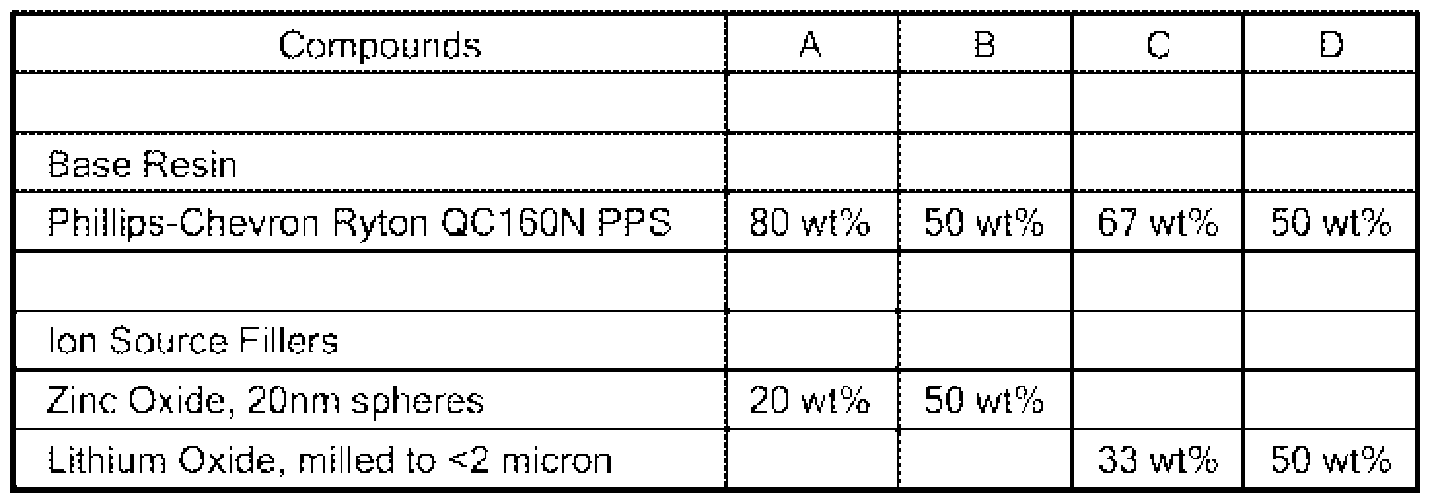


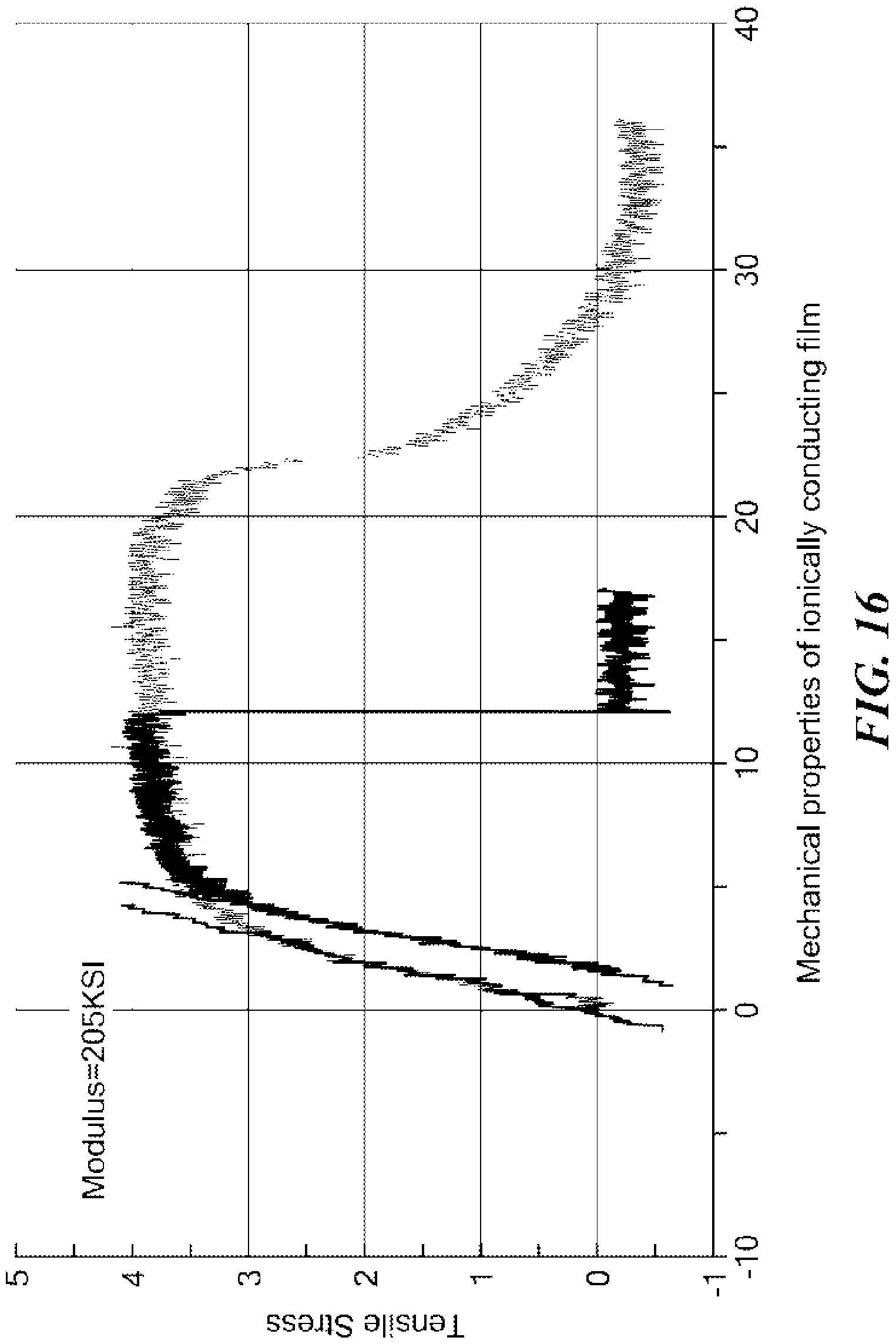


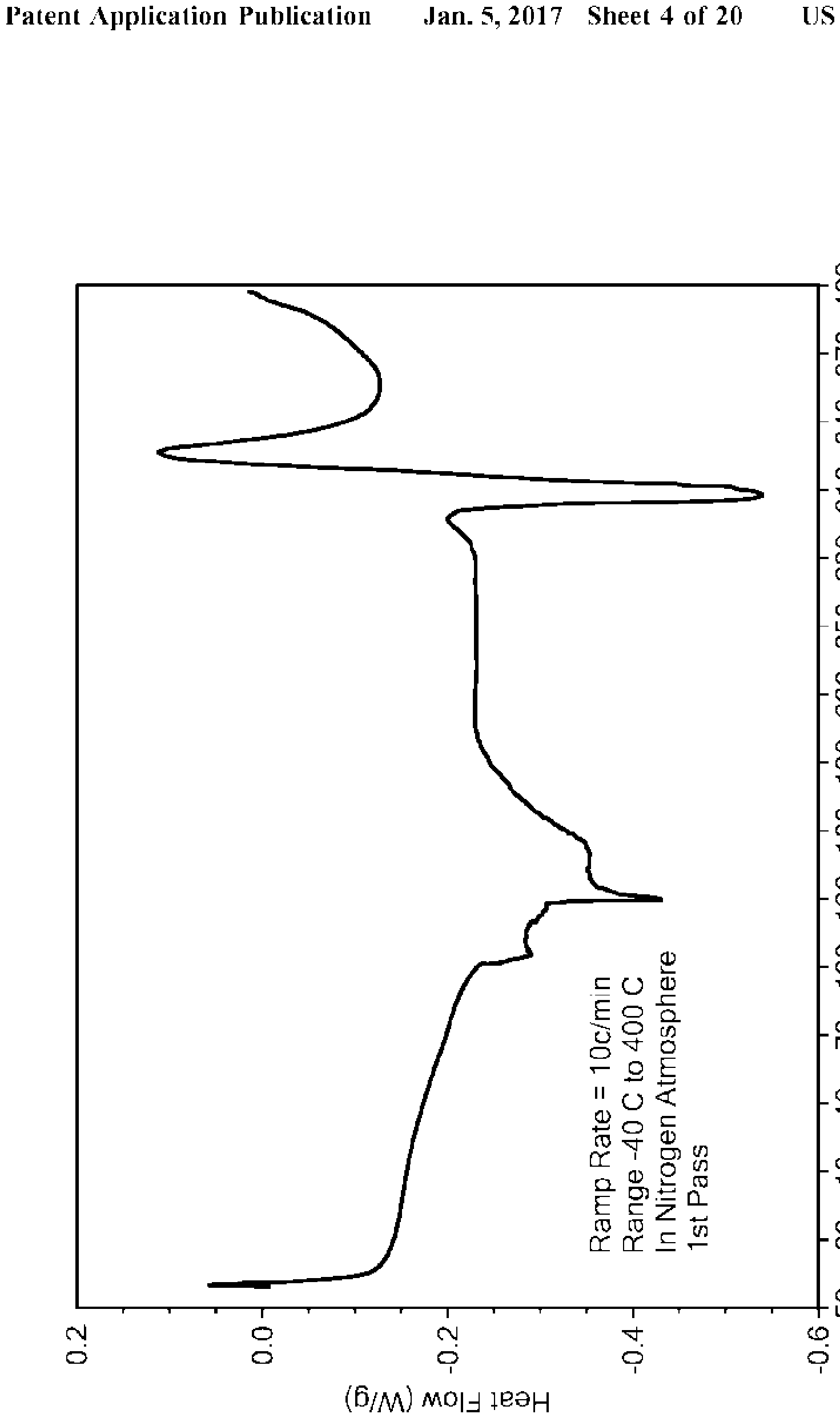










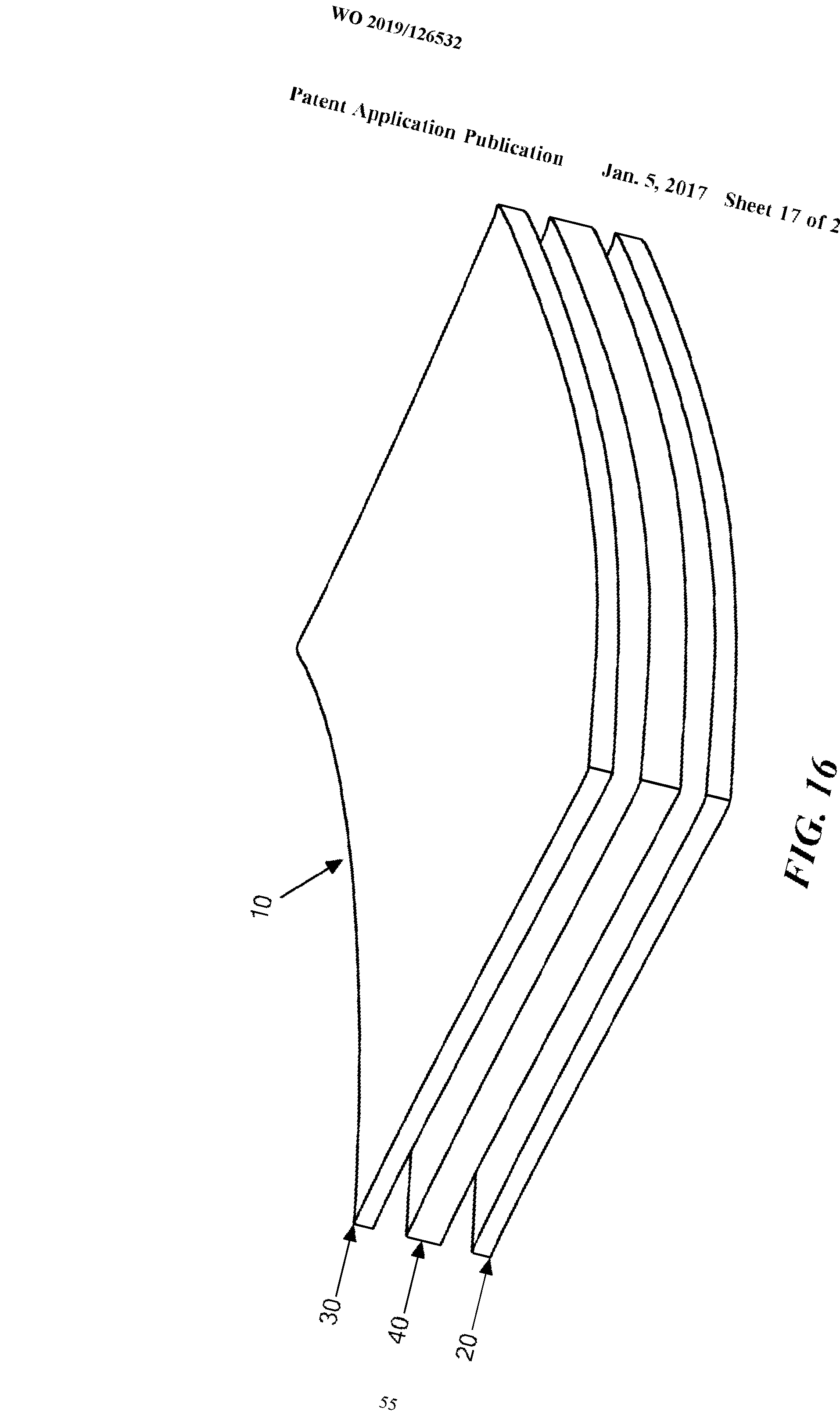


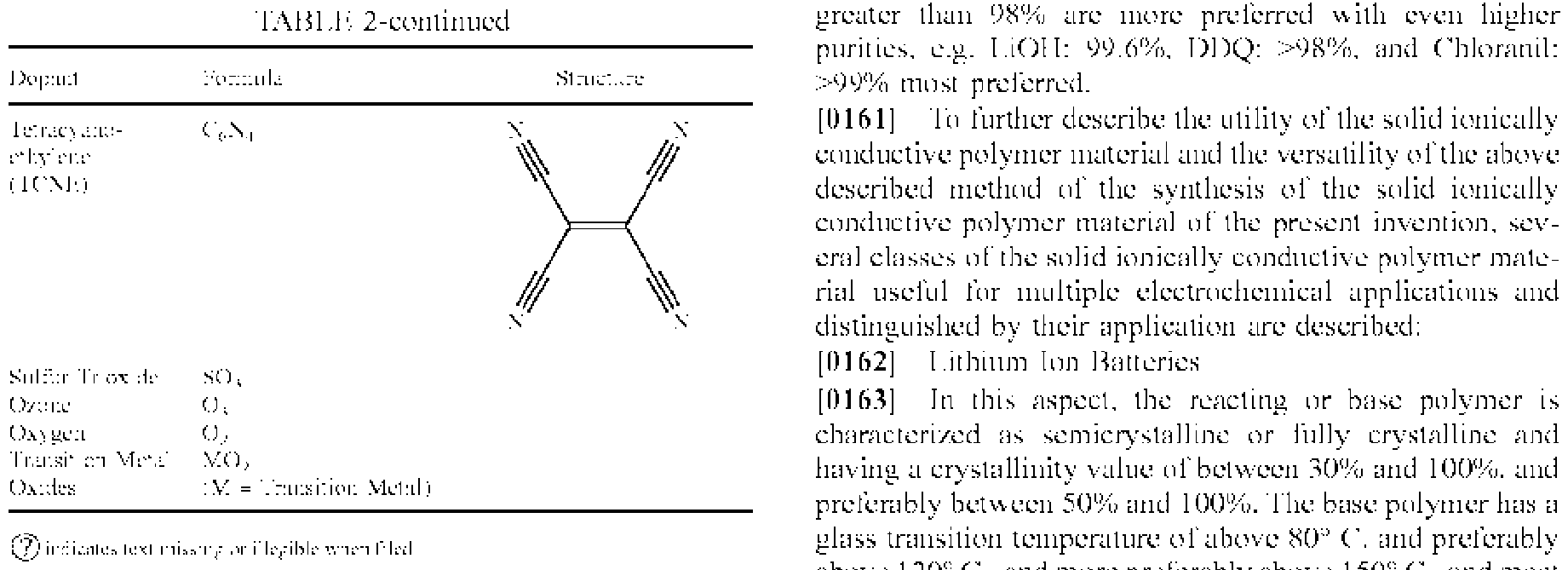


Claims
Priority Applications (6)
| Application Number | Priority Date | Filing Date | Title |
|---|---|---|---|
| KR1020207021176A KR20200118800A (en) | 2017-12-21 | 2018-12-20 | Battery electrode with solid polymer electrolyte and water-soluble binder |
| SG11202005853SA SG11202005853SA (en) | 2017-12-21 | 2018-12-20 | Battery electrode with solid polymer electrolyte and aqueous soluble binder |
| EP18892463.3A EP3729551A4 (en) | 2017-12-21 | 2018-12-20 | SOLID POLYMER ELECTROLYTE BATTERY ELECTRODE AND AQUEOUS SOLUBLE BINDER |
| US16/956,246 US20210119213A1 (en) | 2017-12-21 | 2018-12-20 | Battery electrode with solid polymer electrolyte and aqueous soluble binder |
| JP2020534262A JP2021507471A (en) | 2017-12-21 | 2018-12-20 | Battery electrode with solid polymer electrolyte and water soluble binder |
| CN201880089863.7A CN112154564A (en) | 2017-12-21 | 2018-12-20 | Battery electrode with solid polymer electrolyte and water-soluble binder |
Applications Claiming Priority (2)
| Application Number | Priority Date | Filing Date | Title |
|---|---|---|---|
| US201762608853P | 2017-12-21 | 2017-12-21 | |
| US62/608,853 | 2017-12-21 |
Publications (1)
| Publication Number | Publication Date |
|---|---|
| WO2019126532A1 true WO2019126532A1 (en) | 2019-06-27 |
Family
ID=66995078
Family Applications (1)
| Application Number | Title | Priority Date | Filing Date |
|---|---|---|---|
| PCT/US2018/066849 Ceased WO2019126532A1 (en) | 2017-12-21 | 2018-12-20 | Battery electrode with solid polymer electrolyte and aqueous soluble binder |
Country Status (7)
| Country | Link |
|---|---|
| US (1) | US20210119213A1 (en) |
| EP (1) | EP3729551A4 (en) |
| JP (1) | JP2021507471A (en) |
| KR (1) | KR20200118800A (en) |
| CN (1) | CN112154564A (en) |
| SG (1) | SG11202005853SA (en) |
| WO (1) | WO2019126532A1 (en) |
Cited By (10)
| Publication number | Priority date | Publication date | Assignee | Title |
|---|---|---|---|---|
| CN111525164A (en) * | 2020-04-30 | 2020-08-11 | 郑州帅先新能源科技有限公司 | Fuel cell regeneration control method and fuel cell system |
| US11031599B2 (en) | 2012-04-11 | 2021-06-08 | Ionic Materials, Inc. | Electrochemical cell having solid ionically conducting polymer material |
| US11145899B2 (en) | 2015-06-04 | 2021-10-12 | Ionic Materials, Inc. | Lithium metal battery with solid polymer electrolyte |
| US11152657B2 (en) | 2012-04-11 | 2021-10-19 | Ionic Materials, Inc. | Alkaline metal-air battery cathode |
| US11611104B2 (en) | 2012-04-11 | 2023-03-21 | Ionic Materials, Inc. | Solid electrolyte high energy battery |
| US11715863B2 (en) | 2018-08-08 | 2023-08-01 | Brightvolt, Inc. | Solid polymer matrix electrolytes (PME) and methods and uses thereof |
| WO2023158843A1 (en) * | 2022-02-20 | 2023-08-24 | 2D Polymer Batteries, Llc | Polyaniline-based battery with lean electrolyte |
| US11749833B2 (en) | 2012-04-11 | 2023-09-05 | Ionic Materials, Inc. | Solid state bipolar battery |
| US12074274B2 (en) | 2012-04-11 | 2024-08-27 | Ionic Materials, Inc. | Solid state bipolar battery |
| WO2024196674A3 (en) * | 2023-03-17 | 2024-12-19 | 2D Polymer Batteries, Llc | Rechargeable ion batteries with polyaniline-based cathode and lean electrolyte |
Families Citing this family (7)
| Publication number | Priority date | Publication date | Assignee | Title |
|---|---|---|---|---|
| CN113265538B (en) * | 2021-05-21 | 2022-09-30 | 中南大学 | A kind of preparation method of highly conductive porous electrode for lithium extraction from salt lake |
| CN113808780B (en) * | 2021-08-06 | 2022-11-11 | 东华大学 | Stretchable conductive elastomer with fold structure and preparation and application thereof |
| KR102893456B1 (en) | 2021-12-16 | 2025-12-02 | 주식회사 엘지에너지솔루션 | Solid electrolyte and all-solid state battery cpmprising the same |
| US20230198016A1 (en) * | 2021-12-21 | 2023-06-22 | Hyzon Motors Inc. | Method of making and processing catholyte and anolyte for solid state batteries |
| KR20250005271A (en) | 2022-04-22 | 2025-01-09 | 우니베르시다드 드 코임브라 | Composite electrode, stretchable battery and method for manufacturing the same |
| CN115575841A (en) * | 2022-09-29 | 2023-01-06 | 中山大学·深圳 | Retired battery health state evaluation method and system based on electrochemical impedance spectrum |
| CN115566270B (en) * | 2022-11-02 | 2026-03-27 | 鹰潭耀宁新能源科技有限公司 | An electrolyte for lithium-ion batteries and its preparation method |
Citations (6)
| Publication number | Priority date | Publication date | Assignee | Title |
|---|---|---|---|---|
| US5378560A (en) * | 1993-01-21 | 1995-01-03 | Fuji Photo Film Co., Ltd. | Nonaqueous secondary battery |
| US6455202B1 (en) * | 1999-02-25 | 2002-09-24 | Alcatel | Positive electrode for a lithium rechargeable electro-chemical cell having an aluminum current collector |
| US20090197183A1 (en) * | 2008-01-31 | 2009-08-06 | Ohara Inc. | Solid battery and a method for manufacturing an electrode thereof |
| US20140079995A1 (en) * | 2011-05-31 | 2014-03-20 | Zeon Corporation | Composite particles for lithium secondary battery positive electrodes, method for producing composite particles for lithium secondary battery positive electrodes, method for producing positive electrode for lithium secondary batteries, positive electrode for lithium secondary batteries, and lithium secondary battery |
| US20150364791A1 (en) * | 2013-02-05 | 2015-12-17 | A123 Systems, Inc. | Electrode materials with a synthetic solid electrolyte interface |
| WO2016196873A1 (en) * | 2015-06-04 | 2016-12-08 | Ionic Materials, Inc. | Lithium metal battery with solid polymer electrolyte |
Family Cites Families (8)
| Publication number | Priority date | Publication date | Assignee | Title |
|---|---|---|---|---|
| JPH10106540A (en) * | 1996-10-01 | 1998-04-24 | Hitachi Maxell Ltd | Lithium secondary battery |
| KR20030063060A (en) * | 2002-01-22 | 2003-07-28 | 삼성에스디아이 주식회사 | Positive electrode for lithium-sulfur battery |
| CN113659140A (en) * | 2014-04-01 | 2021-11-16 | 离子材料公司 | Solid ion-conducting polymer, cathode comprising the same and battery comprising the same |
| JP6745587B2 (en) * | 2014-05-29 | 2020-08-26 | 株式会社半導体エネルギー研究所 | Electrode manufacturing method |
| US10014557B2 (en) * | 2014-12-22 | 2018-07-03 | Samsung Sdi Co., Ltd. | Electrode winding element for non-aqueous electrolyte rechareable battery, non-aqueous electrolyte rechargeable lithium battery including same, method of preparing same |
| CN106058165B (en) * | 2015-04-02 | 2021-11-09 | 松下知识产权经营株式会社 | Battery and electrode material for battery |
| EP3304620A4 (en) * | 2015-06-04 | 2018-11-07 | Ionic Materials, Inc. | Solid state bipolar battery |
| KR101896758B1 (en) * | 2016-05-04 | 2018-09-07 | 현대자동차주식회사 | All-Solid Battery And Method |
-
2018
- 2018-12-20 EP EP18892463.3A patent/EP3729551A4/en not_active Withdrawn
- 2018-12-20 JP JP2020534262A patent/JP2021507471A/en active Pending
- 2018-12-20 SG SG11202005853SA patent/SG11202005853SA/en unknown
- 2018-12-20 KR KR1020207021176A patent/KR20200118800A/en not_active Ceased
- 2018-12-20 CN CN201880089863.7A patent/CN112154564A/en active Pending
- 2018-12-20 US US16/956,246 patent/US20210119213A1/en not_active Abandoned
- 2018-12-20 WO PCT/US2018/066849 patent/WO2019126532A1/en not_active Ceased
Patent Citations (6)
| Publication number | Priority date | Publication date | Assignee | Title |
|---|---|---|---|---|
| US5378560A (en) * | 1993-01-21 | 1995-01-03 | Fuji Photo Film Co., Ltd. | Nonaqueous secondary battery |
| US6455202B1 (en) * | 1999-02-25 | 2002-09-24 | Alcatel | Positive electrode for a lithium rechargeable electro-chemical cell having an aluminum current collector |
| US20090197183A1 (en) * | 2008-01-31 | 2009-08-06 | Ohara Inc. | Solid battery and a method for manufacturing an electrode thereof |
| US20140079995A1 (en) * | 2011-05-31 | 2014-03-20 | Zeon Corporation | Composite particles for lithium secondary battery positive electrodes, method for producing composite particles for lithium secondary battery positive electrodes, method for producing positive electrode for lithium secondary batteries, positive electrode for lithium secondary batteries, and lithium secondary battery |
| US20150364791A1 (en) * | 2013-02-05 | 2015-12-17 | A123 Systems, Inc. | Electrode materials with a synthetic solid electrolyte interface |
| WO2016196873A1 (en) * | 2015-06-04 | 2016-12-08 | Ionic Materials, Inc. | Lithium metal battery with solid polymer electrolyte |
Non-Patent Citations (1)
| Title |
|---|
| See also references of EP3729551A4 * |
Cited By (11)
| Publication number | Priority date | Publication date | Assignee | Title |
|---|---|---|---|---|
| US11031599B2 (en) | 2012-04-11 | 2021-06-08 | Ionic Materials, Inc. | Electrochemical cell having solid ionically conducting polymer material |
| US11152657B2 (en) | 2012-04-11 | 2021-10-19 | Ionic Materials, Inc. | Alkaline metal-air battery cathode |
| US11611104B2 (en) | 2012-04-11 | 2023-03-21 | Ionic Materials, Inc. | Solid electrolyte high energy battery |
| US11749833B2 (en) | 2012-04-11 | 2023-09-05 | Ionic Materials, Inc. | Solid state bipolar battery |
| US11949105B2 (en) | 2012-04-11 | 2024-04-02 | Ionic Materials, Inc. | Electrochemical cell having solid ionically conducting polymer material |
| US12074274B2 (en) | 2012-04-11 | 2024-08-27 | Ionic Materials, Inc. | Solid state bipolar battery |
| US11145899B2 (en) | 2015-06-04 | 2021-10-12 | Ionic Materials, Inc. | Lithium metal battery with solid polymer electrolyte |
| US11715863B2 (en) | 2018-08-08 | 2023-08-01 | Brightvolt, Inc. | Solid polymer matrix electrolytes (PME) and methods and uses thereof |
| CN111525164A (en) * | 2020-04-30 | 2020-08-11 | 郑州帅先新能源科技有限公司 | Fuel cell regeneration control method and fuel cell system |
| WO2023158843A1 (en) * | 2022-02-20 | 2023-08-24 | 2D Polymer Batteries, Llc | Polyaniline-based battery with lean electrolyte |
| WO2024196674A3 (en) * | 2023-03-17 | 2024-12-19 | 2D Polymer Batteries, Llc | Rechargeable ion batteries with polyaniline-based cathode and lean electrolyte |
Also Published As
| Publication number | Publication date |
|---|---|
| US20210119213A1 (en) | 2021-04-22 |
| EP3729551A4 (en) | 2021-12-01 |
| SG11202005853SA (en) | 2020-07-29 |
| CN112154564A (en) | 2020-12-29 |
| JP2021507471A (en) | 2021-02-22 |
| EP3729551A1 (en) | 2020-10-28 |
| KR20200118800A (en) | 2020-10-16 |
Similar Documents
| Publication | Publication Date | Title |
|---|---|---|
| WO2019126532A1 (en) | Battery electrode with solid polymer electrolyte and aqueous soluble binder | |
| KR102470117B1 (en) | rechargeable battery cell | |
| US11319411B2 (en) | Solid ionically conducting polymer material | |
| KR102640010B1 (en) | Lithium metal battery with solid polymer electrolyte | |
| KR102594870B1 (en) | Solid ion-conducting polymer materials | |
| US11251455B2 (en) | Solid ionically conducting polymer material | |
| KR101488542B1 (en) | Plastic crystalline electrolyte with a wide potential window | |
| CN108140805B (en) | Solid state bipolar battery | |
| EP3304634B1 (en) | Battery having aluminum anode and solid polymer electrolyte | |
| JP2022037050A (en) | Solid ion conductive polymer material | |
| CN109585754B (en) | Composite film for lithium battery, positive electrode for lithium battery, and lithium battery | |
| CN110391396B (en) | Composite film for secondary battery, preparation method thereof and secondary battery comprising the same | |
| HK40058878A (en) | Rechargeable battery cell |
Legal Events
| Date | Code | Title | Description |
|---|---|---|---|
| 121 | Ep: the epo has been informed by wipo that ep was designated in this application |
Ref document number: 18892463 Country of ref document: EP Kind code of ref document: A1 |
|
| ENP | Entry into the national phase |
Ref document number: 2020534262 Country of ref document: JP Kind code of ref document: A |
|
| NENP | Non-entry into the national phase |
Ref country code: DE |
|
| ENP | Entry into the national phase |
Ref document number: 20207021176 Country of ref document: KR Kind code of ref document: A |
|
| ENP | Entry into the national phase |
Ref document number: 2018892463 Country of ref document: EP Effective date: 20200721 |
|
| WWW | Wipo information: withdrawn in national office |
Ref document number: 2018892463 Country of ref document: EP |