WO2019142238A1 - 治療用アプリケーションの治験システム、治療用アプリケーションを搭載した端末装置、および治療用アプリケーションプログラム - Google Patents
治療用アプリケーションの治験システム、治療用アプリケーションを搭載した端末装置、および治療用アプリケーションプログラム Download PDFInfo
- Publication number
- WO2019142238A1 WO2019142238A1 PCT/JP2018/001017 JP2018001017W WO2019142238A1 WO 2019142238 A1 WO2019142238 A1 WO 2019142238A1 JP 2018001017 W JP2018001017 W JP 2018001017W WO 2019142238 A1 WO2019142238 A1 WO 2019142238A1
- Authority
- WO
- WIPO (PCT)
- Prior art keywords
- subject
- information
- unit
- management server
- authentication
- Prior art date
- Legal status (The legal status is an assumption and is not a legal conclusion. Google has not performed a legal analysis and makes no representation as to the accuracy of the status listed.)
- Ceased
Links
Images





Classifications
-
- G—PHYSICS
- G06—COMPUTING OR CALCULATING; COUNTING
- G06Q—INFORMATION AND COMMUNICATION TECHNOLOGY [ICT] SPECIALLY ADAPTED FOR ADMINISTRATIVE, COMMERCIAL, FINANCIAL, MANAGERIAL OR SUPERVISORY PURPOSES; SYSTEMS OR METHODS SPECIALLY ADAPTED FOR ADMINISTRATIVE, COMMERCIAL, FINANCIAL, MANAGERIAL OR SUPERVISORY PURPOSES, NOT OTHERWISE PROVIDED FOR
- G06Q10/00—Administration; Management
- G06Q10/10—Office automation; Time management
- G06Q10/101—Collaborative creation, e.g. joint development of products or services
-
- G—PHYSICS
- G16—INFORMATION AND COMMUNICATION TECHNOLOGY [ICT] SPECIALLY ADAPTED FOR SPECIFIC APPLICATION FIELDS
- G16H—HEALTHCARE INFORMATICS, i.e. INFORMATION AND COMMUNICATION TECHNOLOGY [ICT] SPECIALLY ADAPTED FOR THE HANDLING OR PROCESSING OF MEDICAL OR HEALTHCARE DATA
- G16H10/00—ICT specially adapted for the handling or processing of patient-related medical or healthcare data
- G16H10/20—ICT specially adapted for the handling or processing of patient-related medical or healthcare data for electronic clinical trials or questionnaires
-
- G—PHYSICS
- G06—COMPUTING OR CALCULATING; COUNTING
- G06F—ELECTRIC DIGITAL DATA PROCESSING
- G06F21/00—Security arrangements for protecting computers, components thereof, programs or data against unauthorised activity
- G06F21/30—Authentication, i.e. establishing the identity or authorisation of security principals
- G06F21/31—User authentication
-
- G—PHYSICS
- G06—COMPUTING OR CALCULATING; COUNTING
- G06F—ELECTRIC DIGITAL DATA PROCESSING
- G06F21/00—Security arrangements for protecting computers, components thereof, programs or data against unauthorised activity
- G06F21/60—Protecting data
- G06F21/62—Protecting access to data via a platform, e.g. using keys or access control rules
- G06F21/6218—Protecting access to data via a platform, e.g. using keys or access control rules to a system of files or objects, e.g. local or distributed file system or database
- G06F21/6245—Protecting personal data, e.g. for financial or medical purposes
-
- G—PHYSICS
- G06—COMPUTING OR CALCULATING; COUNTING
- G06Q—INFORMATION AND COMMUNICATION TECHNOLOGY [ICT] SPECIALLY ADAPTED FOR ADMINISTRATIVE, COMMERCIAL, FINANCIAL, MANAGERIAL OR SUPERVISORY PURPOSES; SYSTEMS OR METHODS SPECIALLY ADAPTED FOR ADMINISTRATIVE, COMMERCIAL, FINANCIAL, MANAGERIAL OR SUPERVISORY PURPOSES, NOT OTHERWISE PROVIDED FOR
- G06Q50/00—Information and communication technology [ICT] specially adapted for implementation of business processes of specific business sectors, e.g. utilities or tourism
- G06Q50/10—Services
- G06Q50/22—Social work or social welfare, e.g. community support activities or counselling services
-
- G—PHYSICS
- G16—INFORMATION AND COMMUNICATION TECHNOLOGY [ICT] SPECIALLY ADAPTED FOR SPECIFIC APPLICATION FIELDS
- G16H—HEALTHCARE INFORMATICS, i.e. INFORMATION AND COMMUNICATION TECHNOLOGY [ICT] SPECIALLY ADAPTED FOR THE HANDLING OR PROCESSING OF MEDICAL OR HEALTHCARE DATA
- G16H50/00—ICT specially adapted for medical diagnosis, medical simulation or medical data mining; ICT specially adapted for detecting, monitoring or modelling epidemics or pandemics
- G16H50/70—ICT specially adapted for medical diagnosis, medical simulation or medical data mining; ICT specially adapted for detecting, monitoring or modelling epidemics or pandemics for mining of medical data, e.g. analysing previous cases of other patients
Definitions
- the present invention relates to a clinical trial system of a therapeutic application, a terminal device equipped with a therapeutic application, and a therapeutic application program.
- the trial of the therapeutic application can be performed, for example, by applying a placebo-controlled test generally performed in clinical trials of drugs.
- the placebo-controlled test is a test in which multiple subjects are divided into a treatment group and a control group, the active drug is allocated to the treatment group, and the placebo is allocated to the control group to test the efficacy.
- a placebo is a placebo that mimics physical properties such as color, weight, taste and odor as much as possible of the active drug and does not contain any active ingredient.
- placebo-controlled trials are conducted in a double-blind state where it is random to assign multiple subjects to active drug or placebo, and neither the physician nor the subject know the assignment.
- the subject who passed the subject profile filter is entered the name of the clinical laboratory, subject name, subject identification code, doctor responsible for clinical trial, name of doctor responsible for clinical trial, age, sex, complications, medical history, consent confirmation etc.
- the subjects will be randomly assigned and registered as either active or placebo subjects, so that the subject distribution will be in an appropriately dispersed state.
- Non-Patent Document 1 describes that it is planned to conduct a clinical trial applying a placebo-controlled test of a drug for the verification of the efficacy of a therapeutic application. That is, a plurality of patients diagnosed with nicotine dependence in the screening test are randomly assigned to either the trial treatment group or the control group. Then, in addition to the standard treatment program, we intervene in treatment with the treatment app for the investigational treatment group and the sham (sham treatment) app for the control group. Specifically, after 12 weeks of non-smoking outpatient treatment, patients are allowed to use either the treatment app or sham app for up to 24 weeks, and the rate of continuing non-smoking for 9 weeks to 24 weeks is evaluated.
- Non-Patent Document 1 includes a description on randomization, it does not mention how double blinding is realized.
- Patent Document 1 includes a description regarding blinding in addition to randomization.
- randomization in the system described in Patent Document 1, a person in charge of a clinical testing organization accesses a data center using a wide area information transfer tool, and randomization of dosing is performed on a database of the clinical trial of the data center. Assign the drug number by However, with regard to blinding, it is only stated that "the system naturally satisfies the standard of blindness", but not how it is specifically realized.
- the present invention has been made to solve such problems, and in the case of conducting a trial applying a placebo-controlled test for a therapeutic application, randomization and double assignment of treatment group and control group
- the purpose is to provide a method to realize blinding systematically.
- the trial administration server for managing the trial is based on the assignment factor information of the subject input together with the subject identification information from the doctor terminal. Randomly assign subjects to either treatment group or control group so that the subject distribution is properly dispersed, and assign assignment information indicating the assignment result to either treatment group or control group to the subject terminal Send. Then, in the terminal for a subject where the subject uses the therapeutic application, the therapeutic application is provided in the first mode or the pseudo-treatment for providing the function for actual therapy based on the allocation information sent from the trial management server. It is set to any of the 2nd mode which provides the function of.
- the trial management server randomly assigns the subject to the treatment group or the control group based on the assignment factor information of the subject, thereby the treatment group and the control group.
- the randomization of the assignment with is realized.
- the result of the allocation is not disclosed to either the doctor terminal or the subject terminal, and the therapeutic application performs the actual therapeutic function based on the allocation information transmitted from the trial management server to the subject terminal.
- the subject and physician are both set to either the first mode to provide or the second mode to provide a simulated therapeutic function, the subject is assigned to either the treatment group or the control group for treatment It is in a state where it does not know which mode the application is operating in. Thereby, when conducting a trial applying a placebo-controlled test for therapeutic application, it is possible to systematically realize randomization and double blinding of assignment between the treatment group and the control group.
- FIG. 1 shows the network configuration of the trial system of the therapeutic application by 1st and 2nd embodiment.
- FIG. 1 is a diagram showing a network configuration of a clinical trial system of a therapeutic application according to a first embodiment.
- the clinical trial system for the therapeutic application (hereinafter simply referred to as a clinical trial system) according to the first embodiment is used by the subject terminal 100 which is a terminal device for which the subject uses the therapeutic app, and a doctor A system for performing clinical trials of a therapeutic application in cooperation with a subject terminal 100, a doctor terminal 200, and a trial management server 300 including a trial doctor terminal 200 and a trial management server 300 for managing a trial. It is.
- the therapeutic application inputs information on the subject's symptoms and daily activities at any time, performs predetermined analysis based on the input information, and outputs a message on predetermined advice or a predetermined action involving the subject's behavior.
- Is an application that aims to treat through improvement of the subject's lifestyle by performing the processing of The analysis may be performed by the therapeutic application itself, or may be performed by the trial management server 300 or another analysis dedicated server.
- the therapeutic application includes a program coded to provide an actual therapeutic function (hereinafter referred to as an actual therapeutic program) and a program coded to provide a pseudo therapeutic function , A simulated treatment program).
- the function for actual treatment refers to a function for executing a content that is expected to have a therapeutic effect through improvement of the subject's lifestyle with regard to the predetermined advice and the predetermined processing described above.
- the function for simulated treatment refers to a function for executing a content that is not expected to have a therapeutic effect through the improvement of the subject's lifestyle regarding the predetermined advice and the predetermined processing described above.
- the subject uses the therapeutic application in a state in which either the actual treatment program or the simulated treatment program is executed (in a state in which either a first mode or a second mode described later is set) Do.
- the program of which function is being executed is in an unknown state. That is, the trial system of the present embodiment applies a placebo-controlled test that is generally performed in clinical trials of drugs to test trials of a therapeutic application.
- a subject using the therapeutic app in a state where the actual therapeutic program is executed is a therapeutic group
- a subject using a therapeutic app in a state where the simulated therapeutic program is executed is a control group.
- Any subject terminal 100 used by the subject is applicable as long as it can install and execute a treatment application.
- a smartphone, a tablet, a personal computer or the like can be used as the subject terminal 100.
- the doctor's terminal 200 used by a doctor is a terminal on which a doctor's treatment application is installed that operates in cooperation with a subject's treatment application installed on the subject's terminal 100.
- Any terminal such as a smartphone, a tablet, a personal computer or the like can be applied as long as the terminal can install and execute this application.
- treatment application means an application for a subject unless otherwise specified.
- the trial management server 300 is a management device in which a dedicated application that operates in cooperation with the test subject terminal 100 and each application installed in the doctor terminal 200 is installed.
- the trial management server 300 provides a process of randomly assigning a plurality of subjects to either the treatment group or the control group, or provides any function of the actual treatment function or the pseudo treatment function. Perform the processing necessary to decide whether to operate the treatment app. The details will be described later.
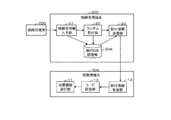
- FIG. 2 is a block diagram showing an example of the functional configuration of the subject terminal 100 and the trial management server 300 according to the first embodiment.
- the subject terminal 100 according to the first embodiment includes a therapeutic function execution unit 11, an assignment information reception unit 12, and a mode setting unit 13 as its functional configuration.
- Each of the functional blocks 11 to 13 is realized by execution of a therapeutic application installed on the subject terminal 100.
- each of the functional blocks 11 to 13 actually comprises a CPU, a RAM, a ROM and the like of a computer, and a program for a therapeutic application stored in a recording medium such as a RAM, a ROM, a hard disk or a semiconductor memory. Is realized by operating.
- the therapeutic application includes an actual therapeutic program and a simulated therapeutic program.
- the therapeutic function execution unit 11 is realized by operation of either an actual therapeutic program or a simulated therapeutic program.
- the allocation information receiving unit 12 and the mode setting unit 13 are realized by the operation of a basic program different from the actual treatment program and the simulated treatment program.
- the trial management server 300 includes a subject information input unit 21, a random assignment unit 22, and an assignment information transmission unit 23 as its functional configuration.
- the trial management server 300 further includes an allocation database storage unit 20A as a storage medium.
- Each of the functional blocks 21 to 23 can be configured by any of hardware, DSP (Digital Signal Processor), and software.
- DSP Digital Signal Processor
- each of the functional blocks 21 to 23 actually comprises a CPU, a RAM, a ROM and the like of a computer, and a program stored in a recording medium such as a RAM, a ROM, a hard disk or a semiconductor memory Is realized by operating.
- the subject information input unit 21 of the trial management server 300 inputs from the doctor terminal 200 subject identification information that can identify a subject, and assignment factor information that is referred to when assigning a subject to either a treatment group or a control group.
- the input information is registered in the allocation database of the allocation database storage unit 20A.
- the subject identification information includes the subject's name, gender, age, address, symptoms, and the like, and is information that can identify an individual subject.
- the assignment factor information is information required to assign the subject to either the treatment group or the control group so that the subject distribution is properly dispersed, and for example, information indicating the severity of the symptom is assigned to the factor information Used as
- the doctor inputs the subject identification information and the assignment factor information to the doctor terminal 200 through diagnosis of the patient. That is, when the doctor decides to register the patient as a subject of a clinical trial subject through diagnosis of the patient, the doctor terminal 200 accesses the trial management server 300 and the subject identification information and assignment inputted to the doctor terminal 200 The factor information is sent to the trial management server 300.
- the subject information input unit 21 of the trial management server 300 inputs the subject identification information and the allocation factor information sent from the doctor terminal 200.
- the subject information input unit 21 stores the subject identification information and the assignment factor information in the assignment database storage unit 20A as one information of the assignment database.
- a patient registered as a subject accesses a predetermined download site notified from a doctor, downloads a treatment application, and installs the application on the subject terminal 100.
- the random assignment unit 22 randomly assigns the subject to either the treatment group or the control group based on the assignment factor information input by the subject information input unit 21 so that the distribution of the subject becomes appropriately dispersed. Register allocation information showing allocation results in the allocation database.
- the random assignment unit 22 randomly assigns each subject to either the treatment group or the control group after completing registration of the number of subjects required as the subject (storage of subject identification information and assignment factor information in the assignment database). Execute the process Then, the assignment information indicating the assignment result is stored in the assignment database storage unit 20A in association with the subject identification information of the assignment database.
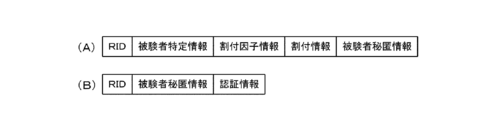
- FIG. 3 is a diagram showing an example of one record of the allocation database stored in the allocation database storage unit 20A.
- Information on one subject is recorded in one record.
- one record of the assignment database includes a record ID (RID), subject identification information, assignment factor information, and assignment information.
- the assignment information transmission unit 23 reads out the assignment information of each subject from the assignment database storage unit 20A and sends the assignment information to the subject terminal 100.
- the transmission of the assignment information is implicitly performed in a form in which only the therapeutic application can be recognized in a state of being private to the subject. That is, the allocation information transmission unit 23 implicitly transmits the allocation information to the treatment application installed in the subject terminal 100.
- the treatment application uses the received assignment information for mode setting, which will be described later, but does not disclose it in a form of displaying on the display of the subject terminal 100 or outputting voice from a speaker.
- the address information of the subject terminal 100 used when transmitting the assignment information to the subject terminal 100 is, for example, transmitted from the doctor terminal 200 to the trial management server 300 as one of the subject identification information and registered. Do.
- the allocation information transmission unit 23 transmits the allocation information to the treatment application of the subject terminal 100 in a push type.
- the method of transmitting the allocation information may be transmitted in a pull type. That is, the test subject management server 300 is accessed from the subject terminal 100 for which the installation of the treatment application is completed to request the assignment information, and the assignment information transmission unit 23 transmits the assignment information to the subject terminal 100 as a response. You may In this case, the treatment application holds in advance the address information used to access the trial management server 300.
- the assignment information transmitting unit 23 may indirectly send the assignment information to the subject terminal 100 via the doctor terminal 200. That is, the allocation information transmission unit 23 transmits the allocation information in a push type or a pull type to the medical treatment application installed on the doctor terminal 200. The medical treatment application for the doctor that has received the assignment information automatically transfers the received assignment information to the subject terminal 100.
- the destination information of the subject terminal 100 is registered in advance in the doctor terminal 200 in response to a notification from the subject.
- the allocation information transmission unit 23 transmits the allocation information to the doctor terminal 200
- the address information of the subject terminal 100 stored in advance in the allocation database storage unit 20A as one of the subject identification information is transmitted together You may do it.
- the therapeutic function execution unit 11 of the subject terminal 100 executes the therapeutic function that the therapeutic application has. That is, as described above, the therapeutic function execution unit 11 inputs information on the subject's symptoms and daily activities as needed, performs predetermined analysis based on the input information, and outputs a message on predetermined advice. Or perform a predetermined process involving the action of the subject. At this time, in the therapeutic function execution unit 11, the therapeutic application performs processing alone, or the therapeutic application executes processing in cooperation with the trial management server 300 or another analysis dedicated server.
- the therapeutic app includes an actual therapeutic program and a simulated therapeutic program.
- the treatment function execution unit 11 performs various processes based on either the actual treatment program or the simulated treatment program, depending on whether the subject is assigned to the treatment group or the control group in the trial management server 300. Run.
- the assignment information receiving unit 12 receives the assignment information sent from the trial management server 300.
- the mode setting unit 13 is a first mode for providing a function for actual treatment or a second mode for providing a function for simulated treatment based on the assignment information received by the assignment information receiving unit 12. Set to any of.
- the therapeutic function execution unit 11 When the first mode is set by the mode setting unit 13, the therapeutic function execution unit 11 subsequently executes various processes based on the actual therapeutic program. On the other hand, when the second mode is set by the mode setting unit 13, the therapeutic function execution unit 11 subsequently executes various processes based on the simulated therapeutic program.
- the timing at which the mode setting unit 13 sets one of the modes for the therapeutic application is, for example, timing before the subject actually starts using the therapeutic application. For example, when the subject activates the therapeutic application at a timing when the setting of the mode is not completed, a message indicating that the setting of the mode is incomplete is displayed, and the therapeutic application (for the actual treatment program or the simulated treatment) Lock the program function so that it can not be used. Thereafter, when the mode setting unit 13 executes mode setting, the lock for the treatment application is released. Thus, when the subject activates the therapeutic application at the timing after the mode setting is completed, the therapeutic application can be used.
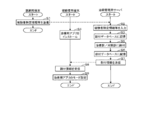
- FIG. 4 is a flowchart showing an operation example of the clinical trial system according to the first embodiment configured as described above.
- the doctor determines to register the patient as a subject of the clinical trial subject through diagnosis of the patient, and the doctor specifies the subject identification information and the allocation factor information on the doctor terminal 200. It is assumed that you are entering.
- the flowchart illustrated in FIG. 4 starts when subject identification information and assignment factor information input to the doctor terminal 200 are registered in the trial management server 300.
- the doctor terminal 200 transmits subject identification information and assignment factor information input by a doctor to the trial management server 300 (step S1).
- the subject information input unit 21 inputs the subject identification information and the assignment factor information (step S2), and stores them in the assignment database storage unit 20A as one information of the assignment database (step S3).
- subject identification information and assignment factor information on a plurality of subjects are transmitted from the plurality of doctor terminals 200 to the trial management server 300 and are necessary for the trial.
- Information for the number of people is registered in the allocation database storage unit 20A as an allocation database.
- the subject installs the therapeutic application on the subject terminal 100 (step S4).
- the installation of the treatment application is illustrated as the process of step S4, subject identification information as long as it is determined that the patient is registered as a subject of a clinical trial by diagnosis of a doctor.
- the installation of the therapeutic application may be performed prior to the registration of the allocation factor information in the allocation database.
- the therapeutic application when the therapeutic application receives allocation information from the trial management server 300 by pull communication, the therapeutic application can be performed at any timing after registration of the subject identification information and the allocation factor information in the allocation database. You may run the installation. In the case of pull type communication, the allocation information is not sent from the trial management server 300 unless the allocation information is requested using the installed therapeutic application.
- the random assignment unit 22 sets the subject as a treatment group or control so that the subject person distribution is in an appropriate dispersed state based on the assignment factor information of the subject registered in the assignment database storage unit 20A as a part of the assignment database. Randomly assign to any of the groups (step S5). Then, the random assignment unit 22 stores assignment information indicating the assignment result in the assignment database storage unit 20A in association with subject identification information in the assignment database (step S6).
- the allocation information transmission unit 23 transmits the allocation information registered in the allocation database to the subject terminal 100 in a push type or a pull type (step S7).
- the assignment information receiving unit 12 of the subject terminal 100 receives the assignment information sent from the trial management server 300 (step S8).
- the mode setting unit 13 provides a first application for providing a function for actual treatment or a second application for providing a function for simulated treatment based on the allocation information received by the allocation information receiving unit 12. It sets to either of the modes of (step S9).
- the therapeutic function execution unit 11 executes various processes based on either the actual treatment program or the simulated treatment program according to any of the modes set by the mode setting unit 13.
- the trial management server 300 randomly assigns subjects to a treatment group or a control group based on subject assignment factor information. Randomization of the assignment between treatment group and control group is realized.
- Assignment information indicating the result of the assignment is not disclosed to either the subject terminal 100 or the doctor terminal 200, and is implicitly transmitted from the trial management server 300 to the subject terminal 100. Then, on the basis of the transmitted allocation information, the treatment application installed in the subject terminal 100 is in the first mode in which the actual treatment function is provided or in the second mode in which the pseudo treatment function is provided. It is automatically set to either. For this reason, the treatment using the treatment application is performed in a state in which both the subject and the doctor are assigned to the treatment group or the control group and do not know in which mode the treatment application is operating. Will be implemented.
- the clinical trial system in the case of conducting a clinical trial applying a placebo-controlled test for a therapeutic application, it is a system for randomizing and double-blinding the allocation of treatment group and control group Can be realized.
- FIG. 5 is a block diagram showing an example of the functional configuration of the subject terminal 100 and the trial management server 300 according to the second embodiment.
- the components given the same reference numerals as the reference numerals shown in FIG. 2 have the same functions, and therefore, the redundant description will be omitted here.
- the subject terminal 100 further includes an authentication information receiving unit 14 and an authentication target unit 15 as its functional configuration.
- the functions of the authentication information receiving unit 14 and the to-be-authenticated unit 15 are also realized by the execution of the treatment application installed in the subject terminal 100.
- the clinical trial management server 300 has an allocation information transmission unit 23B instead of the allocation information transmission unit 23 as its functional configuration, and further includes an authentication information issuing unit 24 and an authentication processing unit 25. ing.
- the functions of the allocation information transmitting unit 23B, the authentication information issuing unit 24, and the authentication processing unit 25 can be configured by any of hardware, DSP, and software.
- the trial management server 300 according to the second embodiment includes, as a storage medium, an assignment database storage unit 20B instead of the assignment database storage unit 20A.
- the authentication information issuing unit 24 issues authentication information to be input when the subject uses the therapeutic application.
- the authentication information is, for example, a user ID and a password.
- the authentication information issued by the authentication information issuing unit 24 is stored in the assignment database storage unit 20B as a part of the assignment database in association with the subject identification information.
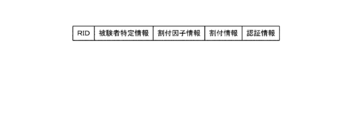
- FIG. 6 is a diagram showing an example of one record of the assignment database stored in the assignment database storage unit 20B. As shown in FIG. 6, one record of the assignment database includes a record ID (RID), subject identification information, assignment factor information, assignment information, and authentication information.
- RID record ID
- the timing at which the authentication information issuing unit 24 issues the authentication information may be, for example, the timing at which the treatment group or the control group is assigned to the subject by the random assignment unit 22.
- the subject information input unit 21 inputs the subject identification information and the assignment factor information
- the information is recorded in the record, and the assignment information is added to the corresponding record when the assignment is performed by the random assignment unit 22.
- the authentication information is issued by the authentication information issuing unit 24, the authentication information is added to the corresponding record and recorded.
- the information shown here is the minimum information necessary to explain the second embodiment, and other information may be included.
- the authentication information issued by the authentication information issuing unit 24 is registered in the assignment database storage unit 20B and transmitted to the subject terminal 100.
- the transmission of the authentication information may be performed by push-type communication from the trial management server 300 as in the case of the transmission of the allocation information by the allocation information transmission unit 23 described in the first embodiment. It may be performed by pull type communication according to the request from the terminal 100. Further, the authentication information issuing unit 24 may transmit the authentication information to the subject terminal 100 via the doctor terminal 200.
- the authentication information issuing unit 24 When authentication information is transmitted by push type, the authentication information issuing unit 24 receives notification from the random allocation unit 22 that allocation is completed, issues authentication information, and stores the issued authentication information in the allocation database storage unit 20B. And to the subject terminal 100. On the other hand, when the authentication information is transmitted in a pull type, the authentication information issuing unit 24 receives the notification from the random assignment unit 22, stores the issued authentication information in the assignment database storage unit 20B, stands by, and then identifies the subject When an authentication information issuance request including information is received from the subject terminal 100, authentication information corresponding to the subject identification information is read out from the layout database storage unit 20B and transmitted to the subject terminal 100.
- the timing at which the authentication information issuing unit 24 issues the authentication information is not limited to the timing at which the random assignment unit 22 assigns the subject.
- the subject information input unit 21 may input the subject identification information.
- the therapeutic application accesses the trial management server 300 from the therapeutic application to request authentication information, and the authentication information issuing unit 24 issues authentication information as a response thereto. You may do so.
- allocation information is transmitted from the trial management server 300 to the subject terminal 100 when the authentication is successful. Therefore, when the subject inputs authentication information to the subject terminal 100 and receives authentication of the trial management server 300, it is necessary that the allocation by the random allocation unit 22 is completed. Therefore, when the authentication information is issued at the above timing other than the timing when the assignment is completed, the subject of the trial information management server 300 waits for the authentication information issuance unit 24 to receive the notification of the assignment completion from the random assignment unit 22. It is preferable to transmit authentication information to the terminal 100.
- the authentication information receiving unit 14 of the subject terminal 100 receives the authentication information issued by the authentication information issuing unit 24.
- This authentication information is information that can be confirmed on the display of the subject terminal 100.
- the subject records the authentication information confirmed on the display in a memo or stores it in the storage medium of the subject terminal 100 so that the subject can always use it without forgetting.
- the authentication target unit 15 receives the authentication of the trial management server 300 using the authentication information (the authentication information transmitted from the trial management server 300) issued by the authentication information issuing unit 24. That is, the subject inputs the authentication information transmitted from the trial management server 300 to the subject terminal 100.
- the to-be-authenticated unit 15 transmits the authentication information input to the subject terminal 100 by the subject to the trial management server 300, and receives the result of success or failure of the authentication from the trial management server 300.
- the timing at which the authentication target unit 15 receives authentication of the trial management server 300 is timing at which the therapeutic application installed on the subject terminal 100 is activated. Specifically, when the subject activates the therapeutic application, the login screen is displayed. Then, when the subject inputs authentication information consisting of a user ID and a password on this login screen, it is transmitted to the trial management server 300 and authentication is executed.
- the authentication processing unit 25 of the trial management server 300 uses the authentication information (the authentication information stored in the allocation database storage unit 20B) issued by the authentication information issuing unit 24 to input information transmitted from the subject terminal 100. Certify the legitimacy of Here, if the authentication information stored in the layout database storage unit 20B does not match the input information sent from the subject terminal 100, the authentication processing unit 25 recognizes that the authentication has failed as the authentication unit 15. Reply to On the other hand, when the authentication information stored in the layout database storage unit 20B matches the input information sent from the subject terminal 100, the authentication processing unit 25 sends a response indicating that the authentication is successful to the authenticated unit 15. At the same time, the assignment information transmitting unit 23B is notified of that.
- the allocation information transmission unit 23B transmits the allocation information to the subject terminal 100 that has been authenticated by the authentication processing unit 25 (successful authentication).
- the assignment information transmission unit 23B installs the treatment application on the subject terminal 100, and then, only when the authentication processing unit 25 first performs authentication on the subject terminal 100, the subject terminal
- the assignment information is transmitted to the user 100 in a push type (note that since the assignment information is transmitted in response to the authentication by login, it can be said that it is a kind of pull type communication).
- the transmission of the allocation information may be transmitted together with the message that the authentication processing unit 25 transmits the message to the subject terminal 100 to the effect that the authentication is successful.
- the mode setting unit 13 sets the therapeutic application to either the first mode or the second mode based on the allocation information sent from the trial management server 300 after the first authentication by the authenticated unit 15. .
- the therapeutic app is set to either the first mode or the second mode, and the therapeutic app is actually a program for actual therapy or simulated therapy from the beginning It can be made to operate based on any of the programs.
- FIG. 7 is a flowchart showing an operation example of the clinical trial system according to the second embodiment configured as described above.
- the doctor determines that the patient is to be registered as the subject of the clinical trial subject through diagnosis of the patient, and the doctor specifies the subject identification information and the allocation factor information on the doctor terminal 200. It is assumed that you are entering.
- the flowchart illustrated in FIG. 7 starts when subject identification information and assignment factor information input to the doctor terminal 200 are registered in the trial management server 300.
- the doctor terminal 200 transmits subject identification information and assignment factor information input by a doctor to the trial management server 300 (step S11).
- the subject information input unit 21 inputs the subject identification information and the assignment factor information (step S12), and stores them in the assignment database storage unit 20B as one information of the assignment database (step S13).
- subject identification information and assignment factor information on a plurality of subjects are transmitted from the plurality of doctor terminals 200 to the trial management server 300 and are necessary for the trial.
- Information for the number of people is registered in the allocation database storage unit 20B as an allocation database.
- the subject installs the therapeutic application on the subject terminal 100 (step S14).
- the therapeutic application may be installed at a timing before or after registration of the subject identification information and the assignment factor information in the assignment database.
- the random assignment unit 22 selects a treatment group or control subject such that the subject person distribution is appropriately dispersed based on the assignment factor information of the subject registered in the assignment database storage unit 20B as a part of the assignment database. Randomly allocate one of the groups (step S15). Then, the random assignment unit 22 stores assignment information indicating the assignment result in the assignment database storage unit 20B in association with the subject identification information of the assignment database (step S16).
- the authentication information issuing unit 24 issues authentication information to each of the subjects registered in the assignment database (step S17). Then, the authentication information issuing unit 24 stores the issued authentication information in the assignment database storage unit 20B in association with the subject identification information in the assignment database (step S18). Further, the authentication information issuing unit 24 transmits the issued authentication information to the subject terminal 100 of each subject (step S19). The authentication information receiving unit 14 of the subject terminal 100 receives the authentication information issued by the authentication information issuing unit 24 (step S20). The authentication information receiving unit 14 of the subject terminal 100 receives the authentication information issued by the authentication information issuing unit 24 (step S31).
- the to-be-authenticated unit 15 determines whether or not the authentication information has been input to the subject terminal 100 by the subject (step S21). That is, the therapeutic application installed in step S14 is activated, and the authentication unit 15 determines whether the user ID and the password are input to the login screen displayed at that time.
- step S21 when the authentication information is not input, the determination of step S21 is continued.
- the authentication target unit 15 transmits the input authentication information to the trial management server 300 (step S22).
- the authentication processing unit 25 of the clinical trial management server 300 authenticates the legitimacy of the input information transmitted from the subject terminal 100 using the authentication information stored in the allocation database storage unit 20B (step S23).
- the authentication processing unit 25 determines whether the authentication has succeeded (step S24). If the authentication fails, the authentication processing unit 25 transmits an error message to the effect that the authentication failed to the subject terminal 100 (step S25), and ends the process of the trial management server 300 shown in FIG. On the other hand, when the authentication is successful, the authentication processing unit 25 transmits the fact that the authentication is successful to the subject terminal 100 (step S26), and notifies the assignment information transmission unit 23B to that effect.
- the assignment information transmitting unit 23B sends the assignment information registered in the assignment database to the subject terminal 100 in a push type (step S27).
- the assignment information receiving unit 12 of the subject terminal 100 receives the assignment information sent from the trial management server 300 (step S28).
- the mode setting unit 13 provides a first application for providing a function for actual treatment or a second application for providing a function for simulated treatment based on the allocation information received by the allocation information receiving unit 12.
- the mode is set to one of the modes (step S29).
- the therapeutic function execution unit 11 executes various processes based on either the actual treatment program or the simulated treatment program according to any of the modes set by the mode setting unit 13.
- the use of the treatment application is locked or the setting of the mode is completed until the setting of the mode is completed.
- processing such as displaying a message to that effect can be eliminated.
- the authentication information issuing unit 24 transmits the authentication information to the subject terminal 100 after allocation by the random allocation unit 22, allocation is surely performed when the authentication processing unit 25 succeeds in authentication. Information can be transmitted from the trial management server 300 to the subject terminal 100. This makes it possible to dispense with the processing of outputting an error message when login is performed from the subject terminal 100 before allocation is performed by the random allocation unit 22.
- the timing of mode setting by the mode setting unit 13 is set to the time of the first login to the treatment application, but the present invention is not limited to this.
- the clinical trial operation is performed to provide common functions to both the treatment group and the control group and to divide the provision function from the middle
- mode setting for the therapeutic application may be performed when logging in a plurality of times.
- mode setting may be performed at the time of login after a predetermined time has elapsed from the time of initial login.
- FIG. 8 is a diagram showing a network configuration of a clinical trial system of a therapeutic application according to the third embodiment.
- a third clinical trial management server 300 in the embodiment of includes a first clinical trial management server 300 -1 and the second clinical trial management server 300 -2.
- the business operator who operates the first trial management server 300-1 and the business operator who operates the second trial management server 300-2 are different.
- the first clinical trial management server 300 -1 includes subject information input unit 21 shown in FIG. 5, a structure that is similar to the random allocation unit 22 and the allocation information transmitting unit 23B, of a plurality of subjects treated or control groups Execute processing required to assign to any of the above and determine the operation mode of the therapeutic application.
- the second trial management server 300-2 has the same configuration as the authentication information issuing unit 24 and the authentication processing unit 25 shown in FIG. 5, and executes the process related to the authentication.
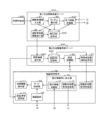
- FIG. 9 is a block diagram showing an example of the functional configuration of the subject terminal 100 and the trial management server 300 according to the third embodiment. Note that, in FIG. 9, the components given the same reference numerals as the reference numerals shown in FIG. 5 have the same functions, and therefore the description thereof will not be repeated.
- the subject terminal 100 further includes a subject secret information receiving unit 16 and a subject secret information transmitting unit 17 as its functional configuration.
- the subject confidential information transmission unit 17 and the assignment information receiving unit 12 constitute an assignment information inquiry unit 18.
- the functions of the subject confidential information receiving unit 16 and the subject confidential information transmitting unit 17 are also realized by executing the treatment application installed in the subject terminal 100.
- the third first clinical trial management server 300 -1 includes as its functional configuration, the subject information input unit 21, the random allocation unit 22, an allocation information transmitting unit 23C and the subject confidential information issuing portion 26 ing. These functional blocks can be configured by either hardware, DSP, or software.
- the third first clinical trial management server 300 -1 according to the embodiment of the storage medium, and a allocation database storage unit 20C in place of the allocation data base storage unit 20B.
- the third second clinical trial management server 300 according to an embodiment of -2, as a functional structure, and includes the authentication information issuing section 24C, the authentication processing unit 25 and the subject confidential information transmitting unit 27. These functional blocks can be configured by either hardware, DSP, or software.
- the third embodiment of the second clinical trial management server 300 -2 as a storage medium, an authentication database storage unit 20D.
- Subjects confidential information issuing unit 26 first clinical trial management server 300 -1 includes issues the subject confidential information linked to the subject specific information input by the subject information input unit 21.
- the subject confidential information is information that can not identify a subject by itself.
- the subject confidential information may be a subject number which is different from the subject identifying information and can not be estimated from the subject identifying information.
- the subject confidential information issuing unit 26 may issue any subject confidential information after the subject identification information is input by the subject information input unit 21.
- the treatment group or control group for the subject may be selected by the random assignment unit 22. It is preferable to set the timing at which the assignment of.
- the subject confidential information issuing unit 26 causes the assignment database storage unit 20C to store the issued subject confidential information in association with the subject specifying information as a part of the assignment database. Further, the subject secret information issuing unit 26, the issued subjects confidential information, and notifies the authentication information issuing section 24C where the second clinical trial management server 300 -2 provided.
- Authentication information issuance unit 24C receives the subject confidential information from the first clinical trial management server 300 -1, and issues authentication information in association with the subject confidential information.
- the subject confidential information issuing unit 26 issues subject confidential information at the timing when the treatment group or the control group is assigned to the subject by the random assignment unit 22, and the authentication information issuing unit 24 receives it. Since the authentication information is issued, the timing at which the authentication information is issued is the timing at which the allocation by the random allocation unit 22 is performed as in the second embodiment.
- the authentication information issued by the authentication information issuing unit 24C is stored in the authentication database storage unit 20D as a part of the authentication database in association with the subject confidential information.
- FIG. 10 is a diagram showing an example of each one record of the assignment database stored in the assignment database storage unit 20C and the authentication database stored in the authentication database storage unit 20D.
- one record of the assignment database stored in the assignment database storage unit 20C includes a record ID (RID), subject identification information, assignment factor information, assignment information, and subject concealment information. That is, when the subject information input unit 21 inputs the subject identification information and the assignment factor information, the information is recorded in the record, and the assignment information is added to the corresponding record when the assignment is performed by the random assignment unit 22.
- the subject confidential information is recorded in addition to the corresponding record when the subject confidential information is issued by the subject confidential information issuing unit 26. Note that the information shown here is the minimum information necessary to explain the third embodiment, and other information may be included.
- one record of the authentication database stored in the authentication database storage unit 20D includes a record ID (RID), subject confidential information, and authentication information. That is, in the authentication database storage unit 20D, when the authentication information is issued by the authentication information issuing unit 24C, the authentication information is recorded in the record together with the test subject confidential information. Note that the information shown here is the minimum information necessary to explain the third embodiment, and other information may be included.
- the authentication information issued by the authentication information issuing unit 24C is transmitted to the subject terminal 100.
- the transmission of the authentication information may be performed by pull communication in response to the request from the subject terminal 100, but is preferably performed by push communication from the trial management server 300.
- the authentication information issuing unit 24C may indirectly transmit the authentication information to the subject terminal 100 via the doctor terminal 200.
- the address information of the subject terminal 100 used when the authentication information issuing unit 24C transmits the authentication information to the subject terminal 100 in a push type is, for example, one of the subject identification information from the doctor terminal 200.
- the subject confidential information issuing unit 26 notifies the authentication information issuing unit 24 of the subject confidential information
- the destination information is also transmitted together with the trial information management server 300-1 of 1 ). You may do so.
- the subject confidential information stored is transmitted to the subject terminal 100.
- the transmission of the subject confidential information may be transmitted together with the message that the authentication processing unit 25 transmits the message to the subject terminal 100 to the effect that the authentication is successful.
- the subject confidential information receiving unit 16 of the subject terminal 100 receives the subject confidential information transmitted by the subject confidential information transmitting unit 27.
- the subject confidential information is information that can not specify a subject, and is therefore information that can be disclosed on the display of the subject terminal 100.
- the subject confirms the subject confidential information displayed on the display, and inputs it to the subject terminal 100.
- Allocation information inquiry unit 18 transmits the subject confidential information input to the subject terminal 100 as described above in the first clinical trial management server 300 -1, acquires allocation information corresponding to the subject confidential information. That is, the subject secret information transmission unit 17 constituting the allocation information inquiry unit 18 transmits the subject confidential information in the first clinical trial management server 300 -1.
- Allocation information transmitting unit 23C of the first clinical trial management server 300 -1 reads allocation information associated with a subject confidential information received from the subject terminal 100 from the assignment database storage unit 20C, which subject confidential information It transmits with respect to the test subject terminal 100 of transmission origin.
- the assignment information receiving unit 12 constituting the assignment information inquiry unit 18 receives the assignment information.
- testee confidential information transmission unit 17 automatically transmits the testee confidential information reception unit 16 received from the second trial management server 300 -2 to the trial management server 300 -1 of love 1, for example. You may
- the mode setting unit 13 of the subject terminal 100 sets the treatment application to either the first mode or the second mode based on the assignment information acquired by the assignment information inquiry unit 18.
- FIG. 11 is a flowchart showing an operation example of the clinical trial system according to the third embodiment configured as described above.
- the doctor decides to register the patient as a subject of the clinical trial subject through diagnosis of the patient, and the doctor specifies the subject identification information and the allocation factor information on the doctor terminal 200. It is assumed that you are entering.
- Flowchart shown in FIG. 11 starts when registering subject specifying information and allocation factors information input to the doctor terminal 200 to the first clinical trial management server 300 -1.
- the doctor terminal 200 transmits the subject specification information input by the physician and the allocation factors information in the first clinical trial management server 300 -1 (step S31).
- the subject information input unit 21 inputs the subject identification information and the assignment factor information (step S32), and stores these in the assignment database storage unit 20C as one information of the assignment database (step S33).
- the subject specification information and the allocation factors information about a plurality of subjects from a plurality of doctor terminal 200 is sent to the first clinical trial management server 300 -1
- the information for the number of persons necessary for the clinical trial is registered in the allocation database storage unit 20C as an allocation database.
- the subject installs the therapeutic application on the subject terminal 100 (step S34).
- the therapeutic application may be installed at a timing before or after registration of the subject identification information and the assignment factor information in the assignment database.
- the random assignment unit 22 selects a treatment group or control subject such that the subject person distribution is in an appropriate dispersed state based on the assignment factor information of the subject registered as a part of the assignment database in the assignment database storage unit 20C. Randomly allocate one of the groups (step S35). Then, the random assignment unit 22 stores assignment information indicating the assignment result in the assignment database storage unit 20C in association with the subject identification information of the assignment database (step S36).
- the subject confidential information issuing unit 26 issues subject confidential information linked to the subject identification information input by the subject information input unit 21 in step S32 (step S37). Then, the subject confidential information issuing unit 26 stores the issued subject confidential information in the assignment database storage unit 20C in association with the subject specifying information in the assignment database (step S38). Further, the subject secret information issuing unit 26, the subject confidential information such issued, notifies the authentication information issuance unit 24C of the second clinical trial management server 300 2 (step S39).
- the authentication information issuing unit 24C issues authentication information for each of the notified subject confidential information (step S40). Then, the authentication information issuing unit 24C stores the issued authentication information in the authentication database storage unit 20D together with the test subject confidential information (step S41). Further, the authentication information issuing unit 24C transmits the issued authentication information to the subject terminal 100 of each subject (step S42). The authentication information receiving unit 14 of the subject terminal 100 receives the authentication information issued by the authentication information issuing unit 24C (step S43).
- the to-be-authenticated unit 15 determines whether authentication information has been input to the subject terminal 100 by the subject (step S44). That is, the therapeutic application installed in step S34 is activated, and the authentication unit 15 determines whether the user ID and the password have been input to the login screen displayed at that time.
- step S44 when the authentication information is not input, the determination of step S44 is continued.
- the authentication unit 15 transmits the authentication information input to the second clinical trial management server 300 2 (step S45).
- the second authentication processing section 25 of the clinical trial management server 300 -2 using the authentication information stored in the authentication database storage unit 20D, the validity of the input information transmitted from the subject terminal 100 Are authenticated (step S46).
- the authentication processing unit 25 determines whether the authentication is successful (step S47). If the authentication fails, the authentication processing unit 25 transmits an error message to the effect that the authentication failed to the subject terminal 100 (step S48), and the process of the second trial management server 300 -2 shown in FIG. finish. On the other hand, when the authentication is successful, the authentication processing unit 25 transmits a message to the effect that the authentication is successful to the subject terminal 100 (step S49), and notifies the subject confidential information transmission unit 27 to that effect.
- the subject confidential information transmission unit 27 transmits the subject confidential information registered in the assignment database to the subject terminal 100 in a push type (step S50).
- the subject confidential information receiving unit 16 of the subject terminal 100 receives the subject confidential information sent from the trial management server 300 (step S51).
- subject confidential information transmitting unit 17 When the subject confidential information receiving unit 16 receives the subject confidential information, subject confidential information transmitting unit 17 performs a request for allocation information by sending the subject confidential information in the first clinical trial management server 300 -1 (step S52 ). In response to the request, the assignment information transmitting unit 23C transmits the assignment information registered in the assignment database in association with the subject confidential information to the subject terminal 100 (step S53). In response to this, the assignment information receiving unit 12 of the subject terminal 100 receives the assignment information sent from the trial management server 300 (step S54).
- the mode setting unit 13 sets the therapeutic application to either the first mode or the second mode based on the assignment information received by the assignment information receiving unit 12 (step S55).
- the therapeutic function execution unit 11 executes various processes based on either the actual treatment program or the simulated treatment program according to any of the modes set by the mode setting unit 13.
- a clinical trial management server 300 is divided into a first clinical trial management server 300 -1 and the second clinical trial management server 300 -2, the subject of the assignment and therapeutic application mode
- the processing related to setting and the processing related to the authentication of the subject are performed by different business entities.
- communication between the subject terminal 100 and the first trial management server 300-1 and the second trial management server 300-2 is performed using the subject confidential information which can not identify the subject. .
- This makes it possible not to completely know whether the subject has been assigned to the treatment group or the control group, not only for the doctor and the subject but also for the business entity operating the clinical trial.
- the third embodiment the second embodiment as a base, by dividing the clinical trial management server 300 in the first clinical trial management server 300 -1 and the second clinical trial management server 300 -2 An example of the configuration has been described.
- the trial management server 300 may be divided into a first trial management server 300-1 and a second trial management server 300-2 .
- subject identification information and assignment factor information of each subject are sequentially input from the plurality of doctor terminals 200 to the trial management server 300, and information for the number of persons necessary for the trial is obtained.
- the present invention is not limited to this.
- each time subject identification information and assignment factor information of one subject is input assignment processing of the subject may be performed.
- the random allocation unit 22 refers to the allocation factor information and the allocation information regarding the subjects registered in the allocation database when the random allocation unit 22 allocates one subject so that the distribution of the subject person is appropriately dispersed. Subjects may be randomly assigned to either treatment or control groups.
- any of the first to third embodiments described above is merely an example of embodiment for carrying out the present invention, and the technical scope of the present invention can be interpreted limitedly by these. It is something that can not be done. That is, the present invention can be implemented in various forms without departing from the scope or main features of the present invention.
Landscapes
- Engineering & Computer Science (AREA)
- Health & Medical Sciences (AREA)
- Business, Economics & Management (AREA)
- Theoretical Computer Science (AREA)
- General Health & Medical Sciences (AREA)
- Medical Informatics (AREA)
- Physics & Mathematics (AREA)
- Primary Health Care (AREA)
- General Physics & Mathematics (AREA)
- Computer Security & Cryptography (AREA)
- Public Health (AREA)
- Tourism & Hospitality (AREA)
- Human Resources & Organizations (AREA)
- Epidemiology (AREA)
- Strategic Management (AREA)
- General Engineering & Computer Science (AREA)
- Computer Hardware Design (AREA)
- Software Systems (AREA)
- General Business, Economics & Management (AREA)
- Economics (AREA)
- Marketing (AREA)
- Data Mining & Analysis (AREA)
- Entrepreneurship & Innovation (AREA)
- Bioethics (AREA)
- Child & Adolescent Psychology (AREA)
- Databases & Information Systems (AREA)
- Pathology (AREA)
- Biomedical Technology (AREA)
- Operations Research (AREA)
- Quality & Reliability (AREA)
- Medical Treatment And Welfare Office Work (AREA)
- Information Transfer Between Computers (AREA)
Abstract
Description
以下、本発明の第1の実施形態を図面に基づいて説明する。図1は、第1の実施形態による治療用アプリケーションの治験システムのネットワーク構成を示す図である。
次に、本発明の第2の実施形態を図面に基づいて説明する。第2の実施形態による治療用アプリケーションの治験システムのネットワーク構成は、図1と同様である。図5は、第2の実施形態による被験者用端末100および治験管理用サーバ300の機能構成例を示すブロック図である。なお、この図5において、図2に示した符号と同一の符号を付したものは同一の機能を有するものであるので、ここでは重複する説明を省略する。
被験者用端末100の認証情報受信部14は、認証情報発行部24により発行された認証情報を受信する(ステップS31)。
次に、本発明の第3の実施形態を図面に基づいて説明する。図8は、第3の実施形態による治療用アプリケーションの治験システムのネットワーク構成を示す図である。図8に示すように、第3の実施形態において治験管理用サーバ300は、第1の治験管理用サーバ300-1および第2の治験管理用サーバ300-2を備える。
12 割付情報受信部
13 モード設定部
14 認証情報受信部
15 被認証部
16 被験者秘匿情報受信部
17 被験者秘匿情報送信部
18 割付情報問い合せ部
20A,20B,20C 割付データベース記憶部
20D 認証データベース記憶部
21 被験者情報入力部
22 ランダム割付部
23,23B,23C 割付情報送信部
24,24C 認証情報発行部
25 認証処理部
26 被験者秘匿情報発行部
27 被験者秘匿情報送信部
100 被験者用端末
200 医師用端末
300 治験管理用サーバ
300-1 第1の治験管理用サーバ
300-2 第2の治験管理用サーバ
Claims (10)
- 被験者が治療用アプリケーションを使用する被験者用端末と、医師が使用する医師用端末と、治験の管理を行う治験管理用サーバとを備え、上記被験者用端末と上記医師用端末と上記治験管理用サーバとが協働して上記治療用アプリケーションの治験を行うシステムであって、
上記治験管理用サーバは、
上記被験者を特定可能な被験者特定情報と、上記被験者を治療群または対照群の何れかに割り付ける際に参照する割付因子情報とを上記医師用端末から入力する被験者情報入力部と、
上記被験者情報入力部により入力された割付因子情報に基づいて、対象者分布が適当な分散状態となるように上記被験者を治療群または対照群の何れかにランダムに割り付けるランダム割付部と、
上記ランダム割付部による上記治療群または上記対照群の何れかへの割り付け結果を示す割付情報を上記被験者用端末に直接または間接的に送信する割付情報送信部とを備え、
上記被験者用端末は、
上記治験管理用サーバから送られてくる上記割付情報に基づいて、上記治療用アプリケーションを、実治療用機能を提供する第1のモードまたは擬似的治療用機能を提供する第2のモードの何れかに設定するモード設定部とを備えた
ことを特徴とする治療用アプリケーションの治験システム。 - 上記治験管理用サーバは、
上記被験者が上記治療用アプリケーションを使用する際に入力すべき認証情報を発行する認証情報発行部と、
上記認証情報発行部により発行された上記認証情報を用いて、上記被験者用端末から送信される入力情報の正当性を認証する認証処理部とを更に備え、
上記割付情報送信部は、上記認証処理部による認証が行われた上記被験者用端末に対して上記割付情報を送信し、
上記被験者用端末は、
上記認証情報発行部により発行された上記認証情報を用いて、上記治験管理用サーバの認証を受ける被認証部を更に備え、
上記モード設定部は、上記被認証部による認証後に上記治験管理用サーバから送られてくる上記割付情報に基づいて、上記治療用アプリケーションを上記第1のモードまたは上記第2のモードの何れかに設定することを特徴とする請求項1に記載の治療用アプリケーションの治験システム。 - 上記モード設定部は、上記被認証部による初回の認証後に上記治験管理用サーバから送られてくる上記割付情報に基づいて、上記治療用アプリケーションを上記第1のモードまたは上記第2のモードの何れかに設定することを特徴とする請求項2に記載の治療用アプリケーションの治験システム。
- 上記治験管理用サーバは、
上記被験者情報入力部、上記ランダム割付部および上記割付情報送信部を備える第1の治験管理用サーバと、
上記認証情報発行部および上記認証処理部を備える第2の治験管理用サーバとを備えることを特徴とする請求項2または3に記載の治療用アプリケーションの治験システム。 - 上記第1の治験管理用サーバは、上記被験者特定情報に紐付けた被験者秘匿情報を発行する被験者秘匿情報発行部を更に備え、
上記第2の治験管理用サーバの上記認証情報発行部は、上記被験者秘匿情報を上記第1の治験管理用サーバから受けて、当該被験者秘匿情報に関連付けて上記認証情報を発行する請求項4に記載の治療用アプリケーションの治験システム。 - 上記第2の治験管理用サーバは、上記被験者用端末から送信される入力情報の正当性が上記認証処理部により認証された後、上記被験者秘匿情報を上記被験者用端末に送信する被験者秘匿情報送信部を更に備え、
上記被験者用端末は、上記第2の治験管理用サーバから受信した上記被験者秘匿情報を上記第1の治験管理用サーバに送信し、当該被験者秘匿情報に対応する割付情報を取得する割付情報問い合せ部を更に備え、
上記治験管理用サーバの上記割付情報送信部は、上記被験者秘匿情報の送信元の上記被験者用端末に対して上記割付情報を送信し、
上記被験者用端末の上記モード設定部は、上記割付情報問い合せ部により取得された上記割付情報に基づいて、上記治療用アプリケーションを上記第1のモードまたは上記第2のモードの何れかに設定する
ことを特徴とする請求項5に記載の治療用アプリケーションの治験システム。 - 被験者が使用する治療用アプリケーションを搭載し、当該治療用アプリケーションの治験を行う治験管理用サーバと協働する端末装置であって、
上記治験管理用サーバにより発行された認証情報を用いて、上記治験管理用サーバの認証を受ける被認証部と、
上記被認証部による認証後に上記治験管理用サーバから送られてくる割付情報であって、上記被験者の割付因子情報に基づいて治療群または対照群の何れかに割り付けられた結果を示す割付情報に基づいて、上記治療用アプリケーションを、実治療用機能を提供する第1のモードまたは擬似的治療用機能を提供する第2のモードの何れかに設定するモード設定部とを備えたことを特徴とする治療用アプリケーションを搭載した端末装置。 - 上記治験管理用サーバの1つである第2の治験管理用サーバによる認証を上記被認証部が受けたときに、上記被験者を特定可能な被験者特定情報に紐付けられた被験者秘匿情報を上記第2の治験管理用サーバから受信する被験者特定情報受信部と、
上記被験者特定情報受信部により受信された上記被験者秘匿情報を上記治験管理用サーバの1つである第1の治験管理用サーバに送信し、当該被験者秘匿情報に対応する割付情報を取得する割付情報問い合せ部とを更に備え、
上記モード設定部は、上記割付情報問い合せ部により取得された上記割付情報に基づいて、上記治療用アプリケーションを上記第1のモードまたは上記第2のモードの何れかに設定することを特徴とする請求項7に記載の治療用アプリケーションを搭載した端末装置。 - 実治療用機能を提供する第1のモードと、擬似的治療用機能を提供する第2のモードとを有し、選択的に設定された何れかのモードに従って動作する治療用アプリケーションプログラムであって、
上記治療用アプリケーションの治験の管理を行う治験管理用サーバにより発行された認証情報を用いて、上記治験管理用サーバの認証を受ける被認証手段、および
上記被認証手段による認証後に上記治験管理用サーバから送られてくる割付情報であって、上記被験者の割付因子情報に基づいて治療群または対照群の何れかに割り付けられた結果を示す割付情報に基づいて、上記第1のモードまたは上記第2のモードの何れかに設定するモード設定手段
としてコンピュータを機能させるための治療用アプリケーションプログラム。 - 上記治験管理用サーバの1つである第2の治験管理用サーバによる認証を上記被認証手段が受けたときに、上記被験者を特定可能な被験者特定情報に紐付けられた被験者秘匿情報を上記第2の治験管理用サーバから受信する被験者特定情報受信手段、および
上記被験者特定情報受信手段により受信された上記被験者秘匿情報を上記治験管理用サーバの1つである第1の治験管理用サーバに送信し、当該被験者秘匿情報に対応する割付情報を取得する割付情報問い合せ手段として上記コンピュータを更に機能させ、
上記モード設定手段は、上記割付情報問い合せ手段により取得された上記割付情報に基づいて、上記治療用アプリケーションを上記第1のモードまたは上記第2のモードの何れかに設定することを特徴とする請求項9に記載の治療用アプリケーションプログラム。
Priority Applications (6)
| Application Number | Priority Date | Filing Date | Title |
|---|---|---|---|
| KR1020207020508A KR102190771B1 (ko) | 2018-01-16 | 2018-01-16 | 치료용 어플리케이션의 치험 시스템, 치료용 어플리케이션을 탑재한 단말 장치, 및 치료용 어플리케이션 프로그램 |
| US16/962,419 US20200388356A1 (en) | 2018-01-16 | 2018-01-16 | Clinical trial system for treatment application, terminal device having treatment application mounted thereon, and treatment application program |
| EP18901748.6A EP3723015A1 (en) | 2018-01-16 | 2018-01-16 | Clinical trial system for treatment application, terminal device having treatment application mounted thereon, and treatment application program |
| PCT/JP2018/001017 WO2019142238A1 (ja) | 2018-01-16 | 2018-01-16 | 治療用アプリケーションの治験システム、治療用アプリケーションを搭載した端末装置、および治療用アプリケーションプログラム |
| CN201880086227.9A CN111602208B (zh) | 2018-01-16 | 2018-01-16 | 治疗用应用的效验系统、搭载治疗用应用的受试者用终端以及计算机可读存储介质 |
| JP2018517637A JP6347008B1 (ja) | 2018-01-16 | 2018-01-16 | 治療用アプリケーションの治験システム、治療用アプリケーションを搭載した端末装置、および治療用アプリケーションプログラム |
Applications Claiming Priority (1)
| Application Number | Priority Date | Filing Date | Title |
|---|---|---|---|
| PCT/JP2018/001017 WO2019142238A1 (ja) | 2018-01-16 | 2018-01-16 | 治療用アプリケーションの治験システム、治療用アプリケーションを搭載した端末装置、および治療用アプリケーションプログラム |
Publications (1)
| Publication Number | Publication Date |
|---|---|
| WO2019142238A1 true WO2019142238A1 (ja) | 2019-07-25 |
Family
ID=62635833
Family Applications (1)
| Application Number | Title | Priority Date | Filing Date |
|---|---|---|---|
| PCT/JP2018/001017 Ceased WO2019142238A1 (ja) | 2018-01-16 | 2018-01-16 | 治療用アプリケーションの治験システム、治療用アプリケーションを搭載した端末装置、および治療用アプリケーションプログラム |
Country Status (6)
| Country | Link |
|---|---|
| US (1) | US20200388356A1 (ja) |
| EP (1) | EP3723015A1 (ja) |
| JP (1) | JP6347008B1 (ja) |
| KR (1) | KR102190771B1 (ja) |
| CN (1) | CN111602208B (ja) |
| WO (1) | WO2019142238A1 (ja) |
Cited By (1)
| Publication number | Priority date | Publication date | Assignee | Title |
|---|---|---|---|---|
| WO2022036084A1 (en) * | 2020-08-12 | 2022-02-17 | Sharecare AI, Inc. | Systems and methods for virtual clinical trials |
Families Citing this family (8)
| Publication number | Priority date | Publication date | Assignee | Title |
|---|---|---|---|---|
| JP6601988B1 (ja) * | 2018-11-30 | 2019-11-06 | 株式会社Splink | 情報生成システム及び情報生成方法 |
| US20220122742A1 (en) * | 2019-01-16 | 2022-04-21 | Cureapp, Inc. | System, device, method, and program for alleviating symptom developed in association with treatment involving side effect of drug |
| EP4176448A1 (en) * | 2020-07-02 | 2023-05-10 | Pear Therapeutics (US), Inc. | Systems, methods, and devices for generating and administering digital therapeutic placebos and shams |
| JP7601370B2 (ja) * | 2020-11-17 | 2024-12-17 | ロゴスサイエンス株式会社 | 医療用アプリのアクティベーションシステム |
| CN112614554B (zh) * | 2020-12-10 | 2024-02-27 | 景昱医疗科技(苏州)股份有限公司 | 程控器、交互式医疗设备的双盲试验系统及其试验方法 |
| GB2603470B (en) * | 2021-01-29 | 2025-08-20 | Brainpatch Ltd | Intervention system and method |
| CN113593660A (zh) * | 2021-08-03 | 2021-11-02 | 苏州景昱医疗器械有限公司 | 双盲实验装置、电子设备、双盲实验系统及存储介质 |
| JP7694886B2 (ja) * | 2022-09-30 | 2025-06-18 | サスメド株式会社 | 治療用アプリ管理システムおよび治療用アプリケーションプログラム |
Citations (4)
| Publication number | Priority date | Publication date | Assignee | Title |
|---|---|---|---|---|
| JP2004192060A (ja) * | 2002-12-06 | 2004-07-08 | Moss Institute Co Ltd | 秘匿情報開示システム、秘匿情報開示装置、秘匿情報開示方法及び秘匿情報開示プログラム |
| JP2006323864A (ja) | 2000-04-28 | 2006-11-30 | Mebix Kk | 臨床試験実施管理システム |
| JP2015153137A (ja) * | 2014-02-14 | 2015-08-24 | エムスリー株式会社 | 治験・臨床研究支援システム、治験・臨床研究支援方法、電子カルテedc連携サブシステム、自動転記プログラム、電子カルテ記録プログラム |
| JP2016146196A (ja) * | 2010-06-12 | 2016-08-12 | メディデータ・ソリューションズ・インコーポレイテッド | 治験における分散型無作為化および供給管理 |
Family Cites Families (4)
| Publication number | Priority date | Publication date | Assignee | Title |
|---|---|---|---|---|
| US20050075832A1 (en) * | 2003-09-22 | 2005-04-07 | Ikeguchi Edward F. | System and method for continuous data analysis of an ongoing clinical trial |
| JP4809468B2 (ja) * | 2009-09-25 | 2011-11-09 | 財団法人先端医療振興財団 | 割付装置、割付方法、及びプログラム |
| CN106407638A (zh) * | 2015-07-31 | 2017-02-15 | 黄金富知识产权咨询(深圳)有限公司 | 一种药物临床测试方法 |
| US20170364655A1 (en) * | 2016-06-15 | 2017-12-21 | Aftechmobile Inc. (d/b/a Mobrise Inc.) | Monitoring adherence to a healthcare plan |
-
2018
- 2018-01-16 EP EP18901748.6A patent/EP3723015A1/en not_active Withdrawn
- 2018-01-16 KR KR1020207020508A patent/KR102190771B1/ko active Active
- 2018-01-16 WO PCT/JP2018/001017 patent/WO2019142238A1/ja not_active Ceased
- 2018-01-16 CN CN201880086227.9A patent/CN111602208B/zh active Active
- 2018-01-16 JP JP2018517637A patent/JP6347008B1/ja active Active
- 2018-01-16 US US16/962,419 patent/US20200388356A1/en not_active Abandoned
Patent Citations (4)
| Publication number | Priority date | Publication date | Assignee | Title |
|---|---|---|---|---|
| JP2006323864A (ja) | 2000-04-28 | 2006-11-30 | Mebix Kk | 臨床試験実施管理システム |
| JP2004192060A (ja) * | 2002-12-06 | 2004-07-08 | Moss Institute Co Ltd | 秘匿情報開示システム、秘匿情報開示装置、秘匿情報開示方法及び秘匿情報開示プログラム |
| JP2016146196A (ja) * | 2010-06-12 | 2016-08-12 | メディデータ・ソリューションズ・インコーポレイテッド | 治験における分散型無作為化および供給管理 |
| JP2015153137A (ja) * | 2014-02-14 | 2015-08-24 | エムスリー株式会社 | 治験・臨床研究支援システム、治験・臨床研究支援方法、電子カルテedc連携サブシステム、自動転記プログラム、電子カルテ記録プログラム |
Non-Patent Citations (2)
| Title |
|---|
| ANONYMOUS, CNET, 3 October 2017 (2017-10-03), XP009521780, Retrieved from the Internet <URL:https://japan.cnet.com/article/35108229> [retrieved on 20180313] * |
| See also references of EP3723015A4 |
Cited By (2)
| Publication number | Priority date | Publication date | Assignee | Title |
|---|---|---|---|---|
| WO2022036084A1 (en) * | 2020-08-12 | 2022-02-17 | Sharecare AI, Inc. | Systems and methods for virtual clinical trials |
| US11430547B2 (en) | 2020-08-12 | 2022-08-30 | Sharecare AI, Inc. | Systems and methods for virtual clinical trials |
Also Published As
| Publication number | Publication date |
|---|---|
| EP3723015A4 (en) | 2020-10-14 |
| JP6347008B1 (ja) | 2018-06-20 |
| EP3723015A1 (en) | 2020-10-14 |
| JPWO2019142238A1 (ja) | 2020-01-23 |
| KR102190771B1 (ko) | 2020-12-14 |
| CN111602208A (zh) | 2020-08-28 |
| CN111602208B (zh) | 2022-03-01 |
| US20200388356A1 (en) | 2020-12-10 |
| KR20200089341A (ko) | 2020-07-24 |
Similar Documents
| Publication | Publication Date | Title |
|---|---|---|
| JP6347008B1 (ja) | 治療用アプリケーションの治験システム、治療用アプリケーションを搭載した端末装置、および治療用アプリケーションプログラム | |
| Sverdlov et al. | Digital therapeutics: an integral component of digital innovation in drug development | |
| JP2020537462A (ja) | デジタル療法を用いた疾患及び障害の治療においてデータセキュリティを確保するためのシステム及び方法 | |
| Patel et al. | Randomized controlled trial demonstrating cost‐effective method of olfactory training in clinical practice: essential oils at uncontrolled concentration | |
| EP3790020A1 (en) | Medical service management method and device | |
| JP7570440B2 (ja) | デジタル治療プラセボおよびシャムの生成および施用のためのシステム、方法およびデバイス | |
| KR102079554B1 (ko) | 블록체인을 이용한 임상시험 자원관리 방법 및 시스템 | |
| JP6611112B1 (ja) | 治療関連アプリ管理システムおよび管理用サーバ装置 | |
| US20030033532A1 (en) | System and method for forming an on-line buyer's club | |
| Oehrn et al. | Non-invasive vagus nerve stimulation in epilepsy patients enhances cooperative behavior in the prisoner’s dilemma task | |
| CN101707572B (zh) | 提供定制网络的方法和系统 | |
| JP6340494B1 (ja) | 治療用アプリケーションの治験システム、治験管理用サーバ、および治験管理用プログラム | |
| Nash et al. | Efficacy and effectiveness approaches in behavioral treatment trials | |
| Buttgereit et al. | The Chronic Angioedema Registry (CARE): rationale, methods and implementation | |
| Cheng et al. | Repetitive transcranial magnetic stimulation as a treatment for veterans with cognitive impairment and multiple comorbidities | |
| CN104994099A (zh) | 一种基于网络医院的数据处理方法、设备及系统 | |
| KR20100053995A (ko) | 병의원 전자의무기록 시스템과 인터넷 기반 개인건강기록 계정 간의 진료실 pc 기반 접속 방법 | |
| JP6258453B2 (ja) | 情報処理装置、情報処理方法及びプログラム | |
| US20240164711A1 (en) | Method for improving traditional chinese medicine diagnosis procedures and treatment plans | |
| Taylor et al. | Outcome comparison of integrated psycho‐oncological care versus unstructured care—Results of a non‐randomised open‐label two‐arm trial | |
| JP7694886B2 (ja) | 治療用アプリ管理システムおよび治療用アプリケーションプログラム | |
| JP7796323B2 (ja) | プログラム、ゲーム装置、サーバ装置およびゲームシステム | |
| CN114360682A (zh) | 医用信息处理方法和装置 | |
| JP7355914B1 (ja) | 情報処理装置、情報処理方法及びプログラム | |
| CN113823392B (zh) | 医保患者的住院查房方法及装置、存储介质、计算机设备 |
Legal Events
| Date | Code | Title | Description |
|---|---|---|---|
| ENP | Entry into the national phase |
Ref document number: 2018517637 Country of ref document: JP Kind code of ref document: A |
|
| 121 | Ep: the epo has been informed by wipo that ep was designated in this application |
Ref document number: 18901748 Country of ref document: EP Kind code of ref document: A1 |
|
| ENP | Entry into the national phase |
Ref document number: 20207020508 Country of ref document: KR Kind code of ref document: A |
|
| NENP | Non-entry into the national phase |
Ref country code: DE |
|
| ENP | Entry into the national phase |
Ref document number: 2018901748 Country of ref document: EP Effective date: 20200710 |