WO2019146477A1 - T細胞レセプター - Google Patents
T細胞レセプター Download PDFInfo
- Publication number
- WO2019146477A1 WO2019146477A1 PCT/JP2019/001182 JP2019001182W WO2019146477A1 WO 2019146477 A1 WO2019146477 A1 WO 2019146477A1 JP 2019001182 W JP2019001182 W JP 2019001182W WO 2019146477 A1 WO2019146477 A1 WO 2019146477A1
- Authority
- WO
- WIPO (PCT)
- Prior art keywords
- chain
- seq
- amino acid
- acid sequence
- sequence shown
- Prior art date
- Legal status (The legal status is an assumption and is not a legal conclusion. Google has not performed a legal analysis and makes no representation as to the accuracy of the status listed.)
- Ceased
Links
Images









Classifications
-
- G—PHYSICS
- G01—MEASURING; TESTING
- G01N—INVESTIGATING OR ANALYSING MATERIALS BY DETERMINING THEIR CHEMICAL OR PHYSICAL PROPERTIES
- G01N33/00—Investigating or analysing materials by specific methods not covered by groups G01N1/00 - G01N31/00
- G01N33/48—Biological material, e.g. blood, urine; Haemocytometers
- G01N33/50—Chemical analysis of biological material, e.g. blood, urine; Testing involving biospecific ligand binding methods; Immunological testing
- G01N33/53—Immunoassay; Biospecific binding assay; Materials therefor
- G01N33/569—Immunoassay; Biospecific binding assay; Materials therefor for microorganisms, e.g. protozoa, bacteria, viruses
- G01N33/56966—Animal cells
- G01N33/56972—White blood cells
-
- C—CHEMISTRY; METALLURGY
- C07—ORGANIC CHEMISTRY
- C07K—PEPTIDES
- C07K14/00—Peptides having more than 20 amino acids; Gastrins; Somatostatins; Melanotropins; Derivatives thereof
- C07K14/435—Peptides having more than 20 amino acids; Gastrins; Somatostatins; Melanotropins; Derivatives thereof from animals; from humans
- C07K14/705—Receptors; Cell surface antigens; Cell surface determinants
- C07K14/70503—Immunoglobulin superfamily
- C07K14/7051—T-cell receptor (TcR)-CD3 complex
-
- A—HUMAN NECESSITIES
- A61—MEDICAL OR VETERINARY SCIENCE; HYGIENE
- A61K—PREPARATIONS FOR MEDICAL, DENTAL OR TOILETRY PURPOSES
- A61K40/00—Cellular immunotherapy
- A61K40/10—Cellular immunotherapy characterised by the cell type used
- A61K40/11—T-cells, e.g. tumour infiltrating lymphocytes [TIL] or regulatory T [Treg] cells; Lymphokine-activated killer [LAK] cells
-
- A—HUMAN NECESSITIES
- A61—MEDICAL OR VETERINARY SCIENCE; HYGIENE
- A61K—PREPARATIONS FOR MEDICAL, DENTAL OR TOILETRY PURPOSES
- A61K40/00—Cellular immunotherapy
- A61K40/30—Cellular immunotherapy characterised by the recombinant expression of specific molecules in the cells of the immune system
- A61K40/32—T-cell receptors [TCR]
-
- A—HUMAN NECESSITIES
- A61—MEDICAL OR VETERINARY SCIENCE; HYGIENE
- A61K—PREPARATIONS FOR MEDICAL, DENTAL OR TOILETRY PURPOSES
- A61K40/00—Cellular immunotherapy
- A61K40/40—Cellular immunotherapy characterised by antigens that are targeted or presented by cells of the immune system
- A61K40/46—Viral antigens
-
- A—HUMAN NECESSITIES
- A61—MEDICAL OR VETERINARY SCIENCE; HYGIENE
- A61P—SPECIFIC THERAPEUTIC ACTIVITY OF CHEMICAL COMPOUNDS OR MEDICINAL PREPARATIONS
- A61P31/00—Antiinfectives, i.e. antibiotics, antiseptics, chemotherapeutics
- A61P31/12—Antivirals
- A61P31/14—Antivirals for RNA viruses
-
- A—HUMAN NECESSITIES
- A61—MEDICAL OR VETERINARY SCIENCE; HYGIENE
- A61P—SPECIFIC THERAPEUTIC ACTIVITY OF CHEMICAL COMPOUNDS OR MEDICINAL PREPARATIONS
- A61P35/00—Antineoplastic agents
- A61P35/02—Antineoplastic agents specific for leukemia
-
- C—CHEMISTRY; METALLURGY
- C12—BIOCHEMISTRY; BEER; SPIRITS; WINE; VINEGAR; MICROBIOLOGY; ENZYMOLOGY; MUTATION OR GENETIC ENGINEERING
- C12N—MICROORGANISMS OR ENZYMES; COMPOSITIONS THEREOF; PROPAGATING, PRESERVING, OR MAINTAINING MICROORGANISMS; MUTATION OR GENETIC ENGINEERING; CULTURE MEDIA
- C12N5/00—Undifferentiated human, animal or plant cells, e.g. cell lines; Tissues; Cultivation or maintenance thereof; Culture media therefor
- C12N5/06—Animal cells or tissues; Human cells or tissues
- C12N5/0602—Vertebrate cells
- C12N5/0634—Cells from the blood or the immune system
- C12N5/0636—T lymphocytes
-
- G—PHYSICS
- G01—MEASURING; TESTING
- G01N—INVESTIGATING OR ANALYSING MATERIALS BY DETERMINING THEIR CHEMICAL OR PHYSICAL PROPERTIES
- G01N33/00—Investigating or analysing materials by specific methods not covered by groups G01N1/00 - G01N31/00
- G01N33/48—Biological material, e.g. blood, urine; Haemocytometers
- G01N33/50—Chemical analysis of biological material, e.g. blood, urine; Testing involving biospecific ligand binding methods; Immunological testing
- G01N33/53—Immunoassay; Biospecific binding assay; Materials therefor
- G01N33/569—Immunoassay; Biospecific binding assay; Materials therefor for microorganisms, e.g. protozoa, bacteria, viruses
- G01N33/56983—Viruses
-
- G—PHYSICS
- G01—MEASURING; TESTING
- G01N—INVESTIGATING OR ANALYSING MATERIALS BY DETERMINING THEIR CHEMICAL OR PHYSICAL PROPERTIES
- G01N33/00—Investigating or analysing materials by specific methods not covered by groups G01N1/00 - G01N31/00
- G01N33/48—Biological material, e.g. blood, urine; Haemocytometers
- G01N33/50—Chemical analysis of biological material, e.g. blood, urine; Testing involving biospecific ligand binding methods; Immunological testing
- G01N33/53—Immunoassay; Biospecific binding assay; Materials therefor
- G01N33/575—Immunoassay; Biospecific binding assay; Materials therefor for cancer
- G01N33/57505—Immunoassay; Biospecific binding assay; Materials therefor for cancer of the blood, e.g. leukaemia
-
- G—PHYSICS
- G01—MEASURING; TESTING
- G01N—INVESTIGATING OR ANALYSING MATERIALS BY DETERMINING THEIR CHEMICAL OR PHYSICAL PROPERTIES
- G01N33/00—Investigating or analysing materials by specific methods not covered by groups G01N1/00 - G01N31/00
- G01N33/48—Biological material, e.g. blood, urine; Haemocytometers
- G01N33/50—Chemical analysis of biological material, e.g. blood, urine; Testing involving biospecific ligand binding methods; Immunological testing
- G01N33/68—Chemical analysis of biological material, e.g. blood, urine; Testing involving biospecific ligand binding methods; Immunological testing involving proteins, peptides or amino acids
- G01N33/6878—Chemical analysis of biological material, e.g. blood, urine; Testing involving biospecific ligand binding methods; Immunological testing involving proteins, peptides or amino acids in epitope analysis
-
- C—CHEMISTRY; METALLURGY
- C12—BIOCHEMISTRY; BEER; SPIRITS; WINE; VINEGAR; MICROBIOLOGY; ENZYMOLOGY; MUTATION OR GENETIC ENGINEERING
- C12N—MICROORGANISMS OR ENZYMES; COMPOSITIONS THEREOF; PROPAGATING, PRESERVING, OR MAINTAINING MICROORGANISMS; MUTATION OR GENETIC ENGINEERING; CULTURE MEDIA
- C12N2501/00—Active agents used in cell culture processes, e.g. differentation
- C12N2501/50—Cell markers; Cell surface determinants
- C12N2501/515—CD3, T-cell receptor complex
-
- C—CHEMISTRY; METALLURGY
- C12—BIOCHEMISTRY; BEER; SPIRITS; WINE; VINEGAR; MICROBIOLOGY; ENZYMOLOGY; MUTATION OR GENETIC ENGINEERING
- C12N—MICROORGANISMS OR ENZYMES; COMPOSITIONS THEREOF; PROPAGATING, PRESERVING, OR MAINTAINING MICROORGANISMS; MUTATION OR GENETIC ENGINEERING; CULTURE MEDIA
- C12N2510/00—Genetically modified cells
-
- G—PHYSICS
- G01—MEASURING; TESTING
- G01N—INVESTIGATING OR ANALYSING MATERIALS BY DETERMINING THEIR CHEMICAL OR PHYSICAL PROPERTIES
- G01N2333/00—Assays involving biological materials from specific organisms or of a specific nature
- G01N2333/005—Assays involving biological materials from specific organisms or of a specific nature from viruses
- G01N2333/08—RNA viruses
- G01N2333/15—Retroviridae, e.g. bovine leukaemia virus, feline leukaemia virus, feline leukaemia virus, human T-cell leukaemia-lymphoma virus
Definitions
- the present invention relates to T cell receptors and screening methods thereof.
- HTLV-1 human T-cell leukemia virus
- ATL adult T-cell leukemia
- Non-Patent Document 1 describes that a repertoire analysis is performed on a cell population of HTLV-1-derived antigen (Tax) -specific cytotoxic T cells (CTL) in ATL patients.
- Tax HTLV-1-derived antigen
- CTL cytotoxic T cells
- An object of the present invention is to provide a technique for preventing or treating HTLV-1 related diseases such as ATL, a material used for the technique, a method of screening the material, and the like.
- the present inventors analyzed HTLV-1-derived antigen-recognizing cells selected from a patient with HTLV-1 and analyzed the T cell receptor (TCR) repertoire to determine the number of TCR-type cells. It has been found that, by ranking in order of decreasing abundance and selecting the TCRs of the top rank, it is possible to screen TCRs with higher affinity for HTLV-1 derived antigens. And, it was found that the obtained TCR can be efficiently expressed in cells and that the TCR-expressing cells exert cytotoxicity on HTLV-1 infected cells.
- the present invention has been completed as a result of intensive studies based on these findings.
- the present invention includes the following aspects.
- T cell receptor having any of the following features (A) to (J): (A) A ⁇ chain comprising a ⁇ chain CDR3 comprising the amino acid sequence shown by SEQ ID NO: 3 and an ⁇ chain comprising an ⁇ chain CDR3 comprising the amino acid sequence shown by SEQ ID NO: 8 (B) A ⁇ chain comprising a ⁇ chain CDR3 comprising the amino acid sequence shown in SEQ ID NO: 13 and an ⁇ chain comprising an ⁇ chain CDR3 comprising the amino acid sequence shown in SEQ ID NO: 18 (C) a ⁇ chain comprising a ⁇ chain CDR3 comprising the amino acid sequence shown in SEQ ID NO: 23 and an ⁇ chain comprising an ⁇ chain CDR3 comprising the amino acid sequence shown in SEQ ID NO: 28 (D) A ⁇ chain comprising a ⁇ chain CDR3 comprising the amino acid sequence shown in SEQ ID NO: 33, and an ⁇ chain comprising an ⁇ chain CDR3 comprising the amino acid sequence shown in SEQ ID NO:
- the ⁇ chain includes a ⁇ chain CDR1 containing the amino acid sequence shown in SEQ ID NO: 1 and a ⁇ chain CDR2 containing the amino acid sequence shown in SEQ ID NO: 2; An ⁇ chain CDR1 comprising the amino acid sequence shown, and an ⁇ chain CDR2 comprising the amino acid sequence shown in SEQ ID NO: 7;
- the ⁇ chain includes a ⁇ chain CDR1 containing the amino acid sequence shown in SEQ ID NO: 11 and a ⁇ chain CDR2 containing the amino acid sequence shown in SEQ ID NO: 12;
- the ⁇ chain includes a ⁇ chain CDR1 including the amino acid sequence represented by SEQ ID NO: 21 and a ⁇ chain CDR2 including the amino acid sequence represented by SEQ ID NO: 22;
- Item 3 The T cell receptor according to Item 1 or 2, which recognizes a Tax antigen.
- Item 4 The T cell receptor according to any one of Items 1 to 3, which has the feature (I) or (J).
- Item 5 The T cell receptor according to Item 4, which recognizes Tax antigen restricted to HLA-A * 24: 02.
- Item 6. One or more polynucleotides encoding the T cell receptor according to any one of Items 1 to 6.
- Item 7. A cell containing the polynucleotide according to Item 6.
- Item 8 The cell according to item 7, wherein the T cell receptor according to any one of items 1 to 6 is expressed on the cell membrane.
- Item 9. The cell according to item 7 or 8, wherein the cell is a lymphocyte.
- Item 10 The cell according to any one of Items 7 to 9, wherein the cell is a CD8 positive cell.
- Item 11 The cell according to any one of items 7 to 10, wherein the cell is a cell derived from a living organism that carries human T cell leukemia virus.
- Item 12. An agent for the prophylaxis or treatment of human T cell leukemia virus related disease, which comprises the cell according to any one of items 7 to 11.
- Item 13 The therapeutic agent according to item 12, wherein the human T cell leukemia virus related disease is adult T cell leukemia.
- Item 14 (I) selecting a cell population that recognizes human T cell leukemia virus-derived antigen from a living organism holding human T cell leukemia virus, (Ii) performing T cell receptor repertoire analysis on the cell population to determine the type of T cell receptor in each cell and the number of cells of the same type; (Iii) ranking the types in descending order of the number of cells of the same type, and selecting a T cell receptor with the top rank; A method of screening a T cell receptor, comprising
- Item 15 The screening method according to Item 14, wherein in the step (iii), at least one selected from the group consisting of T cell receptors of the ranks 1 to 5 is selected.
- HTLV-1 related diseases such as ATL
- a material used for the technique a screening method of the material, and the like.
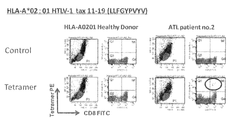
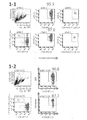
- the result of the tetramer staining (sample number 2) of Experiment 1 is shown.
- the tetramer used for staining is shown at the top.
- Tetramer shows when stained.
- the vertical axis shows the degree of tetramer staining
- the horizontal axis shows the degree of CD8 staining.
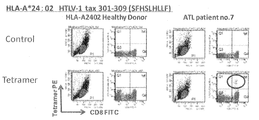
- staining of test example 1 (sample number 7) is shown.
- the tetramer used for staining is shown at the top. When Control is not stained, Tetramer shows when stained.
- each histogram the vertical axis shows the degree of tetramer staining, and the horizontal axis shows the degree of CD8 staining.
- the result of the repertoire analysis of Experiment 1 is shown.
- the whole pie chart represents the number of cells subjected to repertoire analysis (the number of cells in the cell population obtained by tetramer staining in Test Example 1).
- Each filled sector represents the number of cells of the same type of TCR.
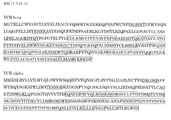
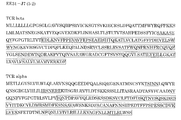
- the group from which TCR clones such as 1-1, 2-1, 5-1, 7-1 etc. were obtained is indicated by the notation of the clone number. Amino acid sequences from the N-terminal side of the ⁇ chain and ⁇ chain of TCR 1-1 are shown.
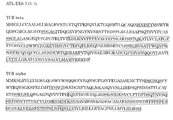
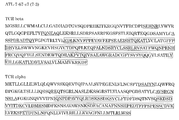
- the framed frame indicates the constant region, the others indicate the variable region, and the underlines indicate CDR1, CDR2 and CDR3 in order from the N-terminal side (the same applies to FIGS. 5 to 13).
- the amino acid sequences from the N-terminal side of the ⁇ chain and ⁇ chain of TCR 1-2 are shown.
- Amino acid sequences from the N-terminal side of the ⁇ chain and ⁇ chain of TCR 2-1 are shown.
- the amino acid sequences from the N-terminal side of the ⁇ chain and ⁇ chain of TCR 2-2 are shown.
- Amino acid sequences from the N-terminal side of the ⁇ chain and ⁇ chain of TCR 5-1 are shown.
- the amino acid sequences from the N-terminal side of the ⁇ chain and ⁇ chain of TCR 5-2 are shown.
- the amino acid sequences from the N-terminal side of the ⁇ chain and ⁇ chain of TCR 5-3 are shown.
- Amino acid sequences from the N-terminal side of the ⁇ chain and ⁇ chain of TCR7-1 are shown.
- the amino acid sequences from the N-terminal side of the ⁇ chain and ⁇ chain of TCR 7-2 are shown.
- the amino acid sequences from the N-terminal side of the ⁇ chain and ⁇ chain of TCR 7-3 are shown.
- the HLA-A * 24: 02 restriction TCR expression analysis result of Experiment 2 is shown.
- the two left graphs show the results of expression analysis by tetramer staining, and the one right graph shows the results of expression analysis by GFP expression.
- the legend indicates the tetramer used and the cells to be analyzed (CD8 positive or CD4 positive).
- the HLA-A * 02: 01 restriction TCR expression analysis result of Experiment 2 is shown.
- the upper two graphs show the results of expression analysis by tetramer staining, and the lower one graph shows the results of expression analysis by GFP expression.
- the legend indicates the tetramer used and the cells to be analyzed (CD8 positive or CD4 positive).
- the result of expansion culture of the TCR expression cell (1-1 and 1-2) of example 3 of an examination is shown.
- the values shown outside the graph indicate the proportion of tetramer positive cells or GFP positive cells.
- the result of expansion culture of the TCR expression cell (2-1 and 2-2) of test example 3 is shown.
- the values shown outside the graph indicate the proportion of tetramer positive cells or GFP positive cells.
- the result of expansion culture of the TCR expression cell (5-1) of example 3 of an examination is shown.
- the values shown outside the graph indicate the proportion of tetramer positive cells or GFP positive cells.
- the result of expansion culture of the TCR expression cell (7-2 and 7-3) of test example 3 is shown.
- the values shown outside the graph indicate the proportion of tetramer positive cells or GFP positive cells.
- the result of the cytotoxicity assay of Experiment 3 is shown.
- the "identity" of an amino acid sequence refers to the degree of identity of the amino acid sequences of two or more comparable amino acid sequences with respect to each other. Thus, the higher the match between two amino acid sequences, the higher the identity or similarity of those sequences.
- the level of amino acid sequence identity is determined using, for example, FASTA, a tool for sequence analysis, using default parameters.
- FASTA a tool for sequence analysis, using default parameters.
- the algorithm BLAST by Karlin and Altschul Karlin and Altschul (Karlin S, Altschul SF. "Methods for assessing the statistical significance of molecular sequence features by using general scoring schemes" Proc Natl Acad Sci USA. 87: 2264-2268 (1990), Karlin S, Altschul SF.
- conservative substitution means that an amino acid residue is substituted with an amino acid residue having a similar side chain.
- substitution with amino acid residues having basic side chains such as lysine, arginine and histidine corresponds to conservative substitution.
- amino acid residues having acidic side chains such as aspartic acid and glutamic acid
- amino acid residues having non-charged polar side chains such as glycine, asparagine, glutamine, serine, threonine, tyrosine and cysteine
- Amino acid residues having nonpolar side chains such as proline, phenylalanine, methionine and tryptophan
- amino acid residues having ⁇ -branched side chains such as threonine, valine and isoleucine
- aromatic side chains such as tyrosine, phenylalanine, tryptophan and histidine
- CDR is an abbreviation of C omplementarity D etermining R egion, also called complementarity determining regions.
- the CDRs are regions present in the variable region of TCR and are regions deeply involved in specific binding to an MHC-restricted antigen.
- ⁇ chain CDR is a CDR present in the variable region of TCR ⁇ chain
- ⁇ chain CDR means a CDR present in the variable region of TCR ⁇ chain.
- the “variable region” means a region including the above-described CDR1 to CDR3 (hereinafter simply referred to as “CDRs 1-3”).
- the arrangement order of these CDRs 1 to 3 is not particularly limited, but preferably, the N-terminal to C-terminal direction, in the order of CDR 1, CDR 2 and CDR 3 or in the reverse order, a frame which is continuous or described later
- work region FR
- ⁇ chain variable region is a region in which the above-described ⁇ chain CDRs 1-3 is disposed
- the “ ⁇ chain variable region” is a region in which the above light chain CDRs 1-3 is disposed.
- each variable region is referred to as framework regions (FR) as described above.
- FR framework regions
- the region between the N-terminus of the variable region and the CDR1 is FR1
- the region between CDR1 and CDR2 is the FR2
- the region between CDR2 and CDR3 is FR3
- the region between CDR3 and the C-terminus of the variable Each is defined as FR4.
- T Cell Receptor The present invention relates, in one aspect, to a T cell receptor (also referred to herein as "the TCR of the present invention") having any of the features (A) to (J). This will be described below.
- Feature (A) is a feature that it comprises a ⁇ chain containing a ⁇ chain CDR3 containing the amino acid sequence shown in SEQ ID NO: 3 and an ⁇ chain containing an ⁇ chain CDR3 containing the amino acid sequence shown in SEQ ID NO: 8.
- the ⁇ chain comprises a ⁇ chain CDR1 comprising the amino acid sequence shown in SEQ ID NO: 1 and a ⁇ chain CDR2 comprising the amino acid sequence shown in SEQ ID NO: 2; 6 includes an ⁇ chain CDR1 containing the amino acid sequence shown by 6 and an ⁇ chain CDR2 containing the amino acid sequence shown by SEQ ID NO: 7.
- an ⁇ chain variable region comprising the amino acid sequence shown by SEQ ID NO: 9 or the mutation sequence thereof, which comprises a ⁇ chain variable region comprising the amino acid sequence shown by SEQ ID NO: 4 or a mutation sequence thereof Including.
- the amino acid sequence of the constant region is not particularly limited as long as it has the function of the constant region (for example, the function of penetrating the cell membrane and exposing the variable region on the cell surface). 5 containing the amino acid sequence shown by 5 or its variant sequence, and the ⁇ chain constant part comprising the amino acid sequence shown by SEQ ID NO: 10 or its variant sequence. More specifically, TCR 1-1 in the examples can be mentioned as the TCR having the feature (A).
- Feature (B) is a feature that it comprises a ⁇ chain containing a ⁇ chain CDR3 containing the amino acid sequence shown in SEQ ID NO: 13 and an ⁇ chain containing an ⁇ chain CDR3 containing the amino acid sequence shown in SEQ ID NO: 18.
- the ⁇ chain includes a ⁇ chain CDR1 including the amino acid sequence represented by SEQ ID NO: 11 and a ⁇ chain CDR2 including the amino acid sequence represented by SEQ ID NO: 12; And an ⁇ chain CDR2 comprising the amino acid sequence shown in SEQ ID NO: 17.
- an ⁇ chain variable region comprising the amino acid sequence shown by SEQ ID NO: 19 or the mutation sequence thereof, which comprises the ⁇ chain variable region comprising the amino acid sequence shown by SEQ ID NO: 14 or a mutation sequence thereof Including.
- the amino acid sequence of the constant region is not particularly limited as long as it has the function of the constant region (eg, the function of penetrating the cell membrane and exposing the variable region on the cell surface), preferably SEQ ID NO: 15 And an alpha chain constant region comprising the amino acid sequence as shown in SEQ ID NO: 20 or a variant sequence thereof. More specifically, examples of TCR having the feature (B) include TCR1-2 in the examples.
- Feature (C) is a feature that it comprises a ⁇ chain containing a ⁇ chain CDR3 containing the amino acid sequence shown in SEQ ID NO: 23, and an ⁇ chain containing an ⁇ chain CDR3 containing the amino acid sequence shown in SEQ ID NO: 28.
- the ⁇ chain comprises a ⁇ chain CDR1 comprising the amino acid sequence shown in SEQ ID NO: 21 and a ⁇ chain CDR2 comprising the amino acid sequence shown in SEQ ID NO: 22; And an ⁇ chain CDR2 comprising the amino acid sequence shown in SEQ ID NO: 27.
- an ⁇ chain variable region comprising the amino acid sequence shown by SEQ ID NO: 29 or the amino acid sequence shown by SEQ ID NO: 29 comprising the ⁇ chain variable region comprising the amino acid sequence shown by SEQ ID NO: 24 or a variant thereof Including.
- the amino acid sequence of the constant region is not particularly limited as long as it has the function of the constant region (for example, the function of penetrating the cell membrane and exposing the variable region on the cell surface).
- an alpha chain constant region comprising the amino acid sequence as shown in SEQ ID NO: 30 or a variant sequence thereof. More specifically, examples of TCR having the feature (C) include TCR2-1 in the examples.
- Feature (D) is a feature that it comprises a ⁇ chain containing a ⁇ chain CDR3 containing the amino acid sequence shown in SEQ ID NO: 33, and an ⁇ chain containing an ⁇ chain CDR3 containing the amino acid sequence shown in SEQ ID NO: 38.
- the ⁇ chain includes a ⁇ chain CDR1 including the amino acid sequence represented by SEQ ID NO: 31 and a ⁇ chain CDR2 including the amino acid sequence represented by SEQ ID NO: 32; And an ⁇ chain CDR1 comprising the amino acid sequence shown by the number 36, and an ⁇ chain CDR2 comprising the amino acid sequence shown by the SEQ ID NO. 37.
- an ⁇ chain variable region comprising the amino acid sequence shown by SEQ ID NO: 39 or the mutation sequence thereof, which comprises a ⁇ chain variable region comprising the amino acid sequence shown by SEQ ID NO: 34 or a mutation sequence thereof Including.
- the amino acid sequence of the constant region is not particularly limited as long as it has the function of the constant region (for example, the function of penetrating the cell membrane and exposing the variable region on the cell surface).
- an alpha chain constant region comprising the amino acid sequence as shown in SEQ ID NO: 40 or a variant sequence thereof. More specifically, examples of TCR having the feature (D) include TCR 2-2 in the examples.
- Feature (E) is a feature that it comprises a ⁇ chain containing a ⁇ chain CDR3 containing the amino acid sequence shown in SEQ ID NO: 43, and an ⁇ chain containing an ⁇ chain CDR3 containing the amino acid sequence shown in SEQ ID NO: 48.
- the ⁇ chain includes a ⁇ chain CDR1 including the amino acid sequence represented by SEQ ID NO: 41 and a ⁇ chain CDR2 including the amino acid sequence represented by SEQ ID NO: 42, and the ⁇ chain is a sequence And an ⁇ chain CDR2 comprising the amino acid sequence shown by SEQ ID NO: 47.
- an ⁇ chain variable region comprising the amino acid sequence shown in SEQ ID NO: 49 or the amino acid sequence shown in SEQ ID NO: 49, which comprises the ⁇ chain variable region comprising the amino acid sequence shown in SEQ ID NO: 44 or a variant sequence thereof Including.
- the amino acid sequence of the constant region is not particularly limited as long as it has the function of the constant region (for example, the function of penetrating the cell membrane and exposing the variable region on the cell surface).
- an alpha chain constant region comprising the amino acid sequence as shown in SEQ ID NO: 50 or a variant sequence thereof. More specifically, TCR 5-1 in the examples is mentioned as the TCR having the feature (E).
- Feature (F) is a feature that it comprises a ⁇ chain containing a ⁇ chain CDR3 containing the amino acid sequence shown in SEQ ID NO: 53, and an ⁇ chain containing an ⁇ chain CDR3 containing the amino acid sequence shown in SEQ ID NO: 58.
- the ⁇ chain comprises a ⁇ chain CDR1 comprising the amino acid sequence shown in SEQ ID NO: 51, and a ⁇ chain CDR2 comprising the amino acid sequence shown in SEQ ID NO: 52, said ⁇ chain comprising the sequence And an ⁇ chain CDR2 comprising the amino acid sequence shown in SEQ ID NO: 57.
- an ⁇ -chain variable region comprising the amino acid sequence shown in SEQ ID NO: 59, or the amino acid sequence comprising the mutant sequence Including.
- the amino acid sequence of the constant region is not particularly limited as long as it has the function of the constant region (for example, the function of penetrating the cell membrane and exposing the variable region on the cell surface).
- an alpha chain constant region comprising the amino acid sequence as shown in SEQ ID NO: 60 or a variant sequence thereof. More specifically, the TCR 5-2 in the examples is mentioned as the TCR having the feature (F).
- Feature (G) is a feature that it comprises a ⁇ chain containing a ⁇ chain CDR3 containing the amino acid sequence shown in SEQ ID NO: 63, and an ⁇ chain containing an ⁇ chain CDR3 containing the amino acid sequence shown in SEQ ID NO: 68.
- the ⁇ chain includes a ⁇ chain CDR1 including the amino acid sequence represented by SEQ ID NO: 61, and a ⁇ chain CDR2 including the amino acid sequence represented by SEQ ID NO: 62, and the ⁇ chain is a sequence And an ⁇ chain CDR2 comprising the amino acid sequence shown in SEQ ID NO: 67.
- an ⁇ chain variable region comprising the amino acid sequence shown by SEQ ID NO: 64 or the amino acid sequence shown by SEQ ID NO: 69 including the ⁇ chain variable region comprising the amino acid sequence shown by SEQ ID NO: Including.
- the amino acid sequence of the constant region is not particularly limited as long as it has the function of the constant region (for example, the function of penetrating the cell membrane and exposing the variable region on the cell surface).
- an alpha chain constant region comprising the amino acid sequence as shown in SEQ ID NO: 70 or a variant sequence thereof. More specifically, the TCR 5-3 in the examples is mentioned as the TCR having the feature (G).
- Feature (H) is the feature of including a ⁇ chain containing a ⁇ chain CDR3 containing the amino acid sequence shown in SEQ ID NO: 73, and an ⁇ chain containing an ⁇ chain CDR3 containing the amino acid sequence shown in SEQ ID NO: 78.
- the ⁇ chain comprises a ⁇ chain CDR1 comprising the amino acid sequence set forth in SEQ ID NO: 71, and a ⁇ chain CDR2 comprising the amino acid sequence set forth in SEQ ID NO: 72, the ⁇ chain comprising the sequence And an ⁇ chain CDR2 comprising the amino acid sequence shown in SEQ ID NO: 77.
- an ⁇ chain variable region comprising the amino acid sequence shown by SEQ ID NO: 79 or the amino acid sequence shown by SEQ ID NO: 79 comprising the ⁇ chain variable region comprising the amino acid sequence shown by SEQ ID NO: 74 Including.
- the amino acid sequence of the constant region is not particularly limited as long as it has the function of the constant region (eg, the function of penetrating the cell membrane and exposing the variable region on the cell surface), preferably SEQ ID NO: 75 And an alpha chain constant region comprising the amino acid sequence as shown in SEQ ID NO: 80 or a variant sequence thereof. More specifically, TCR 7-1 in the examples can be mentioned as the TCR having the feature (H).
- Feature (I) is a feature that it comprises a ⁇ chain containing a ⁇ chain CDR3 containing the amino acid sequence shown in SEQ ID NO: 83, and an ⁇ chain containing an ⁇ chain CDR3 containing the amino acid sequence shown in SEQ ID NO: 88.
- the ⁇ chain comprises a ⁇ chain CDR1 comprising the amino acid sequence set forth in SEQ ID NO: 81, and a ⁇ chain CDR2 comprising the amino acid sequence set forth in SEQ ID NO: 82, the ⁇ chain comprising the sequence And an ⁇ chain CDR2 comprising the amino acid sequence shown by SEQ ID NO: 87 and an ⁇ chain CDR1 comprising the amino acid sequence shown by SEQ ID NO: 87.
- an ⁇ chain variable region comprising the amino acid sequence shown by SEQ ID NO: 89 or the amino acid sequence shown by SEQ ID NO: 89 comprising the ⁇ chain variable region comprising the amino acid sequence shown by SEQ ID NO: 84 or its variant sequence Including.
- the amino acid sequence of the constant region is not particularly limited as long as it has the function of the constant region (eg, the function of penetrating the cell membrane and exposing the variable region on the cell surface).
- an alpha chain constant region comprising the amino acid sequence as shown in SEQ ID NO: 90 or a variant sequence thereof. More specifically, the TCR 7-2 in the examples is mentioned as the TCR having the feature (I).
- Feature (J) is the feature of including a ⁇ chain containing a ⁇ chain CDR3 containing the amino acid sequence shown in SEQ ID NO: 93, and an ⁇ chain containing an ⁇ chain CDR3 containing the amino acid sequence shown in SEQ ID NO: 98.
- the ⁇ chain includes a ⁇ chain CDR1 including the amino acid sequence represented by SEQ ID NO: 91, and a ⁇ chain CDR2 including the amino acid sequence represented by SEQ ID NO: 92, and the ⁇ chain is a sequence And an ⁇ chain CDR1 comprising the amino acid sequence shown by the numeral 96, and an ⁇ chain CDR2 comprising the amino acid sequence shown by the SEQ ID NO. 97.
- an ⁇ chain variable region comprising the amino acid sequence shown by SEQ ID NO: 99 or the amino acid sequence shown by SEQ ID NO: 99 comprising the ⁇ chain variable region comprising the amino acid sequence shown by SEQ ID NO: 94 Including.
- the amino acid sequence of the constant region is not particularly limited as long as it has the function of the constant region (for example, the function of penetrating the cell membrane and exposing the variable region on the cell surface).
- an alpha chain constant region comprising the amino acid sequence as shown in SEQ ID NO: 100 or a variant sequence thereof. More specifically, TCRs 7-3 in the examples are mentioned as the TCR having the feature (J).
- the mutant sequence of the amino acid sequence shown by the above-mentioned specific SEQ ID NO is preferably 90% or more, more preferably 95% or more, still more preferably 98% relative to the amino acid sequence shown by the specific SEQ ID NO. % Or more, more preferably 99% or more.
- the mutation site may be optional, but is preferably a site other than CDR.
- the mutant sequence of the amino acid sequence shown by the above-mentioned specific SEQ ID NO is preferably 70% or more, more preferably 80% or more, still more preferably 85% relative to the amino acid sequence shown by the specific SEQ ID NO. % Or more, more preferably 90% or more, still more preferably 95% or more, particularly preferably 98% or more.
- the mutation site may be arbitrary, but is preferably a site other than the cell transmembrane domain.
- the TCR of the present invention can recognize (preferably, specifically recognize) Tax antigen which is an antigen derived from HTLV-1.
- the TCR having any of features (A) to (G) is a Tax antigen restricted to HLA-A * 02: 01 (more specifically, Tax p11-19 (LLFGYPVYV)
- a TCR capable of recognizing (SEQ ID NO: 101)) and having any of features (H) to (J) is a HLA-A * 24: 02-restricted Tax antigen (more specifically, Tax).
- p301-309 SFHSLHLLF
- the TCR of the present invention has high affinity for Tax antigen.
- the TCR of the present invention is, for example, 1 nM or more, preferably 500 pM or more, more preferably 200 pM or more, still more preferably 100 pM or more, in the test for examining the affinity by the stepwise peptide dilution method in Test Example 3 described later.
- the affinity is such that production of IFN- ⁇ occurs at a Tax peptide concentration of preferably 50 pM or more, particularly preferably 10 pM or more.
- the feature (B), the feature (C), the feature (D), the feature (G), the feature (I), the feature (J) etc. are mentioned, more preferably The feature (B), the feature (D), the feature (I), the feature (J) and the like can be mentioned, and the feature (I), the feature (J) and the like can be mentioned more preferably.
- the TCR of the present invention may be chemically modified as long as it can recognize Tax antigen.
- Each chain of the TCR of the present invention, C-terminal, carboxyl group (-COOH), a carboxylate (-COO -), may be any of an amide (-CONH 2) or an ester (-COOR).
- R in the ester is, for example, a C 1-6 alkyl group such as methyl, ethyl, n-propyl, isopropyl and n-butyl; a C 3-8 cycloalkyl group such as cyclopentyl and cyclohexyl; for example, phenyl , C 6-12 aryl groups such as ⁇ -naphthyl; phenyl-C 1-2 alkyl groups such as benzyl, phenethyl etc .; C 7 -such as ⁇ -naphthyl-C 1-2 alkyl groups such as ⁇ -naphthylmethyl 14 aralkyl group; pivaloyloxymethyl group etc.
- a C 1-6 alkyl group such as methyl, ethyl, n-propyl, isopropyl and n-butyl
- a C 3-8 cycloalkyl group such as cyclopenty
- Each chain of the TCR of the present invention may be amidated or esterified at a carboxyl group (or carboxylate) other than the C-terminus.
- the ester in this case, for example, the above-described C-terminal ester or the like is used.
- the amino group of the amino acid residue at the N-terminus is a protecting group (for example, a C 1-6 acyl group such as C 1-6 alkanoyl such as formyl or acetyl).
- N-terminal glutamine residue which can be generated in vivo is pyroglutaminated, and substituents on the side chain of amino acids in the molecule (eg -OH, -SH, amino group, Also included are those in which an imidazole group, an indole group, a guanidino group etc. are protected by a suitable protecting group (eg a C 1-6 acyl group such as a formyl group, a C 1-6 alkanoyl group such as an acetyl group etc.) Ru.
- a suitable protecting group eg a C 1-6 acyl group such as a formyl group, a C 1-6 alkanoyl group such as an acetyl group etc.
- the TCR of the present invention may be a known protein tag, a protein or a peptide such as a signal sequence, or one to which a labeling substance is added, as long as it can recognize Tax antigen.
- protein tags include biotin, His tag, FLAG tag, Halo tag, MBP tag, HA tag, Myc tag, V5 tag, PA tag and the like.
- a signal sequence a nuclear localization signal etc. are mentioned, for example.
- the TCR of the present invention may be in the form of a pharmaceutically acceptable salt with an acid or a base.
- the salt is not particularly limited as long as it is a pharmaceutically acceptable salt, and both an acid salt and a basic salt can be employed.
- the acid salt include mineral acid salts such as hydrochloride, hydrobromide, sulfate, nitrate, and phosphate; acetate, propionate, tartrate, fumarate, maleate, apple Organic acid salts such as acid salts, citrates, methanesulfonates, para-toluenesulfonates, amino acids salts such as aspartates and glutamates, and the like.
- the basic salt include alkali metal salts such as sodium salt and potassium salt; and alkaline earth metal salts such as calcium salt and magnesium salt.
- the TCR of the present invention may be in the form of a solvate.
- the solvent is not particularly limited as long as it is pharmaceutically acceptable, and examples thereof include water, ethanol, glycerol, acetic acid and the like.
- the method for producing the TCR of the present invention is not particularly limited.
- the TCR of the present invention can be obtained, for example, by culturing a host transformed with a polynucleotide encoding the TCR of the present invention (sometimes referred to herein as "the polynucleotide of the present invention"). It can be produced by a method comprising the step of recovering a fraction containing TCR.
- the polynucleotide of the present invention is not particularly limited as long as it contains the TCR of the present invention in an expressible state, and may contain other sequences besides the coding sequence of the TCR of the present invention.
- Other sequences include secretory signal peptide coding sequence, promoter sequence, enhancer sequence, repressor sequence, insulator sequence, replication origin, reporter protein (eg, fluorescent protein etc.) disposed adjacent to the TCR coding sequence of the present invention B) coding sequences, drug resistance gene coding sequences and the like.
- the polynucleotide of the present invention preferably contains a reporter protein coding sequence, from the viewpoint that cells into which the polynucleotide of the present invention has been introduced can be detected (sorted) conveniently by FACS analysis etc. .
- the polynucleotide of the present invention may be a linear polynucleotide or a cyclic polynucleotide (such as a vector).
- a vector preferably a viral vector, more preferably a retroviral vector can be used.
- the polynucleotide of the present invention may be included in viruses such as retrovirus.
- polynucleotide of the present invention include (I) a nucleotide sequence encoding at least one selected from the group consisting of the ⁇ chain, ⁇ chain variable region, and ⁇ chain CDRs 1-3 of the TCR of the present invention A polynucleotide, (II) a polynucleotide comprising a nucleotide sequence encoding at least one selected from the group consisting of an ⁇ chain, an ⁇ chain variable region, and an ⁇ chain CDRs 1-3 of the TCR of the present invention, (III) the present invention A nucleic acid comprising a nucleotide sequence encoding at least one selected from the group consisting of TCR ⁇ chain, ⁇ chain variable region, and ⁇ chain CDRs 1-3, and ⁇ chain, ⁇ chain variable region of TCR of the present invention, And a polynucleotide comprising a base sequence encoding at least one selected from the group consisting of ⁇ chain CDRs 1-3
- the region encoding ⁇ chain etc. and the region encoding ⁇ chain etc. are single, so that the TCR of the invention encoded by the polynucleotide of the present invention can be expressed more efficiently. It is preferable that a linker such that it is expressed as a polypeptide of and that is cleaved after expression is linked via the coding region. Furthermore, for the same reason, the polynucleotide of the present invention preferably comprises a region encoding a short RNA (eg, siRNA, miRNA etc.) which suppresses the expression of endogenous TCR.
- a short RNA eg, siRNA, miRNA etc.
- the host is not particularly limited, and examples include insect cells, eukaryotic cells, mammalian cells and the like.
- the transformation, culture and recovery methods are not particularly limited, and known methods for TCR production can be adopted.
- the TCR of the present invention may be purified as needed. Purification can be carried out by known methods in protein production such as chromatography, dialysis and the like.
- Cell The present invention relates, in one aspect, to a cell (also referred to herein as “the cell of the present invention”) containing a polynucleotide of the present invention. This will be described below.
- the cells derived from the cells of the present invention are not particularly limited.
- examples of the derived cell include cells that can be used for protein expression (for example, insect cells, eukaryotic cells, mammalian cells, etc.) Be Alternatively, for the purpose of using the cell of the present invention as a preventive or therapeutic agent for HTLV-1-related disease described later, as a derived cell, for example, peripheral blood mononuclear cells, preferably lymphocytes, more preferably T cells And more preferably CD8 or CD4 (preferably CD8) positive T cells.
- the derived cells are preferably cells derived from a living organism that holds HTLV-1, more preferably a patient with HTLV-1 related disease, more preferably an ALT patient.
- the cell of the present invention preferably expresses the TCR of the present invention.
- the TCR of the present invention is expressed on the cell membrane, and preferably, the TCR of the present invention is expressed with the variable region exposed outside the cell membrane.
- the cell of the present invention can be obtained by introducing the polynucleotide of the present invention into a cell.
- cells containing the polynucleotide of the present invention may be concentrated, or may be concentrated using a specific marker (CD antigen such as CD8) as an indicator.
- CD antigen such as CD8
- the present invention provides, in one aspect, a prophylactic or therapeutic agent for HTLV-1 related disease (herein, “agent of the present invention”), which contains the cell of the present invention It also refers to). This will be described below.
- the cells used in the present embodiment are the same as the cells used for the purpose of the present embodiment in the above "2. cells”.
- the cells are preferably cells from a patient to be prevented or treated.
- HTLV-1-related diseases include ATL, HAM (HTLV-1 associated myelopathy), HAB (HTLV-I associated bronchitis), HAU (HTLV-I associated uveitis) and the like. Among these, preferably, ATL is mentioned.
- the agent of the present invention can also be used in combination with other prophylactic or therapeutic agents for HTLV-1 related diseases.
- Other prophylactic or therapeutic agents include, for example, anti-CCR4 antibodies.
- the content of the active ingredient (cells of the present invention) in the agent of the present invention takes into consideration the type of disease to be treated, target therapeutic effect, administration method, duration of treatment, patient's age, patient's weight, etc. Can be set appropriately.
- the content of the active ingredient in the agent of the present invention can be about 0.0001 parts by weight to 100 parts by weight with respect to 100 parts by weight of the entire agent of the present invention.
- the administration mode of the agent of the present invention is not particularly limited as long as the desired effect is obtained, but usually it is parenteral administration (eg, intravenous injection, intramuscular injection, subcutaneous administration).
- parenteral administration eg, intravenous injection, intramuscular injection, subcutaneous administration.
- the preferred mode of administration is intravenous injection.
- the dosage form and the method for producing the same are well known to those skilled in the art, and can be produced in the usual way by mixing the active ingredient with a pharmaceutically acceptable carrier and the like.
- Dosage forms for parenteral administration include injectable preparations (for example, intravenous injection, intravenous injection, intramuscular injection, subcutaneous injection, intradermal injection) and the like.
- a preparation for injection is prepared by suspending the cells of the present invention in distilled water for injection, and if necessary, a solubilizer, buffer, pH adjuster, tonicity agent, soothing agent, preservative, And stabilizers can be added.
- Carriers used for formulating the agent of the present invention include excipients, binders, disintegrants, lubricants, coloring agents, flavoring agents, and, if necessary, stabilizers, emulsifiers, and the like, which are commonly used in the art.
- Absorption accelerators, surfactants, pH adjusters, preservatives, antioxidants, extenders, wetting agents, surface activators, dispersants, buffers, preservatives, soothing agents, and the like can be used.
- the dose of the agent of the present invention may be, for example, pharmacological information such as administration route, type of disease, degree of symptoms, age, sex, body weight of patient, severity of disease, pharmacokinetics and toxicological characteristics, etc. It can be determined by the clinician based on various factors such as the presence or absence of the use of a drug delivery system, as well as whether it is administered as part of a combination of other drugs.
- the dose of the agent of the present invention can be, for example, about 1 ⁇ g / kg (body weight) to 10 g / kg (body weight) per day.
- the administration schedule of the agent of the present invention can also be determined in consideration of the same factors as the dose. For example, the above-mentioned daily dose can be administered once a day to January.
- the present invention may also be referred to as a method of screening a T cell receptor (herein referred to as “the screening method of the present invention”) comprising steps (i) to (iii). ). This will be described below.
- Step (i) is a step of selecting a cell population that recognizes an HTLV-1-derived antigen from a living organism holding HTLV-1.
- the organism that holds HTLV-1 is not particularly limited, but preferably an organism that was or was a patient with an HTLV-1-related disease, more preferably an organism that was or is an ATL patient, more preferably a long-term A living patient who has been or is a patient with ATL maintaining remission (for example, 1 year or more, preferably 3 years or more, more preferably 6 years or more, more preferably 10 years or more).
- a cell population that recognizes the HTLV-1 derived antigen is, in other words, a cell population that binds to HTLV-1.
- This cell population includes cells having a TCR for HTLV-1 derived antigen.
- the HTLV-1 derived antigen is preferably a Tax antigen.
- the antigen is preferably HLA-A (eg, HLA-A * 24: 02, HLA-A * 02: 01, HLA-A * 11: 01, HLA-A * 40: 02, HLA-A * 26: 01, HLA-A * 40: 06, HLA-A * 02: 07, HLA-A * 39: 01 etc., preferably HLA-A * 24: 02, HLA-A * 02: 01, HLA-A * 11 : 01, HLA-A * 40: 02, HLA-A * 26: 01, more preferably HLA-A * 24: 02, HLA-A * 02: 01, still more preferably HLA-A * 24: 02) Included are Tax antigens that are constrained.
- the sorting of the cell population can be performed according to known methods.
- a cell population for example, PBMC etc.
- PBMC a cell population which can contain cells having a TCR against HTLV-1-derived antigen derived from the above-mentioned living body is used as a starting material and labeled with HTLV-1-derived antigen (or HTLV-1). It can be performed by labeling with a complex containing a derived antigen and a complex containing HLA, and separating the cells by FACS using the label as an index.
- the HTLV-1-derived antigen (or a complex containing HTLV-1-derived antigen and HLA) is multimerized (eg, tetramerized) using a specific binding substance (eg, streptavidin and biotin) It is preferable to use it.
- a specific binding substance eg, streptavidin and biotin
- the obtained cell population is subjected to step (ii).
- Step (ii) is a step in which TCR cell repertoire analysis is performed on the cell population to determine the type of TCR in each cell and the number of cells of the same type.
- the repertoire analysis can be performed according to known methods. For example, it can be carried out by extracting RNA from each cell of the cell population obtained in step (i) and determining the nucleotide sequence of the TCR gene.
- step (i) is performed again from another organism that retains HTLV-1.
- Step (iii) is a step of ranking the types in descending order of the number of cells of the same type, and selecting the TCRs ranked higher.
- Ranking is performed in descending order of the number of cells of the same type. That is, 8 cells having type A TCR, 5 cells having type B TCR, 4 cells having type C TCR, 4 cells having type D TCR, type E TCR If there are 3 cells with, 2 cells with TCR of type F, the order of TCR type is from the 1st, type A, type B, type C, type D, type E, type The order is F.
- upper is not particularly limited, but is preferably 1 to 5 positions, more preferably 1 to 3 positions.
- the TCR type to be selected does not necessarily have to be the highest rank, and it is not necessary to select the TCR type from the top rank. For example, if the TCR type of 1 to 3 positions is selected, 2nd and 3rd positions may be selected, 1st and 3rd positions may be selected, and of course all 1 to 3 TCRs may be selected. You may select the type.
- a TCR with higher affinity for HTLV-1 antigen can be obtained with higher probability.
- TCR T cell receptor
- agent of this invention etc. according to the method as described in said "2. cell” and "3. the preventive or therapeutic agent of human T cell leukemia virus related disease.”
- Lymphocyte-regulated human lymphocytes separate PBMC (Peripheral Blood Mononuclear Cells) from blood provided by healthy donors using Ficoll-Paque® PLUS (17-1440-03, GE Healthcare) Obtained by The collection and analysis of samples such as human peripheral blood used in this study were conducted in accordance with the Helsinki Declaration, and all were conducted after obtaining written consent from the subject in accordance with the protocol approved by the Research Ethics Committee of Mie University Medical School. It was done. The collected samples were stored in a refrigerator and liquid nitrogen tank which were encrypted with unidentifiable identification and subjected to antitheft measures. The subject's personal information was anonymized, and strict attention and measures were taken to ensure that personal privacy and results of genetic analysis were not leaked to the outside.
- PBMC Peripheral Blood Mononuclear Cells
- a retrovirus vector was used for the TCR gene transfer to the transgenic human lymphocytes into cells .
- Human TCR gene expression vectors were obtained from patient peripheral blood ex vivo by single-cell sorting of tetramer positive CD8 positive T cells, HLA-A * 02: 01 or HLA-A * 24: 02 restricted Tax specific Gene of the target TCR was introduced.
- the structure is a structure in which the ⁇ chain gene and the ⁇ chain gene of TCR are incorporated between LTR (Long Terminal Repeat) at both ends including an enhancer, a promoter and the like.
- RetroNectin (registered trademark) 20 ⁇ g / mL in ACD-A solution (TERUMO (registered trademark)) 500 mL / well coated (16 h at 4 ° C.
- the virus solution of the virus vector was added at 1 mL / well, and preloading was performed by centrifugation (2000 ⁇ g, 2 h, 32 ° C.). Subsequently, this was washed twice with 1 mL of PBS containing 1.5% HSA, to which human lymphocytes were seeded at 3.8 ⁇ 10 5 or less / 0.95 mL / well, and centrifuged (1000 ⁇ g, 10 min, 32 ° C.) for cells. Settled. Then, they were examined microscopically and cultured in a 5% CO 2 incubator at 37 ° C.
- Non-transgenic cells were prepared by stimulation with anti-CD3 antibody and RetroNectin® for 4 days in the same manner as transgenic cells, and then cultured for 6 days or more in the presence of 600 IU / mL of IL-2. .
- tumor antigen-specific TCR into human peripheral blood mononuclear cells using a retrovirus has been approved by the Recombinant DNA Experimental Review Committee of Mie University and the Research Ethics Committee of Mie University Medical School. These experiments were conducted at P2 level laboratory approved at Mie University.
- 51 Cr release test ( 51 Cr release assay) The target cells are suspended in 1 ⁇ 10 6 cells / 100 ⁇ L with 100% FCS, 51 Cr is added thereto, cultured in a CO 2 incubator for 1 hour, and then the cells are washed with medium (10% FCS in RPMI 1640) did. The cells were suspended in a medium so that 1 x 10 5 / mL (10 % FCS in RPMI1640), were seeded at a 1 x 10 4 / 100 ⁇ L L / well. Mixed with target cells that were suspended in a medium (10% FCS in RPMI1640) as effector cells becomes 2 x 10 5 / 100 ⁇ L in 100 [mu] L, were incubated for 4 hours at a CO 2 incubator. After completion of the reaction, the supernatant of the cell mixture was dried overnight, and the amount of 51 Cr released from the target cells was measured by a scintillation counter.
- Patient Samples Used Patient PBMCs provided by Japan Red Cross Society Nagasaki Atomic Bomb Hospital were used. After ATL onset, patients have stabilized their symptoms by chemotherapy and have been in remission for a long time. The table below summarizes the patient sample information.
- TCR genes obtained from the sample No. 5 were named 5-1, 5-2, 5-3.
- the TCR gene obtained from sample No. 1 is 1-1, 1-2
- the TCR gene obtained from sample No. 2 is 2-1, 2-2
- the TCR gene obtained from sample No. 7 is 7-1, 7-2, 7-3.
- RT Reverse transcription reaction
- sample preparation mixed reaction solution Oligo dT primer, Template RNA, dNTP mixture (10 mM).
- the prepared tube was set to a thermal cycler, incubated at 65 ° C. for 10 minutes, and then cooled on ice.
- Reagents 5 ⁇ Primescript buffer RNase Inhibitor, Primescript RTase, RNase free dH 2 O were added to the denatured and annealed solution to carry out reverse transcription reaction.
- PCR reaction PCR was carried out by mixing 10 ⁇ PCR Buffer dNTP mixture, upstream Primer, downstream Primer, sterile water, reverse transcription reaction solution of (2), and sterile water.
- TCR repertoire RNA extracted from isolated CD8 positive T cells was converted to cDNA, and Va and Vb regions were amplified and sequence analysis was performed. From the data obtained, it was determined what kind of TCR repertoire the tetramer positive cell population has.
- Gibson assembly method By performing three different enzyme reactions in one buffer, it is a method that can connect a plurality of DNA fragments regardless of the size and the end shape of the DNA fragments.
- a DNA fragment having a 15 base homologous sequence at the end and Gibson Assembly master mix are mixed, and incubation is performed for 160 minutes. Allows exonuclease to create single-stranded 3 'overhangs, allow annealing to the other complementary strand (overlapping sites), fill in gaps between each annealed fragment with polymerase, nick with DNA ligase I connected them together and connected the DNA.
- Retrovirus vector pMXs-IRES-GFP Retroviral Vector (Cosmo Bio Inc.) was used.
- the coating buffer was adjusted by 10-fold dilution of 10 ⁇ Coating buffer with DW.
- the primary antibody was added in an amount of 48 ⁇ l to 12 ml of coating buffer, 100 ⁇ l / well was added to a 96-well flat bottom plate, and left at 4 ° C. overnight. Washed 5 times with 0.05% PBS-T. Assay dilutions were adjusted by diluting 5x Assay diluents 5 times with DW. 200 ⁇ L / well of Assay dilutions were added. Blocked at room temperature for 1 hour. Washed 5 times with 0.05% PBS-T.
- IFN- ⁇ was adjusted to a maximum concentration of 1000 pg / mL and diluted in two steps of seven steps.
- the sample and standard were placed on the plate.
- the reaction was allowed to proceed for 2 hours at room temperature. Washed 5 times with 0.05% PBS-T.
- 48 ⁇ L of secondary antibody was added to 12 mL of Assay dilutions, and 100 ⁇ L of each was added to wells.
- the reaction was allowed to proceed for 1 hour at room temperature. Washed 5 times with 0.05% PBS-T.
- Streptavidin-HRP was added in an amount of 48 ⁇ L to 12 mL of Assay dilutions, and 100 ⁇ L / well was added.
- reaction was allowed to proceed for 30 minutes at room temperature in the dark. Washed 7 times with 0.05% PBS-T. 100 ⁇ L of TMB substrate solution was added. The reaction was allowed to proceed for 15 minutes at room temperature in the dark, and the reaction was stopped by adding 50 ⁇ L each of 0.18 MH 2 SO 4 . Immediately, measurement was performed at a wavelength of 450 nm using a microplate reader Model 680 (Bio-Rad).
- TCR ⁇ and ⁇ Chain Gene Sequences from Isolated T Cells were obtained using the method of the previous report (WO 2014017533).
- the nucleotide sequence was determined by performing sequence analysis of PCR products.
- the TCR repertoire was analyzed using the IMGT / V-Quest tool (http://www.imgt.org/).
- Test Example 1 Analysis of TCR-specific CD8 positive cell population TCR repertoire analysis After ATL onset, tetramer staining was performed by flow cytometry using peripheral blood of ATL patients (4 cases) maintaining long-term remission after chemotherapy (Fig. 1 And 2). As tetramers, HLA-A * 02: 01 / Tax p11-19 (LLFGYPVYV) and HLA-A * 24: 02 / Tax p301-309 (SFHSLHLLF) were prepared and used. The tetramer positive rate in CD8 positive T cells was 0.1 to 1% in all 4 cases. Next, the TCR gene was obtained from tetramer positive CD8 positive T cells detected by tetramer staining.
- T cell repertoire was performed using tetramer positive cells of each patient isolated.
- the type of TCR in each cell, and the number of cells of the same type were determined, and the types were ranked in descending order of the number of cells of the same type.
- a tetrameric positive CD8 positive T cell was found to have a biased TCR type, which revealed that it was an oligoclonal cell population (FIG. 3).
- the TCRs of the top of the same type cell number are selected, and two types (1-1, 1-2, 2-1) are selected from the sample No. 1 and No. 2 (HLA-A * 02: 01) respectively. And 2-2), sample No. 5 (HLA-A * 02: 01), sample No. 7 (HLA-A * 24: 02) respectively, three types (5-1, 5-2, 5-3) , 7-1, 7-2 and 7-3) were obtained (FIG. 3).
- SEQ ID NO: 1 is SEQ ID NO: 1 of CDR1 of ⁇ chain of FIG. 4, and hereinafter, ⁇ chain CDR1, ⁇ chain CDR2, ⁇ chain CDR3, ⁇ chain variable region, ⁇ chain constant region, ⁇ chain CDR1, ⁇ chain CDR2, ⁇
- the chain CDR3, the ⁇ chain variable region, and the ⁇ chain constant region are shown in order of sequential numbers.
- SEQ ID NOs of the amino acid sequences of the respective regions are as follows.
- TCR 1-1 (FIG. 4): SEQ ID NOs: SEQ ID NO: 1 for the ⁇ chain CDR1, SEQ ID NO: 2 for the ⁇ chain CDR2; SEQ ID NO: 3 for the ⁇ chain CDR3; SEQ ID NO: 4 for the ⁇ chain variable part; SEQ ID NO: 5; alpha chain CDR1 is SEQ ID NO: 6; alpha chain CDR2 is SEQ ID NO: 7; alpha chain CDR3 is SEQ ID NO: 8; alpha chain variable part is SEQ ID NO: 9; alpha chain constant part is SEQ ID NO: 10.
- TCR 1-2 (FIG. 5): SEQ ID NOs: SEQ ID NO: 11 for the ⁇ chain CDR1, SEQ ID NO: 12 for the ⁇ chain CDR2, SEQ ID NO: 13 for the ⁇ chain CDR3; SEQ ID NO: 14 for the ⁇ chain variable part SEQ ID NO: 15; alpha chain CDR1 is SEQ ID NO: 16; alpha chain CDR2 is SEQ ID NO: 17; alpha chain CDR3 is SEQ ID NO: 18; alpha chain variable part is SEQ ID NO: 19; alpha chain constant part is SEQ ID NO: 20.
- TCR 2-1 (FIG. 6): SEQ ID NOs: SEQ ID NO: 21 for the ⁇ chain CDR1, SEQ ID NO: 22 for the ⁇ chain CDR2, SEQ ID NO: 23 for the ⁇ chain CDR3; SEQ ID NO: 24 for the ⁇ chain variable part SEQ ID NO: 25; alpha chain CDR1 is SEQ ID NO: 26; alpha chain CDR2 is SEQ ID NO: 27; alpha chain CDR3 is SEQ ID NO: 28; alpha chain variable part is SEQ ID NO: 29; alpha chain constant part is SEQ ID NO: 30
- TCR 2-2 (FIG. 7): SEQ ID NOs: SEQ ID NO: 31 for the ⁇ chain CDR1, SEQ ID NO: 32 for the ⁇ chain CDR2, SEQ ID NO: 33 for the ⁇ chain CDR3, SEQ ID NO: 34 for the ⁇ chain variable part, SEQ ID NO: 35, alpha chain CDR1 is SEQ ID NO: 36, alpha chain CDR2 is SEQ ID NO: 37, alpha chain CDR3 is SEQ ID NO: 38, alpha chain variable part is SEQ ID NO: 39, alpha chain constant part is SEQ ID NO: 40.
- TCR 5-1 (FIG. 8): SEQ ID NOs: SEQ ID NO: 41 for the beta chain CDR1, SEQ ID NO: 42 for the beta chain CDR2, SEQ ID NO: 43 for the beta chain CDR3; SEQ ID NO: 44 for the beta chain variable part SEQ ID NO: 45, alpha chain CDR1 is SEQ ID NO: 46, alpha chain CDR2 is SEQ ID NO: 47, alpha chain CDR3 is SEQ ID NO: 48, alpha chain variable part is SEQ ID NO: 49, alpha chain constant part is SEQ ID NO: 50.
- TCR 5-2 (FIG. 9): SEQ ID NOs: SEQ ID NO: 51 for the ⁇ chain CDR1, SEQ ID NO: 52 for the ⁇ chain CDR2, SEQ ID NO: 53 for the ⁇ chain CDR3, SEQ ID NO: 54 for the ⁇ chain variable part SEQ ID NO: 55, ⁇ chain CDR1 is SEQ ID NO: 56, ⁇ chain CDR2 is SEQ ID NO: 57, ⁇ chain CDR3 is SEQ ID NO: 58, ⁇ chain variable part is SEQ ID NO: 59, and ⁇ chain constant part is SEQ ID NO.
- TCR 5-3 (FIG. 10): SEQ ID NOs: SEQ ID NO: 61 for the ⁇ chain CDR1, SEQ ID NO: 62 for the ⁇ chain CDR2, SEQ ID NO: 63 for the ⁇ chain CDR3; SEQ ID NO: 64 for the ⁇ chain variable part SEQ ID NO: 65, alpha chain CDR1 is SEQ ID NO: 66, alpha chain CDR2 is SEQ ID NO: 67, alpha chain CDR3 is SEQ ID NO: 68, alpha chain variable part is SEQ ID NO: 69, alpha chain constant part is SEQ ID NO: 70.
- TCR 7-1 (FIG. 11): SEQ ID NOs: SEQ ID NO: 71 for the ⁇ chain CDR1, SEQ ID NO: 72 for the ⁇ chain CDR2, SEQ ID NO: 73 for the ⁇ chain CDR3; SEQ ID NO: 74 for the ⁇ chain variable part SEQ ID NO: 75, ⁇ chain CDR1 is SEQ ID NO: 76, ⁇ chain CDR2 is SEQ ID NO: 77, ⁇ chain CDR3 is SEQ ID NO: 78, ⁇ chain variable region is SEQ ID NO. 79, and ⁇ chain constant region is SEQ ID NO.
- TCR 7-2 (FIG. 12): SEQ ID NOs: SEQ ID NO: 81 for the ⁇ chain CDR1, SEQ ID NO: 82 for the ⁇ chain CDR2, SEQ ID NO: 83 for the ⁇ chain CDR3; SEQ ID NO: 84 for the ⁇ chain variable part, SEQ ID NO: 85, alpha chain CDR1 is SEQ ID NO: 86, alpha chain CDR2 is SEQ ID NO: 87, alpha chain CDR3 is SEQ ID NO: 88, alpha chain variable part is SEQ ID NO: 89, alpha chain constant part is SEQ ID NO: 90.
- TCR 7-3 (FIG. 13): SEQ ID NOs: SEQ ID NO: 91 for the ⁇ chain CDR1, SEQ ID NO: 92 for the ⁇ chain CDR2, SEQ ID NO: 93 for the ⁇ chain CDR3; SEQ ID NO: 94 for the ⁇ chain variable part SEQ ID NO: 95, ⁇ chain CDR1 is SEQ ID NO: 96, ⁇ chain CDR2 is SEQ ID NO: 97, ⁇ chain CDR3 is SEQ ID NO: 98, ⁇ chain variable part is SEQ ID NO: 99, and ⁇ chain constant part is SEQ ID NO: 100.
- Test Example 2 Preparation of TCR transgenic cells and confirmation of antigen specific reactivity
- Preparation of human transgenic cells was performed using PBMCs separated from blood using Ficoll. Stimulation was carried out using Anti-CD3 antibody and retronectin, and Tax-specific TCR genes were introduced 4 days after the stimulation, and analyzed by flow cytometry 8 to 11 days later.
- the expression of GFP was used as an indicator to examine the transduction efficiency. The results are shown in Figures 14-15. In cells into which the HLA-A2-restricted Tax-specific TCR gene had been introduced, 20% or more of CD8-positive GFP-positive cells were detected. In addition, 15% or more of CD4 positive GFP positive cells were detected. In cells into which the HLA-A24-restricted Tax-specific TCR gene had been introduced, 25% or more of CD8 positive GFP positive cells were detected, and 15% or more of CD4 positive GFP positive cells were detected.
- Test Example 3 In order to prepare a cell population with a higher tetramer positive rate than functional examination of T cells into which a TCR specific TCR gene has been introduced, and to perform functional analysis of Tax specific TCR gene transduced cells, BD FACSAria TM Cell Sorter (Becton) Sorting was performed using Dickinson, and expansion culture was performed. After 8 days of culture, tetramer staining was performed, and after cell separation / expansion culture, a cell population having a high tetramer positive rate and GFP expression rate of Tax-specific CD8 positive T cells was obtained. Some of the results are shown in FIGS.
- each TCR was found to be a high affinity TCR capable of recognizing a very low concentration of peptide.
- a cytotoxicity assay using 51 Cr was performed to examine the presence or absence of specific cytotoxicity.
- 51 Cr was added to the target cells and further effector cells were added and cultured for 4 hours, the amount of 51 Cr in the supernatant was measured using a scintillation counter.
- target cells ILT # 37 (HTLV-1 positive cell line, HLA-A0201 positive) and ILT # Hod (HTLV-1 positive cell line, HLA-A2402 positive) are used, and for the effector cells, the above-mentioned transgenic cells are used. It was used. The results are shown in FIG.
- HLA-A2-restricted TCR and HLA-A24-restricted TCR can recognize HTLV-1-positive cells and can be injured.
Landscapes
- Health & Medical Sciences (AREA)
- Life Sciences & Earth Sciences (AREA)
- Chemical & Material Sciences (AREA)
- Immunology (AREA)
- Engineering & Computer Science (AREA)
- General Health & Medical Sciences (AREA)
- Biomedical Technology (AREA)
- Molecular Biology (AREA)
- Hematology (AREA)
- Organic Chemistry (AREA)
- Cell Biology (AREA)
- Public Health (AREA)
- Veterinary Medicine (AREA)
- Animal Behavior & Ethology (AREA)
- Medicinal Chemistry (AREA)
- Biotechnology (AREA)
- Biochemistry (AREA)
- Urology & Nephrology (AREA)
- Virology (AREA)
- Zoology (AREA)
- Genetics & Genomics (AREA)
- Epidemiology (AREA)
- Microbiology (AREA)
- Bioinformatics & Cheminformatics (AREA)
- Wood Science & Technology (AREA)
- General Physics & Mathematics (AREA)
- Pathology (AREA)
- Analytical Chemistry (AREA)
- Physics & Mathematics (AREA)
- Food Science & Technology (AREA)
- Pharmacology & Pharmacy (AREA)
- Nuclear Medicine, Radiotherapy & Molecular Imaging (AREA)
- Proteomics, Peptides & Aminoacids (AREA)
- Oncology (AREA)
- General Chemical & Material Sciences (AREA)
- Chemical Kinetics & Catalysis (AREA)
- Toxicology (AREA)
- Communicable Diseases (AREA)
- Biophysics (AREA)
- Gastroenterology & Hepatology (AREA)
Abstract
Description
(A)配列番号3で示されるアミノ酸配列を含むβ鎖CDR3を含むβ鎖、並びに配列番号8で示されるアミノ酸配列を含むα鎖CDR3を含むα鎖を含む、
(B)配列番号13で示されるアミノ酸配列を含むβ鎖CDR3を含むβ鎖、並びに配列番号18で示されるアミノ酸配列を含むα鎖CDR3を含むα鎖を含む、
(C)配列番号23で示されるアミノ酸配列を含むβ鎖CDR3を含むβ鎖、並びに配列番号28で示されるアミノ酸配列を含むα鎖CDR3を含むα鎖を含む、
(D)配列番号33で示されるアミノ酸配列を含むβ鎖CDR3を含むβ鎖、並びに配列番号38で示されるアミノ酸配列を含むα鎖CDR3を含むα鎖を含む、
(E)配列番号43で示されるアミノ酸配列を含むβ鎖CDR3を含むβ鎖、並びに配列番号48で示されるアミノ酸配列を含むα鎖CDR3を含むα鎖を含む、
(F)配列番号53で示されるアミノ酸配列を含むβ鎖CDR3を含むβ鎖、並びに配列番号58で示されるアミノ酸配列を含むα鎖CDR3を含むα鎖を含む、
(G)配列番号63で示されるアミノ酸配列を含むβ鎖CDR3を含むβ鎖、並びに配列番号68で示されるアミノ酸配列を含むα鎖CDR3を含むα鎖を含む、
(H)配列番号73で示されるアミノ酸配列を含むβ鎖CDR3を含むβ鎖、並びに配列番号78で示されるアミノ酸配列を含むα鎖CDR3を含むα鎖を含む、
(I)配列番号83で示されるアミノ酸配列を含むβ鎖CDR3を含むβ鎖、並びに配列番号88で示されるアミノ酸配列を含むα鎖CDR3を含むα鎖を含む、又は
(J)配列番号93で示されるアミノ酸配列を含むβ鎖CDR3を含むβ鎖、並びに配列番号98で示されるアミノ酸配列を含むα鎖CDR3を含むα鎖を含む。
前記特徴(B)において、前記β鎖が配列番号11で示されるアミノ酸配列を含むβ鎖CDR1、及び配列番号12で示されるアミノ酸配列を含むβ鎖CDR2、を含み、前記α鎖が配列番号16で示されるアミノ酸配列を含むα鎖CDR1、及び配列番号17で示されるアミノ酸配列を含むα鎖CDR2を含み、
前記特徴(C)において、前記β鎖が配列番号21で示されるアミノ酸配列を含むβ鎖CDR1、及び配列番号22で示されるアミノ酸配列を含むβ鎖CDR2、を含み、前記α鎖が配列番号26で示されるアミノ酸配列を含むα鎖CDR1、及び配列番号27で示されるアミノ酸配列を含むα鎖CDR2を含み、
前記特徴(D)において、前記β鎖が配列番号31で示されるアミノ酸配列を含むβ鎖CDR1、及び配列番号32で示されるアミノ酸配列を含むβ鎖CDR2、を含み、前記α鎖が配列番号36で示されるアミノ酸配列を含むα鎖CDR1、及び配列番号37で示されるアミノ酸配列を含むα鎖CDR2を含み、
前記特徴(E)において、前記β鎖が配列番号41で示されるアミノ酸配列を含むβ鎖CDR1、及び配列番号42で示されるアミノ酸配列を含むβ鎖CDR2、を含み、前記α鎖が配列番号46で示されるアミノ酸配列を含むα鎖CDR1、及び配列番号47で示されるアミノ酸配列を含むα鎖CDR2を含み、
前記特徴(F)において、前記β鎖が配列番号51で示されるアミノ酸配列を含むβ鎖CDR1、及び配列番号52で示されるアミノ酸配列を含むβ鎖CDR2、を含み、前記α鎖が配列番号56で示されるアミノ酸配列を含むα鎖CDR1、及び配列番号57で示されるアミノ酸配列を含むα鎖CDR2を含み、
前記特徴(G)において、前記β鎖が配列番号61で示されるアミノ酸配列を含むβ鎖CDR1、及び配列番号62で示されるアミノ酸配列を含むβ鎖CDR2、を含み、前記α鎖が配列番号66で示されるアミノ酸配列を含むα鎖CDR1、及び配列番号67で示されるアミノ酸配列を含むα鎖CDR2を含み、
前記特徴(H)において、前記β鎖が配列番号71で示されるアミノ酸配列を含むβ鎖CDR1、及び配列番号72で示されるアミノ酸配列を含むβ鎖CDR2、を含み、前記α鎖が配列番号76で示されるアミノ酸配列を含むα鎖CDR1、及び配列番号77で示されるアミノ酸配列を含むα鎖CDR2を含み、
前記特徴(I)において、前記β鎖が配列番号81で示されるアミノ酸配列を含むβ鎖CDR1、及び配列番号82で示されるアミノ酸配列を含むβ鎖CDR2、を含み、前記α鎖が配列番号86で示されるアミノ酸配列を含むα鎖CDR1、及び配列番号87で示されるアミノ酸配列を含むα鎖CDR2を含み、
前記特徴(J)において、前記β鎖が配列番号91で示されるアミノ酸配列を含むβ鎖CDR1、及び配列番号92で示されるアミノ酸配列を含むβ鎖CDR2、を含み、前記α鎖が配列番号96で示されるアミノ酸配列を含むα鎖CDR1、及び配列番号97で示されるアミノ酸配列を含むα鎖CDR2を含む、
項1に記載のT細胞レセプター。
(ii)前記細胞集団についてT細胞レセプターのレパトア解析を行い、各細胞のT細胞レセプターのタイプ、及び同タイプの細胞の数を決定する工程、
(iii)前記タイプを、同タイプの細胞の数が多い順に順位付けし、該順位が上位のT細胞レセプターを選択する工程、
を含む、T細胞レセプターのスクリーニング方法。
本発明は、一態様において、(A)~(J)のいずれかの特徴を有するT細胞レセプター(本明細書において、「本発明のTCR」と示すこともある。)に関する。以下に、これについて説明する。
特徴(A)において、より好ましくは、配列番号4で示されるアミノ酸配列又はその変異配列を含むβ鎖可変部を含み、配列番号9で示されるアミノ酸配列又はその変異配列を含むα鎖可変部を含む。
特徴(A)において、定常部のアミノ酸配列は、定常部の機能(例えば、細胞膜を貫通し、可変部を細胞表面上に露出させる機能)を有する限りにおいて特に制限されないが、好ましくは、配列番号5で示されるアミノ酸配列又はその変異配列を含むβ鎖定常部を含み、配列番号10で示されるアミノ酸配列又はその変異配列を含むα鎖定常部を含む。
特徴(A)を有するTCRとして、より具体的には、実施例におけるTCR1-1が挙げられる。
特徴(B)において、好ましくは、前記β鎖が配列番号11で示されるアミノ酸配列を含むβ鎖CDR1、及び配列番号12で示されるアミノ酸配列を含むβ鎖CDR2、を含み、前記α鎖が配列番号16で示されるアミノ酸配列を含むα鎖CDR1、及び配列番号17で示されるアミノ酸配列を含むα鎖CDR2を含む。
特徴(B)において、より好ましくは、配列番号14で示されるアミノ酸配列又はその変異配列を含むβ鎖可変部を含み、配列番号19で示されるアミノ酸配列又はその変異配列を含むα鎖可変部を含む。
特徴(B)において、定常部のアミノ酸配列は定常部の機能(例えば、細胞膜を貫通し、可変部を細胞表面上に露出させる機能)を有する限りにおいて特に制限されないが、好ましくは、配列番号15で示されるアミノ酸配列又はその変異配列を含むβ鎖定常部を含み、配列番号20で示されるアミノ酸配列又はその変異配列を含むα鎖定常部を含む。
特徴(B)を有するTCRとして、より具体的には、実施例におけるTCR1-2が挙げられる。
特徴(C)において、好ましくは、前記β鎖が配列番号21で示されるアミノ酸配列を含むβ鎖CDR1、及び配列番号22で示されるアミノ酸配列を含むβ鎖CDR2、を含み、前記α鎖が配列番号26で示されるアミノ酸配列を含むα鎖CDR1、及び配列番号27で示されるアミノ酸配列を含むα鎖CDR2を含む。
特徴(C)において、より好ましくは、配列番号24で示されるアミノ酸配列又はその変異配列を含むβ鎖可変部を含み、配列番号29で示されるアミノ酸配列又はその変異配列を含むα鎖可変部を含む。
特徴(C)において、定常部のアミノ酸配列は定常部の機能(例えば、細胞膜を貫通し、可変部を細胞表面上に露出させる機能)を有する限りにおいて特に制限されないが、好ましくは、配列番号25で示されるアミノ酸配列又はその変異配列を含むβ鎖定常部を含み、配列番号30で示されるアミノ酸配列又はその変異配列を含むα鎖定常部を含む。
特徴(C)を有するTCRとして、より具体的には、実施例におけるTCR2-1が挙げられる。
特徴(D)において、好ましくは、前記β鎖が配列番号31で示されるアミノ酸配列を含むβ鎖CDR1、及び配列番号32で示されるアミノ酸配列を含むβ鎖CDR2、を含み、前記α鎖が配列番号36で示されるアミノ酸配列を含むα鎖CDR1、及び配列番号37で示されるアミノ酸配列を含むα鎖CDR2を含む。
特徴(D)において、より好ましくは、配列番号34で示されるアミノ酸配列又はその変異配列を含むβ鎖可変部を含み、配列番号39で示されるアミノ酸配列又はその変異配列を含むα鎖可変部を含む。
特徴(D)において、定常部のアミノ酸配列は定常部の機能(例えば、細胞膜を貫通し、可変部を細胞表面上に露出させる機能)を有する限りにおいて特に制限されないが、好ましくは、配列番号35で示されるアミノ酸配列又はその変異配列を含むβ鎖定常部を含み、配列番号40で示されるアミノ酸配列又はその変異配列を含むα鎖定常部を含む。
特徴(D)を有するTCRとして、より具体的には、実施例におけるTCR2-2が挙げられる。
特徴(E)において、好ましくは、前記β鎖が配列番号41で示されるアミノ酸配列を含むβ鎖CDR1、及び配列番号42で示されるアミノ酸配列を含むβ鎖CDR2、を含み、前記α鎖が配列番号46で示されるアミノ酸配列を含むα鎖CDR1、及び配列番号47で示されるアミノ酸配列を含むα鎖CDR2を含む。
特徴(E)において、より好ましくは、配列番号44で示されるアミノ酸配列又はその変異配列を含むβ鎖可変部を含み、配列番号49で示されるアミノ酸配列又はその変異配列を含むα鎖可変部を含む。
特徴(E)において、定常部のアミノ酸配列は定常部の機能(例えば、細胞膜を貫通し、可変部を細胞表面上に露出させる機能)を有する限りにおいて特に制限されないが、好ましくは、配列番号45で示されるアミノ酸配列又はその変異配列を含むβ鎖定常部を含み、配列番号50で示されるアミノ酸配列又はその変異配列を含むα鎖定常部を含む。
特徴(E)を有するTCRとして、より具体的には、実施例におけるTCR5-1が挙げられる。
特徴(F)において、好ましくは、前記β鎖が配列番号51で示されるアミノ酸配列を含むβ鎖CDR1、及び配列番号52で示されるアミノ酸配列を含むβ鎖CDR2、を含み、前記α鎖が配列番号56で示されるアミノ酸配列を含むα鎖CDR1、及び配列番号57で示されるアミノ酸配列を含むα鎖CDR2を含む。
特徴(F)において、より好ましくは、配列番号54で示されるアミノ酸配列又はその変異配列を含むβ鎖可変部を含み、配列番号59で示されるアミノ酸配列又はその変異配列を含むα鎖可変部を含む。
特徴(F)において、定常部のアミノ酸配列は定常部の機能(例えば、細胞膜を貫通し、可変部を細胞表面上に露出させる機能)を有する限りにおいて特に制限されないが、好ましくは、配列番号55で示されるアミノ酸配列又はその変異配列を含むβ鎖定常部を含み、配列番号60で示されるアミノ酸配列又はその変異配列を含むα鎖定常部を含む。
特徴(F)を有するTCRとして、より具体的には、実施例におけるTCR5-2が挙げられる。
特徴(G)において、好ましくは、前記β鎖が配列番号61で示されるアミノ酸配列を含むβ鎖CDR1、及び配列番号62で示されるアミノ酸配列を含むβ鎖CDR2、を含み、前記α鎖が配列番号66で示されるアミノ酸配列を含むα鎖CDR1、及び配列番号67で示されるアミノ酸配列を含むα鎖CDR2を含む。
特徴(G)において、より好ましくは、配列番号64で示されるアミノ酸配列又はその変異配列を含むβ鎖可変部を含み、配列番号69で示されるアミノ酸配列又はその変異配列を含むα鎖可変部を含む。
特徴(G)において、定常部のアミノ酸配列は定常部の機能(例えば、細胞膜を貫通し、可変部を細胞表面上に露出させる機能)を有する限りにおいて特に制限されないが、好ましくは、配列番号65で示されるアミノ酸配列又はその変異配列を含むβ鎖定常部を含み、配列番号70で示されるアミノ酸配列又はその変異配列を含むα鎖定常部を含む。
特徴(G)を有するTCRとして、より具体的には、実施例におけるTCR5-3が挙げられる。
特徴(H)において、好ましくは、前記β鎖が配列番号71で示されるアミノ酸配列を含むβ鎖CDR1、及び配列番号72で示されるアミノ酸配列を含むβ鎖CDR2、を含み、前記α鎖が配列番号76で示されるアミノ酸配列を含むα鎖CDR1、及び配列番号77で示されるアミノ酸配列を含むα鎖CDR2を含む。
特徴(H)において、より好ましくは、配列番号74で示されるアミノ酸配列又はその変異配列を含むβ鎖可変部を含み、配列番号79で示されるアミノ酸配列又はその変異配列を含むα鎖可変部を含む。
特徴(H)において、定常部のアミノ酸配列は定常部の機能(例えば、細胞膜を貫通し、可変部を細胞表面上に露出させる機能)を有する限りにおいて特に制限されないが、好ましくは、配列番号75で示されるアミノ酸配列又はその変異配列を含むβ鎖定常部を含み、配列番号80で示されるアミノ酸配列又はその変異配列を含むα鎖定常部を含む。
特徴(H)を有するTCRとして、より具体的には、実施例におけるTCR7-1が挙げられる。
特徴(I)において、好ましくは、前記β鎖が配列番号81で示されるアミノ酸配列を含むβ鎖CDR1、及び配列番号82で示されるアミノ酸配列を含むβ鎖CDR2、を含み、前記α鎖が配列番号86で示されるアミノ酸配列を含むα鎖CDR1、及び配列番号87で示されるアミノ酸配列を含むα鎖CDR2を含む。
特徴(I)において、より好ましくは、配列番号84で示されるアミノ酸配列又はその変異配列を含むβ鎖可変部を含み、配列番号89で示されるアミノ酸配列又はその変異配列を含むα鎖可変部を含む。
特徴(I)において、定常部のアミノ酸配列は定常部の機能(例えば、細胞膜を貫通し、可変部を細胞表面上に露出させる機能)を有する限りにおいて特に制限されないが、好ましくは、配列番号85で示されるアミノ酸配列又はその変異配列を含むβ鎖定常部を含み、配列番号90で示されるアミノ酸配列又はその変異配列を含むα鎖定常部を含む。
特徴(I)を有するTCRとして、より具体的には、実施例におけるTCR7-2が挙げられる。
特徴(J)において、好ましくは、前記β鎖が配列番号91で示されるアミノ酸配列を含むβ鎖CDR1、及び配列番号92で示されるアミノ酸配列を含むβ鎖CDR2、を含み、前記α鎖が配列番号96で示されるアミノ酸配列を含むα鎖CDR1、及び配列番号97で示されるアミノ酸配列を含むα鎖CDR2を含む。
特徴(J)において、より好ましくは、配列番号94で示されるアミノ酸配列又はその変異配列を含むβ鎖可変部を含み、配列番号99で示されるアミノ酸配列又はその変異配列を含むα鎖可変部を含む。
特徴(J)において、定常部のアミノ酸配列は定常部の機能(例えば、細胞膜を貫通し、可変部を細胞表面上に露出させる機能)を有する限りにおいて特に制限されないが、好ましくは、配列番号95で示されるアミノ酸配列又はその変異配列を含むβ鎖定常部を含み、配列番号100で示されるアミノ酸配列又はその変異配列を含むα鎖定常部を含む。
特徴(J)を有するTCRとして、より具体的には、実施例におけるTCR7-3が挙げられる。
本発明は、一態様において、本発明のポリヌクレオチドを含有する、細胞(本明細書において、「本発明の細胞」と示すこともある。)に関する。以下に、これについて説明する。
本発明は、一態様において、本発明の細胞を含有する、HTLV-1関連疾患の予防又は治療剤(本明細書において、「本発明の剤」と示すこともある。)に関する。以下に、これについて説明する。
本発明は、一態様において、工程(i)~(iii)を含む、T細胞レセプターのスクリーニング方法(本明細書において、「本発明のスクリーニング方法」と示すこともある。)に関する。以下に、これについて説明する。
工程(i)は、HTLV-1を保持する生体からHTLV-1由来抗原を認識する細胞集団を選別する工程である。
工程(ii)は、前記細胞集団についてTCRのレパトア解析を行い、各細胞のTCRのタイプ、及び同タイプの細胞の数を決定する工程である。
工程(iii)は、前記タイプを、同タイプの細胞の数が多い順に順位付けし、該順位が上位のTCRを選択する工程である。
以下の各試験例で行った各実験の材料及び方法は、特に制約しない限り、以下に示す方法で行った。
ヒトリンパ球は、健康なドナーから提供を受けた血液より、Ficoll-Paque(登録商標) PLUS(17-1440-03、GE Healthcare)を用いて、PBMC(Peripheral Blood Mononuclear Cells)を分離することによって得た。本研究に用いたヒト末梢血等の検体の採集、解析はヘルシンキ宣言にのっとり行なわれ、全て三重大学医学部研究倫理委員会にて承認されたプロトコールに従い、被験者本人の書面による同意書を得て実施された。採取した検体は本人特定不可能な暗号化がなされ盗難防止処置を施した冷蔵庫、液体窒素タンクに保存した。被験者個人情報に関しては匿名化され、個人のプライバシー、遺伝子解析の結果が外部に漏洩されないよう厳重な注意、処置が施行された。
ヒトリンパ球へのTCR遺伝子導入には、レトロウイルスベクターを使用した。ヒト用TCR遺伝子発現ベクターへは、患者末梢血からex vivo にテトラマー陽性CD8陽性T細胞の single-cell sorting により取得した、HLA-A*02:01またはHLA-A*24:02拘束性Tax特異的TCRの遺伝子を導入した。構造は、エンハンサー、プロモーターなど含む両端のLTR(Long Terminal Repeat)の間に、TCRのα鎖遺伝子とβ鎖遺伝子が組み込まれた構造となっている。
染色を行った細胞は、BD FACS CantoTMIIFlow Cytometry(Becton Dickinson)により解析を行った。Cell sortingにはBD FACSAriaTMCell Sorter(Becton Dickinson)を用いた。
In vitro刺激PBMCにレトロウイルスを感染させ、目的のTCR遺伝子を発現させた培養8~11日後の細胞を2% FCS-PBSで2回洗浄した。その後、Tax tetramerを2% FCS-PBSで50倍希釈したものを細胞に添加し、37℃、15分、遮光下で反応させた。そしてFITC conjugated Human Anti-CD8抗体(Becton Dickinson)により細胞を染色(4℃、15分、遮光)し、2% FCS-PBS で2回洗浄した後に、BD FACS CantoTMFlow Cytometerにより解析を行った。
標的細胞を100%FCSにて1 x 10⁶細胞/100μL に懸濁し、そこへ51Crを添加し、CO2インキュベーターにて1時間培養した後、細胞を培地(10%FCS in RPMI1640)で洗浄した。その細胞を1 x 10⁵/mLとなるように培地(10%FCS in RPMI1640)にて懸濁し、1 x 10⁴/100μL L/wellとなるように播種した。エフェクター細胞を2 x 105/100μLとなるように培地(10%FCS in RPMI1640)で懸濁したものを100μLで標的細胞に混ぜ、CO2インキュベーターにて4時間培養した。反応終了後、細胞混合液の上清をオーバーナイトで乾燥させ、シンチレーションカウンターで標的細胞から遊離した51Cr量を測定した。
日本赤十字社 長崎原爆病院より供与された患者PBMCを使用した。患者はATL発症後、化学療法により症状が安定化し長期に寛解を維持している。下表は患者検体情報をまとめたものである。

上記患者4症例から10種類のTCRを取得した。便宜上、検体No.5から得られたTCR遺伝子を5-1,5-2,5-3と名付けた。同様に検体No.1から得られたTCR遺伝子を1-1,1-2、検体No.2から得られたTCR遺伝子を2-1,2-2、検体No.7から得られたTCR遺伝子を7-1,7-2,7-3とした。
(1) 細胞のサンプリング
細胞をPBS(-)で洗浄した後、RLTバッファーを加えて、細胞懸濁液を作成した。RNA抽出を行うまで、-80℃ディープフリーザで保存した。Rneasy Mini kitとRnse-free DNase Setを用いて、RNAを抽出した。
各サンプルにつき、reverse transcriptaseを加えてRT反応を行ったサンプルRTを調整する。(サンプル調整は反応液Oligo dT primer,Template RNA,dNTP mixture(10mM)を混ぜた。) 調整済みのチューブをサーマルサイクラーにセットし、65℃、10分間インキュベートした後、氷上で冷却した。変性・アニーリング済溶液に試薬5×Primescript buffer RNase Inhibitor,Primescript RTase,RNase free dH2Oを添加し、逆転写反応を行った。
10×PCR Buffer dNTP mixture,上流Primer,下流Primer、滅菌水、(2)の逆転写反応液、滅菌水を混合して、PCRを行った。
単離した個々のCD8陽性T細胞から抽出したRNAをcDNAに変換し、Va及びVb領域を増幅後にシークエンス解析を行った。得られたデータより、テトラマー陽性細胞集団がどのようなTCRレパトアを持つかを決定した。
3つの異なる酵素反応を一つのバッファーで行うことで、DNA断片のサイズや末端形状に関わらず、複数のDNA断片を繋ぎ合わせることができる方法である。末端に15塩基の相同配列があるDNA断片とGibson Assemblyマスターミックスを混合して、160分間インキュベーションを行う。エキソヌクレアーゼが一本鎖の3’オーバーハングを作成し、他方の相補鎖(オーバーラップする部位)とアニーリングできるようにし、ポリメラーゼでそれぞれのアニーリングした断片の間のギャップを埋め、DNA ligaseでニックを繋ぎ合わせてDNAを繋いだ。
pMXs-IRES-GFP Retroviral Vector(コスモバイオ株式会社)を使用した。Gibson assembly法によって、制限酵素処理で調整したベクター、PCRで増幅したTCR Vα, Vβ, Cα, Cβ遺伝子を繋いだ。
eBioscience社のKitを用いた。Coating bufferを10xCoating bufferをDWにより10倍希釈し調整した。一次抗体をCoating buffer 12mLに48μL添加し、96well平底プレートに100μL/wellずつ添加し、4℃、オーバーナイトで静置した。0.05% PBS-Tで5回洗浄した。Assay diluentsを5xAssay diluentsをDWにて5倍希釈し調整した。Assay diluents 200μL/wellずつ加えた。1時間、室温でブロッキングした。0.05% PBS- Tで5回洗浄した。スタンダードの調整は、IFN-γは最高濃度を1000pg/mLに調整し、2倍ずつ7段階で希釈した。サンプルとスタンダードをプレートにのせた。2時間、室温で反応させた。0.05% PBS-Tで5回洗浄した。二次抗体をAssay diluents 12mLに48μL添加し、100μLずつwellに加えた。1時間、室温で反応させた。0.05% PBS-Tで5回洗浄した。Streptavidin-HRPをAssay diluents 12mLに48μL添加し、100μL/wellずつ加えた。暗所、室温で30分反応させた。0.05% PBS-Tで7回洗浄した。TMB substrate solutionを100μLずつ加えた。暗所、室温で15分反応させ、0.18M H2SO4を50μLずつ加えて反応を止めた。直ちに、microplate reader Model 680(Bio-Rad)にて波長450nmにて計測した。
患者末梢血を融解後、2% FCS-PBSで2回洗浄を行った。その後、チューブを用いてPEラベルHLA-A*02:01/Taxp11-19 (LLFGYPVYV)(配列番号101)あるいはHLA-A*24:02/Taxp301-309 (SFHSLHLLF)(配列番号102)テトラマーを添加し、37℃15分遮光にて反応させた。その後、FITCラベル抗ヒトCD8抗体を添加し4℃15分遮光にて反応し、2% FCS-PBS で2回洗浄した後にBD FACS AriaTM Cell Sorter(Beckton Dickinson)によりCD8陽性テトラマー陽性T細胞の単離を行った。細胞は96ウェルプレートに1 cell/wellとなるようにPBS(-)溶液に懸濁した。
単離された細胞のTCR α及びβ遺伝子配列を取得するため、既報(WO 2014017533)の方法を利用して取得した。塩基配列はPCR産物のシークエンス解析を行うことにより決定した。そのTCRレパートリーはIMGT/V-Questツール(http://www.imgt.org/)を用いて分析した。
ATL発症後、化学療法後に長期寛解を維持しているATL患者(4症例)末梢血を用いて、フローサイトメトリーにてテトラマー染色を行った(図1及び2)。テトラマーとして、HLA-A*02:01/Taxp11-19 (LLFGYPVYV) 及びHLA-A*24:02/Taxp301-309 (SFHSLHLLF)を作製し使用した。4症例ともにCD8陽性T細胞中のテトラマー陽性率は0.1~1%であった。次に、テトラマー染色で検出されたテトラマー陽性CD8陽性T細胞からTCR遺伝子の取得を行った。単離した各患者のテトラマー陽性細胞を用いて、T細胞のレパトアの解析を行った。各細胞のTCRのタイプ、及び同タイプの細胞の数を決定し、該タイプを、同タイプの細胞の数が多い順に順位付けた。その結果、各患者において、テトラマー陽性CD8陽性T細胞には偏りのあるTCRのタイプが認められ、オリゴクローナルな細胞集団であることが明らかとなった(図3)。同タイプの細胞数の順位が上位のTCRを選択し、検体No.1、No.2(HLA-A*02:01)それぞれからは2種類(1-1、1-2、2-1、及び2-2)、検体No.5(HLA-A*02:01), 検体No.7(HLA-A*24:02)それぞれからは3種類(5-1、5-2、5-3、7-1、7-2、及び7-3)のTCRクローンを取得した(図3)。
ヒト遺伝子導入細胞の調製は、血液よりFicollを用いて分離したPBMCを使用した。Anti-CD3抗体とレトロネクチンを用いて刺激し、刺激から4日後にTax特異的TCR遺伝子を導入し、8~11日後にフローサイトメトリーにて解析を行った。
よりテトラマー陽性率の高い細胞集団を準備し、Tax特異的TCR遺伝子導入細胞の機能解析を行うため、テトラマー陽性細胞をBD FACSAriaTM Cell Sorter(Becton Dickinson)を用いてsortingを行い、拡大培養を行った。培養8日後、テトラマー染色を行ったところ、細胞分離/拡大培養後にはTax特異的CD8陽性T細胞のテトラマー陽性率およびGFP発現率は高い細胞集団が得られた。結果の一部を図16~19に示す。
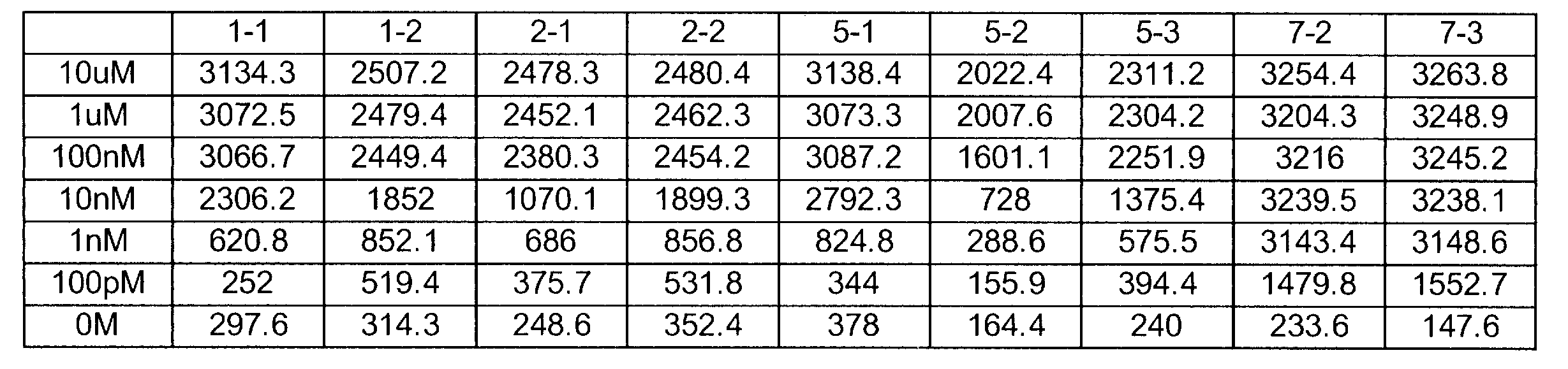
Claims (15)
- 下記(A)~(J)のいずれかの特徴を有するT細胞レセプター:
(A)配列番号3で示されるアミノ酸配列を含むβ鎖CDR3を含むβ鎖、並びに配列番号8で示されるアミノ酸配列を含むα鎖CDR3を含むα鎖を含む、
(B)配列番号13で示されるアミノ酸配列を含むβ鎖CDR3を含むβ鎖、並びに配列番号18で示されるアミノ酸配列を含むα鎖CDR3を含むα鎖を含む、
(C)配列番号23で示されるアミノ酸配列を含むβ鎖CDR3を含むβ鎖、並びに配列番号28で示されるアミノ酸配列を含むα鎖CDR3を含むα鎖を含む、
(D)配列番号33で示されるアミノ酸配列を含むβ鎖CDR3を含むβ鎖、並びに配列番号38で示されるアミノ酸配列を含むα鎖CDR3を含むα鎖を含む、
(E)配列番号43で示されるアミノ酸配列を含むβ鎖CDR3を含むβ鎖、並びに配列番号48で示されるアミノ酸配列を含むα鎖CDR3を含むα鎖を含む、
(F)配列番号53で示されるアミノ酸配列を含むβ鎖CDR3を含むβ鎖、並びに配列番号58で示されるアミノ酸配列を含むα鎖CDR3を含むα鎖を含む、
(G)配列番号63で示されるアミノ酸配列を含むβ鎖CDR3を含むβ鎖、並びに配列番号68で示されるアミノ酸配列を含むα鎖CDR3を含むα鎖を含む、
(H)配列番号73で示されるアミノ酸配列を含むβ鎖CDR3を含むβ鎖、並びに配列番号78で示されるアミノ酸配列を含むα鎖CDR3を含むα鎖を含む、
(I)配列番号83で示されるアミノ酸配列を含むβ鎖CDR3を含むβ鎖、並びに配列番号88で示されるアミノ酸配列を含むα鎖CDR3を含むα鎖を含む、又は
(J)配列番号93で示されるアミノ酸配列を含むβ鎖CDR3を含むβ鎖、並びに配列番号98で示されるアミノ酸配列を含むα鎖CDR3を含むα鎖を含む。 - 前記特徴(A)において、前記β鎖が配列番号1で示されるアミノ酸配列を含むβ鎖CDR1、及び配列番号2で示されるアミノ酸配列を含むβ鎖CDR2を含み、前記α鎖が配列番号6で示されるアミノ酸配列を含むα鎖CDR1、及び配列番号7で示されるアミノ酸配列を含むα鎖CDR2を含み、
前記特徴(B)において、前記β鎖が配列番号11で示されるアミノ酸配列を含むβ鎖CDR1、及び配列番号12で示されるアミノ酸配列を含むβ鎖CDR2、を含み、前記α鎖が配列番号16で示されるアミノ酸配列を含むα鎖CDR1、及び配列番号17で示されるアミノ酸配列を含むα鎖CDR2を含み、
前記特徴(C)において、前記β鎖が配列番号21で示されるアミノ酸配列を含むβ鎖CDR1、及び配列番号22で示されるアミノ酸配列を含むβ鎖CDR2、を含み、前記α鎖が配列番号26で示されるアミノ酸配列を含むα鎖CDR1、及び配列番号27で示されるアミノ酸配列を含むα鎖CDR2を含み、
前記特徴(D)において、前記β鎖が配列番号31で示されるアミノ酸配列を含むβ鎖CDR1、及び配列番号32で示されるアミノ酸配列を含むβ鎖CDR2、を含み、前記α鎖が配列番号36で示されるアミノ酸配列を含むα鎖CDR1、及び配列番号37で示されるアミノ酸配列を含むα鎖CDR2を含み、
前記特徴(E)において、前記β鎖が配列番号41で示されるアミノ酸配列を含むβ鎖CDR1、及び配列番号42で示されるアミノ酸配列を含むβ鎖CDR2、を含み、前記α鎖が配列番号46で示されるアミノ酸配列を含むα鎖CDR1、及び配列番号47で示されるアミノ酸配列を含むα鎖CDR2を含み、
前記特徴(F)において、前記β鎖が配列番号51で示されるアミノ酸配列を含むβ鎖CDR1、及び配列番号52で示されるアミノ酸配列を含むβ鎖CDR2、を含み、前記α鎖が配列番号56で示されるアミノ酸配列を含むα鎖CDR1、及び配列番号57で示されるアミノ酸配列を含むα鎖CDR2を含み、
前記特徴(G)において、前記β鎖が配列番号61で示されるアミノ酸配列を含むβ鎖CDR1、及び配列番号62で示されるアミノ酸配列を含むβ鎖CDR2、を含み、前記α鎖が配列番号66で示されるアミノ酸配列を含むα鎖CDR1、及び配列番号67で示されるアミノ酸配列を含むα鎖CDR2を含み、
前記特徴(H)において、前記β鎖が配列番号71で示されるアミノ酸配列を含むβ鎖CDR1、及び配列番号72で示されるアミノ酸配列を含むβ鎖CDR2、を含み、前記α鎖が配列番号76で示されるアミノ酸配列を含むα鎖CDR1、及び配列番号77で示されるアミノ酸配列を含むα鎖CDR2を含み、
前記特徴(I)において、前記β鎖が配列番号81で示されるアミノ酸配列を含むβ鎖CDR1、及び配列番号82で示されるアミノ酸配列を含むβ鎖CDR2、を含み、前記α鎖が配列番号86で示されるアミノ酸配列を含むα鎖CDR1、及び配列番号87で示されるアミノ酸配列を含むα鎖CDR2を含み、
前記特徴(J)において、前記β鎖が配列番号91で示されるアミノ酸配列を含むβ鎖CDR1、及び配列番号92で示されるアミノ酸配列を含むβ鎖CDR2、を含み、前記α鎖が配列番号96で示されるアミノ酸配列を含むα鎖CDR1、及び配列番号97で示されるアミノ酸配列を含むα鎖CDR2を含む、
請求項1に記載のT細胞レセプター。 - Tax抗原を認識する、請求項1又は2に記載のT細胞レセプター。
- 前記特徴(I)又は(J)を有する、請求項1~3のいずれかに記載のT細胞レセプター。
- HLA-A*24:02に拘束されたTax抗原を認識する、請求項4に記載のT細胞レセプター。
- 請求項1~6のいずれかに記載のT細胞レセプターをコードする、1種又は2種以上のポリヌクレオチド。
- 請求項6に記載のポリヌクレオチドを含有する、細胞。
- 請求項1~6のいずれかに記載のT細胞レセプターが細胞膜上に発現している、請求項7に記載の細胞。
- 前記細胞がリンパ球である、請求項7又は8に記載の細胞。
- 前記細胞がCD8陽性細胞である、請求項7~9のいずれかに記載の細胞。
- 前記細胞がヒトT細胞白血病ウイルスを保持する生体由来の細胞である、請求項7~10のいずれかに記載の細胞。
- 請求項7~11のいずれかに記載の細胞を含有する、ヒトT細胞白血病ウイルス関連疾患の予防又は治療剤。
- 前記ヒトT細胞白血病ウイルス関連疾患が成人T細胞白血病である、請求項12に記載の治療剤。
- (i)ヒトT細胞白血病ウイルスを保持する生体からヒトT細胞白血病ウイルス由来抗原を認識する細胞集団を選別する工程、
(ii)前記細胞集団についてT細胞レセプターのレパトア解析を行い、各細胞のT細胞レセプターのタイプ、及び同タイプの細胞の数を決定する工程、
(iii)前記タイプを、同タイプの細胞の数が多い順に順位付けし、該順位が上位のT細胞レセプターを選択する工程、
を含む、T細胞レセプターのスクリーニング方法。 - 前記工程(iii)において、前記順位が1~5位のT細胞レセプターからなる群より選択される少なくとも1種を選択する、請求項14に記載のスクリーニング方法。
Priority Applications (4)
| Application Number | Priority Date | Filing Date | Title |
|---|---|---|---|
| EP19743810.4A EP3744845A4 (en) | 2018-01-23 | 2019-01-17 | T-CELL RECEPTOR |
| US16/961,409 US12479901B2 (en) | 2018-01-23 | 2019-01-17 | T-cell receptor |
| CN201980009889.0A CN111655721B (zh) | 2018-01-23 | 2019-01-17 | T细胞受体 |
| BR112020014529-7A BR112020014529A2 (pt) | 2018-01-23 | 2019-01-17 | Receptor de células t |
Applications Claiming Priority (2)
| Application Number | Priority Date | Filing Date | Title |
|---|---|---|---|
| JP2018-008947 | 2018-01-23 | ||
| JP2018008947A JP7181517B2 (ja) | 2018-01-23 | 2018-01-23 | T細胞レセプター |
Publications (1)
| Publication Number | Publication Date |
|---|---|
| WO2019146477A1 true WO2019146477A1 (ja) | 2019-08-01 |
Family
ID=67394780
Family Applications (1)
| Application Number | Title | Priority Date | Filing Date |
|---|---|---|---|
| PCT/JP2019/001182 Ceased WO2019146477A1 (ja) | 2018-01-23 | 2019-01-17 | T細胞レセプター |
Country Status (6)
| Country | Link |
|---|---|
| US (1) | US12479901B2 (ja) |
| EP (1) | EP3744845A4 (ja) |
| JP (1) | JP7181517B2 (ja) |
| CN (1) | CN111655721B (ja) |
| BR (1) | BR112020014529A2 (ja) |
| WO (1) | WO2019146477A1 (ja) |
Citations (1)
| Publication number | Priority date | Publication date | Assignee | Title |
|---|---|---|---|---|
| WO2014017533A1 (ja) | 2012-07-25 | 2014-01-30 | 国立大学法人富山大学 | T細胞受容体のクローニング方法 |
Family Cites Families (7)
| Publication number | Priority date | Publication date | Assignee | Title |
|---|---|---|---|---|
| WO1999060120A2 (en) | 1998-05-19 | 1999-11-25 | Avidex Limited | Soluble t cell receptor |
| US7435592B2 (en) * | 2003-05-13 | 2008-10-14 | Immunovative Therapies, Ltd. | Compositions for allogeneic cell therapy |
| DK1910521T3 (da) * | 2005-08-05 | 2011-02-07 | Helmholtz Zentrum Muenchen | Generering af allo-begrænsede, antigenspecifikke T-celler |
| FR2957799B1 (fr) * | 2010-03-26 | 2012-08-17 | Inst Des Vaisseaux Et Du Sang | Compositions proangiogeniques, leur procede de preparation et leurs utilisations |
| KR102499753B1 (ko) | 2012-07-27 | 2023-02-16 | 더 보오드 오브 트러스티스 오브 더 유니버시티 오브 일리노이즈 | T 세포 수용체 조작 |
| KR102415259B1 (ko) | 2013-11-22 | 2022-06-30 | 더 보오드 오브 트러스티스 오브 더 유니버시티 오브 일리노이즈 | 조작된 고-친화도의 인간 t 세포 수용체 |
| EP3475706B1 (en) * | 2016-06-27 | 2021-08-11 | Juno Therapeutics, Inc. | Mhc-e restricted epitopes, binding molecules and related methods and uses |
-
2018
- 2018-01-23 JP JP2018008947A patent/JP7181517B2/ja active Active
-
2019
- 2019-01-17 CN CN201980009889.0A patent/CN111655721B/zh active Active
- 2019-01-17 US US16/961,409 patent/US12479901B2/en active Active
- 2019-01-17 BR BR112020014529-7A patent/BR112020014529A2/pt unknown
- 2019-01-17 WO PCT/JP2019/001182 patent/WO2019146477A1/ja not_active Ceased
- 2019-01-17 EP EP19743810.4A patent/EP3744845A4/en active Pending
Patent Citations (1)
| Publication number | Priority date | Publication date | Assignee | Title |
|---|---|---|---|---|
| WO2014017533A1 (ja) | 2012-07-25 | 2014-01-30 | 国立大学法人富山大学 | T細胞受容体のクローニング方法 |
Non-Patent Citations (10)
Also Published As
| Publication number | Publication date |
|---|---|
| US20200360435A1 (en) | 2020-11-19 |
| JP2019126276A (ja) | 2019-08-01 |
| EP3744845A1 (en) | 2020-12-02 |
| CN111655721A (zh) | 2020-09-11 |
| JP7181517B2 (ja) | 2022-12-01 |
| US12479901B2 (en) | 2025-11-25 |
| CN111655721B (zh) | 2023-05-05 |
| BR112020014529A2 (pt) | 2020-12-08 |
| EP3744845A4 (en) | 2021-11-03 |
Similar Documents
| Publication | Publication Date | Title |
|---|---|---|
| US20240132569A1 (en) | Tcr and peptides | |
| CN108884136B (zh) | 用于癌症免疫治疗的转染t细胞和t细胞受体 | |
| RU2752528C2 (ru) | Композиции и библиотеки, содержащие рекомбинантные полинуклеотиды, кодирующие Т-клеточные рецепторы, и способы применения рекомбинантных Т-клеточных рецепторов | |
| TWI908730B (zh) | 識別p53中之r175h或y220c突變之t細胞受體 | |
| US20220119477A1 (en) | Tcr and peptides | |
| JP7138881B2 (ja) | T細胞レセプターとその利用 | |
| CN117886919A (zh) | 识别HLA-A2限制性乙肝病毒HBs346-354表位的TCR及其用途 | |
| US20230348559A1 (en) | Novel t-cell specificities and uses thereof | |
| JP7181517B2 (ja) | T細胞レセプター | |
| EP3908591A1 (en) | Use of hla-a*11:01-restricted hepatitis b virus (hbv) peptides for identifying hbv-specific cd8+ t cells | |
| WO2023175069A1 (en) | Tcr constant region pairing library for pramevld tcrs | |
| JP2018070540A (ja) | 成人t細胞性白血病を含むhtlv−1ウイルス感染に対する腫瘍抗原特異的t細胞 | |
| WO2023175070A1 (en) | Tcr constant region pairing library | |
| HK40058915A (en) | Tcr and peptides |
Legal Events
| Date | Code | Title | Description |
|---|---|---|---|
| 121 | Ep: the epo has been informed by wipo that ep was designated in this application |
Ref document number: 19743810 Country of ref document: EP Kind code of ref document: A1 |
|
| NENP | Non-entry into the national phase |
Ref country code: DE |
|
| ENP | Entry into the national phase |
Ref document number: 2019743810 Country of ref document: EP Effective date: 20200824 |
|
| REG | Reference to national code |
Ref country code: BR Ref legal event code: B01A Ref document number: 112020014529 Country of ref document: BR |
|
| ENP | Entry into the national phase |
Ref document number: 112020014529 Country of ref document: BR Kind code of ref document: A2 Effective date: 20200716 |
|
| WWG | Wipo information: grant in national office |
Ref document number: 16961409 Country of ref document: US |