WO2019152977A2 - Chromatography resin having an anionic exchange-hydrophobic mixed mode ligand - Google Patents
Chromatography resin having an anionic exchange-hydrophobic mixed mode ligand Download PDFInfo
- Publication number
- WO2019152977A2 WO2019152977A2 PCT/US2019/016619 US2019016619W WO2019152977A2 WO 2019152977 A2 WO2019152977 A2 WO 2019152977A2 US 2019016619 W US2019016619 W US 2019016619W WO 2019152977 A2 WO2019152977 A2 WO 2019152977A2
- Authority
- WO
- WIPO (PCT)
- Prior art keywords
- chromatography
- membered heterocycle
- alkyl
- chromatography resin
- optionally joined
- Prior art date
- Legal status (The legal status is an assumption and is not a legal conclusion. Google has not performed a legal analysis and makes no representation as to the accuracy of the status listed.)
- Ceased
Links
- 0 CCC(C)N(C)** Chemical compound CCC(C)N(C)** 0.000 description 3
Classifications
-
- B—PERFORMING OPERATIONS; TRANSPORTING
- B01—PHYSICAL OR CHEMICAL PROCESSES OR APPARATUS IN GENERAL
- B01J—CHEMICAL OR PHYSICAL PROCESSES, e.g. CATALYSIS OR COLLOID CHEMISTRY; THEIR RELEVANT APPARATUS
- B01J20/00—Solid sorbent compositions or filter aid compositions; Sorbents for chromatography; Processes for preparing, regenerating or reactivating thereof
- B01J20/22—Solid sorbent compositions or filter aid compositions; Sorbents for chromatography; Processes for preparing, regenerating or reactivating thereof comprising organic material
- B01J20/26—Synthetic macromolecular compounds
- B01J20/262—Synthetic macromolecular compounds obtained otherwise than by reactions only involving carbon to carbon unsaturated bonds, e.g. obtained by polycondensation
-
- B—PERFORMING OPERATIONS; TRANSPORTING
- B01—PHYSICAL OR CHEMICAL PROCESSES OR APPARATUS IN GENERAL
- B01D—SEPARATION
- B01D15/00—Separating processes involving the treatment of liquids with solid sorbents; Apparatus therefor
- B01D15/08—Selective adsorption, e.g. chromatography
- B01D15/26—Selective adsorption, e.g. chromatography characterised by the separation mechanism
- B01D15/36—Selective adsorption, e.g. chromatography characterised by the separation mechanism involving ionic interaction, e.g. ion-exchange, ion-pair, ion-suppression or ion-exclusion
- B01D15/361—Ion-exchange
- B01D15/363—Anion-exchange
-
- B—PERFORMING OPERATIONS; TRANSPORTING
- B01—PHYSICAL OR CHEMICAL PROCESSES OR APPARATUS IN GENERAL
- B01J—CHEMICAL OR PHYSICAL PROCESSES, e.g. CATALYSIS OR COLLOID CHEMISTRY; THEIR RELEVANT APPARATUS
- B01J20/00—Solid sorbent compositions or filter aid compositions; Sorbents for chromatography; Processes for preparing, regenerating or reactivating thereof
- B01J20/281—Sorbents specially adapted for preparative, analytical or investigative chromatography
- B01J20/286—Phases chemically bonded to a substrate, e.g. to silica or to polymers
- B01J20/289—Phases chemically bonded to a substrate, e.g. to silica or to polymers bonded via a spacer
-
- B—PERFORMING OPERATIONS; TRANSPORTING
- B01—PHYSICAL OR CHEMICAL PROCESSES OR APPARATUS IN GENERAL
- B01J—CHEMICAL OR PHYSICAL PROCESSES, e.g. CATALYSIS OR COLLOID CHEMISTRY; THEIR RELEVANT APPARATUS
- B01J20/00—Solid sorbent compositions or filter aid compositions; Sorbents for chromatography; Processes for preparing, regenerating or reactivating thereof
- B01J20/30—Processes for preparing, regenerating, or reactivating
- B01J20/32—Impregnating or coating ; Solid sorbent compositions obtained from processes involving impregnating or coating
- B01J20/3202—Impregnating or coating ; Solid sorbent compositions obtained from processes involving impregnating or coating characterised by the carrier, support or substrate used for impregnation or coating
- B01J20/3206—Organic carriers, supports or substrates
- B01J20/3208—Polymeric carriers, supports or substrates
-
- B—PERFORMING OPERATIONS; TRANSPORTING
- B01—PHYSICAL OR CHEMICAL PROCESSES OR APPARATUS IN GENERAL
- B01J—CHEMICAL OR PHYSICAL PROCESSES, e.g. CATALYSIS OR COLLOID CHEMISTRY; THEIR RELEVANT APPARATUS
- B01J20/00—Solid sorbent compositions or filter aid compositions; Sorbents for chromatography; Processes for preparing, regenerating or reactivating thereof
- B01J20/30—Processes for preparing, regenerating, or reactivating
- B01J20/32—Impregnating or coating ; Solid sorbent compositions obtained from processes involving impregnating or coating
- B01J20/3214—Impregnating or coating ; Solid sorbent compositions obtained from processes involving impregnating or coating characterised by the method for obtaining this coating or impregnating
- B01J20/3217—Resulting in a chemical bond between the coating or impregnating layer and the carrier, support or substrate, e.g. a covalent bond
- B01J20/3219—Resulting in a chemical bond between the coating or impregnating layer and the carrier, support or substrate, e.g. a covalent bond involving a particular spacer or linking group, e.g. for attaching an active group
-
- B—PERFORMING OPERATIONS; TRANSPORTING
- B01—PHYSICAL OR CHEMICAL PROCESSES OR APPARATUS IN GENERAL
- B01J—CHEMICAL OR PHYSICAL PROCESSES, e.g. CATALYSIS OR COLLOID CHEMISTRY; THEIR RELEVANT APPARATUS
- B01J20/00—Solid sorbent compositions or filter aid compositions; Sorbents for chromatography; Processes for preparing, regenerating or reactivating thereof
- B01J20/30—Processes for preparing, regenerating, or reactivating
- B01J20/32—Impregnating or coating ; Solid sorbent compositions obtained from processes involving impregnating or coating
- B01J20/3214—Impregnating or coating ; Solid sorbent compositions obtained from processes involving impregnating or coating characterised by the method for obtaining this coating or impregnating
- B01J20/3225—Impregnating or coating ; Solid sorbent compositions obtained from processes involving impregnating or coating characterised by the method for obtaining this coating or impregnating involving a post-treatment of the coated or impregnated product
- B01J20/3227—Impregnating or coating ; Solid sorbent compositions obtained from processes involving impregnating or coating characterised by the method for obtaining this coating or impregnating involving a post-treatment of the coated or impregnated product by end-capping, i.e. with or after the introduction of functional or ligand groups
-
- B—PERFORMING OPERATIONS; TRANSPORTING
- B01—PHYSICAL OR CHEMICAL PROCESSES OR APPARATUS IN GENERAL
- B01J—CHEMICAL OR PHYSICAL PROCESSES, e.g. CATALYSIS OR COLLOID CHEMISTRY; THEIR RELEVANT APPARATUS
- B01J20/00—Solid sorbent compositions or filter aid compositions; Sorbents for chromatography; Processes for preparing, regenerating or reactivating thereof
- B01J20/30—Processes for preparing, regenerating, or reactivating
- B01J20/32—Impregnating or coating ; Solid sorbent compositions obtained from processes involving impregnating or coating
- B01J20/3231—Impregnating or coating ; Solid sorbent compositions obtained from processes involving impregnating or coating characterised by the coating or impregnating layer
- B01J20/3242—Layers with a functional group, e.g. an affinity material, a ligand, a reactant or a complexing group
- B01J20/3244—Non-macromolecular compounds
- B01J20/3246—Non-macromolecular compounds having a well defined chemical structure
- B01J20/3248—Non-macromolecular compounds having a well defined chemical structure the functional group or the linking, spacer or anchoring group as a whole comprising at least one type of heteroatom selected from a nitrogen, oxygen or sulfur, these atoms not being part of the carrier as such
-
- B—PERFORMING OPERATIONS; TRANSPORTING
- B01—PHYSICAL OR CHEMICAL PROCESSES OR APPARATUS IN GENERAL
- B01J—CHEMICAL OR PHYSICAL PROCESSES, e.g. CATALYSIS OR COLLOID CHEMISTRY; THEIR RELEVANT APPARATUS
- B01J20/00—Solid sorbent compositions or filter aid compositions; Sorbents for chromatography; Processes for preparing, regenerating or reactivating thereof
- B01J20/30—Processes for preparing, regenerating, or reactivating
- B01J20/32—Impregnating or coating ; Solid sorbent compositions obtained from processes involving impregnating or coating
- B01J20/3231—Impregnating or coating ; Solid sorbent compositions obtained from processes involving impregnating or coating characterised by the coating or impregnating layer
- B01J20/3242—Layers with a functional group, e.g. an affinity material, a ligand, a reactant or a complexing group
- B01J20/3244—Non-macromolecular compounds
- B01J20/3246—Non-macromolecular compounds having a well defined chemical structure
- B01J20/3248—Non-macromolecular compounds having a well defined chemical structure the functional group or the linking, spacer or anchoring group as a whole comprising at least one type of heteroatom selected from a nitrogen, oxygen or sulfur, these atoms not being part of the carrier as such
- B01J20/3253—Non-macromolecular compounds having a well defined chemical structure the functional group or the linking, spacer or anchoring group as a whole comprising at least one type of heteroatom selected from a nitrogen, oxygen or sulfur, these atoms not being part of the carrier as such comprising a cyclic structure not containing any of the heteroatoms nitrogen, oxygen or sulfur, e.g. aromatic structures
-
- B—PERFORMING OPERATIONS; TRANSPORTING
- B01—PHYSICAL OR CHEMICAL PROCESSES OR APPARATUS IN GENERAL
- B01J—CHEMICAL OR PHYSICAL PROCESSES, e.g. CATALYSIS OR COLLOID CHEMISTRY; THEIR RELEVANT APPARATUS
- B01J20/00—Solid sorbent compositions or filter aid compositions; Sorbents for chromatography; Processes for preparing, regenerating or reactivating thereof
- B01J20/30—Processes for preparing, regenerating, or reactivating
- B01J20/32—Impregnating or coating ; Solid sorbent compositions obtained from processes involving impregnating or coating
- B01J20/3231—Impregnating or coating ; Solid sorbent compositions obtained from processes involving impregnating or coating characterised by the coating or impregnating layer
- B01J20/3242—Layers with a functional group, e.g. an affinity material, a ligand, a reactant or a complexing group
- B01J20/3285—Coating or impregnation layers comprising different type of functional groups or interactions, e.g. different ligands in various parts of the sorbent, mixed mode, dual zone, bimodal, multimodal, ionic or hydrophobic, cationic or anionic, hydrophilic or hydrophobic
-
- B—PERFORMING OPERATIONS; TRANSPORTING
- B01—PHYSICAL OR CHEMICAL PROCESSES OR APPARATUS IN GENERAL
- B01J—CHEMICAL OR PHYSICAL PROCESSES, e.g. CATALYSIS OR COLLOID CHEMISTRY; THEIR RELEVANT APPARATUS
- B01J20/00—Solid sorbent compositions or filter aid compositions; Sorbents for chromatography; Processes for preparing, regenerating or reactivating thereof
- B01J20/30—Processes for preparing, regenerating, or reactivating
- B01J20/32—Impregnating or coating ; Solid sorbent compositions obtained from processes involving impregnating or coating
- B01J20/3291—Characterised by the shape of the carrier, the coating or the obtained coated product
- B01J20/3293—Coatings on a core, the core being particle or fiber shaped, e.g. encapsulated particles, coated fibers
-
- C—CHEMISTRY; METALLURGY
- C07—ORGANIC CHEMISTRY
- C07K—PEPTIDES
- C07K16/00—Immunoglobulins [IG], e.g. monoclonal or polyclonal antibodies
- C07K16/06—Immunoglobulins [IG], e.g. monoclonal or polyclonal antibodies from serum
- C07K16/065—Purification, fragmentation
-
- C—CHEMISTRY; METALLURGY
- C07—ORGANIC CHEMISTRY
- C07K—PEPTIDES
- C07K16/00—Immunoglobulins [IG], e.g. monoclonal or polyclonal antibodies
- C07K16/18—Immunoglobulins [IG], e.g. monoclonal or polyclonal antibodies against material from animals or humans
- C07K16/22—Immunoglobulins [IG], e.g. monoclonal or polyclonal antibodies against material from animals or humans against growth factors ; against growth regulators
-
- C—CHEMISTRY; METALLURGY
- C07—ORGANIC CHEMISTRY
- C07K—PEPTIDES
- C07K16/00—Immunoglobulins [IG], e.g. monoclonal or polyclonal antibodies
- C07K16/18—Immunoglobulins [IG], e.g. monoclonal or polyclonal antibodies against material from animals or humans
- C07K16/28—Immunoglobulins [IG], e.g. monoclonal or polyclonal antibodies against material from animals or humans against receptors, cell surface antigens or cell surface determinants
- C07K16/2863—Immunoglobulins [IG], e.g. monoclonal or polyclonal antibodies against material from animals or humans against receptors, cell surface antigens or cell surface determinants against receptors for growth factors, growth regulators
-
- B—PERFORMING OPERATIONS; TRANSPORTING
- B01—PHYSICAL OR CHEMICAL PROCESSES OR APPARATUS IN GENERAL
- B01D—SEPARATION
- B01D15/00—Separating processes involving the treatment of liquids with solid sorbents; Apparatus therefor
- B01D15/08—Selective adsorption, e.g. chromatography
- B01D15/26—Selective adsorption, e.g. chromatography characterised by the separation mechanism
- B01D15/32—Bonded phase chromatography
- B01D15/325—Reversed phase
- B01D15/327—Reversed phase with hydrophobic interaction
-
- B—PERFORMING OPERATIONS; TRANSPORTING
- B01—PHYSICAL OR CHEMICAL PROCESSES OR APPARATUS IN GENERAL
- B01D—SEPARATION
- B01D15/00—Separating processes involving the treatment of liquids with solid sorbents; Apparatus therefor
- B01D15/08—Selective adsorption, e.g. chromatography
- B01D15/26—Selective adsorption, e.g. chromatography characterised by the separation mechanism
- B01D15/38—Selective adsorption, e.g. chromatography characterised by the separation mechanism involving specific interaction not covered by one or more of groups B01D15/265 and B01D15/30 - B01D15/36, e.g. affinity, ligand exchange or chiral chromatography
- B01D15/3847—Multimodal interactions
-
- C—CHEMISTRY; METALLURGY
- C07—ORGANIC CHEMISTRY
- C07K—PEPTIDES
- C07K2317/00—Immunoglobulins specific features
- C07K2317/20—Immunoglobulins specific features characterized by taxonomic origin
- C07K2317/24—Immunoglobulins specific features characterized by taxonomic origin containing regions, domains or residues from different species, e.g. chimeric, humanized or veneered
Definitions
- Chromatography resins comprising chromatography matrices linked to an anionic exchange-hydrophobic mixed mode ligand are provided.
- the chromatography resin has the formula:
- X 1 is a spacer
- X 2 is Ci to C 5 alkyl, C 3 or C 5 cycloalkyl, or absent;
- L is NR 8 , O, or S, wherein R 8 is hydrogen or Ci to C 6 alkyl;
- Ar is a 6- to lO-membered mono or bicylic ring and is aryl optionally substituted with up to four Ci to C 3 unsubstituted alkyl or C 3 to C 6 branched alkyl;
- Y is selected from the group consisting of: wherein:
- R 1 , R 2 , R 3 , R 4 , R 5 , R 6 , and R 7 are each independently hydrogen or Ci to C 6 alkyl;
- R is optionally joined to R to form a 4- to 7-membered heterocycle or R 3 is optionally joined to R 4 to form a 4- to 7-membered heterocycle;
- R optionally joined to R to form a 4- to 7-membered heterocycle and R 3 is optionally joined to R 4 to form a 4- to 7- membered heterocycle;
- R 6 is optionally joined to R 7 to form a 4- to 7- membered heterocycle.
- X 1 is a spacer
- X 2 is C 1 -C 3 alkyl or absent
- L is NR 8 , O, or S wherein R 8 is hydrogen or Ci to C 3 alkyl; Ar is phenyl or napthyl optionally substituted with up to four Ci to C 3 unsubstituted alkyl; and
- Y is selected from the group consisting of:
- R 1 , R 2 , R 3 , R 4 , R 5 , R 6 , and R 7 are each independently hydrogen or Ci to C 4 alkyl;
- R is optionally joined to R to form a 4- to 6-membered heterocycle or R 3 is optionally joined to R 4 to form a 4- to 6-membered heterocycle;
- R optionally joined to R to form a 4- to 6-membered heterocycle and R 3 is optionally joined to R 4 to form a 4- to 6- membered heterocycle;
- a linked chromatography resin that allows for efficient purification of target biomolecules from a sample is provided.
- the examples illustrate that the linked chromatography resin is useful for separating monomeric antibodies from antibody aggregates in the sample.
- Antibody refers to an immunoglobulin, composite (e.g., fusion), or fragmentary form thereof.
- the term includes but is not limited to polyclonal or monoclonal antibodies of the classes IgA, IgD, IgE, IgG, and IgM, derived from human or other mammalian cell lines, including natural or genetically modified forms such as humanized, human, single-chain, chimeric, synthetic, recombinant, hybrid, mutated, grafted, and in vitro generated antibodies.
- Antibody also includes composite forms including but not limited to fusion proteins containing an immunoglobulin moiety.“Antibody” also includes antibody fragments such as Fab, F(ab')2, Fv, scFv, Fd, dAb, Fc, whether or not they retain antigen-binding function.
- alkyl refers to a straight or branched, saturated, aliphatic radical having between 1-10 carbon atoms.
- Ci-C 6 alkyl includes, but is not limited to, methyl, ethyl, propyl, isopropyl, butyl, isobutyl, sec-butyl, tert-butyl, pentyl, isopentyl, and/or hexyl.
- Alkyl can include any number of carbons, such as 1-2, 1-3, 1-4, 1-5, 1-6, 1-7, 1-8, 1-9, 1-10, 2-3, 2-4, 2-5, 2-6, 3-4, 3-5, 3-6, 4-5, 4-6 and 5-6.
- the alkyl group is typically monovalent, but can be divalent, such as when the alkyl group links two chemical groups together.
- the term“cycloalkyl” refers to monocyclic alkyl having the number of carbon atoms indicated. Monocyclic rings include, for example, cyclopropyl, cyclobutyl, and cyclopentyl.
- aryl refers to a monocyclic or fused bicyclic aromatic ring assembly.
- aryl can be phenyl, naphthyl, or pyridyl.
- Aryl groups can optionally be substituted by one, two, three, or four unsubstituted alkyl groups.
- heterocycle refers to ring assemblies that include one to three heteroatoms as a ring member. Examples include, but are not limited to, cyclic amines such as azetidino, pyrrolidino, piperidino, pyrazolidino, and imidazolidino. Heterocycles can optionally be substituted by one, two, three, or four alkyl groups.
- An“anionic salt” is formed at a basic (e.g., guanidine, amino or alkylamino) group in the ligands.
- Anionic salts include, but are not limited to, halides, sulfonates, sulfates, carboxylates, phosphates, acetates, citrates and nitrates.
- acid-addition salts include, but are not limited to, hydrochloride, hydrobromide, hydroiodide, sulfate, acetate, citrate, and nitrate.
- the term“spacer” refers to a molecule having 1 - 30 atoms selected from H, C, N, O and S.
- the spacer has a neutral charge and can include cyclic groups.
- the spacer links the chromatographic ligand to the chromatography.
- the types of bonds used to link the spacer to the chromatography matrix include, but are not limited to, amides, amines, ethers, esters, carbamates, ureas, thioethers, thiocarbamates, thiocarbonate and thioureas.
- the bonds used to link the spacer to the chromatography matrix are amines, ethers or amides.
- Bio sample refers to any composition containing a target molecule of biological origin (a“biomolecule”) that is desired to be purified.
- the target molecule to be purified is an antibody or a non-antibody protein (e.g., hormones or enzymes).
- Bind-elute mode refers to an operational approach to chromatography in which the buffer conditions are established so that target molecules and, optionally undesired contaminants, bind to the ligand when the sample is applied to the ligand. Fractionation of the target can be achieved subsequently by changing the conditions such that the target is eluted from the support. In some embodiments, contaminants remain bound following target elution. In some embodiments, contaminants either flow-through or are bound and eluted before elution of the target.
- Flow-through mode refers to an operational approach to chromatography in which the buffer conditions are established so that the target molecule to be purified flows through the chromatography support comprising the ligand, while at least some sample contaminants are selectively retained, thus achieving their removal from the sample.
- a chromatography resin has the formula:
- X 1 is a spacer
- X 2 is Ci to C5 alkyl, C 3 or C5 cycloalkyl, or absent;
- L is NR 8 , O, or S, wherein R 8 is hydrogen or Ci to C 6 alkyl;
- Ar is a 6- to lO-membered aryl mono or bicylic ring optionally substituted with up to four Ci to C 3 unsubstituted alkyl or C 3 to C 6 branched alkyl;
- Y is selected from the group consisting of:
- R 1 , R 2 , R 3 , R 4 , R 5 , R 6 , and R 7 are each independently hydrogen or Ci to C 6 alkyl; 2 3
- R is optionally joined to R to form a 4- to 7-membered heterocycle or R 3 is optionally joined to R 4 to form a 4- to 7-membered heterocycle;
- R optionally joined to R to form a 4- to 7-membered heterocycle and R 3 is optionally joined to R 4 to form a 4- to 7- membered heterocycle;
- R 6 optionally joined to R 6 to form a 4- to 7- membered heterocycle or R 6 is optionally joined to R 7 to form a 4- to 7- membered heterocycle.
- X 2 is C1-C3 alkyl or absent.
- X 2 is C1-C2 alkyl or absent.
- X 2 is methyl or absent.
- L is NR 8 or O or NR 8 or S.
- L is NR 8 wherein R 8 is hydrogen or Ci to C 3 alkyl.
- L is NH.
- Ar is a six-membered aryl optionally substituted with one or two Ci to C 3 unsubstituted alkyl.
- Ar is phenyl optionally substituted with one or two Ci to C 3 unsubstituted alkyl.
- Ar is unsubstituted phenyl.
- Y is wherein R'-R 4 are each independently H or C1-C4 alkyl and R 2 is optionally joined to R 3 to form a 4- to 7-membered heterocycle or R 3 is optionally joined to R 4 to form a 4- to 7-membered heterocycle. , 4
- Y is , wherein none of R -R form heterocycles and are each independently H or C 1 -C 4 alkyl; each independently H or C 1 -C 2 alkyl; or each H.
- R'-R 4 are each independently H or C1-C4 alkyl and R 1 is optionally joined to R 2 to form a 4- to 7-membered heterocycle and R 3 is optionally joined to R 4 to form a 4- to 7-membered heterocycle.
- R'-R 4 form heterocycles and are each independently H or C1-C4 alkyl; each independently H or C1-C2 alkyl; or each H.
- R'-R are each independently H or C1-C4 alkyl and wherein R 5 is optionally joined to R 6 to form a 4- to 7-membered heterocycle or R 6 is optionally joined to R 7 to form a 4- to 7-membered
- R i -Rv form heterocycles and are each independently H or C 1 -C 4 alkyl; each independently H or Ci-C 2 alkyl; or each H.
- X 1 is attached to chromatography matrix via a bond selected from an amide, amine, ether, ester, carbamate, urea, thioether, thiocarbamate, thiocarbonate and thiourea. Alternatively the bond is an amine, ether or amide. [0024] In an eighth aspect of the first embodiment, X 1 is selected from the group consisting of
- X 1 is selected from the group consisting of
- the chromatography resin has the formula: Chromatography matrix-(X 1 )-L-Ar-(X 2 )-Y or a tautomer or an anionic salt thereof, wherein:
- X 1 is a spacer
- X 2 is C 1 -C 3 alkyl or absent
- L is NR 8 , O, or S wherein R 8 is hydrogen or Ci to C 3 alkyl
- Ar is phenyl or napthyl, optionally substituted with up to four Ci to C 3 unsubstituted alkyl;
- Y is selected from the group consisting of:
- R 1 , R 2 , R 3 , R 4 , R 5 , R 6 , and R 7 are each independently hydrogen or Ci to C 4 alkyl;
- R 2 is optionally joined to R 3 to form a 4- to 6-membered heterocycle or R 3 is optionally joined to R 4 to form a 4- to 6-membered heterocycle;
- R 2 optionally joined to R 2 to form a 4- to 6-membered heterocycle and R 3 is optionally joined to R 4 to form a 4- to 6- membered heterocycle;
- R 6 is optionally joined to R 7 to form a 4- to 6- membered heterocycle.
- X 2 is C
- L is NR 8 or O or NR 8 or S.
- L is NR 8 wherein R 8 is hydrogen or Ci to C 3 alkyl.
- L is NH.
- Ar is optionally substituted with one or two Ci to Ci unsubstituted alkyl.
- Ar is phenyl optionally substituted with one or two Ci to C 3 unsubstituted alkyl.
- Ar is unsubstituted phenyl.
- Y is wherein R 2 is optionally joined to R to form a 4 to 6 membered heterocycle or R 3 is optionally joined to
- R 4 to form a 4- to 6-membered heterocycle.
- Y is wherein none of
- R 4 -R 4 form heterocycles and are each independently H or C
- R is optionally joined to R 2 to form a 4- to 6-membered heterocycle and R 3 is optionally joined to
- R'-R 4 form heterocycles and are each independently H or C
- R to form a 4- to 6-membered heterocycle.
- R'-R form heterocycles and are each independently H or C
- X 1 is attached to chromatography matrix via a bond selected from an amide, amine, ether, ester, carbamate, urea, thioether, thiocarbamate, thiocarbonate and thiourea.
- the bond is an amine, ether or amide.
- X 1 is selected from the group consisting of
- X 1 is selected from the group consisting of
- a chromatography resin has the formula: Chromatography matrix-(X 1 )-L-Ar-(X 2 )-Y or a tautomer or an anionic salt thereof, wherein:
- X 1 is a is selected from the group consisting of -0-CH 2 -, -0-CH 2 -CH 2 -,
- X 2 is— CH 2 - or absent
- L is NR 8 wherein R 8 is hydrogen or -CH 3 ;
- Ar is phenyl optionally substituted with one or two Ci to C2 unsubstituted alkyl
- Y is selected from the group consisting of:
- R 1 , R 2 , R 3 , R 4 , R 5 , R 6 , and R 7 are each independently hydrogen or Ci to C 3 alkyl.
- L is NH
- Y is , wherein R -R are each independently H or C 1 -C 3 alkyl; or each independently H or C 1 -C 2 alkyl; or each H.
- R'-R 4 are each independently H or C1-C2 alkyl; or each H.
- R -R are each independently H or C1-C2 alkyl; or each H.
- X 1 is selected from the group consisting of -O-CH2-, -O-CH2-CH2-, -O-CH2-CH2-CH2-, -O-CH2-CH2-CH2- CH 2 -, and
- chromatography matrix-(X 1 )-L-Ar-(X 2 )-Y is any one of the chromatography resin structures listed in the last column of Table 1.
- the salt is hydrochloride or sulfate.
- the chromatography matrix is a polymer that is functionalized so that a bond can be formed to the spacer, X 1 .
- the polymer is a hydrophilic polymer.
- the polymer is insoluble in water.
- Suitable polymers are polyhydroxy polymers, e.g. based on
- polysaccharides such as agarose (e.g., Sepharose and Superose beads from GE Healthcare and Biogel A from Bio-Rad), dextran (e.g., Sephadex from GE Healthcare), cellulose, starch, pullulan, and completely synthetic polymers, such as polyacrylic amide, polymethacrylic amide, poly(hydroxyalkylvinyl ethers), poly(hydroxyalkylacrylates) and polymethacrylates (e.g. polyglycidylmethacrylate), polyvinyl alcohols and polymers based on styrenes and divinylbenzenes, and copolymers in which two or more of the monomers corresponding to the above-mentioned polymers are included.
- agarose e.g., Sepharose and Superose beads from GE Healthcare and Biogel A from Bio-Rad
- dextran e.g., Sephadex from GE Healthcare
- cellulose starch, pullulan
- Suitable synthetic polymers include, but are not limited to, Fractogel from Toso-Haas, POROS media from ThermoFisher Scientific, Bio-Gel P and Macro Prep from Bio-Rad, HEMA and Separon from TESSEK, and Hyper D and Trisacryl media from Pall.
- Polymers, which are soluble in water, may be derivatized to become insoluble, e.g. by cross-linking and by coupling to an insoluble body via adsorption or covalent binding.
- Hydrophilic groups can be introduced on hydrophobic polymers (e.g.
- crosslinking agents are dihydroxyethylenebisacrylamide, diallyltartardiamide, triallyl citric triamide, ethylene diacrylate, bisacrylylcystamine, N,N'-methylenebisacrylamide, and piperazine diacrylamide.
- the matrix is an UNOsphereTM support, a polymer produced from water-soluble hydrophilic monomers (Bio-Rad, Hercules, Calif.).
- the chromatography matrix can be in the form of a particle, chips, a membrane, or a monolith, i.e., a single block, pellet, or slab of material.
- the chromatography matrix is porous.
- Particles when used as matrices can be spheres or beads and are either smooth-surfaced or with a rough or textured surface. In some cases, some of the pores are through-pores, extending through the particles to serve as channels large enough to permit hydrodynamic flow or fast diffusion through the pores.
- the median particle diameter where the term“diameter” refers to the longest exterior dimension of the particle, is about 25 microns to about 150 microns. Disclosures of exemplary matrices and the processes by which they are made are found in Hjerten et al.,
- the ligands are linked to the chromatography matrix via the spacer X 1 .
- Linkage to the chromatography matrix will depend on the chromatography matrix used and the chemical group to be linked to the chromatography matrix.
- Ligands can be linked to the
- chromatography matrix by performing a reaction between the ligand and a functional group on the chromatography matrix.
- the chromatography matrix is reacted with a suitable activating reagent to create a suitable functional group to which the ligand can be attached.
- Reductive amination, epoxide chemistry or azalactone chemistry are examples of chemistries acting on aldehyde, epoxide, or azalactone functional groups, respectively.
- a chromatography matrix functionalized with an aldehyde or a ketone group can be used to link the
- the chromatography matrix comprises a diol, which is converted to an aldehyde, e.g., by conversion with NaI0 4.
- a primary amine of the ligand can be linked to the created aldehyde on the chromatography matrix by a reductive amination reaction by the scheme below.
- the spacer X is -0-CH 2 -CH 2 -.
- the box represents the matrix and all coupling chemistry is shown separately.
- the chromatography matrix comprises an epoxide group and a primary amine in the ligand is linked to the epoxide group via epoxide chemistry by the scheme below.
- the spacer X is -0-CH 2 -CH(0H)-CH 2 -.
- the chromatography matrix comprises an azlactone ring and a primary amine in the ligand is linked to the azlactone ring by the scheme below.
- the spacer X is -CO-NH-C(CH3) 2 -CO-.
- the chromatography matrix comprises a diol and a primary amine is linked to an -OH group by activating the resin with two activating reagents, allylglydicylether (AGE) and bromine, by the scheme below.
- the spacer X is -0-CH 2 -CH(CH 2 -0H)-(0-CH 2 -CH(0H)-CH 2 ) 2 -.
- the chromatography matrix comprises an -OH group and a primary amine is linked to the -OH group by activating the resin with epichlorohydrin by the scheme below.
- the spacer X is -0-CH 2 -CH(0H)-CH 2 -.
- the chromatography matrix comprises an
- the spacer X is -0-CH 2 -
- activating reagents include, but are not limited to, epibromohydrin, bis- epoxides such as; halogen-substituted aliphatic compounds such as di-chloro-propanol, divinyl sulfone; carbonyldiimidazole; aldehydes such as glutaric dialdehyde; quinones; cyanogen bromide; periodates such as sodium-meta-periodate; carbodiimides; chloro- triazines such as cyanuric chloride; sulfonyl chlorides such as tosyl chlorides and tresyl chlorides; N-hydroxy succinimides; 2-fluoro-l-methylpyridinium toluene-4-sulfonates; oxazolones; maleimides; pyridyl disulfides; and hydrazides.
- epibromohydrin bis- epoxides
- Other spacers can include, but are not limited to, -0-CH 2 -, -0-CH 2 -CH 2 -CH 2 -, -O- CH 2 -CH 2 -CH 2 -CH 2 -, -0-CH 2 - CH 2 -CH(CH 2 -0H)-(0-CH 2 -CH 2 -CH(0H)-CH 2 ) 2 -, and -O- CH 2 - CH 2 -CH(OH)-CH 2 - CH 2 -.
- the chromatography matrix can be utilized in any conventional configuration, including packed columns and fluidized or expanded-bed columns, monoliths or porous membranes, and by any conventional method, including batchwise modes for loading, washes, and elution, as well as continuous or flow-through modes.
- a column can range in diameter from 1 cm to 1 m, and in height from 1 cm to 30 cm or more.
- any nitrogen in the ligand can be protonated and; thus, can carry a positive charge.
- the method comprises contacting a sample comprising the biomolecule to a chromatography resin , thereby separating the biomolecule from a contaminant. The resulting purified biomolecule is subsequently collected.
- the target biomolecule is a monomeric antibody and the method comprises purifying the monomeric antibody from aggregated antibodies in the sample.
- the chromatographic resins are useful for purifying target molecules using anionic exchange (i.e., where the ligand is positively charged) and hydrophobic mixed mode chromatography.
- the conditions can be adjusted so as to run the chromatography in bind- elute mode or flow-through mode.
- Protein preparations to which the methods can be applied can include unpurified or partially purified proteins, including but not limited to, antibodies (e.g. IgG, IgM) and non antibody proteins from natural, synthetic, or recombinant sources.
- Unpurified protein preparations for example, can come from various sources including, but not limited to, plasma, serum, ascites fluid, milk, plant extracts, bacterial lysates, yeast lysates, or conditioned cell culture media.
- Partially purified protein preparations can come from unpurified preparations that have been processed by at least one chromatography,
- the chromatography step or steps employ any method, including but not limited to size exclusion, affinity, anion exchange, cation exchange, protein A affinity, hydrophobic interaction, immobilized metal affinity chromatography, or hydroxyapatite chromatography.
- the precipitation step or steps can include salt or polyethylene glycol (PEG) precipitation, or precipitation with organic acids, organic bases, or other agents.
- Other fractionation steps can include but are not limited to crystallization, liquiddiquid partitioning, or membrane filtration.
- load, wash and elution conditions for use in the mixed mode chromatography will depend on the specific chromatography matrix/ligand used.
- bind-elute mode embodiments loading (i.e., binding the antibodies or non antibody protein to the chromatography resin), and optionally washing, is performed at a pH above 7, e.g., between 7-8 or 7-9.
- Some exemplary bind-elute conditions are: binding condition: 0-1000 mM NaCl or 100-300 mM NaCl, pH 6.5-8.5 in an appropriate buffer (e.g., Tris, Bis-Tris or phosphate); elution condition: 1-1000 mM NaCl or 0-150 mM NaCl, pH 3-8.5 or 3.0-5.0, using an appropriate buffer having sodium acetate, citrate, arginine, or glycine.
- the chromatography resin can be washed under conditions such that some components of the sample are removed from the chromatography resin but the target biomolecules remain immobilized on the resin.
- the target biomolecule is subsequently eluted by lowering the salt concentration and/or reducing the pH of the solution in contact with the resin.
- the sample can be applied in flow through mode in which some components of the sample are immobilized to the chromatography resin but the target biomolecules flow through (i.e., flow passed) the chromatography resin, and is collected.
- Some exemplary flow through conditions are 0-150 mM NaCl, pH 4.0-8.0; appropriate buffers can include, e.g., 2-(N-morpholino)ethanesulfonic acid (MES), Bis-Tris, sodium acetate or citrate-phosphate.
- MES 2-(N-morpholino)ethanesulfonic acid
- Bis-Tris sodium acetate or citrate-phosphate.
- each ligand For each ligand, twenty milliliters of aldehyde-functionalized beads was then suspended in 20 ml of 0.20M sodium phosphate containing 0.6 g of N-(4- aminophenyl)guanidine at pH 7.0. After these mixtures were incubated (shaking, 200 rpm) at room temperature for 15 minutes, 200 mg NaBH3CN was then added and the reactions were allowed to continue for 3-20 hours. The ligand concentration in each reaction was determined to be in the range of 25-200 mM. At the end of the reactions, each resin was transferred to a 20 ml column, washed with 3 CV of water followed by 1-2 CV of 0.1N HC1, and then washed with 5 CV water. The ligand density for all the resins was in the range of 25-100 pmol/ml.
- EXAMPLE 2 Purification of antibodies using the resins of Example 1 and flow through mode [0065]
- Each of the resins listed in Table 2 (generated as described above) are packed into a 7 mm (i.d.)x5.5 cm column and is equilibrated with 20 mM sodium acetate containing 75 mM NaCl at pH 4.5.
- 750 pl of a 2.0 mg/ml solution of a monoclonal IgG antibody containing 15-20% aggregated antibodies is applied to the column at a flow rate of 2 ml/minute. The antibody flows through each of the columns.
- each column is washed in a 10 ml gradient of equilibration buffer to elution buffer with 20 mM sodium acetate at pH 4.5, followed by a 10 ml isocratic elution with elution buffer.
- the collected antibody in the flow-through fractions of each column is analyzed by size exclusion high performance liquid chromatography (HPLC-SEC) to determine the content of aggregated antibody. No antibody aggregates are detected in the antibody flow-through fractions for each column.
- each of the resins listed in Table 2 is packed into a 7 mm (i.d.)x5.5 cm column and equilibrated with 20 mM Tris-HCl buffer containing 300 mM NaCl, pH 8.5. 500 m ⁇ of 6.0 mg/ml solution of a monoclonal IgG antibody containing 5-10% aggregated antibodies is applied to each column at a flow rate of 2 ml/minute. For each column, the antibody is eluted in a 10 ml gradient of equilibration buffer to elution buffer with 20 mM sodium acetate containing 150 mM NaCl at pH 4.5, followed by a 30 ml isocratic elution with elution buffer.
- the collected antibody elution fractions of each column are analyzed by size exclusion high performance liquid chromatography (HPLC-SEC) to determine the content of aggregated antibody in the elution fractions. No antibody aggregates are detected in the antibody elution fractions of any of the columns.
- HPLC-SEC size exclusion high performance liquid chromatography
- Each resin in Table 2 was tested in bind-elute mode for the ability to remove aggregates from impure antibody solutions and/or for the ability of a pure antibody (i.e., no aggregates) to bind to the resin.
- Various antibodies were tested.
- mAbl Humanized anti-vascular endothelial growth factor monoclonal antibody
- mAb2 Anti-human epidermal growth factor receptor 2 monoclonal antibody
- Elution buffer 50 mM sodium acetate (NaOAc), pH 5.0 or 5.4 or 100 mM glycine, pH 3.
- Stripping buffer 1 N sodium hydroxide (NaOH).
- Results show that, by varying the binding and elution conditions, any of the resins can be used to purify antibodies (i.e., to remove aggregates).
- monomeric mAbl was bound to Resins 1, 2, and 11 with lx PBS, pH 7.2 or pH 7.8 and more than 97% monomeric mAbl was eluted by step elution with 50mM NaOAc, pH 5.4 or pH 5.0.
- gradient elution i.e., 0-100% 50mM NaOAc, pH 5.0
- was also used to purify mAbl the results show that more than 97% monomeric mAbl was eluted.
- X 1 is a spacer
- X 2 is Ci to C 5 alkyl, C 3 or C 5 cycloalkyl, or absent;
- L is NR 8 , O, or S wherein R 8 is hydrogen or Ci to C 6 alkyl
- Ar is a 6- to lO-membered aryl mono or bicylic ring optionally
- Y is selected from the group consisting of:
- R 1 , R 2 , R 3 , R 4 , R 5 , R 6 , and R 7 are each independently hydrogen or Ci to C 6 alkyl;
- R is optionally joined to R to form a 4- to
- R 3 is optionally joined to R 4 to form a 4- to 7-membered heterocycle
- R 2 optionally joined to R 2 to form a 4- to 7-membered heterocycle and R 3 is optionally joined to R 4 to form a 4- to 7-membered heterocycle;
- R i optionally joined to R e to form a 4- to 7-membered heterocycle or R 6 is optionally joined to R 7 to form a 4- to 7-membered heterocycle.
- X 2 is C 1-C3 alkyl or absent
- L is NR 8 , O, or S wherein R 8 is hydrogen or Ci to C 3 alkyl
- Ar is phenyl or napthyl optionally substituted with up to four Ci to C 3 unsubstituted alkyl; and Y is selected from the group consisting of:
- R 1 , R 2 , R 3 , R 4 , R 5 , R 6 , and R 7 are each independently hydrogen or Ci to C 4 alkyl;
- R is optionally joined to R to form a 4- to
- R 3 is optionally joined to R 4 to form a 4- to 6-membered heterocycle
- R optionally joined to R to form a 4- to 6-membered heterocycle and R 3 is optionally joined to R 4 to form a 4- to 6-membered heterocycle;
- R 6 is optionally joined to R 7 to form a 4- to 6-membered heterocycle.
- X 1 is a is selected from the group consisting of -0-CH 2 -, -0-CH 2 -
- X 2 is— CH 2 - or absent
- L is NR 8 wherein R 8 is hydrogen or -CH 3 ;
- Ar is phenyl optionally substituted with one or two Ci to C 2
- Y is selected from the group consisting of:
- R 1 , R 2 , R 3 , R 4 , R 5 , R 6 , and R 7 are each independently hydrogen or Ci to C 3 alkyl.
- R 2 is joined to R 3 to form a 4- or 5-membered heterocycle.
- R 3 is joined to R 4 to form a 4- to 6-membered heterocycle.
- Item 6 The chromatography resin of claim 1 or 2, wherein Y is joined to R 6 to form a 4- or 5-membered heterocycle or R 6 is joined to R' to form a 4- or 5-membered heterocycle.
- Item 7 The chromatography resin of any one of claims 1 - 6, wherein R 1 - R 7 are each independently hydrogen, Ci or C 2 alkyl.
- Item 8 The chromatography resin of claim 7, wherein R 1 - R 7 are each independently hydrogen or -CH 3.
- Item 11 The chromatography resin of any one of claims 1 - 10, wherein if Ar is phenyl, chromatography matrix-(X 1 )-L- is at a para or meta position relative to (X 2 )-Y.
- Item 12 The chromatography resin of any one of claims 1 - 11, wherein chromatography matrix-(X 1 )-L-Ar-(X 2 )-Y is any one of the structures in the right-most column of Table 1.
- Item 13 The chromatography resin of any one of claims 1 - 12, wherein the anionic salt is hydrochloride or sulfate.
- Item 14 A chromatography resin prepared by reacting any one of the ligands of Table 1 with a chromatography matrix by any one of reductive amination, epoxide chemistry, or azalactone chemistry.
- Item 15 The chromatography resin of claim 14, wherein the chromatography matrix comprises an aldehyde group and any one of the ligands of Table 1 is reacted with the chromatography matrix by reductive amination.
- Item 16 The chromatography resin of claim 14, wherein the chromatography matrix comprises an epoxide group and any one of the ligands of Table 1 is reacted with the chromatography matrix by epoxide chemistry.
- Item 17 The chromatography resin of any one of claims 14-16 wherein prior to reacting the chromatography matrix with the ligand the chromatography matrix is reacted with allylglydicylether and bromine; l,4-butanedioldiglycidyl; or epichlorohydrin.
- Item 18 The chromatography resin of claim 17, wherein the chromatography matrix comprises an -OH group and it is reacted withallylglydicylether and bromine.
- Item 19 A method of purifying a biomolecule, the method comprising: contacting a sample comprising the biomolecule to a chromatography resin of any one of claims 1 - 18, thereby separating the biomolecule from a contaminant; and collecting a purified biomolecule.
- Item 20 The method of claim 19, wherein the purified biomolecule is a protein.
- Item 21 The method of claim 20, wherein the protein is an antibody.
- Item 22 The method of any one of claims 19-21, wherein the sample comprises a monomeric antibody and antibody aggregates, the method comprises separating the monomeric antibody from the antibody aggregates, and the purified biomolecule comprises the monomeric antibody.
- Item 23 The method of claim 22, wherein the contacting step comprises immobilizing the monomeric antibody to the chromatography matrix and the collecting step comprises eluting the monomeric antibody from the chromatography matrix.
- Item 24 The method of claim 23, wherein the monomeric antibody is eluted with a pH gradient of a buffer in contact with the ligand from about 7 - 9 to about 3 - 6.
- Item 25 The method of claim 22, wherein the contacting step comprises flowing the monomeric antibody through the chromatography matrix and the collecting step comprises collecting the monomeric antibody in the flow through.
Landscapes
- Chemical & Material Sciences (AREA)
- Organic Chemistry (AREA)
- Analytical Chemistry (AREA)
- Chemical Kinetics & Catalysis (AREA)
- Health & Medical Sciences (AREA)
- Immunology (AREA)
- Biochemistry (AREA)
- Genetics & Genomics (AREA)
- Medicinal Chemistry (AREA)
- Molecular Biology (AREA)
- Proteomics, Peptides & Aminoacids (AREA)
- General Health & Medical Sciences (AREA)
- Biophysics (AREA)
- Life Sciences & Earth Sciences (AREA)
- Treatment Of Liquids With Adsorbents In General (AREA)
- Peptides Or Proteins (AREA)
- Solid-Sorbent Or Filter-Aiding Compositions (AREA)
- Compositions Of Macromolecular Compounds (AREA)
Abstract
Chromatography resins having mixed mode ligands and methods of using such resins are provided.
Description
CHROMATOGRAPHY RESIN HAVING AN ANIONIC EXCHANGE- HYDROPHOBIC MIXED MODE LIGAND
BACKGROUND
[0001] The extraction of immunoglobulins from source liquids, which are primarily mammalian bodily fluids or cell culture harvest, is of value in obtaining the immunoglobulins in a sufficiently concentrated or purified form for diagnostic and therapeutic uses as well as laboratory studies in general. Similarly, purification of other types of proteins and other molecules from biological samples can be of value.
SUMMARY
[0002] Chromatography resins comprising chromatography matrices linked to an anionic exchange-hydrophobic mixed mode ligand are provided. In some embodiments, the chromatography resin has the formula:
Chromatography matrix-(X1)-L-Ar-(X2)-Y or a tautomer or an anionic salt thereof, wherein:
X1 is a spacer;
X2 is Ci to C5 alkyl, C3 or C5 cycloalkyl, or absent;
L is NR8, O, or S, wherein R8 is hydrogen or Ci to C6 alkyl;
Ar is a 6- to lO-membered mono or bicylic ring and is aryl optionally substituted with up to four Ci to C3 unsubstituted alkyl or C3 to C6 branched alkyl; and
Y is selected from the group consisting of:
 wherein:
R1, R2, R3, R4, R5, R6, and R7 are each independently hydrogen or Ci to C6 alkyl;

if Y is , R is optionally joined to R to form a 4- to 7-membered heterocycle or R3 is optionally joined to R4 to form a 4- to 7-membered heterocycle;
^

if Y i
 optionally joined to R6 to form a 4- to 7- membered heterocycle or R6 is optionally joined to R7 to form a 4- to 7- membered heterocycle.
[0003] In some embodiments of the chromatography resin:
X1 is a spacer;
X2 is C1-C3 alkyl or absent;
L is NR8, O, or S wherein R8 is hydrogen or Ci to C3 alkyl;
Ar is phenyl or napthyl optionally substituted with up to four Ci to C3 unsubstituted alkyl; and
Y is selected from the group consisting of:

R1, R2, R3, R4, R5, R6, and R7 are each independently hydrogen or Ci to C4 alkyl;

if Y is , R is optionally joined to R to form a 4- to 6-membered heterocycle or R3 is optionally joined to R4 to form a 4- to 6-membered heterocycle;
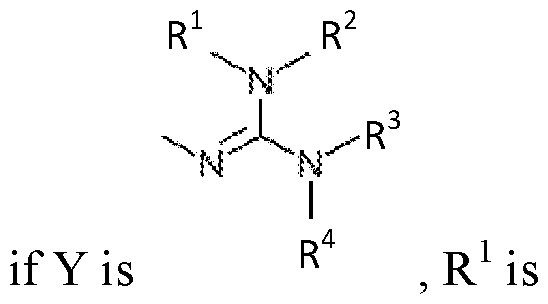
if Y i
 optionally joined to R6 to form a 4- to 6- membered heterocycle or R6 is optionally joined to R7 to form a 4- to 6- membered heterocycle.
DETAILED DESCRIPTION
optionally joined to R6 to form a 4- to 6- membered heterocycle or R6 is optionally joined to R7 to form a 4- to 6- membered heterocycle.
DETAILED DESCRIPTION
[0004] A linked chromatography resin that allows for efficient purification of target biomolecules from a sample is provided. Notably, the examples illustrate that the linked chromatography resin is useful for separating monomeric antibodies from antibody aggregates in the sample.
DEFINITIONS
[0005] Unless otherwise stated, the following terms used in this application, including the specification and claims, have the definitions given below. As used in this specification and the appended claims, the singular forms "a", "an", and "the" include plural referents unless the content clearly dictates otherwise. Definition of standard chemistry terms can be found in reference works, including Carey and Sundberg (2007) "Advanced Organic Chemistry 5th Ed." Vols. A and B, Springer Science+Business Media LLC, New York. The practice of the present invention will employ, unless otherwise indicated, conventional methods of synthetic organic chemistry, mass spectroscopy, preparative and analytical methods of
chromatography, protein chemistry, biochemistry, recombinant DNA techniques and pharmacology.
[0006] “Antibody” refers to an immunoglobulin, composite (e.g., fusion), or fragmentary form thereof. The term includes but is not limited to polyclonal or monoclonal antibodies of the classes IgA, IgD, IgE, IgG, and IgM, derived from human or other mammalian cell lines, including natural or genetically modified forms such as humanized, human, single-chain, chimeric, synthetic, recombinant, hybrid, mutated, grafted, and in vitro generated antibodies. “Antibody” also includes composite forms including but not limited to fusion proteins containing an immunoglobulin moiety.“Antibody” also includes antibody fragments such as Fab, F(ab')2, Fv, scFv, Fd, dAb, Fc, whether or not they retain antigen-binding function.
[0007] As used herein, the term“alkyl” refers to a straight or branched, saturated, aliphatic radical having between 1-10 carbon atoms. For example, Ci-C6 alkyl includes, but is not limited to, methyl, ethyl, propyl, isopropyl, butyl, isobutyl, sec-butyl, tert-butyl, pentyl, isopentyl, and/or hexyl. Alkyl can include any number of carbons, such as 1-2, 1-3, 1-4, 1-5, 1-6, 1-7, 1-8, 1-9, 1-10, 2-3, 2-4, 2-5, 2-6, 3-4, 3-5, 3-6, 4-5, 4-6 and 5-6. The alkyl group is typically monovalent, but can be divalent, such as when the alkyl group links two chemical groups together.
[0008] As used herein, the term“cycloalkyl” refers to monocyclic alkyl having the number of carbon atoms indicated. Monocyclic rings include, for example, cyclopropyl, cyclobutyl, and cyclopentyl.
[0009] As used herein, the term“aryl” refers to a monocyclic or fused bicyclic aromatic ring assembly. For example, aryl can be phenyl, naphthyl, or pyridyl. Aryl groups can optionally be substituted by one, two, three, or four unsubstituted alkyl groups.
[0010] As used herein, the term "heterocycle" refers to ring assemblies that include one to three heteroatoms as a ring member. Examples include, but are not limited to, cyclic amines such as azetidino, pyrrolidino, piperidino, pyrazolidino, and imidazolidino. Heterocycles can optionally be substituted by one, two, three, or four alkyl groups.
[0011] An“anionic salt” is formed at a basic (e.g., guanidine, amino or alkylamino) group in the ligands. Anionic salts include, but are not limited to, halides, sulfonates, sulfates, carboxylates, phosphates, acetates, citrates and nitrates. Examples of acid-addition salts include, but are not limited to, hydrochloride, hydrobromide, hydroiodide, sulfate, acetate, citrate, and nitrate.
[0012] As used herein, the term“spacer” refers to a molecule having 1 - 30 atoms selected from H, C, N, O and S. The spacer has a neutral charge and can include cyclic groups. The spacer links the chromatographic ligand to the chromatography. The types of bonds used to link the spacer to the chromatography matrix include, but are not limited to, amides, amines, ethers, esters, carbamates, ureas, thioethers, thiocarbamates, thiocarbonate and thioureas. In some embodiments, the bonds used to link the spacer to the chromatography matrix are amines, ethers or amides.
[0013] “Biological sample” refers to any composition containing a target molecule of biological origin (a“biomolecule”) that is desired to be purified. In some embodiments, the target molecule to be purified is an antibody or a non-antibody protein (e.g., hormones or enzymes).
[0014] “Bind-elute mode” refers to an operational approach to chromatography in which the buffer conditions are established so that target molecules and, optionally undesired contaminants, bind to the ligand when the sample is applied to the ligand. Fractionation of the target can be achieved subsequently by changing the conditions such that the target is eluted from the support. In some embodiments, contaminants remain bound following target elution.
In some embodiments, contaminants either flow-through or are bound and eluted before elution of the target.
[0015] “Flow-through mode” refers to an operational approach to chromatography in which the buffer conditions are established so that the target molecule to be purified flows through the chromatography support comprising the ligand, while at least some sample contaminants are selectively retained, thus achieving their removal from the sample.
CHROMATOGRAPHY LIGANDS
[0016] In a first embodiment, a chromatography resin has the formula:
Chromatography matrix-(X1)-L-Ar-(X2)-Y or a tautomer or an anionic salt thereof, wherein:
X1 is a spacer;
X2 is Ci to C5 alkyl, C3 or C5 cycloalkyl, or absent;
L is NR8, O, or S, wherein R8 is hydrogen or Ci to C6 alkyl;
Ar is a 6- to lO-membered aryl mono or bicylic ring optionally substituted with up to four Ci to C3 unsubstituted alkyl or C3 to C6 branched alkyl; and
Y is selected from the group consisting of:

R1, R2, R3, R4, R5, R6, and R7 are each independently hydrogen or Ci to C6 alkyl;
 2 3
2 3
if Y is , R is optionally joined to R to form a 4- to 7-membered heterocycle or R3 is optionally joined to R4 to form a 4- to 7-membered heterocycle;


[0017] In a first aspect of the first embodiment, X2 is C1-C3 alkyl or absent. Alternatively X2 is C1-C2 alkyl or absent. In yet another alternative, X2 is methyl or absent.
[0018] In a second aspect of the first embodiment, L is NR8 or O or NR8 or S.
Alternatively, L is NR8 wherein R8 is hydrogen or Ci to C3 alkyl. In yet another alternative, L is NH.
[0019] In a third aspect of the first embodiment, Ar is a six-membered aryl optionally substituted with one or two Ci to C3 unsubstituted alkyl. Alternatively, Ar is phenyl optionally substituted with one or two Ci to C3 unsubstituted alkyl. Alternatively, Ar is unsubstituted phenyl.

[0020] In a fourth aspect of the first embodiment, Y is wherein R'-R4 are each independently H or C1-C4 alkyl and R2 is optionally joined to R3 to form a 4- to 7-membered
heterocycle or R3 is optionally joined to R4to form a 4- to 7-membered heterocycle.
 , 4
, 4
Alternatively, Y is , wherein none of R -R form heterocycles and are each independently H or C1-C4 alkyl; each independently H or C1-C2 alkyl; or each H.
[0021] In a fifth aspect of the first embodiment,
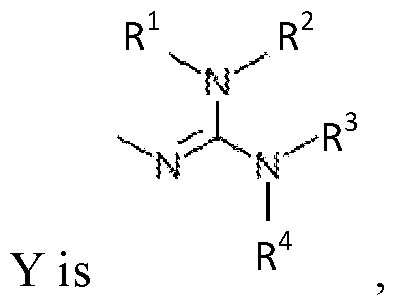 wherein R'-R4 are each independently H or C1-C4 alkyl and R1 is optionally joined to R2 to form a 4- to 7-membered heterocycle and R3 is optionally joined to R4 to form a 4- to 7-membered heterocycle.
Alternatively
 wherein none of R'-R4 form heterocycles and are each independently H or C1-C4 alkyl; each independently H or C1-C2 alkyl; or each H.
[0022] In a sixth aspect of the first embodiment,
 wherein R'-R are each independently H or C1-C4 alkyl and wherein R5 is optionally joined to R6 to form a 4- to 7-membered heterocycle or R6 is optionally joined to R7 to form a 4- to 7-membered
heterocycle. Alternatively,
 wherein none of R i -Rv form heterocycles and are each independently H or C1-C4 alkyl; each independently H or Ci-C2 alkyl; or each H.
[0023] In a seventh aspect of the first embodiment, X1 is attached to chromatography matrix via a bond selected from an amide, amine, ether, ester, carbamate, urea, thioether, thiocarbamate, thiocarbonate and thiourea. Alternatively the bond is an amine, ether or amide.
[0024] In an eighth aspect of the first embodiment, X1 is selected from the group consisting of
-0-CH2-, -O-CH2-CH2-, -O-CH2-CH2-CH2-, -O-CH2-CH2-CH2- CH2-,
-0-CH2-CH(CH2-0H)-(0-CH2-CH(0H)-CH2)2-,
-0-CH2- CH2-CH(CH2-0H)-(0-CH2-CH2-CH(0H)-CH2)2-, -0-CH2-CH(0H)-CH2-, -0-CH2- CH2-CH(OH)-CH2- CH2-,
-0-CH2-CH(0H)-CH2-0-CH2-CH2-CH2-CH2-0-CH2-CH(0H)-CH2-, and
-CO-NH-C(CH3)2-CO-. X1 is selected from the group consisting of
-0-CH2-, -O-CH2-CH2-, -O-CH2-CH2-CH2-, -O-CH2-CH2-CH2- CH2-, and
-0-CH2-CH(CH2-0H)-(0-CH2-CH(0H)-CH2)2-
[0025] In a second embodiment, the chromatography resin has the formula: Chromatography matrix-(X1)-L-Ar-(X2)-Y or a tautomer or an anionic salt thereof, wherein:
X1 is a spacer;
X2 is C1-C3 alkyl or absent;
L is NR8, O, or S wherein R8 is hydrogen or Ci to C3 alkyl;
Ar is phenyl or napthyl, optionally substituted with up to four Ci to C3 unsubstituted alkyl; and
Y is selected from the group consisting of:

R1, R2, R3, R4, R5, R6, and R7 are each independently hydrogen or Ci to C4 alkyl;

if Y is , R2 is optionally joined to R3 to form a 4- to 6-membered heterocycle or R3 is optionally joined to R4 to form a 4- to 6-membered heterocycle;

if Y i
 optionally joined to R6 to form a 4- to 6- membered heterocycle or R6 is optionally joined to R7 to form a 4- to 6- membered heterocycle.
[0026] In a first aspect of the second embodiment, X2 is C |-C2 alkyl or absent. In yet another alternative, X2 is methyl or absent.
[0027] In a second aspect of the second embodiment, L is NR8 or O or NR8 or S.
Alternatively, L is NR8 wherein R8 is hydrogen or Ci to C3 alkyl. In yet another alternative, L is NH.
[0028] In a third aspect of the second embodiment, Ar is optionally substituted with one or two Ci to Ci unsubstituted alkyl. Alternatively, Ar is phenyl optionally substituted with one or two Ci to C3 unsubstituted alkyl. Alternatively, Ar is unsubstituted phenyl.

[0029] In a fourth aspect of the second embodiment, Y is wherein R2 is optionally joined to R to form a 4 to 6 membered heterocycle or R3 is optionally joined to

R4to form a 4- to 6-membered heterocycle. Alternatively, Y is wherein none of
R4-R4 form heterocycles and are each independently H or C|-C2 alkyl; or each H.
1
[0030] In a fifth aspect of the second embodiment,
 wherein R is optionally joined to R2 to form a 4- to 6-membered heterocycle and R3 is optionally joined to
R4 to form a 4- to 6-membered heterocycle. Alternatively
 wherein none of
R'-R4 form heterocycles and are each independently H or C|-C2 alkyl; or each H.
[0031] In a sixth aspect of the second embodiment,
 wherein R5 is optionally joined to R6 to form a 4- to 6-membered heterocycle or R6 is optionally joined to
1
R to form a 4- to 6-membered heterocycle. Alternatively,
 wherein none of R'-R form heterocycles and are each independently H or C |-C2 alkyl; or each H.
[0032] In a seventh aspect of the second embodiment, X1 is attached to chromatography matrix via a bond selected from an amide, amine, ether, ester, carbamate, urea, thioether, thiocarbamate, thiocarbonate and thiourea. Alternatively the bond is an amine, ether or amide.
[0033] In an eighth aspect of the second embodiment, X1 is selected from the group consisting of
-O-CH2-, -O-CH2-CH2-, -O-CH2-CH2-CH2-, -O-CH2-CH2-CH2- CH2-,
-0-CH2-CH(CH2-0H)-(0-CH2-CH(0H)-CH2)2-,
-0-CH2- CH2-CH(CH2-0H)-(0-CH2-CH2-CH(0H)-CH2)2-, -0-CH2-CH(0H)-CH2-, -0-CH2- CH2-CH(OH)-CH2- CH2-,
-0-CH2-CH(0H)-CH2-0-CH2-CH2-CH2-CH2-0-CH2-CH(0H)-CH2-, and
-CO-NH-C(CH3)2-CO-. Alternatively, X1 is selected from the group consisting of

-0-CH2-CH(CH2-0H)-(0-CH2-CH(0H)-CH2)2-
[0034] In a third embodiment, a chromatography resin has the formula: Chromatography matrix-(X1)-L-Ar-(X2)-Y or a tautomer or an anionic salt thereof, wherein:
X1 is a is selected from the group consisting of -0-CH2-, -0-CH2-CH2-,
-O-CH2-CH2-CH2-, -O-CH2-CH2-CH2- CH2-,
-0-CH2-CH(CH2-0H)-(0-CH2-CH(0H)-CH2)2-,
-0-CH2- CH2-CH(CH2-0H)-(0-CH2-CH2-CH(0H)-CH2)2-, -0-CH2-CH(0H)-CH2-, -0-CH2- CH2-CH(OH)-CH2- CH2-, -0-CH2-CH(0H)-CH2-0-CH2-CH2-CH2-CH2-0-CH2-CH(0H)-CH2-, and -CO-NH-C(CH3)2-CO-.;
X2 is— CH2- or absent;
L is NR8 wherein R8 is hydrogen or -CH3;
Ar is phenyl optionally substituted with one or two Ci to C2 unsubstituted alkyl; and
Y is selected from the group consisting of:

[0035] In a first aspect of the third embodiment, L is NH.
[0036] In a second aspect of the third embodiment, Ar unsubstituted phenyl.

[0037] In a third aspect of the third embodiment, Y is , wherein R -R are each independently H or C1-C3 alkyl; or each independently H or C1-C2 alkyl; or each H.
[0038] In a fourth aspect of the third embodiment,
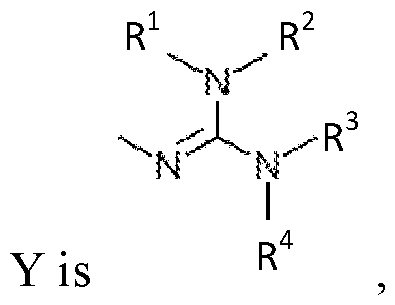 wherein R'-R4 are each independently H or C1-C2 alkyl; or each H.
1 7
[0039] In a fifth aspect of the third embodiment,
 wherein R -R are each independently H or C1-C2 alkyl; or each H.
[0040] In a sixth aspect of the third embodiment, X1 is selected from the group consisting of -O-CH2-, -O-CH2-CH2-, -O-CH2-CH2-CH2-, -O-CH2-CH2-CH2- CH2-, and
-0-CH2-CH(CH2-0H)-(0-CH2-CH(0H)-CH2)2-
[0041] In a fourth embodiment, chromatography matrix-(X1)-L-Ar-(X2)-Y is any one of the chromatography resin structures listed in the last column of Table 1.
TABLE 1


[0042] In some embodiments, the salt is hydrochloride or sulfate.
[0043] The chromatography matrix is a polymer that is functionalized so that a bond can be formed to the spacer, X1. Preferably, the polymer is a hydrophilic polymer. The polymer is insoluble in water. Suitable polymers are polyhydroxy polymers, e.g. based on
polysaccharides, such as agarose (e.g., Sepharose and Superose beads from GE Healthcare and Biogel A from Bio-Rad), dextran (e.g., Sephadex from GE Healthcare), cellulose, starch, pullulan, and completely synthetic polymers, such as polyacrylic amide, polymethacrylic amide, poly(hydroxyalkylvinyl ethers), poly(hydroxyalkylacrylates) and polymethacrylates (e.g. polyglycidylmethacrylate), polyvinyl alcohols and polymers based on styrenes and divinylbenzenes, and copolymers in which two or more of the monomers corresponding to the above-mentioned polymers are included. Suitable synthetic polymers include, but are not limited to, Fractogel from Toso-Haas, POROS media from ThermoFisher Scientific, Bio-Gel P and Macro Prep from Bio-Rad, HEMA and Separon from TESSEK, and Hyper D and Trisacryl media from Pall. Polymers, which are soluble in water, may be derivatized to become insoluble, e.g. by cross-linking and by coupling to an insoluble body via adsorption or covalent binding. Hydrophilic groups can be introduced on hydrophobic polymers (e.g. on copolymers of monovinyl and divinylbenzenes) by polymerisation of monomers exhibiting groups which can be converted to OH, or by hydrophilization of the final polymer, e.g. by adsorption of suitable compounds, such as hydrophilic polymers. Examples of monomers that can be polymerized to achieve useful matrices are vinyl acetate, vinyl propylamine, acrylic acid, methacrylate, butyl acrylate, acrylamide, methacrylamide, vinyl pyrrolidone (vinyl pyrrolidinone), with functional groups in some cases. Cross-linking agents are also of use in many embodiments, and when present can in some embodiments constitute a mole ratio of from about 0.1 to about 0.7 relative to total monomer. Examples of crosslinking agents are dihydroxyethylenebisacrylamide, diallyltartardiamide, triallyl citric triamide, ethylene diacrylate, bisacrylylcystamine, N,N'-methylenebisacrylamide, and piperazine diacrylamide.
In some embodiments, the matrix is an UNOsphere™ support, a polymer produced from water-soluble hydrophilic monomers (Bio-Rad, Hercules, Calif.).
[0044] The chromatography matrix can be in the form of a particle, chips, a membrane, or a monolith, i.e., a single block, pellet, or slab of material. Preferably, the chromatography matrix is porous. Particles when used as matrices can be spheres or beads and are either smooth-surfaced or with a rough or textured surface. In some cases, some of the pores are through-pores, extending through the particles to serve as channels large enough to permit hydrodynamic flow or fast diffusion through the pores. When in the form of spheres or beads, the median particle diameter, where the term“diameter” refers to the longest exterior dimension of the particle, is about 25 microns to about 150 microns. Disclosures of exemplary matrices and the processes by which they are made are found in Hjerten et al.,
U.S. Pat. No. 5,645,717, Liao et al., U.S. Pat. No. 5,647,979, Liao et al., U.S. Pat. No.
5,935,429, and Liao et al., U.S. Pat. No. 6,423,666.
[0045] The ligands are linked to the chromatography matrix via the spacer X1. Linkage to the chromatography matrix will depend on the chromatography matrix used and the chemical group to be linked to the chromatography matrix. Ligands can be linked to the
chromatography matrix by performing a reaction between the ligand and a functional group on the chromatography matrix. For chromatography matrices that do not have a suitable functional group, the chromatography matrix is reacted with a suitable activating reagent to create a suitable functional group to which the ligand can be attached. Reductive amination, epoxide chemistry or azalactone chemistry are examples of chemistries acting on aldehyde, epoxide, or azalactone functional groups, respectively. For example, a chromatography matrix functionalized with an aldehyde or a ketone group can be used to link the
chromatography matrix to an amine group in the ligand. In some embodiments, the chromatography matrix comprises a diol, which is converted to an aldehyde, e.g., by conversion with NaI04. A primary amine of the ligand can be linked to the created aldehyde on the chromatography matrix by a reductive amination reaction by the scheme below. In this scheme, the spacer X is -0-CH2-CH2-. In this and other synthetic schemes in this disclosure, the box represents the matrix and all coupling chemistry is shown separately.

Reductive Aminsiion
[0046] In some embodiments, the chromatography matrix comprises an epoxide group and a primary amine in the ligand is linked to the epoxide group via epoxide chemistry by the scheme below. In this scheme, the spacer X is -0-CH2-CH(0H)-CH2-.

[0047] In some embodiments, the chromatography matrix comprises an azlactone ring and a primary amine in the ligand is linked to the azlactone ring by the scheme below. In this scheme, the spacer X is -CO-NH-C(CH3)2-CO-.

[0048] In some embodiments, the chromatography matrix comprises a diol and a primary amine is linked to an -OH group by activating the resin with two activating reagents, allylglydicylether (AGE) and bromine, by the scheme below. In this scheme, the spacer X is -0-CH2-CH(CH2-0H)-(0-CH2-CH(0H)-CH2)2-.

[0049] In certain embodiments, the chromatography matrix comprises an -OH group and a primary amine is linked to the -OH group by activating the resin with epichlorohydrin by the scheme below. In this scheme, the spacer X is -0-CH2-CH(0H)-CH2-.

[0050] In some embodiments, the chromatography matrix comprises an
-OH group and a primary amine is linked to the -OH group by activating the resin with 1,4 butanedioldiglycidyl ether by the scheme below. In this scheme, the spacer X is -0-CH2-
CH(0H)-CH2-0-CH2-CH2-CH2-CH2-0-CH2-CH(0H)-CH2-.
OH


[0051] Other activating reagents include, but are not limited to, epibromohydrin, bis- epoxides such as; halogen-substituted aliphatic compounds such as di-chloro-propanol, divinyl sulfone; carbonyldiimidazole; aldehydes such as glutaric dialdehyde; quinones; cyanogen bromide; periodates such as sodium-meta-periodate; carbodiimides; chloro- triazines such as cyanuric chloride; sulfonyl chlorides such as tosyl chlorides and tresyl chlorides; N-hydroxy succinimides; 2-fluoro-l-methylpyridinium toluene-4-sulfonates; oxazolones; maleimides; pyridyl disulfides; and hydrazides.
[0052] Other spacers can include, but are not limited to, -0-CH2-, -0-CH2-CH2-CH2-, -O- CH2-CH2-CH2-CH2-, -0-CH2- CH2-CH(CH2-0H)-(0-CH2-CH2-CH(0H)-CH2)2-, and -O- CH2- CH2-CH(OH)-CH2- CH2-.
[0053] The chromatography matrix can be utilized in any conventional configuration, including packed columns and fluidized or expanded-bed columns, monoliths or porous membranes, and by any conventional method, including batchwise modes for loading, washes, and elution, as well as continuous or flow-through modes. In some embodiments, a column can range in diameter from 1 cm to 1 m, and in height from 1 cm to 30 cm or more.
[0054] Depending on the pH of the chromatography mobile phase buffer, any nitrogen in the ligand can be protonated and; thus, can carry a positive charge.
METHODS
[0055] Also provided are methods of purifying a target biomolecule. In an embodiment, the method comprises contacting a sample comprising the biomolecule to a chromatography
resin , thereby separating the biomolecule from a contaminant. The resulting purified biomolecule is subsequently collected. In some embodiments, the target biomolecule is a monomeric antibody and the method comprises purifying the monomeric antibody from aggregated antibodies in the sample.
[0056] The chromatographic resins are useful for purifying target molecules using anionic exchange (i.e., where the ligand is positively charged) and hydrophobic mixed mode chromatography. The conditions can be adjusted so as to run the chromatography in bind- elute mode or flow-through mode.
[0057] Protein preparations to which the methods can be applied can include unpurified or partially purified proteins, including but not limited to, antibodies (e.g. IgG, IgM) and non antibody proteins from natural, synthetic, or recombinant sources. Unpurified protein preparations, for example, can come from various sources including, but not limited to, plasma, serum, ascites fluid, milk, plant extracts, bacterial lysates, yeast lysates, or conditioned cell culture media. Partially purified protein preparations can come from unpurified preparations that have been processed by at least one chromatography,
precipitation, other fractionation step, or any combination of the foregoing. In some embodiments, the chromatography step or steps employ any method, including but not limited to size exclusion, affinity, anion exchange, cation exchange, protein A affinity, hydrophobic interaction, immobilized metal affinity chromatography, or hydroxyapatite chromatography. The precipitation step or steps can include salt or polyethylene glycol (PEG) precipitation, or precipitation with organic acids, organic bases, or other agents. Other fractionation steps can include but are not limited to crystallization, liquiddiquid partitioning, or membrane filtration.
[0058] As will be appreciated in the art, load, wash and elution conditions for use in the mixed mode chromatography will depend on the specific chromatography matrix/ligand used.
[0059] In some bind-elute mode embodiments, loading (i.e., binding the antibodies or non antibody protein to the chromatography resin), and optionally washing, is performed at a pH above 7, e.g., between 7-8 or 7-9. Some exemplary bind-elute conditions are: binding condition: 0-1000 mM NaCl or 100-300 mM NaCl, pH 6.5-8.5 in an appropriate buffer (e.g., Tris, Bis-Tris or phosphate);
elution condition: 1-1000 mM NaCl or 0-150 mM NaCl, pH 3-8.5 or 3.0-5.0, using an appropriate buffer having sodium acetate, citrate, arginine, or glycine.
[0060] Optionally, the chromatography resin can be washed under conditions such that some components of the sample are removed from the chromatography resin but the target biomolecules remain immobilized on the resin. In some embodiments, the target biomolecule is subsequently eluted by lowering the salt concentration and/or reducing the pH of the solution in contact with the resin.
[0061] Alternatively, the sample can be applied in flow through mode in which some components of the sample are immobilized to the chromatography resin but the target biomolecules flow through (i.e., flow passed) the chromatography resin, and is collected. Some exemplary flow through conditions are 0-150 mM NaCl, pH 4.0-8.0; appropriate buffers can include, e.g., 2-(N-morpholino)ethanesulfonic acid (MES), Bis-Tris, sodium acetate or citrate-phosphate.
Examples
[0062] The following examples are provided by way of illustration only and not by way of limitation. Those of skill in the art will readily recognize a variety of non-critical parameters that could be changed or modified to yield essentially the same or similar results.
EXAMPLE 1 - Preparation of Chromatography Resins having the ligands of Table 2
TABLE 2


[0063] For each of the ligands in Table 2, UNOSPHERE® Diol (20 mL), a copolymer of 3- allyloxy-l, 2-propanediol and vinyl pyrrolidinone, crosslinked with N,N'- methylenebisacrylamide and with a diol density of 200-300 pmol/mL, was used in the form of spherical beads. For each ligand, beads were suspended in 20 mL of either 0.1M sodium acetate or water. Sodium periodate was added to a concentration within the range of 50 to 100 mM, and the resulting mixtures were incubated at room temperature (approximately 70°
F (21° C.)) for 3-24 hours. The reactions resulted in conversion of the diol groups to aldehyde groups in the range of 150-250 pmol/mL. Each of the resulting aldehyde-functionalized beads was transferred to a 20-mL column where each resin was washed with 100 mL of water.
[0064] For each ligand, twenty milliliters of aldehyde-functionalized beads was then suspended in 20 ml of 0.20M sodium phosphate containing 0.6 g of N-(4- aminophenyl)guanidine at pH 7.0. After these mixtures were incubated (shaking, 200 rpm) at room temperature for 15 minutes, 200 mg NaBH3CN was then added and the reactions were allowed to continue for 3-20 hours. The ligand concentration in each reaction was determined to be in the range of 25-200 mM. At the end of the reactions, each resin was transferred to a 20 ml column, washed with 3 CV of water followed by 1-2 CV of 0.1N HC1, and then washed with 5 CV water. The ligand density for all the resins was in the range of 25-100 pmol/ml.
EXAMPLE 2 - Purification of antibodies using the resins of Example 1 and flow through mode
[0065] Each of the resins listed in Table 2 (generated as described above) are packed into a 7 mm (i.d.)x5.5 cm column and is equilibrated with 20 mM sodium acetate containing 75 mM NaCl at pH 4.5. 750 pl of a 2.0 mg/ml solution of a monoclonal IgG antibody containing 15-20% aggregated antibodies is applied to the column at a flow rate of 2 ml/minute. The antibody flows through each of the columns. To remove contaminants that bind to each resin, each column is washed in a 10 ml gradient of equilibration buffer to elution buffer with 20 mM sodium acetate at pH 4.5, followed by a 10 ml isocratic elution with elution buffer. The collected antibody in the flow-through fractions of each column is analyzed by size exclusion high performance liquid chromatography (HPLC-SEC) to determine the content of aggregated antibody. No antibody aggregates are detected in the antibody flow-through fractions for each column.
EXAMPLE 3 - Purification of antibodies using the resins of Example 1 and bind-elute mode (gradient elution)
[0066] Each of the resins listed in Table 2 is packed into a 7 mm (i.d.)x5.5 cm column and equilibrated with 20 mM Tris-HCl buffer containing 300 mM NaCl, pH 8.5. 500 mΐ of 6.0 mg/ml solution of a monoclonal IgG antibody containing 5-10% aggregated antibodies is applied to each column at a flow rate of 2 ml/minute. For each column, the antibody is eluted in a 10 ml gradient of equilibration buffer to elution buffer with 20 mM sodium acetate containing 150 mM NaCl at pH 4.5, followed by a 30 ml isocratic elution with elution buffer. The collected antibody elution fractions of each column are analyzed by size exclusion high performance liquid chromatography (HPLC-SEC) to determine the content of aggregated antibody in the elution fractions. No antibody aggregates are detected in the antibody elution fractions of any of the columns.
EXAMPLE 4 - Purification of antibodies using the resins of Example 1 and bind-elute mode (step elution and gradient elution)
[0067] Each resin in Table 2 was tested in bind-elute mode for the ability to remove aggregates from impure antibody solutions and/or for the ability of a pure antibody (i.e., no aggregates) to bind to the resin. Various antibodies were tested.
[0068] Materials
1. Chromatography resins listed in Table 2.
2. Samples containing one of the following monoclonal antibodies (mAbs). The amount of mAb in the samples was determined by Bradford assay using bovine IgG as a standard.
a. Humanized anti-vascular endothelial growth factor monoclonal antibody (mAbl) - about 15 mg of mAbl in 7 mL crude Chinese hamster ovary (CHO) cell harvest (or about 2 mg/mL). The crude CHO cell harvest contained 5-10% aggregated mAb 1.
b. Anti-human epidermal growth factor receptor 2 monoclonal antibody (mAb2)
- about 15 mg of mAb2 in 5 mL crude Chinese hamster ovary (CHO) cell harvest (or about 3 mg/mL). The crude CHO cell harvest contained 5-10% aggregated mAb2.
c. Purified mAb3 - about 15 mg in 3 ml binding buffer (or about 5 mg/mL). d. Purified mAb4 - about 15 mg in 3 ml binding buffer (or about 5 mg/mL).
3. Columns: 7 mm (i.d.)x5.5 cm.
4. Binding/wash buffer:
a. IX PBS - 10 mM phosphate, 137 mM sodium chloride (NaCl), and 2.7 mM potassium chloride, pH 7.2 or 7.8.
b. Modified IX PBS (higher NaCl concentration) - 10 mM phosphate, 300 mM sodium chloride (NaCl), and 2.7 mM potassium chloride, pH 7.2
5. Elution buffer: 50 mM sodium acetate (NaOAc), pH 5.0 or 5.4 or 100 mM glycine, pH 3.
6. Stripping buffer: 1 N sodium hydroxide (NaOH).
[0069] Methods: For each resin in Table 2, the resin was packed into a column and equilibrated with the binding/wash buffer listed in Table 3. Samples containing mAb (see Table 3 for the sample applied to each resin) were applied to the columns and the columns were washed with binding/wash buffer. For step elution, the monomeric or purified mAb was eluted with 10 column volumes (CV) of elution buffer. For gradient elution (i.e., resin 2 tested with mAbl), the antibody was eluted with a 15 CV gradient of binding/wash buffer to elution buffer, followed by 5 CV isocratic elution with elution buffer. All the columns were cleaned or stripped with stripping buffer after the mAb was eluted.
[0070] The collected antibody elution fractions of each column were analyzed by size exclusion high performance liquid chromatography (HPLC-SEC) to determine the percent aggregate content of antibody in the elution fractions. The percent monomer content for the
samples was determined by subtracting the percent aggregate content from 100% and is listed in Table 3.
[0071] In Table
 symbolizes“about”.
TABLE 3

Additionally, for resins 14 and 15, monomeric mAbl was collected in the flow through with lx PBS, pH 7.2 binding buffer and 50mM NaOAc, pH 5.4 elution buffer.
[0073] All patents, patent applications, and other published reference materials cited in this specification are hereby incorporated herein by reference in their entirety.
ADDITIONAL DISCLOSURE AND CLAIMABLE SUBJECT MATTER
[0074] Item 1. A chromatography resin having the formula:
Chromatography matrix-(X1)-L-Ar-(X2)-Y or a tautomer or an anionic salt thereof, wherein:
X1 is a spacer;
X2 is Ci to C5 alkyl, C3 or C5 cycloalkyl, or absent;
L is NR8, O, or S wherein R8 is hydrogen or Ci to C6 alkyl;
Ar is a 6- to lO-membered aryl mono or bicylic ring optionally
substituted with up to four Ci to C3 unsubstituted alkyl or C3 to C6 branched alkyl; and
Y is selected from the group consisting of:

R1, R2, R3, R4, R5, R6, and R7 are each independently hydrogen or Ci to C6 alkyl;

if Y is , R is optionally joined to R to form a 4- to
7-membered heterocycle or R3 is optionally joined to R4 to form a 4- to 7-membered heterocycle;

if Y i
 optionally joined to R e to form a 4- to 7-membered heterocycle or R6 is optionally joined to R7 to form a 4- to 7-membered heterocycle.
[0075] Item 2. The chromatography resin of claim 1, wherein:
X2 is C 1-C3 alkyl or absent;
L is NR8, O, or S wherein R8 is hydrogen or Ci to C3 alkyl;
Ar is phenyl or napthyl optionally substituted with up to four Ci to C3 unsubstituted alkyl; and
Y is selected from the group consisting of:

R1, R2, R3, R4, R5, R6, and R7 are each independently hydrogen or Ci to C4 alkyl;

if Y is , R is optionally joined to R to form a 4- to
6-membered heterocycle or R3 is optionally joined to R4 to form a 4- to 6-membered heterocycle;

if Y i
 optionally joined to R 6 to form a 4- to 6-membered heterocycle or R6 is optionally joined to R7 to form a 4- to 6-membered heterocycle.
[0076] Item 3. The chromatography resin of claim 2, wherein:
X1 is a is selected from the group consisting of -0-CH2-, -0-CH2-
CH2-, -0-CH2-CH2-CH2-, -0-CH2-CH2-CH2- CH2-, -0-CH2-
CH(CH2-0H)-(0-CH2-CH(0H)-CH2)2-, -0-CH2- CH2- CH(CH2-0H)-(0-CH2-CH2-CH(0H)-CH2)2-, -0-CH2- CH(OH)-CH2-, -0-CH2- CH2-CH(OH)-CH2- CH2-, -0-CH2- CH(0H)-CH2-0-CH2-CH2-CH2-CH2-0-CH2-CH(0H)-CH2-, and -CO-NH-C(CH3)2-CO-;
X2 is— CH2- or absent;
L is NR8 wherein R8 is hydrogen or -CH3;
Ar is phenyl optionally substituted with one or two Ci to C2
unsubstituted alkyl; and
Y is selected from the group consisting of:

R1, R2, R3, R4, R5, R6, and R7 are each independently hydrogen or Ci to C3 alkyl.
[0077] Item 4. The chromatography resin of claim 1 or 2, wherein Y is

and R2 is joined to R3 to form a 4- or 5-membered heterocycle.

[0078] Item 5. The chromatography resin of claim 1 or 2, wherein Y is
and R3 is joined to R4 to form a 4- to 6-membered heterocycle.
[0079] Item 6. The chromatography resin of claim 1 or 2, wherein Y is
 joined to R6 to form a 4- or 5-membered heterocycle or R6 is joined to R' to form a 4- or 5-membered heterocycle.
[0080] Item 7. The chromatography resin of any one of claims 1 - 6, wherein R1 - R7 are each independently hydrogen, Ci or C2 alkyl.
[0081] Item 8. The chromatography resin of claim 7, wherein R1 - R7 are each independently hydrogen or -CH3.
[0082] Item 9. The chromatography resin any previous claim, wherein X1 is selected from the group consisting of-0-CH2-,
-O-CH2-CH2-, -O-CH2-CH2-CH2-, -O-CH2-CH2-CH2- CH2-, and
-0-CH2-CH(CH2-0H)-(0-CH2-CH(0H)-CH2)2-
[0083] Item 10. The chromatography resin of any previous claim, wherein Ar is unsubstituted.
[0084] Item 11. The chromatography resin of any one of claims 1 - 10, wherein if Ar is phenyl, chromatography matrix-(X1)-L- is at a para or meta position relative to (X2)-Y.
[0085] Item 12. The chromatography resin of any one of claims 1 - 11, wherein chromatography matrix-(X1)-L-Ar-(X2)-Y is any one of the structures in the right-most column of Table 1.
[0086] Item 13. The chromatography resin of any one of claims 1 - 12, wherein the anionic salt is hydrochloride or sulfate.
[0087] Item 14. A chromatography resin prepared by reacting any one of the ligands of Table 1 with a chromatography matrix by any one of reductive amination, epoxide chemistry, or azalactone chemistry.
[0088] Item 15. The chromatography resin of claim 14, wherein the chromatography matrix comprises an aldehyde group and any one of the ligands of Table 1 is reacted with the chromatography matrix by reductive amination.
[0089] Item 16. The chromatography resin of claim 14, wherein the chromatography matrix comprises an epoxide group and any one of the ligands of Table 1 is reacted with the chromatography matrix by epoxide chemistry.
[0090] Item 17. The chromatography resin of any one of claims 14-16 wherein prior to reacting the chromatography matrix with the ligand the chromatography matrix is reacted with allylglydicylether and bromine; l,4-butanedioldiglycidyl; or epichlorohydrin.
[0091] Item 18. The chromatography resin of claim 17, wherein the chromatography matrix comprises an -OH group and it is reacted withallylglydicylether and bromine.
[0092] Item 19. A method of purifying a biomolecule, the method comprising: contacting a sample comprising the biomolecule to a chromatography resin of any one of claims 1 - 18, thereby separating the biomolecule from a contaminant; and collecting a purified biomolecule.
[0093] Item 20. The method of claim 19, wherein the purified biomolecule is a protein.
[0094] Item 21. The method of claim 20, wherein the protein is an antibody.
[0095] Item 22. The method of any one of claims 19-21, wherein the sample comprises a monomeric antibody and antibody aggregates, the method comprises separating the monomeric antibody from the antibody aggregates, and the purified biomolecule comprises the monomeric antibody.
[0096] Item 23. The method of claim 22, wherein the contacting step comprises immobilizing the monomeric antibody to the chromatography matrix and the collecting step comprises eluting the monomeric antibody from the chromatography matrix.
[0097] Item 24. The method of claim 23, wherein the monomeric antibody is eluted with a pH gradient of a buffer in contact with the ligand from about 7 - 9 to about 3 - 6.
[0098] Item 25. The method of claim 22, wherein the contacting step comprises flowing the monomeric antibody through the chromatography matrix and the collecting step comprises collecting the monomeric antibody in the flow through.
Claims
1. A chromatography resin having the formula:
Chromatography matrix-(X1)-L-Ar-(X2)-Y or a tautomer or an anionic salt thereof, wherein:
X1 is a spacer;
X2 is Ci to C5 alkyl, C3 or Cs cycloalkyl, or absent;
L is NR8, O, or S wherein R8 is hydrogen or Ci to C6 alkyl;
Ar is a 6- to lO-membered aryl mono or bicylic ring optionally
substituted with up to four Ci to C3 unsubstituted alkyl or C3 to C6 branched alkyl; and
Y is selected from the group consisting of:

R1, R2, R3, R4, R5, R6, and R7 are each independently hydrogen or Ci to C6 alkyl;

if Y is , R2 is optionally joined to R3 to form a 4- to
7-membered heterocycle or R3 is optionally joined to R4 to form a 4- to 7-membered heterocycle;
 optionally joined to R to form a 4- to 7-membered heterocycle and R3 is optionally joined to R4 to form a 4- to 7-membered heterocycle; and

2. The chromatography resin of claim 1, wherein:
X2 is C1-C3 alkyl or absent;
L is NR8, O, or S wherein R8 is hydrogen or Ci to C3 alkyl;
Ar is phenyl or napthyl optionally substituted with up to four Ci to C3 unsubstituted alkyl; and
Y is selected from the group consisting of:

R1, R2, R3, R4, R5, R6, and R7 are each independently hydrogen or Ci to C4 alkyl;

if Y is , R is optionally joined to R to form a 4- to 6-membered heterocycle or R3 is optionally joined to R4 to form a 4- to 6-membered heterocycle;
if Y i
 optionally joined to R to form a 4- to 6-membered heterocycle and R3 is optionally joined to R4 to form a 4- to 6-membered heterocycle; and
if Y i
 optionally joined to R 6 to form a 4- to 6-membered heterocycle or R6 is optionally joined to R7 to form a 4- to 6-membered heterocycle.
3. The chromatography resin of claim 2, wherein:
X1 is a is selected from the group consisting of -0-CH2-, -0-CH2-
CH2-, -0-CH2-CH2-CH2-, -0-CH2-CH2-CH2- CH2-, -0-CH2- CH(CH2-0H)-(0-CH2-CH(0H)-CH2)2-, -0-CH2- CH2- CH(CH2-0H)-(0-CH2-CH2-CH(0H)-CH2)2-, -0-CH2- CH(OH)-CH2-, -0-CH2- CH2-CH(OH)-CH2- CH2-, -0-CH2- CH(0H)-CH2-0-CH2-CH2-CH2-CH2-0-CH2-CH(0H)-CH2-, and -CO-NH-C(CH3)2-CO-;
X2 is— CH2- or absent;
L is NR8 wherein R8 is hydrogen or -CH3;
Ar is phenyl optionally substituted with one or two Ci to C2
unsubstituted alkyl; and
Y is selected from the group consisting of:

R1, R2, R3, R4, R5, R6, and R7 are each independently hydrogen or Ci to C3 alkyl.
4. The chromatography resin of claim 1 or 2, wherein Y is

and R2 is joined to R3 to form a 4- or 5-membered heterocycle.
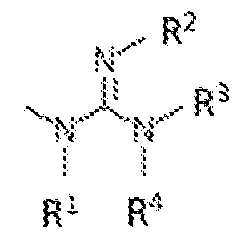
5. The chromatography resin of claim 1 or 2, wherein Y is and R3 is joined to R4 to form a 4- to 6-membered heterocycle.
6. The chromatography resin of claim 1 or 2, wherein Y is

7. The chromatography resin of any one of claims 1 - 6, wherein R1 - R7 are each independently hydrogen, Ci or C2 alkyl.
8. The chromatography resin of claim 7, wherein R1 - R7 are each independently hydrogen or -CH3.
9. The chromatography resin any previous claim, wherein X1 is selected from the group consisting of-0-CH2-,
-O-CH2-CH2-, -O-CH2-CH2-CH2-, -O-CH2-CH2-CH2- CH2-, and
-0-CH2-CH(CH2-0H)-(0-CH2-CH(0H)-CH2)2-
10. The chromatography resin of any previous claim, wherein Ar is unsubstituted.
11. The chromatography resin of any one of claims 1 - 10, wherein if Ar is phenyl, chromatography matrix-(X1)-L- is at a para or meta position relative to (X2)-Y.
12. The chromatography resin of any one of claims 1 - 11, wherein chromatography matrix-(X1)-L-Ar-(X2)-Y is any one of the structures in the right-most column of Table 1.
13. The chromatography resin of any one of claims 1 - 12, wherein the anionic salt is hydrochloride or sulfate.
14. A chromatography resin prepared by reacting any one of the ligands of Table 1 with a chromatography matrix by any one of reductive amination, epoxide chemistry, or azalactone chemistry.
15. The chromatography resin of claim 14, wherein the chromatography matrix comprises an aldehyde group and any one of the ligands of Table 1 is reacted with the chromatography matrix by reductive amination.
16. The chromatography resin of claim 14, wherein the chromatography matrix comprises an epoxide group and any one of the ligands of Table 1 is reacted with the chromatography matrix by epoxide chemistry.
17. The chromatography resin of any one of claims 14-16 wherein prior to reacting the chromatography matrix with the ligand the chromatography matrix is reacted with allylglydicylether and bromine; l,4-butanedioldiglycidyl; or epichlorohydrin.
18. The chromatography resin of claim 17, wherein the chromatography matrix comprises an -OH group and it is reacted withallylglydicylether and bromine.
19. A method of purifying a biomolecule, the method comprising:
contacting a sample comprising the biomolecule to a chromatography resin of any one of claims 1 - 18, thereby separating the biomolecule from a contaminant; and collecting a purified biomolecule.
20. The method of claim 19, wherein the purified biomolecule is a protein.
21. The method of claim 20, wherein the protein is an antibody.
22. The method of any one of claims 19-21, wherein the sample comprises a monomeric antibody and antibody aggregates, the method comprises separating the monomeric antibody from the antibody aggregates, and the purified biomolecule comprises the monomeric antibody.
23. The method of claim 22, wherein the contacting step comprises immobilizing the monomeric antibody to the chromatography matrix and the collecting step comprises eluting the monomeric antibody from the chromatography matrix.
24. The method of claim 23, wherein the monomeric antibody is eluted with a pH gradient of a buffer in contact with the ligand from about 7 - 9 to about 3 - 6.
25. The method of claim 22, wherein the contacting step comprises flowing the monomeric antibody through the chromatography matrix and the collecting step comprises collecting the monomeric antibody in the flow through.
Priority Applications (5)
| Application Number | Priority Date | Filing Date | Title |
|---|---|---|---|
| US16/967,429 US11666888B2 (en) | 2018-02-05 | 2019-02-05 | Chromatography resin having an anionic exchange-hydrophobic mixed mode ligand |
| CN201980011664.9A CN111683976B (en) | 2018-02-05 | 2019-02-05 | Chromatography resins with anion-exchange-hydrophobic mixed-mode ligands |
| EP19747994.2A EP3749697A4 (en) | 2018-02-05 | 2019-02-05 | CHROMATOGRAPHIC RESIN WITH A LIGAND WITH ANION EXCHANGE-HYDROPHOBIC MIXED MODE |
| US18/307,991 US12194432B2 (en) | 2018-02-05 | 2023-04-27 | Chromatography resin having an anionic exchange-hydrophobic mixed mode ligand |
| US19/018,050 US20250144597A1 (en) | 2018-02-05 | 2025-01-13 | Chromatography resin having an anionic exchange-hydrophobic mixed mode ligand |
Applications Claiming Priority (2)
| Application Number | Priority Date | Filing Date | Title |
|---|---|---|---|
| US201862626245P | 2018-02-05 | 2018-02-05 | |
| US62/626,245 | 2018-02-05 |
Related Child Applications (2)
| Application Number | Title | Priority Date | Filing Date |
|---|---|---|---|
| US16/967,429 A-371-Of-International US11666888B2 (en) | 2018-02-05 | 2019-02-05 | Chromatography resin having an anionic exchange-hydrophobic mixed mode ligand |
| US18/307,991 Continuation US12194432B2 (en) | 2018-02-05 | 2023-04-27 | Chromatography resin having an anionic exchange-hydrophobic mixed mode ligand |
Publications (2)
| Publication Number | Publication Date |
|---|---|
| WO2019152977A2 true WO2019152977A2 (en) | 2019-08-08 |
| WO2019152977A3 WO2019152977A3 (en) | 2020-04-30 |
Family
ID=67478582
Family Applications (1)
| Application Number | Title | Priority Date | Filing Date |
|---|---|---|---|
| PCT/US2019/016619 Ceased WO2019152977A2 (en) | 2018-02-05 | 2019-02-05 | Chromatography resin having an anionic exchange-hydrophobic mixed mode ligand |
Country Status (4)
| Country | Link |
|---|---|
| US (3) | US11666888B2 (en) |
| EP (1) | EP3749697A4 (en) |
| CN (1) | CN111683976B (en) |
| WO (1) | WO2019152977A2 (en) |
Cited By (2)
| Publication number | Priority date | Publication date | Assignee | Title |
|---|---|---|---|---|
| WO2021046284A1 (en) * | 2019-09-05 | 2021-03-11 | Bio-Rad Laboratories, Inc. | Anionic exchange-hydrophobic mixed mode chromatography resins |
| US12343702B2 (en) | 2018-03-08 | 2025-07-01 | Bio-Rad Laboratories, Inc. | Anionic exchange-hydrophobic mixed mode chromatography resin |
Citations (4)
| Publication number | Priority date | Publication date | Assignee | Title |
|---|---|---|---|---|
| US5645717A (en) | 1989-01-13 | 1997-07-08 | Bio-Rad Laboratories, Inc. | Hydrophobic polymers from water-soluble monomers and their use as chromatography media |
| US5647979A (en) | 1996-06-14 | 1997-07-15 | Bio-Rad Laboratories, Inc. | One-step preparation of separation media for reversed-phase chromatography |
| US5935429A (en) | 1997-01-03 | 1999-08-10 | Bio-Rad Laboratories, Inc. | Chromatography columns with continuous beds formed in situ from aqueous solutions |
| US6423666B1 (en) | 1999-10-05 | 2002-07-23 | Bio-Rad Laboratories, Inc. | Large-pore chromatographic beads prepared by suspension polymerization |
Family Cites Families (125)
| Publication number | Priority date | Publication date | Assignee | Title |
|---|---|---|---|---|
| DE950637C (en) | 1944-05-27 | 1956-10-11 | Hoechst Ag | Process for the preparation of 4-amino quinaldine compounds |
| JPS5514092Y2 (en) | 1977-11-05 | 1980-03-31 | ||
| DE2840435A1 (en) | 1978-09-16 | 1980-03-27 | Bayer Ag | METHOD FOR PRODUCING OXALYL CHLORIDE |
| FR2456731A1 (en) | 1979-05-16 | 1980-12-12 | Choay Sa | Guanidino and amino benzoate(s) and phenyl sulphonate(s) - and related cpds. inhibit protease(s) and have bacteriostatic and fungistatic activity |
| JPS59187779A (en) | 1983-04-08 | 1984-10-24 | Wakamoto Pharmaceut Co Ltd | Adsorbent for purifying enzyme |
| JPS606191A (en) | 1983-06-02 | 1985-01-12 | Wakamoto Pharmaceut Co Ltd | Separation method of low molecular weight urokinase and high molecular weight urokinase |
| JPS61141719A (en) * | 1984-08-22 | 1986-06-28 | キュノ、インコ−ポレ−テッド | Modified polypeptide supporter |
| JPH0662435B2 (en) * | 1986-02-28 | 1994-08-17 | 株式会社ミドリ十字 | Method for producing immunoglobulin |
| US4837348A (en) * | 1986-04-30 | 1989-06-06 | Varian Associates, Inc. | Bonded phase chromatographic supports |
| MY104343A (en) | 1987-11-23 | 1994-03-31 | Janssen Pharmaceutica Nv | Novel pyridizinamine deravatives |
| WO1992008464A1 (en) | 1990-11-15 | 1992-05-29 | Tanabe Seiyaku Co. Ltd. | Substituted urea and related cell adhesion modulation compounds |
| GB9125001D0 (en) | 1991-11-25 | 1992-01-22 | Ici Plc | Heterocyclic compounds |
| GB9301000D0 (en) | 1993-01-20 | 1993-03-10 | Glaxo Group Ltd | Chemical compounds |
| DE4301747A1 (en) | 1993-01-23 | 1994-07-28 | Cassella Ag | Substituted amino compounds, their preparation and their use |
| WO1994029273A1 (en) | 1993-06-09 | 1994-12-22 | Smithkline Beecham Corporation | Bicyclic fibrinogen antagonists |
| US5463011A (en) | 1993-06-28 | 1995-10-31 | Zeneca Limited | Acid derivatives |
| GB9313269D0 (en) | 1993-06-28 | 1993-08-11 | Zeneca Ltd | Allophanic acid derivatives |
| GB9414208D0 (en) | 1994-07-14 | 1994-08-31 | Glaxo Group Ltd | Compounds |
| ZA9610853B (en) | 1995-12-29 | 1998-04-06 | Smithkline Beecham Corp | Processes and intermediates for preparing pharmaceuticals. |
| SE9600590D0 (en) | 1996-02-19 | 1996-02-19 | Pharmacia Biotech Ab | Methods for chromatographic separation of peptides and nucleic acid and new high-affinity ion exchange matrix |
| CA2255858C (en) | 1996-05-24 | 2007-09-11 | Neurosearch A/S | Phenyl derivatives containing an acidic group, their preparation and their use as chloride channel blockers |
| AU3128197A (en) | 1996-05-30 | 1998-01-05 | Children's Hospital Medical Center | Guanidino derivatives as inhibitors of the cytotoxic effect of peroxynitrite |
| US6498236B1 (en) | 1996-08-30 | 2002-12-24 | Upfront Chromatography A/S | Isolation of immunoglobulins |
| DE19644636A1 (en) | 1996-10-17 | 1998-04-23 | Inst Angewandte Chemie Berlin | Photorefractive optical material |
| JP4157176B2 (en) | 1997-04-22 | 2008-09-24 | 東洋化成工業株式会社 | Novel 1,5'-bitetrazole compound, process for producing the same, and gas generating agent based on the 1,5'-bitetral compound |
| JPH11180801A (en) | 1997-12-17 | 1999-07-06 | Daiwa Kasei Kenkyusho:Kk | Plant freshness preserving agent and plant treated with freshness after harvest using the same |
| FR2775288B1 (en) | 1998-02-26 | 2000-03-31 | Rhone Poulenc Rorer Sa | STREPTOGRAMIN DERIVATIVES, THEIR PREPARATION AND THE COMPOSITIONS CONTAINING THEM |
| WO1999055321A1 (en) | 1998-04-24 | 1999-11-04 | Mitokor | Compounds and methods for treating mitochondria-associated diseases |
| SE9801526D0 (en) | 1998-04-29 | 1998-04-29 | Astra Ab | New compounds |
| AU4501199A (en) | 1998-06-03 | 1999-12-20 | Almirall Prodesfarma S.A. | 8-phenylxanthine derivatives and their use as phosphodiesterase inhibitors |
| EP1091942B1 (en) | 1998-07-02 | 2005-03-30 | Neurosearch A/S | Potassium channel blocking agents |
| HRP20010216A2 (en) | 1998-09-25 | 2002-04-30 | Boehringer Ingelheim Pharma | New substituted indolinones, their preparation and their use as medicaments |
| DE19844003A1 (en) | 1998-09-25 | 2000-03-30 | Boehringer Ingelheim Pharma | New substituted indolinones, their production and their use as medicines |
| JP3827530B2 (en) | 1998-12-16 | 2006-09-27 | ベーリンガー インゲルハイム ファルマ ゲゼルシャフト ミット ベシュレンクテル ハフツング ウント コンパニー コマンディトゲゼルシャフト | Substituted aryl derivatives and substituted heteroaryl derivatives, their preparation and their use as drugs |
| US6291503B1 (en) | 1999-01-15 | 2001-09-18 | Bayer Aktiengesellschaft | β-phenylalanine derivatives as integrin antagonists |
| AR042572A1 (en) | 1999-04-02 | 2005-06-29 | Sod Conseils Rech Applic | DERIVATIVES OF LIPOIC ACID, PROCEDURE FOR THE PREPARATION, MEDICINES AND PHARMACEUTICAL COMPOSITIONS CONTAINING THEM AND USE OF SUCH DERIVATIVES FOR THE PREPARATION OF THE REFERRED MEDICATIONS |
| AR024077A1 (en) | 1999-05-25 | 2002-09-04 | Smithkline Beecham Corp | ANTIBACTERIAL COMPOUNDS |
| BR0012984A (en) | 1999-08-04 | 2002-07-16 | Millennium Pharm Inc | Method for treating a condition associated with mc4-r in a mammal, compound binding to mc4-r, and pharmaceutical composition |
| GB9919778D0 (en) | 1999-08-21 | 1999-10-27 | Zeneca Ltd | Chemical compounds |
| DE19940389A1 (en) | 1999-08-25 | 2001-03-01 | Wilex Biotechnology Gmbh | Selective inhibitors of the urokinase plasminogen activator |
| US20020052343A1 (en) | 1999-12-15 | 2002-05-02 | Allen Darin Arthur | Salicylamides as serine protease inhibitors |
| WO2001056989A2 (en) | 2000-02-01 | 2001-08-09 | Cor Therapeutics, Inc. | Inhibitors of factor xa |
| GB0007371D0 (en) | 2000-03-28 | 2000-05-17 | Astrazeneca Uk Ltd | Chemical compounds |
| WO2002062766A2 (en) | 2001-02-07 | 2002-08-15 | Millennium Pharmaceuticals, Inc. | Melanocortin-4 receptor binding compounds and methods of use thereof |
| GB0103926D0 (en) | 2001-02-17 | 2001-04-04 | Astrazeneca Ab | Chemical compounds |
| EP2206702B1 (en) | 2001-08-08 | 2011-12-28 | Tobira Therapeutics, Inc. | Bicyclic compound, production and use thereof |
| EP1432693A2 (en) | 2001-10-01 | 2004-06-30 | Taisho Pharmaceutical Co. Ltd. | Mch receptor antagonists |
| GB0202873D0 (en) | 2002-02-07 | 2002-03-27 | Novartis Ag | Organic compounds |
| FR2836143B1 (en) | 2002-02-21 | 2004-04-16 | Servier Lab | NOVEL AMINO ACID DERIVATIVES, THEIR PREPARATION PROCESS AND THE PHARMACEUTICAL COMPOSITIONS CONTAINING THE SAME |
| US7482488B2 (en) | 2002-08-29 | 2009-01-27 | Temple University - Of The Commonwealth System Of Higher Education | Aryl and heteroaryl propene amides, derivatives thereof and therapeutic uses thereof |
| TW200500341A (en) | 2002-11-12 | 2005-01-01 | Astrazeneca Ab | Novel compounds |
| AR042941A1 (en) | 2003-01-27 | 2005-07-06 | Fujisawa Pharmaceutical Co | DERIVATIVES OF TIAZOL, ITS PREPARATION, PHARMACEUTICAL COMPOSITIONS THAT CONTAIN THEM AND THEIR USE IN THE MANUFACTURE OF INHIBITING MEDICINES OF VASCULAR ADHESION PROTEIN-1 (VAP-1) |
| WO2004069834A1 (en) | 2003-02-07 | 2004-08-19 | Takeda Pharmaceutical Company Limited | Tricyclic compound, process for producing the same, and use |
| US20060160864A1 (en) | 2003-02-07 | 2006-07-20 | Mitsuru Shiraishi | Acrylamide derivative, process for producing the same, and use |
| US7288654B2 (en) | 2003-02-07 | 2007-10-30 | Takeda Pharmaceutical Company Ltd | Fused-ring pyridine derivative, process for producing the same, and use |
| JP2004315511A (en) | 2003-03-31 | 2004-11-11 | Taisho Pharmaceut Co Ltd | MCH receptor antagonist |
| GB0311274D0 (en) | 2003-05-16 | 2003-06-18 | Astrazeneca Ab | Chemical compounds |
| GB0311276D0 (en) | 2003-05-16 | 2003-06-18 | Astrazeneca Ab | Chemical compounds |
| SE0302323D0 (en) | 2003-08-28 | 2003-08-28 | Astrazeneca Ab | Novel compounds |
| SE0302324D0 (en) | 2003-08-28 | 2003-08-28 | Astrazeneca Ab | Novel compounds |
| SE0302486D0 (en) | 2003-09-18 | 2003-09-18 | Astrazeneca Ab | Novel compounds |
| SE0302487D0 (en) | 2003-09-18 | 2003-09-18 | Astrazeneca Ab | Novel compounds |
| AR047521A1 (en) | 2004-02-06 | 2006-01-25 | Astrazeneca Ab | PIRIDIN-2-ONA COMPOUNDS USEFUL AS THROMBIN INHIBITORS |
| GB0402653D0 (en) | 2004-02-06 | 2004-03-10 | Cyclacel Ltd | Compounds |
| JP3977411B2 (en) | 2004-03-10 | 2007-09-19 | 株式会社クレハ | Amine-based basic compounds and their uses |
| JP2008515986A (en) | 2004-10-13 | 2008-05-15 | ワイス | N-benzenesulfonyl substituted anilino-pyrimidine analogues |
| CA2583578C (en) | 2004-10-21 | 2014-04-01 | Ge Healthcare Bio-Sciences Ab | Chromatography ligand |
| CA2591785A1 (en) * | 2004-12-23 | 2006-06-29 | Novo Nordisk A/S | Antibody binding affinity ligands |
| GB0500492D0 (en) | 2005-01-11 | 2005-02-16 | Cyclacel Ltd | Compound |
| TW200700392A (en) | 2005-03-16 | 2007-01-01 | Astrazeneca Ab | Novel compounds |
| SA06270147B1 (en) | 2005-06-09 | 2009-12-22 | نوفارتيس ايه جي | Process for the Synthesis Of 5-(methyl-1h-imidazol-1-yl)-3-(trifluoromethyl)-benzenamine |
| WO2006135312A1 (en) | 2005-06-17 | 2006-12-21 | Astrazeneca Ab | Trombin inhibiting 2,4-dioxo-3,4-dihydropyrimidine derivatives |
| UY30117A1 (en) | 2006-01-31 | 2007-06-29 | Tanabe Seiyaku Co | AMIS TRISUSTITUDED COMPOUND |
| US7635710B2 (en) | 2006-02-15 | 2009-12-22 | Neurim Pharmaceuticals (1991) Ltd. | Pyrone-indole derivatives and process for their preparation |
| ATE491753T1 (en) | 2006-02-16 | 2011-01-15 | Kaneka Corp | CURDABLE COMPOSITION |
| TW200808763A (en) | 2006-05-08 | 2008-02-16 | Astrazeneca Ab | Novel compounds I |
| TW200808771A (en) | 2006-05-08 | 2008-02-16 | Astrazeneca Ab | Novel compounds II |
| GB2443505B (en) | 2006-09-26 | 2008-12-31 | Ge Healthcare Bio Sciences | Nucleic acid purification method |
| MX2009006613A (en) | 2006-12-21 | 2009-07-02 | Nerviano Medical Sciences Srl | Substituted pyrazolo-quinazoline derivatives, process for their preparation and their use as kinase inhibitors. |
| JP5476119B2 (en) | 2007-03-12 | 2014-04-23 | 株式会社カネカ | Curable composition |
| GB0709031D0 (en) | 2007-05-10 | 2007-06-20 | Sareum Ltd | Pharmaceutical compounds |
| US7928111B2 (en) | 2007-06-08 | 2011-04-19 | Senomyx, Inc. | Compounds including substituted thienopyrimidinone derivatives as ligands for modulating chemosensory receptors |
| US8633186B2 (en) | 2007-06-08 | 2014-01-21 | Senomyx Inc. | Modulation of chemosensory receptors and ligands associated therewith |
| EA201000484A1 (en) | 2007-10-16 | 2010-12-30 | ВАЙЕТ ЭлЭлСи | THYENOPYRIMIDINE AND PYRAZOLOPIRIMIDIN COMPOUNDS AND THEIR APPLICATION AS INHIBITORS MTOR KINASE AND PI3 KINASE |
| WO2009058076A1 (en) | 2007-11-02 | 2009-05-07 | Astrazeneca Ab | 2-pyrazinone derivatives and their use as inhibitors of neutrophile elastase |
| EP2252584B1 (en) | 2008-02-04 | 2016-12-07 | Prozyme, Inc. | Compounds and methods for rapid labeling of n-glycans |
| GB0805477D0 (en) | 2008-03-26 | 2008-04-30 | Univ Nottingham | Pyrimidines triazines and their use as pharmaceutical agents |
| JP5485902B2 (en) | 2008-09-29 | 2014-05-07 | 株式会社カネカ | Curable composition and cured product thereof |
| US8987242B2 (en) | 2008-12-05 | 2015-03-24 | Merck Sharp & Dohme Corp. | Morpholinone compounds as factor IXA inhibitors |
| GB2466622A (en) | 2008-12-23 | 2010-06-30 | Trinity College Dublin | Alpha2-Adrenoceptor Ligands |
| WO2010108921A1 (en) | 2009-03-27 | 2010-09-30 | Nerviano Medical Sciences S.R.L. | N-aryl-2-(2-arylaminopyrimidin-4-yl)pyrrol-4-carboxamide derivatives as mps1 kinase inhibitors |
| WO2010126002A1 (en) | 2009-04-28 | 2010-11-04 | 塩野義製薬株式会社 | Pharmaceutical product containing heterocyclic sulfonamide compound |
| AU2010286933A1 (en) | 2009-08-31 | 2012-03-15 | Merck Sharp & Dohme Corp. | Morpholinone compounds as factor IXa inhibitors |
| WO2011113060A2 (en) | 2010-03-12 | 2011-09-15 | Trana Discovery, Inc. | Antiviral compounds and methods of use thereof |
| US20130079345A1 (en) | 2010-03-22 | 2013-03-28 | Bayer Intellectual Property Gmbh | Pharmaceutically active disubstituted triazine derivatives |
| WO2011133179A1 (en) | 2010-04-21 | 2011-10-27 | Pharmacofore, Inc | Compositions comprising enzyme-cleavable hydromorphone prodrug |
| EP2399885A1 (en) | 2010-06-22 | 2011-12-28 | Ulrich Dietz | Device and method for solubilizing, separating, removing and reacting carboxylic acids in aqueous or organic solutions by means of micro- or nanoemulsification |
| WO2012079032A2 (en) | 2010-12-09 | 2012-06-14 | Trana Discovery, Inc. | Compositions and methods of treating drug-resistant retroviral infections |
| US8497237B2 (en) | 2011-01-11 | 2013-07-30 | Signature Therapeutics, Inc. | Compositions comprising enzyme-cleavable oxycodone prodrug |
| AU2012205733B2 (en) | 2011-01-11 | 2015-10-08 | Signature Therapeutics, Inc. | Compositions comprising enzyme-cleavable oxycodone prodrug |
| WO2012112919A1 (en) | 2011-02-17 | 2012-08-23 | Rhode Island Hostpital | Stromal derived factor inhibition and cxcr4 blockade |
| CN108484449A (en) | 2011-09-09 | 2018-09-04 | 蓝瑟斯医学影像公司 | Composition, method and system for synthesizing and using developer |
| US9309282B2 (en) | 2011-10-19 | 2016-04-12 | Bio-Rad Laboratories, Inc. | Solid phase for mixed-mode chromatographic purification of proteins |
| US9669402B2 (en) | 2012-03-08 | 2017-06-06 | Bio-Rad Laboratories, Inc. | Anionic exchange-hydrophobic mixed mode |
| WO2014015157A2 (en) | 2012-07-19 | 2014-01-23 | Philadelphia Health & Education Corporation | Novel sigma receptor ligands and methods of modulating cellular protein homeostasis using same |
| ES3037037T3 (en) | 2012-07-19 | 2025-09-26 | Ecolab Usa Inc | High efficiency wet strength resins from new cross-linkers |
| EP2919902B1 (en) * | 2012-11-13 | 2020-01-01 | GE Healthcare BioProcess R&D AB | Multimodal anion exchange matrices |
| CN103450112B (en) | 2013-08-07 | 2019-09-13 | 华东理工大学 | A kind of N-bridged nitrogen-containing five-membered heterocyclic compound and its preparation and application |
| EP3001839B1 (en) | 2013-08-29 | 2018-07-18 | Canon Kabushiki Kaisha | Compound having azo skeleton, pigment dispersant, pigment composition, pigment dispersion, and toner |
| KR102181235B1 (en) | 2013-08-30 | 2020-11-23 | 삼성디스플레이 주식회사 | Condensed compound and organic light emitting diode comprising the same |
| KR102167042B1 (en) | 2013-09-06 | 2020-10-19 | 삼성디스플레이 주식회사 | Condensed compound and organic light emitting diode comprising the same |
| KR102191991B1 (en) | 2013-09-06 | 2020-12-17 | 삼성디스플레이 주식회사 | Condensed compound and organic light emitting diode comprising the same |
| KR102191990B1 (en) | 2013-09-10 | 2020-12-17 | 삼성디스플레이 주식회사 | Condensed compound and organic light emitting diode comprising the same |
| CN105579463B (en) * | 2014-03-14 | 2020-01-31 | 生物辐射实验室股份有限公司 | Mixed Mode Ligands |
| EP3131877B1 (en) | 2014-04-17 | 2023-07-19 | Immunomet Therapeutics Inc. | Biguanide compounds |
| JP6175463B2 (en) | 2014-04-25 | 2017-08-02 | 富士フイルム株式会社 | Photoelectric conversion element, solar cell using the same, and method for producing photoelectric conversion element |
| CN106233486B (en) | 2014-04-25 | 2019-06-14 | 富士胶片株式会社 | Photoelectric conversion element, solar cell using the photoelectric conversion element, and manufacturing method of the photoelectric conversion element |
| EP3189051A1 (en) | 2014-09-02 | 2017-07-12 | Pierre Fabre Médicament | Isoquinolinone derivatives useful in the treatment of cancer |
| US20170273922A1 (en) | 2014-10-03 | 2017-09-28 | The Royal Institution For The Advacement Of Learning/Mcgill University | Urea and bis-urea based compounds and analogues thereof useful in the treatment of androgen receptor mediated diseases or disorders |
| EP3259256B1 (en) | 2015-02-17 | 2022-03-09 | Beijing Erai Therapeutics Co., Ltd. | Compounds and methods for inducing browning of white adipose tissue |
| WO2016137881A1 (en) | 2015-02-23 | 2016-09-01 | King Industries | Curable coating compositions of silane functional polymers |
| KR102370354B1 (en) | 2015-04-29 | 2022-03-07 | 삼성디스플레이 주식회사 | Organic light emitting device comprising the same |
| WO2017027984A1 (en) | 2015-08-20 | 2017-02-23 | Simon Fraser University | Compounds and methods for treatment of cancer by inhibiting atg4b and blocking autophagy |
| US10980755B2 (en) | 2015-09-10 | 2021-04-20 | The Regents Of The University Of California | LRH-1 modulators |
| CN106754841A (en) * | 2017-01-04 | 2017-05-31 | 宁波林叶生物科技有限公司 | A kind of affinity chromatography preparation method thereof of high activity trypsase |
-
2019
- 2019-02-05 EP EP19747994.2A patent/EP3749697A4/en active Pending
- 2019-02-05 CN CN201980011664.9A patent/CN111683976B/en active Active
- 2019-02-05 WO PCT/US2019/016619 patent/WO2019152977A2/en not_active Ceased
- 2019-02-05 US US16/967,429 patent/US11666888B2/en active Active
-
2023
- 2023-04-27 US US18/307,991 patent/US12194432B2/en active Active
-
2025
- 2025-01-13 US US19/018,050 patent/US20250144597A1/en active Pending
Patent Citations (4)
| Publication number | Priority date | Publication date | Assignee | Title |
|---|---|---|---|---|
| US5645717A (en) | 1989-01-13 | 1997-07-08 | Bio-Rad Laboratories, Inc. | Hydrophobic polymers from water-soluble monomers and their use as chromatography media |
| US5647979A (en) | 1996-06-14 | 1997-07-15 | Bio-Rad Laboratories, Inc. | One-step preparation of separation media for reversed-phase chromatography |
| US5935429A (en) | 1997-01-03 | 1999-08-10 | Bio-Rad Laboratories, Inc. | Chromatography columns with continuous beds formed in situ from aqueous solutions |
| US6423666B1 (en) | 1999-10-05 | 2002-07-23 | Bio-Rad Laboratories, Inc. | Large-pore chromatographic beads prepared by suspension polymerization |
Non-Patent Citations (1)
| Title |
|---|
| CAREYSUNDBERG: "Advanced Organic Chemistry", 2007, SPRINGER SCIENCE+BUSINESS MEDIA LLC |
Cited By (4)
| Publication number | Priority date | Publication date | Assignee | Title |
|---|---|---|---|---|
| US12343702B2 (en) | 2018-03-08 | 2025-07-01 | Bio-Rad Laboratories, Inc. | Anionic exchange-hydrophobic mixed mode chromatography resin |
| WO2021046284A1 (en) * | 2019-09-05 | 2021-03-11 | Bio-Rad Laboratories, Inc. | Anionic exchange-hydrophobic mixed mode chromatography resins |
| US11896969B2 (en) | 2019-09-05 | 2024-02-13 | Bio-Rad Laboratories, Inc. | Anionic exchange-hydrophobic mixed mode chromatography resins |
| US12364978B2 (en) | 2019-09-05 | 2025-07-22 | Bio-Rad Laboratories, Inc. | Anionic exchange-hydrophobic mixed mode chromatography resins |
Also Published As
| Publication number | Publication date |
|---|---|
| US20230264171A1 (en) | 2023-08-24 |
| US20250144597A1 (en) | 2025-05-08 |
| US12194432B2 (en) | 2025-01-14 |
| EP3749697A2 (en) | 2020-12-16 |
| US20210086165A1 (en) | 2021-03-25 |
| EP3749697A4 (en) | 2021-11-03 |
| US11666888B2 (en) | 2023-06-06 |
| WO2019152977A3 (en) | 2020-04-30 |
| CN111683976A (en) | 2020-09-18 |
| CN111683976B (en) | 2022-11-18 |
Similar Documents
| Publication | Publication Date | Title |
|---|---|---|
| US11590486B2 (en) | Solid phase for mixed-mode chromatographic purification of proteins | |
| CN111818980B (en) | Anion exchange-hydrophobic mixed mode chromatography resins | |
| US10682640B2 (en) | Anionic exchange-hydrophobic mixed mode | |
| US12364978B2 (en) | Anionic exchange-hydrophobic mixed mode chromatography resins | |
| US20250144597A1 (en) | Chromatography resin having an anionic exchange-hydrophobic mixed mode ligand | |
| EP2986625B1 (en) | Mixed mode ligands | |
| US20220305460A1 (en) | Mixed mode cation exchange chromatography ligands based on 1,3-dioxoisoindolin-2-yl structures | |
| WO2025250430A1 (en) | Mixed mode charge induction ion exchange (iex) chromatography (mmciic) ligands and methods of use |
Legal Events
| Date | Code | Title | Description |
|---|---|---|---|
| 121 | Ep: the epo has been informed by wipo that ep was designated in this application |
Ref document number: 19747994 Country of ref document: EP Kind code of ref document: A2 |
|
| NENP | Non-entry into the national phase |
Ref country code: DE |
|
| ENP | Entry into the national phase |
Ref document number: 2019747994 Country of ref document: EP Effective date: 20200907 |
|
| 121 | Ep: the epo has been informed by wipo that ep was designated in this application |
Ref document number: 19747994 Country of ref document: EP Kind code of ref document: A2 |