WO2019159376A1 - ユーザ端末及び無線通信方法 - Google Patents
ユーザ端末及び無線通信方法 Download PDFInfo
- Publication number
- WO2019159376A1 WO2019159376A1 PCT/JP2018/005813 JP2018005813W WO2019159376A1 WO 2019159376 A1 WO2019159376 A1 WO 2019159376A1 JP 2018005813 W JP2018005813 W JP 2018005813W WO 2019159376 A1 WO2019159376 A1 WO 2019159376A1
- Authority
- WO
- WIPO (PCT)
- Prior art keywords
- user terminal
- signal
- transmission
- base station
- reception
- Prior art date
- Legal status (The legal status is an assumption and is not a legal conclusion. Google has not performed a legal analysis and makes no representation as to the accuracy of the status listed.)
- Ceased
Links
Images




Classifications
-
- H—ELECTRICITY
- H04—ELECTRIC COMMUNICATION TECHNIQUE
- H04W—WIRELESS COMMUNICATION NETWORKS
- H04W76/00—Connection management
- H04W76/10—Connection setup
- H04W76/19—Connection re-establishment
-
- H—ELECTRICITY
- H04—ELECTRIC COMMUNICATION TECHNIQUE
- H04B—TRANSMISSION
- H04B7/00—Radio transmission systems, i.e. using radiation field
- H04B7/02—Diversity systems; Multi-antenna system, i.e. transmission or reception using multiple antennas
- H04B7/04—Diversity systems; Multi-antenna system, i.e. transmission or reception using multiple antennas using two or more spaced independent antennas
- H04B7/08—Diversity systems; Multi-antenna system, i.e. transmission or reception using multiple antennas using two or more spaced independent antennas at the receiving station
- H04B7/0868—Hybrid systems, i.e. switching and combining
- H04B7/088—Hybrid systems, i.e. switching and combining using beam selection
-
- H—ELECTRICITY
- H04—ELECTRIC COMMUNICATION TECHNIQUE
- H04W—WIRELESS COMMUNICATION NETWORKS
- H04W24/00—Supervisory, monitoring or testing arrangements
- H04W24/04—Arrangements for maintaining operational condition
-
- H—ELECTRICITY
- H04—ELECTRIC COMMUNICATION TECHNIQUE
- H04W—WIRELESS COMMUNICATION NETWORKS
- H04W24/00—Supervisory, monitoring or testing arrangements
- H04W24/08—Testing, supervising or monitoring using real traffic
-
- H—ELECTRICITY
- H04—ELECTRIC COMMUNICATION TECHNIQUE
- H04W—WIRELESS COMMUNICATION NETWORKS
- H04W72/00—Local resource management
- H04W72/04—Wireless resource allocation
- H04W72/044—Wireless resource allocation based on the type of the allocated resource
- H04W72/0446—Resources in time domain, e.g. slots or frames
-
- H—ELECTRICITY
- H04—ELECTRIC COMMUNICATION TECHNIQUE
- H04W—WIRELESS COMMUNICATION NETWORKS
- H04W72/00—Local resource management
- H04W72/20—Control channels or signalling for resource management
- H04W72/23—Control channels or signalling for resource management in the downlink direction of a wireless link, i.e. towards a terminal
-
- H—ELECTRICITY
- H04—ELECTRIC COMMUNICATION TECHNIQUE
- H04W—WIRELESS COMMUNICATION NETWORKS
- H04W72/00—Local resource management
- H04W72/50—Allocation or scheduling criteria for wireless resources
- H04W72/53—Allocation or scheduling criteria for wireless resources based on regulatory allocation policies
-
- H—ELECTRICITY
- H04—ELECTRIC COMMUNICATION TECHNIQUE
- H04W—WIRELESS COMMUNICATION NETWORKS
- H04W80/00—Wireless network protocols or protocol adaptations to wireless operation
- H04W80/02—Data link layer protocols
Definitions
- the present disclosure relates to a user terminal and a wireless communication method in a next generation mobile communication system.
- LTE Long Term Evolution
- Non-patent Document 1 LTE-A (LTE-Advanced), FRA (Future Radio Access), 4G, 5G, 5G + (plus), NR ( New RAT), 3GPP (3 rd Generation Partnership Project) Rel.14,15,16 ⁇ also called, etc.) have also been studied.
- BF Beam Failure
- BFR beam failure recovery
- One aspect of the user terminal of the present invention includes: a transmitter that transmits a beam failure recovery request signal to a radio base station; a receiver that receives a response signal from the radio base station to the recovery request signal; and transmission of the recovery request signal And a control unit that controls a beam failure recovery procedure including at least reception of the response signal, and the control unit maintains monitoring of specific downlink control information during the beam failure recovery procedure.
- Another aspect of the user terminal includes: a transmitter that transmits a beam failure recovery request signal to a radio base station; a receiver that receives a response signal from the radio base station to the recovery request signal; and A control unit that controls a beam failure recovery procedure including at least transmission and reception of the response signal, and the control unit monitors downlink control information including an identifier of a slot format during the beam failure recovery procedure. If not allowed, the slot format is determined based on at least one of higher layer signaling, downlink control information for scheduling the response signal, and resources for random access.
- the operation during the beam failure recovery (BFR) procedure can be appropriately controlled.
- the “downlink reference signal associated with PDCCH” means a PDCCH demodulation reference signal (DM-RS: Demodulation Referene Signal) monitored in a control resource set (CORESET: Control Resource Set) and pseudo collocation (QCL: It may be a CSI-RS resource and / or an SS / PBCH block in a relationship of (Quasi-co-location).
- the relationship of the QCL may be indicated by a transmission configuration indicator (TCI) state (TCI state), and the above-mentioned “downlink reference signal associated with PDCCH” has the same TCI state as the DMRS of the PDCCH. It may be a CSI-RS resource and / or an SS / PBCH block.
- the PHY layer in the user terminal evaluates (assess) the radio link quality of the set of BF detection resources based on a predetermined threshold (for example, Q out, LR ).
- the predetermined threshold may be determined based on higher layer parameters (eg, RLM-IS-OOS-thresholdConfig and / or Beam-failure-candidate-beam-threshold).
- the user terminal evaluates the radio link quality for a periodic CSI-RS resource or SS / PBCH block in a pseudo-colocation relationship with the DM-RS of the PDCCH monitored by the user terminal for the set of BF detection resources. Also good.
- the user terminal may apply a predetermined threshold (for example, Q in, LR ) for periodic CSI-RS resources.
- a predetermined threshold for example, Q in, LR
- the user terminal scales the transmission power of the SS / PBCH block determined based on a predetermined higher layer parameter (for example, Pc_SS), and then performs the predetermined threshold (for example, Q out for the SS / PBCH block). , LR ) may be applied.
- the user terminal is notified (set) of one or more CORESETs from the radio base station by higher layer parameters (for example, Beam-failure-Recovery-Response-CORESET).
- the user terminal may receive a configuration (resource) for transmission of a random access channel (PRACH: Physical Random Access Channel) by an upper layer parameter (for example, Beam-failure-recovery-request-RACH-Resource).
- PRACH Physical Random Access Channel
- the BFR request may include information (new candidate beam information) indicating the new candidate beam (or new candidate beam measurement resource) identified in step S103.
- the new candidate beam information includes a beam index (BI), a predetermined reference signal port and / or resource index (for example, CSI-RS resource indicator (CRI)), SS / PBCH block There may be at least one.
- the radio base station that has detected the BFR request transmits a response signal (BFR response signal) to the BFR request from the user terminal.
- the response signal may include reconstruction information (for example, the BF detection resource information and / or the candidate beam information) for one or a plurality of beams (links).
- the success (success) of BFR may represent a case where the process reaches step S106, for example.
- BFR failure may represent a case where no candidate beam could be identified in step S103, for example.
- the present inventors when the user terminal stops a timer that has been activated (not expired) when the BFR procedure starts (for example, (for example, a MAC layer timer (MAC timer)), Even if the BFR is successful, there is a possibility that a sufficient data rate cannot be maintained after the BFR, so that the present inventors operate the timer as usual even during the BFR procedure so that the data after the BFR succeeds.
- the idea was to maintain speed (second aspect).
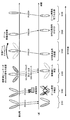
- the BFR procedure relates to information (for example, beam failure instance notification) transmitted and / or received between the physical layer (L1, PHY layer) and the upper layer (MAC layer and / or RRC layer) in the user terminal. Processing may be included.
- First monitoring control the user terminal continues to monitor a specific DCI (for example, at least one DCI (PDCCH) of (1) to (3) described later) during the BFR procedure. That is, the user terminal continues to monitor a specific DCI monitored before the start of the BFR procedure regardless of the start and / or success of the BFR procedure.
- a specific DCI for example, at least one DCI (PDCCH) of (1) to (3) described later
- the user terminal is not allowed to monitor other DCI (for example, at least one DCI (PDCCH) of (4) and (5) described later) during the BFR procedure. Alternatively, monitoring of the other DCI may be continued.
- DCI for example, at least one DCI (PDCCH) of (4) and (5) described later
- the beam failure instance notification may be notified in the MAC layer in the PHY layer in a predetermined cycle.
- the beam failure instance notification may include information regarding the presence / absence of beam failure and / or information regarding the presence / absence of a new candidate beam.
- the MAC layer of the user terminal may trigger transmission of a BFR request when the value of the predetermined counter becomes equal to or exceeds a predetermined threshold. For example, in FIG. 2, at time T2, the beam failure instance counter becomes greater than or equal to a predetermined threshold value, so the MAC layer may notify the PHY layer of a BFR request transmission instruction (trigger information). The beam failure may be detected by the MAC layer when the BFR request is triggered.
- DCI for example, DCI format 2_0, DCI format 2A
- SFI slot format identifier
- the user terminal can recognize the transmission direction (uplink or downlink) of a predetermined slot of time division duplex (TDD) based on the DCI. .
- TDD time division duplex
- the user terminal can dynamically recognize the transmission direction based on the DCI for a slot for which flexibility is set by higher layer signaling.
- DCI including a transmission power control (TPC) command for at least one of PUCCH and PUSCH for example, DCI format 2_2 including the TPC command, DCI format 2C.
- TPC transmission power control
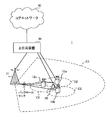
- the radio base station 10 and the user terminal 20 include a microprocessor, a digital signal processor (DSP), an ASIC (Application Specific Integrated Circuit), a PLD (Programmable Logic Device), an FPGA (Field Programmable Gate Array), and the like. It may be configured including hardware, and a part or all of each functional block may be realized using the hardware. For example, the processor 1001 may be implemented using at least one of these hardware.
- DSP digital signal processor
- ASIC Application Specific Integrated Circuit
- PLD Programmable Logic Device
- FPGA Field Programmable Gate Array
- each aspect / this embodiment described in this specification may be used alone, in combination, or may be switched according to execution. Further, the order of the processing procedures, sequences, flowcharts, and the like of each aspect / this embodiment described in this specification may be changed as long as there is no contradiction. For example, the methods described herein present the elements of the various steps in an exemplary order and are not limited to the specific order presented.
- any reference to elements using designations such as “first”, “second”, etc. as used herein does not generally limit the amount or order of those elements. These designations can be used herein as a convenient way to distinguish between two or more elements. Thus, reference to the first and second elements does not mean that only two elements can be employed or that the first element must precede the second element in some way.
- connection is any direct or indirect connection between two or more elements or By coupling, it can include the presence of one or more intermediate elements between two elements that are “connected” or “coupled” to each other.
- the coupling or connection between the elements may be physical, logical, or a combination thereof. For example, “connection” may be read as “access”.
- the radio frequency domain can be considered “connected” or “coupled” to each other, such as with electromagnetic energy having wavelengths in the microwave and / or light (both visible and invisible) regions.
Landscapes
- Engineering & Computer Science (AREA)
- Computer Networks & Wireless Communication (AREA)
- Signal Processing (AREA)
- Mobile Radio Communication Systems (AREA)
Abstract
Description
第1の態様では、BFR手順の間における特定のDCI(PDCCH)のモニタリングの制御について説明する。ユーザ端末は、BFR手順において当該特定のDCIのモニタリングを維持してもよいし(第1のモニタリング制御)、或いは、当該特定のDCIのモニタリングを許容しなくともよい(第2のモニタリング制御)。
第1のモニタリング制御において、ユーザ端末は、上記BFR手順の間において、特定のDCI(例えば、後述する(1)-(3)の少なくとも一つのDCI(PDCCH))のモニタリングを継続する。すなわち、ユーザ端末は、上記BFR手順の開始及び/又は成功に関係なく、BFR手順開始以前にモニタリングしていた特定のDCIのモニタリングを継続する。
第2のモニタリング制御において、ユーザ端末は、上記BFR手順の間の処理を、上記特定のDCI(例えば、上述の(1)-(3)の少なくとも一つのDCI(PDCCH))のモニタリングを許容しない点で、第1のモニタリング制御と異なる。これにより、第2のモニタリング制御では、第1のモニタリング制御と比べて、上記BFR手順の間のユーザ端末動作を簡略化できる。以下では、第1のモニタリング制御との相違点を中心に説明する。
・TPC-SRS-RNTIでCRCをマスキングされたDCIで指示されるSRSの送信
・上位レイヤシグナリングで設定されたPDCCH/PDSCH/CSI-RSの受信またはSRS/PUCCH/PUSCHの送信
・C-RNTIでCRCをマスキングされたDCIで指示されるPDSCH/CSI-RSの受信またはPUSCH/PUCCH/PRACHの送信
第2の態様では、BFR手順に間におけるMACタイマの制御について説明する。ユーザ端末は、BFR手順において特定のMACタイマの起動を維持してもよい。
以下、本実施の形態に係る無線通信システムの構成について説明する。この無線通信システムでは、上記態様の少なくとも一つ又はこれらの組み合わせを用いて通信が行われる。
図6は、本実施の形態に係る無線基地局の全体構成の一例を示す図である。無線基地局10は、複数の送受信アンテナ101と、アンプ部102と、送受信部103と、ベースバンド信号処理部104と、呼処理部105と、伝送路インターフェース106と、を備えている。なお、送受信アンテナ101、アンプ部102、送受信部103は、それぞれ1つ以上を含むように構成されればよい。
図8は、本実施の形態に係るユーザ端末の全体構成の一例を示す図である。ユーザ端末20は、複数の送受信アンテナ201と、アンプ部202と、送受信部203と、ベースバンド信号処理部204と、アプリケーション部205と、を備えている。なお、送受信アンテナ201、アンプ部202、送受信部203は、それぞれ1つ以上を含むように構成されればよい。
なお、本実施の形態の説明に用いたブロック図は、機能単位のブロックを示している。これらの機能ブロック(構成部)は、ハードウェア及び/又はソフトウェアの任意の組み合わせによって実現される。また、各機能ブロックの実現方法は特に限定されない。すなわち、各機能ブロックは、物理的及び/又は論理的に結合した1つの装置を用いて実現されてもよいし、物理的及び/又は論理的に分離した2つ以上の装置を直接的及び/又は間接的に(例えば、有線及び/又は無線を用いて)接続し、これら複数の装置を用いて実現されてもよい。
なお、本明細書において説明した用語及び/又は本明細書の理解に必要な用語については、同一の又は類似する意味を有する用語と置き換えてもよい。例えば、チャネル及び/又はシンボルは信号(シグナリング)であってもよい。また、信号はメッセージであってもよい。参照信号は、RS(Reference Signal)と略称することもでき、適用される標準によってパイロット(Pilot)、パイロット信号などと呼ばれてもよい。また、コンポーネントキャリア(CC:Component Carrier)は、セル、周波数キャリア、キャリア周波数などと呼ばれてもよい。
Claims (6)
- ビーム障害の回復要求信号を無線基地局に送信する送信部と、
前記無線基地局から前記回復要求信号に対する応答信号を受信部と、
前記回復要求信号の送信及び前記応答信号の受信を少なくとも含むビーム障害回復手順を制御する制御部と、を具備し、
前記制御部は、前記ビーム障害回復手順の間において、特定の下り制御情報のモニタリングを維持することを特徴とするユーザ端末。 - 前記特定の下り制御情報は、スロットフォーマットを示す識別子を含む下り制御情報、上り制御チャネル及び上り共有チャネルの少なくとも一つ用の送信電力制御コマンドを含む下り制御情報、一以上のユーザ端末のグループ又は全ユーザ端末に共通の下り制御情報の少なくとも一つであることを特徴とする請求項1に記載のユーザ端末。
- 前記制御部は、前記ビーム障害の回復手順が開始される際にMAC(Medium Access Control)レイヤのタイマを起動している場合、前記タイマが満了するまで前記タイマの起動を維持することを特徴とする請求項1又は請求項2に記載のユーザ端末。
- 前記特定のタイマは、ランダムアクセスレスポンスに含まれるタイミングアドバンスコマンドにより起動されるタイマ、データに対する送達確認情報のラウンドトリップ時間の制御用タイマ、間欠受信の制御用タイマの少なくとも一つであることを特徴とする請求項3に記載のユーザ端末。
- ビーム障害の回復要求信号を無線基地局に送信する送信部と、
前記無線基地局から前記回復要求信号に対する応答信号を受信部と、
前記回復要求信号の送信及び前記応答信号の受信を少なくとも含むビーム障害回復手順を制御する制御部と、を具備し、
前記制御部は、前記ビーム障害回復手順の間においてスロットフォーマットの識別子を含む下り制御情報のモニタリングが許容されない場合、上位レイヤシグナリング、前記応答信号をスケジューリングする下り制御情報及びランダムアクセス用のリソースの少なくとも一つに基づいて、前記スロットフォーマットを決定することを特徴とするユーザ端末。 - ユーザ端末において、
ビーム障害の回復要求信号を無線基地局に送信する工程と、
前記無線基地局から前記回復要求信号に対する応答信号を工程と、
前記回復要求信号の送信及び前記応答信号の受信を少なくとも含むビーム障害回復手順を制御する工程と、を有し、
前記ユーザ端末は、前記ビーム障害回復手順の間において、特定の下り制御情報のモニタリングを維持することを特徴とする無線通信方法。
Priority Applications (11)
| Application Number | Priority Date | Filing Date | Title |
|---|---|---|---|
| EP18906490.0A EP3758248B1 (en) | 2018-02-19 | 2018-02-19 | User terminal and wireless communication method |
| MX2020008478A MX2020008478A (es) | 2018-02-19 | 2018-02-19 | Terminal de usuario y metodo de radiocomunicacion. |
| PT189064900T PT3758248T (pt) | 2018-02-19 | 2018-02-19 | Terminal de utilizador e método de comunicação sem fios |
| PH1/2020/551239A PH12020551239A1 (en) | 2018-02-19 | 2018-02-19 | User terminal and radio communication method |
| BR112020016778-9A BR112020016778A2 (pt) | 2018-02-19 | 2018-02-19 | Terminal, método de radiocomunicação para um terminal e estação base |
| CN201880092424.1A CN112005505B (zh) | 2018-02-19 | 2018-02-19 | 用户终端以及无线通信方法 |
| AU2018409333A AU2018409333B2 (en) | 2018-02-19 | 2018-02-19 | User terminal and radio communication method |
| ES18906490T ES3036974T3 (en) | 2018-02-19 | 2018-02-19 | User terminal and wireless communication method |
| PCT/JP2018/005813 WO2019159376A1 (ja) | 2018-02-19 | 2018-02-19 | ユーザ端末及び無線通信方法 |
| US16/970,776 US11489579B2 (en) | 2018-02-19 | 2018-02-19 | Terminal, radio communication method, and system for beam failure recovery |
| JP2020500250A JP7129742B2 (ja) | 2018-02-19 | 2018-02-19 | 端末、無線通信方法及びシステム |
Applications Claiming Priority (1)
| Application Number | Priority Date | Filing Date | Title |
|---|---|---|---|
| PCT/JP2018/005813 WO2019159376A1 (ja) | 2018-02-19 | 2018-02-19 | ユーザ端末及び無線通信方法 |
Publications (1)
| Publication Number | Publication Date |
|---|---|
| WO2019159376A1 true WO2019159376A1 (ja) | 2019-08-22 |
Family
ID=67618548
Family Applications (1)
| Application Number | Title | Priority Date | Filing Date |
|---|---|---|---|
| PCT/JP2018/005813 Ceased WO2019159376A1 (ja) | 2018-02-19 | 2018-02-19 | ユーザ端末及び無線通信方法 |
Country Status (11)
| Country | Link |
|---|---|
| US (1) | US11489579B2 (ja) |
| EP (1) | EP3758248B1 (ja) |
| JP (1) | JP7129742B2 (ja) |
| CN (1) | CN112005505B (ja) |
| AU (1) | AU2018409333B2 (ja) |
| BR (1) | BR112020016778A2 (ja) |
| ES (1) | ES3036974T3 (ja) |
| MX (1) | MX2020008478A (ja) |
| PH (1) | PH12020551239A1 (ja) |
| PT (1) | PT3758248T (ja) |
| WO (1) | WO2019159376A1 (ja) |
Cited By (4)
| Publication number | Priority date | Publication date | Assignee | Title |
|---|---|---|---|---|
| JP2021515474A (ja) * | 2018-02-27 | 2021-06-17 | クゥアルコム・インコーポレイテッドQualcomm Incorporated | アクティブビームのためのビーム報告 |
| WO2021232434A1 (zh) * | 2020-05-22 | 2021-11-25 | Oppo广东移动通信有限公司 | 基于随机接入流程的波束链路恢复方法、装置和设备 |
| JP2023126490A (ja) * | 2020-08-05 | 2023-09-07 | エイサー インコーポレイテッド | ビーム障害報告に用いるユーザー装置およびビーム障報告方法 |
| WO2024009521A1 (ja) * | 2022-07-08 | 2024-01-11 | 株式会社Nttドコモ | 無線基地局、端末及び無線通信システム |
Families Citing this family (12)
| Publication number | Priority date | Publication date | Assignee | Title |
|---|---|---|---|---|
| KR102543422B1 (ko) * | 2018-02-14 | 2023-06-13 | 광동 오포 모바일 텔레커뮤니케이션즈 코포레이션 리미티드 | 무선 통신 방법 및 기기 |
| CN110475276B (zh) * | 2018-05-10 | 2023-11-07 | 夏普株式会社 | 用户设备中的链路评估方法及用户设备 |
| CN110536419B (zh) * | 2018-05-23 | 2023-04-18 | 中兴通讯股份有限公司 | 一种波束恢复方法和装置 |
| CN110740480B (zh) * | 2018-07-18 | 2021-08-24 | 维沃移动通信有限公司 | 用于波束失败恢复的方法、终端设备和网络侧设备 |
| CN110740468B (zh) | 2018-07-18 | 2023-07-04 | 维沃移动通信有限公司 | 网络通信的状态检测方法、配置方法、终端及网络设备 |
| WO2020051903A1 (zh) * | 2018-09-14 | 2020-03-19 | Oppo广东移动通信有限公司 | 一种链路恢复过程的处理方法及装置、终端 |
| CN111106885A (zh) * | 2018-11-12 | 2020-05-05 | 维沃移动通信有限公司 | 测量方法、指示方法、装置、终端、网络设备及介质 |
| CN113574807B (zh) * | 2019-03-11 | 2023-12-22 | Lg电子株式会社 | 在无线通信系统中由用户设备发送波束信息的方法以及支持其的用户设备和基站 |
| WO2020197286A1 (ko) * | 2019-03-26 | 2020-10-01 | 엘지전자 주식회사 | 무선 통신 시스템에서 데이터 송수신 방법 및 이에 대한 장치 |
| US11405975B2 (en) * | 2019-03-29 | 2022-08-02 | Qualcomm Incorporated | Link failure recovery procedure for a primary cell (PCell) and a secondary cell (SCell) |
| US11743112B2 (en) * | 2020-05-12 | 2023-08-29 | Qualcomm Incorporated | UE requested BFD/BFR reference signal |
| CN114867110B (zh) * | 2021-01-20 | 2025-07-01 | 大唐移动通信设备有限公司 | 一种无线通信与无线感知融合的方法及装置 |
Family Cites Families (12)
| Publication number | Priority date | Publication date | Assignee | Title |
|---|---|---|---|---|
| KR101164117B1 (ko) * | 2009-09-04 | 2012-07-12 | 엘지전자 주식회사 | 무선 통신 시스템상에서 물리 하향 채널의 모니터링 동작을 효율적으로 제어하는 방법 |
| CA3203406C (en) * | 2009-09-25 | 2025-05-13 | Blackberry Limited | SYSTEM AND METHOD FOR OPERATING A MULTI-CARRIER NETWORK |
| JP2012099875A (ja) * | 2010-10-29 | 2012-05-24 | Sharp Corp | 通信システム、移動局装置、無線送信制御方法及び集積回路 |
| CN107005858B (zh) * | 2015-02-13 | 2020-09-29 | 联发科技(新加坡)私人有限公司 | 波束追踪以及恢复的方法以及用户设备 |
| US10848230B2 (en) * | 2015-08-11 | 2020-11-24 | Telefonaktiebolaget Lm Ericsson (Publ) | Recovery from beam failure |
| US10630410B2 (en) * | 2016-05-13 | 2020-04-21 | Telefonaktiebolaget Lm Ericsson (Publ) | Network architecture, methods, and devices for a wireless communications network |
| US11026261B2 (en) * | 2016-08-12 | 2021-06-01 | Qualcomm Incorporated | Rach conveyance of DL synchronization beam information for various DL-UL correspondence states |
| WO2019032882A1 (en) * | 2017-08-09 | 2019-02-14 | Idac Holdings, Inc. | METHODS AND SYSTEMS FOR RECOVERING AND BEAM MANAGEMENT |
| CN111183606B (zh) * | 2017-08-10 | 2024-04-16 | 交互数字专利控股公司 | 用于nr的增强型已连接模式drx过程 |
| US10827508B2 (en) * | 2018-02-13 | 2020-11-03 | Ofinno, Llc | Aperiodic indications for beam failure recovery |
| WO2019240512A1 (en) | 2018-06-13 | 2019-12-19 | Samsung Electronics Co., Ltd. | Method and wireless communication system for handling timer operation |
| PL3905831T3 (pl) | 2019-01-04 | 2023-05-22 | Beijing Xiaomi Mobile Software Co., Ltd. | Dwuetapowa procedura dostępu swobodnego w pasmach nielicencjonowanych |
-
2018
- 2018-02-19 PH PH1/2020/551239A patent/PH12020551239A1/en unknown
- 2018-02-19 AU AU2018409333A patent/AU2018409333B2/en active Active
- 2018-02-19 CN CN201880092424.1A patent/CN112005505B/zh active Active
- 2018-02-19 ES ES18906490T patent/ES3036974T3/es active Active
- 2018-02-19 WO PCT/JP2018/005813 patent/WO2019159376A1/ja not_active Ceased
- 2018-02-19 US US16/970,776 patent/US11489579B2/en active Active
- 2018-02-19 MX MX2020008478A patent/MX2020008478A/es unknown
- 2018-02-19 PT PT189064900T patent/PT3758248T/pt unknown
- 2018-02-19 EP EP18906490.0A patent/EP3758248B1/en active Active
- 2018-02-19 BR BR112020016778-9A patent/BR112020016778A2/pt unknown
- 2018-02-19 JP JP2020500250A patent/JP7129742B2/ja active Active
Non-Patent Citations (8)
| Title |
|---|
| "Evolved Universal Terrestrial Radio Access (E-UTRA) and Evolved Universal Terrestrial Radio Access Network (E-UTRAN); Overall Description; Stage 2 (Release 8", 3GPP TS36.300 V8.12.0, April 2010 (2010-04-01) |
| "Summary for Remaing issues on Beam Failure Recovery", 3GPP TSG RAN WG1 MEETING #90B, R1-1718878, 12 October 2017 (2017-10-12), XP051353433, Retrieved from the Internet <URL:http://www.3gpp.org/ftp/tsg_ran/WG1_RL1/TSGR1_90b/Docs/R1-1718878.zip> * |
| HAWEI ET AL.: "Procedure Details for Beam Failure Recovery", 3GPP TSG RAN WG1 MEETING #90, R1-1712224, 12 August 2017 (2017-08-12), XP051315041, Retrieved from the Internet <URL:http://www.3gpp.org/ftp/tsg_ran/WG1_RL1/TSGR1_90/Docs/R1-1712224.zip> * |
| MEDIATEK INC.: "Further Details on Beam Failure Recovery", 3GPP TSG RAN WG1 MEETING #91, R1-1719566, 18 November 2017 (2017-11-18), XP051369380, Retrieved from the Internet <URL:http://www.3gpp.org/ftp/tsg_ran/WG1_RL1/TSGR1_91/Docs/R1-1719566.zip> * |
| NOKIA ET AL.: "On DCI formats subclause in 38. 212", 3GPP TSG RAN WG1 MEETING AH 1801, R1-1800938, 12 January 2018 (2018-01-12), XP051384445, Retrieved from the Internet <URL:http://www.3gpp.org/ftp/TSG_RAN/WG1_RL1/TSGR1_AH/NR_AH_1801/Docs/R1-1800938.zip> * |
| NTT DOCOMO: "Remaining issues on beam recovery", 3GPP TSG RAN WG1 MEETING #92, R1-1802472, 17 February 2018 (2018-02-17), XP051397978, Retrieved from the Internet <URL:http://www.3gpp.org/ftp/tsg_ran/WG1_RL1/TSGR1_92/Docs/R1-1802472.zip> * |
| SAMSUNG: "Issues on beam failure recovery", 3GPP TSG RAN WG1 MEETING AH 1801, R1-1800434, 13 January 2018 (2018-01-13), XP051384867, Retrieved from the Internet <URL:http://www.3gpp.org/ftp/TSG_RAN/WG1_RL1/TSGR1_AH/NR_AH_1801/Does/RI-1800434.zip> * |
| See also references of EP3758248A4 |
Cited By (8)
| Publication number | Priority date | Publication date | Assignee | Title |
|---|---|---|---|---|
| JP2021515474A (ja) * | 2018-02-27 | 2021-06-17 | クゥアルコム・インコーポレイテッドQualcomm Incorporated | アクティブビームのためのビーム報告 |
| JP7290654B2 (ja) | 2018-02-27 | 2023-06-13 | クゥアルコム・インコーポレイテッド | アクティブビームのためのビーム報告 |
| WO2021232434A1 (zh) * | 2020-05-22 | 2021-11-25 | Oppo广东移动通信有限公司 | 基于随机接入流程的波束链路恢复方法、装置和设备 |
| CN115398983A (zh) * | 2020-05-22 | 2022-11-25 | Oppo广东移动通信有限公司 | 基于随机接入流程的波束链路恢复方法、装置和设备 |
| CN115398983B (zh) * | 2020-05-22 | 2024-09-17 | Oppo广东移动通信有限公司 | 基于随机接入流程的波束链路恢复方法、装置和设备 |
| JP2023126490A (ja) * | 2020-08-05 | 2023-09-07 | エイサー インコーポレイテッド | ビーム障害報告に用いるユーザー装置およびビーム障報告方法 |
| JP7711129B2 (ja) | 2020-08-05 | 2025-07-22 | エイサー インコーポレイテッド | ビーム障害報告に用いるユーザー装置およびビーム障報告方法 |
| WO2024009521A1 (ja) * | 2022-07-08 | 2024-01-11 | 株式会社Nttドコモ | 無線基地局、端末及び無線通信システム |
Also Published As
| Publication number | Publication date |
|---|---|
| EP3758248A1 (en) | 2020-12-30 |
| BR112020016778A2 (pt) | 2020-12-15 |
| PH12020551239A1 (en) | 2021-04-19 |
| EP3758248B1 (en) | 2025-07-09 |
| AU2018409333A1 (en) | 2020-09-17 |
| MX2020008478A (es) | 2020-09-28 |
| US20210099216A1 (en) | 2021-04-01 |
| ES3036974T3 (en) | 2025-09-25 |
| CN112005505A (zh) | 2020-11-27 |
| JPWO2019159376A1 (ja) | 2021-02-18 |
| EP3758248A4 (en) | 2021-09-15 |
| JP7129742B2 (ja) | 2022-09-02 |
| CN112005505B (zh) | 2024-03-12 |
| PT3758248T (pt) | 2025-07-31 |
| US11489579B2 (en) | 2022-11-01 |
| AU2018409333B2 (en) | 2022-12-01 |
Similar Documents
| Publication | Publication Date | Title |
|---|---|---|
| JP7157513B2 (ja) | 端末、無線通信方法及びシステム | |
| JP7129742B2 (ja) | 端末、無線通信方法及びシステム | |
| JP7254714B2 (ja) | 端末、無線通信方法、基地局及びシステム | |
| JP7121053B2 (ja) | 端末、無線通信方法、基地局及びシステム | |
| JP7157514B2 (ja) | 端末、無線通信方法及びシステム | |
| JP7621735B2 (ja) | 端末、無線通信方法及びシステム | |
| WO2019138531A1 (ja) | ユーザ端末及び無線通信方法 | |
| WO2019203187A1 (ja) | ユーザ端末及び無線通信方法 | |
| WO2019146498A1 (ja) | ユーザ端末及び無線通信方法 | |
| WO2019220649A1 (ja) | ユーザ端末及び無線通信方法 | |
| WO2019159297A1 (ja) | ユーザ端末及び無線通信方法 | |
| WO2019159370A1 (ja) | ユーザ端末及び無線通信方法 | |
| WO2019130518A1 (ja) | ユーザ端末及び無線通信方法 | |
| WO2018088415A1 (ja) | ユーザ端末及び無線通信方法 | |
| JPWO2017195848A1 (ja) | ユーザ端末及び無線通信方法 | |
| WO2020016934A1 (ja) | ユーザ端末 | |
| WO2019215876A1 (ja) | ユーザ端末 | |
| WO2017191840A1 (ja) | ユーザ端末及び無線通信方法 | |
| WO2018084208A1 (ja) | ユーザ端末及び無線通信方法 | |
| WO2018143389A1 (ja) | ユーザ端末及び無線通信方法 | |
| WO2019159243A1 (ja) | ユーザ端末及び無線通信方法 | |
| WO2018110619A1 (ja) | ユーザ端末及び無線通信方法 | |
| WO2018124030A1 (ja) | ユーザ端末及び無線通信方法 | |
| WO2019215897A1 (ja) | ユーザ端末及び無線基地局 | |
| WO2019159244A1 (ja) | 無線基地局及び無線通信方法 |
Legal Events
| Date | Code | Title | Description |
|---|---|---|---|
| 121 | Ep: the epo has been informed by wipo that ep was designated in this application |
Ref document number: 18906490 Country of ref document: EP Kind code of ref document: A1 |
|
| ENP | Entry into the national phase |
Ref document number: 2020500250 Country of ref document: JP Kind code of ref document: A |
|
| NENP | Non-entry into the national phase |
Ref country code: DE |
|
| ENP | Entry into the national phase |
Ref document number: 2018409333 Country of ref document: AU Date of ref document: 20180219 Kind code of ref document: A |
|
| ENP | Entry into the national phase |
Ref document number: 2018906490 Country of ref document: EP Effective date: 20200921 |
|
| REG | Reference to national code |
Ref country code: BR Ref legal event code: B01A Ref document number: 112020016778 Country of ref document: BR |
|
| ENP | Entry into the national phase |
Ref document number: 112020016778 Country of ref document: BR Kind code of ref document: A2 Effective date: 20200817 |
|
| WWG | Wipo information: grant in national office |
Ref document number: 2018906490 Country of ref document: EP |