WO2019163168A1 - 通信制御装置及びその制御方法、並びにプログラム - Google Patents
通信制御装置及びその制御方法、並びにプログラム Download PDFInfo
- Publication number
- WO2019163168A1 WO2019163168A1 PCT/JP2018/032844 JP2018032844W WO2019163168A1 WO 2019163168 A1 WO2019163168 A1 WO 2019163168A1 JP 2018032844 W JP2018032844 W JP 2018032844W WO 2019163168 A1 WO2019163168 A1 WO 2019163168A1
- Authority
- WO
- WIPO (PCT)
- Prior art keywords
- cell
- vehicles
- communication control
- vehicle group
- vehicle
- Prior art date
- Legal status (The legal status is an assumption and is not a legal conclusion. Google has not performed a legal analysis and makes no representation as to the accuracy of the status listed.)
- Ceased
Links
Images




Classifications
-
- H—ELECTRICITY
- H04—ELECTRIC COMMUNICATION TECHNIQUE
- H04W—WIRELESS COMMUNICATION NETWORKS
- H04W36/00—Hand-off or reselection arrangements
- H04W36/0005—Control or signalling for completing the hand-off
- H04W36/0009—Control or signalling for completing the hand-off for a plurality of users or terminals, e.g. group communication or moving wireless networks
-
- H—ELECTRICITY
- H04—ELECTRIC COMMUNICATION TECHNIQUE
- H04W—WIRELESS COMMUNICATION NETWORKS
- H04W36/00—Hand-off or reselection arrangements
- H04W36/0005—Control or signalling for completing the hand-off
- H04W36/0055—Transmission or use of information for re-establishing the radio link
- H04W36/0061—Transmission or use of information for re-establishing the radio link of neighbour cell information
-
- H—ELECTRICITY
- H04—ELECTRIC COMMUNICATION TECHNIQUE
- H04W—WIRELESS COMMUNICATION NETWORKS
- H04W36/00—Hand-off or reselection arrangements
- H04W36/24—Reselection being triggered by specific parameters
- H04W36/32—Reselection being triggered by specific parameters by location or mobility data, e.g. speed data
- H04W36/326—Reselection being triggered by specific parameters by location or mobility data, e.g. speed data by proximity to another entity
-
- H—ELECTRICITY
- H04—ELECTRIC COMMUNICATION TECHNIQUE
- H04W—WIRELESS COMMUNICATION NETWORKS
- H04W4/00—Services specially adapted for wireless communication networks; Facilities therefor
- H04W4/30—Services specially adapted for particular environments, situations or purposes
- H04W4/40—Services specially adapted for particular environments, situations or purposes for vehicles, e.g. vehicle-to-pedestrians [V2P]
-
- H—ELECTRICITY
- H04—ELECTRIC COMMUNICATION TECHNIQUE
- H04W—WIRELESS COMMUNICATION NETWORKS
- H04W40/00—Communication routing or communication path finding
- H04W40/02—Communication route or path selection, e.g. power-based or shortest path routing
- H04W40/20—Communication route or path selection, e.g. power-based or shortest path routing based on geographic position or location
-
- H—ELECTRICITY
- H04—ELECTRIC COMMUNICATION TECHNIQUE
- H04W—WIRELESS COMMUNICATION NETWORKS
- H04W48/00—Access restriction; Network selection; Access point selection
- H04W48/02—Access restriction performed under specific conditions
- H04W48/04—Access restriction performed under specific conditions based on user or terminal location or mobility data, e.g. moving direction, speed
-
- H—ELECTRICITY
- H04—ELECTRIC COMMUNICATION TECHNIQUE
- H04W—WIRELESS COMMUNICATION NETWORKS
- H04W72/00—Local resource management
- H04W72/20—Control channels or signalling for resource management
- H04W72/21—Control channels or signalling for resource management in the uplink direction of a wireless link, i.e. towards the network
-
- H—ELECTRICITY
- H04—ELECTRIC COMMUNICATION TECHNIQUE
- H04W—WIRELESS COMMUNICATION NETWORKS
- H04W4/00—Services specially adapted for wireless communication networks; Facilities therefor
- H04W4/30—Services specially adapted for particular environments, situations or purposes
- H04W4/40—Services specially adapted for particular environments, situations or purposes for vehicles, e.g. vehicle-to-pedestrians [V2P]
- H04W4/44—Services specially adapted for particular environments, situations or purposes for vehicles, e.g. vehicle-to-pedestrians [V2P] for communication between vehicles and infrastructures, e.g. vehicle-to-cloud [V2C] or vehicle-to-home [V2H]
-
- H—ELECTRICITY
- H04—ELECTRIC COMMUNICATION TECHNIQUE
- H04W—WIRELESS COMMUNICATION NETWORKS
- H04W48/00—Access restriction; Network selection; Access point selection
- H04W48/02—Access restriction performed under specific conditions
- H04W48/06—Access restriction performed under specific conditions based on traffic conditions
-
- H—ELECTRICITY
- H04—ELECTRIC COMMUNICATION TECHNIQUE
- H04W—WIRELESS COMMUNICATION NETWORKS
- H04W72/00—Local resource management
- H04W72/50—Allocation or scheduling criteria for wireless resources
- H04W72/51—Allocation or scheduling criteria for wireless resources based on terminal or device properties
Definitions
- the present invention relates to a communication control apparatus for controlling uplink communication from a vehicle connected to a mobile network, a control method therefor, and a program.
- the connected car (Connected Car), which is a car that has a communication function and functions as an ICT terminal, is being promoted.
- connected cars send and receive information on cars, drivers, and surrounding conditions to and from the data center, so that information can be stored and analyzed by the data center. Realize.
- the connected car transmits (uploads) a wide variety of information (for example, vehicle control / operation data, driver operation data, dynamic map data, drive recorder video data, etc.) to the network.
- a wide variety of information for example, vehicle control / operation data, driver operation data, dynamic map data, drive recorder video data, etc.
- MEC Multi-access Edge Computing
- ETSI European Telecommunications Standards Institute
- ETSI GS MEC 002 V1.1.1 (2016-03): Mobile Edge Computing (MEC); Technical Requirements, [online], [Search February 19, 2018], Internet ⁇ URL: http://www.etsi.org /deliver/etsi_gs/MEC/001_099/002/01.01.01_60/gs_MEC002v010101p.pdf>, page 29
- a communication network such as a cellular network
- more radio resources are allocated to the downlink than the uplink in the radio section between the mobile station and the base station.
- congestion of uplink communication can easily occur in a wireless section due to an increase in connected cars. For this reason, it is not sufficient to reduce traffic in a section higher than the wireless section, and it is also required to prevent communication congestion in the wireless section.
- An object of the present invention is to provide a technique for appropriately controlling uplink transmission of data from a vehicle using edge computing in order to prevent communication congestion in a wireless section.
- a communication control device is a communication control device arranged in a network including a plurality of base stations and a node device for edge computing connected to the plurality of base stations. Acquiring from the node device cell transition information indicating cell-to-cell transition for each vehicle moving in a plurality of cells formed by the plurality of base stations, and the acquisition unit acquiring the cell transition information Based on the cell transition information, a determination unit that determines a vehicle group including a plurality of vehicles that is a target of transmission control, and a control that controls uplink transmission of data from the vehicle group determined by the determination unit A vehicle for performing uplink transmission of route-dependent data depending on a moving route of the vehicle, limited to some of the plurality of vehicles belonging to the vehicle group; Characterized in that it comprises a serial control means.
- FIG. 1 is a diagram illustrating a configuration example of a communication network including MEC nodes according to an embodiment of the present invention.
- the MEC node 10 (each of the MEC nodes 10a and 10b) of the present embodiment is a node device for edge computing (MEC).
- the MEC node 10 is provided with a communication control unit (communication control unit 20 in FIG. 2) that functions as an example of the communication control device of the present invention.
- the MEC node 10 is connected between a plurality of base stations and the upper network 11.
- the MEC node 10 manages a plurality of connected base stations, and manages a plurality of cells formed by the plurality of base stations.
- the MEC node 10a manages the cells 1 and 2.
- the MEC node 10 provides a service (for example, an automatic driving support service for a vehicle) to a wireless terminal such as a vehicle that moves (runs) in a plurality of cells formed by a plurality of connected base stations.
- a vehicle (connected car) having a function of connecting to a communication network can wirelessly connect to a base station forming the cell while traveling in the cell of the base station.
- a vehicle wirelessly connected to the base station can access the MEC node 10 and the upper network 11 via the base station, and can access the data center 12 via the upper network 11.
- each vehicle uses the generated data (for example, vehicle control / operation data, driver operation data, dynamic map data, drive recorder video data, etc.) to the data center 12 via the connected base station. It is possible to send (upload) to.
- each base station is an eNodeB
- the upper network 11 includes an EPC (Evolved Packet Core) that is a core network.
- the upper network 11 may further include an external network (for example, a packet data network (PDN) or the Internet) higher than the core network.
- PDN packet data network
- the communication network to which the present invention is applied may be a mobile network other than the LTE / LTE-Advanced network.
- the communication network may be a fifth generation (5G) mobile network, which is being standardized by the third generation partnership project (3GPP).
- 5G fifth generation
- 3GPP third generation partnership project
- ⁇ Outline of processing by communication control device> In a communication network such as a mobile network to which a connected car is connected, as described above, due to an increase in uplink traffic accompanying an increase in the number of connected cars, there is a possibility that uplink communication congestion may occur in the radio section. There is. For example, when a traffic jam occurs in one cell of a base station, if a large number of vehicles attempt to upload data to the data center 12 via the base station, there is a possibility that uplink communication congestion may occur. is there. This leads to degradation of QoS of communication for connected cars.
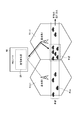
- FIG. 2 is a diagram illustrating an example of a vehicle group determined by the communication control device.
- the communication control unit 20 arranged in the MEC node 10 functions as a communication control device.
- the determination of the vehicle group by the communication control unit 20 is performed based on cell transition information indicating transition between cells for each vehicle, which can be acquired in the MEC node 10.
- a vehicle group including vehicles that have transitioned from the cell 1 to the cell 2 and determined based on the transition timing of each vehicle from the cell 1 to the cell 2 is illustrated.
- the communication control unit 20 uploads only a part of vehicles in the vehicle group with respect to specific types of data that are similar among the vehicles among the data generated by the vehicles in the determined vehicle group. Transmission control for performing (transmission) is performed.
- This specific type of data is route-dependent data that does not depend on the vehicle, such as data acquired by a drive recorder and LIDAR (Light Detection and Ranging) data, and depends on the moving route of the vehicle. Regarding such route-dependent data, even if the vehicles generating the data are different, similar data is generated by each vehicle when those vehicles pass the same route in the same time zone. It can be said that the vehicle group determined by the communication control unit 20 is generally composed of vehicles passing the same route in the same time zone.
- the communication control part 20 restrict
- FIG. 3 is a block diagram illustrating a hardware configuration example of the MEC node 10 according to the present embodiment.
- the MEC node 10 includes a CPU 31, a ROM 32, a RAM 33, an external storage device 34 (HDD or the like), and a communication device 35 (communication interface).
- a program that realizes each function of the MEC node 10 stored in any of the ROM 32, the RAM 33, and the external storage device 34 is executed by the CPU 31.
- the CPU 31 may be replaced by one or more processors configured by an ASIC (Application Specific Integrated Circuit), an FPGA (Field Programmable Gate Array), a DSP (Digital Signal Processor), or the like.
- the communication device 35 communicates with each base station connected to the MEC node 10 (communication with a vehicle via each base station) and a node connected to the upper network 11 (for example, data Communicate with the center 12).
- the MEC node 10 may include a plurality of communication devices 35 having different connection destinations.
- FIG. 4 is a diagram illustrating a configuration example of the MEC node 10 according to the present embodiment.
- Each function of the MEC node 10 is a logical function realized by, for example, the hardware of FIG. 3 and can be realized by the CPU 31 executing a program stored in the ROM 32 or the like.
- the MEC node 10 may include dedicated hardware for executing each function, or may be executed by a computer that executes a part of the hardware and operates the program. All functions may be executed by a computer and a program.
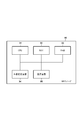
- the MEC node 10 includes an NW (network) information collection unit 40, an information acquisition unit 41, a vehicle group determination unit 42, a reference setting unit 43, and a UL (uplink) control unit 44.
- NW network
- standard setting part 43, and UL control part 44 comprise the communication control part 20 which is an example of a communication control apparatus.
- the NW information collection unit 40 uses a function such as an RNI (Radio Network Information) service established in the MEC standard specifications, and indicates communication status in each of a plurality of cells managed by the MEC node 10 Collect information (network information).
- the communication information includes cell transition information indicating transition (movement) between cells for each vehicle. Further, the communication information can further include congestion information indicating the degree of uplink congestion in each cell.
- the NW information collection unit 40 provides the collected communication information to the communication control unit 20.
- the information acquisition unit 41 of the communication control unit 20 acquires cell transition information about each vehicle moving in a plurality of cells managed by the MEC node 10 from the NW information collection unit 40.
- the information acquisition unit 41 acquires communication information including cell transition information from the NW information collection unit 40 using the MEC API.
- the acquisition of the cell transition information is not limited to a method using the MEC API.
- the vehicle group determination unit 42 includes a plurality of vehicles that are targets of uplink transmission control for route-dependent data based on the cell transition information for each vehicle acquired by the information acquisition unit 41. Determine. As will be described later, the vehicle group determination unit 42 can determine the vehicle group based on at least one of the transition timing between cells of each vehicle and the past cell transition (movement route) of each vehicle. .
- the reference setting unit 43 sets a reference value used as a vehicle group determination criterion by the vehicle group determination unit 42. This reference value is a time interval ⁇ T and a threshold interval ⁇ T th described later with reference to FIGS. 6A and 6B.
- the UL control unit 44 controls uplink transmission of data from the vehicle group determined by the vehicle group determination unit 42. Specifically, the UL control unit 44 restricts vehicles that perform uplink transmission of route-dependent data to the determined vehicle group to a part of the plurality of vehicles that belong to the vehicle group. Perform transmission control. That is, the UL control unit 44 permits the uplink transmission of route-dependent data only to some of the vehicles belonging to the determined vehicle group. The UL control unit 44 temporarily prohibits uplink transmission of route-dependent data from the remaining vehicles.
- the period during which uplink transmission is prohibited is, for example, a period during which the vehicle to be prohibited belongs to the determined vehicle group, or a period until a predetermined waiting time elapses.
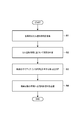
- FIG. 5 is a flowchart showing a procedure of processing executed by the communication control unit 20.
- the process of FIG. 5 is executed at an arbitrary timing, and may be executed periodically, for example, or the degree of uplink congestion in each cell managed by the MEC node 10 is increased (to a predetermined level). May be performed on the cell.
- the information acquisition unit 41 acquires communication information including cell transition information about each vehicle moving in a plurality of cells managed by the MEC node 10 from the NW information collection unit 40.
- the cell transition information includes information indicating the timing of transition between cells of each vehicle (the timing of transition from cell 1 to cell 2 in the example of FIG. 2).
- the vehicle group determination unit 42 is a vehicle group composed of a plurality of vehicles that are subject to uplink transmission control for route-dependent data based on the cell transition information acquired by the information acquisition unit 41. Determine.
- the determination of the vehicle group can be realized by any one of the following processes of the first to third examples, or a combination of one or more.
- FIG. 6A is a diagram illustrating a first example of vehicle group determination processing by the vehicle group determination unit 42.
- the vehicle group determination unit 42 is a plurality of vehicles that have transitioned from the first cell managed by the MEC node 10 to the second cell during a preset time interval ⁇ T based on the cell transition information.
- a vehicle group composed of the plurality of vehicles is determined as a vehicle group to be subjected to transmission control.
- the vehicle group determination unit 42 determines the vehicles A1 to A4 as one vehicle group (vehicle group A), and determines the vehicles B1 to B3 as another vehicle group (vehicle group B).
- the above-described time interval ⁇ T is preset by the reference setting unit 43.
- ⁇ T may be set as a fixed value.
- DELTA DELTA
- T may be suitably changed for every cell according to the congestion degree of each cell, or the number of vehicles which belong to each cell.
- the reference setting unit 43 may set ⁇ T according to the congestion level indicated by the congestion information included in the communication information acquired by the information acquisition unit 41.
- ⁇ T corresponding to the cell 2 is set according to the congestion degree of the cell 2.
- the reference setting unit 43 increases the corresponding ⁇ T as the congestion degree of the cell 2 is higher.
- the reference setting unit 43 may specify the number of vehicles belonging to each cell based on the cell transition information, and set the time interval ⁇ T according to the specified number of vehicles. In the example of FIG. 6B, the reference setting unit 43 sets ⁇ T corresponding to the cell 2 according to the number of vehicles belonging to the cell 2. In this case, for example, the reference setting unit 43 increases the corresponding ⁇ T as the number of vehicles belonging to the cell 2 increases.
- FIG. 6B is a diagram illustrating a second example of vehicle group determination processing by the vehicle group determination unit 42.
- the vehicle group determination unit 42 transits in order from the first cell managed by the MEC node 10 to the second cell (from cell 1 to cell 2 in the example of FIG. 2) based on the cell transition information.
- the time interval ⁇ t of the vehicle is specified.
- the vehicle group determination unit 42 sets a vehicle group including a plurality of continuous vehicles, which are sequentially shifted from the first cell to the second cell at time intervals within a preset threshold interval ⁇ T th , as transmission control targets. It is determined as a vehicle group to be used.
- the vehicle group determination unit 42 determines the vehicles A1 to A4 as one vehicle group (vehicle group A), and determines the vehicles after the vehicle B1 as another vehicle group.
- vehicle group A three consecutive vehicles from vehicle B1 to vehicle B3 sequentially transition from cell 1 to cell 2 at time interval ⁇ t within threshold interval ⁇ T th . Therefore, the vehicle group determination unit 42 determines the vehicles B1 to B3 as another vehicle group (vehicle group B).
- the above-described threshold interval ⁇ T th is preset by the reference setting unit 43.
- ⁇ T th may be set as a fixed value.
- ⁇ T th may be appropriately changed for each cell according to the degree of congestion of each cell or the number of vehicles belonging to each cell, similarly to ⁇ T of the first example.
- the reference setting unit 43 may increase the corresponding ⁇ T th as the congestion degree of the cell 2 is higher.
- the reference setting unit 43 may increase the corresponding ⁇ T th as the number of vehicles belonging to the cell 2 increases.
- the vehicle group determination unit 42 determines a predetermined number of vehicles from the first cell managed by the MEC node 10 to the second cell based on the cell transition information. A plurality of vehicles that have transitioned through the same cell are identified. Furthermore, the vehicle group determination unit 42 determines a vehicle group including a plurality of specified vehicles as a vehicle group to be subjected to transmission control. Thus, in this example, the vehicle group determination unit 42 extracts a plurality of vehicles having the same past cell transition as a vehicle group.
- the UL control unit 44 determines a vehicle that permits uplink transmission of route-dependent data among the vehicle group determined by the vehicle group determination unit 42. Specifically, the UL control unit 44 sets in advance the order of the timing of transition to the second cell for the vehicle group including the vehicles that have transitioned from the first cell to the second cell managed by the MEC node 10. Only uplink transmission of route-dependent data is permitted to the specified number of vehicles. That is, the UL control unit 44 permits uplink transmission to a set number of vehicles in order from the top among a plurality of vehicles belonging to the determined vehicle group. Information indicating the order of transition of the vehicle to the second cell can be provided from the vehicle group determination unit 42 to the UL control unit 44.
- the reference setting unit 43 indicates to the UL control unit 44 the number of vehicles permitted for uplink transmission according to the congestion degree of the second cell indicated by the congestion information included in the communication information acquired by the information acquiring unit 41. You may set it. Alternatively, the reference setting unit 43 specifies the number of vehicles belonging to the second cell, and sets the number of vehicles permitted for uplink transmission to the UL control unit 44 according to the specified number of vehicles. Also good.
- the UL control unit 44 determines the route-dependent data of the plurality of vehicles belonging to the vehicle group determined by the vehicle group determination unit 42, except for some of the vehicles permitted in S3.
- a transmission control signal for prohibiting uplink transmission is transmitted via the base station.
- the vehicles that perform uplink transmission of route-dependent data are limited to some of the plurality of vehicles that belong to the vehicle group.
- the UL control unit 44 prohibits uplink transmission of route-dependent data while belonging to the vehicle group determined by the vehicle group determination unit 42 for a vehicle subject to restriction on uplink transmission. .
- the UL control unit 44 may prohibit uplink transmission of route-dependent data until a predetermined waiting time elapses from the determination by the vehicle group determination unit 42.
- the UL control unit 44 sets the effective range of the vehicle group determined by the vehicle group determination unit 42 (that is, the cell range in which uplink transmission is controlled for the vehicle group) as the determination target of the vehicle group. It may be limited to a single cell (cell 2 in the examples of FIGS. 2, 6A and 6B). Alternatively, the UL control unit 44 sets the effective range of the vehicle group to a single cell that is a determination target of the vehicle group and one or more cells that are continuously adjacent to the single cell. Also good. For example, in the example shown in FIG. 7, cell 1 to cell 4 are connected along the road passing through cell 1, cell 2, cell 3, and cell 4, and cell 2 and cell 3 adjacent to cell 2 are connected to each other by car. It may be set as the effective range of the group. In one or more cells set as the effective range of the vehicle group determined by the vehicle group determination unit 42, the UL control unit 44 controls uplink transmission for the vehicle group as described above.
- the information acquisition unit 41 obtains cell transition information for each vehicle moving in a plurality of cells formed by a plurality of base stations connected to the MEC node 10 as MEC node. 10 (NW information collection unit 40 in FIG. 4).
- the vehicle group determination unit 42 determines a vehicle group including a plurality of vehicles that are targets of uplink transmission control for route-dependent data.
- the UL control unit 44 sets a vehicle that performs uplink transmission of route-dependent data to the vehicle group determined by the vehicle group determination unit 42, and is a part of the plurality of vehicles belonging to the vehicle group. Transmission control limited to
- a vehicle group is determined, and for the determined vehicle group, a vehicle that performs uplink transmission of route-dependent data is limited to a part of the vehicles, and is transmitted from the vehicle group.
- the amount of data transmitted from the vehicle group can be reduced while maintaining the information amount of the data to be transmitted. That is, uplink traffic can be reduced, and communication congestion in the wireless section can be prevented. Therefore, according to the present embodiment, it is possible to appropriately control uplink transmission of data from the vehicle using edge computing in order to prevent communication congestion in the wireless section.
- the communication control unit 20 corresponding to the communication control device is arranged in the MEC node 10, but the communication control device may be arranged outside the MEC node 10.
- the communication control apparatus can be configured to be communicably connected to the MEC node 10 and to acquire cell transition information from the MEC node 10.
- the communication control apparatus can be realized by a computer program for causing a computer to function as a communication control apparatus.
- the computer program can be distributed by being stored in a computer-readable storage medium, or can be distributed via a network.
Landscapes
- Engineering & Computer Science (AREA)
- Computer Networks & Wireless Communication (AREA)
- Signal Processing (AREA)
- Computer Security & Cryptography (AREA)
- Mobile Radio Communication Systems (AREA)
- Traffic Control Systems (AREA)
Abstract
通信制御部(通信制御装置)は、MECノードに接続された複数の基地局により形成される複数のセル内を移動する各車両についてのセル遷移情報を、MECノード(NW情報収集部)から取得する。通信制御部は、取得したセル遷移情報に基づいて、経路依存データについてのアップリンクの送信制御の対象とされる、複数の車両から成る車群を判定する。更に、通信制御部は、判定した車群に対して、経路依存データのアップリンク送信を行う車両を、当該車群に属する複数の車両のうちの一部の車両に制限する送信制御を行う。
Description
本発明は、モバイルネットワークに接続される車両からのアップリンク通信を制御するための通信制御装置、及びその制御方法、並びにプログラムに関するものである。
通信機能を有し、ICT端末として機能する自動車であるコネクティッドカー(Connected Car)の普及が進められている。コネクティッドカーは、自動車の安全性や快適性の向上のために、自動車、運転者、又は周囲の状況に関する情報をデータセンターとの間で送受信することで、データセンターによる情報の蓄積及び分析を実現する。コネクティッドカーは、多種多様な情報(例えば、車両の制御・操作データ、運転者の操作データ、ダイナミックマップデータ、ドライブレコーダーの動画データ等)をネットワークへ送信(アップロード)する。このようなコネクティッドカーのネットワークへの接続形態としては、セルラーネットワークの利用が想定される。
コネクティッドカーの普及により、各車両が生成したデータをネットワークを介してデータセンターに蓄積するためのアップリンクトラフィックの増加が想定される。例えば、コネクティッドカーの渋滞が発生してアップリンクトラフィックが局所的に増加した場合、アップリンク通信の輻輳が発生する可能性がある。この場合、コネクティッドカー向けの通信の品質(QoS)が劣化する可能性がある。
このようにデータセンターへ向かうアップリンクトラフィックを制御するために、ETSI(European Telecommunications Standards Institute)で標準化されたMEC(Multi-access Edge Computing)(例えば、非特許文献1)の利用が検討されている。MECを利用して、各車両から送信されたデータに対して圧縮等の処理を行うことで、上位のネットワークへ向かうトラフィックの低減が期待されている。
ETSI GS MEC 002 V1.1.1 (2016-03): Mobile Edge Computing (MEC); Technical Requirements、[online]、[2018年2月19日検索]、インターネット<URL: http://www.etsi.org/deliver/etsi_gs/MEC/001_099/002/01.01.01_60/gs_MEC002v010101p.pdf>、第29頁
しかし、セルラーネットワーク等の通信ネットワークでは、一般に、移動局と基地局との間の無線区間において、アップリンクよりもダウンリンクに多くの無線リソースが割り当てられる。このような通信ネットワークでは、コネクティッドカーの増加により、無線区間においてアップリンク通信の輻輳が発生しやすくなりうる。このため、無線区間よりも上位の区間におけるトラフィックを低減するだけでは十分ではなく、無線区間における通信の輻輳を防止することも求められる。
本発明は、上述の課題に鑑みてなされたものである。本発明は、無線区間における通信の輻輳を防止するために、エッジコンピューティングを利用して車両からのデータのアップリンク送信を適切に制御する技術を提供することを目的としている。
本発明の一態様の係る通信制御装置は、複数の基地局と、前記複数の基地局と接続された、エッジコンピューティングのためのノード装置とを含むネットワークに配置される通信制御装置であって、前記複数の基地局により形成される複数のセル内を移動する各車両についてのセル間の遷移を示すセル遷移情報を、前記ノード装置から取得する取得手段と、前記取得手段により取得された前記セル遷移情報に基づいて、送信制御の対象とされる、複数の車両から成る車群を判定する判定手段と、前記判定手段により判定された前記車群からのデータのアップリンク送信を制御する制御手段であって、車両の移動経路に依存する経路依存データのアップリンク送信を行う車両を、前記車群に属する複数の車両のうちの一部の車両に制限する、前記制御手段と、を備えることを特徴とする。
本発明によれば、無線区間における通信の輻輳を防止するために、エッジコンピューティングを利用して車両からのデータのアップリンク送信を適切に制御することが可能になる。
本発明のその他の特徴及び利点は、添付図面を参照とした以下の説明により明らかになるであろう。なお、添付図面においては、同じ又は同様の構成には、同じ参照番号を付す。
添付図面は明細書に含まれ、その一部を構成し、本発明の実施の形態を示し、その記述と共に本発明の原理を説明するために用いられる。
以下、本発明の例示的な実施形態について図面を参照して説明する。なお、以下の各図においては、実施形態の説明に必要ではない構成要素については図から省略する。
<ネットワーク構成>
図1は、本発明の実施形態に係る、MECノードを含む通信ネットワークの構成例を示す図である。本実施形態のMECノード10(MECノード10a,10bのそれぞれ)は、エッジコンピューティング(MEC)のためのノード装置である。MECノード10には、本発明の通信制御装置の一例として機能する通信制御部(図2の通信制御部20)が設けられている。
図1は、本発明の実施形態に係る、MECノードを含む通信ネットワークの構成例を示す図である。本実施形態のMECノード10(MECノード10a,10bのそれぞれ)は、エッジコンピューティング(MEC)のためのノード装置である。MECノード10には、本発明の通信制御装置の一例として機能する通信制御部(図2の通信制御部20)が設けられている。
図1に示すように、MECノード10は、複数の基地局と上位ネットワーク11との間に接続される。MECノード10は、接続されている複数の基地局を管理しており、当該複数の基地局によりそれぞれ形成される複数のセルを管理している。例えば、MECノード10aは、セル1及び2を管理している。MECノード10は、接続されている複数の基地局によって形成される複数のセル内を移動(走行)する車両等の無線端末に対してサービス(例えば、車両の自動走行支援サービス)を提供する。
通信ネットワークへの接続機能を有する車両(コネクティッドカー)は、基地局のセル内を走行中に、当該セルを形成する基地局に無線接続できる。基地局に無線接続した車両は、当該基地局を介してMECノード10及び上位ネットワーク11にアクセスできるとともに、上位ネットワーク11を介してデータセンター12にアクセスできる。これにより、各車両は、生成したデータ(例えば、車両の制御・操作データ、運転者の操作データ、ダイナミックマップデータ、ドライブレコーダーの動画データ等)を、接続中の基地局を介してデータセンター12へ送信(アップロード)することが可能である。
図1の構成例では、2つのMECノード10a,10bのみが存在しているが、任意の数のMECノードを通信ネットワーク内に配置可能である。また、通信ネットワークとしてLTE(Long Term Evolution)/LTE-Advancedネットワークを想定した場合、各基地局はeNodeBであり、上位ネットワーク11にはコアネットワークであるEPC(Evolved Packet Core)が含まれる。上位ネットワーク11には、更に、コアネットワークより上位の外部ネットワーク(例えば、パケットデータネットワーク(PDN)又はインターネット)が含まれうる。
なお、本発明が適用される通信ネットワークは、LTE/LTE-Advancedネットワーク以外のモバイルネットワークであってもよい。例えば、通信ネットワークは、第3世代パートナーシッププロジェクト(3GPP)で規格化が進められている第5世代(5G)のモバイルネットワークであってもよい。
<通信制御装置による処理の概要>
コネクティッドカーが接続されるモバイルネットワーク等の通信ネットワークでは、上述のように、コネクティッドカーの増加に伴うアップリンクトラフィックの増加に起因して、無線区間においてアップリンク通信の輻輳が発生する可能性がある。例えば、基地局の1つのセル内で渋滞が発生した場合に、当該基地局を介して多数の車両が同時にデータセンター12へデータをアップロードしようとすると、アップリンク通信の輻輳が発生する可能性がある。これは、コネクティッドカー向けの通信のQoSの劣化につながる。
コネクティッドカーが接続されるモバイルネットワーク等の通信ネットワークでは、上述のように、コネクティッドカーの増加に伴うアップリンクトラフィックの増加に起因して、無線区間においてアップリンク通信の輻輳が発生する可能性がある。例えば、基地局の1つのセル内で渋滞が発生した場合に、当該基地局を介して多数の車両が同時にデータセンター12へデータをアップロードしようとすると、アップリンク通信の輻輳が発生する可能性がある。これは、コネクティッドカー向けの通信のQoSの劣化につながる。
そこで、上述のようなアップリンク通信の輻輳を防止するために、本実施形態に係る通信制御装置は、MECノード10が管理している複数のセル内において、相互に比較的近い位置を移動(走行)している一群の複数の車両である車群を判定する。図2は、通信制御装置により判定される車群の例を示す図である。本実施形態では、図2に示すようにMECノード10内に配置された通信制御部20が通信制御装置として機能する。通信制御部20による車群の判定は、MECノード10において取得できる、各車両についてのセル間の遷移を示すセル遷移情報に基づいて行われる。図2の例では、セル1からセル2への各車両の遷移のタイミングに基づいて判定される、セル1からセル2に遷移した車両から成る車群を示している。
更に、通信制御部20は、判定した車群の各車両により生成されるデータのうち、車両間で類似したものとなる特定タイプのデータについて、当該車群の中の一部の車両にのみアップロード(送信)を行わせる送信制御を行う。この特定タイプのデータは、例えば、ドライブレコーダーにより取得されるデータやLIDAR(Light Detection and Ranging)データといった、車両への依存性がなく、車両の移動経路に依存する経路依存データである。このような経路依存データについては、データを生成する車両が異っても、それらの車両が同じ時間帯に同じ経路を通った場合には同じようなデータが各車両によって生成される。通信制御部20によって判定される車群は、概ね、同じ時間帯に同じ経路を通る車両で構成されるものと言える。このため、通信制御部20は、判定した車群の中で、このような経路依存データをアップロード(送信)する車両を一部の車両に制限する。これにより、当該車群から送信されるデータの情報量を保ちつつ、当該車群からの送信データ量を低減(即ち、全体のアップリンクトラフィックを低減)することが可能になる。
以下では、このような処理を実現するための、MECノード10の通信制御部20の構成例、及び具体的な処理手順の例について説明する。
<MECノードの構成>
図3は、本実施形態に係るMECノード10のハードウェア構成例を示すブロック図である。MECノード10は、CPU31、ROM32、RAM33、外部記憶装置34(HDD等)、及び通信装置35(通信インタフェース)を有する。
図3は、本実施形態に係るMECノード10のハードウェア構成例を示すブロック図である。MECノード10は、CPU31、ROM32、RAM33、外部記憶装置34(HDD等)、及び通信装置35(通信インタフェース)を有する。
MECノード10では、例えばROM32、RAM33及び外部記憶装置34のいずれかに格納された、MECノード10の各機能を実現するプログラムがCPU31によって実行される。なお、CPU31は、ASIC(特定用途向け集積回路)、FPGA(フィールドプログラマブルゲートアレイ)、DSP(デジタルシグナルプロセッサ)等で構成された1つ以上のプロセッサによって置き換えられてもよい。
通信装置35は、CPU31による制御下で、MECノード10に接続された各基地局との通信(各基地局を介した車両との通信)、及び上位ネットワーク11に接続されたノード(例えば、データセンター12)との通信を行う。MECノード10は、それぞれ接続先が異なる複数の通信装置35を有していてもよい。
図4は、本実施形態に係るMECノード10の構成例を示す図である。MECノード10の各機能は、例えば図3のハードウェアによって実現される論理的な機能であり、CPU31がROM32等に格納されたプログラムを実行することによって実現されうる。なお、MECノード10は、各機能を実行する専用のハードウェアを備えてもよいし、一部をハードウェアで実行し、プログラムを動作させるコンピュータでその他の部分を実行してもよい。また、全機能がコンピュータとプログラムにより実行されてもよい。
本実施形態では、MECノード10は、NW(ネットワーク)情報収集部40、情報取得部41、車群判定部42、基準設定部43、及びUL(アップリンク)制御部44を有する。本実施形態において、情報取得部41、車群判定部42、基準設定部43、及びUL制御部44は、通信制御装置の一例である通信制御部20を構成する。
NW情報収集部40は、MECの標準仕様において策定されているRNI(Radio Network Information)サービス等の機能を利用して、MECノード10が管理している複数のセルのそれぞれにおける通信状況を示す通信情報(ネットワーク情報)を収集する。通信情報には、各車両についてのセル間の遷移(移動)を示すセル遷移情報が含まれる。また、通信情報には、更に、各セルにおけるアップリンクの輻輳度を示す輻輳情報が含まれうる。NW情報収集部40は、収集した通信情報を通信制御部20に対して提供する。
通信制御部20の情報取得部41は、MECノード10が管理している複数のセル内を移動する各車両についてのセル遷移情報を、NW情報収集部40から取得する。本実施形態では、情報取得部41は、MECのAPIを利用して、セル遷移情報を含む通信情報をNW情報収集部40から取得する。なお、セル遷移情報の取得は、MECのAPIを利用した方法に限定されない。
車群判定部42は、情報取得部41により取得された、各車両についてのセル遷移情報に基づいて、経路依存データについてのアップリンクの送信制御の対象とされる、複数の車両から成る車群を判定する。後述するように、車群判定部42は、各車両のセル間の遷移のタイミングと、各車両の過去のセル遷移(移動経路)との少なくともいずれかに基づいて、車群の判定を行いうる。基準設定部43は、車群判定部42による車群の判定の基準として用いられる基準値を設定する。この基準値は、図6A及び図6Bを用いて後述する時間間隔ΔT及び閾値間隔ΔTthである。
UL制御部44は、車群判定部42により判定された車群からのデータのアップリンク送信を制御する。具体的には、UL制御部44は、判定された車群に対して、経路依存データのアップリンク送信を行う車両を、当該車群に属する複数の車両のうちの一部の車両に制限する送信制御を行う。即ち、UL制御部44は、判定された車群に属する一部の車両にのみ、経路依存データのアップリンク送信を許可する。UL制御部44は、残りの車両に対して、経路依存データのアップリンク送信を一時的に禁止する。アップリンク送信を禁止する期間は、例えば、禁止対象の車両が、判定された車群に属している期間、又は所定の待ち時間が経過するまでの期間である。
<通信制御装置の処理手順>
次に、図1及び図2に示されるネットワーク構成を例に、MECノード10の通信制御部20により実行される具体的な処理の手順について説明する。図5は、通信制御部20により実行される処理の手順を示すフローチャートである。図5の処理は、任意のタイミングに実行され、例えば、定期的に実行されてもよいし、又は、MECノード10が管理している各セルにおけるアップリンクの輻輳度が高まった(所定レベルに達した)場合に、当該セルに対して実行されてもよい。
次に、図1及び図2に示されるネットワーク構成を例に、MECノード10の通信制御部20により実行される具体的な処理の手順について説明する。図5は、通信制御部20により実行される処理の手順を示すフローチャートである。図5の処理は、任意のタイミングに実行され、例えば、定期的に実行されてもよいし、又は、MECノード10が管理している各セルにおけるアップリンクの輻輳度が高まった(所定レベルに達した)場合に、当該セルに対して実行されてもよい。
まずS1で、情報取得部41は、MECノード10が管理している複数のセル内を移動する各車両についてのセル遷移情報を含む通信情報を、NW情報収集部40から取得する。セル遷移情報は、各車両のセル間の遷移のタイミング(図2の例ではセル1からセル2への遷移のタイミング)を示す情報を含む。
次にS2で、車群判定部42は、情報取得部41によって取得されたセル遷移情報に基づいて、経路依存データについてのアップリンクの送信制御の対象とされる、複数の車両から成る車群を判定する。車群の判定は、以下の第1例~第3例の処理のいずれかにより、又は1つ以上を組み合わせて実現されうる。
(第1例)
図6Aは、車群判定部42による車群の判定処理の第1例を示す図である。本例において、車群判定部42は、セル遷移情報に基づいて、予め設定された時間間隔ΔTの間に、MECノード10が管理している第1セルから第2セルへ遷移した複数の車両を特定し、当該複数の車両から成る車群を、送信制御の対象とされる車群として判定する。
図6Aは、車群判定部42による車群の判定処理の第1例を示す図である。本例において、車群判定部42は、セル遷移情報に基づいて、予め設定された時間間隔ΔTの間に、MECノード10が管理している第1セルから第2セルへ遷移した複数の車両を特定し、当該複数の車両から成る車群を、送信制御の対象とされる車群として判定する。
図6Aの例では、最初の時間間隔ΔTにおいて、4台の車両A1~A4が、セル1からセル2に遷移し、次の時間間隔ΔTにおいて、3台の車両B1~B3が、セル1からセル2へ遷移している。この場合、車群判定部42は、車両A1~A4を1つの車群(車群A)として判定し、車両B1~B3を別の車群(車群B)として判定する。
上述の時間間隔ΔTは、基準設定部43によって予め設定される。ΔTは、固定値として設定されてもよい。あるいは、ΔTは、各セルの輻輳度又は各セルに属する車両の台数に応じて、セルごとに適宜変更されてもよい。
具体的には、基準設定部43は、情報取得部41によって取得された通信情報に含まれる輻輳情報が示す輻輳度に応じて、ΔTを設定してもよい。図6Aの例では、セル2の輻輳度に応じて、セル2に対応するΔTが設定される。この場合、基準設定部43は、例えば、セル2の輻輳度が高いほど、対応するΔTを大きくする。ΔTを大きくすることにより、車群判定部42より判定される(セル2内で有効となる)車群に含まれる車両の台数を多くすることができる。これは、セル2内で経路依存データのアップリンク送信を行う車両の台数を低減(即ち、車両からの送信データ量を低減)することにつながる。
また、基準設定部43は、セル遷移情報に基づいて、各セルに属する車両の台数を特定し、特定した車両の台数に応じて時間間隔ΔTを設定してもよい。図6Bの例では、基準設定部43は、セル2に属する車両の台数に応じて、セル2に対応するΔTを設定する。この場合、基準設定部43は、例えば、セル2に属する車両が多いほど、対応するΔTを大きくする。
(第2例)
図6Bは、車群判定部42による車群の判定処理の第2例を示す図である。本例において、車群判定部42は、セル遷移情報に基づいて、MECノード10が管理している第1セルから第2セルへ(図2の例ではセル1からセル2へ)順に遷移した車両の時間間隔Δtを特定する。更に、車群判定部42は、予め設定された閾値間隔ΔTth以内の時間間隔で第1セルから第2セルへ順に遷移した、連続する複数の車両から成る車群を、送信制御の対象とされる車群として判定する。
図6Bは、車群判定部42による車群の判定処理の第2例を示す図である。本例において、車群判定部42は、セル遷移情報に基づいて、MECノード10が管理している第1セルから第2セルへ(図2の例ではセル1からセル2へ)順に遷移した車両の時間間隔Δtを特定する。更に、車群判定部42は、予め設定された閾値間隔ΔTth以内の時間間隔で第1セルから第2セルへ順に遷移した、連続する複数の車両から成る車群を、送信制御の対象とされる車群として判定する。
図6Bの例では、車両A1から車両A4までの連続する4台の車両は、順に閾値間隔ΔTth以内の時間間隔Δtで、セル1からセル2へ遷移している。その後、車両A4と次の車両B1との時間間隔は、閾値間隔ΔTthを上回っている(Δt>ΔTth)。このため、車群判定部42は、車両A1~A4を1つの車群(車群A)として判定し、車両B1以降の車両については別の車群として判定する。本例では、車両B1から車両B3までの連続する3台の車両は、順に閾値間隔ΔTth以内の時間間隔Δtで、セル1からセル2へ遷移している。このため、車群判定部42は、車両B1~B3を別の車群(車群B)として判定する。
上述の閾値間隔ΔTthは、基準設定部43によって予め設定される。ΔTthは、固定値として設定されてもよい。あるいは、ΔTthは、第1例のΔTと同様、各セルの輻輳度又は各セルに属する車両の台数に応じて、セルごとに適宜変更されてもよい。例えば、基準設定部43は、セル2の輻輳度が高いほど、対応するΔTthを大きくしてもよい。また、基準設定部43は、セル2に属する車両が多いほど、対応するΔTthを大きくしてもよい。ΔTthを大きくすることにより、車群判定部42より判定される(セル2内で有効となる)車群に含まれる車両の台数を多くすることができる。これは、セル2内で経路依存データのアップリンク送信を行う車両の台数を低減(即ち、車両からの送信データ量を低減)することにつながる。
(第3例)
第3例において、車群判定部42は、セル遷移情報に基づいて、MECノード10が管理している第1セルから第2セルへ遷移した車両のうち、当該第2セルまでに所定数の同じセルを遷移してきた複数の車両を特定する。更に、車群判定部42は、特定した複数の車両から成る車群を、送信制御の対象とされる車群として判定する。このように、本例では、車群判定部42は、過去のセル遷移が同じ複数の車両を車群として抽出する。
第3例において、車群判定部42は、セル遷移情報に基づいて、MECノード10が管理している第1セルから第2セルへ遷移した車両のうち、当該第2セルまでに所定数の同じセルを遷移してきた複数の車両を特定する。更に、車群判定部42は、特定した複数の車両から成る車群を、送信制御の対象とされる車群として判定する。このように、本例では、車群判定部42は、過去のセル遷移が同じ複数の車両を車群として抽出する。
次にS3で、UL制御部44は、車群判定部42によって判定された車群の中で、経路依存データのアップリンク送信を許可する車両を決定する。具体的には、UL制御部44は、MECノード10が管理している第1セルから第2セルへ遷移した車両から成る車群について、当該第2セルへ遷移したタイミングが早い順に、予め設定された台数の車両にのみ、経路依存データのアップリンク送信を許可する。即ち、UL制御部44は、判定された車群に属する複数の車両のうちで、先頭から順に、設定された台数の車両にアップリンク送信を許可する。なお、第2セルへの車両の遷移順を示す情報は、車群判定部42からUL制御部44に提供されうる。
基準設定部43は、情報取得部41によって取得された通信情報に含まれる輻輳情報が示す、第2セルの輻輳度に応じて、アップリンク送信を許可する車両の台数を、UL制御部44に対して設定してもよい。あるいは、基準設定部43は、第2セルに属する車両の台数を特定し、特定した車両の台数に応じて、アップリンク送信を許可する車両の台数を、UL制御部44に対して設定してもよい。
最後にS4で、UL制御部44は、車群判定部42によって判定された車群に属する複数の車両のうち、S3で許可された一部の車両以外の車両に対して、経路依存データのアップリンク送信を禁止するための送信制御信号を、基地局を介して送信する。これにより、経路依存データのアップリンク送信を行う車両が、車群に属する複数の車両のうちの一部の車両に制限される。UL制御部44は、例えば、アップリンク送信の制限の対象となる車両に対して、車群判定部42によって判定された車群に属している間の、経路依存データのアップリンク送信を禁止する。あるいは、UL制御部44は、車群判定部42による判定から所定の待ち時間が経過するまでの、経路依存データのアップリンク送信を禁止してもよい。
また、UL制御部44は、車群判定部42によって判定された車群の有効範囲(即ち、当該車群に対してアップリンク送信の制御を行うセル範囲)を、当該車群の判定対象となった単一のセル(図2、図6A及び図6Bの例ではセル2)に限定して設定してもよい。あるいは、UL制御部44は、車群の有効範囲を、車群の判定対象となった単一のセルと、当該単一のセルから連続して隣接する1つ以上のセルとに設定してもよい。例えば、図7に示す例では、セル1、セル2、セル3及びセル4を通る道路に沿って、セル1からセル4を連結し、セル2とセル2に隣接するセル3とを、車群の有効範囲として設定されてもよい。UL制御部44は、車群判定部42によって判定された車群の有効範囲として設定した1つ以上のセルにおいて、当該車群に対して、上述のようにアップリンク送信の制御を行う。
以上説明したように、本実施形態では、情報取得部41は、MECノード10に接続された複数の基地局により形成される複数のセル内を移動する各車両についてのセル遷移情報を、MECノード10(図4のNW情報収集部40)から取得する。車群判定部42は、情報取得部41により取得されたセル遷移情報に基づいて、経路依存データについてのアップリンクの送信制御の対象とされる、複数の車両から成る車群を判定する。更に、UL制御部44は、車群判定部42により判定された車群に対して、経路依存データのアップリンク送信を行う車両を、当該車群に属する複数の車両のうちの一部の車両に制限する送信制御を行う。
このように、本実施形態によれば、車群を判定し、判定した車群について、経路依存データのアップリンク送信を行う車両を一部の車両に制限することで、当該車群から送信されるデータの情報量を保ちつつ、当該車群からの送信データ量を低減できる。即ち、アップリンクトラフィックを低減することができ、無線区間における通信の輻輳を防止することが可能になる。したがって、本実施形態によれば、無線区間における通信の輻輳を防止するために、エッジコンピューティングを利用して車両からのデータのアップリンク送信を適切に制御することが可能になる。
なお、上述の実施形態では、通信制御装置に相当する通信制御部20はMECノード10内に配置されているが、通信制御装置は、MECノード10の外部に配置されてもよい。その場合、通信制御装置は、MECノード10と通信可能に接続され、MECノード10からセル遷移情報を取得するように構成されうる。
なお、本実施形態に係る通信制御装置は、コンピュータを通信制御装置として機能させるためのコンピュータプログラムにより実現することができる。当該コンピュータプログラムは、コンピュータが読み取り可能な記憶媒体に記憶されて配布が可能なもの、又は、ネットワーク経由で配布が可能なものである。
本発明は、上記実施の形態に制限されるものではなく、本発明の精神及び範囲から離脱することなく、様々な変更及び変形が可能である。したがって、本発明の範囲を公にするために、以下の請求項を添付する。
Claims (22)
- 複数の基地局と、前記複数の基地局と接続された、エッジコンピューティングのためのノード装置とを含むネットワークに配置される通信制御装置であって、
前記複数の基地局により形成される複数のセル内を移動する各車両についてのセル間の遷移を示すセル遷移情報を、前記ノード装置から取得する取得手段と、
前記取得手段により取得された前記セル遷移情報に基づいて、送信制御の対象とされる、複数の車両から成る車群を判定する判定手段と、
前記判定手段により判定された前記車群からのデータのアップリンク送信を制御する制御手段であって、車両の移動経路に依存する経路依存データのアップリンク送信を行う車両を、前記車群に属する複数の車両のうちの一部の車両に制限する、前記制御手段と、
を備えることを特徴とする通信制御装置。 - 前記判定手段は、前記セル遷移情報に基づいて、予め設定された時間間隔の間に、前記複数のセルのうちの第1セルから第2セルへ遷移した複数の車両を特定し、当該特定した複数の車両から成る車群を、前記送信制御の対象とされる車群として判定することを特徴とする請求項1に記載の通信制御装置。
- 前記取得手段は、更に、前記複数のセルのそれぞれにおけるアップリンクの輻輳度を示す輻輳情報を、前記ノード装置から取得し、
前記通信制御装置は、前記取得手段により取得された前記輻輳情報が示す輻輳度に応じて前記時間間隔を設定する第1設定手段を更に備える
ことを特徴とする請求項2に記載の通信制御装置。 - 前記第1設定手段は、前記輻輳度が高いほど、前記時間間隔を大きくすることを特徴とする請求項3に記載の通信制御装置。
- 前記取得手段により取得された前記セル遷移情報に基づいて、前記第2セルに属する車両の台数を特定し、当該特定した台数に応じて前記時間間隔を設定する第1設定手段を更に備えることを特徴とする請求項2に記載の通信制御装置。
- 前記第1設定手段は、前記第2セルに属する車両が多いほど、前記時間間隔を大きくすることを特徴とする請求項5に記載の通信制御装置。
- 前記判定手段は、前記セル遷移情報に基づいて、前記複数のセルのうちの第1セルから第2セルへ順に遷移した車両の時間間隔を特定し、予め設定された閾値間隔以内の時間間隔で前記第1セルから前記第2セルへ順に遷移した、連続する複数の車両から成る車群を、前記送信制御の対象とされる車群として判定することを特徴とする請求項1から6のいずれか1項に記載の通信制御装置。
- 前記取得手段は、更に、前記複数のセルのそれぞれにおけるアップリンクの輻輳度を示す輻輳情報を、前記ノード装置から取得し、
前記通信制御装置は、前記取得手段により取得された前記輻輳情報が示す輻輳度に応じて前記閾値間隔を設定する第2設定手段を更に備える
ことを特徴とする請求項7に記載の通信制御装置。 - 前記第2設定手段は、前記輻輳度が高いほど、前記閾値間隔を大きくすることを特徴とする請求項8に記載の通信制御装置。
- 前記取得手段により取得された前記セル遷移情報に基づいて、前記第2セルに属する車両の台数を特定し、当該特定した台数に応じて前記閾値間隔を設定する第2設定手段を更に備えることを特徴とする請求項7に記載の通信制御装置。
- 前記第2設定手段は、前記第2セルに属する車両が多いほど、前記閾値間隔を大きくすることを特徴とする請求項10に記載の通信制御装置。
- 前記判定手段は、前記セル遷移情報に基づいて、前記複数のセルのうちの第1セルから第2セルへ遷移した車両のうち、前記第2セルまでに所定数の同じセルを遷移してきた複数の車両を特定し、当該複数の車両から成る車群を、前記送信制御の対象とされる車群として判定することを特徴とする請求項1から11のいずれか1項に記載の通信制御装置。
- 前記制御手段は、前記判定手段により判定された前記車群に対して、前記第2セルにおけるアップリンク送信の制御を行うことを特徴とする請求項2から12のいずれか1項に記載の通信制御装置。
- 前記制御手段は、前記判定手段により判定された前記車群に対して、前記第2セルと、前記第2セルから連続して隣接する1つ以上のセルとにおける、アップリンク送信の制御を行うことを特徴とする請求項2から12のいずれか1項に記載の通信制御装置。
- 前記制御手段は、前記複数のセルのうち第1セルから第2セルへ遷移した車両から成る前記車群について、前記第2セルへ遷移したタイミングが早い順に、予め設定された台数の車両にのみ、前記経路依存データのアップリンク送信を許可することを特徴とする請求項1から14のいずれか1項に記載の通信制御装置。
- 前記取得手段は、更に、前記複数のセルのそれぞれにおけるアップリンクの輻輳度を示す輻輳情報を、前記ノード装置から取得し、
前記通信制御装置は、前記取得手段により取得された前記輻輳情報が示す輻輳度に応じて、前記経路依存データのアップリンク送信を許可する車両の台数を設定する第3設定手段を更に備える
ことを特徴とする請求項15に記載の通信制御装置。 - 前記取得手段により取得された前記セル遷移情報に基づいて、前記第2セルに属する車両の台数を特定し、当該特定した台数に応じて、前記経路依存データのアップリンク送信を許可する車両の台数を設定する第3設定手段を更に備えることを特徴とする請求項15に記載の通信制御装置。
- 前記制御手段は、前記車群に属する、前記一部の車両以外の車両に対して、前記判定手段により判定された前記車群に属している間の、前記経路依存データのアップリンク送信を禁止することを特徴とする請求項1から17のいずれか1項に記載の通信制御装置。
- 前記制御手段は、前記車群に属する、前記一部の車両以外の車両に対して、所定の時間が経過するまでの、前記経路依存データのアップリンク送信を禁止することを特徴とする請求項1から17のいずれか1項に記載の通信制御装置。
- 前記通信制御装置は、前記ノード装置内に配置されているか、又は前記ノード装置に接続されていることを特徴とする請求項1から19のいずれか1項に記載の通信制御装置。
- 複数の基地局と、前記複数の基地局と接続された、エッジコンピューティングのためのノード装置とを含むネットワークに配置される通信制御装置の制御方法であって、
前記複数の基地局により形成される複数のセル内を移動する各車両についてのセル間の遷移を示すセル遷移情報を、前記ノード装置から取得する取得工程と、
前記取得工程で取得された前記セル遷移情報に基づいて、送信制御の対象とされる、複数の車両から成る車群を判定する判定工程と、
前記判定工程で判定された前記車群からのデータのアップリンク送信を制御する制御工程であって、車両の移動経路に依存する経路依存データのアップリンク送信を行う車両を、前記車群に属する複数の車両のうちの一部の車両に制限する、前記制御工程と、
を含むことを特徴とする通信制御装置の制御方法。 - 請求項21に記載の通信制御装置の制御方法の各工程をコンピュータに実行させるためのプログラム。
Priority Applications (3)
| Application Number | Priority Date | Filing Date | Title |
|---|---|---|---|
| CN201880089428.4A CN111727631B (zh) | 2018-02-22 | 2018-09-05 | 通信控制设备及其控制方法以及计算机可读存储介质 |
| EP18906801.8A EP3758416B1 (en) | 2018-02-22 | 2018-09-05 | Communication control device, control method therefor, and program |
| US16/923,736 US11330497B2 (en) | 2018-02-22 | 2020-07-08 | Communication control apparatus, control method thereof, and storage medium |
Applications Claiming Priority (2)
| Application Number | Priority Date | Filing Date | Title |
|---|---|---|---|
| JP2018-029802 | 2018-02-22 | ||
| JP2018029802A JP6846370B2 (ja) | 2018-02-22 | 2018-02-22 | 通信制御装置及びその制御方法、並びにプログラム |
Related Child Applications (1)
| Application Number | Title | Priority Date | Filing Date |
|---|---|---|---|
| US16/923,736 Continuation US11330497B2 (en) | 2018-02-22 | 2020-07-08 | Communication control apparatus, control method thereof, and storage medium |
Publications (1)
| Publication Number | Publication Date |
|---|---|
| WO2019163168A1 true WO2019163168A1 (ja) | 2019-08-29 |
Family
ID=67687546
Family Applications (1)
| Application Number | Title | Priority Date | Filing Date |
|---|---|---|---|
| PCT/JP2018/032844 Ceased WO2019163168A1 (ja) | 2018-02-22 | 2018-09-05 | 通信制御装置及びその制御方法、並びにプログラム |
Country Status (5)
| Country | Link |
|---|---|
| US (1) | US11330497B2 (ja) |
| EP (1) | EP3758416B1 (ja) |
| JP (1) | JP6846370B2 (ja) |
| CN (1) | CN111727631B (ja) |
| WO (1) | WO2019163168A1 (ja) |
Cited By (1)
| Publication number | Priority date | Publication date | Assignee | Title |
|---|---|---|---|---|
| US11330497B2 (en) | 2018-02-22 | 2022-05-10 | Kddi Corporation | Communication control apparatus, control method thereof, and storage medium |
Families Citing this family (8)
| Publication number | Priority date | Publication date | Assignee | Title |
|---|---|---|---|---|
| JP6858154B2 (ja) * | 2018-03-30 | 2021-04-14 | Kddi株式会社 | ノード装置及びその制御方法、並びにプログラム |
| JP7137208B2 (ja) * | 2018-11-13 | 2022-09-14 | 株式会社国際電気通信基礎技術研究所 | 通信方法、プログラム、通信端末、および、mecサーバ |
| JP7252320B2 (ja) | 2019-03-29 | 2023-04-04 | 本田技研工業株式会社 | 制御装置、制御方法及びプログラム |
| JP7219699B2 (ja) * | 2019-12-17 | 2023-02-08 | 本田技研工業株式会社 | 車両及び車両システム |
| US11386776B2 (en) * | 2020-10-05 | 2022-07-12 | Qualcomm Incorporated | Managing a driving condition anomaly |
| CN112991795B (zh) * | 2021-02-04 | 2022-07-26 | 华南理工大学 | 一种适用于无人驾驶车辆的地下智慧公路系统及调度方法 |
| JP7250070B2 (ja) * | 2021-06-18 | 2023-03-31 | 本田技研工業株式会社 | 警告制御装置、移動体、警告制御方法、及びプログラム |
| JP2025042799A (ja) * | 2023-09-15 | 2025-03-28 | トヨタ自動車株式会社 | 通信制御装置、通信制御方法、及びue |
Citations (3)
| Publication number | Priority date | Publication date | Assignee | Title |
|---|---|---|---|---|
| JP2002198886A (ja) * | 2000-12-22 | 2002-07-12 | Nippon Telegr & Teleph Corp <Ntt> | ネットワーク主導車群形成通信システム |
| JP2008027011A (ja) * | 2006-07-19 | 2008-02-07 | Nec Corp | プローブ情報収集システムおよびその収集装置ならびに収集方法およびプログラム |
| JP2010507971A (ja) * | 2006-10-23 | 2010-03-11 | テルコーディア テクノロジーズ インコーポレイテッド | ネットワークグループとしてローカルピアグループを使用する路側ネットワーク装置 |
Family Cites Families (13)
| Publication number | Priority date | Publication date | Assignee | Title |
|---|---|---|---|---|
| JP4642582B2 (ja) * | 2005-07-27 | 2011-03-02 | 富士通株式会社 | 移動通信システムおよび無線基地局、移動局 |
| FR2912587A1 (fr) * | 2007-02-09 | 2008-08-15 | France Telecom | Procede d'estimation et de signalisation de la densite de noeuds mobiles dans un reseau routier. |
| WO2009107297A1 (ja) * | 2008-02-25 | 2009-09-03 | 三菱電機株式会社 | 車載通信装置 |
| US8107440B2 (en) * | 2009-08-24 | 2012-01-31 | Telefonaktiebolaget Lm Ericsson (Publ) | Transport network congestion control for enhanced uplink communications |
| CN106028270B (zh) * | 2010-02-12 | 2020-08-04 | 交互数字专利控股公司 | 从wtru执行随机接入信道传输的方法、wtru、以及节点b |
| US10123268B2 (en) * | 2010-06-04 | 2018-11-06 | Board Of Regents, The University Of Texas System | Wireless communication methods, systems, and computer program products |
| US10292130B2 (en) * | 2014-12-30 | 2019-05-14 | Lg Electronics Inc. | Method and apparatus for configuring bi-directional channel in wireless communication system |
| EP3262819B1 (en) * | 2015-02-26 | 2021-06-16 | Nokia Solutions and Networks Oy | Coordinated techniques to improve application, network and device resource utilization of a data stream |
| WO2017052690A1 (en) * | 2015-09-24 | 2017-03-30 | Intel Corporation | Congestion control for vehicular-to-anything services |
| CN107040959B (zh) * | 2016-02-04 | 2020-06-02 | 中兴通讯股份有限公司 | 车联网业务拥塞控制的方法及装置 |
| WO2018031070A1 (en) * | 2016-08-12 | 2018-02-15 | Intel IP Corporation | Systems, methods and devices for mobile edge computing - radio access node control plane interface |
| CN106961473B (zh) * | 2017-03-03 | 2020-07-07 | 上海枫昱能源科技有限公司 | 动态平衡智慧城市网络带宽的高效数据传输方法及系统 |
| JP6846370B2 (ja) | 2018-02-22 | 2021-03-24 | Kddi株式会社 | 通信制御装置及びその制御方法、並びにプログラム |
-
2018
- 2018-02-22 JP JP2018029802A patent/JP6846370B2/ja active Active
- 2018-09-05 WO PCT/JP2018/032844 patent/WO2019163168A1/ja not_active Ceased
- 2018-09-05 EP EP18906801.8A patent/EP3758416B1/en active Active
- 2018-09-05 CN CN201880089428.4A patent/CN111727631B/zh not_active Expired - Fee Related
-
2020
- 2020-07-08 US US16/923,736 patent/US11330497B2/en active Active
Patent Citations (3)
| Publication number | Priority date | Publication date | Assignee | Title |
|---|---|---|---|---|
| JP2002198886A (ja) * | 2000-12-22 | 2002-07-12 | Nippon Telegr & Teleph Corp <Ntt> | ネットワーク主導車群形成通信システム |
| JP2008027011A (ja) * | 2006-07-19 | 2008-02-07 | Nec Corp | プローブ情報収集システムおよびその収集装置ならびに収集方法およびプログラム |
| JP2010507971A (ja) * | 2006-10-23 | 2010-03-11 | テルコーディア テクノロジーズ インコーポレイテッド | ネットワークグループとしてローカルピアグループを使用する路側ネットワーク装置 |
Non-Patent Citations (2)
| Title |
|---|
| "Mobile Edge Computing (MEC); Technical Requirements", ETSI GS MEC 002 VI. 1.1, March 2016 (2016-03-01), pages 29, Retrieved from the Internet <URL:http://www.etsi.org/deliver/etsi_gs/MEC/001_099/002/01.01.01_60/gs_MEC002v010101p.pdf> |
| See also references of EP3758416A4 |
Cited By (1)
| Publication number | Priority date | Publication date | Assignee | Title |
|---|---|---|---|---|
| US11330497B2 (en) | 2018-02-22 | 2022-05-10 | Kddi Corporation | Communication control apparatus, control method thereof, and storage medium |
Also Published As
| Publication number | Publication date |
|---|---|
| EP3758416A4 (en) | 2021-04-21 |
| CN111727631B (zh) | 2023-03-24 |
| US11330497B2 (en) | 2022-05-10 |
| EP3758416A1 (en) | 2020-12-30 |
| EP3758416B1 (en) | 2022-12-21 |
| JP2019146072A (ja) | 2019-08-29 |
| JP6846370B2 (ja) | 2021-03-24 |
| CN111727631A (zh) | 2020-09-29 |
| US20200336965A1 (en) | 2020-10-22 |
Similar Documents
| Publication | Publication Date | Title |
|---|---|---|
| WO2019163168A1 (ja) | 通信制御装置及びその制御方法、並びにプログラム | |
| JP2025106259A (ja) | 優先度の高い通信およびQoSフィードバックのためのリソースの再割振りおよび予約 | |
| KR102002807B1 (ko) | V2x 통신을 지원하는 통신 시스템에서 이종 rat를 사용한 부하 분산 방법 및 장치 | |
| CN105165058B (zh) | 蜂窝网络对用于车辆到车辆通信的信道分配的控制 | |
| JP6765362B2 (ja) | サーバ装置及びその制御方法、並びにプログラム | |
| GB2574908A (en) | Network and control thereof | |
| JPWO2017179286A1 (ja) | ユーザ装置及び信号送信方法 | |
| CN107852777A (zh) | 用户装置以及d2d信号发送方法 | |
| US20190037534A1 (en) | User equipment and reception method | |
| JP2018533880A (ja) | 端末デバイス、基地局、システム、及び方法。 | |
| JP7400684B2 (ja) | 車両用無線通信装置、通信制御方法 | |
| WO2018084094A1 (ja) | ユーザ装置及び信号送信方法 | |
| JP6993432B2 (ja) | 無線通信ネットワークにおける無線デバイスの通信を可能にすること | |
| JP7632809B2 (ja) | 端末及び方法 | |
| JP7845631B2 (ja) | 端末及び通信方法 | |
| JP6951530B2 (ja) | サーバ装置及びその制御方法、並びにプログラム | |
| JP7447759B2 (ja) | 車両用無線通信装置、通信制御方法 | |
| WO2024171408A1 (ja) | 端末及び通信方法 | |
| JP7852846B2 (ja) | 端末、通信方法及び通信システム | |
| US20240349113A1 (en) | Communication control device, communication control method, and non-transitory computer readable medium storing application control program | |
| GB2574887A (en) | Network and control thereof | |
| EP4425973A1 (en) | Method and device for transmitting and receiving wireless signal in wireless communication system | |
| JP7131979B2 (ja) | 通信制御システム、情報提供サーバ及びユーザ装置 | |
| WO2023135659A1 (ja) | 端末及び通信方法 | |
| WO2025004298A1 (ja) | 端末及び通信方法 |
Legal Events
| Date | Code | Title | Description |
|---|---|---|---|
| 121 | Ep: the epo has been informed by wipo that ep was designated in this application |
Ref document number: 18906801 Country of ref document: EP Kind code of ref document: A1 |
|
| NENP | Non-entry into the national phase |
Ref country code: DE |
|
| ENP | Entry into the national phase |
Ref document number: 2018906801 Country of ref document: EP Effective date: 20200922 |