WO2019172280A1 - ポリマーの物性予測装置、記憶媒体、及びポリマーの物性予測方法 - Google Patents
ポリマーの物性予測装置、記憶媒体、及びポリマーの物性予測方法 Download PDFInfo
- Publication number
- WO2019172280A1 WO2019172280A1 PCT/JP2019/008704 JP2019008704W WO2019172280A1 WO 2019172280 A1 WO2019172280 A1 WO 2019172280A1 JP 2019008704 W JP2019008704 W JP 2019008704W WO 2019172280 A1 WO2019172280 A1 WO 2019172280A1
- Authority
- WO
- WIPO (PCT)
- Prior art keywords
- polymer
- physical property
- unit
- partial
- partial structure
- Prior art date
- Legal status (The legal status is an assumption and is not a legal conclusion. Google has not performed a legal analysis and makes no representation as to the accuracy of the status listed.)
- Ceased
Links
Images







Classifications
-
- G—PHYSICS
- G16—INFORMATION AND COMMUNICATION TECHNOLOGY [ICT] SPECIALLY ADAPTED FOR SPECIFIC APPLICATION FIELDS
- G16C—COMPUTATIONAL CHEMISTRY; CHEMOINFORMATICS; COMPUTATIONAL MATERIALS SCIENCE
- G16C20/00—Chemoinformatics, i.e. ICT specially adapted for the handling of physicochemical or structural data of chemical particles, elements, compounds or mixtures
- G16C20/30—Prediction of properties of chemical compounds, compositions or mixtures
-
- C—CHEMISTRY; METALLURGY
- C08—ORGANIC MACROMOLECULAR COMPOUNDS; THEIR PREPARATION OR CHEMICAL WORKING-UP; COMPOSITIONS BASED THEREON
- C08F—MACROMOLECULAR COMPOUNDS OBTAINED BY REACTIONS ONLY INVOLVING CARBON-TO-CARBON UNSATURATED BONDS
- C08F110/00—Homopolymers of unsaturated aliphatic hydrocarbons having only one carbon-to-carbon double bond
- C08F110/02—Ethene
-
- G—PHYSICS
- G01—MEASURING; TESTING
- G01N—INVESTIGATING OR ANALYSING MATERIALS BY DETERMINING THEIR CHEMICAL OR PHYSICAL PROPERTIES
- G01N33/00—Investigating or analysing materials by specific methods not covered by groups G01N1/00 - G01N31/00
- G01N33/44—Resins; Plastics; Rubber; Leather
- G01N33/442—Resins; Plastics
-
- G—PHYSICS
- G06—COMPUTING OR CALCULATING; COUNTING
- G06N—COMPUTING ARRANGEMENTS BASED ON SPECIFIC COMPUTATIONAL MODELS
- G06N20/00—Machine learning
- G06N20/10—Machine learning using kernel methods, e.g. support vector machines [SVM]
-
- G—PHYSICS
- G16—INFORMATION AND COMMUNICATION TECHNOLOGY [ICT] SPECIALLY ADAPTED FOR SPECIFIC APPLICATION FIELDS
- G16C—COMPUTATIONAL CHEMISTRY; CHEMOINFORMATICS; COMPUTATIONAL MATERIALS SCIENCE
- G16C20/00—Chemoinformatics, i.e. ICT specially adapted for the handling of physicochemical or structural data of chemical particles, elements, compounds or mixtures
- G16C20/70—Machine learning, data mining or chemometrics
Definitions
- the present invention relates to a polymer property prediction apparatus, a storage medium, and a polymer property prediction method.
- an object of one aspect is to accurately predict the physical properties of the polymer.
- the structural unit constituting the polymer is repeatedly read from the storage unit, the partial unit number calculating unit for calculating the number of partial structures of the polymer using the structural unit, and the number of atoms of the structural unit
- An atomic number calculation unit for calculating the partial structure number density calculation unit for calculating the number density of the partial structure from the number of the partial structures and the number of atoms of the structural unit, and physical properties of the polymer obtained from the storage unit A regression model construction unit that constructs a regression model that predicts a physical property value using the experimental value of and the number density of the partial structure, a polymer structure input unit that inputs a polymer structure for which the physical property value is to be predicted, and
- a polymer property predicting device comprising: a polymer property predicting unit that predicts the property value corresponding to the inputted polymer structure using a regression model.
- a polymer property prediction program and method can be used.
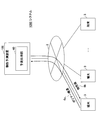
- FIG. 1 is a diagram illustrating a system configuration example according to the present embodiment.
- a system 1000 includes a physical property prediction apparatus 100 and a plurality of terminals 3, and each terminal 3 can be connected via a network 2.
- the terminal 3 is an information processing terminal used by the user, and connects to the physical property prediction apparatus 100 to use processing by the prediction processing unit 40.
- the physical property prediction apparatus 100 is an information processing apparatus having a prediction processing unit 40 that predicts physical properties of a polymer.
- the prediction processing unit 40 creates a regression model by performing machine learning using a polymer structure given in advance and data indicating the physical property.
- a physical property value is predicted for the received polymer structure 6 a using the created regression model, and the predicted physical property value 6 b is transmitted to the terminal 3.
- the configuration of the system 1000 is not limited to the example of FIG.
- the physical property prediction apparatus 100 may be used standalone. In this case, when the polymer structure 6a is input by the user's operation of the input device 14 (FIG. 2), the physical property value 6b is output to the display device 15 (FIG. 2).
- the physical property prediction apparatus 100 in the present embodiment has a hardware configuration as shown in FIG.
- FIG. 2 is a diagram illustrating a hardware configuration example of the physical property prediction apparatus.
- a physical property prediction apparatus 100 is an information processing apparatus controlled by a computer, and includes a central processing unit (CPU) 11, a main storage device 12, an auxiliary storage device 13, an input device 14, and a display device. 15, a communication I / F (interface) 17, and a drive device 18 are connected to the bus B.
- the CPU 11 corresponds to a processor that controls the physical property prediction apparatus 100 in accordance with a program stored in the main storage device 12.
- the main storage device 12 uses RAM (Random Access Memory), ROM (Read Only Memory), etc., and is obtained by a program executed by the CPU 11, data necessary for processing by the CPU 11, and processing by the CPU 11. Store or temporarily store the data.
- the auxiliary storage device 13 uses an HDD (Hard Disk Drive) or the like, and stores data such as programs for executing various processes. A part of the program stored in the auxiliary storage device 13 is loaded into the main storage device 12 and executed by the CPU 11, whereby various processes are realized.
- the main storage device 12, the auxiliary storage device 13, and the external storage device accessible by the physical property prediction device 100 are collectively referred to as a storage unit 130.
- the input device 14 includes a mouse, a keyboard, and the like, and is used for a user to input various information necessary for processing by the physical property prediction device 100.
- the display device 15 displays various information required under the control of the CPU 11.
- the input device 14 and the display device 15 may be a user interface such as an integrated touch panel.
- the communication I / F 17 performs communication through a wired or wireless network. Communication by the communication I / F 17 is not limited to wireless or wired.
- the drive device 18 interfaces the storage medium 19 (for example, CD-ROM (Compact Disc Read-Only Memory) etc.) set in the drive device 18 with the physical property prediction device 100.
- the program for realizing the processing performed by the physical property prediction apparatus 100 is provided to the physical property prediction apparatus 100 by a storage medium 19 such as a CD-ROM.
- the storage medium 19 stores a program for realizing various processes according to the present embodiment, which will be described later, and the program stored in the storage medium 19 is installed in the physical property prediction apparatus 100 via the drive device 18. .
- the installed program can be executed by the physical property prediction apparatus 100.
- the storage medium 19 for storing the program is not limited to a CD-ROM, but one or more non-transitory tangible (tangible) data having a data structure that can be read by a computer. Any medium can be used.
- a computer-readable storage medium in addition to a CD-ROM, a DVD (Digital Versatile Disk) disk, a portable recording medium such as a USB memory, or a semiconductor memory such as a flash memory may be used.
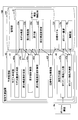
- FIG. 3 is a diagram illustrating a first functional configuration example of the physical property prediction apparatus.
- the physical property prediction apparatus 100 includes a prediction processing unit 40.
- the prediction processing unit 40 corresponds to a prediction process performed by the CPU 11 executing a corresponding program.
- the storage unit 130 stores a polymer structure / physical property DB 31, a model structure 33a, a partial structure number 33b, an atom number 33c, a partial structure number density 33d, an important partial structure 33e, a regression model 33f, a polymer structure 6a, a physical property value 6b, and the like.
- the prediction processing unit 40 obtains a regression model 33f for predicting the physical properties of the polymer structure 6a specified by the user by machine learning, predicts the physical properties of the polymer structure 6a using the obtained regression model 33f, and obtains the physical property values obtained. 6b is output.
- the prediction processing unit 40 includes a model creation unit 41 and a physical property prediction unit 45 as processing units.
- the model creation unit 41 uses the polymer structure / physical property DB 31 to learn the physical properties of the polymer structure in which the structural units are replicated and connected to determine the regression model 33f.
- a structural unit constituting a polymer by repetition is referred to as “repeating unit”.
- the polymer structure / physical property DB 31 stores, for each polymer, a repeating unit and an experimental value of physical properties obtained in advance in an experiment in association with each other.
- the model creation unit 41 includes a model structure generation unit 43a, a partial structure number calculation unit 43b, an atom number calculation unit 43c, a partial structure number density calculation unit 43d, a dimension reduction unit 43e, and a regression model construction unit 43f. It has as a processing part. Either or both of the model structure generation unit 43a and the dimension reduction unit 43e can be omitted.
- the model structure generation unit 43a acquires a repeating unit from the polymer structure / physical property DB 31, and generates a model structure 33a by repeating the process of duplicating and connecting the acquired repeating unit a predetermined number of times.
- the repeating unit includes a partial structure.
- the repeating unit may be the entire partial structure.
- a polymer is represented by connecting a plurality of repeating units.
- the generated model structure 33a is stored in the storage unit 130.
- the repeating unit and the model structure 33a may be expressed in a predetermined format.
- a description will be given of a case where the repeating unit and the model structure 33a are expressed by SMILES (Simplified Molecular Input Line Entry Syntax)), but the present invention is not limited to this notation format.
- the partial structure number calculation unit 43b calculates the partial structure number 33b based on the model structure 33a.
- the partial structure number 33 b is expressed by an n-dimensional vector and is stored in the storage unit 130.
- the atomic number calculation unit 43c calculates the atomic number 33c based on the model structure 33a.
- the obtained number of atoms 33 c is stored in the storage unit 130.
- the partial structure number density calculation unit 43d calculates the partial structure number density 33d using the partial structure number 33b and the number of atoms 33c.
- the obtained partial structure number density 33d is represented by the same n-dimensional vector as the partial structure number 33b and is stored in the storage unit 130.
- the dimension reduction unit 43e constructs a provisional regression model using the partial structure number density 33d and the experimental value, and reduces the number of dimensions of the provisional regression model based on a predetermined dimension reduction method. Get.
- the important partial structure 33e is stored in the storage unit 130.
- the important partial structure 33e is data specifying elements (for example, vectors) that will contribute to the prediction accuracy of the regression model 33f to be constructed in the partial structure number density 33d.
- the dimension reduction method is determined in advance according to the regression analysis method to be used. For example, when Lasso regression is used, the dimension can be reduced by deleting the coefficient term of 0. When random forest regression is used, the importance of explanatory variables can be calculated, and dimensions can be reduced by excluding variables whose importance is below a threshold. In the stepwise method, when constructing a provisional regression model, the explanatory variables are added or reduced one by one, thereby reducing the dimension by searching for a combination of explanatory variables with the highest prediction accuracy.
- the regression model construction unit 43f performs regression analysis based on the important partial structure 33e obtained by the dimension reduction unit 43e using the partial structure number density 33d and the experimental value, and constructs a regression model 33f.
- the regression model 33f is stored in the storage unit 130.
- the regression analysis for obtaining the provisional regression model and the regression model 33f includes lasso regression, random forest regression, stepwise method, partial linear regression, ridge regression, kernel ridge regression, support vector regression, decision tree regression, Gaussian process regression, etc. Either is applicable.
- a provisional regression model can be obtained by lasso regression
- a regression model 33f can be obtained by Gaussian process regression.
- the physical property prediction unit 45 predicts the polymer physical property based on the polymer structure 6a using the regression model 33f in accordance with the input of the polymer structure 6a designated by the user.
- a repeating unit may be specified by SMILES notation or the like.
- the physical property prediction unit 45 includes a polymer structure input unit 47a and a polymer physical property prediction unit 47b as processing units.
- the polymer structure input unit 47a inputs the polymer structure 6a designated by the user and stores it in the storage unit 130.
- the polymer structure input unit 47a may input the polymer structure 6a when the communication I / F 17 receives it via the network 2, or the user specifies the polymer structure 6a by the input device 14 or the like of the physical property prediction apparatus 100. You may input according to.
- the polymer physical property prediction unit 47b obtains the model structure, the number of partial structures, and the number of atoms from the polymer structure 6a, calculates the partial structure number density, and predicts the physical property value using the regression model 33f stored in the storage unit 130. .
- the method for obtaining the model structure, the number of partial structures, the number of atoms, and the partial structure number density based on the polymer structure 6a is the same as that of the model creation unit 41.
- the predicted physical property value 6b is output to the storage unit 130.
- the obtained physical property value 6b is transmitted to the user terminal 3 and displayed.
- the polymer structure 6 a is designated by a user operation on the physical property prediction apparatus 100, the physical property value 6 b is displayed on the display device 15 as the obtained physical property value 6 b.
- FIG. 4 is a diagram showing a data configuration example of the polymer structure / physical property DB.
- a polymer structure / physical property DB 31 is a database for managing experimental values of various physical properties such as a repeating unit and a refractive index for each polymer, and includes a polymer name, a repeating unit, a refractive index, a glass transition point, and the like. Have items.
- the polymer name indicates specific information for specifying the polymer structure. Although an example in which a repeating unit is shown in SMILES notation will be described, the notation method of a repeating unit is not limited to SMILES notation.
- a refractive index, a glass transition point, and the like are examples of various physical properties of a polymer obtained by experiments in advance, and experimental values are shown for each physical property name.
- repeating unit “* CC *” is associated with the polymer name “poly (ethylene)”, and experimental values such as a refractive index “1.472” are shown. Similarly, experimental values of physical properties are shown for other polymers.
- the work table 32 is a table in which calculated values are recorded for each polymer repeating unit for which the partial structure number density 33d is obtained, and includes items such as polymer name, repeating unit, number of atoms, and partial structure number density.
- the polymer name indicates a polymer name registered in the polymer structure / physical property DB 31.
- the number of partial structures indicates the number of partial structures 33b obtained by the partial structure number calculation unit 43b.
- the number of atoms indicates the number of atoms 33c obtained by the number of atoms calculator 43c.
- the partial structure number density indicates the partial structure number density 33d obtained by the partial structure number density calculation unit 43d.
- the partial structure number density of the work table 32 and the experimental values of the physical properties of the polymer structure / physical property DB 31 are used for machine learning by regression analysis. Therefore, the work table 32 may be associated with the polymer structure / physical property DB 31 by the polymer name.
- the data structure example of the polymer structure / physical property DB 31 and the work table 32 shown in FIG. 4 is merely an example, and is not limited to this example.
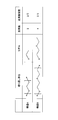
- FIG. 5 is a diagram for explaining the outline of the prediction processing in the present embodiment.
- the model structure generation unit 43a acquires a repeating unit from the polymer structure / physical property DB 31 (FIG. 5A). For example, the repeating unit “* CCO *” is obtained.
- the repeating unit “* CCO *” is obtained.
- “*” indicating the start and end indicating a certain structure is omitted.
- the model structure generation unit 43a generates the model structure 33a by using the acquired partial structure as a repeating unit and duplicating the repeating unit (FIG. 5B).
- the model structure generation unit 43a repeats the repeat unit “CCO” by repeating a predetermined number of times to the right, and stores the model structure 33a of “CCOCCOCCOCCOCCOCCOCCOCCOCCOCCO” in which a plurality of repeat units “CCO” are connected. 130.
- the partial structure number calculation unit 43b generates a partial structure number vector x 0 (partial structure number 33b) of the structural model 33a (FIG. 5C).
- Partial structure number vector x 0 is, ECFP (Extended Circular FingerPrint), Atom Pair, Topological Torsion, represented by an n-dimensional by structural descriptors such as Neural Finger Print.
- ECFP Extended Circular FingerPrint
- Atom Pair Atom Pair
- Topological Torsion represented by an n-dimensional by structural descriptors such as Neural Finger Print.
- a structure descriptor represented by the number of C atoms, the number of O atoms, the number of COC, and the like will be described.
- the present invention is not limited to this structure descriptor.
- CCOCCOCCOCCOCCOCCOCCOCCOCCOCCOCCOCCOCCOCCO an n-dimensional partial structure number vector x 0 with the number of C atoms “20”, the number of O atoms “10”,.
- the structure assigned to each vector such as “C”, “O”, and “COC” indicates the type of the partial structure of the polymer.
- n is an arbitrary natural number. Usually it is about 256 to 2048.
- the atomic number calculation unit 43c calculates the number of atoms included in the model structure 33a (FIG. 5 (d)).
- the number of atoms is “30”.
- the partial structure number density calculation unit 43d includes the partial structure number vector x 0 (partial structure number 33b) obtained by the partial structure number calculation unit 43b in FIG. 5B and the atomic number calculation unit 43c in FIG. 5C.
- the partial structure number density vector x (partial structure number density 33d) is generated by dividing by the number of atoms 33c obtained by (Fig. 5 (e)).
- 5A to 5E are repeated for each record in the polymer structure / physical property DB 31.
- the obtained partial structure number 33b, atom number 33c, and partial structure number density 33d may be stored in the work table 32 in association with the polymer name.
- the provisional regression model is constructed by the dimension reduction unit 43e, and dimension reduction is performed (FIG. 5 (f)).
- the n dimension can be reduced to the n ′ dimension (n ′ ⁇ n).
- the important partial structure 33e that contributes to the prediction accuracy is specified.
- n ′ is a natural number smaller than n and is usually about 16 to 128 in many cases.
- the regression model construction unit 43f constructs a regression model 33f used for prediction of physical property values (FIG. 5G).
- a regression model 33f reduced to several tens of dimensions is obtained.
- the regression model 33f is a formula (1) for obtaining a predicted value y of the polymer physical property by a partial structure number density vector x (partial structure number density 33d).
- y f (x) (1) It is represented by
- the number of partial structure number density vectors x is n as the number of dimensions, but after the dimension reduction, the number of partial structure number density vectors x is n ′. Since the predicted value is calculated using only the dimension contributing to the prediction accuracy by the important partial structure 33e, the physical property prediction process can be performed efficiently.
- 5A to 5E described above corresponds to the model creation process of the model creation unit 41.
- the physical property prediction process by the physical property prediction unit 45 is performed.
- the property prediction unit 45 in response to input of a polymer structure A to be determined the physical properties, generates a partial structure number density vector x A, predicting a physical property value y A (FIG. 5 (h)).
- the polymer structure input unit 47a inputs the polymer structure A, and the polymer physical property prediction unit 47b predicts the physical property value y A using the regression model 33f.
- the regression model 33f for one physical property, a predetermined physical property value is predicted.
- the regression model 33f is acquired for each of various physical properties, the user may specify the polymer structure A and all or specific physical properties.
- the polymer physical property predicting unit 47b predicts the physical property value 6b using the regression model 33f and the important partial structure 33e corresponding to each physical property.
- the calculation process of the partial structure number 33b may be performed, or may be performed in parallel.
- the “predicted value” of physical properties and the predicted “physical property value” are synonymous.
- FIG. 6 is a diagram illustrating an example of number density.
- the number of carbon atoms of polyethylene oxide will be described as an example.
- structure B has a longer representation than structure A.
- the polymers represented by each of Structure A and Structure B are exactly the same polymer.
- the carbon number of structure A is “2” and the carbon number of structure B is “4”, which is different from structure A. It will be recognized as a polymer. That is, from this example, it can be seen that when comparing polymers having different lengths of repeating units, the number of partial structures cannot adequately capture the structural characteristics of the polymer.
- the partial structure number density calculation unit 43d obtains the same partial structure number density (carbon number density) “2/3” for the structures A and B. Therefore, in the dimension reduction unit 43e and the regression model construction unit 43f, it can be recognized that the structure A and the structure B correctly represent the same polymer. Based on such an example, the inventor has found that polymers having different repeating unit lengths can be handled equivalently by using the partial structure number density 33d.
- FIG. 7 is a diagram for explaining the difference depending on the presence or absence of duplication of the repetition unit.
- polyethylene oxide is taken as an example, but the repeating unit is the same in the presence or absence of replication.
- the number density of COC is “0”.
- the repeating unit is duplicated, and the right side of the repeating unit is connected to the oxygen atom on the left side of the next repeating unit.
- the partial structure “COC” appears, and “1/6” is obtained with respect to the number density of the originally existing partial structure “COC”.
- the regression model 33f is acquired using the partial structure number density 33d obtained in this way, the prediction accuracy of the existing technology can be improved.
- the prediction processing by the prediction processing unit 40 is performed as shown in FIGS. 8A and 8B.
- 8A and 8B are flowcharts for explaining the prediction process.
- the model creation unit 41 performs model creation processing P51.
- the model structure generation unit 43a selects and reads one record from the polymer structure / physical property DB 31, and obtains a repeat unit and an experimental value (step S511). Then, the model structure generation unit 43a repeats the operation of duplicating and connecting the acquired repeating units a predetermined number of times to generate the model structure 33a (step S512).
- the partial structure number calculation unit 43b calculates the partial structure number 33b of the model structure 33a using a predetermined structure descriptor (for example, ECFP) (step S513).
- the atomic number calculation unit 43c calculates the atomic number 33c of the model structure 33a (step S514). Note that step S513 may be performed after step S514 is performed. Alternatively, steps S513 and S514 may be processed in parallel.
- the partial structure number density calculation unit 43d calculates the partial structure number density 33d by dividing the partial structure number 33b by the number of atoms 33c (step S515). As described above, the partial structure number 33b and the partial structure number density 33d are represented by n-dimensional vectors.
- the model creation unit 41 determines whether all the records in the polymer structure / physical property DB 31 have been completed (step S516). If all the records have not been completed (NO in step S516), the model creation unit 41 returns to step S511 and performs the same processing as described above.
- the dimension reduction unit 43e obtains a provisional regression model f ′ using the partial structure number density 33d corresponding to the important partial structure 33e as the variable x ′ and the experimental value y ′. Perform the first regression analysis.
- the dimension reduction unit 43e reduces the dimension of the provisional regression model f ′ by a predetermined dimension reduction method, and acquires the important partial structure 33e (step S517).
- the regression model construction unit 43f obtains the regression model f using the partial structure number density 33d corresponding to the important partial structure 33e as the variable x and the experimental value y (step S518).
- the experimental value y is a value specified by the polymer name and physical property in the polymer structure / physical property DB 31.
- the regression model f that is, the regression model 33 f is stored in the storage unit 130.
- a physical property prediction process P55 by the physical property prediction unit 45 is performed.
- the prediction processing unit 40 when the polymer structure input unit 47a receives the polymer structure 6a (step S521), the model structure, the number of partial structures, the number of atoms, and the partial structure number density are obtained using the polymer structure 6a as a repeating unit (Ste S522).
- the model structure, the number of partial structures, the number of atoms, and the partial structure number density of the polymer structure 6a are obtained by performing the same process as steps S512 to S515 in the model creation process P51.
- the polymer property predicting unit 47b reduces the dimension of the partial structure number density of the polymer structure 6a based on the important partial structure 33e obtained in step S517, and the regression model f (stored in the storage unit 130) obtained in step S518.
- the physical property value 6b is predicted using the stored regression model 33f) (step S524).
- the obtained physical property value 6 b is transmitted to the terminal 3 or displayed on the display device 15.
- FIG. 9 is a diagram illustrating a data configuration example of the regression model management table.
- the regression model management table 33k is a table for managing the regression model 33f for each physical property, and includes items such as physical properties, regression model, and important partial structure.
- the physical properties indicate names for specifying physical properties such as refractive index and glass transition point.
- the regression model indicates the regression model 33f corresponding to the physical property constructed by the regression model construction unit 43f.
- an effective vector (effective vector after dimension reduction) is specified among the vectors of the partial structure number density 33d obtained after dimension reduction for using the regression model 33f.
- the important partial structure item is omitted.
- the polymer physical property prediction unit 47b may acquire the regression model 33f and the important partial structure 33e associated with the predicted physical property from the regression model management table 33k.
- the inventor is verifying prediction accuracy due to differences in various functional configurations, which will be described later. According to the verification result, the first functional configuration example described above was able to improve the prediction accuracy most. Further, it has been verified by the inventors that the prediction accuracy can be sufficiently improved even in a configuration in which one or both of the model structure generation unit 43a and the dimension reduction unit 43e are omitted.
- FIG. 10 is a diagram illustrating a second functional configuration example of the physical property prediction apparatus. 10, in the second functional configuration example, the model structure generation unit 43a and the dimension reduction unit 43e are omitted from the first functional configuration example shown in FIG. 3, and therefore the model structure 33a and the important partial structure 33e are omitted. Is not generated.
- the partial structure number calculation unit 43b and the atomic number calculation unit 43c acquire the repeating unit from the polymer structure / physical property DB 31, and acquire the partial structure number 33b and the atomic number 33c.
- the partial structure number density calculation unit 43d calculates the partial structure number density 33d. Then, the regression model construction unit 43f obtains a regression model 33f using the calculated partial structure number density 33d and the physical property experimental values.
- the polymer physical property prediction unit 47b when the polymer structure input unit 47a inputs the polymer structure 6a, the polymer physical property prediction unit 47b does not create the model structure 33a, but calculates the number of partial structures and the number of atoms using the polymer structure 6a. . Then, the polymer physical property predicting unit 47b obtains the partial structure number density by dividing the obtained partial structure number by the number of atoms, and obtains the physical property value 6b by the regression model 33f using the partial structure number density 33d.
- the regression analysis is performed only once.
- the number of dimensions of the regression model 33f is the same as the partial structure number density 33d, and the important partial structure 33e is not specified. However, if the values are the same due to the partial structure number density 33d, even polymers having different repeating unit lengths can be handled equivalently, and the prediction accuracy can be sufficiently improved.
- FIG. 11 is a diagram illustrating a third functional configuration example of the physical property prediction apparatus.
- the model structure generation unit 43a is omitted from the first functional configuration example shown in FIG. 3, and therefore the model structure 33a is not generated.
- the partial structure number calculation unit 43b and the atomic number calculation unit 43c acquire the repeating unit from the polymer structure / physical property DB 31, and the partial structure number 33b and the atomic number 33c is acquired.
- the partial structure number density 33d is obtained by the partial structure number density calculation unit 43d.
- the important partial structure 33e is acquired by the dimension reduction part 43e, the dimension of the partial structure number density 33d is reduced, and the regression model 33f is output by the regression model construction part 43f.
- the polymer physical property prediction unit 47b when the polymer structure input unit 47a inputs the polymer structure 6a, the polymer physical property prediction unit 47b does not create the model structure 33a, but calculates the number of partial structures and the number of atoms using the polymer structure 6a. . Then, the polymer property prediction unit 47b obtains the partial structure number density by dividing the obtained partial structure number by the number of atoms, and after reducing the number of dimensions of the partial structure number density based on the partial structure number density 33d, The physical property value 6b is output using the regression model 33f.
- the model structure 33a is not generated, but since the important partial structure 33e is specified by the dimension reduction unit 43e, the prediction accuracy of the regression model 33f generated by the regression model construction unit 43f can be further improved.
- FIG. 12 is a diagram illustrating a fourth functional configuration example of the physical property prediction apparatus. 12, in the fourth functional configuration example, the dimension reduction unit 43e is omitted from the first functional configuration example shown in FIG. 3, and therefore, the important partial structure 33e is not generated.
- a model structure 33a is created by the model structure generation unit 43a, and a partial structure number 33b and an atom number 33c based on the model structure 33a are obtained by the partial structure number calculation unit 43b and the atom number calculation unit 43c.
- the polymer physical property prediction unit 47b when the polymer structure input unit 47a inputs the polymer structure 6a, the polymer physical property prediction unit 47b creates the model structure 33a and calculates the number of partial structures and the number of atoms using the model structure 33a. Then, the polymer physical property predicting unit 47b obtains the partial structure number density by dividing the obtained partial structure number by the number of atoms, and obtains the physical property value 6b by the regression model 33f using the partial structure number density 33d. The dimension of the partial structure number density obtained from the polymer structure 6a is not reduced.
- the prediction accuracy of the regression model 33f generated by the regression model construction unit 43f can be improved by the model structure 33a and the partial structure number density 33d.
- FIG. 13 is a diagram illustrating a functional configuration example of a physical property prediction apparatus based on an existing technology.
- the physical property prediction apparatus 9 has a functional configuration based on an existing technology.
- the prediction processing unit 90 of the physical property prediction apparatus 9 includes a model creation unit 91 and a physical property prediction unit 95.
- the model creation unit 91 is a processing unit that creates a regression model 83f, and includes a partial structure number calculation unit 93b and a regression model construction unit 98f.
- the partial structure number calculation unit 93b acquires a repetitive structure from the polymer structure / physical property DB 31, obtains the partial structure number 83b, and stores it in the storage unit 130.
- the regression model construction unit 93 f performs regression analysis using the partial structure number 83 b and the experimental values obtained from the polymer structure / physical property DB 31 to construct a regression model 83 f and stores the regression model 83 f in the storage unit 130.
- the physical property prediction unit 95 is a processing unit that predicts a physical property value by applying the polymer structure 6a desired by the user to the regression model 83f, and includes a polymer structure input unit 97a and a polymer physical property prediction unit 97b. Have.
- the polymer structure input unit 97a receives the polymer structure 6a
- the polymer structure input unit 97a stores the polymer structure 6a in the storage unit 130.
- the polymer physical property predicting unit 97b obtains the predicted physical property value 6b by obtaining the partial structure number of the polymer structure 6a and applying the obtained partial structure number to the regression model 83f.
- the physical property value 6b is presented to the user.
- Example 1 In Example 1, verification was performed using the second functional configuration example (FIG. 10) in which the model structure generation unit 43a and the dimension reduction unit 43e are omitted. In the first embodiment, the model structure 33a is not generated. Further, the regression analysis is performed only once by the regression model construction unit 43f.
- ECFP4 was used as the structure descriptor.
- ECFP4 represents an ECFP having a radius of 4,1024 dimensions.
- ECFP descriptor hereinafter referred to as an ECFP descriptor.
- ECFP descriptor is represented by a vector, each dimension represents the type of partial structure, and the value of each dimension corresponds to the number of partial structures.
- Software such as RDKit was used to generate the ECFP descriptor.
- the ECFP descriptor is defined as a partial structure number descriptor.
- a partial structure number density descriptor is obtained by dividing each component of the partial structure number descriptor by the number of constituent atoms.
- the regression model 33f was constructed using the partial structure number density descriptor as the explanatory variable and the refractive index experimental value as the objective variable.
- the data set is divided into learning and verification by leave-one-out cross-validation, hyperparameter tuning is performed using the learning data set, a regression model is built, and the non-learning polymer is used using the verification data set
- the accuracy of refractive index prediction was verified.
- y i is an experimental value of the i-th polymer
- y_bar is an actual average value
- f i is a predicted value of the i-th polymer.
- the number of constituent atoms corresponds to the number of atoms in the repeating unit
- the partial structure number descriptor corresponds to the partial structure number 33b
- the partial structure number density descriptor corresponds to the partial structure number density 33d.
- Example 2 In Example 2, verification was performed using the third functional configuration example (FIG. 11) in which the model structure generation unit 43a is omitted. Since the model structure 33 a is not generated, the partial structure number density 33 d is obtained from the repeating unit of the polymer structure / physical property DB 31. The regression analysis is performed twice by the dimension reduction unit 43e and the regression model construction unit 43f.
- the Lasso regression model (corresponding to the provisional regression model) is constructed by the dimension reduction unit 43e from the partial structure number density 33d and the experimental values of the polymer properties obtained from the polymer structure / physical property DB 31. Then, dimension reduction was performed by excluding variables with a coefficient of 0. Further, in the regression model construction unit 43f, the regression model 33f is constructed by Gaussian process regression as in the first embodiment. Then, the prediction accuracy of the refractive index was verified by the same method as in Example 1.
- Example 3 In Example 3, verification was performed using the fourth functional configuration example (FIG. 12) in which the dimension reduction unit 43e is omitted. The important partial structure 33e is not acquired. The regression model 33f is constructed with the number of dimensions of the partial structure number density 33d.
- Example 4 In Example 4, the verification was performed using the first functional configuration example (FIG. 3) including the important partial structure 33e and the dimension reduction unit 43e.
- a partial structure number descriptor and an atom number were calculated, and a partial structure number density descriptor was calculated.
- a lasso regression model (corresponding to a provisional regression model) was constructed by the dimension reduction unit 43e, the dimension was reduced by excluding a variable having a coefficient of 0, and a regression model 33f was constructed by Gaussian process regression. Then, the prediction accuracy of the refractive index was verified by the same method as in Example 1.
- Comparative Example 1 In Comparative Example 1, the verification was performed with the existing functional configuration example (FIG. 13) in which the regression model 83f is obtained only by the partial structure number calculation unit 93b and the regression model construction unit 93f.
- the regression model 83f is obtained from the partial structure number 83b (partial structure number descriptor) obtained by using the repeating unit and the experimental value of the refractive index by the partial structure number calculation unit 93b.
- the regression model 83f was constructed using Gaussian process regression in the same manner as in Example 1. In addition, the prediction accuracy was verified by the same method as in Example 1.
- FIG. 14 is a diagram illustrating an example of an evaluation result.
- FIG. 14 shows the evaluation results of the refractive index prediction accuracy performed for each of Comparative Example 1 and Examples 1 to 4, as described above. As an evaluation result, each result of R 2 and RMSE is shown.
- the physical property value can be predicted in advance by using the physical property prediction apparatus 100, the polymer structure 6a to be manufactured can be accurately selected. Therefore, it is possible to reduce wastes such as costs and time for polymer production.
- the polymer physical properties can be predicted with high accuracy by generating the structure descriptor based on the structure of the polymer.
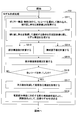
- FIG. 15 is a diagram illustrating an example of a method for producing a polymer.
- the polymer production method according to the present embodiment includes a step (S601) of obtaining a polymer structure having a physical property value predicted by the polymer physical property prediction method according to the present embodiment, and a raw material for constituting the polymer structure. Preparing (S602) and reacting the raw materials to obtain a polymer represented by the polymer structure (S603).
- a polymer structure predicted to have a predetermined physical property value is appropriately selected from the input polymer structures.
- a polymer structure having a refractive index within a predetermined range is selected from the input polymer structures.
- raw materials such as monomers and oligomers are prepared as raw materials for constituting the polymer structure selected in S1.
- the selected polymer structure is polyethylene, prepare ethylene.
- the prepared raw materials are reacted in S602, and a polymer represented by the selected polymer structure is obtained in S601.
- ethylene is polymerized to synthesize polyethylene.
Landscapes
- Chemical & Material Sciences (AREA)
- Life Sciences & Earth Sciences (AREA)
- Health & Medical Sciences (AREA)
- Engineering & Computer Science (AREA)
- Medicinal Chemistry (AREA)
- Bioinformatics & Computational Biology (AREA)
- Crystallography & Structural Chemistry (AREA)
- Theoretical Computer Science (AREA)
- Bioinformatics & Cheminformatics (AREA)
- Computing Systems (AREA)
- General Health & Medical Sciences (AREA)
- Physics & Mathematics (AREA)
- Analytical Chemistry (AREA)
- Biochemistry (AREA)
- Food Science & Technology (AREA)
- General Physics & Mathematics (AREA)
- Immunology (AREA)
- Pathology (AREA)
- Chemical Kinetics & Catalysis (AREA)
- Polymers & Plastics (AREA)
- Organic Chemistry (AREA)
- Management, Administration, Business Operations System, And Electronic Commerce (AREA)
Abstract
Description
ドライブ装置18は、ドライブ装置18にセットされた記憶媒体19(例えば、CD-ROM(Compact Disc Read-Only Memory)等)と物性予測装置100とのインターフェースを行う。
図3は、物性予測装置の第1の機能構成例を示す図である。図3において、物性予測装置100は、予測処理部40を有する。予測処理部40は、CPU11が対応するプログラムを実行することで行われる予測処理に相当する。
部分構造数密度 = 部分構造数 ÷ 原子数
により得られる。得られた部分構造数密度33dは、部分構造数33bと同じn次元のベクトルで表され、記憶部130に記憶される。
y=f(x)
で表し、部分構造数密度33dを変数xに代入することで、ある物性の予測値yを得る。
y=f(x) (1)
で表される。次元が削減されない場合、部分構造数密度ベクトルxの個数は、次元数のnであるが、次元削減後には、部分構造数密度ベクトルxの次元はn'個となる。重要部分構造33eにより、予測精度に寄与する次元のみを用いて予測値を算出するため、効率よく物性予測処理を行える。
yA=f(xA) (2)
により得られる。
図10は、物性予測装置の第2の機能構成例を示す図である。図10において、第2の機能構成例では、図3に示す第1の機能構成例のうち、モデル構造生成部43aと次元削減部43eとが省略され、したがって、モデル構造33aと重要部分構造33eとは生成されない。
図11は、物性予測装置の第3の機能構成例を示す図である。図11において、第3の機能構成例では、図3に示す第1の機能構成例のうち、モデル構造生成部43aが省略され、したがって、モデル構造33aは生成されない。
図12は、物性予測装置の第4の機能構成例を示す図である。図12において、第4の機能構成例では、図3に示す第1の機能構成例のうち、次元削減部43eが省略され、したがって、重要部分構造33eは生成されない。
[既存の機能構成例]
図13は、既存の技術に基づく物性予測装置の機能構成例を示す図である。図13において、物性予測装置9は、既存の技術に基づく機能構成を有する。図13に示す比較例では、物性予測装置9の予測処理部90は、モデル作成部91と、物性予測部95とを有する。
次に、比較例としての機能構成例、第1~第4の機能構成例のそれぞれの予測精度を検証した結果を説明する。各機能構成例において、発明者は、屈折率を予測する場合で検証を行った。
実施例1では、モデル構造生成部43aと次元削減部43eとが省略される第2の機能構成例(図10)で検証を行った。実施例1では、モデル構造33aは生成されない。また、回帰分析は、回帰モデル構築部43fにより1回のみ行われる。

ここで、yiはi番目のポリマーの実験値、y_barは実測の平均値、fiはi番目のポリマーの予測値である。
実施例2では、モデル構造生成部43aが省略される第3の機能構成例(図11)で検証を行った。モデル構造33aが生成されないため、ポリマー構造・物性DB31の繰り返し単位から部分構造数密度33dが求められる。回帰分析は、次元削減部43eと、回帰モデル構築部43fとで2回行われる。
実施例3では、次元削減部43eが省略される第4の機能構成例(図12)で検証を行った。重要部分構造33eは取得されない。部分構造数密度33dの次元数で回帰モデル33fが構築される。
実施例4では、重要部分構造33e及び次元削減部43eを含む第1の機能構成例(図3)で検証を行った。
比較例1では、部分構造数計算部93bと回帰モデル構築部93fのみで回帰モデル83fを求める既存の機能構成例(図13)で検証を行った。
3 端末
6a ポリマー構造
6b 物性値
31 ポリマー構造・物性DB
33a モデル構造
33b 部分構造数
33c 原子数
33d 部分構造数密度
33e 重要部分構造
33f 回帰モデル
40 予測処理部
41 モデル作成部
43a モデル構造生成部
43b 部分構造数計算部
43c 原子数計算部
43d 部分構造数密度計算部
43e 次元削減部
43f 回帰モデル構築部
45 物性予測部
47a ポリマー構造入力部
47b ポリマー物性予測部
100 物性予測装置
Claims (14)
- 記憶部から繰り返しによりポリマーを構成する構造単位を読み込み、該構造単位を用いて、該ポリマーの部分構造の数を計算する部分構造数計算部と、
前記構造単位の原子数を計算する原子数計算部と、
前記部分構造の数と前記構造単位の原子数とから該部分構造の数密度を計算する部分構造数密度計算部と、
前記記憶部から得られる前記ポリマーの物性の実験値と、前記部分構造の数密度とを用いて、物性値を予測する回帰モデルを構築する回帰モデル構築部と、
前記物性値を予測したいポリマー構造を入力するポリマー構造入力部と、
前記回帰モデルを用いて、入力した前記ポリマー構造に対応する前記物性値を予測するポリマー物性予測部と、
を備えるポリマーの物性予測装置。 - 前記部分構造数計算部は、前記ポリマーの部分構造の種類をアルゴリズムに基づき特定し、該種類の数を前記部分構造の数とする請求項1に記載のポリマーの物性予測装置。
- 前記部分構造数密度計算部により得られた前記部分構造の数密度の一部を削除する削除部を備える請求項1又は2に記載のポリマーの物性予測装置。
- 前記記憶部から得られた前記構造単位を複数用いてモデル構造を生成するモデル構造生成部を備える請求項1又は2に記載のポリマーの物性予測装置。
- 前記記憶部から得られた前記構造単位を複数用いてモデル構造を生成するモデル構造生成部と、
前記部分構造数密度計算部により得られた前記部分構造の数密度を示す構造記述子の一部を削除する次元削減部とを備え、
前記部分構造数計算部と原子数計算部は、生成された前記モデル構造から、前記部分構造の数と原子の数を計算する請求項1又は2に記載のポリマーの物性予測装置。 - ポリマー物性予測部は、入力した前記ポリマー構造を用いて、該ポリマー構造の部分構造の数と原子数とを計算し、得られた該部分構造と該原子数とから該部分構造の数密度を計算し、前記回帰モデル構築部によって構築された前記回帰モデルに対して、得られた該数密度を適用することで、該ポリマー構造の該物性値を予測する請求項1に記載のポリマーの物性予測装置。
- ポリマー物性予測部は、入力した前記ポリマー構造を用いて、該ポリマー構造の部分構造の数と原子数とを計算し、得られた該部分構造と該原子数とから該部分構造の数密度を計算し、得られた該部分構造の数密度の一部を削除し、前記回帰モデル構築部によって構築された前記回帰モデルに対して、該一部が削除された該数密度を適用することで、該ポリマー構造の該物性値を予測する請求項3に記載のポリマーの物性予測装置。
- ポリマー物性予測部は、入力した前記ポリマー構造を用いて、該ポリマー構造を複数用いてモデル構造を生成し、該モデル構造の部分構造の数と原子数とを計算し、得られた該部分構造と該原子数とから該部分構造の数密度を計算し、前記回帰モデル構築部によって構築された前記回帰モデルに対して、得られた該数密度を適用することで、該ポリマー構造の該物性値を予測する請求項4に記載のポリマーの物性予測装置。
- ポリマー物性予測部は、入力した前記ポリマー構造を用いて、該ポリマー構造を複数用いてモデル構造を生成し、該モデル構造の部分構造の数と原子数とを計算し、得られた該部分構造と該原子数とから該部分構造の数密度を計算し、得られた該部分構造の数密度を示す構造記述子の一部を削除し、前記回帰モデル構築部によって構築された前記回帰モデルに対して、該一部が削除された該数密度を適用することで、該ポリマー構造の該物性値を予測する請求項5に記載のポリマーの物性予測装置。
- コンピュータに、
記憶部から繰り返しによりポリマーを構成する構造単位を読み込み、該構造単位を用いて、該ポリマーの部分構造の数を計算するステップと、
前記構造単位の原子数を計算するステップと、
前記部分構造の数と前記構造単位の原子数とから該部分構造の数密度を計算するステップと、
前記記憶部から得られる前記ポリマーの物性の実験値と、前記部分構造の数密度とを用いて、物性値を予測する回帰モデルを構築するステップと、
前記回帰モデルを用いて、前記物性値を予測したいポリマー構造を入力するステップと、
入力した前記ポリマー構造に対応する前記物性値を予測するステップと、
を実行させるポリマーの物性予測プログラムを記憶した記憶媒体。 - 前記予測するステップは、入力した前記ポリマー構造を用いて、該ポリマー構造の部分構造の数と原子数とを計算し、得られた該部分構造と該原子数とから該部分構造の数密度を計算し、前記回帰モデルに対して、得られた該数密度を適用することで、該ポリマー構造の該物性値を予測する請求項10に記載の記憶媒体。
- コンピュータが、
記憶部から繰り返しによりポリマーを構成する構造単位を読み込み、該構造単位を用いて、該ポリマーの部分構造の数を計算するステップと、
前記構造単位の原子数を計算するステップと、
前記部分構造の数と前記構造単位の原子数とから該部分構造の数密度を計算するステップと、
前記記憶部から得られる前記ポリマーの物性の実験値と、前記部分構造の数密度とを用いて、物性値を予測する回帰モデルを構築するステップと、
前記物性値を予測したいポリマー構造を入力するステップと、
前記回帰モデルを用いて、入力した前記ポリマー構造に対応する前記物性値を予測するステップと、
を実行するポリマーの物性予測方法。 - 前記予測するステップは、入力した前記ポリマー構造を用いて、該ポリマー構造の部分構造の数と原子数とを計算し、得られた該部分構造と該原子数とから該部分構造の数密度を計算し、前記回帰モデルに対して、得られた該数密度を適用することで、該ポリマー構造の該物性値を予測する請求項12に記載のポリマーの物性予測方法。
- 請求項12又は13に記載のポリマーの物性予測方法により予測された物性値を有するポリマー構造を得るステップと、
前記ポリマー構造を構成するための原料を準備するステップと、
前記原料を反応させて、前記ポリマー構造で表されるポリマーを得るステップと、
を含むポリマーの製造方法。
Priority Applications (4)
| Application Number | Priority Date | Filing Date | Title |
|---|---|---|---|
| EP19763785.3A EP3764252B1 (en) | 2018-03-09 | 2019-03-05 | Polymer physical property prediction device, storage medium, and polymer physical property prediction method |
| JP2019538694A JP6633820B1 (ja) | 2018-03-09 | 2019-03-05 | ポリマーの物性予測装置、プログラム、及び方法 |
| CN201980017349.7A CN111819441B (zh) | 2018-03-09 | 2019-03-05 | 聚合物的物理性质预测装置、存储介质、及聚合物的物理性质预测方法 |
| US17/008,999 US11915799B2 (en) | 2018-03-09 | 2020-09-01 | Polymer physical property prediction device, recording medium, and polymer physical property prediction method |
Applications Claiming Priority (2)
| Application Number | Priority Date | Filing Date | Title |
|---|---|---|---|
| JP2018-043171 | 2018-03-09 | ||
| JP2018043171 | 2018-03-09 |
Related Child Applications (1)
| Application Number | Title | Priority Date | Filing Date |
|---|---|---|---|
| US17/008,999 Continuation-In-Part US11915799B2 (en) | 2018-03-09 | 2020-09-01 | Polymer physical property prediction device, recording medium, and polymer physical property prediction method |
Publications (1)
| Publication Number | Publication Date |
|---|---|
| WO2019172280A1 true WO2019172280A1 (ja) | 2019-09-12 |
Family
ID=67847075
Family Applications (1)
| Application Number | Title | Priority Date | Filing Date |
|---|---|---|---|
| PCT/JP2019/008704 Ceased WO2019172280A1 (ja) | 2018-03-09 | 2019-03-05 | ポリマーの物性予測装置、記憶媒体、及びポリマーの物性予測方法 |
Country Status (5)
| Country | Link |
|---|---|
| US (1) | US11915799B2 (ja) |
| EP (1) | EP3764252B1 (ja) |
| JP (2) | JP6633820B1 (ja) |
| CN (1) | CN111819441B (ja) |
| WO (1) | WO2019172280A1 (ja) |
Cited By (11)
| Publication number | Priority date | Publication date | Assignee | Title |
|---|---|---|---|---|
| WO2020166299A1 (ja) * | 2019-02-12 | 2020-08-20 | 株式会社日立製作所 | 材料特性予測装置および材料特性予測方法 |
| WO2021054026A1 (ja) * | 2019-09-18 | 2021-03-25 | 株式会社日立製作所 | 材料特性予測システムおよび材料特性予測方法 |
| JPWO2021079985A1 (ja) * | 2019-10-25 | 2021-04-29 | ||
| JP2021102732A (ja) * | 2019-12-25 | 2021-07-15 | 太陽ホールディングス株式会社 | コンピュータの動作方法、プログラム、情報処理装置、及びデータ構造 |
| JP2021117798A (ja) * | 2020-01-28 | 2021-08-10 | 国立大学法人山形大学 | 分子設計支援システム、分子特性値予測方法、分子設計支援プログラム |
| CN113326664A (zh) * | 2021-06-28 | 2021-08-31 | 南京玻璃纤维研究设计院有限公司 | 一种基于m5p算法预测玻璃介电常数的方法 |
| JP2022023482A (ja) * | 2020-07-27 | 2022-02-08 | ポーラ化成工業株式会社 | 予測モデルの学習方法 |
| JPWO2022254835A1 (ja) * | 2021-06-02 | 2022-12-08 | ||
| WO2023058576A1 (ja) * | 2021-10-04 | 2023-04-13 | ダイキン工業株式会社 | 低分子化合物探索方法、プログラム、装置、およびシステム |
| WO2023120290A1 (ja) * | 2021-12-20 | 2023-06-29 | 株式会社レゾナック | 設計支援装置、設計支援方法、及びプログラム |
| WO2025169360A1 (ja) * | 2024-02-07 | 2025-08-14 | 日本電気株式会社 | 情報処理装置、情報処理方法、及びプログラム |
Families Citing this family (14)
| Publication number | Priority date | Publication date | Assignee | Title |
|---|---|---|---|---|
| JP7353874B2 (ja) * | 2019-09-03 | 2023-10-02 | 株式会社日立製作所 | 材料特性予測装置および材料特性予測方法 |
| WO2021110690A1 (en) * | 2019-12-04 | 2021-06-10 | Basf Se | Method for determining material properties from foam samples |
| JP7577934B2 (ja) * | 2020-06-10 | 2024-11-06 | 株式会社レゾナック | 物性予測装置、物性予測方法及び製造方法 |
| JP7219374B1 (ja) * | 2021-06-23 | 2023-02-07 | 昭和電工株式会社 | 物性予測装置、物性予測方法、及びプログラム |
| EP4398257A4 (en) | 2021-08-31 | 2025-08-20 | Resonac Corp | PROPERTY PREDICTION DEVICE, PROPERTY PREDICTION METHOD, AND PROGRAM |
| KR102865297B1 (ko) * | 2021-10-26 | 2025-09-25 | 한화솔루션 주식회사 | 고분자 유리 전이 온도 예측 시스템 |
| JP7806629B2 (ja) * | 2022-07-08 | 2026-01-27 | 株式会社プロテリアル | 複合材料の物性値予測装置、物性値予測プログラム及び物性値予測方法 |
| WO2024054900A1 (en) * | 2022-09-07 | 2024-03-14 | Georgia Tech Research Corporation | Systems and methods for predicting polymer properties |
| CN115616204A (zh) * | 2022-12-21 | 2023-01-17 | 金发科技股份有限公司 | 一种聚对苯二甲酸乙二醇酯再生料的鉴别方法及系统 |
| CN115862786A (zh) * | 2022-12-26 | 2023-03-28 | 国网山东省电力公司济宁供电公司 | 基于纳米复合电介质材料的性能预测方法、装置及设备 |
| US12587274B2 (en) | 2023-03-28 | 2026-03-24 | Quantum Generative Materials Llc | Satellite optimization management system based on natural language input and artificial intelligence |
| US12603701B2 (en) | 2023-12-27 | 2026-04-14 | Quantum Generative Materials Llc | Distributed satellite constellation management and control system |
| US12368503B2 (en) | 2023-12-27 | 2025-07-22 | Quantum Generative Materials Llc | Intent-based satellite transmit management based on preexisting historical location and machine learning |
| WO2025169359A1 (ja) * | 2024-02-07 | 2025-08-14 | 日本電気株式会社 | 情報処理装置、情報処理方法、及びプログラム |
Citations (4)
| Publication number | Priority date | Publication date | Assignee | Title |
|---|---|---|---|---|
| JPH06271823A (ja) * | 1993-03-19 | 1994-09-27 | Sekisui Chem Co Ltd | 配合設計システム |
| JP2004514902A (ja) | 2000-11-20 | 2004-05-20 | ザ、プロクター、エンド、ギャンブル、カンパニー | ポリマーの予測方法 |
| WO2008116495A1 (en) * | 2007-03-26 | 2008-10-02 | Molcode Ltd | Method and apparatus for the design of chemical compounds with predetermined properties |
| JP2018043171A (ja) | 2016-09-12 | 2018-03-22 | 株式会社三谷バルブ | エアゾール用スプレーキャップ、および、エアゾール |
Family Cites Families (15)
| Publication number | Priority date | Publication date | Assignee | Title |
|---|---|---|---|---|
| JPS5946045B2 (ja) | 1976-08-10 | 1984-11-10 | ソニー株式会社 | 磁気再生装置 |
| US4365303A (en) * | 1980-02-07 | 1982-12-21 | The Perkin-Elmer Corporation | Method and apparatus for determining the nature of an unknown chemical substance |
| CA2012139C (en) * | 1990-03-08 | 2004-01-13 | Michael P. Teter | Apparatus and method for predicting physical and chemical properties of materials |
| US5260882A (en) * | 1991-01-02 | 1993-11-09 | Rohm And Haas Company | Process for the estimation of physical and chemical properties of a proposed polymeric or copolymeric substance or material |
| JPH08255190A (ja) * | 1995-03-17 | 1996-10-01 | Sekisui Chem Co Ltd | 粘着剤及び粘着テープの設計支援システム |
| CA2441931A1 (en) * | 2001-03-23 | 2002-10-03 | Douglas A. Levinson | Method and system for high-throughput screening |
| US20150310162A1 (en) | 2012-08-27 | 2015-10-29 | Kyoto Constella Technologies Co., Ltd. | Compound Design Device, Compound Design Method, And Computer Program |
| WO2015032505A1 (en) * | 2013-09-06 | 2015-03-12 | Maersk Olie Og Gas A/S | Evaluation of chemical components |
| JP6225136B2 (ja) * | 2015-03-24 | 2017-11-01 | 日本電信電話株式会社 | 推定方法および推定装置 |
| CN105868540B (zh) * | 2016-03-25 | 2018-04-13 | 哈尔滨理工大学 | 应用智能支持向量机对多环芳烃性质/毒性的预测方法 |
| JP6627624B2 (ja) * | 2016-04-08 | 2020-01-08 | 住友ゴム工業株式会社 | ポリマー組成物の性能の予測方法 |
| JP6630640B2 (ja) | 2016-07-12 | 2020-01-15 | 株式会社日立製作所 | 材料創成装置、および材料創成方法 |
| US20200082913A1 (en) | 2017-11-29 | 2020-03-12 | Xgenomes Corp. | Systems and methods for determining sequence |
| CN112513561B (zh) | 2018-04-06 | 2022-04-15 | 布拉斯科美国有限公司 | 用于质量控制的拉曼光谱法和机器学习 |
| US10896744B2 (en) | 2018-08-13 | 2021-01-19 | American Chemical Society | Systems and methods for validating and predicting polymer functions using polymer properties |
-
2019
- 2019-03-05 CN CN201980017349.7A patent/CN111819441B/zh active Active
- 2019-03-05 WO PCT/JP2019/008704 patent/WO2019172280A1/ja not_active Ceased
- 2019-03-05 EP EP19763785.3A patent/EP3764252B1/en active Active
- 2019-03-05 JP JP2019538694A patent/JP6633820B1/ja active Active
- 2019-12-12 JP JP2019224516A patent/JP7217696B2/ja active Active
-
2020
- 2020-09-01 US US17/008,999 patent/US11915799B2/en active Active
Patent Citations (4)
| Publication number | Priority date | Publication date | Assignee | Title |
|---|---|---|---|---|
| JPH06271823A (ja) * | 1993-03-19 | 1994-09-27 | Sekisui Chem Co Ltd | 配合設計システム |
| JP2004514902A (ja) | 2000-11-20 | 2004-05-20 | ザ、プロクター、エンド、ギャンブル、カンパニー | ポリマーの予測方法 |
| WO2008116495A1 (en) * | 2007-03-26 | 2008-10-02 | Molcode Ltd | Method and apparatus for the design of chemical compounds with predetermined properties |
| JP2018043171A (ja) | 2016-09-12 | 2018-03-22 | 株式会社三谷バルブ | エアゾール用スプレーキャップ、および、エアゾール |
Non-Patent Citations (3)
| Title |
|---|
| DAVID ROBERS ET AL.: "J. Chem. Info. Model.", vol. 50, 2010, AMERICAN CHEMICAL SOCIETY, article "Extended-Connectivity Fingerprints", pages: 742 - 754 |
| See also references of EP3764252A4 |
| SHUN GOTO: "Development of Predictive Models and Reverse Analysis Method for Polymer Design", JOURNAL OF COMPUTER AIDED CHEMISTRY, vol. 10, 15 May 2019 (2019-05-15), pages 30 - 37, XP055637968 * |
Cited By (23)
| Publication number | Priority date | Publication date | Assignee | Title |
|---|---|---|---|---|
| WO2020166299A1 (ja) * | 2019-02-12 | 2020-08-20 | 株式会社日立製作所 | 材料特性予測装置および材料特性予測方法 |
| CN114207729A (zh) * | 2019-09-18 | 2022-03-18 | 株式会社日立制作所 | 材料特性预测系统以及材料特性预测方法 |
| WO2021054026A1 (ja) * | 2019-09-18 | 2021-03-25 | 株式会社日立製作所 | 材料特性予測システムおよび材料特性予測方法 |
| JP2021047627A (ja) * | 2019-09-18 | 2021-03-25 | 株式会社日立製作所 | 材料特性予測システムおよび材料特性予測方法 |
| JP7267883B2 (ja) | 2019-09-18 | 2023-05-02 | 株式会社日立製作所 | 材料特性予測システムおよび材料特性予測方法 |
| JPWO2021079985A1 (ja) * | 2019-10-25 | 2021-04-29 | ||
| WO2021079985A1 (ja) * | 2019-10-25 | 2021-04-29 | コニカミノルタ株式会社 | 特性予測装置 |
| JP7468542B2 (ja) | 2019-10-25 | 2024-04-16 | コニカミノルタ株式会社 | 特性予測装置 |
| JP2021102732A (ja) * | 2019-12-25 | 2021-07-15 | 太陽ホールディングス株式会社 | コンピュータの動作方法、プログラム、情報処理装置、及びデータ構造 |
| JP7448353B2 (ja) | 2019-12-25 | 2024-03-12 | 太陽ホールディングス株式会社 | コンピュータの動作方法、プログラム、情報処理装置、及びデータ構造 |
| JP2021117798A (ja) * | 2020-01-28 | 2021-08-10 | 国立大学法人山形大学 | 分子設計支援システム、分子特性値予測方法、分子設計支援プログラム |
| JP7504692B2 (ja) | 2020-07-27 | 2024-06-24 | ポーラ化成工業株式会社 | 予測モデルの学習方法 |
| JP2022023482A (ja) * | 2020-07-27 | 2022-02-08 | ポーラ化成工業株式会社 | 予測モデルの学習方法 |
| WO2022254835A1 (ja) * | 2021-06-02 | 2022-12-08 | コニカミノルタ株式会社 | 難燃性予測装置、難燃性予測モデル生成装置、難燃性予測モデルおよび特徴量抽出装置 |
| JPWO2022254835A1 (ja) * | 2021-06-02 | 2022-12-08 | ||
| JP7848797B2 (ja) | 2021-06-02 | 2026-04-21 | コニカミノルタ株式会社 | 難燃性予測装置および難燃性予測モデル生成装置 |
| CN113326664A (zh) * | 2021-06-28 | 2021-08-31 | 南京玻璃纤维研究设计院有限公司 | 一种基于m5p算法预测玻璃介电常数的方法 |
| CN113326664B (zh) * | 2021-06-28 | 2022-10-21 | 南京玻璃纤维研究设计院有限公司 | 一种基于m5p算法预测玻璃介电常数的方法 |
| JP2023054446A (ja) * | 2021-10-04 | 2023-04-14 | ダイキン工業株式会社 | 低分子化合物探索方法、プログラム、装置、およびシステム |
| JP7288207B2 (ja) | 2021-10-04 | 2023-06-07 | ダイキン工業株式会社 | 低分子化合物探索方法、プログラム、装置、およびシステム |
| WO2023058576A1 (ja) * | 2021-10-04 | 2023-04-13 | ダイキン工業株式会社 | 低分子化合物探索方法、プログラム、装置、およびシステム |
| WO2023120290A1 (ja) * | 2021-12-20 | 2023-06-29 | 株式会社レゾナック | 設計支援装置、設計支援方法、及びプログラム |
| WO2025169360A1 (ja) * | 2024-02-07 | 2025-08-14 | 日本電気株式会社 | 情報処理装置、情報処理方法、及びプログラム |
Also Published As
| Publication number | Publication date |
|---|---|
| CN111819441B (zh) | 2022-08-09 |
| US11915799B2 (en) | 2024-02-27 |
| EP3764252B1 (en) | 2025-06-25 |
| JP2020074095A (ja) | 2020-05-14 |
| EP3764252A4 (en) | 2021-12-01 |
| JP6633820B1 (ja) | 2020-01-22 |
| CN111819441A (zh) | 2020-10-23 |
| JP7217696B2 (ja) | 2023-02-03 |
| EP3764252A1 (en) | 2021-01-13 |
| US20200395102A1 (en) | 2020-12-17 |
| JPWO2019172280A1 (ja) | 2020-04-16 |
Similar Documents
| Publication | Publication Date | Title |
|---|---|---|
| JP6633820B1 (ja) | ポリマーの物性予測装置、プログラム、及び方法 | |
| CN109657805B (zh) | 超参数确定方法、装置、电子设备及计算机可读介质 | |
| US20230098285A1 (en) | Apparatus and method for generating a protein-drug interaction prediction model for predicting protein-drug interaction and determining its uncertainty, and protein-drug interaction prediction apparatus and method | |
| CN112634992A (zh) | 分子性质预测方法及其模型的训练方法及相关装置、设备 | |
| KR102823155B1 (ko) | 인공지능 기반의 목표 물성에 부합하는 복합체 생성을 위한 조성물 포뮬레이션을 제공하는 방법 및 전자 장치 | |
| US20240232574A9 (en) | Method and apparatus for predicting recipe property reflecting similarity between chemical materials | |
| JP6325762B1 (ja) | 情報処理装置、情報処理方法、および情報処理プログラム | |
| JP7221590B2 (ja) | 抽出装置、抽出方法、及び抽出プログラム | |
| CN118229465B (zh) | 基于聚类中心表征的申请前专利质量评估方法及系统 | |
| CN115965082B (zh) | 基于深度学习和集束搜索的系统发育树构建方法及系统 | |
| CN118246484A (zh) | 基于LSTM与Transformer的四序列系统发育树重建方法及系统 | |
| CN112416431B (zh) | 一种基于编码序列表示的源代码片段成对比较方法 | |
| CN107944045B (zh) | 基于t分布哈希的图像检索方法及系统 | |
| CN114882515B (zh) | 基于神经网络模型的表格类型判定方法、设备及介质 | |
| CN117708683A (zh) | 基于对抗神经网络实现数据共享授权信息管理的方法、装置、处理器及其存储介质 | |
| CN119848250A (zh) | 文本分类、聚类和检索方法、装置和计算机设备 | |
| JP5008096B2 (ja) | 文書自動分類方法及び文書自動分類システム | |
| KR102916967B1 (ko) | 화학 반응 예측 시스템 및 이의 제어 방법, 그리고 화학 반응 예측 시스템의 학습 방법 | |
| US12346383B1 (en) | Methods and systems for clustering documents based on semantic similarity | |
| US20250342909A1 (en) | Computer-readable recording medium having stored therein information processing program, information processing method, and information processing device | |
| KR20200015300A (ko) | 신경망 피처 벡터 결정 장치 및 방법 | |
| CN118057495A (zh) | 一种人脸聚类方法、装置、电子设备及存储介质 | |
| CN118733660A (zh) | 基于迁移学习的跨领域多模态工业数据抽取与融合方法 | |
| WO2023007848A1 (ja) | データ解析方法、データ解析装置、及び、データ解析プログラム | |
| CN120219016A (zh) | 基于遗传算法与机器学习的矿山设备采矿成本预测方法 |
Legal Events
| Date | Code | Title | Description |
|---|---|---|---|
| ENP | Entry into the national phase |
Ref document number: 2019538694 Country of ref document: JP Kind code of ref document: A |
|
| 121 | Ep: the epo has been informed by wipo that ep was designated in this application |
Ref document number: 19763785 Country of ref document: EP Kind code of ref document: A1 |
|
| NENP | Non-entry into the national phase |
Ref country code: DE |
|
| WWE | Wipo information: entry into national phase |
Ref document number: 2019763785 Country of ref document: EP |
|
| WWG | Wipo information: grant in national office |
Ref document number: 2019763785 Country of ref document: EP |