WO2019202795A1 - 有機ケイ素化合物およびその製造方法 - Google Patents
有機ケイ素化合物およびその製造方法 Download PDFInfo
- Publication number
- WO2019202795A1 WO2019202795A1 PCT/JP2019/001758 JP2019001758W WO2019202795A1 WO 2019202795 A1 WO2019202795 A1 WO 2019202795A1 JP 2019001758 W JP2019001758 W JP 2019001758W WO 2019202795 A1 WO2019202795 A1 WO 2019202795A1
- Authority
- WO
- WIPO (PCT)
- Prior art keywords
- group
- carbon atoms
- unsubstituted
- substituted
- formula
- Prior art date
- Legal status (The legal status is an assumption and is not a legal conclusion. Google has not performed a legal analysis and makes no representation as to the accuracy of the status listed.)
- Ceased
Links
- 0 CN(C)*N(C)* Chemical compound CN(C)*N(C)* 0.000 description 2
Classifications
-
- C—CHEMISTRY; METALLURGY
- C07—ORGANIC CHEMISTRY
- C07F—ACYCLIC, CARBOCYCLIC OR HETEROCYCLIC COMPOUNDS CONTAINING ELEMENTS OTHER THAN CARBON, HYDROGEN, HALOGEN, OXYGEN, NITROGEN, SULFUR, SELENIUM OR TELLURIUM
- C07F7/00—Compounds containing elements of Groups 4 or 14 of the Periodic Table
- C07F7/02—Silicon compounds
- C07F7/08—Compounds having one or more C—Si linkages
- C07F7/18—Compounds having one or more C—Si linkages as well as one or more C—O—Si linkages
-
- C—CHEMISTRY; METALLURGY
- C07—ORGANIC CHEMISTRY
- C07F—ACYCLIC, CARBOCYCLIC OR HETEROCYCLIC COMPOUNDS CONTAINING ELEMENTS OTHER THAN CARBON, HYDROGEN, HALOGEN, OXYGEN, NITROGEN, SULFUR, SELENIUM OR TELLURIUM
- C07F7/00—Compounds containing elements of Groups 4 or 14 of the Periodic Table
- C07F7/02—Silicon compounds
- C07F7/08—Compounds having one or more C—Si linkages
- C07F7/18—Compounds having one or more C—Si linkages as well as one or more C—O—Si linkages
- C07F7/1804—Compounds having Si-O-C linkages
-
- C—CHEMISTRY; METALLURGY
- C07—ORGANIC CHEMISTRY
- C07F—ACYCLIC, CARBOCYCLIC OR HETEROCYCLIC COMPOUNDS CONTAINING ELEMENTS OTHER THAN CARBON, HYDROGEN, HALOGEN, OXYGEN, NITROGEN, SULFUR, SELENIUM OR TELLURIUM
- C07F7/00—Compounds containing elements of Groups 4 or 14 of the Periodic Table
- C07F7/02—Silicon compounds
- C07F7/08—Compounds having one or more C—Si linkages
- C07F7/18—Compounds having one or more C—Si linkages as well as one or more C—O—Si linkages
- C07F7/1804—Compounds having Si-O-C linkages
- C07F7/1872—Preparation; Treatments not provided for in C07F7/20
-
- C—CHEMISTRY; METALLURGY
- C08—ORGANIC MACROMOLECULAR COMPOUNDS; THEIR PREPARATION OR CHEMICAL WORKING-UP; COMPOSITIONS BASED THEREON
- C08G—MACROMOLECULAR COMPOUNDS OBTAINED OTHERWISE THAN BY REACTIONS ONLY INVOLVING UNSATURATED CARBON-TO-CARBON BONDS
- C08G77/00—Macromolecular compounds obtained by reactions forming a linkage containing silicon with or without sulfur, nitrogen, oxygen or carbon in the main chain of the macromolecule
- C08G77/48—Macromolecular compounds obtained by reactions forming a linkage containing silicon with or without sulfur, nitrogen, oxygen or carbon in the main chain of the macromolecule in which at least two but not all the silicon atoms are connected by linkages other than oxygen atoms
- C08G77/54—Nitrogen-containing linkages
-
- C—CHEMISTRY; METALLURGY
- C08—ORGANIC MACROMOLECULAR COMPOUNDS; THEIR PREPARATION OR CHEMICAL WORKING-UP; COMPOSITIONS BASED THEREON
- C08K—Use of inorganic or non-macromolecular organic substances as compounding ingredients
- C08K5/00—Use of organic ingredients
- C08K5/54—Silicon-containing compounds
- C08K5/544—Silicon-containing compounds containing nitrogen
-
- C—CHEMISTRY; METALLURGY
- C08—ORGANIC MACROMOLECULAR COMPOUNDS; THEIR PREPARATION OR CHEMICAL WORKING-UP; COMPOSITIONS BASED THEREON
- C08K—Use of inorganic or non-macromolecular organic substances as compounding ingredients
- C08K5/00—Use of organic ingredients
- C08K5/54—Silicon-containing compounds
- C08K5/548—Silicon-containing compounds containing sulfur
-
- C—CHEMISTRY; METALLURGY
- C08—ORGANIC MACROMOLECULAR COMPOUNDS; THEIR PREPARATION OR CHEMICAL WORKING-UP; COMPOSITIONS BASED THEREON
- C08L—COMPOSITIONS OF MACROMOLECULAR COMPOUNDS
- C08L83/00—Compositions of macromolecular compounds obtained by reactions forming in the main chain of the macromolecule a linkage containing silicon with or without sulfur, nitrogen, oxygen or carbon only; Compositions of derivatives of such polymers
- C08L83/04—Polysiloxanes
-
- C—CHEMISTRY; METALLURGY
- C08—ORGANIC MACROMOLECULAR COMPOUNDS; THEIR PREPARATION OR CHEMICAL WORKING-UP; COMPOSITIONS BASED THEREON
- C08L—COMPOSITIONS OF MACROMOLECULAR COMPOUNDS
- C08L83/00—Compositions of macromolecular compounds obtained by reactions forming in the main chain of the macromolecule a linkage containing silicon with or without sulfur, nitrogen, oxygen or carbon only; Compositions of derivatives of such polymers
- C08L83/04—Polysiloxanes
- C08L83/06—Polysiloxanes containing silicon bound to oxygen-containing groups
-
- C—CHEMISTRY; METALLURGY
- C09—DYES; PAINTS; POLISHES; NATURAL RESINS; ADHESIVES; COMPOSITIONS NOT OTHERWISE PROVIDED FOR; APPLICATIONS OF MATERIALS NOT OTHERWISE PROVIDED FOR
- C09D—COATING COMPOSITIONS, e.g. PAINTS, VARNISHES OR LACQUERS; FILLING PASTES; CHEMICAL PAINT OR INK REMOVERS; INKS; CORRECTING FLUIDS; WOODSTAINS; PASTES OR SOLIDS FOR COLOURING OR PRINTING; USE OF MATERIALS THEREFOR
- C09D183/00—Coating compositions based on macromolecular compounds obtained by reactions forming in the main chain of the macromolecule a linkage containing silicon, with or without sulfur, nitrogen, oxygen, or carbon only; Coating compositions based on derivatives of such polymers
- C09D183/04—Polysiloxanes
-
- C—CHEMISTRY; METALLURGY
- C09—DYES; PAINTS; POLISHES; NATURAL RESINS; ADHESIVES; COMPOSITIONS NOT OTHERWISE PROVIDED FOR; APPLICATIONS OF MATERIALS NOT OTHERWISE PROVIDED FOR
- C09D—COATING COMPOSITIONS, e.g. PAINTS, VARNISHES OR LACQUERS; FILLING PASTES; CHEMICAL PAINT OR INK REMOVERS; INKS; CORRECTING FLUIDS; WOODSTAINS; PASTES OR SOLIDS FOR COLOURING OR PRINTING; USE OF MATERIALS THEREFOR
- C09D183/00—Coating compositions based on macromolecular compounds obtained by reactions forming in the main chain of the macromolecule a linkage containing silicon, with or without sulfur, nitrogen, oxygen, or carbon only; Coating compositions based on derivatives of such polymers
- C09D183/04—Polysiloxanes
- C09D183/06—Polysiloxanes containing silicon bound to oxygen-containing groups
-
- C—CHEMISTRY; METALLURGY
- C09—DYES; PAINTS; POLISHES; NATURAL RESINS; ADHESIVES; COMPOSITIONS NOT OTHERWISE PROVIDED FOR; APPLICATIONS OF MATERIALS NOT OTHERWISE PROVIDED FOR
- C09D—COATING COMPOSITIONS, e.g. PAINTS, VARNISHES OR LACQUERS; FILLING PASTES; CHEMICAL PAINT OR INK REMOVERS; INKS; CORRECTING FLUIDS; WOODSTAINS; PASTES OR SOLIDS FOR COLOURING OR PRINTING; USE OF MATERIALS THEREFOR
- C09D183/00—Coating compositions based on macromolecular compounds obtained by reactions forming in the main chain of the macromolecule a linkage containing silicon, with or without sulfur, nitrogen, oxygen, or carbon only; Coating compositions based on derivatives of such polymers
- C09D183/14—Coating compositions based on macromolecular compounds obtained by reactions forming in the main chain of the macromolecule a linkage containing silicon, with or without sulfur, nitrogen, oxygen, or carbon only; Coating compositions based on derivatives of such polymers in which at least two but not all the silicon atoms are connected by linkages other than oxygen atoms
-
- C—CHEMISTRY; METALLURGY
- C09—DYES; PAINTS; POLISHES; NATURAL RESINS; ADHESIVES; COMPOSITIONS NOT OTHERWISE PROVIDED FOR; APPLICATIONS OF MATERIALS NOT OTHERWISE PROVIDED FOR
- C09J—ADHESIVES; NON-MECHANICAL ASPECTS OF ADHESIVE PROCESSES IN GENERAL; ADHESIVE PROCESSES NOT PROVIDED FOR ELSEWHERE; USE OF MATERIALS AS ADHESIVES
- C09J183/00—Adhesives based on macromolecular compounds obtained by reactions forming in the main chain of the macromolecule a linkage containing silicon, with or without sulfur, nitrogen, oxygen, or carbon only; Adhesives based on derivatives of such polymers
- C09J183/04—Polysiloxanes
-
- C—CHEMISTRY; METALLURGY
- C09—DYES; PAINTS; POLISHES; NATURAL RESINS; ADHESIVES; COMPOSITIONS NOT OTHERWISE PROVIDED FOR; APPLICATIONS OF MATERIALS NOT OTHERWISE PROVIDED FOR
- C09J—ADHESIVES; NON-MECHANICAL ASPECTS OF ADHESIVE PROCESSES IN GENERAL; ADHESIVE PROCESSES NOT PROVIDED FOR ELSEWHERE; USE OF MATERIALS AS ADHESIVES
- C09J183/00—Adhesives based on macromolecular compounds obtained by reactions forming in the main chain of the macromolecule a linkage containing silicon, with or without sulfur, nitrogen, oxygen, or carbon only; Adhesives based on derivatives of such polymers
- C09J183/04—Polysiloxanes
- C09J183/06—Polysiloxanes containing silicon bound to oxygen-containing groups
-
- C—CHEMISTRY; METALLURGY
- C09—DYES; PAINTS; POLISHES; NATURAL RESINS; ADHESIVES; COMPOSITIONS NOT OTHERWISE PROVIDED FOR; APPLICATIONS OF MATERIALS NOT OTHERWISE PROVIDED FOR
- C09J—ADHESIVES; NON-MECHANICAL ASPECTS OF ADHESIVE PROCESSES IN GENERAL; ADHESIVE PROCESSES NOT PROVIDED FOR ELSEWHERE; USE OF MATERIALS AS ADHESIVES
- C09J183/00—Adhesives based on macromolecular compounds obtained by reactions forming in the main chain of the macromolecule a linkage containing silicon, with or without sulfur, nitrogen, oxygen, or carbon only; Adhesives based on derivatives of such polymers
- C09J183/14—Adhesives based on macromolecular compounds obtained by reactions forming in the main chain of the macromolecule a linkage containing silicon, with or without sulfur, nitrogen, oxygen, or carbon only; Adhesives based on derivatives of such polymers in which at least two but not all the silicon atoms are connected by linkages other than oxygen atoms
Definitions
- a 1 , A 2 , A 3 , A 4 and A 5 are a single bond, an unsubstituted or substituted divalent hydrocarbon group having 1 to 20 carbon atoms, preferably 1 to 1 carbon atom.
- 8 represents a divalent hydrocarbon group or a divalent linking group containing a hetero atom.
- X is a monovalent to trivalent organic group containing a polyoxyalkylene structure, an unsubstituted or substituted alkylene group having 1 to 20 carbon atoms, an unsubstituted or substituted aralkylene group having 7 to 20 carbon atoms, In the case of a substituted or substituted arylene group having 6 to 20 carbon atoms, isocyanurate, or triazine, Y is O, S, or N (R 4 ), and X is O, S, N, N (R 3 ), or N (R 3 ) 2 , A 1 , A 2 , A 3 , A 4 , A 5 and Y are single bonds.
- organosilicon compound of the present invention those represented by the following structural formula (3) are preferable.
- organosilicon compound By using such an organosilicon compound, the reactivity, the mechanical properties of the resulting cured product, and the composition Storage stability is further improved.
- R 1 and R 2 each independently represent the same meaning as described above.
- X 2 represents O, S or N (R 3 ), and S and N (R 3 ) are preferable from the viewpoint of the reactivity of the organosilicon compound of the present invention.
- R 3 include the same groups as those exemplified above.
- Specific examples of the compound having an isocyanate group represented by the above formula (5) include hexamethylene diisocyanate, cyclohexane diisocyanate, isophorone diisocyanate, diphenylmethane diisocyanate, 4,4′-bis- (isocyanatomethyl) -diphenylmethane, phenylene diisocyanate, Examples include toluene diisocyanate, xylene diisocyanate, tetramethylxylene diisocyanate, and naphthalene diisocyanate.
- a catalyst may not be used, but a catalyst may be used for improving the reaction rate.
- the catalyst may be appropriately selected from those generally used in the urethanization reaction. Specific examples thereof include dibutyltin oxide, dioctyltin oxide, tin (II) bis (2-ethylhexanoate), Examples include dibutyltin dilaurate and dioctyltin dilaurate.
- the amount of the catalyst used may be a catalytic amount, but is usually 0 with respect to the total of the monoalkoxysilane I represented by the above formula (6) and the compound having an isocyanate group represented by the above formula (5). 0.001 to 1% by mass.
- the organosilicon compound represented by the above formula (1) includes a compound having a hydroxyl group, a mercapto group or an amino group represented by the following structural formula (7), and a hydroxyl group represented by the following formula (8). It can also be obtained by reacting a compound having a functional group capable of reacting with a mercapto group or amino group and a monoalkoxysilyl group (hereinafter referred to as monoalkoxysilane II).
- R 1 and R 2 represent the same meaning as described above, and R 7 is a elimination selected from a chlorine atom, a bromine atom, an iodine atom, a methanesulfonate group, a trifluoromethanesulfonate group and a p-toluenesulfonate group. Represents a group or a (meth) acryloyloxy group.
- R 7 represents a group containing a functional group capable of reacting with a hydroxyl group, a mercapto group or an amino group, and contains a functional group capable of reacting with a hydroxyl group, a mercapto group or an amino group
- the structure is not particularly limited, but more specifically, a chlorine atom, a bromine atom, an iodine atom, a methanesulfonate group, a trifluoromethanesulfonate group, a p-toluenesulfonate group, and the like are eliminated. Examples thereof include a leaving group and a (meth) acryloyloxy group, and a chlorine atom and a (meth) acryloyloxy group are preferable.
- monoalkoxysilane II represented by the above formula (8) include chloromethyldimethylmethoxysilane, chloromethyldimethylethoxysilane, acryloyloxymethyldimethylmethoxysilane, acryloyloxymethyldimethylethoxysilane, and methacryloyloxymethyldimethylmethoxy. Silane, methacryloyloxymethyldimethylethoxysilane, etc. are mentioned.
- a basic compound may not be used, but a basic compound may be used for improving the reaction rate.
- the basic compound various basic compounds usually used in nucleophilic substitution reactions can be used, and any of them can be used as long as it does not react with active hydrogen other than the compound represented by the formula (7). May be used.
- alkali metals such as metallic sodium and metallic lithium
- alkaline earth metals such as metallic calcium
- alkali metal hydrides such as sodium hydride, lithium hydride, potassium hydride and cesium hydride
- calcium hydride and the like Alkaline earth metal hydrides
- alkali metals and alkaline earth alkoxides such as sodium methoxide, sodium ethoxide, potassium tertiary butoxide, sodium tertiary butoxide
- alkaline metals and alkaline earth such as potassium carbonate, sodium carbonate, calcium carbonate Metal carbonates
- alkali metal and alkaline earth hydrogen carbonates such as sodium hydrogen carbonate and potassium hydrogen carbonate
- the amount of the basic compound used is not particularly limited, but the nucleophilic substitution reaction is sufficiently advanced to prevent the raw material from remaining, and the organic silicon compound obtained by preventing the basic compound from remaining excessively.
- the basic compound is preferably 0.5 to 10 mol, preferably 0.8 to 2 mol with respect to 1 mol of the leaving group of the monoalkoxysilane II represented by the above formula (8). Is more preferable, and 0.9 to 1.2 mol is even more preferable.
- Amide solvents such as formamide, N, N-dimethylformamide, pyrrolidone and N-methylpyrrolidone
- ether solvents such as diethyl ether, dibutyl ether, cyclopentylmethyl ether, tetrahydrofuran and 1,4-dioxane
- nitriles such as acetonitrile A solvent etc. are mentioned, These may be used independently or may be used in combination of 2 or more type.
- methanol, ethanol, toluene, xylene, dimethylformamide, cyclopentyl methyl ether, tetrahydrofuran, and acetonitrile are preferable from the viewpoint of reaction efficiency.
- a catalyst may be used for improving the reaction rate.
- a catalyst that does not react with a raw material to be used may be appropriately selected from those generally used for a nucleophilic substitution reaction. Specific examples thereof include crown ethers such as 12-crown-4, 15-crown-5, 18-crown-6, dibenzo-18-crown-6; tetrabutylammonium chloride, tetrabutylammonium bromide, tetrabutylammonium iodide.
- tetrabutylammonium bromide tetrabutylammonium iodide
- tetrabutylammonium hydrogensulfate and potassium iodide
- tetrabutylammonium iodide, Tetrabutylammonium hydrogensulfate and potassium iodide are more preferred, and tetrabutylammonium hydrogensulfate is even more preferred.
- the catalyst can act as a phase transfer catalyst or activate the leaving group to improve the reaction rate.
- the amount of the catalyst used may be a catalytic amount, but is 0.001 to 10% by mass with respect to the total of the compound represented by the formula (7) and the monoalkoxysilane II represented by the formula (8). Is preferable, and 0.01 to 1% by mass is more preferable.
- radical polymerization initiator examples include hydrogen peroxide solution, t-butyl hydroperoxide, di-t-butyl peroxide, (2-ethylhexanoyl) (t-butyl) peroxide, benzoyl peroxide, cumene hydro Organic peroxides such as peroxide and dicumyl peroxide; 2,2′-azobispropane, 2,2′-azobisisobutane, 2,2′-azobisisobutyronitrile, 2,2′-azobis-2-methylbutyronitrile, 2,2′-azobis-2-methylvaleronitrile, 2,2′-azobis-2,4-dimethylvaleronitrile, methyl 2,2′-azobis-2-methylpropionate, 2,2′-dichloro-2,2′-azobispropane, 2,2′-dichloro-2,2′-azobisbutane, 1,1′-azo ( Tilethyl) diacetate, 2,2′-azobisis
- the amount of the catalyst used may be a catalytic amount, but is usually 0.001 to 10% by mass relative to the total of the compound represented by the formula (7) and the monoalkoxysilane II represented by the formula (8). It is.
- the Michael addition reaction proceeds even without solvent, but a solvent that does not adversely influence the reaction can also be used.
- a solvent that does not adversely influence the reaction include hydrocarbon solvents such as pentane, hexane, heptane, octane, decane and cyclohexane; aromatic solvents such as benzene, toluene and xylene; formamide, N, N-dimethylformamide, pyrrolidone and N-methyl.
- Amide solvents such as pyrrolidone; ester solvents such as ethyl acetate, butyl acetate, ⁇ -butyrolactone, propylene glycol-1-monomethyl ether-2-acetate; nitrile solvents such as acetonitrile, etc., which are used alone Or you may use it in combination of 2 or more types.
- the reaction temperature during the Michael addition reaction is not particularly limited, but is preferably 0 to 150 ° C., more preferably 0 to 100 ° C. in consideration of suppressing side reactions while adjusting the reaction rate.
- the reaction time is not particularly limited, but is usually 10 minutes to 24 hours.
- the organosilicon compound represented by the above formula (3) is obtained by reacting a compound having an amino group represented by the following structural formula (9) with a monoalkoxysilane II represented by the above formula (8). be able to.
- diazetidine, piperazine and diazocine are preferable, and piperazine is more preferable from the viewpoint of reactivity, availability, productivity, cost and the like.
- the specific method for reacting the compound represented by the above formula (9) with the monoalkoxysilane II represented by the above formula (8) is not particularly limited, and generally the above formula (9). What is necessary is just to select suitably from the well-known manufacturing method currently used by reaction with the compound represented by these. More specifically, the thing similar to the specific example illustrated by reaction with the compound represented by the said Formula (7) and monoalkoxysilane II represented by Formula (8) is mentioned.
- the organosilicon compound represented by the above formula (4) can be obtained by reacting the compound represented by the following structural formula (10) with the monoalkoxysilane II represented by the above formula (8). it can.
- X 2 represents the same meaning as described above, and M represents a hydrogen atom or an alkali metal.
- the specific method of reacting the compound represented by the above formula (10) with the monoalkoxysilane II represented by the above formula (8) is not particularly limited, and generally the above formula (10). What is necessary is just to select suitably from the well-known manufacturing method currently used by reaction with the compound represented by these. More specifically, the thing similar to the specific example illustrated by reaction with the compound represented by the said Formula (7) and monoalkoxysilane II represented by Formula (8) is mentioned.
- the curable composition, coating agent composition and adhesive composition of the present invention (hereinafter sometimes collectively referred to as a composition) contain the above-described (A) organosilicon compound and (B) a curing catalyst.
- the organosilicon compound of the component (A) is derived from the structure of the organosilicon compound, and the curability and flexibility of a cured article obtained by coating or adhering using a composition containing the organosilicon compound are conventional compositions. Gives a cured product superior to the product.
- the curing catalyst (B) used in the composition of the present invention comprises (A) a reaction in which a hydrolyzable group contained in an organosilicon compound is hydrolytically condensed with moisture in the air, or the organosilicon compound and a silanol group. It is a component that accelerates the dealcoholization reaction and promotes the curing of the composition, and is added for efficient curing.
- the curing catalyst is not particularly limited as long as it is a curing catalyst used for curing a general moisture condensation curable composition.
- alkyltin compounds such as dibutyltin oxide and dioctyltin oxide.
- Alkyltin ester compounds such as dibutyltin diacetate, dibutyltin dilaurate, dioctyltin dilaurate, dibutyltin dioctoate, dioctyltin dioctoate, dioctyltin diversate; tetraisopropoxytitanium, tetran-butoxytitanium, tetrakis (2-ethylhexoxy) titanium , Titanate esters such as dipropoxybis (acetylacetonato) titanium, titanium diisopropoxybis (ethylacetoacetate), titanium isopropoxyoctylene glycol, and titanium chelate compounds Partially hydrolyzed products thereof
- Lower fatty acid salt of alkali metal dialkylhydroxylamine such as dimethylhydroxylamine, diethylhydroxylamine; tetramethylguanidylpropyltrimethoxysilane, tetramethylguanidylpropylmethyldimethoxysilane, tetramethylguanidylpropyltriethoxysilane, Silanes and siloxanes containing guanidyl groups such as tetramethylguanidylpropylmethyldiethoxysilane, tetramethylguanidylpropyltris (trimethylsiloxy) silane; N, N, N ′, N ′, N ′′, N ′
- Examples include silanes and siloxanes containing phosphazene bases such as '-hexamethyl-N ′′'-[3- (trimethoxysilyl) propyl] -phosphorimidic triamide, and these may be used alone or in combination of two types.
- 3-aminopropyltrimethoxysilane and tetramethylguanidylpropyltrimethoxysilane are more preferred because they contain no organotin compound and are less toxic. From the viewpoint of curability of the composition, tetraaminosilane is preferred. Methylguanidylpropyltrimethoxysilane is particularly preferred.
- the addition amount of the curing catalyst is not particularly limited, but considering that the workability is improved by adjusting the curing rate to an appropriate range, 0.01 to 15 parts by mass is preferable, and 0.1 to 5 parts by mass is more preferable.
- the composition of the present invention may contain a solvent.
- the solvent is not particularly limited as long as it has the ability to dissolve the component (A). Specific examples thereof include hydrocarbon solvents such as pentane, hexane, heptane, octane, decane, and cyclohexane; benzene , Aromatic solvents such as toluene and xylene; amide solvents such as formamide, N, N-dimethylformamide, pyrrolidone and N-methylpyrrolidone, ethyl acetate, butyl acetate, ⁇ -butyrolactone, propylene glycol-1-monomethyl ether Ester solvents such as 2-acetate; ketone solvents such as acetone, methyl ethyl ketone, and methyl isobutyl ketone; and ether solvents such as diethyl ether, dibutyl ether, cyclopentyl methyl ether, t
- aromatic solvents such as toluene and xylene are preferable from the viewpoints of solubility and volatility.
- the amount of the solvent added is preferably 10 to 20,000 parts by mass, more preferably 100 to 10,000 parts by mass with respect to 100 parts by mass of component (A).
- the composition of the present invention includes a main agent (base polymer), an adhesion improver, an inorganic and organic ultraviolet absorber, a storage stability improver, a plasticizer, a filler, a pigment, and a fragrance depending on the purpose of use. It is possible to add various main agents and additives such as.
- the coating composition of the present invention described above is applied to the surface of a solid substrate and cured to form a coating layer, whereby a coated solid substrate is obtained, and the adhesive composition of the present invention is applied to the solid substrate. After applying another solid base material on the surface, and then curing the composition to form an adhesive layer, an adhesive laminate can be obtained.
- the application method of each composition is not particularly limited, and specific examples thereof are appropriately selected from known methods such as spray coating, spin coating, dip coating, roller coating, brush coating, bar coating, and flow coating. Can do.
- the solid substrate is not particularly limited, and specific examples thereof include epoxy resins, phenol resins, polyimide resins, polycarbonate resins such as polycarbonates and polycarbonate blends, acrylic resins such as poly (methyl methacrylate), poly (ethylene Terephthalate), poly (butylene terephthalate), polyester resins such as unsaturated polyester resin, polyamide resin, acrylonitrile-styrene copolymer resin, styrene-acrylonitrile-butadiene copolymer resin, polyvinyl chloride resin, polystyrene resin, polystyrene and polyphenylene Organic resin base materials such as ether blends, cellulose acetate butyrate, polyethylene resin; metal base materials such as iron plate, copper plate, steel plate; paint application surface; glass; ceramic; concrete; Sheet; textile; wood, stone, tile, inorganic filler such as (hollow) silica, titania, zirconia, alumina; glass fiber including glass fiber, glass tape, glass
- a hydrolytic condensation reaction of an organosilicon compound or a dealcoholization reaction between the organosilicon compound and a silanol group proceeds.
- any humidity of 10 to 100% RH may be used. In general, the higher the humidity, the faster the hydrolysis proceeds. Therefore, moisture may be added to the atmosphere as desired.
- the curing reaction temperature and time can be appropriately changed according to factors such as the substrate used, the moisture concentration, the catalyst concentration, and the type of hydrolyzable group. Usually, the curing reaction temperature is preferably about 25 ° C.
- the curing reaction time is usually about 1 minute to 1 week from the viewpoint of workability and the like.
- the composition of the present invention cures well even at room temperature, and therefore, even when room temperature curing is indispensable for on-site construction or the like, there is no stickiness (tack) on the surface of the coating film in several minutes to several hours, and curability. Although it is excellent in workability, the heat treatment may be performed within a range not exceeding the heat-resistant temperature of the substrate.
- the viscosity is a value measured at 25 ° C. with a B-type rotational viscometer.
- the layer containing the basic compound and the salt generated as the reaction proceeded was removed from the target layer by a liquid separation operation. Thereafter, the obtained object layer was heated to 100 ° C., and acetonitrile was distilled off under reduced pressure of 10 mmHg or less to obtain an organosilicon compound 14 having the above structure.
- the layer containing the basic compound and the salt generated as the reaction proceeded was removed from the target layer by a liquid separation operation. Thereafter, the obtained object layer was heated to 100 ° C., and acetonitrile was distilled off under reduced pressure of 10 mmHg or less to obtain an organosilicon compound 15 having the above structure.
- Examples 3-2 to 3-15 and Comparative Examples 3-1 to 3-2 The organosilicon compound 1 of Example 3-1 was prepared from the organosilicon compounds 2 to 15 obtained in Examples 1-2 to 1-15 and the organosilicon compounds 16 to 16 obtained in Comparative Examples 1-1 to 1-2. A composition and a cured film were produced in the same manner as in Example 3-1, except that each was changed to 17.
- Example 3-3 A composition and a cured film were produced in the same manner as in Example 3-1, except that the organosilicon compound 1 of Example 3-1 was not used.
- the compositions prepared in Examples 3-1 to 3-15 using the organosilicon compounds 1 to 15 obtained in Examples 1-1 to 1-15 are comparative examples. It can be seen that the curability is higher than the composition prepared in 3-1, and the reactivity of the alkoxysilyl group is good. It can also be seen that the composition using the organosilicon compound of the present invention has higher flexibility than the composition prepared in Comparative Examples 3-2 and 3-3. On the other hand, the composition prepared in Comparative Example 3-1 has a tackiness (stickiness) on the surface of the coating film even after a predetermined time has elapsed, and sufficient reactivity cannot be ensured. In Comparative Examples 3-2 and 3-3, the crosslinking density is too high, so that the flexibility of the cured film cannot be ensured.
- the organosilicon compound of the present invention when used, a cured film having good reactivity and excellent flexibility can be obtained even with a monoalkoxysilyl group.
- the compound of the present invention having such characteristics can be suitably used for applications such as a coating agent, an adhesive, and a sealant.
Landscapes
- Chemical & Material Sciences (AREA)
- Organic Chemistry (AREA)
- Chemical Kinetics & Catalysis (AREA)
- Health & Medical Sciences (AREA)
- Polymers & Plastics (AREA)
- Medicinal Chemistry (AREA)
- Life Sciences & Earth Sciences (AREA)
- Wood Science & Technology (AREA)
- Materials Engineering (AREA)
- Engineering & Computer Science (AREA)
- Compositions Of Macromolecular Compounds (AREA)
- Adhesives Or Adhesive Processes (AREA)
- Paints Or Removers (AREA)
Abstract
Description
これらのポリマーの中でも、その主鎖がポリオキシアルキレン系重合体であるものは、一般的に変成シリコーンとして知られ、その主鎖がケイ素含有化合物であるものは、一般的に末端封鎖シリコーンとして知られている。
近年では、特に接着剤、建築用シーラント等の用途において、単純に強固な接着だけが求められるのではなく、耐久性の向上や、より質の高い接着の実現が求められている。例えば、硬化した接着層が強靱かつ柔軟なゴム状弾性体となり、基材の熱膨張・収縮や、外部応力に追従することで耐久性、信頼性が向上する弾性接着剤等が挙げられる。
例えば、主鎖がポリオキシアルキレン基で分子鎖末端がアルコキシシリル基の化合物として、主鎖がポリオキシプロピレンで分子鎖両末端にメチルジメトキシシリル基が結合したポリマーなどが知られており、このようなポリマーの代表例として、アルコキシシリル末端封鎖ポリオキシアルキレン系化合物を主剤(ベースポリマー)とする室温硬化性組成物が知られている(特許文献1,2)。
一方で、架橋密度の低下のためにジメチルモノメトキシシリル基を有する化合物を併用した場合は、ジメチルモノメトキシシリル基の反応性が非常に低いため、硬化不良を生じる等の課題があった。
1. 下記構造式(1)で表される有機ケイ素化合物、

R2は、互いに独立して、非置換もしくは置換の炭素原子数1~10のアルキル基、または非置換もしくは置換の炭素原子数6~10のアリール基を表し、
nは、Xの価数で1~3の数を表し、
Xは、ポリオキシアルキレン構造を含む1~3価の有機基、非置換もしくは置換の炭素原子数1~20のアルキレン基、非置換もしくは置換の炭素原子数7~20のアラルキレン基、非置換もしくは置換の炭素原子数6~20のアリーレン基、イソシアヌレート、トリアジン、O、S、N、N(R3)およびN(R3)2から選ばれるいずれかの1~3価の基を表し、
R3は、互いに独立して、水素原子、非置換もしくは置換の炭素原子数1~10のアルキル基、または非置換もしくは置換の炭素原子数6~10のアリール基を表すが、R3同士が結合して、非置換もしくは置換の炭素原子数1~10のアルキレン基、または非置換もしくは置換の炭素原子数6~20のアリーレン基を形成していてもよく、
Yは、単結合、O、S、またはN(R4)を表し、
R4は、水素原子、非置換もしくは置換の炭素原子数1~10のアルキル基、または非置換もしくは置換の炭素原子数6~10のアリール基を表すが、Xが2価または3価の場合、2個のN(R4)におけるR4同士が結合して、非置換もしくは置換の炭素原子数1~10のアルキレン基、または非置換もしくは置換の炭素原子数6~20のアリーレン基を形成していてもよく、
A1、A2、A3、A4およびA5は、単結合、非置換もしくは置換の炭素原子数1~20の2価炭化水素基またはヘテロ原子を含有する2価の連結基を表す。
ただし、Xが、ポリオキシアルキレン構造を含む1~3価の有機基、非置換もしくは置換の炭素原子数1~20のアルキレン基、非置換もしくは置換の炭素原子数7~20のアラルキレン基、非置換もしくは置換の炭素原子数6~20のアリーレン基、イソシアヌレート、またはトリアジンの場合、Yは、O、S、またはN(R4)であり、Xが、O、S、N、N(R3)、またはN(R3)2の場合、A1、A2、A3、A4、A5およびYは、単結合である。)
2. 下記構造式(2)で表される1の有機ケイ素化合物、

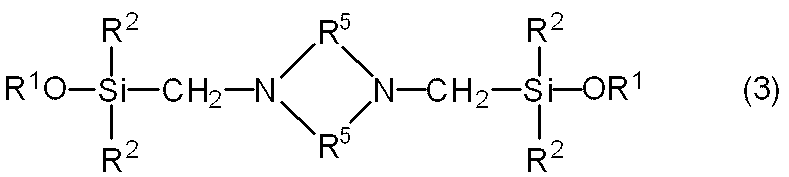
3. 下記構造式(3)で表される1または2の有機ケイ素化合物、

4. 下記構造式(4)で表される1の有機ケイ素化合物、

5. 下記構造式(5)

で表される、イソシアネート基を有する化合物と、式(6)

で表される化合物とを反応させる1または2の有機ケイ素化合物の製造方法、
6. 下記構造式(7)

で表される化合物と、式(8)

で表される化合物とを反応させる1または2の有機ケイ素化合物の製造方法、
7.下記構造式(9)

で表される化合物と、式(8)

で表される化合物とを反応させる3の有機ケイ素化合物の製造方法、
8. 下記構造式(10)

で表される化合物と、式(8)

で表される化合物とを反応させる4の有機ケイ素化合物の製造方法、
9. 1~4のいずれかの有機ケイ素化合物を含む硬化性組成物、
10. 硬化触媒を含有する9の硬化性組成物、
11. 前記硬化触媒が、アミン系化合物である10の硬化性組成物、
12. 9~11のいずれかの硬化性組成物からなるコーティング剤、
13. 9~11のいずれかの硬化性組成物からなる接着剤、
14. 9~11のいずれかの硬化性組成物が硬化してなる硬化物品、
15. 12のコーティング剤が硬化してなる被覆層を有する硬化物品、
16. 13の接着剤が硬化してなる接着層を有する硬化物品
を提供する。
このような特性を有する本発明の化合物は、コーティング剤、接着剤、シーラント等の用途に好適に用いることができる。
本発明に係る有機ケイ素化合物は、下記構造式(1)で示される。

上記R1およびR2において、炭素原子数1~10のアルキル基としては、直鎖状、環状、分枝状のいずれでもよく、その具体例としては、メチル、エチル、n-プロピル、i-プロピル、n-ブチル、s-ブチル、t-ブチル、n-ペンチル、ネオペンチル、n-ヘキシル、n-ヘプチル、n-オクチル、n-ノニル、n-デシル基等の直鎖または分岐鎖アルキル基;シクロプロピル、シクロブチル、シクロペンチル、シクロヘキシル、シクロヘプチル、シクロオクチル、イソボルニル基等のシクロアルキル基が挙げられる。
また、炭素原子数6~10のアリール基の具体例としては、フェニル、トリル、キシリル、α-ナフチル、β-ナフチル基等が挙げられる。
なお、これらの基の水素原子の一部または全部は、アルキル基、アリール基、F,Cl,Br等のハロゲン原子やシアノ基等で置換されていてもよく、その具体例としては、3-クロロプロピル基、3,3,3-トリフルオロプロピル基、2-シアノエチル基等が挙げられる。
これらの中でも、R1、R2としては、メチル基、エチル基、フェニル基が好ましく、反応性や入手の容易さ、生産性、コストの面からメチル基がより好ましい。
Xの炭素原子数1~20のアルキレン基の具体例としては、メチレン、エチレン、トリメチレン、プロピレン、テトラメチレン、イソブチレン、ジメチルエチレン、ペンタメチレン、2,2-ジメチルトリメチレン、ヘキサメチレン、ヘプタメチレン、オクタメチレン、ノナメチレン、デシレン(デカメチレン)基等の直鎖または分岐鎖アルキレン基;シクロペンチレン基、シクロヘキシレン基等のシクロアルキレン基などが挙げられる。
炭素原子数1~20のアルキレン基としては、下記式(i)で表されるような鎖状部分と環状部分とが共存する2価の基であってもよい。
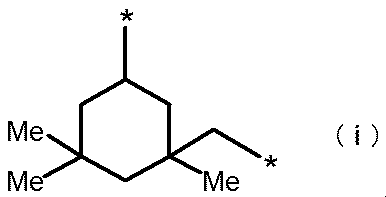
Xの炭素原子数6~20のアリーレン基の具体例としては、1,2-フェニレン、1,3-フェニレン、1,4-フェニレン、オキシビスフェニレン、スルホンビスフェニレン、トルエンジイル、キシレンジイル、ナフタレンジイル基等が挙げられる。
なお、これらの基の水素原子の一部または全部は、アルキル基、アリール基、F,Cl,Br等のハロゲン原子やシアノ基等で置換されていてもよく、その具体例としては、3-クロロトリメチレン基、2,3,3-トリフルオロトリメチレン基、2-クロロ-1,4-フェニレン基、ジフルオロメチレンビスフェニレン基等が挙げられる。
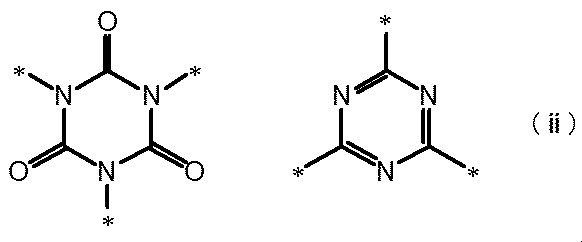
なお、本発明においてポリオキシアルキレン構造が「直鎖状」であるとは、当該ポリオキシアルキレン構造を構成する繰り返し単位である2価のオキシアルキレン基同士が直鎖状に連結していることを意味するものであって、各オキシアルキレン基自体は直鎖状であっても分岐状(例えば、-CH2CH(CH3)O-等のプロピレンオキシ基)であってもよい。

また、pは、1以上の整数であるが、得られる硬化物の機械特性や組成物の作業性の観点から、1~1000が好ましく、1~500がより好ましく、2~100がより一層好ましい。なお、pが2以上の場合、複数存在するR8は互いに同一でも異なっていてもよい。
R3の炭素原子数1~10のアルキル基、炭素原子数6~10のアリール基としては上記R1で例示した基と同様のものが挙げられる。また、R3同士が結合して形成される炭素原子数1~10のアルキレン基の具体例としては、上記Xで例示した基のうち、炭素原子数1~10のものが挙げられる。
また、炭素原子数6~20のアリーレン基の具体例としては、1,2-フェニレン、1,3-フェニレン、1,4-フェニレン、オキシビスフェニレン、スルホンビスフェニレン、トルエンジイル、キシレンジイル、ナフタレンジイル基等のアリーレン基などが挙げられる。
特に、R3同士が互いに結合して環を形成する場合、R3としては、互いに独立して、メチレン、エチレン基(すなわち、R3同士が互いに結合したアルキレン基としてはエチレン、トリメチレン、テトラメチレン基)が好ましく、反応性や入手の容易さ、生産性、コストの面を考慮すると、メチレン基(同アルキレン基としてはエチレン基)がより好ましい。
上記R4は、水素原子、非置換もしくは置換の炭素原子数1~10、好ましくは炭素原子数1~6のアルキル基、または非置換もしくは置換の炭素原子数6~10のアリール基、好ましくは炭素原子数6のアリール基を表すが、Xが2価または3価の場合、2個のN(R4)におけるR4同士が結合して、非置換もしくは置換の炭素原子数1~10のアルキレン基、または非置換もしくは置換の炭素原子数6~20のアリーレン基を形成していてもよい。
例えば、Xが2価の場合、下記式に示されるように、Xの両側の窒素原子上のR4同士が結合して上記アルキレン基等を形成していてもよい。

特に、R4同士が互いに結合して環を形成する場合、R4としては、互いに独立して、メチレン、エチレン基(すなわち、R4同士が互いに結合したアルキレン基としてはエチレン、トリメチレン、テトラメチレン基)が好ましく、反応性や入手の容易さ、生産性、コストの面を考慮すると、メチレン基(同アルキレン基としてはエチレン基)がより好ましい。
なお、これらの基の水素原子の一部または全部は、アルキル基、アリール基、F,Cl,Br,I等のハロゲン原子やシアノ基等で置換されていてもよく、その具体例としては、2-クロロエチレン、2-ブロモエチレン、2-クロロプロピレン、2-ブロモプロピレン、1-クロロメチルエチレン、1-ブロモメチルエチレン、2-クロロオクタメチレン、2-ブロモオクタメチレン、1-クロロメチルヘプタメチレン、1-ブロモメチルヘプタメチレン基等が挙げられる。
これらの中でも、単結合、メチレン、エチレン、トリメチレン、イソプロピレン、オクタメチレン、2-ブロモエチレン、2-ブロモプロピレン、1-ブロモメチルエチレン、2-ブロモオクタメチレン、1-ブロモメチルヘプタメチレン基が好ましく、単結合、エチレン、トリメチレン、イソプロピレン、2-ブロモエチレン、2-ブロモプロピレン基がより好ましく、単結合、エチレン、イソプロピレン、2-ブロモエチレン基がより一層好ましい。
これらの中でも、A1、A2、A3、A4およびA5としては、単結合、アミノ結合(-NH-、-N(R3)-)、またはオキソ結合(-C(=O)-)が好ましい。
なお、A1、A2、A3、A4、A5およびYから形成される2価の基において、酸素原子が連続する構造「-O-O-」となる組み合わせはとらない。
一分子あたりのnの平均は1~3であるが、2~3が好ましく、2がより好ましい。nが1未満であると、加水分解性基が不足することにより反応性に劣るため、これを含有する組成物の硬化性およびその硬化物の機械特性が不十分になる。
一方、nが3を超えると、反応点が多くなり、架橋密度が高くなり過ぎるため、本発明の有機ケイ素化合物を含む組成物の保存安定性が悪化したり、得られる硬化物にクラックが発生しやすくなったり、硬化物が良好な機械特性を示さなくなるおそれがある。

X1は、ポリオキシアルキレン構造を含む2価の有機基、非置換もしくは置換の炭素原子数1~20のアルキレン基、非置換もしくは置換の炭素原子数7~20のアラルキレン基、または非置換もしくは置換の炭素原子数6~20のアリーレン基を表し、これらの基の具体例としては、上記Xで例示した基と同様のものが挙げられる。
Y1は、O、S、またはN(R4)を表すが、本発明の有機ケイ素化合物の反応性の観点から、N(R4)が好ましく、特に、R4同士が結合して、非置換もしくは置換の炭素原子数1~10のアルキレン基を形成しているものがより好ましい。R4としては、上記で例示した基と同様のものが挙げられる。
また、A1およびA2としては、単結合が好ましい。

R5は、互いに独立して、非置換もしくは置換の炭素原子数1~10のアルキレン基、好ましくは炭素原子数1~3のアルキレン基を表す。
R5の具体例としては、上記Xの非置換もしくは置換の炭素原子数1~20のアルキレン基で例示した基と同様のものが挙げられるが、これらの中でも、R5としては、メチレン、エチレン、トリメチレン基が好ましく、反応性、入手の容易さ、生産性、コスト等の観点からエチレン基がより好ましい。

X2は、O、SまたはN(R3)を表すが、本発明の有機ケイ素化合物の反応性の観点から、S、N(R3)が好ましい。R3としては、上記で例示した基と同様のものが挙げられる。

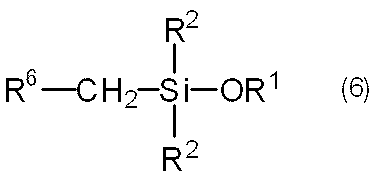
より具体的には、上記式(6)で表されるモノアルコキシシランIと、上記式(5)で表されるイソシアネート基を有する化合物との反応割合は、ウレタン化反応の副生物を抑制するとともに、得られる有機ケイ素化合物の保存安定性や特性を高めることを考慮すると、上記式(6)で表されるモノアルコキシシランI中のイソシアネート基と反応し得る官能基1molに対し、上記式(5)で表されるイソシアネート基を有する化合物中のイソシアネート基が0.1~2.0molとなる割合が好ましく、0.4~1.5molとなる割合がより好ましく、0.8~1.2molとなる割合がより一層好ましい。
触媒としては、一般的にウレタン化反応で使用されているものから適宜選択すればよく、その具体例としては、ジブチルスズオキシド、ジオクチルスズオキシド、スズ(II)ビス(2-エチルヘキサノエート)、ジブチルスズジラウレート、ジオクチルスズジラウレート等が挙げられる。
触媒の使用量は触媒量であればよいが、通常、上記式(6)で表されるモノアルコキシシランIと、上記式(5)で表されるイソシアネート基を有する化合物の合計に対して0.001~1質量%である。
その具体例としては、ペンタン、ヘキサン、ヘプタン、オクタン、デカン、シクロヘキサン等の炭化水素系溶媒;ベンゼン、トルエン、キシレン等の芳香族系溶媒;アセトン、メチルエチルケトン、メチルイソブチルケトン等のケトン系溶媒;ホルムアミド、N,N-ジメチルホルムアミド、ピロリドン、N-メチルピロリドン等のアミド系溶媒、酢酸エチル、酢酸ブチル、γ-ブチロラクトン、プロピレングリコール-1-モノメチルエーテル-2-アセタート等のエステル系溶媒;ジエチルエーテル、ジブチルエーテル、シクロペンチルメチルエーテル、テトラヒドロフラン、1,4-ジオキサン等のエーテル系溶媒などが挙げられ、これらは単独で用いても、2種以上組み合わせて用いてもよい。
反応時間は特に制限されないが、通常10分~24時間である。


これらの中でも、加水分解性の観点から、クロロメチルジメチルメトキシシラン、アクリロイルオキシメチルジメチルメトキシシラン、メタクリロイルオキシメチルジメチルメトキシシランが好ましく、クロロメチルジメチルメトキシシラン、アクリロイルオキシメチルジメチルメトキシシランがより好ましい。
より具体的には、モノアルコキシシランIIの有機官能基が脱離基を有する場合、すなわち塩素原子、臭素原子、ヨウ素原子、メタンスルホネート基、トリフルオロメタンスルホネート基およびp-トルエンスルホネート基等の場合には、上記脱離基と、上記式(7)で表される水酸基、メルカプト基またはアミノ基を有する化合物との求核置換反応(脱塩反応)を従来公知の一般的な製造方法に基づき行えばよく、またモノアルコキシシランIIの有機官能基が(メタ)アクリロイルオキシ基の場合には、上記(メタ)アクリロイルオキシ基と、上記式(7)で表される水酸基、メルカプト基またはアミノ基を有する化合物とのマイケル付加反応を従来公知の一般的な製造方法に基づき行えばよい。
上記塩基性化合物としては、通常、求核置換反応に用いられている各種の塩基性化合物を使用でき、式(7)で表される化合物の活性水素以外とは反応しないものであればいずれを使用してもよい。
具体的には、金属ナトリウム、金属リチウム等のアルカリ金属;金属カルシウム等のアルカリ土類金属;水素化ナトリウム、水素化リチウム、水素化カリウム、水素化セシウム等のアルカリ金属水素化物;水素化カルシウム等のアルカリ土類金属水素化物;ナトリウムメトキシド、ナトリウムエトキシド、カリウムターシャリーブトキシド、ナトリウムターシャリーブトキシド等のアルカリ金属およびアルカリ土類アルコキシド;炭酸カリウム、炭酸ナトリウム、炭酸カルシウム等のアルカリ金属およびアルカリ土類金属炭酸塩;炭酸水素ナトリウム、炭酸水素カリウム等のアルカリ金属およびアルカリ土類炭酸水素塩;トリエチルアミン、トリブチルアミン、N,N-ジイソプロピルエチルアミン、テトラメチルエチレンジアミン、トリエチレンジアミン、ピリジン、N,N-ジメチル-4-アミノピリジン等の3級アミン;ジアザビシクロウンデセン、ジアザビシクロノネン等のアミジンなどが挙げられる。
これらの中でも、反応効率の観点から、水素化ナトリウム等のアルカリ金属水素化物、ナトリウムメトキシド、ナトリウムエトキシド、カリウムターシャリーブトキシド等のアルカリ金属およびアルカリ土類アルコキシド、トリエチルアミン、トリブチルアミン等の3級アミン、ジアザビシクロウンデセン等のアミジンが好ましく、ナトリウムメトキシド、カリウムターシャリーブトキシド、トリエチルアミン、ジアザビシクロウンデセンがより好ましい。
その具体例としては、メタノール、エタノール、プロパノール、イソプロパノール、ブタノール等のアルコール系溶媒;ペンタン、ヘキサン、ヘプタン、オクタン、デカン、シクロヘキサン等の炭化水素系溶媒;ベンゼン、トルエン、キシレン等の芳香族系溶媒;ホルムアミド、N,N-ジメチルホルムアミド、ピロリドン、N-メチルピロリドン等のアミド系溶媒;ジエチルエーテル、ジブチルエーテル、シクロペンチルメチルエーテル、テトラヒドロフラン、1,4-ジオキサン等のエーテル系溶媒;アセトニトリル等のニトリル系溶媒などが挙げられ、これらは単独で用いても、2種以上組み合わせて用いてもよい。
これらの中でも、反応効率の観点から、メタノール、エタノール、トルエン、キシレン、ジメチルホルムアミド、シクロペンチルメチルエーテル、テトラヒドロフラン、アセトニトリルが好ましい。
また、求核置換反応は、通常、大気圧下で行うが、上記モノアルコキシシランIIの揮散抑制、反応速度向上等の目的で、加圧下で行ってもよい。
反応時間は特に制限されないが、通常10分~100時間である。
触媒としては、一般的に求核置換反応に用いられているものから、用いる原料と反応しないものを適宜選択すればよい。
その具体例としては、12-クラウン-4、15-クラウン-5、18-クラウン-6、ジベンゾ-18-クラウン-6等のクラウンエーテル;テトラブチルアンモニウムクロリド、テトラブチルアンモニウムブロミド、テトラブチルアンモニウムヨージド、テトラブチルアンモニウム硫酸水素塩等の4級アンモニウム塩;ヨウ化カリウム、ヨウ化ナトリウム等のアルカリ金属ハロゲン化物などが挙げられ、これらは単独で用いても、2種以上組み合わせて用いてもよい。
これらの中でも、反応性および入手容易性の観点から、18-クラウン-6、テトラブチルアンモニウムブロミド、テトラブチルアンモニウムヨージド、テトラブチルアンモニウム硫酸水素塩、ヨウ化カリウムが好ましく、テトラブチルアンモニウムヨージド、テトラブチルアンモニウム硫酸水素塩、ヨウ化カリウムがより好ましく、テトラブチルアンモニウム硫酸水素塩がより一層好ましい。
上記触媒は、相間移動触媒として作用、または上記脱離基を活性化し、反応速度を向上させることができる。
触媒としては、特に限定されるものではないが、一般的にラジカル付加反応で使用されているものから適宜選択すればよく、熱、光、あるいはレドックス反応などによりラジカルを発生させるラジカル重合開始剤が好適である。
触媒の使用量は触媒量であればよいが、通常、式(7)で表される化合物と、式(8)で表されるモノアルコキシシランIIの合計に対して0.001~10質量%である。
その具体例としては、ペンタン、ヘキサン、ヘプタン、オクタン、デカン、シクロヘキサン等の炭化水素系溶媒;ベンゼン、トルエン、キシレン等の芳香族系溶媒;ホルムアミド、N,N-ジメチルホルムアミド、ピロリドン、N-メチルピロリドン等のアミド系溶媒;酢酸エチル、酢酸ブチル、γ-ブチロラクトン、プロピレングリコール-1-モノメチルエーテル-2-アセタート等のエステル系溶媒;アセトニトリル等のニトリル系溶媒などが挙げられ、これらは単独で用いても、2種以上組み合わせて用いてもよい。
反応時間は特に制限されないが、通常10分~24時間である。
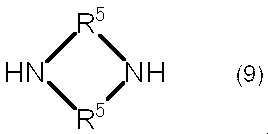
より具体的には、上記式(7)で表される化合物と、式(8)で表されるモノアルコキシシランIIとの反応で例示した具体例と同様のものが挙げられる。

より具体的には、上記式(7)で表される化合物と、式(8)で表されるモノアルコキシシランIIとの反応で例示した具体例と同様のものが挙げられる。
上記(A)成分の有機ケイ素化合物は、当該有機ケイ素化合物の構造に由来し、これを含有する組成物を用いて被覆処理や接着処理してなる硬化物品の硬化性、柔軟性が従来の組成物に比べ優れた硬化物を与える。
溶剤としては、(A)成分の溶解能を有していれば特に限定されるものではなく、その具体例としては、ペンタン、ヘキサン、ヘプタン、オクタン、デカン、シクロヘキサン等の炭化水素系溶剤;ベンゼン、トルエン、キシレン等の芳香族系溶剤;ホルムアミド、N,N-ジメチルホルムアミド、ピロリドン、N-メチルピロリドン等のアミド系溶剤、酢酸エチル、酢酸ブチル、γ-ブチロラクトン、プロピレングリコール-1-モノメチルエーテル-2-アセタート等のエステル系溶剤;アセトン、メチルエチルケトン、メチルイソブチルケトン等のケトン系溶剤;ジエチルエーテル、ジブチルエーテル、シクロペンチルメチルエーテル、テトラヒドロフラン、1,4-ジオキサン等のエーテル系溶剤などが挙げられ、これらは単独で用いても、2種以上組み合わせて用いてもよい。
これらの中でも、溶解性および揮発性等の観点から、トルエン、キシレン等の芳香族系溶剤が好ましい。
溶剤の添加量は、(A)成分100質量部に対して、10~20,000質量部が好ましく、100~10,000質量部がより好ましい。
各組成物の塗布方法は特に限定されず、その具体例としては、スプレーコート、スピンコート、ディップコート、ローラーコート、刷毛塗り、バーコート、フローコート等の公知の方法から適宜選択して用いることができる。
硬化反応温度および時間は、使用する基材、水分濃度、触媒濃度、および加水分解性基の種類等の因子に応じて適宜変更し得る。硬化反応温度は通常、作業性等の観点から25℃付近の常温であることが好ましいが、硬化反応を促進するために、使用する基材の耐熱温度を超えない範囲内に加熱して硬化させてもよい。硬化反応時間は通常、作業性等の観点から1分から1週間程度である。
なお、下記において、粘度は、B型回転粘度計による25℃における測定値である。
[実施例1-1]有機ケイ素化合物1の合成







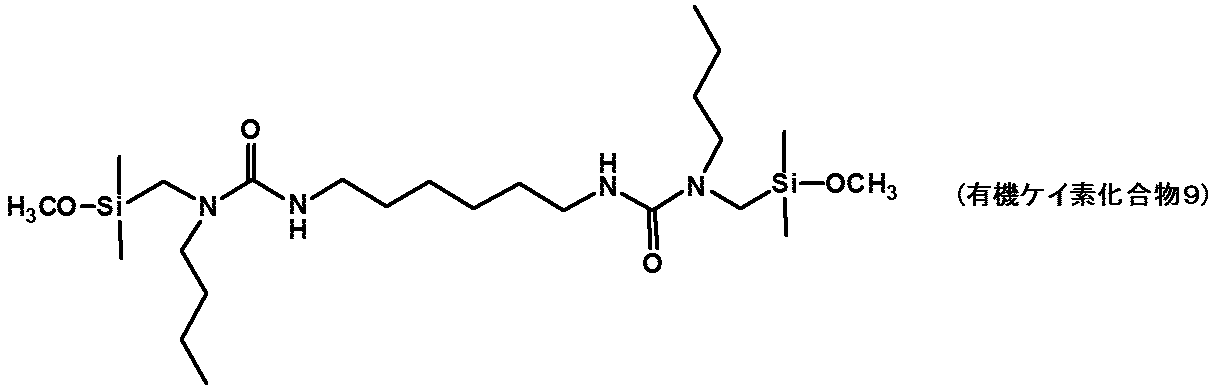
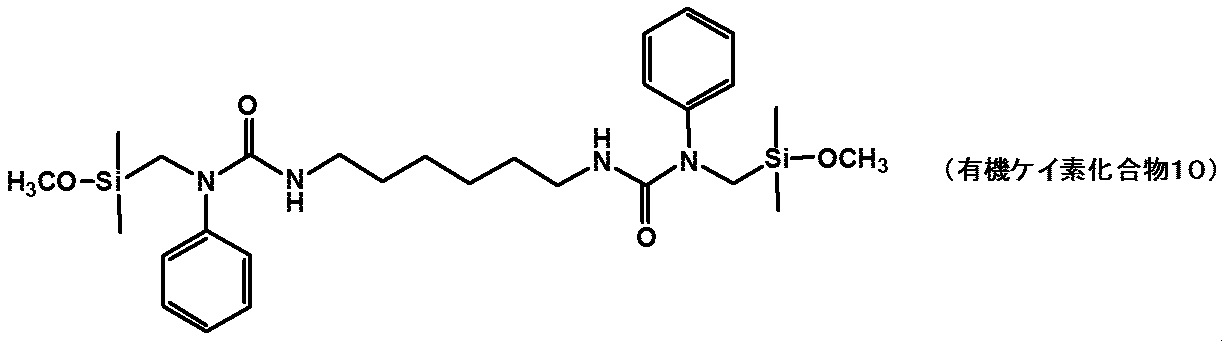


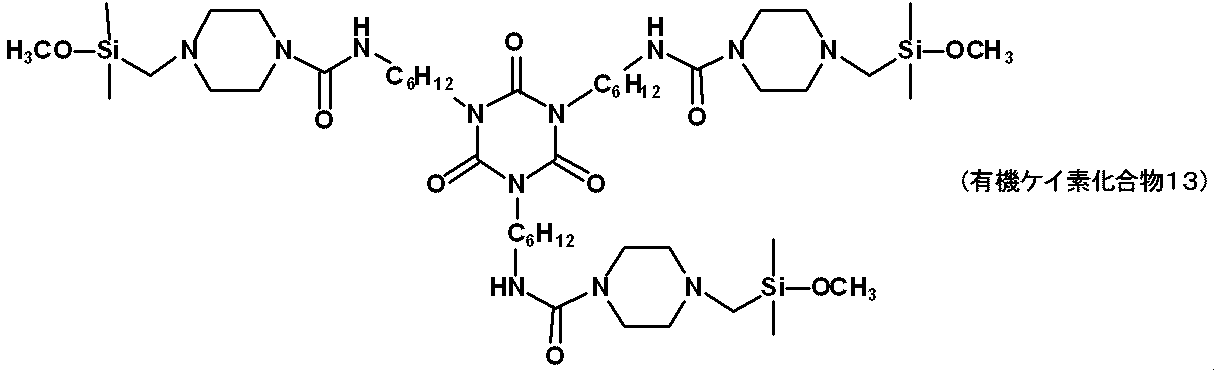
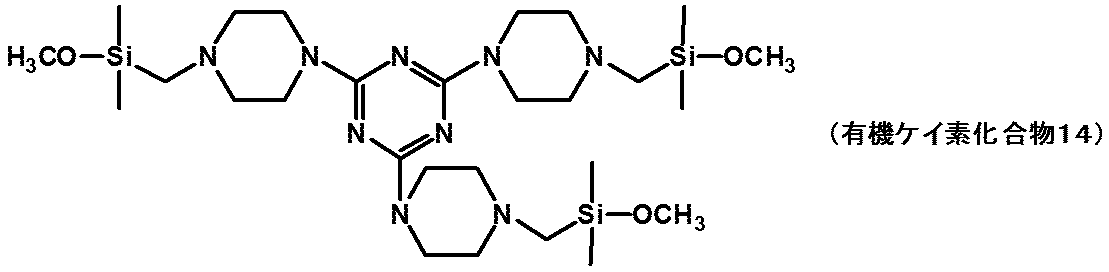


[実施例2-1]
粘度5,000mPa・sのα,ω-ジヒドロキシジメチルポリシロキサン100質量部と、上記実施例1-1で得られた有機ケイ素化合物1 1質量部と、硬化触媒であるテトラメチルグアニジルプロピルトリメトキシシラン0.5質量部とを撹拌機を用いて湿気遮断下で均一に混合し、組成物を調製した。
実施例2-1の有機ケイ素化合物1を、実施例1-2~1-15で得られた有機ケイ素化合物2~15、比較例1-1~1-2で得られた有機ケイ素化合物16~17にそれぞれ変更した以外は、実施例2-1と同様にして組成物を調製した。
実施例2-1の有機ケイ素化合物1を用いなかった以外は、実施例2-1と同様にして組成物を調製した。
〔増粘率〕
上記調製方法にて得た組成物を、窒素ガスを充填したガラス瓶中にて25℃、50%RHの空気下で密栓保管し、所定の時間経過後の増粘率((所定の時間経過後の粘度)/(充填直後の粘度)×100)を測定した。値が大きいほど、アルコキシシリル基の反応性が良好であることを示す。

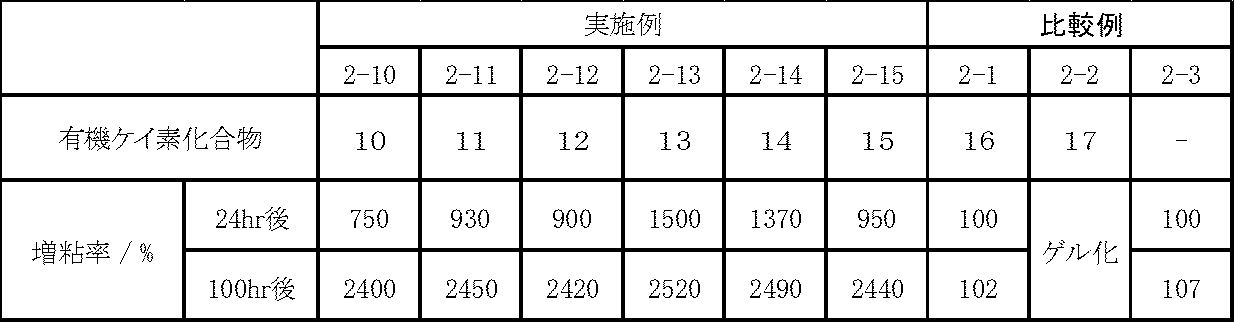
一方、比較例2-1,2-3で調製した組成物は、ほとんど増粘しておらず、十分な反応性を確保することができず、また、比較例2-2では、架橋密度が高くなり過ぎたために所定の時間経過後にゲル化してしまい、いずれも本発明の目的にはそぐわないことがわかる。
[実施例3-1]
シリコーン系コーティング剤KR-400(信越化学工業(株)製)80質量部、上記実施例1-1で得られた有機ケイ素化合物1 20質量部とを撹拌機を用いて湿気遮断下で均一に混合し、組成物を調製した。
得られた組成物を、25℃、50%RHの空気下でバーコーターNo.5を用いて磨き鋼板に塗布し、25℃、50%RHの空気下で7日間乾燥・硬化させ、硬化被膜を作製した。
実施例3-1の有機ケイ素化合物1を、実施例1-2~1-15で得られた有機ケイ素化合物2~15、比較例1-1~1-2で得られた有機ケイ素化合物16~17にそれぞれ変更した以外は、実施例3-1と同様にして組成物および硬化被膜を作製した。
実施例3-1の有機ケイ素化合物1を用いなかった以外は、実施例3-1と同様にして組成物および硬化被膜を作製した。
〔柔軟性〕
上記塗布方法にて磨き鋼板に硬化被膜を形成した試験片を、JIS-K5600-5-1に記載のマンドレル屈曲試験機を用いて、直径8mmの円筒形マンドレルを介して屈曲させて、屈曲変形による硬化被膜面のヒビ割れ(クラック)・剥離の有無を肉眼で観察した。ヒビ割れ・剥離が全く観測されなかった場合には、硬化被膜の柔軟性に優れるものとして「○」と評価した。ヒビ割れ・剥離が観測された場合には「×」と評価した。


一方、比較例3-1で調製した組成物は、所定時間経過後も塗膜表面にタック(べとつき)があり、十分な反応性を確保することができていない。また、比較例3-2、3-3では、架橋密度が高くなり過ぎたため、硬化被膜の柔軟性を確保することができていない。
このような特性を有する本発明の化合物は、コーティング剤、接着剤、シーラント等の用途に好適に用いることができる。
Claims (16)
- 下記構造式(1)で表される有機ケイ素化合物。

R2は、互いに独立して、非置換もしくは置換の炭素原子数1~10のアルキル基、または非置換もしくは置換の炭素原子数6~10のアリール基を表し、
nは、Xの価数で1~3の数を表し、
Xは、ポリオキシアルキレン構造を含む1~3価の有機基、非置換もしくは置換の炭素原子数1~20のアルキレン基、非置換もしくは置換の炭素原子数7~20のアラルキレン基、非置換もしくは置換の炭素原子数6~20のアリーレン基、イソシアヌレート、トリアジン、O、S、N、N(R3)およびN(R3)2から選ばれるいずれかの1~3価の基を表し、
R3は、互いに独立して、水素原子、非置換もしくは置換の炭素原子数1~10のアルキル基、または非置換もしくは置換の炭素原子数6~10のアリール基を表すが、R3同士が結合して、非置換もしくは置換の炭素原子数1~10のアルキレン基、または非置換もしくは置換の炭素原子数6~20のアリーレン基を形成していてもよく、
Yは、単結合、O、S、またはN(R4)を表し、
R4は、水素原子、非置換もしくは置換の炭素原子数1~10のアルキル基、または非置換もしくは置換の炭素原子数6~10のアリール基を表すが、Xが2価または3価の場合、2個のN(R4)におけるR4同士が結合して、非置換もしくは置換の炭素原子数1~10のアルキレン基、または非置換もしくは置換の炭素原子数6~20のアリーレン基を形成していてもよく、
A1、A2、A3、A4およびA5は、単結合、非置換もしくは置換の炭素原子数1~20の2価炭化水素基またはヘテロ原子を含有する2価の連結基を表す。
ただし、Xが、ポリオキシアルキレン構造を含む1~3価の有機基、非置換もしくは置換の炭素原子数1~20のアルキレン基、非置換もしくは置換の炭素原子数7~20のアラルキレン基、非置換もしくは置換の炭素原子数6~20のアリーレン基、イソシアヌレート、またはトリアジンの場合、Yは、O、S、またはN(R4)であり、Xが、O、S、N、N(R3)、またはN(R3)2の場合、A1、A2、A3、A4、A5およびYは、単結合である。) - 下記構造式(2)で表される請求項1記載の有機ケイ素化合物。

- 下記構造式(3)で表される請求項1または2記載の有機ケイ素化合物。
- 下記構造式(4)で表される請求項1記載の有機ケイ素化合物。

- 下記構造式(5)

で表される、イソシアネート基を有する化合物と、式(6)
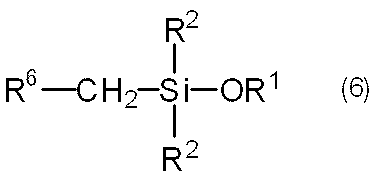
で表される化合物とを反応させる請求項1または2記載の有機ケイ素化合物の製造方法。 - 下記構造式(7)

で表される化合物と、式(8)

で表される化合物とを反応させる請求項1または2記載の有機ケイ素化合物の製造方法。 - 下記構造式(9)
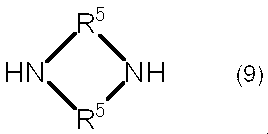
で表される化合物と、式(8)

で表される化合物とを反応させる請求項3記載の有機ケイ素化合物の製造方法。 - 下記構造式(10)

で表される化合物と、式(8)

で表される化合物とを反応させる請求項4記載の有機ケイ素化合物の製造方法。 - 請求項1~4のいずれか1項記載の有機ケイ素化合物を含む硬化性組成物。
- 硬化触媒を含有する請求項9記載の硬化性組成物。
- 前記硬化触媒が、アミン系化合物である請求項10記載の硬化性組成物。
- 請求項9~11のいずれか1項記載の硬化性組成物からなるコーティング剤。
- 請求項9~11のいずれか1項記載の硬化性組成物からなる接着剤。
- 請求項9~11のいずれか1項記載の硬化性組成物が硬化してなる硬化物品。
- 請求項12のコーティング剤が硬化してなる被覆層を有する硬化物品。
- 請求項13の接着剤が硬化してなる接着層を有する硬化物品。
Priority Applications (4)
| Application Number | Priority Date | Filing Date | Title |
|---|---|---|---|
| KR1020207032573A KR102784409B1 (ko) | 2018-04-17 | 2019-01-22 | 유기 규소 화합물 및 그 제조 방법 |
| US17/048,372 US12240868B2 (en) | 2018-04-17 | 2019-01-22 | Organic silicon compound and production method therefor |
| CN201980026158.7A CN111989333B (zh) | 2018-04-17 | 2019-01-22 | 有机硅化合物及其制造方法 |
| EP19788571.8A EP3783003B1 (en) | 2018-04-17 | 2019-01-22 | Organic silicon compound and production method therefor |
Applications Claiming Priority (2)
| Application Number | Priority Date | Filing Date | Title |
|---|---|---|---|
| JP2018-079153 | 2018-04-17 | ||
| JP2018079153A JP6930484B2 (ja) | 2018-04-17 | 2018-04-17 | 有機ケイ素化合物およびその製造方法 |
Publications (1)
| Publication Number | Publication Date |
|---|---|
| WO2019202795A1 true WO2019202795A1 (ja) | 2019-10-24 |
Family
ID=68239177
Family Applications (1)
| Application Number | Title | Priority Date | Filing Date |
|---|---|---|---|
| PCT/JP2019/001758 Ceased WO2019202795A1 (ja) | 2018-04-17 | 2019-01-22 | 有機ケイ素化合物およびその製造方法 |
Country Status (6)
| Country | Link |
|---|---|
| US (1) | US12240868B2 (ja) |
| EP (1) | EP3783003B1 (ja) |
| JP (1) | JP6930484B2 (ja) |
| KR (1) | KR102784409B1 (ja) |
| CN (1) | CN111989333B (ja) |
| WO (1) | WO2019202795A1 (ja) |
Cited By (2)
| Publication number | Priority date | Publication date | Assignee | Title |
|---|---|---|---|---|
| WO2020070984A1 (ja) * | 2018-10-05 | 2020-04-09 | 信越化学工業株式会社 | 室温硬化性樹脂組成物、コーティング剤、接着剤及びシーリング剤、並びに物品 |
| EP4006042A1 (en) * | 2020-11-30 | 2022-06-01 | Shin-Etsu Chemical Co., Ltd. | Method for producing nitrogen-containing organoxysilane compound |
Families Citing this family (4)
| Publication number | Priority date | Publication date | Assignee | Title |
|---|---|---|---|---|
| EP3976690A1 (en) * | 2019-05-24 | 2022-04-06 | Soprema | Silyl terminated prepolymer and composition comprising the same |
| JP7711382B2 (ja) | 2021-01-20 | 2025-07-23 | 信越化学工業株式会社 | 有機ケイ素化合物、その製造方法、および硬化性組成物 |
| TWI854263B (zh) * | 2022-07-22 | 2024-09-01 | 國立臺灣大學 | 一種可自修復循環材料及其製備方法 |
| JP2025168864A (ja) * | 2024-04-30 | 2025-11-12 | 信越化学工業株式会社 | 含窒素多官能オルガノキシシラン化合物の製造方法 |
Citations (10)
| Publication number | Priority date | Publication date | Assignee | Title |
|---|---|---|---|---|
| US2567131A (en) * | 1950-06-30 | 1951-09-04 | Dow Corning | Organosilicon polymers |
| GB686068A (en) * | 1950-06-30 | 1953-01-14 | Dow Corning Ltd | Improvements in or relating to organosilylamines |
| JPS5113130B1 (ja) * | 1967-06-03 | 1976-04-26 | ||
| JPS5265227A (en) * | 1975-11-21 | 1977-05-30 | Castrol Ltd | Silane derivatives |
| JPH0345629A (ja) * | 1989-07-14 | 1991-02-27 | Shin Etsu Chem Co Ltd | ビス―シリルアルコキシアリーレン化合物 |
| JP2004099908A (ja) | 2003-10-20 | 2004-04-02 | Kanegafuchi Chem Ind Co Ltd | 硬化性組成物 |
| JP2007534811A (ja) * | 2004-04-27 | 2007-11-29 | ワッカー ケミー アクチエンゲゼルシャフト | シロキサンコポリマーの製造方法 |
| WO2008065134A1 (de) * | 2006-12-01 | 2008-06-05 | Wacker Chemie Ag | Methylolgruppen enthaltende silane |
| JP2008531634A (ja) * | 2005-03-03 | 2008-08-14 | ワッカー ケミー アクチエンゲゼルシャフト | アルコキシシリルメチルイソシアヌレートの製造法 |
| JP2010209205A (ja) | 2009-03-10 | 2010-09-24 | Kaneka Corp | 硬化性組成物 |
Family Cites Families (7)
| Publication number | Priority date | Publication date | Assignee | Title |
|---|---|---|---|---|
| US4141851A (en) | 1975-11-21 | 1979-02-27 | Castrol Limited | Silane derivatives |
| DE4034612A1 (de) * | 1990-10-31 | 1992-05-07 | Huels Chemische Werke Ag | Verfahren zur herstellung von methacryloxy- oder acryloxygruppen enthaltenden organosilanen |
| DE102004059378A1 (de) * | 2004-12-09 | 2006-06-22 | Consortium für elektrochemische Industrie GmbH | Alpha-Aminomethyl-alkoxysilane mit hoher Reaktivität und verbesserter Stabilität |
| US7599340B2 (en) | 2005-01-25 | 2009-10-06 | Interdigital Technology Corporation | Method and apparatus or eliminating interference caused by hidden nodes |
| JP2011012002A (ja) | 2009-07-01 | 2011-01-20 | Shin-Etsu Chemical Co Ltd | メラミン官能性有機ケイ素化合物及びその製造方法 |
| JP5705120B2 (ja) * | 2009-10-02 | 2015-04-22 | 旭化成ケミカルズ株式会社 | 変性共役ジエン系重合体の製造方法、変性共役ジエン系重合体、及び変性共役ジエン系重合体組成物 |
| CN107805309B (zh) * | 2016-09-09 | 2021-03-19 | 翁秋梅 | 一种非共价交联结构的动态聚合物及其应用 |
-
2018
- 2018-04-17 JP JP2018079153A patent/JP6930484B2/ja active Active
-
2019
- 2019-01-22 WO PCT/JP2019/001758 patent/WO2019202795A1/ja not_active Ceased
- 2019-01-22 US US17/048,372 patent/US12240868B2/en active Active
- 2019-01-22 KR KR1020207032573A patent/KR102784409B1/ko active Active
- 2019-01-22 EP EP19788571.8A patent/EP3783003B1/en active Active
- 2019-01-22 CN CN201980026158.7A patent/CN111989333B/zh active Active
Patent Citations (10)
| Publication number | Priority date | Publication date | Assignee | Title |
|---|---|---|---|---|
| US2567131A (en) * | 1950-06-30 | 1951-09-04 | Dow Corning | Organosilicon polymers |
| GB686068A (en) * | 1950-06-30 | 1953-01-14 | Dow Corning Ltd | Improvements in or relating to organosilylamines |
| JPS5113130B1 (ja) * | 1967-06-03 | 1976-04-26 | ||
| JPS5265227A (en) * | 1975-11-21 | 1977-05-30 | Castrol Ltd | Silane derivatives |
| JPH0345629A (ja) * | 1989-07-14 | 1991-02-27 | Shin Etsu Chem Co Ltd | ビス―シリルアルコキシアリーレン化合物 |
| JP2004099908A (ja) | 2003-10-20 | 2004-04-02 | Kanegafuchi Chem Ind Co Ltd | 硬化性組成物 |
| JP2007534811A (ja) * | 2004-04-27 | 2007-11-29 | ワッカー ケミー アクチエンゲゼルシャフト | シロキサンコポリマーの製造方法 |
| JP2008531634A (ja) * | 2005-03-03 | 2008-08-14 | ワッカー ケミー アクチエンゲゼルシャフト | アルコキシシリルメチルイソシアヌレートの製造法 |
| WO2008065134A1 (de) * | 2006-12-01 | 2008-06-05 | Wacker Chemie Ag | Methylolgruppen enthaltende silane |
| JP2010209205A (ja) | 2009-03-10 | 2010-09-24 | Kaneka Corp | 硬化性組成物 |
Non-Patent Citations (7)
| Title |
|---|
| ADIMA, A. ET AL.: "Facile cleavage of Si-C bonds during the Sol-Gel hydrolysis of aminomethyltrialkoxysilanes-A new method for the methylation of primary amines", EUROPEAN JOURNAL OF ORGANIC CHEMISTRY, vol. 2004, no. 12, 2004, pages 2582 - 2588, XP055034310, ISSN: 1434-193X, DOI: 10.1002/ejoc.200400079 * |
| ADRIANOV K A : "Synthesis of methylethoxysilanes containing in the methyl group either a benzoate or a terephthalate group", RUSSIAN JOURNAL OF ORGANIC CHEMISTRY, vol. 36, no. 10, 30 November 1965 (1965-11-30), pages 1848 - 1850, XP009523646, ISSN: 0514-7492 * |
| ANDRIANOV, K. A. ET AL.: "Reactions of chloroalkylalkylalkoxysilanes with multivalent alcohols", ZHURNAL OBSHCHEI KHIMII, vol. 29, no. 11, 1959, pages 3598 - 3601, XP009523648, ISSN: 0044-460X * |
| GOL'DIN, G. S. ET AL.: "Reaction of diamines with (Chloromethyl)alkoxysilanes", ZHURNAL OBSHCHEI KHIMII, vol. 48, no. 1, 1978, pages 129 - 131, XP009523647, ISSN: 0044-460X * |
| LASEV, V. B.: "Synthesis of organosilicon amines and diamines", RUSSIAN JOURNAL OF GENERAL CHEMISTRY, vol. 37, no. 1, pages 253, 254, ISSN: 0044-460X * |
| MIRONOV, V. F. ET AL.: "Mechanism of the conversion of alpha-silylamines into 2, 5-disilapiperazines", ZHURNAL OBSHCHEI KHIMII, vol. 44, no. 7, 1974, pages 1496 - 4501, XP009523649, ISSN: 0044-460X * |
| PESTUNOVICH, V. A. ET AL.: "Synthesis of Si- containing cyclic ureas", CHEMISTRY OF HETEROCYCLIC COMPOUNDS, vol. 43, no. 2, 2007, pages 187 - 192, XP019499547, ISSN: 0009-3122, DOI: 10.1007/s10593-007-0030-0 * |
Cited By (3)
| Publication number | Priority date | Publication date | Assignee | Title |
|---|---|---|---|---|
| WO2020070984A1 (ja) * | 2018-10-05 | 2020-04-09 | 信越化学工業株式会社 | 室温硬化性樹脂組成物、コーティング剤、接着剤及びシーリング剤、並びに物品 |
| EP4006042A1 (en) * | 2020-11-30 | 2022-06-01 | Shin-Etsu Chemical Co., Ltd. | Method for producing nitrogen-containing organoxysilane compound |
| US12606576B2 (en) | 2020-11-30 | 2026-04-21 | Shin-Etsu Chemical Co., Ltd. | Method for producing nitrogen-containing organoxysilane compound |
Also Published As
| Publication number | Publication date |
|---|---|
| EP3783003B1 (en) | 2025-07-30 |
| KR102784409B1 (ko) | 2025-03-21 |
| US12240868B2 (en) | 2025-03-04 |
| EP3783003A4 (en) | 2022-01-05 |
| KR20210005059A (ko) | 2021-01-13 |
| CN111989333B (zh) | 2023-09-15 |
| EP3783003A1 (en) | 2021-02-24 |
| CN111989333A (zh) | 2020-11-24 |
| JP6930484B2 (ja) | 2021-09-01 |
| US20210163512A1 (en) | 2021-06-03 |
| JP2019182815A (ja) | 2019-10-24 |
Similar Documents
| Publication | Publication Date | Title |
|---|---|---|
| KR102784409B1 (ko) | 유기 규소 화합물 및 그 제조 방법 | |
| KR102788744B1 (ko) | 반응성 규소 함유 기를 가지는 폴리머 및 그 제조 방법 | |
| KR102430744B1 (ko) | 유기 규소 화합물 및 그 제조 방법 | |
| JP7088297B2 (ja) | 室温硬化性樹脂組成物、コーティング剤、接着剤及びシーリング剤、並びに物品 | |
| JP6274335B2 (ja) | ポリオキシアルキレン基含有有機ケイ素化合物およびその製造方法 | |
| JP2019203038A (ja) | 含フッ素有機ケイ素化合物及びその製造方法、室温硬化性含フッ素ゴム組成物及びその硬化物並びに物品 | |
| JP6597879B2 (ja) | 有機ケイ素化合物およびその製造方法 |
Legal Events
| Date | Code | Title | Description |
|---|---|---|---|
| 121 | Ep: the epo has been informed by wipo that ep was designated in this application |
Ref document number: 19788571 Country of ref document: EP Kind code of ref document: A1 |
|
| NENP | Non-entry into the national phase |
Ref country code: DE |
|
| ENP | Entry into the national phase |
Ref document number: 2019788571 Country of ref document: EP Effective date: 20201117 |
|
| WWG | Wipo information: grant in national office |
Ref document number: 17048372 Country of ref document: US |
|
| WWG | Wipo information: grant in national office |
Ref document number: 2019788571 Country of ref document: EP |