WO2019204766A1 - Compositions and methods for gene editing - Google Patents
Compositions and methods for gene editing Download PDFInfo
- Publication number
- WO2019204766A1 WO2019204766A1 PCT/US2019/028377 US2019028377W WO2019204766A1 WO 2019204766 A1 WO2019204766 A1 WO 2019204766A1 US 2019028377 W US2019028377 W US 2019028377W WO 2019204766 A1 WO2019204766 A1 WO 2019204766A1
- Authority
- WO
- WIPO (PCT)
- Prior art keywords
- aspects
- sequence
- seq
- fusion protein
- amino acid
- Prior art date
- Legal status (The legal status is an assumption and is not a legal conclusion. Google has not performed a legal analysis and makes no representation as to the accuracy of the status listed.)
- Ceased
Links
Classifications
-
- C—CHEMISTRY; METALLURGY
- C12—BIOCHEMISTRY; BEER; SPIRITS; WINE; VINEGAR; MICROBIOLOGY; ENZYMOLOGY; MUTATION OR GENETIC ENGINEERING
- C12N—MICROORGANISMS OR ENZYMES; COMPOSITIONS THEREOF; PROPAGATING, PRESERVING, OR MAINTAINING MICROORGANISMS; MUTATION OR GENETIC ENGINEERING; CULTURE MEDIA
- C12N15/00—Mutation or genetic engineering; DNA or RNA concerning genetic engineering, vectors, e.g. plasmids, or their isolation, preparation or purification; Use of hosts therefor
- C12N15/09—Recombinant DNA-technology
- C12N15/11—DNA or RNA fragments; Modified forms thereof; Non-coding nucleic acids having a biological activity
- C12N15/62—DNA sequences coding for fusion proteins
-
- C—CHEMISTRY; METALLURGY
- C07—ORGANIC CHEMISTRY
- C07K—PEPTIDES
- C07K14/00—Peptides having more than 20 amino acids; Gastrins; Somatostatins; Melanotropins; Derivatives thereof
- C07K14/435—Peptides having more than 20 amino acids; Gastrins; Somatostatins; Melanotropins; Derivatives thereof from animals; from humans
- C07K14/46—Peptides having more than 20 amino acids; Gastrins; Somatostatins; Melanotropins; Derivatives thereof from animals; from humans from vertebrates
- C07K14/47—Peptides having more than 20 amino acids; Gastrins; Somatostatins; Melanotropins; Derivatives thereof from animals; from humans from vertebrates from mammals
- C07K14/4701—Peptides having more than 20 amino acids; Gastrins; Somatostatins; Melanotropins; Derivatives thereof from animals; from humans from vertebrates from mammals not used
- C07K14/4702—Regulators; Modulating activity
-
- C—CHEMISTRY; METALLURGY
- C12—BIOCHEMISTRY; BEER; SPIRITS; WINE; VINEGAR; MICROBIOLOGY; ENZYMOLOGY; MUTATION OR GENETIC ENGINEERING
- C12N—MICROORGANISMS OR ENZYMES; COMPOSITIONS THEREOF; PROPAGATING, PRESERVING, OR MAINTAINING MICROORGANISMS; MUTATION OR GENETIC ENGINEERING; CULTURE MEDIA
- C12N15/00—Mutation or genetic engineering; DNA or RNA concerning genetic engineering, vectors, e.g. plasmids, or their isolation, preparation or purification; Use of hosts therefor
- C12N15/09—Recombinant DNA-technology
- C12N15/11—DNA or RNA fragments; Modified forms thereof; Non-coding nucleic acids having a biological activity
- C12N15/113—Non-coding nucleic acids modulating the expression of genes, e.g. antisense oligonucleotides; Antisense DNA or RNA; Triplex- forming oligonucleotides; Catalytic nucleic acids, e.g. ribozymes; Nucleic acids used in co-suppression or gene silencing
-
- C—CHEMISTRY; METALLURGY
- C12—BIOCHEMISTRY; BEER; SPIRITS; WINE; VINEGAR; MICROBIOLOGY; ENZYMOLOGY; MUTATION OR GENETIC ENGINEERING
- C12N—MICROORGANISMS OR ENZYMES; COMPOSITIONS THEREOF; PROPAGATING, PRESERVING, OR MAINTAINING MICROORGANISMS; MUTATION OR GENETIC ENGINEERING; CULTURE MEDIA
- C12N15/00—Mutation or genetic engineering; DNA or RNA concerning genetic engineering, vectors, e.g. plasmids, or their isolation, preparation or purification; Use of hosts therefor
- C12N15/09—Recombinant DNA-technology
- C12N15/63—Introduction of foreign genetic material using vectors; Vectors; Use of hosts therefor; Regulation of expression
-
- C—CHEMISTRY; METALLURGY
- C12—BIOCHEMISTRY; BEER; SPIRITS; WINE; VINEGAR; MICROBIOLOGY; ENZYMOLOGY; MUTATION OR GENETIC ENGINEERING
- C12N—MICROORGANISMS OR ENZYMES; COMPOSITIONS THEREOF; PROPAGATING, PRESERVING, OR MAINTAINING MICROORGANISMS; MUTATION OR GENETIC ENGINEERING; CULTURE MEDIA
- C12N15/00—Mutation or genetic engineering; DNA or RNA concerning genetic engineering, vectors, e.g. plasmids, or their isolation, preparation or purification; Use of hosts therefor
- C12N15/09—Recombinant DNA-technology
- C12N15/63—Introduction of foreign genetic material using vectors; Vectors; Use of hosts therefor; Regulation of expression
- C12N15/79—Vectors or expression systems specially adapted for eukaryotic hosts
- C12N15/85—Vectors or expression systems specially adapted for eukaryotic hosts for animal cells
-
- C—CHEMISTRY; METALLURGY
- C12—BIOCHEMISTRY; BEER; SPIRITS; WINE; VINEGAR; MICROBIOLOGY; ENZYMOLOGY; MUTATION OR GENETIC ENGINEERING
- C12N—MICROORGANISMS OR ENZYMES; COMPOSITIONS THEREOF; PROPAGATING, PRESERVING, OR MAINTAINING MICROORGANISMS; MUTATION OR GENETIC ENGINEERING; CULTURE MEDIA
- C12N15/00—Mutation or genetic engineering; DNA or RNA concerning genetic engineering, vectors, e.g. plasmids, or their isolation, preparation or purification; Use of hosts therefor
- C12N15/09—Recombinant DNA-technology
- C12N15/87—Introduction of foreign genetic material using processes not otherwise provided for, e.g. co-transformation
- C12N15/90—Stable introduction of foreign DNA into chromosome
-
- C—CHEMISTRY; METALLURGY
- C12—BIOCHEMISTRY; BEER; SPIRITS; WINE; VINEGAR; MICROBIOLOGY; ENZYMOLOGY; MUTATION OR GENETIC ENGINEERING
- C12N—MICROORGANISMS OR ENZYMES; COMPOSITIONS THEREOF; PROPAGATING, PRESERVING, OR MAINTAINING MICROORGANISMS; MUTATION OR GENETIC ENGINEERING; CULTURE MEDIA
- C12N9/00—Enzymes; Proenzymes; Compositions thereof; Processes for preparing, activating, inhibiting, separating or purifying enzymes
- C12N9/10—Transferases (2.)
- C12N9/1003—Transferases (2.) transferring one-carbon groups (2.1)
-
- C—CHEMISTRY; METALLURGY
- C12—BIOCHEMISTRY; BEER; SPIRITS; WINE; VINEGAR; MICROBIOLOGY; ENZYMOLOGY; MUTATION OR GENETIC ENGINEERING
- C12N—MICROORGANISMS OR ENZYMES; COMPOSITIONS THEREOF; PROPAGATING, PRESERVING, OR MAINTAINING MICROORGANISMS; MUTATION OR GENETIC ENGINEERING; CULTURE MEDIA
- C12N9/00—Enzymes; Proenzymes; Compositions thereof; Processes for preparing, activating, inhibiting, separating or purifying enzymes
- C12N9/10—Transferases (2.)
- C12N9/1003—Transferases (2.) transferring one-carbon groups (2.1)
- C12N9/1007—Methyltransferases (general) (2.1.1.)
-
- C—CHEMISTRY; METALLURGY
- C12—BIOCHEMISTRY; BEER; SPIRITS; WINE; VINEGAR; MICROBIOLOGY; ENZYMOLOGY; MUTATION OR GENETIC ENGINEERING
- C12N—MICROORGANISMS OR ENZYMES; COMPOSITIONS THEREOF; PROPAGATING, PRESERVING, OR MAINTAINING MICROORGANISMS; MUTATION OR GENETIC ENGINEERING; CULTURE MEDIA
- C12N9/00—Enzymes; Proenzymes; Compositions thereof; Processes for preparing, activating, inhibiting, separating or purifying enzymes
- C12N9/14—Hydrolases (3)
- C12N9/16—Hydrolases (3) acting on ester bonds (3.1)
- C12N9/18—Carboxylic ester hydrolases (3.1.1)
- C12N9/20—Triglyceride splitting, e.g. by means of lipase
-
- C—CHEMISTRY; METALLURGY
- C07—ORGANIC CHEMISTRY
- C07K—PEPTIDES
- C07K2319/00—Fusion polypeptide
-
- C—CHEMISTRY; METALLURGY
- C07—ORGANIC CHEMISTRY
- C07K—PEPTIDES
- C07K2319/00—Fusion polypeptide
- C07K2319/01—Fusion polypeptide containing a localisation/targetting motif
- C07K2319/09—Fusion polypeptide containing a localisation/targetting motif containing a nuclear localisation signal
-
- C—CHEMISTRY; METALLURGY
- C07—ORGANIC CHEMISTRY
- C07K—PEPTIDES
- C07K2319/00—Fusion polypeptide
- C07K2319/33—Fusion polypeptide fusions for targeting to specific cell types, e.g. tissue specific targeting, targeting of a bacterial subspecies
-
- C—CHEMISTRY; METALLURGY
- C12—BIOCHEMISTRY; BEER; SPIRITS; WINE; VINEGAR; MICROBIOLOGY; ENZYMOLOGY; MUTATION OR GENETIC ENGINEERING
- C12N—MICROORGANISMS OR ENZYMES; COMPOSITIONS THEREOF; PROPAGATING, PRESERVING, OR MAINTAINING MICROORGANISMS; MUTATION OR GENETIC ENGINEERING; CULTURE MEDIA
- C12N2310/00—Structure or type of the nucleic acid
- C12N2310/10—Type of nucleic acid
- C12N2310/20—Type of nucleic acid involving clustered regularly interspaced short palindromic repeats [CRISPR]
-
- C—CHEMISTRY; METALLURGY
- C12—BIOCHEMISTRY; BEER; SPIRITS; WINE; VINEGAR; MICROBIOLOGY; ENZYMOLOGY; MUTATION OR GENETIC ENGINEERING
- C12N—MICROORGANISMS OR ENZYMES; COMPOSITIONS THEREOF; PROPAGATING, PRESERVING, OR MAINTAINING MICROORGANISMS; MUTATION OR GENETIC ENGINEERING; CULTURE MEDIA
- C12N2800/00—Nucleic acids vectors
- C12N2800/22—Vectors comprising a coding region that has been codon optimised for expression in a respective host
-
- C—CHEMISTRY; METALLURGY
- C12—BIOCHEMISTRY; BEER; SPIRITS; WINE; VINEGAR; MICROBIOLOGY; ENZYMOLOGY; MUTATION OR GENETIC ENGINEERING
- C12N—MICROORGANISMS OR ENZYMES; COMPOSITIONS THEREOF; PROPAGATING, PRESERVING, OR MAINTAINING MICROORGANISMS; MUTATION OR GENETIC ENGINEERING; CULTURE MEDIA
- C12N9/00—Enzymes; Proenzymes; Compositions thereof; Processes for preparing, activating, inhibiting, separating or purifying enzymes
- C12N9/14—Hydrolases (3)
- C12N9/16—Hydrolases (3) acting on ester bonds (3.1)
- C12N9/22—Ribonucleases [RNase]; Deoxyribonucleases [DNase]
-
- C—CHEMISTRY; METALLURGY
- C12—BIOCHEMISTRY; BEER; SPIRITS; WINE; VINEGAR; MICROBIOLOGY; ENZYMOLOGY; MUTATION OR GENETIC ENGINEERING
- C12Y—ENZYMES
- C12Y201/00—Transferases transferring one-carbon groups (2.1)
- C12Y201/01—Methyltransferases (2.1.1)
- C12Y201/01072—Site-specific DNA-methyltransferase (adenine-specific) (2.1.1.72)
-
- C—CHEMISTRY; METALLURGY
- C12—BIOCHEMISTRY; BEER; SPIRITS; WINE; VINEGAR; MICROBIOLOGY; ENZYMOLOGY; MUTATION OR GENETIC ENGINEERING
- C12Y—ENZYMES
- C12Y301/00—Hydrolases acting on ester bonds (3.1)
Definitions
- genome editing carries inherent risks due to the the potential for genotoxicity from double strand breaks. Further, genome editing often is associated with an all-or-none effect on the target gene (i.e., it produces a full knockout). In contrast, targeted epigenome engineering does not carry the risk of DSB-induced genotoxicity; further, it affords the opportunity to create a more graded effect on gene expression and thus function from a complete silencing through a less
- a fusion protein including a nuclease-deficient RNA-guided DNA endonuclease enzyme, a Kriippel associated box (KRAB) domain and a DNA
- nucleic acid sequence encoding the fusion protein as described herein, including embodiments and aspects thereof.
- a complex including a fusion protein as described herein, including embodiments and aspects thereof, and a polynucleotide including (1) a DNA-targeting sequence that is complementary to a target polynucleotide sequence and (2) a binding sequence for the nuclease-deficient RNA-guided DNA endonuclease enzyme, wherein the nuclease- deficient RNA-guided DNA endonuclease enzyme is bound to the polynucleotide via the binding sequence.
- a vector including the nucleic acid sequence of a fusion protein as described herein, including embodiments and aspects thereof.
- a cell including a fusion protein as described herein, including embodiments and aspects thereof, a nucleic acid as described herein, including embodiments and aspects thereof, a complex as described herein, including embodiments and aspects thereof, or a vector as described herein, including embodiments and aspects thereof.
- a method of silencing a target nucleic acid sequence in a cell including delivering a first polynucleotide encoding a fusion protein as described herein, including embodiments and aspects thereof, to a cell containing the target nucleic acid, and delivering to the cell a second polynucleotide including (i) a DNA-targeting sequence that is complementary to the target nucleic acid sequence, and (ii) a binding sequence for the nuclease- deficient RNA-guide DNA endonuclease enzyme.
- the fusion protein silences the target nucleic acid sequence in the cell by methylating a chromatin containing the target nucleic acid sequence and/or by introducing repressive chromatin marks to a chromatin containing the target nucleic acid sequence.
- the fusion protein silences the target nucleic acid sequence in the cell by methylating a chromatin containing the target nucleic acid sequence and/or by introducing repressive chromatin marks to a chromatin containing the target nucleic acid sequence.
- a method of silencing a target nucleic acid sequence in a cell including delivering a complex as described herein, including embodiments and aspects thereof, to a cell containing the target nucleic acid, wherein the complex silences the target nucleic acid sequence in the cell.
- the complex silences the target nucleic acid sequence in the cell by methylating a chromatin containing the target nucleic acid sequence and/or by introducing repressive chromatin marks to a chromatin containing the target nucleic acid sequence.
- the complex silences the target nucleic acid sequence in the cell by methylating a chromatin containing the target nucleic acid sequence and/or by introducing repressive chromatin marks to a chromatin containing the target nucleic acid sequence
- FIG. 1 A-1F describe engineering of an all-in-one protein for long-term gene silencing.
- FIG. 1 A is a schematic of an all-in-one protein (SEQ ID NO: 1) of the disclosure that has the KRAB domain fused to the -N-terminus of dCas9 (SEQ ID NO:23), separated by a GGSGGGS (SEQ ID NO: 17) linker, and Dnmt3 A-Dnmt3L at the C-terminus of dCas9 (separated by a EASGSGRASPGIPGSTR (SEQ ID NO: 19) linker).
- FIG. 1B provides schematics of dCas9- fused epigenetic modulators tested for permanent gene silencing.
- the dCas9-KRAB protein is adapted from Gilbert et al., Cell 2013 for CRISPR interference (CRISPRi) applications.
- the dCas9-Dnmt3A-Dnmt3L fusion is adapted from Stepper et al., Nucleic Acids Research, 2016.
- the inventors engineered a novel all-in-one protein that combines the KRAB domain (SEQ ID NO: 16), dCas9 (D10A, H208A), Dnmt3A-Dnmt3L (SEQ ID NO:33; where Dnmt3A is SEQ ID NO:26 and Dnmt3L is SEQ ID NO:28) into one polypeptide.
- FIG. 1C provides schematics of a m ethylation-sensitive GFP reporter (adapted from Stelzer et al., Cell 2015) that was used to assess long-term silencing by the all-in-one protein.
- FIGS. 1D-1E provide a diagram and results of a hit-and-run experimental workflow in HEK293T cells expressing the GFP reporter shown in FIG. 3.
- FIG. 1D shows that plasmids were co-transfected into cells, one encoding the hit-and- run protein and the other plasmid encoding a sgRNA.
- FIG. 1E shows the results of the hit-and- run assay sorted for cells that were co-transfected with the all-in-one plasmid and sgRNA plasmid.
- FIG. 1F shows the results of the silencing of the GFP reporter is dependent on the sgRNA sequence.
- FIGS. 2A-2F describe long-term silencing of endogenous genes.
- FIGS. 2A-2C are representative flow cytometry data shown taken 22 days post-transfection following gene (CD29, CD81, CD 151) targeting for long term silencing using the all-in-one protein.
- Quadrant IV represents cells that have turned off the gene, indicated by the percentage of cells with the gene off (i.e., 45%, 66%, and 53%, respectively).
- FIG. 2D provides quantification of silencing of CD29, CD81, and CD151 with three different sgRNA.
- FIG. 2E provides quantification of silencing of two or three genes simultaneously to show that the all-in-protein can be multiplexed by co-delivery of sgRNAs targeting different genes.
- FIG. 2F provides a plot representing a time point taken 9 months post transfection of the all-in-one protein and sgRNA targeting the CLTA gene, signifying that the majority of cells have stably turned off the CLTA gene.
- FIGS. 3A-3I describe long-term silencing of endogenous genes.
- FIGS. 3A-3C shows that harvested cells lost expression of CD29 (FIG. 3A), CD81 (FIG. 3B), and CD151 (FIG. 3C) thirty-six days post-transfection, as determined by their RNA expression profiles.
- FIGS. 3D-3F are volcano plots showing that the targeted genes CD29 (FIG. 3D), CD81 (FIG. 3E) and CD151 (FIG. 3F) is the only significant gene knocked down for each experiment, signifying high specificity of gene silencing.
- FIGS. 3G-3I provides quantification of transcript levels of CD151 (FIG. 3G), CD81 (GIF. 3H), and CD29 (FIG. 31) showing more than 96% knockdown of each of the targeted genes.
- FIGS. 4A-4H describe long-term gene silencing in different mammalian cell lines.
- FIGS. 4A-4F are flow cytometry plots showing BFP expression (which is fused to the all-in-one protein) in HeLa (cervical)(FIG. 4A), U20S (bone)(FIG. 4B), and human induced pluripotent cells (iPSC)(FIG. 4C).
- FIGS. 4D-4F are the untransfected controls for FIGS. 4A-4C,
- FIG. 4G shows that stable silencing of endogenous genes in HeLa and U20S cells, measured at 18 days post-transfection with the all-in-one protein, was achieved.
- the x-axis is BFP (fused to all-in-one protein), and the y-axis is mCherry.
- FIG. 4H shows that gene silencing was detected 14 days post transfection by qPCR in AML 12 mouse hepatocyte cell lines when targeting Pcsk9, Npcl, Spcsl and Cd8l.
- FIG. 5 provides schematics of the fusion proteins p76, p90-pl02, and pl 12 which correspond to SEQ ID NOS: 1-15, respectively.
- FIGS. 6A-6E describe gene silencing activities of all-in-one protein variants.
- FIGS. 6A-6-B shows the gene silencing results 18 days post-transfection of the fusion proteins of SEQ ID NOS: 1-15 transfected into HEK293T cells for targeted silencing of the CLTA gene.
- the dCas9-KRAB and dCas9-Dnmt3 A-Dnmt3L designs showed transient and lower efficiency of long term silencing.
- FIGS. 6C-6D provide a comparison of SEQ ID NO: l (p76) and SEQ ID NO: 15 (pl 12) for silencing the HIST2H2BE (H2B) endogenous gene (FIG.
- FIG. 6C provides a plot of protein expression (dotted lines) of p76 and pl 12 over the 50 day time course to turn off the HIST2H2BE (H2B) gene. Protein levels were measured by flow cytometry detection of BFP, which is co-expressed with the all-in-one protein.
- FIGS. 7A-7B provide Western blots of all -in-one-protein variants.
- FIG. 7A is a Western blot analysis of the all-in-one protein variants p76 and p90-pl02 using an antibody against Steptococcus pyogenes Cas9. The top band represents full-length protein and smaller- sized bands represent proteolysis of the all-in-one protein.
- FIG. 7B is a Western blot analysis of all-in-one protein variants to detect free Dnmt3 A that is cleaved from the fusion protein.
- FIGS. 8A-8E describe pooled screen to determine optimal sgRNAs.
- FIG. 8A is a schematic of a pooled screen to determine the optimal sgRNAs that leads to long term gene silencing.
- FIGS. 8B-8E are flow cytometry histograms of the percent of cells undergoing gene silencing four weeks post-transfection.
- Four HEK293T cell lines were used, each with a different gene with a GFP tag, including CLTA (FIG. 8B), VIM (FIG. 8C), HIST2H2BE (H2B) (FIG. 8D), and RAB11A (FIG. 8E).
- FIGS. 9A-9D are maps of sgRNA functionality across the transcription start site of the targeted gene, including CLTA (FIG. 9 A), H2B (FIG. 9B), RAB11 (FIG. 9C), and VIM (FIG. 9D).
- the transcription start site (TSS) and CpG island are annotated above each plot.
- Each dot represents one sgRNA and its efficacy in long term gene silencing is plotted as the log2 fold change in sgRNA abundance.
- Nucleosome occupancy bottom plotted from MNase signal.
- FIGS. 10A-10E describe functional sgRNAs for long term gene silencing.
- FIG. 10A is a workflow of a pooled screen in HEK293T cells to determine optimal sgRNA targeting positions for the all-in-one protein, adapted from a previous ricin tiling screen in K562 cells to determine optimal sgRNAs for dCas9-KRAB (Gilbert, Horlbeck et ak, Cell 2014).
- FIGS. 10B- 10E are representative plots showing growth phenotypes for four genes, including ARL1 (FIG. 10B), EIF6 (FIG. 10C), SMC 3 (FIG. 10D), HEATR1 (FIG.
- FIGS. 11 A-l 1B provide a comparison of growth phenotypes and nucleosome positioning (from MNase signal) for VPS53 (FIG. 11 A) and VPS54 (FIG. 11B) showing the location of functional sgRNAs at nucleosome-depleted regions.
- FIGS. 12A-12C show the delivery of the all-in-one protein by mRNA expression
- FIG. 12A shows the in vitro transcription of two all-in-one variants (pl02 and p 112) show full length synthesis of each design.
- FIG. 12B provides a flow cytometry plot showing expression of pl02 and pl 12 one day post-transfection of mRNA into HEK293T cells.
- FIG. 12C provides the time course of CLTA endogenous gene silencing in HEK293T cells after transfecting mRNA expressing the pl02 and pl 12 all-in-one variants.
- FIGS. 13A-13G describe controlled expression of the all-in-one protein by doxycycline induction.
- FIG. 13 A provides flow cytometry plots showing induced expression of the all-in-one protein by addition of doxycycline in K562 cells that stably encode the all-in-one protein under a doxycycline-inducible promoter.
- the dotted line represents the baseline median BFP
- FIG. 13B provides a Western blot of cells to detect expression of the all-in-one protein before and after doxycycline treatment.
- FIGS. 13C- 13F are flow cytometry plots of CD81 (FIGS. 13C-13D) and CD151 (FIGS. 13E-13F) knockdown 14 days post-doxycycline treatment of K562 cells.
- FIG. 13G shows the quantification of CD81 and CD151 knockdown 14 days post-doxy cycline treatment or without doxycycline treatment.
- the central component is a single polypeptide chain composed of catalytically inactive Cas9 (dCas9) fused to Dnmt3 A, Dnmt3L, and a KRAB domain (herein referred to as an “all-in-one protein”).
- This fusion protein provided herein can be directed to a specific site in a mammalian genome using a single guide RNA (sgRNA) and may add DNA methylation and/or repressive chromatin marks to the site.
- sgRNA single guide RNA
- the result is gene silencing that is inheritable across subsequent cell divisions.
- the fusion protein provided herein (and sgRNA) are only expressed transiently, bypassing the use of viral delivery methods to induce permanent silencing.
- the fusion proteins provided herein provide a robust long-term or permanent silencing of endogenous gene expression by epigenome editing rather than genome editing. Both alleles of a gene may be targeted or a single pathogenic allele may be selectively targeted.
- an advantage of the fusion protein provided herein is that epigenetic editing is reversible and therefore inherently safer than genome editing.
- fusion protein provided herein is useful in prophylactic applications. For example, gene silencing can enable acute protection from an infection/biologic toxin and then be reversed after the risk of infection or intoxication is absent.
- fusion protein provided herein is useful for viral or toxin that enters a cell through interaction with a protein that is required for long term organ function or homeostasis.
- fusion protein provided herein is useful in genome editing based therapeutics.
- permanent gene silencing in mammalian cells can be accomplished with two components: a single polypeptide chain composed of dCas9 fused to three epigenetic modulators and a single guide RNA that directs the protein to a specific site in the host genome.
- the components are only expressed transiently in the host cell, thus reducing toxicity and off-target events.
- the fusion protein provided herein does not induce DNA breaks in the host cell for permanent gene silencing.
- the epigenetic marks that are added to the genomic site of interest are reversible, thus allowing for removal of any off-target events that may occur.
- Nucleic acid refers to nucleotides (e.g., deoxyribonucleotides or ribonucleotides) and polymers thereof in either single-, double- or multiple-stranded form, or complements thereof.
- the terms“polynucleotide,”“oligonucleotide,”“oligo” or the like refer, in the usual and customary sense, to a linear sequence of nucleotides.
- the term“nucleotide” refers, in the usual and customary sense, to a single unit of a polynucleotide, i.e., a monomer. Nucleotides can be ribonucleotides, deoxyribonucleotides, or modified versions thereof. Examples of
- polynucleotides contemplated herein include single and double stranded DNA, single and double stranded RNA, and hybrid molecules having mixtures of single and double stranded DNA and RNA.
- nucleic acids e.g. polynucleotides, contemplated herein include, but are not limited to, any type of RNA, e.g., mRNA, siRNA, miRNA, sgRNA, and guide RNA and any type of DNA, genomic DNA, plasmid DNA, and mini circle DNA, and any fragments thereof.
- the nucleic acid is messenger RNA.
- the messenger RNA is messenger ribonucleoprotein (RNP).
- nucleic acids can be linear or branched.
- nucleic acids can be a linear chain of nucleotides or the nucleic acids can be branched, e.g., such that the nucleic acids comprise one or more arms or branches of nucleotides.
- the branched nucleic acids are repetitively branched to form higher ordered structures such as dendrimers and the like.
- nucleic acid As may be used herein, the terms“nucleic acid,”“nucleic acid molecule,”“nucleic acid oligomer,”“oligonucleotide,”“nucleic acid sequence,”“nucleic acid fragment” and “polynucleotide” are used interchangeably and are intended to include, but are not limited to, a polymeric form of nucleotides covalently linked together that may have various lengths, either deoxyribonucleotides or ribonucleotides, or analogs, derivatives or modifications thereof.
- polynucleotides may have different three-dimensional structures, and may perform various functions, known or unknown.
- Non-limiting examples of polynucleotides include a gene, a gene fragment, an exon, an intron, intergenic DNA (including, without limitation, heterochromatic DNA), messenger RNA (mRNA), transfer RNA, ribosomal RNA, a ribozyme, cDNA, a recombinant polynucleotide, a branched polynucleotide, a plasmid, a vector, isolated DNA of a sequence, isolated RNA of a sequence, sgRNA, guide RNA, a nucleic acid probe, and a primer.
- Polynucleotides useful in the methods of the disclosure may comprise natural nucleic acid sequences and variants thereof, artificial nucleic acid sequences, or a combination of such sequences.
- a polynucleotide is typically composed of a specific sequence of four nucleotide bases: adenine (A); cytosine (C); guanine (G); and thymine (T) (uracil (EG) for thymine (T) when the polynucleotide is RNA).
- A adenine
- C cytosine
- G guanine
- T thymine
- EG uracil
- T thymine
- polynucleotide sequence is the alphabetical representation of a polynucleotide molecule; alternatively, the term may be applied to the polynucleotide molecule itself. This alphabetical representation can be input into databases in a computer having a central processing unit and used for bioinformatics applications such as functional genomics and homology searching.
- Polynucleotides may optionally include one or more non-standard nucleotide(s), nucleotide analog(s) and/or modified nucle
- Nucleic acids can include one or more reactive moieties.
- the term reactive moiety includes any group capable of reacting with another molecule, e.g., a nucleic acid or polypeptide through covalent, non-covalent or other interactions.
- the nucleic acid can include an amino acid reactive moiety that reacts with an amio acid on a protein or polypeptide through a covalent, non-covalent or other interaction.
- nucleic acids containing known nucleotide analogs or modified backbone residues or linkages which are synthetic, naturally occurring, and non- naturally occurring, which have similar binding properties as the reference nucleic acid, and which are metabolized in a manner similar to the reference nucleotides.
- analogs include, include, without limitation, phosphodiester derivatives including, e.g., phosphoramidate, phosphorodiamidate, phosphorothioate (also known as phosphothioate having double bonded sulfur replacing oxygen in the phosphate), phosphorodithioate,
- phosphonocarboxylic acids include those with positive backbones; non-ionic backbones, modified sugars, and non-ribose backbones (e.g.
- phosphorodiamidate morpholino oligos or locked nucleic acids as known in the art), including those described in ET.S. Patent Nos. 5,235,033 and 5,034,506, and Chapters 6 and 7, ASC Symposium Series 580, Carbohydrate Modifications in Antisense Research, Sanghui & Cook, eds.
- Nucleic acids containing one or more carbocyclic sugars are also included within one definition of nucleic acids. Modifications of the ribose-phosphate backbone may be done for a variety of reasons, e.g. , to increase the stability and half-life of such molecules in physiological environments or as probes on a biochip.
- nucleic acids and analogs can be made; alternatively, mixtures of different nucleic acid analogs, and mixtures of naturally occurring nucleic acids and analogs may be made.
- the internucleotide linkages in DNA are phosphodiester, phosphodiester derivatives, or a combination of both.
- Nucleic acids can include nonspecific sequences.
- nonspecific sequence refers to a nucleic acid sequence that contains a series of residues that are not designed to be complementary to or are only partially complementary to any other nucleic acid sequence.
- a nonspecific nucleic acid sequence is a sequence of nucleic acid residues that does not function as an inhibitory nucleic acid when contacted with a cell or organism.
- nucleic acid refers to the ability of a nucleic acid to form hydrogen bond(s) with another nucleic acid sequence by either traditional Watson-Crick or other non-traditional types.
- sequence A-G-T is complementary to the sequence T-C-A.
- a percent complementarity indicates the percentage of residues in a nucleic acid molecule which can form hydrogen bonds (e.g., Watson-Crick base pairing) with a second nucleic acid sequence (e.g., 5, 6, 7, 8, 9, 10 out of 10 being 50%, 60%, 70%, 80%, 90%, and 100% complementary, respectively).
- Perfectly complementary means that all the contiguous residues of a nucleic acid sequence will hydrogen bond with the same number of contiguous residues in a second nucleic acid sequence.
- “Substantially complementary” as used herein refers to a degree of complementarity that is at least 60%, 65%, 70%, 75%, 80%, 85%, 90%, 95%.
- nucleic acids 97%, 98%, 99%, or 100% over a region of 8, 9, 10, 11, 12, 13, 14, 15, 16, 17, 18, 19, 20, 21, 22, 23, 24, 25, 30, 35, 40, 45, 50, or more nucleotides, or refers to two nucleic acids that hybridize under stringent conditions (i.e., stringent hybridization conditions).
- stringent hybridization conditions refers to conditions under which a probe will hybridize to its target subsequence, typically in a complex mixture of nucleic acids, but to no other sequences. Stringent conditions are sequence-dependent and will be different in different circumstances. Longer sequences hybridize specifically at higher temperatures. An extensive guide to the hybridization of nucleic acids is found in Tijssen, Techniques in
- stringent conditions are selected to be about 5-l0°C lower than the thermal melting point (T m ) for the specific sequence at a defined ionic strength pH.
- T m is the temperature (under defined ionic strength, pH, and nucleic concentration) at which 50% of the probes complementary to the target hybridize to the target sequence at equilibrium (as the target sequences are present in excess, at T m , 50% of the probes are occupied at equilibrium).
- Stringent conditions may also be achieved with the addition of destabilizing agents such as formamide.
- a positive signal is at least two times background, preferably 10 times background hybridization.
- Exemplary stringent hybridization conditions can be as following: 50% formamide, 5x SSC, and 1% SDS, incubating at 42°C, or, 5x SSC, 1% SDS, incubating at 65°C, with wash in 0.2x SSC, and 0.1% SDS at 65°C.
- Nucleic acids that do not hybridize to each other under stringent conditions are still substantially identical if the polypeptides which they encode are substantially identical. This occurs, for example, when a copy of a nucleic acid is created using the maximum codon degeneracy permitted by the genetic code. In such cases, the nucleic acids typically hybridize under moderately stringent hybridization conditions.
- Exemplary“moderately stringent hybridization conditions” include a hybridization in a buffer of 40% formamide, 1 M NaCl, 1%
- the term "gene” means the segment of DNA involved in producing a protein; it includes regions preceding and following the coding region (leader and trailer) as well as intervening sequences (introns) between individual coding segments (exons).
- the leader, the trailer as well as the introns include regulatory elements that are necessary during the
- a "protein gene product” is a protein expressed from a particular gene.
- the word“expression” or“expressed” as used herein in reference to a gene means the transcriptional and/or translational product of that gene.
- the level of expression of a DNA molecule in a cell may be determined on the basis of either the amount of corresponding mRNA that is present within the cell or the amount of protein encoded by that DNA produced by the cell.
- the level of expression of non-coding nucleic acid molecules may be detected by standard PCR or Northern blot methods well known in the art. See, Sambrook et ah, 1989 Molecular Cloning: A Laboratory Manual, 18.1-18.88.
- transcriptional regulatory sequence refers to a segment of DNA that is capable of increasing or decreasing transcription (e.g., expression) of a specific gene within an organism.
- transcriptional regulatory sequences include promoters, enhancers, and silencers.
- transcription start site and transcription initiation site may be used interchangeably to refer herein to the 5’ end of a gene sequence (e.g., DNA sequence) where RNA polymerase (e.g., DNA-directed RNA polymerase) begins synthesizing the RNA transcript.
- RNA polymerase e.g., DNA-directed RNA polymerase
- the transcription start site may be the first nucleotide of a transcribed DNA sequence where RNA polymerase begins synthesizing the RNA transcript.
- a skilled artisan can determine a transcription start site via routine experimentation and analysis, for example, by performing a run-off transcription assay or by definitions according to FANTOM5 database.
- promoter refers to a region of DNA that initiates
- Promoters are typically located near the transcription start site of a gene, upstream of the gene and on the same strand (i.e., 5’ on the sense strand) on the DNA. Promoters may be about 100 to about 1000 base pairs in length.
- Enhancers refers to a region of DNA that may be bound by proteins (e.g., transcription factors) to increase the likelihood that transcription of a gene will occur. Enhancers may be about 50 to about 1500 base pairs in length. Enhancers may be located downstream or upstream of the transcription initiation site that it regulates and may be several hundreds of base pairs away from the transcription initiation site.
- proteins e.g., transcription factors
- silica refers to a DNA sequence capable of binding transcription regulation factors known as repressors, thereby negatively effecting transcription of a gene. Silencer DNA sequences may be found at many different positions throughout the DNA, including, but not limited to, upstream of a target gene for which it acts to repress transcription of the gene (e.g., silence gene expression).
- a "guide RNA” or “gRNA” as provided herein refers to any polynucleotide sequence having sufficient complementarity with a target polynucleotide sequence to hybridize with the target sequence and direct sequence-specific binding of a CRISPR complex to the target sequence.
- the degree of complementarity between a guide sequence and its corresponding target sequence when optimally aligned using a suitable alignment algorithm, is about or more than about 50%, 60%, 75%, 80%, 85%, 90%, 95%, 97.5%, 99%, or more.
- the polynucleotide is a single-stranded ribonucleic acid.
- the polynucleotide e.g., gRNA
- the polynucleotide is 10, 20, 30, 40, 50, 60, 70, 80, 90, 100 or more nucleic acid residues in length.
- the polynucleotide e.g., gRNA
- the polynucleotide is from 10 to 30 nucleic acid residues in length.
- the polynucleotide e.g., gRNA
- the length of the polynucleotide e.g., gRNA
- the polynucleotide (e.g., gRNA) is from 5 to 50, 10 to 50, 15 to 50, 20 to 50, 25 to 50, 30 to 50, 35 to 50, 40 to 50, 45 to 50, 5 to 75, 10 to 75, 15 to 75, 20 to 75, 25 to 75, 30 to 75, 35 to 75, 40 to 75, 45 to 75, 50 to 75, 55 to 75, 60 to 75, 65 to 75, 70 to 75, 5 to 100, 10 to 100, 15 to 100, 20 to 100, 25 to 100, 30 to 100, 35 to 100, 40 to 100, 45 to 100, 50 to 100, 55 to 100, 60 to 100, 65 to 100, 70 to 75, 5 to 100, 10 to 100, 15 to 100, 20 to 100, 25 to 100, 30 to 100, 35 to 100, 40 to 100, 45 to 100, 50 to 100, 55 to 100, 60 to 100, 65 to 100, 70 to 100, 75 to 100, 80 to 100, 85 to 100, 90 to 100, 95 to 100, or more residues in length.
- amino acid refers to naturally occurring and synthetic amino acids, as well as amino acid analogs and amino acid mimetics that function in a manner similar to the naturally occurring amino acids.
- Naturally occurring amino acids are those encoded by the genetic code, as well as those amino acids that are later modified, e.g., hydroxyproline, g-carboxyglutamate, and O-phosphoserine.
- Amino acid analogs refers to compounds that have the same basic chemical structure as a naturally occurring amino acid, i.e., an a carbon that is bound to a hydrogen, a carboxyl group, an amino group, and an R group, e.g., homoserine, norleucine, methionine sulfoxide, methionine methyl sulfonium. Such analogs have modified R groups (e.g, norleucine) or modified peptide backbones, but retain the same basic chemical structure as a naturally occurring amino acid.
- Amino acid mimetics refers to chemical compounds that have a structure that is different from the general chemical structure of an amino acid, but that functions in a manner similar to a naturally occurring amino acid.
- the terms“non-naturally occurring amino acid” and“unnatural amino acid” refer to amino acid analogs, synthetic amino acids, and amino acid mimetics which are not found in nature.
- Amino acids may be referred to herein by either their commonly known three letter symbols or by the one-letter symbols recommended by the IUPAC-IUB Biochemical
- polypeptide refers to a polymer of amino acid residues, wherein the polymer may, in aspects, be conjugated to a moiety that does not consist of amino acids.
- the terms apply to amino acid polymers in which one or more amino acid residue is an artificial chemical mimetic of a corresponding naturally occurring amino acid, as well as to naturally occurring amino acid polymers and non-naturally occurring amino acid polymers.
- a “fusion protein” refers to a chimeric protein encoding two or more separate protein sequences that are recombinantly expressed as a single moiety.
- Constantly modified variants applies to both amino acid and nucleic acid sequences. With respect to particular nucleic acid sequences, “conservatively modified variants” refers to those nucleic acids that encode identical or essentially identical amino acid sequences. Because of the degeneracy of the genetic code, a number of nucleic acid sequences will encode any given protein. For instance, the codons GCA, GCC, GCG and GCU all encode the amino acid alanine. Thus, at every position where an alanine is specified by a codon, the codon can be altered to any of the corresponding codons described without altering the encoded polypeptide. Such nucleic acid variations are "silent variations,” which are one species of conservatively modified variations.
- Every nucleic acid sequence herein which encodes a polypeptide also describes every possible silent variation of the nucleic acid.
- each codon in a nucleic acid except AUG, which is ordinarily the only codon for methionine, and TGG, which is ordinarily the only codon for tryptophan
- TGG which is ordinarily the only codon for tryptophan
- amino acid sequences one of skill will recognize that individual substitutions, deletions or additions to a nucleic acid, peptide, polypeptide, or protein sequence which alters, adds or deletes a single amino acid or a small percentage of amino acids in the encoded sequence is a "conservatively modified variant" where the alteration results in the substitution of an amino acid with a chemically similar amino acid. Conservative substitution tables providing functionally similar amino acids are well known in the art. Such conservatively modified variants are in addition to and do not exclude polymorphic variants, interspecies homologs, and alleles of the disclosure.
- the following eight groups each contain amino acids that are conservative substitutions for one another: (1) Alanine (A), Glycine (G); (2) Aspartic acid (D), Glutamic acid (E); (3) Asparagine (N), Glutamine (Q); (4) Arginine (R), Lysine (K); (5) Isoleucine (I), Leucine (L), Methionine (M), Valine (V); (6) Phenylalanine (F), Tyrosine (Y), Tryptophan (W); (7) Serine (S), Threonine (T); and (8) Cysteine (C), Methionine (M) (see, e.g, Creighton, Proteins (1984)).
- Percentage of sequence identity is determined by comparing two optimally aligned sequences over a comparison window, wherein the portion of the polynucleotide or polypeptide sequence in the comparison window may comprise additions or deletions (i.e., gaps) as compared to the reference sequence (which does not comprise additions or deletions) for optimal alignment of the two sequences. The percentage is calculated by determining the number of positions at which the identical nucleic acid base or amino acid residue occurs in both sequences to yield the number of matched positions, dividing the number of matched positions by the total number of positions in the window of comparison and multiplying the result by 100 to yield the percentage of sequence identity.
- nucleic acids or polypeptide sequences refer to two or more sequences or subsequences that are the same or have a specified percentage of amino acid residues or nucleotides that are the same (i.e., about 60% identity, preferably 65%, 70%, 75%, 80%, 85%, 90%, 91%, 92%, 93%, 94%, 95%, 96%, 97%, 98%, 99%, or higher identity over a specified region, when compared and aligned for maximum correspondence over a comparison window or designated region) as measured using a BLAST or BLAST 2.0 sequence comparison algorithms with default parameters described below, or by manual alignment and visual inspection (see, e.g., NCBI web site
- sequences are then said to be "substantially identical.”
- This definition also refers to, or may be applied to, the compliment of a test sequence.
- the definition also includes sequences that have deletions and/or additions, as well as those that have substitutions.
- the preferred algorithms can account for gaps and the like.
- identity exists over a region that is at least about 25 amino acids or nucleotides in length, or more preferably over a region that is 50-100 amino acids or nucleotides in length.
- amino acid or nucleotide base "position" is denoted by a number that sequentially identifies each amino acid (or nucleotide base) in the reference sequence based on its position relative to the N-terminus (or 5'-end). Due to deletions, insertions, truncations, fusions, and the like that must be taken into account when determining an optimal alignment, in general the amino acid residue number in a test sequence determined by simply counting from the N- terminus will not necessarily be the same as the number of its corresponding position in the reference sequence. For example, in a case where a variant has a deletion relative to an aligned reference sequence, there will be no amino acid in the variant that corresponds to a position in the reference sequence at the site of deletion.
- the named protein includes any of the protein’s naturally occurring forms, or variants or homologs that maintain the protein activity (e.g., within at least 50%, 80%, 90%, 95%, 96%, 97%, 98%, 99% or 100% activity compared to the native protein).
- variants or homologs have at least 50%, 55%, 60%, 65%, 70%, 75%, 80%, 85%, 90%, 95%, 96%, 97%, 98%, 99% or 100% amino acid sequence identity across the whole sequence or a portion of the sequence (e.g.
- the protein is the protein as identified by its NCBI sequence reference. In aspects, the protein is the protein as identified by its NCBI sequence reference or functional fragment or homolog thereof.
- KRAB domain refers to a category of transcriptional repression domains present in approximately 400 human zinc finger protein-based transcription factors. KRAB domains typically include about 45 to about 75 amino acid residues. A description of KRAB domains, including their function and use, may be found, for example, in Ecco, G., Imbeault, M., Trono, D., KRAB zinc finger proteins, Development 144, 2017; Lambert et al. The human transcription factors, Cell 172, 2018; Gilbert et al., Cell (2013); and Gilbert et al., Cell (2014), all of which are incorporated herein by reference in their entirety.
- the KRAB domain is a KRAB domain of Kox 1.
- the KRAB domain includes the sequence set forth by SEQ ID NO: 16.
- the KRAB domain is the sequence of SEQ ID NO: 16.
- the KRAB domain includes an amino acid sequence that has at least 50%, 55%, 60%, 65%, 70%, 75%, 80%, 85%, 90%, 91%, 92%, 93%, 94%, 95%, 96%, 97%, 98%, 99% or 100% sequence identity to SEQ ID NO: 16.
- the KRAB domain includes an amino acid sequence that has at least 75% sequence identity to SEQ ID NO: 16.
- the KRAB domain includes an amino acid sequence that has at least 80% sequence identity to SEQ ID NO: 16.
- the KRAB domain includes an amino acid sequence that has at least 85% sequence identity to SEQ ID NO: 16. In aspects, the KRAB domain includes an amino acid sequence that has at least 90% sequence identity to SEQ ID NO: 16. In aspects, the KRAB domain includes an amino acid sequence that has at least 95% sequence identity to SEQ ID NO: 16.
- DNA methyltransferase refers to an enzyme that catalyzes the transfer of a methyl group to DNA.
- methyltransf erases include Dnmtl, Dnmt3A, Dnmt3B, and Dnmt3L.
- the DNA methyltransferase is a bacterial cytosine methyltransferase and/or a bacterial non-cytosine methyltransferase.
- different regions of DNA are methylated.
- Dnmt3 A typically targets CpG dinucleotides for methylation.
- DNA methyltransferases can modify the activity of a DNA segment (e.g., gene expression) without altering the DNA sequence.
- DNA methylation results in repression of gene transcription and/or modulation of methylation sensitive transcription factors or CTCF.
- fusion proteins may include one or more (e.g., two) DNA metyltransferases.
- the DNA methyltransferase may be referred to as a“DNA methyltransferase domain.”
- a DNA methyltransferase domain includes one or more DNA methyltransferases.
- a DNA methyltransferase domain includes two DNA methyltransferases.
- the DNA methyltransferase domain is Dnmt3 A.
- the DNA methyltransferase domain has the amino acid sequence of SEQ ID NO:26. In aspects, the DNA methyltransferase domain has an amino acid sequence that has at least 50%, 55%, 60%, 65%, 70%, 75%, 80%, 85%, 90%, 91%, 92%, 93%, 94%, 95%, 96%, 97%, 98%, 99% or 100% sequence identity to SEQ ID NO:26. In aspects, the DNA methyltransferase domain has an amino acid sequence that has at least 75% sequence identity to SEQ ID NO:26. In aspects, the DNA methyltransferase domain has an amino acid sequence that has at least 80% sequence identity to SEQ ID NO:26.
- the DNA methyltransferase domain has an amino acid sequence that has at least 85% sequence identity to SEQ ID NO:26. In aspects, the DNA methyltransferase domain has an amino acid sequence that has at least 90% sequence identity to SEQ ID NO:26. In aspects, the DNA methyltransferase domain has an amino acid sequence that has at least 95% sequence identity to SEQ ID NO:26. In aspects, the DNA methyltransferase domain is Dnmt3L. In aspects, the DNA methyltransferase domain has the amino acid sequence of SEQ ID NO:28.
- the DNA methyltransferase domain has an amino acid sequence that has at least 50%, 55%, 60%, 65%, 70%, 75%, 80%, 85%, 90%, 91%, 92%, 93%, 94%, 95%, 96%, 97%, 98%, 99% or 100% sequence identity to SEQ ID NO:28.
- the DNA methyltransferase domain has an amino acid sequence that has at least 75% sequence identity to SEQ ID NO:28.
- the DNA methyltransferase domain has an amino acid sequence that has at least 80% sequence identity to SEQ ID NO:28.
- the DNA methyltransferase domain has an amino acid sequence that has at least 85% sequence identity to SEQ ID NO:28.
- the DNA methyltransferase domain has an amino acid sequence that has at least 90% sequence identity to SEQ ID NO:28. In aspects, the DNA methyltransferase domain has an amino acid sequence that has at least 95% sequence identity to SEQ ID NO:28. In aspects, the DNA methyltransferase domain includes Dnmt3 A and Dnmt3L. In aspects, the DNA methyltransferase domain has the amino acid sequence of SEQ ID NO:33.
- the DNA methyltransferase domain has an amino acid sequence that has at least 50%, 55%, 60%, 65%, 70%, 75%, 80%, 85%, 90%, 91%, 92%, 93%, 94%, 95%, 96%, 97%, 98%, 99% or 100% sequence identity to SEQ ID NO:33.
- the DNA methyl transferase domain has an amino acid sequence that has at least 75% sequence identity to SEQ ID NO:33.
- the DNA methyltransferase domain has an amino acid sequence that has at least 80% sequence identity to SEQ ID NO:33.
- the DNA methyltransferase domain has an amino acid sequence that has at least 85% sequence identity to SEQ ID NO:33.
- the DNA methyltransferase domain has an amino acid sequence that has at least 90% sequence identity to SEQ ID NO:33. In aspects, the DNA methyltransferase domain has an amino acid sequence that has at least 95% sequence identity to SEQ ID NO:33.
- Dnmt3A-3L domain structure and use may be found, for example, in Siddique et al, Targeted methylation and gene silencing of VEGF-A in human cells by using a designed Dnmt3a-Dnmt3L single-chain fusion protein with increased DNA methylation activity, J. Mol. Biol.
- a "Dnmt3A”,“Dnmt3a,” “DNA (cytosine-5)-methyltransferase 3A” or “DNA methyltransferase 3 a” protein as referred to herein includes any of the recombinant or naturally- occurring forms of the Dnmt3 A enzyme or variants or homologs thereof that maintain Dnmt3 A enzyme activity (e.g. within at least 50%, 55%, 60%, 65%, 70%, 75%, 80%, 85%, 90%, 91%, 92%, 93%, 94%, 95%, 96%, 97%, 98%, 99% or 100% activity compared to Dnmt3A).
- the variants or homologs have at least 90%, 95%, 96%, 97%, 98%, 99% or 100% amino acid sequence identity across the whole sequence or a portion of the sequence (e.g., a 50, 100, 150 or 200 continuous amino acid portion) compared to a naturally occurring Dnmt3A protein.
- the Dnmt3A protein is substantially identical to the protein identified by the UniProt reference number Q9Y6K1 or a variant or homolog having substantial identity thereto.
- the Dnmt3 A polypeptide is encoded by a nucleic acid sequence identified by the NCBI reference sequence Accession number NM_022552, homologs or functional fragments thereof.
- Dnmt3A includes the sequence set forth by SEQ ID NO:26. In aspects, Dnmt3A is the sequence set forth by SEQ ID NO:26. In aspects, Dnmt3A has an amino acid sequence that has at least 50%, 55%, 60%, 65%, 70%, 75%, 80%, 85%, 90%, 91%, 92%, 93%, 94%, 95%, 96%, 97%, 98%, 99% or 100% sequence identity to SEQ ID NO:26. In aspects, the DNA methyltransferase domain has an amino acid sequence that has at least 75% sequence identity to SEQ ID NO:26. In aspects, the DNA methyltransferase domain has an amino acid sequence that has at least 80% sequence identity to SEQ ID NO:26. In aspects, the DNA methyltransferase domain has an amino acid sequence that has at least 85% sequence identity to SEQ ID NO:26.
- Dnmt3 A has an amino acid sequence that has at least 90% sequence identity to SEQ ID NO:26. In aspects, Dnmt3A has an amino acid sequence that has at least 95% sequence identity to SEQ ID NO:26.
- a "Dnmt3L", "DNA (cytosine-5)-methyltransferase 3L” or “DNA methyltransferase 3L” protein as referred to herein includes any of the recombinant or naturally-occurring forms of the Dnmt3L enzyme or variants or homologs thereof that maintain Dnmt3L enzyme activity (e.g., within at least 50%, 55%, 60%, 65%, 70%, 75%, 80%, 85%, 90%, 91%, 92%, 93%, 94%, 95%, 96%, 97%, 98%, 99% or 100% activity compared to Dnmt3L).
- the variants or homologs have at least 50%, 55%, 60%, 65%, 70%, 75%, 80%, 85%, 90%, 91%, 92%, 93%, 94%, 95%, 96%, 97%, 98%, 99% or 100% amino acid sequence identity across the whole sequence or a portion of the sequence (e.g., a 50, 100, 150 or 200 continuous amino acid portion) compared to a naturally occurring Dnmt3L protein.
- the Dnmt3L protein is substantially identical to the protein identified by the UniProt reference number Q9CWR8 or a variant or homolog having substantial identity thereto.
- the Dnmt3L protein is identical to the protein identified by the UniProt reference number Q9CWR8.
- the Dnmt3L protein has at least 75% sequence identity to the amino acid sequence of the protein identified by the UniProt reference number Q9CWR8. In aspects, the Dnmt3L protein has at least 80% sequence identity to the amino acid sequence of the protein identified by the UniProt reference number Q9CWR8. In aspects, the Dnmt3L protein has at least 85% sequence identity to the amino acid sequence of the protein identified by the UniProt reference number Q9CWR8. In aspects, the Dnmt3L protein has at least 95% sequence identity to the amino acid sequence of the protein identified by the UniProt reference number Q9CWR8.
- the Dnmt3L protein is substantially identical to the protein identified by the UniProt reference number Q9UJW or a variant or homolog having substantial identity thereto.
- the Dnmt3L protein is identical to the protein identified by the UniProt reference number Q9UJW. In aspects, the Dnmt3L protein has at least 50% sequence identity to the amino acid sequence of the protein identified by the UniProt reference number Q9UJW. In aspects, the Dnmt3L protein has at least 55% sequence identity to the protein identified by the UniProt reference number Q9UJW. In aspects, the Dnmt3L protein has at least 60% sequence identity to the amino acid sequence of the protein identified by the UniProt reference number Q9UJW. In aspects, the Dnmt3L protein has at least 65% sequence identity to the amino acid sequence of the protein identified by the UniProt reference number Q9UJW.
- the Dnmt3L protein has at least 70% sequence identity to the amino acid sequence of the protein identified by the UniProt reference number Q9UJW. In aspects, the Dnmt3L protein has at least 75% sequence identity to the amino acid sequence of the protein identified by the UniProt reference number Q9UJW. In aspects, the Dnmt3L protein has at least 80% sequence identity to the amino acid sequence of the protein identified by the UniProt reference number Q9UJW. In aspects, the Dnmt3L protein has at least 85% sequence identity to the amino acid sequence of the protein identified by the UniProt reference number Q9UJW.
- the Dnmt3L protein has at least 90% sequence identity to the amino acid sequence of the protein identified by the UniProt reference number Q9UJW. In aspects, the Dnmt3L protein has at least 95% sequence identity to the amino acid sequence of the protein identified by the UniProt reference number Q9UJW.
- the Dnmt3L polypeptide is encoded by a nucleic acid sequence identified by the NCBI reference sequence Accession number NM 001081695, or homologs or functional fragments thereof.
- Dnmt3L includes the sequence set forth by SEQ ID NO:28. In aspects, Dnmt3L is the sequence set forth by SEQ ID NO:28.
- Dnmt3L has an amino acid sequence that has at least 50%, 55%, 60%, 65%, 70%, 75%, 80%, 85%, 90%, 91%, 92%, 93%, 94%, 95%, 96%, 97%, 98%, 99% or 100% sequence identity to SEQ ID NO:28.
- Dnmt3L has an amino acid sequence that has at least 50% sequence identity to SEQ ID NO:28.
- Dnmt3L has an amino acid sequence that has at least 55% sequence identity to SEQ ID NO:28.
- Dnmt3L has an amino acid sequence that has at least 60% sequence identity to SEQ ID NO:28.
- Dnmt3L has an amino acid sequence that has at least 65% sequence identity to SEQ ID NO:28. In aspects, Dnmt3L has an amino acid sequence that has at least 97% sequence identity to SEQ ID NO:28. In aspects, Dnmt3L has an amino acid sequence that has at least 75% sequence identity to SEQ ID NO:28. In aspects, Dnmt3L has an amino acid sequence that has at least 80% sequence identity to SEQ ID NO:28. In aspects, Dnmt3L has an amino acid sequence that has at least 85% sequence identity to SEQ ID NO:28. In aspects, Dnmt3L has an amino acid sequence that has at least 90% sequence identity to SEQ ID NO:28. In aspects, Dnmt3L has an amino acid sequence that has at least 95% sequence identity to SEQ ID NO:28.
- RNA-guided DNA endonuclease refers, in the usual and customary sense, to an enzyme that cleave a phosphodiester bond within a DNA polynucleotide chain, wherein the recognition of the phosphodiester bond is facilitated by a separate RNA sequence (for example, a single guide RNA).
- Class II CRISPR endonuclease refers to endonucleases that have similar endonuclease activity as Cas9 and participate in a Class II CRISPR system.
- An example Class II CRISPR system is the type II CRISPR locus from Streptococcus pyogenes SF370, which contains a cluster of four genes Cas9, Casl, Cas2, and Csnl, as well as two non-coding RNA elements, tracrRNA and a characteristic array of repetitive sequences (direct repeats) interspaced by short stretches of non-repetitive sequences (spacers, about 30 bp each).
- the Cpfl enzyme belongs to a putative type V CRISPR-Cas system. Both type II and type V systems are included in Class II of the CRISPR-Cas system.
- A“nuclear localization sequence” or“nuclear localization signal” or“NLS” is a peptide that directs proteins to the nucleus.
- the NLS includes five basic, positively charged amino acids.
- the NLS may be located anywhere on the peptide chain.
- the NLS is an NLS derived from SV40.
- the NLS includes the sequence set forth by SEQ ID NO:25.
- the NLS is the sequence set forth by SEQ ID NO:25.
- NLS has an amino acid sequence that has at least 50%, 55%, 60%, 65%, 70%, 75%, 80%, 85%, 90%, 91%, 92%, 93%, 94%, 95%, 96%, 97%, 98%, 99% or 100% sequence identity to SEQ ID NO: 25.
- NLS has an amino acid sequence that has at least 75% sequence identity to SEQ ID NO:25.
- NLS has an amino acid sequence that has at least 80% sequence identity to SEQ ID NO:25.
- NLS has an amino acid sequence that has at least 85% sequence identity to SEQ ID NO:25.
- NLS has an amino acid sequence that has at least 90% sequence identity to SEQ ID NO:25.
- NLS has an amino acid sequence that has at least 95% sequence identity to SEQ ID NO:25.
- NLS has an amino acid sequence of SEQ ID NO:25.
- A“cell” as used herein, refers to a cell carrying out metabolic or other function sufficient to preserve or replicate its genomic DNA.
- a cell can be identified by well-known methods in the art including, for example, presence of an intact membrane, staining by a particular dye, ability to produce progeny or, in the case of a gamete, ability to combine with a second gamete to produce a viable offspring.
- Cells may include prokaryotic and eukaroytic cells.
- Prokaryotic cells include but are not limited to bacteria.
- Eukaryotic cells include but are not limited to yeast cells and cells derived from plants and animals, for example mammalian, insect ( e.g ., spodoptera) and human cells. Cells may be useful when they are naturally nonadherent or have been treated not to adhere to surfaces, for example by trypsinization.
- vector refers to a nucleic acid molecule capable of transporting another nucleic acid to which it has been linked.
- a“plasmid” refers to a linear or circular double stranded DNA loop into which additional DNA segments can be ligated.
- a viral vector is another type of vector, wherein additional DNA segments can be ligated into the viral genome.
- Certain vectors are capable of autonomous replication in a host cell into which they are introduced (e.g., bacterial vectors having a bacterial origin of replication and episomal mammalian vectors).
- vectors e.g., non episomal mammalian vectors
- Other vectors are integrated into the genome of a host cell upon introduction into the host cell, and thereby are replicated along with the host genome.
- certain vectors are capable of directing the expression of genes to which they are operatively linked.
- Such vectors are referred to herein as“expression vectors.”
- expression vectors of utility in recombinant DNA techniques are often in the form of plasmids.
- plasmid and“vector” can be used interchangeably as the plasmid is the most commonly used form of vector.
- the invention is intended to include such other forms of expression vectors, such as viral vectors (e.g ., replication defective retroviruses, adenoviruses and adeno- associated viruses), which serve equivalent functions. Additionally, some viral vectors are capable of targeting a particular cells type either specifically or non-specifically. Replication- incompetent viral vectors or replication-defective viral vectors refer to viral vectors that are capable of infecting their target cells and delivering their viral payload, but then fail to continue the typical lytic pathway that leads to cell lysis and death.
- viral vectors e.g ., replication defective retroviruses, adenoviruses and adeno- associated viruses
- some viral vectors are capable of targeting a particular cells type either specifically or non-specifically.
- Replication- incompetent viral vectors or replication-defective viral vectors refer to viral vectors that are capable of infecting their target cells and delivering their viral payload, but then fail to continue the typical lytic pathway that leads to cell
- transfection can be used interchangeably and are defined as a process of introducing a nucleic acid molecule and/or a protein to a cell.
- Nucleic acids may be introduced to a cell using non -viral or viral -based methods.
- the nucleic acid molecule can be a sequence encoding complete proteins or functional portions thereof.
- a nucleic acid vector comprising the elements necessary for protein expression (e.g., a promoter, transcription start site, etc.).
- Non-viral methods of transfection include any appropriate method that does not use viral DNA or viral particles as a delivery system to introduce the nucleic acid molecule into the cell.
- Exemplary non-viral transfection methods include nanoparticle encapsulation of the nucleic acids that encode the fusion protein (e.g., lipid nanoparticles, gold nanoparticles, and the like), calcium phosphate transfection, liposomal transfection, nucleofection, sonoporation, transfection through heat shock, magnetifection and electroporation.
- any useful viral vector can be used in the methods described herein. Examples of viral vectors include, but are not limited to retroviral, adenoviral, lentiviral and adeno-associated viral vectors.
- the nucleic acid molecules are introduced into a cell using a retroviral vector following standard procedures well known in the art.
- transfection or transduction also refer to introducing proteins into a cell from the external environment. Typically, transduction or transfection of a protein relies on attachment of a peptide or protein capable of crossing the cell membrane to the protein of interest. See, e.g., Ford et al. (2001) Gene Therapy 8: 1-4 and Prochiantz (2007) Nat. Methods 4: 119-20.
- A“peptide linker” as provided herein is a linker including a peptide moiety.
- the peptide linker is a divalent peptide, such as an amino acid sequence attached at the N-terminus and the C-terminus to the remainder of the compound (e.g., fusion protein provided herein.
- the peptide linker may be a peptide moiety (a divalent peptide moiety) capable of being cleaved (e.g., a P2A cleavable polypeptide).
- a peptide linker as provided herein may also be referred to interchangeably as an amino acid linker.
- the peptide linker includes 1 to about 80 amino acid residues.
- the peptide linker includes 1 to about 70 amino acid residues. In aspects, the peptide linker includes 1 to about 60 amino acid residues. In aspects, the peptide linker includes 1 to about 50 amino acid residues. In aspects, the peptide linker includes 1 to about 40 amino acid residues. In aspects, the peptide linker includes 1 to about 30 amino acid residues. In aspects, the peptide linker includes 1 to about 25 amino acid residues. In aspects, the peptide linker includes 1 to about 20 amino acid residues. In aspects, the peptide linker includes about 2 to about 20 amino acid residues. In aspects, the peptide linker includes about 2 to about 19 amino acid residues.
- the peptide linker includes about 2 to about 18 amino acid residues. In aspects, the peptide linker includes about 2 to about 17 amino acid residues. In aspects, the peptide linker includes about 2 to about 16 amino acid residues. In aspects, the peptide linker includes about 2 to about 15 amino acid residues. In aspects, the peptide linker includes about 2 to about 14 amino acid residues. In aspects, the peptide linker includes about 2 to about 13 amino acid residues. In aspects, the peptide linker includes about 2 to about 12 amino acid residues. In aspects, the peptide linker includes about 2 to about 11 amino acid residues. In aspects, the peptide linker includes about 2 to about 10 amino acid residues.
- the peptide linker includes about 2 to about 9 amino acid residues. In aspects, the peptide linker includes about 2 to about 8 amino acid residues. In aspects, the peptide linker includes about 2 to about 7 amino acid residues. In aspects, the peptide linker includes about 2 to about 6 amino acid residues. In aspects, the peptide linker includes about 2 to about 5 amino acid residues. In aspects, the peptide linker includes about 2 to about 4 amino acid residues. In aspects, the peptide linker includes about 2 to about 3 amino acid residues. In aspects, the peptide linker includes about 3 to about 19 amino acid residues. In aspects, the peptide linker includes about 3 to about 18 amino acid residues.
- the peptide linker includes about 3 to about 17 amino acid residues. In aspects, the peptide linker includes about 3 to about 16 amino acid residues. In aspects, the peptide linker includes about 3 to about 15 amino acid residues. In aspects, the peptide linker includes about 3 to about 14 amino acid residues. In aspects, the peptide linker includes about 3 to about 13 amino acid residues. In aspects, the peptide linker includes about 3 to about 12 amino acid residues. In aspects, the peptide linker includes about 3 to about 11 amino acid residues. In aspects, the peptide linker includes about 3 to about 10 amino acid residues. In aspects, the peptide linker includes about 3 to about 9 amino acid residues.
- the peptide linker includes about 3 to about 8 amino acid residues. In aspects, the peptide linker includes about 3 to about 7 amino acid residues. In aspects, the peptide linker includes about 3 to about 6 amino acid residues. In aspects, the peptide linker includes about 3 to about 5 amino acid residues. In aspects, the peptide linker includes about 3 to about 4 amino acid residues. In aspects, the peptide linker includes about 10 to about 20 amino acid residues. In aspects, the peptide linker includes about 15 to about 20 amino acid residues. In aspects, the peptide linker includes about 2 amino acid residues. In aspects, the peptide linker includes about 3 amino acid residues. In aspects, the peptide linker includes about 4 amino acid residues.
- the peptide linker includes about 5 amino acid residues. In aspects, the peptide linker includes about 6 amino acid residues. In aspects, the peptide linker includes about 7 amino acid residues. In aspects, the peptide linker includes about 8 amino acid residues. In aspects, the peptide linker includes about 9 amino acid residues. In aspects, the peptide linker includes about 10 amino acid residues. In aspects, the peptide linker includes about 11 amino acid residues. In aspects, the peptide linker includes about 12 amino acid residues. In aspects, the peptide linker includes about 13 amino acid residues. In aspects, the peptide linker includes about 14 amino acid residues. In aspects, the peptide linker includes about 15 amino acid residues.
- the peptide linker includes about 16 amino acid residues. In aspects, the peptide linker includes about 17 amino acid residues. In aspects, the peptide linker includes about 18 amino acid residues. In aspects, the peptide linker includes about 19 amino acid residues. In aspects, the peptide linker includes about 20 amino acid residues. In aspects, the peptide linker includes about 21 amino acid residues. In aspects, the peptide linker includes about 22 amino acid residues. In aspects, the peptide linker includes about 23 amino acid residues. In aspects, the peptide linker includes about 24 amino acid residues. In aspects, the peptide linker includes about 25 amino acid residues.
- the peptide linker includes the sequence set forth by SEQ ID NO: 17. In aspects, the peptide linker is the sequence set forth by SEQ ID NO: 17. In aspects, the peptide linker includes the sequence set forth by SEQ ID NO: 18. In aspects, the peptide linker is the sequence set forth by SEQ ID NO: 18. In aspects, the peptide linker includes the sequence set forth by SEQ ID NO: 19. In aspects, the peptide linker is the sequence set forth by SEQ ID NO: 19. In aspects, the peptide linker includes the sequence set forth by SEQ ID NO:20. In aspects, the peptide linker is the sequence set forth by SEQ ID NO:20.
- the peptide linker includes the sequence set forth by SEQ ID NO:2l. In aspects, the peptide linker is the sequence set forth by SEQ ID NO:2l. In aspects, the peptide linker includes the sequence set forth by SEQ ID NO:22. In aspects, the peptide linker is the sequence set forth by SEQ ID NO:22. In aspects, the peptide linker includes the sequence set forth by SEQ ID NO:27. In aspects, the peptide linker is the sequence set forth by SEQ ID NO:27. In aspects, the peptide linker includes the sequence set forth by SEQ ID NO:24. In aspects, the peptide linker is the sequence set forth by SEQ ID NO:24.
- the peptide linker includes the sequence set forth by SEQ ID NO:29. In aspects, the peptide linker is the sequence set forth by SEQ ID NO:29. In aspects, the peptide linker is an XTEN polypeptide. In aspects, the peptide linker has an amino acid sequence that has at least 50%, 55%, 60%, 65%, 70%, 75%, 80%, 85%, 90%, 91%, 92%, 93%, 94%, 95%, 96%, 97%, 98%, 99% or 100% sequence identity to SEQ ID NO: 17, 18, 19, 20, 21, 22, 24, 27, or 29. In aspects, the peptide linker has an amino acid sequence that has at least 90% sequence identity to SEQ ID NO: 17, 18, 19, 20, 21, 22, 24, 27, or 29.
- the peptide linker has an amino acid sequence that has at least 90% sequence identity to SEQ ID NO: 17. In aspects, the peptide linker has an amino acid sequence that has at least 90% sequence identity to SEQ ID NO: 18. In aspects, the peptide linker has an amino acid sequence that has at least 90% sequence identity to SEQ ID NO: 19. In aspects, the peptide linker has an amino acid sequence that has at least 90% sequence identity to SEQ ID NO:20. In aspects, the peptide linker has an amino acid sequence that has at least 90% sequence identity to SEQ ID NO:2l. In aspects, the peptide linker has an amino acid sequence that has at least 90% sequence identity to SEQ ID NO:22.
- the peptide linker has an amino acid sequence that has at least 90% sequence identity to SEQ ID NO:24. In aspects, the peptide linker has an amino acid sequence that has at least 90% sequence identity to SEQ ID NO:27. In aspects, the peptide linker has an amino acid sequence that has at least 90% sequence identity to SEQ ID NO:29. In aspects, the peptide linker has an amino acid sequence that has at least 95% sequence identity to SEQ ID NO: 17, 18, 19, 20, 21, 22, 24, 27, or 29. In aspects, the peptide linker has an amino acid sequence that has at least 95% sequence identity to SEQ ID NO: 17. In aspects, the peptide linker has an amino acid sequence that has at least 95% sequence identity to SEQ ID NO: 18.
- the peptide linker has an amino acid sequence that has at least 95% sequence identity to SEQ ID NO: 19. In aspects, the peptide linker has an amino acid sequence that has at least 95% sequence identity to SEQ ID NO:20. In aspects, the peptide linker has an amino acid sequence that has at least 95% sequence identity to SEQ ID NO:2l. In aspects, the peptide linker has an amino acid sequence that has at least 95% sequence identity to SEQ ID NO:22. In aspects, the peptide linker has an amino acid sequence that has at least 95% sequence identity to SEQ ID NO:24. In aspects, the peptide linker has an amino acid sequence that has at least 95% sequence identity to SEQ ID NO:27. In aspects, the peptide linker has an amino acid sequence that has at least 95% sequence identity to SEQ ID NO:29.
- the terms“XTEN,”“XTEN linker,” or“XTEN polypeptide” as used herein refer to an recombinant polypeptide (e.g. unstructured recombinant peptide) lacking hydrophobic amino acid residues.
- XTEN linker includes the sequence set forth by SEQ ID NO:31.
- the XTEN linker is the sequence set forth by SEQ ID NO:31.
- the XTEN linker includes the sequence set forth by SEQ ID NO:32.
- the XTEN linker is the sequence set forth by SEQ ID NO:32.
- the XTEN linker has an amino acid sequence that has at least 50%, 55%, 60%, 65%, 70%, 75%, 80%, 85%, 90%, 91%, 92%, 93%, 94%, 95%, 96%, 97%, 98%, 99% or 100% sequence identity to SEQ ID NO:3 l .
- the XTEN linker has an amino acid sequence that has at least 90% sequence identity to SEQ ID NO: 31.
- the XTEN linker has an amino acid sequence that has at least 95% sequence identity to SEQ ID NO:3 l .
- the XTEN linker has an amino acid sequence that has at least 50%, 55%, 60%, 65%, 70%, 75%, 80%, 85%, 90%, 91%, 92%, 93%, 94%, 95%, 96%, 97%, 98%, 99% or 100% sequence identity to SEQ ID NO:32. In aspects, the XTEN linker has an amino acid sequence that has at least 90% sequence identity to SEQ ID NO:32. In aspects, the XTEN linker has an amino acid sequence that has at least 95% sequence identity to
- A“detectable agent” or“detectable moiety” is a composition detectable by appropriate means such as spectroscopic, photochemical, biochemical, immunochemical, chemical, magnetic resonance imaging, or other physical means.
- useful detectable agents include 18 F, 32 P, 33 P, 45 Ti, 47 Sc, 52 Fe, 59 Fe, 62 Cu, 64 Cu, 67 Cu, 67 Ga, 68 Ga, 77 As, 86 Y, 90 Y. 89 Sr, 89 Zr,
- Gd, Tb, Dy, Ho, Er, Tm, Yb, Lu, 32 P fluorophore (e.g. fluorescent dyes), electron-dense reagents, enzymes (e.g., as commonly used in an ELISA), biotin, digoxigenin, paramagnetic molecules, paramagnetic nanoparticles, ultrasmall superparamagnetic iron oxide (“USPIO”) nanoparticles, USPIO nanoparticle aggregates, superparamagnetic iron oxide (“SPIO”) nanoparticles, SPIO nanoparticle aggregates, monochrystalline iron oxide nanoparticles, monochrystalline iron oxide, nanoparticle contrast agents, liposomes or other delivery vehicles containing Gadolinium chelate (“Gd-chelate”) molecules, Gadolinium, radioisotopes, radionuclides (e.g.
- fluorodeoxyglucose e.g. fluorine- 18 labeled
- any gamma ray emitting radionuclides positron- emitting radionuclide
- microbubble shells including albumin, galactose, lipid, and/or polymers
- microbubble gas core including air, heavy gas(es), perfluorcarbon, nitrogen, octafluoropropane, perflexane lipid microsphere, perflutren, etc.
- iodinated contrast agents e.g., iohexol, iodixanol, ioversol, iopamidol, ioxilan, iopromide, diatrizoate, metrizoate, ioxaglate
- barium sulfate thorium dioxide
- fluorophores, two-photon fluorophores, or haptens and proteins or other entities which can be made detectable, e.g., by incorporating a radiolabel into a peptide or antibody specifically reactive with a target peptide.
- a detectable moiety is a monovalent detectable agent or a detectable agent capable of forming a bond with another composition.
- the detectable agent is an HA tag.
- the HA tag includes the sequence set forth by SEQ ID NO:24.
- the HA tag is the sequence set forth by SEQ ID NO:24.
- the HA tag has an amino acid sequence that has at least 80% sequence identity to SEQ ID NO:24.
- the HA tag has an amino acid sequence that has at least 85% sequence identity to SEQ ID NO:24.
- the HA tag has an amino acid sequence that has at least 90% sequence identity to SEQ ID NO:24.
- the HA tag has an amino acid sequence that has at least 95% sequence identity to SEQ ID NO:24.
- the detectable agent is blue fluorescent protein (BFP).
- the BFP includes the sequence set forth by SEQ ID NO:30.
- the BFP is the sequence set forth by SEQ ID NO:30.
- the BFP has an amino acid sequence that has at least 80% sequence identity to SEQ ID NO:30.
- the BFP has an amino acid sequence that has at least 85% sequence identity to SEQ ID NO:30.
- the BFP has an amino acid sequence that has at least 90% sequence identity to SEQ ID NO:30.
- the BFP has an amino acid sequence that has at least 95% sequence identity to SEQ ID NO:30.
- Radioactive substances e.g., radioisotopes
- Radioactive substances include, but are not limited to, 18 F, 32 P, 33 P, 45 Ti, 47 Sc, 52 Fe, 59 Fe, 62 Cu, 64 Cu, 67 Cu, 67 Ga, 68 Ga, 77 As, 86 Y, 90 Y.
- Paramagnetic ions that may be used as additional imaging agents in accordance with the aspects of the disclosure include, but are not limited to, ions of transition and lanthanide metals (e.g., metals having atomic numbers of 21-29, 42, 43, 44, or 57-71). These metals include ions of Cr, V, Mn, Fe, Co, Ni, Cu, La, Ce, Pr, Nd, Pm, Sm, Eu, Gd, Tb, Dy, Ho, Er, Tm, Yb and Lu.
- transition and lanthanide metals e.g., metals having atomic numbers of 21-29, 42, 43, 44, or 57-71.
- These metals include ions of Cr, V, Mn, Fe, Co, Ni, Cu, La, Ce, Pr, Nd, Pm, Sm, Eu, Gd, Tb, Dy, Ho, Er, Tm, Yb and Lu.
- Contacting is used in accordance with its plain ordinary meaning and refers to the process of allowing at least two distinct species to become sufficiently proximal to react, interact or physically touch. It should be appreciated, however, the resulting reaction product can be produced directly from a reaction between the added reagents or from an intermediate from one or more of the added reagents which can be produced in the reaction mixture.
- the term“contacting” may include allowing two species to react, interact, or physically touch, wherein the two species may be, for example, a fusion protein as provided herein and a nucleic acid sequence (e.g., target DNA sequence).
- the term “inhibition”, “inhibit”, “inhibiting,”“repression,” repressing,”“silencing,”“silence” and the like when used in reference to a composition as provided herein refer to negatively affecting (e.g., decreasing) the activity (e.g., transcription) of a nucleic acid sequence (e.g., decreasing transcription of a gene) relative to the activity of the nuclei acid sequence (e.g., transcription of a gene) in the absence of the composition (e.g., fusion protein, complex, nucleic acid, vector).
- inhibition refers to reduction of a disease or symptoms of disease (e.g., cancer).
- inhibition includes, at least in part, partially or totally blocking activation (e.g., transcription), or decreasing, preventing, or delaying activation (e.g., transcription) of the nucleic acid sequence.
- the inhibited activity e.g., transcription
- the inhibited activity may be 90%, 80%, 70%, 60%, 50%, 40%, 30%, 20%, 10%, or less than that in a control.
- the inhibition is 1.5-fold, 2-fold, 3-fold, 4-fold, 5- fold, lO-fold, or more in comparison to a control.
- a "control" sample or value refers to a sample that serves as a reference, usually a known reference, for comparison to a test sample.
- a test sample can be taken from a test condition, e.g., in the presence of a test compound, and compared to samples from known conditions, e.g., in the absence of the test compound (negative control), or in the presence of a known compound (positive control).
- a control can also represent an average value gathered from a number of tests or results.
- controls can be designed for assessment of any number of parameters.
- a control can be devised to compare therapeutic benefit based on pharmacological data (e.g., half-life) or therapeutic measures (e.g., comparison of side effects).
- pharmacological data e.g., half-life
- therapeutic measures e.g., comparison of side effects
- One of skill in the art will understand which controls are valuable in a given situation and be able to analyze data based on comparisons to control values. Controls are also valuable for determining the significance of data. For example, if values for a given parameter are widely variant in controls, variation in test samples will not be considered as significant.
- the fusion protein includes a single polypeptide fusion of four proteins (e.g., catalytically inactive Cas9 (e.g., dCas9), a KRAB domain, Dnmt3 A and Dnmt3L) which can be expressed transiently in cells.
- the fusion protein can be directed to a specific site in a
- the fusion protein adds DNA methylation and/or repressive chromatin marks to the target nucleic acid, resulting in gene silencing that is inheritable across subsequent cell divisions. In this way, the fusion protein can perform epigenome editing that bypasses the need to generate DNA double-strand breaks in the host genome, making it a safe and reversible way of manipulating the genome of a living organism.
- the fustion protein comprises a nuclease-deficient RNA-guided DNA endonuclease enzyme; a KRAB domain, and a DNA methyltransferase domain.
- the fusion protein comprises, from N-terminus to C-terminus, a DNA methyltransferase domain, a nuclease-deficient RNA-guided DNA endonuclease enzyme, and KRAB domain.
- the fusion protein comprises, from N-terminus to C-terminus, a KRAB domain a nuclease-deficient RNA-guided DNA endonuclease enzyme, and a DNA methyltransferase domain.
- the fustion protein further comprises one or more peptide linkers.
- the fusion protein further comprises one or more detectable tags.
- the fusion ptoein further comprises one or more nuclear localization sequences.
- the fusion protein further comprises one or more peptide linkers, one or more detectable tags, one or more nuclear localization sequences, or a combination of two or more of the foregoing.
- each peptide liner can be the same or different.
- each detectable tag can be the same or different.
- the fusion protein comprises from 1 to 10 detectable tags. In aspects, the fusion protein comprises from 1 to 9 detectable tags.
- the fusion protein comprises from 1 to 8 detectable tags. In aspects, the fusion protein comprises from 1 to 7 detectable tags. In aspects, the fusion protein comprises from 1 to 6 detectable tags. In aspects, the fusion protein comprises from 1 to 5 detectable tags. In aspects, the fusion protein comprises from 1 to 4 detectable tags. In aspects, the fusion protein comprises from 1 to 3 detectable tags. In aspects, the fusion protein comprises from 1 to 2 detectable tags. In aspects, the fusion protein comprises 1 detectable tag. In aspects, the fusion protein comprises 2 detectable tags. In aspects, the fusion protein comprises 3 detectable tags. In aspects, the fusion protein comprises 4 detectable tags. In aspects, the fusion protein comprises 5 detectable tags.
- the fusion protein comprises the structure: A-B-C, or B-A-C or C-A- B, or C-B-A, or B-C-A, or A-C-B; where A comprises a nuclease-deficient RNA-guided DNA endonuclease enzyme; B comprises a KRAB domain, C comprises a DNA methyltransferase domain; and wherein the component on the left is the N-terminus and the component on the right is the C-terminus.
- the fusion protein further comprises one or more peptide linkers and one or more detectable tags.
- A-B, B-A, B-C, C-B, A-C, and C-A are each independently linked together via a covalent bond, a peptide linker, a detectable tag, a nuclear localization sequence, or a combination of two or more thereof.
- the peptide linker can be any known in the art (e.g., P2A cleavable peptide, XTEN linker, and the like).
- the fusion protein comprises other components, such as detectable tags (e.g., HA tag, blue fluorescent protein, and the like).
- the fusion protein comprises the structure: A-L1-B-L2-C, where A comprises a nuclease-deficient RNA-guided DNA endonuclease enzyme; B comprises a KRAB domain, C comprises a DNA methyltransferase domain, Li is a covalent bond or a peptide linker, and L 2 is a covalent bond or a peptide linker; and where A is at the N-terminus and C is at the C-terminus.
- A is covalently linked to B via a peptide linker.
- A is covalently linked to B via a covalent bond.
- B is covalently linked to C via a peptide linker.
- B is covalently linked to C via a covalent bond.
- the peptide linker can be any known in the art (e.g., P2A cleavable peptide, XTEN linker, and the like).
- the fusion protein comprises other components, such as detectable tags, nuclear localization sequences, and the like.
- Li is a covalent bond, a peptide linker, a detectable tag, anuclear localization sequence, or a combination thereof.
- L 2 is a covalent bond, a peptide linker, a detectable tag, a nuclear localization sequence, or a combination thereof.
- the fusion protein comprises the structure: B-L I -A-L 2 -C, where A comprise a nuclease-deficient RNA-guided DNA endonuclease enzyme; B comprises a KRAB domain, C comprises a DNA methyltransferase domain, Li is a covalent bond or a peptide linker, and L 2 is a covalent bond or a peptide linker; and where B is at the N-terminus and C is at the C-terminus.
- Li is a peptide linker.
- Li is a covalent bond.
- L 2 is a peptide linker.
- L 2 is a covalent bond.
- the peptide linker can be any known in the art or described herein (e.g., P2A cleavable peptide, XTEN linker, and the like).
- the fusion protein comprises other components, such as detectable tags.
- Li is a covalent bond, a peptide linker, a detectable tag, or a combination thereof.
- L 2 is a covalent bond, a peptide linker, a detectable tag, or a combination thereof.
- the fusion protein further comprises a nuclear localization sequence.
- Exemplary fusion proteins comprising the structure: B-L1-A-L2-C include p76, p90, p9l, p92, p93, p94, p95, p96, p97, p98, p99, plOO, plOl, and pl02 (FIG. 5)
- the fusion protein comprises the structure: B-L3-A-L4-C-L5-D; where A comprises a nuclease-deficient RNA-guided DNA endonuclease enzyme; B comprises a KRAB domain, C comprises a DNA methyltransferase domain, D is absent or D comprises one or more detectable tags, L3 comprises a covalent bond, a peptide linker, a detectable tag, or a combination of two or more thereof, L 4 comprises a covalent bond, a peptide linker, a detectable tag, or a combination of two or more thereof, L 5 is absent or L 5 comprises a covalent bond or a peptide linker; and where B is at the N-terminus and D is at the C-terminus.
- L3 is a peptide linker. In aspects, L3 is a covalent bond. In aspects, L3 comprises a a peptide linker and a detectable tag. In aspects, L3 comprises a detectable tag. In aspects, L 4 is a peptide linker. In aspects, L 4 comprises a peptide linker and a detectable tag. In aspects, L 4 is a covalent bond. In aspects, L 4 comprises a detectable tag. In aspects, L 5 is a peptide linker. In aspects, L 5 is a covalent bond. In aspects, D comprises one or a plurality of detectable tags. In aspects, D comprieses one detectable tag. In aspects, D comprises two detectable tags.
- D comprises three detectable tags.
- D comprises a plurality of detectable tags.
- D can be any detectable tag known in the art and/or described herein (e.g., HA tag, blue fluorescent protein, and the like).
- L 5 and D are absent.
- L3, L 4 , L 5 , and D comprise two or more detectable tags, each detectable tag is the same or different.
- the peptide linker can be any known in the art and/or described herein (e.g., P2A cleavable peptide, XTEN linker, and the like).
- the fusion protein further comprises a nuclear localization sequence.
- Exemplary fusion proteins comprising the structure: B-L3-A-L 4 -C-L5-D include p76, p90, p9l, p92, p93, p94, p95, p96, p97, p98, p99, plOO, plOl, and pl02, as shown in FIG. 5.
- the fusion protein comprises the structure: C-L3-A-L 4 -B-L5-D, where A comprises a nuclease-deficient RNA-guided DNA endonuclease enzyme; B comprises a KRAB domain, C comprises a DNA methyltransferase domain, D is absent or D comprises one or more detectable tags, L3 comprises a covalent bond, a peptide linker, a detectable tag, or a combination of two or more thereof, L 4 comprises a covalent bond, a peptide linker, a detectable tag, or a combination of two or more thereof, L 5 is absent or L 5 comprises a covalent bond or a peptide linker; and where C is at the N-terminus and D is at the C-terminus.
- L3 is a peptide linker. In aspects, L 3 is a covalent bond. In aspects, L 3 comprises a detectable tag. In aspects, L 3 comprises a peptide linker and a detectable tag. In aspects, L 4 a peptide linker. In aspects, L 4 is a covalent bond. In aspects, L 4 comprises a detectable tag. In aspects, L 4 comprises a peptide linker and a detectable tag. In aspects, L 5 a peptide linker. In aspects, L 5 is a covalent bond. In aspects, D comprises one or a plurality of detectable tags. In aspects, D comprieses one detectable tag. In aspects, D comprises two detectable tags. In aspects, D comprises three detectable tags.
- D comprises a plurality of detectable tags.
- D can be any detectable tag known in the art and/or described herein (e.g., HA tag, blue fluorescent protein, and the like).
- L 5 and D are absent.
- each detectable tag is the same or different.
- the peptide linker can be any known in the art and/or described herein (e.g., P2A cleavable peptide, XTEN linker, and the like).
- the fusion protein further comprises a nuclear localization sequence. Exemplary fusion proteins comprising the structure: C-L 3 -A-L 4 -B-L 5 -D include pl 12, as shown in FIG. 5.
- RNA-guided DNA endonuclease enzyme refers, in the usual and customary sense, to an RNA-guided DNA endonuclease (e.g. a mutated form of a naturally occurring RNA-guided DNA endonuclease) that targets a specific RNA-guided DNA endonuclease (e.g. a mutated form of a naturally occurring RNA-guided DNA endonuclease) that targets a specific
- phosphodiester bond is facilitated by a separate polynucleotide sequence (for example, a RNA sequence (e.g., single guide RNA (sgRNA)), but is incapable of cleaving the target
- a separate polynucleotide sequence for example, a RNA sequence (e.g., single guide RNA (sgRNA)), but is incapable of cleaving the target
- a nuclease-deficient RNA-guided DNA endonuclease thus retains DNA-binding ability (e.g. specific binding to a target sequence) when complexed with a polynucleotide (e.g., sgRNA), but lacks significant endonuclease activity (e.g. any amount of detectable endonuclease activity).
- a polynucleotide e.g., sgRNA
- the nuclease-deficient RNA-guided DNA endonuclease enzyme is dCas9, ddCpfl, a nuclease-deficient Cas9 variant, or a nuclease- deficient Class II CRISPR endonuclease.
- the nuclease-deficient RNA-guided DNA endonuclease enzyme is dCas9.
- the terms“dCas9” or“dCas9 protein” as referred to herein is a Cas9 protein in which both catalytic sites for endonuclease activity are defective or lack activity.
- the dCas9 protein has mutations at positions corresponding to D10A and H840A of S. pyogenes Cas9.
- the dCas9 protein lacks endonuclease activity due to point mutations at both
- dCas9 has substantially no detectable endonuclease (e.g, endodeoxyribonuclease) activity.
- dCas9 includes the amino acid sequence of SEQ ID NO:23.
- dCas9 has the amino acid sequence of SEQ ID NO:23.
- dCas9 has an amino acid sequence that has at least 50%, 55%, 60%, 65%, 70%, 75%, 80%, 85%, 90%, 91%, 92%, 93%, 94%, 95%, 96%, 97%, 98%, 99% or 100% sequence identity to SEQ ID NO:23.
- dCas9 has an amino acid sequence that has at least 75% sequence identity to SEQ ID NO:23.
- dCas9 has an amino acid sequence that has at least 80% sequence identity to SEQ ID NO:23.
- dCas9 has an amino acid sequence that has at least 85% sequence identity to SEQ ID NO:23.
- dCas9 has an amino acid sequence that has at least 90% sequence identity to SEQ ID NO:23.
- dCas9 has an amino acid sequence that has at least 95% sequence identity to SEQ ID NO:23.
- A“CRISPR associated protein 9,”“Cas9,”“Csnl” or“Cas9 protein” as referred to herein includes any of the recombinant or naturally-occurring forms of the Cas9 endonuclease or variants or homologs thereof that maintain Cas9 endonuclease enzyme activity (e.g. within at least 50%, 80%, 90%, 95%, 96%, 97%, 98%, 99% or 100% activity compared to Cas9).
- the variants or homologs have at least 90%, 95%, 96%, 97%, 98%, 99% or 100% amino acid sequence identity across the whole sequence or a portion of the sequence (e.g.
- the Cas9 protein is substantially identical to the protein identified by the UniProt reference number Q99ZW2 or a variant or homolog having substantial identity thereto.
- the Cas9 protein has at least 75% sequence identity to the amino acid sequence of the protein identified by the UniProt reference number Q99ZW2.
- the Cas9 protein has at least 80% sequence identity to the amino acid sequence of the protein identified by the UniProt reference number Q99ZW2.
- the Cas9 protein has at least 85% sequence identity to the amino acid sequence of the protein identified by the UniProt reference number Q99ZW2.
- the Cas9 protein has at least 90% sequence identity to the amino acid sequence of the protein identified by the UniProt reference number Q99ZW2. In aspects, the Cas9 protein has at least 95% sequence identity to the amino acid sequence of the protein identified by the UniProt reference number Q99ZW2.
- the nuclease-deficient RNA-guided DNA endonuclease enzyme is “ddCpfl” or“ddCasl2a”.
- the terms“DNAse-dead Cpfl” or“ddCpfl” refer to mutated
- ddCpfl includes an E993A mutation in the RuvC domain of AsCpfl.
- the ddCpfl has substantially no detectable endonuclease (e.g., endodeoxyribonuclease) activity.
- ddCpfl includes the amino acid sequence of SEQ ID NO:34.
- ddCpfl has the amino acid sequence of SEQ ID NO:34.
- ddCpfl has an amino acid sequence that has at least 50%, 55%, 60%, 65%, 70%, 75%, 80%, 85%, 90%, 91%, 92%, 93%, 94%, 95%, 96%, 97%, 98%, 99% or 100% sequence identity to SEQ ID NO:34.
- ddCpfl has an amino acid sequence that has at least 75% sequence identity to SEQ ID NO:34.
- ddCpfl has an amino acid sequence that has at least 80% sequence identity to SEQ ID NO:34.
- ddCpfl has an amino acid sequence that has at least 85% sequence identity to SEQ ID NO:34.
- ddCpfl has an amino acid sequence that has at least 90% sequence identity to SEQ ID NO:34. In aspects, ddCpfl has an amino acid sequence that has at least 95% sequence identity to SEQ ID NO:34.
- the nuclease-deficient RNA-guided DNA endonuclease enzyme is dLbCpfl .
- dLbCpfl ND2006 (LbCpfl) that lacks DNAse activity.
- dLbCpfl includes a D832A mutation.
- the dLbCpfl has substantially no detectable endonuclease (e.g., endodeoxyribo- nuclease) activity.
- dLbCpfl includes the amino acid sequence of SEQ ID NO:35.
- dLbCpfl has the amino acid sequence of SEQ ID NO:35.
- dLbCpfl has an amino acid sequence that has at least 50%, 55%, 60%, 65%, 70%, 75%, 80%, 85%, 90%, 91%, 92%, 93%, 94%, 95%, 96%, 97%, 98%, 99% or 100% sequence identity to SEQ ID NO:35.
- dLbCpfl has an amino acid sequence that has at least 75% sequence identity to SEQ ID NO:35.
- dLbCpfl has an amino acid sequence that has at least 80% sequence identity to SEQ ID NO:35.
- dLbCpfl has an amino acid sequence that has at least 85% sequence identity to SEQ ID NO:35.
- dLbCpfl has an amino acid sequence that has at least 90% sequence identity to SEQ ID NO:35.
- dLbCpfl has an amino acid sequence that has at least 95% sequence identity to SEQ ID NO:35.
- the nuclease-deficient RNA-guided DNA endonuclease enzyme is dFnCpfl.
- the term“dFnCpfl” refers to mutated Cpfl from Francisella novicida Ul 12 (FnCpfl) that lacks DNAse activity.
- dFnCpfl includes a D917A mutation.
- the dFnCpfl has substantially no detectable endonuclease (e.g., endodeoxyribo-nuclease) activity.
- dFnCpfl includes the amino acid sequence of SEQ ID NO: 36. In aspects, dFnCpfl has the amino acid sequence of SEQ ID NO: 36. In aspects, dFnCpfl has an amino acid sequence that has at least 50%, 55%, 60%, 65%, 70%, 75%, 80%, 85%, 90%, 91%, 92%, 93%, 94%, 95%, 96%, 97%, 98%, 99% or 100% sequence identity to SEQ ID NO:36. In aspects, dFnCpfl has an amino acid sequence that has at least 75% sequence identity to SEQ ID NO:36. In aspects, dFnCpfl has an amino acid sequence that has at least 80% sequence identity to SEQ ID NO:36.
- dFnCpfl has an amino acid sequence that has at least 85% sequence identity to SEQ ID NO:36. In aspects, dFnCpfl has an amino acid sequence that has at least 90% sequence identity to SEQ ID NO:36. In aspects, dFnCpfl has an amino acid sequence that has at least 95% sequence identity to SEQ ID NO:36.
- a "Cpfl” or " Cpfl protein” as referred to herein includes any of the recombinant or naturally-occurring forms of the Cpfl (CRISPR from Prevotella and Francisella 1)
- the variants or homologs have at least 90%, 95%, 96%, 97%, 98%, 99% or 100% amino acid sequence identity across the whole sequence or a portion of the sequence (e.g. a 50, 100, 150 or 200 continuous amino acid portion) compared to a naturally occurring Cpfl protein.
- the Cpfl protein is substantially identical to the protein identified by the UniProt reference number U2UMQ6 or a variant or homolog having substantial identity thereto.
- the Cpfl protein is identical to the protein identified by the UniProt reference number U2UMQ6. In aspects, the Cpfl protein has at least 75% sequence identity to the amino acid sequence of the protein identified by the UniProt reference number U2UMQ6. In aspects, the Cpfl protein has at least 80% sequence identity to the amino acid sequence of the protein identified by the UniProt reference number U2UMQ6. In aspects, the Cpfl protein is identical to the protein identified by the UniProt reference number U2UMQ6. In aspects, the Cpfl protein has at least 85% sequence identity to the amino acid sequence of the protein identified by the UniProt reference number U2UMQ6. In aspects, the Cpfl protein is identical to the protein identified by the UniProt reference number U2UMQ6.
- the Cpfl protein has at least 90% sequence identity to the amino acid sequence of the protein identified by the UniProt reference number U2UMQ6. In aspects, the Cpfl protein is identical to the protein identified by the UniProt reference number U2UMQ6. In aspects, the Cpfl protein has at least 95% sequence identity to the amino acid sequence of the protein identified by the UniProt reference number U2UMQ6.
- the nuclease-deficient RNA-guided DNA endonuclease enzyme is a nuclease-deficient Cas9 variant.
- the term“nuclease-deficient Cas9 variant” refers to a Cas9 protein having one or more mutations that increase its binding specificity to PAM compared to wild type Cas9 and further include mutations that render the protein incapable of or having severely impaired endonuclease activity.
- PAM protospacer adjacent motif
- nuclease-deficient Cas9 variants to PAM can be determined by any method known in the art. Descriptions and uses of known Cas9 variants may be found, for example, in Shmakov et al., Diversity and evolution of class 2 CRISPR-Cas systems. Nat. Rev. Microbiol. 15, 2017 and Cebrian-Serrano et al, CRISPR-Cas orthologues and variants:
- the nuclease-deficient RNA-guided DNA endonuclease enzyme is a nuclease-deficient Class II CRISPR endonuclease.
- the term“nuclease-deficient Class II CRISPR endonuclease” as used herein refers to any Class II CRISPR endonuclease having mutations resulting in reduced, impaired, or inactive endonuclease activity.
- the DNA methyltransferase domain is a Dnmt3 A-3L domain.
- a “Dnmt3A-3L domain” as provided herein refers to a protein including both Dnmt3A and
- the Dnmt3L is covalently linked.
- the Dnmt3 A is covalently linked to the Dnmt3L through a peptide linker.
- the peptide linker includes the sequence set forth by SEQ ID NO:27.
- the peptide linker is the sequence set forth by SEQ ID NO:27.
- the peptide linker has an amino acid sequence that has at least 50%, 55%, 60%, 65%, 70%, 75%, 80%, 85%, 90%, 91%, 92%, 93%, 94%, 95%, 96%, 97%, 98%, 99% or 100% sequence identity to SEQ ID NO:27.
- the peptide linker has an amino acid sequence that has at least 90% sequence identity to SEQ ID NO:27. In aspects, the peptide linker has an amino acid sequence that has at least 95% sequence identity to SEQ ID NO:27. In aspects, the Dnmt3A-3L domain includes the sequence set forth by SEQ ID NO:33.
- the Dnmt3A-3L domain is the sequence set forth by SEQ ID NO:33.
- the Dnmt3A-3L domain has an amino acid sequence that has at least 50%, 55%, 60%, 65%, 70%, 75%, 80%, 85%, 90%, 91%, 92%, 93%, 94%, 95%, 96%, 97%, 98%, 99% or 100% sequence identity to SEQ ID NO:33.
- the Dnmt3A-3L domain has an amino acid sequence that has at least 75% sequence identity to SEQ ID NO:33.
- the Dnmt3A-3L domain has an amino acid sequence that has at least 80% sequence identity to SEQ ID NO:33.
- the Dnmt3 A-3L domain has an amino acid sequence that has at least 85% sequence identity to SEQ ID NO:33. In aspects, the Dnmt3A-3L domain has an amino acid sequence that has at least 90% sequence identity to SEQ ID NO:33. In aspects, the Dnmt3A-3L domain has an amino acid sequence that has at least 95% sequence identity to SEQ ID NO:33.
- the peptide linker is a XTEN linker.
- the XTEN linker includes about 16 to about 80 amino acid residues. In aspects, the XTEN linker includes about 17 to about 80 amino acid residues. In aspects, the XTEN linker includes about 18 to about 80 amino acid residues. In aspects, the XTEN linker includes about 19 to about 80 amino acid residues. In aspects, the XTEN linker includes about 20 to about 80 amino acid residues. In aspects, the XTEN linker includes about 30 to about 80 amino acid residues. In aspects, the XTEN linker includes about 40 to about 80 amino acid residues. In aspects, the XTEN linker includes about 50 to about 80 amino acid residues.
- the XTEN linker includes about 60 to about 80 amino acid residues. In aspects, the XTEN linker includes about 70 to about 80 amino acid residues. In aspects, the XTEN linker includes about 16 to about 70 amino acid residues. In aspects, the XTEN linker includes about 16 to about 60 amino acid residues. In aspects, the XTEN linker includes about 16 to about 50 amino acid residues. In aspects, the XTEN linker includes about 16 to about 40 amino acid residues. In aspects, the XTEN linker includes about 16 to about 35 amino acid residues. In aspects, the XTEN linker includes about 16 to about 30 amino acid residues. In aspects, the XTEN linker includes about 16 to about 25 amino acid residues.
- the XTEN linker includes about 16 to about 20 amino acid residues. In aspects, the XTEN linker includes about 16 amino acid residues. In aspects, the XTEN linker includes about 17 amino acid residues. In aspects, the XTEN linker includes about 18 amino acid residues. In aspects, the XTEN linker includes about 19 amino acid residues. In aspects, the XTEN linker includes about 20 amino acid residues.
- the XTEN linker includes the sequence set forth by SEQ ID NO:3 l.
- the XTEN linker is the sequence set forth by SEQ ID NO:31. In aspects, the XTEN linker includes the sequence set forth by SEQ ID NO:32. In aspects, the XTEN linker is the sequence set forth by SEQ ID NO:32. In aspects, the XTEN linker has an amino acid sequence that has at least 50%, 55%, 60%, 65%, 70%, 75%, 80%, 85%, 90%, 91%, 92%, 93%, 94%, 95%, 96%, 97%, 98%, 99% or 100% sequence identity to SEQ ID NO:3 l. In aspects, the XTEN linker has an amino acid sequence that has at least 85% sequence identity to SEQ ID NO:3 l.
- the XTEN linker has an amino acid sequence that has at least 90% sequence identity to SEQ ID NO: 31. In aspects, the XTEN linker has an amino acid sequence that has at least 95% sequence identity to SEQ ID NO:3 l. In aspects, the XTEN linker has an amino acid sequence that has at least 50%, 55%, 60%, 65%, 70%, 75%, 80%, 85%, 90%, 91%, 92%, 93%, 94%, 95%, 96%, 97%, 98%, 99% or 100% sequence identity to SEQ ID NO:32. In aspects, the XTEN linker has an amino acid sequence that has at least 75% sequence identity to SEQ ID NO:32.
- the XTEN linker has an amino acid sequence that has at least 80% sequence identity to SEQ ID NO:32. In aspects, the XTEN linker has an amino acid sequence that has at least 85% sequence identity to SEQ ID NO:32. In aspects, the XTEN linker has an amino acid sequence that has at least 90% sequence identity to SEQ ID NO:32. In aspects, the XTEN linker has an amino acid sequence that has at least 95% sequence identity to SEQ ID NO:32.
- the fusion protein may include amino acid sequences useful for targeting the fusion protein to specific regions of a cell (e.g., cytoplasm, nucleus).
- the fusion protein further includes a nuclear localization signal (NLS) peptide.
- NLS nuclear localization signal
- the NLS includes the sequence set forth by SEQ ID NO:25.
- the NLS is the sequence set forth by SEQ ID NO:25.
- the NLS has an amino acid sequence that has at least 50%, 55%, 60%, 65%, 70%, 75%, 80%, 85%, 90%, 91%, 92%, 93%, 94%, 95%, 96%, 97%, 98%, 99% or 100% sequence identity to SEQ ID NO: 25.
- the NLS has an amino acid sequence that has at least 75% sequence identity to SEQ ID NO:25. In aspects, the NLS has an amino acid sequence that has at least 80% sequence identity to SEQ ID NO:25.In aspects, the NLS has an amino acid sequence that has at least 85% sequence identity to SEQ ID NO:25. In aspects, the NLS has an amino acid sequence that has at least 90% sequence identity to SEQ ID NO:25. In aspects, the NLS has an amino acid sequence that has at least 95% sequence identity to SEQ ID NO:25.
- the fusion protein includes, from N-terminus to C-terminus, a KRAB domain, a nuclease-deficient RNA-guided DNA endonuclease enzyme, and a DNA methyltransferase domain.
- the nuclease-deficient RNA-guided DNA endonuclease enzyme is dCas9 and the DNA methyltransferase domain is a Dnmt3 A-3L domain.
- the dCas9 is covalently linked to the KRAB domain via a peptide linker and wherein the dCas9 is covalently linked to the Dnmt3 A-3L domain via a peptide linker.
- peptide linker is an XTEN linker.
- the XTEN linker includes the sequence set forth by SEQ ID NO:3 l .
- the XTEN linker is the sequence set forth by SEQ ID NO: 31.
- the XTEN linker has an amino acid sequence that has at least 75% sequence identity to SEQ ID NO:31.
- the XTEN linker has an amino acid sequence that has at least 80% sequence identity to SEQ ID NO:3 l .
- the XTEN linker has an amino acid sequence that has at least 85% sequence identity to SEQ ID NO:3 l .
- the XTEN linker has an amino acid sequence that has at least 90% sequence identity to SEQ ID NO: 31. In aspects, the XTEN linker has an amino acid sequence that has at least 95% sequence identity to SEQ ID NO: 31. In aspects, the XTEN linker includes the sequence set forth by SEQ ID NO:32. In aspects, the XTEN linker is the sequence set forth by SEQ ID NO:32. In aspects, the XTEN linker has an amino acid sequence that has at least 75% sequence identity to SEQ ID NO:32. In aspects, the XTEN linker has an amino acid sequence that has at least 80% sequence identity to SEQ ID NO:32.
- the XTEN linker has an amino acid sequence that has at least 85% sequence identity to SEQ ID NO:32. In aspects, the XTEN linker has an amino acid sequence that has at least 90% sequence identity to SEQ ID NO:32. In aspects, the XTEN linker has an amino acid sequence that has at least 95% sequence identity to SEQ ID NO:32.
- the fusion protein includes the amino acid sequence of SEQ ID NO:
- the fusion protein includes the amino acid sequence of SEQ ID NO: 1. In aspects, the fusion protein is the amino acid sequence of SEQ ID NO: l . In aspects, the fusion protein includes the amino acid sequence of SEQ ID NO:2. In aspects, the fusion protein is the amino acid sequence of SEQ ID NO:2 In aspects, the fusion protein includes the amino acid sequence of SEQ ID NO:3. In aspects, the fusion protein is the amino acid sequence of SEQ ID NO:3. In aspects, the fusion protein includes the amino acid sequence of SEQ ID NO:4. In aspects, the fusion protein is the amino acid sequence of SEQ ID NO:4. In aspects, the fusion protein includes the amino acid sequence of SEQ ID NO:5.
- the fusion protein is the amino acid sequence of SEQ ID NO:5. In aspects, the fusion protein includes the amino acid sequence of SEQ ID NO:6. In aspects, the fusion protein is the amino acid sequence of SEQ ID NO:6. In aspects, the fusion protein includes the amino acid sequence of SEQ ID NO:7. In aspects, the fusion protein is the amino acid sequence of SEQ ID NO:7. In aspects, the fusion protein includes the amino acid sequence of SEQ ID NO:8. In aspects, the fusion protein is the amino acid sequence of SEQ ID NO:8. In aspects, the fusion protein includes the amino acid sequence of SEQ ID NO:9. In aspects, the fusion protein is the amino acid sequence of SEQ ID NO:9.
- the fusion protein includes the amino acid sequence of SEQ ID NO: 10. In aspects, the fusion protein is the amino acid sequence of SEQ ID NO: 10. In aspects, the fusion protein includes the amino acid sequence of SEQ ID NO: 11. In aspects, the fusion protein is the amino acid sequence of SEQ ID NO: 11. In aspects, the fusion protein includes the amino acid sequence of SEQ ID NO: 12. In aspects, the fusion protein is the amino acid sequence of SEQ ID NO: 12. In aspects, the fusion protein includes the amino acid sequence of SEQ ID NO: 13. In aspects, the fusion protein is the amino acid sequence of SEQ ID NO: 13. In aspects, the fusion protein includes the amino acid sequence of SEQ ID NO: 14. In aspects, the fusion protein is the amino acid sequence of SEQ ID NO: 14. In aspects, the fusion protein includes the amino acid sequence of SEQ ID NO: 15. In aspects, the fusion protein is the amino acid sequence of SEQ ID NO: 15.
- the fusion protein includes an amino acid sequence having at least 75%, 80% 81%, 82%, 83%, 84%, 85%, 86%, 87%, 88%, 89%, 90%, 91%, 92%, 93%, 94%, 95%, 96%, 97%, 98%, or 99% sequence identity to SEQ ID NO: 1, 2, 3, 4, 5, 6, 7, 8, 9, 10, 11 12, 13, 14 or 15.
- the fusion protein includes an amino acid sequence having at least 75%, 80% 81%, 82%, 83%, 84%, 85%, 86%, 87%, 88%, 89%, 90%, 91%, 92%, 93%, 94%, 95%, 96%, 97%, 98%, or 99% sequence identity to SEQ ID NO: l .
- the fusion protein includes an amino acid sequence having at least 75%, 80% 81%, 82%, 83%, 84%, 85%, 86%, 87%, 88%, 89%, 90%, 91%, 92%, 93%, 94%, 95%, 96%, 97%, 98%, or 99% sequence identity to SEQ ID NO:2.
- the fusion protein includes an amino acid sequence having at least 75%, 80% 81%, 82%, 83%, 84%, 85%, 86%, 87%, 88%, 89%, 90%, 91%, 92%, 93%, 94%, 95%, 96%, 97%, 98%, or 99% sequence identity to SEQ ID NO:3.
- the fusion protein includes an amino acid sequence having at least 75%, 80% 81%, 82%, 83%, 84%, 85%, 86%, 87%, 88%, 89%, 90%, 91%, 92%, 93%, 94%, 95%, 96%, 97%, 98%, or 99% sequence identity to SEQ ID NO:4.
- the fusion protein includes an amino acid sequence having at least 75%, 80% 81%, 82%, 83%, 84%, 85%, 86%, 87%, 88%, 89%, 90%, 91%, 92%, 93%, 94%, 95%, 96%, 97%, 98%, or 99% sequence identity to SEQ ID NO: 5.
- the fusion protein includes an amino acid sequence having at least 75%, 80% 81%, 82%, 83%, 84%, 85%, 86%, 87%, 88%, 89%, 90%, 91%, 92%, 93%, 94%, 95%, 96%, 97%, 98%, or 99% sequence identity to SEQ ID NO:6.
- the fusion protein includes an amino acid sequence having at least 75%, 80% 81%, 82%, 83%, 84%, 85%, 86%, 87%, 88%, 89%, 90%, 91%, 92%, 93%, 94%, 95%, 96%, 97%, 98%, or 99% sequence identity to SEQ ID NO:7.
- the fusion protein includes an amino acid sequence having at least 75%, 80% 81%, 82%, 83%, 84%, 85%, 86%, 87%, 88%, 89%, 90%, 91%, 92%, 93%, 94%, 95%, 96%, 97%, 98%, or 99% sequence identity to SEQ ID NO:8.
- the fusion protein includes an amino acid sequence having at least 75%, 80% 81%, 82%, 83%, 84%, 85%, 86%, 87%, 88%, 89%, 90%, 91%, 92%, 93%, 94%, 95%, 96%, 97%, 98%, or 99% sequence identity to SEQ ID NO:9.
- the fusion protein includes an amino acid sequence having at least 75%, 80% 81%, 82%, 83%, 84%, 85%, 86%, 87%, 88%, 89%, 90%, 91%, 92%, 93%, 94%, 95%, 96%, 97%, 98%, or 99% sequence identity to SEQ ID NO: 10.
- the fusion protein includes an amino acid sequence having at least 75%, 80% 81%, 82%, 83%, 84%, 85%, 86%, 87%, 88%, 89%, 90%, 91%, 92%, 93%, 94%, 95%, 96%, 97%, 98%, or 99% sequence identity to SEQ ID NO: 11.
- the fusion protein includes an amino acid sequence having at least 75%, 80% 81%, 82%, 83%, 84%, 85%, 86%, 87%, 88%, 89%, 90%, 91%, 92%, 93%, 94%, 95%, 96%, 97%, 98%, or 99% sequence identity to SEQ ID NO: 12.
- the fusion protein includes an amino acid sequence having at least 75%, 80% 81%, 82%, 83%, 84%, 85%, 86%, 87%, 88%, 89%, 90%, 91%, 92%, 93%, 94%, 95%, 96%, 97%, 98%, or 99% sequence identity to SEQ ID NO: 13.
- the fusion protein includes an amino acid sequence having at least 75%, 80% 81%, 82%, 83%, 84%, 85%, 86%, 87%, 88%, 89%, 90%, 91%, 92%, 93%, 94%, 95%, 96%, 97%, 98%, or 99% sequence identity to SEQ ID NO: 14.
- the fusion protein includes an amino acid sequence having at least 75%, 80% 81%, 82%, 83%, 84%, 85%, 86%, 87%, 88%, 89%, 90%, 91%, 92%, 93%, 94%, 95%, 96%, 97%, 98%, or 99% sequence identity to SEQ ID NO: 15.
- the fusion protein includes an amino acid sequence having at least 75% sequence identity to SEQ ID NO: l, 2, 3, 4, 5, 6, 7, 8, 9, 10, 11 12, 13, 14 or 15. In aspects, the fusion protein includes an amino acid sequence having at least 75% sequence identity to SEQ ID NO: l . In aspects, the fusion protein includes an amino acid sequence having at least 75% sequence identity to SEQ ID NO:2. In aspects, the fusion protein includes an amino acid sequence having at least 75% sequence identity to SEQ ID NO:3. In aspects, the fusion protein includes an amino acid sequence having at least 75% sequence identity to SEQ ID NO:4. In aspects, the fusion protein includes an amino acid sequence having at least 75% sequence identity to SEQ ID NO: 5.
- the fusion protein includes an amino acid sequence having at least 75% sequence identity to SEQ ID NO:6. In aspects, the fusion protein includes an amino acid sequence having at least 75% sequence identity to SEQ ID NO:7. In aspects, the fusion protein includes an amino acid sequence having at least 75% sequence identity to SEQ ID NO: 8. In aspects, the fusion protein includes an amino acid sequence having at least 75% sequence identity to SEQ ID NO:9. In aspects, the fusion protein includes an amino acid sequence having at least 75% sequence identity to SEQ ID NO: 10. In aspects, the fusion protein includes an amino acid sequence having at least 75% sequence identity to SEQ ID NO: 11. In aspects, the fusion protein includes an amino acid sequence having at least 75% sequence identity to SEQ ID NO: 12.
- the fusion protein includes an amino acid sequence having at least 75% sequence identity to SEQ ID NO: 13. In aspects, the fusion protein includes an amino acid sequence having at least 75% sequence identity to SEQ ID NO: 14. In aspects, the fusion protein includes an amino acid sequence having at least 75% sequence identity to SEQ ID NO: 15.
- the fusion protein includes an amino acid sequence having at least 80% sequence identity to SEQ ID NO: l, 2, 3, 4, 5, 6, 7, 8, 9, 10, 11 12, 13, 14 or 15. In aspects, the fusion protein includes an amino acid sequence having at least 80% sequence identity to SEQ ID NO: l. In aspects, the fusion protein includes an amino acid sequence having at least 80% sequence identity to SEQ ID NO:2. In aspects, the fusion protein includes an amino acid sequence having at least 80% sequence identity to SEQ ID NO:3. In aspects, the fusion protein includes an amino acid sequence having at least 80% sequence identity to SEQ ID NO:4. In aspects, the fusion protein includes an amino acid sequence having at least 80% sequence identity to SEQ ID NO: 5.
- the fusion protein includes an amino acid sequence having at least 80% sequence identity to SEQ ID NO:6. In aspects, the fusion protein includes an amino acid sequence having at least 80% sequence identity to SEQ ID NO:7. In aspects, the fusion protein includes an amino acid sequence having at least 80% sequence identity to SEQ ID NO: 8. In aspects, the fusion protein includes an amino acid sequence having at least 80% sequence identity to SEQ ID NO:9. In aspects, the fusion protein includes an amino acid sequence having at least 80% sequence identity to SEQ ID NO: 10. In aspects, the fusion protein includes an amino acid sequence having at least 80% sequence identity to SEQ ID NO: 11. In aspects, the fusion protein includes an amino acid sequence having at least 80% sequence identity to SEQ ID NO: 12.
- the fusion protein includes an amino acid sequence having at least 80% sequence identity to SEQ ID NO: 13. In aspects, the fusion protein includes an amino acid sequence having at least 80% sequence identity to SEQ ID NO: 14. In aspects, the fusion protein includes an amino acid sequence having at least 80% sequence identity to SEQ ID NO: 15.
- the fusion protein includes an amino acid sequence having at least 85% sequence identity to SEQ ID NO: l, 2, 3, 4, 5, 6, 7, 8, 9, 10, 11 12, 13, 14 or 15. In aspects, the fusion protein includes an amino acid sequence having at least 85% sequence identity to SEQ ID NO: l. In aspects, the fusion protein includes an amino acid sequence having at least 85% sequence identity to SEQ ID NO:2. In aspects, the fusion protein includes an amino acid sequence having at least 85% sequence identity to SEQ ID NO:3. In aspects, the fusion protein includes an amino acid sequence having at least 85% sequence identity to SEQ ID NO:4. In aspects, the fusion protein includes an amino acid sequence having at least 85% sequence identity to SEQ ID NO: 5.
- the fusion protein includes an amino acid sequence having at least 85% sequence identity to SEQ ID NO:6. In aspects, the fusion protein includes an amino acid sequence having at least 85% sequence identity to SEQ ID NO:7. In aspects, the fusion protein includes an amino acid sequence having at least 85% sequence identity to SEQ ID NO:8. In aspects, the fusion protein includes an amino acid sequence having at least 85% sequence identity to SEQ ID NO:9. In aspects, the fusion protein includes an amino acid sequence having at least 85% sequence identity to SEQ ID NO: 10. In aspects, the fusion protein includes an amino acid sequence having at least 85% sequence identity to SEQ ID NO: 11. In aspects, the fusion protein includes an amino acid sequence having at least 85% sequence identity to SEQ ID NO: 12.
- the fusion protein includes an amino acid sequence having at least 85% sequence identity to SEQ ID NO: 13. In aspects, the fusion protein includes an amino acid sequence having at least 85% sequence identity to SEQ ID NO: 14. In aspects, the fusion protein includes an amino acid sequence having at least 85% sequence identity to SEQ ID NO: 15.
- the fusion protein includes an amino acid sequence having at least 90% sequence identity to SEQ ID NO: l, 2, 3, 4, 5, 6, 7, 8, 9, 10, 11 12, 13, 14 or 15. In aspects, the fusion protein includes an amino acid sequence having at least 90% sequence identity to SEQ ID NO: l. In aspects, the fusion protein includes an amino acid sequence having at least 90% sequence identity to SEQ ID NO:2. In aspects, the fusion protein includes an amino acid sequence having at least 90% sequence identity to SEQ ID NO:3. In aspects, the fusion protein includes an amino acid sequence having at least 90% sequence identity to SEQ ID NO:4. In aspects, the fusion protein includes an amino acid sequence having at least 90% sequence identity to SEQ ID NO: 5.
- the fusion protein includes an amino acid sequence having at least 90% sequence identity to SEQ ID NO:6. In aspects, the fusion protein includes an amino acid sequence having at least 90% sequence identity to SEQ ID NO:7. In aspects, the fusion protein includes an amino acid sequence having at least 90% sequence identity to SEQ ID NO: 8. In aspects, the fusion protein includes an amino acid sequence having at least 90% sequence identity to SEQ ID NO:9. In aspects, the fusion protein includes an amino acid sequence having at least 90% sequence identity to SEQ ID NO: 10. In aspects, the fusion protein includes an amino acid sequence having at least 90% sequence identity to SEQ ID NO: 11. In aspects, the fusion protein includes an amino acid sequence having at least 90% sequence identity to SEQ ID NO: 12.
- the fusion protein includes an amino acid sequence having at least 90% sequence identity to SEQ ID NO: 13. In aspects, the fusion protein includes an amino acid sequence having at least 90% sequence identity to SEQ ID NO: 14. In aspects, the fusion protein includes an amino acid sequence having at least 90% sequence identity to SEQ ID NO: 15.
- the fusion protein includes an amino acid sequence having at least 95% sequence identity to SEQ ID NO: l, 2, 3, 4, 5, 6, 7, 8, 9, 10, 11 12, 13, 14 or 15. In aspects, the fusion protein includes an amino acid sequence having at least 95% sequence identity to SEQ ID NO: l. In aspects, the fusion protein includes an amino acid sequence having at least 95% sequence identity to SEQ ID NO:2. In aspects, the fusion protein includes an amino acid sequence having at least 95% sequence identity to SEQ ID NO:3. In aspects, the fusion protein includes an amino acid sequence having at least 95% sequence identity to SEQ ID NO:4. In aspects, the fusion protein includes an amino acid sequence having at least 95% sequence identity to SEQ ID NO: 5.
- the fusion protein includes an amino acid sequence having at least 95% sequence identity to SEQ ID NO:6. In aspects, the fusion protein includes an amino acid sequence having at least 95% sequence identity to SEQ ID NO:7. In aspects, the fusion protein includes an amino acid sequence having at least 95% sequence identity to SEQ ID NO: 8. In aspects, the fusion protein includes an amino acid sequence having at least 95% sequence identity to SEQ ID NO:9. In aspects, the fusion protein includes an amino acid sequence having at least 95% sequence identity to SEQ ID NO: 10. In aspects, the fusion protein includes an amino acid sequence having at least 95% sequence identity to SEQ ID NO: 11. In aspects, the fusion protein includes an amino acid sequence having at least 95% sequence identity to SEQ ID NO: 12.
- the fusion protein includes an amino acid sequence having at least 95% sequence identity to SEQ ID NO: 13. In aspects, the fusion protein includes an amino acid sequence having at least 95% sequence identity to SEQ ID NO: 14. In aspects, the fusion protein includes an amino acid sequence having at least 95% sequence identity to SEQ ID NO: 15.
- the fusion protein interacts with (e.g. is non-covalently bound to) a polynucleotide (e.g., sgRNA) that is complementary to a target polynucleotide sequence (e.g., a target DNA sequence to be edited) and further includes a sequence (i.e., a binding sequence) to which the nuclease-deficient RNA- guided DNA endonuclease enzyme of the fusion protein as described herein can bind.
- a polynucleotide e.g., sgRNA
- a target polynucleotide sequence e.g., a target DNA sequence to be edited
- a sequence i.e., a binding sequence
- complex refers to a composition that includes two or more components, where the components bind together to make a functional unit.
- a complex described herein includes a fusion protein described herein and a polynucleotide described herein.
- a fusion protein as described herein including embodiments and aspects thereof, and a polynucleotide including: (1) a DNA-targeting sequence that is complementary to a target polynucleotide sequence; and (2) a binding sequence for the nuclease-deficient RNA- guided DNA endonuclease enzyme, wherein the nuclease-deficient RNA-guided DNA endonuclease enzyme is bound to the polynucleotide via the binding sequence (e.g., an amino acid sequence capable of binding to the DNA-targeting sequence).
- the binding sequence e.g., an amino acid sequence capable of binding to the DNA-targeting sequence
- a DNA-targeting sequence refers to a polynucleotide that includes a nucleotide sequence complementary to the target polynucleotide sequence (DNA or RNA).
- a DNA-targeting sequence can be a single RNA molecule (single RNA polynucleotide), which may include a“single-guide RNA,” or“sgRNA.”
- the DNA-targeting sequence includes two RNA molecules (e.g., joined together via hybridization at the binding sequence (e.g., dCas9-binding sequence).
- the DNA-targeting sequence e.g., sgRNA
- the DNA-targeting sequence is at least 50%, 55%, 60%, 65%, 70%, 75%, 80%, 85%, 90%, 95%, 96%, 97%, 98% or 99%
- the DNA-targeting sequence (e.g., sgRNA) is at least 50%, 55%, 60%, 65%, 70%, 75%, 80%, 85%, 90%, 95%, 96%, 97%, 98% or 99% complementary to the sequence of a cellular gene.
- the DNA-targeting sequence (e.g., sgRNA) binds a cellular gene sequence.
- the DNA-targeting sequence (e.g., sgRNA) is at least 75% complementary to the sequence of a cellular gene.
- the DNA-targeting sequence (e.g., sgRNA) is at least 80% complementary to the sequence of a cellular gene.
- the DNA-targeting sequence (e.g., sgRNA) binds a cellular gene sequence. In aspects, the DNA-targeting sequence (e.g., sgRNA) is at least 85% complementary to the sequence of a cellular gene. In aspects, the DNA-targeting sequence (e.g., sgRNA) binds a cellular gene sequence. In aspects, the DNA-targeting sequence (e.g., sgRNA) is at least 90% complementary to the sequence of a cellular gene. In aspects, the DNA-targeting sequence (e.g., sgRNA) binds a cellular gene sequence.
- the DNA-targeting sequence (e.g., sgRNA) is at least 95% complementary to the sequence of a cellular gene. In aspects, the DNA-targeting sequence (e.g., sgRNA) binds a cellular gene sequence.
- a "target polynucleotide sequence” as provided herein is a nucleic acid sequence preent in, or expressed by, a cell, to which a guide sequence (or a DNA-targeting sequence) is designed to have complementarity, where hybridization between a target sequence and a guide sequence (or a DNA-targeting sequence) promotes the formation of a CRISPR complex. Full complementarity is not necessarily required, provided there is sufficient complementarity to cause hybridization and promote formation of a CRISPR complex.
- the target polynucleotide sequence is an exogenous nucleic acid sequence.
- the target polynucleotide sequence is an endogenous nucleic acid sequence.
- the target polynucleotide sequence may be any region of the polynucleotide (e.g., DNA sequence) suitable for epigenome editing.
- the target polynucleotide sequence is part of a gene.
- the target polynucleotide sequence is part of a transcriptional regulatory sequence.
- the target polynucleotide sequence is part of a promoter, enhancer or silencer.
- the target polynucleotide sequence is part of a promoter.
- the target polynucleotide sequence is part of an enhancer.
- the target polynucleotide sequence is part of a silencer.
- the target polynucleotide sequence is a hypomethylated nucleic acid sequence.
- A“hypomethylated nucleic acid sequence” is used herein according to the standard meaning in the art and refers to a loss or lack of methyl groups on the 5 -methyl cytosine nucleotide (e.g., in CpG). The loss or lack of methyl groups may be relative to a standard control. Hypomethylation may occur, for example, in aging cells or in cancer (e.g., early stages of neoplasia) relative to the younger cell or non-cancer cell, respectively. Thus, the complex may be useful for reestablishing normal (e.g. non-aged of non-diseased) methylation levels.
- the target polynucleotide sequence is within about 3000 base pairs (bp) flanking a transcription start site. In aspects, the target polynucleotide sequence is within about 3000, 2900, 2800, 2700, 2600, 2500, 2400, 2300, 2200, 2100, 2000, 1900, 1800, 1700, 1600, 1500, 1400, 1300, 1200, 1100, 1000, 900, 800, 700, 600, 500, 400, 300, 200, or 100 base pairs (bp) flanking a transcription start site.
- the target polynucleotide sequence is at, near, or within a promoter sequence. In aspects, the target polynucleotide sequence is within a CpG island. In aspects, the target polynucleotide sequence is known to be associated with a disease or condition
- exemplary target polynucleotide sequences include those described in Tables 1 and 2.
- the target polynucleotide sequence include the sequence of SEQ ID NO: 1
- the target polynucleotide sequence include an amino acid sequence having at least 80%, 85%, 90%, 91%, 92%, 93%, 94%, 95%, 96%, 97%, 98%, or 99% sequence identity to SEQ ID NO:37, 39, 41, 43, 45, 47, 49, 51, 53, 55, 57, 59, 61, 63, 65, 67, 69, 71, 73, 75, 77, 79, 81, 83, 85, 87, 89, 91, 93, or 95.
- the target polynucleotide sequence is SEQ ID NO:37.
- the target polynucleotide sequence is SEQ ID NO:39.
- the target polynucleotide sequence is SEQ ID NO:4l.
- the target polynucleotide sequence is SEQ ID NO:43. In aspects, the target polynucleotide sequence is SEQ ID NO:45. In aspects, the target polynucleotide sequence is SEQ ID NO:47. In aspects, the target polynucleotide sequence is SEQ ID NO:49. In aspects, the target polynucleotide sequence is SEQ ID NO:5l. In aspects, the target polynucleotide sequence is SEQ ID NO:53. In aspects, the target polynucleotide sequence is SEQ ID NO:55. In aspects, the target polynucleotide sequence is SEQ ID NO:57. In aspects, the target polynucleotide sequence is SEQ ID NO:59. In aspects, the target polynucleotide sequence is SEQ ID NO:6l. In aspects, the target
- the target polynucleotide sequence is SEQ ID NO:63. In aspects, the target polynucleotide sequence is SEQ ID NO:65. In aspects, the target polynucleotide sequence is SEQ ID NO:67. In aspects, the target polynucleotide sequence is SEQ ID NO:69. In aspects, the target polynucleotide sequence is SEQ ID NO:7l. In aspects, the target polynucleotide sequence is SEQ ID NO:73. In aspects, the target polynucleotide sequence is SEQ ID NO:75. In aspects, the target polynucleotide sequence is SEQ ID NO:77. In aspects, the target polynucleotide sequence is SEQ ID NO:79. In aspects, the target polynucleotide sequence is SEQ ID NO:8l. In aspects, the target
- polynucleotide sequence is SEQ ID NO:83. In aspects, the target polynucleotide sequence is SEQ ID NO:85. In aspects, the target polynucleotide sequence is SEQ ID NO:87. In aspects, the target polynucleotide sequence is SEQ ID NO:89. In aspects, the target polynucleotide sequence is SEQ ID NO:9l. In aspects, the target polynucleotide sequence is SEQ ID NO:93. In aspects, the target polynucleotide sequence is SEQ ID NO:95.
- the target polynucleotide sequence has at least 75%, 80%, 85%, 90%, 91%, 92%, 93%, 94%, 95%, 96%, 97%, 98%, or 99% sequence identity to SEQ ID NO:37. In aspects, the target polynucleotide sequence has at least 75%, 80%, 85%, 90%, 91%, 92%, 93%, 94%, 95%, 96%, 97%, 98%, or 99% sequence identity to SEQ ID NO:39.
- the target polynucleotide sequence has at least 75%, 80%, 85%, 90%, 91%, 92%, 93%, 94%, 95%, 96%, 97%, 98%, or 99% sequence identity to SEQ ID NO:4l. In aspects, the target polynucleotide sequence has at least 75%, 80%, 85%, 90%, 91%, 92%, 93%, 94%, 95%, 96%, 97%, 98%, or 99% sequence identity to SEQ ID NO:43. In aspects, the target polynucleotide sequence is SEQ ID NO:45.
- the target polynucleotide sequence has at least 75%, 80%, 85%, 90%, 91%, 92%, 93%, 94%, 95%, 96%, 97%, 98%, or 99% sequence identity to SEQ ID NO:47. In aspects, the target polynucleotide sequence has at least 75%, 80%, 85%, 90%, 91%, 92%, 93%, 94%, 95%, 96%, 97%, 98%, or 99% sequence identity to SEQ ID NO:49.
- the target polynucleotide sequence has at least 75%, 80%, 85%, 90%, 91%, 92%, 93%, 94%, 95%, 96%, 97%, 98%, or 99% sequence identity to SEQ ID NO:5l. In aspects, the target polynucleotide sequence has at least 75%, 80%, 85%, 90%, 91%, 92%, 93%, 94%, 95%, 96%, 97%, 98%, or 99% sequence identity to SEQ ID NO:53.
- the target polynucleotide sequence has at least 75%, 80%, 85%, 90%, 91%, 92%, 93%, 94%, 95%, 96%, 97%, 98%, or 99% sequence identity to SEQ ID NO:55. In aspects, the target polynucleotide sequence has at least 75%, 80%, 85%, 90%, 91%, 92%, 93%, 94%, 95%, 96%, 97%, 98%, or 99% sequence identity to SEQ ID NO:57. In aspects, the target polynucleotide sequence has at least 75%, 80%, 85%, 90%, 91%, 92%, 93%, 94%, 95%, 96%, 97%, 98%, or 99% sequence identity to SEQ ID NO:59.
- the target polynucleotide sequence has at least 75%, 80%, 85%, 90%, 91%, 92%, 93%, 94%, 95%, 96%, 97%, 98%, or 99% sequence identity to SEQ ID NO:6l. In aspects, the target polynucleotide sequence has at least 75%, 80%, 85%, 90%, 91%, 92%, 93%, 94%, 95%, 96%, 97%, 98%, or 99% sequence identity to SEQ ID NO:63.
- the target polynucleotide sequence has at least 75%, 80%, 85%, 90%, 91%, 92%, 93%, 94%, 95%, 96%, 97%, 98%, or 99% sequence identity to SEQ ID NO: 65. In aspects, the target polynucleotide sequence has at least 75%, 80%, 85%, 90%, 91%, 92%, 93%, 94%, 95%, 96%, 97%, 98%, or 99% sequence identity to SEQ ID NO:67. In aspects, the target polynucleotide sequence has at least 75%, 80%, 85%, 90%, 91%, 92%, 93%, 94%, 95%, 96%, 97%, 98%, or 99% sequence identity to SEQ ID NO:69.
- the target polynucleotide sequence has at least 75%, 80%, 85%, 90%, 91%, 92%, 93%, 94%, 95%, 96%, 97%, 98%, or 99% sequence identity to SEQ ID NO:7l. In aspects, the target polynucleotide sequence has at least 75%, 80%, 85%, 90%, 91%, 92%, 93%, 94%, 95%, 96%, 97%, 98%, or 99% sequence identity to SEQ ID NO:73.
- the target polynucleotide sequence has at least 75%, 80%, 85%, 90%, 91%, 92%, 93%, 94%, 95%, 96%, 97%, 98%, or 99% sequence identity to SEQ ID NO: 75. In aspects, the target polynucleotide sequence has at least 75%, 80%, 85%, 90%, 91%, 92%, 93%, 94%, 95%, 96%, 97%, 98%, or 99% sequence identity to SEQ ID NO:77. In aspects, the target polynucleotide sequence has at least 75%, 80%, 85%, 90%, 91%, 92%, 93%, 94%, 95%, 96%, 97%, 98%, or 99% sequence identity to SEQ ID NO:79.
- the target polynucleotide sequence has at least 75%, 80%, 85%, 90%, 91%, 92%, 93%, 94%, 95%, 96%, 97%, 98%, or 99% sequence identity to SEQ ID NO:8l. In aspects, the target polynucleotide sequence has at least 75%, 80%, 85%, 90%, 91%, 92%, 93%, 94%, 95%, 96%, 97%, 98%, or 99% sequence identity to SEQ ID NO:83.
- the target polynucleotide sequence has at least 75%, 80%, 85%, 90%, 91%, 92%, 93%, 94%, 95%, 96%, 97%, 98%, or 99% sequence identity to SEQ ID NO:85. In aspects, the target polynucleotide sequence has at least 75%, 80%, 85%, 90%, 91%, 92%, 93%, 94%, 95%, 96%, 97%, 98%, or 99% sequence identity to SEQ ID NO:87. In aspects, the target polynucleotide sequence has at least 75%, 80%, 85%, 90%, 91%, 92%, 93%, 94%, 95%, 96%, 97%, 98%, or 99% sequence identity to SEQ ID NO:89.
- the target polynucleotide sequence has at least 75%, 80%, 85%, 90%, 91%, 92%, 93%, 94%, 95%, 96%, 97%, 98%, or 99% sequence identity to SEQ ID NO:9l. In aspects, the target polynucleotide sequence has at least 75%, 80%, 85%, 90%, 91%, 92%, 93%, 94%, 95%, 96%, 97%, 98%, or 99% sequence identity to SEQ ID NO:93.
- the target polynucleotide sequence has at least 75%, 80%, 85%, 90%, 91%, 92%, 93%, 94%, 95%, 96%, 97%, 98%, or 99% sequence identity to SEQ ID NO:95.
- the target polynucleotide sequence has at least 90% sequence identity to SEQ ID NO:37. In aspects, the target polynucleotide sequence has at least 90% sequence identity to SEQ ID NO:39. In aspects, the target polynucleotide sequence has at least 90% sequence identity to SEQ ID NO:4l. In aspects, the target polynucleotide sequence has at least 90% sequence identity to SEQ ID NO:43. In aspects, the target polynucleotide sequence is SEQ ID NO:45. In aspects, the target polynucleotide sequence has at least 90% sequence identity to SEQ ID NO:47. In aspects, the target polynucleotide sequence has at least 90% sequence identity to SEQ ID NO:49.
- the target polynucleotide sequence has at least 90% sequence identity to SEQ ID NO:5l. In aspects, the target polynucleotide sequence has at least 90% sequence identity to SEQ ID NO:53. In aspects, the target polynucleotide sequence has at least 90% sequence identity to SEQ ID NO:55. In aspects, the target polynucleotide sequence has at least 90% sequence identity to SEQ ID NO:57. In aspects, the target polynucleotide sequence has at least 90% sequence identity to SEQ ID NO:59. In aspects, the target
- polynucleotide sequence has at least 90% sequence identity to SEQ ID NO:6l. In aspects, the target polynucleotide sequence has at least 90% sequence identity to SEQ ID NO:63. In aspects, the target polynucleotide sequence has at least 90% sequence identity to SEQ ID NO: 65. In aspects, the target polynucleotide sequence has at least 90% sequence identity to SEQ ID NO:67. In aspects, the target polynucleotide sequence has at least 90% sequence identity to SEQ ID NO:69. In aspects, the target polynucleotide sequence has at least 90% sequence identity to SEQ ID NO:7l. In aspects, the target polynucleotide sequence has at least 90% sequence identity to SEQ ID NO:73.
- the target polynucleotide sequence has at least 90% sequence identity to SEQ ID NO: 75. In aspects, the target polynucleotide sequence has at least 90% sequence identity to SEQ ID NO:77. In aspects, the target polynucleotide sequence has at least 90% sequence identity to SEQ ID NO:79. In aspects, the target polynucleotide sequence has at least 90% sequence identity to SEQ ID NO:8l. In aspects, the target polynucleotide sequence has at least 90% sequence identity to SEQ ID NO: 83. In aspects, the target
- polynucleotide sequence has at least 90% sequence identity to SEQ ID NO:85. In aspects, the target polynucleotide sequence has at least 90% sequence identity to SEQ ID NO:87. In aspects, the target polynucleotide sequence has at least 90% sequence identity to SEQ ID NO:89. In aspects, the target polynucleotide sequence has at least 90% sequence identity to SEQ ID NO:9l. In aspects, the target polynucleotide sequence has at least 90% sequence identity to SEQ ID NO:93. In aspects, the target polynucleotide sequence has at least 90% sequence identity to SEQ ID NO:95.
- the target polynucleotide sequence has at least 95% sequence identity to SEQ ID NO:37. In aspects, the target polynucleotide sequence has at least 95% sequence identity to SEQ ID NO:39. In aspects, the target polynucleotide sequence has at least 95% sequence identity to SEQ ID NO:4l. In aspects, the target polynucleotide sequence has at least 95% sequence identity to SEQ ID NO:43. In aspects, the target polynucleotide sequence is SEQ ID NO:45. In aspects, the target polynucleotide sequence has at least 95% sequence identity to SEQ ID NO:47.
- the target polynucleotide sequence has at least 95% sequence identity to SEQ ID NO:49. In aspects, the target polynucleotide sequence has at least 95% sequence identity to SEQ ID NO:5l. In aspects, the target polynucleotide sequence has at least 95% sequence identity to SEQ ID NO:53. In aspects, the target polynucleotide sequence has at least 95% sequence identity to SEQ ID NO:55. In aspects, the target polynucleotide sequence has at least 95% sequence identity to SEQ ID NO:57. In aspects, the target polynucleotide sequence has at least 95% sequence identity to SEQ ID NO:59. In aspects, the target
- polynucleotide sequence has at least 95% sequence identity to SEQ ID NO:6l. In aspects, the target polynucleotide sequence has at least 95% sequence identity to SEQ ID NO:63. In aspects, the target polynucleotide sequence has at least 95% sequence identity to SEQ ID NO: 65. In aspects, the target polynucleotide sequence has at least 95% sequence identity to SEQ ID NO:67. In aspects, the target polynucleotide sequence has at least 95% sequence identity to SEQ ID NO:69. In aspects, the target polynucleotide sequence has at least 95% sequence identity to SEQ ID NO:7l.
- the target polynucleotide sequence has at least 95% sequence identity to SEQ ID NO:73. In aspects, the target polynucleotide sequence has at least 95% sequence identity to SEQ ID NO: 75. In aspects, the target polynucleotide sequence has at least 95% sequence identity to SEQ ID NO:77. In aspects, the target polynucleotide sequence has at least 95% sequence identity to SEQ ID NO:79. In aspects, the target polynucleotide sequence has at least 95% sequence identity to SEQ ID NO:8l. In aspects, the target polynucleotide sequence has at least 95% sequence identity to SEQ ID NO: 83. In aspects, the target
- polynucleotide sequence has at least 95% sequence identity to SEQ ID NO:85. In aspects, the target polynucleotide sequence has at least 95% sequence identity to SEQ ID NO:87. In aspects, the target polynucleotide sequence has at least 95% sequence identity to SEQ ID NO:89. In aspects, the target polynucleotide sequence has at least 95% sequence identity to SEQ ID NO:9l. In aspects, the target polynucleotide sequence has at least 95% sequence identity to SEQ ID NO:93. In aspects, the target polynucleotide sequence has at least 95% sequence identity to SEQ ID NO:95.
- the complex includes dCas9 bound to the polynucleotide through binding a binding sequence of the polynucleotide and thereby forming a ribonucleoprotein complex.
- the binding sequence forms a hairpin structure.
- the binding sequence is 30-100 nt, 35-50 nt, 37-47 nt, or 42 nt in length.
- the binding sequence (e.g., Cas9-binding sequence) interacts with or binds to a Cas9 protein (e.g. , dCas9 protein), and together they bind to the target polynucleotide sequence recognized by the DNA-targeting sequence.
- the binding sequence (e.g., Cas9-binding sequence) includes two complementary stretches of nucleotides that hybridize to one another to form a double stranded RNA duplex (a dsRNA duplex).
- linkers or linker nucleotides may be covalently linked by intervening nucleotides known as linkers or linker nucleotides (e.g., in the case of a single-molecule polynucleotide), and hybridize to form the double stranded RNA duplex (dsRNA duplex, or“Cas9-binding hairpin”) of the binding sequence (e.g., Cas9-binding sequence), thus resulting in a stem-loop structure.
- the two complementary stretches of nucleotides may not be covalently linked, but instead are held together by hybridization between complementary sequences (e.g, a two- molecule polynucleotide).
- the binding sequence (e.g., Cas9-binding sequence) can have a length of from 10 nucleotides to 100 nucleotides, e.g, from 10 nucleotides (nt) to 20 nt, from 20 nt to 30 nt, from 30 nt to 40 nt, from 40 nt to 50 nt, from 50 nt to 60 nt, from 60 nt to 70 nt, from 70 nt to 80 nt, from 80 nt to 90 nt, or from 90 nt to 100 nt.
- the binding sequence has a length of from 15 nucleotides (nt) to 80 nt.
- the binding sequence has a length of from 15 nt to 50 nt. In aspects, the binding sequence has a length of from 15 nt to 40 nt. In aspects, the binding sequence has a length of from 15 nt to 30 nt. In aspects, the binding sequence has a length of from 37 nt to 47 nt (e.g, 42 nt). In aspects, the binding sequence has a length of from 15 nt to 25 nt.
- the dsRNA duplex of the binding sequence can have a length from 6 base pairs (bp) to 50 bp.
- the dsRNA duplex of the binding sequence e.g., Cas9-binding sequence
- the dsRNA duplex of the binding sequence has a length from 8 bp to 10 bp. In aspects, the dsRNA duplex of the binding sequence (e.g., Cas9-binding sequence) has a length from 10 bp to 15 bp. In aspects, the dsRNA duplex of the binding sequence (e.g., Cas9-binding sequence) has a length from 15 bp to 18 bp. In aspects, the dsRNA duplex of the binding sequence (e.g., Cas9-binding sequence) has a length from 18 bp to 20 bp.
- the dsRNA duplex of the binding sequence has a length from 20 bp to 25 bp. In aspects, the dsRNA duplex of the binding sequence (e.g., Cas9-binding sequence) has a length from 25 bp to 30 bp. In aspects, the dsRNA duplex of the binding sequence (e.g., Cas9- binding sequence) has a length from 30 bp to 35 bp. In aspects, the dsRNA duplex of the binding sequence (e.g., Cas9-binding sequence) has a length from 35 bp to 40 bp. In aspects, the dsRNA duplex of the binding sequence (e.g., Cas9-binding sequence) has a length from 40 bp to 50 bp.
- the exemplary polynucleotide that forms a complex with a fusion protein described herein includes those described in Tables 1 and 2 as sgRNA.
- the polynucleotide that forms a complex with a fusion protein described herein includes the sequence of SEQ ID NO: 38, 40, 42, 44, 46, 48, 50, 52, 54, 56, 58, 60, 62, 64, 66, 68, 70, 72, 74, 76, 78, 80, 82, 84, 86, 88, 90, 92, or 94 or their corresponding RNA sequence.
- the polynucleotide that forms a complex with a fusion protein described herein includes the sequence having at least 80%, 85%, 90%, 91%, 92%, 93%, 94%, 95%, 96%, 97%, 98%, or 99% sequence identity to SEQ ID NO:38, 40, 42, 44, 46, 48, 50, 52, 54, 56, 58, 60, 62, 64, 66, 68, 70, 72, 74, 76, 78, 80, 82, 84, 86, 88, 90, 92, or 94 or their corresponding RNA sequence.
- the polynucleotide that forms a complex with a fusion protein described herein includes the sequence of SEQ ID NO:38.
- the polynucleotide that forms a complex with a fusion protein described herein includes the sequence of SEQ ID NO:40. In aspects, the polynucleotide that forms a complex with a fusion protein described herein includes the sequence of SEQ ID NO:42. In aspects, the polynucleotide that forms a complex with a fusion protein described herein includes the sequence of SEQ ID NO:44. In aspects, the polynucleotide that forms a complex with a fusion protein described herein includes the sequence of SEQ ID NO:46. In aspects, the polynucleotide that forms a complex with a fusion protein described herein includes the sequence of SEQ ID NO:48.
- the polynucleotide that forms a complex with a fusion protein described herein includes the sequence of SEQ ID NO:50. In aspects, the polynucleotide that forms a complex with a fusion protein described herein includes the sequence of SEQ ID NO:52. In aspects, the polynucleotide that forms a complex with a fusion protein described herein includes the sequence of SEQ ID NO:54. In aspects, the polynucleotide that forms a complex with a fusion protein described herein includes the sequence of SEQ ID NO:56. In aspects, the polynucleotide that forms a complex with a fusion protein described herein includes the sequence of SEQ ID NO:58.
- the polynucleotide that forms a complex with a fusion protein described herein includes the sequence of SEQ ID NO:60. In aspects, the polynucleotide that forms a complex with a fusion protein described herein includes the sequence of SEQ ID NO:62. In aspects, the polynucleotide that forms a complex with a fusion protein described herein includes the sequence of SEQ ID NO:64. In aspects, the polynucleotide that forms a complex with a fusion protein described herein includes the sequence of SEQ ID NO:66. In aspects, the polynucleotide that forms a complex with a fusion protein described herein includes the sequence of SEQ ID NO: 68.
- the polynucleotide that forms a complex with a fusion protein described herein includes the sequence of SEQ ID NO:70. In aspects, the polynucleotide that forms a complex with a fusion protein described herein includes the sequence of SEQ ID NO:72. In aspects, the polynucleotide that forms a complex with a fusion protein described herein includes the sequence of SEQ ID NO:74. In aspects, the polynucleotide that forms a complex with a fusion protein described herein includes the sequence of SEQ ID NO:76. In aspects, the polynucleotide that forms a complex with a fusion protein described herein includes the sequence of SEQ ID NO:78.
- the polynucleotide that forms a complex with a fusion protein described herein includes the sequence of SEQ ID NO:80. In aspects, the polynucleotide that forms a complex with a fusion protein described herein includes the sequence of SEQ ID NO:82. In aspects, the polynucleotide that forms a complex with a fusion protein described herein includes the sequence of SEQ ID NO:84. In aspects, the polynucleotide that forms a complex with a fusion protein described herein includes the sequence of SEQ ID NO:86. In aspects, the polynucleotide that forms a complex with a fusion protein described herein includes the sequence of SEQ ID NO:88.
- the polynucleotide that forms a complex with a fusion protein described herein includes the sequence of SEQ ID NO:90. In aspects, the polynucleotide that forms a complex with a fusion protein described herein includes the sequence of SEQ ID NO:92. In aspects, the polynucleotide that forms a complex with a fusion protein described herein includes the sequence of SEQ ID NO: 94.
- the fusion protein described herein may be provided as a nucleic acid sequence that encodes for the fusion protein.
- a nucleic acid sequence encoding the fusion protein described herein including embodiments and aspects thereof.
- the nucleic acid sequence encodes for a fusion protein described herein, including fusion proteins having amino acid sequences with certain % sequence identities described herein.
- the nucleic acid is RNA.
- the nucleic acid is messenger RNA.
- the messenger RNA is messenger RNP.
- the nucleic acid sequence encodes for the fusion proteins described herein, including embodiments and aspects thereof.
- the nucleic acid sequence encodes for the fusion protein of SEQ ID NO: 1.
- the nucleic acid sequence encodes for the fusion protein of SEQ ID NO:2.
- the nucleic acid sequence encodes for the fusion protein of SEQ ID NO:3.
- the nucleic acid sequence encodes for the fusion protein of SEQ ID NO:4.
- the nucleic acid sequence encodes for the fusion protein of SEQ ID NO:5.
- the nucleic acid sequence encodes for the fusion protein of SEQ ID NO:6.
- the nucleic acid sequence encodes for the fusion protein of SEQ ID NO:7.
- nucleic acid sequence encodes for the fusion protein of SEQ ID NO: 8. In aspects, the nucleic acid sequence encodes for the fusion protein of SEQ ID NO:9. In aspects, the nucleic acid sequence encodes for the fusion protein of SEQ ID NO: 10. In aspects, the nucleic acid sequence encodes for the fusion protein of SEQ ID NO: 11. In aspects, the nucleic acid sequence encodes for the fusion protein of SEQ ID NO: 12.
- nucleic acid sequence encodes for the fusion protein of SEQ ID NO: 13. In aspects, the nucleic acid sequence encodes for the fusion protein of SEQ ID NO: 14. In aspects, the nucleic acid sequence encodes for the fusion protein of SEQ ID NO: 15.
- the nucleic acid sequence encoding the fusion protein as described herein, including embodiments and aspects thereof may be included in a vector. Therefore, in an aspect is provided a vector including a nucleic acid sequence as described herein, including embodiments and aspects thereof.
- the vector comprises a nucleic acid sequence that encodes for a fusion protein described herein, including fusion proteins having amino acid sequences with certain % sequence identities described herein.
- the nucleic acid is messenger RNA.
- the messenger RNA is messenger RNP.
- the vector comprises a nucleic acid sequence that encodes for the fusion protein of SEQ ID NO: 1.
- the vector comprises a nucleic acid sequence that encodes for the fusion protein of SEQ ID NO:2. In aspects, the vector comprises a nucleic acid sequence that encodes for the fusion protein of SEQ ID NO:3. In aspects, the vector comprises a nucleic acid sequence that encodes for the fusion protein of SEQ ID NO:4. In aspects, the vector comprises a nucleic acid sequence that encodes for the fusion protein of SEQ ID NO: 5. In aspects, the vector comprises a nucleic acid sequence that encodes for the fusion protein of SEQ ID NO:6. In aspects, the vector comprises a nucleic acid sequence that encodes for the fusion protein of SEQ ID NO:7.
- the vector comprises a nucleic acid sequence that encodes for the fusion protein of SEQ ID NO:8. In aspects, the vector comprises a nucleic acid sequence that encodes for the fusion protein of SEQ ID NO:9. In aspects, the vector comprises a nucleic acid sequence that encodes for the fusion protein of SEQ ID NO: 10. In aspects, the vector comprises a nucleic acid sequence that encodes for the fusion protein of SEQ ID NO: 11. In aspects, the vector comprises a nucleic acid sequence that encodes for the fusion protein of SEQ ID NO: 12. In aspects, the vector comprises a nucleic acid sequence that encodes for the fusion protein of SEQ ID NO: 13. In aspects, the vector comprises a nucleic acid sequence that encodes for the fusion protein of SEQ ID NO: 14. In aspects, the vector comprises a nucleic acid sequence that encodes for the fusion protein of SEQ ID NO: 15.
- the vector further includes a polynucleotide, wherein the
- polynucleotide includes: (1) a DNA-targeting sequence that is complementary to a target polynucleotide sequence; and (2) a binding sequence for the nuclease-deficient RNA-guided DNA endonuclease enzyme.
- one or more vectors may include all necessary components for preforming epigenome editing.
- compositions described herein may be incorporated into a cell. Inside the cell, the compositions as described herein, including embodiments and aspects thereof, may perform epigenome editing. Accordingly, in an aspect is provided a cell including a fusion protein as described herein, including embodiments and aspects thereof, a nucleic acid as described herein, including embodiments and aspects thereof, a complex as described herein, including embodiments and aspects thereof, or a vector as described herein, including embodiments and aspects thereof. In aspects is provided a cell including a fusion protein as described herein, including embodiments and aspects thereof. In aspects is provided a cell including a nucleic acid as described herein, including embodiments and aspects thereof.
- the cell is a eukaryotic cell.
- the cell is a mammalian cell.
- compositions described herein may be used for epigenome editing, and more particularly epigenome editing resulting in the repression or silencing of target nucleic acid sequences (e.g., genes).
- silencing may result from methylation of and/or the introduction of repressive chromatin markers (e.g., mono-, di-, or tri-methylation of specific histones (e.g., H3K9, H3K27), deacetylation, acetylation, phosphorylation, ubiquitination) on chromatin containing a target nucleic acid sequence.
- repressive chromatin markers e.g., mono-, di-, or tri-methylation of specific histones (e.g., H3K9, H3K27), deacetylation, acetylation, phosphorylation, ubiquitination
- the method can be used to change epigenetic state by, for example, closing chromatin via methylation or introducing repressive chromatin markers on chromatin containing the target nuclei acid sequence (e.g., gene).
- target nuclei acid sequence e.g., gene
- the Dnmt3 A-3L fusion functions to add methyl marks at CG DNA sites found in CpG islands and the KRAB domain recruits epigenetic factors that modify the histones by introducing repressive marks.
- DNA is methylated at the C nucleotide of CG sequences found in CpG islands (i.e., adding methyl marks at the C nucleotide of CG DNA sites found in CpG islands).
- a method of silencing a target nucleic acid sequence in a cell including delivering a first polynucleotide encoding a fusion protein as described herein, including embodiments and aspects thereof, to a cell containing the target nucleic acid; and delivering to the cell a second polynucleotide including: (i) a DNA-targeting sequence that is complementary to the target nucleic acid sequence; and (ii) a binding sequence for the nuclease- deficient RNA-guide DNA endonuclease enzyme.
- the fusion protein silences the target nucleic acid sequence in the cell by methylating a chromatin containing the target nucleic acid sequence and/or by introducing repressive chromatin marks to a chromatin containing the target nucleic acid sequence.
- methylating a chromatin means that DNA is methylated at the C nucleotide of CG sequences found in CpG islands (i.e., adding methyl marks at the C nucleotide of CG DNA sites found in CpG islands).
- the sequnce that is withinn about 3000 base pairs of the target nucleic acid sequence is is methylated.
- the squence that is within about 3000, 2900, 2800, 2700, 2600, 2500, 2400, 2300, 2200, 2100, 2000, 1900, 1800, 1700, 1600, 1500, 1400, 1300, 1200, 1100, 1000, 900, 800, 700, 600, 500, 400, 300, 200, or 100 base pairs of the target nucleic acid sequence is methylated.
- repressive chromatin markers refers to modifications made to the chromatin that result in silencing (e.g., decreasing or inhibiting of transcription) of the target nucleic acid sequence (e.g., a gene).
- examples of repressive chromatin markers include, but are not limited to, mono-, di-, and/or tri-methylation, acetylation/deacetylation, phosphorylation, and ubiquitination of histones (e.g., H3K9, H3K27, H3K79, H2BK5).
- silencing refers to a complete suppression of transcription. In aspects, silencing refers to a significant decrease in transcription compared to control levels of transcription.
- the first polynucleotide is contained within a first vector. In aspects, the first polynucleotide is contained within a second vector. In aspects, the first vector and the second vector are the same. In aspects, the first vector is different from the second vector.
- the polynucleotide described herein is delivered into the cell by any method known in the art, for example, by transfection, electroporation or transduction.
- a method of silencing a target nucleic acid sequence in a cell including delivering a complex as described herein, including embodiments and aspects thereof, to a cell containing the target nucleic acid.
- the complex silences the target nucleic acid sequence in the cell by methylating a chromatin containing the target nucleic acid sequence and/or by introducing repressive chromatin marks to a chromatin containing the target nucleic acid sequence.
- the cell is a mammalian cell.
- the method has a specificity that is 2-fold higher than a specificity to a non-target nucleic acid sequence. In aspects, the method has a specificity that is at least 2-fold (e.g., 2-, 3-, 4-, 5-, 6-, 7-, 8-, 9-, 10-, 15-, 20-, 25-fold) higher than a specificity to a non-target nucleic acid sequence.
- Methods for determining specificity are well known in the art and include, but are not limited to, RNA-seq, bisulfite sequencing, chromatin immunoprecipitation, flow cytometry, and qPCR.
- specificity is determined by RNA-seq.
- specificity is determined by bisulfite sequencing.
- specificity is determined by chromatin immunoprecipitation.
- specificity is determined by flow cytometry.
- specificity is determined by qPCR.
- the complex is delivered into the cell via any methods known in the art, for example, via ribonucleoprotein (RNP) delivery.
- RNP ribonucleoprotein
- Embodiment Nl A fusion protein comprising a nuclease-deficient RNA-guided DNA endonuclease enzyme, a Kriippel associated box domain, and a DNA methyltransferase domain.
- Embodiment N2 The fusion protein of Embodiment Nl, wherein the nuclease- deficient RNA-guided DNA endonuclease enzyme is dCas9, ddCpfl, a nuclease-deficient Cas9 variant, or a nuclease-deficient Class II CRISPR endonuclease.
- the nuclease- deficient RNA-guided DNA endonuclease enzyme is dCas9, ddCpfl, a nuclease-deficient Cas9 variant, or a nuclease-deficient Class II CRISPR endonuclease.
- Embodiment N3 The fusion protein of Embodiment Nl or N2, wherein the DNA methyltransferase domain is a Dnmt3 A-3L domain.
- Embodiment N4 The fusion protein of Embodiment Nl, wherein the fusion protein comprises, from N-terminus to C-terminus, the DNA methyltransferase domain, the nuclease- deficient RNA-guided DNA endonuclease enzyme, and the Kriippel associated box domain
- Embodiment N5 The fusion protein of Embodiment N4, wherein the nuclease- deficient RNA-guided DNA endonuclease enzyme is dCas9 and the DNA methyltransferase domain is a Dnmt3 A-3L domain
- Embodiment N6 The fusion protein of Embodiment N5, wherein the nuclease- deficient RNA-guided DNA endonuclease enzyme is dCas9 and the DNA methyltransferase domain is a Dnmt3 A-3L domain
- Embodiment N7 The fusion protein of Embodiment N6, wherein the peptide linker is a XTEN linker.
- Embodiment N8 The fusion protein of Embodiment Nl, wherein the fusion protein comprises, from N-terminus to C-terminus, the Kriippel associated box, the nuclease-deficient RNA-guided DNA endonuclease enzyme, and the DNA methyltransferase domain
- Embodiment N9 The fusion protein of Embodiment N8, wherein the nuclease- deficient RNA-guided DNA endonuclease enzyme is dCas9 and the DNA methyltransferase domain is a Dnmt3 A-3L domain.
- Embodiment N10 The fusion protein of Embodiment N9, wherein the dCas9 is covalently linked to the Dnmt3 A-3L domain via a peptide linker and wherein the Kriippel associated box domain is covalently linked to the dCas9 via a peptide linker.
- Embodiment Nl 1. The fusion protein of Embodiment Nl 0, wherein the peptide linker is a XTEN linker.
- Embodiment N12 The fusion protein of any one of Embodiments Nl to N3, wherein the nuclease-deficient RNA-guided DNA endonuclease enzyme is covalently linked to the Kriippel associated box domain via a peptide linker.
- Embodiment Nl 3. The fusion protein of any one of Embodiments Nl to N3, wherein the nuclease-deficient RNA-guided DNA endonuclease enzyme is covalently linked to the DNA methyltransferase domain via a peptide linker.
- Embodiment N14 The fusion protein of any one of Embodiments Nl to N3, wherein the Kriippel associated box domain is covalently linked to the DNA methyltransferase domain via a peptide linker.
- Embodiment Nl 5. The fusion protein of any one of Embodiments Nl 2 to N14, wherein the peptide linker is a XTEN linker.
- Embodiment Nl 6 The fusion protein of Embodiment Nl 5, wherein the XTEN linker comprises about 16 to 80 amino acid residues.
- Embodiment Nl 7.
- Embodiment Nl 8. The fusion protein of Embodiment Nl, wherein the fusion protein comprises the amino acid sequence of SEQ ID NO: 1, 2, 3, 4, 5, 6, 7, 8, 9, 10, 11 12, 13, 14, or 15.
- Embodiment Nl 9. A nucleic acid sequence encoding the fusion protein of any one of Embodiments Nl to Nl 8.
- Embodiment N20 The nucleic acid sequence of Embodiment Nl 9, wherein the nucleic acid sequence is messenger RNA.
- Embodiment N21 A complex comprising: (i) a fusion protein of any one of
- Embodiment N22 The complex of Embodiment N21, wherein the target
- polynucleotide sequence is part of a gene.
- Embodiment N23 The complex of Embodiment N21, wherein the target
- polynucleotide sequence is part of a transcriptional regulatory sequence.
- Embodiment N24 The complex of Embodiment N21, wherein the target
- polynucleotide sequence is part of a promoter, enhancer, or silencer.
- Embodiment N25 The complex of Embodiment N21, wherein the target
- polynucleotide sequence is within about 3000 bp flanking a transcription start site.
- Embodiment N26 A vector comprising the nucleic acid sequence of Embodiment Nl 9 or N20.
- Embodiment N27 The vector of Embodiment N26, further comprising a
- polynucleotide wherein the polynucleotide comprises: (a) a DNA-targeting sequence that is complementary to a target polynucleotide sequence; and (b) a binding sequence for the nuclease- deficient RNA-guided DNA endonuclease enzyme.
- Embodiment N28 A cell comprising the fusion protein of any one of Embodiments Nl to Nl8; the nucleic acid of Embodiment Nl 9 or N20; the complex of any one of Embodiments N21 to N25, or the vector of Embodiment N26 or N27.
- Embodiment N29 The cell of Embodiment N28, wherein the cell is a eukaryotic cell.
- Embodiment N30 The cell of Embodiment N28, wherein the cell is a mammalian cell.
- Embodiment N31 A method of silencing a target nucleic acid sequence in a cell, comprising: (i) delivering a first polynucleotide encoding a fusion protein of any one of
- Embodiment N32 The method of Embodiment N31, wherein the fusion protein silences the target nucleic acid sequence in the cell by methylating a chromatin containing the target nucleic acid sequence and/or by introducing repressive chromatin marks to a chromatin containing the target nucleic acid sequence.
- Embodiment N33 The method of Embodiment N31 or N32, wherein the first polynucleotide is contained within a first vector.
- Embodiment N34 The method of any one of Embodiments N31 to N33, wherein the first polynucleotide is contained within a second vector.
- Embodiment N35 The method of Embodiment N34, wherein the first vector and the second vector are the same.
- Embodiment N36 The method of Embodiment N34, wherein the first vector is different from the second vector.
- Embodiment N37 The method of Embodiment N31, wherein the cell is a mammalian cell.
- Embodiment N38 The method of Embodiment N31, wherein the method has a specificity that is 2-fold higher than a specificity to a non-target nucleic acid sequence.
- Embodiment N39 A method of silencing a target nucleic acid sequence in a cell, the method comprising delivering the complex of any one of Embodiments N21 to N25 to a cell containing the target nucleic acid.
- Embodiment N40 The method of Embodiment N39, wherein the complex silences the target nucleic acid sequence in the cell by methylating a chromatin containing the target nucleic acid sequence and/or by introducing repressive chromatin marks to a chromatin containing the target nucleic acid sequence.
- Embodiment N41 The method of Embodiment N39 or N40, wherein the cell is a mammalian cell.
- Embodiment N42 The method of any one of Embodiments N39 to N41, wherein the method has a specificity that is 2-fold higher than a specificity to a non-target nucleic acid sequence.
- Embodiment 1 A fusion protein comprising a nuclease-deficient RNA-guided DNA endonuclease enzyme, a Kriippel associated box (KRAB) domain, and a DNA methyltransferase domain.
- KRAB Kriippel associated box
- Embodiment 2 The fusion protein of Embodiment 1, wherein the nuclease-deficient RNA-guided DNA endonuclease enzyme is dCas9, ddCpfl, a nuclease-deficient Cas9 variant, or a nuclease-deficient Class II CRISPR endonuclease.
- the nuclease-deficient RNA-guided DNA endonuclease enzyme is dCas9, ddCpfl, a nuclease-deficient Cas9 variant, or a nuclease-deficient Class II CRISPR endonuclease.
- Embodiment 3 The fusion protein of Embodiment 1 or 2, wherein the DNA methyltransferase domain is a Dnmt3 A-3L domain.
- Embodiment 4 The fusion protein of any one of Embodiments 1 to 3, wherein the nuclease-deficient RNA-guided DNA endonuclease enzyme is covalently linked to the KRAB domain via a peptide linker.
- Embodiment 5 The fusion protein of any one of Embodiments 1 to 4, wherein the nuclease-deficient RNA-guided DNA endonuclease enzyme is covalently linked to the DNA methyltransferase domain via a peptide linker.
- Embodiment 6 The fusion protein of any one of Embodiments 1 to 5, wherein the KRAB domain is covalently linked to the DNA methyltransferase domain via a peptide linker.
- Embodiment 7 The fusion protein of any one of Embodiments 4 to 6, wherein the peptide linker is a XTEN linker.
- Embodiment 8 The fusion protein of Embodiment 7, wherein the XTEN linker comprises about 16 to 80 amino acid residues.
- Embodiment 9 The fusion protein of any one of Embodiments 1 to 8, further comprising a nuclear localization signal peptide.
- Embodiment 10 The fusion protein of any one of Embodiments 1 to 9, wherein the fusion protein comprises, from N-terminus to C-terminus, a KRAB domain, a nuclease-deficient RNA-guided DNA endonuclease enzyme, and a DNA methyltransferase domain.
- Embodiment 11 The fusion protein of any one of Embodiments 1 to 10, wherein the nuclease-deficient RNA-guided DNA endonuclease enzyme is dCas9 and the DNA
- methyltransferase domain is a Dnmt3 A-3L domain.
- Embodiment 12 The fusion protein of Embodiment 11, wherein the dCas9 is covalently linked to the KRAB domain via a peptide linker and wherein the dCas9 is covalently linked to the Dnmt3 A-3L domain via a peptide linker.
- Embodiment 13 The fusion protein of Embodiment 12, wherein the peptide linker is a XTEN linker.
- Embodiment 14 The fusion protein of any one of Embodiments 1 to 13, wherein the fusion protein comprises the amino acid sequence of SEQ ID NO: 1, 2, 3, 4, 5, 6, 7, 8, 9, 10, 11 12, 13, 14, or 15.
- Embodiment 15 A nucleic acid sequence encoding the fusion protein of any one of Embodiments 1 to 14.
- Embodiment 16 A complex comprising: (i) a fusion protein of any one of
- Embodiments 1 to 18 and (ii) a polynucleotide comprising: (a) a DNA-targeting sequence that is complementary to a target polynucleotide sequence; and (b) a binding sequence for the nuclease-deficient RNA-guided DNA endonuclease enzyme, wherein the nuclease-deficient RNA-guided DNA endonuclease enzyme is bound to the polynucleotide via the binding sequence.
- Embodiment 17 The complex of Embodiment 21, wherein the target polynucleotide sequence is part of a gene.
- Embodiment 18 The complex of Embodiment 21, wherein the target polynucleotide sequence is part of a transcriptional regulatory sequence.
- Embodiment 19 The complex of Embodiment 21, wherein the target polynucleotide sequence is part of a promoter, enhancer, or silencer.
- Embodiment 20 The complex of Embodiment 21, wherein the target polynucleotide sequence is a hypomethylated nucleic acid sequence.
- Embodiment 21 The complex of Embodiment 21, wherein the target polynucleotide sequence is within about 3000 bp flanking a transcription start site.
- Embodiment 22 A vector comprising the nucleic acid sequence of Embodiment 19.
- Embodiment 23 The vector of Embodiment 26, further comprising a polynucleotide, wherein the polynucleotide comprises: (a) a DNA-targeting sequence that is complementary to a target polynucleotide sequence; and (b) a binding sequence for the nuclease-deficient RNA- guided DNA endonuclease enzyme.
- Embodiment 24 A cell comprising the fusion protein of any one of Embodiments 1 to 14; the nucleic acid of Embodiment 15; the complex of any one of Embodiments 16 to 21; or the vector of Embodiment 22 or 23.
- Embodiment 25 The cell of Embodiment 28, wherein the cell is a eukaryotic cell.
- Embodiment 26 The cell of Embodiment 28, wherein the cell is a mammalian cell.
- Embodiment 27 A method of silencing a target nucleic acid sequence in a cell, comprising: (i) delivering a first polynucleotide encoding a fusion protein according to any one of Embodiments 1 to 14 to a cell containing the target nucleic acid; and (ii) delivering to the cell a second polynucleotide comprising: (a) a DNA-targeting sequence that is complementary to the target nucleic acid sequence; and (b) a binding sequence for the nuclease-deficient RNA-guide DNA endonuclease enzyme, wherein the fusion protein silences the target nucleic acid sequence in the cell by methylating a chromatin containing the target nucleic acid sequence and/or by introducing repressive chromatin marks to a chromatin containing the target nucleic acid sequence
- Embodiment 28 The method of Embodiment 27, wherein the first polynucleotide is contained within a first vector.
- Embodiment 29 The method of Embodiment 27, wherein the first polynucleotide is contained within a second vector.
- Embodiment 30 The method of Embodiment 28 or 29, wherein the first vector and the second vector are the same.
- Embodiment 31 The method of Embodiment 28 or 29, wherein the first vector is different from the second vector.
- Embodiment 32 The method of any one of Embodiments 27 to 31, wherein the cell is a mammalian cell.
- Embodiment 33 The method of any one of Embodiments 27 to 32, wherein the method has a specificity that is 2-fold higher than a specificity to a non-target nucleic acid sequence.
- Embodiment 34 A method of silencing a target nucleic acid sequence in a cell, the method comprising delivering the complex of any one of Embodiments 16 to 20 to a cell containing the target nucleic acid, wherein the complex silences the target nucleic acid sequence in the cell by: (i) methylating a chromatin containing the target nucleic acid sequence, (ii) introducing repressive chromatin marks to a chromatin containing the target nucleic acid sequence, or (iii) methylating a chromatin containing the target nucleic acid sequence and introducing repressive chromatin marks to a chromatin containing the target nucleic acid sequence.
- Embodiment 35 The method of Embodiment 34, wherein the cell is a mammalian cell.
- Embodiment 36 The method of Embodiment 34 or 35, wherein the method has a specificity that is 2-fold higher than a specificity to a non-target nucleic acid sequence.
- dCas9-fused epigenetic modulators tested for permanent gene silencing.
- the initial version (VI, p76 (SEQ ID NO: 1)) of the all-in-one protein (FIG. 1 A) has the KRAB domain fused to the -N-terminus of dCas9 (SEQ ID NO:23), separated by a GGSGGGS (SEQ ID NO: 17) linker, and Dnmt3 A-Dnmt3L at the C-terminus of dCas9 (separated by a
- EASGSGRASPGIPGSTR (SEQ ID NO: 19) linker.
- Another all-in-one proteins that combined the KRAB domain (SEQ ID NO: 16), dCas9 (D10A, H208A), Dnmt3A-Dnmt3L (SEQ ID NO:33; where SEQ ID NO:26 is Dnmt3A and SEQ ID NO:28 is Dnmt3L) into one polypeptide (FIG. 1B).
- the dCas9-KRAB protein was adapted from Gilbert et al., Cell 2013 for CRISPR interference (CRISPRi) applications, and the dCas9-Dnmt3A-Dnmt3L fusion was adapted from Stepper et al., Nucleic Acids Research, 2016. [0235] The activity of the VI epigenetic editor was tested in HEK293T cells using a DNA- methylation sensitive GFP reporter (adapted from Stelzer et al., Cell 2015) to assess long-term silencing by the all-in-one protein (FIG. 1C).
- a ubiquitous chromatin opening element was added upstream of the GAPDH CpG island (CGI) to prevent background silencing of the lentiviral vector in mammalian cells.
- the gfp gene is turned off when the GAPDH CGI is methylated.
- A, B and C denote positions we encoded single guide RNAs (sgRNA) to target in the promoter. These targeted sequences and corresponding sgRNA sequences are listed in the Table 1 below.
- Two plasmids were co-transfected into cells, one encoding the hit-and-run protein and the other plasmid encoding a sgRNA (FIG. 1D).
- FIGS. 2A-2C Representative flow cytometry data are shown in FIGS. 2A-2C taken 22 days post-transfection.
- Quadrant IV represents cells that have turned off the gene, indicated by the percentage of cells with the gene off.
- the lack of cells in Quadrants I and II signify that the hit-and-run protein (marked by BFP) is no longer present in the cells.
- FIG. 2D provides quantification of silencing of CD29, CD81 and CD151 with three different sgRNA sequences or a pool of all three sgRNAs. The targeted DNA sequences and their sgRNAs used in this experiment are summarized in Table 2.
- NT sgRNA refers to non targeting sgRNA control. The results are shown in FIG. 2E.
- the system described herein can target any genes in the mammalian genomes, especially those that contain CpG islands at the gene promoter.
- the Dnmt3 A-Dnmt3L canonically targets CpG dinucleotides.
- genes that can be targeted include, but are not limited to, CXCR4, CD4, CD8, CD45, PD-l, CLTA-4, TGFBR, TCRa, TCRb, B2M.
- FIGS. 3A-3C show that the targeted gene is the only significant gene knocked down for each experiment, signifying high specificity of gene silencing.
- FIGS. 3G-3I are the quantification of transcript levels showing greater than 96% knockdown of the targeted gene.
- the all-in-one protein can be transfected and expressed in HeLa (cervical), U20S (bone) and human induced pluripotent stem cells (iPSC).
- Flow cytometry plots in FIGS. 4A-4F show BFP expression, which is fused to the protein.
- Three endogenous genes in HeLa and U20S cells i.e., CD29, CD81, and CD151) were targeted.
- FIG. 4G stable silencing, measured at 18 days post-transfection, was detected.
- Gene silencing in AML12 mouse hepatocyte cell lines was detected when targeting Pcsk9, Npcl, Spcsl and Cd8l. Silencing was detected by qPCR, measured 14 days post transfection, as shown in FIG. 4H.
- the sgRNA sequences used in this experiment are summarized in Table 3
- FIG. 5 provides a schematic of the all-in-one protein constructs that were designed and tested for gene silencing.
- the initial design (p76, VI) of SEQ ID NO: 1 was modified to encode XTEN linkers (e.g., 16 amino acids (SEQ ID NO: 31) or 80 amino acids (SEQ ID NO:32)) at either the N or C terminus of dCas9 (SEQ ID NO: 29).
- All vectors contain HA tags (SEQ ID NO:24) at the C-terminus of dCas9.
- CAG promoter is used since it provides good expression, for example, in constructs p76, and p90-l02, pl 12 (V2).
- the protein constructs of p90 to pl02 correspond to SEQ ID NOS:2-l4, respectively, and protein construct pl 12 corresponds to SEQ ID NO: 15.
- FIG. 5 The protein constructs shown in FIG. 5 were tested for silencing of the CLTA gene in HEK293T cells for 18 days post-transfection (FIGS. 6A-6B). Variable levels of gene silencing activities were detected, including a panel of variants with more durable gene silencing compared to the p76 (VI) design such as p99 (SEQ ID NO: 11), plOO (SEQ ID NO: 12), and pl 12 (SEQ ID NO: 15).
- FIGS. 6A and 6B show tat the dCas9-KRAB and dCas9-Dnmt3A- Dnmt3L constructs showed transient and lower efficiency of long term silencing.
- FIG. 6E provides a plot of protein expression of p76 and pl 12 over the 50 day time course to turn off the HIST2H2BE (H2B) gene. Protein levels were measured by flow cytometry detection of BFP, which is co-expressed with the all-in-one protein.
- Example 7 Western blot analysis was performed with the all-in-one protein variants p76, p90-pl02 using an antibody against Steptococcus pyogenes Cas9.
- the top band represents full-length protein and smaller-sized bands represent proteolysis of the all-in-one protein.
- Variants that show little proteolysis such as p99 (SEQ ID NO: 11), plOO (SEQ ID NO: 12), and pl02 (SEQ ID NO: 14), exhibited higher efficiency of gene silencing.
- Variants with high levels of proteolysis, such as p96 (SEQ ID NO:8) and p97 (SEQ ID NO:9) led to lower efficiency of sustained gene silencing.
- FIG. 8A A pooled screen was assayed, as shown in FIG. 8A, to determine the optimal sgRNAs that leads to long term gene silencing.
- Four HEK293T cell lines were used, each with a different gene with a GFP tag (CLTA, VIM, HIST2H2BE (H2B), and RAB11 A).
- Tiling libraries consisting of sgRNAs that span +/- 2.5 kb from the transcription start site (TSS) of each gene were stably expressed in cells by lentiviral delivery, followed by transient expression plasmid DNA expressing the all-in-one protein.
- TSS transcription start site
- FIGS. 8B-8E are flow cyto etry histograms showing the percent of cells undergoing gene silencing four weeks post-transfection.
- FIGS. 9A-9D are maps of sgRNA functionality across the transcription start site of the targeted gene (CLTA, H2B, RAB11, VIM).
- the transcription start site (TSS) and CpG island are annotated above each plot.
- Each dot represents one sgRNA and its efficacy in long term gene silencing is plotted as the log2 fold change in sgRNA abundance.
- Nucleosome occupancy (bottom plot) is plotted from MNase signal.
- FIG. 10A shows the workflow of a pooled screen in HEK293T cells to determine optimal sgRNA targeting positions for the all-in-one protein, adapted from a previous ricin tiling screen in K562 cells to determine optimal sgRNAs for dCas9-KRAB (Gilbert, Horlbeck et al., Cell 2014).
- the sgRNAs are first stably expressed in HEK293T cells by lentiviral delivery, followed by transient transfection of a plasmid encoding the all-in-one protein (Day 0). Cells expressing the all-in-one protein are sorted (Day 2) and allowed to grow for three more days.
- the growth phenotype (g) is calculated as the Iog2 sgRNA enrichment divided by the number of cell doublings between T(initial) and T(fmal).
- FIGS. 10B-10E are representative plots showing growth phenotypes for four genes (ARL1, EIF6, SMC 3, HEATR1) from existing dC as9 -KRAB/ CRISPRi datasets in K562 cells (Gilbert, Horlbeck et al., 2014) and with the all-in-one protein (bottom plot). Each dot represents an sgRNA. The TSS and annotated CpG island are shown for each gene. The functional sgRNAs using the all-in-one protein spans a wider range than the functional sgRNAs, signifying a broader range of effective targeting.
- FIGS. 11 A-l 1B provide a comparison of growth phenotypes and nucleosome positioning (from MNase signal) for VPS53 and VPS54 and show the location of functional sgRNAs at nucleosome-depleted regions. Furthermore, the range of functional sgRNAs is broader when using the all-in-one protein compared to dCas9-KRAB/CRISPRi.
- FIG. 12A provides a flow cytometry plot showing expression of p 102 and pl 12 one day post-transfection of mRNA into HEK293T cells.
- FIG. 12C shows the time course of CLTA endogenous gene silencing in HEK293T cells after transfecting mRNA expressing the pl02 and pl 12 all-in-one variants.
- FIG. 13 A provides flow cytometry plots showing induced expression of the all-in-one protein by addition of doxycycline in K562 cells that stably encode the all-in-one protein under a doxycycline-inducible promoter. Protein expression was followed for four days after
- FIG. 13 A The dotted lines in the panels in FIG. 13 A represent the baseline median BFP fluorescence without doxycycline administration.
- Western blots of cells were performed to detect expression of the all-in-one protein before and after doxycycline treatment (FIG. 13B).
- FIGS. 13C-13F Flow cytometry plots of CD81 and CD151 knockdown 14 days post-doxycycline treatment of K562 cells are shown in FIGS. 13C-13F. The percent of cells with the targeted gene knocked down is shown. There is no detectable expression of the all-in-one protein, as no cells are present in the BFP+ quadrants. Quantification of CD81 and CD151 knockdown 14 days post-doxy cy cline treatment or without doxycycline treatment is shown in FIG. 13G.
- SEQ ID NO: l (p76 (all-in-one protein sequence, version 1): KRAB (bold; from Gilbert et al., Cell, 2013, 2014), Linkers (underlined), dCas9 (italics), HA tag (lowercase), SV40 NLS (lowercase italics), Dnmt3A (bold italics; residues 612-912; from Siddique et al., JMB, 2013; Stepper et al., NAR, 2016), 27 amino acid linker (italics underlined; from Siddique et al., JMB, 2013; Stepper et al., NAR, 2016), Dnmt3L (bold underlined; from Siddique et al., JMB, 2013; Stepper et al., NAR, 2016), P2A peptide cleavage sequence (lowercase bold), BFP (lowercase underlined))
- SEQ ID NO:2 (p90 (KRAB-dCas9-XTEN 16-Dnmt3 A-Dnmt3L-P2 A-BFP) : KRAB (bold, from Gilbert et ak, Cell, 2013, 2014); Linkers (underlined), dCas9 (italics); HA tag (lowercase), SV40 NLS (lowercase italics), XTEN16 (uppercase, 16 amino acid sequence), Dnmt3A (bold italics; from Siddique et ak, JMB, 2013; Stepper et ak, NAR, 2016), 27 amino acid linker (italics underlined, from Siddique et ak, JMB, 2013; Stepper et ak, NAR, 2016), Dnmt3L (bold underlined, from Siddique et ak, JMB, 2013; Stepper et ak, NAR, 2016), P2A
- SEQ ID NO:3 (p9l (KRAB-dCas9-Dnmt3A-Dnmt3L-P2A-P2A-BFPk KRAB (bold, from Gilbert et ak, Cell, 2013, 2014), Linkers (underlined), dCas9 (italics), HA tag (lowercase), SV40 NLS (lowercase italics), Dnmt3A (bold italics, from Siddique et ak, JMB, 2013; Stepper et ak, NAR, 2016), 27 amino acid linker (italics underlined, from Siddique et ak, JMB, 2013; Stepper et ak, NAR, 2016), Dnmt3L (bold underlined, from Siddique et ak, JMB, 2013; Stepper et ak, NAR, 2016), P2A peptide cleavage sequence (lowercase bold), B
- SEQ ID NO:4 (p92 (KRAB-dCas9-XTENl6-Dnmt3A-Dnmt3L-P2A-P2A-BFP): KRAB (bold, from Gilbert et ak, Cell, 2013, 2014), Linkers (underlined), dCas9 (italics), HA tag (lowercase), SV40 NLS (lowercase italics), XTEN16 (16 amino acid sequence), Dnmt3A (bold italics, from Siddique et ak, JMB, 2013; Stepper et ak, NAR, 2016), 27 amino acid linker (italics underlined, from Siddique et ak, JMB, 2013; Stepper et ak, NAR, 2016), Dnmt3L (bold underlined, from Siddique et ak, JMB, 2013; Stepper et ak, NAR, 2016), P2A
- SEQ ID NO:5 (p93 (KRAB-dCas9-XTEN80-Dnmt3A-Dnmt3L-P2A-BFP): KRAB (bold, from Gilbert et al., Cell, 2013, 2014), Linkers (underlined), dCas9 (italics), HA tag (lowercase), SV40 NLS (lowercase italics), XTEN80 (80 amino acid sequence), Dnmt3A (bold italics, from Siddique et al., JMB, 2013; Stepper et al., NAR, 2016), 27 amino acid linker (italics underlined; from Siddique et al., JMB, 2013; Stepper et al., NAR, 2016), Dnmt3L (bold underlined, from Siddique et al., JMB, 2013; Stepper et al., NAR, 2016), P2A peptide cle
- PGT STEP SEGS APGSP AGSPTSTEEGTSTEP SEGS APGT STEP SENHDQEFDPPKVYPPVP
- A(;/A7 ’ AV(;/J7V.S7.A(AS , //MGPMEIY TVSAW ROPVRVLSLFRNID VL SLGFLESG
- SEQ ID NO:6 (p94 (KRAB-dCas9-XTEN80-Dnmt3A-Dnmt3L-P2A-P2A-BFPk KRAB (bold, from Gilbert et ak, Cell, 2013, 2014), Linkers (underlined), dCas9 (italics), HA tag (lowercase), SV40 NLS (lowercase italics), XTEN80 (80 amino acid sequence), Dnmt3 A (bold italics, from Siddique et ak, JMB, 2013; Stepper et ak, NAR, 2016), 27 amino acid linker (italics underlined, from Siddique et ak, JMB, 2013; Stepper et ak, NAR, 2016), Dnmt3L (bold underlined, from Siddique et ak, JMB, 2013; Stepper et ak, NAR, 2016), P2A peptid
- PGT STEP SEGS APGSP AGSPTSTEEGTSTEP SEGS APGT STEP SENHDQEFDPPKVYPPVP
- SEQ ID NOG (p95 (KRAB-XTEN 16-dCas9-Dnmt3 A-Dnmt3L-P2 A-BFP3 : KRAB (bold, from Gilbert et ak, Cell, 2013, 2014), Linkers (underlined), XTEN16 (16 amino acid sequence), dCas9 (italics), HA tag (lowercase), SV40 NLS (lowercase italics), Dnmt3 A (bold italics, from Siddique et ak, JMB, 2013; Stepper et ak, NAR, 2016), 27 amino acid linker (italics underlined, from Siddique et ak, JMB, 2013; Stepper et ak, NAR, 2016), Dnmt3L (bold underlined, from Siddique et al., JMB, 2013; Stepper et al., NAR, 2016), P2A peptide clea
- SEQ ID NO:8 (p96 (KRAB-XTENl6-dCas9-Dnmt3A-Dnmt3L-P2A-P2A-BFP):
- KRAB (bold, from Gilbert et al., Cell, 2013, 2014), Linkers (underlined), XTEN16 (16 amino acid sequence), dCas9 (italics), HA tag (lowercase), SV40 NLS (lowercase italics), Dnmt3 A (bold italics, from Siddique et al., JMB, 2013; Stepper et al., NAR, 2016), 27 amino acid linker (italics underlined, from Siddique et al., JMB, 2013; Stepper et al., NAR, 2016), Dnmt3L (bold underlined, from Siddique et al., JMB, 2013; Stepper et al., NAR, 2016), P2A peptide cleavage sequence (lowercase bold); BFP (lowercase underlined))
- SEQ ID NO: 10 (p98 (KRAB-XTEN80-dCas9-Dnmt3 A-Dnmt3L-P2A-P2A-BFP): KRAB (bold, from Gilbert et al., Cell, 2013, 2014), Linkers (underlined), XTEN80 (80 amino acid sequence), dCas9 (italics), HA tag (lowercase), SV40 NLS (lowercase italics), Dnmt3 A (bold italics, from Siddique et al., JMB, 2013; Stepper et al., NAR, 2016), 27 amino acid linker (italics underlined, from Siddique et al., JMB, 2013; Stepper et al., NAR, 2016), Dnmt3L (bold underlined, from Siddique et al., JMB, 2013; Stepper et al., NAR, 2016), P2A
- SEQ ID NO: 11 (p99 (KRAB-XTEN 16-dCas9-XTEN80-Dnmt3 A-Dnmt3 L-P2 A-BFP) : KRAB (bold, from Gilbert et ak, Cell, 2013, 2014), XTEN16 (16 amino acid sequence), dCas9 (italics), HA tag (lowercase), Linkers (underlined), SV40 NLS (lowercase italics), XTEN80 (lowercase italics bold, 80 amino acid sequence), Dnmt3A (bold italics, from Siddique et ak, JMB, 2013; Stepper et ak, NAR, 2016), 27 amino acid linker (italics underlined, from Siddique et ak, JMB, 2013; Stepper et ak, NAR, 2016), Dnmt3L (old underlined, from Siddique et ak, JMB, 2013
- SEQ ID NO: 12 (plOO (KRAB-XTENl6-dCas9-XTEN80-Dnmt3 A-Dnmt3L-P2A-P2A- BFP): KRAB (bold, from Gilbert et al., Cell, 2013, 2014), XTEN16 (16 amino acid sequence), dCas9 (italics), HA tag (lowercase), Linkers (underlined), SV40 NLS (lowercase italics), XTEN80 (lowercase bold italics, 80 amino acid sequence), Dnmt3 A (bold italics, from Siddique et al., JMB, 2013; Stepper et al., NAR, 2016), 27 amino acid linker (italics underlined, from Siddique et al., JMB, 2013; Stepper et al., NAR, 2016), Dnmt3L (bold underlined, from
- SEQ ID NO: 13 (plOl (KRAB -XTEN 80-dC as9-XTEN 16-Dnmt3 A-Dnmt3 L-P2 A- BFP): KRAB (bold, from Gilbert et ak, Cell, 2013, 2014), Linkers (underlined).
- XTEN80 (lowercase bold italics, 80 amino acid sequence), dCas9 (italics), HA tag (lowercase), SV40 NLS (lowercase italics), XTEN16 (16 amino acid sequence), Dnmt3A (bold italics, from Siddique et ak, JMB, 2013; Stepper et ak, NAR, 2016), 27 amino acid linker (italics underlined, from Siddique et ak, JMB, 2013; Stepper et ak, NAR, 2016), Dnmt3L (bold underlined, from Siddique et ak, JMB, 2013; Stepper et ak, NAR, 2016), P2A peptide cleavage sequence (lowercase bold), BFP (lowercase underlined))
- SEQ ID NO: 14 (pl02 (KRAB -XTEN 80-dC as9-XTEN 16-Dnmt3 A-Dnmt3 L-P2 A- BFP): KRAB (bold, from Gilbert et ak, Cell, 2013, 2014), Linkers (underlined), XTEN80 (lowercase bold italics, 80 amino acid sequence), dCas9 (italics), HA tag (lowercase), SV40 NLS (lowercase italics), XTEN16 (16 amino acid sequence), Dnmt3A (bold italics, from Siddique et ak, JMB, 2013; Stepper et ak, NAR, 2016), 27 amino acid linker (italics underlined, from Siddique et ak, JMB, 2013; Stepper et ak, NAR, 2016), Dnmt3L (bold underlined, from Siddique et ak, JMB,
- SEQ ID NO: 15 (pl 12 (Dnmt3A-Dnmt3L-XTEN80-dCas9-BFP-KRAB); KRAB (bold, from Gilbert et al., Cell, 2013, 2014), Linkers (underlined), XTEN80 (lowercase bold italics, 80 amino acid sequence), dCas9 (italics), HA tag (lowercase), SV40 NLS (lowercase italics), Dnmt3A (bold italics, from Siddique et al., JMB, 2013; Stepper et al., NAR, 2016), 27 amino acid linker (italics underlined, from Siddique et al., JMB, 2013; Stepper et al., NAR, 2016), Dnmt3L (bold underlined, from Siddique et al., JMB, 2013; Stepper et al., NAR, 2016), BFP (
- SEQ ID NO:25 (SV40 NLS)
- SEQ ID NO:26 (Dnmt3A; residues 612-912; from Siddique et al., JMB, 2013; Stepper et al., NAR, 2016)
- SEQ ID NO:27 (27 amino acid linker; from Siddique et al., JMB, 2013; Stepper et al., NAR, 2016)
- SEQ ID NO:28 (Dnmt3L; from Siddique et al., JMB, 2013; Stepper et al., NAR, 2016)
- SEQ ID NO:34 (ddAsCfpl) MTQFEGFTNLYQVSKTLRFELIPQGKTLKHIQEQGFIEEDKARNDHYKELKPIIDRIYKTY
Landscapes
- Health & Medical Sciences (AREA)
- Life Sciences & Earth Sciences (AREA)
- Genetics & Genomics (AREA)
- Engineering & Computer Science (AREA)
- Chemical & Material Sciences (AREA)
- Organic Chemistry (AREA)
- Zoology (AREA)
- Wood Science & Technology (AREA)
- Bioinformatics & Cheminformatics (AREA)
- Biomedical Technology (AREA)
- General Engineering & Computer Science (AREA)
- Molecular Biology (AREA)
- Biotechnology (AREA)
- Biochemistry (AREA)
- General Health & Medical Sciences (AREA)
- Microbiology (AREA)
- Biophysics (AREA)
- Plant Pathology (AREA)
- Physics & Mathematics (AREA)
- Medicinal Chemistry (AREA)
- Mycology (AREA)
- Toxicology (AREA)
- Gastroenterology & Hepatology (AREA)
- Proteomics, Peptides & Aminoacids (AREA)
- Micro-Organisms Or Cultivation Processes Thereof (AREA)
- Peptides Or Proteins (AREA)
- Enzymes And Modification Thereof (AREA)
- Measuring Or Testing Involving Enzymes Or Micro-Organisms (AREA)
- Preparation Of Compounds By Using Micro-Organisms (AREA)
Abstract
Description


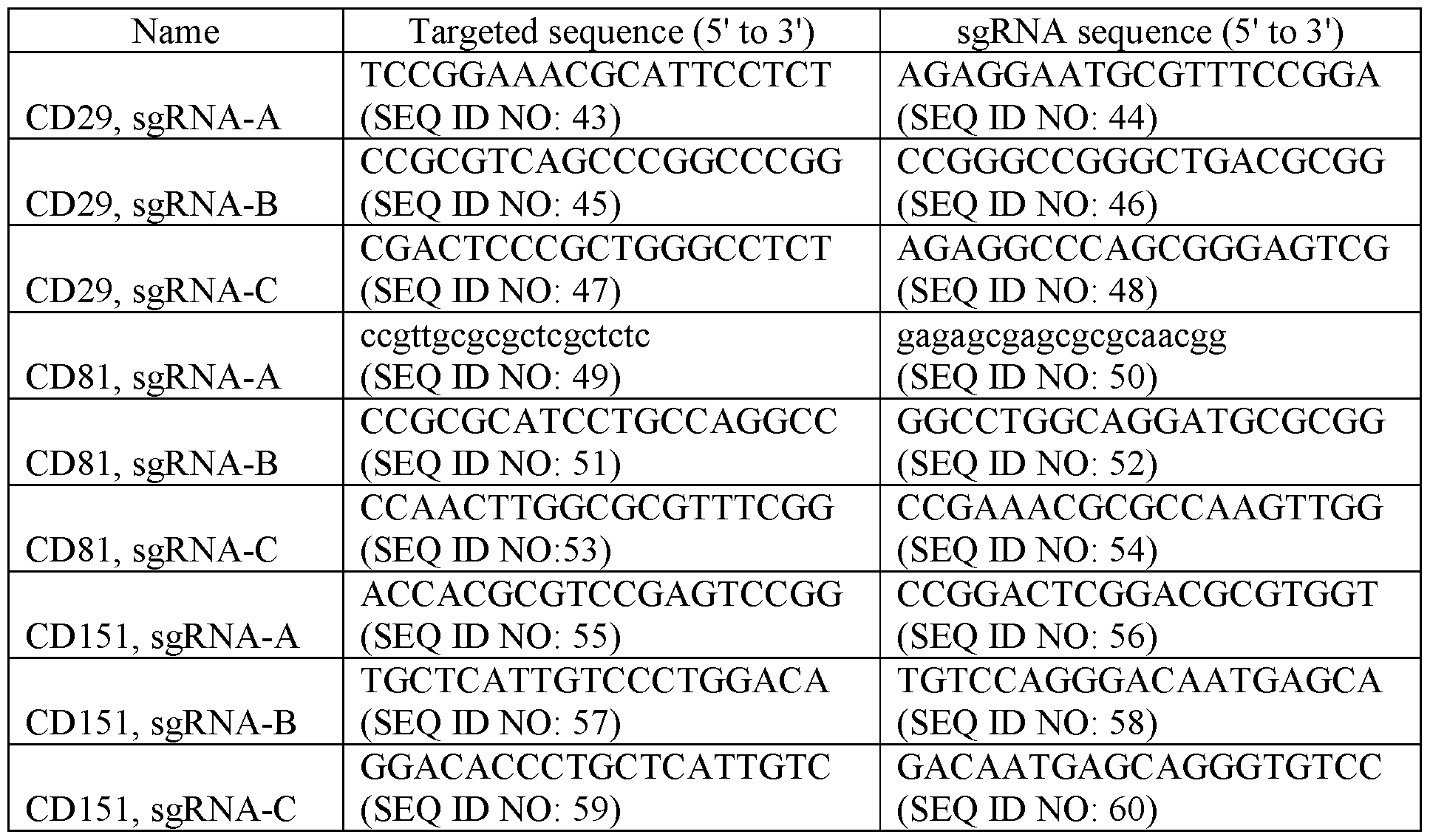


Claims
Priority Applications (18)
| Application Number | Priority Date | Filing Date | Title |
|---|---|---|---|
| GB2017929.7A GB2587970B (en) | 2018-04-19 | 2019-04-19 | Compositions and methods for gene editing |
| SG11202009783WA SG11202009783WA (en) | 2018-04-19 | 2019-04-19 | Compositions and methods for gene editing |
| KR1020207033088A KR102922694B1 (en) | 2018-04-19 | 2019-04-19 | Compositions and methods for gene editing |
| AU2019255789A AU2019255789B2 (en) | 2018-04-19 | 2019-04-19 | Compositions and methods for gene editing |
| CN202311341046.5A CN117534769A (en) | 2018-04-19 | 2019-04-19 | Compositions and methods for gene editing |
| EP19789200.3A EP3781705A4 (en) | 2018-04-19 | 2019-04-19 | COMPOSITIONS AND METHODS FOR GENE EDITING |
| BR112020021229-6A BR112020021229A2 (en) | 2018-04-19 | 2019-04-19 | compositions and methods for editing genes |
| MX2020010974A MX2020010974A (en) | 2018-04-19 | 2019-04-19 | COMPOSITIONS AND METHODS FOR GENE EDITING. |
| KR1020267003203A KR20260036299A (en) | 2018-04-19 | 2019-04-19 | Compositions and methods for gene editing |
| JP2020557291A JP7555822B2 (en) | 2018-04-19 | 2019-04-19 | Compositions and methods for genome editing |
| CA3096713A CA3096713A1 (en) | 2018-04-19 | 2019-04-19 | Compositions and methods for gene editing |
| CN201980039136.4A CN112334577B (en) | 2018-04-19 | 2019-04-19 | Compositions and methods for gene editing |
| IL277837A IL277837A (en) | 2018-04-19 | 2020-10-07 | Compositions and methods for gene editing |
| MX2025005087A MX2025005087A (en) | 2018-04-19 | 2020-10-16 | Compositions and methods for gene editing |
| US17/073,588 US11434491B2 (en) | 2018-04-19 | 2020-10-19 | Compositions and methods for gene editing |
| US17/726,290 US20230103909A1 (en) | 2018-04-19 | 2022-04-21 | Compositions and methods for gene editing |
| US17/816,369 US20230124253A1 (en) | 2018-04-19 | 2022-07-29 | Compositions and Methods for Gene Editing |
| JP2024155489A JP2024170604A (en) | 2018-04-19 | 2024-09-10 | Compositions and methods for genome editing |
Applications Claiming Priority (2)
| Application Number | Priority Date | Filing Date | Title |
|---|---|---|---|
| US201862660023P | 2018-04-19 | 2018-04-19 | |
| US62/660,023 | 2018-04-19 |
Related Child Applications (1)
| Application Number | Title | Priority Date | Filing Date |
|---|---|---|---|
| US17/073,588 Continuation US11434491B2 (en) | 2018-04-19 | 2020-10-19 | Compositions and methods for gene editing |
Publications (1)
| Publication Number | Publication Date |
|---|---|
| WO2019204766A1 true WO2019204766A1 (en) | 2019-10-24 |
Family
ID=68238979
Family Applications (1)
| Application Number | Title | Priority Date | Filing Date |
|---|---|---|---|
| PCT/US2019/028377 Ceased WO2019204766A1 (en) | 2018-04-19 | 2019-04-19 | Compositions and methods for gene editing |
Country Status (13)
| Country | Link |
|---|---|
| US (3) | US11434491B2 (en) |
| EP (1) | EP3781705A4 (en) |
| JP (2) | JP7555822B2 (en) |
| KR (2) | KR102922694B1 (en) |
| CN (2) | CN117534769A (en) |
| AU (1) | AU2019255789B2 (en) |
| BR (1) | BR112020021229A2 (en) |
| CA (1) | CA3096713A1 (en) |
| GB (1) | GB2587970B (en) |
| IL (1) | IL277837A (en) |
| MX (2) | MX2020010974A (en) |
| SG (1) | SG11202009783WA (en) |
| WO (1) | WO2019204766A1 (en) |
Cited By (22)
| Publication number | Priority date | Publication date | Assignee | Title |
|---|---|---|---|---|
| WO2021247570A3 (en) * | 2020-06-02 | 2022-03-24 | The Regents Of The University Ofcalifornia | Compositions and methods for gene editing |
| WO2022162247A1 (en) * | 2021-02-01 | 2022-08-04 | Epsilen Bio S.R.L. | Gene silencing |
| US11434491B2 (en) | 2018-04-19 | 2022-09-06 | The Regents Of The University Of California | Compositions and methods for gene editing |
| WO2022140577A3 (en) * | 2020-12-22 | 2022-11-03 | Chroma Medicine, Inc. | Compositions and methods for epigenetic editing |
| WO2023093862A1 (en) * | 2021-11-26 | 2023-06-01 | Epigenic Therapeutics Inc. | Method of modulating pcsk9 and uses thereof |
| JP2023529844A (en) * | 2020-06-05 | 2023-07-12 | ザ・リージエンツ・オブ・ザ・ユニバーシテイー・オブ・カリフオルニア | Compositions and methods for epigenome editing |
| WO2023173110A1 (en) * | 2022-03-11 | 2023-09-14 | Epicrispr Biotechnologies, Inc. | Compositions, systems, and methods for treating familial hypercholesterolemia by targeting pcsk9 |
| WO2023215711A1 (en) * | 2022-05-01 | 2023-11-09 | Chroma Medicine, Inc. | Compositions and methods for epigenetic regulation of pcsk9 expression |
| WO2023250509A1 (en) * | 2022-06-23 | 2023-12-28 | Chroma Medicine, Inc. | Compositions and methods for epigenetic regulation of b2m expression |
| WO2023250512A1 (en) * | 2022-06-23 | 2023-12-28 | Chroma Medicine, Inc. | Compositions and methods for epigenetic regulation of ciita expression |
| WO2023250490A1 (en) * | 2022-06-23 | 2023-12-28 | Chroma Medicine, Inc. | Compositions and methods for epigenetic regulation of trac expression |
| WO2023250148A1 (en) | 2022-06-23 | 2023-12-28 | Chroma Medicine, Inc. | Compositions and methods for epigenetic editing |
| WO2023250511A3 (en) * | 2022-06-24 | 2024-02-08 | Tune Therapeutics, Inc. | Compositions, systems, and methods for reducing low-density lipoprotein through targeted gene repression |
| WO2024119055A1 (en) * | 2022-12-01 | 2024-06-06 | The Regents Of The University Of California | Targeted epigenetic editing as novel therapy for malignant glioma |
| WO2024206555A1 (en) * | 2023-03-29 | 2024-10-03 | Scribe Therapeutics Inc. | Compositions and methods for the targeting of pcsk9 |
| WO2024206565A1 (en) * | 2023-03-29 | 2024-10-03 | Scribe Therapeutics Inc. | Repressor fusion protein systems |
| US12221608B2 (en) | 2022-08-19 | 2025-02-11 | Tune Therapeutics, Inc. | Compositions, systems, and methods for regulation of hepatitis b virus through targeted gene repression |
| US12252715B2 (en) | 2023-02-17 | 2025-03-18 | Whitehead Institute For Biomedical Research | Compositions and methods for making epigenetic modifications |
| EP4263820A4 (en) * | 2020-12-17 | 2025-03-26 | Monsanto Technology LLC | MODIFIED SSDNASE-FREE CRISPR ENDONUCLEASES |
| US12390538B2 (en) | 2023-05-15 | 2025-08-19 | Nchroma Bio, Inc. | Compositions and methods for epigenetic regulation of HBV gene expression |
| US12553037B2 (en) | 2021-09-21 | 2026-02-17 | Scribe Therapeutics Inc. | Engineered class 2, type V repressor systems |
| US12551573B2 (en) | 2022-06-07 | 2026-02-17 | Scribe Therapeutics Inc. | Compositions and methods for the targeting of PCSK9 |
Families Citing this family (7)
| Publication number | Priority date | Publication date | Assignee | Title |
|---|---|---|---|---|
| KR20210028163A (en) | 2018-06-04 | 2021-03-11 | 유니버시티 오브 코펜하겐 | Mutant CPF1 endonuclease |
| CN113999873B (en) * | 2021-12-31 | 2022-05-20 | 北京市疾病预防控制中心 | Construction method and application of genetically modified non-human animal |
| TW202346588A (en) * | 2022-03-04 | 2023-12-01 | 大陸商益杰立科(上海)生物科技有限公司 | Compositions and methods of genome editing |
| US20260109972A1 (en) | 2022-11-09 | 2026-04-23 | The Regents Of The University Of California | High-Throughput Discovery of Multi-Partite CRISPR-Based Editors |
| CN117143257B (en) * | 2023-10-31 | 2024-02-09 | 深圳市帝迈生物技术有限公司 | TRIM28-KRAB-ZNF10 binary complex, preparation method and kit for screening prostate cancer |
| CN118931878B (en) * | 2024-10-14 | 2025-02-07 | 内蒙古大学 | An epigenetic gene editing system based on CRISPR/dCas9 and its application |
| CN120137060B (en) * | 2025-05-16 | 2025-08-01 | 湘湖实验室(农业浙江省实验室) | Efficient mitochondrial gene methylation modification tool and application thereof |
Citations (2)
| Publication number | Priority date | Publication date | Assignee | Title |
|---|---|---|---|---|
| WO2018031762A1 (en) * | 2016-08-10 | 2018-02-15 | Duke University | Compositions, systems and methods for programming immune cell function through targeted gene regulation |
| WO2018053035A1 (en) * | 2016-09-13 | 2018-03-22 | The Jackson Laboratory | Targeted dna demethylation and methylation |
Family Cites Families (80)
| Publication number | Priority date | Publication date | Assignee | Title |
|---|---|---|---|---|
| EP1276859B1 (en) | 2000-04-28 | 2007-02-07 | Sangamo Biosciences Inc. | Targeted modification of chromatin structure |
| US6919204B2 (en) | 2000-09-29 | 2005-07-19 | Sangamo Biosciences, Inc. | Modulation of gene expression using localization domains |
| WO2003072788A1 (en) | 2002-02-21 | 2003-09-04 | The Wistar Institute Of Anatomy And Biology | Methods and compositions for reversibly controlling expression of target genes in cells |
| US20070192880A1 (en) | 2003-10-03 | 2007-08-16 | University Of Rochester | Horming response element binding transregulators |
| GB0526449D0 (en) | 2005-12-23 | 2006-02-08 | Medical Res Council | Polypeptide targeting |
| KR100756055B1 (en) | 2006-01-27 | 2007-09-07 | 연세대학교 산학협력단 | Recombinant Adenovirus Regulates Angiogenesis |
| GB0607063D0 (en) | 2006-04-07 | 2006-05-17 | Cellcentric Ltd | Compositions and methods for epigenetic modification of nucleic acid sequences in vivo |
| US20120207744A1 (en) | 2009-03-19 | 2012-08-16 | Mendlein John D | Reprogramming compositions and methods of using the same |
| JP6261500B2 (en) | 2011-07-22 | 2018-01-17 | プレジデント アンド フェローズ オブ ハーバード カレッジ | Evaluation and improvement of nuclease cleavage specificity |
| CN105658792B (en) | 2012-02-28 | 2020-11-10 | 西格马-奥尔德里奇有限责任公司 | Targeted histone acetylation |
| WO2013141680A1 (en) | 2012-03-20 | 2013-09-26 | Vilnius University | RNA-DIRECTED DNA CLEAVAGE BY THE Cas9-crRNA COMPLEX |
| EP3241902B1 (en) | 2012-05-25 | 2018-02-28 | The Regents of The University of California | Methods and compositions for rna-directed target dna modification and for rna-directed modulation of transcription |
| EP4357457B1 (en) | 2012-10-23 | 2024-10-16 | Toolgen Incorporated | Composition for cleaving a target dna comprising a guide rna specific for the target dna and cas protein-encoding nucleic acid or cas protein, and use thereof |
| EP3363902B1 (en) | 2012-12-06 | 2019-11-27 | Sigma Aldrich Co. LLC | Crispr-based genome modification and regulation |
| US8697359B1 (en) | 2012-12-12 | 2014-04-15 | The Broad Institute, Inc. | CRISPR-Cas systems and methods for altering expression of gene products |
| WO2014093694A1 (en) | 2012-12-12 | 2014-06-19 | The Broad Institute, Inc. | Crispr-cas nickase systems, methods and compositions for sequence manipulation in eukaryotes |
| CN105121648B (en) | 2012-12-12 | 2021-05-07 | 布罗德研究所有限公司 | Systems, methods and engineering of guide compositions for sequence manipulation |
| AU2013359262C1 (en) | 2012-12-12 | 2021-05-13 | Massachusetts Institute Of Technology | CRISPR-Cas component systems, methods and compositions for sequence manipulation |
| DK2931898T3 (en) | 2012-12-12 | 2016-06-20 | Massachusetts Inst Technology | CONSTRUCTION AND OPTIMIZATION OF SYSTEMS, PROCEDURES AND COMPOSITIONS FOR SEQUENCE MANIPULATION WITH FUNCTIONAL DOMAINS |
| CA2894684A1 (en) | 2012-12-12 | 2014-06-19 | The Broad Institute, Inc. | Engineering and optimization of improved crispr-cas systems, methods and enzyme compositions for sequence manipulation in eukaryotes |
| CA2895155C (en) | 2012-12-17 | 2021-07-06 | President And Fellows Of Harvard College | Rna-guided human genome engineering |
| US10760064B2 (en) | 2013-03-15 | 2020-09-01 | The General Hospital Corporation | RNA-guided targeting of genetic and epigenomic regulatory proteins to specific genomic loci |
| AU2014227653B2 (en) | 2013-03-15 | 2017-04-20 | The General Hospital Corporation | Using RNA-guided foki nucleases (RFNs) to increase specificity for RNA-guided genome editing |
| US20140356956A1 (en) | 2013-06-04 | 2014-12-04 | President And Fellows Of Harvard College | RNA-Guided Transcriptional Regulation |
| EP3004370B1 (en) | 2013-06-05 | 2024-08-21 | Duke University | Rna-guided gene editing and gene regulation |
| MX2015017312A (en) * | 2013-06-17 | 2017-04-10 | Broad Inst Inc | SUPPLY AND USE OF CRISPR-CAS COMPOSITIONS, VECTORS AND SYSTEMS FOR DIRECTED MODIFICATION AND HEPATIC THERAPY. |
| WO2014204723A1 (en) * | 2013-06-17 | 2014-12-24 | The Broad Institute Inc. | Oncogenic models based on delivery and use of the crispr-cas systems, vectors and compositions |
| WO2015006294A2 (en) | 2013-07-10 | 2015-01-15 | President And Fellows Of Harvard College | Orthogonal cas9 proteins for rna-guided gene regulation and editing |
| US9526784B2 (en) | 2013-09-06 | 2016-12-27 | President And Fellows Of Harvard College | Delivery system for functional nucleases |
| EP3470089A1 (en) * | 2013-12-12 | 2019-04-17 | The Broad Institute Inc. | Delivery, use and therapeutic applications of the crispr-cas systems and compositions for targeting disorders and diseases using particle delivery components |
| US20150191744A1 (en) | 2013-12-17 | 2015-07-09 | University Of Massachusetts | Cas9 effector-mediated regulation of transcription, differentiation and gene editing/labeling |
| CA2942915A1 (en) | 2014-03-20 | 2015-09-24 | Universite Laval | Crispr-based methods and products for increasing frataxin levels and uses thereof |
| WO2016011070A2 (en) | 2014-07-14 | 2016-01-21 | The Regents Of The University Of California | A protein tagging system for in vivo single molecule imaging and control of gene transcription |
| ES3047792T3 (en) | 2014-07-14 | 2025-12-04 | Univ California | Crispr/cas transcriptional modulation |
| US20170233762A1 (en) | 2014-09-29 | 2017-08-17 | The Regents Of The University Of California | Scaffold rnas |
| US10583201B2 (en) | 2014-10-10 | 2020-03-10 | Massachusetts Eye And Ear Infirmary | Efficient delivery of therapeutic molecules in vitro and in vivo |
| GB201418965D0 (en) | 2014-10-24 | 2014-12-10 | Ospedale San Raffaele And Fond Telethon | |
| EP3250691B9 (en) | 2015-01-28 | 2023-08-02 | Caribou Biosciences, Inc. | Crispr hybrid dna/rna polynucleotides and methods of use |
| US10676726B2 (en) | 2015-02-09 | 2020-06-09 | Duke University | Compositions and methods for epigenome editing |
| US11674144B2 (en) * | 2015-04-16 | 2023-06-13 | California Institute Of Technology | Fractional regulation of transcription |
| WO2017015637A1 (en) | 2015-07-22 | 2017-01-26 | Duke University | High-throughput screening of regulatory element function with epigenome editing technologies |
| CN108243607A (en) | 2015-09-09 | 2018-07-03 | 西雅图儿童医院(Dba西雅图儿童研究所) | Genetic engineering of macrophages for immunotherapy |
| EP3147363B1 (en) | 2015-09-26 | 2019-10-16 | B.R.A.I.N. Ag | Activation of taste receptor genes in mammalian cells using crispr-cas-9 |
| US10612044B2 (en) | 2015-11-25 | 2020-04-07 | National University Corporation Gunma University | DNA methylation editing kit and DNA methylation editing method |
| WO2017136520A1 (en) | 2016-02-04 | 2017-08-10 | President And Fellows Of Harvard College | Mitochondrial genome editing and regulation |
| US20190127713A1 (en) | 2016-04-13 | 2019-05-02 | Duke University | Crispr/cas9-based repressors for silencing gene targets in vivo and methods of use |
| WO2017208247A1 (en) | 2016-06-02 | 2017-12-07 | Yissum Research Development Company Of The Hebrew University Of Jerusalem Ltd. | Assay for the removal of methyl-cytosine residues from dna |
| MX2019000088A (en) | 2016-06-27 | 2019-08-29 | Broad Inst Inc | Compositions and methods for detecting and treating diabetes. |
| WO2018022634A1 (en) | 2016-07-26 | 2018-02-01 | The General Hospital Corporation | Variants of crispr from prevotella and francisella 1 (cpf1) |
| CN106526789B (en) | 2016-08-26 | 2019-03-22 | 玉晶光电(厦门)有限公司 | Optical imaging lens |
| JP7231226B2 (en) | 2016-11-07 | 2023-03-01 | ユニバーシティ オブ マサチューセッツ | Therapeutic targets for facioscapulohumeral muscular dystrophy |
| WO2018112423A1 (en) | 2016-12-15 | 2018-06-21 | The Regents Of The University Of California | Compositions and methods for crispr-based screening |
| US11576912B2 (en) | 2017-01-04 | 2023-02-14 | The Board Of Trustees Of The Leland Stanford Junior University | Target genes in MYC-driven neoplasia |
| IL314915B1 (en) | 2017-01-23 | 2026-02-01 | Regeneron Pharma | Hydroxysteroid 17-beta dehydrogenase 13 (hsd17b13) variants and uses thereof |
| JP2020506948A (en) | 2017-02-07 | 2020-03-05 | ザ リージェンツ オブ ザ ユニバーシティ オブ カリフォルニア | Gene therapy for haploinsufficiency |
| WO2018148667A1 (en) | 2017-02-10 | 2018-08-16 | Memorial Sloan-Kettering Cancer Center | Reprogramming cell aging |
| WO2018154096A1 (en) | 2017-02-24 | 2018-08-30 | Georg-August-Universität Göttingen Stiftung Öffentlichen Rechts, Universitätsmedizin | Method for re-expression of different hypermethylated genes involved in fibrosis, like hypermethylated rasal,1 and use thereof in treatment of fibrosis as well as kit of parts for re-expression of hypermethylated genes including rasal1 in a subject |
| WO2018195545A2 (en) | 2017-04-21 | 2018-10-25 | The General Hospital Corporation | Variants of cpf1 (cas12a) with altered pam specificity |
| CN110799205A (en) | 2017-04-21 | 2020-02-14 | 通用医疗公司 | Inducible, tunable and multiplexed human gene regulation using CRISPR-Cpf1 |
| KR102523217B1 (en) | 2017-07-11 | 2023-04-20 | 시그마-알드리치 컴퍼니., 엘엘씨 | Use of nucleosome interacting protein domains to improve targeted genomic modification |
| US11072782B2 (en) | 2017-07-24 | 2021-07-27 | Albert-Ludwigs-Universitaet Freiburg | Construct for epigenetic modification and its use in the silencing of genes |
| US20190024072A1 (en) | 2017-07-24 | 2019-01-24 | Albert-Ludwigs-Universitaet Freiburg | Construct for epigenetic modification and its use in the silencing of genes |
| US20210363521A1 (en) | 2017-11-09 | 2021-11-25 | Vertex Pharmaceuticals Incorporated | CRISPR/CAS Systems For Treatment of DMD |
| IL274926B2 (en) | 2017-12-01 | 2026-04-01 | Encoded Therapeutics Inc | Engineered dna binding proteins |
| WO2019113061A1 (en) | 2017-12-06 | 2019-06-13 | Klogene Therapeutics, Inc. | Compositions and methods for modulating gene expression |
| WO2019117662A2 (en) * | 2017-12-14 | 2019-06-20 | 단국대학교 산학협력단 | Crispr system specific to tert promoter mutation and use thereof |
| WO2019117660A2 (en) * | 2017-12-14 | 2019-06-20 | 단국대학교 산학협력단 | Method for improving crispr system function and use thereof |
| EP3727467A4 (en) | 2017-12-22 | 2021-12-01 | Centivax, Inc. | MAIN HISTOCOMPATIBILITY COMPLEX (MHC) COMPOSITIONS AND METHOD OF USING THEREOF |
| CN111770758A (en) | 2018-02-27 | 2020-10-13 | 北卡罗来纳-查佩尔山大学 | Methods and compositions for treating Angelman syndrome |
| JP2021522188A (en) | 2018-04-18 | 2021-08-30 | イエール ユニバーシティ | Compositions and Methods for Multiple Tumor Vaccination with Endogenous Gene Activation |
| JP7555822B2 (en) | 2018-04-19 | 2024-09-25 | ザ・リージエンツ・オブ・ザ・ユニバーシテイー・オブ・カリフオルニア | Compositions and methods for genome editing |
| EP3784785A4 (en) | 2018-04-23 | 2022-02-16 | Duke University | Downregulation of snca expression by targeted editing of dna-methylation |
| US20210238257A1 (en) | 2018-04-27 | 2021-08-05 | The Regents Of The University Of California | De Novo Formation of the Biliary System by Hepatocyte Transdifferentiation |
| EP3810273A4 (en) | 2018-05-15 | 2022-03-16 | The Children's Hospital of Philadelphia | Crispr interference based htt allelic suppression and treatment of huntington disease |
| EP3802802A4 (en) | 2018-05-30 | 2023-04-19 | Tune Therapeutics, Inc. | CELL THERAPY |
| US11781149B2 (en) | 2018-06-28 | 2023-10-10 | Trustees Of Boston University | Systems and methods for control of gene expression |
| CN113286620A (en) | 2018-08-24 | 2021-08-20 | 莱兰斯坦福初级大学评议会 | Systems and methods for spatial organization of polynucleotides |
| US20220033464A1 (en) | 2018-08-24 | 2022-02-03 | La Jolla Institute For Immunology | Methods and compositons for modulations of immune response |
| CA3115158A1 (en) | 2018-10-02 | 2020-04-09 | Sangamo Therapeutics, Inc. | Engineered genetic modulators |
| EP3880255A1 (en) | 2018-11-16 | 2021-09-22 | Astellas Pharma Inc. | Method for treating muscular dystrophy by targeting utrophin gene |
-
2019
- 2019-04-19 JP JP2020557291A patent/JP7555822B2/en active Active
- 2019-04-19 BR BR112020021229-6A patent/BR112020021229A2/en unknown
- 2019-04-19 AU AU2019255789A patent/AU2019255789B2/en active Active
- 2019-04-19 CN CN202311341046.5A patent/CN117534769A/en active Pending
- 2019-04-19 WO PCT/US2019/028377 patent/WO2019204766A1/en not_active Ceased
- 2019-04-19 CA CA3096713A patent/CA3096713A1/en active Pending
- 2019-04-19 MX MX2020010974A patent/MX2020010974A/en unknown
- 2019-04-19 SG SG11202009783WA patent/SG11202009783WA/en unknown
- 2019-04-19 CN CN201980039136.4A patent/CN112334577B/en active Active
- 2019-04-19 EP EP19789200.3A patent/EP3781705A4/en active Pending
- 2019-04-19 KR KR1020207033088A patent/KR102922694B1/en active Active
- 2019-04-19 GB GB2017929.7A patent/GB2587970B/en active Active
- 2019-04-19 KR KR1020267003203A patent/KR20260036299A/en active Pending
-
2020
- 2020-10-07 IL IL277837A patent/IL277837A/en unknown
- 2020-10-16 MX MX2025005087A patent/MX2025005087A/en unknown
- 2020-10-19 US US17/073,588 patent/US11434491B2/en active Active
-
2022
- 2022-04-21 US US17/726,290 patent/US20230103909A1/en active Pending
- 2022-07-29 US US17/816,369 patent/US20230124253A1/en active Pending
-
2024
- 2024-09-10 JP JP2024155489A patent/JP2024170604A/en active Pending
Patent Citations (2)
| Publication number | Priority date | Publication date | Assignee | Title |
|---|---|---|---|---|
| WO2018031762A1 (en) * | 2016-08-10 | 2018-02-15 | Duke University | Compositions, systems and methods for programming immune cell function through targeted gene regulation |
| WO2018053035A1 (en) * | 2016-09-13 | 2018-03-22 | The Jackson Laboratory | Targeted dna demethylation and methylation |
Non-Patent Citations (2)
| Title |
|---|
| GUILINGER, JP ET AL.: "Fusion of Catalytically Inactive Cas9 to Fokl Nuclease Improves the Specificity of Genome Modification", NATURE BIOTECHNOLOGY, vol. 32, no. 6, 1 June 2014 (2014-06-01), pages 577 - 582, XP055157221, ISSN: 1087-0156, DOI: 10.1038/nbt.2909 * |
| LIN, L ET AL.: "Genome-Wide Determination of On-Target and Off-Target Characteristics for RNA-Guided DNA Methylation by Dcas9 Methyltransferases", GIGASCIENCE, vol. 7, no. 3, 1 March 2018 (2018-03-01), pages 1 - 19, XP055645471, DOI: 10.1093/gigascience/giy011 * |
Cited By (39)
| Publication number | Priority date | Publication date | Assignee | Title |
|---|---|---|---|---|
| US11434491B2 (en) | 2018-04-19 | 2022-09-06 | The Regents Of The University Of California | Compositions and methods for gene editing |
| GB2637278B (en) * | 2020-06-02 | 2025-11-05 | Univ California | Compositions and methods for gene editing |
| GB2612212A (en) * | 2020-06-02 | 2023-04-26 | Univ California | Compositions and methods for gene editing |
| GB2637278A (en) * | 2020-06-02 | 2025-07-16 | Univ California | Compositions and methods for gene editing |
| JP2023529611A (en) * | 2020-06-02 | 2023-07-11 | ザ・リージエンツ・オブ・ザ・ユニバーシテイー・オブ・カリフオルニア | Compositions and methods for genome editing |
| GB2612212B (en) * | 2020-06-02 | 2025-06-18 | The Regents Of Univ Of California | Compositions and methods for gene editing |
| WO2021247570A3 (en) * | 2020-06-02 | 2022-03-24 | The Regents Of The University Ofcalifornia | Compositions and methods for gene editing |
| JP2023529844A (en) * | 2020-06-05 | 2023-07-12 | ザ・リージエンツ・オブ・ザ・ユニバーシテイー・オブ・カリフオルニア | Compositions and methods for epigenome editing |
| EP4263820A4 (en) * | 2020-12-17 | 2025-03-26 | Monsanto Technology LLC | MODIFIED SSDNASE-FREE CRISPR ENDONUCLEASES |
| JP2024501383A (en) * | 2020-12-22 | 2024-01-11 | クロマ・メディシン,インコーポレーテッド | Compositions and methods for epigenetic editing |
| WO2022140577A3 (en) * | 2020-12-22 | 2022-11-03 | Chroma Medicine, Inc. | Compositions and methods for epigenetic editing |
| GB2619423A (en) * | 2020-12-22 | 2023-12-06 | Chroma Medicine Inc | Compositions and methods for epigenetic editing |
| JP2024506751A (en) * | 2021-02-01 | 2024-02-14 | イプシレン バイオ エス.アール.エル. | gene silencing |
| GB2617799A (en) * | 2021-02-01 | 2023-10-18 | Epsilen Bio S R L | Gene silencing |
| WO2022162247A1 (en) * | 2021-02-01 | 2022-08-04 | Epsilen Bio S.R.L. | Gene silencing |
| US12553037B2 (en) | 2021-09-21 | 2026-02-17 | Scribe Therapeutics Inc. | Engineered class 2, type V repressor systems |
| WO2023093862A1 (en) * | 2021-11-26 | 2023-06-01 | Epigenic Therapeutics Inc. | Method of modulating pcsk9 and uses thereof |
| WO2023173110A1 (en) * | 2022-03-11 | 2023-09-14 | Epicrispr Biotechnologies, Inc. | Compositions, systems, and methods for treating familial hypercholesterolemia by targeting pcsk9 |
| WO2023215711A1 (en) * | 2022-05-01 | 2023-11-09 | Chroma Medicine, Inc. | Compositions and methods for epigenetic regulation of pcsk9 expression |
| US12594349B2 (en) * | 2022-06-07 | 2026-04-07 | Scribe Therapeutics Inc. | Compositions and methods for the targeting of PCSK9 |
| US12551573B2 (en) | 2022-06-07 | 2026-02-17 | Scribe Therapeutics Inc. | Compositions and methods for the targeting of PCSK9 |
| WO2023250490A1 (en) * | 2022-06-23 | 2023-12-28 | Chroma Medicine, Inc. | Compositions and methods for epigenetic regulation of trac expression |
| WO2023250148A1 (en) | 2022-06-23 | 2023-12-28 | Chroma Medicine, Inc. | Compositions and methods for epigenetic editing |
| WO2023250509A1 (en) * | 2022-06-23 | 2023-12-28 | Chroma Medicine, Inc. | Compositions and methods for epigenetic regulation of b2m expression |
| WO2023250512A1 (en) * | 2022-06-23 | 2023-12-28 | Chroma Medicine, Inc. | Compositions and methods for epigenetic regulation of ciita expression |
| WO2023250511A3 (en) * | 2022-06-24 | 2024-02-08 | Tune Therapeutics, Inc. | Compositions, systems, and methods for reducing low-density lipoprotein through targeted gene repression |
| US12098399B2 (en) | 2022-06-24 | 2024-09-24 | Tune Therapeutics, Inc. | Compositions, systems, and methods for epigenetic regulation of proprotein convertase subtilisin/kexin type 9 (PCSK9) gene expression |
| US12252692B2 (en) | 2022-08-19 | 2025-03-18 | Tune Therapeutics, Inc. | Compositions, systems, and methods for regulation of hepatitis B virus through targeted gene repression |
| US12325857B2 (en) | 2022-08-19 | 2025-06-10 | Tune Therapeutics, Inc. | Compositions, systems, and methods for regulation of Hepatitis b virus through targeted gene repression |
| US12325858B1 (en) | 2022-08-19 | 2025-06-10 | Tune Therapeutics, Inc. | Compositions, systems, and methods for regulation of Hepatitis B virus through targeted gene repression |
| US12221608B2 (en) | 2022-08-19 | 2025-02-11 | Tune Therapeutics, Inc. | Compositions, systems, and methods for regulation of hepatitis b virus through targeted gene repression |
| US12398394B2 (en) | 2022-08-19 | 2025-08-26 | Tune Therapeutics, Inc. | Compositions, systems, and methods for regulation of Hepatitis B virus through targeted gene repression |
| WO2024119055A1 (en) * | 2022-12-01 | 2024-06-06 | The Regents Of The University Of California | Targeted epigenetic editing as novel therapy for malignant glioma |
| US12365884B2 (en) | 2023-02-17 | 2025-07-22 | Whitehead Institute For Biomedical Research | Compositions and methods for making epigenetic modifications |
| US12252715B2 (en) | 2023-02-17 | 2025-03-18 | Whitehead Institute For Biomedical Research | Compositions and methods for making epigenetic modifications |
| WO2024206565A1 (en) * | 2023-03-29 | 2024-10-03 | Scribe Therapeutics Inc. | Repressor fusion protein systems |
| WO2024206555A1 (en) * | 2023-03-29 | 2024-10-03 | Scribe Therapeutics Inc. | Compositions and methods for the targeting of pcsk9 |
| US12390538B2 (en) | 2023-05-15 | 2025-08-19 | Nchroma Bio, Inc. | Compositions and methods for epigenetic regulation of HBV gene expression |
| US12558437B2 (en) | 2023-05-15 | 2026-02-24 | Nchroma Bio, Inc. | Compositions and methods for epigenetic regulation of HBV gene expression |
Also Published As
| Publication number | Publication date |
|---|---|
| GB202017929D0 (en) | 2020-12-30 |
| EP3781705A4 (en) | 2022-01-26 |
| CN117534769A (en) | 2024-02-09 |
| CA3096713A1 (en) | 2019-10-24 |
| KR20260036299A (en) | 2026-03-16 |
| GB2587970B (en) | 2023-02-08 |
| SG11202009783WA (en) | 2020-11-27 |
| MX2020010974A (en) | 2021-01-20 |
| AU2019255789B2 (en) | 2025-11-20 |
| JP2021521788A (en) | 2021-08-30 |
| JP2024170604A (en) | 2024-12-10 |
| US20230103909A1 (en) | 2023-04-06 |
| US11434491B2 (en) | 2022-09-06 |
| EP3781705A1 (en) | 2021-02-24 |
| US20230124253A1 (en) | 2023-04-20 |
| AU2019255789A1 (en) | 2020-10-22 |
| GB2587970A (en) | 2021-04-14 |
| JP7555822B2 (en) | 2024-09-25 |
| US20210139918A1 (en) | 2021-05-13 |
| IL277837A (en) | 2020-11-30 |
| KR102922694B1 (en) | 2026-02-03 |
| CN112334577B (en) | 2023-10-17 |
| CN112334577A (en) | 2021-02-05 |
| BR112020021229A2 (en) | 2021-02-02 |
| KR20210003819A (en) | 2021-01-12 |
| MX2025005087A (en) | 2025-06-02 |
Similar Documents
| Publication | Publication Date | Title |
|---|---|---|
| US20230124253A1 (en) | Compositions and Methods for Gene Editing | |
| US20240309345A1 (en) | Compositions and methods for gene editing | |
| AU2016316027B2 (en) | Systems and methods for selection of gRNA targeting strands for Cas9 localization | |
| KR102512979B1 (en) | Rna-guideded transcriptional regulation | |
| KR20160027191A (en) | Orthogonal cas9 proteins for rna-guided gene regulation and editing | |
| US20230212323A1 (en) | Compositions and methods for epigenome editing | |
| CN116724058A (en) | Compositions and methods for gene editing | |
| RU2804665C2 (en) | Compositions and methods of gene editing | |
| US20260028599A1 (en) | Epigenome editors for modulating hiv transcription | |
| EA050506B1 (en) | COMPOSITIONS FOR EPIGENOME EDITING AND METHODS BASED THEREON | |
| KR20240176074A (en) | Small DNA clocks comprising a composition for measuring or predicting the duration of cellular events in cells |
Legal Events
| Date | Code | Title | Description |
|---|---|---|---|
| 121 | Ep: the epo has been informed by wipo that ep was designated in this application |
Ref document number: 19789200 Country of ref document: EP Kind code of ref document: A1 |
|
| ENP | Entry into the national phase |
Ref document number: 3096713 Country of ref document: CA |
|
| ENP | Entry into the national phase |
Ref document number: 2020557291 Country of ref document: JP Kind code of ref document: A |
|
| NENP | Non-entry into the national phase |
Ref country code: DE |
|
| ENP | Entry into the national phase |
Ref document number: 2019255789 Country of ref document: AU Date of ref document: 20190419 Kind code of ref document: A |
|
| REG | Reference to national code |
Ref country code: BR Ref legal event code: B01A Ref document number: 112020021229 Country of ref document: BR |
|
| ENP | Entry into the national phase |
Ref document number: 202017929 Country of ref document: GB Kind code of ref document: A Free format text: PCT FILING DATE = 20190419 |
|
| WWE | Wipo information: entry into national phase |
Ref document number: 2017929.7 Country of ref document: GB |
|
| ENP | Entry into the national phase |
Ref document number: 20207033088 Country of ref document: KR Kind code of ref document: A |
|
| ENP | Entry into the national phase |
Ref document number: 2019789200 Country of ref document: EP Effective date: 20201119 |
|
| ENP | Entry into the national phase |
Ref document number: 112020021229 Country of ref document: BR Kind code of ref document: A2 Effective date: 20201016 |
|
| WWG | Wipo information: grant in national office |
Ref document number: 2017929.7 Country of ref document: GB |
|
| WWG | Wipo information: grant in national office |
Ref document number: MX/A/2020/010974 Country of ref document: MX |