WO2020001388A1 - 发送bgp消息的方法、接收bgp消息的方法以及设备 - Google Patents
发送bgp消息的方法、接收bgp消息的方法以及设备 Download PDFInfo
- Publication number
- WO2020001388A1 WO2020001388A1 PCT/CN2019/092443 CN2019092443W WO2020001388A1 WO 2020001388 A1 WO2020001388 A1 WO 2020001388A1 CN 2019092443 W CN2019092443 W CN 2019092443W WO 2020001388 A1 WO2020001388 A1 WO 2020001388A1
- Authority
- WO
- WIPO (PCT)
- Prior art keywords
- network device
- mac address
- message
- bgp
- mac
- Prior art date
- Legal status (The legal status is an assumption and is not a legal conclusion. Google has not performed a legal analysis and makes no representation as to the accuracy of the status listed.)
- Ceased
Links
Images



Classifications
-
- H—ELECTRICITY
- H04—ELECTRIC COMMUNICATION TECHNIQUE
- H04L—TRANSMISSION OF DIGITAL INFORMATION, e.g. TELEGRAPHIC COMMUNICATION
- H04L45/00—Routing or path finding of packets in data switching networks
- H04L45/74—Address processing for routing
-
- H—ELECTRICITY
- H04—ELECTRIC COMMUNICATION TECHNIQUE
- H04L—TRANSMISSION OF DIGITAL INFORMATION, e.g. TELEGRAPHIC COMMUNICATION
- H04L45/00—Routing or path finding of packets in data switching networks
- H04L45/02—Topology update or discovery
- H04L45/04—Interdomain routing, e.g. hierarchical routing
-
- H—ELECTRICITY
- H04—ELECTRIC COMMUNICATION TECHNIQUE
- H04L—TRANSMISSION OF DIGITAL INFORMATION, e.g. TELEGRAPHIC COMMUNICATION
- H04L45/00—Routing or path finding of packets in data switching networks
- H04L45/66—Layer 2 routing, e.g. in Ethernet based MAN's
-
- H—ELECTRICITY
- H04—ELECTRIC COMMUNICATION TECHNIQUE
- H04L—TRANSMISSION OF DIGITAL INFORMATION, e.g. TELEGRAPHIC COMMUNICATION
- H04L45/00—Routing or path finding of packets in data switching networks
- H04L45/72—Routing based on the source address
-
- H—ELECTRICITY
- H04—ELECTRIC COMMUNICATION TECHNIQUE
- H04L—TRANSMISSION OF DIGITAL INFORMATION, e.g. TELEGRAPHIC COMMUNICATION
- H04L45/00—Routing or path finding of packets in data switching networks
- H04L45/74—Address processing for routing
- H04L45/745—Address table lookup; Address filtering
-
- H—ELECTRICITY
- H04—ELECTRIC COMMUNICATION TECHNIQUE
- H04L—TRANSMISSION OF DIGITAL INFORMATION, e.g. TELEGRAPHIC COMMUNICATION
- H04L47/00—Traffic control in data switching networks
- H04L47/70—Admission control; Resource allocation
- H04L47/82—Miscellaneous aspects
- H04L47/825—Involving tunnels, e.g. MPLS
-
- H—ELECTRICITY
- H04—ELECTRIC COMMUNICATION TECHNIQUE
- H04L—TRANSMISSION OF DIGITAL INFORMATION, e.g. TELEGRAPHIC COMMUNICATION
- H04L63/00—Network architectures or network communication protocols for network security
- H04L63/02—Network architectures or network communication protocols for network security for separating internal from external traffic, e.g. firewalls
- H04L63/0227—Filtering policies
- H04L63/0236—Filtering by address, protocol, port number or service, e.g. IP-address or URL
-
- H—ELECTRICITY
- H04—ELECTRIC COMMUNICATION TECHNIQUE
- H04L—TRANSMISSION OF DIGITAL INFORMATION, e.g. TELEGRAPHIC COMMUNICATION
- H04L63/00—Network architectures or network communication protocols for network security
- H04L63/14—Network architectures or network communication protocols for network security for detecting or protecting against malicious traffic
- H04L63/1408—Network architectures or network communication protocols for network security for detecting or protecting against malicious traffic by monitoring network traffic
- H04L63/1416—Event detection, e.g. attack signature detection
-
- H—ELECTRICITY
- H04—ELECTRIC COMMUNICATION TECHNIQUE
- H04L—TRANSMISSION OF DIGITAL INFORMATION, e.g. TELEGRAPHIC COMMUNICATION
- H04L63/00—Network architectures or network communication protocols for network security
- H04L63/14—Network architectures or network communication protocols for network security for detecting or protecting against malicious traffic
- H04L63/1441—Countermeasures against malicious traffic
-
- H—ELECTRICITY
- H04—ELECTRIC COMMUNICATION TECHNIQUE
- H04L—TRANSMISSION OF DIGITAL INFORMATION, e.g. TELEGRAPHIC COMMUNICATION
- H04L2101/00—Indexing scheme associated with group H04L61/00
- H04L2101/60—Types of network addresses
- H04L2101/618—Details of network addresses
- H04L2101/622—Layer-2 addresses, e.g. medium access control [MAC] addresses
-
- H—ELECTRICITY
- H04—ELECTRIC COMMUNICATION TECHNIQUE
- H04L—TRANSMISSION OF DIGITAL INFORMATION, e.g. TELEGRAPHIC COMMUNICATION
- H04L41/00—Arrangements for maintenance, administration or management of data switching networks, e.g. of packet switching networks
- H04L41/08—Configuration management of networks or network elements
- H04L41/0803—Configuration setting
-
- H—ELECTRICITY
- H04—ELECTRIC COMMUNICATION TECHNIQUE
- H04L—TRANSMISSION OF DIGITAL INFORMATION, e.g. TELEGRAPHIC COMMUNICATION
- H04L41/00—Arrangements for maintenance, administration or management of data switching networks, e.g. of packet switching networks
- H04L41/08—Configuration management of networks or network elements
- H04L41/0876—Aspects of the degree of configuration automation
- H04L41/0886—Fully automatic configuration
-
- H—ELECTRICITY
- H04—ELECTRIC COMMUNICATION TECHNIQUE
- H04L—TRANSMISSION OF DIGITAL INFORMATION, e.g. TELEGRAPHIC COMMUNICATION
- H04L63/00—Network architectures or network communication protocols for network security
- H04L63/14—Network architectures or network communication protocols for network security for detecting or protecting against malicious traffic
- H04L63/1441—Countermeasures against malicious traffic
- H04L63/1466—Active attacks involving interception, injection, modification, spoofing of data unit addresses, e.g. hijacking, packet injection or TCP sequence number attacks
Definitions
- the present application relates to the field of communication technologies, and in particular, to a method for sending Border Gateway Protocol (BGP) messages, a method for receiving BGP messages, and related equipment.
- BGP Border Gateway Protocol
- Network devices can connect multiple hosts.
- the network device may be a switch.
- the network device can forward the message.
- An attacker may be included in the multiple hosts.
- Host 1 is an attacker.
- the engineer can manually configure the forwarding rules for host 1 on the network device.
- the forwarding rule includes a media access control (MAC) address of the host 1.
- MAC media access control
- a MAC address has 48 bits.
- This application provides a method for sending a BGP message, a method for receiving a BGP message, and related equipment. Helps reduce manual configuration effort.
- a method for sending a BGP message includes: the first network device determines that the host identified by the first media access control MAC address is an attacker. The first network device generates a BGP message, where the BGP message includes the first MAC address and indication information, where the indication information is used to indicate that the host identified by the first MAC address is the attacker. Sending, by the first network device, the BGP message to a second network device.
- the first network device may generate a BGP message carrying the first MAC address and the indication information, and send the BGP message to the second network device.
- the BGP message may be generated, according to the first MAC address and the indication information in the BGP message, a block used to prevent the second network device from forwarding the packet received by the second network device to the host identified by the first MAC address.
- Forwarding rules That is, the second network device can generate a forwarding rule by using the BGP message sent by the first network device, and the engineer does not need to manually configure the forwarding rule on the second network device. Therefore, the above technical solution helps reduce the workload of engineers performing manual configuration on network equipment.
- the first network device includes a first VTEP
- the second network device includes a second VTEP.
- the sending, by the first network device, the BGP message to a second network device includes: the first VTEP sends the BGP message to the second VTEP.
- VTEP can be used to implement BGP message transmission.
- a first VTEP address identifies the first VTEP
- a second VTEP address identifies the second VTEP
- the BGP message includes an Internet protocol (IP) header and a payload
- IP Internet protocol
- the IP header includes a destination IP address
- the payload includes MP_REACH_NLRI
- the MP_REACH_NLRI includes a next hop network address
- the destination IP address is equal to the second VTEP address
- the next hop network address is equal to the first VTEP address.
- the first VTEP sends the BGP message to the second VTEP via a tunnel, and the tunnel is a VXLAN tunnel or an LSP.
- generating the BGP message by the first network device includes: determining, by the first network device, that a host whose MAC address is the first MAC address is an attacker.
- the first network device receives a data packet, and a source MAC address of the data packet is the first MAC address.
- the first network device generates the BGP message based on that the host identified by the source MAC address of the data packet is an attacker.
- the first network device generates the BGP message based on a trigger of the data packet. That is, when the first network device determines that the host identified by the first MAC address is an attacker, the first network device does not have to generate a BGP message immediately and notify the second network device.
- the host identified by the first MAC address may not access the network governed by the first network device. For example, the host identified by the first MAC address may be offline, or the host identified by the first MAC address may have roamed to another network. Therefore, when the first network device determines that the host identified by the first MAC address is an attacker, the first network device and the second network device may not be attacked by the attacker.
- the first network device When the first network device is not attacked by the attacker, the first network device temporarily does not generate and send a BGP message, which helps reduce the overhead of the first network device and the second network device.
- the first network device receives a data packet with the source MAC address being the first MAC address, it indicates that the first network device starts to be attacked by the attacker.
- the first network device When the first network device starts to be attacked by the attacker, the first network device notifies the second network device of the attacker's MAC address, which helps to obtain a compromise of reducing overhead and preventing the attack of the attacker.
- the first network device generating the BGP message based on the host identified by the source MAC address of the data packet as an attacker includes: the first network device determining the data packet The text is from the first VXLAN, and the first virtual extended local area network identifier VNI identifies the first VXLAN. Determining, by the first network device, that the host identified by the first MAC address is located in the first VXLAN based on a source MAC address carried in the data packet and the data packet is from a first VXLAN. The first network device generates the BGP message based on the data packet from the first VXLAN, and the BGP message includes the first VNI.
- the determining, by the first network device, that the data packet is from a first VXLAN includes: receiving, by the first network device, the data packet via a first port, the first port configuration The first VNI.
- the first network device is configured with the first VNI based on the first port for receiving the data packet, and determines that the data packet comes from the first VXLAN.
- the determining, by the first network device, that the data packet is from a first VXLAN includes: determining, by the first network device, a first virtual local area network (VLAN) ID configuration included in the data packet The first VNI.
- the first network device configures the first VNI based on the first VLAN ID included in the data packet, and determines that the data packet comes from the first VXLAN.
- VLAN virtual local area network
- a method for receiving a BGP message includes: the second network device receives a BGP message from the first network device, the BGP message includes a first MAC address and indication information, the indication information is used to indicate that the host identified by the first MAC address is an attack By.
- the second network device receives a first message, and a destination MAC address of the first message is equal to the first MAC address. Avoiding sending to the first network device by the second network device based on the first MAC address in the BGP message, the indication information in the BGP message, and the destination MAC address in the first message.
- the host identified by a MAC address forwards the first message.
- the second network device receives a second packet, and a source MAC address of the second packet is equal to the first MAC address. Preventing the second network device from forwarding the first MAC address based on the first MAC address in the BGP message, the indication information in the BGP message, and the source MAC address in the second message. Two messages.
- the first network device includes a first VTEP
- the second network device includes a second VTEP.
- the receiving the BGP message from the first network device by the second network device includes: receiving, by the second VTEP, the routing information from the first VTEP.
- the second VTEP receives a BGP update message from the second VTEP, the BGP message is carried in the BGP update message, and the BGP update message includes an IP header and a payload,
- the IP header includes a destination IP address
- the payload includes MP_REACH_NLRI
- the MP_REACH_NLRI includes a next hop network address
- the destination IP address is equal to the second VTEP address
- the next hop network address is equal to the first A VTEP address.
- the second VTEP receives the BGP update message from the second VTEP via a tunnel, and the tunnel is a VXLAN tunnel or an LSP.
- a first network device in a third aspect, includes a processor and a transceiver coupled to the processor.
- the processor is configured to determine that the host identified by the first MAC address is an attacker.
- the processor is further configured to generate a Border Gateway Protocol BGP message, where the BGP message includes the first MAC address and indication information, and the indication information is used to indicate that the host identified by the first MAC address is The attacker.
- the transceiver is configured to send the BGP message generated by the processor to a second network device.
- the first network device includes a first VTEP
- the second network device includes a second VTEP.
- the transceiver is configured to send the BGP message from the first VTEP to the second VTEP.
- a second network device in a fourth aspect, includes a first transceiver, a second transceiver, and a processor coupled to the first transceiver and the second transceiver.
- the first transceiver is configured to receive a Border Gateway Protocol (BGP) message from a first network device, where the BGP message includes a first media access control MAC address and indication information, and the indication information is used to indicate a location of the first MAC address.
- the identified host is an attacker.
- the second transceiver is configured to receive a first packet, and a destination MAC address of the first packet is equal to the first MAC address.
- the processor is configured to avoid sending to the first MAC address based on the first MAC address in the BGP message, the indication information in the BGP message, and the destination MAC address in the first message. The host identified by the MAC address forwards the first message.
- the second transceiver is further configured to receive a second packet, and a source MAC address of the second packet is equal to the first MAC address.
- the processor is further configured to avoid forwarding the based on the first MAC address in the BGP message, the indication information in the BGP message, and the source MAC address in the second message. The second message.
- the first network device includes a first VTEP
- the second network device includes a second VTEP.
- the first transceiver is configured to send the BGP message from the first VTEP to the second VTEP.
- a system in a fifth aspect, includes a first network device provided by the third aspect and a second network device provided by the fourth aspect.
- a computer-readable storage medium stores a computer program.
- the network device When the computer program is executed by a network device, the network device is caused to execute the method provided by the first aspect, or the method provided by the second aspect.
- the network device may be a first network device according to the first aspect, or a second network device related to the second aspect.
- a computer program product includes a computer program.
- the computer program may be stored on a computer-readable storage medium.
- the network device is caused to execute the method provided by the first aspect, or the method provided by the second aspect.
- the network device may be a first network device according to the first aspect, or a second network device related to the second aspect.
- the BGP message includes a MAC / IP Advertisement route and a MAC Mobility Extended Community, and the first MAC address is carried in the MAC / IP Advertisement route.
- the instruction information is carried in the MAC Mobility Extended Community.
- the EVPN routing message defined by the IETF can be used to publish the MAC address of the attacker. It helps to make the technical solution provided in this application compatible with the existing network, and reduces the implementation cost.
- the MAC Mobility Extended Community includes flags having 8 bits, and the indication information is carried on a most significant bit (MSB) of the flag.
- MSB most significant bit
- the fields in the EVPN routing message defined by the IETF are used to carry the indication information, which helps to make the technical solution provided by this application compatible with the existing network and reduce the implementation cost.
- the BGP message is a BGP update message.
- FIG. 1 is a schematic structural diagram of a data center network provided by this application.
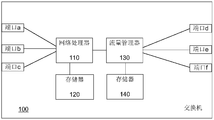
- FIG. 1a is a schematic structural diagram of a switch provided by this application.
- FIG. 1b is a schematic structural diagram of a server provided by this application.
- FIG. 2 is a schematic flowchart of a method for sending a BGP message provided by this application
- FIG. 3 is a schematic flowchart of a method for receiving a BGP message provided by this application.
- FIG. 4 is a schematic structural diagram of a first network device provided by this application.
- FIG. 5 is a schematic structural diagram of a second network device provided by this application.
- FIG. 6 is a schematic structural diagram of a system provided by the present application.
- FIG. 1 is a schematic structural diagram of a data center network provided by this application.
- the data center network includes servers 1 to 6, leaf switches (LS) 1, LS1, LS3, and spine switches (SS) 1, SS2, and SS3.
- server 1 and server 2 are connected to LS1.
- Server 3 and server 4 are connected to LS2.
- Server 5 and server 6 are connected to LS3.
- LS1 is connected to SS1, SS2, and SS3.
- LS2 is connected to SS1, SS2, and SS3.
- LS3 is connected to SS1, SS2, and SS3.
- Server 1 needs to communicate with other servers via LS1.
- the server 6 needs to communicate with other servers via LS3.
- the data stream sent by the server 1 can reach the server 6 through different paths.
- Different paths include: Path 1 (LS1-SS1-LS3), Path 2 (LS1-SS2-LS3), and Path 3 (LS1-SS3-LS3).
- FIG. 1a is a schematic structural diagram of a switch provided by this application.
- the LS in FIG. 1 may be the switch 100.
- the SS in FIG. 1 may be the switch 100.
- the switch 100 includes ports a to f, a network processor 110, a memory 120, a traffic manager 130, and a memory 140.
- Ports a, b, and c are coupled to the network processor 110.
- Port a, port b, and port c are sending ports, and the received packets can be sent to the network processor 110.
- the switch 100 may include more or fewer receiving ports.
- Ports d, e, and f are coupled to the traffic manager 130.
- the network processor 110 and the memory 120 are coupled.
- the memory 120 may store a computer program and a forwarding table.
- the forwarding table may be a hash table.
- the network processor 110 may process a message from the receiving port by executing a computer program stored in the memory 120 and / or looking up a forwarding table. For example, the network processor 110 may execute a computer program to perform a hash operation on a hash key in a message, thereby obtaining a hash value. As another example, the network processor 110 may determine an entry matching the hash value by looking up the hash table. According to the entry that matches the hash value, the sending port used to forward the packet is determined. The sending port may be port d, port e, or port f.
- the network processor 110 and the traffic manager 130 are coupled. The traffic manager 130 is coupled with the memory 140.
- the traffic manager 130 may also be referred to as a scheduler.
- the traffic manager 130 may maintain three sending buffer queues corresponding to the ports d, e and f.
- the traffic manager 130 may enqueue the message to the sending buffer queue corresponding to the sending port for forwarding the message according to the sending port for forwarding the message.
- the traffic manager 130 may schedule a message located in a sending buffer queue to send a message through a sending port.
- the traffic manager 130 may maintain three packet descriptor queues corresponding to the three sending buffer queues on a one-to-one basis.
- the message descriptor queue contains multiple message descriptors. Each message descriptor contains the address of the message stored in the transmit buffer queue.
- the traffic manager 130 may add a storage address of the message to the message descriptor queue.
- the traffic manager 130 may perform a write operation on the memory 140, thereby enqueuing a message to a sending buffer queue.
- the traffic manager 130 may delete the storage address of the message in the message descriptor queue.
- the traffic manager 130 may perform a read operation on the memory 140 to dequeue the packets from the sending buffer queue. After the message is dequeued, the message is sent via the sending port.
- the switch shown in FIG. 1a may include a control plane and a forwarding plane.
- the control plane can be used for route learning, route advertisement, generating forwarding rules, and updating the forwarding table of the forwarding plane.
- the forwarding plane may be used to forward a message according to a forwarding table.
- the forwarding plane may include a network processor 110, a memory 120, a traffic manager 130, and a memory 140.
- the control plane may include a central processing unit (CPU) and a memory coupled to the central processing unit.
- the memory coupled with the central processing unit may store a computer program for running a network protocol.
- the network protocol may be BGP.
- the central processing unit may implement the functions defined by BGP by executing the computer program.
- the central processing unit may learn the MAC address of the server. Routing messages can be generated based on the MAC address of the server. You can send routing messages to the remote switch.
- the switch can update the forwarding table of the forwarding plane according to the routing message from the remote switch. For example, the routing message from the remote switch contains the MAC address of the remote server.
- the central processing unit may add an entry about the remote server to the forwarding table. Therefore, when the server receives a packet whose destination MAC address is the MAC address of the remote server, the forwarding plane of the switch can forward the packet according to the entry about the remote server.
- FIG. 1b is a schematic structural diagram of a server provided by this application.
- the server in FIG. 1 may be the server 1000.
- the server 1000 includes a central processing unit 1100, a memory 1200, a port 1300, and a bus.
- the processing unit 1100, the memory 1200, and the port 1300 are coupled through the bus.
- the memory 1200 stores software.
- the software includes an operating system and multiple applications.
- the central processing unit 1100 runs the operating system and the multiple application programs by accessing the memory 1200.
- the operating system may be Window or Linux.
- the central processing unit 1100 runs the plurality of application programs.
- Port 1300 can be used to receive messages and send messages. For example, when the port 1300 receives a message from the switch 100, the memory 1200 can save the message.
- the central processing unit 1100 may process the message according to the application program.
- the central processing unit 1100 may generate a message according to the application program, and send the message to the switch 100 via the port 1300.
- the central processing unit 1100 in FIG. 1b may be replaced with another processor.
- the other processor may be a digital signal processor (DSP), an application-specific integrated circuit (ASIC), a field programmable gate array (FPGA), or other programmable logic. Devices, transistor logic devices, hardware components, or any combination thereof. It can implement or execute various exemplary logical blocks, modules, and circuits described in connection with the disclosure of the embodiments of the present invention.
- the processor may also be a combination that realizes computing functions, for example, a combination including one or more microprocessors, a combination of a DSP and a microprocessor, and the like.
- the data center network shown in FIG. 1 may specifically be an Ethernet Virtual Private Network (EVPN).
- EVPN Ethernet Virtual Private Network
- RFC Request for Comments
- IETF Internet Engineering Task Force
- RFC7348 is also published by the IETF.
- LS1 and LS2 can run RFC7348.
- LS1 and LS2 may each include a virtual extended LAN tunnel endpoint (VXLAN Tunnel Endpoint, VTEP).
- VTEP is an entity used to originate and / or terminate a VXLAN tunnel.
- the VTEP included in LS1 is referred to as VTEP1
- the VTEP included in LS2 is referred to as VTEP2.
- VTEP1 corresponds to VTEP IP address 1.
- VTEP2 corresponds to VTEP IP address 2.
- Engineers can manually configure LS1 so that LS1 includes VTEP1.
- Engineers can manually configure LS2 so that LS2 includes VTEP2.
- the engineer can perform the following configuration: Configure VTEP IP address 1 (for example, 1.1.1.9) on LS1.
- LS1 and LS2 can be on the same VXLAN.
- LS1 and LS2 are both located on the VXLAN indicated by the Virtual Extended LAN Network Identifier (VNI).
- VNI Virtual Extended LAN Network Identifier
- the value of VNI can be 100.
- Engineers can configure VNI (for example, 100) on LS1.
- Configure RD for example, 1: 1) on LS1.
- Configure RT on LS1 for example, 1: 1).
- Configure VTEP IP address 2 for example, 2.2.2.9
- VNI Configure VNI (for example, 100) on LS2.
- engineers can configure a VXLAN tunnel between LS1 and LS2 on LS2.
- the engineer configures the information of the VXLAN tunnel on LS2.
- the information may include a source IP address (for example, 2.2.2.9) and a destination IP address (for example, 1.1.1.9).
- the source IP address is the IP address of the ingress node (for example, VTEP2) of the VXLAN tunnel along the direction of LS2 to LS1.
- the destination IP address is the IP address of the egress node (for example, VTEP1) of the VXLAN tunnel in the direction from LS2 to LS1.
- the engineer configures the information of the VXLAN tunnel on LS1.
- the information may include a tunnel type.
- TunnelType indicates that the tunnel type of the VXLAN tunnel is VXLAN.
- the VXLAN tunnel may pass through at least one of SS1, SS2, and SS3. That is, at least one of SS1, SS2, and SS3 may be an intermediate node of the VXLAN tunnel.
- LS1 runs BGP.
- LS2 runs BGP.
- LS1 includes a processor and a memory. The code that implements the functions of BGP is stored in the memory.
- a processor (such as a central processing unit) in LS1 runs BGP by executing the code.
- LS2 can also run BGP through the above mechanism.
- LS2 is the BGP peer of LS1.
- LS1 and LS2 can also be called a pair of BGP peers.
- LS1 can learn the MAC addresses of the servers in the network governed by LS1. For example, LS1 can learn the MAC address of server 1 and the MAC address of server 2.
- LS2 can learn the MAC addresses of the servers in the network governed by LS2.
- LS2 can learn the MAC address of server 3 and the MAC address of server 4.
- LS1 may send an EVPN route to LS2 via the VXLAN tunnel.
- the EVPN route sent by LS1 may include the MAC address of server 1 and the MAC address of server 2.
- LS2 may send an EVPN route to LS1 via the VXLAN tunnel.
- the EVPN route sent by LS2 may include the MAC address of server 3 and the MAC address of server 4.
- LS1 learns the MAC address of server 1 and sends an EVPN route carrying the MAC address of server 1 to LS2 as an example.
- LS1 contains interface 1.
- Interface 1 is an Ethernet interface.
- LS1 is connected to server 1 via interface 1.
- the engineer configured a VNI (for example, 100) associated with interface 1 on LS1.
- Server 1 generates Ethernet frame 1 and sends Ethernet frame 1 to LS1 via interface 1.
- the source MAC address of Ethernet frame 1 is the MAC address of server 1.
- LS1 determines that the value of the VNI managed by interface 1 is equal to 100.
- LS1 parses Ethernet frame 1 to obtain the MAC address of server 1.
- LS1 is based on RFC7432, and generates routing message 1 based on the configuration information saved by LS1 and the information that LS1 obtained from Ethernet frame 1.
- a processor for example, a central processing unit
- LS1 may generate routing message 1 by executing a code that implements a function of BGP. The following illustrates routing message 1:
- the routing message 1 may be carried in an IP packet.
- the IP packet includes an IP header and an IP payload.
- the IP header is adjacent to the IP payload.
- the IP payload is located behind the IP header.
- the IP header includes a source IP address, a destination IP address, and a protocol.
- the value of the source IP address can be equal to VTEP IP address 1 (for example, 1.1.1.9).
- the value of the destination IP address can be equal to VTEP IP address 2 (for example, 2.2.2.9).
- the protocol in the IP header is used to indicate the type of the next header of the IP header. For example, when the value of the protocol is equal to 6, the protocol in the IP header indicates that in the IP packet, the next header of the IP header is a Transmission Control Protocol (TCP) header.
- TCP Transmission Control Protocol
- the IP payload includes a TCP header and a TCP payload.
- the TCP header is adjacent to the TCP payload.
- the TCP payload is located behind the TCP header.
- the TCP header is adjacent to the IP header.
- the TCP header includes a source port.
- the source port in the TCP header can be used to indicate the type of TCP payload. For example, when the value of the source port is equal to 179, the source port in the TCP header indicates that the TCP payload is a BGP message.
- Route message 1 may be a BGP message. Specifically, it may be a BGP update message.
- the routing message 1 may include multi-protocol reachable network layer reachability information (Multiprotocol, Reachable, Network, Layer, Reachability, Information, MP_REACH_NLRI).
- the MP_REACH_NLRI is a path attribute. For MP_REACH_NLRI, refer to the related description in RFC4760. Route message 1 may also carry other path attributes. For example, the routing message 1 may also carry a local preference.
- the MP_REACH_NLRI includes a next hop network address (next hop network address) field.
- the next hop network address field may carry a VTEP IP address 1 (for example, 1.1.1.9) stored on LS1.
- the routing message 1 contains a MAC / IP advertisement route (MAC / IP advertisement route). Regarding MAC / IP Advertising Route, you can refer to the relevant description in RFC7432.
- the routing message may also include a Media Access Control Mobility Extended Community (MAC, Mobility, Extended Community). About MAC Mobility Extended Community, you can refer to the relevant description in RFC7432.
- MAC Media Access Control Mobility Extended Community
- the MAC address of the server 1 may be carried in the MAC / IP Advertising Route.
- the MAC / IP Advertising Route includes a MAC address field.
- the MAC address field has 6 bytes.
- the MAC address of the server 1 may be carried in the MAC address field.
- the MAC / IP Advertising Route includes a Multiprotocol Label Switching Label (MPLS) Label 1 field.
- the MPLS Label1 field has 3 bytes.
- the MPLS Label1 field can carry the VNI (for example, 100) stored on LS1.
- the MAC / IP Advertising Route includes an RD field.
- the RD field includes 8 bytes.
- the RD field may carry an RD (for example, 1: 1) stored on LS1.
- the MAC / IP Advertising Route also includes an MPLS Label 2 field.
- the routing message 1 may include an extended community attribute.
- extended community attributes you can refer to the description of BGP Extended communities in RFC4360.
- the extended community attribute may include a TunnelType field and an RT field.
- the TunnelType field can carry the TunnelType (for example, 8) stored on LS1.
- the RT field can carry the RT stored on LS1 (for example, 1: 1).
- LS1 After LS1 generates routing message 1, it can send routing message 1 to LS2 through the VXLAN tunnel.
- LS2 After receiving routing message 1, LS2 parses routing message 1 to obtain the value of the next hop network address field in routing message 1.
- the value of the next hop network address field is equal to VTEP IP address 1 (for example, 1.1.1.9).
- LS2 determines that LS2 can send the destination address to the MAC address of server 1 to LS1 through the VXLAN tunnel according to the value of the next-hop network address field obtained from routing message 1 and the VXLAN tunnel information saved by LS2 Ethernet frame.
- the information includes a source IP address (for example, 2.2.2.9) and a destination IP address (for example, 1.1.1.9).
- LS2 determines that the routing message 1 matches the VXLAN tunnel according to the value of the next hop network address field equal to the destination IP address of the VXLAN tunnel. Furthermore, LS2 can generate forwarding entries.
- the forwarding entry includes a MAC address (for example, the MAC address of server 1), a VNI (for example, 100), a source IP address (for example, 2.2.2.9), and a destination IP address (for example, 1.1.1.9).
- LS2 uses the forwarding entry to forward an Ethernet frame as an example.
- LS2 When LS2 receives an Ethernet frame (Ethernet frame 2) whose destination MAC address is the MAC address of server 1, it can determine Ethernet frame 2 based on the destination MAC address in Ethernet frame 2 being equal to the MAC address in the forwarding entry. Matches a forwarding entry. Furthermore, LS2 can encapsulate Ethernet frame 2 to obtain an encapsulated message. Specifically, LS2 can add a tunnel header to Ethernet frame 2.
- the tunnel header may include a source IP address (for example, 2.2.2.9), a destination IP address (for example, 1.1.1.9), and a VNI (for example, 100). LS2 may obtain the value of the field in the tunnel header from the forwarding entry, thereby implementing encapsulation of Ethernet frame 2.
- the tunnel between LS1 and LS2 is a VXLAN tunnel.
- the tunnel between LS1 and LS2 may be another tunnel.
- the tunnel between LS1 and LS2 may be a segment routing traffic engineering (Segment Routing, Traffic Engineering, SR-TE) path.
- LS1 learns the MAC address of server 1 and sends the MAC address of server 1 to LS2 through a routing message.
- Any LS in FIG. 1 can learn the MAC address of the server in the network managed by the LS in a similar manner, and send the MAC address of the server to the remote LS through a routing message.
- LS3 can learn the MAC address of server 5.
- LS3 can send a routing message carrying the MAC address of server 5 to LS2 via the VXLAN tunnel between LS3 and LS2.
- LS and SS in FIG. 1 are switches.
- the LS and SS in FIG. 1 may be other network devices.
- the LS and SS in FIG. 1 may be routers.
- the LS and SS may be provider edge (PE) routers.
- PE routers are located at the edge of the core network. PE routers can be used to connect CE routers.
- the LS may be a PE router.
- the SS can be a provider (P) router.
- P router is a label switched router (Label Switch Router, LSR).
- the P router is a transit router in the core network.
- a P router can be used to connect one or more PE routers.
- Figure 1a is a schematic diagram of a switch.
- FIG. 1a may also be a schematic structural diagram of another network device.
- FIG. 1a may also be a schematic structural diagram of a router.
- the LS in Figure 1 is used to connect to the server.
- the LS can be directly connected to the server through a cable or fiber optic cable.
- the LS can indirectly connect to the server via an intermediate device.
- the intermediate device may be a router, an Ethernet switch, or a gateway.
- the LS in Figure 1 can be connected to other types of hosts.
- Other types of hosts can be personal computers or virtual machines (VMs).
- the virtual machine may run in a physical server.
- the LS may be connected to the physical server via an access device.
- the access device may be a gateway or an Ethernet switch.
- FIG. 1b is a schematic structural diagram of a server.
- FIG. 1b may also be a schematic structural diagram of another host.
- FIG. 1b may also be a schematic diagram of a personal computer.
- the above embodiment assumes that the server 1 in FIG. 1 is a legitimate user. After LS1 learns the MAC address of server 1 as a legitimate user, it sends a routing message containing the MAC address of server 1 to LS2. LS2 generates a forwarding entry according to the routing message, so that a server (such as server 3) in the network managed by LS2 can use the forwarding entry to communicate with server 1.
- a server such as server 3 in the network managed by LS2 can use the forwarding entry to communicate with server 1.
- the server 1 in FIG. 1 is an illegal user.
- the server 1 may be an attacker.
- server 1 may launch a cyberattack.
- the network attack may be a denial-of-service (DDoS) attack, a man-in-the-middle attack, ARP poisoning, ping flooding, wiretapping, Idle scan or port scan.
- DDoS denial-of-service
- ARP poisoning ping flooding
- wiretapping Idle scan or port scan.
- the following uses the network attack as a DDoS attack as an example to describe the attack behavior of server 1 and the process by which LS1 identifies server 1 as an attacker:
- a user of the server 1 installs and runs the software in the server 1 when knowing that the software can launch a DDoS attack.
- Server 1 sends multiple messages under the control of the software, thereby launching a DDoS attack.
- LS1 has the ability to identify DDoS attacks.
- LS1 contains the processor and memory.
- a computer program for identifying DDoS attacks is stored in the memory.
- LS1 receives the plurality of messages.
- the processor in LS1 analyzes the characteristics of the multiple packets by executing the computer program, thereby determining that server 1 is an attacker.
- LS1 obtains the MAC address of server 1 (for example, MAC address 1) by analyzing the source MAC addresses of the multiple packets.
- LS1 determines that the host identified by MAC address 1 (for example, server 1) is an attacker.
- the server 1 is infected with a computer virus due to a user's misoperation.
- the computer virus was able to launch a DDoS attack.
- the server 1 is pre-installed and runs computer virus monitoring software.
- the computer virus monitoring software identifies the behavior of the computer virus (a process in the server 1), and determines that the server 1 is infected with the computer virus. Further, the server 1 determines that the server 1 is an attacker under the control of the computer virus monitoring software.
- the server 1 sends a message 1 to a network management server (not shown in FIG. 1). Message 1 is used to notify the network management server that server 1 is an attacker. For example, the message 1 carries the MAC address of the server 1 (for example, the MAC address 1).
- the network management server After the network management server determines that server 1 is an attacker according to message 1, it generates message 2. The network management server sends message 2 to LS1. Message 2 is used to inform LS1 that server 1 is an attacker. For example, message 2 carries MAC address 1. After LS1 receives message 2, it determines that the host (for example, server 1) identified by MAC address 1 is an attacker according to the MAC address 1 carried in message 2.
- LS1 After LS1 determines that the host identified by MAC address 1 (for example, server 1) is an attacker, LS1 generates routing message 2.
- a processor such as a central processing unit
- the routing message 2 includes a MAC address 1 and indication information 1.
- the indication information 1 is used to indicate that the host (for example, server 1) identified by the MAC address 1 is an attacker.
- LS1 sends routing message 2 to LS2.
- LS1 can generate routing message 2 based on the configuration information saved by LS1 and the MAC address of server 1. For the process of generating route message 2 based on the MAC address of server 1 by LS1, refer to the description of the process of generating route message 1 above.
- MAC address 1 can be carried in the MAC / IP Advertisement contained in routing message 2. Specifically, the MAC address 1 may be carried on the MAC address field of the MAC / IP Advertisement route.
- the format of the routing message 2 please refer to the description of the format of the routing message 1 above.
- routing message 1 is generated when LS1 determines that server 1 is a legitimate user.
- LS1 advertises the MAC address of server 1 to LS2, so that LS2 generates a forwarding entry.
- a server for example, server 3) managed by LS2 can communicate with server 1 via LS2.
- Route message 2 is generated when LS1 determines that Server 1 is an attacker.
- LS1 advertises the MAC address of server 1 to LS2, so that LS2 generates a forwarding rule.
- the server (for example, server 3) administered by LS2 avoids communicating with server 1 via LS2.
- Route message 2 functions differently than route message 1.
- the content of routing message 2 is different from the content of routing message 1.
- the routing message 2 includes indication information 1 for indicating that the host (for example, the server 1) identified by the MAC address 1 is an attacker.
- the routing message 1 does not include indication information 1.
- the indication information 1 is carried in the MAC Mobility Extended Community in the routing message 2.
- the MAC Mobility Extended Community contains a flags field.
- the flag field has 8 bits.
- the indication information 1 may be carried in the MSB of the flag field. For example, when the MSB of the flag field is equal to 1, the MSB of the flag field indicates that the host (for example, server 1) identified by the MAC address 1 in the routing message 2 is an attacker.
- LS2 After LS2 receives routing message 2 from LS1, LS2 can generate forwarding rule 1 and forwarding rule 2 based on routing message 2. According to forwarding rule 1, LS2 avoids forwarding packets with destination MAC address received by LS2 to MAC address 1 to the host (for example, server 1) identified by MAC address 1. LS2 avoids forwarding packets with source MAC address MAC address 1 received by LS2 according to forwarding rule 2.
- the forwarding rule 1 may specifically be a forwarding entry 1.
- the forwarding rule 2 may specifically be a forwarding entry 2.
- the forwarding plane of LS2 may include a forwarding table.
- the forwarding table may include forwarding entry 1 and forwarding entry 2.
- the processor (for example, a network processor) of the forwarding plane may process the received packet according to the forwarding table.
- the forwarding entry 1 includes a matching domain and an action domain.
- the value of the matching field in forwarding entry 1 is equal to MAC address 1.
- the action field of the forwarding entry 1 may include a discard instruction.
- the matching field of forwarding entry 1 is used to match the destination MAC address in the packet (for example, packet 1) received by LS2.
- packet 1 for example, packet 1
- LS2 determines that the destination MAC address of packet 1 is equal to the value of the matching field of forwarding entry 1
- LS2 determines that packet 1 matches forwarding entry 1.
- LS2 can perform discard processing on packet 1 according to the discard instruction in the action field of forwarding entry 1.
- the action field of the forwarding entry 1 may include other instructions. Other instructions may instruct sending the message 1 to the control plane of LS2.
- the processor of the control plane may be a CPU. After receiving the message 1 from the forwarding plane, the CPU may analyze the message 1. In addition, under the control of the CPU, the LS2 can also send the message 1 to the network management server, so that the network management server can analyze the message 1. When LS2 processes packet 1 according to forwarding rule 1, it does not mean that LS2 can only discard packet 1. LS2 can also perform other processing on packet 1. As long as LS2 avoids forwarding packet 1 to the host (for example, server 1) identified by MAC address 1.
- the forwarding entry 2 includes a matching domain and an action domain.
- the value of the matching field in forwarding entry 2 is equal to MAC address 1.
- the action field of the forwarding entry 2 may include a discard instruction.
- the matching field of forwarding entry 2 is used to match the source MAC address in the packet (for example, packet 2) received by LS2.
- LS2 determines that the source MAC address of packet 2 is equal to the value of the matching field of forwarding entry 2
- LS2 determines that packet 2 matches forwarding entry 2.
- LS2 can perform discard processing on packet 2 according to the discard instruction in the action field of forwarding entry 2.
- the source MAC address of packet 2 received by LS2 is equal to MAC address 1, which may be due to server 1 roaming from the network governed by LS1 to the network governed by LS2.
- Another possibility is that the host in the network governed by LS2 has stolen the MAC address of server 1.
- the server 4 constructs the Ethernet frame the MAC address of the server 1 is stolen, and the MAC address of the server 1 is used as the source MAC address of the constructed Ethernet frame.
- FIG. 2 is a schematic flowchart of a method for sending a BGP message provided by the present application.
- the method shown in FIG. 2 is executed by a first network device.
- the first network device may be LS1 in FIG. 1.
- the first network device may perform an action performed by LS1 described in the foregoing embodiment.
- the method includes S201, S202, and S203.
- the first network device determines that the host identified by the first MAC address is an attacker.
- the first MAC address may be a MAC address 1.
- the host identified by the first MAC address may be server 1.
- the first network device generates a BGP message.
- the BGP message includes the first MAC address and indication information.
- the indication information is used to indicate that the host identified by the first MAC address is the attacker.
- the BGP message may be a routing message 2.
- the instruction information may be instruction information 1.
- the first network device sends the BGP message to a second network device.
- the second network device may be LS2.
- LS1 may send the BGP message to LS2 via the VXLAN tunnel between LS1 and LS2.
- the first network device may generate a BGP message carrying the first MAC address and the indication information, and send the BGP message to the second network device.
- the BGP message may be generated, according to the first MAC address and the indication information in the BGP message, a block used to prevent the second network device from forwarding the packet received by the second network device to the host identified by the first MAC address.
- Forwarding rules That is, the second network device can generate a forwarding rule by using the BGP message sent by the first network device, and the engineer does not need to manually configure the forwarding rule on the second network device. Therefore, the above technical solution helps reduce the workload of engineers performing manual configuration on network equipment.
- the first network device includes a first VTEP
- the second network device includes a second VTEP
- the sending, by the first network device, the BGP message to a second network device includes: the first VTEP sends the BGP message to the second VTEP.
- the first VTEP may be VTEP1.
- the second VTEP may be VTEP2.
- VTEP1 can include the sending interface of LS1.
- the sending interface may be an Ethernet interface.
- VTEP2 can include the receiving interface of LS2.
- the receiving interface may be an Ethernet interface.
- VTEP1 can send routing message 2 to VTEP2 via the VXLAN tunnel between LS1 and LS2.
- a first VTEP address identifies the first VTEP
- a second VTEP address identifies the second VTEP.
- the BGP message includes an IP header and a payload.
- the IP header includes a destination IP address
- the payload includes MP_REACH_NLRI.
- the MP_REACH_NLRI includes a next hop network address.
- the destination IP address is equal to the second VTEP address
- the next hop network address is equal to the first VTEP address.
- the first VTEP address may be VTEP IP address 1.
- the second VTEP address may be a VTEP IP address 2.
- the first VTEP sends the BGP update message to the second VTEP via a tunnel.
- the tunnel is a VXLAN tunnel or a label switched path (LSP).
- the LSP may be a segment routing traffic engineering (Segment Routing, Engineering, SR-TE) path.
- the BGP message includes MAC / IP Advertising Route and MAC Mobility Extended Community.
- the first MAC address is carried in the MAC / IP Advertisement route.
- the indication information is carried in the MAC Mobility Extended Community.
- the MAC Mobility Extended Community includes a flag with 8 bits, and the indication information is carried on the MSB of the flag.
- the BGP message is a BGP update message.
- S202 includes: the first network device receives a data packet, and a source MAC address of the data packet is the first MAC address; and the first network device is based on the The host identified by the source MAC address of the data packet is an attacker and generates the BGP message.
- the first network device generates the BGP message based on a trigger of the data packet. That is, when the first network device determines that the host identified by the first MAC address is an attacker, the first network device does not have to generate a BGP message immediately and notify the second network device.
- the host identified by the first MAC address may not access the network governed by the first network device. For example, the host identified by the first MAC address may be offline, or the host identified by the first MAC address may have roamed to another network. Therefore, when the first network device determines that the host identified by the first MAC address is an attacker, the first network device and the second network device may not be attacked by the attacker.
- the first network device When the first network device is not attacked by the attacker, the first network device temporarily does not generate and send a BGP message, which helps reduce the overhead of the first network device and the second network device.
- the first network device receives a data packet with the source MAC address being the first MAC address, it indicates that the first network device starts to be attacked by the attacker.
- the first network device When the first network device starts to be attacked by the attacker, the first network device notifies the second network device of the attacker's MAC address, which helps to obtain a compromise of reducing overhead and preventing the attack of the attacker.
- S202 includes: the first network device determines that the data packet is from a first VXLAN, and the first VNI identifies the first VXLAN. Determining, by the first network device, that the host identified by the first MAC address is located in the first VXLAN based on a source MAC address carried in the data packet and the data packet is from a first VXLAN. Generating, by the first network device based on the host identified by the first MAC address, the first VXLAN, the BGP message, where the BGP message includes the first VNI.
- the determining, by the first network device, that the data packet is from a first VXLAN includes: receiving, by the first network device, the data packet through a first port, the first port The first VNI is configured. And, the first network device is configured with the first VNI based on the first port for receiving the data packet, and determines that the data packet comes from the first VXLAN.
- the determining, by the first network device, that the data packet is from a first VXLAN includes: determining, by the first network device, a first virtual local area network identifier included in the data packet ( VLAN ID) is configured with the first VNI.
- the first network device configures the first VNI based on the first VLAN ID included in the data packet, and determines that the data packet comes from the first VXLAN.
- the first network device determines that the data packet is from the first VXLAN according to the configuration information. Further, the first network device carries a first VNI for identifying the first VXLAN in a BGP message. The second network device learns the corresponding EVPN route according to the first VNI in the BGP message.
- FIG. 3 is a schematic flowchart of a method for receiving a BGP message provided by the present application.
- the method shown in FIG. 3 is executed by a second network device.
- the second network device may be LS2 in FIG. 1.
- the second network device may perform an action performed by the LS2 described in the foregoing embodiment.
- the method includes: S301, S302, and S303.
- the second network device receives a BGP message from the first network device.
- the BGP message includes a first MAC address and indication information, where the indication information is used to indicate that the host identified by the first MAC address is an attacker.
- the first network device may be LS1.
- the first MAC address may be a MAC address 1.
- the host identified by the first MAC address may be server 1.
- the BGP message may be a routing message 2.
- the instruction information may be instruction information 1.
- the second network device receives a first packet.
- the destination MAC address of the first packet is equal to the first MAC address.
- the first packet may be an Ethernet frame generated by a host in a network governed by LS2.
- the first message may be an Ethernet frame generated by the server 3 or an Ethernet frame generated by the server 4.
- LS2 may receive the first message via the Ethernet interface of LS2.
- the destination MAC address of the first packet is equal to the first MAC address, which indicates that the generator (for example, server 3) of the first packet wants to perform the communication with the host (for example, server 1) identified by the first MAC address. Communication.
- the second network device avoids forwarding the first packet to the host identified by the first MAC address.
- the second network device avoids sending to the first MAC address based on the first MAC address in the BGP message, the indication information in the BGP message, and the destination MAC address in the first packet.
- the host identified by the first MAC address forwards the first message.
- LS2 can generate forwarding entry 1 based on routing message 2.
- the first message may be message 1.
- the LS2 may discard the packet 1 according to the forwarding entry 1, or perform other processing.
- the generation process of the forwarding entry 1 the structure of the forwarding entry 1, and how to process the packet 1 according to the forwarding entry 1, please refer to the related description above, which will not be repeated here.
- the second network device after the second network device receives the BGP message carrying the first MAC address and the indication information, the second network device is based on the first MAC address in the BGP message and the BGP message. Avoiding forwarding the first message to the host identified by the first MAC address by using the indication information and the destination MAC address in the first message.
- the second network device may use the BGP message sent by the first network device to form a forwarding mechanism to avoid forwarding the first message to the host identified by the first MAC address. Therefore, the engineer does not need to manually configure a forwarding rule for the destination MAC address as the first MAC address on the second network device. Therefore, the above technical solution helps reduce the workload of engineers performing manual configuration on network equipment.
- the technical solution shown in FIG. 3 may further include:
- the second network device receives a second packet, and a source MAC address of the second packet is equal to the first MAC address.
- LS2 can generate forwarding entry 2 based on routing message 2.
- the second message may be message 2.
- the LS2 may discard the packet 2 according to the forwarding entry 2.
- the generation process of the forwarding entry 2 the structure of the forwarding entry 2, and how to process the packet 2 according to the forwarding entry 2, please refer to the related description above, which will not be repeated here.
- the first network device includes a first VTEP
- the second network device includes a second VTEP.
- S301 includes: the second VTEP receives a Border Gateway Protocol BGP update message from the second VTEP.
- the BGP message is carried in the BGP update message, the BGP update message includes an IP header and a payload, the IP header includes a destination IP address, the payload includes MP_REACH_NLRI, and the MP_REACH_NLRI includes a next hop network address
- the destination IP address is equal to the second VTEP address, and the next hop network address is equal to the first VTEP address.
- the first VTEP may be VTEP1.
- the second VTEP may be VTEP2.
- VTEP1 can include the sending interface of LS1.
- the sending interface may be an Ethernet interface.
- VTEP2 can include the receiving interface of LS2.
- the receiving interface may be an Ethernet interface.
- VTEP2 can receive VTEP1 and send routing message 2 via the VXLAN tunnel between LS1 and LS2.
- the first VTEP address may be VTEP IP address 1.
- the second VTEP address may be a VTEP IP address 2.
- the second VTEP receives the first VTEP via a tunnel and sends the BGP update message.
- the tunnel is a VXLAN tunnel or a label switched path (LSP).
- the LSP may be a segment routing traffic engineering (Segment Routing, Engineering, SR-TE) path.
- the BGP message includes MAC / IP Advertising Route and MAC Mobility Extended Community.
- the first MAC address is carried in the MAC / IP Advertisement route.
- the indication information is carried in the MAC Mobility Extended Community.
- the MAC Mobility Extended Community includes a flag with 8 bits, and the indication information is carried on the MSB of the flag.
- the BGP message is a BGP update message.
- FIG. 4 is a schematic structural diagram of a first network device 400 provided in this application.
- the first network device 400 includes a processor 410 and a transceiver 420.
- the processor 410 is coupled with the transceiver 420.
- the first network device 400 shown in FIG. 4 may execute the method shown in FIG. 2.
- the first network device 400 may be LS1 in FIG. 1.
- the processor 410 is configured to determine that the host identified by the first MAC address is an attacker.
- the processor 410 may be a processor, or an application-specific integrated circuit (ASIC) or a field programmable gate array (FPGA).
- ASIC application-specific integrated circuit
- FPGA field programmable gate array
- the processor 410 is further configured to generate a BGP message, where the BGP message includes the first MAC address and indication information, the indication information is used to indicate that the host identified by the first MAC address is the attacker.
- the processor 410 generates the BGP message based on that the host identified by the first MAC address is an attacker.
- the transceiver 420 is configured to send the BGP message generated by the processor 410 to a second network device.
- the second network device may be LS2 in FIG. 1.
- the first network device 400 may include a memory 430.
- the memory 430 is coupled to the processor 410.
- the memory 430 may store a computer program.
- a memory 430 stores a computer program for identifying a DDoS attack.
- the processor 410 executes the computer program to analyze characteristics of multiple packets from an attacker, so as to determine that the multiple packets belong to a DDoS attack.
- the source MAC addresses of the multiple packets are MAC address 1.
- the processor 410 determines that the host (for example, server 1) identified by the MAC address 1 is an attacker according to the source MAC addresses of the multiple packets.
- the first network device includes a first VTEP
- the second network device includes a second VTEP
- the transceiver 420 is configured to send the BGP message from the first VTEP to the second VTEP.
- a VXLAN tunnel exists between the first VTEP and the second VTEP.
- the transceiver 420 is located in the VXLAN tunnel.
- the transceiver 420 includes an Ethernet interface, and the transceiver 420 may receive and transmit messages (for example, Ethernet frames) conforming to the Ethernet protocol.
- the BGP message includes Media Access Control / Internet Protocol Advertisement Route MAC / IP, Advertisement Route, and Media Access Control Mobility Extended Community, and the first MAC address is carried in the MAC.
- IP / Advertisement route the instruction information is carried in the MAC Mobility Extended Community.
- the MAC Mobility Extended Community includes a flag with 8 bits, and the indication information is carried on the MSB of the flag.
- the BGP message is a BGP update message.
- FIG. 5 is a schematic structural diagram of a second network device 500 provided in this application.
- the second network device 500 includes a first transceiver 510, a second transceiver 520, and a processor 530.
- the first transceiver 510 is coupled to the processor 530.
- the second transceiver 520 is coupled to the processor 530.
- the second network device 500 shown in FIG. 5 may execute the method shown in FIG. 3.
- the second network device 500 may be LS2 in FIG. 1.
- the first transceiver 510 is configured to receive a BGP message from a first network device, where the BGP message includes a first media access control MAC address and indication information, and the indication information is used to indicate a host identified by the first MAC address Is an attacker.
- the second transceiver 520 is configured to receive a first packet, and a destination MAC address of the first packet is equal to the first MAC address.
- the first transceiver 510 may include an Ethernet interface.
- the first transceiver 510 may receive and transmit a message (for example, an Ethernet frame) that complies with an Ethernet protocol.
- the second transceiver 520 may include an Ethernet interface.
- the second transceiver 520 may receive and transmit a message (for example, an Ethernet frame) that complies with the Ethernet protocol.
- the first transceiver 510 may be located on a VXLAN tunnel between LS1 and LS2.
- the second transceiver 520 may be used to connect to a network governed by LS2.
- the second transceiver 520 may be used to connect to the server 3 and the server 4.
- the processor 530 is configured to avoid sending to the first MAC address based on the first MAC address in the BGP message, the indication information in the BGP message, and the destination MAC address in the first packet.
- the host identified by the MAC address forwards the first message.
- the processor 530 may be a central processing unit, or may be an ASIC or an FPGA.
- the second network device 500 may include a memory 540.
- the memory 540 is coupled to the processor 530.
- the memory 540 may store a computer program.
- the memory 540 stores a computer program for implementing the functions of BGP.
- the processor 530 executes the computer program to generate a forwarding entry 1 based on the BGP message and configuration information of the second network device 500.
- the first message may be message 1.
- the LS2 may discard the packet 1 according to the forwarding entry 1, or perform other processing.
- the generation process of the forwarding entry 1 the structure of the forwarding entry 1, and how to process the packet 1 according to the forwarding entry 1, please refer to the related description above, which will not be repeated here.
- the second transceiver 520 is further configured to receive a second packet, and a source MAC address of the second packet is equal to the first MAC address.
- the processor 530 is further configured to avoid forwarding the first MAC address based on the first MAC address in the BGP message, the indication information in the BGP message, and the source MAC address in the second message. Two messages.
- LS2 can generate forwarding entry 2 based on routing message 2.
- the second message may be message 2.
- the LS2 may discard the packet 2 according to the forwarding entry 2.
- the generation process of the forwarding entry 2 the structure of the forwarding entry 2, and how to process the packet 2 according to the forwarding entry 2, refer to the related descriptions above, and will not be repeated here.
- the first network device includes a first VTEP
- the second network device includes a second VTEP
- the first transceiver 510 is configured to send the BGP message from the first VTEP to the second VTEP.
- the first transceiver 510 may be located on a VXLAN tunnel between LS1 and LS2. After receiving the BGP message from the first VTEP (contained in the first network device) via the VXLAN tunnel, the first transceiver 510 may send the BGP message to the second VTEP in the second network device.
- the BGP message includes Media Access Control / Internet Protocol Advertisement Route MAC / IP, Advertisement Route, and Media Access Control Mobility Extended Community, and the first MAC address is carried in the MAC.
- IP / Advertisement route the instruction information is carried in the MAC Mobility Extended Community.
- the MAC Mobility Extended Community includes a flag with 8 bits, and the indication information is carried on the MSB of the flag.
- FIG. 6 is a system provided by the present application.
- the system 600 includes a first network device 601 and a second network device 602.
- the first network device 601 may be the first network device 400 shown in FIG. 4.
- the second network device 602 may be the second network device 500 shown in FIG. 5.
- the first network device 601 may execute the method shown in FIG. 2.
- the second network device 602 may execute the method shown in FIG. 3.
- the first network device 601 may be LS1 in FIG. 1.
- the second network device 602 may be LS2 in FIG. 1.
- the present application also provides a computer-readable storage medium.
- the computer-readable storage medium stores a computer program.
- the network device When the computer program is executed by a network device, the network device is caused to execute the method shown in FIG. 2 or the method shown in FIG. 3.
- the network device may be a first network device involved in the method shown in FIG. 2 or a second network device involved in the method shown in FIG. 3.
- the computer program product includes a computer program.
- the computer program may be stored on a computer-readable storage medium.
- the network device is caused to execute the method shown in FIG. 2 or the method shown in FIG. 3.
- the network device may be a first network device involved in the method shown in FIG. 2 or a second network device involved in the method shown in FIG. 3.
- the method or steps in the method described in this application may be implemented in a hardware manner, or may be implemented in a manner in which a processor executes software instructions.
- Software instructions can be composed of corresponding software modules.
- a software module may be stored in RAM memory, flash memory, ROM memory, EPROM memory, EEPROM memory, registers, hard disk, mobile hard disk, CD-ROM, or any other form of storage medium known in the art.
- An exemplary storage medium is coupled to the processor such that the processor can read information from, and write information to, the storage medium.
- the storage medium may also be an integral part of the processor.
- the processor and the storage medium may reside in an ASIC.
- the ASIC may reside in a user equipment.
- the processor and the storage medium may also exist in the user equipment as discrete components.
- Computer-readable media includes computer storage media and communication media including communication media that facilitates transfer of a computer program from one place to another.
- a storage medium may be a medium that can be accessed by a general purpose or special purpose computer.
Landscapes
- Engineering & Computer Science (AREA)
- Computer Networks & Wireless Communication (AREA)
- Signal Processing (AREA)
- Computer Security & Cryptography (AREA)
- Computer Hardware Design (AREA)
- Computing Systems (AREA)
- General Engineering & Computer Science (AREA)
- Data Exchanges In Wide-Area Networks (AREA)
Abstract
Description
Claims (20)
- 一种发送边界网关协议BGP消息的方法,其特征在于,包括:第一网络设备确定第一媒体访问控制MAC地址所标识的主机为攻击者;所述第一网络设备生成BGP消息,所述BGP消息包括所述第一MAC地址以及指示信息,所述指示信息用于指示所述第一MAC地址标识的的所述主机是所述攻击者;所述第一网络设备向第二网络设备发送所述BGP消息。
- 根据权利要求1所述的方法,其特征在于,所述第一网络设备包括第一虚拟扩展局域网隧道端点VTEP,所述第二网络设备包括第二VTEP;所述第一网络设备向第二网络设备发送所述BGP消息包括:所述第一VTEP向所述第二VTEP发送所述BGP消息。
- 根据权利要求1或2所述的方法,其特征在于,所述BGP消息包含媒体访问控制/网际协议通告路由MAC/IP Advertisement route以及媒体访问控制移动性扩展团体MAC Mobility Extended Community,所述第一MAC地址携带在所述MAC/IP Advertisement route中,所述指示信息携带在所述MAC Mobility Extended Community中。
- 根据权利要求3所述的方法,其特征在于,所述MAC Mobility Extended Community包括具有8个比特的旗帜,所述指示信息携带在所述旗帜的最高有效位MSB上。
- 根据权利要求1至4中任一所述的方法,其特征在于,所述BGP消息为BGP更新消息。
- 一种接收边界网关协议BGP消息的方法,其特征在于,包括:第二网络设备接收来自第一网络设备的BGP消息,所述BGP消息包括第一媒体访问控制MAC地址以及指示信息,所述指示信息用于指示所述第一MAC地址所标识的主机是攻击者;所述第二网络设备接收第一报文,所述第一报文的目的MAC地址等于所述第一MAC地址;所述第二网络设备基于所述BGP消息中的所述第一MAC地址、所述BGP消息中的所述指示信息以及所述第一报文中的所述目的MAC地址,避免向所述第一MAC地址标识的所述主机转发所述第一报文。
- 根据权利要求6所述的方法,其特征在于,还包括:所述第二网络设备接收第二报文,所述第二报文的源MAC地址等于所述第一MAC地址;所述第二网络设备基于所述BGP消息中的所述第一MAC地址、所述BGP消息中的 所述指示信息以及所述第二报文中的所述源MAC地址,避免转发所述第二报文。
- 根据权利要求6或7所述的方法,其特征在于,所述第一网络设备包括第一虚拟扩展局域网隧道端点VTEP,所述第二网络设备包括第二VTEP;所述第二网络设备接收来自第一网络设备的BGP消息包括:所述第二VTEP接收来自所述第一VTEP的所述路由信息。
- 根据权利要求6至8中任一所述的方法,其特征在于,所述BGP消息包含媒体访问控制/网际协议通告路由MAC/IP Advertisement route以及媒体访问控制移动性扩展团体MAC Mobility Extended Community,所述第一MAC地址携带在所述MAC/IP Advertisement route中,所述指示信息携带在所述MAC Mobility Extended Community中。
- 根据权利要求9所述的方法,其特征在于,所述MAC Mobility Extended Community包括具有8个比特的旗帜,所述指示信息携带在所述旗帜的最高有效位MSB上。
- 一种第一网络设备,其特征在于,包括:处理器以及与所述处理器耦合的收发器;所述处理器用于确定第一媒体访问控制MAC地址所标识的主机为攻击者;所述处理器还用于生成边界网关协议BGP消息,所述BGP消息包括所述第一MAC地址以及指示信息,所述指示信息用于指示所述第一MAC地址标识的的所述主机是所述攻击者;所述收发器用于向第二网络设备发送所述处理器生成的所述BGP消息。
- 根据权利要求11所述的第一网络设备,其特征在于,所述第一网络设备包括第一虚拟扩展局域网隧道端点VTEP,所述第二网络设备包括第二VTEP;所述收发器用于向所述第二VTEP发送来自所述第一VTEP的所述BGP消息。
- 根据权利要求11或12所述的第一网络设备,其特征在于,所述BGP消息包含媒体访问控制/网际协议通告路由MAC/IP Advertisement route以及媒体访问控制移动性扩展团体MAC Mobility Extended Community,所述第一MAC地址携带在所述MAC/IP Advertisement route中,所述指示信息携带在所述MAC Mobility Extended Community中。
- 根据权利要求13所述的第一网络设备,其特征在于,所述MAC Mobility Extended Community包括具有8个比特的旗帜,所述指示信息携带在所述旗帜的最高有效位MSB上。
- 根据权利要求11至14中任一所述的第一网络设备,其特征在于,所述BGP消息为BGP更新消息。
- 一种第二网络设备,其特征在于,包括:第一收发器、第二收发器以及与所述第一收发器和所述第二收发器耦合的处理器;所述第一收发器用于接收来自第一网络设备的边界网关协议BGP消息,所述BGP消息包括第一媒体访问控制MAC地址以及指示信息,所述指示信息用于指示所述第一MAC地址所标识的主机是攻击者;所述第二收发器用于接收第一报文,所述第一报文的目的MAC地址等于所述第一MAC地址;所述处理器用于基于所述BGP消息中的所述第一MAC地址、所述BGP消息中的所述指示信息以及所述第一报文中的所述目的MAC地址,避免向所述第一MAC地址标识的所述主机转发所述第一报文。
- 根据权利要求16所述的第二网络设备,其特征在于,所述第二收发器还用于接收第二报文,所述第二报文的源MAC地址等于所述第一MAC地址;所述处理器还用于基于所述BGP消息中的所述第一MAC地址、所述BGP消息中的所述指示信息以及所述第二报文中的所述源MAC地址,避免转发所述第二报文。
- 根据权利要求16或17所述的第二网络设备,其特征在于,所述第一网络设备包括第一虚拟扩展局域网隧道端点VTEP,所述第二网络设备包括第二VTEP;所述第一收发器用于向所述第二VTEP发送来自所述第一VTEP的所述BGP消息。
- 根据权利要求16至18中任一所述的第二网络设备,其特征在于,所述BGP消息包含媒体访问控制/网际协议通告路由MAC/IP Advertisement route以及媒体访问控制移动性扩展团体MAC Mobility Extended Community,所述第一MAC地址携带在所述MAC/IP Advertisement route中,所述指示信息携带在所述MAC Mobility Extended Community中。
- 根据权利要求19所述的第二网络设备,其特征在于,所述MAC Mobility Extended Community包括具有8个比特的旗帜,所述指示信息携带在所述旗帜的最高有效位MSB上。
Priority Applications (4)
| Application Number | Priority Date | Filing Date | Title |
|---|---|---|---|
| CA3104559A CA3104559A1 (en) | 2018-06-30 | 2019-06-23 | Bgp message sending method, bgp message receiving method, and device |
| JP2020573178A JP7216120B2 (ja) | 2018-06-30 | 2019-06-23 | Bgpメッセージ送信方法、bgpメッセージ受信方法、及びデバイス |
| EP19826741.1A EP3800842B9 (en) | 2018-06-30 | 2019-06-23 | Method for sending bgp message, method for receiving bgp message, and device |
| US17/138,205 US11973795B2 (en) | 2018-06-30 | 2020-12-30 | BGP message sending method, BGP message receiving method, and device |
Applications Claiming Priority (2)
| Application Number | Priority Date | Filing Date | Title |
|---|---|---|---|
| CN201810703112.1A CN110661714B (zh) | 2018-06-30 | 2018-06-30 | 发送bgp消息的方法、接收bgp消息的方法以及设备 |
| CN201810703112.1 | 2018-06-30 |
Related Child Applications (1)
| Application Number | Title | Priority Date | Filing Date |
|---|---|---|---|
| US17/138,205 Continuation US11973795B2 (en) | 2018-06-30 | 2020-12-30 | BGP message sending method, BGP message receiving method, and device |
Publications (1)
| Publication Number | Publication Date |
|---|---|
| WO2020001388A1 true WO2020001388A1 (zh) | 2020-01-02 |
Family
ID=68986293
Family Applications (1)
| Application Number | Title | Priority Date | Filing Date |
|---|---|---|---|
| PCT/CN2019/092443 Ceased WO2020001388A1 (zh) | 2018-06-30 | 2019-06-23 | 发送bgp消息的方法、接收bgp消息的方法以及设备 |
Country Status (6)
| Country | Link |
|---|---|
| US (1) | US11973795B2 (zh) |
| EP (1) | EP3800842B9 (zh) |
| JP (1) | JP7216120B2 (zh) |
| CN (1) | CN110661714B (zh) |
| CA (1) | CA3104559A1 (zh) |
| WO (1) | WO2020001388A1 (zh) |
Families Citing this family (9)
| Publication number | Priority date | Publication date | Assignee | Title |
|---|---|---|---|---|
| US11502874B2 (en) | 2019-10-16 | 2022-11-15 | Arista Networks, Inc. | Filtering advertising of route advertisements based on virtual network identifiers |
| US11206155B2 (en) * | 2019-10-16 | 2021-12-21 | Arista Networks, Inc. | Filtering advertising of route advertisements based on virtual network identifiers |
| CN113132220B (zh) * | 2019-12-31 | 2022-12-06 | 华为技术有限公司 | 一种路由信息的处理方法及装置 |
| CN113225194B (zh) * | 2020-01-21 | 2022-09-09 | 华为技术有限公司 | 路由异常检测方法、装置及系统、计算机存储介质 |
| CN113163276B (zh) * | 2020-01-22 | 2025-02-25 | 华为技术有限公司 | 路由信息的发布方法、装置及系统 |
| CN114338768A (zh) * | 2020-09-25 | 2022-04-12 | 华为技术有限公司 | 一种建立会话的方法及网络设备 |
| US20230327989A1 (en) * | 2022-04-12 | 2023-10-12 | Juniper Networks, Inc. | Systems and methods for low convergence time for media access control move events |
| CN117640122A (zh) * | 2022-08-19 | 2024-03-01 | 华为技术有限公司 | 一种通信方法及其相关设备 |
| CN118827138B (zh) * | 2024-05-29 | 2026-01-16 | 中国移动通信有限公司研究院 | 一种验证信息生成方法、装置、设备、存储介质及计算机程序产品 |
Citations (4)
| Publication number | Priority date | Publication date | Assignee | Title |
|---|---|---|---|---|
| CN101621428A (zh) * | 2009-07-29 | 2010-01-06 | 成都市华为赛门铁克科技有限公司 | 一种僵尸网络检测方法及系统以及相关设备 |
| US20160373447A1 (en) * | 2013-07-05 | 2016-12-22 | Nippon Telegraph And Telephone Corporation | Unauthorized access detecting system and unauthorized access detecting method |
| CN107154939A (zh) * | 2017-05-10 | 2017-09-12 | 深信服科技股份有限公司 | 一种数据追踪的方法及系统 |
| CN108023974A (zh) * | 2017-11-30 | 2018-05-11 | 新华三技术有限公司 | 一种地址老化方法和装置 |
Family Cites Families (20)
| Publication number | Priority date | Publication date | Assignee | Title |
|---|---|---|---|---|
| JP2005130190A (ja) | 2003-10-23 | 2005-05-19 | Nippon Telegr & Teleph Corp <Ntt> | 攻撃パケット防御システム |
| US8347383B2 (en) * | 2007-09-28 | 2013-01-01 | Nippon Telegraph And Telephone Corporation | Network monitoring apparatus, network monitoring method, and network monitoring program |
| BR112012033693B8 (pt) | 2010-06-29 | 2022-07-19 | Huawei Tech Co Ltd | Componente de rede para encaminhamento de quadro de dados |
| CN104283882B (zh) * | 2014-10-11 | 2018-01-12 | 武汉烽火网络有限责任公司 | 一种路由器的智能安全防护方法 |
| US9577943B1 (en) * | 2015-03-12 | 2017-02-21 | Juniper Networks, Inc. | Tiered services in border gateway protocol flow specification |
| CN106161226B (zh) * | 2015-03-23 | 2019-06-11 | 华为技术有限公司 | 发送、接收流规范规则的方法和装置 |
| US9917794B2 (en) * | 2015-08-11 | 2018-03-13 | Luxar Tech, Inc | Redirection IP packet through switch fabric |
| CN105763440B (zh) * | 2016-01-29 | 2019-04-09 | 新华三技术有限公司 | 一种报文转发的方法和装置 |
| US10404648B2 (en) | 2016-02-26 | 2019-09-03 | Nokia Of America Corporation | Addressing for customer premises LAN expansion |
| CN107682275B (zh) | 2016-08-01 | 2020-08-04 | 新华三技术有限公司 | 报文监控方法及装置 |
| CN107770294B (zh) * | 2016-08-18 | 2021-12-07 | 中兴通讯股份有限公司 | Evpn中ip地址冲突的处理方法及装置 |
| JP2018029303A (ja) | 2016-08-19 | 2018-02-22 | 日本電信電話株式会社 | 通知システムおよび通知方法 |
| US10855719B2 (en) * | 2016-09-22 | 2020-12-01 | Verisign, Inc. | Automated DDOS attack mitigation via BGP messaging |
| CN108075969B (zh) | 2016-11-17 | 2020-01-03 | 新华三技术有限公司 | 报文转发方法和装置 |
| US10554554B2 (en) * | 2016-12-06 | 2020-02-04 | Microsoft Technology Licensing, Llc | Hybrid network processing load distribution in computing systems |
| CN106878258A (zh) * | 2016-12-14 | 2017-06-20 | 新华三技术有限公司 | 一种攻击定位方法及装置 |
| CN108574614B (zh) * | 2017-03-10 | 2020-11-17 | 华为技术有限公司 | 一种报文处理方法、设备及网络系统 |
| WO2019028293A1 (en) * | 2017-08-02 | 2019-02-07 | CipherTooth, Inc. | DETECTION OF INTERCEPTOR ATTACKS ON A LOCAL NETWORK |
| CN107743095A (zh) * | 2017-11-30 | 2018-02-27 | 新华三技术有限公司 | 报文转发方法和装置 |
| CN108199945B (zh) * | 2017-12-23 | 2019-10-01 | 华为技术有限公司 | 报文传输方法、网络设备及报文处理系统 |
-
2018
- 2018-06-30 CN CN201810703112.1A patent/CN110661714B/zh active Active
-
2019
- 2019-06-23 EP EP19826741.1A patent/EP3800842B9/en active Active
- 2019-06-23 WO PCT/CN2019/092443 patent/WO2020001388A1/zh not_active Ceased
- 2019-06-23 JP JP2020573178A patent/JP7216120B2/ja active Active
- 2019-06-23 CA CA3104559A patent/CA3104559A1/en active Pending
-
2020
- 2020-12-30 US US17/138,205 patent/US11973795B2/en active Active
Patent Citations (4)
| Publication number | Priority date | Publication date | Assignee | Title |
|---|---|---|---|---|
| CN101621428A (zh) * | 2009-07-29 | 2010-01-06 | 成都市华为赛门铁克科技有限公司 | 一种僵尸网络检测方法及系统以及相关设备 |
| US20160373447A1 (en) * | 2013-07-05 | 2016-12-22 | Nippon Telegraph And Telephone Corporation | Unauthorized access detecting system and unauthorized access detecting method |
| CN107154939A (zh) * | 2017-05-10 | 2017-09-12 | 深信服科技股份有限公司 | 一种数据追踪的方法及系统 |
| CN108023974A (zh) * | 2017-11-30 | 2018-05-11 | 新华三技术有限公司 | 一种地址老化方法和装置 |
Non-Patent Citations (1)
| Title |
|---|
| See also references of EP3800842A4 |
Also Published As
| Publication number | Publication date |
|---|---|
| EP3800842B1 (en) | 2025-08-06 |
| US20210152593A1 (en) | 2021-05-20 |
| JP7216120B2 (ja) | 2023-01-31 |
| EP3800842A4 (en) | 2021-08-04 |
| CN110661714B (zh) | 2022-06-28 |
| JP2021530158A (ja) | 2021-11-04 |
| US11973795B2 (en) | 2024-04-30 |
| EP3800842A1 (en) | 2021-04-07 |
| CA3104559A1 (en) | 2020-01-02 |
| CN110661714A (zh) | 2020-01-07 |
| EP3800842B9 (en) | 2025-10-15 |
Similar Documents
| Publication | Publication Date | Title |
|---|---|---|
| JP7216120B2 (ja) | Bgpメッセージ送信方法、bgpメッセージ受信方法、及びデバイス | |
| US12160362B2 (en) | Traceroute for multi-path routing | |
| US11411774B2 (en) | Virtual private network VPN service optimization method and device | |
| US8750288B2 (en) | Physical path determination for virtual network packet flows | |
| CN112910792B (zh) | 报文处理的方法、装置及相关设备 | |
| CN105453492B (zh) | 具有第三层分布式路由器功能的交换机集群 | |
| US12081367B2 (en) | Generating route target values for virtual private network routes | |
| US10148560B2 (en) | Enhanced error signaling and error handling in a network environment with segment routing | |
| WO2019024880A1 (zh) | 发送报文的方法和网络设备 | |
| CN103595648A (zh) | 用于在服务器的接收侧进行负载均衡的方法和系统 | |
| US11799688B2 (en) | Method for managing virtual private network, and device | |
| US12542739B2 (en) | Generating route distinguishers for virtual private network addresses based on physical hardware addresses | |
| CN111865806B (zh) | 基于前缀的胖流 | |
| US20230077101A1 (en) | Network Node-to-Node Connectivity Verification including Data Path Processing of Packets within a Packet Switching Device | |
| CN105471817A (zh) | 业务流的卸载方法、装置和系统 | |
| US12574316B2 (en) | Route distinguishers for same destination path diversity | |
| Kawashima et al. | Accelerating the Performance of Software Tunneling Using a Receive Offload-Aware Novel L4 Protocol | |
| CN120980004A (zh) | 报文处理方法、装置、存储介质及程序产品 |
Legal Events
| Date | Code | Title | Description |
|---|---|---|---|
| 121 | Ep: the epo has been informed by wipo that ep was designated in this application |
Ref document number: 19826741 Country of ref document: EP Kind code of ref document: A1 |
|
| ENP | Entry into the national phase |
Ref document number: 3104559 Country of ref document: CA |
|
| ENP | Entry into the national phase |
Ref document number: 2020573178 Country of ref document: JP Kind code of ref document: A |
|
| NENP | Non-entry into the national phase |
Ref country code: DE |
|
| ENP | Entry into the national phase |
Ref document number: 2019826741 Country of ref document: EP Effective date: 20201230 |
|
| WWG | Wipo information: grant in national office |
Ref document number: 2019826741 Country of ref document: EP |