WO2020006050A1 - Metabolically stable prodrugs - Google Patents
Metabolically stable prodrugs Download PDFInfo
- Publication number
- WO2020006050A1 WO2020006050A1 PCT/US2019/039198 US2019039198W WO2020006050A1 WO 2020006050 A1 WO2020006050 A1 WO 2020006050A1 US 2019039198 W US2019039198 W US 2019039198W WO 2020006050 A1 WO2020006050 A1 WO 2020006050A1
- Authority
- WO
- WIPO (PCT)
- Prior art keywords
- mmol
- therapeutic agent
- formula
- prodrug
- substituted
- Prior art date
- Legal status (The legal status is an assumption and is not a legal conclusion. Google has not performed a legal analysis and makes no representation as to the accuracy of the status listed.)
- Ceased
Links
- UNJRPVHHPMIOGL-UHFFFAOYSA-N CC(C)COC(CN(C=CC(N)=N1)C1=O)CO Chemical compound CC(C)COC(CN(C=CC(N)=N1)C1=O)CO UNJRPVHHPMIOGL-UHFFFAOYSA-N 0.000 description 2
- ZBHFSMNXLZFWIS-UHFFFAOYSA-N CCOC(CN(C=CC(N)=N1)C1=O)CO Chemical compound CCOC(CN(C=CC(N)=N1)C1=O)CO ZBHFSMNXLZFWIS-UHFFFAOYSA-N 0.000 description 1
Classifications
-
- A—HUMAN NECESSITIES
- A61—MEDICAL OR VETERINARY SCIENCE; HYGIENE
- A61P—SPECIFIC THERAPEUTIC ACTIVITY OF CHEMICAL COMPOUNDS OR MEDICINAL PREPARATIONS
- A61P31/00—Antiinfectives, i.e. antibiotics, antiseptics, chemotherapeutics
- A61P31/12—Antivirals
- A61P31/20—Antivirals for DNA viruses
-
- A—HUMAN NECESSITIES
- A61—MEDICAL OR VETERINARY SCIENCE; HYGIENE
- A61K—PREPARATIONS FOR MEDICAL, DENTAL OR TOILETRY PURPOSES
- A61K47/00—Medicinal preparations characterised by the non-active ingredients used, e.g. carriers or inert additives; Targeting or modifying agents chemically bound to the active ingredient
- A61K47/50—Medicinal preparations characterised by the non-active ingredients used, e.g. carriers or inert additives; Targeting or modifying agents chemically bound to the active ingredient the non-active ingredient being chemically bound to the active ingredient, e.g. polymer-drug conjugates
- A61K47/51—Medicinal preparations characterised by the non-active ingredients used, e.g. carriers or inert additives; Targeting or modifying agents chemically bound to the active ingredient the non-active ingredient being chemically bound to the active ingredient, e.g. polymer-drug conjugates the non-active ingredient being a modifying agent
- A61K47/54—Medicinal preparations characterised by the non-active ingredients used, e.g. carriers or inert additives; Targeting or modifying agents chemically bound to the active ingredient the non-active ingredient being chemically bound to the active ingredient, e.g. polymer-drug conjugates the non-active ingredient being a modifying agent the modifying agent being an organic compound
- A61K47/545—Heterocyclic compounds
-
- A—HUMAN NECESSITIES
- A61—MEDICAL OR VETERINARY SCIENCE; HYGIENE
- A61K—PREPARATIONS FOR MEDICAL, DENTAL OR TOILETRY PURPOSES
- A61K47/00—Medicinal preparations characterised by the non-active ingredients used, e.g. carriers or inert additives; Targeting or modifying agents chemically bound to the active ingredient
- A61K47/50—Medicinal preparations characterised by the non-active ingredients used, e.g. carriers or inert additives; Targeting or modifying agents chemically bound to the active ingredient the non-active ingredient being chemically bound to the active ingredient, e.g. polymer-drug conjugates
- A61K47/51—Medicinal preparations characterised by the non-active ingredients used, e.g. carriers or inert additives; Targeting or modifying agents chemically bound to the active ingredient the non-active ingredient being chemically bound to the active ingredient, e.g. polymer-drug conjugates the non-active ingredient being a modifying agent
- A61K47/54—Medicinal preparations characterised by the non-active ingredients used, e.g. carriers or inert additives; Targeting or modifying agents chemically bound to the active ingredient the non-active ingredient being chemically bound to the active ingredient, e.g. polymer-drug conjugates the non-active ingredient being a modifying agent the modifying agent being an organic compound
-
- A—HUMAN NECESSITIES
- A61—MEDICAL OR VETERINARY SCIENCE; HYGIENE
- A61K—PREPARATIONS FOR MEDICAL, DENTAL OR TOILETRY PURPOSES
- A61K9/00—Medicinal preparations characterised by special physical form
- A61K9/0012—Galenical forms characterised by the site of application
- A61K9/0053—Mouth and digestive tract, i.e. intraoral and peroral administration
-
- A—HUMAN NECESSITIES
- A61—MEDICAL OR VETERINARY SCIENCE; HYGIENE
- A61P—SPECIFIC THERAPEUTIC ACTIVITY OF CHEMICAL COMPOUNDS OR MEDICINAL PREPARATIONS
- A61P35/00—Antineoplastic agents
-
- C—CHEMISTRY; METALLURGY
- C07—ORGANIC CHEMISTRY
- C07F—ACYCLIC, CARBOCYCLIC OR HETEROCYCLIC COMPOUNDS CONTAINING ELEMENTS OTHER THAN CARBON, HYDROGEN, HALOGEN, OXYGEN, NITROGEN, SULFUR, SELENIUM OR TELLURIUM
- C07F9/00—Compounds containing elements of Groups 5 or 15 of the Periodic Table
- C07F9/02—Phosphorus compounds
- C07F9/28—Phosphorus compounds with one or more P—C bonds
- C07F9/38—Phosphonic acids [RP(=O)(OH)2]; Thiophosphonic acids ; [RP(=X1)(X2H)2(X1, X2 are each independently O, S or Se)]
- C07F9/40—Esters thereof
- C07F9/4003—Esters thereof the acid moiety containing a substituent or a structure which is considered as characteristic
- C07F9/4062—Esters of acids containing the structure -C(=X)-P(=X)(XR)2 or NC-P(=X)(XR)2, (X = O, S, Se)
- C07F9/4065—Esters of acids containing the structure -C(=X)-P(=X)(XR)2, (X = O, S, Se)
-
- C—CHEMISTRY; METALLURGY
- C07—ORGANIC CHEMISTRY
- C07F—ACYCLIC, CARBOCYCLIC OR HETEROCYCLIC COMPOUNDS CONTAINING ELEMENTS OTHER THAN CARBON, HYDROGEN, HALOGEN, OXYGEN, NITROGEN, SULFUR, SELENIUM OR TELLURIUM
- C07F9/00—Compounds containing elements of Groups 5 or 15 of the Periodic Table
- C07F9/02—Phosphorus compounds
- C07F9/547—Heterocyclic compounds, e.g. containing phosphorus as a ring hetero atom
- C07F9/645—Heterocyclic compounds, e.g. containing phosphorus as a ring hetero atom having two nitrogen atoms as the only ring hetero atoms
- C07F9/6509—Six-membered rings
- C07F9/6512—Six-membered rings having the nitrogen atoms in positions 1 and 3
-
- C—CHEMISTRY; METALLURGY
- C07—ORGANIC CHEMISTRY
- C07F—ACYCLIC, CARBOCYCLIC OR HETEROCYCLIC COMPOUNDS CONTAINING ELEMENTS OTHER THAN CARBON, HYDROGEN, HALOGEN, OXYGEN, NITROGEN, SULFUR, SELENIUM OR TELLURIUM
- C07F9/00—Compounds containing elements of Groups 5 or 15 of the Periodic Table
- C07F9/02—Phosphorus compounds
- C07F9/547—Heterocyclic compounds, e.g. containing phosphorus as a ring hetero atom
- C07F9/655—Heterocyclic compounds, e.g. containing phosphorus as a ring hetero atom having oxygen atoms, with or without sulfur, selenium, or tellurium atoms, as the only ring hetero atoms
- C07F9/6551—Heterocyclic compounds, e.g. containing phosphorus as a ring hetero atom having oxygen atoms, with or without sulfur, selenium, or tellurium atoms, as the only ring hetero atoms the oxygen atom being part of a four-membered ring
-
- C—CHEMISTRY; METALLURGY
- C07—ORGANIC CHEMISTRY
- C07F—ACYCLIC, CARBOCYCLIC OR HETEROCYCLIC COMPOUNDS CONTAINING ELEMENTS OTHER THAN CARBON, HYDROGEN, HALOGEN, OXYGEN, NITROGEN, SULFUR, SELENIUM OR TELLURIUM
- C07F9/00—Compounds containing elements of Groups 5 or 15 of the Periodic Table
- C07F9/02—Phosphorus compounds
- C07F9/547—Heterocyclic compounds, e.g. containing phosphorus as a ring hetero atom
- C07F9/6558—Heterocyclic compounds, e.g. containing phosphorus as a ring hetero atom containing at least two different or differently substituted hetero rings neither condensed among themselves nor condensed with a common carbocyclic ring or ring system
- C07F9/65583—Heterocyclic compounds, e.g. containing phosphorus as a ring hetero atom containing at least two different or differently substituted hetero rings neither condensed among themselves nor condensed with a common carbocyclic ring or ring system each of the hetero rings containing nitrogen as ring hetero atom
-
- C—CHEMISTRY; METALLURGY
- C07—ORGANIC CHEMISTRY
- C07F—ACYCLIC, CARBOCYCLIC OR HETEROCYCLIC COMPOUNDS CONTAINING ELEMENTS OTHER THAN CARBON, HYDROGEN, HALOGEN, OXYGEN, NITROGEN, SULFUR, SELENIUM OR TELLURIUM
- C07F9/00—Compounds containing elements of Groups 5 or 15 of the Periodic Table
- C07F9/02—Phosphorus compounds
- C07F9/547—Heterocyclic compounds, e.g. containing phosphorus as a ring hetero atom
- C07F9/6558—Heterocyclic compounds, e.g. containing phosphorus as a ring hetero atom containing at least two different or differently substituted hetero rings neither condensed among themselves nor condensed with a common carbocyclic ring or ring system
- C07F9/65586—Heterocyclic compounds, e.g. containing phosphorus as a ring hetero atom containing at least two different or differently substituted hetero rings neither condensed among themselves nor condensed with a common carbocyclic ring or ring system at least one of the hetero rings does not contain nitrogen as ring hetero atom
-
- C—CHEMISTRY; METALLURGY
- C07—ORGANIC CHEMISTRY
- C07F—ACYCLIC, CARBOCYCLIC OR HETEROCYCLIC COMPOUNDS CONTAINING ELEMENTS OTHER THAN CARBON, HYDROGEN, HALOGEN, OXYGEN, NITROGEN, SULFUR, SELENIUM OR TELLURIUM
- C07F9/00—Compounds containing elements of Groups 5 or 15 of the Periodic Table
- C07F9/02—Phosphorus compounds
- C07F9/547—Heterocyclic compounds, e.g. containing phosphorus as a ring hetero atom
- C07F9/6561—Heterocyclic compounds, e.g. containing phosphorus as a ring hetero atom containing systems of two or more relevant hetero rings condensed among themselves or condensed with a common carbocyclic ring or ring system, with or without other non-condensed hetero rings
-
- C—CHEMISTRY; METALLURGY
- C07—ORGANIC CHEMISTRY
- C07F—ACYCLIC, CARBOCYCLIC OR HETEROCYCLIC COMPOUNDS CONTAINING ELEMENTS OTHER THAN CARBON, HYDROGEN, HALOGEN, OXYGEN, NITROGEN, SULFUR, SELENIUM OR TELLURIUM
- C07F9/00—Compounds containing elements of Groups 5 or 15 of the Periodic Table
- C07F9/02—Phosphorus compounds
- C07F9/547—Heterocyclic compounds, e.g. containing phosphorus as a ring hetero atom
- C07F9/6561—Heterocyclic compounds, e.g. containing phosphorus as a ring hetero atom containing systems of two or more relevant hetero rings condensed among themselves or condensed with a common carbocyclic ring or ring system, with or without other non-condensed hetero rings
- C07F9/65616—Heterocyclic compounds, e.g. containing phosphorus as a ring hetero atom containing systems of two or more relevant hetero rings condensed among themselves or condensed with a common carbocyclic ring or ring system, with or without other non-condensed hetero rings containing the ring system having three or more than three double bonds between ring members or between ring members and non-ring members, e.g. purine or analogs
-
- C—CHEMISTRY; METALLURGY
- C07—ORGANIC CHEMISTRY
- C07F—ACYCLIC, CARBOCYCLIC OR HETEROCYCLIC COMPOUNDS CONTAINING ELEMENTS OTHER THAN CARBON, HYDROGEN, HALOGEN, OXYGEN, NITROGEN, SULFUR, SELENIUM OR TELLURIUM
- C07F9/00—Compounds containing elements of Groups 5 or 15 of the Periodic Table
- C07F9/02—Phosphorus compounds
- C07F9/547—Heterocyclic compounds, e.g. containing phosphorus as a ring hetero atom
- C07F9/6564—Heterocyclic compounds, e.g. containing phosphorus as a ring hetero atom having phosphorus atoms, with or without nitrogen, oxygen, sulfur, selenium or tellurium atoms, as ring hetero atoms
- C07F9/6571—Heterocyclic compounds, e.g. containing phosphorus as a ring hetero atom having phosphorus atoms, with or without nitrogen, oxygen, sulfur, selenium or tellurium atoms, as ring hetero atoms having phosphorus and oxygen atoms as the only ring hetero atoms
- C07F9/6574—Esters of oxyacids of phosphorus
- C07F9/65742—Esters of oxyacids of phosphorus non-condensed with carbocyclic rings or heterocyclic rings or ring systems
-
- C—CHEMISTRY; METALLURGY
- C07—ORGANIC CHEMISTRY
- C07D—HETEROCYCLIC COMPOUNDS
- C07D239/00—Heterocyclic compounds containing 1,3-diazine or hydrogenated 1,3-diazine rings
- C07D239/02—Heterocyclic compounds containing 1,3-diazine or hydrogenated 1,3-diazine rings not condensed with other rings
- C07D239/20—Heterocyclic compounds containing 1,3-diazine or hydrogenated 1,3-diazine rings not condensed with other rings having two double bonds between ring members or between ring members and non-ring members
- C07D239/22—Heterocyclic compounds containing 1,3-diazine or hydrogenated 1,3-diazine rings not condensed with other rings having two double bonds between ring members or between ring members and non-ring members with hetero atoms directly attached to ring carbon atoms
-
- C—CHEMISTRY; METALLURGY
- C07—ORGANIC CHEMISTRY
- C07D—HETEROCYCLIC COMPOUNDS
- C07D305/00—Heterocyclic compounds containing four-membered rings having one oxygen atom as the only ring hetero atoms
- C07D305/02—Heterocyclic compounds containing four-membered rings having one oxygen atom as the only ring hetero atoms not condensed with other rings
- C07D305/04—Heterocyclic compounds containing four-membered rings having one oxygen atom as the only ring hetero atoms not condensed with other rings having no double bonds between ring members or between ring members and non-ring members
- C07D305/06—Heterocyclic compounds containing four-membered rings having one oxygen atom as the only ring hetero atoms not condensed with other rings having no double bonds between ring members or between ring members and non-ring members with only hydrogen atoms, hydrocarbon or substituted hydrocarbon radicals, directly attached to the ring atoms
-
- C—CHEMISTRY; METALLURGY
- C07—ORGANIC CHEMISTRY
- C07D—HETEROCYCLIC COMPOUNDS
- C07D405/00—Heterocyclic compounds containing both one or more hetero rings having oxygen atoms as the only ring hetero atoms, and one or more rings having nitrogen as the only ring hetero atom
- C07D405/02—Heterocyclic compounds containing both one or more hetero rings having oxygen atoms as the only ring hetero atoms, and one or more rings having nitrogen as the only ring hetero atom containing two hetero rings
- C07D405/04—Heterocyclic compounds containing both one or more hetero rings having oxygen atoms as the only ring hetero atoms, and one or more rings having nitrogen as the only ring hetero atom containing two hetero rings directly linked by a ring-member-to-ring-member bond
-
- C—CHEMISTRY; METALLURGY
- C07—ORGANIC CHEMISTRY
- C07D—HETEROCYCLIC COMPOUNDS
- C07D405/00—Heterocyclic compounds containing both one or more hetero rings having oxygen atoms as the only ring hetero atoms, and one or more rings having nitrogen as the only ring hetero atom
- C07D405/02—Heterocyclic compounds containing both one or more hetero rings having oxygen atoms as the only ring hetero atoms, and one or more rings having nitrogen as the only ring hetero atom containing two hetero rings
- C07D405/12—Heterocyclic compounds containing both one or more hetero rings having oxygen atoms as the only ring hetero atoms, and one or more rings having nitrogen as the only ring hetero atom containing two hetero rings linked by a chain containing hetero atoms as chain links
Definitions
- the present disclosure generally relates to prodrugs of antiviral agents.
- Some active drug species utilized in the treatment of viral diseases are highly polar and charged causing the drug to be strongly hydrophilic.
- Hydrophilic drugs often have a low ability to transport across the lipid-bilayer of cellular membranes, thereby causing low bioavailability forcing the drug to be delivered intravenously.
- the high polarity also limits the amount of the antiviral agent that can penetrate the infected cell.
- the drug can be altered synthetically to increase its lipophilicity.
- a lipophilic prodrug designed to be released in the infected cells would make the polar antiviral agent more lipophilic to improve oral bioavailability and transport into cells.
- foscamet and cidofovir are two highly polar antiviral agents that could benefit from a lipophilic prodrug strategy.
- Foscamet phosphonoformic acid, PFA
- HSV1 and HSV2 herpes simplex virus
- CMV cytomegalovirus
- HSV1 and HSV2 herpes simplex virus
- HMV1 and HSV2 herpes simplex virus
- CMV cytomegalovirus
- HSV1 and HSV2 herpes simplex virus
- HMV1 and HSV2 cytomegalovirus
- HSV1 and HSV2 cytomegalovirus
- HMV human immunodeficiency virus type 1
- Cidofovir is known for its broad-spectrum activity against all DNA viruses. It has been shown to have therapeutic potential not only against cytomegalovirus including acyclovir resistant virus, but also against other herpes viruses such as herpes simplex virus 1 and 2, varicella zoster virus, Epstein Barr virus, as well as herpes viruses 6, 7, and 8. Cidofovir also has antiviral activity against adenoviruses, papovaviruses such as papillomavirus and polyomavirus, pox viruses (including small pox), and hepadnaviruses such hepatitis B.
- the 2’-F, 2’-C-Methyl uridine-5’ monophosphate is highly active against single strand RNA viruses, especially those in the Flaviviridea family that cause human diseases such as Hepatitis C, Dengue fever, West Nile encephalitis and Zika fever among others.
- This compound targets the viral RNA dependent RNA polymerase being recognized as a natural substrate that induces a chain termination of the RNA and an inhibition of viral replication.
- the monophosphate Once in a cell the monophosphate is converted to the triphosphate the compound can stay in the cell for up to 38 hours.
- the monophosphate cannot readily enter the cell necessitating a prodrug strategy.
- Some prodrugs have been developed (Sofia, et al, J. Med. Chem., 2010; 53:7202- 7218) that deliver the drug specifically and completely to the liver for treating Hepatitis C infection. Prodrugs with a wider tissue distribution, however, are still needed to treat other diseases.
- Foscamet and cidofovir have been used successfully to treat CMV retinitis, and in particular are useful for acyclovir and ganciclovir-resistant herpes simplex viruses, but several limitations prevent their practical use as general antiretroviral agents. These include the lack of orally bioavailable formulations necessitating intravenous administration and with certain toxicities. These limitations for cidofovir and foscamet are due in part to their polarity and anionic nature at physiological pH. These physicochemical properties also impede intracellular uptake of cidofovir and foscamet. The low intracellular uptake warrants higher therapeutic doses, which contributes to an increase in toxicity. As a result, both cidofovir and foscamet have adverse effects including renal impairment, serum electrolyte and hemoglobin disturbances, seizures, and local genital irritation/ulceration.
- active drugs must be administered in relatively high dosage to compensate for the intrinsically low intracellular uptake of the active drug.
- the polarity and negatively-charged structure of the active drug impairs transport across the cellular membrane, which compromises its ability to deliver therapeutic levels to infected cells.
- the present disclosure reveals that drug lipophilicity can be modulated with the insertion of a sulfonyl group (S0 2 ) into the lipid chain that provides enough lipophilicity to overcome deficits of the parent drugs and also provides improved physical properties.
- S0 2 sulfonyl group
- a prodrug includes a therapeutic agent and one or more caps bound to the therapeutic agent.
- 1, 2, 3, 4, or more caps may be bound to the therapeutic agent.
- Each of the one or more caps individually may having a structure according to formula (I):
- R 1 is a branched or linear substituted or unsubstituted C2-C6 alkyl, alkenyl, or alkynl
- X is -S(0) 2-
- R 2 is a branched or linear substituted or unsubstituted C4-C20 alkyl, alkenyl, or alkynyl
- R 3 is -H, a substituted or unsubstituted C3-C5 cycloalkyl, a substituted or unsubstituted heterocycle with 4-6 atoms, C3-C5 cycloheteroalkyl, -C(CH 3 ) 3 , — CF 3 , -C(CF 3 ) 3 , or a substituted or unsubstituted phenyl.
- R 3 when R 3 is a heterocycle of 4-5 atoms, the heteroatoms may be oxygen, sulfur, nitrogen, or a combination thereof.
- R 2 when R 3 is -H, R 2 is chosen from: branched or linear substituted or unsubstituted C4-C16 alkyl, alkeneyl, or alkynyl; branched substituted or unsubstituted C17 alkyl, alkeneyl, or alkynyl; or branched or linear substituted or unsubstituted C18-C20 alkyl, alkenyl, or alkynyl.
- the therapeutic agent of the prodrug optionally has a structure according to formula (II):
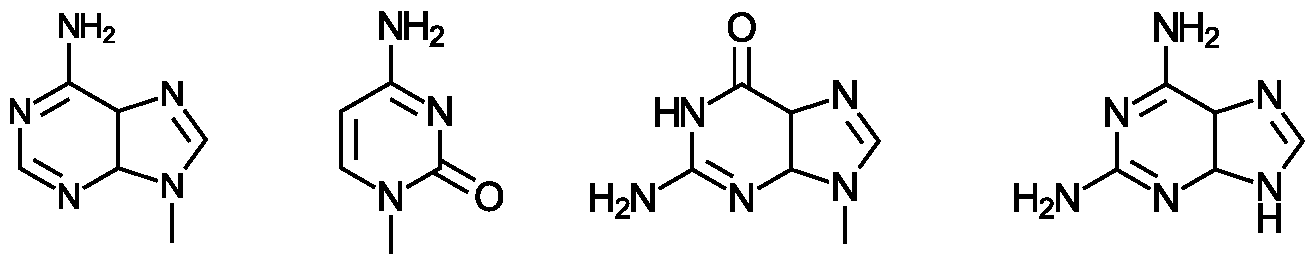
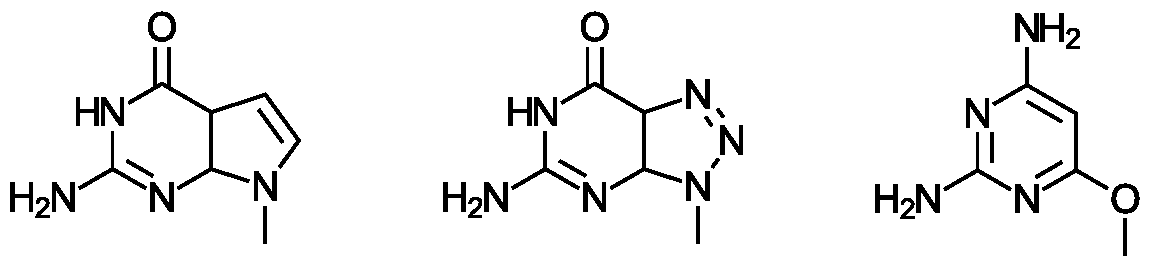
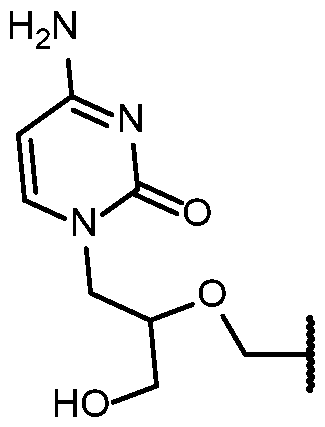
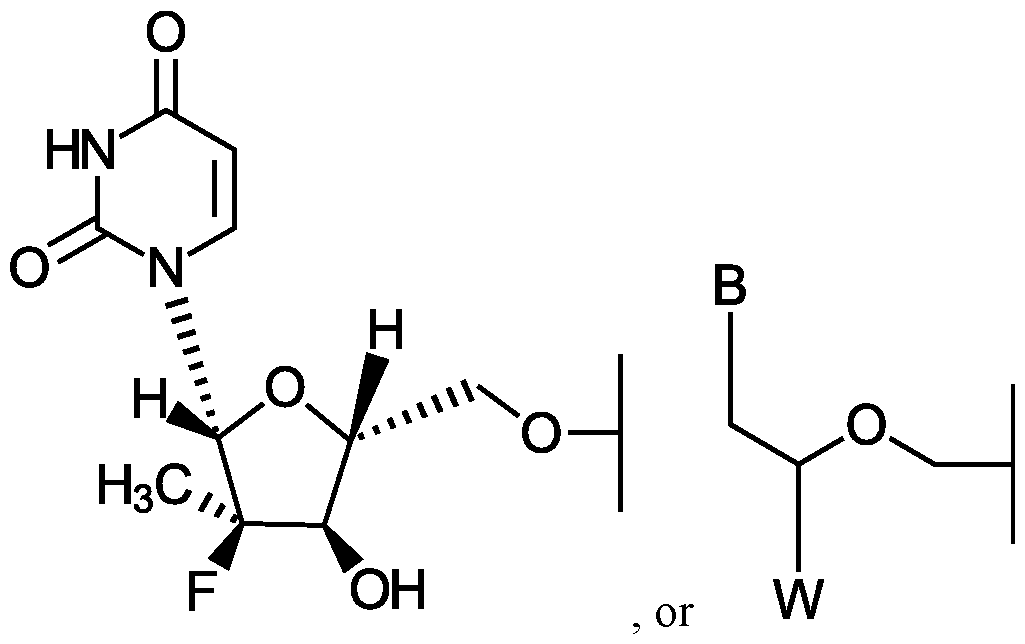
- R 4 is optionally chosen from the following groups: -COOR 5 and
- R 5 is independently H or a C1-C4 substituted or unsubstituted linear or branched alkyl and R 6 is H or -R'XR 2 R 3 (Formula I).
- R 4 in formula (II) is
- a method of treatment includes administration of a prodrug having a cap according to formula (I) and a therapeutic agent according to formula (II) to a subject having a viral infection or a viral associated disease.
- methods of treatment include oral administration of the prodrug having a cap according to formula (I) and a therapeutic agent according to formula (II).
- use of a compound described herein is provided.
- use of prodrug having a cap according to formula (I) and a therapeutic agent according to formula (II) for the treatment of a subject with a viral disease can be a lowering of the virus titer or a reduction in the symptoms or discomfort associated with the viral disease.
- the amount of lowering or reduction will vary depending on such particulars as the type of virus infection, the condition being treated, the actual prodrug and therapeutic agent being used and the severity of the condition and the characteristics of the patient.
- the treatment with the prodrug of formula (I) and the therapeutic agent of formula (II) is to inhibit viral replication in viral infected cells in culture, in an isolated organ, in a person or in an animal.
- the virus is a DNA virus which may include, but are not limited to members of the Herpesviridae, Adenoviridae, Poxviridae, and Papillomaviridae.
- viruses include but are not limited to the sensitive and resistant strain of Herpes simplex I, Herpes simplex II, cytomegalovirus, Vericella-Zoster Virus, Epstein-Barr Virus, Human Herpes Viruses type 6 and 8, Papilloma virus, BK virus, and Adenovirus.
- FIG. 1 illustrates in vivo efficacy of compound 122 against mCMV infection relative to ganciclovir (GCV) or vehicle control measured in liver following PO dosing
- FIG. 2 illustrates in vivo efficacy of compound 122 against mCMV infection relative to ganciclovir (GCV) or vehicle control measured in liver following oral dosing;
- FIG. 3 illustrates in vivo efficacy of compound 122 against mCMV infection relative to ganciclovir (GCV) or vehicle control measured in spleen following PO dosing; and
- FIG. 4 illustrates in vivo efficacy of compound 122 against mCMV infection relative to ganciclovir (GCV) or vehicle control measured in spleen following oral dosing.
- GCV ganciclovir
- Bioavailability is defined herein as the amount of drug systemically available in comparison to the total amount of drug delivered to an individual. Bioavailability is typically expressed as percent (%) bioavailability and is generally measured by comparing plasma levels of drug after oral administration to plasma levels of drug after intravenous administration. This definition includes first pass metabolism, that is gut and liver metabolism, which when it occurs, occurs before the drug is available systemically. Thus, highly metabolized drugs may be completely absorbed but have a bioavailability less than 100 percent.
- Bioavailability is directly related to the fraction of a drug absorbed or“fraction absorbed”, which refers to the percent of a total orally delivered drug dose transported or diffused across the luminal membranes of the gastrointestinal tract into the portal vein.
- the term“independently selected” is used herein to indicate that the R groups, such as, R 1 , R 2 , R 3 , R 4 , and R 5 , can be identical or different (e.g., R 1 , R 2 , R 3 , R 4 , and R 5 may all be substituted alkyls or R 1 and R 2 may be a substituted alkyl and R 3 may be an aryl, etc).
- a chemical name associated with an R group is intended to convey the chemical structure that is recognized in the art as corresponding to that of the chemical name. Thus, chemical names are intended to supplement and illustrate, not preclude, the structural definitions known to those of skill in the art.
- a parenthetical expression having the form“Cx-Cy” means that the unsubstituted form of the chemical group has from x carbon atoms to y carbon atoms, inclusive of x and y.
- a C4-C20 alkyl is an alkyl group or radical having from 4 to 20 carbon atoms in its unsubstituted form.
- C2-C6 alkyl is an alkyl group or radical having from 2 to 6 carbon atoms in its unsubstituted form.
- alkyl means a saturated straight or branched saturated hydrocarbon radical of from x to y carbon atoms.
- the carbons of the radical may be substituted or unsubstituted.
- alkenyl means an unsaturated straight or branched hydrocarbon radical of from x to y carbon atoms and includes at least one carbon-carbon double bond.
- the carbons of the radical may be substituted or unsubstituted.
- alkynyl means an unsaturated straight or branched hydrocarbon radical of from x to y carbon atoms and includes at least one carbon-carbon triple bond.
- the carbons of the radical may be substituted or unsubstituted.
- cycloalkyl means a saturated cyclic hydrocarbon radical of from x to y carbon atoms.
- Cx-Cy cycloalkyl is defined as having from x to y carbon atoms.
- unsubstituted (C 3- Cs) cycloalkyl are cyclopropyl, cyclobutyl, cyclopentyl, cyclohexyl, cycloheptyl, cyclooctyl.
- saturated means lacking carbon-carbon double bonds, carbon-carbon triple bonds, and (in heteroatom-containing groups) carbon-nitrogen, carbon-phosphorous, and carbon- silicon double bonds.
- unsaturated means containing one or more carbon- carbon double bonds, carbon-carbon triple bonds, and (in heteroatom-containing groups) carbon- nitrogen, carbon-phosphorous, and carbon-silicon double bonds.
- heteroatom refers to an atom other than hydrogen or carbon.
- groups containing one or more than one heteroatom include P(R p ) 2 , P(R P ), N(R n ) 2 , N(R n ), N, O, OR , S, SR , S(O), and S(0) 2 , or other groups containing one or more of the foregoing wherein R is a linear, branched, or cyclic alkyl, alkenyl, or alkynl.
- heterocycle means a cyclic, optionally fused cyclic, radical containing any number equal to or greater than 3, optionally 4-10, total ring atoms of which at least one atom is a carbon atom.
- the heteroatoms of the heterocycles may include N(R n ) 2 , N(R n ), N, O, OR , S, SR S(Q), and S(0) 2 , wherein each of the heteroalkyl are unsubstituted or substituted.
- heterocycles with 4-6 total atoms are oxetane, tetrahydofuran, morpholine, furan, piperazine, pyridine, thiazole, oxazole, tetrahydropyran, and thiomorpholine dioxide.
- substituted means that at least one hydrogen atom (-H) bonded to a carbon atom or heteroatom of a corresponding unsubstituted compound or functional group is replaced by a substituent.
- substituents are F, Cl, Br, OH, CF 3 , NH 2 , NHR n , N(R n ) 2 .
- -H means a hydrogen or hydrogen radical that is covalently bonded to another atom.
- “Hydrogen” and “-H” are interchangeable, and unless clearly specified have identical meanings.
- prodrugs of the present disclosure may have a chiral center. In such circumstances both an R and an S form are specifically disclosed and are optional embodiments of the recited or claimed structure unless otherwise presented herein. In some embodiments a compound is provided as an isolated enantiomer or as a racemic mixture.
- the prodrugs of the present disclosure include a therapeutic agent according to formula (II) for the treatment of a disease state, and a cap or promoiety that is covalently bound to the therapeutic agent.
- the prodrugs of this disclosure have utility as a therapeutic agent for the treatment of a variety of disease states.
- Embodiments of this disclosure include prodrugs that include a therapeutic agent and one or more caps where the therapeutic agent is covalently bound to the cap, optionally 1, 2, 3, 4, or more caps.
- the cap having a structure according to formula (I) (I) ⁇
- R is a branched or linear substituted or unsubstituted C2 C6 alkyl, alkeneyl, or alkynl;
- X is -S(0) 2- ;
- R 2 is chosen from a branched or linear substituted or unsubstituted C4-C20 alkyl, alkenyl, or alkynyl;
- R 3 is chosen from -H, a substituted or unsubstituted C3-C5 cycloalkyl, a substituted or unsubstituted heterocycle with 4-6 atoms in the cycle, substituted phenyl, -C(CH 3 ) 3 , -CF 3 , -C(CF 3 ) 3 , or -CeF 5 .
- R 3 is a heterocycle of 4-5 atoms in the cycle, wherein the heteroatoms may be oxygen, sulfur or nitrogen.
- R 2 is chosen from: branched or linear substituted or unsubstituted C4-C16 alkyl, alkenyl, or alkynyl; branched substituted or unsubstituted C17 alkyl, alkenyl, or alkynyl; or branched or linear substituted or unsubstituted C18-C20 alkyl, alkenyl, or alkynyl
- the therapeutic agent of the prodrug of this disclosure has a structure according to formula (II):
- R 4 is chosen from the following groups: -COOR 5 or
- R 5 is independently H or a C1-C4 substituted or unsubstituted linear or branched alkyl radical; and R 6 is H, a substituted or unsubstituted heterocycle with 4-6 atoms in the cycle, substituted or unsubstituted phenyl, or -R'XR 2 R 3 (formula I).
- R 4 in formula (II) is
- R 4 in formula (II) is
- R 3 is cyclopropyl, cyclobutyl, 2-trifluoromethyl cyclopropane- l-yl, 1 -trifluoromethyl cyclopropane-l-yl, or -CF 3 .
- R 3 is a radical having a structure according to formula (III) or formula (IV):
- R 11 , R 12 , R 13 , R 14 , or R 15 are independently chosen from a C1-C12 alkyl radical, -CF 3 , -OH, or -H.
- R 2 is linear C4-C20 alkyl.
- R 2 is chosen from -CH 2 CH 2- , -(CFI 2 ) 3- , -(CH 2 ) 4- , -(CFI 2 ) 5- , -(CH 2 ) 6-
- R 2 is branched C4-C20 alkyl, such as -CH 2 C*HCH 3 , and -(CH 2 )4C*(H)(CH 3 ), in which“C*” denotes a carbon atom from which a hydrogen atom is removed to form a secondary alkyl radical.
- R 3 is cyclobutyl
- R 2 is -CH 2 (CH 2 ) I2 CH 2-
- R 1 is -CH 2 (CH 2 ) 2 CH 2-
- R 1 is a linear substituted or unsubstituted C2-C6 alkyl, alkeneyl, or alkynl; X is
- R 2 is a linear substituted or unsubstituted C4-C20 alkyl, alkenyl, or alkynyl
- R 3 is chosen from -H, -C(CH 3 ) 3 ,-CF 3 , -C(CF 3 ) 3 , -CeF 5 , formula (III), or formula (IV)
- R 4 is chosen from the following groups: -COOR 5 or
- R 5 is independently H or a C1-C4 substituted or unsubstituted linear or branched alkyl radical; or wherein R 4 is wherein B and W are as defined above; where R 6 is H, a substituted or unsubstituted heterocycle with 4-6 atoms in the cycle, substituted or unsubstituted phenyl, or ⁇ XR ⁇ 3 (formula (I)); or salt thereof.
- a prodrug composition is provided herein according to formula V wherein R 1 is a linear substituted or unsubstituted C2-C6 alkyl, alkeneyl, or alkynl; X is
- R 2 is a linear substituted or unsubstituted C4-C20 alkyl, alkenyl, or alkynyl
- R 3 is chosen from -H, -C(CH 3 ) 3 , -CF 3 , -C(CF 3 ) 3 , -CeF 5 , formula (III), or formula (IV)
- R 4 is -COOR 5 where R 5 is independently H or a C1-C4 substituted or unsubstituted linear or branched alkyl radical
- R 6 is H or -R'XR 2 R 3 (formula (I)); or salt thereof.
- a prodrug composition is provided herein according to formula (V) wherein R 1 is a linear substituted or unsubstituted C2-C6 alkyl, alkeneyl, or alkynl; X is -S(0) 2- ; R 2 is a linear substituted or unsubstituted C4-C20 alkyl, alkenyl, or alkynyl; R 3 is chosen from -H, -C(CH 3 ) 3 , -CF 3 , -C(CF 3 ) 3 , -CeF 5 , formula (III), or formula (IV); R 4 is
- R 6 is H or -R'XR 2 R 3 (formula (I)); or salt thereof.
- a prodrug composition is provided herein according to formula (V) wherein R 1 is a linear substituted or unsubstituted C2-C6 alkyl, alkeneyl, or alkynl; X is -S(0) 2- ; R 2 is a linear substituted or unsubstituted C4-C20 alkyl, alkenyl, or alkynyl; R 3 is chosen from -H, -C(CH 3 ) 3 , -CF 3 , -C(CF 3 ) 3 , -CeF 5 , formula (III), or formula (IV); R 4 is
- a prodrug composition is provided herein according to formula (V) wherein R 1 is a linear unsubstituted C2-C6 alkyl; X is -S(0) 2- ; R 2 is a linear unsubstituted C4-C20 alkyl; R 3 is chosen from -H, -C(CH 3 ) 3 , -CF 3 , -C(CF 3 ) 3 , -CeF 5 , formula (III), or formula (IV); R 4 is -COOR 5 where R 5 is H or a C1-C4 unsubstituted linear alkyl radical; and R 6 is H or -R'XR 2 R 3 (formula (I)); or salt thereof.
- a prodrug composition is provided herein according to formula (V) wherein R 1 is a linear unsubstituted C2-C6 alkyl; X is -S(0) 2- ; R 2 is a linear unsubstituted C4-C20 alkyl; R 3 is chosen from -H, -C(CH 3 ) 3 , -CF 3 , -C(CF 3 ) 3 , -CeF 5 , formula (III), or formula (IV); R 4 is
- R 6 is H or -R'XR 2 R 3 (formula (I)); or salt thereof.
- a prodrug composition is provided herein according to formula (V) wherein R 1 is a linear unsubstituted C2-C6 alkyl; X is -S(0) 2- ; R 2 is a linear unsubstituted C4-C20 alkyl; R 3 is chosen from -H, -C(CH 3 ) 3 , -CF 3 , -C(CF 3 ) 3 , -CeF 5 , formula (III), or formula (IV); R 4 is -COOR 5 where R 5 is independently H or a C1-C4 unsubstituted linear alkyl radical; and R 6 is H; or salt thereof.
- a prodrug composition is provided herein according to formula (V) wherein R 1 is a linear unsubstituted C2-C6 alkyl; X is -S(0) 2- ; R 2 is a linear unsubstituted C4-C20 alkyl; R 3 is chosen from -H, -C(CH 3 ) 3 , -CF 3 , -C(CF 3 ) 3 , -CeF 5 , formula (III), or formula (IV); R 4 is
- R 6 is H; or salt thereof.
- a prodrug composition is provided herein according to formula (V) wherein R 1 is a linear unsubstituted C2-C6 alkyl; X is -S(0) 2- ; R 2 is a linear unsubstituted C4-C20 alkyl, alkenyl, or alkynyl; R 3 is chosen from -H, -C(CH 3 ) 3 , -CF 3 , -C(CF 3 ) 3 , -CeF 5 , formula (III), or formula (IV); R 4 is
- a prodrug composition is provided herein according to formula (V) wherein R 1 is a linear unsubstituted C2-C6 alkyl; X is -S(0) 2- ; R 2 is a linear unsubstituted C4-C20 alkyl; R 3 is chosen from -H, -C(CH 3 ) 3 , -CF 3 , -C(CF 3 ) 3 , -CeF 5 , formula (III), or formula (IV); R 4 is -COOR 5 where R 5 is independently H or a C1-C4 unsubstituted linear alkyl radical; and R 6 is phenyl or -R'XRy 3 (formula (I)); or salt thereof.
- a prodrug composition is provided herein according to formula (V) wherein R 1 is a linear unsubstituted C2-C6 alkyl; X is -S(0) 2 ; R 2 is a linear unsubstituted C4-C20 alkyl; R 3 is chosen from -H, -C(CH 3 ) 3 , -CF 3 , -C(CF 3 ) 3 , -CeF 5 , formula (III), or formula (IV); R 4 is
- R 6 is a phenyl -R 1 XR 2 R 3 (formula (I)); or salt thereof.
- a prodrug composition is provided herein according to formula (V) wherein R 1 is a linear unsubstituted C2-C6 alkyl; X is -S(0) 2 ; R 2 is a linear unsubstituted C4-C20 alkyl, alkenyl, or alkynyl; R 3 is chosen from -H, -C(CH 3 ) 3 , -CF 3 , -C(CF 3 ) 3 , -CeF 5 , formula (III), or formula (IV); R 4 is
- prodrugs as provided herein include but are not limited to:
- prodrugs according to the present disclosure are readily created to treat a variety of herpes virus related diseases illustratively including shingles, chicken pox, blisters or sores on the mouth or genital organs, cytomegalovirus infections after organ transplants, mononucleosis, and certain cancers.
- the prodrugs of this disclosure are formulated for administration to a human individual, and bioavailability and fraction absorbed measurements refer to measurements made in humans.
- the prodrugs of this disclosure and method of treatment may be indicated in non-human applications as well.
- an inventive prodrug is advantageously administered to a non-human organism such as a rodent, bovine, equine, avian, canine, feline or other such species wherein the organism possesses an enzyme and a membrane transporter for which the prodrug is a substrate.
- methods of treating a patient according to the present disclosure include administering a therapeutically effective amount of the prodrug having a cap according to formula (I) and a therapeutic agent according to formula (II) to an organism in need.
- methods for delivering the therapeutic agent according to formula (II) to an individual include administering to a subject one prodrug or more than one prodrug as described herein to the gastrointestinal lumen or other desired site of interest of the subject.
- the terms“subject” and“patient” are synonymous and refer to a human or non-human animal, optionally a mammal including non-primates such as cows, pigs, horses, goats, sheep, cats, dogs, avian species and rodents; a non-human primate such as monkeys, chimpanzees, and apes; and a human, also optionally denoted specifically as a“human subject”. It is appreciated that a subject is optionally a cell, tissue, or organ.
- compositions address the relatively low bioavailability of the therapeutic agent, more effectively target the therapeutic agent to the desired site of action such as the site of infection or infected cell, tissue, or organ, reduce toxicity by reducing the amount of drug required to elicit a therapeutic effect in a subject, cause the distribution of the therapeutic agent in the subject to be optimized or targeted, or any combination thereof.
- the prodrugs as provided herein include as a therapeutic agent component therapeutic agents characterized by bioavailability in a human of 30 percent or less, optionally 10% or less, optionally 5% or less.
- a therapeutic agent has a molecular weight in the range of 100 - 1000 Daltons.
- Variable dosing regimens are operative in the method of treatment. While single dose treatment is effective in producing therapeutic effects, it is noted that longer courses of treatment such as several days to weeks have previously been shown to be efficacious in prodrug therapy (Beck et al., Human Gene Therapy, 6: 1525-30 (1995)). While dosimetry for a given inventive prodrug will vary, dosimetry will depend on factors illustratively including target cell mass, effective active species, specifically the therapeutic agent according to formula (II), cellular concentration, transporter efficiency, systemic prodrug degradation kinetics, and secondary enzymatic cleavage that reduces active species lifetime.
- the prodrug of this disclosure may be administered by a route determined to be appropriate for a particular subject by one skilled in the art.
- the prodrug is administered orally; parenterally, such as intravenously; by intramuscular injection; by intraperitoneal injection; transdermally; or rectally.
- the exact dose of prodrug required is appreciated to vary from subject to subject, depending on the age, weight and general condition of the subject, the severity of the disease being treated, the particular pharmaceutical species, the mode of administration, and the like.
- An appropriate dose is readily determined by one of ordinary skill in the art using only routine experimentation given the teachings herein.
- dosage is in the range of about 0.5 to 500 mg/kg, optionally 0.5 to 100 mg/kg, 0.5 to 20 mg/kg, or 25-100 mg/kg where each dosage is on a per day basis.
- the prodrug can be in pharmaceutical compositions in the form of solid, semi-solid or liquid dosage forms, such as, for example, tablets, suppositories, pills, capsules, powders, liquids, or suspensions, preferably in unit dosage form suitable for single administration of a precise dosage.
- Time-release preparations are specifically contemplated as effective dosage formulations.
- the compositions will include an effective amount of the selected substrate in combination with a pharmaceutically acceptable carrier and, in addition, may include other medicinal agents, pharmaceutical agents, carriers, or diluents.
- a prodrug may be formulated as a pharmaceutically acceptable salt.
- Solid formulations may include conventional nontoxic solid carriers.
- nontoxic solid carriers include pharmaceutical grades of mannitol, lactose, starch, magnesium stearate, sodium saccharine, talc, cellulose, glucose, sucrose and magnesium carbonate.
- Liquid pharmaceutically administrable compositions may be prepared by dissolving or dispersing an active compound with optimal pharmaceutical adjuvants in an excipient, such as water, saline, aqueous dextrose, glycerol, or ethanol, to thereby form a solution or suspension.
- the pharmaceutical composition to be administered may also contain minor amounts of nontoxic auxiliary substances such as wetting or emulsifying agents, pH buffering agents, for example, sodium acetate or triethanolamine oleate.
- auxiliary substances such as wetting or emulsifying agents, pH buffering agents, for example, sodium acetate or triethanolamine oleate.
- fine powders or granules may contain diluting, dispersing, and/or surface-active agents, and may be presented in water or in a syrup, in capsules or sachets in the dry state or in a nonaqueous solution or suspension wherein suspending agents may be included, in tablets wherein binders and lubricants may be included, or in a suspension in water or a syrup. Where desirable or necessary, flavoring, preserving, suspending, thickening, or emulsifying agents may be included. Tablets and granules are preferred oral administration forms, and these may be coated.
- Parenteral administration is generally by injection.
- Injectables can be prepared in conventional forms, either liquid solutions or suspensions, solid forms suitable for solution or prior to injection, or as suspension in liquid prior to injection or as emulsions.
- Example 3 Ammonium 3-((13-cyclobutyltridecyl)sulfonyl)propyl hydrogen ((((S)- l-(4-amino-2-oxopyrimidin- l(2H)-yl)-3-hydroxypropan-2- yl)oxy)methyl)phosphonate (122).
- Tridecane-1, 13-diol (40). To a suspension of LiAlH 4 (33.5 mL, 2 M in THF, 67.0 mmol) in Et 2 0 (50 mL) at 0°C was slowly added l,4-dioxacycloheptadecane-5,l7-dione (39) (8.25 g, 30.5 mmol) in Et 2 0 (100 mL) via addition funnel. Then the mixture was warmed to RT and refluxed for 5 hr and then standed at RT overnight. After being cooled to 0°C the reaction was quenched by slowly dropwise adding water ( ⁇ 10 mL) until almost no no bubbles released.
- Methanesulfonyl chloride (1.61 g, 14.1 mmol) was added dropwise to the stirred solution over 1 min. The reaction was stirred at RT for 3 hr, quenched with 0.5 N aq HC1 and extracted three times with hexanes. The organic layer was then washed with water, NaHCCL. brine, dried over sodium sulfate, filtered, and concentrated under reduced pressure to give 45 (3.45 g, 95%) as an wax-like soft solid.
- cCDV-DCMC cyclic cidofovir-dicyclohexylmorpholinocarboxamindine salt, prepared from cidofovir as described in ANTIMICROBIAL AGENTS AND CHEMOTHERAPY, (2002), p.99l-995) (0.41 g, 0.74 mmol) in dry DMF (20 mL) was added 48 (0.836 g, 1.85 mmol) and the mixture was stirred and heated at 80°C for 18 hr.
- cCDV-DCMC cyclic cidofovir-dicyclohexylmorpholinocarboxamindine salt, prepared from cidofovir as described in ANTIMICROBIAL AGENTS AND CHEMOTHERAPY, (2002), p.99l-995
- reaction mixture was concentrated in vacuo and the soft solid residue was dissolved in 10 ml of a mixed solvent (DCM/MeOH 90: 12) and purified by two silica preparative-TLC plates (20 cm x 20 cm, 2000 urn, 90: 12 DCM/MeOH) to give 49 (0.35 g, 77%) as a white waxy solid.
- a mixed solvent DCM/MeOH 90: 12
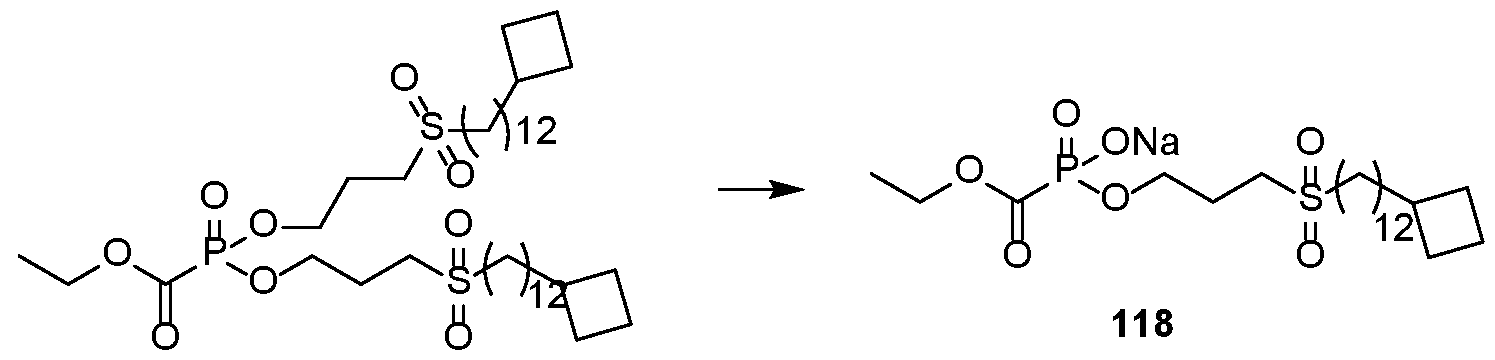
- Example 8 Sodium 3-((12-cyclobutyldodecyl)sulfonyl)propyl(ethoxycarbonyl)- phosphonate (112).
- HFF Human foreskin fibroblast
- HFF cells were then expanded through serial passages in standard growth medium of MEM with Earl’s salts supplemented with 10% FBS and antibiotics. The cells were passaged routinely and used for assays at or below passage 10.
- CPE Primary Cytopathic Effect Reduction Assay.
- Low passage (3-10) HFF cells were trypsinized, counted, and seeded into 96 well tissue culture plates in 0.1 ml of MEM supplemented with 10% FBS. The cells were then incubated for 24 h at 37°C. The media was then removed and 100 pl of MEM containing 2% FBS was added to all but the first row. In the first row, 125 m ⁇ of media containing the experimental drug was added in triplicate wells. Media alone was added to both cell and virus control wells. The drug in the first row of wells was then diluted serially 1:5 throughout the remaining.
- the plates were then incubated for 60 min and 100 m ⁇ of a virus suspension was added to each well, excluding cell control wells which received 100 m ⁇ of MEM.
- the plates were then incubated at 37°C in a C0 2 incubator for three days for HSV-l and HSV-2, 10 days for VZV, or 14 d for CMV. After the incubation period, media was aspirated and the cells stained with crystal violet in formalin for 4h. The stain was then removed and the plates were rinsed until all excess stain was removed.
- the plates were allowed to dry for 24 h and the amount of CPE in each row determined using a BioTek Multiplate Autoreader.
- EC 50 and CC so values were determined by comparing drug treated and untreated cells using a computer program.
- EC50 is the concentration of the test material in mM producing a 50% reduction in the Cytopathic Effect of the virus (CPE).
- CPE Cytopathic Effect of the virus
- the TI is the therapeutic index derived from EC50/CC50.
- HSV1 is Herpes Simplex Virus 1
- HSV2 is Herpes Simplex Virus 2
- hCMV is human
- Cytomegalovirus mCMV is murine Cytomegalovirus
- VZV Vericella Zoster Virus
- HSV1 strain used was DM2.1 [00165] Antiviral efficacy of compound 122 in mCMV infected mice:
- mice 122 was administered PO twice a day for 4 days, beginning one day prior to viral challenge with mCMV strain K181 in Balb/c mice.
- the mice were sacrificed and the spleen and liver harvested and stored at -80°C. The tissues were shipped to
- prodrug Specific embodiments of the prodrug are described herein. It should be understood that the prodrugs of this disclosure may be embodied in different forms and should not be construed as limited to the specific embodiments set forth in this disclosure.
- Patents, publications, and applications mentioned in the specification are indicative of the levels of those skilled in the art to which the invention pertains. These patents, publications, and applications are incorporated herein by reference to the same extent as if each individual patent, publication, or application was specifically and individually incorporated herein by reference.
Landscapes
- Chemical & Material Sciences (AREA)
- Health & Medical Sciences (AREA)
- Organic Chemistry (AREA)
- Life Sciences & Earth Sciences (AREA)
- General Health & Medical Sciences (AREA)
- Molecular Biology (AREA)
- Biochemistry (AREA)
- Animal Behavior & Ethology (AREA)
- Veterinary Medicine (AREA)
- Public Health (AREA)
- Medicinal Chemistry (AREA)
- Pharmacology & Pharmacy (AREA)
- Crystallography & Structural Chemistry (AREA)
- Engineering & Computer Science (AREA)
- Virology (AREA)
- Epidemiology (AREA)
- General Chemical & Material Sciences (AREA)
- Chemical Kinetics & Catalysis (AREA)
- Nuclear Medicine, Radiotherapy & Molecular Imaging (AREA)
- Biotechnology (AREA)
- Communicable Diseases (AREA)
- Oncology (AREA)
- Bioinformatics & Cheminformatics (AREA)
- Nutrition Science (AREA)
- Physiology (AREA)
- Pharmaceuticals Containing Other Organic And Inorganic Compounds (AREA)
- Medicinal Preparation (AREA)
- Acyclic And Carbocyclic Compounds In Medicinal Compositions (AREA)
Abstract
Description










Claims


Priority Applications (4)
| Application Number | Priority Date | Filing Date | Title |
|---|---|---|---|
| JP2020572879A JP7465416B2 (en) | 2018-06-26 | 2019-06-26 | Metabolic Stable Prodrugs |
| EP19824668.8A EP3813839A4 (en) | 2018-06-26 | 2019-06-26 | METABOLICLY STABLE PRODRUGS |
| CA3105038A CA3105038A1 (en) | 2018-06-26 | 2019-06-26 | Metabolically stable prodrugs |
| US17/254,517 US12397058B2 (en) | 2018-06-26 | 2019-06-26 | Metabolically stable prodrugs |
Applications Claiming Priority (2)
| Application Number | Priority Date | Filing Date | Title |
|---|---|---|---|
| US201862689887P | 2018-06-26 | 2018-06-26 | |
| US62/689,887 | 2018-06-26 |
Publications (1)
| Publication Number | Publication Date |
|---|---|
| WO2020006050A1 true WO2020006050A1 (en) | 2020-01-02 |
Family
ID=68986927
Family Applications (1)
| Application Number | Title | Priority Date | Filing Date |
|---|---|---|---|
| PCT/US2019/039198 Ceased WO2020006050A1 (en) | 2018-06-26 | 2019-06-26 | Metabolically stable prodrugs |
Country Status (5)
| Country | Link |
|---|---|
| US (1) | US12397058B2 (en) |
| EP (1) | EP3813839A4 (en) |
| JP (1) | JP7465416B2 (en) |
| CA (1) | CA3105038A1 (en) |
| WO (1) | WO2020006050A1 (en) |
Citations (10)
| Publication number | Priority date | Publication date | Assignee | Title |
|---|---|---|---|---|
| US5338678A (en) | 1989-06-09 | 1994-08-16 | Oncogen, A Limited Partnership | Expression of DNA sequences encoding a thermally stable cytosine deaminase from saccharomyces |
| US5552311A (en) | 1993-09-14 | 1996-09-03 | University Of Alabama At Birmingham Research Foundation | Purine nucleoside phosphorylase gene therapy for human malignancy |
| US6002029A (en) * | 1994-11-15 | 1999-12-14 | Hostetler; Karl Y. | Antiviral prodrugs |
| US6017896A (en) | 1993-09-14 | 2000-01-25 | University Of Alabama Research Foundation And Southern Research Institute | Purine nucleoside phosphorylase gene therapy for human malignancy |
| US6027150A (en) | 1997-08-13 | 2000-02-22 | Jaguar Cars Limited | Automotive vehicle radiator grille assembly |
| WO2005080406A2 (en) * | 2003-12-19 | 2005-09-01 | Jerini Ag | Compounds for the inhibition of undesired cell proliferation and use thereof |
| US20060111276A1 (en) * | 2004-07-02 | 2006-05-25 | Mckenna Charles E | Cidofovir peptide conjugates as prodrugs |
| US20070003608A1 (en) | 2005-04-08 | 2007-01-04 | Almond Merrick R | Compounds, compositions and methods for the treatment of viral infections and other medical disorders |
| US20110263535A1 (en) | 2010-04-23 | 2011-10-27 | Mckenna Charles E | Tyrosine-based prodrugs of antiviral agents |
| US20140288025A1 (en) * | 2013-03-13 | 2014-09-25 | Catabasis Pharmaceuticals, Inc. | Fatty acid antiviral conjugates and their uses |
Family Cites Families (6)
| Publication number | Priority date | Publication date | Assignee | Title |
|---|---|---|---|---|
| JPS61293972A (en) * | 1985-06-24 | 1986-12-24 | Nisshin Flour Milling Co Ltd | 1,4-dihydroxypyridinesulfone derivative and production thereof |
| TW343975B (en) | 1995-12-15 | 1998-11-01 | Boehringer Mannheim Gmbh | New phospholipid derivatives of phosphonocarboxylic acids, the production thereof as well as their use as antiviral pharmaceutical agents |
| EP1460082A1 (en) | 2003-03-19 | 2004-09-22 | Heidelberg Pharma Holding GmbH | Phospholipid esters of clofarabine derivatives |
| WO2012031045A2 (en) | 2010-08-31 | 2012-03-08 | Chimerix, Inc. | Phosphonate ester derivatives and methods of synthesis thereof |
| US9550803B2 (en) * | 2011-05-06 | 2017-01-24 | University Of Southern California | Method to improve antiviral activity of nucleotide analogue drugs |
| US8962829B1 (en) | 2013-11-15 | 2015-02-24 | Chimerix, Inc. | Morphic forms of hexadecyloxypropyl-phosphonate esters and methods of synthesis thereof |
-
2019
- 2019-06-26 WO PCT/US2019/039198 patent/WO2020006050A1/en not_active Ceased
- 2019-06-26 US US17/254,517 patent/US12397058B2/en active Active
- 2019-06-26 CA CA3105038A patent/CA3105038A1/en active Pending
- 2019-06-26 EP EP19824668.8A patent/EP3813839A4/en not_active Withdrawn
- 2019-06-26 JP JP2020572879A patent/JP7465416B2/en active Active
Patent Citations (10)
| Publication number | Priority date | Publication date | Assignee | Title |
|---|---|---|---|---|
| US5338678A (en) | 1989-06-09 | 1994-08-16 | Oncogen, A Limited Partnership | Expression of DNA sequences encoding a thermally stable cytosine deaminase from saccharomyces |
| US5552311A (en) | 1993-09-14 | 1996-09-03 | University Of Alabama At Birmingham Research Foundation | Purine nucleoside phosphorylase gene therapy for human malignancy |
| US6017896A (en) | 1993-09-14 | 2000-01-25 | University Of Alabama Research Foundation And Southern Research Institute | Purine nucleoside phosphorylase gene therapy for human malignancy |
| US6002029A (en) * | 1994-11-15 | 1999-12-14 | Hostetler; Karl Y. | Antiviral prodrugs |
| US6027150A (en) | 1997-08-13 | 2000-02-22 | Jaguar Cars Limited | Automotive vehicle radiator grille assembly |
| WO2005080406A2 (en) * | 2003-12-19 | 2005-09-01 | Jerini Ag | Compounds for the inhibition of undesired cell proliferation and use thereof |
| US20060111276A1 (en) * | 2004-07-02 | 2006-05-25 | Mckenna Charles E | Cidofovir peptide conjugates as prodrugs |
| US20070003608A1 (en) | 2005-04-08 | 2007-01-04 | Almond Merrick R | Compounds, compositions and methods for the treatment of viral infections and other medical disorders |
| US20110263535A1 (en) | 2010-04-23 | 2011-10-27 | Mckenna Charles E | Tyrosine-based prodrugs of antiviral agents |
| US20140288025A1 (en) * | 2013-03-13 | 2014-09-25 | Catabasis Pharmaceuticals, Inc. | Fatty acid antiviral conjugates and their uses |
Non-Patent Citations (6)
| Title |
|---|
| ANTIMICROBIAL AGENTS AND CHEMOTHERAPY, 2002, pages 991 - 995 |
| BECK ET AL., HUMAN GENE THERAPY, vol. 6, 1995, pages 1525 - 30 |
| RUIZ, J. ET AL.: "Synthesis, metabolic stability and antiviral evaluation of various alkoxyalkyl esters of cidofovir and 9-(S)-[3-hydroxy-2- (phosphonomethoxy) propyl] adenine", BIOORGANIC & MEDICINAL CHEMISTRY, vol. 19, 2011, pages 2950 - 2958, XP055668347 * |
| See also references of EP3813839A4 |
| SOFIA ET AL., J. MED. CHEM., vol. 53, 2010, pages 7202 - 7218 |
| VAGHEFI, MORTEZA M.MCKERNAN, PATRICIA A.ROBINS, ROLAND K., JOURNAL OF MEDICINAL CHEMISTRY, vol. 29, no. 8, 1986, pages 1389 - 1393 |
Also Published As
| Publication number | Publication date |
|---|---|
| JP7465416B2 (en) | 2024-04-11 |
| US12397058B2 (en) | 2025-08-26 |
| CA3105038A1 (en) | 2020-01-02 |
| JP2021528465A (en) | 2021-10-21 |
| EP3813839A1 (en) | 2021-05-05 |
| US20210401992A1 (en) | 2021-12-30 |
| EP3813839A4 (en) | 2022-07-20 |
Similar Documents
| Publication | Publication Date | Title |
|---|---|---|
| US10695357B2 (en) | Methods for treating filoviridae virus infections | |
| AU2002230230B2 (en) | Novel acyclic nucleoside phosphonate derivatives, salts thereof and process for the preparation of the same | |
| ES2915381T3 (en) | nucleotide analogs | |
| US8193167B2 (en) | Pharmacologically active agents containing esterified phosphonates and methods for use thereof | |
| AU2013356386A1 (en) | Nucleoside kinase bypass compositions and methods | |
| EP1866319A1 (en) | Phosphono-pent-2-en-1-yl nucleosides and analogs | |
| CZ297267B6 (en) | Pyrimidine derivatives carrying phosphonate group, process of their preparation, their use in therapy and pharmaceutical compositions in which the derivatives are comprised | |
| AU754862B2 (en) | Use of bisphosphonates for the prevention and treatment of infectious processes | |
| EP2616474A1 (en) | Novel antiviral acyclic nucleoside phosphonates | |
| CN1921867B (en) | Nucleoside phosphonate derivatives for the treatment of HIV infection | |
| US12397058B2 (en) | Metabolically stable prodrugs | |
| US20130018018A1 (en) | Novel nucleoside phosphonates and analogs | |
| HK40035367A (en) | A remdesivir compound for use in treating nipah virus infections | |
| HK1258795B (en) | Methods for treating filoviridae virus infections | |
| HK1242569A1 (en) | Methods for treating filoviridae virus infections | |
| HK1242569B (en) | Methods for treating filoviridae virus infections | |
| HK1240226A1 (en) | Nucleotide analogs |
Legal Events
| Date | Code | Title | Description |
|---|---|---|---|
| 121 | Ep: the epo has been informed by wipo that ep was designated in this application |
Ref document number: 19824668 Country of ref document: EP Kind code of ref document: A1 |
|
| ENP | Entry into the national phase |
Ref document number: 3105038 Country of ref document: CA |
|
| ENP | Entry into the national phase |
Ref document number: 2020572879 Country of ref document: JP Kind code of ref document: A |
|
| NENP | Non-entry into the national phase |
Ref country code: DE |
|
| ENP | Entry into the national phase |
Ref document number: 2019824668 Country of ref document: EP Effective date: 20210126 |
|
| WWW | Wipo information: withdrawn in national office |
Ref document number: 2019824668 Country of ref document: EP |
|
| WWG | Wipo information: grant in national office |
Ref document number: 17254517 Country of ref document: US |