WO2020008311A1 - Process for preparing a bonding resin - Google Patents

Process for preparing a bonding resin Download PDF

Info

Publication number
WO2020008311A1
WO2020008311A1 PCT/IB2019/055492 IB2019055492W WO2020008311A1 WO 2020008311 A1 WO2020008311 A1 WO 2020008311A1 IB 2019055492 W IB2019055492 W IB 2019055492W WO 2020008311 A1 WO2020008311 A1 WO 2020008311A1
Authority
WO
WIPO (PCT)
Prior art keywords
ether
diglycidyl ether
lignin
bonding resin
glycerol
Prior art date
Legal status (The legal status is an assumption and is not a legal conclusion. Google has not performed a legal analysis and makes no representation as to the accuracy of the status listed.)
Ceased
Application number
PCT/IB2019/055492
Other languages
French (fr)
Inventor
Ben NASLI BAKIR
Staffan Torssell
Lars HJELM
Li JANSSON
Huynh Tram Anh PHAM
Ashar ZAFAR
Current Assignee (The listed assignees may be inaccurate. Google has not performed a legal analysis and makes no representation or warranty as to the accuracy of the list.)
Stora Enso Oyj
Original Assignee
Stora Enso Oyj
Priority date (The priority date is an assumption and is not a legal conclusion. Google has not performed a legal analysis and makes no representation as to the accuracy of the date listed.)
Filing date
Publication date
Priority claimed from SE1850830A external-priority patent/SE544555C2/en
Application filed by Stora Enso Oyj filed Critical Stora Enso Oyj
Priority to US17/059,590 priority Critical patent/US12163064B2/en
Priority to JP2020570001A priority patent/JP7511485B2/en
Priority to CN201980040328.7A priority patent/CN112334560A/en
Priority to MYPI2020006362A priority patent/MY206483A/en
Priority to EP19830817.3A priority patent/EP3818126A4/en
Priority to CA3100830A priority patent/CA3100830A1/en
Publication of WO2020008311A1 publication Critical patent/WO2020008311A1/en
Anticipated expiration legal-status Critical
Priority to JP2024052651A priority patent/JP2024095713A/en
Ceased legal-status Critical Current

Links

Classifications

    • CCHEMISTRY; METALLURGY
    • C08ORGANIC MACROMOLECULAR COMPOUNDS; THEIR PREPARATION OR CHEMICAL WORKING-UP; COMPOSITIONS BASED THEREON
    • C08HDERIVATIVES OF NATURAL MACROMOLECULAR COMPOUNDS
    • C08H6/00Macromolecular compounds derived from lignin, e.g. tannins, humic acids
    • BPERFORMING OPERATIONS; TRANSPORTING
    • B27WORKING OR PRESERVING WOOD OR SIMILAR MATERIAL; NAILING OR STAPLING MACHINES IN GENERAL
    • B27NMANUFACTURE BY DRY PROCESSES OF ARTICLES, WITH OR WITHOUT ORGANIC BINDING AGENTS, MADE FROM PARTICLES OR FIBRES CONSISTING OF WOOD OR OTHER LIGNOCELLULOSIC OR LIKE ORGANIC MATERIAL
    • B27N3/00Manufacture of substantially flat articles, e.g. boards, from particles or fibres
    • B27N3/002Manufacture of substantially flat articles, e.g. boards, from particles or fibres characterised by the type of binder
    • CCHEMISTRY; METALLURGY
    • C08ORGANIC MACROMOLECULAR COMPOUNDS; THEIR PREPARATION OR CHEMICAL WORKING-UP; COMPOSITIONS BASED THEREON
    • C08KUse of inorganic or non-macromolecular organic substances as compounding ingredients
    • C08K5/00Use of organic ingredients
    • C08K5/04Oxygen-containing compounds
    • C08K5/15Heterocyclic compounds having oxygen in the ring
    • C08K5/151Heterocyclic compounds having oxygen in the ring having one oxygen atom in the ring
    • C08K5/1515Three-membered rings
    • CCHEMISTRY; METALLURGY
    • C08ORGANIC MACROMOLECULAR COMPOUNDS; THEIR PREPARATION OR CHEMICAL WORKING-UP; COMPOSITIONS BASED THEREON
    • C08LCOMPOSITIONS OF MACROMOLECULAR COMPOUNDS
    • C08L97/00Compositions of lignin-containing materials
    • C08L97/005Lignin
    • CCHEMISTRY; METALLURGY
    • C09DYES; PAINTS; POLISHES; NATURAL RESINS; ADHESIVES; COMPOSITIONS NOT OTHERWISE PROVIDED FOR; APPLICATIONS OF MATERIALS NOT OTHERWISE PROVIDED FOR
    • C09JADHESIVES; NON-MECHANICAL ASPECTS OF ADHESIVE PROCESSES IN GENERAL; ADHESIVE PROCESSES NOT PROVIDED FOR ELSEWHERE; USE OF MATERIALS AS ADHESIVES
    • C09J197/00Adhesives based on lignin-containing materials
    • C09J197/005Lignin
    • BPERFORMING OPERATIONS; TRANSPORTING
    • B27WORKING OR PRESERVING WOOD OR SIMILAR MATERIAL; NAILING OR STAPLING MACHINES IN GENERAL
    • B27NMANUFACTURE BY DRY PROCESSES OF ARTICLES, WITH OR WITHOUT ORGANIC BINDING AGENTS, MADE FROM PARTICLES OR FIBRES CONSISTING OF WOOD OR OTHER LIGNOCELLULOSIC OR LIKE ORGANIC MATERIAL
    • B27N3/00Manufacture of substantially flat articles, e.g. boards, from particles or fibres
    • B27N3/02Manufacture of substantially flat articles, e.g. boards, from particles or fibres from particles
    • BPERFORMING OPERATIONS; TRANSPORTING
    • B27WORKING OR PRESERVING WOOD OR SIMILAR MATERIAL; NAILING OR STAPLING MACHINES IN GENERAL
    • B27NMANUFACTURE BY DRY PROCESSES OF ARTICLES, WITH OR WITHOUT ORGANIC BINDING AGENTS, MADE FROM PARTICLES OR FIBRES CONSISTING OF WOOD OR OTHER LIGNOCELLULOSIC OR LIKE ORGANIC MATERIAL
    • B27N3/00Manufacture of substantially flat articles, e.g. boards, from particles or fibres
    • B27N3/04Manufacture of substantially flat articles, e.g. boards, from particles or fibres from fibres
    • BPERFORMING OPERATIONS; TRANSPORTING
    • B27WORKING OR PRESERVING WOOD OR SIMILAR MATERIAL; NAILING OR STAPLING MACHINES IN GENERAL
    • B27NMANUFACTURE BY DRY PROCESSES OF ARTICLES, WITH OR WITHOUT ORGANIC BINDING AGENTS, MADE FROM PARTICLES OR FIBRES CONSISTING OF WOOD OR OTHER LIGNOCELLULOSIC OR LIKE ORGANIC MATERIAL
    • B27N7/00After-treatment, e.g. reducing swelling or shrinkage, surfacing; Protecting the edges of boards against access of humidity
    • B27N7/005Coating boards, e.g. with a finishing or decorating layer

Definitions

  • the present invention relates to a process for preparing a bonding resin, wherein lignin is provided in the form of an aqueous solution and mixed with one or more of glycerol diglycidyl ether, polyglycerol diglycidyl ether, polyglycerol polyglycidyl ether, glycerol triglycidyl ether, sorbitol polyglycidyl ether, alkoxylated glycerol polyglycidyl ether, trimethylolpropane triglycidyl ether, trimethylolpropane diglycidyl ether, polyoxypropylene glycol diglycidylether, polyoxypropylene glycol triglycidyl ether, diglycidylether of cyclohexane dimethanol, resorcinol diglycidyl ether, isosorbide diglycidyl ether, pentaerythritol tetraglycidyl
  • the bonding resin is useful for example in the manufacture of laminates, mineral wool insulation and wood products such as plywood, oriented strandboard (OSB), laminated veneer lumber (LVL), medium density fiberboards (MDF), high density fiberboards (HDF), parquet flooring, curved plywood, veneered particleboards, veneered MDF or particle boards.
  • the bonding resin is also useful for example in composites, molding compounds, foundry applications and coatings for paper, wood or metal substrates.
  • Lignin an aromatic polymer is a major constituent in e.g. wood, being the most abundant carbon source on Earth second only to cellulose.
  • lignin an aromatic polymer
  • it has attracted significant attention as a possible renewable substitute to primarily aromatic chemical precursors currently sourced from the petrochemical industry.
  • Lignin being a polyaromatic network has been extensively investigated as a suitable substitute for phenol during production of phenol-formaldehyde adhesives. These are used during manufacturing of laminate and structural wood products such as plywood, oriented strand board and fiberboard.
  • phenol which may be partially replaced by lignin, is reacted with formaldehyde in the presence of either basic or acidic catalyst to form a highly cross-linked aromatic resins termed novolacs (when utilizing acidic catalysts) or resoles (when utilizing basic catalysts).
  • novolacs when utilizing acidic catalysts
  • resoles when utilizing basic catalysts
  • formaldehyde when the lignin is used in formaldehyde-containing resins, such as lignin-phenol-formaldehyde resins.
  • formaldehyde-containing resins such as lignin-phenol-formaldehyde resins.
  • Formaldehyde based resins emit formaldehyde, which is a toxic volatile organic compound.
  • the present and proposed legislation directed to the lowering or elimination of formaldehyde emissions have led to the development of formaldehyde free resin for wood adhesive applications.
  • Jingxian Li R. et al. (Green Chemistry, 2018, 20, 1459-1466) describes preparation of a resin comprising glycerol diglycidyl ether and lignin, wherein the lignin is provided in solid form.
  • One problem with the technology described in the article is a long pressing time and high pressing temperature. The 3 plies plywood sample was pressed at 150°C temperature for 15 minutes to fully cure the resins.
  • Engelmann G. and Ganster J. describes preparation of a biobased epoxy resin with low molecular weight kraft lignin and pyrogallol, wherein the lignin component consists of an acetone extraction from Kraft lignin.
  • an improved bonding resin can be achieved by providing lignin in the form of a solution.
  • Providing the lignin in the form of a solution speeds up the reaction significantly and hence reduces the pressing time and enables the use of a lower pressing temperature for curing the bonding resin, when manufacturing for example laminates, mineral wool insulation and wood products such as plywood, oriented strandboard (OSB), laminated veneer lumber (LVL), medium density fiberboards (MDF), high density fiberboards (HDF), parquet flooring, curved plywood, veneered particleboards, veneered MDF or particle boards.
  • OSB oriented strandboard
  • MDF medium density fiberboards
  • HDF high density fiberboards
  • the bonding resin is also useful for example in composites, molding compounds, foundry applications and coatings for paper, wood or metal substrates.
  • the present invention is thus directed to a method for preparing a bonding resin, wherein an aqueous lignin solution is mixed with one or more of glycerol diglycidyl ether, polyglycerol diglycidyl ether, polyglycerol polyglycidyl ether, glycerol triglycidyl ether, sorbitol polyglycidyl ether, alkoxylated glycerol polyglycidyl ether, trimethylolpropane triglycidyl ether, trimethylolpropane diglycidyl ether, polyoxypropylene glycol diglycidylether, polyoxypropylene glycol triglycidyl ether, diglycidylether of cyclohexane dimethanol, resorcinol diglycidyl ether, is
  • One aspect of the present invention is a method for preparing a bonding resin, wherein an aqueous lignin solution is mixed with one or more cross- linkers and/or one or more glycidyl ethers, wherein the cross-linker has an epoxy index above 4 eq/kg.
  • the epoxy index can be determined according to ISO 3001.
  • the cross-linker has an epoxy index above 5 eq/kg.
  • the cross-linker is an aliphatic or, preferably, aromatic glycidyl ether.
  • the cross-linker is aliphatic.
  • the glycidyl ethers may be polyfunctional epoxides and the method according to the present invention may use a mixture of epoxides, such as
  • the present invention is thus also directed to the bonding resin obtainable using the method described above and to the use of the bonding resin in the manufacture of laminates, mineral wool insulation and wood products such as plywood, oriented strandboard (OSB), laminated veneer lumber (LVL), medium density fiberboards (MDF), high density fiberboards (HDF), parquet flooring, curved plywood, veneered particleboards, veneered MDF or particle boards.
  • the bonding resin according to the present invention may also be used in or for coatings, such as coatings applied on metal surfaces or wood or other substrates.
  • the present invention is also directed to such laminates, mineral wool insulation and wood products such as plywood, oriented strandboard (OSB), laminated veneer lumber (LVL), medium density fiberboards (MDF), high density fiberboards (HDF), parquet flooring, curved plywood, veneered particleboards, veneered MDF or particle boards manufactured using the bonding resin.
  • the bonding resin according to the present invention may also be used in the manufacture of composites, molding compounds, foundry applications and coatings for paper, wood or metal substrates.
  • lignin embraces any kind of lignin, e.g. lignin originated from hardwood, softwood or annular plants.
  • the lignin is an alkaline lignin generated in e.g. the Kraft process.
  • the lignin has been purified or isolated before being used in the process according to the present invention.
  • the lignin may be isolated from black liquor and optionally be further purified before being used in the process according to the present invention.
  • the purification is typically such that the purity of the lignin is at least 90%, preferably at least 95%.
  • the lignin used according to the method of the present invention preferably contains less than 10%, preferably less than 5% impurities.
  • the lignin may then be separated from the black liquor by using the process disclosed in W02006031175.
  • the lignin may then be separated from the black liquor by using the process referred to as the LignoBoost process.
  • Glycidyl ethers with more functional epoxide groups can be used such as glycerol diglycidyl ether, glycerol triglycidyl ether and sorbitol polyglycidyl ether.
  • glycidyl ethers having two to nine alkylene glycol groups can be used, such as diethylene glycol diglycidyl ether, triethylene glycol diglycidyl ether, dipropylene glycol diglycidyl ether and tripropylene diglycidyl ether.
  • the bonding resin according to the present invention is and applied to the surfaces of for example veneers, such as in the manufacture of plywood. When the veneers are pressed together under heating, the cross-linking in the bonding resin takes place, resulting in an adhesive.
  • An aqueous solution of lignin can be prepared by methods known in the art, such as by mixing lignin, alkali and water.
  • the pH of the lignin solution is preferably in the range of from 10 to 14.
  • alkali include sodium hydroxide, potassium hydroxide and mixtures thereof.
  • the amount of alkali in the aqueous solution is preferably from 0.1 wt-% to 15 wt-% of the solution, such as from 0.1 wt-% to 10 wt-% of the solution.
  • the bonding resin may also comprise additives, such as urea, tannin, solvents, surfactants, dispersing agents and fillers.
  • the amount of urea in the bonding resin can be 0-40% preferably 5-20% calculated as the dry weight of urea and the total weight of the bonding resin.
  • a filler and/or hardener can also be added to the bonding resin. Examples of such fillers and/or hardeners include limestone, cellulose, sodium carbonate, and starch.
  • the reactivity of the lignin with the glycidyl ether can be increased by modifying the lignin by glyoxylation, etherification, esterification or any other method where lignin hydroxyl content or carboxylic content or amine content or thiol content is increased.
  • the aqueous lignin solution is preferably mixed with the glycidyl ether at room temperature, such as at a temperature of from 15°C to 30°C.
  • the mixing is preferably carried out for about 5 minutes to 2 hours.
  • the viscosity of the mixture is monitored during mixing, either continuously or by taking samples and determining the viscosity thereof.
  • Lignin solution was prepared first by adding 182 g of powder lignin (solid content 90%) and 257 g of water were added to a 1 L glass reactor at ambient temperature and were stirred until the lignin was fully and evenly dispersed. Then, 60 g of 50% alkali solution was added to the lignin dispersion. The composition was stirred for 120 minutes to make sure that the lignin was completely dissolved in the alkaline media.
  • An adhesive formulation was prepared by mixing 30.3 g of lignin alkali solution from Example 1 and 10 g of glycerol diglycidyl ether (Sigma Aldrich) in a beaker for 20 minutes using an overhead stirrer at room temperature.
  • the adhesive formulation was tested according to the standard testing method EN 205:2016.
  • Target bonding resin content was 150 g/m 2 which were spread on one side using a wire round applicator. Hot pressing was performed at 150°C with a pressure of 1.8 MPa. The total pressing time was 5 minutes. Prior to evaluation, all samples were conditioned according to EN 12765:2016 C2. Average data from 10 test specimens with and without conditioning is presented in Table 1.
  • An adhesive formulation was prepared by mixing 30 g of lignin and 30 g of glycerol diglycidyl ether in a beaker for 20 minutes using an overhead stirrer at room temperature.
  • the adhesive formulation was tested according to the standard testing method EN 205:2016.
  • Target bonding resin content was 150 g/m 2 which were spread on one side using a wire round applicator.
  • Hot pressing was performed at 150°C with a pressure of 1.8 MPa. The total pressing time was 5 minutes. Most of the samples fell apart after hot-pressing. The pressing time was not enough to fully cure the samples and needed longer time to cure than the system described in Example 2 where it was fully cured in 5 minutes.
  • Birch veneers of thickness 1 .54-1 62mm were sawn to 300 x 300 mm 2 size and conditioned in 20°C, 65% RH prior to manufacture.
  • Glue mix was formulated according to Table 2.
  • Target glue content was 155 g/m 2 which were spread on one side.
  • Pre- pressing was performed at a pressure of 1.8 MPa for 5 minutes.
  • Hot pressing was performed at 150°C with a pressure of 1 .8 MPa.
  • the total pressing time was 6 minutes 25 seconds.
  • Birch veneers of thickness 1 .54-1 62mm were sawn to 300 x 300 mm 2 size and conditioned in 20°C, 65% RH prior to manufacture.
  • Glue mix was formulated according to Table 4.
  • Target glue content was 155 g/m 2 which were spread on one side.
  • Pre- pressing was performed at a pressure of 1 .8 MPa for 5 minutes.
  • Hot pressing was performed at 130°C with a pressure of 1 .8 MPa.
  • Two plywood panels were prepared with two different hot pressing times, i.e. one with 6 minutes 25 seconds and second with 5 minutes and 25 seconds.
  • Lignin solution was prepared by adding 160 g of powder lignin (solid content 90%) and 229 g of water were added to a 1 L glass reactor at ambient temperature and were stirred until the lignin was fully and evenly dispersed. Then, 35 g of 50% alkali solution and 75 g of urea were added to the lignin dispersion. The composition was stirred for 120 minutes to make sure that the lignin was completely dissolved in the alkaline media.
  • An adhesive formulation was prepared by mixing 69.6 g of lignin alkali solution from Example 6, 9 g of water and 10.5 g of glycerol diglycidyl ether in a beaker for 20 minutes using an overhead stirrer at room temperature.
  • the adhesive formulation was tested in a lap-joint test using an Automated Bonding Evaluation System (ABES) tensile tester.
  • ABES Automated Bonding Evaluation System
  • Lignin solution was prepared by adding 344.1 g of powder lignin (solid content 95.9%) and 535.9 g of water were added to a 1 L glass reactor at ambient temperature and were stirred until the lignin was fully and evenly dispersed. Then, 120 g of 50% alkali solution was added to the lignin dispersion. The composition was stirred for 120 minutes to make sure that the lignin was completely dissolved in the alkaline media.
  • An adhesive formulation was prepared by mixing 100 g of lignin alkali solution from Example 8 and 33 g of glycerol diglycidyl ether (CAS No. 72207-80-8) in a beaker for 2 minutes at room temperature.
  • the resin formulation was used to prepare a 5 ply plywood panel. Birch veneers of thickness 1.54-1.62 mm were sawn to 300 x 300 mm 2 size and conditioned in 20°C, 65% RH prior to manufacture. Target glue content was 155 g/m 2 which were spread on one side. Pre-pressing was performed at a pressure of 1.8 MPa for 5 minutes. Hot pressing was performed at 110°C with a pressure of 1.8 MPa for 7 minutes.
  • An adhesive formulation was prepared by mixing 100 g of lignin alkali solution from Example 8 and 33 g of ethylene glycol diglycidyl ether in a beaker for 2 minutes at room temperature.
  • the resin formulation was used to prepare a 5 ply plywood panel. Birch veneers of thickness 1.54-1.62 mm were sawn to 300 x 300 mm 2 size and conditioned in 20°C, 65% RH prior to manufacture. Target glue content was 155 g/m 2 which were spread on one side. Pre-pressing was performed at a pressure of 1.8 MPa for 5 minutes. Hot pressing was performed at 110°C with a pressure of 1.8 MPa for 7 minutes.
  • An adhesive formulation was prepared by mixing 100 g of lignin alkali solution from Example 8 and 11 g of sorbitol polyglycidyl ether in a beaker for 2 minutes at room temperature.
  • the resin formulation was used to prepare a 5 ply plywood panel. Birch veneers of thickness 1.54-1.62 mm were sawn to 300 x 300 mm 2 size and conditioned in 20°C, 65% RH prior to manufacture. Target glue content was 155 g/m 2 which were spread on one side. Pre-pressing was performed at a pressure of 1.8 MPa for 5 minutes. Hot pressing was performed at 110°C with a pressure of 1.8 MPa for 7 minutes.
  • An adhesive formulation was prepared by mixing 100 g of lignin alkali solution from Example 8 and 33 g of neopentyl glycol diglycidyl ether in a beaker for 2 minutes at room temperature.
  • the resin formulation was used to prepare a 5 ply plywood panel. Birch veneers of thickness 1.54-1.62 mm were sawn to 300 x 300 mm 2 size and conditioned in 20°C, 65% RH prior to manufacture. Target glue content was 155 g/m 2 which were spread on one side. Pre-pressing was performed at a pressure of 1.8 MPa for 5 minutes. Hot pressing was performed at 110°C with a pressure of 1.8 MPa for 7 minutes.
  • An adhesive formulation was prepared by mixing 30.3 g of lignin alkali solution from Example 8 and 10 g of glycerol diglycidyl ether in a beaker for 2 minutes at room temperature.
  • the adhesive formulation was tested according to the standard testing method EN 205:2016.
  • Target bonding resin content was 150 g/m 2 which were spread on one side using a wire round applicator.
  • Cold pressing was performed with a pressure of 1.8 MPa for 2 hours.
  • Prior to evaluation all samples were conditioned according to EN12765:2016 C2. Average data from 10 test specimens with and without conditioning is presented in Table 1 1 .
  • An adhesive formulation was prepared by mixing 29.55 g of lignin alkali solution from Example 8, 5.25 g of glycerol and 5.25 g of glycerol diglycidyl ether in a beaker for 20 minutes using an overhead stirrer at room
  • the adhesive formulation was tested in a lap-joint test using an Automated Bonding Evaluation System (ABES) tensile tester.
  • ABES Automated Bonding Evaluation System
  • Example 15 A lignin tannin solution was prepared by adding 33g of lignin, 5 g of tannin and 12 g of 50% sodium hydroxide solution to 50g of water. The composition was stirred using an overhead stirrer at room temperature until lignin and tannin was completely dissolved.
  • An adhesive formulation was prepared by mixing 26.3 g of lignin tannin alkali solution and 10 g of glycerol diglycidyl ether in a beaker for 5 minutes using an overhead stirrer at room temperature.
  • the adhesive formulation was tested in a lap-joint test using an Automated Bonding Evaluation System (ABES) tensile tester.
  • ABES Automated Bonding Evaluation System
  • An adhesive formulation was prepared by mixing 100 g of lignin alkali solution from Example 8 and 33 g of polyglycerol polyglycidyl ether (CAS No. 118549- 88-5) in a beaker for 2 minutes at room temperature.
  • the resin formulation was used to prepare a 5 ply plywood panel. Birch veneers of thickness 1.54-1.62 mm were sawn to 300 x 300 mm 2 size and conditioned in 20°C, 65% RH prior to manufacture. Target glue content was 155 g/m 2 which were spread on one side. Pre-pressing was performed at a pressure of 1.8 MPa for 5 minutes. Hot pressing was performed at 110°C with a pressure of 1.8 MPa for 7 minutes.

Landscapes

  • Chemical & Material Sciences (AREA)
  • Life Sciences & Earth Sciences (AREA)
  • Engineering & Computer Science (AREA)
  • Organic Chemistry (AREA)
  • Forests & Forestry (AREA)
  • Wood Science & Technology (AREA)
  • Manufacturing & Machinery (AREA)
  • Materials Engineering (AREA)
  • Chemical Kinetics & Catalysis (AREA)
  • Polymers & Plastics (AREA)
  • Medicinal Chemistry (AREA)
  • Health & Medical Sciences (AREA)
  • Biochemistry (AREA)
  • Adhesives Or Adhesive Processes (AREA)
  • Dry Formation Of Fiberboard And The Like (AREA)
  • Epoxy Resins (AREA)
  • Chemical And Physical Treatments For Wood And The Like (AREA)

Abstract

The present invention relates to a process for preparing a bonding resin, wherein lignin is provided in the form of an aqueous solution and mixed with one or more of glycerol diglycidyl ether, polyglycerol diglycidyl ether, polyglycerol polyglycidyl ether, glycerol triglycidyl ether, sorbitol polyglycidyl ether, alkoxylated glycerol polyglycidyl ether, trimethylolpropane triglycidyl ether, trimethylolpropane diglycidyl ether, polyoxypropylene glycol diglycidylether, polyoxypropylene glycol triglycidyl ether, diglycidylether of cyclohexane dimethanol, resorcinol diglycidyl ether, isosorbide diglycidyl ether, pentaerythritol tetraglycidyl ether, ethylene glycol diglycidyl ether, polyethylene glycol diglycidyl ether having 2-9 ethylene glycol units, propylene glycol diglycidyl ether having 1-5 propylene glycol units, and/or diglycidyl ether of terminal diol having a linear carbon chain of 3-6 carbon atoms; and optionally one or more additives. The bonding resin is useful for example in the manufacture of laminates, mineral wool insulation and wood products such as plywood, oriented strandboard (OSB), laminated veneer lumber (LVL), medium density fiberboards (MDF), high density fiberboards (HDF), parquet flooring, curved plywood, veneered particleboards, veneered MDF or particle boards.

Description

PROCESS FOR PREPARING A BONDING RESIN
Field of the invention
The present invention relates to a process for preparing a bonding resin, wherein lignin is provided in the form of an aqueous solution and mixed with one or more of glycerol diglycidyl ether, polyglycerol diglycidyl ether, polyglycerol polyglycidyl ether, glycerol triglycidyl ether, sorbitol polyglycidyl ether, alkoxylated glycerol polyglycidyl ether, trimethylolpropane triglycidyl ether, trimethylolpropane diglycidyl ether, polyoxypropylene glycol diglycidylether, polyoxypropylene glycol triglycidyl ether, diglycidylether of cyclohexane dimethanol, resorcinol diglycidyl ether, isosorbide diglycidyl ether, pentaerythritol tetraglycidyl ether, ethylene glycol diglycidyl ether, polyethylene glycol diglycidyl ether having 2-9 ethylene glycol units, propylene glycol diglycidyl ether having 1 -5 propylene glycol units, and/or diglycidyl ether of terminal diol having a linear carbon chain of 3-6 carbon atoms; and optionally one or more additives. The bonding resin is useful for example in the manufacture of laminates, mineral wool insulation and wood products such as plywood, oriented strandboard (OSB), laminated veneer lumber (LVL), medium density fiberboards (MDF), high density fiberboards (HDF), parquet flooring, curved plywood, veneered particleboards, veneered MDF or particle boards. The bonding resin is also useful for example in composites, molding compounds, foundry applications and coatings for paper, wood or metal substrates.
Background
Lignin, an aromatic polymer is a major constituent in e.g. wood, being the most abundant carbon source on Earth second only to cellulose. In recent years, with development and commercialization of technologies to extract lignin in a highly purified, solid and particularized form from the pulp-making process, it has attracted significant attention as a possible renewable substitute to primarily aromatic chemical precursors currently sourced from the petrochemical industry.
Lignin, being a polyaromatic network has been extensively investigated as a suitable substitute for phenol during production of phenol-formaldehyde adhesives. These are used during manufacturing of laminate and structural wood products such as plywood, oriented strand board and fiberboard. During synthesis of such adhesives, phenol, which may be partially replaced by lignin, is reacted with formaldehyde in the presence of either basic or acidic catalyst to form a highly cross-linked aromatic resins termed novolacs (when utilizing acidic catalysts) or resoles (when utilizing basic catalysts). Currently, only limited amounts of the phenol can be replaced by lignin due to the lower reactivity of lignin.
One problem when preparing resins comprising lignin is the use of
formaldehyde, when the lignin is used in formaldehyde-containing resins, such as lignin-phenol-formaldehyde resins. Formaldehyde based resins emit formaldehyde, which is a toxic volatile organic compound. The present and proposed legislation directed to the lowering or elimination of formaldehyde emissions have led to the development of formaldehyde free resin for wood adhesive applications.
Jingxian Li R. et al. (Green Chemistry, 2018, 20, 1459-1466) describes preparation of a resin comprising glycerol diglycidyl ether and lignin, wherein the lignin is provided in solid form. One problem with the technology described in the article is a long pressing time and high pressing temperature. The 3 plies plywood sample was pressed at 150°C temperature for 15 minutes to fully cure the resins.
Engelmann G. and Ganster J. (Holzforschung, 2014, 68, 435-446) describes preparation of a biobased epoxy resin with low molecular weight kraft lignin and pyrogallol, wherein the lignin component consists of an acetone extraction from Kraft lignin.
Summary of the invention
It has now surprisingly been found that it is possible to easily prepare a bonding resin in which the use of formaldehyde can be avoided. It has also been found that an improved bonding resin can be achieved by providing lignin in the form of a solution. Providing the lignin in the form of a solution speeds up the reaction significantly and hence reduces the pressing time and enables the use of a lower pressing temperature for curing the bonding resin, when manufacturing for example laminates, mineral wool insulation and wood products such as plywood, oriented strandboard (OSB), laminated veneer lumber (LVL), medium density fiberboards (MDF), high density fiberboards (HDF), parquet flooring, curved plywood, veneered particleboards, veneered MDF or particle boards. The bonding resin is also useful for example in composites, molding compounds, foundry applications and coatings for paper, wood or metal substrates. The present invention is thus directed to a method for preparing a bonding resin, wherein an aqueous lignin solution is mixed with one or more of glycerol diglycidyl ether, polyglycerol diglycidyl ether, polyglycerol polyglycidyl ether, glycerol triglycidyl ether, sorbitol polyglycidyl ether, alkoxylated glycerol polyglycidyl ether, trimethylolpropane triglycidyl ether, trimethylolpropane diglycidyl ether, polyoxypropylene glycol diglycidylether, polyoxypropylene glycol triglycidyl ether, diglycidylether of cyclohexane dimethanol, resorcinol diglycidyl ether, isosorbide diglycidyl ether, pentaerythritol tetraglycidyl ether, ethylene glycol diglycidyl ether, polyethylene glycol diglycidyl ether having 2-9 ethylene glycol units, propylene glycol diglycidyl ether having 1 -5 propylene glycol units, and/or diglycidyl ether of terminal diol having a linear carbon chain of 3-6 carbon atoms. One aspect of the present invention is a method for preparing a bonding resin, wherein an aqueous lignin solution is mixed with one or more cross- linkers and/or one or more glycidyl ethers, wherein the cross-linker has an epoxy index above 4 eq/kg. The epoxy index can be determined according to ISO 3001. Preferably, the cross-linker has an epoxy index above 5 eq/kg. The cross-linker is an aliphatic or, preferably, aromatic glycidyl ether. Preferably, the cross-linker is aliphatic.
The glycidyl ethers may be polyfunctional epoxides and the method according to the present invention may use a mixture of epoxides, such as
monofunctional, di-functional, tri-functional and/or tetra-functional.
The present invention is thus also directed to the bonding resin obtainable using the method described above and to the use of the bonding resin in the manufacture of laminates, mineral wool insulation and wood products such as plywood, oriented strandboard (OSB), laminated veneer lumber (LVL), medium density fiberboards (MDF), high density fiberboards (HDF), parquet flooring, curved plywood, veneered particleboards, veneered MDF or particle boards. The bonding resin according to the present invention may also be used in or for coatings, such as coatings applied on metal surfaces or wood or other substrates. The present invention is also directed to such laminates, mineral wool insulation and wood products such as plywood, oriented strandboard (OSB), laminated veneer lumber (LVL), medium density fiberboards (MDF), high density fiberboards (HDF), parquet flooring, curved plywood, veneered particleboards, veneered MDF or particle boards manufactured using the bonding resin. The bonding resin according to the present invention may also be used in the manufacture of composites, molding compounds, foundry applications and coatings for paper, wood or metal substrates. Detailed description
It is intended throughout the present description that the expression "lignin" embraces any kind of lignin, e.g. lignin originated from hardwood, softwood or annular plants. Preferably the lignin is an alkaline lignin generated in e.g. the Kraft process. Preferably, the lignin has been purified or isolated before being used in the process according to the present invention. The lignin may be isolated from black liquor and optionally be further purified before being used in the process according to the present invention. The purification is typically such that the purity of the lignin is at least 90%, preferably at least 95%. Thus, the lignin used according to the method of the present invention preferably contains less than 10%, preferably less than 5% impurities. The lignin may then be separated from the black liquor by using the process disclosed in W02006031175. The lignin may then be separated from the black liquor by using the process referred to as the LignoBoost process.
The glycerol diglycidyl ether, polyglycerol diglycidyl ether, polyglycerol polyglycidyl ether, glycerol triglycidyl ether, sorbitol polyglycidyl ether, alkoxylated glycerol polyglycidyl ether, trimethylolpropane triglycidyl ether, trimethylolpropane diglycidyl ether, polyoxypropylene glycol diglycidylether, polyoxypropylene glycol triglycidyl ether, diglycidylether of cyclohexane dimethanol, resorcinol diglycidyl ether, isosorbide diglycidyl ether,
pentaerythritol tetraglycidyl ether, ethylene glycol diglycidyl ether,
polyethylene glycol diglycidyl ether having 2-9 ethylene glycol units
(preferably 2-5 ethylene glycol units, such as 2-3 or 4-5 ethylene units), propylene glycol diglycidyl ether having 1 -3 propylene glycol units or 4-5 propylene glycol units (such as 2-4 propylene glycol units or 2-6 propylene glycol units), and/or diglycidyl ether of terminal diol having a linear carbon chain of 3-6 carbon atoms used according to the present invention acts as a cross-linker. Glycidyl ethers with more functional epoxide groups can be used such as glycerol diglycidyl ether, glycerol triglycidyl ether and sorbitol polyglycidyl ether. Other glycidyl ethers having two to nine alkylene glycol groups (such as 2-4 alkylene glycol groups or 2-6 alkylene glycol groups) can be used, such as diethylene glycol diglycidyl ether, triethylene glycol diglycidyl ether, dipropylene glycol diglycidyl ether and tripropylene diglycidyl ether. As the chain lengths between two glycidyl ether groups gets longer, the resin becomes more flexible, which may negatively influence its performance. It results in an adhesive during curing. Typically, the bonding resin according to the present invention is and applied to the surfaces of for example veneers, such as in the manufacture of plywood. When the veneers are pressed together under heating, the cross-linking in the bonding resin takes place, resulting in an adhesive.
An aqueous solution of lignin can be prepared by methods known in the art, such as by mixing lignin, alkali and water. The pH of the lignin solution is preferably in the range of from 10 to 14. Examples of alkali include sodium hydroxide, potassium hydroxide and mixtures thereof. The amount of alkali in the aqueous solution is preferably from 0.1 wt-% to 15 wt-% of the solution, such as from 0.1 wt-% to 10 wt-% of the solution.
The weight ratio between lignin (dry weight) and the total amount of glycerol diglycidyl ether, polyglycerol diglycidyl ether, polyglycerol polyglycidyl ether, glycerol triglycidyl ether, sorbitol polyglycidyl ether, alkoxylated glycerol polyglycidyl ether, trimethylolpropane triglycidyl ether, trimethylolpropane diglycidyl ether, polyoxypropylene glycol diglycidylether, polyoxypropylene glycol triglycidyl ether, diglycidylether of cyclohexane dimethanol, resorcinol diglycidyl ether, isosorbide diglycidyl ether, pentaerythritol tetraglycidyl ether, ethylene glycol diglycidyl ether, polyethylene glycol diglycidyl ether having 2-9 ethylene glycol units, propylene glycol diglycidyl ether having 1 -5 propylene glycol units, and/or diglycidyl ether of terminal diol having a linear carbon chain of 3-6 carbon is preferably in the range of from 1 : 10 to 10: 1. The amount of lignin in the bonding resin is preferably from 5 wt-% to 50 wt-%, calculated as the dry weight of lignin and the total weight of the bonding resin.
The bonding resin may also comprise additives, such as urea, tannin, solvents, surfactants, dispersing agents and fillers. The amount of urea in the bonding resin can be 0-40% preferably 5-20% calculated as the dry weight of urea and the total weight of the bonding resin. A filler and/or hardener can also be added to the bonding resin. Examples of such fillers and/or hardeners include limestone, cellulose, sodium carbonate, and starch.
The reactivity of the lignin with the glycidyl ether can be increased by modifying the lignin by glyoxylation, etherification, esterification or any other method where lignin hydroxyl content or carboxylic content or amine content or thiol content is increased.
Other solvents that can be used in the bonding resins according to the present invention are glycerol, ethylene glycol, polyethylene glycol, propylene glycol, polypropylene glycol, sorbitol and/or any terminal diol having a linear carbon chain of 3-6 carbon atoms.
The aqueous lignin solution is preferably mixed with the glycidyl ether at room temperature, such as at a temperature of from 15°C to 30°C. The mixing is preferably carried out for about 5 minutes to 2 hours. Preferably, the viscosity of the mixture is monitored during mixing, either continuously or by taking samples and determining the viscosity thereof.
Examples
Example 1
Lignin solution was prepared first by adding 182 g of powder lignin (solid content 90%) and 257 g of water were added to a 1 L glass reactor at ambient temperature and were stirred until the lignin was fully and evenly dispersed. Then, 60 g of 50% alkali solution was added to the lignin dispersion. The composition was stirred for 120 minutes to make sure that the lignin was completely dissolved in the alkaline media.
Example 2
An adhesive formulation was prepared by mixing 30.3 g of lignin alkali solution from Example 1 and 10 g of glycerol diglycidyl ether (Sigma Aldrich) in a beaker for 20 minutes using an overhead stirrer at room temperature.
The adhesive formulation was tested according to the standard testing method EN 205:2016. Target bonding resin content was 150 g/m2 which were spread on one side using a wire round applicator. Hot pressing was performed at 150°C with a pressure of 1.8 MPa. The total pressing time was 5 minutes. Prior to evaluation, all samples were conditioned according to EN 12765:2016 C2. Average data from 10 test specimens with and without conditioning is presented in Table 1.
Figure imgf000009_0001
Table 1 : Dry and wet shear strength
Example 3 (comparative example)
An adhesive formulation was prepared by mixing 30 g of lignin and 30 g of glycerol diglycidyl ether in a beaker for 20 minutes using an overhead stirrer at room temperature. The adhesive formulation was tested according to the standard testing method EN 205:2016. Target bonding resin content was 150 g/m2 which were spread on one side using a wire round applicator. Hot pressing was performed at 150°C with a pressure of 1.8 MPa. The total pressing time was 5 minutes. Most of the samples fell apart after hot-pressing. The pressing time was not enough to fully cure the samples and needed longer time to cure than the system described in Example 2 where it was fully cured in 5 minutes.
Example 4
Birch veneers of thickness 1 .54-1 62mm were sawn to 300 x 300 mm2 size and conditioned in 20°C, 65% RH prior to manufacture.
Glue mix was formulated according to Table 2.
Figure imgf000010_0001
Table 2: Composition of glue for plywood boards
Target glue content was 155 g/m2 which were spread on one side. Pre- pressing was performed at a pressure of 1.8 MPa for 5 minutes. Hot pressing was performed at 150°C with a pressure of 1 .8 MPa. The total pressing time was 6 minutes 25 seconds.
Shear strength of the test pieces were evaluated according to EN314_1_2005 test method. Prior to evaluation, all samples were conditioned according to 5.1 .1 in the EN314_1_2005. Average data from 20 test specimens is presented in Table 3.
Figure imgf000010_0002
Table 3: Plywood shear strength Example 5
Birch veneers of thickness 1 .54-1 62mm were sawn to 300 x 300 mm2 size and conditioned in 20°C, 65% RH prior to manufacture.
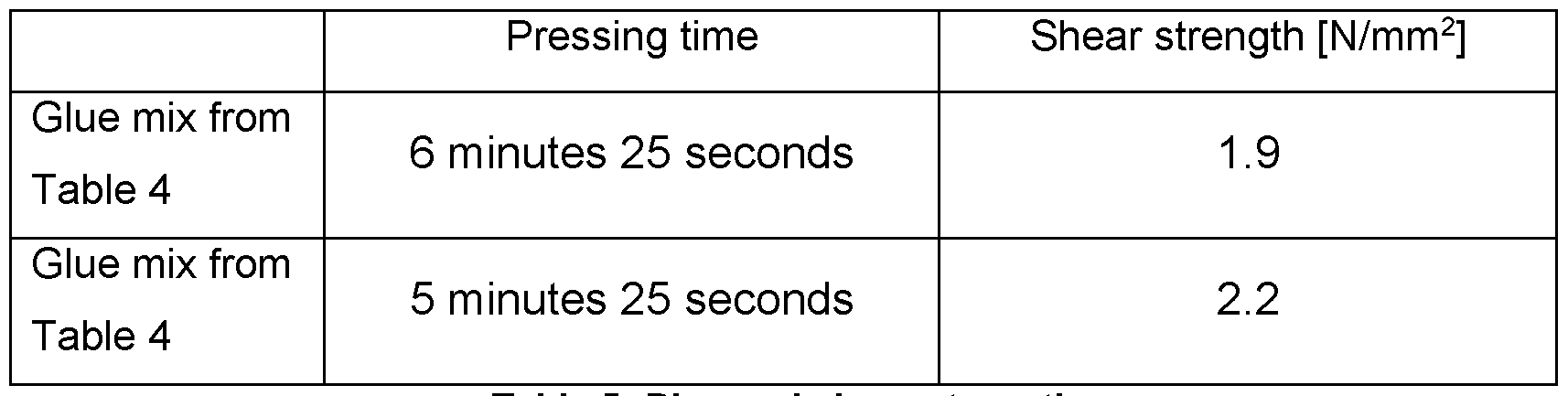
Glue mix was formulated according to Table 4.
Figure imgf000011_0001
Table 4: Composition of glue for plywood boards
Target glue content was 155 g/m2 which were spread on one side. Pre- pressing was performed at a pressure of 1 .8 MPa for 5 minutes. Hot pressing was performed at 130°C with a pressure of 1 .8 MPa. Two plywood panels were prepared with two different hot pressing times, i.e. one with 6 minutes 25 seconds and second with 5 minutes and 25 seconds.
Shear strength of the test pieces were evaluated according to EN314_1_2005 test method. Prior to evaluation, all samples were conditioned according to 5.1 .1 in the EN314_1_2005. Average data from 20 test specimens is presented in Table 5.
Figure imgf000011_0002
Table 5: Plywood shear strength Example 6
Lignin solution was prepared by adding 160 g of powder lignin (solid content 90%) and 229 g of water were added to a 1 L glass reactor at ambient temperature and were stirred until the lignin was fully and evenly dispersed. Then, 35 g of 50% alkali solution and 75 g of urea were added to the lignin dispersion. The composition was stirred for 120 minutes to make sure that the lignin was completely dissolved in the alkaline media.
Example 7
An adhesive formulation was prepared by mixing 69.6 g of lignin alkali solution from Example 6, 9 g of water and 10.5 g of glycerol diglycidyl ether in a beaker for 20 minutes using an overhead stirrer at room temperature.
The adhesive formulation was tested in a lap-joint test using an Automated Bonding Evaluation System (ABES) tensile tester.
For this purpose, relatively thin beech veneers of thickness of 0.6 mm were used that were cut into 104x20 mm pieces. Resin was applied to an area of 4 mm x 20 mm on one side of one end section of the two pieces. Resin coated, overlapped end section of a series of specimens were pressed together in a hot press at a pressure of 5 kg/m2 using pressing time of 90 seconds at pressing temperature of 150 °C.
Prior to evaluation, all samples were soaked in water for 24 hours at room temperature. Average data from 5 test specimens with and without
conditioning is presented in Table 6.
Figure imgf000012_0001
Table 6: Dry and wet shear strength Example 8
Lignin solution was prepared by adding 344.1 g of powder lignin (solid content 95.9%) and 535.9 g of water were added to a 1 L glass reactor at ambient temperature and were stirred until the lignin was fully and evenly dispersed. Then, 120 g of 50% alkali solution was added to the lignin dispersion. The composition was stirred for 120 minutes to make sure that the lignin was completely dissolved in the alkaline media.
Example 9
An adhesive formulation was prepared by mixing 100 g of lignin alkali solution from Example 8 and 33 g of glycerol diglycidyl ether (CAS No. 72207-80-8) in a beaker for 2 minutes at room temperature.
The resin formulation was used to prepare a 5 ply plywood panel. Birch veneers of thickness 1.54-1.62 mm were sawn to 300 x 300 mm2 size and conditioned in 20°C, 65% RH prior to manufacture. Target glue content was 155 g/m2 which were spread on one side. Pre-pressing was performed at a pressure of 1.8 MPa for 5 minutes. Hot pressing was performed at 110°C with a pressure of 1.8 MPa for 7 minutes.
Shear strength of the test pieces were evaluated according to EN314_1_2005 test method. Prior to evaluation, samples were conditioned for class 1 (dry interior) and class 3 (non-covered exterior) according to 5.1.1 and 5.1.3 in the EN314_1_2005. Average data from 20 test specimens is presented in Table 7.
Figure imgf000013_0001
Table 7: Shear strength of test specimen according to EN314_1_2005 Example 10
An adhesive formulation was prepared by mixing 100 g of lignin alkali solution from Example 8 and 33 g of ethylene glycol diglycidyl ether in a beaker for 2 minutes at room temperature.
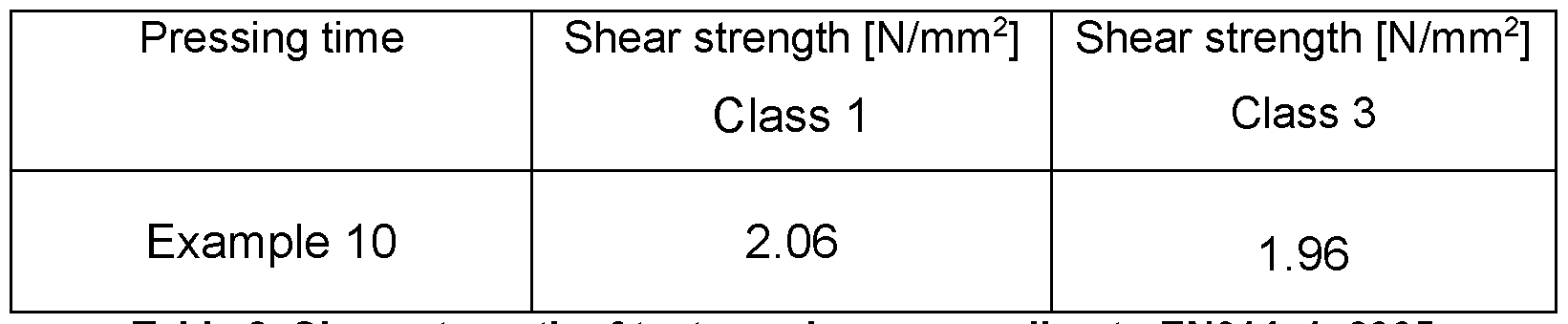
The resin formulation was used to prepare a 5 ply plywood panel. Birch veneers of thickness 1.54-1.62 mm were sawn to 300 x 300 mm2 size and conditioned in 20°C, 65% RH prior to manufacture. Target glue content was 155 g/m2 which were spread on one side. Pre-pressing was performed at a pressure of 1.8 MPa for 5 minutes. Hot pressing was performed at 110°C with a pressure of 1.8 MPa for 7 minutes.
Shear strength of the test pieces were evaluated according to EN314_1_2005 test method. Prior to evaluation, samples were conditioned according to 5.1.1 and 5.1.3 in the EN314_1_2005. Average data from 20 test specimens is presented in Table 8.
Figure imgf000014_0001
Table 8: Shear strength of test specimen according to EN314_1_2005
Example 11
An adhesive formulation was prepared by mixing 100 g of lignin alkali solution from Example 8 and 11 g of sorbitol polyglycidyl ether in a beaker for 2 minutes at room temperature.
The resin formulation was used to prepare a 5 ply plywood panel. Birch veneers of thickness 1.54-1.62 mm were sawn to 300 x 300 mm2 size and conditioned in 20°C, 65% RH prior to manufacture. Target glue content was 155 g/m2 which were spread on one side. Pre-pressing was performed at a pressure of 1.8 MPa for 5 minutes. Hot pressing was performed at 110°C with a pressure of 1.8 MPa for 7 minutes.
Shear strength of the test pieces were evaluated according to EN314_1_2005 test method. Prior to evaluation, samples were conditioned according to 5.1.1 and 5.1.3 in the EN314_1_2005. Average data from 20 test specimens is presented in Table 9.
Figure imgf000015_0001
Table 9: Shear strength of test specimen according to EN314_1_2005
Example 12
An adhesive formulation was prepared by mixing 100 g of lignin alkali solution from Example 8 and 33 g of neopentyl glycol diglycidyl ether in a beaker for 2 minutes at room temperature.
The resin formulation was used to prepare a 5 ply plywood panel. Birch veneers of thickness 1.54-1.62 mm were sawn to 300 x 300 mm2 size and conditioned in 20°C, 65% RH prior to manufacture. Target glue content was 155 g/m2 which were spread on one side. Pre-pressing was performed at a pressure of 1.8 MPa for 5 minutes. Hot pressing was performed at 110°C with a pressure of 1.8 MPa for 7 minutes.
Shear strength of the test pieces were evaluated according to EN314_1_2005 test method. Prior to evaluation, samples were conditioned according to 5.1.1 in the EN314_1_2005. Average data from 20 test specimens is presented in Table 10.
Figure imgf000015_0002
Table 10: Shear strength of test specimen according to EN314_1_2005 Example 13
An adhesive formulation was prepared by mixing 30.3 g of lignin alkali solution from Example 8 and 10 g of glycerol diglycidyl ether in a beaker for 2 minutes at room temperature.
The adhesive formulation was tested according to the standard testing method EN 205:2016. Target bonding resin content was 150 g/m2 which were spread on one side using a wire round applicator. Cold pressing was performed with a pressure of 1.8 MPa for 2 hours. Prior to evaluation, all samples were conditioned according to EN12765:2016 C2. Average data from 10 test specimens with and without conditioning is presented in Table 1 1 .
Figure imgf000016_0001
Table 11 : Dry and wet shear strength
Example 14
An adhesive formulation was prepared by mixing 29.55 g of lignin alkali solution from Example 8, 5.25 g of glycerol and 5.25 g of glycerol diglycidyl ether in a beaker for 20 minutes using an overhead stirrer at room
temperature.
The adhesive formulation was tested in a lap-joint test using an Automated Bonding Evaluation System (ABES) tensile tester.
For this purpose, relatively thin beech veneers of thickness of 0.6 mm were used that were cut into 104x20 mm pieces. Resin was applied to an area of 5 mm x 20 mm on one side of one end section of the two pieces. Resin coated, overlapped end section of a series of specimens were pressed together in a hot press at a pressure of 5 kg/m2 using pressing time of 90 seconds at pressing temperature of 150 °C.
Prior to evaluation, all samples were soaked in water for 24 hours at room temperature. Average data from 5 test specimens with and without
conditioning is presented in Table 12.
Figure imgf000017_0001
Table 12: Dry and wet shear strength
Example 15 A lignin tannin solution was prepared by adding 33g of lignin, 5 g of tannin and 12 g of 50% sodium hydroxide solution to 50g of water. The composition was stirred using an overhead stirrer at room temperature until lignin and tannin was completely dissolved.
An adhesive formulation was prepared by mixing 26.3 g of lignin tannin alkali solution and 10 g of glycerol diglycidyl ether in a beaker for 5 minutes using an overhead stirrer at room temperature.
The adhesive formulation was tested in a lap-joint test using an Automated Bonding Evaluation System (ABES) tensile tester.
For this purpose, relatively thin beech veneers of thickness of 0.6 mm were used that were cut into 104x20 mm pieces. Resin was applied to an area of 5 mm x 20 mm on one side of one end section of the two pieces. Resin coated, overlapped end section of a series of specimens were pressed together in a hot press at a pressure of 5 kg/m2 using pressing time of 90 seconds at pressing temperature of 150 °C.
Prior to evaluation, all samples were soaked in water for 24 hours at room temperature. Average data from 5 test specimens with and without
conditioning is presented in Table 13.
Figure imgf000017_0002
Table 13: Dry and wet shear strength Example 16
An adhesive formulation was prepared by mixing 100 g of lignin alkali solution from Example 8 and 33 g of polyglycerol polyglycidyl ether (CAS No. 118549- 88-5) in a beaker for 2 minutes at room temperature.
The resin formulation was used to prepare a 5 ply plywood panel. Birch veneers of thickness 1.54-1.62 mm were sawn to 300 x 300 mm2 size and conditioned in 20°C, 65% RH prior to manufacture. Target glue content was 155 g/m2 which were spread on one side. Pre-pressing was performed at a pressure of 1.8 MPa for 5 minutes. Hot pressing was performed at 110°C with a pressure of 1.8 MPa for 7 minutes.
Shear strength of the test pieces were evaluated according to EN314_1_2005 test method. Prior to evaluation, samples were conditioned for class 1 (dry interior) and class 3 (non-covered exterior) according to 5.1.1 and 5.1.3 in the EN314_1_2005. Average data from 20 test specimens is presented in Table 7.
Figure imgf000018_0001
Table 14: Shear strength of test specimen according to EN314_1_2005
In view of the above detailed description of the present invention, other modifications and variations will become apparent to those skilled in the art. However, it should be apparent that such other modifications and variations may be effected without departing from the spirit and scope of the invention.

Claims

Claims
1. A method for preparing a bonding resin, wherein an aqueous
lignin solution is mixed with one or more of glycerol diglycidyl ether, polyglycerol diglycidyl ether, polyglycerol polyglycidyl ether, glycerol triglycidyl ether, sorbitol polyglycidyl ether, alkoxylated glycerol polyglycidyl ether, trimethylolpropane triglycidyl ether, trimethylolpropane diglycidyl ether, polyoxypropylene glycol diglycidylether, polyoxypropylene glycol triglycidyl ether, diglycidylether of cyclohexane dimethanol, resorcinol diglycidyl ether, isosorbide diglycidyl ether, pentaerythritol tetraglycidyl ether, ethylene glycol diglycidyl ether, polyethylene glycol diglycidyl ether having 2-9 ethylene glycol units, propylene glycol diglycidyl ether having 1 -5 propylene glycol units, and/or diglycidyl ether of terminal diol having a linear carbon chain of 3-6 carbon atoms; and optionally one or more additives.
2. A method according to claim 1 , wherein the ether is polyglycerol polyglycidyl ether.
3. A method according to claim 1 or 2, wherein the aqueous lignin solution is an alkali solution.
4. A method according to any one of claims 1 -3, wherein the weight ratio between lignin, calculated on the basis of dry lignin, and the total amount of glycerol diglycidyl ether and/or ethylene glycol diglycidyl ether is from 1 : 10 to 10: 1.
5. A method according to any one of claims 1 -4, wherein the
additive is urea, tannin, surfactant, dispersing agent, filler and/or a solvent.
6. A method according to claim 5, wherein the solvent is glycerol, ethylene glycol, polyethylene glycol, propylene glycol, polypropylene glycol, sorbitol and/or any terminal diol having a linear carbon chain of 3-6 carbon atoms.
7. A method according to any one of claims 1 -6, wherein the lignin is modified by glyoxylation, etherification, esterification or any other method where lignin hydroxyl content or amine content or thiol content is increased.
8. A method for preparing a bonding resin, wherein an aqueous lignin solution is mixed with one or more cross-linkers and/or one or more glycidyl ethers, wherein the cross-linker has an epoxy index above 4 eq/kg.
9. A bonding resin obtainable by the method of any one of claims 1 - 8.
10. Use of a bonding resin according to claim 9 in the manufacture of a laminate, mineral wool insulation, wood product such as plywood, oriented strandboard (OSB), laminated veneer lumber (LVL), medium density fiberboards (MDF), high density
fiberboards (HDF), parquet flooring, curved plywood, veneered particleboards, veneered MDF or particle boards.
1 1 . Use of a bonding resin according to claim 9, wherein the bonding resin is provided to a surface in the preparation of a laminate, mineral wool insulation, wood product such as plywood, oriented strandboard (OSB), laminated veneer lumber (LVL), medium density fiberboards (MDF), high density fiberboards (HDF), parquet flooring, curved plywood, veneered particleboards, veneered MDF or particle boards, and wherein curing of the bonding resin to form an adhesive takes place when the surface is exposed to pressure and heating.
12. Laminate, mineral wool insulation, wood product such as
plywood, oriented strandboard (OSB), laminated veneer lumber (LVL), medium density fiberboards (MDF), high density
fiberboards (HDF), parquet flooring, curved plywood, veneered particleboards, veneered MDF or particle boards manufactured using a bonding resin according to claim 1 1 .
PCT/IB2019/055492 2018-07-02 2019-06-28 Process for preparing a bonding resin Ceased WO2020008311A1 (en)

Priority Applications (7)

Application Number Priority Date Filing Date Title
US17/059,590 US12163064B2 (en) 2018-07-02 2019-06-28 Process for preparing a bonding resin
JP2020570001A JP7511485B2 (en) 2018-07-02 2019-06-28 Process for preparing the binding resin
CN201980040328.7A CN112334560A (en) 2018-07-02 2019-06-28 Preparation process of adhesive resin
MYPI2020006362A MY206483A (en) 2018-07-02 2019-06-28 Process for preparing a bonding resin
EP19830817.3A EP3818126A4 (en) 2018-07-02 2019-06-28 PROCESS FOR MAKING A BINDING RESIN
CA3100830A CA3100830A1 (en) 2018-07-02 2019-06-28 Process for preparing a bonding resin
JP2024052651A JP2024095713A (en) 2018-07-02 2024-03-28 Process for preparing the binding resin

Applications Claiming Priority (4)

Application Number Priority Date Filing Date Title
SE1850830-9 2018-07-02
SE1850830A SE544555C2 (en) 2018-07-02 2018-07-02 An epoxy bonding resin obtainable from black liquor lignin
SE1851647 2018-12-21
SE1851647-6 2018-12-21

Publications (1)

Publication Number Publication Date
WO2020008311A1 true WO2020008311A1 (en) 2020-01-09

Family

ID=69060744

Family Applications (1)

Application Number Title Priority Date Filing Date
PCT/IB2019/055492 Ceased WO2020008311A1 (en) 2018-07-02 2019-06-28 Process for preparing a bonding resin

Country Status (8)

Country Link
US (1) US12163064B2 (en)
EP (1) EP3818126A4 (en)
JP (2) JP7511485B2 (en)
CN (1) CN112334560A (en)
CA (1) CA3100830A1 (en)
CL (1) CL2020003134A1 (en)
MY (1) MY206483A (en)
WO (1) WO2020008311A1 (en)

Cited By (12)

* Cited by examiner, † Cited by third party
Publication number Priority date Publication date Assignee Title
WO2020261087A1 (en) * 2019-06-24 2020-12-30 Stora Enso Oyj Process for preparing a bonding resin
SE1951514A1 (en) * 2019-12-20 2021-06-21 Stora Enso Oyj Novel process for preparing a bonding resin
WO2021124125A1 (en) * 2019-12-20 2021-06-24 Stora Enso Oyj Process for the preparation of a bonding resin
WO2021124129A1 (en) * 2019-12-20 2021-06-24 Stora Enso Oyj Process for preparing a bonding resin
SE2051281A1 (en) * 2020-11-04 2022-05-05 Stora Enso Oyj Lignin-based bonding resin
CN115697935A (en) * 2020-04-03 2023-02-03 洛科威有限公司 Acoustic product
WO2023245269A1 (en) * 2022-06-23 2023-12-28 Instituto Hercílio Randon Composition for adhering metals to composites, process for obtaining the composition, friction component, process for obtaining a friction component, and brake system comprising the friction component
WO2024096776A1 (en) * 2022-11-01 2024-05-10 Nasli Gluepartners Ab A biopolymer adhesive system and a method of separately applying parts of the biopolymer adhesive system
US12193366B2 (en) 2020-04-03 2025-01-14 Rockwool A/S Method of growing plants
US12209051B2 (en) 2020-04-03 2025-01-28 Rockwool A/S Method of draining water
US12584019B2 (en) 2020-04-03 2026-03-24 Rockwool A/S Sports field with shock pad comprising lignin-based binder
US12595656B2 (en) 2020-12-30 2026-04-07 Rockwool A/S Acoustic products

Families Citing this family (6)

* Cited by examiner, † Cited by third party
Publication number Priority date Publication date Assignee Title
SE1850470A1 (en) * 2018-04-20 2019-10-21 Stora Enso Oyj Adhesive formulation comprising lignin
US20240010874A1 (en) * 2019-12-20 2024-01-11 Stora Enso Oyj Process for preparing a bonding resin for use in a coating
EP4001376A1 (en) 2020-11-13 2022-05-25 Wilsonart LLC Multi-part lignin-based resin system for decorative laminates
CN114836149A (en) * 2022-03-18 2022-08-02 西南林业大学 Amine functionalized modified cellulose cross-linked network structure and preparation method and application thereof
EP4454846B1 (en) * 2023-04-24 2026-04-22 Kronoplus Limited Method of producing one or more laminate boards and laminate board
CN117821012B (en) * 2024-01-05 2025-07-15 广西大学 Lignin-based formaldehyde-free adhesive and preparation method thereof

Citations (7)

* Cited by examiner, † Cited by third party
Publication number Priority date Publication date Assignee Title
US3935101A (en) * 1972-11-13 1976-01-27 Georgia-Pacific Corporation Clarification process
JP2004210816A (en) * 2002-12-26 2004-07-29 Araco Corp Adhesive material and its manufacturing method
WO2006031175A1 (en) 2004-09-14 2006-03-23 Lignoboost Ab Method for separating lignin from black liquor
US20150175882A1 (en) * 2010-02-10 2015-06-25 Technische Universität Dresden Substrate for Soil Improvement Having a Water-Storing Property, Method for Producing Same, and Use Thereof
US20150329753A1 (en) * 2014-05-16 2015-11-19 Board Of Trustees Of The Leland Stanford Junior University Biobased lignin adhesives for plywood applications and manufacturing of improved wood-based products
EP3009462A1 (en) * 2014-10-14 2016-04-20 Industrial Technology Research Institute Lignin-based biomass epoxy resin, method for manufacturing the same, and compositions including the same
US20160208134A1 (en) * 2013-09-27 2016-07-21 Stora Enso Oyj A composition comprising lignin and epoxy compound for coating and method for the manufacturing thereof and use thereof

Family Cites Families (10)

* Cited by examiner, † Cited by third party
Publication number Priority date Publication date Assignee Title
JP2005060590A (en) 2003-08-18 2005-03-10 Sekisui Chem Co Ltd Adhesive, wood-based composite material, method for producing wood-based composite material, and method for peeling adhesive
JP4139898B2 (en) 2004-03-31 2008-08-27 独立行政法人産業技術総合研究所 Polymer containing p-hydroxycinnamic acid
JP5555520B2 (en) 2009-10-27 2014-07-23 パナソニック株式会社 Plant-derived adhesive, plant-derived composition and wood composite material
JP2011219715A (en) 2010-02-10 2011-11-04 Hitachi Chem Co Ltd Resin compound material for molding
FI123936B2 (en) 2012-03-29 2019-03-29 Upm Kymmene Corp A method for increasing the reactivity of lignin
JP6388310B2 (en) 2014-01-30 2018-09-12 国立研究開発法人森林研究・整備機構 Cement additive
JP2016030824A (en) 2014-07-30 2016-03-07 島根県 Adhesive derived from lignophenol, and wood product using the same
SE539543C2 (en) 2015-07-03 2017-10-10 Stora Enso Oyj A method for increasing the reactivity of lignin by storage
JP2019164909A (en) * 2018-03-19 2019-09-26 日立化成株式会社 Electrode and lead storage battery
SE543597C2 (en) 2019-06-24 2021-04-13 Stora Enso Oyj Process for preparing a bonding resin

Patent Citations (7)

* Cited by examiner, † Cited by third party
Publication number Priority date Publication date Assignee Title
US3935101A (en) * 1972-11-13 1976-01-27 Georgia-Pacific Corporation Clarification process
JP2004210816A (en) * 2002-12-26 2004-07-29 Araco Corp Adhesive material and its manufacturing method
WO2006031175A1 (en) 2004-09-14 2006-03-23 Lignoboost Ab Method for separating lignin from black liquor
US20150175882A1 (en) * 2010-02-10 2015-06-25 Technische Universität Dresden Substrate for Soil Improvement Having a Water-Storing Property, Method for Producing Same, and Use Thereof
US20160208134A1 (en) * 2013-09-27 2016-07-21 Stora Enso Oyj A composition comprising lignin and epoxy compound for coating and method for the manufacturing thereof and use thereof
US20150329753A1 (en) * 2014-05-16 2015-11-19 Board Of Trustees Of The Leland Stanford Junior University Biobased lignin adhesives for plywood applications and manufacturing of improved wood-based products
EP3009462A1 (en) * 2014-10-14 2016-04-20 Industrial Technology Research Institute Lignin-based biomass epoxy resin, method for manufacturing the same, and compositions including the same

Non-Patent Citations (5)

* Cited by examiner, † Cited by third party
Title
ANONYMOUS: "Polyepoxy type", 31 March 2016 (2016-03-31), pages 1 - 2, XP009525480, Retrieved from the Internet <URL:https://web.archive.org/web/20160331123919/https://www.sy-kogyo.co.jp/product/poli-mono-epoxy.html> [retrieved on 20190523] *
ENGELMANN G.GANSTER J., HOLZFORSCHUNG, vol. 68, 2014, pages 435 - 446
JINGXIAN LI R. ET AL., GREEN CHEMISTRY, vol. 20, 2018, pages 1459 - 1466
no. 118549-88-5
See also references of EP3818126A4

Cited By (19)

* Cited by examiner, † Cited by third party
Publication number Priority date Publication date Assignee Title
WO2020261087A1 (en) * 2019-06-24 2020-12-30 Stora Enso Oyj Process for preparing a bonding resin
US12286565B2 (en) 2019-06-24 2025-04-29 Stora Enso Oyj Process for preparing a bonding resin
SE1951514A1 (en) * 2019-12-20 2021-06-21 Stora Enso Oyj Novel process for preparing a bonding resin
WO2021124125A1 (en) * 2019-12-20 2021-06-24 Stora Enso Oyj Process for the preparation of a bonding resin
WO2021124127A1 (en) * 2019-12-20 2021-06-24 Stora Enso Oyj Novel process for preparing a bonding resin
WO2021124129A1 (en) * 2019-12-20 2021-06-24 Stora Enso Oyj Process for preparing a bonding resin
SE544233C2 (en) * 2019-12-20 2022-03-08 Stora Enso Oyj Process for preparing a bonding resin from an aqueous lignin solution, the bonding resin, and use of the bonding resin
CN115697935A (en) * 2020-04-03 2023-02-03 洛科威有限公司 Acoustic product
US12193366B2 (en) 2020-04-03 2025-01-14 Rockwool A/S Method of growing plants
US12209051B2 (en) 2020-04-03 2025-01-28 Rockwool A/S Method of draining water
US12584019B2 (en) 2020-04-03 2026-03-24 Rockwool A/S Sports field with shock pad comprising lignin-based binder
WO2022097014A1 (en) * 2020-11-04 2022-05-12 Stora Enso Oyj Lignin-based bonding resin
CN116419954A (en) * 2020-11-04 2023-07-11 斯道拉恩索公司 Lignin-Based Adhesive Resins
SE546842C2 (en) * 2020-11-04 2025-02-25 Stora Enso Oyj Use of a lignin-based bonding resin
SE2051281A1 (en) * 2020-11-04 2022-05-05 Stora Enso Oyj Lignin-based bonding resin
US12595656B2 (en) 2020-12-30 2026-04-07 Rockwool A/S Acoustic products
US12595655B2 (en) 2020-12-30 2026-04-07 Rockwool A/S Insulation products
WO2023245269A1 (en) * 2022-06-23 2023-12-28 Instituto Hercílio Randon Composition for adhering metals to composites, process for obtaining the composition, friction component, process for obtaining a friction component, and brake system comprising the friction component
WO2024096776A1 (en) * 2022-11-01 2024-05-10 Nasli Gluepartners Ab A biopolymer adhesive system and a method of separately applying parts of the biopolymer adhesive system

Also Published As

Publication number Publication date
JP2024095713A (en) 2024-07-10
US12163064B2 (en) 2024-12-10
CA3100830A1 (en) 2020-01-09
MY206483A (en) 2024-12-18
EP3818126A1 (en) 2021-05-12
CL2020003134A1 (en) 2021-05-07
JP7511485B2 (en) 2024-07-05
JP2021529845A (en) 2021-11-04
US20210253922A1 (en) 2021-08-19
EP3818126A4 (en) 2022-03-23
CN112334560A (en) 2021-02-05

Similar Documents

Publication Publication Date Title
US12163064B2 (en) Process for preparing a bonding resin
EP3986973B1 (en) Process for preparing a bonding resin
US12077682B2 (en) Use of bonding resin
CA3165411A1 (en) Process for the preparation of a bonding resin
SE545325C2 (en) Process for the preparation of a bonding resin
WO2021124127A1 (en) Novel process for preparing a bonding resin
AU2020407553B2 (en) Process for the preparation of a bonding resin
BR112021025809B1 (en) METHOD FOR PREPARING A BONDING RESIN

Legal Events

Date Code Title Description
121 Ep: the epo has been informed by wipo that ep was designated in this application

Ref document number: 19830817

Country of ref document: EP

Kind code of ref document: A1

ENP Entry into the national phase

Ref document number: 3100830

Country of ref document: CA

ENP Entry into the national phase

Ref document number: 2020570001

Country of ref document: JP

Kind code of ref document: A

NENP Non-entry into the national phase

Ref country code: DE

WWE Wipo information: entry into national phase

Ref document number: 2020143547

Country of ref document: RU

ENP Entry into the national phase

Ref document number: 2019830817

Country of ref document: EP

Effective date: 20210202