WO2020008777A1 - 情報処理装置、情報処理システム、およびプログラム - Google Patents
情報処理装置、情報処理システム、およびプログラム Download PDFInfo
- Publication number
- WO2020008777A1 WO2020008777A1 PCT/JP2019/022084 JP2019022084W WO2020008777A1 WO 2020008777 A1 WO2020008777 A1 WO 2020008777A1 JP 2019022084 W JP2019022084 W JP 2019022084W WO 2020008777 A1 WO2020008777 A1 WO 2020008777A1
- Authority
- WO
- WIPO (PCT)
- Prior art keywords
- event
- occurrence
- period
- information
- infection
- Prior art date
- Legal status (The legal status is an assumption and is not a legal conclusion. Google has not performed a legal analysis and makes no representation as to the accuracy of the status listed.)
- Ceased
Links
Images




Classifications
-
- G—PHYSICS
- G06—COMPUTING OR CALCULATING; COUNTING
- G06Q—INFORMATION AND COMMUNICATION TECHNOLOGY [ICT] SPECIALLY ADAPTED FOR ADMINISTRATIVE, COMMERCIAL, FINANCIAL, MANAGERIAL OR SUPERVISORY PURPOSES; SYSTEMS OR METHODS SPECIALLY ADAPTED FOR ADMINISTRATIVE, COMMERCIAL, FINANCIAL, MANAGERIAL OR SUPERVISORY PURPOSES, NOT OTHERWISE PROVIDED FOR
- G06Q50/00—Information and communication technology [ICT] specially adapted for implementation of business processes of specific business sectors, e.g. utilities or tourism
- G06Q50/02—Agriculture; Fishing; Forestry; Mining
-
- A—HUMAN NECESSITIES
- A01—AGRICULTURE; FORESTRY; ANIMAL HUSBANDRY; HUNTING; TRAPPING; FISHING
- A01G—HORTICULTURE; CULTIVATION OF VEGETABLES, FLOWERS, RICE, FRUIT, VINES, HOPS OR SEAWEED; FORESTRY; WATERING
- A01G13/00—Protection of plants
-
- A—HUMAN NECESSITIES
- A01—AGRICULTURE; FORESTRY; ANIMAL HUSBANDRY; HUNTING; TRAPPING; FISHING
- A01G—HORTICULTURE; CULTIVATION OF VEGETABLES, FLOWERS, RICE, FRUIT, VINES, HOPS OR SEAWEED; FORESTRY; WATERING
- A01G9/00—Cultivation in receptacles, forcing-frames or greenhouses; Edging for beds, lawn or the like
- A01G9/24—Devices or systems for heating, ventilating, regulating temperature, illuminating, or watering, in greenhouses, forcing-frames, or the like
-
- G—PHYSICS
- G06—COMPUTING OR CALCULATING; COUNTING
- G06N—COMPUTING ARRANGEMENTS BASED ON SPECIFIC COMPUTATIONAL MODELS
- G06N20/00—Machine learning
-
- G—PHYSICS
- G06—COMPUTING OR CALCULATING; COUNTING
- G06Q—INFORMATION AND COMMUNICATION TECHNOLOGY [ICT] SPECIALLY ADAPTED FOR ADMINISTRATIVE, COMMERCIAL, FINANCIAL, MANAGERIAL OR SUPERVISORY PURPOSES; SYSTEMS OR METHODS SPECIALLY ADAPTED FOR ADMINISTRATIVE, COMMERCIAL, FINANCIAL, MANAGERIAL OR SUPERVISORY PURPOSES, NOT OTHERWISE PROVIDED FOR
- G06Q10/00—Administration; Management
-
- G—PHYSICS
- G06—COMPUTING OR CALCULATING; COUNTING
- G06Q—INFORMATION AND COMMUNICATION TECHNOLOGY [ICT] SPECIALLY ADAPTED FOR ADMINISTRATIVE, COMMERCIAL, FINANCIAL, MANAGERIAL OR SUPERVISORY PURPOSES; SYSTEMS OR METHODS SPECIALLY ADAPTED FOR ADMINISTRATIVE, COMMERCIAL, FINANCIAL, MANAGERIAL OR SUPERVISORY PURPOSES, NOT OTHERWISE PROVIDED FOR
- G06Q10/00—Administration; Management
- G06Q10/02—Reservations, e.g. for tickets, services or events
-
- G—PHYSICS
- G06—COMPUTING OR CALCULATING; COUNTING
- G06Q—INFORMATION AND COMMUNICATION TECHNOLOGY [ICT] SPECIALLY ADAPTED FOR ADMINISTRATIVE, COMMERCIAL, FINANCIAL, MANAGERIAL OR SUPERVISORY PURPOSES; SYSTEMS OR METHODS SPECIALLY ADAPTED FOR ADMINISTRATIVE, COMMERCIAL, FINANCIAL, MANAGERIAL OR SUPERVISORY PURPOSES, NOT OTHERWISE PROVIDED FOR
- G06Q10/00—Administration; Management
- G06Q10/06—Resources, workflows, human or project management; Enterprise or organisation planning; Enterprise or organisation modelling
- G06Q10/063—Operations research, analysis or management
- G06Q10/0631—Resource planning, allocation, distributing or scheduling for enterprises or organisations
- G06Q10/06311—Scheduling, planning or task assignment for a person or group
- G06Q10/063114—Status monitoring or status determination for a person or group
-
- G—PHYSICS
- G06—COMPUTING OR CALCULATING; COUNTING
- G06Q—INFORMATION AND COMMUNICATION TECHNOLOGY [ICT] SPECIALLY ADAPTED FOR ADMINISTRATIVE, COMMERCIAL, FINANCIAL, MANAGERIAL OR SUPERVISORY PURPOSES; SYSTEMS OR METHODS SPECIALLY ADAPTED FOR ADMINISTRATIVE, COMMERCIAL, FINANCIAL, MANAGERIAL OR SUPERVISORY PURPOSES, NOT OTHERWISE PROVIDED FOR
- G06Q10/00—Administration; Management
- G06Q10/06—Resources, workflows, human or project management; Enterprise or organisation planning; Enterprise or organisation modelling
- G06Q10/063—Operations research, analysis or management
- G06Q10/0637—Strategic management or analysis, e.g. setting a goal or target of an organisation; Planning actions based on goals; Analysis or evaluation of effectiveness of goals
-
- G—PHYSICS
- G06—COMPUTING OR CALCULATING; COUNTING
- G06N—COMPUTING ARRANGEMENTS BASED ON SPECIFIC COMPUTATIONAL MODELS
- G06N7/00—Computing arrangements based on specific mathematical models
- G06N7/01—Probabilistic graphical models, e.g. probabilistic networks
Definitions
- the present invention relates to an information processing device, an information processing system, and a program.
- Patent Literature 1 and Patent Literature 2 disclose techniques for predicting the occurrence of pests. These are techniques for searching for conditions leading to the occurrence of pests from past environmental information, crop cultivation information, and the like. farmers protect the crops from pests by spraying pesticides on the basis of the predicted pest occurrence.
- Patent Literature 3 discloses a technique for predicting a disease that may cause infection and selecting an optimal pesticide.
- Infection is difficult to detect like onset, and it is not easy to estimate the infection time from the onset time and predict the future infection.
- data before the onset of the disease include conditions that lead to the transmission of the disease and conditions that do not lead to the transmission of the disease, and it is difficult to estimate the time of infection from the mixed conditions.
- the present invention has been made in view of the above-described problems, and it is an object of the present invention to be able to estimate an event occurrence time at which an event leading to the occurrence of damage to a crop by a pest has occurred. It is to provide a new and improved information processing device.
- an acquisition unit that acquires pest occurrence information including information at the time of occurrence of damage to a crop by a pest and environmental information including a cultivation environment of the crop, Using the pest occurrence information, determine an estimated event occurrence period in which the event leading to the damage occurrence to the crop has occurred and an event-free period in which the event leading to the damage occurrence has not occurred.
- a period determination unit, the environment information of the estimated event occurrence period, and the environment information of the no event period are compared, and an event occurrence time at which the event has occurred is estimated from the estimated event occurrence period, And an event estimating unit.
- a computer configured to acquire pest occurrence information including information when a pest causes damage to a crop and environmental information including a cultivation environment of the crop.
- an estimated event occurrence period in which the event leading to the damage to the crop is suspected to have occurred and an event-free period in which the event leading to the damage occurrence has not occurred
- the event period determining unit which determines the environment information of the estimated event occurrence period, and the environment information of the no event period, and compares the event information from the estimated event occurrence period
- a program for functioning as an event estimating unit for estimating the occurrence time is provided.
- an information processing system includes: an estimating unit;
- environmental information of an estimated event occurrence period including at least one or more periods in which an event leading to damage to the crop is included, and environmental information of an event-free period in which no event leading to damage to the crop has occurred
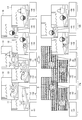
- FIG. 3 is a conceptual diagram of machine learning used in the embodiment.
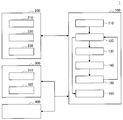
- FIG. 2 is a block diagram illustrating functions and configurations of the information processing system according to the embodiment.
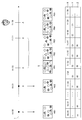
- FIG. 3 is a diagram illustrating an example in which occurrence of an event is estimated in the information processing system according to the embodiment.
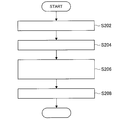
- It is a flowchart showing an example of an operation flow of the information processing system according to the embodiment.
- It is a flowchart showing an example of an operation flow of the information processing system according to the embodiment.
- FIG. 2 is a diagram illustrating an example of a hardware configuration of the information processing system according to the embodiment.
- the present invention relates to a technique for estimating an event occurrence time at which an event leading to damage occurrence on a crop has occurred, based on information at the time of the occurrence of damage to the crop by pests and environmental information of the crop.
- the information processing system 1 includes an information processing device 100, a cultivation sensor 300, a weather server 400, and an information processing terminal 200.
- the information processing apparatus 100 acquires the pest occurrence information input by the user or the like to the information processing terminal 200 when the crop causes the pest.
- the pest occurrence information referred to here is, for example, information including information when a pest has occurred in a crop.
- the information processing apparatus 100 Based on the pest occurrence information and the environmental information obtained from the cultivation sensor 300 and the weather server 400 that acquire information on cultivation in the house, the information processing apparatus 100 has generated an event that leads to damage to the crop. Estimate when an event occurs.
- the information processing apparatus 100 uses a machine learning method called Multi-Instances Learning when estimating the occurrence of the event.
- Multi-Instances Learning a machine learning method called Multi-Instances Learning when estimating the occurrence of the event.
- the features that lead to damage to crops are extracted from the events that lead to damage to crops and the events that do not lead to damage in the environmental information. Is calculated, and the occurrence time of the event is accurately estimated based on the probability.
- FIG. 2 shows the landscape 11, landscape 12, landscape 13, landscape 14, landscape 15, landscape 16, and landscape 17 of the seven types of rooms.
- Each scene includes various items S, item X1, item X2, item X3, item X4, and item X5.
- the landscape 11 includes the item S and the item X1, and the landscape 12 includes the item X1, the item X2, and the item S.
- the landscape 13 includes an item X2, an item X3, and an item S, and the landscape 14 includes an item X2, an item S, and an item X4.
- the landscape 15 includes the item X5 and the item X6, the landscape 16 includes the item X1 and the item X5, and the landscape 17 includes the item X4 and the item X5.
- the present method first sets the scenes 11 to 14 to one Bag and the scenes 15 to 17 to another Bag. Specifically, the scenery 11 to the scenery 14 are determined as PositiveBag (hereinafter, referred to as PB). On the other hand, landscapes 15 to 17 are determined as NegativeBag (hereinafter, referred to as NB).
- PB PositiveBag
- NB NegativeBag
- the PB includes one or more factors for classifying the landscapes 15 to 17 and the landscapes 11 to 14.
- the NB does not include any factor for classifying the landscapes 15 to 17 and the landscapes 11 to 14. In this way, PB and NB Bags are determined from a plurality of samples.
- PB and NB are classified based on whether or not the item S is included. That is, when the landscapes 11 to 14 and the landscapes 15 to 17 are compared, the landscapes 11 to 14 include the item S, but the landscapes 15 to 17 do not include the item S.
- the scenery 11 to the scenery 14 are classified as PB and the scenery 15 to 17 are classified as NB, with the item S as a feature amount as an influencing factor.
- the feature amount at the time of classification is S.
- ⁇ when a positive sample including a feature amount and a negative sample including no feature amount are mixed in the PB, a feature amount that separates the PB and the NB can be found. Further, in the present method, it is possible to determine whether an unknown Bag is Positive or Negative by finding a feature amount as described above. Further, in this method, it is possible to determine which Bag in the PB is a positive sample or the like using the feature amount.
- the information processing apparatus 100 uses PB for the environmental information of the estimated event time occurrence period in which an event leading to the occurrence of crop damage is likely to occur.
- the comparison is made as the environmental information NB in the non-event period that has not been performed.
- the feature amount leading to the occurrence of the event is grasped, and the time of occurrence of the event is estimated from the estimated occurrence time period of the event.
- machine learning of an event occurrence prediction model based on estimation at the time of event occurrence is performed.
- the event occurrence prediction model can be autonomously updated by machine learning the event occurrence prediction model. Therefore, it is possible to improve the accuracy of calculating the event occurrence probability.
- the environment information of the crop specifically, the predicted value or the current value of the environment information for the crop is newly input to the event occurrence prediction model after the machine learning. Based on these pieces of environmental information, the information processing apparatus 100 can output a change over time in the current or future event occurrence probability to the crop. It goes without saying that the event occurrence probability may be calculated not only for the present or the future but also for the past.
- FIG. 3 is a block diagram illustrating an example of a schematic functional configuration of the information processing system 1 according to an embodiment of the present invention.
- the information processing system 1 includes an information processing device 100, an information processing terminal 200, a cultivation sensor 300, and a weather server 400.
- the information processing apparatus 100 performs a pest infection prediction on a crop using information obtained from the information processing terminal 200 and the cultivation sensor 300 or the weather server 400.
- the information processing terminal 200 that acquires information required when the information processing apparatus 100 performs information processing, the cultivation sensor 300, and the weather server 400 will be described in order.
- the information processing terminal 200 includes an input unit 210, a display unit 230, and a communication unit 220.
- the information processing terminal 200 has a function of acquiring pest occurrence information, and the acquired pest occurrence information is output to the acquisition unit 110 of the information processing device 100.
- the information processing terminal 200 may be a mobile terminal such as a smartphone or an information processing device such as a computer. Note that the pest occurrence information does not necessarily need to be acquired via the information processing terminal 200, and the acquisition method is not limited as long as it can be acquired by the information processing device 100.
- pest occurrence information including information when a disease or the like caused by a pest has developed in a crop is input by an input or the like by a user.
- the pest occurrence information includes information on the date and time of the onset of the disease caused by the pest on the crop.
- Disease onset means detecting or recognizing that damage has occurred to a crop or that the incubation period has ended after infection and symptoms of infection due to pests have developed. For example, if there is a sensor or the like for observing the growth status of the crop, the disease may be determined based on information detected by the sensor or the like, and the user recognizes the disease on the crop when observing the crop. It may be performed by doing.
- the time of onset indicates an arbitrary period including a time when it is determined that onset occurs, and may be an onset date or onset time.
- the pest occurrence information includes information on the types of pests that have occurred, in addition to information on the date and time when the disease or the like caused by the pests or the like. Specifically, the information includes information on microbial diseases, pest diseases, physiological disorders, physiological disorders due to weeds, and the like. It also contains information on each type of further details. For example, in the case of a microbial disease, the information includes the type of disease such as gray mold and leaf mold.
- the pest occurrence information also includes information on the incubation period from infection or infestation of the pest to disease onset.
- the incubation period of the disease refers to the number of days from the infection of the disease to the onset of the disease.
- the incubation period of the insect disease is the onset of the disease (or the occurrence of insect damage) due to the eggs laying, the larva hatching from the eggs, eating the crops, etc. Is the period until is recognized. That is, the incubation period indicates a period until damage to the crop due to pests and insects occurs.
- the incubation period may be information obtained from a history of occurrence of disease and pests, literature, investigation, or the like.
- the information processing terminal 200 may acquire not only pest occurrence information but also environmental information of a space where a crop is cultivated and environmental information on a cultivation state of the crop cultivation (hereinafter, generally referred to as environmental information).
- the environment information acquired by the information processing terminal 200 may be information that is difficult to detect by the cultivation sensor 300 described below.
- the environmental information acquired by the information processing terminal 200 includes, for example, the cultivation status of the crop.
- the cultivation status of the crop includes, specifically, the cultivar of the crop, the altitude of the cultivation place of the crop, the type of soil, the nutritional status of the soil, the sowing date and time of the crop, the planting date and time, and the status of leaf cutting of the crop. , Such as the history of spraying the medicine, the residual effect of the medicine, the state of weeding, the state of the tree, the growth stage of the crop, etc.
- the process may be performed by, for example, an auxiliary input operation by a user or the like. That is, the environment information may be acquired by the information processing system 1 not only by information acquired by the cultivation sensor 300 described later but also by information acquired by the information processing terminal 200.
- the environment information acquired by the information processing terminal 200 or the cultivation sensor 300 may be environment information including a past history, or may be environment information indicating a current value or a predicted value.
- the communication unit 220 has a function of acquiring the pest occurrence information or the environmental information input by the input unit 210 and outputting the information to the information processing apparatus 100.
- the communication unit 220 also has a function of acquiring information processed by the information processing apparatus 100 and outputting the information to the display unit 230.
- the communication unit 220 when the pest occurrence information or the environmental information is obtained, the communication may be appropriately performed, or the communication may be continuously performed. Communication may be performed according to an instruction from the information processing device 100.
- the display unit 230 has a function of outputting information output from the communication unit 220.
- the display unit 230 presents the infection probability predicted by the information processing device 100 to the user.
- the cultivation sensor 300 has a function of acquiring environmental information of a space where a crop is cultivated.
- the cultivation sensor 300 includes a sensor unit 310 that senses environmental information, and a communication unit 320 that outputs the sensed environmental information.
- the sensor unit 310 senses environmental information.
- the sensor unit 310 may be configured by, for example, a thermometer, a hygrometer, a solar radiation meter, a carbon dioxide concentration meter, a moisture content meter that measures the moisture content of soil, and the like.
- the space where the crop of the environmental information acquired by the cultivation sensor 300 is cultivated may be a space surrounding the place where the crop is cultivated, and may be, for example, an agricultural facility for cultivating the crop such as a greenhouse. As long as the crops are cultivated, they need not be enclosed, and may be open spaces such as fields or rice fields.
- the cultivation sensor 300 acquires environmental information such as the temperature, humidity, solar radiation, carbon dioxide concentration, and moisture content of the soil where the crop is cultivated, for example, around the crop.
- the communication unit 320 has a function of outputting the environment information acquired by the sensor unit 310 to the information processing device 100.
- the communication unit 320 may appropriately perform communication when environment information is acquired, or may continuously perform communication. Communication may be performed according to an instruction from the information processing device 100.
- the weather server 400 has a function of outputting environmental information relating to weather in a region where a crop is cultivated.
- the environmental information to be output includes temperature, humidity, solar radiation, rainfall, and the like.
- the weather server 400 may selectively output information used for the information processing device 100 when requested by the information processing device 100.
- the environment information output by the weather server 400 may be a past history, or a current value or a predicted value of the environment information.
- the information processing apparatus 100 has a function of acquiring information output from the information processing terminal 200, the cultivation sensor 300, and the weather server 400, and estimating an infection time at which an infection that causes disease or the like to a crop due to a pest has occurred. Mainly have.
- the information processing device 100 includes an acquisition unit 110, a storage unit 120, an estimated infection period determination unit 130, an infection occurrence estimation unit 140, a machine learning unit 150, and an infection occurrence prediction unit 160.
- the acquisition unit 110 has a function of acquiring environmental information and disease occurrence information output from the information processing terminal 200, the cultivation sensor 300, and the weather server 400.
- the acquired environmental information and disease occurrence information are stored in the storage unit 120.
- the storage unit 120 has a function of storing the information acquired by the acquisition unit 110. Specifically, the storage unit 120 stores the disease occurrence information and the environment information acquired by the acquisition unit 110. The storage unit 120 also stores parameters related to machine learning in infection estimation, which will be described later, an infection prediction model, and the like.
- the estimated infection period determination unit 130 has a function of using the pest occurrence information to determine an estimated infection period in which infection leading to the onset of crops is suspected and a non-infection period in which infection leading to onset is not occurring. .
- the estimated infection period may be a period that includes at least one period during which infection that causes disease to crops has occurred. Specifically, the estimated infection period may include the date and time when the infection to the crop occurred. Further, the estimated infection period may include a plurality of periods during which infection to the crop occurs.
- the estimated infection period may include both the date and time when the infection occurred and the date and time when the infection did not occur.
- the estimated infection period determination unit 130 may determine a period in which the number of days of the incubation period of the pest has been traced back from the onset of the disease as the estimated infection period.
- the estimated infection period may include a period during which the infection occurs, and may be appropriately determined according to the type of the pest and the required accuracy of the infection prediction. For example, when the incubation period of a known pest may change according to the environment or the like, the incubation period may be set longer to make the estimated infection period longer.
- the estimated infection period determination unit 130 may determine a period during which it is known that no infection has occurred as the non-infection period. For example, a period in which at least the incubation period of the pest is traced back from the point in time when the onset of disease is not confirmed is determined as the non-infection period.
- the non-infection period may be a period including consecutive non-infection dates and times, or a period with an arbitrary date and time as a temporary point. Further, as the non-infection period, a plurality of dates and times may be determined with an arbitrary date and time as a temporary point.
- the infection occurrence estimation unit 140 compares the environmental information of the estimated infection period determined by the estimated infection period determination unit 130 with the environmental information of the non-infection period, and estimates the time of infection at which infection has occurred from the estimated infection period. Has functions.
- FIG. 4 shows a time axis T.
- the onset time A is November 30 first.
- the starting point C of the estimated infection period is November 23, which is 7 days, the longest number of days of the incubation period, from the onset date A.
- the end point B of the estimated infection period is November 27, which is three days, which is the shortest number of days of the incubation period, from the onset date A.
- the non-infection period may be any date and time when it is known that no infection has occurred, and may be appropriately determined at least as long as the period is before the start point C of the estimated infection period.
- the non-infection period may be a period other than the estimated infection period. In FIG. 4, the non-infection period is determined by the date and time D before the start point C of the estimated infection period, that is, October 21, and the date and time E, that is, October 20.
- the infection occurrence estimating unit 140 specifies and compares the environmental information of the estimated infection period with the environmental information of the non-infection period.
- the environmental information of the estimated infection period is designated as PositiveBag (PB), and the environmental information of the non-infection period is designated as NegativeBag (NB).
- the estimated infection period is five days from November 23 to November 27.
- the environment information corresponding to the date and time classified as PB is designated as PB1 on November 23, designated as PB2 on November 24, designated as PB3 on November 25, and designated as PB3 on November 26, respectively.
- Is designated as PB4, and November 27 is designated as PB5.
- the environment information corresponding to the date and time classified as NB is specified as NB1 on October 20, and NB2 on October 21.
- the environmental information NB1 of the date and time E of October 20, which is the non-infection period includes four white circles, two black circles, and two black triangles.
- NB2 includes four white circles, three black circles, and two black triangles.
- the environmental information PB1 on November 23 includes four white circles, two black circles, two black triangles, and three white triangles.
- the day environment information PB2 includes four white circles, three black circles, one black triangle, and one white triangle.
- the environment information PB3 on November 25 includes three white circles, three black circles, and two black triangles.
- the environmental information PB4 on November 26 includes four white circles and two black circles.
- Two black triangles, and three white triangles, and the environmental information PB5 on November 27 includes three white circles, three black circles, two black triangles, and one white triangle. ing.
- the infection occurrence estimating unit 140 compares the environmental information NB1 and NB2 during the non-infection period with the environmental information PB1 to PB5 during the estimated infection period. In this comparison, the infection occurrence estimation unit 140 does not include a white triangle in the environmental information NB1 and the environmental information NB2 during the non-infection period, and includes a white triangle in the environmental information PB1 to PB5 during the estimated infection period. Understand that. As a result, among the factors of the environmental information, the white triangle is extracted as the feature amount S leading to the onset.
- the infection occurrence estimation unit 140 uses the extracted feature value S to further calculate an infection probability due to a change in the feature value S during the estimated infection period.
- FIG. 4 shows, as a table, the date and time X of the non-infection period and the estimated infection period, the number of days Y that goes back each date and time from the onset of the crop, and the change Z of the feature value at each date and time. Note that, specifically, in FIG. 4, the characteristic amount S is shown as humidity (%).
- the humidity (%) is 95% on November 23, 60% on November 24, 55% on November 25, 95% on November 26, and November. It is 50% on 27th.
- the humidity during the infection-free period is 55% on October 20 and 60% on October 21.
- the higher the humidity the higher the probability of infection. Therefore, during the estimated infection period, November 23 and November 26, when the humidity was the highest, were estimated to be infected. You. In this example, the case where the probability of infection increases as the value of the feature amount increases has been described. However, the probability of infection may increase as the value of the feature amount decreases.
- the probability of infection may be calculated according to the type of feature value and the change transition of the feature value, such as the probability of occurrence of infection increasing as the feature value changes more rapidly.
- the infection occurrence estimation unit 140 may estimate a plurality of infection dates and times or one date and time from the estimated infection period.
- the infection occurrence estimation unit 140 may set a threshold value for the infection probability to determine whether or not infection has occurred. For example, when the infection probability is higher than the threshold value, it may be estimated as the time of infection. On the other hand, if the infection probability is lower than the threshold, the infection occurrence estimation unit 140 may calculate the infection probability again.
- the infection occurrence estimation unit 140 has a function of determining whether the estimated infection time is appropriate and selecting an appropriate infection time in order to increase the reliability of the estimated infection time. Is also good. For example, when a plurality of infection dates and times are estimated from the estimated infection period, the estimated infection time may be determined to be inappropriate, and a more reliable infection time may be selected from the plurality of infection times. This function may be performed by a user. That is, it is determined whether or not the plurality of estimated infection times is more appropriate for the user, and the appropriate infection time may be selected by the user from the plurality of estimated infection times. In this way, the infection occurrence estimating unit 140 estimates the time of infection more accurately.
- the machine learning unit 150 has a function of performing machine learning on environmental information at the time of infection estimated by the infection occurrence estimating unit 140 and constructing an infection prediction model for predicting a current or future infection probability. Since the infection occurrence estimating unit 140 estimates the time of infection, information such as which factor in the environmental information causes the infection for the infection leading to the onset of the disease is accumulated. By machine learning such environmental information that causes infection, the machine learning unit 150 can construct an infection prediction model indicating the relationship between each factor in the environmental information and the infection.
- the machine learning unit 150 constructs an infection prediction model and outputs the model to the storage unit 120.
- the infection prediction model stored in the storage unit 120 is appropriately used for predicting infection of a crop.
- the infection occurrence prediction unit 160 has a function of predicting an infection probability using an infection prediction model stored in the storage unit 120 and a current value or a predicted value of crop environmental information.
- the environmental information of the crop is environmental information on the crop in which the onset of pests is predicted, and is at least one of the environmental information output by the cultivation sensor 300 and the environmental information output by the weather server 400. It may be the environment information output by one.
- the current value or the predicted value indicates current environmental information or predicted environmental information for the crop.
- the current value may be environmental information continuously acquired by the cultivation sensor 300 up to the present, or may be environmental information periodically updated and acquired. Further, the current value may be appropriately acquired according to an instruction of the information processing apparatus 100 or a user, without being periodically updated.
- the predicted value indicates future environmental information after the current value, and indicates a predicted value several hours, several days, several weeks later, etc. from the present.
- the predicted value of the environmental information indicates a weather forecast or the like output from the weather server 400.
- the infection occurrence prediction unit 160 predicts the probability of occurrence of infection using the current value or the predicted value of the environmental information described above.
- the infection probability may be an infection probability at an arbitrary point in time with respect to a temporal change of the crop, or may be a continuous infection probability corresponding to the temporal change. Further, not only the probability but also whether or not the infection occurs may be predicted. Note that the infection probability may be predicted for the past.
- the infection occurrence prediction unit 160 may calculate the infection probability for each type of pest. This makes it possible to predict the probability of infection with respect to a plurality of pests and diseases, and to strengthen measures against pests and pests.
- the infection occurrence prediction unit 160 has a function of outputting the predicted infection probability to the information processing terminal 200.
- the infection probability is displayed on the display unit 230 and presented to the user.
- the user can check the probability of infection on the information processing terminal 200 and plan spraying of a chemical such as an agricultural chemical.
- the output destination of the infection probability is not limited to the information processing terminal 200, and may be a plurality of information processing terminals.
- the information processing system 1 roughly performs two processes. That is, the information processing system 1 first constructs an infection prediction model (S100), and then predicts an infection probability using the constructed infection prediction model (S200). Hereinafter, each operation flow will be described in detail.
- S100 an infection prediction model
- S200 constructed infection prediction model
- the acquisition unit 110 of the information processing apparatus 100 acquires pest occurrence information and environmental information (S102).
- the pest occurrence information includes information indicating the date and time of onset, and is acquired by the information processing apparatus 100 through the information processing terminal 200 or the like.
- the environmental information is, for example, information output from the cultivation sensor 300 or the weather server 400 installed in the cultivation environment of the crop, and may be acquired by the information processing apparatus 100 through at least one of the cultivation sensor 300 and the weather server 400. .
- the estimated infection period and the non-infection period are determined by the estimated infection period determining unit 130 of the information processing apparatus 100 (S104).
- the estimated infection period is a period including a period in which at least one disease infection of the crop occurs, and the non-infection period is a period in which no infection has been confirmed.
- the estimated infection period determination unit 130 assigns a Bag number to a plurality of pieces of environmental information in the estimated infection period and the non-infection period, and assigns a PositiveBag (PB) number to the environmental information corresponding to the estimated infection period.
- NegativeBag (NB) number is given to the environmental information corresponding to the non-infection period.
- the NB number is assigned to the environmental information corresponding to the non-infection period from the history of the disease occurrence information in which the pests targeted for the construction of the infection prediction model have been confirmed.
- the number of NBs can be increased and the accuracy of the infection prediction model can be improved.
- NB1 is assigned to environmental information in a non-infection period based on disease occurrence information in a certain farmhouse
- NB2 is assigned to environmental information in a non-infection period based on disease occurrence information in another farmhouse.
- the NB number is assigned to the environmental information of the non-infection period corresponding to the crop of the same species as the crop for which the infection is predicted and the pest of the same kind as the pest for which the infection is predicted.
- the time of infection is estimated during processing.
- the infection occurrence estimation unit 140 compares the environmental information of the estimated infection period with the environmental information of the non-infection period, and estimates the time of infection from the estimated infection period (S106).
- the environmental information to which the PB number and the NB number are assigned is compared to extract a feature amount at which infection occurs, and estimation at the time of infection is performed.
- the infection occurrence estimating unit 140 determines whether the estimated infection time has been appropriately estimated (S108). For example, this determination may be made by the user confirming the estimated infection time.
- the process proceeds to the next process.
- the infection occurrence estimating unit 140 compares the environmental information of the estimated infection period and the environmental information of the non-infection period again to estimate the time of infection. May be performed.
- the threshold range is set as the range where the probability of infection is appropriate. And the likelihood that the infection probability is out of the threshold range.
- the infection occurrence estimating unit 140 performs a process of determining the estimated infection (S110). If the infection time estimated in the pre-processing is appropriate (S108 / Yes), the infection-determining process is performed as it is. On the other hand, if the estimated time of infection is inappropriate (S108 / No), the user or the like determines the time of infection with the highest certainty of infection from the estimated time of infection without re-estimating the time of infection. May be selected to determine the time of infection.
- the machine learning unit 150 performs machine learning on the environmental information at the time of infection in the estimation at the time of infection, and constructs an infection prediction model (S112).
- the infection occurrence prediction unit 160 acquires an infection prediction model from the storage unit 120 (S202).
- the storage unit 120 stores the infection prediction model constructed by the above-described method, and outputs the infection prediction model from the storage unit 120 according to an instruction from the infection occurrence prediction unit 160.
- the infection occurrence prediction unit 160 acquires the current value or the predicted value of the environment information stored in the storage unit 120 (S204).
- the storage unit 120 stores the current value or the predicted value of the environment information acquired from the cultivation sensor 300 or the weather server 400, and the current value or the predicted value of the environment information from the storage unit 120 according to the instruction of the infection occurrence prediction unit 160.
- the predicted value is output.
- the infection occurrence prediction unit 160 predicts the infection probability using the infection prediction model and the current value or the predicted value of the crop environmental information (S206).
- the infection occurrence prediction unit 160 outputs the predicted infection probability (S208).
- the output destination may be, for example, a terminal possessed by a user who needs the infection probability, such as the information processing terminal 200, or a terminal such as a computer or a smartphone.
- the information processing system 1 accurately estimates an infection at the time of infection by the above-described operation flow. Furthermore, it is possible to predict the probability of infection of crops from now onward.
- FIG. 8 is a block diagram illustrating an example of a hardware configuration of the information processing system 1 according to the present embodiment.
- the information processing apparatus 900 illustrated in FIG. 8 can realize, for example, the information processing system 1 illustrated in FIG.
- Information processing by the information processing system 1 according to the present embodiment is realized by cooperation between software and hardware described below.
- the information processing apparatus 900 includes a CPU (Central Processing Unit) 901, a ROM (Read Only Memory) 902, a RAM (Random Access Memory) 903, and a host bus 904a.
- the information processing device 900 includes a bridge 904, an external bus 904b, an interface 905, an input device 906, an output device 907, a storage device 908, a drive 909, a connection port 911, and a communication device 913.
- the information processing apparatus 900 may include, instead of or in addition to the CPU 901, a processing circuit such as an electric circuit, a DSP (Digital Signal Processor), or an ASIC (Application Specific Integrated Circuit).
- a processing circuit such as an electric circuit, a DSP (Digital Signal Processor), or an ASIC (Application Specific Integrated Circuit).
- the CPU 901 functions as an arithmetic processing device and a control device, and controls overall operations in the information processing device 900 according to various programs. Further, the CPU 901 may be a microprocessor.
- the ROM 902 stores programs used by the CPU 901 and operation parameters.
- the RAM 903 temporarily stores programs used in the execution of the CPU 901 and parameters that change as appropriate in the execution.
- the CPU 901 may execute, for example, the function of the information processing device 100 or the information processing terminal 200 illustrated in FIG.
- the CPU 901, the ROM 902, and the RAM 903 are interconnected by a host bus 904a including a CPU bus and the like.
- the host bus 904a is connected via a bridge 904 to an external bus 904b such as a PCI (Peripheral Component Interconnect / Interface) bus.
- PCI Peripheral Component Interconnect / Interface
- the host bus 904a, the bridge 904, and the external bus 904b do not necessarily need to be separately configured, and these functions may be mounted on one bus.
- the input device 906 is realized by a device to which information is input by a user, such as a mouse, a keyboard, a touch panel, a button, a microphone, a switch, and a lever.
- the input device 906 may be, for example, a remote control device using infrared rays or other radio waves, or an externally connected device such as a mobile phone or a PDA (Personal Digital Assistant) corresponding to the operation of the information processing device 900. It may be.
- the input device 906 may include, for example, an input control circuit that generates an input signal based on information input by the user using the above-described input unit and outputs the input signal to the CPU 901.
- the user of the information processing device 900 can input various data to the information processing device 900 and instruct a processing operation.
- the input device 906 may correspond to the input unit 210 of the information processing terminal 200 shown in FIG.
- the output device 907 is formed of a device that can visually or audibly notify the user of the acquired information. Examples of such a device include a CRT (Cathode Ray Tube) display device, a liquid crystal display device, a plasma display device, an EL (electroluminescence) display device, a laser projector, a display device such as an LED projector and a lamp, and a sound output device such as a speaker and headphones. There are devices.
- the output device 907 outputs, for example, results obtained by various processes performed by the information processing device 900. Specifically, the output device 907 visually displays the results obtained by the various processes performed by the information processing device 900 in various formats such as text, images, tables, and graphs.
- an audio output device when used, an audio signal including reproduced audio data and acoustic data is converted into an analog signal and output audibly.
- the output device 907 can execute the function of the display unit 230 of the information processing terminal 200 shown in FIG. 3, for example.
- the storage device 908 is a data storage device formed as an example of a storage unit of the information processing device 900.
- the storage device 908 is realized by, for example, a magnetic storage device such as an HDD (Hard Disk Drive), a semiconductor storage device, an optical storage device, or a magneto-optical storage device.
- the storage device 908 may include a storage medium, a recording device that records data on the storage medium, a reading device that reads data from the storage medium, a deletion device that deletes data recorded on the storage medium, and the like.
- the storage device 908 stores programs executed by the CPU 901 and various data, various data acquired from the outside, and the like.
- the storage device 908 can execute, for example, the function of the storage unit 120 of the information processing device 100 illustrated in FIG.
- the drive 909 is a reader / writer for a storage medium, and is built in or external to the information processing apparatus 900.
- the drive 909 reads information recorded on a removable storage medium such as a mounted magnetic disk, optical disk, magneto-optical disk, or semiconductor memory, and outputs the information to the RAM 903.
- the drive 909 can also write information on a removable storage medium.
- connection port 911 is an interface connected to an external device, and is a connection port with an external device that can transmit data by, for example, USB (Universal Serial Bus).
- USB Universal Serial Bus
- the communication device 913 is, for example, a communication interface formed by a communication device or the like for connecting to the network 920.
- the communication device 913 is, for example, a communication card for a wired or wireless LAN (Local Area Network), LTE (Long Term Evolution), Bluetooth (registered trademark), or WUSB (Wireless USB).
- the communication device 913 may be a router for optical communication, a router for ADSL (Asymmetric Digital Subscriber Line), a modem for various communication, or the like.
- the communication device 913 can transmit and receive signals and the like to and from the Internet and other communication devices in accordance with a predetermined protocol such as TCP / IP.
- the communication device 913 may execute a function of the communication unit 220 of the cultivation sensor 300 illustrated in FIG. 3 or the communication unit 220 of the information processing terminal 200, for example.
- the network 920 is a wired or wireless transmission path for information transmitted from a device connected to the network 920.
- the network 920 may include a public line network such as the Internet, a telephone line network, and a satellite communication network, various LANs including Ethernet (registered trademark) (Local Area Network), and a WAN (Wide Area Network).
- the network 920 may include a dedicated line network such as an IP-VPN (Internet Protocol-Virtual Private Network).
- a computer program for causing hardware such as a CPU, a ROM, and a RAM built in the information processing system 1 to perform the same functions as the respective components of the information processing system 1 according to the above-described embodiment can be created.
- a recording medium storing the computer program is provided.
- the present invention is applicable to identification of the date and time of infection when an animal develops an infectious disease. By the time the animal develops the infection, the infection is transmitted and the infection develops after the incubation period of the infection.
- infectious diseases in animals it is often the case that taking the drug before the onset of the infection, particularly before and after the infection, is more effective in suppressing the infectious disease than after the onset of the infectious disease. Therefore, in growing animals, it is important to predict the probability of infection.
- infectious disease occurrence information including the date and time of occurrence of the infectious disease, and environmental information including the growth environment of the animal are acquired.
- infectious disease occurrence information including the date and time of occurrence of the infectious disease, and environmental information including the growth environment of the animal are acquired.
- the infectious disease occurrence information the period during which the animal is suspected of having an infectious disease is defined as the estimated event occurrence period, and the period during which no infection is suspected is defined as the no event period.
- the present invention is also applicable to identification of a causal food or identification of a poisoning time when an animal develops food poisoning. By the time an animal develops food poisoning, ingestion of food poisoning and proliferation of viruses or bacteria causing food poisoning occur. When growth exceeds the threshold, animals develop food poisoning symptoms. In the case of food poisoning, it is more likely that taking the drug before the propagation of viruses or fungi will alleviate or suppress the symptoms of food poisoning. In addition, since drugs to be taken differ depending on the cause of food poisoning, identifying the cause of food poisoning is important for alleviating symptoms.
- the time of onset of food poisoning is regarded as the time of occurrence of damage. That is, food poisoning occurrence information including the date and time of food poisoning onset and information on the ingestion of the food or the like by the animal are obtained. Using this food poisoning occurrence information, a period during which there is a suspicion of ingesting a food or the like that causes food poisoning is assumed to be an estimated event-occurring period, and a period during which there is no doubt of ingestion is a non-event period.
- a feature amount causing food poisoning that is, a food or the like is extracted from the intake information.
- the event occurrence time can be estimated from the estimated event occurrence period.
- Reference Signs List 100 information processing device 110 acquisition unit 120 storage unit 130 estimated infection period determination unit 140 infection occurrence estimation unit 150 machine learning unit 160 infection occurrence prediction unit 200 information processing terminal 210 input unit 220 communication unit 230 display unit 300 cultivation sensor 310 sensor unit 320 Communication unit 400 weather server
Landscapes
- Engineering & Computer Science (AREA)
- Business, Economics & Management (AREA)
- Human Resources & Organizations (AREA)
- Theoretical Computer Science (AREA)
- Physics & Mathematics (AREA)
- General Physics & Mathematics (AREA)
- Economics (AREA)
- Strategic Management (AREA)
- Tourism & Hospitality (AREA)
- Marketing (AREA)
- General Business, Economics & Management (AREA)
- Entrepreneurship & Innovation (AREA)
- Life Sciences & Earth Sciences (AREA)
- Software Systems (AREA)
- Health & Medical Sciences (AREA)
- General Health & Medical Sciences (AREA)
- Quality & Reliability (AREA)
- Operations Research (AREA)
- Animal Husbandry (AREA)
- Marine Sciences & Fisheries (AREA)
- Mining & Mineral Resources (AREA)
- Agronomy & Crop Science (AREA)
- Primary Health Care (AREA)
- Evolutionary Computation (AREA)
- Development Economics (AREA)
- Mathematical Physics (AREA)
- General Engineering & Computer Science (AREA)
- Computing Systems (AREA)
- Data Mining & Analysis (AREA)
- Artificial Intelligence (AREA)
- Educational Administration (AREA)
- Medical Informatics (AREA)
- Computer Vision & Pattern Recognition (AREA)
- Environmental Sciences (AREA)
- Game Theory and Decision Science (AREA)
- Toxicology (AREA)
- Pure & Applied Mathematics (AREA)
- Mathematical Optimization (AREA)
- Mathematical Analysis (AREA)
- Computational Mathematics (AREA)
Abstract
Description
(1.1.技術概要)
本発明は、作物への病害虫による被害発生時の情報および該作物の環境情報に基づいて、作物への被害発生につながる事象が生じた事象発生時を推定する技術に関する。
図2を参照して、マルチインスタンス学習(Multiple Instances Learning)を用いた機械学習手法に関して説明する。本手法では、例えば、複数のサンプルを、2つに分類する際に、その分類が何をもって分類されているか、を把握することができる。本手法では、複数のサンプルをひとつの集合体(bag)として扱う。ここでは、複数のサンプルを2つに分類する際に関して説明を行うが、分類は2つに限らず3つ以上の複数行われてもよい。
以上、本発明の一実施形態に係る情報処理システムの概略について説明した。次に、本発明の一実施形態に係る情報処理システム1の機能構成について説明する。具体例として、作物に対して病害虫による被害が発生した際に、被害につながる事象が発生した事象発生時を推定する例を挙げて説明する。以下では、事象を病害虫への感染、被害発生を発病として説明する。
情報処理端末200は、入力部210と表示部230と通信部220とを備える。情報処理端末200では、病害虫発生情報を取得する機能を有し、取得された病害虫発生情報は、情報処理装置100の取得部110へ出力される。情報処理端末200は、スマートフォンのような携帯端末でもよく、コンピュータ等の情報処理装置であってもよい。なお、病害虫発生情報は、必ずしも情報処理端末200を介して取得される必要はなく、情報処理装置100にて、取得できれば取得方法は限られない。
入力部210では、ユーザによる入力等により、病害虫による病害等が作物で発病した時の情報を含む病害虫発生情報が入力される。病害虫発生情報は、病害虫による病害等が作物で発病した発病日時の情報を含む。発病とは、作物に対して被害が発生したこと、あるいは感染後に潜伏期間が終了し、病虫害による感染の症状が発症したこと、が検知または認知されることを言う。例えば、発病の判断は、該作物の生育状況を観察するセンサ等があれば、センサ等が検知した情報を基に行われてもよく、ユーザが該作物の観察時に、作物への発病を認知することで行われてもよい。また、発病時とは、発病と判断された時を含む任意の期間を表し、発病日または発病時刻であってよい。
通信部220は、入力部210にて入力された病害虫発生情報または環境情報を取得し、情報処理装置100に出力する機能を有する。また、通信部220では、情報処理装置100により処理された情報が取得され、表示部230に出力する機能も有する。通信部220では、病害虫発生情報または環境情報が取得される際に、適宜通信を行ってもよく、連続的に通信を行ってもよい。また、情報処理装置100の指示により、通信を行ってもよい。
表示部230は、通信部220から出力された情報を出力する機能を有する。例えば、表示部230は、情報処理装置100にて予測された感染確率を、ユーザに呈示する。
栽培センサ300は、作物が栽培される空間の環境情報を取得する機能を有する。栽培センサ300は、環境情報をセンシングするセンサ部310と、センシングした環境情報を出力する通信部320と、を備える。
センサ部310は、環境情報をセンシングする。センサ部310は、例えば、温度計、湿度計、日射量計、二酸化炭素濃度計、土壌の水分率を計測する水分率計等により構成されてよい。
通信部320は、センサ部310にて取得された環境情報を情報処理装置100に出力する機能を有する。通信部320では、環境情報が取得される際に、適宜通信を行ってもよく、連続的に通信を行ってもよい。また、情報処理装置100の指示により、通信を行ってもよい。
気象サーバ400は、作物の栽培を行う地域の気象に関する環境情報を出力する機能を有する。出力する環境情報としては、気温、湿度、日射量、雨量等が挙げられる。気象サーバ400は、情報処理装置100に要求されることにより、情報処理装置100に使用される情報を選択的に出力してもよい。気象サーバ400によって出力される環境情報は、過去の履歴であってもよく、環境情報の現在値または予測値であってもよい。
情報処理装置100は、情報処理端末200と栽培センサ300と気象サーバ400により出力された情報を取得して、病害虫による作物への病害等の発病につながる感染が生じた感染時を推定する機能を主に有する。情報処理装置100は、取得部110と、記憶部120と、推定感染期間決定部130と、感染発生推定部140と、機械学習部150と、感染発生予測部160と、を備える。
取得部110は、情報処理端末200と栽培センサ300と気象サーバ400とにより出力された環境情報および病害発生情報を取得する機能を有する。取得した環境情報および病害発生情報は、記憶部120に記憶される。
記憶部120は、取得部110にて取得した情報を記憶する機能を有する。具体的には、記憶部120は、取得部110にて取得した病害発生情報および環境情報を記憶する。また、記憶部120では、後述する感染推定における機械学習に関するパラメータ、感染予測モデル等も記憶する。
推定感染期間決定部130は、病害虫発生情報を用いて、作物への発病につながる感染が生じた疑いがある推定感染期間と発病につながる感染が生じていない無感染期間とを決定する機能を有する。
感染発生推定部140は、推定感染期間決定部130により決定された推定感染期間の環境情報と、無感染期間の環境情報とを比較して、推定感染期間から感染が生じた感染時を推定する機能を有する。
機械学習部150は、感染発生推定部140により推定された感染時における環境情報に関して機械学習を行い、現在または未来の感染確率を予測するための感染予測モデルを構築する機能を有する。感染発生推定部140では、感染時が推定されるため、発病につながる感染に対して、環境情報の中のどの因子が感染を生じさせるか等の情報が蓄積される。このような、感染を生じさせる環境情報を機械学習することにより、機械学習部150では、環境情報内の各因子と感染との関係性を示した感染予測モデルを構築することができる。
感染発生予測部160は、記憶部120に記憶された感染予測モデルと、作物の環境情報の現在値または予測値とを用いて、感染確率を予測する機能を有する。ここで、作物の環境情報とは、病害虫の発病が予測される作物に対する環境情報であり、栽培センサ300にて出力された環境情報と気象サーバ400にて出力された環境情報との少なくともどちらか一方により出力された環境情報であってよい。
以上までで、情報処理システム1の機能構成を説明した。次に、図5~図7を参照して、情報処理システム1の動作フローを説明する。
感染予測モデルを構築する際には、まず、情報処理装置100の取得部110にて、病害虫発生情報および環境情報の取得が行われる(S102)。病害虫発生情報は、発病日時を示す情報を含み、情報処理端末200等を通して、情報処理装置100に取得される。環境情報は、例えば、作物の栽培環境に設置された栽培センサ300または気象サーバ400にて出力された情報であり、栽培センサ300または気象サーバ400の少なくとも一方を通して、情報処理装置100に取得され得る。
以上までで、感染予測モデル構築を行うまでの動作フローを説明した。次に、該感染予測モデルを用いた作物の病害虫感染予測に関して図7を参照して説明を行う。
次に、図8を参照して、本実施形態に係る情報処理装置のハードウェア構成について説明する。図8は、本実施形態に係る情報処理システム1のハードウェア構成の一例を示すブロック図である。なお、図8に示す情報処理装置900は、例えば、図3に示した情報処理システム1を実現し得る。本実施形態に係る情報処理システム1による情報処理は、ソフトウェアと、以下に説明するハードウェアとの協働により実現される。
以上までで、本発明が、作物への被害発生につながる事象の発生を推定する場合、病虫害の発生を主に例として説明した。本発明は、係る例に限らず、被害発生と被害につながる事象発生とが同時に起こらない事例に関して適用可能である。本発明は、具体的には、動物の感染症、動物の食中毒発生等に対しても用いることができる。
本実施形態においては、作物に病虫害が発生する例を挙げて説明したが、本発明は、動物が感染症を発病したときの感染日時の特定に適用可能である。動物が感染症を発症するまでには、感染症の感染が起こり、該感染症の潜伏期間を経て、該感染症が発症する。動物の感染症の場合、感染症が発症してからよりも、発症前、特に感染前後に薬剤を服薬する方が、感染症抑制効果が高い場合が多い。よって、動物を生育させる上で、感染確率を予測することは重要である。
本発明は、動物が食中毒を発生した際に、原因食品の特定、または毒摂取時期の特定等にも適用可能である。動物が食中毒を発病するまでには、食中毒の摂取、食中毒を引き起こすウイルスまたは菌などの増殖が起こる。増殖が閾値を超えた場合に、動物に対して食中毒の症状が発症する。食中毒の場合、ウイルスまたは菌などの増殖が起こる前に、薬剤を服薬することにより食中毒の症状が緩和または抑制される可能性が高くなる。また、食中毒の原因によって、服薬する薬剤も異なるため、食中毒の原因が特定されることは、症状を緩和する上で重要となる。
110 取得部
120 記憶部
130 推定感染期間決定部
140 感染発生推定部
150 機械学習部
160 感染発生予測部
200 情報処理端末
210 入力部
220 通信部
230 表示部
300 栽培センサ
310 センサ部
320 通信部
400 気象サーバ
Claims (9)
- 病害虫による作物への被害発生時の情報を含む病害虫発生情報および前記作物の栽培環境を含む環境情報を取得する、取得部と、
前記病害虫発生情報を用いて、前記作物への前記被害発生につながる事象が生じた疑いがある推定事象発生期間と前記被害発生につながる前記事象が生じていない無事象期間とを決定する、事象期間決定部と、
前記推定事象発生期間の前記環境情報と、前記無事象期間の前記環境情報と、を比較して、前記推定事象発生期間から前記事象が生じた事象発生時を推定する、事象推定部と、を備える、情報処理装置。 - 前記事象推定部は、前記推定事象発生期間の前記環境情報の中から、前記被害発生に影響する特徴量を抽出する、請求項1に記載の情報処理装置。
- 前記特徴量を用いて、前記推定事象発生期間における前記事象が生じる事象発生確率を算出し、
前記事象発生確率に基づいて、前記事象発生時を推定する、前記請求項2に記載の情報処理装置。 - 前記推定事象発生期間は、前記作物への前記被害発生時よりも前の期間であり、前記事象発生時を含む期間が少なくとも一つ以上含まれる、請求項1~3のいずれか一項に記載の情報処理装置。
- 前記事象推定部により推定された前記事象発生時における前記環境情報に関して機械学習を行うことにより、前記事象発生確率を予測するための事象発生予測モデルを構築する機械学習部、を備える、請求項3に記載の情報処理装置。
- 前記事象発生予測モデルと、前記作物の前記環境情報の現在値または予測値とを用いて、前記作物の前記事象発生確率を予測する、請求項5に記載の情報処理装置。
- 前記病害虫の種類毎に前記事象発生確率を出力する出力部、を備える、請求項6に記載の情報処理装置。
- コンピュータを、
病害虫による作物への被害発生時の情報を含む病害虫発生情報および前記作物の栽培環境を含む環境情報を取得する、取得部と、
前記病害虫発生情報を用いて、前記作物への前記被害発生につながる事象が生じた疑いがある推定事象発生期間と前記被害発生につながる前記事象が生じていない無事象期間とを決定する、事象期間決定部と、
前記推定事象発生期間の前記環境情報と、前記無事象期間の前記環境情報と、を比較して、前記推定事象発生期間から前記事象が生じた事象発生時を推定する、事象推定部と、として機能させるためのプログラム。 - 病害虫による作物への被害発生時の情報を含む病害虫発生情報および前記作物の栽培環境を含む環境情報を取得する、取得部と、
前記病害虫発生情報を用いて、前記作物への前記被害発生につながる事象が生じた疑いがある推定事象発生期間と前記被害発生につながる前記事象が生じていない無事象期間とを決定する、事象期間決定部と、
前記推定事象発生期間の前記環境情報と、前記無事象期間の前記環境情報と、を比較して、前記推定事象発生期間から前記事象が生じた事象発生時を推定する、事象推定部と、を含む、情報処理システム。
Priority Applications (8)
| Application Number | Priority Date | Filing Date | Title |
|---|---|---|---|
| EP19829966.1A EP3819856B1 (en) | 2018-07-02 | 2019-06-04 | Information processing device, information processing system, and program |
| BR112020026869-0A BR112020026869A2 (pt) | 2018-07-02 | 2019-06-04 | Dispositivo de processamento de informação, sistema de processamento de informação, e programa |
| CN201980048499.4A CN112400184A (zh) | 2018-07-02 | 2019-06-04 | 信息处理装置、信息处理系统以及程序 |
| KR1020207037211A KR20210025015A (ko) | 2018-07-02 | 2019-06-04 | 정보 처리 장치, 정보 처리 시스템, 및 프로그램 |
| JP2020528732A JP7511470B2 (ja) | 2018-07-02 | 2019-06-04 | 情報処理装置、情報処理システム、およびプログラム |
| US17/257,660 US20210248691A1 (en) | 2018-07-02 | 2019-06-04 | Information processing device, information processing system, and program |
| AU2019297721A AU2019297721A1 (en) | 2018-07-02 | 2019-06-04 | Information processing device, information processing system, and program |
| AU2023200270A AU2023200270A1 (en) | 2018-07-02 | 2023-01-19 | Information processing device, information processing system, and program |
Applications Claiming Priority (2)
| Application Number | Priority Date | Filing Date | Title |
|---|---|---|---|
| JP2018126001 | 2018-07-02 | ||
| JP2018-126001 | 2018-07-02 |
Publications (1)
| Publication Number | Publication Date |
|---|---|
| WO2020008777A1 true WO2020008777A1 (ja) | 2020-01-09 |
Family
ID=69059550
Family Applications (1)
| Application Number | Title | Priority Date | Filing Date |
|---|---|---|---|
| PCT/JP2019/022084 Ceased WO2020008777A1 (ja) | 2018-07-02 | 2019-06-04 | 情報処理装置、情報処理システム、およびプログラム |
Country Status (8)
| Country | Link |
|---|---|
| US (1) | US20210248691A1 (ja) |
| EP (1) | EP3819856B1 (ja) |
| JP (1) | JP7511470B2 (ja) |
| KR (1) | KR20210025015A (ja) |
| CN (1) | CN112400184A (ja) |
| AU (2) | AU2019297721A1 (ja) |
| BR (1) | BR112020026869A2 (ja) |
| WO (1) | WO2020008777A1 (ja) |
Cited By (3)
| Publication number | Priority date | Publication date | Assignee | Title |
|---|---|---|---|---|
| JP2021135623A (ja) * | 2020-02-25 | 2021-09-13 | 株式会社Eco‐Pork | 疾病情報管理システム、疾病情報管理サーバ、疾病情報管理方法、及び疾病情報管理プログラム |
| WO2022045021A1 (en) * | 2020-08-31 | 2022-03-03 | Bayer Cropscience K.K. | Information processing device and information processing system |
| JP2023019915A (ja) * | 2021-07-30 | 2023-02-09 | 横河電機株式会社 | 栽培支援システム、栽培支援方法、及びプログラム |
Families Citing this family (2)
| Publication number | Priority date | Publication date | Assignee | Title |
|---|---|---|---|---|
| JP7757028B2 (ja) * | 2020-01-16 | 2025-10-21 | 横河電機株式会社 | 支援システム、及び支援方法 |
| CN113115679B (zh) * | 2021-04-21 | 2023-04-07 | 中国农业科学院农业信息研究所 | 一种基于苹果病害预测的智能调控方法及其装置 |
Citations (4)
| Publication number | Priority date | Publication date | Assignee | Title |
|---|---|---|---|---|
| JPH11287871A (ja) | 1998-03-31 | 1999-10-19 | Ntt Data Corp | 病害虫の発生予察及び情報提供のためのシステム並びに方法 |
| JP2003167975A (ja) | 2001-11-30 | 2003-06-13 | Fujitsu Ltd | 病害虫の対応策情報提供方法、プログラム、記録媒体及びシステム |
| JP2009106261A (ja) | 2007-10-30 | 2009-05-21 | Asuzac Inc | 作物の栽培支援装置 |
| WO2018047726A1 (ja) * | 2016-09-07 | 2018-03-15 | ボッシュ株式会社 | 情報処理装置および情報処理システム |
Family Cites Families (6)
| Publication number | Priority date | Publication date | Assignee | Title |
|---|---|---|---|---|
| CA2466978A1 (en) * | 2004-05-07 | 2005-11-07 | Isca Technologies, Inc. | Method for pest management using pest identification sensors and network accessible database |
| KR20090002711A (ko) * | 2007-07-04 | 2009-01-09 | 순천대학교 산학협력단 | 무선 센서 네트워크를 이용한 병해충 예측 관리 시스템 |
| CN103616482B (zh) * | 2013-12-04 | 2015-10-28 | 吉林省农业科学院 | 害虫发生期自动预警仪 |
| WO2016127094A1 (en) * | 2015-02-06 | 2016-08-11 | The Climate Corporation | Methods and systems for recommending agricultural activities |
| CN106960267B (zh) * | 2016-01-08 | 2021-01-12 | 生态环境部南京环境科学研究所 | 一种食叶类农业虫害风险评估方法 |
| US9563852B1 (en) * | 2016-06-21 | 2017-02-07 | Iteris, Inc. | Pest occurrence risk assessment and prediction in neighboring fields, crops and soils using crowd-sourced occurrence data |
-
2019
- 2019-06-04 AU AU2019297721A patent/AU2019297721A1/en not_active Abandoned
- 2019-06-04 CN CN201980048499.4A patent/CN112400184A/zh active Pending
- 2019-06-04 BR BR112020026869-0A patent/BR112020026869A2/pt unknown
- 2019-06-04 JP JP2020528732A patent/JP7511470B2/ja active Active
- 2019-06-04 US US17/257,660 patent/US20210248691A1/en active Pending
- 2019-06-04 WO PCT/JP2019/022084 patent/WO2020008777A1/ja not_active Ceased
- 2019-06-04 KR KR1020207037211A patent/KR20210025015A/ko not_active Ceased
- 2019-06-04 EP EP19829966.1A patent/EP3819856B1/en active Active
-
2023
- 2023-01-19 AU AU2023200270A patent/AU2023200270A1/en not_active Abandoned
Patent Citations (4)
| Publication number | Priority date | Publication date | Assignee | Title |
|---|---|---|---|---|
| JPH11287871A (ja) | 1998-03-31 | 1999-10-19 | Ntt Data Corp | 病害虫の発生予察及び情報提供のためのシステム並びに方法 |
| JP2003167975A (ja) | 2001-11-30 | 2003-06-13 | Fujitsu Ltd | 病害虫の対応策情報提供方法、プログラム、記録媒体及びシステム |
| JP2009106261A (ja) | 2007-10-30 | 2009-05-21 | Asuzac Inc | 作物の栽培支援装置 |
| WO2018047726A1 (ja) * | 2016-09-07 | 2018-03-15 | ボッシュ株式会社 | 情報処理装置および情報処理システム |
Non-Patent Citations (1)
| Title |
|---|
| See also references of EP3819856A4 |
Cited By (5)
| Publication number | Priority date | Publication date | Assignee | Title |
|---|---|---|---|---|
| JP2021135623A (ja) * | 2020-02-25 | 2021-09-13 | 株式会社Eco‐Pork | 疾病情報管理システム、疾病情報管理サーバ、疾病情報管理方法、及び疾病情報管理プログラム |
| WO2022045021A1 (en) * | 2020-08-31 | 2022-03-03 | Bayer Cropscience K.K. | Information processing device and information processing system |
| JP2023539869A (ja) * | 2020-08-31 | 2023-09-20 | バイエルクロップサイエンス株式会社 | 情報処理装置および情報処理システム |
| JP2023019915A (ja) * | 2021-07-30 | 2023-02-09 | 横河電機株式会社 | 栽培支援システム、栽培支援方法、及びプログラム |
| JP7416025B2 (ja) | 2021-07-30 | 2024-01-17 | 横河電機株式会社 | 栽培支援システム、栽培支援方法、及びプログラム |
Also Published As
| Publication number | Publication date |
|---|---|
| JPWO2020008777A1 (ja) | 2021-07-08 |
| US20210248691A1 (en) | 2021-08-12 |
| EP3819856A4 (en) | 2021-10-06 |
| EP3819856B1 (en) | 2025-10-15 |
| JP7511470B2 (ja) | 2024-07-05 |
| EP3819856C0 (en) | 2025-10-15 |
| AU2019297721A1 (en) | 2021-02-25 |
| AU2023200270A1 (en) | 2023-02-16 |
| KR20210025015A (ko) | 2021-03-08 |
| BR112020026869A2 (pt) | 2021-04-06 |
| EP3819856A1 (en) | 2021-05-12 |
| CN112400184A (zh) | 2021-02-23 |
Similar Documents
| Publication | Publication Date | Title |
|---|---|---|
| WO2020008777A1 (ja) | 情報処理装置、情報処理システム、およびプログラム | |
| Jain et al. | RETRACTED ARTICLE: A review of plant leaf fungal diseases and its environment speciation | |
| Dutra et al. | From lab to field: the influence of urban landscapes on the invasive potential of Wolbachia in Brazilian Aedes aegypti mosquitoes | |
| Ali et al. | Will climate change affect outbreak patterns of planthoppers in Bangladesh? | |
| CN106940824B (zh) | 用于估计有效害虫严重程度指数的系统和方法 | |
| EP3550498A1 (en) | Information processing device and information processing system | |
| Jeffries et al. | Characteristics and drivers of high-altitude ladybird flight: insights from vertical-looking entomological radar | |
| Barker et al. | DDRP: real-time phenology and climatic suitability modeling of invasive insects | |
| Kumar et al. | Assessing the potential for establishment of western cherry fruit fly using ecological niche modeling | |
| US11564384B2 (en) | Manage and control pests infestation using machine learning in conjunction with automated devices | |
| Chappell et al. | Interacting virus abundance and transmission intensity underlie tomato spotted wilt virus incidence: an example weather-based model for cultivated tobacco | |
| Cooper et al. | Incidence of grapevine leafroll disease: Effects of grape mealybug (Pseudococcus maritimus) abundance and pathogen supply | |
| Harman et al. | Predicted range expansion of Prostephanus truncatus (Coleoptera: Bostrichidae) under projected climate change scenarios | |
| Curran et al. | One bat’s waste is another man’s treasure: a DNA metabarcoding approach for the assessment of biodiversity and ecosystem services in Ireland using bat faeces | |
| WO2020184241A1 (ja) | 農作物の収穫量予測プログラム、栽培環境判別プログラム | |
| CN115803459A (zh) | 早期识别植物中的病原 | |
| Adeniran et al. | Mathematical Model for Spread and Control of Cocoa Black Pod | |
| Vennila et al. | Future of Rice Yellow Stem Borer Scirpophaga incertulas (Walker) Under Changing Climate: S. Vennila et al. | |
| Harteveld et al. | Predicting Ascospore release of Monilinia vaccinii-corymbosi of blueberry with machine learning | |
| Paul et al. | Seasonal dynamics of sterility mosaic of pigeonpea and its prediction using statistical models for Banaskantha region of Gujarat, India | |
| WO2023083746A1 (en) | Systems and methods for determining a location of a pest infested and/or diseased plant | |
| JP2023029004A (ja) | 推定モデルの生成方法、推定方法、推定モデルの生成装置、推定装置、及び推定システム | |
| Angelella et al. | Differential life history trait associations of aphids with nonpersistent viruses in cucurbits | |
| Warmer et al. | Validating Airborne eDNA Using Manual Surveys, Acoustic Monitoring and Camera Traps to Detect Birds and Mammals in an Agroforestry Setting | |
| Day et al. | Impact of the introduced parasitoid Peristenus digoneutis (Hymenoptera: Braconidae) on tarnished plant bug (Hemiptera: Miridae) infesting strawberries in northwestern New Jersey, USA |
Legal Events
| Date | Code | Title | Description |
|---|---|---|---|
| 121 | Ep: the epo has been informed by wipo that ep was designated in this application |
Ref document number: 19829966 Country of ref document: EP Kind code of ref document: A1 |
|
| ENP | Entry into the national phase |
Ref document number: 2020528732 Country of ref document: JP Kind code of ref document: A |
|
| ENP | Entry into the national phase |
Ref document number: 20207037211 Country of ref document: KR Kind code of ref document: A |
|
| NENP | Non-entry into the national phase |
Ref country code: DE |
|
| REG | Reference to national code |
Ref country code: BR Ref legal event code: B01A Ref document number: 112020026869 Country of ref document: BR |
|
| ENP | Entry into the national phase |
Ref document number: 2019829966 Country of ref document: EP Effective date: 20210202 |
|
| ENP | Entry into the national phase |
Ref document number: 2019297721 Country of ref document: AU Date of ref document: 20190604 Kind code of ref document: A |
|
| ENP | Entry into the national phase |
Ref document number: 112020026869 Country of ref document: BR Kind code of ref document: A2 Effective date: 20201229 |
|
| WWG | Wipo information: grant in national office |
Ref document number: 2019829966 Country of ref document: EP |