WO2020031593A1 - 通信装置 - Google Patents
通信装置 Download PDFInfo
- Publication number
- WO2020031593A1 WO2020031593A1 PCT/JP2019/027230 JP2019027230W WO2020031593A1 WO 2020031593 A1 WO2020031593 A1 WO 2020031593A1 JP 2019027230 W JP2019027230 W JP 2019027230W WO 2020031593 A1 WO2020031593 A1 WO 2020031593A1
- Authority
- WO
- WIPO (PCT)
- Prior art keywords
- information
- communication
- communication device
- terminal device
- data
- Prior art date
- Legal status (The legal status is an assumption and is not a legal conclusion. Google has not performed a legal analysis and makes no representation as to the accuracy of the status listed.)
- Ceased
Links
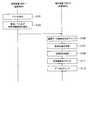
Images











Classifications
-
- H—ELECTRICITY
- H04—ELECTRIC COMMUNICATION TECHNIQUE
- H04W—WIRELESS COMMUNICATION NETWORKS
- H04W76/00—Connection management
- H04W76/20—Manipulation of established connections
- H04W76/23—Manipulation of direct-mode connections
-
- H—ELECTRICITY
- H04—ELECTRIC COMMUNICATION TECHNIQUE
- H04W—WIRELESS COMMUNICATION NETWORKS
- H04W72/00—Local resource management
- H04W72/50—Allocation or scheduling criteria for wireless resources
- H04W72/56—Allocation or scheduling criteria for wireless resources based on priority criteria
- H04W72/566—Allocation or scheduling criteria for wireless resources based on priority criteria of the information or information source or recipient
-
- H—ELECTRICITY
- H04—ELECTRIC COMMUNICATION TECHNIQUE
- H04W—WIRELESS COMMUNICATION NETWORKS
- H04W4/00—Services specially adapted for wireless communication networks; Facilities therefor
- H04W4/70—Services for machine-to-machine communication [M2M] or machine type communication [MTC]
-
- H—ELECTRICITY
- H04—ELECTRIC COMMUNICATION TECHNIQUE
- H04W—WIRELESS COMMUNICATION NETWORKS
- H04W72/00—Local resource management
- H04W72/04—Wireless resource allocation
- H04W72/044—Wireless resource allocation based on the type of the allocated resource
- H04W72/0446—Resources in time domain, e.g. slots or frames
-
- H—ELECTRICITY
- H04—ELECTRIC COMMUNICATION TECHNIQUE
- H04W—WIRELESS COMMUNICATION NETWORKS
- H04W76/00—Connection management
- H04W76/10—Connection setup
- H04W76/14—Direct-mode setup
-
- H—ELECTRICITY
- H04—ELECTRIC COMMUNICATION TECHNIQUE
- H04W—WIRELESS COMMUNICATION NETWORKS
- H04W4/00—Services specially adapted for wireless communication networks; Facilities therefor
- H04W4/30—Services specially adapted for particular environments, situations or purposes
- H04W4/40—Services specially adapted for particular environments, situations or purposes for vehicles, e.g. vehicle-to-pedestrians [V2P]
-
- H—ELECTRICITY
- H04—ELECTRIC COMMUNICATION TECHNIQUE
- H04W—WIRELESS COMMUNICATION NETWORKS
- H04W72/00—Local resource management
- H04W72/50—Allocation or scheduling criteria for wireless resources
- H04W72/56—Allocation or scheduling criteria for wireless resources based on priority criteria
- H04W72/566—Allocation or scheduling criteria for wireless resources based on priority criteria of the information or information source or recipient
- H04W72/569—Allocation or scheduling criteria for wireless resources based on priority criteria of the information or information source or recipient of the traffic information
Definitions
- the present disclosure relates to a communication device.
- V2X communication is an abbreviation of Vehicle to X communication, and is a system in which a vehicle and "something" communicate.
- Examples of "something” here include a vehicle, an infrastructure, a network, and a pedestrian (V2V, V2I, V2N, and V2P).
- Patent Document 1 discloses an example of a technology related to V2X communication.
- the present disclosure proposes a technology that can further suppress the appearance of the HD problem in inter-device communication such as V2X communication.
- a communication unit that performs wireless communication, and first information relating to a data transmission condition using a communication method of switching between transmission and reception in a time-division manner and performing device-to-device communication are transmitted via the wireless communication.
- a communication unit comprising: an acquisition unit configured to acquire data transmitted from the first communication device in accordance with the first information; and a control unit configured to control an operation related to reception of data transmitted from the first communication device in accordance with the first information.
- the communication unit that performs wireless communication, and the first information relating to a data transmission condition using a communication method of switching between transmission and reception in a time-division manner and performing device-to-device communication include: Communication device, comprising: a notification unit that notifies a third communication device via a communication unit; and a control unit that controls an operation related to transmission of data to the third communication device after notification of the first information. Is provided.
- a technology is provided that can more effectively suppress the appearance of the HD problem in inter-device communication such as V2X communication.
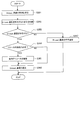
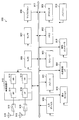
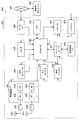
- FIG. 1 is an explanatory diagram for describing an example of a schematic configuration of a system according to an embodiment of the present disclosure. It is a block diagram showing an example of the composition of the base station concerning the embodiment. It is a block diagram showing an example of composition of a terminal unit concerning the embodiment.
- FIG. 2 is a diagram illustrating an outline of V2X communication.
- FIG. 4 is an explanatory diagram for describing an example of an overall image of V2X communication.
- FIG. 6 is a diagram illustrating an example of a use case of V2X communication.
- FIG. 4 is an explanatory diagram for describing an example of a V2X operation scenario.
- FIG. 4 is an explanatory diagram for describing an example of a V2X operation scenario.
- FIG. 4 is an explanatory diagram for describing an example of a V2X operation scenario.
- FIG. 1 is an explanatory diagram for describing an example of a schematic configuration of a system according to an embodiment of the present disclosure. It is a
- FIG. 4 is an explanatory diagram for describing an example of a V2X operation scenario.
- FIG. 4 is an explanatory diagram for describing an example of a V2X operation scenario.
- FIG. 4 is an explanatory diagram for describing an example of a V2X operation scenario.
- FIG. 4 is an explanatory diagram for describing an example of a V2X operation scenario.
- FIG. 3 is a diagram illustrating an example of a configuration of resources allocated to side link communication.
- FIG. 9 is an explanatory diagram for describing an example of an operation timeline when a terminal device transmits a packet based on Mode4 resource allocation.
- FIG. 11 is an explanatory diagram for describing an example of a sensing operation for selecting a resource from within a resource pool.
- FIG. 4 is an explanatory diagram for describing an example of a V2X operation scenario.
- FIG. 4 is an explanatory diagram for describing an example of a V2X operation scenario.
- FIG. 4 is an explan
- FIG. 4 is an explanatory diagram for describing an outline of an example of an HD problem.
- FIG. 3 is a sequence diagram illustrating an example of a processing flow of the system according to the embodiment.
- FIG. 11 is an explanatory diagram for describing an outline of an example of an operation of a terminal device according to information on the presence or absence of an important packet.
- FIG. 4 is an explanatory diagram for describing an overview of a process related to decoding of control information and data by the terminal device according to the embodiment;
- FIG. 11 is an explanatory diagram for describing an example of level division of a transmission / reception ratio.
- FIG. 3 is a sequence diagram illustrating an example of a flow of a series of processes of the system according to the first embodiment.
- FIG. 14 is a sequence diagram illustrating an example of a flow of a series of processes of a system according to a second embodiment.
- 13 is a flowchart illustrating an example of a flow of a series of processes of a terminal device operating as a transmission terminal in the system according to the second embodiment.
- 10 is a flowchart illustrating an example of a flow of a series of processes of a terminal device operating as a receiving terminal in the system according to the second embodiment.
- FIG. 13 is a sequence diagram illustrating an example of a flow of a series of processes of a system according to a third embodiment.
- FIG. 4 is a block diagram illustrating a first example of a schematic configuration of an eNB.
- FIG. 1 is an explanatory diagram for describing an example of a schematic configuration of a system 1 according to an embodiment of the present disclosure.
- the system 1 includes a wireless communication device 100 and a terminal device 200.
- the terminal device 200 is also called a user.
- the user may also be called a UE.
- the wireless communication device 100C is also called UE-Relay.
- the UE here may be a UE defined in LTE or LTE-A, and the UE-Relay may be a Proceed UE to Network Relay discussed in 3GPP, and more generally, a communication. It may mean a device.
- the wireless communication device 100 is a device that provides a wireless communication service to subordinate devices.
- the wireless communication device 100A is a base station of a cellular system (or a mobile communication system).
- the base station 100A performs wireless communication with a device (for example, the terminal device 200A) located inside the cell 10A of the base station 100A.
- the base station 100A transmits a downlink signal to the terminal device 200A and receives an uplink signal from the terminal device 200A.
- the base station 100A is logically connected to another base station by, for example, an X2 interface, and can transmit and receive control information and the like.
- the base station 100A is logically connected to a so-called core network (not shown) by, for example, an S1 interface, and can transmit and receive control information and the like. Note that communication between these devices can be physically relayed by various devices.
- the wireless communication device 100A shown in FIG. 1 is a macrocell base station, and the cell 10A is a macrocell.
- the wireless communication devices 100B and 100C are master devices that operate the small cells 10B and 10C, respectively.
- master device 100B is a fixedly installed small cell base station.
- the small cell base station 100B establishes a wireless backhaul link with the macro cell base station 100A, and establishes an access link with one or more terminal devices (for example, the terminal device 200B) in the small cell 10B.
- the wireless communication device 100B may be a relay node defined by 3GPP.
- the master device 100C is a dynamic AP (access point).
- the dynamic AP 100C is a mobile device that dynamically operates the small cell 10C.
- the dynamic AP 100C establishes a wireless backhaul link with the macro cell base station 100A and establishes an access link with one or more terminal devices (for example, the terminal device 200C) in the small cell 10C.
- the dynamic AP 100C may be, for example, a terminal device equipped with hardware or software operable as a base station or a wireless access point.
- the small cell 10C in this case is a dynamically formed local network (Localized @ Network / Virtual @ Cell).
- the cell 10A may be an arbitrary wireless communication system such as LTE, LTE-A (LTE-Advanced), LTE-ADVANCED @ PRO, GSM (registered trademark), UMTS, W-CDMA, CDMA2000, WiMAX, WiMAX2, or IEEE 802.16. May be operated.
- LTE Long Term Evolution
- LTE-A Long Term Evolution
- LTE-ADVANCED @ PRO GSM
- GSM registered trademark
- UMTS trademark
- W-CDMA CDMA2000
- WiMAX WiMAX2
- IEEE 802.16 IEEE 802.16
- the small cell is a concept that can include various types of cells (for example, femtocells, nanocells, picocells, microcells, and the like) smaller than the macrocell, which are arranged to overlap with or not overlap with the macrocell.
- a small cell is operated by a dedicated base station.
- a small cell is operated by a terminal serving as a master device temporarily operating as a small cell base station.
- relay nodes can also be considered as a form of small cell base station.
- a wireless communication device functioning as a master station of a relay node is also called a donor base station.
- the donor base station may mean a DeNB in LTE, and may more generally mean a parent station of a relay node.
- Terminal device 200 The terminal device 200 can communicate in a cellular system (or a mobile communication system).
- the terminal device 200 performs wireless communication with a wireless communication device of the cellular system (for example, the base station 100A, the master device 100B or 100C).
- a wireless communication device of the cellular system for example, the base station 100A, the master device 100B or 100C.
- the terminal device 200A receives a downlink signal from the base station 100A and transmits an uplink signal to the base station 100A.
- the terminal device 200 not only a so-called UE, but also a so-called low cost terminal (Low cost UE) such as an MTC terminal, an eMTC (Enhanced MTC) terminal, and an NB-IoT terminal may be applied.
- a so-called low cost terminal such as an MTC terminal, an eMTC (Enhanced MTC) terminal, and an NB-IoT terminal
- an infrastructure terminal such as RSU (Road ⁇ Side ⁇ Unit) or a terminal such as CPE (Customer ⁇ Premises ⁇ Equipment) may be applied.
- the present technology is not limited to the example illustrated in FIG.
- a configuration of the system 1 a configuration not including a master device, an SCE (Small Cell Enhancement), a HetNet (Heterogeneous Network), an MTC network, or the like can be adopted.
- a master device may connect to a small cell and construct a cell under the control of the small cell.
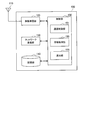
- FIG. 2 is a block diagram illustrating an example of a configuration of the base station 100 according to an embodiment of the present disclosure.
- base station 100 includes an antenna unit 110, a wireless communication unit 120, a network communication unit 130, a storage unit 140, and a control unit 150.
- Antenna unit 110 The antenna unit 110 radiates a signal output by the wireless communication unit 120 into space as a radio wave.
- the antenna unit 110 converts a radio wave in space into a signal, and outputs the signal to the wireless communication unit 120.
- the wireless communication unit 120 transmits and receives signals. For example, the wireless communication unit 120 transmits a downlink signal to the terminal device and receives an uplink signal from the terminal device.
- the network communication unit 130 transmits and receives information.
- the network communication unit 130 transmits information to another node and receives information from another node.
- the other nodes include other base stations and core network nodes.
- the terminal device may operate as a relay terminal and relay communication between the remote terminal and the base station.
- the wireless communication device 100C corresponding to the relay terminal need not include the network communication unit 130.
- Storage unit 140 The storage unit 140 temporarily or permanently stores a program for the operation of the base station 100 and various data.
- Control unit 150 provides various functions of the base station 100.
- Control unit 150 includes a communication control unit 151, an information acquisition unit 153, and a notification unit 155.
- the control unit 150 may further include other components other than these components. That is, the control unit 150 can perform operations other than the operations of these components.
- the communication control unit 151 executes various processes related to control of wireless communication with the terminal device 200 via the wireless communication unit 120. Further, the communication control unit 151 executes various processes related to control of communication with another node (for example, another base station, a core network node, or the like) via the network communication unit 130.
- another node for example, another base station, a core network node, or the like
- the information acquisition unit 153 acquires various information from the terminal device 200 or another node.
- the acquired information may be used for, for example, control of wireless communication with a terminal device, control related to cooperation with another node, and the like.
- the notifying unit 155 notifies the terminal device 200 and other nodes of various information.
- the notification unit 155 may notify the terminal device of various kinds of information for the terminal device in the cell to perform wireless communication with the base station. Further, as another example, the notification unit 155 may notify another node (for example, another base station) of the information acquired from the terminal device in the cell.
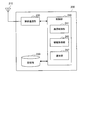
- FIG. 3 is a block diagram illustrating an example of a configuration of the terminal device 200 according to the embodiment of the present disclosure.
- the terminal device 200 includes an antenna unit 210, a wireless communication unit 220, a storage unit 230, and a control unit 240.
- Antenna unit 210 The antenna unit 210 radiates a signal output by the wireless communication unit 220 into space as a radio wave. Further, the antenna unit 210 converts a radio wave in space into a signal, and outputs the signal to the wireless communication unit 220.
- Wireless communication unit 220 Wireless communication section 220 transmits and receives signals.
- the wireless communication unit 220 receives a downlink signal from a base station and transmits an uplink signal to the base station.
- the terminal device 200 may directly communicate with another terminal device 200 without passing through the base station 100.
- the wireless communication unit 220 may transmit and receive a side link signal to and from another terminal device 200.
- Storage unit 230 The storage unit 230 temporarily or permanently stores a program for operating the terminal device 200 and various data.
- Control unit 240 provides various functions of the terminal device 200.
- the control unit 240 includes a communication control unit 241, an information acquisition unit 243, and a notification unit 247.
- the control unit 240 may further include other components other than these components. That is, the control unit 240 can perform operations other than the operations of these components.
- the communication control unit 241 executes various processes related to control of wireless communication with the base station 100 and another terminal device 200 via the wireless communication unit 220. For example, the communication control unit 241 may reserve a resource used for transmitting a packet. Further, the communication control unit 241 may select some resources from the reserved resources and perform control so that a packet is transmitted using the selected resources.
- the communication control unit 241 may make a predetermined determination based on information acquired from the base station 100 or another terminal device 200. As a more specific example, the communication control unit 241 may determine whether a packet can be transmitted to another terminal device 200. At this time, the communication control unit 241 may determine whether to drop a packet to be transmitted to another terminal device 200.
- the information acquisition unit 243 acquires various types of information from the base station 100 and other terminal devices 200. As a specific example, the information acquisition unit 243 may acquire information on another terminal device 200 (for example, reception capability or the like) from the other terminal device 200. Further, the information acquisition unit 243 may acquire, from the base station 100 or another terminal device 200, various types of information for selecting a resource used for communication with another terminal device 200. As a more specific example, the information acquisition unit 243 may acquire information on resources reserved by another terminal device 200 from the other terminal device 200.
- the notifying unit 247 notifies the base station 100 and other terminal devices 200 of various information.
- the notification unit 247 may notify another terminal device 200 (for example, the terminal device 200 to which the data or packet is to be transmitted) of information on data or a packet to be transmitted.
- the notification unit 247 may notify another terminal device 200 of information on resources reserved for use in packet transmission.
- V2X communication is an abbreviation of Vehicle to X communication, and is a system in which a car and "something" communicate.
- FIG. 4 is a diagram showing an outline of V2X communication.
- a vehicle Vehicle
- equipment Infrastructure
- Network Network
- pedestrian pedestrian
- V2V, V2I Vehicle
- V2N Vehicle
- V2P Vehicle
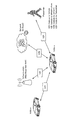
- FIG. 5 is an explanatory diagram for describing an example of the overall image of V2X communication.
- a V2X application server (APP server) is held as a cloud server, and the application server controls V2X communication on the core network side.
- the base station performs communication control of direct communication such as V2V communication and V2P communication while performing Uu link communication with the terminal device.
- RSUs Raad Side Units
- RSUs roadside infrastructures
- the RSU provides a V2X application (V2X APP) and supports data relay and the like.
- FIG. 6 is a diagram illustrating an example of a use case of V2X communication.
- the NR V2X communication supports a new use case requiring high reliability, low delay, high-speed communication, and high capacity, which has been difficult to support with LTE-based V2X until now.
- provision of a dynamic map, remote driving, and the like are given.
- sensor data sharing in which sensor data is exchanged between vehicles and roads, and a platforming use case for platooning.
- Use cases and requirements for such NR @ V2X communication are defined in 3GPP@TR22.886. For reference, an outline of an example of a use case will be described below.
- Vehicles Platoonning This is a use case of row running in which a plurality of vehicles form a row and run in the same direction, and information for controlling row running is exchanged between a vehicle that leads the row running and another vehicle. By exchanging such information, for example, it is possible to further reduce the inter-vehicle distance during platooning.
- Remote Driving This is a use case in which a remote operator or a V2X application remotely controls the vehicle.
- the remote operation is used when another person drives in place of a person who has difficulty driving, or when a vehicle is operated in a dangerous area.
- cloud computing-based control can be applied for public transportation in which routes and roads to be driven are determined to some extent, for example, cloud computing-based control can be applied. In this use case, high reliability and low transmission delay are required for communication.
- the target links include a Uu link and a PC5 link (side link).
- the Uu link is a link between an infrastructure such as a base station or an RSU (Road Side Unit) and a terminal device.
- the PC5 link (side link) is a link between terminal devices. The main points of enhancement are shown below.
- Examples of the enhancement include the following. ⁇ Channel format ⁇ Sidelink feedback communication ⁇ Sidelink resource allocation method ⁇ Vehicle position information estimation technology ⁇ Relay communication between terminals ⁇ Support for unicast communication and multicast communication ⁇ Multicarrier communication and carrier aggregation ⁇ MIMO / beamforming ⁇ High frequency frequency support (Example: 6GHz or more) ...etc.
- examples of the channel format include Flexible numerology, short TTI (Transmission Time Interval), multi-antenna support, Waveform, and the like.
- Examples of the side link feedback communication include HARQ and CSI (Channel Status Information).
- V2X operation scenario An example of the V2X communication operation scenario will be described below.
- the V2N communication is simple only with DL / UL communication between the base station and the terminal device.
- various communication paths can be considered.
- each scenario will be described focusing mainly on the example of V2V communication, but the same communication operation can be applied to V2P and V2I.
- the communication destination is Pedestrian or RSU.
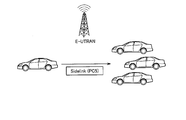
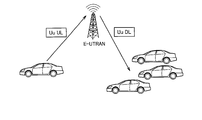
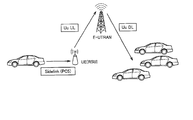
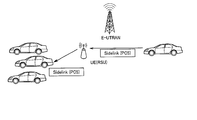
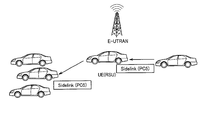
- FIGS. 7 to 12 are explanatory diagrams for explaining an example of the V2X operation scenario.
- FIG. 7 shows a scenario in which vehicles communicate directly with each other without passing through a base station (E-UTRAN).
- FIG. 8 shows a scenario in which vehicles communicate with each other via a base station.
- 9 and 10 show a scenario in which vehicles communicate with each other via a terminal device (UE, RSU in this case) and a base station.
- 11 and 12 show a scenario in which vehicles communicate with each other via a terminal device (UE, here, RSU or another vehicle).
- UE terminal device
- the “side link” corresponds to a communication link between terminal devices, and is also referred to as a PC 5. Specific examples of the side link include V2V, V2P, and V2I communication links.
- the “Uu interface” corresponds to a wireless interface between a terminal device and a base station. A specific example of the Uu interface is a V2N communication link.
- the “PC5 interface” corresponds to a wireless interface between terminal devices.
- a resource pool is allocated in advance.
- the allocation of the resource pool is performed, for example, by the base station.
- the resource pool may be allocated by Preconfiguration.
- the terminal device senses a resource for the side link communication from the allocated resource pool, selects an appropriate resource by itself, and performs communication.
- FIG. 13 is a diagram illustrating an example of a configuration of a resource (resource pool) allocated to the side link communication, and illustrates an example of a case where frequency division multiplexing (FDM) is applied.
- the resource pool is divided into a SA (Scheduling Assignment) area and a Data area, and the PSCCH (Physical Sidelink Control Channel) and the PSSCH (Physical Sidelink Shared Channel) are transmitted by each area.
- SA Stuling Assignment
- PSCCH Physical Sidelink Control Channel
- PSSCH Physical Sidelink Shared Channel
- FIG. 14 is an explanatory diagram for describing an example of an operation timeline when a terminal device transmits a packet based on Mode 4 resource allocation.
- a terminal device that transmits a packet first performs sensing in order to find a resource used for transmitting the packet from within a resource pool. Next, the terminal device selects a resource from the resource pool based on the result of the sensing. Then, the terminal device transmits a packet using the selected resource. Also, at this time, the terminal device reserves resources to be used for transmission of subsequent packets as necessary.
- FIG. 15 is an explanatory diagram for describing an example of a sensing operation for selecting a resource from within a resource pool.
- the terminal device selects a resource in the resource selection window and reserves a future resource based on the measurement result of the interference pattern in the sensing window and the resource reservation status in the sensing window.
- the terminal device determines a future resource usage state based on a sensing result, for example, another packet in the future. Predict resources used for transmission of AC. By using the result of the prediction, the terminal device can select or reserve a resource that can be used for transmitting the packet D, that is, a resource that is predicted not to be used for transmitting another packet.
- the NR V2X communication supports a unicast communication having a larger communication data amount than the broadcast communication applied in the conventional V2X communication. From such a background, in the NR V2X communication, the so-called HD (Half Duplex) problem, which may also occur in the broadcast communication in the conventional V2V communication, may become more prominent. Therefore, the present disclosure pays particular attention to the HD problem in NR V2X communication.
- HD Hyf Duplex
- LTE-V2X communication supports Repetition transmission of broadcast communication. As a result, even when packet reception is restricted by packet transmission, it is possible to increase the packet reception success rate by using the next reception opportunity.
- the NR @ V2X communication supports not only the broadcast communication but also the unicast communication that enables transmission and reception of a signal having a larger capacity than the broadcast communication. It is presumed that transmission and reception of such a large-capacity signal largely depends on HD restrictions.
- FIG. 16 is an explanatory diagram for describing an outline of an example of the HD problem.
- each of terminals A to D corresponds to terminal device 200 according to the present disclosure.
- each of terminal A and terminal B attempts to transmit a packet to terminal C. Further, the terminal C attempts to transmit a packet to the terminal D.
- the terminal C receives the packet from each of the terminal A and the terminal B and transmits to the terminal D.
- the transmission of the packet is restricted, and the opportunity for transmitting the packet to the terminal D is lost.
- the unicast communication is significantly different from the traffic that broadcasts a packet having a relatively small capacity, and the HD problem described above with reference to FIG.
- the present disclosure proposes a technology that can further suppress the appearance of the HD problem in inter-device communication such as V2X communication (in particular, inter-device communication such as side link communication in which HD is restricted). I do.
- Mode 4 resource allocation a notification using SCI (Sidelink ⁇ Control ⁇ Information) and a notification using Sidelink ⁇ RRC ⁇ signalling are given.
- Sidelink RRC signalling is RRC information defined between terminal devices.
- Mode3 resource allocation a notification by RRC signalling with the base station is given.
- the terminal device 200-1 may notify the terminal device 200-2, which is a packet transmission destination, in advance, for example, buffer information of transmission data, information on a future packet transmission schedule, information of a packet type, and the like. Good.
- the information on the packet type include information on traffic types such as unicast, broadcast, and multicast, information on priority, information on delay request, and information on presence / absence of relay.
- freshness and expiration date of a packet may be set. In such a case, the terminal device 200-1 may notify the terminal device 200-2 of information on the packet reception time limit in advance.
- the terminal device 200-1 sending terminal
- the terminal device 200-1 transmits the important data to the terminal device 200-2 (receiving terminal). You may be notified that a packet has been transmitted. Further, when transmitting the data by unicast, the terminal device 200-1 may notify the terminal device 200-2 of transmitting the unicast traffic.
- an area for notifying whether or not there is important data as data to be transmitted may be provided for a specific resource area.
- the area is also referred to as an “important data notification area”.
- the notification is also referred to as “notification of presence or absence of important data” for convenience.
- resources for notifying the presence or absence of important data may be defined.
- the resource may be defined as a resource pool. Further, the resource may be set by the base station 100 or may be preconfigured.
- the data area in which the priority of transmission and reception is controlled according to the notification of the presence or absence of important data may be defined as a specific data area.
- transmission and reception priority control may be applied only to the specific data area.
- the terminal device 200-1 transmits information on the presence or absence of an important packet and information on the resource to which control information of the packet is notified to the destination of the packet via the important data notification area.
- the terminal device 200-2 decodes the important data notification area to acquire information on the presence or absence of the important packet notified from the terminal device 200-1.
- the terminal device 200-2 determines the presence or absence of an important data packet based on the acquired information, and when transmission of the important data packet is confirmed, decodes the subsequent control information and data. Further, when transmission of a packet of important data is not confirmed, the terminal device 200-2 does not need to decode control information and data that follow.
- FIG. 17 is a sequence diagram illustrating an example of a processing flow of the system according to the present embodiment, and illustrates a notification of information from a transmitting terminal to a receiving terminal and an example of an operation of the receiving terminal receiving the notification. Is shown.
- the terminal device 200-1 (notification unit 247) relates to information on the presence or absence of an important packet and resources to which control information of the packet is notified.
- the information is notified to the terminal device 200-2, which is the destination of the packet, via the important data notification area (S103).
- the terminal device 200-1 may notify information such as the importance level and the priority level of the target packet as information on the presence or absence of the important packet.
- the terminal device 200-1 (the communication control unit 241) transmits a packet of target data via the resource notified by the control information.
- the terminal device 200-2 acquires information on the presence or absence of an important packet notified from the terminal device 200-1 by decoding the important data notification area (S105).
- the terminal device 200-2 (the communication control unit 241) determines which of the packet reception and the packet transmission is to be prioritized based on the acquired information, and transmits or receives the packet or The operation related to reception is controlled (S107).
- FIG. 18 is an explanatory diagram for describing an outline of an example of an operation of the terminal device 200 according to the information on the presence or absence of an important packet. Specifically, if the terminal device 200-2 (receiving terminal) recognizes that an important packet is included, the terminal device 200-2 may give priority to receiving the packet. In this case, the terminal device 200-2 may restrict the operation related to transmission of a packet to another terminal device 200. If the terminal device 200-2 recognizes that an important packet is not included, the terminal device 200-2 may give priority to packet transmission. In this case, the terminal device 200-2 may limit the operation related to the reception of the packet transmitted from the terminal device 200-1 (transmission terminal).
- the terminal device 200-2 determines that the reception of the packet is prioritized
- the terminal device 200-2 prioritizes which of the packets transmitted from each of the other terminal devices 200 including the terminal device 200-1. It is also possible to determine whether or not to perform the operation, and control the operation related to the packet reception according to the result of the determination. Hereinafter, it is assumed that the terminal device 200-2 has determined that the reception of the packet is prioritized.
- the terminal device 200-2 (the information acquisition unit 243) that has determined that the reception of the packet is prioritized acquires control information by decoding the area of the resource specified based on the notification from the terminal device 200-1 (S111). . Then, the terminal device 200-2 (the communication control unit 241) receives the data transmitted from the terminal device 200-1 by decoding the data area based on the control information (S113).
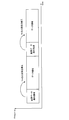
- FIG. 19 is an explanatory diagram for describing an outline of a process related to decoding of control information and data by the terminal device 200 according to the present embodiment.
- an important data notification area a control information area to which control information is assigned, and a data area to which data is assigned are individually set.
- the important data notification area information on the presence or absence of important data and information on the control information area are set. That is, the terminal device 200-2 (the receiving terminal) extracts the control information from the control information area by decoding the control information area based on the information set in the important data notification area. Further, the control information includes information on the data area.
- the terminal device 200-2 can decode the data area and receive data transmitted through the data area.
- the important data notification area corresponds to an example of a “first partial area”
- information is transmitted via a first partial area (important data notification area) like the control information area. Is equivalent to an example of the “second partial area”.
- the terminal device 200-1 may inquire of the terminal device 200-2 to which the packet is to be transmitted whether the packet can be transmitted. In this case, the terminal device 200-2 (receiving terminal) may return information (OK @ reply) indicating acceptance of the inquiry from the terminal device 200-1 if the packet can be received. Good. Then, when the terminal device 200-1 obtains the consent from the terminal device 200-2, the terminal device 200-1 starts transmitting a packet to the terminal device 200-2.
- the terminal device 200-1 (transmission terminal) is used for transmitting the packet when inquiring of the terminal device 200-2, which is the transmission destination of the packet, whether or not the packet can be transmitted. Information about resources to be performed may also be notified. In this case, the terminal device 200-2 (the receiving terminal) determines whether it is possible to receive the packet transmitted from the terminal device 200-1 via the resource notified from the terminal device 200-1. You may.
- the terminal device 200-2 may instruct the terminal device 200-1 (transmitting terminal) on a resource to be used for packet transmission or make a proposal.
- the various operations described above may be executed based on triggers according to predetermined conditions. As a specific example, when the size of the data to be transmitted is larger than the threshold, the various operations described above may be performed.
- the terminal device 200-1 when the proposal from the terminal device 200-1 (transmitting terminal) is rejected a predetermined number of times or more, the terminal device 200-1 separately controls the operation related to transmission of the target data (packet). Is also good. As a specific example, when a proposal related to data transmission is rejected a predetermined number of times or more, the terminal device 200-1 may transmit the data at random or transmit a packet related to the data transmission. May be dropped.
- the example of the information that the terminal device 200-1 (the transmitting terminal) notifies the terminal device 200-2 (the receiving terminal) has been described above.
- the above-described series of information notified from the terminal device 200-1 (transmitting terminal) to the terminal device 200-2 (receiving terminal) in advance of packet transmission is an example of “first information”.
- the information notified via the important data notification area corresponds to an example of “second information”.
- the second information may include a part of the first information such as information on the presence or absence of important data.
- the terminal device 200-2 transmits, for example, Capability information (hereinafter also referred to as “reception Capability information”) related to packet reception to other terminal devices 200 (for example, the terminal device 200-1) existing in the vicinity. Such information as to the reception of the packet may be notified in advance. As a specific example, the terminal device 200-2 may periodically notify the reception capability information to other terminal devices 200 around the terminal as dynamic information. As in the case of the reception capability information, the information regarding packet reception, which is notified in advance from the terminal device 200-2 (receiving terminal) to the terminal device 200-1 (transmitting terminal), is referred to as “third information. ".
- reception capability information examples include the number of reception antennas, information about receivers (for example, an IRC receiver, etc.), information about receivable resource pools (sub-resource pools), information about packet transmission, information about packet reception, and the like. Can be
- the information related to packet transmission corresponds to information related to packet transmission to another terminal device 200 when the terminal device 200-2 operates as a transmission terminal.
- Examples of information related to packet transmission include the following information. -Information on transmission data buffer-Type of transmission data (for example, unicast, broadcast, multicast, etc.)-Information on priority of transmission packet and delay request-Information on type of traffic related to packet transmission-For packet transmission Information on resources to be used... etc.
- the information on packet reception corresponds to information on reception of a packet transmitted from another terminal device 200 when the terminal device 200-2 operates as a receiving terminal.
- Examples of information related to packet reception include the following information. Number of unicast communication connections possible Number of unicast communication connections (that is, information indicating how many terminal devices are connected) -Information on received data rate or information on received bits in a certain period-Reception rate (information indicating how much resources are received for the entire area) ⁇ Receivable rate (information indicating how much resources can be received for the entire area) -Type of received packet (for example, unicast, broadcast, multicast, etc.) ⁇ Information on priority of received packet and delay request... etc.
- the information enumerated above as information on packet reception may be collectively defined as a reception capability level (in other words, an HD allowable level).
- the value of the reception capability level may be defined according to a combination of the levels of the information enumerated above as the information on the packet reception. Accordingly, the other terminal devices 200 to which the reception capability level has been notified can recognize the reception capability of the notification source terminal device 200 based on the information regarding the reception of the packet associated with the value of the reception capability level. It becomes possible.
- the terminal device 200-2 (the receiving terminal) notifies another terminal device 200 (for example, the terminal device 200-1 operating as a transmitting terminal) of information on resources that can receive a packet. Good. At this time, the terminal device 200-2 (receiving terminal) may notify other terminal devices 200 of information on the time-frequency domain of the resource capable of receiving the packet.
- Mode 3 Resource Allocation (1-2) Case of Mode 3 Resource Allocation Subsequently, the exchange of information between terminal devices will be described, focusing on the case of Mode 3 resource allocation.
- transmission and reception of information between the terminal devices 200 is performed via a device having authority over control of side link communication, such as the base station 100, for example.
- the information to be transmitted and received is the same as the information described above as an example of Mode 4 resource allocation.
- Mode 3 resource allocation and Mode 4 resource allocation may be performed in combination.
- the exchange of information between the terminal devices 200 may be applied in combination with the example of the mode 3 resource allocation and the example of the mode 4 resource allocation.
- the terminal device 200-1 controls the priority between packet transmission and packet reception in accordance with the result of information exchange with the terminal device 200-2 (reception terminal). Is also good. That is, the terminal device 200-1 may prioritize the transmission of a packet to the terminal device 200-2 according to the result of the exchange of information with the terminal device 200-2, or may transmit the packet from another terminal device 200-2. May be prioritized. The control of the priority may be applied only to communication via a specific resource.
- the terminal device 200-1 may give priority to communication of a specific traffic type.
- the terminal device 200-1 may give priority to broadcast communication.
- the terminal device 200-1 has various priorities (for example, transmission / reception priority and transmission priority, etc.) based on at least one of the location information of the terminal device 200-1 and another device (eg, another terminal device 200 or the like). Traffic type priority).
- the other device that uses the position information includes another terminal device 200 to which the packet of the terminal device 200-1 is transmitted and another terminal device 200 that transmits the packet to the terminal device 200-1. At least one of them may correspond.
- the terminal device 200-1 determines that unicast communication should be prioritized according to the positional relationship with another terminal device 200, the terminal device 200-1 performs control to give priority to unicast communication. May be.
- the terminal device 200-1 may determine various priorities (for example, transmission / reception priorities and traffic type priorities) based on a channel congestion degree (CBR: Channel ⁇ Busy ⁇ Ratio). As a specific example, when the channel is congested, the terminal device 200-1 may give priority to broadcast because reception of unicast may be difficult.
- CBR Channel ⁇ Busy ⁇ Ratio
- the terminal device 200-1 may determine various priorities (for example, transmission / reception priorities and traffic type priorities) based on a channel occupancy rate (CR: Channel occupancy ratio).
- CR is a parameter indicating the ratio of transmission of the target device occupying resources.
- the frequency of reception is set so as to further reduce the CR. It may be controlled to be higher.
- the terminal device 200-1 may change the transmission packet transmission schedule in accordance with the result of the information exchange with the terminal device 200-2 (reception terminal).
- the terminal device 200-1 may determine whether to drop a packet to be transmitted. Further, the terminal device 200-1 may stop continuous transmission and perform intermittent transmission.
- the terminal device 200-1 may change the transmission method of the transmission packet according to the result of the information exchange with the terminal device 200-2 (reception terminal).
- the terminal device 200-1 may change control such as MCS (Modulation Coding Scheme), transmission power, and MIMO transmission.
- the terminal device 200-1 may perform transmission in a short time by temporarily switching to high data rate communication.
- the terminal device 200-1 may drop the packet according to the priority or the condition of the delay request.
- the terminal device 200-1 compares the priority information of the transmission / reception packet in the terminal device 200-2 (receiving terminal) with the priority information of the packet to be transmitted by itself, and It may be determined whether to drop the packet. Further, when it is difficult to satisfy the delay requirement of the transmission packet, the terminal device 200-1 may abandon the transmission and drop the packet.
- the terminal device 200-1 transmitting terminal instructs the terminal device 200-2 to release a unicast link according to the result of the information exchange with the terminal device 200-2 (receiving terminal). You may. As a specific example, the terminal device 200-1 instructs the terminal device 200-2 to release a unicast link in accordance with a result of determining various priorities (for example, transmission and reception priorities). Is also good.
- the terminal device 200-1 may switch to multicarrier communication according to the result of information exchange with the terminal device 200-2 (reception terminal).
- the terminal device 200-1 may switch to multi-carrier communication in accordance with a result of determining various priorities (for example, transmission and reception priorities).
- the terminal device 200-1 may make a resource configuration request to a device such as the base station 100 that has authority for controlling side link communication.
- the terminal device 200-1 changes the frequency band (transmission band) used for packet transmission according to the result of the information exchange with the terminal device 200-2 (reception terminal).
- the terminal device 200-1 may change a frequency band (transmission band) used for packet transmission according to a result of determining various priorities (for example, transmission and reception priorities). .
- the terminal device 200-1 may notify the terminal device 200-2 to which the packet is to be transmitted of the information on the changed frequency band.
- the terminal device 200-1 (transmitting terminal) changes the base station from the direct communication with the terminal device 200-2 according to the result of the information exchange with the terminal device 200-2 (receiving terminal).
- the communication may be switched to the communication via 100 or the like.
- the terminal device 200-1 switches a communication path with the terminal device 200-2 as described above in accordance with the determination result of various priorities (for example, transmission and reception priorities). You may.
- the terminal device 200-1 may notify the terminal device 200-2, which is the destination of the packet, of the switching of the communication path.
- the terminal device 200-2 may receive the packet transmitted from the terminal device 200-1 via the base station 100.
- the terminal measure 200-1 may make a request for link switching to a device such as the base station 100, which has authority for controlling side link communication.
- the terminal device 200-1 transmits a packet transmitted from the terminal device 200-1 via the specified resource. Will be received.
- the terminal device 200-1 When attention is paid to the communication between the terminal device 200-1 (the transmitting terminal) and the terminal device 200-2 (the receiving terminal), the terminal device 200-2 corresponding to the terminal measure 200-1 is referred to as the "third communication device". ". Also, when the terminal device 200-1 operates as a receiving terminal, another terminal device 200 (for example, another terminal device 200 other than the terminal device 200-2) that is a packet transmission source is referred to as a “fourth communication device. ".
- the base station 100 may control the resource scheduling of the side link.
- the base station 100 determines whether to drop the packet to be transmitted to the terminal device 200-1 (transmission terminal). May go. Further, base station 100 may control terminal device 200-1 to stop continuous transmission and perform intermittent transmission.
- the base station 100 may cause the terminal device 200-1 (transmitting terminal) to drop the packet according to the priority or the condition of the delay request.
- the base station 100 compares the priority information of the transmitted / received packet in the terminal device 200-2 (the receiving terminal) with the priority information of the packet to be transmitted by the terminal device 200-1 (the transmitting terminal). Then, it may be determined whether or not the terminal device 200-1 should drop the packet. If the base station 100 determines that it is difficult to satisfy the delay requirement of the transmission packet, the base station 100-1 may give up the transmission and drop the packet.
- the base station 100 may instruct the terminal device 200-2 (receiving terminal) to release a unicast link.
- the base station 100 may switch communication between the terminal device 200-1 (transmitting terminal) and the terminal device 200-2 (receiving terminal) to multicarrier communication.
- the base station 100 may change a frequency band used for transmitting a packet between the terminal device 200-1 (transmitting terminal) and the terminal device 200-2 (receiving terminal). In this case, the base station 100 may notify at least the terminal device 200-2 of information on the changed frequency band.
- the terminal device 200-2 may control the resource scheduling of the side link according to the result of the information exchange with the terminal device 200-1 (the transmitting terminal).
- the terminal device 200-2 determines whether to drop the packet to be transmitted to the terminal device 200-1. Is also good. Further, the terminal device 200-2 may cause the terminal device 200-1 to discontinue continuous transmission and perform intermittent transmission. Further, the terminal device 200-2 (receiving terminal) may control an operation related to data transmission to another terminal device 200 when operating as a transmitting terminal according to its own situation. As a specific example, the terminal device 200-2 (reception terminal) drops a packet to be transmitted to another terminal device 200 when operating as a transmission terminal in a situation where it is difficult to satisfy the delay request. It may be determined whether or not to do so.
- the terminal device 200-2 may cause the terminal device 200-1 (transmitting terminal) to drop the packet in accordance with the priority or the condition of the delay request.
- the terminal device 200-2 compares the priority information of the packet to be transmitted by the terminal device 200-1 (transmitting terminal) with the priority information of the transmission / reception packet of the terminal device 200-1. It may be determined whether or not ⁇ 1 causes the packet to be transmitted to be dropped. Further, when it is difficult to satisfy the delay requirement of the transmission packet, the terminal device 200-2 may give up the transmission to the terminal device 200-1 and drop the packet. Further, the terminal device 200-2 (receiving terminal) determines whether to drop a packet to be transmitted to another terminal device 200 when operating as a transmitting terminal, according to the result of the comparison. Is also good.
- the terminal device 200-2 (the receiving terminal) may release the unicast link in accordance with the result of the information exchange with the terminal device 200-1 (the transmitting terminal).
- the terminal prosecution 200-2 may release a unicast link with another terminal device 200 already established.
- the terminal device 200-2 may switch to multicarrier communication according to the result of the information exchange with the terminal device 200-1 (transmitting terminal).
- the terminal device 200-2 transmits a frequency band (that is, a frequency band used for communication with the terminal device 200-1 (ie, The frequency band for receiving the packet transmitted from the terminal device 200-1 may be changed. In this case, the terminal device 200-2 may acquire information on the changed frequency band from the terminal device 200-1.
- a frequency band that is, a frequency band used for communication with the terminal device 200-1 (ie, The frequency band for receiving the packet transmitted from the terminal device 200-1 may be changed.
- the terminal device 200-2 may acquire information on the changed frequency band from the terminal device 200-1.
- the terminal device 200-2 (reception terminal) changes the base station from the direct communication with the terminal device 200-1 according to the result of the information exchange with the terminal device 200-1 (transmission terminal).
- the communication may be switched to the communication via 100 or the like.
- the terminal device 200-2 may recognize the switching of the communication path according to the notification from the terminal device 200-1.
- the terminal device 200-2 (receiving terminal) notifies the terminal device 200-1 of a resource capable of receiving a packet according to the result of the information exchange with the terminal device 200-1 (transmitting terminal). May be.
- the terminal device 200-2 receives the packet transmitted from the terminal device 200-1 via the notified resource.
- the terminal device 200-2 may notify the terminal device 200-1 of the time during which a packet can be received.
- the terminal device 200-2 may notify the terminal device 200-1 of a time and frequency range in which a packet can be received.
- the terminal device 200-2 may individually instruct and allocate resources capable of receiving the packet to each of the terminal devices 200 that are to transmit the packet to itself.
- the terminal device 200-2 When attention is paid to communication between the terminal device 200-1 (transmission terminal) and the terminal device 200-2 (reception terminal), the terminal device 200-1 for the terminal device 200-2 is referred to as the "first communication device”. ". Further, when the terminal device 200-2 operates as a transmission terminal, another terminal device 200 (for example, another terminal device 200 other than the terminal device 200-1) to which a packet is to be transmitted is referred to as a “second communication device”. ".
- the terminal device 200 controls the processing related to the transmission and reception of the packet according to the level set for the target resource. Good.
- the terminal device 200 may perform reception more preferentially in a resource region to which a higher level is set.
- the level division of resources may be implemented as the whole system.
- the setting of the level may be performed by a device such as the base station 100 having authority for controlling the side link communication, or may be set by Preconfiguration. Further, the setting of the level may be set for each frequency band. The setting of the level may be performed between the terminal devices 200 that perform transmission and reception.
- the resource level division may be set individually for each terminal device 200.
- the terminal device 200 may notify the information about the setting for itself to other terminal devices 200 located in the vicinity in advance.
- the transmission / reception ratio may be divided into levels.
- the ratio of the transmission traffic may be divided into levels for each resource pool.
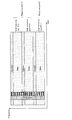
- FIG. 20 is an explanatory diagram for describing an example of level division of the transmission / reception ratio. 20, the horizontal axis indicates time, and the vertical axis indicates frequency. “SLSS” indicates Sidelink ⁇ Synchronization ⁇ Signal. “PBCH” indicates Physical ⁇ Sidelink ⁇ Broadcast ⁇ Channel. “Control” schematically shows a control channel, for example, PSCCH (Physical Sidelink Control Channel). “Data” schematically shows a data channel, for example, PSSCH (Physical Sidelink Shared Channel). Note that, of the regions to which resources are allocated, the region to which the control channel is allocated corresponds to an example of a “control region”, and the region to which a data channel is allocated corresponds to an example of a “data region”.
- PSCCH Physical Sidelink Control Channel
- PSSCH Physical Sidelink Shared Channel
- “Resource pool A” and “Resource pool B” are set as resource pools that can be used for side link communication.
- “Resource pool A” “Sub-resource pool A-1” and “Sub-resource pool A-2” are defined as sub resource pools.
- “Resource-pool ⁇ B-1” is defined in “Resource-pool-B” as a sub-resource pool.
- the ratio of unicast may be defined as 90% and the ratio of broadcast may be defined as 10% with respect to "Resource ⁇ pool ⁇ A”.
- the ratio of unicast may be defined as 10% and the ratio of broadcast may be defined as 90% with respect to "Resource ⁇ pool ⁇ B”.
- the terminal device 200-1 transmits the packet using “Resource pool A” with a probability of 90%. May be operated.
- the above-described level division of the transmission / reception ratio may be individually set for each important level of the packet.
- FIG. 21 is a sequence diagram illustrating an example of a flow of a series of processes of the system according to the first embodiment. Specifically, in the example shown in FIG. 21, while the terminal device 200-1 (transmitting terminal) and the terminal device 200-2 (receiving terminal) are performing unicast communication (S201), the terminal device 200- 3 (transmitting terminal) is about to set up a new unicast link with the terminal device 200-2 (receiving terminal).
- the terminal device 200-2 periodically notifies its terminal devices 200 (eg, the terminal devices 200-1 and 200-3) of their own Capability information (S203).
- the Capability information include information such as the number of connectable unicast communications and the number of unicast communication connections. Accordingly, each of the terminal devices 200-1 and 200-3 can recognize the capability of the terminal device 200-2 with respect to communication with another terminal device 200.
- the terminal device 200-3 determines whether or not to request the terminal device 200-2 for unicast communication based on the Capability information notified from the terminal device 200-2 (S205). At this time, the terminal device 200-3 considers, for example, the priority of the packet to be transmitted to the terminal device 200-2, the traffic amount (for example, the traffic amount of communication via the side link), and the like, and performs unicast. It may be determined whether or not to make a communication request. Note that the example illustrated in FIG. 21 illustrates a case where the terminal device 200-3 determines that a request for unicast communication is made to the terminal device 200-2. That is, the terminal device 200-3 notifies the terminal device 200-2 of information on the presence or absence of important data, information on a buffer of transmission data, and the like, and makes a request for unicast communication to the terminal device 200-2. (S207).
- the terminal device 200-2 Upon receiving the request for the unicast communication from the terminal device 200-3, the terminal device 200-2 determines whether to permit the unicast communication to the terminal device 200-3 based on the information notified as well. Is determined (S209). Note that the example illustrated in FIG. 21 illustrates a case where the terminal device 200-2 determines that the terminal device 200-3 permits the unicast communication. That is, the terminal device 200-2 notifies the terminal device 200-3 of the permission of the unicast communication. Also, at this time, the terminal device 200-2 transmits the packet to the terminal device 200-3 by using resources orthogonal to the terminal device 200-1 in consideration of the arrival of the packet from the terminal device 200-1. The transmission resource may be instructed to transmit (S211).
- the terminal device 200-3 Upon receiving the notification of the permission of the unicast communication from the terminal device 200-2, the terminal device 200-3 starts processing related to the unicast communication with the terminal device 200-2 (S213), and A link for unicast communication is established with the server 200-2 (S215). At this time, the terminal device 200-3 establishes a unicast communication link with the terminal device 200-2 so that the packet is transmitted via the transmission resource specified by the terminal device 200-2. May go.
- FIG. 22 is a sequence diagram illustrating an example of a flow of a series of processes of the system according to the second embodiment. Specifically, in the example shown in FIG. 22, similarly to the example shown in FIG. 21, terminal device 200-1 (transmitting terminal) and terminal device 200-2 (receiving terminal) are performing unicast communication. In (S251), the terminal device 200-3 (transmitting terminal) is about to set a new unicast link with the terminal device 200-2 (receiving terminal). Note that, in FIG. 22, the processes indicated by reference numerals S251 to S257 are substantially the same as the processes indicated by reference numerals S201 to S207 in the example shown in FIG.
- the terminal device 200-2 Upon receiving the request for the unicast communication from the terminal device 200-3, the terminal device 200-2 determines whether to permit the unicast communication to the terminal device 200-3 based on the information notified as well. Is determined (S209). Note that the example illustrated in FIG. 22 illustrates an example in which the terminal device 200-2 performs communication with priority given to the terminal device 200-3 over the terminal device 200-1.
- the terminal device 200-2 instructs the terminal device 200-1 to release the unicast communication (S261).
- the terminal device 200-1 receives the instruction from the terminal device 200-2, and releases the unicast communication with the terminal device 200-2 (S263).
- the terminal device 200-2 notifies the terminal device 200-3 of permission for unicast communication (S265).
- the terminal device 200-3 Upon receiving the notification of the permission of the unicast communication from the terminal device 200-2, the terminal device 200-3 starts processing related to the unicast communication with the terminal device 200-2 (S267). A link for unicast communication is established with the server 200-2 (S269).
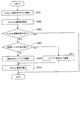
- FIG. 23 is a flowchart illustrating an example of a flow of a series of processes of the terminal device 200-3 operating as the transmission terminal in the system according to the second embodiment.
- the terminal device 200-3 determines whether or not to request the terminal device 200-2 (the receiving terminal) for the unicast communication. to decide.
- the terminal device 200-3 performs a request for unicast communication to the terminal device 200-2 according to the result of the above determination, and performs the unicast communication according to a response from the terminal device 200-2. It is determined whether it is possible (S303).
- the terminal device 200-3 checks whether or not there is a designation of a resource to be used for communication from the terminal device 200-2. (S305).
- the terminal device 200-3 uses the specified resource for communication with the terminal device 200-2. Control is performed (S307).
- the terminal device 200-3 does not perform the resource designation and communicates with the terminal device 200-2. Is controlled (S309). As described above, the terminal device 200-3 establishes unicast communication with the terminal device 200-2 (S311).
- the terminal device 200-3 establishes the unicast communication with the terminal device 200-2. Without ending the process. In this case, the terminal device 200-3 communicates with the terminal device 200-2 using means other than the unicast communication (for example, communication via the base station 100). May go.
- FIG. 24 is a flowchart illustrating an example of a flow of a series of processes of the terminal device 200-2 operating as the receiving terminal in the system according to the second embodiment.
- the terminal device 200-2 Upon receiving the request for unicast communication from the terminal device 200-3 (transmission terminal) (S351), the terminal device 200-2 determines whether to permit the terminal device 200-3 to perform unicast communication. (S353).
- the terminal device 200-2 determines that the terminal device 200-3 permits the unicast communication (S355, YES), it is necessary to specify a resource for the terminal device 200-3 to transmit a packet. It is determined whether or not it is (S359). If it is determined that the resource specification is necessary (S359, YES), the terminal device 200-2 specifies the resource to be used for transmitting the packet to the terminal device 200-3 (S361). On the other hand, if it is determined that the resource designation is unnecessary (S359, NO), the terminal device 200-2 does not need to designate the resource used for transmitting the packet to the terminal device 200-3. . Then, the terminal device 200-2 notifies the terminal device 200-3 of the permission of the unicast communication, and establishes the unicast communication with the terminal device 200-3 (S363).
- the terminal device 200-2 determines that the unicast communication is not permitted to the terminal device 200-3 (S355, NO), the terminal device 200-2 cannot perform the unicast communication with the terminal device 200-3. The fact that there is is notified (S357).
- FIG. 25 is a sequence diagram illustrating an example of a flow of a series of processes of the system according to the third embodiment. Specifically, in the example shown in FIG. 25, similarly to the example shown in FIG. 21, the terminal device 200-1 (transmitting terminal) and the terminal device 200-2 (receiving terminal) are performing unicast communication.
- the terminal device 200-3 (transmitting terminal) is about to set a new unicast link with the terminal device 200-2 (receiving terminal).
- the processes denoted by reference numerals S401 to S407 are substantially the same as the processes denoted by reference numerals S201 to S207 in the example shown in FIG. 21, and thus detailed description is omitted.
- the terminal device 200-2 Upon receiving the request for the unicast communication from the terminal device 200-3, the terminal device 200-2 determines whether to permit the unicast communication to the terminal device 200-3 based on the information notified as well. Is determined (S409). Note that the example illustrated in FIG. 25 illustrates an example in which the terminal device 200-2 performs communication with priority given to the terminal device 200-1 over the terminal device 200-3. Therefore, the terminal device 200-2 notifies the terminal device 200-3 that unicast communication is not possible (S411).
- the terminal device 200-3 receives the notification that the unicast communication is not possible from the terminal device 200-2, and thereby notifies the terminal device 200-2 that the unicast transmission of the side link is not possible. recognize. In this case, the terminal device 200-3 determines whether to switch to communication via the base station 100 (communication via the Uu link) (S413). Note that the example illustrated in FIG. 25 illustrates an example in which the terminal device 200-3 determines to switch communication with the terminal device 200-2 to communication via the base station 100.
- the terminal device 200-3 requests the base station 100 to switch to Uu link communication for communication with the terminal device 200-2. At this time, the terminal device 200-3 transmits data to be transmitted to the terminal device 200-2 and destination information of the data (that is, information on the terminal device 200-2) to the base station 100 (S415).
- the base station 100 Upon receiving the request from the terminal device 200-3, the base station 100 schedules communication between the terminal device 200-3 and the terminal device 200-2 via the Uu link (S417). Then, the base station 100 transfers the data transmitted from the terminal device 200-3 to the terminal device 200-2 based on the destination information notified from the terminal device 200-3 (S419).
- the base station 100 may be implemented as any type of eNB (evolved Node B) such as a macro eNB or a small eNB.
- the small eNB may be an eNB that covers a cell smaller than a macro cell, such as a pico eNB, a micro eNB, or a home (femto) eNB.
- the base station 100 may be realized as another type of base station such as NodeB or BTS (Base Transceiver Station).
- the base station 100 may include a main unit (also referred to as a base station device) that controls wireless communication, and one or more RRHs (Remote Radio Heads) that are arranged at a different location from the main unit.
- RRHs Remote Radio Heads
- various types of terminals described later may operate as the base station 100 by temporarily or semi-permanently executing the base station function.
- the terminal device 200 or 300 is a mobile terminal such as a smartphone, a tablet PC (Personal Computer), a notebook PC, a portable game terminal, a portable / dongle-type mobile router or a digital camera, or a car navigation device. It may be realized as an in-vehicle terminal. Further, the terminal device 200 or 300 may be realized as a terminal that performs M2M (Machine @ To ⁇ Machine) communication (also referred to as an MTC (Machine ⁇ Type ⁇ Communication) terminal). Further, the terminal device 200 or 300 may be a wireless communication module (for example, an integrated circuit module configured with one base station 100 dies) mounted on these terminals.
- M2M Machine @ To ⁇ Machine
- MTC Machine ⁇ Type ⁇ Communication
- FIG. 26 is a block diagram illustrating a first example of a schematic configuration of an eNB to which the technology according to the present disclosure can be applied.
- the eNB 800 includes one or more antennas 810 and a base station device 820. Each antenna 810 and the base station device 820 can be connected to each other via an RF cable.
- Each of the antennas 810 has a single or a plurality of antenna elements (for example, a plurality of antenna elements constituting a MIMO antenna), and is used for transmission and reception of radio signals by the base station apparatus 820.
- the eNB 800 includes a plurality of antennas 810 as illustrated in FIG. 26, and the plurality of antennas 810 may correspond to, for example, a plurality of frequency bands used by the eNB 800, respectively.
- FIG. 26 illustrates an example in which the eNB 800 includes a plurality of antennas 810, but the eNB 800 may include a single antenna 810.
- the base station device 820 includes a controller 821, a memory 822, a network interface 823, and a wireless communication interface 825.
- the controller 821 may be, for example, a CPU or a DSP, and operates various functions of an upper layer of the base station device 820. For example, the controller 821 generates a data packet from the data in the signal processed by the wireless communication interface 825, and transfers the generated packet via the network interface 823. The controller 821 may generate a bundled packet by bundling data from a plurality of baseband processors, and transfer the generated bundled packet. Also, the controller 821 executes logic such as radio resource management (Radio Resource Control), radio bearer control (Radio Bear Control), mobility management (Mobility Management), inflow control (Admission Control), or scheduling (Scheduling). Function may be provided.
- Radio Resource Control Radio Resource Control
- Radio Bear Control radio bearer control
- Mobility Management Mobility Management
- Admission Control Inflow control
- scheduling scheduling
- the control may be executed in cooperation with a peripheral eNB or a core network node.
- the memory 822 includes a RAM and a ROM, and stores a program executed by the controller 821 and various control data (for example, a terminal list, transmission power data, scheduling data, and the like).
- the network interface 823 is a communication interface for connecting the base station device 820 to the core network 824.
- the controller 821 may communicate with a core network node or another eNB via the network interface 823.
- the eNB 800 and the core network node or another eNB may be connected to each other by a logical interface (for example, an S1 interface or an X2 interface).
- Network interface 823 may be a wired communication interface or a wireless communication interface for wireless backhaul.
- the network interface 823 may use a higher frequency band for wireless communication than the frequency band used by the wireless communication interface 825.
- the wireless communication interface 825 supports any of the cellular communication methods such as LTE (Long Term Evolution) or LTE-Advanced, and provides wireless connection to a terminal located in the cell of the eNB 800 via the antenna 810.
- the wireless communication interface 825 may typically include a baseband (BB) processor 826, an RF circuit 827, and the like.
- the BB processor 826 may perform, for example, encoding / decoding, modulation / demodulation, multiplexing / demultiplexing, and the like.
- Each layer eg, L1, MAC (Medium Access Control), RLC (Radio Link Control), and PDCP) (Packet ⁇ Data ⁇ Convergence ⁇ Protocol)).
- the BB processor 826 may have some or all of the above-described logical functions instead of the controller 821.
- the BB processor 826 may be a module that includes a memory that stores a communication control program, a processor that executes the program, and a related circuit. The function of the BB processor 826 may be changed by updating the program. Good.
- the module may be a card or a blade inserted into a slot of the base station device 820, or may be a chip mounted on the card or the blade.
- the RF circuit 827 may include a mixer, a filter, an amplifier, and the like, and transmits and receives wireless signals via the antenna 810.
- the wireless communication interface 825 includes a plurality of BB processors 826 as shown in FIG. 26, and the plurality of BB processors 826 may correspond to, for example, a plurality of frequency bands used by the eNB 800, respectively.
- the wireless communication interface 825 includes a plurality of RF circuits 827 as shown in FIG. 26, and the plurality of RF circuits 827 may correspond to, for example, a plurality of antenna elements, respectively.
- FIG. 26 illustrates an example in which the wireless communication interface 825 includes a plurality of BB processors 826 and a plurality of RF circuits 827.
- the wireless communication interface 825 includes a single BB processor 826 or a single RF circuit 827. May be.
- one or more components included in the base station 100 described with reference to FIG. May be implemented in the wireless communication interface 825. Alternatively, at least some of these components may be implemented in controller 821.
- the eNB 800 includes a module including a part (for example, the BB processor 826) or all of the wireless communication interface 825 and / or the controller 821, and the one or more components described above may be mounted on the module. Good.
- the module stores a program for causing a processor to function as the one or more components (in other words, a program for causing the processor to execute the operations of the one or more components).
- the program may be executed.
- a program for causing the processor to function as the one or more components is installed in the eNB 800, and the wireless communication interface 825 (for example, the BB processor 826) and / or the controller 821 executes the program.
- the eNB 800, the base station device 820, or the module may be provided as a device including the one or more components, and a program for causing a processor to function as the one or more components is provided. You may. Further, a readable recording medium on which the program is recorded may be provided.
- the wireless communication unit 120 described with reference to FIG. 2 may be implemented in the wireless communication interface 825 (for example, the RF circuit 827). Further, the antenna unit 110 may be mounted on the antenna 810. Further, the network communication unit 130 may be implemented in the controller 821 and / or the network interface 823. Further, the storage unit 140 may be implemented in the memory 822.
- FIG. 27 is a block diagram illustrating a second example of a schematic configuration of an eNB to which the technology according to the present disclosure can be applied.
- the eNB 830 includes one or more antennas 840, a base station device 850, and an RRH 860. Each antenna 840 and RRH 860 may be connected to each other via an RF cable. Further, the base station device 850 and the RRH 860 can be connected to each other by a high-speed line such as an optical fiber cable.
- Each of the antennas 840 has a single or a plurality of antenna elements (for example, a plurality of antenna elements constituting a MIMO antenna), and is used for transmission and reception of a radio signal by the RRH 860.
- the eNB 830 includes a plurality of antennas 840 as illustrated in FIG. 27, and the plurality of antennas 840 may correspond to, for example, a plurality of frequency bands used by the eNB 830, respectively.
- FIG. 27 illustrates an example in which the eNB 830 has a plurality of antennas 840, the eNB 830 may have a single antenna 840.
- the base station device 850 includes a controller 851, a memory 852, a network interface 853, a wireless communication interface 855, and a connection interface 857.
- the controller 851, the memory 852, and the network interface 853 are the same as the controller 821, the memory 822, and the network interface 823 described with reference to FIG.
- the wireless communication interface 855 supports any cellular communication scheme such as LTE or LTE-Advanced, and provides a wireless connection to a terminal located in a sector corresponding to the RRH 860 via the RRH 860 and the antenna 840.
- the wireless communication interface 855 may typically include a BB processor 856 and the like.
- the BB processor 856 is similar to the BB processor 826 described with reference to FIG. 26 except that the BB processor 856 is connected to the RF circuit 864 of the RRH 860 via the connection interface 857.
- the wireless communication interface 855 includes a plurality of BB processors 856 as illustrated in FIG.
- the plurality of BB processors 856 may correspond to, for example, a plurality of frequency bands used by the eNB 830, respectively.
- FIG. 27 illustrates an example in which the wireless communication interface 855 includes a plurality of BB processors 856, the wireless communication interface 855 may include a single BB processor 856.
- connection interface 857 is an interface for connecting the base station device 850 (wireless communication interface 855) to the RRH 860.
- the connection interface 857 may be a communication module for communication on the high-speed line that connects the base station device 850 (wireless communication interface 855) and the RRH 860.
- the RRH 860 includes a connection interface 861 and a wireless communication interface 863.
- connection interface 861 is an interface for connecting the RRH 860 (wireless communication interface 863) to the base station device 850.
- the connection interface 861 may be a communication module for communication on the high-speed line.
- the wireless communication interface 863 sends and receives wireless signals via the antenna 840.
- the wireless communication interface 863 may typically include an RF circuit 864 and the like.
- the RF circuit 864 may include a mixer, a filter, an amplifier, and the like, and transmits and receives wireless signals via the antenna 840.
- the wireless communication interface 863 includes a plurality of RF circuits 864 as shown in FIG. 27, and the plurality of RF circuits 864 may correspond to, for example, a plurality of antenna elements, respectively.
- FIG. 27 illustrates an example in which the wireless communication interface 863 includes a plurality of RF circuits 864, the wireless communication interface 863 may include a single RF circuit 864.
- one or more components included in the base station 100 described with reference to FIG. May be implemented in the wireless communication interface 855 and / or the wireless communication interface 863. Alternatively, at least some of these components may be implemented in the controller 851.
- the eNB 830 may include a module including a part (for example, the BB processor 856) or all of the wireless communication interface 855 and / or the controller 851, and the one or more components may be mounted on the module. Good.
- the module stores a program for causing a processor to function as the one or more components (in other words, a program for causing the processor to execute the operations of the one or more components).
- the program may be executed.
- a program for causing the processor to function as the one or more components is installed in the eNB 830, and the wireless communication interface 855 (for example, the BB processor 856) and / or the controller 851 executes the program.
- the eNB 830, the base station device 850, or the module may be provided as a device including the one or more components, and a program for causing a processor to function as the one or more components is provided. You may. Further, a readable recording medium on which the program is recorded may be provided.
- the wireless communication unit 120 described with reference to FIG. 2 may be implemented in the wireless communication interface 863 (for example, the RF circuit 864). Further, the antenna unit 110 may be mounted on the antenna 840. Further, the network communication unit 130 may be implemented in the controller 851 and / or the network interface 853. Further, the storage unit 140 may be implemented in the memory 852.
- FIG. 28 is a block diagram illustrating an example of a schematic configuration of a smartphone 900 to which the technology according to the present disclosure may be applied.
- the smartphone 900 includes a processor 901, a memory 902, a storage 903, an external connection interface 904, a camera 906, a sensor 907, a microphone 908, an input device 909, a display device 910, a speaker 911, a wireless communication interface 912, and one or more antenna switches 915. And one or more antennas 916, a bus 917, a battery 918, and an auxiliary controller 919.
- the processor 901 may be, for example, a CPU or an SoC (System on Chip), and controls functions of an application layer and other layers of the smartphone 900.
- the memory 902 includes a RAM and a ROM, and stores programs and data executed by the processor 901.
- the storage 903 may include a storage medium such as a semiconductor memory or a hard disk.
- the external connection interface 904 is an interface for connecting an external device such as a memory card or a USB (Universal Serial Bus) device to the smartphone 900.
- the camera 906 has an image sensor such as a CCD (Charge Coupled Device) or a CMOS (Complementary Metal Oxide Semiconductor), and generates a captured image.
- the sensor 907 may include, for example, a sensor group such as a positioning sensor, a gyro sensor, a geomagnetic sensor, and an acceleration sensor.
- Microphone 908 converts audio input to smartphone 900 into an audio signal.
- the input device 909 includes, for example, a touch sensor that detects a touch on the screen of the display device 910, a keypad, a keyboard, a button or a switch, and receives an operation or information input from a user.
- the display device 910 has a screen such as a liquid crystal display (LCD) or an organic light emitting diode (OLED) display, and displays an output image of the smartphone 900.
- Speaker 911 converts an audio signal output from smartphone 900 into audio.
- the wireless communication interface 912 supports any one of cellular communication systems such as LTE and LTE-Advanced, and executes wireless communication.
- the wireless communication interface 912 may typically include a BB processor 913, an RF circuit 914, and the like.
- the BB processor 913 may perform, for example, encoding / decoding, modulation / demodulation, multiplexing / demultiplexing, and perform various signal processing for wireless communication.
- the RF circuit 914 may include a mixer, a filter, an amplifier, and the like, and transmits and receives wireless signals via the antenna 916.
- the wireless communication interface 912 may be a one-chip module in which the BB processor 913 and the RF circuit 914 are integrated.
- the wireless communication interface 912 may include a plurality of BB processors 913 and a plurality of RF circuits 914 as illustrated in FIG.
- FIG. 28 illustrates an example in which the wireless communication interface 912 includes a plurality of BB processors 913 and a plurality of RF circuits 914.
- the wireless communication interface 912 includes a single BB processor 913 or a single RF circuit 914. May be.
- the wireless communication interface 912 may support other types of wireless communication methods such as a short-range wireless communication method, a close-range wireless communication method, or a wireless LAN (Local Area Network) method, in addition to the cellular communication method, In that case, a BB processor 913 and an RF circuit 914 for each wireless communication scheme may be included.
- Each of the antenna switches 915 switches the connection destination of the antenna 916 among a plurality of circuits (for example, circuits for different wireless communication systems) included in the wireless communication interface 912.
- Each of the antennas 916 has a single or a plurality of antenna elements (for example, a plurality of antenna elements constituting a MIMO antenna), and is used for transmission and reception of a radio signal by the radio communication interface 912.
- the smartphone 900 may include a plurality of antennas 916 as illustrated in FIG. Note that although FIG. 28 illustrates an example in which the smartphone 900 includes the plurality of antennas 916, the smartphone 900 may include a single antenna 916.
- the smartphone 900 may include an antenna 916 for each wireless communication system.
- the antenna switch 915 may be omitted from the configuration of the smartphone 900.
- the bus 917 connects the processor 901, the memory 902, the storage 903, the external connection interface 904, the camera 906, the sensor 907, the microphone 908, the input device 909, the display device 910, the speaker 911, the wireless communication interface 912, and the auxiliary controller 919 to each other.
- the battery 918 supplies power to each block of the smartphone 900 illustrated in FIG. 28 via a power supply line partially indicated by a broken line in the drawing.
- the auxiliary controller 919 operates the minimum functions of the smartphone 900, for example, in the sleep mode.
- one or more components (for example, at least one of the communication control unit 241, the information acquisition unit 243, and the notification unit 247) included in the terminal device 200 described with reference to FIG. ) May be implemented in the wireless communication interface 912. Alternatively, at least some of these components may be implemented in processor 901 or auxiliary controller 919.
- the smartphone 900 includes a module including a part (for example, the BB processor 913) or all of the wireless communication interface 912, the processor 901, and / or the auxiliary controller 919, and the one or more components in the module. May be implemented.
- the module stores a program for causing a processor to function as the one or more components (in other words, a program for causing the processor to execute the operations of the one or more components).
- the program may be executed.
- a program for causing a processor to function as the one or more components is installed in the smartphone 900, and the wireless communication interface 912 (for example, the BB processor 913), the processor 901, and / or the auxiliary controller 919 is installed in the smartphone 900.
- the program may be executed.
- the smartphone 900 or the module may be provided as a device including the one or more components, and a program for causing a processor to function as the one or more components may be provided. Further, a readable recording medium on which the program is recorded may be provided.
- the wireless communication unit 220 described with reference to FIG. 3 may be implemented in the wireless communication interface 912 (for example, the RF circuit 914). Further, the antenna unit 210 may be mounted on the antenna 916. Further, the storage unit 230 may be implemented in the memory 902.
- FIG. 29 is a block diagram illustrating an example of a schematic configuration of a car navigation device 920 to which the technology according to the present disclosure may be applied.
- the car navigation device 920 includes a processor 921, a memory 922, a GPS (Global Positioning System) module 924, a sensor 925, a data interface 926, a content player 927, a storage medium interface 928, an input device 929, a display device 930, a speaker 931, and wireless communication.
- An interface 933, one or more antenna switches 936, one or more antennas 937, and a battery 938 are provided.
- the processor 921 may be, for example, a CPU or an SoC, and controls the navigation function and other functions of the car navigation device 920.
- the memory 922 includes a RAM and a ROM, and stores programs executed by the processor 921 and data.
- the GPS module 924 measures the position (for example, latitude, longitude, and altitude) of the car navigation device 920 using a GPS signal received from a GPS satellite.
- the sensor 925 may include, for example, a sensor group such as a gyro sensor, a geomagnetic sensor, and a barometric pressure sensor.
- the data interface 926 is connected to the in-vehicle network 941 via a terminal (not shown), for example, and acquires data generated on the vehicle side such as vehicle speed data.
- the content player 927 reproduces the content stored on the storage medium (for example, CD or DVD) inserted into the storage medium interface 928.
- the input device 929 includes, for example, a touch sensor, a button, or a switch that detects a touch on the screen of the display device 930, and receives an operation or information input from a user.
- the display device 930 has a screen such as an LCD or an OLED display, and displays an image of a navigation function or content to be reproduced.
- the speaker 931 outputs the navigation function or the sound of the content to be reproduced.
- the wireless communication interface 933 supports any of the cellular communication systems such as LTE and LTE-Advanced, and executes wireless communication.
- the wireless communication interface 933 may typically include a BB processor 934, an RF circuit 935, and the like.
- the BB processor 934 may perform, for example, encoding / decoding, modulation / demodulation, and multiplexing / demultiplexing, and performs various signal processings for wireless communication.
- the RF circuit 935 may include a mixer, a filter, an amplifier, and the like, and transmits and receives wireless signals via the antenna 937.
- the wireless communication interface 933 may be a one-chip module in which the BB processor 934 and the RF circuit 935 are integrated.
- the wireless communication interface 933 may include a plurality of BB processors 934 and a plurality of RF circuits 935 as illustrated in FIG. Although FIG. 29 illustrates an example in which the wireless communication interface 933 includes a plurality of BB processors 934 and a plurality of RF circuits 935, the wireless communication interface 933 includes a single BB processor 934 or a single RF circuit 935. May be.
- the wireless communication interface 933 may support other types of wireless communication methods such as a short-range wireless communication method, a close-range wireless communication method, or a wireless LAN method in addition to the cellular communication method.
- a BB processor 934 and an RF circuit 935 for each communication method may be included.
- Each of the antenna switches 936 switches the connection destination of the antenna 937 among a plurality of circuits (for example, circuits for different wireless communication systems) included in the wireless communication interface 933.
- Each of the antennas 937 has a single or a plurality of antenna elements (for example, a plurality of antenna elements constituting a MIMO antenna), and is used for transmission and reception of a radio signal by the radio communication interface 933.
- the car navigation device 920 may include a plurality of antennas 937 as shown in FIG. Although FIG. 29 illustrates an example in which the car navigation device 920 includes a plurality of antennas 937, the car navigation device 920 may include a single antenna 937.
- the car navigation device 920 may include an antenna 937 for each wireless communication system.
- the antenna switch 936 may be omitted from the configuration of the car navigation device 920.
- the battery 938 supplies power to each block of the car navigation device 920 shown in FIG. 29 via a power supply line partially indicated by a broken line in the drawing.
- the battery 938 stores power supplied from the vehicle.
- one or more components may be implemented in the wireless communication interface 933.
- at least some of these components may be implemented in processor 921.
- the car navigation device 920 includes a module including a part (for example, the BB processor 934) or all and / or the processor 921 of the wireless communication interface 933, and the one or more components are mounted in the module. You may.
- the module stores a program for causing a processor to function as the one or more components (in other words, a program for causing the processor to execute the operations of the one or more components).
- the program may be executed.
- a program for causing a processor to function as the one or more components is installed in the car navigation device 920, and the wireless communication interface 933 (for example, the BB processor 934) and / or the processor 921 executes the program. May be.
- the car navigation device 920 or the module may be provided as a device including the one or more components, and a program for causing a processor to function as the one or more components may be provided. Good. Further, a readable recording medium on which the program is recorded may be provided.
- the wireless communication unit 220 described with reference to FIG. 3 may be implemented in the wireless communication interface 933 (for example, the RF circuit 935). Further, the antenna unit 210 may be mounted on the antenna 937. Further, the storage unit 230 may be implemented in the memory 922.
- the technology according to the present disclosure may be implemented as an in-vehicle system (or vehicle) 940 including one or more blocks of the above-described car navigation device 920, an in-vehicle network 941, and a vehicle-side module 942.
- vehicle-side module 942 generates vehicle-side data such as vehicle speed, engine speed, or failure information, and outputs the generated data to the on-vehicle network 941.
- a communication device corresponding to a receiving terminal among communication devices (terminal devices 200) that perform inter-device communication includes a communication unit that performs wireless communication, And a control unit that controls communication with the other communication device.
- the acquisition unit may switch the transmission and reception in a time-division manner and perform communication between the devices by transmitting first information regarding a data transmission condition using a communication method to another communication device via the wireless communication. To get from.
- the control unit controls an operation related to reception of data transmitted from the other communication device according to the first information.
- the communication device corresponding to the transmission terminal includes a communication unit that performs wireless communication, a notification unit that notifies another communication device of information, and a control unit that controls communication with the other communication device.
- the notification unit transmits the first information relating to data transmission conditions using a communication method of performing inter-device communication by switching between transmission and reception in a time-division manner to another communication device via the wireless communication.
- the control unit controls an operation related to transmission of data to the another communication device after the notification of the first information.
- the technology according to the present disclosure is not limited to V2X communication, and can be applied to so-called communication between terminal devices, such as communication via a side link.
- Specific examples of the communication include D2D communication, MTC communication, and the like.
- application to a so-called Moving Cell or relay communication is also possible.
- the description has been made focusing on the mode 4 resource allocation method, but the present invention may be applied to the mode 3 resource allocation method.
- the description has been made mainly as a method for an FDM type resource pool, but the present invention can also be applied to a TDM type resource pool. In this case, for example, in the part describing the frequency direction and the time direction, the frequency direction and the time direction are appropriately read.
- the technology according to the present disclosure may be applied to multicarrier communication that performs sidelink communication using a plurality of carriers.
- the present invention can be applied to non-ground station communication using a satellite, a drone, or the like as a device such as a base station.
- the technology according to the present disclosure may be applied to side link communication in relay communication such as IAB (Integrated Access and Backhaul link).
- the present invention may be applied to a vehicle-tethering use case in which a vehicle stands between a base station and a user terminal near the vehicle and serves as a relay terminal. In this case, for example, a communication link between the car and a nearby user terminal is established by a side link, and the technology according to the present disclosure may be applied.
- a communication unit for performing wireless communication An acquisition unit configured to acquire, from the first communication device via the wireless communication, first information relating to a data transmission condition using a communication method of performing communication between devices by switching between transmission and reception in a time-division manner; A control unit that controls an operation related to reception of data transmitted from the first communication device in accordance with the first information; A communication device comprising: (2) The control unit controls an operation related to transmission of data to a second communication device according to the first information and a situation related to transmission or reception of data in the communication scheme.
- the control unit according to (2) wherein the control unit drops a packet to be transmitted to the second communication device in accordance with the first information and a situation regarding transmission or reception of data in the communication method.
- the communication device as described.
- the control unit based on a comparison between the priority of a packet transmitted from the first communication device according to the first information and the priority of a packet to be transmitted to the second communication device, The communication device according to (3), wherein a packet to be transmitted to the second communication device is dropped.
- the control unit releases a unicast wireless link established with the second communication device according to the first information and a situation regarding transmission or reception of data in the communication method.
- the communication device according to (2) is
- the acquisition unit is configured to acquire second information including at least information on the presence or absence of important data included in the first information, which is notified via a first partial area in an area to which resources are allocated,
- the control unit determines, based on the second information, whether to receive data transmitted from the first communication device, The communication device according to any one of (2) to (5).
- the second information includes information on a second partial area different from the first partial area,
- the acquisition unit is configured to notify, via the second partial area, information other than the information notified as the second information, of the first information, based on the second information. To get the The communication device according to (6).
- the control unit determines, based on the second information, which of the reception of data transmitted from the first communication device and the transmission of data to the second communication device has priority.
- the communication device according to (6) or (7).
- the control unit controls a route related to reception of data transmitted from the first communication device according to the first information and a situation related to transmission or reception of data in the communication method.
- the communication device according to any one of (1) to (8).
- the control unit includes: Based on the first information, determine whether to permit the first communication device to transmit data, Controlling to receive data transmitted from the first communication device according to a result of the determination; The communication device according to any one of (1) to (9).
- a notification unit that notifies information according to a result of the determination as to whether to permit the first communication device to transmit data; The control unit, after notification of information according to the result of the determination, controls to receive data transmitted from the first communication device, The communication device according to (10).
- a notification unit configured to notify the first communication device of third information regarding data reception, The obtaining unit obtains the first information from the first communication device after notifying the third information, The communication device according to any one of (1) to (11).
- the third information is Information about the number of receive antennas, Information about the device involved in receiving the data, Information about resource pools available for receiving data, Information on processing related to data transmission; Information on processing relating to data reception; Information about the resources that can receive data, Including at least one of the following: The communication device according to (12).
- the first information includes: Information on a buffer of transmission data in the first communication device; Information about a schedule for future transmission by said first communication device; Information on the type of packet related to the transmission of the data, Information on the reception deadline of the packet related to the transmission of the data, Information on the priority of the packet related to the transmission of the data, Information about the presence or absence of important data, Including at least one of the following: The communication device according to any one of (1) to (13). (15) The communication device according to any one of (1) to (14), further comprising: a notification unit configured to notify the first communication device of information on a resource capable of receiving data.
- a communication unit for performing wireless communication A notification unit that notifies the third communication device via the wireless communication of first information relating to data transmission conditions using a communication method of performing communication between devices by switching between transmission and reception in a time-division manner; A control unit that controls an operation related to transmission of data to the third communication device after the notification of the first information; A communication device comprising: (17) The control unit may, after notifying of the first information, perform, between transmission of data to the third communication device and reception of data transmitted from the fourth communication device, according to a predetermined condition.
- the control unit includes: The priority is The type of communication traffic, Position information of at least one of the communication device, the third communication device, and the fourth communication device; Channel congestion, Channel occupancy, Controlling based on at least one of: The communication device according to (17). (19) The control unit according to any one of (16) to (18), wherein, after notifying the first information, the control unit drops a packet to be transmitted to the third communication device according to a predetermined condition. The communication device as described. (20) The control unit according to any one of (16) to (19), further comprising, after notifying the first information, controlling a transmission method of a packet to be transmitted to the third communication device according to a predetermined condition. The communication device according to claim 1.
- the notifying unit after notifying the first information, instructs the third communication device to release a unicast radio link with another communication device according to a predetermined condition, (16) The communication device according to any one of (20) to (20).
- the control unit after notifying of the first information, switches communication with the third communication device to multi-carrier communication according to a predetermined condition, wherein the control unit switches to multi-carrier communication.
- the communication device according to claim 1. (23) The control unit controls the frequency band used for communication with the third communication device according to a predetermined condition after the notification of the first information.
- control unit controls a data transmission path to the third communication device according to a predetermined condition.
- the communication device according to claim 1. Any of the above (16) to (24), wherein, after notifying the first information, the control unit reserves a resource for the third communication device to receive a packet according to a predetermined condition.
- the communication device according to claim 1. The control unit may include, after the notification of the first information, a comparison result between a priority of a packet to be transmitted to the third communication device and a priority of receiving a packet in the third communication device.
- a communication unit for performing wireless communication An acquisition unit that acquires, from the first communication device via the wireless communication, first information regarding a data transmission condition using a communication method of performing communication between devices by switching between transmission and reception in a time-division manner; A control unit that controls an operation related to reception of data transmitted from the first communication device in accordance with the first information;
- a communication device comprising: (28) A communication unit for performing wireless communication; A notification unit that notifies the third communication device via the wireless communication of first information relating to data transmission conditions using a communication method of performing communication between devices by switching between transmission and reception in a time-division manner; A control unit that controls an operation related to transmission of data to the third communication device after the notification of the first information;
- a communication device comprising:
- System 100 Base Station 110 Antenna Unit 120 Wireless Communication Unit 130 Network Communication Unit 140 Storage Unit 150 Control Unit 151 Communication Control Unit 153 Information Acquisition Unit 155 Notification Unit 200 Terminal Device 210 Antenna Unit 220 Wireless Communication Unit 230 Storage Unit 240 Control Unit 241 Communication control unit 243 Information acquisition unit 247 Notification unit
Landscapes
- Engineering & Computer Science (AREA)
- Computer Networks & Wireless Communication (AREA)
- Signal Processing (AREA)
- Mobile Radio Communication Systems (AREA)
Abstract
Description
1.構成例
1.1.システム構成の一例
1.2.基地局の構成例
1.3.端末装置の構成例
2.V2X通信
3.サイドリンクへのリソースの割り当て方式
4.HD問題に関する検討
5.技術的特長
5.1.送受信端末間での互いの状況の認識
5.2.サイドリンクのリソースのレベル分け
5.3.実施例
5.3.1.実施例1:ユニキャストリンクの追加に係る動作の第1の例
5.3.2.実施例2:ユニキャストリンクの追加に係る動作の第2の例
5.3.3.実施例3:ユニキャストリンクの追加に係る動作の第3の例
6.応用例
6.1.基地局に関する応用例
6.2.端末装置に関する応用例
7.むすび
まず、図1を参照して、本開示の一実施形態に係るシステム1の概略的な構成の一例について説明する。図1は、本開示の一実施形態に係るシステム1の概略的な構成の一例について説明するための説明図である。図1に示すように、システム1は、無線通信装置100と、端末装置200とを含む。ここでは、端末装置200は、ユーザとも呼ばれる。当該ユーザは、UEとも呼ばれ得る。無線通信装置100Cは、UE-Relayとも呼ばれる。ここでのUEは、LTE又はLTE-Aにおいて定義されているUEであってもよく、UE-Relayは、3GPPで議論されているProse UE to Network Relayであってもよく、より一般的に通信機器を意味してもよい。
無線通信装置100は、配下の装置に無線通信サービスを提供する装置である。例えば、無線通信装置100Aは、セルラーシステム(又は移動体通信システム)の基地局である。基地局100Aは、基地局100Aのセル10Aの内部に位置する装置(例えば、端末装置200A)との無線通信を行う。例えば、基地局100Aは、端末装置200Aへのダウンリンク信号を送信し、端末装置200Aからのアップリンク信号を受信する。
端末装置200は、セルラーシステム(又は移動体通信システム)において通信可能である。端末装置200は、セルラーシステムの無線通信装置(例えば、基地局100A、マスタデバイス100B又は100C)との無線通信を行う。例えば、端末装置200Aは、基地局100Aからのダウンリンク信号を受信し、基地局100Aへのアップリンク信号を送信する。
以上、システム1の概略的な構成を示したが、本技術は図1に示した例に限定されない。例えば、システム1の構成として、マスタデバイスを含まない構成、SCE(Small Cell Enhancement)、HetNet(Heterogeneous Network)、MTCネットワーク等が採用され得る。またシステム1の構成の、他の一例として、マスタデバイスがスモールセルに接続し、スモールセルの配下でセルを構築してもよい。
次いで、図2を参照して、本開示の一実施形態に係る基地局100の構成を説明する。図2は、本開示の一実施形態に係る基地局100の構成の一例を示すブロック図である。図2を参照すると、基地局100は、アンテナ部110と、無線通信部120と、ネットワーク通信部130と、記憶部140と、制御部150とを含む。
アンテナ部110は、無線通信部120により出力される信号を電波として空間に放射する。また、アンテナ部110は、空間の電波を信号に変換し、当該信号を無線通信部120へ出力する。
無線通信部120は、信号を送受信する。例えば、無線通信部120は、端末装置へのダウンリンク信号を送信し、端末装置からのアップリンク信号を受信する。
ネットワーク通信部130は、情報を送受信する。例えば、ネットワーク通信部130は、他のノードへの情報を送信し、他のノードからの情報を受信する。例えば、上記他のノードは、他の基地局及びコアネットワークノードを含む。
記憶部140は、基地局100の動作のためのプログラム及び様々なデータを一時的に又は恒久的に記憶する。
制御部150は、基地局100の様々な機能を提供する。制御部150は、通信制御部151と、情報取得部153と、通知部155とを含む。なお、制御部150は、これらの構成要素以外の他の構成要素をさらに含み得る。即ち、制御部150は、これらの構成要素の動作以外の動作も行い得る。
次に、図3を参照して、本開示の実施形態に係る端末装置200の構成の一例を説明する。図3は、本開示の実施形態に係る端末装置200の構成の一例を示すブロック図である。図3に示すように、端末装置200は、アンテナ部210と、無線通信部220と、記憶部230と、制御部240とを含む。
アンテナ部210は、無線通信部220により出力される信号を電波として空間に放射する。また、アンテナ部210は、空間の電波を信号に変換し、当該信号を無線通信部220へ出力する。
無線通信部220は、信号を送受信する。例えば、無線通信部220は、基地局からのダウンリンク信号を受信し、基地局へのアップリンク信号を送信する。
記憶部230は、端末装置200の動作のためのプログラム及び様々なデータを一時的に又は恒久的に記憶する。
制御部240は、端末装置200の様々な機能を提供する。例えば、制御部240は、通信制御部241と、情報取得部243と、通知部247とを含む。なお、制御部240は、これらの構成要素以外の他の構成要素をさらに含み得る。即ち、制御部240は、これらの構成要素の動作以外の動作も行い得る。
続いて、V2X通信について概要を説明する。V2X通信とは、Vehicle to X通信の略であり、車と“何か”が通信を行うシステムである。例えば、図4は、V2X通信の概要について示した図である。ここでの“何か”の例としては、例えば、図4に示すように、車両(Vehicle)、設備(Infrastructure)、ネットワーク(Network)、及び歩行者(Pedestrian)等が挙げられる(V2V、V2I、V2N、及びV2P)。
また、図5は、V2X通信の全体像の一例について説明するための説明図である。図5に示す例では、クラウドサーバとしてV2Xのアプリケーションサーバ(APPサーバ)が保有され、当該アプリケーションサーバにより、コアネットワーク側でV2X通信の制御が実施される。基地局は、端末装置とのUuリンクの通信を行う一方で、V2V通信やV2P通信等の直接通信の通信制御を実施する。また、基地局の他に、路肩のインフラストラクチャ(Infrastructure)としてRSU(Road Side Unit)が配置される。RSUとしては、基地局型のRSUと、UE型のRSUと、の二つが考えられる。RSUにおいてはV2Xアプリケーション(V2X APP)の提供やデータリレー等のサポートが行われる。
自動車向けの無線通信としては、これまで主に、802.11pベースのDSRC(Dedicated Short Range Communication)の開発が進められてきたが、近年になり、LTEベースの車載通信である“LTE-based V2X(LTEベースのV2X通信)”の標準規格化が行われた。LTEベースのV2X通信では、基本的なセーフティメッセージ等のやり取りなどがサポートされている。一方で、さらなるV2X通信の改善をめざし、近年5G技術(NR:New Radio)を用いたNR V2X通信の検討が行われている。例えば、図6は、V2X通信のユースケースの一例を示した図である。
複数の車両が隊列となり、同じ方向に走行する、隊列走行のユースケースであり、隊列走行を主導する車と他の車との間で隊列走行を制御するための情報のやり取りが行われる。これらの情報のやりとりにより、例えば、隊列走行の車間距離をより詰めることが可能となる。
センサ関連の情報(データ処理前のRawデータや、処理後のデータ)を車車間等において交換可能とするユースケースである。センサ情報は、ローカルセンサ、ライブビデオイメージ(例えば、周辺の車両、RSU、及び歩行者との間のライブビデオイメージ)、及びV2Xアプリケーションサーバ等を通して集められる。車両はこれらの情報交換により、自身のセンサ情報では得られない情報を入手することが可能となり、より広範囲の環境を認知/認識することが可能となる。なお、本ユースケースでは、多くの情報を交換する必要があるため、通信には高いデータレートが求められる。
準自動走行や、完全自動走行を可能とするユースケースである。本ユースケースでは、RSUが自身のセンサ等から得られた認知/認識情報を周辺車両へとシェアすることで、それぞれの車両が、軌道や操作を他の車両と同期、協調しながら調整することができる。また、それぞれの車両は、ドライビングの意図や意思を周辺車両とシェアすることも可能となる。
遠隔操縦者やV2Xアプリケーションに遠隔操縦させるユースケースである。遠隔操作は、運転を行うことが困難な人に替わって他者が運転を行う場合や、危険地域での車両の操作等に用いられる。ルートや走行する道がある程度決まっているような公共交通機関に対しては、例えば、クラウドコンピューティングベースの操縦を適用することも可能である。本ユースケースでは、高い信頼性と低い伝送遅延が通信に求められる。
上述した要求事項を達成するためには、LTE V2Xから物理レイヤのさらなるエンハンスメントが必要となる。対象となるリンクは、UuリンクやPC5リンク(サイドリンク)が挙げられる。Uuリンクは、基地局やRSU(Road Side Unit)等のインフラストラクチャと、端末装置との間のリンクである。また、PC5リンク(サイドリンク)は、端末装置間のリンクである。主なエンハンスメントのポイントを以下に示す。
・チャネルフォーマット
・サイドリンクフィードバック通信
・サイドリンクリソース割り当て方式
・車両位置情報推定技術
・端末間リレー通信
・ユニキャスト通信、マルチキャスト通信のサポート
・マルチキャリア通信、キャリアアグリゲーション
・MIMO/ビームフォーミング
・高周波周波数対応(例: 6GHz以上)
…等
以下に、V2Xの通信オペレーションシナリオの一例について述べる。V2N通信においては、基地局-端末装置間のDL/UL通信のみでシンプルであった。これに対して、V2V通信では、多様な通信経路が考えられる。以降では、主にV2V通信の例に着目して、各シナリオの説明を行うが、V2PやV2Iについても同様の通信オペレーションを適用可能である。なお、V2PやV2Iにおいては、通信先がPedestrianやRSUとなる。
続いて、サイドリンクへのリソース割り当ての方式について概要を説明する。サイドリンクへのリソース割り当ての方式としては、基地局がサイドリンクのリソースを割り当てる「Mode3リソース割り当て」の方式と、端末装置自身でセンシングを行いサイドリンクのリソース選択を行う「Mode4リソース割り当て」の方式とがある。ここでは、主に、Mode4リソース割り当ての方式に着目する。
Mode4リソース割り当てを行うに当たり、事前にリソースプールの割り当てが行われる。当該リソースプールの割り当ては、例えば、基地局により行われる。また、他の一例として、Preconfigurationにより、当該リソースプールの割り当てが行われていてもよい。端末装置は、割り当てられたリソースプールから、サイドリンク通信用のリソースをセンシングし、適切なリソースを自ら選択して通信を行う。
図14を参照して、Mode4リソース割り当ての概要について説明する。図14は、Mode4リソース割り当てに基づき端末装置がパケットを送信する場合の動作タイムラインの一例について説明するための説明図である。図14に示すように、パケットを送信する端末装置は、まず、当該パケットの送信に利用するリソースをリソースプール内から発見するためにセンシングを行う。次いで、端末装置は、当該センシングの結果に基づき、当該リソースプール内からのリソースの選択を行う。そして、端末装置は、選択したリソースを利用してパケットの送信を行う。また、このとき端末装置は、必要に応じて、以降におけるパケットの送信に利用するリソースの予約を行う。
本開示では、特に、NR V2X通信におけるV2V通信リンクのリソース割り当て方式に着目する。NR V2X通信では、従来のV2X通信で適用されていたブロードキャスト通信に比べて通信データ量のより多いユニキャスト通信がサポートされる。このような背景から、NR V2X通信では、従来のV2V通信におけるブロードキャスト通信でも発生する場合があった所謂HD(Half Duplex)問題が、より顕著に顕在化する可能性がある。そこで、本開示では、特に、NR V2X通信におけるHD問題に着目する。
続いて、本開示の一実施形態に係るシステムの技術的特徴として、特に、NR V2X通信におけるサイドリンク通信等のような装置間通信において、HD問題の顕在化をより抑制可能とするための技術に着目して説明する。具体的には、HD問題の顕在化をより抑制可能とする技術の一例として、以下に示すアプローチでそれぞれ説明する。
・送受信端末間での互いの状況の認識
・サイドリンクのリソースのレベル分け
HD問題の顕在化を抑制可能とする技術の一例として、まず、送受信端末間で互いの状況を認識することによりHD問題の顕在化を抑制する技術について説明する。
まず、送信側に相当する端末装置200(即ち、送信端末)と、受信側に相当する端末装置200(受信端末)との間で、パケットの送信前に行われる情報のやり取りについて、Mode4リソース割り当ての場合と、Mode3リソース割り当ての場合とに分けて説明する。なお、以降の説明では、便宜上、端末装置200-1が端末装置200-2にパケットを送信する場合に着目して説明する。即ち、端末装置200-1が送信端末として動作し、受信端末として動作する端末装置200-2にパケットを送信するものとする。一方で、端末装置200-1が受信端末として動作する場合もあり、端末装置200-2が送信端末として動作する場合もあるものとする。即ち、端末装置200-1が他の端末装置200から送信されるパケットを受信する場合には、受信端末として動作する。また、端末装置200-2が他の端末装置200にパケットを送信する場合には、送信端末として動作する。
以下に、Mode4リソース割り当ての場合に着目して、端末装置200間での情報のやり取りについて説明する。
まず、端末装置200-1(送信端末)が、端末装置200-2(受信端末)に対して通知する情報の一例について説明する。端末装置200-1は、パケットの送信先となる端末装置200-2に対して、例えば、送信データのバッファ情報、将来のパケット送信スケジュールに関する情報、パケットタイプの情報等を事前に通知してもよい。上記パケットタイプの情報として、例えば、ユニキャスト、ブロードキャスト、及びマルチキャスト等のようなトラフィックの種別に関する情報、優先度に関する情報、遅延要求に関する情報、並びにリレーの有無に関する情報等が挙げられる。また、V2X通信では、パケットの鮮度や有効期限が設定される場合がある。このような場合には、端末装置200-1は、端末装置200-2に対して、パケットの受信期限に関する情報を事前に通知してもよい。
続いて、端末装置200-2(受信端末)が、端末装置200-1(送信端末)に対して通知する情報の一例について説明する。端末装置200-2は、周囲に存在する他の端末装置200(例えば、端末装置200-1)に対して、例えば、パケットの受信に係るCapability情報(以下、「受信Capability情報」とも称する)等のような、パケットの受信に関する情報を事前に通知してもよい。具体的な一例として、端末装置200-2は、受信Capability情報を、動的な情報として、周囲に存在する他の端末装置200に対して定期的に通知してもよい。なお、当該受信Capability情報のように、端末装置200-2(受信端末)から端末装置200-1(送信端末)に対して事前に通知される、パケットの受信に関する情報が、「第3の情報」の一例に相当する。
・送信データのバッファに関する情報
・送信データの種類(例えば、ユニキャスト、ブロードキャスト、マルチキャスト等) ・送信パケットの優先度や遅延要求に関する情報
・パケットの送信に係るトラフィックの種別に関する情報
・パケットの送信に利用予定のリソースに関する情報
…等
・ユニキャスト通信接続可能数
・ユニキャスト通信接続数(即ち、いくつの端末装置が接続しているかを示す情報)
・受信データレートに関する情報、または一定期間における受信ビットに関する情報
・受信率(全体域に対してどの程度のリソースを受信しているかを示す情報)
・受信可能率(全体域に対してどの程度のリソースを受信することが可能かを示す情報)
・受信パケットの種類(例えば、ユニキャスト、ブロードキャスト、マルチキャスト等)
・受信パケットの優先度や遅延要求に関する情報
…等
続いて、Mode3リソース割り当ての場合に着目して、端末装置間での情報のやり取りについて説明する。Mode3リソース割り当ての場合には、端末装置200間の情報の送受信は、例えば、基地局100等のようなサイドリンク通信の制御に関する権限を有する装置を介して行われる。なお、送受信される情報については、Mode4リソース割り当ての一例として上述した情報と同様である。
続いて、端末装置200間で情報のやり取りが行われた後の各端末装置200での対応の一例について説明する。なお、以降の説明では、端末装置200間での情報のやり取りの場合と同様に、便宜上、端末装置200-1(送信端末)が端末装置200-2(受信端末)にパケットを送信する場合に着目して説明する。また、端末装置200-1が受信端末として動作する場合もあり、端末装置200-2が送信端末として動作する場合もあるものとする。
まず、送信端末として動作する端末装置200-1側の対応の一例について説明する。
続いて、基地局100等のようなサイドリンク通信の制御に関する権限を有する装置の対応の一例について説明する。なお、本項では、便宜上、基地局100が対応を行う場合に着目して説明するが、基地局100のみに限らず、サイドリンク通信の制御に関する権限を有する他の装置(例えば、RSU、リレーノード、リレー端末、マスター端末(リーダー端末等)についても、技術的な齟齬が生じない限りは同様であるものとする。
続いて、受信端末として動作する端末装置200-2側の対応の一例について説明する。
続いて、HD問題の顕在化を抑制可能とする技術の一例として、サイドリンクのリソースをレベル分けすることによりHD問題の顕在化を抑制する技術について説明する。
続いて、本開示の一実施形態に係るシステムの実施例について説明する。
まず、実施例1として、サイドリンクを介した端末間通信において新たにユニキャストリンクを追加する処理の流れの一例について説明する。例えば、図21は、実施例1に係るシステムの一連の処理の流れの一例を示したシーケンス図である。具体的には、図21に示す例では、端末装置200-1(送信端末)と端末装置200-2(受信端末)とがユニキャストでの通信の実施中(S201)に、端末装置200-3(送信端末)が端末装置200-2(受信端末)と間で新たにユニキャストリンクを設定しようとしている。
続いて、実施例2として、サイドリンクを介した端末間通信において新たにユニキャストリンクを追加する処理の流れの他の一例について説明する。例えば、図22は、実施例2に係るシステムの一連の処理の流れの一例を示したシーケンス図である。具体的には、図22に示す例では、図21に示す例と同様に、端末装置200-1(送信端末)と端末装置200-2(受信端末)とがユニキャストでの通信の実施中(S251)に、端末装置200-3(送信端末)が端末装置200-2(受信端末)と間で新たにユニキャストリンクを設定しようとしている。なお、図22において、参照符号S251~S257で示した処理は、図21に示す例において参照符号S201~S207で示した処理と実質的に同様のため詳細な説明は省略する。
続いて、実施例3として、サイドリンクを介した端末間通信において新たにユニキャストリンクを追加する処理の流れの他の一例について説明する。例えば、図25は、実施例3に係るシステムの一連の処理の流れの一例を示したシーケンス図である。具体的には、図25に示す例では、図21に示す例と同様に、端末装置200-1(送信端末)と端末装置200-2(受信端末)とがユニキャストでの通信の実施中(S251)に、端末装置200-3(送信端末)が端末装置200-2(受信端末)と間で新たにユニキャストリンクを設定しようとしている。なお、図25において、参照符号S401~S407で示した処理は、図21に示す例において参照符号S201~S207で示した処理と実質的に同様のため詳細な説明は省略する。
本開示に係る技術は、様々な製品へ応用可能である。例えば、基地局100は、マクロeNB又はスモールeNBなどのいずれかの種類のeNB(evolved Node B)として実現されてもよい。スモールeNBは、ピコeNB、マイクロeNB又はホーム(フェムト)eNBなどの、マクロセルよりも小さいセルをカバーするeNBであってよい。その代わりに、基地局100は、NodeB又はBTS(Base Transceiver Station)などの他の種類の基地局として実現されてもよい。基地局100は、無線通信を制御する本体(基地局装置ともいう)と、本体とは別の場所に配置される1つ以上のRRH(Remote Radio Head)とを含んでもよい。また、後述する様々な種類の端末が一時的に又は半永続的に基地局機能を実行することにより、基地局100として動作してもよい。
(第1の応用例)
図26は、本開示に係る技術が適用され得るeNBの概略的な構成の第1の例を示すブロック図である。eNB800は、1つ以上のアンテナ810、及び基地局装置820を有する。各アンテナ810及び基地局装置820は、RFケーブルを介して互いに接続され得る。
図27は、本開示に係る技術が適用され得るeNBの概略的な構成の第2の例を示すブロック図である。eNB830は、1つ以上のアンテナ840、基地局装置850、及びRRH860を有する。各アンテナ840及びRRH860は、RFケーブルを介して互いに接続され得る。また、基地局装置850及びRRH860は、光ファイバケーブルなどの高速回線で互いに接続され得る。
(第1の応用例)
図28は、本開示に係る技術が適用され得るスマートフォン900の概略的な構成の一例を示すブロック図である。スマートフォン900は、プロセッサ901、メモリ902、ストレージ903、外部接続インタフェース904、カメラ906、センサ907、マイクロフォン908、入力デバイス909、表示デバイス910、スピーカ911、無線通信インタフェース912、1つ以上のアンテナスイッチ915、1つ以上のアンテナ916、バス917、バッテリー918及び補助コントローラ919を備える。
図29は、本開示に係る技術が適用され得るカーナビゲーション装置920の概略的な構成の一例を示すブロック図である。カーナビゲーション装置920は、プロセッサ921、メモリ922、GPS(Global Positioning System)モジュール924、センサ925、データインタフェース926、コンテンツプレーヤ927、記憶媒体インタフェース928、入力デバイス929、表示デバイス930、スピーカ931、無線通信インタフェース933、1つ以上のアンテナスイッチ936、1つ以上のアンテナ937及びバッテリー938を備える。
以上説明したように、本開示の一実施形態に係るシステムにおいて、装置間通信を行う通信装置(端末装置200)のうち受信端末に相当する通信装置は、無線通信を行う通信部と、第1の通信装置から情報を取得する取得部と、当該他の通信装置との通信を制御する制御部とを備える。具体的には、取得部は、送信と受信とを時分割で切り替えて装置間通信を行う通信方式を利用したデータの送信条件に関する第1の情報を、上記無線通信を介して他の通信装置から取得する。また、制御部は、上記第1の情報に応じて、上記他の通信装置から送信されるデータの受信に係る動作を制御する。また、送信端末に相当する通信装置は、無線通信を行う通信部と、他の通信装置に情報を通知する通知部と、当該他の通信装置との通信を制御する制御部とを備える。具体的には、通知部は、送信と受信とを時分割で切り替えて装置間通信を行う通信方式を利用したデータの送信条件に関する第1の情報を、上記無線通信を介して他の通信装置に通知する。また、制御部は、上記第1の情報の通知後に、上記他の通信装置へのデータの送信に係る動作を制御する。
(1)
無線通信を行う通信部と、
送信と受信とを時分割で切り替えて装置間通信を行う通信方式を利用したデータの送信条件に関する第1の情報を、前記無線通信を介して第1の通信装置から取得する取得部と、
前記第1の情報に応じて、前記第1の通信装置から送信されるデータの受信に係る動作を制御する制御部と、
を備える、通信装置。
(2)
前記制御部は、前記第1の情報と、前記通信方式でのデータの送信または受信に関する状況と、に応じて、第2の通信装置へのデータの送信に係る動作を制御する、前記(1)に記載の通信装置。
(3)
前記制御部は、前記第1の情報と、前記通信方式でのデータの送信または受信に関する状況と、に応じて、前記第2の通信装置に送信予定のパケットをドロップする、前記(2)に記載の通信装置。
(4)
前記制御部は、前記第1の情報に応じた前記第1の通信装置から送信されるパケットの優先度と、前記第2の通信装置に送信予定のパケットの優先度と、の比較に基づき、当該第2の通信装置に送信予定のパケットをドロップする、前記(3)に記載の通信装置。
(5)
前記制御部は、前記第1の情報と、前記通信方式でのデータの送信または受信に関する状況と、に応じて、前記第2の通信装置との間で確立されたユニキャストの無線リンクをリリースする、前記(2)に記載の通信装置。
(6)
前記取得部は、リソースが割り当てられる領域中の第1の部分領域を介して通知される、前記第1の情報に含まれる重要データの有無に関する情報を少なくとも含む第2の情報を取得し、
前記制御部は、前記第2の情報に基づき、前記第1の通信装置から送信されるデータを受信するか否かを決定する、
前記(2)~(5)のいずれか一項に記載の通信装置。
(7)
前記第2の情報は、前記第1の部分領域とは異なる第2の部分領域に関する情報を含み、
前記取得部は、前記第2の情報に基づき、前記第2の部分領域を介して通知される、前記第1の情報のうちの、当該第2の情報として通知される情報以外の他の情報を取得する、
前記(6)に記載の通信装置。
(8)
前記制御部は、前記第2の情報に基づき、前記第1の通信装置から送信されるデータの受信と、前記第2の通信装置へのデータの送信と、のいずれを優先するかを決定する、前記(6)または(7)に記載の通信装置。
(9)
前記制御部は、前記第1の情報と、前記通信方式でのデータの送信または受信に関する状況と、に応じて、前記第1の通信装置から送信されるデータの受信に係る経路を制御する、前記(1)~(8)のいずれか一項に記載の通信装置。
(10)
前記制御部は、
前記第1の情報に基づき、前記第1の通信装置にデータの送信を許可するか否かを判定し、
前記判定の結果に応じて、前記第1の通信装置から送信されたデータが受信されるように制御する、
前記(1)~(9)のいずれか一項に記載の通信装置。
(11)
前記第1の通信装置にデータの送信を許可するか否かの判定の結果に応じた情報を通知する通知部を備え、
前記制御部は、前記判定の結果に応じた情報の通知後に、前記第1の通信装置から送信されるデータが受信されるように制御する、
前記(10)に記載の通信装置。
(12)
データの受信に関する第3の情報を前記第1の通信装置に通知する通知部を備え、
前記取得部は、前記第3の情報の通知後に、前記第1の通信装置から前記第1の情報を取得する、
前記(1)~(11)のいずれか一項に記載の通信装置。
(13)
前記第3の情報は、
受信アンテナの本数に関する情報と、
データの受信に係るデバイスに関する情報と、
データの受信に利用可能なリソースプールに関する情報と、
データの送信に係る処理に関する情報と、
データの受信に係る処理に関する情報と、
データを受信可能なリソースに関する情報と、
のうちの少なくともいずれかを含む、
前記(12)に記載の通信装置。
(14)
前記第1の情報は、
前記第1の通信装置における送信データのバッファに関する情報と、
前記第1の通信装置による将来の送信のスケジュールに関する情報と、
前記データの送信に係るパケットの種別に関する情報と、
前記データの送信に係るパケットの受信期限に関する情報と、
前記データの送信に係るパケットの優先度に関する情報と、
重要データの有無に関する情報と、
のうちの少なくともいずれかを含む、
前記(1)~(13)のいずれか一項に記載の通信装置。
(15)
前記第1の通信装置に対してデータを受信可能なリソースに関する情報を通知する通知部を備える、前記(1)~(14)のいずれか一項に記載の通信装置。
(16)
無線通信を行う通信部と、
送信と受信とを時分割で切り替えて装置間通信を行う通信方式を利用したデータの送信条件に関する第1の情報を、前記無線通信を介して第3の通信装置に通知する通知部と、
前記第1の情報の通知後に、前記第3の通信装置へのデータの送信に係る動作を制御する制御部と、
を備える、通信装置。
(17)
前記制御部は、前記第1の情報の通知後に、所定の条件に応じて、前記第3の通信装置へのデータの送信と、第4の通信装置から送信されるデータの受信と、の間の優先度を制御する、前記(16)に記載の通信装置。
(18)
前記制御部は、
前記優先度を、
通信のトラフィックの種別と、
前記通信装置、前記第3の通信装置、及び前記第4の通信装置のうちの少なくともいずれかの位置情報と、
チャネルの混雑度と、
チャネルの占有率と、
のうちの少なくともいずれかに基づき制御する、
前記(17)に記載の通信装置。
(19)
前記制御部は、前記第1の情報の通知後に、所定の条件に応じて、前記第3の通信装置に送信予定のパケットをドロップする、前記(16)~(18)のいずれか一項に記載の通信装置。
(20)
前記制御部は、前記第1の情報の通知後に、所定の条件に応じて、前記第3の通信装置に送信予定のパケットの送信方法を制御する、前記(16)~(19)のいずれか一項に記載の通信装置。
(21)
前記通知部は、前記第1の情報の通知後に、所定の条件に応じて、前記第3の通信装置に対して、他の通信装置とのユニキャストの無線リンクのリリースを指示する、前記(16)~(20)のいずれか一項に記載の通信装置。
(22)
前記制御部は、前記第1の情報の通知後に、所定の条件に応じて、前記第3の通信装置との間の通信をマルチキャリア通信に切り替える、前記(16)~(21)のいずれか一項に記載の通信装置。
(23)
前記制御部は、前記第1の情報の通知後に、所定の条件に応じて、前記第3の通信装置との間の通信に利用する周波数帯域を制御する、前記(16)~(22)のいずれか一項に記載の通信装置。
(24)
前記制御部は、前記第1の情報の通知後に、所定の条件に応じて、前記第3の通信装置へのデータの送信経路を制御する、前記(16)~(23)のいずれか一項に記載の通信装置。
(25)
前記制御部は、前記第1の情報の通知後に、所定の条件に応じて、前記第3の通信装置がパケットを受信するためのリソースの予約を行う、前記(16)~(24)のいずれか一項に記載の通信装置。
(26)
前記制御部は、前記第1の情報の通知後に、前記第3の通信装置へ送信予定のパケットの優先度と、前記第3の通信装置におけるパケットの受信に係る優先度と、の比較結果に基づき、前記第3の通信装置へ送信予定のパケットをドロップする、前記(16)~(25)のいずれか一項に記載の通信装置。
(27)
無線通信を行う通信部と、
送信と受信とを時分割で切り替えて装置間通信を行う通信方式を利用したデータの送信条件に関する第1の情報を、前記無線通信を介して第1の通信装置から取得する取得部と、
前記第1の情報に応じて、前記第1の通信装置から送信されるデータの受信に係る動作を制御する制御部と、
を備える、通信装置。
(28)
無線通信を行う通信部と、
送信と受信とを時分割で切り替えて装置間通信を行う通信方式を利用したデータの送信条件に関する第1の情報を、前記無線通信を介して第3の通信装置に通知する通知部と、
前記第1の情報の通知後に、前記第3の通信装置へのデータの送信に係る動作を制御する制御部と、
を備える、通信装置。
100 基地局
110 アンテナ部
120 無線通信部
130 ネットワーク通信部
140 記憶部
150 制御部
151 通信制御部
153 情報取得部
155 通知部
200 端末装置
210 アンテナ部
220 無線通信部
230 記憶部
240 制御部
241 通信制御部
243 情報取得部
247 通知部
Claims (26)
- 無線通信を行う通信部と、
送信と受信とを時分割で切り替えて装置間通信を行う通信方式を利用したデータの送信条件に関する第1の情報を、前記無線通信を介して第1の通信装置から取得する取得部と、
前記第1の情報に応じて、前記第1の通信装置から送信されるデータの受信に係る動作を制御する制御部と、
を備える、通信装置。 - 前記制御部は、前記第1の情報と、前記通信方式でのデータの送信または受信に関する状況と、に応じて、第2の通信装置へのデータの送信に係る動作を制御する、請求項1に記載の通信装置。
- 前記制御部は、前記第1の情報と、前記通信方式でのデータの送信または受信に関する状況と、に応じて、前記第2の通信装置に送信予定のパケットをドロップする、請求項2に記載の通信装置。
- 前記制御部は、前記第1の情報に応じた前記第1の通信装置から送信されるパケットの優先度と、前記第2の通信装置に送信予定のパケットの優先度と、の比較に基づき、当該第2の通信装置に送信予定のパケットをドロップする、請求項3に記載の通信装置。
- 前記制御部は、前記第1の情報と、前記通信方式でのデータの送信または受信に関する状況と、に応じて、前記第2の通信装置との間で確立されたユニキャストの無線リンクをリリースする、請求項2に記載の通信装置。
- 前記取得部は、リソースが割り当てられる領域中の第1の部分領域を介して通知される、前記第1の情報に含まれる重要データの有無に関する情報を少なくとも含む第2の情報を取得し、
前記制御部は、前記第2の情報に基づき、前記第1の通信装置から送信されるデータを受信するか否かを決定する、
請求項2に記載の通信装置。 - 前記第2の情報は、前記第1の部分領域とは異なる第2の部分領域に関する情報を含み、
前記取得部は、前記第2の情報に基づき、前記第2の部分領域を介して通知される、前記第1の情報のうちの、当該第2の情報として通知される情報以外の他の情報を取得する、
請求項6に記載の通信装置。 - 前記制御部は、前記第2の情報に基づき、前記第1の通信装置から送信されるデータの受信と、前記第2の通信装置へのデータの送信と、のいずれを優先するかを決定する、請求項6に記載の通信装置。
- 前記制御部は、前記第1の情報と、前記通信方式でのデータの送信または受信に関する状況と、に応じて、前記第1の通信装置から送信されるデータの受信に係る経路を制御する、請求項1に記載の通信装置。
- 前記制御部は、
前記第1の情報に基づき、前記第1の通信装置にデータの送信を許可するか否かを判定し、
前記判定の結果に応じて、前記第1の通信装置から送信されたデータが受信されるように制御する、
請求項1に記載の通信装置。 - 前記第1の通信装置にデータの送信を許可するか否かの判定の結果に応じた情報を通知する通知部を備え、
前記制御部は、前記判定の結果に応じた情報の通知後に、前記第1の通信装置から送信されるデータが受信されるように制御する、
請求項10に記載の通信装置。 - データの受信に関する第3の情報を前記第1の通信装置に通知する通知部を備え、
前記取得部は、前記第3の情報の通知後に、前記第1の通信装置から前記第1の情報を取得する、
請求項1に記載の通信装置。 - 前記第3の情報は、
受信アンテナの本数に関する情報と、
データの受信に係るデバイスに関する情報と、
データの受信に利用可能なリソースプールに関する情報と、
データの送信に係る処理に関する情報と、
データの受信に係る処理に関する情報と、
データを受信可能なリソースに関する情報と、
のうちの少なくともいずれかを含む、
請求項12に記載の通信装置。 - 前記第1の情報は、
前記第1の通信装置における送信データのバッファに関する情報と、
前記第1の通信装置による将来の送信のスケジュールに関する情報と、
前記データの送信に係るパケットの種別に関する情報と、
前記データの送信に係るパケットの受信期限に関する情報と、
前記データの送信に係るパケットの優先度に関する情報と、
重要データの有無に関する情報と、
のうちの少なくともいずれかを含む、
請求項1に記載の通信装置。 - 前記第1の通信装置に対してデータを受信可能なリソースに関する情報を通知する通知部を備える、請求項1に記載の通信装置。
- 無線通信を行う通信部と、
送信と受信とを時分割で切り替えて装置間通信を行う通信方式を利用したデータの送信条件に関する第1の情報を、前記無線通信を介して第3の通信装置に通知する通知部と、
前記第1の情報の通知後に、前記第3の通信装置へのデータの送信に係る動作を制御する制御部と、
を備える、通信装置。 - 前記制御部は、前記第1の情報の通知後に、所定の条件に応じて、前記第3の通信装置へのデータの送信と、第4の通信装置から送信されるデータの受信と、の間の優先度を制御する、請求項16に記載の通信装置。
- 前記制御部は、
前記優先度を、
通信のトラフィックの種別と、
前記通信装置、前記第3の通信装置、及び前記第4の通信装置のうちの少なくともいずれかの位置情報と、
チャネルの混雑度と、
チャネルの占有率と、
のうちの少なくともいずれかに基づき制御する、
請求項17に記載の通信装置。 - 前記制御部は、前記第1の情報の通知後に、所定の条件に応じて、前記第3の通信装置に送信予定のパケットをドロップする、請求項16に記載の通信装置。
- 前記制御部は、前記第1の情報の通知後に、所定の条件に応じて、前記第3の通信装置に送信予定のパケットの送信方法を制御する、請求項16に記載の通信装置。
- 前記通知部は、前記第1の情報の通知後に、所定の条件に応じて、前記第3の通信装置に対して、他の通信装置とのユニキャストの無線リンクのリリースを指示する、請求項16に記載の通信装置。
- 前記制御部は、前記第1の情報の通知後に、所定の条件に応じて、前記第3の通信装置との間の通信をマルチキャリア通信に切り替える、請求項16に記載の通信装置。
- 前記制御部は、前記第1の情報の通知後に、所定の条件に応じて、前記第3の通信装置との間の通信に利用する周波数帯域を制御する、請求項16に記載の通信装置。
- 前記制御部は、前記第1の情報の通知後に、所定の条件に応じて、前記第3の通信装置へのデータの送信経路を制御する、請求項16に記載の通信装置。
- 前記制御部は、前記第1の情報の通知後に、所定の条件に応じて、前記第3の通信装置がパケットを受信するためのリソースの予約を行う、請求項16に記載の通信装置。
- 前記制御部は、前記第1の情報の通知後に、前記第3の通信装置へ送信予定のパケットの優先度と、前記第3の通信装置におけるパケットの受信に係る優先度と、の比較結果に基づき、前記第3の通信装置へ送信予定のパケットをドロップする、請求項16に記載の通信装置。
Priority Applications (4)
| Application Number | Priority Date | Filing Date | Title |
|---|---|---|---|
| JP2020536394A JP7355018B2 (ja) | 2018-08-08 | 2019-07-09 | 通信装置 |
| US17/263,918 US12089248B2 (en) | 2018-08-08 | 2019-07-09 | Communication device |
| EP19847011.4A EP3836731A4 (en) | 2018-08-08 | 2019-07-09 | COMMUNICATION DEVICE |
| CN201980051060.7A CN112514519B (zh) | 2018-08-08 | 2019-07-09 | 通信设备 |
Applications Claiming Priority (2)
| Application Number | Priority Date | Filing Date | Title |
|---|---|---|---|
| JP2018149092 | 2018-08-08 | ||
| JP2018-149092 | 2018-08-08 |
Publications (1)
| Publication Number | Publication Date |
|---|---|
| WO2020031593A1 true WO2020031593A1 (ja) | 2020-02-13 |
Family
ID=69413796
Family Applications (1)
| Application Number | Title | Priority Date | Filing Date |
|---|---|---|---|
| PCT/JP2019/027230 Ceased WO2020031593A1 (ja) | 2018-08-08 | 2019-07-09 | 通信装置 |
Country Status (5)
| Country | Link |
|---|---|
| US (1) | US12089248B2 (ja) |
| EP (1) | EP3836731A4 (ja) |
| JP (1) | JP7355018B2 (ja) |
| CN (1) | CN112514519B (ja) |
| WO (1) | WO2020031593A1 (ja) |
Cited By (1)
| Publication number | Priority date | Publication date | Assignee | Title |
|---|---|---|---|---|
| WO2022024330A1 (ja) * | 2020-07-30 | 2022-02-03 | 株式会社Nttドコモ | 端末及び通信方法 |
Families Citing this family (5)
| Publication number | Priority date | Publication date | Assignee | Title |
|---|---|---|---|---|
| RU2534216C2 (ru) | 2009-06-26 | 2014-11-27 | Панасоник Интеллекчуал Проперти Корпорэйшн оф Америка | Устройства радиосвязи и способ радиосвязи |
| US11558803B2 (en) * | 2020-03-16 | 2023-01-17 | Qualcomm Incorporated | Path selection for sidelink relay |
| US11722705B2 (en) * | 2020-03-26 | 2023-08-08 | Toyota Motor Engineering & Manufacturing North America, Inc. | Camera support by a vehicular micro cloud for remote driving |
| EP3917278B1 (en) * | 2020-05-25 | 2023-06-21 | Swisscom AG | Bridge comprising a donor bridge node and one or more service bridge nodes |
| US11930514B2 (en) * | 2020-06-26 | 2024-03-12 | Qualcomm Incorporated | Position-aware resource allocation for a wireless in-vehicle network |
Citations (3)
| Publication number | Priority date | Publication date | Assignee | Title |
|---|---|---|---|---|
| WO2017077625A1 (ja) * | 2015-11-05 | 2017-05-11 | 富士通株式会社 | 通信装置および無線通信方法 |
| JP2017208796A (ja) | 2016-05-12 | 2017-11-24 | ソニー株式会社 | 通信装置、通信方法及びコンピュータプログラム |
| EP3343995A1 (en) * | 2015-08-24 | 2018-07-04 | LG Electronics Inc. | Method for transreceiving v2x signal of terminal in wireless communication system, and terminal using the method |
Family Cites Families (23)
| Publication number | Priority date | Publication date | Assignee | Title |
|---|---|---|---|---|
| US20130278441A1 (en) * | 2012-04-24 | 2013-10-24 | Zetta Research and Development, LLC - ForC Series | Vehicle proxying |
| US9253753B2 (en) * | 2012-04-24 | 2016-02-02 | Zetta Research And Development Llc-Forc Series | Vehicle-to-vehicle safety transceiver using time slots |
| AU2014355732B2 (en) | 2013-11-27 | 2017-04-13 | Sony Corporation | Communication control apparatus, communication control method, and information processing apparatus |
| EP3100478B1 (en) * | 2014-02-02 | 2019-04-03 | LG Electronics Inc. | Method and apparatus for transmitting information for d2d operation in wireless communication system |
| WO2017026973A1 (en) * | 2015-08-12 | 2017-02-16 | Intel Corporation | Resource access in device to device communication |
| WO2017048100A1 (ko) | 2015-09-17 | 2017-03-23 | 엘지전자 주식회사 | 무선 통신 시스템에서 v2x 단말의 메시지 송수신 방법 및 장치 |
| WO2017080782A1 (en) | 2015-11-13 | 2017-05-18 | Sony Corporation | Methods, base station, infrastructure node and communications terminal |
| US10856335B2 (en) * | 2016-03-31 | 2020-12-01 | Sony Corporation | Base station, terminal device, and communication method |
| US10356564B2 (en) | 2016-05-11 | 2019-07-16 | Lg Electronics Inc. | Method and apparatus for enhancing MBMS/SC-PTM procedures for V2X communication in wireless communication system |
| ES2951109T3 (es) | 2016-05-12 | 2023-10-18 | Sony Group Corp | Dispositivo de comunicación, método de comunicación y programa informático |
| WO2018027528A1 (en) * | 2016-08-09 | 2018-02-15 | Panasonic Intellectual Property Corporation Of America | Improved radio resource selection and sensing for v2x transmissions |
| WO2018044144A1 (ko) * | 2016-09-05 | 2018-03-08 | 엘지전자(주) | 무선 통신 시스템에서 서비스 요청 절차를 수행하기 위한 방법 및 이를 위한 장치 |
| CN114900858A (zh) * | 2016-12-30 | 2022-08-12 | 英特尔公司 | 用于无线电通信的方法和设备 |
| JP2018191130A (ja) * | 2017-05-02 | 2018-11-29 | ソニー株式会社 | 通信装置及び通信方法 |
| EP4344325A3 (en) * | 2017-05-04 | 2024-12-11 | Koninklijke Philips N.V. | Intra-group communication |
| WO2019123447A1 (en) * | 2017-12-24 | 2019-06-27 | Arilou Information Security Technologies Ltd. | System and method for tunnel-based malware detection |
| US11432369B2 (en) * | 2018-06-19 | 2022-08-30 | Apple Inc. | Reference signal and control information processing in 5G-NR wireless systems |
| WO2020006366A1 (en) * | 2018-06-28 | 2020-01-02 | Convida Wireless, Llc | Prioritization procedures for nr v2x sidelink shared channel data transmission |
| CN112369111A (zh) * | 2018-07-09 | 2021-02-12 | 瑞典爱立信有限公司 | 用于预期d2d传输的无线电资源状态的多级指示符 |
| US11818568B2 (en) * | 2018-08-03 | 2023-11-14 | Telefonaktiebolaget Lm Ericsson (Publ) | Reference signal management for sidelink radio transmission |
| CN118265093A (zh) * | 2018-08-07 | 2024-06-28 | 交互数字专利控股公司 | 用于车辆通信中的资源预留的方法 |
| EP3834530A1 (en) * | 2018-08-07 | 2021-06-16 | IDAC Holdings, Inc. | Control information transmission and sensing in wireless systems |
| SG11202101089QA (en) * | 2018-08-07 | 2021-03-30 | Idac Holdings Inc | Methods and apparatuses for autonomous resource selection in new radio vehicle to everything (nr v2x) |
-
2019
- 2019-07-09 WO PCT/JP2019/027230 patent/WO2020031593A1/ja not_active Ceased
- 2019-07-09 US US17/263,918 patent/US12089248B2/en active Active
- 2019-07-09 JP JP2020536394A patent/JP7355018B2/ja active Active
- 2019-07-09 EP EP19847011.4A patent/EP3836731A4/en active Pending
- 2019-07-09 CN CN201980051060.7A patent/CN112514519B/zh active Active
Patent Citations (3)
| Publication number | Priority date | Publication date | Assignee | Title |
|---|---|---|---|---|
| EP3343995A1 (en) * | 2015-08-24 | 2018-07-04 | LG Electronics Inc. | Method for transreceiving v2x signal of terminal in wireless communication system, and terminal using the method |
| WO2017077625A1 (ja) * | 2015-11-05 | 2017-05-11 | 富士通株式会社 | 通信装置および無線通信方法 |
| JP2017208796A (ja) | 2016-05-12 | 2017-11-24 | ソニー株式会社 | 通信装置、通信方法及びコンピュータプログラム |
Non-Patent Citations (2)
| Title |
|---|
| 3GPP TR 22.886 |
| HUAWEI ET AL.: "Priority handling based on ProSe Per Packet Priority", 3GPP TSG-RAN WG2 MEETING #92, R2-156533, 7 November 2015 (2015-11-07), XP051024826, Retrieved from the Internet <URL:https://www.3gpp.org/ftp/tsg_ran/WG2_RL2/TSGR2_92/Docs/R2-156533.zip> [retrieved on 20190725] * |
Cited By (3)
| Publication number | Priority date | Publication date | Assignee | Title |
|---|---|---|---|---|
| WO2022024330A1 (ja) * | 2020-07-30 | 2022-02-03 | 株式会社Nttドコモ | 端末及び通信方法 |
| JPWO2022024330A1 (ja) * | 2020-07-30 | 2022-02-03 | ||
| JP7568373B2 (ja) | 2020-07-30 | 2024-10-16 | 株式会社Nttドコモ | 端末及び通信方法 |
Also Published As
| Publication number | Publication date |
|---|---|
| CN112514519A (zh) | 2021-03-16 |
| JPWO2020031593A1 (ja) | 2021-08-26 |
| EP3836731A4 (en) | 2021-10-06 |
| JP7355018B2 (ja) | 2023-10-03 |
| US20210307029A1 (en) | 2021-09-30 |
| EP3836731A1 (en) | 2021-06-16 |
| US12089248B2 (en) | 2024-09-10 |
| CN112514519B (zh) | 2024-04-09 |
Similar Documents
| Publication | Publication Date | Title |
|---|---|---|
| JP7355018B2 (ja) | 通信装置 | |
| US20210160894A1 (en) | Methods, base station, infrastructure node and terminal for measurements and delay-sensitive vehicle-related communications | |
| US10798738B2 (en) | Device and method | |
| WO2020090387A1 (ja) | 通信装置及び制御装置 | |
| JP7215484B2 (ja) | 通信装置及び通信方法 | |
| US20190349952A1 (en) | Terminal apparatus, base station, method, and recording medium | |
| WO2019187562A1 (ja) | 通信装置 | |
| AU2017240550A1 (en) | Base station, terminal device, and communication method | |
| US12445907B2 (en) | Communication apparatus, control apparatus, and communication system | |
| US20200100260A1 (en) | Methods, base station, infrastructure node and terminal | |
| JPWO2020166221A1 (ja) | 通信装置、制御装置及び通信システム | |
| JP2021106302A (ja) | 通信装置 | |
| JP2021106300A (ja) | 通信装置 |
Legal Events
| Date | Code | Title | Description |
|---|---|---|---|
| 121 | Ep: the epo has been informed by wipo that ep was designated in this application |
Ref document number: 19847011 Country of ref document: EP Kind code of ref document: A1 |
|
| ENP | Entry into the national phase |
Ref document number: 2020536394 Country of ref document: JP Kind code of ref document: A |
|
| NENP | Non-entry into the national phase |
Ref country code: DE |
|
| ENP | Entry into the national phase |
Ref document number: 2019847011 Country of ref document: EP Effective date: 20210309 |
|
| WWG | Wipo information: grant in national office |
Ref document number: 202117000683 Country of ref document: IN |