WO2020045452A1 - 冷凍機油 - Google Patents
冷凍機油 Download PDFInfo
- Publication number
- WO2020045452A1 WO2020045452A1 PCT/JP2019/033566 JP2019033566W WO2020045452A1 WO 2020045452 A1 WO2020045452 A1 WO 2020045452A1 JP 2019033566 W JP2019033566 W JP 2019033566W WO 2020045452 A1 WO2020045452 A1 WO 2020045452A1
- Authority
- WO
- WIPO (PCT)
- Prior art keywords
- carbon atoms
- group
- acid
- less
- mass
- Prior art date
- Legal status (The legal status is an assumption and is not a legal conclusion. Google has not performed a legal analysis and makes no representation as to the accuracy of the status listed.)
- Ceased
Links
Classifications
-
- C—CHEMISTRY; METALLURGY
- C10—PETROLEUM, GAS OR COKE INDUSTRIES; TECHNICAL GASES CONTAINING CARBON MONOXIDE; FUELS; LUBRICANTS; PEAT
- C10M—LUBRICATING COMPOSITIONS; USE OF CHEMICAL SUBSTANCES EITHER ALONE OR AS LUBRICATING INGREDIENTS IN A LUBRICATING COMPOSITION
- C10M141/00—Lubricating compositions characterised by the additive being a mixture of two or more compounds covered by more than one of the main groups C10M125/00 - C10M139/00, each of these compounds being essential
- C10M141/10—Lubricating compositions characterised by the additive being a mixture of two or more compounds covered by more than one of the main groups C10M125/00 - C10M139/00, each of these compounds being essential at least one of them being an organic phosphorus-containing compound
-
- C—CHEMISTRY; METALLURGY
- C10—PETROLEUM, GAS OR COKE INDUSTRIES; TECHNICAL GASES CONTAINING CARBON MONOXIDE; FUELS; LUBRICANTS; PEAT
- C10M—LUBRICATING COMPOSITIONS; USE OF CHEMICAL SUBSTANCES EITHER ALONE OR AS LUBRICATING INGREDIENTS IN A LUBRICATING COMPOSITION
- C10M171/00—Lubricating compositions characterised by purely physical criteria, e.g. containing as base-material, thickener or additive, ingredients which are characterised exclusively by their numerically specified physical properties, i.e. containing ingredients which are physically well-defined but for which the chemical nature is either unspecified or only very vaguely indicated
- C10M171/008—Lubricant compositions compatible with refrigerants
-
- C—CHEMISTRY; METALLURGY
- C10—PETROLEUM, GAS OR COKE INDUSTRIES; TECHNICAL GASES CONTAINING CARBON MONOXIDE; FUELS; LUBRICANTS; PEAT
- C10M—LUBRICATING COMPOSITIONS; USE OF CHEMICAL SUBSTANCES EITHER ALONE OR AS LUBRICATING INGREDIENTS IN A LUBRICATING COMPOSITION
- C10M105/00—Lubricating compositions characterised by the base-material being a non-macromolecular organic compound
- C10M105/08—Lubricating compositions characterised by the base-material being a non-macromolecular organic compound containing oxygen
- C10M105/32—Esters
- C10M105/42—Complex esters, i.e. compounds containing at least three esterified carboxyl groups and derived from the combination of at least three different types of the following five types of compound: monohydroxy compounds, polyhydroxy compounds, monocarboxylic acids, polycarboxylic acids and hydroxy carboxylic acids
-
- C—CHEMISTRY; METALLURGY
- C10—PETROLEUM, GAS OR COKE INDUSTRIES; TECHNICAL GASES CONTAINING CARBON MONOXIDE; FUELS; LUBRICANTS; PEAT
- C10M—LUBRICATING COMPOSITIONS; USE OF CHEMICAL SUBSTANCES EITHER ALONE OR AS LUBRICATING INGREDIENTS IN A LUBRICATING COMPOSITION
- C10M129/00—Lubricating compositions characterised by the additive being an organic non-macromolecular compound containing oxygen
- C10M129/02—Lubricating compositions characterised by the additive being an organic non-macromolecular compound containing oxygen having a carbon chain of less than 30 atoms
- C10M129/16—Ethers
- C10M129/18—Epoxides
-
- C—CHEMISTRY; METALLURGY
- C10—PETROLEUM, GAS OR COKE INDUSTRIES; TECHNICAL GASES CONTAINING CARBON MONOXIDE; FUELS; LUBRICANTS; PEAT
- C10M—LUBRICATING COMPOSITIONS; USE OF CHEMICAL SUBSTANCES EITHER ALONE OR AS LUBRICATING INGREDIENTS IN A LUBRICATING COMPOSITION
- C10M137/00—Lubricating compositions characterised by the additive being an organic non-macromolecular compound containing phosphorus
- C10M137/02—Lubricating compositions characterised by the additive being an organic non-macromolecular compound containing phosphorus having no phosphorus-to-carbon bond
-
- C—CHEMISTRY; METALLURGY
- C10—PETROLEUM, GAS OR COKE INDUSTRIES; TECHNICAL GASES CONTAINING CARBON MONOXIDE; FUELS; LUBRICANTS; PEAT
- C10M—LUBRICATING COMPOSITIONS; USE OF CHEMICAL SUBSTANCES EITHER ALONE OR AS LUBRICATING INGREDIENTS IN A LUBRICATING COMPOSITION
- C10M137/00—Lubricating compositions characterised by the additive being an organic non-macromolecular compound containing phosphorus
- C10M137/02—Lubricating compositions characterised by the additive being an organic non-macromolecular compound containing phosphorus having no phosphorus-to-carbon bond
- C10M137/04—Phosphate esters
-
- C—CHEMISTRY; METALLURGY
- C10—PETROLEUM, GAS OR COKE INDUSTRIES; TECHNICAL GASES CONTAINING CARBON MONOXIDE; FUELS; LUBRICANTS; PEAT
- C10M—LUBRICATING COMPOSITIONS; USE OF CHEMICAL SUBSTANCES EITHER ALONE OR AS LUBRICATING INGREDIENTS IN A LUBRICATING COMPOSITION
- C10M169/00—Lubricating compositions characterised by containing as components a mixture of at least two types of ingredient selected from base-materials, thickeners or additives, covered by the preceding groups, each of these compounds being essential
- C10M169/04—Mixtures of base-materials and additives
-
- C—CHEMISTRY; METALLURGY
- C10—PETROLEUM, GAS OR COKE INDUSTRIES; TECHNICAL GASES CONTAINING CARBON MONOXIDE; FUELS; LUBRICANTS; PEAT
- C10M—LUBRICATING COMPOSITIONS; USE OF CHEMICAL SUBSTANCES EITHER ALONE OR AS LUBRICATING INGREDIENTS IN A LUBRICATING COMPOSITION
- C10M2207/00—Organic non-macromolecular hydrocarbon compounds containing hydrogen, carbon and oxygen as ingredients in lubricant compositions
- C10M2207/02—Hydroxy compounds
- C10M2207/023—Hydroxy compounds having hydroxy groups bound to carbon atoms of six-membered aromatic rings
- C10M2207/024—Hydroxy compounds having hydroxy groups bound to carbon atoms of six-membered aromatic rings having at least two phenol groups but no condensed ring
-
- C—CHEMISTRY; METALLURGY
- C10—PETROLEUM, GAS OR COKE INDUSTRIES; TECHNICAL GASES CONTAINING CARBON MONOXIDE; FUELS; LUBRICANTS; PEAT
- C10M—LUBRICATING COMPOSITIONS; USE OF CHEMICAL SUBSTANCES EITHER ALONE OR AS LUBRICATING INGREDIENTS IN A LUBRICATING COMPOSITION
- C10M2207/00—Organic non-macromolecular hydrocarbon compounds containing hydrogen, carbon and oxygen as ingredients in lubricant compositions
- C10M2207/04—Ethers; Acetals; Ortho-esters; Ortho-carbonates
- C10M2207/042—Epoxides
-
- C—CHEMISTRY; METALLURGY
- C10—PETROLEUM, GAS OR COKE INDUSTRIES; TECHNICAL GASES CONTAINING CARBON MONOXIDE; FUELS; LUBRICANTS; PEAT
- C10M—LUBRICATING COMPOSITIONS; USE OF CHEMICAL SUBSTANCES EITHER ALONE OR AS LUBRICATING INGREDIENTS IN A LUBRICATING COMPOSITION
- C10M2207/00—Organic non-macromolecular hydrocarbon compounds containing hydrogen, carbon and oxygen as ingredients in lubricant compositions
- C10M2207/28—Esters
- C10M2207/283—Esters of polyhydroxy compounds
- C10M2207/2835—Esters of polyhydroxy compounds used as base material
-
- C—CHEMISTRY; METALLURGY
- C10—PETROLEUM, GAS OR COKE INDUSTRIES; TECHNICAL GASES CONTAINING CARBON MONOXIDE; FUELS; LUBRICANTS; PEAT
- C10M—LUBRICATING COMPOSITIONS; USE OF CHEMICAL SUBSTANCES EITHER ALONE OR AS LUBRICATING INGREDIENTS IN A LUBRICATING COMPOSITION
- C10M2207/00—Organic non-macromolecular hydrocarbon compounds containing hydrogen, carbon and oxygen as ingredients in lubricant compositions
- C10M2207/28—Esters
- C10M2207/30—Complex esters, i.e. compounds containing at leasst three esterified carboxyl groups and derived from the combination of at least three different types of the following five types of compounds: monohydroxyl compounds, polyhydroxy xompounds, monocarboxylic acids, polycarboxylic acids or hydroxy carboxylic acids
- C10M2207/301—Complex esters, i.e. compounds containing at leasst three esterified carboxyl groups and derived from the combination of at least three different types of the following five types of compounds: monohydroxyl compounds, polyhydroxy xompounds, monocarboxylic acids, polycarboxylic acids or hydroxy carboxylic acids used as base material
-
- C—CHEMISTRY; METALLURGY
- C10—PETROLEUM, GAS OR COKE INDUSTRIES; TECHNICAL GASES CONTAINING CARBON MONOXIDE; FUELS; LUBRICANTS; PEAT
- C10M—LUBRICATING COMPOSITIONS; USE OF CHEMICAL SUBSTANCES EITHER ALONE OR AS LUBRICATING INGREDIENTS IN A LUBRICATING COMPOSITION
- C10M2207/00—Organic non-macromolecular hydrocarbon compounds containing hydrogen, carbon and oxygen as ingredients in lubricant compositions
- C10M2207/28—Esters
- C10M2207/30—Complex esters, i.e. compounds containing at leasst three esterified carboxyl groups and derived from the combination of at least three different types of the following five types of compounds: monohydroxyl compounds, polyhydroxy xompounds, monocarboxylic acids, polycarboxylic acids or hydroxy carboxylic acids
- C10M2207/304—Complex esters, i.e. compounds containing at leasst three esterified carboxyl groups and derived from the combination of at least three different types of the following five types of compounds: monohydroxyl compounds, polyhydroxy xompounds, monocarboxylic acids, polycarboxylic acids or hydroxy carboxylic acids derived from the combination of monohydroxy compounds, dihydroxy compounds and dicarboxylic acids only and having no free hydroxy or carboxyl groups
- C10M2207/3045—Complex esters, i.e. compounds containing at leasst three esterified carboxyl groups and derived from the combination of at least three different types of the following five types of compounds: monohydroxyl compounds, polyhydroxy xompounds, monocarboxylic acids, polycarboxylic acids or hydroxy carboxylic acids derived from the combination of monohydroxy compounds, dihydroxy compounds and dicarboxylic acids only and having no free hydroxy or carboxyl groups used as base material
-
- C—CHEMISTRY; METALLURGY
- C10—PETROLEUM, GAS OR COKE INDUSTRIES; TECHNICAL GASES CONTAINING CARBON MONOXIDE; FUELS; LUBRICANTS; PEAT
- C10M—LUBRICATING COMPOSITIONS; USE OF CHEMICAL SUBSTANCES EITHER ALONE OR AS LUBRICATING INGREDIENTS IN A LUBRICATING COMPOSITION
- C10M2223/00—Organic non-macromolecular compounds containing phosphorus as ingredients in lubricant compositions
- C10M2223/02—Organic non-macromolecular compounds containing phosphorus as ingredients in lubricant compositions having no phosphorus-to-carbon bonds
- C10M2223/049—Phosphite
-
- C—CHEMISTRY; METALLURGY
- C10—PETROLEUM, GAS OR COKE INDUSTRIES; TECHNICAL GASES CONTAINING CARBON MONOXIDE; FUELS; LUBRICANTS; PEAT
- C10N—INDEXING SCHEME ASSOCIATED WITH SUBCLASS C10M RELATING TO LUBRICATING COMPOSITIONS
- C10N2020/00—Specified physical or chemical properties or characteristics, i.e. function, of component of lubricating compositions
- C10N2020/01—Physico-chemical properties
- C10N2020/02—Viscosity; Viscosity index
-
- C—CHEMISTRY; METALLURGY
- C10—PETROLEUM, GAS OR COKE INDUSTRIES; TECHNICAL GASES CONTAINING CARBON MONOXIDE; FUELS; LUBRICANTS; PEAT
- C10N—INDEXING SCHEME ASSOCIATED WITH SUBCLASS C10M RELATING TO LUBRICATING COMPOSITIONS
- C10N2020/00—Specified physical or chemical properties or characteristics, i.e. function, of component of lubricating compositions
- C10N2020/09—Characteristics associated with water
- C10N2020/097—Refrigerants
- C10N2020/101—Containing Hydrofluorocarbons
-
- C—CHEMISTRY; METALLURGY
- C10—PETROLEUM, GAS OR COKE INDUSTRIES; TECHNICAL GASES CONTAINING CARBON MONOXIDE; FUELS; LUBRICANTS; PEAT
- C10N—INDEXING SCHEME ASSOCIATED WITH SUBCLASS C10M RELATING TO LUBRICATING COMPOSITIONS
- C10N2030/00—Specified physical or chemical properties which is improved by the additive characterising the lubricating composition, e.g. multifunctional additives
- C10N2030/06—Oiliness; Film-strength; Anti-wear; Resistance to extreme pressure
-
- C—CHEMISTRY; METALLURGY
- C10—PETROLEUM, GAS OR COKE INDUSTRIES; TECHNICAL GASES CONTAINING CARBON MONOXIDE; FUELS; LUBRICANTS; PEAT
- C10N—INDEXING SCHEME ASSOCIATED WITH SUBCLASS C10M RELATING TO LUBRICATING COMPOSITIONS
- C10N2040/00—Specified use or application for which the lubricating composition is intended
- C10N2040/30—Refrigerators lubricants or compressors lubricants
Definitions
- the present invention relates to a refrigerating machine oil.
- Refrigerators such as refrigerators, car air conditioners, room air conditioners, and vending machines are equipped with compressors for circulating refrigerant in the refrigeration cycle.
- the compressor is filled with refrigerating machine oil for lubricating the sliding members.
- refrigerating machine oil contains a base oil and additives that are formulated according to desired properties.
- Patent Document 1 discloses a refrigerating machine oil containing a phosphorus-based additive composed of a phosphoric acid triester and / or a phosphite triester.
- An object of the present invention is to provide a refrigerating machine oil having excellent wear resistance.
- the present inventors have solved the above problem by using a combination of a specific dialkyl hydrogen phosphite and an epoxy compound. That is, the present invention provides a refrigerating machine oil containing a lubricating base oil, a dialkyl hydrogen phosphite having two alkyl groups having 1 to 12 carbon atoms in a molecule, and an epoxy compound.
- a refrigerating machine oil having excellent wear resistance can be provided.
- the refrigerating machine oil according to the present embodiment contains a lubricating base oil, a dialkyl hydrogen phosphite, and an epoxy compound.
- hydrocarbon oil As the lubricating base oil, hydrocarbon oil, oxygen-containing oil and the like can be used.
- hydrocarbon oil include a mineral oil-based hydrocarbon oil and a synthetic hydrocarbon oil.
- oxygen-containing oil include esters, ethers, carbonates, ketones, silicones, and polysiloxanes.
- Mineral hydrocarbon oils are obtained by distilling lubricating oil fractions obtained by atmospheric and vacuum distillation of crude oils such as paraffinic and naphthenic oils into solvent, solvent refining, hydrorefining, hydrocracking, It can be obtained by purification by a method such as wax, hydrodewaxing, clay treatment, sulfuric acid washing and the like. These purification methods may be used alone or in combination of two or more.
- Synthetic hydrocarbon oils include alkylbenzene, alkylnaphthalene, poly ⁇ -olefin (PAO), polybutene, ethylene- ⁇ -olefin copolymer and the like.
- alkylbenzene the following alkylbenzene (A) and / or alkylbenzene (B) can be used.
- Alkylbenzene having from 4 to 4 and the total number of carbon atoms in the alkyl group is from 20 to 30
- Specific examples of the alkyl group having 1 to 19 carbon atoms in the alkylbenzene (A) include, for example, a methyl group, an ethyl group, a propyl group (including all isomers, the same applies hereinafter), a butyl group, a pentyl group, a hexyl group Groups, heptyl, octyl, nonyl, decyl, undecyl, dodecyl, tridecyl, tetradecyl, pentadecyl, hexadecyl, heptadecyl, octadecyl, nonadecyl, and exocosyl.
- alkyl groups may be linear or branched, and are preferably branched from the viewpoint of stability, viscosity characteristics and the like. Particularly, from the viewpoint of availability, a branched alkyl group derived from an oligomer of an olefin such as propylene, butene, or isobutylene is more preferable.
- the number of alkyl groups in the alkylbenzene (A) is from 1 to 4, and preferably 1 or 2 (ie, monoalkylbenzene, dialkylbenzene, or a mixture thereof) in terms of stability and availability. is there.
- the alkylbenzene (A) may contain only an alkylbenzene having a single structure, has 1 to 4 alkyl groups having 1 to 19 carbon atoms, and has a total alkyl group of 9 to 19 carbon atoms. As long as the alkylbenzene satisfies the condition, it may contain a mixture of alkylbenzenes having different structures.
- alkyl group having 1 to 40 carbon atoms included in the alkylbenzene (B) include a methyl group, an ethyl group, a propyl group (including all isomers, the same applies hereinafter), a butyl group, a pentyl group, a hexyl group Group, heptyl, octyl, nonyl, decyl, undecyl, dodecyl, tridecyl, tetradecyl, pentadecyl, hexadecyl, heptadecyl, octadecyl, nonadecyl, eicosyl, henycosyl, docosyl, Tricosyl group, tetracosyl group, pentacosyl group, hexacosyl group, heptacosyl group, octakosyl group, nonacosyl group, triacontyl group,
- alkyl groups may be linear or branched, and are preferably branched from the viewpoint of stability, viscosity characteristics and the like. Particularly, from the viewpoint of availability, a branched alkyl group derived from an oligomer of an olefin such as propylene, butene, or isobutylene is more preferable.
- the number of alkyl groups in the alkylbenzene (B) is 1 to 4, and preferably 1 or 2 (ie, monoalkylbenzene, dialkylbenzene, or a mixture thereof) from the viewpoint of stability and availability. is there.
- the alkylbenzene (B) may contain only an alkylbenzene having a single structure, has 1 to 4 alkyl groups having 1 to 40 carbon atoms, and has a total alkyl group number of 20 to 40. As long as the alkylbenzene satisfies the condition, it may contain a mixture of alkylbenzenes having different structures.
- Poly ⁇ -olefin is, for example, a compound obtained by polymerizing a molecule of a straight-chain olefin having 6 to 18 carbon atoms having a double bond only at one of its terminals and then hydrogenating it.
- the poly- ⁇ -olefin may be, for example, isoparaffin having a molecular weight distribution centered on a trimer or tetramer of ⁇ -decene having 10 carbon atoms or ⁇ -dodecene having 12 carbon atoms.
- ester examples include an aromatic ester, a dibasic acid ester, a polyol ester, a complex ester, a carbonate ester, and a mixture thereof.
- a polyol ester or a complex ester is preferred.
- the polyol ester is an ester of a polyhydric alcohol and a fatty acid.
- a saturated fatty acid is preferably used.
- the fatty acid preferably has 4 to 20 carbon atoms, more preferably 4 to 18 carbon atoms, further preferably 4 to 9 carbon atoms, and particularly preferably 5 to 9 carbon atoms.
- the polyol ester may be a partial ester in which a part of the hydroxyl group of the polyhydric alcohol is not esterified and remains as a hydroxyl group, or may be a complete ester in which all the hydroxyl groups are esterified. It may be a mixture of an ester and a complete ester.
- the hydroxyl value of the polyol ester is preferably 10 mgKOH / g or less, more preferably 5 mgKOH / g or less, and still more preferably 3 mgKOH / g or less.
- the proportion of fatty acids having 4 to 20 carbon atoms is preferably 20 to 100 mol%, more preferably 50 to 100 mol%, and more preferably 70 to 100 mol%. Is more preferably, and particularly preferably 90 to 100 mol%.
- fatty acids having 4 to 20 carbon atoms include butanoic acid, pentanoic acid, hexanoic acid, heptanoic acid, octanoic acid, nonanoic acid, decanoic acid, undecanoic acid, dodecanoic acid, tridecanoic acid, tetradecanoic acid, and pentadecanoic acid , Hexadecanoic acid, heptadecanoic acid, octadecanoic acid, nonadecanoic acid and icosanoic acid. These fatty acids may be linear or branched.
- fatty acids having a branch at the ⁇ -position and / or ⁇ -position are preferable, and 2-methylpropanoic acid, 2-methylbutanoic acid, 2-methylpentanoic acid, 2-methylhexanoic acid, 2-ethylpentanoic acid, 2-methylheptanoic acid, 2-ethylhexanoic acid, 3,5,5-trimethylhexanoic acid, 2-ethylhexadecanoic acid and the like are more preferable, and among them, 2-ethylhexanoic acid and 3,5,5-trimethylhexanoic acid are preferable. More preferred.
- Fatty acids may include fatty acids other than fatty acids having 4 to 20 carbon atoms.
- the fatty acid other than the fatty acid having 4 to 20 carbon atoms may be, for example, a fatty acid having 21 to 24 carbon atoms.
- henicoic acid, docosanoic acid, tricosanoic acid, tetracosanoic acid and the like can be mentioned. These fatty acids may be linear or branched.
- a polyhydric alcohol having 2 to 6 hydroxyl groups is preferably used.
- the carbon number of the polyhydric alcohol is preferably from 4 to 12, more preferably from 5 to 10.
- hindered alcohols such as neopentyl glycol, trimethylolethane, trimethylolpropane, trimethylolbutane, di- (trimethylolpropane), tri- (trimethylolpropane), pentaerythritol and dipentaerythritol are preferred.
- Pentaerythritol or a mixed ester of pentaerythritol and dipentaerythritol is more preferable because it is particularly excellent in compatibility with a refrigerant and stability in hydrolysis.
- the complex ester is an ester synthesized by, for example, the following method (a) or (b).
- the complex ester is preferably at least one selected from polyhydric alcohols having 2 to 4 hydroxyl groups, at least one selected from polybasic acids having 6 to 12 carbon atoms, and 4 to 18 carbon atoms. Esters synthesized from at least one selected from monohydric alcohols and monovalent fatty acids having 2 to 12 carbon atoms.
- polyhydric alcohol having 2 to 4 hydroxyl groups examples include neopentyl glycol, trimethylolpropane, and pentaerythritol.
- polyhydric alcohol having 2 to 4 hydroxyl groups examples include neopentyl glycol and trimethylolpropane from the viewpoint of securing a suitable viscosity when using a complex ester as a base oil and obtaining good low-temperature properties.
- neopentyl glycol is more preferable from the viewpoint that the viscosity can be widely adjusted.
- the polyhydric alcohol constituting the complex ester further contains a dihydric alcohol having 2 to 10 carbon atoms other than neopentyl glycol in addition to the polyhydric alcohol having 2 to 4 hydroxyl groups.
- a dihydric alcohol having 2 to 10 carbon atoms other than neopentyl glycol include ethylene glycol, propanediol, butanediol, pentanediol, hexanediol, 2-methyl-1,3-propanediol, and 3-methyl-1,5. -Pentanediol, 2,2-diethyl-1,3-pentanediol and the like.
- butanediol is preferred from the viewpoint of excellent properties of the lubricating base oil.
- examples of butanediol include 1,2-butanediol, 1,3-butanediol, 1,4-butanediol, and 2,3-butanediol.
- 1,3-butanediol and 1,4-butanediol are more preferable from the viewpoint of obtaining good characteristics.
- the amount of the dihydric alcohol having 2 to 10 carbon atoms other than neopentyl glycol is preferably 1.2 mol or less per mol of the polyhydric alcohol having 2 to 4 hydroxyl groups, and 0.8 mol or less. Mol or less, more preferably 0.4 mol or less.
- Examples of the polybasic acid having 6 to 12 carbon atoms include adipic acid, pimelic acid, suberic acid, azelaic acid, sebacic acid, phthalic acid and trimellitic acid. Among these, adipic acid and sebacic acid are preferred, and adipic acid is more preferred, from the viewpoint of excellent balance of the properties of the synthesized ester and easy availability.
- the amount of the polybasic acid having 6 to 12 carbon atoms is preferably from 0.4 mol to 4 mol, and more preferably from 0.5 mol to 3 mol, per mol of the polyhydric alcohol having 2 to 4 hydroxyl groups. Mole, more preferably 0.6 mole to 2.5 mole.
- Examples of the monohydric alcohol having 4 to 18 carbon atoms include aliphatic alcohols such as butanol, pentanol, hexanol, heptanol, octanol, nonanol, decanol, dodecanol and oleyl alcohol. These monohydric alcohols may be linear or branched.
- the monohydric alcohol having 4 to 18 carbon atoms is preferably a monohydric alcohol having 6 to 10 carbon atoms, and more preferably a monohydric alcohol having 8 to 10 carbon atoms, from the viewpoint of the balance of properties.
- 2-ethylhexanol and 3,5,5-trimethylhexanol are more preferred from the viewpoint of improving the low-temperature properties of the synthesized complex ester.
- Examples of the monovalent fatty acid having 2 to 12 carbon atoms include ethanoic acid, propanoic acid, butanoic acid, pentanoic acid, hexanoic acid, heptanoic acid, octanoic acid, nonanoic acid, decanoic acid and dodecanoic acid. These monovalent fatty acids may be linear or branched.
- the monovalent fatty acid having 2 to 12 carbon atoms is preferably a monovalent fatty acid having 8 to 10 carbon atoms, and among these, more preferably, 2-ethylhexanoic acid, 3,5,5-trimethyl, from the viewpoint of low-temperature characteristics. Hexanoic acid.
- ether examples include polyvinyl alcohol, polyalkylene glycol, polyphenyl ether, perfluoroether, and mixtures thereof.
- polyvinyl ether or polyalkylene glycol is preferable, and polyvinyl ether is more preferable.
- Polyvinyl ether has a structural unit represented by the following formula (1).
- R 1 , R 2 and R 3 may be the same or different and each represents a hydrogen atom or a hydrocarbon group, and R 4 represents a divalent hydrocarbon group or a divalent ether bond.
- R 5 represents a hydrocarbon group
- m represents an integer of 0 or more.
- a plurality of R 4 may be the same or different.
- the number of carbon atoms of the hydrocarbon group represented by R 1 , R 2 and R 3 is preferably 1 or more, more preferably 2 or more, still more preferably 3 or more, and preferably 8 or less, more preferably 7 or more. Or less, more preferably 6 or less. At least one of R 1 , R 2 and R 3 is preferably a hydrogen atom, and more preferably all of R 1 , R 2 and R 3 are hydrogen atoms.
- the carbon number of the divalent hydrocarbon group and the ether-bonded oxygen-containing hydrocarbon group represented by R 4 is preferably 1 or more, more preferably 2 or more, still more preferably 3 or more, and preferably 10 or less. , More preferably 8 or less, still more preferably 6 or less.
- the divalent ether-bonded oxygen-containing hydrocarbon group represented by R 4 may be, for example, a hydrocarbon group having oxygen forming an ether bond in a side chain.
- R 5 is preferably a hydrocarbon group having 1 to 20 carbon atoms.
- the hydrocarbon group include an alkyl group, a cycloalkyl group, a phenyl group, an aryl group, and an arylalkyl group. Among these, an alkyl group is preferable, and an alkyl group having 1 to 5 carbon atoms is more preferable.
- ⁇ m is preferably 0 or more, more preferably 1 or more, and still more preferably 2 or more, and preferably 20 or less, more preferably 18 or less, and even more preferably 16 or less.
- the average value of m in all the structural units constituting the polyvinyl ether is preferably 0 to 10.
- the polyvinyl ether may be a homopolymer composed of one kind selected from the structural units represented by the formula (1), and may be composed of two or more kinds selected from the structural units represented by the formula (1). Or a copolymer composed of the structural unit represented by the formula (1) and another structural unit.
- lubricating properties, insulating properties, hygroscopic properties, and the like can be further improved while satisfying compatibility with the refrigerant of the refrigerating machine oil.
- the copolymer may be either a block copolymer or a random copolymer.
- the copolymer has a structural unit (1-1) represented by the above formula (1), wherein R 5 is an alkyl group having 1 to 3 carbon atoms, and a compound represented by the above formula (1). It is preferable to have a structural unit (1-2) represented by 1) and wherein R 5 is an alkyl group having 3 to 20, preferably 3 to 10, and more preferably 3 to 8 carbon atoms. Particularly preferably an ethyl group as R 5 in the structural unit (1-1), particularly preferably isobutyl groups as R 5 in the structural unit (1-2).
- the molar ratio of the structural unit (1-1) to the structural unit (1-2) is 5: The ratio is preferably from 95 to 95: 5, more preferably from 20:80 to 90:10, even more preferably from 70:30 to 90:10.
- the molar ratio is within the above range, the compatibility with the refrigerant can be further improved, and the hygroscopicity tends to be reduced.
- the polyvinyl ether may be composed of only the structural unit represented by the above formula (1), or may be a copolymer further having a structural unit represented by the following formula (2).
- the copolymer may be either a block copolymer or a random copolymer.
- R 6 to R 9 may be the same or different and each represents a hydrogen atom or a hydrocarbon group having 1 to 20 carbon atoms. ]
- Polyvinyl ether is obtained by polymerization of a vinyl ether monomer corresponding to the structural unit represented by the formula (1), or a vinyl ether monomer corresponding to the structural unit represented by the formula (1) and represented by the formula (2). It can be produced by copolymerization with a hydrocarbon monomer having an olefinic double bond corresponding to a structural unit.
- a monomer represented by the following formula (3) is preferable.
- R 1, R 2, R 3, R 4, R 5 and m is, R 1, R 2, R 3, R 4, R 5 and the same definition and m, respectively formula (1) Is shown. ]
- the polyvinyl ether preferably has the following terminal structure (A) or (B).
- R 11 , R 21 and R 31 may be the same or different and each represents a hydrogen atom or a hydrocarbon group having 1 to 8 carbon atoms, and R 41 represents a C 1 to C 10 carbon atom.
- R 51 represents a divalent hydrocarbon group or a divalent ether-bonded oxygen-containing hydrocarbon group; R 51 represents a hydrocarbon group having 1 to 20 carbon atoms; m is the same definition as m in the formula (1); Show. When m is 2 or more, a plurality of R 41 may be the same or different from each other.
- R 61 , R 71 , R 81 and R 91 may be the same or different and each represents a hydrogen atom or a hydrocarbon group having 1 to 20 carbon atoms. ]
- R 12 , R 22 and R 32 may be the same or different and each represents a hydrogen atom or a hydrocarbon group having 1 to 8 carbon atoms, and R 42 represents a C 1 to C 10 carbon atom.
- R 52 represents a hydrocarbon group having 1 to 20 carbon atoms;
- m is the same definition as m in the formula (1); Show. When m is 2 or more, a plurality of R 41 may be the same or different.
- R 62 , R 72 , R 82 and R 92 may be the same or different and each represents a hydrogen atom or a hydrocarbon group having 1 to 20 carbon atoms. ]
- R 13 , R 23 and R 33 may be the same or different and each represents a hydrogen atom or a hydrocarbon group having 1 to 8 carbon atoms.
- polyvinyl ethers the following polyvinyl ethers (a), (b), (c), (d) and (e) are particularly suitable as the base oil.
- one end has a structure represented by the formula (4) or (5) and the other end has a structure represented by the formula (6) or (7), and R 1 and R in the formula (1)
- Polyvinyl ether wherein 2 and R 3 are both hydrogen atoms, m is an integer of 0 to 4, R 4 is a divalent hydrocarbon group having 2 to 4 carbon atoms, and R 5 is a hydrocarbon group having 1 to 20 carbon atoms .
- one end has a structure represented by the formula (4) or (5) and the other end has a structure represented by the formula (8), and R 1 , R 2 and R 3 in the formula (1) Is a hydrogen atom, m is an integer of 0 to 4, R 4 is a divalent hydrocarbon group having 2 to 4 carbon atoms, and R 5 is a hydrocarbon group having 1 to 20 carbon atoms.
- (D) having only the structural unit represented by the formula (1), having one end represented by the formula (5) and the other end having a structure represented by the formula (8)
- R 1 , R 2 and R 3 in the formula (1) are all hydrogen atoms
- m is an integer of 0 to 4
- R 4 is a divalent hydrocarbon group having 2 to 4 carbon atoms
- R 5 is 1 carbon atom.
- Polyvinyl ether which is a hydrocarbon group of up to 20.
- R 5 in the formula (1) is a hydrocarbon group having 1 to 3 carbon atoms; A structural unit wherein 5 is a hydrocarbon group having 3 to 20 carbon atoms.
- the degree of unsaturation of polyvinyl ether is preferably 0.04 meq / g or less, more preferably 0.03 meq / g or less, and even more preferably 0.02 meq / g or less.
- the peroxide value of the polyvinyl ether is preferably 10.0 meq / kg or less, more preferably 5.0 meq / kg or less, even more preferably 1.0 meq / kg.
- the carbonyl value of the polyvinyl ether is preferably at most 100 ppm by weight, more preferably at most 50 ppm by weight, even more preferably at most 20 ppm by weight.
- the hydroxyl value of the polyvinyl ether is preferably 10 mgKOH / g or less, more preferably 5 mgKOH / g or less, and even more preferably 3 mgKOH / g or less.
- the degree of unsaturation, peroxide value and carbonyl value in the present invention refer to values measured by the standard fat and oil analysis test method established by the Japan Oil Chemists' Society. That is, the degree of unsaturation in the present invention is determined by reacting a sample with a whis solution (ICl-acetic acid solution), leaving the sample in a dark place, reducing excess ICl to iodine, and titrating iodine with sodium thiosulfate. The iodine value is calculated by converting the iodine value into a vinyl equivalent (meq / g).
- the peroxide value in the present invention is determined by adding potassium iodide to a sample, titrating the generated free iodine with sodium thiosulfate, and converting the free iodine to the number of milliequivalents per 1 kg of the sample (meq / kg).
- the carbonyl value in the present invention is determined by the action of 2,4-dinitrophenylhydrazine on a sample to generate a chromogenic quinoid ion, measuring the absorbance at 480 nm of the sample, and previously determining a calibration curve using cinnamaldehyde as a standard substance.
- the hydroxyl value in the present invention means a hydroxyl value measured according to JIS K0070: 1992.
- polyalkylene glycol examples include polyethylene glycol, polypropylene glycol, polybutylene glycol and the like.
- the polyalkylene glycol has oxyethylene, oxypropylene, oxybutylene or the like as a structural unit.
- Polyalkylene glycols having these structural units can be obtained by ring-opening polymerization using, as raw materials, ethylene oxide, propylene oxide, and butylene oxide, respectively.
- polyalkylene glycol examples include a compound represented by the following formula (9).
- R ⁇ represents a hydrogen atom, an alkyl group having 1 to 10 carbon atoms, an acyl group having 2 to 10 carbon atoms or a residue of a compound having 2 to 8 hydroxyl groups, and R ⁇ represents a carbon atom.
- R ⁇ represents a hydrogen atom, an alkyl group having 1 to 10 carbon atoms or an acyl group having 2 to 10 carbon atoms, f represents an integer of 1 to 80, and g represents 1 to Represents an integer of 8.
- the alkyl group represented by R ⁇ or R ⁇ may be linear, branched, or cyclic.
- the alkyl group preferably has 1 to 10 carbon atoms, and more preferably 1 to 6 carbon atoms. When the carbon number of the alkyl group exceeds 10, the compatibility with the refrigerant tends to decrease.
- the alkyl group portion of the acyl group represented by R ⁇ or R ⁇ may be linear, branched, or cyclic.
- the acyl group preferably has 2 to 10 carbon atoms, and more preferably 2 to 6 carbon atoms. If the acyl group has more than 10 carbon atoms, the compatibility with the refrigerant may be reduced, and phase separation may occur.
- the groups represented by R ⁇ and R ⁇ are both alkyl groups or both acyl groups
- the groups represented by R ⁇ and R ⁇ may be the same or different.
- g is 2 or more, the groups represented by a plurality of R ⁇ and R ⁇ in the same molecule may be the same or different.
- the compound When the group represented by R alpha is a residue of a compound having 2 to 8 hydroxyl groups, the compound may be cyclic be a chain.
- At least one of R ⁇ and R ⁇ is preferably an alkyl group, more preferably an alkyl group having 1 to 4 carbon atoms, and still more preferably a methyl group, from the viewpoint of excellent compatibility.
- both R ⁇ and R ⁇ are preferably an alkyl group, more preferably an alkyl group having 1 to 4 carbon atoms, and further preferably a methyl group.
- one of R ⁇ and R ⁇ is preferably an alkyl group (more preferably an alkyl group having 1 to 4 carbon atoms), and the other is preferably a hydrogen atom. More preferably, it is a methyl group and the other is a hydrogen atom.
- both R alpha and R gamma is a hydrogen atom.
- R ⁇ represents an alkylene group having 2 to 4 carbon atoms, and specific examples of such an alkylene group include an ethylene group, a propylene group, and a butylene group.
- Examples of the oxyalkylene group of the repeating unit represented by OR ⁇ include an oxyethylene group, an oxypropylene group, and an oxybutylene group.
- Oxyalkylene group represented by (OR ⁇ ) f may consist of one oxyalkylene group, or may be composed of two or more oxyalkylene groups.
- a copolymer containing an oxyethylene group (EO) and an oxypropylene group (PO) is preferred from the viewpoint of excellent compatibility with a refrigerant and excellent viscosity-temperature characteristics.
- the ratio of oxyethylene groups to the total of oxyethylene groups and oxypropylene groups (EO / (PO + EO)) is 0.1 to 0.8 from the viewpoint of excellent seizure load and viscosity-temperature characteristics. Is more preferable, and more preferably 0.3 to 0.6.
- EO / (PO + EO) is preferably from 0 to 0.5, more preferably from 0 to 0.2, and EO / (PO + EO) is preferably 0 (that is, propylene oxide alone). Is most preferred.
- f represents the number of repetitions (degree of polymerization) of the oxyalkylene group OR ⁇ and is an integer of 1 to 80.
- g is an integer of 1 to 8.
- R ⁇ is an alkyl group or an acyl group
- g is 1.
- R ⁇ is a residue of a compound having 2 to 8 hydroxyl groups
- g is the number of hydroxyl groups of the compound.
- the average value of the product (f ⁇ g) of f and g is preferably from 6 to 80 from the viewpoint of satisfying the required performance as a refrigerating machine oil in a well-balanced manner. .
- the number average molecular weight of the polyalkylene glycol represented by the formula (9) is preferably 500 or more, more preferably 600 or more, and preferably 3000 or less, more preferably 2000 or less, and further preferably 1500 or less. . f and g are preferably numbers such that the number average molecular weight of the polyalkylene glycol satisfies the above condition. If the number average molecular weight of the polyalkylene glycol is too small, lubricity in the presence of a refrigerant may be insufficient.
- the composition range showing compatibility with the refrigerant under a low temperature condition is narrowed, and poor lubrication of the refrigerant compressor and inhibition of heat exchange in the evaporator are likely to occur.
- the hydroxyl value of the polyalkylene glycol is preferably 100 mgKOH / g or less, more preferably 50 mgKOH / g or less, still more preferably 30 mgKOH / g or less, and most preferably 10 mgKOH / g or less.
- the polyalkylene glycol can be synthesized using a known method (“Alkylene oxide polymer”, Mitsuta Shibata et al., Kaibundo, issued November 20, 1990). For example, an alcohol (R ⁇ OH; R ⁇ formula (9) R alpha and represent the same definition in) etherified or esterified into by addition polymerization of one or more predetermined alkylene oxide, further terminal hydroxyl groups By doing so, a polyalkylene glycol represented by the formula (9) is obtained.
- the resulting polyalkylene glycol may be any of a random copolymer and a block copolymer, but tends to be more excellent in oxidation stability and lubricity. Is preferred, and a random copolymer is preferred because it tends to have better low-temperature fluidity.
- the degree of unsaturation of the polyalkylene glycol is preferably 0.04 meq / g or less, more preferably 0.03 meq / g or less, and most preferably 0.02 meq / g or less.
- the peroxide value is preferably 10.0 meq / kg or less, more preferably 5.0 meq / kg or less, and most preferably 1.0 meq / kg.
- the carbonyl value is preferably 100 ppm by weight or less, more preferably 50 ppm by weight or less, and most preferably 20 ppm by weight or less.
- Kinematic viscosity at 40 ° C. of the lubricating base oil is preferably 3 mm 2 / s or more, more preferably 4 mm 2 / s or more, may be even more preferably at 5 mm 2 / s or more.
- the kinematic viscosity at 40 ° C. of the lubricating base oil may be preferably 1000 mm 2 / s or less, more preferably 500 mm 2 / s or less, further preferably 400 mm 2 / s or less.
- the kinematic viscosity at 100 ° C. of the lubricating base oil may be preferably 1 mm 2 / s or more, more preferably 2 mm 2 / s or more.
- the kinematic viscosity at 100 ° C. of the lubricating base oil may be preferably 100 mm 2 / s or less, more preferably 50 mm 2 / s or less.
- the kinematic viscosity in the present invention means a kinematic viscosity measured according to JIS K2283: 2000.
- the content of the lubricating base oil may be 50% by mass or more, 60% by mass or more, 70% by mass or more, 80% by mass or more, or 90% by mass or more based on the total amount of the refrigerating machine oil.
- the refrigerating machine oil according to the present embodiment contains a dialkyl hydrogen phosphite having two alkyl groups having 1 to 12 carbon atoms in a molecule (hereinafter, referred to as “dialkyl hydrogen phosphite in the present embodiment”). .
- the dialkyl hydrogen phosphite in the present embodiment is, for example, at least one kind of a compound represented by the following formula (b-1) and a compound represented by the following formula (b-2) which is a tautomer thereof. May be.
- Ak represents an alkyl group having 1 to 12 carbon atoms.
- the alkyl group represented by Ak may be linear, branched, or cyclic.
- the alkyl group preferably has 4 to 12 carbon atoms, and more preferably 8 to 12 carbon atoms. If the alkyl group has 12 or less carbon atoms, the wear resistance of the refrigerating machine oil can be kept good.
- the groups represented by a plurality of Aks in the same molecule may be the same or different, but are preferably the same from the viewpoint of ease of synthesis.
- the content of the dialkyl hydrogen phosphite (including the tautomer thereof, hereinafter the same) in the present embodiment is preferably 0.005% by mass or more, more preferably 0.01% by mass or more based on the total amount of the refrigerating machine oil. , More preferably 0.05% by mass or more, preferably 1% by mass or less, more preferably 0.8% by mass or less, further preferably 0.5% by mass or less, particularly preferably 0.3% by mass or less, It is very preferably at most 0.1% by mass.
- the content of the dialkyl hydrogen phosphite is preferably 0.005 to 1% by mass, more preferably 0.01 to 0.8% by mass, and still more preferably 0.05 to 0.5% by mass, based on the total amount of the refrigerating machine oil. %.
- the dialkyl hydrogen phosphite in the present embodiment may be used in combination of two or more dialkyl hydrogen phosphites as long as the dialkyl hydrogen phosphite has two alkyl groups having 1 to 12 carbon atoms in the molecule.
- the dialkyl hydrogen phosphite is not particularly limited in its purity as long as it is contained in the refrigerating machine oil of the present embodiment, and it is preferable to use a pure product. Need not be used.
- the purity of the dialkyl hydrogen phosphite blended in the refrigerating machine oil of the present embodiment is preferably at least 50 mol%, more preferably at least 70 mol%.
- Dialkyl hydrogen phosphite may be used as an additive containing dialkyl hydrogen phosphite as a main component.
- the refrigerator oil according to the present embodiment contains an epoxy compound.
- the refrigerating machine oil contains a dialkyl hydrogen phosphite having two alkyl groups having 1 to 12 carbon atoms in the molecule and an epoxy compound, for example, another phosphorus-based antiwear agent (other hydrogen phosphite, phosphoric acid Triester, phosphite triester, etc.) and an epoxy compound.
- Epoxy compounds include glycidyl ether type epoxy compounds, glycidyl ester type epoxy compounds, oxirane compounds, alkyloxirane compounds, alicyclic epoxy compounds, epoxidized fatty acid monoesters, and epoxidized vegetable oils. These epoxy compounds can be used alone or in combination of two or more.
- glycidyl ether type epoxy compound for example, an aryl glycidyl ether type epoxy compound or an alkyl glycidyl ether type epoxy compound represented by the following formula (C-1) can be used.
- Ra represents an aryl group or an alkyl group having 5 to 18 carbon atoms.
- glycidyl ether type epoxy compound represented by the formula (C-1) n-butylphenyl glycidyl ether, i-butylphenyl glycidyl ether, sec-butylphenyl glycidyl ether, tert-butylphenyl glycidyl ether, pentylphenyl glycidyl ether Hexylphenyl glycidyl ether, heptylphenyl glycidyl ether, octylphenyl glycidyl ether, nonylphenyl glycidyl ether, decylphenyl glycidyl ether, decyl glycidyl ether, undecyl glycidyl ether, dodecyl glycidyl ether, tridecyl glycidyl ether, tetradecyl glycid
- the alkyl group represented by Ra has 5 or more carbon atoms, the stability of the epoxy compound is ensured, and the epoxy compound is decomposed before reacting with moisture, fatty acids, and oxidized products, or the epoxy compound itself is polymerized. The occurrence of polymerization can be suppressed, and the desired function can be easily obtained.
- the number of carbon atoms of the alkyl group represented by Ra is 18 or less, the solubility with the refrigerant is kept good, and precipitation in the refrigerating apparatus, and problems such as poor cooling can be suppressed. .
- glycidyl ether type epoxy compound in addition to the epoxy compound represented by the formula (C-1), neopentyl glycol diglycidyl ether, trimethylolpropane triglycidyl ether, pentaerythritol tetraglycidyl ether, 1,6-hexanediol diglycidyl Ether, sorbitol polyglycidyl ether, polyalkylene glycol monoglycidyl ether, polyalkylene glycol diglycidyl ether and the like can also be used.
- glycidyl ester type epoxy compound for example, a compound represented by the following formula (C-2) can be used.
- R b represents an aryl group, an alkyl group having 5 to 18 carbon atoms, or an alkenyl group.
- glycidyl ester type epoxy compound represented by the formula (C-2) glycidyl benzoate, glycidyl neodecanoate, glycidyl-2,2-dimethyloctanoate, glycidyl acrylate, and glycidyl methacrylate are preferable.
- the number of carbon atoms of the alkyl group represented by Rb is 5 or more, the stability of the epoxy compound is ensured, and the epoxy compound is decomposed before reacting with water, fatty acid, or oxidatively degraded product, or the epoxy compound is polymerized. The occurrence of polymerization can be suppressed, and the desired function can be easily obtained.
- the alkyl group or alkenyl group represented by R b has 18 or less carbon atoms, the solubility with the refrigerant is kept good, and it is difficult to cause problems such as poor cooling due to precipitation in the refrigerator. Can be.
- the alicyclic epoxy compound is a compound represented by the following general formula (C-3) and having a partial structure in which the carbon atom constituting the epoxy group directly constitutes an alicyclic ring.
- Examples of the alicyclic epoxy compound include 1,2-epoxycyclohexane, 1,2-epoxycyclopentane, 3 ′, 4′-epoxycyclohexylmethyl-3,4-epoxycyclohexanecarboxylate, and bis (3,4- Epoxycyclohexylmethyl) adipate, exo-2,3-epoxynorbornane, bis (3,4-epoxy-6-methylcyclohexylmethyl) adipate, 2- (7-oxabicyclo [4.1.0] hept-3-yl ) -Spiro (1,3-dioxane-5,3 ′-[7] oxabicyclo [4.1.0] heptane, 4- (1′-methylepoxyethyl) -1,2-epoxy-2-methylcyclohexane And 4-epoxyethyl-1,2-epoxycyclohexane are preferred.
- allyloxirane compound examples include 1,2-epoxystyrene and alkyl-1,2-epoxystyrene.
- alkyloxirane compound examples include 1,2-epoxybutane, 1,2-epoxypentane, 1,2-epoxyhexane, 1,2-epoxyheptane, 1,2-epoxyoctane, 1,2-epoxynonane, 2-epoxydecane, 1,2-epoxyundecane, 1,2-epoxydodecane, 1,2-epoxytridecane, 1,2-epoxytetradecane, 1,2-epoxypentadecane, 1,2-epoxyhexadecane, 1, Examples thereof include 2-epoxyheptadecane, 1,1,2-epoxyoctadecane, 2-epoxynonadecane, and 1,2-epoxyicosane.
- Examples of the epoxidized fatty acid monoester include esters of an epoxidized fatty acid having 12 to 20 carbon atoms and an alcohol or phenol or alkylphenol having 1 to 8 carbon atoms.
- esters of an epoxidized fatty acid having 12 to 20 carbon atoms and an alcohol or phenol or alkylphenol having 1 to 8 carbon atoms are preferably used.
- butyl, hexyl, benzyl, cyclohexyl, methoxyethyl, octyl, phenyl and butylphenyl esters of epoxystearic acid are preferably used.
- Examples of the epoxidized vegetable oil include epoxy compounds of vegetable oils such as soybean oil, linseed oil, and cottonseed oil.
- the epoxy compound is preferably at least one selected from a glycidyl ester type epoxy compound and a glycidyl ether type epoxy compound. From the viewpoint of excellent compatibility with a resin material (for example, nylon) used for a member in a refrigerator, And preferably at least one selected from glycidyl ester type epoxy compounds.
- the content of the epoxy compound is preferably from 0.1 to 4% by mass, more preferably from 0.2 to 2% by mass, still more preferably from 0.4 to 1.5% by mass, particularly preferably from the total amount of the refrigerator oil. 0.4 to 1.2% by mass.
- the content of the glycidyl ester type epoxy compound is preferably 0.01 to 2% by mass, more preferably 0.1 to 2% by mass, based on the total amount of the refrigerating machine oil. %, More preferably 0.2 to 1.5% by mass, even more preferably 0.4 to 1.2% by mass, and particularly preferably 0.5 to 0.9% by mass.
- the content of the glycidyl ether type epoxy compound is preferably 0.01 to 2% by mass, more preferably 0.1 to 2% by mass, based on the total amount of the refrigerating machine oil. %, More preferably 0.2 to 1.5% by mass, even more preferably 0.4 to 1.2% by mass, and particularly preferably 0.5 to 0.9% by mass.
- the mass ratio of the content of the epoxy compound to the content of the dialkyl hydrogen phosphite in the refrigerator oil is preferably 0.1 or more, and more preferably 0.1 or more. It is 5 or more, more preferably 1 or more, and preferably 30 or less, more preferably 10 or less, and still more preferably 5 or less.
- the refrigerating machine oil may further contain an antioxidant.
- Antioxidants include, for example, di-tert. It may be a phenolic antioxidant such as butyl-p-cresol.
- the content of the antioxidant may be, for example, 0.01% by mass or more and 5% by mass or less based on the total amount of the refrigerating machine oil.
- the refrigerating machine oil may further contain a phosphorus-based antiwear agent other than the dialkyl hydrogen phosphite in the present embodiment.
- phosphorus-based wear inhibitors include, for example, hydrogen phosphites other than dialkyl hydrogen phosphite in the present embodiment; phosphate esters such as triphenyl phosphate (TPP) and tricresyl phosphate (TCP); It may be a thiophosphate such as phosphorothionate (TPPT).
- the content of the phosphorus-based antiwear agent other than the dialkyl hydrogen phosphite may be, for example, 0.01% by mass or more and 5% by mass or less based on the total amount of the refrigerating machine oil.
- the refrigerating machine oil may further contain other additives in addition to the components described above.
- Other additives include, for example, acid scavengers other than epoxy compounds, extreme pressure agents, oil agents, defoamers, metal deactivators, antiwear agents other than phosphorus-based antiwear agents, viscosity index improvers, Pour point depressants, detergent dispersants and the like.
- the content of these additives may be preferably 10% by mass or less, more preferably 5% by mass or less, based on the total amount of the refrigerating machine oil.
- the refrigerating machine oil preferably does not substantially contain an amine compound.
- substantially not containing an amine compound means that the content of the amine compound is less than 0.5% by mass based on the total amount of the refrigerating machine oil, but more preferably 0.1% by mass. %, More preferably less than 0.01% by mass, particularly preferably less than 0.001% by mass.
- the kinematic viscosity at 40 ° C. of the refrigerating machine oil may be preferably 3 mm 2 / s or more, more preferably 4 mm 2 / s or more, and further preferably 5 mm 2 / s or more.
- Kinematic viscosity at 40 ° C. of the refrigerating machine oil is preferably 500 mm 2 / s or less, more preferably 400 mm 2 / s or less, more preferably may be less 300 mm 2 / s.
- the kinematic viscosity at 100 ° C. of the refrigerating machine oil may be preferably 1 mm 2 / s or more, more preferably 2 mm 2 / s or more.
- the kinematic viscosity at 100 ° C. of the refrigerating machine oil may be preferably 100 mm 2 / s or less, more preferably 50 mm 2 / s or less.
- the kinematic viscosity in the present invention means a kinematic viscosity measured according to JIS K2283: 2000.
- the pour point of the refrigerating machine oil may be preferably ⁇ 10 ° C. or lower, more preferably ⁇ 20 ° C. or lower.
- the pour point in the present invention means a pour point measured according to JIS K2269: 1987.
- the volume resistivity of the refrigerating machine oil is preferably at least 1.0 ⁇ 10 9 ⁇ ⁇ m, more preferably at least 1.0 ⁇ 10 10 ⁇ ⁇ m, even more preferably at least 1.0 ⁇ 10 11 ⁇ ⁇ m. May be.
- the volume resistivity in the present invention means a volume resistivity at 25 ° C. measured according to JIS C2101: 1999.
- the water content of the refrigerating machine oil may be preferably 200 ppm or less, more preferably 100 ppm or less, and still more preferably 50 ppm or less, based on the total amount of the refrigerating machine oil.
- the acid value of the refrigerator oil may be preferably 1.0 mgKOH / g or less, more preferably 0.1 mgKOH / g or less.
- the acid value in the present invention means an acid value measured according to JIS K2501: 2003.
- the ash content of the refrigerating machine oil may be preferably 100 ppm or less, more preferably 50 ppm or less.
- the ash in the present invention means the ash measured according to JIS @ K2272: 1998.
- the refrigerating machine oil according to the present embodiment usually exists in the refrigerating machine as a working fluid composition for a refrigerating machine mixed with a refrigerant. That is, the refrigerating machine oil according to the present embodiment is used together with the refrigerant, and the working fluid composition for a refrigerating machine according to the present embodiment contains the refrigerating machine oil and the refrigerant according to the present embodiment.
- refrigerant examples include a saturated fluorinated hydrocarbon refrigerant, an unsaturated fluorinated hydrocarbon refrigerant, a hydrocarbon refrigerant, a fluorinated ether-based refrigerant such as perfluoroethers, a bis (trifluoromethyl) sulfide refrigerant, and trifluorinated iodide.
- a methane refrigerant examples include a natural refrigerant such as ammonia and carbon dioxide, and a mixed refrigerant of two or more kinds selected from these refrigerants.
- Saturated fluorinated hydrocarbon refrigerants preferably include saturated fluorinated hydrocarbons having 1 to 3 carbon atoms, more preferably 1 to 2 carbon atoms.
- the saturated fluorinated hydrocarbon refrigerant is appropriately selected from the above depending on the application and required performance.
- R32 alone; R23 alone; R134a alone; R125 alone; R134a / R32 60 to 80% by mass / 40
- R32 / R125 40 to 70% by weight / 60 to 30% by weight of a mixture
- R125 / R143a 40 to 60% by weight / 60 to 40% by weight of a mixture
- R134a / R32 / R125 60
- R134a / R32 / R125 40 to 70% by mass / 15 to 35% by mass / 5 to 40% by mass
- R125 / R134a / R143a 35 to 55% by mass / 1 to 15% by mass / 40 to 60% by mass as a preferred example.
- the unsaturated fluorohydrocarbon (HFO) refrigerant is preferably fluoropropene, more preferably fluoropropene having 3 to 5 fluorine atoms.
- Specific examples of the unsaturated fluorinated hydrocarbon refrigerant include 1,2,3,3,3-pentafluoropropene (HFO-1225ye) and 1,3,3,3-tetrafluoropropene (HFO-1234ze). , 2,3,3,3-tetrafluoropropene (HFO-1234yf), 1,2,3,3-tetrafluoropropene (HFO-1234ye), and 3,3,3-trifluoropropene (HFO-1243zf) Or a mixture of two or more of them. From the viewpoint of the physical properties of the refrigerant, one or more selected from HFO-1225ye, HFO-1234ze and HFO-1234yf are preferable.
- the hydrocarbon refrigerant is preferably a hydrocarbon having 1 to 5 carbon atoms, more preferably a hydrocarbon having 2 to 4 carbon atoms.
- Specific examples of the hydrocarbon include, for example, methane, ethylene, ethane, propylene, propane (R290), cyclopropane, normal butane, isobutane, cyclobutane, methylcyclopropane, 2-methylbutane, normal pentane, and two or more of these. And mixtures thereof.
- those which are gaseous at 25 ° C. and 1 atm are preferably used, and propane, normal butane, isobutane, 2-methylbutane or a mixture thereof is preferable.
- the content of the refrigerating machine oil in the working fluid composition for a refrigerating machine may be preferably 1 to 500 parts by mass, more preferably 2 to 400 parts by mass with respect to 100 parts by mass of the refrigerant.
- the refrigerating machine oil and the working fluid composition for a refrigerating machine include an air conditioner having a reciprocating or rotary hermetic compressor, a refrigerator, an open or hermetic car air conditioner, a dehumidifier, a water heater, and a freezer. It is suitable for use in refrigerators and freezers, refrigerators for vending machines, showcases, chemical plants, etc., and refrigerators having a centrifugal compressor.
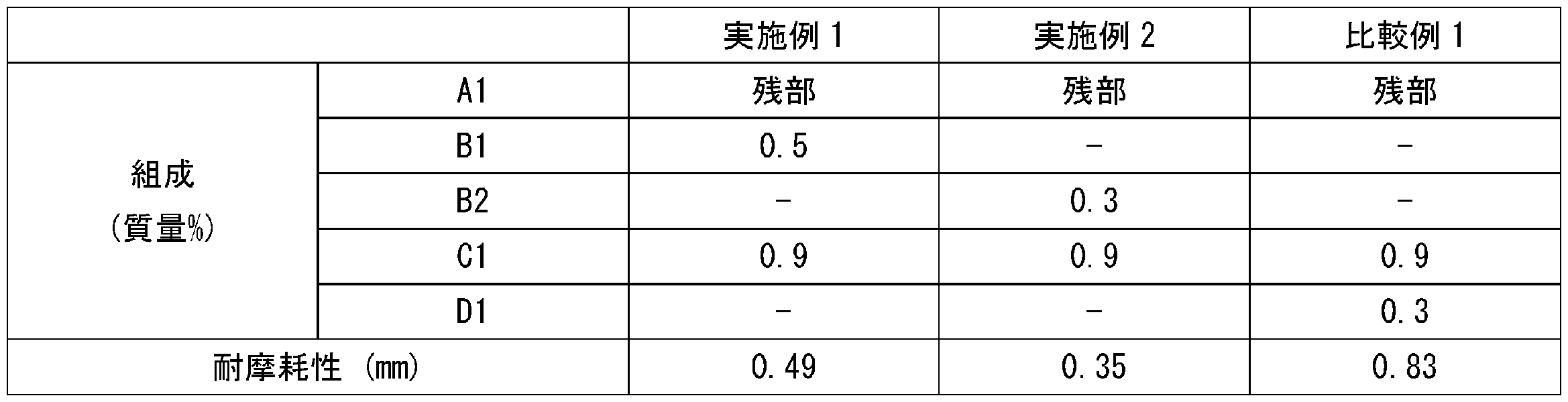
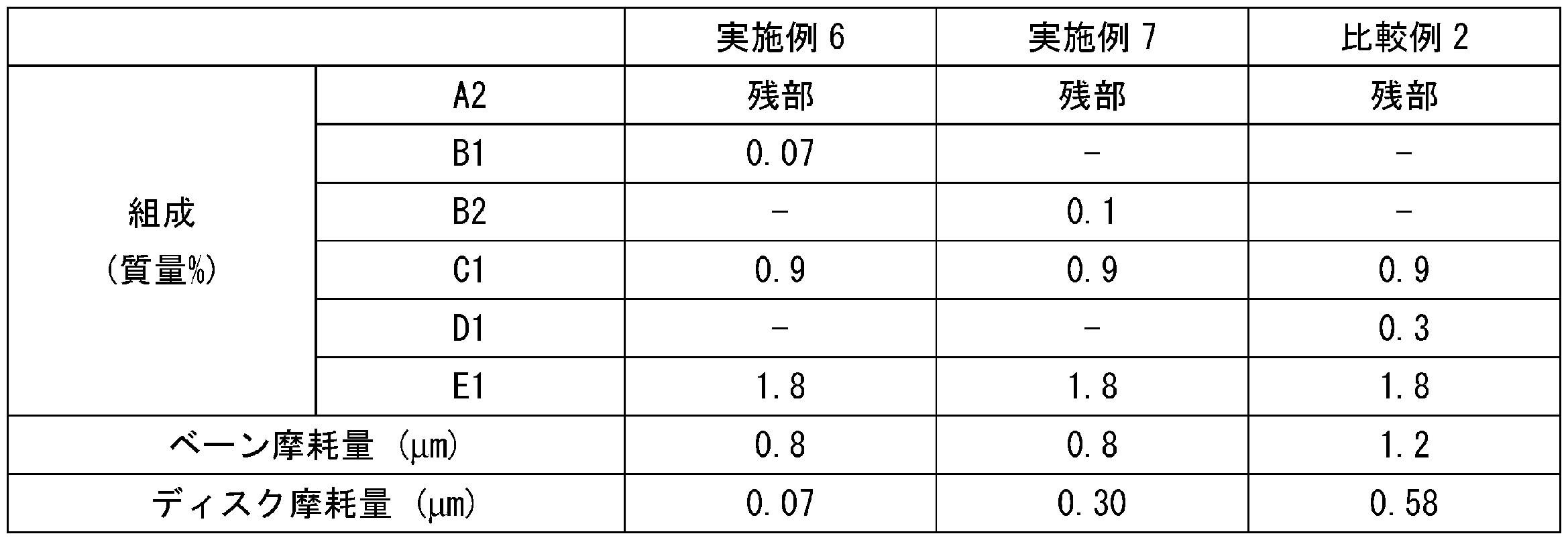
- Refrigeration oil having the composition shown in Tables 1 to 3 (% by mass based on the total amount of the refrigeration oil) was prepared using the base oils and additives shown below.
- Base oil Polyol ester of pentaerythritol and a mixed fatty acid of 2-methylpropanoic acid / 3,5,5-trimethylhexanoic acid (mixing ratio (mass ratio): 35/65) (kinematic viscosity at 40 ° C .: 68 mm 2 / s, kinematic viscosity at 100 ° C .: 8.1 mm 2 / s)
- A1 Polyol ester of pentaerythritol and a mixed fatty acid of 2-methylpropanoic acid / 3,5,5-trimethylhexanoic acid (mixing ratio (mass ratio): 60/40) (kinematic viscosity at 40 ° C .: 46 mm 2) / S, kinematic viscosity at 100 ° C
- D1 Dioleyl hydrogen phosphite
- E1 Mixture of phenolic antioxidant, phosphorus antiwear, etc.
- Abrasion resistance was evaluated by a fast four-ball test according to ASTM D4172-94. Using SUJ2 as a hard sphere, the test was performed under the conditions of a test oil amount of 20 mL, a test temperature of 80 ° C., a rotation speed of 1200 rpm, a load of 294 N, and a test time of 30 minutes, and the wear scar diameter (mm) of the fixed ball was measured. The smaller the value of the wear scar diameter, the better the wear resistance.
- a friction tester using a vane (SKH-51) for the upper test piece and a disk (SNCM220 HRC50) for the lower test piece was mounted inside the sealed container. 600 g of each refrigerating machine oil was introduced into the friction test site, the system was evacuated to vacuum, and then 100 g of R32 refrigerant was introduced and heated. After the temperature in the sealed container was set to 110 ° C., a wear test was performed at a load of 1000 N and a rotation speed of 750 rpm, and a vane wear amount and a disk wear amount after the test for 60 minutes were measured. The smaller the value of the amount of wear, the better the wear resistance.
Landscapes
- Chemical & Material Sciences (AREA)
- Chemical Kinetics & Catalysis (AREA)
- General Chemical & Material Sciences (AREA)
- Oil, Petroleum & Natural Gas (AREA)
- Organic Chemistry (AREA)
- Health & Medical Sciences (AREA)
- Emergency Medicine (AREA)
- Lubricants (AREA)
Abstract
Description
アルキルベンゼン(B):炭素数1~40のアルキル基を1~4個有し、かつそのアルキル基の合計炭素数が20~40であるアルキルベンゼン(好ましくは、炭素数1~30のアルキル基を1~4個有し、かつアルキル基の合計炭素数が20~30であるアルキルベンゼン)
アルキルベンゼン(A)が有する炭素数1~19のアルキル基としては、具体的には例えば、メチル基、エチル基、プロピル基(すべての異性体を含む、以下同様)、ブチル基、ペンチル基、ヘキシル基、ヘプチル基、オクチル基、ノニル基、デシル基、ウンデシル基、ドデシル基、トリデシル基、テトラデシル基、ペンタデシル基、ヘキサデシル基、ヘプタデシル基、オクタデシル基、ノナデシル基、エキコシル基が挙げられる。これらのアルキル基は、直鎖状であっても、分枝状であってもよく、安定性、粘度特性等の点から分枝状であることが好ましい。特に入手可能性の点から、プロピレン、ブテン、イソブチレン等のオレフィンのオリゴマーから誘導される分枝状アルキル基がより好ましい。
(b)多価アルコールと多塩基酸とのモル比を調整して、多価アルコールの水酸基の一部がエステル化されずに残存するエステル中間体を合成し、次いでその残存する水酸基を一価脂肪酸でエステル化する方法
上記(b)の方法により得られるコンプレックスエステルは、冷凍機油としての使用時に加水分解すると比較的強い酸が生成するため、上記(a)の方法により得られるコンプレックスエステルに比べて安定性に若干劣る傾向にある。本実施形態におけるコンプレックスエステルとしては、安定性のより高い、上記(a)の方法により得られるコンプレックスエステルが好ましい。




[式(9)中、Rαは水素原子、炭素数1~10のアルキル基、炭素数2~10のアシル基又は2~8個の水酸基を有する化合物の残基を表し、Rβは炭素数2~4のアルキレン基を表し、Rγは水素原子、炭素数1~10のアルキル基又は炭素数2~10のアシル基を表し、fは1~80の整数を表し、gは1~8の整数を表す。]





A1:ペンタエリスリトールと、2-メチルプロパン酸/3,5,5-トリメチルヘキサン酸との混合脂肪酸(混合比(質量比):35/65)とのポリオールエステル(40℃動粘度:68mm2/s、100℃動粘度:8.1mm2/s)
A2:下記(a1)及び(a2)の混合基油(混合比(質量比):(a1)/(a2)=70/30)
(a1)ペンタエリスリトールと、2-メチルプロパン酸/3,5,5-トリメチルヘキサン酸との混合脂肪酸(混合比(質量比):60/40)とのポリオールエステル(40℃動粘度:46mm2/s、100℃動粘度:6.3mm2/s)
(a2)ネオペンチルグリコール(1モル)及び1,4-ブタンジオール(0.2モル)にアジピン酸(1.5モル)を反応させたエステル中間体に、3,5,5-トリメチルヘキサノール(1.1モル)を更に反応させ、残存した未反応物を蒸留で除去して得たコンプレックスエステル(40℃における動粘度:146mm2/s、粘度指数:140)
B1:ジ(2-エチルヘキシル)ハイドロジェンホスファイト
B2:ジラウリルハイドロジェンホスファイト
C1:グリシジルネオデカノエート
D1:ジオレイルハイドロジェンホスファイト
E1:フェノール系酸化防止剤、リン系摩耗防止剤等の混合物
耐摩耗性は、ASTM D4172-94に準拠する高速四球試験により評価した。剛球としてSUJ2を用い、試験油量20mL、試験温度80℃、回転数1200rpm、負荷荷重294N、試験時間30分間の条件で試験を行い、固定球の摩耗痕径(mm)を測定した。摩耗痕径の値が小さいほど、耐摩耗性に優れていることを意味する。
密閉容器の内部に上側試験片にベーン(SKH-51)、下側試験片にディスク(SNCM220 HRC50)を用いた摩擦試験装置を装着した。摩擦試験部位に各冷凍機油を600g導入し、系内を真空脱気した後、R32冷媒を100g導入して加熱した。密閉容器内の温度を110℃とした後、負荷荷重1000N、回転数750rpmにおいて、摩耗試験を行い、60分間の試験後のベーン摩耗量及びディスク摩耗量を計測した。摩耗量の値が小さいほど、耐摩耗性に優れていることを意味する。

Claims (1)
- 潤滑油基油と、
炭素数1~12のアルキル基を分子内に2個有するジアルキルハイドロジェンホスファイトと、
エポキシ化合物と、
を含有する冷凍機油。
Priority Applications (5)
| Application Number | Priority Date | Filing Date | Title |
|---|---|---|---|
| JP2020539514A JP7432512B2 (ja) | 2018-08-28 | 2019-08-27 | 冷凍機油 |
| KR1020217004987A KR102945416B1 (ko) | 2018-08-28 | 2019-08-27 | 냉동기유 |
| US17/270,179 US11453839B2 (en) | 2018-08-28 | 2019-08-27 | Refrigerator oil |
| EP19853566.8A EP3845623B1 (en) | 2018-08-28 | 2019-08-27 | Refrigerator oil |
| CN201980052392.7A CN112534029B (zh) | 2018-08-28 | 2019-08-27 | 冷冻机油 |
Applications Claiming Priority (2)
| Application Number | Priority Date | Filing Date | Title |
|---|---|---|---|
| JP2018159417 | 2018-08-28 | ||
| JP2018-159417 | 2018-08-28 |
Publications (1)
| Publication Number | Publication Date |
|---|---|
| WO2020045452A1 true WO2020045452A1 (ja) | 2020-03-05 |
Family
ID=69644420
Family Applications (1)
| Application Number | Title | Priority Date | Filing Date |
|---|---|---|---|
| PCT/JP2019/033566 Ceased WO2020045452A1 (ja) | 2018-08-28 | 2019-08-27 | 冷凍機油 |
Country Status (6)
| Country | Link |
|---|---|
| US (1) | US11453839B2 (ja) |
| EP (1) | EP3845623B1 (ja) |
| JP (1) | JP7432512B2 (ja) |
| KR (1) | KR102945416B1 (ja) |
| CN (1) | CN112534029B (ja) |
| WO (1) | WO2020045452A1 (ja) |
Citations (8)
| Publication number | Priority date | Publication date | Assignee | Title |
|---|---|---|---|---|
| JPS5975995A (ja) * | 1982-10-25 | 1984-04-28 | Showa Shell Sekiyu Kk | 耐摩耗性、極圧性及び摩擦特性にすぐれた潤滑組成物 |
| JPH05339590A (ja) * | 1992-06-15 | 1993-12-21 | Mitsui Petrochem Ind Ltd | 潤滑油 |
| JP2008266423A (ja) | 2007-04-18 | 2008-11-06 | Idemitsu Kosan Co Ltd | 冷凍機用潤滑油組成物 |
| WO2011024663A1 (ja) * | 2009-08-28 | 2011-03-03 | Jx日鉱日石エネルギー株式会社 | 冷凍機油および冷凍機用作動流体組成物 |
| WO2011086800A1 (ja) * | 2010-01-18 | 2011-07-21 | Jx日鉱日石エネルギー株式会社 | 潤滑油組成物 |
| JP2012131994A (ja) * | 2010-11-30 | 2012-07-12 | Jx Nippon Oil & Energy Corp | 冷凍機用作動流体組成物および冷凍機油 |
| JP2013189506A (ja) * | 2012-03-12 | 2013-09-26 | Idemitsu Kosan Co Ltd | 冷凍機用潤滑油組成物 |
| WO2014087903A1 (ja) * | 2012-12-07 | 2014-06-12 | Jx日鉱日石エネルギー株式会社 | 冷凍機油組成物および冷凍機用作動流体組成物 |
Family Cites Families (10)
| Publication number | Priority date | Publication date | Assignee | Title |
|---|---|---|---|---|
| TW203098B (ja) | 1991-09-27 | 1993-04-01 | Mitsui Petroleum Chemicals Ind | |
| EP2236589B1 (en) | 2007-11-22 | 2016-09-21 | Idemitsu Kosan Co., Ltd. | Lubricating oil composition for refrigerating machine |
| DE102009015873A1 (de) * | 2008-04-04 | 2009-10-08 | Denso Corporation, Kariya-City | Kühlmaschinenöl-Zusammensetzung |
| US9676983B2 (en) | 2012-12-05 | 2017-06-13 | Jx Nippon Oil & Energy Corporation | Cooling-equipment working-fluid composition |
| BR112016018711B1 (pt) * | 2014-02-20 | 2021-02-17 | AGC Inc. | composição para sistema de ciclo térmico e sistema de ciclo térmico |
| JP6143695B2 (ja) | 2014-03-25 | 2017-06-07 | Jxtgエネルギー株式会社 | アルミニウム加工油組成物 |
| US10611981B2 (en) | 2014-11-12 | 2020-04-07 | The Lubrizol Corporation | Mixed phosphorus esters for lubricant applications |
| JP2016098256A (ja) | 2014-11-18 | 2016-05-30 | Jxエネルギー株式会社 | 冷凍機油及び冷凍機用作動流体組成物 |
| JP6581030B2 (ja) | 2015-11-20 | 2019-09-25 | Jxtgエネルギー株式会社 | 冷凍機油 |
| JP6796423B2 (ja) | 2016-07-28 | 2020-12-09 | Eneos株式会社 | 冷凍機油 |
-
2019
- 2019-08-27 JP JP2020539514A patent/JP7432512B2/ja active Active
- 2019-08-27 WO PCT/JP2019/033566 patent/WO2020045452A1/ja not_active Ceased
- 2019-08-27 EP EP19853566.8A patent/EP3845623B1/en active Active
- 2019-08-27 KR KR1020217004987A patent/KR102945416B1/ko active Active
- 2019-08-27 CN CN201980052392.7A patent/CN112534029B/zh active Active
- 2019-08-27 US US17/270,179 patent/US11453839B2/en active Active
Patent Citations (8)
| Publication number | Priority date | Publication date | Assignee | Title |
|---|---|---|---|---|
| JPS5975995A (ja) * | 1982-10-25 | 1984-04-28 | Showa Shell Sekiyu Kk | 耐摩耗性、極圧性及び摩擦特性にすぐれた潤滑組成物 |
| JPH05339590A (ja) * | 1992-06-15 | 1993-12-21 | Mitsui Petrochem Ind Ltd | 潤滑油 |
| JP2008266423A (ja) | 2007-04-18 | 2008-11-06 | Idemitsu Kosan Co Ltd | 冷凍機用潤滑油組成物 |
| WO2011024663A1 (ja) * | 2009-08-28 | 2011-03-03 | Jx日鉱日石エネルギー株式会社 | 冷凍機油および冷凍機用作動流体組成物 |
| WO2011086800A1 (ja) * | 2010-01-18 | 2011-07-21 | Jx日鉱日石エネルギー株式会社 | 潤滑油組成物 |
| JP2012131994A (ja) * | 2010-11-30 | 2012-07-12 | Jx Nippon Oil & Energy Corp | 冷凍機用作動流体組成物および冷凍機油 |
| JP2013189506A (ja) * | 2012-03-12 | 2013-09-26 | Idemitsu Kosan Co Ltd | 冷凍機用潤滑油組成物 |
| WO2014087903A1 (ja) * | 2012-12-07 | 2014-06-12 | Jx日鉱日石エネルギー株式会社 | 冷凍機油組成物および冷凍機用作動流体組成物 |
Non-Patent Citations (2)
| Title |
|---|
| See also references of EP3845623A4 |
| SHIBATA MITSUTA ET AL.: "Alkylene oxide polymer", KAIBUNDO, 20 November 1990 (1990-11-20) |
Also Published As
| Publication number | Publication date |
|---|---|
| CN112534029A (zh) | 2021-03-19 |
| EP3845623A1 (en) | 2021-07-07 |
| KR102945416B1 (ko) | 2026-03-31 |
| JP7432512B2 (ja) | 2024-02-16 |
| CN112534029B (zh) | 2023-01-03 |
| US20210324295A1 (en) | 2021-10-21 |
| EP3845623A4 (en) | 2021-09-15 |
| US11453839B2 (en) | 2022-09-27 |
| JPWO2020045452A1 (ja) | 2021-08-10 |
| EP3845623B1 (en) | 2025-03-05 |
| KR20210046673A (ko) | 2021-04-28 |
Similar Documents
| Publication | Publication Date | Title |
|---|---|---|
| JP6964586B2 (ja) | 冷凍機油 | |
| US11993742B2 (en) | Working fluid composition for refrigerator, and refrigerator oil | |
| JP7470648B2 (ja) | 冷凍機油及び冷凍機油の製造方法 | |
| JP6796423B2 (ja) | 冷凍機油 | |
| US12247177B2 (en) | Refrigerator oil and refrigerator working fluid composition | |
| WO2020171135A1 (ja) | 冷凍機油及び冷凍機用作動流体組成物 | |
| JP7821571B2 (ja) | 冷凍機油及び冷凍機油の製造方法 | |
| JP7432512B2 (ja) | 冷凍機油 | |
| JP6796438B2 (ja) | 冷凍機油及び冷凍機用作動流体組成物 |
Legal Events
| Date | Code | Title | Description |
|---|---|---|---|
| 121 | Ep: the epo has been informed by wipo that ep was designated in this application |
Ref document number: 19853566 Country of ref document: EP Kind code of ref document: A1 |
|
| ENP | Entry into the national phase |
Ref document number: 2020539514 Country of ref document: JP Kind code of ref document: A |
|
| ENP | Entry into the national phase |
Ref document number: 20217004987 Country of ref document: KR Kind code of ref document: A |
|
| NENP | Non-entry into the national phase |
Ref country code: DE |
|
| ENP | Entry into the national phase |
Ref document number: 2019853566 Country of ref document: EP Effective date: 20210329 |
|
| WWR | Wipo information: refused in national office |
Ref document number: 1020217004987 Country of ref document: KR |
|
| WWC | Wipo information: continuation of processing after refusal or withdrawal |
Ref document number: 1020217004987 Country of ref document: KR |