WO2020059359A1 - ゴム組成物及びタイヤ - Google Patents
ゴム組成物及びタイヤ Download PDFInfo
- Publication number
- WO2020059359A1 WO2020059359A1 PCT/JP2019/031485 JP2019031485W WO2020059359A1 WO 2020059359 A1 WO2020059359 A1 WO 2020059359A1 JP 2019031485 W JP2019031485 W JP 2019031485W WO 2020059359 A1 WO2020059359 A1 WO 2020059359A1
- Authority
- WO
- WIPO (PCT)
- Prior art keywords
- mass
- rubber composition
- rubber
- parts
- fatty acid
- Prior art date
- Legal status (The legal status is an assumption and is not a legal conclusion. Google has not performed a legal analysis and makes no representation as to the accuracy of the status listed.)
- Ceased
Links
Images

Classifications
-
- C—CHEMISTRY; METALLURGY
- C08—ORGANIC MACROMOLECULAR COMPOUNDS; THEIR PREPARATION OR CHEMICAL WORKING-UP; COMPOSITIONS BASED THEREON
- C08K—Use of inorganic or non-macromolecular organic substances as compounding ingredients
- C08K3/00—Use of inorganic substances as compounding ingredients
- C08K3/34—Silicon-containing compounds
- C08K3/346—Clay
-
- B—PERFORMING OPERATIONS; TRANSPORTING
- B60—VEHICLES IN GENERAL
- B60C—VEHICLE TYRES; TYRE INFLATION; TYRE CHANGING; CONNECTING VALVES TO INFLATABLE ELASTIC BODIES IN GENERAL; DEVICES OR ARRANGEMENTS RELATED TO TYRES
- B60C1/00—Tyres characterised by the chemical composition or the physical arrangement or mixture of the composition
- B60C1/0008—Compositions of the inner liner
-
- C—CHEMISTRY; METALLURGY
- C08—ORGANIC MACROMOLECULAR COMPOUNDS; THEIR PREPARATION OR CHEMICAL WORKING-UP; COMPOSITIONS BASED THEREON
- C08K—Use of inorganic or non-macromolecular organic substances as compounding ingredients
- C08K5/00—Use of organic ingredients
- C08K5/04—Oxygen-containing compounds
- C08K5/09—Carboxylic acids; Metal salts thereof; Anhydrides thereof
- C08K5/098—Metal salts of carboxylic acids
-
- C—CHEMISTRY; METALLURGY
- C08—ORGANIC MACROMOLECULAR COMPOUNDS; THEIR PREPARATION OR CHEMICAL WORKING-UP; COMPOSITIONS BASED THEREON
- C08K—Use of inorganic or non-macromolecular organic substances as compounding ingredients
- C08K5/00—Use of organic ingredients
- C08K5/04—Oxygen-containing compounds
- C08K5/10—Esters; Ether-esters
- C08K5/101—Esters; Ether-esters of monocarboxylic acids
- C08K5/103—Esters; Ether-esters of monocarboxylic acids with polyalcohols
-
- C—CHEMISTRY; METALLURGY
- C08—ORGANIC MACROMOLECULAR COMPOUNDS; THEIR PREPARATION OR CHEMICAL WORKING-UP; COMPOSITIONS BASED THEREON
- C08K—Use of inorganic or non-macromolecular organic substances as compounding ingredients
- C08K5/00—Use of organic ingredients
- C08K5/16—Nitrogen-containing compounds
- C08K5/17—Amines; Quaternary ammonium compounds
-
- C—CHEMISTRY; METALLURGY
- C08—ORGANIC MACROMOLECULAR COMPOUNDS; THEIR PREPARATION OR CHEMICAL WORKING-UP; COMPOSITIONS BASED THEREON
- C08K—Use of inorganic or non-macromolecular organic substances as compounding ingredients
- C08K7/00—Use of ingredients characterised by shape
-
- C—CHEMISTRY; METALLURGY
- C08—ORGANIC MACROMOLECULAR COMPOUNDS; THEIR PREPARATION OR CHEMICAL WORKING-UP; COMPOSITIONS BASED THEREON
- C08L—COMPOSITIONS OF MACROMOLECULAR COMPOUNDS
- C08L21/00—Compositions of unspecified rubbers
-
- C—CHEMISTRY; METALLURGY
- C08—ORGANIC MACROMOLECULAR COMPOUNDS; THEIR PREPARATION OR CHEMICAL WORKING-UP; COMPOSITIONS BASED THEREON
- C08L—COMPOSITIONS OF MACROMOLECULAR COMPOUNDS
- C08L23/00—Compositions of homopolymers or copolymers of unsaturated aliphatic hydrocarbons having only one carbon-to-carbon double bond; Compositions of derivatives of such polymers
- C08L23/26—Compositions of homopolymers or copolymers of unsaturated aliphatic hydrocarbons having only one carbon-to-carbon double bond; Compositions of derivatives of such polymers modified by chemical after-treatment
- C08L23/28—Compositions of homopolymers or copolymers of unsaturated aliphatic hydrocarbons having only one carbon-to-carbon double bond; Compositions of derivatives of such polymers modified by chemical after-treatment by reaction with halogens or halogen-containing compounds
-
- C—CHEMISTRY; METALLURGY
- C08—ORGANIC MACROMOLECULAR COMPOUNDS; THEIR PREPARATION OR CHEMICAL WORKING-UP; COMPOSITIONS BASED THEREON
- C08L—COMPOSITIONS OF MACROMOLECULAR COMPOUNDS
- C08L23/00—Compositions of homopolymers or copolymers of unsaturated aliphatic hydrocarbons having only one carbon-to-carbon double bond; Compositions of derivatives of such polymers
- C08L23/26—Compositions of homopolymers or copolymers of unsaturated aliphatic hydrocarbons having only one carbon-to-carbon double bond; Compositions of derivatives of such polymers modified by chemical after-treatment
- C08L23/28—Compositions of homopolymers or copolymers of unsaturated aliphatic hydrocarbons having only one carbon-to-carbon double bond; Compositions of derivatives of such polymers modified by chemical after-treatment by reaction with halogens or halogen-containing compounds
- C08L23/283—Iso-olefin halogenated homopolymers or copolymers
-
- C—CHEMISTRY; METALLURGY
- C08—ORGANIC MACROMOLECULAR COMPOUNDS; THEIR PREPARATION OR CHEMICAL WORKING-UP; COMPOSITIONS BASED THEREON
- C08K—Use of inorganic or non-macromolecular organic substances as compounding ingredients
- C08K2201/00—Specific properties of additives
- C08K2201/019—Specific properties of additives the composition being defined by the absence of a certain additive
-
- Y—GENERAL TAGGING OF NEW TECHNOLOGICAL DEVELOPMENTS; GENERAL TAGGING OF CROSS-SECTIONAL TECHNOLOGIES SPANNING OVER SEVERAL SECTIONS OF THE IPC; TECHNICAL SUBJECTS COVERED BY FORMER USPC CROSS-REFERENCE ART COLLECTIONS [XRACs] AND DIGESTS
- Y02—TECHNOLOGIES OR APPLICATIONS FOR MITIGATION OR ADAPTATION AGAINST CLIMATE CHANGE
- Y02T—CLIMATE CHANGE MITIGATION TECHNOLOGIES RELATED TO TRANSPORTATION
- Y02T10/00—Road transport of goods or passengers
- Y02T10/80—Technologies aiming to reduce greenhouse gasses emissions common to all road transportation technologies
- Y02T10/86—Optimisation of rolling resistance, e.g. weight reduction
Definitions
- the present invention relates to a rubber composition and a tire.
- Patent Literature 1 discloses a rubber composition in which a layered or plate-shaped clay mineral and a glycerin fatty acid ester composition are blended, and the rubber composition is higher than a normal rubber composition. It has been proposed that the rubber composition has low air permeability and is applied to an inner liner of a tire.
- the present inventors have studied and found that the rubber composition disclosed in the above-mentioned Patent Document 1 is mixed with a resin, and the air permeability is increased by a technique such as further increasing the compounding amount of the resin. Was found to be able to be reduced.
- a metal component such as a metal rotor
- the rubber composition with an increased amount of the resin is in close contact with the metal component such as the metal rotor. Easy and problematic in terms of productivity.
- an object of the present invention is to solve the above-mentioned problem of the prior art, and to provide a rubber composition which is excellent in low air permeability and has low adhesion to metal parts.
- Another object of the present invention is to provide a tire excellent in low air permeability.
- the rubber composition of the present invention comprises a rubber component (A), a layered or plate-like clay mineral (B), and a processability improver (C), It is characterized by not containing stearic acid (D) or having a content of stearic acid (D) of 0.1 part by mass or less based on 100 parts by mass of the rubber component (A).
- the rubber composition of the present invention has excellent low air permeability and low adhesion to metal parts.
- the layered or plate-shaped clay mineral (B) is clay, mica, talc or feldspar.
- the low air permeability of the rubber composition is further improved.
- the rubber component (A) contains at least one selected from butyl rubber, halogenated butyl rubber, and halogenated isobutylene-p-alkylstyrene copolymer. In this case, the low air permeability of the rubber composition is further improved.
- the rubber component (A) is a butyl rubber, a halogenated butyl rubber, a halogenated isobutylene-p-alkylstyrene copolymer in 100 parts by mass of the rubber component (A). At least one selected from the group consisting of 50 parts by mass or more. In this case, the low air permeability of the rubber composition is further improved.
- the rubber component (A) comprises at least one selected from butyl rubber, halogenated butyl rubber, and halogenated isobutylene-p-alkylstyrene copolymer.
- the low air permeability of the rubber composition is further improved.
- the processability improver (C) is at least one selected from a glycerin fatty acid ester composition and a stearylamine derivative. In this case, the adhesion of the rubber composition to the metal component can be further suppressed.
- the glycerin fatty acid ester composition preferably contains a glycerin fatty acid monoester. In this case, the adhesion of the rubber composition to the metal component can be further suppressed.
- the rubber composition of the present invention preferably further contains a metal salt (E) of an unsaturated carboxylic acid.
- E metal salt of an unsaturated carboxylic acid
- the metal salt (E) of the unsaturated carboxylic acid is preferably at least one selected from a metal acrylate and a metal methacrylate.
- the low air permeability of the rubber composition is further improved.
- the metal salt (E) of the unsaturated carboxylic acid is at least one selected from zinc dimethacrylate and zinc monomethacrylate. In this case, the low air permeability of the rubber composition is further improved.
- the content of the unsaturated carboxylic acid metal salt (E) is preferably 0.1 to 3.8 parts by mass with respect to 100 parts by mass of the rubber component (A).
- rubber scorch (scorch) of the rubber composition can be sufficiently suppressed while further improving the low air permeability of the rubber composition.
- the rubber composition of the present invention preferably does not contain the stearic acid (D). In this case, the low air permeability of the rubber composition is further improved.
- the rubber composition of the present invention is excellent in low air permeability, it is preferably used for an inner liner of a tire.
- the tire of the present invention is characterized by using the above rubber composition.
- Such a tire of the present invention is excellent in low air permeability.
- the rubber composition with low adhesiveness to a metal component can be provided. Further, according to the present invention, a tire excellent in low air permeability can be provided.
- the rubber composition of the present invention contains a rubber component (A), a layered or plate-like clay mineral (B), and a processability improver (C), and does not contain stearic acid (D), or the stearic acid.
- the content of the acid (D) is 0.1 part by mass or less based on 100 parts by mass of the rubber component (A).
- the rubber composition of the present invention contains a layered or plate-shaped clay mineral (B), and the layered or plate-shaped clay mineral (B) diverts air passing through the rubber composition, thereby suppressing air permeation. I do.
- the stearic acid (D) which is compounded in a normal rubber composition, is not added or its content is set to 0.1 part by mass or less, so that the layered or plate-shaped clay can be obtained.
- the dispersibility of the mineral (B) is improved, and the low air permeability is improved.
- the stearic acid (D) is not blended or the content thereof is 0.1 parts by mass or less, the rubber composition easily adheres to metal parts such as a metal rotor. Suppresses adhesion to metal parts by blending a workability improver (C). Therefore, the rubber composition of the present invention has excellent low air permeability and low adhesion to metal parts.
- the rubber component (A) of the rubber composition of the present invention is preferably a butyl rubber, and more specifically, a butyl rubber, a halogenated butyl rubber, or a halogenated isobutylene-p-alkylstyrene copolymer.
- a butyl rubber e.g., a butyl rubber, a halogenated butyl rubber, or a halogenated isobutylene-p-alkylstyrene copolymer.
- the butyl rubber is a rubber obtained by copolymerizing isobutylene with isoprene, and is also called an isobutylene-isoprene copolymer (IIR).
- IIR isobutylene-isoprene copolymer
- the butyl rubber is preferably obtained by reacting 92 to 99.5% by mass of isobutylene with 0.5 to 8% by mass of isoprene, and 95 to 99.5% by mass of isobutylene is added to 0.5 to 5% by mass. More preferably, it is obtained by reacting with isoprene.
- the halogenated butyl rubber can be produced by halogenating (chlorinating, brominating, etc.) the butyl rubber.
- halogenated butyl rubber examples include chlorinated butyl rubber (ClIIR) and brominated butyl rubber (BrIIR).
- the halogenated isobutylene-p-alkylstyrene copolymer is a halide of a copolymer of isobutylene and p-alkylstyrene.
- the halogenated site may be an isobutylene unit or a p-alkylstyrene unit, but is preferably a p-alkylstyrene unit.
- Examples of the p-alkylstyrene used as a monomer include p-methylstyrene.
- the rubber component (A) may contain, in addition to the above-mentioned butyl rubber, halogenated butyl rubber, and halogenated isobutylene-p-alkylstyrene copolymer, other butyl rubbers and rubbers other than butyl rubber.
- examples of the rubber include natural rubber (NR), isoprene rubber (IR), styrene-butadiene copolymer rubber (SBR), and butadiene rubber (BR).
- the rubber component (A) may be a single type or a blend of two or more types.
- the rubber component (A) contains at least 50 parts by mass in total of at least one selected from butyl rubber, halogenated butyl rubber, and halogenated isobutylene-p-alkylstyrene copolymer in 100 parts by mass of the rubber component (A).
- the content is more preferably 70 parts by mass or more, even more preferably 90 parts by mass or more.
- the rubber component (A) that is, the rubber component (A)
- the total content of at least one selected from butyl rubber, halogenated butyl rubber, and halogenated isobutylene-p-alkylstyrene copolymer is 50% by mass or more), and the low air permeability of the rubber composition Is further improved.
- the rubber component (A) comprises only at least one selected from butyl rubber, halogenated butyl rubber, and halogenated isobutylene-p-alkylstyrene copolymer. Since the rubber component (A) is composed of at least one selected from butyl rubber, halogenated butyl rubber, and halogenated isobutylene-p-alkylstyrene copolymer, the low air permeability of the rubber composition is further improved. I do.
- the rubber composition of the present invention contains a layered or plate-shaped clay mineral (B).
- the layered or plate-shaped clay mineral (B) is in a layered or plate-like shape, and blocks air permeation by diverting air that permeates the rubber composition.
- the layered or plate-shaped clay mineral (B) preferably has an average aspect ratio of 2 to 200.
- the average aspect ratio of the layered or plate-shaped clay mineral (B) is 2 or more, the plane of the layered or plate-shaped clay mineral particles is oriented, and the effect of blocking the air passage is increased, and low air permeability is obtained. Better. Further, when the average aspect ratio of the layered or plate-shaped clay mineral (B) is 200 or less, the layered or plate-shaped clay mineral (B) is more uniformly dispersed at the time of kneading the rubber composition. Air permeability is further improved.
- the average aspect ratio is more preferably 3 to 150, still more preferably 5 to 100, still more preferably 5 to 50, and particularly preferably 10 to 30, from the viewpoint of low air permeability.
- the average aspect ratio was determined as x / y from the average major axis x and the average thickness y, as shown in FIG.
- the average particle size (measured by Malvern @ Method) of the layered or plate-shaped clay mineral (B) is preferably 50 ⁇ m or less, more preferably 0.2 to 30 ⁇ m, still more preferably 0.2 to 5 ⁇ m, and more preferably 1.5 to 5 ⁇ m. 4.5 ⁇ m is particularly preferred.
- the rubber composition has good bending resistance and can be more suitably used as an inner liner of a tire.
- the layered or plate-shaped clay mineral (B) any of natural products and synthetic products can be used.
- the layered or plate-shaped clay mineral (B) include clays such as kaolin clay, sericite clay, calcined clay, and surface-treated silane-modified clay; montmorillonite, saponite, hectorite, beidellite, and steven.
- smectite-based clay minerals such as nontronite; mica, feldspar, vermiculite, halloysite, talc, and swellable mica.
- clay, mica, talc and feldspar are preferred, clay, mica and talc are more preferred, clay and talc are more preferred, and clay is particularly preferred.
- kaolin clay is particularly preferred.
- the content of the layered or plate-shaped clay mineral (B) is preferably 10 parts by mass with respect to 100 parts by mass of the rubber component (A) from the viewpoint of low air permeability.
- the content is more preferably 15 parts by mass or more, still more preferably 20 parts by mass or more, and still more preferably 25 parts by mass or more, and from the viewpoint of improving the workability (ease of kneading) in kneading the rubber composition.
- carbon black or the like in addition to the layered or plate-like clay mineral (B), carbon black or the like can be used in combination as a reinforcing filler.
- the carbon black is not particularly limited, and for example, carbon black of a grade such as FEF, GPF, SRF, HAF, ISAF, and SAF can be used.
- the content of the carbon black is not particularly limited, but is preferably 10 to 60 parts by mass, more preferably 20 to 50 parts by mass, based on 100 parts by mass of the rubber component (A).
- the rubber composition of the present invention contains a processability improver (C).
- the processability improver (C) is a compounding agent having the effect of suppressing the adhesion to metal parts such as a metal rotor of a kneading facility and improving the processability of the rubber composition.
- the content of the processability improver (C) in the rubber composition of the present invention is preferably in the range of 0.1 to 20 parts by mass, and more preferably 0.1 to 20 parts by mass, based on 100 parts by mass of the rubber component (A).
- the range is more preferably from 10 to 10 parts by mass.
- a glycerin fatty acid ester composition and a stearylamine derivative are preferable.
- a glycerin fatty acid ester composition and / or a stearylamine derivative as the processability improver (C)
- adhesion of the rubber composition to a metal component can be further suppressed.
- the processability improver (C) may be used alone or in combination of two or more.
- the glycerin fatty acid ester composition is a composition containing a glycerin fatty acid ester.
- the glycerin fatty acid ester is a compound formed by ester bonding of at least one of three OH groups of glycerin and a COOH group of a fatty acid.
- the glycerin fatty acid ester is a glycerin fatty acid monoester (monoglyceride) formed by esterifying one molecule of glycerin and one molecule of fatty acid, or a glycerin fatty acid diester (diglyceride) formed by esterifying one molecule of glycerin and two molecules of fatty acid.
- a glycerin fatty acid triester obtained by esterifying one molecule of glycerin and three molecules of fatty acid or a mixture thereof may be used, but a glycerin fatty acid monoester is preferable.
- the glycerin fatty acid ester composition include 1) glycerin fatty acid monoester alone, 2) a mixture of glycerin fatty acid monoester and glycerin fatty acid diester, and 3) further glycerin fatty acid triester or glycerin in 1) or 2). Inclusions are preferred.
- the glycerin fatty acid ester composition preferably contains a glycerin fatty acid monoester.
- the content of the glycerin fatty acid monoester in the glycerin fatty acid ester composition is preferably in the range of 35 to 100% by mass, more preferably in the range of 50 to 100% by mass, and still more preferably in the range of 60 to 99% by mass. An even more preferred range is 85 to 98% by weight.
- the content of the glycerin fatty acid monoester in the glycerin fatty acid ester composition is 50 to 100% by mass, the processability of the rubber composition can be further improved, which is preferable from the viewpoint of production.
- the content of the glycerin fatty acid diester is preferably 65% by mass or less, more preferably from the viewpoint of reducing the unvulcanized viscosity of the rubber composition, and improving the low air permeability and flex resistance. Is 55% by mass or less, more preferably 50% by mass or less.
- the content of the glycerin fatty acid triester in the glycerin fatty acid ester composition is preferably 10% by mass or less from the viewpoint of reducing the influence on the physical properties (such as a decrease in storage modulus) of the rubber composition after vulcanization. And more preferably 5% by mass or less, further preferably 3% by mass or less, and from the viewpoint of productivity, may be 0.3% by mass or more.
- the fatty acid constituting the glycerin fatty acid ester preferably has 8 to 28 carbon atoms, more preferably 8 to 22 carbon atoms, from the viewpoint of processability of the rubber composition and low air permeability. It preferably has 10 to 18 carbon atoms, more preferably has 12 to 18 carbon atoms, still more preferably has 14 to 18 carbon atoms, and still more preferably has 16 to 18 carbon atoms. Fatty acids having 8 or more carbon atoms have a high affinity for the rubber component (A), and bloom of the glycerin fatty acid ester composition hardly occurs. In addition, fatty acids having 28 or less carbon atoms can reduce the production cost of the glycerin fatty acid ester composition.
- the fatty acid may be linear or branched, but is preferably linear, and may be a saturated fatty acid or an unsaturated fatty acid, but is preferably a saturated fatty acid.
- the fatty acid is particularly preferably a linear saturated fatty acid.
- Specific examples of the fatty acid include caprylic acid, pelargonic acid, capric acid, lauric acid, myristic acid, palmitic acid, stearic acid, isostearic acid, oleic acid, linoleic acid, linolenic acid, araginic acid, arachidonic acid, and behenic acid. Among them, lauric acid, myristic acid, palmitic acid and stearic acid are preferable, and palmitic acid and stearic acid are more preferable.
- glycerin fatty acid ester specifically, lauric acid monoglyceride, myristic acid monoglyceride, palmitic acid monoglyceride, and stearic acid monoglyceride are preferable, and palmitic acid monoglyceride and stearic acid monoglyceride are more preferable.
- glycerin may remain as an unreacted raw material.
- % More preferably 5% by mass or less, further preferably 3% by mass or less, and from the viewpoint of productivity, may be 0.3% by mass or more.
- the glycerin fatty acid ester composition can be produced by an esterification method of producing glycerin and a fatty acid, a transesterification method using fats and oils and glycerin as raw materials, and the like.
- Examples of the method for producing a controlled product include the following methods 1) to 3).
- glycerin can be further removed by distillation.
- the upper limit of the amount of glycerin fatty acid monoester is considered to be about 65% by mass.
- the glycerin fatty acid ester composition obtained by the method 2) is mixed with the glycerin fatty acid ester composition obtained by the method 1) at an arbitrary ratio to obtain a monoester of about 65 to 95% by mass.
- Glycerin fatty acid esters having reduced environmental load and the like can be used by using those derived from natural products as the raw materials such as fats and oils and fatty acids.
- the raw material of the fatty acid those obtained by hydrolyzing vegetable oils and fats such as animal fats and oils, and those obtained by curing and anti-curing these oils and fats or hydrolyzed fatty acids can be used.
- the raw material for fats and oils is not particularly limited, but vegetable fats and oils and fats and animals are used. Specifically, palm oil, soybean oil, olive oil, cottonseed oil, coconut oil, palm kernel oil, tallow, lard, fish oil and the like are used. Can be used.
- glycerin fatty acid ester composition a commercially available product in which the amount of a monoester is controlled can be used.
- the commercially available product include, for example, stearic acid monoglyceride (Reodol MS-60 manufactured by Kao Corporation, Exel S-95 etc.).
- the monoglyceride content (glycerin fatty acid monoester content) in the glycerin fatty acid ester composition is determined by GPC analysis (gel permeation chromatography) according to the following formula (I), and includes glycerin, monoglyceride, and diglyceride. (Glycerin fatty acid diester) and triglyceride (glycerin fatty acid triester) mean the area ratio in GPC analysis of monoglyceride.
- Monoglyceride content (area%) MG / (G + MG + DG + TG) ⁇ 100 (I)
- G is the glycerin area of GPC
- MG is the monoglyceride area of GPC
- DG is the diglyceride area of GPC
- TG is the triglyceride area of GPC.
- the measurement conditions of GPC are as follows.
- ⁇ GPC measurement conditions The GPC measurement was performed using the following measuring apparatus, THF (tetrahydrofuran) was flowed at a flow rate of 0.6 mL / min as an eluent, the column was stabilized in a constant temperature bath at 40 ° C., and 1 mass% dissolved in THF was added thereto. 10 ⁇ L of the sample solution is injected for measurement.
- THF tetrahydrofuran
- Standard substance monodisperse polystyrene Detector: RI-8022 (manufactured by Tosoh Corporation) Measuring device: HPLC-8220 GPC (manufactured by Tosoh Corporation) Analytical column: Two TSK-GEL SUPER H1000 and two TSK-GEL SUPER H2000 connected in series (manufactured by Tosoh Corporation)
- the diglyceride content in the glycerin fatty acid ester composition means the area ratio in the GPC analysis of diglyceride to the total of glycerin, monoglyceride, diglyceride and triglyceride, and the triglyceride content in the glycerin fatty acid ester composition is glycerin, It means the area ratio in GPC analysis of triglyceride to the sum of monoglyceride, diglyceride and triglyceride.
- Examples of the glycerin fatty acid ester composition having a controlled monoglyceride content include a glyceryl caprylate-containing composition having 8 carbon atoms of a fatty acid, a glyceryl decanoate-containing composition having 10 carbon atoms of a fatty acid, and a lauric acid having 12 carbon atoms of a fatty acid.
- Glyceryl acid-containing composition fatty acid glyceryl myristate containing 14 carbon atoms, fatty acid glyceryl palmitate containing 16 carbon atoms, fatty acid glyceryl stearate containing 18 carbon atoms, fatty acid containing 22 carbon atoms of fatty acid
- a glyceryl behenate-containing composition a glyceryl montanate-containing composition having 28 carbon atoms of a fatty acid, and the like.
- a glyceryl laurate-containing composition, a glyceryl palmitate-containing composition, and a glyceryl stearate-containing composition include preferable.
- One or two or more of these glycerin fatty acid ester compositions having a controlled monoester content are arbitrarily selected and blended.
- the glycerin fatty acid ester composition preferably comprises a glycerin fatty acid ester, wherein the glycerin fatty acid ester is an ester of glycerin and two or more fatty acids, and two or more fatty acids constituting the glycerin fatty acid ester Among them, it is preferable that the most fatty acid component is 10 to 90% by mass based on the total fatty acids, and that the monoester component is 50 to 100% by mass based on the glycerin fatty acid ester.
- the fatty acid component is considered as one component for each fatty acid having the same configuration and bonding state in addition to the number of alkyl carbon atoms, that is, for each stereoisomer.
- n-1-octadecanoic acid generally linear stearic acid
- 2-octyl-1-decanoic acid (2-branched stearic acid)
- cis-9-octadecenoic acid are considered as separate components such as common oleic acid
- cis, cis-9,12-octadecadienoic acid common linoleic acid
- the weight ratio of the two or more fatty acids is preferably 10 to 90% by mass in the total fatty acids, even if the fatty acid component is the largest. However, from the viewpoint of further improving the processability of the rubber composition, it is preferably 15 to 80% by mass.
- one of the fatty acid component having the largest amount and the fatty acid component having the second largest portion is preferably a fatty acid having 16 carbon atoms and the other being a fatty acid having 18 carbon atoms. More preferred.
- the mass ratio of the fatty acid having 16 carbon atoms to the fatty acid having 18 carbon atoms is preferably in the range of 90/10 to 10/90, more preferably in the range of 80/20 to 20/80, and still more preferably in the range of 75/25 to 25/75.
- the mass ratio of the fatty acid having 16 carbon atoms to the fatty acid having 18 carbon atoms is in this range, the processability of the rubber composition can be further improved.
- the content (% by mass) of the fatty acid component is measured by subjecting the glycerin fatty acid ester to saponification and methyl esterification in accordance with the standard oil and fat analysis test method established by the Japan Oil Chemists' Society, and measuring it by GPC analysis.
- the glycerin fatty acid ester composition includes a glycerin fatty acid monoester and a glycerin fatty acid diester, wherein the glycerin fatty acid monoester content in the glycerin fatty acid ester composition is 35% by mass or more, and glycerin fatty acid. It is also preferable that the content of the glycerin fatty acid diester in the ester composition is 65% by mass or less. Such a glycerin fatty acid ester composition can improve the bending resistance of the rubber composition.
- the content of the glycerin fatty acid ester composition is based on 100 parts by mass of the rubber component (A), from the viewpoints of processability of the rubber composition (suppression of adhesion to metal parts), low air permeability, and bending resistance. , Preferably at least 0.5 part by mass, more preferably at least 1 part by mass, still more preferably at least 2 parts by mass, still more preferably at least 3 parts by mass, and the physical properties (storage modulus) of the rubber composition after vulcanization.
- Etc. from the viewpoint of reducing the effect on the above, preferably 20 parts by mass or less, more preferably 15 parts by mass or less, further preferably 12 parts by mass or less, still more preferably 11 parts by mass or less, and still more preferably 10 parts by mass or less. And preferably in the range of 0.5 to 20 parts by mass, more preferably in the range of 1 to 15 parts by mass, still more preferably in the range of 2 to 12 parts by mass, and still more preferably in the range of 3 to 11 parts by mass. Circumference, even more preferably from 3 to 10 parts by weight.
- the content of the glycerin fatty acid ester composition is preferably from 100 parts by mass of the layered or plate-shaped clay mineral (B), from the viewpoint of processability of the rubber composition (suppression of adhesion to metal parts).
- From the viewpoint of reducing the effect on the above-mentioned ratio preferably 20 parts by mass or less, more preferably 15 parts by mass or less, still more preferably 12 parts by mass or less, still more preferably 10 parts by mass or less, and still more preferably 8 parts by mass.
- Parts by mass more preferably 7 parts by mass or less, preferably 0.1 to 20 parts by mass, more preferably 0.25 to 15 parts by mass, and more preferably 0.25 to 10 parts by mass. Is more In weight, more preferably more in the range of 0.5 to 8 parts by weight, the range of 1 to 7 parts by mass is more preferable.
- the content of the glycerin fatty acid triester in the rubber composition of the present invention is set to 100 parts by mass of the rubber component (A) from the viewpoint of reducing the influence on the physical properties (storage modulus and the like) after vulcanization of the rubber composition. Parts, preferably 0.5 parts by mass or less, more preferably 0.3 parts by mass or less, even more preferably 0.1 parts by mass or less, and from the viewpoint of productivity 0.01 parts by mass or more It may be. Further, the content of glycerin in the rubber composition of the present invention is preferably 0.5 parts by mass or less, more preferably 0.1 part by mass, based on 100 parts by mass of the rubber component (A) from the viewpoint of suppressing a decrease in heat resistance. It is 3 parts by mass or less, more preferably 0.1 part by mass or less, and may be 0.01 part by mass or more from the viewpoint of productivity.
- the stearylamine derivative is a stearylamine derivative, and is preferably a compound in which hydrogen of an amino group of stearylamine is substituted with an alkyl group.
- the alkyl group include a methyl group, an ethyl group, a propyl group, and a butyl group.
- Specific examples of the stearylamine derivative include dimethylstearylamine, diethylstearylamine, dipropylstearylamine, ethylmethylstearylamine, ethylpropylstearylamine, and methylpropylstearylamine. Is preferred.
- the content of the stearylamine derivative is preferably in the range of 0.1 to 10 parts by mass, more preferably in the range of 0.2 to 5 parts by mass, based on 100 parts by mass of the rubber component (A). A range of from 2 to 2 parts by mass is more preferred.
- the content of the stearylamine derivative is at least 0.1 part by mass with respect to 100 parts by mass of the rubber component (A)
- the adhesion of the rubber composition to the metal component can be further suppressed. If there is, the effect on the physical properties (storage modulus and the like) of the rubber composition after vulcanization is small.
- the rubber composition of the present invention does not contain stearic acid (D), or the content of the stearic acid (D) is 0.1 part by mass or less based on 100 parts by mass of the rubber component (A). It is characterized by.
- the stearic acid (D) is widely used as a vulcanization aid for a rubber composition, but the rubber composition of the present invention does not contain the stearic acid (D) or has a content of 0.1%.
- the amount is not more than part by mass, the aggregation of the layered or plate-shaped clay mineral (B) can be suppressed, and the dispersibility of the layered or plate-shaped clay mineral (B) is improved, resulting in a low air permeability of the rubber composition. Is improved.
- the content of stearic acid (D) is preferably not more than 0.05 part by mass, and not more than 0.02 part by mass based on 100 parts by mass of the rubber component (A). Is more preferable, and it is particularly preferable not to contain stearic acid (D). As the content of stearic acid (D) is smaller, the low air permeability of the rubber composition is further improved, and when the rubber composition does not contain stearic acid (D), the low air permeability of the rubber composition is reduced. Even better.
- the rubber composition of the present invention preferably contains a metal salt (E) of an unsaturated carboxylic acid.
- E metal salt of an unsaturated carboxylic acid
- low air permeability can be further improved.
- stearic acid (D) is present in the rubber composition in an amount exceeding 0.1 parts by mass, the stearic acid (D) and the metal salt of unsaturated carboxylic acid (E) are bonded, and the unsaturated carboxylic acid Bonding between the acid metal salt (E) and the layered or plate-shaped clay mineral (B) is inhibited, and the unsaturated carboxylic acid metal salt (E) is bonded to the rubber component (A), The stearic acid (D) is pendantly bonded to the rubber component (A), and the low air permeability of the rubber composition is deteriorated.
- the metal salt (E) of unsaturated carboxylic acid and the layer Alternatively, the metal salt (E) of the unsaturated carboxylic acid couples the rubber component (A) and the layered or plate-shaped clay mineral (B) without inhibiting the bond with the plate-shaped clay mineral (B). By ringing, the low air permeability of the rubber composition can be further improved.
- Examples of the unsaturated carboxylic acid constituting the unsaturated carboxylic acid metal salt (E) include ⁇ , ⁇ -ethylenically unsaturated acids such as acrylic acid, methacrylic acid, ethacrylic acid, crotonic acid, angelic acid, and cinnamic acid. Saturated carboxylic acids and the like can be mentioned. Among these, acrylic acid and methacrylic acid are preferred as unsaturated carboxylic acids. That is, as the metal salt (E) of the unsaturated carboxylic acid, a metal acrylate and a metal methacrylate are preferable. When the rubber composition contains a metal acrylate and / or a metal methacrylate, low air permeability can be further improved.
- the metal constituting the metal salt (E) of the unsaturated carboxylic acid for example, sodium, potassium, lithium, calcium, barium, magnesium, zinc, aluminum, tin, zirconium, cadmium and the like can be mentioned. Among these, sodium, magnesium, zinc and aluminum are preferred as the metal, and zinc is particularly preferred. That is, the metal salt (E) of the unsaturated carboxylic acid is preferably an unsaturated zinc carboxylate.
- the metal salt (E) of the unsaturated carboxylic acid include zinc diacrylate, zinc dimethacrylate, zinc monoacrylate, zinc monomethacrylate, magnesium diacrylate, magnesium dimethacrylate, and magnesium monoacrylate. And magnesium monomethacrylate. Among these, zinc dimethacrylate and zinc monomethacrylate are preferred. When the rubber composition contains zinc dimethacrylate and / or zinc monomethacrylate, low air permeability can be further improved.
- the metal salt (E) of the unsaturated carboxylic acid may be used alone or in combination of two or more.
- the content of the metal salt (E) of the unsaturated carboxylic acid is preferably in the range of 0.1 to 3.8 parts by mass, more preferably 0.2 to 3 parts by mass, per 100 parts by mass of the rubber component (A). The range is more preferred, and the range of 0.3 to 2 parts by mass is even more preferred. If the content of the metal salt (E) of the unsaturated carboxylic acid is 0.1 parts by mass or more based on 100 parts by mass of the rubber component (A), the low air permeability of the rubber composition is further improved. If it is 3.8 parts by mass or less, rubber scorch (scorch) of the rubber composition can be sufficiently suppressed.
- the ratio of the content of the metal salt (E) of the unsaturated carboxylic acid to the content of the layered or plate-like clay mineral (B) is preferably in the range of 0.1 to 38% by mass, and 0.2 to 30% by mass. % Is more preferable, and a range of 0.5 to 10% by mass is even more preferable.
- the ratio of the content of the unsaturated carboxylic acid metal salt (E) to the content of the layered or plate-shaped clay mineral (B) is in the range of 0.1 to 38% by mass, the layered or plate-shaped clay is used.
- the mineral (B) and the metal salt (E) of the unsaturated carboxylic acid can be efficiently coupled, and the low air permeability can be further improved.
- the rubber composition of the present invention includes, in addition to the rubber component (A), a lamellar or plate-like clay mineral (B), a processability improver (C), a metal salt of an unsaturated carboxylic acid (E),
- the compounding agents commonly used in the above for example, vulcanizing agents such as sulfur, vulcanization accelerators, softeners, antioxidants, resins (tackifiers) and the like are appropriately selected within a range that does not impair the object of the present invention. You may mix. Commercially available products can be suitably used as these compounding agents.
- the rubber composition of the present invention can be used for various rubber products which are desired to have low air permeability, and is particularly preferable for tire inner liners.
- the rubber composition of the present invention for an inner liner of a tire, even if the thickness of the inner liner is reduced, it is possible to sufficiently suppress air permeation, and by reducing the thickness of the inner liner, The fuel economy of the tire can be improved.
- the tire of the present invention is characterized by using the above-mentioned rubber composition. Since the tire of the present invention uses the rubber composition described above, the tire has excellent low air permeability.
- the tire of the present invention may be obtained by vulcanizing after molding using an unvulcanized rubber composition, or using a semi-vulcanized rubber that has undergone a preliminary vulcanizing step, depending on the type of tire to be applied. After molding, it may be obtained by main vulcanization.
- the tire of the present invention is preferably a pneumatic tire, and it is preferable to use the above rubber composition for the inner liner.
- a pneumatic tire using the above rubber composition for an inner liner is excellent in low air permeability, and can improve fuel efficiency by reducing the thickness of the inner liner.
- an inert gas such as nitrogen, argon, helium, or the like can be used in addition to normal or air whose oxygen partial pressure is adjusted.
- Air Permeability A vulcanized rubber test piece was prepared from the rubber composition, and an air permeability tester M-C1 (manufactured by Toyo Seiki Co., Ltd.) was used in accordance with JIS K 6275-1 (2009). At 60 ° C., the air permeability of the vulcanized rubber test piece was measured, and was indicated by an index with the air permeability of Comparative Example 1 being 100. The smaller the index value, the smaller the air permeability and the better the low air permeability.
- Burnt rubber (scorch property) According to JIS K6300-1: 2013, the vulcanization curve of the rubber composition was measured at 145 ° C. using a curast meter. The time required for obtaining 10% of the maximum value of the vulcanization torque curve (T0.1) was measured to evaluate the rubber scorch (scorch) property. The evaluation criteria are shown below. ((Good): T0.1 is 3 minutes or more. X (bad): T0.1 is less than 3 minutes.
- the average agglomerate area of the lamellar or plate-like clay mineral is determined by, for example, obtaining the agglomerate area of the lamellar or plate-like clay mineral portion from an SEM image obtained in a measurement range of 11 ⁇ m ⁇ 8 ⁇ m (1000 ⁇ 700 pixels). It was calculated by the average (arithmetic mean). In the calculation, particles in contact with edges (sides) of the image were not counted, and particles smaller than 50 pixels were regarded as noise and were not counted. The lower the value of the agglomerate area, the better the layered or plate-like clay mineral is dispersed.
- Example 3 The rubber composition is manufactured by kneading with the compounding recipe shown in Table 1 using a normal Banbury mixer, and the adhesion between the rubber composition and the metal rotor is evaluated based on the above criteria. Further, the obtained rubber composition is evaluated for air permeability and rubber scorch (scorchability) by the above method. Table 1 shows the results.
- the fatty acid is synthesized by changing octanoic acid to the same molar amount of hardened fatty acid derived from palm, and further synthesized.
- Example 1 and Comparative Example 3 differ only in the presence or absence of stearic acid.
- Example 1 has a smaller clay agglomerate area than Comparative Example 3, and does not contain stearic acid (D).
- D stearic acid
- the rubber composition of the present invention is useful for an inner liner of a tire.
Landscapes
- Chemical & Material Sciences (AREA)
- Health & Medical Sciences (AREA)
- Chemical Kinetics & Catalysis (AREA)
- Medicinal Chemistry (AREA)
- Polymers & Plastics (AREA)
- Organic Chemistry (AREA)
- Dispersion Chemistry (AREA)
- Engineering & Computer Science (AREA)
- Mechanical Engineering (AREA)
- General Chemical & Material Sciences (AREA)
- Compositions Of Macromolecular Compounds (AREA)
- Tires In General (AREA)
Abstract
本発明の課題は、低空気透過性に優れると共に、金属部品への密着性が低いゴム組成物を提供することであり、その解決手段は、ゴム成分(A)と、層状又は板状粘土鉱物(B)と、加工性改良剤(C)と、を含み、ステアリン酸(D)を含まない、又は該ステアリン酸(D)の含有量が、前記ゴム成分(A)100質量部に対して0.1質量部以下であることを特徴とする、ゴム組成物である。
Description
本発明は、ゴム組成物及びタイヤに関するものである。
従来、タイヤを軽量化して、低燃費性を向上させることを目的に、低空気透過性のインナーライナーを用い、その厚さを薄くしてタイヤに配設する手法が提案されている。
例えば、下記特許文献1には、層状又は板状粘土鉱物と、グリセリン脂肪酸エステル組成物とを配合してなるゴム組成物が開示されており、該ゴム組成物は、通常のゴム組成物よりも空気透過性が低く、該ゴム組成物をタイヤのインナーライナーに適用することが提案されている。
例えば、下記特許文献1には、層状又は板状粘土鉱物と、グリセリン脂肪酸エステル組成物とを配合してなるゴム組成物が開示されており、該ゴム組成物は、通常のゴム組成物よりも空気透過性が低く、該ゴム組成物をタイヤのインナーライナーに適用することが提案されている。
しかしながら、上記特許文献1に開示のゴム組成物であっても、空気透過性に更なる改善の余地がある。
これに対して、本発明者らが検討したところ、上記特許文献1に開示のゴム組成物に対して、樹脂を配合し、更に該樹脂の配合量を増量する等の手法により、空気透過性を低減できることが分かった。しかしながら、ゴム組成物の混練による製造においては、通常金属ローター等の金属部品が用いられ、上述のような、樹脂の配合量を増量したゴム組成物は、該金属ローター等の金属部品に密着し易く、生産性の点で問題があった。
そこで、本発明は、上記従来技術の問題を解決し、低空気透過性に優れると共に、金属部品への密着性が低いゴム組成物を提供することを課題とする。
また、本発明は、低空気透過性に優れるタイヤを提供することを更なる課題とする。
また、本発明は、低空気透過性に優れるタイヤを提供することを更なる課題とする。
上記課題を解決する本発明の要旨構成は、以下の通りである。
本発明のゴム組成物は、ゴム成分(A)と、層状又は板状粘土鉱物(B)と、加工性改良剤(C)と、を含み、
ステアリン酸(D)を含まない、又は該ステアリン酸(D)の含有量が、前記ゴム成分(A)100質量部に対して0.1質量部以下であることを特徴とする。
かかる本発明のゴム組成物は、低空気透過性に優れると共に、金属部品への密着性が低い。
ステアリン酸(D)を含まない、又は該ステアリン酸(D)の含有量が、前記ゴム成分(A)100質量部に対して0.1質量部以下であることを特徴とする。
かかる本発明のゴム組成物は、低空気透過性に優れると共に、金属部品への密着性が低い。
本発明のゴム組成物の好適例においては、前記層状又は板状粘土鉱物(B)が、クレー、マイカ、タルク又は長石である。この場合、ゴム組成物の低空気透過性がより向上する。
本発明のゴム組成物の他の好適例においては、前記ゴム成分(A)が、ブチルゴム、ハロゲン化ブチルゴム、ハロゲン化イソブチレン-p-アルキルスチレン共重合体から選択される少なくとも一種を含む。この場合、ゴム組成物の低空気透過性がより向上する。
本発明のゴム組成物の他の好適例においては、前記ゴム成分(A)が、当該ゴム成分(A)100質量部中、ブチルゴム、ハロゲン化ブチルゴム、ハロゲン化イソブチレン-p-アルキルスチレン共重合体から選択される少なくとも一種を合計で50質量部以上含む。この場合、ゴム組成物の低空気透過性がより向上する。
本発明のゴム組成物の他の好適例においては、前記ゴム成分(A)が、ブチルゴム、ハロゲン化ブチルゴム、ハロゲン化イソブチレン-p-アルキルスチレン共重合体から選択される少なくとも一種のみからなる。この場合、ゴム組成物の低空気透過性がより一層向上する。
本発明のゴム組成物の他の好適例においては、前記加工性改良剤(C)が、グリセリン脂肪酸エステル組成物、ステアリルアミン誘導体から選択される少なくとも一種である。この場合、ゴム組成物の金属部品への密着を更に抑制できる。
ここで、前記グリセリン脂肪酸エステル組成物は、グリセリン脂肪酸モノエステルを含むことが好ましい。この場合、ゴム組成物の金属部品への密着を更に抑制できる。
本発明のゴム組成物は、更に、不飽和カルボン酸の金属塩(E)を含むことが好ましい。この場合、ゴム組成物の低空気透過性を更に向上させることができる。
ここで、前記不飽和カルボン酸の金属塩(E)が、アクリル酸金属塩、メタクリル酸金属塩から選択される少なくとも一種であることが好ましい。この場合、ゴム組成物の低空気透過性が更に向上する。
また、前記不飽和カルボン酸の金属塩(E)が、ジメタクリル酸亜鉛、モノメタクリル酸亜鉛から選択される少なくとも一種であることが好ましい。この場合、ゴム組成物の低空気透過性が更に向上する。
また、前記不飽和カルボン酸の金属塩(E)の含有量は、前記ゴム成分(A)100質量部に対して0.1~3.8質量部であることが好ましい。この場合、ゴム組成物の低空気透過性を更に向上させつつ、ゴム組成物のゴム焼け(スコーチ)を十分に抑制できる。
本発明のゴム組成物は、前記ステアリン酸(D)を含まないことが好ましい。この場合、ゴム組成物の低空気透過性が更に向上する。
本発明のゴム組成物は、低空気透過性に優れるため、タイヤのインナーライナー用として好ましい。
また、本発明のタイヤは、上記のゴム組成物を用いたことを特徴とする。かかる本発明のタイヤは、低空気透過性に優れる。
本発明によれば、低空気透過性に優れると共に、金属部品への密着性が低いゴム組成物を提供することができる。
また、本発明によれば、低空気透過性に優れるタイヤを提供することができる。
また、本発明によれば、低空気透過性に優れるタイヤを提供することができる。
以下に、本発明のゴム組成物及びタイヤを、その実施形態に基づき、詳細に例示説明する。
<ゴム組成物>
本発明のゴム組成物は、ゴム成分(A)と、層状又は板状粘土鉱物(B)と、加工性改良剤(C)と、を含み、ステアリン酸(D)を含まない、又は該ステアリン酸(D)の含有量が、前記ゴム成分(A)100質量部に対して0.1質量部以下であることを特徴とする。
本発明のゴム組成物は、ゴム成分(A)と、層状又は板状粘土鉱物(B)と、加工性改良剤(C)と、を含み、ステアリン酸(D)を含まない、又は該ステアリン酸(D)の含有量が、前記ゴム成分(A)100質量部に対して0.1質量部以下であることを特徴とする。
本発明のゴム組成物は、層状又は板状粘土鉱物(B)を含み、該層状又は板状粘土鉱物(B)が、ゴム組成物を透過する空気を迂回させることで、空気の透過を抑制する。更に、本発明のゴム組成物においては、通常のゴム組成物に配合されているステアリン酸(D)を配合しない又はその含有量を0.1質量部以下とすることで、層状又は板状粘土鉱物(B)の分散性が向上して、低空気透過性が向上する。
一方、ステアリン酸(D)を配合しない又はその含有量を0.1質量部以下とすることで、ゴム組成物が金属ローター等の金属部品に密着し易くなるが、本発明のゴム組成物においては、加工性改良剤(C)を配合することで、金属部品への密着を抑制する。
従って、本発明のゴム組成物は、低空気透過性に優れると共に、金属部品への密着性が低い。
一方、ステアリン酸(D)を配合しない又はその含有量を0.1質量部以下とすることで、ゴム組成物が金属ローター等の金属部品に密着し易くなるが、本発明のゴム組成物においては、加工性改良剤(C)を配合することで、金属部品への密着を抑制する。
従って、本発明のゴム組成物は、低空気透過性に優れると共に、金属部品への密着性が低い。
本発明のゴム組成物のゴム成分(A)としては、ブチル系ゴムが好ましく、より具体的には、ブチルゴム、ハロゲン化ブチルゴム、ハロゲン化イソブチレン-p-アルキルスチレン共重合体が好ましい。ゴム成分(A)として、ブチルゴム、ハロゲン化ブチルゴム、ハロゲン化イソブチレン-p-アルキルスチレン共重合体から選択される少なくとも一種を含むことで、ゴム組成物の低空気透過性が更に向上する。
前記ブチルゴムは、イソブチレンをイソプレンと共重合させて得られるゴムであり、イソブチレン-イソプレン共重合体(IIR)とも呼ばれる。該ブチルゴムは、92~99.5質量%のイソブチレンを0.5~8質量%のイソプレンと反応させて得られることが好ましく、95~99.5質量%のイソブチレンを0.5~5質量%のイソプレンと反応させて得られることが更に好ましい。
前記ハロゲン化ブチルゴムは、ブチルゴムのハロゲン化(塩素化、臭素化等)により製造できる。該ハロゲン化ブチルゴムとしては、塩素化ブチルゴム(ClIIR)、臭素化ブチルゴム(BrIIR)等が挙げられる。
前記ハロゲン化イソブチレン-p-アルキルスチレン共重合体は、イソブチレンと、p-アルキルスチレンとの共重合体のハロゲン化物である。ここで、ハロゲン化されている部位は、イソブチレン単位でも、p-アルキルスチレン単位でもよいが、p-アルキルスチレン単位であることが好ましい。また、モノマーとして用いるp-アルキルスチレンとしては、p-メチルスチレン等が挙げられる。
前記ゴム成分(A)は、上述した、ブチルゴム、ハロゲン化ブチルゴム、ハロゲン化イソブチレン-p-アルキルスチレン共重合体の他、他のブチル系ゴムや、ブチル系ゴム以外のゴムを含んでもよく、該ゴムとしては、天然ゴム(NR)、イソプレンゴム(IR)、スチレン-ブタジエン共重合体ゴム(SBR)、ブタジエンゴム(BR)等が挙げられる。
前記ゴム成分(A)は、1種単独でもよいし、2種以上のブレンドでもよい。
前記ゴム成分(A)は、1種単独でもよいし、2種以上のブレンドでもよい。
前記ゴム成分(A)は、当該ゴム成分(A)100質量部中、ブチルゴム、ハロゲン化ブチルゴム、ハロゲン化イソブチレン-p-アルキルスチレン共重合体から選択される少なくとも一種を合計で50質量部以上含むことが好ましく、70質量部以上含むことが更に好ましく、90質量部以上含むことがより一層好ましい。ゴム成分(A)100質量部中、ブチルゴム、ハロゲン化ブチルゴム、ハロゲン化イソブチレン-p-アルキルスチレン共重合体から選択される少なくとも一種を合計で50質量部以上含むことで(即ち、ゴム成分(A)中の、ブチルゴム、ハロゲン化ブチルゴム、ハロゲン化イソブチレン-p-アルキルスチレン共重合体から選択される少なくとも一種の合計含有率が50質量%以上であることで)、ゴム組成物の低空気透過性がより一層向上する。
また、本発明のゴム組成物は、前記ゴム成分(A)が、ブチルゴム、ハロゲン化ブチルゴム、ハロゲン化イソブチレン-p-アルキルスチレン共重合体から選択される少なくとも一種のみからなることが好ましい。ゴム成分(A)が、ブチルゴム、ハロゲン化ブチルゴム、ハロゲン化イソブチレン-p-アルキルスチレン共重合体から選択される少なくとも一種のみから構成されることで、ゴム組成物の低空気透過性がより一層向上する。
本発明のゴム組成物は、層状又は板状粘土鉱物(B)を含む。該層状又は板状粘土鉱物(B)は、層状又は板状であり、ゴム組成物を透過する空気を迂回させることで、空気の透過を阻害する。
前記層状又は板状粘土鉱物(B)は、平均アスペクト比が2~200であることが好ましい。層状又は板状粘土鉱物(B)の平均アスペクト比が2以上であれば、層状又は板状粘土鉱物粒子の面が配向し、空気の透過経路を遮る効果が大きくなって、低空気透過性がより向上する。また、層状又は板状粘土鉱物(B)の平均アスペクト比が200以下であれば、ゴム組成物の混練時に、層状又は板状粘土鉱物(B)の分散がより均一に行われることとなり、低空気透過性がより向上する。前記平均アスペクト比は、低空気透過性の観点から、より好ましくは3~150、更に好ましくは5~100、より一層好ましくは5~50、特に好ましくは10~30である。
前記平均アスペクト比は、図1に示すように、平均長径xと平均厚みyより、x/yとして求めたものである。
前記平均アスペクト比は、図1に示すように、平均長径xと平均厚みyより、x/yとして求めたものである。
前記層状又は板状粘土鉱物(B)の平均粒径(Malvern Methodにより測定)は、50μm以下が好ましく、0.2~30μmがより好ましく、0.2~5μmがより一層好ましく、1.5~4.5μmが特に好ましい。層状又は板状粘土鉱物(B)の平均粒径が50μm以下であれば、ゴム組成物の耐屈曲性が良好となり、タイヤのインナーライナーにより好適に利用できる。
前記層状又は板状粘土鉱物(B)は、天然品、合成品のいずれも使用することができる。層状又は板状粘土鉱物(B)としては、例えば、カオリン質クレー、セリサイト質クレー、焼成クレー、表面処理を施したシラン改質クレー等のクレー;モンモリロナイト、サポナイト、ヘクトライト、バイデライト、スティブンサイト、ノントロナイト等のスメクタイト系粘土鉱物;マイカ、長石、バーミキュライト、ハロイサイト、タルク及び膨潤性マイカ等が挙げられる。これらの中でも、ゴム組成物の低空気透過性の観点から、クレー、マイカ、タルク及び長石が好ましく、クレー、マイカ及びタルクが更に好ましく、クレー及びタルクがより一層好ましく、クレーが特に好ましい。また、前記クレーの中でも、カオリン質クレーが特に好ましい。これら層状又は板状粘土鉱物(B)は、一種を単独で用いてもよく、二種以上を組み合わせて用いてもよい。
本発明のゴム組成物中の、前記層状又は板状粘土鉱物(B)の含有量は、前記ゴム成分(A)100質量部に対して、低空気透過性の観点から、好ましくは10質量部以上、より好ましくは15質量部以上、更に好ましくは20質量部以上、より更に好ましくは25質量部以上であり、また、ゴム組成物の混練における作業性(混練し易さ)を向上させる観点から、好ましくは100質量部以下、より好ましくは80質量部以下、更に好ましくは60質量部以下である。
本発明のゴム組成物においては、前記層状又は板状粘土鉱物(B)以外にも、補強性充填剤として、カーボンブラック等を併用できる。該カーボンブラックは、特に制限なく、例えば、FEF、GPF、SRF、HAF、ISAF、SAF等のグレードのものを用いることができる。該カーボンブラックの含有量は、特に限定されるものではないが、前記ゴム成分(A)100質量部に対して、好ましくは10~60質量部、更に好ましくは20~50質量部である。
本発明のゴム組成物は、加工性改良剤(C)を含む。該加工性改良剤(C)は、混練設備の金属ローター等の金属部品への密着を抑制して、ゴム組成物の加工性を改良する作用を有する配合剤である。
本発明のゴム組成物中の、前記加工性改良剤(C)の含有量は、前記ゴム成分(A)100質量部に対して、0.1~20質量部の範囲が好ましく、0.1~10質量部の範囲が更に好ましい。加工性改良剤(C)の含有量が、ゴム成分(A)100質量部に対して0.1質量部以上であれば、ゴム組成物の金属部品への密着を更に抑制でき、また、20質量部以下であれば、ゴム組成物の加硫後の物性(貯蔵弾性率等)への影響が小さい。
前記加工性改良剤(C)としては、グリセリン脂肪酸エステル組成物及びステアリルアミン誘導体が好ましい。加工性改良剤(C)として、グリセリン脂肪酸エステル組成物及び/又はステアリルアミン誘導体を使用することで、ゴム組成物の金属部品への密着を更に抑制できる。前記加工性改良剤(C)は、1種単独で使用してもよいし、2種以上を組み合わせて使用してもよい。
前記グリセリン脂肪酸エステル組成物は、グリセリン脂肪酸エステルを含む組成物である。該グリセリン脂肪酸エステルは、グリセリンの3つのOH基の少なくとも1つと、脂肪酸のCOOH基とがエステル結合してなる化合物である。
ここで、前記グリセリン脂肪酸エステルは、グリセリン1分子と脂肪酸1分子とがエステル化してなるグリセリン脂肪酸モノエステル(モノグリセライド)でも、グリセリン1分子と脂肪酸2分子とがエステル化してなるグリセリン脂肪酸ジエステル(ジグリセライド)でも、グリセリン1分子と脂肪酸3分子とがエステル化してなるグリセリン脂肪酸トリエステル(トリグリセライド)でもよいし、これらの混合物でもよいが、グリセリン脂肪酸モノエステルが好ましい。
前記グリセリン脂肪酸エステル組成物としては、1)グリセリン脂肪酸モノエステル単独、2)グリセリン脂肪酸モノエステルとグリセリン脂肪酸ジエステルとの混合物、3)更に、上記1)又は2)に、グリセリン脂肪酸トリエステルやグリセリンを含んでいるものが好ましい。
ここで、前記グリセリン脂肪酸エステルは、グリセリン1分子と脂肪酸1分子とがエステル化してなるグリセリン脂肪酸モノエステル(モノグリセライド)でも、グリセリン1分子と脂肪酸2分子とがエステル化してなるグリセリン脂肪酸ジエステル(ジグリセライド)でも、グリセリン1分子と脂肪酸3分子とがエステル化してなるグリセリン脂肪酸トリエステル(トリグリセライド)でもよいし、これらの混合物でもよいが、グリセリン脂肪酸モノエステルが好ましい。
前記グリセリン脂肪酸エステル組成物としては、1)グリセリン脂肪酸モノエステル単独、2)グリセリン脂肪酸モノエステルとグリセリン脂肪酸ジエステルとの混合物、3)更に、上記1)又は2)に、グリセリン脂肪酸トリエステルやグリセリンを含んでいるものが好ましい。
前記グリセリン脂肪酸エステル組成物は、グリセリン脂肪酸モノエステルを含むことが好ましい。グリセリン脂肪酸エステル組成物が、グリセリン脂肪酸モノエステルを含む場合、ゴム組成物の金属部品への密着を更に抑制できる。
前記グリセリン脂肪酸エステル組成物中の、グリセリン脂肪酸モノエステルの含有量は、35~100質量%の範囲が好ましく、50~100質量%の範囲がより好ましく、60~99質量%の範囲が更に好ましく、85~98質量%の範囲がより一層好ましい。グリセリン脂肪酸エステル組成物中のグリセリン脂肪酸モノエステルの含有量が50~100質量%の場合、ゴム組成物の加工性を更に向上させることができ、製造上の観点からも好ましい。
前記グリセリン脂肪酸エステル組成物中の、グリセリン脂肪酸モノエステルの含有量は、35~100質量%の範囲が好ましく、50~100質量%の範囲がより好ましく、60~99質量%の範囲が更に好ましく、85~98質量%の範囲がより一層好ましい。グリセリン脂肪酸エステル組成物中のグリセリン脂肪酸モノエステルの含有量が50~100質量%の場合、ゴム組成物の加工性を更に向上させることができ、製造上の観点からも好ましい。
前記グリセリン脂肪酸エステル組成物中の、グリセリン脂肪酸ジエステルの含有量は、ゴム組成物の未加硫粘度の低減、低空気透過性と耐屈曲性改良の観点から、好ましくは65質量%以下、より好ましくは55質量%以下、更に好ましくは50質量%以下である。
前記グリセリン脂肪酸エステル組成物中の、グリセリン脂肪酸トリエステルの含有量は、ゴム組成物の加硫後の物性(貯蔵弾性率の低下等)への影響を小さくする観点から、好ましくは10質量%以下であり、より好ましくは5質量%以下であり、更に好ましくは3質量%以下であり、また、生産性の観点から、0.3質量%以上であってもよい。
前記グリセリン脂肪酸エステルを構成する脂肪酸は、ゴム組成物の加工性、低空気透過性の観点から、好ましくは炭素数が8~28であり、更に好ましくは炭素数が8~22であり、より更に好ましくは炭素数が10~18であり、より更に好ましくは炭素数が12~18であり、より更に好ましくは炭素数が14~18であり、より更に好ましくは炭素数が16~18である。炭素数8以上の脂肪酸は、前記ゴム成分(A)との親和性が高く、グリセリン脂肪酸エステル組成物のブルームが起こり難い。また、炭素数28以下の脂肪酸は、グリセリン脂肪酸エステル組成物の製造コストを低減できる。
前記脂肪酸は、直鎖状でも、分岐状でもよいが、直鎖状であることが好ましく、また、飽和脂肪酸でも、不飽和脂肪酸でもよいが、飽和脂肪酸であることが好ましい。前記脂肪酸は、特には、直鎖状飽和脂肪酸であることが好ましい。
前記脂肪酸の具体例としては、カプリル酸、ペラルゴン酸、カプリン酸、ラウリン酸、ミリスチン酸、パルミチン酸、ステアリン酸、イソステアリン酸、オレイン酸、リノール酸、リノレン酸、アラギン酸、アラキドン酸、ベヘン酸等が挙げられ、これらの中でも、ラウリン酸、ミリスチン酸、パルミチン酸、ステアリン酸が好ましく、パルミチン酸、ステアリン酸がより好ましい。
前記脂肪酸の具体例としては、カプリル酸、ペラルゴン酸、カプリン酸、ラウリン酸、ミリスチン酸、パルミチン酸、ステアリン酸、イソステアリン酸、オレイン酸、リノール酸、リノレン酸、アラギン酸、アラキドン酸、ベヘン酸等が挙げられ、これらの中でも、ラウリン酸、ミリスチン酸、パルミチン酸、ステアリン酸が好ましく、パルミチン酸、ステアリン酸がより好ましい。
また、前記グリセリン脂肪酸エステルとして、具体的には、ラウリン酸モノグリセライド、ミリスチン酸モノグリセライド、パルミチン酸モノグリセライド、ステアリン酸モノグリセライドが好ましく、パルミチン酸モノグリセライド及びステアリン酸モノグリセライドがより好ましい。
前記グリセリン脂肪酸エステル組成物の製造の際に、未反応原料としてグリセリンが残る場合があるが、グリセリン脂肪酸エステル組成物中の、グリセリンの含有量は、耐熱性低下抑制の観点から、好ましくは10質量%以下であり、より好ましくは5質量%以下であり、更に好ましくは3質量%以下であり、また、生産性の観点から、0.3質量%以上であってもよい。
前記グリセリン脂肪酸エステル組成物は、グリセリンと脂肪酸から製造するエステル化法と、油脂等とグリセリンとを原料としたエステル交換法等により製造することができ、グリセリン脂肪酸エステル組成物中のモノエステル量をコントロールしたものを製造する方法としては、下記1)~3)の各方法等が挙げられる。
1)上記エステル化法やエステル交換法等において、脂肪酸成分とグリセリン成分の仕込み比率を変えることで、エステル化の平衡組成を制御する方法。ここで、グリセリンについては、さらに蒸留により取り除くことができる。但し、反応特性上、グリセリン脂肪酸モノエステル量の上限は約65質量%前後と考えられる。
2)エステル化法やエステル交換法で得られた反応生成物をさらに分子蒸留等により分別留去し、モノエステル純度の高い(通常95質量%以上)グリセリン脂肪酸エステル組成物を取り出す方法。
3)上記2)の手法で得たグリセリン脂肪酸エステル組成物を、上記1)の手法で得られるグリセリン脂肪酸エステル組成物と任意の割合で混合することにより、およそ65~95質量%程度のモノエステルを含有するグリセリン脂肪酸エステル組成物を得る方法。
上記原料の油脂や脂肪酸等として天然物由来のものを用いることにより、環境負荷等も低減したグリセリン脂肪酸エステルを用いることができる。
脂肪酸の原料としては、植物油脂、動物油脂等の油脂を加水分解して得られたもの、及び、それらの油脂又は加水分解脂肪酸を硬化、反硬化して得られたものが使用できる。また、油脂原料としては、特に限定されないが、植物油脂、動物油脂が用いられ、具体的には、パーム油、大豆油、オリーブ油、綿実油、ヤシ油、パーム核油、牛脂、豚脂、魚油等を用いることができる。
脂肪酸の原料としては、植物油脂、動物油脂等の油脂を加水分解して得られたもの、及び、それらの油脂又は加水分解脂肪酸を硬化、反硬化して得られたものが使用できる。また、油脂原料としては、特に限定されないが、植物油脂、動物油脂が用いられ、具体的には、パーム油、大豆油、オリーブ油、綿実油、ヤシ油、パーム核油、牛脂、豚脂、魚油等を用いることができる。
前記グリセリン脂肪酸エステル組成物としては、モノエステル量がコントロールされた市販品を用いることが可能であり、市販品の例としては、例えば、ステアリン酸モノグリセライド(花王株式会社製のレオドールMS-60、エキセルS-95等)等が挙げられる。
前記グリセリン脂肪酸エステル組成物中のモノグリセライド含有量(グリセリン脂肪酸モノエステル含有量)とは、GPC分析(ゲルパーミエーションクロマトグラフィー)により、下記式(I)に従って求めたものをいい、グリセリン、モノグリセライド、ジグリセライド(グリセリン脂肪酸ジエステル)及びトリグリセライド(グリセリン脂肪酸トリエステル)の合計に対するモノグリセライドのGPC分析における面積割合を意味する。
モノグリセライド含有量(面積%)=MG/(G+MG+DG+TG)×100 (I)
上記式(I)中、GはGPCのグリセリン面積、MGはGPCのモノグリセライド面積、DGはGPCのジグリセライド面積、TGはGPCのトリグリセライド面積である。
なお、GPCの測定条件は、下記の通りである。
モノグリセライド含有量(面積%)=MG/(G+MG+DG+TG)×100 (I)
上記式(I)中、GはGPCのグリセリン面積、MGはGPCのモノグリセライド面積、DGはGPCのジグリセライド面積、TGはGPCのトリグリセライド面積である。
なお、GPCの測定条件は、下記の通りである。
<GPCの測定条件>
GPCの測定は、下記測定装置を用い、溶離液としてTHF(テトラヒドロフラン)を0.6mL/分の流速で流し、40℃の恒温槽中でカラムを安定させ、そこにTHFに溶解した1質量%の試料溶液10μLを注入して測定を行う。
標準物質:単分散ポリスチレン
検出器:RI-8022(東ソー(株)製)
測定装置:HPLC-8220 GPC(東ソー(株)製)
分析カラム:TSK-GEL SUPER H1000 2本及びTSK-GEL SUPER H2000 2本を直列に連結(東ソー(株)製)
GPCの測定は、下記測定装置を用い、溶離液としてTHF(テトラヒドロフラン)を0.6mL/分の流速で流し、40℃の恒温槽中でカラムを安定させ、そこにTHFに溶解した1質量%の試料溶液10μLを注入して測定を行う。
標準物質:単分散ポリスチレン
検出器:RI-8022(東ソー(株)製)
測定装置:HPLC-8220 GPC(東ソー(株)製)
分析カラム:TSK-GEL SUPER H1000 2本及びTSK-GEL SUPER H2000 2本を直列に連結(東ソー(株)製)
同様に、グリセリン脂肪酸エステル組成物中のジグリセライド含有量は、グリセリン、モノグリセライド、ジグリセライド及びトリグリセライドの合計に対するジグリセライドのGPC分析における面積割合を意味し、グリセリン脂肪酸エステル組成物中のトリグリセライド含有量は、グリセリン、モノグリセライド、ジグリセライド及びトリグリセライドの合計に対するトリグリセライドのGPC分析における面積割合を意味する。
前記モノグリセライド含有量をコントロールしたグリセリン脂肪酸エステル組成物としては、例えば、脂肪酸の炭素数8のカプリル酸グリセリル含有組成物、脂肪酸の炭素数10のデカン酸グリセリル含有組成物、脂肪酸の炭素数12のラウリン酸グリセリル含有組成物、脂肪酸の炭素数14のミリスチン酸グリセリル含有組成物、脂肪酸の炭素数16のパルミチン酸グリセリル含有組成物、脂肪酸の炭素数18のステアリン酸グリセリル含有組成物、脂肪酸の炭素数22のベヘン酸グリセリル含有組成物、脂肪酸の炭素数28のモンタン酸グリセリル含有組成物等が挙げられ、これらの中でも、ラウリン酸グリセリル含有組成物、パルミチン酸グリセリル含有組成物、ステアリン酸グリセリル含有組成物が好ましい。これらのモノエステル量をコントロールしたグリセリン脂肪酸エステル組成物は、1種または2種以上が任意に選択されて配合される。
前記グリセリン脂肪酸エステル組成物は、好ましくは、グリセリン脂肪酸エステルからなり、該グリセリン脂肪酸エステルが、グリセリンと、2種以上の脂肪酸とのエステルであって、該グリセリン脂肪酸エステルを構成する2種以上の脂肪酸のうち、最も多い脂肪酸成分が全脂肪酸に対して10~90質量%であり、さらにモノエステル成分をグリセリン脂肪酸エステルに対し50~100質量%含むことが好ましい。
ここで、脂肪酸成分とは、アルキル炭素数に加えその立体配置と結合状態において同一である脂肪酸ごと、即ち立体異性体ごとに一成分と考える。例えば、同じ炭素数18の脂肪酸でも、n-1-オクタデカン酸(一般的な直鎖ステアリン酸)、2-オクチル-1-デカン酸(2位分岐のステアリン酸)、シス-9-オクタデセン酸(一般的なオレイン酸)、シス,シス-9,12-オクタデカジエン酸(一般的なリノール酸)等で別々の成分として考える。
また、前記2種以上の脂肪酸の質量比率は、最も多い脂肪酸成分でも全脂肪酸中に10~90質量%であることが好ましいが、ゴム組成物の加工性を更に向上させる観点から、15~80質量%であることが更に好ましく、20~70質量%であることがより更に好ましく、30~60質量%であることがより一層好ましい。
また、前記グリセリン脂肪酸エステルの原料となる2種以上の脂肪酸のうち、最も多い脂肪酸成分と2番目に多い脂肪酸成分は、一方が炭素数16の脂肪酸で他方が炭素数18の脂肪酸であることがより好ましい。また、前記グリセリン脂肪酸エステルがグリセリンと炭素数が16の脂肪酸及び炭素数が18の脂肪酸とのエステルである場合、炭素数が16の脂肪酸と炭素数が18の脂肪酸との質量比(炭素数16の脂肪酸/炭素数18の脂肪酸)は、90/10~10/90の範囲が好ましく、80/20~20/80の範囲がより好ましく、75/25~25/75の範囲がより一層好ましい。炭素数が16の脂肪酸と炭素数が18の脂肪酸との質量比がこの範囲であれば、ゴム組成物の加工性を更に向上させることができる。
なお、前記脂肪酸成分の含有量(質量%)の測定は、グリセリン脂肪酸エステルに対して、日本油化学会制定の基準油脂分析試験法に従ってけん化及びメチルエステル化を行い、GPC分析により測定する。
ここで、脂肪酸成分とは、アルキル炭素数に加えその立体配置と結合状態において同一である脂肪酸ごと、即ち立体異性体ごとに一成分と考える。例えば、同じ炭素数18の脂肪酸でも、n-1-オクタデカン酸(一般的な直鎖ステアリン酸)、2-オクチル-1-デカン酸(2位分岐のステアリン酸)、シス-9-オクタデセン酸(一般的なオレイン酸)、シス,シス-9,12-オクタデカジエン酸(一般的なリノール酸)等で別々の成分として考える。
また、前記2種以上の脂肪酸の質量比率は、最も多い脂肪酸成分でも全脂肪酸中に10~90質量%であることが好ましいが、ゴム組成物の加工性を更に向上させる観点から、15~80質量%であることが更に好ましく、20~70質量%であることがより更に好ましく、30~60質量%であることがより一層好ましい。
また、前記グリセリン脂肪酸エステルの原料となる2種以上の脂肪酸のうち、最も多い脂肪酸成分と2番目に多い脂肪酸成分は、一方が炭素数16の脂肪酸で他方が炭素数18の脂肪酸であることがより好ましい。また、前記グリセリン脂肪酸エステルがグリセリンと炭素数が16の脂肪酸及び炭素数が18の脂肪酸とのエステルである場合、炭素数が16の脂肪酸と炭素数が18の脂肪酸との質量比(炭素数16の脂肪酸/炭素数18の脂肪酸)は、90/10~10/90の範囲が好ましく、80/20~20/80の範囲がより好ましく、75/25~25/75の範囲がより一層好ましい。炭素数が16の脂肪酸と炭素数が18の脂肪酸との質量比がこの範囲であれば、ゴム組成物の加工性を更に向上させることができる。
なお、前記脂肪酸成分の含有量(質量%)の測定は、グリセリン脂肪酸エステルに対して、日本油化学会制定の基準油脂分析試験法に従ってけん化及びメチルエステル化を行い、GPC分析により測定する。
また、前記グリセリン脂肪酸エステル組成物としては、グリセリン脂肪酸モノエステルとグリセリン脂肪酸ジエステルとを含み、グリセリン脂肪酸エステル組成物中の、グリセリン脂肪酸モノエステルの含有量が35質量%以上であるものや、グリセリン脂肪酸エステル組成物中の、グリセリン脂肪酸ジエステルの含有量が65質量%以下であるものも好ましい。かかるグリセリン脂肪酸エステル組成物は、ゴム組成物の耐屈曲性を向上させることができる。
前記グリセリン脂肪酸エステル組成物の含有量は、前記ゴム成分(A)100質量部に対して、ゴム組成物の加工性(金属部品への密着抑制)、低空気透過性及び耐屈曲性の観点から、好ましくは0.5質量部以上、より好ましくは1質量部以上、更に好ましくは2質量部以上、より更に好ましくは3質量部以上であり、ゴム組成物の加硫後の物性(貯蔵弾性率等)への影響を小さくする観点から、好ましくは20質量部以下、より好ましくは15質量部以下、更に好ましくは12質量部以下、より更に好ましくは11質量部以下、より更に好ましくは10質量部以下であり、また、好ましくは0.5~20質量部の範囲、より好ましくは1~15質量部の範囲、更に好ましくは2~12質量部の範囲、より更に好ましくは3~11質量部の範囲、より更に好ましくは3~10質量部の範囲である。
また、前記グリセリン脂肪酸エステル組成物の含有量は、前記層状又は板状粘土鉱物(B)100質量部に対して、ゴム組成物の加工性(金属部品への密着抑制)の観点から、好ましくは0.1質量部以上、より好ましくは0.25質量部以上、更に好ましくは0.5質量部以上、より更に好ましくは1質量部以上であり、ゴム組成物の加硫後の物性(貯蔵弾性率等)への影響を小さくする観点から、好ましくは20質量部以下、より好ましくは15質量部以下、更に好ましくは12質量部以下、より更に好ましくは10質量部以下、より更に好ましくは8質量部以下、より更に好ましくは7質量部以下であり、また、0.1~20質量部の範囲が好ましく、0.25~15質量部の範囲がより好ましく、0.25~10質量部の範囲がより更に好ましく、0.5~8質量部の範囲がより更に好ましく、1~7質量部の範囲がより好ましい。
また、前記グリセリン脂肪酸エステル組成物の含有量は、前記層状又は板状粘土鉱物(B)100質量部に対して、ゴム組成物の加工性(金属部品への密着抑制)の観点から、好ましくは0.1質量部以上、より好ましくは0.25質量部以上、更に好ましくは0.5質量部以上、より更に好ましくは1質量部以上であり、ゴム組成物の加硫後の物性(貯蔵弾性率等)への影響を小さくする観点から、好ましくは20質量部以下、より好ましくは15質量部以下、更に好ましくは12質量部以下、より更に好ましくは10質量部以下、より更に好ましくは8質量部以下、より更に好ましくは7質量部以下であり、また、0.1~20質量部の範囲が好ましく、0.25~15質量部の範囲がより好ましく、0.25~10質量部の範囲がより更に好ましく、0.5~8質量部の範囲がより更に好ましく、1~7質量部の範囲がより好ましい。
また、本発明のゴム組成物における、グリセリン脂肪酸トリエステルの含有量は、ゴム組成物の加硫後の物性(貯蔵弾性率等)への影響を小さくする観点から、ゴム成分(A)100質量部に対して、好ましくは0.5質量部以下、更に好ましくは0.3質量部以下、より更に好ましくは0.1質量部以下であり、また、生産性の観点から0.01質量部以上であってもよい。
また、本発明のゴム組成物における、グリセリンの含有量は、耐熱性低下抑制の観点から、ゴム成分(A)100質量部に対して、好ましくは0.5質量部以下、更に好ましくは0.3質量部以下、より更に好ましくは0.1質量部以下であり、また、生産性の観点から0.01質量部以上であってもよい。
また、本発明のゴム組成物における、グリセリンの含有量は、耐熱性低下抑制の観点から、ゴム成分(A)100質量部に対して、好ましくは0.5質量部以下、更に好ましくは0.3質量部以下、より更に好ましくは0.1質量部以下であり、また、生産性の観点から0.01質量部以上であってもよい。
前記ステアリルアミン誘導体は、ステアリルアミンの誘導体であり、好ましくは、ステアリルアミンのアミノ基の水素を、アルキル基で置換した化合物である。ここで、アルキル基としては、メチル基、エチル基、プロピル基、ブチル基等が挙げられる。
前記ステアリルアミン誘導体として、具体的には、ジメチルステアリルアミン、ジエチルステアリルアミン、ジプロピルステアリルアミン、エチルメチルステアリルアミン、エチルプロピルステアリルアミン、メチルプロピルステアリルアミン等が挙げられ、これらの中でも、ジメチルステアリルアミンが好ましい。
前記ステアリルアミン誘導体として、具体的には、ジメチルステアリルアミン、ジエチルステアリルアミン、ジプロピルステアリルアミン、エチルメチルステアリルアミン、エチルプロピルステアリルアミン、メチルプロピルステアリルアミン等が挙げられ、これらの中でも、ジメチルステアリルアミンが好ましい。
前記ステアリルアミン誘導体の含有量は、前記ゴム成分(A)100質量部に対して、0.1~10質量部の範囲が好ましく、0.2~5質量部の範囲がより好ましく、0.5~2質量部の範囲が更に好ましい。ステアリルアミン誘導体の含有量が、ゴム成分(A)100質量部に対して0.1質量部以上であれば、ゴム組成物の金属部品への密着を更に抑制でき、また、10質量部以下であれば、ゴム組成物の加硫後の物性(貯蔵弾性率等)への影響が小さい。
本発明のゴム組成物は、ステアリン酸(D)を含まない、又は該ステアリン酸(D)の含有量が、前記ゴム成分(A)100質量部に対して0.1質量部以下であることを特徴とする。該ステアリン酸(D)は、ゴム組成物の加硫助剤として、広く利用されているが、本発明のゴム組成物は、該ステアリン酸(D)を含まない又はその含有量を0.1質量部以下とすることで、前記層状又は板状粘土鉱物(B)の凝集を抑制でき、層状又は板状粘土鉱物(B)の分散性が向上する結果として、ゴム組成物の低空気透過性が向上する。
ここで、本発明のゴム組成物は、ステアリン酸(D)の含有量が、ゴム成分(A)100質量部に対して0.05質量部以下であることが好ましく、0.02質量部以下であることが更に好ましく、ステアリン酸(D)を含まないことが特に好ましい。ステアリン酸(D)の含有量が少ない程、ゴム組成物の低空気透過性が更に向上し、また、ゴム組成物がステアリン酸(D)を含まない場合、ゴム組成物の低空気透過性がより一層向上する。
なお、ステアリン酸(D)を含まない又はその含有量を0.1質量部以下とすることで、層状又は板状粘土鉱物(B)の凝集を抑制できる理由は必ずしも明らかではなく、理論に拘束されることを望むものではないが、酸性の成分であるステアリン酸(D)を除く又は低減することで、ゴム組成物のpHが高くなり、pHが高くなることで、層状又は板状粘土鉱物(B)が凝集し難くなるものと考えられる。
ここで、本発明のゴム組成物は、ステアリン酸(D)の含有量が、ゴム成分(A)100質量部に対して0.05質量部以下であることが好ましく、0.02質量部以下であることが更に好ましく、ステアリン酸(D)を含まないことが特に好ましい。ステアリン酸(D)の含有量が少ない程、ゴム組成物の低空気透過性が更に向上し、また、ゴム組成物がステアリン酸(D)を含まない場合、ゴム組成物の低空気透過性がより一層向上する。
なお、ステアリン酸(D)を含まない又はその含有量を0.1質量部以下とすることで、層状又は板状粘土鉱物(B)の凝集を抑制できる理由は必ずしも明らかではなく、理論に拘束されることを望むものではないが、酸性の成分であるステアリン酸(D)を除く又は低減することで、ゴム組成物のpHが高くなり、pHが高くなることで、層状又は板状粘土鉱物(B)が凝集し難くなるものと考えられる。
本発明のゴム組成物は、不飽和カルボン酸の金属塩(E)を含むことが好ましい。ゴム組成物が不飽和カルボン酸の金属塩(E)を含むことで、低空気透過性を更に向上させることができる。
なお、ゴム組成物中にステアリン酸(D)が0.1質量部を超えて存在すると、ステアリン酸(D)と不飽和カルボン酸の金属塩(E)とが結合してしまい、不飽和カルボン酸の金属塩(E)と前記層状又は板状粘土鉱物(B)との結合が阻害され、また、不飽和カルボン酸の金属塩(E)が前記ゴム成分(A)に結合することで、ゴム成分(A)にステアリン酸(D)がペンダント状に結合した状態になってしまい、ゴム組成物の低空気透過性が悪化してしまう。
これに対して、本発明のゴム組成物においては、ステアリン酸(D)が存在しない又はその含有量が0.1質量部以下であるため、不飽和カルボン酸の金属塩(E)と前記層状又は板状粘土鉱物(B)との結合が阻害されることがなく、不飽和カルボン酸の金属塩(E)が前記ゴム成分(A)と前記層状又は板状粘土鉱物(B)とをカップリングすることで、ゴム組成物の低空気透過性を更に向上させることができる。
なお、ゴム組成物中にステアリン酸(D)が0.1質量部を超えて存在すると、ステアリン酸(D)と不飽和カルボン酸の金属塩(E)とが結合してしまい、不飽和カルボン酸の金属塩(E)と前記層状又は板状粘土鉱物(B)との結合が阻害され、また、不飽和カルボン酸の金属塩(E)が前記ゴム成分(A)に結合することで、ゴム成分(A)にステアリン酸(D)がペンダント状に結合した状態になってしまい、ゴム組成物の低空気透過性が悪化してしまう。
これに対して、本発明のゴム組成物においては、ステアリン酸(D)が存在しない又はその含有量が0.1質量部以下であるため、不飽和カルボン酸の金属塩(E)と前記層状又は板状粘土鉱物(B)との結合が阻害されることがなく、不飽和カルボン酸の金属塩(E)が前記ゴム成分(A)と前記層状又は板状粘土鉱物(B)とをカップリングすることで、ゴム組成物の低空気透過性を更に向上させることができる。
前記不飽和カルボン酸の金属塩(E)を構成する不飽和カルボン酸としては、例えば、アクリル酸、メタクリル酸、エタクリル酸、クロトン酸、アンゲリカ酸、ケイ皮酸等のα,β-エチレン性不飽和カルボン酸等が挙げられる。これらの中でも、不飽和カルボン酸としては、アクリル酸及びメタクリル酸が好ましい。即ち、前記不飽和カルボン酸の金属塩(E)としては、アクリル酸金属塩、メタクリル酸金属塩が好ましい。ゴム組成物がアクリル酸金属塩及び/又はメタクリル酸金属塩を含むことで、低空気透過性を更に向上させることができる。
また、前記不飽和カルボン酸の金属塩(E)を構成する金属としては、例えば、ナトリウム、カリウム、リチウム、カルシウム、バリウム、マグネシウム、亜鉛、アルミニウム、スズ、ジルコニウム、カドミウム等が挙げられる。これらの中でも、金属としては、ナトリウム、マグネシウム、亜鉛、アルミニウムが好ましく、亜鉛が特に好ましい。即ち、前記不飽和カルボン酸の金属塩(E)としては、不飽和カルボン酸亜鉛が好ましい。
前記不飽和カルボン酸の金属塩(E)として、具体的には、ジアクリル酸亜鉛、ジメタクリル酸亜鉛、モノアクリル酸亜鉛、モノメタクリル酸亜鉛、ジアクリル酸マグネシウム、ジメタクリル酸マグネシウム、モノアクリル酸マグネシウム、モノメタクリル酸マグネシウム等が挙げられる。これらの中でも、ジメタクリル酸亜鉛、モノメタクリル酸亜鉛が好ましい。ゴム組成物がジメタクリル酸亜鉛及び/又はモノメタクリル酸亜鉛を含むことで、低空気透過性を更に向上させることができる。
前記不飽和カルボン酸の金属塩(E)は、一種単独で用いてもよいし、二種以上を組み合わせて用いてもよい。
前記不飽和カルボン酸の金属塩(E)は、一種単独で用いてもよいし、二種以上を組み合わせて用いてもよい。
前記不飽和カルボン酸の金属塩(E)の含有量は、前記ゴム成分(A)100質量部に対して0.1~3.8質量部の範囲が好ましく、0.2~3質量部の範囲が更に好ましく、0.3~2質量部の範囲がより一層好ましい。不飽和カルボン酸の金属塩(E)の含有量が、前記ゴム成分(A)100質量部に対して0.1質量部以上であれば、ゴム組成物の低空気透過性を更に向上させることができ、また、3.8質量部以下であれば、ゴム組成物のゴム焼け(スコーチ)を十分に抑制できる。
前記層状又は板状粘土鉱物(B)の含有量に対する前記不飽和カルボン酸の金属塩(E)の含有量の割合は、0.1~38質量%の範囲が好ましく、0.2~30質量%の範囲が更に好ましく、0.5~10質量%の範囲がより一層好ましい。前記層状又は板状粘土鉱物(B)の含有量に対する前記不飽和カルボン酸の金属塩(E)の含有量の割合が0.1~38質量%の範囲であれば、前記層状又は板状粘土鉱物(B)と不飽和カルボン酸の金属塩(E)が効率的にカップリングすることができ、低空気透過性を更に向上することができる。
本発明のゴム組成物には、前記ゴム成分(A)、層状又は板状粘土鉱物(B)、加工性改良剤(C)、不飽和カルボン酸の金属塩(E)の他、ゴム工業界で通常使用される配合剤、例えば、硫黄等の加硫剤、加硫促進剤、軟化剤、老化防止剤、樹脂(粘着付与剤)等を、本発明の目的を害しない範囲内で適宜選択して配合してもよい。これら配合剤としては、市販品を好適に使用することができる。
本発明のゴム組成物は、空気透過性が低いことが望まれる種々のゴム製品に利用できるが、中でも、タイヤのインナーライナー用として特に好ましい。本発明のゴム組成物を、タイヤのインナーライナーに用いることで、インナーライナーの厚さを薄くしても、十分に空気の透過を抑制でき、また、インナーライナーの厚さを薄くすることで、タイヤの低燃費性を向上させることができる。
<タイヤ>
本発明のタイヤは、上述したゴム組成物を用いたことを特徴とする。本発明のタイヤは、上述したゴム組成物を用いているため、低空気透過性に優れる。
本発明のタイヤは、適用するタイヤの種類に応じ、未加硫のゴム組成物を用いて成形後に加硫して得てもよく、又は予備加硫工程等を経た半加硫ゴムを用いて成形後、さらに本加硫して得てもよい。
本発明のタイヤは、上述したゴム組成物を用いたことを特徴とする。本発明のタイヤは、上述したゴム組成物を用いているため、低空気透過性に優れる。
本発明のタイヤは、適用するタイヤの種類に応じ、未加硫のゴム組成物を用いて成形後に加硫して得てもよく、又は予備加硫工程等を経た半加硫ゴムを用いて成形後、さらに本加硫して得てもよい。
本発明のタイヤは、好ましくは空気入りタイヤであり、上述のゴム組成物をインナーライナーに用いることが好ましい。上述のゴム組成物をインナーライナーに用いた空気入りタイヤは、低空気透過性に優れ、また、インナーライナーの厚さを薄くすることで、低燃費性を向上させることができる。なお、空気入りタイヤに充填する気体としては、通常の或いは酸素分圧を調整した空気の他、窒素、アルゴン、ヘリウム等の不活性ガスを用いることができる。
以下に、実施例を挙げて本発明を更に詳しく説明するが、本発明は下記の実施例に何ら限定されるものではない。
<ゴム組成物の製造及び評価>
(実施例1~2及び5~9、並びに、比較例1~2及び4~10)
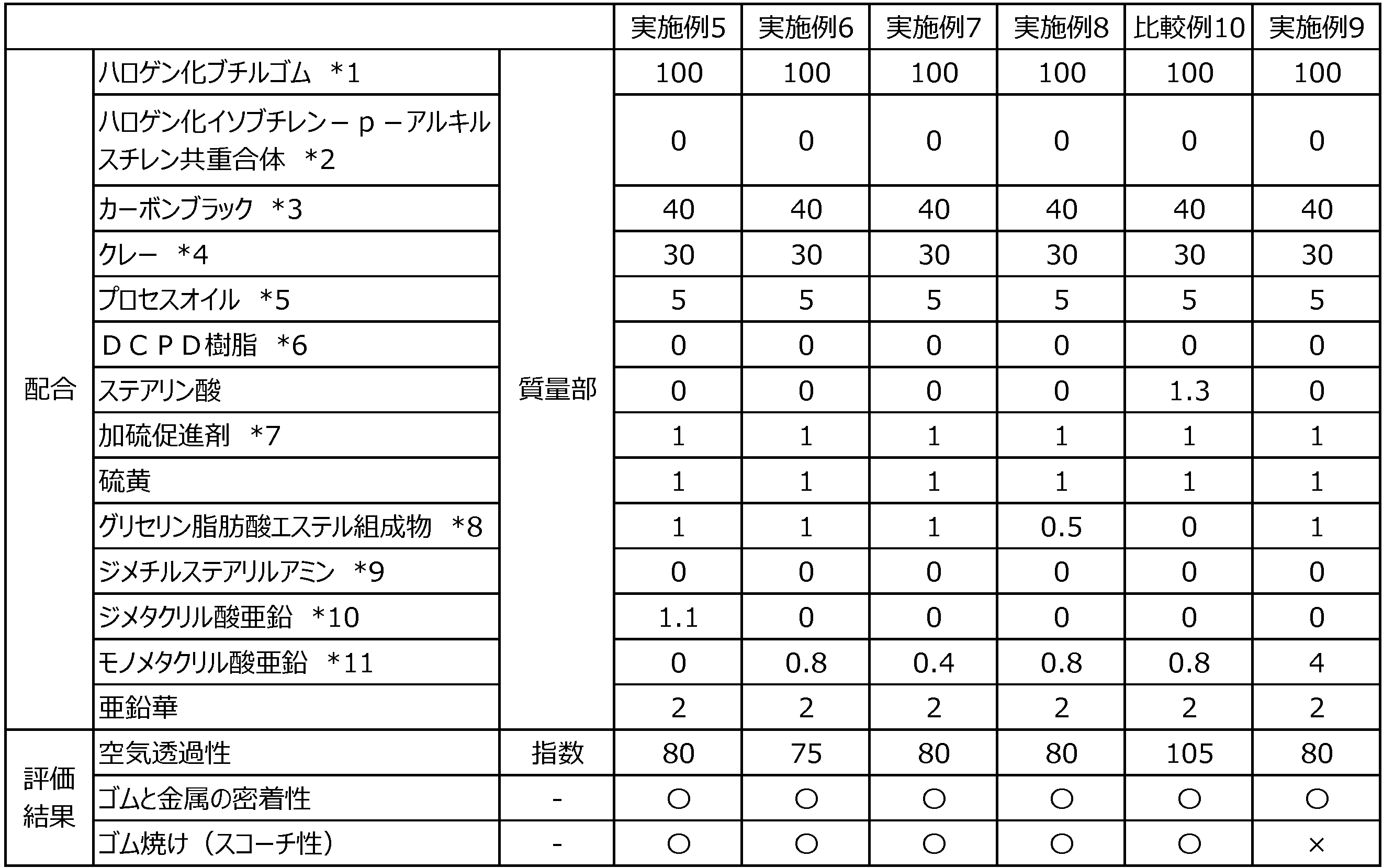
表1~表2に示す配合処方で、通常のバンバリーミキサーを用いて混練を行って、ゴム組成物を製造した。この際、下記の基準で、ゴム組成物と金属ローターとの密着性を評価した。
得られたゴム組成物に対して、下記の方法で、空気透過性及びゴム焼け(スコーチ性)を評価した。また、実施例1のゴム組成物に対して、下記方法で、凝集塊の面積を測定した。結果を表1~表2に示す。
(実施例1~2及び5~9、並びに、比較例1~2及び4~10)
表1~表2に示す配合処方で、通常のバンバリーミキサーを用いて混練を行って、ゴム組成物を製造した。この際、下記の基準で、ゴム組成物と金属ローターとの密着性を評価した。
得られたゴム組成物に対して、下記の方法で、空気透過性及びゴム焼け(スコーチ性)を評価した。また、実施例1のゴム組成物に対して、下記方法で、凝集塊の面積を測定した。結果を表1~表2に示す。
(1)空気透過性
ゴム組成物から加硫ゴム試験片を作製し、空気透過試験機M-C1(東洋精機社製)を用いて、JIS K 6275-1(2009年)に準拠して、60℃にて、加硫ゴム試験片の空気透過率を測定し、比較例1の空気透過率を100として、指数で示した。指数値が小さい程、空気透過率が小さく、低空気透過性に優れることを示す。
ゴム組成物から加硫ゴム試験片を作製し、空気透過試験機M-C1(東洋精機社製)を用いて、JIS K 6275-1(2009年)に準拠して、60℃にて、加硫ゴム試験片の空気透過率を測定し、比較例1の空気透過率を100として、指数で示した。指数値が小さい程、空気透過率が小さく、低空気透過性に優れることを示す。
(2)ゴムと金属の密着性
バンバリーミキサーでの混練後の落下時における、ゴム組成物と金属ローターとの密着によるゴム組成物の排出性を評価した。評価基準を以下に示す。
○(良好):排出性に問題なし
×(不良):密着によって排出が困難
バンバリーミキサーでの混練後の落下時における、ゴム組成物と金属ローターとの密着によるゴム組成物の排出性を評価した。評価基準を以下に示す。
○(良好):排出性に問題なし
×(不良):密着によって排出が困難
(3)ゴム焼け(スコーチ性)
JIS K6300-1:2013に準拠して、ゴム組成物の加硫曲線を、キュラストメーターを用いて145℃で測定した。加硫トルクカーブの最大値の10%を得るまでに要する時間(T0.1)を測定して、ゴム焼け(スコーチ)性を評価した。評価基準を以下に示した。
○(良好): T0.1が3分以上である。
×(不良): T0.1が3分未満である。
JIS K6300-1:2013に準拠して、ゴム組成物の加硫曲線を、キュラストメーターを用いて145℃で測定した。加硫トルクカーブの最大値の10%を得るまでに要する時間(T0.1)を測定して、ゴム焼け(スコーチ)性を評価した。評価基準を以下に示した。
○(良好): T0.1が3分以上である。
×(不良): T0.1が3分未満である。
(4)凝集塊の面積(μm2)
層状又は板状粘土鉱物の平均凝集塊面積は、例えば、測定範囲11μm×8μm(1000×700ピクセル)で得られたSEM画像より、層状又は板状粘土鉱物部分の凝集塊面積を求め、その数平均(相加平均)により算出した。算出に当たり、画像の端(辺)に接している粒子はカウントせず、50ピクセル以下の粒子はノイズと見做しカウントしなかった。凝集塊面積の値は低いほど、層状又は板状粘土鉱物が分散しており、良好である。
層状又は板状粘土鉱物の平均凝集塊面積は、例えば、測定範囲11μm×8μm(1000×700ピクセル)で得られたSEM画像より、層状又は板状粘土鉱物部分の凝集塊面積を求め、その数平均(相加平均)により算出した。算出に当たり、画像の端(辺)に接している粒子はカウントせず、50ピクセル以下の粒子はノイズと見做しカウントしなかった。凝集塊面積の値は低いほど、層状又は板状粘土鉱物が分散しており、良好である。
(比較例3)
表1に示す配合処方で、通常のバンバリーミキサーを用いて混練を行って、ゴム組成物を製造した。この際、上記の基準で、ゴム組成物と金属ローターとの密着性を評価した。
得られたゴム組成物に対して、上記の方法で、空気透過性及びゴム焼け(スコーチ性)を評価した。また、上記方法で、凝集塊の面積を測定する。結果を表1に示す。
表1に示す配合処方で、通常のバンバリーミキサーを用いて混練を行って、ゴム組成物を製造した。この際、上記の基準で、ゴム組成物と金属ローターとの密着性を評価した。
得られたゴム組成物に対して、上記の方法で、空気透過性及びゴム焼け(スコーチ性)を評価した。また、上記方法で、凝集塊の面積を測定する。結果を表1に示す。
(実施例3及び4)
表1に示す配合処方で、通常のバンバリーミキサーを用いて混練を行って、ゴム組成物を製造し、上記の基準で、ゴム組成物と金属ローターとの密着性を評価する。
また、得られるゴム組成物に対して、上記の方法で、空気透過性及びゴム焼け(スコーチ性)を評価する。結果を表1に示す。
表1に示す配合処方で、通常のバンバリーミキサーを用いて混練を行って、ゴム組成物を製造し、上記の基準で、ゴム組成物と金属ローターとの密着性を評価する。
また、得られるゴム組成物に対して、上記の方法で、空気透過性及びゴム焼け(スコーチ性)を評価する。結果を表1に示す。

*1 ハロゲン化ブチルゴム: 臭素化ブチルゴム(BrIIR)、エクソンモービル社製、「ブロモブチル2255」
*2 ハロゲン化イソブチレン-p-アルキルスチレン共重合体: 臭素化イソブチレン-p-メチルスチレン共重合体、エクソンモービル社製、「Exxpro3745」
*3 カーボンブラック: CABOT社製、N660、「STERLING V」、窒素吸着法比表面積=26m2/g
*4 クレー: 扁平クレー(カオリン質クレーのアスペクト比が大きいもの)、KAMIN LLC社製、「POLYFIL DL」、平均アスペクト比=20、平均粒径=3.2μm
*5 プロセスオイル: 新日本石油社製、「ブローンアスファルト 10-20」
*6 DCPD樹脂: ジシクロペンタジエン樹脂、エクソンモービル社製、「Escorez 8180」
*7 加硫促進剤: ジ-2-ベンゾチアゾリルジスルフィド、大内新興化学工業社製、「ノクセラーDM」
*8 グリセリン脂肪酸エステル組成物: 国際公開第2014/185545号(特許文献1)の製造例1に記載の方法に従い、脂肪酸をオクタン酸から同モル量のパーム由来硬化脂肪酸に変えて合成し、さらに分子蒸留することで調製したグリセリン脂肪酸エステル組成物、グリセリン脂肪酸モノエステル含有率=97質量%、構成脂肪酸の54質量%がステアリン酸で且つ42質量%がパルミチン酸、4質量%がその他脂肪酸
*9 ジメチルステアリルアミン: 花王社製、「ファーミン DM8098」
*10 ジメタクリル酸亜鉛: Cray Valley社製、ZDMA、「Dymalink 709」
*11 モノメタクリル酸亜鉛: Cray Valley社製、ZMMA、「Dymalink 708F」
*2 ハロゲン化イソブチレン-p-アルキルスチレン共重合体: 臭素化イソブチレン-p-メチルスチレン共重合体、エクソンモービル社製、「Exxpro3745」
*3 カーボンブラック: CABOT社製、N660、「STERLING V」、窒素吸着法比表面積=26m2/g
*4 クレー: 扁平クレー(カオリン質クレーのアスペクト比が大きいもの)、KAMIN LLC社製、「POLYFIL DL」、平均アスペクト比=20、平均粒径=3.2μm
*5 プロセスオイル: 新日本石油社製、「ブローンアスファルト 10-20」
*6 DCPD樹脂: ジシクロペンタジエン樹脂、エクソンモービル社製、「Escorez 8180」
*7 加硫促進剤: ジ-2-ベンゾチアゾリルジスルフィド、大内新興化学工業社製、「ノクセラーDM」
*8 グリセリン脂肪酸エステル組成物: 国際公開第2014/185545号(特許文献1)の製造例1に記載の方法に従い、脂肪酸をオクタン酸から同モル量のパーム由来硬化脂肪酸に変えて合成し、さらに分子蒸留することで調製したグリセリン脂肪酸エステル組成物、グリセリン脂肪酸モノエステル含有率=97質量%、構成脂肪酸の54質量%がステアリン酸で且つ42質量%がパルミチン酸、4質量%がその他脂肪酸
*9 ジメチルステアリルアミン: 花王社製、「ファーミン DM8098」
*10 ジメタクリル酸亜鉛: Cray Valley社製、ZDMA、「Dymalink 709」
*11 モノメタクリル酸亜鉛: Cray Valley社製、ZMMA、「Dymalink 708F」
表1に示す結果から、本発明に従う実施例のゴム組成物は、低空気透過性に優れると共に、金属部品への密着性が低いことが分かる。
また、表2の実施例5~9の結果から、不飽和カルボン酸の金属塩(E)を含むことで、空気透過性が更に低くなることが分かる。
また、実施例1と比較例3とは、ステアリン酸の有無のみが異なるが、実施例1の方が、比較例3よりもクレーの凝集塊の面積が小さく、ステアリン酸(D)を配合しない又はその含有量を0.1質量部以下とすることで、クレーの分散性が向上したことが分かる。
本発明のゴム組成物は、タイヤのインナーライナーに有用である。
Claims (14)
- ゴム成分(A)と、層状又は板状粘土鉱物(B)と、加工性改良剤(C)と、を含み、
ステアリン酸(D)を含まない、又は該ステアリン酸(D)の含有量が、前記ゴム成分(A)100質量部に対して0.1質量部以下であることを特徴とする、ゴム組成物。 - 前記層状又は板状粘土鉱物(B)が、クレー、マイカ、タルク又は長石である、請求項1に記載のゴム組成物。
- 前記ゴム成分(A)が、ブチルゴム、ハロゲン化ブチルゴム、ハロゲン化イソブチレン-p-アルキルスチレン共重合体から選択される少なくとも一種を含む、請求項1又は2に記載のゴム組成物。
- 前記ゴム成分(A)が、当該ゴム成分(A)100質量部中、ブチルゴム、ハロゲン化ブチルゴム、ハロゲン化イソブチレン-p-アルキルスチレン共重合体から選択される少なくとも一種を合計で50質量部以上含む、請求項1~3のいずれか一項に記載のゴム組成物。
- 前記ゴム成分(A)が、ブチルゴム、ハロゲン化ブチルゴム、ハロゲン化イソブチレン-p-アルキルスチレン共重合体から選択される少なくとも一種のみからなる、請求項1~4のいずれか一項に記載のゴム組成物。
- 前記加工性改良剤(C)が、グリセリン脂肪酸エステル組成物、ステアリルアミン誘導体から選択される少なくとも一種である、請求項1~5のいずれか一項に記載のゴム組成物。
- 前記グリセリン脂肪酸エステル組成物が、グリセリン脂肪酸モノエステルを含む、請求項6に記載のゴム組成物。
- 更に、不飽和カルボン酸の金属塩(E)を含む、請求項1~7のいずれか一項に記載のゴム組成物。
- 前記不飽和カルボン酸の金属塩(E)が、アクリル酸金属塩、メタクリル酸金属塩から選択される少なくとも一種である、請求項8に記載のゴム組成物。
- 前記不飽和カルボン酸の金属塩(E)が、ジメタクリル酸亜鉛、モノメタクリル酸亜鉛から選択される少なくとも一種である、請求項8又は9に記載のゴム組成物。
- 前記不飽和カルボン酸の金属塩(E)の含有量が、前記ゴム成分(A)100質量部に対して0.1~3.8質量部である、請求項8~10のいずれか一項に記載のゴム組成物。
- 前記ステアリン酸(D)を含まない、請求項1~11のいずれか一項に記載のゴム組成物。
- タイヤのインナーライナー用である、請求項1~12のいずれか一項に記載のゴム組成物。
- 請求項1~13のいずれか一項に記載のゴム組成物を用いたことを特徴とする、タイヤ。
Priority Applications (5)
| Application Number | Priority Date | Filing Date | Title |
|---|---|---|---|
| CN201980061101.0A CN112703223A (zh) | 2018-09-19 | 2019-08-08 | 橡胶组合物和轮胎 |
| EP19861591.6A EP3854844A4 (en) | 2018-09-19 | 2019-08-08 | RUBBER COMPOSITION AND TIRES |
| CN202311140718.6A CN117165002A (zh) | 2018-09-19 | 2019-08-08 | 橡胶组合物和轮胎 |
| JP2020548129A JP7289315B2 (ja) | 2018-09-19 | 2019-08-08 | ゴム組成物及びタイヤ |
| US17/273,436 US20210340353A1 (en) | 2018-09-19 | 2019-08-08 | Rubber composition and tire |
Applications Claiming Priority (2)
| Application Number | Priority Date | Filing Date | Title |
|---|---|---|---|
| JP2018174788 | 2018-09-19 | ||
| JP2018-174788 | 2018-09-19 |
Publications (1)
| Publication Number | Publication Date |
|---|---|
| WO2020059359A1 true WO2020059359A1 (ja) | 2020-03-26 |
Family
ID=69887059
Family Applications (1)
| Application Number | Title | Priority Date | Filing Date |
|---|---|---|---|
| PCT/JP2019/031485 Ceased WO2020059359A1 (ja) | 2018-09-19 | 2019-08-08 | ゴム組成物及びタイヤ |
Country Status (5)
| Country | Link |
|---|---|
| US (1) | US20210340353A1 (ja) |
| EP (1) | EP3854844A4 (ja) |
| JP (1) | JP7289315B2 (ja) |
| CN (2) | CN112703223A (ja) |
| WO (1) | WO2020059359A1 (ja) |
Citations (9)
| Publication number | Priority date | Publication date | Assignee | Title |
|---|---|---|---|---|
| JPH1135754A (ja) * | 1997-07-14 | 1999-02-09 | Bridgestone Corp | ゴム組成物 |
| JP2002088209A (ja) * | 2000-09-14 | 2002-03-27 | Bridgestone Corp | インナーライナー用ゴム組成物及びそれを用いた空気入りタイヤ |
| JP2002088208A (ja) * | 2000-02-29 | 2002-03-27 | Bridgestone Corp | インナーライナー用ゴム組成物 |
| WO2003067558A1 (fr) * | 2002-02-05 | 2003-08-14 | Kanebo, Ltd. | Composition de plasticine et son procede de production |
| JP2009242575A (ja) * | 2008-03-31 | 2009-10-22 | Yokohama Rubber Co Ltd:The | ジエン系ゴム組成物 |
| WO2014185545A1 (ja) | 2013-05-17 | 2014-11-20 | 株式会社ブリヂストン | ゴム組成物及びそれを用いたタイヤ |
| WO2016084862A1 (ja) * | 2014-11-28 | 2016-06-02 | 旭硝子株式会社 | フッ素ゴム組成物及びフッ素ゴム架橋物品 |
| WO2016139915A1 (ja) * | 2015-03-05 | 2016-09-09 | 株式会社ブリヂストン | タイヤ用ゴム組成物及びタイヤ |
| JP2017019891A (ja) * | 2015-07-07 | 2017-01-26 | 横浜ゴム株式会社 | 熱可塑性樹脂組成物、インナーライナーおよび空気入りタイヤ |
Family Cites Families (8)
| Publication number | Priority date | Publication date | Assignee | Title |
|---|---|---|---|---|
| DE69610050T2 (de) * | 1995-08-11 | 2001-04-12 | Daicel Chemical Industries, Ltd. | Polyglycerinfettsäureester-Zusammensetzung, ihr Herstellungsverfahren, Verfahren zum Herstellen einer sehr reinen Polyglycerinfettsäureester-Zusammensetzung, eine sehr reine Polyglycerinfettsäureester-Zusammensetzung, ein Zusatzmittel für Lebensmittel, eine Harz-Zusammensetzung und eine Zusammensetzung für Kosmetika oder Waschmittel |
| ES2295135T3 (es) * | 2000-02-28 | 2008-04-16 | Bridgestone Corporation | Composicion de caucho para revestimiento interno. |
| JP2001354824A (ja) * | 2000-06-15 | 2001-12-25 | Kanegafuchi Chem Ind Co Ltd | 粉体特性の改善された樹脂組成物およびその製造方法 |
| JP5745490B2 (ja) * | 2012-10-25 | 2015-07-08 | 住友ゴム工業株式会社 | インナーライナー用ゴム組成物及び空気入りタイヤ |
| CN104262976B (zh) * | 2014-10-21 | 2016-08-24 | 山东阳谷华泰化工股份有限公司 | 一种气密性增进剂及其制备方法与应用 |
| CN105061953A (zh) * | 2015-08-31 | 2015-11-18 | 苏州凯欧曼新材料科技有限公司 | 一种耐油性能良好的新型橡胶及其制备方法 |
| JP6897366B2 (ja) * | 2017-06-29 | 2021-06-30 | 住友ゴム工業株式会社 | ゴム組成物及び空気入りタイヤ |
| JP6992308B2 (ja) * | 2017-08-01 | 2022-01-13 | 住友ゴム工業株式会社 | ゴム組成物及び空気入りタイヤ |
-
2019
- 2019-08-08 EP EP19861591.6A patent/EP3854844A4/en active Pending
- 2019-08-08 CN CN201980061101.0A patent/CN112703223A/zh active Pending
- 2019-08-08 WO PCT/JP2019/031485 patent/WO2020059359A1/ja not_active Ceased
- 2019-08-08 CN CN202311140718.6A patent/CN117165002A/zh active Pending
- 2019-08-08 JP JP2020548129A patent/JP7289315B2/ja active Active
- 2019-08-08 US US17/273,436 patent/US20210340353A1/en not_active Abandoned
Patent Citations (9)
| Publication number | Priority date | Publication date | Assignee | Title |
|---|---|---|---|---|
| JPH1135754A (ja) * | 1997-07-14 | 1999-02-09 | Bridgestone Corp | ゴム組成物 |
| JP2002088208A (ja) * | 2000-02-29 | 2002-03-27 | Bridgestone Corp | インナーライナー用ゴム組成物 |
| JP2002088209A (ja) * | 2000-09-14 | 2002-03-27 | Bridgestone Corp | インナーライナー用ゴム組成物及びそれを用いた空気入りタイヤ |
| WO2003067558A1 (fr) * | 2002-02-05 | 2003-08-14 | Kanebo, Ltd. | Composition de plasticine et son procede de production |
| JP2009242575A (ja) * | 2008-03-31 | 2009-10-22 | Yokohama Rubber Co Ltd:The | ジエン系ゴム組成物 |
| WO2014185545A1 (ja) | 2013-05-17 | 2014-11-20 | 株式会社ブリヂストン | ゴム組成物及びそれを用いたタイヤ |
| WO2016084862A1 (ja) * | 2014-11-28 | 2016-06-02 | 旭硝子株式会社 | フッ素ゴム組成物及びフッ素ゴム架橋物品 |
| WO2016139915A1 (ja) * | 2015-03-05 | 2016-09-09 | 株式会社ブリヂストン | タイヤ用ゴム組成物及びタイヤ |
| JP2017019891A (ja) * | 2015-07-07 | 2017-01-26 | 横浜ゴム株式会社 | 熱可塑性樹脂組成物、インナーライナーおよび空気入りタイヤ |
Non-Patent Citations (1)
| Title |
|---|
| See also references of EP3854844A4 |
Also Published As
| Publication number | Publication date |
|---|---|
| EP3854844A1 (en) | 2021-07-28 |
| CN117165002A (zh) | 2023-12-05 |
| JPWO2020059359A1 (ja) | 2021-09-24 |
| US20210340353A1 (en) | 2021-11-04 |
| JP7289315B2 (ja) | 2023-06-09 |
| EP3854844A4 (en) | 2022-06-08 |
| CN112703223A (zh) | 2021-04-23 |
Similar Documents
| Publication | Publication Date | Title |
|---|---|---|
| RU2655324C2 (ru) | Резиновая смесь и шина, изготовленная с её использованием | |
| JP6484609B2 (ja) | タイヤ用ゴム組成物及びその製造方法並びにタイヤ | |
| JP6234449B2 (ja) | ゴム組成物及びそれを用いたタイヤ | |
| US5208294A (en) | Hydrogenated nitrile vulcanizates | |
| EP2098545B1 (en) | Composition for oil-resistant weather-resistant rubber, and rubber molded body | |
| CN107429007B (zh) | 用于配混有二氧化硅的橡胶组合物的添加剂组合物、橡胶组合物和轮胎 | |
| JP6164260B2 (ja) | ゴム組成物およびそれを用いた空気入りタイヤ | |
| JP6685902B2 (ja) | ゴム組成物、その製造方法及びタイヤ | |
| WO2020059359A1 (ja) | ゴム組成物及びタイヤ | |
| WO2020059358A1 (ja) | ゴム組成物及びタイヤ | |
| JP2015168726A (ja) | 重荷重用タイヤ | |
| JP2015232071A (ja) | ゴム組成物及びそれから製造したタイヤ部品又は部材 | |
| WO2013021586A1 (ja) | ゴム組成物及びそれを用いた空気入りタイヤ | |
| JP2003238740A (ja) | ゴム組成物及びそれを用いた空気入りタイヤ | |
| JP7704665B2 (ja) | タイヤ用ゴム組成物、及びタイヤ | |
| JP5151202B2 (ja) | ラテックスの製造方法、及び板状粘土鉱物複合ポリマーの製造方法 | |
| JP2013173906A (ja) | ゴム組成物 |
Legal Events
| Date | Code | Title | Description |
|---|---|---|---|
| 121 | Ep: the epo has been informed by wipo that ep was designated in this application |
Ref document number: 19861591 Country of ref document: EP Kind code of ref document: A1 |
|
| ENP | Entry into the national phase |
Ref document number: 2020548129 Country of ref document: JP Kind code of ref document: A |
|
| NENP | Non-entry into the national phase |
Ref country code: DE |
|
| ENP | Entry into the national phase |
Ref document number: 2019861591 Country of ref document: EP Effective date: 20210419 |