WO2020059543A1 - 生体材料 - Google Patents
生体材料 Download PDFInfo
- Publication number
- WO2020059543A1 WO2020059543A1 PCT/JP2019/035212 JP2019035212W WO2020059543A1 WO 2020059543 A1 WO2020059543 A1 WO 2020059543A1 JP 2019035212 W JP2019035212 W JP 2019035212W WO 2020059543 A1 WO2020059543 A1 WO 2020059543A1
- Authority
- WO
- WIPO (PCT)
- Prior art keywords
- neutral
- acyl
- lipid
- biomaterial
- group
- Prior art date
- Legal status (The legal status is an assumption and is not a legal conclusion. Google has not performed a legal analysis and makes no representation as to the accuracy of the status listed.)
- Ceased
Links
Images
Classifications
-
- A—HUMAN NECESSITIES
- A61—MEDICAL OR VETERINARY SCIENCE; HYGIENE
- A61L—METHODS OR APPARATUS FOR STERILISING MATERIALS OR OBJECTS IN GENERAL; DISINFECTION, STERILISATION OR DEODORISATION OF AIR; CHEMICAL ASPECTS OF BANDAGES, DRESSINGS, ABSORBENT PADS OR SURGICAL ARTICLES; MATERIALS FOR BANDAGES, DRESSINGS, ABSORBENT PADS OR SURGICAL ARTICLES
- A61L26/00—Chemical aspects of, or use of materials for, wound dressings or bandages in liquid, gel or powder form
- A61L26/0009—Chemical aspects of, or use of materials for, wound dressings or bandages in liquid, gel or powder form containing macromolecular materials
- A61L26/0019—Chemical aspects of, or use of materials for, wound dressings or bandages in liquid, gel or powder form containing macromolecular materials obtained otherwise than by reactions only involving carbon-to-carbon unsaturated bonds
-
- A—HUMAN NECESSITIES
- A61—MEDICAL OR VETERINARY SCIENCE; HYGIENE
- A61K—PREPARATIONS FOR MEDICAL, DENTAL OR TOILETRY PURPOSES
- A61K47/00—Medicinal preparations characterised by the non-active ingredients used, e.g. carriers or inert additives; Targeting or modifying agents chemically bound to the active ingredient
- A61K47/06—Organic compounds, e.g. natural or synthetic hydrocarbons, polyolefins, mineral oil, petrolatum or ozokerite
- A61K47/08—Organic compounds, e.g. natural or synthetic hydrocarbons, polyolefins, mineral oil, petrolatum or ozokerite containing oxygen, e.g. ethers, acetals, ketones, quinones, aldehydes, peroxides
- A61K47/10—Alcohols; Phenols; Salts thereof, e.g. glycerol; Polyethylene glycols [PEG]; Poloxamers; PEG/POE alkyl ethers
-
- A—HUMAN NECESSITIES
- A61—MEDICAL OR VETERINARY SCIENCE; HYGIENE
- A61K—PREPARATIONS FOR MEDICAL, DENTAL OR TOILETRY PURPOSES
- A61K47/00—Medicinal preparations characterised by the non-active ingredients used, e.g. carriers or inert additives; Targeting or modifying agents chemically bound to the active ingredient
- A61K47/06—Organic compounds, e.g. natural or synthetic hydrocarbons, polyolefins, mineral oil, petrolatum or ozokerite
- A61K47/08—Organic compounds, e.g. natural or synthetic hydrocarbons, polyolefins, mineral oil, petrolatum or ozokerite containing oxygen, e.g. ethers, acetals, ketones, quinones, aldehydes, peroxides
- A61K47/14—Esters of carboxylic acids, e.g. fatty acid monoglycerides, medium-chain triglycerides, parabens or PEG fatty acid esters
-
- A—HUMAN NECESSITIES
- A61—MEDICAL OR VETERINARY SCIENCE; HYGIENE
- A61K—PREPARATIONS FOR MEDICAL, DENTAL OR TOILETRY PURPOSES
- A61K47/00—Medicinal preparations characterised by the non-active ingredients used, e.g. carriers or inert additives; Targeting or modifying agents chemically bound to the active ingredient
- A61K47/06—Organic compounds, e.g. natural or synthetic hydrocarbons, polyolefins, mineral oil, petrolatum or ozokerite
- A61K47/16—Organic compounds, e.g. natural or synthetic hydrocarbons, polyolefins, mineral oil, petrolatum or ozokerite containing nitrogen, e.g. nitro-, nitroso-, azo-compounds, nitriles, cyanates
- A61K47/18—Amines; Amides; Ureas; Quaternary ammonium compounds; Amino acids; Oligopeptides having up to five amino acids
- A61K47/186—Quaternary ammonium compounds, e.g. benzalkonium chloride or cetrimide
-
- A—HUMAN NECESSITIES
- A61—MEDICAL OR VETERINARY SCIENCE; HYGIENE
- A61K—PREPARATIONS FOR MEDICAL, DENTAL OR TOILETRY PURPOSES
- A61K47/00—Medicinal preparations characterised by the non-active ingredients used, e.g. carriers or inert additives; Targeting or modifying agents chemically bound to the active ingredient
- A61K47/06—Organic compounds, e.g. natural or synthetic hydrocarbons, polyolefins, mineral oil, petrolatum or ozokerite
- A61K47/24—Organic compounds, e.g. natural or synthetic hydrocarbons, polyolefins, mineral oil, petrolatum or ozokerite containing atoms other than carbon, hydrogen, oxygen, halogen, nitrogen or sulfur, e.g. cyclomethicone or phospholipids
-
- A—HUMAN NECESSITIES
- A61—MEDICAL OR VETERINARY SCIENCE; HYGIENE
- A61K—PREPARATIONS FOR MEDICAL, DENTAL OR TOILETRY PURPOSES
- A61K47/00—Medicinal preparations characterised by the non-active ingredients used, e.g. carriers or inert additives; Targeting or modifying agents chemically bound to the active ingredient
- A61K47/30—Macromolecular organic or inorganic compounds, e.g. inorganic polyphosphates
- A61K47/32—Macromolecular compounds obtained by reactions only involving carbon-to-carbon unsaturated bonds, e.g. carbomers, poly(meth)acrylates, or polyvinyl pyrrolidone
-
- A—HUMAN NECESSITIES
- A61—MEDICAL OR VETERINARY SCIENCE; HYGIENE
- A61K—PREPARATIONS FOR MEDICAL, DENTAL OR TOILETRY PURPOSES
- A61K9/00—Medicinal preparations characterised by special physical form
- A61K9/0012—Galenical forms characterised by the site of application
- A61K9/0053—Mouth and digestive tract, i.e. intraoral and peroral administration
- A61K9/006—Oral mucosa, e.g. mucoadhesive forms, sublingual droplets; Buccal patches or films; Buccal sprays
-
- A—HUMAN NECESSITIES
- A61—MEDICAL OR VETERINARY SCIENCE; HYGIENE
- A61K—PREPARATIONS FOR MEDICAL, DENTAL OR TOILETRY PURPOSES
- A61K9/00—Medicinal preparations characterised by special physical form
- A61K9/70—Web, sheet or filament bases ; Films; Fibres of the matrix type containing drug
- A61K9/7007—Drug-containing films, membranes or sheets
-
- A—HUMAN NECESSITIES
- A61—MEDICAL OR VETERINARY SCIENCE; HYGIENE
- A61L—METHODS OR APPARATUS FOR STERILISING MATERIALS OR OBJECTS IN GENERAL; DISINFECTION, STERILISATION OR DEODORISATION OF AIR; CHEMICAL ASPECTS OF BANDAGES, DRESSINGS, ABSORBENT PADS OR SURGICAL ARTICLES; MATERIALS FOR BANDAGES, DRESSINGS, ABSORBENT PADS OR SURGICAL ARTICLES
- A61L26/00—Chemical aspects of, or use of materials for, wound dressings or bandages in liquid, gel or powder form
- A61L26/0009—Chemical aspects of, or use of materials for, wound dressings or bandages in liquid, gel or powder form containing macromolecular materials
- A61L26/0014—Chemical aspects of, or use of materials for, wound dressings or bandages in liquid, gel or powder form containing macromolecular materials obtained by reactions only involving carbon-to-carbon unsaturated bonds
-
- A—HUMAN NECESSITIES
- A61—MEDICAL OR VETERINARY SCIENCE; HYGIENE
- A61L—METHODS OR APPARATUS FOR STERILISING MATERIALS OR OBJECTS IN GENERAL; DISINFECTION, STERILISATION OR DEODORISATION OF AIR; CHEMICAL ASPECTS OF BANDAGES, DRESSINGS, ABSORBENT PADS OR SURGICAL ARTICLES; MATERIALS FOR BANDAGES, DRESSINGS, ABSORBENT PADS OR SURGICAL ARTICLES
- A61L26/00—Chemical aspects of, or use of materials for, wound dressings or bandages in liquid, gel or powder form
- A61L26/0061—Use of materials characterised by their function or physical properties
- A61L26/0066—Medicaments; Biocides
-
- A—HUMAN NECESSITIES
- A61—MEDICAL OR VETERINARY SCIENCE; HYGIENE
- A61P—SPECIFIC THERAPEUTIC ACTIVITY OF CHEMICAL COMPOUNDS OR MEDICINAL PREPARATIONS
- A61P25/00—Drugs for disorders of the nervous system
- A61P25/04—Centrally acting analgesics, e.g. opioids
-
- A—HUMAN NECESSITIES
- A61—MEDICAL OR VETERINARY SCIENCE; HYGIENE
- A61L—METHODS OR APPARATUS FOR STERILISING MATERIALS OR OBJECTS IN GENERAL; DISINFECTION, STERILISATION OR DEODORISATION OF AIR; CHEMICAL ASPECTS OF BANDAGES, DRESSINGS, ABSORBENT PADS OR SURGICAL ARTICLES; MATERIALS FOR BANDAGES, DRESSINGS, ABSORBENT PADS OR SURGICAL ARTICLES
- A61L2300/00—Biologically active materials used in bandages, wound dressings, absorbent pads or medical devices
- A61L2300/20—Biologically active materials used in bandages, wound dressings, absorbent pads or medical devices containing or releasing organic materials
- A61L2300/204—Biologically active materials used in bandages, wound dressings, absorbent pads or medical devices containing or releasing organic materials with nitrogen-containing functional groups, e.g. aminoxides, nitriles, guanidines
- A61L2300/208—Quaternary ammonium compounds
-
- A—HUMAN NECESSITIES
- A61—MEDICAL OR VETERINARY SCIENCE; HYGIENE
- A61L—METHODS OR APPARATUS FOR STERILISING MATERIALS OR OBJECTS IN GENERAL; DISINFECTION, STERILISATION OR DEODORISATION OF AIR; CHEMICAL ASPECTS OF BANDAGES, DRESSINGS, ABSORBENT PADS OR SURGICAL ARTICLES; MATERIALS FOR BANDAGES, DRESSINGS, ABSORBENT PADS OR SURGICAL ARTICLES
- A61L2300/00—Biologically active materials used in bandages, wound dressings, absorbent pads or medical devices
- A61L2300/20—Biologically active materials used in bandages, wound dressings, absorbent pads or medical devices containing or releasing organic materials
- A61L2300/22—Lipids, fatty acids, e.g. prostaglandins, oils, fats, waxes
Definitions
- the present invention relates to a biomaterial.
- cancer treatment affects the mucous membrane of the mouth and stomatitis is likely to occur.
- stomatitis when chemotherapy is given when chemotherapy is given to chemotherapy and when radiation is applied directly to the mucous membrane of the mouth in radiation therapy for head and neck cancer (cancer from head to neck) Is indispensable.
- the stomatitis is so painful that the food cannot be taken by mouth.
- Examples of the symptomatic treatment for stomatitis include a patch directly applied to the affected area (for example, AphtaSeal (R) 25 ⁇ g, manufactured by Taisho Toyama Pharmaceutical Co., Ltd .; active ingredient triamcinolone acetonide), an ointment applied to the affected area (eg, dexartin oral ointment, Nippon Kayaku Co., Ltd .; active ingredient dexamethasone), and a spray (eg, 50 ⁇ g for external use of Salcoat® capsules, Teijin Pharma Co., Ltd .; active ingredient beclomethasone propionate ) sprayed on the affected area.
- an ointment applied to the affected area eg, dexartin oral ointment, Nippon Kayaku Co., Ltd .
- Patent Document 1 discloses a cosmetic composition, particularly for use on aged and / or stressed skin, which comprises, besides water, at least one substance which forms a lamellar structure with water.
- a cosmetic composition as present in the composition a) General formula I —CH 2 —N + — (CH 3 ) 3 (Formula I) And / or b) at least one metabolite of the compound; and / or c) S-adenosylmethionine.
- a cosmetic composition is described.
- Patent Document 2 discloses that a) at least one monoacyl lipid; b) at least one diacylglycerol, at least one tocopherol, or a mixture thereof; c) at least one fragmenting agent; Also described are compositions, optionally including an active agent, that are capable of self-dispersing and producing colloidal, non-lamellar particles upon contact with an aqueous fluid.
- JP 2008-169219 A Japanese Patent Publication No. 2008-509120
- the cosmetic composition described in Patent Literature 1 and the composition described in Patent Literature 2 have scratch resistance when brought into contact with water (when friction is applied) as shown in Comparative Examples described later. Residual properties on the mucous membrane) and retention properties (adhesion to the mucous membrane in a humid environment) were not at satisfactory levels, and there was room for improvement.
- the present inventors have conducted intensive studies to solve the above-mentioned problems, and have found that the above-mentioned problems can be solved by using a biomaterial containing a predetermined component, thereby completing the present invention.
- the present invention includes the following [1] to [16].
- a biomaterial comprising a neutral acyl lipid, at least one selected from the group consisting of phospholipids and quaternary ammonium salts, and a carboxyvinyl polymer
- the neutral acyl lipid includes at least one selected from the group consisting of a neutral mono acyl lipid and a neutral di acyl lipid
- the neutral acyl lipid has a neutral monoacyl lipid of 0% to 100% by mass, a neutral diacyl lipid of 0% to 100% by mass, and a total amount of the neutral acyl lipid.
- the biomaterial according to [3], wherein the acyl group has 16 to 22 carbon atoms.
- R 1 , R 2 , R 3 , and R 4 are each independently an alkyl group having 1 to 22 carbon atoms, and the hydrogen atom of the alkyl group is represented by an alkoxy group, an acyl group, or an acyloxy group. It may be substituted.
- the biomaterial according to [9], wherein the alkoxy group, acyl group, or acyloxy group substituted with a hydrogen atom of the alkyl group has 16 to 18 carbon atoms.
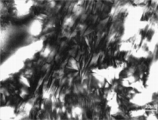
- FIG. 1 is a photograph substituted for a drawing showing a liquid crystal phase (hexagonal columnar phase) formed by the biomaterial of Example 7 (observation magnification: 50 ⁇ ).
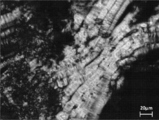
- FIG. 2 is a drawing substitute photograph showing a liquid crystal phase (lamellar phase) formed by the biomaterial of Example 1 (observation magnification: 50 ⁇ ).
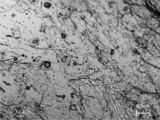
- FIG. 3 is a drawing substitute photograph (observation magnification: 20 times, transmitted light) showing a liquid crystal phase (cubic phase) formed by the biomaterial of Example 5.
- the range expressed by using “to” includes both ends of “to”.
- the range represented by “AB” includes A and B.
- the solid content means a component contained in the composition excluding the dispersion medium component, and is calculated as a solid content even if the property is liquid.
- the biomaterial of the present invention comprises a neutral acyl lipid, at least one selected from the group consisting of phospholipids and quaternary ammonium salts, and a carboxyvinyl polymer.
- Neutral acyl lipid means an electrically neutral acyl lipid. That is, the neutral acyl lipid does not include a cation portion and an anion portion.
- acyl lipid means a lipid containing an acyl group.
- Neutral acyl lipids include neutral mono-acyl lipids, neutral di-acyl lipids, and neutral tri-acyl lipids.
- the neutral acyl lipid includes at least one selected from the group consisting of neutral monoacyl lipids and neutral diacyl lipids, and is selected from the group consisting of neutral mono acyl lipids and neutral diacyl lipids.
- the content of at least one of these is 80% by mass to 100% by mass, preferably 90% by mass to 100% by mass, more preferably 100% by mass, based on the total mass of the neutral acyl lipid.
- the neutral acyl lipid preferably contains both a neutral monoacyl lipid and a neutral diacyl lipid.
- the content of the neutral monoacyl lipid is not particularly limited, but is preferably 0% to 100% by mass, more preferably 30% to 70% by mass, based on the total mass of the neutral acyl lipid.
- the content of the neutral diacyl lipid is not particularly limited, but is preferably 0% to 100% by mass, more preferably 30% to 70% by mass, based on the total mass of the neutral acyl lipid.
- the content of the neutral triacyl lipid is not particularly limited, but is preferably 0 to 20% by mass, more preferably 0% by mass (0% by mass), based on the total mass of the neutral acyl lipid.
- the neutral acyl lipid may contain 30% to 70% by mass of a neutral monoacyl lipid and 30% to 70% by mass of a neutral diacyl lipid, and may not contain a neutral triacyl lipid. More preferred.
- the carbon number of the acyl group of the neutral acyl lipid is not particularly limited, but is preferably 6 to 32, and more preferably 16 to 22.
- a hydrocarbon group other than the carbonyl group of the acyl group a saturated or unsaturated chain hydrocarbon group having 5 to 31 carbon atoms is preferable, and a saturated or unsaturated chain hydrocarbon group having 15 to 21 carbon atoms is preferable.
- the neutral acyl lipid has two or more acyl groups in one molecule, the acyl groups may be of the same type or different types.
- Neutral acyl lipids include glycerol, diglycerol, sugars (eg, inositol), and lipids obtained by ester bonding of a fatty acid and a polyol such as succinic acid.
- acyl glycerol is preferred, and glycerol oleate is more preferred.
- Acyl glycerol includes monoacyl glycerol, diacyl glycerol, and triacyl glycerol.
- Glycerol oleate includes glycerol monooleate, glycerol dioleate, and glycerol trioleate.
- monoacylglycerol and glycerol monooleate correspond to one embodiment of the above-described neutral monoacyl lipid
- diacylglycerol and glycerol dioleate correspond to one embodiment of the above-described neutral diacyl lipid
- triacylglycerol and triolein Glycerol acid corresponds to one embodiment of the neutral triacyl lipid described above.
- the content ratios of the neutral monoacyl lipid, the neutral diacyl lipid, and the neutral triacyl lipid in the neutral acyl lipid are obtained by measuring by high performance liquid chromatography (HPLC). is there. -HPLC measurement conditions Column: Cadenza CD-C18 (4.6 mm x 300 mm) (Imtakt) Eluent: water / tetrahydrofuran Flow rate: 1.0 mL / min Detection: Corona CAD (Corona charged particle detector) Column temperature: 50 ° C
- the content of the neutral acyl lipid in the biomaterial of the present invention is not particularly limited, but is preferably 35% by mass to 85% by mass, and more preferably 35% by mass to 75% by mass based on the total mass of the solid content of the biomaterial of the present invention. %, More preferably 55% by mass to 75% by mass.
- the phospholipid is not particularly limited as long as it has a phosphate ester structure in its molecular structure, but glycerophospholipid having a glycerin skeleton and sphingophospholipid having a sphingosine skeleton are representative. Whether the phospholipid is glycerophosphate or sphingolipid, it has an acyl group derived from a fatty acid in the molecule.
- the number of carbon atoms in the acyl group of the phospholipid is not particularly limited, but is preferably 12 to 22, and more preferably 16 to 18.
- a hydrocarbon group other than the carbonyl group of the acyl group a saturated or unsaturated chain hydrocarbon group having 11 to 21 carbon atoms is preferable, and a saturated or unsaturated chain hydrocarbon group having 15 to 17 carbon atoms is preferable.
- the acyl groups may be of the same type or different types.
- Specific examples of the phospholipid include phosphatidylcholine.
- phosphatidylcholine examples include PO phosphatidylcholine (phosphatidylcholine having palmitic acid at position 1 ( ⁇ -position), oleic acid at position 2 ( ⁇ -position), and choline at position 3 ( ⁇ -position)), and DL phosphatidylcholine (position 1 ( Linoleic acid at the ⁇ -position), linoleic acid at the 2-position ( ⁇ -position), and phosphatidylcholine having choline at the 3-position ( ⁇ -position), and dipalmitoylphosphatidylcholine.
- PO phosphatidylcholine phosphatidylcholine having palmitic acid at position 1 ( ⁇ -position), oleic acid at position 2 ( ⁇ -position), and choline at position 3 ( ⁇ -position)
- DL phosphatidylcholine position 1 ( Linoleic acid at the ⁇ -position), linoleic acid at the 2-position ( ⁇ -position), and phosphatidylcho
- the content of the phospholipid in the biomaterial of the present invention is not particularly limited, but is 15% to 65% by mass, based on the total mass of the solid content of the biomaterial of the present invention, in total with the quaternary ammonium salt described below. %, More preferably 20% to 60% by mass, even more preferably 25% to 45% by mass.
- a quaternary ammonium salt is an ionic compound composed of a quaternary ammonium cation and an anion.
- the quaternary ammonium cation is preferably a positively charged polyatomic ion represented by the molecular formula NR 4 + .
- each R independently represents an alkyl group or an aryl group which may have a substituent, and a plurality of Rs may be the same or different.
- the quaternary ammonium cation of the quaternary ammonium salt is preferably a quaternary ammonium cation represented by the following formula.
- R 1 , R 2 , R 3 , and R 4 are each independently an alkyl group having 1 to 22 carbon atoms, and the hydrogen atom of the alkyl group is represented by an alkoxy group, an acyl group, or an acyloxy group. It may be substituted.
- the number of carbon atoms of the alkoxy group, acyl group or acyloxy group substituted for the hydrogen atom of the alkyl group is not particularly limited, but is preferably 16 to 18.
- dioleoyloxytrimethylammonium propane chloride DOTAP, N- [1- (2,3-dioleoyloxy) propyl] -N, N, N-trimethylammonium chloride
- dioctadede Senyltrimethylammonium propane chloride DOTMA, N- [1- (2,3-dioleyloxy) propyl)]-N, N, N-trimethylammonium chloride
- didecyldimethylammonium chloride didecyldimethylammonium bromide
- Dilauryl dimethyl ammonium chloride dicetyl dimethyl ammonium chloride, dicetyl dimethyl ammonium bromide, distearyl dimethyl ammonium chloride, distearyl dimethyl ammonium bromide, dioleyl dimethyl ammonium Rorido, dibehenyl dimethyl ammonium chloride, dibehenyl dimethyl ammonium bromide
- the content of the quaternary ammonium salt in the biomaterial of the present invention is not particularly limited. Is preferably 20% by mass to 60% by mass, and more preferably 25% by mass to 45% by mass.
- the carboxyvinyl polymer swells upon contact with water, and a network of liquid crystal micelles and a network of carboxyvinyl polymer are formed in a superimposed manner.
- the presence of the two networks of the liquid crystal micelle network and the carboxyvinyl polymer network can improve the scratch resistance and the retention of the biomaterial of the present invention when brought into contact with water.
- the carboxyvinyl polymer is a water-soluble vinyl polymer having a carboxy group. Specifically, a cross-linked structure having allyl units derived from acrylic acid and / or methacrylic acid as the main chain and allyl sucrose or allylic ether of pentaerythritol is used. (A crosslinked structure derived from the above compound).
- the carboxyvinyl polymer may be a carboxyvinyl polymer salt.
- carboxyvinyl polymers include, specifically, "Carbopol 941", “Carbopol 971”, “Carbopol 974", “Carbopol 980” and “Carbopol 981” manufactured by Lubrizol Advanced Materials; “Hibiswako 103”, “Hibiswako 104" and “Hibiswako 105" manufactured by Wako Pure Chemical Industries, Ltd .; “Junron PW-120”, “Junron PW-121” and “Junron PW-” manufactured by Toagosei Co., Ltd.
- one type of carboxyvinyl polymer may be used alone, or two or more types may be used in combination.
- the content of the carboxyvinyl polymer in the biomaterial of the present invention is not particularly limited, but is preferably 0.1% by mass to 10.0% by mass, and More preferably, it is from 1.0 to 3.5% by mass, more preferably from 1.0 to 3.5% by mass.
- the biomaterial of the present invention can further include a non-aqueous dispersion medium.
- the non-aqueous dispersion medium is not particularly limited as long as it is a non-aqueous dispersion medium that can disperse at least one selected from the group consisting of the above-described neutral acyl lipids, phospholipids and quaternary ammonium salts, and a carboxyvinyl polymer. Alcohols having 7 or more carbon atoms are preferred, and alcohols having 7 to 18 carbon atoms are more preferred.
- Examples of the alcohol having 7 or more carbon atoms include heptyl alcohol (7 carbon atoms), caprylic alcohol (8 carbon atoms), pelargone alcohol (9 carbon atoms), caprin alcohol (10 carbon atoms), lauryl alcohol (12 carbon atoms), and myristyl. Alcohol (C14), oleyl alcohol (C18), and stearyl alcohol (C18) are mentioned.
- the solid content in the biomaterial of the present invention is not particularly limited, but is preferably 80% by mass or more, and more preferably 90% by mass or more. More preferred.
- the upper limit is, for example, less than 100% by mass.
- the biomaterial of the present invention is at least one selected from the group consisting of neutral acyl lipids, phospholipids and quaternary ammonium salts described above, a carboxyvinyl polymer, and a non-aqueous dispersion, as long as the effects of the present invention are not impaired.
- other components may be included.
- Examples of the other components include sugars and sugar alcohols.
- the saccharide is not particularly limited, but is, for example, a monosaccharide or a disaccharide, and specific examples include glucose, galactose, sucrose, trehalose, and lactose.
- Sugar alcohol is an organic compound having a structure in which the carbonyl group of aldose or ketose has been reduced, and is not particularly limited. Specific examples include erythritol, xylitol, mannitol, and sorbitol.
- the biomaterial of the present invention forms a liquid crystal phase upon contact with water.
- the water is not limited to pure water, and may be water (water) contained in an aqueous fluid other than water.
- aqueous fluids other than water include, but are not limited to, saliva, tissue fluid, blood, and lymph.
- the amount of water to be brought into contact with the biomaterial of the present invention is not particularly limited, but is preferably 20% by mass to 1000% by mass, more preferably 30% by mass to 500% by mass, based on the total mass of the biomaterial of the present invention. .
- the liquid crystal phase is not particularly limited, but includes a lamellar (La) phase, a sponge (V2) phase, a hexagonal columnar (H2) phase, a bicontinuous cubic (L3) phase, a cubic (Q) phase, and two of these. It is often one selected from the group consisting of a mixture of more than one species, and is preferably a lamella phase, a hexagonal columnar phase or a cubic phase.
- the temperature at which the biomaterial of the present invention is brought into contact with water is not particularly limited, but is preferably from 20 ° C to 40 ° C, more preferably from 35 ° C to 40 ° C.
- the biomaterial of the present invention comprises a neutral acyl lipid having a neutral monoacyl lipid and a neutral diacyl lipid in a specific range, and at least one selected from the group consisting of phospholipids and quaternary ammonium salts, It can be produced by mixing a carboxyvinyl polymer and, if desired, a non-aqueous dispersion medium.
- the mixing method is not particularly limited, and a conventionally known method can be used.
- the biomaterial of the present invention means a material used in a living body, for example, for supporting or repairing a living body that has lost its original function due to injury or disease and a living body with reduced function. And materials used in vivo.
- the biomaterial of the present invention can be preferably used for protecting mucous membranes, particularly for protecting oral mucosa.
- the biomaterial of the present invention absorbs water by disposing the biomaterial of the present invention on mucous membranes and adding water or a solution containing water as needed. A liquid crystal phase is formed and adheres to the mucous membrane.
- the biomaterial of the present invention when the biomaterial of the present invention is applied to the oral mucosa, if the biomaterial of the present invention is adhered to the oral mucosa, the liquid crystal phase is formed by the water in saliva, so that the handling is simple. If the amount of saliva is small, the biomaterial of the present invention may be attached to the oral mucosa and then water may be supplied by spraying water or artificial saliva. Further, the biomaterial of the present invention can also be preferably used for sustained drug release. For example, by preparing a pre-formulation in which a drug is added to the above-mentioned biomaterial and contacting it with water to form a liquid crystal phase, it can be used as a drug sustained-release base material.
- Example 1 Neutral acyl lipid (1-oleoyl-rac-glycerin (> 99%), manufactured by Sigma-Aldrich; 5.5 g) and phospholipid (phosphatidyl choline (Lipoid S100, manufactured by Lipoid); 0 g), and the mixture was heated and stirred at 60 ° C. for 2 hours until the mixture became a yellow transparent oily liquid (hereinafter sometimes referred to as “solid content A”).
- Carboxyvinyl polymer (Carbopol 941, Lubrizol Advanced Materials, Inc.) 10 mg), the carboxyvinyl polymer was dispersed in a non-aqueous dispersion medium (oleyl alcohol, manufactured by Tokyo Chemical Industry Co., Ltd .; 100 mg), a necessary amount of solid A (890 mg) was added thereto, and the mixture was added at room temperature for 10 minutes.
- the biomaterial was prepared by stirring.
- the biomaterials of Examples 2 to 14 and Comparative Examples 1 to 8 were prepared by mixing the components shown in Table 1 in the same amounts as shown in Table 1 by the same preparation method.
- TDAB tetradodecyl ammonium bromide, manufactured by Fujifilm Wako Pure Chemical Co., Ltd .; 50 mg
- polyvinyl chloride Fujifilm Wako Pure Chemical Co., Ltd .; 800 mg
- DOPP di-n-octylphosphonate, Fujifilm Wako Pure Chemical Co., Ltd.
- THF tetrahydrofuran
- Fujifilm Wako Pure Chemical Co., Ltd .; 10 mL was dried in a petri dish at room temperature to obtain a lipid membrane (about 200 ⁇ m thick).
- agar Korean (registered trademark), manufactured by Ina Food Industry Co., Ltd .; 0.5 g
- gellan gum Kelcogel (registered trademark), manufactured by CP Kelco Co .; 0.1 g
- the prepared lipid membrane was bonded to the gel.
- the surface of the lipid membrane was coated with an MPC (2-methacryloyloxyethyl phosphorylcholine) polymer (LIPIDURE (registered trademark) -CM5206, manufactured by NOF CORPORATION) to obtain a simulated biological membrane.
- MPC 2-methacryloyloxyethyl phosphorylcholine
- the prepared biomaterial is applied to the prepared simulated biomembrane (1 cm ⁇ , 500 ⁇ m thickness), and artificial saliva (Salibate (registered trademark), manufactured by Teijin Pharma Limited) is sprayed. Water was absorbed to produce a sample for evaluation.
- the produced evaluation sample was repeatedly worn by an abrasion tester (Tribogear TYPE: 14 FW, manufactured by Shinto Kagaku Co., Ltd.), and the number of times (reciprocation) until the sample was peeled or dissolved from the simulated biological membrane was measured.
- the scratch resistance was evaluated according to the following criteria.
- a triangular eraser core (Ain CLIC, manufactured by Pentel) was set on the head of the abrasion tester, and the test was performed under the conditions of a load of 30 g, an amplitude of 30 mm, and a speed of 6000 mm / min. (Evaluation criteria for scratch resistance) Endured 500 times or more A Peeled 100 times or more and less than 500 times ... B Peeled less than 100 times ... C The evaluation results are shown in the “Evaluation” column of Table 1.
- “mono / di / tri” represents the content ratio of neutral monoacyl lipid, neutral diacyl lipid, and neutral triacyl lipid in the neutral acyl lipid (% by mass).
- “mono + di” represents the total content of neutral monoacyl lipid and neutral diacyl lipid in the neutral acyl lipid (% by mass).
- each component is as follows.
- neutral acyl lipid (1) 7.0 g
- neutral acyl lipid (5) 3.0 g
- Neutral acyl lipids (3), (4) and (6) Neutral acyl lipid (1) and neutral acyl lipid (5) in the same preparation method as neutral acyl lipid (2) at the mass ratio shown in Table 1.
- phosphatidylcholine Lipoid S100, manufactured by Lipoid
- Quaternary ammonium salt Lipoid DOTAP [N- [1- (2,3-dioleoyloxy) propyl] -N, N, N-trimethylammonium chloride] (Lipoid DOTAP-Cl, manufactured by Lipoid) ⁇ Hydrogenated lecithin COATSOME NC-21E (manufactured by NOF CORPORATION)
- Carboxyvinyl polymer (1) Carbopol 941 (manufactured by Lubrizol Advanced Materials) ⁇ Carboxyvinyl polymer (2) AQUAPEC N40R (Sumitomo Seika Co., Ltd.)
- Comparative Examples 1 to 8 were insufficient in scratch resistance, and could not achieve both the retention property and the scratch resistance. Above all, Comparative Examples 2, 3, and 7 were insufficient in all of the retention and the scratch resistance. Comparative Example 7 relates to the invention described in JP-A-2008-169219 (Patent Document 1), and Comparative Example 8 relates to the invention described in JP-T-2008-509120 (Patent Document 2). It is related to.
Landscapes
- Health & Medical Sciences (AREA)
- Chemical & Material Sciences (AREA)
- Life Sciences & Earth Sciences (AREA)
- Veterinary Medicine (AREA)
- Public Health (AREA)
- General Health & Medical Sciences (AREA)
- Animal Behavior & Ethology (AREA)
- Epidemiology (AREA)
- Engineering & Computer Science (AREA)
- Pharmacology & Pharmacy (AREA)
- Medicinal Chemistry (AREA)
- Chemical Kinetics & Catalysis (AREA)
- General Chemical & Material Sciences (AREA)
- Oil, Petroleum & Natural Gas (AREA)
- Materials Engineering (AREA)
- Bioinformatics & Cheminformatics (AREA)
- Proteomics, Peptides & Aminoacids (AREA)
- Inorganic Chemistry (AREA)
- Molecular Biology (AREA)
- Biophysics (AREA)
- Neurosurgery (AREA)
- Biomedical Technology (AREA)
- Neurology (AREA)
- Pain & Pain Management (AREA)
- Nuclear Medicine, Radiotherapy & Molecular Imaging (AREA)
- Organic Chemistry (AREA)
- Nutrition Science (AREA)
- Physiology (AREA)
- Medicinal Preparation (AREA)
- Materials For Medical Uses (AREA)
- Cosmetics (AREA)
- Pharmaceuticals Containing Other Organic And Inorganic Compounds (AREA)
Abstract
本発明は、水と接触させた際の引っ掻き耐性および保持性に優れた生体材料を提供する。本発明の生体材料は、中性アシル脂質と、リン脂質および4級アンモニウム塩からなる群から選択される少なくとも1種と、カルボキシビニルポリマーとを含む生体材料であって、上記中性アシル脂質が中性モノアシル脂質および中性ジアシル脂質からなる群から選択される少なくとも1種を含み、上記中性モノアシル脂質および上記中性ジアシル脂質からなる群から選択される少なくとも1種の含有量が、上記中性アシル脂質の全質量に対して80質量%~100質量%である。
Description
本発明は生体材料に関する。
がん患者においては、がん治療が口の粘膜に影響して口内炎が起こりやすい。例えば、抗がん剤治療では口内炎を起こしやすい薬剤の投与を受けたとき、頭頸部がん(頭から首の範囲のがん)の放射線治療では口の粘膜に放射線が直接当たったときに口内炎が必発である。口内炎の痛みは強く、食事を口からとることもできないほどである。
口内炎の対症療法としては、患部に直接貼り付ける貼付剤(例えば、アフタシール(R)25μg,大正富山医薬品社製;有効成分 トリアムシノロンアセトニド)、患部に塗り付ける軟膏剤(例えば、デキサルチン口腔用軟膏,日本化薬社製;有効成分 デキサメタゾン)、および、患部に吹き付ける噴霧剤(例えば、サルコート(R)カプセル外用50μg,帝人ファーマ社製;有効成分 ベクロメタゾンプロピオン酸エステル)などがある。
食事を口から摂る際に、患部に貼り付けた貼付剤が剥がれたり、患部に塗布した軟膏剤または噴霧剤が失われたりして、口内炎の痛みを抑制できない。
このような口内炎の痛みを抑制できる生体材料が望まれている。
例えば、特許文献1には、特に、老化したおよび/またはストレスを受けた皮膚に使用するための美容用組成物であって、水のほかに、水と共にラメラ構造を形成する少なくとも一種の物質が上記組成物中に存在するような美容用組成物において、
a)一般式I
-CH2-N+-(CH3)3 (式I)
で表される官能基を少なくとも1つ有する少なくとも一種の化合物、および/または
b)この化合物の少なくとも一種の代謝物、および/または
c)S-アデノシルメチオニン
をさらに上記組成物が含むことを特徴とする、美容用組成物が記載されている。
a)一般式I
-CH2-N+-(CH3)3 (式I)
で表される官能基を少なくとも1つ有する少なくとも一種の化合物、および/または
b)この化合物の少なくとも一種の代謝物、および/または
c)S-アデノシルメチオニン
をさらに上記組成物が含むことを特徴とする、美容用組成物が記載されている。
また、特許文献2には、
a)少なくとも1つのモノアシル脂質と、
b)少なくとも1つのジアシルグリセロール、少なくとも1つのトコフェロール、またはそれらの混合物、
c)少なくとも1つの細分化剤、
および、任意に活性剤を含む組成物であって、自己分散し、水性流体に触れると、コロイド状の非層状粒子を生じることが可能である組成物が記載されている。
a)少なくとも1つのモノアシル脂質と、
b)少なくとも1つのジアシルグリセロール、少なくとも1つのトコフェロール、またはそれらの混合物、
c)少なくとも1つの細分化剤、
および、任意に活性剤を含む組成物であって、自己分散し、水性流体に触れると、コロイド状の非層状粒子を生じることが可能である組成物が記載されている。
しかし、特許文献1に記載された美容用組成物および特許文献2に記載された組成物は、後述する比較例によって示されるとおり、水と接触させた際の引っ掻き耐性(摩擦を加えた際の粘膜への残存性)および保持性(湿潤環境における粘膜に対する付着性)が満足できる水準ではなく、改良の余地が認められた。
そこで、本発明は、水と接触させた際の引っ掻き耐性および保持性に優れた生体材料を提供することを課題とする。
本発明者らは、上記課題を解決すべく鋭意検討を重ねたところ、所定の成分を含む生体材料を用いることにより上記課題を解決できることを知得し、本発明を完成させた。
すなわち、本発明は以下の[1]~[16]である。
[1] 中性アシル脂質と、リン脂質および4級アンモニウム塩からなる群から選択される少なくとも1種と、カルボキシビニルポリマーとを含む生体材料であって、
上記中性アシル脂質が中性モノアシル脂質および中性ジアシル脂質からなる群から選択される少なくとも1種を含み、
上記中性モノアシル脂質および上記中性ジアシル脂質からなる群から選択される少なくとも1種の含有量が、上記中性アシル脂質の全質量に対して80質量%~100質量%である、生体材料。
[2] 上記中性アシル脂質が、上記中性アシル脂質の全質量に対して、中性モノアシル脂質を0質量%~100質量%、中性ジアシル脂質を0質量%~100質量%、および中性トリアシル脂質を0質量%~20質量%含む、上記[1]に記載の生体材料。
[3] 上記中性アシル脂質のアシル基の炭素数が6~32である、上記[1]または[2]に記載の生体材料。
[4] 上記アシル基の炭素数が16~22である、上記[3]に記載の生体材料。
[5] 上記中性アシル脂質がアシルグリセロールである、上記[1]~[4]のいずれか1つに記載の生体材料。
[6] 上記アシルグリセロールがオレイン酸グリセロールである、上記[5]に記載の生体材料。
[7] 上記リン脂質のアシル基の炭素数が12~22である、上記[1]~[6]のいずれか1つに記載の生体材料。
[8] 上記アシル基の炭素数が16~18である、上記[7]に記載の生体材料。
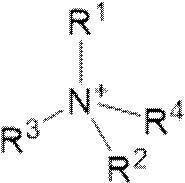
[9] 上記4級アンモニウム塩の4級アンモニウムカチオンが下記式で表される化合物である、上記[1]~[8]のいずれか1つに記載の生体材料。
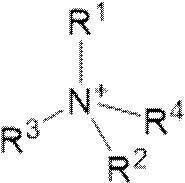
上記式中、R1、R2、R3、およびR4は、それぞれ独立に、炭素数1~22のアルキル基であり、上記アルキル基の水素原子は、アルコキシ基、アシル基またはアシルオキシ基によって置換されていてもよい。
[10] 上記アルキル基の水素原子に置換するアルコキシ基、アシル基またはアシルオキシ基の炭素数が16~18である、上記[9]に記載の生体材料。
[11] 水と接触させることにより液晶相を形成する、上記[1]~[10]のいずれか1つに記載の生体材料。
[12] 非水系分散媒をさらに含む、上記[1]~[11]のいずれか1つに記載の生体材料。
[13] 上記非水系溶媒が炭素数7以上のアルコールである、上記[12]に記載の生体材料。
[14] 粘膜保護用である、上記[1]~[13]のいずれか1つに記載の生体材料。
[15] 口腔粘膜保護用である、上記[14]に記載の生体材料。
[16] 薬剤徐放用である、上記[1]~[15]のいずれか1つに記載の生体材料。
[1] 中性アシル脂質と、リン脂質および4級アンモニウム塩からなる群から選択される少なくとも1種と、カルボキシビニルポリマーとを含む生体材料であって、
上記中性アシル脂質が中性モノアシル脂質および中性ジアシル脂質からなる群から選択される少なくとも1種を含み、
上記中性モノアシル脂質および上記中性ジアシル脂質からなる群から選択される少なくとも1種の含有量が、上記中性アシル脂質の全質量に対して80質量%~100質量%である、生体材料。
[2] 上記中性アシル脂質が、上記中性アシル脂質の全質量に対して、中性モノアシル脂質を0質量%~100質量%、中性ジアシル脂質を0質量%~100質量%、および中性トリアシル脂質を0質量%~20質量%含む、上記[1]に記載の生体材料。
[3] 上記中性アシル脂質のアシル基の炭素数が6~32である、上記[1]または[2]に記載の生体材料。
[4] 上記アシル基の炭素数が16~22である、上記[3]に記載の生体材料。
[5] 上記中性アシル脂質がアシルグリセロールである、上記[1]~[4]のいずれか1つに記載の生体材料。
[6] 上記アシルグリセロールがオレイン酸グリセロールである、上記[5]に記載の生体材料。
[7] 上記リン脂質のアシル基の炭素数が12~22である、上記[1]~[6]のいずれか1つに記載の生体材料。
[8] 上記アシル基の炭素数が16~18である、上記[7]に記載の生体材料。
[9] 上記4級アンモニウム塩の4級アンモニウムカチオンが下記式で表される化合物である、上記[1]~[8]のいずれか1つに記載の生体材料。
上記式中、R1、R2、R3、およびR4は、それぞれ独立に、炭素数1~22のアルキル基であり、上記アルキル基の水素原子は、アルコキシ基、アシル基またはアシルオキシ基によって置換されていてもよい。
[10] 上記アルキル基の水素原子に置換するアルコキシ基、アシル基またはアシルオキシ基の炭素数が16~18である、上記[9]に記載の生体材料。
[11] 水と接触させることにより液晶相を形成する、上記[1]~[10]のいずれか1つに記載の生体材料。
[12] 非水系分散媒をさらに含む、上記[1]~[11]のいずれか1つに記載の生体材料。
[13] 上記非水系溶媒が炭素数7以上のアルコールである、上記[12]に記載の生体材料。
[14] 粘膜保護用である、上記[1]~[13]のいずれか1つに記載の生体材料。
[15] 口腔粘膜保護用である、上記[14]に記載の生体材料。
[16] 薬剤徐放用である、上記[1]~[15]のいずれか1つに記載の生体材料。
本発明によれば、水と接触させた際の引っ掻き耐性および保持性に優れた生体材料を提供できる。
本明細書において、「~」を用いて表される範囲には「~」の両端を含むものとする。例えば、「A~B」で表される範囲にはAおよびBを含む。
また、本明細書において、固形分とは、分散媒成分を除いた組成物に含まれる成分を意図し、その性状が液状であっても固形分として計算する。
[生体材料]
本発明の生体材料は、中性アシル脂質と、リン脂質および4級アンモニウム塩からなる群から選択される少なくとも1種と、カルボキシビニルポリマーとを含む。
以下では、本発明の生体材料の各成分について説明する。
本発明の生体材料は、中性アシル脂質と、リン脂質および4級アンモニウム塩からなる群から選択される少なくとも1種と、カルボキシビニルポリマーとを含む。
以下では、本発明の生体材料の各成分について説明する。
〈中性アシル脂質〉
中性アシル脂質は、電気的に中性のアシル脂質を意味する。つまり、中性アシル脂質には、カチオン部およびアニオン部が含まれない。なお、アシル脂質とは、アシル基を含む脂質を意味する。
中性アシル脂質としては、中性モノアシル脂質と、中性ジアシル脂質と、中性トリアシル脂質とが挙げられる。
中性アシル脂質は、電気的に中性のアシル脂質を意味する。つまり、中性アシル脂質には、カチオン部およびアニオン部が含まれない。なお、アシル脂質とは、アシル基を含む脂質を意味する。
中性アシル脂質としては、中性モノアシル脂質と、中性ジアシル脂質と、中性トリアシル脂質とが挙げられる。
本発明の生体材料において、中性アシル脂質は、中性モノアシル脂質および中性ジアシル脂質からなる群から選択される少なくとも1種を含み、中性モノアシル脂質および中性ジアシル脂質からなる群から選択される少なくとも1種の含有量は、中性アシル脂質の全質量に対して80質量%~100質量%であり、90質量%~100質量%であることが好ましく、100質量%であることがより好ましい。
なかでも、中性アシル脂質は、中性モノアシル脂質および中性ジアシル脂質の両方を含むことが好ましい。
なかでも、中性アシル脂質は、中性モノアシル脂質および中性ジアシル脂質の両方を含むことが好ましい。
中性モノアシル脂質の含有量は特に限定されないが、中性アシル脂質全質量に対して、0質量%~100質量%が好ましく、30質量%~70質量%がより好ましい。
中性ジアシル脂質の含有量は特に限定されないが、中性アシル脂質全質量に対して、0質量%~100質量%が好ましく、30質量%~70質量%がより好ましい。
中性トリアシル脂質の含有量は特に限定されないが、中性アシル脂質全質量に対して、0~20質量%が好ましく、含まれないこと(0質量%)がより好ましい。
なかでも、中性アシル脂質全質量に対して、中性モノアシル脂質を30質量%~70質量%、および中性ジアシル脂質を30質量%~70質量%含み、中性トリアシル脂質を含まないことがより好ましい。
中性ジアシル脂質の含有量は特に限定されないが、中性アシル脂質全質量に対して、0質量%~100質量%が好ましく、30質量%~70質量%がより好ましい。
中性トリアシル脂質の含有量は特に限定されないが、中性アシル脂質全質量に対して、0~20質量%が好ましく、含まれないこと(0質量%)がより好ましい。
なかでも、中性アシル脂質全質量に対して、中性モノアシル脂質を30質量%~70質量%、および中性ジアシル脂質を30質量%~70質量%含み、中性トリアシル脂質を含まないことがより好ましい。
中性アシル脂質のアシル基の炭素数は特に限定されないが、6~32が好ましく、16~22がより好ましい。
このようなアシル基のカルボニル基を除いた炭化水素基としては、炭素数5~31の飽和または不飽和の鎖式炭化水素基が好ましく、炭素数15~21の飽和または不飽和の鎖式炭化水素基がより好ましく、具体例として、CH3(CH2)14-、CH3(CH2)7CH=CH(CH2)7-、およびCH3(CH2)4(CH=CHCH2)2(CH2)6-が挙げられるが、これらに限定されるものではない。
中性アシル脂質が1分子中に2個以上のアシル基を有するときは、各アシル基は互いに同じ種類であってもよいし、異なる種類であってもよい。
このようなアシル基のカルボニル基を除いた炭化水素基としては、炭素数5~31の飽和または不飽和の鎖式炭化水素基が好ましく、炭素数15~21の飽和または不飽和の鎖式炭化水素基がより好ましく、具体例として、CH3(CH2)14-、CH3(CH2)7CH=CH(CH2)7-、およびCH3(CH2)4(CH=CHCH2)2(CH2)6-が挙げられるが、これらに限定されるものではない。
中性アシル脂質が1分子中に2個以上のアシル基を有するときは、各アシル基は互いに同じ種類であってもよいし、異なる種類であってもよい。
中性アシル脂質としては、グリセロール、ジグリセロール、糖(例えば、イノシトール)、および、コハク酸などのポリオールと脂肪酸とがエステル結合して得られる脂質が挙げられる。なかでも、アシルグリセロールが好ましく、オレイン酸グリセロールがより好ましい。
アシルグリセロールとしては、モノアシルグリセロール、ジアシルグリセロール、および、トリアシルグリセロールが挙げられる。
また、オレイン酸グリセロールとしては、モノオレイン酸グリセロール、ジオレイン酸グリセロール、および、トリオレイン酸グリセロールが挙げられる。
なお、モノアシルグリセロールおよびモノオレイン酸グリセロールは上述した中性モノアシル脂質の一態様に該当し、ジアシルグリセロールおよびジオレイン酸グリセロールは上述した中性ジアシル脂質の一態様に該当し、トリアシルグリセロールおよびトリオレイン酸グリセロールは上述した中性トリアシル脂質の一態様に該当する。
アシルグリセロールとしては、モノアシルグリセロール、ジアシルグリセロール、および、トリアシルグリセロールが挙げられる。
また、オレイン酸グリセロールとしては、モノオレイン酸グリセロール、ジオレイン酸グリセロール、および、トリオレイン酸グリセロールが挙げられる。
なお、モノアシルグリセロールおよびモノオレイン酸グリセロールは上述した中性モノアシル脂質の一態様に該当し、ジアシルグリセロールおよびジオレイン酸グリセロールは上述した中性ジアシル脂質の一態様に該当し、トリアシルグリセロールおよびトリオレイン酸グリセロールは上述した中性トリアシル脂質の一態様に該当する。
なお、本明細書において、中性アシル脂質中の中性モノアシル脂質、中性ジアシル脂質、および、中性トリアシル脂質の含有割合は、高速液体クロマトグラフィー(HPLC)法によって測定して得られるものである。
・HPLCの測定条件
カラム:Cadenza CD-C18 (4.6mm×300mm)(Imtakt社製)
溶離液:水・テトラヒドロフラン
流 速:1.0mL/min
検 出:Corona CAD(コロナ荷電化粒子検出器)
カラム温度:50℃
・HPLCの測定条件
カラム:Cadenza CD-C18 (4.6mm×300mm)(Imtakt社製)
溶離液:水・テトラヒドロフラン
流 速:1.0mL/min
検 出:Corona CAD(コロナ荷電化粒子検出器)
カラム温度:50℃
本発明の生体材料における中性アシル脂質の含有量は、特に限定されないが、本発明の生体材料の固形分の全質量に対して、35質量%~85質量%が好ましく、35質量%~75質量%がより好ましく、55質量%~75質量%がさらに好ましい。
〈リン脂質〉
リン脂質は、分子構造中にリン酸エステル構造を持つ脂質であれば特に限定されないが、グリセリンを骨格とするグリセロリン脂質と、スフィンゴシンを骨格とするスフィンゴリン脂質とが代表的である。
リン脂質がグリセロリン酸であっても、スフィンゴリン脂質であっても、脂肪酸に由来するアシル基を分子中に有する。
リン脂質は、分子構造中にリン酸エステル構造を持つ脂質であれば特に限定されないが、グリセリンを骨格とするグリセロリン脂質と、スフィンゴシンを骨格とするスフィンゴリン脂質とが代表的である。
リン脂質がグリセロリン酸であっても、スフィンゴリン脂質であっても、脂肪酸に由来するアシル基を分子中に有する。
リン脂質のアシル基の炭素数は特に限定されないが、12~22が好ましく、16~18がより好ましい。
このようなアシル基のカルボニル基を除いた炭化水素基としては、炭素数11~21の飽和または不飽和の鎖式炭化水素基が好ましく、炭素数15~17の飽和または不飽和の鎖式炭化水素基がより好ましい。上記炭化水素基としては、CH3(CH2)14-、CH3(CH2)7CH=CH(CH2)7-、およびCH3(CH2)4(CH=CHCH2)2(CH2)6-が挙げられるが、これらに限定されるものではない。
リン脂質が1分子中に2個以上のアシル基を有するときは、各アシル基は互いに同じ種類であってもよいし、異なる種類であってもよい。
リン脂質の具体例としては、ホスファチジルコリンが挙げられる。ホスファチジルコリンのアシル基は、パルミチン酸(CH3(CH2)14COOH)、オレイン酸(CH3(CH2)7CH=CH(CH2)7COOH)、またはリノール酸(CH3(CH2)4(CH=CHCH2)2(CH2)6COOH)に由来するものが好ましい。ホスファチジルコリンの具体例としては、POホスファチジルコリン(1位(α位)に、パルミチン酸、2位(β位)にオレイン酸、3位(γ位)にコリンを有するホスファチジルコリン)、DLホスファチジルコリン(1位(α位)にリノール酸、2位(β位)にリノール酸、3位(γ位)にコリンを有するホスファチジルコリン)、および、ジパルミトイルホスファチジルコリンが挙げられる。
このようなアシル基のカルボニル基を除いた炭化水素基としては、炭素数11~21の飽和または不飽和の鎖式炭化水素基が好ましく、炭素数15~17の飽和または不飽和の鎖式炭化水素基がより好ましい。上記炭化水素基としては、CH3(CH2)14-、CH3(CH2)7CH=CH(CH2)7-、およびCH3(CH2)4(CH=CHCH2)2(CH2)6-が挙げられるが、これらに限定されるものではない。
リン脂質が1分子中に2個以上のアシル基を有するときは、各アシル基は互いに同じ種類であってもよいし、異なる種類であってもよい。
リン脂質の具体例としては、ホスファチジルコリンが挙げられる。ホスファチジルコリンのアシル基は、パルミチン酸(CH3(CH2)14COOH)、オレイン酸(CH3(CH2)7CH=CH(CH2)7COOH)、またはリノール酸(CH3(CH2)4(CH=CHCH2)2(CH2)6COOH)に由来するものが好ましい。ホスファチジルコリンの具体例としては、POホスファチジルコリン(1位(α位)に、パルミチン酸、2位(β位)にオレイン酸、3位(γ位)にコリンを有するホスファチジルコリン)、DLホスファチジルコリン(1位(α位)にリノール酸、2位(β位)にリノール酸、3位(γ位)にコリンを有するホスファチジルコリン)、および、ジパルミトイルホスファチジルコリンが挙げられる。
本発明の生体材料におけるリン脂質の含有量は、特に限定されないが、後述する4級アンモニウム塩との合計で、本発明の生体材料の固形分の全質量に対して、15質量%~65質量%が好ましく、20質量%~60質量%がより好ましく、25質量%~45質量%がさらに好ましい。
〈4級アンモニウム塩〉
4級アンモニウム塩は、4級アンモニウムカチオンとアニオンとからなるイオン性化合物である。
4級アンモニウム塩は、4級アンモニウムカチオンとアニオンとからなるイオン性化合物である。
4級アンモニウムカチオンは、分子式NR4
+と表される正電荷を持った多原子イオンであることが好ましい。ここで、Rは、それぞれ独立に、置換基を有していてもよい、アルキル基またはアリール基を表し、複数のRは互いに同じであってもよいし異なっていてもよい。
なかでも、4級アンモニウム塩の4級アンモニウムカチオンは、下記式で表される4級アンモニウムカチオンであることが好ましい。
なかでも、4級アンモニウム塩の4級アンモニウムカチオンは、下記式で表される4級アンモニウムカチオンであることが好ましい。

上記式中、R1、R2、R3、およびR4は、それぞれ独立に、炭素数1~22のアルキル基であり、上記アルキル基の水素原子は、アルコキシ基、アシル基またはアシルオキシ基によって置換されていてもよい。
上記アルキル基の水素原子に置換するアルコキシ基、アシル基またはアシルオキシ基の炭素数は特に限定されないが、16~18が好ましい。
4級アンモニウム塩としては、ジオレオイロキシトリメチルアンモニウムプロパンクロリド(DOTAP,N-[1-(2,3-ジオレオイルオキシ)プロピル]-N,N,N-トリメチルアンモニウムクロリド)、ジオクタデセニルトリメチルアンモニウムプロパンクロリド(DOTMA、N-[1-(2,3―ジオレイルオキシ)プロピル)]―N,N,N-トリメチルアンモニウムクロリド)、ジデシルジメチルアンモニウムクロリド、ジデシルジメチルアンモニウムブロミド、ジラウリルジメチルアンモニウムクロリド、ジセチルジメチルアンモニウムクロリド、ジセチルジメチルアンモニウムブロミド、ジステアリルジメチルアンモニウムクロリド、ジステアリルジメチルアンモニウムブロミド、ジオレイルジメチルアンモニウムクロリド、ジベヘニルジメチルアンモニウムクロリド、ジベヘニルジメチルアンモニウムブロミド、ジパルミトイルエチルヒドロキシエチルモニウムメトサルフェート、および、ジステアロイルエチルヒドロキシエチルモニウムメトサルフェートが挙げられる。また、これらの4級アンモニウム塩は、2種以上を混合して用いてもよい。
本発明の生体材料における4級アンモニウム塩の含有量は特に限定されないが、上述したリン脂質との合計で、本発明の生体材料の固形分の全質量に対して、15質量%~65質量%が好ましく、20質量%~60質量%がより好ましく、25質量%~45質量%がさらに好ましい。
〈カルボキシビニルポリマー〉
本発明の生体材料は、水と接触させることにより、水と、中性アシル脂質と、リン脂質および/または4級アンモニウム塩とによって液晶相が形成される。
本発明の生体材料は、水と接触させることにより、水と、中性アシル脂質と、リン脂質および/または4級アンモニウム塩とによって液晶相が形成される。
カルボキシビニルポリマーは水と接触することで膨潤し、液晶ミセルのネットワークとカルボキシビニルポリマーのネットワークとが重畳的に形成される。このように、液晶ミセルのネットワークおよびカルボキシビニルポリマーのネットワークの2つのネットワークが存在することにより、本発明の生体材料を水と接触させた際の引っ掻き耐性および保持性を向上させることができる。
カルボキシビニルポリマーは、カルボキシ基を有する水溶性のビニルポリマーであり、具体的には、アクリル酸および/またはメタクリル酸由来の繰り返し単位を主鎖として、アリルショ糖またはペンタエリスリトールのアリルエーテル等による架橋構造(上記化合物由来の架橋構造)を有するポリマーである。また、このカルボキシビニルポリマーは、カルボキシビニルポリマー塩であってもよい。
カルボキシビニルポリマーの市販品としては、具体的には、Lubrizol Advanced Materials社製の「カーボポール941」、「カーボポール971」、「カーボポール974」、「カーボポール980」および「カーボポール981」;和光純薬工業株式会社製の「ハイビスワコー103」、「ハイビスワコー104」および「ハイビスワコー105」;東亞合成株式会社製の「ジュンロンPW-120」、「ジュンロンPW-121」および「ジュンロンPW-312S」;住友精化株式会社製の「AQUPEC HV-501E」および「AQUPEC HV-505E」;ならびに、3Vシグマ社製の「シンタレンK」および「シンタレンL」が挙げられる。
本発明の生体材料において、カルボキシビニルポリマーは、1種を単独で使用してもよいし、2種以上を組み合わせて使用してもよい。
《カルボキシビニルポリマーの含有量》
本発明の生体材料におけるカルボキシビニルポリマーの含有量は特に限定されないが、本発明の生体材料の固形分の全質量に対して、0.1質量%~10.0質量%が好ましく、1.0質量%~5.0質量%がより好ましく、1.0質量%~3.5質量%がさらに好ましい。
本発明の生体材料におけるカルボキシビニルポリマーの含有量は特に限定されないが、本発明の生体材料の固形分の全質量に対して、0.1質量%~10.0質量%が好ましく、1.0質量%~5.0質量%がより好ましく、1.0質量%~3.5質量%がさらに好ましい。
〈非水系分散媒〉
本発明の生体材料は、非水系分散媒をさらに含むことができる。
非水系分散媒は、上述した中性アシル脂質、リン脂質および4級アンモニウム塩からなる群から選択される少なくとも1種、およびカルボキシビニルポリマーを分散できる非水系のものであれば特に限定されないが、炭素数7以上のアルコールが好ましく、炭素数7~18のアルコールがより好ましい。
炭素数7以上のアルコールとしては、ヘプチルアルコール(炭素数7)、カプリルアルコール(炭素数8)、ペラルゴンアルコール(炭素数9)、カプリンアルコール(炭素数10)、ラウリルアルコール(炭素数12)、ミリスチルアルコール(炭素数14)、オレイルアルコール(炭素数18)、および、ステアリルアルコール(炭素数18)が挙げられる。
本発明の生体材料は、非水系分散媒をさらに含むことができる。
非水系分散媒は、上述した中性アシル脂質、リン脂質および4級アンモニウム塩からなる群から選択される少なくとも1種、およびカルボキシビニルポリマーを分散できる非水系のものであれば特に限定されないが、炭素数7以上のアルコールが好ましく、炭素数7~18のアルコールがより好ましい。
炭素数7以上のアルコールとしては、ヘプチルアルコール(炭素数7)、カプリルアルコール(炭素数8)、ペラルゴンアルコール(炭素数9)、カプリンアルコール(炭素数10)、ラウリルアルコール(炭素数12)、ミリスチルアルコール(炭素数14)、オレイルアルコール(炭素数18)、および、ステアリルアルコール(炭素数18)が挙げられる。
本発明の生体材料が非水系分散媒を含む場合の本発明の生体材料中の固形分含有量は、特に限定されないが、80質量%以上であることが好ましく、90質量%以上であることがより好ましい。上限は、例えば、100質量%未満である。
〈その他の成分〉
本発明の生体材料は、本発明の作用効果を妨げない限り、上述した中性アシル脂質、リン脂質および4級アンモニウム塩からなる群から選択される少なくとも1種、カルボキシビニルポリマー、および非水系分散媒の他に、他の成分を含んでいてもよい。
本発明の生体材料は、本発明の作用効果を妨げない限り、上述した中性アシル脂質、リン脂質および4級アンモニウム塩からなる群から選択される少なくとも1種、カルボキシビニルポリマー、および非水系分散媒の他に、他の成分を含んでいてもよい。
上記他の成分としては、例えば、糖および糖アルコールが挙げられる。
糖は、特に限定されないが、例えば、単糖類または二糖類であり、具体例として、グルコース、ガラクトース、スクロース、トレハロースおよびラクトースが挙げられる。
糖アルコールは、アルドースまたはケトースのカルボニル基が還元された構造を有する有機化合物であり、特に限定されないが、具体例として、エリスリトール、キシリトール、マンニトールおよびソルビトールが挙げられる。
糖は、特に限定されないが、例えば、単糖類または二糖類であり、具体例として、グルコース、ガラクトース、スクロース、トレハロースおよびラクトースが挙げられる。
糖アルコールは、アルドースまたはケトースのカルボニル基が還元された構造を有する有機化合物であり、特に限定されないが、具体例として、エリスリトール、キシリトール、マンニトールおよびソルビトールが挙げられる。
〈液晶相〉
本発明の生体材料は、水と接触させることにより液晶相を形成する。水は純水に限定されず、水以外の水性流体に含まれる水(水分)であってもよい。水以外の水性流体の例としては、唾液、組織液、血液、およびリンパ液が挙げられるが、これらに限定されるものではない。
本発明の生体材料は、水と接触させることにより液晶相を形成する。水は純水に限定されず、水以外の水性流体に含まれる水(水分)であってもよい。水以外の水性流体の例としては、唾液、組織液、血液、およびリンパ液が挙げられるが、これらに限定されるものではない。
本発明の生体材料と接触させる水の量は、特に限定されないが、本発明の生体材料の全質量に対して、20質量%~1000質量%が好ましく、30質量%~500質量%がより好ましい。
ここで、液晶相は、特に限定されないが、ラメラ(La)相、スポンジ(V2)相、ヘキサゴナルカラムナー(H2)相、双連続キュービック(L3)相、またはキュービック(Q)相およびこれらのうち2種以上の混合状態からなる群から選択されるいずれか1つであることが多く、ラメラ相、ヘキサゴナルカラムナー相またはキュービック相であることが好ましい。本発明の生体材料を水と接触させる際の温度は特に限定されないが、20℃~40℃が好ましく、35℃~40℃がより好ましい。
[生体材料の製造方法]
本発明の生体材料は、中性モノアシル脂質および中性ジアシル脂質の含有量が特定範囲内である中性アシル脂質と、リン脂質および4級アンモニウム塩からなる群から選択される少なくとも1種と、カルボキシビニルポリマーと、所望により非水系分散媒と、を混合することにより製造できる。
混合の方法は特に限定されず、従来公知の方法を用いることができる。
本発明の生体材料は、中性モノアシル脂質および中性ジアシル脂質の含有量が特定範囲内である中性アシル脂質と、リン脂質および4級アンモニウム塩からなる群から選択される少なくとも1種と、カルボキシビニルポリマーと、所望により非水系分散媒と、を混合することにより製造できる。
混合の方法は特に限定されず、従来公知の方法を用いることができる。
[生体材料の用途および使用方法]
本発明の生体材料とは、生体内で用いられる材料を意味し、例えば、怪我または病気などにより本来の機能を果たさなくなった生体、および、機能が低下した生体を、補助または修復することを目的とし、生体内に用いられる材料が挙げられる。
本発明の生体材料は、粘膜保護用、特に口腔粘膜保護用として好ましく使用できる。
本発明の生体材料を粘膜に対して使用する場合、本発明の生体材料を粘膜上に配置し、必要に応じて水または水を含む溶液を添加すれば、本発明の生体材料が吸水して液晶相が形成され、粘膜に付着する。
特に、口腔粘膜に対して本発明の生体材料を適用する場合、本発明の生体材料を口腔粘膜に付着させれば、唾液中の水分によって液晶相が形成されるため、取扱が簡便である。また、仮に、唾液量が少ない場合には、本発明の生体材料を口腔粘膜に付着させた後、水、または人工唾液をスプレーするなどして、水分を供給すればよい。
また、本発明の生体材料は、薬剤徐放用としても好ましく使用できる。例えば、上記生体材料に薬物を添加した前製剤を作製し、これを水と接触させ液晶相を形成することで、薬物徐放基材として用いることができる。
本発明の生体材料とは、生体内で用いられる材料を意味し、例えば、怪我または病気などにより本来の機能を果たさなくなった生体、および、機能が低下した生体を、補助または修復することを目的とし、生体内に用いられる材料が挙げられる。
本発明の生体材料は、粘膜保護用、特に口腔粘膜保護用として好ましく使用できる。
本発明の生体材料を粘膜に対して使用する場合、本発明の生体材料を粘膜上に配置し、必要に応じて水または水を含む溶液を添加すれば、本発明の生体材料が吸水して液晶相が形成され、粘膜に付着する。
特に、口腔粘膜に対して本発明の生体材料を適用する場合、本発明の生体材料を口腔粘膜に付着させれば、唾液中の水分によって液晶相が形成されるため、取扱が簡便である。また、仮に、唾液量が少ない場合には、本発明の生体材料を口腔粘膜に付着させた後、水、または人工唾液をスプレーするなどして、水分を供給すればよい。
また、本発明の生体材料は、薬剤徐放用としても好ましく使用できる。例えば、上記生体材料に薬物を添加した前製剤を作製し、これを水と接触させ液晶相を形成することで、薬物徐放基材として用いることができる。
以下では実施例によって本発明をより具体的に説明するが、本発明は以下の実施例に限定されるものではない。
[実施例1~14、比較例1~8]
〈生体材料の調製法〉
(実施例1)中性アシル脂質(1-オレオイル-rac-グリセリン(>99%),Sigma-Aldrich社製;5.5g)と、リン脂質(ホスファチジルコリン(Lipoid S100、Lipoid社製;3.0g)を混合し、その混合物が黄色透明な油状液体になるまで60℃で2時間加熱撹拌した(以下「固形分A」という場合がある)。カルボキシビニルポリマー(カーボポール941,Lubrizol Advanced Materials社製; 10mg)を計量後、カルボキシビニルポリマーを非水系分散媒(オレイルアルコール,東京化成工業社製;100mg)に分散させ、そこに必要量の固形分A(890mg)を加えて室温で10分間撹拌することで生体材料を調製した。
なお、同じ調製法で、表1に示す各成分を表1に示す配合量で混合して、実施例2~14および比較例1~8の生体材料を調製した。
〈生体材料の調製法〉
(実施例1)中性アシル脂質(1-オレオイル-rac-グリセリン(>99%),Sigma-Aldrich社製;5.5g)と、リン脂質(ホスファチジルコリン(Lipoid S100、Lipoid社製;3.0g)を混合し、その混合物が黄色透明な油状液体になるまで60℃で2時間加熱撹拌した(以下「固形分A」という場合がある)。カルボキシビニルポリマー(カーボポール941,Lubrizol Advanced Materials社製; 10mg)を計量後、カルボキシビニルポリマーを非水系分散媒(オレイルアルコール,東京化成工業社製;100mg)に分散させ、そこに必要量の固形分A(890mg)を加えて室温で10分間撹拌することで生体材料を調製した。
なお、同じ調製法で、表1に示す各成分を表1に示す配合量で混合して、実施例2~14および比較例1~8の生体材料を調製した。
〈結果・評価〉
《液晶相の形成の確認》
調製した生体材料(20μL)をスライドガラス上に載せ、上から水(約200μL)を噴霧し、余分な水を除いた後、カバーガラスで覆い、偏光顕微鏡(Nikon ECLIPSE E600 POL)にて初期観察を行った。
その後、40℃に加熱したホットステージ(INSTEC STC200)にてスライドガラスごと加温し、液晶相の変化を確認し相を同定した。
《液晶相の形成の確認》
調製した生体材料(20μL)をスライドガラス上に載せ、上から水(約200μL)を噴霧し、余分な水を除いた後、カバーガラスで覆い、偏光顕微鏡(Nikon ECLIPSE E600 POL)にて初期観察を行った。
その後、40℃に加熱したホットステージ(INSTEC STC200)にてスライドガラスごと加温し、液晶相の変化を確認し相を同定した。
《擬似生体膜の作製》
TDAB(テトラドデシルアンモニウムブロミド,富士フイルム和光純薬社製;50mg)、ポリ塩化ビニル(富士フイルム和光純薬社製;800mg)、およびDOPP(ジ-n-オクチルホスホナート,富士フイルム和光純薬社製;0.6mL)をTHF(テトラヒドロフラン)、富士フイルム和光純薬社製;10mL)に溶解したものをシャーレで室温乾燥し、脂質膜(約200μm厚)を得た。
次に、寒天(カリコリカン(登録商標)、伊那食品工業社製;0.5g)およびジェランガム(ケルコゲル(登録商標)、CPケルコ社製;0.1g)を蒸留水(49.4g)からなるハイドロゲルに、作製した脂質膜を貼り合わせた。
続いて、脂質膜表面をMPC(2-メタクリロイルオキシエチルホスホリルコリン)ポリマー(LIPIDURE(登録商標)-CM5206、日油社製)でコートして、疑似生体膜を得た。
TDAB(テトラドデシルアンモニウムブロミド,富士フイルム和光純薬社製;50mg)、ポリ塩化ビニル(富士フイルム和光純薬社製;800mg)、およびDOPP(ジ-n-オクチルホスホナート,富士フイルム和光純薬社製;0.6mL)をTHF(テトラヒドロフラン)、富士フイルム和光純薬社製;10mL)に溶解したものをシャーレで室温乾燥し、脂質膜(約200μm厚)を得た。
次に、寒天(カリコリカン(登録商標)、伊那食品工業社製;0.5g)およびジェランガム(ケルコゲル(登録商標)、CPケルコ社製;0.1g)を蒸留水(49.4g)からなるハイドロゲルに、作製した脂質膜を貼り合わせた。
続いて、脂質膜表面をMPC(2-メタクリロイルオキシエチルホスホリルコリン)ポリマー(LIPIDURE(登録商標)-CM5206、日油社製)でコートして、疑似生体膜を得た。
《保持性の評価》
作製した擬似生体膜上に、調製した生体材料を塗布し(1cmΦ、500μm厚)、人工唾液(サリベート(登録商標)、帝人ファーマ社製)を噴霧した後、1分間静置して生体材料に吸水させ、評価用サンプルを作製した。
作製した評価用サンプルをシャーレに入れ、評価用サンプルが浸かるまで人工唾液(サリベート)で満たした。このシャーレを恒温振とう器(37℃)の中に入れ、評価用サンプルがシャーレの壁に繰り返し当たるように振とうさせた。この試験で擬似生体膜から吸水した生体材料が剥離または溶解により消失するまでの時間を計測し、以下の基準により保持性を評価した。
(保持性の評価基準)
4時間以上保持した・・・A
1時間以上4時間未満で消失した・・・B
1時間未満で消失した・・・C
評価結果を表1の「評価」欄に示す。
作製した擬似生体膜上に、調製した生体材料を塗布し(1cmΦ、500μm厚)、人工唾液(サリベート(登録商標)、帝人ファーマ社製)を噴霧した後、1分間静置して生体材料に吸水させ、評価用サンプルを作製した。
作製した評価用サンプルをシャーレに入れ、評価用サンプルが浸かるまで人工唾液(サリベート)で満たした。このシャーレを恒温振とう器(37℃)の中に入れ、評価用サンプルがシャーレの壁に繰り返し当たるように振とうさせた。この試験で擬似生体膜から吸水した生体材料が剥離または溶解により消失するまでの時間を計測し、以下の基準により保持性を評価した。
(保持性の評価基準)
4時間以上保持した・・・A
1時間以上4時間未満で消失した・・・B
1時間未満で消失した・・・C
評価結果を表1の「評価」欄に示す。
《引っ掻き耐性の評価》
作製した擬似生体膜上に、調製した生体材料を塗布し(1cmΦ、500μm厚)、人工唾液(サリベート(登録商標)、帝人ファーマ社製)を噴霧した後、1分間静置して生体材料に吸水させ、評価用サンプルを作製した。
作製した評価用サンプルを摩耗試験機(表面性測定機 トライボギア TYPE:14 FW、新東科学社製)で繰り返し摩耗し、サンプルが擬似生体膜から剥離または溶解するまでの回数(往復)を計測し、以下の基準により引っ掻き耐性を評価した。なお、摩耗試験機のヘッドには三角消しゴムの芯(Ain CLIC,ぺんてる社製)をセットし、荷重30g、振幅30mm、速度6000mm/minの条件で試験を行った。
(引っ掻き耐性の評価基準)
500回以上耐えた・・・A
100回以上500回未満で剥離した・・・B
100回未満で剥離した・・・C
評価結果を表1の「評価」欄に示す。
作製した擬似生体膜上に、調製した生体材料を塗布し(1cmΦ、500μm厚)、人工唾液(サリベート(登録商標)、帝人ファーマ社製)を噴霧した後、1分間静置して生体材料に吸水させ、評価用サンプルを作製した。
作製した評価用サンプルを摩耗試験機(表面性測定機 トライボギア TYPE:14 FW、新東科学社製)で繰り返し摩耗し、サンプルが擬似生体膜から剥離または溶解するまでの回数(往復)を計測し、以下の基準により引っ掻き耐性を評価した。なお、摩耗試験機のヘッドには三角消しゴムの芯(Ain CLIC,ぺんてる社製)をセットし、荷重30g、振幅30mm、速度6000mm/minの条件で試験を行った。
(引っ掻き耐性の評価基準)
500回以上耐えた・・・A
100回以上500回未満で剥離した・・・B
100回未満で剥離した・・・C
評価結果を表1の「評価」欄に示す。

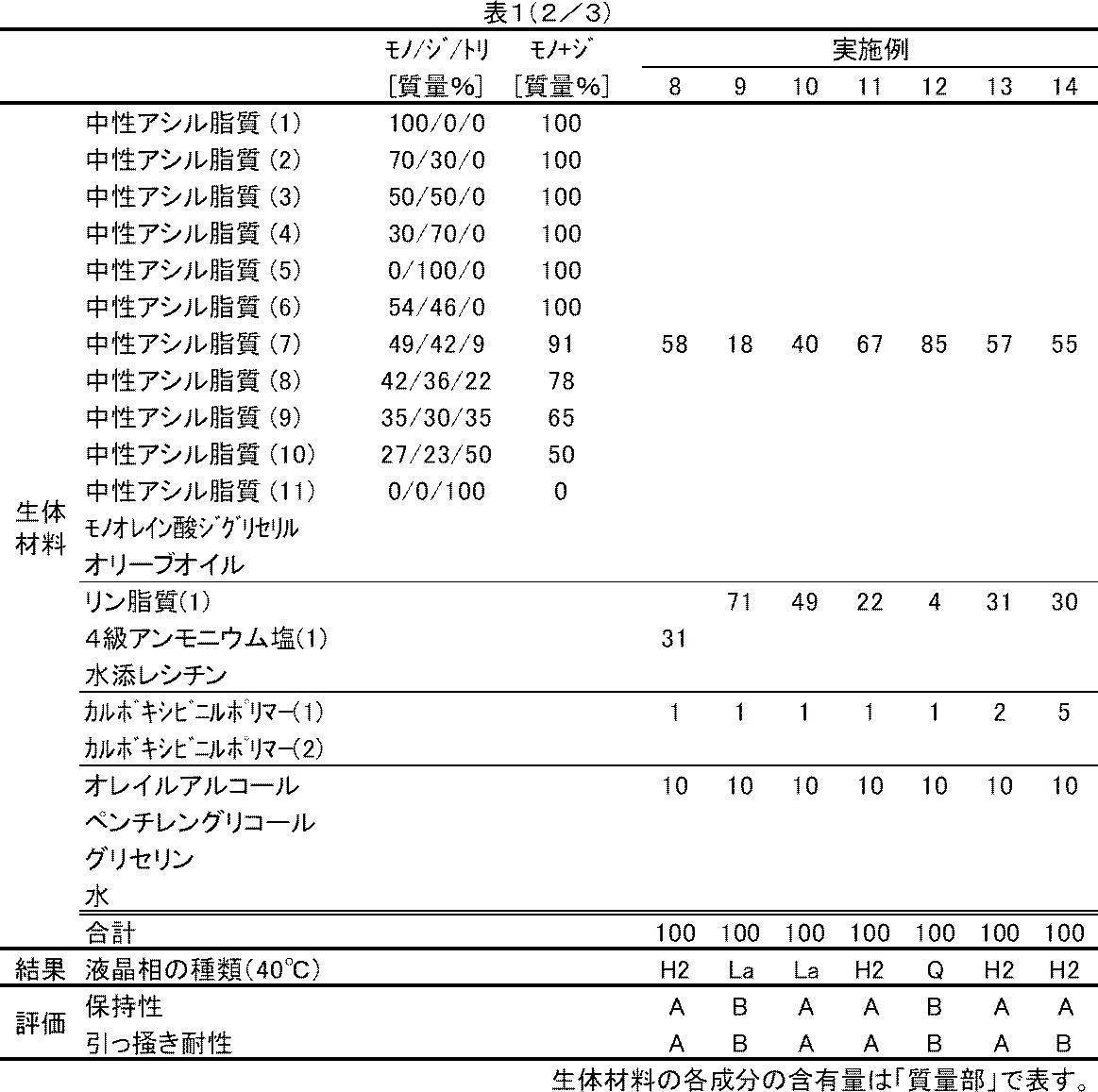

表1中、「モノ/ジ/トリ」は、中性アシル脂質中の中性モノアシル脂質と、中性ジアシル脂質と、中性トリアシル脂質との含有量比を表す(質量%)。
表1中、「モノ+ジ」は、中性アシル脂質中の中性モノアシル脂質および中性ジアシル脂質の合計含有量を表す(質量%)。
表1中、「モノ+ジ」は、中性アシル脂質中の中性モノアシル脂質および中性ジアシル脂質の合計含有量を表す(質量%)。
表1中、各成分は以下のものである。
・中性アシル脂質(1) 1-オレオイル-rac-グリセリン(>99%,Sigma-Aldrich社製)
・中性アシル脂質(5) ジオレイン(>99%,NU-CHECK-PREP社製)
・中性アシル脂質(2) 中性アシル脂質(1)(7.0g)および中性アシル脂質(5)(3.0g)を均一な溶液になるまで40℃で30分混合して調製した。
・中性アシル脂質(3)、(4)および(6) 中性アシル脂質(2)と同じ調製法で、表1に示す質量比で中性アシル脂質(1)および中性アシル脂質(5)を混合して調製した。
・中性アシル脂質(7) モノオレイン(東京化成工業社製)
・中性アシル脂質(11) トリオレイン酸グリセロール(>99%,Sigma-Aldrich社製)
・中性アシル脂質(8)~(10) 中性アシル脂質(2)と同じ調製法で、表1に示す質量比で中性アシル脂質(1)、中性アシル脂質(5)および中性アシル脂質(11)を混合して調製した。
・モノオレイン酸ジグリセリル (理研ビタミン株式会社製)
・オリーブオイル (富士フイルム和光純薬株式会社製)
・中性アシル脂質(1) 1-オレオイル-rac-グリセリン(>99%,Sigma-Aldrich社製)
・中性アシル脂質(5) ジオレイン(>99%,NU-CHECK-PREP社製)
・中性アシル脂質(2) 中性アシル脂質(1)(7.0g)および中性アシル脂質(5)(3.0g)を均一な溶液になるまで40℃で30分混合して調製した。
・中性アシル脂質(3)、(4)および(6) 中性アシル脂質(2)と同じ調製法で、表1に示す質量比で中性アシル脂質(1)および中性アシル脂質(5)を混合して調製した。
・中性アシル脂質(7) モノオレイン(東京化成工業社製)
・中性アシル脂質(11) トリオレイン酸グリセロール(>99%,Sigma-Aldrich社製)
・中性アシル脂質(8)~(10) 中性アシル脂質(2)と同じ調製法で、表1に示す質量比で中性アシル脂質(1)、中性アシル脂質(5)および中性アシル脂質(11)を混合して調製した。
・モノオレイン酸ジグリセリル (理研ビタミン株式会社製)
・オリーブオイル (富士フイルム和光純薬株式会社製)
・リン脂質(1) ホスファチジルコリン(Lipoid S100、Lipoid社製)
・4級アンモニウム塩(1) DOTAP〔N-[1-(2,3-ジオレオイルオキシ)プロピル]-N,N,N-トリメチルアンモニウムクロリド〕(Lipoid DOTAP-Cl、Lipoid社製)
・水添レシチン COATSOME NC-21E(日油株式会社製)
・4級アンモニウム塩(1) DOTAP〔N-[1-(2,3-ジオレオイルオキシ)プロピル]-N,N,N-トリメチルアンモニウムクロリド〕(Lipoid DOTAP-Cl、Lipoid社製)
・水添レシチン COATSOME NC-21E(日油株式会社製)
・カルボキシビニルポリマー(1) カーボポール941(Lubrizol Advanced Materials社製)
・カルボキシビニルポリマー(2) AQUPEC N40R(住友精化株式会社製)
・カルボキシビニルポリマー(2) AQUPEC N40R(住友精化株式会社製)
・オレイルアルコール(東京化成工業社製)
・ペンチレングリコール
・グリセリン(富士フイルム和光純薬工業社製)
・ペンチレングリコール
・グリセリン(富士フイルム和光純薬工業社製)
また、表1中、液晶相の種類は以下の略号で表す。
La ラメラ相
V2 スポンジ相
H2 ヘキサゴナルカラムナー相
L3 双連続キュービック相
Q キュービック相
La ラメラ相
V2 スポンジ相
H2 ヘキサゴナルカラムナー相
L3 双連続キュービック相
Q キュービック相
[結果の説明]
実施例1~14の生体材料は、保持性および引っ掻き耐性のいずれもが良好であった。なかでも、実施例1~7の比較より、中性アシル脂質は中性モノアシル脂質および中性ジアシル脂質の両方を含む場合、より効果が優れることが確認された。また、実施例9~12の比較より、リン脂質と4級アンモニウム塩の合計含有量は、生体材料の固形分の全質量に対して、20質量%~60質量%である場合、より効果が優れることが確認された。また、実施例7、13~14の比較より、カルボキシビニルポリマーの含有量が1.0質量%~3.5質量%である場合、より効果が優れることが確認された。
これに対し、比較例1~8の生体材料は、引っ掻き耐性が不十分であり、保持性および引っ掻き耐性を両立することができなかった。なかでも、比較例2、3、7は、保持性および引っ掻き耐性のいずれもが不十分であった。
なお、比較例7は特開2008-169219号公報(特許文献1)に記載された発明に係るものであり、比較例8は特表2008-509120号公報(特許文献2)に記載された発明に係るものである。
実施例1~14の生体材料は、保持性および引っ掻き耐性のいずれもが良好であった。なかでも、実施例1~7の比較より、中性アシル脂質は中性モノアシル脂質および中性ジアシル脂質の両方を含む場合、より効果が優れることが確認された。また、実施例9~12の比較より、リン脂質と4級アンモニウム塩の合計含有量は、生体材料の固形分の全質量に対して、20質量%~60質量%である場合、より効果が優れることが確認された。また、実施例7、13~14の比較より、カルボキシビニルポリマーの含有量が1.0質量%~3.5質量%である場合、より効果が優れることが確認された。
これに対し、比較例1~8の生体材料は、引っ掻き耐性が不十分であり、保持性および引っ掻き耐性を両立することができなかった。なかでも、比較例2、3、7は、保持性および引っ掻き耐性のいずれもが不十分であった。
なお、比較例7は特開2008-169219号公報(特許文献1)に記載された発明に係るものであり、比較例8は特表2008-509120号公報(特許文献2)に記載された発明に係るものである。
Claims (16)
- 中性アシル脂質と、リン脂質および4級アンモニウム塩からなる群から選択される少なくとも1種と、カルボキシビニルポリマーとを含む生体材料であって、
前記中性アシル脂質が中性モノアシル脂質および中性ジアシル脂質からなる群から選択される少なくとも1種を含み、
前記中性モノアシル脂質および前記中性ジアシル脂質からなる群から選択される少なくとも1種の含有量が、前記中性アシル脂質の全質量に対して80質量%~100質量%である、生体材料。 - 前記中性アシル脂質が、前記中性アシル脂質の全質量に対して、中性モノアシル脂質を0質量%~100質量%、中性ジアシル脂質を0質量%~100質量%、および中性トリアシル脂質を0質量%~20質量%含む、請求項1に記載の生体材料。
- 前記中性アシル脂質のアシル基の炭素数が6~32である、請求項1または2に記載の生体材料。
- 前記アシル基の炭素数が16~22である、請求項3に記載の生体材料。
- 前記中性アシル脂質がアシルグリセロールである、請求項1~4のいずれか1項に記載の生体材料。
- 前記アシルグリセロールがオレイン酸グリセロールである、請求項5に記載の生体材料。
- 前記リン脂質のアシル基の炭素数が12~22である、請求項1~6のいずれか1項に記載の生体材料。
- 前記アシル基の炭素数が16~18である、請求項7に記載の生体材料。
- 前記4級アンモニウム塩の4級アンモニウムカチオンが下記式で表される、請求項1~8のいずれか1項に記載の生体材料。
上記式中、R1、R2、R3、およびR4は、それぞれ独立に、炭素数1~22のアルキル基であり、前記アルキル基の水素原子は、アルコキシ基、アシル基またはアシルオキシ基によって置換されていてもよい。 - 前記アルキル基の水素原子に置換するアルコキシ基、アシル基またはアシルオキシ基の炭素数が16~18である、請求項9に記載の生体材料。
- 水と接触させることにより液晶相を形成する、請求項1~10のいずれか1項に記載の生体材料。
- 非水系分散媒をさらに含む、請求項1~11のいずれか1項に記載の生体材料。
- 前記非水系分散媒が炭素数7以上のアルコールである、請求項12に記載の生体材料。
- 粘膜保護用である、請求項1~13のいずれか1項に記載の生体材料。
- 口腔粘膜保護用である、請求項14に記載の生体材料。
- 薬剤徐放用である、請求項1~15のいずれか1項に記載の生体材料。
Priority Applications (3)
| Application Number | Priority Date | Filing Date | Title |
|---|---|---|---|
| JP2020548334A JP7064612B2 (ja) | 2018-09-20 | 2019-09-06 | 生体材料 |
| EP19862426.4A EP3854422B1 (en) | 2018-09-20 | 2019-09-06 | Biomaterial |
| US17/198,417 US20210196826A1 (en) | 2018-09-20 | 2021-03-11 | Biomaterial |
Applications Claiming Priority (2)
| Application Number | Priority Date | Filing Date | Title |
|---|---|---|---|
| JP2018-176358 | 2018-09-20 | ||
| JP2018176358 | 2018-09-20 |
Related Child Applications (1)
| Application Number | Title | Priority Date | Filing Date |
|---|---|---|---|
| US17/198,417 Continuation US20210196826A1 (en) | 2018-09-20 | 2021-03-11 | Biomaterial |
Publications (1)
| Publication Number | Publication Date |
|---|---|
| WO2020059543A1 true WO2020059543A1 (ja) | 2020-03-26 |
Family
ID=69887340
Family Applications (1)
| Application Number | Title | Priority Date | Filing Date |
|---|---|---|---|
| PCT/JP2019/035212 Ceased WO2020059543A1 (ja) | 2018-09-20 | 2019-09-06 | 生体材料 |
Country Status (4)
| Country | Link |
|---|---|
| US (1) | US20210196826A1 (ja) |
| EP (1) | EP3854422B1 (ja) |
| JP (1) | JP7064612B2 (ja) |
| WO (1) | WO2020059543A1 (ja) |
Cited By (6)
| Publication number | Priority date | Publication date | Assignee | Title |
|---|---|---|---|---|
| JP2021159496A (ja) * | 2020-04-01 | 2021-10-11 | 富士フイルム株式会社 | 抗血栓性材料 |
| JPWO2022172453A1 (ja) * | 2021-02-15 | 2022-08-18 | ||
| WO2023189270A1 (ja) * | 2022-03-28 | 2023-10-05 | 富士フイルム株式会社 | 生体用組成物 |
| WO2023189273A1 (ja) * | 2022-03-28 | 2023-10-05 | 富士フイルム株式会社 | 生体用組成物 |
| WO2024219344A1 (ja) * | 2023-04-21 | 2024-10-24 | 富士フイルム株式会社 | 生体用組成物 |
| US12540934B2 (en) * | 2020-01-16 | 2026-02-03 | Fujifilm Corporation | Biological mucous membrane model and method of evaluating retention of mucous membrane protective agent |
Citations (4)
| Publication number | Priority date | Publication date | Assignee | Title |
|---|---|---|---|---|
| JPH02237917A (ja) * | 1989-03-10 | 1990-09-20 | Sekisui Chem Co Ltd | 口腔内貼付用バンデージ |
| JP2004501069A (ja) * | 2000-02-25 | 2004-01-15 | クース ゲゼルシャフト ミット ベシュレンクテル ハフツング ウント コンパニー コマンディートゲゼルシャフト | 美容用組成物 |
| JP2008509120A (ja) | 2004-08-04 | 2008-03-27 | カムルス エービー | 非層状分散を生じる組成物 |
| US20130177606A1 (en) * | 2012-01-11 | 2013-07-11 | Amw Gmbh | Transdermal therapeutic system with cholinesterase inhibitor |
Family Cites Families (4)
| Publication number | Priority date | Publication date | Assignee | Title |
|---|---|---|---|---|
| AU685262B2 (en) * | 1994-03-30 | 1998-01-15 | Gs Development Ab | Use of fatty acid esters as bioadhesive substances |
| SE518578C2 (sv) * | 1994-06-15 | 2002-10-29 | Gs Dev Ab | Lipidbaserad komposition |
| US20040009212A1 (en) * | 2002-01-30 | 2004-01-15 | Pharma Power Biotec Co. Ltd. | Mucoadhesive thermoresponsive medicament-carrier composition |
| US9649382B2 (en) * | 2005-01-14 | 2017-05-16 | Camurus Ab | Topical bioadhesive formulations |
-
2019
- 2019-09-06 WO PCT/JP2019/035212 patent/WO2020059543A1/ja not_active Ceased
- 2019-09-06 JP JP2020548334A patent/JP7064612B2/ja active Active
- 2019-09-06 EP EP19862426.4A patent/EP3854422B1/en active Active
-
2021
- 2021-03-11 US US17/198,417 patent/US20210196826A1/en active Pending
Patent Citations (5)
| Publication number | Priority date | Publication date | Assignee | Title |
|---|---|---|---|---|
| JPH02237917A (ja) * | 1989-03-10 | 1990-09-20 | Sekisui Chem Co Ltd | 口腔内貼付用バンデージ |
| JP2004501069A (ja) * | 2000-02-25 | 2004-01-15 | クース ゲゼルシャフト ミット ベシュレンクテル ハフツング ウント コンパニー コマンディートゲゼルシャフト | 美容用組成物 |
| JP2008169219A (ja) | 2000-02-25 | 2008-07-24 | Kuhs Gmbh | 美容用組成物 |
| JP2008509120A (ja) | 2004-08-04 | 2008-03-27 | カムルス エービー | 非層状分散を生じる組成物 |
| US20130177606A1 (en) * | 2012-01-11 | 2013-07-11 | Amw Gmbh | Transdermal therapeutic system with cholinesterase inhibitor |
Non-Patent Citations (2)
| Title |
|---|
| LEE, J. ET AL.: "In vitro peptide release from liquid crystalline buccal deli very systems", INT. J. PHARM., vol. 195, no. 1-2, 15 February 2000 (2000-02-15), pages 29 - 33, XP055693580 * |
| See also references of EP3854422A4 |
Cited By (7)
| Publication number | Priority date | Publication date | Assignee | Title |
|---|---|---|---|---|
| US12540934B2 (en) * | 2020-01-16 | 2026-02-03 | Fujifilm Corporation | Biological mucous membrane model and method of evaluating retention of mucous membrane protective agent |
| JP2021159496A (ja) * | 2020-04-01 | 2021-10-11 | 富士フイルム株式会社 | 抗血栓性材料 |
| JP7395153B2 (ja) | 2020-04-01 | 2023-12-11 | 富士フイルム株式会社 | 抗血栓性材料 |
| JPWO2022172453A1 (ja) * | 2021-02-15 | 2022-08-18 | ||
| WO2023189270A1 (ja) * | 2022-03-28 | 2023-10-05 | 富士フイルム株式会社 | 生体用組成物 |
| WO2023189273A1 (ja) * | 2022-03-28 | 2023-10-05 | 富士フイルム株式会社 | 生体用組成物 |
| WO2024219344A1 (ja) * | 2023-04-21 | 2024-10-24 | 富士フイルム株式会社 | 生体用組成物 |
Also Published As
| Publication number | Publication date |
|---|---|
| US20210196826A1 (en) | 2021-07-01 |
| EP3854422A1 (en) | 2021-07-28 |
| EP3854422A4 (en) | 2021-11-10 |
| EP3854422B1 (en) | 2025-01-22 |
| JPWO2020059543A1 (ja) | 2021-09-24 |
| JP7064612B2 (ja) | 2022-05-10 |
Similar Documents
| Publication | Publication Date | Title |
|---|---|---|
| JP7064612B2 (ja) | 生体材料 | |
| JP7201795B2 (ja) | 生体材料 | |
| JP7250689B2 (ja) | 活性化合物のための局所送達系 | |
| JP7566629B2 (ja) | ランゲリン+細胞ターゲティング | |
| US20110150984A1 (en) | Methods of increasing the bioavailability and/or cellular update of drugs | |
| AU2009275230A1 (en) | Methods of administering topical antifungal formulations for the treatment of fungal infections | |
| US20140073615A1 (en) | Treatment of Psoriasis | |
| Gopaiah et al. | Formulation and characterization of mucoadhesive microspheres of aceclofenac | |
| JP3187622B2 (ja) | リポソーム | |
| KR101588558B1 (ko) | 프로스타글란딘 e1을 포함하는 안정한 지방 유제 | |
| US20240423943A1 (en) | Composition for living body | |
| US20240415799A1 (en) | Composition for living body | |
| JP2514995B2 (ja) | 経皮、経粘膜による物質の吸収を促進する組成物 | |
| TWI857084B (zh) | 皮膚外用劑 | |
| US20140017301A1 (en) | Drug-free compositions and methods for diminishing peripheral inflammation and pain | |
| WO2024219344A1 (ja) | 生体用組成物 | |
| Tomar et al. | Formulation and evaluation of topical gel containing azithromycin and prednisolone vesicles for treating psoriasis | |
| US20250319045A1 (en) | Transethosome-encapsulated agents and methods of use thereof | |
| Rasool et al. | Preparation and evaluation a proniosomal gel for terbutaline sulfate as transdermal drug delivery system | |
| US20060177402A1 (en) | Synthetic tear fluid | |
| Israel | Topical formulations for disease treatment | |
| WO2018164116A1 (ja) | リポソーム、抗癌剤及び癌治療用キット | |
| CA3245872A1 (en) | FIBRATE COMPOSITIONS FOR THE TREATMENT OF INFLAMMATION AND NEURO-INFLAMMATION |
Legal Events
| Date | Code | Title | Description |
|---|---|---|---|
| 121 | Ep: the epo has been informed by wipo that ep was designated in this application |
Ref document number: 19862426 Country of ref document: EP Kind code of ref document: A1 |
|
| DPE2 | Request for preliminary examination filed before expiration of 19th month from priority date (pct application filed from 20040101) | ||
| ENP | Entry into the national phase |
Ref document number: 2020548334 Country of ref document: JP Kind code of ref document: A |
|
| NENP | Non-entry into the national phase |
Ref country code: DE |
|
| ENP | Entry into the national phase |
Ref document number: 2019862426 Country of ref document: EP Effective date: 20210420 |