WO2020059864A1 - 植物病原菌防除剤 - Google Patents
植物病原菌防除剤 Download PDFInfo
- Publication number
- WO2020059864A1 WO2020059864A1 PCT/JP2019/037052 JP2019037052W WO2020059864A1 WO 2020059864 A1 WO2020059864 A1 WO 2020059864A1 JP 2019037052 W JP2019037052 W JP 2019037052W WO 2020059864 A1 WO2020059864 A1 WO 2020059864A1
- Authority
- WO
- WIPO (PCT)
- Prior art keywords
- plant
- phytopathogenic
- plants
- genus
- nanofiber
- Prior art date
- Legal status (The legal status is an assumption and is not a legal conclusion. Google has not performed a legal analysis and makes no representation as to the accuracy of the status listed.)
- Ceased
Links
Images





Classifications
-
- A—HUMAN NECESSITIES
- A01—AGRICULTURE; FORESTRY; ANIMAL HUSBANDRY; HUNTING; TRAPPING; FISHING
- A01N—PRESERVATION OF BODIES OF HUMANS OR ANIMALS OR PLANTS OR PARTS THEREOF; BIOCIDES, e.g. AS DISINFECTANTS, AS PESTICIDES OR AS HERBICIDES; PEST REPELLANTS OR ATTRACTANTS; PLANT GROWTH REGULATORS
- A01N43/00—Biocides, pest repellants or attractants, or plant growth regulators containing heterocyclic compounds
- A01N43/02—Biocides, pest repellants or attractants, or plant growth regulators containing heterocyclic compounds having rings with one or more oxygen or sulfur atoms as the only ring hetero atoms
- A01N43/04—Biocides, pest repellants or attractants, or plant growth regulators containing heterocyclic compounds having rings with one or more oxygen or sulfur atoms as the only ring hetero atoms with one hetero atom
- A01N43/14—Biocides, pest repellants or attractants, or plant growth regulators containing heterocyclic compounds having rings with one or more oxygen or sulfur atoms as the only ring hetero atoms with one hetero atom six-membered rings
- A01N43/16—Biocides, pest repellants or attractants, or plant growth regulators containing heterocyclic compounds having rings with one or more oxygen or sulfur atoms as the only ring hetero atoms with one hetero atom six-membered rings with oxygen as the ring hetero atom
-
- A—HUMAN NECESSITIES
- A01—AGRICULTURE; FORESTRY; ANIMAL HUSBANDRY; HUNTING; TRAPPING; FISHING
- A01N—PRESERVATION OF BODIES OF HUMANS OR ANIMALS OR PLANTS OR PARTS THEREOF; BIOCIDES, e.g. AS DISINFECTANTS, AS PESTICIDES OR AS HERBICIDES; PEST REPELLANTS OR ATTRACTANTS; PLANT GROWTH REGULATORS
- A01N25/00—Biocides, pest repellants or attractants, or plant growth regulators, characterised by their forms, or by their non-active ingredients or by their methods of application, e.g. seed treatment or sequential application; Substances for reducing the noxious effect of the active ingredients to organisms other than pests
- A01N25/34—Shaped forms, e.g. sheets, not provided for in any other sub-group of this main group
-
- A—HUMAN NECESSITIES
- A01—AGRICULTURE; FORESTRY; ANIMAL HUSBANDRY; HUNTING; TRAPPING; FISHING
- A01N—PRESERVATION OF BODIES OF HUMANS OR ANIMALS OR PLANTS OR PARTS THEREOF; BIOCIDES, e.g. AS DISINFECTANTS, AS PESTICIDES OR AS HERBICIDES; PEST REPELLANTS OR ATTRACTANTS; PLANT GROWTH REGULATORS
- A01N65/00—Biocides, pest repellants or attractants, or plant growth regulators containing material from algae, lichens, bryophyta, multi-cellular fungi or plants, or extracts thereof
- A01N65/06—Coniferophyta [gymnosperms], e.g. cypress
-
- A—HUMAN NECESSITIES
- A01—AGRICULTURE; FORESTRY; ANIMAL HUSBANDRY; HUNTING; TRAPPING; FISHING
- A01N—PRESERVATION OF BODIES OF HUMANS OR ANIMALS OR PLANTS OR PARTS THEREOF; BIOCIDES, e.g. AS DISINFECTANTS, AS PESTICIDES OR AS HERBICIDES; PEST REPELLANTS OR ATTRACTANTS; PLANT GROWTH REGULATORS
- A01N65/00—Biocides, pest repellants or attractants, or plant growth regulators containing material from algae, lichens, bryophyta, multi-cellular fungi or plants, or extracts thereof
- A01N65/40—Liliopsida [monocotyledons]
- A01N65/44—Poaceae or Gramineae [Grass family], e.g. bamboo, lemon grass or citronella grass
-
- A—HUMAN NECESSITIES
- A01—AGRICULTURE; FORESTRY; ANIMAL HUSBANDRY; HUNTING; TRAPPING; FISHING
- A01P—BIOCIDAL, PEST REPELLANT, PEST ATTRACTANT OR PLANT GROWTH REGULATORY ACTIVITY OF CHEMICAL COMPOUNDS OR PREPARATIONS
- A01P1/00—Disinfectants; Antimicrobial compounds or mixtures thereof
-
- A—HUMAN NECESSITIES
- A01—AGRICULTURE; FORESTRY; ANIMAL HUSBANDRY; HUNTING; TRAPPING; FISHING
- A01P—BIOCIDAL, PEST REPELLANT, PEST ATTRACTANT OR PLANT GROWTH REGULATORY ACTIVITY OF CHEMICAL COMPOUNDS OR PREPARATIONS
- A01P15/00—Biocides for specific purposes not provided for in groups A01P1/00 - A01P13/00
-
- A—HUMAN NECESSITIES
- A01—AGRICULTURE; FORESTRY; ANIMAL HUSBANDRY; HUNTING; TRAPPING; FISHING
- A01P—BIOCIDAL, PEST REPELLANT, PEST ATTRACTANT OR PLANT GROWTH REGULATORY ACTIVITY OF CHEMICAL COMPOUNDS OR PREPARATIONS
- A01P3/00—Fungicides
Definitions
- the present invention relates to a novel agent for controlling phytopathogenic bacteria, and more particularly to a phytopathogenic agent for spraying or spraying the leaves or stems of plants to control phytopathogenic bacteria.
- cellulose nanofiber which is a natural material produced by plants as a main element constituting trees, grasses, flowers, and the like, has attracted attention.
- Cellulose nanofibers are the world's most advanced biomass materials, which are highly refined plant fibers obtained from wood and other materials down to the nanometer order.
- Cellulose nanofibers are derived from plant fibers and have a low environmental load in production and disposal. While being lightweight, they have the same tensile breaking strength as ultra-high-strength fibers such as multi-walled carbon nanotubes and aramid fibers. Have excellent properties such as the degree of expansion and contraction of the glass is as good as glass. It is also said to be a fiber material that can be supplied at a lower price than carbon fiber or the like and is easy to put into practical use.
- Patent Literatures 1 and 2 disclose that they can be applied to pharmaceuticals, foods, and cosmetics as emulsifiers and antiseptic agents containing cellulose nanofibers as a main component.
- Patent Literature 3 discloses that the amphiphilic property of cellulose nanofibers is used as a surface protection sheet for a molded article made of paper for preserving food.
- the present invention has been made in view of the above problems, and an object of the present invention is to provide a novel agent for controlling phytopathogenic bacteria. Another object of the present invention is to provide a phytopathogenic agent which is used for controlling phytopathogenic bacteria on the leaves and stems of plants and which is a novel use of cellulose nanofibers.
- the present inventors have conducted intensive studies and found that cellulose nanofibers, in particular, plant pathogen-controlling agents containing plant-derived cellulose nanofibers as an active ingredient, are sprayed or sprayed on plants, and among phytopathogenic fungi,
- the present invention has been found to have an action of controlling bacteria, rust fungi, and pathogenic fungi, and has led to the present invention.
- the present inventors when spraying or spraying the plant pathogen control agent on the leaf surface or stem surface of the plant, the surface of the nanofiber coating formed on the leaf surface or stem surface becomes hydrophilic.
- the above object is achieved by a plant pathogen control agent which is used for controlling plant pathogenic bacteria on plants and contains cellulose nanofiber as an active ingredient.
- the target phytopathogenic bacteria are Pseudomonas genus bacteria, Xanthomonas genus bacteria, Pectobacterium genus bacteria, Agrobacterium genus bacteria, and Clavibacter genus bacteria.
- the pathogenic bacterium is preferably selected from the group consisting of bacteria.
- the phytopathogenic bacterium of interest is a rust fungus selected from the group consisting of phacopsora (Phakopsora) rust, Hemileia (Hemileia) rust, and Puccinia (Puccinia) rust, or a pathogenic fungus. And good. Further, it is preferable that the target plant is a plant selected from the group consisting of cruciferous plants, legumes, solanaceous plants, and rustaceous plants. As described above, by specifying a target phytopathogenic fungus or a plant, a plant disease control effect on the plant can be effectively exhibited.
- the surface of the nanofiber coating applied to the leaf surface or the stem surface of the plant and formed after drying is preferably hydrophilic. Further, it is preferable that the nanofiber coating applied to the leaf surface or the stem surface of the plant and formed after drying has a substantially mesh shape.
- the cellulose nanofiber is preferably a plant-derived nanofiber material selected from the group consisting of grasses, hardwoods, and conifers. With the above configuration, the surface wax on the leaf surface or the stem surface of the plant usually shows hydrophobicity. By applying the amphiphilic property of the cellulose nanofiber, a hydrophilic nanofiber coating is formed on the surface of the plant. In addition, plant pathogens cannot recognize the structure and hydrophobicity of the plant surface, and can suppress invasion from the plant surface.
- the above configuration does not completely cover the stomatal opening of the plant, but instead covers the stomatal opening (branched shape), so that the size of the void at the stomatal opening serving as a bacterial invasion path is reduced in a net-like manner. be able to.
- bacteria can be prevented from entering while maintaining the passage of gases such as oxygen, carbon dioxide, and water vapor, which are functions of the stomata of the plant necessary for plant growth.
- gases such as oxygen, carbon dioxide, and water vapor
- the cellulose nanofibers preferably have a thickness of 3 to 200 nm, a crystallinity of 50 or more, an ⁇ -cellulose content of the raw material of 60 to 99% by mass, and an average degree of polymerization. Is preferably from 500 to 900, and the average molecular weight is preferably from 90000 to 140000 (the average degree of polymerization and the average molecular weight are numerical values measured by the measurement method B described later).
- the content of the cellulose nanofiber is preferably 0.01 to 2.0% by mass based on the total mass of the plant pathogen control agent.
- the cellulose nanofiber preferably contains an aqueous solvent and a surfactant dissolved in the aqueous solvent, and the surfactant is preferably a nonionic surfactant.
- the thickness and crystallinity of the cellulose nanofiber, the content of ⁇ -cellulose as a raw material, the average polymerization degree, the average molecular weight, etc. are determined.
- an ideal phytopathogenic agent can be realized by determining the components of the cellulose nanofiber, the material of the surfactant, and the like.
- a novel plant pathogen control agent can be provided. Further, it is possible to provide a plant pathogenic fungus controlling agent which is a novel method of using cellulose nanofibers, which is used for controlling plant pathogenic bacteria on the leaves and stems of plants.
- This embodiment is used to control plant pathogenic bacteria on plants, contains plant-derived cellulose nanofibers as an active ingredient, is sprayed or sprayed on the leaves and stems of plants, and is formed after drying.
- the present invention relates to an invention of an agent for controlling phytopathogenic bacteria, characterized in that the surface of a nanofiber coating to be performed shows hydrophilicity.
- Cellulose nanofiber is a natural material that becomes the basic skeleton of plant cell walls including wood, has a structure in which cellulose molecules are aggregated in a fibrous form, and has a fiber width of 200 nm or less and an aspect ratio of 100 or more. Is a fine fibrous substance.
- Cellulose nanofibers of this embodiment are produced from grassy plants including bamboo and reeds, ⁇ plant-derived nanofiber materials '' produced from woody plants including hardwoods and conifers, and marine animals such as sea squirts.
- “Animal-derived nanofiber material”, or “microbial-derived nanofiber material” produced from aerobic fungi represented by acetic acid bacteria, microalgae, and the like.
- a nanofiber material in which a plurality of these types are mixed may be used.
- plant-derived nanofiber materials other than grasses including bamboo and reeds, woody plants including hardwoods and conifers, sugarcane fibers, seed hair fibers, leaf fibers, and those produced from seaweeds, It may be produced from crop residues derived from plant leaves, flowers, stems, roots, hulls, and the like, such as bagasse, rice straw, tea husks, and fruit juice pomace.
- it is a nanofiber material derived from a plant produced from a gramineous plant, a hardwood or a conifer, and more preferably, a nanofiber material derived from a plant produced from a bamboo or a conifer.
- the cellulose nanofiber of the present embodiment can be made from pulp having an “ ⁇ -cellulose content” of 60 to 99% by mass.
- the “ ⁇ -cellulose content” can be measured by a known component analysis method. If the purity is 60% by mass or more, the growth environment can be maintained without decay and inhibiting plant growth. . On the other hand, if less than 60% by mass is used, the properties of natural cellulose crystals cannot be sufficiently brought out, and there is a possibility of causing deterioration with time due to decay or the like during storage. When it is used, it is difficult to defibrate the fiber to the nano level. Therefore, preferably, when the “ ⁇ -cellulose content” is 70 to 90% by mass, the defibration can be further efficiently performed, and a material suitable for application to plants can be obtained.
- pulp for papermaking can be used because it is easily available and inexpensive, and the production method is not particularly limited.
- the production method is not particularly limited.
- bleached kraft pulp, unbleached kraft pulp, sulfite pulp, soda pulp, thermomechanical pulp, Pulp such as deinked pulp, waste paper pulp, and dissolved pulp may be used.
- bleached kraft pulp and unbleached kraft pulp are preferable because they are more easily available.
- the cellulose nanofiber of the present embodiment has an “average thickness” of 3 to 200 nm, an “average length” of 0.1 ⁇ m or more, and a “crystallinity” of 50 or more.
- cellulose is defibrated by a high-pressure water flow. It is formed by things.
- Average thickness "Average length” can be measured using an electron microscope or the like, and by defibrating to the above average thickness, a phytopathogenic fungus controlling agent having fluidity and excellent sprayability Can be realized.
- the average thickness is less than 3 nm, there is a possibility that it is difficult to increase the solid content concentration due to poor dehydration, and when the average thickness is more than 200 nm, the fluidity is reduced and the sprayability is good. May be lost.
- crystallinity it can be measured by X-ray diffraction method or the like. If the crystallinity is 50 or more, the nanofiber coating formed when sprayed on the leaf surface of the plant becomes more dense, Plant pathogens can be further suppressed from entering the leaves. Preferably, when the “crystallinity” is 60 or more, the plant control effect can be further enhanced.
- the cellulose nanofiber of the present embodiment has an “average degree of polymerization” of 300 to 700 and an “average molecular weight” of 60,000 to 110,000.
- the "average degree of polymerization” and “average molecular weight” can be measured by a measuring method using a copper ethylenediamine solution, etc., and the degree of polymerization and the molecular weight may be reduced by advancing the defibration treatment as physical properties of the cellulose nanofiber. Has been confirmed.
- the method of measuring the “average degree of polymerization” (hereinafter referred to as measurement method A) is described in detail below.
- the cellulose nanofiber of the present embodiment has an “average degree of polymerization” of 500 to 900 and an “average molecular weight” of 90000 to 140000.
- 0.15 g of the cellulose nanofiber was dissolved in 30 mL of a 0.5 M copper ethylenediamine solution, and the viscosity ⁇ of the cellulose nanofiber / copper ethylenediamine solution was measured using a Cannon-Fenske kinematic viscosity tube.
- the intrinsic viscosity [ ⁇ ] was obtained from the following Schulz-Blaschke equation, and the polymerization degree DP was calculated from the following Mark-Houwink-Sakurada equation.
- the cellulose nanofiber of the present embodiment has a “average transmittance at a wavelength of 400 nm” of 30% or more and a “average transmittance at a wavelength of 600 nm” in a dispersion containing 0.1% by mass of the cellulose nanofiber. 70% or more.
- a predetermined width for example, ⁇ 10%
- the “average transmittance” can be measured by using a spectrophotometer in a dispersion liquid in which cellulose nanofibers are uniformly dispersed in water.
- the cellulose nanofiber dispersion is a transparent liquid when observed with the naked eye. It has been confirmed that by performing the defibration treatment as the physical properties of cellulose nanofibers, the transmittance increases and the transparency improves.
- the distribution of the fiber thickness is narrowed, and a more uniform product is obtained. That is, a cellulose nanofiber dispersion liquid more uniformly dispersed in an aqueous solvent is obtained, and stable physical properties are obtained. Further, even at the time of spraying, it is possible to spray more uniformly, so that unevenness of the coating can be reduced. Therefore, when measured by the measurement method A, preferably, the “average degree of polymerization” is 400 to 604, the “average molecular weight” is 65,000 to 98,000, and the “average transmittance at a wavelength of 400 nm” is 34 to 71%.
- the “average transmittance at a wavelength of 600 nm” is preferably 53 to 90%, and has good spraying properties while considering costs, and can form a uniform film to control phytopathogenic bacteria with stable physical properties. Agent can be realized.
- the “average degree of polymerization” be 607 to 820 and the “average molecular weight” be 98,000 to 133,000.
- Cellulose nanofibers can be produced mainly by "physically fibrillating" using a high-pressure homogenizer method, grinder method, underwater collision method, etc., catalytic oxidation method using organic compound TEMPO, or acid hydrolysis. Method, a phosphoric acid esterification method, a “chemical treatment method” utilizing an enzyme treatment method and the like. Either one of the methods can be used, and both methods such as physical fibrillation after the chemical treatment method can be used in combination.
- the cellulose nanofiber of the present example is manufactured by a physically fibrillating method. Specifically, it is manufactured by a manufacturing method of performing a “fibrillation processing step” in which high-pressure water collides with a polysaccharide made into a water mixture to perform a fibrillation treatment.
- a homogenization treatment method of treating a dispersion liquid in which a polysaccharide is dispersed in a solvent with a homogenizer and a water facing collision method are exemplified.
- a polysaccharide fed under high pressure through a homogenizer collides with a wall surface when passing through a narrow gap of an orifice plate, and is divided into microfibrils having a uniform fiber diameter.
- a polysaccharide (natural cellulose fiber) suspended in water is introduced into two opposing nozzles in a chamber, and is jetted from these nozzles under high pressure to collide with each other.
- cellulose nanofibers are obtained in a state where there is no change in the structure of cellulose molecules due to micronization by only rupture of the interaction between fibers, and the decrease in the degree of polymerization due to rupture is minimized.
- the obtained cellulose nanofiber has an average thickness of 3 to 200 nm and an average length of 0.1 ⁇ m or more, and has six hydroxyl groups in a cellobiose unit.
- the method for producing cellulose nanofibers includes, for example, a wet pulverization method for polysaccharides described in JP-A-2005-270891, an opposing collision treatment method described in JP-A-2017-205683, and JP-A-2005-205683.
- a method in which high-pressure water of about 50 to 400 MPa is allowed to collide with a polysaccharide (cellulose fiber) suspended in 0.5 to 10% by mass of water according to the method for producing nano-refined products disclosed in JP-A-2015-142900, etc. It is.
- it can be obtained by a production method such as physical, chemical, or enzymatic methods, and nata de coco can also be used as a cellulose nanofiber.
- the plant pathogen control agent is a liquid-type pathogen control agent that forms a nanofiber coating (protective film) on the leaf or stem surface by being sprayed on the leaf or stem surface of the plant.
- the plant pathogen control agent is preferably of a liquid type, but is not particularly limited, and may be changed to various types such as paste, slurry, and gel.
- the “aqueous solvent” is preferably water, but is not particularly limited as long as it is an aqueous solvent.
- aqueous solvent for example, alcohols, ethers, ketones, N, N-dimethylformamide, N, N-dimethylacetamide, dimethylsulfoxide and the like can be mentioned. These may be used alone or in combination of two or more.
- the “surfactant” is preferably a nonionic surfactant in order to easily adjust the balance between hydrophilicity and hydrophobicity, but is not particularly limited, and is not particularly limited, and may be an anionic surfactant or a cationic surfactant, It may be an amphoteric surfactant or the like.
- the agent for controlling phytopathogenic bacteria of this embodiment has a content of “cellulose nanofiber” of 0.01 to 2.0% by mass and “surfactant” of 0.01 to 0.5% by mass based on the total mass. It is prepared so that Preferably, the “cellulose nanofiber” is adjusted to 0.01 to 0.1% by mass based on the total mass of the plant pathogen control agent.
- the functionality unique to the plant pathogen control agent can be specialized.
- the phytopathogenic fungicide of the present embodiment is not intended to kill phytopathogenic bacteria, but changes the surface of the plant so that the phytopathogenic bacteria cannot be recognized, and enters the plant from the phytopathogenic fungi.
- the “surfactant” is adjusted to have a content of 0.01 to 0.1% by mass.
- the agent for controlling phytopathogenic bacteria of this embodiment is characterized in that the surface of the nanofiber coating formed after being sprayed on the leaf surface or stem surface of a plant and then dried shows hydrophilicity.
- the surface wax of the leaf or stem surface of the plant shows hydrophobicity
- the hydrophilic nanofiber coating on the surface of the plant is applied by applying the fine fiber structure and amphipathic properties unique to plant-derived cellulose nanofibers.
- the surface of the nanofiber coating shows hydrophilicity
- the nanofiber coating has higher wettability than the leaf surface (stem surface) of the plant and has a property of being easily adapted to water. That is, the contact angle when water is dropped on the nanofiber coating formed on the leaf surface of the plant is preferably smaller than the contact angle when water is dropped directly on the leaf surface of the plant.
- the plant disease control effect of the plant pathogen control agent can be exhibited.
- the control effect of the plant pathogen control agent is not particularly limited to the above mechanism.
- the phytopathogenic agent of this embodiment is used to control phytopathogenic fungi on plants in general, and can particularly effectively exert a plant disease controlling effect.
- the "phytopathogenic fungi" to be controlled are as follows.
- the “plants” to be applied include general crops including food crops, feed crops, green manure crops, horticultural crops and industrial crops. Therefore, it can greatly contribute to curbing world food loss.
- the "phytopathogenic fungi" to be controlled include pathogenic bacteria, rust fungi, and pathogenic fungi.
- pathogenic bacteria pathogenic bacteria
- rust fungi pathogenic bacteria
- pathogenic filaments from there. While fungi are present, there are also filamentous fungi that invade directly from the cuticular layer on the plant surface.
- the pathogenic bacteria preferably, Pseudomonas genus bacteria including tomato spot bacillus, cabbage black spot bacillus, tobacco wildfire bacillus, and soybean spot bacillus, and Xanthomonas genus including soy spot bacterium
- Pseudomonas genus bacteria including tomato spot bacillus, cabbage black spot bacillus, tobacco wildfire bacillus, and soybean spot bacillus
- Xanthomonas genus including soy spot bacterium examples include bacteria, bacteria of the genus Pectobacterium, bacteria of the genus Agrobacterium, or bacteria of the genus Clavibacter. More preferably, the pathogenic bacteria important in agriculture include cabbage black spot bacterial pathogen, tobacco wildfire bacterial pathogen, soybean spot bacterial pathogen, and tomato spot bacterial pathogen, and it has been confirmed to exhibit a high control effect.
- the rust fungus preferably, the rust fungus (Phakopsora) genus including soybean rust fungus (Phakopsora pachyrhizi), the rust fungus (Hemileia) genus including coffee rust fungus (Hemileia vastatrix), the wheat rust fungus (Puccinia graminis) And Puccinia rust fungi including wheat rust (Puccinia recondita). More preferably, the pathogenic bacteria important in agriculture include soybean rust, coffee rust, wheat black rust, and wheat red rust, and have been confirmed to exhibit high control effects.
- ⁇ pathogenic filamentous fungi '' preferably Aphanomyces genus including oomycetes, Phytophthora genus including plague fungus, Pythium genus, Albugo genus including white rust fungus, Pernospora genus including downy mildew, Pseudopernospora genus, Plasmopara genus, zygomycetes Rhizopus spp., Choanephora spp., Taphrina spp.
- Rhizobium fungi Including Rhizobium fungi, Botryosphaeria spp. Including other ascomycetes, Cochliobolus spp., Didymella spp., Diplocarpon spp., Elsino ⁇ spp., Guignardia spp., Monosporascus spp., Mycosphaerella spp., Pestalosphaeria spp.
- Basidiomycetes Helicobasidium genus including purple wilt fungus, Graphiola genus including smut fungus, Tilletia genus, Urocystis genus, Ustilago genus, Exobasidium genus including blast fungus, Aecidium genus including rust fungus, genus Blastospora, Coleosporium, Cronarium Agenus, Gymnosporangium, Melampsora, Nyssopsora, Phakospora, Phragmidium, Pileolaria, Puccinia, Stereostratum, Uromyces, Imperfect Fungi, Apiocarpella, Ascochyta, Lasiodiplomina, Macao Phoma, Phomopsis, Phyllostica, Pyrenochaeta, Septoria, Sphaeropsis, Stagonospora, Tubakia, Asteroconium including Colloidal Fungi, Colletotric
- the agent for controlling phytopathogenic bacteria of this embodiment contains cellulose nanofiber as an active ingredient, it can also exert a plant growth promoting effect in addition to a plant disease controlling effect on plants.
- the plant pathogen control agent attached to the surface of the plant penetrates into the soil due to rain, etc., and is decomposed into sugar, acetic acid, etc. by degrading enzymes such as cellulase in the soil. The effect of preparing a desirable environment for plant growth is recognized.
- Example 1 Cellulose nanofiber purified from bamboo (Nanoforest-S (Bamboo bleached pulp, manufactured by Chuetsu Pulp & Paper Co., Ltd.), average degree of polymerization 530, average molecular weight 86,000, average transmittance 51% / 67% at a wavelength of 400 nm / 600 nm) was.
- the cellulose nanofiber was diluted with water to a predetermined concentration, and a nonionic surfactant (equivalent to Tween 20 from ICI, manufactured by Wako Pure Chemical Industries, Ltd.) was added to prepare a cellulose nanofiber dispersion.
- the dispersion was used as a plant pathogen control agent.
- the average degree of polymerization and the average molecular weight are measured by the measuring method A, and when measured by the measuring method B, the average degree of polymerization is 751 and the average molecular weight is 122,000.
- Example 2 Cellulose nanofibers refined from bamboo (Nanoforest-S (bamboo bleached pulp), manufactured by Chuetsu Pulp Industry Co., Ltd.), crystallinity 56, average degree of polymerization 430, average molecular weight 70,000, average transmittance at wavelength 400 nm / 600 nm 61% / 80%).
- the cellulose nanofiber was prepared in the same manner as in Example 1 to obtain a cellulose nanofiber dispersion.
- the dispersion was used as a plant pathogen control agent.
- it is a dispersion liquid obtained by a high fibrillation process and having a more uniform fiber thickness.
- the average degree of polymerization and the average molecular weight are measured by the measuring method A. When measured by the measuring method B, the average degree of polymerization is 644 and the average molecular weight is 104000.
- Example 3 For cellulose nanofibers purified from softwood (Nanoforest-S (Softwood bleached pulp, manufactured by Chuetsu Pulp & Paper Co., Ltd.), average degree of polymerization 545, average molecular weight 88,000, average transmittance 44% / 63% at a wavelength of 400 nm / 600 nm) Was.
- the cellulose nanofiber was prepared in the same manner as in Example 1 to obtain a cellulose nanofiber dispersion.
- the dispersion was used as a plant pathogen control agent.
- the average degree of polymerization and the average molecular weight are measured by the measuring method A, and when measured by the measuring method B, the average degree of polymerization is 766 and the average molecular weight is 124000.
- Example 4 Cellulose nanofibers purified from conifers (manufactured by Chuetsu Pulp Industry Co., Ltd., nanofrest-S (conifer bleached pulp)), crystallinity 64, average degree of polymerization 400, average molecular weight 65,000, average transmittance 53% at a wavelength of 400 nm / 600 nm / 75%).
- the cellulose nanofiber was prepared in the same manner as in Example 1 to obtain a cellulose nanofiber dispersion.
- the dispersion was used as a plant pathogen control agent.
- it is a dispersion liquid obtained by a high fibrillation treatment and having a more uniform fiber thickness.
- the average degree of polymerization and the average molecular weight are measured by the measuring method A, and when measured by the measuring method B, the average degree of polymerization is 607 and the average molecular weight is 98,000.
- Example 5 Cellulose nanofibers refined from bamboo (Nanoforest-S (Bamboo bleached pulp), manufactured by Chuetsu Pulp Industry Co., Ltd.), crystallinity 61, average degree of polymerization 604, average molecule 98,000, average transmittance 57% at a wavelength of 400 nm / 600 nm / 74%).
- the cellulose nanofiber was prepared in the same manner as in Example 1 to obtain a cellulose nanofiber dispersion.
- the dispersion was used as a plant pathogen control agent.
- it is the dispersion liquid obtained by the ultra-low fibrillation process compared with Example 1.
- the average degree of polymerization and the average molecular weight are measured by the measuring method A, and when measured by the measuring method B, the average degree of polymerization is 820 and the average molecular weight is 133,000.
- Example 6 Cellulose nanofiber purified from softwood (Nanoforest-S (manufactured by Chuetsu Pulp & Paper Co., Ltd., bleached pulp), crystallinity 63, average degree of polymerization 510, average molecular weight 83,000, average transmittance 48% at a wavelength of 400 nm / 600 nm / 48 nm / 65%).
- the cellulose nanofiber was prepared in the same manner as in Example 1 to obtain a cellulose nanofiber dispersion.
- the dispersion was used as a plant pathogen control agent.
- it is a dispersion liquid obtained by the ultra-low fibrillation treatment as compared with Example 3.
- the average degree of polymerization and the average molecular weight are measured by the measuring method A, and when measured by the measuring method B, the average degree of polymerization is 730 and the average molecular weight is 118,000.
- ⁇ Test 1 Effect of controlling pathogenic bacteria on cabbage plants> Using the plant pathogen control agents of Examples 1 to 4, tests were conducted to confirm the pathogen control effect on cabbage plants according to the following procedure.
- a cabbage plant variety: Kinki No. 201 grown on horticultural soil (Katakura Corp. Agri Co., Ltd., Genkikun Cell-dedicated soil corp. N-150) was used as the “test plant”.
- cabbage black spot bacterial pathogen was used as a "plant pathogenic fungus”.
- Table 1 Examples were made so that the content of the cellulose nanofiber was 0.01% by mass, 0.03% by mass, 0.1% by mass, and the surfactant was 0.01% by mass. 1 to 4 phytopathogenic fungicides were prepared.
- ⁇ Test 1-1 "Leaf state" of cabbage plants> The leaf surface (both front and back) of the cabbage plant (second true leaf stage) cultivated for 3 to 4 weeks after sowing was sprayed uniformly with a phytopathogenic fungicide using a hand spray (“Cellulose nanofiber group”). )).
- a “control group” water sprayed uniformly instead of the plant pathogen control agent, and as a “agrochemical group”, probenazole (trade name: Orizemate (registered trademark), 100-fold diluted water of Meiji Seika Co., Ltd.) was uniformly sprayed.
- cabbage black spot bacterial pathogen was adjusted to 10 8 cfu / mL, and the leaf surface was subjected to dip inoculation.
- the “leaf state” of the cabbage plant 5 days after inoculation of the cabbage black spot bacterial pathogen was compared with the control group and the pesticide group.
- Example 1 the phytopathogenic fungus controlling agent of Example 1 (cellulose nanofiber 0.1% by mass) is shown. From the test results in FIG. 1, in the “control group” sprayed with water on the leaves of the cabbage plant 5 days after inoculation of the cabbage black spot bacterial bacterium, the infection of black spot bacterial disease accompanied by necrosis (necrosis) and yellowing (chlorosis) was observed. Was observed. On the other hand, in the “pesticide group”, although mild necrosis and yellowing were observed, infection with black spot bacterial disease was not observed. Further, in the “cellulose nanofiber group” of Examples 1 to 4, only mild yellowing was observed, and infection of black spot bacterial disease was not observed.
- FIG. 2 shows the test results.
- the phytopathogenic fungus controlling agent of Example 1 cellulose nanofiber 0.1% by mass
- the bacterial count of the “cellulose nanofiber group” was reduced to about 1/30 in the bacterial count of the cabbage black spot bacterial pathogen in the cabbage plant compared to the bacterial count of the “control group”. It was recognized that.
- ⁇ Test 1-3 “Leaf surface disease control rate” of cabbage plants> Further, the “leaf disease index” of the cabbage plant 5 days after inoculation of the cabbage black spot bacterial pathogen was calculated, and the “leaf disease control rate” was further calculated from the disease index.
- ⁇ Test 2 Effect of controlling pathogens on soybean plants “Leaf state”> Using the bamboo-derived plant pathogenic fungus controlling agent of Example 2, a test was conducted to confirm the pathogenic fungus controlling effect on soybean plants.
- a soybean plant (variety: Enrei) grown on the same horticultural soil (Katakura Corp. Agri Co., Ltd., Genki-kun cell-dedicated soil corp N-150) as the "test plant” as in Test 1, and a "phytopathogenic fungus” Sodium spores of soy spot bacterial pathogens and soybean rust pathogens were used.
- the bamboo-derived phytopathogenic fungus controlling agent of Example 2 was prepared so that the content of the cellulose nanofiber was 0.1% by mass and the content of the surfactant was 0.01% by mass.
- a soybean plant (second true leaf stage) cultivated for 3 to 4 weeks after sowing is sprayed uniformly with a phytopathogenic fungicide on the leaves (both front and back) using a hand spray ( Cellulose nanofiber group).
- a hand spray Cellulose nanofiber group
- a sprayed water was prepared in place of the plant pathogen control agent.
- the soy spot bacterial pathogen was adjusted to 10 8 cfu / mL and the soybean rust pathogen to the uredospores at 10 8 / mL, and the leaves were spray-inoculated. Then, the state of the leaf surface of each soybean plant 6 days after inoculation of the soybean spot bacterial disease and 10 days after inoculation of the soybean rust was compared with the control group.
- FIGS. As shown in FIG. 5, in the control group sprayed with water on the leaves of the soybean plant 6 days after inoculation of the soybean spot bacterial pathogen, infection with the spot bacterial disease accompanied by yellowing (chlorosis) was observed. On the other hand, in the cellulose nanofiber group, only mild yellowing was observed. Further, as shown in FIG. 6, in the leaves of the soybean plants 10 days after inoculation of the soybean rust fungus, the control group sprayed with water showed rust infection accompanied by yellowing (chlorosis). On the other hand, in the cellulose nanofiber group, only mild yellowing was observed.
- ⁇ Test 3 Effect of controlling pathogens on tomato plants “Leaf surface”>
- a test was conducted to confirm the pathogenic fungus controlling effect on tomato plants.
- a tomato plant variety: Glamor®
- a tomato leaf spot bacterial bacterium was used as a “plant pathogen”.
- the phytopathogenic fungicide of Example 2 was prepared so that the content of the cellulose nanofiber was 0.1% by mass and the content of the surfactant was 0.01% by mass.
- a phytopathogenic fungicide was uniformly sprayed on the leaves (both front and back) of the tomato plant cultivated for 4 to 5 weeks after sowing using a hand spray (cellulose nanofiber group).
- a hand spray cellulose nanofiber group
- a sprayed water was prepared in place of the plant pathogen control agent.
- the bacterial pathogen of tomato leaf spot was adjusted to 10 8 cfu / mL, and the leaves were spray-inoculated. Then, the state of the leaf surface of the tomato plant 7 days after inoculation of the bacterial spot of the tomato leaf spot was compared with the control group.
- FIG. 7 shows the test results. Seven days after the inoculation of the tomato leaf spot bacterial disease, the control group sprayed with water showed infection of spot leaf bacterial disease with necrosis (necrosis) and yellowing (chlorosis) on the leaves of the tomato plant 7 days after inoculation. On the other hand, in the cellulose nanofiber group, only mild yellowing was observed.
- ⁇ Test 4 Effect of controlling pathogens on tobacco plants "Leaf state”>
- a test was conducted to confirm the pathogenic fungus controlling effect on tobacco plants.
- a tobacco plant variety: Xanthi
- tobacco wildfire was used as the "phytopathogenic fungus”.
- the phytopathogenic fungicide of Example 2 was prepared so that the content of the cellulose nanofiber was 0.1% by mass and the content of the surfactant was 0.01% by mass.
- a phytopathogenic fungicide was uniformly sprayed onto the leaves (both front and back) of the tobacco plant cultivated for 4 to 5 weeks after sowing using a hand spray (cellulose nanofiber group).
- a hand spray cellulose nanofiber group
- a sprayed water was prepared in place of the plant pathogen control agent.
- the tobacco wildfire fungus was adjusted to 10 8 cfu / mL, and the leaves were spray-inoculated. And the state of the leaf surface of the tobacco plant 7 days after inoculation of the tobacco wildfire fungus was compared with the control group.
- FIG. 8 shows the test results.
- wildfire infection accompanied by yellowing (chlorosis) was observed in the control group.
- chlorosis yellowing
- Example 2 is derived from bamboo
- Example 4 is derived from conifers.
- coffee tree seedlings variety: Robusta
- coffee rust was used as "phytopathogenic fungi”.
- the phytopathogenic fungicides of Examples 2 and 4 were prepared so that the content of the cellulose nanofiber was 0.1% by mass and the content of the surfactant was 0.01% by mass.
- the leaf surface (both front and back surfaces) of the coffee tree seedlings cultivated for 4 to 5 weeks after sowing were uniformly sprayed with a phytopathogenic fungicide using a hand spray (cellulose nanofiber group).
- a sprayed water was prepared in place of the plant pathogen control agent.
- Three hours after spraying on the leaf surface uredospores of coffee rust fungus were prepared at 10 6 / mL, and the leaf surface was spray-inoculated.
- the leaf surface of the coffee tree seedlings 10 days after inoculation of the coffee rust fungus was compared with the control group.
- FIG. 9 shows the test results.
- the agent for controlling phytopathogenic bacteria of Example 2 is shown. Rust infection was observed in the control group sprayed with water on leaves of coffee tree seedlings 10 days after inoculation of the coffee rust fungus. On the other hand, no rust infection was observed in the cellulose nanofiber groups of both Example 2 and Example 4.
- ⁇ Test 6 Pathogen control effect on soybean plants “number of leaf spots”> A test was conducted to confirm the change in the number of lesions on the leaf surface of the soybean plant when the plant pathogenic fungicides of Examples 1 to 6 were used. In this test, a soybean plant (variety: Enrei) grown on the same horticultural soil as in Test 1 was used as a "test plant", and a euspore of soybean rust fungus was used as a "phytopathogenic fungus”. Further, as shown in Table 2 below, the plant pathogen control agents of Examples 1 to 6 were prepared so that the content of the cellulose nanofiber was 0.1% by mass and the content of the surfactant was 0.01% by mass.
- the phytopathogenic fungicide was sprayed uniformly on the leaf surface (surface) of the soybean plant developed to the fourth leaf using a hand spray and dried (cellulose nanofiber group).
- FIG. 10 shows the test results. From the test results in FIG. 10, about 25 lesions were observed per cm 2 in the “control group”, but less than 20 lesions were observed per cm 2 in all the “cellulose nanofiber groups”. . In addition, comparing the “defibrillation treatment” of the cellulose nanofiber group, it was shown that the number of lesions was smaller in the case of the high fibrillation treatment than in the case of the low fibrillation treatment. From the above results, it was confirmed that the number of rust spots was significantly lower in all the examples of the cellulose nanofiber group than in the control group.
- ⁇ Test 7 Effect of controlling pathogenic bacteria on cabbage plants “Change in leaf surface characteristics”> A test was performed to confirm the change in the characteristics of the leaf surface of the cabbage plant when the plant pathogen control agent of Example 2 was used.
- a cabbage plant (cultivar: Kinki No. 201) grown on the same horticultural soil as in Test 1 was used as the "test plant", and a cabbage black spot bacterial bacterium was used as the "phytopathogenic fungus”.
- the phytopathogenic fungicide of Example 2 was prepared so that the content of the cellulose nanofiber was 0.1% by mass and the content of the surfactant was 0.01% by mass.
- cabbage plants that have been spread to the second leaf are sprayed with a phytopathogenic agent on the foliage (surface) of the cabbage plant (cellulose nanofiber group) and water-sprayed (control group). ) was prepared, and the state of each leaf surface was compared and observed with a scanning atomic microscope. Thereafter, cabbage black spot bacterial pathogens labeled with a fluorescent protein were prepared at a concentration of 10 8 cfu / mL, and each leaf surface was inoculated with a dip. Then, the state of the leaf surface of the cabbage plant after inoculation of the cabbage black spot bacterial pathogen was compared and observed with a confocal laser microscope.
- the test results are shown in FIGS. From the test results in FIG. 11, in the “cellulose nanofiber group”, many cellulose nanofibers (fibrous substances) were observed on the leaf surface of the plant. At the stoma opening on the leaf surface, it was observed that the cellulose nanofibers were in a mesh shape (branch-like) and covered the stoma opening surface of the leaf surface. At least a portion was observed to be physically closed.
- the stoma opening of the plant shown in FIG. 11 is about 3 ⁇ m in width and about 12 ⁇ m in length. On the other hand, the general size of bacteria that cause disease is about 1-2 ⁇ m.
- Cellulose nanofibers are fibers with an average thickness of 3 to 200 nm, so that they do not completely block the stoma opening surface of the plant, but rather cover the stoma opening surface in a mesh-like (branched) manner, which results in bacterial growth. It was suggested that the size of the voids at the pore openings, which would be the intrusion paths of the pits, was reduced in a mesh-like manner. In addition, by covering the stoma opening surface in a mesh-like (branched) manner, bacteria can be maintained while maintaining the passage of gas such as oxygen, carbon dioxide, and water vapor, which is the function of the stoma of the plant necessary for plant growth. It has been shown to prevent intrusion. In addition, separately from this test, it has been confirmed that the growth of the plant is not inhibited even when the plant is sprayed with the phytopathogenic fungicide.
Landscapes
- Life Sciences & Earth Sciences (AREA)
- Health & Medical Sciences (AREA)
- Engineering & Computer Science (AREA)
- Environmental Sciences (AREA)
- General Health & Medical Sciences (AREA)
- Plant Pathology (AREA)
- Wood Science & Technology (AREA)
- Zoology (AREA)
- Pest Control & Pesticides (AREA)
- Agronomy & Crop Science (AREA)
- Dentistry (AREA)
- General Chemical & Material Sciences (AREA)
- Chemical Kinetics & Catalysis (AREA)
- Chemical & Material Sciences (AREA)
- Microbiology (AREA)
- Mycology (AREA)
- Natural Medicines & Medicinal Plants (AREA)
- Biotechnology (AREA)
- Toxicology (AREA)
- Agricultural Chemicals And Associated Chemicals (AREA)
Abstract
植物に対し植物病原菌を防除するために用いられ、セルロースナノ繊維の新規な利用方法となる植物病原菌防除剤を提供する。 植物由来のセルロースナノ繊維を有効成分として含有し、植物の葉面や茎面に対して散布又は噴霧され、乾燥後に形成されるナノ繊維被膜の表面が親水性を示す植物病原菌防除剤である。セルロースナノ繊維としては、イネ科植物、広葉樹、及び針葉樹からなる群から選択される植物由来のナノ繊維材料が挙げられる。施与対象となる植物としては、キャベツ植物、ダイズ植物、トマト植物、タバコ植物またはコーヒーの木幼苗が挙げられる。また、防除対象となる植物病原菌としては、病原細菌、さび病菌、または病原糸状菌が挙げられる。
Description
本発明は、新規な植物病原菌防除剤に係り、特に、植物の葉面や茎面に対して散布又は噴霧され、植物病原菌を防除するための植物病原菌防除剤に関する。
世界の食糧事情として世界人口が将来100億人に迫ると予想されるなか、全てのヒトの食糧を賄うべく、食料生産を飛躍的に向上させることが課題とされている。食糧生産の向上にあたっては、病害による食料資源の損失が年間約15%を占め、約8億人分に相当する食糧が損失していることから、病害による食糧損失を抑制することが重要である。
上記病害に対する対策としては、1)抵抗性作物の栽培による耕種的防除、2)殺菌剤などの農薬による化学的防除、3)天敵を用いる生物的防除、4)粘着板やネットなどの物理的防除を組み合わせて、環境への負荷を軽減しながら病害発生を抑制する総合的な病害虫管理が推奨されている。しかしながら、実際の農業現場では、2)農薬による化学的防除を柱とした防除によって作物生産の損失を最小限にとどめているのが現状である。
このような状況下で、農薬に対する耐性病原菌の出現が報告されており、農業現場では無視できない問題となっている。また、現在使用されている農薬の多くは、病原菌の代謝経路を特異的に阻害する作用を有する一方で、副作用として植物の生育を著しく抑制してしまい、農薬の大量使用によって環境汚染を引き起こすことも問題となっている。
したがって、農薬による化学的防除によらない天然素材を利用した植物病害防除剤の開発が農業上の課題として求められている。
上記病害に対する対策としては、1)抵抗性作物の栽培による耕種的防除、2)殺菌剤などの農薬による化学的防除、3)天敵を用いる生物的防除、4)粘着板やネットなどの物理的防除を組み合わせて、環境への負荷を軽減しながら病害発生を抑制する総合的な病害虫管理が推奨されている。しかしながら、実際の農業現場では、2)農薬による化学的防除を柱とした防除によって作物生産の損失を最小限にとどめているのが現状である。
このような状況下で、農薬に対する耐性病原菌の出現が報告されており、農業現場では無視できない問題となっている。また、現在使用されている農薬の多くは、病原菌の代謝経路を特異的に阻害する作用を有する一方で、副作用として植物の生育を著しく抑制してしまい、農薬の大量使用によって環境汚染を引き起こすことも問題となっている。
したがって、農薬による化学的防除によらない天然素材を利用した植物病害防除剤の開発が農業上の課題として求められている。
一方、植物病害防除剤とは全く異なる技術分野で、木、草、花などを構成する主要素で植物が作り出した天然素材であるセルロースナノ繊維が注目されている。
セルロースナノ繊維は、木材などから得られる植物繊維をナノオーダーまで高度に微細化した世界最先端のバイオマス素材である。
セルロースナノ繊維は、植物繊維由来であって生産や廃棄における環境負荷が小さいこと、軽量でありながら多層カーボンナノチューブやアラミド繊維等の超高強度繊維と同程度の引張破断強度を有すること、温度変化に伴う伸縮度合いはガラスと同程度に良好であること等、優れた特性を有している。また、炭素繊維等と比較して低価格で供給することができ、実用化し易い繊維材料とも言われている。
セルロースナノ繊維は、木材などから得られる植物繊維をナノオーダーまで高度に微細化した世界最先端のバイオマス素材である。
セルロースナノ繊維は、植物繊維由来であって生産や廃棄における環境負荷が小さいこと、軽量でありながら多層カーボンナノチューブやアラミド繊維等の超高強度繊維と同程度の引張破断強度を有すること、温度変化に伴う伸縮度合いはガラスと同程度に良好であること等、優れた特性を有している。また、炭素繊維等と比較して低価格で供給することができ、実用化し易い繊維材料とも言われている。
セルロースナノ繊維を用いた技術開発としては、例えば、自動車分野における車体材料、家電分野における筐体材料、建材分野における建築材料、情報技術分野における電子部品、包装・容器分野における容器材料等が主に挙げられる。
また、特許文献1や特許文献2には、セルロースナノ繊維を主成分とする乳化剤や腐敗防止剤として、医薬品や食品、化粧品に適用可能であることが開示されている。
特許文献3には、セルロースナノ繊維の両親媒特性を利用して、食品保存用の紙製成型物の表面保護シートとして用いることが開示されている。
しかしながら、上記のようなセルロースナノ繊維を植物病原菌防除剤に適用させるという発想はなく、また植物病原菌防除剤ならではの機能性、操作性に特化した配合や添加剤について検討しているものはなく、あるいは対象となる植物や植物病原菌の特定について検討しているものも知られていなかった。
また、特許文献1や特許文献2には、セルロースナノ繊維を主成分とする乳化剤や腐敗防止剤として、医薬品や食品、化粧品に適用可能であることが開示されている。
特許文献3には、セルロースナノ繊維の両親媒特性を利用して、食品保存用の紙製成型物の表面保護シートとして用いることが開示されている。
しかしながら、上記のようなセルロースナノ繊維を植物病原菌防除剤に適用させるという発想はなく、また植物病原菌防除剤ならではの機能性、操作性に特化した配合や添加剤について検討しているものはなく、あるいは対象となる植物や植物病原菌の特定について検討しているものも知られていなかった。
本発明は、上記の課題に鑑みてなされたものであり、本発明の目的は、新規な植物病原菌防除剤を提供することにある。
本発明の他の目的は、植物の葉面や茎面に対し植物病原菌を防除するために用いられ、セルロースナノ繊維の新規な利用方法となる植物病原菌防除剤を提供することにある。
本発明の他の目的は、植物の葉面や茎面に対し植物病原菌を防除するために用いられ、セルロースナノ繊維の新規な利用方法となる植物病原菌防除剤を提供することにある。
本発明者らは、鋭意研究した結果、セルロースナノ繊維、特に植物由来のセルロースナノ繊維を有効成分とする植物病原菌防除剤が、植物に散布又は噴霧されることで、植物病原菌のうち、特に病原細菌、さび病菌、病原糸状菌を防除する作用を有することを見出して、本発明をするに至った。
また、本発明者らは、当該植物病原菌防除剤が植物の葉面や茎面に対し散布又は噴霧されると、当該葉面や茎面上に形成されるナノ繊維被膜の表面が親水性を示し、その結果、植物表面の構造や疎水性を認識することで植物表面に付着し、葉面から植物内に侵入する植物病原菌を抑制できることを見出した。また、葉面の自然開口部から植物に侵入する植物病原菌について、自然開口部をナノ繊維被膜が物理的に覆うことで侵入することを抑制できることを見出して、本発明をするに至った。
また、本発明者らは、当該植物病原菌防除剤が植物の葉面や茎面に対し散布又は噴霧されると、当該葉面や茎面上に形成されるナノ繊維被膜の表面が親水性を示し、その結果、植物表面の構造や疎水性を認識することで植物表面に付着し、葉面から植物内に侵入する植物病原菌を抑制できることを見出した。また、葉面の自然開口部から植物に侵入する植物病原菌について、自然開口部をナノ繊維被膜が物理的に覆うことで侵入することを抑制できることを見出して、本発明をするに至った。
従って、前記課題は、本発明によれば、植物に対して植物病原菌を防除するために用いられ、セルロースナノ繊維を有効成分として含有することを特徴とする植物病原菌防除剤によって解決される。
このとき、対象となる前記植物病原菌が、シュードモナス(Pseudomonas)属細菌、キサントモナス(Xanthomonas)属細菌、ペクトバクテリウム(Pectobacterium)属細菌、アグロバクテリウム(Agrobacterium)属細菌、及びクラビバクター(Clavibacter)属細菌からなる群から選択される病原細菌であると良い。
また、対象となる前記植物病原菌が、ファコスポラ(Phakopsora)属さび病菌、ヘミレイア(Hemileia)属さび病菌、及びパクシニア(Puccinia)属さび病菌からなる群から選択されるさび病菌、または病原糸状菌であると良い。
また、対象となる前記植物が、アブラナ科植物、マメ科植物、ナス科植物、及びアカネ科植物からなる群から選択される植物であると良い。
上記のように、対象となる植物病原菌や植物を特定することによって、植物に対する植物病害の防除効果を有効に発揮することができる。
このとき、対象となる前記植物病原菌が、シュードモナス(Pseudomonas)属細菌、キサントモナス(Xanthomonas)属細菌、ペクトバクテリウム(Pectobacterium)属細菌、アグロバクテリウム(Agrobacterium)属細菌、及びクラビバクター(Clavibacter)属細菌からなる群から選択される病原細菌であると良い。
また、対象となる前記植物病原菌が、ファコスポラ(Phakopsora)属さび病菌、ヘミレイア(Hemileia)属さび病菌、及びパクシニア(Puccinia)属さび病菌からなる群から選択されるさび病菌、または病原糸状菌であると良い。
また、対象となる前記植物が、アブラナ科植物、マメ科植物、ナス科植物、及びアカネ科植物からなる群から選択される植物であると良い。
上記のように、対象となる植物病原菌や植物を特定することによって、植物に対する植物病害の防除効果を有効に発揮することができる。
このとき、前記植物の葉面又は茎面に与えられ、乾燥後に形成されるナノ繊維被膜の表面が親水性を示すと良い。
また、前記植物の葉面又は茎面に与えられ、乾燥後に形成されるナノ繊維被膜が略網目状となっていると良い。
また、前記セルロースナノ繊維は、イネ科植物、広葉樹、及び針葉樹からなる群から選択される植物由来のナノ繊維材料であると良い。
上記構成により、植物の葉面又は茎面の表面ワックスが通常は疎水性を示すところ、セルロースナノ繊維の両親媒特性を応用して植物の表面上に親水性のナノ繊維被膜を形成することによって、植物病原菌が植物表面の構造や疎水性を認識することができず、植物表面から侵入することを抑制することができる。
また上記構成により、植物の気孔開口部を完全に覆うものではなく、網目状(枝分かれ状)となって覆うため、細菌の侵入経路となる気孔開口部の空隙の大きさを網目状に小さくすることができる。また、植物生育に必要な植物の気孔の機能である酸素や二酸化炭素、水蒸気などの気体の通過を維持しながらも、細菌の侵入を防ぐことができる。
また上記構成により、セルロースナノ繊維が植物由来のナノ繊維材料であるため、植物の表面に対する親和性が高くなり、植物病原菌が植物表面の構造や疎水性を一層認識することができず、植物表面からの侵入を一層抑制することができる。
また、前記植物の葉面又は茎面に与えられ、乾燥後に形成されるナノ繊維被膜が略網目状となっていると良い。
また、前記セルロースナノ繊維は、イネ科植物、広葉樹、及び針葉樹からなる群から選択される植物由来のナノ繊維材料であると良い。
上記構成により、植物の葉面又は茎面の表面ワックスが通常は疎水性を示すところ、セルロースナノ繊維の両親媒特性を応用して植物の表面上に親水性のナノ繊維被膜を形成することによって、植物病原菌が植物表面の構造や疎水性を認識することができず、植物表面から侵入することを抑制することができる。
また上記構成により、植物の気孔開口部を完全に覆うものではなく、網目状(枝分かれ状)となって覆うため、細菌の侵入経路となる気孔開口部の空隙の大きさを網目状に小さくすることができる。また、植物生育に必要な植物の気孔の機能である酸素や二酸化炭素、水蒸気などの気体の通過を維持しながらも、細菌の侵入を防ぐことができる。
また上記構成により、セルロースナノ繊維が植物由来のナノ繊維材料であるため、植物の表面に対する親和性が高くなり、植物病原菌が植物表面の構造や疎水性を一層認識することができず、植物表面からの侵入を一層抑制することができる。
このとき、前記セルロースナノ繊維は、太さが3~200nmであって、結晶化度が50以上であって、原料のα―セルロース含有率が60~99質量%であると良く、平均重合度が500~900であって、平均分子量が90000~140000であると良い(平均重合度及び平均分子量は、後述の測定方法Bによって測定された数値である)。
また、前記植物病原菌防除剤の総質量に対して前記セルロースナノ繊維の含有量が0.01~2.0質量%であると良い。
また、水性溶媒と、該水性溶媒中に溶解される界面活性剤と、を含有し、該界面活性剤が非イオン界面活性剤であると良い。
上記構成により、植物病原菌防除剤ならではの操作性や、機能性を特化させるべく、セルロースナノ繊維の太さや結晶化度、原料のα―セルロースの含有率、平均重合度、平均分子量等を定めるほか、セルロースナノ繊維の配合成分や界面活性剤の材料等を定めることで、理想的な植物病原菌防除剤を実現することができる。
また、前記植物病原菌防除剤の総質量に対して前記セルロースナノ繊維の含有量が0.01~2.0質量%であると良い。
また、水性溶媒と、該水性溶媒中に溶解される界面活性剤と、を含有し、該界面活性剤が非イオン界面活性剤であると良い。
上記構成により、植物病原菌防除剤ならではの操作性や、機能性を特化させるべく、セルロースナノ繊維の太さや結晶化度、原料のα―セルロースの含有率、平均重合度、平均分子量等を定めるほか、セルロースナノ繊維の配合成分や界面活性剤の材料等を定めることで、理想的な植物病原菌防除剤を実現することができる。
本発明によれば、新規な植物病原菌防除剤を提供することができる。
また、植物の葉面や茎面に対し植物病原菌を防除するために用いられる、セルロースナノ繊維の新規な利用方法となる植物病原菌防除剤を提供することができる。
また、植物の葉面や茎面に対し植物病原菌を防除するために用いられる、セルロースナノ繊維の新規な利用方法となる植物病原菌防除剤を提供することができる。
以下、本発明の実施形態について、図1-図12を参照しながら説明する。
本実施形態は、植物に対して植物病原菌を防除するために用いられ、植物由来のセルロースナノ繊維を有効成分として含有し、植物の葉面や茎面に対して散布又は噴霧され、乾燥後に形成されるナノ繊維被膜の表面が親水性を示すことを特徴とする植物病原菌防除剤の発明に関するものである。
本実施形態は、植物に対して植物病原菌を防除するために用いられ、植物由来のセルロースナノ繊維を有効成分として含有し、植物の葉面や茎面に対して散布又は噴霧され、乾燥後に形成されるナノ繊維被膜の表面が親水性を示すことを特徴とする植物病原菌防除剤の発明に関するものである。
<セルロースナノ繊維>
「セルロースナノ繊維」とは、木材をはじめとする植物細胞壁の基本骨格となる天然素材であり、セルロース分子が繊維状に集合した構造を有し、繊維幅が200nm以下でアスペクト比が100以上となる微細繊維状物質である。
本実施形態のセルロースナノ繊維は、竹や葦を含むイネ科植物、広葉樹や針葉樹を含む木本植物等から産生される「植物由来のナノ繊維材料」、ホヤを代表とする海産動物等から産生される「動物由来のナノ繊維材料」、または酢酸菌を代表とする好気性菌類や微細藻類等から産生される「微生物由来のナノ繊維材料」である。これら複数種類を混合させたナノ繊維材料であっても良い。
植物由来のナノ繊維材料としては、竹や葦を含むイネ科植物、広葉樹や針葉樹を含む木本植物等の他、サトウキビ繊維、種子毛繊維、葉繊維、海藻類等から産出されるものや、バガス、稲わら、茶殻、果汁の搾り粕等の植物の葉、花、茎、根、外皮等に由来する作物残渣から産出されるものであっても良い。
好ましくは、イネ科植物、広葉樹または針葉樹から産生される植物由来のナノ繊維材料であることが良く、より好ましくは、竹または針葉樹から産生される植物由来のナノ繊維材料であると良い。
「セルロースナノ繊維」とは、木材をはじめとする植物細胞壁の基本骨格となる天然素材であり、セルロース分子が繊維状に集合した構造を有し、繊維幅が200nm以下でアスペクト比が100以上となる微細繊維状物質である。
本実施形態のセルロースナノ繊維は、竹や葦を含むイネ科植物、広葉樹や針葉樹を含む木本植物等から産生される「植物由来のナノ繊維材料」、ホヤを代表とする海産動物等から産生される「動物由来のナノ繊維材料」、または酢酸菌を代表とする好気性菌類や微細藻類等から産生される「微生物由来のナノ繊維材料」である。これら複数種類を混合させたナノ繊維材料であっても良い。
植物由来のナノ繊維材料としては、竹や葦を含むイネ科植物、広葉樹や針葉樹を含む木本植物等の他、サトウキビ繊維、種子毛繊維、葉繊維、海藻類等から産出されるものや、バガス、稲わら、茶殻、果汁の搾り粕等の植物の葉、花、茎、根、外皮等に由来する作物残渣から産出されるものであっても良い。
好ましくは、イネ科植物、広葉樹または針葉樹から産生される植物由来のナノ繊維材料であることが良く、より好ましくは、竹または針葉樹から産生される植物由来のナノ繊維材料であると良い。
本実施形態のセルロースナノ繊維は、「α―セルロース含有率」が60~99質量%のパルプを原料とすることができる。「α―セルロース含有率」について、公知な成分分析法によって測定することができ、上記60質量%以上の純度であれば、腐敗して植物生長を阻害することなく生育環境を維持することができる。一方で、60質量%未満のものを用いた場合には、セルロースの天然結晶が有する特性を十分に引き出せなくなるほか、腐敗等による保管時の経時劣化を引き起こす虞があり、99質量%以上のものを用いた場合には、繊維をナノレベルまで解繊することが困難となる。
従って、好ましくは、「α-セルロース含有率」が70~90質量%であると一層効率よく解繊を進めることができ、植物への散布に適した素材ができる。
従って、好ましくは、「α-セルロース含有率」が70~90質量%であると一層効率よく解繊を進めることができ、植物への散布に適した素材ができる。
パルプとしては、入手しやすく安価である点から製紙用パルプを用いることができ、製造方法は特に限定されないが、例えば漂白クラフトパルプ、未晒クラフトパルプ、サルファイトパルプ、ソーダパルプ、サーモメカニカルパルプ、脱墨パルプ、古紙パルプ、溶解パルプ等のパルプが挙げられる。これらの中でも、より入手しやすいことから、漂白クラフトパルプ、未晒クラフトパルプが好ましい。
本実施形態のセルロースナノ繊維は、「平均太さ」が3~200nm「平均長さ」が0.1μm以上、「結晶化度」が50以上であって、例えばセルロースを高圧水流によって解繊することで形成される。
「平均太さ」、「平均長さ」について、電子顕微鏡等を用いて測定することができ、上記平均太さまで解繊処理することで、流動性があって噴霧性に優れた植物病原菌防除剤を実現することができる。一方で、平均太さ3nm未満の場合には、脱水性に乏しく固形分濃度を高めることが難しくなる虞があり、平均太さ200nm超えの場合には、流動性が低下し、噴霧性が良好でなくなる虞がある。
「結晶化度」について、X線回折法等によって測定することができ、結晶化度50以上であれば、植物の葉面に噴霧したときに形成されるナノ繊維被膜がより緻密化するため、植物病原菌が葉面から侵入することを一層抑制することができる。好ましくは、「結晶化度」が60以上であると植物防除効果を一層高めることができる。
「平均太さ」、「平均長さ」について、電子顕微鏡等を用いて測定することができ、上記平均太さまで解繊処理することで、流動性があって噴霧性に優れた植物病原菌防除剤を実現することができる。一方で、平均太さ3nm未満の場合には、脱水性に乏しく固形分濃度を高めることが難しくなる虞があり、平均太さ200nm超えの場合には、流動性が低下し、噴霧性が良好でなくなる虞がある。
「結晶化度」について、X線回折法等によって測定することができ、結晶化度50以上であれば、植物の葉面に噴霧したときに形成されるナノ繊維被膜がより緻密化するため、植物病原菌が葉面から侵入することを一層抑制することができる。好ましくは、「結晶化度」が60以上であると植物防除効果を一層高めることができる。
本実施形態のセルロースナノ繊維は、「平均重合度」が300~700、「平均分子量」が60000~110000である。
「平均重合度」及び「平均分子量」について、銅エチレンジアミン溶液を用いた測定法等によって測定することができ、セルロースナノ繊維の物性として解繊処理を進めることで重合度及び分子量が低下することが確認されている。
「平均重合度」の測定方法(以下、測定方法A)について詳しく述べると、以下の通りである。
測定方法Aでは、セルロースナノ繊維0.15gを30mLの0.5M銅エチレンジアミン溶液に溶解させ、キャノン・フェンスケ動粘度管を用いて、セルロースナノ繊維・銅エチレンジアミン溶液の粘度ηを測定し、JIS規格(JIS P8215:1998)に基づいて極限粘度[η]を求めて、下記のMark-Houwink-Sakurada式から重合度DPを算出した。
重合度DP=[η]/Ka
Kとaは高分子と溶媒の種類によって決まる固有値であって、銅エチレンジアミン溶液に溶解したセルロースの場合としてK=0.952、a=1とした。
「平均重合度」及び「平均分子量」について、銅エチレンジアミン溶液を用いた測定法等によって測定することができ、セルロースナノ繊維の物性として解繊処理を進めることで重合度及び分子量が低下することが確認されている。
「平均重合度」の測定方法(以下、測定方法A)について詳しく述べると、以下の通りである。
測定方法Aでは、セルロースナノ繊維0.15gを30mLの0.5M銅エチレンジアミン溶液に溶解させ、キャノン・フェンスケ動粘度管を用いて、セルロースナノ繊維・銅エチレンジアミン溶液の粘度ηを測定し、JIS規格(JIS P8215:1998)に基づいて極限粘度[η]を求めて、下記のMark-Houwink-Sakurada式から重合度DPを算出した。
重合度DP=[η]/Ka
Kとaは高分子と溶媒の種類によって決まる固有値であって、銅エチレンジアミン溶液に溶解したセルロースの場合としてK=0.952、a=1とした。
なお、「平均重合度」を以下の測定方法Bによって測定した場合には、本実施形態のセルロースナノ繊維は、「平均重合度」が500~900、「平均分子量」が90000~140000となる。
測定方法Bでは、セルロースナノ繊維0.15gを30mLの0.5M銅エチレンジアミン溶液に溶解させ、キャノン・フェンスケ動粘度管を用いて、セルロースナノ繊維・銅エチレンジアミン溶液の粘度ηを測定し、0.5M銅エチレンジアミン溶液の粘度をη0として、下記のSchulz-Blaschke式から極限粘度[η]を求めて、下記のMark-Houwink-Sakurada式から重合度DPを算出した。
比粘度 ηsp=η/η0-1
極限粘度[η]=ηsp/{c(1+A×ηsp)}
η0は0.5M銅エチレンジアミン溶液の粘度であり、cはセルロースナノ繊維濃度(g/mL)であり、Aは溶液の種類によって決まる固有値であって0.5M銅エチレンジアミン溶液の場合にはA=0.28である。
重合度DP=[η]/Ka
Kとaは高分子と溶媒の種類によって決まる固有値であって、銅エチレンジアミン溶液に溶解したセルロースの場合としてK=0.57、a=1とした。
測定方法Bでは、セルロースナノ繊維0.15gを30mLの0.5M銅エチレンジアミン溶液に溶解させ、キャノン・フェンスケ動粘度管を用いて、セルロースナノ繊維・銅エチレンジアミン溶液の粘度ηを測定し、0.5M銅エチレンジアミン溶液の粘度をη0として、下記のSchulz-Blaschke式から極限粘度[η]を求めて、下記のMark-Houwink-Sakurada式から重合度DPを算出した。
比粘度 ηsp=η/η0-1
極限粘度[η]=ηsp/{c(1+A×ηsp)}
η0は0.5M銅エチレンジアミン溶液の粘度であり、cはセルロースナノ繊維濃度(g/mL)であり、Aは溶液の種類によって決まる固有値であって0.5M銅エチレンジアミン溶液の場合にはA=0.28である。
重合度DP=[η]/Ka
Kとaは高分子と溶媒の種類によって決まる固有値であって、銅エチレンジアミン溶液に溶解したセルロースの場合としてK=0.57、a=1とした。
本実施形態のセルロースナノ繊維は、セルロースナノ繊維を0.1質量%で含有する分散液において「波長400nmにおける平均透過率」が30%以上であり、かつ、「波長600nmにおける平均透過率」が70%以上である。
なお、本セルロースナノ繊維は、天然素材由来であって個体差が比較的大きいため、平均透過率の設定にあたっては所定の幅(例えば±10%)を持たせている。
「平均透過率」について、セルロースナノ繊維を水に均一に分散させた分散液において分光光度計を用いることで測定することができる。セルロースナノ繊維分散液は、肉眼で観察した場合には透明な液である。セルロースナノ繊維の物性として解繊処理を進めることで透過率が上昇し、透明性が向上することが確認されている。
なお、本セルロースナノ繊維は、天然素材由来であって個体差が比較的大きいため、平均透過率の設定にあたっては所定の幅(例えば±10%)を持たせている。
「平均透過率」について、セルロースナノ繊維を水に均一に分散させた分散液において分光光度計を用いることで測定することができる。セルロースナノ繊維分散液は、肉眼で観察した場合には透明な液である。セルロースナノ繊維の物性として解繊処理を進めることで透過率が上昇し、透明性が向上することが確認されている。
上記において解繊度合いが高いほどコストを要するものの、繊維太さの分布が狭くなり、より均一な製品となる。すなわち、水性溶媒に対してより均一に分散したセルロースナノ繊維分散液となって、安定した物性が得られる。また、噴霧時においても、より均一に噴霧することができるため被膜ムラが低減できる。
従って、測定方法Aで測定した場合には、好ましくは、「平均重合度」が400~604、「平均分子量」が65000~98000であって、「波長400nmにおける平均透過率」が34~71%であり、かつ、「波長600nmにおける平均透過率」が53~90%であると良く、コストを考慮しながらも良好な噴霧性を持ち、均質に被膜を形成できるため物性が安定した植物病原菌防除剤を実現することができる。
なお、測定方法Bで測定した場合には、好ましくは、「平均重合度」が607~820、「平均分子量」が98000~133000であると良いことになる。
従って、測定方法Aで測定した場合には、好ましくは、「平均重合度」が400~604、「平均分子量」が65000~98000であって、「波長400nmにおける平均透過率」が34~71%であり、かつ、「波長600nmにおける平均透過率」が53~90%であると良く、コストを考慮しながらも良好な噴霧性を持ち、均質に被膜を形成できるため物性が安定した植物病原菌防除剤を実現することができる。
なお、測定方法Bで測定した場合には、好ましくは、「平均重合度」が607~820、「平均分子量」が98000~133000であると良いことになる。
<セルロースナノ繊維の製造方法>
セルロースナノ繊維の製造方法としては、主に高圧ホモジナイザー法やグラインダー法、水中対向衝突法等を利用した「物理的に解繊する方法」と、有機化合物TEMPOを用いた触媒酸化法や酸加水分解法、リン酸エステル化法、酵素処理法等を利用した「化学的処理方法」と、の2種類に分けられる。いずれ一方の方法を用いることもできる他、化学処理方法後に物理的に解繊する等の双方を併用することもできる。
本実施例のセルロースナノ繊維は、物理的に解繊する方法によって製造される。
具体的には、水混合液にした多糖に対し、高圧水を衝突させて解繊処理する「解繊処理工程」を行う製造方法によって製造される。
セルロースナノ繊維の製造方法としては、主に高圧ホモジナイザー法やグラインダー法、水中対向衝突法等を利用した「物理的に解繊する方法」と、有機化合物TEMPOを用いた触媒酸化法や酸加水分解法、リン酸エステル化法、酵素処理法等を利用した「化学的処理方法」と、の2種類に分けられる。いずれ一方の方法を用いることもできる他、化学処理方法後に物理的に解繊する等の双方を併用することもできる。
本実施例のセルロースナノ繊維は、物理的に解繊する方法によって製造される。
具体的には、水混合液にした多糖に対し、高圧水を衝突させて解繊処理する「解繊処理工程」を行う製造方法によって製造される。
「解繊処理工程」では、例えば、ホモジナイザーで多糖を溶媒に分散させた分散液を処理するホモジナイズ処理法と、水中対向衝突法とが挙げられる。
ホモジナイズ処理法では、高圧でホモジナイザー内を圧送される多糖が、オリフィス板の狭い間隙内を通過する際に壁面と衝突することで分割され、均一な繊維径を有するミクロフィブリル化が行われる。
また、水中対向衝突法では、水に懸濁させた多糖(天然セルロース繊維)をチャンバー内で相対する二つのノズルに導入し、高圧下でこれらノズルから噴射して、対向衝突させることで、多糖の表面をナノフィブリル化させて引き剥がし、キャリアーである水に対し最終的には溶解に近い状態に至らせることができる。この手法では、繊維間の相互作用のみを解裂させることにより微細化を行うためセルロース分子の構造変化がなく、解裂に伴う重合度の低下を最小限にした状態でセルロースナノ繊維を得ることができる。
ホモジナイズ処理法では、高圧でホモジナイザー内を圧送される多糖が、オリフィス板の狭い間隙内を通過する際に壁面と衝突することで分割され、均一な繊維径を有するミクロフィブリル化が行われる。
また、水中対向衝突法では、水に懸濁させた多糖(天然セルロース繊維)をチャンバー内で相対する二つのノズルに導入し、高圧下でこれらノズルから噴射して、対向衝突させることで、多糖の表面をナノフィブリル化させて引き剥がし、キャリアーである水に対し最終的には溶解に近い状態に至らせることができる。この手法では、繊維間の相互作用のみを解裂させることにより微細化を行うためセルロース分子の構造変化がなく、解裂に伴う重合度の低下を最小限にした状態でセルロースナノ繊維を得ることができる。
得られたセルロースナノ繊維は、平均太さ3~200nm、平均長さ0.1μm以上であって、セロビオースユニット内に水酸基を6個有するものとなっている。
なお、セルロースナノ繊維を製造する方法については、例えば、特開2005-270891号公報に記載の多糖類の湿式粉砕化法や、特開2017-205683号公報に記載の対向衝突処理法、特開2015-142900公報に示すナノ微細化品製造方法等によって、0.5~10質量%の水に懸濁させた多糖(セルロース繊維)に対し50~400MPa程度の高圧水を衝突させる方法が利用可能である。また、物理的、化学的、酵素法等の製造法でも得ることができるほか、ナタデココもセルロースナノファイバーであって利用することができる。
なお、セルロースナノ繊維を製造する方法については、例えば、特開2005-270891号公報に記載の多糖類の湿式粉砕化法や、特開2017-205683号公報に記載の対向衝突処理法、特開2015-142900公報に示すナノ微細化品製造方法等によって、0.5~10質量%の水に懸濁させた多糖(セルロース繊維)に対し50~400MPa程度の高圧水を衝突させる方法が利用可能である。また、物理的、化学的、酵素法等の製造法でも得ることができるほか、ナタデココもセルロースナノファイバーであって利用することができる。
<植物病原菌防除剤>
植物病原菌防除剤は、植物の葉面又は茎面に噴霧されることで、葉面又は茎面上にナノ繊維被膜(保護膜)を形成する液状タイプの病原菌防除剤であって、有効成分となる「セルロースナノ繊維」と、セルロースナノ繊維を分散させるための「水性溶媒」と、セルロースナノ繊維を水性溶媒に均一に分散させるための「界面活性剤」と、から主に構成されている。
植物病原菌防除剤は、液状タイプであることが望ましいが、特に限定されることなく、ペースト状、スラリー状、ゲル状等種々のタイプに変更しても良い。
植物病原菌防除剤は、植物の葉面又は茎面に噴霧されることで、葉面又は茎面上にナノ繊維被膜(保護膜)を形成する液状タイプの病原菌防除剤であって、有効成分となる「セルロースナノ繊維」と、セルロースナノ繊維を分散させるための「水性溶媒」と、セルロースナノ繊維を水性溶媒に均一に分散させるための「界面活性剤」と、から主に構成されている。
植物病原菌防除剤は、液状タイプであることが望ましいが、特に限定されることなく、ペースト状、スラリー状、ゲル状等種々のタイプに変更しても良い。
「水性溶媒」は、水であることが好ましいが、水性溶媒であれば特に限定されるものではない。例えば、アルコール類、エーテル類、ケトン類、N,N-ジメチルホルムアミド、N,N-ジメチルアセトアミド、ジメチルスルホキサイド等が挙げられる。これらは、単独で用いられても良いし、2種以上を併用して用いられても良い。
「界面活性剤」は、親水性と疎水性のバランスを調整し易くするため、非イオン界面活性剤であることが好ましいが、特に限定されることなく、アニオン界面活性剤やカチオン界面活性剤、両性界面活性剤等であっても良い。
「界面活性剤」は、親水性と疎水性のバランスを調整し易くするため、非イオン界面活性剤であることが好ましいが、特に限定されることなく、アニオン界面活性剤やカチオン界面活性剤、両性界面活性剤等であっても良い。
本実施形態の植物病原菌防除剤は、その総質量に対して「セルロースナノ繊維」が0.01~2.0質量%、「界面活性剤」が0.01~0.5質量%の含有量となるように調製されている。
好ましくは、植物病原菌防除剤の総質量に対して「セルロースナノ繊維」が0.01~0.1質量%に調製されていると良い。
上記構成であれば、植物病原菌防除剤ならではの機能性を特化させることができる。
具体的に述べると、本実施形態の植物病原菌防除剤は、植物病原菌を殺すことを目的とするものではなく、植物表面を植物病原菌が認識できないように変化させ、植物病原菌から植物内に侵入する能力を奪うことを目的としているため、植物の葉面又は茎面にナノ繊維被膜(親水性を示す被膜)を形成できれば良く、比較的低濃度であっても防除効果を発揮することができる。そのため、コストも抑えられる。
また、好ましくは、「界面活性剤」が0.01~0.1質量%の含有量に調製されていると良い。
上記構成であれば、セルロースナノ繊維を水性溶媒に均一に分散させることができ、セルロースナノ繊維の両親媒特性を有効に発揮させ、植物病原菌が植物表面から侵入することを一層抑制できる。
好ましくは、植物病原菌防除剤の総質量に対して「セルロースナノ繊維」が0.01~0.1質量%に調製されていると良い。
上記構成であれば、植物病原菌防除剤ならではの機能性を特化させることができる。
具体的に述べると、本実施形態の植物病原菌防除剤は、植物病原菌を殺すことを目的とするものではなく、植物表面を植物病原菌が認識できないように変化させ、植物病原菌から植物内に侵入する能力を奪うことを目的としているため、植物の葉面又は茎面にナノ繊維被膜(親水性を示す被膜)を形成できれば良く、比較的低濃度であっても防除効果を発揮することができる。そのため、コストも抑えられる。
また、好ましくは、「界面活性剤」が0.01~0.1質量%の含有量に調製されていると良い。
上記構成であれば、セルロースナノ繊維を水性溶媒に均一に分散させることができ、セルロースナノ繊維の両親媒特性を有効に発揮させ、植物病原菌が植物表面から侵入することを一層抑制できる。
本実施形態の植物病原菌防除剤は、植物の葉面又は茎面に噴霧された後、乾燥後に形成されるナノ繊維被膜の表面が親水性を示すことを特徴としている。
すなわち、植物の葉面又は茎面の表面ワックスは疎水性を示すところ、植物由来のセルロースナノ繊維ならではの微細繊維構造及び両親媒特性を応用して、植物の表面上に親水性のナノ繊維被膜を形成することによって、植物病原菌が植物内に侵入することを物理的に抑制するだけではなく、植物病原菌に対し植物表面の構造や疎水性を認識させないように働きかけ、植物内に侵入することを意識的に断念させるものである。
ここで「ナノ繊維被膜の表面が親水性を示す」とは、ナノ繊維被膜が植物の葉面(茎面)よりも濡れ性が高く、水になじみ易い性質を有することを意味している。
すなわち、植物の葉面に形成されるナノ繊維被膜に水を滴下した場合の接触角が、植物の葉面に直接水を滴下した場合の接触角よりも小さくなっていると良い。
そのようにすれば、植物病原菌防除剤による植物病害防除効果を発揮することができる。
なお、植物病原菌防除剤による防除効果について上記メカニズムに特に限定されるものではない。
すなわち、植物の葉面又は茎面の表面ワックスは疎水性を示すところ、植物由来のセルロースナノ繊維ならではの微細繊維構造及び両親媒特性を応用して、植物の表面上に親水性のナノ繊維被膜を形成することによって、植物病原菌が植物内に侵入することを物理的に抑制するだけではなく、植物病原菌に対し植物表面の構造や疎水性を認識させないように働きかけ、植物内に侵入することを意識的に断念させるものである。
ここで「ナノ繊維被膜の表面が親水性を示す」とは、ナノ繊維被膜が植物の葉面(茎面)よりも濡れ性が高く、水になじみ易い性質を有することを意味している。
すなわち、植物の葉面に形成されるナノ繊維被膜に水を滴下した場合の接触角が、植物の葉面に直接水を滴下した場合の接触角よりも小さくなっていると良い。
そのようにすれば、植物病原菌防除剤による植物病害防除効果を発揮することができる。
なお、植物病原菌防除剤による防除効果について上記メカニズムに特に限定されるものではない。
本実施形態の植物病原菌防除剤は、植物全般に対して植物病原菌を防除するために用いられるところ、特に植物病害防除効果を有効に発揮することが可能な、施与対象となる「植物」、防除対象となる「植物病原菌」は、それぞれ以下の通りである。
施与対象となる「植物」としては、食用作物、飼料作物、緑肥作物、園芸作物及び工芸作物を含む農作物全般が挙げられる。そのため、世界の食糧損失の抑制に大きく貢献することができる。
好ましくは、キャベツ植物等を含むアブラナ科植物、ダイズ植物を含むマメ科植物、トマト植物やタバコ植物を含むナス科植物、またはコーヒーの木幼苗を含むアカネ科植物が挙げられ、高い防除効果を示すことが確認されている。
より好ましくは、キャベツ植物、ダイズ植物、トマト植物、タバコ植物またはコーヒーの木幼苗が挙げられる。
施与対象となる「植物」としては、食用作物、飼料作物、緑肥作物、園芸作物及び工芸作物を含む農作物全般が挙げられる。そのため、世界の食糧損失の抑制に大きく貢献することができる。
好ましくは、キャベツ植物等を含むアブラナ科植物、ダイズ植物を含むマメ科植物、トマト植物やタバコ植物を含むナス科植物、またはコーヒーの木幼苗を含むアカネ科植物が挙げられ、高い防除効果を示すことが確認されている。
より好ましくは、キャベツ植物、ダイズ植物、トマト植物、タバコ植物またはコーヒーの木幼苗が挙げられる。
防除対象となる「植物病原菌」としては、病原細菌、さび病菌、または病原糸状菌が挙げられる。なお、植物病原菌の中には、植物表面の構造や疎水性を認識して、植物の葉面にある気孔等の自然開口部を認識して、そこから侵入する病原細菌、さび病菌、病原糸状菌が存在する一方で、植物表面のクチクラ層から直接侵入する糸状菌も存在する。
「病原細菌」として好ましくは、トマト斑葉細菌病菌、キャベツ黒班細菌病菌、タバコ野火病菌、及びダイズ斑点細菌病菌を含むシュードモナス(Pseudomonas)属細菌、ダイズ黒班細菌病菌を含むキサントモナス(Xanthomonas)属細菌、ペクトバクテリウム(Pectobacterium)属細菌、アグロバクテリウム(Agrobacterium)属細菌、またはクラビバクター(Clavibacter)属細菌が挙げられる。
より好ましくは、農業上重要な病原細菌として、キャベツ黒班細菌病菌、タバコ野火病菌、ダイズ斑点細菌病菌、またはトマト斑葉細菌病菌が挙げられ、高い防除効果を示すことが確認されている。
「さび病菌」として好ましくは、ダイズさび病菌(Phakopsora pachyrhizi)を含むファコスポラ(Phakopsora)属さび病菌、コーヒーさび病菌(Hemileia vastatrix)を含むヘミレイア(Hemileia)属さび病菌、コムギ黒さび病菌(Puccinia graminis)及びコムギ赤さび病菌(Puccinia recondita)を含むパクシニア(Puccinia)属さび病菌が挙げられる。
より好ましくは、農業上重要な病原細菌として、ダイズさび病菌、コーヒーさび病菌、コムギ黒さび病菌、またはコムギ赤さび病菌が挙げられ、高い防除効果を示すことが確認されている。
「病原細菌」として好ましくは、トマト斑葉細菌病菌、キャベツ黒班細菌病菌、タバコ野火病菌、及びダイズ斑点細菌病菌を含むシュードモナス(Pseudomonas)属細菌、ダイズ黒班細菌病菌を含むキサントモナス(Xanthomonas)属細菌、ペクトバクテリウム(Pectobacterium)属細菌、アグロバクテリウム(Agrobacterium)属細菌、またはクラビバクター(Clavibacter)属細菌が挙げられる。
より好ましくは、農業上重要な病原細菌として、キャベツ黒班細菌病菌、タバコ野火病菌、ダイズ斑点細菌病菌、またはトマト斑葉細菌病菌が挙げられ、高い防除効果を示すことが確認されている。
「さび病菌」として好ましくは、ダイズさび病菌(Phakopsora pachyrhizi)を含むファコスポラ(Phakopsora)属さび病菌、コーヒーさび病菌(Hemileia vastatrix)を含むヘミレイア(Hemileia)属さび病菌、コムギ黒さび病菌(Puccinia graminis)及びコムギ赤さび病菌(Puccinia recondita)を含むパクシニア(Puccinia)属さび病菌が挙げられる。
より好ましくは、農業上重要な病原細菌として、ダイズさび病菌、コーヒーさび病菌、コムギ黒さび病菌、またはコムギ赤さび病菌が挙げられ、高い防除効果を示すことが確認されている。
「病原糸状菌」として好ましくは、卵菌類を含むAphanomyces属、疫病菌を含むPhytophthora属、Pythium属、白さび病菌を含むAlbugo属、べと病菌を含むPernospora属、Pseudopernospora属、Plasmopara属、接合菌類を含むRhizopus属、Choanephora属、子嚢菌類を含むTaphrina属、うどんこ病菌を含むBlumeria属、Cystotheca属、Erysiphe属、Golovinomyces属、Phyllactinia属、Podosphaera属、Sawadaea属、Oidiopsis属、Ceratocystis属、Bionectria属、Calonectria属、Claviceps属、Gibberella属、Haematonectria属、Heteroepichloё属、Nectria属、Neonectria属、Pleonectria属、Pseudonectria属、Rugonectria属、炭疽病菌を含むGlomerella属、Cryphonectria属、Diaporthe属、Gnomonia属、Leucostoma属、Melamconis属、Pseudovalsa属、Valsa属、キンカクキン類を含むBotryotinia属、Ciborina属、Grovesinia属、Monilinia属、Ovulinia属、Sclerotinia属、白紋羽病菌を含むRosellinia属、黒紋病菌を含むRhytisma属、その他の子嚢菌類を含むBotryosphaeria属、Cochliobolus属、Didymella属、Diplocarpon属、Elsinoё属、Guignardia属、Monosporascus属、Mycosphaerella属、Pestalosphaeria属、Phomatospora属、Venturia属。担子菌類、紫紋羽病菌を含むHelicobasidium属、黒穂病菌を含むGraphiola属、Tilletia属、Urocystis属、Ustilago属、もち病菌を含むExobasidium属、さび病菌を含むAecidium属、Blastospora属、Coleosporium属、Cronarium属、Gymnosporangium属、Melampsora属、Nyssopsora属、Phakospora属、Phragmidium属、Pileolaria属、Puccinia属、Stereostratum属、Uromyces属、不完全菌類の分生子殻菌類を含むApiocarpella属、Ascochyta属、Lasiodiplodia属、Macrophomina属、Phoma属、Phomopsis属、Phyllostica属、Pyrenochaeta属、Septoria属、Sphaeropsis属、Stagonospora属、Tubakia属、分生子層菌類を含むAsteroconium属、Colletotrichum属、Cylindrosporium属、Entomosporium属、Marssonina属、Pestalotiopsis属、Seiridium属、Sphaceloma属、糸状不完全菌類を含むAlternaria属、Aspergillus属、Botrytis属、Corynespora属、Curvularia属、Cylindrocarpon属、Fusarium属、Gonatobotryum属、Haradamyces属、Penicillium属、Plectosporium属、Pyricularia属、Stemphylium属、Verticillium属、Zygophiala属、Cercospora属、Cladosporium属、Corynespora属、Passalora属、Pseudocercospora属、Pseudocercospolla属、無胞子菌類を含むRhizoctonia属、またはSclerotium属、これら属の病原糸状菌が挙げられる。
植物病害の約70~80%は、病原糸状菌が原因であると言われており、本発明に係る植物病原菌防除剤の防除効果を期待することができる。
植物病害の約70~80%は、病原糸状菌が原因であると言われており、本発明に係る植物病原菌防除剤の防除効果を期待することができる。
本実施形態の植物病原菌防除剤は、セルロースナノ繊維を有効成分とするため、植物に対する植物病害の防除効果に加えて植物成長促進効果を発揮することもできる。
例えば、植物に噴霧することで植物の表面に付着した植物病原菌防除剤が雨などで土壌中に染みこみ、土壌中のセルラーゼ等の分解酵素によって糖や酢酸等に分解され、土壌の微生物分布を植物育成に望ましい環境に整える効果が認められる。
例えば、植物に噴霧することで植物の表面に付着した植物病原菌防除剤が雨などで土壌中に染みこみ、土壌中のセルラーゼ等の分解酵素によって糖や酢酸等に分解され、土壌の微生物分布を植物育成に望ましい環境に整える効果が認められる。
以下、本発明における植物病原菌防除剤の実施例について詳しく説明する。なお、本発明は本実施例に限定されるものではない。
<実施例1>
竹から精製されたセルロースナノ繊維(中越パルプ工業社製、nanоfоrest-S(竹漂白パルプ)、平均重合度530、平均分子量86000、波長400nm/600nmでの平均透過率51%/67%)を用いた。
当該セルロースナノ繊維を水で所定の濃度となるように希釈し、非イオン界面活性剤(ICI社 Tween20相当品、和光純薬工業社製)を添加してセルロースナノ繊維分散液を調製した。当該分散液を植物病原菌防除剤として用いた。
なお、上記の平均重合度及び平均分子量は、測定方法Aによって測定されているところ、測定方法Bで測定した場合には、平均重合度751、平均分子量122000である。
竹から精製されたセルロースナノ繊維(中越パルプ工業社製、nanоfоrest-S(竹漂白パルプ)、平均重合度530、平均分子量86000、波長400nm/600nmでの平均透過率51%/67%)を用いた。
当該セルロースナノ繊維を水で所定の濃度となるように希釈し、非イオン界面活性剤(ICI社 Tween20相当品、和光純薬工業社製)を添加してセルロースナノ繊維分散液を調製した。当該分散液を植物病原菌防除剤として用いた。
なお、上記の平均重合度及び平均分子量は、測定方法Aによって測定されているところ、測定方法Bで測定した場合には、平均重合度751、平均分子量122000である。
<実施例2>
竹から精製されたセルロースナノ繊維(中越パルプ工業社製、nanоfоrest-S(竹漂白パルプ)、結晶化度56、平均重合度430、平均分子量70000、波長400nm/600nmでの平均透過率61%/80%)を用いた。
当該セルロースナノ繊維を、実施例1と同様に調製してセルロースナノ繊維分散液を得た。当該分散液を植物病原菌防除剤として用いた。
なお、実施例1と比較して高解繊処理で得られ、繊維太さがより均一な分散液である。
なお、上記の平均重合度及び平均分子量は、測定方法Aによって測定されているところ、測定方法Bで測定した場合には、平均重合度644、平均分子量104000である。
竹から精製されたセルロースナノ繊維(中越パルプ工業社製、nanоfоrest-S(竹漂白パルプ)、結晶化度56、平均重合度430、平均分子量70000、波長400nm/600nmでの平均透過率61%/80%)を用いた。
当該セルロースナノ繊維を、実施例1と同様に調製してセルロースナノ繊維分散液を得た。当該分散液を植物病原菌防除剤として用いた。
なお、実施例1と比較して高解繊処理で得られ、繊維太さがより均一な分散液である。
なお、上記の平均重合度及び平均分子量は、測定方法Aによって測定されているところ、測定方法Bで測定した場合には、平均重合度644、平均分子量104000である。
<実施例3>
針葉樹から精製されたセルロースナノ繊維(中越パルプ工業社製、nanоfоrest-S(針葉樹漂白パルプ)、平均重合度545、平均分子量88000、波長400nm/600nmでの平均透過率44%/63%)を用いた。
当該セルロースナノ繊維を、実施例1と同様に調製してセルロースナノ繊維分散液を得た。当該分散液を植物病原菌防除剤として用いた。
なお、上記の平均重合度及び平均分子量は、測定方法Aによって測定されているところ、測定方法Bで測定した場合には、平均重合度766、平均分子量124000である。
針葉樹から精製されたセルロースナノ繊維(中越パルプ工業社製、nanоfоrest-S(針葉樹漂白パルプ)、平均重合度545、平均分子量88000、波長400nm/600nmでの平均透過率44%/63%)を用いた。
当該セルロースナノ繊維を、実施例1と同様に調製してセルロースナノ繊維分散液を得た。当該分散液を植物病原菌防除剤として用いた。
なお、上記の平均重合度及び平均分子量は、測定方法Aによって測定されているところ、測定方法Bで測定した場合には、平均重合度766、平均分子量124000である。
<実施例4>
針葉樹から精製されたセルロースナノ繊維(中越パルプ工業社製、nanоfоrest-S(針葉樹漂白パルプ)、結晶化度64、平均重合度400、平均分子量65000、波長400nm/600nmでの平均透過率53%/75%)を用いた。
当該セルロースナノ繊維を、実施例1と同様に調製してセルロースナノ繊維分散液を得た。当該分散液を植物病原菌防除剤として用いた。
なお、実施例3と比較して高解繊処理で得られ、繊維太さがより均一な分散液である。
なお、上記の平均重合度及び平均分子量は、測定方法Aによって測定されているところ、測定方法Bで測定した場合には、平均重合度607、平均分子量98000である。
針葉樹から精製されたセルロースナノ繊維(中越パルプ工業社製、nanоfоrest-S(針葉樹漂白パルプ)、結晶化度64、平均重合度400、平均分子量65000、波長400nm/600nmでの平均透過率53%/75%)を用いた。
当該セルロースナノ繊維を、実施例1と同様に調製してセルロースナノ繊維分散液を得た。当該分散液を植物病原菌防除剤として用いた。
なお、実施例3と比較して高解繊処理で得られ、繊維太さがより均一な分散液である。
なお、上記の平均重合度及び平均分子量は、測定方法Aによって測定されているところ、測定方法Bで測定した場合には、平均重合度607、平均分子量98000である。
<実施例5>
竹から精製されたセルロースナノ繊維(中越パルプ工業社製、nanоfоrest-S(竹漂白パルプ)、結晶化度61、平均重合度604、平均分子98000、波長400nm/600nmでの平均透過率57%/74%)を用いた。
当該セルロースナノ繊維を、実施例1と同様に調製してセルロースナノ繊維分散液を得た。当該分散液を植物病原菌防除剤として用いた。
なお、実施例1と比較して極低解繊処理で得られた分散液である。
なお、上記の平均重合度及び平均分子量は、測定方法Aによって測定されているところ、測定方法Bで測定した場合には、平均重合度820、平均分子量133000である。
竹から精製されたセルロースナノ繊維(中越パルプ工業社製、nanоfоrest-S(竹漂白パルプ)、結晶化度61、平均重合度604、平均分子98000、波長400nm/600nmでの平均透過率57%/74%)を用いた。
当該セルロースナノ繊維を、実施例1と同様に調製してセルロースナノ繊維分散液を得た。当該分散液を植物病原菌防除剤として用いた。
なお、実施例1と比較して極低解繊処理で得られた分散液である。
なお、上記の平均重合度及び平均分子量は、測定方法Aによって測定されているところ、測定方法Bで測定した場合には、平均重合度820、平均分子量133000である。
<実施例6>
針葉樹から精製されたセルロースナノ繊維(中越パルプ工業社製、nanоfоrest-S(針葉樹漂白パルプ)、結晶化度63、平均重合度510、平均分子量83000、波長400nm/600nmでの平均透過率48%/65%)を用いた。
当該セルロースナノ繊維を、実施例1と同様に調製してセルロースナノ繊維分散液を得た。当該分散液を植物病原菌防除剤として用いた。
なお、実施例3と比較して極低解繊処理で得られた分散液である。
なお、上記の平均重合度及び平均分子量は、測定方法Aによって測定されているところ、測定方法Bで測定した場合には、平均重合度730、平均分子量118000である。
針葉樹から精製されたセルロースナノ繊維(中越パルプ工業社製、nanоfоrest-S(針葉樹漂白パルプ)、結晶化度63、平均重合度510、平均分子量83000、波長400nm/600nmでの平均透過率48%/65%)を用いた。
当該セルロースナノ繊維を、実施例1と同様に調製してセルロースナノ繊維分散液を得た。当該分散液を植物病原菌防除剤として用いた。
なお、実施例3と比較して極低解繊処理で得られた分散液である。
なお、上記の平均重合度及び平均分子量は、測定方法Aによって測定されているところ、測定方法Bで測定した場合には、平均重合度730、平均分子量118000である。
<試験1:キャベツ植物に対する病原菌防除効果>
実施例1~4の植物病原菌防除剤を用いて、キャベツ植物に対する病原菌防除効果を確認する試験を以下の手順で行った。
本試験では、「試験植物」として園芸用培土(片倉コープアグリ社製、げんきくんセル専用培土コープN-150)にて生育させたキャベツ植物(品種:金系201号)を用いた。また、「植物病原菌」としてキャベツ黒斑細菌病菌を用いた。
また、下記表1に示すように、セルロースナノ繊維が0.01質量%、0.03質量%、0.1質量%、界面活性剤が0.01質量%の含有量となるように実施例1~4の植物病原菌防除剤を調製した。

実施例1~4の植物病原菌防除剤を用いて、キャベツ植物に対する病原菌防除効果を確認する試験を以下の手順で行った。
本試験では、「試験植物」として園芸用培土(片倉コープアグリ社製、げんきくんセル専用培土コープN-150)にて生育させたキャベツ植物(品種:金系201号)を用いた。また、「植物病原菌」としてキャベツ黒斑細菌病菌を用いた。
また、下記表1に示すように、セルロースナノ繊維が0.01質量%、0.03質量%、0.1質量%、界面活性剤が0.01質量%の含有量となるように実施例1~4の植物病原菌防除剤を調製した。
<試験1-1:キャベツ植物の「葉面の様子」>
播種後3~4週間栽培したキャベツ植物(第2本葉期)の葉面(表面と裏面の両方)に対して植物病原菌防除剤をハンドスプレーを用いて均一に噴霧した(「セルロースナノ繊維群」)。また、「コントロール群」として、植物病原菌防除剤の代わりに水を均一に噴霧したもの、「農薬群」として、プロベナゾール(商品名:オリゼメート(登録商標)、明治製菓社製)の100倍希釈水を均一に噴霧したものも用意した。
葉面に噴霧して1時間後、キャベツ黒斑細菌病菌を108cfu/mLとなるように調製し、葉面に対しディップ接種を行った。
そして、キャベツ黒斑細菌病菌接種5日後のキャベツ植物の「葉面の様子」を、コントロール群、農薬群と比較した。
播種後3~4週間栽培したキャベツ植物(第2本葉期)の葉面(表面と裏面の両方)に対して植物病原菌防除剤をハンドスプレーを用いて均一に噴霧した(「セルロースナノ繊維群」)。また、「コントロール群」として、植物病原菌防除剤の代わりに水を均一に噴霧したもの、「農薬群」として、プロベナゾール(商品名:オリゼメート(登録商標)、明治製菓社製)の100倍希釈水を均一に噴霧したものも用意した。
葉面に噴霧して1時間後、キャベツ黒斑細菌病菌を108cfu/mLとなるように調製し、葉面に対しディップ接種を行った。
そして、キャベツ黒斑細菌病菌接種5日後のキャベツ植物の「葉面の様子」を、コントロール群、農薬群と比較した。
本試験結果を図1に示す。なお、「セルロースナノ繊維群」の代表例として、実施例1の植物病原菌防除剤(セルロースナノ繊維0.1質量%)を示した。
図1の試験結果から、キャベツ黒斑細菌病菌接種5日後のキャベツ植物の葉において、水を噴霧した「コントロール群」では、壊死(ネクローシス)及び黄化(クロローシス)を伴う黒斑細菌病の感染が認められた。一方で、「農薬群」では、軽度の壊死及び黄化が認められたものの、黒斑細菌病の感染は認められなかった。また、実施例1~4の「セルロースナノ繊維群」では、軽度の黄化のみが認められ、黒斑細菌病の感染は認められなかった。
図1の試験結果から、キャベツ黒斑細菌病菌接種5日後のキャベツ植物の葉において、水を噴霧した「コントロール群」では、壊死(ネクローシス)及び黄化(クロローシス)を伴う黒斑細菌病の感染が認められた。一方で、「農薬群」では、軽度の壊死及び黄化が認められたものの、黒斑細菌病の感染は認められなかった。また、実施例1~4の「セルロースナノ繊維群」では、軽度の黄化のみが認められ、黒斑細菌病の感染は認められなかった。
<試験1-2:キャベツ植物の「葉面の細菌数」>
また、キャベツ黒斑細菌病菌接種5日後のキャベツ植物の「葉面の細菌数」を測定し、「病害防除率」を算出した。
具体的には、罹病葉の表面を5%過酸化水素水によって殺菌し、滅菌水で洗浄した後、摩砕した罹病葉サンプルを滅菌水によって段階希釈したものを細菌培養培地にて生育させて、細菌のコロニーを測定した。細菌数は、罹病葉の質量当たりのCFU(Colоny Forming Unit)として測定した。また、農薬群、コントロール群と比較した。N=3で実施した。
また、キャベツ黒斑細菌病菌接種5日後のキャベツ植物の「葉面の細菌数」を測定し、「病害防除率」を算出した。
具体的には、罹病葉の表面を5%過酸化水素水によって殺菌し、滅菌水で洗浄した後、摩砕した罹病葉サンプルを滅菌水によって段階希釈したものを細菌培養培地にて生育させて、細菌のコロニーを測定した。細菌数は、罹病葉の質量当たりのCFU(Colоny Forming Unit)として測定した。また、農薬群、コントロール群と比較した。N=3で実施した。
本試験結果を図2に示す。なお、「セルロースナノ繊維群」の代表例として、実施例1の植物病原菌防除剤(セルロースナノ繊維0.1質量%)を示した。
図2の試験結果から、キャベツ植物内のキャベツ黒斑細菌病菌の細菌数において「セルロースナノ繊維群」の細菌数は、「コントロール群」の細菌数と比較して30分の1程度まで減少したことが認められた。
<試験1-3:キャベツ植物の「葉面の病害防除率」>
また、キャベツ黒斑細菌病菌接種5日後のキャベツ植物の「葉面の病害指数」を算出し、病害指数から「葉面の病害防除率」をさらに算出した。
病害指数を「0:病斑なし」、「1:10%以下の病斑あり」、「2:10~50%程度の病斑あり」、「3:50%程度の黄化を伴う病斑あり」、「4:80%程度の黄化を伴う病斑あり」、「5:全体が萎れている」とし、各群に対し4植物体の8葉(1植物体につき2葉)を病害指数算出の対象とした。「セルロースナノ繊維群」の病害指数/「コントロール群」の病害指数を算出し、さらに「病害防除率」を算出した。
上記表1に示す通り、「コントロール群」のほか、界面活性剤を添加していない「セルロースナノ繊維群」も比較対象とした。
図2の試験結果から、キャベツ植物内のキャベツ黒斑細菌病菌の細菌数において「セルロースナノ繊維群」の細菌数は、「コントロール群」の細菌数と比較して30分の1程度まで減少したことが認められた。
<試験1-3:キャベツ植物の「葉面の病害防除率」>
また、キャベツ黒斑細菌病菌接種5日後のキャベツ植物の「葉面の病害指数」を算出し、病害指数から「葉面の病害防除率」をさらに算出した。
病害指数を「0:病斑なし」、「1:10%以下の病斑あり」、「2:10~50%程度の病斑あり」、「3:50%程度の黄化を伴う病斑あり」、「4:80%程度の黄化を伴う病斑あり」、「5:全体が萎れている」とし、各群に対し4植物体の8葉(1植物体につき2葉)を病害指数算出の対象とした。「セルロースナノ繊維群」の病害指数/「コントロール群」の病害指数を算出し、さらに「病害防除率」を算出した。
上記表1に示す通り、「コントロール群」のほか、界面活性剤を添加していない「セルロースナノ繊維群」も比較対象とした。
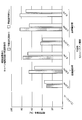
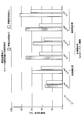
本試験結果を図3、図4に示す。
図3、図4の試験結果から、「コントロール群」と比較して、全ての「セルロースナノ繊維群」において約30%以上の病害防除率を有することが確認された。
セルロースナノ繊維群の「濃度」に着目して比較すると、セルロースナノ繊維の含有量が高いものの方が高い病害防除率を示すことが分かった。
また、セルロースナノ繊維群の「解繊処理」に着目して比較すると、低解繊処理よりも高解繊処理のものの方が高い病害防除率を示すことが分かった。
また、セルロースナノ繊維群の「界面活性剤の有無」に着目して比較すると、界面活性剤を添加したものの方が高い病害防除率を示すことが分かった。
また、セルロースナノ繊維群の「由来物質」に着目して比較すると、針葉樹由来よりも竹由来のものの方が高い病害防除率を示すことが分かった。
図3、図4の試験結果から、「コントロール群」と比較して、全ての「セルロースナノ繊維群」において約30%以上の病害防除率を有することが確認された。
セルロースナノ繊維群の「濃度」に着目して比較すると、セルロースナノ繊維の含有量が高いものの方が高い病害防除率を示すことが分かった。
また、セルロースナノ繊維群の「解繊処理」に着目して比較すると、低解繊処理よりも高解繊処理のものの方が高い病害防除率を示すことが分かった。
また、セルロースナノ繊維群の「界面活性剤の有無」に着目して比較すると、界面活性剤を添加したものの方が高い病害防除率を示すことが分かった。
また、セルロースナノ繊維群の「由来物質」に着目して比較すると、針葉樹由来よりも竹由来のものの方が高い病害防除率を示すことが分かった。
<試験2:ダイズ植物に対する病原菌防除効果「葉面の様子」>
実施例2の竹由来の植物病原菌防除剤を用いて、ダイズ植物に対する病原菌防除効果を確認する試験を行った。
本試験では、「試験植物」として試験1と同じ園芸用培土(片倉コープアグリ社製、げんきくんセル専用培土コープN-150)にて生育させたダイズ植物(品種:エンレイ)、「植物病原菌」としてダイズ斑点細菌病菌及びダイズさび病菌の夏胞子をそれぞれ用いた。
また、セルロースナノ繊維が0.1質量%、界面活性剤が0.01質量%の含有量となるように実施例2の竹由来の植物病原菌防除剤を調製した。
具体的には、播種後3~4週間栽培したダイズ植物(第2本葉期)の葉面(表面と裏面の両方)に対して植物病原菌防除剤をハンドスプレーを用いて均一に噴霧した(セルロースナノ繊維群)。また、コントロール群として、植物病原菌防除剤の代わりに水を均一に噴霧したものも用意した。
葉面に噴霧して1時間後、ダイズ斑点細菌病菌を108cfu/mL、ダイズさび病菌の夏胞子を108個/mLとなるように調製し、葉面に対しスプレー接種を行った。
そして、ダイズ斑点細菌病菌接種6日後、及びダイズさび病菌接種10日後のそれぞれのダイズ植物の葉面の様子を、コントロール群と比較した。
実施例2の竹由来の植物病原菌防除剤を用いて、ダイズ植物に対する病原菌防除効果を確認する試験を行った。
本試験では、「試験植物」として試験1と同じ園芸用培土(片倉コープアグリ社製、げんきくんセル専用培土コープN-150)にて生育させたダイズ植物(品種:エンレイ)、「植物病原菌」としてダイズ斑点細菌病菌及びダイズさび病菌の夏胞子をそれぞれ用いた。
また、セルロースナノ繊維が0.1質量%、界面活性剤が0.01質量%の含有量となるように実施例2の竹由来の植物病原菌防除剤を調製した。
具体的には、播種後3~4週間栽培したダイズ植物(第2本葉期)の葉面(表面と裏面の両方)に対して植物病原菌防除剤をハンドスプレーを用いて均一に噴霧した(セルロースナノ繊維群)。また、コントロール群として、植物病原菌防除剤の代わりに水を均一に噴霧したものも用意した。
葉面に噴霧して1時間後、ダイズ斑点細菌病菌を108cfu/mL、ダイズさび病菌の夏胞子を108個/mLとなるように調製し、葉面に対しスプレー接種を行った。
そして、ダイズ斑点細菌病菌接種6日後、及びダイズさび病菌接種10日後のそれぞれのダイズ植物の葉面の様子を、コントロール群と比較した。
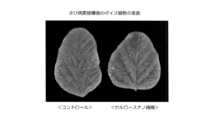
本試験結果を図5、図6に示す。
図5に示すように、ダイズ斑点細菌病菌接種6日後のダイズ植物の葉において、水を噴霧したコントロール群では、黄化(クロローシス)を伴う斑点細菌病の感染が認められた。一方で、セルロースナノ繊維群では、軽度の黄化のみが認められた。
また図6に示すように、ダイズさび病菌接種10日後のダイズ植物の葉において、水を噴霧したコントロール群では、黄化(クロローシス)を伴うさび病の感染が認められた。一方で、セルロースナノ繊維群では、軽度の黄化のみが認められた。
図5に示すように、ダイズ斑点細菌病菌接種6日後のダイズ植物の葉において、水を噴霧したコントロール群では、黄化(クロローシス)を伴う斑点細菌病の感染が認められた。一方で、セルロースナノ繊維群では、軽度の黄化のみが認められた。
また図6に示すように、ダイズさび病菌接種10日後のダイズ植物の葉において、水を噴霧したコントロール群では、黄化(クロローシス)を伴うさび病の感染が認められた。一方で、セルロースナノ繊維群では、軽度の黄化のみが認められた。
<試験3:トマト植物に対する病原菌防除効果「葉面の様子」>
実施例2の竹由来の植物病原菌防除剤を用いて、トマト植物に対する病原菌防除効果を確認する試験を行った。
本試験では、「試験植物」として試験1と同じ園芸用培土にて生育させたトマト植物(品種:Glamоur)、「植物病原菌」としてトマト斑葉細菌病菌を用いた。
また、セルロースナノ繊維が0.1質量%、界面活性剤が0.01質量%の含有量となるように実施例2の植物病原菌防除剤を調製した。
具体的には、播種後4~5週間栽培したトマト植物の葉面(表面と裏面の両方)に対して植物病原菌防除剤をハンドスプレーを用いて均一に噴霧した(セルロースナノ繊維群)。また、コントロール群として、植物病原菌防除剤の代わりに水を均一に噴霧したものも用意した。
葉面に噴霧して1時間後、トマト斑葉細菌病菌を108cfu/mLとなるように調製し、葉面に対しスプレー接種を行った。
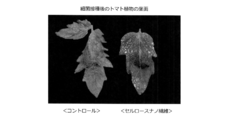
そして、トマト斑葉細菌病菌接種7日後のトマト植物の葉面の様子をコントロール群と比較した。
実施例2の竹由来の植物病原菌防除剤を用いて、トマト植物に対する病原菌防除効果を確認する試験を行った。
本試験では、「試験植物」として試験1と同じ園芸用培土にて生育させたトマト植物(品種:Glamоur)、「植物病原菌」としてトマト斑葉細菌病菌を用いた。
また、セルロースナノ繊維が0.1質量%、界面活性剤が0.01質量%の含有量となるように実施例2の植物病原菌防除剤を調製した。
具体的には、播種後4~5週間栽培したトマト植物の葉面(表面と裏面の両方)に対して植物病原菌防除剤をハンドスプレーを用いて均一に噴霧した(セルロースナノ繊維群)。また、コントロール群として、植物病原菌防除剤の代わりに水を均一に噴霧したものも用意した。
葉面に噴霧して1時間後、トマト斑葉細菌病菌を108cfu/mLとなるように調製し、葉面に対しスプレー接種を行った。
そして、トマト斑葉細菌病菌接種7日後のトマト植物の葉面の様子をコントロール群と比較した。
本試験結果を図7に示す。
トマト斑葉細菌病菌接種7日後のトマト植物の葉において、水を噴霧したコントロール群では、壊死(ネクローシス)及び黄化(クロローシス)を伴う斑葉細菌病の感染が認められた。一方で、セルロースナノ繊維群では、軽度の黄化のみが認められた。
トマト斑葉細菌病菌接種7日後のトマト植物の葉において、水を噴霧したコントロール群では、壊死(ネクローシス)及び黄化(クロローシス)を伴う斑葉細菌病の感染が認められた。一方で、セルロースナノ繊維群では、軽度の黄化のみが認められた。
<試験4:タバコ植物に対する病原菌防除効果「葉面の様子」>
実施例2の竹由来の植物病原菌防除剤を用いて、タバコ植物に対する病原菌防除効果を確認する試験を行った。
本試験では、「試験植物」として試験1と同じ園芸用培土にて生育させたタバコ植物(品種:Xanthi)、「植物病原菌」としてタバコ野火病菌を用いた。
また、セルロースナノ繊維が0.1質量%、界面活性剤が0.01質量%の含有量となるように実施例2の植物病原菌防除剤を調製した。
具体的には、播種後4~5週間栽培したタバコ植物の葉面(表面と裏面の両方)に対して植物病原菌防除剤をハンドスプレーを用いて均一に噴霧した(セルロースナノ繊維群)。また、コントロール群として、植物病原菌防除剤の代わりに水を均一に噴霧したものも用意した。
葉面に噴霧して1時間後、タバコ野火病菌を108cfu/mLとなるように調製し、葉面に対しスプレー接種を行った。
そして、タバコ野火病菌接種7日後のタバコ植物の葉面の様子をコントロール群と比較した。
実施例2の竹由来の植物病原菌防除剤を用いて、タバコ植物に対する病原菌防除効果を確認する試験を行った。
本試験では、「試験植物」として試験1と同じ園芸用培土にて生育させたタバコ植物(品種:Xanthi)、「植物病原菌」としてタバコ野火病菌を用いた。
また、セルロースナノ繊維が0.1質量%、界面活性剤が0.01質量%の含有量となるように実施例2の植物病原菌防除剤を調製した。
具体的には、播種後4~5週間栽培したタバコ植物の葉面(表面と裏面の両方)に対して植物病原菌防除剤をハンドスプレーを用いて均一に噴霧した(セルロースナノ繊維群)。また、コントロール群として、植物病原菌防除剤の代わりに水を均一に噴霧したものも用意した。
葉面に噴霧して1時間後、タバコ野火病菌を108cfu/mLとなるように調製し、葉面に対しスプレー接種を行った。
そして、タバコ野火病菌接種7日後のタバコ植物の葉面の様子をコントロール群と比較した。
本試験結果を図8に示す。
タバコ野火病菌接種7日後のタバコ植物の葉において、水を噴霧したコントロール群では、黄化(クロローシス)を伴う野火病の感染が認められた。一方で、セルロースナノ繊維群では、軽度の黄化のみが認められた。
タバコ野火病菌接種7日後のタバコ植物の葉において、水を噴霧したコントロール群では、黄化(クロローシス)を伴う野火病の感染が認められた。一方で、セルロースナノ繊維群では、軽度の黄化のみが認められた。
<試験5:コーヒーの木幼苗に対する病原菌防除効果「葉面の様子」>
実施例2、4の植物病原菌防除剤を用いて、コーヒーの木幼苗に対する病原菌防除効果を確認する試験を行った。なお、実施例2は竹由来、実施例4は針葉樹由来のものである。
本試験では、「試験植物」として温室にて播種後4~5ヶ月生育させたコーヒーノキ幼苗(品種:ロブスタ)、「植物病原菌」としてコーヒーさび病菌を用いた。
また、セルロースナノ繊維が0.1質量%、界面活性剤が0.01質量%の含有量となるように実施例2、4の植物病原菌防除剤をそれぞれ調製した。
具体的には、播種後4~5週間栽培したコーヒーノキ幼苗の葉面(表面と裏面の両方)に対して植物病原菌防除剤をハンドスプレーを用いて均一に噴霧した(セルロースナノ繊維群)。また、コントロール群として、植物病原菌防除剤の代わりに水を均一に噴霧したものも用意した。
葉面に噴霧して3時間後、コーヒーさび病菌の夏胞子を106個/mLとなるように調製し、葉面に対しスプレー接種を行った。
そして、コーヒーさび病菌接種10日後のコーヒーノキ幼苗の葉面の様子をコントロール群と比較した。
実施例2、4の植物病原菌防除剤を用いて、コーヒーの木幼苗に対する病原菌防除効果を確認する試験を行った。なお、実施例2は竹由来、実施例4は針葉樹由来のものである。
本試験では、「試験植物」として温室にて播種後4~5ヶ月生育させたコーヒーノキ幼苗(品種:ロブスタ)、「植物病原菌」としてコーヒーさび病菌を用いた。
また、セルロースナノ繊維が0.1質量%、界面活性剤が0.01質量%の含有量となるように実施例2、4の植物病原菌防除剤をそれぞれ調製した。
具体的には、播種後4~5週間栽培したコーヒーノキ幼苗の葉面(表面と裏面の両方)に対して植物病原菌防除剤をハンドスプレーを用いて均一に噴霧した(セルロースナノ繊維群)。また、コントロール群として、植物病原菌防除剤の代わりに水を均一に噴霧したものも用意した。
葉面に噴霧して3時間後、コーヒーさび病菌の夏胞子を106個/mLとなるように調製し、葉面に対しスプレー接種を行った。
そして、コーヒーさび病菌接種10日後のコーヒーノキ幼苗の葉面の様子をコントロール群と比較した。
本試験結果を図9に示す。なお、「セルロースナノ繊維群」の代表例として、実施例2の植物病原菌防除剤を示した。
コーヒーさび病菌接種10日後のコーヒーノキ幼苗の葉において、水を噴霧したコントロール群では、さび病の感染が認められた。一方で、実施例2、実施例4両方のセルロースナノ繊維群では、さび病の感染は認められなかった。
コーヒーさび病菌接種10日後のコーヒーノキ幼苗の葉において、水を噴霧したコントロール群では、さび病の感染が認められた。一方で、実施例2、実施例4両方のセルロースナノ繊維群では、さび病の感染は認められなかった。
<試験6:ダイズ植物に対する病原菌防除効果「葉面の病斑数」>
実施例1~6の植物病原菌防除剤を用いたときの、ダイズ植物の葉面の病斑数の変化を確認する試験を行った。
本試験では、「試験植物」として試験1と同じ園芸用培土にて生育させたダイズ植物(品種:エンレイ)、「植物病原菌」としてダイズさび病菌の夏胞子をそれぞれ用いた。
また、下記表2に示すように、セルロースナノ繊維が0.1質量%、界面活性剤が0.01質量%の含有量となるように実施例1~6の植物病原菌防除剤を調製した。

実施例1~6の植物病原菌防除剤を用いたときの、ダイズ植物の葉面の病斑数の変化を確認する試験を行った。
本試験では、「試験植物」として試験1と同じ園芸用培土にて生育させたダイズ植物(品種:エンレイ)、「植物病原菌」としてダイズさび病菌の夏胞子をそれぞれ用いた。
また、下記表2に示すように、セルロースナノ繊維が0.1質量%、界面活性剤が0.01質量%の含有量となるように実施例1~6の植物病原菌防除剤を調製した。
第4葉まで展開したダイズ植物の葉面(表面)に対して植物病原菌防除剤をハンドスプレーを用いて均一に噴霧して乾燥させた(セルロースナノ繊維群)。また、コントロール群として、植物病原菌防除剤の代わりに水を均一に噴霧したものも用意した。
乾燥後、ダイズさび病菌の夏胞子を105個/mLとなるように調製し、葉面に対しスプレー接種を行った。
そして、ダイズさび病菌接種10日後のダイズ植物の第2葉面~第4葉面に発生した病斑数を1cm2当たりで測定した。また、コントロール群と比較した。N=3で実施した。
乾燥後、ダイズさび病菌の夏胞子を105個/mLとなるように調製し、葉面に対しスプレー接種を行った。
そして、ダイズさび病菌接種10日後のダイズ植物の第2葉面~第4葉面に発生した病斑数を1cm2当たりで測定した。また、コントロール群と比較した。N=3で実施した。
本試験結果を図10に示す。
図10の試験結果から、「コントロール群」では1cm2当たり約25個の病斑が観察された一方で、全ての「セルロースナノ繊維群」では1cm2当たり20個以下の病斑が観察された。
また、セルロースナノ繊維群の「解繊処理」に着目して比較すると、低解繊処理よりも高解繊処理のものの方が、病斑数が減少することが示された。
以上の結果から、全てのセルロースナノ繊維群の実施例においてコントロール群よりもさび病菌の病斑数が有意に低下することが認められた。
図10の試験結果から、「コントロール群」では1cm2当たり約25個の病斑が観察された一方で、全ての「セルロースナノ繊維群」では1cm2当たり20個以下の病斑が観察された。
また、セルロースナノ繊維群の「解繊処理」に着目して比較すると、低解繊処理よりも高解繊処理のものの方が、病斑数が減少することが示された。
以上の結果から、全てのセルロースナノ繊維群の実施例においてコントロール群よりもさび病菌の病斑数が有意に低下することが認められた。
<試験7:キャベツ植物に対する病原菌防除効果「葉面の形質変化」>
実施例2の植物病原菌防除剤を用いたときの、キャベツ植物の葉面の形質変化を確認する試験を行った。
本試験では、「試験植物」として試験1と同じ園芸用培土にて生育させたキャベツ植物(品種:金系201号)、「植物病原菌」としてキャベツ黒班細菌病菌をそれぞれ用いた。
また、セルロースナノ繊維が0.1質量%、界面活性剤が0.01質量%の含有量となるように実施例2の植物病原菌防除剤を調製した。
具体的には、第2葉まで展開したキャベツ植物の葉面(表面)に対して植物病原菌防除剤を噴霧して乾燥させたもの(セルロースナノ繊維群)と、水を噴霧したもの(コントロール群)とを用意し、それぞれの葉面の様子を走査型原子顕微鏡によって比較観察した。
その後、蛍光タンパク質で標識したキャベツ黒斑細菌病菌を108cfu/mLとなるように調製し、それぞれの葉面に対しディップ接種を行った。そして、キャベツ黒斑細菌病菌接種後のキャベツ植物の葉面の様子を共焦点レーザー顕微鏡によって比較観察した。
実施例2の植物病原菌防除剤を用いたときの、キャベツ植物の葉面の形質変化を確認する試験を行った。
本試験では、「試験植物」として試験1と同じ園芸用培土にて生育させたキャベツ植物(品種:金系201号)、「植物病原菌」としてキャベツ黒班細菌病菌をそれぞれ用いた。
また、セルロースナノ繊維が0.1質量%、界面活性剤が0.01質量%の含有量となるように実施例2の植物病原菌防除剤を調製した。
具体的には、第2葉まで展開したキャベツ植物の葉面(表面)に対して植物病原菌防除剤を噴霧して乾燥させたもの(セルロースナノ繊維群)と、水を噴霧したもの(コントロール群)とを用意し、それぞれの葉面の様子を走査型原子顕微鏡によって比較観察した。
その後、蛍光タンパク質で標識したキャベツ黒斑細菌病菌を108cfu/mLとなるように調製し、それぞれの葉面に対しディップ接種を行った。そして、キャベツ黒斑細菌病菌接種後のキャベツ植物の葉面の様子を共焦点レーザー顕微鏡によって比較観察した。
本試験結果を図11、図12に示す。
図11の試験結果から、「セルロースナノ繊維群」では、植物の葉面上にセルロースナノ繊維(繊維状の物質)が多数観察された。葉面の気孔開口部においてはセルロースナノ繊維が網目状(枝状)となって葉面の気孔開口部表面を覆っていることが観察され、また当該セルロースナノ繊維によって葉面の気孔開口部の少なくとも一部が物理的に閉鎖されていることが観察された。
図11に示される植物の気孔開口部は幅約3μm、長さ約12μm程度の大きさである。一方、病気の原因となる細菌の一般的な大きさは1~2μm程度である。セルロースナノ繊維は平均太さ3~200nmの繊維であることから、植物の気孔開口部表面を完全に塞ぐものではなく、気孔開口部表面を網目状(枝分かれ状)となって覆うことで、細菌の侵入経路となる気孔開口部の空隙の大きさを網目状に小さくすることが示唆された。また、気孔開口部表面を網目状(枝分かれ状)となって覆うことで、植物生育に必要な植物の気孔の機能である酸素や二酸化炭素、水蒸気などの気体の通過を維持しながら、細菌の侵入を防ぐものであることが示された。
なお、本試験とは別に、植物に植物病原菌防除剤を噴霧した場合であっても、当該植物の生育が阻害されないことが確認されている。
図11の試験結果から、「セルロースナノ繊維群」では、植物の葉面上にセルロースナノ繊維(繊維状の物質)が多数観察された。葉面の気孔開口部においてはセルロースナノ繊維が網目状(枝状)となって葉面の気孔開口部表面を覆っていることが観察され、また当該セルロースナノ繊維によって葉面の気孔開口部の少なくとも一部が物理的に閉鎖されていることが観察された。
図11に示される植物の気孔開口部は幅約3μm、長さ約12μm程度の大きさである。一方、病気の原因となる細菌の一般的な大きさは1~2μm程度である。セルロースナノ繊維は平均太さ3~200nmの繊維であることから、植物の気孔開口部表面を完全に塞ぐものではなく、気孔開口部表面を網目状(枝分かれ状)となって覆うことで、細菌の侵入経路となる気孔開口部の空隙の大きさを網目状に小さくすることが示唆された。また、気孔開口部表面を網目状(枝分かれ状)となって覆うことで、植物生育に必要な植物の気孔の機能である酸素や二酸化炭素、水蒸気などの気体の通過を維持しながら、細菌の侵入を防ぐものであることが示された。
なお、本試験とは別に、植物に植物病原菌防除剤を噴霧した場合であっても、当該植物の生育が阻害されないことが確認されている。
図12の試験結果から、「セルロースナノ繊維群」では、「コントロール群」と比較して植物の葉面上への細菌の付着が多数観察された。
このことから、植物の葉面上にナノ繊維被膜が形成されており、当該ナノ繊維被膜が細菌に対し植物表面の構造や疎水性を認識させないように働きかけ、植物内に侵入することを意識的に断念させていることが示唆された。
また、「セルロースナノ繊維群」では、葉面の気孔開口部の一部に膜物質が観察された。このことから、セルロースナノ繊維が葉面の気孔の一部を物理的に閉鎖していることが示された。
このことから、植物の葉面上にナノ繊維被膜が形成されており、当該ナノ繊維被膜が細菌に対し植物表面の構造や疎水性を認識させないように働きかけ、植物内に侵入することを意識的に断念させていることが示唆された。
また、「セルロースナノ繊維群」では、葉面の気孔開口部の一部に膜物質が観察された。このことから、セルロースナノ繊維が葉面の気孔の一部を物理的に閉鎖していることが示された。
これら試験結果から、セルロースナノ繊維を有効成分とする植物病原菌防除剤が、植物に散布又は噴霧されることで、植物病原菌を防除する効果を確認することができた。
Claims (10)
- 植物に対して植物病原菌を防除するために用いられ、
セルロースナノ繊維を有効成分として含有することを特徴とする植物病原菌防除剤。 - 対象となる前記植物病原菌が、シュードモナス(Pseudomonas)属細菌、キサントモナス(Xanthomonas)属細菌、ペクトバクテリウム(Pectobacterium)属細菌、アグロバクテリウム(Agrobacterium)属細菌、及びクラビバクター(Clavibacter)属細菌からなる群から選択される病原細菌であることを特徴とする請求項1に記載の植物病原菌防除剤。
- 対象となる前記植物病原菌が、ファコスポラ(Phakopsora)属さび病菌、ヘミレイア(Hemileia)属さび病菌、及びパクシニア(Puccinia)属さび病菌からなる群から選択されるさび病菌、または病原糸状菌であることを特徴とする請求項1に記載の植物病原菌防除剤。
- 対象となる前記植物が、アブラナ科植物、マメ科植物、ナス科植物、及びアカネ科植物からなる群から選択される植物であることを特徴とする請求項1乃至3のいずれか1項に記載の植物病原菌防除剤。
- 前記植物の葉面又は茎面に与えられ、乾燥後に形成されるナノ繊維被膜の表面が親水性を示すことを特徴とする請求項1乃至4のいずれか1項に記載の植物病原菌防除剤。
- 前記植物の葉面又は茎面に与えられ、乾燥後に形成されるナノ繊維被膜が略網目状となっていることを特徴とする請求項1乃至5のいずれか1項に記載の植物病原菌防除剤。
- 前記セルロースナノ繊維は、イネ科植物、広葉樹、及び針葉樹からなる群から選択される植物由来のナノ繊維材料であることを特徴とする請求項1乃至6のいずれか1項に記載の植物病原菌防除剤。
- 前記セルロースナノ繊維は、太さが3~200nmであって、結晶化度が50以上であって、原料のα―セルロース含有率が60~99質量%であって、平均重合度が500~900であって、平均分子量が90000~140000であることを特徴とする請求項1乃至7のいずれか1項に記載の植物病原菌防除剤。
- 前記植物病原菌防除剤の総質量に対して前記セルロースナノ繊維の含有量が0.01~2.0質量%であることを特徴とする請求項1乃至8のいずれか1項に記載の植物病原菌防除剤。
- 水性溶媒と、該水性溶媒中に溶解される界面活性剤と、を含有し、
該界面活性剤が非イオン界面活性剤であることを特徴とする請求項1乃至9のいずれか1項に記載の植物病原菌防除剤。
Priority Applications (5)
| Application Number | Priority Date | Filing Date | Title |
|---|---|---|---|
| ES19861767T ES3023062T3 (en) | 2018-09-21 | 2019-09-20 | Plant pathogen control agent |
| JP2020512622A JP6784867B2 (ja) | 2018-09-21 | 2019-09-20 | 植物病原菌防除剤 |
| US17/276,409 US20220071209A1 (en) | 2018-09-21 | 2019-09-20 | Plant pathogen control agent |
| EP19861767.2A EP3854212B1 (en) | 2018-09-21 | 2019-09-20 | Plant pathogen control agent |
| PL19861767.2T PL3854212T3 (pl) | 2018-09-21 | 2019-09-20 | Środek do zwalczania patogenów roślin |
Applications Claiming Priority (2)
| Application Number | Priority Date | Filing Date | Title |
|---|---|---|---|
| JP2018177729 | 2018-09-21 | ||
| JP2018-177729 | 2018-09-21 |
Publications (1)
| Publication Number | Publication Date |
|---|---|
| WO2020059864A1 true WO2020059864A1 (ja) | 2020-03-26 |
Family
ID=69887240
Family Applications (1)
| Application Number | Title | Priority Date | Filing Date |
|---|---|---|---|
| PCT/JP2019/037052 Ceased WO2020059864A1 (ja) | 2018-09-21 | 2019-09-20 | 植物病原菌防除剤 |
Country Status (6)
| Country | Link |
|---|---|
| US (1) | US20220071209A1 (ja) |
| EP (1) | EP3854212B1 (ja) |
| JP (1) | JP6784867B2 (ja) |
| ES (1) | ES3023062T3 (ja) |
| PL (1) | PL3854212T3 (ja) |
| WO (1) | WO2020059864A1 (ja) |
Cited By (2)
| Publication number | Priority date | Publication date | Assignee | Title |
|---|---|---|---|---|
| JP7303349B1 (ja) | 2022-04-28 | 2023-07-04 | 中越パルプ工業株式会社 | 補助剤含有組成物 |
| EP4245131A4 (en) * | 2020-11-13 | 2024-02-28 | Chuetsu-Pulp and Paper Co., Ltd | LIQUID DISPERSION FOR USE IN ENVIRONMENT IMPROVEMENT AND METHOD FOR ENVIRONMENT IMPROVEMENT |
Citations (13)
| Publication number | Priority date | Publication date | Assignee | Title |
|---|---|---|---|---|
| JPH02104501A (ja) * | 1988-06-21 | 1990-04-17 | Nippon Soda Co Ltd | 植物被覆剤 |
| JP2005270891A (ja) | 2004-03-26 | 2005-10-06 | Tetsuo Kondo | 多糖類の湿式粉砕方法 |
| JP2012188367A (ja) * | 2011-03-09 | 2012-10-04 | Mitsui Chemicals Agro Inc | 植物の菌類病害防除剤および菌類病害防除方法 |
| JP2014050835A (ja) | 2006-02-02 | 2014-03-20 | Chuetsu Pulp Kogyo Kk | セルロースナノ繊維を用いる撥水性と耐油性の付与方法 |
| WO2014203121A1 (en) * | 2013-06-18 | 2014-12-24 | Stora Enso Oyj | Method for treating a plant with a solution comprising a nanofibrillated polysaccharide |
| JP2015142900A (ja) | 2013-12-25 | 2015-08-06 | 中越パルプ工業株式会社 | ナノ微細化品の製造装置、ナノ微細化品の製造方法 |
| JP2015157796A (ja) | 2014-01-21 | 2015-09-03 | 株式会社スギノマシン | 乳化剤とその製造方法、及びオーガニック化粧料 |
| JP2016065116A (ja) | 2014-09-24 | 2016-04-28 | 第一工業製薬株式会社 | セルロースナノファイバー水分散体組成物、それを用いた食品および化粧料。 |
| JP2016069295A (ja) * | 2014-09-28 | 2016-05-09 | 第一工業製薬株式会社 | 水性農薬組成物 |
| WO2017158626A1 (en) * | 2016-03-18 | 2017-09-21 | Council Of Scientific & Industrial Research | A nio-nanocellulose hybrid nanocomposites for their antibacterial and antifungal activities |
| JP2017205683A (ja) | 2016-05-16 | 2017-11-24 | 中越パルプ工業株式会社 | 対向衝突処理装置 |
| WO2018083539A2 (en) * | 2016-11-07 | 2018-05-11 | Polynatural Holding Spa | Coating compositions and methods of use thereof |
| WO2018174239A1 (ja) * | 2017-03-24 | 2018-09-27 | 中越パルプ工業株式会社 | 植物栽培剤 |
Family Cites Families (2)
| Publication number | Priority date | Publication date | Assignee | Title |
|---|---|---|---|---|
| US6541627B1 (en) * | 1997-12-04 | 2003-04-01 | Asahi Kasei Kabushiki Kaisha | Cellulose dispersion |
| PT3576544T (pt) * | 2017-01-31 | 2025-06-09 | Univ Oregon State | Revestimentos de produtos alimentares |
-
2019
- 2019-09-20 EP EP19861767.2A patent/EP3854212B1/en active Active
- 2019-09-20 US US17/276,409 patent/US20220071209A1/en not_active Abandoned
- 2019-09-20 ES ES19861767T patent/ES3023062T3/es active Active
- 2019-09-20 JP JP2020512622A patent/JP6784867B2/ja active Active
- 2019-09-20 WO PCT/JP2019/037052 patent/WO2020059864A1/ja not_active Ceased
- 2019-09-20 PL PL19861767.2T patent/PL3854212T3/pl unknown
Patent Citations (13)
| Publication number | Priority date | Publication date | Assignee | Title |
|---|---|---|---|---|
| JPH02104501A (ja) * | 1988-06-21 | 1990-04-17 | Nippon Soda Co Ltd | 植物被覆剤 |
| JP2005270891A (ja) | 2004-03-26 | 2005-10-06 | Tetsuo Kondo | 多糖類の湿式粉砕方法 |
| JP2014050835A (ja) | 2006-02-02 | 2014-03-20 | Chuetsu Pulp Kogyo Kk | セルロースナノ繊維を用いる撥水性と耐油性の付与方法 |
| JP2012188367A (ja) * | 2011-03-09 | 2012-10-04 | Mitsui Chemicals Agro Inc | 植物の菌類病害防除剤および菌類病害防除方法 |
| WO2014203121A1 (en) * | 2013-06-18 | 2014-12-24 | Stora Enso Oyj | Method for treating a plant with a solution comprising a nanofibrillated polysaccharide |
| JP2015142900A (ja) | 2013-12-25 | 2015-08-06 | 中越パルプ工業株式会社 | ナノ微細化品の製造装置、ナノ微細化品の製造方法 |
| JP2015157796A (ja) | 2014-01-21 | 2015-09-03 | 株式会社スギノマシン | 乳化剤とその製造方法、及びオーガニック化粧料 |
| JP2016065116A (ja) | 2014-09-24 | 2016-04-28 | 第一工業製薬株式会社 | セルロースナノファイバー水分散体組成物、それを用いた食品および化粧料。 |
| JP2016069295A (ja) * | 2014-09-28 | 2016-05-09 | 第一工業製薬株式会社 | 水性農薬組成物 |
| WO2017158626A1 (en) * | 2016-03-18 | 2017-09-21 | Council Of Scientific & Industrial Research | A nio-nanocellulose hybrid nanocomposites for their antibacterial and antifungal activities |
| JP2017205683A (ja) | 2016-05-16 | 2017-11-24 | 中越パルプ工業株式会社 | 対向衝突処理装置 |
| WO2018083539A2 (en) * | 2016-11-07 | 2018-05-11 | Polynatural Holding Spa | Coating compositions and methods of use thereof |
| WO2018174239A1 (ja) * | 2017-03-24 | 2018-09-27 | 中越パルプ工業株式会社 | 植物栽培剤 |
Non-Patent Citations (1)
| Title |
|---|
| See also references of EP3854212A4 |
Cited By (5)
| Publication number | Priority date | Publication date | Assignee | Title |
|---|---|---|---|---|
| EP4245131A4 (en) * | 2020-11-13 | 2024-02-28 | Chuetsu-Pulp and Paper Co., Ltd | LIQUID DISPERSION FOR USE IN ENVIRONMENT IMPROVEMENT AND METHOD FOR ENVIRONMENT IMPROVEMENT |
| JP7303349B1 (ja) | 2022-04-28 | 2023-07-04 | 中越パルプ工業株式会社 | 補助剤含有組成物 |
| JP2023164104A (ja) * | 2022-04-28 | 2023-11-10 | 中越パルプ工業株式会社 | 補助剤含有組成物 |
| JP2023164421A (ja) * | 2022-04-28 | 2023-11-10 | 中越パルプ工業株式会社 | 補助剤含有組成物 |
| JP7787844B2 (ja) | 2022-04-28 | 2025-12-17 | 中越パルプ工業株式会社 | 補助剤含有組成物 |
Also Published As
| Publication number | Publication date |
|---|---|
| EP3854212B1 (en) | 2025-03-26 |
| EP3854212A4 (en) | 2021-10-27 |
| EP3854212A1 (en) | 2021-07-28 |
| PL3854212T3 (pl) | 2025-05-26 |
| ES3023062T3 (en) | 2025-05-29 |
| JPWO2020059864A1 (ja) | 2021-01-07 |
| JP6784867B2 (ja) | 2020-11-11 |
| US20220071209A1 (en) | 2022-03-10 |
Similar Documents
| Publication | Publication Date | Title |
|---|---|---|
| Edirisinghe et al. | Chitosan controls postharvest anthracnose in bell pepper by activating defense-related enzymes | |
| López‐Velázquez et al. | Gelatin–chitosan–PVA hydrogels and their application in agriculture | |
| Parveen et al. | Impact of silicon dioxide nanoparticles on growth, photosynthetic pigments, proline, activities of defense enzymes and some bacterial and fungal pathogens of tomato | |
| Shahid et al. | Green Chemistry Approaches to Develop Antimicrobial Textiles Based on Sustainable Biopolymers A Review | |
| Benhamou et al. | Induction of systemic resistance to Fusarium crown and root rot in tomato plants by seed treatment with chitosan | |
| Chen et al. | Inhibitory efficacy of endophytic Bacillus subtilis EDR4 against Sclerotinia sclerotiorum on rapeseed | |
| Xueuan et al. | Effect of mint oil against Botrytis cinerea on table grapes and its possible mechanism of action | |
| Nie et al. | CuO nanoparticle exposure impairs the root tip cell walls of Arabidopsis thaliana seedlings | |
| Nandhavathy et al. | Determination of antifungal activities of essential oils incorporated-pomegranate peel fibers reinforced-polyvinyl alcohol biocomposite film against mango postharvest pathogens | |
| Badawy et al. | Synthesis and antifungal property of N-(aryl) and quaternary N-(aryl) chitosan derivatives against Botrytis cinerea | |
| Merino et al. | Upcycling orange peel agricultural waste for the preparation of green hydrogels as active soil conditioners | |
| JP6784867B2 (ja) | 植物病原菌防除剤 | |
| Abdel-Rahman et al. | Preharvest application of salicylic acid induces some resistant genes of sweet pepper against black mold disease | |
| Wang et al. | Konjac glucomannan/carboxylated cellulose nanofiber-based edible coating with tannic acid maintains quality and prolongs shelf-life of mango fruit | |
| Nowinski et al. | Effect of multiple nonthermal plasma treatments of filamentous fungi on cellular phenotypic changes and phytopathogenicity | |
| Du et al. | Preparation of AgNPs/oregano essential oil composite film and its antibacterial application in the conservation of paper relics | |
| Tong et al. | Preparation of chitosan-based coating enriched with zinc oxide nanoparticles for inhibiting Alternaria alternata on tomato fruits | |
| Coronado-Partida et al. | Antifungal potential of eco-friendly chitosan-sodium benzoate to inhibit the development of Rhizopus stolonifer isolated from jackfruit | |
| Vázquez-González et al. | Development of antifungal electrospun nanofiber mats containing Meyerozyma caribbica | |
| Nataraj et al. | Development of bio‐nano‐herbicide using Eucalyptus citriodora essential oil against a notorious weed Echinochloa crus‐galli | |
| Toki et al. | Sustainable antimicrobial functionalization of cotton with lavender oil and jackfruit latex | |
| Saidi et al. | Enhancing the Water Resistance of Carboxymethyl Cellulose Films with Cellulose Nanofibers from Spent Coffee Grounds and Grapeseed Oil | |
| Latha et al. | Polyvinyl alcohol (PVA) nanofibre matrix encapsulated with tebuconazole fungicide: a smart delivery system against dry root rot disease of black gram | |
| Bautista-Baños et al. | Effect of chitosan on in vitro development and morphology of two isolates of Colletotrichum gloeosporioides (Penz.) Penz. and Sacc | |
| Fabiyi | Nanomaterials of cellulose origin: Novel strategies for plant disease control |
Legal Events
| Date | Code | Title | Description |
|---|---|---|---|
| ENP | Entry into the national phase |
Ref document number: 2020512622 Country of ref document: JP Kind code of ref document: A |
|
| 121 | Ep: the epo has been informed by wipo that ep was designated in this application |
Ref document number: 19861767 Country of ref document: EP Kind code of ref document: A1 |
|
| NENP | Non-entry into the national phase |
Ref country code: DE |
|
| ENP | Entry into the national phase |
Ref document number: 2019861767 Country of ref document: EP Effective date: 20210421 |