WO2020065883A1 - ユーザ端末及び無線通信方法 - Google Patents
ユーザ端末及び無線通信方法 Download PDFInfo
- Publication number
- WO2020065883A1 WO2020065883A1 PCT/JP2018/036120 JP2018036120W WO2020065883A1 WO 2020065883 A1 WO2020065883 A1 WO 2020065883A1 JP 2018036120 W JP2018036120 W JP 2018036120W WO 2020065883 A1 WO2020065883 A1 WO 2020065883A1
- Authority
- WO
- WIPO (PCT)
- Prior art keywords
- time
- transmission
- base station
- reception
- pdcch
- Prior art date
- Legal status (The legal status is an assumption and is not a legal conclusion. Google has not performed a legal analysis and makes no representation as to the accuracy of the status listed.)
- Ceased
Links
Images


Classifications
-
- H—ELECTRICITY
- H04—ELECTRIC COMMUNICATION TECHNIQUE
- H04W—WIRELESS COMMUNICATION NETWORKS
- H04W16/00—Network planning, e.g. coverage or traffic planning tools; Network deployment, e.g. resource partitioning or cells structures
- H04W16/24—Cell structures
- H04W16/28—Cell structures using beam steering
-
- H—ELECTRICITY
- H04—ELECTRIC COMMUNICATION TECHNIQUE
- H04B—TRANSMISSION
- H04B7/00—Radio transmission systems, i.e. using radiation field
- H04B7/02—Diversity systems; Multi-antenna system, i.e. transmission or reception using multiple antennas
- H04B7/04—Diversity systems; Multi-antenna system, i.e. transmission or reception using multiple antennas using two or more spaced independent antennas
- H04B7/06—Diversity systems; Multi-antenna system, i.e. transmission or reception using multiple antennas using two or more spaced independent antennas at the transmitting station
- H04B7/0686—Hybrid systems, i.e. switching and simultaneous transmission
- H04B7/0695—Hybrid systems, i.e. switching and simultaneous transmission using beam selection
- H04B7/06952—Selecting one or more beams from a plurality of beams, e.g. beam training, management or sweeping
- H04B7/06968—Selecting one or more beams from a plurality of beams, e.g. beam training, management or sweeping using quasi-colocation [QCL] between signals
-
- H—ELECTRICITY
- H04—ELECTRIC COMMUNICATION TECHNIQUE
- H04B—TRANSMISSION
- H04B7/00—Radio transmission systems, i.e. using radiation field
- H04B7/02—Diversity systems; Multi-antenna system, i.e. transmission or reception using multiple antennas
- H04B7/04—Diversity systems; Multi-antenna system, i.e. transmission or reception using multiple antennas using two or more spaced independent antennas
- H04B7/08—Diversity systems; Multi-antenna system, i.e. transmission or reception using multiple antennas using two or more spaced independent antennas at the receiving station
- H04B7/0868—Hybrid systems, i.e. switching and combining
- H04B7/088—Hybrid systems, i.e. switching and combining using beam selection
-
- H—ELECTRICITY
- H04—ELECTRIC COMMUNICATION TECHNIQUE
- H04W—WIRELESS COMMUNICATION NETWORKS
- H04W72/00—Local resource management
- H04W72/12—Wireless traffic scheduling
- H04W72/1263—Mapping of traffic onto schedule, e.g. scheduled allocation or multiplexing of flows
-
- H—ELECTRICITY
- H04—ELECTRIC COMMUNICATION TECHNIQUE
- H04W—WIRELESS COMMUNICATION NETWORKS
- H04W72/00—Local resource management
- H04W72/20—Control channels or signalling for resource management
-
- H—ELECTRICITY
- H04—ELECTRIC COMMUNICATION TECHNIQUE
- H04W—WIRELESS COMMUNICATION NETWORKS
- H04W72/00—Local resource management
- H04W72/50—Allocation or scheduling criteria for wireless resources
- H04W72/54—Allocation or scheduling criteria for wireless resources based on quality criteria
-
- H—ELECTRICITY
- H04—ELECTRIC COMMUNICATION TECHNIQUE
- H04W—WIRELESS COMMUNICATION NETWORKS
- H04W24/00—Supervisory, monitoring or testing arrangements
- H04W24/10—Scheduling measurement reports ; Arrangements for measurement reports
Definitions
- the present disclosure relates to a user terminal and a wireless communication method in a next-generation mobile communication system.
- LTE Long Term Evolution
- 3GPP@Rel.10-14 LTE-Advanced
- LTE Long Term Evolution
- 5G + fifth generation mobile communication system
- NR New Radio
- 3GPP Rel. 15 or later A successor system to LTE (for example, 5G (5th generation mobile communication system), 5G + (plus), NR (New Radio), 3GPP Rel. 15 or later) is also being studied.
- E-UTRA Evolved Universal Terrestrial Radio Access
- E-UTRAN Evolved Universal Terrestrial Radio Access Network
- a pseudo collocation (QCL: Quasi-Co-Location) relationship of a channel or a signal is determined based on a transmission configuration instruction (TCI: Transmission Configuration Indicator) state. Controlling transmission / reception processing is being studied.
- TCI Transmission Configuration Indicator
- the TCI state control methods discussed so far with respect to Rel-15 @ NR require a relatively long time to change the TCI state and a communication overhead. Therefore, in a case where the TCI state needs to be frequently changed, the communication throughput may be reduced.
- a user terminal is configured to transmit a measurement result of a reference signal measured by applying a spatial domain filter, and to set a low delay beam selection by higher layer signaling, and
- the spatial domain filter of the predetermined channel after the time after the lapse of the second time from the time T transmits the latest information transmitted before the time retroactive by the first time from the time T.
- a control unit that assumes the same as the spatial domain filter corresponding to the measurement result.
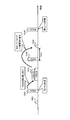
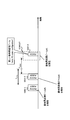
- FIG. 1 is a diagram showing an example of PDCCH beam management in Rel-15 NR.
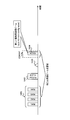
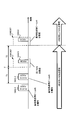
- FIG. 2 is a diagram illustrating an example of low-delay beam selection.
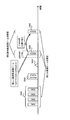
- FIG. 3 is a diagram showing an example of PDCCH beam management when low-delay beam selection is set.
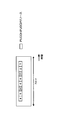
- FIG. 4 is a diagram illustrating an example of a PUCCH or PUSCH resource for reporting a CSI measurement result.
- FIG. 5 is a diagram illustrating an example of PDSCH beam management when low-delay beam selection is set.
- FIG. 6 is a diagram showing an example of PUCCH beam management when low-delay beam selection is set.
- FIG. 7 is a diagram illustrating another example of the PUCCH beam management when the low delay beam selection is set.
- FIG. 1 is a diagram showing an example of PDCCH beam management in Rel-15 NR.
- FIG. 2 is a diagram illustrating an example of low-delay beam selection.
- FIG. 3 is a diagram showing an example of PDCCH beam
- FIG. 8 is a diagram illustrating an example of an assumption of a base station transmission beam of the PDCCH based on T offset .
- FIG. 9 is a diagram illustrating another example of the assumption of the base station transmission beam of the PDCCH based on T offset .
- FIG. 10 is a diagram illustrating yet another example of the assumption of the base station transmission beam of the PDCCH based on T offset .
- FIG. 11 is a diagram illustrating an example of changing the QCL assumption based on the confirmation information.
- FIG. 12 is a diagram illustrating an example of a schematic configuration of the wireless communication system according to the embodiment.
- FIG. 13 is a diagram illustrating an example of a configuration of the base station according to the embodiment.
- FIG. 14 is a diagram illustrating an example of a configuration of the user terminal according to the embodiment.
- FIG. 15 is a diagram illustrating an example of a hardware configuration of a base station and a user terminal according to an embodiment.
- CORESET In NR, in order to transmit a physical layer control signal (for example, downlink control information (DCI: Downlink Control Information)) from a base station to a user terminal (UE: User Equipment), a control resource set (CORESET: Control) is used. REsource SET) is used.
- DCI Downlink Control Information
- UE User Equipment
- REsource SET REsource SET
- $ CORESET is an allocation candidate area for a control channel (for example, PDCCH (Physical Downlink Control Channel)).
- the coreset may be configured to include a predetermined frequency domain resource and a time domain resource (for example, one or two OFDM symbols).
- the UE may receive the configuration information of the coreset (may be referred to as a coreset configuration (coreset configuration)) from the base station.
- the UE can detect the physical layer control signal by monitoring the coreset set in the own terminal.
- the CORESET setting may be notified by, for example, higher layer signaling, or may be represented by a predetermined RRC information element (which may be called “ControlResourceSet”).
- the upper layer signaling may be, for example, any of RRC (Radio Resource Control) signaling, MAC (Medium Access Control) signaling, broadcast information, or a combination thereof.
- RRC Radio Resource Control
- MAC Medium Access Control
- the MAC signaling may use, for example, a MAC control element (MAC CE (Control Element)), a MAC PDU (Protocol Data Unit), or the like.
- the broadcast information may be, for example, a master information block (MIB: Master Information Block), a system information block (SIB: System Information Block), minimum system information (RMSI: Remaining Minimum System Information), or the like.
- the CORESET may be set to a predetermined number (for example, three or less) for each bandwidth portion (BWP: Bandwidth Part) set for the UE in the serving cell.
- BWP Bandwidth Part
- a search area and a search method of the PDCCH candidate (PDCCH candidate) are defined as a search space (SS: Search @ Space).
- the UE may receive search space configuration information (which may be referred to as search space configuration (search ⁇ space ⁇ configuration)) from the base station.
- search space configuration (search ⁇ space ⁇ configuration)
- the search space setting may be notified by, for example, higher layer signaling (eg, RRC signaling).
- the UE monitors CORESET based on search space settings.
- the UE can determine the correspondence between the RESET and the search space based on the RESET-ID included in the search space setting.
- One coreset may be associated with one or more search spaces.
- reception processing for example, reception, demapping, demodulation, decoding of at least one of a signal and a channel (expressed as a signal / channel) is performed. (At least one).
- the TCI state is information on pseudo collocation (QCL: Quasi-Co-Location) of a channel or a signal, and may also be referred to as a spatial reception parameter, spatial relation information (spatial relation information), or the like.
- the TCI state may be set for the UE on a per channel or per signal basis.
- the UE may determine at least one of a transmission beam (Tx beam) and a reception beam (Rx beam) of the channel based on the TCI state of the channel.
- QCL is an index indicating a statistical property of a signal / channel. For example, if one signal / channel and another signal / channel are in a QCL relationship, doppler shift (doppler shift), doppler spread (doppler spread), average delay (average delay) between these different signals / channels. ), Delay spread (delay @ spread), and spatial parameter (Spatial @ parameter) (e.g., spatial reception parameter (Spatial @ Rx @ Parameter)) means that it can be assumed that they are the same (QCL for at least one of these). May be.
- the spatial reception parameter may correspond to a reception beam (for example, a reception analog beam) of the UE, and the beam may be specified based on the spatial QCL.
- QCL (or at least one element of QCL) in the present disclosure may be read as sQCL (spatialpatQCL).
- QCL types A plurality of types (QCL types) may be defined for the QCL.
- QCL types AD QCL types with different parameters (or parameter sets) that can be assumed to be the same may be provided, and are described below.
- QCL type A Doppler shift, Doppler spread, average delay and delay spread
- QCL type B Doppler shift and Doppler spread
- QCL type C Doppler shift and average delay
- QCL type D spatial reception parameters.
- the TCI state is determined, for example, between a target channel (or a reference signal (RS: Reference Signal) for the channel) and another signal (for example, another downlink reference signal (DL-RS: Downlink Reference Signal)). It may be information on QCL.
- the TCI state may be set (instructed) by higher layer signaling, physical layer signaling, or a combination thereof.
- the upper layer signaling may be, for example, any one of RRC (Radio Resource Control) signaling, MAC (Medium Access Control) signaling, broadcast information, and the like, or a combination thereof.
- RRC Radio Resource Control
- MAC Medium Access Control
- the MAC signaling may use, for example, a MAC control element (MAC CE (Control Element)), a MAC PDU (Protocol Data Unit), or the like.
- the broadcast information includes, for example, a master information block (MIB: Master Information Block), a system information block (SIB: System Information Block), minimum system information (RMSI: Remaining Minimum System Information), and other system information (OSI: Other). System @ Information).
- the physical layer signaling may be, for example, downlink control information (DCI: Downlink Control Information).
- DCI Downlink Control Information
- the channels in which the TCI state is set include, for example, a downlink shared channel (PDSCH: Physical Downlink Control Channel), a downlink control channel (PDCCH: Physical Downlink Control Channel), an uplink shared channel (PUSCH: Physical Uplink Shared Channel), It may be at least one of an uplink control channel (PUCCH: Physical Uplink Control Channel).
- PDSCH Physical Downlink Control Channel
- PDCCH Physical Downlink Control Channel
- PUSCH Physical Uplink Shared Channel
- the RS having a QCL relationship with the channel includes, for example, a synchronization signal block (SSB: Synchronization Signal Block), a channel state information reference signal (CSI-RS: Channel State Information Reference Signal), and a measurement reference signal (SRS: Sounding). Reference @ Signal).
- SSB Synchronization Signal Block
- CSI-RS Channel State Information Reference Signal
- SRS Sounding Reference Signal
- $ SSB is a signal block including at least one of a primary synchronization signal (PSS: Primary @ Synchronization @ Signal), a secondary synchronization signal (SSS: Secondary @ Synchronization @ Signal), and a broadcast channel (PBCH: Physical @ Broadcast @ Channel).
- PSS Primary @ Synchronization @ Signal
- SSS Secondary @ Synchronization @ Signal
- PBCH Broadcast @ Channel
- the SSB may be called an SS / PBCH block.
- the information element of the TCI state set by the upper layer signaling (“TCI-state @ IE” of RRC) may include one or a plurality of pieces of QCL information (“QCL-Info”).
- the QCL information may include at least one of information on a DL-RS having a QCL relationship (DL-RS related information) and information indicating a QCL type (QCL type information).
- the DL-RS related information includes information such as a DL-RS index (eg, SSB index, non-zero power CSI-RS resource ID), a cell index where the RS is located, and a BWP (Bandwidth @ Part) index where the RS is located. May be included.
- the information regarding the QCL with the PDCCH (or the DMRS antenna port related to the PDCCH) and a predetermined DL-RS may be called a PDCCH TCI state or the like.
- the UE may determine the TCI state for the UE-specific PDCCH (CORESET) based on the RRC signaling and the MAC $ CE.
- CORESET UE-specific PDCCH
- one or more (K) TCI states may be set by higher layer signaling (ControlResourceSet information element) for each CORESET.
- the UE may activate one or more TCI states for each CORESET using MAC @ CE.
- the MAC CE may be referred to as a UE-specific PDCCH TCI state indication MAC CE (TCI State Indication for UE-specific PDCCH MAC CE).
- the UE may monitor the CORESET based on an active TCI state corresponding to the CORESET.
- the TCI state may correspond to a beam.
- the UE may assume that PDCCHs in different TCI states are transmitted using different beams.
- the information on the QSCH with the PDSCH (or the DMRS antenna port associated with the PDSCH) and a predetermined DL-RS may be referred to as a TCI state for the PDSCH.
- the UE may be notified (configured) of M (M ⁇ 1) TCI states (QCL information for M PDSCHs) for PDSCH by higher layer signaling.
- M M
- TCI states QCL information for M PDSCHs
- the number M of TCI states set for the UE may be limited by at least one of the UE capability (UE capability) and the QCL type.
- the DCI used for PDSCH scheduling may include a predetermined field (for example, a TCI field, a TCI field, a TCI status field, etc.) indicating a TCI state (PDSCH QCL information).
- the DCI may be used for scheduling the PDSCH of one cell, and may be called, for example, DL @ DCI, DL assignment, DCI format 1_0, DCI format 1_1, and the like.
- the value of the TCI field in the DCI (TCI field value) may indicate one of the TCI states preset by higher layer signaling.
- TCI states When more than eight TCI states are set in the UE, eight or less TCI states may be activated (or designated) using MAC @ CE.
- the MAC CE may be referred to as UE-specific PDSCH TCI state activation / deactivation MAC CE (UE-specific PDSCH MAC CE).
- the value of the TCI field in DCI may indicate one of the TCI states activated by MAC @ CE.
- the UE may determine the QCL of the PDSCH (or the DMSCH port of the PDSCH) based on the TCI state indicated by the TCI field value in the DCI. For example, the UE assumes that the DMRS port (or DMRS port group) of the PDSCH of the serving cell is the DL-RS and QCL corresponding to the TCI state notified by DCI, and performs PDSCH reception processing (eg, decoding). , Demodulation, etc.).
- PDSCH reception processing eg, decoding). , Demodulation, etc.
- Beam management By the way, a method of beam management (BM) has been studied in Rel-15 NR. In the beam management, it is considered to perform beam selection based on the L1-RSRP reported by the UE. Changing (switching) the beam of a certain signal / channel corresponds to changing the TCL state (QCL) of the signal / channel.
- QCL TCL state
- the beam selected by beam selection may be a transmission beam (Tx beam) or a reception beam (Rx beam). Further, the beam selected by the beam selection may be a beam of the UE or a beam of the base station.
- the UE may include the L1-RSRP in the CSI and report it using an uplink control channel (PUCCH: Physical Uplink Control Channel) or an uplink shared channel (PUSCH: Physical Uplink Shared Channel).
- PUCCH Physical Uplink Control Channel
- PUSCH Physical Uplink Shared Channel
- the CSI includes a channel quality identifier (CQI: Channel Quality Indicator), a precoding matrix identifier (PMI: Precoding Matrix Indicator), a CSI-RS resource identifier (CRI: CSI-RS Resource Indicator), and an SS / PBCH block resource identifier (CRI). It may include at least one of SSBRI: SS / PBCH @ Block @ Indicator, a layer identifier (LI: Layer @ Indicator), a rank identifier (RI: Rank @ Indicator), and L1-RSRP.
- CQI Channel Quality Indicator
- PMI Precoding Matrix Indicator
- CRI CSI-RS Resource Indicator
- L1-RSRP L1-RSRP
- the measurement result (eg, CSI) reported for beam management may be referred to as beam measurement (beam ⁇ measurement), beam measurement result, beam measurement report (beam measurement report), beam report, and the like.
- the UE may measure the channel state using resources for CSI measurement and derive L1-RSRP.
- the CSI measurement resource may be, for example, at least one of an SS / PBCH block resource, a CSI-RS resource, and other reference signal resources.
- the configuration information of the CSI measurement report may be configured in the UE using higher layer signaling.
- the setting information (CSI-MeasConfig or CSI-ResourceConfig) of the CSI measurement report includes one or more non-zero power (NZP) CSI-RS resource sets (NZP-CSI-RS-ResourceSet) for CSI measurement.
- NZP non-zero power
- ZP-CSI-RS-ResourceSet Zero power (ZP) CSI-RS resource sets
- ZP-IM-Interference Management CSI-IM-ResourceSet
- SS / Information such as a PBCH block resource set (CSI-SSB-ResourceSet)
- the information of each resource set may include information on repetition of resources in the resource set.
- the information about the repetition may indicate, for example, 'on' or 'off'. Note that “on” may be represented as “enabled or valid”, and “off” may be represented as “disabled or invalid”.
- the UE may assume that the resources in the resource set have been transmitted using the same downlink spatial domain transmission filter (samesdownlink spatial domain transmission filter). Good. In this case, the UE may assume that the resources in the resource set have been transmitted using the same beam (eg, using the same beam from the same base station).
- the UE For a resource set with repetition set to 'off', the UE must not assume that the resources in the resource set have been transmitted using the same downlink spatial domain transmission filter (or even do not assume). Good). In this case, the UE may assume that the resources in the resource set are not transmitted using the same beam (transmitted using different beams). That is, for a resource set for which repetition is set to 'off', the UE may assume that the base station is performing beam sweeping.
- FIG. 1 is a diagram showing an example of PDCCH beam management in Rel-15 ⁇ NR.
- the NW network, for example, a base station determines to switch the PDCCH TCI state of a certain UE (step S101).
- the NW transmits DCI for PDSCH scheduling to the UE using the PDCCH according to the old (pre-switching) TCI state (Step S102).
- the base station also transmits the PDSCH including the UE-specific PDCCH TCI status indication MAC @ CE (step S103).
- the UE Upon detecting the DCI, the UE decodes the PDSCH and acquires the MAC CE. Upon receiving the MAC @ CE, the UE transmits HARQ-ACK (Hybrid @ Automatic @ Repeat @ reQuest @ Acknowledgement) for the PDSCH that has provided the MAC @ CE (step S104). The UE applies the TCI state activation command based on the MAC @ CE three milliseconds after the slot for transmitting the HARQ-ACK (step S105).
- HARQ-ACK Hybrid @ Automatic @ Repeat @ reQuest @ Acknowledgement
- the base station transmits a PDCCH according to the new (after switching) TCI state, and the UE can receive and decode the PDCCH (step S106).
- the control method of the TCI state for the PDCCH that has been studied so far with respect to Rel-15 @ NR requires a relatively long time to change the TCI state.
- changing the TCI state requires a relatively long time or communication overhead. Therefore, in a case where the TCI state needs to be frequently changed, the delay involved in the change becomes a problem, and the communication throughput may be reduced.
- the present inventors conceived a method of switching the TCI state of the channel, QCL estimation, or the beam at a high speed.
- the UE may assume that the TCI state for PDCCH is not set if the low delay beam selection is set by higher layer signaling.
- FIG. 2 is a diagram showing an example of low-delay beam selection.
- the NW determines to switch the PDCCH TCI state of a certain UE (Step S201). After step S201, the NW does not perform PDCCH (DCI) transmission or PDSCH (MAC @ CE) transmission according to the old TCI state as shown in FIG. 1, and performs PDCCH according to the new (switched) TCI state for the UE. Is transmitted (step S202).
- DCI PDCCH
- MAC @ CE MAC @ CE
- low-latency beam selection includes fast beam selection (fast beam selection), beam selection without TCI state (beam selection w / o TCI state), beam selection type II (beam selection type II), It may be called TCI status designation type 2 or the like.
- the high-delay beam selection high-latency beam selection
- the slow-beam selection slow beam selection
- the beam selection with the TCI state beam selection w TCI state
- beam selection type I beam selection1typeelI
- TCI state designation type 1 Rel-15 beam selection, etc.
- the UE may assume that it follows high-delay beam selection. In this case, the UE can recognize the transmission beam of the base station by setting the TCI state.
- the UE can switch between low-delay beam selection and high-delay beam selection by higher layer signaling.
- the UE may decode the PDCCH by trying blind decoding of the PDCCH for the assumed TCI state, for example.
- the UE performs a PDCCH reception process (demodulation, decoding, etc.) on the assumption that a specific signal / channel (for example, at least one of a set SS / PBCH block and a CSI-RS) and a PDCCH DMRS are QCLs. May be performed.
- a UE configured for low-delay beam selection may also assume that the UE receive beam for PDCCH is the same as the UE receive beam corresponding to the latest reported beam measurement result.
- a UE configured for low delay beam selection may assume that the base station transmit beam for PDCCH is the same as the base station transmit beam corresponding to the latest beam measurement reported by the UE.
- the UE configured for low-delay beam selection has the same TCI state for the PDCCH as the TCI state corresponding to the latest reported beam measurement result (for the measurement corresponding to the latest reported beam measurement result). Signal / channel and QCL used).
- the UE can monitor the PDCCH (CORESET) using a specific UE reception beam without being notified of the TCI state for the PDCCH.
- CORESET PDCCH
- that the low-delay beam selection is set in the present disclosure means that “the low-delay beam selection is set and the repetition in the resources in the resource set for CSI measurement is set to“ off ”” It may be read as "setting of low-delay beam selection and application of transmission beam sweeping by the base station in resources for CSI measurement”.
- CORESET in the present disclosure may be replaced with at least one of a search space, a search space set, a PDCCH candidate, and the like.
- FIG. 3 is a diagram showing an example of PDCCH beam management when low-delay beam selection is set. It is assumed that the UE is set for low-delay beam selection, and that RS # 1- # 4 of which repetition is "off" is set as a reference signal for CSI measurement.
- the base station transmits RS # 1- # 4 to the UE (step S301).
- the base station may apply transmission beam sweeping.
- the UE may assume the same UE reception beam for RS # 1- # 4 whose repetition is "off" (the reception process may be performed using the same UE reception beam).
- UE transmits a measurement report (for example, CSI) based on the measurement results of RS # 1 to # 4 using PUCCU or PUSCH (step S302).
- the UE may transmit the measurement result of the best beam among RS # 1-R4, for example.
- the measurement report will be described later.
- the base station may decide to switch the PDCCH TCI state of the UE at an arbitrary timing (step S303).
- the base station may transmit a PDCCH to be transmitted by an arbitrary RESET after step S303 using a new base station transmission beam (TCI state) (step S304).
- TCI state transmission beam
- the UE may use the same UE reception beam as the UE reception beam (the UE reception beam used in step S301) corresponding to the latest beam measurement result reported in step S302 in receiving the reset in step S304.
- the UE performs at least one of channel quality measurement and interference measurement based on at least one of a resource for CSI measurement and a resource for interference measurement, and reports a measurement result (eg, CSI) using PUCCH or PUSCH. (Transmission).
- a measurement result eg, CSI
- CSI measurement resources and interference measurement resources may be, for example, SS / PBCH block resources, CSI-RS resources, or the like.
- the base station may perform transmission or reception beam selection based on the report result of the UE.
- the CSI measurement and the interference measurement are collectively referred to as CSI measurement.
- CCSI measurement / report in the present disclosure may be replaced with at least one of measurement / report for beam management, beam measurement / report, radio link quality measurement / report, and the like.
- the result of the channel quality measurement may include, for example, L1-RSRP.
- the results of the interference measurement include SINR (Signal to Interference plus Noise Ratio), SNR (Signal to Noise Ratio), RSRQ (Reference Signal Received Quality), and other indexes related to interference (for example, any index other than L1-RSRP). May be included.
- SINR Signal to Interference plus Noise Ratio
- SNR Signal to Noise Ratio
- RSRQ Reference Signal Received Quality
- Other indexes related to interference for example, any index other than L1-RSRP. May be included.
- the SINR, SNR, and RSRQ may be referred to as, for example, L1-SINR, L1-SNR, L1-RSRQ, and the like, respectively.
- the UE reports at least one of L1-RSRP, L1-RSRQ, L1-SINR, and the result of the channel quality measurement
- the UE reports a predetermined number of largest values (values of a predetermined number from the largest). You may.
- the UE may report a predetermined number of the smallest values (a predetermined number of values from the smallest).
- a plurality of values are included in the UCI, one value and a difference between the one value and another value may be included.
- the UE may be notified of the information on the predetermined number using higher layer signaling, physical layer signaling, or a combination thereof.
- the predetermined number may be, for example, 1, 2, 4, or the like.
- the predetermined number may be set to a different value between the report of the channel quality measurement and the report of the interference measurement.
- the UE may transmit a beam index (beam ID) corresponding to at least one of a predetermined number of largest L1-RSRP, L1-RSRQ, L1-SINR and a result of the channel quality measurement, a resource ID for CSI measurement (eg, SSBRI, CRI) or the index of the CSI measurement signal (eg, SSB index, CSI-RS @ ID) may be reported.
- beam ID beam index
- a resource ID for CSI measurement eg, SSBRI, CRI
- the index of the CSI measurement signal eg, SSB index, CSI-RS @ ID
- the UE may transmit a beam index (beam ID), a resource ID for CSI measurement (eg, SSBRI, CRI) or an index of a signal for CSI measurement (eg, SSB) corresponding to at least one of the predetermined number of smallest interference measurement results.
- Beam ID a beam index
- a resource ID for CSI measurement eg, SSBRI, CRI
- an index of a signal for CSI measurement eg, SSB
- Index, CSI-RS @ ID may be reported.
- the PUCCH or PUSCH resource may correspond to the beam index, the CSI measurement resource ID, or the CSI measurement signal index.
- the UE may implicitly notify the base station of the beam index or the like by not using the specific PUCCH / PUSCH resource but reporting the information on the beam index or the like explicitly.
- the UE may set X (for example, 8) PUCCH / PUSCH resources corresponding to the beam / resource / ID for CSI measurement by higher layer signaling.
- the UE may transmit the CSI report using x (for example, 2) resources corresponding to the beam / resource / ID to be reported among the X resources.
- the PUCCH / PUSCH resource set for CSI reporting corresponds to at least one of a time resource, a frequency resource, a code resource (for example, cyclic shift, orthogonal cover code (OCC)). Is also good.
- a code resource for example, cyclic shift, orthogonal cover code (OCC)
- FIG. 4 is a diagram illustrating an example of a PUCCH or PUSCH resource for reporting a CSI measurement result.
- the UE is configured to report eight PUCCH / PUSCH resources corresponding to resources for CSI measurement.
- the resource may be a resource for a scheduling request (SR: Scheduling @ Request) for PUCCH format 0.
- SR Scheduling @ Request
- the set resources respectively correspond to the beams ah.
- the UE sends on the corresponding SR resources to report the results of beams c and f.
- predetermined number is the largest may be read as “the measurement result is greater than or equal to the threshold value”, or “the measurement result is greater than or equal to the threshold value and the prescribed number is largest”.
- the smallest predetermined number may be read as “the measurement result is less than the threshold value”, “the measurement result is less than the threshold value and the largest predetermined number”, or the like.
- the threshold here may be set by higher layer signaling or may be determined by specifications.
- how the base station determines the beam for the UE may depend on the base station implementation.
- the control related to low-delay beam selection according to the present disclosure may be applied only to the PDCCH.
- the problem (delay) described above regarding beam selection is mainly related to the PDCCH, because beam selection of Rel-15 NR for other channels is assumed to be functioning. In this case, the complexity of mounting the UE can be suppressed.
- the control without setting the TCI state may be applied to the PDSCH.
- the UE may assume that the PDCCH and the PDSCH are transmitted from the base station using the same transmission beam.
- the notification of the TCI state for the PDSCH using DCI, MAC @ CE, or the like becomes unnecessary, so that a reduction in communication overhead can be expected.
- control without setting the TCI state may be applied to the PUCCH.
- the UE may assume that the PDCCH transmission beam of the base station and the PUCCH reception beam of the base station are the same beam.
- PUCCH configuration information (PUCCH-Config information element) of RRC can include spatial relationship information between a predetermined RS and PUCCH.
- the predetermined RS is at least one of SSB, CSI-RS, and a reference signal for measurement (SRS: Sounding Reference Signal).
- the UE When the UE sets the spatial relation information on the SSB or CSI-RS and the PUCCH, the UE transmits the PUCCH using the same spatial domain filter as the spatial domain filter for receiving the SSB or CSI-RS. Is also good. That is, in this case, the UE may assume that the UE reception beam of SSB or CSI-RS and the UE transmission beam of PUCCH are the same.
- the UE may transmit the PUCCH using the same spatial domain filter as the spatial domain filter for transmitting the SRS. That is, in this case, the UE may assume that the SRS UE transmission beam and the PUCCH UE transmission beam are the same.
- the spatial domain filter for transmission by the base station, the downlink spatial domain transmission filter (downlink spatial domain transmission filter), and the transmission beam of the base station may be interchanged with each other.
- the spatial domain filter for receiving by the base station, the uplink spatial domain receiving filter (uplink ⁇ spatial ⁇ domain ⁇ receive ⁇ filter), and the receiving beam of the base station may be interchanged.
- a spatial domain filter for UE transmission, an uplink spatial domain transmission filter (uplink spatial domain transmission filter), and a UE transmit beam may be interchanged with each other.
- the spatial domain filter for receiving by the UE, the downlink spatial domain receiving filter (downlink spatial domain receive filter), and the receiving beam of the UE may be interchanged.
- PUCCH spatial relation activation / deactivation MAC / CE PUCCH spatial relation activation / deactivation MAC / CE (PUCCH / spatial / relation / Activation / Deactivation / MAC / CE) allows one PUCCH resource at a certain time.
- PUCCH spatial relationship is controlled to be active.
- the MAC CE may include information such as a serving cell ID to be applied, a BWP ID, and a PUCCH resource ID.
- the UE may apply the corresponding setting of the spatial domain filter based on the MAC @ CE for PUCCH transmission 3 ms after the slot for transmitting the HARQ-ACK for the PDSCH provided with the MAC @ CE. .
- the UE may assume that the PDCCH and PDSCH are transmitted from the base station using the same transmission beam when the low delay beam selection is configured by higher layer signaling.
- the UE transmits the base station transmission beam of the PDSCH and the most recent PDCCH (CORESET). ) May be assumed to be the same as the base station transmission beam.
- SPS semi-persistent scheduling
- the UE may assume that the base station transmit beam of the PDSCH and the base station transmit beam of the PDCCH (CORESET) that schedules the PDSCH are the same.
- CORESET PDCCH
- the UE may assume that the same UE receive beam is used for receiving the PDCCH and PDSCH.
- the UE may receive the PDSCH using the most recent PDCCH (CORESET) UE reception beam.
- CORESET PDCCH
- the UE may receive the PDSCH using a PDCCH (CORESET) UE receive beam that schedules the PDSCH.
- CORESET PDCCH
- the UE may assume that the TCI field included in DCI is 0 bits when low delay beam selection is configured.
- the TCI field of DCI format 1_1 has 0 bits when the upper layer parameter (tci-PresentInDCI) indicating that the DCI includes the TCI field is not valid or the upper layer parameter indicating low-delay beam selection is valid. There may be.
- the UE may activate / deactivate the UE-specific PDSCH TCI state MAC / CE (CE) if low-delay beam selection is configured, even if more than eight TCI states are configured by higher layer signaling. It may be assumed that there is no notification of MAC @ CE for PDSCH beam selection (there is no need to expect reception of the MAC @ CE).
- FIG. 5 is a diagram showing an example of beam management for PDSCH when low-delay beam selection is set. Steps S301 to S304 may be the same as those in the example of FIG. 3, and thus redundant description will be omitted. In this example, it is assumed that the UE has detected DCI for scheduling the PDSCH in the PDCCH in step S304.
- the UE performs a PDSCH receiving process based on the DCI (step S305).
- the UE may assume that the PDSCH base station transmission beam of step S305 and the PDCCH base station transmission beam of step S304 are the same.
- the UE may also assume that the UE reception beam of the PDSCH in step S305 is the same as the UE reception beam of the PDCCH in step S304.
- the UE receives the PDSCH UE reception beam in step S305, the PDCCH UE reception beam in step S304, and the UE corresponding to the latest beam measurement result reported in step S302. It may be assumed that the reception beam (the UE reception beam used in step S301) is the same.
- the UE may assume that the base station uses the same beam (same transmission / reception beam) for transmission / reception of the PDCCH, PDSCH, and PUCCH.
- the UE uses the base station beam (reception beam) of the PUCCH and the nearest PDCCH or PDSCH. It may be assumed that the base station beam (transmission beam) is the same.
- the UE transmits the PUCCH base station beam (reception beam) It may be assumed that the PDSCH corresponding to the PUCCH and at least one base station beam (transmission beam) of the PDCCH that scheduled the PDSCH are the same.
- the UE may assume that the reception beam of the PDCCH and the transmission beam of the PUCCH are the same.
- the UE may assume that the UE transmission beam of the PUCCH is the same as the UE reception beam of the most recent PDCCH or PDSCH.
- the UE may assume that the UE transmission beam of the PUCCH and the UE reception beam of at least one of the PDSCH corresponding to the PUCCH and the PDCCH that has scheduled the PDSCH are the same. Good.
- the UE may assume that there is no notification of the PUCCH spatial relation activation / deactivation MAC @ CE (the UE does not have to expect to receive the MAC @ CE). .
- FIG. 6 is a diagram showing an example of beam management for PUCCH when low-delay beam selection is set. Steps S301 to S305 may be the same as those in the example of FIG. 5, and thus redundant description will be omitted.
- @UE transmits HARQ-ACK for PDSCH received in step S305 (step S306).
- the UE may assume that the base station reception beam of the PUCCH in step S306, the base station transmission beam of the PDSCH in step S305, and the base station transmission beam of the PDCCH in step S304 are the same.
- the UE may also assume that the UE transmission beam of the PUCCH in step S306, the UE reception beam of the PDSCH in step S305, and the UE reception beam of the PDCCH in step S304 are the same.
- the UE reports the PU transmission beam UE transmission beam in step S306, the PDSCH UE reception beam in step S305, the PDCCH UE reception beam in step S304, and reports in step S302.
- the UE reception beam corresponding to the latest beam measurement result may be assumed to be the same.
- FIG. 7 is a diagram showing another example of PUCCH beam management when low-delay beam selection is set. Steps S301-S303 and S306 may be the same as those in the example of FIG. 6, and thus redundant description will be omitted. In this example, it is assumed that the UE has detected DCI for scheduling the PDSCH in the PDCCH in step S304. Note that, unlike the example of FIG. 6, the DCI includes a field that specifies the TCI state for PDSCH.
- the UE performs PDSCH reception processing based on the DCI (step S405).
- the UE may or may not assume that the base station transmission beam of the PDSCH in step S405 is the same as the base station transmission beam of the PDCCH in step S304 (an example not assumed in FIG. 7). Is indicated).
- the UE may assume that the PUCCH base station reception beam in step S306 and the PDCCH base station transmission beam in step S304 are the same.
- the UE may also assume that the UE transmission beam of the PUCCH in step S306 is the same as the UE reception beam of the PDCCH in step S304.
- the UE transmits the PU transmission beam of the PUCCH in step S306, the UE reception beam of the PDCCH in step S304, and the UE corresponding to the latest beam measurement result reported in step S302. It may be assumed that the reception beam (the UE reception beam used in step S301) is the same.
- the TCI state for the PDCCH can be set more flexibly.
- the “reported latest beam measurement result” in the assumption described in the PDCCH reception process above may be limited to a specific type of CSI report.
- the specific type of CSI report includes, for example, a periodic CSI (P-CSI: Periodic CSI) report, an aperiodic CSI (A-CSI: Aperiodic CSI) report, a semi-permanent (semi-persistent, semi-persistent).
- the report may be any one of a stent (Semi-Persistent) CSI (SP-CSI: Semi-Persistent CSI) report, or a combination thereof.
- the “reception beam for PDCCH / base station transmission beam / TCI state” in the above assumption may be the “reception beam for PDCCH / base station transmission beam / TCI state at time T”.
- the “reported latest” may be read as “the latest reported at a time earlier than the time T by T offset or more”.
- T offset may be defined based on the time required for the UE or the base station to switch beams (eg, UE receive beam, base station transmit beam).
- the information regarding T offset may be notified to the UE using higher layer signaling, physical layer signaling, or a combination thereof.
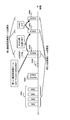
- FIG. 8 is a diagram illustrating an example of an assumption of a base station transmission beam of the PDCCH based on T offset .
- Steps S302-1 and S302-2 are the same as step S302 described above, except that S302-1 is a report on base station transmit beam # 1 and S302-2 is a report on base station transmit beam # 2. Are different.
- Steps S304-1 and S304-2 are the same as step S304 described above, except that the UE assumes that base station transmit beam # 1 is applied to the PDCCH in S304-1, and the PDCCH in S304-2 is The difference is that the UE assumes that base station transmit beam # 2 is applied.
- the report of step S304-1 is the latest report transmitted at the time earlier than T offset , but the report of step S304-2 was transmitted at the time within T offset .
- step S304-2 because the latest report reporting step S304-2 sent to T offset than the previous time.
- the UE's assumption regarding the reception beam for the PDCCH may change within the duration of a certain CORESET.
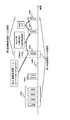
- FIG. 9 is a diagram illustrating another example of the assumption of the base station transmission beam of the PDCCH based on T offset .
- a step S304-3 in which the time position of the reset is different from that of FIG. 8 is shown.
- step S304 means that the UE assumes that the base station transmission beam # 1 is applied to the PDCCH up to the middle of the coreset in step S304-3, and that the base station transmission beam # 1 is applied to the subsequent PDCCHs. The point that UE assumes when 2 is applied is different.
- the report in step S304-1 is the latest report transmitted at a time earlier than T offset , but the report in step S304-2 was transmitted at a time within T offset .
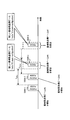
- FIG. 10 is a diagram illustrating yet another example of the assumption of the base station transmission beam of the PDCCH based on T offset . In this example, an example similar to FIG. 9 is shown.
- FIG. 10 differs from FIG. 9 in that the UE does not change the assumption of the base station transmission beam in the coreset in step S304-3 in FIG. 9 (step S304-4).
- the UE is the latest report transmitted by the base station transmission beam applied to the PDCCH in the CORRESET at a time earlier than or equal to T offset from the start position (eg, start symbol, start slot, etc.) of the CORRESET. It may be assumed that the transmitted beam is the base station transmission beam # 1 corresponding to the report in step S304-1.
- the UE determines that the base station transmit beam / UE receive beam of CORESET (included in PDCCH) starting after T offset from the report of the beam measurement result is the base station transmit beam / UE receive beam corresponding to the beam measurement result. It may be assumed that this is the same as the assumption of the beam. In this case, since switching between the base station transmission beam and the UE reception beam does not occur in the RESET, it is possible to suppress the occurrence of the switching time of the transmission and reception beams (the time during which transmission and reception are disabled) in the RESET.
- the base station transmit beam of the PDSCH at time T is the base station transmit beam of the (latest) PDCCH at time T offset2 or more before time T. May be assumed to be the same as
- the UE reception beam of the PDSCH at the time T is the same as the UE reception beam of the (latest) PDCCH at the time T offset2 or more before the time T. May be assumed.
- the base station receive beam of the PUCCH at the time T is equal to or more than T offset3 before the time T and the (latest) PDSCH base station transmit beam at the time And at least one of the PDCCH base station transmission beams.
- the UE transmission beam of the PUCCH at the time T is equal to the UE reception beam and the PDCCH of the (latest) PDSCH at a time earlier than the time T by T offset3 or more. May be assumed to be the same as at least one of the UE receive beams.
- T offset2 , T offset3, etc. may be defined based on the time required for the UE or the base station to switch beams (for example, a UE transmission beam, a base station reception beam). Note that information on T offset2 , T offset3, and the like may be notified to the UE using higher layer signaling, physical layer signaling, or a combination thereof.
- the UE set for low-delay beam selection has a UE reception beam or base station transmission beam for PDCCH (or PDSCH) (or a UE transmission beam or base station reception beam for PUCCH), It is unconditionally assumed to be the same as the UE receive beam or the base station transmit beam corresponding to the latest beam measurement result reported by the UE (for example, the UE autonomously assumes the QCL based on the L1-RSRP measurement result). Update).
- the update of the QCL assumption in the UE is performed when the base station successfully receives the beam measurement result in the UE. This is because there is no inconsistency in the QCL assumption of the UE between the base station and the UE.
- the UE assumes that a given CORESET, channel, or reference signal has a specific QCL (eg, QCL type D) relationship with another CORESET, channel, or reference signal, as QCL assumption (QCL assumption). May be called.
- signaling from the network may be used as confirmation information for updating the QCL assumption in the UE.
- the UE may determine whether to update the QCL assumption based on the latest beam measurement result according to the confirmation information from the base station even when the low delay beam selection is set. .
- Confirmation information for updating the QCL assumption may be referred to as beam report confirmation information, beam report receipt notification, QCL assumption update instruction, or the like, and is also simply referred to as confirmation information below.
- the $ UE may assume that the confirmation information is indicated by at least one of DCI and MAC signaling (eg, MAC @ CE).
- the UE may update the QCL assumption based on the latest beam measurement result before time T-T1.
- the UE may update the QCL assumption based on the latest beam measurement result before the time T-T1 after a lapse of the predetermined time offset T2 from the DCI reception.
- a predetermined channel for example, PDCCH
- the base station transmit beam is a new beam
- the predetermined channel before time T + T2 follows the old QCL (the base station transmit beam of the predetermined channel is an old beam). Good.
- The“ new QCL (beam) ” here may be a base station QCL (transmit beam) or UE QCL (receive beam) corresponding to the latest beam measurement result before time T-T1.
- the “old QCL (beam)” is the QCL (transmission beam) of the base station or the QCL (reception beam) of the UE assumed by the UE before transmitting the latest beam measurement result before time T-T1. There may be.
- the time T may be a DCI (which may be replaced by a PDCCH, a PDCCH candidate, a RESET, etc.) including confirmation information, or a start position of a symbol or a slot for receiving MAC signaling.
- a DCI which may be replaced by a PDCCH, a PDCCH candidate, a RESET, etc.
- Confirmation information may include information (eg, an index for a beam report, etc.) for identifying a corresponding (successfully received by the base station) beam measurement result.
- the UE may assume that the base station has successfully received the latest beam measurement result before time T-T1.
- At least one of T1 and T2 may be set by higher layer signaling. At least one of the above T1 and T2 may be explicitly notified by confirmation information or may be notified implicitly. A relationship between at least one of the above T1 and T2 and a predetermined index is set by higher layer signaling, and the value of the index is notified using DCI indicating the confirmation information, so that the UE can perform at least the above T1 and T2 One value may be specified.
- T, T1, and T2 may be represented by the number of specific time units (symbols, slots, subframes, and the like), seconds, and seconds (for example, microseconds). Further, the value of at least one of T1 and T2 may be defined by specifications for each subcarrier interval or each new melology. When the value of at least one of T1 and T2 is defined by the specification, the UE does not need to be notified of at least one of T1 and T2.
- T1, T2 or T1 + T2 is above T offset, may be same as at least one value of T offset2 and T OFFSET3, T offset, are determined based on at least one T offset2 and T OFFSET3 Is also good. Conversely, at least one of T offset , T offset2, and T offset3 may be determined based on T1, T2, or T1 + T2.
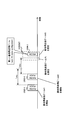
- FIG. 11 is a diagram showing an example of changing the QCL assumption based on the confirmation information. Steps S302-1 and S302-2 may be the same as those in FIG.
- Steps S304-5 and S304-6 are the same as step S304 described above, but the old QCL (eg, base station transmit beam # 0, UE receive beam # 0, etc.) is applied to the PDCCH in S304-5.
- the difference is that the UE assumes that a new QCL (eg, base station transmit beam # 1, UE receive beam # 1, etc.) is applied to the PDCCH in S304-6.
- step S304-5 the report of step S304-1 is the latest report before time TT1. Therefore, the UE follows the new QCL based on the report of step S304-1 after time T + T2.
- the UE may start a confirmation information timer in, for example, the MAC layer or the physical layer.
- the timer may be a timer for measuring the length of the T2, and the UE may perform control according to the old QCL while the timer is running. When the timer expires, the UE may perform control according to the new QCL.
- the change (update) of the QCL assumption based on the confirmation information may be applied to a UE having a UE capability of changing the QCL based on the confirmation information (UE capability).
- the base station may perform control to transmit confirmation information to the UE that has reported the UE capability.
- the DCI indicating the confirmation information may be a DCI for PUSCH scheduling (for example, DCI format 0_0, 0_1) or a DCSCH for PDSCH scheduling (for example, DCI format 1_0, 1_1).
- the DCI indicating the confirmation information may include a field related to the confirmation information.
- the field may be a predetermined number (for example, 1) of bits.
- the UE may determine that the beam measurement result has not been received (or do not update the QCL assumption) if the value of the field is '0', and if '1', the beam It may be determined that the measurement result was successfully received (or the QCL assumption is updated).
- the DCI indicating the confirmation information may correspond to a DCI in which a specific set of fields is a specific value (a value determined by specifications).
- the specific set of fields may include, for example, fields such as HARQ (Hybrid Automatic Repeat Repeat request) process number (HPN: HARQ Process Number), NDI (New Data Indicator), and redundancy version (RV: Redundancy Version).
- the UE may specify, based on the content or type of the DCI, whether or not the DCI is the DCI indicating the confirmation information.
- a DCI corresponding to any of the following may implicitly indicate that confirmation information is not included (a UE that has received the DCI may assume that the DCI does not indicate confirmation information) ): -DCI transmitted in UE-specific search space set, ⁇ Non-fallback DCI, DCI format 0_1 or 1_1, A value (for example, a CCE (Control Channel Element) index) related to the resource position where the DCI is detected is a specific value (for example, an even number); -The aggregation level of the PDCCH candidate that has detected the DCI is a specific value (for example, an even number).
- a DCI corresponding to any of the following may implicitly indicate that confirmation information is included (a UE that has received the DCI may assume that the DCI indicates confirmation information). ): DCI transmitted in a common search space set, ⁇ Fallback DCI, DCI format 0_0 or 1_0, The value (eg, CCE index) associated with the resource location that detected the DCI is a specific value (eg, odd number); -The aggregation level of the PDCCH candidate that has detected the DCI is a specific value (for example, an odd number).
- ⁇ Information on DCI that implicitly indicates confirmation information may be notified to the UE by higher layer signaling.
- the UE may be configured that a particular aggregation level in a particular search space corresponds to indicating confirmation information.
- the confirmation information may be indicated to the UE by a sequence (code) based method.
- the UE may determine the confirmation information based on a cyclic shift (CS) index of at least one DMRS of the PDCCH, PDSCH, and PUCCH.
- CS cyclic shift
- the UE may determine that the confirmation information is not instructed (the QCL assumption is not updated).
- the CS index is the second value (# m + n)
- the UE may determine that the confirmation information has been instructed (update the QCL assumption).
- the first value, the second value (or n), and the like may be set (notified) to the UE by higher layer signaling, physical layer signaling, or a combination thereof, or may be determined according to specifications. Good.
- n 6.
- the first value, the second value, and the like may be defined in a value range.
- the UE may apply the QCL assumption based on the beam measurement result when a predetermined time (for example, referred to as T3) has elapsed after transmitting the beam measurement result. That is, when T3 has elapsed from the time when the beam measurement result was reported to the base station, the UE applies the QCL assumption based on the beam measurement result even if the UE did not receive confirmation information from the base station. Is also good.
- T3 may be larger, equal, or smaller than the value of T1 or T2.
- the UE receives the confirmation information at time T after the application of the QCL assumption based on the beam measurement result, and the QCL corresponding to the latest beam measurement result before time T-T1 is the same as the current QCL assumption. In this case, this assumption may be maintained.
- the UE receives the confirmation information at time T after applying the QCL assumption based on the beam measurement result, and the QCL corresponding to the latest beam measurement result before time TT1 is different from the current QCL assumption.
- the QCL assumption may be updated based on the latest beam measurement result before time TT1.
- the UE After transmitting the beam measurement result, if the UE does not receive the confirmation information until a predetermined time (for example, referred to as T4) elapses, the UE transmits the beam measurement result after T4 elapses from the time at which the beam measurement result was transmitted.
- the old QCL (beam) assumption may be returned. That is, even when the UE switches the QCL assumption based on the beam measurement result once transmitted, the UE does not receive the confirmation information indicating that the beam measurement result has been received from the base station. It may be restored.
- the description has been given on the assumption that the UE is set to the low-delay beam selection. However, even if the low-delay beam selection is not explicitly set, the A wireless communication method may be applied.
- wireless communication system Wireless communication system
- communication is performed using any of the wireless communication methods according to the above embodiments of the present disclosure or a combination thereof.
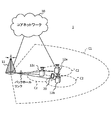
- FIG. 12 is a diagram illustrating an example of a schematic configuration of a wireless communication system according to an embodiment.
- the wireless communication system 1 may be a system that realizes communication using LTE (Long Term Evolution) and 5G NR (5th generation mobile communication system New Radio) specified by 3GPP (Third Generation Partnership Project). .
- LTE Long Term Evolution
- 5G NR Fifth Generation mobile communication system New Radio
- the wireless communication system 1 may support dual connectivity between a plurality of RATs (Radio Access Technology) (multi-RAT dual connectivity (MR-DC: Multi-RAT Dual Connectivity)).
- MR-DC is based on dual connectivity (EN-DC: E-UTRA-NR @ Dual Connectivity) between LTE (Evolved Universal Terrestrial Radio Access) and NR, and dual connectivity (NE-DC with E-UTRA-NR Dual Connectivity).
- -DC NR-E-UTRA (Dual Connectivity) may be included.
- the base station (eNB) of LTE (E-UTRA) is a master node (MN: Master @ Node), and the base station (gNB) of NR is a secondary node (SN: Secondary @ Node).
- MN Master @ Node
- gNB secondary node
- SN Secondary @ Node
- the NR base station (gNB) is the MN
- the LTE (E-UTRA) base station (eNB) is the SN.
- the wireless communication system 1 has dual connectivity between a plurality of base stations in the same RAT (for example, dual connectivity in which both MN and SN are NR base stations (gNB) (NN-DC: NR-NR Dual Connectivity)). ) May be supported.
- a plurality of base stations in the same RAT for example, dual connectivity in which both MN and SN are NR base stations (gNB) (NN-DC: NR-NR Dual Connectivity)).
- the wireless communication system 1 includes a base station 11 forming a macro cell C1 having relatively wide coverage, and a base station 12 (12a to 12c) arranged in the macro cell C1 and forming a small cell C2 smaller than the macro cell C1. May be provided.
- User terminal 20 may be located in at least one cell. The arrangement, number, and the like of each cell and the user terminals 20 are not limited to the modes shown in the figure.
- the base stations 11 and 12 are not distinguished, they are collectively referred to as a base station 10.
- the user terminal 20 may be connected to at least one of the plurality of base stations 10.
- the user terminal 20 may use at least one of carrier aggregation (Carrier Aggregation) using a plurality of component carriers (CC: Component Carrier) and dual connectivity (DC).
- Carrier Aggregation Carrier Aggregation
- CC Component Carrier
- DC dual connectivity
- Each CC may be included in at least one of the first frequency band (FR1: FrequencyFRange 1) and the second frequency band (FR2: Frequency Range 2).
- the macro cell C1 may be included in FR1, and the small cell C2 may be included in FR2.
- FR1 may be a frequency band of 6 GHz or less (sub-6 GHz (sub-6 GHz)), and FR2 may be a frequency band higher than 24 GHz (above-24 GHz).
- the frequency bands and definitions of FR1 and FR2 are not limited to these, and for example, FR1 may correspond to a frequency band higher than FR2.
- the user terminal 20 may perform communication using at least one of time division duplex (TDD: Time Division Duplex) and frequency division duplex (FDD: Frequency Division Duplex) in each CC.
- TDD Time Division Duplex
- FDD Frequency Division Duplex
- the plurality of base stations 10 may be connected by wire (for example, an optical fiber compliant with CPRI (Common Public Radio Interface), an X2 interface, or the like) or wirelessly (for example, NR communication).
- wire for example, an optical fiber compliant with CPRI (Common Public Radio Interface), an X2 interface, or the like
- NR communication for example, when NR communication is used as a backhaul between the base stations 11 and 12, the base station 11 corresponding to the upper station is an IAB (Integrated Access Backhaul) donor, and the base station 12 corresponding to the relay station (relay) is the IAB It may be called a node.
- IAB Integrated Access Backhaul
- the base station 10 may be connected to the core network 30 via another base station 10 or directly.
- the core network 30 may include, for example, at least one of Evolved Packet Core (EPC), 5G Core Network (5GCN), Next Generation Core (NGC), and the like.
- EPC Evolved Packet Core
- 5GCN 5G Core Network
- NGC Next Generation Core
- the user terminal 20 may be a terminal that supports at least one of the communication systems such as LTE, LTE-A, and 5G.
- an orthogonal frequency division multiplexing (OFDM) based wireless access scheme may be used.
- OFDM Orthogonal frequency division multiplexing
- CP-OFDM Cyclic Prefix OFDM
- DFT-s-OFDM Discrete Fourier Transform Spread OFDM
- OFDMA Orthogonal Frequency Division Divide Multiple
- SC-FDMA Single Carrier Frequency Frequency Division Multiple Access
- the wireless access scheme may be referred to as a waveform.
- another wireless access method for example, another single carrier transmission method or another multi-carrier transmission method
- a downlink shared channel (PDSCH: Physical Downlink Shared Channel), a broadcast channel (PBCH: Physical Broadcast Channel), and a downlink control channel (PDCCH: Physical Downlink Control) are shared by the user terminals 20 as downlink channels. Channel) may be used.
- PDSCH Physical Downlink Shared Channel
- PBCH Physical Broadcast Channel
- PDCCH Physical Downlink Control
- an uplink shared channel (PUSCH: Physical Uplink Shared Channel) shared by each user terminal 20, an uplink control channel (PUCCH: Physical Uplink Control Channel), a random access channel (PRACH) : Physical Random Access Channel) or the like may be used.
- PUSCH Physical Uplink Shared Channel
- PUCCH Physical Uplink Control Channel
- PRACH random access channel
- the user data, upper layer control information, SIB (System Information Block), and the like are transmitted by the PDSCH.
- User data, higher layer control information, and the like may be transmitted by the PUSCH.
- MIB Master Information Block
- PBCH Physical Broadcast Channel
- Lower layer control information may be transmitted by the PDCCH.
- the lower layer control information may include, for example, downlink control information (DCI: Downlink Control Information) including scheduling information of at least one of the PDSCH and the PUSCH.
- DCI Downlink Control Information
- DCI for scheduling the PDSCH may be referred to as DL assignment, DL @ DCI, or the like
- the DCI for scheduling the PUSCH may be referred to as UL grant, UL @ DCI, or the like.
- PDSCH may be replaced with DL data
- PUSCH may be replaced with UL data.
- a control resource set (CORESET: Control REsource SET) and a search space (search space) may be used for detecting the PDCCH.
- CORESET corresponds to a resource for searching DCI.
- the search space corresponds to a search area and a search method of PDCCH candidates (PDCCH @ candidates).
- One coreset may be associated with one or more search spaces.
- the UE may monitor a RESET associated with a search space based on the search space settings.
- One SS may correspond to a PDCCH candidate corresponding to one or a plurality of aggregation levels (aggregation Level).
- One or more search spaces may be referred to as a search space set.
- search space “search space”, “search space set”, “search space setting”, “search space set setting”, “CORESET”, “CORESET setting”, and the like in the present disclosure may be interchanged with each other.
- channel state information (CSI: Channel State Information), acknowledgment information (for example, HARQ-ACK (Hybrid Automatic Repeat Repeat reQuest ACKnowledgement), ACK / NACK, etc.), scheduling request (SR: Scheduling Request) ) May be transmitted.
- CSI Channel State Information
- acknowledgment information for example, HARQ-ACK (Hybrid Automatic Repeat Repeat reQuest ACKnowledgement), ACK / NACK, etc.
- scheduling request (SR: Scheduling Request)
- a random access preamble for establishing a connection with a cell may be transmitted by the PRACH.
- a downlink, an uplink, and the like may be expressed without a “link”.
- various channels may be expressed without “Physical” at the beginning.
- a synchronization signal (SS: Synchronization Signal), a downlink reference signal (DL-RS: Downlink Reference Signal), or the like may be transmitted.
- a DL-RS a cell-specific reference signal (CRS), a channel state information reference signal (CSI-RS), and a demodulation reference signal (DMRS: DeModulation) are provided.
- Reference Signal a position determination reference signal (PRS: Positioning Reference Signal), a phase tracking reference signal (PTRS: Phase Tracking Reference Signal), and the like may be transmitted.
- PRS Positioning Reference Signal
- PTRS Phase Tracking Reference Signal
- the synchronization signal may be, for example, at least one of a primary synchronization signal (PSS: Primary Synchronization Signal) and a secondary synchronization signal (SSS: Secondary Synchronization Signal).
- PSS Primary Synchronization Signal
- SSS Secondary Synchronization Signal
- a signal block including SS (PSS, SSS) and PBCH (and DMRS for PBCH) may be referred to as SS / PBCH block, SSB (SS @ Block), and the like. Note that SS, SSB, and the like may also be referred to as reference signals.
- a measurement reference signal (SRS: Sounding Reference Signal), a demodulation reference signal (DMRS), and the like may be transmitted as an uplink reference signal (UL-RS: Uplink Reference Signal).
- SRS Sounding Reference Signal
- DMRS demodulation reference signal
- UL-RS Uplink Reference Signal
- the DMRS may be called a user terminal specific reference signal (UE-specific Reference Signal).
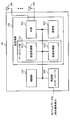
- FIG. 13 is a diagram illustrating an example of a configuration of the base station according to the embodiment.
- the base station 10 includes a control unit 110, a transmission / reception unit 120, a transmission / reception antenna 130, and a transmission line interface 140.
- the control unit 110, the transmission / reception unit 120, the transmission / reception antenna 130, and the transmission path interface 140 may each include one or more.
- base station 10 also has other functional blocks necessary for wireless communication. Some of the processes of each unit described below may be omitted.
- the control unit 110 controls the entire base station 10.
- the control unit 110 can be configured by a controller, a control circuit, and the like described based on common recognition in the technical field according to the present disclosure.
- the control unit 110 may control signal generation, scheduling (for example, resource allocation, mapping), and the like.
- the control unit 110 may control transmission / reception, measurement, and the like using the transmission / reception unit 120, the transmission / reception antenna 130, and the transmission path interface 140.
- the control unit 110 may generate data to be transmitted as a signal, control information, a sequence, and the like, and transfer the generated data to the transmission / reception unit 120.
- the control unit 110 may perform call processing (setting, release, etc.) of the communication channel, state management of the base station 10, management of radio resources, and the like.
- the transmission / reception unit 120 may include a baseband unit 121, an RF (Radio Frequency) unit 122, and a measurement unit 123.
- the baseband unit 121 may include a transmission processing unit 1211 and a reception processing unit 1212.
- the transmission / reception unit 120 includes a transmitter / receiver, an RF circuit, a baseband circuit, a filter, a phase shifter (phase shifter), a measurement circuit, a transmission / reception circuit, and the like described based on common recognition in the technical field according to the present disclosure. be able to.
- the transmission / reception unit 120 may be configured as an integrated transmission / reception unit, or may be configured from a transmission unit and a reception unit.
- the transmission unit may include a transmission processing unit 1211 and an RF unit 122.
- the receiving unit may include a reception processing unit 1212, an RF unit 122, and a measurement unit 123.
- the transmission / reception antenna 130 can be configured from an antenna described based on common recognition in the technical field according to the present disclosure, for example, an array antenna or the like.
- the transmission / reception unit 120 may transmit the above-described downlink channel, synchronization signal, downlink reference signal, and the like.
- the transmission / reception unit 120 may receive the above-described uplink channel, uplink reference signal, and the like.
- the transmission / reception unit 120 may form at least one of the transmission beam and the reception beam by using digital beamforming (for example, precoding), analog beamforming (for example, phase rotation), or the like.
- digital beamforming for example, precoding
- analog beamforming for example, phase rotation
- the transmission / reception unit 120 processes the data, control information, and the like acquired from the control unit 110 in the PDCP (Packet Data Convergence Protocol) layer and the RLC (Radio Link Control) layer processing (for example, RLC retransmission control), MAC (Medium Access Control) layer processing (for example, HARQ retransmission control), and the like may be performed to generate a bit string to be transmitted.
- PDCP Packet Data Convergence Protocol
- RLC Radio Link Control
- MAC Medium Access Control
- the transmission / reception unit 120 performs channel coding (may include error correction coding), modulation, mapping, filter processing, and discrete Fourier transform (DFT: Discrete Fourier Transform) processing on a bit string to be transmitted.
- channel coding may include error correction coding
- modulation may include error correction coding
- mapping may include error correction coding
- filter processing may include discrete Fourier transform (DFT: Discrete Fourier Transform) processing on a bit string to be transmitted.
- DFT discrete Fourier transform
- Transmission processing such as Inverse Fast Fourier Transform (IFFT) processing, precoding, and digital-analog conversion (if necessary) may be performed to output a baseband signal.
- IFFT Inverse Fast Fourier Transform
- precoding may be performed to output a baseband signal.
- digital-analog conversion if necessary
- the transmission / reception unit 120 may perform modulation, filtering, amplification, and the like on the baseband signal into a radio frequency band, and transmit the signal in the radio frequency band via the transmission / reception antenna 130. .
- the transmission / reception unit 120 may perform amplification, filtering, demodulation to a baseband signal, and the like on the radio frequency band signal received by the transmission / reception antenna 130.
- the transmission / reception unit 120 (reception processing unit 1212) performs analog-to-digital conversion, fast Fourier transform (FFT: Fast Fourier Transform) processing, and inverse discrete Fourier transform (IDFT) on the acquired baseband signal. Applying reception processing such as processing (if necessary), filtering, demapping, demodulation, decoding (which may include error correction decoding), MAC layer processing, RLC layer processing, and PDCP layer processing, Etc. may be obtained.
- FFT Fast Fourier Transform
- IDFT inverse discrete Fourier transform
- the transmission / reception unit 120 may measure the received signal.
- the measurement unit 123 may perform RRM (Radio Resource Management) measurement, CSI (Channel State Information) measurement, or the like based on the received signal.
- the measuring unit 123 receives the reception power (for example, RSRP (Reference Signal Received Power)), reception quality (for example, RSRQ (Reference Signal Received Quality), SINR (Signal to Interference plus Noise Ratio, SNR (Signal to Noise Ratio)).
- Signal strength for example, RSSI (Received Signal Strength Indicator)
- channel information for example, CSI
- the measurement result may be output to the control unit 110.
- the transmission line interface 140 transmits / receives signals (backhaul signaling) to / from a device included in the core network 30 or another base station 10, and transmits user data (user plane data) for the user terminal 20; Data and the like may be obtained and transmitted.
- the transmission unit and the reception unit of the base station 10 may be configured by at least one of the transmission / reception unit 120, the transmission / reception antenna 130, and the transmission path interface 140.
- the transmission / reception unit 120 measures the reference signal (eg, SSB, CSI-RS, etc.) measured using a spatial domain filter (eg, downlink spatial domain reception filter) (eg, beam measurement result, CSI, etc.). ) May be received from the user terminal 20.
- a spatial domain filter eg, downlink spatial domain reception filter
- Transceiving unit 120 may transmit PDCCH including DCI.
- the transmission / reception unit 120 may transmit setting information for low-delay beam selection, confirmation information on the measurement result, and the like to the user terminal 20.
- the control unit 110 may perform control using the same spatial domain filter for PDCCH transmission and transmission / reception of a specific channel for the user terminal 20 that has set low-delay beam selection by higher layer signaling.
- Control section 110 may perform control using the same downlink spatial domain transmission filter for PDCCH transmission and PDSCH transmission.
- Control section 110 may perform control using the same spatial domain transmission filter for PDCCH transmission and PUCCH reception.
- control unit 110 provides the same downlink spatial domain transmission filter as the downlink spatial domain transmission filter corresponding to the latest received measurement result to the user terminal 20 that has set the low delay beam selection by higher layer signaling.
- the control for transmitting the PDCCH may be performed by using this.
- Control section 110 may perform control to transmit PDSCH using the same downlink spatial domain transmission filter as the downlink spatial domain transmission filter used for PDCCH transmission.
- Control section 110 may perform control to receive the PUCCH using the same uplink spatial domain reception filter as the downlink spatial domain transmission filter used for PDCCH transmission.
- FIG. 14 is a diagram illustrating an example of a configuration of the user terminal according to the embodiment.
- the user terminal 20 includes a control unit 210, a transmission / reception unit 220, and a transmission / reception antenna 230. Note that one or more of the control unit 210, the transmission / reception unit 220, and the transmission / reception antenna 230 may be provided.
- the control unit 210 controls the entire user terminal 20.
- the control unit 210 can be configured by a controller, a control circuit, and the like described based on common recognition in the technical field according to the present disclosure.
- the control unit 210 may control signal generation, mapping, and the like.
- the control unit 210 may control transmission / reception and measurement using the transmission / reception unit 220 and the transmission / reception antenna 230.
- the control unit 210 may generate data to be transmitted as a signal, control information, a sequence, and the like, and transfer the generated data to the transmission / reception unit 220.
- the transmission / reception unit 220 may include a baseband unit 221, an RF unit 222, and a measurement unit 223.
- the baseband unit 221 may include a transmission processing unit 2211 and a reception processing unit 2212.
- the transmission / reception unit 220 can be configured from a transmitter / receiver, an RF circuit, a baseband circuit, a filter, a phase shifter, a measurement circuit, a transmission / reception circuit, and the like, which are described based on common recognition in the technical field according to the present disclosure.
- the transmission / reception unit 220 may be configured as an integrated transmission / reception unit, or may be configured from a transmission unit and a reception unit.
- the transmission unit may include a transmission processing unit 2211 and an RF unit 222.
- the receiving unit may include a reception processing unit 2212, an RF unit 222, and a measurement unit 223.
- the transmission / reception antenna 230 can be configured from an antenna described based on common recognition in the technical field according to the present disclosure, for example, an array antenna or the like.
- the transmission / reception unit 220 may receive the above-described downlink channel, synchronization signal, downlink reference signal, and the like.
- the transmission / reception unit 220 may transmit the above-described uplink channel, uplink reference signal, and the like.
- the transmission / reception unit 220 may form at least one of the transmission beam and the reception beam by using digital beamforming (for example, precoding), analog beamforming (for example, phase rotation), or the like.
- digital beamforming for example, precoding
- analog beamforming for example, phase rotation
- the transmission / reception unit 220 (transmission processing unit 2211) performs processing of the PDCP layer, processing of the RLC layer (for example, RLC retransmission control), processing of the MAC layer (for example, for data, control information, and the like acquired from the control unit 210, for example). , HARQ retransmission control), etc., to generate a bit string to be transmitted.
- the transmission / reception unit 220 (transmission processing unit 2211) performs channel coding (which may include error correction coding), modulation, mapping, filter processing, DFT processing (if necessary), IFFT processing on the bit sequence to be transmitted. , Precoding, digital-analog conversion, etc., and output a baseband signal.
- whether to apply the DFT processing may be based on the transform precoding setting.
- the transmission / reception unit 220 transmits the channel using the DFT-s-OFDM waveform.
- DFT processing may be performed as the transmission processing, or otherwise, DFT processing may not be performed as the transmission processing.
- the transmission / reception unit 220 may perform modulation, filtering, amplification, and the like on the baseband signal into a radio frequency band, and transmit a signal in the radio frequency band via the transmission / reception antenna 230. .
- the transmission / reception unit 220 may perform amplification, filtering, demodulation to a baseband signal, and the like on the radio frequency band signal received by the transmission / reception antenna 230.
- the transmission / reception unit 220 (reception processing unit 2212) performs analog-to-digital conversion, FFT processing, IDFT processing (if necessary), filter processing, demapping, demodulation, decoding (error correction) on the obtained baseband signal. Decoding may be included), reception processing such as MAC layer processing, RLC layer processing, and PDCP layer processing may be applied to acquire user data and the like.
- the transmission / reception unit 220 may measure the received signal.
- the measurement unit 223 may perform RRM measurement, CSI measurement, and the like based on the received signal.
- the measurement unit 223 may measure received power (for example, RSRP), received quality (for example, RSRQ, SINR, SNR), signal strength (for example, RSSI), channel information (for example, CSI), and the like.
- the measurement result may be output to the control unit 210.
- the transmitting unit and the receiving unit of the user terminal 20 may be configured by at least one of the transmitting / receiving unit 220, the transmitting / receiving antenna 230, and the transmission line interface 240.
- the transmission / reception unit 220 measures a reference signal (eg, SSB, CSI-RS, etc.) measured by applying a spatial domain filter (eg, downlink spatial domain reception filter) (eg, beam measurement result, CSI, etc.). ) May be transmitted to the base station 10.
- a reference signal eg, SSB, CSI-RS, etc.
- a spatial domain filter eg, downlink spatial domain reception filter
- Transceiver 220 may receive PDCCH including DCI.
- the transmission / reception unit 220 may receive, from the base station 10, setting information for low-delay beam selection, confirmation information on the measurement result, and the like.
- control section 210 uses the same spatial domain for PDCCH transmission in base station 10 and transmission / reception (at least one of transmission and reception) of a specific channel in base station 10. It may be assumed that a filter is used.
- Control section 210 may assume that the same downlink spatial domain transmission filter is used for PDCCH transmission in base station 10 and PDSCH transmission in base station 10.
- Control section 210 also assumes that the downlink spatial domain transmission filter used for transmitting PDCCH in base station 10 and the uplink spatial domain reception filter used for receiving PUCCH in base station 10 are the same. Good.
- the control unit 210 checks whether the downlink spatial domain reception filter of the user terminal 20 used for receiving the PDCCH corresponds to the user corresponding to the latest transmitted measurement result. It may be assumed that it is the same as the downlink spatial domain reception filter of the terminal 20.
- the control unit 210 may assume that the downlink spatial domain reception filter of the user terminal 20 used for receiving the PDSCH is the same as the downlink spatial domain reception filter of the user terminal 20 used for receiving the PDCCH.
- the control unit 210 may assume that the uplink spatial domain transmission filter of the user terminal 20 used for transmitting the PUCCH is the same as the downlink spatial domain reception filter of the user terminal 20 used for receiving the PDCCH.
- Control section 210 sets low-delay beam selection by higher layer signaling and receives confirmation information (may be referred to as beam report confirmation information, QCL assumption update instruction, etc.) at time T regarding the measurement result.
- confirmation information may be referred to as beam report confirmation information, QCL assumption update instruction, etc.
- a spatial domain filter of a predetermined channel for example, PDCCH
- T + T2 after a lapse of a second time from the time T
- T-T1 which is a first time from the time T. It may be assumed that it is the same as the spatial domain filter corresponding to the latest transmitted measurement result.
- the assumptions regarding these spatial domain filters may be assumptions regarding the spatial domain filter of the user terminal 20 or assumptions regarding the spatial domain filter of the base station 10 communicating with the user terminal 20.
- the control unit 210 determines that the spatial domain filter of the predetermined channel before (before) the time (T + T2) after the lapse of the second time from the time T is the time (T -T1) It may be assumed that this is the same as the spatial domain filter assumed before the timing of transmitting the latest measurement result transmitted before.
- the control unit 210 controls the spatial domain filter of the predetermined channel to perform the measurement even if the confirmation information has not been received. It may be assumed that it is the same as the spatial domain filter corresponding to the result.
- the control unit 210 transmits the predetermined channel. May be assumed to be the same as the spatial domain filter (old QCL (beam)) of the predetermined channel before transmitting the measurement result.
- each functional block may be realized using one device physically or logically coupled, or directly or indirectly (for example, two or more devices physically or logically separated). , Wired, wireless, etc.), and may be implemented using these multiple devices.
- the functional block may be realized by combining one device or the plurality of devices with software.
- the functions include judgment, determination, judgment, calculation, calculation, processing, derivation, investigation, search, confirmation, reception, transmission, output, access, resolution, selection, selection, establishment, comparison, assumption, expectation, and deemed. , Broadcasting, notifying, communicating, forwarding, configuring, reconfiguring, allocating, mapping, assigning, etc.
- a functional block (configuration unit) that causes transmission to function may be referred to as a transmitting unit (transmitting unit), a transmitter (transmitter), or the like.
- the realization method is not particularly limited.
- a base station, a user terminal, or the like may function as a computer that performs processing of the wireless communication method according to the present disclosure.
- FIG. 15 is a diagram illustrating an example of a hardware configuration of a base station and a user terminal according to an embodiment.
- the above-described base station 10 and user terminal 20 may be physically configured as a computer device including a processor 1001, a memory 1002, a storage 1003, a communication device 1004, an input device 1005, an output device 1006, a bus 1007, and the like. .
- the hardware configuration of the base station 10 and the user terminal 20 may be configured to include one or more of the devices illustrated in the drawing, or may be configured to exclude some of the devices.
- processor 1001 may be implemented by one or more chips.
- the functions of the base station 10 and the user terminal 20 are performed, for example, by reading predetermined software (program) on hardware such as the processor 1001 and the memory 1002 so that the processor 1001 performs an arithmetic operation and communicates via the communication device 1004. And controlling at least one of reading and writing of data in the memory 1002 and the storage 1003.
- predetermined software program
- the processor 1001 performs an arithmetic operation and communicates via the communication device 1004.
- the processor 1001 controls the entire computer by operating an operating system, for example.
- the processor 1001 may be configured by a central processing unit (CPU: Central Processing Unit) including an interface with a peripheral device, a control device, an arithmetic device, a register, and the like.
- CPU Central Processing Unit
- the control unit 110 (210), the transmitting / receiving unit 120 (220), and the like may be realized by the processor 1001.
- the processor 1001 reads out a program (program code), a software module, data, and the like from at least one of the storage 1003 and the communication device 1004 to the memory 1002, and executes various processes according to these.
- a program program code
- a program that causes a computer to execute at least a part of the operation described in the above embodiment is used.
- the control unit 110 (210) may be realized by a control program stored in the memory 1002 and operated by the processor 1001, and other functional blocks may be similarly realized.
- the memory 1002 is a computer-readable recording medium, for example, at least one of ROM (Read Only Memory), EPROM (Erasable Programmable ROM), EEPROM (Electrically EPROM), RAM (Random Access Memory), and other appropriate storage media. It may be constituted by one.
- the memory 1002 may be called a register, a cache, a main memory (main storage device), or the like.
- the memory 1002 can store a program (program code), a software module, and the like that can be executed to implement the wireless communication method according to an embodiment of the present disclosure.
- the storage 1003 is a computer-readable recording medium such as a flexible disk, a floppy (registered trademark) disk, a magneto-optical disk (for example, a compact disk (CD-ROM (Compact Disc) ROM, etc.), a digital versatile disc, At least one of a Blu-ray (registered trademark) disk, a removable disk, a hard disk drive, a smart card, a flash memory device (eg, a card, a stick, a key drive), a magnetic stripe, a database, a server, and other suitable storage media. May be configured.
- the storage 1003 may be called an auxiliary storage device.
- the communication device 1004 is hardware (transmission / reception device) for performing communication between computers via at least one of a wired network and a wireless network, and is also referred to as, for example, a network device, a network controller, a network card, a communication module, or the like.
- the communication device 1004 includes a high-frequency switch, a duplexer, a filter, a frequency synthesizer, and the like, for example, in order to realize at least one of frequency division duplex (FDD: Frequency Division Duplex) and time division duplex (TDD: Time Division Duplex). May be configured.
- FDD Frequency Division Duplex
- TDD Time Division Duplex
- the transmission / reception unit 120 (220) and the transmission / reception antenna 130 (230) described above may be realized by the communication device 1004.
- the transmission / reception unit 120 (220) may be physically or logically separated from the transmission unit 120a (220a) and the reception unit 120b (220b).
- the input device 1005 is an input device (for example, a keyboard, a mouse, a microphone, a switch, a button, a sensor, and the like) that receives an external input.
- the output device 1006 is an output device that performs output to the outside (for example, a display, a speaker, an LED (Light Emitting Diode) lamp, and the like). Note that the input device 1005 and the output device 1006 may have an integrated configuration (for example, a touch panel).
- the devices such as the processor 1001 and the memory 1002 are connected by a bus 1007 for communicating information.
- the bus 1007 may be configured using a single bus, or may be configured using a different bus for each device.
- the base station 10 and the user terminal 20 include hardware such as a microprocessor, a digital signal processor (DSP: Digital Signal Processor), an ASIC (Application Specific Integrated Circuit), a PLD (Programmable Logic Device), and an FPGA (Field Programmable Gate Array). It may be configured to include hardware, and some or all of the functional blocks may be realized using the hardware. For example, the processor 1001 may be implemented using at least one of these pieces of hardware.
- DSP Digital Signal Processor
- ASIC Application Specific Integrated Circuit
- PLD Programmable Logic Device
- FPGA Field Programmable Gate Array
- RS Reference Signal
- a component carrier may be called a cell, a frequency carrier, a carrier frequency, or the like.
- a radio frame may be configured by one or more periods (frames) in the time domain.
- the one or more respective periods (frames) forming the radio frame may be referred to as a subframe.
- a subframe may be configured by one or more slots in the time domain.
- the subframe may be of a fixed length of time (eg, 1 ms) that does not depend on numerology.
- the new melology may be a communication parameter applied to at least one of transmission and reception of a certain signal or channel.
- Numerology includes, for example, subcarrier interval (SCS: SubCarrier @ Spacing), bandwidth, symbol length, cyclic prefix length, transmission time interval (TTI: Transmission @ Time @ Interval), number of symbols per TTI, radio frame configuration, transmission and reception.
- SCS SubCarrier @ Spacing
- TTI Transmission @ Time @ Interval
- TTI Transmission @ Time @ Interval
- radio frame configuration transmission and reception.
- At least one of a specific filtering process performed by the transceiver in the frequency domain and a specific windowing process performed by the transceiver in the time domain may be indicated.
- the slot may be configured by one or a plurality of symbols (OFDM (Orthogonal Frequency Division Multiplexing) symbol, SC-FDMA (Single Carrier Frequency Division Multiple Access) symbol, etc.) in the time domain. Further, the slot may be a time unit based on numerology.
- OFDM Orthogonal Frequency Division Multiplexing
- SC-FDMA Single Carrier Frequency Division Multiple Access
- the slot may include a plurality of mini slots.
- Each minislot may be constituted by one or more symbols in the time domain.
- the mini-slot may be called a sub-slot.
- a minislot may be made up of a smaller number of symbols than slots.
- a PDSCH (or PUSCH) transmitted in time units larger than minislots may be referred to as PDSCH (PUSCH) mapping type A.
- a PDSCH (or PUSCH) transmitted using a minislot may be referred to as a PDSCH (PUSCH) mapping type B.
- Radio frames, subframes, slots, minislots, and symbols all represent time units when transmitting signals.
- the radio frame, the subframe, the slot, the minislot, and the symbol may have different names corresponding to each. Note that time units such as frames, subframes, slots, minislots, and symbols in the present disclosure may be interchanged with each other.
- one subframe may be called a TTI
- a plurality of consecutive subframes may be called a TTI
- one slot or one minislot may be called a TTI. That is, at least one of the subframe and the TTI may be a subframe (1 ms) in the existing LTE, a period shorter than 1 ms (for example, 1 to 13 symbols), or a period longer than 1 ms. It may be.
- the unit representing the TTI may be called a slot, a minislot, or the like instead of a subframe.
- the TTI refers to, for example, a minimum time unit of scheduling in wireless communication.
- the base station performs scheduling for allocating radio resources (frequency bandwidth, transmission power, and the like that can be used in each user terminal) to each user terminal in TTI units.
- radio resources frequency bandwidth, transmission power, and the like that can be used in each user terminal
- the TTI may be a transmission time unit such as a channel-encoded data packet (transport block), a code block, or a code word, or may be a processing unit such as scheduling and link adaptation. Note that when a TTI is given, a time section (for example, the number of symbols) in which a transport block, a code block, a codeword, and the like are actually mapped may be shorter than the TTI.
- one slot or one minislot is called a TTI
- one or more TTIs may be the minimum time unit for scheduling. Further, the number of slots (mini-slot number) constituting the minimum time unit of the scheduling may be controlled.
- a TTI having a time length of 1 ms may be referred to as a normal TTI (TTI in 3GPP@Rel.8-12), a normal TTI, a long TTI, a normal subframe, a normal subframe, a long subframe, a slot, and the like.
- a TTI shorter than the normal TTI may be called a shortened TTI, a short TTI, a partial TTI (partial or fractional TTI), a shortened subframe, a short subframe, a minislot, a subslot, a slot, and the like.
- a long TTI (for example, a normal TTI, a subframe, etc.) may be read as a TTI having a time length exceeding 1 ms, and a short TTI (for example, a shortened TTI, etc.) may be replaced with a TTI shorter than the long TTI and 1 ms.
- the TTI having the above-mentioned TTI length may be read.
- a resource block is a resource allocation unit in the time domain and the frequency domain, and may include one or a plurality of continuous subcarriers (subcarriers) in the frequency domain.
- the number of subcarriers included in the RB may be the same irrespective of the numerology, and may be, for example, 12.
- the number of subcarriers included in the RB may be determined based on numerology.
- the RB may include one or more symbols in the time domain, and may have a length of one slot, one minislot, one subframe, or one TTI.
- One TTI, one subframe, and the like may each be configured by one or a plurality of resource blocks.
- one or more RBs include a physical resource block (PRB: Physical @ RB), a subcarrier group (SCG: Sub-Carrier @ Group), a resource element group (REG: Resource @ Element @ Group), a PRB pair, an RB pair, and the like. May be called.
- PRB Physical @ RB
- SCG Sub-Carrier @ Group
- REG Resource @ Element @ Group
- PRB pair an RB pair, and the like. May be called.
- a resource block may be composed of one or more resource elements (RE: Resource @ Element).
- RE Resource @ Element
- one RE may be a radio resource area of one subcarrier and one symbol.
- a bandwidth part (which may be referred to as a partial bandwidth or the like) may also represent a subset of consecutive common RBs (common @ resource @ blocks) for a certain numerology in a certain carrier. Good.
- the common RB may be specified by an index of the RB based on the common reference point of the carrier.
- a PRB may be defined by a BWP and numbered within the BWP.
- $ BWP may include a BWP for UL (UL @ BWP) and a BWP for DL (DL @ BWP).
- BWP for a UE, one or more BWPs may be configured in one carrier.
- At least one of the configured BWPs may be active, and the UE does not have to assume to transmit and receive a given signal / channel outside the active BWP.
- “cell”, “carrier”, and the like in the present disclosure may be replaced with “BWP”.
- the structures of the above-described radio frame, subframe, slot, minislot, symbol, and the like are merely examples.
- the number of subframes included in a radio frame, the number of slots per subframe or radio frame, the number of minislots included in a slot, the number of symbols and RBs included in a slot or minislot, included in an RB The configuration of the number of subcarriers, the number of symbols in the TTI, the symbol length, the cyclic prefix (CP: Cyclic @ Prefix) length, and the like can be variously changed.
- the information, parameters, and the like described in the present disclosure may be expressed using an absolute value, may be expressed using a relative value from a predetermined value, or may be expressed using another corresponding information. May be represented.
- a radio resource may be indicated by a predetermined index.
- Names used for parameters and the like in the present disclosure are not limited in any respect. Further, the formulas and the like using these parameters may be different from those explicitly disclosed in the present disclosure.
- the various channels (PUCCH (Physical Uplink Control Channel), PDCCH (Physical Downlink Control Channel), etc.) and information elements can be identified by any suitable name, so the various names assigned to these various channels and information elements Is not a limiting name in any way.
- the information, signals, etc. described in this disclosure may be represented using any of a variety of different technologies.
- data, instructions, commands, information, signals, bits, symbols, chips, etc. that can be referred to throughout the above description are not limited to voltages, currents, electromagnetic waves, magnetic or magnetic particles, optical or photons, or any of these. May be represented by a combination of
- information, signals, and the like can be output from the upper layer to at least one of the lower layer and the lower layer to the upper layer.
- Information, signals, etc. may be input / output via a plurality of network nodes.
- Information and signals input and output may be stored in a specific place (for example, a memory) or may be managed using a management table. Information and signals that are input and output can be overwritten, updated, or added. The output information, signal, and the like may be deleted. The input information, signal, and the like may be transmitted to another device.
- information notification in the present disclosure includes physical layer signaling (for example, downlink control information (DCI: Downlink Control Information), uplink control information (UCI: Uplink Control Information)), and upper layer signaling (for example, RRC (Radio Resource Control). ) Signaling, broadcast information (master information block (MIB: Master Information Block), system information block (SIB: System Information Block), etc.), MAC (Medium Access Control) signaling), other signals or a combination thereof. Is also good.
- DCI Downlink control information
- UCI Uplink Control Information
- RRC Radio Resource Control
- MIB Master Information Block
- SIB System Information Block
- MAC Medium Access Control
- the physical layer signaling may be called L1 / L2 (Layer 1 / Layer 2) control information (L1 / L2 control signal), L1 control information (L1 control signal), or the like.
- the RRC signaling may be referred to as an RRC message, and may be, for example, an RRC connection setup (RRC Connection Setup) message, an RRC connection reconfiguration (RRC Connection Reconfiguration) message, or the like.
- the MAC signaling may be notified using, for example, a MAC control element (MAC @ CE (Control @ Element)).
- the notification of the predetermined information is not limited to an explicit notification, and is implicit (for example, by not performing the notification of the predetermined information or by another information). May be performed).
- the determination may be made by a value represented by 1 bit (0 or 1), or may be made by a boolean value represented by true or false. , May be performed by comparing numerical values (for example, comparison with a predetermined value).
- software, instructions, information, and the like may be transmitted and received via a transmission medium.
- a transmission medium For example, if the software uses at least one of wired technology (coaxial cable, fiber optic cable, twisted pair, digital subscriber line (DSL), etc.) and wireless technology (infrared, microwave, etc.), the website, When transmitted from a server or other remote source, at least one of these wired and / or wireless technologies is included within the definition of a transmission medium.
- Network may mean a device (eg, a base station) included in the network.
- precoding In the present disclosure, “precoding”, “precoder”, “weight (precoding weight)”, “quasi-co-location (QCL)”, “TCI state (Transmission Configuration Indication state)”, “spatial relation” (Spatial relation), “spatial domain filter”, “transmission power”, “phase rotation”, “antenna port”, “antenna port group”, “layer”, “number of layers”, “ Terms such as “rank”, “resource”, “resource set”, “resource group”, “beam”, “beam width”, “beam angle”, “antenna”, “antenna element”, “panel” are interchangeable Can be used for
- base station (BS: Base @ Station)”, “wireless base station”, “fixed station (fixed @ station)”, “NodeB”, “eNodeB (eNB)”, “gNodeB (gNB)”, “gNodeB (gNB)” "Access point (access @ point)”, “transmission point (TP: Transmission @ Point)”, “reception point (RP: Reception @ Point)”, “transmission / reception point (TRP: Transmission / Reception @ Point)”, “panel”, “cell” , “Sector”, “cell group”, “carrier”, “component carrier” and the like may be used interchangeably.
- a base station may also be referred to as a macro cell, a small cell, a femto cell, a pico cell, or the like.
- a base station can accommodate one or more (eg, three) cells. If the base station accommodates multiple cells, the entire coverage area of the base station can be partitioned into multiple smaller areas, each smaller area being a base station subsystem (eg, a small indoor base station (RRH: Communication services can also be provided by Remote Radio Head)).
- a base station subsystem eg, a small indoor base station (RRH: Communication services can also be provided by Remote Radio Head).
- RRH small indoor base station
- the term “cell” or “sector” refers to part or all of the coverage area of at least one of a base station and a base station subsystem that provides communication services in this coverage.
- MS mobile station
- UE user equipment
- terminal terminal
- a mobile station is a subscriber station, mobile unit, subscriber unit, wireless unit, remote unit, mobile device, wireless device, wireless communication device, remote device, mobile subscriber station, access terminal, mobile terminal, wireless terminal, remote terminal. , Handset, user agent, mobile client, client or some other suitable terminology.
- At least one of the base station and the mobile station may be called a transmitting device, a receiving device, a wireless communication device, or the like.
- at least one of the base station and the mobile station may be a device mounted on the mobile unit, the mobile unit itself, or the like.
- the moving object may be a vehicle (for example, a car, an airplane, or the like), may be an unmanned moving object (for example, a drone, an autonomous vehicle), or may be a robot (maned or unmanned). ).
- at least one of the base station and the mobile station includes a device that does not necessarily move during a communication operation.
- at least one of the base station and the mobile station may be an IoT (Internet of Things) device such as a sensor.
- IoT Internet of Things
- the base station in the present disclosure may be replaced with a user terminal.
- communication between a base station and a user terminal is replaced with communication between a plurality of user terminals (for example, may be called D2D (Device-to-Device), V2X (Vehicle-to-Everything), etc.).
- D2D Device-to-Device
- V2X Vehicle-to-Everything
- Each aspect / embodiment of the present disclosure may be applied to the configuration.
- the configuration may be such that the user terminal 20 has the function of the base station 10 described above.
- words such as “up” and “down” may be read as words corresponding to communication between terminals (for example, “side”).
- an uplink channel, a downlink channel, and the like may be replaced with a side channel.
- a user terminal in the present disclosure may be replaced by a base station.
- a configuration in which the base station 10 has the function of the user terminal 20 described above may be adopted.
- the operation performed by the base station may be performed by an upper node (upper node) in some cases.
- various operations performed for communication with a terminal include a base station, one or more network nodes other than the base station (eg, Obviously, it can be performed by MME (Mobility Management Entity), S-GW (Serving-Gateway) or the like, but not limited thereto, or a combination thereof.
- MME Mobility Management Entity
- S-GW Serving-Gateway
- Each aspect / embodiment described in the present disclosure may be used alone, may be used in combination, or may be used by switching with execution.
- the processing procedure, sequence, flowchart, and the like of each aspect / embodiment described in the present disclosure may be interchanged in order as long as there is no contradiction.
- elements of various steps are presented in an exemplary order, and are not limited to the specific order presented.
- LTE Long Term Evolution
- LTE-A Long Term Evolution
- LTE-B Long Term Evolution-Beyond
- SUPER 3G IMT-Advanced
- 4G 4th generation mobile communication
- system 5G (5th generation mobile communication system)
- FRA Fluture Radio Access
- New-RAT Radio Access Technology
- NR New Radio
- NX New radio access
- FX Fluture generation radio access
- GSM Registered trademark
- CDMA2000 Code Division Multiple Access
- UMB Ultra Mobile Broadband
- IEEE 802.11 Wi-Fi (registered trademark)
- IEEE 802.16 WiMAX (registered trademark)
- UWB Ultra-WideBand
- Bluetooth registered trademark
- a system using other appropriate wireless communication methods and a next-generation system extended based on these methods.
- a plurality of systems may be combined (for example, a combination of LTE or LTE-A and 5G) and applied.
- any reference to elements using designations such as "first,” “second,” etc., as used in this disclosure, does not generally limit the quantity or order of those elements. These designations may be used in the present disclosure as a convenient way to distinguish between two or more elements. Thus, reference to a first and second element does not mean that only two elements can be employed or that the first element must precede the second element in any way.
- determining means judging, calculating, computing, processing, deriving, investigating, searching (upping, searching, inquiry) ( For example, a search in a table, database, or another data structure), ascertaining, etc., may be regarded as "deciding".
- determining includes receiving (eg, receiving information), transmitting (eg, transmitting information), input (input), output (output), and access ( accessing) (e.g., accessing data in a memory) or the like.
- judgment (decision) is regarded as “judgment (decision)” of resolving, selecting, selecting, establishing, comparing, etc. Is also good. That is, “judgment (decision)” may be regarded as “judgment (decision)” of any operation.
- “judgment (decision)” may be read as “assuming”, “expecting”, “considering”, or the like.
- connection refers to any direct or indirect connection or coupling between two or more elements. And may include the presence of one or more intermediate elements between two elements “connected” or “coupled” to each other.
- the coupling or connection between the elements may be physical, logical, or a combination thereof. For example, “connection” may be read as “access”.
- the radio frequency domain, microwave It can be considered to be “connected” or “coupled” to each other using electromagnetic energy having a wavelength in the region, light (both visible and invisible) regions, and the like.
- the term “A and B are different” may mean that “A and B are different from each other”.
- the term may mean that “A and B are different from C”.
- Terms such as “separate”, “coupled” and the like may be interpreted similarly to "different”.
Landscapes
- Engineering & Computer Science (AREA)
- Computer Networks & Wireless Communication (AREA)
- Signal Processing (AREA)
- Quality & Reliability (AREA)
- Mobile Radio Communication Systems (AREA)
Abstract
Description
NRにおいては、物理レイヤ制御信号(例えば、下り制御情報(DCI:Downlink Control Information))を、基地局からユーザ端末(UE:User Equipment)に対して送信するために、制御リソースセット(CORESET:COntrol REsource SET)が利用される。
NRでは、送信設定指示状態(TCI状態(Transmission Configuration Indication state))に基づいて、信号及びチャネルの少なくとも一方(信号/チャネルと表現する)の受信処理(例えば、受信、デマッピング、復調、復号の少なくとも1つ)を制御することが検討されている。
・QCLタイプA:ドップラーシフト、ドップラースプレッド、平均遅延及び遅延スプレッド、
・QCLタイプB:ドップラーシフト及びドップラースプレッド、
・QCLタイプC:ドップラーシフト及び平均遅延、
・QCLタイプD:空間受信パラメータ。
ところで、これまでRel-15 NRにおいては、ビーム管理(BM:Beam Management)の方法が検討されてきた。当該ビーム管理においては、UEが報告したL1-RSRPをベースに、ビーム選択を行うことが検討されている。ある信号/チャネルのビームを変更する(切り替える)ことは、当該信号/チャネルのTCL状態(QCL)を変更することに相当する。
<低遅延ビーム選択の設定>
一実施形態において、UEは、低遅延ビーム選択を上位レイヤシグナリングによって設定される場合には、PDCCH用のTCI状態を設定されないと想定してもよい。
図2のようにTCI状態を設定されない場合であっても、UEは、例えば想定されるTCI状態についてPDCCHのブラインド復号を試行することによって、PDCCHの復号を行ってもよい。UEは、特定の信号/チャネル(例えば、設定されるSS/PBCHブロック及びCSI-RSの少なくとも1つ)とPDCCHのDMRSとがQCLであると想定してPDCCHの受信処理(復調、復号など)を行ってもよい。
ステップS302の測定報告の一例について説明する。UEは、CSI測定用のリソース及び干渉測定用のリソースの少なくとも1つに基づいて、チャネル品質測定及び干渉測定の少なくとも一方を行って、測定結果(例えば、CSI)をPUCCH又はPUSCHを用いて報告(送信)してもよい。
本開示の低遅延ビーム選択関連の制御(例えば、TCI状態を設定しない制御)は、PDCCHのみに適用されてもよい。ビーム選択について上述した課題(遅延)は主にPDCCHに関し、他のチャネルについてのRel-15 NRのビーム選択は機能していると想定されるためである。この場合、UEの実装の複雑化を抑制できる。
UEは、低遅延ビーム選択を上位レイヤシグナリングによって設定される場合には、PDCCH及びPDSCHが基地局から同じ送信ビームを用いて送信されると想定してもよい。
UEは、低遅延ビーム選択を上位レイヤシグナリングによって設定される場合には、PDCCH、PDSCH及びPUCCHの送受信のために、基地局が同じビーム(同じ送受信ビーム)を用いると想定してもよい。
[PDCCHの受信処理の変形例]
なお、上記PDCCHの受信処理で説明した想定における「報告した最新のビーム測定結果」は、特定の種類のCSI報告に限定されてもよい。当該特定の種類のCSI報告は、例えば、周期的なCSI(P-CSI:Periodic CSI)報告、非周期的なCSI(A-CSI:Aperiodic CSI)報告、半永続的(半持続的、セミパーシステント(Semi-Persistent))なCSI(SP-CSI:Semi-Persistent CSI)報告のいずれか、又はこれらの組み合わせであってもよい。
UEは、低遅延ビーム選択を上位レイヤシグナリングによって設定される場合には、時刻TにおけるPDSCHの基地局送信ビームが、時刻TよりToffset2以上前の時刻の(最新の)PDCCHの基地局送信ビームと同じであると想定してもよい。
上述の各実施形態では、低遅延ビーム選択を設定されたUEは、PDCCH(又はPDSCH)用のUE受信ビーム又は基地局送信ビーム(又は、PUCCH用のUE送信ビーム又は基地局受信ビーム)が、UEが報告した最新のビーム測定結果に対応するUE受信ビーム又は基地局送信ビームと同じであると無条件に想定する(例えば、L1-RSRP測定結果に基づいてUEが自律的にQCLの想定を更新する)例を示した。
・UE固有サーチスペースセット(UE-specific search space set)において送信されるDCI、
・ノンフォールバックDCI、
・DCIフォーマット0_1又は1_1、
・当該DCIを検出したリソース位置に関連する値(例えば、CCE(Control Channel Element)インデックス)が特定の値(例えば、偶数)、
・当該DCIを検出したPDCCH候補のアグリゲーションレベルが特定の値(例えば、偶数)。
・共通サーチスペースセット(common search space set)において送信されるDCI、
・フォールバックDCI、
・DCIフォーマット0_0又は1_0、
・当該DCIを検出したリソース位置に関連する値(例えば、CCEインデックス)が特定の値(例えば、奇数)、
・当該DCIを検出したPDCCH候補のアグリゲーションレベルが特定の値(例えば、奇数)。
UEは、ビーム測定結果を送信してから所定の時間(例えば、T3と呼ぶ)が経過した場合、当該ビーム測定結果に基づくQCL想定を適用してもよい。つまり、UEは、ビーム測定結果を基地局に報告した時刻からT3が経過した場合には、当該基地局から確認情報を受信していなくても、当該ビーム測定結果に基づくQCL想定を適用してもよい。T3の値は、T1又はT2の値より大きくてもよいし、同じでもよいし、小さくてもよい。
以下、本開示の一実施形態に係る無線通信システムの構成について説明する。この無線通信システムでは、本開示の上記各実施形態に係る無線通信方法のいずれか又はこれらの組み合わせを用いて通信が行われる。
図13は、一実施形態に係る基地局の構成の一例を示す図である。基地局10は、制御部110、送受信部120、送受信アンテナ130及び伝送路インターフェース(transmission line interface)140を備えている。なお、制御部110、送受信部120及び送受信アンテナ130及び伝送路インターフェース140は、それぞれ1つ以上が備えられてもよい。
図14は、一実施形態に係るユーザ端末の構成の一例を示す図である。ユーザ端末20は、制御部210、送受信部220及び送受信アンテナ230を備えている。なお、制御部210、送受信部220及び送受信アンテナ230は、それぞれ1つ以上が備えられてもよい。
なお、上記実施形態の説明に用いたブロック図は、機能単位のブロックを示している。これらの機能ブロック(構成部)は、ハードウェア及びソフトウェアの少なくとも一方の任意の組み合わせによって実現される。また、各機能ブロックの実現方法は特に限定されない。すなわち、各機能ブロックは、物理的又は論理的に結合した1つの装置を用いて実現されてもよいし、物理的又は論理的に分離した2つ以上の装置を直接的又は間接的に(例えば、有線、無線などを用いて)接続し、これら複数の装置を用いて実現されてもよい。機能ブロックは、上記1つの装置又は上記複数の装置にソフトウェアを組み合わせて実現されてもよい。
なお、本開示において説明した用語及び本開示の理解に必要な用語については、同一の又は類似する意味を有する用語と置き換えてもよい。例えば、チャネル、シンボル及び信号(シグナル又はシグナリング)は、互いに読み替えられてもよい。また、信号はメッセージであってもよい。参照信号は、RS(Reference Signal)と略称することもでき、適用される標準によってパイロット(Pilot)、パイロット信号などと呼ばれてもよい。また、コンポーネントキャリア(CC:Component Carrier)は、セル、周波数キャリア、キャリア周波数などと呼ばれてもよい。
Claims (5)
- 空間ドメインフィルタを適用して測定した参照信号の測定結果を送信する送信部と、
低遅延ビーム選択を上位レイヤシグナリングによって設定され、かつ、前記測定結果に関する確認情報を時刻Tにおいて受信する場合に、当該時刻Tから第2の時間経過した時刻以降の所定のチャネルの空間ドメインフィルタが、当該時刻Tから第1の時間遡った時刻以前に送信した最新の前記測定結果に対応する空間ドメインフィルタと同じであると想定する制御部と、を有することを特徴とするユーザ端末。 - 前記制御部は、前記時刻Tから前記第2の時間経過した時刻以前の前記所定のチャネルの空間ドメインフィルタが、前記時刻Tから前記第1の時間遡った時刻以前に送信した最新の前記測定結果を送信する前に想定していた空間ドメインフィルタと同じであると想定することを特徴とする請求項1に記載のユーザ端末。
- 前記制御部は、前記測定結果を送信してから第3の時間が経過した場合には、前記確認情報を受信していなくても、前記所定のチャネルの空間ドメインフィルタが、前記測定結果に対応する空間ドメインフィルタと同じであると想定することを特徴とする請求項1又は請求項2に記載のユーザ端末。
- 前記制御部は、前記測定結果を送信してから第4の時間が経過し、かつ前記第4の時間の経過までに前記確認情報を受信していない場合には、前記所定のチャネルの空間ドメインフィルタが、前記測定結果を送信する前の前記所定のチャネルの空間ドメインフィルタと同じであると想定することを特徴とすることを特徴とする請求項3に記載のユーザ端末。
- 空間ドメインフィルタを適用して測定した参照信号の測定結果を送信するステップと、
低遅延ビーム選択を上位レイヤシグナリングによって設定され、かつ、前記測定結果に関する確認情報を時刻Tにおいて受信する場合に、当該時刻Tから第2の時間経過した時刻以降の所定のチャネルの空間ドメインフィルタが、当該時刻Tから第1の時間遡った時刻以前に送信した最新の前記測定結果に対応する空間ドメインフィルタと同じであると想定するステップと、を有することを特徴とするユーザ端末の無線通信方法。
Priority Applications (6)
| Application Number | Priority Date | Filing Date | Title |
|---|---|---|---|
| JP2020547765A JP7313369B2 (ja) | 2018-09-27 | 2018-09-27 | 端末、無線通信方法及びシステム |
| EP18935447.5A EP3859990A4 (en) | 2018-09-27 | 2018-09-27 | USER TERMINAL AND WIRELESS COMMUNICATION METHOD |
| CN201880099810.3A CN113169776B (zh) | 2018-09-27 | 2018-09-27 | 终端、无线通信方法以及系统 |
| CA3113126A CA3113126A1 (en) | 2018-09-27 | 2018-09-27 | User terminal and radio communication method |
| US17/279,934 US12114178B2 (en) | 2018-09-27 | 2018-09-27 | User terminal and radio communication method |
| PCT/JP2018/036120 WO2020065883A1 (ja) | 2018-09-27 | 2018-09-27 | ユーザ端末及び無線通信方法 |
Applications Claiming Priority (1)
| Application Number | Priority Date | Filing Date | Title |
|---|---|---|---|
| PCT/JP2018/036120 WO2020065883A1 (ja) | 2018-09-27 | 2018-09-27 | ユーザ端末及び無線通信方法 |
Publications (1)
| Publication Number | Publication Date |
|---|---|
| WO2020065883A1 true WO2020065883A1 (ja) | 2020-04-02 |
Family
ID=69951894
Family Applications (1)
| Application Number | Title | Priority Date | Filing Date |
|---|---|---|---|
| PCT/JP2018/036120 Ceased WO2020065883A1 (ja) | 2018-09-27 | 2018-09-27 | ユーザ端末及び無線通信方法 |
Country Status (6)
| Country | Link |
|---|---|
| US (1) | US12114178B2 (ja) |
| EP (1) | EP3859990A4 (ja) |
| JP (1) | JP7313369B2 (ja) |
| CN (1) | CN113169776B (ja) |
| CA (1) | CA3113126A1 (ja) |
| WO (1) | WO2020065883A1 (ja) |
Cited By (4)
| Publication number | Priority date | Publication date | Assignee | Title |
|---|---|---|---|---|
| JP2022061551A (ja) * | 2020-10-07 | 2022-04-19 | シャープ株式会社 | 端末装置、基地局装置および通信方法 |
| CN115462119A (zh) * | 2020-04-30 | 2022-12-09 | 株式会社Ntt都科摩 | 终端、无线通信方法以及基站 |
| CN116349341A (zh) * | 2020-09-01 | 2023-06-27 | 株式会社Ntt都科摩 | 终端、无线通信方法以及基站 |
| WO2023163030A1 (ja) * | 2022-02-28 | 2023-08-31 | 株式会社Nttドコモ | 端末及び無線通信方法 |
Families Citing this family (8)
| Publication number | Priority date | Publication date | Assignee | Title |
|---|---|---|---|---|
| ES2983065T3 (es) * | 2018-11-02 | 2024-10-21 | Zte Corp | Esquemas de ahorro de energía en comunicación inalámbrica |
| CN113518355B (zh) * | 2020-04-10 | 2023-10-20 | 华为技术有限公司 | 准共址关系管理方法及装置 |
| US11601925B2 (en) * | 2020-04-17 | 2023-03-07 | Qualcomm Incorporated | Quasi co-location relationship reporting |
| CN116711407A (zh) * | 2020-12-30 | 2023-09-05 | 联想(北京)有限公司 | 用于资源分配的方法及设备 |
| WO2022236573A1 (en) * | 2021-05-10 | 2022-11-17 | Apple Inc. | Back-off mechanisms for inter-cell mobility |
| WO2023010337A1 (en) * | 2021-08-04 | 2023-02-09 | Apple Inc. | Uplink transmission beam selection in a secondary cell |
| US20240405819A1 (en) * | 2021-10-11 | 2024-12-05 | Nokia Technologies Oy | Quasi-colocation assumptions in fast downlink beam switching |
| EP4569640A1 (en) * | 2022-08-12 | 2025-06-18 | Telefonaktiebolaget LM Ericsson (publ) | Methods for improving wireless device beam prediction procedures based on a beam identification update guard interval |
Family Cites Families (20)
| Publication number | Priority date | Publication date | Assignee | Title |
|---|---|---|---|---|
| KR101481583B1 (ko) * | 2008-04-18 | 2015-01-13 | 엘지전자 주식회사 | 하향링크 제어 정보 송수신 방법 |
| KR102115901B1 (ko) * | 2013-04-16 | 2020-05-27 | 삼성전자 주식회사 | 프리코딩 관련 신호 송수신 방법 및 장치 |
| US20160105872A1 (en) * | 2014-10-14 | 2016-04-14 | Asustek Computer Inc. | Method and apparatus for beam tracking in a wireless communication system |
| EP3280068B1 (en) * | 2015-04-17 | 2019-10-09 | Huawei Technologies Co. Ltd. | Method for transmitting information, base station, and user equipment |
| CN107615807A (zh) * | 2015-05-14 | 2018-01-19 | 株式会社Ntt都科摩 | 用户终端、无线基站以及无线通信方法 |
| US10568081B2 (en) * | 2016-03-21 | 2020-02-18 | Samsung Electronics Co., Ltd. | Scheduling uplink transmissions |
| US11522743B2 (en) * | 2016-04-27 | 2022-12-06 | Futurewei Technologies, Inc. | Sounding reference signal (SRS) design for cellular time division duplex (TDD) mmWave systems |
| CN107528676B (zh) * | 2016-06-22 | 2020-02-11 | 电信科学技术研究院 | 一种上行传输的反馈信息的传输方法和设备 |
| WO2018025908A1 (ja) * | 2016-08-03 | 2018-02-08 | 株式会社Nttドコモ | ユーザ端末及び無線通信方法 |
| CN107888358A (zh) * | 2016-09-30 | 2018-04-06 | 华为技术有限公司 | 传输控制信息的方法、用户设备和网络设备 |
| CN107959516B (zh) * | 2016-10-12 | 2021-10-01 | 华为技术有限公司 | 一种波束对准的控制方法、装置及系统 |
| US10148337B2 (en) * | 2017-02-01 | 2018-12-04 | Samsung Electronics Co., Ltd. | Beam management of downlink data channel and downlink control channel for 5G next radio systems |
| US10785739B2 (en) * | 2017-08-10 | 2020-09-22 | Ofinno, Llc | Beam indication in RACH |
| CN109891819B (zh) * | 2017-08-11 | 2021-08-27 | Lg电子株式会社 | 用于在无线通信系统中发送或接收参考信号的方法及装置 |
| WO2019049096A1 (en) * | 2017-09-11 | 2019-03-14 | Telefonaktiebolaget Lm Ericsson (Publ) | UL AND UNIFIED BEAM INDICATION |
| US11706001B2 (en) * | 2018-01-19 | 2023-07-18 | Lenovo (Beijing) Limited | Method and apparatus for beam management |
| US10863494B2 (en) * | 2018-01-22 | 2020-12-08 | Apple Inc. | Control signaling for uplink multiple input multiple output, channel state information reference signal configuration and sounding reference signal configuration |
| US20190239093A1 (en) * | 2018-03-19 | 2019-08-01 | Intel Corporation | Beam indication information transmission |
| KR102777983B1 (ko) * | 2018-07-26 | 2025-03-10 | 삼성전자주식회사 | 무선 통신 시스템에서 자원을 할당하는 방법, 장치 및 시스템 |
| KR102700669B1 (ko) * | 2018-08-16 | 2024-08-30 | 삼성전자주식회사 | 무선통신 시스템에서 데이터를 송수신하는 방법 및 장치 |
-
2018
- 2018-09-27 EP EP18935447.5A patent/EP3859990A4/en not_active Withdrawn
- 2018-09-27 JP JP2020547765A patent/JP7313369B2/ja active Active
- 2018-09-27 CN CN201880099810.3A patent/CN113169776B/zh active Active
- 2018-09-27 US US17/279,934 patent/US12114178B2/en active Active
- 2018-09-27 CA CA3113126A patent/CA3113126A1/en active Pending
- 2018-09-27 WO PCT/JP2018/036120 patent/WO2020065883A1/ja not_active Ceased
Non-Patent Citations (5)
| Title |
|---|
| "Evolved Universal Terrestrial Radio Access (E-UTRA) and Evolved Universal Terrestrial Radio Access Network (E-UTRAN); Overall description; Stage 2 (Release 8", 3GPP TS 36.300, April 2010 (2010-04-01) |
| MEDIATEK INC: "Summary #2 on Remaing issues on Beam Failure Recovery", 3GPP TSG-RAN WG1#94 R1-1809926, XP051517280, Retrieved from the Internet <URL:http://www.3gpp.org/ftp/tsg_ran/WGl_RLl/TSGRl_94/Docs/Rl-1809926.zip> * |
| NTT: "Remaining issues on beam management", 3GPP TSG-RAN WG1#94 R1-1809138, 11 August 2018 (2018-08-11), XP051516508, Retrieved from the Internet <URL:http://www.3gpp.org/ftp/tsg_ran/WG1_RL1/TSGRl_94/Docs/Rl-1809138.zip> * |
| See also references of EP3859990A4 |
| ZTE: "Maintenance for beam management", 3GPP TSG-RAN WG1#94 R1-1808196, 11 August 2018 (2018-08-11), XP051515581, Retrieved from the Internet <URL:http://www.3gpp.org/ftp/tsg_ran/WG1_RL1/TSGRl_94/Docs/Rl-1808196.zip> * |
Cited By (5)
| Publication number | Priority date | Publication date | Assignee | Title |
|---|---|---|---|---|
| CN115462119A (zh) * | 2020-04-30 | 2022-12-09 | 株式会社Ntt都科摩 | 终端、无线通信方法以及基站 |
| CN116349341A (zh) * | 2020-09-01 | 2023-06-27 | 株式会社Ntt都科摩 | 终端、无线通信方法以及基站 |
| JP2022061551A (ja) * | 2020-10-07 | 2022-04-19 | シャープ株式会社 | 端末装置、基地局装置および通信方法 |
| JP7638654B2 (ja) | 2020-10-07 | 2025-03-04 | シャープ株式会社 | 端末装置、基地局装置および通信方法 |
| WO2023163030A1 (ja) * | 2022-02-28 | 2023-08-31 | 株式会社Nttドコモ | 端末及び無線通信方法 |
Also Published As
| Publication number | Publication date |
|---|---|
| CN113169776A (zh) | 2021-07-23 |
| CA3113126A1 (en) | 2020-04-02 |
| JPWO2020065883A1 (ja) | 2021-09-24 |
| JP7313369B2 (ja) | 2023-07-24 |
| EP3859990A1 (en) | 2021-08-04 |
| US20210392514A1 (en) | 2021-12-16 |
| US12114178B2 (en) | 2024-10-08 |
| EP3859990A4 (en) | 2022-09-07 |
| CN113169776B (zh) | 2024-05-28 |
Similar Documents
| Publication | Publication Date | Title |
|---|---|---|
| JP7355808B2 (ja) | 端末、無線通信方法、基地局及びシステム | |
| JP7313369B2 (ja) | 端末、無線通信方法及びシステム | |
| WO2020090120A1 (ja) | ユーザ端末及び無線通信方法 | |
| JP7457696B2 (ja) | 端末、無線通信方法、基地局及びシステム | |
| WO2020090119A1 (ja) | ユーザ端末及び無線通信方法 | |
| KR20210128403A (ko) | 유저단말 및 무선 통신 방법 | |
| WO2020059140A1 (ja) | ユーザ端末及び無線通信方法 | |
| WO2020012661A1 (ja) | ユーザ端末及び基地局 | |
| WO2020012662A1 (ja) | ユーザ端末及び基地局 | |
| WO2021130941A1 (ja) | 端末及び無線通信方法 | |
| US20220217686A1 (en) | User terminal and radio communication method | |
| JP7773722B2 (ja) | 端末、無線通信方法、基地局及びシステム | |
| WO2021065010A1 (ja) | 端末及び無線通信方法 | |
| WO2021095265A1 (ja) | 端末及び無線通信方法 | |
| WO2020194741A1 (ja) | ユーザ端末及び無線通信方法 | |
| WO2020017043A1 (ja) | ユーザ端末及び基地局 | |
| WO2021038659A1 (ja) | 端末及び無線通信方法 | |
| JP7490680B2 (ja) | 端末、無線通信方法、基地局及びシステム | |
| US12184358B2 (en) | Terminal, radio communication method, and base station | |
| CN115380549B (zh) | 终端、无线通信方法以及基站 | |
| WO2021130940A1 (ja) | 端末及び無線通信方法 | |
| WO2020065797A1 (ja) | ユーザ端末及び無線通信方法 | |
| CN114930919B (zh) | 终端、通信系统以及无线通信方法 | |
| WO2023007659A1 (ja) | 端末、無線通信方法及び基地局 | |
| WO2021241212A1 (ja) | 端末、無線通信方法及び基地局 |
Legal Events
| Date | Code | Title | Description |
|---|---|---|---|
| 121 | Ep: the epo has been informed by wipo that ep was designated in this application |
Ref document number: 18935447 Country of ref document: EP Kind code of ref document: A1 |
|
| ENP | Entry into the national phase |
Ref document number: 3113126 Country of ref document: CA |
|
| ENP | Entry into the national phase |
Ref document number: 2020547765 Country of ref document: JP Kind code of ref document: A |
|
| NENP | Non-entry into the national phase |
Ref country code: DE |
|
| ENP | Entry into the national phase |
Ref document number: 2018935447 Country of ref document: EP Effective date: 20210428 |