WO2020071111A1 - 情報処理装置および情報処理方法、並びにプログラム - Google Patents
情報処理装置および情報処理方法、並びにプログラムInfo
- Publication number
- WO2020071111A1 WO2020071111A1 PCT/JP2019/036465 JP2019036465W WO2020071111A1 WO 2020071111 A1 WO2020071111 A1 WO 2020071111A1 JP 2019036465 W JP2019036465 W JP 2019036465W WO 2020071111 A1 WO2020071111 A1 WO 2020071111A1
- Authority
- WO
- WIPO (PCT)
- Prior art keywords
- information
- attribute
- stream
- shape
- dimensional structure
- Prior art date
- Legal status (The legal status is an assumption and is not a legal conclusion. Google has not performed a legal analysis and makes no representation as to the accuracy of the status listed.)
- Ceased
Links
Images

















Classifications
-
- H—ELECTRICITY
- H04—ELECTRIC COMMUNICATION TECHNIQUE
- H04N—PICTORIAL COMMUNICATION, e.g. TELEVISION
- H04N9/00—Details of colour television systems
- H04N9/79—Processing of colour television signals in connection with recording
- H04N9/80—Transformation of the television signal for recording, e.g. modulation, frequency changing; Inverse transformation for playback
- H04N9/82—Transformation of the television signal for recording, e.g. modulation, frequency changing; Inverse transformation for playback the individual colour picture signal components being recorded simultaneously only
- H04N9/8205—Transformation of the television signal for recording, e.g. modulation, frequency changing; Inverse transformation for playback the individual colour picture signal components being recorded simultaneously only involving the multiplexing of an additional signal and the colour video signal
-
- H—ELECTRICITY
- H04—ELECTRIC COMMUNICATION TECHNIQUE
- H04L—TRANSMISSION OF DIGITAL INFORMATION, e.g. TELEGRAPHIC COMMUNICATION
- H04L65/00—Network arrangements, protocols or services for supporting real-time applications in data packet communication
- H04L65/60—Network streaming of media packets
- H04L65/65—Network streaming protocols, e.g. real-time transport protocol [RTP] or real-time control protocol [RTCP]
-
- G—PHYSICS
- G06—COMPUTING OR CALCULATING; COUNTING
- G06T—IMAGE DATA PROCESSING OR GENERATION, IN GENERAL
- G06T17/00—Three-dimensional [3D] modelling for computer graphics
-
- G—PHYSICS
- G06—COMPUTING OR CALCULATING; COUNTING
- G06T—IMAGE DATA PROCESSING OR GENERATION, IN GENERAL
- G06T9/00—Image coding
- G06T9/001—Model-based coding, e.g. wire frame
-
- G—PHYSICS
- G06—COMPUTING OR CALCULATING; COUNTING
- G06T—IMAGE DATA PROCESSING OR GENERATION, IN GENERAL
- G06T9/00—Image coding
- G06T9/40—Tree coding, e.g. quadtree, octree
-
- H—ELECTRICITY
- H04—ELECTRIC COMMUNICATION TECHNIQUE
- H04L—TRANSMISSION OF DIGITAL INFORMATION, e.g. TELEGRAPHIC COMMUNICATION
- H04L65/00—Network arrangements, protocols or services for supporting real-time applications in data packet communication
- H04L65/60—Network streaming of media packets
- H04L65/61—Network streaming of media packets for supporting one-way streaming services, e.g. Internet radio
-
- H—ELECTRICITY
- H04—ELECTRIC COMMUNICATION TECHNIQUE
- H04L—TRANSMISSION OF DIGITAL INFORMATION, e.g. TELEGRAPHIC COMMUNICATION
- H04L65/00—Network arrangements, protocols or services for supporting real-time applications in data packet communication
- H04L65/60—Network streaming of media packets
- H04L65/70—Media network packetisation
-
- H—ELECTRICITY
- H04—ELECTRIC COMMUNICATION TECHNIQUE
- H04N—PICTORIAL COMMUNICATION, e.g. TELEVISION
- H04N21/00—Selective content distribution, e.g. interactive television or video on demand [VOD]
- H04N21/80—Generation or processing of content or additional data by content creator independently of the distribution process; Content per se
- H04N21/81—Monomedia components thereof
- H04N21/816—Monomedia components thereof involving special video data, e.g 3D video
-
- H—ELECTRICITY
- H04—ELECTRIC COMMUNICATION TECHNIQUE
- H04N—PICTORIAL COMMUNICATION, e.g. TELEVISION
- H04N19/00—Methods or arrangements for coding, decoding, compressing or decompressing digital video signals
- H04N19/50—Methods or arrangements for coding, decoding, compressing or decompressing digital video signals using predictive coding
- H04N19/597—Methods or arrangements for coding, decoding, compressing or decompressing digital video signals using predictive coding specially adapted for multi-view video sequence encoding
-
- H—ELECTRICITY
- H04—ELECTRIC COMMUNICATION TECHNIQUE
- H04N—PICTORIAL COMMUNICATION, e.g. TELEVISION
- H04N19/00—Methods or arrangements for coding, decoding, compressing or decompressing digital video signals
- H04N19/70—Methods or arrangements for coding, decoding, compressing or decompressing digital video signals characterised by syntax aspects related to video coding, e.g. related to compression standards
Definitions
- the present disclosure relates to an information processing apparatus, an information processing method, and a program, and more particularly, to an information processing apparatus, an information processing method, and a program capable of efficiently performing processing in a client.
- Non-Patent Document 1 a compression method of Point @ Cloud, which is a set of points simultaneously having shape information and attribute information (especially color information) in a three-dimensional space, is defined.
- Point @ Cloud there is a method of separating Point @ Cloud data into a geometry indicating a three-dimensional shape and an attribute indicating color and reflection information as attribute information and encoding them.
- This method is called G-PCC (Geometry-based-Point-Cloud-Coding).
- the generated G-PCC stream is one continuous stream, and has a structure in which the client cannot independently access the geometry and the attribute. Therefore, for example, even in a use case using only the geometry or a use case using only one of the plurality of attributes, the client cannot individually access and acquire them. Therefore, it is necessary to perform the processing after acquiring all of the geometry and attribute constituting the G-PCC stream, and processing overhead occurs in the client, and it has been difficult to perform the processing efficiently.
- the present disclosure has been made in view of such a situation, and aims to enable a client to perform processing efficiently.
- An information processing device relates to a stream of shape information representing a shape of the three-dimensional structure and a stream of attribute information representing an attribute of the three-dimensional structure from 3D data representing the three-dimensional structure.
- a file generation unit that generates identification information for each of the streams and generates a file including the generated plurality of pieces of identification information.
- An information processing method or a program provides a stream of shape information representing a shape of the three-dimensional structure from 3D data representing the three-dimensional structure, and attribute information representing an attribute of the three-dimensional structure.
- the method includes generating identification information on a stream for each of the streams, and generating a file including the generated plurality of identification information.
- identification information relating to a stream of shape information representing a shape of a three-dimensional structure and a stream of attribute information representing an attribute of the three-dimensional structure are respectively obtained from 3D data representing a three-dimensional structure. Is generated for each of the streams, and a file including the generated plurality of pieces of identification information is generated.
- An information processing apparatus relates to a stream of shape information representing a shape of the three-dimensional structure and a stream of attribute information representing an attribute of the three-dimensional structure from 3D data representing the three-dimensional structure.
- An identification unit configured to identify and extract the shape information and the attribute information based on the identification information, based on the identification information, from a file generated and included for each of the streams,
- a construction unit configured to construct the three-dimensional structure using the shape information or the attribute information extracted by the extraction unit.
- An information processing method or a program provides a stream of shape information representing the shape of the three-dimensional structure from 3D data representing the three-dimensional structure, and attribute information representing an attribute of the three-dimensional structure.
- Identification information about the stream from the file generated and included for each of the streams, depending on the use case, based on the identification information, identifying and extracting the shape information and the attribute information, Constructing the three-dimensional structure using the extracted shape information or attribute information.
- identification information relating to a stream of shape information representing a shape of a three-dimensional structure and a stream of attribute information representing an attribute of the three-dimensional structure are respectively obtained from 3D data representing a three-dimensional structure. From the files generated and included for each stream, the shape information and the attribute information are identified and extracted based on the identification information according to the use case, and using the extracted shape information or attribute information, A three-dimensional structure is constructed.
- FIG. 3 is a diagram showing a conventional stream structure. It is a figure explaining PC @ sample newly defined. It is a figure showing an example of PC @ sample.
- FIG. 6 is a diagram illustrating an example of information stored in a header.
- FIG. 11 is a diagram illustrating an example in which a field for signaling the type of attribute is added. It is a figure showing an example of Attribute
- FIG. 3 is a diagram illustrating an example when a G-PCC stream is stored in an ISOBMFF 1 track. It is a figure showing the definition of codec_specific_parameters. It is a diagram showing the structure of a newly defined PCSampleEntry It is a figure showing an example of PCParamSetBox.
- FIG. 9 is a diagram showing a modification of the ISOBMFF structure stored in 1 track. It is a figure which shows an example which stores geometry @ bitstream and attribute @ bitstream in 2 @ tracks of ISOBMFF. It is a figure showing an example of the syntax of PCMultiStreamBox.
- FIG. 21 is a diagram illustrating a modified example of PCMultiStreamBox. It is a figure showing an example of the syntax of PCAttributeTrackGroupBox.
- FIG. 21 is a diagram illustrating a modified example of PCMultiStreamBox. It is a figure which shows the example which signals geometry @ track and attribute @ track linked by track @ group. It is a figure showing an example of PCStreamGroupBox newly defined.
- FIG. 11 is a diagram illustrating a second example of the ISOBMFF structure stored in 2 track in the second identifiable method.
- FIG. 3 is a diagram illustrating DASH signaling.
- FIG. 3 is a diagram illustrating DASH signaling.
- FIG. 2 is a block diagram illustrating a configuration example of a data generation device.
- FIG. 3 is a block diagram illustrating a configuration example of a data reproduction device.
- FIG. 21 is a block diagram illustrating a configuration example of an embodiment of a computer to which the present technology is applied.
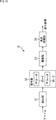
- FIG. 1 shows a stream structure encoded by G-PCC, and such a stream is referred to as G-PCC @ stream (or simply, PC @ stream).
- G-PCC stream is composed of 1 stream and is a sequence of point cloud frames arranged in decoding order.
- the point ⁇ cloud ⁇ frame (hereinafter also referred to as PC ⁇ frame) is Point ⁇ Cloud displayed at the same time.
- PC ⁇ frame is a continuous bitstream composed of a geometry @ bitstream (Geom shown in FIG. 1) indicating three-dimensional information and an attribute @ bitstream (Attr shown in FIG. 1) indicating attribute information such as color and reflection.
- One PC frame has one geometry bitstream and a plurality of attribute bitstreams (two attribute bitstreams in the example of FIG. 1).
- the SPS Sequence Parameter Set
- the GPS stores information necessary for decoding the geometry bitstream
- the APS Attribute Parameter Set
- the client decodes the geometry bitstream and the attribute bitstream in the G-PCC stream using individual decoders.
- the client decodes the geometry bitstream to generate colorless Point Cloud content.
- the client refers to the decoded information of the geometry @ bitstream, decodes the attribute @ bitstream, and adds attributes such as color and reflection based on the information.
- information on the generated geometry bitstream and attribute bitstream is newly generated as identification information, and a file including the generated identification information is generated.
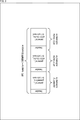
- PC sample a newly defined Point Cloud sample (hereinafter, referred to as a PC sample) will be described as equivalent to a Sample defined by ISOBMFF.
- 1 PC frame is composed of 1 PC sample. That is, the G-PCC stream is composed of a plurality of PC samples, and the 1 PC sample has the same structure as the 1 PC frame shown in FIG. Then, as in the case of the 1 PC frame, the client can construct the 1 PC sample to be displayed as the Point Cloud displayed at the same time by decoding the 1 PC sample.
- PC sample is composed of geometry bitstream and attribute bitstream that constitute Point ⁇ Cloud data displayed at the same time.
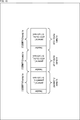
- FIG. 3 shows a configuration example in which 1 @ PC @ sample is composed of one geometry @ subsample and two attribute @ subsamples.
- 1 @ PC @ sample has a configuration in which geometry @ subsample, first attribute @ subsample, and second attribute @ subsample are continuously arranged.
- Each subsample has a structure composed of a bitstream corresponding to header information storing information on each bitstream in order to divide each bitstream.
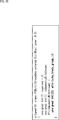
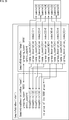
- FIG. 4 shows an example of information stored in the header of FIG.
- size information (size_of_bitstream) indicating the size of the geometry @ bitstream or attribute @ bitstream and type information (type) indicating the type of each bitstream forming the PC @ sample are stored as identification information.
- identification information is information for identifying each bitstream, and is generated for each bitstream.
- SPS, $ GPS, and $ APS not stored in PC $ sample are stored in sample $ entry if they are, for example, ISOBMFF (see FIGS. 9 and 10 described later).
- the client can identify the boundary of each bitstream from the header. Therefore, the client can extract only the geometry bitstream from the PC sample and decode it independently. Similarly, the client can extract and decode only the necessary attribute ⁇ bitstream from PC ⁇ sample. Then, the client can easily input the geometry @ bitstream and the attribute @ bitstream decoded by different decoders to the corresponding decoders.
- the High-level syntax of G-PCC stream may be extended to signal the type of attribute.
- Attribute parameter set can be extended to signal attr_type, as shown in bold in FIG.
- the referenced Attribute parameter set is signaled as an identifier in the attribute bitstream.
- the semantics are the same as those of the attribute_type described above.
- the client can refer to the header, identify the geometry and the attribute, and individually access them. Even in a use case in which only the desired attribute is used, Processing can be performed efficiently.
- ⁇ Second identifiable method> Referring to FIG. 7 to FIG. 24, as a second identifiable method for enabling the client to divide the geometry and the attribute, an extension of the ISOBMFF track storing the sub sample information, the geometry, and the attribute explain.
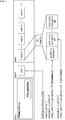
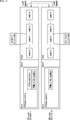
- FIG. 7 shows an example when the G-PCC stream is stored in the 1 track of ISOBMFF.
- a newly defined PCSampleEntry (see FIG. 9) is stored in the moov of the ISOBMFF, and the PCSampleEntry is composed of a PCParamSetBox shown in FIG.
- subs (SubSampleInformationBox) is stored in the moof of the ISOBMFF. As shown in FIG. 7, the boundaries of the geometry subsample and attribute subsample ⁇ ⁇ ⁇ # 0 to #N in PC sample are signaled using can do. Note that SubSampleInformation will be described with reference to the outline of SubSampleInformationBox shown in FIG. 28 described later.
- codec_specific_parameters which is information of a subsample determined for each codec. That is, when the value of codec_specific_parameters is 0, it indicates that subsample is geometry subsample, and when the value of codec_specific_parameters is 1, it indicates that subsample is attribute subsample.
- subsample information may be provided in units of a continuous attribute @ subsample group.
- codec_specific_parameters may be further extended so that it can signal what attribute / bitstream the subsample is (color attribute, reflection attribute, and the like).
- FIG. 9 shows the structure of PCSampleEntry newly defined in the present disclosure.
- the sample entry of the track of the ISOBMFF storing the G-PCC stream is, for example, 'pcbs'.
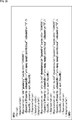
- Each parameter set (Sequence Parameter Set, Geometry Parameter Set, and Attribute Parameter Set) as shown in FIG. 10 is stored in the $ PCParamSetBox.
- these parameter $ sets are referenced when decoding the PC $ sample.
- parameter set is not usually changed in PC sample units, so storing it in PCSampleEntry eliminates the need to repeatedly signal the same information for each PC sample, thus reducing file size.
- the storage destination of these parameter @ set includes seq_parameter_set_rbsp (), geometry_parameter_set (), and attribute_parameter_set () in PCParamSetBox.
- the client can identify the boundary between the geometry subsample and the attibute subsample (or the boundary between the attibute subsamples) without parsing the contents of the subsample. That is, the client can extract only the geometry ⁇ bitstream from the PC ⁇ sample and decode it independently by a simplified process of referring to only the signaling of the system layer. Similarly, the client can extract and decode only the necessary attribute ⁇ bitstream from PC ⁇ sample. In addition, the client can easily input the geometry @ bitstream and the attribute @ bitstream to different corresponding decoders.
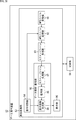
- FIG. 11 shows a configuration of an information processing apparatus that generates a PC stream from Point Cloud data on the server providing the content and executes a file generation process of generating a file in which the PC stream is stored in a file defined by ISOBMFF. It is a block diagram showing an example.
- the information processing apparatus 11 includes a separating unit 21, an encoding unit 22, a PC stream generating unit 23, and a file generating unit 24.
- the separation unit 21 separates the geometry and the attribute from the input Point Cloud data, and supplies them to the encoding unit 22.
- the encoding unit 22 encodes the geometry and the attribute supplied from the separation unit 21 to generate a geometry bitstream and an attribute bitstream. At this time, the encoding unit 22 generates each parameter set (Sequence Parameter Set, Geometry Parameter Set, and Attribute Parameter Set) referred to when decoding the geometry bitstream and the attribute bitstream. For example, the encoding unit 22 encodes geometry by Octree and attribute by Lifting coding or Region Adaptive Haar Transform. At this time, the encoding unit 22 can perform the encoding of the geometry and the encoding of the attribute in parallel by the two encoders 25-1 and 25-2.
- each parameter set Sequence Parameter Set, Geometry Parameter Set, and Attribute Parameter Set
- the PC stream generation unit 23 interleaves the geometry bitstream and the attribute bitstream encoded by the encoding unit 22 in units of a PC frame, and generates a PC sample as shown in FIG. Then, the PC stream generator 23 generates a PC stream composed of a plurality of PC samples and supplies the PC stream to the file generator 24.
- the file generation unit 24 stores the geometry bitstream and the attribute bitstream in the 1 track of the file defined by ISOBMFF, and generates a file. At this time, the file generation unit 24 generates size information indicating the size of the geometry @ bitstream or attribute @ bitstream, and type information indicating the type of each bitstream constituting the PC @ sample, and as the above-described identification information, Store in header.
- the information processing apparatus 11 configured as described above can generate a PC stream from Point Cloud data and output a file in which the PC stream is stored in 1 track.
- the file sample defined by the ISOBMFF is PC @ sample (FIGS. 3 and 7). Reference).
- FIG. 12 is a block diagram showing an example of the configuration of an information processing apparatus that executes a Point @ Cloud reproduction process of generating a display image from a file and reproducing Point @ Cloud data on the client side reproducing the content.
- the information processing device 12 includes an extraction unit 31, a decoding unit 32, a construction unit 33, and a display processing unit 34.
- the extraction unit 31 extracts a geometry bitstream and an attribute bitstream corresponding to a reproduction time from a file based on information (for example, the above-described identification information) signaled in the ISOBMFF Box, and supplies the extracted bitstream and attribute bitstream to the decoding unit 32.
- the extraction unit 31 can identify the geometry and the attribute and extract only the necessary geometry or attribute according to the various use cases described above.
- the extraction unit 31 may extract the geometry @ bitstream and the attribute @ bitstream corresponding to the playback time from the file based on the identification information stored in the header of the subsample, and supply the extracted bitstream and attribute @ bitstream to the decoding unit 32.
- the decoding unit 32 refers to each parameter set, decodes the geometry bitstream and the attribute bitstream supplied from the extraction unit 31, and supplies the geometry and attribute to the construction unit 33. At this time, the decoding unit 32 can perform the decoding of the geometry @ bitstream and the decoding of the attribute @ bitstream by the two decoders 35-1 and 35-2 in parallel and individually.
- the construction unit 33 constructs Point Cloud data using the geometry and attribute supplied from the decoding unit 32.
- the display processing unit 34 renders the Point Cloud data constructed by the construction unit 33 according to the display device of the client, generates a display image, and causes the display device (not shown) to display the image.
- the information processing device 12 configured as described above can reproduce Point @ Cloud data from a file and display a display image in which the Point @ Cloud data is rendered.
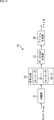
- FIG. 13 is a flowchart illustrating a file generation process in which the information processing apparatus 11 of FIG. 11 generates a file from Point Cloud data.
- step S11 the separation unit 21 separates geometry and attribute from the input Point @ Cloud.
- step S12 the encoding unit 22 encodes the geometry and attribute separated by the separation unit 21 in step S11, and generates a geometry bitstream and an attribute bitstream. At this time, the encoding unit 22 generates each parameter $ set.
- step S13 the PC stream generator 23 interleaves the geometry bitstream and the attribute bitstream generated in step S12 in units of a PC frame (PC sample) to generate a PC stream.
- step S14 the file generation unit 24 stores the PC stream generated in step S13 in the ISOBMFF that has signaled the Box including the metadata, and generates a file. Further, the file generation unit 24 generates size information and type information and stores them in the header of the file. At this time, the sample of ISOBMFF is PC sample.
- FIG. 14 is a flowchart illustrating a Point @ Cloud playback process in which the information processing apparatus 12 in FIG. 12 generates and plays back a display image from a file generated in the information processing apparatus 11.
- the extraction unit 31 uses the information (for example, the above-described identification information) signaled in the ISOBMFF Box. Extract the geometrygebitstream and attribute bitstream corresponding to the playback time from the file. Note that the extraction unit 31 may extract a geometry @ bitstream and an attribute @ bitstream corresponding to the reproduction time from the file based on the identification information stored in the header of the subsample.
- step S22 the decoding unit 32 refers to each parameter set and decodes the geometry bitstream and the attribute bitstream extracted in step S21 individually. At this time, the geometry @ bitstream and the attribute @ bitstream are individually decoded by two decoder instances.
- step S23 the construction unit 33 constructs Point @ Cloud data using the geometry and attribute obtained in the decoding in step S22.
- step S24 the display processing unit 34 renders the Point @ Cloud data constructed in step S23 to display a display image according to the display device of the client.
- step S25 the extraction unit 31 determines whether or not it is the end of PC @ stream. If it is not the end of PC @ stream, the process returns to step S21. If it is the end of PC @ stream, the process ends. .
- FIG. 15 shows a first example of the ISOBMFF structure when the geometry @ bitstream and the attribute @ bitstream are stored in the 1 @ track of the ISOBMFF by the second identifiable method.
- the geometry bitstream and the attribute bitstream constituting the 1 PC frame may be stored as 1 sample in the ISOBMFF without using the PC sample.
- geometry subsample and attribute subsample become geometry ⁇ ⁇ sample and attribute sample, respectively.
- ⁇ Geometry @ sample and attribute @ sample (s) constituting 1 @ PC @ frame may be signaled using sample @ group.
- the boundary between geometry @ sample and attribute @ sample may be signaled using sample @ group.
- the sample @ group will be described with reference to a sample @ group outline shown in FIG. 29 described later.
- the G-PCC stream is separated into one geometry bitstream and one attribute bitstream, one geometry bitstream is stored in the ISOBMFF 1 track, and one attribute bitstream is stored in the ISOBMFF 1 track.
- One example of 2 tracks is shown.
- the client can process the track storing only the geometry bitstream and easily decode only the geometry bitstream. Similarly, the client can process a track that stores only one attribute @ bitstream and easily decode only the required attribute @ bitstream. Further, the client can easily input the geometry @ bitstream and the attribute @ bitstream decoded by different decoders to the corresponding decoders.
- TrackAs shown in FIG. 17 the track storing the geometry bitstream is referred to as a geometry ⁇ ⁇ ⁇ track or a main track, and the track storing the attribute bitstream is referred to as an attribute track or a secondary track. Then, the relationship between the tracks is signaled by the track reference and the newly defined PCMultiStreamBox.
- a PCParamSetBox exists only in the main track, and the PCParamSetBox includes Sequence ⁇ Parameter ⁇ Set, Geometry ⁇ Parameter ⁇ Set, and Attribute ⁇ parameter ⁇ set.
- a PCParamSetBox may be present on both the main track and the sub track, in which case, the PCParamSetBox of the main track includes Sequence Parameter Set and Geometry Parameter Set, and the PCParamSetBox of the sub track includes Attribute Parameter Set. Good.
- sample group indicating the boundary of PC frame may be signaled.
- sample group indicating the boundary of PC frame may be signaled.
- a plurality of attribute @ tracks having different bitrates may be associated with one geometry @ track.
- FIG. 18 shows an example of the syntax of PCMultiStreamBox.
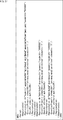
- isGeometryStream 1, it indicates that it is geometry @ track; otherwise, it indicates that it is attribute @ track. If it is a geometry @ track, the track_id of the associated attribute @ track is signaled.
- the client can identify which track is the geometry track only by parsing the TrackReferenceBox of an arbitrary 1 track by indicating the track reference.
- the client can then parse the geometryMultitrackBox's PCMultiStreamBox and identify all relevant attributeTracks. That is, the client can identify the entire configuration only by parsing the 2 @ track at the maximum, and can simplify the processing particularly in a case where a plurality of attribute @ tracks are linked.
- attribute @ track may include a plurality of attribute @ bitstreams corresponding to a plurality of types of attributes.
- FIG. 19 shows an example of the ISOBMFF structure when the geometry bitstream and the attribute stream bitstream are individually stored for each 1 track of the ISOBMFF by the second identifiable method.
- a plurality of attribute tracks may be collectively signaled by a track group, and as shown in FIG. 20, attribute_track_group_id may be linked to the attribute track group.
- the track group newly defines a PCAttributeTrackGroupBox as shown in FIG. 21 and the track_group_type is 'pctg'.
- an isInGeometryStream indicating whether the attribute is stored in the same track as the geometry may be added to the PCMultiStreamBox.
- a signal-capable Box can be provided.
- a geometry track and an attribute track linked by a track group may be signaled as shown in FIG.
- track24group newly defines a PCStreamGroupBox, and track_group_type is 'pcgp'.
- FIG. 25 shows a second example of the ISOBMFF structure when the geometry bitstream and the attribute bitstream are stored in the 1BMtrack of ISOBMFF by the second identifiable method.
- the client identifies the geometry and attribute by referring to the information regarding the subsample (SubSampleInformationBox) or the information indicating the relationship between the tracks (PCMultiStreamBox). Can be accessed. Therefore, the client can efficiently perform processing even in a use case in which only a desired geometry or a necessary attribute is used.
- ⁇ Third identifiable method> Referring to FIG. 26 and FIG. 27, as a third identifiable method for enabling the client to divide the geometry and the attribute, the DASH MPD (Media) when the geometry and the attribute are stored in separate tracks.
- the linking method in Presentation Description) will be described.
- the client when the client acquires the DASH distribution content, the client can refer to the PC Component Descriptor and independently acquire the geometry bitstream constituting the PC stream. Similarly, the client can independently decode the attribute @ bitstream. In addition, the client can switch the image quality of the attribute bitstream associated with the geometry bitstream, for example, according to the network bandwidth.
- association from geometry @ representation to attribute @ representation may be performed by Representation @ associationId.
- associationType is “patt”.
- association using the associationId is appropriate.
- the client can identify and independently access the geometry and attribute based on the association in DASH @ MPD. Therefore, the client can efficiently perform processing even in a use case in which only a desired attribute is used. Also, in the third identifiable method, similarly to the second identifiable method, PC @ sample as shown in FIG. 3 is stored as a sample stored in the mdat of ISOBMFF, and the size information And type information are stored.
- FIG. 28 shows an outline of the SubSampleInformationBox.
- a continuous specific byte area in a sample is defined as a sub-sample.
- the definition of sub-sample is determined for each encoding codec. For example, in the case of HEVC, NAL @ unit is a sub-sample.
- the SubSampleInformationBox information can be added for each sub-sample.
- FIG. 29 shows an outline of the Sample @ Group.
- the grouping_type of the Sample To Group Box indicates the grouping_type of the associated Sample Group Description Box.
- sample_count and group_description_index are signaled.
- group_description_index indicates the index of the associated Group @ Entry
- sample_count indicates the number of samples belonging to the Group @ Entry.
- FIG. 30 is a block diagram showing a configuration example of the data generation device.
- the data generation device 51 includes a control unit 61 and a file generation unit 62.
- the file generation unit 62 includes a data input unit 71, a data encoding / generation unit 72, and an MPD file generation unit 73. , A recording unit 74, and an upload unit 75.
- the data encoding / generation unit 72 has a pre-processing unit 76, an encoding unit 77, and a segment file generation unit 78.
- the pre-processing unit 76 corresponds to the above-described separating unit 21 of FIG. 11 and executes a process of separating geometry and attribute from the input Point @ Cloud.
- ⁇ Encoding section 77 corresponds to the encoding section 22 of FIG. 11 described above, and performs processing of encoding the geometry @ bitstream and the attribute @ bitstream and generating each parameter @ set.
- segment file generation unit 78 corresponds to the above-described PC $ stream generation unit 23 and file generation unit 24 in FIG. 11 and executes a process of generating a PC $ stream and generating a file in which the PC $ stream is stored in ISOBMFF. .
- FIG. 31 is a block diagram showing a configuration example of the data reproducing apparatus.
- the data reproduction device 52 includes a control unit 81 and a reproduction processing unit 82.
- the reproduction processing unit 82 includes an MPD file acquisition unit 91, an MPD file processing unit 92, a segment file acquisition unit 93, It comprises a display control unit 94, a data analysis / decoding unit 95, and a display unit 96.
- the data analysis / decoding unit 95 has a segment file processing unit 97, a decoding unit 98, and a display information generation unit 99.
- the segment file processing unit 97 corresponds to the extraction unit 31 in FIG. 12 described above, and executes a process of extracting a geometry @ bitstream and an attribute @ bitstream corresponding to a reproduction time according to a use case.
- ⁇ Decoding section 98 corresponds to decoding section 32 in FIG. 12 described above, and executes a process of individually decoding geometry @ bitstream and attribute @ bitstream.
- the display information generation unit 99 corresponds to the construction unit 33 and the display processing unit 34 in FIG. 12 described above, and constructs Point @ Cloud, renders Point @ Cloud, and displays a display image.
- the client can easily access each of the geometry and the attribute easily by defining the sample structure in which the boundary between the geometry and the attribute is clearly defined. Furthermore, the client can process each track individually by dividing the Point Cloud stream into a geometry bitstream and an attribute bitstream and storing them in 2 tracks of ISOBMFF. In addition, as described above, by defining the association method in DASH ⁇ MPD when the geometry and the attribute are stored in separate tracks, the client can easily access the geometry and the attribute independently. Can be.
- attribute information such as color and reflection is unnecessary, and there is a use case that uses only the three-dimensional shape information of Point Cloud, or when there are multiple attribute information such as color and reflection, for example, for preview, color attribute together with geometry Client processing in use cases such as using only
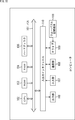
- FIG. 32 is a block diagram showing a configuration example of an embodiment of a computer on which a program for executing the above-described series of processes is installed.
- the program can be recorded in advance on the hard disk 105 or the ROM 103 as a recording medium built in the computer.
- the program can be stored (recorded) in the removable recording medium 111 driven by the drive 109.
- a removable recording medium 111 can be provided as so-called package software.
- examples of the removable recording medium 111 include a flexible disk, a CD-ROM (Compact Disc Only Memory), an MO (Magneto Optical) disc, a DVD (Digital Versatile Disc), a magnetic disc, and a semiconductor memory.
- the program may be installed in the computer from the removable recording medium 111 as described above, or may be downloaded to the computer via a communication network or a broadcast network and installed in the built-in hard disk 105. That is, for example, the program is wirelessly transferred from a download site to a computer via an artificial satellite for digital satellite broadcasting, or is transmitted to a computer via a network such as a LAN (Local Area Network) or the Internet by wire. be able to.
- LAN Local Area Network
- the computer has a built-in CPU (Central Processing Unit) 102, and an input / output interface 110 is connected to the CPU 102 via a bus 101.
- CPU Central Processing Unit
- the CPU 102 executes a program stored in a ROM (Read Only Memory) 103 when a command is input by a user operating the input unit 107 or the like via the input / output interface 110. .
- the CPU 102 loads a program stored in the hard disk 105 into a random access memory (RAM) 104 and executes the program.
- RAM random access memory
- the CPU 102 performs the processing according to the above-described flowchart or the processing performed by the configuration of the above-described block diagram. Then, the CPU 102 causes the processing result to be output from the output unit 106 or transmitted from the communication unit 108 via the input / output interface 110 as needed, and further recorded on the hard disk 105, for example.
- the input unit 107 includes a keyboard, a mouse, a microphone, and the like.
- the output unit 106 includes an LCD (Liquid Crystal Display), a speaker, and the like.
- the processing performed by the computer according to the program does not necessarily need to be performed in chronological order in the order described in the flowchart. That is, the processing performed by the computer in accordance with the program includes processing executed in parallel or individually (for example, parallel processing or processing by an object).
- the program may be processed by a single computer (processor) or may be processed in a distributed manner by a plurality of computers. Further, the program may be transferred to a remote computer and executed.
- a system means a set of a plurality of components (devices, modules (parts), etc.), and it does not matter whether all components are in the same housing. Therefore, a plurality of devices housed in separate housings and connected via a network, and one device housing a plurality of modules in one housing are all systems. .
- the configuration described as one device (or processing unit) may be divided and configured as a plurality of devices (or processing units).
- the configuration described above as a plurality of devices (or processing units) may be combined and configured as one device (or processing unit).
- a configuration other than those described above may be added to the configuration of each device (or each processing unit).
- a part of the configuration of a certain device (or processing unit) may be included in the configuration of another device (or other processing unit).
- the present technology can adopt a configuration of cloud computing in which one function is shared by a plurality of devices via a network and processed jointly.
- the above-described program can be executed in any device.
- the device only has to have necessary functions (functional blocks and the like) and can obtain necessary information.
- each step described in the above-described flowchart can be executed by a single device, or can be shared and executed by a plurality of devices.
- the plurality of processes included in the one step can be executed by one device or can be shared and executed by a plurality of devices.
- a plurality of processes included in one step can be executed as a plurality of steps.
- the processing described as a plurality of steps can be collectively executed as one step.
- the program executed by the computer may be configured so that the processing of the steps for describing the program is executed in chronological order according to the order described in this specification, or may be executed in parallel or by calling. It may be executed individually at a necessary timing such as time. That is, as long as no contradiction occurs, the processing of each step may be performed in an order different from the order described above. Further, the processing of the steps for describing the program may be executed in parallel with the processing of another program, or may be executed in combination with the processing of another program.
- the present technology can also have the following configurations.
- a stream of shape information representing the shape of the three-dimensional structure and identification information relating to a stream of attribute information representing the attribute of the three-dimensional structure are generated for each of the streams,
- An information processing apparatus comprising: a file generation unit that generates a file including a plurality of pieces of the generated identification information.
- the identification information includes size information indicating a size of each stream, and type information indicating a type of each stream.
- the file generation unit generates the file with a sample structure in which a boundary between the shape information and the attribute information is specified.
- the file generation unit indicates, in the header of each of the shape information and the attribute information of the subsamples constituting the file, size information indicating a size of the subsample as the identification information, and a type of the subsample.
- the information processing device according to any one of (1) to (3), wherein the type information is stored.
- the file generation unit stores the stream of the shape information and the stream of the attribute information in one track of an ISO Base Media File Format (ISOBMFF), and uses the information on the sub-samples constituting the file to store the shape.
- ISOBMFF ISO Base Media File Format
- the file generation unit in the header of each of the shape information and the attribute information of the sub-sample stored in mdat of ISOBMFF, as the identification information, size information indicating the size of the sub-sample, and the The information processing device according to (5), which stores type information indicating a type.
- the file generation unit separates the stream of the position and shape information and the stream of the attribute information, stores them separately for each track of ISOBMFF, and uses the information indicating the relationship between the tracks to store the information.
- the information processing device according to any one of (1) to (3), which signals position and shape information and the attribute information.
- the file generating unit separates the stream of the shape information and the stream of the attribute information, stores them separately for each track of ISOBMFF, and generates a DASH (Dynamic Adaptive Streaming over HTTP) MPD (Media Presentation).
- the information processing apparatus according to any one of (1) to (3), wherein the shape information and the attribute information are signaled using (Description).
- the file generation unit is stored in the mdat of ISOBMFF, in the header of each of the shape information and the attribute information of the subsample constituting the file, as the identification information, size information indicating the size of the subsample,
- the information processing apparatus according to (8), wherein type information indicating a type of the subsample is stored.
- the information processing device is Generating, for each of the streams, a stream of shape information representing the shape of the three-dimensional structure and a stream of attribute information representing the attribute of the three-dimensional structure, from the 3D data representing the three-dimensional structure; When, Generating a file including the generated plurality of pieces of identification information.
- (11) In the computer of the information processing device, Generating, for each of the streams, a stream of shape information representing the shape of the three-dimensional structure and a stream of attribute information representing the attribute of the three-dimensional structure, from the 3D data representing the three-dimensional structure; When, Generating a file including the generated plurality of pieces of identification information.
- a stream of shape information representing the shape of the three-dimensional structure and identification information relating to a stream of attribute information representing the attribute of the three-dimensional structure are generated for each of the streams.
- the information processing device is From the 3D data representing the three-dimensional structure, a stream of shape information representing the shape of the three-dimensional structure and identification information relating to a stream of attribute information representing the attribute of the three-dimensional structure are generated for each of the streams.
- 11 and 12 information processing device ⁇ 21 ⁇ separation unit, ⁇ 22 ⁇ encoding unit, ⁇ 23 ⁇ PC stream generation unit, ⁇ 24 ⁇ file generation unit, ⁇ 31 ⁇ extraction unit, ⁇ 32 ⁇ decoding unit, ⁇ 33 ⁇ construction unit, ⁇ 34 ⁇ display processing unit, ⁇ 51 ⁇ data generation device, # 52 Data reproducing device, ⁇ 61 ⁇ control unit, ⁇ 62 ⁇ file generation unit, ⁇ 71 ⁇ data input unit, ⁇ 72 ⁇ data encoding / generation unit, ⁇ 73 ⁇ MPD file generation unit, ⁇ 74 ⁇ recording unit, ⁇ 75 ⁇ upload unit, ⁇ 76 ⁇ preprocessing unit, ⁇ 77 ⁇ encoding unit, 78 segment file generation unit, 81 control unit, 82 playback processing unit, 91 MPD file acquisition unit, 92 MPD file processing unit, 93 segment file acquisition unit, 94 display control unit, 95 data analysis / decoding unit, 96 display unit, 97 Segment phi Processing unit, ⁇ 98 ⁇ decoding unit, ⁇ 99 ⁇ display information generation unit
Landscapes
- Engineering & Computer Science (AREA)
- Multimedia (AREA)
- Physics & Mathematics (AREA)
- Signal Processing (AREA)
- General Physics & Mathematics (AREA)
- Theoretical Computer Science (AREA)
- Computer Networks & Wireless Communication (AREA)
- Computer Graphics (AREA)
- Geometry (AREA)
- Software Systems (AREA)
- Compression Or Coding Systems Of Tv Signals (AREA)
- Image Processing (AREA)
- Image Generation (AREA)
- Television Signal Processing For Recording (AREA)
- Two-Way Televisions, Distribution Of Moving Picture Or The Like (AREA)
- Processing Or Creating Images (AREA)
Abstract
Description
本技術を適用したstream構造について説明する前に、図1を参照して、従来のstream構造について説明する。
図2を参照して、ISOBMFFで定義されるSampleに相当するものとして、新たに定義するPoint Cloud sample(以下、PC sampleと称する)について説明する。
図3乃至図6を参照して、クライアントにおいてgeometryおよびattributeを分割するための識別を可能にする第1の識別可能方法として、geometryおよびattributeの境界を明示したsample構造について説明する。
図7乃至図24を参照して、クライアントにおいてgeometryおよびattributeを分割するための識別を可能にする第2の識別可能方法として、sub sample information、geometry、およびattributeを格納するISOBMFFのtrackの拡張について説明する。
図11は、コンテンツを提供するサーバ側で、Point CloudデータからPC streamを生成し、そのPC streamをISOBMFFで定義されるファイルに格納したファイルを生成するファイル生成処理を実行する情報処理装置の構成例を示すブロック図である。
図13は、図11の情報処理装置11が、Point Cloudデータからファイルを生成するファイル生成処理を説明するフローチャートである。
図26および図27を参照して、クライアントにおいてgeometryおよびattributeを分割するための識別を可能にする第3の識別可能方法として、geometryおよびattributeを個別のtrackに格納した場合の、DASH MPD(Media Presentation Description)における紐づけ方法について説明する。
図30および図31を参照して、本技術を適用したデータ生成装置およびデータ再生装置のシステム構成について説明する。
次に、上述した一連の処理(情報処理方法)は、ハードウェアにより行うこともできるし、ソフトウェアにより行うこともできる。一連の処理をソフトウェアによって行う場合には、そのソフトウェアを構成するプログラムが、汎用のコンピュータ等にインストールされる。
なお、本技術は以下のような構成も取ることができる。
(1)
3次元構造を表す3Dデータから、前記3次元構造の形状を表す形状情報のストリーム、および、前記3次元構造の属性を表す属性情報のストリームに関する識別情報を、それぞれの前記ストリームごとに生成し、
生成された複数の前記識別情報を含むファイルを生成するファイル生成部
を備える情報処理装置。
(2)
前記識別情報には、各前記ストリームのサイズを示すサイズ情報、および、各前記ストリームのタイプを示すタイプ情報が含まれる
上記(1)に記載の情報処理装置。
(3)
前記ファイル生成部は、前記ファイルを、前記形状情報および前記属性情報の境界を明示したサンプル構造で生成する
上記(1)または(2)に記載の情報処理装置。
(4)
前記ファイル生成部は、前記ファイルを構成するサブサンプルの前記形状情報および前記属性情報それぞれのヘッダに、前記識別情報として、前記サブサンプルのサイズを示すサイズ情報、および、前記サブサンプルのタイプを示すタイプ情報を格納する
上記(1)乃至(3)のいずれかに記載の情報処理装置。
(5)
前記ファイル生成部は、前記形状情報のストリームおよび前記属性情報のストリームを、ISOBMFF(ISO Base Media File Format)の1つのトラックに格納し、前記ファイルを構成するサブサンプルに関する情報を利用して前記形状情報および前記属性情報の境界をシグナルする
上記(1)乃至(3)のいずれかに記載の情報処理装置。
(6)
前記ファイル生成部は、ISOBMFFのmdatに格納される前記サブサンプルの前記形状情報および前記属性情報それぞれのヘッダに、前記識別情報として、前記サブサンプルのサイズを示すサイズ情報、および、前記サブサンプルのタイプを示すタイプ情報を格納する
上記(5)に記載の情報処理装置。
(7)
前記ファイル生成部は、前記位置形状情報のストリームおよび前記属性情報のストリームを分離して、ISOBMFFの1つのトラックごとに、それぞれ個別に格納し、各トラックの関係性を示す情報を利用して前記位置形状情報および前記属性情報をシグナルする
上記(1)乃至(3)のいずれかに記載の情報処理装置。
(8)
前記ファイル生成部は、前記形状情報のストリームおよび前記属性情報のストリームを分離して、ISOBMFFの1つのトラックごとに、それぞれ個別に格納し、DASH(Dynamic Adaptive St reaming over HTTP)のMPD(Media Presentation Description)を利用して前記形状情報および前記属性情報をシグナルする
上記(1)乃至(3)のいずれかに記載の情報処理装置。
(9)
前記ファイル生成部は、ISOBMFFのmdatに格納される、前記ファイルを構成する前記サブサンプルの前記形状情報および前記属性情報それぞれのヘッダに、前記識別情報として、前記サブサンプルのサイズを示すサイズ情報、および、前記サブサンプルのタイプを示すタイプ情報を格納する
上記(8)に記載の情報処理装置。
(10)
情報処理装置が、
3次元構造を表す3Dデータから、前記3次元構造の形状を表す形状情報のストリーム、および、前記3次元構造の属性を表す属性情報のストリームに関する識別情報を、それぞれの前記ストリームごとに生成することと、
生成された複数の前記識別情報を含むファイルを生成することと
を含む情報処理方法。
(11)
情報処理装置のコンピュータに、
3次元構造を表す3Dデータから、前記3次元構造の形状を表す形状情報のストリーム、および、前記3次元構造の属性を表す属性情報のストリームに関する識別情報を、それぞれの前記ストリームごとに生成することと、
生成された複数の前記識別情報を含むファイルを生成することと
を含む情報処理を実行させるためのプログラム。
(12)
3次元構造を表す3Dデータから、前記3次元構造の形状を表す形状情報のストリーム、および、前記3次元構造の属性を表す属性情報のストリームに関する識別情報が、それぞれの前記ストリームごとに生成されて含まれるファイルから、ユースケースに応じて、前記識別情報をもとに、前記形状情報および前記属性情報を識別して抽出する抽出部と、
前記抽出部により抽出された前記形状情報または前記属性情報を用いて、前記3次元構造を構築する構築部と
を備える情報処理装置。
(13)
情報処理装置が、
3次元構造を表す3Dデータから、前記3次元構造の形状を表す形状情報のストリーム、および、前記3次元構造の属性を表す属性情報のストリームに関する識別情報が、それぞれの前記ストリームごとに生成されて含まれるファイルから、ユースケースに応じて、前記識別情報をもとに、前記形状情報および前記属性情報を識別して抽出することと、
その抽出された前記形状情報または前記属性情報を用いて、前記3次元構造を構築することと
を含む情報処理方法。
(14)
情報処理装置のコンピュータに、
3次元構造を表す3Dデータから、前記3次元構造の形状を表す形状情報のストリーム、および、前記3次元構造の属性を表す属性情報のストリームに関する識別情報が、それぞれの前記ストリームごとに生成されて含まれるファイルから、ユースケースに応じて、前記識別情報をもとに、前記形状情報および前記属性情報を識別して抽出することと、
その抽出された前記形状情報または前記属性情報を用いて、前記3次元構造を構築することと
を含む情報処理を実行させるためのプログラム。
Claims (14)
- 3次元構造を表す3Dデータから、前記3次元構造の形状を表す形状情報のストリーム、および、前記3次元構造の属性を表す属性情報のストリームに関する識別情報を、それぞれの前記ストリームごとに生成し、
生成された複数の前記識別情報を含むファイルを生成するファイル生成部
を備える情報処理装置。 - 前記識別情報には、各前記ストリームのサイズを示すサイズ情報、および、各前記ストリームのタイプを示すタイプ情報が含まれる
請求項1に記載の情報処理装置。 - 前記ファイル生成部は、前記ファイルを、前記形状情報および前記属性情報の境界を明示したサンプル構造で生成する
請求項1に記載の情報処理装置。 - 前記ファイル生成部は、前記ファイルを構成するサブサンプルの前記形状情報および前記属性情報それぞれのヘッダに、前記識別情報として、前記サブサンプルのサイズを示すサイズ情報、および、前記サブサンプルのタイプを示すタイプ情報を格納する
請求項1に記載の情報処理装置。 - 前記ファイル生成部は、前記形状情報のストリームおよび前記属性情報のストリームを、ISOBMFF(ISO Base Media File Format)の1つのトラックに格納し、前記ファイルを構成するサブサンプルに関する情報を利用して前記形状情報および前記属性情報の境界をシグナルする
請求項1に記載の情報処理装置。 - 前記ファイル生成部は、ISOBMFFのmdatに格納される前記サブサンプルの前記形状情報および前記属性情報それぞれのヘッダに、前記識別情報として、前記サブサンプルのサイズを示すサイズ情報、および、前記サブサンプルのタイプを示すタイプ情報を格納する
請求項5に記載の情報処理装置。 - 前記ファイル生成部は、前記形状情報のストリームおよび前記属性情報のストリームを分離して、ISOBMFFの1つのトラックごとに、それぞれ個別に格納し、各トラックの関係性を示す情報を利用して前記形状情報および前記属性情報をシグナルする
請求項1に記載の情報処理装置。 - 前記ファイル生成部は、前記形状情報のストリームおよび前記属性情報のストリームを分離して、ISOBMFFの1つのトラックごとに、それぞれ個別に格納し、DASH(Dynamic Adaptive Streaming over HTTP)のMPD(Media Presentation Description)を利用して前記形状情報および前記属性情報をシグナルする
請求項1に記載の情報処理装置。 - 前記ファイル生成部は、ISOBMFFのmdatに格納される、前記ファイルを構成するサブサンプルの前記形状情報および前記属性情報それぞれのヘッダに、前記識別情報として、前記サブサンプルのサイズを示すサイズ情報、および、前記サブサンプルのタイプを示すタイプ情報を格納する
請求項8に記載の情報処理装置。 - 情報処理装置が、
3次元構造を表す3Dデータから、前記3次元構造の形状を表す形状情報のストリーム、および、前記3次元構造の属性を表す属性情報のストリームに関する識別情報を、それぞれの前記ストリームごとに生成することと、
生成された複数の前記識別情報を含むファイルを生成することと
を含む情報処理方法。 - 情報処理装置のコンピュータに、
3次元構造を表す3Dデータから、前記3次元構造の形状を表す形状情報のストリーム、および、前記3次元構造の属性を表す属性情報のストリームに関する識別情報を、それぞれの前記ストリームごとに生成することと、
生成された複数の前記識別情報を含むファイルを生成することと
を含む情報処理を実行させるためのプログラム。 - 3次元構造を表す3Dデータから、前記3次元構造の形状を表す形状情報のストリーム、および、前記3次元構造の属性を表す属性情報のストリームに関する識別情報が、それぞれの前記ストリームごとに生成されて含まれるファイルから、ユースケースに応じて、前記識別情報をもとに、前記形状情報および前記属性情報を識別して抽出する抽出部と、
前記抽出部により抽出された前記形状情報または前記属性情報を用いて、前記3次元構造を構築する構築部と
を備える情報処理装置。 - 情報処理装置が、
3次元構造を表す3Dデータから、前記3次元構造の形状を表す形状情報のストリーム、および、前記3次元構造の属性を表す属性情報のストリームに関する識別情報が、それぞれの前記ストリームごとに生成されて含まれるファイルから、ユースケースに応じて、前記識別情報をもとに、前記形状情報および前記属性情報を識別して抽出することと、
その抽出された前記形状情報または前記属性情報を用いて、前記3次元構造を構築することと
を含む情報処理方法。 - 情報処理装置のコンピュータに、
3次元構造を表す3Dデータから、前記3次元構造の形状を表す形状情報のストリーム、および、前記3次元構造の属性を表す属性情報のストリームに関する識別情報が、それぞれの前記ストリームごとに生成されて含まれるファイルから、ユースケースに応じて、前記識別情報をもとに、前記形状情報および前記属性情報を識別して抽出することと、
その抽出された前記形状情報または前記属性情報を用いて、前記3次元構造を構築することと
を含む情報処理を実行させるためのプログラム。
Priority Applications (4)
| Application Number | Priority Date | Filing Date | Title |
|---|---|---|---|
| EP19868888.9A EP3862971A4 (en) | 2018-10-02 | 2019-09-18 | INFORMATION PROCESSING DEVICE, INFORMATION PROCESSING METHOD AND PROGRAM |
| US17/278,989 US20220038517A1 (en) | 2018-10-02 | 2019-09-18 | Information processing apparatus, information processing method, and program |
| CN201980063613.0A CN112789656B (zh) | 2018-10-02 | 2019-09-18 | 信息处理装置、信息处理方法和程序介质 |
| JP2020550265A JP7439762B2 (ja) | 2018-10-02 | 2019-09-18 | 情報処理装置および情報処理方法、並びにプログラム |
Applications Claiming Priority (2)
| Application Number | Priority Date | Filing Date | Title |
|---|---|---|---|
| JP2018-187816 | 2018-10-02 | ||
| JP2018187816 | 2018-10-02 |
Publications (1)
| Publication Number | Publication Date |
|---|---|
| WO2020071111A1 true WO2020071111A1 (ja) | 2020-04-09 |
Family
ID=70054768
Family Applications (1)
| Application Number | Title | Priority Date | Filing Date |
|---|---|---|---|
| PCT/JP2019/036465 Ceased WO2020071111A1 (ja) | 2018-10-02 | 2019-09-18 | 情報処理装置および情報処理方法、並びにプログラム |
Country Status (5)
| Country | Link |
|---|---|
| US (1) | US20220038517A1 (ja) |
| EP (1) | EP3862971A4 (ja) |
| JP (1) | JP7439762B2 (ja) |
| CN (1) | CN112789656B (ja) |
| WO (1) | WO2020071111A1 (ja) |
Cited By (7)
| Publication number | Priority date | Publication date | Assignee | Title |
|---|---|---|---|---|
| JPWO2021251141A1 (ja) * | 2020-06-09 | 2021-12-16 | ||
| CN114554243A (zh) * | 2020-11-26 | 2022-05-27 | 腾讯科技(深圳)有限公司 | 点云媒体的数据处理方法、装置、设备及存储介质 |
| JP2023550752A (ja) * | 2020-11-26 | 2023-12-05 | ▲騰▼▲訊▼科技(深▲セン▼)有限公司 | 非時系列ポイントクラウドメディアの処理方法、装置、機器、及びコンピュータプログラム |
| EP4138397A4 (en) * | 2020-04-14 | 2024-03-27 | LG Electronics, Inc. | POINT CLOUD DATA TRANSMISSION APPARATUS, POINT CLOUD DATA TRANSMISSION METHOD, POINT CLOUD DATA RECEIVING APPARATUS, AND POINT CLOUD DATA RECEIVING METHOD |
| JP2024050956A (ja) * | 2018-12-26 | 2024-04-10 | パナソニック インテレクチュアル プロパティ コーポレーション オブ アメリカ | 符号化方法、符号化装置、復号方法及び復号装置 |
| WO2025177813A1 (ja) * | 2024-02-19 | 2025-08-28 | ソニーセミコンダクタソリューションズ株式会社 | 符号化方法、復号化方法及び情報処理システム |
| TWI904176B (zh) * | 2020-06-22 | 2025-11-11 | 美商內數位專利控股公司 | 基於幾何之點雲的適應性串流 |
Families Citing this family (4)
| Publication number | Priority date | Publication date | Assignee | Title |
|---|---|---|---|---|
| JP7434175B2 (ja) * | 2018-12-07 | 2024-02-20 | パナソニック インテレクチュアル プロパティ コーポレーション オブ アメリカ | 三次元データ符号化方法、三次元データ復号方法、三次元データ符号化装置、及び三次元データ復号装置 |
| US12322144B2 (en) * | 2020-04-24 | 2025-06-03 | Lg Electronics Inc. | Point cloud data transmission device, point cloud data transmission method, point cloud data reception device and point cloud data reception method |
| CN113709093B (zh) * | 2021-03-15 | 2023-08-04 | 上海交通大学 | 一种三维点云的封装方法、装置及介质 |
| CN119054291A (zh) * | 2022-04-14 | 2024-11-29 | Lg电子株式会社 | 点云数据的发送装置和由相同的发送装置执行的方法及点云数据的接收装置和由相同的接收装置执行的方法 |
Citations (2)
| Publication number | Priority date | Publication date | Assignee | Title |
|---|---|---|---|---|
| JP2000113224A (ja) * | 1998-10-06 | 2000-04-21 | Akira Kawanaka | 3次元データを圧縮する方法、復元方法 |
| JP2003187266A (ja) * | 2001-12-19 | 2003-07-04 | Ricoh Co Ltd | 3次元形状処理装置およびデータ処理方法 |
Family Cites Families (27)
| Publication number | Priority date | Publication date | Assignee | Title |
|---|---|---|---|---|
| JP2003216981A (ja) * | 2002-01-25 | 2003-07-31 | Iwane Kenkyusho:Kk | 自動作業システム |
| US7613727B2 (en) * | 2002-02-25 | 2009-11-03 | Sont Corporation | Method and apparatus for supporting advanced coding formats in media files |
| US20050254575A1 (en) * | 2004-05-12 | 2005-11-17 | Nokia Corporation | Multiple interoperability points for scalable media coding and transmission |
| KR101611531B1 (ko) * | 2009-11-13 | 2016-04-12 | 삼성전자주식회사 | 촬영장치 및 촬영영상 제공방법 |
| JP5601006B2 (ja) * | 2010-04-08 | 2014-10-08 | ソニー株式会社 | 情報処理装置、情報記録媒体、および情報処理方法、並びにプログラム |
| WO2012032502A1 (en) * | 2010-09-10 | 2012-03-15 | Nokia Corporation | A method and apparatus for adaptive streaming |
| WO2014066887A1 (en) * | 2012-10-26 | 2014-05-01 | Intel Corporation | Streaming with coordination of video orientation (cvo) |
| WO2014066885A1 (en) * | 2012-10-26 | 2014-05-01 | Intel Corporation | Multimedia adaptation based on video orientation |
| US9886631B2 (en) * | 2012-11-19 | 2018-02-06 | Altria Client Services Llc | On-line oil and foreign matter detection stystem and method employing hyperspectral imaging |
| WO2015008774A1 (ja) * | 2013-07-19 | 2015-01-22 | ソニー株式会社 | 情報処理装置および方法 |
| WO2015008538A1 (ja) * | 2013-07-19 | 2015-01-22 | ソニー株式会社 | 情報処理装置および情報処理方法 |
| WO2015012225A1 (ja) * | 2013-07-22 | 2015-01-29 | ソニー株式会社 | 情報処理装置および方法 |
| US9621919B2 (en) * | 2013-10-23 | 2017-04-11 | Qualcomm Incorporated | Multi-layer video file format designs |
| EP3096321B1 (en) * | 2014-01-14 | 2020-02-05 | Sony Corporation | Information processing device, information recording medium, information processing system, information processing method, and program |
| WO2015197818A1 (en) * | 2014-06-27 | 2015-12-30 | Koninklijke Kpn N.V. | Hevc-tiled video streaming |
| JP6675475B2 (ja) * | 2015-08-20 | 2020-04-01 | コニンクリーケ・ケイピーエヌ・ナムローゼ・フェンノートシャップ | メディア・ストリームに基づくタイルド・ビデオの形成 |
| US10692286B2 (en) * | 2015-08-28 | 2020-06-23 | VR Drive Sp. z O.O. | Device and method of creating an augmented interactive virtual reality system |
| US10834153B2 (en) * | 2016-08-24 | 2020-11-10 | Qualcomm Incorporated | System level signaling of SEI tracks for media data streaming |
| US10536721B2 (en) * | 2017-01-09 | 2020-01-14 | Qualcomm Incorporated | Restricted scheme design for video |
| US10306254B2 (en) * | 2017-01-17 | 2019-05-28 | Seiko Epson Corporation | Encoding free view point data in movie data container |
| US11514613B2 (en) * | 2017-03-16 | 2022-11-29 | Samsung Electronics Co., Ltd. | Point cloud and mesh compression using image/video codecs |
| AU2018238632A1 (en) * | 2017-03-24 | 2019-10-10 | Sony Corporation | Information processing device, information processing method, and program |
| JP7142040B2 (ja) * | 2017-07-06 | 2022-09-26 | フラウンホーファー-ゲゼルシャフト・ツール・フェルデルング・デル・アンゲヴァンテン・フォルシュング・アインゲトラーゲネル・フェライン | 分割ビデオストリーミングの概念 |
| US10861196B2 (en) * | 2017-09-14 | 2020-12-08 | Apple Inc. | Point cloud compression |
| US11381621B2 (en) * | 2018-04-11 | 2022-07-05 | Samsung Electronics Co., Ltd. | Device and method for processing data in multimedia system |
| WO2020011717A1 (en) * | 2018-07-11 | 2020-01-16 | Telefonaktiebolaget Lm Ericsson (Publ) | Video based point cloud codec bitstream specification |
| WO2020032248A1 (ja) * | 2018-08-10 | 2020-02-13 | パナソニック インテレクチュアル プロパティ コーポレーション オブ アメリカ | 三次元データ符号化方法、三次元データ復号方法、三次元データ符号化装置、及び三次元データ復号装置 |
-
2019
- 2019-09-18 US US17/278,989 patent/US20220038517A1/en not_active Abandoned
- 2019-09-18 EP EP19868888.9A patent/EP3862971A4/en active Pending
- 2019-09-18 JP JP2020550265A patent/JP7439762B2/ja active Active
- 2019-09-18 WO PCT/JP2019/036465 patent/WO2020071111A1/ja not_active Ceased
- 2019-09-18 CN CN201980063613.0A patent/CN112789656B/zh active Active
Patent Citations (2)
| Publication number | Priority date | Publication date | Assignee | Title |
|---|---|---|---|---|
| JP2000113224A (ja) * | 1998-10-06 | 2000-04-21 | Akira Kawanaka | 3次元データを圧縮する方法、復元方法 |
| JP2003187266A (ja) * | 2001-12-19 | 2003-07-04 | Ricoh Co Ltd | 3次元形状処理装置およびデータ処理方法 |
Non-Patent Citations (2)
| Title |
|---|
| See also references of EP3862971A4 |
| W17675, FIRST IDEA ON SYSTEMS TECHNOLOGIES FOR POINT CLOUD CODING, April 2018 (2018-04-01) |
Cited By (13)
| Publication number | Priority date | Publication date | Assignee | Title |
|---|---|---|---|---|
| JP7765518B2 (ja) | 2018-12-26 | 2025-11-06 | パナソニック インテレクチュアル プロパティ コーポレーション オブ アメリカ | 符号化方法、符号化装置、復号方法及び復号装置 |
| JP2024050956A (ja) * | 2018-12-26 | 2024-04-10 | パナソニック インテレクチュアル プロパティ コーポレーション オブ アメリカ | 符号化方法、符号化装置、復号方法及び復号装置 |
| EP4138397A4 (en) * | 2020-04-14 | 2024-03-27 | LG Electronics, Inc. | POINT CLOUD DATA TRANSMISSION APPARATUS, POINT CLOUD DATA TRANSMISSION METHOD, POINT CLOUD DATA RECEIVING APPARATUS, AND POINT CLOUD DATA RECEIVING METHOD |
| JP7768130B2 (ja) | 2020-06-09 | 2025-11-12 | ソニーグループ株式会社 | 情報処理装置および方法 |
| CN115868156A (zh) * | 2020-06-09 | 2023-03-28 | 索尼集团公司 | 信息处理装置和方法 |
| JPWO2021251141A1 (ja) * | 2020-06-09 | 2021-12-16 | ||
| EP4164213A4 (en) * | 2020-06-09 | 2023-10-04 | Sony Group Corporation | INFORMATION PROCESSING APPARATUS AND METHOD |
| TWI904176B (zh) * | 2020-06-22 | 2025-11-11 | 美商內數位專利控股公司 | 基於幾何之點雲的適應性串流 |
| CN114554243B (zh) * | 2020-11-26 | 2023-06-20 | 腾讯科技(深圳)有限公司 | 点云媒体的数据处理方法、装置、设备及存储介质 |
| JP7508710B2 (ja) | 2020-11-26 | 2024-07-01 | ▲騰▼▲訊▼科技(深▲セン▼)有限公司 | 非時系列ポイントクラウドメディアの処理方法、装置、機器、及びコンピュータプログラム |
| JP2023550752A (ja) * | 2020-11-26 | 2023-12-05 | ▲騰▼▲訊▼科技(深▲セン▼)有限公司 | 非時系列ポイントクラウドメディアの処理方法、装置、機器、及びコンピュータプログラム |
| CN114554243A (zh) * | 2020-11-26 | 2022-05-27 | 腾讯科技(深圳)有限公司 | 点云媒体的数据处理方法、装置、设备及存储介质 |
| WO2025177813A1 (ja) * | 2024-02-19 | 2025-08-28 | ソニーセミコンダクタソリューションズ株式会社 | 符号化方法、復号化方法及び情報処理システム |
Also Published As
| Publication number | Publication date |
|---|---|
| CN112789656A (zh) | 2021-05-11 |
| JPWO2020071111A1 (ja) | 2021-09-24 |
| EP3862971A1 (en) | 2021-08-11 |
| CN112789656B (zh) | 2025-09-23 |
| US20220038517A1 (en) | 2022-02-03 |
| JP7439762B2 (ja) | 2024-02-28 |
| EP3862971A4 (en) | 2022-08-17 |
Similar Documents
| Publication | Publication Date | Title |
|---|---|---|
| JP7439762B2 (ja) | 情報処理装置および情報処理方法、並びにプログラム | |
| US11516453B2 (en) | Information processing apparatus, information processing method, and program for point cloud sample processing | |
| US11533350B2 (en) | Method and apparatus for encoding and transmitting at least a spatial part of a video sequence | |
| JP6766157B2 (ja) | ビデオストリーミングにおけるシーンセクションと関心領域の処理 | |
| US12432370B2 (en) | Information processing device and information processing method | |
| TWI632810B (zh) | Data generating device, data generating method, data reproducing device, and data reproducing method | |
| KR20200068705A (ko) | 고품질의 경험을 위한 오디오 메시지들의 효율적인 전달 및 사용을 위한 방법 및 장치 | |
| US20230025332A1 (en) | Method, device, and computer program for improving encapsulation of media content | |
| CN112789865B (zh) | 信息处理装置和信息处理方法 | |
| JP7241874B2 (ja) | カプセル化されたメディアコンテンツの利用可能な部分をシグナリングするための方法、装置、及びコンピュータプログラム | |
| JP7287454B2 (ja) | 情報処理装置、再生処理装置、情報処理方法及び再生処理方法 | |
| US11206386B2 (en) | Information processing apparatus and information processing method | |
| WO2021065277A1 (ja) | 情報処理装置、再生処理装置及び情報処理方法 | |
| JP7521531B2 (ja) | 情報処理装置、情報処理方法、再生処理装置及び再生処理方法 | |
| WO2025212395A1 (en) | Volumetric video experiences using dynamic mesh coding |
Legal Events
| Date | Code | Title | Description |
|---|---|---|---|
| 121 | Ep: the epo has been informed by wipo that ep was designated in this application |
Ref document number: 19868888 Country of ref document: EP Kind code of ref document: A1 |
|
| ENP | Entry into the national phase |
Ref document number: 2020550265 Country of ref document: JP Kind code of ref document: A |
|
| NENP | Non-entry into the national phase |
Ref country code: DE |
|
| ENP | Entry into the national phase |
Ref document number: 2019868888 Country of ref document: EP Effective date: 20210503 |
|
| WWG | Wipo information: grant in national office |
Ref document number: 201980063613.0 Country of ref document: CN |