WO2020071556A1 - 食品、食品製造装置、食品製造方法及び食品製造システム - Google Patents
食品、食品製造装置、食品製造方法及び食品製造システムInfo
- Publication number
- WO2020071556A1 WO2020071556A1 PCT/JP2019/039402 JP2019039402W WO2020071556A1 WO 2020071556 A1 WO2020071556 A1 WO 2020071556A1 JP 2019039402 W JP2019039402 W JP 2019039402W WO 2020071556 A1 WO2020071556 A1 WO 2020071556A1
- Authority
- WO
- WIPO (PCT)
- Prior art keywords
- texture
- food
- mixture
- predetermined
- data
- Prior art date
- Legal status (The legal status is an assumption and is not a legal conclusion. Google has not performed a legal analysis and makes no representation as to the accuracy of the status listed.)
- Ceased
Links
Images





Classifications
-
- A—HUMAN NECESSITIES
- A23—FOODS OR FOODSTUFFS; TREATMENT THEREOF, NOT COVERED BY OTHER CLASSES
- A23L—FOODS, FOODSTUFFS OR NON-ALCOHOLIC BEVERAGES, NOT OTHERWISE PROVIDED FOR; PREPARATION OR TREATMENT THEREOF
- A23L17/00—Food-from-the-sea products; Fish products; Fish meal; Fish-egg substitutes; Preparation or treatment thereof
-
- A—HUMAN NECESSITIES
- A23—FOODS OR FOODSTUFFS; TREATMENT THEREOF, NOT COVERED BY OTHER CLASSES
- A23P—SHAPING OR WORKING OF FOODSTUFFS, NOT FULLY COVERED BY A SINGLE OTHER SUBCLASS
- A23P20/00—Coating of foodstuffs; Coatings therefor; Making laminated, multi-layered, stuffed or hollow foodstuffs
- A23P20/20—Making of laminated, multi-layered, stuffed or hollow foodstuffs, e.g. by wrapping in preformed edible dough sheets or in edible food containers
-
- A—HUMAN NECESSITIES
- A23—FOODS OR FOODSTUFFS; TREATMENT THEREOF, NOT COVERED BY OTHER CLASSES
- A23L—FOODS, FOODSTUFFS OR NON-ALCOHOLIC BEVERAGES, NOT OTHERWISE PROVIDED FOR; PREPARATION OR TREATMENT THEREOF
- A23L19/00—Products from fruits or vegetables; Preparation or treatment thereof
- A23L19/03—Products from fruits or vegetables; Preparation or treatment thereof consisting of whole pieces or fragments without mashing the original pieces
- A23L19/05—Stuffed or cored products; Multilayered or coated products; Binding or compressing of original pieces
-
- A—HUMAN NECESSITIES
- A23—FOODS OR FOODSTUFFS; TREATMENT THEREOF, NOT COVERED BY OTHER CLASSES
- A23L—FOODS, FOODSTUFFS OR NON-ALCOHOLIC BEVERAGES, NOT OTHERWISE PROVIDED FOR; PREPARATION OR TREATMENT THEREOF
- A23L23/00—Soups; Sauces; Preparation or treatment thereof
-
- A—HUMAN NECESSITIES
- A23—FOODS OR FOODSTUFFS; TREATMENT THEREOF, NOT COVERED BY OTHER CLASSES
- A23P—SHAPING OR WORKING OF FOODSTUFFS, NOT FULLY COVERED BY A SINGLE OTHER SUBCLASS
- A23P30/00—Shaping or working of foodstuffs characterised by the process or apparatus
-
- A—HUMAN NECESSITIES
- A23—FOODS OR FOODSTUFFS; TREATMENT THEREOF, NOT COVERED BY OTHER CLASSES
- A23P—SHAPING OR WORKING OF FOODSTUFFS, NOT FULLY COVERED BY A SINGLE OTHER SUBCLASS
- A23P30/00—Shaping or working of foodstuffs characterised by the process or apparatus
- A23P30/20—Extruding
- A23P30/25—Co-extrusion of different foodstuffs
-
- B—PERFORMING OPERATIONS; TRANSPORTING
- B33—ADDITIVE MANUFACTURING TECHNOLOGY
- B33Y—ADDITIVE MANUFACTURING, i.e. MANUFACTURING OF THREE-DIMENSIONAL [3D] OBJECTS BY ADDITIVE DEPOSITION, ADDITIVE AGGLOMERATION OR ADDITIVE LAYERING, e.g. BY 3D PRINTING, STEREOLITHOGRAPHY OR SELECTIVE LASER SINTERING
- B33Y30/00—Apparatus for additive manufacturing; Details thereof or accessories therefor
-
- B—PERFORMING OPERATIONS; TRANSPORTING
- B33—ADDITIVE MANUFACTURING TECHNOLOGY
- B33Y—ADDITIVE MANUFACTURING, i.e. MANUFACTURING OF THREE-DIMENSIONAL [3D] OBJECTS BY ADDITIVE DEPOSITION, ADDITIVE AGGLOMERATION OR ADDITIVE LAYERING, e.g. BY 3D PRINTING, STEREOLITHOGRAPHY OR SELECTIVE LASER SINTERING
- B33Y50/00—Data acquisition or data processing for additive manufacturing
-
- B—PERFORMING OPERATIONS; TRANSPORTING
- B33—ADDITIVE MANUFACTURING TECHNOLOGY
- B33Y—ADDITIVE MANUFACTURING, i.e. MANUFACTURING OF THREE-DIMENSIONAL [3D] OBJECTS BY ADDITIVE DEPOSITION, ADDITIVE AGGLOMERATION OR ADDITIVE LAYERING, e.g. BY 3D PRINTING, STEREOLITHOGRAPHY OR SELECTIVE LASER SINTERING
- B33Y80/00—Products made by additive manufacturing
-
- A—HUMAN NECESSITIES
- A23—FOODS OR FOODSTUFFS; TREATMENT THEREOF, NOT COVERED BY OTHER CLASSES
- A23P—SHAPING OR WORKING OF FOODSTUFFS, NOT FULLY COVERED BY A SINGLE OTHER SUBCLASS
- A23P20/00—Coating of foodstuffs; Coatings therefor; Making laminated, multi-layered, stuffed or hollow foodstuffs
- A23P20/20—Making of laminated, multi-layered, stuffed or hollow foodstuffs, e.g. by wrapping in preformed edible dough sheets or in edible food containers
- A23P20/25—Filling or stuffing cored food pieces, e.g. combined with coring or making cavities
- A23P2020/253—Coating food items by printing onto them; Printing layers of food products
-
- A—HUMAN NECESSITIES
- A23—FOODS OR FOODSTUFFS; TREATMENT THEREOF, NOT COVERED BY OTHER CLASSES
- A23V—INDEXING SCHEME RELATING TO FOODS, FOODSTUFFS OR NON-ALCOHOLIC BEVERAGES AND LACTIC OR PROPIONIC ACID BACTERIA USED IN FOODSTUFFS OR FOOD PREPARATION
- A23V2002/00—Food compositions, function of food ingredients or processes for food or foodstuffs
Definitions
- the present invention relates to a food, a food manufacturing apparatus, a food manufacturing method, and a food manufacturing system.
- a powder layer having a predetermined thickness is formed from a powdery powdery food material, and a binding inducer is supplied to a predetermined portion of the powder layer. By repeating this plural times, a conjugate having a desired three-dimensional shape is formed.
- a fluid gel-like food material is discharged from, for example, a nozzle of a 3D printer to form a food having a predetermined three-dimensional shape.
- the present invention has been made in view of such a problem, and a food, a food manufacturing apparatus, a food manufacturing method, and a food manufacturing that can easily form a reproduction while reproducing the texture of a predetermined food.
- An object is to provide a system.
- the food of one embodiment of the present invention is a new food that reproduces the texture of the predetermined food based on texture data obtained by quantifying the texture of the predetermined food, and a plurality of textures having different textures.
- a desired texture based on the texture data is reproduced by heating and / or cooling the mixture obtained by mixing the basic elements at a predetermined ratio, and the mixture is manufactured by molding the mixture into a cube shape. .
- the food manufacturing apparatus is a food manufacturing apparatus that manufactures a new food that reproduces the texture of the predetermined food based on texture data obtained by quantifying the texture of the predetermined food.
- the food manufacturing method is a food manufacturing method for manufacturing a new food that reproduces the texture of the predetermined food based on texture data obtained by digitizing the texture of the predetermined food.
- a texture measurement step of measuring the texture of food and obtaining texture data in which the texture is quantified, and combining the texture data with a plurality of texture basic elements having different textures to obtain a desired texture.
- a texture data conversion step of converting to a texture reproduction data relating to the composition ratio of the plurality of texture basic elements for reproducing a mixture of a plurality of texture basic elements having different textures mixed at a predetermined ratio.
- a mixing step to obtain, a heating / cooling step of reproducing a desired texture based on the texture data by heating and / or cooling the mixture, and a molding for producing the cube-shaped food by molding the mixture. And a process And butterflies.
- the food manufacturing method is characterized in that, in the molding step, the mixture is laminated for each food material constituting the predetermined food.
- an enzyme for adjusting a texture of the mixture is further mixed.
- the food manufacturing method is characterized in that, in the molding step, the mixture is laminated on a predetermined mold and molded into a cube shape.
- a food manufacturing system measures a texture of a predetermined food, and obtains texture data by digitizing the texture.
- a texture data conversion device that converts the texture basic elements into texture reproduction data relating to the composition ratio of the plurality of texture basic elements for reproducing a desired texture by combining the texture basic elements, based on the texture reproduction data
- a food manufacturing apparatus that mixes the plurality of basic texture elements at a predetermined ratio and manufactures a new food that reproduces the texture of the predetermined food, and the food manufacturing apparatus includes the plurality of basic texture elements. By heating and / or cooling the mixture obtained by mixing the elements, a desired texture based on the texture data is reproduced, and the mixture is molded into a cube shape.
- the present invention it is possible to manufacture a new food that reproduces the texture of the predetermined food based on the texture data obtained by digitizing the texture of the predetermined food.
- the shape of the food is formed into a cube shape, it is not necessary to form a complicated shape, and it is possible to easily provide a new food that reproduces the texture of the predetermined food.
- FIG. 2 is a block diagram showing a partial function of each configuration shown in FIG. 1.
- 1 is an overall view of a food manufacturing apparatus according to the present embodiment.
- FIG. 4 is a schematic diagram reproducing a part of the function of the food manufacturing apparatus shown in FIG. 3. It is a perspective view showing an example of foodstuffs concerning this embodiment. It is a perspective view showing other examples of food concerning this embodiment. It is a perspective view showing other examples of food concerning this embodiment. It is a perspective view showing other examples of food concerning this embodiment. It is a perspective view showing other examples of food concerning this embodiment. It is a perspective view showing other examples of food concerning this embodiment. It is a perspective view showing other examples of food concerning this embodiment.
- FIG. 1 is a schematic diagram illustrating a schematic configuration of a food manufacturing system according to the present embodiment.
- FIG. 2 is a block diagram showing a partial function of each component shown in FIG. Note that the food manufacturing system described below is merely an example, and the present invention is not limited thereto, and can be appropriately changed.
- the food manufacturing system 1 measures the texture of a predetermined food, and then, based on the texture data obtained by quantifying the measured texture, the food production system 1 It is configured to produce a new food F (see FIG. 3) that reproduces the texture.
- the food manufacturing system 1 includes a texture measuring device 2 that measures the texture of a predetermined food, a texture data conversion device 3 that converts the texture of the predetermined food into texture reproduction data for reproducing the texture, A server 4 that stores the texture reproduction data, a food manufacturing apparatus 5 that manufactures a new food F that reproduces the texture of a predetermined food from the texture reproduction data, and can communicate with the food manufacturing apparatus 5 via the network 6. And a communication terminal 7.
- each of these components has a plurality of functional blocks related to food production in the present embodiment.
- These functional blocks are merely examples, and are not limited to the functional blocks described below, and may have other functional blocks as needed.
- the food includes all foods that can be eaten by humans, and includes other foods cooked by heating a plurality of ingredients (eg, sushi, oden, hamburger, and bowl). Or the ingredients themselves, such as vegetables and fruits.
- a plurality of ingredients eg, sushi, oden, hamburger, and bowl.
- the ingredients themselves, such as vegetables and fruits.
- the texture is a sensation felt when eating the food, specifically, a skin sensation in the oral cavity including teeth and tongue.
- a sensation felt when eating the food specifically, a skin sensation in the oral cavity including teeth and tongue.
- chewy, tongue, throat, etc. are examples of texture.
- the texture measuring device 2 is configured to measure the texture of a predetermined food and obtain texture data in which the texture is quantified.
- a commercially available texture tester can be used.
- the texture measuring device 2 includes, as shown in FIG. 2A, a measuring unit 20 that measures the texture of a predetermined food, and an arithmetic unit 21 that obtains (calculates) the measured texture as digitized texture data. And a communication unit 22 that outputs the texture data to the texture data conversion device 3.
- the measuring unit 20 is configured by a probe (not shown) provided with, for example, a pressure sensor or the like.
- the measurement unit 20 measures the texture by bringing the tip of the probe into contact with the surface of the food.
- the computing unit 21 computes texture data (e.g., elasticity and hardness of the food) by quantifying the texture from an electrical output based on the pressure (load) or displacement of the food surface measured by the probe.
- the communication unit 22 transmits the calculated texture data to the texture data conversion device 3.
- the texture measuring device 2 (communication unit 22) may be directly connected to the texture data conversion device 3 (communication unit 30) by wire, or may be configured to be able to communicate wirelessly via the network 6.
- the texture data conversion device 3 is configured by a computer that converts the texture data transmitted from the texture measurement device 2 into food reproduction data for food reproduction.
- the texture data conversion device 3 includes, as shown in FIG. 2B, a communication unit 30 that performs communication of predetermined data with another device and a conversion unit 31 that converts texture data into texture reproduction data. It is comprised including.
- the communication unit 30 is configured to receive texture data with the texture measurement device 2 and communicate with another device (for example, the server 4) via the network 6.
- the conversion unit 31 converts the received texture data into texture reproduction data relating to the composition ratio of a plurality of texture basic elements 57b (see FIG. 4) described later.
- the texture reproduction data will be described later.
- the converted texture reproduction data is transmitted to the server 4 via the network 6 and stored in the server 4.
- the texture reproduction data may be stored in a storage medium such as a memory included in the texture data conversion device 3. In this case, it is preferable that the texture data conversion device 3 can be accessed from another device via the network 6.
- the server 4 is constituted by a computer having a database function of storing texture reproduction data for each of a plurality of predetermined foods.
- the server 4 includes a processor, a memory, and the like that execute various processes.
- the control unit 40 that overall controls the overall operation of the server 4 and stores texture reproduction data. It is configured to include a storage unit 41 and a communication unit 42 that communicates with another device.
- the storage unit 41 includes one or a plurality of storage media such as a ROM (Read Only Memory) and a RAM (Random Access Memory) depending on the application, and stores the texture reproduction data transmitted from the texture data conversion device 3. It is stored for each predetermined food.
- the communication unit 42 is configured to be able to communicate with other devices (the texture data conversion device 3, the communication terminal 7, the food manufacturing device 5, and the like) via the network 6.
- the food manufacturing apparatus 5 is configured by a so-called 3D printer that downloads texture reproduction data from the server 4 and forms a new food F (see FIG. 3) in which the texture is reproduced based on the texture reproduction data. .
- the food manufacturing apparatus 5 is configured to include a control unit 50 that performs overall control of the entire apparatus and a communication unit 51 that communicates with another apparatus.
- the control unit 50 has a processor, a memory, and the like that execute various processes, and converts, for example, texture reproduction data into a format that can be output by the food manufacturing apparatus 5. Further, the control unit 50 controls the various mechanisms described below to realize the manufacture of a new food F based on the texture reproduction data.
- the communication unit 51 is configured to be able to communicate with other devices (the texture data conversion device 3, the server 4, the communication terminal 7, and the like) via the network 6. The specific structure of the food manufacturing apparatus 5 will be described later.
- the communication terminal 7 is a computer capable of communicating with the server 4 and the food manufacturing device 5 via the network 6, and for example, a mobile phone or a tablet terminal can be used.
- the communication terminal 7 has a processor for executing various processes, a memory, and the like, and is equipped with software for controlling the operation of the food manufacturing apparatus 5.
- the communication terminal 7 includes, as shown in FIG. 2E, a control unit 70 that integrally controls the entire operation, a storage unit 71 that stores texture reproduction data and the above-described software, and a communication that communicates with other devices. And a unit 72.
- the storage unit 71 includes one or a plurality of storage media such as a ROM (Read Only Memory) and a RAM (Random Access Memory) depending on the application, and stores the texture reproduction data downloaded from the server 4 and the food manufacturing device 5.
- Software for controlling the operation is stored.
- the communication unit 42 is configured to be able to communicate with other devices (the texture data conversion device 3, the communication terminal 7, the food manufacturing device 5, and the like) via the network 6.
- the communication terminal 7 is not an essential component, and the function of the communication terminal 7 (for example, software for controlling the food manufacturing apparatus 5) may be provided in the server 4 or the food manufacturing apparatus 5.
- the network 6 includes various networks such as the Internet, a mobile network, a LAN (Local Area Network), and a WAN (Wide Area Network).
- FIG. 3 is an overall view of the food manufacturing apparatus according to the present embodiment.
- FIG. 4 is a schematic diagram reproducing a part of the function of the food manufacturing apparatus shown in FIG.
- the food manufacturing apparatus shown in FIGS. 3 and 4 is merely an example, and the present invention is not limited to this, and can be appropriately changed.
- the food manufacturing apparatus 5 includes a water tank 53, a taste cartridge 54, a nutrient cartridge 55, a color cartridge 56, a texture cartridge 57, The mixing means 58 and the output nozzle 59 are arranged.
- the water tank 53 has a cylindrical shape with a bottom, and water is stored inside.
- a main pipe 60 extending downward is connected to the bottom of the water tank 53, and its tip (lower end) is connected to a lower output nozzle 59.
- a computer (not shown) constituting the control unit 50 and the communication unit 51 shown in FIG. 2D is mounted.
- the taste cartridges 54 are formed of detachable cylindrical cases that extend in the vertical direction and are arranged below the water tank 53 at predetermined angular intervals so as to surround the main pipe 60.
- Each taste cartridge 54 contains a taste basic element having a different taste.
- the taste basic element is composed of, for example, a liquid or powder having a predetermined viscosity.
- the number of taste cartridges 54 that is, the number of different taste basic elements can be changed as appropriate.
- the basic taste element for example, in addition to salty taste, sweetness, astringency, sourness, and umami, pungency stimulus, aroma, and the like can be cited, and the combination of these can reproduce the taste of a predetermined food.
- a tube 54 a is connected to a lower end of the taste cartridge 54 via a dispenser (not shown), and a distal end of the tube 54 a is connected to a central main pipe 60.
- the basic taste element in each taste cartridge 54 is discharged in a predetermined amount by controlling the dispenser according to a command from the control unit 50, and is sent to the main pipe 60 via the tube 54a.
- the nutrient cartridge 55 is formed of a detachable cylindrical case that extends in the vertical direction similarly to the taste cartridge 54, and a plurality of nutrient cartridges are arranged below the taste cartridge 54 at predetermined angular intervals so as to surround the main pipe 60. .
- Each nutrient cartridge 55 contains a different nutrient.
- the nutrient is composed of, for example, a liquid or powder having a predetermined viscosity.
- the number of nutrient cartridges 55 that is, the number and type of different nutrients can be changed as appropriate. The combination of nutrients allows for the control of nutrients according to the individual's health status.
- a tube 55a is connected to a lower end of the nutrient cartridge 55 via a dispenser (not shown), and a distal end of the tube 55a is connected to a main pipe 60 at the center.
- the nutrient in each nutrient cartridge 55 is discharged in a predetermined amount by controlling the dispenser according to a command from the control unit 50, and is sent to the main pipe 60 via the tube 55a.
- the color cartridge 56 is formed of a detachable cylindrical case that extends in the vertical direction and is disposed below the nutrient cartridge 55 at predetermined angular intervals so as to surround the main pipe 60. .
- Each color cartridge 56 contains edible ink having basic elements of colors corresponding to, for example, cyan, magenta, yellow, black, and the like.
- the number of color cartridges 56 that is, the number of basic elements of different colors can be changed as appropriate. Arbitrary colors can be reproduced by combining basic color components (colorants).
- a tube 56a is connected to a lower end of the color cartridge 56 via a dispenser (not shown), and a distal end of the tube 56a is connected to a central main pipe 60.
- the edible ink in each color cartridge 56 is discharged in a predetermined amount by controlling the dispenser according to a command from the control unit 50, and is sent to the main pipe 60 through the tube 56a.
- the texture cartridge 57 is formed of a detachable cylindrical case extending in the vertical direction similarly to the color cartridge 56, and a plurality of the texture cartridges 57 are arranged below the color cartridge 56 at predetermined angular intervals so as to surround the main pipe 60. I have.
- Each texture cartridge 57 contains a different basic texture element.
- the number of texture cartridges 57 that is, the number of different basic texture elements can be changed as appropriate. Basic texture elements will be described later.
- a tube 57a is connected to a lower end of the textured cartridge 57 via a dispenser (not shown), and a distal end of the tube 57a is connected to a central main pipe 60.
- the basic texture elements in each texture cartridge 57 are discharged in a predetermined amount by controlling the dispenser in accordance with a command from the control unit 50, and sent to the main pipe 60 via the tube 57a.
- a mixing means 58 connected to the main pipe 60 is arranged.
- the mixing means 58 is configured to obtain a mixture in which the basic elements discharged from each of the cartridges and the water supplied through the main pipe 60 are mixed.
- the mixing means 58 is configured to include a stirring unit 61 that mixes and stirs the above-described basic element and water, and a cooling fan 62 that cools the mixture.
- the mixing means 58 also functions as a texture reproducing means for reproducing a desired texture based on the texture data by heating and / or cooling the mixture in addition to generating the mixture. Have.
- the stirring unit 61 stirs the above-described basic element and water supplied through the main pipe 60 so as to be uniform, and generates a mixture.
- the stirring unit 61 has a function of performing a heat treatment on the mixture by hot water bathing or the like.
- the method of the heat treatment is not particularly limited, and for example, the mixture can be irradiated with a laser beam.
- the cooling fan 62 is provided below the stirring unit 61, and cools the mixture stirred and heated by the stirring unit 61. Thereby, it is possible to obtain a mixture which has solidified in a gel state.
- An output nozzle 59 is connected below the mixing means 58.
- the output nozzle 59 includes an articulated robot arm, and is configured to discharge the mixture through the mixing means 58 from the tip. Although the details will be described later, the output nozzle 59 constitutes a part of a molding means for molding the mixture into a predetermined shape.
- a base 63 is arranged below the output nozzle 59. By discharging the mixture from the tip of the output nozzle 59 on the base 63 and moving the output nozzle 59 based on a command from the control unit 50, it is possible to manufacture a new food F shaped into a predetermined shape. It is.
- the inventor of the present invention has conceived of the present invention in terms of digitizing predetermined foods, particularly focusing on texture, and further considering a reproduction method, a shape, and the like of a reproduction of the predetermined foods.
- the texture of a predetermined food is measured as texture data in which the texture is digitized in advance (texture measurement step).
- the texture data is converted into texture reproduction data relating to the composition ratio of the plurality of basic texture elements for reproducing a desired texture by combining a plurality of basic texture elements having different textures (texture).
- Texture Texture
- mixing step a mixture in which a plurality of basic texture elements are mixed at a predetermined ratio is obtained (mixing step), and the mixture is heated and / or cooled to reproduce a desired texture based on the texture data (heating). / Cooling step). Then, the mixture is molded to produce a cube-shaped food (molding step).
- a new food that reproduces the texture of the predetermined food from a combination of a plurality of basic texture elements. can be manufactured.
- the shape of the food is formed into a cube shape, it is not necessary to form a complicated shape, and it is possible to easily provide a new food that reproduces the texture of the predetermined food.
- the food manufacturing apparatus shown in FIG. 4 mainly has a configuration for reproducing the texture and has different portions from the food manufacturing apparatus shown in FIG. 3, but the basic functions are the same as those in FIG. For this reason, the same reference numerals are given to the components already described, and the description will be appropriately omitted.
- the food manufacturing apparatus 5 includes a water tank 53, a texture cartridge 57, and an output nozzle 59.
- Four texture cartridges 57 are provided, and each texture cartridge 57 contains a texture basic element 57b having a different texture.
- the four texture basic elements 57b are, for example, a first element mainly composed of rice, a second element mainly composed of seaweed, a third element mainly composed of beans, and a fourth element mainly composed of konjac. And an element.
- the texture basic element 57b is not limited to these, and can be appropriately changed and added.
- the lower end of the texture cartridge 57 constitutes a dispenser 57c, and a predetermined amount of the texture basic element 57b can be discharged from the dispenser 57c under the control of the control unit 50 (see FIG. 2).
- a tube 57a having an enlarged diameter at the entrance is arranged.
- the tubes 57a are combined into a single unit by a collecting unit 57d, and an output nozzle 59 is connected to the collecting unit 57d.
- Each enzyme cartridge 64 contains an enzyme that reproduces a different texture.
- the enzyme include TG (transglutaminase) that reproduces the hardness of food F, AG ( ⁇ -glucosidase) that reproduces the moist texture of food F, and PG (protein glutaminase) that reproduces the smooth texture of food F ) And the like.
- the enzyme is not limited to these, and can be appropriately changed and added.
- Each enzyme cartridge 64 is connected to the main pipe 60 via a dispenser (not shown).
- a predetermined amount of enzyme is sent to the main pipe 60 by controlling the dispenser by the control unit 50.
- the downstream end of the main pipe 60 is located immediately above the inlet of the tube 57a, and forms a water inlet 65 for discharging water in which a predetermined amount of enzyme has been mixed.
- a stirrer 61 (see FIG. 3) as a mixing means for mixing the basic texture element 57b, water and enzymes to generate a mixture
- a stirring unit 61 and a cooling fan 62 are provided as texture reproducing means for reproducing desired texture based on texture data by heating and / or cooling the mixture.
- the food manufacturing method is a method of manufacturing a new food F that reproduces the texture of the predetermined food based on texture data obtained by quantifying the texture of the predetermined food, and specifically, , A texture measurement step, a texture data conversion step, a mixing step, a heating / cooling step, and a molding step.
- a texture measurement step is performed.
- the texture measurement step the texture of the predetermined food is measured, and texture data obtained by digitizing the texture is obtained.
- the texture measuring device 2 makes the tip of the probe come into contact with the surface of a predetermined food, and calculates texture data in which the texture is quantified from the pressure and displacement at that time.
- the texture data is transmitted directly to the texture data conversion device 3 via a cable or indirectly via the network 6 (see FIG. 1).
- a texture data conversion step is performed.
- the texture data previously measured is converted by the texture data conversion device 3 into texture reproduction data relating to a plurality of texture basic elements 57b (see FIG. 4), the composition ratio of water and enzymes. I do.
- the texture data conversion device 3 transmits the converted texture reproduction data to the server 4 via the network 6.
- the server 4 stores the texture reproduction data for each of the ingredients (which will be described later in detail) constituting the predetermined food.
- the mixing step is performed.
- a mixture in which a plurality of basic texture elements 57b, water and enzymes are mixed at a predetermined ratio based on the texture reproduction data is obtained.
- the food manufacturing apparatus 5 downloads the texture reproduction data from the server 4 via the network 6, and controls the dispenser and the like of each cartridge based on the texture reproduction data.
- the food manufacturing apparatus 5 mixes the basic texture element 57b and the enzyme supplied in a predetermined amount from each cartridge and the water supplied in a predetermined amount from the water tank 53 by a mixing means 58 to generate a mixture thereof.
- a heating / cooling step is performed.
- a desired texture based on the texture data is reproduced by heating and / or cooling the mixture.
- the mixing means 58 heats the mixture by immersion in hot water or the like, or applies heat to the mixture by blowing cool air with a cooling fan 62 to reproduce a desired texture.
- a molding step is performed.
- the mixture is molded to produce a cube-shaped food F.
- the food manufacturing apparatus 5 plots the mixture from the output nozzle 59 on the base 63.
- the food manufacturing apparatus 5 is, for example, formed by plotting a gel-like mixture in a point or a line so as to form a rectangular shape having a predetermined thickness in a plan view, repeating this a plurality of times, and laminating a plurality of layers to form a cube. Can be molded.
- a cube-shaped mold may be prepared in advance on the base 63, and a gel-like mixture may be poured into the mold to a predetermined depth and cured to form a cube.
- the above-described mixing step, heating / cooling step, and molding step do not necessarily need to be performed in this order, and each step may be performed together in a series of flows, or the order may be changed.
- the mixture may be cured by heating / cooling after molding into a cube.
- the heating / cooling step plays a part of the molding step.
- FIGS. 5 to 9 are perspective views illustrating an example of the food according to the present embodiment.
- the food shown below is an example to the last, It is not limited to these, It can change suitably according to the predetermined food to reproduce.
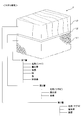
- FIG. 5 shows an example in which food that reproduces tuna sushi as a predetermined food is represented by a laminated structure of cubes.
- the food F has, for example, a cube shape with a side of 3 cm, and is composed of a laminate of a first layer L1, a second layer L2, and a third layer L3 from below.
- various parameters are set for each layer as food reproduction data stored in the server 4.
- a name, a layer ratio, a texture, a taste, a color, a nutrient, and the like are set for each layer.
- the “name” indicates an identification mark of the layer.
- the first layer L1 is defined as “shari”
- the second layer L2 is defined as “wasabi”
- the third layer L3 is defined as “tuna”.
- “Layer ratio” indicates the ratio of the thickness of the layer to the thickness (height) of the entire cube, and is defined by a predetermined numerical value.
- the “texture” represents the above-described texture reproduction data, and is defined by a numerical value relating to the composition ratio of a plurality of basic texture components, water, and enzymes.
- Taste represents taste reproduction data, and is defined by a numerical value related to the composition ratio of a plurality of taste basic elements.
- Taste reproduction data can be calculated by measuring in advance from a taste measurement device (not shown).
- Color represents color reproduction data, and is defined by a numerical value related to the composition ratio of basic elements of a plurality of colors. The color reproduction data can be obtained in advance by a 3D scanner (not shown) or the like.
- Nutrient is defined as a numerical value related to the composition ratio of a plurality of nutrients, and the ratio can be appropriately set according to the health condition of the individual who eats the food F.
- the food manufacturing apparatus 5 can reproduce the reproduction of the predetermined food based on the food reproduction data. It is possible to output easily.
- FIG. 6 shows an example in which the food reproducing the Ikura Gunkan sushi as a predetermined food is represented by a laminated structure of cubes.
- the food F is configured by laminating a first layer L1 and a second layer L2 from the bottom inside a rectangular tubular wall layer W1.
- the food reproduction data set in FIG. 6 is basically the same as that in FIG. 5 except that a part of the wall layer W1 composed of “Nori” and a part of the second layer L2 composed of “Ikura” are different. ing.
- the wall layer W1 is formed of a square tubular laver wall, and a layer thickness is defined as a parameter instead of a layer ratio.
- the layer thickness is not a thickness in the height direction of the cube but a so-called wall thickness.
- “Ikura” defined in the second layer L2 has a sphere, its “diameter (size)” is defined as a parameter.
- the seaweed wall (wall layer W1) can be used as a mold, and shari and salmon are plotted inside. It is possible to make it easier. That is, it is possible to maintain the regularity of the food F in the wall layer W1.
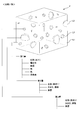
- FIG. 7 shows an example in which a food reproducing a souvenir as a predetermined food is represented by a laminated structure of cubes.
- the food F has a second layer L ⁇ b> 2 composed of “ingredient 1 (for example, fu)” inside a first layer L ⁇ b> 1 formed in a cube shape by “dashi”, and “ingredient” 2 (for example, green onion) ".
- the “dashi” of the predetermined food is liquid and does not have a fixed form, a reproduction having a predetermined hardness, such as agar, is substituted for the reproduction.
- the parameters defining each layer are basically the same as those in FIG. 5, except that the first layer L1 forming the “material 1” and the second layer L2 forming the “material 2” are replaced by layer ratios. The size and number may be defined.
- the second layer L2 and the third layer L3 may be plotted as needed when the first layer L1 is laminated while being cured. Thereby, in the state where the food F is completed, it is possible to arrange the “ingredient 1” and “ingredient 2” in “dashi” in a dotted manner.
- FIG. 8 shows an example in which a food that reproduces a California roll sushi as a predetermined food is represented by a laminated structure of cubes.
- the food F is a laminate of a total of six layers including a first layer L1, a second layer L2, a third layer L3, a fourth layer L4, a fifth layer L5, and a sixth layer L6 from below. It is formed in a cube shape.
- the “name” includes “shari” for the first layer L1, “cheese” for the second layer L2, “salmon” for the third layer L3, “avocado” for the fourth layer L4, and
- the layer L5 is defined as “shari”
- the sixth layer L6 is defined as “tobiko”.
- FIG. 9 shows an example in which food that is a predetermined food and reproduces a bowl is represented by a layered structure of cubes.
- the food F is formed in a cube shape from a laminate of a total of five layers of a first layer L1, a second layer L2, a third layer L3, a fourth layer L4, and a fifth layer L5 from below.
- the “name” is such that “rice” is the first layer L1, “egg stock” is the second layer L2, “first garment” is the third layer L3, and “meat” is the fourth layer L4.
- the fifth layer L5 is defined as a “second garment”.
- the third layer L3, the fourth layer L4, and the fifth layer L5 may be collectively defined as a "tonkatsu" as one sixth layer L6.
- the texture reproduction product as the new food F provides a new concept of food as a cube-shaped food.
- the present invention is not limited to this.
- an application running on the communication terminal 7 owned by the user may be downloaded from the server 4 via the network 6. Thereby, the food F can be output from the food manufacturing apparatus 5 regardless of the position of the user.
- the order of each layer, the layer ratio, and the predetermined layer can be omitted.
- the “wasabi” layer (the second layer L2) shown in FIG. Can be reversed in the stacking order of the layer (the first layer L1).
- the stacking order may be changed so that the foods are stacked in order of hardness. In this case, the foodstuff in the lowermost layer is stabilized, so that the regularity of the food F can be further improved.
- An edible adhesive may be applied between the layers to improve the adhesion between the layers.
- the plurality of tubes 57a disposed immediately below each dispenser 57c of the textured cartridge 57 are united by the collecting unit 57d, and the output nozzle 59 is connected to the collecting unit 57d.
- the present invention is not limited to this configuration.
- a plurality of output nozzles 59 may be provided for each texture cartridge 57. That is, the output nozzles may be connected (arranged) one by one to one tube 57a.
- each cartridge (the taste cartridge 54, the nutrient cartridge 55, the color cartridge 56, the texture cartridge 57, and the enzyme cartridge 64) is provided independently, and each is detachable from the apparatus. It is preferred to be constituted.
- a plurality of “scent cartridges” each independently containing a basic element of a different scent may be provided to reproduce the scent of food.
- “scent” is preferably set as a parameter in the food reproduction data of the cube.
- the “scent” as this parameter is defined as a numerical value related to the composition ratio of the basic element of the scent.
- ADVANTAGE OF THE INVENTION while reproducing the texture of a predetermined food, it has the effect that a reproduction can be easily modeled, and it is especially useful for a food, a food manufacturing apparatus, a food manufacturing method, and a food manufacturing system. is there.
Landscapes
- Engineering & Computer Science (AREA)
- Chemical & Material Sciences (AREA)
- Life Sciences & Earth Sciences (AREA)
- Polymers & Plastics (AREA)
- Food Science & Technology (AREA)
- Manufacturing & Machinery (AREA)
- Materials Engineering (AREA)
- Nutrition Science (AREA)
- Health & Medical Sciences (AREA)
- Marine Sciences & Fisheries (AREA)
- Zoology (AREA)
- General Preparation And Processing Of Foods (AREA)
- Formation And Processing Of Food Products (AREA)
- Cereal-Derived Products (AREA)
Abstract
所定食品の食感を再現しつつ、容易に再現物を造形すること。本発明は、所定食品の食感を数値化した食感データに基づいて、前記所定食品の食感を再現した新たな食品(F)に関するものである。食品は、異なる食感を備える複数の食感基本要素(57b)を所定の割合で混合した混合物に加熱及び/又は冷却することで食感データに基づく所望の食感を再現し、混合物をキューブ状に成型して製造されることを特徴とする。
Description
本発明は、食品、食品製造装置、食品製造方法及び食品製造システムに関する。
従来より、三次元形状データに基づいて三次元造形物を製造する三次元造形装置(いわゆる3Dプリンタ)が提案されている。
また近年、上記のような三次元造形装置を食品の製造に応用した技術が注目されている(例えば、特許文献1、2参照)。
特許文献1では、粉末状の粉体食材で所定厚みの粉体層を形成し、当該粉体層の所定箇所に結合誘発液を供給する。これを複数回繰り返すことにより、所望の立体形状を有する結合体を形成する。
特許文献2では、流動性を有するゲル状の食品材料を例えば3Dプリンタのノズルから吐出して所定の三次元形状を有する食品を造形する。
しかしながら、上記の文献に開示された技術であっても、所定食品の食感を再現しつつ、食欲をそそるような形態で三次元造形装置から食品を造形することは困難であり、更なる改善が求められている。
本発明は、このような問題に鑑みてなされたものであり、所定食品の食感を再現しつつ、容易に再現物を造形することが可能な食品、食品製造装置、食品製造方法及び食品製造システムを提供することを目的の1つとする。
本発明の一態様の食品は、所定食品の食感を数値化した食感データに基づいて、前記所定食品の食感を再現した新たな食品であって、異なる食感を備える複数の食感基本要素を所定の割合で混合した混合物に加熱及び/又は冷却することで前記食感データに基づく所望の食感を再現し、前記混合物をキューブ状に成型して製造されることを特徴とする。
本発明の一態様の食品製造装置は、所定食品の食感を数値化した食感データに基づいて、前記所定食品の食感を再現した新たな食品を製造する食品製造装置であって、異なる食感を備える複数の食感基本要素がそれぞれ収容される複数のカートリッジと、前記カートリッジから送り出される各食感基本要素を所定の割合で混合して混合物を生成する混合手段と、前記混合物を加熱及び/又は冷却することで前記食感データに基づく所望の食感を再現する食感再現手段と、前記混合物をキューブ状に成型する成形手段と、を備えることを特徴とする。
本発明の一態様の食品製造方法は、所定食品の食感を数値化した食感データに基づいて、前記所定食品の食感を再現した新たな食品を製造する食品製造方法であって、所定食品の食感を測定し、当該食感を数値化した食感データを得る食感測定工程と、前記食感データを、異なる食感を備える複数の食感基本要素を組み合わせて所望の食感を再現するための前記複数の食感基本要素の構成比率に関する食感再現データに変換する食感データ変換工程と、異なる食感を備える複数の食感基本要素を所定の割合で混合した混合物を得る混合工程と、前記混合物を加熱及び/又は冷却することで前記食感データに基づく所望の食感を再現する加熱/冷却工程と、前記混合物を成型してキューブ状の前記食品を製造する成形工程と、を備えることを特徴とする。
本発明の一態様の上記食品製造方法は、前記成形工程において、前記所定食品を構成する食材毎に前記混合物を積層することを特徴とする。
本発明の一態様の上記食品製造方法は、前記混合工程において、前記混合物の食感を調整する酵素を更に混合することを特徴とする。
本発明の一態様の上記食品製造方法は、前記成形工程において、所定の型に前記混合物を積層してキューブ状に成型することを特徴とする。
本発明の一態様の食品製造システムは、所定食品の食感を測定し、当該食感を数値化した食感データを得る食感測定装置と、前記食感データを、異なる食感を備える複数の食感基本要素を組み合わせて所望の食感を再現するための前記複数の食感基本要素の構成比率に関する食感再現データに変換する食感データ変換装置と、前記食感再現データに基づいて前記複数の食感基本要素を所定の割合で混合し、前記所定食品の食感を再現した新たな食品を製造する食品製造装置と、を備え、前記食品製造装置は、前記複数の食感基本要素を混合した混合物に加熱及び/又は冷却することで前記食感データに基づく所望の食感を再現し、前記混合物をキューブ状に成型することを特徴とする。
本発明によれば、所定食品の食感を数値化した食感データに基づいて、当該所定食品の食感を再現した新たな食品を製造することが可能である。また、食品の形状をキューブ状に成形したことにより、複雑な形状を成形する必要がなく、容易に所定食品の食感を再現した新たな食品を提供することが可能である。
以下、本発明を適用可能な食品製造システムについて説明する。図1は、本実施の形態に係る食品製造システムの概略構成を示す模式図である。図2は、図1に示す各構成の一部機能を示すブロック図である。なお、以下に示す食品製造システムはあくまで一例にすぎず、これに限定されることなく適宜変更が可能である。
図1及び図2に示すように、本実施の形態に係る食品製造システム1は、所定食品の食感を測定した後、測定した食感を数値化した食感データに基づいて、所定食品の食感を再現した新たな食品F(図3参照)を製造するように構成されている。
具体的に食品製造システム1は、所定食品の食感を測定する食感測定装置2と、当該所定食品の食感を再現するための食感再現データに変換する食感データ変換装置3と、当該食感再現データを記憶するサーバ4と、食感再現データから所定食品の食感を再現した新たな食品Fを製造する食品製造装置5と、食品製造装置5とネットワーク6を介して通信可能な通信端末7と、を含んで構成される。
なお、これらの各構成は、図2に示すように、それぞれ本実施の形態における食品製造に関連する複数の機能ブロックを有している。これらの機能ブロックは、あくまで一例であり、以下に示す機能ブロックに限らず、必要に応じて他の機能ブロックを適宜有してよいものとする。
また、本実施の形態において、食品とは、人が食すことが可能な食べ物全般を含むものとし、複数の食材を加熱等して調理された食べ物(例えば寿司、おでん、ハンバーガー、かつ丼)の他、野菜や果物等、食材そのものであってもよい。
また、本実施の形態において、食感とは、上記食品を食した際に感じる感覚であり、具体的には歯や舌を含む口腔内の皮膚感覚を示している。例えば、歯ごたえ、舌触り、喉越し等が食感の一例として挙げられる。
食感測定装置2は、所定食品の食感を測定し、当該食感を数値化した食感データを得るように構成されており、例えば、市販のテクスチャー試験器を用いることが可能である。具体的に食感測定装置2は、図2Aに示すように、所定食品の食感を測定する測定部20と、測定した食感を数値化した食感データとして得る(演算する)演算部21と、食感データを食感データ変換装置3に出力する通信部22と、を含んで構成される。
測定部20は、例えば圧力センサ等を備えたプローブ(不図示)で構成される。測定部20は、プローブの先端を食品の表面に接触させてその食感を測定する。演算部21は、プローブによって測定される食品表面の圧力(荷重)や変位に基づく電気的な出力から食感を数値化した食感データ(食品の弾力性や硬さ)として演算する。通信部22は、演算された食感データを食感データ変換装置3に送信する。なお、食感測定装置2(通信部22)は、食感データ変換装置3(通信部30)と直接有線接続されてもよく、ネットワーク6を介して無線で通信可能に構成されてもよい。
食感データ変換装置3は、食感測定装置2から送信された食感データを食品再現用の食品再現データに変換するコンピュータで構成される。具体的に食感データ変換装置3は、図2Bに示すように、他の装置と所定データの通信を行う通信部30と、食感データを食感再現データに変換する変換部31と、を含んで構成される。
通信部30は、食感測定装置2との間で食感データの受信を行い、ネットワーク6を介して他の装置(例えばサーバ4)と通信可能に構成される。変換部31は、受信した食感データを、後述する複数の食感基本要素57b(図4参照)の構成比率に関する食感再現データに変換する。食感再現データについては後述する。変換後の食感再現データは、ネットワーク6を介してサーバ4に送信され、サーバ4に記憶される。なお、食感再現データは、食感データ変換装置3が備えるメモリ等の記憶媒体に記憶されてもよい。この場合、他の装置からネットワーク6を介して食感データ変換装置3にアクセス可能であることが好ましい。
サーバ4は、複数の所定食品毎に食感再現データを蓄積したデータベース機能を有するコンピュータで構成される。サーバ4は、各種処理を実行するプロセッサやメモリ等を有し、具体的には、図2Cに示すように、サーバ4全体の動作を統括制御する制御部40と、食感再現データを記憶する記憶部41と、他の装置と通信する通信部42と、を含んで構成される。
記憶部41は、用途に応じてROM(Read Only Memory)、RAM(Random Access Memory)等の一つ又は複数の記憶媒体で構成され、食感データ変換装置3から送信される食感再現データを所定食品毎に記憶する。通信部42は、ネットワーク6を介して他の装置(食感データ変換装置3、通信端末7、食品製造装置5等)と通信可能に構成される。
食品製造装置5は、サーバ4から食感再現データをダウンロードし、当該食感再現データに基づいて食感を再現した新たな食品F(図3参照)を造形する、いわゆる3Dプリンタで構成される。具体的に食品製造装置5は、図2Dに示すように、装置全体を統括制御する制御部50と、他の装置と通信する通信部51と、を含んで構成される。
制御部50は、各種処理を実行するプロセッサやメモリ等を有し、例えば食感再現データを食品製造装置5でアウトプット可能な形式に変換する。また、制御部50は、後述する各種機構を統括制御して食感再現データに基づく新たな食品Fの製造を実現する。通信部51は、ネットワーク6を介して他の装置(食感データ変換装置3、サーバ4、通信端末7等)と通信可能に構成される。食品製造装置5の具体的な構造については後述する。
通信端末7は、ネットワーク6を介してサーバ4及び食品製造装置5と通信可能なコンピュータであり、例えば、携帯電話機又はタブレット型端末を用いることができる。通信端末7は、各種処理を実行するプロセッサやメモリ等を有し、食品製造装置5の動作を制御するソフトウェアを搭載している。具体的に通信端末7は、図2Eに示すように、全体の動作を統括制御する制御部70と、食感再現データや上記したソフトウェアを記憶する記憶部71と、他の装置と通信する通信部72と、を含んで構成される。
記憶部71は、用途に応じてROM(Read Only Memory)、RAM(Random Access Memory)等の一つ又は複数の記憶媒体で構成され、サーバ4からダウンロードした食感再現データや食品製造装置5の動作を制御するためのソフトウェアを記憶する。通信部42は、ネットワーク6を介して他の装置(食感データ変換装置3、通信端末7、食品製造装置5等)と通信可能に構成される。なお、通信端末7は、必須の構成ではなく、通信端末7の機能(例えば食品製造装置5を制御するソフトウェア等)をサーバ4又は食品製造装置5に備えてもよい。
ネットワーク6は、インターネット、モバイルネットワーク、LAN(Local Area Network)、WAN(Wide Area Network)等の様々なネットワークを含む。
次に、図3及び図4を参照して、本実施の形態に係る食品製造装置について説明する。図3は、本実施の形態に係る食品製造装置の全体図である。図4は、図3に示す食品製造装置の一部機能を再現した模式図である。なお、図3及び図4に示す食品製造装置は、あくまで一例であり、これに限定されず適宜変更が可能である。
先ず、食品製造装置5全体の概略構成について説明する。図3に示すように、食品製造装置5は、鉛直方向に延びる円筒状の筐体52内に上から順に、水タンク53、味カートリッジ54、栄養素カートリッジ55、色カートリッジ56、食感カートリッジ57、混合手段58、及び出力ノズル59を配置して構成される。
水タンク53は、有底円筒形状を有し、内部に水が貯留されている。水タンク53の底部には、下方に向かって延びるメインパイプ60が接続されており、その先端(下端)が下方の出力ノズル59に接続されている。水タンク53の上部には、図2Dに示す制御部50及び通信部51を構成するコンピュータ(不図示)が搭載されている。
味カートリッジ54は、鉛直方向に延びて着脱可能な円筒状のケースで構成され、水タンク53の下方において、メインパイプ60を囲うように所定角度間隔で複数配置されている。各味カートリッジ54には、異なる味覚を有する味覚基本要素が収容されている。味覚基本要素は、例えば所定粘度を有する液体や粉体で構成される。味カートリッジ54の個数、すなわち、異なる味覚基本要素の数は適宜変更が可能である。味覚基本要素としては、例えば塩味、甘味、渋味、酸味、旨味に加え、辛味刺激や香り等が挙げられ、これらの組み合わせにより、所定食品の味を再現することが可能になっている。
味カートリッジ54の下端には、ディスペンサ(不図示)を介してチューブ54aが接続されており、チューブ54aの先端は中央のメインパイプ60に接続されている。各味カートリッジ54内の味覚基本要素は、制御部50の指令によりディスペンサが制御されることで所定量吐出され、チューブ54aを介してメインパイプ60に送られる。
栄養素カートリッジ55は、味カートリッジ54と同様に鉛直方向に延びて着脱可能な円筒状のケースで構成され、味カートリッジ54の下方において、メインパイプ60を囲うように所定角度間隔で複数配置されている。各栄養素カートリッジ55には、異なる栄養素が収容されている。栄養素は、例えば所定粘度を有する液体や粉体で構成される。栄養素カートリッジ55の個数、すなわち、異なる栄養素の数や種類は適宜変更が可能である。栄養素の組み合わせにより、個人の健康状態に応じた栄養素のコントロールが可能である。
栄養素カートリッジ55の下端には、ディスペンサ(不図示)を介してチューブ55aが接続されており、チューブ55aの先端は中央のメインパイプ60に接続されている。各栄養素カートリッジ55内の栄養素は、制御部50の指令によりディスペンサが制御されることで所定量吐出され、チューブ55aを介してメインパイプ60に送られる。
色カートリッジ56は、栄養素カートリッジ55と同様に鉛直方向に延びて着脱可能な円筒状のケースで構成され、栄養素カートリッジ55の下方において、メインパイプ60を囲うように所定角度間隔で複数配置されている。各色カートリッジ56には、例えばシアン、マゼンダ、イエロー、ブラック等に対応する色の基本要素を備えた可食インクが収容されている。色カートリッジ56の個数、すなわち、異なる色の基本要素の数は適宜変更が可能である。色の基本要素(色素)を組み合わせることにより、任意の色を再現することが可能である。
色カートリッジ56の下端には、ディスペンサ(不図示)を介してチューブ56aが接続されており、チューブ56aの先端は中央のメインパイプ60に接続されている。各色カートリッジ56内の可食インクは、制御部50の指令によりディスペンサが制御されることで所定量吐出され、チューブ56aを介してメインパイプ60に送られる。
食感カートリッジ57は、色カートリッジ56と同様に鉛直方向に延びて着脱可能な円筒状のケースで構成され、色カートリッジ56の下方において、メインパイプ60を囲うように所定角度間隔で複数配置されている。各食感カートリッジ57には、異なる食感基本要素が収容されている。食感カートリッジ57の個数、すなわち、異なる食感基本要素の数は適宜変更が可能である。食感基本要素については後述する。
食感カートリッジ57の下端には、ディスペンサ(不図示)を介してチューブ57aが接続されており、チューブ57aの先端は中央のメインパイプ60に接続されている。各食感カートリッジ57内の食感基本要素は、制御部50の指令によりディスペンサが制御されることで所定量吐出され、チューブ57aを介してメインパイプ60に送られる。
食感カートリッジ57の下方には、メインパイプ60に連なる混合手段58が配置される。混合手段58は、上記の各カートリッジから吐出される基本要素とメインパイプ60を通じて供給される水とを混合した混合物を得るよう構成されている。具体的に混合手段58は、上記した基本要素と水とを混合して攪拌する攪拌部61と、これらの混合物を冷却する冷却ファン62と、を含んで構成される。詳細は後述するが、混合手段58は、混合物を生成することに加え、当該混合物を加熱及び/又は冷却することで食感データに基づく所望の食感を再現する食感再現手段としての機能も有する。
攪拌部61は、メインパイプ60を通じて供給された上記の基本要素と水とが均一になるように攪拌し、混合物を生成する。また、攪拌部61は、これらの混合物に対して湯煎等により加熱処理する機能を有している。なお、加熱処理の方法としては、特に限定されず、例えば、混合物に対してレーザー光線を照射することも可能である。冷却ファン62は、攪拌部61の下方に設けられ、攪拌部61によって攪拌及び加熱された混合物を冷却する。これにより、ゲル状に凝固した混合物を得ることが可能である。
混合手段58の下方には、出力ノズル59が接続されている。出力ノズル59は、多関節式のロボットアームを備え、混合手段58を経由した混合物を先端から吐出するように構成されている。詳細は後述するが、出力ノズル59は、混合物を所定の形状に成形する成形手段の一部を構成する。
出力ノズル59の下方には基台63が配置されている。基台63の上で出力ノズル59の先端から混合物を吐出し、制御部50の指令に基づいて当該出力ノズル59を動かすことにより、所定形状に成形された新たな食品Fを製造することが可能である。
ところで、昨今の技術革新に伴い、三次元形状データに基づいて三次元造形物を製造する三次元造形装置を食品の製造に応用した技術が注目されている。例えば、焼き菓子の生地をノズルの先端から吐出し、所望の三次元形状に形成するものや、飴細工のように複雑な3次元形状を3Dプリンタで再現するようなものが提案されている。
しかしながら、このような技術は、単一食材(上記の例でいえば、焼き菓子の生地又は飴)にのみ適用されるものであり、一般的な三次元造形装置における造形用の材料を樹脂等から食材に置き換えたものであるといえる。
すなわち、従来の技術では、調理された食べ物(例えば、寿司、ハンバーガー、カレーライス、ラーメン等)、複数の異なる食材が混在した食べ物を三次元構造形装置で再現することは難しいことが想定される。
そこで、本件発明者は、所定食品のデータ化、特に食感に着目し、更に所定食品の再現物の再現方法、形状等を考慮して本発明に想到した。具体的に本実施の形態では、予め所定食品の食感を数値化した食感データとして測定する(食感測定工程)。そして、その食感データを、異なる食感を備える複数の食感基本要素を組み合わせて所望の食感を再現するための複数の食感基本要素の構成比率に関する食感再現データに変換する(食感データ変換工程)。次に、複数の食感基本要素を所定の割合で混合した混合物を得て(混合工程)、当該混合物を加熱及び/又は冷却することで食感データに基づく所望の食感を再現する(加熱/冷却工程)。そして、混合物を成形してキューブ状の食品を製造する(成形工程)。
これらの構成によれば、所定食品の食感を数値化した食感データを食感再現データに変換することで、複数の食感基本要素の組み合わせから所定食品の食感を再現した新たな食品を製造することが可能である。また、食品の形状をキューブ状に成形したことにより、複雑な形状を成形する必要がなく、容易に所定食品の食感を再現した新たな食品を提供することが可能である。
次に、図4を参照して食品製造装置の具体的な構成、特に食感を再現するための構成について説明する。なお、図4に示す食品製造装置は、食感再現するための構成が主であり、図3に示す食品製造装置と異なる箇所が存在するが、基本的な機能は図3と同じである。このため、既出の構成については同一の符号を付し、適宜説明を省略する。
図4に示すように、食品製造装置5は、水タンク53と、食感カートリッジ57と、出力ノズル59とを含んで構成される。食感カートリッジ57は4つ設けられており、各食感カートリッジ57には、それぞれ異なる食感を備える食感基本要素57bが収容されている。4つの食感基本要素57bは、例えば、米を主原料とする第1要素、海藻を主原料とする第2要素、豆を主原料とする第3要素、及び蒟蒻を主原料とする第4要素と、から構成される。なお、食感基本要素57bは、これらに限定されることなく、適宜変更追加が可能である。
食感カートリッジ57の下端は、ディスペンサ57cを構成し、制御部50(図2参照)により制御されることでディスペンサ57cから所定量の食感基本要素57bを吐出することが可能である。各ディスペンサ57cの直下には、入口が拡径したチューブ57aが配置されている。各チューブ57aは、集合部57dによって1つにまとめられ、当該集合部57dには、出力ノズル59が接続される。
また、水タンク53に接続されるメインパイプ60の途中には、混合物の食感を調整する3つの酵素カートリッジ64が接続されている。各酵素カートリッジ64には、異なる食感を再現する酵素が収容されている。酵素は、例えば、食品Fの硬さを再現するTG(トランスグルタミナーゼ)、食品Fのしっとりした食感を再現するAG(α-グルコシダーゼ)、食品Fの滑らかな食感を再現するPG(プロテイングルタミナーゼ)等が挙げられる。なお、酵素はこれらに限定されず、適宜変更追加が可能である。
各酵素カートリッジ64は、ディスペンサ(不図示)を介してメインパイプ60に接続されている。制御部50によりディスペンサが制御されることで所定量の酵素がメインパイプ60に送られる。メインパイプ60の下流端は、チューブ57aの入口の真上に位置しており、所定量の酵素が混合された水を吐出する注水口65を構成する。
特に図示はしていないが、チューブ57aから出力ノズル59の間には、食感基本要素57b、水及び酵素を混合して混合物を生成する混合手段としての攪拌部61(図3参照)や、混合物を加熱及び/又は冷却することで食感データに基づく所望の食感を再現する食感再現手段としての攪拌部61及び冷却ファン62が設けられているものとする。
次に、上記の食品製造システムを適用した食品製造方法について説明する。本実施の形態に係る食品製造方法は、所定食品の食感を数値化した食感データに基づいて、所定食品の食感を再現した新たな食品Fを製造する方法であり、具体的には、食感測定工程と、食感データ変換工程と、混合工程と、加熱/冷却工程と、成形工程と、を含んで構成される。
先ず、食感測定工程が実施される。食感測定工程においては、所定食品の食感を測定し、当該食感を数値化した食感データを得る。具体的に食感測定装置2(図1参照)は、所定食品の表面にプローブの先端を接触させ、そのときの圧力や変位から食感を数値化した食感データを演算する。当該食感データは、食感データ変換装置3にケーブルを介して直接又はネットワーク6(図1参照)を介して間接的に送信される。
次に、食感データ変換工程が実施される。食感データ変換工程においては、先に測定した食感データを、食感データ変換装置3が複数の食感基本要素57b(図4参照)、水及び酵素の構成比率に関する食感再現データに変換する。更に食感データ変換装置3は、変換後の食感再現データをネットワーク6を介してサーバ4に送信する。サーバ4は、当該食感再現データを所定食品を構成する食材(詳細は後述する)毎に記憶する。
次に、混合工程が実施される。混合工程においては、食感再現データに基づいて複数の食感基本要素57b、水及び酵素を所定の割合で混合した混合物を得る。具体的に食品製造装置5は、ネットワーク6を介してサーバ4から食感再現データをダウンロードし、当該食感再現データに基づいて各カートリッジのディスペンサ等を制御する。また、食品製造装置5は、各カートリッジから所定量で供給される食感基本要素57bや酵素、水タンク53から所定量供給される水を混合手段58で混合し、これらの混合物を生成する。
次に、加熱/冷却工程が実施される。加熱/冷却工程においては、混合物を加熱及び/又は冷却することで前記食感データに基づく所望の食感を再現する。具体的に混合手段58は、混合物を湯煎等により加熱し、又は冷却ファン62で冷風を混合物に当てることで混合物に熱処理を施し、所望の食感を再現する。
次に、成形工程が実施される。成形工程では、混合物を成形してキューブ状の食品Fを製造する。具体的に食品製造装置5は、出力ノズル59から混合物を基台63上にプロットする。混合物のプロット方法は様々な方法が可能である。食品製造装置5は、例えば、ゲル状の混合物を点又は線状にプロットして所定厚みの平面視方形状となるように形成し、これを複数回繰り返して複数の層状に積層してキューブ状に成型することが可能である。また、基台63上に予め角筒状の型を用意しておき、型の中にゲル状の混合物を所定深さまで注入して硬化させることでキューブ状に成形してもよい。再現する所定食品のデータ構造に応じてプロット方法を適宜変更することにより、あらゆるタイプの所定食品について、その食感を再現した新たな食品Fをキューブ状に成型することが可能である。
なお、上記した混合工程、加熱/冷却工程、及び成形工程は、必ずしもこの順序で実施される必要はなく、各工程を一連の流れで一緒に実施してもよく、又は順序を入れ替えてもよい。例えば、キューブ状に成形した後に加熱/冷却を実施して混合物を硬化させてもよい。この場合、加熱/冷却工程が成形工程の一部を担うことになる。
次に、図5から図9を参照して、本実施の形態に係る食品再現物としての食品Fの構成、データ構造について説明する。図5から図9は、本実施の形態に係る食品の一例を示す斜視図である。なお、以下に示す食品はあくまで一例を示すものであり、これらに限定されず、再現したい所定食品に応じて適宜変更が可能である。
図5は、所定食品としてマグロ寿司を再現した食品をキューブの積層構造で表した例を示している。図5に示すように、食品Fは、例えば一辺が3cmのキューブ状を有し、下から第1層L1、第2層L2、第3層L3の積層体で構成される。このように構成される食品Fは、サーバ4に記憶される食品再現データとして、各層毎に各種パラメータが設定されている。
具体的には、各層毎に、名称、層比率、食感、味、色、栄養素等が設定される。「名称」は、その層の識別標識を表し、図5においては、第1層L1が「シャリ」、第2層L2が「ワサビ」、第3層L3が「マグロ」で定義される。「層比率」は、キューブ全体の厚み(高さ)に対する層の厚みの割合を表し、所定の数値で定義される。「食感」は、上記した食感再現データを表し、複数の食感基本要素、水及び酵素の構成比率に関する数値で定義される。「味」は、味覚再現データを表し、複数の味覚基本要素の構成比率に関する数値で定義される。味覚再現データは、予め味覚測定装置(不図示)から測定して演算することが可能である。「色」は、色再現データを表し、複数の色の基本要素の構成比率に関する数値で定義される。色再現データは、予め3Dスキャナ(不図示)等で取得することが可能である。「栄養素」は、複数の栄養素の構成比率に関する数値で定義され、食品Fを食する個人の健康状態に応じてその比率を適宜設定することが可能である。
このように各層毎にパラメータが設定された所定食品の食品再現データを予め、サーバ4に記憶させておくことにより、食品製造装置5は、当該食品再現データに基づいて、所定食品の再現物を容易にアウトプットすることが可能である。
図6は、所定食品としてイクラ軍艦寿司を再現した食品をキューブの積層構造で表した例を示している。図6に示すように、食品Fは、角筒状の壁層W1の内部に下から第1層L1、第2層L2を積層して構成される。図6で設定される食品再現データは、基本的に図5と同じであるが、「海苔」で構成される壁層W1と、「イクラ」で構成される第2層L2の一部が異なっている。
壁層W1は、角筒状の海苔の壁で構成され、パラメータとしては、層比率の代わりに層厚みが定義される。層厚みは、キューブの高さ方向の厚みではなく、いわゆる壁の厚みを表している。また、第2層L2で定義される「イクラ」は、球体を有するため、パラメータとしてその「径(大きさ)」が定義される。図6に示す例では、比較的食感の硬い海苔を先にキューブの壁として成形することにより、当該海苔の壁(壁層W1)を型として用いることができ、内部にシャリ及びイクラをプロットし易くすることが可能である。すなわち、食品Fの定型性を壁層W1で保つことが可能である。
図7は、所定食品としてお吸い物を再現した食品をキューブの積層構造で表した例を示している。図7に示すように、食品Fは、「出汁」によってキューブ状に形成される第1層L1の内部に「具材1(例えば麩)」で構成される第2層L2と、「具材2(例えばネギ)」で構成される第3層L3とを点在させて構成される。図7では、所定食品の「出汁」が液状であり、定型性を有しないため、その再現物においては寒天のように所定の硬さを有するもので代用するものとする。各層を定義するパラメータは、基本的に図5と同様であるが、「具材1」を構成する第1層L1及び「具材2」を構成する第2層L2は、層比率の代わりに大きさや個数が定義されてもよい。
このように構成される食品Fにおいては、第1層L1を硬化させながら積層する際に、適時第2層L2及び第3層L3をプロットすることが考えられる。これにより、食品Fが完成した状態においては、「具材1」及び「具材2」を「出汁」の中で点在して配置することが可能である。
図8は、所定食品としてカリフォルニアロール寿司を再現した食品をキューブの積層構造で表した例を示している。図8に示すように、食品Fは、下から第1層L1、第2層L2、第3層L3、第4層L4、第5層L5、第6層L6の合計6層の積層体でキューブ状に形成されている。各層を定義するパラメータとして、「名称」は、第1層L1が「シャリ」、第2層L2が「チーズ」、第3層L3が「サーモン」、第4層L4が「アボカド」、第5層L5が「シャリ」、第6層L6が「トビッコ」で定義される。このように、所定食品を構成する食材毎に層を形成して各層を積層する積層体として再現物(食品F)を成形することにより、あらゆる所定食品を新たな食品Fとして再現することが可能である。
図9は、所定食品としてかつ丼を再現した食品をキューブの積層構造で表した例を示している。図9に示すように、食品Fは、下から第1層L1、第2層L2、第3層L3、第4層L4、第5層L5の合計5層の積層体でキューブ状に形成されている。各層を定義するパラメータとして、「名称」は、第1層L1が「ごはん」、第2層L2が「玉子出汁」、第3層L3が「第1衣」、第4層L4が「肉」、第5層L5が「第2衣」で定義される。なお、第3層L3、第4層L4、及び第5層L5をまとめて1つの第6層L6として「とんかつ」と定義してもよい。
このように、図5から図9に示す例によれば、あらゆる所定食品(加工食品や加熱調理された料理等)を、これらの構成食材毎に分けた積層構造で再構築することにより、食材の数に左右されることなくあらゆる食べ物を積層構造で再現することが可能である。また、所定食品をその食材毎に階層構造を有する食品再現データとして表現することができるため、食品再現データを統一した規格で管理することが可能である。更には、食品再現物(新たな食品F)をキューブ状に成型することで、複雑な構成を要することなく、食品製造装置5によるアウトプット性能を向上することが可能である。すなわち、本実施の形態では、本来は複雑な三次元形状を有する食べ物を敢えて形状を簡略化することにより、所定食品の食感を再現しつつ、容易にその再現物を造形することを可能にしている。
以上説明したように、本実施の形態によれば、あらゆる食べ物をキューブ状の簡略化した積層構造で再現するように再構築したことで、食品本来の食感を再現するだけでなく、需要者の興味をかき立てる態様で新たな食品Fを提供することが可能である。すなわち、本発明に係る新たな食品Fとしての食感再現物は、キューブ状の食品として新たな食の概念を提供するものである。
なお、上記の実施の形態では、食品製造装置5がサーバ4から食品再現データをダウンロードして食品Fを製造する例について説明したが、これに限定されない。例えば、ユーザが所持する通信端末7上で動作するアプリケーションにおいて、ネットワーク6を介してサーバ4からダウンロードしてもよい。これにより、ユーザがどの位置にいても食品製造装置5から食品Fをアウトプットすることが可能である。
また、上記の実施の形態において、図5から図9に示す新たな食品Fの積層構造は、各層の順序や層比率の変更、所定層の省略が可能である。例えば、ユーザが通信端末7上でダウンロードした食品再現データにおいて、図5に示す「ワサビ」の層(第2層L2)を省略したり、「マグロ」の層(第3層L3)と「シャリ」の層(第1層L1)の積層順を逆にすることが可能である。また、食品Fの製造上、食感の硬い順から積層するように積層順を変更してもよい。この場合、最下層の食材が安定するため、食品Fの定型性をより高めることが可能である。また、各層の間に食用の接着剤を塗布して各層の密着性を向上してもよい。
また、上記の実施の形態において、食感カートリッジ57の各ディスペンサ57cの直下に配置される複数のチューブ57aが集合部57dによって1つにまとめられ、当該集合部57dに出力ノズル59が接続される場合について説明したが、この構成に限定されない。出力ノズル59は、食感カートリッジ57毎に複数設けられてもよい。すなわち、出力ノズルは、1つのチューブ57aに対して1つずつ接続(配置)される構成であってもよい。
また、上記の実施の形態において、各カートリッジ(味カートリッジ54、栄養素カートリッジ55、色カートリッジ56、食感カートリッジ57、酵素カートリッジ64)は、それぞれ独立して設けられ、それぞれが装置に対して着脱可能に構成されることが好ましい。また、これらのカートリッジに加え、食品の香りを再現するために異なる香りの基本要素をそれぞれ独立して収容した複数の「香りカートリッジ」として設けてもよい。この場合、キューブの食品再現データにパラメータとして「香り」が設定されることが好ましい。なお、このパラメータとしての「香り」とは、香りの基本要素の構成比率に関する数値で定義される。
また、本実施の形態及び変形例を説明したが、本発明の他の実施の形態として、上記実施の形態及び変形例を全体的又は部分的に組み合わせたものでもよい。
また、本発明の実施の形態は上記の実施の形態に限定されるものではなく、本発明の技術的思想の趣旨を逸脱しない範囲において様々に変更、置換、変形されてもよい。更には、技術の進歩又は派生する別技術によって、本発明の技術的思想を別の仕方で実現することができれば、その方法を用いて実施されてもよい。従って、特許請求の範囲は、本発明の技術的思想の範囲内に含まれ得る全ての実施形態をカバーしている。
本発明によれば、所定食品の食感を再現しつつ、容易に再現物を造形することができるという効果を有し、特に、食品、食品製造装置、食品製造方法及び食品製造システムに有用である。
本出願は、2018年10月5日出願の特願2018-189977に基づく。この内容は、すべてここに含めておく。
Claims (7)
- 所定食品の食感を数値化した食感データに基づいて、前記所定食品の食感を再現した新たな食品であって、
異なる食感を備える複数の食感基本要素を所定の割合で混合した混合物に加熱及び/又は冷却することで前記食感データに基づく所望の食感を再現し、前記混合物をキューブ状に成型して製造されることを特徴とする食品。 - 所定食品の食感を数値化した食感データに基づいて、前記所定食品の食感を再現した新たな食品を製造する食品製造装置であって、
異なる食感を備える複数の食感基本要素がそれぞれ収容される複数のカートリッジと、
前記カートリッジから送り出される各食感基本要素を所定の割合で混合して混合物を生成する混合手段と、
前記混合物を加熱及び/又は冷却することで前記食感データに基づく所望の食感を再現する食感再現手段と、
前記混合物をキューブ状に成型する成形手段と、を備えることを特徴とする食品製造装置。 - 所定食品の食感を数値化した食感データに基づいて、前記所定食品の食感を再現した新たな食品を製造する食品製造方法であって、
所定食品の食感を測定し、当該食感を数値化した食感データを得る食感測定工程と、
前記食感データを、異なる食感を備える複数の食感基本要素を組み合わせて所望の食感を再現するための前記複数の食感基本要素の構成比率に関する食感再現データに変換する食感データ変換工程と、
前記食感再現データに基づいて前記複数の食感基本要素を所定の割合で混合した混合物を得る混合工程と、
前記混合物を加熱及び/又は冷却することで前記食感データに基づく所望の食感を再現する加熱/冷却工程と、
前記混合物を成型してキューブ状の前記食品を製造する成形工程と、を備えることを特徴とする食品製造方法。 - 前記成形工程において、前記所定食品を構成する食材毎に前記混合物を積層することを特徴とする請求項3に記載の食品製造方法。
- 前記混合工程において、前記混合物の食感を調整する酵素を更に混合することを特徴とする請求項3又は請求項4に記載の食品製造方法。
- 前記成形工程において、所定の型に前記混合物を積層してキューブ状に成型することを特徴とする請求項3から請求項5のいずれかに記載の食品製造方法。
- 所定食品の食感を測定し、当該食感を数値化した食感データを得る食感測定装置と、
前記食感データを、異なる食感を備える複数の食感基本要素を組み合わせて所望の食感を再現するための前記複数の食感基本要素の構成比率に関する食感再現データに変換する食感データ変換装置と、
前記食感再現データに基づいて前記複数の食感基本要素を所定の割合で混合し、前記所定食品の食感を再現した新たな食品を製造する食品製造装置と、を備え、
前記食品製造装置は、前記複数の食感基本要素を混合した混合物に加熱及び/又は冷却することで前記食感データに基づく所望の食感を再現し、前記混合物をキューブ状に成型することを特徴とする食品製造システム。
Priority Applications (4)
| Application Number | Priority Date | Filing Date | Title |
|---|---|---|---|
| US17/282,105 US20210368847A1 (en) | 2018-10-05 | 2019-10-04 | Food, food production apparatus, food production method, and food production system |
| EP19868480.5A EP3861864A4 (en) | 2018-10-05 | 2019-10-04 | FOOD, FOOD PROCESSING DEVICE, FOOD PROCESSING METHOD, AND FOOD PROCESSING SYSTEM |
| IL282037A IL282037B2 (en) | 2018-10-05 | 2019-10-04 | Food, food production apparatus, food production method, and food production system |
| CN201980065579.0A CN113163817A (zh) | 2018-10-05 | 2019-10-04 | 食品、食品制造装置、食品制造方法及食品制造系统 |
Applications Claiming Priority (2)
| Application Number | Priority Date | Filing Date | Title |
|---|---|---|---|
| JP2018-189977 | 2018-10-05 | ||
| JP2018189977A JP7290407B2 (ja) | 2018-10-05 | 2018-10-05 | 食品、食品製造装置、食品製造方法及び食品製造システム |
Publications (1)
| Publication Number | Publication Date |
|---|---|
| WO2020071556A1 true WO2020071556A1 (ja) | 2020-04-09 |
Family
ID=70055279
Family Applications (1)
| Application Number | Title | Priority Date | Filing Date |
|---|---|---|---|
| PCT/JP2019/039402 Ceased WO2020071556A1 (ja) | 2018-10-05 | 2019-10-04 | 食品、食品製造装置、食品製造方法及び食品製造システム |
Country Status (6)
| Country | Link |
|---|---|
| US (1) | US20210368847A1 (ja) |
| EP (1) | EP3861864A4 (ja) |
| JP (1) | JP7290407B2 (ja) |
| CN (1) | CN113163817A (ja) |
| IL (1) | IL282037B2 (ja) |
| WO (1) | WO2020071556A1 (ja) |
Families Citing this family (3)
| Publication number | Priority date | Publication date | Assignee | Title |
|---|---|---|---|---|
| US20240049746A1 (en) * | 2020-12-24 | 2024-02-15 | Amano Enzyme Inc. | Method for producing rice protein-containing liquid composition |
| WO2023074775A1 (ja) * | 2021-10-29 | 2023-05-04 | 大和製罐株式会社 | 三次元造形食品及びその製造方法 |
| CN118985959A (zh) * | 2023-05-18 | 2024-11-22 | 伍隆国际有限公司 | 食品成型模具及其制造方法以及食品的制造方法 |
Citations (7)
| Publication number | Priority date | Publication date | Assignee | Title |
|---|---|---|---|---|
| WO2013108912A1 (ja) * | 2012-01-20 | 2013-07-25 | 兵神装備株式会社 | 食品調製装置 |
| JP2016116497A (ja) * | 2014-12-24 | 2016-06-30 | Tdk株式会社 | 食品製造システム |
| JP2016131507A (ja) | 2015-01-16 | 2016-07-25 | 株式会社リコー | 三次元成形食品の製造方法、および三次元成形食品 |
| JP2016525885A (ja) * | 2013-05-24 | 2016-09-01 | ナチュラル マシーンズ, インコーポレイテッドNatural Machines, Inc. | 3dプリント技術を用いた食品製造装置 |
| WO2017159765A1 (ja) * | 2016-03-17 | 2017-09-21 | 株式会社電通 | 食品味覚再現システム、食品味覚再現データ変換装置及び食品味覚再現方法 |
| JP2018102261A (ja) | 2016-12-28 | 2018-07-05 | 伊那食品工業株式会社 | 三次元造形食品の製造方法 |
| JP2018189977A (ja) | 2018-07-12 | 2018-11-29 | 株式会社ニコン | 電子機器 |
Family Cites Families (13)
| Publication number | Priority date | Publication date | Assignee | Title |
|---|---|---|---|---|
| CN102596543B (zh) * | 2009-06-23 | 2014-09-17 | 斯特拉塔西斯公司 | 具有自定义特征的消耗材料 |
| SE0900860L (sv) * | 2009-06-24 | 2009-12-21 | Electrolux Ab | Matskrivare |
| JP5854516B2 (ja) * | 2010-08-31 | 2016-02-09 | 国立大学法人広島大学 | 食感指標の測定方法及び測定装置 |
| US20140154378A1 (en) * | 2011-08-02 | 2014-06-05 | 3D Systems, Inc. | Apparatus And Method For Producing A Three-Dimensional Food Product |
| WO2014190217A1 (en) * | 2013-05-22 | 2014-11-27 | Systems And Materials Research Corporation | Additive Manufacturing for Producing Edible Compositions |
| AU2014292809A1 (en) * | 2013-07-17 | 2016-02-25 | Commonwealth Scientific And Industrial Research Organisation | System and method for formulating a foodstuff |
| US9669586B2 (en) * | 2013-10-01 | 2017-06-06 | Autodesk, Inc. | Material dispensing system |
| JP2017506169A (ja) * | 2014-02-20 | 2017-03-02 | マーク オレイニク | ロボット調理キッチン内の食品調製のための方法及びシステム |
| US20160066601A1 (en) * | 2014-09-06 | 2016-03-10 | Ashley G. Herr | Edible 3d printer filament |
| US20160338545A1 (en) * | 2015-05-21 | 2016-11-24 | Umm Al-Qura University | Method and system for storing, processing and cooking food |
| DE102015221023A1 (de) * | 2015-10-28 | 2017-05-04 | BSH Hausgeräte GmbH | Verfahren und System zur Herstellung eines personalisierten Nahrungsmittels |
| DE102016200872A1 (de) * | 2016-01-22 | 2017-07-27 | BSH Hausgeräte GmbH | Gerät zur Herstellung eines Nahrungsmittels |
| KR101940063B1 (ko) * | 2016-11-30 | 2019-01-18 | 전영권 | 3d 인쇄 기술을 이용한 식품 성형방법 |
-
2018
- 2018-10-05 JP JP2018189977A patent/JP7290407B2/ja active Active
-
2019
- 2019-10-04 WO PCT/JP2019/039402 patent/WO2020071556A1/ja not_active Ceased
- 2019-10-04 CN CN201980065579.0A patent/CN113163817A/zh active Pending
- 2019-10-04 IL IL282037A patent/IL282037B2/en unknown
- 2019-10-04 EP EP19868480.5A patent/EP3861864A4/en active Pending
- 2019-10-04 US US17/282,105 patent/US20210368847A1/en active Pending
Patent Citations (7)
| Publication number | Priority date | Publication date | Assignee | Title |
|---|---|---|---|---|
| WO2013108912A1 (ja) * | 2012-01-20 | 2013-07-25 | 兵神装備株式会社 | 食品調製装置 |
| JP2016525885A (ja) * | 2013-05-24 | 2016-09-01 | ナチュラル マシーンズ, インコーポレイテッドNatural Machines, Inc. | 3dプリント技術を用いた食品製造装置 |
| JP2016116497A (ja) * | 2014-12-24 | 2016-06-30 | Tdk株式会社 | 食品製造システム |
| JP2016131507A (ja) | 2015-01-16 | 2016-07-25 | 株式会社リコー | 三次元成形食品の製造方法、および三次元成形食品 |
| WO2017159765A1 (ja) * | 2016-03-17 | 2017-09-21 | 株式会社電通 | 食品味覚再現システム、食品味覚再現データ変換装置及び食品味覚再現方法 |
| JP2018102261A (ja) | 2016-12-28 | 2018-07-05 | 伊那食品工業株式会社 | 三次元造形食品の製造方法 |
| JP2018189977A (ja) | 2018-07-12 | 2018-11-29 | 株式会社ニコン | 電子機器 |
Non-Patent Citations (2)
| Title |
|---|
| See also references of EP3861864A4 |
| YOHEI KATABUCHI: "Will Anywhere Door Realize? Teleportation of Sushi, Behind the Scenes of Development", ITMEDIA NEWS, 28 September 2018 (2018-09-28), pages 1 - 6, XP055800598, Retrieved from the Internet <URL:https://www.itmedia.co.jp/news/articles/1809/28/news022.html> * |
Also Published As
| Publication number | Publication date |
|---|---|
| JP2020058243A (ja) | 2020-04-16 |
| EP3861864A4 (en) | 2022-07-06 |
| JP7290407B2 (ja) | 2023-06-13 |
| IL282037A (en) | 2021-05-31 |
| EP3861864A1 (en) | 2021-08-11 |
| IL282037B2 (en) | 2024-06-01 |
| IL282037B1 (en) | 2024-02-01 |
| CN113163817A (zh) | 2021-07-23 |
| US20210368847A1 (en) | 2021-12-02 |
Similar Documents
| Publication | Publication Date | Title |
|---|---|---|
| Baiano | 3D printed foods: A comprehensive review on technologies, nutritional value, safety, consumer attitude, regulatory framework, and economic and sustainability issues | |
| KR102415095B1 (ko) | 식품 미각 재현 시스템, 식품 미각 재현 데이터 변환 장치 및 식품 미각 재현 방법 | |
| Sun et al. | An overview of 3D printing technologies for food fabrication | |
| Agunbiade et al. | Potentials of 3D extrusion‐based printing in resolving food processing challenges: A perspective review | |
| Sun et al. | A review on 3D printing for customized food fabrication | |
| WO2020071556A1 (ja) | 食品、食品製造装置、食品製造方法及び食品製造システム | |
| Sun et al. | 3D food printing: Perspectives | |
| Pallottino et al. | Printing on food or food printing: a review | |
| US20140154378A1 (en) | Apparatus And Method For Producing A Three-Dimensional Food Product | |
| US20180160720A1 (en) | Apparatus and method for producing a three-dimensional food product | |
| Jandyal et al. | 3D printing of meat: a new frontier of food from download to delicious: a review | |
| US12225924B2 (en) | Self-folding materials and methods, systems and devices for making the same | |
| Burkard et al. | Impact of spatial distribution on the sensory properties of multiphase 3D-printed food configurations | |
| Watkins et al. | Three-dimensional (3D) food printing—an overview | |
| Strauss et al. | 3D printing technologies in the food system for food production and packaging | |
| Varghese et al. | 3D Printing of foods: Concepts, applications, and prospects | |
| Peshave et al. | 3D Printing‐The Future in Culinary Arts! | |
| Kour et al. | Food printing: unfolding a new paradigm for designer and user | |
| Pan et al. | Trends in the development of 3D printing minced meat/surimi from the perspective of structure and function | |
| Pereira et al. | Food Texture Design by 3D Printing: A Review. Foods 2021, 10, 320 | |
| Bareen et al. | Food printing-An emerging field for smart manufacturing of tailored diets | |
| JP4802293B1 (ja) | 包み焼き食品及びその製造方法 | |
| da Silva | 3D Food Printing: an experimental approach | |
| Singh et al. | Commercial market of food printing technologies | |
| Dizbay et al. | Introduction to 3D printing for food products |
Legal Events
| Date | Code | Title | Description |
|---|---|---|---|
| 121 | Ep: the epo has been informed by wipo that ep was designated in this application |
Ref document number: 19868480 Country of ref document: EP Kind code of ref document: A1 |
|
| NENP | Non-entry into the national phase |
Ref country code: DE |
|
| WWE | Wipo information: entry into national phase |
Ref document number: 2019868480 Country of ref document: EP |
|
| ENP | Entry into the national phase |
Ref document number: 2019868480 Country of ref document: EP Effective date: 20210506 |