WO2020080475A1 - T細胞の活性化/増殖方法 - Google Patents
T細胞の活性化/増殖方法 Download PDFInfo
- Publication number
- WO2020080475A1 WO2020080475A1 PCT/JP2019/040937 JP2019040937W WO2020080475A1 WO 2020080475 A1 WO2020080475 A1 WO 2020080475A1 JP 2019040937 W JP2019040937 W JP 2019040937W WO 2020080475 A1 WO2020080475 A1 WO 2020080475A1
- Authority
- WO
- WIPO (PCT)
- Prior art keywords
- nucleic acid
- cell
- cells
- delivery carrier
- cancer
- Prior art date
- Legal status (The legal status is an assumption and is not a legal conclusion. Google has not performed a legal analysis and makes no representation as to the accuracy of the status listed.)
- Ceased
Links
Images



Classifications
-
- A—HUMAN NECESSITIES
- A61—MEDICAL OR VETERINARY SCIENCE; HYGIENE
- A61P—SPECIFIC THERAPEUTIC ACTIVITY OF CHEMICAL COMPOUNDS OR MEDICINAL PREPARATIONS
- A61P35/00—Antineoplastic agents
-
- A—HUMAN NECESSITIES
- A61—MEDICAL OR VETERINARY SCIENCE; HYGIENE
- A61K—PREPARATIONS FOR MEDICAL, DENTAL OR TOILETRY PURPOSES
- A61K35/00—Medicinal preparations containing materials or reaction products thereof with undetermined constitution
- A61K35/12—Materials from mammals; Compositions comprising non-specified tissues or cells; Compositions comprising non-embryonic stem cells; Genetically modified cells
- A61K35/14—Blood; Artificial blood
- A61K35/17—Lymphocytes; B-cells; T-cells; Natural killer cells; Interferon-activated or cytokine-activated lymphocytes
-
- A—HUMAN NECESSITIES
- A61—MEDICAL OR VETERINARY SCIENCE; HYGIENE
- A61K—PREPARATIONS FOR MEDICAL, DENTAL OR TOILETRY PURPOSES
- A61K39/00—Medicinal preparations containing antigens or antibodies
- A61K39/39—Medicinal preparations containing antigens or antibodies characterised by the immunostimulating additives, e.g. chemical adjuvants
-
- A—HUMAN NECESSITIES
- A61—MEDICAL OR VETERINARY SCIENCE; HYGIENE
- A61K—PREPARATIONS FOR MEDICAL, DENTAL OR TOILETRY PURPOSES
- A61K40/00—Cellular immunotherapy
- A61K40/10—Cellular immunotherapy characterised by the cell type used
- A61K40/11—T-cells, e.g. tumour infiltrating lymphocytes [TIL] or regulatory T [Treg] cells; Lymphokine-activated killer [LAK] cells
-
- A—HUMAN NECESSITIES
- A61—MEDICAL OR VETERINARY SCIENCE; HYGIENE
- A61K—PREPARATIONS FOR MEDICAL, DENTAL OR TOILETRY PURPOSES
- A61K40/00—Cellular immunotherapy
- A61K40/30—Cellular immunotherapy characterised by the recombinant expression of specific molecules in the cells of the immune system
- A61K40/31—Chimeric antigen receptors [CAR]
-
- A—HUMAN NECESSITIES
- A61—MEDICAL OR VETERINARY SCIENCE; HYGIENE
- A61K—PREPARATIONS FOR MEDICAL, DENTAL OR TOILETRY PURPOSES
- A61K40/00—Cellular immunotherapy
- A61K40/30—Cellular immunotherapy characterised by the recombinant expression of specific molecules in the cells of the immune system
- A61K40/32—T-cell receptors [TCR]
-
- A—HUMAN NECESSITIES
- A61—MEDICAL OR VETERINARY SCIENCE; HYGIENE
- A61K—PREPARATIONS FOR MEDICAL, DENTAL OR TOILETRY PURPOSES
- A61K47/00—Medicinal preparations characterised by the non-active ingredients used, e.g. carriers or inert additives; Targeting or modifying agents chemically bound to the active ingredient
- A61K47/50—Medicinal preparations characterised by the non-active ingredients used, e.g. carriers or inert additives; Targeting or modifying agents chemically bound to the active ingredient the non-active ingredient being chemically bound to the active ingredient, e.g. polymer-drug conjugates
- A61K47/51—Medicinal preparations characterised by the non-active ingredients used, e.g. carriers or inert additives; Targeting or modifying agents chemically bound to the active ingredient the non-active ingredient being chemically bound to the active ingredient, e.g. polymer-drug conjugates the non-active ingredient being a modifying agent
- A61K47/68—Medicinal preparations characterised by the non-active ingredients used, e.g. carriers or inert additives; Targeting or modifying agents chemically bound to the active ingredient the non-active ingredient being chemically bound to the active ingredient, e.g. polymer-drug conjugates the non-active ingredient being a modifying agent the modifying agent being an antibody, an immunoglobulin or a fragment thereof, e.g. an Fc-fragment
- A61K47/6835—Medicinal preparations characterised by the non-active ingredients used, e.g. carriers or inert additives; Targeting or modifying agents chemically bound to the active ingredient the non-active ingredient being chemically bound to the active ingredient, e.g. polymer-drug conjugates the non-active ingredient being a modifying agent the modifying agent being an antibody, an immunoglobulin or a fragment thereof, e.g. an Fc-fragment the modifying agent being an antibody or an immunoglobulin bearing at least one antigen-binding site
- A61K47/6849—Medicinal preparations characterised by the non-active ingredients used, e.g. carriers or inert additives; Targeting or modifying agents chemically bound to the active ingredient the non-active ingredient being chemically bound to the active ingredient, e.g. polymer-drug conjugates the non-active ingredient being a modifying agent the modifying agent being an antibody, an immunoglobulin or a fragment thereof, e.g. an Fc-fragment the modifying agent being an antibody or an immunoglobulin bearing at least one antigen-binding site the antibody targeting a receptor, a cell surface antigen or a cell surface determinant
-
- A—HUMAN NECESSITIES
- A61—MEDICAL OR VETERINARY SCIENCE; HYGIENE
- A61K—PREPARATIONS FOR MEDICAL, DENTAL OR TOILETRY PURPOSES
- A61K47/00—Medicinal preparations characterised by the non-active ingredients used, e.g. carriers or inert additives; Targeting or modifying agents chemically bound to the active ingredient
- A61K47/50—Medicinal preparations characterised by the non-active ingredients used, e.g. carriers or inert additives; Targeting or modifying agents chemically bound to the active ingredient the non-active ingredient being chemically bound to the active ingredient, e.g. polymer-drug conjugates
- A61K47/69—Medicinal preparations characterised by the non-active ingredients used, e.g. carriers or inert additives; Targeting or modifying agents chemically bound to the active ingredient the non-active ingredient being chemically bound to the active ingredient, e.g. polymer-drug conjugates the conjugate being characterised by physical or galenical forms, e.g. emulsion, particle, inclusion complex, stent or kit
- A61K47/6905—Medicinal preparations characterised by the non-active ingredients used, e.g. carriers or inert additives; Targeting or modifying agents chemically bound to the active ingredient the non-active ingredient being chemically bound to the active ingredient, e.g. polymer-drug conjugates the conjugate being characterised by physical or galenical forms, e.g. emulsion, particle, inclusion complex, stent or kit the form being a colloid or an emulsion
- A61K47/6911—Medicinal preparations characterised by the non-active ingredients used, e.g. carriers or inert additives; Targeting or modifying agents chemically bound to the active ingredient the non-active ingredient being chemically bound to the active ingredient, e.g. polymer-drug conjugates the conjugate being characterised by physical or galenical forms, e.g. emulsion, particle, inclusion complex, stent or kit the form being a colloid or an emulsion the form being a liposome
- A61K47/6913—Medicinal preparations characterised by the non-active ingredients used, e.g. carriers or inert additives; Targeting or modifying agents chemically bound to the active ingredient the non-active ingredient being chemically bound to the active ingredient, e.g. polymer-drug conjugates the conjugate being characterised by physical or galenical forms, e.g. emulsion, particle, inclusion complex, stent or kit the form being a colloid or an emulsion the form being a liposome the liposome being modified on its surface by an antibody
-
- A—HUMAN NECESSITIES
- A61—MEDICAL OR VETERINARY SCIENCE; HYGIENE
- A61K—PREPARATIONS FOR MEDICAL, DENTAL OR TOILETRY PURPOSES
- A61K47/00—Medicinal preparations characterised by the non-active ingredients used, e.g. carriers or inert additives; Targeting or modifying agents chemically bound to the active ingredient
- A61K47/50—Medicinal preparations characterised by the non-active ingredients used, e.g. carriers or inert additives; Targeting or modifying agents chemically bound to the active ingredient the non-active ingredient being chemically bound to the active ingredient, e.g. polymer-drug conjugates
- A61K47/69—Medicinal preparations characterised by the non-active ingredients used, e.g. carriers or inert additives; Targeting or modifying agents chemically bound to the active ingredient the non-active ingredient being chemically bound to the active ingredient, e.g. polymer-drug conjugates the conjugate being characterised by physical or galenical forms, e.g. emulsion, particle, inclusion complex, stent or kit
- A61K47/6921—Medicinal preparations characterised by the non-active ingredients used, e.g. carriers or inert additives; Targeting or modifying agents chemically bound to the active ingredient the non-active ingredient being chemically bound to the active ingredient, e.g. polymer-drug conjugates the conjugate being characterised by physical or galenical forms, e.g. emulsion, particle, inclusion complex, stent or kit the form being a particulate, a powder, an adsorbate, a bead or a sphere
- A61K47/6927—Medicinal preparations characterised by the non-active ingredients used, e.g. carriers or inert additives; Targeting or modifying agents chemically bound to the active ingredient the non-active ingredient being chemically bound to the active ingredient, e.g. polymer-drug conjugates the conjugate being characterised by physical or galenical forms, e.g. emulsion, particle, inclusion complex, stent or kit the form being a particulate, a powder, an adsorbate, a bead or a sphere the form being a solid microparticle having no hollow or gas-filled cores
- A61K47/6929—Medicinal preparations characterised by the non-active ingredients used, e.g. carriers or inert additives; Targeting or modifying agents chemically bound to the active ingredient the non-active ingredient being chemically bound to the active ingredient, e.g. polymer-drug conjugates the conjugate being characterised by physical or galenical forms, e.g. emulsion, particle, inclusion complex, stent or kit the form being a particulate, a powder, an adsorbate, a bead or a sphere the form being a solid microparticle having no hollow or gas-filled cores the form being a nanoparticle, e.g. an immuno-nanoparticle
-
- A—HUMAN NECESSITIES
- A61—MEDICAL OR VETERINARY SCIENCE; HYGIENE
- A61K—PREPARATIONS FOR MEDICAL, DENTAL OR TOILETRY PURPOSES
- A61K9/00—Medicinal preparations characterised by special physical form
- A61K9/10—Dispersions; Emulsions
- A61K9/127—Synthetic bilayered vehicles, e.g. liposomes or liposomes with cholesterol as the only non-phosphatidyl surfactant
-
- A—HUMAN NECESSITIES
- A61—MEDICAL OR VETERINARY SCIENCE; HYGIENE
- A61P—SPECIFIC THERAPEUTIC ACTIVITY OF CHEMICAL COMPOUNDS OR MEDICINAL PREPARATIONS
- A61P43/00—Drugs for specific purposes, not provided for in groups A61P1/00-A61P41/00
-
- C—CHEMISTRY; METALLURGY
- C07—ORGANIC CHEMISTRY
- C07K—PEPTIDES
- C07K16/00—Immunoglobulins [IG], e.g. monoclonal or polyclonal antibodies
- C07K16/18—Immunoglobulins [IG], e.g. monoclonal or polyclonal antibodies against material from animals or humans
- C07K16/28—Immunoglobulins [IG], e.g. monoclonal or polyclonal antibodies against material from animals or humans against receptors, cell surface antigens or cell surface determinants
- C07K16/2803—Immunoglobulins [IG], e.g. monoclonal or polyclonal antibodies against material from animals or humans against receptors, cell surface antigens or cell surface determinants against the immunoglobulin superfamily
- C07K16/2809—Immunoglobulins [IG], e.g. monoclonal or polyclonal antibodies against material from animals or humans against receptors, cell surface antigens or cell surface determinants against the immunoglobulin superfamily against the T-cell receptor (TcR)-CD3 complex
-
- C—CHEMISTRY; METALLURGY
- C07—ORGANIC CHEMISTRY
- C07K—PEPTIDES
- C07K16/00—Immunoglobulins [IG], e.g. monoclonal or polyclonal antibodies
- C07K16/18—Immunoglobulins [IG], e.g. monoclonal or polyclonal antibodies against material from animals or humans
- C07K16/28—Immunoglobulins [IG], e.g. monoclonal or polyclonal antibodies against material from animals or humans against receptors, cell surface antigens or cell surface determinants
- C07K16/2803—Immunoglobulins [IG], e.g. monoclonal or polyclonal antibodies against material from animals or humans against receptors, cell surface antigens or cell surface determinants against the immunoglobulin superfamily
- C07K16/2818—Immunoglobulins [IG], e.g. monoclonal or polyclonal antibodies against material from animals or humans against receptors, cell surface antigens or cell surface determinants against the immunoglobulin superfamily against CD28 or CD152
-
- C—CHEMISTRY; METALLURGY
- C12—BIOCHEMISTRY; BEER; SPIRITS; WINE; VINEGAR; MICROBIOLOGY; ENZYMOLOGY; MUTATION OR GENETIC ENGINEERING
- C12N—MICROORGANISMS OR ENZYMES; COMPOSITIONS THEREOF; PROPAGATING, PRESERVING, OR MAINTAINING MICROORGANISMS; MUTATION OR GENETIC ENGINEERING; CULTURE MEDIA
- C12N15/00—Mutation or genetic engineering; DNA or RNA concerning genetic engineering, vectors, e.g. plasmids, or their isolation, preparation or purification; Use of hosts therefor
- C12N15/09—Recombinant DNA-technology
- C12N15/11—DNA or RNA fragments; Modified forms thereof; Non-coding nucleic acids having a biological activity
- C12N15/113—Non-coding nucleic acids modulating the expression of genes, e.g. antisense oligonucleotides; Antisense DNA or RNA; Triplex- forming oligonucleotides; Catalytic nucleic acids, e.g. ribozymes; Nucleic acids used in co-suppression or gene silencing
-
- C—CHEMISTRY; METALLURGY
- C12—BIOCHEMISTRY; BEER; SPIRITS; WINE; VINEGAR; MICROBIOLOGY; ENZYMOLOGY; MUTATION OR GENETIC ENGINEERING
- C12N—MICROORGANISMS OR ENZYMES; COMPOSITIONS THEREOF; PROPAGATING, PRESERVING, OR MAINTAINING MICROORGANISMS; MUTATION OR GENETIC ENGINEERING; CULTURE MEDIA
- C12N15/00—Mutation or genetic engineering; DNA or RNA concerning genetic engineering, vectors, e.g. plasmids, or their isolation, preparation or purification; Use of hosts therefor
- C12N15/09—Recombinant DNA-technology
- C12N15/87—Introduction of foreign genetic material using processes not otherwise provided for, e.g. co-transformation
- C12N15/88—Introduction of foreign genetic material using processes not otherwise provided for, e.g. co-transformation using microencapsulation, e.g. using amphiphile liposome vesicle
-
- C—CHEMISTRY; METALLURGY
- C12—BIOCHEMISTRY; BEER; SPIRITS; WINE; VINEGAR; MICROBIOLOGY; ENZYMOLOGY; MUTATION OR GENETIC ENGINEERING
- C12N—MICROORGANISMS OR ENZYMES; COMPOSITIONS THEREOF; PROPAGATING, PRESERVING, OR MAINTAINING MICROORGANISMS; MUTATION OR GENETIC ENGINEERING; CULTURE MEDIA
- C12N5/00—Undifferentiated human, animal or plant cells, e.g. cell lines; Tissues; Cultivation or maintenance thereof; Culture media therefor
- C12N5/06—Animal cells or tissues; Human cells or tissues
- C12N5/0602—Vertebrate cells
- C12N5/0634—Cells from the blood or the immune system
- C12N5/0636—T lymphocytes
-
- A—HUMAN NECESSITIES
- A61—MEDICAL OR VETERINARY SCIENCE; HYGIENE
- A61K—PREPARATIONS FOR MEDICAL, DENTAL OR TOILETRY PURPOSES
- A61K39/00—Medicinal preparations containing antigens or antibodies
- A61K2039/51—Medicinal preparations containing antigens or antibodies comprising whole cells, viruses or DNA/RNA
- A61K2039/515—Animal cells
- A61K2039/5158—Antigen-pulsed cells, e.g. T-cells
-
- A—HUMAN NECESSITIES
- A61—MEDICAL OR VETERINARY SCIENCE; HYGIENE
- A61K—PREPARATIONS FOR MEDICAL, DENTAL OR TOILETRY PURPOSES
- A61K39/00—Medicinal preparations containing antigens or antibodies
- A61K2039/555—Medicinal preparations containing antigens or antibodies characterised by a specific combination antigen/adjuvant
- A61K2039/55511—Organic adjuvants
- A61K2039/55555—Liposomes; Vesicles, e.g. nanoparticles; Spheres, e.g. nanospheres; Polymers
-
- A—HUMAN NECESSITIES
- A61—MEDICAL OR VETERINARY SCIENCE; HYGIENE
- A61K—PREPARATIONS FOR MEDICAL, DENTAL OR TOILETRY PURPOSES
- A61K2239/00—Indexing codes associated with cellular immunotherapy of group A61K40/00
- A61K2239/10—Indexing codes associated with cellular immunotherapy of group A61K40/00 characterized by the structure of the chimeric antigen receptor [CAR]
- A61K2239/11—Antigen recognition domain
- A61K2239/13—Antibody-based
-
- C—CHEMISTRY; METALLURGY
- C12—BIOCHEMISTRY; BEER; SPIRITS; WINE; VINEGAR; MICROBIOLOGY; ENZYMOLOGY; MUTATION OR GENETIC ENGINEERING
- C12N—MICROORGANISMS OR ENZYMES; COMPOSITIONS THEREOF; PROPAGATING, PRESERVING, OR MAINTAINING MICROORGANISMS; MUTATION OR GENETIC ENGINEERING; CULTURE MEDIA
- C12N2501/00—Active agents used in cell culture processes, e.g. differentation
- C12N2501/998—Proteins not provided for elsewhere
-
- C—CHEMISTRY; METALLURGY
- C12—BIOCHEMISTRY; BEER; SPIRITS; WINE; VINEGAR; MICROBIOLOGY; ENZYMOLOGY; MUTATION OR GENETIC ENGINEERING
- C12N—MICROORGANISMS OR ENZYMES; COMPOSITIONS THEREOF; PROPAGATING, PRESERVING, OR MAINTAINING MICROORGANISMS; MUTATION OR GENETIC ENGINEERING; CULTURE MEDIA
- C12N2510/00—Genetically modified cells
Definitions
- the present invention relates to a nucleic acid delivery carrier having a T cell activating ligand added to its surface, a method for activating and / or proliferating T cells using the nucleic acid delivery carrier, a method for delivering a nucleic acid into T cells, and the like.
- the present invention also relates to a method for activating and / or proliferating T cells and delivering nucleic acids into T cells, which comprises simultaneously contacting a T cell activating ligand and a nucleic acid delivery carrier with T cells.
- TCR-T cells T cell receptor derived from a chimeric antigen receptor (CAR) or a cancer antigen-specific killer T cell
- the current CAR-T cell therapy uses ex vivo CAR such as lentivirus vector on T cells collected from patients such as Kymriah (trade name) and Yescarta (trade name) approved in the United States.
- a gene is introduced to produce CAR-T cells, and the CAR-T cells are administered to a patient.
- this method requires multi-steps over a long period of time such as T cell activation / proliferation, viral vector preparation, T cell gene transfer, etc., and therefore costs for cell culture and viral vector preparation. Therefore, there is a problem that the manufacturing cost becomes high.
- nanoparticles in which a plasmid DNA encoding CAR is aggregated with a cationic polymer and the aggregate is coated with a non-cationic polymer conjugated with an anti-CD3 antibody fragment (Patent Document 1, Non-Patent Document 1) or a nanocarrier (Patent Document 2) in which mesoporous silica in which DNA encoding CAR is encapsulated in a small pore is coated with a lipid surface-modified with an anti-CD3 antibody is used.
- Patent Document 1 Non-Patent Document 1
- Patent Document 2 nanocarrier
- the siRNA of interest is contained in a "lipid nanoparticle (LNP)" that does not have a small pore structure inside and consists of a cationic lipid, a non-cationic helper lipid, and a ligand for delivery to target cells.
- LNP lipid nanoparticle
- a technique for encapsulating the siRNA and delivering the siRNA to a target cell has been reported. For example, it has been reported that siRNA against CD45 was transfected into T cells ex vivo or in vivo using an anti-CD4 antibody fragment as a targeting ligand (Patent Document 3, Non-Patent Document 2). Further, Patent Document 4 describes a cationic lipid for introducing an active ingredient such as a nucleic acid into various cells including T cells, tissues or organs.
- the present inventors have conducted extensive studies to achieve the above object, and as a result, a step of activating / proliferating T cells by using a nucleic acid delivery carrier having a T cell activating ligand added to the surface, We have succeeded in simultaneously performing the gene transfer step into cells with OnePod. Furthermore, it was surprisingly found that the activation / proliferation of T cells and the introduction of nucleic acids into T cells can be efficiently achieved only by simultaneously contacting the T cell activating ligand and the nucleic acid delivery carrier with the T cells. The present invention has been completed.
- a method for activating and / or expanding T cells which comprises the step of contacting a cell population containing T cells with a nucleic acid delivery carrier having at least one T cell activating ligand added to the surface thereof.
- Method. [2] The method according to [1], wherein the T cell activating ligand comprises an antibody against CD3 and / or an antibody against CD28.
- nucleic acid delivery carrier contains a nucleic acid that suppresses the expression of a T cell activation suppressing factor and / or a nucleic acid that encodes a T cell activation promoting factor.
- the method described in. [6] The method according to any one of [1] to [5], wherein the nucleic acid delivery carrier contains a nucleic acid encoding CAR or TCR.
- a method of contacting a nucleic acid into T cells which comprises the step of contacting a cell population containing T cells with at least one T cell activating ligand on the surface and a nucleic acid delivery carrier containing the nucleic acid inside. Delivery method.
- the T cell activating ligand comprises an antibody against CD3 and / or an antibody against CD28.
- two or more kinds of T cell activating ligands are added to the surface of the nucleic acid delivery carrier.
- nucleic acid comprises a nucleic acid that suppresses the expression of a T cell activation suppressor and / or a nucleic acid that encodes a T cell activation promoter.
- nucleic acid comprises a nucleic acid encoding CAR or TCR.
- a step of simultaneously contacting a cell population containing T cells with at least one T cell activating ligand, and a nucleic acid delivery carrier containing a nucleic acid inside and having no T cell activating ligand attached to the surface thereof A method for delivering a nucleic acid into a T cell, comprising: [16] The method according to [15], wherein the T cell activating ligand comprises an antibody against CD3 and / or an antibody against CD28. [17] The method according to [15] or [16], wherein two or more T cell activating ligands are contacted. [18] The method according to any of [15] to [17], wherein the nucleic acid delivery carrier is a lipid nanoparticle or a liposome.
- nucleic acid contains a nucleic acid that suppresses the expression of a T cell activation suppressor and / or a nucleic acid that encodes a T cell activation promoter.
- nucleic acid comprises a nucleic acid encoding CAR or TCR.
- T cells which comprises a step of contacting a cell population containing T cells with at least one T cell activating ligand on the surface and a nucleic acid delivery carrier containing a nucleic acid inside A method for producing a medicine.
- the T cell activating ligand comprises an antibody against CD3 and / or an antibody against CD28.
- two or more T cell activating ligands are added to the surface of the nucleic acid delivery carrier.
- the nucleic acid delivery carrier is a lipid nanoparticle or a liposome.
- nucleic acid contains a nucleic acid that suppresses the expression of a T cell activation suppressor and / or a nucleic acid that encodes a T cell activation promoter.
- nucleic acid comprises a nucleic acid encoding CAR or TCR.
- a method for producing a medicine containing T cells which comprises: [30] The method according to [29], wherein the T cell activating ligand comprises an antibody against CD3 and / or an antibody against CD28. [31] The method according to [29] or [30], wherein two or more T cell activating ligands are contacted. [32] The method according to any of [29] to [31], wherein the nucleic acid delivery carrier is a lipid nanoparticle or a liposome.
- nucleic acid contains a nucleic acid that suppresses the expression of a T cell activation suppressor and / or a nucleic acid that encodes a T cell activation promoter.
- nucleic acid comprises a nucleic acid encoding CAR or TCR.
- a nucleic acid delivery carrier having a surface on which at least one T cell activating ligand is added.
- nucleic acid delivery carrier according to any one of [36] to [39], which internally contains a nucleic acid that suppresses the expression of a T cell activation suppressor and / or a nucleic acid that encodes a T cell activation promoter.
- the nucleic acid delivery carrier according to any of [36] to [40] which internally contains a nucleic acid encoding CAR or TCR.
- a medicine comprising the nucleic acid delivery carrier according to any of [36] to [41].
- a medicine comprising the T cell according to [43].
- a cell culture comprising a cell population containing T cells, at least one T cell activating ligand, a nucleic acid delivery carrier having no T cell activating ligand attached to its surface, and a medium.
- a composition for nucleic acid delivery to T cells comprising at least one T cell activating ligand, and a nucleic acid delivery carrier having no T cell activating ligand attached to the surface thereof.
- a kit for delivering a nucleic acid to a T cell comprising at least one T cell activating ligand and a nucleic acid delivery carrier having no T cell activating ligand attached to the surface.
- a medicine comprising the T cell according to [48].
- a cell culture comprising a cell population containing T cells, a nucleic acid delivery carrier having at least one T cell activating ligand added to the surface thereof, and a nucleic acid contained therein, and a medium.
- a composition for nucleic acid delivery to T cells which comprises at least one T cell activating ligand on the surface and a nucleic acid delivery carrier containing a nucleic acid inside.
- a kit for nucleic acid delivery to T cells comprising a nucleic acid delivery carrier having at least one T cell activating ligand attached to the surface thereof and containing a nucleic acid therein.
- the step of activating / proliferating T cells and the step of gene transfer into T cells can be performed simultaneously in OnePod without using a viral vector.
- a low immunocytotherapy agent can be provided.
- FIG. 3 is a diagram showing a comparison of gene transfer efficiency into T cells by lipid nanoparticles having various cationic lipids (compounds 7, 11, 12, 21, 31, and 35) having anti-CD3 antibody added to the surface thereof.
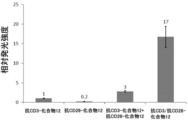
- FIG. 3 is a diagram showing a comparison of gene transfer efficiency into T cells by lipid nanoparticles having anti-CD3 antibody and / or anti-CD28 antibody added to the surface.
- FIG. 3 is a diagram showing that gene transfer (I) to T cells and activation (II) of T cells are simultaneously achieved by lipid nanoparticles having anti-CD3 antibody and anti-CD28 antibody added to the surface.
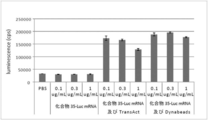
- FIG. 2 is a diagram showing that luc mRNA is efficiently introduced into human peripheral blood CD3-positive pan T cells by co-addition of an activation stimulant and lipid nanoparticles.
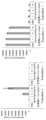
- FIG. 3 is a diagram showing survival and proliferation rates of T cells transfected with luc mRNA by lipid nanoparticles.
- nucleic acid delivery carrier of the present invention provides a nucleic acid delivery carrier having at least one T cell activating ligand attached to its surface (hereinafter, also referred to as “nucleic acid delivery carrier of the present invention”).
- nucleic acid delivery carrier means a carrier that can carry a nucleic acid and can deliver the nucleic acid into cells.
- capable of being delivered intracellularly is meant capable of delivering at least the nucleic acid carried within the cytoplasm of the cell.
- the nucleic acid delivery carrier used in the present invention has a structure, a constituent molecule, and a nucleic acid as long as it can carry a nucleic acid and can deliver the nucleic acid into a cell as described above.
- the form is not particularly limited.
- a typical nucleic acid drug delivery system DDS
- a complex formed by using a cationic liposome or cationic polymer having a positive charge as a carrier and electrostatic interaction between them and the nucleic acid Is mentioned. After binding to the negatively charged cell membrane, the complex is taken up intracellularly by adsorptive endocytosis.
- examples of the nucleic acid delivery carrier used in the present invention include lipid nanoparticles (LNP), liposomes (eg, cationic liposomes, PEG-modified liposomes, etc.), cationic polymers (eg, polyethyleneimine, polylysine). , Polyornithine, chitosan, atelocollagen, protamine, etc.), and those in which a cationic polymer is encapsulated in liposomes, but are not limited thereto.
- exosome which is a biogenic component, can also be used.
- Lipid nanoparticles or liposomes are preferable, and lipid nanoparticles are more preferable.
- lipid nanoparticles in the present specification, “lipid nanoparticles (LNP)” means a large pore structure (eg, liposome) or small pore structure (eg, liposome) inside the outer shell of a lipid aggregate containing a cationic lipid and a non-cationic lipid.
- Mesoporous material means particles having an average diameter of less than 1 ⁇ m. The constituent elements of the lipid nanoparticles will be described below.
- cationic lipid means a lipid having a net positive charge under physiological pH or low pH environment such as endosome.
- the cationic lipid used in the lipid nanoparticles used in the present invention is not particularly limited, but for example, WO 2016/021683, WO 2015/011633, WO 2011/153493, WO 2013/126803, WO 2010/054401, WO 2010. / 042877, WO 2016/104580, WO 2015/005253, WO 2014/007398, WO 2017/117528, WO 2017/075531, WO 2017/00414, WO 2015/199952, US 2015/0239834, WO 2019/131839, etc.
- Examples include cationic lipids.
- a synthetic cationic lipid described in Dong et al. Proc Natl Acad Sci US A. 2014 Apr 15; 111 (15): 5753 (eg, K-E12, H-A12, Y-E12, G-O12, K).
- a cationic lipid represented by the following general formula described in WO2016 / 021683 can be mentioned.
- W is represented by the formula —NR 1 R 2 or the formula —N + R 3 R 4 R 5 (Z ⁇ ), R 1 and R 2 are each independently a C 1-4 alkyl group or a hydrogen atom, R 3 , R 4 and R 5 are each independently a C 1-4 alkyl group, Z ⁇ is an anion, X represents an optionally substituted C 1-6 alkylene group, Y A, Y B, and Y C are each independently a methine group optionally substituted, L A , L B and L C are each independently an optionally substituted methylene group or bond, R A1 , R A2 , R B1 , R B2 , R C1 and R C2 each independently represent an optionally substituted C 4-10 alkyl group. ] Or a salt thereof.
- a cationic lipid represented by the following structural formula is included.
- cationic lipids more preferable one is a cationic lipid represented by the following structural formula.
- Another preferred embodiment includes a cationic lipid represented by the following general formula described in WO2019 / 131839.
- n is an integer of 2 to 5
- R is a linear C 1-5 alkyl group, a linear C 7-11 alkenyl group or a linear C 11 alkadienyl group,
- the wavy lines each independently represent a cis-type or trans-type bond.
- a cationic lipid represented by the following structural formula is included.
- cationic lipids more preferable one is a cationic lipid represented by the following structural formula.
- Another preferred embodiment includes a cationic lipid represented by the following general formula (III).
- n1 is an integer of 2 to 6
- n2 is an integer of 0 to 2
- n3 is an integer of 0 to 2
- L is -C (O) O- or -NHC (O) O-
- Ra is a linear C 5-13 alkyl group, a linear C 13-17 alkenyl group or a linear C 17 alkadienyl group
- Rb is a linear C 2-9 alkyl group
- Rc is a hydrogen atom or a linear C 2-9 alkyl group
- Rd is a hydrogen atom or a linear C 2-9 alkyl group
- Re is a linear C 2-9 alkyl group
- Rf represents a linear C 2-9 alkyl group.
- a cationic lipid represented by the following structural formula is included.
- cationic lipids more preferable one is a cationic lipid represented by the following structural formula.
- the compound (III) can be produced, for example, by the following production method.
- the salt of compound (III) can be obtained by an appropriate mixture with an inorganic base, an organic base, an organic acid, a basic or acidic amino acid.
- the raw materials and reagents used in each step of the above production method, and the obtained compound may each form a salt.
- the compound obtained in each step is a free compound, it can be converted to the desired salt by a known method.
- the compound obtained in each step is a salt, it can be converted into a free form or other desired salt by a known method.
- the compound obtained in each step can be used as the reaction solution or as a crude product and then used in the next reaction, or the compound obtained in each step can be concentrated from the reaction mixture according to a conventional method. It can be isolated and / or purified by a separation means such as crystallization, recrystallization, distillation, solvent extraction, fractional distillation and chromatography.
- the commercially available product can be used as it is.
- the reaction time may differ depending on the reagent and solvent to be used, but unless otherwise specified, it is generally 1 minute to 48 hours, preferably 10 minutes to 8 hours.
- the reaction temperature may differ depending on the reagent and solvent to be used, but unless otherwise specified, it is usually ⁇ 78 ° C. to 300 ° C., preferably ⁇ 78 ° C. to 150 ° C.
- the pressure may differ depending on the reagent and solvent to be used, but unless otherwise specified, it is usually 1 atm to 20 atm, preferably 1 atm to 3 atm.
- a Microwave synthesizer such as Initiator manufactured by Biotage may be used.
- the reaction temperature may vary depending on the reagent and solvent to be used, but unless otherwise specified, it is generally room temperature to 300 ° C, preferably room temperature to 250 ° C, more preferably 50 ° C to 250 ° C.
- the reaction time may vary depending on the reagent and solvent to be used, but unless otherwise specified, it is generally 1 minute to 48 hours, preferably 1 minute to 8 hours.
- the reagent is used in an amount of 0.5 to 20 equivalents, preferably 0.8 to 5 equivalents, relative to the substrate, unless otherwise specified.
- the reagent is used as a catalyst, the reagent is used in an amount of 0.001 equivalent to 1 equivalent, preferably 0.01 equivalent to 0.2 equivalent, based on the substrate.
- the solvent amount of the reagent is used.
- Alcohols methanol, ethanol, isopropanol, isobutanol, tert-butyl alcohol, 2-methoxyethanol, etc .; Ethers: diethyl ether, diisopropyl ether, diphenyl ether, tetrahydrofuran, 1,2-dimethoxyethane, etc .; Aromatic hydrocarbons: chlorobenzene, toluene, xylene, etc .; Saturated hydrocarbons: cyclohexane, hexane, heptane, etc .; Amides: N, N-dimethylformamide, N-methylpyrrolidone, etc .; Halogenated hydrocarbons: dichloromethane, carbon tetrachloride, etc .; Nitriles: acetonitrile, etc .; Sulfoxides: dimethyl sulfoxide, etc .; Aromatic organic bases such as pyridine; Acid anhydrides: acetic anhydr
- Inorganic bases sodium hydroxide, potassium hydroxide, magnesium hydroxide, etc .
- Basic salts sodium carbonate, calcium carbonate, sodium hydrogen carbonate, etc .
- Organic bases triethylamine, diethylamine, pyridine, 4-dimethylaminopyridine, N, N-dimethylaniline, 1,4-diazabicyclo [2.2.2] octane, 1,8-diazabicyclo [5.4.0]- 7-undecene, imidazole, piperidine, etc .
- Metal alkoxides sodium ethoxide, potassium tert-butoxide, sodium tert-butoxide, etc .
- Alkali metal hydrides sodium hydride, etc .
- Metal amides sodium amide, lithium diisopropylamide, lithium hexamethyldisilazide, etc .
- Organic lithiums n-butyl lithium, sec-butyl lithium, etc.
- Inorganic acids hydrochloric acid, sulfuric acid, nitric acid, hydrobromic acid, phosphoric acid, etc .
- Organic acids acetic acid, trifluoroacetic acid, citric acid, p-toluenesulfonic acid, 10-camphorsulfonic acid, etc .
- Lewis acid boron trifluoride diethyl ether complex, zinc iodide, anhydrous aluminum chloride, anhydrous zinc chloride, anhydrous iron chloride, etc.
- reaction in each step is a known method, for example, 5th edition Experimental Chemistry Course, 13 to 19 volumes (edited by the Chemical Society of Japan); New Experimental Chemistry Course, 14 to 15 volumes (Nippon Kagaku). Organized by: Fine Organic Chemistry Revised 2nd Edition (L.F. Tietze, Th. Eicher, Nankodo); Revised Organic Personal Name Reaction: Mechanism and Points (Hideo Togo, Kodansha); ORGANIC SYNTHESES Collective Volume I-VII (Joh) Wiley & Sons Inc); Modern Organic Synthesis in the Laboratory A Collection of Standards Experimental Procedures (Jie Jack Li, OXORD). RSITY publication); Comprehensive Heterocyclic Chemistry III, Vol. 1 to Vol.
- the protection or deprotection reaction of the functional group is carried out by a known method, for example, "Protective Groups in Organic Synthesis, 4th Ed.” (Theodora W. Greene, Peter W. Met. The method is described in "Protecting Groups 3rd Ed.” (PJ Kocienski) published in 2004 by Thieme Company.
- protective groups for hydroxyl groups such as alcohols and phenolic hydroxyl groups
- ether type such as methoxymethyl ether, benzyl ether, p-methoxybenzyl ether, t-butyldimethylsilyl ether, t-butyldiphenylsilyl ether, tetrahydropyranyl ether and the like.
- protective groups include protective groups; carboxylic acid ester type protective groups such as acetic acid ester; sulfonic acid ester type protective groups such as methanesulfonic acid ester; and carbonic acid ester type protective groups such as t-butyl carbonate.
- Examples of the protecting group for the carbonyl group of aldehyde include acetal-type protecting groups such as dimethyl acetal; cyclic acetal-type protecting groups such as cyclic 1,3-dioxane.
- Examples of the protecting group for the carbonyl group of ketone include, for example, a ketal type protecting group such as dimethyl ketal; a cyclic ketal type protecting group such as cyclic 1,3-dioxane; an oxime type protecting group such as O-methyloxime; N, N- Examples thereof include hydrazone-type protecting groups such as dimethylhydrazone.
- carboxyl-protecting group examples include ester-type protecting groups such as methyl ester; and amide-type protecting groups such as N, N-dimethylamide.
- thiol protecting group examples include ether type protecting groups such as benzyl thioether; ester type protecting groups such as thioacetic acid ester, thiocarbonate and thiocarbamate.
- Examples of the protective group for an amino group or an aromatic heterocycle such as imidazole, pyrrole or indole include carbamate type protective groups such as benzyl carbamate; amide type protective groups such as acetamide; alkylamines such as N-triphenylmethylamine.
- Type protecting groups, sulfonamide type protecting groups such as methanesulfonamide and the like include carbamate type protective groups such as benzyl carbamate; amide type protective groups such as acetamide; alkylamines such as N-triphenylmethylamine.
- Type protecting groups, sulfonamide type protecting groups such as methanesulfonamide and the like.
- the protecting group can be removed by a known method, for example, acid, base, ultraviolet light, hydrazine, phenylhydrazine, sodium N-methyldithiocarbamate, tetrabutylammonium fluoride, palladium acetate, trialkylsilyl halide (eg, trimethylsilyl iodide). , Trimethylsilyl bromide), a reduction method, or the like.
- a known method for example, acid, base, ultraviolet light, hydrazine, phenylhydrazine, sodium N-methyldithiocarbamate, tetrabutylammonium fluoride, palladium acetate, trialkylsilyl halide (eg, trimethylsilyl iodide). , Trimethylsilyl bromide), a reduction method, or the like.
- the reducing agent used is lithium aluminum hydride, sodium triacetoxyborohydride, sodium cyanoborohydride, diisobutylaluminum hydride (DIBAL-H), sodium borohydride.
- Metal hydrides such as triacetoxyborohydride tetramethylammonium; boranes such as borane tetrahydrofuran complex; Raney nickel; Raney cobalt; hydrogen; formic acid and the like.
- Raney nickel or Raney cobalt can be used in the presence of hydrogen or formic acid.
- a catalyst such as palladium-carbon or Lindlar catalyst.
- peracids such as m-chloroperbenzoic acid (MCPBA), hydrogen peroxide and t-butylhydroperoxide; tetrabutylammonium perchlorate, etc.
- Perchlorates chlorates such as sodium chlorate; chlorites such as sodium chlorite; periodates such as sodium periodate; high-valent iodine reagents such as iodosylbenzene; manganese dioxide, peroxides Reagents having manganese such as potassium manganate; Leads such as lead tetraacetate; Pyridinium chlorochromate (PCC), Pyridinium dichromate (PDC), Reagents having chromium such as Jones reagent; N-bromosuccinimide (NBS) Oxygen; Ozone; Sulfur trioxide / pyridine complex; Tetraoxide male Um; dioxide Zeren; 2,3-dichloro-5,6-dicyano-1,4-benzoquinone (DDQ) and the like.
- PCC Pyridinium chlorochromate
- PDC Pyridinium dichromate
- Reagents having chromium such as Jones reagent
- the radical initiator used is an azo compound such as azobisisobutyronitrile (AIBN); 4-4′-azobis-4-cyanopentanoic acid (ACPA) Water-soluble radical initiators such as; triethylboron in the presence of air or oxygen; and benzoyl peroxide.
- AIBN azobisisobutyronitrile
- ACPA 4-4′-azobis-4-cyanopentanoic acid
- Water-soluble radical initiators such as; triethylboron in the presence of air or oxygen; and benzoyl peroxide.
- the radical reaction agent used include tributylstannane, tristrimethylsilylsilane, 1,1,2,2-tetraphenyldisilane, diphenylsilane and samarium iodide.
- examples of the Wittig reagent used include alkylidenephosphoranes.
- the alkylidenephosphoranes can be prepared by a known method, for example, by reacting a phosphonium salt with a strong base.
- the reagents used include phosphonoacetic acid esters such as methyl dimethylphosphonoacetate and ethyl diethylphosphonoacetate; bases such as alkali metal hydrides and organolithiums. Can be mentioned.
- the reagent used includes Lewis acid and acid chloride or an alkylating agent (eg, alkyl halides, alcohols, olefins, etc.).
- an organic acid or an inorganic acid can be used instead of the Lewis acid, and an acid anhydride such as acetic anhydride can be used instead of the acid chloride.
- a nucleophile eg, amines, imidazole, etc.
- a base eg, basic salts, organic bases, etc.
- a base used to generate a carbanion when a nucleophilic addition reaction with a carbanion, a nucleophilic 1,4-addition reaction with a carbanion (Michael addition reaction), or a nucleophilic substitution reaction with a carbanion is performed.
- examples thereof include organic lithiums, metal alkoxides, inorganic bases, organic bases and the like.
- Grignard reagents include aryl magnesium halides such as phenyl magnesium bromide; alkyl magnesium halides such as methyl magnesium bromide and isopropyl magnesium bromide.
- the Grignard reagent can be prepared by a known method, for example, by reacting an alkyl halide or aryl halide with metal magnesium using ether or tetrahydrofuran as a solvent.
- an active methylene compound eg, malonic acid, diethyl malonate, malononitrile, etc.
- a base eg, organic bases, Metal alkoxides and inorganic bases
- phosphoryl chloride and an amide derivative eg, N, N-dimethylformamide are used as reagents.
- azidating agent examples include diphenylphosphoryl azide (DPPA), trimethylsilyl azide, and sodium azide.
- DPPA diphenylphosphoryl azide
- DBU 1,8-diazabicyclo [5,4,0] undec-7-ene
- examples of the reducing agent used include sodium triacetoxyborohydride, sodium cyanoborohydride, hydrogen and formic acid.
- examples of the carbonyl compound used include paraformaldehyde, aldehydes such as acetaldehyde, and ketones such as cyclohexanone.
- the amines used include primary amines such as ammonia and methylamine; secondary amines such as dimethylamine.
- azodicarboxylic acid esters eg, diethyl azodicarboxylate (DEAD), diisopropyl azodicarboxylate (DIAD), etc.
- triphenylphosphine eg, triphenylphosphine
- the reagents used are acyl halides such as acid chlorides and bromides; acid anhydrides, active ester bodies, and sulfate ester bodies. Examples include activated carboxylic acids.
- carboxylic acid activator examples include carbodiimide-based condensing agents such as 1-ethyl-3- (3-dimethylaminopropyl) carbodiimide hydrochloride (WSCD); 4- (4,6-dimethoxy-1,3,5- Triazine-2-yl) -4-methylmorpholinium chloride-n-hydrate (DMT-MM) and other triazine-based condensing agents; 1,1-carbonyldiimidazole (CDI) and other carbonate-based condensing agents; diphenyl Phosphoric acid azide (DPPA); benzotriazol-1-yloxy-trisdimethylaminophosphonium salt (BOP reagent); 2-chloro-1-methyl-pyridinium iodide (Mukoyama reagent); thionyl chloride; haloformic acid such as ethyl chloroformate Lower alkyl; O- (7-azabenzotriazol-1-yl
- an additive such as 1-hydroxybenzotriazole (HOBt), N-hydroxysuccinimide (HOSu), or dimethylaminopyridine (DMAP) may be further added to the reaction.
- HOBt 1-hydroxybenzotriazole
- HOSu N-hydroxysuccinimide
- DMAP dimethylaminopyridine
- the metal catalyst used is palladium (II) acetate, tetrakis (triphenylphosphine) palladium (0), dichlorobis (triphenylphosphine) palladium (II), dichlorobis (triethyl).
- Palladium compounds such as phosphine) palladium (II), tris (dibenzylideneacetone) dipalladium (0), 1,1′-bis (diphenylphosphino) ferrocene palladium (II) chloride, and palladium (II) acetate; tetrakis (tri) Nickel compounds such as phenylphosphine) nickel (0); rhodium compounds such as tris (triphenylphosphine) rhodium (III) chloride; cobalt compounds; copper compounds such as copper oxide and copper (I) iodide; platinum compounds and the like.
- a base may be added to the reaction, and examples of such a base include inorganic bases and basic salts.
- diphosphorus pentasulfide is typically used as the thiocarbonylating agent.
- 2,4-bis (4-methoxyphenyl) is used.
- -1,3,2,4-Dithiadiphosphetane-2,4-disulfide (Lowesson's reagent) and other reagents having a 1,3,2,4-dithiadiphosphetane-2,4-disulfide structure May be used.
- the halogenating agent used is N-iodosuccinimide, N-bromosuccinimide (NBS), N-chlorosuccinimide (NCS), bromine, sulfuryl chloride, or the like. Is mentioned.
- the reaction can be accelerated by adding a radical initiator such as heat, light, benzoyl peroxide, or azobisisobutyronitrile to the reaction.
- the halogenating agent used is an acid halide of hydrohalic acid and an inorganic acid, specifically, in chlorination, hydrochloric acid, thionyl chloride, oxy
- bromination such as phosphorus chloride, 48% hydrobromic acid and the like
- a method of obtaining an alkyl halide from alcohol by the action of triphenylphosphine and carbon tetrachloride or carbon tetrabromide may be used.
- a method of synthesizing an alkyl halide by a two-step reaction such as reaction with lithium bromide, lithium chloride or sodium iodide after conversion of alcohol to sulfonic acid ester may be used.
- reagents used include alkyl halides such as ethyl bromoacetate; phosphites such as triethyl phosphite and tri (isopropyl) phosphite.
- the sulfonating agent used is methanesulfonyl chloride, p-toluenesulfonyl chloride, methanesulfonic anhydride, p-toluenesulfonic anhydride, trifluoromethanesulfonic anhydride. The thing etc. are mentioned.
- an acid or base is used as a reagent when carrying out a hydrolysis reaction.
- formic acid, triethylsilane or the like may be added in order to reductively trap the by-produced t-butyl cation.
- examples of the dehydrating agent used include sulfuric acid, diphosphorus pentoxide, phosphorus oxychloride, N, N'-dicyclohexylcarbodiimide, alumina and polyphosphoric acid.
- the salt of the compound represented by each of the above structural formulas is preferably a pharmacologically acceptable salt, for example, a salt with an inorganic base (eg, alkali metal salt such as sodium salt, potassium salt; calcium salt, Alkaline earth metal salts such as magnesium salts; aluminum salts, ammonium salts), salts with organic bases (eg, trimethylamine, triethylamine, pyridine, picoline, ethanolamine, diethanolamine, triethanolamine, trilomethamine, trimethamine Lis (hydroxymethyl) methylamine], tert-butylamine, cyclohexylamine, benzylamine, dicyclohexylamine, salts with N, N-dibenzylethylenediamine), salts with inorganic acids (eg hydrofluoric acid, hydrochloric acid, odor) Hydrofluoric acid, hydroiodic acid, nitric acid, sulfuric acid, salts with phosphoric acid), salts with organic acids (form
- the ratio (mol%) of the cationic lipid to the total lipids present in the lipid nanoparticles is, for example, about 10% to about 80%, preferably about 20% to about 70%, more preferably about 40% to about. 60%, but not limited thereto.
- the above cationic lipids may be used alone or in combination of two or more. When a plurality of cationic lipids are used, it is preferable that the cationic lipids as a whole have the above ratio.
- Non-cationic lipid means a lipid other than a cationic lipid, and is a lipid that does not have a net positive charge at a selected pH such as physiological pH. is there.
- examples of the non-cationic lipid used for the lipid nanoparticles of the present invention include phospholipids, steroids, PEG lipids and the like.
- the phospholipid is not particularly limited as long as it stably holds the nucleic acid and does not inhibit the fusion with the cell membrane (plasma membrane and organelle membrane) in order to enhance the deliverability of the nucleic acid into T cells.
- Preferred phospholipids include distearoylphosphatidylcholine (DSPC), dioleoylphosphatidylcholine (DOPC), dipalmitoylphosphatidylcholine (DPPC), dioleoylphosphatidylglycerol (DOPG), palmitoyloleylphosphatidylglycerol (POPG), dipalmitoylphosphatidylglycerol.
- DSPC distearoylphosphatidylcholine
- DOPC dioleoylphosphatidylcholine
- DPPC dipalmitoylphosphatidylcholine
- DOPG dioleoylphosphatidylglycerol
- POPG palmitoyloleylphosphatidylglycerol
- DPPG dioleoyl-phosphatidylethanolamine
- DOPE palmitoyloleoylphosphatidylcholine
- POPE palmitoyloleoyl-phosphatidylethanolamine
- DOPE-mal dioleoylphosphatidylethanolamine 4- (N-maleimidomethyl) -cyclohexane- 1-carboxylate
- DOPE-mal dioleoylphosphatidylethanolamine 4- (N-maleimidomethyl) -cyclohexane- 1-carboxylate
- the ratio (mol%) of phospholipids to the total lipids present in the lipid nanoparticles is, for example, about 0% to about 90%, preferably about 5% to about 30%, more preferably about 8% to about 15. Can be%.
- the above phospholipids may be used alone or in combination of two or more. When a plurality of phospholipids are used, it is preferable that the phospholipid as a whole has the above ratio.
- cholesterol As steroids, cholesterol, 5 ⁇ -cholestanol, 5 ⁇ -coprostanol, cholesteryl- (2'-hydroxy) -ethyl ether, cholesteryl- (4'-hydroxy) -butyl ether, 6-ketocholestanol, 5 ⁇ -cholestane, Cholesterone, 5 ⁇ -cholestanone, 5 ⁇ -cholestanone and cholesteryl decanoate can be mentioned, and cholesterol is preferable.
- the ratio (mol%) of steroids to the total lipids present in the lipid nanoparticles is, for example, about 10% to about 60%, preferably about 12% to about 58%, more preferably about 20%. Can be from about 55%.
- the above steroids may be used alone or in combination of two or more. When a plurality of steroids are used, it is preferable that the steroids as a whole have the above ratio.
- PEG lipid means any complex of polyethylene glycol (PEG) and lipid.
- the PEG lipid is not particularly limited as long as it has an effect of suppressing aggregation of lipid nanoparticles, and examples thereof include PEG bound to dialkyloxypropyl (PEG-DAA) and PEG bound to diacylglycerol ( PEG-DAG) (eg SUNBRIGHT GM-020 (NOF)), PEG conjugated with phospholipids such as phosphatidylethanolamine (PEG-PE), PEG conjugated with ceramide (PEG-Cer), conjugated with cholesterol.
- PEG-DAA dialkyloxypropyl
- PEG-DAG PEG bound to diacylglycerol
- PEG conjugated with phospholipids such as phosphatidylethanolamine (PEG-PE), PEG conjugated with ceramide (PEG-Cer), conjugated with cholesterol.
- PEG PEG-cholesterol or a derivative thereof, or a mixture thereof, mPEG2000-1,2-di-O-alkyl-sn3-carbomoyl glyceride (PEG-C-DOMG), 1- [8 '-(1 , 2-Dimyristoyl-3-propanoxy) -carboxamide-3 ′, 6-dioxaoctanyl] carbamoyl- ⁇ -methyl-poly (ethylene glycol) (2KPEG-DMG) and the like.
- Preferred PEG lipids include PEG-DGA, PEG-DAA, PEG-PE, PEG-Cer, and mixtures thereof, more preferably PEG-didecyloxypropyl conjugate, PEG-dilauryloxypropyl conjugate. Gate, PEG-dimyristyloxypropyl conjugate, PEG-dipalmityloxypropyl conjugate, PEG-distearyloxypropyl conjugate, a PEG-DAA conjugate, and mixtures thereof.
- a maleimide group or N-hydroxysuccinimidyl group for binding a T cell activating ligand can be used in addition to the methoxy group.
- PEG lipid having a functional group for binding a T cell activating ligand (sometimes referred to herein as “end-reactive PEG lipid”), SUNBRIGHT DSPE-020MA (NOF Corporation) can be used. .
- the ratio (mol%) of PEG lipids to the total lipids present in the lipid nanoparticles of the present invention is, for example, about 0% to about 20%, preferably about 0.1% to about 5%, more preferably about It can be 0.7% to about 2%.
- the ratio (mol%) of the terminal reactive PEG lipid in the above-mentioned total PEG lipid is, for example, about 10% to about 100%, preferably about 30% to about 100%, more preferably about 40% to about 100%. Can be.
- the above PEG lipids may be used alone or in combination of two or more. When a plurality of PEG lipids are used, it is preferable that the PEG lipids as a whole have the above ratio.
- Liposomes Another preferred nucleic acid delivery carrier for use in the present invention includes liposomes.
- the liposome those conventionally used in DDS of nucleic acid to cells can be similarly used.
- various cationic lipids developed as transfection reagents eg, DOTMA, DOTAP, DDAB, DMRIE, etc.
- membrane-fusogenic neutral lipids that promote release from endosomes eg, DOPE, cholesterol, etc.
- Liposomes prepared by mixing the above are widely used. It is also possible to use a liposome in which a functional molecule such as PEG, a pH-responsive membrane fusion peptide, or a membrane permeation promoting peptide is added to the surface of the liposome.
- the nucleic acid delivery carrier of the present invention is one in which a T cell activating ligand is added to the surface of the above nucleic acid delivery carrier.
- the T cell activating ligand used in the present invention is not particularly limited as long as it interacts with the surface molecule of T cell and promotes T cell activation and / or proliferation.
- CD3 which is coupled with TCR and is responsible for signal transduction via TCR
- surface molecules known as co-stimulators of T cell activation CD28, ICOS, CD137, OX40, CD27, GITR, BAFFR, TACI, BMCA, CD40L are examples of T cell activation CD28, ICOS, CD137, OX40, CD27, GITR, BAFFR, TACI, BMCA, CD40L.
- Such a molecule may be a physiological ligand (or receptor) for the T cell surface molecule or a non-physiological ligand (or receptor) having agonist activity.
- the non-physiological ligand is preferably an agonist antibody.
- the T cell activating ligand used in the present invention includes an antibody against CD3 and / or an antibody against CD28.
- Antibodies to CD3 and CD28 specifically bind to CD3 and CD28 expressed on target T cells that induce activation and / or proliferation, respectively (for example, when the target T cells are of human origin, antibodies to CD3 Antibodies against CD28 and CD28 are preferably anti-human CD3 antibody and anti-human CD28 antibody, respectively), and as long as they have the ability to stimulate surface molecules of these T cells to transduce signals into T cells, they are complete antibodies.
- it may be a fragment thereof (eg, Fab, F (ab ′) 2 , Fab ′, scFv, Fv, reducing antibody (rIgG), dsFv, sFv, diabody, triabody, etc.).
- the subclass of antibody is also not particularly limited, but IgG antibody is preferable.
- an agonist antibody such as an antibody against CD3 or an antibody against CD28
- a commercially available anti-CD3 antibody, anti-CD28 antibody or the like can be used as long as it is a complete antibody molecule, or the antibody is produced. It can also be isolated from the culture medium of cells.
- the ligand is any of the above antibody fragments
- the complete antibody is treated with a reducing agent (eg, 2-mercaptoethanol, dithiothreitol) or peptidase (eg, papain, pepsin, ficin).
- a nucleic acid encoding a fragment of an anti-CD3 antibody, an anti-CD28 antibody, etc. is isolated by a method similar to the method for obtaining the nucleic acid encapsulated in the nucleic acid delivery carrier described below, and the antibody fragment is recombined using the isolated nucleic acid. Can be produced.
- the T cell activating ligand may be used alone or in combination of two or more, but it is preferable to combine two or more.
- at least one kind is preferably an antibody against CD3 or an antibody against CD28, and more preferably an antibody against CD3.
- both antibodies against CD3 and CD28 can be used as T cell activating ligands.
- the molar ratio of the two added to the surface of the nucleic acid delivery carrier of the present invention is 1: 4 to 4: 1, preferably It is 1: 2 to 2: 1.
- the T cell activating ligands may be separately attached to the surface of the nucleic acid delivery carrier, or each T cell activating ligand may be retained. As long as it is possible, a complex thereof may be added to the surface of the nucleic acid delivery carrier.
- the two types of T cell activating ligands are antibodies (eg, an antibody against CD3 and an antibody against CD28), they can be provided as known bispecific antibodies.
- the T cell activating ligand may be bound to the outer shell in any manner as long as it is present on the surface of the nucleic acid delivery carrier, for example, as a non-cationic lipid, it is end-reactive.
- lipid nanoparticles containing PEG lipids are used as nucleic acid delivery carriers, they can be added to the ends of PEG.
- preparing a lipid nanoparticle labeled with a ligand (antibody) by reacting a PEG lipid having a maleimide group introduced at the terminal (eg, SUNBRIGHTDSPE-020MA) with the thiol group of the above-mentioned reducing antibody. You can Even when a PEG-modified liposome is used as a nucleic acid delivery carrier, a T cell activating ligand can be similarly added to the liposome surface.
- nucleic Acid Delivery Carrier of the Present Invention can be used in a form not containing a nucleic acid to induce activation and / or proliferation of T cells, but in a preferred embodiment By encapsulating a nucleic acid, T cell activation and / or proliferation and delivery of the nucleic acid into the T cell can be simultaneously performed in one step. Therefore, in a preferred embodiment, the nucleic acid delivery carrier of the present invention further comprises a nucleic acid inside the carrier for delivery into T cells.
- the nucleic acid delivery carrier of the present invention contains a nucleic acid inside
- the nucleic acid may be one which has the function of changing the T cell to a desired state in T cell by itself or its transcription product or translation product. If not, there is no particular limitation.
- the nucleic acid delivery carrier of the present invention contains a nucleic acid that suppresses expression of T cell activation suppressor.
- the target T cell activation inhibitor is not particularly limited as long as it suppresses the activation of T cells, for example, stimulated by antigen-presenting cells or tumor cells, T cell activation and / Or immune checkpoint factors that are cell surface molecules that transmit negative signals for proliferation (eg CTLA-4, PD-1, TIM-3, LAG-3, TGIT, BTLA, VISTA (PD-1H) Etc.), CD160, Cbl-b, and endogenous TCR.
- a nucleic acid that suppresses the expression of a T cell activation suppressor acts at any stage such as the transcription level of a gene encoding the factor, the level of post-transcriptional regulation, the level of translation into a protein, the level of post-translational modification, etc. It may be. Therefore, examples of the nucleic acid that suppresses the expression of the T cell activation suppressing factor include, for example, a nucleic acid that inhibits the transcription of a gene encoding the factor (eg, antigene), a nucleic acid that inhibits the processing of an early transcription product into mRNA.
- a nucleic acid that inhibits translation of mRNA into protein eg, antisense nucleic acid, miRNA
- degrades mRNA eg, siRNA, ribozyme, miRNA
- Any substance that acts at any stage can be used, but a substance that complementarily binds to mRNA to inhibit translation into a protein or degrades mRNA is preferable.
- the nucleic acid (a) a nucleic acid having RNAi activity against mRNA encoding the factor or a precursor thereof, (b) an antisense nucleic acid against mRNA encoding the factor, and (c) Examples include ribozyme nucleic acid for mRNA encoding the factor.
- the nucleotide sequence of mRNA (cDNA) encoding each T cell activation inhibitor is known, and sequence information can be obtained from public databases (eg, NCBI, EMBL, DDBJ, etc.).
- Nucleic acid having RNAi activity against mRNA encoding T cell activation suppressor or its precursor Nucleic acid having RNAi activity against mRNA encoding T cell activation suppressor is complementary to the target mRNA.
- Double-stranded RNA consisting of a conventional oligo RNA and its complementary strand, namely siRNA.
- the siRNA can be designed based on the cDNA sequence information of the target gene, for example, according to the rules proposed by Elbashir et al. (Genes Dev., 15, 188-200 (2001)).
- siRNA short hairpin RNA
- an arbitrary linker sequence (for example, about 5-25 bases) that can form a loop structure is appropriately selected to select the sense strand and antisense strand of siRNA. It can be designed by connecting via the linker sequence.
- a microRNA that targets an mRNA encoding a T cell activation suppressor is also defined as being included in a nucleic acid having RNAi activity for the mRNA.
- miRNA is the transcription of primary-microRNA (pri-miRNA), which is the primary transcript, from the gene that encodes it, and then Drosha has a characteristic hairpin structure of about 70-base long precursor-microRNA (pre-miRNA). ), Is transported from the nucleus to the cytoplasm, and is further processed by Dicer to become mature miRNA, which is incorporated into RISC and acts on the target mRNA. Therefore, pre-miRNA or pri-miRNA, preferably pre-miRNA, can also be used as a precursor of miRNA.
- the nucleotide molecule that constitutes siRNA and / or shRNA, or miRNA and / or pre-miRNA may be natural RNA or DNA, but stability (chemical and / or enzyme) or specific activity (affinity with RNA) Various chemical modifications known per se can be included in order to improve the
- siRNA is a DNA / RNA automatic synthesizer that synthesizes the sense and antisense strands of the target sequence on mRNA, and denatures them in an appropriate annealing buffer at about 90 to about 95 ° C for about 1 minute, It can be prepared by annealing at about 30 to about 70 ° C. for about 1 to about 8 hours. It can also be prepared by synthesizing shRNA that is a precursor of siRNA and cleaving it with a dicer. miRNA and pre-miRNA can be synthesized by a DNA / RNA automatic synthesizer based on their sequence information.
- a nucleic acid designed to be capable of producing siRNA or miRNA against mRNA encoding a T cell activation suppressor in vivo is also included in the nucleic acid having RNAi activity against the mRNA.
- examples of such a nucleic acid include an expression vector constructed to express the above-mentioned shRNA or siRNA or miRNA or pre-miRNA.
- a promoter a polII promoter (for example, CMV immediate-early promoter) can be used, but a polIII promoter is generally used in order to accurately carry out transcription of a short RNA.
- polIII promoters examples include mouse and human U6-snRNA promoters, human H1-RNase PRNA promoters, human valine-tRNA promoters, and the like. A sequence in which 4 or more Ts are continuous is used as a transcription termination signal. Expression cassettes for miRNA and pre-miRNA can be prepared in the same manner as for shRNA.
- Antisense nucleic acid for mRNA encoding T cell activation suppressor contains a nucleotide sequence complementary to the nucleotide sequence of the mRNA or a part thereof It is a nucleic acid, which has a function of suppressing protein synthesis by forming a specific and stable double strand with a target mRNA and binding to the target mRNA.
- the antisense nucleic acid may be DNA or RNA, or may be a DNA / RNA chimera.
- the RNA DNA hybrid formed by the target RNA and the antisense DNA can be recognized by the endogenous RNase H and cause the selective degradation of the target RNA.
- the target region of the antisense nucleic acid is not particularly limited in its length as long as the translation into the protein is inhibited as a result of the hybridization of the antisense nucleic acid, and the entire sequence of the mRNA encoding the protein is obtained. May be a partial sequence, a short one is about 10 bases, and a long one is the entire sequence of mRNA or initial transcription product.
- antisense nucleic acids not only hybridize with target mRNAs and early transcription products to inhibit translation into proteins, but also bind with these genes that are double-stranded DNA to form triplex (triplex). However, it may be one that can inhibit transcription into RNA (antigene).
- the nucleotide molecule constituting the antisense nucleic acid may also be modified in the same manner as in the case of the above siRNA or the like in order to improve stability, specific activity and the like.
- Antisense oligonucleotide determines the target sequence of mRNA or early transcription product based on the cDNA sequence or genomic DNA sequence of the target gene, and synthesizes a sequence complementary to this using a commercially available automatic DNA / RNA synthesizer. It can be prepared by
- a nucleic acid designed to generate an antisense RNA against an mRNA encoding a T cell activation suppressor in vivo is also defined as included in the antisense nucleic acid against the mRNA. It Examples of such a nucleic acid include an expression vector constructed so as to express the above antisense RNA. As the promoter, a polII promoter or a polIII promoter can be appropriately selected and used according to the length of the transcribed antisense RNA.
- Ribozyme nucleic acid for mRNA encoding T cell activation suppressor Ribozyme nucleic acid capable of specifically cleaving mRNA encoding T cell activation suppressor within the coding region also suppresses expression of the factor It can be used as a nucleic acid.
- the term "ribozyme” is used in the narrow sense to refer to RNA having an enzymatic activity of cleaving a nucleic acid, but in the present specification, it is used as a concept including DNA as long as it has a sequence-specific nucleic acid cleaving activity.
- ribozyme nucleic acids are self-splicing RNAs found in infectious RNAs such as viroid and virusoid, and hammerhead type and hairpin type are known.
- the ribozyme when used in the form of an expression vector containing the DNA encoding the ribozyme, it may be a hybrid ribozyme in which tRNA-modified sequences are further ligated in order to promote translocation of transcripts into the cytoplasm. .
- nucleic acid that suppresses expression of T cell activation suppressor using genome editing As another preferred embodiment different from the above (a) to (c), a nucleic acid that suppresses expression of T cell activation suppressor is , A nucleic acid capable of inactivating (knocking out) a gene encoding the factor.
- a nucleic acid sequence recognition module eg, CRISPR / Cas9, ZF motif, TAL effector, etc.
- a nucleic acid sequence recognition module capable of specifically recognizing a partial nucleotide sequence in the gene as a target, and inside or near the target sequence
- DSB double-strand break
- the gene can be knocked out by insertion or deletion mutations due to non-homologous end joining (NHEJ) repair errors.
- NHEJ non-homologous end joining
- gene knockout by homologous recombination (HR) repair can be achieved by combining with a targeting vector in which a marker gene (eg, reporter gene such as fluorescent protein gene, selection marker gene such as drug resistance gene) is inserted in the gene sequence. You can also do it.
- a marker gene eg, reporter gene such as fluorescent protein gene, selection marker gene such as drug resistance gene
- the endogenous TCR gene can also be knocked in by HR repair with the exogenous TCR gene.
- the nucleic acid delivery carrier of the present invention internally contains a nucleic acid that encodes a T cell activation promoter.
- the target T cell activation-promoting factor include, for example, a T cell surface molecule (eg, CD28, which binds the above-mentioned T cell activating ligand and transmits an activation and / or proliferation signal into T cells).
- a T cell surface molecule eg, CD28, which binds the above-mentioned T cell activating ligand and transmits an activation and / or proliferation signal into T cells.
- ICOS CD137, OX40, CD27, GITR, BAFFR, TACI, BMCA, CD40L, etc.
- the nucleotide sequence of mRNA (cDNA) encoding each T cell activation promoting factor is known, and sequence information can be obtained from public databases (eg, NCBI, EMBL, DDBJ, etc.).
- a nucleic acid encoding a T cell activation promoting factor can be encapsulated in the nucleic acid delivery carrier of the present invention in the form of an expression vector containing mRNA or DNA encoding the factor.
- the mRNA encoding the T cell activation-promoting factor can be isolated by a method known per se using a probe or a primer prepared based on the sequence information, using RNA extracted from T cells as a template.
- the obtained mRNA may be directly encapsulated in the nucleic acid delivery carrier of the present invention, or can be converted into cDNA by RT-PCR and amplified.
- the obtained DNA encoding the T cell activation-promoting factor is an expression vector containing a promoter functional in T cells, preferably a plasmid as it is, or after addition of an appropriate linker and / or nuclear localization signal, etc. Can be inserted into the vector.
- Promoters functional in T cells include SR ⁇ promoter, SV40 promoter, LTR promoter, CMV (cytomegalovirus) promoter, RSV (Rous sarcoma virus) promoter, MoMuLV (Molony mouse leukemia virus) LTR, which are constitutive in mammalian cells.
- HSV-TK herpes simplex virus thymidine kinase
- gene promoters such as CD3, CD4, and CD8 that are specifically expressed in T cells can also be used.
- the mRNA encoding the T cell activation promoting factor can be prepared by transcribing the mRNA into an mRNA using an expression vector containing the DNA encoding the factor as a template in an in vitro transcription system known per se.
- the nucleic acid delivery carrier of the present invention encapsulates a nucleic acid to activate and / or proliferate T cells. And the delivery of the nucleic acid into the T cell can be performed simultaneously in one step. Therefore, by encapsulating a nucleic acid that encodes CAR or TCR in the nucleic acid delivery carrier of the present invention, the step of activating / proliferating T cells and the step of introducing genes into T cells can be performed simultaneously in One Pod. You can
- the nucleic acid delivery carrier of the present invention contains a nucleic acid encoding CAR or TCR therein.
- CAR Nucleic acid encoding CAR
- the CAR is an artificially constructed hybrid protein containing the antigen binding domain (eg, scFv) of the antibody linked to the T cell signaling domain.
- antigen binding domain eg, scFv
- features of CAR include the ability to utilize the antigen binding properties of monoclonal antibodies to convert T cell specificity and reactivity to selected targets in a non-MHC restricted manner.
- Non-MHC-restricted antigen recognition gives CAR-expressing T cells the ability to recognize antigens independent of antigen processing, thereby bypassing the major mechanism of tumor escape.
- CAR advantageously does not dimerize with the endogenous TCR ⁇ and ⁇ chains.
- the CAR contained in the nucleic acid delivery carrier of the present invention specifically recognizes a surface antigen (eg, cancer antigen peptide, surface receptor whose expression is enhanced in cancer cells, etc.) to be recognized by the target T cell.
- a surface antigen eg, cancer antigen peptide, surface receptor whose expression is enhanced in cancer cells, etc.
- Examples of surface antigens specifically recognized by the antigen-binding domain include various cancers (eg, acute lymphocytic cancer, alveolar rhabdomyosarcoma, bladder cancer, bone cancer, brain cancer (eg, medulloblast) Tumor, breast cancer, anus, cancer of the anus or anorectal, cancer of the eye, cancer of the intrahepatic bile duct, cancer of the joint, cancer of the neck, gallbladder or pleura, cancer of the nose, nasal cavity or middle ear, cancer of the oral cavity.
- various cancers eg, acute lymphocytic cancer, alveolar rhabdomyosarcoma, bladder cancer, bone cancer, brain cancer (eg, medulloblast) Tumor, breast cancer, anus, cancer of the anus or anorectal, cancer of the eye, cancer of the intrahepatic bile duct, cancer of the joint, cancer of the neck, gallbladder or pleura, cancer of the nose, nasal cavity or middle
- Vulvar cancer chronic myelogenous cancer, colon cancer, esophageal cancer, cervical cancer, fibrosarcoma, gastrointestinal carcinoid tumor, head and neck cancer (eg, head and neck squamous cell carcinoma), hypopharyngeal cancer, kidney cancer, larynx Cancer, leukemia (eg, acute lymphoblastic leukemia, acute lymphocytic leukemia, chronic lymphocytic leukemia, acute myelogenous leukemia), liquid tumor, liver cancer, lung cancer (eg, non-small cell lung cancer), lymphoma ( Examples, Hodgkin lymphoma, non-Hodgkin lymphoma, diffuse large B-cell lymphoma, follicular lymphoma ), Malignant mesothelioma, mastocytoma, melanoma, multiple myeloma, nasopharyngeal cancer, ovarian cancer, pancreatic cancer; peritoneal, omentum and me
- the antigen-binding domain used in the present invention is not particularly limited as long as it is an antibody fragment capable of specifically recognizing a target antigen, but considering the ease of CAR production, the light chain variable region and the heavy chain are It is preferably a single-chain antibody (scFv) in which the variable region is linked via a linker peptide.
- the arrangement of the light chain variable region and the heavy chain variable region in a single chain antibody is not particularly limited as long as they can reconstitute a functional antigen-binding domain, but usually from the N-terminal side, the light chain variable region-linker peptide-heavy chain
- the chain variable regions can be designed in order.
- linker peptide a linker peptide known per se which is usually used for producing a single chain antibody can be used.
- the DNA encoding the light chain variable region and the DNA encoding the heavy chain variable region prepared, for example, by cloning the light chain gene and the heavy chain gene from antibody-producing cells and performing PCR using them as templates? Alternatively, it can be chemically synthesized from existing antibody sequence information.
- a leader sequence is preferably added to the N-terminal side of the antigen-binding domain in order to display CAR on the surface of T cells.
- a domain derived from a T cell surface molecule usually used in the art can be appropriately used, and examples thereof include each domain derived from CD8 ⁇ and CD28. Not limited.
- the intracellular signal transduction domain for example, those having a CD3 ⁇ chain, between the transmembrane domain and the CD3 ⁇ chain, further co-stimulatory transduction motifs such as CD28, CD134, CD137, Lck, DAP10, ICOS, 4-1BB. Examples thereof include, but are not limited to, those having two or more costimulatory transduction motifs, and any domain commonly used in the art can be used in combination.
- Nucleic acid sequence information encoding the extracellular hinge domain, the transmembrane domain, and the intracellular signal transduction domain is well known in the art, and a person skilled in the art can easily derive each domain from T cells based on the information. It is possible to obtain a DNA fragment encoding Thus obtained, DNA fragments encoding CAR are obtained by ligating the DNA fragments encoding the antigen-binding domain, extracellular hinge domain, transmembrane domain and intracellular signal transduction domain, respectively, by a conventional method. be able to.
- the obtained CAR-encoding DNA may be inserted into an expression vector containing a promoter functional in T cells, preferably a plasmid vector, as it is, or after adding an appropriate linker and / or nuclear localization signal.
- Promoters functional in T cells include SR ⁇ promoter, SV40 promoter, LTR promoter, CMV (cytomegalovirus) promoter, RSV (Rous sarcoma virus) promoter, MoMuLV (Molony mouse leukemia virus) LTR, which are constitutive in mammalian cells.
- HSV-TK herpes simplex virus thymidine kinase
- gene promoters such as CD3, CD4, and CD8 that are specifically expressed in T cells can also be used.
- RNA encoding CAR preferably mRNA
- RNA encoding CAR can be prepared by transcribing mRNA into mRNA by an in vitro transcription system known per se using an expression vector containing the DNA encoding CAR as a template.
- TCR T cell receptor
- ⁇ chain ⁇ chain
- antigen or the antigen-HLA human It means a receptor that recognizes a leukocyte type antigen (MHC; major histocompatibility complex) complex and transmits a stimulatory signal to T cells.
- MHC leukocyte type antigen
- Each TCR chain is composed of a variable region and a constant region, and there are three complementarity determining regions (CDR1, CDR2, CDR3) in the variable region.
- the TCR used in the present invention includes not only those in which the ⁇ chain and ⁇ chain of TCR form a heterodimer, but also those in which a homodimer forms. Further, the TCR also includes those in which a constant region is partially or wholly deleted, those in which the amino acid sequence has been recombined, those in which the soluble TCR is soluble, and the like.
- exogenous TCR means that the nucleic acid delivery carrier of the present invention is exogenous to the target T cells.
- the amino acid sequence of the exogenous TCR may be the same as or different from the endogenous TCR expressed by the T cell that is the target cell of the nucleic acid delivery carrier of the present invention.
- the nucleic acid encoding the TCR encapsulated in the nucleic acid delivery carrier of the present invention includes ⁇ chain and ⁇ chain of TCR capable of specifically recognizing a surface antigen (eg, cancer antigen peptide) to be recognized by a target T cell.
- the nucleic acid can be prepared by a method known per se. When the amino acid sequence or nucleic acid sequence of the target TCR is known, based on the sequence, for example, chemically synthesizing a DNA chain or RNA chain, or a synthetic partially overlapping oligo DNA short chain is used. It is possible to construct a DNA encoding the full length or a part of the TCR of the present invention by connecting using the PCR method or Gibson Assembly method.
- the target T cell can be isolated from a cell population containing T cells expressing the target TCR, and the nucleic acid encoding the TCR can be obtained from this T cell.
- cell populations containing T cells eg, PBMC
- PBMC cell populations containing T cells
- a living body eg, human
- an epitope of a cell surface antigen recognized by the target TCR While culturing, from this cell population, specificity for cells expressing the cell surface antigen and cell surface antigens such as CD8 and CD4 as an index are used to identify cells expressing the cell surface antigen by a known method.
- T cells that are specifically recognized can be selected.
- the specificity of T cells for cells expressing the surface antigen can be measured using, for example, a dextromer assay, an ELISPOT assay or a cytotoxicity assay.
- the cell population containing the T cells is, for example, an organism having a large number of cells expressing a cell surface antigen recognized by the target TCR (eg, a disease patient such as cancer, or an epitope of the antigen or a pulse with the epitope).
- the T cell-containing population contacted with the dendritic cells is preferably collected.
- the nucleic acid of the present invention can be obtained by extracting DNA from the isolated T cells by a conventional method, amplifying the TCR gene based on the nucleic acid sequence of the constant region of TCR using the DNA as a template, and cloning. Further, RNA is extracted from cells by a conventional method to synthesize cDNA, and using this as a template, antisense primers complementary to the nucleic acids encoding the constant regions of the TCR ⁇ chain and ⁇ chain, respectively, are used for 5′-RACE ( It can also be prepared by performing Rapid amplification of cDNA ends).
- 5′-RACE may be performed by a known method, for example, a commercially available kit such as SMART PCR cDNA Synthesis Kit (manufactured by Clontech) can be used.
- the obtained DNAs encoding the ⁇ chain and ⁇ chain of the TCR can be inserted into an appropriate expression vector in the same manner as the DNA encoding the CAR.
- the DNA encoding the ⁇ chain and the DNA encoding the ⁇ chain may be inserted into the same vector or may be inserted into separate vectors.
- the expression vector may express both chains polycistronicly or monocistronically.
- RNA preferably mRNA, encoding each chain of TCR can be prepared, for example, using the expression vector as a template and in the same manner as RNA encoding the CAR.
- T cell targeting ligand The nucleic acid delivery carrier of the present invention is preferably used for activating and / or expanding T cells preferably ex vivo, but also includes a mode of use for in vivo administration to a subject.
- a ligand capable of targeting the nucleic acid delivery carrier of the present invention to the T cells (hereinafter, also referred to as “T cell targeting ligand”) is further added to the surface of the nucleic acid delivery carrier of the present invention. Targeting efficiency can be improved.
- the T cell targeting ligand is not particularly limited as long as it can specifically recognize a surface molecule that is specifically or highly expressed in T cells, but is preferably an antibody against CD3, CD4 or CD8. And an anti-CD3 antibody is a more preferable example.
- the "antigen-binding domain” has the same meaning as the antigen-binding domain that constitutes the CAR, but since the CAR needs to be prepared as a nucleic acid encoding the CAR, there are restrictions, and usually a single-chain antibody is used.
- the antigen-binding domain as a T cell targeting ligand is contained in the lipid nanoparticle of the present invention in the form of protein, so that not only single-chain antibody but also, for example, complete antibody molecule, Fab, F ( Any other antibody fragment such as ab ′) 2 , Fab ′, Fv, reduced antibody (rIgG), dsFv, sFv, diabody, and triabody can also be preferably used.
- These antibody fragments can be obtained by treating whole antibody (eg, IgG) with a reducing agent (eg, 2-mercaptoethanol, dithiothreitol) or peptidase (eg, papain, pepsin, ficin) or by genetically engineered manipulation. Can be prepared using.
- T cell targeting ligand is a complete antibody molecule
- commercially available anti-CD3, CD4, CD8 antibodies, etc. can be used, or can be isolated from the culture solution of cells producing the antibody.
- anti-CD3, CD4, CD8 can be obtained by the same method as that for obtaining the nucleic acid encoding the antigen-binding domain constituting the CAR.
- a nucleic acid encoding an antigen-binding domain such as an antibody can be isolated and used to recombinantly produce the antigen-binding domain.
- nucleic acid delivery carrier of the present invention As a typical example of the nucleic acid delivery carrier of the present invention, the nucleic acid delivery carrier of the present invention when the lipid nanoparticles are used as a carrier (hereinafter, also referred to as “lipid nanoparticles of the present invention”). However, even when other carriers such as liposomes are used, the nucleic acid delivery carrier of the present invention can be obtained in the same manner by appropriately modifying it according to the carrier used.
- the lipid nanoparticles of the present invention can be produced, for example, by using the method described in US 9,404,127 to prepare lipid nanoparticles and then chemically bonding a T cell activating ligand thereto.
- a solution of an organic solvent in which a cationic lipid and a non-cationic lipid are dissolved is prepared and mixed with water or a buffer solution in which a nucleic acid to be encapsulated in lipid nanoparticles is dissolved.
- the lipid nanoparticles After producing the lipid nanoparticles by the above, it is produced by chemically binding a T cell activating ligand (and optionally a T cell targeting ligand when the lipid nanoparticles of the present invention are used in vivo). can do.
- Examples of the mixing ratio (molar ratio) of the cationic lipid, phospholipid, cholesterol and PEG lipid include, but are not limited to, 40 to 60: 0 to 20: 0 to 5: 0 to 5.
- the mixing ratio (molar ratio) of the PEG lipid and the ligand is, for example, 20: 1 to 1: Can be 20.
- the PEG lipid may include a terminal reactive PEG in a ratio (mol%) of about 10% to about 100%.
- the mixing can be performed using a pipette or a microfluidic mixing system (for example, Asia microfluidic system (Syrris)).
- the obtained lipid particles may be subjected to purification by gel filtration, dialysis and sterile filtration.
- the concentration of all lipid components in the organic solvent solution is preferably 0.5 to 100 mg / mL.
- organic solvent examples include methanol, ethanol, 1-propanol, 2-propanol, 1-butanol, tert-butanol, acetone, acetonitrile, N, N-dimethylformamide, dimethylsulfoxide, or a mixture thereof.
- the organic solvent may contain 0-20% water or buffer.
- As the buffer solution an acidic buffer solution (eg, acetate buffer solution, citrate buffer solution) or a neutral buffer solution (eg, 4- (2-hydroxyethyl) -1-piperazineethanesulfonic acid (HEPES) buffer solution, Examples include tris (hydroxymethyl) aminomethane (Tris) buffer, phosphate buffer, phosphate buffered saline (PBS).
- the flow rate of the mixed solution is preferably 0.1 to 10 mL / min, and the temperature is preferably 15 to 45 ° C.
- the lipid particle dispersion liquid is produced as described above, by adding the nucleic acid to be encapsulated in the lipid nanoparticles to water or a buffer solution, cationic lipid, non-cationic lipid, nucleic acid and T cell activation can be obtained. It can be produced as a dispersion liquid containing a ligand.
- the nucleic acid is preferably added so that the concentration thereof in water or a buffer solution is 0.05 to 2.0 mg / mL.
- the lipid nanoparticles can also be produced by mixing the lipid particle dispersion and the nucleic acid by a method known per se.
- the content of the nucleic acid in the lipid nanoparticles of the present invention is preferably 1 to 20% by weight.
- the content can be measured using Quant-iT TM Ribogreen (registered trademark) (Invitrogen).
- the encapsulation rate of the nucleic acid in the lipid nanoparticles of the present invention can be calculated based on the difference in fluorescence intensity depending on the presence or absence of the addition of a surfactant (eg, Triton-X100).
- the dispersion medium can be replaced with water or a buffer solution by dialysis.
- dialysis use an ultrafiltration membrane with a molecular weight cutoff of 10 to 20K and perform at 4 ° C to room temperature. Repeated dialysis may be performed. Tangential flow filtration may be used for dialysis.
- the ratio (weight ratio) of nucleic acid to lipid in the lipid nanoparticles of the present invention obtained as described above is about 0.01 to about 0.2.
- the average particle size of the lipid nanoparticles of the present invention is preferably 10 to 200 nm.
- the average particle size of the lipid particles can be calculated, for example, by using a Zetasizer Nano ZS (Malvern Instruments) and performing a cumulant analysis of an autocorrelation function.
- Method for activating / proliferating T cell using T cell activating ligand and nucleic acid delivery carrier, method for delivering nucleic acid into T cell, method for producing T cell-containing drug The present invention also provides the method as described above.
- a method for activating and / or expanding T cells using the nucleic acid delivery carrier of the invention (hereinafter, also referred to as "activation / proliferation method of the present invention") is provided.
- the method includes the step of contacting a cell population containing T cells with the nucleic acid delivery carrier of the present invention.
- the T cell may be a T cell collected from a living body (also referred to as “ex vivo T cell” in the present specification) or a T cell in vivo (“in vivo T cell” in the present specification). Also referred to as ".”), But ex vivo T cells are preferable.
- the nucleic acid delivery carrier of the present invention contains a nucleic acid therein, the nucleic acid can be simultaneously delivered into T cells by carrying out the activation / proliferation method of the present invention. Therefore, the present invention also provides a method for delivering a nucleic acid into a T cell, which comprises the step of contacting a cell population containing the T cell with the nucleic acid delivery carrier of the present invention. In another embodiment, the present invention provides a cell population containing T cells, at least one T cell activating ligand, and any one of the above-described nucleic acid delivery carriers having no T cell activating ligand attached to the surface.
- a method for delivering a nucleic acid into a T cell which comprises the step of simultaneously contacting with (hereinafter, also referred to as the “nucleic acid delivery method of the present invention” inclusive of both the above embodiments).
- the ligand when a free T cell activating ligand that is not bound to a nucleic acid delivery carrier is used, the ligand may be used alone, or the ligand may be used as a carrier (for example, Dynabeads (R) (Thermo Fisher Scientific). Company)). Further, as such a complex, a commercially available product (eg, TransAct (Milteny Biotech), Dynabeads Human T-Activator CD3 / CD28 (Thermo Fisher Scientific)) may be used.
- T cells activated and / or expanded using the nucleic acid delivery carrier of the present invention, or T cells to which nucleic acids are delivered can be used as an immunocytotherapy agent. Therefore, the present invention also provides a method for producing a T cell-containing drug, which comprises a step of contacting a cell population containing T cells with the nucleic acid delivery carrier of the present invention. In another embodiment, the present invention provides a cell population containing T cells, at least one T cell activating ligand, and any one of the above-described nucleic acid delivery carriers having no T cell activating ligand attached to the surface. Provided is a method for producing a T cell-containing drug, which comprises a step of simultaneously contacting with.
- the cell population containing T cells or precursor cells thereof which is brought into contact with the nucleic acid delivery carrier of the present invention, or the T cell activating ligand and the nucleic acid delivery carrier to which the T cell activating ligand is not added to the surface, is a cell containing T cells or precursor cells thereof.
- the population may be isolated T cells or a heterogeneous cell population such as lymphocytes or progenitor cells of lymphocytes including pluripotent cells.
- lymphocyte means one of the subtypes of white blood cells in the immune system of vertebrates, and examples of lymphocytes include T cells, B cells, and natural killer cells (NK cells). Preferred are isolated and purified T cells.
- T cell is a type of white blood cell found in lymphoid organs, peripheral blood, etc., and means a class of lymphocytes characterized by differentiation and maturation mainly in the thymus to express TCR.
- T cells that can be used in the present invention include cytotoxic T cells (CTL) that are CD8 positive cells, helper T cells that are CD4 positive cells, regulatory T cells, effector T cells, and the like. , And preferably cytotoxic T cells.
- the lymphocytes can be collected from human or non-human mammals such as peripheral blood, bone marrow and cord blood.
- the ex vivo T cells contacted with the nucleic acid delivery carrier of the present invention are used for the treatment of diseases such as cancer, the cell population is collected from the subject to be treated or a donor having the same HLA type as the subject to be treated. It is preferable.
- the cell population containing T cells to be contacted with the nucleic acid delivery carrier of the present invention, or the T cell activating ligand and the nucleic acid delivery carrier to which the T cell activating ligand is not added to the surface is a precursor of lymphocytes containing pluripotent cells. It may be a cell population that has been differentiated from cells to T cells. Examples of lymphocyte progenitor cells including pluripotent cells include embryonic stem cells (ES cells), induced pluripotent stem cells (iPS cells), and embryonal tumor cells (EC cells).
- ES cells embryonic stem cells
- iPS cells induced pluripotent stem cells
- EC cells embryonal tumor cells
- EG cells Embryonic reproductive stem cells
- MMPs multipotent precursors
- MLP myelolymphoid common progenitor cells
- MP myeloid progenitor cells
- GMP Granulocyte mononuclear progenitor cells
- MDP macrophage-dendritic cell precursor cells
- DCP dendritic cell precursor cells
- the method for contacting the ex vivo T cells with the nucleic acid delivery carrier of the present invention, or the T cell activation ligand and the nucleic acid delivery carrier having no T cell activation ligand attached to the surface thereof is not particularly limited, but, for example, a normal T cell may be used.
- the nucleic acid delivery carrier of the present invention, or the T cell activating ligand and the nucleic acid delivery carrier to which the T cell activating ligand is not added to the surface may be added to the cell culture medium.
- the present invention also provides a cell population containing T cells, a nucleic acid delivery carrier of the present invention, or at least one T cell activating ligand and a nucleic acid having no T cell activating ligand attached to its surface.
- a cell culture comprising a delivery carrier, as well as a medium is provided.
- in order to improve the delivery efficiency of nucleic acid for example, calcium phosphate coprecipitation method, PEG method, electroporation method, microinjection method, lipofection method and the like may be used in combination.
- nucleic acid delivery carrier of the present invention when the nucleic acid delivery carrier of the present invention or the nucleic acid delivery carrier having no T cell activating ligand attached to the surface thereof contains a nucleic acid encoding an exogenous TCR therein, an exogenous TCR is used.
- an exogenous TCR is used. From the viewpoint of increasing the expression of TCR, suppressing the appearance of mispaired TCR, or suppressing non-self reactivity, the expression of the endogenous TCR ⁇ chain and TCR ⁇ chain originally expressed by the T cell may be suppressed by siRNA.
- the nucleotide sequence of the nucleic acid encoding the TCR is treated with siRNA that suppresses the expression of endogenous TCR ⁇ chain and TCR ⁇ chain. It is preferable to use a sequence (codon conversion type sequence) different from the base sequence corresponding to RNA. These methods are described, for example, in WO 2008/153029.
- the base sequence can be prepared by introducing a silent mutation into a nucleic acid encoding TCR obtained from nature or chemically synthesizing an artificially designed nucleic acid.
- part or all of the constant region of the nucleic acid encoding the exogenous TCR may be replaced with a constant region derived from a nonhuman animal, for example, a mouse.
- the endogenous TCR gene can be knocked out using genome editing technology.
- Nucleic acid delivery system comprising a combination of at least one T cell activating ligand and a nucleic acid delivery carrier having no T cell activating ligand attached to the surface thereof , as described above, a cell population containing T cells, and at least one type
- the nucleic acid can be delivered into the T cell by simultaneously contacting the T cell activating ligand of 1) and any one of the above-described nucleic acid delivery carriers having no T cell activating ligand added to the surface thereof. Therefore, the present invention also provides a nucleic acid delivery system comprising at least one T cell activating ligand and a nucleic acid delivery carrier having no T cell activating ligand attached to the surface thereof.
- the T cell activating ligand and the nucleic acid delivery carrier in which the T cell activating ligand is not added to the surface may be provided as a composition containing both of them, or, respectively, It may be provided in the form of a kit as a separate component.
- the nucleic acid delivery kit can further include, in addition to the above-described components, for example, a medium used for contacting a cell population containing T cells with those components, but is not limited thereto. Not done.
- compositions comprising ex vivo T cells activated and / or expanded by a T cell activating ligand and a nucleic acid delivery carrier, or delivered nucleic acids
- the present invention is also activated by the activation / proliferation method of the present invention And / or proliferated ex vivo T cells, or ex vivo T cells to which nucleic acid was delivered by the nucleic acid delivery method of the present invention (including cell cultures further containing a medium), and a medicament containing them I will provide a.
- ex vivo T cells activated and / or expanded by the activation / proliferation method of the present invention specifically recognize cells expressing surface antigens specifically recognized by the TCR expressed by the T cells, and It can be killed (eg, induce apoptosis).
- ex vivo T cells that have been delivered with a nucleic acid encoding CAR or exogenous TCR by the nucleic acid delivery method of the present invention express the CAR or exogenous TCR, so that the CAR or exogenous TCR is specifically expressed.
- Cells that express the surface antigens that they recognize can be specifically recognized and killed (eg, induce apoptosis).
- ex-vivo T cells in which T cells that express TCRs that specifically express surface molecules that are specifically expressed in diseased cells such as cancer cells or that are highly expressed as surface antigens are activated and / or proliferated
- ex vivo T cells to which a nucleic acid encoding CAR or an exogenous TCR that recognizes the surface molecule is delivered can be used for prevention or treatment of diseases such as cancer, and can be used in mammals (human or other Can be safely administered to any mammal (eg, mouse, rat, hamster, rabbit, cat, dog, cow, sheep, monkey, preferably human).
- the T cell is Culturing may be carried out using a suitable medium prior to administration to the subject.
- stimulatory molecules can be added to the medium to maintain and amplify T cell activation and / or proliferation.
- serum or plasma may be added to the medium.
- the amount added to these media is not particularly limited, but is exemplified by 0% to 20% by volume, and the amount of serum or plasma to be used can be changed depending on the culture stage. For example, it is also possible to use it by gradually reducing the serum or plasma concentration.
- the origin of serum or plasma may be self or non-self, but from the viewpoint of safety, self origin is preferable.
- the nucleic acid delivery carrier of the present invention or a drug having T cell activating ligand and ex vivo T cells as an active ingredient in contact with the nucleic acid delivery carrier to which the T cell activating ligand is not added to the surface is parenterally administered. It is preferable to administer to and be used. Examples of parenteral administration methods include intravenous, intraarterial, intramuscular, intraperitoneal, and subcutaneous administration.
- the dose is appropriately selected according to the subject's condition, body weight, age, etc., but normally, the number of cells is usually 1 ⁇ 10 6 to 1 ⁇ 10 10 cells per 60 kg subject. Thus, the dose is preferably 1 ⁇ 10 7 to 1 ⁇ 10 9 and more preferably 5 ⁇ 10 7 to 5 ⁇ 10 8 .
- the drug containing an ex vivo T cell as an active ingredient in contact with the nucleic acid delivery carrier of the present invention can be in a known form suitable for parenteral administration, for example, injection or infusion.
- the pharmaceutical may optionally contain a pharmacologically acceptable excipient. Examples of the pharmacologically acceptable excipient include those described above.
- the medicament may contain physiological saline, phosphate buffered saline (PBS), medium, etc. in order to stably maintain cells. Examples of the medium include, but are not limited to, RPMI, AIM-V, X-VIVO10, and the like.
- a pharmaceutically acceptable carrier eg, human serum albumin
- a preservative and the like may be added to the drug for the purpose of stabilization.
- the nucleic acid delivery carrier of the present invention or a drug having T cells activating ligand and ex vivo T cells as an active ingredient in contact with a T cell activating ligand and a nucleic acid delivery carrier having no T cell activating ligand attached to the surface is used for the prevention or treatment of cancer.
- the cancer to which the drug of the present invention is applied is not particularly limited, and examples thereof include acute lymphocytic cancer, alveolar rhabdomyosarcoma, bladder cancer, bone cancer, brain cancer (eg, medulloblastoma), Breast cancer, cancer of the anus, anal canal or anorectal, cancer of the eye, cancer of the intrahepatic bile duct, cancer of the joint, cancer of the neck, gallbladder or pleura, cancer of the nose, nose or middle ear, cancer of the oral cavity, vulva Cancer, chronic myelogenous cancer, colon cancer, esophageal cancer, cervical cancer, fibrosarcoma, gastrointestinal carcinoid tumor, head and neck cancer (eg, head and neck squamous cell carcinoma), hypopharyngeal cancer, kidney cancer, laryngeal cancer, leukemia (Eg, acute lymphoblastic leukemia, acute lymphocytic leukemia, chronic lymphocytic leukemia, acute mye
- the nucleic acid delivery carrier of the present invention can induce activation and / or proliferation of T cells in vivo by in vivo administration to mammals such as humans. it can. Further, the nucleic acid delivery carrier of the present invention containing a nucleic acid encoding CAR or exogenous TCR inside, by in vivo administration to mammals such as humans, delivers the nucleic acid into T cells in vivo and expresses it. By doing so, the T cells can specifically recognize cells (eg, cancer cells) that express surface antigens (eg, cancer antigens) that the CAR or exogenous TCR specifically recognizes, and kill them. The ability to (eg, induce apoptosis) can be imparted. Therefore, the present invention also provides a medicament comprising the nucleic acid delivery carrier of the present invention.
- the drug containing the nucleic acid delivery carrier of the present invention is a known pharmaceutically acceptable carrier (excipient, diluent, filler, binder, lubricant, flow aid) to the nucleic acid delivery carrier.
- a disintegrating agent, a surfactant, etc. and conventional additives are preferably mixed to prepare a pharmaceutical composition.
- Excipients are well known to those of skill in the art and include, for example, phosphate buffered saline (eg, 0.01M phosphate, 0.138M NaCl, 0.0027M KCl, pH 7.4), hydrochloride, bromide.
- mineral acid salts such as hydrogenates, phosphates, and sulfates, physiological saline solutions, solutions such as glycol or ethanol, and organic acids such as acetates, propionates, malonates, and benzoates.
- organic acids such as acetates, propionates, malonates, and benzoates.
- examples include salt.
- Auxiliary agents such as wetting or emulsifying agents, and pH buffering agents can also be used.
- formulation aids such as suspending agents, preservatives, stabilizers and dispersants may be used.
- the pharmaceutical composition may also be in dry form for reconstitution with a suitable sterile liquid before use.
- the pharmaceutical composition may be in the form of preparation (oral administration such as tablets, pills, capsules, powders, granules, syrups, emulsions, suspensions; injections, drops, external preparations, suppositories, etc.
- Oral or parenteral administration can be performed systemically or locally depending on the type (parenteral administration agent) and the like.
- parenteral administration intravenous administration, intradermal administration, subcutaneous administration, rectal administration, transdermal administration and the like are possible.
- an acceptable buffering agent, solubilizing agent, isotonic agent, etc. may be added.
- the dosage of the drug containing the nucleic acid delivery carrier of the present invention is, for example, in the range of 0.001 mg to 10 mg per 1 kg of body weight as the amount of nucleic acid encoding CAR or exogenous TCR.
- the dose when administered to a human patient, is 0.001 to 50 mg for a patient weighing 60 kg.
- the above doses are examples, and the dose can be appropriately selected depending on the type of nucleic acid to be used, administration route, age, body weight, symptoms of administration subject or patient.
- the medicament containing the nucleic acid delivery carrier of the present invention is a mammal (human or other mammals (eg, mouse, rat, hamster, rabbit, cat, dog, cow, sheep, monkey), preferably human. ) Can induce the expression of CAR or exogenous TCR in T cells (in vivo T cells) in the animal body, and the in vivo T cells target CAR or exogenous TCR. By killing diseased cells such as cancer cells that express the surface antigen, a preventive or therapeutic effect on the disease is exhibited.
- a drug containing the nucleic acid delivery carrier of the present invention may be a preventive or therapeutic drug for cancer.
- the cancer to which the drug of the present invention is applied is not particularly limited, and examples thereof include acute lymphocytic cancer, alveolar rhabdomyosarcoma, bladder cancer, bone cancer, brain cancer (eg, medulloblastoma), Breast cancer, cancer of the anus, anal canal or anorectal, cancer of the eye, cancer of the intrahepatic bile duct, cancer of the joint, cancer of the neck, gallbladder or pleura, cancer of the nose, nose or middle ear, cancer of the oral cavity, vulva Cancer, chronic myelogenous cancer, colon cancer, esophageal cancer, cervical cancer, fibrosarcoma, gastrointestinal carcinoid tumor, head and neck cancer (eg, head and neck squamous cell carcinoma), hypopharyngeal cancer, kidney cancer, laryngeal cancer, leukemia (Eg, acute lympho
- Antibody reduction treatment 111 ⁇ l each of 9.21 mg / ml anti-CD3 antibody and anti-CD28 antibody (Bio X Cell) solutions were mixed with 12.3 ⁇ l of a 10 mM DTT aqueous solution.
- the mixed solution of each antibody and DTT was mixed by vortex and reacted at room temperature for 30 minutes.
- the reaction solution was fractionated by HPLC (column: TSKgel G2000SWXL 7.8 mm ⁇ 30 cm, TOSOH, mobile phase: PBS) to obtain a preparative solution containing a reducing antibody.
- the preparative solution was ultraconcentrated using Amicon 0.5 ml-10K.
- the antibody protein concentration and thiol group concentration in the concentrated solution were measured by absorbance at 230 nm and fluorescence color reaction using N- (7-dimethylamino-4-methylcoumarin-3-yl) maleimide (DACM), respectively. .
- the obtained lipid solution and mRNA solution were mixed at room temperature with a NanoAssemblr device (Precision Nanosystems) at a flow rate ratio of 3 ml / min: 6 ml / min to obtain a dispersion liquid containing the composition.
- the resulting dispersion was dialyzed against Slyde-A-Lyzer (20k molecular weight cut-off, Thermo Scientific) at room temperature for 1 hour against PBS and at 4 ° C. for 48 hours against PBS. Then, it filtered using a 0.2-micrometer syringe filter (Iwaki), and preserve
- Antibody-Lipid nanoparticle particle size measurement Antibody-Lipid nanoparticle stock solution 1 ⁇ l of 99 ⁇ l phosphate buffered saline (137 mM NaCl, 7.99 mM Na 2 HPO 4 , 2.7 mM KCl, 1.47 mM KH 2 PO 4 , pH 7.4) was added. The obtained dispersion was subjected to dynamic light scattering measurement using Zetasizer Nano ZS (Malvern instruments), and cumulant analysis of autocorrelation function was performed to measure Z average particle diameter and polydispersity index (PDI).
- PDI polydispersity index
- ⁇ potential measurement of antibody-lipid nanoparticles 700 ⁇ l of HEPES buffer (10 mM HEPES-NaOH, pH 7.3) was added to 50 ⁇ l of antibody-lipid nanoparticles stock solution. The obtained dispersion was subjected to electrophoretic light scattering measurement using Zetasizer Nano ZS (Malvern instruments), and the ⁇ potential was measured.
- the antibody-lipid nanoparticles stock solution was diluted with TE buffer to adjust the mRNA concentration to about 4 ⁇ g / ml. Naked mRNA was diluted to 4 ⁇ g / ml with TE buffer as a mRNA concentration standard solution.
- Each 60 ⁇ l of the diluted antibody-lipid nanoparticles and naked mRNA concentration standard solution was mixed with 60 ⁇ l of TE buffer or TE buffer containing 2% Triton-X100. After allowing to stand at room temperature for 5 minutes, 120 ⁇ l of Quant-iT TM RiboGreen (registered trademark) was mixed and left to stand for further 5 minutes. The fluorescence intensity of the mixed solution was measured using an Envision microplate reader (Perkin-Elmer). The mRNA encapsulation rate and mRNA concentration were calculated by the following formulas.
- anti-CD3 antibody-bound lipid nanoparticles encapsulating luciferase mRNA were added to the medium so that the concentration of luciferase mRNA in the medium was 1 ⁇ g / ml, and the mixture was placed in a 5% CO 2 incubator at 37 ° C. It was left still for 72 hours.
- the luciferase expressed in T cells was measured using the Bright-Glo Luciferase Assay System kit (Promega). The relative luciferase emission intensity of T cells to which each anti-CD3 antibody-lipid nanoparticle was added is shown in FIG.
- anti-CD3 antibody-bound lipid nanoparticles encapsulating luciferase mRNA TriLink
- anti-CD28 antibody-bound lipid nanoparticles a mixture of anti-CD3 antibody-bound lipid nanoparticles and anti-CD28 antibody-bound lipid nanoparticles
- anti- Lipid nanoparticles which were mixed with CD3 antibody and anti-CD28 antibody and bound, were added to the medium so that the luciferase mRNA concentration in the medium was 1 ⁇ g / ml, and allowed to stand in a 5% CO 2 incubator at 37 ° C for 72 hours. did.
- the luciferase expressed in T cells was measured using the Bright-Glo Luciferase Assay System kit (Promega). The relative luciferase emission intensity of T cells to which each antibody-lipid nanoparticle was added is shown in FIG.
- the lipid nanoparticles bound with anti-CD3 antibody and anti-CD28 antibody encapsulating luciferase mRNA were added to the medium so that the luciferase mRNA concentration in the medium was 0.3 and 1 ⁇ g / ml, and the temperature was 37 ° C. It was left to stand in a 5% CO 2 incubator for 72 hours.
- T cells to which TransAct (Miltenyi Biotec) and Dynabeads (Thermo Fisher Scientific) were added were also prepared.
- the luciferase expressed in T cells was measured using the Bright-Glo Luciferase Assay System kit (Promega).
- the number of surviving T cells was measured using the CellTiter-Glo kit (Promega).
- the expression level of Luciferase is shown in FIG. 3 (I)
- the number of surviving T cells is shown in FIGS. 3 (II) and (III).
- luciferase mRNA (Luc mRNA) (TriLink) was dissolved in 2-morpholinoethanesulfonic acid (MES) buffer pH 5.0 to obtain a 0.18 mg / ml mRNA solution.
- MES 2-morpholinoethanesulfonic acid
- the obtained lipid solution and mRNA solution were mixed at room temperature with a NanoAssemblr device (Precision Nanosystems) at a flow rate ratio of 3 ml / min: 6 ml / min to obtain a dispersion liquid of Luc mRNA-encapsulated lipid nanoparticles. .
- the obtained dispersion was dialyzed against water using a Slyde-A-Lyzer (20k molecular weight cutoff, Thermo Scientific) at room temperature for 1 hour and against PBS at 4 ° C. for 48 hours. Then, it filtered using a 0.2-micrometer syringe filter (Iwaki), and preserve
- the Luc mRNA-encapsulated lipid nanoparticle stock solution was diluted with TE buffer to adjust the mRNA concentration to about 4 ⁇ g / ml. Naked mRNA was diluted to 4 ⁇ g / ml with TE buffer as a mRNA concentration standard solution. 60 ⁇ l each of the diluted Luc mRNA-encapsulated lipid nanoparticles and the naked mRNA concentration standard solution was mixed with 60 ⁇ l of TE buffer or TE buffer containing 2% Triton-X100.
- Table 2 shows the results of analysis of Luc mRNA-encapsulated lipid nanoparticles.
- Serum-free hematopoietic cell culture medium X-VIVO10 (Lonza) was added according to the manufacturer's recommended protocol. Then, lipid nanoparticle compound 35-luc mRNA encapsulating luciferase mRNA (TriLink) was added to the medium so that the concentration of luciferase mRNA in the medium was 0.1, 0.3, 1 ⁇ g / ml, and the mixture was incubated at 37 ° C. for 5 minutes. It was left to stand in a CO 2 incubator for 72 hours. The luciferase expressed in T cells was measured using the Bright-Glo Luciferase Assay System kit (Promega).
- the survival and proliferation rate of T cells were measured using CellTiter-Glo Luminescent Cell Viability Assay kit (Promega). The obtained results are shown in FIGS. It was shown that transfection activity was dramatically improved by adding lipid nanoparticles encapsulating Luc mRNA to T cells under activation stimulation (FIG. 4). In addition, the survival and proliferation rate of T cells was maintained at a high level (Fig. 5).
- OPTmizer CTS T-Cell Expansion Basal Medium 1 L per 26 L OPTmizer CTS T-cell Expansion Supplement, 20 mL CTS Immune SR, 10 mL L-Glutamine 200 mM (above ThermoFischer Scientific ), 10 mL of Streptomycin Sulfate 10 mg / ml (MEIJI), and 4.2 ng / ml of MACS GMP Recombinant Human IL-2 (Milteny Biotec) were used.
- TransAct TransAct (Milteny Biotech) was added according to the manufacturer's recommended protocol.
- lipid nanoparticle compound 35-luc mRNA encapsulating luciferase mRNA (TriLink) was added to the medium so that the concentration of luciferase mRNA in the medium was 1, 3, 10 ⁇ g / ml, and the mixture was added at 5 ° C at 37 ° C. It was left to stand in a CO 2 incubator for 72 hours.
- the luciferase expressed in T cells was measured using the Bright-Glo Luciferase Assay System kit (Promega).
- the survival and proliferation rate of T cells were measured using CellTiter-Glo Luminescent Cell Viability Assay kit (Promega). The obtained results are shown in FIG. It was shown that transfection activity was dramatically improved by adding lipid nanoparticles encapsulating Luc mRNA to T cells under activation stimulation. In addition, T cell survival and proliferation rates were maintained at high levels.
- the step of activating / proliferating T cells and the step of gene transfer into T cells can be performed simultaneously in OnePod. It is extremely useful in that it is possible to manufacture an immune cell therapeutic agent with a low manufacturing cost in a short period of time, and to provide the immune cell therapy at a lower cost.
Landscapes
- Health & Medical Sciences (AREA)
- Chemical & Material Sciences (AREA)
- Life Sciences & Earth Sciences (AREA)
- Immunology (AREA)
- Engineering & Computer Science (AREA)
- Organic Chemistry (AREA)
- General Health & Medical Sciences (AREA)
- Genetics & Genomics (AREA)
- Biomedical Technology (AREA)
- Medicinal Chemistry (AREA)
- Bioinformatics & Cheminformatics (AREA)
- Zoology (AREA)
- Biotechnology (AREA)
- Veterinary Medicine (AREA)
- Public Health (AREA)
- Animal Behavior & Ethology (AREA)
- Wood Science & Technology (AREA)
- Biochemistry (AREA)
- Pharmacology & Pharmacy (AREA)
- Epidemiology (AREA)
- Molecular Biology (AREA)
- General Engineering & Computer Science (AREA)
- Cell Biology (AREA)
- Biophysics (AREA)
- Microbiology (AREA)
- Proteomics, Peptides & Aminoacids (AREA)
- Hematology (AREA)
- Chemical Kinetics & Catalysis (AREA)
- General Chemical & Material Sciences (AREA)
- Physics & Mathematics (AREA)
- Plant Pathology (AREA)
- Dispersion Chemistry (AREA)
- Nuclear Medicine, Radiotherapy & Molecular Imaging (AREA)
- Developmental Biology & Embryology (AREA)
- Virology (AREA)
- Nanotechnology (AREA)
- Mycology (AREA)
- Pharmaceuticals Containing Other Organic And Inorganic Compounds (AREA)
- Medicines That Contain Protein Lipid Enzymes And Other Medicines (AREA)
- Medicinal Preparation (AREA)
Abstract
Description
キメラ抗原受容体(CAR)又はがん抗原特異的キラーT細胞由来のT細胞受容体(TCR)を遺伝子導入したCAR-T細胞又はTCR-T細胞によるがん免疫療法の研究・開発が急速に進展している。現在のCAR-T細胞療法は、米国で承認されたKymriah(商品名)やYescarta(商品名)のように、患者から採取したT細胞にレンチウイルスベクター等のウイルスベクターを用いてex vivoでCAR遺伝子を導入してCAR-T細胞を製造し、当該CAR-T細胞を患者に投与するという方法が一般的である。しかし、この方法では、T細胞の活性化/増殖、ウイルスベクターの調製、T細胞への遺伝子導入等、長期間に渡る多段階のステップが必要となるため、細胞培養やウイルスベクター調製にかかるコスト等により製造原価が高くなるという課題がある。
それらとは別に、内部に小孔構造を有さず、カチオン性脂質と非カチオン性のヘルパー脂質、及び標的細胞へ送達するためのリガンドからなる「脂質ナノ粒子(LNP)」内に目的のsiRNAを封入して、標的細胞に該siRNAを送達する技術が報告されている。例えば、抗CD4抗体フラグメントを標的化リガンドとして、CD45に対するsiRNAをT細胞へex vivoもしくはin vivoトランスフェクションしたことが報告されている(特許文献3、非特許文献2)。
また、特許文献4には、T細胞を含む種々の細胞、組織又は臓器内に核酸等の活性成分を導入するためのカチオン性脂質が記載されている。
[1]T細胞の活性化及び/又は増殖方法であって、T細胞を含む細胞集団と、少なくとも1種のT細胞活性化リガンドを表面に付加した核酸送達担体とを接触させる工程を含む、方法。
[2]前記T細胞活性化リガンドがCD3に対する抗体及び/又はCD28に対する抗体を含む、[1]に記載の方法。
[3]前記核酸送達担体の表面にT細胞活性化リガンドが2種以上付加されている、[1]又は[2]に記載の方法。
[4]前記核酸送達担体が、脂質ナノ粒子又はリポソームである、[1]~[3]のいずれかに記載の方法。
[5]前記核酸送達担体の内部に、T細胞活性化抑制因子の発現を抑制する核酸及び/又はT細胞活性化促進因子をコードする核酸が含まれる、[1]~[4]のいずれかに記載の方法。
[6]前記核酸送達担体の内部に、CAR又はTCRをコードする核酸が含まれる、[1]~[5]のいずれかに記載の方法。
[7]ex vivoで行われる、[1]~[6]のいずれかに記載の方法。
[8]T細胞を含む細胞集団と、少なくとも1種のT細胞活性化リガンドを表面に付加し、かつ内部に核酸を含む核酸送達担体とを接触させる工程を含む、T細胞内への核酸の送達方法。
[9]前記T細胞活性化リガンドが、CD3に対する抗体及び/又はCD28に対する抗体を含む、[8]に記載の方法。
[10]前記核酸送達担体の表面にT細胞活性化リガンドが2種以上付加されている、[8]又は[9]に記載の方法。
[11]前記核酸送達担体が、脂質ナノ粒子又はリポソームである、[8]~[10]のいずれかに記載の方法。
[12]前記核酸が、T細胞活性化抑制因子の発現を抑制する核酸及び/又はT細胞活性化促進因子をコードする核酸を含む、[8]~[11]のいずれかに記載の方法。
[13]前記核酸が、CAR又はTCRをコードする核酸を含む、[8]~[12]のいずれかに記載の方法。
[14]ex vivoで行われる、[8]~[13]のいずれかに記載の方法。
[15]T細胞を含む細胞集団と、少なくとも1種のT細胞活性化リガンド、並びに、内部に核酸を含む、T細胞活性化リガンドが表面に付加されていない核酸送達担体とを同時に接触させる工程を含む、T細胞内への核酸の送達方法。
[16]前記T細胞活性化リガンドが、CD3に対する抗体及び/又はCD28に対する抗体を含む、[15]に記載の方法。
[17]2種以上のT細胞活性化リガンドを接触させる、[15]又は[16]に記載の方法。
[18]前記核酸送達担体が、脂質ナノ粒子又はリポソームである、[15]~[17]のいずれかに記載の方法。
[19]前記核酸が、T細胞活性化抑制因子の発現を抑制する核酸及び/又はT細胞活性化促進因子をコードする核酸を含む、[15]~[18]のいずれかに記載の方法。
[20]前記核酸が、CAR又はTCRをコードする核酸を含む、[15]~[19]のいずれかに記載の方法。
[21]ex vivoで行われる、[15]~[20]のいずれかに記載の方法。
[22]T細胞を含む細胞集団と、少なくとも1種のT細胞活性化リガンドを表面に付加し、かつ内部に核酸を含む核酸送達担体とを接触させる工程を含む、T細胞を含有してなる医薬の製造方法。
[23]前記T細胞活性化リガンドが、CD3に対する抗体及び/又はCD28に対する抗体を含む、[22]に記載の方法。
[24]前記核酸送達担体の表面にT細胞活性化リガンドが2種以上付加されている、[22]又は[23]に記載の方法。
[25]前記核酸送達担体が、脂質ナノ粒子又はリポソームである、[22]~[24]のいずれかに記載の方法。
[26]前記核酸が、T細胞活性化抑制因子の発現を抑制する核酸及び/又はT細胞活性化促進因子をコードする核酸を含む、[22]~[25]のいずれかに記載の方法。
[27]前記核酸が、CAR又はTCRをコードする核酸を含む、[22]~[26]のいずれかに記載の方法。
[28]ex vivoで行われる、[22]~[27]のいずれかに記載の方法。
[29]T細胞を含む細胞集団と、少なくとも1種のT細胞活性化リガンド、並びに、内部に核酸を含む、T細胞活性化リガンドが表面に付加されていない核酸送達担体とを同時に接触させる工程を含む、T細胞を含有してなる医薬の製造方法。
[30]前記T細胞活性化リガンドが、CD3に対する抗体及び/又はCD28に対する抗体を含む、[29]に記載の方法。
[31]2種以上のT細胞活性化リガンドを接触させる、[29]又は[30]に記載の方法。
[32]前記核酸送達担体が、脂質ナノ粒子又はリポソームである、[29]~[31]のいずれかに記載の方法。
[33]前記核酸が、T細胞活性化抑制因子の発現を抑制する核酸及び/又はT細胞活性化促進因子をコードする核酸を含む、[29]~[32]のいずれかに記載の方法。
[34]前記核酸が、CAR又はTCRをコードする核酸を含む、[29]~[33]のいずれかに記載の方法。
[35]ex vivoで行われる、[29]~[34]のいずれかに記載の方法。
[36]少なくとも1種のT細胞活性化リガンドを表面に付加した核酸送達担体。
[37]前記T細胞活性化リガンドがCD3に対する抗体及び/又はCD28に対する抗体を含む、[36]に記載の核酸送達担体。
[38]前記核酸送達担体の表面にT細胞活性化リガンドが2種以上付加されている、[36]又は[37]に記載の核酸送達担体。
[39]前記核酸送達担体が、脂質ナノ粒子又はリポソームである、[36]~[38]のいずれかに記載の核酸送達担体。
[40]T細胞活性化抑制因子の発現を抑制する核酸及び/又はT細胞活性化促進因子をコードする核酸を内部に含む、[36]~[39]のいずれかに記載の核酸送達担体。
[41]CAR又はTCRをコードする核酸を内部に含む、[36]~[40]のいずれかに記載の核酸送達担体。
[42][36]~[41]のいずれかに記載の核酸送達担体を含有してなる医薬。
[43][15]~[21]のいずれかに記載の方法により細胞内に核酸が送達されたT細胞。
[44][43]に記載のT細胞を含有してなる医薬。
[45]T細胞を含む細胞集団と、少なくとも1種のT細胞活性化リガンド、T細胞活性化リガンドが表面に付加されていない核酸送達担体、及び培地を含む、細胞培養物。
[46]少なくとも1種のT細胞活性化リガンド、及びT細胞活性化リガンドが表面に付加されていない核酸送達担体を含む、T細胞への核酸送達用組成物。
[47]少なくとも1種のT細胞活性化リガンド、及びT細胞活性化リガンドが表面に付加されていない核酸送達担体を含む、T細胞への核酸送達用キット。
[48][8]~[14]のいずれかに記載の方法により細胞内に核酸が送達されたT細胞。
[49][48]に記載のT細胞を含有してなる医薬。
[50]T細胞を含む細胞集団と、少なくとも1種のT細胞活性化リガンドを表面に付加し、かつ内部に核酸を含む核酸送達担体、及び培地を含む、細胞培養物。
[51]少なくとも1種のT細胞活性化リガンドを表面に付加し、かつ内部に核酸を含む核酸送達担体を含む、T細胞への核酸送達用組成物。
[52]少なくとも1種のT細胞活性化リガンドを表面に付加し、かつ内部に核酸を含む核酸送達担体を含む、T細胞への核酸送達用キット。
1.本発明の核酸送達担体
本発明は、少なくとも1種のT細胞活性化リガンドを表面に付加した核酸送達担体(以下、「本発明の核酸送達担体」ともいう。)を提供する。
ここで「核酸送達担体」とは、核酸を担持することができ、かつ該核酸を細胞内に送達し得る担体を意味する。「細胞内に送達し得る」とは、少なくとも、細胞の細胞質内に担持する核酸を送達することができることを意味する。
本発明で用いられる核酸送達担体は、上記のように、核酸を担持することができ、かつ該核酸を細胞内に送達し得るものである限り、その構造、構成分子、核酸の担持形態に特に制限はない。代表的な核酸のドラッグデリバリーシステム(DDS)としては、正電荷を持つカチオン性リポソームやカチオン性ポリマー等を担体として利用し、それらと核酸との静電的相互作用に基づいて形成された複合体が挙げられる。該複合体は負に荷電した細胞膜に結合した後、吸着性エンドサイトーシスにより細胞内に取り込まれる。
本明細書において「脂質ナノ粒子(LNP)」とは、カチオン性脂質及び非カチオン性脂質を含む脂質集合体の外殻の内部に、大孔構造(例、リポソーム)や小孔構造(例、メソポーラス材料)を有しない、平均径1μm未満の粒子を意味する。
以下、脂質ナノ粒子の構成要素について説明する。
本明細書において、「カチオン性脂質」とは、生理学的pHやエンドソーム内などの低pH環境下において、正味の正電荷を持つ脂質を意味する。本発明で用いられる脂質ナノ粒子に使用されるカチオン性脂質は特に限定されないが、例えば、WO 2016/021683、WO 2015/011633、WO 2011/153493、WO 2013/126803、WO 2010/054401、WO 2010/042877、WO 2016/104580、WO 2015/005253、WO 2014/007398、WO 2017/117528、WO 2017/075531、WO 2017/00414、WO 2015/199952、US 2015/0239834、WO2019/131839等に記載のカチオン性脂質などが挙げられる。
あるいは、Dongら(Proc Natl Acad Sci U S A. 2014 Apr 15;111(15):5753)に記載の合成カチオン性脂質(例、K-E12、H-A12、Y-E12、G-O12、K-A12、R-A12、cKK-E12、cPK-E12、PK1K-E12、PK500-E12、cQK-E12、cKK-A12、KK-A12、PK-4K-E12、cWK-E12、PK500-O12、PK1K-O12、cYK-E12、cDK-E12、cSK-E12、cEK-E12、cMK-E12、cKK-O12、cIK-E12、cKK-E10、cKK-E14、及びcKK-E16、好ましくは、cKK-E12、cKK-E14)、Love KTら(Proc Natl Acad Sci U S A. 2010 May 25;107(21):9915)に記載の合成カチオン性脂質(例、C14-98、C18-96、C14-113、C14-120、C14-120、C14-110、C16-96及びC12-200、好ましくはC14-110、C16-96及びC12-200)を挙げることができる。

Wは、式-NR1R2又は式-N+R3R4R5(Z-)を、
R1及びR2は、それぞれ独立して、C1-4アルキル基又は水素原子を、
R3、R4及びR5は、それぞれ独立して、C1-4アルキル基を、
Z-は、陰イオンを、
Xは、置換されていてもよいC1-6アルキレン基を、
YA、YB及びYCは、それぞれ独立して、置換されていてもよいメチン基を、
LA、LB及びLCは、それぞれ独立して、置換されていてもよいメチレン基又は結合手を、
RA1、RA2、RB1、RB2、RC1及びRC2は、それぞれ独立して、置換されていてもよいC4-10アルキル基を示す。]
で表される化合物又はその塩。


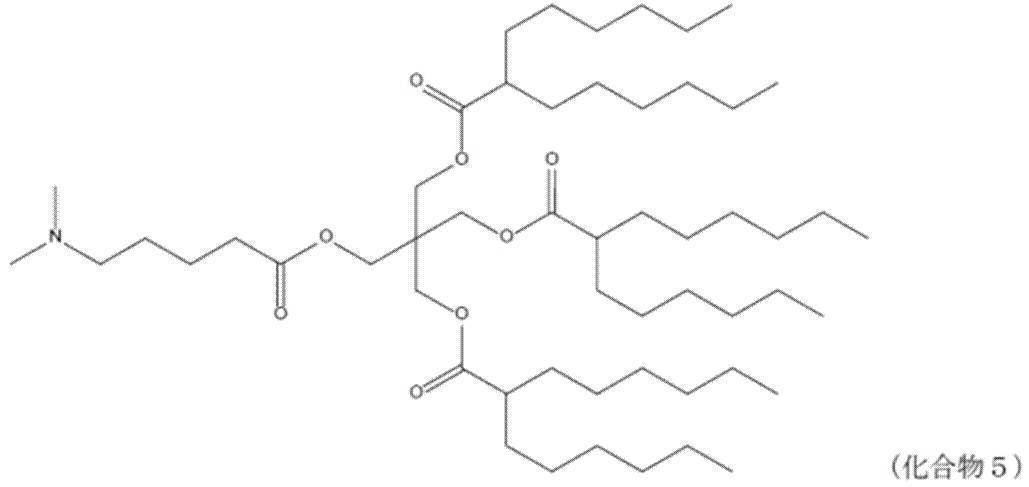


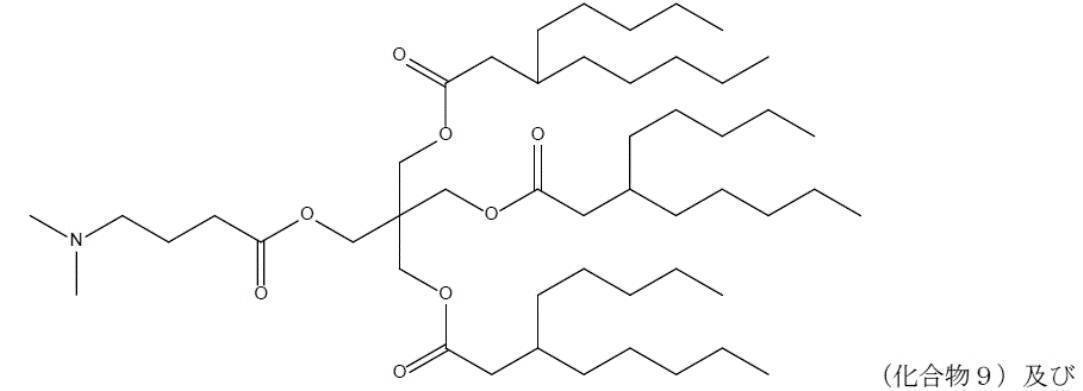


nは、2~5の整数を、
Rは、直鎖状C1-5アルキル基、直鎖状C7-11アルケニル基又は直鎖状C11アルカジエニル基を、
波線は、それぞれ独立して、シス型又はトランス型の結合を
示す。]
で表される化合物又はその塩。
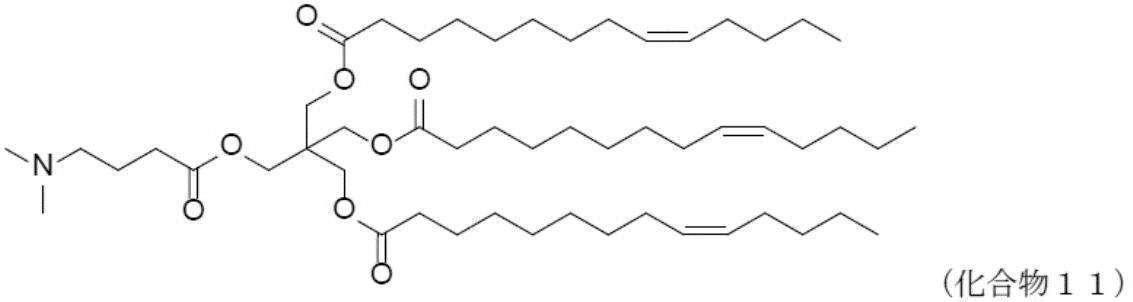


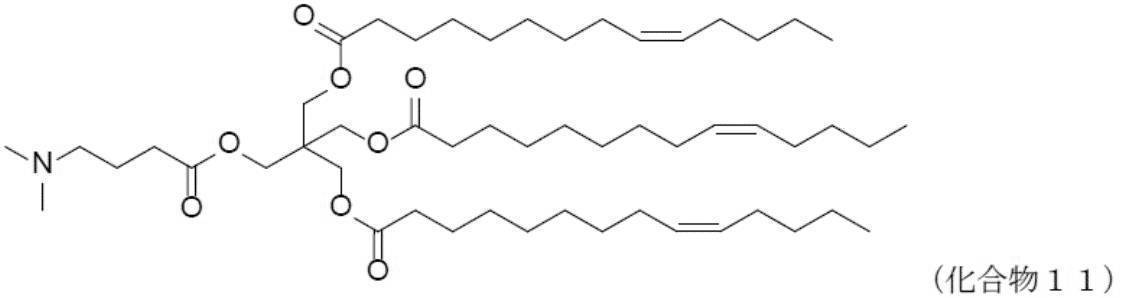


n1は、2~6の整数を、
n2は、0~2の整数を、
n3は、0~2の整数を、
Lは、-C(O)O-又は-NHC(O)O-を、
Raは、直鎖状C5-13アルキル基、直鎖状C13-17アルケニル基又は直鎖状C17アルカジエニル基を、
Rbは、直鎖状C2-9アルキル基を、
Rcは、水素原子又は直鎖状C2-9アルキル基を、
Rdは、水素原子又は直鎖状C2-9アルキル基を、
Reは、直鎖状C2-9アルキル基を、
Rfは、直鎖状C2-9アルキル基を示す。]
で表される化合物又はその塩。


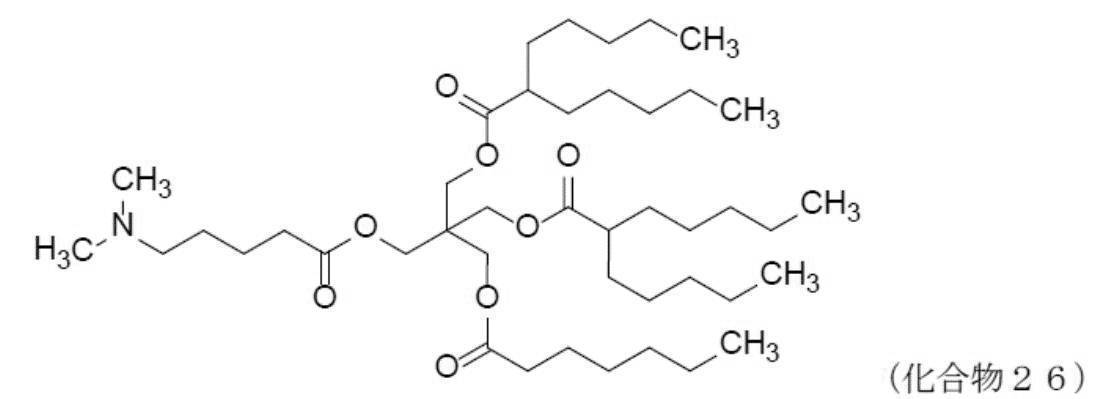


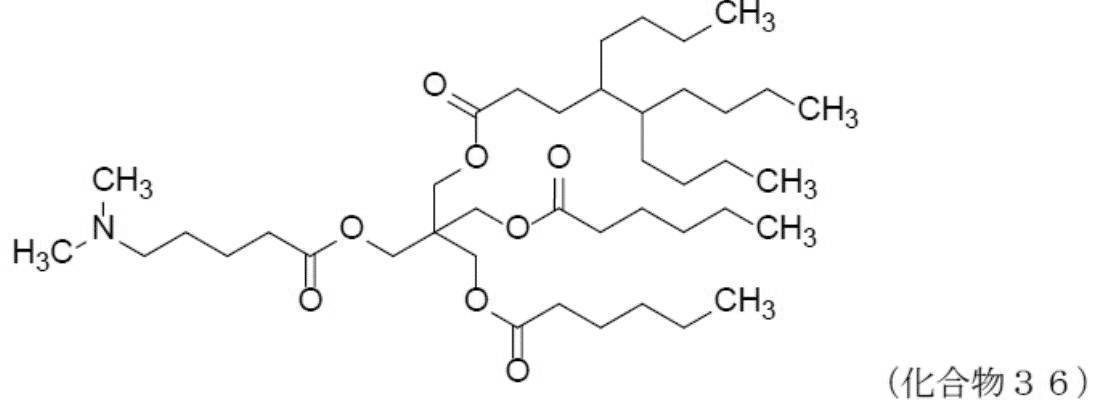


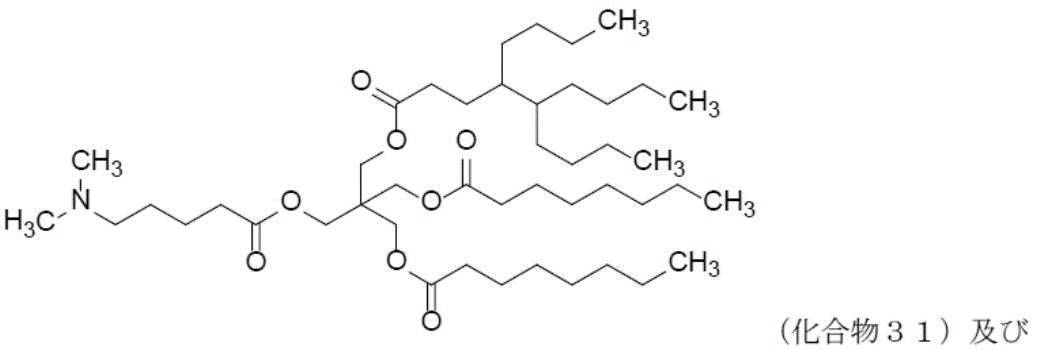
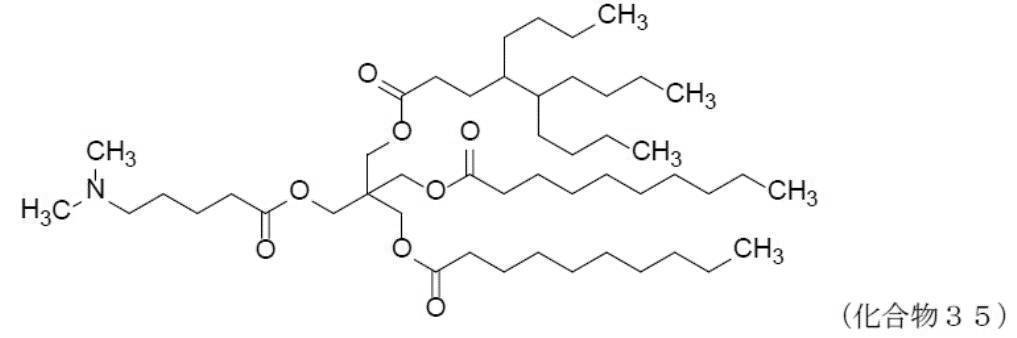


エーテル類:ジエチルエーテル、ジイソプロピルエーテル、ジフェニルエーテル、テトラヒドロフラン、1,2-ジメトキシエタンなど;
芳香族炭化水素類:クロロベンゼン、トルエン、キシレンなど;
飽和炭化水素類:シクロヘキサン、ヘキサン、ヘプタンなど;
アミド類:N,N-ジメチルホルムアミド、N-メチルピロリドンなど;
ハロゲン化炭化水素類:ジクロロメタン、四塩化炭素など;
ニトリル類:アセトニトリルなど;
スルホキシド類:ジメチルスルホキシドなど;
芳香族有機塩基類:ピリジンなど;
酸無水物類:無水酢酸など;
有機酸類:ギ酸、酢酸、トリフルオロ酢酸など;
無機酸類:塩酸、硫酸など;
エステル類:酢酸エチル、酢酸イソプロピルエステルなど;
ケトン類:アセトン、メチルエチルケトンなど;
水。
上記溶媒は、二種以上を適宜の割合で混合して用いてもよい。
塩基性塩類:炭酸ナトリウム、炭酸カルシウム、炭酸水素ナトリウムなど;
有機塩基類:トリエチルアミン、ジエチルアミン、ピリジン、4-ジメチルアミノピリジン、N,N-ジメチルアニリン、1,4-ジアザビシクロ[2.2.2]オクタン、1,8-ジアザビシクロ[5.4.0]-7-ウンデセン、イミダゾール、ピペリジンなど;
金属アルコキシド類:ナトリウムエトキシド、カリウムtert-ブトキシド、ナトリウムtert-ブトキシドなど;
アルカリ金属水素化物類:水素化ナトリウムなど;
金属アミド類:ナトリウムアミド、リチウムジイソプロピルアミド、リチウムヘキサメチルジシラジドなど;
有機リチウム類:n-ブチルリチウム、sec-ブチルリチウムなど。
有機酸類:酢酸、トリフルオロ酢酸、クエン酸、p-トルエンスルホン酸、10-カンファースルホン酸など;
ルイス酸:三フッ化ホウ素ジエチルエーテル錯体、ヨウ化亜鉛、無水塩化アルミニウム、無水塩化亜鉛、無水塩化鉄など。
上記のカチオン性脂質は1種のみを用いてもよいし、2種以上を組み合わせて用いてもよい。複数のカチオン性脂質を用いる場合、カチオン性脂質全体として前記の比率となることが好ましい。
本明細書において、「非カチオン性脂質」とは、カチオン性脂質以外の脂質を意味し、生理学的pHなどの選択したpHにおいて、正味の正電荷を持たない脂質である。本発明の脂質ナノ粒子に使用される非カチオン性脂質としては、例えば、リン脂質、ステロイド類、PEG脂質等が挙げられる。
上記のリン脂質は1種のみを用いてもよいし、2種以上を組み合わせて用いてもよい。複数のリン脂質を用いる場合、リン脂質全体として前記の比率となることが好ましい。
上記のステロイド類は1種のみを用いてもよいし、2種以上を組み合わせて用いてもよい。複数のステロイド類を用いる場合、ステロイド類全体として前記の比率となることが好ましい。
PEGの自由末端としてはメトキシ基の他に、T細胞活性化リガンドを結合するためのマレイミド基やN-ヒドロキシスクシンイミジル基等を用いることができる。T細胞活性化リガンドを結合するための官能基を有するPEG脂質(本明細書中「末端反応性PEG脂質」という場合がある)としては、例えばSUNBRIGHT DSPE-020MA(日油)を用いることができる。
上記の全PEG脂質に占める末端反応性PEG脂質の比率(モル%)は、例えば、約10%~約100%、好ましくは約30%~約100%、より好ましくは約40%~約100%であり得る。
上記のPEG脂質は1種のみを用いてもよいし、2種以上を組み合わせて用いてもよい。複数のPEG脂質を用いる場合、PEG脂質全体として前記の比率となることが好ましい。
本発明で用いられる別の好ましい核酸送達担体として、リポソームが挙げられる。リポソームとしては、核酸の細胞へのDDSにおいて従来より用いられているものを、同様に用いることができる。例えば、トランスフェクション試薬として開発された種々のカチオン性脂質(例、DOTMA、DOTAP、DDAB、DMRIE等)と、エンドソームからの放出を促進する膜融合性の中性脂質(例、DOPE、コレステロール等)を混合して調製したリポソームが広く使用されている。リポソームの表面に、PEGや、pH応答性膜融合ペプチド、膜透過促進ペプチド等の機能性分子を付加したリポソームを用いることもできる。
本発明の核酸送達担体は、上記の核酸送達担体の表面にT細胞活性化リガンドが付加されたものである。
本発明で用いられるT細胞活性化リガンドは、T細胞の表面分子と相互作用して、T細胞の活性化及び/又は増殖を促進する分子であれば特に制限はない。例えば、TCRと共役してTCRを介したシグナル伝達を担うCD3や、T細胞活性化の共刺激因子として知られる表面分子CD28、ICOS、CD137、OX40、CD27、GITR、BAFFR、TACI、BMCA、CD40L等に特異的に結合して、活性化/増殖シグナルや共シグナルを、T細胞内又は抗原提示細胞内に伝達する機能を有する分子が挙げられる。そのような分子としては、上記T細胞表面分子に対する生理的なリガンド(又は受容体)であってもよいし、アゴニスト活性を有する非生理的なリガンド(又は受容体)であってもよい。非生理的なリガンドとして、好ましくはアゴニスト抗体を挙げることができる。
本発明の核酸送達担体は、核酸を含まない形態で、T細胞の活性化及び/又は増殖を誘導するのに用いることもできるが、好ましい一実施態様においては、核酸を内包することにより、T細胞の活性化及び/又は増殖と、T細胞内への該核酸の送達とを同時に一工程で行うことができる。従って、好ましい一実施態様において、本発明の核酸送達担体は、その内部にさらにT細胞内へ送達させるための核酸を含む。
好ましい一実施態様においては、本発明の核酸送達担体は、T細胞活性化抑制因子の発現を抑制する核酸を内部に含む。対象となるT細胞活性化抑制因子としては、T細胞の活性化を抑制するものであれば特に制限はないが、例えば、抗原提示細胞や腫瘍細胞から刺激を受けて、T細胞の活性化及び/又は増殖に対して負のシグナルを伝達する細胞表面分子である免疫チェックポイント因子(例、CTLA-4、PD-1、TIM-3、LAG-3、TGIT、BTLA、VISTA(PD-1H)等)、CD160、Cbl-b、内因性TCRなどが挙げられる。
(a) 該因子をコードするmRNAに対してRNAi活性を有する核酸もしくはその前駆体、
(b) 該因子をコードするmRNAに対するアンチセンス核酸、及び
(c) 該因子をコードするmRNAに対するリボザイム核酸
等が挙げられる。
各T細胞活性化抑制因子をコードするmRNA(cDNA)のヌクレオチド配列は公知であり、例えば、公共のデータベース(例、NCBI、EMBL、DDBJ等)から配列情報を入手することができる。
T細胞活性化抑制因子をコードするmRNAに対してRNAi活性を有する核酸としては、標的mRNAに相補的なオリゴRNAとその相補鎖とからなる二本鎖RNA、即ちsiRNAが挙げられる。siRNAは、標的遺伝子のcDNA配列情報に基づいて、例えば、Elbashirら(Genes Dev., 15, 188-200 (2001))の提唱する規則に従って設計することができる。また、siRNAの前駆体であるショートヘアピンRNA(shRNA)は、ループ構造を形成しうる任意のリンカー配列(例えば、5-25塩基程度)を適宜選択し、siRNAのセンス鎖とアンチセンス鎖とを該リンカー配列を介して連結することにより設計することができる。
T細胞活性化抑制因子をコードするmRNAに対するアンチセンス核酸は、該mRNAのヌクレチド配列と相補的なヌクレオチド配列又はその一部を含む核酸であって、標的mRNAと特異的かつ安定した二重鎖を形成して結合することにより、タンパク質合成を抑制する機能を有するものである。アンチセンス核酸はDNAであってもRNAであってもよく、あるいはDNA/RNAキメラであってもよい。アンチセンス核酸がDNAの場合、標的RNAとアンチセンスDNAとによって形成されるRNA:DNAハイブリッドは、内在性RNase Hに認識されて標的RNAの選択的な分解を引き起こすことができる。アンチセンス核酸の標的領域は、該アンチセンス核酸がハイブリダイズすることにより、結果としてタンパク質への翻訳が阻害されるものであればその長さに特に制限はなく、タンパク質をコードするmRNAの全配列であっても部分配列であってもよく、短いもので約10塩基程度、長いものでmRNAもしくは初期転写産物の全配列が挙げられる。また、アンチセンス核酸は、標的mRNAや初期転写産物とハイブリダイズしてタンパク質への翻訳を阻害するだけでなく、二本鎖DNAであるこれらの遺伝子と結合して三重鎖(トリプレックス)を形成し、RNAへの転写を阻害し得るもの(アンチジーン)であってもよい。
アンチセンスオリゴヌクレオチドは、標的遺伝子のcDNA配列もしくはゲノミックDNA配列に基づいてmRNAもしくは初期転写産物の標的配列を決定し、市販のDNA/RNA自動合成機を用いて、これに相補的な配列を合成することにより調製することができる。
T細胞活性化抑制因子をコードするmRNAをコード領域の内部で特異的に切断し得るリボザイム核酸もまた、該因子の発現を抑制する核酸として使用することができる。「リボザイム」とは、狭義には、核酸を切断する酵素活性を有するRNAをいうが、本明細書では配列特異的な核酸切断活性を有する限りDNAをも包含する概念として用いるものとする。リボザイム核酸として最も汎用性の高いものとしては、ウイロイドやウイルソイド等の感染性RNAに見られるセルフスプライシングRNAがあり、ハンマーヘッド型やヘアピン型等が知られている。リボザイムを、それをコードするDNAを含む発現ベクターの形態で使用する場合には、転写産物の細胞質への移行を促進するために、tRNAを改変した配列をさらに連結したハイブリッドリボザイムとすることもできる。
上記(a)~(c)とは別の好ましい実施態様として、T細胞活性化抑制因子の発現を抑制する核酸は、該因子をコードする遺伝子を不活性化(ノックアウト)し得る核酸であり得る。そのような核酸として、該遺伝子中の部分ヌクレオチド配列を標的として特異的に認識し得る核酸配列認識モジュール(例、CRISPR/Cas9、ZFモチーフ、TALエフェクター等)と、標的配列の内部もしくはその近傍で、該遺伝子に二重鎖切断(DSB)を導入するヌクレアーゼとからなる人工ヌクレアーゼをコードする核酸が挙げられる。DSB導入後、非相同末端結合(NHEJ)修復エラーによる挿入又は欠失変異により該遺伝子をノックアウトすることができる。あるいは、該遺伝子配列内にマーカー遺伝子(例、蛍光タンパク質遺伝子等のレポーター遺伝子、薬剤耐性遺伝子等の選択マーカー遺伝子)を挿入したターゲッティングベクターと組み合わせることによって、相同組換え(HR)修復による遺伝子ノックアウトを行うこともできる。また、内因性TCR遺伝子を外因性TCR遺伝子でHR修復によりノックインすることもできる。
別の好ましい実施態様においては、本発明の核酸送達担体は、T細胞活性化促進因子をードする核酸を内部に含む。対象となるT細胞活性化促進因子としては、例えば、上述のT細胞活性化リガンドが結合して、T細胞内に活性化及び/又は増殖シグナルを伝達する、T細胞表面分子(例、CD28、ICOS、CD137、OX40、CD27、GITR、BAFFR、TACI、BMCA、CD40L等)などが挙げられる。
各T細胞活性化促進因子をコードするmRNA(cDNA)のヌクレオチド配列は公知であり、例えば、公共のデータベース(例、NCBI、EMBL、DDBJ等)から配列情報を入手することができる。
上述のように、本発明の核酸送達担体は、核酸を内包することにより、T細胞の活性化及び/又は増殖と、T細胞内への該核酸の送達とを同時に一工程で行うことができる。従って、本発明の核酸送達担体に、CAR又はTCRをコードする核酸を内包させることにより、T細胞を活性化/増殖させる工程と、T細胞への遺伝子導入工程とを、One Podで同時に行うことができる。
CARは、T細胞シグナル伝達ドメインに連結された抗体の抗原結合ドメイン(例、scFv)を含む、人工的に構築されたハイブリッドタンパク質である。CARの特徴には、モノクローナル抗体の抗原結合特性を利用して、非MHC拘束的様式でT細胞の特異性及び反応性を、選択された標的に対して転換する能力が挙げられる。非MHC拘束的抗原認識は、CARを発現するT細胞に、抗原プロセシングと無関係に抗原を認識する能力を与え、それにより、腫瘍エスケープの主要な機構を迂回する。さらに、T細胞中で発現されると、CARは、有利なことに、内在性TCR α鎖及びβ鎖と二量体化しない。
そのようにして得られた、抗原結合ドメイン、細胞外ヒンジドメイン、膜貫通ドメイン及び細胞内シグナル伝達ドメインをそれぞれコードするDNA断片を、常法により連結することにより、CARをコードするDNAを取得することができる。
本明細書において、「T細胞受容体(TCR)」とは、TCR鎖(α鎖、β鎖)のダイマーから構成され、抗原又は該抗原-HLA(ヒト白血球型抗原)(MHC;主要組織適合遺伝子複合体)複合体を認識してT細胞へ刺激シグナルを伝達する受容体を意味する。それぞれのTCR鎖は可変領域と定常領域から構成され、可変領域には、3つの相補性決定領域(CDR1、CDR2、CDR3)が存在する。また、本発明で使用されるTCRには、TCRのα鎖とβ鎖がヘテロダイマーを構成しているものだけでなく、ホモダイマーを構成しているものも包含される。さらに、該TCRには、定常領域の一部若しくは全部を欠損したものや、アミノ酸配列を組み換えたもの、可溶性TCR (soluble TCR) としたものなども包含される。
尚、「外因性TCR」とは、本発明の核酸送達担体の標的細胞であるT細胞にとって外因性であることを意味する。外因性TCRのアミノ酸配列は、本発明の核酸送達担体の標的細胞であるT細胞が発現する内因性TCRと同一であっても、異なっていてもよい。
該核酸は自体公知の方法により調製することができる。目的のTCRのアミノ酸配列又は核酸配列が公知である場合には、該配列に基づき、例えば、化学的にDNA鎖やRNA鎖を合成するか、もしくは合成した一部オーバーラップするオリゴDNA短鎖を、PCR法やGibson Assembly法を利用して接続することにより、本発明のTCRの全長又は一部をコードするDNAを構築することが可能である。
また、TCRの各鎖をコードするRNA、好ましくはmRNAは、例えば、該発現ベクターを鋳型として、前記CARをコードするRNAと同様にして、調製することができる。
本発明の核酸送達担体は、好ましくはex vivoでT細胞を活性化及び/又は増殖させるのに使用することが望ましいが、対象にin vivo投与する使用態様も含まれる。その場合、本発明の核酸送達担体の表面に、該核酸送達担体をT細胞へ標的化し得るリガンド(以下、「T細胞標的化リガンド」ともいう。)をさらに付加することにより、T細胞へのターゲッティング効率を高めることができる。
以下に、本発明の核酸送達担体の代表例として、担体として脂質ナノ粒子を用いた場合の本発明の核酸送達担体(以下、「本発明の脂質ナノ粒子」ともいう。)の製造例について説明するが、リポソーム等の他の担体を用いる場合でも、使用する担体に応じて適宜変更を加えることにより、同様に本発明の核酸送達担体を得ることができる。
有機溶媒溶液中の全脂質成分の濃度は、好ましくは0.5~100mg/mLである。
また、脂質ナノ粒子は、脂質粒子分散液と該核酸を自体公知の方法で混和することにより製造することもできる。
本発明の脂質ナノ粒子における該核酸の含量は、好ましくは、1~20重量%である。該含量は、Quant-iTTM Ribogreen(登録商標)(Invitrogen)を用いて測定することができる。また、本発明の脂質ナノ粒子における該核酸の内封率は、界面活性剤(例、Triton-X100)添加の有無による蛍光強度の差をもとに算出することができる。
本発明はまた、上記のようにして得られる本発明の核酸送達担体を用いたT細胞の活性化及び/又は増殖方法(以下、「本発明の活性化/増殖方法」ともいう。)を提供する。当該方法は、T細胞を含む細胞集団と、本発明の核酸送達担体とを接触させる工程を含む。ここで、T細胞は、生体から採取したT細胞(本明細書において「ex vivo T細胞」ともいう。)であってもよいし、生体内のT細胞(本明細書において「in vivo T細胞」ともいう。)であってもいが、好ましくはex vivo T細胞である。
本発明の核酸送達法においては、核酸の送達効率を上げるために、例えば、リン酸カルシウム共沈殿法、PEG法、エレクトロポレーション法、マイクロインジェクション法、リポフェクション法などを併用してもよい。
あるいは、上述のように、内因性TCR遺伝子はゲノム編集技術を用いてノックアウトすることもできる。
上述のように、T細胞を含む細胞集団と、少なくとも1種のT細胞活性化リガンド、並びにT細胞活性化リガンドが表面に付加されていない上記いずれかの核酸送達担体とを同時に接触させることにより、T細胞内に核酸を送達することができる。従って、本発明はまた、少なくとも1種のT細胞活性化リガンドと、T細胞活性化リガンドが表面に付加されていない核酸送達担体とを組み合わせてなる核酸送達システムを提供する。当該核酸送達システムにおいて、T細胞活性化リガンドと、T細胞活性化リガンドが表面に付加されていない核酸送達担体とは、それらの両方を含んでなる組成物として提供されてもよく、あるいは、それぞれ別個の構成要素として、キットの形態で提供されてもよい。当該核酸送達用キットには、上記両構成要素の他に、例えば、T細胞を含む細胞集団とそれらの構成要素とを接触させる際に用いる培地などを、さらに含めることができるが、これに限定されない。
本発明はまた、本発明の活性化/増殖方法により活性化及び/又は増殖したex vivo T細胞、あるいは、本発明の核酸送達法により核酸を送達されたex vivo T細胞(さらに培地を含んでなる細胞培養物を含む)、並びにそれらを含有してなる医薬を提供する。
本発明の核酸送達担体は、ヒト等の哺乳動物にin vivo投与することにより、生体内のT細胞の活性化及び/又は増殖を誘導することができる。また、CARや外因性TCRをコードする核酸を内部に含む本発明の核酸送達担体は、ヒト等の哺乳動物にin vivo投与することにより、生体内のT細胞内に該核酸を送達し、発現させることにより、該T細胞に該CAR又は外因性TCRが特異的に認識する表面抗原(例、がん抗原)を発現する細胞(例、がん細胞)を特異的に認識し、これを殺傷(例、アポトーシスを誘導)する能力を付与することができる。従って、本発明はまた、本発明の核酸送達担体を含有してなる医薬を提供する。
9.21 mg/mlの抗CD3抗体及び抗CD28抗体(Bio X Cell社)溶液各111 μlに、10 mMのDTT水溶液12.3 μlを混合した。各抗体とDTTの混合液はvortexにより混合し、室温にて30分間反応を行った。反応液はHPLC(カラム:TSKgel G2000SWXL 7.8 mm×30 cm, TOSOH社, 移動相:PBS)により分画を行い、還元抗体を含む分取液を得た。分取液はAmicon 0.5 ml-10Kを用いて限外濃縮を行った。濃縮液中の抗体タンパク濃度、及びチオール基濃度はそれぞれ230 nmの吸光度及びN-(7-ジメチルアミノ-4-メチルクマリン-3-イル)マレイミド(DACM)を用いた蛍光呈色反応により測定した。
カチオン性脂質として化合物7、11、12、21、31もしくは35を含む脂質混合物(カチオン性脂質:DPPC:Cholesterol:SUNBRIGHT GM-020:SUNBRIGHT DSPE-020MA=60:10.6:28:1.4:1, モル比)を、90% EtOH、10% 水に溶解して、7.0 mg/mlの脂質溶液を得た。一方、luciferase mRNA(TriLink社)は2-morpholinoethanesulfonic acid(MES)緩衝液pH 5.0に溶解して0.2 mg/mlのmRNA溶液を得た。得られた脂質溶液及びmRNA溶液は、室温にてNanoAssemblr装置 (Precision Nanosystems社) によって、流速比 3 ml/min:6 ml/minで混合し、組成物を含む分散液を得た。得られた分散液は、Slyde-A-Lyzer(20kの分画分子量、Thermo Scientific社)を用いて水に対して室温で1時間、PBSに対して4℃で48時間透析を行った。続いて、0.2 μmのsyringe filter(Iwaki)を用いてろ過を行い、4℃に保存した。
Maleimideに対する還元抗体のモル濃度が1/20となるようにmaleimide-脂質ナノ粒子分散液に還元抗体溶液を混合し、室温にて4時間静置した。その後、精製工程まで4℃に保管した。
還元抗体とMaleimide-脂質ナノ粒子の反応液をゲルろ過カラムSepharose CL-4B (Cat No.17-0150-01 / GE Healthcare) にロードし、D-PBS(-) を移動相として分画を行った。続いて、各フラクションのタンパク濃度を測定する事により、目的とする抗体-脂質ナノ粒子が含まれる分画を同定し、抗体-脂質ナノ粒子原液を得た。抗体-脂質ナノ粒子は0.2 μmのシリンジフィルターによってろ過を行い、4℃に保存した。
抗体-脂質ナノ粒子原液1 μlに99 μlのphosphate buffered saline (137 mM NaCl, 7.99 mM Na2HPO4, 2.7 mM KCl, 1.47 mM KH2PO4, pH 7.4) を添加した。得られた分散液をZetasizer Nano ZS (Malvern instruments) を用いた動的光散乱測定に供し、自己相関関数のキュムラント解析を行ってZ平均粒子径及びpolydispersity index (PDI) を測定した。
抗体-脂質ナノ粒子原液50 μlに700 μlのHEPESバッファー(10 mM HEPES-NaOH, pH 7.3)を添加した。得られた分散液をZetasizer Nano ZS (Malvern instruments) を用いた電気泳動光散乱測定に供し、ζ電位を測定した。
抗体-脂質ナノ粒子原液をTEバッファーで希釈し、mRNA濃度を約4 μg/mlに調整した。また、mRNA濃度基準液として、naked mRNAをTEバッファーにより4 μg/mlに希釈した。希釈した抗体-脂質ナノ粒子及びnaked mRNA濃度基準液各60 μlには、60 μlのTEバッファー又は2% Triton-X100を含むTEバッファーをそれぞれ混合した。室温に5分間静置した後、120 μlのQuant-iTTM RiboGreen(登録商標)を混合し、さらに5分間静置した。混合液の蛍光強度測定はEnvisionマイクロプレートリーダー (Perkin-Elmer社) を用いて行った。mRNA内封率及びmRNA濃度は次式により算出した。
mRNA濃度 = (FTriton-b)×d/m
(ただし、FTEは TEバッファーを混合した脂質ナノ粒子のRiboGreen蛍光強度を示し、FTritonは2 % Triton-X100を含むTEバッファーを混合した脂質ナノ粒子のRiboGreen蛍光強度を示す。bとmは濃度基準siRNAの検量線から得られるy切片と傾きを示す。dは脂質ナノ粒子の希釈率を示す。)

ヒト末梢血CD3陽性汎T細胞(Precision Bioservices社)を1×10⁵ cells/wellの細胞密度で丸底96-well plate(Corning社)に播種した。培地には30 ng/mlの組み換えIL-2(Thermo Fisher Scientific社)を添加した無血清造血細胞培地X-VIVO10(Lonza社)を用いた。続いて、luciferase mRNA(TriLink社)を内封する抗CD3抗体結合脂質ナノ粒子を、培地中luciferase mRNA濃度が1 μg/mlとなるように培地へ添加し、37℃の5% CO2インキュベーター内にて72時間静置した。T細胞に発現したluciferaseはBright-Glo Luciferase Assay Systemキット(Promega社)を用いて測定した。各抗CD3抗体-脂質ナノ粒子を添加したT細胞の相対的なluciferase発光強度を図1に示した。
ヒト末梢血CD3陽性汎T細胞(Precision Bioservices社)を1×10⁵cells/wellの細胞密度で丸底96-well plate(Corning社)に播種した。培地には30 ng/mlの組み換えIL-2(Thermo Fisher Scientific社)を添加した無血清造血細胞培地X-VIVO10(Lonza社)を用いた。続いて、luciferase mRNA(TriLink社)を内封する抗CD3抗体結合脂質ナノ粒子、抗CD28抗体結合脂質ナノ粒子、抗CD3抗体結合脂質ナノ粒子と抗CD28抗体結合脂質ナノ粒子の混合物、及び、抗CD3抗体と抗CD28抗体を混合して結合した脂質ナノ粒子を培地中luciferase mRNA濃度が1 μg/mlとなるように培地へ添加し、37℃の5% CO2インキュベーター内にて72時間静置した。T細胞に発現したluciferaseはBright-Glo Luciferase Assay Systemキット (Promega社) を用いて測定した。各抗体-脂質ナノ粒子を添加したT細胞の相対的なluciferase発光強度を図2に示した。
ヒト末梢血CD3陽性汎T細胞(Precision Bioservices社)を1×10⁵cells/wellの細胞密度で丸底96-well plate(Corning社)に播種した。培地には30 ng/mlの組み換えIL-2(Thermo Fisher Scientific社)を添加した無血清造血細胞培地X-VIVO10(Lonza社)を用いた。続いて、luciferase mRNA(TriLink社)を内封する抗CD3抗体及び抗CD28抗体結合した脂質ナノ粒子を、培地中luciferase mRNA濃度が0.3及び1 μg/mlとなるように培地へ添加し、37℃の5% CO2インキュベーター内にて72時間静置した。なお、T細胞活性化刺激のコントロールサンプルとして、TransAct(Miltenyi Biotec社)及びDynabeads(Thermo Fisher Scientific社)を添加したT細胞も調製した。T細胞に発現したluciferaseはBright-Glo Luciferase Assay Systemキット(Promega社) を用いて測定した。また、T細胞の生存細胞数はCellTiter-Gloキット(Promega社)を用いて測定した。Luciferaseの発現量を図3(I)に、T細胞の生存数は図3(II)及び(III)に示した。
カチオン性脂質として化合物35を含む脂質混合物(化合物35:DPPC:Cholesterol:SUNBRIGHT GM-020:SUNBRIGHT = 60:10.6:28:1.4モル比)を、90% EtOH、10% 水に溶解して、8.1 mg/mlの脂質溶液を得た。一方、luciferase mRNA(Luc mRNA)(TriLink社)は2-morpholinoethanesulfonic acid(MES)緩衝液pH 5.0に溶解して0.18 mg/mlのmRNA溶液を得た。得られた脂質溶液及びmRNA溶液は、室温にてNanoAssemblr装置 (Precision Nanosystems社) によって、流速比 3 ml/min:6 ml/minで混合し、Luc mRNA内封脂質ナノ粒子の分散液を得た。得られた分散液は、Slyde-A-Lyzer (20kの分画分子量、Thermo Scientific社) を用いて水に対して室温で1時間、PBSに対して4℃で48時間透析を行った。続いて、0.2 μmのsyringe filter(Iwaki)を用いてろ過を行い、4℃に保存した。
Luc mRNA内封脂質ナノ粒子原液1 μlに99 μlのphosphate buffered saline (137 mM NaCl, 7.99 mM Na2HPO4, 2.7 mM KCl, 1.47 mM KH2PO4, pH 7.4) を添加した。得られた分散液をZetasizer Nano ZS (Malvern instruments) を用いた動的光散乱測定に供し、自己相関関数のキュムラント解析を行ってZ平均粒子径及びpolydispersity indexを測定した。
Luc mRNA内封脂質ナノ粒子原液50 μlに700 μlのHEPESバッファー(10 mM HEPES-NaOH, pH 7.3)を添加した。得られた分散液をZetasizer Nano ZS (Malvern instruments) を用いた電気泳動光散乱測定に供し、ζ電位を測定した。
Luc mRNA内封脂質ナノ粒子原液をTEバッファーで希釈し、mRNA濃度を約4 μg/mlに調整した。また、mRNA濃度基準液として、naked mRNAをTEバッファーにより4 μg/mlに希釈した。希釈したLuc mRNA内封脂質ナノ粒子及びnaked mRNA濃度基準液各60 μlには、60 μlのTEバッファー又は2% Triton-X100を含むTEバッファーをそれぞれ混合した。室温に5分間静置した後、120 μlのQuant-iTTM RiboGreen(登録商標)を混合し、さらに5分間静置した。混合液の蛍光強度測定はEnvisionマイクロプレートリーダー (Perkin-Elmer社) を用いて行った。mRNA内封率及びmRNA濃度は次式により算出した。
mRNA濃度 = (FTriton-b)×d/m
(ただし、FTEは TEバッファーを混合した脂質ナノ粒子のRiboGreen蛍光強度を示し、FTritonは2 % Triton-X100を含むTEバッファーを混合した脂質ナノ粒子のRiboGreen蛍光強度を示す。bとmは濃度基準siRNAの検量線から得られるy切片と傾きを示す。dは脂質ナノ粒子の希釈率を示す。)

ヒト末梢血CD3陽性汎T細胞(Precision Bioservices社)を1×10⁵ cells/wellの細胞密度で丸底96-well plate(Corning社)に播種した。培地には30 ng/mlの組み換えIL-2(Thermo Fisher Scientific社)、およびT細胞に活性化刺激を与えるTransAct(Milteny Biotech社)もしくはDynabeads Human T-Activator CD3/CD28 (ThermoFisher Scientific社)を各メーカー推奨プロトコールに則って添加した無血清造血細胞培地X-VIVO10(Lonza社)を用いた。続いて、luciferase mRNA(TriLink社)を内封する脂質ナノ粒子化合物35-luc mRNAを、培地中luciferase mRNA濃度が0.1, 0.3, 1 μg/mlとなるように培地へ添加し、37℃の5% CO2インキュベーター内にて72時間静置した。T細胞に発現したluciferaseはBright-Glo Luciferase Assay Systemキット(Promega社)を用いて測定した。T細胞の生存および増殖率はCellTiter-Glo Luminescent Cell Viability Assayキット(Promega社)を用いて測定した。得られた結果を図4及び5に示した。活性化刺激下のT細胞にLuc mRNAを内封した脂質ナノ粒子を添加する事により、トランスフェクション活性は劇的に向上する事が示された(図4)。また、T細胞の生存および増殖率は高い水準で維持された(図5)。
ヒト末梢血白血球画分Leukopak(HemaCare社)はLOVO Cell Processing System (Fresenius社)によって洗浄を行い、細胞処理システムCliniMACS(Milteny Biotec社)によってCD4およびCD8陽性細胞を回収した。得られたCD4/CD8陽性細胞は1×105cells/wellの細胞密度で平底96-well plate(Corning社)に播種した。なお、細胞の培養にはOPTmizer CTS T-Cell Expansion Basal Medium 1 Lあたりに26 mLのOPTmizer CTS T-cell Expansion Supplement、20 mLのCTS Immune SR、10 mLのL-Glutamine 200 mM(以上ThermoFischer Scientific社)、10 mLのStreptomycin Sulfate 10 mg/ml (MEIJI社)、4.2 ng/mlのMACS GMP Recombinant Human IL-2(Milteny Biotec社)を含有する培地を用いた。また、T細胞の活性化刺激剤としては、TransAct(Milteny Biotech社)をメーカー推奨プロトコールに則って添加した。続いて、luciferase mRNA(TriLink社)を内封する脂質ナノ粒子化合物35-luc mRNAを、培地中luciferase mRNA濃度が1, 3, 10 μg/mlとなるように培地へ添加し、37℃の5% CO2インキュベーター内にて72時間静置した。T細胞に発現したluciferaseはBright-Glo Luciferase Assay Systemキット(Promega社)を用いて測定した。T細胞の生存および増殖率はCellTiter-Glo Luminescent Cell Viability Assayキット(Promega社)を用いて測定した。得られた結果を図6に示した。活性化刺激下のT細胞にLuc mRNAを内封した脂質ナノ粒子を添加する事により、トランスフェクション活性は劇的に向上する事が示された。また、T細胞の生存および増殖率は高い水準で維持された。
Claims (32)
- T細胞の活性化及び/又は増殖方法であって、T細胞を含む細胞集団と、少なくとも1種のT細胞活性化リガンドを表面に付加した核酸送達担体とを接触させる工程を含む、方法。
- 前記T細胞活性化リガンドがCD3に対する抗体及び/又はCD28に対する抗体を含む、請求項1に記載の方法。
- 前記核酸送達担体の表面にT細胞活性化リガンドが2種以上付加されている、請求項1に記載の方法。
- 前記核酸送達担体が、脂質ナノ粒子又はリポソームである、請求項1に記載の方法。
- 前記核酸送達担体の内部に、T細胞活性化抑制因子の発現を抑制する核酸及び/又はT細胞活性化促進因子をコードする核酸が含まれる、請求項1に記載の方法。
- 前記核酸送達担体の内部に、CAR又はTCRをコードする核酸が含まれる、請求項1に記載の方法。
- ex vivoで行われる、請求項1に記載の方法。
- T細胞を含む細胞集団と、少なくとも1種のT細胞活性化リガンドを表面に付加し、かつ内部に核酸を含む核酸送達担体とを接触させる工程を含み、当該核酸がCAR又はTCRをコードする核酸が含まない、T細胞内への核酸の送達方法。
- 前記T細胞活性化リガンドが、CD3に対する抗体及び/又はCD28に対する抗体を含む、請求項8に記載の方法。
- 前記核酸送達担体の表面にT細胞活性化リガンドが2種以上付加されている、請求項8に記載の方法。
- 前記核酸送達担体が、脂質ナノ粒子又はリポソームである、請求項8に記載の方法。
- 前記核酸が、T細胞活性化抑制因子の発現を抑制する核酸及び/又はT細胞活性化促進因子をコードする核酸を含む、請求項8に記載の方法。
- ex vivoで行われる、請求項8に記載の方法。
- T細胞を含む細胞集団と、少なくとも1種のT細胞活性化リガンド、並びに、内部に核酸を含む、T細胞活性化リガンドが表面に付加されていない核酸送達担体とを同時に接触させる工程を含む、T細胞内への核酸の送達方法。
- 前記T細胞活性化リガンドが、CD3に対する抗体及び/又はCD28に対する抗体を含む、請求項14に記載の方法。
- 2種以上のT細胞活性化リガンドを接触させる、請求項14に記載の方法。
- 前記核酸送達担体が、脂質ナノ粒子又はリポソームである、請求項14に記載の方法。
- 前記核酸が、T細胞活性化抑制因子の発現を抑制する核酸及び/又はT細胞活性化促進因子をコードする核酸を含む、請求項14に記載の方法。
- 前記核酸が、CAR又はTCRをコードする核酸を含む、請求項14に記載の方法。
- ex vivoで行われる、請求項14に記載の方法。
- T細胞を含む細胞集団と、少なくとも1種のT細胞活性化リガンド、並びに、内部に核酸を含む、T細胞活性化リガンドが表面に付加されていない核酸送達担体とを同時に接触させる工程を含む、T細胞を含有してなる医薬の製造方法。
- 前記T細胞活性化リガンドが、CD3に対する抗体及び/又はCD28に対する抗体を含む、請求項21に記載の方法。
- 2種以上のT細胞活性化リガンドを接触させる、請求項21に記載の方法。
- 前記核酸送達担体が、脂質ナノ粒子又はリポソームである、請求項21に記載の方法。
- 前記核酸が、T細胞活性化抑制因子の発現を抑制する核酸及び/又はT細胞活性化促進因子をコードする核酸を含む、請求項21に記載の方法。
- 前記核酸が、CAR又はTCRをコードする核酸を含む、請求項21に記載の方法。
- ex vivoで行われる、請求項21に記載の方法。
- 請求項14に記載の方法により細胞内に核酸が送達されたT細胞。
- 請求項28に記載のT細胞を含有してなる医薬。
- T細胞を含む細胞集団と、少なくとも1種のT細胞活性化リガンド、T細胞活性化リガンドが表面に付加されていない核酸送達担体、及び培地を含む、細胞培養物。
- 少なくとも1種のT細胞活性化リガンド、及びT細胞活性化リガンドが表面に付加されていない核酸送達担体を含む、T細胞への核酸送達用組成物。
- 少なくとも1種のT細胞活性化リガンド、及びT細胞活性化リガンドが表面に付加されていない核酸送達担体を含む、T細胞への核酸送達用キット。
Priority Applications (14)
| Application Number | Priority Date | Filing Date | Title |
|---|---|---|---|
| EP19873862.7A EP3868889A4 (en) | 2018-10-18 | 2019-10-17 | Method for activation/proliferation of t cells |
| MX2021004357A MX2021004357A (es) | 2018-10-18 | 2019-10-17 | Metodo para la activacion y proliferacion de las celulas t. |
| CN201980068068.4A CN112912509B (zh) | 2018-10-18 | 2019-10-17 | T细胞的活化/增殖方法 |
| US17/286,334 US20210381006A1 (en) | 2018-10-18 | 2019-10-17 | Method for activation/proliferation of t cells |
| BR112021007360-4A BR112021007360A2 (pt) | 2018-10-18 | 2019-10-17 | métodos para ativar/proliferar células t, para distribuir um ácido nucleico em células t e para produzir um medicamento, célula t, medicamento, cultura de células, composição, e, kit para distribuir um ácido nucleico em células t |
| CA3115751A CA3115751A1 (en) | 2018-10-18 | 2019-10-17 | Method for activation/proliferation of t cells |
| JP2020553297A JP7634924B2 (ja) | 2018-10-18 | 2019-10-17 | T細胞の活性化/増殖方法 |
| SG11202103745WA SG11202103745WA (en) | 2018-10-18 | 2019-10-17 | Method for activation/proliferation of t cells |
| CN202411909929.6A CN119876276A (zh) | 2018-10-18 | 2019-10-17 | T细胞的活化/增殖方法 |
| AU2019362630A AU2019362630A1 (en) | 2018-10-18 | 2019-10-17 | Method for activation/proliferation of T cells |
| KR1020217014510A KR20210080435A (ko) | 2018-10-18 | 2019-10-17 | T 세포의 활성화/증식을 위한 방법 |
| IL282110A IL282110A (en) | 2018-10-18 | 2021-04-07 | Method for activation/proliferation of t cells |
| CONC2021/0005061A CO2021005061A2 (es) | 2018-10-18 | 2021-04-21 | Método para la activación y proliferación de las células t |
| JP2024209694A JP2025029078A (ja) | 2018-10-18 | 2024-12-02 | T細胞の活性化/増殖方法 |
Applications Claiming Priority (4)
| Application Number | Priority Date | Filing Date | Title |
|---|---|---|---|
| JP2018-197069 | 2018-10-18 | ||
| JP2018197069 | 2018-10-18 | ||
| JP2019-124629 | 2019-07-03 | ||
| JP2019124629 | 2019-07-03 |
Publications (1)
| Publication Number | Publication Date |
|---|---|
| WO2020080475A1 true WO2020080475A1 (ja) | 2020-04-23 |
Family
ID=70283937
Family Applications (1)
| Application Number | Title | Priority Date | Filing Date |
|---|---|---|---|
| PCT/JP2019/040937 Ceased WO2020080475A1 (ja) | 2018-10-18 | 2019-10-17 | T細胞の活性化/増殖方法 |
Country Status (14)
| Country | Link |
|---|---|
| US (1) | US20210381006A1 (ja) |
| EP (1) | EP3868889A4 (ja) |
| JP (2) | JP7634924B2 (ja) |
| KR (1) | KR20210080435A (ja) |
| CN (2) | CN112912509B (ja) |
| AU (1) | AU2019362630A1 (ja) |
| BR (1) | BR112021007360A2 (ja) |
| CA (1) | CA3115751A1 (ja) |
| CO (1) | CO2021005061A2 (ja) |
| IL (1) | IL282110A (ja) |
| MX (1) | MX2021004357A (ja) |
| SG (1) | SG11202103745WA (ja) |
| TW (1) | TWI868080B (ja) |
| WO (1) | WO2020080475A1 (ja) |
Cited By (6)
| Publication number | Priority date | Publication date | Assignee | Title |
|---|---|---|---|---|
| WO2022081699A1 (en) * | 2020-10-13 | 2022-04-21 | The Trustees Of The University Of Pennsylvania | In vivo targeting of t cells for mrna therapeutics |
| WO2022081702A1 (en) * | 2020-10-13 | 2022-04-21 | The Trustees Of The University Of Pennsylvania | In vivo targeting of cd4+-t cells for mrna therapeutics |
| WO2022081694A1 (en) * | 2020-10-13 | 2022-04-21 | The Trustees Of The University Of Pennsylvania | In vivo targeting of fibrosis by anti-cd5-targeted fap-car t mrna-lnp |
| WO2024134551A1 (en) * | 2022-12-23 | 2024-06-27 | Pfizer Inc. | Lipid particle compositions and methods of use thereof |
| WO2024210160A1 (en) | 2023-04-07 | 2024-10-10 | Takeda Pharmaceutical Company Limited | Conjugation complex |
| WO2025120230A1 (en) | 2023-12-07 | 2025-06-12 | T-Curx Gmbh | Method of producing leukocytes expressing artificial antigen receptors |
Families Citing this family (2)
| Publication number | Priority date | Publication date | Assignee | Title |
|---|---|---|---|---|
| CN116286948A (zh) * | 2023-02-21 | 2023-06-23 | 河南科技大学 | 一种可活化t细胞的盐藻外泌体组合物的制备方法及应用 |
| KR20260006623A (ko) * | 2023-04-28 | 2026-01-13 | 센젠 센신 바이오테크놀로지 컴퍼니 리미티드 | 변형된 전달 담체 및 이의 용도 |
Citations (25)
| Publication number | Priority date | Publication date | Assignee | Title |
|---|---|---|---|---|
| US6352694B1 (en) | 1994-06-03 | 2002-03-05 | Genetics Institute, Inc. | Methods for inducing a population of T cells to proliferate using agents which recognize TCR/CD3 and ligands which stimulate an accessory molecule on the surface of the T cells |
| WO2008153029A1 (ja) | 2007-06-11 | 2008-12-18 | Takara Bio Inc. | 特異的遺伝子発現方法 |
| WO2010042877A1 (en) | 2008-10-09 | 2010-04-15 | Tekmira Pharmaceuticals Corporation | Improved amino lipids and methods for the delivery of nucleic acids |
| WO2010054401A1 (en) | 2008-11-10 | 2010-05-14 | Alnylam Pharmaceuticals, Inc. | Novel lipids and compositions for the delivery of therapeutics |
| WO2011153493A2 (en) | 2010-06-03 | 2011-12-08 | Alnylam Pharmaceuticals, Inc. | Biodegradable lipids for the delivery of active agents |
| WO2013126803A1 (en) | 2012-02-24 | 2013-08-29 | Protiva Biotherapeutics Inc. | Trialkyl cationic lipids and methods of use thereof |
| WO2014007398A1 (ja) | 2012-07-06 | 2014-01-09 | 協和発酵キリン株式会社 | カチオン性脂質 |
| US20140087462A1 (en) | 2012-09-25 | 2014-03-27 | Miltenyi Biotec Gmbh | Method for polyclonal stimulation of t cells by flexible nanomatrices |
| WO2015005253A1 (ja) | 2013-07-08 | 2015-01-15 | 第一三共株式会社 | 新規脂質 |
| WO2015011633A1 (en) | 2013-07-23 | 2015-01-29 | Protiva Biotherapeutics, Inc. | Compositions and methods for delivering messenger rna |
| US20150239834A1 (en) | 2013-11-18 | 2015-08-27 | Arcturus Therapeutics, Inc. | Symmetric ionizable cationic lipid for rna delivery |
| WO2015199952A1 (en) | 2014-06-25 | 2015-12-30 | Acuitas Therapeutics Inc. | Novel lipids and lipid nanoparticle formulations for delivery of nucleic acids |
| WO2016021683A1 (ja) | 2014-08-07 | 2016-02-11 | 武田薬品工業株式会社 | カチオン性脂質 |
| US20160145348A1 (en) | 2013-03-14 | 2016-05-26 | Fred Hutchinson Cancer Research Center | Compositions and methods to modify cells for therapeutic objectives |
| WO2016104580A1 (ja) | 2014-12-26 | 2016-06-30 | エーザイ・アール・アンド・ディー・マネジメント株式会社 | カチオン性脂質 |
| US9404127B2 (en) | 2010-06-30 | 2016-08-02 | Protiva Biotherapeutics, Inc. | Non-liposomal systems for nucleic acid delivery |
| WO2016189532A1 (en) | 2015-05-26 | 2016-12-01 | Ramot At Tel-Aviv University Ltd. | Targeted lipid particles for systemic delivery of nucleic acid molecules to leukocytes |
| WO2017000414A1 (zh) | 2015-06-30 | 2017-01-05 | 宇龙计算机通信科技(深圳)有限公司 | 业务检测方法及业务检测系统、终端和基站 |
| WO2017075531A1 (en) | 2015-10-28 | 2017-05-04 | Acuitas Therapeutics, Inc. | Novel lipids and lipid nanoparticle formulations for delivery of nucleic acids |
| WO2017117528A1 (en) | 2015-12-30 | 2017-07-06 | Acuitas Therapeutics, Inc. | Lipids and lipid nanoparticle formulations for delivery of nucleic acids |
| JP2017125034A (ja) * | 2008-10-12 | 2017-07-20 | マサチューセッツ インスティテュート オブ テクノロジー | 免疫ナノ治療剤による抗原提示細胞のターゲティング |
| US20170296676A1 (en) | 2016-04-14 | 2017-10-19 | Fred Hutchinson Cancer Research Center | Compositions and methods to program therapeutic cells using targeted nucleic acid nanocarriers |
| JP2018197069A (ja) | 2017-05-24 | 2018-12-13 | トヨタ紡織株式会社 | 車両用内装材 |
| WO2019131839A1 (ja) | 2017-12-28 | 2019-07-04 | 武田薬品工業株式会社 | カチオン性脂質 |
| JP2019124629A (ja) | 2018-01-18 | 2019-07-25 | Tdk株式会社 | 送電線の絶縁状態検知装置 |
Family Cites Families (14)
| Publication number | Priority date | Publication date | Assignee | Title |
|---|---|---|---|---|
| EP0789076A3 (en) * | 1996-02-07 | 1999-04-14 | Takeda Chemical Industries, Ltd. | G protein coupled receptor proteins, their production and use |
| CA2205881A1 (en) * | 1997-07-09 | 1999-01-09 | Gilbert Mazza | Tcr scfv and biological applications thereof |
| AU773279B2 (en) * | 1999-04-08 | 2004-05-20 | Johns Hopkins University, The | Antigen-specific induction of peripheral immune tolerance |
| US20030220278A1 (en) * | 2002-01-24 | 2003-11-27 | Oregon Health & Science University | Method of inducing proliferation of T cells |
| CN101189339A (zh) * | 2005-03-22 | 2008-05-28 | 美得思达健康有限公司 | 诊断和治疗心血管疾病的递送系统和方法 |
| EP2018436A2 (en) * | 2006-04-25 | 2009-01-28 | Immune Disease Institute Inc. | Targeted delivery to leukocytes using non-protein carriers |
| CN107028886A (zh) * | 2009-11-04 | 2017-08-11 | 不列颠哥伦比亚大学 | 含有核酸的脂质粒子及相关的方法 |
| CA3018046A1 (en) * | 2011-12-16 | 2013-06-20 | Moderna Therapeutics, Inc. | Modified nucleoside, nucleotide, and nucleic acid compositions |
| ES2918501T3 (es) * | 2013-12-19 | 2022-07-18 | Novartis Ag | Receptores de antígenos quiméricos de mesotelina humana y usos de los mismos |
| WO2016180467A1 (en) * | 2015-05-11 | 2016-11-17 | Biontech Cell & Gene Therapies Gmbh | Enhancing the effect of car-engineered t cells by means of nucleic acid vaccination |
| PL412787A1 (pl) * | 2015-06-22 | 2017-01-02 | Magdalena Król | Oparty na makrofagach celowany system dostarczania związków związanych z ferrytyną |
| GB2592821B (en) * | 2015-07-31 | 2022-01-12 | Univ Minnesota | Modified cells and methods of therapy |
| KR101850206B1 (ko) * | 2016-07-20 | 2018-04-19 | 단국대학교 천안캠퍼스 산학협력단 | 이온방출형 생활성 글라스 나노파티클을 포함하는 코어-쉘 섬유상 세포전달체 및 이의 용도 |
| TWI894123B (zh) * | 2017-12-27 | 2025-08-21 | 日商武田藥品工業有限公司 | 含核酸之脂質奈米粒子及其用途 |
-
2019
- 2019-10-17 TW TW108137566A patent/TWI868080B/zh active
- 2019-10-17 CN CN201980068068.4A patent/CN112912509B/zh active Active
- 2019-10-17 EP EP19873862.7A patent/EP3868889A4/en active Pending
- 2019-10-17 US US17/286,334 patent/US20210381006A1/en active Pending
- 2019-10-17 CN CN202411909929.6A patent/CN119876276A/zh active Pending
- 2019-10-17 JP JP2020553297A patent/JP7634924B2/ja active Active
- 2019-10-17 SG SG11202103745WA patent/SG11202103745WA/en unknown
- 2019-10-17 CA CA3115751A patent/CA3115751A1/en active Pending
- 2019-10-17 MX MX2021004357A patent/MX2021004357A/es unknown
- 2019-10-17 KR KR1020217014510A patent/KR20210080435A/ko active Pending
- 2019-10-17 WO PCT/JP2019/040937 patent/WO2020080475A1/ja not_active Ceased
- 2019-10-17 BR BR112021007360-4A patent/BR112021007360A2/pt unknown
- 2019-10-17 AU AU2019362630A patent/AU2019362630A1/en not_active Abandoned
-
2021
- 2021-04-07 IL IL282110A patent/IL282110A/en unknown
- 2021-04-21 CO CONC2021/0005061A patent/CO2021005061A2/es unknown
-
2024
- 2024-12-02 JP JP2024209694A patent/JP2025029078A/ja active Pending
Patent Citations (25)
| Publication number | Priority date | Publication date | Assignee | Title |
|---|---|---|---|---|
| US6352694B1 (en) | 1994-06-03 | 2002-03-05 | Genetics Institute, Inc. | Methods for inducing a population of T cells to proliferate using agents which recognize TCR/CD3 and ligands which stimulate an accessory molecule on the surface of the T cells |
| WO2008153029A1 (ja) | 2007-06-11 | 2008-12-18 | Takara Bio Inc. | 特異的遺伝子発現方法 |
| WO2010042877A1 (en) | 2008-10-09 | 2010-04-15 | Tekmira Pharmaceuticals Corporation | Improved amino lipids and methods for the delivery of nucleic acids |
| JP2017125034A (ja) * | 2008-10-12 | 2017-07-20 | マサチューセッツ インスティテュート オブ テクノロジー | 免疫ナノ治療剤による抗原提示細胞のターゲティング |
| WO2010054401A1 (en) | 2008-11-10 | 2010-05-14 | Alnylam Pharmaceuticals, Inc. | Novel lipids and compositions for the delivery of therapeutics |
| WO2011153493A2 (en) | 2010-06-03 | 2011-12-08 | Alnylam Pharmaceuticals, Inc. | Biodegradable lipids for the delivery of active agents |
| US9404127B2 (en) | 2010-06-30 | 2016-08-02 | Protiva Biotherapeutics, Inc. | Non-liposomal systems for nucleic acid delivery |
| WO2013126803A1 (en) | 2012-02-24 | 2013-08-29 | Protiva Biotherapeutics Inc. | Trialkyl cationic lipids and methods of use thereof |
| WO2014007398A1 (ja) | 2012-07-06 | 2014-01-09 | 協和発酵キリン株式会社 | カチオン性脂質 |
| US20140087462A1 (en) | 2012-09-25 | 2014-03-27 | Miltenyi Biotec Gmbh | Method for polyclonal stimulation of t cells by flexible nanomatrices |
| US20160145348A1 (en) | 2013-03-14 | 2016-05-26 | Fred Hutchinson Cancer Research Center | Compositions and methods to modify cells for therapeutic objectives |
| WO2015005253A1 (ja) | 2013-07-08 | 2015-01-15 | 第一三共株式会社 | 新規脂質 |
| WO2015011633A1 (en) | 2013-07-23 | 2015-01-29 | Protiva Biotherapeutics, Inc. | Compositions and methods for delivering messenger rna |
| US20150239834A1 (en) | 2013-11-18 | 2015-08-27 | Arcturus Therapeutics, Inc. | Symmetric ionizable cationic lipid for rna delivery |
| WO2015199952A1 (en) | 2014-06-25 | 2015-12-30 | Acuitas Therapeutics Inc. | Novel lipids and lipid nanoparticle formulations for delivery of nucleic acids |
| WO2016021683A1 (ja) | 2014-08-07 | 2016-02-11 | 武田薬品工業株式会社 | カチオン性脂質 |
| WO2016104580A1 (ja) | 2014-12-26 | 2016-06-30 | エーザイ・アール・アンド・ディー・マネジメント株式会社 | カチオン性脂質 |
| WO2016189532A1 (en) | 2015-05-26 | 2016-12-01 | Ramot At Tel-Aviv University Ltd. | Targeted lipid particles for systemic delivery of nucleic acid molecules to leukocytes |
| WO2017000414A1 (zh) | 2015-06-30 | 2017-01-05 | 宇龙计算机通信科技(深圳)有限公司 | 业务检测方法及业务检测系统、终端和基站 |
| WO2017075531A1 (en) | 2015-10-28 | 2017-05-04 | Acuitas Therapeutics, Inc. | Novel lipids and lipid nanoparticle formulations for delivery of nucleic acids |
| WO2017117528A1 (en) | 2015-12-30 | 2017-07-06 | Acuitas Therapeutics, Inc. | Lipids and lipid nanoparticle formulations for delivery of nucleic acids |
| US20170296676A1 (en) | 2016-04-14 | 2017-10-19 | Fred Hutchinson Cancer Research Center | Compositions and methods to program therapeutic cells using targeted nucleic acid nanocarriers |
| JP2018197069A (ja) | 2017-05-24 | 2018-12-13 | トヨタ紡織株式会社 | 車両用内装材 |
| WO2019131839A1 (ja) | 2017-12-28 | 2019-07-04 | 武田薬品工業株式会社 | カチオン性脂質 |
| JP2019124629A (ja) | 2018-01-18 | 2019-07-25 | Tdk株式会社 | 送電線の絶縁状態検知装置 |
Non-Patent Citations (9)
| Title |
|---|
| ACS NANO, vol. 9, no. 7, 2015, pages 6706 - 6716 |
| DONG ET AL., PROC NATL ACAD SCI U S A., vol. 111, no. 15, 15 April 2014 (2014-04-15), pages 5753 |
| ELBASHIR ET AL., GENES DEV., vol. 15, 2001, pages 188 - 200 |
| L. F. TIETZETH. EICHER: "Modern Organic Synthesis in the Laboratory: A Collection of Standard Experimental Procedures", vol. I-VII, 1989, KAGAKU-DOJIN PUBLISHING |
| LOVE KT ET AL., PROC NATL ACAD SCI U S A., vol. 107, no. 21, 25 May 2010 (2010-05-25), pages 9915 |
| NATURE NANOTECHNOLOGY, vol. 12, 2017, pages 813 - 820 |
| P.J. KOCIENSKI: "Protecting Groups", 2004, THIEME |
| See also references of EP3868889A4 |
| THEODORA W. GREENEPETER G. M. WUTS: "Protective Groups in Organic Synthesis", 2007, WILEY-INTERSCIENCE |
Cited By (6)
| Publication number | Priority date | Publication date | Assignee | Title |
|---|---|---|---|---|
| WO2022081699A1 (en) * | 2020-10-13 | 2022-04-21 | The Trustees Of The University Of Pennsylvania | In vivo targeting of t cells for mrna therapeutics |
| WO2022081702A1 (en) * | 2020-10-13 | 2022-04-21 | The Trustees Of The University Of Pennsylvania | In vivo targeting of cd4+-t cells for mrna therapeutics |
| WO2022081694A1 (en) * | 2020-10-13 | 2022-04-21 | The Trustees Of The University Of Pennsylvania | In vivo targeting of fibrosis by anti-cd5-targeted fap-car t mrna-lnp |
| WO2024134551A1 (en) * | 2022-12-23 | 2024-06-27 | Pfizer Inc. | Lipid particle compositions and methods of use thereof |
| WO2024210160A1 (en) | 2023-04-07 | 2024-10-10 | Takeda Pharmaceutical Company Limited | Conjugation complex |
| WO2025120230A1 (en) | 2023-12-07 | 2025-06-12 | T-Curx Gmbh | Method of producing leukocytes expressing artificial antigen receptors |
Also Published As
| Publication number | Publication date |
|---|---|
| CO2021005061A2 (es) | 2021-04-30 |
| TWI868080B (zh) | 2025-01-01 |
| TW202022112A (zh) | 2020-06-16 |
| CA3115751A1 (en) | 2020-04-23 |
| JP7634924B2 (ja) | 2025-02-25 |
| JPWO2020080475A1 (ja) | 2021-09-30 |
| SG11202103745WA (en) | 2021-05-28 |
| IL282110A (en) | 2021-05-31 |
| US20210381006A1 (en) | 2021-12-09 |
| MX2021004357A (es) | 2021-05-31 |
| CN119876276A (zh) | 2025-04-25 |
| CN112912509A (zh) | 2021-06-04 |
| KR20210080435A (ko) | 2021-06-30 |
| EP3868889A4 (en) | 2022-08-24 |
| AU2019362630A1 (en) | 2021-05-13 |
| CN112912509B (zh) | 2024-12-31 |
| BR112021007360A2 (pt) | 2021-07-20 |
| JP2025029078A (ja) | 2025-03-05 |
| EP3868889A1 (en) | 2021-08-25 |
Similar Documents
| Publication | Publication Date | Title |
|---|---|---|
| JP7631407B2 (ja) | 核酸含有脂質ナノ粒子及びその用途 | |
| JP7634924B2 (ja) | T細胞の活性化/増殖方法 | |
| CN114746401B (zh) | 用于核酸递送的可离子化脂质 | |
| CN120615013A (zh) | 用于细胞靶向的隐形脂质纳米颗粒组合物 | |
| KR20250017231A (ko) | 면역 반응을 조절하기 위한 조성물 및 방법 | |
| RU2806549C2 (ru) | Способ активации/пролиферации t-клеток | |
| US20260124306A1 (en) | Nucleic acid-containing lipid nano-particle and use thereof | |
| HK40042674A (en) | Nucleic acid-containing lipid nano-particle and use thereof | |
| EA047415B1 (ru) | Содержащая нуклеиновую кислоту липидная наночастица и ее применение | |
| WO2025250751A1 (en) | Circular rna compositions and methods | |
| WO2026096738A1 (en) | Chimeric antigen receptors targeting cd19 |
Legal Events
| Date | Code | Title | Description |
|---|---|---|---|
| 121 | Ep: the epo has been informed by wipo that ep was designated in this application |
Ref document number: 19873862 Country of ref document: EP Kind code of ref document: A1 |
|
| ENP | Entry into the national phase |
Ref document number: 2020553297 Country of ref document: JP Kind code of ref document: A |
|
| ENP | Entry into the national phase |
Ref document number: 3115751 Country of ref document: CA |
|
| NENP | Non-entry into the national phase |
Ref country code: DE |
|
| WWE | Wipo information: entry into national phase |
Ref document number: NC2021/0005061 Country of ref document: CO |
|
| REG | Reference to national code |
Ref country code: BR Ref legal event code: B01A Ref document number: 112021007360 Country of ref document: BR |
|
| WWP | Wipo information: published in national office |
Ref document number: NC2021/0005061 Country of ref document: CO |
|
| ENP | Entry into the national phase |
Ref document number: 2019362630 Country of ref document: AU Date of ref document: 20191017 Kind code of ref document: A Ref document number: 20217014510 Country of ref document: KR Kind code of ref document: A |
|
| ENP | Entry into the national phase |
Ref document number: 2019873862 Country of ref document: EP Effective date: 20210518 |
|
| ENP | Entry into the national phase |
Ref document number: 112021007360 Country of ref document: BR Kind code of ref document: A2 Effective date: 20210416 |
|
| WWG | Wipo information: grant in national office |
Ref document number: 201980068068.4 Country of ref document: CN |