WO2020100912A1 - Procédé de production de citrate ferrique hydraté - Google Patents
Procédé de production de citrate ferrique hydraté Download PDFInfo
- Publication number
- WO2020100912A1 WO2020100912A1 PCT/JP2019/044385 JP2019044385W WO2020100912A1 WO 2020100912 A1 WO2020100912 A1 WO 2020100912A1 JP 2019044385 W JP2019044385 W JP 2019044385W WO 2020100912 A1 WO2020100912 A1 WO 2020100912A1
- Authority
- WO
- WIPO (PCT)
- Prior art keywords
- ferric citrate
- citrate hydrate
- citric acid
- ferric
- water
- Prior art date
- Legal status (The legal status is an assumption and is not a legal conclusion. Google has not performed a legal analysis and makes no representation as to the accuracy of the status listed.)
- Ceased
Links
Images


Classifications
-
- C—CHEMISTRY; METALLURGY
- C07—ORGANIC CHEMISTRY
- C07C—ACYCLIC OR CARBOCYCLIC COMPOUNDS
- C07C51/00—Preparation of carboxylic acids or their salts, halides or anhydrides
- C07C51/41—Preparation of salts of carboxylic acids
-
- C—CHEMISTRY; METALLURGY
- C07—ORGANIC CHEMISTRY
- C07C—ACYCLIC OR CARBOCYCLIC COMPOUNDS
- C07C59/00—Compounds having carboxyl groups bound to acyclic carbon atoms and containing any of the groups OH, O—metal, —CHO, keto, ether, groups, groups, or groups
- C07C59/235—Saturated compounds containing more than one carboxyl group
- C07C59/245—Saturated compounds containing more than one carboxyl group containing hydroxy or O-metal groups
- C07C59/265—Citric acid
-
- A—HUMAN NECESSITIES
- A61—MEDICAL OR VETERINARY SCIENCE; HYGIENE
- A61K—PREPARATIONS FOR MEDICAL, DENTAL OR TOILETRY PURPOSES
- A61K31/00—Medicinal preparations containing organic active ingredients
- A61K31/185—Acids; Anhydrides, halides or salts thereof, e.g. sulfur acids, imidic, hydrazonic or hydroximic acids
- A61K31/19—Carboxylic acids, e.g. valproic acid
- A61K31/194—Carboxylic acids, e.g. valproic acid having two or more carboxyl groups, e.g. succinic, maleic or phthalic acid
-
- C—CHEMISTRY; METALLURGY
- C07—ORGANIC CHEMISTRY
- C07F—ACYCLIC, CARBOCYCLIC OR HETEROCYCLIC COMPOUNDS CONTAINING ELEMENTS OTHER THAN CARBON, HYDROGEN, HALOGEN, OXYGEN, NITROGEN, SULFUR, SELENIUM OR TELLURIUM
- C07F15/00—Compounds containing elements of Groups 8, 9, 10 or 18 of the Periodic Table
- C07F15/02—Iron compounds
-
- Y—GENERAL TAGGING OF NEW TECHNOLOGICAL DEVELOPMENTS; GENERAL TAGGING OF CROSS-SECTIONAL TECHNOLOGIES SPANNING OVER SEVERAL SECTIONS OF THE IPC; TECHNICAL SUBJECTS COVERED BY FORMER USPC CROSS-REFERENCE ART COLLECTIONS [XRACs] AND DIGESTS
- Y02—TECHNOLOGIES OR APPLICATIONS FOR MITIGATION OR ADAPTATION AGAINST CLIMATE CHANGE
- Y02E—REDUCTION OF GREENHOUSE GAS [GHG] EMISSIONS, RELATED TO ENERGY GENERATION, TRANSMISSION OR DISTRIBUTION
- Y02E60/00—Enabling technologies; Technologies with a potential or indirect contribution to GHG emissions mitigation
- Y02E60/10—Energy storage using batteries
Definitions
- the present invention relates to a novel method for producing ferric citrate hydrate.
- Ferric citrate is a compound containing ferric iron that is trivalent iron and a molecular structure derived from citric acid, and the molar ratio of the molecular structure derived from citric acid to ferric iron in ferric citrate. Is not supposed to take a certain value. It is also called ferric citrate hydrate because it contains a certain amount of water. It is known that the ferric citrate hydrate can be suitably used as a therapeutic agent for hyperphosphatemia in renal failure patients, in addition to reagents and food additives. Such ferric citrate hydrate for pharmaceutical use preferably has a large BET specific surface area and excellent solubility as compared with ferric citrate hydrate for food additive use. It is known that it is preferable that the BET specific surface area is 16 m 2 / g or more. (See Patent Document 1 or 2).
- Patent Document 1 ferric chloride hexahydrate is reacted with a base such as sodium hydroxide to obtain water.
- Ferric oxide is obtained, the obtained ferric hydroxide is centrifuged, and then ferric hydroxide is reacted with citric acid in water to obtain a solution containing ferric citrate.
- a water-soluble organic solvent such as acetone to precipitate ferric citrate hydrate as a solid to produce.
- Patent Document 2 the content of ⁇ -iron oxide hydroxide in ferric citrate hydrate produced by controlling the temperature and time when sodium hydroxide is added in the above production method within a predetermined range. It is disclosed that the amount can be suppressed.
- Cited Document 2 the obtained ferric hydroxide is separated by filtration.
- Patent Document 3 discloses the following manufacturing method. Citric acid, ferric chloride and sodium hydroxide are mixed in water with heating to give a solution containing ferric citrate. The solution is added to alcohols such as methanol to precipitate ferric citrate hydrate as a solid to produce ferric citrate hydrate having a BET specific surface area of 1 to 15 m 2 / g.
- alcohols such as methanol
- ferric citrate hydrate as a solid to produce ferric citrate hydrate having a BET specific surface area of 1 to 15 m 2 / g.
- sodium citrate may be substituted for citric acid and sodium hydroxide.
- Patent Documents 1 and 2 can produce ferric citrate hydrate having a BET specific surface area of 16 m 2 / g or more, ferric hydroxide and ferric citrate hydrate.
- the solid-liquid separation property is extremely poor, and there is a problem from the viewpoint of operability.
- Patent Document 3 is relatively simple in operability because ferric hydroxide does not precipitate in the system, but it is difficult to remove by-produced sodium chloride, and the obtained ferric citrate is obtained.
- ferric citrate hydrate produced by the production method described in Patent Document 3 has a BET specific surface area of 1 to 15 m 2 / g and not 16 m 2 / g or more, it is used for pharmaceutical applications. It was difficult to do so. That is, by a simple operation, other components such as by-product salts such as sodium chloride are not included, and more accurately, other components such as by-product salts such as sodium chloride are not included or less (the same applies below. ) And a method capable of easily producing a high-quality ferric citrate hydrate having a large BET specific surface area has been desired.
- ferric citrate hydrate citric acid, ferric chloride, and an alkali metal or alkaline earth metal which is lithium or magnesium.
- a metal or alkaline earth metal hydroxide or carbonate at least one of lithium hydroxide or carbonate or magnesium hydroxide or carbonate
- base a metal or alkaline earth metal hydroxide or carbonate (at least one of lithium hydroxide or carbonate or magnesium hydroxide or carbonate)
- ferric citrate hydrate that does not contain other components such as by-product salts can be easily obtained, and the equivalent of base to ferric chloride can be obtained. It was found that the BET specific surface area of the ferric citrate hydrate produced can be set to 16 m 2 / g or more by setting (molar equivalent, the same applies below) to 0.30 to 0.95 equivalent.
- the present invention has been completed.
- the equivalent number of the base with respect to ferric chloride is a numerical value in consideration of the valence of ferric chloride and the valence of the base.
- the base is lithium hydroxide
- 3 mol of the base is required for 1 mol of ferric chloride
- the number of moles of the base is the valence of the base.
- the number of equivalents of the base to ferric chloride is calculated by dividing the number obtained by multiplying 1 by the number obtained by multiplying the number of moles of ferric chloride by 3 which is the valence of the iron ion of ferric chloride.
- the equivalent number of the base to ferric chloride in the above formula (1) is 1, as described above.
- the equivalent number in the present invention is 0.3 to 0.95 equivalent, which is a feature that it is smaller than the above theoretical amount.
- citric acid, ferric chloride, and a hydroxide or carbonate of an alkali metal or an alkaline earth metal are mixed in water to obtain a mixture, and the mixture is then mixed with an organic solvent.
- a method for producing ferric citrate hydrate by producing a ferric citrate hydrate by mixing with, wherein the alkali metal or alkaline earth metal is lithium or magnesium, and ferric chloride is a method for producing ferric citrate hydrate in which the hydroxide or carbonate of an alkali metal or alkaline earth metal is 0.30 to 0.95 equivalent.
- One aspect of the present invention is the method for producing the ferric citrate hydrate, wherein the amount of the water is 2.0 to 8.5 mL with respect to 1 g of the citric acid. As a result, ferric citrate hydrate from which by-product salts have been removed to a higher degree can be produced. Further, one aspect of the present invention is the method for producing the ferric citrate hydrate, wherein 1.0 to 2.5 equivalents of ferric chloride are used with respect to the citric acid. Thereby, the production yield of ferric citrate hydrate can be further improved.
- ferric citrate hydrate having a large BET specific surface area of 16 m 2 / g or more and containing no by-product salt can be obtained with high purity and high yield by a simple operation. Can be obtained at Therefore, according to the present invention, ferric citrate hydrate having a quality expected to be preferably used as a drug substance can be easily produced as compared with a known production method.
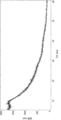
- Example 3 is an X-ray diffraction chart of ferric citrate hydrate obtained in Example 2.
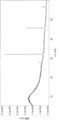
- 16 is an X-ray diffraction chart of ferric citrate hydrate obtained in Example 15.
- 8 is an X-ray diffraction chart of ferric citrate hydrate obtained in Comparative Example 4.
- 9 is an X-ray diffraction chart of ferric citrate hydrate obtained in Comparative Example 5.
- citric acid, ferric chloride, and at least one hydroxide or carbonate of an alkali metal or an alkaline earth metal are mixed in water to obtain a mixture, and the mixture is mixed with an organic solvent.
- a method for producing a ferric citrate hydrate by producing a ferric citrate hydrate by mixing, wherein the alkali metal or alkaline earth metal is lithium or magnesium, and with respect to ferric chloride And a hydroxide or carbonate of an alkali metal or an alkaline earth metal in an amount of 0.30 to 0.95 equivalent is a method for producing ferric citrate hydrate.
- the manufacturing method of the present invention will be described in detail below.
- citric acid can be used as reagents, industrial products, etc. without particular limitation.
- the form thereof is not particularly limited, and in addition to the solid form, a form such as an aqueous solution may be used.
- citric acid may be in the form of hydrate as well as anhydride, but any form may be used.
- the usage of other raw materials such as ferric chloride is calculated based on the usage of citric acid. Therefore, the amount of citric acid used may be appropriately determined according to the production scale of ferric citrate hydrate. When a hydrate, an aqueous solution, or the like is used, the amount converted to the pure content of citric acid contained therein (hereinafter, referred to as “pure citric acid conversion amount”) is used as a standard. When citric acid, its hydrate, aqueous solution, etc. are used in combination, the total of the amount of citric acid used and the amount of citric acid converted to pure content is used as the standard. Further, the amount of water contained in the form is included in the amount of water used in the present invention.
- the pure content of citric acid may be calculated by a known method such as high performance liquid chromatography (HPLC) or a quantification method using a titrator.
- HPLC high performance liquid chromatography
- KF Karl Fischer titration
- Citric acid may contain impurities such as aconitic acid and citraconic acid derived from the decomposition of citric acid depending on the production conditions.
- impurities such as aconitic acid and citraconic acid derived from the decomposition of citric acid depending on the production conditions.
- citric acid having a low content of the impurities it is preferable to use citric acid having a low content of the impurities.
- the purity of citric acid is preferably 98.0 to 99.9%, and impurities such as aconitic acid and citraconic acid are 0.01 to 1 respectively. It is preferably 0.0%.
- ferric chloride can be used without particular limitation in reagents, industrial products and the like.
- the form thereof is not particularly limited, and in addition to the solid form, a form such as an aqueous solution may be used.
- ferric chloride may be in the form of a hydrate as well as an anhydride, but any form may be used.
- the amount of ferric chloride used is preferably 1.0 to 2.5 equivalents of ferric chloride with respect to citric acid. By setting it as the said range, the manufacturing yield of ferric citrate hydrate can be improved more. Further, within the range, depending on the amount used, the molecular structure derived from citric acid in the obtained ferric citrate hydrate (Fe (C 6 H 5 O 7 ) in the formula (1) (C 6 The ratio of the content of H 5 O 7 ) 3- ) and ferric iron, that is, the molar ratio of the molecular structure derived from citric acid to ferric iron in the ferric citrate hydrate can be adjusted.
- the amount of ferric chloride used may be appropriately determined according to the desired molar ratio of ferric citrate hydrate.
- the amount used is based on the amount converted to the pure content of ferric chloride contained therein (the amount converted to the pure content of ferric chloride).
- the amount of water contained in the form is included in the amount of water used in the present invention.
- a hydroxide or carbonate of an alkali metal or an alkaline earth metal in which an alkali metal or an alkaline earth metal as a base is lithium or magnesium (a hydroxide or a carbonate of lithium, or a hydroxide of magnesium or Carbonate) is used, but specifically, lithium hydroxide, magnesium hydroxide, lithium carbonate and magnesium carbonate.
- bases may be used alone or in combination of two or more. Further, these can be used without particular limitation, such as reagents and industrial products. Among these, lithium hydroxide and magnesium hydroxide are more preferable in consideration of reactivity.
- the amount of the above base used is 0.30 to 0.95 equivalent to ferric chloride, that is, 0.30 to 2.38 equivalent to citric acid.
- the BET specific surface area of ferric citrate hydrate can be 16 m ⁇ 2 > / g or more. Within this range, the BET specific surface area of ferric citrate hydrate tends to increase as the amount of base used decreases. On the other hand, as the amount of the base used increases, the production yield of ferric citrate hydrate tends to increase. Therefore, the amount of the base used may be appropriately determined within the above range according to the desired BET specific surface area and the like. From the viewpoint of the BET specific surface area and the production yield, the amount of the base used is ferric chloride.
- lithium hydroxide exists in the form of a monohydrate in addition to the anhydride, but the form is not particularly limited, and may be a solution form such as an aqueous solution.
- the amount of the base used is based on the amount converted to the pure content of the base contained therein (the pure content conversion amount of the base). Further, the amount of water contained in the form is included in the amount of water used in the present invention.
- water in the present invention, water is not particularly limited, and tap water, ion-exchanged water, distilled water or the like can be used.
- the amount of water used is preferably 2.0 to 8.5 mL with respect to 1 g of citric acid.
- the amount of water used is preferably 2.0 to 8.5 mL with respect to 1 g of citric acid.
- the generated by-product salt can be sufficiently removed, and the amount of the by-product salt in the ferric citrate hydrate produced is reduced. it can.
- 8.5 mL or less of water the amount of ferric citrate hydrate dissolved in the mother liquor (dispersion solvent in the suspension containing ferric citrate hydrate described below) It is possible to reduce and increase the production yield of ferric citrate hydrate.
- the ferric citrate hydrate obtained when using less than 2.5 mL of water tends to be granular, but when it is 2.5 mL or more, the obtained ferric citrate hydrate is It tends to be powdery. It is considered that due to this difference in shape, the incorporation of the by-product salt into the ferric citrate hydrate is reduced, and the residual amount of the by-product salt can be more highly reduced.
- the amount of water contained in the form is included in the amount of water used in the present invention.
- citric acid, ferric chloride, and an alkali metal or alkaline earth metal hydroxide or carbonate are mixed in water to obtain a mixture.
- the mixing operation is not particularly limited and may be carried out by a known method, but a container made of glass, stainless steel, Teflon (registered trademark), glass lining or the like is used, and further, a mechanical stirrer, a magnetic stirrer or the like is used. It is preferable to mix each raw material with stirring from the viewpoint of uniformity and operability.
- the mixing order of each raw material is not particularly limited, but when only other raw materials except for citric acid are mixed, ferric hydroxide is once precipitated in the system.
- ferric hydroxide may be converted into other iron compounds such as ⁇ , ⁇ or ⁇ iron oxide hydroxide and iron oxide depending on the temperature and the like.
- the iron compound has a remarkably low solubility in water or an aqueous citric acid solution as compared with ferric hydroxide, and as a result, it remains as an insoluble solid even after the subsequent addition of citric acid, and the produced citric acid The production yield of diiron hydrate may decrease, and the iron compound may remain in the ferric citrate hydrate.
- each raw material it is preferable to mix water and citric acid before mixing ferric chloride and a hydroxide or carbonate of an alkali metal or an alkaline earth metal. Furthermore, when a hydroxide or carbonate of an alkali metal or an alkaline earth metal is mixed with a mixture containing ferric chloride, the hydroxide or carbonate of an alkali metal or an alkaline earth metal becomes a lump, which causes a long dissolution time. Since it may take time, it is more preferable to mix the alkali metal or alkaline earth metal hydroxide or carbonate before the ferric chloride is mixed.
- citric acid it is more preferable to mix citric acid, water, a hydroxide or carbonate of an alkali metal or an alkaline earth metal, and ferric chloride in this order.
- citric acid water, a hydroxide or carbonate of an alkali metal or an alkaline earth metal, and ferric chloride in this order.
- ferric chloride ferric chloride
- the temperature of the above mixing operation is preferably 35 to 80 ° C. when all the raw materials are mixed.
- the solid raw materials are dissolved in water to react with each other, and ferric citrate hydrate is produced.
- Ferric citrate hydrate may precipitate due to the high solids concentration in it.
- the temperature is 80 ° C. or lower, the decomposition of ferric citrate hydrate and / or citric acid can be suppressed, and the purity of the ferric citrate hydrate produced can be further increased.
- the temperature is particularly Not limited.
- ferric citrate hydrate If each raw material dissolves in water, the formation of ferric citrate hydrate will proceed instantaneously, so after mixing all the raw materials, visually confirm the dissolution of each solid and set the mixing time. It may be determined appropriately. It is usually sufficient to mix for at least 5 minutes after adding the last raw material. However, depending on the mixing temperature, the decomposition of ferric citrate hydrate and / or citric acid tends to proceed as the mixing time increases, so once dissolution is confirmed, mixing with an organic solvent, which is the next operation, is performed. It is preferable to carry out the operation.
- Organic solvent In the present invention, the mixture obtained as described above and an organic solvent are mixed. By the mixing operation, ferric citrate hydrate is precipitated, and a suspension containing ferric citrate hydrate can be obtained.
- the organic solvent is not particularly limited as long as it is an organic solvent in which ferric citrate hydrate is precipitated by mixing with the mixture, but since the solid concentration of the mixture is usually high, the organic solvent Depending on the type, when mixed with the mixture, the organic solvent may be separated and the mixture may not be uniformly mixed, and ferric citrate hydrate may not be precipitated. Regardless of the manufacturing conditions of the mixture, examples of the organic solvent in which ferric citrate hydrate is precipitated include methanol, ethanol, 1-propanol, and 2-propanol.
- the amount of the organic solvent used is preferably 3 to 20 mL per 1 g of citric acid. By setting it as the said range, ferric citrate hydrate will precipitate after mixing with an organic solvent. In the above range, considering the production yield of ferric citrate hydrate, operability, etc., the amount of the organic solvent used is more preferably 4 to 15 mL with respect to 1 g of citric acid, and 5 to 13 mL. More preferable.
- an organic solvent other than the above may be contained as long as the content is 1 mL or less per 1 mL of the organic solvent.
- the organic solvent other than the above is an organic solvent that is miscible with the above organic solvent and water, and specifically, alcohols such as 1-butanol, 2-butanol, t-butanol, allyl alcohol, propargyl alcohol, acetone, Ketones such as methyl ethyl ketone, acetylacetone and diacetone alcohol, cyclic ethers such as tetrahydrofuran and dioxane, nitriles such as acetonitrile, N, N-dimethylacetamide, N, N-dimethylformamide, N-methyl-2-pyrrolidone and the like Examples thereof include nitrogen-containing compounds and sulfur-containing compounds such as dimethyl sulfoxide.
- alcohols such as 1-butanol, 2-butanol, t-butanol, allyl alcohol, propargyl alcohol, etc.
- acetone are taken into consideration because of their relatively low boiling point, easy removal, and production yield.
- Methyl ethyl ketone, acetylacetone, diacetone alcohol, and other ketones, tetrahydrofuran, dioxane, and other cyclic ethers, acetonitrile, and other nitriles are more preferred, and acetone, methyl ethyl ketone, acetylacetone, diacetone alcohol, and other ketones are more preferred.
- the mixture of the mixture and the organic solvent may be carried out as long as the mixing operation can be carried out, and the method for carrying out the mixture is not particularly limited, but similar to the preparation of the above mixture, glass, stainless steel, Teflon (registered trademark). From the viewpoint of uniformity and operability, it is preferable to mix the mixture and the organic solvent with stirring by using a container for manufacturing, glass lining or the like, and further using a mechanical stirrer, a magnetic stirrer or the like.
- the order of mixing the mixture and the organic solvent is not particularly limited, and the organic solvent may be added to the mixture after it is produced, or the mixture may be added to the organic solvent.
- the method of dropping the mixture into the organic solvent is preferable from the viewpoint of operability and production yield.
- the dropping rate of the above mixture may be appropriately determined while confirming the working time and the degree of dispersion of the precipitated ferric citrate hydrate in the solvent, but usually it is determined within the range of 5 minutes to 5 hours. Good.
- the temperature at the time of mixing may be appropriately determined in consideration of the boiling point of the organic solvent to be used, but if it is too low, ferric citrate hydrate tends to agglomerate, and if it is too high, the citric acid no. Since decomposition of diiron hydrate and / or citric acid may cause by-production of impurities such as aconitic acid, it is preferably carried out in the range of 20 to 80 ° C. Considering operability such as solid-liquid separation of the precipitated ferric citrate hydrate and volatilization of the organic solvent, the temperature is more preferably 25 to 70 ° C, further preferably 30 to 60 ° C.
- the mixture After mixing the above mixture with an organic solvent, it is preferable to hold the mixture for a certain period of time with stirring in order to sufficiently precipitate ferric citrate hydrate.
- the holding time varies depending on the temperature at the time of mixing, etc., but it is usually sufficient to hold for 15 minutes to 50 hours. Further, the temperature in the operation is preferably in the same range as in the mixing for the same reason as in the mixing. As described above, a suspension containing ferric citrate hydrate can be obtained.
- the ferric citrate hydrate obtained by the above-mentioned production method of the present invention is ferric citrate hydrate obtained by solid-liquid separation from the suspension using vacuum filtration, pressure filtration, centrifugation, or the like. It can be isolated as a wet form of ferric citrate hydrate containing a product and an organic solvent.
- the isolated wet body of ferric citrate hydrate is preferably washed with an organic solvent or a mixed solvent of an organic solvent and water. By this washing, the mother liquor (dispersing solvent in the suspension) remaining in the wet body can be removed, and the residual amount of the by-product salt in the ferric citrate hydrate can be further reduced.
- the mixing ratio is 0.2 to 2 mL of water with respect to 1 mL of the organic solvent, since it is possible to suppress the decrease in the production yield due to the dissolution of ferric citrate hydrate in the washing solution and the precipitation of by-product salts. Is preferred. From the viewpoint of cleaning efficiency, it is preferable that the amount of the cleaning liquid used is 0.5 to 5 mL with respect to 1 g of citric acid as a raw material.
- the mother liquor may remain in the wet body depending on the method of solid-liquid separation or the production scale.
- the mixture may be mixed with an organic solvent and a mixed solvent of water to prepare a suspension again (hereinafter, referred to as “resuspension”), and then solid-liquid separation may be performed for washing.
- suspension an organic solvent and a mixed solvent of water
- solid-liquid separation may be performed for washing. According to this operation, the residual amount of the mother liquor in the wet body can be further reduced, and the residual amount of the by-product salt in the ferric citrate hydrate produced as a result can be further reduced.
- the organic solvent in the mixed solvent used for washing by preparing the resuspension is an organic solvent having a solubility of 0.2 g or more in 1 g of water at 25 ° C.
- Specific examples include alcohols such as methanol, ethanol, 1-propanol, 2-propanol and allyl alcohol, esters such as methyl acetate, ethers such as tetrahydrofuran and dioxane, acetone, methyl ethyl ketone, acetylacetone and diacetone alcohol.
- Examples include ketones and nitriles such as acetonitrile.
- alcohols such as methanol, ethanol, 1-propanol, 2-propanol, and allyl alcohol, and acetone, methyl ethyl ketone, and acetylacetone are used from the viewpoint of solubility and easy removal of ferric citrate hydrate in a cleaning solution.
- Ketones such as diacetone alcohol and the like are more preferable, and methanol, ethanol, 1-propanol, 2-propanol, acetone and methyl ethyl ketone are more preferable.
- these may use a single type and may use multiple types.
- the mixing ratio of the organic solvent and water is preferably 0.1 to 2 mL of water to 1 mL of the organic solvent.
- the amount of the mixed solvent used is preferably 0.5 to 20 mL with respect to 1 g of citric acid as a raw material, from the viewpoint of operability and cleaning efficiency, and of these, 1.0 to 15 mL is more preferable. , 1.5 to 10 mL is more preferable.
- the method for carrying out the resuspension is not particularly limited as long as the resuspension can be prepared.
- the wet body, the organic solvent and water are mixed.
- the mixed solvent may be mixed with stirring.
- the mixed solvent of the organic solvent and water is preferably prepared before mixing with the wet body.
- the temperature of the mixing operation is preferably in the range of ⁇ 20 to 75 ° C. in consideration of the stirring efficiency and the production yield, and the operability of the mixing operation and the solid-liquid separation operation after mixing and the boiling point of the organic solvent are considered. Then, 0 to 70 ° C. is more preferable, and 10 to 60 ° C. is further preferable.
- mixing it is preferable from the viewpoint of uniformity and the like that mixing is performed in the temperature range for a certain time or more with stirring. It cannot be specified unconditionally because it depends on the production scale, etc., but it is usually sufficient to maintain the mixed state for 15 minutes to 2 hours.
- the resuspension prepared as described above is subjected to solid-liquid separation using vacuum filtration, pressure filtration, centrifugal separation, etc. in the same manner as the above suspension to obtain a wet solution of ferric citrate hydrate.
- the body may be isolated. Also in the solid-liquid separation operation, the wet body after solid-liquid separation is preferably washed with an organic solvent or a mixed solvent of an organic solvent and water.
- the wet body of ferric citrate hydrate thus isolated can be made into ferric citrate hydrate from which the organic solvent and the like have been removed by drying as described below.
- the solid surface of the ferric citrate hydrate is dissolved in the water contained in the wet body during the drying operation to hydrate the ferric citrate.
- the BET specific surface area of the product may decrease. Therefore, it is preferable to reduce the content of water in the wet body before drying.
- anhydrous equivalent amount of ferric citrate hydrate based on 1 g of the amount of ferric citrate hydrate contained in the wet body converted to an anhydride (hereinafter, referred to as “anhydrous equivalent amount of ferric citrate hydrate”)
- the water content is preferably 0.05 to 0.5 g.
- the anhydrous equivalent of ferric citrate hydrate contained in the wet body is determined by measuring the content of water and the organic solvent in the wet body by KF, gas chromatography (GC) or the like, and measuring the water content. And calculated by subtracting the content of the organic solvent from the weight of the wet body.
- the washing at the time of solid-liquid separation is finally carried out only with the organic solvent.
- washing with an organic solvent may be performed plural times, or washing may be performed by preparing a suspension again from the wet body after solid-liquid separation and the organic solvent.
- ferric citrate hydrate By the solid-liquid separation operation described above, by drying the produced wet body of ferric citrate hydrate, by removing excess water and organic solvent contained in the wet body, ferric citrate hydrate Can be isolated as a product.
- the drying operation may be carried out by a known method, for example, using a shelf dryer or a conical dryer, under vacuum, under a dry air atmosphere, or under an inert gas atmosphere such as nitrogen or argon, It should be carried out.
- the temperature of the drying operation is preferably ⁇ 80 to 80 ° C. in consideration of the stability of ferric citrate hydrate.
- the drying time may be appropriately determined while confirming the residual amount of the organic solvent and the like, but is usually 0.5 to 100 hours. Furthermore, in the drying process, when the resin becomes lumpy and the reduction efficiency of the organic solvent is low, it can be dried more efficiently by making it into a powder using a hammer mill, a pin mill or the like.
- the ferric citrate hydrate produced by the present invention has a low content of organic impurities derived from the decomposition of ferric citrate and / or citric acid, and a by-product salt.
- the content of inorganic impurities derived from the above is small and the purity is high.
- the ferric citrate hydrate has a BET specific surface area of more than 16 m 2 / g, according to the production method of the present invention, citric acid of a quality expected to be suitably used as a drug substance Ferric iron hydrate can be easily produced by comparison with known production methods.
- the purity of the ferric citrate hydrates of Examples and Comparative Examples and the content of the molecular structure derived from citric acid were measured by high performance liquid chromatography (HPLC) under the conditions described below.
- HPLC high performance liquid chromatography
- the BET specific surface areas of the ferric citrate hydrates of Examples and Comparative Examples were measured by the nitrogen adsorption method described later.
- the presence or absence of by-product salts in the ferric citrate hydrates of Examples and Comparative Examples was evaluated by powder X-ray diffraction (XRD) described below, and alkali derived from the by-product salts was evaluated.
- the residual amount of metal or alkaline earth metal in ferric citrate hydrate was measured by inductively coupled plasma optical emission spectroscopy (ICP-OES) described later.
- the water content of the ferric citrate hydrate was measured by the Karl Fischer titration method (KF) described below, and the iron content was measured by the redox titration method.
- KF Karl Fischer titration method
- the purity of ferric citrate hydrate is a molecule derived from citric acid relative to the sum of the area values of all peaks (excluding iron and solvent-derived peaks) measured under the conditions. It is the ratio of the peak area values of the structure. Further, the content of the citric acid-derived molecular structure in the ferric citrate hydrate, the peak area value of the citric acid-derived molecular structure measured under the conditions, the calibration curve of citric acid as a standard substance was calculated and converted into citric acid content. The molar ratio was calculated by substituting the citric acid content into the second formula of the above molar ratio calculation formula.
- Liquid chromatograph device manufactured by Waters Corporation
- Detector Ultraviolet absorptiometer (manufactured by Waters Corporation) Measurement wavelength: 210 nm
- Column A stainless tube having an inner diameter of 4.6 mm and a length of 250 mm packed with 5 ⁇ m octadecylsilylated silica gel for liquid chromatography.
- Mobile phase After adding 12.0 g of sodium dihydrogen phosphate to 2000 mL of water to dissolve it, A mixed solution adjusted to pH 2.2 by adding phosphoric acid.
- the total amount of water in the solution was 169 mL, and was 4.6 mL with respect to 1 g of citric acid.
- the obtained solution was added dropwise to 300 mL of 2-propanol at 35 to 45 ° C. over 15 minutes. ..
- the mixture was stirred at 35 to 45 ° C for 1 hour to obtain a suspension containing the precipitated ferric citrate hydrate.
- the obtained suspension was filtered by pressure filtration, and the solid after filtration was washed twice with a mixed solvent of 60 mL of 2-propanol and 20 mL of water.
- the obtained wet body and 250 mL of acetone were added to a 500 mL four-necked flask equipped with a stirring blade and a thermometer, and stirred at 25 to 35 ° C for 30 minutes.
- the obtained suspension was filtered by pressure filtration, and the solid after filtration was washed twice with 80 mL of acetone.
- the obtained wet body was dried under reduced pressure at 30 ° C. for 15 hours to obtain 41.1 g of ferric citrate hydrate (production yield 102.8% based on the weight of citric acid monohydrate). It was
- the BET specific surface area of the obtained ferric citrate hydrate by the nitrogen adsorption method was 17.8 m 2 / g, and the purity by HPLC was 99.84%.
- the contents of iron and citric acid in the ferric citrate hydrate were 19.4% and 54.0%, respectively, and the molar ratio of the citric acid-derived molecular structure to iron was 0.81. It was Further, according to the analysis by ICP-OES, the residual amount of magnesium, which is an element derived from the by-product salt, was 2.4%.
- the water content of ferric citrate hydrate was 16.0% as analyzed by KF.
- Example 2 To a 500 mL four-necked flask equipped with a stirring blade and a thermometer, 40.0 g (190.3 mmol) of citric acid monohydrate and 140 mL of water (3.8 mL for 1 g of citric acid) were added and stirred, and the mixture was stirred. An aqueous acid solution was prepared. Then, 17.7 g of magnesium hydroxide (303.3 mmol, 0.85 equivalent with respect to ferric chloride) was added over 15 minutes, and then warmed up to around 40 ° C. to dissolve magnesium hydroxide. confirmed. After adding 64.3 g (237.9 mmol, 1.25 equivalents to citric acid) of ferric chloride hexahydrate at 40 ° C.
- the obtained suspension was filtered by pressure filtration, and the solid after filtration was washed twice with 80 mL of acetone.
- the obtained wet body was dried under reduced pressure at 30 ° C. for 15 hours to obtain 40.0 g of ferric citrate hydrate (production yield 100.0% based on the weight of citric acid monohydrate). It was
- the BET specific surface area of the obtained ferric citrate hydrate by the nitrogen adsorption method was 18.2 m 2 / g, and the purity by HPLC was 99.85%.
- the contents of iron and citric acid in the ferric citrate hydrate were 19.8% and 54.9%, respectively, and the molar ratio of the citric acid-derived molecular structure to iron was 0.81.
- the X-ray diffraction chart shown in FIG. 1 was obtained by XRD analysis, and only the halo pattern peculiar to ferric citrate hydrate was shown. No peak derived from raw salt such as magnesium chloride was detected.
- the residual amount of magnesium which is an element derived from the by-product salt, was 1.1%.
- the water content of ferric citrate hydrate was 16.9% as analyzed by KF.
- Example 3 to 10 Comparative Examples 1 to 3 It carried out like Example 2 except having changed the usage-amount of magnesium hydroxide and ferric chloride hexahydrate. The conditions and results are shown in Table 1.
- Examples 11 to 14 The same procedure as in Example 2 was carried out except that the amount of water used was changed. The conditions and results are shown in Table 2.
- Example 15 It carried out like Example 2 except having used 24.0 g (572.0 mmol, 0.80 equivalent with respect to ferric chloride) of lithium hydroxide monohydrate instead of magnesium hydroxide, 39.8 g of ferric citrate hydrate (manufacturing yield 99.5% based on the weight of citric acid monohydrate) was obtained. The total amount of water in the solution before being added dropwise to 2-propanol was 180 mL, which was 4.9 mL with respect to 1 g of citric acid.
- the BET specific surface area of the obtained ferric citrate hydrate by the nitrogen adsorption method was 18.0 m 2 / g, and the purity by HPLC was 99.82%.
- the contents of iron and citric acid in ferric citrate hydrate were 20.1% and 57.3%, respectively, and the molar ratio of the citric acid-derived molecular structure to iron was 0.83.
- the X-ray diffraction chart shown in FIG. 2 was obtained by the XRD analysis, and only the halo pattern peculiar to ferric citrate hydrate was shown. No peak derived from raw salt such as lithium chloride was detected. Further, according to the analysis by ICP-OES, the residual amount of lithium, which is an element derived from the by-product salt, was 1.3%.
- the water content of ferric citrate hydrate was 16.3% as determined by KF analysis.
- Example 16 To a 500 mL four-necked flask equipped with a stirring blade and a thermometer, 40.0 g (208.2 mmol) of citric acid anhydride and 116 mL of water (2.9 mL per 1 g of citric acid) were added and stirred to obtain an aqueous citric acid solution. Was prepared. Then, 18.2 g of magnesium hydroxide (312.3 mmol, 0.67 equivalents relative to ferric chloride) was added over 15 minutes, and then heated to around 45 ° C. to confirm that magnesium hydroxide was dissolved. confirmed. Ferric chloride hexahydrate (84.4 g, 312.3 mmol, 1.5 equivalents based on citric acid) was added at 40 ° C.
- the obtained wet body and 180 mL of acetone were added to a 500 mL four-necked flask equipped with a stirring blade and a thermometer, heated to about 40 ° C., and then stirred at 35 to 45 ° C. for 30 minutes. Then, 140 mL of water was added, and the mixture was stirred at 35 to 45 ° C. for 30 minutes.
- the obtained suspension was filtered by pressure filtration, the solid after filtration was washed twice with a mixed solvent of 60 mL of acetone and 20 mL of water, and further, the solid after filtration was washed once with 80 mL of acetone.
- the obtained wet body was dried under reduced pressure at 45 ° C. for 15 hours to obtain 46.0 g of ferric citrate hydrate (manufacturing yield 115.0% based on the weight of citric anhydride).
- the BET specific surface area of the obtained ferric citrate hydrate by the nitrogen adsorption method was 19.8 m 2 / g, and the purity by HPLC was 99.85%.
- the contents of iron and citric acid in the ferric citrate hydrate were 20.5% and 54.6%, respectively, and the molar ratio of the citric acid-derived molecular structure to iron was 0.77. It was Further, according to the analysis by ICP-OES, the residual amount of magnesium, which is an element derived from the by-product salt, was 0.9%. Further, the water content of the ferric citrate hydrate was 19.8% as analyzed by KF.
- the total amount of water in the solution was 68 mL, 1.9 mL for 1 g of sodium citrate, and 2.6 mL for converted 1 g of citric acid.
- After cooling to around 30 ° C. it was obtained.
- the obtained solution was added dropwise to 300 mL of methanol at 20 to 30 ° C. over 15 minutes.
- the mixture was stirred at 20 to 30 ° C. for 1 hour to obtain a suspension containing the precipitated ferric citrate hydrate.
- the obtained suspension was filtered by pressure filtration, and the solid after filtration was washed twice with 30 mL of methanol.
- the obtained wet body and 250 mL of acetone were added to a 500 mL four-necked flask equipped with a stirring blade and a thermometer, and stirred at 25 to 35 ° C for 30 minutes.
- the obtained suspension was filtered by pressure filtration, and the solid after filtration was washed twice with 80 mL of acetone.
- the obtained wet body was dried under reduced pressure at 30 ° C. for 15 hours to obtain 33.2 g of ferric citrate hydrate (manufacturing yield 83.0% based on the weight of sodium citrate dihydrate). Obtained.
- the BET specific surface area of the obtained ferric citrate hydrate by the nitrogen adsorption method was 1.9 m 2 / g, and the purity by HPLC was 98.77%.
- the contents of iron and citric acid in the ferric citrate hydrate were 13.8% and 48.9%, respectively, and the molar ratio of the citric acid-derived molecular structure to iron was 1.03.
- the X-ray diffraction chart shown in FIG. 3 was obtained by the XRD analysis, and in addition to the halo pattern peculiar to ferric citrate hydrate, the diffraction angles 2 ⁇ were 27.5 ° and 31.8 °, Peaks were shown at 45.5 °, 54.0 °, and 56.6 °.
- This peak is a characteristic peak of sodium chloride, which is a by-product salt. Furthermore, according to the analysis by ICP-OES, the residual amount of sodium, which is an element derived from the by-product salt, was 15.3%. Further, the water content of the ferric citrate hydrate was 10.1% as analyzed by KF.
- the total amount of water in the solution was 124 mL, which was 3.4 mL for 1 g of citric acid.
- the obtained solution was added to 600 mL of methanol at 20 to 30 ° C. It dripped over 15 minutes. The mixture was stirred at 20 to 30 ° C. for 1 hour to obtain a suspension containing the precipitated ferric citrate hydrate. The obtained suspension was filtered by pressure filtration, and the solid after filtration was washed twice with 60 mL of methanol.
- the obtained wet body and 250 mL of acetone were added to a 500 mL four-necked flask equipped with a stirring blade and a thermometer, and stirred at 25 to 35 ° C for 30 minutes.
- the obtained suspension was filtered by pressure filtration, and the solid after filtration was washed twice with 80 mL of acetone.
- the obtained wet body was dried under reduced pressure at 30 ° C. for 15 hours to obtain 35.9 g of ferric citrate hydrate (manufacturing yield 89.8% based on the weight of sodium citrate dihydrate). Obtained.
- the BET specific surface area of the obtained ferric citrate hydrate by a nitrogen adsorption method was 4.5 m 2 / g, and the purity by HPLC was 98.26%.
- the contents of iron and citric acid in the ferric citrate hydrate were 15.1% and 52.2%, respectively, and the molar ratio of the citric acid-derived molecular structure to iron was 1.00.
- the X-ray diffraction chart shown in FIG. 4 was obtained by the XRD analysis, and in addition to the halo pattern peculiar to ferric citrate hydrate, the diffraction angles 2 ⁇ were 31.8 ° and 45.6 °, It showed a peak at 56.6 °.
- This peak is a characteristic peak of sodium chloride, which is a by-product salt. Furthermore, the analysis by ICP-OES revealed that the residual amount of sodium, which is an element derived from the by-product salt, was 7.7%. The water content of ferric citrate hydrate was 11.3% as analyzed by KF.
Landscapes
- Chemical & Material Sciences (AREA)
- Organic Chemistry (AREA)
- Engineering & Computer Science (AREA)
- Oil, Petroleum & Natural Gas (AREA)
- Organic Low-Molecular-Weight Compounds And Preparation Thereof (AREA)
- Acyclic And Carbocyclic Compounds In Medicinal Compositions (AREA)
Abstract
La présente invention concerne un procédé de production pour obtenir facilement du citrate ferrique hydraté très pur qui fait preuve d'impuretés organiques et inorganiques réduites et présente une surface B.E.T. spécifique élevée. La présente invention concerne un procédé de production de citrate ferrique hydraté pour produire du citrate ferrique hydraté par obtention d'un mélange par mélange d'acide citrique, de chlorure ferrique et d'au moins une base sélectionnée dans le groupe constitué de l'hydroxyde de lithium, du carbonate de lithium, de l'hydroxyde de magnésium et du carbonate de magnésium dans de l'eau, et le mélange dudit mélange avec un solvant organique, la base constituant de 0,30 à 0,95 équivalents du chlorure ferrique.
Priority Applications (2)
| Application Number | Priority Date | Filing Date | Title |
|---|---|---|---|
| JP2020556123A JP7335269B2 (ja) | 2018-11-14 | 2019-11-12 | クエン酸第二鉄水和物の製造方法 |
| CN201980071005.4A CN112955138B (zh) | 2018-11-14 | 2019-11-12 | 柠檬酸铁水合物的制造方法 |
Applications Claiming Priority (2)
| Application Number | Priority Date | Filing Date | Title |
|---|---|---|---|
| JP2018-214017 | 2018-11-14 | ||
| JP2018214017 | 2018-11-14 |
Publications (1)
| Publication Number | Publication Date |
|---|---|
| WO2020100912A1 true WO2020100912A1 (fr) | 2020-05-22 |
Family
ID=70731137
Family Applications (1)
| Application Number | Title | Priority Date | Filing Date |
|---|---|---|---|
| PCT/JP2019/044385 Ceased WO2020100912A1 (fr) | 2018-11-14 | 2019-11-12 | Procédé de production de citrate ferrique hydraté |
Country Status (3)
| Country | Link |
|---|---|
| JP (1) | JP7335269B2 (fr) |
| CN (1) | CN112955138B (fr) |
| WO (1) | WO2020100912A1 (fr) |
Citations (6)
| Publication number | Priority date | Publication date | Assignee | Title |
|---|---|---|---|---|
| CN1600302A (zh) * | 2003-09-22 | 2005-03-30 | 宝龄富锦生技股份有限公司 | 含有柠檬酸铁的医药组合物以及药用级柠檬酸铁及其制法和含有药用级柠檬酸铁的膳食营养品 |
| JP2006518391A (ja) * | 2003-02-19 | 2006-08-10 | グロボアジア エルエルシー | 第二鉄有機化合物、その使用、およびその製造方法 |
| JP2012162522A (ja) * | 2011-01-18 | 2012-08-30 | Japan Tobacco Inc | β酸化水酸化鉄を実質的に含まないクエン酸第二鉄 |
| WO2015110968A1 (fr) * | 2014-01-23 | 2015-07-30 | Lupin Limited | Citrate ferrique de qualité pharmaceutique et son procédé de production |
| JP2018500308A (ja) * | 2014-12-17 | 2018-01-11 | バイオフォア インディア ファーマシューティカルズ プライベート リミテッド | 有機鉄化合物を合成するための改良された方法 |
| JP2018526349A (ja) * | 2015-08-05 | 2018-09-13 | ルピン・リミテッド | 医薬品グレードのクエン酸第二鉄の調製のためのプロセス |
Family Cites Families (1)
| Publication number | Priority date | Publication date | Assignee | Title |
|---|---|---|---|---|
| WO2009089677A1 (fr) * | 2007-12-14 | 2009-07-23 | Perrigo Trading (Shanghai) Co., Ltd. | Procede de production de theobromine |
-
2019
- 2019-11-12 WO PCT/JP2019/044385 patent/WO2020100912A1/fr not_active Ceased
- 2019-11-12 JP JP2020556123A patent/JP7335269B2/ja active Active
- 2019-11-12 CN CN201980071005.4A patent/CN112955138B/zh active Active
Patent Citations (6)
| Publication number | Priority date | Publication date | Assignee | Title |
|---|---|---|---|---|
| JP2006518391A (ja) * | 2003-02-19 | 2006-08-10 | グロボアジア エルエルシー | 第二鉄有機化合物、その使用、およびその製造方法 |
| CN1600302A (zh) * | 2003-09-22 | 2005-03-30 | 宝龄富锦生技股份有限公司 | 含有柠檬酸铁的医药组合物以及药用级柠檬酸铁及其制法和含有药用级柠檬酸铁的膳食营养品 |
| JP2012162522A (ja) * | 2011-01-18 | 2012-08-30 | Japan Tobacco Inc | β酸化水酸化鉄を実質的に含まないクエン酸第二鉄 |
| WO2015110968A1 (fr) * | 2014-01-23 | 2015-07-30 | Lupin Limited | Citrate ferrique de qualité pharmaceutique et son procédé de production |
| JP2018500308A (ja) * | 2014-12-17 | 2018-01-11 | バイオフォア インディア ファーマシューティカルズ プライベート リミテッド | 有機鉄化合物を合成するための改良された方法 |
| JP2018526349A (ja) * | 2015-08-05 | 2018-09-13 | ルピン・リミテッド | 医薬品グレードのクエン酸第二鉄の調製のためのプロセス |
Also Published As
| Publication number | Publication date |
|---|---|
| CN112955138A (zh) | 2021-06-11 |
| JP7335269B2 (ja) | 2023-08-29 |
| CN112955138B (zh) | 2023-08-22 |
| JPWO2020100912A1 (ja) | 2021-09-30 |
Similar Documents
| Publication | Publication Date | Title |
|---|---|---|
| JP6995892B2 (ja) | スガマデックスの製造方法 | |
| JP2008156623A (ja) | アルキルエーテル化セルロースの製造方法 | |
| JP7335269B2 (ja) | クエン酸第二鉄水和物の製造方法 | |
| JP7335268B2 (ja) | クエン酸第二鉄水和物の製造方法 | |
| KR20160119058A (ko) | 결정성 l-카르노신아연 착체를 함유하는 정제체의 제조 방법 | |
| JP6173931B2 (ja) | ヨウ化アルカリ金属またはヨウ化アルカリ土類金属の製造方法 | |
| WO2024190261A1 (fr) | Composition de sulfonate de styrène-ammonium ayant une excellente stabilité au stockage et son procédé de production | |
| EP2736614B1 (fr) | Procédé d'élimination d'alkylène-halogénohydrine à partir d'éther de cellulose | |
| WO2019093491A1 (fr) | Procédé de production d'hydrate de citrate ferrique | |
| JPH04261189A (ja) | トリフルオロメタンスルホン酸スズの製造法 | |
| JP2016185937A (ja) | 高純度スチレンスルホン酸リチウム | |
| Maksimov et al. | Structure and properties of H8 (PW11TiO39) 2O heteropoly acid | |
| JP7033144B2 (ja) | 2,6-ジアミノ-3,5-ジニトロピラジン-1-オキシドの沈殿方法及び合成方法 | |
| JP7175235B2 (ja) | クエン酸第二鉄水和物の製造方法 | |
| JP2005179344A (ja) | フラーレン−カルボン酸付加体の製造方法及びフラーレン−カルボン酸付加体材料 | |
| JP2019167305A (ja) | クエン酸第二鉄の製造方法 | |
| JP2012072070A (ja) | 4−アミノ−5−クロロ−2−エトキシ−n−〔[4−(4−フルオロベンジル)−2−モルホリニル]メチル〕ベンズアミドクエン酸塩2水和物の製造方法 | |
| JP2018111618A (ja) | ヨウ化水素酸の製造方法及びヨウ化金属水溶液の製造方法 | |
| EP4714944A1 (fr) | Procédé de production de 4-amino-5-méthyl-(1h)-pyridin-2-one et dérivés | |
| JP4463622B2 (ja) | 1,3−アダマンタンジオール類の製造方法 | |
| KR20010024573A (ko) | 에스,에스-에틸렌디아민-엔,엔'-디숙신산 철 알칼리염 및그의 제조 방법 | |
| JP2025121380A (ja) | アシル化ベンゼン誘導体の酸塩の製造方法 | |
| JPS63159338A (ja) | 酢酸マグネシウムの製造方法 | |
| JP6441662B2 (ja) | ヨウ化アルカリ金属またはヨウ化アルカリ土類金属の製造方法 | |
| RU2554514C1 (ru) | Способ получения натриевой соли глиоксалевой кислоты из продуктов окисления глиоксаля |
Legal Events
| Date | Code | Title | Description |
|---|---|---|---|
| 121 | Ep: the epo has been informed by wipo that ep was designated in this application |
Ref document number: 19884916 Country of ref document: EP Kind code of ref document: A1 |
|
| ENP | Entry into the national phase |
Ref document number: 2020556123 Country of ref document: JP Kind code of ref document: A |
|
| NENP | Non-entry into the national phase |
Ref country code: DE |
|
| 122 | Ep: pct application non-entry in european phase |
Ref document number: 19884916 Country of ref document: EP Kind code of ref document: A1 |