WO2020116490A1 - 情報処理装置、情報処理方法、学習済みモデルの生成方法及びプログラム - Google Patents
情報処理装置、情報処理方法、学習済みモデルの生成方法及びプログラム Download PDFInfo
- Publication number
- WO2020116490A1 WO2020116490A1 PCT/JP2019/047343 JP2019047343W WO2020116490A1 WO 2020116490 A1 WO2020116490 A1 WO 2020116490A1 JP 2019047343 W JP2019047343 W JP 2019047343W WO 2020116490 A1 WO2020116490 A1 WO 2020116490A1
- Authority
- WO
- WIPO (PCT)
- Prior art keywords
- odor
- data
- odor data
- learned
- acquisition
- Prior art date
- Legal status (The legal status is an assumption and is not a legal conclusion. Google has not performed a legal analysis and makes no representation as to the accuracy of the status listed.)
- Ceased
Links
Images






Classifications
-
- G—PHYSICS
- G01—MEASURING; TESTING
- G01N—INVESTIGATING OR ANALYSING MATERIALS BY DETERMINING THEIR CHEMICAL OR PHYSICAL PROPERTIES
- G01N33/00—Investigating or analysing materials by specific methods not covered by groups G01N1/00 - G01N31/00
- G01N33/0004—Gaseous mixtures, e.g. polluted air
- G01N33/0009—General constructional details of gas analysers, e.g. portable test equipment
- G01N33/0027—General constructional details of gas analysers, e.g. portable test equipment concerning the detector
- G01N33/0031—General constructional details of gas analysers, e.g. portable test equipment concerning the detector comprising two or more sensors, e.g. a sensor array
- G01N33/0034—General constructional details of gas analysers, e.g. portable test equipment concerning the detector comprising two or more sensors, e.g. a sensor array comprising neural networks or related mathematical techniques
-
- G—PHYSICS
- G01—MEASURING; TESTING
- G01N—INVESTIGATING OR ANALYSING MATERIALS BY DETERMINING THEIR CHEMICAL OR PHYSICAL PROPERTIES
- G01N29/00—Investigating or analysing materials by the use of ultrasonic, sonic or infrasonic waves; Visualisation of the interior of objects by transmitting ultrasonic or sonic waves through the object
- G01N29/44—Processing the detected response signal, e.g. electronic circuits specially adapted therefor
- G01N29/4454—Signal recognition, e.g. specific values or portions, signal events, signatures
-
- G—PHYSICS
- G01—MEASURING; TESTING
- G01N—INVESTIGATING OR ANALYSING MATERIALS BY DETERMINING THEIR CHEMICAL OR PHYSICAL PROPERTIES
- G01N29/00—Investigating or analysing materials by the use of ultrasonic, sonic or infrasonic waves; Visualisation of the interior of objects by transmitting ultrasonic or sonic waves through the object
- G01N29/44—Processing the detected response signal, e.g. electronic circuits specially adapted therefor
- G01N29/4472—Mathematical theories or simulation
-
- G—PHYSICS
- G01—MEASURING; TESTING
- G01N—INVESTIGATING OR ANALYSING MATERIALS BY DETERMINING THEIR CHEMICAL OR PHYSICAL PROPERTIES
- G01N33/00—Investigating or analysing materials by specific methods not covered by groups G01N1/00 - G01N31/00
- G01N33/0004—Gaseous mixtures, e.g. polluted air
-
- G—PHYSICS
- G06—COMPUTING OR CALCULATING; COUNTING
- G06N—COMPUTING ARRANGEMENTS BASED ON SPECIFIC COMPUTATIONAL MODELS
- G06N20/00—Machine learning
-
- G—PHYSICS
- G06—COMPUTING OR CALCULATING; COUNTING
- G06N—COMPUTING ARRANGEMENTS BASED ON SPECIFIC COMPUTATIONAL MODELS
- G06N3/00—Computing arrangements based on biological models
- G06N3/02—Neural networks
- G06N3/04—Architecture, e.g. interconnection topology
- G06N3/044—Recurrent networks, e.g. Hopfield networks
- G06N3/0442—Recurrent networks, e.g. Hopfield networks characterised by memory or gating, e.g. long short-term memory [LSTM] or gated recurrent units [GRU]
-
- G—PHYSICS
- G06—COMPUTING OR CALCULATING; COUNTING
- G06N—COMPUTING ARRANGEMENTS BASED ON SPECIFIC COMPUTATIONAL MODELS
- G06N3/00—Computing arrangements based on biological models
- G06N3/02—Neural networks
- G06N3/08—Learning methods
- G06N3/09—Supervised learning
-
- G—PHYSICS
- G01—MEASURING; TESTING
- G01N—INVESTIGATING OR ANALYSING MATERIALS BY DETERMINING THEIR CHEMICAL OR PHYSICAL PROPERTIES
- G01N2291/00—Indexing codes associated with group G01N29/00
- G01N2291/02—Indexing codes associated with the analysed material
- G01N2291/021—Gases
-
- G—PHYSICS
- G01—MEASURING; TESTING
- G01N—INVESTIGATING OR ANALYSING MATERIALS BY DETERMINING THEIR CHEMICAL OR PHYSICAL PROPERTIES
- G01N29/00—Investigating or analysing materials by the use of ultrasonic, sonic or infrasonic waves; Visualisation of the interior of objects by transmitting ultrasonic or sonic waves through the object
- G01N29/02—Analysing fluids
- G01N29/022—Fluid sensors based on microsensors, e.g. quartz crystal-microbalance [QCM], surface acoustic wave [SAW] devices, tuning forks, cantilevers, flexural plate wave [FPW] devices
-
- G—PHYSICS
- G06—COMPUTING OR CALCULATING; COUNTING
- G06N—COMPUTING ARRANGEMENTS BASED ON SPECIFIC COMPUTATIONAL MODELS
- G06N3/00—Computing arrangements based on biological models
- G06N3/02—Neural networks
- G06N3/04—Architecture, e.g. interconnection topology
- G06N3/044—Recurrent networks, e.g. Hopfield networks
-
- G—PHYSICS
- G06—COMPUTING OR CALCULATING; COUNTING
- G06N—COMPUTING ARRANGEMENTS BASED ON SPECIFIC COMPUTATIONAL MODELS
- G06N3/00—Computing arrangements based on biological models
- G06N3/02—Neural networks
- G06N3/08—Learning methods
- G06N3/084—Backpropagation, e.g. using gradient descent
Definitions
- the present invention relates to an information processing device, an information processing method, a learned model generation method, and a program.
- Patent Document 1 discloses a vehicle odor determination system that uses a neural network to identify an occupant seated on a vehicle seat based on a signal detected by an odor detection device installed on the seat.
- Patent Document 1 has not yet been identified in consideration of the conditions under which the odor was measured.
- an object is to provide an information processing device or the like capable of suitably identifying an object from the smell of the object.
- An information processing apparatus is a first acquisition unit that acquires odor data obtained by measuring an odor of an object, a second acquisition unit that acquires acquisition conditions of the odor data, the odor data of the object, and the acquisition condition. And an identification unit that identifies the object from the odor data and the acquisition conditions acquired by the first and second acquisition units, based on a learned model that has already learned the object corresponding to the odor data. Is characterized by.
- the object can be suitably identified from the odor of the object.
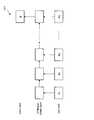
- FIG. 1 is a schematic diagram showing a configuration example of an odor identification system.
- an odor identification system for identifying an object from odor data using an identification model 141 (learned model, see FIG. 5) that has been trained by machine learning on odor data obtained by measuring the odor of an object will be described.
- the odor identification system includes an information processing device (analysis management device) 1, a terminal 2, and an odor sensor 3.
- the information processing device 1 and the terminal 2 are communicatively connected to a network N such as the Internet.
- the information processing device 1 is an information processing device capable of various information processing and information transmission/reception, and is, for example, a server computer, a personal computer, or the like. In the present embodiment, the information processing device 1 is assumed to be a server computer, and will be read as server 1 for simplicity below.
- the server 1 is a server computer that analyzes and manages odor data of an object that is arbitrarily uploaded by a user, performs machine learning to learn the odor data, and generates an identification model 141 that identifies an object from the odor data. .. Then, the server 1 identifies the object using the generated identification model 141. For example, when the object is a person, the person is identified based on the data obtained by measuring the smell of the breath of the person. It should be noted that person identification is only one example of the use of the present system, and the present system may be used to identify other objects.
- the terminal 2 is a terminal device used by a user who uses the system, and is, for example, a personal computer, a tablet terminal, a smartphone, or the like.
- the server 1 acquires the odor data of the object from the odor sensor 3 via the terminal 2, performs the identification by the identification model 141, and outputs the identification result to the terminal 2.
- the odor sensor 3 is a sensing device that measures the odor of an object, and is a device that converts gas molecules corresponding to odor components into numerical values that can be processed by a computer.
- the odor sensor 3 is an odor sensor that uses the QCM (Quartz Crystal Microbalance) method, and uses the oscillation of the crystal oscillator when gas molecules are adsorbed on the surface of the crystal oscillator, Convert the components to frequency data.
- QCM Quadrat Crystal Microbalance
- the odor sensor 3 itself may be equipped with a communication module so that the server 1 can directly acquire odor data from the odor sensor 3.
- the odor sensor 3 is not limited to the odor sensor having a crystal oscillator, and may be a semiconductor odor sensor, a FET biosensor, or the like.
- FIG. 2 is a block diagram showing a configuration example of the server 1.
- the server 1 includes a control unit 11, a main storage unit 12, a communication unit 13, and an auxiliary storage unit 14.
- the control unit 11 has an arithmetic processing unit such as one or more CPUs (Central Processing Units), MPUs (Micro-Processing Units), and GPUs (Graphics Processing Units), and stores the programs P stored in the auxiliary storage unit 14. By reading and executing, various information processing, control processing, and the like are performed.
- the main storage unit 12 is a temporary storage area such as an SRAM (Static Random Access Memory), a DRAM (Dynamic Random Access Memory), and a flash memory, and temporarily stores data required for the control unit 11 to execute arithmetic processing.
- the communication unit 13 is a communication module for performing processing relating to communication, and transmits/receives information to/from the outside.
- the auxiliary storage unit 14 is a non-volatile storage area such as a large-capacity memory or a hard disk, and stores the program P and other data necessary for the control unit 11 to execute processing.
- the auxiliary storage unit 14 also stores an identification model 141, a user DB 142, an odor DB 143, a domain DB 144, and a learning DB 145.
- the identification model 141 is a model for performing object identification based on odor data, and is, for example, a model related to a neural network as described later.
- the identification model 141 is assumed to be used as a program module that is a part of artificial intelligence software.
- the user DB 142 is a database that stores information on each user who uses this system.
- the odor DB 143 is a database that stores odor data acquired from the odor sensor 3.
- the domain DB 144 is a database that stores information on domains (odor categories) described later.
- the learning DB 145 is a database that stores learned parameters obtained by learning odor data, and parameters such as weights set in the identification model 141 (neural network).
- auxiliary storage unit 14 may be an external storage device connected to the server 1.
- the server 1 may be a multi-computer including a plurality of computers, or may be a virtual machine virtually constructed by software.
- the server 1 is not limited to the above configuration, and may include, for example, an input unit that receives an operation input, a display unit that displays an image, and the like.
- the server 1 includes a reading unit that reads the portable storage medium 1a such as a CD (Compact Disk)-ROM and a DVD (Digital Versatile Disc)-ROM, and reads and executes the program P from the portable storage medium 1a. You can Alternatively, the server 1 may read the program P from the semiconductor memory 1b.
- FIG. 3 is an explanatory diagram showing an example of the record layout of the user DB 142, the odor DB 143, the domain DB 144, and the learning DB 145.
- the user DB 142 includes a user ID column, a user name column, and a device column.
- the user ID column stores a user ID that is an identifier of each user.
- the user name column and the device column respectively store the user name and the name of the odor sensor 3 used by the user in association with the user ID.
- the odor DB 143 includes an acquisition data ID column, an odor name column, an acquisition date/time column, an acquisition user column, an acquisition sensor column, a data string, and an acquisition condition column.
- the acquired data ID column stores the acquired data ID that is the identifier of the odor data acquired from the odor sensor 3.
- the scent name column, the acquisition date/time column, the acquisition user column, the acquisition sensor column, the data column, and the acquisition condition column are associated with the acquired data ID, and the scent name (object name), the acquisition date/time, the acquisition source user name, The name of the odor sensor 3 that is the acquisition source, the odor data, and the odor data acquisition conditions are stored.
- the acquisition condition column includes, for example, a domain name and a subdomain name, which will be described later, a cleaning time for cleaning the odor sensor 3 before measurement, an odor (gas) suction time, a residence time in a gas chamber in the odor sensor 3, after measurement.
- the cleaning time of the odor sensor 3, the position information of the place where the odor is measured, and the weather information of the place are stored.
- Various information that defines the acquisition condition of the odor data will be described in detail later.
- the domain DB 144 includes a domain ID column, a creation date/time column, a creation user column, a domain name column, a sub domain name column, and an acquisition condition column.
- the domain ID column stores a domain ID that is an identifier of a domain that represents a smell category.
- the creation date/time column, the creation user column, the domain name column, the subdomain column, and the acquisition condition column are each associated with a domain ID, and the date and time when the user registered (created) the information of the domain in this system, the registered user.
- the name, the domain name, the subdomain name, and the measurement condition (acquisition condition) of the odor sensor 3 are stored.
- the acquisition condition column stores, for example, pre-washing time before odor measurement, suction time, residence time, post-washing time after odor measurement, and the like.
- the learning DB 145 includes a learning ID column, a creation date/time column, a creation user column, an odor name column, a domain name column, a sub domain name column, and a data column.
- the learning ID column stores a learning ID that is an identifier of a learned parameter (such as the weight of the neural network) obtained by learning the odor data.
- the creation date/time column, the creation user column, the scent name column, the domain name column, the sub domain column, and the data column are associated with the learning ID, respectively, and the creation date/time when the learning (creating) of the identification model 141 is executed, the identification model 141
- the user name for which learning is performed, the learned odor name, the domain name representing the acquisition condition of the learned odor data, the subdomain name, and the learned parameter are stored.
- FIG. 4 is a block diagram showing a configuration example of the terminal 2.
- the control unit 21, the main storage unit 22, the auxiliary storage unit 23, the communication unit 24, the display unit 25, and the input unit 26 are provided.
- the control unit 21 has an arithmetic processing unit such as a CPU, and performs various information processing, control processing, and the like by reading and executing the program stored in the auxiliary storage unit 23.
- the main storage unit 22 is a temporary storage area such as a RAM, and temporarily stores data necessary for the control unit 21 to execute arithmetic processing.
- the auxiliary storage unit 23 is a non-volatile storage area such as a ROM (Read-Only Memory), and stores programs and other data necessary for the control unit 21 to execute processing.
- the communication unit 24 is a communication module for performing processing relating to communication, and transmits/receives information to/from the outside.
- the display unit 25 is a display screen such as a liquid crystal display, and displays the image given from the control unit 21.
- the input unit 26 is an operation interface such as a mechanical key, and receives an operation input from a user.
- FIG. 5 is an explanatory diagram regarding the identification model 141.
- the server 1 uses a neural network model generated by deep learning as the identification model 141.
- the identification model 141 is a model related to LSTM (Long-Short Term Memory), which is a type of RNN (Recurrent Neural Network), and is a model to which time series data composed of data at a plurality of time points is input.
- LSTM Long-Short Term Memory
- RNN Recurrent Neural Network
- the identification model 141 includes an input layer that receives input of time-series data, an intermediate layer (hidden layer) that extracts a feature amount from the data input to the input layer, and an output layer that outputs an identification result based on the feature amount.
- the input layer has a neuron that receives an input of data at each of a plurality of consecutive time points, and the neuron of the input layer transfers the input data to a neuron of an intermediate layer.
- the middle layer receives input data from the neurons of the input layer and performs an operation based on the input data.
- the neurons in the middle layer are called LSTM blocks, which temporarily store their own operation results and refer to the operation results of the input data of the previous time point when performing the operation of the input data of the next time point. And calculate. By referring to the calculation result at the previous time point, the calculation at the next time point is performed from the time series data up to the latest time point.
- the output layer has a neuron that calculates an output value based on the calculation result in the intermediate layer, and outputs the identification result of identifying the object.
- the identification model 141 is assumed to be a model (Many-To-One) with one output for a plurality of inputs, but there may be a plurality of outputs. Further, the identification model 141 propagates the calculation result of the middle layer only in one direction (One-directional) from the past time point to the future time point, but propagates the calculation result in both directions (Bi-directional). It may be a model that goes on.
- the identification model 141 is the LSTM, but other deep learning such as CNN (Convolution Neural Network), or other learning algorithms such as SVM (Support Vector Machine) and decision tree. It may be a model based on it.
- CNN Convolution Neural Network
- SVM Small Vector Machine
- the server 1 inputs the odor data obtained by measuring the odor of an object and generates the identification model 141 that outputs the identification result of the object corresponding to the input odor data.
- the odor data that is input to the identification model 141 is data measured by the odor sensor 3 described above, and is time-series data of frequencies measured by the QCM method.
- the odor sensor 3 measures the gas (odor) inhaled into the gas chamber in the odor sensor 3 during the measurement time of several seconds to several tens of seconds, and acquires the time series data of the frequency over the measurement time. ..
- the server 1 uses the data as odor data.
- the server 1 receives the odor data measured by the odor sensor 3 from each user's terminal 2, associates the odor name representing the object whose odor is measured, and the odor data acquisition condition described below, and associates the odor DB 143 with the odor data.
- the smell data is stored in.
- the server 1 uses the odor data stored in the odor DB 143 as training data to generate the identification model 141.
- the server 1 sequentially inputs the time-series odor data measured by the odor sensor 3 to each neuron in the input layer of the identification model 141 according to the time-series order at the time of the measurement, and after the calculation in the intermediate layer, An output value representing the identification result of the object is acquired from the output layer.
- the server 1 regards the object corresponding to the odor data input to the input layer as a two-class classification problem for determining whether or not the object corresponds to a specific object to be learned, Probability value indicating whether or not it is output.
- the output value from the identification model 141 may not be a probability value, but may be a value expressing whether or not the object corresponds to a binary value (0 or 1). Further, in the present embodiment, two-class classification is performed to determine whether or not it corresponds to one object, odor data of a plurality of objects are simultaneously learned as training data, as a model to perform multi-class classification Good.
- the server 1 performs learning by using not only the odor data measured by the odor sensor 3 but also the odor data acquisition condition as input to the identification model 141.
- the odor data acquisition condition is information indicating the condition when the odor data is measured, and includes, for example, text data indicating the measured odor category, state information indicating the state of the odor sensor 3 from which the odor data was acquired, and the odor. Includes environmental information related to the measurement environment when measurement was performed.
- the odor category is information that represents, for example, the type of object whose odor was measured, or the state of the object when the odor was measured (for example, if the object is food, the number of days since the food was purchased). Note that these are merely examples, and the odor category may be arbitrarily defined. In the present embodiment, the odor category is set by the user who has measured the odor of an object inputting arbitrary text. In this system, the odor category arbitrarily set by the user is called a "domain".
- the server 1 acquires the domain name arbitrarily input by the user as the odor category when receiving the odor data upload from the terminal 2. Specifically, the server 1 acquires a domain name that represents an odor category and a sub domain name that represents a category that is more detailed than the domain name. As an example, enter the type name of the object whose odor was measured (“human” in the case of person identification) as the domain name, and use a more detailed type name (for example, person name) as the subdomain name than the domain name. input. In this way, the domain is set by the user uploading the odor data by inputting arbitrary text.
- the state information is information indicating the state of the odor sensor 3 that measures the odor of an object, and includes, for example, the above-described pre-washing time, suction time, residence time, and post-washing time.
- the pre-cleaning time is the time for cleaning the odor sensor 3 before measuring the odor.
- the suction time is the time for inhaling a gas (smell) with the odor sensor 3.
- the residence time is the time during which the gas is retained in the gas chamber in the odor sensor 3 and measurement is performed.
- the post-cleaning time is the time for cleaning the odor sensor 3 after measuring the odor. In this way, as the state information, information indicating the odor data acquisition state and the odor sensor 3 maintenance state is used.
- the environment information is information about the measurement environment when the odor is measured, and includes, for example, position information and weather information.
- the position information is a geographical name of the place where the odor is measured, a GPS (Global Positioning System) coordinate value, or the like, and is geographical information of the measurement place.
- the weather information is data indicating the weather at the measurement location when the odor is measured, and is data indicating weather such as “sunny” and “rainy”.
- the environmental information may include information on the date and time of measurement (for example, season) in addition to the position and weather.
- the server 1 inputs the odor data acquisition conditions such as the domain name and the state information into the identification model 141 for learning.
- the acquisition condition of the odor data it is possible to perform learning closer to the human sense. For example, it is considered that humans make different judgments (identifications) when they smell a known object (domain) and when they smell an unknown object. In addition, it is considered that different judgments are made depending on the environment in which the scent is smelled (place, weather, etc.). In this way, by using the acquisition condition of the odor data as an input, it is possible to reproduce the identification result closer to the human sense.
- the server 1 inputs various information that defines the acquisition condition of the odor data into the identification model 141 as categorical variables.
- the server 1 provides a layer for categorical variable input (not shown), which is different from the layer for odor data input, in the input layer of the identification model 141.
- the server 1 inputs a categorical variable representing a domain name, a sub-domain name, state information, environment information, etc. into a categorical variable input layer and learns it together with odor data.
- the server 1 inputs the odor data for training and the acquisition condition (category variable) to the identification model 141 and acquires the identification result of the object from the output layer.
- the server 1 compares the acquired identification result with the correct object (smell name), and optimizes parameters such as weights between neurons by the error backpropagation method so that they approximate each other. As a result, the server 1 acquires optimum parameters for identifying the object with the identification model 141, that is, learned parameters.
- the server 1 stores the learned parameters obtained by the above learning in the learning DB 145 in association with the learning target object (odor name) and the odor data acquisition condition (domain name etc.). Thereby, the server 1 stores the data of the identification model 141 (learned model) generated by machine learning in the learning DB 145.
- the server 1 receives the smell data of various objects from each user's terminal 2, and performs the above machine learning in response to the request from the user.
- the server 1 stores the learned parameters of the identification model 141 generated in response to the request from each user in the learning DB 145. In this way, the server 1 manages, in the learning DB 145, the data of the plurality of identification models 141 that have learned the odor data of different objects.
- the server 1 identifies an object based on the identification model 141 in response to a request from the terminal 2. Specifically, the server 1 first receives, from the terminal 2, selection input of learned parameters to be set in the identification model 141 from the learned parameters stored in the learning DB 145. The server 1 sets the selected learned parameter in the identification model 141. In this way, the server 1 receives the selection input of the identification model 141 used for identifying the object from the terminal 2.
- the server 1 receives, from the terminal 2, a selection input for selecting the odor data of the object to be identified from among the odor data stored in the odor DB 143. It is needless to say that the server 1 may newly acquire the odor data of the object to be identified from the user's terminal 2 instead of the odor data already stored in the odor DB 143.
- the server 1 reads the selected odor data and the acquisition condition of the odor data from the odor DB 143, and inputs it to the identification model 141 in which the learned parameters are set. Then, the server 1 acquires the identification result of the object corresponding to the input odor data as an output from the identification model 141. Specifically, as described above, the server 1 acquires whether or not the object to be identified corresponds to the object to be learned in the identification model 141, and its probability value. The server 1 outputs the identification result to the terminal 2 and displays it.
- the odor data not only the odor data but also the acquisition condition of the odor data is used for the input to the identification model 141, so that the object can be appropriately identified based on the odor.
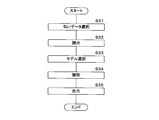
- FIG. 6 is a flowchart showing the procedure of the generation process of the identification model 141.
- a process of learning the odor data and generating the identification model 141 will be described with reference to FIG.
- the control unit 11 of the server 1 acquires the training data for generating the identification model 141 from the odor DB 143 (step S11).
- the training data is the odor data of the object measured by the odor sensor 3, and the data in which the correct object (odor name) is associated with the acquisition condition of the odor data.
- the acquisition conditions include the domain name and subdomain name arbitrarily entered by the user as text representing the odor category, state information indicating the state of the odor sensor 3 such as pre-washing time and suction time, and the odor measurement environment. It includes environmental information such as related location information and weather information.
- the control unit 11 Based on the training data, the control unit 11 inputs the odor data and the acquisition condition of the odor data, and generates an identification model 141 that outputs the identification result of the object (step S12). Specifically, as described above, the control unit 11 generates a neural network (LSTM) as the identification model 141. The control unit 11 inputs the odor data and the categorical variable indicating the acquisition condition into the identification model 141, and acquires the identification result of identifying the object corresponding to the odor data as an output. The control unit 11 compares the acquired identification result with the correct answer object, and optimizes parameters such as weights between neurons, that is, learned parameters so that the two approximate each other, and generates the identification model 141.
- LSTM neural network
- the control unit 11 stores the learned parameters related to the generated identification model 141 in the learning DB 145 in association with the learning target object (odor name) and the odor data acquisition condition (domain name etc.) (step S13). ), a series of processing ends.
- FIG. 7 is a flowchart showing the procedure of the object identification process.
- the control unit 11 of the server 1 receives a selection input for selecting the odor data of the object to be identified among the odor data of each object stored in the odor DB 143 (step S31).
- the control unit 11 reads the selected odor data and the acquisition condition of the odor data from the odor DB 143 (step S32).
- the control unit 11 receives, from the terminal 2, a selection input for selecting the identification model 141 used for identifying the object (step S33). Specifically, as described above, the control unit 11 accepts selection input of learned parameters set in the identification model 141. The control unit 11 sets the selected learned parameter in the identification model 141, inputs the odor data of the object and the acquisition condition into the identification model 141, and identifies the object (step S34). The control unit 11 outputs the identification result to the terminal 2 (step S35) and ends the series of processes.
- the state information representing the state of the odor sensor 3 as an input to the identification model 141 as a data acquisition condition, it is possible to more appropriately identify the object.
- the odor sensor 3 having the crystal oscillator by using the odor sensor 3 having the crystal oscillator, it is possible to more appropriately perform the identification based on the odor.
- the environment information representing the measurement environment at the time of odor measurement as the data acquisition condition for input to the identification model 141, it is possible to more appropriately identify the object.
- a large number of identification models 141 that perform two-class classification are generated, and the identification model 141 to be used can be selected from the plurality of identification models 141, so that various options ( The identification model 141) can be provided to the user.
- FIGS. 8 to 11 show examples of UI screens displayed by the terminal 2.
- menu bars such as “measurement” and “data list” are displayed on the left side of the screen, and the screens of FIGS. 8 to 11 are switched and displayed according to the operation input to each menu. ..
- the outline of the present embodiment will be described with reference to FIGS.
- FIG. 8 is an explanatory diagram showing an example of the measurement screen.
- the measurement screen is an operation screen when the odor is measured by the odor sensor 3.
- the terminal 2 measures an odor in synchronization with the odor sensor 3 connected to its own device in response to an operation input on the measurement screen.
- the terminal 2 receives the selection input of the odor sensor 3 used for odor measurement in the sensor selection field 81.
- the domain name, the sub domain name, etc. which are the conditions for obtaining the odor data, are displayed by default.
- the server 1 accepts registration of a domain name, a subdomain name, state information corresponding to the odor sensor 3 used by the user from the user in advance, and stores it in the domain DB 144 in association with the user ID.
- the domain name or the like registered by the user is set as the acquisition condition by default.
- a setting change such as a domain name may be accepted from the user.
- the terminal 2 accepts setting inputs for environmental information such as location information and weather information in the fields such as “location”, “GPS information”, and “weather”. Finally, the terminal 2 accepts the input of the odor name representing the object to be measured in the odor name input field 82, and starts the odor measurement by the odor sensor 3 according to the operation input to the execution button 83.
- the server 1 acquires the odor data measured above together with the acquisition conditions, odor name (correct object), etc. set on the measurement screen.
- the server 1 stores each acquired data in the odor DB 143.
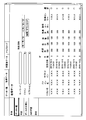
- FIG. 9 is an explanatory diagram showing an example of the odor data list screen.
- the list screen of FIG. 9 is a display screen for displaying a list of odor data stored in the odor DB 143.
- the user can confirm the odor data stored in the odor DB 143 on the screen.
- the terminal 2 displays a list of odor names, domain names, subdomain names, odor data acquisition dates, etc., corresponding to each odor data.
- the odor data can be searched according to the input to each of the input fields such as “keyword”, “domain”, and “subdomain” displayed at the top of the list screen.
- the user can use the odor data displayed on the list screen for learning and identification.
- FIG. 10 is an explanatory diagram showing an example of the learning screen.
- the learning screen is an operation screen for causing the server 1 to perform learning of the identification model 141.
- the terminal 2 accepts the selection input of the odor data used as the training data in response to the operation input on the learning screen, and causes the server 1 to execute the generation process of the identification model 141.
- the terminal 2 accepts a selection input for selecting the odor data to be learned from the odor data stored in the odor DB 143 based on the operation input to the odor data selection field 101. For example, when an operation input to the odor data selection field 101 is accepted, the terminal 2 pops up a list of odor data similar to the list screen of FIG. 9 (not shown). The terminal 2 accepts a selection input for selecting one or a plurality of odor data to be learned from the list of odor data displayed in a pop-up.
- the domain name and the subdomain name corresponding to the selected odor data are displayed by default in the domain selection field 102 and the subdomain selection field 103.
- the terminal 2 accepts the setting change for changing the domain name and the sub domain name displayed by default in response to the operation input to the domain selection field 102 and the sub domain selection field 103. In this way, the terminal 2 accepts selection input of acquisition conditions (domain name etc.) of odor data to be learned together with odor data.
- the terminal 2 accepts a text input of a scent name representing an object to be learned in the scent name input field 104. As a result, the terminal 2 accepts the input of the correct name (correct object) of the object corresponding to the odor data selected in the odor data selection field 101.
- the terminal 2 requests the server 1 for machine learning based on the various information input above in response to an operation input on the execution button 105.
- the server 1 performs machine learning to learn the selected odor data and the acquisition condition and the correct object corresponding to the odor data, and generates the identification model 141.
- the server 1 stores the learned parameters (weight, etc.) of the generated identification model 141 in the learning DB 145 in association with the odor name, domain name, etc.
- the server 1 learns (generates) a new identification model 141.
- the server 1 re-learns to update the already learned identification model 141.
- the terminal 2 accepts the learned parameter to be updated, that is, the selection input for selecting the identification model 141 to be re-learned, in addition to the odor data to be learned and the acquisition condition.
- the server 1 re-learns the selected identification model 141 and updates the learned parameter.
- re-learning of the identification model 141 can be performed by the same screen operation.
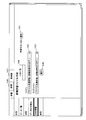
- FIG. 11 is an explanatory diagram showing an example of the determination screen.
- the determination screen is an operation screen for causing the server 1 to identify an object based on the identification model 141 generated above.
- the terminal 2 causes the server 1 to identify the object using the identification model 141 according to the operation input on the determination screen.
- the terminal 2 accepts selection input of learned parameters to be set in the identification model 141 in the learned parameter selection field 111. For example, when the terminal 2 receives an operation input to the learned parameter selection field 111, the terminal 2 displays a pop-up list of information on each learned parameter (data of each identification model 141) stored in the learning DB 145. Specifically, the terminal 2 displays a list of odor names, domain names, subdomain names, etc. stored in the learning DB 145 in association with each learned parameter. The terminal 2 accepts a selection input for selecting any of the learned parameters displayed in the list. As a result, the terminal 2 receives the selection input of the identification model 141 used for identifying the object.
- the terminal 2 accepts selection input of one or more odor data to be identified in the odor data selection field 112. Similar to the learning screen, when the operation input to the odor data selection field 112 is received, the terminal 2 pops up the same odor data list as in FIG. 9 and receives the selection input.
- the server 1 acquires the odor data acquisition conditions (domain name, etc.) and the odor data acquisition conditions to be learned in the identification model 141 selected above. It is preferable to determine whether and match, and output an error if they do not match. This makes it possible to avoid an inappropriate situation such as using the identification model 141 having a domain name different from that of the object to be identified.
- the terminal 2 accepts an operation input to the execute button 113 and requests the server 1 to identify an object.
- the server 1 sets the learned parameter selected in the learned parameter selection field 111 in the identification model 141, and sets the odor data selected in the odor data selection field 112 in the identification model 141. Input to identify the object.
- the server 1 identifies each of the one or more odor data selected in the odor data selection field 112, and outputs the identification result (probability value) of each odor data to the terminal 2.
- the terminal 2 displays the identification result of each odor data output from the server 1.
- an identification tab 114 and a search tab 115 are displayed at the top of the determination screen.
- the terminal 2 causes the server 1 to identify the object by the above procedure.
- the search tab 115 causes the server 1 to identify (search) an object using one or more identification models 141.
- the terminal 2 accepts a selection input for selecting one or a plurality of learned parameters in accordance with the selection input to the learned parameter selection field 111 on the determination screen almost similar to FIG.
- the terminal 2 receives the selection input of one or a plurality of identification models 141 used for identifying the object.
- the server 1 inputs the odor data selected in the odor data selection field 112 to each selected identification model 141, and acquires the identification result from each identification model 141. To do.
- the server 1 identifies whether the object to be identified corresponds to each object that is the learning target in each identification model 141 or simultaneously identifies a plurality of objects.
- the server 1 outputs an identification result (search result) as to which of the objects corresponding to each of the identification models 141 the object corresponding to the input odor data corresponds to, based on the identification result of each identification model 141. To do. For example, the server 1 ranks according to the probability value output from each identification model 141, and outputs the object names in descending order of probability value. Alternatively, the server 1 may output the object name having the highest probability value as the search result.
- one identification model 141 may be made to learn the odor data of a plurality of objects to prepare the identification model 141 capable of multi-class classification.
- the identification accuracy can be improved.
- FIG. 12 is a flowchart showing an example of a processing procedure executed by the server 1 according to the second embodiment.
- the control unit 11 of the server 1 determines whether or not to measure the odor data according to the operation input on the terminal 2 (step S201).
- the control unit 11 inputs, from the terminal 2, the odor data acquisition condition setting input in addition to the odor name (correct object) representing the object to be measured.
- Accept step S202.
- the terminal 2 performs measurement by the odor sensor 3 according to the operation input from the user, and the control unit 11 of the server 1 acquires the odor data from the odor sensor 3 via the terminal 2 and is set in step S202.
- the odor data is stored in the odor DB 143 in association with the acquisition conditions and the like (step S203).
- the control unit 11 determines whether or not to learn the odor data according to the operation input on the terminal 2 (step S204). When it determines with learning (S204:YES), the control part 11 receives the selection input which selects the odor data made into a learning object from the terminal 2 (step S205). Specifically, as described above, the control unit 11 accepts the odor data to be learned, the setting input of the odor data acquisition condition, the correct object, and the like.
- the control unit 11 performs machine learning based on the selected odor data, the acquisition condition of the odor data, and the input correct object, and generates the identification model 141 (step S206).
- the control unit 11 stores the learned parameters of the generated identification model 141 in the learning DB 145 (step S207).
- the control unit 11 determines whether or not to identify the odor data according to an operation input on the terminal 2 (step S208). When it is determined that the odor data is to be identified (S208: YES), the control unit 11 receives a selection input for selecting the identification model 141 used for identifying the odor data (step S209). Specifically, as described above, the control unit 11 receives the selection input for selecting the learned parameter to be set in the identification model 141.
- the control unit 11 receives a selection input for selecting the odor data to be identified (step S210).
- the control unit 11 sets the learned parameter selected in step S209 in the identification model 141, inputs the odor data selected in step S210, and identifies the object (step S211).
- the control unit 11 outputs the identification result to the terminal 2 (step S212). After executing the process of step S212 or in the case of NO in step S208, the control unit 11 ends the series of processes.
- the second embodiment it is possible to provide the user with a platform capable of learning and identifying odor data with a simple operation.
Landscapes
- Engineering & Computer Science (AREA)
- Physics & Mathematics (AREA)
- General Physics & Mathematics (AREA)
- Life Sciences & Earth Sciences (AREA)
- Health & Medical Sciences (AREA)
- Chemical & Material Sciences (AREA)
- General Health & Medical Sciences (AREA)
- Theoretical Computer Science (AREA)
- Pathology (AREA)
- Immunology (AREA)
- Biochemistry (AREA)
- Analytical Chemistry (AREA)
- Mathematical Physics (AREA)
- Software Systems (AREA)
- Evolutionary Computation (AREA)
- Artificial Intelligence (AREA)
- General Engineering & Computer Science (AREA)
- Computing Systems (AREA)
- Data Mining & Analysis (AREA)
- Signal Processing (AREA)
- Food Science & Technology (AREA)
- Medicinal Chemistry (AREA)
- Computational Linguistics (AREA)
- Biophysics (AREA)
- Biomedical Technology (AREA)
- Combustion & Propulsion (AREA)
- Molecular Biology (AREA)
- Mathematical Optimization (AREA)
- Mathematical Analysis (AREA)
- Algebra (AREA)
- Pure & Applied Mathematics (AREA)
- Computer Vision & Pattern Recognition (AREA)
- Medical Informatics (AREA)
- Acoustics & Sound (AREA)
- Investigating Or Analyzing Materials By The Use Of Fluid Adsorption Or Reactions (AREA)
- Investigating Or Analyzing Materials By The Use Of Electric Means (AREA)
- Management, Administration, Business Operations System, And Electronic Commerce (AREA)
- User Interface Of Digital Computer (AREA)
Abstract
Description
(実施の形態1)
図1は、匂い識別システムの構成例を示す模式図である。本実施の形態では、物体の匂いを計測した匂いデータを機械学習で学習済みの識別モデル141(学習済みモデル、図5参照)を用いて、匂いデータから物体を識別する匂い識別システムについて説明する。匂い識別システムは、情報処理装置(解析管理装置)1、端末2、匂いセンサ3を含む。情報処理装置1及び端末2は、インターネット等のネットワークNに通信接続されている。
制御部11は、一又は複数のCPU(Central Processing Unit)、MPU(Micro-Processing Unit)、GPU(Graphics Processing Unit)等の演算処理装置を有し、補助記憶部14に記憶されたプログラムPを読み出して実行することにより、種々の情報処理、制御処理等を行う。主記憶部12は、SRAM(Static Random Access Memory)、DRAM(Dynamic Random Access Memory)、フラッシュメモリ等の一時記憶領域であり、制御部11が演算処理を実行するために必要なデータを一時的に記憶する。通信部13は、通信に関する処理を行うための通信モジュールであり、外部と情報の送受信を行う。
ユーザDB142は、ユーザID列、ユーザ名列、デバイス列を含む。ユーザID列は、各ユーザの識別子であるユーザIDを記憶している。ユーザ名列、及びデバイス列はそれぞれ、ユーザIDと対応付けて、ユーザ名、及びユーザが使用する匂いセンサ3の名称を記憶している。
制御部21は、CPU等の演算処理装置を有し、補助記憶部23に記憶されたプログラムを読み出して実行することにより、種々の情報処理、制御処理等を行う。主記憶部22はRAM等の一時記憶領域であり、制御部21が演算処理を実行するために必要なデータを一時的に記憶する。補助記憶部23は、ROM(Read-Only Memory)等の不揮発性記憶領域であり、制御部21が処理を実行するために必要なプログラム、その他のデータを記憶している。通信部24は、通信に関する処理を行うための通信モジュールであり、外部と情報の送受信を行う。表示部25は液晶ディスプレイ等の表示画面であり、制御部21から与えられた画像を表示する。入力部26は、メカニカルキー等の操作インターフェイスであり、ユーザから操作入力を受け付ける。
本実施の形態でサーバ1は、識別モデル141として、ディープラーニングにより生成されるニューラルネットワークモデルを用いる。具体的には、識別モデル141はRNN(Recurrent Neural Network)の一種であるLSTM(Long-Short Term Memory)に係るモデルであり、複数時点のデータから成る時系列データを入力とするモデルである。
サーバ1の制御部11は、匂いDB143から、識別モデル141を生成するための訓練データを取得する(ステップS11)。訓練データは、匂いセンサ3で計測した物体の匂いデータ、及び当該匂いデータの取得条件に対し、正解の物体(匂い名)が対応付けられたデータである。取得条件は、匂いのカテゴリを表すテキストとしてユーザが任意に入力したドメイン名、サブドメイン名のほか、事前洗浄時間、吸引時間等の匂いセンサ3の状態を表す状態情報、及び匂いの計測環境に関連する位置情報、天候情報等の環境情報を含む。
サーバ1の制御部11は、匂いDB143に記憶されている各物体の匂いデータの内、識別対象とする物体の匂いデータを選択する選択入力を受け付ける(ステップS31)。制御部11は、選択された匂いデータと、当該匂いデータの取得条件を匂いDB143から読み出す(ステップS32)。
本実施の形態では、上述の匂い識別システムをユーザが利用するためのUI(User Interface)画面に関する形態について述べる。なお、実施の形態1と重複する内容については同一の符号を付して説明を省略する。
サーバ1の制御部11は、端末2での操作入力に応じて、匂いデータの計測を行うか否かを判定する(ステップS201)。匂いデータの計測を行うと判定した場合(S201:YES)、制御部11は、計測対象である物体を表す匂い名(正解の物体)のほか、匂いデータの取得条件の設定入力を端末2から受け付ける(ステップS202)。端末2は、ユーザからの操作入力に応じて匂いセンサ3による計測を行い、サーバ1の制御部11は、端末2を介して匂いセンサ3から匂いデータを取得して、ステップS202で設定された取得条件等と対応付けて匂いDB143に匂いデータを記憶する(ステップS203)。
11 制御部
12 主記憶部
13 通信部
14 補助記憶部
P プログラム
141 識別モデル
142 ユーザDB
143 匂いDB
144 ドメインDB
145 学習DB
2 端末
21 制御部
22 主記憶部
23 補助記憶部
24 通信部
25 表示部
26 入力部
3 匂いセンサ
Claims (10)
- 物体の匂いを計測した匂いデータを取得する第1取得部と、
前記匂いデータの取得条件を取得する第2取得部と、
物体の前記匂いデータ及び取得条件と、該匂いデータに対応する前記物体とを学習済みの学習済みモデルに基づき、前記第1及び第2取得部が取得した前記匂いデータ及び取得条件から前記物体を識別する識別部と
を備えることを特徴とする情報処理装置。 - 前記取得条件は、前記匂いのカテゴリを表すテキストデータであって、前記匂いの計測を行ったユーザが入力したテキストデータである
ことを特徴とする請求項1に記載の情報処理装置。 - 前記第1取得部は、前記匂いを計測する匂いセンサから前記匂いデータを取得し、
前記取得条件は、前記匂いの計測時における前記匂いセンサの状態を表す状態情報である
ことを特徴とする請求項1又は2に記載の情報処理装置。 - 前記取得条件は、前記物体の匂いを計測した計測環境に関する環境情報である
ことを特徴とする請求項1~3のいずれか1項に記載の情報処理装置。 - 異なる前記物体ごとに、前記匂いデータ及び取得条件と、前記物体とを夫々学習済みの複数の前記学習済みモデルのデータを記憶する記憶部と、
前記複数の学習済みモデルから何れかを選択する選択入力を受け付ける受付部とを備え、
前記識別部は、選択された前記学習済みモデルに基づき、前記物体を識別する
ことを特徴とする請求項1~4のいずれか1項に記載の情報処理装置。 - 前記学習済みモデルは、前記匂いデータ及び取得条件を入力として、該匂いデータに対応する前記物体が、学習対象とした一の前記物体に該当するか否かを示す識別結果を出力するモデルであり、
前記受付部は、前記複数の学習済みモデルから、一又は複数の前記学習済みモデルを選択する選択入力を受け付け、
前記識別部は、選択された前記一又は複数の学習済みモデルに基づき、前記物体が、各前記学習済みモデルで学習対象とした各前記物体の何れに該当するかを識別する
ことを特徴とする請求項5に記載の情報処理装置。 - 前記第1取得部は、水晶振動子を用いた匂いセンサから前記匂いデータを取得する
ことを特徴とする請求項1~6のいずれか1項に記載の情報処理装置。 - 物体の匂いを計測した匂いデータを取得し、
前記匂いデータの取得条件を取得し、
物体の前記匂いデータ及び取得条件と、該匂いデータに対応する前記物体とを学習済みの学習済みモデルに基づき、取得した前記匂いデータ及び取得条件から前記物体を識別する
処理をコンピュータが実行することを特徴とする情報処理方法。 - 物体の匂いを計測した匂いデータ、及び該匂いデータの取得条件と、前記匂いデータに対応する正解の物体とを含む訓練データを取得し、
前記訓練データに基づき、前記匂いデータ及び取得条件を入力として、前記匂いデータに対応する物体を識別した識別結果を出力とする学習済みモデルを生成する
処理をコンピュータが実行することを特徴とする学習済みモデルの生成方法。 - ユーザからの操作入力に応じて、物体の匂いを計測した匂いデータと、該匂いデータの取得条件とを、前記匂いデータを管理する解析管理装置に出力し、
前記解析管理装置が管理する前記匂いデータの一覧を前記解析管理装置から取得して表示部に表示し、
前記一覧から、学習対象とする前記匂いデータを選択する選択入力を受け付け、
選択された前記匂いデータに対応する正解の物体の入力を受け付け、
選択された前記匂いデータ、及び該匂いデータの前記取得条件と、前記正解の物体とに基づく機械学習を前記解析管理装置に要求し、前記匂いデータ及び取得条件から前記物体を識別する学習済みモデルを生成させ、
前記一覧から、識別対象とする前記匂いデータを選択する選択入力を受け付け、
前記解析管理装置が生成済みの一又は複数の前記学習済みモデルから何れかを選択する選択入力を受け付け、
選択された前記学習済みモデルに基づき、選択された前記匂いデータ、及び該匂いデータの前記取得条件から前記物体を識別するよう前記解析管理装置に要求する
処理をコンピュータに実行させることを特徴とするプログラム。
Priority Applications (4)
| Application Number | Priority Date | Filing Date | Title |
|---|---|---|---|
| US17/297,842 US12253494B2 (en) | 2018-12-05 | 2019-12-04 | Information processing apparatus, information processing method, learned model generation method, and program |
| EP19891914.4A EP3892980A4 (en) | 2018-12-05 | 2019-12-04 | INFORMATION PROCESSING DEVICE, INFORMATION PROCESSING METHOD, LEARNING MODEL GENERATION METHOD AND PROGRAM |
| JP2020559951A JP7544379B2 (ja) | 2018-12-05 | 2019-12-04 | 情報処理装置、情報処理方法、学習済みモデルの生成方法及びプログラム |
| CN201980080060.XA CN113167704A (zh) | 2018-12-05 | 2019-12-04 | 信息处理装置、信息处理方法、学习模型生成方法以及程序 |
Applications Claiming Priority (2)
| Application Number | Priority Date | Filing Date | Title |
|---|---|---|---|
| US201862775561P | 2018-12-05 | 2018-12-05 | |
| US62/775,561 | 2018-12-05 |
Publications (1)
| Publication Number | Publication Date |
|---|---|
| WO2020116490A1 true WO2020116490A1 (ja) | 2020-06-11 |
Family
ID=70974661
Family Applications (1)
| Application Number | Title | Priority Date | Filing Date |
|---|---|---|---|
| PCT/JP2019/047343 Ceased WO2020116490A1 (ja) | 2018-12-05 | 2019-12-04 | 情報処理装置、情報処理方法、学習済みモデルの生成方法及びプログラム |
Country Status (5)
| Country | Link |
|---|---|
| US (1) | US12253494B2 (ja) |
| EP (1) | EP3892980A4 (ja) |
| JP (1) | JP7544379B2 (ja) |
| CN (1) | CN113167704A (ja) |
| WO (1) | WO2020116490A1 (ja) |
Cited By (10)
| Publication number | Priority date | Publication date | Assignee | Title |
|---|---|---|---|---|
| JP2022016362A (ja) * | 2020-07-09 | 2022-01-21 | 三洋化成工業株式会社 | 匂い物質受容層を形成するための樹脂組成物、それを用いたセンサ素子、匂いセンサおよび匂い測定装置 |
| JP2022020576A (ja) * | 2020-07-20 | 2022-02-01 | 三洋化成工業株式会社 | 匂い物質受容層を形成するための樹脂組成物、それを用いたセンサ素子、匂いセンサおよび匂い測定装置 |
| JP2022021339A (ja) * | 2020-07-21 | 2022-02-02 | 三洋化成工業株式会社 | 匂い物質受容層を形成するための樹脂組成物、それを用いたセンサ素子、匂いセンサおよび匂い測定装置 |
| JP2022021340A (ja) * | 2020-07-21 | 2022-02-02 | 三洋化成工業株式会社 | 匂い物質受容層を形成するための樹脂組成物、それを用いたセンサ素子、匂いセンサおよび匂い測定装置 |
| JP2022045332A (ja) * | 2020-09-08 | 2022-03-18 | 三洋化成工業株式会社 | 匂い物質受容層を形成するための樹脂組成物、それを用いたセンサ素子、匂いセンサおよび匂い測定装置 |
| JP2022114254A (ja) * | 2021-01-26 | 2022-08-05 | 東京瓦斯株式会社 | 情報処理装置、匂い測定システムおよびプログラム |
| WO2022176923A1 (ja) | 2021-02-16 | 2022-08-25 | 株式会社レボーン | 情報処理装置及びプログラム |
| WO2023149097A1 (ja) | 2022-02-02 | 2023-08-10 | 株式会社レボーン | 情報処理装置、プログラム及び検出装置 |
| WO2024004993A1 (ja) | 2022-06-28 | 2024-01-04 | 株式会社レボーン | 情報処理方法、情報処理システム、情報処理装置及びプログラム |
| WO2024142596A1 (ja) * | 2022-12-26 | 2024-07-04 | パナソニックIpマネジメント株式会社 | 匂い識別方法及び匂い識別システム |
Families Citing this family (1)
| Publication number | Priority date | Publication date | Assignee | Title |
|---|---|---|---|---|
| US12117463B2 (en) * | 2021-12-13 | 2024-10-15 | Google Llc | Enabling an automated assistant to leverage odor sensor(s) of client device(s) |
Citations (8)
| Publication number | Priority date | Publication date | Assignee | Title |
|---|---|---|---|---|
| JPH0510904A (ja) * | 1991-07-05 | 1993-01-19 | Nohmi Bosai Ltd | ニオイ識別装置 |
| JPH06160317A (ja) * | 1992-11-20 | 1994-06-07 | Nok Corp | ガス識別方法とガス識別装置 |
| JP2007022169A (ja) * | 2005-07-13 | 2007-02-01 | Toyota Motor Corp | 車両制御装置およびカント状態判定方法 |
| JP2011169830A (ja) * | 2010-02-19 | 2011-09-01 | Osaka Prefecture Univ | 匂い識別方法 |
| JP2017161300A (ja) | 2016-03-08 | 2017-09-14 | 株式会社デンソー | 乗り物用臭い判別システム |
| JP2018045517A (ja) * | 2016-09-15 | 2018-03-22 | ヤフー株式会社 | 付与装置、付与方法および付与プログラム |
| JP2018075255A (ja) * | 2016-11-10 | 2018-05-17 | 株式会社デンソー | 状態推定装置、及び状態推定方法 |
| JP2018146803A (ja) * | 2017-03-06 | 2018-09-20 | 日本放送協会 | 音声合成装置及びプログラム |
Family Cites Families (25)
| Publication number | Priority date | Publication date | Assignee | Title |
|---|---|---|---|---|
| CA2492959A1 (en) * | 2002-07-19 | 2004-07-15 | Smiths Detection-Pasadena, Inc. | Non-specific sensor array detectors |
| US20060191319A1 (en) * | 2004-12-17 | 2006-08-31 | Kurup Pradeep U | Electronic nose for chemical sensing |
| US8064722B1 (en) * | 2006-03-07 | 2011-11-22 | The United States Of America As Represented By The Secretary Of The Navy | Method and system for analyzing signal-vector data for pattern recognition from first order sensors |
| CN101226166B (zh) * | 2008-01-31 | 2013-08-14 | 浙江大学 | 用于现场检测的低功耗手持式电子鼻系统 |
| US20110172931A1 (en) * | 2008-06-23 | 2011-07-14 | Atonarp Inc. | System for Handling Information Relating to Chemical Substances |
| KR101844787B1 (ko) * | 2011-12-19 | 2018-05-21 | 한국전자통신연구원 | 콘텐츠와 냄새인식장치 간의 상호협력 장치 및 방법 |
| CN103728348A (zh) * | 2013-12-02 | 2014-04-16 | 江苏大学 | 一种室内空气质量电子鼻 |
| CN103868955A (zh) | 2014-04-09 | 2014-06-18 | 西南大学 | 一种便携式车内气体检测系统及方法 |
| KR20160026530A (ko) * | 2014-09-01 | 2016-03-09 | 엘지전자 주식회사 | 이동단말기, 이동 단말기의 제어방법 및 사진 인쇄기 |
| US20160106935A1 (en) | 2014-10-17 | 2016-04-21 | Qualcomm Incorporated | Breathprint sensor systems, smart inhalers and methods for personal identification |
| US20160232457A1 (en) * | 2015-02-11 | 2016-08-11 | Skytree, Inc. | User Interface for Unified Data Science Platform Including Management of Models, Experiments, Data Sets, Projects, Actions and Features |
| WO2016145300A1 (en) | 2015-03-11 | 2016-09-15 | Nano Engineered Applications, Inc. | Chemical sensor |
| CN104820072B (zh) * | 2015-04-30 | 2016-03-09 | 重庆大学 | 基于云计算的电子鼻空气质量监测系统的监测方法 |
| JP2017182261A (ja) * | 2016-03-29 | 2017-10-05 | 大日本印刷株式会社 | 情報処理装置、情報処理方法、およびプログラム |
| WO2017094207A1 (ja) * | 2015-11-30 | 2017-06-08 | 日本電気株式会社 | 情報処理システム、情報処理方法および情報処理用プログラム |
| US10163028B2 (en) * | 2016-01-25 | 2018-12-25 | Koninklijke Philips N.V. | Image data pre-processing |
| US11042840B2 (en) * | 2016-11-17 | 2021-06-22 | Freshub Ltd | System and a method for managing inventory |
| JP6817625B2 (ja) * | 2016-12-14 | 2021-01-20 | 株式会社グルーヴノーツ | サービス構築装置、サービス構築方法及びサービス構築プログラム |
| KR20180079995A (ko) * | 2017-01-03 | 2018-07-11 | 주식회사 데일리인텔리전스 | 머신러닝을 기반으로 데이터를 분석하는 프로그램을 생성하기 위한 방법 |
| KR102150282B1 (ko) * | 2017-07-13 | 2020-09-01 | 한국전자통신연구원 | 멀티미디어 콘텐츠와 연관되는 후각 정보 생성 장치 및 방법 |
| KR102040309B1 (ko) * | 2017-09-18 | 2019-11-04 | 한국전자통신연구원 | 멀티미디어 콘텐츠와 연관되는 후각 정보 인식 장치 및 방법, 라벨 정보 생성 장치 및 방법 |
| WO2019069957A1 (ja) * | 2017-10-03 | 2019-04-11 | 日本電気株式会社 | サーバ装置、ニオイセンサデータ解析方法、及びコンピュータ読み取り可能な記録媒体 |
| JP2019113419A (ja) * | 2017-12-22 | 2019-07-11 | 太陽誘電株式会社 | センシングシステム、車両、プログラム、情報処理装置、情報処理方法およびセンサ装置 |
| CN108680748B (zh) * | 2018-05-24 | 2021-02-26 | 潍坊歌尔微电子有限公司 | 基于丙酮传感器的血糖检测仪及其检测方法 |
| KR102551358B1 (ko) * | 2018-09-21 | 2023-07-04 | 삼성전자주식회사 | 냉장고 내 객체의 상태와 관련된 정보를 제공하는 방법 및 시스템 |
-
2019
- 2019-12-04 CN CN201980080060.XA patent/CN113167704A/zh active Pending
- 2019-12-04 WO PCT/JP2019/047343 patent/WO2020116490A1/ja not_active Ceased
- 2019-12-04 EP EP19891914.4A patent/EP3892980A4/en active Pending
- 2019-12-04 JP JP2020559951A patent/JP7544379B2/ja active Active
- 2019-12-04 US US17/297,842 patent/US12253494B2/en active Active
Patent Citations (8)
| Publication number | Priority date | Publication date | Assignee | Title |
|---|---|---|---|---|
| JPH0510904A (ja) * | 1991-07-05 | 1993-01-19 | Nohmi Bosai Ltd | ニオイ識別装置 |
| JPH06160317A (ja) * | 1992-11-20 | 1994-06-07 | Nok Corp | ガス識別方法とガス識別装置 |
| JP2007022169A (ja) * | 2005-07-13 | 2007-02-01 | Toyota Motor Corp | 車両制御装置およびカント状態判定方法 |
| JP2011169830A (ja) * | 2010-02-19 | 2011-09-01 | Osaka Prefecture Univ | 匂い識別方法 |
| JP2017161300A (ja) | 2016-03-08 | 2017-09-14 | 株式会社デンソー | 乗り物用臭い判別システム |
| JP2018045517A (ja) * | 2016-09-15 | 2018-03-22 | ヤフー株式会社 | 付与装置、付与方法および付与プログラム |
| JP2018075255A (ja) * | 2016-11-10 | 2018-05-17 | 株式会社デンソー | 状態推定装置、及び状態推定方法 |
| JP2018146803A (ja) * | 2017-03-06 | 2018-09-20 | 日本放送協会 | 音声合成装置及びプログラム |
Non-Patent Citations (1)
| Title |
|---|
| See also references of EP3892980A4 |
Cited By (19)
| Publication number | Priority date | Publication date | Assignee | Title |
|---|---|---|---|---|
| JP2022016362A (ja) * | 2020-07-09 | 2022-01-21 | 三洋化成工業株式会社 | 匂い物質受容層を形成するための樹脂組成物、それを用いたセンサ素子、匂いセンサおよび匂い測定装置 |
| JP7184968B2 (ja) | 2020-07-09 | 2022-12-06 | 三洋化成工業株式会社 | 匂い物質受容層を形成するための樹脂組成物、それを用いたセンサ素子、匂いセンサおよび匂い測定装置 |
| JP7184969B2 (ja) | 2020-07-20 | 2022-12-06 | 三洋化成工業株式会社 | 匂い物質受容層を形成するための樹脂組成物、それを用いたセンサ素子、匂いセンサおよび匂い測定装置 |
| JP2022020576A (ja) * | 2020-07-20 | 2022-02-01 | 三洋化成工業株式会社 | 匂い物質受容層を形成するための樹脂組成物、それを用いたセンサ素子、匂いセンサおよび匂い測定装置 |
| JP2022021339A (ja) * | 2020-07-21 | 2022-02-02 | 三洋化成工業株式会社 | 匂い物質受容層を形成するための樹脂組成物、それを用いたセンサ素子、匂いセンサおよび匂い測定装置 |
| JP2022021340A (ja) * | 2020-07-21 | 2022-02-02 | 三洋化成工業株式会社 | 匂い物質受容層を形成するための樹脂組成物、それを用いたセンサ素子、匂いセンサおよび匂い測定装置 |
| JP7184975B2 (ja) | 2020-07-21 | 2022-12-06 | 三洋化成工業株式会社 | 匂い物質受容層を形成するための樹脂組成物、それを用いたセンサ素子、匂いセンサおよび匂い測定装置 |
| JP7184974B2 (ja) | 2020-07-21 | 2022-12-06 | 三洋化成工業株式会社 | 匂い物質受容層を形成するための樹脂組成物、それを用いたセンサ素子、匂いセンサおよび匂い測定装置 |
| JP2022045332A (ja) * | 2020-09-08 | 2022-03-18 | 三洋化成工業株式会社 | 匂い物質受容層を形成するための樹脂組成物、それを用いたセンサ素子、匂いセンサおよび匂い測定装置 |
| JP7560418B2 (ja) | 2020-09-08 | 2024-10-02 | 三洋化成工業株式会社 | 匂い物質受容層を形成するための樹脂組成物、それを用いたセンサ素子、匂いセンサおよび匂い測定装置 |
| JP2022114254A (ja) * | 2021-01-26 | 2022-08-05 | 東京瓦斯株式会社 | 情報処理装置、匂い測定システムおよびプログラム |
| JPWO2022176923A1 (ja) * | 2021-02-16 | 2022-08-25 | ||
| WO2022176923A1 (ja) | 2021-02-16 | 2022-08-25 | 株式会社レボーン | 情報処理装置及びプログラム |
| JP7576356B2 (ja) | 2021-02-16 | 2024-10-31 | 株式会社レボーン | 情報処理装置及びプログラム |
| WO2023149097A1 (ja) | 2022-02-02 | 2023-08-10 | 株式会社レボーン | 情報処理装置、プログラム及び検出装置 |
| JP2023113050A (ja) * | 2022-02-02 | 2023-08-15 | 株式会社レボーン | 情報処理装置、プログラム及び検出装置 |
| JP7764030B2 (ja) | 2022-02-02 | 2025-11-05 | 株式会社レボーン | 情報処理装置、プログラム及び検出装置 |
| WO2024004993A1 (ja) | 2022-06-28 | 2024-01-04 | 株式会社レボーン | 情報処理方法、情報処理システム、情報処理装置及びプログラム |
| WO2024142596A1 (ja) * | 2022-12-26 | 2024-07-04 | パナソニックIpマネジメント株式会社 | 匂い識別方法及び匂い識別システム |
Also Published As
| Publication number | Publication date |
|---|---|
| EP3892980A4 (en) | 2022-02-16 |
| CN113167704A (zh) | 2021-07-23 |
| US20210325343A1 (en) | 2021-10-21 |
| EP3892980A1 (en) | 2021-10-13 |
| JPWO2020116490A1 (ja) | 2021-10-21 |
| JP7544379B2 (ja) | 2024-09-03 |
| US12253494B2 (en) | 2025-03-18 |
Similar Documents
| Publication | Publication Date | Title |
|---|---|---|
| US12253494B2 (en) | Information processing apparatus, information processing method, learned model generation method, and program | |
| JP7006585B2 (ja) | 情報処理装置及び情報処理方法 | |
| JP6884116B2 (ja) | 情報処理装置、情報処理方法、およびプログラム | |
| Dada et al. | Artificial neural network models for rainfall prediction | |
| KR102547802B1 (ko) | 뉴럴 네트워크를 이용하여 화학 구조를 생성하는 장치 및 방법 | |
| JP6823612B2 (ja) | 予測装置、予測方法、及び予測プログラム | |
| Mandal et al. | Modeling of liquid flow control process using improved versions of elephant swarm water search algorithm | |
| CN119107146B (zh) | 一种基于人工智能的交互数据管理方法及系统 | |
| JP2022082501A (ja) | プログラム、方法、情報処理装置及びシステム | |
| CN115470362A (zh) | 基于城市时空知识图谱的兴趣点实时推荐方法 | |
| JP6753833B2 (ja) | 付与装置、付与方法、付与プログラム、及びプログラム | |
| Zhang et al. | State-parameter estimation approach for data-driven wildland fire spread modeling: Application to the 2012 RxCADRE S5 field-scale experiment | |
| JP6377023B2 (ja) | 最適化装置、最適化方法および最適化プログラム | |
| CN113158030A (zh) | 异地兴趣点的推荐方法、装置、电子设备及存储介质 | |
| JP2021051391A (ja) | 学習装置、学習方法、および学習プログラム | |
| Ham et al. | Machine learning and dynamic user interfaces in a context aware nurse application environment | |
| CN120260669B (zh) | 基于图神经网络的苍术素药理作用靶点预测方法 | |
| Priyanka et al. | Iot based crop recommendation system using machine learning for smart agriculture | |
| KR20230049486A (ko) | 정치성향 분석 장치 및 이를 이용한 서비스 제공 방법 | |
| JP7212642B2 (ja) | 情報処理装置、情報処理方法及び情報処理プログラム | |
| CN109918576B (zh) | 一种基于联合概率矩阵分解的微博关注推荐方法 | |
| Vijaya et al. | Early prediction of at-risk students in higher education institutions using adaptive dwarf mongoose optimization enabled deep learning | |
| US20240127142A1 (en) | Method and platform for providing curated work opportunities | |
| CN111291868A (zh) | 网络模型训练方法、装置、设备及计算机可读存储介质 | |
| CN121925664A (zh) | 验证装置、推理装置、推理系统以及验证方法 |
Legal Events
| Date | Code | Title | Description |
|---|---|---|---|
| 121 | Ep: the epo has been informed by wipo that ep was designated in this application |
Ref document number: 19891914 Country of ref document: EP Kind code of ref document: A1 |
|
| ENP | Entry into the national phase |
Ref document number: 2020559951 Country of ref document: JP Kind code of ref document: A |
|
| NENP | Non-entry into the national phase |
Ref country code: DE |
|
| ENP | Entry into the national phase |
Ref document number: 2019891914 Country of ref document: EP Effective date: 20210705 |
|
| WWG | Wipo information: grant in national office |
Ref document number: 17297842 Country of ref document: US |