WO2020122170A1 - 半芳香族ポリアミド樹脂、及びその製造方法 - Google Patents
半芳香族ポリアミド樹脂、及びその製造方法 Download PDFInfo
- Publication number
- WO2020122170A1 WO2020122170A1 PCT/JP2019/048666 JP2019048666W WO2020122170A1 WO 2020122170 A1 WO2020122170 A1 WO 2020122170A1 JP 2019048666 W JP2019048666 W JP 2019048666W WO 2020122170 A1 WO2020122170 A1 WO 2020122170A1
- Authority
- WO
- WIPO (PCT)
- Prior art keywords
- semi
- polyamide resin
- aromatic polyamide
- acid
- ceg
- Prior art date
- Legal status (The legal status is an assumption and is not a legal conclusion. Google has not performed a legal analysis and makes no representation as to the accuracy of the status listed.)
- Ceased
Links
Images

Classifications
-
- C—CHEMISTRY; METALLURGY
- C08—ORGANIC MACROMOLECULAR COMPOUNDS; THEIR PREPARATION OR CHEMICAL WORKING-UP; COMPOSITIONS BASED THEREON
- C08G—MACROMOLECULAR COMPOUNDS OBTAINED OTHERWISE THAN BY REACTIONS ONLY INVOLVING UNSATURATED CARBON-TO-CARBON BONDS
- C08G69/00—Macromolecular compounds obtained by reactions forming a carboxylic amide link in the main chain of the macromolecule
- C08G69/02—Polyamides derived from amino-carboxylic acids or from polyamines and polycarboxylic acids
- C08G69/36—Polyamides derived from amino-carboxylic acids or from polyamines and polycarboxylic acids derived from amino acids, polyamines and polycarboxylic acids
-
- C—CHEMISTRY; METALLURGY
- C08—ORGANIC MACROMOLECULAR COMPOUNDS; THEIR PREPARATION OR CHEMICAL WORKING-UP; COMPOSITIONS BASED THEREON
- C08G—MACROMOLECULAR COMPOUNDS OBTAINED OTHERWISE THAN BY REACTIONS ONLY INVOLVING UNSATURATED CARBON-TO-CARBON BONDS
- C08G69/00—Macromolecular compounds obtained by reactions forming a carboxylic amide link in the main chain of the macromolecule
- C08G69/02—Polyamides derived from amino-carboxylic acids or from polyamines and polycarboxylic acids
- C08G69/04—Preparatory processes
-
- C—CHEMISTRY; METALLURGY
- C08—ORGANIC MACROMOLECULAR COMPOUNDS; THEIR PREPARATION OR CHEMICAL WORKING-UP; COMPOSITIONS BASED THEREON
- C08G—MACROMOLECULAR COMPOUNDS OBTAINED OTHERWISE THAN BY REACTIONS ONLY INVOLVING UNSATURATED CARBON-TO-CARBON BONDS
- C08G69/00—Macromolecular compounds obtained by reactions forming a carboxylic amide link in the main chain of the macromolecule
- C08G69/02—Polyamides derived from amino-carboxylic acids or from polyamines and polycarboxylic acids
- C08G69/26—Polyamides derived from amino-carboxylic acids or from polyamines and polycarboxylic acids derived from polyamines and polycarboxylic acids
- C08G69/28—Preparatory processes
- C08G69/30—Solid state polycondensation
Definitions
- the present invention is excellent in heat resistance and heat discoloration resistance, and can suppress mold fouling due to outgas at the time of melt molding, and has excellent melt fluidity and gelling characteristics, such as automobile parts, bicycle parts, and electric/electronic parts.
- the present invention relates to a semi-aromatic polyamide resin suitable for a resin composition for molded articles.
- thermoplastic resins polyamide resins have been used for clothing, textiles for industrial materials, engineering plastics, etc. due to their excellent characteristics and ease of melt molding.
- engineering plastics are used not only in automobile parts and industrial machine parts but also in various industrial parts, housing parts, electric/electronic parts, and the like.
- 6T nylon composed of hexamethylenediamine (6) and terephthalic acid (T) is widely known as a polyamide that has been used for engineering plastics.
- a copolyamide obtained from an equimolar salt of hexamethylenediamine and terephthalic acid and 11-aminoundecanoic acid has been proposed.
- This copolyamide has heat resistance and low water absorption, and is excellent in stability in the surface mounting process.
- the glass transition temperature of the resin is 90° C. and injection at a relatively low mold temperature is performed. It is a resin that enables molding and has satisfactory moldability.
- an invention has also been made to provide a semi-aromatic polyamide resin which is excellent in melt fluidity and color stability and is suitable for a resin composition for molded articles such as automobile parts and electric/electronic parts ( See, for example, Patent Document 2.
- an object of the present invention is to provide a semi-aromatic polyamide resin which is excellent in heat resistance and heat discoloration resistance, can suppress die stain due to outgas during melt molding, and is excellent in melt fluidity and gelling property. To do.
- a semi-aromatic polyamide resin having excellent mechanical properties in addition to the above-mentioned properties.
- the present invention also solves this new problem.
- the present inventors have found that the above-mentioned problems can be solved by the means described below, and have reached the present invention. That is, the present invention has the following configurations.
- AEG terminal concentration
- CEG carboxy group terminal concentration
- EC terminal concentration
- the constitutional unit obtained from hexamethylenediamine and terephthalic acid is 50 to 75 mol %
- the constitutional unit obtained from 11-aminoundecanoic acid or undecane lactam is 50 to 25 mol %
- the melting point is 270 to 330° C.
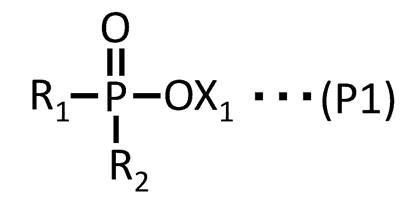
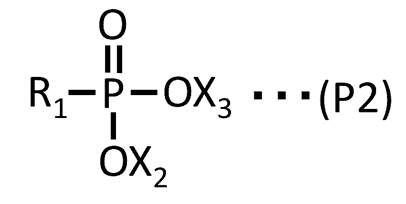
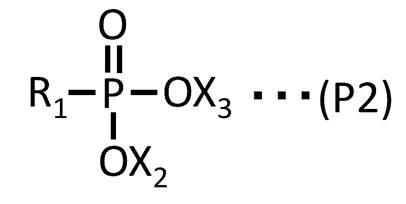
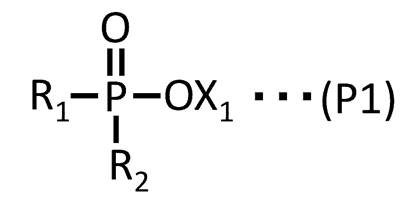
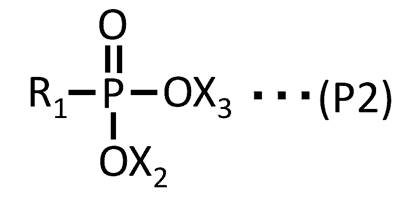
- the sum (P3) of the phosphorus atom contents derived from the phosphorus compounds detected in the structures of the structural formulas (P1) and (P2) in the semi-aromatic polyamide resin is 30 ppm or more.
- R 1 and R 2 are hydrogen, an alkyl group, an aryl group, a cycloalkyl group, or an arylalkyl group
- X 1 to X 3 are hydrogen, an alkyl group, an aryl group, a cycloalkyl group, an arylalkyl group, an alkali metal , Or an alkaline earth metal, and one of X 1 to X 3 and R 1 to R 2 in each formula may be connected to each other to form a ring structure
- a step of preparing a raw material aqueous solution which constitutes the semi-aromatic polyamide resin A raw material introduction step of continuously introducing the raw material aqueous solution into the tubular reactor, An amidation step in which the introduced raw material is passed through a tubular reactor to perform amidation to obtain a reaction mixture containing an amidated product and condensed water; A step of introducing the reaction mixture into a continuous reaction apparatus capable of separating and removing water to perform melt polymerization,
- the method for producing a semi-aromatic polyamide resin according to any one of [1] to [4], which comprises a step of performing solid phase polymerization under vacuum or a nitrogen stream.
- a semi-aromatic polyamide resin excellent in heat resistance and heat discoloration resistance capable of suppressing mold fouling due to outgas at the time of melt molding, excellent in melt flowability and gelation characteristics, and also excellent in mechanical characteristics.
- the “semi-aromatic polyamide resin” includes a polymerization catalyst compound described later. Although it can be said that it is a kind of “composition” in that it includes a substance other than the chemical substance “semi-aromatic polyamide”, the amount of the polymerization catalyst compound is very small, so in the present invention, “semi-aromatic polyamide” is used. "Resin”. When describing a chemical substance called “semi-aromatic polyamide”, it may be referred to as “semi-aromatic polyamide resin”.
- the semi-aromatic polyamide resin is a structural unit obtained from hexamethylenediamine and terephthalic acid (hereinafter sometimes referred to as 6T unit), and a structural unit obtained from 11-aminoundecanoic acid or undecane lactam (hereinafter , 11 units).
- 6T unit hexamethylenediamine and terephthalic acid
- 11 units 11-aminoundecanoic acid or undecane lactam
- the ratio of 6T units to 11 units of the semi-aromatic polyamide resin is not particularly limited, but it is desirable that the 6T units are 45 to 85 mol% and the 11 units are 55 to 15 mol%.
- the 6T unit of the semi-aromatic polyamide resin is preferably 50 to 75 mol%, the 11 unit is preferably 50 to 25 mol%, the 6T unit is 60 to 70 mol%, and the 11 unit is more preferably 40 to 30 mol%. More preferably, the unit is 62 to 68 mol %, and the 11 unit is 38 to 32 mol %.
- the 6T unit is 50 mol% or more, crystallinity and mechanical properties tend to be improved.
- the 6T unit is 75 mol% or less, the melting point of the semi-aromatic polyamide resin is lower than 330° C., and the processing temperature required when molding the semi-aromatic polyamide composition by injection molding becomes high. Not too much, it is possible to satisfy the decomposition during processing and the desired physical properties and appearance. It is also preferable from the viewpoint of water absorption of the molded product in order to suppress an increase in the amide bond concentration.
- the semi-aromatic polyamide resin may be copolymerized with a copolymerizable component other than 6T units and 11 units.
- a copolymerizable diamine component 1,2-ethylenediamine, 1,3-trimethylenediamine, 1,4-tetramethylenediamine, 1,5-pentamethylenediamine, 2-methyl-1,5-pentamethylenediamine 1,7-heptamethylenediamine, 1,8-octamethylenediamine, 1,9-nonamethylenediamine, 2-methyl-1,8-octamethylenediamine, 1,10-decamethylenediamine, 1,11-un Decamethylenediamine, 1,12-dodecamethylenediamine, 1,13-tridecamethylenediamine, 1,16-hexadecamethylenediamine, 1,18-octadecamethylenediamine, 2,2,4 (or 2,4 4) Aliphatic diamines such as -trimethylhexamethylenediamine, piperazine, cyclo
- Copolymerizable dicarboxylic acid components include isophthalic acid, orthophthalic acid, 1,5-naphthalenedicarboxylic acid, 2,6-naphthalenedicarboxylic acid, 4,4'-diphenyldicarboxylic acid, 2,2'-diphenyldicarboxylic acid.
- Aromatic dicarboxylic acids such as 4,4'-diphenyl ether dicarboxylic acid, sodium 5-sulfonate isophthalic acid, 5-hydroxyisophthalic acid, fumaric acid, maleic acid, succinic acid, itaconic acid, adipic acid, azelaic acid, sebacic acid , 1,11-undecanedioic acid, 1,12-dodecanedioic acid, 1,14-tetradecanedioic acid, 1,18-octadecanedioic acid, 1,4-cyclohexanedicarboxylic acid, 1,3-cyclohexanedicarboxylic acid, 1 And aliphatic and alicyclic dicarboxylic acids such as 2-cyclohexanedicarboxylic acid, 4-methyl-1,2-cyclohexanedicarboxylic acid and dimer acid. Further, examples include lactams such as ⁇ -caprolactam, 12-aminod
- the total number of terminals which is the sum of the amino group terminal concentration (AEG), the carboxyl group terminal concentration (CEG), and the terminal concentration (EC) blocked with monocarboxylic acid or/and monoamine of the polyamide resin, and the relative viscosity ( RV) is correlated.
- the semi-aromatic polyamide resin of the present invention is heat resistant by satisfying the above-mentioned formula (1) and satisfying the ranges represented by formula (2), formula (3) and formula (4). It is possible to obtain a semi-aromatic polyamide resin that has excellent heat resistance and heat discoloration resistance, and that can suppress mold fouling due to outgas during melt molding, and that also has excellent melt fluidity, gelling properties, and mechanical properties. ..
- EC refers to the terminal concentration in which the amino group terminal is blocked with a monocarboxylic acid.
- the amino group terminal, the carboxyl group terminal, and the terminal blocked with monocarboxylic acid or/and monoamine may be referred to as AEG, CEG, and EC, respectively.
- (AEG+CEG) of the semi-aromatic polyamide resin of the present invention is 10 to 110 eq/t, preferably 20 to 100 eq/t, and more preferably 30 to 90 eq/t.
- (AEG+CEG) is 10 eq/t or more, the reactive terminal group remains, and it becomes possible to increase the viscosity to RV at which the mechanical strength of the molded product can be secured.
- (AEG+CEG) is 110 eq/t or less, the viscosity does not increase and gelation does not occur during melt molding.
- the (AEG+CEG)/(AEG+CEG+EC) of the semi-aromatic polyamide resin of the present invention is 0.25 to 0.75, preferably 0.30 to 0.70, and more preferably 0.35 to 0.65. Is.
- (AEG+CEG)/(AEG+CEG+EC) is 0.75 or less, the viscosity does not increase and gel during the end melt molding, and the coloring reaction due to heat can be suppressed.
- (AEG+CEG)/(AEG+CEG+EC) is 0.25 or more, an appropriate amount of end groups reactive with the end-blocking amount remains, suppressing the decrease in viscosity during melt molding, and satisfying the mechanical properties of the molded product. It will be possible.
- (AEG+CEG)/(AEG+CEG+EC) is preferably larger than 0.50.
- the (AEG/CEG) of the semi-aromatic polyamide resin of the present invention is 0.1 to 3.5, preferably 0.3 to 2.5, and more preferably 0.5 to 1.5. .
- the viscosity increases as a result of the reaction between the amino group terminal and the carboxyl group terminal.
- thickening may proceed due to the reaction of CEG with EC.
- AEG disappears (becomes 0) during the progress of the amidation reaction, the terminals of the semi-aromatic polyamide resin become CEG and EC. Since there is no AEG, the acid catalytic effect of CEG causes CEG to attack the amide bond formed by the end-capping agent, resulting in an amide exchange reaction.
- the thickening reaction proceeds while distilling the terminal blocking agent out of the reaction system. Therefore, the outgas component derived from the terminal blocking agent increases.
- the acid component of CEG causes a color reaction together, resulting in a resin having poor color tone stability.
- (AEG/CEG) exceeds 3.5, the amount of remaining AEG is large, so that the coloring reaction due to heat is likely to occur. In order to avoid such a phenomenon, it is important to satisfy the expressions (2), (3) and (4).
- the AEG is preferably 10 to 80 eq/t, and more preferably 15 to 60 eq/t.
- the CEG is preferably 10 to 80 eq/t, and more preferably 15 to 60 eq/t.
- the EC is preferably 40 to 120 eq/t, more preferably 50 to 110 eq/, and further preferably 60 to 100 eq/t.
- the relative viscosity (RV) of the semi-aromatic polyamide resin of the present invention is 2.65 to 3.50, preferably. It is 2.70 to 3.40, and more preferably 2.75 to 3.35. If the RV is 2.65 or more, the mechanical strength of the molded product will be satisfactory. When the RV is 3.50 or less, the fluidity at the time of melt molding is high, which is preferable in terms of melt processability.
- the semi-aromatic polyamide resin of the present invention has a gas amount (outgas) of 500 ppm or less generated when the semi-aromatic polyamide resin is thermally decomposed at 330° C. for 20 minutes.
- the outgas is measured by the method described in the section of Examples below. By setting the above specific terminal and RV, a semi-aromatic polyamide resin with low outgas can be obtained.
- the outgas is preferably 450 ppm or less, more preferably 400 ppm or less, further preferably 350 ppm or less.
- the lower limit of outgas is preferably 0 ppm, but is about 250 ppm in the semi-aromatic polyamide resin of the present invention.
- the outgas of the semi-aromatic polyamide resin of the present invention is within the above range, it is possible to suppress mold fouling during melt molding and enable long-term production.
- the sum (P3) of phosphorus atom contents derived from phosphorus compounds detected by the structures of the structural formulas (P1) and (P2) in the semi-aromatic polyamide resin is 30 ppm or more. It is preferable that P3 is 10% or more with respect to the total amount of phosphorus atoms remaining in the semi-aromatic polyamide resin.
- the phosphorus atom is derived from the phosphorus compound used as a catalyst. P3 is more preferably 40 ppm or more, further preferably 50 ppm or more.
- P3 When P3 is 30 ppm or more, the peroxide generated due to thermal oxidation deterioration can be suppressed, so that yellowing coloring under high temperature atmosphere can be suppressed. Further, it is possible to obtain a resin in which gelation due to peroxide generated by thermal oxidation deterioration is suppressed. If P3 is less than 10% with respect to the total amount of phosphorus atoms remaining, it may indicate that the polymer has been thermally damaged due to the heat history during polymerization or that it has reacted with oxygen remaining in the polymerization system to cause oxidative deterioration. This means that it becomes a resin that is easily colored and gelled.
- the upper limit of the ratio of P3 to the total amount of remaining phosphorus atoms is not particularly specified, but is about 50% in the present invention.
- the oxygen concentration in the storage layer was set to 10 ppm or less, and a low-order condensate obtained by polymerizing the polycondensation step at low temperature was obtained. After that, it can be achieved by adjusting the viscosity to a predetermined value by solid-state polymerization with a small heat history. Since P3 is 30 ppm or more with respect to the total amount of phosphorus atoms remaining, the total amount of phosphorus atoms remaining in the semi-aromatic polyamide resin is preferably 200 to 400 ppm.
- R 1 and R 2 are hydrogen, an alkyl group, an aryl group, a cycloalkyl group, or an arylalkyl group
- X 1 to X 3 are hydrogen, an alkyl group, an aryl group, a cycloalkyl group, an arylalkyl group, an alkali metal , Or an alkaline earth metal, and one of X 1 to X 3 and R 1 to R 2 in each formula may be connected to each other to form a ring structure
- the phosphorus compound used as the catalyst will be described later, but when sodium hypophosphite is used as the catalyst, R 1 and R 2 are hydrogen, and X 1 to X 3 are hydrogen or sodium, respectively.
- ⁇ Co-b before and after the heat treatment at 260° C. for 10 minutes in the atmosphere can be 10 or less. Further, it is possible to obtain a semi-aromatic polyamide having a gelation time of 2 hours or more when heat-treated at 330° C. under a nitrogen stream. ⁇ Co-b and gelation time are determined by the method described in the section of Examples below.
- a step of preparing a raw material aqueous solution that constitutes the semi-aromatic polyamide resin, and a raw material introducing step of continuously introducing the raw material aqueous solution into a tubular reactor were introduced.
- An amidation step in which the raw materials are passed through a tubular reactor to perform amidation to obtain a reaction mixture containing an amidation product and condensed water, and the reaction mixture is introduced into a continuous reactor capable of separating and removing water to perform melt polymerization.
- a step of performing solid phase polymerization under vacuum or nitrogen stream are performed.
- dimethylphosphinic acid dimethylphosphinic acid, phenylmethylphosphinic acid, hypophosphorous acid, ethyl hypophosphite, compounds of phosphorous acid and hydrolysates thereof, And condensates.
- a metal salt, ammonium salt, or ester thereof can be used.
- the metal species of the metal salt include potassium, sodium, magnesium, vanadium, calcium, zinc, cobalt, manganese, tin, tungsten, germanium, titanium and antimony.
- the ester ethyl ester, isopropyl ester, butyl ester, hexyl ester, isodecyl ester, octadecyl ester, decyl ester, stearyl ester, phenyl ester and the like can be added.
- the catalyst is preferably sodium hypophosphite. Further, from the viewpoint of improving melt retention stability, sodium hydroxide is preferably added.
- the end blocker is preferably added at the time of charging the raw materials, but may be at the start of polymerization, the latter stage of polymerization, or the end of polymerization.
- the terminal blocking agent is not particularly limited as long as it is a monofunctional compound having reactivity with an amino group or a carboxyl group at the polyamide terminal, but it is a monocarboxylic acid or monoamine, an acid anhydride such as phthalic anhydride, or a monofunctional compound. Isocyanates, monoacid halides, monoesters, monoalcohols and the like can be used.
- terminal blocking agent examples include acetic acid, propionic acid, butyric acid, valeric acid, caproic acid, caprylic acid, lauric acid, tridecanoic acid, myristic acid, palmitic acid, stearic acid, pivalic acid, and isobutyric acid.
- Acids alicyclic monocarboxylic acids such as cyclohexanecarboxylic acid, benzoic acid, toluic acid, ⁇ -naphthalenecarboxylic acid, ⁇ -naphthalenecarboxylic acid, methylnaphthalenecarboxylic acid, aromatic monocarboxylic acids such as phenylacetic acid, maleic anhydride Acid anhydrides such as phthalic anhydride, hexahydrophthalic anhydride, fats such as methylamine, ethylamine, propylamine, butylamine, hexylamine, octylamine, decylamine, stearylamine, dimethylamine, diethylamine, dipropylamine, dibutylamine Examples thereof include alicyclic monoamines such as group monoamine, cyclohexylamine and dicyclohexylamine, and aromatic monoamines such as aniline, toluidine, diphenylamine and naph
- the salt concentration of the raw material aqueous solution varies depending on the type of polyamide and is not particularly limited, but it is generally desirable to set it to 30 to 90% by mass. If the salt concentration exceeds 90% by mass, the salt may precipitate due to slight fluctuations in temperature and clog the pipes. Also, since it is necessary to increase the solubility of the salt, the facility requires high temperature and high pressure specifications. Therefore, there is a cost disadvantage. On the other hand, when the salt concentration is less than 30% by mass, not only is the amount of water evaporated after the initial polymerization step increased, which is disadvantageous in terms of energy, but also a factor of increased cost due to reduced productivity. A desirable salt concentration is 35 to 85% by mass.
- the preparation of the salt aqueous solution is generally at a temperature of 60 to 180° C. and a pressure of 0 to 1 MPa. If the temperature exceeds 180° C. or if the pressure exceeds 1 MPa, the equipment has high temperature and high pressure resistance specifications, which increases the equipment cost and is disadvantageous. On the contrary, when the temperature is lower than 60° C. or when the pressure is lower than 0 MPa, not only a trouble factor such as clogging of the pipe due to salt precipitation but also it becomes difficult to increase the salt concentration, resulting in a high productivity. Cause a decline. Desirable conditions are a temperature of 70 to 170° C., a pressure of 0.05 to 0.8 MPa, more preferably 75 to 165° C. and 0.1 to 0.6 MPa.
- the salt solution thus prepared is continuously supplied to the amidation process by the supply pump in the raw material introduction process.
- the feed pump used here must be highly quantitative. Fluctuations in the supply amount result in fluctuations in the amidation process, and as a result, a polyamide having a large deviation in relative viscosity (RV) and unstable quality can be obtained. From this point of view, it is recommended to use a plunger pump that is highly quantitative as the supply pump.
- ⁇ Atmospheric oxygen concentration at the time of mixing raw materials has a great influence on the color tone of the obtained polyamide.
- the atmospheric oxygen concentration at the time of mixing the raw materials is 10 ppm or less, but if the oxygen concentration exceeds 10 ppm, the obtained polyamide tends to have a strong yellow tint and the product quality tends to deteriorate.
- the lower limit of the oxygen concentration is not particularly set, but is, for example, 0.05 ppm or more.
- the oxygen concentration is less than 0.05 ppm, but in order to achieve less than 0.05 ppm, the oxygen removal step becomes unnecessarily complicated, and the color tone starts. There is almost no effect on other physical properties.
- a desirable oxygen concentration range is 0.05 ppm or more and 9 ppm or less, and more desirably 0.05 ppm or more and 8 ppm or less.
- the raw material is supplied to a blending tank (melting tank or raw material salt forming tank) in which oxygen is removed in advance and the oxygen concentration is 10 ppm or less, or the raw material is put into the blending tank (melting tank or raw salt forming tank).
- oxygen may be removed and the atmosphere in the mixing tank may have an oxygen concentration of 10 ppm or less, or both may be used together. This may be selected from the viewpoint of equipment or operation. It is also preferable that the atmosphere in the storage tank has an oxygen concentration of 10 ppm or less.
- a vacuum replacement method As a method of removing oxygen, there are a vacuum replacement method, a pressure replacement method, or a combination thereof. Regarding the degree of vacuum or pressure applied to the substitution and the number of substitutions, the most efficient condition for achieving the desired oxygen concentration may be selected.
- the salt aqueous solution prepared in the raw material blending step is continuously introduced into the inlet of the tubular reaction device in the amidation step by a feed pump through a pipe line.
- amidation step an aqueous salt solution continuously introduced into the inlet of the tubular reactor is passed through the tubular reactor to perform amidation, and an amidation product having a low polymerization degree and condensed water are condensed. A reaction mixture containing and is obtained. No separation and removal of water takes place in the tubular reactor.
- the tubular reactor preferably has an L/D of 50 or more when the inner diameter of the tube is D (mm) and the length of the tube is L (mm).
- the tubular reactor has advantages such as no need for liquid level control due to its structure, high plug flow property, excellent pressure resistance, and low equipment cost.
- L/D is less than 50, when L is small, the residence time of the reaction mixture flow is short and the increase degree of relative viscosity (RV) is small, while when D is large, the plug flow property is small and the residence time is small. A time distribution is created and the desired function cannot be achieved.
- the upper limit of L/D is not particularly specified, it is about 3000 in consideration of the residence time and the degree of increase in relative viscosity (RV).
- the lower limit of L/D is more preferably 60 or more, further preferably 80 or more, and the upper limit is more preferably 2000 or less, still more preferably 1000 or less.
- the lower limit of L is preferably 3 m or more, more preferably 5 m or more, and the upper limit is preferably 50 m or less, more preferably 30 m or less.
- the reaction conditions vary depending on the structure of the polyamide and the desired degree of polymerization, but for example, the internal temperature is 110 to 310° C., the internal pressure is 0 to 5 MPa, and the average residence time in the tube of the reaction mixture is 10 to 120 minutes. is there.
- the degree of polymerization of the amidation product can be controlled by the internal temperature, internal pressure and average residence time.
- the average residence time is shorter than 10 minutes, the degree of polymerization of the amidation product having a low degree of polymerization becomes low, and as a result, the diamine component tends to scatter during the polycondensation process, making it difficult to adjust the end groups.
- the average residence time is longer than 120 minutes, the amidation reaches an equilibrium and the increase in RV reaches a peak, while the thermal deterioration proceeds, which is not preferable.
- a desirable average residence time is 12 to 110 minutes, more desirably 15 to 100 minutes.
- the average residence time can be controlled by adjusting the inner diameter D of the tube of the tubular reactor or the length L of the tube, or by changing the raw material supply amount.
- the polycondensation reaction in the amidation step causes the relative viscosity (RV) of the reaction mixture to increase by 0.05 to 0.6 at the inlet and outlet of the tubular reactor. If the increase in RV is smaller than 0.05, the diamine component is likely to scatter during the polycondensation step, making it difficult to adjust the end groups. On the other hand, when the increase in RV is made larger than 0.6, thermal deterioration is likely to proceed due to the influence of coexisting condensed water (in the case of the salt forming method, water used for salt formation and condensed water). In addition, since the reaction mixture having an excessively high viscosity causes the clogging of the pipe, it may adversely affect the operation.
- the desirable range of RV increase in the amidation step is 0.15 to 0.5, and more desirably 0.2 to 0.4.
- the reaction conditions in the initial polymerization step are as follows: the internal pressure is 0 to 5 MPa, the average residence time is 10 to 150 minutes, and the internal temperature is determined according to the Flory melting point lowering formula based on the residual water content in the can. To be done. Desirable reaction conditions include an internal temperature of 230 to 285° C., an internal pressure of 0.5 to 4.5 MPa, and an average residence time of 15 to 140 minutes. More desirable reaction conditions are an internal temperature of 235 to 280. C., the internal pressure is 1.0 to 4.0 MPa, and the average residence time is 20 to 130 minutes.
- reaction conditions deviate from the lower limit of the above range, the ultimate degree of polymerization is too low and the resin is solidified in the can, which is not preferable. If the reaction conditions deviate from the upper limit of the above range, decomposition of P3 components and side reactions occur simultaneously, and P3 becomes less than 30 ppm, which is disadvantageous in heat yellowing and gelation properties.
- the solid-phase polymerization referred to in the present invention is a step of advancing the polymerization reaction under vacuum or under a nitrogen stream at an arbitrary temperature within the range where the semi-aromatic polyamide resin does not melt.
- the equipment for carrying out the solid phase polymerization is not particularly limited, but a blender and a vacuum dryer can be cited as examples.
- Desirable reaction conditions are an internal temperature of 200 to 260° C. and an internal pressure of 0.7 KPa or less. More desirable reaction conditions are an internal temperature of 210 to 250° C. and an internal pressure of 0.4 KPa or less.
- the semi-aromatic polyamide resin of the present invention is particularly preferably used in molding applications and can be formed into a molded body.
- a usual molding method is used. Examples of the molding method include hot melt molding methods such as injection molding, extrusion molding, blow molding, and sintering molding.
- RV right blood pressure
- the solution was applied to an ICP emission spectrometer, the emission intensity of phosphorus at a wavelength of 214 nm was measured, the phosphorus concentration in the solution was quantified, and then converted to the phosphorus content in the sample.
- the 31 P resonance frequency is 202.5 MHz
- the detection pulse flip angle is 45°
- the data acquisition time is 1.5 seconds
- the delay time is 1.0 second
- the number of integrations is 1000 to 20000 times
- the measurement temperature is room temperature
- Analysis was performed under the condition of complete proton decoupling, and the molar ratio of the phosphorus compound represented by the structural formula (P1) to the phosphorus compound represented by the structural formula (P2) was determined by the integral ratio.
- Example 1 8.66 kg (74.5 mol) of 1,6-hexamethylenediamine, 12.24 kg (73.7 mol) of terephthalic acid, 7.99 kg (39.7 mol) of 11-aminoundecanoic acid, hypophosphorous acid as a catalyst 30.4 g of sodium, 95.8 g (1.6 mol) of acetic acid as a terminal blocking agent, and 16.20 kg of ion-exchanged water adjusted to have a dissolved oxygen of 0.5 ppm or less by bubbling nitrogen into an autoclave of 50 liters, and from normal pressure The pressure was increased to 0.05 MPa with N 2 , the pressure was released, and the pressure was returned to normal pressure.
- This operation was performed 10 times, N 2 substitution was performed, and then uniform dissolution was performed at 135° C. and 0.3 MPa with stirring. Then, the dissolution liquid was continuously supplied by a liquid feed pump, the temperature was raised to 260° C. in a heating pipe, and heat was applied for 0.5 hours. Then, the reaction mixture was supplied to a pressure reactor, heated to 270° C., and a part of water was distilled off so as to maintain the can internal pressure at 3 MPa to obtain a low-order condensate. Then, the low-order condensate was taken out into a container at room temperature and atmospheric pressure in the air, and then dried in a vacuum dryer at 70° C. under an environment of a vacuum degree of 0.07 KPa or less.
- the low-order condensate was reacted for 10 hours in an environment of 200° C. and a vacuum degree of 0.07 KPa using a blender (capacity 0.1 m 3 ) to obtain a semi-aromatic polyamide resin. Details of the properties of the obtained semi-aromatic polyamide resin are shown in Table 1.
- Example 2 Vacuum drying was performed in the same manner as in Example 1 to obtain a low-order condensate. Then, using a blender (capacity 0.1 m 3 ), the reaction was performed for 10 hours in an environment of 210° C. and a vacuum degree of 0.07 KPa to obtain a semi-aromatic polyamide resin.
- Example 3 1,6-hexamethylenediamine was changed to 8.94 kg (76.9 mol), and the end-capping agent was changed to 159.4 g (2.7 mol) of acetic acid, and vacuum drying was carried out in the same manner as in Example 1 to obtain a low-order condensate. It was Then, using a blender (capacity 0.1 m 3 ), reaction was performed for 6 hours in an environment of 225° C. and a vacuum degree of 0.07 KPa to obtain a semi-aromatic polyamide resin.
- Example 4 7.20 kg (62.0 mol) of 1,6-hexamethylenediamine, 9.89 kg (59.5 mol) of terephthalic acid, 11.99 kg (59.6 mol) of 11-aminoundecanoic acid, and 150 acetic acid as a terminal blocking agent. The amount was changed to 0.4 g (2.5 mol) and vacuum drying was performed in the same manner as in Example 1 to obtain a low-order condensate. Then, using a blender (capacity: 0.1 m 3 ), reaction was performed for 12 hours in an environment of 235° C. and a vacuum degree of 0.07 KPa to obtain a semi-aromatic polyamide resin.
- Example 5 1,6-hexamethylenediamine 10.38 kg (89.3 mol), terephthalic acid 14.38 kg (86.6 mol), 11-aminoundecanoic acid 4.36 kg (21.7 mol), and acetic acid 118 as a terminal blocking agent.
- the amount was changed to 9.9 g (2.0 mol) and vacuum drying was performed in the same manner as in Example 1 to obtain a low-order condensate.
- using a blender (capacity: 0.1 m 3 )
- reaction was performed for 11 hours in an environment of 235° C. and a vacuum degree of 0.07 KPa to obtain a semi-aromatic polyamide resin.
- Example 6 1,6-hexamethylenediamine (8.91 kg, 76.7 mol) and benzoic acid (344.7 g, 2.8 mol) as a terminal blocking agent were used, and vacuum drying was carried out in the same manner as in Example 1 to obtain a low-order condensate. Obtained. Then, using a blender (capacity: 0.1 m 3 ), reaction was performed for 8 hours in an environment of 230° C. and a vacuum degree of 0.07 KPa to obtain a semi-aromatic polyamide resin.
- Example 7 The amount of 1,6-hexamethylenediamine was changed to 8.75 kg (75.3 mol) and the end-capping agent was changed to 73.8 g (1.2 mol) of acetic acid, and vacuum drying was carried out in the same manner as in Example 1 to obtain a low-order condensate. It was Then, using a blender (capacity 0.1 m 3 ), the reaction was performed for 12 hours in an environment of 210° C. and a vacuum degree of 0.07 KPa to obtain a semi-aromatic polyamide resin.
- Example 8 The amount of 1,6-hexamethylenediamine was changed to 8.84 kg (76.1 mol) and the end-capping agent was changed to 127.6 g (2.1 mol) of acetic acid, and vacuum drying was carried out in the same manner as in Example 1 to obtain a low-order condensate. It was Then, using a blender (capacity 0.1 m 3 ), the reaction was performed for 10 hours in an environment of 210° C. and a vacuum degree of 0.07 KPa to obtain a semi-aromatic polyamide resin.
- Comparative Example 1 8.98 kg (77.3 mol) of 1,6-hexamethylenediamine and 217.3 g (3.6 mol) of acetic acid as a terminal blocking agent were changed, and vacuum drying was carried out in the same manner as in Example 1 to obtain a low-order condensate. It was Then, using a blender (capacity: 0.1 m 3 ), reaction was performed for 8 hours in an environment of 235° C. and a vacuum degree of 0.07 KPa to obtain a semi-aromatic polyamide resin.
- Comparative Example 3 8.78 kg (75.6 mol) of 1,6-hexamethylenediamine was changed to 75.7 g (1.3 mol) of acetic acid as a terminal blocking agent, and vacuum drying was carried out in the same manner as in Example 1 to obtain a low-order condensate. It was Then, using a blender (capacity 0.1 m 3 ), the reaction was performed for 5 hours in an environment of 200° C. and a vacuum degree of 0.07 KPa to obtain a semi-aromatic polyamide resin.
- Comparative Example 4 8.65 kg (74.4 mol) of 1,6-hexamethylenediamine and 145.4 g (2.4 mol) of acetic acid as a terminal blocking agent were changed to vacuum drying in the same manner as in Example 1 to obtain a low-order condensate. It was Then, using a blender (capacity 0.1 m 3 ), reaction was performed for 6 hours in an environment of 235° C. and a vacuum degree of 0.07 KPa to obtain a semi-aromatic polyamide resin.
- Comparative Example 6 8.77 kg (75.5 mol) of 1,6-hexamethylenediamine was changed to 81.7 g (1.4 mol) of acetic acid as a terminal blocking agent, and vacuum drying was carried out in the same manner as in Example 1 to obtain a low-order condensate. It was Then, using a blender (capacity 0.1 m 3 ), the reaction was performed for 18 hours in an environment of 210° C. and a vacuum degree of 0.07 KPa to obtain a semi-aromatic polyamide resin.
- Comparative Example 7 9.10 kg (78.3 mol) of 1,6-hexamethylenediamine and 279.2 g (4.6 mol) of acetic acid as a terminal blocking agent were used, and vacuum drying was carried out in the same manner as in Example 1 to obtain a low-order condensate. It was Then, using a blender (capacity 0.1 m 3 ), the reaction was performed for 8 hours in an environment of 240° C. and a vacuum degree of 0.07 KPa to obtain a semi-aromatic polyamide resin.
- Comparative Example 8 The amount of 1,6-hexamethylenediamine was changed to 8.50 kg (73.1 mol) and the end-capping agent was changed to 45.8 g (0.7 mol) of acetic acid, and vacuum drying was carried out in the same manner as in Example 1 to obtain a low-order condensate. It was Then, using a blender (capacity 0.1 m 3 ), the reaction was performed for 10 hours in an environment of 200° C. and a vacuum degree of 0.07 KPa to obtain a semi-aromatic polyamide resin. Table 1 shows the details of the characteristics of the semi-aromatic polyamide resins obtained in the examples and the comparative examples.
- Examples 1 to 8 satisfy all the characteristics.
- RV In Comparative Example 1, RV ⁇ 2.65, indicating that the weld strength is low.
- Comparative Example 2 since (AEG+CEG)/(AEG+CEG+EC) ⁇ 0.25, the ratio of the amount of end-blocking was large, and it was found that the viscosity was lowered during molding and the weld strength was low.
- Comparative Example 3 since (AEG+CEG)>110 eq/t, the amount of endblocking is small, the amount of AEG and CEG remaining is large, heat yellowing is inferior, and gelation easily occurs.
- Comparative Example 4 the AEG is 0 eq/t, the outgas component derived from the end capping increases, the coloring reaction of the acid component also occurs, and the resin is inferior in heat yellowing.
- Comparative Example 5 is a resin in which the amount of AEG remaining is large and the heat-resistant yellowing is inferior because AEG/CEG>3.5.
- RV>3.50 so that the fluidity at the time of molding is poor and the resin easily gels.
- Comparative Example 7 since AEG+CEG ⁇ 10 eq/t, (AEG+CEG)/(AEG+CEG+EC) ⁇ 0.25 eq/t, the ratio of the amount of end-blocking was large, the viscosity was reduced during molding, and the weld strength was low. I understand. Since Comparative Example 8 is (AEG+CEG)/(AEG+CEG+EC)>0.75, it is easy to gel and it is understood that the resin is inferior in heat yellowing.
Landscapes
- Chemical & Material Sciences (AREA)
- Health & Medical Sciences (AREA)
- Chemical Kinetics & Catalysis (AREA)
- Medicinal Chemistry (AREA)
- Polymers & Plastics (AREA)
- Organic Chemistry (AREA)
- Life Sciences & Earth Sciences (AREA)
- Proteomics, Peptides & Aminoacids (AREA)
- Polyamides (AREA)
Abstract
Description
すなわち、本発明は、以下の構成からなる。
2.65≦RV≦3.50 ・・ (1)
10eq/t≦AEG+CEG≦110eq/t ・・ (2)
0.25≦(AEG+CEG)/(AEG+CEG+EC)≦0.75 ・・ (3)
0.1≦AEG/CEG≦3.5 ・・ (4)
原料水溶液を管状反応装置に連続的に導入する原料導入工程と、
導入された原料を管状反応装置内を通過させアミド化を行いアミド化物と縮合水とを含む反応混合物を得るアミド化工程と、
反応混合物を水分離除去可能な連続式反応装置に導入して溶融重合を行う工程と、
真空下または窒素気流下で固相重合を行う工程を含む、[1]~[4]のいずれかに記載の半芳香族ポリアミド樹脂の製造方法。
共重合可能なジアミン成分としては、1,2-エチレンジアミン、1,3-トリメチレンジアミン、1,4-テトラメチレンジアミン、1,5-ペンタメチレンジアミン、2-メチル-1,5-ペンタメチレンジアミン、1,7-ヘプタメチレンジアミン、1,8-オクタメチレンジアミン、1、9-ノナメチレンジアミン、2-メチル―1,8-オクタメチレンジアミン、1,10-デカメチレンジアミン、1,11-ウンデカメチレンジアミン、1,12-ドデカメチレンジアミン、1,13-トリデカメチレンジアミン、1,16-ヘキサデカメチレンジアミン、1,18-オクタデカメチレンジアミン、2,2,4(または2,4,4)-トリメチルヘキサメチレンジアミンのような脂肪族ジアミン、ピペラジン、シクロヘキサンジアミン、ビス(3-メチル-4-アミノヘキシル)メタン、ビス-(4,4’-アミノシクロヘキシル)メタン、イソホロンジアミンのような脂環式ジアミン、メタキシリレンジアミン、パラキシリレンジアミン、パラフェニレンジアミン、メタフェニレンジアミンなどの芳香族ジアミンおよびこれらの水添物等が挙げられ、これらを単独もしくは複数使用することが可能である。
共重合可能なジカルボン酸成分としては、イソフタル酸、オルソフタル酸、1,5-ナフタレンジカルボン酸、2,6-ナフタレンジカルボンル酸、4,4’-ジフェニルジカルボン酸、2,2’-ジフェニルジカルボン酸、4,4’-ジフェニルエーテルジカルボン酸、5-スルホン酸ナトリウムイソフタル酸、5-ヒドロキシイソフタル酸等の芳香族ジカルボン酸、フマル酸、マレイン酸、コハク酸、イタコン酸、アジピン酸、アゼライン酸、セバシン酸、1,11-ウンデカン二酸、1,12-ドデカン二酸、1,14-テトラデカン二酸、1,18-オクタデカン二酸、1,4-シクロヘキサンジカルボン酸、1,3-シクロヘキサンジカルボン酸、1,2-シクロヘキサンジカルボン酸、4-メチル-1,2-シクロヘキサンジカルボン酸、ダイマー酸等の脂肪族や脂環族ジカルボン酸等が挙げられる。また、ε-カプロラクタム、12-アミノドデカン酸、12-ラウリルラクタムなどのラクタムおよびこれらが開環した構造であるアミノカルボン酸などが挙げられる。
なお、説明の便宜上、アミノ基末端、カルボキシル基末端、及びモノカルボン酸又は/及びモノアミンで封鎖した末端を、それぞれAEG、CEG、及びECと称することもある。
残存する全リン原子量に対してP3が10%未満の場合は、重合時の熱履歴による熱ダメージを受けている場合や重合系内に残存する酸素と反応し酸化劣化が進行していることを意味しており、着色しやすくゲル化しやすい樹脂となってしまう。残存する全リン原子量に対してP3の比率の上限は特に定めないが、本発明においては50%程度である。
P3が30ppm以上であり、且つ残存する全リン原子量に対してP3が10%以上とするには貯蔵層の酸素濃度を10ppm以下とし、重縮合工程を低温で重合した低次縮合物を得た後、熱履歴の少ない固相重合により所定の粘度まで調整することで達成できる。
残存する全リン原子量に対してP3が30ppm以上とするため、半芳香族ポリアミド樹脂中に残存する全リン原子量は、200~400ppmが好ましい。

耐圧反応缶に、ヘキサメチレンジアミンとテレフタル酸と、11-アミノウンデカン酸又はウンデカンラクタムをそれぞれ所定量、投入する。同時に、原料濃度が30~90重量%となるように水を加え、重合触媒であるリン化合物、末端封鎖剤であるモノカルボン酸を仕込む。また、後工程で発泡するものには、発泡抑制剤を投入する。
原料調合工程において調整された塩水溶液を、管路を通じて供給ポンプによってアミド化工程の管状反応装置の入口に連続的に導入する。
アミド化工程では、管状反応装置の入口に連続的に導入された塩水溶液を、管状反応装置内を通過させアミド化を行い、低重合度のアミド化生成物と縮合水とを含む反応混合物を得る。管状反応装置内では、水の分離除去は行われない。
初期重合工程における反応条件は、内圧は0~5MPaであり、平均滞留時間は10~150分であり、内温は缶内の残存水分率によるFloryの融点降下式に従い決定される。望ましい反応条件は、内温は230~285℃であり、内圧は0.5~4.5MPaであり、平均滞留時間は15~140分であり、さらに望ましい反応条件は、内温は235~280℃であり、内圧は1.0~4.0MPaであり、平均滞留時間は20~130分である。反応条件が上記範囲の下限から外れると到達重合度が低すぎたり、缶内で樹脂が固化してしまうなど好ましくない。反応条件が上記範囲の上限から外れると、P3成分の分解や副反応が併発し、P3が30ppm未満となるため、耐熱黄変性やゲル化特性に不利である。
本発明でいう固相重合は、半芳香族ポリアミド樹脂が溶融しない範囲の任意の温度で、真空下または窒素気流下で重合反応を進める工程をいう。固相重合を行う設備は、特に限定はされないが、ブレンダーや真空乾燥機が例として挙げられる。望ましい反応条件は、内温は200~260℃であり、内圧は0.7KPa以下であり、さらに望ましい反応条件は、内温は210~250℃であり、内圧は0.4KPa以下である。
ポリアミド樹脂3mgを秤量し、熱分解GC/MS(Shimadzu製PY-2020iD)を用いて330℃×20分間のHe下で発生するガスの量を測定した。定量値は標準物質にジメチルシロキサン環状4量体を用いて換算した。カラム:Rxi-5ms、注入口圧力:80KPa、スプリット比:30、カラムオーブン温度:40℃(2分)-300℃(15分)、10分/℃、質量測定範囲:m/z30-550。
試料0.25gを96%硫酸25mlに溶解し、この溶液10mlをオストワルド粘度管に入れ20℃で測定、下式より求めた。
RV=t/t0
(但し、t0:溶媒の落下秒数 t:試料溶液の落下秒数)
半芳香族ポリアミド樹脂20mgを重水素化クロロホルム(CDCl3)/ヘキサフルオロイソプロパノール(HFIP)=1/1(Vol比)の混合溶媒0.6mlに溶解し、重蟻酸を滴下後、500MHzフーリエ変換核磁気共鳴装置(BRUKER社製AVANCE500)を用いて、1H-NMR分析を行い、その積分比より決定した。
サンプル5mgをアルミニウム製サンプルパンに入れて密封し、ティー・エイ・インスツルメント・ジャパン(株)製示差走査熱量分析計(DSC)DSC-Q100を用いて、350℃まで、昇温速度20℃/分にて測定し、融解熱の最大ピーク温度を結晶融点として求めた。
試料を硝酸イットリウム法により溶液化し、ICP(日立ハイテクサイエンス製 SPECTROBLUE)で分析した。白金るつぼに試料0.1gを秤量し、5%の硝酸イットリウムのエタノール溶液を5mL添加し、硝酸塩灰化処理を実施した。灰化残渣に1.2Nの塩酸を20mL添加し、一晩浸漬した。完全溶解を確認したのち、溶液をICP発光分析装置にかけ、214nmの波長のリンの発光強度を測定し、溶液中のリン濃度を定量後、試料中のリン含有量に換算した。
試料340~350mgを重水素化クロロホルム(CDCl3)/ヘキサフルオロイソプロパノール(HFIP)=1/1(Vol比)の混合溶媒2.5mlに室温で溶解させ、トリ(t-ブチルフェニール)リン酸(以下、TBPPAと略称)をPとしてポリアミド樹脂に対して100ppm添加し、さらに室温でトリフロロ酢酸を0.1ml加え、30分後にフーリエ変換核磁気共鳴装置(BRUKER社製AVANCE500)にて31P-NMR分析を行った。なお、31P共鳴周波数は202.5MHz、検出パルスのフリップ角は45°、データ取り込み時間は1.5秒、遅延時間は1.0秒、積算回数は1000~20000回、測定温度は室温、プロトン完全デカップリングの条件で分析を行い、その積分比により構造式(P1)で表されるリン化合物と構造式(P2)で表されるリン化合物とのモル比を求めた。
上記、ICPで求めたP化合物量と31P-NMRで求めたP1、P2のモル比からP1、P2の量をそれぞれ算出し、その合計をP3とした。
ポリアミド樹脂10gを液体窒素により冷凍凍結後、粉砕機(大阪ケミカル製 ABLOLUTE 3)にて15000rpmで3分間粉砕し、粉末とした。カラーメーター(日本電色社製 ZE 2000)を用いて粉砕したポリアミド樹脂のCo-bを測定した。ポリアミド樹脂をシャーレ上に薄く敷き、260℃に加温されたギアオーブン(TABAI製 GEER OVEN GHPS-222)中に入れ、大気下で10分間熱処理した樹脂のCo-b値を測定し、熱処理前後の差をΔCo-bとした。
ポリアミド樹脂3gをアンプル管に入れ、330℃に加温されたイナートオーブン(TAMATO製 DN4101)に10l/min窒素気流下で所定の時間熱処理を行った。熱処理した樹脂0.25gを96%硫酸25mlに溶解し、不溶物が出てくる熱処理時間をゲル化時間とした。
日本製鋼所製射出成形機J130-ADSを用い、シリンダー温度は樹脂の融点+20℃、金型温度は140℃に設定し、図1に記載する評価用試験片を射出成形にて、作製した。図1の(A)は試験片の上面図であり、(B)は側面図である。作製した試験片の中央部に形成されたウェルド部の曲げ強度をISO178に準拠し、評価した。得られたウェルド強度を以下の基準にて判定した。
◎:120MPa超
○:100MPa超120MPa以下
×:100MPa以下
1,6-ヘキサメチレンジアミン8.66kg(74.5モル)、テレフタル酸12.24kg(73.7モル)、11-アミノウンデカン酸7.99kg(39.7モル)、触媒として次亜リン酸ナトリウム30.4g、末端封鎖剤として酢酸95.8g(1.6モル)および窒素バブリングし溶存酸素を0.5ppm以下に調整したイオン交換水16.20kgを50リットルのオートクレーブに仕込み、常圧から0.05MPaまでN2で加圧し、放圧させ、常圧に戻した。この操作を10回行い、N2置換を行った後、攪拌下135℃、0.3MPaにて均一溶解させた。その後、溶解液を送液ポンプにより、連続的に供給し、加熱配管で260℃まで昇温させ、0.5時間、熱を加えた。その後、加圧反応缶に反応混合物が供給され、270℃に加熱され、缶内圧を3MPaで維持するように、水の一部を留出させ、低次縮合物を得た。その後、この低次縮合物を大気中、常温、常圧の容器に取り出した後、真空乾燥機を用いて、70℃、真空度0.07KPa以下の環境下で乾燥した。乾燥後、低次縮合物をブレンダー(容量0.1m3)を用いて、200℃、真空度0.07KPaの環境で10時間反応させ、半芳香族ポリアミド樹脂を得た。得られた半芳香族ポリアミド樹脂の特性の詳細を表1に示す。
実施例1同様に真空乾燥まで行い低次縮合物を得た。次いでブレンダー(容量0.1m3)を用いて、210℃、真空度0.07KPaの環境で10時間反応させ、半芳香族ポリアミド樹脂を得た。
1,6-ヘキサメチレンジアミン8.94kg(76.9モル)、末端封鎖剤として酢酸159.4g(2.7モル)に変更し、実施例1同様に真空乾燥まで行い低次縮合物を得た。次いでブレンダー(容量0.1m3)を用いて、225℃、真空度0.07KPaの環境で6時間反応させ、半芳香族ポリアミド樹脂を得た。
1,6-ヘキサメチレンジアミン7.20kg(62.0モル)、テレフタル酸9.89kg(59.5モル)、11-アミノウンデカン酸11.99kg(59.6モル)、末端封鎖剤として酢酸150.4g(2.5モル)に変更し、実施例1同様に真空乾燥まで行い低次縮合物を得た。次いでブレンダー(容量0.1m3)を用いて、235℃、真空度0.07KPaの環境で12時間反応させ、半芳香族ポリアミド樹脂を得た。
1,6-ヘキサメチレンジアミン10.38kg(89.3モル)、テレフタル酸14.38kg(86.6モル)、11-アミノウンデカン酸4.36kg(21.7モル)、末端封鎖剤として酢酸118.9g(2.0モル)に変更し、実施例1同様に真空乾燥まで行い低次縮合物を得た。次いでブレンダー(容量0.1m3)を用いて、235℃、真空度0.07KPaの環境で11時間反応させ、半芳香族ポリアミド樹脂を得た。
1,6-ヘキサメチレンジアミン8.91kg(76.7モル)、末端封鎖剤として安息香酸344.7g(2.8モル)に変更し、実施例1同様に真空乾燥まで行い低次縮合物を得た。次いでブレンダー(容量0.1m3)を用いて、230℃、真空度0.07KPaの環境で8時間反応させ、半芳香族ポリアミド樹脂を得た。
1,6-ヘキサメチレンジアミン8.75kg(75.3モル)、末端封鎖剤として酢酸73.8g(1.2モル)に変更し、実施例1同様に真空乾燥まで行い低次縮合物を得た。次いでブレンダー(容量0.1m3)を用いて、210℃、真空度0.07KPaの環境で12時間反応させ、半芳香族ポリアミド樹脂を得た。
1,6-ヘキサメチレンジアミン8.84kg(76.1モル)、末端封鎖剤として酢酸127.6g(2.1モル)に変更し、実施例1同様に真空乾燥まで行い低次縮合物を得た。次いでブレンダー(容量0.1m3)を用いて、210℃、真空度0.07KPaの環境で10時間反応させ、半芳香族ポリアミド樹脂を得た。
1,6-ヘキサメチレンジアミン8.98kg(77.3モル)、末端封鎖剤として酢酸217.3g(3.6モル)に変更し、実施例1同様に真空乾燥まで行い低次縮合物を得た。次いでブレンダー(容量0.1m3)を用いて、235℃、真空度0.07KPaの環境で8時間反応させ、半芳香族ポリアミド樹脂を得た。
1,6-ヘキサメチレンジアミン9.04kg(77.8モル)、末端封鎖剤として酢酸233.2g(3.9モル)に変更し、実施例1同様に真空乾燥まで行い低次縮合物を得た。次いでブレンダー(容量0.1m3)を用いて、240℃、真空度0.07KPaの環境で8時間反応させ、半芳香族ポリアミド樹脂を得た。
1,6-ヘキサメチレンジアミン8.78kg(75.6モル)、末端封鎖剤として酢酸75.7g(1.3モル)に変更し、実施例1同様に真空乾燥まで行い低次縮合物を得た。次いでブレンダー(容量0.1m3)を用いて、200℃、真空度0.07KPaの環境で5時間反応させ、半芳香族ポリアミド樹脂を得た。
1,6-ヘキサメチレンジアミン8.65kg(74.4モル)、末端封鎖剤として酢酸145.4g(2.4モル)に変更し、実施例1同様に真空乾燥まで行い低次縮合物を得た。次いでブレンダー(容量0.1m3)を用いて、235℃、真空度0.07KPaの環境で6時間反応させ、半芳香族ポリアミド樹脂を得た。
1,6-ヘキサメチレンジアミン9.04kg(77.8モル)、末端封鎖剤として酢酸123.5g(2.1モル)に変更し、実施例1同様に真空乾燥まで行い低次縮合物を得た。次いでブレンダー(容量0.1m3)を用いて、235℃、真空度0.07KPaの環境で6時間反応させ、半芳香族ポリアミド樹脂を得た。
1,6-ヘキサメチレンジアミン8.77kg(75.5モル)、末端封鎖剤として酢酸81.7g(1.4モル)に変更し、実施例1同様に真空乾燥まで行い低次縮合物を得た。次いでブレンダー(容量0.1m3)を用いて、210℃、真空度0.07KPaの環境で18時間反応させ、半芳香族ポリアミド樹脂を得た。
1,6-ヘキサメチレンジアミン9.10kg(78.3モル)、末端封鎖剤として酢酸279.2g(4.6モル)に変更し、実施例1同様に真空乾燥まで行い低次縮合物を得た。次いでブレンダー(容量0.1m3)を用いて、240℃、真空度0.07KPaの環境で8時間反応させ、半芳香族ポリアミド樹脂を得た。
1,6-ヘキサメチレンジアミン8.50kg(73.1モル)、末端封鎖剤として酢酸45.8g(0.7モル)に変更し、実施例1同様に真空乾燥まで行い低次縮合物を得た。次いでブレンダー(容量0.1m3)を用いて、200℃、真空度0.07KPaの環境で10時間反応させ、半芳香族ポリアミド樹脂を得た。
各実施例、各比較例で得られた半芳香族ポリアミド樹脂の特性の詳細を表1に示す。
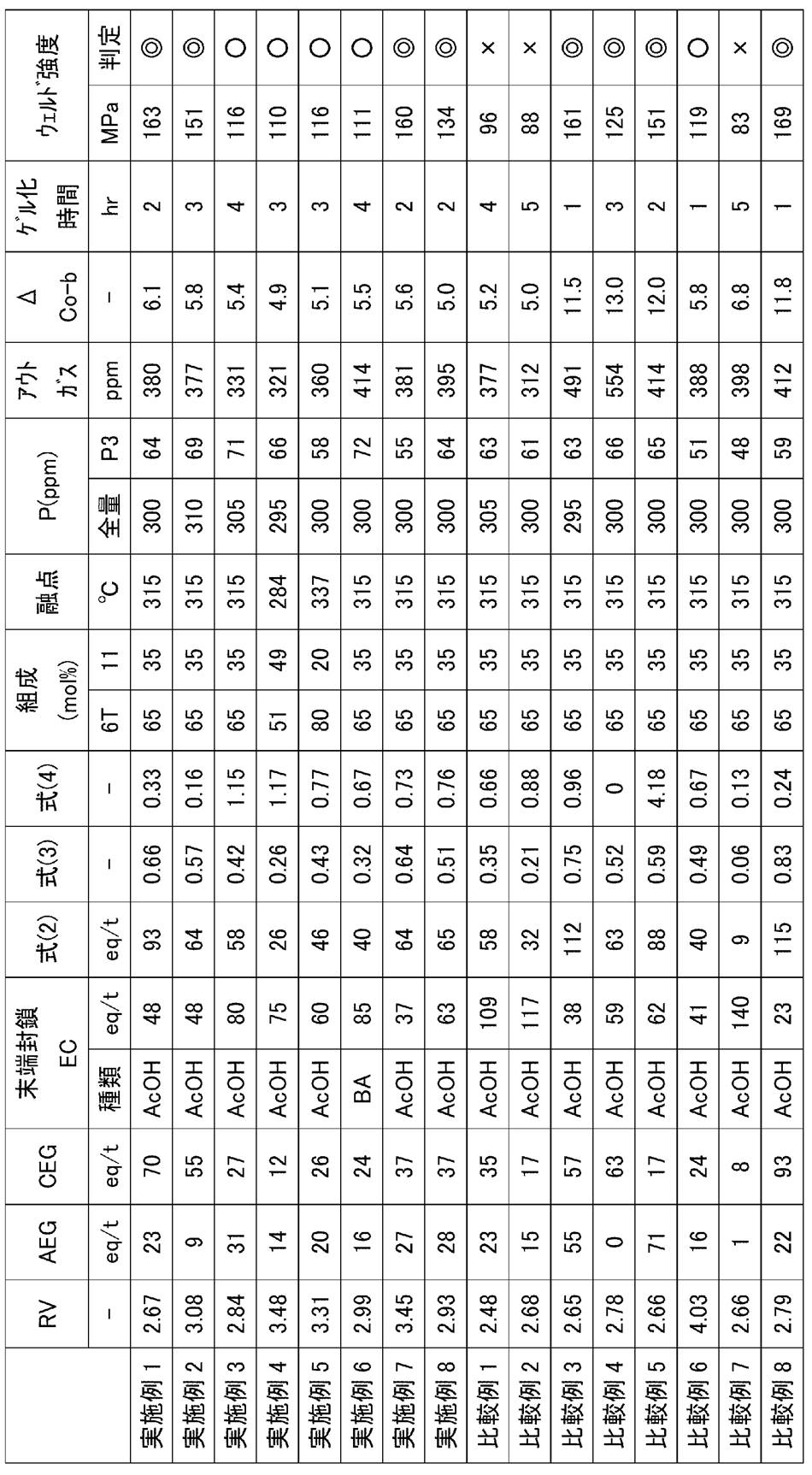
比較例1は、RV<2.65であり、ウェルド強度が低いことがわかる。
比較例2は、(AEG+CEG)/(AEG+CEG+EC)<0.25のため末端封鎖量の割合が多く、成形時に粘度低下が発生しウェルド強度が低くなっていることがわかる。
比較例3は、(AEG+CEG)>110eq/tのため末端封鎖量が少なく、AEG、CEG残存量が多く、耐熱黄変性に劣り、ゲル化しやすくなっていることがわかる。
比較例4は、AEGが0eq/tのため末端封鎖由来のアウトガス成分が増加し、酸成分の着色反応が併発し、耐熱黄変性に劣った樹脂であることがわかる。
比較例5は、AEG/CEG>3.5のためAEG残存量が多く、耐熱黄変性に劣った樹脂であることがわかる。
比較例6は、RV>3.50のため成形時の流動性が悪く、またゲル化しやすい樹脂となっていることがわかる。
比較例7は、AEG+CEG<10eq/tのため、(AEG+CEG)/(AEG+CEG+EC)<0.25eq/tとなり末端封鎖量の割合が多く、成形時に粘度低下が発生しウェルド強度が低くなっていることがわかる。
比較例8は、(AEG+CEG)/(AEG+CEG+EC)>0.75のためゲル化しやすく、耐熱黄変性に劣った樹脂であることがわかる。
Claims (5)
- ヘキサメチレンジアミンとテレフタル酸から得られる構成単位、及び11-アミノウンデカン酸又はウンデカンラクタムから得られる構成単位を含有し、相対粘度(RV)が式(1)の範囲であり、アミノ基末端濃度(AEG)、カルボキシ基末端濃度(CEG)及びモノカルボン酸でアミノ基末端を封鎖した末端濃度(EC)の関係が式(2)~式(4)を満たす半芳香族ポリアミド樹脂。
2.65≦RV≦3.50 ・・ (1)
10eq/t≦AEG+CEG≦110eq/t ・・ (2)
0.25≦(AEG+CEG)/(AEG+CEG+EC)≦0.75 ・・ (3)
0.1≦AEG/CEG≦3.5 ・・ (4) - ヘキサメチレンジアミンとテレフタル酸から得られる構成単位が50~75モル%、11-アミノウンデカン酸又はウンデカンラクタムから得られる構成単位が50~25モル%であり、融点が270~330℃である請求項1に記載の半芳香族ポリアミド樹脂。
- 半芳香族ポリアミド樹脂中で構造式(P1)と(P2)の構造で検出されるリン化合物由来のリン原子含有量の和(P3)が30ppm以上であり、半芳香族ポリアミド樹脂中に残存する全リン原子量に対してP3が10%以上である請求項1又は2に記載の半芳香族ポリアミド樹脂。
- 半芳香族ポリアミド樹脂を、330℃、20分間熱分解した際に発生するガス量(アウトガス)が500ppm以下である請求項1~3のいずれかに記載の半芳香族ポリアミド樹脂。
- 半芳香族ポリアミド樹脂を構成する原料水溶液を調合する工程と、
原料水溶液を管状反応装置に連続的に導入する原料導入工程と、
導入された原料を管状反応装置内を通過させアミド化を行いアミド化物と縮合水とを含む反応混合物を得るアミド化工程と、
反応混合物を水分離除去可能な連続式反応装置に導入して溶融重合を行う工程と、
真空下または窒素気流下で固相重合を行う工程を含む、請求項1~4のいずれかに記載の半芳香族ポリアミド樹脂の製造方法。
Priority Applications (5)
| Application Number | Priority Date | Filing Date | Title |
|---|---|---|---|
| EP19896411.6A EP3896113A4 (en) | 2018-12-14 | 2019-12-12 | SEMI-AROMATIC POLYAMIDE RESIN AND PROCESS FOR ITS PRODUCTION |
| US17/292,706 US20220002486A1 (en) | 2018-12-14 | 2019-12-12 | Semi-aromatic polyamide resin and method for producing same |
| CN201980078172.1A CN113166402A (zh) | 2018-12-14 | 2019-12-12 | 半芳香族聚酰胺树脂及其制造方法 |
| KR1020217019688A KR102808649B1 (ko) | 2018-12-14 | 2019-12-12 | 반방향족 폴리아미드 수지 및 그의 제조 방법 |
| JP2020516947A JP7797097B2 (ja) | 2018-12-14 | 2019-12-12 | 半芳香族ポリアミド樹脂、及びその製造方法 |
Applications Claiming Priority (2)
| Application Number | Priority Date | Filing Date | Title |
|---|---|---|---|
| JP2018234551 | 2018-12-14 | ||
| JP2018-234551 | 2018-12-14 |
Publications (1)
| Publication Number | Publication Date |
|---|---|
| WO2020122170A1 true WO2020122170A1 (ja) | 2020-06-18 |
Family
ID=71076489
Family Applications (1)
| Application Number | Title | Priority Date | Filing Date |
|---|---|---|---|
| PCT/JP2019/048666 Ceased WO2020122170A1 (ja) | 2018-12-14 | 2019-12-12 | 半芳香族ポリアミド樹脂、及びその製造方法 |
Country Status (6)
| Country | Link |
|---|---|
| US (1) | US20220002486A1 (ja) |
| EP (1) | EP3896113A4 (ja) |
| JP (1) | JP7797097B2 (ja) |
| KR (1) | KR102808649B1 (ja) |
| CN (1) | CN113166402A (ja) |
| WO (1) | WO2020122170A1 (ja) |
Cited By (1)
| Publication number | Priority date | Publication date | Assignee | Title |
|---|---|---|---|---|
| JP2024500502A (ja) * | 2020-12-24 | 2024-01-09 | ハンワ ソリューションズ コーポレイション | 多元共重合によるポリアミドの製造方法、これによって製造されたポリアミドおよびこれを含む組成物 |
Families Citing this family (1)
| Publication number | Priority date | Publication date | Assignee | Title |
|---|---|---|---|---|
| KR102658406B1 (ko) * | 2018-03-29 | 2024-04-16 | 도요보 엠씨 가부시키가이샤 | 반방향족 폴리아미드 수지 및 그의 제조 방법 |
Citations (8)
| Publication number | Priority date | Publication date | Assignee | Title |
|---|---|---|---|---|
| JP2007092053A (ja) | 2005-09-01 | 2007-04-12 | Toyobo Co Ltd | ポリアミド及びそれからなるポリアミド組成物 |
| WO2011052464A1 (ja) | 2009-10-27 | 2011-05-05 | 東洋紡績株式会社 | 共重合ポリアミド |
| JP2011530614A (ja) * | 2008-08-08 | 2011-12-22 | アルケマ フランス | 分子鎖端を有する半芳香族ポリアミド |
| WO2012147849A1 (ja) * | 2011-04-28 | 2012-11-01 | 東洋紡績株式会社 | 共重合ポリアミドフィルム |
| CN104804429A (zh) * | 2015-03-26 | 2015-07-29 | 金发科技股份有限公司 | 一种聚酰胺树脂和由其组成的聚酰胺组合物 |
| WO2017077901A1 (ja) | 2015-11-02 | 2017-05-11 | 東洋紡株式会社 | 半芳香族ポリアミド樹脂及びその製造方法 |
| WO2017217447A1 (ja) * | 2016-06-17 | 2017-12-21 | 東洋紡株式会社 | 半芳香族ポリアミド樹脂 |
| WO2019189145A1 (ja) * | 2018-03-29 | 2019-10-03 | 東洋紡株式会社 | 半芳香族ポリアミド樹脂、及びその製造方法 |
Family Cites Families (2)
| Publication number | Priority date | Publication date | Assignee | Title |
|---|---|---|---|---|
| JP3375419B2 (ja) * | 1994-06-24 | 2003-02-10 | 旭化成株式会社 | 熱黄変性の改善されたポリアミド組成物 |
| US10072137B2 (en) * | 2013-07-04 | 2018-09-11 | Toyobo Co., Ltd. | Polyamide resin composition having high melt point and being excellent in anti-vibration property upon water absorption |
-
2019
- 2019-12-12 US US17/292,706 patent/US20220002486A1/en not_active Abandoned
- 2019-12-12 JP JP2020516947A patent/JP7797097B2/ja active Active
- 2019-12-12 WO PCT/JP2019/048666 patent/WO2020122170A1/ja not_active Ceased
- 2019-12-12 EP EP19896411.6A patent/EP3896113A4/en active Pending
- 2019-12-12 CN CN201980078172.1A patent/CN113166402A/zh active Pending
- 2019-12-12 KR KR1020217019688A patent/KR102808649B1/ko active Active
Patent Citations (8)
| Publication number | Priority date | Publication date | Assignee | Title |
|---|---|---|---|---|
| JP2007092053A (ja) | 2005-09-01 | 2007-04-12 | Toyobo Co Ltd | ポリアミド及びそれからなるポリアミド組成物 |
| JP2011530614A (ja) * | 2008-08-08 | 2011-12-22 | アルケマ フランス | 分子鎖端を有する半芳香族ポリアミド |
| WO2011052464A1 (ja) | 2009-10-27 | 2011-05-05 | 東洋紡績株式会社 | 共重合ポリアミド |
| WO2012147849A1 (ja) * | 2011-04-28 | 2012-11-01 | 東洋紡績株式会社 | 共重合ポリアミドフィルム |
| CN104804429A (zh) * | 2015-03-26 | 2015-07-29 | 金发科技股份有限公司 | 一种聚酰胺树脂和由其组成的聚酰胺组合物 |
| WO2017077901A1 (ja) | 2015-11-02 | 2017-05-11 | 東洋紡株式会社 | 半芳香族ポリアミド樹脂及びその製造方法 |
| WO2017217447A1 (ja) * | 2016-06-17 | 2017-12-21 | 東洋紡株式会社 | 半芳香族ポリアミド樹脂 |
| WO2019189145A1 (ja) * | 2018-03-29 | 2019-10-03 | 東洋紡株式会社 | 半芳香族ポリアミド樹脂、及びその製造方法 |
Non-Patent Citations (1)
| Title |
|---|
| See also references of EP3896113A4 |
Cited By (2)
| Publication number | Priority date | Publication date | Assignee | Title |
|---|---|---|---|---|
| JP2024500502A (ja) * | 2020-12-24 | 2024-01-09 | ハンワ ソリューションズ コーポレイション | 多元共重合によるポリアミドの製造方法、これによって製造されたポリアミドおよびこれを含む組成物 |
| JP7849369B2 (ja) | 2020-12-24 | 2026-04-21 | ハンワ ソリューションズ コーポレイション | 多元共重合によるポリアミドの製造方法、これによって製造されたポリアミドおよびこれを含む組成物 |
Also Published As
| Publication number | Publication date |
|---|---|
| JP7797097B2 (ja) | 2026-01-13 |
| KR102808649B1 (ko) | 2025-05-14 |
| EP3896113A1 (en) | 2021-10-20 |
| KR20210102280A (ko) | 2021-08-19 |
| JPWO2020122170A1 (ja) | 2021-10-21 |
| US20220002486A1 (en) | 2022-01-06 |
| CN113166402A (zh) | 2021-07-23 |
| EP3896113A4 (en) | 2022-08-24 |
Similar Documents
| Publication | Publication Date | Title |
|---|---|---|
| JP4179703B2 (ja) | ポリアミドの製造方法 | |
| JP2016528312A (ja) | 脂肪族又は部分芳香族ポリアミドを連続的に製造する方法 | |
| JP4674827B2 (ja) | ポリアミド及びポリアミドの製造方法 | |
| JP2001348427A (ja) | ポリアミドの製造方法 | |
| KR102290156B1 (ko) | 지방족 또는 반방향족 폴리아미드 올리고머의 연속 제조 방법 | |
| JP7797097B2 (ja) | 半芳香族ポリアミド樹脂、及びその製造方法 | |
| WO2017217447A1 (ja) | 半芳香族ポリアミド樹脂 | |
| KR101557529B1 (ko) | 폴리아마이드의 제조 방법 | |
| JP7279634B2 (ja) | 半芳香族ポリアミド樹脂、及びその製造方法 | |
| KR101674245B1 (ko) | 폴리아미드의 제조방법 | |
| KR101664841B1 (ko) | 폴리아미드 수지 및 그 제조방법 | |
| KR101735890B1 (ko) | 폴리아미드 수지 | |
| JP5686625B2 (ja) | 半芳香族ポリアミド | |
| JP5207548B2 (ja) | ポリアミド組成物からなる自動車吸気系部品 | |
| JP2003002967A (ja) | ポリアミド樹脂の製造方法 | |
| JPH09316192A (ja) | ポリアミドの製造方法 |
Legal Events
| Date | Code | Title | Description |
|---|---|---|---|
| ENP | Entry into the national phase |
Ref document number: 2020516947 Country of ref document: JP Kind code of ref document: A |
|
| 121 | Ep: the epo has been informed by wipo that ep was designated in this application |
Ref document number: 19896411 Country of ref document: EP Kind code of ref document: A1 |
|
| NENP | Non-entry into the national phase |
Ref country code: DE |
|
| ENP | Entry into the national phase |
Ref document number: 20217019688 Country of ref document: KR Kind code of ref document: A |
|
| ENP | Entry into the national phase |
Ref document number: 2019896411 Country of ref document: EP Effective date: 20210714 |