WO2020130857A1 - Electrolyte compositions - Google Patents
Electrolyte compositions Download PDFInfo
- Publication number
- WO2020130857A1 WO2020130857A1 PCT/NZ2019/050164 NZ2019050164W WO2020130857A1 WO 2020130857 A1 WO2020130857 A1 WO 2020130857A1 NZ 2019050164 W NZ2019050164 W NZ 2019050164W WO 2020130857 A1 WO2020130857 A1 WO 2020130857A1
- Authority
- WO
- WIPO (PCT)
- Prior art keywords
- microemulsion
- water
- electrolyte composition
- phase
- electrolyte
- Prior art date
- Legal status (The legal status is an assumption and is not a legal conclusion. Google has not performed a legal analysis and makes no representation as to the accuracy of the status listed.)
- Ceased
Links
Classifications
-
- H—ELECTRICITY
- H01—ELECTRIC ELEMENTS
- H01M—PROCESSES OR MEANS, e.g. BATTERIES, FOR THE DIRECT CONVERSION OF CHEMICAL ENERGY INTO ELECTRICAL ENERGY
- H01M8/00—Fuel cells; Manufacture thereof
- H01M8/18—Regenerative fuel cells, e.g. redox flow batteries or secondary fuel cells
- H01M8/184—Regeneration by electrochemical means
- H01M8/188—Regeneration by electrochemical means by recharging of redox couples containing fluids; Redox flow type batteries
-
- H—ELECTRICITY
- H01—ELECTRIC ELEMENTS
- H01M—PROCESSES OR MEANS, e.g. BATTERIES, FOR THE DIRECT CONVERSION OF CHEMICAL ENERGY INTO ELECTRICAL ENERGY
- H01M10/00—Secondary cells; Manufacture thereof
- H01M10/05—Accumulators with non-aqueous electrolyte
- H01M10/052—Li-accumulators
-
- H—ELECTRICITY
- H01—ELECTRIC ELEMENTS
- H01G—CAPACITORS; CAPACITORS, RECTIFIERS, DETECTORS, SWITCHING DEVICES, LIGHT-SENSITIVE OR TEMPERATURE-SENSITIVE DEVICES OF THE ELECTROLYTIC TYPE
- H01G11/00—Hybrid capacitors, i.e. capacitors having different positive and negative electrodes; Electric double-layer [EDL] capacitors; Processes for the manufacture thereof or of parts thereof
- H01G11/02—Hybrid capacitors, i.e. capacitors having different positive and negative electrodes; Electric double-layer [EDL] capacitors; Processes for the manufacture thereof or of parts thereof using combined reduction-oxidation reactions, e.g. redox arrangement or solion
-
- H—ELECTRICITY
- H01—ELECTRIC ELEMENTS
- H01G—CAPACITORS; CAPACITORS, RECTIFIERS, DETECTORS, SWITCHING DEVICES, LIGHT-SENSITIVE OR TEMPERATURE-SENSITIVE DEVICES OF THE ELECTROLYTIC TYPE
- H01G11/00—Hybrid capacitors, i.e. capacitors having different positive and negative electrodes; Electric double-layer [EDL] capacitors; Processes for the manufacture thereof or of parts thereof
- H01G11/04—Hybrid capacitors
-
- H—ELECTRICITY
- H01—ELECTRIC ELEMENTS
- H01G—CAPACITORS; CAPACITORS, RECTIFIERS, DETECTORS, SWITCHING DEVICES, LIGHT-SENSITIVE OR TEMPERATURE-SENSITIVE DEVICES OF THE ELECTROLYTIC TYPE
- H01G11/00—Hybrid capacitors, i.e. capacitors having different positive and negative electrodes; Electric double-layer [EDL] capacitors; Processes for the manufacture thereof or of parts thereof
- H01G11/22—Electrodes
- H01G11/26—Electrodes characterised by their structure, e.g. multi-layered, porosity or surface features
-
- H—ELECTRICITY
- H01—ELECTRIC ELEMENTS
- H01G—CAPACITORS; CAPACITORS, RECTIFIERS, DETECTORS, SWITCHING DEVICES, LIGHT-SENSITIVE OR TEMPERATURE-SENSITIVE DEVICES OF THE ELECTROLYTIC TYPE
- H01G11/00—Hybrid capacitors, i.e. capacitors having different positive and negative electrodes; Electric double-layer [EDL] capacitors; Processes for the manufacture thereof or of parts thereof
- H01G11/54—Electrolytes
- H01G11/58—Liquid electrolytes
- H01G11/60—Liquid electrolytes characterised by the solvent
-
- H—ELECTRICITY
- H01—ELECTRIC ELEMENTS
- H01G—CAPACITORS; CAPACITORS, RECTIFIERS, DETECTORS, SWITCHING DEVICES, LIGHT-SENSITIVE OR TEMPERATURE-SENSITIVE DEVICES OF THE ELECTROLYTIC TYPE
- H01G11/00—Hybrid capacitors, i.e. capacitors having different positive and negative electrodes; Electric double-layer [EDL] capacitors; Processes for the manufacture thereof or of parts thereof
- H01G11/54—Electrolytes
- H01G11/58—Liquid electrolytes
- H01G11/62—Liquid electrolytes characterised by the solute, e.g. salts, anions or cations therein
-
- H—ELECTRICITY
- H01—ELECTRIC ELEMENTS
- H01G—CAPACITORS; CAPACITORS, RECTIFIERS, DETECTORS, SWITCHING DEVICES, LIGHT-SENSITIVE OR TEMPERATURE-SENSITIVE DEVICES OF THE ELECTROLYTIC TYPE
- H01G9/00—Electrolytic capacitors, rectifiers, detectors, switching devices, light-sensitive or temperature-sensitive devices; Processes of their manufacture
- H01G9/145—Liquid electrolytic capacitors
-
- H—ELECTRICITY
- H01—ELECTRIC ELEMENTS
- H01M—PROCESSES OR MEANS, e.g. BATTERIES, FOR THE DIRECT CONVERSION OF CHEMICAL ENERGY INTO ELECTRICAL ENERGY
- H01M10/00—Secondary cells; Manufacture thereof
- H01M10/05—Accumulators with non-aqueous electrolyte
- H01M10/054—Accumulators with insertion or intercalation of metals other than lithium, e.g. with magnesium or aluminium
-
- H—ELECTRICITY
- H01—ELECTRIC ELEMENTS
- H01M—PROCESSES OR MEANS, e.g. BATTERIES, FOR THE DIRECT CONVERSION OF CHEMICAL ENERGY INTO ELECTRICAL ENERGY
- H01M10/00—Secondary cells; Manufacture thereof
- H01M10/05—Accumulators with non-aqueous electrolyte
- H01M10/056—Accumulators with non-aqueous electrolyte characterised by the materials used as electrolytes, e.g. mixed inorganic/organic electrolytes
-
- H—ELECTRICITY
- H01—ELECTRIC ELEMENTS
- H01M—PROCESSES OR MEANS, e.g. BATTERIES, FOR THE DIRECT CONVERSION OF CHEMICAL ENERGY INTO ELECTRICAL ENERGY
- H01M10/00—Secondary cells; Manufacture thereof
- H01M10/05—Accumulators with non-aqueous electrolyte
- H01M10/056—Accumulators with non-aqueous electrolyte characterised by the materials used as electrolytes, e.g. mixed inorganic/organic electrolytes
- H01M10/0564—Accumulators with non-aqueous electrolyte characterised by the materials used as electrolytes, e.g. mixed inorganic/organic electrolytes the electrolyte being constituted of organic materials only
- H01M10/0566—Liquid materials
-
- H—ELECTRICITY
- H01—ELECTRIC ELEMENTS
- H01M—PROCESSES OR MEANS, e.g. BATTERIES, FOR THE DIRECT CONVERSION OF CHEMICAL ENERGY INTO ELECTRICAL ENERGY
- H01M10/00—Secondary cells; Manufacture thereof
- H01M10/24—Alkaline accumulators
- H01M10/26—Selection of materials as electrolytes
-
- H—ELECTRICITY
- H01—ELECTRIC ELEMENTS
- H01G—CAPACITORS; CAPACITORS, RECTIFIERS, DETECTORS, SWITCHING DEVICES, LIGHT-SENSITIVE OR TEMPERATURE-SENSITIVE DEVICES OF THE ELECTROLYTIC TYPE
- H01G11/00—Hybrid capacitors, i.e. capacitors having different positive and negative electrodes; Electric double-layer [EDL] capacitors; Processes for the manufacture thereof or of parts thereof
- H01G11/04—Hybrid capacitors
- H01G11/06—Hybrid capacitors with one of the electrodes allowing ions to be reversibly doped thereinto, e.g. lithium ion capacitors [LIC]
-
- H—ELECTRICITY
- H01—ELECTRIC ELEMENTS
- H01G—CAPACITORS; CAPACITORS, RECTIFIERS, DETECTORS, SWITCHING DEVICES, LIGHT-SENSITIVE OR TEMPERATURE-SENSITIVE DEVICES OF THE ELECTROLYTIC TYPE
- H01G9/00—Electrolytic capacitors, rectifiers, detectors, switching devices, light-sensitive or temperature-sensitive devices; Processes of their manufacture
- H01G9/004—Details
- H01G9/022—Electrolytes; Absorbents
- H01G9/035—Liquid electrolytes, e.g. impregnating materials
-
- H—ELECTRICITY
- H01—ELECTRIC ELEMENTS
- H01G—CAPACITORS; CAPACITORS, RECTIFIERS, DETECTORS, SWITCHING DEVICES, LIGHT-SENSITIVE OR TEMPERATURE-SENSITIVE DEVICES OF THE ELECTROLYTIC TYPE
- H01G9/00—Electrolytic capacitors, rectifiers, detectors, switching devices, light-sensitive or temperature-sensitive devices; Processes of their manufacture
- H01G9/004—Details
- H01G9/04—Electrodes or formation of dielectric layers thereon
- H01G9/042—Electrodes or formation of dielectric layers thereon characterised by the material
-
- H—ELECTRICITY
- H01—ELECTRIC ELEMENTS
- H01M—PROCESSES OR MEANS, e.g. BATTERIES, FOR THE DIRECT CONVERSION OF CHEMICAL ENERGY INTO ELECTRICAL ENERGY
- H01M2300/00—Electrolytes
-
- H—ELECTRICITY
- H01—ELECTRIC ELEMENTS
- H01M—PROCESSES OR MEANS, e.g. BATTERIES, FOR THE DIRECT CONVERSION OF CHEMICAL ENERGY INTO ELECTRICAL ENERGY
- H01M2300/00—Electrolytes
- H01M2300/0002—Aqueous electrolytes
-
- H—ELECTRICITY
- H01—ELECTRIC ELEMENTS
- H01M—PROCESSES OR MEANS, e.g. BATTERIES, FOR THE DIRECT CONVERSION OF CHEMICAL ENERGY INTO ELECTRICAL ENERGY
- H01M2300/00—Electrolytes
- H01M2300/0088—Composites
- H01M2300/0091—Composites in the form of mixtures
-
- Y—GENERAL TAGGING OF NEW TECHNOLOGICAL DEVELOPMENTS; GENERAL TAGGING OF CROSS-SECTIONAL TECHNOLOGIES SPANNING OVER SEVERAL SECTIONS OF THE IPC; TECHNICAL SUBJECTS COVERED BY FORMER USPC CROSS-REFERENCE ART COLLECTIONS [XRACs] AND DIGESTS
- Y02—TECHNOLOGIES OR APPLICATIONS FOR MITIGATION OR ADAPTATION AGAINST CLIMATE CHANGE
- Y02E—REDUCTION OF GREENHOUSE GAS [GHG] EMISSIONS, RELATED TO ENERGY GENERATION, TRANSMISSION OR DISTRIBUTION
- Y02E60/00—Enabling technologies; Technologies with a potential or indirect contribution to GHG emissions mitigation
- Y02E60/10—Energy storage using batteries
-
- Y—GENERAL TAGGING OF NEW TECHNOLOGICAL DEVELOPMENTS; GENERAL TAGGING OF CROSS-SECTIONAL TECHNOLOGIES SPANNING OVER SEVERAL SECTIONS OF THE IPC; TECHNICAL SUBJECTS COVERED BY FORMER USPC CROSS-REFERENCE ART COLLECTIONS [XRACs] AND DIGESTS
- Y02—TECHNOLOGIES OR APPLICATIONS FOR MITIGATION OR ADAPTATION AGAINST CLIMATE CHANGE
- Y02E—REDUCTION OF GREENHOUSE GAS [GHG] EMISSIONS, RELATED TO ENERGY GENERATION, TRANSMISSION OR DISTRIBUTION
- Y02E60/00—Enabling technologies; Technologies with a potential or indirect contribution to GHG emissions mitigation
- Y02E60/13—Energy storage using capacitors
-
- Y—GENERAL TAGGING OF NEW TECHNOLOGICAL DEVELOPMENTS; GENERAL TAGGING OF CROSS-SECTIONAL TECHNOLOGIES SPANNING OVER SEVERAL SECTIONS OF THE IPC; TECHNICAL SUBJECTS COVERED BY FORMER USPC CROSS-REFERENCE ART COLLECTIONS [XRACs] AND DIGESTS
- Y02—TECHNOLOGIES OR APPLICATIONS FOR MITIGATION OR ADAPTATION AGAINST CLIMATE CHANGE
- Y02P—CLIMATE CHANGE MITIGATION TECHNOLOGIES IN THE PRODUCTION OR PROCESSING OF GOODS
- Y02P70/00—Climate change mitigation technologies in the production process for final industrial or consumer products
- Y02P70/50—Manufacturing or production processes characterised by the final manufactured product
Definitions
- the present invention relates to microemulsion electrolyte compositions, and their use in electrochemical energy storage devices.
- Electrochemical systems in particular batteries, need an electrolyte which can facilitate dissolution and migration of ions and electrochemically active species. Desirable, or even necessary, properties of an electrolyte are good conductivity, a wide electrochemical window, and an ability to solubilise salts and electrochemically active species used in the battery. Low cost is an economic consideration for commercial applications of electrolytes.
- Water is a desirable electrolyte solvent because it is a cheap solvent that is non toxic and can be safely handled.
- a drawback of water for use as an electrolyte solvent is that the electrochemical stability window of water, 1.23 V, is too narrow to support many electrochemical couples used in modern batteries.
- Water can be oxidised to form oxygen gas and reduced to form hydrogen gas (commonly referred to as water splitting) at a potential of 1.23V:
- Batteries using aqueous electrolytes are therefore limited to operate with cell voltages below 1.23 V to avoid degradation. Reactions with potentials which fall outside of the electrochemical stability window would cause water splitting and the evolution of hydrogen and/or oxygen. These reactions deteriorate the electrochemical system, and present a safety hazard to the user. This is a significant limitation because modern batteries, for example, are able to run at potentials significantly greater than 1.23 V, meaning that water cannot be used as an electrolyte.
- thermodynamic potential of the water splitting reaction is about -0.2 V vs. Ag/AgCI for reduction and about 1 V vs. Ag/AgCI for oxidation, resulting in an overall theoretical window of 1.23 V.
- practical applications of the water splitting reactions experience a non-trivial over-potential.
- the measured magnitude of the onset potential for oxidation and/or reduction is typically a larger voltage than what is theoretically expected. Whilst it is therefore possible to operate an aqueous battery beyond the thermodynamic limit of 1.23 V, known aqueous electrolytes undergo significant decomposition beyond this limit in normal use, and so exceeding the thermodynamic limit of the aqueous electrolyte is avoided.
- Non-aqueous solvents having electrochemical windows wider than bulk water are used in many electrochemical cells including some batteries.
- drawbacks to non-aqueous solvents such as their expense compared to water, toxicity, flammability and/or their reduced ability to solubilise salts.
- the current of an operating electrochemical cell is dependent on the concentration of the electrochemically active species involved in an electrochemical reaction.
- concentration of the electrochemically active species involved in an electrochemical reaction The more an electrochemically active species is dissolved in the electrolyte, the higher the concentration of active species and hence the higher the current that can be extracted from the electrochemical cell.
- water-soluble electrochemically active species such as metal salts
- using water as a solvent allows for a relatively high salt concentration.
- the current that can be produced by an electrochemical cell with an aqueous electrolyte is reduced where electrochemically active species are less soluble in water.
- magnesium ion batteries including magnesium ion batteries, sodium ion batteries, aluminium ion batteries and lithium ion batteries.
- magnesium ion batteries have been plagued by the cost and complexity of the magnesium salts and organic solvents necessary to achieve the requisite conductivity, solubility and electrochemical window to make a useful magnesium battery.
- Flow batteries such as redox flow batteries, are characterised by the use of an electrolyte (specifically, an anolyte and catholyte) that flows over the surface of non-reactive electrodes separated by an exchange membrane.
- Anolytes and catholytes comprising electrochemically active species are contained in separate compartments.
- anolytes and catholytes are pumped over their respective electrodes, and electrical current is generated by the transfer of charge between the compartments.
- the storage capacity of the battery scales with improvements to the electrolyte composition and electrolyte volume. Increasing the volume of electrolyte increases the energy that can be stored.
- the economic cost of energy from flow batteries is, in part, proportionate to the cost of the electrolyte.
- the efficiency of redox flow batteries may be enhanced by electrolytes that can support higher concentrations of electrochemically active species and electrolytes that have a wider electrochemical stability window.
- the performance of batteries is highly dependent on many factors including the physicochemical properties of the materials from which the electrode(s) of the battery are made and the electrolyte solutions. Such factors affect battery performance by decreasing the battery voltage, affecting coulombic efficiency, lowering the rate capability (maximum charge/discharge rate) of the cell, and cell stability.
- an electrolyte composition suitable for, adapted for, or configured for an electrochemical cell, wherein the electrolyte composition comprises a microemulsion.
- the microemulsion comprises an aqueous phase and a water-immiscible phase.
- the aqueous phase is a continuous phase.
- the water-immiscible phase may be dispersed in a continuous aqueous phase or alternatively, the microemulsion may be a bicontinuous microemulsion such that the water-immiscible phase and the aqueous phase are both continuous phases.
- the microemulsion is an oil-in-water microemulsion or a bicontinuous microemulsion.
- the microemulsion may comprise between 1% and 99% water by weight of the microemulsion, including, for example, between 10% and 99% water by weight of the microemulsion, and between 20% and 99% water by weight of the microemulsion.
- the microemulsion may comprise between 80% and 99% water by weight of the microemulsion.
- the microemulsion may comprise between 20% and 80% water by weight of the microemulsion.
- the microemulsion may comprise a dissolved salt, for example to increase the electrical conductivity of the microemulsion.
- the dissolved salt may be an organic salt, an inorganic salt, or a combination thereof.
- the dissolved salt is selected from the group consisting of: a lithium salt, a sodium salt, a potassium salt, a magnesium salt, a calcium salt, an aluminium salt, and a combination thereof.
- the concentration of salts in the microemulsion electrolyte composition is between 0 and 10 M, between about 0.001 M and 10 M, more preferably between about 0.01 M and 5 M, more preferably between 0.05 M and 1 M, most preferably between about 0.05 M and 0.5 M.
- the concentration of salts in the microemulsion electrolyte composition is between 0 and 10 mol/kg, more preferably between about 0.001 mol/kg and 10 mol/kg, more preferably about 0.01 mol/kg and 5 mol/kg, more preferably between 0.05 mol/kg and 1 mol/kg.
- the microemulsion may comprise one or more electrochemically active species.
- the electrochemically active species are dissolved in the water-immiscible phase or aqueous phase of the microemulsion.
- the electrochemically active species may be redox active organic species. Redox active organic species, and electrochemically active species, would be readily known and understood to those of skill in the art. Examples of redox active organic species that may be dissolved in the microemulsion include: ferrocene, (2,2,6,6-tetramethylpiperidin-l-yl)oxyl (TEMPO), phenothiazines, dimethoxybenzene, menadione and 2,1,3-benzothiadiazole.
- TEMPO (2,2,6,6-tetramethylpiperidin-l-yl)oxyl
- phenothiazines dimethoxybenzene, menadione and 2,1,3-benzothiadiazole.
- the microemulsion may comprise one or more amphiphiles, such as a surfactant, a co-surfactant and/or co-solvent.
- a surfactant such as a surfactant, a co-surfactant and/or co-solvent.
- Suitable surfactants and co-surfactants for the preparation of microemulsion electrolyte compositions will be known in the art.
- suitable surfactants include anionic surfactants, cationic surfactants, zwitterionic surfactants and non-ionic surfactants.
- Examples of preferred surfactants include Triton X- 100 (t-octylphenoxypolyethoxyethanol), cetyltrimethylammonium chloride (CTAC), cetylpyridinium chloride (CPC), benzalkonium chloride, benzethonium chloride, sodium dodecyl sulfate (SDS), and sodium lauryl ether sulfate (SLES).
- Examples of suitable co surfactants or co-solvents include aliphatic alcohols, such as C2-C6 alcohols, and amines, such as C2-C6 alkyl amines.
- Preferred co-surfactants and/or co-solvents for the present invention include ethanol, propanol, butanol and pentanol.
- the microemulsion may comprise one or more phase transfer catalysts.
- phase transfer catalysts is bis(2-methoxyethyl) ether (diglyme).
- the microemulsion has a conductivity of more than 0.1 mS.cnv 1 , more than 1 mS.cnr 1 , more than 3 mS.cnv 1 , more than 5 mS.cnv 1 , between 1 and 12 mS.cnv 1 , between 3 and 10 mS.cnv 1 .
- the microemulsion has an electrochemical stability window of greater than 1.23 V, greater than 1.5 V, greater than 2 V, greater than 2.5 V, greater than 3 V, greater than 3.5 V, or greater than 4 V.
- an electrolyte composition suitable for, adapted for, or configured for an ion battery, wherein the electrolyte composition comprises the microemulsion.
- an electrolyte composition suitable for, adapted for, or configured for redox flow battery, wherein the electrolyte composition comprises the microemulsion.
- an electrolyte composition suitable for, adapted for, or configured for a supercapacitor, wherein the electrolyte composition comprises the microemulsion.
- microemulsion which is suitable for use, or adapted for use, or configured for use as an electrolyte in an electrochemical cell.
- the electrolyte composition consists essentially of the microemulsion.
- microemulsion comprising one or more electrochemically active species.
- the microemulsion comprises an aqueous phase and a water-immiscible phase.
- the microemulsion is an oil in water microemulsion or a bicontinuous microemulsion.
- the one or more electrochemically active species is dissolved in the water-immiscible phase.
- the one or more electrochemically active species is dissolved in the aqueous phase.
- the electrochemically active species may be a dissolved salt.
- the electrochemically active species may be a redox active organic species.
- At least one of the electrochemically active species or redox active organic species have a reaction potential, or redox potential, of greater than 1.23 V (compared to a standard hydrogen electrode). That is, the electrochemical reaction of the electrochemically active species or redox active organic species would cause water splitting of bulk water.
- a microemulsion comprising an aqueous phase, wherein the electrochemical stability window of the microemulsion is greater than 1.23 V.
- the microemulsion may comprise an electrochemically active species.
- at least one of the electrochemically active species have a reaction potential, or redox potential, of greater than 1.23 V.
- the electrochemically active species may be a redox active organic species, examples of which are described herein.
- an electrochemical cell comprising an electrolyte, wherein the electrolyte comprises a microemulsion.
- the microemulsion comprises an aqueous phase and a water-immiscible phase.
- the electrochemical cell is an electrochemical energy storage device (EESD).
- EESDs store energy in the form of chemical energy. Electrical energy, in the form of an electrical current, is released during discharging of the device by converting chemical energy to electric energy.
- EESDs include two electrodes (e.g. an anodic electrode and a cathodic electrode), an electrolyte in electrical contact with the electrodes and, optionally, an ion permeable separator.
- EESDs generate an electrical potential difference between the electrodes. Examples of EESDs include supercapacitors, ion batteries and flow batteries.
- the EESD is an electrically rechargeable EESD.
- Electrically rechargeable EESDs comprise electrochemically active species that reversibly react to either generate (during discharge) or store (during charge) electrical energy. Electrically rechargeable EESDs are charged by the input of electrical energy, which restores the electrochemically active species. During discharge, the electrochemically active species react to generate an electrical current. During charging, an externally applied potential drives the reverse reaction to restore the electrochemically active species.
- Examples of electrically rechargeable EESDs include supercapacitors, ion batteries and flow batteries.
- the EESD is not a fuel cell.
- the electrically rechargeable EESD is not a fuel cell.
- the electrolyte consists essentially of a microemulsion.
- the electrochemical cell has a cell voltage of greater than 1.23 V, greater than 1.5 V, greater than 2 V, greater than 2.5 V, greater than 3 V, greater than 3.5 V, or greater than 4 V.
- the electrochemical cell has a cell voltage of between 0.01 V and 4 V, between 1.0 and 4.0 V, between 1.23 V and 4.0 V, between 1.23 and 3.5 V, between 1.23 and 3.0 V, between 1.23 and 2.5 V, or between 1.23 and 2.0 V.
- the aqueous phase is a continuous phase.
- the water-immiscible phase may be dispersed in a continuous aqueous phase or alternatively, the microemulsion may be a bicontinuous microemulsion such that the water-immiscible phase and the aqueous phase are both continuous phases.
- the microemulsion is an oil-in-water microemulsion or a bicontinuous microemulsion.
- the electrolyte is in electrical contact with the electrodes of the electrochemical cell.
- the electrochemical cell may be selected from an ion battery.
- the ion battery may be a lithium ion battery, a magnesium ion battery, a calcium ion battery, an aluminium ion battery, a potassium ion battery or a sodium ion battery.
- the battery includes an anode, a cathode, the microemulsion electrolyte composition and, optionally, an ion-permeable separator, such as an ion-permeable membrane (e.g. disposed between the anode and the cathode).
- the electrolyte composition is in electrical contact with the anode and cathode.
- the battery may include a current collector.
- Preferred current collectors comprise a substantially hydrophobic or lipophilic surface which is configured to contact the electrolyte.
- substantially hydrophobic or lipophilic surfaces include non-metallic conductive surfaces, conductive carbon (e.g. graphite and carbon black), and conductive polymers such as conjugated polymers (polypyrrole, polythiophene, polyanilines).
- conductive polymers such as conjugated polymers (polypyrrole, polythiophene, polyanilines).
- Preferred examples of substantially hydrophobic or lipophilic surfaces include glassy carbon and graphite surfaces.
- the electrochemical cell is a supercapacitor.
- the supercapacitor may comprise anodic and cathodic electrodes, optionally, an ion-permeable separator, and the microemulsion electrolyte composition of the present invention.
- the electrodes may comprise a substantially hydrophobic or lipophilic surface in contact with (or configured to contact) the microemulsion.
- the electrodes may comprise high surface area materials such as zeolites and molecular sieves.
- the electrodes should comprise conductive materials. Suitable conductive materials include graphite or carbon black.
- the electrolyte of the supercapacitor is the microemulsion electrolyte composition of the present invention.
- the electrochemical cell is a sensor.
- an electrochemical cell comprising an electrolyte, wherein the electrolyte comprises or consists essentially of a microemulsion and wherein the microemulsion has an electrochemical stability window of greater than 1.23 V, greater than 1.5 V, greater than 2 V, greater than 2.5 V, greater than 3 V, greater than 3.5 V, greater than 4 V.
- an electrochemical cell comprising an electrolyte, wherein the electrolyte comprises or consists essentially of a microemulsion, wherein the electrochemical cell has a cell voltage of greater than 1.23 V, 1.5 V, greater than 2 V, greater than 2.5 V, greater than 3 V, greater than 3.5 V, greater than 4 V.
- a sodium ion battery comprising an electrolyte, wherein the electrolyte comprises or consists essentially of a microemulsion.
- a magnesium ion battery comprising an electrolyte, wherein the electrolyte comprises or consists essentially of a microemulsion.
- a lithium ion battery comprising an electrolyte, wherein the electrolyte comprises or consists essentially of a microemulsion, wherein the microemulsion comprises a lithium salt.
- an aluminium ion battery comprising an electrolyte, wherein the electrolyte comprises or consists essentially of a microemulsion, wherein the microemulsion comprises an aluminium salt.
- a potassium ion battery comprising an electrolyte, wherein the electrolyte comprises or consists essentially of a microemulsion, wherein the microemulsion comprises a potassium salt.
- a calcium ion battery comprising an electrolyte, wherein the electrolyte comprises or consists essentially of a microemulsion, wherein the microemulsion comprises a calcium salt.
- a redox flow battery comprising an electrolyte, wherein the electrolyte comprises or consists essentially of a microemulsion.
- the electrolyte may be an anolyte, a catholyte, or both.
- a supercapacitor comprising an electrolyte, wherein the electrolyte comprises or consists essentially of a microemulsion.
- the electrochemical cell comprises electrodes which have a substantially hydrophobic or lipophilic surface in contact with (or configured to contact) the microemulsion.
- substantially hydrophobic or lipophilic surfaces include glassy carbon and graphite surfaces.
- the anode has a substantially hydrophobic or lipophilic surface in contact with (or configured to contact) the microemulsion.
- the cathode has a substantially hydrophobic or lipophilic surface in contact with (or configured to contact) the microemulsion.
- the electrochemical cell may include a current collector.
- Preferred current collectors comprise a substantially hydrophobic or lipophilic surface which is in contact with or configured to contact the microemulsion.
- Preferred examples of substantially hydrophobic or lipophilic surfaces include glassy carbon and graphite surfaces.
- the electrochemical cell may be positioned within a housing.
- the housing may contain components including the microemulsion electrolyte composition, electrodes, and, optionally, the ion permeable separator (e.g. located between the anodic and cathodic electrodes).
- an electrolyte composition when used in an electrochemical cell, wherein the electrolyte composition comprises or consists essentially of a microemulsion.
- the microemulsion comprises an aqueous phase and a water-immiscible phase.
- the electrochemical cell may be selected from an ion battery, a supercapacitor, an electrolytic cell and a flow battery.
- the ion battery may be selected from a lithium ion battery, a magnesium ion battery, a calcium battery, an aluminium ion battery, and a sodium ion battery.
- the flow battery may be a redox flow battery.
- microemulsion in an electrochemical cell wherein the microemulsion comprises an aqueous phase and a water-immiscible phase.
- a microemulsion when used as an electrolyte for an electrochemical cell wherein the microemulsion comprises an aqueous phase and a water-immiscible phase.
- an electrolyte composition when used in a redox flow battery, wherein the electrolyte composition comprises or consists essentially of a microemulsion, wherein the microemulsion comprises an aqueous phase and a water-immiscible phase.
- an electrolyte composition when used in a sodium ion battery wherein the electrolyte composition comprises or consists essentially of a microemulsion, wherein the microemulsion comprises an aqueous phase and a water-immiscible phase.
- an electrolyte composition when used in a lithium ion battery wherein the electrolyte composition comprises or consists essentially of a microemulsion, wherein the microemulsion comprises an aqueous phase and a water-immiscible phase.
- an electrolyte composition when used in a magnesium ion battery, wherein the electrolyte composition comprises or consists essentially of a microemulsion, wherein the microemulsion comprises an aqueous phase and a water-immiscible phase.
- an electrolyte composition when used in an aluminium ion, wherein the electrolyte composition comprises or consists essentially of a microemulsion, wherein the microemulsion comprises an aqueous phase and a water-immiscible phase.
- the ion batteries described herein further comprise a phase transfer catalyst.
- an electrolyte composition when used in a supercapacitor, wherein the electrolyte composition comprises or consists essentially of a microemulsion, wherein the microemulsion comprises an aqueous phase and a water-immiscible phase.
- a microemulsion in an electrochemical cell wherein the microemulsion increases the electrochemical cell's electrochemical window above 1.23 V, wherein the microemulsion comprises an aqueous phase and a water-immiscible phase.
- a microemulsion when used in an electrochemical cell to increase the electrochemical cell's electrochemical stability window above 1.23 V, wherein the microemulsion comprises an aqueous phase and a water-immiscible phase.
- the aqueous phase is a continuous phase.
- the water-immiscible phase may be dispersed in a continuous aqueous phase or alternatively, the microemulsion may be a bicontinuous microemulsion such that the water-immiscible phase and the aqueous phase are both continuous phases.
- the microemulsion is an oil-in-water microemulsion or a bicontinuous microemulsion.
- a method of improving the conductivity of an organic electrolyte for an electrochemical cell comprising the step of combining the organic electrolyte with an aqueous phase and converting the organic electrolyte into a microemulsion, wherein the microemulsion comprises an aqueous phase and a water-immiscible phase.
- a method of increasing the electrochemical stability window of an aqueous electrolyte for an electrochemical cell comprising the step of combining the aqueous electrolyte with an organic solvent and converting the aqueous electrolyte into a microemulsion, wherein the microemulsion comprises an aqueous phase and a water-immiscible phase.
- a method for increasing an electrochemical window in an electrochemical cell above 1.23 V comprising combining an aqueous phase and a water-immiscible phase to provide a microemulsion, wherein the microemulsion comprises an aqueous phase and a water-immiscible phase.
- a method for using an electrochemical cell of the present invention comprising connecting the electrochemical cell comprising the microemulsion electrolyte composition of the present invention to a load and supplying a charge to the load.
- the aqueous phase is a continuous phase.
- the water-immiscible phase may be dispersed in a continuous aqueous phase or alternatively, the microemulsion may be a bicontinuous microemulsion such that the water-immiscible phase and the aqueous phase are both continuous phases.
- the microemulsion is an oil-in-water microemulsion or a bicontinuous microemulsion.
- Figure 1 is a cyclic voltammogram of ME1, scan speed 100 mV.s 1 .
- Figure 2 is a cyclic voltammogram of ME2, scan speed 100 mV.s 1 .
- Figure 3 is a cyclic voltammogram of ME3, scan speed 100 mV.s 1 .
- Figure 4 is a cyclic voltammogram of ME4, scan speed 100 mV.s 1 .
- Figure 5 is a cyclic voltammogram of ME5, scan speed 100 mV.s 1 .
- Figure 6 is a cyclic voltammogram of ME6, scan speed 100 mV.s 1 .
- Figure 7 is a cyclic voltammogram of ME10, scan speed 100 mV.s 1 .
- Figure 8 is a cyclic voltammogram of ME11, scan speed 100 mV.s 1 .
- Figure 9 is a cyclic voltammogram of ME12, scan speed 100 mV.s 1 .
- Figure 10 is a cyclic voltammogram of ME13, scan speed 100 mV.s 1 .
- Figure 11 is a cyclic voltammogram of ME2b, scan speed 100 mV.s 1 .
- Figure 12 is a cyclic voltammogram of 0.1 M aqueous solution of KCI, scan speed 100 mV. s 1 .
- Figure 13 is a cyclic voltammogram of ferrocene in ME1, scan speed 100 mV.s 1 .
- Figure 14 is a cyclic voltammogram of ferrocene in ME2, scan speed 100 mV.s 1 .
- Figure 15 is a cyclic voltammogram of ferrocene in ME3, scan speed 100 mV.s 1 .
- Figure 16 is a cyclic voltammogram of ferrocene in ME4, scan speed 100 mV.s 1 .
- Figure 17 is a cyclic voltammogram of ferrocene in ME5, scan speed 100 mV.s 1 .
- Figure 18 is a cyclic voltammogram of ferrocene in ME6, scan speed 100 mV.s 1 .
- Figure 19 is a cyclic voltammogram of ferrocene in ME10, scan speed 100 mV.s 1 .
- Figure 20 is a cyclic voltammogram of ferrocene in ME11, scan speed 100 mV.s 1 .
- Figure 21 is a cyclic voltammogram of ferrocene in ME12, scan speed 100 mV.s 1 .
- Figure 22 is a cyclic voltammogram of ferrocene in ME13, scan speed 100 mV.s 1 .
- Figure 23 is a cyclic voltammogram of ferrocene in ME2b, scan speed 100 mV.s 1 .
- Figure 24 is a chronopotentiogram of a magnesium ion battery comprising 0.5 mol. dm -3 MgS04 in ME1.
- Figure 25 is a chronopotentiogram of a sodium ion battery comprising 0.1 mol. dm -3 NaCI in ME2.
- Figure 26 is a chronopotentiogram of a lithium ion battery comprising 0.1 mol. dm -3 LiCI in ME2.
- Figure 27 is a chronopotentiogram of an aluminium ion battery comprising 0.1 mol. dm -3 AlCh in ME2.
- Figure 28 is a chronopotentiogram of a magnesium ion battery with an aqueous electrolyte.
- Figure 29 is a chronopotentiogram of a redox flow battery comprising an ME2-based electrolyte described in Example 6.
- Figure 30 is a charge-discharge curve of Cell 1 after 30 charge/discharge cycles.
- Figure 31 shows the charge capacity (mAh/g), discharge capacity (mAh/g) and coulombic efficiency over repeated charge/discharge cycles of Cell 1.
- Figure 32 is a charge-discharge curve of Cell 1 after 30 charge/discharge cycles, tested at lA/g.
- Figure 33 shows the charge capacity (mAh/g), discharge capacity (mAh/g) and coulombic efficiency over repeated charge/discharge cycles of Cell 1, tested at lA/g.
- Figure 34 is a charge-discharge curve of Cell 2 after 90 charge/discharge cycles
- Figure 35 shows the charge capacity (mAh/g), discharge capacity (mAh/g) and coulombic efficiency over repeated charge/discharge cycles of Cell 2.
- Figure 36 is a charge-discharge curve of Cell 3 after 40 charge/discharge cycles.
- Figure 37 shows the charge capacity (mAh/g), discharge capacity (mAh/g) and coulombic efficiency over repeated charge/discharge cycles of Cell 3.
- Figure 38 is a charge-discharge curve of Cell 4 after 50 and 100 charge/discharge cycles
- Figure 39 shows the charge capacity (mAh/g), discharge capacity (mAh/g) and coulombic efficiency over repeated charge/discharge cycles of Cell 4.
- Figure 40 is a charge-discharge curve of Cell 4 after 750 charge/discharge cycles
- Figure 41 shows the charge capacity (mAh/g), discharge capacity (mAh/g) and coulombic efficiency over repeated charge/discharge cycles of Cell 4 for charge/discharge 750 cycles.
- Figure 42 shows the charge capacity (mAh/g), discharge capacity (mAh/g) and coulombic efficiency over repeated charge/discharge cycles of Cell 5.
- Figure 43 is a cyclic voltammogram of Cell 5 (V2O5 electrode).
- Figure 44 is a cyclic voltammogram of Cell 5 (T1O2 electrode).
- Figure 45 is a cyclic voltammogram of Cell 6 (T1O2 electrode).
- Figure 46 shows charge-discharge curves of the supercapacitor of Example 8 for charge- discharge cycles 495-500.
- Figure 47 shows the charge capacity and discharge capacity (mAh/g) of the supercapacitor of Example 8 over repeated cycles.
- Figure 48 shows the coulombic efficiency of the supercapacitor of Example 8 over repeated cycles.
- composition of matter, group of steps or group of compositions of matter shall be taken to encompass one and a plurality (i.e. one or more) of those steps, compositions of matter, groups of steps or group of compositions of matter.
- cyclic voltammetry refers to a type of potentiodynamic electrochemical measurement. To obtain a cyclic voltammogram, the voltage is varied in a solution and the change in current is measured with respect to the change in voltage. It is a specific type of voltammetry used for studying the redox properties of chemicals and interfacial structures.
- electrochemical window or “electrochemical stability window” of an electrolyte refers to the voltage range between which the electrolyte is not substantially oxidised or reduced.
- the electrochemical stability window of water is the difference between the potential at which water is reduced to hydrogen (F ), and at which water is oxidised to oxygen (O2).
- Electrochemical stability may be measured or described in terms of a cyclic voltammetry measurement, in which the electrochemical stability window is the potential difference between the onset potential (the potential at which the current begins to rise or fall) of each of the cathodic and anodic reactions
- immiscible with reference to two or more materials, means that a material will not dissolve or combine with another material.
- immiscible liquids in biphasic systems such as the microemulsions described herein, “immiscible” means that the liquids are insoluble with each other, or are so sparingly soluble in each other that for all practical purposes the liquids are conventionally considered to be insoluble with each other.
- a microemulsion is a thermodynamically stable mixture of two immiscible liquid phases.
- Microemulsions can be "oil-in-water”, “water-in-oil”, or “bicontinuous”; these terms which define a microemulsion structure are well known in the art.
- oil-in-water microemulsions a water-immiscible phase is dispersed in a continuous aqueous phase.
- water-in-oil microemulsions an aqueous phase is dispersed in a continuous water- immiscible phase.
- bicontinuous microemulsions an aqueous phase and a water- immiscible phase are each interconnected and interspersed throughout the mixture.
- water and oil are understood to represent the aqueous phase and the water-immiscible phase.
- water-immiscible phase is used to describe any liquid that is immiscible with the aqueous phase.
- Water phase and aqueous phase as used herein, may be used interchangeably.
- active species and “electrochemically active species” mean compounds (including charged compounds, neutral compounds, radicals and the like) that are reactants of an electrochemical reaction.
- the reactions of electrochemically active species are, at least in part, responsible for the generation of a charge which flows within an electrochemical cell and as a result are responsible for the generation of an electric current.
- redox active organic species means an organic electrochemically active species that undergoes reduction or oxidation in an electrochemical reaction.
- the reaction of redox active organic species are, at least in part, responsible for the generation of a charge which flows within an electrochemical cell and as a result are responsible for the generation of an electric current. See, for example: J. Winsberg, T. Hagemann, T.
- the present invention is predicated, at least in part, on 1) the surprising discovery that microemulsions which comprise an aqueous phase have an electrochemical stability window which is greater than that of bulk water, i.e. greater than 1.23 V, and/or 2) the surprising discovery that microemulsions, in which redox reactions of electrochemically active species occur in the water-immiscible (and substantially non-conductive) phase, enhance charge conductivity such that the microemulsions are able to conduct charge to an electrode and generate an electrical current.
- microemulsion electrolyte compositions of the present invention may be used as electrolytes in an electrochemical cell.
- the microemulsion electrolyte compositions are able to support electrochemical redox reactions which generate a potential difference of greater than 1.23 V.
- the present invention relates to the new use and application of microemulsions as electrolytes for electrochemical cells, and, more specifically, electrochemical energy storage devices (EESDs).
- the present invention further relates to new microemulsion electrolyte compositions which are adapted for use, configured for use, useful, or suitable for use, in electrochemical cells.
- Microemulsions have a micro-heterogeneous liquid biphasic structure, which, at the macroscopic level, appears homogenous.
- the aqueous and water-immiscible phases of the microemulsion are immiscible at the desired operating temperature (which is usually at or around room temperature).
- Microemulsions are thermodynamically stable, and therefore are able to form spontaneously (without application of energy), and do not separate out into their constituent phases over time once formed. Therefore, the electrochemical characteristics of microemulsions are also constant and persist over time. As described herein, microemulsions yield surprising electrochemical properties compared to the materials of each phase in their bulk state.
- Emulsions are thermodynamically unstable (kinetically stable) mixtures of immiscible liquids. This means that, in contrast to microemulsions, the two immiscible phases of an emulsion will separate out over time.
- the microemulsion electrolyte composition comprises an aqueous phase and a water-immiscible phase.
- the water-immiscible phase is dispersed in the aqueous phase, and the aqueous phase is a continuous phase (i.e. the microemulsion is an "oil-in-water” microemulsion).
- the microemulsion may be a water-in-oil microemulsion (i.e. the water-immiscible phase is a continuous phase and the aqueous phase is a dispersed phase) .
- Suitable solvents for the water-immiscible phase of the microemulsion electrolyte composition include a water-immiscible solvent or a combination of two or more water- immiscible solvents.
- Water-immiscible organic solvents, and mixtures thereof, are particularly suitable.
- a non-limiting list of solvents that are suitable for the water-immiscible phase of the microemulsion electrolyte compositions include aliphatic solvents (e.g. cyclic and non-cyclic, branched and non-branched alkanes, such as hexane, cyclohexane and petroleum ether, alkenes, alkynes); aromatic solvents (e.g.
- benzene toluene, p-xylene, 1,2-dichlorobenzene
- halogenated solvents e.g. dichloromethane, chloroform, dichloroethane
- ether solvents e.g. diethyl ether, diphenyl ether
- ketone solvents such as acetophenone
- esters such as ethyl benzoate, ethyl acetate; or a combination thereof.
- a preferred solvent for the aqueous phase of the microemulsion electrolyte composition is water.
- Alternative aqueous phases include combinations of water and water-miscible solvents, such as methanol and ethanol.
- the aqueous phase of the microemulsion electrolyte composition must be immiscible with the water-immiscible phase.
- the relative proportions of the aqueous phase and the water-immiscible phase in the microemulsion electrolyte composition are naturally limited by the overall thermodynamic stability of the mixture of components that make up the microemulsion electrolyte composition (e.g. aqueous phase, water-immiscible phase, and the presence of any other compounds such as amphiphiles, salts and electrochemically active species) .
- aqueous phase e.g. aqueous phase, water-immiscible phase, and the presence of any other compounds such as amphiphiles, salts and electrochemically active species
- the relative proportions of each phase in which it is thermodynamically favourable for the composition to exist as a microemulsion.
- the relative proportions of each phase to achieve an oil-in water microemulsion or a bicontinuous microemulsion.
- the relative proportions of each phase may be determined theoretically, or by routine experimentation by a person skilled in the art.
- the relative proportions of the aqueous phase and water-immiscible phase include any and all proportions and ranges thereof in which a microemulsion is formed.
- the preferred proportions of the aqueous phase and water immiscible phase are those that yield oil-in-water and bicontinuous microemulsions.
- a factor for determining preferred relative proportions of the aqueous phase and water-immiscible phase is an aim of maximising the concentration of the dissolved electrochemically active species.
- maximising the proportion of water-immiscible phase in the microemulsion electrolyte composition will maximise the concentration of active species in the composition, and thereby maximise energy density.
- maximising the proportion of the aqueous phase in the microemulsion electrolyte composition will maximise the concentration of active species.
- the microemulsion electrolyte composition comprises between about 1% and 99% water by weight of the microemulsion, more preferably between about 10% and 99% water by weight of the microemulsion, more preferably between about 20% and 99% water by weight of the microemulsion.
- Microemulsion electrolyte compositions may be prepared with a high water content or with a low water content.
- the electrochemical stability window is significantly greater than bulk water, and enables electrochemical reactions with potentials beyond the electrochemical stability window of an aqueous environment.
- microemulsions with lower water content are particularly useful in electrochemical cells where the electrochemically active species are dissolved in the water-immiscible phase.
- Microemulsion electrolyte compositions with low water content are desirably not water-in- oil compositions, and are more preferably either bicontinuous or oil-in-water (where feasible). Water-in-oil microemulsions that have been tested by the inventors have low conductivity, or are non-conductive, and are therefore unsuitable as electrolyte compositions for electrochemical cells.
- the microemulsion electrolyte composition comprises an oil-in-water microemulsion
- the microemulsion electrolyte composition preferably comprises between about 80% and about 99% water by weight of the composition.
- the microemulsion electrolyte composition comprises a bicontinuous microemulsion
- the microemulsion electrolyte composition preferably comprises between about 20% and about 80% water by weight of the composition.
- microemulsion electrolyte compositions in which the aqueous phase is a continuous phase (i.e. oil-in-water and bicontinuous microemulsions) are preferred.
- the conductivity of the aqueous phase enables electrochemical redox reactions to take place in substantially non-conductive water-immiscible phases.
- the water-immiscible phase is an organic solvents such as an aliphatic or aromatic solvent
- the water-immiscible phase of the microemulsion electrolyte compositions is substantially non-conductive.
- the electrochemical redox reaction that is observed to occur within the water-immiscible phase is facilitated by the conductivity of the aqueous phase.
- the aqueous phase may further comprise added dissolved salts to provide ions for the electrolyte composition.
- the dissolved salts may be selected from the group including Group 1 salts, Group 2 salts, transition metal salts, aluminium salts, or a combination thereof. Examples of dissolved salts include but are not limited to LiCI, NaCI, KCI, LiOH, NaOH, KOH, MgS04, MgCb, Zn(N03)2, and AlCh.
- the aqueous phase may include dissolved Group 1 ions, Group 2 ions, transition metal ions, aluminium ions, or a combination thereof.
- dissolved ions examples include lithium, sodium, potassium, magnesium, aluminium, calcium, chromium, manganese, iron, cobalt, copper, nickel, zinc, silver, halogen ions (e.g . fluorides, chlorides, chlorates, bromides, bromates, iodides, iodates), sulfate ions, nitrate ions, and a combination thereof.
- the concentration of dissolved ions in the aqueous phase may be between 0% and a saturated aqueous solution.
- the dissolved ions may contribute towards the conductivity of the microemulsion electrolyte composition, so the concentration of dissolved ions may be as high as possible.
- Exemplary ranges of dissolved ions include between 0 and 10 M, more preferably between about 0.01 M and 5 M, more preferably between 0.05 M and 1 M, most preferably between about 0.05 M and 0.5 M.
- the conductivities of the oil-in-water and bicontinuous microemulsion electrolyte compositions shown in the Examples of the present invention are between 3 and 8 mS.cnr 1 . It will be appreciated by those skilled in the art that the conductivity of the microemulsion electrolyte compositions may be increased beyond what has been specifically exemplified.
- the conductivity of the microemulsion electrolyte composition may be increased by adding additional charged species (such as by dissolving salts), which will be solubilised by the aqueous phase of the electrolyte composition.
- the salts may be added to the microemulsion electrolyte composition once it is already formed, or may be added to the aqueous component prior to preparation of the microemulsion electrolyte composition.
- the microemulsion electrolyte composition should be sufficiently conductive to permit the flow of electric current through the electrolyte.
- the microemulsion electrolyte composition preferably has a conductivity of more than 0.1 mS.cnr 1 , preferably more than 1 mS.cnr 1 , preferably more than 3 mS.cnr 1 , preferably more than 5 mS.cnr 1 , or between 0.1 and 12 mS.cnr 1 , preferably between 1 and 12 mS.cnr 1 , preferably between 3 and 10 mS.cnr 1 .
- the microemulsion may include one or more amphiphiles.
- the amphiphile may be a surfactant, co-surfactant or a co-solvent.
- suitable surfactants include anionic surfactants, cationic surfactants, zwitterionic surfactants and non-ionic surfactants.
- Examples of preferred surfactants include Triton X-100, cetyltrimethylammonium chloride (CTAC), cetylpyridinium chloride (CPC), benzalkonium chloride, benzethonium chloride, sodium dodecyl sulfate (SDS), and sodium lauryl ether sulfate (SLES).
- suitable co-surfactants or co-solvents include aliphatic alcohols, such as C2-C6 alcohols, and amines, such as C2-C6 alkyl amines.
- Preferred co-surfactants and/or co-solvents for the present invention include ethanol, propanol, butanol and pentanol.
- the microemulsion electrolyte composition may include, or be adapted to include, dissolved electrochemically active species.
- the reactions of the electrochemically active species in an electrochemical cell generate a flow of charge and as a result generate an electric current.
- the microemulsion electrolyte composition may include redox active organic species.
- the compositions comprise aqueous and water- immiscible phases
- the compositions are able to dissolve electrochemically active species and redox active organic species across a wide range of polarities and solubilities.
- the compositions may comprise electrochemically active species that are soluble in the aqueous phase, the water-immiscible phase, or both.
- electrochemically active species that may be dissolved in the microemulsion electrolyte compositions include salts (organic and inorganic), neutral organic molecules, stable organic radicals, oil-soluble metal-based compounds, organometallic compounds.
- TEMPO 2,6,6- tetramethylpiperidin-l-yl)oxyl
- phenothiazines dimethoxybenzene
- menadione menadione
- 2,1,3-benzothiadiazole 2,1,3-benzothiadiazole.
- concentration of redox- active species in the composition is preferably maximised.
- electrochemically active species that are insoluble in water or an aqueous solution a water-immiscible phase solvent in which the electrochemically active species is soluble is selected.
- the inventors have performed electrochemical reactions in redox flow battery using ferrocene in a microemulsion electrolyte composition (see Example 4 and Figures 13 to 23).
- Ferrocene is insoluble in water, indicating that the electrochemical reactions of ferrocene occur in the water-immiscible phase of the microemulsion electrolyte composition.
- the microemulsion electrolyte composition can solubilise organic (including organometallic) components which are not soluble in aqueous solvents, and that such components can co-exist in the same electrolyte composition as polar and ionic components.
- the microemulsion electrolyte compositions have an electrochemical stability window that is greater than that of bulk water (1.23 V).
- the electrochemical stability window of the microemulsion electrolyte composition is greater than 1.5 V, preferably greater than 2 V, preferably greater than 2.5 V, preferably greater than 3 V, preferably greater than 3.5 V, preferably greater than 4 V.
- the microemulsion electrolyte composition is stable (i.e. not degrading) at voltages more negative than -0.25 V, more preferably more negative than -0.5 V, more preferably more negative than -1 V, more preferably more negative than -1.5 V, and most preferably more negative than -2 V.
- the microemulsion electrolyte composition is also preferably stable (i.e. not degrading) at positive voltages greater than 1.25 V, more preferably greater than 1.5 V, more preferably greater than 2 V, and more preferably greater than 2.25 V.
- the water-immiscible phase of the microemulsion electrolyte composition does not degrade in use.
- the water- immiscible phase is stable and/or does not electrochemically degrade in use, for example, it is preferable that the water-immiscible phase is stable at potentials between -2 V and +2.5 V (Ag/AgCI reference electrode, ambient temperature at sea level).
- the electrochemical stability window of the water-immiscible phase is greater than 1.5 V, preferably greater than 2 V, preferably greater than 2.5 V, preferably greater than 3 V, preferably greater than 3.5 V, preferably greater than 4 V.
- any amphiphile present in the microemulsion does not degrade in use.
- the amphiphile is stable and/or does not electrochemically degrade in use, for example, it is preferable that the amphiphile is stable at potentials between -2 V and +2.5 V (Ag/AgCI reference electrode, ambient temperature at sea level).
- each component in the microemulsion electrolyte compositions may be configured or adjusted to optimise parameters such as the conductivity of the compositions, the electrochemical stability window of the compositions and the solubility of the electrochemically active species.
- optimise parameters such as the conductivity of the compositions, the electrochemical stability window of the compositions and the solubility of the electrochemically active species.
- an electrochemical cell such as a battery cell, comprising the microemulsion electrolyte composition of the present invention.
- the electrochemical cell comprises electrodes which have a substantially hydrophobic or lipophilic surface in contact with the microemulsion electrolyte composition.
- hydrophobic or lipophilic electrodes include carbon electrodes, such as glassy carbon and graphite electrodes.
- the surface of non-hydrophobic or non-lipophilic electrodes may be treated such that the surface becomes hydrophobic or lipophilic. Suitable electrodes having these features would be familiar to those of skill in the art.
- the electrochemical cell may be suitable for any type of battery.
- the electrochemical cell may be an ion battery, or a flow battery.
- the electrochemical cell may be a lithium ion battery, a magnesium ion battery, a sodium ion battery, an aluminium ion battery, or a redox flow battery.
- the microemulsion electrolyte composition may be used as an anolyte, catholyte or both.
- the microemulsion electrolyte compositions for anolyte and catholyte may be configured to optimise parameters such as conductivity of the compositions, electrochemical stability window of the compositions and the solubility of the electrochemically active species. Therefore, the anolyte and catholyte may comprise microemulsion electrolyte compositions having substantially the same formulations (except for the identity of the electrochemically active species), or the anolyte and catholyte may comprise different formulations.
- microemulsion electrolyte compositions of the present invention may be prepared according to known methods of preparing microemulsions that are familiar to those skilled in the art.
- the microemulsions of the present invention may be prepared by the combination of the individual components. As microemulsions are thermodynamically stable, they are able to form spontaneously. However, agitation of the microemulsion components may be performed so that the microemulsion forms in a suitably short amount of time. For example, the combined components may be agitated by stirring, shaking or sonication.
- microemulsions of the present invention may require amphiphiles, such as surfactants co-solvents and/or co-surfactants.
- amphiphiles such as surfactants co-solvents and/or co-surfactants.
- Preferred amphiphiles are described above and a selection of amphiphiles are used in the Examples, but the invention is not limited to these specific compounds.
- the choice of amphiphile is dependent on the type of microemulsion desired (oil-in-water, bicontinuous or water-in-oil), and on the specific identities and proportions of the components in the microemulsion electrolyte composition.
- the microemulsion electrolyte composition may be prepared in ambient conditions, and batteries comprising the microemulsion electrolyte composition may also be prepared in ambient conditions. That is, at room temperature and in the presence of ambient moisture, oxygen, carbon dioxide and other atmospheric constituents.
- microemulsion electrolyte compositions are useful as electrolytes in electrochemical cells including metal ion batteries, such as lithium ion batteries, magnesium ion batteries, sodium ion batteries, and aluminium ion batteries.
- metal ion batteries such as lithium ion batteries, magnesium ion batteries, sodium ion batteries, and aluminium ion batteries.
- the microemulsion electrolyte composition enables an operating potential of greater than 1.23 V, while still allowing for dissolution of the metal ions used in metal ion batteries.
- microemulsion electrolyte compositions are also useful as electrolytes in flow batteries, such as redox flow batteries.
- the microemulsion electrolyte compositions may be used as catholyte and/or anolyte.
- Batteries may be prepared using the microemulsion electrolyte composition of the present invention in accordance with known methods.
- a battery may be prepared using electrodes comprising graphite and/or vanadium pentoxide, current collectors of any type (such as steel), and a body of any suitable material, such as plastic or metal, and which would be readily apparent to those of skill in the art.
- Ion batteries may be constructed in ambient conditions using the microemulsion electrolyte composition of the present invention.
- a first current collector is placed into a body (e.g. a plastic cell).
- a first electrode is placed on top of the current collector with the active material of the electrode facing the interior.
- Glass microfiber filters are cut to size and then placed on top of the first electrode to act as a separator.
- between about 0.1 ml and about 1 ml of the electrolyte of the present invention is added on top of the glass microfiber before a second electrode is placed in the cell with its active material facing the interior of the cell.
- a second current collector is then placed on top of the second electrode. The components are secured and the cell is closed, for example by screwing the cell closed.
- Flow batteries may similarly be constructed using the microemulsion electrolyte composition of the present invention.
- the microemulsion electrolyte composition may be used as the catholyte and/or anolyte in a flow battery.
- Such catholyte and/or anolyte include dissolved electrochemically active species, such as redox active organic species. Activation of the flow battery causes the redox active organic species to react in the flow battery to generate a flow of charge and an electrical current.
- Supercapacitors may similarly be constructed using the microemulsion electrolyte composition of the present invention.
- the supercapacitors comprise two high surface area electrodes (anodic and cathodic) in contact with the microemulsion electrolyte composition, typically separated by an ion permeable separator located between the two electrodes.
- the microemulsion electrolyte composition in contact with the surface of the electrodes, forms an electrical double layer to store charge.
- Microemulsion samples were prepared according to the following method.
- Each microemulsion sample comprised an aqueous component and a water- immiscible component, optionally a surfactant and/or optionally a co-surfactant.
- the components of each microemulsion sample are shown in Table 1.
- the surfactant was weighed into an Erlenmeyer flask to which the water-immiscible component and co-surfactant were added. This mixture was stirred thoroughly to form a uniform slurry, and the aqueous component was then added. The mixture was turbid and white, which upon sonication in an ultrasonic bath or stirring, led to the formation of a clear microemulsion.
- ME1 was prepared according to the method described in Menger, F. M. & Elrington, A. R. "Organic reactivity in microemulsion systems" J. Am. Chem. Soc. 113, 9621-9624 (1991), and the methods of preparing ME2, ME3, ME5, ME12 and ME13 were based on this disclosure.
- ME2b was prepared according to the method described in Lang, Djavanbakht, Zana, "Ultrasonic absorption study of microemulsions in ternary and pseudoternary systems", J. Phys. Chem., 1980, 84 (12), pp 1541-1547.
- ME6 was prepared according to the method described in Sun, B. et at.
- ME10 was prepared according to the method described in Mukherjee, K., Mukherjee, D. C. 8i Moulik, S. P. "Thermodynamics of Microemulsion Formation” J. Colloid Interface Sci. 187, 327-333 (1997).
- ME11 was prepared according to the method described in Gorel, F. "Assessment of agar gel loaded with microemulsion for the cleaning of porous surfaces" CeROArt conserve. Expo. Restaur. D'Objets D'Art (2010).
- microemulsions with dissolved salts e.g. ME6
- the required amount of salt was weighed and added to the prepared microemulsion.
- Cyclic voltammetry analysis of each sample was performed using a glassy carbon working electrode, a platinum counter electrode and a Ag/AgCI reference electrode, using a Metrohm Autolab PGSTAT302 potentiostat. A scan rate of 100 mV/s was used. Voltammograms of each sample are shown in Figures 1 to 11.
- the electrochemical stability window of each microemulsion sample was determined as the potential difference between the onset potential (the potential at which the current begins to rise or fall) of each of the cathodic and anodic reactions.
- the electrochemical stability window of each microemulsion electrolyte composition sample is shown in Table 1.
- Figure 12 shows a cyclic voltammogram of a 0.1 M aq. KCI solution, having an onset potential (potential at which the current starts to rise or fall) for O2 evolution at ⁇ 1.25V vs. Ag/AgCI and an onset potential for H2 evolution at ⁇ -IV vs. Ag/AgCI.
- Most of the microemulsions (except for ME6 and ME10) show an onset potential for O2 evolution higher than 1.25V, depending on the microemulsion composition.
- the onset potentials for H2 evolution are also lower than -1.0V, ranging from -2.0V to -2.5V, again depending on the microemulsion composition.
- onset potentials can differ between electrolytes, due to factors such as pH differences as well as differences between reference electrodes. Therefore, merely comparing, for example, the reduction reaction onset potentials of electrolytes cannot give meaningful information about the electrochemical stability windows of those electrolytes. Onset potentials become meaningful for electrochemical stability of electrolyte compositions when both the reduction and oxidation onset potentials are known, as the difference between the two gives the electrochemical stability window. In case of the microemulsions of the Examples, the electrochemical stability windows are significantly wider than that of the window for 0.1 M aq. KCI (e.g. a maximum of ⁇ 4.5V for ME1 compared to 2.25 V for aqueous KCI).
- microemulsion sample an amount of ferrocene was weighed and dissolved in the water-immiscible phase component to achieve a 100 mM concentration in the oil phase before preparing the microemulsions according to Example 1.
- Cyclic voltammetry analysis of each sample was performed using a glassy carbon working electrode, a platinum counter electrode and a Ag/AgCI reference electrode, using a Metrohm Autolab PGSTAT302 potentiostat. Scan rate of 100 mV/s was used.
- ferrocene ferrocene
- Fc + ferrocenium
- E pc cathodic peak current
- the redox potential of Fc/Fc + is thereby defined as the average of E pa and E pc , whereas the reversibility of the redox process is defined in terms of the ratio i pa /i pc (for a fully reversible process the ratio is 1).
- the redox potential for the Fc/Fc + couple in each sample is around 0.3V, and the peak current ratios are close to 1, implying reversible electron transfer.
- Batteries comprising the microemulsion electrolyte compositions of Example 1 were prepared on a benchtop in ambient conditions. WhatmanTM glass microfiber filters were used as separators. The cells were made with a polyether ether ketone (PEEK) body, and steel current collectors sandwiching the cell together. Between 0.1 ml and 0.2 ml of the electrolyte composition was added to each cell before the last layer was added.
- PEEK polyether ether ketone
- the electrodes used in the batteries were prepared from a pyrolytic graphite sheet (purchased from MTI Corporation) and a V2O 5 slurry which was doctor bladed onto pyrolytic graphite sheet.
- the V2O5 slurry was made with 85 wt% V2O5, 9 wt% super conductive carbon (Super P) and 6% polyvinylidene fluoride (PVDF) binder.
- Super P 9 wt% super conductive carbon
- PVDF polyvinylidene fluoride
- NMP N-methyl pyrrolidone
- the slurry was bladed onto the pyrolytic graphite sheet, and then the sheet was heated in a vacuum oven at 120°C overnight to completely evaporate the solvent.
- Battery electrolytes were prepared from microemulsion electrolyte compositions comprising :
- Figure 28 shows a chronopotentiogram of a magnesium ion battery comprising an aqueous electrolyte (not a microemulsion).
- Figure 28 shows that the potential rises to about 0.7 V and then climbs in an irregular manner with many sharp increases and decreases to a maximum of just under 1 V before it slightly falls again. This cell failed to reach the 1 V upper cut-off of the battery analyser, despite charge continually flowing into the cell.
- the spikes and dips in the curve indicate that the battery is not charging and some other process is going on in the cell, most likely electrolyte decomposition. This is not observed in cells where the electrolyte is a microemulsion electrolyte composition (e.g. Figures 24 to 27), where the curves are smother, indicating regular charge-discharge behaviour as opposed to the behaviour of the aqueous cell.
- Example 6 Redox flow battery construction and testing
- microemulsion electrolyte compositions described herein were investigated in redox flow battery systems using a laboratory-scale conventional flow battery assembly.
- a redox flow battery was prepared comprising carbon cloth electrodes, aluminium metal interdigitated flow plates cum current collectors, and a Celgard 4560 separator.
- Flow of electrolytes was achieved using a peristaltic pump purchased from Schenzen coupled with Masterflex Tygon (E-3603) tubing.
- Catholyte and anolyte compositions for the redox flow battery were prepared by adding an electrochemically active species to a microemulsion composition, ME2 (see Table 1).
- ME2 microemulsion composition
- several different redox active organic species were used, as shown in Table 2 below.
- the anolyte and catholyte consisted of 10 mM active species in ME2 microemulsion.
- Ferrocene is an organometallic redox active organic species. Menadione is neutral organic molecule redox active organic species, specifically a quinone. TEMPO is a stable organic radical. Phenothiazine is a neutral redox active organic species. Dimethoxybenzene is a neutral redox active organic species. 2,1,3-benzothiadiazole is another neutral redox active organic species. It is to be noted that phenothiazine and dimethoxybenzene can be substituted by different substituents, and each compound is part of a class of phenothiazines and dimethoxybenzenes.
- Figure 29 shows that the microemulsion electrolyte compositions can act as a conductive medium for the oxidation and reduction reactions of the redox active organic species, and can therefore be used as redox flow battery electrolytes. There are characteristic charging and discharging plateaus around 0.7 V.
- Figure 29 further shows that the microemulsion composition has good
- the Figure shows the microemulsion composition to have a iR drop (voltage difference at the end of charge and beginning of discharge) expected from a typical redox flow battery of this assembly.
- the iR drop observed typically comes from the membrane and cell resistance and not from the electrolyte.
- microemulsion electrolyte composition can dissolve and facilitate electrochemical reactions of the redox active organic species by virtue of having an electrochemically active oil phase.
- Example 7 Ion battery construction and testing
- Ion batteries were constructed in Swagelok cells comprising the electrolyte described herein, an anode, a cathode, a polyether ether ketone (PEEK) body, glassy carbon current collectors, and glass microfiber separators.
- PEEK polyether ether ketone
- the anode was prepared according to the following method : 255mg of T1O2 powder (Degussa, P-25), 27mg super conductive carbon (Super P), and 18mg polyvinylidene difluoride were combined with N-methyl pyrrolidone (NMP) to form a thick slurry. The slurry was then doctor bladed onto a pyrolytic graphite sheet (MTI Corporation) and dried in a vacuum oven at 120° C for 12 hours.
- T1O2 powder Degussa, P-25
- Super P super conductive carbon
- NMP N-methyl pyrrolidone
- a cathode was prepared according to the following method : Prussian blue was prepared by combining equimolar amounts of FeCh and potassium ferricyanide (K3[Fe(CN)6]) in water under vigorous stirring in ambient conditions. The mixture was dried and the resulting solid was crushed. 255mg of Prussian blue powder, 27mg super conductive carbon (Super P), and 18mg polyvinylidene difluoride were combined with N-methyl pyrrolidone (NMP) to form a thick slurry. The slurry was then doctor bladed onto a pyrolytic graphite sheet (MTI Corporation) and dried in a vacuum oven at 120° C for 12 hours.
- Prussian blue was prepared by combining equimolar amounts of FeCh and potassium ferricyanide (K3[Fe(CN)6]) in water under vigorous stirring in ambient conditions. The mixture was dried and the resulting solid was crushed. 255mg of Prussian blue powder, 27mg super conductive carbon (Super P),
- V2O5 cathode was prepared according to the method described in Example 5.
- a microemulsion electrolyte (ME14) was prepared according to the following method : 65.7 wt% distilled water, 24.3 wt% Triton X-100 (t- octylphenoxypolyethoxyethanol) and 10 wt% cyclohexane were combined, sonicated for about one hour and then left to stir overnight. To ME14, 10 wt% of bis(2-methoxyethyl) ether (Diglyme) was added. The final composition of the microemulsion is therefore: 59.7 wt% distilled water, 22.1 wt% Triton X-100, 9.1 wt% cyclohexane and 10 wt% diglyme.
- the corresponding metal chloride salt was added to ME14 to give a cation concentration of 1 mol/kg.
- LiCI was added to ME14 to give a concentration of 0.1 mol/kg.
- MgCh was added to ME14 to give a concentration of 0.1 mol/kg.
- the constructed cells have the composition described in Table 3:
- Figures 30 to 42 show the charge-discharge behaviour of Cells 1 to 5.
- Cells 1 to 3, 5 and 6 were tested on a Neware battery analyser, BTS 3000 at a current density of 50 mA/g.
- Cell 4 was tested at a current density of 10 mA/g.
- Cells were run with a constant charge and discharge current of 100 mA/g between 0 V and about 2.0 V (the exact upper cut-off ranges were from 1.9 V to 2.2 V, depending on cell). All experiments were performed at room temperature.
- Figures 30 to 33 show the analysis of Cell 1 (KCI).
- Figures 34 and 35 show the analysis of Cell 2 (CaCh).
- Figures 36 and 37 show the analysis of Cell 3 (NaCI).
- Testing of Cells 1 to 3, shown in Figures 30 to 37, showed no evidence of water splitting despite operating at greater than 2V.
- the shape of the charge-discharge curves in Figures 30, 32, 34 and 36 indicate redox reactions are occurring in the cell.
- the nominal cell voltage (taken as approximately where the charge and discharge curves intersect) is approximately 1.7V which is well above the theoretical 1.23V water splitting potential.
- Figures 38 to 41 show the analysis of Cell 4 (LiCI). This cell shows a capacity of greater than 140 mAh/g. The nominal cell voltage is approximately 0.7V. There is no evidence of water splitting even though it is charged to 2.4V.
- FIG 42 shows the analysis of Cell 5 (MgCh).
- Cyclic voltammetry analysis (Ag/AgCI reference electrode) of Cell 4 (1.0 mol/kg LiCI in ME14) and Cell 6 (ME14 control) was performed using a Metrohm Autolab PGSTAT302 potentiostat. A scan rate of 100 mV/s was used. Voltammograms are shown in Figures 43 to 45.
- the cell was analysed from -1.5 V to 2.0 V (vs Ag/AgCI).
- the cell was analysed from -1.0 to 1.5 V (vs Ag/AgCI). Analysis of each electrode indicates that water splitting does not occur in this range.
- a supercapacitor comprising the microemulsion electrolyte composition described herein was constructed and analysed.
- Electrodes were prepared as follows: A 70 wt% zeolite slurry solution was prepared by adding NMP dropwise until it completely dissolved 0.05 g of PVDF (about 2 mL). To this solution, 0.10 g of carbon black and 0.35 g of 4 A molecular sieves were added, which formed a viscous black slurry. The slurry was then doctor bladed onto a pyrolytic graphite sheet (MTI Corporation) and dried in a vacuum oven at 120° C for 12 hours to form the zeolite electrodes.
- PVDF about 2 mL
- a supercapacitor was assembled comprising zeolite electrodes (as both anode and cathode), glassy carbon current collectors, an electrolyte composition of ME14 comprising 1 mol/kg KCI, a glass microfiber separator, and a polyether ether ketone (PEEK) body.
- the supercapacitor was cycled between 0 and 2V at lOOmA/g for 500 cycles. As shown in Figures 46-48, the supercapacitor has a reversible capacity of about 4.5 mAh/g ( Figures 46 and 47) and a coulombic efficiency of ⁇ 98% ( Figure 48). The shape of the voltage capacity curve ( Figure 46) indicates a purely capacitive process. The capacitance was calculated to be approximately 16.7 F/g.
- any of the terms “comprising”, “consisting essentially of”, and “consisting of” may be replaced with either of the other two terms in the specification.
- the terms “comprising”, “including”, “containing”, etc. are to be read expansively and without limitation.
- the assays and methods illustratively described herein suitably may be practiced in differing orders of steps, and that they are not necessarily restricted to the orders of steps indicated herein or in the claims.
Landscapes
- Engineering & Computer Science (AREA)
- Chemical & Material Sciences (AREA)
- Chemical Kinetics & Catalysis (AREA)
- Power Engineering (AREA)
- Electrochemistry (AREA)
- Manufacturing & Machinery (AREA)
- General Chemical & Material Sciences (AREA)
- Microelectronics & Electronic Packaging (AREA)
- Sustainable Energy (AREA)
- Sustainable Development (AREA)
- Life Sciences & Earth Sciences (AREA)
- Inorganic Chemistry (AREA)
- Physics & Mathematics (AREA)
- Condensed Matter Physics & Semiconductors (AREA)
- General Physics & Mathematics (AREA)
- Materials Engineering (AREA)
- Secondary Cells (AREA)
- Electric Double-Layer Capacitors Or The Like (AREA)
- Battery Electrode And Active Subsutance (AREA)
- Fuel Cell (AREA)
Abstract
Description
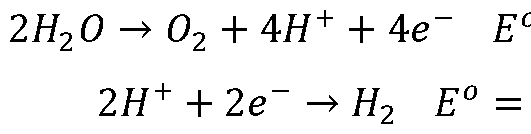


Claims
Priority Applications (10)
| Application Number | Priority Date | Filing Date | Title |
|---|---|---|---|
| PL19898960.0T PL3899996T3 (en) | 2018-12-20 | 2019-12-20 | Electrolyte compositions |
| FIEP19898960.0T FI3899996T3 (en) | 2018-12-20 | 2019-12-20 | Electrolyte compositions |
| JP2021534205A JP7491928B2 (en) | 2018-12-20 | 2019-12-20 | Electrolyte Composition |
| ES19898960T ES2972328T3 (en) | 2018-12-20 | 2019-12-20 | Electrolyte compositions |
| AU2019403731A AU2019403731B2 (en) | 2018-12-20 | 2019-12-20 | Electrolyte compositions |
| EP19898960.0A EP3899996B1 (en) | 2018-12-20 | 2019-12-20 | Electrolyte compositions |
| US17/414,197 US12288911B2 (en) | 2018-12-20 | 2019-12-20 | Electrolyte compositions |
| CN201980078281.3A CN113272924B (en) | 2018-12-20 | 2019-12-20 | Electrolyte composition |
| DK19898960.0T DK3899996T3 (en) | 2018-12-20 | 2019-12-20 | ELECTROLYTE COMPOSITIONS |
| NZ774190A NZ774190B2 (en) | 2019-12-20 | Electrolyte compositions |
Applications Claiming Priority (4)
| Application Number | Priority Date | Filing Date | Title |
|---|---|---|---|
| AU2018904852A AU2018904852A0 (en) | 2018-12-20 | Electrolyte compositions | |
| AU2018904852 | 2018-12-20 | ||
| AU2019903154 | 2019-08-29 | ||
| AU2019903154A AU2019903154A0 (en) | 2019-08-29 | Electrolyte compositions |
Publications (1)
| Publication Number | Publication Date |
|---|---|
| WO2020130857A1 true WO2020130857A1 (en) | 2020-06-25 |
Family
ID=71100964
Family Applications (1)
| Application Number | Title | Priority Date | Filing Date |
|---|---|---|---|
| PCT/NZ2019/050164 Ceased WO2020130857A1 (en) | 2018-12-20 | 2019-12-20 | Electrolyte compositions |
Country Status (11)
| Country | Link |
|---|---|
| US (1) | US12288911B2 (en) |
| EP (1) | EP3899996B1 (en) |
| JP (1) | JP7491928B2 (en) |
| CN (1) | CN113272924B (en) |
| AU (1) | AU2019403731B2 (en) |
| DK (1) | DK3899996T3 (en) |
| ES (1) | ES2972328T3 (en) |
| FI (1) | FI3899996T3 (en) |
| PL (1) | PL3899996T3 (en) |
| PT (1) | PT3899996T (en) |
| WO (1) | WO2020130857A1 (en) |
Cited By (1)
| Publication number | Priority date | Publication date | Assignee | Title |
|---|---|---|---|---|
| CN113258138A (en) * | 2021-05-18 | 2021-08-13 | 重庆大学 | Full-inorganic salt type rechargeable magnesium battery electrolyte and preparation method thereof |
Families Citing this family (2)
| Publication number | Priority date | Publication date | Assignee | Title |
|---|---|---|---|---|
| CN115663248B (en) * | 2022-11-03 | 2023-06-23 | 北京航空航天大学 | Microemulsion electrolyte taking sodium dodecyl sulfate as electrolytic solvent and preparation method thereof |
| TWI842300B (en) * | 2022-12-28 | 2024-05-11 | 國立臺灣科技大學 | Redox flow battery electrolyte, manufacturing method thereof and redox flow battery |
Citations (6)
| Publication number | Priority date | Publication date | Assignee | Title |
|---|---|---|---|---|
| US20030180608A1 (en) * | 2000-06-30 | 2003-09-25 | Mitsuhiro Mori | Lithium secondary cell and method for manufacture thereof |
| EP2335313A1 (en) | 2008-10-07 | 2011-06-22 | Technische Universiteit Delft | Electrode compartment for an electrochemical cell, a refreshing system for it and an emulsion to be used therefore |
| US20120178017A1 (en) * | 2009-09-18 | 2012-07-12 | Daikin Industries, Ltd. | Electrolyte emulsion and process for producing same |
| US20130242466A1 (en) | 2012-03-16 | 2013-09-19 | Avx Corporation | Wet Capacitor Cathode Containing a Conductive Coating Formed Anodic Electrochemical Polymerization of a Microemulsion |
| US20140230679A1 (en) * | 2013-02-20 | 2014-08-21 | Orica International Pte Ltd. | Method and device |
| WO2019079047A1 (en) * | 2017-10-20 | 2019-04-25 | Lockheed Martin Energy, Llc | pH BUFFERING REGION IN A FLOW BATTERY REBALANCING CELL |
Family Cites Families (20)
| Publication number | Priority date | Publication date | Assignee | Title |
|---|---|---|---|---|
| US2441896A (en) | 1945-01-17 | 1948-05-18 | Burgess Battery Co | Emulsified battery electrolyte |
| GB603409A (en) | 1945-01-17 | 1948-06-15 | Burgess Battery Co | Improvements in or relating to electric batteries |
| IT1217839B (en) | 1988-06-17 | 1990-03-30 | Ausimont Spa | MICROEMULSIONS OF THE ELECTRICALLY CONDUCTIVE OIL TYPE IN WATER, BASED ON FLUORINATED COMPOUNDS, USED AS A CATHOLITE IN ELECTROCHEMICAL PROCESSES |
| TW369558B (en) | 1994-01-28 | 1999-09-11 | Minnesota Mining & Mfg | Polymerized microemulsion pressure sensitive adhesive compositions and methods of preparing and using same |
| US20030165722A1 (en) | 2002-01-25 | 2003-09-04 | Ramesh Varadaraj | Microemulsion compositions for fuel cell reformer start-up |
| JP4811021B2 (en) * | 2003-12-22 | 2011-11-09 | Jsr株式会社 | Emulsion composition |
| KR101002654B1 (en) * | 2005-10-12 | 2010-12-20 | 삼성에스디아이 주식회사 | Polymer electrolyte membrane for fuel cell, method for manufacturing same, membrane-electrode assembly for fuel cell comprising same, and fuel cell system comprising same |
| CN100517855C (en) | 2005-11-24 | 2009-07-22 | 比亚迪股份有限公司 | Electrolytic solution, lithium ion battery containing the same and their preparation method |
| US20070218371A1 (en) | 2006-03-14 | 2007-09-20 | Tda Research, Inc. | Nanoporous polymer electrolyte |
| CN102318011B (en) * | 2009-02-17 | 2014-10-29 | 可乐丽股份有限公司 | electrolyte membrane and membrane-electrode assembly |
| JP5421076B2 (en) | 2009-11-13 | 2014-02-19 | 日本電信電話株式会社 | Lithium air battery |
| WO2012083253A1 (en) | 2010-12-16 | 2012-06-21 | The Regents Of The University Of California | Polymer electrolytes based on poly(glycidyl ether)s |
| US20130171484A1 (en) | 2011-06-06 | 2013-07-04 | The Board Of Trustees Of The University Of Illinois | Materials and Methods for Autonomous Battery Shutdown |
| DE102012016317A1 (en) * | 2012-08-14 | 2014-02-20 | Jenabatteries GmbH | Redox flow cell for storing electrical energy |
| CN105304944B (en) * | 2014-07-28 | 2018-09-18 | 北京理工大学 | The boride prepared using reverse microemulsion process is the alkaline secondary cell of negative material |
| US20160093923A1 (en) | 2014-09-26 | 2016-03-31 | Hongpeng Wang | Inherently safe thermo-responsive gel electrolytes for electrochemical devices |
| CN106654331B (en) * | 2015-11-04 | 2020-05-08 | 天津大学 | An organic phase redox electrolyte and its application in flow batteries |
| EP3240064A1 (en) * | 2016-04-27 | 2017-11-01 | University of Vienna | Method of manufacturing a separator for a battery and separator for a battery |
| US10934258B2 (en) | 2016-07-25 | 2021-03-02 | Utah State University | Materials for use in an aqueous organic redox flow battery |
| US10320028B2 (en) | 2016-08-18 | 2019-06-11 | National Technology & Engineering Solutions Of Sandia, Llc | Metal-organic framework electrodes for sodium ion batteries |
-
2019
- 2019-12-20 PT PT198989600T patent/PT3899996T/en unknown
- 2019-12-20 AU AU2019403731A patent/AU2019403731B2/en active Active
- 2019-12-20 DK DK19898960.0T patent/DK3899996T3/en active
- 2019-12-20 EP EP19898960.0A patent/EP3899996B1/en active Active
- 2019-12-20 FI FIEP19898960.0T patent/FI3899996T3/en active
- 2019-12-20 PL PL19898960.0T patent/PL3899996T3/en unknown
- 2019-12-20 WO PCT/NZ2019/050164 patent/WO2020130857A1/en not_active Ceased
- 2019-12-20 JP JP2021534205A patent/JP7491928B2/en active Active
- 2019-12-20 ES ES19898960T patent/ES2972328T3/en active Active
- 2019-12-20 US US17/414,197 patent/US12288911B2/en active Active
- 2019-12-20 CN CN201980078281.3A patent/CN113272924B/en active Active
Patent Citations (7)
| Publication number | Priority date | Publication date | Assignee | Title |
|---|---|---|---|---|
| US20030180608A1 (en) * | 2000-06-30 | 2003-09-25 | Mitsuhiro Mori | Lithium secondary cell and method for manufacture thereof |
| EP2335313A1 (en) | 2008-10-07 | 2011-06-22 | Technische Universiteit Delft | Electrode compartment for an electrochemical cell, a refreshing system for it and an emulsion to be used therefore |
| US20110250515A1 (en) * | 2008-10-07 | 2011-10-13 | Technische Universiteit Delft | Electrode compartment for an electrochemical cell, a refreshing system for it and an emulsion to be used therefore |
| US20120178017A1 (en) * | 2009-09-18 | 2012-07-12 | Daikin Industries, Ltd. | Electrolyte emulsion and process for producing same |
| US20130242466A1 (en) | 2012-03-16 | 2013-09-19 | Avx Corporation | Wet Capacitor Cathode Containing a Conductive Coating Formed Anodic Electrochemical Polymerization of a Microemulsion |
| US20140230679A1 (en) * | 2013-02-20 | 2014-08-21 | Orica International Pte Ltd. | Method and device |
| WO2019079047A1 (en) * | 2017-10-20 | 2019-04-25 | Lockheed Martin Energy, Llc | pH BUFFERING REGION IN A FLOW BATTERY REBALANCING CELL |
Non-Patent Citations (1)
| Title |
|---|
| See also references of EP3899996A4 |
Cited By (1)
| Publication number | Priority date | Publication date | Assignee | Title |
|---|---|---|---|---|
| CN113258138A (en) * | 2021-05-18 | 2021-08-13 | 重庆大学 | Full-inorganic salt type rechargeable magnesium battery electrolyte and preparation method thereof |
Also Published As
| Publication number | Publication date |
|---|---|
| JP2022513877A (en) | 2022-02-09 |
| EP3899996A1 (en) | 2021-10-27 |
| US12288911B2 (en) | 2025-04-29 |
| PL3899996T3 (en) | 2024-05-06 |
| AU2019403731A1 (en) | 2021-05-20 |
| FI3899996T3 (en) | 2024-02-15 |
| EP3899996A4 (en) | 2022-09-14 |
| JP7491928B2 (en) | 2024-05-28 |
| US20220200034A1 (en) | 2022-06-23 |
| ES2972328T3 (en) | 2024-06-12 |
| AU2019403731B2 (en) | 2024-08-15 |
| DK3899996T3 (en) | 2024-02-12 |
| EP3899996B1 (en) | 2024-01-17 |
| CN113272924A (en) | 2021-08-17 |
| CN113272924B (en) | 2024-02-02 |
| PT3899996T (en) | 2024-02-12 |
| NZ774190A (en) | 2025-02-28 |
Similar Documents
| Publication | Publication Date | Title |
|---|---|---|
| Chen et al. | Ionic liquid-mediated aqueous redox flow batteries for high voltage applications | |
| US12288911B2 (en) | Electrolyte compositions | |
| US9130218B2 (en) | Hybrid energy storage systems utilizing redox active organic compounds | |
| Lipson et al. | Practical stability limits of magnesium electrolytes | |
| AU2011201241B2 (en) | A method of operating metal-bromine cells | |
| CN105591177B (en) | Water-enhanced ionic liquid electrolytes for metal-air batteries | |
| JP2016521448A (en) | Rechargeable nanoelectrofuel electrode and device for high energy density flow battery | |
| US20080139742A1 (en) | Polyaniline/carbon composite and electric double-layer capacitor using same | |
| JP7321440B2 (en) | Electrochemical device containing triple-layer electrolyte | |
| Zhao et al. | Exploiting interfacial Cl–/Cl0 redox for a 1.8-V voltage plateau aqueous electrochemical capacitor | |
| WO2020108787A2 (en) | Aqueous electrolyte, redox flow battery and use thereof | |
| JP7418805B2 (en) | Anolytes for polyvalent metal secondary batteries and polyvalent metal secondary batteries | |
| WO2020241686A1 (en) | Electrochemical device including three-layer system electrolytic solution | |
| KR101864710B1 (en) | Crown ether-inclusive electrolyte for redox flow batteries and method of manufacturing the same | |
| WO2017186836A1 (en) | Battery | |
| HK40060543A (en) | Electrolyte compositions | |
| HK40060543B (en) | Electrolyte compositions | |
| Moutet et al. | Planar carbenium ions for robust symmetrical all organic redox flow batteries | |
| US20260015511A1 (en) | Electrode slurry | |
| US12482843B2 (en) | Rechargeable electrochemical devices and methods for the same | |
| Borah et al. | Re-discovering micro-emulsion electrolytes: a biphasic electrolyte platform for Organic redox flow batteries | |
| US20210305610A1 (en) | Electrolyte including mixture of active material and precursor thereof | |
| RU2752762C1 (en) | Highly soluble triphenylamine-based catholyte and electrochemical current source based on it | |
| JP5151108B2 (en) | Electrode active material | |
| WO2015195571A1 (en) | Hybrid electrolytes for group 2 cation-based electrochemical energy storage devices |
Legal Events
| Date | Code | Title | Description |
|---|---|---|---|
| 121 | Ep: the epo has been informed by wipo that ep was designated in this application |
Ref document number: 19898960 Country of ref document: EP Kind code of ref document: A1 |
|
| ENP | Entry into the national phase |
Ref document number: 2019403731 Country of ref document: AU Date of ref document: 20191220 Kind code of ref document: A |
|
| ENP | Entry into the national phase |
Ref document number: 2021534205 Country of ref document: JP Kind code of ref document: A |
|
| NENP | Non-entry into the national phase |
Ref country code: DE |
|
| ENP | Entry into the national phase |
Ref document number: 2019898960 Country of ref document: EP Effective date: 20210720 |
|
| WWG | Wipo information: grant in national office |
Ref document number: 17414197 Country of ref document: US |
|
| WWG | Wipo information: grant in national office |
Ref document number: 774190 Country of ref document: NZ |