WO2020135771A1 - 杂环类化合物、中间体、其制备方法及应用 - Google Patents
杂环类化合物、中间体、其制备方法及应用 Download PDFInfo
- Publication number
- WO2020135771A1 WO2020135771A1 PCT/CN2019/129382 CN2019129382W WO2020135771A1 WO 2020135771 A1 WO2020135771 A1 WO 2020135771A1 CN 2019129382 W CN2019129382 W CN 2019129382W WO 2020135771 A1 WO2020135771 A1 WO 2020135771A1
- Authority
- WO
- WIPO (PCT)
- Prior art keywords
- substituted
- group
- alkyl
- unsubstituted
- membered heteroaryl
- Prior art date
- Legal status (The legal status is an assumption and is not a legal conclusion. Google has not performed a legal analysis and makes no representation as to the accuracy of the status listed.)
- Ceased
Links
- 0 CCC(C)N(*)C(*)=O Chemical compound CCC(C)N(*)C(*)=O 0.000 description 100
- NROQSEVTKGGCDY-UHFFFAOYSA-N Cc1cc2nc(-c(c(F)cc(Br)c3)c3F)c(CC(C3)OCCN3C(OC)=O)[n]2cc1 Chemical compound Cc1cc2nc(-c(c(F)cc(Br)c3)c3F)c(CC(C3)OCCN3C(OC)=O)[n]2cc1 NROQSEVTKGGCDY-UHFFFAOYSA-N 0.000 description 2
- ORLGLBZRQYOWNA-UHFFFAOYSA-N Cc1ccnc(N)c1 Chemical compound Cc1ccnc(N)c1 ORLGLBZRQYOWNA-UHFFFAOYSA-N 0.000 description 2
- NWVGXXPWOYZODV-UHFFFAOYSA-N N#Cc1c[nH]cn1 Chemical compound N#Cc1c[nH]cn1 NWVGXXPWOYZODV-UHFFFAOYSA-N 0.000 description 2
- UTVVREMVDJTZAC-UHFFFAOYSA-N Nc1ccc[o]1 Chemical compound Nc1ccc[o]1 UTVVREMVDJTZAC-UHFFFAOYSA-N 0.000 description 2
- SPIJNJCAYIGYQL-MQQKCMAXSA-N C/C=C/C(/O)=C\NN Chemical compound C/C=C/C(/O)=C\NN SPIJNJCAYIGYQL-MQQKCMAXSA-N 0.000 description 1
- JYIYGVXFFDYZDH-VNKDHWASSA-N C/C=C/C(/OC)=C\NN Chemical compound C/C=C/C(/OC)=C\NN JYIYGVXFFDYZDH-VNKDHWASSA-N 0.000 description 1
- NNVDLHQRQITVPD-KZSQQDEKSA-N C/C=C/c1cc(Br)cc(Cl)c1-c1c(C[C@@H]2OCCNC2)[n](ccc(Cl)c2)c2n1 Chemical compound C/C=C/c1cc(Br)cc(Cl)c1-c1c(C[C@@H]2OCCNC2)[n](ccc(Cl)c2)c2n1 NNVDLHQRQITVPD-KZSQQDEKSA-N 0.000 description 1
- KWZVSWUPDAAAFT-UHFFFAOYSA-N C=S(CC=C1N)C=C1N Chemical compound C=S(CC=C1N)C=C1N KWZVSWUPDAAAFT-UHFFFAOYSA-N 0.000 description 1
- CRCQMKSPLPGVQL-UHFFFAOYSA-N CC(C)(C)OC(N1CC(C[n]2c(-c(c(F)cc(C(NC)=O)c3)c3F)nc3cc(C)cnc23)OCC1)=O Chemical compound CC(C)(C)OC(N1CC(C[n]2c(-c(c(F)cc(C(NC)=O)c3)c3F)nc3cc(C)cnc23)OCC1)=O CRCQMKSPLPGVQL-UHFFFAOYSA-N 0.000 description 1
- CCFCELHYHKHJEQ-UHFFFAOYSA-N CC(C)(C)OC(N1CC(Cc2c(-c(c(F)cc(C3OCCO3)c3)c3F)nc3[n]2ccc(C)c3)OCC1)=O Chemical compound CC(C)(C)OC(N1CC(Cc2c(-c(c(F)cc(C3OCCO3)c3)c3F)nc3[n]2ccc(C)c3)OCC1)=O CCFCELHYHKHJEQ-UHFFFAOYSA-N 0.000 description 1
- QZGHJIVYARCENJ-KWQFWETISA-N CC(C)(C)OC(N1C[C@@](C2)([C@H]2N)OCC1)=O Chemical compound CC(C)(C)OC(N1C[C@@](C2)([C@H]2N)OCC1)=O QZGHJIVYARCENJ-KWQFWETISA-N 0.000 description 1
- SPFSVOPFTFRRTO-LBPRGKRZSA-N CC(C)(C)OC(N1C[C@H](CNc(ncc(C)c2)c2[N+]([O-])=O)OCC1)=O Chemical compound CC(C)(C)OC(N1C[C@H](CNc(ncc(C)c2)c2[N+]([O-])=O)OCC1)=O SPFSVOPFTFRRTO-LBPRGKRZSA-N 0.000 description 1
- YRLQPGUQEJTIQC-KRWDZBQOSA-N CC(C)(C)OC(N1C[C@H](Cc2c(-c(c(F)cc(C(NC)=O)c3)c3F)[o]c3cc(C)ccc23)OCC1)=O Chemical compound CC(C)(C)OC(N1C[C@H](Cc2c(-c(c(F)cc(C(NC)=O)c3)c3F)[o]c3cc(C)ccc23)OCC1)=O YRLQPGUQEJTIQC-KRWDZBQOSA-N 0.000 description 1
- IFZVHAUMJFLUPY-UHFFFAOYSA-N CC(C)(C1)NCCNC1=O Chemical compound CC(C)(C1)NCCNC1=O IFZVHAUMJFLUPY-UHFFFAOYSA-N 0.000 description 1
- CCPUPPRCSFTOQN-UHFFFAOYSA-N CC(C)(c1c[nH]c(C)n1)O Chemical compound CC(C)(c1c[nH]c(C)n1)O CCPUPPRCSFTOQN-UHFFFAOYSA-N 0.000 description 1
- JFLPVLKSCKYQCX-UHFFFAOYSA-N CC(C)(c1c[n](C)cn1)O Chemical compound CC(C)(c1c[n](C)cn1)O JFLPVLKSCKYQCX-UHFFFAOYSA-N 0.000 description 1
- HKQJAJLSPLLJHJ-DVBIZMGNSA-N CC(C)/C=C/C(/O)=C\NNC Chemical compound CC(C)/C=C/C(/O)=C\NNC HKQJAJLSPLLJHJ-DVBIZMGNSA-N 0.000 description 1
- GECXDSJUPSHRHU-UHFFFAOYSA-N CC(C)[n]1ncc(C2(CC2)C(O)=O)c1 Chemical compound CC(C)[n]1ncc(C2(CC2)C(O)=O)c1 GECXDSJUPSHRHU-UHFFFAOYSA-N 0.000 description 1
- XVWVZUYVJWCWJY-UHFFFAOYSA-N CC(C)c(cc(c(C(C)C)c1)Cl)c1F Chemical compound CC(C)c(cc(c(C(C)C)c1)Cl)c1F XVWVZUYVJWCWJY-UHFFFAOYSA-N 0.000 description 1
- KQRDMXJPKFUDEV-UHFFFAOYSA-N CC(C)c1c[o]c(NC)c1N Chemical compound CC(C)c1c[o]c(NC)c1N KQRDMXJPKFUDEV-UHFFFAOYSA-N 0.000 description 1
- XIJGGKXPSAFXHK-UHFFFAOYSA-N CC(C)c1nc(C#N)c[o]1 Chemical compound CC(C)c1nc(C#N)c[o]1 XIJGGKXPSAFXHK-UHFFFAOYSA-N 0.000 description 1
- BGNWXRJWDQHCRB-UHFFFAOYSA-N CC(C)c1ncccn1 Chemical compound CC(C)c1ncccn1 BGNWXRJWDQHCRB-UHFFFAOYSA-N 0.000 description 1
- CPSUPLRWVVYWEI-UHFFFAOYSA-N CC(C=CC1)=CC1=C Chemical compound CC(C=CC1)=CC1=C CPSUPLRWVVYWEI-UHFFFAOYSA-N 0.000 description 1
- OAKFNQHEWHBXTK-UHFFFAOYSA-N CC(C[O](C1)CC1NC)Nc([o]1)ccc1Cl Chemical compound CC(C[O](C1)CC1NC)Nc([o]1)ccc1Cl OAKFNQHEWHBXTK-UHFFFAOYSA-N 0.000 description 1
- GENAUFJQJWOCDW-UHFFFAOYSA-O CC(N(CCO1)CC1[SH2+])=O Chemical compound CC(N(CCO1)CC1[SH2+])=O GENAUFJQJWOCDW-UHFFFAOYSA-O 0.000 description 1
- ZOCCYLUMAQVNRP-INIZCTEOSA-N CC(Nc1cc(F)c(-c2c(C[C@@H](C3)OCCN3C(OC)=O)[n](ccc(C)c3)c3n2)c(F)c1)=O Chemical compound CC(Nc1cc(F)c(-c2c(C[C@@H](C3)OCCN3C(OC)=O)[n](ccc(C)c3)c3n2)c(F)c1)=O ZOCCYLUMAQVNRP-INIZCTEOSA-N 0.000 description 1
- ZNUUWNHLRIMJSF-GQCTYLIASA-N CC/C(/Br)=C\C(F)=C Chemical compound CC/C(/Br)=C\C(F)=C ZNUUWNHLRIMJSF-GQCTYLIASA-N 0.000 description 1
- OCMJEALURTVSCX-UHFFFAOYSA-N CC1(C)OCCNCC1 Chemical compound CC1(C)OCCNCC1 OCMJEALURTVSCX-UHFFFAOYSA-N 0.000 description 1
- VBXXUEXFQLUDAW-UHFFFAOYSA-N CC1(C)OS(c2cc(F)c(-c3c(CC(C4)OCCN4C(OC)=O)[n](ccc(C)c4)c4n3)c(F)c2)OC1(C)C Chemical compound CC1(C)OS(c2cc(F)c(-c3c(CC(C4)OCCN4C(OC)=O)[n](ccc(C)c4)c4n3)c(F)c2)OC1(C)C VBXXUEXFQLUDAW-UHFFFAOYSA-N 0.000 description 1
- OJKQQWFBIHHYEY-UHFFFAOYSA-N CC1=CCCC(C(F)F)N=CC1 Chemical compound CC1=CCCC(C(F)F)N=CC1 OJKQQWFBIHHYEY-UHFFFAOYSA-N 0.000 description 1
- ZJFINOPZCWWQGK-UHFFFAOYSA-N CC1=CCNC=C1F Chemical compound CC1=CCNC=C1F ZJFINOPZCWWQGK-UHFFFAOYSA-N 0.000 description 1
- NDXNIYXJYKHKHF-UHFFFAOYSA-N CC1C=NC=CC=C1 Chemical compound CC1C=NC=CC=C1 NDXNIYXJYKHKHF-UHFFFAOYSA-N 0.000 description 1
- FBJORSZWBDVFIO-UHFFFAOYSA-N CC1C=NC=CCC(C#N)=C1 Chemical compound CC1C=NC=CCC(C#N)=C1 FBJORSZWBDVFIO-UHFFFAOYSA-N 0.000 description 1
- XUXJHBAJZQREDB-UHFFFAOYSA-N CCC(C)C(N)=O Chemical compound CCC(C)C(N)=O XUXJHBAJZQREDB-UHFFFAOYSA-N 0.000 description 1
- KDPCIAWPWGMQDM-UHFFFAOYSA-N CCC1C=CN=NC1 Chemical compound CCC1C=CN=NC1 KDPCIAWPWGMQDM-UHFFFAOYSA-N 0.000 description 1
- IPWFJLQDVFKJDU-UHFFFAOYSA-N CCCCC(N)=O Chemical compound CCCCC(N)=O IPWFJLQDVFKJDU-UHFFFAOYSA-N 0.000 description 1
- WKIVLOHKZRFMGU-UHFFFAOYSA-N CCCCOC(c1cc(F)c(C=O)c(F)c1)=O Chemical compound CCCCOC(c1cc(F)c(C=O)c(F)c1)=O WKIVLOHKZRFMGU-UHFFFAOYSA-N 0.000 description 1
- XURGZNLZDYVVKJ-UHFFFAOYSA-N CCCC[O](C)C(c1cc(F)c(C=O)c(F)c1)=O Chemical compound CCCC[O](C)C(c1cc(F)c(C=O)c(F)c1)=O XURGZNLZDYVVKJ-UHFFFAOYSA-N 0.000 description 1
- AIEOIPHKPUYBTR-UHFFFAOYSA-N CCN(C)N(C)N(C)C Chemical compound CCN(C)N(C)N(C)C AIEOIPHKPUYBTR-UHFFFAOYSA-N 0.000 description 1
- OUWDMFXXKRNWQG-SFHVURJKSA-N CCOC(C(C(OCC)=O)c1cc(F)c(-c2c(C[C@@H](C3)OCCN3C(OC)=O)[n](ccc(C)c3)c3n2)c(F)c1)=O Chemical compound CCOC(C(C(OCC)=O)c1cc(F)c(-c2c(C[C@@H](C3)OCCN3C(OC)=O)[n](ccc(C)c3)c3n2)c(F)c1)=O OUWDMFXXKRNWQG-SFHVURJKSA-N 0.000 description 1
- SUCDHPJUXCCMDN-UHFFFAOYSA-N CCc1ncc[o]1 Chemical compound CCc1ncc[o]1 SUCDHPJUXCCMDN-UHFFFAOYSA-N 0.000 description 1
- MZHDMPFPVYDUQZ-UHFFFAOYSA-N CNC(c1cc(F)c(C=O)c(F)c1)=O Chemical compound CNC(c1cc(F)c(C=O)c(F)c1)=O MZHDMPFPVYDUQZ-UHFFFAOYSA-N 0.000 description 1
- BRJFOBJFHGRXHX-AWEZNQCLSA-N CNc1cc(F)c(-c2c(C[C@@H](C3)OCCN3C(OC)=O)[n](ccc(C(F)(F)F)c3)c3n2)c(F)c1 Chemical compound CNc1cc(F)c(-c2c(C[C@@H](C3)OCCN3C(OC)=O)[n](ccc(C(F)(F)F)c3)c3n2)c(F)c1 BRJFOBJFHGRXHX-AWEZNQCLSA-N 0.000 description 1
- LSBSXJTWWDLWHO-ZDUSSCGKSA-N COC(N1C[C@H](Cc2c(-c(c(F)cc(Br)c3)c3F)nc3[n]2ccc(C(F)(F)F)c3)OCC1)=O Chemical compound COC(N1C[C@H](Cc2c(-c(c(F)cc(Br)c3)c3F)nc3[n]2ccc(C(F)(F)F)c3)OCC1)=O LSBSXJTWWDLWHO-ZDUSSCGKSA-N 0.000 description 1
- JUMMYLPUBVBDPB-LBPRGKRZSA-N COC(N1C[C@H](Cc2c(-c(cc(c(S(Cl)(=O)=O)c3)F)c3Cl)nc3[n]2ccc(Cl)c3)OCC1)=O Chemical compound COC(N1C[C@H](Cc2c(-c(cc(c(S(Cl)(=O)=O)c3)F)c3Cl)nc3[n]2ccc(Cl)c3)OCC1)=O JUMMYLPUBVBDPB-LBPRGKRZSA-N 0.000 description 1
- CUUYZEIOTYPENA-AWEZNQCLSA-N COC(N1C[C@H](Cc2c(-c(ccc(Br)c3)c3Cl)nc3[n]2ccc(Cl)c3)OCC1)=O Chemical compound COC(N1C[C@H](Cc2c(-c(ccc(Br)c3)c3Cl)nc3[n]2ccc(Cl)c3)OCC1)=O CUUYZEIOTYPENA-AWEZNQCLSA-N 0.000 description 1
- BWHGPQRVXMJOPC-QHIGXMINSA-N COC(N1C[C@H](Cc2c(C3C(F)=CC(S(Cl)(=O)=O)=CC3F)nc(cc3Cl)[n]2cc3F)OCC1)=O Chemical compound COC(N1C[C@H](Cc2c(C3C(F)=CC(S(Cl)(=O)=O)=CC3F)nc(cc3Cl)[n]2cc3F)OCC1)=O BWHGPQRVXMJOPC-QHIGXMINSA-N 0.000 description 1
- JRQSGIQEBOZPHK-UHFFFAOYSA-N C[n]1c(C#N)ccc1 Chemical compound C[n]1c(C#N)ccc1 JRQSGIQEBOZPHK-UHFFFAOYSA-N 0.000 description 1
- LAKVILSENFFPRR-UHFFFAOYSA-N C[n]1cnc(C#N)c1 Chemical compound C[n]1cnc(C#N)c1 LAKVILSENFFPRR-UHFFFAOYSA-N 0.000 description 1
- LYFNAJACLPGPIK-UHFFFAOYSA-N C[n]1cnc(C(F)(F)F)c1 Chemical compound C[n]1cnc(C(F)(F)F)c1 LYFNAJACLPGPIK-UHFFFAOYSA-N 0.000 description 1
- WZTRQGJMMHMFGH-UHFFFAOYSA-N C[n]1cnc(C(O)=O)c1 Chemical compound C[n]1cnc(C(O)=O)c1 WZTRQGJMMHMFGH-UHFFFAOYSA-N 0.000 description 1
- KZPZTVKOJSKVBV-UHFFFAOYSA-N C[n]1cnc(C(OC)=O)c1 Chemical compound C[n]1cnc(C(OC)=O)c1 KZPZTVKOJSKVBV-UHFFFAOYSA-N 0.000 description 1
- BLWWFKGTSZCJIA-UHFFFAOYSA-N C[n]1cnc(C2(CC2)O)c1 Chemical compound C[n]1cnc(C2(CC2)O)c1 BLWWFKGTSZCJIA-UHFFFAOYSA-N 0.000 description 1
- LPDDIVRSCAXDIN-UHFFFAOYSA-N C[n]1cnc(OC)c1 Chemical compound C[n]1cnc(OC)c1 LPDDIVRSCAXDIN-UHFFFAOYSA-N 0.000 description 1
- GZFRMZFPNFNGSJ-UHFFFAOYSA-N Cc(cc1O)ncc1I Chemical compound Cc(cc1O)ncc1I GZFRMZFPNFNGSJ-UHFFFAOYSA-N 0.000 description 1
- LUAJUWOJEFFNFE-UHFFFAOYSA-N Cc(cc1[N+]([O-])=O)cnc1Cl Chemical compound Cc(cc1[N+]([O-])=O)cnc1Cl LUAJUWOJEFFNFE-UHFFFAOYSA-N 0.000 description 1
- VIURTWJYOMPUAX-UHFFFAOYSA-N Cc1c(C=O)cnc(Br)c1 Chemical compound Cc1c(C=O)cnc(Br)c1 VIURTWJYOMPUAX-UHFFFAOYSA-N 0.000 description 1
- VVCHRFFPELKCHF-BJQOMGFOSA-N Cc1cc(nc(-c(c(F)cc(C(NC)=O)c2)c2F)[n]2[C@@H](C3)C33OCCNC3)c2nc1 Chemical compound Cc1cc(nc(-c(c(F)cc(C(NC)=O)c2)c2F)[n]2[C@@H](C3)C33OCCNC3)c2nc1 VVCHRFFPELKCHF-BJQOMGFOSA-N 0.000 description 1
- CFAZLMNWVPDPMK-UHFFFAOYSA-N Cc1cc2nc(-c(c(F)cc(-c(cc3)ncc3O)c3)c3F)c(CC(C3)OCCN3C(OC)=O)[n]2cc1 Chemical compound Cc1cc2nc(-c(c(F)cc(-c(cc3)ncc3O)c3)c3F)c(CC(C3)OCCN3C(OC)=O)[n]2cc1 CFAZLMNWVPDPMK-UHFFFAOYSA-N 0.000 description 1
- ZLFLHXDGISRTRX-SFHVURJKSA-N Cc1cc2nc(-c(c(F)cc(-c3nc(C4(CC4)C#N)c[nH]3)c3)c3F)c(C[C@@H](C3)OCCN3C(OC)=O)[n]2cc1 Chemical compound Cc1cc2nc(-c(c(F)cc(-c3nc(C4(CC4)C#N)c[nH]3)c3)c3F)c(C[C@@H](C3)OCCN3C(OC)=O)[n]2cc1 ZLFLHXDGISRTRX-SFHVURJKSA-N 0.000 description 1
- CSSQCILESHNLGN-KRWDZBQOSA-N Cc1cc2nc(-c(c(F)cc(-c3nc(C4(CC4)C(N)=O)c[nH]3)c3)c3F)c(C[C@@H](C3)OCCN3C(OC)=O)[n]2cc1 Chemical compound Cc1cc2nc(-c(c(F)cc(-c3nc(C4(CC4)C(N)=O)c[nH]3)c3)c3F)c(C[C@@H](C3)OCCN3C(OC)=O)[n]2cc1 CSSQCILESHNLGN-KRWDZBQOSA-N 0.000 description 1
- AAJOGKRANMEROT-AWEZNQCLSA-N Cc1cc2nc(-c(c(F)cc(C(O)=O)c3)c3F)c(C[C@@H](C3)OCCN3C(OC)=O)[n]2cc1 Chemical compound Cc1cc2nc(-c(c(F)cc(C(O)=O)c3)c3F)c(C[C@@H](C3)OCCN3C(OC)=O)[n]2cc1 AAJOGKRANMEROT-AWEZNQCLSA-N 0.000 description 1
- VCINWMOOLSNDOA-UHFFFAOYSA-N Cc1cc2nc(-c(c(F)cc(N(C=CC3)C3=O)c3)c3F)c(CC(C3)OCCN3C(OC)=O)[n]2cc1 Chemical compound Cc1cc2nc(-c(c(F)cc(N(C=CC3)C3=O)c3)c3F)c(CC(C3)OCCN3C(OC)=O)[n]2cc1 VCINWMOOLSNDOA-UHFFFAOYSA-N 0.000 description 1
- OYOHANXTTKBKJK-INIZCTEOSA-N Cc1cc2nc(-c(c(F)cc(N(C=CN3)C3=O)c3)c3F)c(C[C@@H](C3)OCCN3C(OC)=O)[n]2cc1 Chemical compound Cc1cc2nc(-c(c(F)cc(N(C=CN3)C3=O)c3)c3F)c(C[C@@H](C3)OCCN3C(OC)=O)[n]2cc1 OYOHANXTTKBKJK-INIZCTEOSA-N 0.000 description 1
- SOVHJEJNAQWIKE-DAFXYXGESA-N Cc1cc2nc(-c(c(F)cc(NC3COCC3)c3)c3F)c(C[C@@H](C3)OCCN3C(OC)=O)[n]2cc1 Chemical compound Cc1cc2nc(-c(c(F)cc(NC3COCC3)c3)c3F)c(C[C@@H](C3)OCCN3C(OC)=O)[n]2cc1 SOVHJEJNAQWIKE-DAFXYXGESA-N 0.000 description 1
- YAWFZOHWZAGTSE-KRWDZBQOSA-N Cc1cc2nc(-c(c(F)cc(Nc3ccc[o]3)c3)c3F)c(C[C@@H](C3)OCCN3C(OC)=O)[n]2cc1 Chemical compound Cc1cc2nc(-c(c(F)cc(Nc3ccc[o]3)c3)c3F)c(C[C@@H](C3)OCCN3C(OC)=O)[n]2cc1 YAWFZOHWZAGTSE-KRWDZBQOSA-N 0.000 description 1
- MVHMPKLPQTZARP-AWEZNQCLSA-N Cc1cc2nc(-c(c(F)cc(O)c3)c3F)c(C[C@@H](C3)OCCN3C(OC)=O)[n]2cc1 Chemical compound Cc1cc2nc(-c(c(F)cc(O)c3)c3F)c(C[C@@H](C3)OCCN3C(OC)=O)[n]2cc1 MVHMPKLPQTZARP-AWEZNQCLSA-N 0.000 description 1
- MEPQUVGRRSZIPQ-LBPRGKRZSA-N Cc1cc2nc(-c(c(F)cc(S(N)(=O)=O)c3)c3F)c(C[C@@H](C3)OCCN3C(OC)=O)[n]2cc1F Chemical compound Cc1cc2nc(-c(c(F)cc(S(N)(=O)=O)c3)c3F)c(C[C@@H](C3)OCCN3C(OC)=O)[n]2cc1F MEPQUVGRRSZIPQ-LBPRGKRZSA-N 0.000 description 1
- XKOHZZNPUWLLKH-UHFFFAOYSA-N Cc1cc2nc(-c(c(F)cc(S(N)(=O)=O)c3)c3F)c(Cc3cc(C#N)ccn3)[n]2cc1 Chemical compound Cc1cc2nc(-c(c(F)cc(S(N)(=O)=O)c3)c3F)c(Cc3cc(C#N)ccn3)[n]2cc1 XKOHZZNPUWLLKH-UHFFFAOYSA-N 0.000 description 1
- KJMVQXUYVWTELU-HNNXBMFYSA-N Cc1cc2nc(-c(c(F)cc([Br]=C)c3)c3F)c(C[C@@H](C3)OCCN3C(OC)=O)[n]2cc1 Chemical compound Cc1cc2nc(-c(c(F)cc([Br]=C)c3)c3F)c(C[C@@H](C3)OCCN3C(OC)=O)[n]2cc1 KJMVQXUYVWTELU-HNNXBMFYSA-N 0.000 description 1
- PFGGWXFOAKKIAD-UHFFFAOYSA-N Cc1cc2nc(C(Nc3cc(F)cc(F)c3)=O)c(CC3OCCNC3)[n]2cc1 Chemical compound Cc1cc2nc(C(Nc3cc(F)cc(F)c3)=O)c(CC3OCCNC3)[n]2cc1 PFGGWXFOAKKIAD-UHFFFAOYSA-N 0.000 description 1
- RBQRZWYCXAXPIN-UHFFFAOYSA-N Cc1ccc(C#N)[s]1 Chemical compound Cc1ccc(C#N)[s]1 RBQRZWYCXAXPIN-UHFFFAOYSA-N 0.000 description 1
- ITQTTZVARXURQS-UHFFFAOYSA-N Cc1cccnc1 Chemical compound Cc1cccnc1 ITQTTZVARXURQS-UHFFFAOYSA-N 0.000 description 1
- FKNQCJSGGFJEIZ-UHFFFAOYSA-N Cc1ccncc1 Chemical compound Cc1ccncc1 FKNQCJSGGFJEIZ-UHFFFAOYSA-N 0.000 description 1
- RKPLJPWAKOSLTD-AWEZNQCLSA-N Cc1cnc(c(C[C@@H](C2)OCCN2C(OC)=O)c(-c(c(F)cc(C(NC)=O)c2)c2F)[o]2)c2c1 Chemical compound Cc1cnc(c(C[C@@H](C2)OCCN2C(OC)=O)c(-c(c(F)cc(C(NC)=O)c2)c2F)[o]2)c2c1 RKPLJPWAKOSLTD-AWEZNQCLSA-N 0.000 description 1
- OSSJRMGLNAOEQO-CQSZACIVSA-N Cc1cnc2[n](C[C@@H](C3)OCCN3C(OC)=O)c(-c(c(F)cc(C(NC)=O)c3)c3F)nc2c1 Chemical compound Cc1cnc2[n](C[C@@H](C3)OCCN3C(OC)=O)c(-c(c(F)cc(C(NC)=O)c3)c3F)nc2c1 OSSJRMGLNAOEQO-CQSZACIVSA-N 0.000 description 1
- WPPRAPIAKXDXIP-UHFFFAOYSA-N Cc1nc(C(OC)=O)c[nH]1 Chemical compound Cc1nc(C(OC)=O)c[nH]1 WPPRAPIAKXDXIP-UHFFFAOYSA-N 0.000 description 1
- BSKHPKMHTQYZBB-UHFFFAOYSA-N Cc1ncccc1 Chemical compound Cc1ncccc1 BSKHPKMHTQYZBB-UHFFFAOYSA-N 0.000 description 1
- ZGMRCPIMJOOSDN-UHFFFAOYSA-N ClC1=CCNC=C1 Chemical compound ClC1=CCNC=C1 ZGMRCPIMJOOSDN-UHFFFAOYSA-N 0.000 description 1
- WQYHYHTWCNWJGM-UHFFFAOYSA-N FC(C1=CCNC=C1)(F)F Chemical compound FC(C1=CCNC=C1)(F)F WQYHYHTWCNWJGM-UHFFFAOYSA-N 0.000 description 1
- DIHAXFZZRNKLGW-UHFFFAOYSA-N Fc(c(Br)c1)cc(-c2c(CC3OCCNC3)[n](ccc(Cl)c3)c3n2)c1Cl Chemical compound Fc(c(Br)c1)cc(-c2c(CC3OCCNC3)[n](ccc(Cl)c3)c3n2)c1Cl DIHAXFZZRNKLGW-UHFFFAOYSA-N 0.000 description 1
- JHLKSIOJYMGSMB-UHFFFAOYSA-N Fc1cc(Br)cc(F)c1 Chemical compound Fc1cc(Br)cc(F)c1 JHLKSIOJYMGSMB-UHFFFAOYSA-N 0.000 description 1
- JLUZCHOYSPEHES-UHFFFAOYSA-N NC(C1)CC1O Chemical compound NC(C1)CC1O JLUZCHOYSPEHES-UHFFFAOYSA-N 0.000 description 1
- MIPHRQMEIYLZFZ-UHFFFAOYSA-N NC1COCC1 Chemical compound NC1COCC1 MIPHRQMEIYLZFZ-UHFFFAOYSA-N 0.000 description 1
- CZGVAISJIQNQEJ-UHFFFAOYSA-N O=Cc(c(F)cc(Br)c1)c1F Chemical compound O=Cc(c(F)cc(Br)c1)c1F CZGVAISJIQNQEJ-UHFFFAOYSA-N 0.000 description 1
- PLRPQKMVWJEODF-UHFFFAOYSA-N O=Cc(c(F)cc(C1OCCO1)c1)c1F Chemical compound O=Cc(c(F)cc(C1OCCO1)c1)c1F PLRPQKMVWJEODF-UHFFFAOYSA-N 0.000 description 1
Images


Classifications
-
- A—HUMAN NECESSITIES
- A61—MEDICAL OR VETERINARY SCIENCE; HYGIENE
- A61P—SPECIFIC THERAPEUTIC ACTIVITY OF CHEMICAL COMPOUNDS OR MEDICINAL PREPARATIONS
- A61P11/00—Drugs for disorders of the respiratory system
-
- C—CHEMISTRY; METALLURGY
- C07—ORGANIC CHEMISTRY
- C07D—HETEROCYCLIC COMPOUNDS
- C07D471/00—Heterocyclic compounds containing nitrogen atoms as the only ring hetero atoms in the condensed system, at least one ring being a six-membered ring with one nitrogen atom, not provided for by groups C07D451/00 - C07D463/00
- C07D471/02—Heterocyclic compounds containing nitrogen atoms as the only ring hetero atoms in the condensed system, at least one ring being a six-membered ring with one nitrogen atom, not provided for by groups C07D451/00 - C07D463/00 in which the condensed system contains two hetero rings
- C07D471/04—Ortho-condensed systems
-
- A—HUMAN NECESSITIES
- A61—MEDICAL OR VETERINARY SCIENCE; HYGIENE
- A61K—PREPARATIONS FOR MEDICAL, DENTAL OR TOILETRY PURPOSES
- A61K31/00—Medicinal preparations containing organic active ingredients
- A61K31/33—Heterocyclic compounds
- A61K31/395—Heterocyclic compounds having nitrogen as a ring hetero atom, e.g. guanethidine or rifamycins
- A61K31/535—Heterocyclic compounds having nitrogen as a ring hetero atom, e.g. guanethidine or rifamycins having six-membered rings with at least one nitrogen and one oxygen as the ring hetero atoms, e.g. 1,2-oxazines
- A61K31/5375—1,4-Oxazines, e.g. morpholine
- A61K31/5377—1,4-Oxazines, e.g. morpholine not condensed and containing further heterocyclic rings, e.g. timolol
-
- A—HUMAN NECESSITIES
- A61—MEDICAL OR VETERINARY SCIENCE; HYGIENE
- A61P—SPECIFIC THERAPEUTIC ACTIVITY OF CHEMICAL COMPOUNDS OR MEDICINAL PREPARATIONS
- A61P11/00—Drugs for disorders of the respiratory system
- A61P11/06—Antiasthmatics
-
- A—HUMAN NECESSITIES
- A61—MEDICAL OR VETERINARY SCIENCE; HYGIENE
- A61P—SPECIFIC THERAPEUTIC ACTIVITY OF CHEMICAL COMPOUNDS OR MEDICINAL PREPARATIONS
- A61P11/00—Drugs for disorders of the respiratory system
- A61P11/14—Antitussive agents
-
- A—HUMAN NECESSITIES
- A61—MEDICAL OR VETERINARY SCIENCE; HYGIENE
- A61P—SPECIFIC THERAPEUTIC ACTIVITY OF CHEMICAL COMPOUNDS OR MEDICINAL PREPARATIONS
- A61P13/00—Drugs for disorders of the urinary system
-
- A—HUMAN NECESSITIES
- A61—MEDICAL OR VETERINARY SCIENCE; HYGIENE
- A61P—SPECIFIC THERAPEUTIC ACTIVITY OF CHEMICAL COMPOUNDS OR MEDICINAL PREPARATIONS
- A61P13/00—Drugs for disorders of the urinary system
- A61P13/02—Drugs for disorders of the urinary system of urine or of the urinary tract, e.g. urine acidifiers
-
- A—HUMAN NECESSITIES
- A61—MEDICAL OR VETERINARY SCIENCE; HYGIENE
- A61P—SPECIFIC THERAPEUTIC ACTIVITY OF CHEMICAL COMPOUNDS OR MEDICINAL PREPARATIONS
- A61P13/00—Drugs for disorders of the urinary system
- A61P13/10—Drugs for disorders of the urinary system of the bladder
-
- A—HUMAN NECESSITIES
- A61—MEDICAL OR VETERINARY SCIENCE; HYGIENE
- A61P—SPECIFIC THERAPEUTIC ACTIVITY OF CHEMICAL COMPOUNDS OR MEDICINAL PREPARATIONS
- A61P25/00—Drugs for disorders of the nervous system
- A61P25/04—Centrally acting analgesics, e.g. opioids
-
- A—HUMAN NECESSITIES
- A61—MEDICAL OR VETERINARY SCIENCE; HYGIENE
- A61P—SPECIFIC THERAPEUTIC ACTIVITY OF CHEMICAL COMPOUNDS OR MEDICINAL PREPARATIONS
- A61P25/00—Drugs for disorders of the nervous system
- A61P25/06—Antimigraine agents
-
- A—HUMAN NECESSITIES
- A61—MEDICAL OR VETERINARY SCIENCE; HYGIENE
- A61P—SPECIFIC THERAPEUTIC ACTIVITY OF CHEMICAL COMPOUNDS OR MEDICINAL PREPARATIONS
- A61P29/00—Non-central analgesic, antipyretic or antiinflammatory agents, e.g. antirheumatic agents; Non-steroidal antiinflammatory drugs [NSAID]
-
- C—CHEMISTRY; METALLURGY
- C07—ORGANIC CHEMISTRY
- C07C—ACYCLIC OR CARBOCYCLIC COMPOUNDS
- C07C233/00—Carboxylic acid amides
- C07C233/01—Carboxylic acid amides having carbon atoms of carboxamide groups bound to hydrogen atoms or to acyclic carbon atoms
- C07C233/12—Carboxylic acid amides having carbon atoms of carboxamide groups bound to hydrogen atoms or to acyclic carbon atoms having the nitrogen atom of at least one of the carboxamide groups bound to a carbon atom of a hydrocarbon radical substituted by halogen atoms or by nitro or nitroso groups
- C07C233/15—Carboxylic acid amides having carbon atoms of carboxamide groups bound to hydrogen atoms or to acyclic carbon atoms having the nitrogen atom of at least one of the carboxamide groups bound to a carbon atom of a hydrocarbon radical substituted by halogen atoms or by nitro or nitroso groups with the substituted hydrocarbon radical bound to the nitrogen atom of the carboxamide group by a carbon atom of a six-membered aromatic ring
-
- C—CHEMISTRY; METALLURGY
- C07—ORGANIC CHEMISTRY
- C07C—ACYCLIC OR CARBOCYCLIC COMPOUNDS
- C07C233/00—Carboxylic acid amides
- C07C233/64—Carboxylic acid amides having carbon atoms of carboxamide groups bound to carbon atoms of six-membered aromatic rings
- C07C233/65—Carboxylic acid amides having carbon atoms of carboxamide groups bound to carbon atoms of six-membered aromatic rings having the nitrogen atoms of the carboxamide groups bound to hydrogen atoms or to carbon atoms of unsubstituted hydrocarbon radicals
-
- C—CHEMISTRY; METALLURGY
- C07—ORGANIC CHEMISTRY
- C07C—ACYCLIC OR CARBOCYCLIC COMPOUNDS
- C07C69/00—Esters of carboxylic acids; Esters of carbonic or haloformic acids
- C07C69/76—Esters of carboxylic acids having a carboxyl group bound to a carbon atom of a six-membered aromatic ring
-
- C—CHEMISTRY; METALLURGY
- C07—ORGANIC CHEMISTRY
- C07D—HETEROCYCLIC COMPOUNDS
- C07D209/00—Heterocyclic compounds containing five-membered rings, condensed with other rings, with one nitrogen atom as the only ring hetero atom
- C07D209/02—Heterocyclic compounds containing five-membered rings, condensed with other rings, with one nitrogen atom as the only ring hetero atom condensed with one carbocyclic ring
- C07D209/04—Indoles; Hydrogenated indoles
- C07D209/10—Indoles; Hydrogenated indoles with substituted hydrocarbon radicals attached to carbon atoms of the hetero ring
- C07D209/18—Radicals substituted by carbon atoms having three bonds to hetero atoms with at the most one bond to halogen, e.g. ester or nitrile radicals
-
- C—CHEMISTRY; METALLURGY
- C07—ORGANIC CHEMISTRY
- C07D—HETEROCYCLIC COMPOUNDS
- C07D265/00—Heterocyclic compounds containing six-membered rings having one nitrogen atom and one oxygen atom as the only ring hetero atoms
- C07D265/28—1,4-Oxazines; Hydrogenated 1,4-oxazines
- C07D265/30—1,4-Oxazines; Hydrogenated 1,4-oxazines not condensed with other rings
-
- C—CHEMISTRY; METALLURGY
- C07—ORGANIC CHEMISTRY
- C07D—HETEROCYCLIC COMPOUNDS
- C07D317/00—Heterocyclic compounds containing five-membered rings having two oxygen atoms as the only ring hetero atoms
- C07D317/08—Heterocyclic compounds containing five-membered rings having two oxygen atoms as the only ring hetero atoms having the hetero atoms in positions 1 and 3
- C07D317/10—Heterocyclic compounds containing five-membered rings having two oxygen atoms as the only ring hetero atoms having the hetero atoms in positions 1 and 3 not condensed with other rings
- C07D317/14—Heterocyclic compounds containing five-membered rings having two oxygen atoms as the only ring hetero atoms having the hetero atoms in positions 1 and 3 not condensed with other rings with substituted hydrocarbon radicals attached to ring carbon atoms
- C07D317/26—Radicals substituted by doubly bound oxygen or sulfur atoms or by two such atoms singly bound to the same carbon atom
-
- C—CHEMISTRY; METALLURGY
- C07—ORGANIC CHEMISTRY
- C07D—HETEROCYCLIC COMPOUNDS
- C07D413/00—Heterocyclic compounds containing two or more hetero rings, at least one ring having nitrogen and oxygen atoms as the only ring hetero atoms
- C07D413/02—Heterocyclic compounds containing two or more hetero rings, at least one ring having nitrogen and oxygen atoms as the only ring hetero atoms containing two hetero rings
- C07D413/06—Heterocyclic compounds containing two or more hetero rings, at least one ring having nitrogen and oxygen atoms as the only ring hetero atoms containing two hetero rings linked by a carbon chain containing only aliphatic carbon atoms
-
- C—CHEMISTRY; METALLURGY
- C07—ORGANIC CHEMISTRY
- C07D—HETEROCYCLIC COMPOUNDS
- C07D487/00—Heterocyclic compounds containing nitrogen atoms as the only ring hetero atoms in the condensed system, not provided for by groups C07D451/00 - C07D477/00
- C07D487/02—Heterocyclic compounds containing nitrogen atoms as the only ring hetero atoms in the condensed system, not provided for by groups C07D451/00 - C07D477/00 in which the condensed system contains two hetero rings
- C07D487/04—Ortho-condensed systems
-
- C—CHEMISTRY; METALLURGY
- C07—ORGANIC CHEMISTRY
- C07D—HETEROCYCLIC COMPOUNDS
- C07D491/00—Heterocyclic compounds containing in the condensed ring system both one or more rings having oxygen atoms as the only ring hetero atoms and one or more rings having nitrogen atoms as the only ring hetero atoms, not provided for by groups C07D451/00 - C07D459/00, C07D463/00, C07D477/00 or C07D489/00
- C07D491/02—Heterocyclic compounds containing in the condensed ring system both one or more rings having oxygen atoms as the only ring hetero atoms and one or more rings having nitrogen atoms as the only ring hetero atoms, not provided for by groups C07D451/00 - C07D459/00, C07D463/00, C07D477/00 or C07D489/00 in which the condensed system contains two hetero rings
- C07D491/04—Ortho-condensed systems
- C07D491/044—Ortho-condensed systems with only one oxygen atom as ring hetero atom in the oxygen-containing ring
- C07D491/048—Ortho-condensed systems with only one oxygen atom as ring hetero atom in the oxygen-containing ring the oxygen-containing ring being five-membered
-
- C—CHEMISTRY; METALLURGY
- C07—ORGANIC CHEMISTRY
- C07F—ACYCLIC, CARBOCYCLIC OR HETEROCYCLIC COMPOUNDS CONTAINING ELEMENTS OTHER THAN CARBON, HYDROGEN, HALOGEN, OXYGEN, NITROGEN, SULFUR, SELENIUM OR TELLURIUM
- C07F5/00—Compounds containing elements of Groups 3 or 13 of the Periodic Table
- C07F5/02—Boron compounds
- C07F5/04—Esters of boric acids
Definitions
- the invention relates to a heterocyclic compound, intermediate, preparation method and application thereof.
- ATP receptors are classified into two main families based on molecular structure, transduction mechanism and pharmacological properties, P2Y- and P2X-purine receptors.
- P2X-purine receptors are a family of ATP-gated cation channels.
- Several subtypes have been cloned, including: six homopolymeric receptors, P2X1; P2X2; P2X3; P2X4; P2X5; and P2X7; and three heteropolymers Receptors P2X2/3, P2X4/6, P2X1/5.
- P2X3 receptors are specifically expressed in the "hollow viscera" primary afferent nerve fibers, such as the lower urinary tract and respiratory tract.
- Cough is the main symptom of respiratory diseases. In the respiratory department, 70% to 80% of patients have cough symptoms. With the increasing prevalence of COPD and IPF, and cough as the main symptom of most respiratory diseases, the demand has also increased. As the body's defensive nerve reflex, cough is helpful to remove respiratory secretions and harmful factors, but frequent and severe coughing will have a serious impact on the patient's work, life and social activities.
- the technical problem to be solved by the present invention is to address the defect of insufficient P2X3 antagonists in the prior art, and provides a heterocyclic compound, intermediate, preparation method and application thereof.
- the heterocyclic compound of the present invention has high P2X3 antagonistic activity, and has better selectivity, lower toxicity, better metabolic stability, and less influence on taste.
- the present invention solves the above technical problems through the following technical solutions.
- the present invention provides a heterocyclic compound as shown in Formula I, its stereoisomers, geometric isomers, tautomers, nitrogen oxides, hydrates, solvates, metabolites, esters, pharmaceuticals Acceptable salt or prodrug,
- the hetero atom is selected from N One or more of O, S, the number of heteroatoms is 1 to 3; in the 5-6 membered heterocyclic alkenyl group, the heteroatom is selected from one or more of N, O and S , The number of heteroatoms is 1 to 3; in the 5-6 membered heteroaryl group, the heteroatoms are selected from one or more of N, O and S, and the number of heteroatoms is 1 to 3;
- Z 1 , Z 2 , Z 3 , Z 4 , Z 5 , Z 6 , Z 7 , Z 8 and Z 9 independently represent ring atoms; when When it is a 5-membered heterocycloalkyl group, a 5-membered heterocyclic alkenyl group, or a 5-membered heteroaryl group, Z 6 or Z 9 represents a single bond;
- n 1, 2, 3 or 4;
- R 3 is H, halogen, -OH, halogenated C 1 -C 6 alkyl, -CN or C 1 -C 6 alkyl; when m is not 1, R 3 is independently the same or different; or, when When there are two adjacent R 3s , the two adjacent R 3s together with the directly connected ring atoms form a C 3 -C 6 cycloalkyl group, a C 3 -C 6 cycloalkenyl group, C 3- C 9 heterocycloalkyl, C 3 -C 9 heterocycloalkenyl, phenyl, or 5-6 membered heteroaryl; in the C 3 -C 9 heterocycloalkyl, the hetero atom is oxygen, One or more of sulfur and nitrogen, the number of heteroatoms is 1 to 3; in the heterocyclic alkenyl group of C 3 to C 9 , the heteroatom is one or more of oxygen, sulfur and nitrogen , The number of heteroatoms is 1 to 3; in the 5-6 membered heteroaryl
- n 1, 2, 3 or 4;
- the two geminal hydrogens on R are replaced by the group O); when there are multiple substituents, the substituents are the same or different; when n is not 1, R 1 is independently the same or different;
- R 1-1 , R 1-2 , R 1-3 , R 1-4 , R 1-5 , R 1-6 , R 1-7 , R 1-8 , R 1-9 , R 1-10 , R 1-11 , R 1-12 , R 1-13 , R 1-14 , R 1-15 , R 1-16 , R 1-21 , R 1-22 , R 1-23 , R 1-24 , R 1-25 , R 1-26 and R 1-27 are independently H, unsubstituted or substituted C 1 -C 6 alkyl, unsubstituted or substituted C 1 -C 6 alkyl-O-, unsubstituted Or substituted C 2 -C 6 alkenyl, unsubstituted or substituted C 2 -C 6 alkenyl-O-, unsubstituted or substituted C 2 -C 6 alkynyl, unsubstituted or substituted C 3 -C 10 Cycloalkyl, unsubstituted or substituted C 3
- R 1-3 and R 1-4 , R 1-5 and R 1-6 , R 1-7 and R 1-8 , R 1-9 and R 1-10 , R 1-11 and R 1- 12 , R 1-14 and R 1-15 , R 1-21 and R 1- 22 , R 1-23 and R 1-24 , or, R 1-25 and R 1-26 are independently connected to the direct
- the nitrogen together forms an unsubstituted or substituted C 3 -C 9 heterocycloalkyl, an unsubstituted or substituted C 3 -C 9 heterocycloalkenyl, or an unsubstituted or substituted 5-10 membered heteroaryl
- the C 3 -C 9 heterocyclic alkyl group in addition to the nitrogen, does not contain heteroatoms, or also contains one or more of oxygen, sulfur and nitrogen, 1 or 2 Heteroatoms; in the C 3 -C 9 heterocyclic alkenyl group, in addition to the nitrogen, does not contain heteroatoms, or also contains one or more of oxygen, sulfur and nitrogen, 1
- X and Y are independently a single bond, methylene, -O-, -N(R 2-3 )-, or
- R 2-3 , R 2-4 , R 2-5 and R 2-6 are independently H, unsubstituted or substituted C 1 -C 6 alkyl, unsubstituted or substituted C 3 -C 8 cycloalkyl , Unsubstituted or substituted C 3 -C 8 cycloalkyl-O-, or, unsubstituted or substituted C 1 -C 6 alkyl-O-; the substituted C 1 -C 6 alkyl, said The substituted C 3 -C 8 cycloalkyl, the substituted C 3 -C 8 cycloalkyl-O-, or the substituted C 1 -C 6 alkyl-O-
- R 2-7 is independently H, halogen, -OH, -CN, unsubstituted or halogen-substituted C 1 -C 6 alkyl, or unsubstituted or halogen-substituted C 1 -C 6 alkyl-O-;
- R 2-8 and R 2-9 are independently H, or unsubstituted or halogen-substituted C 1 to C 6 alkyl.
- the heteroatoms are selected from one or more of N, O and S, and the number of heteroatoms is 1 to 2
- the hetero atoms are selected from one or more of N, O and S, and the number of hetero atoms is 1 to 3;
- the hetero atom is selected from N One or more of O, S, the number of heteroatoms is 1 to 3; in the 5-6 membered heterocyclic alkenyl group, the heteroatom is selected from one or more of N, O and S , The number of heteroatoms is 1 to 3; in the 5-6 membered heteroaryl group, the heteroatoms are selected from one or more of N, O and S, and the number of heteroatoms is 1 to 3;
- Z 1 , Z 2 , Z 3 , Z 4 , Z 5 , Z 6 , Z 7 , Z 8 and Z 9 independently represent ring atoms; when When it is a 5-membered heterocycloalkyl group, a 5-membered heterocyclic alkenyl group, or a 5-membered heteroaryl group, Z 6 or Z 9 represents a single bond;
- n 1, 2, 3 or 4;
- R 3 is H, halogen, -OH, halogenated C 1 -C 6 alkyl, -CN or C 1 -C 6 alkyl; when m is not 1, R 3 is independently the same or different; or, when When there are two adjacent R 3s , the two adjacent R 3s together with the directly connected ring atoms form a C 3 -C 6 cycloalkyl group, a C 3 -C 6 cycloalkenyl group, C 3- C 9 heterocycloalkyl, C 3 -C 9 heterocycloalkenyl, phenyl, or 5-6 membered heteroaryl; in the C 3 -C 9 heterocycloalkyl, the hetero atom is oxygen, One or more of sulfur and nitrogen, the number of heteroatoms is 1 to 3; in the heterocyclic alkenyl group of C 3 to C 9 , the heteroatom is one or more of oxygen, sulfur and nitrogen , The number of heteroatoms is 1 to 3; in the 5-6 membered heteroaryl
- n 1, 2, 3 or 4;
- the two geminal hydrogens on R are replaced by the group O); when there are multiple substituents, the substituents are the same or different; when n is not 1, R 1 is independently the same or different;
- R 1-1 , R 1-2 , R 1-3 , R 1-4 , R 1-5 , R 1-6 , R 1-7 , R 1-8 , R 1-9 , R 1-10 , R 1-11 , R 1-12 , R 1-13 , R 1-14 , R 1-15 , R 1-16 , R 1-21 , R 1-22 , R 1-23 , R 1-24 , R 1-25 , R 1-26 and R 1-27 are independently H, unsubstituted or substituted C 1 -C 6 alkyl, unsubstituted or substituted C 1 -C 6 alkyl-O-, unsubstituted Or substituted C 2 -C 6 alkenyl, unsubstituted or substituted C 2 -C 6 alkenyl-O-, unsubstituted or substituted C 2 -C 6 alkynyl, unsubstituted or substituted C 3 -C 10 Cycloalkyl, unsubstituted or substituted C 3
- R 1-3 and R 1-4 , R 1-5 and R 1-6 , R 1-7 and R 1-8 , R 1-9 and R 1-10 , R 1-11 and R 1- 12 , R 1-14 and R 1-15 , R 1-21 and R 1- 22 , R 1-23 and R 1-24 , or, R 1-25 and R 1-26 are independently connected to the direct
- the nitrogen together forms an unsubstituted or substituted C 3 -C 9 heterocycloalkyl, an unsubstituted or substituted C 3 -C 9 heterocycloalkenyl, or an unsubstituted or substituted 5-10 membered heteroaryl
- the C 3 -C 9 heterocyclic alkyl group in addition to the nitrogen, does not contain heteroatoms, or also contains one or more of oxygen, sulfur and nitrogen, 1 or 2 Heteroatoms; in the C 3 -C 9 heterocyclic alkenyl group, in addition to the nitrogen, does not contain heteroatoms, or also contains one or more of oxygen, sulfur and nitrogen, 1
- X and Y are independently a single bond, methylene, -O-, -N(R 2-3 )-, or
- R 2-3 , R 2-4 , R 2-5 and R 2-6 are independently H, unsubstituted or substituted C 1 -C 6 alkyl, unsubstituted or substituted C 3 -C 8 cycloalkyl , Unsubstituted or substituted C 3 -C 8 cycloalkyl-O-, or, unsubstituted or substituted C 1 -C 6 alkyl-O-; the substituted C 1 -C 6 alkyl, said The substituted C 3 -C 8 cycloalkyl, the substituted C 3 -C 8 cycloalkyl-O-, or the substituted C 1 -C 6 alkyl-O-
- the heterocyclic compound represented by Formula I its stereoisomer, geometric isomer, tautomer, nitrogen oxide, hydrate, solvate, metabolite, ester,
- the definitions of certain substituents in pharmaceutically acceptable salts or prodrugs can be as follows, and the definitions of unmentioned substituents are as described in any scheme.
- Z 6 is a single bond and Z 9 is NH, O or S; or, Z 9 is a single bond and Z 6 is NH, O or S.
- the 5-membered heteroaryl group when When it is a 5-membered heteroaryl group, the 5-membered heteroaryl group is pyrrolyl (eg ), furyl (e.g. ), pyrazolyl (e.g. ), thienyl (e.g. ) Or imidazolyl (e.g. ).
- the right key is connected to W
- the hetero atoms are selected from one or more of N, O and S, and the number of hetero atoms is 1 to 2; 2,3- Dihydro-1H-pyrazolyl (e.g. ). (In the structural formula, the right key is connected to W)
- the 5-6 membered heterocyclic alkyl group when When it is a 5-6 membered heterocyclic alkyl group, the 5-6 membered heterocyclic alkyl group is a 6 membered heterocyclic alkyl group.
- the hetero atom is N and the number of hetero atoms is 1 to 3; preferably piperazinyl (eg ) Or piperidinyl (e.g. ).
- piperazinyl eg
- piperidinyl e.g.
- the 5-6 membered heterocyclic alkenyl group when When it is a 5-6 membered heterocyclic alkenyl group, the 5-6 membered heterocyclic alkenyl group is a 6 membered heterocyclic alkenyl group.
- the hetero atom is N, and the number of hetero atoms is 1 to 3; preferably 1,2-dihydropyridine (for example ) Or 1,6-dihydropyrimidine (e.g. ).
- 1,2-dihydropyridine for example
- 1,6-dihydropyrimidine e.g.
- the 5-6 membered heteroaryl group when When it is a 5-6 membered heteroaryl group, the 5-6 membered heteroaryl group is a 6 membered heteroaryl group, in the 6 membered heteroaryl group, the heteroatom is N, and the number of heteroatoms is 1 to 3 (Eg pyridyl or pyrimidinyl), preferably pyridyl (eg, ).
- m is 1 or 2;
- Z 7 is substituted by R 3
- Z 8 is substituted or unsubstituted by R 3
- Z 6 and Z 9 are unsubstituted, when there are multiple R 3 , R 3 is the same or different; More preferably, Z 7 is replaced by R 3 , and Z 6 , Z 8 and Z 9 are unsubstituted.
- the halogen is fluorine, chlorine, bromine or iodine.
- R 3 is C 1 -C 6 alkyl (eg methyl, ethyl, propyl, butyl, pentyl or hexyl)
- the C 1 -C 6 alkyl The group is a C 1 to C 4 alkyl group (for example, methyl, ethyl, n-propyl, isopropyl, n-butyl, isobutyl, sec-butyl, or tert-butyl), preferably methyl.
- R 3 is a halogenated C 1 -C 6 alkyl group.
- the halogen is fluorine, chlorine, bromine or iodine. Fluorine, chlorine, bromine or iodine; preferably chlorine.
- R 3 is a halogenated C 1 ⁇ C 6 alkyl group.
- the number of halogenated groups may be one or more (for example, 1, 2, 3, 4 or 5), preferably 1, 2, or 3.
- R 3 is -CF 3 , -CH 2 F or -CHF 2 .
- the two adjacent R 3 together with the ring atoms directly connected together form a C 3 -C 6 cycloalkyl
- the The C 3 -C 6 cycloalkyl groups are cyclopropyl, cyclobutyl, cyclopentyl and cyclohexyl.
- the C 3 -C 6 cycloalkenyl group is cyclopropenyl, cyclobutenyl, cyclopentenyl, cyclohexenyl or cyclohexadienyl.
- the C 3 -C 9 heterocycloalkyl group is a C 4 -C 5 heterocycloalkyl group.
- the hetero atom is one of N, O, and S or Various types, the number of heteroatoms is 1-2.
- the C 3 ⁇ C 9 heterocyclic alkenyl group is a C 4 ⁇ C 5 heterocyclic alkenyl group.
- the hetero atom is one of N, O and S or Various types, the number of heteroatoms is 1-2.
- the 5 In the 6-membered heteroaryl group the heteroatoms are one or more of N, O, and S, and the number of heteroatoms is 1 to 2.
- R 3 is the same or different.
- n 1 or 2.
- R 1 is independently located in the And the position [alpha] linkages Z 2 (Z 2 means the ortho) or ⁇ position (meta 2 refers to the Z).
- At least one R 1 is located in the The alpha position of the bond to Z 2 ; preferably, when n is 2, R 1 is independently located in the The ⁇ position of the bond to Z 2 .
- the halogen is fluorine, chlorine, bromine or iodine.
- the C 1 ⁇ C 6 alkyl eg methyl, ethyl, propyl, butyl, pentyl or hexyl
- the C 1 ⁇ C 6 alkyl is independently C 1 -C 4 alkyl (eg methyl, ethyl, n-propyl, isopropyl, N-butyl, isobutyl, sec-butyl or tert-butyl), preferably methyl.
- R 1 is a substituted C 1 -C 6 alkyl group, or a substituted C 1 -C 6 alkyl-O- group, and the substitutions are each independently halogen
- the halogen mentioned is fluorine, chlorine, bromine or iodine.
- R 1 when R 1 is a substituted C 1 -C 6 alkyl group, or a substituted C 1 -C 6 alkyl-O- group, the substitutions are each independently C 1 -C 6 alkyl, or C 1 ⁇ C 6 alkyl-O-, the C 1 ⁇ C 6 alkyl (such as methyl, ethyl, propyl, butyl, pentyl or hexyl) ) Is independently C 1 -C 4 alkyl (eg methyl, ethyl, n-propyl, isopropyl, n-butyl, isobutyl, sec-butyl or tert-butyl), preferably methyl .
- the substitutions are each independently C 1 -C 6 alkyl, or C 1 ⁇ C 6 alkyl-O-, the C 1 ⁇ C 6 alkyl (such as methyl, ethyl, propyl, butyl, pentyl or hexy
- R 1 when R 1 is substituted C 1 -C 6 alkyl, or, substituted C 1 -C 6 alkyl-O-, the number of substitutions is independently 1 , 2 or 3.
- R 1 is a substituted C 1 -C 6 alkyl group, or a substituted C 1 -C 6 alkyl-O- group, and the substitutions are each independently halogen
- the said substituted C 1 ⁇ C 6 alkyl group, or a substituted C 1 ⁇ C 6 alkyl group substituted with -O- in the C 1 ⁇ C 6 alkyl groups is independently -CF 3.
- Q is located in the The ⁇ or ⁇ position of the bond to W.
- the 5- to 6-membered heteroaryl group when When it is a 5- to 6-membered heteroaryl group, the 5- to 6-membered heteroaryl group is a 5-membered heteroaryl group, and in the 5-membered heteroaryl group, the hetero atom is one of N, O, and S or Various, the number of heteroatoms is 1-2; preferably imidazolyl (for example Another example ), thienyl (e.g. Another example ), furyl (e.g. Another example ) Or pyrrolyl (e.g. Another example ). (In the structural formula, the left key is connected to W and the right key is connected to Q)
- the 5- to 6-membered heteroaryl group when When it is a 5- to 6-membered heteroaryl group, the 5- to 6-membered heteroaryl group is a 6-membered heteroaryl group, and in the 6-membered heteroaryl group, the hetero atom is one of N, O, and S or Various, the number of heteroatoms is 1-2; preferably pyridyl (for example Another example ) Or pyrazinyl (e.g. Another example ). (In the structural formula, the left key is connected to W and the right key is connected to Q)
- the C 3 ⁇ C 9 heterocycloalkyl when When it is C 3 ⁇ C 9 heterocycloalkyl, the C 3 ⁇ C 9 heterocycloalkyl is C 3 ⁇ C 5 heterocycloalkyl, and the hetero atom is one or more of N, O and S ,
- the number of heteroatoms is 1 to 3; preferably C 4 to C 5 heterocycloalkyl, in the C 4 to C 5 heterocycloalkyl, the hetero atom is one of N, O and S Or more, with 1 to 2 heteroatoms; preferably piperidinyl (eg Another example ).
- the left key is connected to W and the right key is connected to Q
- R 1 is located in the The ⁇ position of the bond to Z 2 .
- R 1 is independently located in the The ⁇ position of the bond to Z 2 .
- R 1 ' are the same or different from R 1; preferably a (In the structural formula, the left key is connected to W and the right key is connected to Q)
- R 1 ' are the same or different from R 1; preferably a (In the structural formula, the left key is connected to W and the right key is connected to Q)
- R 1 ' are as defined in R 1, R 1' and R 1 are the same or different; more preferably for (In the structural formula, the left key is connected to Z 2 and the right key is connected to Q)
- R 1 ' are as defined in R 1, R 1' and R 1 are the same or different; more preferably for (In the structural formula, the left key is connected to Z 2 and the right key is connected to Q)
- the halogen is fluorine, chlorine, bromine or iodine.
- the C 1- C 6 alkyl (for example, methyl, ethyl, propyl, butyl, pentyl, or hexyl) is independently C 1 -C 4 alkyl (for example, methyl, ethyl, n-propyl, isopropyl, n- Butyl, isobutyl, sec-butyl or tert-butyl).
- the C 2- C 6 alkenyl is C 2 -C 4 alkenyl ⁇ eg vinyl, propenyl (eg 1-propenyl or 2-propenyl) or butenyl (eg 2-butenyl, 1-butenyl or Butadienyl) ⁇ .
- the C 3 ⁇ C 10 cycloalkyl is cyclopropyl, cyclobutyl, cyclopentyl , Cyclohexyl, cycloheptyl or cyclooctyl.
- the C 3 -C 9 heterocycloalkyl is C 3 -C 5 heterocycloalkane
- the hetero atoms are one or more of oxygen, sulfur, and nitrogen, and the number of hetero atoms is 1-3; preferably C 4 -C 5 Heterocycloalkyl, in the C 4 ⁇ C 5 heterocycloalkyl, the hetero atoms are one or more of N, O and S, and the number of hetero atoms is 1 to 2; preferably ring Oxypropylene (also for example ), pyrrolidinyl (eg ) Or piperazinyl (e.g. ).
- the C 3 -C 9 heterocycloalkenyl is C 3 -C 5 heterocycloalkene
- the hetero atoms are one or more of oxygen, sulfur and nitrogen, and the number of hetero atoms is 1-3; preferably C 4 -C 5 heterocyclic alkenyl groups, in the C 4 -C 5 heterocyclic alkenyl groups, the hetero atoms are one or more of N, O and S, and the number of hetero atoms is 1 to 2; preferably (E.g ), (E.g ), (E.g )or (E.g ).
- the C 6 -C 10 aryl group is phenyl
- the 5- to 10-membered heteroaryl group is a 5- to 6-membered heteroaryl group, preferably imidazole Base (e.g. ), oxazolyl (for example ), furyl (e.g. ), thienyl (e.g. ), pyrrolyl (e.g. ), pyrazolyl (e.g. ), isoxazolyl (e.g. ), pyridyl (e.g. ), pyrimidinyl (e.g. ), triazolyl ⁇ for example (Another example ), (Another example ), (Another example ) ⁇ or (E.g ).
- imidazole Base e.g.
- oxazolyl for example
- furyl e.g.
- thienyl e.g.
- pyrrolyl e.g.
- pyrazolyl e.g.
- isoxazolyl e.g.
- the 5- to 10-membered heteroaryl group is a 5- to 6-membered heteroaryl group, preferably imidazole Base (e.g. ), oxazolyl (for example ), furyl (e.g. ), thienyl (e.g. ), pyrrolyl (e.g. ), pyrazolyl (e.g. ), isoxazolyl (e.g. ), pyridyl (e.g. ), pyrimidinyl (e.g. ) Or triazolyl ⁇ eg (Another example ), (Another example ), (Another example ) ⁇ .
- imidazole Base e.g.
- oxazolyl for example
- furyl e.g.
- thienyl e.g.
- pyrrolyl e.g.
- pyrazolyl e.g.
- isoxazolyl e.g.
- pyridyl
- the 5- to 10-membered heteroaryl group is a 5- to 6-membered heteroaryl group, preferably triazole Base ⁇ for example (Another example ), (Another example ), (Another example ) ⁇ or
- unsubstituted or substituted with one or more substituents R a is C 1 ⁇ C 6 alkyl or C 1 ⁇ C 6 alkyl group -O- Lane C 1 ⁇ C 6 alkyl according to
- the radicals eg methyl, ethyl, propyl, butyl, pentyl or hexyl
- the radicals are independently C 1 -C 4 alkyl (eg methyl, ethyl, n-propyl, isopropyl, n-butyl, Isobutyl, sec-butyl or tert-butyl), preferably methyl or isopropyl.
- the unsubstituted or substituted with one or more R a cycloalkyl group of C 3 ⁇ C 6 cycloalkyl group in the C 3 ⁇ C 6 are independently cyclopropyl , Cyclobutyl, cyclopentyl or cyclohexyl.
- R a when R a is halo, said halo is independently fluoro, chloro, bromo or iodo.
- R 1-1 , R 1-2 , R 1-3 , R 1-4 , R 1-5 , R 1-6 , R 1-7 , R 1 -8 , R 1-9 , R 1-10 , R 1-11 , R 1-12 , R 1-13 , R 1-14 , R 1-15 , R 1-16 , R 1-21 , R 1 -22 , R 1-23 , R 1-24 , R 1-25 , R 1-26 and R 1-27 are unsubstituted or substituted C 1 ⁇ C 6 alkyl, or, unsubstituted or substituted C 1
- the C 1 -C 6 alkyl is independently C 1 -C 4 alkyl ( For example methyl, ethyl, n-propyl, isopropyl, n
- R 1-1 , R 1-2 , R 1-3 , R 1-4 , R 1-5 , R 1-6 , R 1-7 , R 1 -8 , R 1-9 , R 1-10 , R 1-11 , R 1-12 , R 1-13 , R 1-14 , R 1-15 , R 1-16 , R 1-21 , R 1 -22 , R 1-23 , R 1-24 , R 1-25 , R 1-26 and R 1-27 are unsubstituted or substituted C 2 -C 6 alkenyl, or, unsubstituted or substituted C 2
- the C 2 -C 6 alkenyl group is a C 2 -C 4 alkenyl group ⁇ eg vinyl, propenyl (eg 1-propenyl or 2-propenyl), or Butenyl (eg 2-butenyl, 1-butenyl or butadienyl) ⁇
- the C 2 ⁇ C 6 Alkynyl is C 2 -C 4 alkynyl ⁇ eg ethynyl, propynyl (eg 1-propynyl or 2-propynyl), or butynyl (eg 2-butynyl, 1-butynyl Radical or butadiynyl) ⁇ , preferably ethynyl.
- the C 10 cycloalkyl group is a C 3 to C 6 cycloalkyl group, preferably a cyclopropyl group, a cyclobutyl group, a cyclopentyl group, and a cyclohexyl group.
- R 1-1 , R 1-2 , R 1-3 , R 1-4 , R 1-5 , R 1-6 , R 1-7 , R 1 -8 , R 1-9 , R 1-10 , R 1-11 , R 1-12 , R 1-13 , R 1-14 , R 1-15 , R 1-16 , R 1-21 , R 1 -22 , R 1-23 , R 1-24 , R 1-25 , R 1-26 and R 1-27 are unsubstituted or substituted C 3 ⁇ C 9 heterocycloalkyl, the C 3 ⁇ C 9 Heterocycloalkyl is a C 3 -C 5 heterocycloalkyl.
- the hetero atom is one or more of oxygen, sulfur, and nitrogen.
- the hetero atom The number is 1-3; preferably C 4 ⁇ C 5 heterocycloalkyl, in the C 4 ⁇ C 5 heterocycloalkyl, the hetero atom is one or more of N, O and S , With 1 to 2 heteroatoms; for example, propylene oxide (also for example ), tetrahydrofuranyl (also for example ), tetrahydropyranyl (also for example ) Or tetrahydrothienyl (e.g. ).
- R 1-1 , R 1-2 , R 1-3 , R 1-4 , R 1-5 , R 1-6 , R 1-7 , R 1 -8 , R 1-9 , R 1-10 , R 1-11 , R 1-12 , R 1-13 , R 1-14 , R 1-15 , R 1-16 , R 1-21 , R 1 -22 , R 1-23 , R 1-24 , R 1-25 , R 1-26 and R 1-27 are unsubstituted or substituted C 3 ⁇ C 9 heterocycloalkenyl, the C 3 ⁇ C 9 Heterocyclenyl is a C 3 -C 5 heterocyclenyl.
- the hetero atom is one or more of oxygen, sulfur and nitrogen.
- the hetero atom The number is 1-3; preferably C 4 ⁇ C 5 heterocyclic alkenyl, in the C 4 ⁇ C 5 heterocyclic alkenyl, the hetero atom is one or more of N, O and S , The number of heteroatoms is 1-2.
- the aryl group is a 5- to 6-membered heteroaryl group, wherein the hetero atom is one or two of N, O and S, and the number of hetero atoms is 1 to 2; preferably a furyl group (for example ) Or pyridyl (e.g. ).
- R 1-1 , R 1-2 , R 1-3 , R 1-4 , R 1-5 , R 1-6 , R 1-7 , R 1 -8 , R 1-9 , R 1-10 , R 1-11 , R 1-12 , R 1-13 , R 1-14 , R 1-15 , R 1-16 , R 1-21 , R 1 -22 , R 1-23 , R 1-24 , R 1-25 , R 1-26 and R 1-27 are substituted C 1 ⁇ C 6 alkyl, substituted C 1 ⁇ C 6 alkyl-O- , Substituted C 2 -C 6 alkenyl, substituted C 2 -C 6 alkenyl-O-, substituted C 2 -C 6 alkynyl, substituted C 3 -C 10 cycloalkyl, substituted phenyl, Substituted C 3 -C 9 heterocycloalkyl, substituted C 3 -C 9 heterocycloalkeny
- halogen is independently fluorine, chlorine, bromine or iodine, preferably fluorine.
- the number of Rd is independently 1, 2, 3 or 4; preferably 1 or 2.
- R d is C 1 ⁇ C 6 alkyl or C 1 ⁇ C 6 alkyl group unsubstituted -O- Lane C 1 ⁇ C 6 alkyl (e.g. Methyl, ethyl, propyl, butyl, pentyl, or hexyl are independently C 1 -C 4 alkyl (eg, methyl, ethyl, n-propyl, isopropyl, n-butyl, isobutyl , Sec-butyl or tert-butyl).
- C 1 ⁇ C 6 alkyl e.g. Methyl, ethyl, propyl, butyl, pentyl, or hexyl are independently C 1 -C 4 alkyl (eg, methyl, ethyl, n-propyl, isopropyl, n-butyl, isobutyl , Sec-butyl or tert-butyl
- the unsubstituted or substituted with one or more R d is a cycloalkyl group of C 3 ⁇ C 6 cycloalkyl group in the C 3 ⁇ C 6 are independently cyclopropyl , Cyclobutyl, cyclopentyl or cyclohexyl.
- R 1-1 , R 1-2 , R 1-3 , R 1-4 , R 1-5 , R 1-6 , R 1-7 , R 1 -8 , R 1-9 , R 1-10 , R 1-11 , R 1-12 , R 1-13 , R 1-14 , R 1-15 , R 1-16 , R 1-21 , R 1 -22 , R 1-23 , R 1-24 , R 1-25 , R 1-26 and R 1-27 are substituted C 1 ⁇ C 6 alkyl, substituted C 1 ⁇ C 6 alkyl-O- , Substituted C 2 -C 6 alkenyl, substituted C 2 -C 6 alkenyl-O-, substituted C 2 -C 6 alkynyl, substituted C 3 -C 10 cycloalkyl, substituted phenyl, When a substituted C 3 -C 9 heterocycloalkyl group, a substituted C 3 -C 9 heterocycloalkyl group, a substituted C 3
- R 1-26 independently forms the unsubstituted or substituted C 3 ⁇ C 9 heterocycloalkyl together with the nitrogen to which they are directly attached, the C 3 ⁇ C 9 heterocycloalkyl In addition to the above-mentioned nitrogen, it contains no heteroatoms, or contains one heteroatom among oxygen, sulfur, and nitrogen; preferably C 3 to C 5 heterocycloalkyl.
- R 1-26 independently forms an unsubstituted or substituted C 3 ⁇ C 9 heterocyclic alkenyl group together with the nitrogen to which they are directly connected, in the C 3 ⁇ C 9 heterocyclic alkenyl group, except In addition to the above-mentioned nitrogen, it does not contain heteroatoms, or further contains one heteroatom among oxygen, sulfur, and nitrogen; preferably, it is a C 3 to C 5 heterocyclic alkenyl group.
- R 1-26 independently forms an unsubstituted or substituted 5- to 10-membered heteroaryl group together with the directly connected nitrogen, the 5- to 10-membered heteroaryl group, in addition to the nitrogen, It does not contain a heteroatom, or further contains one of oxygen, sulfur, and nitrogen; preferably a 5-6 membered heteroaryl group.
- R 1-5 and R 1-6 , R 1-7 and R 1-8 , R 1-9 and R 1 -10 , R 1-11 and R 1-12 , R 1-14 and R 1-15 , R 1-21 and R 1-22 , R 1-23 and R 1-24 , or, R 1-25 and R 1-26 independently form a substituted C 3 -C 9 heterocycloalkyl group, a substituted C 3 -C 9 heterocycloalkenyl group, or a substituted 5-10 membered heterocycle together with the nitrogen to which they are directly attached
- the substitution is halogen
- the halogen is independently fluorine, chlorine, bromine or iodine.
- unsubstituted or substituted with one or more R b is C 1 ⁇ C 6 alkyl or C 1 ⁇ C 6 alkyl group -O- Lane C 1 ⁇ C 6 alkyl according to
- the radicals eg methyl, ethyl, propyl, butyl, pentyl or hexyl
- the radicals are independently C 1 -C 4 alkyl (eg methyl, ethyl, n-propyl, isopropyl, n-butyl, Isobutyl, sec-butyl or tert-butyl).
- the C 3 -C 6 cycloalkyl group in the C 3 -C 6 cycloalkyl group that is unsubstituted or substituted with one or more R b is cyclopropyl, cyclo Butyl, cyclopentyl and cyclohexyl.
- R b is halogen
- said halogen is independently fluorine, chlorine, bromine or iodine.
- R 1-25 and R 1-26 independently form a substituted C 3 -C 9 heterocycloalkyl group, a substituted C 3 -C 9 heterocycloalkenyl group, or a substituted 5-10 membered heterocycle together with the nitrogen to which they are directly attached
- the number of substitutions is independently 1, 2, 3 or 4; preferably 1 or 2.
- R 1 When -22 , R 1-23 , R 1-24 , R 1-25 , R 1-26 and R 1-27 are substituted C 1 -C 6 alkyl, the substituted C 1 -C 6 alkyl Based on
- R 1 When -22 , R 1-23 , R 1-24 , R 1-25 , R 1-26 and R 1-27 are substituted C 1 -C 6 alkyl, the substituted C 1 -C 6 alkyl Based on
- R 1 When -22 , R 1-23 , R 1-24 , R 1-25 , R 1-26 and R 1-27 are substituted C 2 -C 6 alkenyl groups, the substituted C 2 -C 6 alkenes
- the base can be
- R 1 When -22 , R 1-23 , R 1-24 , R 1-25 , R 1-26 and R 1-27 are substituted C 2 -C 6 alkynyl groups, the substituted C 2 -C 6 alkyne Based on
- R 1 When -22 , R 1-23 , R 1-24 , R 1-25 , R 1-26 and R 1-27 are substituted C 3 ⁇ C 10 cycloalkyl, the substituted C 3 ⁇ C 10 Cycloalkyl is (E.g ), (E.g ), (E.g ), (E.g ), (E.g ), (E.g )or (E.g ).
- R 1 When -22 , R 1-23 , R 1-24 , R 1-25 , R 1-26 and R 1-27 are substituted C 3 -C 9 heterocycloalkyl, the substituted C 3 -C 9 Heterocycloalkyl is (E.g ).
- R 1 When -22 , R 1-23 , R 1-24 , R 1-25 , R 1-26 and R 1-27 are unsubstituted or substituted phenyl, the substituted phenyl is (E.g ).
- R 1 When -22 , R 1-23 , R 1-24 , R 1-25 , R 1-26 and R 1-27 are unsubstituted or substituted 5- to 10-membered heteroaryl groups, the substituted 5 to 10
- the metaheteroaryl group is (E.g )or (E.g ).
- R a is C 1 ⁇ C 6 alkyl group
- R a is C 1 ⁇ C 6 alkyl group
- the C 3 -C 6 cycloalkyl substituted by one or more Rd is (E.g )or (E.g ).
- -N(R 1-21 R 1-22 ) is -NHCH 3 or -NH 2 .
- -N(R 1-14 R 1-15 ) is
- Q is -N(R 1-14 R 1-15 ), for example -NH 2 .
- the substituted C 3 -C 10 cycloalkyl is (E.g ), (E.g )or (E.g ).
- the substituted C 3 -C 9 heterocycloalkyl is (E.g ), (E.g ), (E.g ), (E.g )or (E.g ).
- the substituted C 3 -C 9 heterocycloalkyl is (E.g ), (E.g )or (E.g ).
- the substituted C 3 -C 9 heterocycloalkenyl is (E.g ), (E.g ), (E.g ), (E.g )or (E.g ).
- the substituted 5- to 10-membered heteroaryl group is (E.g ), (E.g ), (E.g ), (E.g ), (E.g ), (E.g ), (E.g ), (E.g ), (E.g ), (E.g ), (E.g ), (E.g ), (E.g ), (E.g ), (E.g ), (E.g ), (E.g ), (E.g ), (E.g ), (E.g ), (E.g ), (E.g ), (E.g ), (E.g ), (E.g ), (E.g ), (E.g ), (E.g ), (E.g ), (E.g ), (E.g ), (E.g ), (E.g ), (E.g ), (E.g ), (E.g ), (E.g ), (E.g ), (E.g ), (E.g ),
- the substituted 5- to 10-membered heteroaryl group is (E.g ), (E.g ), (E.g ), (E.g ), (E.g ), (E.g ), (E.g ), (E.g ), (E.g ), (E.g ), (E.g ), (E.g ), (E.g ), (E.g ), (E.g ), (E.g ), (E.g ), (E.g ), (E.g ), (E.g ), (E.g ), (E.g ), (E.g ), (E.g ), (E.g ), (E.g ), (E.g ), (E.g ), (E.g ), (E.g ), (E.g ), (E.g ), (E.g ), (E.g ), (E.g ), (E.g ), (E.g ), (E.g ), (E.g ), (E.g ),
- the substituted 5- to 10-membered heteroaryl group is (E.g ), (E.g ), (E.g ), (E.g ), (E.g ), (E.g ), (E.g ), (E.g ), (E.g ), (E.g ), (E.g ), (E.g ), (E.g ), (E.g ), (E.g ), (E.g ), (E.g ), (E.g ), (E.g ), (E.g ), (E.g ), (E.g ), (E.g ), (E.g ), (E.g ), (E.g ), (E.g ), (E.g ), (E.g ), (E.g ), (E.g ), (E.g ), (E.g ), (E.g ), (E.g ), (E.g ), (E.g ), (E.g ), (E.g ), (E.g ),
- R 2-1 or R 2-2 is halogen
- the halogen is independently fluorine, chlorine, bromine or iodine.
- R 2-1 or R 2-2 when R 2-1 or R 2-2 is unsubstituted or substituted C 1 -C 6 alkyl, or, unsubstituted or substituted C 1 -C 6 alkyl-O- ,
- the C 1 -C 6 alkyl group (for example, methyl, ethyl, propyl, butyl, pentyl, or hexyl) is independently a C 1 -C 4 alkyl group (for example, methyl, ethyl, N-propyl, isopropyl, n-butyl, isobutyl, sec-butyl or tert-butyl).
- R 2-1 or R 2-2 is a substituted C 1 -C 6 alkyl group, or a substituted C 1 -C 6 alkyl-O- group
- the substitution is In the case of halogen, the halogen is independently fluorine, chlorine, bromine or iodine.
- R 2-1 or R 2-2 is a substituted C 1 -C 6 alkyl group, or a substituted C 1 -C 6 alkyl-O- group
- the substitution is C 1 -C 6 alkyl, or, substituted C 1 -C 6 alkyl-O-, the C 1 -C 6 alkyl (for example, methyl, ethyl, propyl, Butyl, pentyl or hexyl) independently C 1 -C 4 alkyl (eg methyl, ethyl, n-propyl, isopropyl, n-butyl, isobutyl, sec-butyl or tert-butyl) .
- R 2-1 or R 2-2 is a substituted C 1 -C 6 alkyl group, or a substituted C 1 -C 6 alkyl-O- group
- the substitution The number of is independently 1, 2, 3 or 4; preferably 1 or 2.
- R 2-3 , R 2-4 , R 2-5 or R 2-6 are unsubstituted or substituted C 1 -C 6 alkyl, or, unsubstituted or substituted
- C 1 -C 6 alkyl-O- the C 1 -C 6 alkyl (for example, methyl, ethyl, propyl, butyl, pentyl, or hexyl) is independently C 1 -C 4 Alkyl (eg methyl, ethyl, n-propyl, isopropyl, n-butyl, isobutyl, sec-butyl or tert-butyl).
- R 2-3 , R 2-4 , R 2-5 or R 2-6 are unsubstituted or substituted C 3 -C 8 cycloalkyl, or, unsubstituted or substituted C 3 -C 8 cycloalkyl-O-
- the C 3 -C 8 cycloalkyl is C 3 -C 6 cycloalkyl (eg cyclopropyl, cyclobutyl, cyclopentyl and cyclohexyl) ).
- R 2-3 , R 2-4 , R 2-5 or R 2-6 are substituted C 1 -C 6 alkyl, substituted C 3 -C 8 cycloalkyl , Substituted C 3 -C 8 cycloalkyl-O-, or substituted C 1 -C 6 alkyl-O-, when the substitution is halogen, the halogen is independently fluorine, chlorine, bromine Or iodine.
- R 2-3 , R 2-4 , R 2-5 or R 2-6 are substituted C 1 -C 6 alkyl, substituted C 3 -C 8 cycloalkyl , Substituted C 3 -C 8 cycloalkyl-O-, or substituted C 1 -C 6 alkyl-O-, the substitution is C 1 -C 6 alkyl, or, substituted C 1-
- the C 1 to C 6 alkyl for example, methyl, ethyl, propyl, butyl, pentyl, or hexyl
- the substitution is independently C 1 to C 4 alkyl (eg methyl, ethyl, n-propyl, isopropyl, n-butyl, isobutyl, sec-butyl or tert-butyl), preferably methyl or ethyl.
- R 2-3 , R 2-4 , R 2-5 or R 2-6 are substituted C 1 -C 6 alkyl, substituted C 3 -C 8 cycloalkyl , Substituted C 3 -C 8 cycloalkyl-O-, or substituted C 1 -C 6 alkyl-O-, the substitution is C 1 -C 6 alkyl, or, substituted C 1- In the case of C 6 alkyl-O-, the number of the substitutions is independently 1, 2, 3 or 4; preferably 1 or 2.
- R 2-7 is independently halogen
- R 2-7 is independently halogen-substituted C 1 -C 6 alkyl
- R 2-7 is independently halogen-substituted C 1 ⁇
- the halogen in C 6 alkyl-O- is independently fluorine, chlorine, bromine or iodine.
- R 2-7 is independently unsubstituted or substituted C 1 -C 6 alkyl, or, R 2-7 is independently unsubstituted or substituted C 1 -C 6 alkyl
- the C 1 -C 6 alkyl groups in -O- are independently C 1 -C 4 alkyl groups (eg methyl, ethyl, N-propyl, isopropyl, n-butyl, isobutyl, sec-butyl or tert-butyl).
- R 2-8 or R 2-9 are independently halogen substituted C 1 -C 6 alkyl halogen is independently fluorine, chlorine, bromine or iodine.
- R 2-8 or R 2-9 is independently a C 1 -C 6 alkyl group (for example, methyl, ethyl) in an unsubstituted or halogen-substituted C 1 -C 6 alkyl group , Propyl, butyl, pentyl, or hexyl) independently C 1 -C 4 alkyl (eg, methyl, ethyl, n-propyl, isopropyl, n-butyl, isobutyl, sec-butyl) Or tert-butyl).
- C 1 -C 6 alkyl group for example, methyl, ethyl
- C 1 -C 4 alkyl eg, methyl, ethyl, n-propyl, isopropyl, n-butyl, isobutyl, sec-butyl
- the carbon atom with "*" is a chiral carbon atom, which is S configuration, R configuration or a mixture thereof; preferably, in the form of (R) or (S) single enantiomer or rich in a pair Enantiomers exist.
- R 2 when R 2 is , One of X and Y is The other is a single bond, methylene, or, -O- (e.g. Where X is a single bond, methylene, or -O-); preferably X is -O-, that is R 2 is ⁇ E.g (E.g ) ⁇ ; better R 2 is (E.g Another example ), (E.g )or (E.g Another example ).
- R 2 when R 2 is When X or Y is -N(R 2-3 )-; preferably one of X and Y is -N(R 2-3 )- and the other is -O-, -N(R 2-3 )-,or More preferably R 2 is ⁇ E.g (E.g )or ⁇ , (E.g ), (E.g )or (E.g ).
- R 2 is
- R 2 is independently an unsubstituted or substituted 5 to 6 membered heteroaryl group, and the 5 to 6 membered heteroaryl group is independently pyridyl (eg Another example ).
- R 2 is independently a substituted 5- to 6-membered heteroaryl
- the halogen described in the substitution is independently fluorine, chlorine, bromine or iodine.
- R 2 when R 2 is independently a substituted 5- to 6-membered heteroaryl group, the unsubstituted or halogen-substituted C 1 to C 6 alkyl or unsubstituted
- the substituted or halogen-substituted C 1 -C 6 alkyl-O-C 1 -C 6 alkyl is independently C 1 -C 4 alkyl (e.g. methyl, ethyl, n-propyl, isopropyl, n-butyl, isobutyl, sec-butyl or tert-butyl)
- R 2 is independently an unsubstituted or substituted 5-6 membered heteroaryl group, and the substituted 5-6 membered heteroaryl group is independently (E.g )or (E.g ).
- the heterocyclic compound represented by formula I is represented by the following formula IA: among them, for
- the heterocyclic compound represented by Formula I is represented by the following formula IA-1: Wherein, 'defined with R 1, R 1' R 1 the same as R 1 or different, W is single bond;
- the heterocyclic compound represented by formula I is represented by the following formula IA-2: Wherein, 'defined with R 1, R 1' R 1 the same or different from R 1; W is a single bond; X is a single bond, methylene group, or, -O-; for
- the heterocyclic compound represented by Formula I is represented by the following formula IC-1:
- the heterocyclic compound represented by formula I is represented by the following formula IC-2: Wherein, R 1 'with R as defined. 1, R 1' are identical or different and R 1, X is a single bond, methylene group, or, -O-.
- the heterocyclic compound represented by formula I is represented by the following formula ID: among them, 5-6 membered heteroaryl, or C 3 ⁇ C 5 heterocycloalkyl;
- the heterocyclic compound represented by Formula I is represented by the following formula ID-1: among them, 5-6 membered heteroaryl, or C 3 ⁇ C 5 heterocycloalkyl;
- the heterocyclic compound represented by formula I is represented by the following formula ID-2: Among them, X is a single bond, methylene, or, -O-; W is a single bond; It is a 5- to 6-membered heteroaryl group, or a C 3 to C 5 heterocycloalkyl group.
- heterocyclic compound represented by formula I is represented by the following formula I-E:
- R 2 is independently Or, unsubstituted or substituted 5-6 membered heteroaryl; for example, W is a single bond;
- heterocyclic compound as shown in Formula I is as shown in Formula I-E-1 as follows:
- heterocyclic compound represented by formula I is represented by the following formula I-E-2:
- the hetero atom is selected from N One or more of O, S, the number of heteroatoms is 1 to 3; in the 5-6 membered heterocyclic alkenyl group, the heteroatom is selected from one or more of N, O and S , The number of heteroatoms is 1 to 3; in the 5-6 membered heteroaryl group, the heteroatoms are selected from one or more of N, O and S, and the number of heteroatoms is 1 to 3;
- Z 1 , Z 2 , Z 3 , Z 4 , Z 5 , Z 6 , Z 7 , Z 8 and Z 9 independently represent ring atoms; when When it is a 5-membered heterocycloalkyl group, a 5-membered heterocyclic alkenyl group, or a 5-membered heteroaryl group, Z 6 or Z 9 represents a single bond;
- n 1, 2, 3 or 4;
- R 3 is H, halogen, -OH, halogenated C 1 ⁇ C 6 alkyl or C 1 ⁇ C 6 alkyl;
- n 1, 2, 3 or 4;
- R 1 is independently H, halogen, -OH, -CN, or unsubstituted or substituted C 1 -C 6 alkyl;
- n 1 or 2;
- R 3 is H, halogen, -OH, -CF 3 or C 1 ⁇ C 6 alkyl
- It is a 5-membered heteroaryl.
- It is phenyl, 6-membered heterocycloalkyl, 6-membered heterocycloalkenyl, or 6-membered heteroaryl.
- m is 1 or 2.
- R 3 is H, halogen, -OH, halogenated C 1 -C 6 alkyl or C 1 -C 6 alkyl; preferably R 3 is H, halogen, -OH , -CF 3 or C 1 -C 6 alkyl.
- W is a single bond.
- n 1 or 2.
- R 1 is independently H, halogen, -OH, -CN, or unsubstituted or substituted C 1 -C 6 alkyl; preferably H, halogen, or unsubstituted or Substituted C 1 -C 6 alkyl.
- R 1-1 , R 1-2 , R 1-3 , R 1-4 , R 1-5 , R 1-6 , R 1-7 , R 1-8 , R 1-9, R 1-10, R 1-11, R 1-12 and R 1-13 are independently H, unsubstituted or substituted C 1 ⁇ C 6 alkyl group, an unsubstituted or substituted C 1 ⁇ C 6 alkyl-O-, unsubstituted or substituted C 2 -C 6 alkenyl, unsubstituted or substituted C 2 -C 6 alkenyl-O-, unsubstituted or substituted C 3 -C 6 cycloalkyl, Unsubstituted or substituted C 3 -C 5 heterocycloalkyl, unsubstituted or substituted C 3 -C 5 heterocycloalkenyl, unsubstituted or substituted phenyl, or, unsubstituted or substituted 5- to 6-member
- the C 3 to C 5 heterocycloalkyl group contains no hetero atoms or contains other than the nitrogen One or more of oxygen, sulfur, and nitrogen, 1-2 heteroatoms;
- the heterocyclic alkenyl group of C 3 -C 5 contains no hetero atoms except the nitrogen, or It also contains one or more of oxygen, sulfur and nitrogen, 1-2 heteroatoms;
- the 5-6 member heteroaryl group in addition to the nitrogen, does not contain heteroatoms, or Contains one or more of oxygen,
- X or Y is -N(R 2-3 )-.
- R 2 is independently Preferably, X and Y are independently a single bond, methylene, -O- or Better for
- R 3 is halogen, halogenated C 1 ⁇ C 6 alkyl or C 1 ⁇ C 6 alkyl;
- W is a single bond; Is phenyl;
- R 2 is independently Or, unsubstituted or substituted 5-6 membered heteroaryl.
- R 3 is halogen, halogenated C 1 ⁇ C 6 alkyl or C 1 ⁇ C 6 alkyl;
- the hetero atom is one or more of oxygen, sulfur and nitrogen, and the number of hetero atoms is 1 to 3; in the heterocyclic alkenyl group of C 3 to C 9 , the hetero atom is oxygen, sulfur and nitrogen One or more, the number of hetero
- R 1-1 , R 1-14 , R 1-15 , R 1-16 , R 1-21 , R 1-22 , R 1-23 , R 1-24 , R 1-25 , R 1-26 and R 1-27 are independently H, unsubstituted or substituted C 1 -C 6 alkyl, unsubstituted or substituted C 2 -C 6 alkenyl, unsubstituted or substituted C 2 -C 6 alkynyl, unsubstituted Or substituted C 3 -C 10 cycloalkyl, unsubstituted or substituted C 3 -C 9 heterocycloalkyl, unsubstituted or substituted phenyl, or, unsubstituted or substituted 5-10 membered heteroaryl;
- the hetero atoms are one or more of oxygen, sulfur and nitrogen, and the number of hetero atoms is 1 to 3; the 5- to 10-membered heteroaryl group Wherein, the hetero
- R 3 is halogen, -CHF 2 , -CH 2 F, or C 1 -C 6 alkyl
- the hetero atoms are one or more of oxygen, sulfur and nitrogen, and the number of hetero atoms is 1 to 3; the 5 to 10 membered heteroaryl In the group, the hetero atom is one or more of N, O and S, and the number of hetero atoms is 1 to 3; the substituted C 1 to C 6 alkyl group, the substituted C 3 to C 10 cycloalkyl groups, the substituted C 3 -C 9 heterocycl
- R 1-1 , R 1-14 , R 1-15 , R 1-16 , R 1-21 , R 1-22 , R 1-23 , R 1-24 , R 1-25 , R 1-26 and R 1-27 is independently H, unsubstituted or substituted C 1 -C 6 alkyl, unsubstituted or substituted C 2 -C 6 alkynyl, unsubstituted or substituted C 3 -C 10 cycloalkyl, Unsubstituted or substituted C 3 ⁇ C 9 heterocycloalkyl, or, unsubstituted or substituted 5-10 membered heteroaryl; in the C 3 ⁇ C 9 heterocycloalkyl, the hetero atom is oxygen, One or more of sulfur and nitrogen, the number of heteroatoms is 1-3; in the 5- to 10-membered heteroaryl group, the heteroatom is one or more of N, O and S, the heteroatom The number is 1 to 3; the substituted C 1 to C 6 alkyl group, the substituted C
- the heteroatoms are selected from one or more of N, O and S, and the number of heteroatoms is 1 to 2
- the hetero atoms are selected from one or more of N, O and S, and the number of hetero atoms is 1 to 3;
- the hetero atom is selected from N One or more of O, S, the number of heteroatoms is 1 to 3; in the 5-6 membered heterocyclic alkenyl group, the heteroatom is selected from one or more of N, O and S , The number of heteroatoms is 1 to 3; in the 5-6 membered heteroaryl group, the heteroatoms are selected from one or more of N, O and S, and the number of heteroatoms is 1 to 3;
- Z 1 , Z 2 , Z 3 , Z 4 , Z 5 , Z 6 , Z 7 , Z 8 and Z 9 independently represent ring atoms; when When it is a 5-membered heterocycloalkyl group, a 5-membered heterocyclic alkenyl group, or a 5-membered heteroaryl group, Z 6 or Z 9 represents a single bond;
- n 1, 2, 3 or 4;
- R 3 is H, halogen, -OH, -CF 3 , -CN or C 1 -C 6 alkyl; when m is not 1, R 3 is independently the same or different; or, when there are two adjacent In the case of R 3 , two adjacent R 3 together with the ring atoms directly connected together form a C 3 to C 6 cycloalkyl group, a C 3 to C 6 cycloalkenyl group, and a C 3 to C 5 heterocycloalkane Group, C 3 -C 5 heterocycloalkenyl, phenyl or 5-6 membered heteroaryl; in the C 3 -C 5 heterocycloalkyl, the heteroatom is one of oxygen, sulfur and nitrogen One or more kinds, the number of hetero atoms is 1 to 3; in the C 3 to C 5 heterocyclic alkenyl group, the hetero atoms are one or more of oxygen, sulfur and nitrogen, and the number of hetero atoms is 1 ⁇ 3; In the 5-6 membered heteroaryl group
- n 1, 2, 3 or 4;
- the two geminal hydrogens on R are replaced by the group O); when there are multiple substituents, the substituents are the same or different; when n is not 1, R 1 is independently the same or different;
- R 1-1 , R 1-2 , R 1-3 , R 1-4 , R 1-5 , R 1-6 , R 1-7 , R 1-8 , R 1-9 , R 1-10 , R 1-11 , R 1-12 and R 1-13 are independently H, unsubstituted or substituted C 1 -C 6 alkyl, unsubstituted or substituted C 1 -C 6 alkyl-O-, unsubstituted Or substituted C 2 -C 6 alkenyl, unsubstituted or substituted C 2 -C 6 alkenyl-O-, unsubstituted or substituted C 3 -C 6 cycloalkyl, unsubstituted or substituted C 3 -C 5 heterocycloalkyl, unsubstituted or substituted C 3 ⁇ C 5 heterocycloalkenyl, unsubstituted or substituted phenyl, or, unsubstituted or substituted 5-6 membered heteroaryl; said C 3
- R 1-3 and R 1-4 , R 1-5 and R 1-6 , R 1-7 and R 1-8 , R 1-9 and R 1-10 , or, R 1-11 and R 1-12 independently form an unsubstituted or substituted C 3 -C 5 heterocycloalkyl group, an unsubstituted or substituted C 3 -C 5 heterocyclic alkenyl group, or an unsubstituted Substituted or substituted 5- to 6-membered heteroaryl;
- the C 3 to C 5 heterocycloalkyl group, in addition to the nitrogen, does not contain heteroatoms or contains oxygen, sulfur and nitrogen One or more kinds of 1 to 2 heteroatoms;
- the heterocyclic alkenyl group of C 3 to C 5 contains no hetero atoms other than the nitrogen, or contains oxygen, sulfur and nitrogen One or more of the above, 1 to 2 heteroatoms;
- the 5-6 membered heteroaryl group in addition to the nitrogen, does not contain heteroatoms, or contains oxygen, sulfur and nitrogen One or more of
- X and Y are independently a single bond, methylene, -O-, -N(R 2-3 )-, or
- R 2-3 , R 2-4 , R 2-5 and R 2-6 are independently H, unsubstituted or substituted C 1 -C 6 alkyl, unsubstituted or substituted C 3 -C 8 cycloalkyl , Unsubstituted or substituted C 3 -C 8 cycloalkyl-O-, or, unsubstituted or substituted C 1 -C 6 alkyl-O-; the substituted C 1 -C 6 alkyl, said The substituted C 3 -C 8 cycloalkyl, the substituted C 3 -C 8 cycloalkyl-O-, or the substituted C 1 -C 6 alkyl-O-
- the 5-membered heteroaryl group when When it is a 5-membered heteroaryl group, the 5-membered heteroaryl group is pyrrolyl (eg ), furyl (e.g. ), pyrazolyl (e.g. ), thienyl (e.g. ) Or imidazolyl (e.g. ).
- the right key is connected to W
- the C 3 -C 5 heterocycloalkyl group is a C 4 -C 5 heterocycloalkyl group.
- the hetero atom is one of N, O, and S or Various types, the number of heteroatoms is 1-2.
- the C 3 -C 5 heterocyclenyl group is a C 4 -C 5 heterocyclenyl group.
- the hetero atom is one of N, O, and S or Various types, the number of heteroatoms is 1-2.
- the C 3 -C 5 heterocycloalkyl when When it is a C 3 -C 5 heterocycloalkyl, the C 3 -C 5 heterocycloalkyl is a C 4 -C 5 heterocycloalkyl, and among the C 4 -C 5 heterocycloalkyl, hetero
- the atom is one or more of N, O and S, and the number of heteroatoms is 1 to 2; preferably piperidinyl (eg Another example ).
- the left key is connected to W and the right key is connected to Q
- the C 3 -C 5 heterocycloalkyl is C 4 -C 5 heterocycloalkyl
- the hetero atoms are one or more of N, O and S, and the number of hetero atoms is 1 to 2; preferably pyrrolidinyl (eg ) Or piperazinyl (e.g. ).
- the C 3 -C 5 heterocycloalkenyl is C 4 -C 5 heterocycloalkenyl
- the hetero atoms are one or more of N, O and S, and the number of hetero atoms is 1 to 2; preferably 2,5-dihydro -1H-pyrrolyl (e.g. ).
- the 5-6 membered heteroaryl is imidazolyl (eg ), oxazolyl (for example ), furyl (e.g. ), thienyl (e.g. ), pyrrolyl (e.g. ), pyrazolyl (e.g. ), isoxazolyl (e.g. ), pyridyl (e.g. ) Or pyrimidinyl (e.g. ).
- the substituted is substituted with one or more substituents R a is: when C 1 ⁇ C 6 alkyl or C 1 ⁇ C 6 alkyl group -O-, the substituents in the C 1 -C 6 alkyl (eg methyl, ethyl, propyl, butyl, pentyl or hexyl) is independently C 1 -C 4 alkyl (eg methyl, ethyl, n-propyl, isopropyl) Rad
- the substituted is substituted with one or more substituents R a is: C 1 ⁇ C 6 alkyl group, C 1 ⁇ C 6 alkyl group -O- or a cycloalkyl group of C 3 ⁇ C 6
- the halogen is independently fluorine, chlorine, bromine or iodine.
- ⁇ C 6 alkyl-O- the C 1 -C 6 alkyl (eg methyl, ethyl, propyl, butyl, pentyl or hexyl) is independently C 1 -C 4 alkyl (E.g. methyl, ethyl, n-propyl, isopropyl, n-butyl, isobutyl, sec-butyl or tert-butyl), preferably methyl or ethyl.
- R 1-1 , R 1-2 , R 1-3 , R 1-4 , R 1-5 , R 1-6 , R 1-7 , R 1 -8 , R 1-9 , R 1-10 , R 1-11 , R 1-12 or R 1-13 are unsubstituted or substituted C 2 -C 6 alkenyl, or, unsubstituted or substituted C 2
- the C 2 -C 6 alkenyl group is a C 2 -C 4 alkenyl group ⁇ for example, vinyl, propenyl (for example, 1-propenyl or 2-propenyl), or Butenyl (eg 2-butenyl, 1-butenyl or butadienyl) ⁇ , preferably vinyl.
- the C 3 ⁇ C 5 Heterocycloalkyl is C 4 ⁇ C 5 heterocycloalkyl.
- the hetero atoms are one or more of N, O and S, and the number of hetero atoms is 1 to 2.
- R 1-1 , R 1-2 , R 1-3 , R 1-4 , R 1-5 , R 1-6 , R 1-7 , R 1 -8 , R 1-9 , R 1-10 , R 1-11 , R 1-12 or R 1-13 are unsubstituted or substituted C 3 -C 5 heterocycloalkenyl, the C 3 -C 5 heterocycloalkenyl of C 4 ⁇ C 5 alkenyl heterocyclyl group, said heterocyclyl C 4 ⁇ C 5 alkenyl group, one or more hetero atoms N, O and S, the number of hetero atoms, 1 to 2.
- R 1 When -8 , R 1-9 , R 1-10 , R 1-11 , R 1-12 or R 1-13 are unsubstituted or substituted 5-6 membered heteroaryl, the 5-6 membered hetero
- the aryl group is medium, the heteroatoms are one or two of N, O and S, and the number of heteroatoms is 1 to 2.
- R 1-1 , R 1-2 , R 1-3 , R 1-4 , R 1-5 , R 1-6 , R 1-7 , R 1 -8 , R 1-9 , R 1-10 , R 1-11 , R 1-12 or R 1-13 are substituted C 1 ⁇ C 6 alkyl, substituted C 1 ⁇ C 6 alkyl-O- , Substituted C 2 -C 6 alkenyl, and substituted C 2 -C 6 alkenyl-O-, substituted phenyl, substituted C 3 -C 5 heterocycloalkyl, substituted C 3 -C 5 hetero Cycloalkenyl, or substituted 5-6 membered heteroaryl
- the substitution is halogen
- the halogen is independently fluorine, chlorine, bromine or iodine, preferably fluorine.
- R 1-1 , R 1-2 , R 1-3 , R 1-4 , R 1-5 , R 1-6 , R 1-7 , R 1 -8 , R 1-9 , R 1-10 , R 1-11 , R 1-12 or R 1-13 are substituted C 1 ⁇ C 6 alkyl, substituted C 1 ⁇ C 6 alkyl-O- , Substituted C 2 -C 6 alkenyl, substituted C 2 -C 6 alkenyl-O-, substituted phenyl, substituted C 3 -C 5 heterocycloalkyl, substituted C 3 -C 5 heterocycle
- the alkenyl group or the substituted 5- to 6-membered heteroaryl group is C 1 to C 6 alkyl, or C 1 to C 6 alkyl-O-
- the C in the substitution is 1 to C 6 alkyl (eg methyl, ethyl, propyl, butyl, pentyl or hexyl
- R 1-1 , R 1-2 , R 1-3 , R 1-4 , R 1-5 , R 1-6 , R 1-7 , R 1 -8 , R 1-9 , R 1-10 , R 1-11 , R 1-12 or R 1-13 are substituted C 1 ⁇ C 6 alkyl, substituted C 1 ⁇ C 6 alkyl-O- , Substituted C 2 -C 6 alkenyl, substituted C 2 -C 6 alkenyl-O-, substituted phenyl, substituted C 3 -C 5 heterocycloalkyl, substituted C 3 -C 5 heterocycle
- the alkenyl group or the substituted 5- to 6-membered heteroaryl group is a C 3 to C 6 cycloalkyl group
- the C 3 to C 6 cycloalkyl group (for example Cyclopropyl, cyclobutyl, cyclopentyl and cyclohexyl) are cyclopropy
- R 1-1 , R 1-2 , R 1-3 , R 1-4 , R 1-5 , R 1-6 , R 1-7 , R 1 -8 , R 1-9 , R 1-10 , R 1-11 , R 1-12 or R 1-13 are substituted C 1 ⁇ C 6 alkyl, substituted C 1 ⁇ C 6 alkyl-O- , Substituted C 2 -C 6 alkenyl, substituted C 2 -C 6 alkenyl-O-, substituted phenyl, substituted C 3 -C 5 heterocycloalkyl, substituted C 3 -C 5 heterocycle
- the number of the substitutions is independently 1, 2, 3 or 4; preferably 1 or 2.
- R 1-3 and R 1-4 , R 1-5 and R 1-6 , R 1-7 and R 1-8 , R 1-9 and R 1 -10, or R 1- 11 and R 1-12 are each independently directly connected to the nitrogen together form a heterocyclic group unsubstituted or substituted C 3 ⁇ C 5 together, said C 3 ⁇ C 5 In the heterocyclic alkyl group, it contains no hetero atoms other than the above-mentioned nitrogen, or contains one hetero atom of oxygen, sulfur, and nitrogen.
- R 1-3 and R 1-4 , R 1-5 and R 1-6 , R 1-7 and R 1-8 , R 1-9 and R 1 -10 , or R 1- 11 and R 1-12 independently of the nitrogen to which they are directly attached, together form an unsubstituted or substituted C 3 -C 5 heterocycloalkenyl
- the C 3 -C 5 In the heterocyclic alkenyl group in addition to the above-mentioned nitrogen, it does not contain heteroatoms, or contains one heteroatom among oxygen, sulfur, and nitrogen.
- R 1-3 and R 1-4 , R 1-5 and R 1-6 , R 1-7 and R 1-8 , R 1-9 and R 1 -10, or when the R 1- 11 and R 1-12 are each independently directly connected to the nitrogen together form a 5- to 6-membered heteroaryl unsubstituted or substituted with a 5- to 6-membered heteroaryl group
- it contains no heteroatoms or contains one heteroatom among oxygen, sulfur, and nitrogen.
- R 1-3 and R 1-4 , R 1-5 and R 1-6 , R 1-7 and R 1-8 , R 1-9 and R 1 -10, or R 1- 11 and R 1-12 are each independently directly connected to the nitrogen together form a substituted heterocycloalkyl C 3 ⁇ C 5, substituted heterocycloalkenyl group of C 3 ⁇ C 5 , Or a substituted 5- to 6-membered heteroaryl, when the substitution is halogen, the halogen is independently fluorine, chlorine, bromine or iodine.
- R 1-3 and R 1-4 , R 1-5 and R 1-6 , R 1-7 and R 1-8 , R 1-9 and R 1 -10, or R 1- 11 and R 1-12 are each independently directly connected to the nitrogen together form a substituted heterocycloalkyl C 3 ⁇ C 5, substituted heterocycloalkenyl group of C 3 ⁇ C 5 , Or a substituted 5- to 6-membered heteroaryl, where the substitution is substituted with one or more R b : C 1 to C 6 alkyl or C 1 to C 6 alkyl-O-, the The C 1 -C 6 alkyl (for example, methyl, ethyl, propyl, butyl, pentyl, or hexyl) described in the substitution is independently a C 1 -C 4 alkyl (for example, methyl, ethyl, n- Propyl, isopropyl, n-butyl, isobutyl, sec-but
- R 1-3 and R 1-4 , R 1-5 and R 1-6 , R 1-7 and R 1-8 , R 1-9 and R 1 -10, or R 1- 11 and R 1-12 are each independently directly connected to the nitrogen together form a substituted heterocycloalkyl C 3 ⁇ C 5, substituted heterocycloalkenyl group of C 3 ⁇ C 5 when, or substituted 5- to 6-membered heteroaryl group, a cycloalkyl group substituted with one or more substituents of R b C 3 ⁇ C 6, and the substitution of the C 3 ⁇ C 6
- the cycloalkyl groups are cyclopropyl, cyclobutyl, cyclopentyl and cyclohexyl.
- R 1-3 and R 1-4 , R 1-5 and R 1-6 , R 1-7 and R 1-8 , R 1-9 and R 1 -10, or R 1- 11 and R 1-12 are each independently directly connected to the nitrogen together form a substituted heterocycloalkyl C 3 ⁇ C 5, substituted heterocycloalkenyl group of C 3 ⁇ C 5 , Or a substituted 5- to 6-membered heteroaryl, the substitution is substituted by one or more R b : C 1 to C 6 alkyl, C 1 to C 6 alkyl-O- or C 3 to C
- the cycloalkyl group of 6 when R b is halogen, the halogen is independently fluorine, chlorine, bromine or iodine.
- R 1-3 and R 1-4 , R 1-5 and R 1-6 , R 1-7 and R 1-8 , R 1-9 and R 1 -10, or R 1- 11 and R 1-12 are each independently directly connected to the nitrogen together form a substituted heterocycloalkyl C 3 ⁇ C 5, substituted heterocycloalkenyl group of C 3 ⁇ C 5 , Or a substituted 5- to 6-membered heteroaryl group, the number of the substitutions is independently 1, 2, 3, or 4; preferably 1 or 2.
- R 1-1 , R 1-2 , R 1-3 , R 1-4 , R 1-5 , R 1-6 , R 1-7 , R 1 -8 , R 1-9 , R 1-10 , R 1-11 , R 1-12 or R 1-13 are substituted C 1 -C 6 alkyl
- the substituted C 1 -C 6 alkyl Based on
- R 1-1 , R 1-2 , R 1-3 , R 1-4 , R 1-5 , R 1-6 , R 1-7 , R 1 -8 , R 1-9 , R 1-10 , R 1-11 , R 1-12 or R 1-13 are substituted C 2 -C 6 alkenyl groups
- the substituted C 2 -C 6 alkenes can be
- R 1-1 , R 1-2 , R 1-3 , R 1-4 , R 1-5 , R 1-6 , R 1-7 , R 1 -8 , R 1-9 , R 1-10 , R 1-11 , R 1-12 or R 1-13 are substituted C 3 -C 6 cycloalkyl
- the substituted C 3 -C 5 heterocycloalkenyl may be
- R 2 when R 2 is , One of X and Y is The other is a single bond, methylene, or, -O- (e.g. Where X is a single bond, methylene, or -O-); preferably X is -O-, ie ⁇ E.g (E.g ) ⁇ ; better for (E.g Another example )or (E.g Another example ).
- the heterocyclic compound represented by Formula I is preferably any of the following compounds:
- the pharmaceutically acceptable salt of the heterocyclic compound represented by Formula I is preferably the following compound:
- heterocyclic compounds represented by Formula I their stereoisomers, geometric isomers, tautomers, nitrogen oxides , Hydrates, solvates, metabolites, esters, pharmaceutically acceptable salts or prodrugs, the groups and their substituents are selected to provide a stable heterocyclic compound as shown in Formula I, its stereo Isomers, geometric isomers, tautomers, nitrogen oxides, hydrates, solvates, metabolites, esters, pharmaceutically acceptable salts or prodrugs, including but not limited to the embodiments of the present invention The compound.
- the present invention also includes isotope-labeled heterocyclic compounds represented by Formula I, stereoisomers, geometric isomers, tautomers, nitrogen oxides, hydrates, solvates, Metabolites, esters, pharmaceutically acceptable salts or prodrugs, in which one or more atoms are replaced by one or more atoms having a specific atomic mass or mass number.
- isotopes that can be incorporated into the compounds of the present invention include, but are not limited to, isotopes of hydrogen, carbon, nitrogen, oxygen, fluorine, sulfur, and chlorine (eg, 2 H, 3 H, 13 C, 14 C, 15 N, 18 O, 17 O, 18 F, 35 S and 36 Cl).
- Isotope-labeled compounds of the invention can be used for the determination of the tissue distribution of compounds and their prodrugs and metabolites; preferred isotopes for such determinations include 3 H and 14 C.
- substitution with heavier isotopes such as deuterium (2H or D) can provide increased metabolic stability, which provides therapeutic advantages such as increased half-life in vivo or reduced dosage requirements.
- the isotopically labeled compounds of the present invention can generally be prepared by replacing non-isotopically labeled reagents with isotopically labeled reagents according to the methods described herein.
- the heterocyclic compound represented by Formula I can be synthesized by methods similar to those well known in the chemical arts.
- steps and conditions refer to the steps and conditions of similar reactions in the art, especially in accordance with the instructions herein.
- the starting materials are usually from commercial sources such as Aldrich or can be easily prepared using methods well known to those skilled in the art (available through SciFinder, Reaxys online database).
- the heterocyclic compound represented by Formula I can also be obtained from the prepared heterocyclic compound represented by Formula I using conventional methods in the art through peripheral modification Other described heterocyclic compounds represented by formula I.
- the compounds of the present invention can be prepared by the method described in the present invention, unless otherwise specified, wherein the definition of the substituent is shown in formula I.
- the following reaction schemes and examples are used to further illustrate the content of the present invention.
- the present invention provides a method for preparing the heterocyclic compound shown in Formula I, which includes the following scheme:
- Scheme I which includes the following steps: in an organic solvent, in the presence of a catalyst, the compound shown in Formula II-1 and the organotin reagent shown in Formula III-1 are subjected to Stille coupling reaction as shown below, It is sufficient to obtain the heterocyclic compound shown in Formula I;
- the organic solvent is preferably a cyclic ether solvent (such as tetrahydrofuran and/or dioxane) and/or an aromatic hydrocarbon solvent (such as toluene).
- the amount of the organic solvent used may not be specifically limited as long as it does not affect the progress of the reaction.
- the catalyst is preferably Pd(PPh 3 ) 4 .
- the molar ratio of the catalyst to the compound represented by Formula II-1 may be 1:5 to 1:20 (for example, 1:10).
- the molar ratio of the compound represented by formula II-1 to the organotin reagent represented by formula III-1 may be a conventional molar ratio in the art, and the compound II-1 described in the present invention
- the molar ratio of the organotin reagent shown in Formula III-1 is preferably 1:3 to 1:4.
- the temperature of the Stille coupling reaction may be 85°C to 110°C (for example, 95°C to 100°C).
- the progress of the reaction can be monitored by conventional detection methods in the art (for example, TLC, GC, HNMR or HPLC, etc.), and it is preferable to use the detection of the disappearance of the compound represented by Formula II-1 as the end point of the reaction.
- Q is unsubstituted or substituted C 1 ⁇ C 6 alkyl, unsubstituted or substituted C 2 ⁇ C 6 alkenyl, unsubstituted or substituted C 6 to C 10 aryl, unsubstituted or substituted C 3 to C 5 heterocycloalkyl, unsubstituted or substituted C 3 to C 5 heterocycloalkenyl, or, unsubstituted or substituted 5 to 6 membered heteroaryl base.
- suzuki coupling reaction The methods and conditions of the suzuki coupling reaction are conventional methods and conditions of this type of reaction in the art. E.g:
- the solvent may be water and an organic solvent, and the organic solvent is preferably a cyclic ether solvent (for example, tetrahydrofuran and/or dioxane).
- the amount of the organic solvent used may not be specifically limited as long as it does not affect the progress of the reaction.
- the catalyst is preferably Pd(PPh 3 ) 4 .
- the molar ratio of the catalyst to the compound represented by Formula II-2 may be 1:5 to 1:20 (for example, 1:20).
- the alkali reagent may be Na 2 CO 3 , and the molar ratio of the alkali reagent to the compound represented by Formula II-2 may be 1:1 to 5:1 (for example, 3:1).
- the molar ratio of the compound represented by the formula II-2 to the compound represented by the formula III-2 may be a conventional molar ratio in the art.
- the compound II-2 described in the present invention and the compound The molar ratio of the compound represented by Formula III-2 is preferably 1:1 to 1:1.2.
- the temperature of the suzuki coupling reaction may be 90°C to 100°C.
- the progress of the reaction can be monitored by conventional detection methods in the art (for example, TLC, GC, HNMR or HPLC, etc.), and it is preferable to use the detection of the disappearance of the compound represented by Formula II-2 as the end point of the reaction.
- Q is unsubstituted or substituted C 1 ⁇ C 6 alkyl, unsubstituted or substituted C 2 ⁇ C 6 alkenyl, unsubstituted or substituted C 6 to C 10 aryl, unsubstituted or substituted C 3 to C 5 heterocycloalkyl, unsubstituted or substituted C 3 to C 5 heterocycloalkenyl, or, unsubstituted or substituted 5 to 6 membered heteroaryl base.
- the organic solvent is preferably a carboxylic acid solvent (for example, acetic acid).
- the amount of the organic solvent used may not be specifically limited as long as it does not affect the progress of the reaction.
- the formaldehyde may be an aqueous solution of formaldehyde, preferably an aqueous solution of formaldehyde with a mass concentration of 37%; the molar ratio of the formaldehyde to the compound represented by Formula II-2 may be 1:1.
- the molar ratio of the compound represented by the formula II-2 to the compound represented by the formula III-2 may be a conventional molar ratio in the art.
- the compound II-2 described in the present invention and the compound The molar ratio of the compound represented by formula III-2 is preferably 1.2:1 to 1:1.2.
- the temperature of the reaction may be 40°C to 60°C.
- the progress of the reaction can be monitored by conventional detection methods in the art (for example, TLC, GC, HNMR or HPLC, etc.), and it is preferred to use the detection of the disappearance of the compound represented by Formula II-3 as the end point of the reaction.
- X 3 is a leaving group (for example -OMs, Br or Cl).
- the organic solvent is preferably an amide solvent (for example, N,N-dimethylformamide).
- the amount of the organic solvent used may not be specifically limited as long as it does not affect the progress of the reaction.
- the alkali reagent may be potassium tert-butoxide, and the molar ratio of the alkali reagent to the compound represented by Formula II-3 may be 2:1 to 3:1 (for example, 2.2:1).
- the molar ratio of the compound represented by the formula II-3 to the compound represented by the formula III-4 may be a conventional molar ratio in the art.
- the compound II-3 described in the present invention and the compound The molar ratio of the compound represented by formula III-4 is preferably 1.2:1 to 1:1.2.
- the temperature of the reaction may be 100°C to 120°C.
- the progress of the reaction can be monitored by conventional detection methods in the art (for example, TLC, GC, HNMR or HPLC, etc.), and it is preferred to use the detection of the disappearance of the compound represented by Formula II-3 as the end point of the reaction.
- X 4 is halogen (for example, Br or Cl).
- the organic solvent is preferably a halogenated alkyl solvent (for example, dichloromethane).
- the amount of the organic solvent used may not be specifically limited as long as it does not affect the progress of the reaction.
- the alkaline reagent may be N,N-diisopropylethylamine, and the molar ratio of the alkaline reagent to the compound represented by formula II-4 may be 2:1 to 4:1 (Eg 3:1).
- the molar ratio of the compound represented by the formula II-4 to the compound represented by the formula III-5 may be a conventional molar ratio in the art, and the compound II-4 described in the present invention is The molar ratio of the compound represented by Formula III-5 is preferably 1.2:1 to 1:1.2.
- the temperature of the amidation reaction may be -10°C to 20°C.
- the progress of the amidation reaction can be monitored by conventional detection methods in the art (such as TLC, GC, HNMR, or HPLC, etc.), and it is preferable to use the reaction as the reaction when the compound shown in Formula II-4 disappears end.
- Scheme VI which includes the following steps: In an organic solvent, in the presence of an acid, the compound represented by formula II-4 and the compound represented by formula III-5 are subjected to the deprotection reaction shown below to obtain The heterocyclic compound shown in Formula I can be described;
- Y is -NH-.
- the organic solvent is preferably an alcohol solvent (for example, ethanol).
- the amount of the organic solvent used is not particularly limited as long as it does not affect the progress of the reaction.
- the acid may be hydrochloric acid, and the molar ratio of the acid to the compound represented by Formula II-4 may be 1:1 to 4:1 (for example, 1.5:1).
- the temperature of the deprotection reaction may be -10°C to 20°C.
- the progress of the amidation reaction can be monitored by conventional detection methods in the art (such as TLC, GC, HNMR, or HPLC, etc.), and it is preferable to use the reaction as the reaction when the compound shown in Formula II-4 disappears end.
- Scheme VII which includes the following steps: in an organic solvent, the compound represented by formula II-5 and NH (R 1-9 R 1-10 ) are subjected to the substitution reaction shown below to obtain the formula I
- the heterocyclic compound shown is sufficient;
- X 5 is Br or Cl.
- the organic solvent is preferably a nitrile solvent (for example, acetonitrile).
- the amount of the organic solvent used may not be specifically limited as long as it does not affect the progress of the reaction.
- the molar ratio of the compound represented by Formula II-5 to the NH may be 1:1 to 1:5.
- the NH may be a conventional form in the art, for example, when it is NH 3 , it may be in the form of ammonia.
- the temperature of the reaction may be -10°C to 20°C (eg 0°C).
- the progress of the reaction can be monitored by conventional detection methods in the art (for example, TLC, GC, HNMR or HPLC, etc.), and it is preferred to use the detection of the disappearance of the compound represented by Formula II-3 as the end point of the reaction.
- Scheme VIII which includes the following steps: in an organic solvent, in the presence of an acid, the compound represented by Formula II-6 or Formula II-6' is subjected to a deprotection reaction as shown below to obtain the formula as described
- the heterocyclic compound shown in I is sufficient;
- X 6 , X 6′ and X 6′′ are N protecting groups.
- the N protecting group may be 4-methoxybenzyl (PMB).
- the organic solvent is preferably a halogenated alkane solvent (such as dichloromethane).
- the amount of the organic solvent used may not be specifically limited as long as it does not affect the progress of the reaction.
- the base may be trifluoromethanesulfonic acid, and the volume-to-mass ratio of the acid to the compound represented by Formula II-6 or Formula II-6' may be 1 mL/g to 5 mL/g (eg 3mL/g ⁇ 4mL/g).
- the temperature of the reaction may be 0°C to 100°C (for example, 30°C to 50°C).
- the progress of the reaction can be monitored using conventional detection methods in the art (such as TLC, GC, HNMR or HPLC, etc.), preferably to detect the disappearance of the compound represented by Formula II-6 or Formula II-6' Time as the end of the reaction.
- conventional detection methods in the art such as TLC, GC, HNMR or HPLC, etc.
- the reaction after the reaction is completed, it can be treated by conventional post-processing methods in the art.
- the crude heterocyclic compound shown in Formula I if it is obtained after post-treatment, it can be separated and purified by conventional means such as preparative HPLC, preparative TLC or recrystallization.
- the present invention also provides compounds represented by formulas II-1, II-2, II-3, II-4, II-5, II-6 or II-6':
- R 3 , R 2 , R 1 , W, X, Y, R 2-1 , R 2-2 , n, m, X 5 , X 6 , X 6′ , X 6′′ and X 1 are as described above.
- the present invention also provides the following compounds:
- the present invention also provides a pharmaceutical composition
- a pharmaceutical composition comprising the heterocyclic compound represented by Formula I, a pharmaceutically acceptable salt thereof, a hydrate thereof, a solvate thereof, a metabolite thereof, and a stereoisomeric compound thereof Structure, its tautomer or its prodrug, and at least one pharmaceutical excipient.
- the pharmaceutical composition may also contain one or more additional active ingredients.
- such a pharmaceutical composition may contain one or more additional heterocyclic compounds as shown in Formula I, pharmaceutically acceptable salts thereof, hydrates thereof, solvates thereof, metabolites thereof, Stereoisomers, their tautomers or their prodrugs.
- the pharmaceutical composition may further include, for example, a heterocyclic compound represented by Formula I, a pharmaceutically acceptable salt thereof, a hydrate thereof, a solvate thereof, and its metabolism
- a heterocyclic compound represented by Formula I a pharmaceutically acceptable salt thereof, a hydrate thereof, a solvate thereof, and its metabolism
- active ingredients other than the product, its stereoisomer, its tautomer or its prodrug.
- the heterocyclic compound as shown in Formula I its pharmaceutically acceptable salt, its hydrate, its solvate, its metabolite, its stereoisomer, its
- the dose of the tautomer or its prodrug may be a therapeutically effective amount.
- the effective amount of the compound, pharmaceutical composition or drug of the present invention can be easily determined through routine experimentation, and the most effective and convenient route of administration and the most appropriate formulation can also be determined through routine experimentation.
- the pharmaceutical excipients can be those widely used in the field of pharmaceutical production.
- the excipients are mainly used to provide a safe, stable and functional pharmaceutical composition, and can also provide a method to dissolve the active ingredient at a desired rate after the subject receives the administration, or to promote the activity of the subject after the administration of the composition
- the ingredients are effectively absorbed.
- the pharmaceutical adjuvant may be an inert filler, or provide a function, such as stabilizing the overall pH of the composition or preventing degradation of the active ingredients of the composition.
- the pharmaceutical excipients may include one or more of the following excipients: binder, suspending agent, emulsifier, diluent, filler, granulating agent, adhesive, disintegrant, lubricant, anti-adhesion Agents, glidants, wetting agents, gelling agents, absorption delay agents, dissolution inhibitors, enhancers, adsorbents, buffers, chelating agents, preservatives, colorants, flavoring agents and sweeteners.
- excipients binder, suspending agent, emulsifier, diluent, filler, granulating agent, adhesive, disintegrant, lubricant, anti-adhesion Agents, glidants, wetting agents, gelling agents, absorption delay agents, dissolution inhibitors, enhancers, adsorbents, buffers, chelating agents, preservatives, colorants, flavoring agents and sweeteners.
- Substances that can be used as pharmaceutically acceptable excipients include, but are not limited to, ion exchangers, aluminum, aluminum stearate, lecithin, serum proteins, such as human serum proteins, buffer substances such as phosphate, glycine, sorbic acid, sorbic acid Potassium acid, partial glyceride mixture of saturated vegetable fatty acids, water, salt or electrolyte, such as protamine sulfate, disodium hydrogen phosphate, potassium hydrogen phosphate, sodium chloride, zinc salt, colloidal silicon, magnesium trisilicate, polyethylene Pyrrolidone, polyacrylate, wax, polyethylene-polyoxypropylene-blocking polymer, lanolin, sugars such as lactose, glucose and sucrose; starches such as corn starch and potato starch; cellulose and its derivatives such as carboxymethyl Sodium cellulose, ethyl cellulose and cellulose acetate; gum powder; malt; gelatin; talc; auxiliary materials such as cocoa
- composition of the present invention can be prepared according to the disclosure using any method known to those skilled in the art. For example, conventional mixing, dissolving, granulating, emulsifying, grinding, encapsulating, embedding, or lyophilizing processes.
- the pharmaceutical dosage form of the compound of the present invention can be provided in the form of immediate release, controlled release, sustained release or target drug release system.
- commonly used dosage forms include solutions and suspensions, (micro)emulsions, ointments, gels and patches, liposomes, tablets, sugar-coated pills, soft or hard shell capsules, suppositories, ovules, implants, amorphous Or crystalline powder, aerosol and lyophilized preparation.
- special devices may be required to administer or administer the drug, such as syringes and needles, inhalers, pumps, injection pens, applicators, or special flasks (Specialflask).
- compositions often consist of drugs, excipients, and container/sealing systems.
- excipients also called inactive ingredients
- the type of excipients added to the drug may depend on various factors, such as the physical and chemical properties of the drug, the route of administration, and the preparation steps.
- Pharmaceutical excipients exist in this field and include those listed in various pharmacopoeias.
- the pharmaceutical dosage form of the compound of the present invention can be manufactured by any method well known in the art, for example, by conventional mixing, sieving, dissolving, melting, granulating, manufacturing sugar-coated pills, tableting, suspending, squeezing, spray drying, Grinding, emulsification, (nano/micron level) encapsulation, wrapping or freeze-drying process.
- the composition of the present invention may include one or more physiologically acceptable inactive ingredients that will facilitate the processing of the active molecule into a formulation for medical use.
- the composition can be formulated in an aqueous solution, using physiologically compatible buffering agents if necessary, including, for example, phosphate, histidine, or citrate used to adjust the pH of the formulation, and such as chlorine Tonicity agent of sodium chloride or dextrose.
- physiologically compatible buffering agents including, for example, phosphate, histidine, or citrate used to adjust the pH of the formulation, and such as chlorine Tonicity agent of sodium chloride or dextrose.
- semi-solid, liquid preparations or patches may be preferred, and may contain penetration enhancers; such penetration agents are generally known in the art.
- the compounds can be formulated in liquid or solid dosage forms and used as immediate release or controlled release/sustained release formulations.
- Suitable dosage forms for oral ingestion by an individual include tablets, pills, sugar-coated pills, hard and soft shell capsules, liquids, gels, syrups, ointments, suspensions, and emulsions.
- the compounds can also be formulated in rectal compositions, such as suppositories or retention enemas, for example, containing conventional suppository bases such as cocoa butter or other glycerides.
- Solid oral dosage forms can be obtained using excipients including fillers, disintegrants, binders (dry and wet), dissolution delaying agents, lubricants, glidants, anti-sticking agents, cationic exchange Resins, wetting agents, antioxidants, preservatives, colorants and flavoring agents.
- excipients including fillers, disintegrants, binders (dry and wet), dissolution delaying agents, lubricants, glidants, anti-sticking agents, cationic exchange Resins, wetting agents, antioxidants, preservatives, colorants and flavoring agents.
- excipients can be of synthetic or natural origin.
- excipient examples include cellulose derivatives, citric acid, dicalcium phosphate, gelatin, magnesium carbonate, magnesium lauryl sulfate/sodium lauryl sulfate, mannitol, polyethylene glycol, polyvinylpyrrolidone, silicic acid Salt, silica, sodium benzoate, sorbitol, starch, stearic acid or its salt, sugar (i.e. dextrose, sucrose, lactose, etc.), talc, tragacanth mucilage, vegetable oil (hydrogenated ) And wax. Ethanol and water can be used as granulation aids.
- the tablets it is necessary to coat the tablets with, for example, taste-masking films, anti-gastric acid films or delayed-release films.
- Natural and synthetic polymers are often used in combination with colorants, sugars and organic solvents or water to coat tablets to produce sugar-coated pills.
- the capsule is better than the tablet, the drug powder, suspension or solution can be delivered in a compatible hard or soft shell capsule form.
- the compounds of the present invention can be administered topically, for example, by skin patches, semi-solid or liquid formulations, such as gels, (micro)emulsions, ointments, solutions, (nano/micron) suspensions or foams .
- the penetration of the skin and underlying tissues of the drug can be adjusted by, for example, the use of penetration enhancers; the appropriate selection and combination of lipophilic, hydrophilic, and amphiphilic excipients, including water, organic solvents, waxes, oils, Synthetic and natural polymers, surfactants, emulsifiers; by adjusting pH; and using complexing agents.
- Other techniques such as iontophoresi can also be used to modulate skin penetration of the compounds of the invention. For example, where local administration with minimal systemic exposure is required, transdermal or local administration will be preferred.
- the compounds used according to the invention are conveniently administered in the form of solutions, suspensions, emulsions or semi-solid aerosols from pressurized packs or nebulizers, usually by means of propellants, For example, halogenated carbon, carbon dioxide or any other suitable gas derived from methane and ethane.
- propellants For example, halogenated carbon, carbon dioxide or any other suitable gas derived from methane and ethane.
- hydrocarbons such as butane, isobutene and pentane are suitable.
- the appropriate dosage unit can be determined by providing a valve to deliver metering.
- Capsules and cartridges with eg gelatin can be formulated for use in inhalers or insufflators. These usually contain a powder mixture of the compound with a suitable powder base such as lactose or starch.
- compositions for parenteral administration by injection are generally sterile and can be provided in unit dosage forms, such as ampoules, syringes, injection pens, or multi-dose containers, the latter usually containing a preservative.
- the composition may take the form of a suspension, solution, or emulsion in an oily or aqueous carrier, and may contain formulation agents such as buffers, tonicity agents, viscosity enhancers, surfactants, suspending and dispersing agents, antioxidants , Biocompatible polymers, chelating agents and preservatives.
- the carrier may contain water, synthetic or vegetable oils, and/or organic co-solvents.
- parenteral preparations will be reconstituted or diluted before administration.
- Depot formulations that provide controlled or sustained release of the compounds of the present invention may include nano/micro-scale microparticles or injectable suspensions of nano/micro-scale or non-micronized crystals.
- Other well-known matrices in the art, polymers such as poly(lactic acid), poly(glycolic acid) or copolymers thereof can be used as the controlled release/sustained release matrix.
- Other depot delivery systems may be provided in the form of implants and pumps that require incisions.
- Suitable carriers for the compounds of the present invention for intravenous injection are well known in the art and include water-based solutions containing alkali (such as sodium hydroxide) for forming ionic compounds; sucrose or sodium chloride as tonicity agents; for example Buffer containing phosphate or histidine.
- alkali such as sodium hydroxide
- sucrose or sodium chloride as tonicity agents
- Buffer containing phosphate or histidine for example Buffer containing phosphate or histidine.
- a co-solvent such as polyethylene glycol can be added.
- low toxicity surfactants such as polysorbate or poloxamer can be used, polyethylene glycol or other co-solvents can also be used, and biophases such as polyvinylpyrrolidone can be added Capacitive polymer, and other sugars and polyols can be used to replace dextrose.
- the therapeutically effective dose can first be estimated using various methods well known in the art.
- the initial dose for animal studies can be based on the effective concentration established in cell culture assays. Suitable dosage ranges for human individuals can be determined, for example, using data obtained from animal studies and cell culture assays.
- the compounds of the present invention can be prepared as medicaments for oral administration.
- an effective amount or therapeutically effective amount or dose of an agent refers to the amount of agent or compound that causes improvement in symptoms or prolonged survival of an individual.
- the toxicity and therapeutic efficacy of the molecule can be determined by standard medical procedures in cell cultures or laboratory animals, for example by measuring LD 50 (the dose lethal to 50% of the population) and ED 50 (50% effective to treat the population dose).
- LD 50 the dose lethal to 50% of the population
- ED 50 50% effective to treat the population dose.
- the dose ratio between toxic and therapeutic effects is the therapeutic index and can be expressed as LD 50 /ED 50 . Agents showing high therapeutic index are preferred.
- an effective amount or therapeutically effective amount is the amount of a compound or pharmaceutical composition that will elicit a biological or medical response from a tissue, system, animal, or human being sought by a researcher, veterinarian, doctor, or other clinician.
- Dosages preferably fall within a range of circulating concentrations that include the ED 50 of minimal toxicity or no toxicity.
- the dosage can vary within this range, depending on the dosage form used and/or the route of administration used.
- the correct formulation, route of administration, dosage and interval between doses should be selected according to methods known in the art, taking into account the particularity of the individual's condition.
- the dosage and interval can be adjusted individually to provide plasma levels of the active fraction that are sufficient to obtain the desired effect; that is, the minimum effective concentration (MEC).
- MEC minimum effective concentration
- the MEC of each compound will vary, but can be estimated from invitro data and animal experiments, for example.
- the dose necessary to obtain MEC will depend on individual characteristics and route of administration. In the case of local administration or selective uptake, the effective local concentration of the drug may not be related to plasma concentration.
- agent or composition administered may depend on various factors, including the sex, age and weight of the individual being treated, the severity of the pain, the mode of administration, and the judgment of the prescribing physician.
- the composition of the present invention may be provided in a packaging or dispensing device containing one or more unit dosage forms (containing active ingredients).
- the package or device may include metal or plastic foil (such as a foam package) or glass and rubber stopper, such as in a vial.
- the packaging or dispensing device may be accompanied by instructions for medication. It is also possible to prepare a composition containing the compound of the present invention formulated in a compatible pharmaceutical carrier, place it in a suitable container, and add a label for treating the specified condition.
- the present invention also provides the heterocyclic compound as shown in Formula I, its pharmaceutically acceptable salt, its hydrate, its solvate, its metabolite, its stereoisomer, and its tautomerism Use of the Chinese medicine or its prodrug, or the pharmaceutical composition as described above in the preparation of P2X3 inhibitors.
- the present invention also provides the heterocyclic compound as shown in Formula I, its pharmaceutically acceptable salt, its hydrate, its solvate, its metabolite, its stereoisomer, and its tautomerism
- the medicament is used to protect, treat, treat or alleviate at least part of P2X3 mediated or activity-related diseases in animals; or, the medicament is a medicament for treating pain, urinary tract diseases or respiratory diseases.
- the medicament can be used to treat urinary tract diseases in animals (eg, humans); the urinary tract diseases include but are not limited to: urinary incontinence, overactive bladder, dysuria, cystitis.
- the medicament can be used to treat respiratory diseases in animals (eg, humans), including but not limited to: respiratory disorders, including idiopathic pulmonary fibrosis, chronic obstructive pulmonary disease, asthma, Bronchial spasm, or chronic cough.
- respiratory disorders including idiopathic pulmonary fibrosis, chronic obstructive pulmonary disease, asthma, Bronchial spasm, or chronic cough.
- the medicament can be used to treat pain in animals, such as humans, including but not limited to inflammatory pain, surgical pain, visceral pain, toothache, premenstrual pain, central pain, burns Caused pain, migraine, or cluster headache, chronic pain.
- the present invention also provides the heterocyclic compound as shown in Formula I, its pharmaceutically acceptable salt, its hydrate, its solvate, its metabolite, its stereoisomer, and its tautomerism
- the present invention also provides the heterocyclic compound as shown in Formula I, its pharmaceutically acceptable salt, its hydrate, its solvate, its metabolite, its stereoisomer, and its tautomerism Use of the body or its prodrug, or a pharmaceutical composition as described above, for the protection, treatment, treatment or alleviation of at least part of P2X3-mediated or activity-related diseases in animals (eg, humans).
- the diseases include, but are not limited to, respiratory diseases, cough, chronic cough, idiopathic pulmonary fibrosis, chronic pulmonary obstruction, asthma, pain, urinary incontinence, autoimmune diseases, overactive bladder, dysuria, inflammation, Alzheimer's disease, Parkinson's disease, sleep disorders, epilepsy, mental illness, arthritis, neurodegenerative changes, traumatic brain injury, myocardial infarction, rheumatoid arthritis, stroke, thrombosis, atherosclerosis, colonic synthesis Disease, inflammatory bowel disease, digestive tract disease; gastrointestinal dysfunction, respiratory failure, sexual dysfunction, cardiovascular system disease, heart failure, hypertension, urinary incontinence, cystitis, arthritis, endometriosis, blood Diseases, musculoskeletal and connective tissue developmental disorders, systemic disorders.
- the disease includes pain; the pain includes but is not limited to: inflammatory pain, surgical pain, visceral pain, toothache, premenstrual pain, central pain, pain caused by burns, migraine, or Cluster headache.
- the disease includes urinary tract disease.
- the diseases include respiratory diseases including, but not limited to, respiratory disorders including idiopathic pulmonary fibrosis, chronic obstructive pulmonary disease, asthma, bronchospasm, or chronic cough.
- respiratory disorders including idiopathic pulmonary fibrosis, chronic obstructive pulmonary disease, asthma, bronchospasm, or chronic cough.
- the present invention also provides a method for treating or preventing diseases, administering to the patient an effective dose of the heterocyclic compound represented by Formula I, a pharmaceutically acceptable salt thereof, a hydrate thereof, a solvate thereof, Its metabolite, its stereoisomer, its tautomer or its prodrug or pharmaceutical composition as described above.
- Stereoisomer refers to compounds that have the same chemical structure, but differ in the way the atoms or groups are arranged in space. Stereoisomers include enantiomers, diastereomers, conformational isomers (rotamers), geometric isomers (cis/trans) isomers, atropisomers, etc. .
- Enantiomer refers to two isomers of a compound that cannot overlap but are mirror images of each other.
- Diastereomer refers to a stereoisomer that has two or more chiral centers and whose molecules are not mirror images of each other. Diastereomers have different physical properties, such as melting point, boiling point, spectral properties and reactivity. Diastereomer mixtures can be separated by high-resolution analytical operations such as electrophoresis and chromatography, such as HPLC.
- any asymmetric atoms (for example, carbon, etc.) of the compounds disclosed in the present invention can exist in racemic or enantiomerically enriched forms, such as (R)-, (S)-, or (R,S)-configuration forms exist.
- each asymmetric atom has at least 0% enantiomeric excess, at least 60% enantiomeric excess, at least 70% enantiomeric excess, at least in (R)- or (S)-configuration 80% enantiomeric excess, at least 90% enantiomeric excess, at least 95% enantiomeric excess, or at least 99% enantiomeric excess.
- the resulting mixture of any stereoisomers can be separated into pure or substantially pure geometric isomers, enantiomers, diastereomers, for example, by chromatography Method and/or step crystallization method.
- tautomer or "tautomeric form” refers to structural isomers with different energies that can be interconverted by a low energy barrier. If tautomerism is possible (as in solution), the chemical equilibrium of tautomers can be achieved.
- proton tautomers also known as prototropictautomers
- Valence tautomers include interconversion through the recombination of some bonding electrons.
- keto-enol tautomerization is the interconversion of pentane-2,4-dione and 4-hydroxypent-3-en-2-one tautomers.
- tautomerism is phenol-ketone tautomerism.
- a specific example of phenol-ketone tautomerism is the interconversion of pyridine-4-ol and pyridine-4(1H)-one tautomers. Unless otherwise indicated, all tautomeric forms of the compounds of the invention are within the scope of the invention.
- substituted means that one or more hydrogen atoms in a given structure are replaced by specific substituents.
- the substituents are mutually independent, that is, the one or more substituents may be different from each other, or may be the same of.
- a substituent group may be substituted at each substitutable position of the substituted group.
- the substituents may be substituted at the same positions or differently.
- C 1 ⁇ C 6 alkyl or “C 1 - 6 alkyl group” may be a straight or branched chain form, refers particularly to the disclosure independently methyl, ethyl, C 3 alkyl, C 4 alkyl , C 5 and C 6 alkyl group; "C 1 - 4 alkyl” refers specifically disclosed independently methyl, ethyl, C 3 alkyl (i.e. propyl, including n-propyl and isopropyl), C 4 alkyl (ie butyl, including n-butyl, isobutyl, sec-butyl and tert-butyl).
- linking substituents are described.
- the Markush variables listed for the group should be understood as the linking group.
- the Markush group definition for the variable lists “alkyl” or “aryl”, it should be understood that the “alkyl” or “aryl” represents the linked group, respectively An alkylene group or an arylene group.
- alkyl refers to a saturated linear or branched monovalent hydrocarbon group containing 1 to 20 carbon atoms.
- alkyl groups include, but are not limited to, methyl, ethyl, n-propyl, isopropyl, n-butyl, isobutyl, sec-butyl, tert-butyl, n-pentyl, 2-pentane Group, 3-pentyl, 2-methyl-2-butyl, 3-methyl-2-butyl, 3-methyl-1-butyl, 2-methyl-1-butyl, n-hexyl, 2-hexyl, 3-hexyl, 2-methyl-2-pentyl, 3-methyl-2-pentyl, 4-methyl-2-pentyl, 3-methyl-3-pentyl, 2- Methyl-3-pentyl, 2,3-dimethyl-2-butyl, 3,3-dimethyl-2-butyl, n-heptyl,
- the alkyl group when the alkyl group is clearly represented as a linking group, then the alkyl group represents a linked alkylene group, for example, the group "halo-C 1 ⁇ C 6 alkyl
- the C 1 -C 6 alkyl group in the "group” should be understood as a C 1 -C 6 alkylene group.
- alkylene means a saturated divalent hydrocarbon group obtained by removing two hydrogen atoms from a saturated linear or branched hydrocarbon group.
- alkylene groups include methylene (-CH 2 -), ethylene (including -CH 2 CH 2 -or -CH(CH 3 )-), isopropylene (including -CH(CH 3 ) CH 2 -or -C(CH 3 ) 2 -) and so on.
- alkenyl refers to a linear or branched monovalent hydrocarbon group containing 2-12 carbon atoms, in which there is at least one unsaturated site, that is, there is a carbon-carbon sp 2 double bond, which includes "cis” And “tans” positioning, or “E” and “Z” positioning.
- alkoxy or "alkyl-O-" means that the alkyl group is connected to the rest of the molecule through an oxygen atom, wherein the alkyl group has the meaning as described in this invention.
- alkoxy groups include, but are not limited to, methoxy, ethoxy, 1-propoxy, 2-propoxy, 1-butoxy, and the like.
- haloalkyl means that the alkyl or alkoxy group is replaced by one or more halogen atoms, such examples include, but are not limited to, trifluoro Methyl, trifluoromethoxy, etc.
- cycloalkyl means a monovalent or polyvalent saturated monocyclic or bicyclic ring system containing 3-12 ring carbon atoms.
- cycloalkyl groups include, but are not limited to, cyclopropyl, cyclobutyl, cyclopentyl, cyclohexyl, cycloheptyl, cyclooctyl, etc.; wherein, the C 3 -C 6 Cycloalkyl includes cyclopropyl, cyclobutyl, cyclopentyl and cyclohexyl.
- cycloalkenyl means a monocyclic, carbocyclic unsaturated alkenyl group ( “C 3 -C 6 cycloalkenyl”) containing 3 to 6 ring atoms of the ring carbon atoms.
- Examples of cycloalkenyl groups include, but are not limited to, cyclopropenyl, cyclobutenyl, cyclopentenyl, cyclohexenyl or cyclohexadienyl, and the like.
- heterocycloalkyl refers to a saturated monocyclic or bicyclic ring system containing 3-10 ring atoms, which may include a fused, bridged or spiro ring system (such as a bicyclic system ("bicyclic Heterocycloalkyl”); which contains 3-9 ring carbon atoms and at least one ring heteroatom selected from nitrogen, sulfur, and oxygen (“C 3 -C 9 heterocycloalkyl”).
- heterocycloalkyl di The ring system of the ring may include one or more heteroatoms in one or two rings.) and is saturated.
- the sulfur atom of the ring can optionally be oxidized to an S-oxide.
- the nitrogen atom of the ring can optionally be oxidized to an N-oxide.
- the heterocycloalkyl group is a C 3 -C 5 heterocycloalkyl group, meaning that the heterocycloalkyl group contains 3-5 ring carbon atoms and at least one ring heteroatom selected from O, S, and N.
- heterocycloalkyl examples include, but are not limited to: ethylene oxide, thiacyclobutyl, pyrrolidinyl, pyrazolinyl, pyrazolidinyl, imidazolinyl, imidazolidinyl, oxazolidinyl , Tetrahydrofuranyl, piperidinyl, morpholinyl, tetrahydropyrimidinyl, oxazinyl, thiomorpholinyl and piperazinyl.
- exemplary C 3 -C 9 heterocycloalkyl groups include, but are not limited to, the above C 3 -C 5 heterocycloalkyl groups together with azepanyl, oxepanyl , Thiacycloheptanyl, Diazacycloheptyl, Azepanyltetraalkyl, Oxacyclohexyltetraalkyl, Thiacyclohexyltetrakis, Quinocydyl, Octahydroindolyl, Octahydroisoindolyl, decahydroquinolinyl, decahydroisoquinolinyl, or its isomers and stereoisomers.
- heterocyclic alkenyl refers to a monocyclic or bicyclic ring system containing partially unsaturated alkenyl groups, which contains 3-9 ring carbon atoms and at least one ring atom is selected from nitrogen, sulfur and oxygen atoms ("C 3 ⁇ C 9 heterocyclenyl"); wherein, the heterocyclenyl is non-aromatic and does not contain any aromatic ring.
- the sulfur atom of the ring can optionally be oxidized to an S-oxide.
- the heterocyclenyl group is preferably a C 3 -C 5 heterocyclenyl group; examples of the C 3 -C 5 heterocyclenyl group include, but are not limited to, dihydrofuranyl, dihydrothienyl , Dihydropyrrolyl, dioxolyl, dihydroimidazolyl, dihydropyrazolyl, dihydrothiazolyl, dihydroisothiazolyl, dihydrooxadiazolyl, dihydrothiadiazolyl, Dihydrotriazolyl, dihydrotetrazolyl, tetrahydropyridyl, 3,4-dihydro-2H-pyran, pyranyl, thiopyranyl, dihydropyridyl, dihydropyrazinyl, dihydro Pyrimidinyl, oxazinyl and dihydrot
- exemplary C 3 -C 9 heterocycloalkenyl groups include, but are not limited to, the above C 3 -C 5 heterocycloalkenyl groups together with octahydroisoquinolinyl, 3H-indolyl, Dihydroisoquinolinyl, dihydroquinolinyl or 4H-quinazinyl, or its isomers and stereoisomers.
- halogen refers to fluorine (F), chlorine (Cl), bromine (Br), or iodine (I).
- aryl refers to monocyclic, bicyclic and tricyclic carbocyclic systems containing 6-14 ring atoms, or 6-10 ring atoms. Examples of aryl groups may include phenyl, naphthyl and anthracenyl. Unless otherwise stated, the group “C 6 -C 10 aryl” means an aryl group containing 6-10 ring carbon atoms.
- heteroaryl refers to monocyclic, bicyclic and tricyclic ring systems containing 5-6 ring atoms, or 5-10 ring atoms, or 5-12 ring atoms, wherein at least one ring contains one or more selected Ring heteroatoms from nitrogen, oxygen and sulfur. Unless otherwise stated, the heteroaryl group can be connected to the rest of the molecule (such as the host structure in the general formula) through any reasonable position (which can be C in CH or N in NH).
- Examples include, but are not limited to, furanyl, imidazolyl, isoxazolyl, oxazolyl, pyrrolyl, pyrazolyl, pyridyl, pyrimidinyl, pyridazinyl, pyrazinyl, thienyl, thiazolyl, etc.
- bicyclic rings also includes the following bicyclic rings, but by no means limited to these bicyclic rings: benzimidazolyl, benzofuranyl, benzothienyl, indolyl, oxoindolyl, imidazopyridyl, pyrazolopyridyl, Pyrazolopyrimidinyl, quinolinyl, isoquinolinyl, quinazolinyl, etc.
- the description method "...independently” used in the present invention should be understood in a broad sense, which means that the described individuals are independent of each other and can be independent Ground is the same or different specific group.
- the description “...independently” may mean that in different groups, the specific options expressed between the same symbols do not affect each other; it may also mean that in the same group, the same symbol The specific options expressed between do not affect each other.
- pharmaceutically acceptable refers to molecular entities and compositions that are physiologically tolerable when administered to humans and generally do not produce allergies or similarly inappropriate reactions, such as gastrointestinal discomfort, dizziness, and the like.
- carrier refers to a diluent, adjuvant, excipient or base for administration with the compound.
- These pharmaceutical carriers can be sterile liquids, such as water and oils, including petroleum, animal, vegetable, or synthetic sources, such as peanut oil, soybean oil, mineral oil, sesame oil, and the like.
- Water and aqueous solutions Saline solutions and aqueous glucose and glycerin solutions are preferably used as carriers, especially injectable solutions. Suitable pharmaceutical carriers are described in "Remington's Pharmaceuticals" by E.W. Martin.
- prodrug refers to the conversion of a compound into the compound of Formula I in vivo. Such conversion is affected by prodrug hydrolysis in the blood or enzymatic conversion into the parent structure in the blood or tissue.
- the prodrug compounds of the present invention may be esters.
- esters may be used as prodrugs include phenyl esters, aliphatic (C 1-24 ) esters, acyloxymethyl esters, and carbonates. , Carbamates and amino acid esters.
- a compound in the present invention contains a hydroxyl group, which can be acylated to obtain a compound in the form of a prodrug.
- prodrug forms include phosphate esters, as these phosphate ester compounds are obtained by phosphorylation of hydroxyl groups on the parent.
- prodrugs please refer to the following documents: T. Higuchiand V. Stella, Pro-drugsas Novel Delivery Systems, Vol. 14 of the ACSSymposium Series, Edward B. Roche, ed., Bioreversible Carriers in Drug Design, American Pharmaceutical Association and Pergamon Press, 1987, J. Rautioetal., Prodrugs: Design and Clinical Applications, Nature Review Drug Discovery, 2008, 7, 255-270, and SJHeckeretal., Prodrugs of Phosphates and Phosphonates, Journal of Medicinal Chemistry, 2008, 51,2328-2345.
- the term "metabolite” used in the present invention refers to a product obtained by metabolizing a specific compound or its salt in the body.
- the metabolite of a compound can be identified by techniques well known in the art, and its activity can be characterized by an experimental method as described in the present invention.
- Such products can be obtained by administering compounds through oxidation, reduction, hydrolysis, amidation, deamidation, esterification, defatting, enzymatic cleavage and the like.
- the present invention includes metabolites of the compound, including metabolites produced by fully contacting the compound of the present invention with a mammal for a period of time.
- pharmaceutically acceptable salts refer to organic and inorganic salts of the compounds of the present invention.
- Pharmaceutically acceptable salts are well known in the field, as described in the literature: SMBergeetal., describe pharmaceutical lyacceptable salts in detailin J. Pharmaceutical Sciences, 1977, 66: 1-19.
- Non-toxic acid salts include, but are not limited to, inorganic acid salts such as hydrochloride, hydrobromide, phosphate, sulfate, perchlorate; organic acid salts such as ethyl Acid salt, oxalate salt, maleate salt, tartrate salt, citrate salt, succinate salt, malonate salt; or other methods such as ion exchange method described in the book literature to obtain these salts.
- inorganic acid salts such as hydrochloride, hydrobromide, phosphate, sulfate, perchlorate
- organic acid salts such as ethyl Acid salt, oxalate salt, maleate salt, tartrate salt, citrate salt, succinate salt, malonate salt
- other methods such as ion exchange method described in the book literature to obtain these salts.
- salts include, adipate, alginate, ascorbate, aspartate, benzenesulfonate, benzoate, bisulfate, borate, butyrate, camphor Salt, camphorsulfonate, cyclopentylpropionate, digluconate, dodecyl sulfate, ethanesulfonate, formate, fumarate, glucoheptonate, glycerin Phosphate, gluconate, hemisulfate, enanthate, hexanoate, hydroiodide, 2-hydroxy-ethanesulfonate, lactobionate, lactate, laurate, lauryl sulfate , Malate, methanesulfonate, 2-naphthalenesulfonate, nicotinate, nitrate, oleate, palmitate, paraben, pectate, persulfate, 3-phenylpropane
- Salt by reaction with an appropriate base to give include alkali metal, alkaline earth metal, ammonium and N + (C 1- 4 alkyl) 4 salts.
- the present invention also contemplates the formation of quaternary ammonium salts of any compound containing N groups. Water-soluble or oil-soluble or dispersed products can be obtained by quaternization.
- Alkali or alkaline earth metals that can form salts include sodium, lithium, potassium, calcium, magnesium, and the like.
- Pharmaceutically acceptable salts further include suitable, non-toxic ammonium, quaternary ammonium salts and amine cations formed by counter-ions such as halide, hydroxide, carboxylate, sulfate, phosphate, nitrate, C 1 -8 sulfonate and aromatic sulfonate.
- solvate of the present invention refers to an association formed by one or more solvent molecules and the compound of the present invention.
- Solvent-forming solvents include, but are not limited to, water, isopropanol, ethanol, methanol, dimethyl sulfoxide, ethyl acetate, acetic acid, and aminoethanol.
- hydrate refers to an association formed by the solvent molecule being water.
- esters in the present invention refers to an in vivo hydrolyzable ester formed by a compound containing a hydroxyl group or a carboxyl group.
- esters are, for example, pharmaceutically acceptable esters that are hydrolyzed in the human or animal body to produce the parent alcohol or acid.
- the compounds of formula I of the present invention contain carboxyl groups and can form in vivo hydrolyzable esters with appropriate groups.
- groups include, but are not limited to, alkyl groups, arylalkyl groups, and the like.
- N-oxide means that when the compound contains several amine functional groups, one or more nitrogen atoms can be oxidized to form an N-oxide.
- N-oxides are N-oxides of tertiary amines or N-oxides containing nitrogen heterocyclic nitrogen atoms.
- the corresponding amine can be treated with an oxidizing agent such as hydrogen peroxide or a peracid (such as peroxycarboxylic acid) to form an N-oxide (see Advanced Organic Chemistry, Wiley Interscience, 4th edition, Jerry March, pages).
- an oxidizing agent such as hydrogen peroxide or a peracid (such as peroxycarboxylic acid)
- N-oxide can be prepared by the method of LWDeady (Syn. Comm. 1977, 7,509-514), in which, for example, in an inert solvent such as methylene chloride, the amine compound and m-chloroperoxybenzoic acid (MCPBA) reaction.
- treating any disease or disorder as used in the present invention, in some of these embodiments, refers to improving the disease or disorder (ie, slowing or preventing or alleviating the development of the disease or at least one of its clinical symptoms). In other embodiments, “treatment” refers to alleviating or improving at least one physical parameter, including physical parameters that may not be perceived by the patient. In other embodiments, “treatment” refers to the modulation of a disease or condition either physically (eg, stabilizing perceptible symptoms) or physiologically (eg, stabilizing the parameters of the body) or both. In other embodiments, “treating” refers to preventing or delaying the onset, occurrence, or worsening of a disease or disorder.
- any abbreviations for protecting groups, amino acids and other compounds used in the present invention are based on their commonly used and recognized abbreviations, or refer to IUPAC-IUB Commission on Biochemical Nomenclature (see Biochem. 1972, 11:942-944).
- the biological activity of the compounds of the present invention can be assessed by using any conventionally known methods. Suitable detection methods are well known in the art. For example, the P2X3 inhibitory activity, pharmacokinetic activity, and/or liver microsome stability of the compounds of the present invention can be tested by appropriate conventional methods.
- the detection method provided by the present invention is presented only as an example and does not limit the present invention.
- the compound of the present invention is active in at least one of the detection methods provided by the present invention.
- the reagents and raw materials used in the present invention are commercially available.
- the positive progress effect of the present invention is that the heterocyclic compound of the present invention has high P2X3 antagonistic activity, and has better selectivity, lower toxicity, better metabolic stability, and less taste influence. Has good prospects for drug development.
- Figure 1 shows the number of citric acid-induced coughs between the compound and the vehicle
- Figure 2 shows the latency of citric acid-induced cough for the compound compared to the vehicle
- Figure 3 shows the number of citric acid-induced coughs of the compound compared to its base value
- Figure 4 is the number of coughs, cough suppression rate and cough latency for some compounds in the body
- Figure 5 is the number of coughs of the compound in the ATP-citric acid model
- Figure 6 is the cough latency of the compound in the ATP-citric acid model
- Figure 7 is the ratio of quinine to tap water drinking in rats after compound administration
- Fig. 8 is the ratio of quinine/tap water consumption in rats after concentration compound administration.
- TEMPO 2,2,6,6-tetramethyl-1-piperidone
- LDA lithium diisopropylamide
- DMF N,N-dimethylformamide
- DMA N,N- Dimethylacetamide
- DCM diichloromethane
- DME ethylene glycol dimethyl ether
- PE petroleum ether
- EA ethyl acetate
- DIPEA N,N-diisopropylethylamine
- THF tetrahydrofuran
- Ac acetyl
- MeOH methanol
- Boc tert-butoxycarbonyl
- B2Pin2 biboronic acid pinacol ester
- rt room temperature
- HATU 2-(7-benzene oxide (Triazole)-N,N,N',N'-tetramethylurea hexafluorophosphate), reflux (reflux), eq refers to the equivalent, Rf: specific shift value, g (gram), mg (
- Overnight means 8 hours to 15 hours, for example 12 hours; room temperature means 10°C to 30°C; solvent ratio such as PE/EA means volume ratio.
- the reagents were purchased from commodity suppliers such as Aldrich Chemical Company, Arco Chemical Company and Alfa Chemical Company, and were not further purified when used; the general reagents were from Shantou Xilong Chemical Factory, Guangdong Guanghua Chemical Reagent Factory, Guangzhou Chemical Reagent factory, Tianjin Haoyuyu Chemical Co., Ltd., Qingdao Tenglong Chemical Reagent Co., Ltd., and Qingdao Ocean Chemical Factory.
- Anhydrous tetrahydrofuran, dioxane, toluene and ether are obtained by refluxing and drying sodium metal.
- Anhydrous dichloromethane and chloroform are obtained by refluxing calcium hydride and drying.
- Ethyl acetate, petroleum ether, n-hexane, N,N-dimethylacetamide and N,N-dimethylformamide were dried in advance using anhydrous sodium sulfate.
- reaction is generally carried out under a positive pressure of nitrogen or argon or a dry tube (unless otherwise indicated) on an anhydrous solvent.
- the reaction bottles are all plugged with a suitable rubber stopper, and the substrate is injected through a syringe. Glassware is dried.
- the chromatography column uses a silica gel column.
- Silica gel 300-400 mesh
- Silica gel 300-400 mesh
- CDCl 3 CDCl 3
- Acetone-d6 as the solvent (reported in ppm)
- TMS 0.1%
- chloroform 7.25ppm
- MS mass spectrometry
- Both of the above spectrometers are equipped with an Agilent ZorbaxSB-C18 column with specifications of 2.1 ⁇ 30mm and 5 ⁇ m.
- the injection volume is determined by the sample concentration; the flow rate is 0.6 mL/min; the peak of HPLC is recorded by the UV-Vis wavelength at 210 nm and 254 nm.
- intermediate 20-2 (330 mg, 0.7 mmol) in DCM (4 mL) was added dropwise a solution of hydrochloric acid and ethanol (1 mL) at 0°C. At room temperature, the reaction liquid reacted for 1 h. After the reaction was complete, at 0°C Under conditions, it was quenched with saturated NaHCO 3 , extracted with dichloromethane (3mL ⁇ 3), washed with saturated sodium chloride solution (3mL ⁇ 2), dried over anhydrous sodium sulfate, and purified by concentration under reduced pressure on a silica gel column (DCM/MeOH, 10/1) to obtain intermediate 20-3 as a brown solid (80 mg, 31% yield).
- DCM/MeOH silica gel column
- Step (2) (S)-2-((2-(4-(((benzyloxy)-carbonyl)amino)-2,6-difluorophenyl)-7-methylimidazo[1,2 -a]pyridin-3-yl)methyl)morpholine-4-carboxylic acid tert-butyl ester
- Example 40 The preparation method in Example 40 was used for preparation.
Landscapes
- Chemical & Material Sciences (AREA)
- Organic Chemistry (AREA)
- Health & Medical Sciences (AREA)
- Pharmacology & Pharmacy (AREA)
- Veterinary Medicine (AREA)
- Public Health (AREA)
- General Health & Medical Sciences (AREA)
- Animal Behavior & Ethology (AREA)
- Medicinal Chemistry (AREA)
- Life Sciences & Earth Sciences (AREA)
- General Chemical & Material Sciences (AREA)
- Chemical Kinetics & Catalysis (AREA)
- Nuclear Medicine, Radiotherapy & Molecular Imaging (AREA)
- Bioinformatics & Cheminformatics (AREA)
- Engineering & Computer Science (AREA)
- Pulmonology (AREA)
- Pain & Pain Management (AREA)
- Urology & Nephrology (AREA)
- Biomedical Technology (AREA)
- Neurology (AREA)
- Neurosurgery (AREA)
- Rheumatology (AREA)
- Epidemiology (AREA)
- Pharmaceuticals Containing Other Organic And Inorganic Compounds (AREA)
- Nitrogen Condensed Heterocyclic Rings (AREA)
- Plural Heterocyclic Compounds (AREA)
- Low-Molecular Organic Synthesis Reactions Using Catalysts (AREA)
Abstract
Description


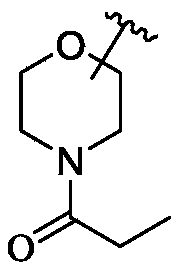


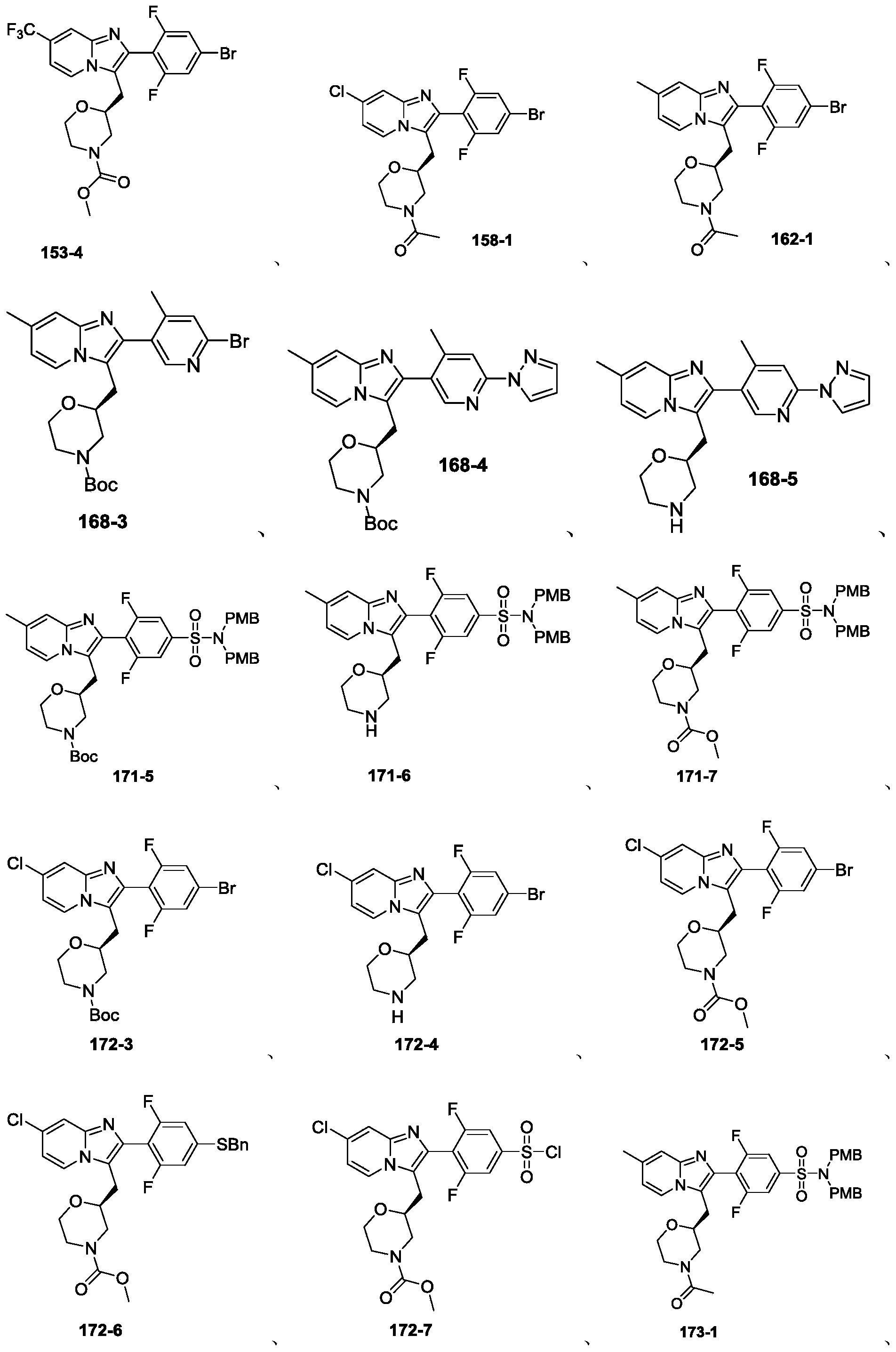


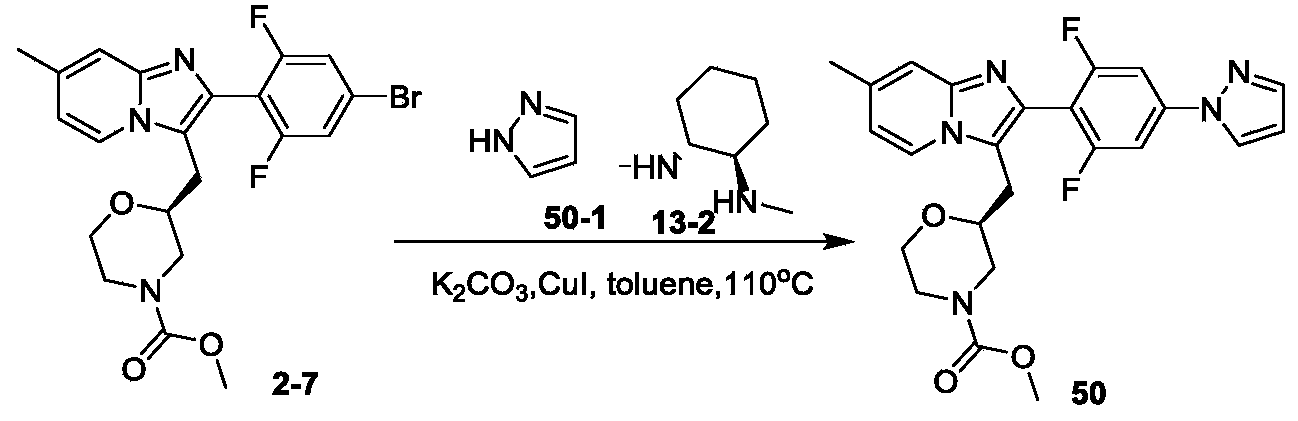


| 化合物 | 奎宁/自来水*100% |
| 溶媒 | 4.54% |
| 阳性化合物2 | 59.41% |
| 化合物2 | 5.49% |
| 化合物7 | 6.91% |
| 化合物53 | 7.65% |
| 化合物149 | 4.54% |
| 化合物161 | 5.03% |
| 化合物162 | 6.34% |
| 化合物164 | 6.69% |
| 化合物165 | 3.90% |


Claims (23)
- 一种如式I所示的杂环类化合物、其立体异构体、几何异构体、互变异构体、氮氧化物、水合物、溶剂化物、代谢产物、酯、药学上可接受的盐或前药,
 其中,为5元杂芳基、或、5元杂环烯基;所述的5元杂芳基中,杂原子选自N、O和S中的一种或多种,杂原子数为1~2个;所述的5元杂环烯基中,杂原子选自N、O和S中的一种或多种,杂原子数为1~3个;
 为苯基、5~6元杂环烷基、5~6元杂环烯基、或、5~6元杂芳基;所述的5~6元杂环烷基中,杂原子选自N、O和S中的一种或多种,杂原子数为1~3个;所述的5~6元杂环烯基中,杂原子选自N、O和S中的一种或多种,杂原子数为1~3个;所述的5~6元杂芳基中,杂原子选自N、O和S中的一种或多种,杂原子数为1~3个;
 Z 1、Z 2、Z 3、Z 4、Z 5、Z 6、Z 7、Z 8和Z 9独立地表示环原子;当为5元杂环烷基、5元杂环烯基、或、5元杂芳基时,Z 6或Z 9表示单键;
 m为1、2、3或4;R 3为H、卤素、-OH、卤代C 1~C 6烷基、-CN或C 1~C 6烷基;当m不为1时,R 3独立地为相同或不同;或者,当存在相邻的两个R 3时,相邻的两个R 3与所直接连接的环原子一起共同形成C 3~C 6的环烷基、C 3~C 6的环烯基、C 3~C 9的杂环烷基、C 3~C 9的杂环烯基、苯基或5~6元杂芳基;所述的C 3~C 9的杂环烷基中,杂原子为氧、硫和氮中的一种或多种,杂原子数为1~3个;所述的C 3~C 9的杂环烯基中,杂原子为氧、硫和氮中的一种或多种,杂原子数为1~3个;所述的5~6元杂芳基中,杂原子为氧、硫和氮中的一种或多种,杂原子数为1~3个;W为单键或-C(=O)-NH-;为苯基、5~6元杂芳基、或、C 3~C 9杂环烷基;所述的5~6元杂芳基中,杂原子为N、O和S中的一种或多种,杂原子数为1~3个;所述的C 3~C 9的杂环烷基中,杂原子为氧、硫和氮中的一种 或多种,杂原子数为1~3个;
 n为1、2、3或4;R 1独立地为H、卤素、-OH、-CN、未取代或取代的C 1~C 6烷基、或、未取代或取代的C 1~C 6烷基-O-;所述的取代的C 1~C 6烷基、或、所述的取代的C 1~C 6烷基-O-中,所述的取代各自独立地是指下列取代基中的一个或多个取代:卤素、-OH、-CF 3、-CN、-COOH、-C(=O)NH 2、C 1~C 6烷基、C 1~C 6烷基-O-、或、=O(即,碳原子上的两个偕氢被基团O取代);当取代基为多个时,所述的取代基相同或不同;当n不为1时,R 1独立地为相同或不同;Q为H、卤素、-OH、-CF 3、-CN、-NH-C(=O)-R 1-1、-C(=O)-R 1-2、-O-C(=O)-N(R 1-3R 1-4)、-C(=O)-N(R 1-5R 1-6)、-C(=NH)-N(R 1-7R 1-8)、-S(=O) 2-N(R 1-9R 1-10)、-S(=O)-N(R 1-11R 1-12)、-O-C(=O)-R 1-13、-N(R 1-14R 1- 15)、-NH-S(=O) 2-R 1-16、未取代或取代的C 1~C 6烷基、未取代或取代的C 1~C 6烷基-O-、未取代或取代的C 2~C 6烯基、未取代或取代的C 2~C 6烯基-O-、未取代或取代的C 3~C 10环烷基、未取代或取代的C 3~C 9杂环烷基、未取代或取代的C 3~C 9杂环烯基、未取代或取代的C 6~C 10芳基、或、未取代或取代的5~10元杂芳基;所述的C 3~C 9的杂环烷基中,杂原子为氧、硫和氮中的一种或多种,杂原子数为1~3个;所述的C 3~C 9的杂环烯基中,杂原子为氧、硫和氮中的一种或多种,杂原子数为1~3个;所述的5~10元杂芳基中,杂原子为N、O和S中的一种或多种,杂原子数为1~3个;所述的取代的C 1~C 6烷基、所述的取代的C 1~C 6烷基-O-、所述的取代的C 2~C 6烯基、所述的取代的C 2~C 6烯基-O-、所述的取代的C 3~C 10环烷基、所述的取代的C 6~C 10芳基、所述的取代的C 3~C 9杂环烷基、所述的取代的C 3~C 9杂环烯基、或、所述的取代的5~10元杂芳基中,所述的取代各自独立地是指下列取代基中的一个或多个取代:卤素、-OH、-CF 3、-CN、-COOH、-C(=O)NH 2、=O(即,碳原子上的两个偕氢被基团O取代)、-N(R 1-21R 1-22)、-C(=O)-N(R 1-23R 1-24)、-S(=O) 2-N(R 1-25R 1-26)、-C(=O)-O-R 1-27、或者、未取代或被一个或多个R a取代的:C 1~C 6烷基、C 1~C 6烷基-O-或C 3~C 6的环烷基,R a为多个时,相同或不同,R a为卤素、-OH、=O、-CF 3、-CN、-COOH、-C(=O)NH 2;当取代基为多个时,所述的取代基相同或不同;R 1-1、R 1-2、R 1-3、R 1-4、R 1-5、R 1-6、R 1-7、R 1-8、R 1-9、R 1-10、R 1-11、R 1-12、R 1-13、R 1-14、R 1-15、R 1-16、R 1-21、R 1-22、R 1-23、R 1-24、R 1-25、R 1-26和R 1-27独立地为H、未取代或取代的C 1~C 6烷基、未取代或取代的C 1~C 6烷基-O-、未取代或取代的C 2~C 6烯基、未取代或取代的C 2~C 6烯基-O-、未取代或取代的C 2~C 6炔基、未取代或取代的C 3~C 10环烷基、未取代或取代的C 3~C 9杂环烷基、未取代或取代的C 3~C 9杂环烯基、未取代或取代的苯基、或、未取代或取代的5~10元杂芳基;所述的C 3~C 9的杂环烷基中,杂原子为氧、硫和氮中的一种或多种,杂原子数为1~3个;所述的C 3~C 9的杂环烯基中,杂原子为氧、硫和氮中的一种或多种,杂原子数为1~3个;所述的5~10元杂芳基中,杂原子为N、O和S中的一种或多种,杂原子数为1~3个;所述的取代的C 1~C 6烷基、所述的取代的C 1~C 6烷基-O-、所述的取代的C 2~C 6烯基、所述的取代的C 2~C 6烯基-O-、所述的取代的C 2~C 6炔基、所述的取代的C 3~C 10环烷基、所述的取代的C 3~C 9杂环烷基、所述的取代的C 3~C 9杂环烯基、所述的取代的苯基、或、所述的取代的5~10元杂芳基中,所述的取代各自独立地是指下列取代基中的一个或多个取代:卤素、-OH、 -CF 3、-CN、-COOH、-COOCH 3、-NH 2、=O(即,碳原子上的两个偕氢被基团O取代)、或者、未取代或被一个或多个R d取代的:C 1~C 6烷基、C 1~C 6烷基-O-或C 3~C 6环烷基,R d为多个时,相同或不同,R d独立地为H、卤素、-OH、=O、-CF 3、-CN、-COOH、-C(=O)NH 2;当取代基为多个时,所述的取代基相同或不同;或者,R 1-3和R 1-4、R 1-5和R 1-6、R 1-7和R 1-8、R 1-9和R 1-10、R 1-11和R 1-12、R 1-14和R 1-15、R 1-21和R 1- 22、R 1-23和R 1-24、或、R 1-25和R 1-26分别独立地与所直接连接的氮一起共同形成未取代或取代的C 3~C 9的杂环烷基、未取代或取代的C 3~C 9的杂环烯基、或、未取代或取代的5~10元杂芳基;所述的C 3~C 9的杂环烷基中,除所述的氮之外,不含杂原子、或还含有氧、硫和氮中的一种或多种、1~2个的杂原子;所述的C 3~C 9的杂环烯基中,除所述的氮之外,不含杂原子、或还含有氧、硫和氮中的一种或多种、1~2个的杂原子;所述的5~10元杂芳基中,除所述的氮之外,不含杂原子、或还含有氧、硫和氮中的一种或多种、1~2个的杂原子;所述的取代的C 3~C 9的杂环烷基、所述的取代的C 3~C 9的杂环烯基、或、所述的取代的5~10元杂芳基中,所述的取代各自独立地是指下列取代基中的一个或多个取代:卤素、-OH、-CF 3、-CN、C 1~C 6烷基、C 1~C 6烷基-O-、=O(即,碳原子上的两个偕氢被基团O取代)、或者、未取代或被一个或多个R b取代的:C 1~C 6烷基、C 1~C 6烷基-O-或C 3~C 6的环烷基,R b为多个时,相同或不同,R b为卤素、-OH、=O、-CF 3、-CN、-COOH、-C(=O)NH 2;当取代基为多个时,所述的取代基相同或不同;R 2独立地为-C(=O)N(R 2-5R 2-6)、或、未取代或取代的5~6元杂芳基;所述的5~6元杂芳基中,杂原子为N、O和S中的一种或多种,杂原子数为1~3个;所述的取代各自独立地是指下列取代基中的一个或多个取代:卤素、-OH、-CN、未取代或卤素取代的C 1~C 6烷基、未取代或卤素取代的C 1~C 6烷基-O-、-C(=O)R 2-7、或-C(=O)N(R 2-8R 2-9);当取代基为多个时,所述的取代基相同或不同;
 R 2-1和R 2-2独立地为H、卤素、-OH、-CN、未取代或取代的C 1~C 6烷基、未取代或取代的C 1~C 6烷基-O-、或、=O(即,碳原子上的两个偕氢被基团O取代);所述的取代的C 1~C 6烷基、或所述的取代的C 1~C 6烷基-O-中,所述的取代各自独立地是指下列取代基中的一个或多个取代:卤素、-OH、-CF 3、-CN、C 1~C 6烷基、C 1~C 6烷基-O-、或=O(即,碳原子上的两个偕氢被基团O取代);当取代基为多个时,所述的取代基相同或不同;X和Y独立地为单键、亚甲基、-O-、-N(R 2-3)-、或
 R 2-3、R 2-4、R 2-5和R 2-6独立地为H、未取代或取代的C 1~C 6烷基、未取代或取代的C 3-C 8环烷基、未取代或取代的C 3-C 8环烷基-O-、或、未取代或取代的C 1-C 6烷基-O-;所述的取代的C 1~C 6烷基、所述的取代的C 3-C 8环烷基、所述的取代的C 3-C 8环烷基-O-、或、所述的取代的C 1-C 6烷基-O-中,所述的取代各自独立地是指下列取代基中的一个或多个取代:卤素、-OH、-CF 3、-CN、C 1~C 6烷基、C 1~C 6 烷基-O-、或=O(即,碳原子上的两个偕氢被基团O取代);当取代基为多个时,所述的取代基相同或不同;R 2-7独立地为H、卤素、-OH、-CN、未取代或卤素取代的C 1~C 6烷基、或未取代或卤素取代的C 1~C 6烷基-O-;R 2-8和R 2-9独立地为H、或未取代或卤素取代的C 1~C 6烷基。
- 如权利要求1所述的如式I所示的杂环类化合物、其立体异构体、几何异构体、互变异构体、氮氧化物、水合物、溶剂化物、代谢产物、酯、药学上可接受的盐或前药,其特征在于,当为5元杂芳基时,所述的5元杂芳基为吡咯基、呋喃基、噻吩基、咪唑基或吡唑基;所述的吡咯基较佳地为
 所述的呋喃基较佳地为
 所述的咪唑基较佳地为
 所述的噻吩基较佳地为
 所述的吡唑基较佳地为

 和/或,当为5元杂环烯基时,所述的5元杂环烯基中,杂原子选自N、O和S中的一种或多种,杂原子数为1~2个;所述的5元杂环烯基较佳地为2,3-二氢-1H-吡唑基,更佳地为

 和/或,当为5~6元杂环烷基时,所述的5~6元杂环烷基为6元杂环烷基,所述的6元杂环烷基中,杂原子为N,杂原子数为1~3个;较佳地为哌嗪基或哌啶基;所述的哌嗪基较佳地为
 所述的哌啶基较佳地为
 其中,右侧碳氮键
 表示与
 并环连接的位置;
 和/或,当为5~6元杂环烯基时,所述的5~6元杂环烯基为6元杂环烯基,所述的6元杂环烯基中,杂原子为N,杂原子数为1~3个;较佳地为1,2-二氢吡啶或1,6-二氢嘧啶;所述的1,2-二氢吡啶较佳地为
 所述的1,6-二氢嘧啶较佳地为
 其中,右侧碳氮键
 表示与
 并环连接的位置;
 和/或,当为5~6元杂芳基时,所述的5~6元杂芳基为6元杂芳基,所述的6元杂芳基中,杂原子为N,杂原子数为1~3个;较佳地为吡啶基,所述的吡啶基较佳地为

 和/或,m为1或2;和/或,Z 7被R 3取代,Z 8被R 3取代或未被取代,Z 6和Z 9未被取代,当为多个R 3时,R 3相同或不同;更佳地,Z 7被R 3取代,Z 6、Z 8和Z 9未被取代;和/或,当R 3为卤素时,所述的卤素为氟、氯、溴或碘;和/或,当R 3为C 1~C 6烷基时,所述的C 1~C 6烷基为C 1~C 4烷基,较佳地为甲基;和/或,R 3为卤代C 1~C 6烷基中的卤为氟、氯、溴或碘;和/或,R 3为卤代C 1~C 6烷基中卤代的个数为一个或多个;较佳地为1、2或3个;和/或,当存在相邻的两个R 3,且相邻的两个R 3与所直接连接的环原子一起共同形成C 3~C 6的环烷基时,所述的C 3~C 6的环烷基为环丙基、环丁基、环戊基和环己基;和/或,当存在相邻的两个R 3,且相邻的两个R 3与所直接连接的环原子一起共同形成C 3~C 6的环烯基时,所述的C 3~C 6的环烯基为环丙烯基、环丁烯基、环戊烯基、环己烯基或环己二烯基;和/或,当存在相邻的两个R 3,且相邻的两个R 3与所直接连接的环原子一起共同形成C 3~C 9的杂环烷基时,所述的C 3~C 9的杂环烷基为C 4~C 5杂环烷基,所述的C 4~C 5杂环烷基中,杂原子为N、O和S中的一种或多种,杂原子数为1~2个;和/或,当存在相邻的两个R 3,且相邻的两个R 3与所直接连接的环原子一起共同形成C 3~C 9的杂环烯基时,所述的C 3~C 9的杂环烯基为C 4~C 5杂环烯基,所述的C 4~C 5杂环烯基中,杂原子为N、O和S中的一种或多种,杂原子数为1~2个;和/或,当存在相邻的两个R 3,且相邻的两个R 3与所直接连接的环原子一起共同形成5~6元杂芳 基时,所述的5~6元杂芳基中,杂原子为N、O和S中的一种或多种,杂原子数为1~2个;和/或,n为1或2;和/或,R 1各自独立地位于所述的与Z 2连接键的α位或β位;
 和/或,当R 1为卤素时,所述的卤素为氟、氯、溴或碘;和/或,当R 1为未取代或取代的C 1~C 6烷基、或、未取代或取代的C 1~C 6烷基-O-时,所述的C 1~C 6烷基独立地为C 1~C 4烷基,较佳地为甲基;和/或,当R 1为取代的C 1~C 6烷基、或、取代的C 1~C 6烷基-O-,所述的取代各自独立地为卤素时,所述的卤素为氟、氯、溴或碘;和/或,当R 1为取代的C 1~C 6烷基、或、取代的C 1~C 6烷基-O-,所述的取代各自独立地为C 1~C 6烷基、或C 1~C 6烷基-O-时,所述的取代中所述的C 1~C 6烷基独立地为C 1~C 4烷基,较佳地为甲基;和/或,当R 1为取代的C 1~C 6烷基、或、取代的C 1~C 6烷基-O-时,所述的取代的个数独立地为1、2或3;和/或,Q位于所述的与W连接键的β位或γ位;
 和/或,当为5~6元杂芳基时,所述的5~6元杂芳基为5元杂芳基,所述的5元杂芳基中,杂原子为N、O和S中的一种或多种,杂原子数为1~2个;所述的5元杂芳基较佳地为咪唑基、噻吩基、呋喃基或吡咯基;所述的咪唑基较佳地为
 更佳地为
 所述的噻吩基较佳地为
 更佳地为
 所述的呋喃基较佳地为
 更佳地为
 所述的吡咯基较佳地为
 更佳地为
 或者,所述的5~6元杂芳基为6元杂芳基,所述的6元杂芳基中,杂原子为N、O和S中的一种或多种,杂原子数为1~2个;所述的6元杂芳基较佳地为吡啶基或吡嗪基;所述的吡啶基较佳地为
 更佳地为
 所述的吡嗪基较佳地为
 更佳地为

 和/或,当为C 3~C 9杂环烷基时,所述的C 3~C 9杂环烷基为C 3~C 5杂环烷基,杂原子为N、O和S中的一种或多种,杂原子数为1~3个;较佳地为C 4~C 5杂环烷基,所述的C 4~C 5杂环烷基中, 杂原子为N、O和S中的一种或多种,杂原子数为1~2个;所述的C 4~C 5杂环烷基较佳地为哌啶基,所述的哌啶基较佳地为
 更佳地为

 和/或,当Q为卤素时,所述的卤素为氟、氯、溴或碘;和/或,当Q为未取代或取代的C 1~C 6烷基、或、未取代或取代的C 1~C 6烷基-O-时,所述的C 1~C 6烷基独立地为C 1~C 4烷基;和/或,当Q为未取代或取代的C 2~C 6烯基、或、未取代或取代的C 2~C 6烯基-O-时,所述的C 2~C 6烯基为C 2-C 4的烯基;和/或,当Q为未取代或取代的C 3~C 10环烷基时,所述的C 3~C 10环烷基为环丙基、环丁基、环戊基、环己基、环庚基或环辛基;和/或,当Q为未取代或取代的C 3~C 9杂环烷基时,所述的C 3~C 9杂环烷基为C 3~C 5的杂环烷基;所述的C 3~C 5的杂环烷基中,杂原子为氧、硫和氮中的一种或多种,杂原子数为1-3个;较佳地为C 4~C 5杂环烷基,所述的C 4~C 5杂环烷基中,杂原子为N、O和S中的一种或多种,杂原子数为1~2个;较佳地为环氧丙烷基、吡咯烷基或哌嗪基;所述的环氧丙烷基较佳地为所述的吡咯烷基较佳地为
 所述的哌嗪基较佳地为

 和/或,当Q为未取代或取代的C 3~C 9杂环烯基时,所述的C 3~C 9杂环烯基为C 3~C 5的杂环烯基;所述的C 3~C 5的杂环烯基中,杂原子为氧、硫和氮中的一种或多种,杂原子数为1-3个;较佳地为C 4~C 5杂环烯基,所述的C 4~C 5杂环烯基中,杂原子为N、O和S中的一种或多种,杂原子数为1~2个;所述的C 4~C 5杂环烯基较佳地为所述的
 较佳地为
 所述的
 较佳地为
 所述的
 较佳地为
 所述的
 较佳地为

 和/或,当Q为未取代或取代的C 6~C 10芳基时,所述的C 6~C 10芳基为苯基;和/或,当Q为未取代或取代的5~10元杂芳基时,所述的5~10元杂芳基为5~6元杂芳基,较佳地为咪唑基、噁唑基、呋喃基、噻吩基、吡咯基、吡唑基、异噁唑基、吡啶基、三唑基或嘧啶基;所 述的咪唑基较佳地为所述的噁唑基较佳地为
 所述的呋喃基较佳地为
 所述的噻吩基较佳地为
 所述的吡咯基较佳地为
 所述的吡唑基较佳地为
 所述的异噁唑基较佳地为
 所述的吡啶基较佳地为
 所述的嘧啶基较佳地为
 所述的三唑基较佳地为


 和/或,当所述的Q为取代的C 1~C 6烷基、取代的C 1~C 6烷基-O-、取代的C 2~C 6烯基、取代的C 2~C 6烯基-O-、取代的C 3~C 10环烷基、取代的C 6~C 10芳基、取代的C 3~C 9杂环烷基、取代的C 3~C 9杂环烯基、或、取代的5~10元杂芳基时,所述的取代的个数为各自独立地为1、2、3或4;和/或,当所述的Q为取代的C 1~C 6烷基、取代的C 1~C 6烷基-O-、取代的C 2~C 6烯基、取代的C 2~C 6烯基-O-、取代的C 3~C 10环烷基、取代的C 6~C 10芳基、取代的C 3~C 9杂环烷基、取代的C 3~C 9杂环烯基、或、取代的5~10元杂芳基,所述的取代为卤素时,所述的卤素独立地为氟、氯、溴或碘,较佳地为氟;和/或,所述的未取代或被一个或多个R a取代的C 1~C 6烷基或C 1~C 6烷基-O-里的C 1~C 6烷基独立地为甲基、乙基、正丙基、异丙基、正丁基、异丁基、仲丁基或叔丁基;和/或,所述的未取代或被一个或多个R a取代的C 3~C 6的环烷基里的C 3~C 6的环烷基独立地为环丙基、环丁基、环戊基或环己基;和/或,当R a为卤素时,所述的为卤素独立地为氟、氯、溴或碘;和/或,当所述的R 1-1、R 1-2、R 1-3、R 1-4、R 1-5、R 1-6、R 1-7、R 1-8、R 1-9、R 1-10、R 1-11、R 1-12、R 1-13、R 1-14、R 1-15、R 1-16、R 1-21、R 1-22、R 1-23、R 1-24、R 1-25、R 1-26和R 1-27为未取代或取代的C 1~C 6烷基、或、未取代或取代的C 1~C 6烷基-O-时,所述的C 1~C 6烷基独立地为C 1-C 4的烷基,较佳地为甲基、乙基或叔戊基;和/或,当所述的R 1-1、R 1-2、R 1-3、R 1-4、R 1-5、R 1-6、R 1-7、R 1-8、R 1-9、R 1-10、R 1-11、R 1-12、R 1-13、R 1-14、R 1-15、R 1-16、R 1-21、R 1-22、R 1-23、R 1-24、R 1-25、R 1-26和R 1-27为未取代或取代的C 2~C 6烯基、或、未取代或取代的C 2~C 6烯基-O-时,所述的C 2~C 6烯基为C 2-C 4的烯基,较佳地为乙烯基;和/或,当所述的R 1-1、R 1-2、R 1-3、R 1-4、R 1-5、R 1-6、R 1-7、R 1-8、R 1-9、R 1-10、R 1-11、R 1-12、R 1-13、 R 1-14、R 1-15、R 1-16、R 1-21、R 1-22、R 1-23、R 1-24、R 1-25、R 1-26和R 1-27为未取代或取代的C 2~C 6炔基时,所述的C 2~C 6炔基为乙炔基、1-丙炔基、2-丙炔基、2-丁炔基、1-丁炔基或丁二炔基,较佳地为乙炔基;和/或,当所述的R 1-1、R 1-2、R 1-3、R 1-4、R 1-5、R 1-6、R 1-7、R 1-8、R 1-9、R 1-10、R 1-11、R 1-12、R 1-13、R 1-14、R 1-15、R 1-16、R 1-21、R 1-22、R 1-23、R 1-24、R 1-25、R 1-26和R 1-27为未取代或取代的C 3~C 10的环烷基时,所述的C 3~C 10的环烷基为C 3~C 6的环烷基,较佳地为环丙基、环丁基、环戊基和环己基;和/或,当所述的R 1-1、R 1-2、R 1-3、R 1-4、R 1-5、R 1-6、R 1-7、R 1-8、R 1-9、R 1-10、R 1-11、R 1-12、R 1-13、R 1-14、R 1-15、R 1-16、R 1-21、R 1-22、R 1-23、R 1-24、R 1-25、R 1-26和R 1-27为未取代或取代的C 3~C 9杂环烷基,所述的C 3~C 9杂环烷基为C 3~C 5的杂环烷基,所述的C 3~C 5的杂环烷基中,杂原子为氧、硫和氮中的一种或多种,杂原子数为1-3个;较佳地为C 4~C 5杂环烷基,所述的C 4~C 5杂环烷基中,杂原子为N、O和S中的一种或多种,杂原子数为1~2个;较佳地为环氧丙烷基、四氢呋喃基、四氢吡喃基或四氢噻吩基,所述的环氧丙烷基较佳地为所述的四氢呋喃基较佳地为
 所述的四氢吡喃基较佳地为
 所述的四氢噻吩基较佳地为

 和/或,当所述的R 1-1、R 1-2、R 1-3、R 1-4、R 1-5、R 1-6、R 1-7、R 1-8、R 1-9、R 1-10、R 1-11、R 1-12、R 1-13、R 1-14、R 1-15、R 1-16、R 1-21、R 1-22、R 1-23、R 1-24、R 1-25、R 1-26和R 1-27为未取代或取代的C 3~C 9杂环烯基,所述的C 3~C 9杂环烯基为C 3~C 5的杂环烯基,所述的C 3~C 5的杂环烯基中,杂原子为氧、硫和氮中的一种或多种,杂原子数为1-3个;较佳地为C 4~C 5杂环烯基,所述的C 4~C 5杂环烯基中,杂原子为N、O和S中的一种或多种,杂原子数为1~2个;和/或,当所述的R 1-1、R 1-2、R 1-3、R 1-4、R 1-5、R 1-6、R 1-7、R 1-8、R 1-9、R 1-10、R 1-11、R 1-12、R 1-13、R 1-14、R 1-15、R 1-16、R 1-21、R 1-22、R 1-23、R 1-24、R 1-25、R 1-26和R 1-27为未取代或取代的5~10元杂芳基时,所述的5~10元杂芳基为5~6元杂芳基,其中杂原子为N、O和S中的一种或二种,杂原子数为1~2个;较佳地为呋喃基或吡啶基,所述的呋喃基较佳地为所述的吡啶基较佳地为

 和/或,当所述的R 1-1、R 1-2、R 1-3、R 1-4、R 1-5、R 1-6、R 1-7、R 1-8、R 1-9、R 1-10、R 1-11、R 1-12、R 1-13、R 1-14、R 1-15、R 1-16、R 1-21、R 1-22、R 1-23、R 1-24、R 1-25、R 1-26和R 1-27为取代的C 1~C 6烷基、取代的C 1~C 6烷基-O-、取代的C 2~C 6烯基、和取代的C 2~C 6烯基-O-、取代的C 2~C 6炔基、取代的C 3~C 10环烷基、取代的苯基、取代的C 3~C 9杂环烷基、取代的C 3~C 9杂环烯基、或、取代的5~10元杂芳基,所述的取代为卤素时,所述的卤素独立地为氟、氯、溴或碘,较佳地为氟;和/或,R d独立地为卤素时,所述的卤素独立地为氟、氯、溴或碘,较佳地为氟;和/或,R d的个数各自独立地为1、2、3或4;较佳地为1或2;和/或,所述的未取代或被一个或多个R d取代的C 1~C 6烷基或C 1~C 6烷基-O-里的C 1~C 6烷基独立 地为甲基、乙基、正丙基、异丙基、正丁基、异丁基、仲丁基或叔丁基;和/或,所述的未取代或被一个或多个R d取代的C 3~C 6的环烷基里的C 3~C 6的环烷基独立地为环丙基、环丁基、环戊基或环己基;和/或,当所述的R 1-1、R 1-2、R 1-3、R 1-4、R 1-5、R 1-6、R 1-7、R 1-8、R 1-9、R 1-10、R 1-11、R 1-12、R 1-13、R 1-14、R 1-15、R 1-16、R 1-21、R 1-22、R 1-23、R 1-24、R 1-25、R 1-26和R 1-27为取代的C 1~C 6烷基、取代的C 1~C 6烷基-O-、取代的C 2~C 6烯基、取代的C 2~C 6烯基-O-、取代的C 2~C 6炔基、取代的C 3~C 6环烷基、取代的苯基、取代的C 3~C 9杂环烷基、取代的C 3~C 9杂环烯基、或、取代的5~10元杂芳基时,所述的取代的个数为各自独立地为1、2、3或4;较佳地为1或2;和/或,当所述的R 1-3和R 1-4、R 1-5和R 1-6、R 1-7和R 1-8、R 1-9和R 1-10、R 1-11和R 1-12、R 1-14和R 1-15、R 1-21和R 1-22、R 1-23和R 1-24、或、R 1-25和R 1-26分别独立地与所直接连接的氮一起共同形成未取代或取代的C 3~C 9的杂环烷基时,所述的C 3~C 9的杂环烷基中,除所述的氮之外,不含杂原子、或还含有氧、硫和氮中的1个的杂原子;较佳地为C 3~C 5的杂环烷基;和/或,当所述的R 1-3和R 1-4、R 1-5和R 1-6、R 1-7和R 1-8、R 1-9和R 1-10、R 1-11和R 1-12、R 1-14和R 1-15、R 1-21和R 1-22、R 1-23和R 1-24、或、R 1-25和R 1-26分别独立地与所直接连接的氮一起共同形成未取代或取代的C 3~C 9的杂环烯基时,所述的C 3~C 9的杂环烯基中,除所述的氮之外,不含杂原子、或还含有氧、硫和氮中的1个的杂原子;较佳地为C 3~C 5的杂环烯基;和/或,当所述的R 1-3和R 1-4、R 1-5和R 1-6、R 1-7和R 1-8、R 1-9和R 1-10、R 1-11和R 1-12、R 1-14和R 1-15、R 1-21和R 1-22、R 1-23和R 1-24、或、R 1-25和R 1-26分别独立地与所直接连接的氮一起共同形成未取代或取代的5~10元杂芳基时,所述的5~10元杂芳基中,除所述的氮之外,不含杂原子、或还含有氧、硫和氮中的1个的杂原子;较佳地为5~6元杂芳基;和/或,当所述的R 1-3和R 1-4、R 1-5和R 1-6、R 1-7和R 1-8、R 1-9和R 1-10、R 1-11和R 1-12、R 1-14和R 1-15、R 1-21和R 1-22、R 1-23和R 1-24、或、R 1-25和R 1-26分别独立地与所直接连接的氮一起共同形成取代的C 3~C 9的杂环烷基、取代的C 3~C 9的杂环烯基、或取代的5~10元杂芳基,所述的取代为卤素时,所述的卤素独立地为氟、氯、溴或碘;和/或,所述的未取代或被一个或多个R b取代的C 1~C 6烷基或C 1~C 6烷基-O-里的C 1~C 6烷基独立地为甲基、乙基、正丙基、异丙基、正丁基、异丁基、仲丁基或叔丁基;和/或,所述的未取代或被一个或多个R b取代的C 3~C 6的环烷基里的C 3~C 6的环烷基为环丙基、环丁基、环戊基和环己基;和/或,当R b为卤素时,所述的为卤素独立地为氟、氯、溴或碘;和/或,当所述的R 1-3和R 1-4、R 1-5和R 1-6、R 1-7和R 1-8、R 1-9和R 1-10、R 1-11和R 1-12、R 1-14和R 1-15、R 1-21和R 1-22、R 1-23和R 1-24、或、R 1-25和R 1-26分别独立地与所直接连接的氮一起共同形成取代的C 3~C 9的杂环烷基、取代的C 3~C 9的杂环烯基、或取代的5~10元杂芳基时,所述的取代的个数为各自独立地为1、2、3或4;较佳地为1或2;和/或,当R 2-1或R 2-2为卤素时,所述的卤素独立地为氟、氯、溴或碘;和/或,当R 2-1或R 2-2为未取代或取代的C 1~C 6烷基、或、未取代或取代的C 1~C 6烷基-O-时,所述的C 1~C 6烷基独立地为C 1-C 4的烷基;和/或,当R 2-1或R 2-2为取代的C 1~C 6烷基、或、取代的C 1~C 6烷基-O-,所述的取代为卤素时,所述的卤素独立地为氟、氯、溴或碘;和/或,当R 2-1或R 2-2为取代的C 1~C 6烷基、或、取代的C 1~C 6烷基-O-,所述的取代为C 1~C 6烷基、或、取代的C 1~C 6烷基-O-时,所述的取代中所述的C 1~C 6烷基独立地为C 1~C 4烷基;和/或,当R 2-1或R 2-2为取代的C 1~C 6烷基、或、取代的C 1~C 6烷基-O-时,所述的取代的个数为各自独立地为1、2、3或4;较佳地为1或2;和/或,当R 2-3、R 2-4、R 2-5或R 2-6为未取代或取代的C 1~C 6烷基、或、未取代或取代的C 1-C 6烷基-O-时,所述的C 1~C 6烷基独立地为C 1-C 4的烷基;和/或,当R 2-3、R 2-4、R 2-5或R 2-6为未取代或取代的C 3-C 8环烷基、或、未取代或取代的C 3-C 8环烷基-O-时,所述的C 3-C 8环烷基为C 3-C 6环烷基;和/或,当R 2-3、R 2-4、R 2-5或R 2-6为取代的C 1~C 6烷基、取代的C 3-C 8环烷基、取代的C 3-C 8环烷基-O-、或、取代的C 1-C 6烷基-O-,所述的取代为卤素时,所述的卤素独立地为氟、氯、溴或碘;和/或,当R 2-3、R 2-4、R 2-5或R 2-6为取代的C 1~C 6烷基、取代的C 3-C 8环烷基、取代的C 3-C 8环烷基-O-、或、取代的C 1-C 6烷基-O-,所述的取代为C 1~C 6烷基、或、取代的C 1~C 6烷基-O-时,所述的取代中所述的C 1~C 6烷基独立地为C 1~C 4烷基,较佳地为甲基或乙基;和/或,当R 2-3、R 2-4、R 2-5或R 2-6为取代的C 1~C 6烷基、取代的C 3-C 8环烷基、取代的C 3-C 8环烷基-O-、或、取代的C 1-C 6烷基-O-,所述的取代为C 1~C 6烷基、或、取代的C 1~C 6烷基-O-时,所述的取代的个数为各自独立地为1、2、3或4;较佳地为1或2;和/或,R 2-7独立地为卤素、R 2-7独立地为卤素取代的C 1~C 6烷基、或R 2-7独立地为卤素取代的C 1~C 6烷基-O-里的卤素独立地为氟、氯、溴或碘;和/或,R 2-7独立地为未取代或取代的C 1~C 6烷基、或、R 2-7独立地为未取代或取代的C 1~C 6烷基-O-里的C 1~C 6烷基独立地为甲基、乙基、正丙基、异丙基、正丁基、异丁基、仲丁基或叔丁基;和/或,R 2-8或R 2-9独立地为卤素取代的C 1~C 6烷基里的卤素独立地为氟、氯、溴或碘;和/或,R 2-8或R 2-9独立地为未取代或卤素取代的C 1~C 6烷基里的C 1~C 6烷基独立地为甲基、乙基、正丙基、异丙基、正丁基、异丁基、仲丁基或叔丁基;和/或,R 2独立地为未取代或取代的5~6元杂芳基里的5~6元杂芳基独立地为吡啶基;和/或,当R 2独立地为取代的5~6元杂芳基时,所述的取代中所述的卤素、卤素取代的C 1~C 6烷基、或卤素取代的C 1~C 6烷基-O-里的卤素独立地为氟、氯、溴或碘;和/或,当R 2独立地为取代的5~6元杂芳基时,所述的取代中所述的未取代或卤素取代的C 1~C 6烷基、或未取代或卤素取代的C 1~C 6烷基-O-里的C 1~C 6烷基独立地为甲基、乙基、正丙基、异丙基、正丁基、异丁基、仲丁基或叔丁基。
- 如权利要求2所述的如式I所示的杂环类化合物、其立体异构体、几何异构体、互变异构体、 氮氧化物、水合物、溶剂化物、代谢产物、酯、药学上可接受的盐或前药,其特征在于,当R 1为取代的C 1~C 6烷基、或、取代的C 1~C 6烷基-O-,所述的取代各自独立地为卤素时,所述的取代的C 1~C 6烷基、或、所述的取代的C 1~C 6烷基-O-里的取代的C 1~C 6烷基独立地为-CF 3;和/或,当R 3为卤代C 1~C 6烷基时,所述的卤代C 1~C 6烷基为-CF 3、-CH 2F或-CHF 2;和/或,为


 和/或,为
 较佳地为


 和/或,至少有一个R 1位于所述的与Z 2连接键的α位;较佳地,n为2时,R 1都独立地位于所述的
 与Z 2连接键的α位;或者,至少有一个R 1位于所述的
 与Z 2连接键的β位;较佳地,当n为2时,R 1都独立地位于所述的
 与Z 2连接键的β位;
 和/或,当所述的R 1-1、R 1-2、R 1-3、R 1-4、R 1-5、R 1-6、R 1-7、R 1-8、R 1-9、R 1-10、R 1-11、R 1-12、R 1-13、R 1-14、R 1-15、R 1-16、R 1-21、R 1-22、R 1-23、R 1-24、R 1-25、R 1-26和R 1-27为取代的C 1~C 6烷基时,所述的取代的C 1~C 6烷基为

 和/或,当所述的R 1-1、R 1-2、R 1-3、R 1-4、R 1-5、R 1-6、R 1-7、R 1-8、R 1-9、R 1-10、R 1-11、R 1-12、R 1-13、R 1-14、R 1-15、R 1-16、R 1-21、R 1-22、R 1-23、R 1-24、R 1-25、R 1-26和R 1-27为取代的C 2~C 6烯基时,所述的取代的C 2~C 6烯基可为
 和/或,当所述的R 1-1、R 1-2、R 1-3、R 1-4、R 1-5、R 1-6、R 1-7、R 1-8、R 1-9、R 1-10、R 1-11、R 1-12、R 1-13、R 1-14、R 1-15、R 1-16、R 1-21、R 1-22、R 1-23、R 1-24、R 1-25、R 1-26和R 1-27为取代的C 2~C 6炔基时,所述的取代的C 2~C 6炔基为
 和/或,当所述的R 1-1、R 1-2、R 1-3、R 1-4、R 1-5、R 1-6、R 1-7、R 1-8、R 1-9、R 1-10、R 1-11、R 1-12、R 1-13、R 1-14、R 1-15、R 1-16、R 1-21、R 1-22、R 1-23、R 1-24、R 1-25、R 1-26和R 1-27为取代的C 3~C 10环烷基时,所述的取代的C 3~C 10环烷基为
 较佳地为


 和/或,当所述的R 1-1、R 1-2、R 1-3、R 1-4、R 1-5、R 1-6、R 1-7、R 1-8、R 1-9、R 1-10、R 1-11、R 1-12、R 1-13、R 1-14、R 1-15、R 1-16、R 1-21、R 1-22、R 1-23、R 1-24、R 1-25、R 1-26和R 1-27为取代的C 3~C 9杂环烷基时,所述的取代的C 3~C 9杂环烷基为较佳地为

 和/或,当所述的R 1-1、R 1-2、R 1-3、R 1-4、R 1-5、R 1-6、R 1-7、R 1-8、R 1-9、R 1-10、R 1-11、R 1-12、R 1-13、R 1-14、R 1-15、R 1-16、R 1-21、R 1-22、R 1-23、R 1-24、R 1-25、R 1-26和R 1-27为未取代或取代的苯基时,所述的取代的苯基为较佳地为

 和/或,当所述的R 1-1、R 1-2、R 1-3、R 1-4、R 1-5、R 1-6、R 1-7、R 1-8、R 1-9、R 1-10、R 1-11、R 1-12、R 1-13、R 1-14、R 1-15、R 1-16、R 1-21、R 1-22、R 1-23、R 1-24、R 1-25、R 1-26和R 1-27为未取代或取代的5~10元杂芳基时,所述的取代的5~10元杂芳基为较佳地为

 和/或,-C(=O)N(R 2-5R 2-6)为-C(=O)NH 2;和/或,为
 较佳地为
 或者,
 为

 和/或,-C(=O)N(R 2-8R 2-9)为-C(=O)NHCH 3。
- 如权利要求3所述的如式I所示的杂环类化合物、其立体异构体、几何异构体、互变异构体、氮氧化物、水合物、溶剂化物、代谢产物、酯、药学上可接受的盐或前药,其特征在于,所述的被一个或多个R a取代的C 1~C 6烷基为
 和/或,所述的被一个或多个R a取代的C 3~C 6的环烷基为较佳地为

 和/或,所述的被一个或多个R d取代的C 3~C 6的环烷基为较佳地为

 和/或,-N(R 1-21R 1-22)为-NHCH 3或-NH 2;和/或,-C(=O)-N(R 1-23R 1-24)为-C(=O)-NH 2或-C(=O)-NHCH 3;和/或,-S(=O) 2-N(R 1-25R 1-26)为-S(=O) 2-NH 2;和/或,-C(=O)-O-R 1-27为-COOH、-COOC 2H 5或-COOCH 3;和/或,当R 2独立地为未取代或取代的5~6元杂芳基时,所述的取代的5~6元杂芳基独立地为

- 如权利要求4所述的如式I所示的杂环类化合物、其立体异构体、几何异构体、互变异构体、氮氧化物、水合物、溶剂化物、代谢产物、酯、药学上可接受的盐或前药,其特征在于,当所述的为苯基时,
 为
 R 1’的定义同R 1,R 1’与R 1相同或不同;较佳 地为
 更佳地为


 和/或,当所述的为5~6元杂芳基时,
 为

 较佳地为


 和/或,-NH-C(=O)-R 1-1为-NH-C(=O)-CH 3、-NH-C(=O)-O-CH 3、


 和/或,-C(=O)-R 1-2为-C(=O)-CH 3、或、-C(=O)-O-CH 3;和/或,-O-C(=O)-N(R 1-3R 1-4)为-O-C(=O)-NH-CH 3;和/或,-C(=O)-N(R 1-5R 1-6)为-C(=O)-NH-CH 3;和/或,-C(=NH)-N(R 1-7R 1-8)为-C(=NH)-NH-CH 3;和/或,-S(=O) 2-N(R 1-9R 1-10)为-S(=O) 2-NH-CH 3或-SO 2NH 2;和/或,-O-C(=O)-R 1-13为-O-C(=O)-NH-CH 3;和/或,-N(R 1-14R 1-15)为-NH 2、

 和/或,-NH-S(=O) 2-R 1-16为-NH-S(=O) 2-CH 3;和/或,当所述的Q为取代的C 1~C 6烷基时,所述取代的C 1~C 6烷基为

 和/或,当所述的Q为取代的C 3~C 10环烷基时,所述取代的C 3~C 10环烷基为
 较佳地为

 和/或,当所述的Q为取代的C 3~C 9杂环烷基时,所述取代的C 3~C 9杂环烷基为
 较佳地为


 和/或,当所述的Q为取代的C 3~C 9杂环烯基时,所述取代的C 3~C 9杂环烯基为
 较佳地为


 和/或,当Q为取代的5~6元杂芳基时,所述的取代的5~10元杂芳基为


 较佳地为


 和/或,当R 2为时,X和Y中的一个为
 另一个为单键、亚甲基、或、-O-;较佳地X为-O-;更佳地R 2为
 或者,当R 2为
 时,X或Y为-N(R 2-3)-;较佳地X和Y中的一个为-N(R 2-3)-,另一个为-O-、-N(R 2-3)-、或
 更佳地R 2为


- 如权利要求5所述的如式I所示的杂环类化合物、其立体异构体、几何异构体、互变异构体、氮氧化物、水合物、溶剂化物、代谢产物、酯、药学上可接受的盐或前药,其特征在于,为
 较佳地为


 和/或,为


 和/或,Q为H、-OH、-CF 3、-CN、-NH 2、-NH-C(=O)-CH 3、-NH-C(=O)-O-CH 3、
 -C(=O)-CH 3、-C(=O)-C 2H 5、-C(=O)-O-CH 3、-O-C(=O)-NH-CH 3、-C(=O)-NH-CH 3、-C(=NH)-NH-CH 3、-S(=O) 2-NH-CH 3、-S(=O) 2-NH 2、


 -NH-S(=O) 2-CH 3、


 和/或,R 2为
 较佳地为


- 如权利要求1所述的如式I所示的杂环类化合物、其立体异构体、几何异构体、互变异构体、氮氧化物、水合物、溶剂化物、代谢产物、酯、药学上可接受的盐或前药,其特征在于,其中,R 3为卤素、-CHF 2、-CH 2F、或C 1~C 6烷基;Q为-NH-C(=O)-R 1-1、-N(R 1-14R 1-15)、-NH-S(=O) 2-R 1-16、未取代或取代的C 1~C 6烷基、未取代或取代的C 3~C 10环烷基、未取代或取代的C 3~C 9杂环烷基、或、未取代或取代的5~10元杂芳基;所述的C 3~C 9的杂环烷基中,杂原子为氧、硫和氮中的一种或多种,杂原子数为1~3个;所述的5~10元杂芳基中,杂原子为N、O和S中的一种或多种,杂原子数为1~3个;所述的取代的C 1~C 6烷基、所述的取代的C 3~C 10环烷基、所述的取代的C 3~C 9杂环烷基、或、所述的取代的5~10元杂芳基中,所述的取代各自独立地是指下列取代基中的一个或多个取代:-N(R 1-21R 1-22)、-C(=O)-N(R 1-23R 1-24)、-S(=O) 2-N(R 1-25R 1-26)、-C(=O)-O-R 1-27;当取代基为多个时,所述的取代基相同或不同;R 1-1、R 1-14、R 1-15、R 1-16、R 1-21、R 1-22、R 1-23、R 1-24、R 1-25、R 1-26和R 1-27分别独立地为H、未取代或取代的C 1~C 6烷基、未取代或取代的C 2~C 6炔基、未取代或取代的C 3~C 10环烷基、未取代或取代的C 3~C 9杂环烷基、或、未取代或取代的5~10元杂芳基;所述的C 3~C 9的杂环烷基中,杂原子为氧、硫和氮中的一种或多种,杂原子数为1~3个;所述的5~10元杂芳基中,杂原子为N、O和S中的一种 或多种,杂原子数为1~3个;所述的取代的C 1~C 6烷基、所述的取代的C 2~C 6炔基、所述的取代的C 3~C 9杂环烷基、或、所述的取代的5~10元杂芳基中,所述的取代各自独立地是指下列取代基中的一个或多个取代:卤素、-OH、-CN、=O、-COOH、-C(=O)NH 2、-COOCH 3、-NH 2、或者、未取代或被一个或多个R d取代的:C 1~C 6烷基、C 1~C 6烷基-O-或C 3~C 6环烷基,R d为多个时,相同或不同,R d独立地为H、卤素、-OH、=O、-CF 3、-CN、-COOH、-C(=O)NH 2;当取代基为多个时,所述的取代基相同或不同;或者,R 3为卤素、卤代C 1~C 6烷基或C 1~C 6烷基;Q为-NH-C(=O)-R 1-1、-C(=O)-N(R 1-5R 1-6)、-S(=O) 2-N(R 1-9R 1-10)、-N(R 1-14R 1-15)、-NH-S(=O) 2-R 1-16、未取代或取代的C 1~C 6烷基、未取代或取代的C 3~C 10环烷基、未取代或取代的C 3~C 9杂环烷基、未取代或取代的C 3~C 9杂环烯基、或、未取代或取代的5~10元杂芳基;所述的C 3~C 9的杂环烷基中,杂原子为氧、硫和氮中的一种或多种,杂原子数为1~3个;所述的C 3~C 9的杂环烯基中,杂原子为氧、硫和氮中的一种或多种,杂原子数为1~3个;所述的5~10元杂芳基中,杂原子为N、O和S中的一种或多种,杂原子数为1~3个;所述的取代的C 1~C 6烷基、所述的取代的C 3~C 10环烷基、所述的取代的C 3~C 9杂环烷基、所述的取代的C 3~C 9杂环烯基、或、所述的取代的5~10元杂芳基中,所述的取代各自独立地是指下列取代基中的一个或多个取代:-OH、-CF 3、-CN、-N(R 1-21R 1-22)、-C(=O)-N(R 1- 23R 1-24)、-S(=O) 2-N(R 1-25R 1-26)、-C(=O)-O-R 1-27、=O(即,碳原子上的两个偕氢被基团O取代)、或者、未取代或被一个或多个R a取代的:C 1~C 6烷基、C 1~C 6烷基-O-或C 3~C 6的环烷基,R a为多个时,相同或不同,R a为卤素、-OH、-COOH;当取代基为多个时,所述的取代基相同或不同;R 2独立地为-C(=O)N(R 2-5R 2-6)、或、未取代或取代的5~6元杂芳基;所述的5~6元杂芳基中,杂原子为N、O和S中的一种或多种,杂原子数为1~3个;所述的取代各自独立地是指下列取代基中的一个或多个取代:卤素、-OH、-CN、未取代或卤素取代的C 1~C 6烷基、未取代或卤素取代的C 1~C 6烷基-O-、-C(=O)R 2-7、或-C(=O)N(R 2-8R 2-9);当取代基为多个时,所述的取代基相同或不同。

- 如权利要求1所述的如式I所示的杂环类化合物、其立体异构体、几何异构体、互变异构体、氮氧化物、水合物、溶剂化物、代谢产物、酯、药学上可接受的盐或前药,其特征在于,其为方案一或方案二:其中,方案一、为5元杂芳基、或、5元杂环烯基;所述的5元杂芳基中,杂原子选自N、O和S中的一种或多种,杂原子数为1~2个;所述的5元杂环烯基中,杂原子选自N、O和S中的一种或多种,杂原子数为1~3个;
 为苯基、5~6元杂环烷基、5~6元杂环烯基、或、5~6元杂芳基;所述的5~6元杂环烷基中,杂原子选自N、O和S中的一种或多种,杂原子数为1~3个;所述的5~6元杂环烯基中,杂原子选自N、O和S中的一种或多种,杂原子数为1~3个;所述的5~6元杂芳基中,杂原子选自N、O和S中的一种或多种,杂原子数为1~3个;
 Z 1、Z 2、Z 3、Z 4、Z 5、Z 6、Z 7、Z 8和Z 9独立地表示环原子;当为5元杂环烷基、5元杂环烯基、或、5元杂芳基时,Z 6或Z 9表示单键;
 m为1、2、3或4;R 3为H、卤素、-OH、卤代C 1~C 6烷基、-CN或C 1~C 6烷基;当m不为1时,R 3独立地为相同或不同;或者,当存在相邻的两个R 3时,相邻的两个R 3与所直接连接的环原子一起共同形成C 3~C 6的环烷基、C 3~C 6的环烯基、C 3~C 9的杂环烷基、C 3~C 9的杂环烯基、苯基或5~6元杂芳基;所述的C 3~C 9的杂环烷基中,杂原子为氧、硫和氮中的一种或多种,杂原子数为1~3个;所述的C 3~C 9的杂环烯基中,杂原子为氧、硫和氮中的一种或多种,杂原子数为1~3个;所述的5~6元杂芳基中,杂原子为氧、硫和氮中的一种或多种,杂原子数为1~3个;W为单键或-C(=O)-NH-;为苯基、5~6元杂芳基、或、C 3~C 9杂环烷基;所述的5~6元杂芳基中,杂原子为N、O和S中的一种或多种,杂原子数为1~3个;所述的C 3~C 9的杂环烷基中,杂原子为氧、硫和氮中的一种或多种,杂原子数为1~3个;
 n为1、2、3或4;R 1独立地为H、卤素、-OH、-CN、未取代或取代的C 1~C 6烷基、或、未取代或取代的C 1~C 6烷基-O-;所述的取代的C 1~C 6烷基、或、所述的取代的C 1~C 6烷基-O-中,所述的取代各自独立地是指下列取代基中的一个或多个取代:卤素、-OH、-CF 3、-CN、-COOH、-C(=O)NH 2、C 1~C 6烷基、C 1~C 6烷基-O-、或、=O(即,碳原子上的两个偕氢被基团O取代);当取代基为多个时,所述的取代基相同或不同;当n不为1时,R 1独立地为相同或不同;Q为H、卤素、-OH、-CF 3、-CN、-NH-C(=O)-R 1-1、-C(=O)-R 1-2、-O-C(=O)-N(R 1-3R 1-4)、-C(=O)-N(R 1-5R 1-6)、-C(=NH)-N(R 1-7R 1-8)、-S(=O) 2-N(R 1-9R 1-10)、-S(=O)-N(R 1-11R 1-12)、-O-C(=O)-R 1-13、-N(R 1-14R 1- 15)、-NH-S(=O) 2-R 1-16、未取代或取代的C 1~C 6烷基、未取代或取代的C 1~C 6烷基-O-、未取代或取代的C 2~C 6烯基、未取代或取代的C 2~C 6烯基-O-、未取代或取代的C 3~C 10环烷基、未取代或取代的C 3~C 9杂环烷基、未取代或取代的C 3~C 9杂环烯基、未取代或取代的C 6~C 10芳基、或、未取代或取代的5~10元杂芳基;所述的C 3~C 9的杂环烷基中,杂原子为氧、硫和氮中的一种或多种,杂原子数为1~3个;所述的C 3~C 9的杂环烯基中,杂原子为氧、硫和氮中的一种或多种,杂原子数为1~3个;所述的 5~10元杂芳基中,杂原子为N、O和S中的一种或多种,杂原子数为1~3个;所述的取代的C 1~C 6烷基、所述的取代的C 1~C 6烷基-O-、所述的取代的C 2~C 6烯基、所述的取代的C 2~C 6烯基-O-、所述的取代的C 3~C 10环烷基、所述的取代的C 6~C 10芳基、所述的取代的C 3~C 9杂环烷基、所述的取代的C 3~C 9杂环烯基、或、所述的取代的5~10元杂芳基中,所述的取代各自独立地是指下列取代基中的一个或多个取代:卤素、-OH、-CF 3、-CN、-COOH、-C(=O)NH 2、=O(即,碳原子上的两个偕氢被基团O取代)、-N(R 1-21R 1-22)、-C(=O)-N(R 1-23R 1-24)、-S(=O) 2-N(R 1-25R 1-26)、-C(=O)-O-R 1-27、或者、未取代或被一个或多个R a取代的:C 1~C 6烷基、C 1~C 6烷基-O-或C 3~C 6的环烷基,R a为多个时,相同或不同,R a为卤素、-OH、=O、-CF 3、-CN、-COOH、-C(=O)NH 2;当取代基为多个时,所述的取代基相同或不同;R 1-1、R 1-2、R 1-3、R 1-4、R 1-5、R 1-6、R 1-7、R 1-8、R 1-9、R 1-10、R 1-11、R 1-12、R 1-13、R 1-14、R 1-15、R 1-16、R 1-21、R 1-22、R 1-23、R 1-24、R 1-25、R 1-26和R 1-27独立地为H、未取代或取代的C 1~C 6烷基、未取代或取代的C 1~C 6烷基-O-、未取代或取代的C 2~C 6烯基、未取代或取代的C 2~C 6烯基-O-、未取代或取代的C 2~C 6炔基、未取代或取代的C 3~C 10环烷基、未取代或取代的C 3~C 9杂环烷基、未取代或取代的C 3~C 9杂环烯基、未取代或取代的苯基、或、未取代或取代的5~10元杂芳基;所述的C 3~C 9的杂环烷基中,杂原子为氧、硫和氮中的一种或多种,杂原子数为1~3个;所述的C 3~C 9的杂环烯基中,杂原子为氧、硫和氮中的一种或多种,杂原子数为1~3个;所述的5~10元杂芳基中,杂原子为N、O和S中的一种或多种,杂原子数为1~3个;所述的取代的C 1~C 6烷基、所述的取代的C 1~C 6烷基-O-、所述的取代的C 2~C 6烯基、所述的取代的C 2~C 6烯基-O-、所述的取代的C 2~C 6炔基、所述的取代的C 3~C 10环烷基、所述的取代的C 3~C 9杂环烷基、所述的取代的C 3~C 9杂环烯基、所述的取代的苯基、或、所述的取代的5~10元杂芳基中,所述的取代各自独立地是指下列取代基中的一个或多个取代:卤素、-OH、-CF 3、-CN、-COOH、-COOCH 3、-NH 2、=O(即,碳原子上的两个偕氢被基团O取代)、或者、未取代或被一个或多个R d取代的:C 1~C 6烷基、C 1~C 6烷基-O-或C 3~C 6环烷基,R d为多个时,相同或不同,R d独立地为H、卤素、-OH、=O、-CF 3、-CN、-COOH、-C(=O)NH 2;当取代基为多个时,所述的取代基相同或不同;或者,R 1-3和R 1-4、R 1-5和R 1-6、R 1-7和R 1-8、R 1-9和R 1-10、R 1-11和R 1-12、R 1-14和R 1-15、R 1-21和R 1- 22、R 1-23和R 1-24、或、R 1-25和R 1-26分别独立地与所直接连接的氮一起共同形成未取代或取代的C 3~C 9的杂环烷基、未取代或取代的C 3~C 9的杂环烯基、或、未取代或取代的5~10元杂芳基;所述的C 3~C 9的杂环烷基中,除所述的氮之外,不含杂原子、或还含有氧、硫和氮中的一种或多种、1~2个的杂原子;所述的C 3~C 9的杂环烯基中,除所述的氮之外,不含杂原子、或还含有氧、硫和氮中的一种或多种、1~2个的杂原子;所述的5~10元杂芳基中,除所述的氮之外,不含杂原子、或还含有氧、硫和氮中的一种或多种、1~2个的杂原子;所述的取代的C 3~C 9的杂环烷基、所述的取代的C 3~C 9的杂环烯基、或、所述的取代的5~10元杂芳基中,所述的取代各自独立地是指下列取代基中的一个或多个取代:卤素、-OH、-CF 3、-CN、C 1~C 6烷基、C 1~C 6烷基-O-、=O(即,碳原子上的两个偕氢被基团O取代)、或者、未取代或被一个或多个R b取代的:C 1~C 6烷基、C 1~C 6烷基-O-或C 3~C 6的环烷基,R b为 多个时,相同或不同,R b为卤素、-OH、=O、-CF 3、-CN、-COOH、-C(=O)NH 2;当取代基为多个时,所述的取代基相同或不同;R 2为或-C(=O)N(R 2-5R 2-6);
 R 2-1和R 2-2独立地为H、卤素、-OH、-CN、未取代或取代的C 1~C 6烷基、未取代或取代的C 1~C 6烷基-O-、或、=O(即,碳原子上的两个偕氢被基团O取代);所述的取代的C 1~C 6烷基、或所述的取代的C 1~C 6烷基-O-中,所述的取代各自独立地是指下列取代基中的一个或多个取代:卤素、-OH、-CF 3、-CN、C 1~C 6烷基、C 1~C 6烷基-O-、或=O(即,碳原子上的两个偕氢被基团O取代);当取代基为多个时,所述的取代基相同或不同;X和Y独立地为单键、亚甲基、-O-、-N(R 2-3)-、或
 R 2-3、R 2-4、R 2-5和R 2-6独立地为H、未取代或取代的C 1~C 6烷基、未取代或取代的C 3-C 8环烷基、未取代或取代的C 3-C 8环烷基-O-、或、未取代或取代的C 1-C 6烷基-O-;所述的取代的C 1~C 6烷基、所述的取代的C 3-C 8环烷基、所述的取代的C 3-C 8环烷基-O-、或、所述的取代的C 1-C 6烷基-O-中,所述的取代各自独立地是指下列取代基中的一个或多个取代:卤素、-OH、-CF 3、-CN、C 1~C 6烷基、C 1~C 6烷基-O-、或=O(即,碳原子上的两个偕氢被基团O取代);当取代基为多个时,所述的取代基相同或不同;方案二、为5元杂芳基、或、5元杂环烯基;所述的5元杂芳基中,杂原子选自N、O和S中的一种或多种,杂原子数为1~2个;所述的5元杂环烯基中,杂原子选自N、O和S中的一种或多种,杂原子数为1~3个;
 为苯基、5~6元杂环烷基、5~6元杂环烯基、或、5~6元杂芳基;所述的5~6元杂环烷基中,杂原子选自N、O和S中的一种或多种,杂原子数为1~3个;所述的5~6元杂环烯基中,杂原子选自N、O和S中的一种或多种,杂原子数为1~3个;所述的5~6元杂芳基中,杂原子选自N、O和S中的一种或多种,杂原子数为1~3个;
 Z 1、Z 2、Z 3、Z 4、Z 5、Z 6、Z 7、Z 8和Z 9独立地表示环原子;当为5元杂环烷基、5元杂环烯基、或、5元杂芳基时,Z 6或Z 9表示单键;
 m为1、2、3或4;R 3为H、卤素、-OH、-CF 3、-CN或C 1~C 6烷基;当m不为1时,R 3为相同或不同;或者,当存在相邻的两个R 3时,相邻的两个R 3与所直接连接的环原子一起共同形成C 3~C 6的环烷基、C 3~C 6的环烯基、C 3~C 5的杂环烷基、C 3~C 5的杂环烯基、苯基或、5~6元杂芳基;所述的C 3~C 5的杂环烷基中,杂原子为氧、硫和氮中的一种或多种,杂原子数为1~3个;所述的C 3~C 5的杂环烯基中,杂原子为氧、硫和氮中的一种或多种,杂原子数为1~3个;所述的5~6元杂芳基中,杂原子为氧、硫和氮中的一种或多种,杂原子数为1~3个;W为单键或-C(=O)-NH-;为苯基、5~6元杂芳基、或、C 3~C 5杂环烷基;所述的5~6元杂芳基中,杂原子为N、O和S中的一种或多种,杂原子数为1~3个;所述的C 3~C 5的杂环烷基中,杂原子为氧、硫和氮中的一种或多种,杂原子数为1~3个;
 n为1、2、3或4;R 1独立地为H、卤素、-OH、-CN、未取代或取代的C 1~C 6烷基、或、未取代或取代的C 1~C 6烷基-O-;所述的取代的C 1~C 6烷基、或、所述的取代的C 1~C 6烷基-O-中,所述的取代各自独立地是指下列取代基中的一个或多个取代:卤素、-OH、-CF 3、-CN、-COOH、-C(=O)NH 2、C 1~C 6烷基、C 1~C 6烷基-O-、或、=O;当取代基为多个时,所述的取代基相同或不同;当n不为1时,R 1为相同或不同;Q为H、卤素、-OH、-CF 3、-CN、-NH 2、-NH-C(=O)-R 1-1、-C(=O)-R 1-2、-O-C(=O)-N(R 1-3R 1-4)、-C(=O)-N(R 1-5R 1-6)、-C(=NH)-N(R 1-7R 1-8)、-S(=O) 2-N(R 1-9R 1-10)、-S(=O)-N(R 1-11R 1-12)、-O-C(=O)-R 1-13、未取代或取代的C 1~C 6烷基、未取代或取代的C 1~C 6烷基-O-、未取代或取代的C 2~C 6烯基、未取代或取代的C 2~C 6烯基-O-、未取代或取代的C 6~C 10芳基、未取代或取代的C 3~C 5杂环烷基、未取代或取代的C 3~C 5杂环烯基、或、未取代或取代的5~6元杂芳基;所述的C 3~C 5的杂环烷基中,杂原子为氧、硫和氮中的一种或多种,杂原子数为1~3个;所述的C 3~C 5的杂环烯基中,杂原子为氧、硫和氮中的一种或多种,杂原子数为1~3个;所述的5~6元杂芳基中,杂原子为N、O和S中的一种或多种,杂原子数为1~3个;所述的取代的C 1~C 6烷基、所述的取代的C 1~C 6烷基-O-、所述的取代的C 2~C 6烯基、所述的取代的C 2~C 6烯基-O-、所述的取代的C 6~C 10芳基、所述的取代的C 3~C 5杂环烷基、所述的取代的C 3~C 5杂环烯基、或、所述的取代的5~6元杂芳基中,所述的取代各自独立地是指下列取代基中的一个或多个取代:卤素、-OH、-CF 3、-CN、-COOH、-C(=O)NH 2、=O(即,碳原子上的两个偕氢被基团O取代)、或者、未取代或被一个或多个R a取代的C 1~C 6烷基、C 1~C 6烷基-O-或C 3~C 6的环烷基,R a为多个时,相同或不同,R a为卤素、-OH、=O、-CF 3、-CN、-COOH、-C(=O)NH 2;当取代基为多个时,所述的取代基相同或不同;R 1-1、R 1-2、R 1-3、R 1-4、R 1-5、R 1-6、R 1-7、R 1-8、R 1-9、R 1-10、R 1-11、R 1-12和R 1-13独立地为H、未取代或取代的C 1~C 6烷基、未取代或取代的C 1~C 6烷基-O-、未取代或取代的C 2~C 6烯基、未取代或取代的C 2~C 6烯基-O-、未取代或取代的C 3~C 6环烷基、未取代或取代的C 3~C 5杂环烷基、未取代或取代的C 3~C 5杂环烯基、未取代或取代的苯基、或、未取代或取代的5~6元杂芳基;所述的C 3~C 5的杂环烷 基中,杂原子为氧、硫和氮中的一种或多种,杂原子数为1~3个;所述的C 3~C 5的杂环烯基中,杂原子为氧、硫和氮中的一种或多种,杂原子数为1~3个;所述的5~6元杂芳基中,杂原子为N、O和S中的一种或多种,杂原子数为1~3个;所述的取代的C 1~C 6烷基、所述的取代的C 1~C 6烷基-O-、所述的取代的C 2~C 6烯基、所述的取代的C 2~C 6烯基-O-、所述的取代的C 3~C 6环烷基、所述的取代的C 3~C 5杂环烷基、所述的取代的C 3~C 5杂环烯基、所述的取代的苯基、或、所述的取代的5~6元杂芳基中,所述的取代各自独立地是指下列取代基中的一个或多个取代:卤素、-OH、-CF 3、-CN、C 1~C 6烷基、C 1~C 6烷基-O-、C 3~C 6环烷基、-COOH或=O;当取代基为多个时,所述的取代基相同或不同;或者,R 1-3和R 1-4、R 1-5和R 1-6、R 1-7和R 1-8、R 1-9和R 1-10、或、R 1-11和R 1-12分别独立地与所直接连接的氮一起共同形成未取代或取代的C 3~C 5的杂环烷基、未取代或取代的C 3~C 5的杂环烯基、或、未取代或取代的5~6元杂芳基;所述的C 3~C 5的杂环烷基中,除所述的氮之外,不含杂原子、或还含有氧、硫和氮中的一种或多种、1~2个的杂原子;所述的C 3~C 5的杂环烯基中,除所述的氮之外,不含杂原子、或还含有氧、硫和氮中的一种或多种、1~2个的杂原子;所述的5~6元杂芳基中,除所述的氮之外,不含杂原子、或还含有氧、硫和氮中的一种或多种、1~2个的杂原子;所述的取代的C 3~C 5的杂环烷基、所述的取代的C 3~C 5的杂环烯基、或、所述的取代的5~6元杂芳基中,所述的取代各自独立地是指下列取代基中的一个或多个取代:卤素、-OH、-CF 3、-CN、C 1~C 6烷基、C 1~C 6烷基-O-、=O(即,碳原子上的两个偕氢被基团O取代)、或者、未取代或被一个或多个R a取代的C 1~C 6烷基、C 1~C 6烷基-O-或C 3~C 6的环烷基,R b为多个时,相同或不同,R b为卤素、-OH、=O、-CF 3、-CN、-COOH、-C(=O)NH 2;当取代基为多个时,所述的取代基相同或不同;R 2为或-C(=O)N(R 2-5R 2-6);
 R 2-1和R 2-2独立地为H、卤素、-OH、-CN、未取代或取代的C 1~C 6烷基、未取代或取代的C 1~C 6烷基-O-、或、=O(即,碳原子上的两个偕氢被基团O取代);所述的取代的C 1~C 6烷基、或所述的取代的C 1~C 6烷基-O-中,所述的取代各自独立地是指下列取代基中的一个或多个取代:卤素、-OH、-CF 3、-CN、C 1~C 6烷基、C 1~C 6烷基-O-、或=O;当取代基为多个时,所述的取代基相同或不同;X和Y独立地为单键、亚甲基、-O-、-N(R 2-3)-、或
 R 2-3、R 2-4、R 2-5和R 2-6独立地为H、未取代或取代的C 1~C 6烷基、未取代或取代的C 3-C 8环烷基、未取代或取代的C 3-C 8环烷基-O-、或、未取代或取代的C 1-C 6烷基-O-;所述的取代的C 1~C 6烷基、所述的取代的C 3-C 8环烷基、所述的取代的C 3-C 8环烷基-O-、或、所述的取代的C 1-C 6烷基-O-中,所述的取代各自独立地是指下列取代基中的一个或多个取代:卤素、-OH、-CF 3、-CN、C 1~C 6烷基、C 1~C 6烷基-O-、或=O;当取代基为多个时,所述的取代基相同或不同。
- 如权利要求8所述的如式I所示的杂环类化合物、其立体异构体、几何异构体、互变异构体、 氮氧化物、水合物、溶剂化物、代谢产物、酯、药学上可接受的盐或前药,其特征在于,当为5元杂芳基时,所述的5元杂芳基为吡咯基、呋喃基、噻吩基或咪唑基;所述的吡咯基较佳地为
 所述的呋喃基较佳地为
 所述的咪唑基较佳地为
 所述的噻吩基较佳地为
 所述的吡唑基较佳地为

 和/或,当存在相邻的两个R 3,且相邻的两个R 3与所直接连接的环原子一起共同形成C 3~C 5的杂环烷基时,所述的C 3~C 5的杂环烷基为C 4~C 5杂环烷基,所述的C 4~C 5杂环烷基中,杂原子为N、O和S中的一种或多种,杂原子数为1~2个;和/或,当存在相邻的两个R 3,且相邻的两个R 3与所直接连接的环原子一起共同形成C 3~C 5的杂环烯基时,所述的C 3~C 5的杂环烯基为C 4~C 5杂环烯基,所述的C 4~C 5杂环烯基中,杂原子为N、O和S中的一种或多种,杂原子数为1~2个;和/或,当为C 3~C 5杂环烷基时,所述的C 3~C 5杂环烷基为C 4~C 5杂环烷基,所述的C 4~C 5杂环烷基中,杂原子为N、O和S中的一种或多种,杂原子数为1~2个;所述的C 4~C 5杂环烷基较佳地为哌啶基,所述的哌啶基较佳地为
 更佳地为

 和/或,当Q为未取代或取代的C 3~C 5杂环烷基时,所述的C 3~C 5杂环烷基为C 4~C 5杂环烷基,所述的C 4~C 5杂环烷基中,杂原子为N、O和S中的一种或多种,杂原子数为1~2个;较佳地为吡咯烷基或哌嗪基;所述的吡咯烷基较佳地为所述的哌嗪基较佳地为

 和/或,当Q为未取代或取代的C 3~C 5杂环烯基时,所述的C 3~C 5杂环烯基为C 4~C 5杂环烯基,所述的C 4~C 5杂环烯基中,杂原子为N、O和S中的一种或多种,杂原子数为1~2个;所述的C 4~C 5杂环烯基较佳地为2,5-二氢-1H-吡咯基;更佳地为
 和/或,当Q为未取代或取代的5~6元杂芳基时,所述的5~6元杂芳基为咪唑基、噁唑基、呋喃 基、噻吩基、吡咯基、吡唑基、异噁唑基、吡啶基或嘧啶基;所述的咪唑基较佳地为所述的噁唑基较佳地为
 所述的呋喃基较佳地为
 所述的噻吩基较佳地为
 所述的吡咯基较佳地为
 所述的吡唑基较佳地为

 所述的异噁唑基较佳地为
 所述的吡啶基较佳地为
 所述的嘧啶基较佳地为

 和/或,当所述的Q为取代的C 1~C 6烷基、取代的C 1~C 6烷基-O-、取代的C 2~C 6烯基、取代的C 2~C 6烯基-O-、取代的C 6~C 10芳基、取代的C 3~C 5杂环烷基、取代的C 3~C 5杂环烯基、或、取代的5~6元杂芳基,所述的取代为卤素时,所述的卤素独立地为氟、氯、溴或碘,较佳地为氟;和/或,当所述的Q为取代的C 1~C 6烷基、取代的C 1~C 6烷基-O-、取代的C 2~C 6烯基、取代的C 2~C 6烯基-O-、取代的C 6~C 10芳基、取代的C 3~C 5杂环烷基、取代的C 3~C 5杂环烯基、或、取代的5~6元杂芳基,所述的取代为被一个或多个R a取代的:C 1~C 6烷基或C 1~C 6烷基-O-时,所述的取代中所述的C 1~C 6烷基独立地为C 1~C 4烷基,较佳地为甲基;和/或,当所述的Q为取代的C 1~C 6烷基、取代的C 1~C 6烷基-O-、取代的C 2~C 6烯基、取代的C 2~C 6烯基-O-、取代的C 6~C 10芳基、取代的C 3~C 5杂环烷基、取代的C 3~C 5杂环烯基、或、取代的5~6元杂芳基,所述的取代为被一个或多个R a取代的C 3~C 6的环烷基时,所述的取代中所述的C 3~C 6的环烷基为环丙基;和/或,当所述的Q为取代的C 1~C 6烷基、取代的C 1~C 6烷基-O-、取代的C 2~C 6烯基、取代的C 2~C 6烯基-O-、取代的C 6~C 10芳基、取代的C 3~C 5杂环烷基、取代的C 3~C 5杂环烯基、或、取代的5~6元杂芳基,所述的取代为被一个或多个R a取代的:C 1~C 6烷基、C 1~C 6烷基-O-或C 3~C 6的环烷基,R a为卤素时,所述的为卤素独立地为氟、氯、溴或碘;和/或,当所述的R 1-1、R 1-2、R 1-3、R 1-4、R 1-5、R 1-6、R 1-7、R 1-8、R 1-9、R 1-10、R 1-11、R 1-12或R 1-13为未取代或取代的C 1~C 6烷基、或、未取代或取代的C 1~C 6烷基-O-时,所述的C 1~C 6烷基独立地为C 1-C 4的烷基,较佳地为甲基或乙基;和/或,当所述的R 1-1、R 1-2、R 1-3、R 1-4、R 1-5、R 1-6、R 1-7、R 1-8、R 1-9、R 1-10、R 1-11、R 1-12或R 1-13为未取代或取代的C 3~C 5杂环烷基,所述的C 3~C 5杂环烷基为C 4~C 5杂环烷基,所述的C 4~C 5杂环烷基 中,杂原子为N、O和S中的一种或多种,杂原子数为1~2个;和/或,当所述的R 1-1、R 1-2、R 1-3、R 1-4、R 1-5、R 1-6、R 1-7、R 1-8、R 1-9、R 1-10、R 1-11、R 1-12或R 1-13为未取代或取代的C 3~C 5杂环烯基,所述的C 3~C 5杂环烯基为C 4~C 5杂环烯基,所述的C 4~C 5杂环烯基中,杂原子为N、O和S中的一种或多种,杂原子数为1~2个;和/或,当所述的R 1-1、R 1-2、R 1-3、R 1-4、R 1-5、R 1-6、R 1-7、R 1-8、R 1-9、R 1-10、R 1-11、R 1-12或R 1-13为未取代或取代的5~6元杂芳基时,所述的5~6元杂芳基为中,杂原子为N、O和S中的一种或二种,杂原子数为1~2个;和/或,当所述的R 1-1、R 1-2、R 1-3、R 1-4、R 1-5、R 1-6、R 1-7、R 1-8、R 1-9、R 1-10、R 1-11、R 1-12或R 1-13为取代的C 1~C 6烷基、取代的C 1~C 6烷基-O-、取代的C 2~C 6烯基、和取代的C 2~C 6烯基-O-、取代的苯基、取代的C 3~C 5杂环烷基、取代的C 3~C 5杂环烯基、或、取代的5~6元杂芳基,所述的取代为卤素时,所述的卤素独立地为氟、氯、溴或碘,较佳地为氟;和/或,当所述的R 1-1、R 1-2、R 1-3、R 1-4、R 1-5、R 1-6、R 1-7、R 1-8、R 1-9、R 1-10、R 1-11、R 1-12或R 1-13为取代的C 1~C 6烷基、取代的C 1~C 6烷基-O-、取代的C 2~C 6烯基、取代的C 2~C 6烯基-O-、取代的苯基、取代的C 3~C 5杂环烷基、取代的C 3~C 5杂环烯基、或、取代的5~6元杂芳基,所述的取代为C 1~C 6烷基、或C 1~C 6烷基-O-时,所述的取代中所述的C 1~C 6烷基独立地为C 1~C 4烷基;和/或,当所述的R 1-1、R 1-2、R 1-3、R 1-4、R 1-5、R 1-6、R 1-7、R 1-8、R 1-9、R 1-10、R 1-11、R 1-12或R 1-13为取代的C 1~C 6烷基、取代的C 1~C 6烷基-O-、取代的C 2~C 6烯基、取代的C 2~C 6烯基-O-、取代的苯基、取代的C 3~C 5杂环烷基、取代的C 3~C 5杂环烯基、或、取代的5~6元杂芳基,所述的取代为C 3~C 6的环烷基时,所述的取代中所述的C 3~C 6的环烷基为环丙基;和/或,当所述的R 1-3和R 1-4、R 1-5和R 1-6、R 1-7和R 1-8、R 1-9和R 1-10、或R 1-11和R 1-12分别独立地与所直接连接的氮一起共同形成取代的C 3~C 5的杂环烷基、取代的C 3~C 5的杂环烯基、或取代的5~6元杂芳基,所述的取代为被一个或多个R b取代的:C 1~C 6烷基或C 1~C 6烷基-O-时,所述取代中所述的C 1~C 6烷基独立地为C 1-C 4的烷基;和/或,当所述的R 1-3和R 1-4、R 1-5和R 1-6、R 1-7和R 1-8、R 1-9和R 1-10、或R 1-11和R 1-12分别独立地与所直接连接的氮一起共同形成取代的C 3~C 5的杂环烷基、取代的C 3~C 5的杂环烯基、或取代的5~6元杂芳基,所述的取代为被一个或多个R b取代的C 3~C 6的环烷基时,所述的取代中所述的C 3~C 6的环烷基为环丙基、环丁基、环戊基和环己基;和/或,当所述的R 1-3和R 1-4、R 1-5和R 1-6、R 1-7和R 1-8、R 1-9和R 1-10、或R 1-11和R 1-12分别独立地与所直接连接的氮一起共同形成取代的C 3~C 5的杂环烷基、取代的C 3~C 5的杂环烯基、或取代的5~6元杂芳基,所述的取代为被一个或多个R b取代的:C 1~C 6烷基、C 1~C 6烷基-O-或C 3~C 6的环烷基,R b为卤素时,所述的为卤素独立地为氟、氯、溴或碘。
- 如权利要求9所述的如式I所示的杂环类化合物、其立体异构体、几何异构体、互变异构体、 氮氧化物、水合物、溶剂化物、代谢产物、酯、药学上可接受的盐或前药,其特征在于,为


 和/或,为
 较佳地为


 和/或,当所述的R 1-1、R 1-2、R 1-3、R 1-4、R 1-5、R 1-6、R 1-7、R 1-8、R 1-9、R 1-10、R 1-11、R 1-12或R 1-13为取代的C 1~C 6烷基时,所述的取代的C 1~C 6烷基为
 和/或,当所述的R 1-1、R 1-2、R 1-3、R 1-4、R 1-5、R 1-6、R 1-7、R 1-8、R 1-9、R 1-10、R 1-11、R 1-12或R 1-13为取代的C 2~C 6烯基时,所述的取代的C 2~C 6烯基可为
 和/或,当所述的R 1-1、R 1-2、R 1-3、R 1-4、R 1-5、R 1-6、R 1-7、R 1-8、R 1-9、R 1-10、R 1-11、R 1-12或R 1-13为取代的C 3~C 6环烷基时,所述的取代的C 3~C 6环烷基为

- 如权利要求10所述的如式I所示的杂环类化合物、其立体异构体、几何异构体、互变异构体、氮氧化物、水合物、溶剂化物、代谢产物、酯、药学上可接受的盐或前药,其特征在于,当所述的Q 为取代的C 3~C 5杂环烷基时,所述取代的C 3~C 5杂环烷基为
 和/或,当所述的Q为取代的C 3~C 5杂环烯基时,所述取代的C 3~C 5杂环烯基可为
 和/或,当Q为取代的5~6元杂芳基时,所述的取代的5~6元杂芳基为

 和/或,当所述的Q为-NH-C(=O)-R 1-1时,所述的-NH-C(=O)-R 1-1为-NH-C(=O)-CH 3、-NH-C(=O)-O-CH 3、

 和/或,当所述的Q为-S(=O) 2-N(R 1-9R 1-10)时,所述的-S(=O) 2-N(R 1-9R 1-10)为-S(=O) 2-NH-CH 3;和/或,当R 2为时,X和Y中的一个为
 另一个为单键、亚甲基、或、-O-;较佳地X为-O-;更佳地R 2为
 或者,当R 2为
 时,X或Y为-N(R 2-3)-;较佳地X和Y中的一个为-N(R 2-3)-,另一个为-O-、-N(R 2-3)-、或
 更 佳地R 2为


- 如权利要求11所述的如式I所示的杂环类化合物、其立体异构体、几何异构体、互变异构体、氮氧化物、水合物、溶剂化物、代谢产物、酯、药学上可接受的盐或前药,其特征在于,为
 较佳地为


 和/或,为

 和/或,Q为H、-OH、-CF 3、-CN、-NH-C(=O)-CH 3、-NH-C(=O)-O-CH 3、
 -C(=O)-CH 3、-C(=O)-C 2H 5、-C(=O)-O-CH 3、-O-C(=O)-NH-CH 3、-C(=O)-NH-CH 3、-C(=NH)-NH-CH 3、-S(=O) 2-NH-CH 3、


 和/或,R 2为
 较佳地为


- 如权利要求1、7或8中任一项所述的如式I所示的杂环类化合物、其立体异构体、几何异构体、互变异构体、氮氧化物、水合物、溶剂化物、代谢产物、酯、药学上可接受的盐或前药,其特征在于,所述的如式I所示的杂环类化合物为如下式I-A所示:其中,
 为


 较佳地,如下式I-A-1所示:
 其中,R 1’的定义同R 1,R 1’与R 1相同或不同,W为单键;更佳地,如下式I-A-2所示:
 其中,X为单键、亚甲基、或、-O-;
 或者,所述的如式I所示的杂环类化合物为如下式I-B所示:其中,R 2为
 或-C(=O)N(R 2-5R 2-6),X或Y为-N(R 2-3)-;较佳地,如下式I-B-1所示:
 其中,R 1’的定义同R 1,R 1’与R 1相同或不同,W为单键;更佳地,如下式I-B-2所示:

 或者,所述的如式I所示的杂环类化合物为如下式I-C所示:其中,Q为H、卤素、-OH、-CF 3、-CN、-NH-C(=O)-R 1-1、-C(=O)-R 1-2、-O-C(=O)-N(R 1-3R 1-4)、-C(=NH)-N(R 1-7R 1-8)、-S(=O) 2-N(R 1-9R 1-10)、-S(=O)-N(R 1-11R 1-12)、-O-C(=O)-R 1-13、-N(R 1-14R 1-15)、-NH-S(=O) 2-R 1-16、未取代或取代的C 1~C 6烷基、未取代或取代的C 1~C 6烷基-O-、未取代或取代的C 2~C 6烯基、未取代或取代的C 2~C 6烯基-O-、未取代或取代的C 3~C 10环烷基、未取代或取代的C 3~C 9杂环烷基、未取代或取代的C 3~C 9杂环烯基、未取代或取代的C 6~C 10芳基、或、未取代或取代的5~10元杂芳基;
 较佳地,所述的如式I所示的杂环类化合物为如下式I-C-1所示:
 更佳地,所述的如式I所示的杂环类化合物为如下式I-C-2所示:其中,R 1’的定义同R 1,R 1’与R 1相同或不同,X为单键、亚甲基、或、-O-;
 或者,所述的如式I所示的杂环类化合物为如下式I-C’所示:其中,Q为H、卤素、-OH、-CF 3、-CN、-NH 2、-NH-C(=O)-R 1-1、-C(=O)-R 1-2、-O-C(=O)-N(R 1-3R 1-4)、-C(=NH)-N(R 1-7R 1-8)、-S(=O) 2-N(R 1-9R 1-10)、-S(=O)-N(R 1-11R 1- 12)、-O-C(=O)-R 1-13、未取代或取代的C 1~C 6烷基、未取代或取代的C 1~C 6烷基-O-、未取代或取代的C 2~C 6烯基、未取代或取代的C 2~C 6烯基-O-、未取代或取代的C 6~C 10芳基、未取代或取代的C 3~C 5杂环烷基、未取代或取代的C 3~C 5杂环烯基、或、未取代或取代的5~6元杂芳基;较佳地,如下式I-C’-1所示:
 更佳地,如下式I-C’-2所示:
 R 1’的定义同R 1,R 1’与R 1相同或不同;
 或者,所述的如式I所示的杂环类化合物为如下式I-D所示:其中,
 为5~6元杂芳基、或、C 3~C 5杂环烷基;较佳地,如下式I-D-1所示:
 更佳地,如下式I-D-2所示:
 其中,X为单键、亚甲基、或、-O-;W为单键;
 或者,所述的如式I所示的杂环类化合物为如下式I-E所示:其中,R 2独立地为
 或、未取代或取代的5~6元杂芳基;例如W为单键;
 较佳地,所述的如式I所示的杂环类化合物为如下式I-E-1所示:例如
 为苯基或6元杂芳基;
 更佳地,所述的如式I所示的杂环类化合物为如下式I-E-2所示:例如
 为苯基。

- 如权利要求1所述的如式I所示的杂环类化合物、其立体异构体、几何异构体、互变异构体、氮氧化物、水合物、溶剂化物、代谢产物、酯、药学上可接受的盐或前药,其特征在于,为5元杂芳基;
 和/或,为苯基、6元杂环烷基、6元杂环烯基、或、6元杂芳基;
 和/或,m为1或2;和/或,R 3为H、卤素、-OH、卤代C 1~C 6烷基或C 1~C 6烷基;和/或,W为单键;和/或,n为1或2;和/或,R 1独立地为H、卤素、-OH、-CN、或未取代或取代的C 1~C 6烷基;和/或,R 1中所述的取代基各自独立地是指下列取代基中的一个或多个取代:卤素、-OH、-CN或-C(=O)NH 2;和/或,Q为H、卤素、-OH、-CN、-NH-C(=O)-R 1-1、-C(=O)-R 1-2、-O-C(=O)-N(R 1-3R 1-4)、-C(=O)-N(R 1-5R 1-6)、-C(=NH)-N(R 1-7R 1-8)、-S(=O) 2-N(R 1-9R 1-10)、-N(R 1-14R 1-15)、-NH-S(=O) 2-R 1-16、未取代或取 代的C 1~C 6烷基、未取代或取代的C 3~C 10环烷基、未取代或取代的C 3~C 9杂环烷基、未取代或取代的C 3~C 9杂环烯基、或、未取代或取代的5~10元杂芳基;较佳地,为H、卤素、-OH、-CN、-NH-C(=O)-R 1-1、-C(=O)-R 1-2、-O-C(=O)-N(R 1-3R 1-4)、-C(=O)-N(R 1-5R 1-6)、-C(=NH)-N(R 1-7R 1-8)、-S(=O) 2-N(R 1- 9R 1-10)、未取代或取代的C 1~C 6烷基、未取代或取代的C 3~C 9杂环烷基、未取代或取代的C 3~C 9杂环烯基、或、未取代或取代的5~10元杂芳基;和/或,所述的取代的C 1~C 6烷基、所述的取代的C 1~C 6烷基-O-、所述的取代的C 2~C 6烯基、所述的取代的C 2~C 6烯基-O-、所述的取代的C 6~C 10芳基、所述的取代的C 3~C 5杂环烷基、所述的取代的C 3~C 5杂环烯基、或、所述的取代的5~6元杂芳基中,所述的取代各自独立地是指下列取代基中的一个或多个取代:卤素、-OH、-CF 3、-CN、-COOH、-C(=O)NH 2、=O(即,碳原子上的两个偕氢被基团O取代)、或者、未取代或被一个或多个R a取代的:C 1~C 6烷基、C 1~C 6烷基-O-或C 3~C 6的环烷基,R a为多个时,相同或不同,R a为卤素、-OH、=O、-CF 3、-CN、-COOH、-C(=O)NH 2;当取代基为多个时,所述的取代基相同或不同;和/或,R 2独立地为或-C(=O)N(R 2-5R 2-6)。

- 如权利要求1所述的如式I所示的杂环类化合物、其立体异构体、几何异构体、互变异构体、氮氧化物、水合物、溶剂化物、代谢产物、酯、药学上可接受的盐或前药,其特征在于,所述的如式I所示的杂环类化合物为如下方案:方案一、当Q为H、卤素、-OH、-CF 3、-CN、-NH-C(=O)-R 1-1、-C(=O)-R 1-2、-O-C(=O)-N(R 1-3R 1- 4)、-C(=NH)-N(R 1-7R 1-8)、-S(=O) 2-N(R 1-9R 1-10)、-S(=O)-N(R 1-11R 1-12)、-O-C(=O)-R 1-13、-N(R 1-14R 1-15)、-NH-S(=O) 2-R 1-16、未取代或取代的C 1~C 6烷基、未取代或取代的C 1~C 6烷基-O-、未取代或取代的C 2~C 6烯基、未取代或取代的C 2~C 6烯基-O-、未取代或取代的C 3~C 10环烷基、未取代或取代的C 3~C 9杂环烷基、未取代或取代的C 3~C 9杂环烯基、未取代或取代的C 6~C 10芳基、或、未取代或取代的5~10元杂芳基时,为
 或R 2为
 X和Y独立地为单键、亚甲基、-O-、或

 方案二、当为
 时,
 为

 R 2独立地为
 -C(=O)N(R 2-5R 2-6)、或、未取代或取代的5~6元杂芳基;X或Y为-N(R 2- 3)-。

- 如权利要求1所述的如式I所示的杂环类化合物、其立体异构体、几何异构体、互变异构体、氮氧化物、水合物、溶剂化物、代谢产物、酯、药学上可接受的盐或前药,其特征在于,所述的如式I所示的杂环类化合物优选下列任一化合物:


 所述的如式I所示的杂环类化合物的药学上可接受的盐为下列化合物:

- 一种如权利要求1~16任一项所述的如式I所示的杂环类化合物的制备方法,其特征在于,其为方案一、方案二、方案三、方案四、方案五、方案六、方案七或方案八:其中,方案一、其包括如下步骤:在有机溶剂中,在催化剂存在下,将如式II-1所示的化合物与如式III-1所示的有机锡试剂进行如下所示的Stille偶联反应,得到所述的如式I所示的杂环类化合物即可;
 其中X 1为Br或Cl;方案二、其包括如下步骤:在溶剂中,在催化剂、碱试剂存在下,将如式II-2所示的化合物与如式III-2所示的化合物进行如下所示的suzuki偶联反应(铃木反应),得到所述的如式I所示的杂环类化合物即可;
 其中X 2为Br或Cl;方案三、其包括如下步骤:在有机溶剂中,将如式II-3所示的化合物、如式III-3所示的化合物与 甲醛进行如下所示的反应,得到所述的如式I所示的杂环类化合物即可;
 方案四、其包括如下步骤:在有机溶剂中,将如式II-3所示的化合物与如式III-4所示的化合物进行如下所示的反应,得到所述的如式I所示的杂环类化合物即可;
 其中,X 3为离去基团;方案五、其包括如下步骤:在有机溶剂中,在碱性试剂存在下,将R 2为Y为-NH-的如式I所示的化合物与如式III-5所示的化合物进行如下所示的酰胺化反应,得到Y为
 的所述的如式I所示的杂环类化合物即可;

 其中,X 4为卤素;方案六、其包括如下步骤:在有机溶剂中,在酸存在下,将如式II-4所示的化合物与如式III-5所示的化合物进行如下所示的脱保护基反应,得到所述的如式I所示的杂环类化合物即可;
 其中,Y为-NH-;方案七、其包括如下步骤:在有机溶剂中,将如式II-5所示的化合物与NH(R 1-9R 1-10)进行如下所示的取代反应,得到所述的如式I所示的杂环类化合物即可;Q为-S(=O) 2-N(R 1-9R 1-10);
 其中X 5为Br或Cl;方案八、其包括如下步骤:在有机溶剂中,在酸存在下,将如式II-6或式II-6’所示的化合物进行如下所示的脱保护基反应,得到所述的如式I所示的杂环类化合物即可;
 其中X 6、X 6’和X 6”为N保护基;上述的R 3、R 2、R 1、W、X、Y、R 2-1、R 2-2、n和m均如权利要求1~16中任一项所述。

- 如式II-1、II-2、II-3、II-4、II-5、II-6或II-6’所示的化合物:
 其中,所述的R 3、R 2、R 1、W、X、Y、R 2-1、R 2-2、n和m如权利要求1~16中任一项所述;X 1、X 5、X 6、X 6’和X 6”如权利要求15所述。

- 如下所示的化合物:


- 一种药物组合物,其特征在于,其包含如权利要求1~16中任一项所述的如式I所示的杂环类化合物、其药学上可接受的盐、其水合物、其溶剂化物、其代谢产物、其立体异构体、其互变异构体或其前药,和至少一种药用辅料。
- 一种如权利要求1~16中任一项所述的如式I所示的杂环类化合物、其药学上可接受的盐、其水合物、其溶剂化物、其代谢产物、其立体异构体、其互变异构体或其前药、或如权利要求20所述的药物组合物在制备P2X3抑制剂或药物中的应用。
- 如权利要求21所述的应用,其特征在于,所述的药物用于防护、处理、治疗或减轻动物的至少部分由P2X3介导的或活性相关的疾病;和/或,所述的药物为用于治疗疼痛、泌尿道疾病或呼吸系统疾病的药物。
- 如权利要求22所述的应用,其特征在于,所述疾病包括疼痛、泌尿道疾病或呼吸系统疾病;所述疼痛较佳地包括:炎性疼痛、手术疼痛、内脏疼痛、牙痛、经前期疼痛、中枢性疼痛、由灼伤所致疼痛、偏头痛或簇性头痛;所述的泌尿道疾病包括:尿失禁、膀胱过度活动症、排尿困难、膀胱炎;所述呼吸系统疾病较佳地包括:呼吸障碍,包括特发性肺纤维化、慢性阻塞性肺病、哮喘、支气管痉挛或慢性咳嗽。
Priority Applications (10)
| Application Number | Priority Date | Filing Date | Title |
|---|---|---|---|
| CN201980087058.5A CN113272301B (zh) | 2018-12-29 | 2019-12-27 | 杂环类化合物、中间体、其制备方法及应用 |
| SG11202106706TA SG11202106706TA (en) | 2018-12-29 | 2019-12-27 | Heterocyclic compound intermediate, preparation method therefor and application thereof |
| US17/417,304 US12503468B2 (en) | 2018-12-29 | 2019-12-27 | Heterocyclic compound, intermediate, preparation method therefor and application thereof |
| CA3124898A CA3124898C (en) | 2018-12-29 | 2019-12-27 | Heterocyclic compound, intermediate, preparation method therefor and application thereof |
| AU2019416589A AU2019416589B2 (en) | 2018-12-29 | 2019-12-27 | Heterocyclic compound intermediate, preparation method therefor and application thereof |
| KR1020217024097A KR102797127B1 (ko) | 2018-12-29 | 2019-12-27 | 헤테로고리계 화합물, 중간체, 이의 제조 방법 및 용도 |
| EP19902183.3A EP3889154A4 (en) | 2018-12-29 | 2019-12-27 | INTERMEDIATE OF A HETEROCYCLIC COMPOUND, PROCESS FOR THEIR PRODUCTION AND ITS USE |
| NZ777478A NZ777478B2 (en) | 2019-12-27 | Heterocyclic compound intermediate, preparation method therefor and application thereof | |
| JP2021538363A JP2022515879A (ja) | 2018-12-29 | 2019-12-27 | 複素環式化合物、中間体、その製造方法及び応用 本願は、出願日が2018年12月29日の中国特許出願cn 201811642319、出願日が2019年05月24日の中国特許出願cn201910440214.3及び出願日が2019年10月24日の中国特許出願cn201911016158.7に基づいて優先権を主張する。また、上記中国特許出願の全文は本願に援用される。 |
| JP2024003303A JP7829604B2 (ja) | 2018-12-29 | 2024-01-12 | 複素環式化合物、中間体、その製造方法及び応用 |
Applications Claiming Priority (6)
| Application Number | Priority Date | Filing Date | Title |
|---|---|---|---|
| CN201811642319 | 2018-12-29 | ||
| CN201811642319.9 | 2018-12-29 | ||
| CN201910440214.3 | 2019-05-24 | ||
| CN201910440214 | 2019-05-24 | ||
| CN201911016158.7 | 2019-10-24 | ||
| CN201911016158 | 2019-10-24 |
Publications (1)
| Publication Number | Publication Date |
|---|---|
| WO2020135771A1 true WO2020135771A1 (zh) | 2020-07-02 |
Family
ID=71129694
Family Applications (1)
| Application Number | Title | Priority Date | Filing Date |
|---|---|---|---|
| PCT/CN2019/129382 Ceased WO2020135771A1 (zh) | 2018-12-29 | 2019-12-27 | 杂环类化合物、中间体、其制备方法及应用 |
Country Status (9)
| Country | Link |
|---|---|
| US (1) | US12503468B2 (zh) |
| EP (1) | EP3889154A4 (zh) |
| JP (2) | JP2022515879A (zh) |
| KR (1) | KR102797127B1 (zh) |
| CN (2) | CN111377917B (zh) |
| AU (1) | AU2019416589B2 (zh) |
| CA (1) | CA3124898C (zh) |
| SG (1) | SG11202106706TA (zh) |
| WO (1) | WO2020135771A1 (zh) |
Cited By (13)
| Publication number | Priority date | Publication date | Assignee | Title |
|---|---|---|---|---|
| CN112538059A (zh) * | 2020-12-07 | 2021-03-23 | 南京工业大学 | 一种选择性合成噁唑-4-羧酸酯的反应方法 |
| WO2021161109A1 (en) * | 2020-02-14 | 2021-08-19 | Bellus Health Cough Inc. | Preparation of a p2x3 antagonist |
| WO2021161105A1 (en) * | 2020-02-14 | 2021-08-19 | Bellus Health Cough Inc. | P2x3 modulators |
| CN113912601A (zh) * | 2020-07-10 | 2022-01-11 | 上海拓界生物医药科技有限公司 | 一类新的咪唑并[1,2-a]吡啶类衍生物、其制备方法及医药用途 |
| WO2022033567A1 (zh) * | 2020-08-13 | 2022-02-17 | 上海拓界生物医药科技有限公司 | 苯并咪唑类衍生物、其制备方法及医药用途 |
| WO2022182029A1 (ko) * | 2021-02-26 | 2022-09-01 | 주식회사 티에스디라이프사이언스 | 이미다조피리딘 유도체 및 이를 유효성분으로 함유하는 약학적 조성물 |
| CN115463133A (zh) * | 2021-06-10 | 2022-12-13 | 武汉朗来科技发展有限公司 | 一种药物组合物、制剂及其制备方法和应用 |
| JP2023532354A (ja) * | 2020-06-29 | 2023-07-27 | 武漢朗来科技発展有限公司 | 複素環系化合物の結晶形及びその製造方法と使用 |
| WO2023151660A1 (zh) * | 2022-02-11 | 2023-08-17 | 江苏恒瑞医药股份有限公司 | 一种p2x3受体拮抗剂的结晶形式及其制备方法 |
| WO2025125445A1 (en) | 2023-12-12 | 2025-06-19 | Glaxosmithkline Intellectual Property (No.3) Limited | Process of manufacture of p2x3 antagonists including camlipixant |
| EP4387959A4 (en) * | 2021-08-17 | 2025-07-02 | Glaxosmithkline Intellectual Property No 3 Ltd | PREPARATION OF A P2X3 ANTAGONIST |
| US12485125B2 (en) | 2019-02-25 | 2025-12-02 | Glaxosmithkline Intellectual Property (No. 3) Limited | Treatment with P2X3 modulators |
| US12637452B2 (en) | 2018-11-13 | 2026-05-26 | Glaxosmithkline Intellectual Property (No.3) Limited | Crystalline forms of a substituted imidazopyridine compound and use thereof as P2X3 modulator |
Families Citing this family (13)
| Publication number | Priority date | Publication date | Assignee | Title |
|---|---|---|---|---|
| KR102797127B1 (ko) * | 2018-12-29 | 2025-04-21 | 우한 크리에이터나 사이언스 앤드 테크놀로지 컴퍼니, 리미티드 | 헤테로고리계 화합물, 중간체, 이의 제조 방법 및 용도 |
| CN112409331B (zh) * | 2019-08-21 | 2024-02-20 | 上海翰森生物医药科技有限公司 | 杂环类衍生物抑制剂、其制备方法和应用 |
| CN114085220B (zh) * | 2020-06-22 | 2023-06-16 | 上海海雁医药科技有限公司 | 取代的吗啉-4-羧酸酯衍生物、其组合物及医药上的用途 |
| TW202227458A (zh) * | 2020-12-04 | 2022-07-16 | 大陸商上海拓界生物醫藥科技有限公司 | 含有稠合三環的化合物及其醫藥用途 |
| WO2022156783A1 (zh) * | 2021-01-22 | 2022-07-28 | 武汉人福创新药物研发中心有限公司 | 咪唑并吡啶类化合物的制备方法及其中间体 |
| WO2022156784A1 (zh) * | 2021-01-22 | 2022-07-28 | 武汉人福创新药物研发中心有限公司 | 杂环类化合物的制备方法及其中间体 |
| WO2022161462A1 (zh) * | 2021-01-29 | 2022-08-04 | 上海海雁医药科技有限公司 | 吗啉衍生物及其药物组合物和用途 |
| CN117460720B (zh) * | 2021-06-24 | 2026-02-24 | 武汉朗来科技发展有限公司 | 一种杂环烷基类化合物的制备方法、其中间体及其应用 |
| CN113499859B (zh) * | 2021-07-05 | 2025-08-19 | 天津天宝翔科技股份有限公司 | 一种铁矿物反浮选抑制剂及其制备方法 |
| WO2023020156A1 (zh) * | 2021-08-20 | 2023-02-23 | 苏州璞正医药有限公司 | 一种咪唑并吡啶衍生物的p2x3受体选择性调节剂及其药物用途 |
| EP4470540A4 (en) * | 2022-01-27 | 2025-06-11 | Wuhan Createrna Science and Technology Co.,Ltd. | USE OF A HETEROCYCLIC COMPOUND |
| CN116514645A (zh) * | 2023-04-08 | 2023-08-01 | 绍兴上虞华伦化工有限公司 | 二氟-4溴苯甲醛及其制备工艺 |
| CN121698868B (zh) * | 2026-02-14 | 2026-05-29 | 湖南先施制药有限公司 | 一种咪唑并吡啶类衍生物及应用、药物组合物及药物制剂 |
Citations (4)
| Publication number | Priority date | Publication date | Assignee | Title |
|---|---|---|---|---|
| CN105237458A (zh) * | 2015-09-17 | 2016-01-13 | 上海应用技术学院 | 一种多取代吲哚衍生物的制备方法 |
| CN105246888A (zh) | 2013-01-31 | 2016-01-13 | 尼奥迈德研究所 | 咪唑并吡啶化合物及其用途 |
| US10111883B1 (en) * | 2017-09-18 | 2018-10-30 | Bellus Health Cough Inc. | Selective P2X3 modulators |
| CN108904507A (zh) * | 2018-02-11 | 2018-11-30 | 赖英杰 | P2x3受体调节剂苯并咪唑化合物在制备抗呼吸疾病药物中的应用 |
Family Cites Families (32)
| Publication number | Priority date | Publication date | Assignee | Title |
|---|---|---|---|---|
| FR2568880B1 (fr) * | 1984-08-07 | 1986-12-12 | Synthelabo | Derives d'acylaminomethyl-3 imidazo(1,2-a)pyridines, leur preparation et leur application en therapeutique |
| GB2351081A (en) * | 1999-06-18 | 2000-12-20 | Lilly Forschung Gmbh | Pharmaceutically active imidazoline compounds and analogues thereof |
| US6596731B2 (en) * | 2001-03-27 | 2003-07-22 | Hoffmann-La Roche Inc. | Substituted imidazo[1,2-A] pyridine derivatives |
| US7432278B2 (en) * | 2004-03-08 | 2008-10-07 | The University Of North Carolina At Chapel Hill | Dicationic imidazo[1,2-a]pyridines and 5,6,7,8-tetrahydro-imidazo[1,2-a]pyridines as antiprotozoal agents |
| US7345178B2 (en) * | 2005-08-04 | 2008-03-18 | Sirtris Pharmaceuticals, Inc. | Sirtuin modulating compounds |
| WO2007034278A2 (en) | 2005-09-19 | 2007-03-29 | Pfizer Products Inc. | Fused imidazole derivatives as c3a receptor antagonists |
| WO2007034282A2 (en) | 2005-09-19 | 2007-03-29 | Pfizer Products Inc. | Diaryl-imidazole compounds condensed with a heterocycle as c3a receptor antagonists |
| US7438916B2 (en) * | 2005-10-14 | 2008-10-21 | Virginia Tech Intellectual Properties, Inc. | Therapeutic target for protozoal diseases |
| FR2903108B1 (fr) * | 2006-07-03 | 2008-08-29 | Sanofi Aventis Sa | Utilisation de derives d'imidazo[1,2-a] pyridine-2-carboxamides en therapeutique. |
| WO2008029152A2 (en) | 2006-09-08 | 2008-03-13 | Summit Corporation Plc | Treatment of duchenne muscular dystrophy |
| JP2011506445A (ja) * | 2007-12-13 | 2011-03-03 | アムジエン・インコーポレーテツド | γ−セクレターゼ調節剤 |
| RU2364597C1 (ru) * | 2007-12-14 | 2009-08-20 | Андрей Александрович Иващенко | ГЕТЕРОЦИКЛИЧЕСКИЕ ИНГИБИТОРЫ Hh-СИГНАЛЬНОГО КАСКАДА, ЛЕКАРСТВЕННЫЕ КОМПОЗИЦИИ НА ИХ ОСНОВЕ И СПОСОБ ЛЕЧЕНИЯ ЗАБОЛЕВАНИЙ, СВЯЗАННЫХ С АББЕРАНТНОЙ АКТИВНОСТЬЮ Hh СИГНАЛЬНОЙ СИСТЕМЫ |
| BRPI0907162A2 (pt) * | 2008-01-11 | 2015-07-07 | Univ California | Composto, composição farmacêutica e métodos para ativar procaspase executora 3, 6 e/ou 7 e para tratar um estado de doença em um mamífero |
| US20100168084A1 (en) * | 2008-05-08 | 2010-07-01 | Huber L Julie | Therapeutic compounds and related methods of use |
| AU2009249186B2 (en) * | 2008-05-19 | 2014-05-22 | Sunovion Pharmaceuticals Inc. | Imidazo [1, 2-a] pyridine compounds as GABA-A receptor modulators |
| MX2011002647A (es) | 2008-09-23 | 2011-04-07 | Wista Lab Ltd | Ligandos para moleculas tau agregadas. |
| EP2445897B1 (en) * | 2009-06-22 | 2014-03-19 | F.Hoffmann-La Roche Ag | Novel indazole arylamides as p2x3 and/or p2x2/3 antagonists |
| ES2442797T3 (es) * | 2009-11-18 | 2014-02-13 | Neomed Institute | Compuestos de benzoimidazol y sus utilizaciones |
| WO2011137587A1 (en) * | 2010-05-06 | 2011-11-10 | Hutchison Medipharma Limited | Cytokine inhibitors |
| CN102958933B (zh) | 2010-06-24 | 2016-02-03 | 吉里德科学公司 | 作为抗病毒药的吡唑并[1,5-a]嘧啶类 |
| CN102295642B (zh) | 2010-06-25 | 2016-04-06 | 中国人民解放军军事医学科学院毒物药物研究所 | 2-芳基咪唑并[1,2-a]吡啶-3-乙酰胺衍生物、其制备方法及用途 |
| WO2013040528A1 (en) | 2011-09-16 | 2013-03-21 | Microbiotix, Inc. | Antimicrobial compounds |
| WO2013147117A1 (ja) * | 2012-03-30 | 2013-10-03 | 大正製薬株式会社 | 縮環アゾール誘導体 |
| WO2014017342A1 (ja) * | 2012-07-24 | 2014-01-30 | キッセイ薬品工業株式会社 | インドール誘導体、またはその薬理学的に許容される塩 |
| WO2014144546A1 (en) * | 2013-03-15 | 2014-09-18 | The Johns Hopkins University | Methods and compositons for improving cognitive function |
| WO2014187922A1 (en) * | 2013-05-24 | 2014-11-27 | Iomet Pharma Ltd. | Slc2a transporter inhibitors |
| JP2015137266A (ja) * | 2014-01-23 | 2015-07-30 | キッセイ薬品工業株式会社 | インドール誘導体、またはその薬理学的に許容される塩 |
| WO2016054807A1 (en) * | 2014-10-10 | 2016-04-14 | Merck Sharp & Dohme Corp. | TrkA KINASE INHIBITORS, COMPOSITIONS AND METHODS THEREOF |
| EP3313846B1 (en) | 2015-06-25 | 2020-05-06 | Promega Corporation | Thienopyrrole compounds and uses thereof as inhibitors of oplophorus-derived luciferases |
| CU20180056A7 (es) | 2015-12-10 | 2018-10-04 | Bayer Pharma AG | Derivados de 2-fenil-3-(piperazinometil)imidazo(1,2-a)piridina como bloqueadores de los canales task-1 y task-2 para el tratamiento de trastornos respiratorios |
| US9907795B2 (en) | 2016-01-08 | 2018-03-06 | Nerre Therapeutics Limited | Method of treatment of chronic cough administering orvepitant in combination with other therapeutic agents |
| KR102797127B1 (ko) * | 2018-12-29 | 2025-04-21 | 우한 크리에이터나 사이언스 앤드 테크놀로지 컴퍼니, 리미티드 | 헤테로고리계 화합물, 중간체, 이의 제조 방법 및 용도 |
-
2019
- 2019-12-27 KR KR1020217024097A patent/KR102797127B1/ko active Active
- 2019-12-27 WO PCT/CN2019/129382 patent/WO2020135771A1/zh not_active Ceased
- 2019-12-27 CN CN201911379293.8A patent/CN111377917B/zh active Active
- 2019-12-27 CN CN201980087058.5A patent/CN113272301B/zh active Active
- 2019-12-27 CA CA3124898A patent/CA3124898C/en active Active
- 2019-12-27 SG SG11202106706TA patent/SG11202106706TA/en unknown
- 2019-12-27 JP JP2021538363A patent/JP2022515879A/ja active Pending
- 2019-12-27 US US17/417,304 patent/US12503468B2/en active Active
- 2019-12-27 AU AU2019416589A patent/AU2019416589B2/en active Active
- 2019-12-27 EP EP19902183.3A patent/EP3889154A4/en active Pending
-
2024
- 2024-01-12 JP JP2024003303A patent/JP7829604B2/ja active Active
Patent Citations (4)
| Publication number | Priority date | Publication date | Assignee | Title |
|---|---|---|---|---|
| CN105246888A (zh) | 2013-01-31 | 2016-01-13 | 尼奥迈德研究所 | 咪唑并吡啶化合物及其用途 |
| CN105237458A (zh) * | 2015-09-17 | 2016-01-13 | 上海应用技术学院 | 一种多取代吲哚衍生物的制备方法 |
| US10111883B1 (en) * | 2017-09-18 | 2018-10-30 | Bellus Health Cough Inc. | Selective P2X3 modulators |
| CN108904507A (zh) * | 2018-02-11 | 2018-11-30 | 赖英杰 | P2x3受体调节剂苯并咪唑化合物在制备抗呼吸疾病药物中的应用 |
Non-Patent Citations (13)
| Title |
|---|
| "Bioreversible Carriersin Drug Design", 1987, AMERICAN PHARMACEUTICAL ASSOCIATION AND PERGAMON PRESS |
| "Handbook of Pharmaceutical Additives", 2002, SYNAPSE INFORMATION RESOURCES, INC. |
| "McGraw-Hill Dictionary of Chemical Terms", 1984, MCGRAW-HILL BOOK COMPANY |
| BERGE ET AL., PHARMACEUTICALLY ACCEPTABLE SALTS IN DETAIL IN J. PHARMACEUTICAL SCIENCES, vol. 66, 1977, pages 1 - 19 |
| BIOCHEM., vol. 11, 1972, pages 942 - 944 |
| ELIEL, E.WILEN, S.: "Stereochemistry of Organic Compounds", 1994, JOHN WILEY & SONS, INC. |
| INACTIVE INGREDIENT GUIDE, 1996 |
| J. RAUTIO ET AL.: "Prodrugs: Design and Clinical Applications", NATURE REVIEW DRUG DISCOVERY, vol. 7, 2008, pages 255 - 270, XP055227338, DOI: 10.1038/nrd2468 |
| L. W. DEADY, SYN. COMM., vol. 7, 1977, pages 509 - 514 |
| MICHAEL B.SMITHJERRY MARCH: "March's Advanced Organic Chemistry", 2007, JOHN WILEY & SONS |
| S. J. HECKER ET AL.: "Prodrugs of Phosphates and Phosphonates", JOURNAL OF MEDICINAL CHEMISTRY, vol. 51, 2008, pages 2328 - 2345, XP008148502, DOI: 10.1021/jm701260b |
| T. HIGUCHIANDV. STELLA: "Pro-drugs as Novel Delivery Systems", A.C.S. SYMPOSIUM SERIES, vol. 14 |
| THOMAS SORRELL: "Organic Chemistry", 1999, UNIVERSITY SCIENCE BOOKS |
Cited By (28)
| Publication number | Priority date | Publication date | Assignee | Title |
|---|---|---|---|---|
| US12637452B2 (en) | 2018-11-13 | 2026-05-26 | Glaxosmithkline Intellectual Property (No.3) Limited | Crystalline forms of a substituted imidazopyridine compound and use thereof as P2X3 modulator |
| US12485125B2 (en) | 2019-02-25 | 2025-12-02 | Glaxosmithkline Intellectual Property (No. 3) Limited | Treatment with P2X3 modulators |
| JP2023513373A (ja) * | 2020-02-14 | 2023-03-30 | べルス・ヘルス・コフ・インコーポレーテッド | P2x3修飾薬 |
| US12655145B2 (en) | 2020-02-14 | 2026-06-16 | Glaxosmithkline Intellectual Property (No.3) Limited | P2X3 modulators |
| WO2021161105A1 (en) * | 2020-02-14 | 2021-08-19 | Bellus Health Cough Inc. | P2x3 modulators |
| US12503470B2 (en) | 2020-02-14 | 2025-12-23 | Glaxosmithkline Intellectual Property (No.3) Limited | Preparation of a P2X3 antagonist |
| WO2021161109A1 (en) * | 2020-02-14 | 2021-08-19 | Bellus Health Cough Inc. | Preparation of a p2x3 antagonist |
| JP2023513738A (ja) * | 2020-02-14 | 2023-04-03 | べルス・ヘルス・コフ・インコーポレーテッド | P2x3アンタゴニストの製造 |
| JP7693691B2 (ja) | 2020-02-14 | 2025-06-17 | グラクソスミスクライン、インテレクチュアル、プロパティー、(ナンバー3)、リミテッド | P2x3アンタゴニストの製造 |
| TWI895453B (zh) * | 2020-06-29 | 2025-09-01 | 大陸商武漢朗來科技發展有限公司 | 雜環類化合物的晶型及其製備方法和應用 |
| JP7478858B2 (ja) | 2020-06-29 | 2024-05-07 | 武漢朗来科技発展有限公司 | 複素環系化合物の結晶形及びその製造方法と使用 |
| JP2023532354A (ja) * | 2020-06-29 | 2023-07-27 | 武漢朗来科技発展有限公司 | 複素環系化合物の結晶形及びその製造方法と使用 |
| US20230406850A1 (en) * | 2020-06-29 | 2023-12-21 | Wuhan Ll Science And Technology Development Co., Ltd. | Crystalline form of heterocyclic compound, preparation method therefor and application thereof |
| EP4169921A4 (en) * | 2020-06-29 | 2024-06-19 | Wuhan LL Science and Technology Development Co., Ltd. | Crystalline form of heterocyclic compound, preparation method therefor and application thereof |
| CN113912601A (zh) * | 2020-07-10 | 2022-01-11 | 上海拓界生物医药科技有限公司 | 一类新的咪唑并[1,2-a]吡啶类衍生物、其制备方法及医药用途 |
| EP4198034A4 (en) * | 2020-08-13 | 2024-01-17 | Tuojie Biotech (Shanghai) Co., Ltd. | BENZIMIDAZOLE DERIVATIVES, PRODUCTION PROCESS THEREOF AND MEDICAL USE THEREOF |
| CN115835867A (zh) * | 2020-08-13 | 2023-03-21 | 上海拓界生物医药科技有限公司 | 苯并咪唑类衍生物、其制备方法及医药用途 |
| CN115835867B (zh) * | 2020-08-13 | 2025-09-09 | 江苏恒瑞医药股份有限公司 | 苯并咪唑类衍生物、其制备方法及医药用途 |
| TWI922486B (zh) * | 2020-08-13 | 2026-04-21 | 大陸商江蘇恆瑞醫藥股份有限公司 | 苯并咪唑類衍生物、其製備方法及醫藥用途 |
| WO2022033567A1 (zh) * | 2020-08-13 | 2022-02-17 | 上海拓界生物医药科技有限公司 | 苯并咪唑类衍生物、其制备方法及医药用途 |
| CN112538059A (zh) * | 2020-12-07 | 2021-03-23 | 南京工业大学 | 一种选择性合成噁唑-4-羧酸酯的反应方法 |
| WO2022182029A1 (ko) * | 2021-02-26 | 2022-09-01 | 주식회사 티에스디라이프사이언스 | 이미다조피리딘 유도체 및 이를 유효성분으로 함유하는 약학적 조성물 |
| CN115463133B (zh) * | 2021-06-10 | 2024-03-01 | 武汉朗来科技发展有限公司 | 一种药物组合物、制剂及其制备方法和应用 |
| WO2022258059A1 (zh) * | 2021-06-10 | 2022-12-15 | 武汉朗来科技发展有限公司 | 一种药物组合物、制剂及其制备方法和应用 |
| CN115463133A (zh) * | 2021-06-10 | 2022-12-13 | 武汉朗来科技发展有限公司 | 一种药物组合物、制剂及其制备方法和应用 |
| EP4387959A4 (en) * | 2021-08-17 | 2025-07-02 | Glaxosmithkline Intellectual Property No 3 Ltd | PREPARATION OF A P2X3 ANTAGONIST |
| WO2023151660A1 (zh) * | 2022-02-11 | 2023-08-17 | 江苏恒瑞医药股份有限公司 | 一种p2x3受体拮抗剂的结晶形式及其制备方法 |
| WO2025125445A1 (en) | 2023-12-12 | 2025-06-19 | Glaxosmithkline Intellectual Property (No.3) Limited | Process of manufacture of p2x3 antagonists including camlipixant |
Also Published As
| Publication number | Publication date |
|---|---|
| US20230068538A1 (en) | 2023-03-02 |
| CN113272301B (zh) | 2024-04-26 |
| NZ777478A (en) | 2024-10-25 |
| AU2019416589A1 (en) | 2021-07-15 |
| KR102797127B1 (ko) | 2025-04-21 |
| CN113272301A (zh) | 2021-08-17 |
| CA3124898A1 (en) | 2020-07-02 |
| US12503468B2 (en) | 2025-12-23 |
| JP2022515879A (ja) | 2022-02-22 |
| CN111377917A (zh) | 2020-07-07 |
| CN111377917B (zh) | 2022-12-06 |
| EP3889154A1 (en) | 2021-10-06 |
| US20240034729A9 (en) | 2024-02-01 |
| EP3889154A4 (en) | 2022-12-21 |
| AU2019416589B2 (en) | 2023-04-06 |
| JP2024045225A (ja) | 2024-04-02 |
| KR20210113254A (ko) | 2021-09-15 |
| CA3124898C (en) | 2023-08-22 |
| SG11202106706TA (en) | 2021-07-29 |
| JP7829604B2 (ja) | 2026-03-13 |
Similar Documents
| Publication | Publication Date | Title |
|---|---|---|
| CN111377917B (zh) | 杂环类化合物、中间体、其制备方法及应用 | |
| TWI917480B (zh) | 用於治療trpm3介導病症之雜環衍生物 | |
| KR102057877B1 (ko) | 질소함유 헤테로고리 유도체 및 그의 약물에서의 용도 | |
| WO2020147739A1 (zh) | 溶血磷脂酸受体拮抗剂及其制备方法 | |
| WO2021139595A1 (zh) | RORγt抑制剂及其制备方法和用途 | |
| WO2016169421A1 (zh) | 咪唑并异吲哚类衍生物、其制备方法及其在医药上的应用 | |
| WO2020103817A1 (zh) | TGF-βR1抑制剂及其应用 | |
| TWI789386B (zh) | 氟取代的吲唑類化合物及其用途 | |
| WO2020192650A1 (zh) | 酰胺类化合物制备方法及其在医药领域的应用 | |
| CN108863850B (zh) | 联芳基类化合物及其制备方法和用途 | |
| WO2022166974A1 (zh) | 吡啶并嘧啶酮类衍生物及其制备方法和用途 | |
| CN115413279A (zh) | P2x3调节剂 | |
| CN108779119A (zh) | 嘧啶及其变体、及其用途 | |
| CN117794898A (zh) | 3-吡咯基磺酰胺化合物作为gpr17拮抗剂 | |
| TW202333663A (zh) | Rxfp1促效劑 | |
| CN103874697A (zh) | 二苯并氧杂*衍生物 | |
| CN108690016B (zh) | 吡唑并吡啶类化合物及其用途 | |
| WO2025040089A1 (zh) | 用于选择性调节大麻素cb1功能的新型杂环类化合物 | |
| TW202430512A (zh) | 類木瓜蛋白酶(PLpro)抑制劑 | |
| CN107428682B (zh) | 酰胺类衍生物、其制备方法及其在医药上的用途 | |
| WO2023125812A1 (zh) | 取代的嘧啶酮衍生物、其药物组合物及医药上的用途 | |
| RU2800153C2 (ru) | Гетероциклическое соединение, промежуточное соединение, способ его получения и его применение | |
| RU2800153C9 (ru) | Гетероциклическое соединение, промежуточное соединение, способ его получения и его применение | |
| HK40048952B (zh) | 杂环类化合物、中间体、其制备方法及应用 | |
| HK40048952A (zh) | 杂环类化合物、中间体、其制备方法及应用 |
Legal Events
| Date | Code | Title | Description |
|---|---|---|---|
| 121 | Ep: the epo has been informed by wipo that ep was designated in this application |
Ref document number: 19902183 Country of ref document: EP Kind code of ref document: A1 |
|
| ENP | Entry into the national phase |
Ref document number: 3124898 Country of ref document: CA |
|
| ENP | Entry into the national phase |
Ref document number: 2021538363 Country of ref document: JP Kind code of ref document: A |
|
| NENP | Non-entry into the national phase |
Ref country code: DE |
|
| ENP | Entry into the national phase |
Ref document number: 2019416589 Country of ref document: AU Date of ref document: 20191227 Kind code of ref document: A |
|
| ENP | Entry into the national phase |
Ref document number: 2019902183 Country of ref document: EP Effective date: 20210629 |
|
| ENP | Entry into the national phase |
Ref document number: 20217024097 Country of ref document: KR Kind code of ref document: A |
|
| WWR | Wipo information: refused in national office |
Ref document number: 1020217024097 Country of ref document: KR |
|
| WWC | Wipo information: continuation of processing after refusal or withdrawal |
Ref document number: 1020217024097 Country of ref document: KR |