WO2020136441A1 - Compositions and methods for treating neurodegenerative disorders - Google Patents
Compositions and methods for treating neurodegenerative disorders Download PDFInfo
- Publication number
- WO2020136441A1 WO2020136441A1 PCT/IB2019/001409 IB2019001409W WO2020136441A1 WO 2020136441 A1 WO2020136441 A1 WO 2020136441A1 IB 2019001409 W IB2019001409 W IB 2019001409W WO 2020136441 A1 WO2020136441 A1 WO 2020136441A1
- Authority
- WO
- WIPO (PCT)
- Prior art keywords
- hydroxy
- phenyl
- benzoic acid
- compound
- acid
- Prior art date
- Legal status (The legal status is an assumption and is not a legal conclusion. Google has not performed a legal analysis and makes no representation as to the accuracy of the status listed.)
- Ceased
Links
Classifications
-
- A—HUMAN NECESSITIES
- A61—MEDICAL OR VETERINARY SCIENCE; HYGIENE
- A61K—PREPARATIONS FOR MEDICAL, DENTAL OR TOILETRY PURPOSES
- A61K31/00—Medicinal preparations containing organic active ingredients
- A61K31/185—Acids; Anhydrides, halides or salts thereof, e.g. sulfur acids, imidic, hydrazonic or hydroximic acids
- A61K31/19—Carboxylic acids, e.g. valproic acid
- A61K31/195—Carboxylic acids, e.g. valproic acid having an amino group
- A61K31/196—Carboxylic acids, e.g. valproic acid having an amino group the amino group being directly attached to a ring, e.g. anthranilic acid, mefenamic acid, diclofenac, chlorambucil
-
- A—HUMAN NECESSITIES
- A23—FOODS OR FOODSTUFFS; TREATMENT THEREOF, NOT COVERED BY OTHER CLASSES
- A23K—FODDER
- A23K20/00—Accessory food factors for animal feeding-stuffs
- A23K20/10—Organic substances
- A23K20/111—Aromatic compounds
-
- A—HUMAN NECESSITIES
- A23—FOODS OR FOODSTUFFS; TREATMENT THEREOF, NOT COVERED BY OTHER CLASSES
- A23K—FODDER
- A23K50/00—Feeding-stuffs specially adapted for particular animals
- A23K50/40—Feeding-stuffs specially adapted for particular animals for carnivorous animals, e.g. cats or dogs
-
- A—HUMAN NECESSITIES
- A23—FOODS OR FOODSTUFFS; TREATMENT THEREOF, NOT COVERED BY OTHER CLASSES
- A23L—FOODS, FOODSTUFFS OR NON-ALCOHOLIC BEVERAGES, NOT OTHERWISE PROVIDED FOR; PREPARATION OR TREATMENT THEREOF
- A23L33/00—Modifying nutritive qualities of foods; Dietetic products; Preparation or treatment thereof
- A23L33/10—Modifying nutritive qualities of foods; Dietetic products; Preparation or treatment thereof using additives
-
- A—HUMAN NECESSITIES
- A61—MEDICAL OR VETERINARY SCIENCE; HYGIENE
- A61K—PREPARATIONS FOR MEDICAL, DENTAL OR TOILETRY PURPOSES
- A61K31/00—Medicinal preparations containing organic active ingredients
- A61K31/21—Esters, e.g. nitroglycerine, selenocyanates
- A61K31/215—Esters, e.g. nitroglycerine, selenocyanates of carboxylic acids
- A61K31/216—Esters, e.g. nitroglycerine, selenocyanates of carboxylic acids of acids having aromatic rings, e.g. benactizyne, clofibrate
-
- A—HUMAN NECESSITIES
- A61—MEDICAL OR VETERINARY SCIENCE; HYGIENE
- A61K—PREPARATIONS FOR MEDICAL, DENTAL OR TOILETRY PURPOSES
- A61K31/00—Medicinal preparations containing organic active ingredients
- A61K31/60—Salicylic acid; Derivatives thereof
- A61K31/606—Salicylic acid; Derivatives thereof having amino groups
-
- A—HUMAN NECESSITIES
- A61—MEDICAL OR VETERINARY SCIENCE; HYGIENE
- A61K—PREPARATIONS FOR MEDICAL, DENTAL OR TOILETRY PURPOSES
- A61K47/00—Medicinal preparations characterised by the non-active ingredients used, e.g. carriers or inert additives; Targeting or modifying agents chemically bound to the active ingredient
- A61K47/06—Organic compounds, e.g. natural or synthetic hydrocarbons, polyolefins, mineral oil, petrolatum or ozokerite
- A61K47/08—Organic compounds, e.g. natural or synthetic hydrocarbons, polyolefins, mineral oil, petrolatum or ozokerite containing oxygen, e.g. ethers, acetals, ketones, quinones, aldehydes, peroxides
- A61K47/12—Carboxylic acids; Salts or anhydrides thereof
-
- A—HUMAN NECESSITIES
- A61—MEDICAL OR VETERINARY SCIENCE; HYGIENE
- A61K—PREPARATIONS FOR MEDICAL, DENTAL OR TOILETRY PURPOSES
- A61K47/00—Medicinal preparations characterised by the non-active ingredients used, e.g. carriers or inert additives; Targeting or modifying agents chemically bound to the active ingredient
- A61K47/06—Organic compounds, e.g. natural or synthetic hydrocarbons, polyolefins, mineral oil, petrolatum or ozokerite
- A61K47/20—Organic compounds, e.g. natural or synthetic hydrocarbons, polyolefins, mineral oil, petrolatum or ozokerite containing sulfur, e.g. dimethyl sulfoxide [DMSO], docusate, sodium lauryl sulfate or aminosulfonic acids
-
- A—HUMAN NECESSITIES
- A61—MEDICAL OR VETERINARY SCIENCE; HYGIENE
- A61K—PREPARATIONS FOR MEDICAL, DENTAL OR TOILETRY PURPOSES
- A61K47/00—Medicinal preparations characterised by the non-active ingredients used, e.g. carriers or inert additives; Targeting or modifying agents chemically bound to the active ingredient
- A61K47/06—Organic compounds, e.g. natural or synthetic hydrocarbons, polyolefins, mineral oil, petrolatum or ozokerite
- A61K47/26—Carbohydrates, e.g. sugar alcohols, amino sugars, nucleic acids, mono-, di- or oligo-saccharides; Derivatives thereof, e.g. polysorbates, sorbitan fatty acid esters or glycyrrhizin
-
- A—HUMAN NECESSITIES
- A61—MEDICAL OR VETERINARY SCIENCE; HYGIENE
- A61K—PREPARATIONS FOR MEDICAL, DENTAL OR TOILETRY PURPOSES
- A61K47/00—Medicinal preparations characterised by the non-active ingredients used, e.g. carriers or inert additives; Targeting or modifying agents chemically bound to the active ingredient
- A61K47/30—Macromolecular organic or inorganic compounds, e.g. inorganic polyphosphates
- A61K47/36—Polysaccharides; Derivatives thereof, e.g. gums, starch, alginate, dextrin, hyaluronic acid, chitosan, inulin, agar or pectin
-
- A—HUMAN NECESSITIES
- A61—MEDICAL OR VETERINARY SCIENCE; HYGIENE
- A61K—PREPARATIONS FOR MEDICAL, DENTAL OR TOILETRY PURPOSES
- A61K47/00—Medicinal preparations characterised by the non-active ingredients used, e.g. carriers or inert additives; Targeting or modifying agents chemically bound to the active ingredient
- A61K47/30—Macromolecular organic or inorganic compounds, e.g. inorganic polyphosphates
- A61K47/36—Polysaccharides; Derivatives thereof, e.g. gums, starch, alginate, dextrin, hyaluronic acid, chitosan, inulin, agar or pectin
- A61K47/38—Cellulose; Derivatives thereof
-
- A—HUMAN NECESSITIES
- A61—MEDICAL OR VETERINARY SCIENCE; HYGIENE
- A61K—PREPARATIONS FOR MEDICAL, DENTAL OR TOILETRY PURPOSES
- A61K47/00—Medicinal preparations characterised by the non-active ingredients used, e.g. carriers or inert additives; Targeting or modifying agents chemically bound to the active ingredient
- A61K47/30—Macromolecular organic or inorganic compounds, e.g. inorganic polyphosphates
- A61K47/42—Proteins; Polypeptides; Degradation products thereof; Derivatives thereof, e.g. albumin, gelatin or zein
-
- A—HUMAN NECESSITIES
- A61—MEDICAL OR VETERINARY SCIENCE; HYGIENE
- A61K—PREPARATIONS FOR MEDICAL, DENTAL OR TOILETRY PURPOSES
- A61K9/00—Medicinal preparations characterised by special physical form
- A61K9/0012—Galenical forms characterised by the site of application
- A61K9/0053—Mouth and digestive tract, i.e. intraoral and peroral administration
-
- A—HUMAN NECESSITIES
- A61—MEDICAL OR VETERINARY SCIENCE; HYGIENE
- A61K—PREPARATIONS FOR MEDICAL, DENTAL OR TOILETRY PURPOSES
- A61K9/00—Medicinal preparations characterised by special physical form
- A61K9/0012—Galenical forms characterised by the site of application
- A61K9/0053—Mouth and digestive tract, i.e. intraoral and peroral administration
- A61K9/0056—Mouth soluble or dispersible forms; Suckable, eatable, chewable coherent forms; Forms rapidly disintegrating in the mouth; Lozenges; Lollipops; Bite capsules; Baked products; Baits or other oral forms for animals
-
- A—HUMAN NECESSITIES
- A61—MEDICAL OR VETERINARY SCIENCE; HYGIENE
- A61K—PREPARATIONS FOR MEDICAL, DENTAL OR TOILETRY PURPOSES
- A61K9/00—Medicinal preparations characterised by special physical form
- A61K9/48—Preparations in capsules, e.g. of gelatin, of chocolate
- A61K9/4841—Filling excipients; Inactive ingredients
- A61K9/4858—Organic compounds
-
- A—HUMAN NECESSITIES
- A61—MEDICAL OR VETERINARY SCIENCE; HYGIENE
- A61P—SPECIFIC THERAPEUTIC ACTIVITY OF CHEMICAL COMPOUNDS OR MEDICINAL PREPARATIONS
- A61P25/00—Drugs for disorders of the nervous system
- A61P25/24—Antidepressants
-
- A—HUMAN NECESSITIES
- A61—MEDICAL OR VETERINARY SCIENCE; HYGIENE
- A61P—SPECIFIC THERAPEUTIC ACTIVITY OF CHEMICAL COMPOUNDS OR MEDICINAL PREPARATIONS
- A61P25/00—Drugs for disorders of the nervous system
- A61P25/28—Drugs for disorders of the nervous system for treating neurodegenerative disorders of the central nervous system, e.g. nootropic agents, cognition enhancers, drugs for treating Alzheimer's disease or other forms of dementia
Definitions
- the present disclosure relates to pharmaceutical compositions for treating cognitive disorder in aging companion animals, comprising a 5-benzylaminosalicylic acid compound of formula (I), or a pharmaceutically acceptable salt thereof; and a pharmaceutically acceptable excipient suitable for oral administration.
- the present disclosure relates to methods for treatment of cognitive decline including canine CDS, dysthymia, involutive depression, and confusional syndrome.
- CDS central nervous system disorders
- dysthymia involutive depression
- confusional syndrome cognitive impairment is defined as trouble in remembering, learning new things, concentrating, or making decisions that can affect daily life.
- CDS is an age- related degenerative brain disease in dogs and cats.
- the prevalence of CDS has been reported to range from 14% to 60% in dogs over 8 years old [1-4]
- Other reports show that 62% of companion dogs at 11-16 years old suffer from CDS, with the prevalence increasing markedly with age [5] Therefore, a large number of dogs are afflicted with CDS, which can worsen human-animal bond, lower the quality of life in animals, and consequently shorten the life span of the animals [6-8]
- Pathophysiological changes seen in canine CDS include cerebrocortical and basal ganglia atrophy; increase in ventricle size; demyelination; an increase in the size and number of glial cells; neuronal loss especially in the cortical regions over the hippocampus; axonal degeneration; an accumulation of beta-amyloid plaques [6, 9, 10]
- Cats with CDS are also accompanied by decreased number of neurons, beta amyloid deposition, and increased glial cells similar to canine CDS.
- AD Alzheimer’s disease
- Dogs and cats diagnosed with CDS exhibit progressive impairment in cognitive and neurological functions. They show various behavioral problems such as getting lost in house, showing less daytime activity, no longer greeting to their families or other familiar animals, no reaction when called by name, going around in a circle or urination in unusual region [10, 12-15]
- a number of non-pharmacological therapies have been commercially available including dietary supplementation with antioxidants, L-carnitine, and omega-3 fatty acids that is just to improve the welfare of the dog by relieving the anxiety and supporting cognitive function.
- dietary supplement should begin at the early stage of canine CDS.
- disease-modifying compounds and methods that can halt or slow down the progression of CDS need to be developed.
- a 5-benzylaminosalicylic acid compound, or a pharmaceutically acceptable salt thereof, has been used for the treatment of AD and neurodegenerative diseases (US. Pat. No. 6,964,982).
- 2-hydroxy-5-[2-(4-trifluoromethyl- phenyl)ethylamino]benzoic acid is verified as a potent spin-trapping molecule and microsomal prostaglandin E(2) synthase- 1 (mPGES-1) inhibitor effective at nanomolar concentrations, which results in not only blockade of neuronal death, axonopathy, and autophagosome formation but also increases of motor function activity and life span in a mouse model of amyotrophic lateral sclerosis [20]
- compositions and methods comprising a 5-benzylaminosalicylic acid compound of formula (I), or a pharmaceutically acceptable salt thereof, for the treatment for cognitive and/or neurobehavioral impairment, e.g., in a neurological disease, in a companion animal.
- the present disclosure provides pharmaceutical compositions and methods useful for treating cognitive and/or neurobehavioral impairment, e.g., in a neurological disease, such as CDS, dysthymia, involutive depression, and confusional syndrome, in a companion animal.
- a neurological disease such as CDS, dysthymia, involutive depression, and confusional syndrome
- the present disclosure provides a compound of formula (I) for treating cognitive and/or neurobehavioral impairment, e.g., in a neurological disease, in a companion animal:
- X is selected from CO, SO2 and (03 ⁇ 4) «;
- Ri is selected from hydrogen, C1-C6 alkyl and C1-C6 alkanoyl
- R2 is selected from hydrogen and C1-C6 alkyl
- R3 is selected from hydrogen and a C1-C5 acetyl group
- R4 is selected from a phenyl group, a phenoxy group, and a 5- to 10-membered aryl group, which is unsubstituted or substituted with one or more substituents each independently selected from nitro, halogen, C1-C6 alkyl, C1-C6 haloalkyl, C1-C5 alkoxy, and C1-C5 haloalkoxy;
- n is an integer from 1 to 5, inclusive
- the present disclosure provides methods of treating cognitive and/or neurobehavioral impairment, e.g., in neurological diseases, comprising administering to a companion animal in need thereof a compound of formula (I):
- X is selected from CO, SO2 and (03 ⁇ 4) «;
- Ri is selected from hydrogen, C1-C6 alkyl and C1-C6 alkanoyl
- R2 is selected from hydrogen and C1-C6 alkyl
- R3 is selected from hydrogen and a C1-C5 acetyl group
- R4 is selected from a phenyl group, a phenoxy group, and a 5- to 10-membered aryl group, which is unsubstituted or substituted with one or more substituents each independently selected from nitro, halogen, C1-C 6 alkyl, C1-C 6 haloalkyl, C1-C5 alkoxy, and C1-C5 haloalkoxy;
- n is an integer from 1 to 5, inclusive
- compositions and methods comprise a 5- benzylaminosalicylic acid compound of formula (I) or its pharmaceutically acceptable salt.
- the 5-benzylaminosalicylic acid compound is 5- benzylaminosalicylic acid itself.
- 5-benzylaminosalicylic acid compounds include, but are not limited to, 2-hydroxy-5-phenethylamino-benzoic acid (Compound 1), 2-hydroxy-5-[2-(4- trifluoromethyl-phenyl)-ethylamino]-benzoic acid (Compound 2), 2-hydroxy-5-[2-(3- trifluoromethyl-phenyl)-ethylamino]-benzoic acid (Compound 3), 5-[2-(3,5-bis- trifluoromethyl-phenyl)-ethylamino]-2-hydroxy-benzoic acid (Compound 4), 2-hydroxy-5- [2-(2-nitro-phenyl)-ethylamino]-benzoic acid (Compound 5), 5-[2-(4-chloro-phenyl)- ethylamino]-2-hydroxy-benzoic acid (Compound 6), 5-[2-(3,4-difluoro-phenyl)- ethylamino]-2-hydroxy-benzo
- the compound of formula (I) is Compound 2, 2-hydroxy-5-[2-(4-trifluoromethyl- phenyl)ethylamino]benzoic acid or a pharmaceutically acceptable salt thereof.
- the compound of formula (I) has the structure
- the 5-benzylaminosalicylic acid compound or its pharmaceutically acceptable salt of the present disclosure can be prepared by, but is not limited to, the reaction schemes represented in US. Pat. No. 6,573,402.
- the cognitive and/or neurobehavioral impairment is CDS, dysthymia, involutive depression, or confusional syndrome.
- the compounds of formula (I) treat cognitive and/or neurobehavioral impairment in a companion animal.
- the cognitive and/or neurobehavioral impairment is CDS.
- the treatment of cognitive and/or neurobehavioral impairment is through concurrent pharmacological inhibition of oxidative stress and inflammation. In some embodiments, the treatment of cognitive and/or neurobehavioral impairment is through inhibiting oxidative stress and prostaglandin E2 synthesis. In some embodiments, the treatment of cognitive and/or neurobehavioral impairment is through inhibiting oxidative stress and microsomal prostaglandin E synthase-1.
- the companion animal exhibits symptoms involving behavioral changes selected from appetite, drinking behavior, vocalization, elimination behavior, sleeping pattern, aimless behavior, adaptive capabilities, social behavior, perceptual ability, disorientation, and memory. In some embodiments, the companion animal exhibits symptoms involving behavioral changes selected from vocalization, elimination behavior, sleeping pattern, aimless behavior, social behavior, perceptual ability, disorientation, and memory. In some embodiments, the companion animal exhibits symptoms involving behavioral changes selected from sleeping pattern, social behavior, disorientation, and memory. In some embodiments, the companion animal exhibits symptoms involving changes in memory.
- the companion animal exhibits symptoms involving behavioral changes selected from orientation (e.g., staring blankly and getting lost in the home), memory (e.g., lack of recognition of owners and house soiling), apathy (e.g., reduced time spent active and avoiding contact with owners), impaired olfaction (e.g., difficulty finding food), and locomotion.
- orientation e.g., staring blankly and getting lost in the home
- memory e.g., lack of recognition of owners and house soiling
- apathy e.g., reduced time spent active and avoiding contact with owners
- impaired olfaction e.g., difficulty finding food
- locomotion e.g., difficulty finding food
- the companion animal exhibits symptoms involving behavioral changes selected from spatial orientation, social interaction, sleep-wake cycle, and house soiling.
- the companion animal exhibits pathophysiological changes.
- the pathophysiological changes are selected from cerebrocortical atrophy; basal ganglia atrophy; increase in ventricle size; demyelination; an increase in the size of glial cells; an increase in the number of glial cells; neuronal loss especially in the cortical regions over the hippocampus; axonal degeneration; and an accumulation of beta- amyloid plaques.
- the pathophysiological changes are selected from an increase in the size of glial cells; an increase in the number of glial cells; neuronal loss; and an increase in beta-amyloid deposition.
- the companion animal is selected from a cat, a chinchilla, a dog, a ferret, a gerbil, a guinea pig, a hamster, a hedgehog, a mouse, a rabbit, and a rat.
- the companion animal is a cat or a dog.
- the companion animal is a canine or a feline.
- acetoxy refers to a group represented by the general formula hydrocarbylC(0)0-, preferably alkylC(0)0-.
- acetyl refers to a group represented by the general formula CTbC O)-.
- An“alkyl” group (including‘alkyl’ of haloalkyl) or“alkane” is a straight chained or branched non-aromatic hydrocarbon which is completely saturated. Typically, a straight chained or branched alkyl group has from 1 to about 20 carbon atoms, preferably from 1 to about 10 unless otherwise defined. A C1-C 6 straight chained or branched alkyl group is also referred to as a "lower alkyl" group. In some embodiments, the alkyl is C1-C5 alkyl, and more preferably C1-C3 alkyl. More specifically, preferable alkyl groups include, but are not limited to, methyl, ethyl, propyl, isopropyl, butyl, sec-butyl and tert-butyl.
- alkyl (or“lower alkyl”) as used throughout the specification, examples, and claims is intended to include both“unsubstituted alkyls” and“substituted alkyls”, the latter of which refers to alkyl moieties having substituents replacing a hydrogen on one or more carbons of the hydrocarbon backbone.
- substituents can include, for example, a halogen, a hydroxyl, a carbonyl (such as a carboxyl, an alkoxy carbonyl, a formyl, or an acyl such as an alkylC(O)), a thiocarbonyl (such as a thioester, a thioacetate, or a thioformate), an alkoxyl, a phosphoryl, a phosphate, a phosphonate, a phosphinate, an amino, an amido, an amidine, an imine, a cyano, a nitro, an azido, a silyl ether, a sulfhydryl, an alkylthio, a sulfate, a sulfonate, a sulfamoyl, a sulfonamido, a sulfonyl, a heterocyclyl, an
- the moieties substituted on the hydrocarbon chain can themselves be substituted, if appropriate.
- the substituents of a substituted alkyl may include substituted and unsubstituted forms of amino, azido, imino, amido, phosphoryl (including phosphonate and phosphinate), sulfonyl (including sulfate, sulfonamido, sulfamoyl and sulfonate), and silyl groups, as well as ethers, alkylthiols, carbonyls (including ketones, aldehydes, carboxylates, and esters), -CF3, -CN and the like.
- Cycloalkyls can be further substituted with alkyls, alkenyls, alkoxys, alkylthios, aminoalkyls, carbonyl-substituted alkyls, -CF3, - CN, and the like.
- Cx- y when used in conjunction with a chemical moiety, such as, acyl, acyloxy, alkyl, alkenyl, alkynyl, or alkoxy is meant to include groups that contain from x to y carbons in the chain.
- Cx- y alkyl refers to substituted or unsubstituted saturated hydrocarbon groups, including straight-chain alkyl and branched- chain alkyl groups that contain from x to y carbons in the chain, including haloalkyl groups such as trifluoromethyl and 2,2,2-tirfluoroethyl, etc.
- Co alkyl indicates a hydrogen where the group is in a terminal position, a bond if internal.
- the terms“C2- y alkenyl” and“C2- y alkynyl” refer to substituted or unsubstituted unsaturated aliphatic groups analogous in length and possible substitution to the alkyls described above, but that contain at least one double or triple bond respectively.
- alkanoyl refers to a group represented by the general formula hydrocarbyl-C(O)-, preferably alkyl-C(O)-.
- alkoxy refers to an alkyl group, preferably a lower alkyl group, having an oxygen attached thereto.
- the alkoxy is C1-C5 alkoxy, and more preferably C1-C3 alkoxy. More specifically, preferable alkoxy includes, but is not limited to, methoxy, ethoxy, and propanoxy.
- Halogen includes, but is not limited to, fluoride, chloride, bromide, and iodide.
- alkanoyl is C2-C10 alkanoyl, and more preferably C3-C5 alkanoyl.
- preferable alkanoyl includes, but is not limited to, ethanoyl, propanoyl, and cyclohexanecarbonyl.
- amine and“amino” are art-recognized and refer to both unsubstituted and substituted amines and salts thereof, e.g., a moiety that can be represented by
- each R 10 independently represents a hydrogen or a hydrocarbyl group, or two R 10 are taken together with the N atom to which they are attached complete a heterocycle having from 4 to 8 atoms in the ring structure.
- aryl as used herein include substituted or unsubstituted single-ring aromatic groups in which each atom of the ring is carbon.
- the ring is a 5- to 10- membered ring, more preferably a 6- to 10-membered ring or a 6-membered ring.
- aryl also includes polycyclic ring systems having two or more cyclic rings in which two or more carbons are common to two adjoining rings wherein at least one of the rings is aromatic, e.g., the other cyclic rings can be cycloalkyls, cycloalkenyls, cycloalkynyls, aryls, heteroaryls, and/or heterocyclyls.
- Aryl groups include benzene, naphthalene, phenanthrene, phenol, aniline, and the like.
- Exemplary substitution on an aryl group can include, for example, a halogen, a haloalkyl such as trifluoromethyl, a hydroxyl, a carbonyl (such as a carboxyl, an alkoxy carbonyl, a formyl, or an acyl such as an alkylC(O)), a thiocarbonyl (such as a thioester, a thioacetate, or a thioformate), an alkoxyl, a phosphoryl, a phosphate, a phosphonate, a phosphinate, an amino, an amido, an amidine, an imine, a cyano, a nitro, an azido, a silyl ether, a sulfhydryl, an alkylthio, a sulfate,
- halo and“halogen” as used herein means halogen and includes chloro, fluoro, bromo, and iodo.
- lower when used in conjunction with a chemical moiety, such as, acyl, acyloxy, alkyl, alkenyl, alkynyl, or alkoxy is meant to include groups where there are ten or fewer non-hydrogen atoms in the substituent, preferably six or fewer.
- acyl, acyloxy, alkyl, alkenyl, alkynyl, or alkoxy substituents defined herein are respectively lower acyl, lower acyloxy, lower alkyl, lower alkenyl, lower alkynyl, or lower alkoxy, whether they appear alone or in combination with other substituents, such as in the recitations hydroxyalkyl and aralkyl (in which case, for example, the atoms within the aryl group are not counted when counting the carbon atoms in the alkyl substituent).
- substitution refers to moieties having substituents replacing a hydrogen on one or more carbons of the backbone. It will be understood that“substitution” or “substituted with” includes the implicit proviso that such substitution is in accordance with permitted valence of the substituted atom and the substituent, and that the substitution results in a stable compound, e.g., which does not spontaneously undergo transformation such as by rearrangement, cyclization, elimination, etc. As used herein, the term“substituted” is contemplated to include all permissible substituents of organic compounds.
- the permissible substituents include acyclic and cyclic, branched and unbranched, carbocyclic and heterocyclic, aromatic and non-aromatic substituents of organic compounds.
- the permissible substituents can be one or more and the same or different for appropriate organic compounds.
- the heteroatoms such as nitrogen may have hydrogen substituents and/or any permissible substituents of organic compounds described herein which satisfy the valences of the heteroatoms.
- Substituents can include any substituents described herein, for example, a halogen, a haloalkyl, a hydroxyl, a carbonyl (such as a carboxyl, an alkoxycarbonyl, a formyl, or an acyl), a thiocarbonyl (such as a thioester, a thioacetate, or a thioformate), an alkoxyl, a phosphoryl, a phosphate, a phosphonate, a phosphinate, an amino, an amido, an amidine, an imine, a cyano, a nitro, an azido, a sulfhydryl, an alkylthio, a sulfate, a sulfonate, a sulfamoyl, a sulfonamido, a sulfonyl, a heterocyclyl, an aralkyl,
- the term“pharmaceutically acceptable salt” of the present disclosure means salts produced by non-toxic or little toxic acid or base.
- base addition salts of the compound of the present disclosure can be made by reacting the free base of the compound with enough amount of desirable base and adequate inert solvent.
- Pharmaceutically acceptable base addition salt includes, but is not limited to, sodium, potassium, calcium, ammonium, magnesium or salt made by organic amino.
- acid addition salts of the compound of the compound can be made by reacting the free base of the compound with enough amount of desirable acid and adequate inert solvent.
- Pharmaceutically acceptable acid addition salt includes, but is not limited to, propionic acid, isobutylic acid, oxalic acid, malic acid, malonic acid, benzoic acid, succinic acid, suberic acid, fumaric acid, mandelic acid, phthalic acid, benzenesulfonic acid, p-tolylsulfonic acid, citric acid, tartaric acid, methanesulfonic acid, hydrochloric acid, bromic acid, nitric acid, carbonic acid, monohydrogen-carbonic acid, phosphoric acid, monohydrogen-phosphoric acid, dihydrogen-phosphoric acid, sulfuric acid, monohydrogen-sulfuric acid, hydrogen iodide, and phosphorous acid.
- the pharmaceutically acceptable salt of the present disclosure includes, but is not limited to, a salt of amino acid like arginate and an analog of organic acid like glucuronic or galactunoric.
- a pharmaceutically acceptable salt of 2-hydroxy-5-[2-(4- trifluoromethyl-phenyl)-ethylamino]-benzoic acid (Compound 2), one preferable example of the present disclosure, can be prepared by the below reaction scheme 1.
- the following reaction methods are offered by way of illustration and are not intended to limit the scope of the disclosure.
- M is a pharmaceutically acceptable metal or basic organic compound such as diethylamine, lithium, sodium and potassium.
- diethylamine salt can be prepared by dissolving a compound in alcohol, adding dropwise diethylamine, stirring the mixture, distilling in vacuo, and crystallizing the residue by adding ether.
- Alkali metal salt can be made by preparing desirable salt with inorganic reagent like lithium hydroxide, sodium hydroxide, potassium hydroxide in solvent like alcohol, acetone, acetonitrile and then freeze-drying.
- lithium salt can be made with lithium acetate
- sodium salt can be made with sodium 2-ethylhexanoate or sodium acetate
- potassium salt can be made with potassium acetate.
- Some of the compounds of the present disclosure may be hydrated form and may exist as solvated or unsolvated form.
- a part of compounds according to the present disclosure exist as crystal form or amorphous form, and any physical form is included in the scope of the present disclosure.
- some compounds of the present disclosure may contain one or more asymmetric carbon atoms or double bond, and therefore exists in two or more stereoisomeric forms like racemate, enantiomer, diastereomer, geometric isomer, etc.
- the present disclosure includes these individual stereoisomers of the compounds.
- the present disclosure also provides a composition comprising the 5- benzylaminosalicylic acid derivative represented by the above chemical formula (I) or its pharmaceutically acceptable salt; and pharmaceutically acceptable excipient or additive.
- the 5-benzylaminosalicylic acid derivative represented by the above chemical formula (I) or its pharmaceutically acceptable salt of the present disclosure may be administered alone.
- the composition comprising a compound of formula (I) is administered with any convenient carrier, diluent, etc.
- the composition comprises from about 1 mg to about 1,000 mg of the compound of formula (I). In some embodiments, the composition comprises from about 10 mg to about 1,000 mg of the compound of formula (I). In some embodiments, the composition comprises from about 1 mg to about 500 mg of the compound of formula (I). In some embodiments, the composition comprises from about 1 mg to about 100 mg of the compound of formula (I). In some embodiments, the composition comprises from about 2 mg to about 50 mg of the compound of formula (I).
- a formulation for administration may be single-dose unit or multiple-dose unit.
- the composition comprises a single dose unit.
- the composition comprises a multiple-dose unit.
- the composition for oral administration of the present disclosure may be formulated in a solid or liquid form.
- the solid formulation includes, but is not limited to, a powder, a granule, a tablet, a capsule, a suppository, etc.
- the solid formulation may further include, but is not limited to, a diluent, a flavoring agent, a binder, a preservative, a disintegrating agent, a lubricant, a filler, a plasticizer, etc.
- the liquid formulation includes, but is not limited to, a solution such as water solution and propylene glycol solution, a suspension, an emulsion, etc., and may be prepared by adding suitable additives such as a coloring agent, a flavoring agent, a stabilizer, a thickener, etc.
- the composition is administered in a form selected from a capsule, a tablet, a powder, and a solution.
- the composition is administered by mixing with a dietary supplement.
- the composition is administered as a dietary supplement.
- the composition is administered by mixing with food.
- the composition is administered as a food composition.
- the composition is administered by dissolving in water.
- the composition is administered as a capsule with water.
- the composition is administered as a chewable tablet.
- a powder can be made by simply mixing the 5-benzylaminosalicylic acid derivative of the present disclosure and pharmaceutically acceptable excipients like lactose, starch, microcrystalline cellulose.
- a granule can be prepared as follows: mixing the compound, a pharmaceutically acceptable excipient.
- the pharmaceutically acceptable excipient comprises a diluent and/or a pharmaceutically acceptable binder.
- the binder is polyvinylpyrrolidone, hydroxypropylcellulose, etc.
- the composition is formed by wet-granulating with adequate solvent like water, ethanol, isopropanol, etc.
- the composition is formed by direct-compressing with compressing power.
- a tablet can be made by mixing the granule with a pharmaceutically acceptable lubricant such as magnesium stearate and tableting the mixture.
- the pharmaceutical composition of the present disclosure may be administered in forms of, but not limited to, oral formulation, injectable formulation (for example, intramuscular, intraperitoneal, intravenous, infusion, subcutaneous, implant), inhalable, intranasal, vaginal, rectal, sublingual, transdermal, topical, etc. depending on the disorders to be treated and the animal’s conditions.
- injectable formulation for example, intramuscular, intraperitoneal, intravenous, infusion, subcutaneous, implant
- inhalable intranasal, vaginal, rectal, sublingual, transdermal, topical, etc. depending on the disorders to be treated and the animal’s conditions.
- the composition of the present disclosure may be formulated in a suitable dosage unit comprising a pharmaceutically acceptable and non-toxic carrier, additive and/ or vehicle, which all are generally used in the art, depending on the routes to be administered. Depot type of formulation being able to continuously release drug for desirable time also is included in the scope of the present disclosure.
- the composition is a capsule comprising:
- the composition is a capsule comprising:
- the composition is a food composition comprising:
- the composition is a food composition comprising:
- the composition is a dietary supplement comprising: about 1 mg to about 1000 mg of the compound of formula (I);
- the composition is a dietary supplement comprising: about 1 mg to about 1000 mg of the compound of formula (I);
- the composition is a chewable tablet comprising: about 1 mg to about 1000 mg of the compound of formula (I);
- the composition is a chewable tablet comprising:
- the present disclosure also provides a use of the 5-benzylaminosalicylic acid derivative or its pharmaceutically acceptable salt for treatment of cognitive decline in animals. That is, the present disclosure provides a pharmaceutical composition for treatment of cognitive decline in animals, comprising the 5-benzylaminosalicylic acid derivative represented by the above chemical formula (I) or its pharmaceutically acceptable salt. More specifically, the 5-benzylaminosalicylic acid derivative or its pharmaceutically acceptable salt can be used for treatment of cognitive decline in animals including cognitive dysfunction syndrome (e.g., canine cognitive dysfunction syndrome), dysthymia, involutive depression, and confusional syndrome. In some embodiments, the cognitive decline is caused by CDS.
- cognitive dysfunction syndrome e.g., canine cognitive dysfunction syndrome
- dysthymia e.g., involutive depression
- confusional syndrome e.g., canine cognitive dysfunction syndrome
- the cognitive decline is caused by CDS.
- the compositions are used in the manufacture of a medicament for the treatment of cognitive dysfunction syndrome (CDS) in a companion animal.
- the compositions are used in the manufacture of a medicament for treating CDS through concurrent pharmacological inhibition of oxidative stress and inflammation.
- the compositions are used in the manufacture of a medicament for treating CDS through inhibiting oxidative stress and prostaglandin E2 synthesis.
- the compositions are used in the manufacture of a medicament for treating CDS through inhibiting oxidative stress and microsomal prostaglandin E synthase-1.
- the use of the 5-benzylaminosalicylic acid derivative or its pharmaceutically acceptable salt according to the present disclosure is not limited to the above concrete disease names.
- the disclosure provides for use of the 5-benzylaminosalicylic acid derivative or its pharmaceutically acceptable salt to prepare a pharmaceutical product for treating cognitive and/or neurobehavioral impairment, such as reducing or slowing down a decline of social interaction, reducing age-related behavioral changes, increasing of ability in training, improving attention, keeping healthy of brain function, reducing memory loss, and treating cognitive decline in a companion animal, such as a canine or a feline.
- the companion animal exhibits symptoms involving behavioral changes selected from appetite, drinking behavior, vocalization, elimination behavior, sleeping pattern, aimless behavior, adaptive capabilities, social behavior, perceptual ability, disorientation, and memory.
- the companion animal exhibits symptoms involving behavioral changes selected from vocalization, elimination behavior, sleeping pattern, aimless behavior, social behavior, perceptual ability, disorientation, and memory. In some embodiments, the companion animal exhibits symptoms involving behavioral changes selected from sleeping pattern, social behavior, disorientation, and memory. In some embodiments, the companion animal exhibits symptoms involving changes in memory. In some embodiments, the companion animal exhibits symptoms involving behavioral changes selected from orientation (e.g., staring blankly and getting lost in the home), memory (e.g., lack of recognition of owners and house-soiling), apathy (e.g., reduced time spent active and avoiding contact with owners), impaired olfaction (e.g., difficulty finding food), and locomotion.
- orientation e.g., staring blankly and getting lost in the home
- memory e.g., lack of recognition of owners and house-soiling
- apathy e.g., reduced time spent active and avoiding contact with owners
- impaired olfaction e
- the companion animal exhibits symptoms involving behavioral changes selected from spatial orientation, social interaction, sleep-wake cycle, and house soiling.
- the companion animal exhibits pathophysiological changes.
- the pathophysiological changes are selected from cerebrocortical atrophy; basal ganglia atrophy; increase in ventricle size; demyelination; an increase in the size of glial cells; an increase in the number of glial cells; neuronal loss especially in the cortical regions over the hippocampus; axonal degeneration; and an accumulation of beta- amyloid plaques.
- the pathophysiological changes are selected from an increase in the size of glial cells; an increase in the number of glial cells; neuronal loss; and an increase in beta-amyloid deposition.
- the compound of the present disclosure may be administered daily at a dose of approximately 0.01 mg/kg to approximately 200 mg/kg, preferably approximately 0.1 mg/kg to approximately 30 mg/kg.
- the compound of formula (I) is administered in a dose from about 0.1 mg per kilogram of body weight to about 10 mg per kilogram of body weight.
- the dosage may be varied according to the animal’s conditions (age, sex, body weight, etc.), the severity of disease in animals in need thereof, the used effective components, diets, etc.
- the compound of the present disclosure may be administered once a day or several times a day in divided doses, if necessary.
- the compound of formula (I) is administered one, two, or three times daily.
- the compound of formula (I) is administered once daily.
- Cmax mean maximum plasma concentration
- AUC area under the plasma level-time curve
- Cmax and AUC in beagle dogs were 10.6 pg/mL and 75.1 pg hr/mL, respectively, following oral administration of 20 mg/kg/day Compound 2. Based upon the safety and pharmacokinetic profile of Compound 2, a dose of 10 mg/kg/day was chosen to investigate safety and efficacy of Compound 2 in canine CDS.
- Compound 2 was stable at 25 °C for at least 60 months. Additionally, the capsule and chewable formulations of Compound 2 were stable at 25 °C for at least 24 and 12 months, respectively.
- the companion animals tested in the study were 22 elderly dogs (12-19 years of age) diagnosed with CDS.
- the subjects of the examples are presented in Table 1.
- Each dog enrolled for the present study met the following criteria: body weight ⁇ 12 kg (regardless of gender), dogs which had lived with the owner for at least 90 days, dogs which were able to take oral medicine, dogs with CDS diagnosed by investigator (canine cognitive dysfunction rating (CCDR) scale > 50 points) and dogs with informed consent of their owners. Dogs with a pregnancy or lactating, with hypersensitivity against salicylic acid derivatives, or with the underlying disease (i.e. renal dysfunction, visual loss, heart failure, or renal failure) were excluded. In addition, dogs which had participated any other clinical trials within 90 days or dogs which had not only CDS but also other neurodegenerative diseases were excluded.
- This study was a randomized, blind, placebo-controlled clinical trial to investigate the efficacy and safety of Compound 2 in dogs with CDS.
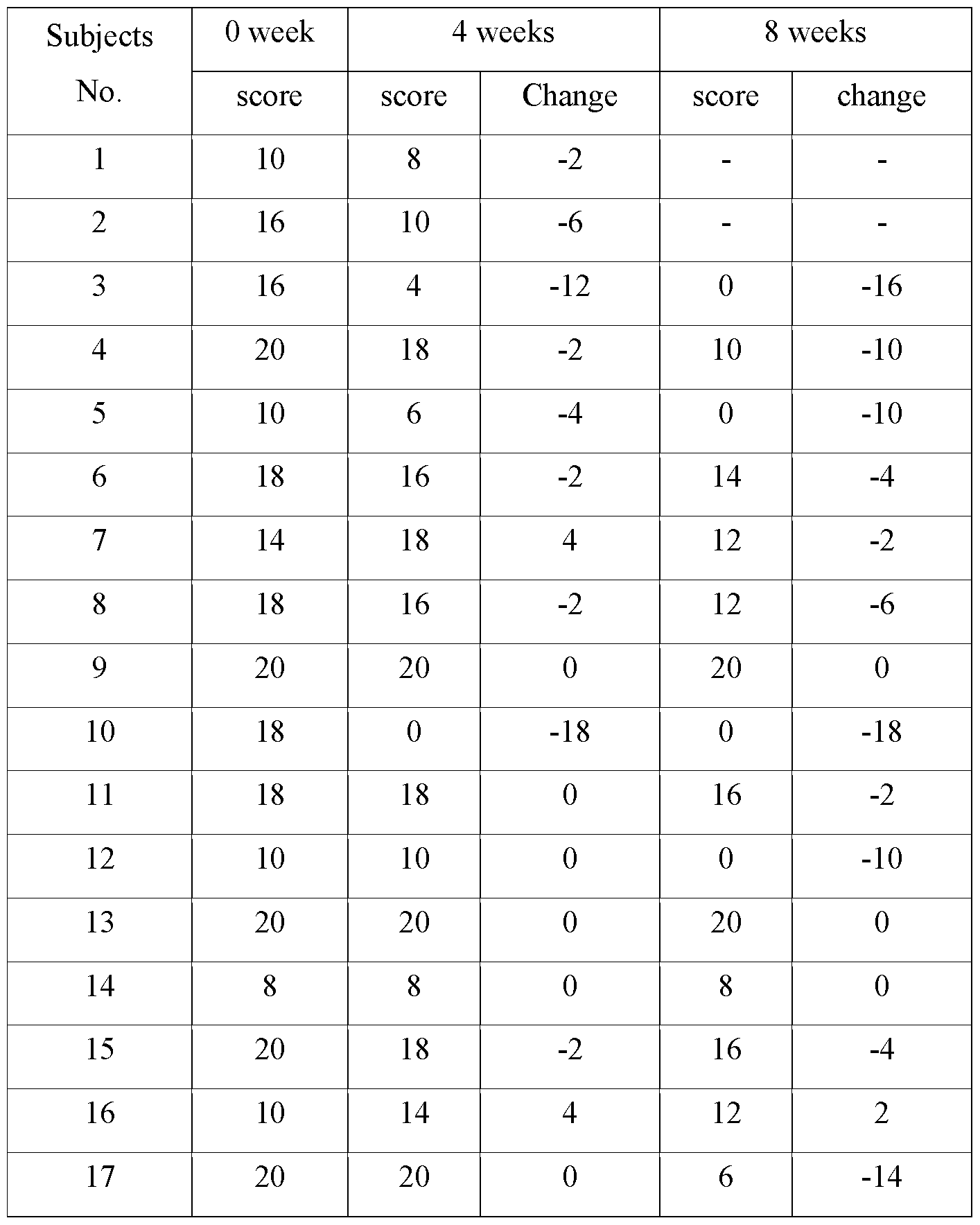
- two questionnaires were evaluated: CCDR scale and canine dementia scale (CADES).
- CADES canine dementia scale
- To measure the safety of Compound 2 not only the occurrence of adverse events was investigated but also the vital signs, physical examination, and blood tests were performed in the dogs.
- Compound 2 was prescribed for oral administration of 10 mg/kg once- daily dosing for 8 weeks.
- Subjects 3 and 4 received Compound 2 additionally for 4 weeks with approval of the principal investigator. Instead of Compound 2, subjects 18-22 received placebo for 8 weeks.
- Rating scales are essential tools for CDS diagnosis, staging, assessment, and careful monitoring of the disease symptoms as well as for evaluation of the efficacy of therapeutic strategies.
- Several rating scales have been developed during the last decade e.g. CCDR scale [21-24]
- CCDR scale To assess the severity of CDS in this study, two questionnaires (CCDR scale and CADES) were performed before and after oral administration of Compound 2 by a veterinarian.
- Questionnaires include a broad range of items measuring appetite, drinking behavior, barking, elimination behavior, day/night sleeping pattern, aimless behavior, adaptive capabilities, social behavior, perceptual ability, disorientation, and memory.
- CCDR scale consists of 13 items based on CDS symptoms (Table 2).
- the 13 kinds of behaviors included various problems related to orientation (staring blankly, getting lost in the home), memory (lack of recognition of owners, house-soiling), apathy (reduced time spent active, avoiding contact with owners), impaired olfaction (difficulty finding food), and locomotion. These problems compromise both the dog’s quality of life and the dog-owner bond [25, 26] Scores >50 on the CCDR are indicative of CDS in the aged dogs (12-19 years of age). In this study, we compared the CCDR scores before and after administration of Compound 2 in dogs with CDS.
- CCDR Canine cognitive dysfunction rating
- CADES which contains 17 items distributed into four domains, related to changes in dogs’ behaviors: spatial orientation, social interaction, sleep-wake cycle, and house soiling (Table 6) [3] It can be classified according to various stages of cognitive impairment: mild, moderate, and severe cognitive impairment. It is known well that CADES is also suitable for long-term assessment of the progression of cognitive impairment in canine, and potentially as efficacy readout for treatments. Domain/items Score
- the social interaction scores in CADES are presented in the Table 8. After 4 weeks administration of Compound 2, social interaction in most participant dogs, except subjects 5, 8, 11, 12, 14, and 17 were markedly improved. Although 3 dogs (subjects 3, 4, and 10) had showed severe abnormal social behaviors before treatment with Compound 2, their social behavior was nearly similar to normal aged dogs at 4 weeks after treatment. In addition, most dogs showed improved social activities at 8 weeks after Compound 2 treatment. More importantly, 8 (53%) of the 15 companion dogs at 8 weeks after administration of Compound 2 showed further improvement in the social interaction compared with improvement at 4 weeks after administration of Compound 2. Overall, these results indicate that Compound 2 improves the social interaction activity in dogs with CDS.
- compositions comprising Compound 2 and methods administering a therapeutically effective amount of Compound 2 for treating cognitive and neurobehavioral impairment in neurological diseases including CDS, dysthymia, involutive depression, and confusional syndrome in canines or felines.
- the compositions and methods of the present disclosure are very useful for reducing or slowing down cognitive and neurobehavioral impairments in the age-related neurological diseases in canines or felines.
Landscapes
- Health & Medical Sciences (AREA)
- Chemical & Material Sciences (AREA)
- Life Sciences & Earth Sciences (AREA)
- Veterinary Medicine (AREA)
- Medicinal Chemistry (AREA)
- Animal Behavior & Ethology (AREA)
- Pharmacology & Pharmacy (AREA)
- Public Health (AREA)
- General Health & Medical Sciences (AREA)
- Epidemiology (AREA)
- Engineering & Computer Science (AREA)
- Neurology (AREA)
- Chemical Kinetics & Catalysis (AREA)
- General Chemical & Material Sciences (AREA)
- Bioinformatics & Cheminformatics (AREA)
- Neurosurgery (AREA)
- Biomedical Technology (AREA)
- Nutrition Science (AREA)
- Zoology (AREA)
- Polymers & Plastics (AREA)
- Physiology (AREA)
- Nuclear Medicine, Radiotherapy & Molecular Imaging (AREA)
- Psychiatry (AREA)
- Organic Chemistry (AREA)
- Hospice & Palliative Care (AREA)
- Oil, Petroleum & Natural Gas (AREA)
- Inorganic Chemistry (AREA)
- Food Science & Technology (AREA)
- Animal Husbandry (AREA)
- Proteomics, Peptides & Aminoacids (AREA)
- Biochemistry (AREA)
- Molecular Biology (AREA)
- Birds (AREA)
- Pain & Pain Management (AREA)
- Emergency Medicine (AREA)
- Mycology (AREA)
- Pharmaceuticals Containing Other Organic And Inorganic Compounds (AREA)
- Acyclic And Carbocyclic Compounds In Medicinal Compositions (AREA)
- Coloring Foods And Improving Nutritive Qualities (AREA)
- Medicinal Preparation (AREA)
Abstract
Description




Claims


Priority Applications (10)
| Application Number | Priority Date | Filing Date | Title |
|---|---|---|---|
| AU2019412533A AU2019412533B2 (en) | 2018-12-28 | 2019-12-26 | Compositions and methods for treating neurodegenerative disorders |
| ES19903186T ES3048296T3 (en) | 2018-12-28 | 2019-12-26 | Compositions comprising 5-benzylaminosalicylic acid compounds for use in treating neurodegenerative disorders in a companion animal |
| KR1020217023878A KR20210107828A (en) | 2018-12-28 | 2019-12-26 | Compositions and methods for treating neurodegenerative diseases |
| CN201980090544.2A CN113710242A (en) | 2018-12-28 | 2019-12-26 | Compositions and methods for treating neurodegenerative disorders |
| CA3124767A CA3124767A1 (en) | 2018-12-28 | 2019-12-26 | 5-benzylaminosalicylic acid compounds for treating neurodegenerative disorders |
| MX2021007780A MX2021007780A (en) | 2018-12-28 | 2019-12-26 | COMPOSITIONS AND METHODS FOR TREATING NEURODEGENERATIVE DISORDERS. |
| JP2021538053A JP7578989B2 (en) | 2018-12-28 | 2019-12-26 | Compositions and methods for treating neurodegenerative disorders |
| BR112021012707-0A BR112021012707A2 (en) | 2018-12-28 | 2019-12-26 | COMPOSITIONS AND METHODS TO TREAT NEURODEGENERATIVE DISORDERS |
| EP19903186.5A EP3902536B1 (en) | 2018-12-28 | 2019-12-26 | Compositions comprising 5-benzylaminosalicylic acid compounds for use in treating neurodegenerative disorders in a companion animal |
| PH12021551541A PH12021551541A1 (en) | 2018-12-28 | 2021-06-28 | Compositions and methods for treating neurodegenerative disorders |
Applications Claiming Priority (2)
| Application Number | Priority Date | Filing Date | Title |
|---|---|---|---|
| US201862785903P | 2018-12-28 | 2018-12-28 | |
| US62/785,903 | 2018-12-28 |
Publications (1)
| Publication Number | Publication Date |
|---|---|
| WO2020136441A1 true WO2020136441A1 (en) | 2020-07-02 |
Family
ID=71121937
Family Applications (1)
| Application Number | Title | Priority Date | Filing Date |
|---|---|---|---|
| PCT/IB2019/001409 Ceased WO2020136441A1 (en) | 2018-12-28 | 2019-12-26 | Compositions and methods for treating neurodegenerative disorders |
Country Status (12)
| Country | Link |
|---|---|
| US (2) | US20200206172A1 (en) |
| EP (1) | EP3902536B1 (en) |
| JP (1) | JP7578989B2 (en) |
| KR (1) | KR20210107828A (en) |
| CN (1) | CN113710242A (en) |
| AU (1) | AU2019412533B2 (en) |
| BR (1) | BR112021012707A2 (en) |
| CA (1) | CA3124767A1 (en) |
| ES (1) | ES3048296T3 (en) |
| MX (1) | MX2021007780A (en) |
| PH (1) | PH12021551541A1 (en) |
| WO (1) | WO2020136441A1 (en) |
Cited By (3)
| Publication number | Priority date | Publication date | Assignee | Title |
|---|---|---|---|---|
| CN113735726A (en) * | 2021-08-09 | 2021-12-03 | 浙江理工大学 | 2-hydroxy-5- [2- (4- (trifluoromethylphenyl) ethylamino) ] sodium benzoate and preparation method thereof |
| EP3998058A4 (en) * | 2019-07-08 | 2023-10-04 | GNT Pharma Co., Ltd | Cosmetic composition comprising 5-benzylaminosalicylic acid derivative and local administration method thereof |
| WO2024248510A1 (en) | 2023-06-02 | 2024-12-05 | 주식회사 지엔티파마 | Pharmaceutical composition containing crisdesalazine with improved stability and dissolution rate |
Families Citing this family (4)
| Publication number | Priority date | Publication date | Assignee | Title |
|---|---|---|---|---|
| KR20240142433A (en) * | 2021-12-28 | 2024-09-30 | 주식회사 지엔티파마 | Compositions and methods for treating lung disorders |
| CN114414332B (en) * | 2022-01-05 | 2024-04-16 | 北京科技大学 | Preparation method of antioxidant based on Al-CQDs and Al-CNSs |
| KR102517992B1 (en) | 2022-05-26 | 2023-04-05 | 주식회사 에이엘 네트웍스 | Pet food composition for enhancement of cognitive impairment and brain function and manufacturing method thereof |
| KR102863096B1 (en) * | 2024-09-05 | 2025-09-22 | 주식회사 지엔티파마 | Compositions and method for treating psoriasis |
Citations (6)
| Publication number | Priority date | Publication date | Assignee | Title |
|---|---|---|---|---|
| WO1986003199A1 (en) * | 1984-11-29 | 1986-06-05 | Italfarmaco S.P.A. | Amino-salicylic acid derivatives and pharmaceutical compositions |
| WO1994013663A1 (en) * | 1992-12-10 | 1994-06-23 | Pfizer Inc. | Aminomethylene substituted non-aromatic heterocycles and use as substance p antagonists |
| US6573402B1 (en) | 2000-04-20 | 2003-06-03 | Neurotech Co., Ltd. | Compounds, compositions and methods for preventing neurodegeneration in acute and chronic injuries in the central nervous system |
| US20070298129A1 (en) | 2005-08-24 | 2007-12-27 | Neurotech Pharmaceuticals Co., Ltd. | Compounds and compositions for treating neuronal death or neurological dysfunction |
| WO2011081445A2 (en) * | 2009-12-29 | 2011-07-07 | 주식회사 뉴로테크 | Treatment use of ethylamino benzoic acid derivatives |
| EP2394645A2 (en) * | 2009-02-09 | 2011-12-14 | Neurotech Pharmaceuticals Co., Ltd. | Medical use of 5-benzylaminosalicylic acid derivatives or salts thereof |
Family Cites Families (8)
| Publication number | Priority date | Publication date | Assignee | Title |
|---|---|---|---|---|
| SA99191255B1 (en) * | 1998-11-30 | 2006-11-25 | جي دي سيرل اند كو | celecoxib compounds |
| CN1309703C (en) * | 2002-06-19 | 2007-04-11 | 纽若泰克有限公司 | Tetrafluorobenzyl derivatives and pharmaceutical compositions containing components thereof for treating and preventing acute and chronic neurodegenerative diseases of the central nervous system |
| KR100522187B1 (en) * | 2002-10-18 | 2005-10-18 | 주식회사 뉴로테크 | Compounds, Compositions and Methods for Preventing Neurodegeneration in Acute and Chronic Injuries in the Central Nervous System |
| JP5450053B2 (en) * | 2006-04-13 | 2014-03-26 | ニューロテック ファーマシューティカルズ カンパニー リミテッド | Pharmaceutical composition for treating or preventing cell damage and inflammatory diseases |
| EP3708163A1 (en) * | 2009-03-31 | 2020-09-16 | Ligand Pharmaceuticals, Inc. | Use of sparsentan for the treatment of chronic inflammatory diseases |
| US9371293B2 (en) * | 2013-10-25 | 2016-06-21 | Sumitomo Chemical Company, Limited | Isoxazoline compound composition |
| CN106455628A (en) * | 2014-03-11 | 2017-02-22 | 里奇菲德有限公司 | Feed components and method for making and using |
| US20210368823A1 (en) * | 2018-02-06 | 2021-12-02 | Duncan-Bruce SUTHERLAND | Method of preparing prebiotic dietary fiber and probiotic-fibre complexes |
-
2019
- 2019-12-26 ES ES19903186T patent/ES3048296T3/en active Active
- 2019-12-26 MX MX2021007780A patent/MX2021007780A/en unknown
- 2019-12-26 KR KR1020217023878A patent/KR20210107828A/en not_active Ceased
- 2019-12-26 US US16/727,577 patent/US20200206172A1/en not_active Abandoned
- 2019-12-26 CN CN201980090544.2A patent/CN113710242A/en active Pending
- 2019-12-26 CA CA3124767A patent/CA3124767A1/en active Pending
- 2019-12-26 BR BR112021012707-0A patent/BR112021012707A2/en unknown
- 2019-12-26 AU AU2019412533A patent/AU2019412533B2/en active Active
- 2019-12-26 JP JP2021538053A patent/JP7578989B2/en active Active
- 2019-12-26 WO PCT/IB2019/001409 patent/WO2020136441A1/en not_active Ceased
- 2019-12-26 EP EP19903186.5A patent/EP3902536B1/en active Active
-
2021
- 2021-06-28 PH PH12021551541A patent/PH12021551541A1/en unknown
-
2022
- 2022-04-19 US US17/723,828 patent/US20220241231A1/en active Pending
Patent Citations (7)
| Publication number | Priority date | Publication date | Assignee | Title |
|---|---|---|---|---|
| WO1986003199A1 (en) * | 1984-11-29 | 1986-06-05 | Italfarmaco S.P.A. | Amino-salicylic acid derivatives and pharmaceutical compositions |
| WO1994013663A1 (en) * | 1992-12-10 | 1994-06-23 | Pfizer Inc. | Aminomethylene substituted non-aromatic heterocycles and use as substance p antagonists |
| US6573402B1 (en) | 2000-04-20 | 2003-06-03 | Neurotech Co., Ltd. | Compounds, compositions and methods for preventing neurodegeneration in acute and chronic injuries in the central nervous system |
| US6964982B2 (en) | 2000-04-20 | 2005-11-15 | Neurotech Co., Ltd. | Compounds, compositions and methods for preventing neurodegeneration in acute and chronic injuries in the central nervous system |
| US20070298129A1 (en) | 2005-08-24 | 2007-12-27 | Neurotech Pharmaceuticals Co., Ltd. | Compounds and compositions for treating neuronal death or neurological dysfunction |
| EP2394645A2 (en) * | 2009-02-09 | 2011-12-14 | Neurotech Pharmaceuticals Co., Ltd. | Medical use of 5-benzylaminosalicylic acid derivatives or salts thereof |
| WO2011081445A2 (en) * | 2009-12-29 | 2011-07-07 | 주식회사 뉴로테크 | Treatment use of ethylamino benzoic acid derivatives |
Non-Patent Citations (29)
| Title |
|---|
| AZKONA, G. ET AL.: "Prevalence and risk factors of behavioural changes associated with age-related cognitive impairment in geriatric dogs", J SMALL ANIM PRACT, vol. 50, no. 2, 2009, pages 87 - 91 |
| CAMPBELL, S.A. TRETTIENB. KOZAN: "A non comparative open-label study evaluating the effect of selegiline hydrochloride in a clinical setting", VET THER, vol. 2, no. 1, 2001, pages 24 - 39 |
| COLLE, M.A. ET AL.: "Vascular and parenchymal Abeta deposition in the aging dog: correlation with behavior", NEUROBIOL AGING, vol. 21, no. 5, 2000, pages 695 - 704 |
| CUMMINGS, B.J. ET AL.: "Diffuse plaques contain C-terminal Aβ42 and not Aβ40: evidence from cats and dogs", NEUROBIOLOGY OF AGING, vol. 17, no. 4, 1996, pages 653 - 659, XP009123592, DOI: 10.1016/S0197-4580(96)00062-0 |
| CUMMINGS, B.J. ET AL.: "β-amyloid accumulation correlates with cognitive dysfunction in the aged canine", NEUROBIOLOGY OF LEARNING AND MEMORY, vol. 66, no. 1, 1996, pages 11 - 23 |
| CUMMINGS, B.J. ET AL.: "β-amyloid deposition and other measures of neuropathology predict cognitive status in Alzheimer's disease", NEUROBIOLOGY OF AGING, vol. 17, no. 6, 1996, pages 921 - 933 |
| DRACE, K.: "Canine cognitive dysfunction-recognition and treatment", VETERINARY NURSING JOURNAL, vol. 29, no. 8, 2014, pages 268 - 270 |
| GONZALEZ-MARTINEZ, A. ET AL.: "Effect of age and severity of cognitive dysfunction on two simple tasks in pet dogs", VET J, vol. 198, no. 1, 2013, pages 176 - 81 |
| HART, B.L.L.A. HART: "Selecting, raising, and caring for dogs to avoid problem aggression", JOURNAL OF THE AMERICAN VETERINARY MEDICAL ASSOCIATION, vol. 210, no. 8, 1997, pages 1129 |
| HEAD E: "Visual-discrimination learning ability and β-amyloid accumulation in the dog.", NEUROBIOLOGY OF AGING, vol. 19, no. 5, 1998, pages 415 - 425 |
| HEAD, E. ET AL.: "Spatial learning and memory as a function of age in the dog", BEHAVIORAL NEUROSCIENCE, vol. 109, no. 5, 1995, pages 851 |
| HUGHES, C.P. ET AL.: "A new clinical scale for the staging of dementia", BR J PSYCHIATRY, vol. 140, 1982, pages 566 - 72 |
| IN-SUN BAEK ET AL., EXP NEUROBIOL, vol. 22, no. 1, 31 March 2013 (2013-03-31), pages 31 - 37 |
| LANDSBERG, G.M.J. NICHOLJ.A. ARAUJO: "Cognitive dysfunction syndrome: a disease of canine and feline brain aging", VET CLIN NORTH AM SMALL ANIM PRACT, vol. 42, no. 4, 2012, pages 749 - 68 |
| LANDSBERG, G.M.T. DEPORTERJ.A. ARAUJO: "Clinical signs and management of anxiety, sleeplessness, and cognitive dysfunction in the senior pet", VET CLIN NORTH AM SMALL ANIM PRACT, vol. 41, no. 3, 2011, pages 565 - 90 |
| MADARI, A. ET AL.: "Assessment of severity and progression of canine cognitive dysfunction syndrome using the CAnine DEmentia Scale (CADES)", APPL ANIM BEHAV SCI., vol. 171, 2015, pages 138 - 45 |
| NEILSON, J.C. ET AL.: "Prevalence of behavioral changes associated with age-related cognitive impairment in dogs", J AM VET MED ASSOC, vol. 218, no. 11, 2001, pages 1787 - 91 |
| NEUS BOSCH ET AL., CURR ALZHEIMER RES, vol. 9, no. 3, March 2012 (2012-03-01), pages 298 - 314 |
| OZAWA, M. ET AL.: "The Relation between canine cognitive dysfunction and age-related brain lesions", J VET MED SCI, vol. 78, no. 6, 2016, pages 997 - 1006 |
| PUGLIESE, M. ET AL.: "Severe cognitive impairment correlates with higher cerebrospinal fluid levels of lactate and pyruvate in a canine model of senile dementia", PROG NEUROPSYCHOPHARMACOL BIOL, vol. 29, no. 4, 2005, pages 603 - 10, XP025311084, DOI: 10.1016/j.pnpbp.2005.01.017 |
| ROFINA J: " Cognitive disturbances in old dogs suffering from the canine counterpart of Alzheimer's disease", BRAIN RESEARCH, vol. 1069, no. 1, 2006, pages 216 - 226, XP025064722, DOI: 10.1016/j.brainres.2005.11.021 |
| RUEHL, W. ET AL.: "Progress in Brain Research", 1995, ELSEVIER, article "Canine cognitive dysfunction as a model for human age-related cognitive decline, dementia and Alzheimer's disease: clinical presentation, cognitive testing, pathology and response to 1-deprenyl therapy", pages: 217 - 225 |
| SALVIN, H.E. ET AL.: "The canine cognitive dysfunction rating scale (CCDR): a data-driven and ecologically relevant assessment tool", VET J, vol. 188, no. 3, 2011, pages 331 - 6, XP028208307, DOI: 10.1016/j.tvjl.2010.05.014 |
| SALVIN, H.E. ET AL.: "Under diagnosis of canine cognitive dysfunction: a cross-sectional survey of older companion dogs", THE VETERINARY JOURNAL, vol. 184, no. 3, 2010, pages 277 - 281, XP027032279 |
| SCHNEIDER, B.MM.H. ERHARD: "Canine cognitive dysfunction syndrome: prevalence, diagnosis and therapeutic measures)", TIERARZTL PRAX AUSG K KLEINTIERE HEIMTIERE, vol. 38, no. 2, 2010, pages 113 - 8 |
| See also references of EP3902536A4 |
| SHIN, J.H. ET AL.: "Concurrent blockade of free radical and microsomal prostaglandin E synthase-1-mediated PGE2 production improves safety and efficacy in a mouse model of amyotrophic lateral sclerosis", JOURNAL OF NEUROCHEMISTRY, vol. 122, no. 5, 2012, pages 952 - 961, XP055117741, DOI: 10.1111/j.1471-4159.2012.07771.x |
| SWAN, G.E.D. CARMELLI: "Impaired olfaction predicts cognitive decline in nondemented older adults", NEUROEPIDEMIOLOGY, vol. 21, no. 2, 2002, pages 58 - 67 |
| TAPP, P.D. ET AL.: "Frontal lobe volume, function, and ,8-amyloidpathology in a canine model of aging", JOURNAL OF NEUROSCIENCE, vol. 24, no. 38, 2004, pages 8205 - 8213 |
Cited By (3)
| Publication number | Priority date | Publication date | Assignee | Title |
|---|---|---|---|---|
| EP3998058A4 (en) * | 2019-07-08 | 2023-10-04 | GNT Pharma Co., Ltd | Cosmetic composition comprising 5-benzylaminosalicylic acid derivative and local administration method thereof |
| CN113735726A (en) * | 2021-08-09 | 2021-12-03 | 浙江理工大学 | 2-hydroxy-5- [2- (4- (trifluoromethylphenyl) ethylamino) ] sodium benzoate and preparation method thereof |
| WO2024248510A1 (en) | 2023-06-02 | 2024-12-05 | 주식회사 지엔티파마 | Pharmaceutical composition containing crisdesalazine with improved stability and dissolution rate |
Also Published As
| Publication number | Publication date |
|---|---|
| EP3902536C0 (en) | 2025-09-03 |
| JP2022515520A (en) | 2022-02-18 |
| JP7578989B2 (en) | 2024-11-07 |
| EP3902536A1 (en) | 2021-11-03 |
| EP3902536B1 (en) | 2025-09-03 |
| MX2021007780A (en) | 2021-12-15 |
| BR112021012707A2 (en) | 2021-09-08 |
| CN113710242A (en) | 2021-11-26 |
| KR20210107828A (en) | 2021-09-01 |
| CA3124767A1 (en) | 2020-07-02 |
| AU2019412533A1 (en) | 2021-07-15 |
| PH12021551541A1 (en) | 2022-02-28 |
| EP3902536A4 (en) | 2022-09-28 |
| US20220241231A1 (en) | 2022-08-04 |
| US20200206172A1 (en) | 2020-07-02 |
| AU2019412533B2 (en) | 2025-09-04 |
| ES3048296T3 (en) | 2025-12-09 |
Similar Documents
| Publication | Publication Date | Title |
|---|---|---|
| EP3902536B1 (en) | Compositions comprising 5-benzylaminosalicylic acid compounds for use in treating neurodegenerative disorders in a companion animal | |
| JP2010504337A (en) | Hydrogenated pyrido [4,3-b] indoles such as dimebon for the treatment of cognitive impairment syndrome in dogs | |
| JP7393943B2 (en) | Pharmaceutical compositions and uses for lysosomal storage disorders | |
| MX2010013946A (en) | PHARMACEUTICAL TRANSDERMIC COMPOSITIONS AND METHOD TO TREAT INFLAMMATION IN WON | |
| US20180162827A1 (en) | Radiomitigating pharmaceutical formulations | |
| US20230098944A1 (en) | Method of decreasing amyloid beta monomer levels in patients with cognitive decline | |
| JP7258902B2 (en) | Use of Carbamate Compounds for Alleviating or Treating Developmental Disorders Including Fragile X Syndrome, Angelman Syndrome or Rett Syndrome | |
| JP7695246B2 (en) | Compounds for the Treatment of Alzheimer's Disease | |
| EP3556366B1 (en) | Use of carbamate compounds for prevention, alleviation or treatment of bipolar disorder | |
| RU2828223C2 (en) | Compositions and methods of treating neurogenerative disorders | |
| EP1050303A2 (en) | Methods and compositions for treating age-related behavioral disorders in companion animals | |
| JP7337081B2 (en) | Therapeutic agents for treating restless legs syndrome | |
| JPWO2020136441A5 (en) | ||
| US20250152560A1 (en) | Hdac inhibitor oki-179 in combination with binimetinib for the treatment of cancer | |
| CN1474691A (en) | Novel uses of combined 5-HT 1A agonists and serotonin reuptake inhibitor | |
| Friton et al. | Investigation of the clinical efficacy, safety and palatability of meloxicam (Metacam®) treatment in horses with musculosceletal disorders | |
| JP2023501114A (en) | 4-[5-[(RAC)-1-[5-(3-chlorophenyl)-3-isoxazolyl]ethoxy]-4-methyl-4H-1 for use in preventing and/or treating overwork in mammals , 2,4-triazol-3-yl]pyridine | |
| US20260021059A1 (en) | Therapeutic combinations and methods | |
| US6951873B1 (en) | Methods for treating age-related behavioral disorders in companion animals | |
| US20240050442A1 (en) | Trimeprazine derivatives and compositions comprising the same for treating a neuropsychiatric disorder | |
| RU2774970C2 (en) | Use of carbamate compounds for prevention, relief or treatment of bipolar disorder | |
| Kapitsa et al. | Comparative Evaluation of Antiparkinsonian, Anti-Inflammatory, and Analgesic Effects of Hemantane and Two 2-Aminoadamantane Derivatives Differing From it by a Bridgehead Hydroxyl | |
| AU2016276022A1 (en) | Methods of treatment of non-histaminic pruritus in mammals | |
| JP2023545367A (en) | How to manage the side effects of vasopressin receptor antagonist therapy |
Legal Events
| Date | Code | Title | Description |
|---|---|---|---|
| 121 | Ep: the epo has been informed by wipo that ep was designated in this application |
Ref document number: 19903186 Country of ref document: EP Kind code of ref document: A1 |
|
| ENP | Entry into the national phase |
Ref document number: 3124767 Country of ref document: CA |
|
| ENP | Entry into the national phase |
Ref document number: 2021538053 Country of ref document: JP Kind code of ref document: A |
|
| NENP | Non-entry into the national phase |
Ref country code: DE |
|
| REG | Reference to national code |
Ref country code: BR Ref legal event code: B01A Ref document number: 112021012707 Country of ref document: BR |
|
| ENP | Entry into the national phase |
Ref document number: 2019412533 Country of ref document: AU Date of ref document: 20191226 Kind code of ref document: A |
|
| ENP | Entry into the national phase |
Ref document number: 20217023878 Country of ref document: KR Kind code of ref document: A |
|
| ENP | Entry into the national phase |
Ref document number: 2019903186 Country of ref document: EP Effective date: 20210728 |
|
| ENP | Entry into the national phase |
Ref document number: 112021012707 Country of ref document: BR Kind code of ref document: A2 Effective date: 20210625 |
|
| WWG | Wipo information: grant in national office |
Ref document number: MX/A/2021/007780 Country of ref document: MX |
|
| WWG | Wipo information: grant in national office |
Ref document number: 2019903186 Country of ref document: EP |