WO2020137642A1 - 情報処理装置および情報処理方法 - Google Patents
情報処理装置および情報処理方法 Download PDFInfo
- Publication number
- WO2020137642A1 WO2020137642A1 PCT/JP2019/049089 JP2019049089W WO2020137642A1 WO 2020137642 A1 WO2020137642 A1 WO 2020137642A1 JP 2019049089 W JP2019049089 W JP 2019049089W WO 2020137642 A1 WO2020137642 A1 WO 2020137642A1
- Authority
- WO
- WIPO (PCT)
- Prior art keywords
- information
- point cloud
- definition
- partial
- cloud data
- Prior art date
- Legal status (The legal status is an assumption and is not a legal conclusion. Google has not performed a legal analysis and makes no representation as to the accuracy of the status listed.)
- Ceased
Links
Images
















Classifications
-
- H—ELECTRICITY
- H04—ELECTRIC COMMUNICATION TECHNIQUE
- H04N—PICTORIAL COMMUNICATION, e.g. TELEVISION
- H04N19/00—Methods or arrangements for coding, decoding, compressing or decompressing digital video signals
- H04N19/70—Methods or arrangements for coding, decoding, compressing or decompressing digital video signals characterised by syntax aspects related to video coding, e.g. related to compression standards
-
- G—PHYSICS
- G06—COMPUTING OR CALCULATING; COUNTING
- G06T—IMAGE DATA PROCESSING OR GENERATION, IN GENERAL
- G06T9/00—Image coding
-
- G—PHYSICS
- G06—COMPUTING OR CALCULATING; COUNTING
- G06T—IMAGE DATA PROCESSING OR GENERATION, IN GENERAL
- G06T17/00—Three-dimensional [3D] modelling for computer graphics
-
- G—PHYSICS
- G06—COMPUTING OR CALCULATING; COUNTING
- G06T—IMAGE DATA PROCESSING OR GENERATION, IN GENERAL
- G06T9/00—Image coding
- G06T9/001—Model-based coding, e.g. wire frame
-
- H—ELECTRICITY
- H03—ELECTRONIC CIRCUITRY
- H03M—CODING; DECODING; CODE CONVERSION IN GENERAL
- H03M7/00—Conversion of a code where information is represented by a given sequence or number of digits to a code where the same, similar or subset of information is represented by a different sequence or number of digits
- H03M7/30—Compression; Expansion; Suppression of unnecessary data, e.g. redundancy reduction
-
- H—ELECTRICITY
- H03—ELECTRONIC CIRCUITRY
- H03M—CODING; DECODING; CODE CONVERSION IN GENERAL
- H03M7/00—Conversion of a code where information is represented by a given sequence or number of digits to a code where the same, similar or subset of information is represented by a different sequence or number of digits
- H03M7/30—Compression; Expansion; Suppression of unnecessary data, e.g. redundancy reduction
- H03M7/3068—Precoding preceding compression, e.g. Burrows-Wheeler transformation
- H03M7/3071—Prediction
- H03M7/3075—Space
-
- H—ELECTRICITY
- H04—ELECTRIC COMMUNICATION TECHNIQUE
- H04N—PICTORIAL COMMUNICATION, e.g. TELEVISION
- H04N19/00—Methods or arrangements for coding, decoding, compressing or decompressing digital video signals
- H04N19/50—Methods or arrangements for coding, decoding, compressing or decompressing digital video signals using predictive coding
- H04N19/597—Methods or arrangements for coding, decoding, compressing or decompressing digital video signals using predictive coding specially adapted for multi-view video sequence encoding
-
- H—ELECTRICITY
- H04—ELECTRIC COMMUNICATION TECHNIQUE
- H04N—PICTORIAL COMMUNICATION, e.g. TELEVISION
- H04N21/00—Selective content distribution, e.g. interactive television or video on demand [VOD]
- H04N21/20—Servers specifically adapted for the distribution of content, e.g. VOD servers; Operations thereof
- H04N21/23—Processing of content or additional data; Elementary server operations; Server middleware
- H04N21/234—Processing of video elementary streams, e.g. splicing of video streams or manipulating encoded video stream scene graphs
- H04N21/2343—Processing of video elementary streams, e.g. splicing of video streams or manipulating encoded video stream scene graphs involving reformatting operations of video signals for distribution or compliance with end-user requests or end-user device requirements
- H04N21/234327—Processing of video elementary streams, e.g. splicing of video streams or manipulating encoded video stream scene graphs involving reformatting operations of video signals for distribution or compliance with end-user requests or end-user device requirements by decomposing into layers, e.g. base layer and one or more enhancement layers
-
- H—ELECTRICITY
- H04—ELECTRIC COMMUNICATION TECHNIQUE
- H04N—PICTORIAL COMMUNICATION, e.g. TELEVISION
- H04N21/00—Selective content distribution, e.g. interactive television or video on demand [VOD]
- H04N21/20—Servers specifically adapted for the distribution of content, e.g. VOD servers; Operations thereof
- H04N21/23—Processing of content or additional data; Elementary server operations; Server middleware
- H04N21/234—Processing of video elementary streams, e.g. splicing of video streams or manipulating encoded video stream scene graphs
- H04N21/2343—Processing of video elementary streams, e.g. splicing of video streams or manipulating encoded video stream scene graphs involving reformatting operations of video signals for distribution or compliance with end-user requests or end-user device requirements
- H04N21/234345—Processing of video elementary streams, e.g. splicing of video streams or manipulating encoded video stream scene graphs involving reformatting operations of video signals for distribution or compliance with end-user requests or end-user device requirements the reformatting operation being performed only on part of the stream, e.g. a region of the image or a time segment
-
- H—ELECTRICITY
- H04—ELECTRIC COMMUNICATION TECHNIQUE
- H04N—PICTORIAL COMMUNICATION, e.g. TELEVISION
- H04N21/00—Selective content distribution, e.g. interactive television or video on demand [VOD]
- H04N21/20—Servers specifically adapted for the distribution of content, e.g. VOD servers; Operations thereof
- H04N21/23—Processing of content or additional data; Elementary server operations; Server middleware
- H04N21/238—Interfacing the downstream path of the transmission network, e.g. adapting the transmission rate of a video stream to network bandwidth; Processing of multiplex streams
-
- H—ELECTRICITY
- H04—ELECTRIC COMMUNICATION TECHNIQUE
- H04N—PICTORIAL COMMUNICATION, e.g. TELEVISION
- H04N21/00—Selective content distribution, e.g. interactive television or video on demand [VOD]
- H04N21/20—Servers specifically adapted for the distribution of content, e.g. VOD servers; Operations thereof
- H04N21/25—Management operations performed by the server for facilitating the content distribution or administrating data related to end-users or client devices, e.g. end-user or client device authentication, learning user preferences for recommending movies
- H04N21/262—Content or additional data distribution scheduling, e.g. sending additional data at off-peak times, updating software modules, calculating the carousel transmission frequency, delaying a video stream transmission, generating play-lists
- H04N21/26258—Content or additional data distribution scheduling, e.g. sending additional data at off-peak times, updating software modules, calculating the carousel transmission frequency, delaying a video stream transmission, generating play-lists for generating a list of items to be played back in a given order, e.g. playlist, or scheduling item distribution according to such list
-
- H—ELECTRICITY
- H04—ELECTRIC COMMUNICATION TECHNIQUE
- H04N—PICTORIAL COMMUNICATION, e.g. TELEVISION
- H04N21/00—Selective content distribution, e.g. interactive television or video on demand [VOD]
- H04N21/80—Generation or processing of content or additional data by content creator independently of the distribution process; Content per se
- H04N21/81—Monomedia components thereof
- H04N21/816—Monomedia components thereof involving special video data, e.g 3D video
-
- H—ELECTRICITY
- H04—ELECTRIC COMMUNICATION TECHNIQUE
- H04N—PICTORIAL COMMUNICATION, e.g. TELEVISION
- H04N21/00—Selective content distribution, e.g. interactive television or video on demand [VOD]
- H04N21/80—Generation or processing of content or additional data by content creator independently of the distribution process; Content per se
- H04N21/85—Assembly of content; Generation of multimedia applications
- H04N21/854—Content authoring
- H04N21/85406—Content authoring involving a specific file format, e.g. MP4 format
-
- G—PHYSICS
- G06—COMPUTING OR CALCULATING; COUNTING
- G06T—IMAGE DATA PROCESSING OR GENERATION, IN GENERAL
- G06T2207/00—Indexing scheme for image analysis or image enhancement
- G06T2207/10—Image acquisition modality
- G06T2207/10028—Range image; Depth image; 3D point clouds
-
- H—ELECTRICITY
- H03—ELECTRONIC CIRCUITRY
- H03M—CODING; DECODING; CODE CONVERSION IN GENERAL
- H03M7/00—Conversion of a code where information is represented by a given sequence or number of digits to a code where the same, similar or subset of information is represented by a different sequence or number of digits
- H03M7/30—Compression; Expansion; Suppression of unnecessary data, e.g. redundancy reduction
- H03M7/3059—Digital compression and data reduction techniques where the original information is represented by a subset or similar information, e.g. lossy compression
- H03M7/3064—Segmenting
-
- H—ELECTRICITY
- H03—ELECTRONIC CIRCUITRY
- H03M—CODING; DECODING; CODE CONVERSION IN GENERAL
- H03M7/00—Conversion of a code where information is represented by a given sequence or number of digits to a code where the same, similar or subset of information is represented by a different sequence or number of digits
- H03M7/30—Compression; Expansion; Suppression of unnecessary data, e.g. redundancy reduction
- H03M7/40—Conversion to or from variable length codes, e.g. Shannon-Fano code, Huffman code, Morse code
- H03M7/4031—Fixed length to variable length coding
- H03M7/4037—Prefix coding
- H03M7/4043—Adaptive prefix coding
Definitions
- the present disclosure relates to an information processing device and an information processing method, and more particularly to an information processing device and an information processing method capable of performing higher-quality G-PCC stream distribution.
- Point Cloud is separated into geometry showing a three-dimensional structure and attribute showing color and reflection information. Then, it encodes.
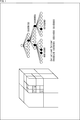
- octree coding as shown in Fig. 1 is used for compression of geometry.
- octree coding is a method of expressing the presence or absence of points in each block in a Voxel-represented data using an octree. In this method, as shown in FIG. 1, a block in which points exist is represented by 1 and a block in which points do not exist is represented by 0.
- Predicting Weight Lifting, Region Adaptive Hierarchical Transform (RAHT), or Fix Weight Lifting is used to compress the attributes.
- the G-PCC stream is obtained by uniformly compressing the three-dimensional structure information of the Point Cloud object by octree coding as shown in Fig. 1.
- the distributed G-PCC stream has three-dimensional information that can be viewed from 360° around, and has the same fineness around the entire circumference.
- the following two points are concerned due to the limitation of the network bandwidth at the time of distribution.
- the present disclosure has been made in view of such circumstances, and is intended to enable higher quality G-PCC stream distribution.
- the information processing apparatus when the Point Cloud data is encoded on a three-dimensional structure basis to generate a Point Cloud data encoded stream, the Point Cloud data is divided into a plurality of parts. Partial point cloud data, which is the part of, is provided with a file generation unit that generates a file that includes spatial position information indicating the position in space and grouping information that groups the partial point cloud data.
- the information processing device when the information processing device encodes Point Cloud data based on a three-dimensional structure to generate a data encoded stream, the Point Cloud data is divided into a plurality of parts. This includes generating a file including spatial position information indicating the position in the space of each partial Point Cloud data that is the individual divided part and grouping information that groups those partial Point Cloud data.
- Point Cloud data is an individual part that is divided into a plurality of parts when the data is streamed by encoding the point cloud data on a three-dimensional structure basis.
- a file including spatial position information indicating the position of each Cloud data in the space and grouping information for grouping those partial Point Cloud data is generated.
- the information processing apparatus is, when a Point Cloud data is encoded on a three-dimensional structure basis to generate a Point Cloud data encoded stream, a partial definition indicating the definition of the encoded portion.
- An encoding unit that generates information is provided, and the encoding unit indicates a direction for a region having a relatively high image quality based on the partial definition information with reference to the local coordinate system of the Point Cloud data. Generate direction information.
- the information processing method when the information processing device encodes Point Cloud data based on a three-dimensional structure to generate a data encoded stream, indicates the definition of the encoded portion. Including the generation of the partial definition information, based on the partial definition information, the direction information indicating the direction of the area of relatively high image quality is generated based on the local coordinate system of the Point Cloud data. It
- the Point Cloud data when the Point Cloud data is encoded on the basis of a three-dimensional structure to generate a data encoded stream, partial definition information indicating the definition of the encoded portion is generated. .. Further, based on the partial definition information, the direction information indicating the direction of the area of relatively high image quality is generated with reference to the local coordinate system of Point Cloud data.
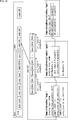
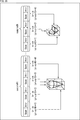
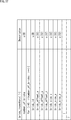
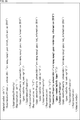
- FIG. 1 It is a figure which shows an example of the syntax which signals the spatial position information of a partial G-PCC stream to BlockGroupBox. It is a figure explaining the production
- FIG. 19 is a block diagram illustrating a configuration example of an embodiment of a computer to which the present technology is applied.
- the first point is that the encoded G-PCC stream is delivered by changing the definition for each point cloud object part. For example, in the G-PCC stream, direction information indicating the direction of high definition and definition information indicating the definition in that direction are added. As a result, the client can acquire the G-PCC stream such that the viewing portion has high definition and the other portion has low definition. Therefore, according to the first point, it is possible to realize high definition of the viewing portion by effectively utilizing the network bandwidth.
- the second point is that one Point Cloud object is divided into multiple partial objects, and the partial G-PCC stream encoded by changing the definition for each partial object is delivered. Also, at the second point, a first method of delivering a partial G-PCC stream generated by space division and a second method of delivering a partial G-PCC stream generated by layering are proposed.
- the client can acquire the high-definition partial G-PCC stream for the viewing portion and the low-definition partial G-PCC stream for the portions other than the viewing portion. Therefore, with the first technique of the second point, it is possible to realize high definition of the viewing portion by effectively utilizing the network bandwidth.
- the information added by the first method of the second point to each partial G-PCC stream should be combined with the partial G-PCC for high definition.
- Information for identifying the stream is added.
- the client can acquire the partial G-PCC stream in a combination necessary for increasing the definition of the viewing portion. Therefore, also by the second method of the second point, it is possible to realize high definition of the viewing portion by effectively utilizing the network bandwidth.
- the third point specify the rendering process of the low-definition part of the PointCloud object. For example, information on rendering processing necessary for improving the subjective quality of a low-definition portion is added to the G-PCC stream. This allows the client to identify the specified rendering process and, if the process can be executed, obtain the G-PCC stream. Therefore, the third point makes it possible to reduce the network bandwidth required for G-PCC stream distribution while maintaining the subjective quality.
- DASHMPD Dynamic Adaptive Streaming over HTTP Media Presentation
- ISOBMFF ISO Base Media File Format
- encoding is performed by changing the definition for each part by changing the octree depth that separates the Voxel for each part of the PointCloud object. Is possible.
- the client acquires the G-PCC stream coded to have high definition for the viewing portion, and acquires the coded G-PCC stream that has low definition for other portions. You can As a result, high definition of the viewing portion can be achieved by effectively utilizing the network bandwidth. At this time, the definition of each part cannot be identified without decoding the G-PCC stream, so when the client selects and acquires the G-PCC stream on the server, the G-PCC stream in which the viewed part is in high definition Need to be able to identify.
- such identification is also necessary when selecting a high-quality stream for each 360° spherical image area according to the viewing direction. That is, in the case of a high-quality stream for each region of a 360° spherical image, since the viewpoint position is fixed, the viewing portion of the user only depends on the viewing direction. Therefore, it is general to add the viewing direction correspondence information of the high quality region to the high quality stream for each region of the 360° spherical image.
- the same part of the Point Cloud object can be viewed from different viewpoint positions in different viewing directions. For this reason, even if the viewing direction correspondence information used in 360° spherical video is referred to, the client cannot properly acquire the G-PCC stream in which the viewing portion has high definition.
- the client can select and acquire the G-PCC stream in which the viewing portion has high definition in accordance with the viewing direction and the viewpoint position.
- the definition of the new viewing portion can be switched to the G-PCC stream having the same definition as that of the viewing portion before the change.
- the definition changes significantly with the change of the viewing portion it is expected that the user's viewing experience deteriorates.
- by suppressing the change of the definition also due to the change of the viewing portion it is possible to avoid such a deterioration of the viewing experience.
- Extending DASH MPD will be described with reference to FIGS. 3 to 5.
- the possible values of the direction attribute are 0: X+, 1: Y+, 2: X-, 3: Y-, 4: Z+, 5 based on the point cloud local coordinate system. : Z-You can signal in 6 directions.
- the direction may be signaled with a finer grain size such as every 45°.
- gpcc: is the namespace prefix, and for example, the namespace of “urn:mpeg:mpegI:gpcc:2018” is used.
- FIG. 4 shows an example of the signaling of the direction information, and the direction information is signaled at the places shown in bold in FIG.
- the high-lod direction descriptor is added with definition information indicating the definition in the direction of high definition, and signaled to Representation.
- definition information indicating the definition in the direction of high definition
- the lod_ranking attribute of the gpcc:directionInfo element is signaled with the definition ranking information. In the definition ranking, the smaller the value, the higher the definition.
- FIG. 5 shows an example of signaling the definition information, and the definition information is signaled at the places shown in bold in FIG.
- the value of the octree depth in the high definition direction may be signaled instead of the definition ranking information.
- direction information indicating a high-definition direction and definition information indicating a definition in a high-definition direction are signaled by newly defining DirectionInformationBox('diri').
- the client can select a track for which the viewing portion is to be made higher definition from the plurality of tracks included in ISOBMFF based on the direction information and the definition information, and reproduce the viewing portion with high definition.
- Fig. 7 shows an example of the syntax of directionInformationBox.
- the definition information in the high definition direction the value of the octree depth in the high definition direction may be signaled instead of the definition ranking information. Further, the definition information ('diri') may be signaled other than the sample entry of ISOBMFF track.
- one Point Cloud object is divided into multiple partial Point Cloud objects, and each is encoded to generate a partial G-PCC stream. Then, when encoding, the octree depth is changed so that each partial G-PCC stream has a variation in definition.
- the client can make the viewing portion high-definition by effectively utilizing the bandwidth by acquiring the partial G-PCC stream so that the viewing portion has high definition and the other portions have low definition.
- the first method of the second point of delivering the partial G-PCC stream generated by space division will be described with reference to FIGS. 8 to 26.
- FIG. 8 shows an example in which the Point Cloud object is spatially divided into four.
- the client can acquire the partial G-PCC stream for making the viewing part high definition by referring to the grouping information and the definition information of the partial G-PCC stream.
- PointCloud object changes at maximum frame by frame. Therefore, space division is performed by applying a certain division rule that does not depend on the change in the shape of PointCloud object.
- a partial PointCloud object included in a rectangular block that occupies the same spatial position relative to a box that includes the entire PointCloud object (hereinafter appropriately referred to as objectbox).
- objectbox a box that occupies the same spatial position relative to a box that includes the entire PointCloud object (hereinafter appropriately referred to as objectbox).
- objectbox are encoded as one partial G-PCC stream.
- Figure 9 shows an example of dividing an object box in half in the X-axis direction.
- an object box including the entire Point Cloud object at time t0 is divided into half in the X axis direction into partial Point Cloud objects t0-a and t0-b.
- the G-PCC stream of a is composed of a partial Point Cloud object t0-a, a partial Point Cloud object t1-a, and a partial Point Cloud object t2-a.
- the G-PCC stream of b is composed of a partial Point Cloud object t0-b, a partial Point Cloud object t1-b, and a partial Point Cloud object t2-b.
- the relative spatial position of the partial Point Cloud object included in the partial G-PCC stream with respect to the entire Point Cloud object is dynamically unchanged.
- the relationship between the viewing part and the part G-PCC stream including it changes dynamically. Therefore, when the client acquires the G-PCC stream that makes the viewing portion high definition, even if the viewing portion is unchanged, it is necessary to switch the high definition G-PCC stream to be acquired. Therefore, this space division method can eliminate the need to switch the high-definition G-PCC stream to be acquired when the viewing portion is unchanged.
- the spatial position information is indicated by each attribute of block_offset_x, block_offset_y, block_offset_z, block_size_x, block_size_y, block_size_z of the gpcc:blockInfo element. All of these attributes are signaled as relative values when each side of the x, y, z axes of the object box is 1.
- the position and shape of the block and the position and shape of the bounding box when G-PCC encoding the partial Point Cloud object are the same. If either the position or shape of the block is different from the position or shape of the bounding box when G-PCC encoding the partial Point Cloud object, the position and shape of the block in the bounding box are indicated. Signal the information separately.
- grouping information is indicated by the object_id attribute of the gpcc:blockInfo element. Signal the object_id attribute with the same value for the partial G-PCC streams that configure the same Point Cloud object.
- FIG. 11 shows an example of signaling of the spatial position information and grouping information of the partial G-PCC stream, and the spatial position information and grouping information of the partial G-PCC stream are shown in bold in FIG. Is signaled.
- FIG. 12 is an image diagram of spatial position information signaled by the block information descriptor of each Adaptation Set.
- the extended block information descriptor may be referenced to perform the selection process of the G-PCC stream in which the viewing portion has a high definition.
- the lod_ranking attribute of the gpcc:lodInfo element is signaled to the definition ranking information. In the definition ranking, the smaller the value, the higher the definition.
- FIG. 13 shows an example of the signaling of the definition information of the partial G-PCC stream, and the definition information of the partial G-PCC stream is signaled at the locations shown in bold in FIG.
- octree depth value may be signaled instead of the definition ranking information as the definition information.
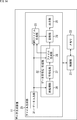
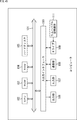
- FIG. 14 is a block diagram showing a configuration example of the data generation device.
- the data generation device 11 includes a control unit 21, a memory 22, and a file generation unit 23.
- the memory 22 stores various data necessary for the control unit 21 to control the file generation unit 23, and the control unit 21 refers to the data and stores the data of the file in the file generation unit 23. Control generation.
- the file generation unit 23 includes a data input unit 31, a data encoding/generation unit 32, an MPD (Media Presentation Description) file generation unit 33, a recording unit 34, and an output unit 35.
- the data input to the data input unit 31 is supplied to the data encoding/generation unit 32 and the MPD file generation unit 33.
- the file generated by the data encoding/generating unit 32 and the MPD generated by the MPD file generating unit 33 are output from the output unit 35 via the recording unit 34 and recorded on, for example, a recording medium.
- the data encoding/generating unit 32 has a preprocessing unit 36, an encoding unit 37, and a file generating unit 38.
- the pre-processing unit 36 divides the Point Cloud object input from the data input unit 31 and generates each partial Point Cloud object, and at the same time, executes the process of generating spatial position information and grouping information.
- the encoding unit 37 G-PCC-encodes each partial PointCloud object and generates a partial G-PCC stream, and at the same time, generates definition information.
- the file generation unit 38 stores each partial G-PCC stream in an individual file and supplies it to the recording unit 34.
- FIG. 15 shows a block diagram showing a configuration example of the data reproducing device.
- the data reproduction device 12 is configured to include a control unit 41, a memory 42, and a reproduction processing unit 43.
- the memory 42 stores various data necessary for the control unit 41 to control the reproduction processing unit 43
- the control unit 41 refers to the data and refers to the Point Cloud in the reproduction processing unit 43. Control the playback of.
- the reproduction processing unit 43 includes an acquisition unit 51, a display control unit 52, a data analysis/decoding unit 53, and a display unit 54.
- the file and MPD acquired by the acquisition unit 51 that is, read from the recording medium or the like are supplied to the data analysis/decoding unit 53.
- the display screen generated by the data analysis/decryption unit 53 according to the display control by the display control unit 52 is displayed on the display unit 54.
- the data analysis/decryption unit 53 has a file analysis unit 55, a decryption unit 56, and a display information generation unit 57.
- the file analysis unit 55 analyzes the metadata in which the various types of information described above are signaled.
- the decoding unit 56 executes processing for decoding the partial G-PCC stream.
- the display information generation unit 57 reconstructs the Point Cloud object based on the spatial position information, renders the Point Cloud to generate a display screen, and causes the display unit 54 to display it.
- FIG. 16 is a flowchart illustrating a generation process in which the data encoding/generation unit 32 of the data generation device 11 generates a file in which a partial G-PCC stream is stored.
- step S11 the preprocessing unit 36 divides the Point Cloud object and generates each partial Point Cloud object, and at the same time, generates spatial position information and grouping information.
- step S12 the encoding unit 37 G-PCC-encodes each partial PointCloud object and generates a partial G-PCC stream, and at the same time, generates definition information.
- step S13 the file generation unit 38 stores each partial G-PCC stream in an individual file and supplies it to the recording unit 34.
- step S14 the MPD file generation unit 33 generates an MPD including the spatial position information of each partial G-PCC stream, the grouping information, and the definition information, and supplies the MPD to the recording unit 34. Then, the recording unit 34 outputs the MPD together with the file in which the partial G-PCC stream is stored, from the output unit 35, and then the process ends.
- FIG. 17 is a flowchart illustrating a reproduction process in which the data reproduction device 12 reproduces a file in which a partial G-PCC stream is stored.
- step S21 the acquisition unit 51 acquires the MPD.
- step S22 the display control unit 52, based on the spatial position information of the MPD acquired by the acquisition unit 51 in step S21, the AdaptationSet of the partial G-PCC stream that can be seen from the current field of view and the invisible part G-PCC stream. Adaptation Set of.
- step S23 the display control unit 52 selects a high-definition Representation for the partial G-PCC stream visible from the current viewpoint position and viewing direction based on the MPD definition information.
- step S24 the display control unit 52 selects a low-definition Representation for the partial G-PCC stream that cannot be seen from the current viewpoint position and viewing direction, based on the MPD definition information.
- step S25 the acquisition unit 51 acquires all the partial G-PCC streams referenced from the Representation selected by the display control unit 52 in steps S23 and S24, and supplies them to the data analysis/decoding unit 53.
- step S26 in the data analysis/decoding unit 53, the decoding unit 56 decodes the acquired partial G-PCC stream, and the display information generation unit 57 reconstructs and displays the Point Cloud object based on the spatial position information. Render the screen. Then, the display screen rendered by the display information generation unit 57 is displayed on the display unit 54.
- step S27 the display control unit 52 determines whether it is the end of the stream. When the display control unit 52 determines in step S27 that the end of the stream is not reached, the process proceeds to step S28.
- step S28 the display control unit 52 determines whether or not the visual field direction has been changed. If it is determined that the visual field direction has not been changed, the process returns to step S26 and it is determined that the visual field direction has been changed. In this case, the process returns to step S22, and the same process is repeated thereafter.
- step S27 when the display control unit 52 determines that it is the end of the stream, the process ends.
- the hatched area in FIG. 18 exists in the partial G-PCC stream a, but can be viewed from the viewing direction indicated by the arrow in FIG.
- the spatial position information There is.
- only the above-mentioned signaling of spatial position information will acquire the partial G-PCC stream a with low definition, high-quality G-PCC stream distribution will not be achieved.
- the direction information of this partial G-PCC stream is signaled by expanding the block information descriptor. Specifically, add the direction attribute of the gpcc:directionInfo element.
- FIG. 19 shows an example of signaling the direction correspondence information of the partial G-PCC stream, and the direction correspondence information of the partial G-PCC stream is signaled at the places shown in bold in FIG.
- multiple gpcc:directionInfo elements may be signaled without signaling the direction information with a space delimiter in the direction attribute. Further, only the direction correspondence information of the partial G-PCC stream may be signaled by a separate descriptor.
- the gpcc:blockInfo element may not be signaled or may be used together.
- the gpcc:directionInfo element refers to the gpcc:directionInfo element to identify all the G-PCC streams that are necessary for displaying the viewing part, and then refer to the gpcc:blockInfo element to change the fineness of each block. It can be carried out.
- the block_info_id attribute of the gpcc:dynamicBlockInfo element refer to the timed metadata that signals the dynamically changing spatial position information and direction correspondence information that is associated with the partial G-PCC stream referenced by Representation in this AdaptationSet.
- the Representation id is signaled.
- the object_id attribute is as described above.
- Representation@associationId and Representation@associationType To use. Furthermore, associationType is signaled as "dbif" indicating that the spatial position information and the direction correspondence information are dynamically changing.
- FIG. 21 shows an example of signaling of the spatial position information and the direction correspondence information which dynamically change, and the spatial position information and the direction correspondence which dynamically change are shown in the bold letters in FIG. Information is being signaled.
- the timed metadata sample signals direction correspondence information at each time. This makes it possible to signal information on which direction each block corresponds to at each time.
- FIG. 22 shows an example of the syntax of sample entry of timed metadata
- FIG. 23 shows an example of the syntax of sample of timed metadata
- direction field is the same as the direction attribute of the gpcc:directionInfo element of block information descriptor.
- spatial position information at each time may be signaled.
- the space division method can be dynamically changed, so that space division can be performed without causing an empty block.
- the client refers to the dynamically changing spatial position information and direction correspondence information, and even when the outline of the PointCloud object dynamically changes greatly, the part G for making the viewing part high-definition -The PCC stream can be properly acquired.
- TrackGroupTypeBox is extended and BlockGroupBox ('blgp') is newly defined. That is, the track to which the BlockGroupBox of the same track_group_id is signaled indicates that the partial G-PCC streams that form the same Point Cloud object are stored.
- the spatial position information of the partial G-PCC stream similar to the DASHMPD extension, the spatial position information of the partial G-PCC stream, the definition information, the direction correspondence information, and the timed metadata that has the spatial position information and the direction correspondence information that change dynamically. Reference information is signaled.
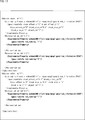
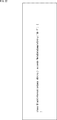
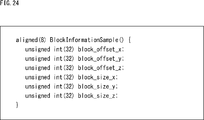
- FIG. 26 shows the syntax when signaling the spatial position information of the partial G-PCC stream to the BlockGroupBox.
- the semantics of each field is the same as the attribute with the same name of the gpcc:blockInfo element of the block information descriptor.
- the grouping may be signaled using EntityToGroupBox instead of the track group function.
- the definition information may be signaled to the track sample entry as an individual Box.
- the spatial position information and the direction correspondence information that dynamically change may be signaled by the sample group.
- the selection process of the track storing the G-PCC stream in which the viewing portion is highly refined may be performed with reference to this Box.
- one Point Cloud object is layered into a low-definition whole Point Cloud object and a partial Point Cloud object for making a part of it high-definition, and each is encoded to be a partial G-PCC stream.
- FIG. 27 shows an example of layering a Point Cloud object into a low-definition whole Point Cloud object and two partial Point Cloud objects.
- ⁇ Partial G-PCC stream with high definition (variation 1)
- ⁇ Partial G-PCC stream alone has low definition, and constitutes a high-definition part by combining with a low-definition whole G-PCC stream (variation 2)
- the partial G-PCC stream that refines a part of the variation 2 has a point that does not overlap with the low-definition entire G-PCC stream.
- the client can perform spatial position information, grouping information, and definition information of the entire G-PCC stream and the partial G-PCC stream. Can be identified, and the whole/partial G-PCC stream for making the viewing part high-definition can be acquired.
- the same signaling can be used for variation 2, but the client cannot identify the partial G-PCC stream to be combined and the entire G-PCC stream in order to increase the definition of the viewing portion. Therefore, the client cannot acquire an appropriate G-PCC stream for enhancing the definition of the viewing portion.
- the client can obtain the partial G-PCC stream for making the viewing portion high-definition even in variation 2 by referring to this information.
- associationId and associationType specified in MPEG-DASH For example, by using associationId and associationType specified in MPEG-DASH, the partial G-PCC stream that constitutes a high-definition part by combining them and the entire G-PCC stream are linked.
- associationType signals "pbas" indicating that the associated Representation is an entire G-PCC stream that can be highly refined by combining it with a partial G-PCC stream.
- the lod information descriptor defined in the first method of the above-mentioned second point is extended with the definition information as a result of combining both, and signaled with gpcc:combinedAreaLodInfo.
- the combined_rep_id attribute signals the Representation@id of the entire G-PCC stream to be combined, and the lod_ranking attribute signals the definition information as a result of combining the two.
- FIG. 28 shows an example of the signaling of the spatial position information of each combined G-PCC stream.
- the spatial position information of each combined G-PCC stream is shown in bold in FIG. Is signaled.
- FIG. 29 shows an image diagram of spatial position information signaled as shown in FIG.
- associationType indicates that the partial G-PCC stream alone will be high definition.
- the partial G-PCC stream is of low definition and you want to prohibit playback by itself, associate it with dependencyId instead of associationId.
- a supplemental property or essential property may be used to define a descriptor that prohibits independent playback.
- the client can combine and acquire an appropriate G-PCC stream for enhancing the definition of the viewing portion.
- this signaling can also be used when configuring high-definition parts by combining low-definition part G-PCC streams.
- the partial G-PCC stream generated by layering is stored in each track of the ISOBMFF file.
- the partial G-PCC stream that constitutes a high-definition part and the entire G-PCC stream are linked by combining them.
- the reference_type is'pbas'.
- track#3 stores a low-definition whole G-PCC stream
- track#1 and track#2 store partial G-PCC streams corresponding to different parts of the whole PointCloud object.
- the client can select and play back the track that stores the appropriate G-PCC stream for combining the high-definition viewing part with this track reference signaling.
- CombinedAreaLodInfoBox('cloi') that signals the definition information as a result of combining a plurality of G-PCC streams, and signals the BlockGroupBox defined by the first method of the second point described above. ..
- Fig. 31 shows the syntax of CombinedAreaLodInfoBox('cloi').
- the definition information when combined with the track indicated by the combined_track_id field is signaled by the lod_ranking field.
- the semantics of the lod_ranking field are the same as those of the same name field of the Direction Information Box at the first point described above.
- V-PCC video-based PCC
- the unit that changes the fineness that separates Voxel and changes the definition may be a set of points that can be independently encoded and decoded in a Point Cloud object.
- This set of points is called a brick.
- brick may be tile, which is an encoding tool currently under discussion in MPEG.
- a tile is a set of slices, and a slice is a set of points that can be independently encoded and decoded (see Non-Patent Document 2 described above).
- the partial G-PCC stream may be encoded so as to be composed of one or more bricks.
- the spatial position information of brick data in the G-PCC stream is signaled to the G-PCC stream.
- the spatial position information of the brick is used as the data unit forming the brick in the G-PCC stream, as in the first method of the second point described above. It is necessary to link with.
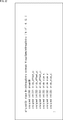
- brick_offset_x, brick_offset_y, brick_offset_z, brick_size_x, brick_size_y, brick_size_z in BrickGroupEntry are block_off_block,_block_offset_block,_block_offset_block,_block_offset_set,block_offset_set,block_offset_set,block_offset_block,offset_block It is the same as block_size_y and _block_size_z respectively.
- unit_index of UnitMapEntry indicates the index information of the data unit that constitutes the brick in the G-PCC stream to which the BrickGroupEntry associated with the groupID is applied.
- This unit_index may be allocated for each data unit that configures each of the Geometry bitstream and Attribute bitstream that configures the brick in the G-PCC stream to which the BrickGroupEntry associated with the groupID is applied.
- the area signaled by brick_offset_x, brick_offset_y, brick_offset_z, brick_size_x, brick_size_y, brick_size_z of BrickGroupEntry is the area of tile's bounding box or multiple tiles. Matches the total area of bounding box.
- FIG. 34 shows an operation example of BrickGroupEntry and UnitMapEntry.
- one point cloud frame of the G-PCC stream is 1 ISOBMFF sample
- the data unit that constitutes the brick is one or more Attribute bitstreams (Attr) associated with Geometry bitstreams (Geom). ..
- the brick configuration can be dynamically changed according to the movement of the object, and the empty brick can be eliminated.
- brick base track may be divided into bricks and stored individually in the ISOBMFF track.
- brick base track may be divided into bricks and stored individually in the ISOBMFF track.
- brick track may be divided into bricks and stored individually in the ISOBMFF track.
- the brick base track does not store the G-PCC stream, but the sample entry has a common parameter set required to decode the entire G-PCC stream proile, level, and the G-PCC stream stored in the brick track. To store.
- the type of sample entry is'gpbb'.
- a brick track stores a G-PCC stream consisting of one or more bricks, and its sample entry is required to decode only the G-PCC stream profile and level to be stored in track and the G-PCC stream to be stored. It stores various parameter sets.
- the type of sample entry is'gpcb'.
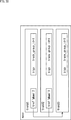
- FIG. 36 shows a block diagram of the brick base track and the brick track.
- the brick track can be independently decoded by referring to the parameter set stored in the brick track and the parameter set stored in the associated brick base track. That is, it is possible to select a brick track including brick data corresponding to the viewing portion, and preferentially decode and render it.
- the entire G-PCC stream can be reconstructed based on the G-PCC stream sample stored in the brick track referenced from the brick base track, and can be decoded by a single decoder.
- each bricktrack may be grouped by trackgroup or EntityToGroupBox, and track_group_id may be referenced for trackgroup and gorup_id for EntityToGroup in the trackreference from brickbasetrack.
- the signaling by the ISOBMFF extension is applicable not only to the stream configured with bricks but also to the partial G-PCC stream mentioned in the second point above. At this time, you can think of brick as a block.
- the spatial position information of brick (brick_offset_x, brick_offset_y, brick_offset_z, brick_size_x, brick_size_y, brick_size_z) may be signaled by expanding the high level syntax of the elementary stream.
- the data units that make up the bricks in the G-PCC stream are linked to the spatial position information through the brick_id.
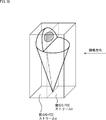
- the subjective quality will deteriorate, for example, the opposite side of the Point Cloud object can be seen through.
- the subjective quality can be improved by, for example, increasing the size of the points in the low-definition portion for rendering.
- the content generation side specifies the rendering process necessary for improving the subjective quality of the low-definition part, and executes the rendering process on the client side. It is possible to improve the subjective quality of the low-definition part of the object.
- the client identifies whether or not the subjective quality improving rendering process is necessary when selecting the G-PCC stream. Can not.
- the client considers its own subjective quality improvement rendering processing capability, acquires a low-definition G-PCC stream if it can be processed, and performs the subjective quality improvement rendering process to maintain the subjective quality while maintaining the G -The network bandwidth required for PCC stream distribution can be reduced.
- rendering information descriptor
- SchemeIdUri ”urn:mpeg:mepgI:gpcc:rendering_information:2018” Essential Property
- the type attribute of the gpcc:renderingInfo element signals the rendering processing method.
- the parameter in the G-PCC stream is, for example, rendering as a sphere inscribed in Voxel.
- FIG. 38 shows an example of signaling the rendering processing method.
- the rendering processing method is signaled at the portions shown in bold.
- rinf is a Box that stores post-process information after decoding.
- Scheme_type of SchemeTypeBox ('schm') under rinf is'rndi' to indicate that subjective quality improvement rendering information is stored.
- Fig. 39 a signal example of Rendering Information Box is shown.
- FIG. 40 shows an example of the syntax of Rendering Information Box.
- semantics of the type field are the same as the attribute with the same name of the gpcc:renderingInfo element of the rendering information descriptor.
- the client can identify the type of rndi and execute the appropriate rendering process. Also, if the rendering process signaled by the rndi type cannot be executed, it is possible to select the other track within the same ISOBMFF file without selecting that track.
- the part to be refined in combination with another G-PCC stream is The rendering process for improving subjective quality is unnecessary.
- the client needs to change the rendering process for improving the subjective quality for each part of PointCloud object. Therefore, information is added so that only the client that can execute an appropriate rendering process can acquire the above-mentioned G-PCC stream.
- the gpcc:combinedAreaRenderingInfo element adds the gpcc:combinedAreaRenderingInfo element and signal the Representation@id of the G-PCC stream to be combined with its combined_rep_id attribute. Also, the type attribute of the gpcc:combinedAreaRenderingInfo element signals the processing type of the part to be refined by combining. The semantics are the same as the type attribute of the gpcc:renderingInfo element.
- FIG. 41 shows the syntax of the processing type of the part to be refined.
- the processing type of the high-definition portion is signaled at the portion shown in bold.
- the signaling shown in Fig. 41 allows the client processing capability, for example, the client that can change and apply the rendering processing for improving subjective quality for each point cloud object part. If so, a lower definition stream can be acquired.
- the combined_trak_id field signals the track_id of the G-PCC streams to combine.
- the combined_area_type field signal the processing type of the part to be refined by combining.
- the client can identify such information and execute appropriate rendering processing.
- FIG. 42 shows a syntax in which a combined_track_exists field, a combined_track_id field, and a combined_area_type field are added. 42, the combined_track_exists field, the combined_track_id field, and the combined_area_type field are signaled at the places shown in bold in FIG.
- FIG. 44 shows the outline of the Sample Group described above.
- the grouping_type of SampleToGroupBox shown in FIG. 44 indicates the grouping_type of the associated SampleGroupDescriptionBox. Also, sample_count and group_description_index are signaled for each entry. Then, group_description_index indicates the index of the associated GroupEntry, and sample_count indicates the number of samples belonging to that GroupEntry.
- a G-PCC stream which is a Point Cloud stream obtained by encoding a Point Cloud object on the basis of Geometry
- one PointCloud object can be divided into a plurality of partial objects, and the partial G-PCC stream encoded by changing the definition of each of these partial objects can be delivered.
- the client refers to the information by adding the direction information and the definition information, which have high definition, to the G-PCC stream.
- the client refers to the information by adding the direction information and the definition information, which have high definition, to the G-PCC stream.
- the client refers to those information
- the partial G-PCC stream can be acquired so that the viewing portion has high definition.
- the client can reduce the network bandwidth required for G-PCC stream delivery by acquiring a G-PCC stream that contains a lower-definition portion if the rendering process can be executed. it can.
- the G-PCC stream is distributed so that the user's viewing part has high definition and the part other than the user's viewing part has low definition, thereby effectively utilizing the network bandwidth and providing high quality. That is, high-definition G-PCC stream distribution without interruption can be realized.
- FIG. 45 is a block diagram showing a configuration example of an embodiment of a computer in which a program for executing the series of processes described above is installed.
- the program can be recorded in advance in the hard disk 105 or the ROM 103 as a recording medium built in the computer.
- the program can be stored (recorded) in the removable recording medium 111 driven by the drive 109.
- a removable recording medium 111 can be provided as so-called package software.
- examples of the removable recording medium 111 include a flexible disk, a CD-ROM (Compact Disc Read Only Memory), an MO (Magneto Optical) disc, a DVD (Digital Versatile Disc), a magnetic disc, and a semiconductor memory.
- the program can be installed in the computer from the removable recording medium 111 as described above, or downloaded to the computer via a communication network or a broadcast network and installed in the built-in hard disk 105. That is, for example, the program is wirelessly transferred from a download site to a computer via a satellite for digital satellite broadcasting, or wired to a computer via a network such as a LAN (Local Area Network) or the Internet. be able to.
- LAN Local Area Network
- the computer includes a CPU (Central Processing Unit) 102, and an input/output interface 110 is connected to the CPU 102 via a bus 101.
- CPU Central Processing Unit
- the CPU 102 executes a program stored in a ROM (Read Only Memory) 103 in response to a command input by the user operating the input unit 107 via the input/output interface 110. .. Alternatively, the CPU 102 loads a program stored in the hard disk 105 into a RAM (Random Access Memory) 104 and executes the program.
- ROM Read Only Memory
- RAM Random Access Memory
- the CPU 102 performs the processing according to the above-described flowchart or the processing performed by the configuration of the above-described block diagram. Then, the CPU 102 outputs the processing result as needed, for example, via the input/output interface 110, from the output unit 106, from the communication unit 108, and further recorded on the hard disk 105.
- the input unit 107 is composed of a keyboard, a mouse, a microphone, and the like.
- the output unit 106 includes an LCD (Liquid Crystal Display), a speaker, and the like.
- the processing performed by the computer according to the program does not necessarily have to be performed in time series in the order described as the flowchart. That is, the processing performed by the computer according to the program also includes processing that is executed in parallel or individually (for example, parallel processing or object processing).
- the program may be processed by one computer (processor) or may be processed by a plurality of computers in a distributed manner. Further, the program may be transferred to a remote computer and executed.
- the system means a set of a plurality of constituent elements (devices, modules (parts), etc.), and it does not matter whether or not all constituent elements are in the same housing. Therefore, a plurality of devices housed in separate housings and connected via a network, and one device housing a plurality of modules in one housing are all systems. ..
- the configuration described as one device (or processing unit) may be divided and configured as a plurality of devices (or processing units).
- the configurations described above as a plurality of devices (or processing units) may be integrated into one device (or processing unit).
- part of the configuration of a certain device (or processing unit) may be included in the configuration of another device (or other processing unit). ..
- the present technology can have a configuration of cloud computing in which one device is shared by a plurality of devices via a network and jointly processes.
- the program described above can be executed in any device.
- the device may have a necessary function (function block or the like) so that necessary information can be obtained.
- each step described in the above-mentioned flowchart can be executed by one device or shared by a plurality of devices.
- the plurality of processes included in the one step can be executed by one device or shared by a plurality of devices.
- a plurality of processes included in one step can be executed as a process of a plurality of steps.
- the processes described as a plurality of steps can be collectively executed as one step.
- the program executed by the computer may be configured such that the processes of the steps for writing the program are executed in time series in the order described in this specification, or in parallel, or when the call is made. It may be executed individually at a necessary timing such as time. That is, as long as no contradiction occurs, the processing of each step may be executed in an order different from the order described above. Furthermore, the process of the step of writing this program may be executed in parallel with the process of another program, or may be executed in combination with the process of another program.
- the present technology may also be configured as below.
- the point cloud data is encoded on the basis of a three-dimensional structure to generate a point cloud data encoded stream, the point cloud data is an individual part divided into a plurality of parts.
- An information processing apparatus including a file generation unit that generates a file that includes spatial position information indicating a position and grouping information that groups the partial Point Cloud data.
- the file generated by the file generation unit further includes direction correspondence information indicating a direction necessary to display the partial Point Cloud based on the local coordinate system of the Point Cloud data.
- Information processing equipment (3) The information processing device according to (2), wherein the file generated by the file generation unit further includes the spatial position information that dynamically changes.
- the information processing device further includes the direction correspondence information that dynamically changes.
- the file generated by the file generation unit is a file having a DASH MPD (Dynamic Adaptive Streaming over HTTP Media Presentation Description) or an ISOBMFF (ISO Base Media File Format) structure.
- the part is composed of brick, which is a set of points that can be independently encoded and decoded in the Point Cloud data,
- the file generated by the file generation unit further includes information for associating the spatial position information of the brick with a data unit forming the brick in the stream of the Point Cloud data.
- the partial Point Cloud data is composed of brick, which is a set of points that can be independently encoded and decoded in the Point Cloud data
- the file generated by the file generation unit further includes information for associating the spatial position information of the brick with a data unit forming the brick in the stream of the partial Point Cloud data (1) to (6) )
- the information processing device according to any one of 1 to 3) above.
- the partial Point Cloud data is composed of brick, which is a set of points that can be independently encoded and decoded in the Point Cloud data
- the file generated by the file generation unit further includes information for associating the spatial position information of the brick with a data unit that constitutes the brick in the stream of the partial Point Cloud data (1) to (7) )
- the information processing device according to any one of 1 to 3) above.
- the information processing device When the point cloud data is encoded on the basis of a three-dimensional structure to generate a data encoded stream, the point cloud data is divided into a plurality of parts, which are individual parts.
- An information processing method including generating a file including spatial position information indicated and grouping information for grouping the partial Point Cloud data.
- an encoding unit that generates partial definition information indicating the definition of the encoded portion is provided.
- An information processing apparatus wherein the encoding unit generates direction information indicating a direction of a region having relatively high image quality based on the local definition system of the Point Cloud data, based on the partial definition information.
- the information processing apparatus according to (10) further including: a file generation unit that generates a file including the partial definition information and the direction information generated by the encoding unit.
- the file generated by the file generation unit is a file having a DASH MPD or ISOBMFF structure.
- the file generated by the file generation unit is a connection of the partial Point Cloud data that can be highly refined by combining the partial Point Cloud data that is an individual part obtained by dividing the Point Cloud data into a plurality of parts.
- the file generated by the file generation unit further includes subjective quality improvement rendering processing information indicating different rendering processing required to improve subjective quality for each part.
- the information processing device Including generating partial definition information indicating the definition of the encoded part when the point cloud data is encoded on the basis of a three-dimensional structure to generate a data encoded stream, An information processing method in which direction information indicating a direction of a region having relatively high image quality is generated based on the local definition system of the Point Cloud data based on the partial definition information.
Landscapes
- Engineering & Computer Science (AREA)
- Multimedia (AREA)
- Signal Processing (AREA)
- Theoretical Computer Science (AREA)
- Physics & Mathematics (AREA)
- General Physics & Mathematics (AREA)
- Computer Graphics (AREA)
- Geometry (AREA)
- Software Systems (AREA)
- Databases & Information Systems (AREA)
- Computer Security & Cryptography (AREA)
- Compression Or Coding Systems Of Tv Signals (AREA)
- Two-Way Televisions, Distribution Of Moving Picture Or The Like (AREA)
- Information Transfer Between Computers (AREA)
- Compression, Expansion, Code Conversion, And Decoders (AREA)
- Image Generation (AREA)
Abstract
Description
まず、本実施の形態において開示される技術において特徴となる第1乃至第3のポイントの概要について説明する。例えば、Point CloudオブジェクトをHMD(Head Mounted Display)やFlat Panel Displayで視聴する場合、視聴方向に対して反対側の表面形状および色は見えないという点を利用した視聴方向適応配信技術が用いられる。
図2乃至図7を参照して、部分毎に精細度を変えて符号化したG-PCCストリームを配信する第1のポイントについて説明する。
図8乃至図37を参照して、部分オブジェクトそれぞれの精細度を変えて符号化した部分G-PCCストリームを配信する第2のポイントについて説明する。
図14および図15を参照して、本技術を適用したデータ生成装置およびデータ再生装置のシステム構成について説明する。
・部分G-PCCストリーム単体で高精細となるもの(バリエーション1)
・部分G-PCCストリーム単体では低精細であり、低精細な全体G-PCCストリームと組み合わせる事で高精細な部分を構成するもの(バリエーション2)
なお、バリエーション2の一部分を高精細化する部分G-PCCストリームは、低精細な全体G-PCCストリームとは重複しないポイントを持つ。
ここで、第1および第2のポイントの変形例について説明する。
図38乃至図43を参照して、Point Cloudオブジェクトの低精細な部分のレンダリング処理を指定する第3のポイントについて説明する。
次に、上述した一連の処理(情報処理方法)は、ハードウェアにより行うこともできるし、ソフトウェアにより行うこともできる。一連の処理をソフトウェアによって行う場合には、そのソフトウェアを構成するプログラムが、汎用のコンピュータ等にインストールされる。
なお、本技術は以下のような構成も取ることができる。
(1)
Point Cloudデータを3次元構造ベースで符号化してPoint Cloudデータ符号化ストリームを生成する際に、前記Point Cloudデータが複数の部分に分割された個々の部分となる部分Point Cloudデータそれぞれの空間上の位置を示す空間位置情報と、それらの部分Point Cloudデータをグルーピングするグルーピング情報とを含むファイルを生成するファイル生成部
を備える情報処理装置。
(2)
前記ファイル生成部により生成された前記ファイルは、前記Point Cloudデータのローカル座標系を基準に前記部分Point Cloudを表示するのに必用となる方向を示す方向対応情報をさらに含む
上記(1)に記載の情報処理装置。
(3)
前記ファイル生成部により生成された前記ファイルは、動的に変化する前記空間位置情報をさらに含む
上記(2)に記載の情報処理装置。
(4)
前記ファイル生成部により生成された前記ファイルは、動的に変化する前記方向対応情報をさらに含む
上記(2)に記載の情報処理装置。
(5)
前記ファイル生成部により生成された前記ファイルは、DASH MPD(Dynamic Adaptive Streaming over HTTP Media Presentation Description)、または、ISOBMFF(ISO Base Media File Format)構造を有するファイルである
上記(3)または(4)に記載の情報処理装置。
(6)
前記部分は、前記Point Cloudデータの中で独立してエンコードおよびデコードできるポイントの集合であるbrickで構成されており、
前記ファイル生成部により生成された前記ファイルは、前記brickの空間位置情報を、前記Point Cloudデータのストリーム内の前記brickを構成するデータ単位で紐づける情報をさらに含む
上記(1)から(5)までのいずれかに記載の情報処理装置。
(7)
前記部分Point Cloudデータは、前記Point Cloudデータの中で独立してエンコードおよびデコードできるポイントの集合であるbrickで構成されており、
前記ファイル生成部により生成された前記ファイルは、前記brickの空間位置情報を、前記部分Point Cloudデータのストリーム内の前記brickを構成するデータ単位で紐づける情報をさらに含む
上記(1)から(6)までのいずれかに記載の情報処理装置。
(8)
前記部分Point Cloudデータは、前記Point Cloudデータの中で独立してエンコードおよびデコードできるポイントの集合であるbrickで構成されており、
前記ファイル生成部により生成された前記ファイルは、前記brickの空間位置情報を、前記部分Point Cloudデータのストリーム内の前記brickを構成するデータ単位で紐づける情報をさらに含む
上記(1)から(7)までのいずれかに記載の情報処理装置。
(9)
情報処理装置が、
Point Cloudデータを3次元構造ベースで符号化してデータ符号化ストリームを生成する際に、前記Point Cloudデータが複数の部分に分割された個々の部分となる部分Point Cloudデータそれぞれの空間上の位置を示す空間位置情報と、それらの部分Point Cloudデータをグルーピングするグルーピング情報とを含むファイルを生成すること
を含む情報処理方法。
(10)
Point Cloudデータを3次元構造ベースで符号化してPoint Cloudデータ符号化ストリームを生成する際に、符号化された部分の精細度を示す部分精細度情報を生成する符号化部を備え、
前記符号化部は、前記部分精細度情報に基づいて、前記Point Cloudデータのローカル座標系を基準に、相対的に高画質である領域についての方向を示す方向情報を生成する
情報処理装置。
(11)
前記符号化部により生成された前記部分精細度情報および前記方向情報を含むファイルを生成するファイル生成部
をさらに備える上記(10)に記載の情報処理装置。
(12)
前記ファイル生成部により生成された前記ファイルは、DASH MPD、または、ISOBMFF構造を有するファイルである
上記(11)に記載の情報処理装置。
(13)
前記ファイル生成部により生成された前記ファイルは、前記Point Cloudデータが複数の部分に分割された個々の部分となる部分Point Cloudデータについて、組み合わせることで高精細化できる前記部分Point Cloudデータの紐づけ情報をさらに含む
上記(12)に記載の情報処理装置。
(14)
前記ファイル生成部により生成された前記ファイルは、組み合わせられた前記部分Point Cloudデータの精細度を示す精細度情報をさらに含む
上記(13)に記載の情報処理装置。
(15)
前記ファイル生成部により生成された前記ファイルは、低精細な前記部分をレンダリングするためのレンダリング処理情報をさらに含む
上記(11)から(14)までのいずれかに記載の情報処理装置。
(16)
前記ファイル生成部により生成された前記ファイルは、前記部分ごとに異なる主観品質向上のために必要なレンダリング処理を示す主観品質向上レンダリング処理情報をさらに含む
上記(15)に記載の情報処理装置。
(17)
情報処理装置が、
Point Cloudデータを3次元構造ベースで符号化してデータ符号化ストリームを生成する際に、符号化された部分の精細度を示す部分精細度情報を生成すること
を含み、
前記部分精細度情報に基づいて、前記Point Cloudデータのローカル座標系を基準に、相対的に高画質である領域についての方向を示す方向情報が生成される
情報処理方法。
Claims (17)
- Point Cloudデータを3次元構造ベースで符号化してPoint Cloudデータ符号化ストリームを生成する際に、前記Point Cloudデータが複数の部分に分割された個々の部分となる部分Point Cloudデータそれぞれの空間上の位置を示す空間位置情報と、それらの部分Point Cloudデータをグルーピングするグルーピング情報とを含むファイルを生成するファイル生成部
を備える情報処理装置。 - 前記ファイル生成部により生成された前記ファイルは、前記Point Cloudデータのローカル座標系を基準に前記部分Point Cloudを表示するのに必用となる方向を示す方向対応情報をさらに含む
請求項1に記載の情報処理装置。 - 前記ファイル生成部により生成された前記ファイルは、動的に変化する前記空間位置情報をさらに含む
請求項2に記載の情報処理装置。 - 前記ファイル生成部により生成された前記ファイルは、動的に変化する前記方向対応情報をさらに含む
請求項2に記載の情報処理装置。 - 前記ファイル生成部により生成された前記ファイルは、DASH MPD(Dynamic Adaptive Streaming over HTTP Media Presentation Description)、または、ISOBMFF(ISO Base Media File Format)構造を有するファイルである
請求項3または4に記載の情報処理装置。 - 前記部分は、前記Point Cloudデータの中で独立してエンコードおよびデコードできるポイントの集合であるbrickで構成されており、
前記ファイル生成部により生成された前記ファイルは、前記brickの空間位置情報を、前記Point Cloudデータのストリーム内の前記brickを構成するデータ単位で紐づける情報をさらに含む
請求項1に記載の情報処理装置。 - 前記部分Point Cloudデータは、前記Point Cloudデータの中で独立してエンコードおよびデコードできるポイントの集合であるbrickで構成されており、
前記ファイル生成部により生成された前記ファイルは、前記brickの空間位置情報を、前記部分Point Cloudデータのストリーム内の前記brickを構成するデータ単位で紐づける情報をさらに含む
請求項1に記載の情報処理装置。 - 前記部分Point Cloudデータは、前記Point Cloudデータの中で独立してエンコードおよびデコードできるポイントの集合であるbrickで構成されており、
前記ファイル生成部により生成された前記ファイルは、前記brickの空間位置情報を、前記部分Point Cloudデータのストリーム内の前記brickを構成するデータ単位で紐づける情報をさらに含む
請求項1に記載の情報処理装置。 - 情報処理装置が、
Point Cloudデータを3次元構造ベースで符号化してデータ符号化ストリームを生成する際に、前記Point Cloudデータが複数の部分に分割された個々の部分となる部分Point Cloudデータそれぞれの空間上の位置を示す空間位置情報と、それらの部分Point Cloudデータをグルーピングするグルーピング情報とを含むファイルを生成すること
を含む情報処理方法。 - Point Cloudデータを3次元構造ベースで符号化してPoint Cloudデータ符号化ストリームを生成する際に、符号化された部分の精細度を示す部分精細度情報を生成する符号化部を備え、
前記符号化部は、前記部分精細度情報に基づいて、前記Point Cloudデータのローカル座標系を基準に、相対的に高画質である領域についての方向を示す方向情報を生成する
情報処理装置。 - 前記符号化部により生成された前記部分精細度情報および前記方向情報を含むファイルを生成するファイル生成部
をさらに備える請求項10に記載の情報処理装置。 - 前記ファイル生成部により生成された前記ファイルは、DASH MPD、または、ISOBMFF構造を有するファイルである
請求項11に記載の情報処理装置。 - 前記ファイル生成部により生成された前記ファイルは、前記Point Cloudデータが複数の部分に分割された個々の部分となる部分Point Cloudデータについて、組み合わせることで高精細化できる前記部分Point Cloudデータの紐づけ情報をさらに含む
請求項12に記載の情報処理装置。 - 前記ファイル生成部により生成された前記ファイルは、組み合わせられた前記部分Point Cloudデータの精細度を示す精細度情報をさらに含む
請求項13に記載の情報処理装置。 - 前記ファイル生成部により生成された前記ファイルは、低精細な前記部分をレンダリングするためのレンダリング処理情報をさらに含む
請求項11に記載の情報処理装置。 - 前記ファイル生成部により生成された前記ファイルは、前記部分ごとに異なる主観品質向上のために必要なレンダリング処理を示す主観品質向上レンダリング処理情報をさらに含む
請求項15に記載の情報処理装置。 - 情報処理装置が、
Point Cloudデータを3次元構造ベースで符号化してデータ符号化ストリームを生成する際に、符号化された部分の精細度を示す部分精細度情報を生成すること
を含み、
前記部分精細度情報に基づいて、前記Point Cloudデータのローカル座標系を基準に、相対的に高画質である領域についての方向を示す方向情報が生成される
情報処理方法。
Priority Applications (6)
| Application Number | Priority Date | Filing Date | Title |
|---|---|---|---|
| EP19906464.3A EP3905532A4 (en) | 2018-12-28 | 2019-12-16 | INFORMATION PROCESSING DEVICE AND INFORMATION PROCESSING METHOD |
| US17/296,411 US11532103B2 (en) | 2018-12-28 | 2019-12-16 | Information processing apparatus and information processing method |
| SG11202103291YA SG11202103291YA (en) | 2018-12-28 | 2019-12-16 | Information processing apparatus and information processing method |
| JP2020563092A JP7567481B2 (ja) | 2018-12-28 | 2019-12-16 | 情報処理装置および情報処理方法 |
| CN201980085077.4A CN113302844A (zh) | 2018-12-28 | 2019-12-16 | 信息处理装置和信息处理方法 |
| KR1020217016854A KR20210108951A (ko) | 2018-12-28 | 2019-12-16 | 정보 처리 장치 및 정보 처리 방법 |
Applications Claiming Priority (2)
| Application Number | Priority Date | Filing Date | Title |
|---|---|---|---|
| JP2018248322 | 2018-12-28 | ||
| JP2018-248322 | 2018-12-28 |
Publications (1)
| Publication Number | Publication Date |
|---|---|
| WO2020137642A1 true WO2020137642A1 (ja) | 2020-07-02 |
Family
ID=71126235
Family Applications (1)
| Application Number | Title | Priority Date | Filing Date |
|---|---|---|---|
| PCT/JP2019/049089 Ceased WO2020137642A1 (ja) | 2018-12-28 | 2019-12-16 | 情報処理装置および情報処理方法 |
Country Status (7)
| Country | Link |
|---|---|
| US (1) | US11532103B2 (ja) |
| EP (1) | EP3905532A4 (ja) |
| JP (1) | JP7567481B2 (ja) |
| KR (1) | KR20210108951A (ja) |
| CN (1) | CN113302844A (ja) |
| SG (1) | SG11202103291YA (ja) |
| WO (1) | WO2020137642A1 (ja) |
Cited By (12)
| Publication number | Priority date | Publication date | Assignee | Title |
|---|---|---|---|---|
| CN112492385A (zh) * | 2020-09-30 | 2021-03-12 | 中兴通讯股份有限公司 | 点云数据处理方法、装置、存储介质及电子装置 |
| CN113709093A (zh) * | 2021-03-15 | 2021-11-26 | 上海交通大学 | 一种三维点云的封装方法、装置及介质 |
| JP2022512508A (ja) * | 2019-03-19 | 2022-02-04 | テンセント・アメリカ・エルエルシー | ツリーベースのポイントクラウド圧縮メディアストリームのための方法、装置、およびプログラム |
| WO2022032161A1 (en) * | 2020-08-07 | 2022-02-10 | Vid Scale, Inc. | Tile tracks for geometry‑based point cloud data |
| CN114549778A (zh) * | 2020-11-26 | 2022-05-27 | 腾讯科技(深圳)有限公司 | 非时序点云媒体的处理方法、装置、设备及存储介质 |
| WO2022206200A1 (zh) * | 2021-03-31 | 2022-10-06 | 腾讯科技(深圳)有限公司 | 点云编解码方法、装置、计算机可读介质及电子设备 |
| CN115243053A (zh) * | 2021-04-22 | 2022-10-25 | 腾讯科技(深圳)有限公司 | 点云编解码方法及相关设备 |
| CN115348243A (zh) * | 2022-08-15 | 2022-11-15 | 上海交通大学 | 三维点云的传输方法、接收方法、传输装置、接收装置及存储介质 |
| JP2023520736A (ja) * | 2020-10-14 | 2023-05-18 | ▲騰▼▲訊▼科技(深▲セン▼)有限公司 | メディアファイルのカプセル化方法、メディアファイルのカプセル化解除方法及び関連機器 |
| WO2023176419A1 (ja) * | 2022-03-17 | 2023-09-21 | ソニーグループ株式会社 | 情報処理装置および方法 |
| JP2024502822A (ja) * | 2021-01-05 | 2024-01-23 | インターデイジタル パテント ホールディングス インコーポレイテッド | ビジュアルボリュメトリックビデオベース(v3c)及びジオメトリベース点群(g-pcc)メディアのストリーミングのためのmmtシグナリング |
| WO2025009499A1 (ja) | 2023-07-05 | 2025-01-09 | キヤノン株式会社 | 情報処理装置、再生装置、情報処理方法、及びプログラム |
Families Citing this family (7)
| Publication number | Priority date | Publication date | Assignee | Title |
|---|---|---|---|---|
| US12267504B2 (en) * | 2020-06-22 | 2025-04-01 | Interdigital Patent Holdings, Inc. | Adaptive streaming of geometry-based point clouds |
| USD1013717S1 (en) | 2021-01-08 | 2024-02-06 | Sony Group Corporation | Display screen or portion thereof with an animated graphical user interface |
| KR20250002571A (ko) * | 2022-04-22 | 2025-01-07 | 엘지전자 주식회사 | 포인트 클라우드 데이터의 전송 장치와 이 전송 장치에서 수행되는 방법 및, 포인트 클라우드 데이터의 수신 장치와 이 수신 장치에서 수행되는 방법 |
| JP2025524411A (ja) * | 2022-06-28 | 2025-07-30 | ディーアールエヌシー ホールディングス インコーポレイテッド | ジオメトリベースの点群ストリームのためのシグナリングパラメータセット |
| GB2623524B (en) * | 2022-10-17 | 2025-06-18 | Canon Kk | Method, device, and computer program for improving transmission and/or storage of point cloud data |
| WO2025075391A1 (ko) * | 2023-10-06 | 2025-04-10 | 엘지전자 주식회사 | 포인트 클라우드 데이터의 수신 장치에서 수행되는 방법 및 포인트 클라우드 데이터의 전송 장치에서 수행되는 방법 |
| KR102885890B1 (ko) * | 2023-12-28 | 2025-11-17 | 서울과학기술대학교 산학협력단 | 포인트 클라우드 데이터 송신 방법, 포인트 클라우드 데이터 송신 장치, 포인트 클라우드 데이터 수신 방법, 및 포인트 클라우드 데이터 수신 장치 |
Citations (1)
| Publication number | Priority date | Publication date | Assignee | Title |
|---|---|---|---|---|
| WO2017217191A1 (ja) * | 2016-06-14 | 2017-12-21 | パナソニック インテレクチュアル プロパティ コーポレーション オブ アメリカ | 三次元データ符号化方法、三次元データ復号方法、三次元データ符号化装置及び三次元データ復号装置 |
Family Cites Families (12)
| Publication number | Priority date | Publication date | Assignee | Title |
|---|---|---|---|---|
| JP2013038766A (ja) * | 2011-07-12 | 2013-02-21 | Sharp Corp | 送信装置、送信装置の制御方法、制御プログラム、及び記録媒体 |
| US9467708B2 (en) * | 2011-08-30 | 2016-10-11 | Sonic Ip, Inc. | Selection of resolutions for seamless resolution switching of multimedia content |
| KR102277287B1 (ko) | 2016-05-26 | 2021-07-15 | 브이아이디 스케일, 인크. | 뷰포트 적응형 360도 비디오 전달의 방법 및 장치 |
| US10694210B2 (en) * | 2016-05-28 | 2020-06-23 | Microsoft Technology Licensing, Llc | Scalable point cloud compression with transform, and corresponding decompression |
| US10917564B2 (en) * | 2016-10-12 | 2021-02-09 | Qualcomm Incorporated | Systems and methods of generating and processing files for partial decoding and most interested regions |
| CN106658011A (zh) * | 2016-12-09 | 2017-05-10 | 深圳市云宙多媒体技术有限公司 | 全景视频的编解码方法和装置 |
| FI20166017A1 (en) | 2016-12-22 | 2019-01-31 | Nokia Technologies Oy | Device, method and computer program for video encoding and decoding |
| US10553015B2 (en) * | 2017-03-31 | 2020-02-04 | Google Llc | Implicit view-dependent quantization |
| CN108052058B (zh) * | 2018-01-31 | 2023-11-24 | 广州市建筑科学研究院有限公司 | 一种基于“互联网+”的建设工程现场安全巡管事务流转系统 |
| US20210304354A1 (en) * | 2018-07-13 | 2021-09-30 | Electronics And Telecommunications Research Institute | Method and device for encoding/decoding scalable point cloud |
| WO2020071703A1 (ko) * | 2018-10-01 | 2020-04-09 | 엘지전자 주식회사 | 포인트 클라우드 데이터 전송 장치, 포인트 클라우드 데이터 전송 방법, 포인트 클라우드 데이터 수신 장치 및/또는 포인트 클라우드 데이터 수신 방법 |
| US10853973B2 (en) * | 2018-10-03 | 2020-12-01 | Apple Inc. | Point cloud compression using fixed-point numbers |
-
2019
- 2019-12-16 KR KR1020217016854A patent/KR20210108951A/ko not_active Withdrawn
- 2019-12-16 WO PCT/JP2019/049089 patent/WO2020137642A1/ja not_active Ceased
- 2019-12-16 SG SG11202103291YA patent/SG11202103291YA/en unknown
- 2019-12-16 JP JP2020563092A patent/JP7567481B2/ja active Active
- 2019-12-16 US US17/296,411 patent/US11532103B2/en active Active
- 2019-12-16 CN CN201980085077.4A patent/CN113302844A/zh active Pending
- 2019-12-16 EP EP19906464.3A patent/EP3905532A4/en active Pending
Patent Citations (1)
| Publication number | Priority date | Publication date | Assignee | Title |
|---|---|---|---|---|
| WO2017217191A1 (ja) * | 2016-06-14 | 2017-12-21 | パナソニック インテレクチュアル プロパティ コーポレーション オブ アメリカ | 三次元データ符号化方法、三次元データ復号方法、三次元データ符号化装置及び三次元データ復号装置 |
Non-Patent Citations (6)
| Title |
|---|
| "w18001", DESCRIPTION OF CORE EXPERIMENT 13.2 FOR G-PCC: TILE AND SLICE BASED CODING OF POINT CLOUD, October 2018 (2018-10-01) |
| "wl7770", THIRD WORKING DRAFT FOR G-PCC (GEOMETRY-BASED PCC, July 2018 (2018-07-01) |
| KHALED MAMMOU, PHILIP A. CHOU, DAVID FLYNN, MAJA KRIVOKUĆA, OHJI NAKAGAMI , TOSHIYASU SUGIO: "G-PCC codec description v2", ISO/IEC JTC1/SC29/WG11 N18189, no. N18189, 1 January 2019 (2019-01-01), Marrakech, MA, pages 1 - 39, XP055686871 * |
| NAKACHI, TAKAYUKI: "A Media Transport Technology MMT in the Post-Ultra High Definition Age", PROCEEDINGS OF THE IEICE ENGINEERING SCIENCES SOCIETY * |
| See also references of EP3905532A4 |
| TAKAYUKI NAKACHI: "A media transport technology MMT in the Post-Ultra high definition age", IEICE ESS FUNDAMENTALS REVIEW, vol. 11, no. 4, 1 April 2018 (2018-04-01), pages 288 - 301, XP055723182, DOI: 10.1587/essfr.11.4_288 * |
Cited By (43)
| Publication number | Priority date | Publication date | Assignee | Title |
|---|---|---|---|---|
| JP7274581B2 (ja) | 2019-03-19 | 2023-05-16 | テンセント・アメリカ・エルエルシー | ツリーベースのポイントクラウド圧縮メディアストリームのための方法、装置、およびプログラム |
| JP2022512508A (ja) * | 2019-03-19 | 2022-02-04 | テンセント・アメリカ・エルエルシー | ツリーベースのポイントクラウド圧縮メディアストリームのための方法、装置、およびプログラム |
| US11763493B2 (en) | 2019-03-19 | 2023-09-19 | Tencent America LLC | Method and apparatus for tree-based point cloud compression (PCC) media stream using moving picture experts group (MPEG)-dynamic adaptive streaming over HTTP (DASH) |
| JP7821156B2 (ja) | 2020-08-07 | 2026-02-26 | インターデジタル ヴイシー ホールディングス, インコーポレイテッド | ジオメトリベースのポイントクラウドデータのためのタイルトラック |
| US12456252B2 (en) | 2020-08-07 | 2025-10-28 | Interdigital Vc Holdings, Inc. | Tile tracks for geometry-based point cloud data |
| WO2022032161A1 (en) * | 2020-08-07 | 2022-02-10 | Vid Scale, Inc. | Tile tracks for geometry‑based point cloud data |
| JP2023536725A (ja) * | 2020-08-07 | 2023-08-29 | ヴィド スケール インコーポレイテッド | ジオメトリベースのポイントクラウドデータのためのタイルトラック |
| CN112492385B (zh) * | 2020-09-30 | 2025-02-21 | 中兴通讯股份有限公司 | 点云数据处理方法、装置、存储介质及电子装置 |
| CN112492385A (zh) * | 2020-09-30 | 2021-03-12 | 中兴通讯股份有限公司 | 点云数据处理方法、装置、存储介质及电子装置 |
| WO2022068672A1 (zh) * | 2020-09-30 | 2022-04-07 | 中兴通讯股份有限公司 | 点云数据处理方法、装置、存储介质及电子装置 |
| EP4224871A4 (en) * | 2020-09-30 | 2024-03-20 | ZTE Corporation | METHOD AND APPARATUS FOR PROCESSING POINT CLOUD DATA, AND STORAGE MEDIUM AND ELECTRONIC APPARATUS |
| US12107908B2 (en) | 2020-10-14 | 2024-10-01 | Tencent Technology (Shenzhen) Company Limited | Media file encapsulating method, media file decapsulating method, and related devices |
| JP2023520736A (ja) * | 2020-10-14 | 2023-05-18 | ▲騰▼▲訊▼科技(深▲セン▼)有限公司 | メディアファイルのカプセル化方法、メディアファイルのカプセル化解除方法及び関連機器 |
| JP7471731B2 (ja) | 2020-10-14 | 2024-04-22 | ▲騰▼▲訊▼科技(深▲セン▼)有限公司 | メディアファイルのカプセル化方法、メディアファイルのカプセル化解除方法及び関連機器 |
| US12160594B2 (en) | 2020-11-26 | 2024-12-03 | Tencent Technology (Shenzhen) Company Limited | Method and apparatus for processing non-sequential point cloud media, device, and storage medium |
| CN114549778B (zh) * | 2020-11-26 | 2025-07-11 | 腾讯科技(深圳)有限公司 | 非时序点云媒体的处理方法、装置、设备及存储介质 |
| JP7508710B2 (ja) | 2020-11-26 | 2024-07-01 | ▲騰▼▲訊▼科技(深▲セン▼)有限公司 | 非時系列ポイントクラウドメディアの処理方法、装置、機器、及びコンピュータプログラム |
| CN114549778A (zh) * | 2020-11-26 | 2022-05-27 | 腾讯科技(深圳)有限公司 | 非时序点云媒体的处理方法、装置、设备及存储介质 |
| JP2023550752A (ja) * | 2020-11-26 | 2023-12-05 | ▲騰▼▲訊▼科技(深▲セン▼)有限公司 | 非時系列ポイントクラウドメディアの処理方法、装置、機器、及びコンピュータプログラム |
| JP2024502822A (ja) * | 2021-01-05 | 2024-01-23 | インターデイジタル パテント ホールディングス インコーポレイテッド | ビジュアルボリュメトリックビデオベース(v3c)及びジオメトリベース点群(g-pcc)メディアのストリーミングのためのmmtシグナリング |
| JP7822390B2 (ja) | 2021-01-05 | 2026-03-02 | インターデイジタル パテント ホールディングス インコーポレイテッド | ビジュアルボリュメトリックビデオベース(v3c)及びジオメトリベース点群(g-pcc)メディアのストリーミングのためのmmtシグナリング |
| CN113746797A (zh) * | 2021-03-15 | 2021-12-03 | 上海交通大学 | 一种三维点云的传输方法、装置及介质 |
| JP7665230B2 (ja) | 2021-03-15 | 2025-04-21 | 上海交通大学 | 三次元点群の伝送方法、受信方法、伝送装置、受信装置及び記憶媒体 |
| KR20240004254A (ko) * | 2021-03-15 | 2024-01-11 | 상하이 지아오통 유니버시티 | 3차원 포인트 클라우드의 전송방법, 수신방법, 전송장치, 수신장치 및 저장매체 |
| JP2024513708A (ja) * | 2021-03-15 | 2024-03-27 | 上海交通大学 | 三次元点群の伝送方法、受信方法、伝送装置、受信装置及び記憶媒体 |
| CN113709093A (zh) * | 2021-03-15 | 2021-11-26 | 上海交通大学 | 一种三维点云的封装方法、装置及介质 |
| KR102890950B1 (ko) * | 2021-03-15 | 2025-11-24 | 상하이 지아오통 유니버시티 | 3차원 포인트 클라우드의 전송방법, 수신방법, 전송장치, 수신장치 및 저장매체 |
| CN113709093B (zh) * | 2021-03-15 | 2023-08-04 | 上海交通大学 | 一种三维点云的封装方法、装置及介质 |
| KR20230137459A (ko) * | 2021-03-31 | 2023-10-04 | 텐센트 테크놀로지(센젠) 컴퍼니 리미티드 | 포인트 클라우드 인코딩 방법 및 장치, 포인트 클라우드 디코딩 방법 및 장치, 및 컴퓨터-판독가능 매체, 및 전자 디바이스 |
| KR102867268B1 (ko) | 2021-03-31 | 2025-10-14 | 텐센트 테크놀로지(센젠) 컴퍼니 리미티드 | 포인트 클라우드 인코딩 방법 및 장치, 포인트 클라우드 디코딩 방법 및 장치, 및 컴퓨터-판독가능 매체, 및 전자 디바이스 |
| JP7655630B2 (ja) | 2021-03-31 | 2025-04-02 | ▲騰▼▲訊▼科技(深▲セン▼)有限公司 | ポイントクラウド符号化・復号方法、装置、コンピュータ可読媒体、及び電子機器 |
| WO2022206200A1 (zh) * | 2021-03-31 | 2022-10-06 | 腾讯科技(深圳)有限公司 | 点云编解码方法、装置、计算机可读介质及电子设备 |
| US12212759B2 (en) | 2021-03-31 | 2025-01-28 | Tencent Technology (Shenzhen) Company Limited | Point cloud encoding and decoding method and apparatus, computer-readable medium, and electronic device |
| JP2024506623A (ja) * | 2021-03-31 | 2024-02-14 | ▲騰▼▲訊▼科技(深▲セン▼)有限公司 | ポイントクラウド符号化・復号方法、装置、コンピュータ可読媒体、及び電子機器 |
| WO2022222641A1 (zh) * | 2021-04-22 | 2022-10-27 | 腾讯科技(深圳)有限公司 | 点云编解码方法、装置、计算机可读介质以及电子设备 |
| JP7655632B2 (ja) | 2021-04-22 | 2025-04-02 | ▲騰▼▲訊▼科技(深▲セン▼)有限公司 | 点群符号化・復号方法、装置、及び電子機器 |
| CN115243053A (zh) * | 2021-04-22 | 2022-10-25 | 腾讯科技(深圳)有限公司 | 点云编解码方法及相关设备 |
| US12118760B2 (en) | 2021-04-22 | 2024-10-15 | Tencent Technology (Shenzhen) Company Limited | Point cloud encoding and decoding method and apparatus, computer-readable medium, and electronic device |
| CN115243053B (zh) * | 2021-04-22 | 2024-04-16 | 腾讯科技(深圳)有限公司 | 点云编解码方法及相关设备 |
| JP2024508865A (ja) * | 2021-04-22 | 2024-02-28 | ▲騰▼▲訊▼科技(深▲セン▼)有限公司 | 点群符号化・復号方法、装置、及び電子機器 |
| WO2023176419A1 (ja) * | 2022-03-17 | 2023-09-21 | ソニーグループ株式会社 | 情報処理装置および方法 |
| CN115348243A (zh) * | 2022-08-15 | 2022-11-15 | 上海交通大学 | 三维点云的传输方法、接收方法、传输装置、接收装置及存储介质 |
| WO2025009499A1 (ja) | 2023-07-05 | 2025-01-09 | キヤノン株式会社 | 情報処理装置、再生装置、情報処理方法、及びプログラム |
Also Published As
| Publication number | Publication date |
|---|---|
| JP7567481B2 (ja) | 2024-10-16 |
| CN113302844A (zh) | 2021-08-24 |
| KR20210108951A (ko) | 2021-09-03 |
| JPWO2020137642A1 (ja) | 2021-11-11 |
| EP3905532A1 (en) | 2021-11-03 |
| SG11202103291YA (en) | 2021-04-29 |
| EP3905532A4 (en) | 2022-11-30 |
| US11532103B2 (en) | 2022-12-20 |
| US20220036593A1 (en) | 2022-02-03 |
Similar Documents
| Publication | Publication Date | Title |
|---|---|---|
| WO2020137642A1 (ja) | 情報処理装置および情報処理方法 | |
| JP7415936B2 (ja) | 情報処理装置および情報処理方法 | |
| CN114342402A (zh) | 信息处理装置、信息处理方法、再现处理装置和再现处理方法 | |
| JP7439762B2 (ja) | 情報処理装置および情報処理方法、並びにプログラム | |
| KR102027410B1 (ko) | 계층화된 신호 품질 계층에서의 재구성 데이터의 송신 | |
| JP7823691B2 (ja) | 情報処理装置、情報処理方法、再生処理装置及び再生処理方法 | |
| US12432370B2 (en) | Information processing device and information processing method | |
| WO2015182491A1 (ja) | 情報処理装置および情報処理方法 | |
| JPWO2020008758A1 (ja) | 情報処理装置および情報処理方法、並びにプログラム | |
| WO2021251173A1 (ja) | 情報処理装置および方法 | |
| WO2021251141A1 (ja) | 情報処理装置および方法 | |
| US20250299373A1 (en) | Method and apparatus for immersive video encoding and decoding | |
| WO2022054744A1 (ja) | 情報処理装置および方法 | |
| WO2021065277A1 (ja) | 情報処理装置、再生処理装置及び情報処理方法 | |
| CN114223211A (zh) | 信息处理装置和信息处理方法 | |
| WO2020183900A1 (ja) | 情報処理装置、再生処理装置、情報処理方法及び再生処理方法 | |
| JP7521531B2 (ja) | 情報処理装置、情報処理方法、再生処理装置及び再生処理方法 | |
| US20220076485A1 (en) | Information processing apparatus and information processing method | |
| JP2024016955A (ja) | 符号化装置、ストリーム合成装置、復号装置、およびプログラム | |
| WO2025135122A1 (ja) | 情報処理装置および方法 | |
| WO2024143466A1 (ja) | 情報処理装置および方法 |
Legal Events
| Date | Code | Title | Description |
|---|---|---|---|
| 121 | Ep: the epo has been informed by wipo that ep was designated in this application |
Ref document number: 19906464 Country of ref document: EP Kind code of ref document: A1 |
|
| ENP | Entry into the national phase |
Ref document number: 2020563092 Country of ref document: JP Kind code of ref document: A |
|
| ENP | Entry into the national phase |
Ref document number: 20217016854 Country of ref document: KR Kind code of ref document: A |
|
| NENP | Non-entry into the national phase |
Ref country code: DE |
|
| ENP | Entry into the national phase |
Ref document number: 2019906464 Country of ref document: EP Effective date: 20210728 |