WO2020138071A1 - 歯科材料用モノマー組成物、歯科材料用組成物及び歯科材料 - Google Patents
歯科材料用モノマー組成物、歯科材料用組成物及び歯科材料 Download PDFInfo
- Publication number
- WO2020138071A1 WO2020138071A1 PCT/JP2019/050586 JP2019050586W WO2020138071A1 WO 2020138071 A1 WO2020138071 A1 WO 2020138071A1 JP 2019050586 W JP2019050586 W JP 2019050586W WO 2020138071 A1 WO2020138071 A1 WO 2020138071A1
- Authority
- WO
- WIPO (PCT)
- Prior art keywords
- group
- general formula
- dental
- meth
- composition
- Prior art date
- Legal status (The legal status is an assumption and is not a legal conclusion. Google has not performed a legal analysis and makes no representation as to the accuracy of the status listed.)
- Ceased
Links
Classifications
-
- A—HUMAN NECESSITIES
- A61—MEDICAL OR VETERINARY SCIENCE; HYGIENE
- A61K—PREPARATIONS FOR MEDICAL, DENTAL OR TOILETRY PURPOSES
- A61K6/00—Preparations for dentistry
- A61K6/80—Preparations for artificial teeth, for filling teeth or for capping teeth
- A61K6/884—Preparations for artificial teeth, for filling teeth or for capping teeth comprising natural or synthetic resins
- A61K6/887—Compounds obtained by reactions only involving carbon-to-carbon unsaturated bonds
-
- A—HUMAN NECESSITIES
- A61—MEDICAL OR VETERINARY SCIENCE; HYGIENE
- A61K—PREPARATIONS FOR MEDICAL, DENTAL OR TOILETRY PURPOSES
- A61K6/00—Preparations for dentistry
- A61K6/30—Compositions for temporarily or permanently fixing teeth or palates, e.g. primers for dental adhesives
-
- C—CHEMISTRY; METALLURGY
- C08—ORGANIC MACROMOLECULAR COMPOUNDS; THEIR PREPARATION OR CHEMICAL WORKING-UP; COMPOSITIONS BASED THEREON
- C08L—COMPOSITIONS OF MACROMOLECULAR COMPOUNDS
- C08L33/00—Compositions of homopolymers or copolymers of compounds having one or more unsaturated aliphatic radicals, each having only one carbon-to-carbon double bond, and only one being terminated by only one carboxyl radical, or of salts, anhydrides, esters, amides, imides or nitriles thereof; Compositions of derivatives of such polymers
- C08L33/04—Homopolymers or copolymers of esters
- C08L33/06—Homopolymers or copolymers of esters of esters containing only carbon, hydrogen and oxygen, which oxygen atoms are present only as part of the carboxyl radical
- C08L33/10—Homopolymers or copolymers of methacrylic acid esters
Definitions
- the present disclosure relates to a monomer composition for dental materials, a composition for dental materials, and a dental material.
- the resin-based dental material may contain a monomer having a (meth)acrylate group in its molecular structure.
- examples of the above-mentioned monomer include bisphenol A diglycidyl methacrylate (Bis-GMA) and 2,2,4-trimethylhexamethylene bis(2-carbamoyloxyethyl)dimethacrylate (UDMA) at both ends of (meth)acryl.
- Bis-GMA bisphenol A diglycidyl methacrylate
- UDMA 2,2,4-trimethylhexamethylene bis(2-carbamoyloxyethyl)dimethacrylate
- a typical example is a dimethacrylate having a group.
- the present disclosure addresses the above issues. That is, one embodiment of the present disclosure imparts excellent flexural strength to a cured product when used as a dental filler such as a composite resin or a resin cement, and is bonded when used as a dental adhesive such as a bonding material.
- the present invention relates to a monomer composition for dental materials, a composition for dental materials, and a dental material having good properties.
- X is an n-valent organic group having 1 to 200 carbon atoms and containing at least one selected from the group consisting of an oxygen atom and a nitrogen atom, and the group consisting of the oxygen atom and the nitrogen atom. At least one selected from Y is bonded to Y, and Y is a (meth)acryloyl group-containing group (Y1) represented by the following general formula (A), a (meth)acryloyl group (Y2), a hydrogen atom, or A hydrocarbon group having 1 to 20 carbon atoms, provided that at least one or more of all Y in the compound represented by the general formula (1) is the (meth)acryloyl group-containing group (Y1). , A plurality of Y's may be the same or different, and n is an integer of 3 or more.)
- R 1a represents a hydrogen atom or a methyl group
- R 1b is a divalent organic group having 2 to 6 carbon atoms
- Monomer composition Monomer composition.
- R 1b is any one of ⁇ 1> to ⁇ 3> which is a linear alkylene group having 2 to 6 carbon atoms or a linear oxyalkylene group having 2 to 6 carbon atoms.
- ⁇ 5> The monomer composition for dental material according to any one of ⁇ 1> to ⁇ 4>, wherein n is an integer of 3 to 12.
- ⁇ 6> The monomer composition for a dental material according to any one of ⁇ 1> to ⁇ 5>, wherein X is any one of groups represented by the following general formula (X1) to the following general formula (X10). ..
- the at least one (meth)acryloyl group-containing group (Y1) is at least one selected from the group consisting of groups represented by the following general formulas (Y1a) to (Y1f).
- the monomer composition for dental materials according to any one of ⁇ 1> to ⁇ 6>.
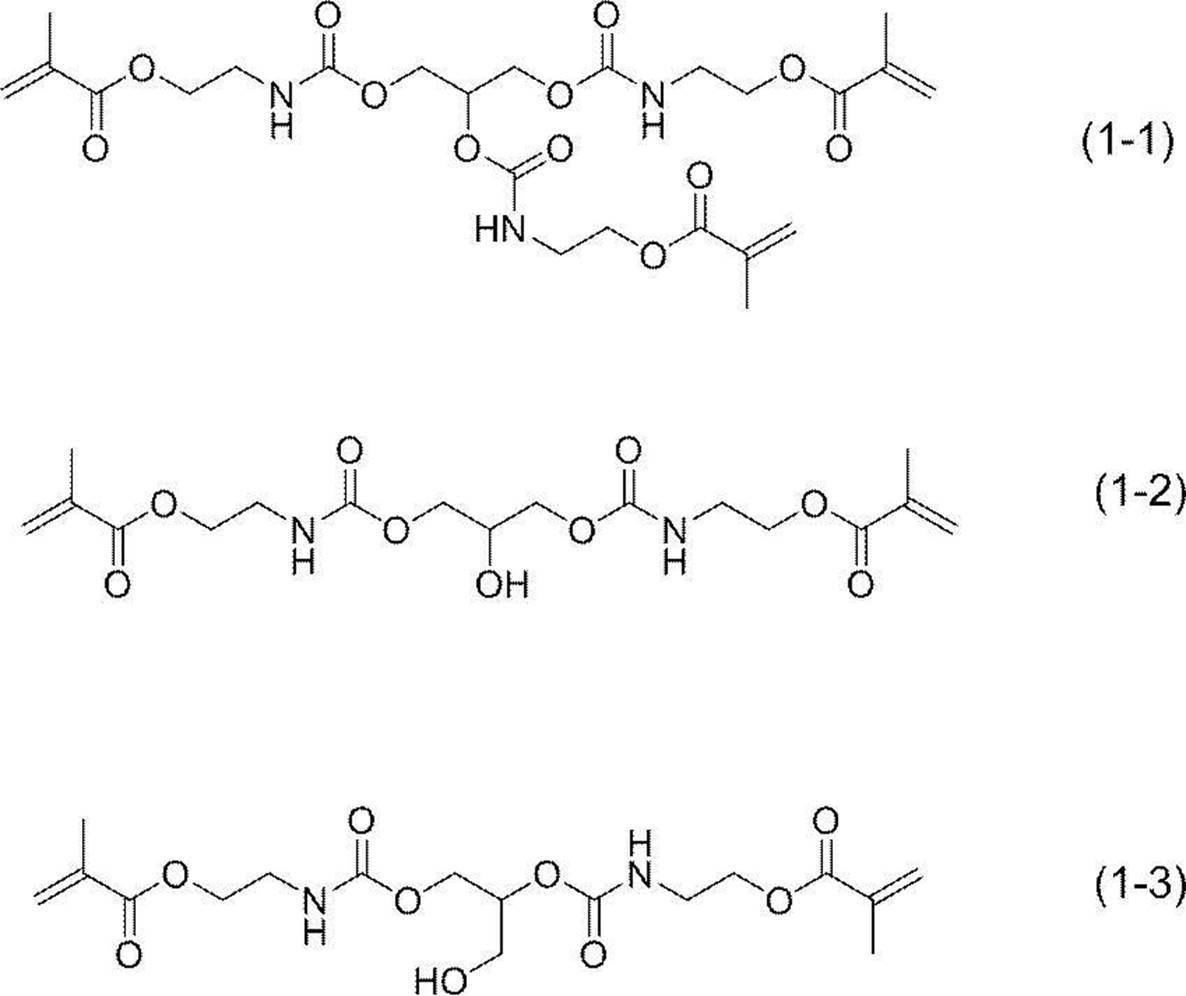
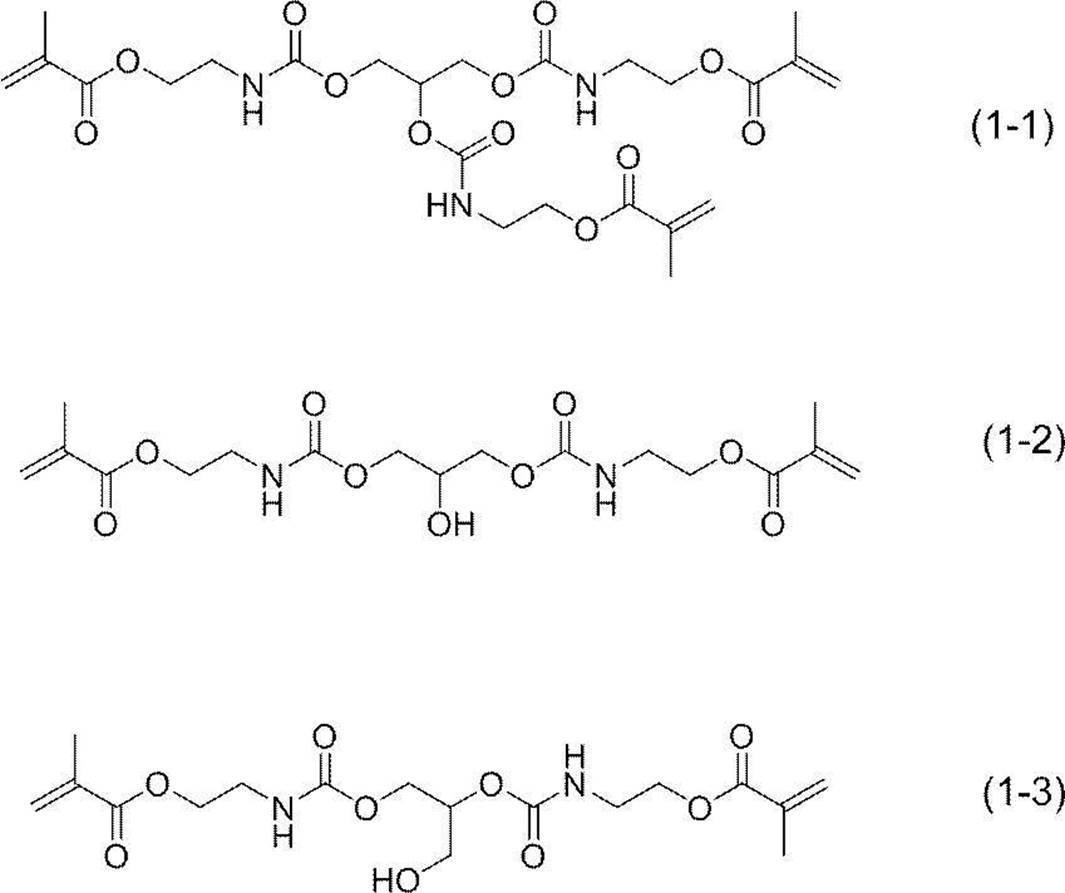
- ⁇ 8> Any one of ⁇ 1> to ⁇ 7> containing at least one selected from the group consisting of the following compounds (1-1) to (1-10) as the compound represented by the general formula (1):
- the monomer composition for dental materials according to one.
- the content of the compound represented by the general formula (1) with respect to the total content of the compound represented by the general formula (1) and the (meth)acrylate compound (2) is 1.0% by mass to 40%.
- the (meth)acrylate compound (2) is selected from the group consisting of an acidic group-containing (meth)acrylate, an acidic group-free monofunctional (meth)acrylate and an acidic group-free bifunctional (meth)acrylate.
- the monomer composition for dental material according to ⁇ 9> or ⁇ 10> which is one or more compounds.
- the total content of the compound represented by the general formula (1) and the (meth)acrylate compound (2) is 90% by mass or more based on the total monomer composition for dental materials ⁇ 9> to ⁇ 11.
- the dental material composition according to ⁇ 13> or ⁇ 14> which is used as a dental adhesive resin cement, a dental composite resin, or a dental bonding material.
- the cured product when used as a dental filler such as a composite resin or a resin cement, the cured product is provided with excellent strength, and when used as a dental adhesive such as a bonding material, adhesiveness is improved. It is possible to provide a good monomer composition for dental materials, a composition for dental materials, and a dental material.
- the numerical range represented by “to” means a range including the numerical values before and after “to” as the lower limit value and the upper limit value.
- the amount of each component in the composition, when there are a plurality of substances corresponding to each component in the composition, unless otherwise specified, the total amount of the plurality of substances present in the composition. means.
- the upper limit or the lower limit described in one numerical range may be replaced with the upper limit or the lower limit of the numerical range described in other stages. ..
- the upper limit value or the lower limit value of the numerical range may be replaced with the value shown in the examples.
- “(meth)acryloyl” means acryloyl or methacryloyl
- “(meth)acrylate” means acrylate or methacrylate.
- the monomer composition for dental materials of the present disclosure contains a compound represented by the following general formula (1).
- X is an n-valent organic group having 1 to 200 carbon atoms and containing at least one selected from the group consisting of oxygen atom and nitrogen atom, and is selected from the group consisting of the oxygen atom and nitrogen atom. At least one selected is linked to Y.
- Y is a (meth)acryloyl group-containing group (Y1) represented by the following general formula (A), a (meth)acryloyl group (Y2), a hydrogen atom, or a hydrocarbon group having 1 to 20 carbon atoms.
- A a (meth)acryloyl group-containing group
- Y2 a hydrogen atom
- hydrocarbon group having 1 to 20 carbon atoms a hydrocarbon group having 1 to 20 carbon atoms.
- N is an integer of 3 or more.
- R 1a represents a hydrogen atom or a methyl group
- R 1b represents a divalent organic group having 2 to 6 carbon atoms
- an alkyl group having 1 to 6 carbon atoms or (meth)acryloyloxy It may be substituted with an alkylene group.
- the monomer composition for a dental material of the present disclosure gives excellent flexural strength to a cured product in the application as a dental filler such as a composite resin and a resin cement, and as a dental adhesive such as a bonding material. In use, the adhesiveness can be improved.
- X is an n-valent organic group having 1 to 200 carbon atoms and containing at least one selected from the group consisting of oxygen atom and nitrogen atom.
- the number is preferably 2 to 150, more preferably 3 to 30.
- the organic group containing at least one selected from the group consisting of oxygen atom and nitrogen atom has a structure in which oxygen atoms are continuously present in the main chain (for example, represented by “—O—O—”). It is preferable that the structure other than the oxygen atom and the nitrogen atom is a hydrocarbon group.
- n is an integer of 3 or more, preferably an integer of 3 to 12, more preferably an integer of 3 to 6, and particularly preferably 3.
- X is preferably any one of the following general formulas (X1) to (X10), and any one of the following general formulas (X1) to (X7). More preferably, it is more preferably represented by any one of the following general formulas (X1) to (X5), and the following general formulas (X1) to (X3) are more preferable. More preferably, it is represented by any one of However, in the following general formula (X7), n X7 is an integer of 1 to 40, but is preferably an integer of 1 to 20.
- n X7 is an integer of 1 to 40.
- each Y is a (meth)acryloyl group-containing group (Y1) represented by the general formula (A), a (meth)acryloyl group (Y2), a hydrogen atom, or a carbon number of 1 to 20 hydrocarbon groups, and at least one of all Y in the compound represented by the general formula (1) is a (meth)acryloyl group-containing group (Y1).
- At least two or more Y are preferably a (meth)acryloyl group-containing group (Y1), more preferably at least three or more are a (meth)acryloyl group-containing group (Y1), and all Y are It is more preferably a (meth)acryloyl group-containing group (Y1).
- Y contains a group other than the (meth)acryloyl group-containing group (Y1) or a hydrogen atom, it preferably contains a hydrogen atom.
- Y contains a group other than the (meth)acryloyl group-containing group (Y1) or a hydrogen atom
- one of all Y's is a hydrogen atom and the remaining Y is a (meth)acryloyl group-containing group (Y1).
- the hydrocarbon group having 1 to 20 carbon atoms may be a straight-chain hydrocarbon group or a hydrocarbon group having a branched and/or ring structure.
- n is an integer of 3 or more, preferably an integer of 3 to 12, more preferably an integer of 3 to 6, and particularly preferably 3.
- R 1b is a divalent organic group having 2 to 6 carbon atoms, and is a linear alkylene group having 2 to 6 carbon atoms or a linear oxyalkylene group having 2 to 6 carbon atoms. It is preferable that it is a linear alkylene group having 2 to 4 carbon atoms, or a linear oxyalkylene group having 2 to 4 carbon atoms is more preferable, and a linear alkylene group having 2 to 4 carbon atoms is further preferable.
- R 1b may be substituted with an alkyl group having 1 to 6 carbon atoms or a (meth)acryloyloxyalkylene group, or may be unsubstituted.
- the alkylene group in the (meth)acryloyloxyalkylene group may have, for example, 1 to 12 carbon atoms, and specifically, it is (meth)acryloyloxymethylene group, (meth)acryloyloxyethylene group, (meth)acryloyloxy. It may be a propylene group or the like.
- the (meth)acryloyl group-containing group (Y1) is preferably at least one selected from the group consisting of groups represented by the following general formulas (Y1a) to (Y1f), and the following general formula (Y1a) to It is more preferably at least one selected from the group consisting of groups represented by (Y1d), and at least one selected from the group consisting of groups represented by the following general formulas (Y1a) and (Y1b). Is more preferable.
- the compound represented by the general formula (1) contains at least one selected from the group consisting of the following compounds (1-1) to (1-10), and particularly, the adhesiveness to enamel
- the compound represented by the following compound (1-1) is more preferable because
- the molecular weight of the compound represented by the general formula (1) is preferably 350 to 2000. Thereby, the bending strength of the obtained cured product can be further improved. From the above viewpoint, the molecular weight of the compound represented by the general formula (1) is more preferably 380 to 1500, further preferably 400 to 700.
- the monomer composition for dental materials according to the present disclosure preferably further contains a (meth)acrylate compound (2) other than the compound represented by the general formula (1).
- the (meth)acrylate compound (2) is one selected from the group consisting of an acidic group-containing (meth)acrylate, an acidic group-free monofunctional (meth)acrylate, and an acidic group-free bifunctional (meth)acrylate.
- the above compounds are preferable.
- the acidic group contained in the acidic group-containing (meth)acrylate include a carboxylic acid group, a carboxylic acid anhydride group, a phosphoric acid group, a thiophosphoric acid group, a pyrophosphoric acid group, a thiopyrophosphoric acid group, a phosphonic acid group, and a thiophosphonic acid.
- Group and a sulfonic acid group include a carboxylic acid group, a carboxylic acid anhydride group, a phosphoric acid group, a thiophosphoric acid group, a pyrophosphoric acid group, a thiopyrophosphoric acid group, a phosphonic acid group, and a
- the acidic groups may be in the form of acid chloride, alkali metal salt, alkaline earth metal salt, ammonium salt, or the like.
- Examples of the acidic group-containing (meth)acrylate having a carboxylic acid group or a carboxylic acid anhydride group include 4-methacryloyloxyethyl trimellitic acid (4-MET) and its anhydride.
- Examples of the acidic group-containing (meth)acrylate having a phosphoric acid group include 10-methacryloyloxydecyl dihydrogen phosphate (MDP) and the like.
- HSA 2-hydroxyethyl acrylate
- HEMA 2-hydroxyethyl methacrylate
- HPA 2-hydroxypropyl acrylate
- HPMA 2-hydroxypropyl methacrylate
- bifunctional (meth)acrylate having no acidic group examples include 2,2,4-trimethylhexamethylenebis(2-carbamoyloxyethyl)dimethacrylate (UDMA), neopentyldi(meth)acrylate and 1,4-butanedioldi (Meth)acrylate, 1,6-hexanediol di(meth)acrylate, 1,8-octanediol di(meth)acrylate, 1,9-nonanediol di(meth)acrylate, 1,10-decanediol di(meth) ) Acrylate, tricyclodecane dimethanol di(meth)acrylate, ethylene glycol di(meth)acrylate, diethylene glycol di(meth)acrylate, triethylene glycol di(meth)acrylate, tetraethylene glycol di(meth)acrylate, polyethylene glycol di (Meth)acrylate, tripropylene glycol di(meth)acrylate,
- the total content of the compound represented by the general formula (1) and the (meth)acrylate compound (2) is preferably 90% by mass or more, and 95% by mass or more based on the whole monomer composition for dental materials. Is more preferable.
- the content of the compound represented by the general formula (1) relative to the total content of the compound represented by the general formula (1) and the (meth)acrylate compound (2) is 1.0% by mass to 40. It is preferably 0% by mass, more preferably 3.0% by mass to 30.0% by mass. However, when the monomer composition for dental materials of the present disclosure is used as a bonding material or a pretreatment material such as a primer, the compound represented by the general formula (1) and the (meth)acrylate compound (2) are used.
- the content of the compound represented by the general formula (1) with respect to the total content is preferably 1.0% by mass to 95% by mass, more preferably 3.0% by mass to 60% by mass. ..
- the compound represented by the general formula (1) is preferably obtained by reacting the compound (X) described below with the compound (Y) described below. More specifically, it is obtained by reacting at least one group selected from the group consisting of a hydroxy group, a primary amino group and a secondary amino group of compound (X) with an isocyanate group of compound (Y). Is preferred.
- the compound (X), which is a raw material of the compound represented by the general formula (1), includes a compound containing at least one group selected from the group consisting of a hydroxy group, a primary amino group and a secondary amino group. Specifically, it is a compound having 1 to 200 carbon atoms and containing at least one selected from the group consisting of oxygen atom and nitrogen atom, and at least one selected from the group consisting of oxygen atom and nitrogen atom is a hydrogen atom. Is a compound bound to.
- the compound (X) is preferably a compound in which at least one of the bonding positions * in the general formulas (X1) to (X10) is bonded to a hydrogen atom. Further, the bonding position * in the general formula (X1) to the general formula (X10) may be bonded to a hydrocarbon group, a (meth)acryloyl group or the like.
- the compound (X) is preferably a compound in which two or more bonding positions * in any of the general formula (X1) to the general formula (X10) are bonded to a hydrogen atom, and three hydrogen atoms More preferably, it is a bound compound.
- the compound (Y), which is a raw material of the compound represented by the general formula (1), contains an isocyanate group and a (meth)acryloyloxy group, and the isocyanate group and the (meth)acryloyloxy group have 2 to 6 carbon atoms. Examples thereof include compounds bound via a divalent organic group.
- Examples of the compound (Y) include compounds represented by the following general formula.
- R 1a and R 1b are the same as R 1a and R 1b in the above general formula (A).
- the reaction between the compound (X) and the compound (Y) may be performed in the absence of solvent or in the solvent.
- solvent known solvents can be used as long as they are inert to the reaction, and examples thereof include polar solvents such as hydrocarbon solvents such as n-hexane, benzene, toluene and xylene.
- a catalyst When reacting the compound (X) with the compound (Y), a catalyst may be added in order to improve the reaction rate.
- a catalyst a known catalyst that accelerates the reaction of at least one group selected from the group consisting of a hydroxy group, a primary amino group and a secondary amino group of the compound (X) with an isocyanate group of the compound (Y). Can be used.
- Examples of the catalyst include organic tin compounds such as dibutyltin dilaurate.
- the amount of the catalyst used may be 0.001% by mass to 0.1% by mass, or 0.01% by mass to 0.1% by mass, based on the total amount of the compound (X) and the compound (Y). It may be %.
- the reaction temperature is not particularly limited and is usually 20°C to 120°C, preferably 30 to 100°C.
- the reaction time is not particularly limited as it depends on the conditions such as the reaction temperature and is usually several minutes to several tens hours.
- Examples of the method for confirming the end point of the reaction include analysis by HPLC (high performance liquid chromatography).
- the molar ratio (X:Y) of the charged amounts of the compound (X) and the compound (Y) is preferably 1:1 to 1:12, more preferably 1:1 to 1:6.
- composition for dental materials of the present disclosure contains the monomer composition for dental materials of the present disclosure, and a polymerization initiator.
- This composition for dental materials has a chemical polymerization property, a heat polymerization property, or a photopolymerization property, and can be preferably used, for example, as a dental restorative material.
- the content of the compound represented by the general formula (1) in the dental material composition is preferably 0.1% by mass to 20% by mass with respect to the total mass of the dental material composition, It is more preferably 5% by mass to 10% by mass, and further preferably 1.0% by mass to 8.0% by mass.
- the content of the compound represented by the general formula (1) is preferably 1.0% by mass to 80% by mass with respect to the total mass of the dental material composition, The amount is more preferably 3.0% by mass to 60% by mass, and further preferably 5.0% by mass to 40% by mass.
- a general polymerization initiator used in the field of dentistry can be used, and it is usually a polymerizable compound such as a compound represented by the general formula (1) contained in a composition for dental materials. It is selected in consideration of polymerizability and polymerization conditions.
- the polymerization initiator for example, a redox type polymerization initiator in which an oxidizing agent and a reducing agent are combined is preferable.
- a redox type polymerization initiator in which an oxidizing agent and a reducing agent are combined is preferable.
- the oxidizing agent and the reducing agent may be separately packaged, and both may be mixed immediately before use.
- the polymerization initiator can be used without particular limitation as long as it is a commonly used known polymerization initiator, and is usually selected in consideration of the polymerizability of the polymerizable compound and the polymerization conditions.
- polymerization initiator examples include organic peroxides/aromatic amines such as benzoyl peroxide, decanoyl peroxide, diacyl peroxide, cumene hydroperoxide/thiourea, ascorbic acid/copper salt, organic peroxides.
- a redox type polymerization initiator such as an oxide/amine compound/sulfinic acid (or salt thereof) type can be used.
- trialkylborane and its partial oxide such as tributylborane and its partial oxide, 5-butylbarbituric acid, 5-butyl-2-thiobarbituric acid catalyst and the like are also preferably used. ..
- a polymerization initiator such as a peroxide or an azo compound is preferable.
- the peroxide is not particularly limited, and examples thereof include benzoyl peroxide, t-butyl hydroperoxide, cumene hydroperoxide and the like.
- the azo compound is not particularly limited, and examples thereof include azobisisobutyronitrile.
- ⁇ -diketones such as camphorquinone and acetylbenzoyl
- benzoylalkyl ethers such as benzoylethyl ether
- thioxanthone derivatives such as 2-chlorothioxanthone and methylthioxanthone
- benzophenone, p, p′ Benzophenone derivatives such as -methoxybenzophenone
- photopolymerization catalysts such as acylphosphine oxides such as 2,4,6-trimethylbenzoyldiphenylphosphine oxide and 2,6-dimethoxybenzoyldiphenylphosphine oxide.
- amine compounds such as dimethylaminoethyl methacrylate, N,N-dimethyl-p-toluidine and ethyl N,N-dimethylbenzoate, aldehyde compounds such as citronellal and dimethylaminobenzaldehyde, 2- It is preferable to use a cocatalyst component such as a compound having a thiol group such as mercaptobenzoxazole and decanethiol together.
- a cocatalyst component such as a compound having a thiol group such as mercaptobenzoxazole and decanethiol together.
- the above polymerization initiators may be used alone or in combination of two or more.
- the blending amount of the polymerization initiator is preferably 0.01% by mass to 20% by mass, more preferably 0.1% by mass to 5% by mass, relative to 100% by mass of the dental material composition.
- the dental material composition of the present disclosure may include a filler.
- the filler is not particularly limited as long as it is a general filler used in the dental field and can be used. Fillers are generally roughly classified into organic fillers and inorganic fillers. Examples of the organic filler include fine powders of polymethylmethacrylate, methylmethacrylate-ethylmethacrylate copolymer, ethylene-vinylacetate copolymer, styrene-butadiene copolymer and the like.
- the inorganic filler examples include various kinds of glass (mainly containing silicon dioxide and, if necessary, containing oxides such as heavy metals, boron, and aluminum), various kinds of ceramics, diatomaceous earth, kaolin, clay minerals (montmorillonite, etc.). Examples include fine powders of activated clay, synthetic zeolite, mica, calcium fluoride, ytterbium fluoride, calcium phosphate, barium sulfate, zirconium dioxide, titanium dioxide, hydroxyapatite and the like.
- an inorganic filler examples include, for example, barium borosilicate glass (shot 8235, shot GM27884, shot G018-053, etc.), strontium boroaluminosilicate glass (shot G018-163, etc.), lanthanum glass (shot GM31684, etc.). ), fluoroaluminosilicate glass (Shot G018-117, etc.), and boroaluminosilicate glass containing zirconium, cesium, etc. (Shot G018-307, etc.).
- an organic-inorganic composite filler obtained by previously adding a polymerizable compound to an inorganic filler to form a paste, polymerizing and curing, and pulverizing may be used.
- a composition containing a microfiller having a particle size of 0.1 ⁇ m or less is one of the preferred embodiments for a dental composite resin.
- silica for example, trade name Aerosil
- alumina, zirconia, titania and the like are preferable.
- the addition of such an inorganic filler having a small particle size is advantageous in obtaining the smoothness of polishing of the cured product of the composite resin.
- the surface of these fillers may be treated with a surface treatment agent such as a silane coupling agent depending on the purpose.
- a surface treatment agent such as a silane coupling agent
- a known silane coupling agent for example, methacryloxyalkyltrimethoxysilane (carbon number between methacryloxy group and silicon atom: 3 to 12), methacryloxyalkyltriethoxysilane (methacryloxy group Number of carbon atoms between 3 and 12), and an organic silicon compound such as vinyltrimethoxysilane, vinylethoxysilane, and vinyltriacetoxysilane are used.
- fillers may be used alone or in combination of two or more.
- the filler content may be appropriately determined in consideration of the operability (viscosity) of the dental material composition (eg, composite resin composition) and the bending strength of the cured product thereof. 10 parts by mass to 2000 parts by mass, more preferably 50 parts by mass to 1000 parts by mass, and further preferably 100 parts by mass to 600 parts by mass based on 100 parts by mass of all components other than the filler contained in.
- the composition for dental materials according to the present disclosure may appropriately contain a component other than the monomer composition according to the present disclosure and a polymerization initiator depending on the purpose.
- the component that may be contained in the dental material composition of the present disclosure is not particularly limited as long as it is a known component, and for example, a polymerization inhibitor may be contained in order to improve storage stability. Further, in order to adjust the color tone, a known pigment, dye or other coloring matter may be contained. Further, in order to improve the strength of the cured product, a known reinforcing material such as fiber may be included.
- composition for a dental material of the present disclosure may contain additives such as a solvent (acetone, distilled water, etc.), a bactericide, a disinfectant, a stabilizer, and a preservative as long as the effects of the present invention are exhibited. May be included.
- the composition for dental materials of the present disclosure can be cured under appropriate conditions by the above-mentioned polymerization method of the polymerization initiator.
- a predetermined light irradiation device is used to perform predetermined processing.
- a desired cured product can be obtained by irradiating visible light for a period of time.
- Conditions such as irradiation intensity and irradiation intensity can be appropriately changed according to the curability of the composition for dental materials.
- the bending strength of the cured product may be improved by further heat-treating the cured product cured by light irradiation such as visible light under appropriate conditions.
- the dental material of the present disclosure is a cured product of the dental material composition of the present disclosure.
- the curing conditions for the dental material composition may be appropriately determined depending on the composition of the dental material composition, the use of the dental material, and the like.
- the cured product of the dental material composition of the present disclosure obtained as described above can be suitably used as a dental material.
- the method of using the dental material composition of the present disclosure is not particularly limited as long as it is generally known as a method of using a dental material.
- the dental material composition of the present disclosure is used as a caries cavity filling composite resin, after filling the cavity in the oral cavity with the dental material composition, photocuring is performed using a known light irradiation device. By this, the purpose can be achieved.
- a dental crown composite resin after the dental material composition is processed into an appropriate shape, it is photocured using a known light irradiation device, and further subjected to heat treatment under predetermined conditions, The desired crown material can be obtained.
- the composition for dental materials and the dental material of the present disclosure include, for example, a resin for denture base, a lining material for denture base, an impression material, an attachment material (resin-added glass ionomer cement, etc.), a dental adhesive (dental).
- It can be preferably used as a composite resin, an abutment building composite resin, etc.), a hard resin, an artificial tooth material and the like.
- the composition for dental materials and the dental material of the present disclosure are particularly suitable for a dental composite resin, a dental adhesive resin cement, a dental bonding material, and the like.
- TMOIG trimethacryloyloxyethylcarbonylaminoglycerin: a compound represented by the following formula (1-1) (methacryloyloxyethylisocyanate (MOI, manufactured by Showa Denko KK) and glycerin (Sigma) according to a known urethanization reaction method. Compound produced by reacting Aldrich) at a molar ratio of 1:3)
- DMOIG Dimethacryloyloxyethylcarbonylaminoglycerin
- a compound represented by the following (1-2) methacryloyloxyethyl isocyanate according to a known urethanization reaction method.
- MOI manufactured by Showa Denko KK
- glycerin manufactured by Sigma-Aldrich Co.
- UDMA 2,2,4-trimethylhexamethylenebis(2-carbamoyloxyethyl)dimethacrylate (with 2,2,4-trimethylhexyl diisocyanate (TMHDI, Tokyo Kasei Kogyo Co., Ltd.) according to a known urethanization reaction method)
- TMHDI 2,2,4-trimethylhexyl diisocyanate
- 2-hydroxyethyl methacrylate (HEMA, Mitsubishi Chemical Co., Ltd.) is a compound synthesized by reacting at a molar ratio of 1:2)
- TEGDMA Triethylene glycol dimethacrylate (manufactured by Shin-Nakamura Chemical Co., Ltd.)
- HEMA 2-hydroxyethyl methacrylate (manufactured by Mitsubishi Chemical Corporation)
- R812 Fine particle silica (manufactured by Nippon Aerosil Co., Ltd., trade name "Aerosil R812") 8235: Silane-treated barium glass powder (manufactured by SCHOTT, trade name “8235”, particle size 0.7 ⁇ m, ⁇ -MPTS treated with 6% of the filler mass)
- GM27884 Silane-treated barium glass powder (manufactured by SCHOTT, trade name "GM27884", particle size 1.5 ⁇ m, ⁇ -MPTS treated with 1.6% of the filler mass)
- BHT 2,6-di-t-butyl-4-methylphenol (manufactured by Tokyo Chemical Industry Co., Ltd.)
- MEHQ 4-methoxyphenol (manufactured by Fujifilm Wako Pure Chemical Industries, Ltd.)
- compositions for dental material used as the dental composite resins of Example 1, Example 2, Example 3 and Comparative Example 1.
- the components were mixed as described in Table 2 described below to prepare dental material compositions used as the dental bonding material in Examples 4, 5 and Comparative Example 2.
- Dental used as a dental self-adhesive resin cement of Example 6, Example 7, Example 8, Comparative Example 3, and Comparative Example 4 by mixing the respective components as described in Tables 3 and 4 described later.
- a material composition was prepared.
- ⁇ Method for measuring three-point bending strength of dental composition Examples 1 to 3, 6 to 8 and Comparative Examples 1, 3, 4> Example 1, Example 2, Example 3, Example 6, Example 7, Example 8, Comparative Example 1, Comparative Example 3, taken on dental kneaded paper at room temperature set to 20 to 25° C.
- the composition for dental material of Comparative Example 4 was filled in a mold having a size of 2 mm ⁇ 2 mm ⁇ 25 mm, which acts as a test body, and pressure-welded with a lumirror film from both front and back surfaces.
- the mold filled with the composition for dental materials was installed in a technical LED irradiator (Alpha Light V, manufactured by Morita Co., Ltd.), and the cured product obtained by irradiating light for 3 minutes on each side was used as a test body.
- Each test piece was removed from the mold, immersed in distilled water, stored in a 37°C ⁇ 1°C incubator for 18 hours, and then taken out of the test piece, using a small bench tester (manufactured by Shimadzu Corporation)
- a point bending test was performed. The test was carried out by applying a load at a load speed of a crosshead speed of 1 mm/min until the test body broke, and the strength of the cured body was calculated from the maximum stress obtained. At that time, the elastic modulus was also calculated.
- Table 1 described later The results are shown in Table 1 described later.
- Example 1 As shown in Table 1, in the use as a dental composite resin, the compositions for dental materials of Example 1, Example 2 and Example 3 containing TMOIG had more mechanical properties than Comparative Example 1 containing no TMOIG ( The three-point bending strength and elastic modulus) were excellent.
- “-” in the table indicates that the corresponding component is not contained.
- “SD” in the table means standard deviation. The same applies to the descriptions in the table below.
- ⁇ Adhesive strength evaluation method> After removal of the bovine tooth adherend, the frozen and preserved bovine mandibular anterior tooth was thawed under water injection and subjected to root cutting and demyelination. This was placed in a plastic cylindrical container having a diameter of 25 mm and a depth of 25 mm and embedded in an acrylic resin. Immediately before use, the bovine tooth adherend was ground with water-resistant emery paper (P400) to carve out smooth surfaces of enamel and dentin before use. The adhesive strength is parallel to the bovine tooth enamel or dentin surface, and a shearing load is applied to the surface of the bovine tooth at a crosshead speed of 1.0 mm/min. It was determined from the shearing load at the time of separation. The treatment method of each dental material composition is shown below.
- Examples 4, 5 and Comparative Example 2 Compressed air is blown onto the adherend for about 1 second to dry it, and then the dental material compositions of Example 4, Example 5 and Comparative Example 2 are applied to the flat surface of enamel or dentin, and after 20 seconds, The volatile solvent contained in the dental material composition was dried with a dental air syringe. After that, each composition for dental materials was irradiated with light for 20 seconds using an LED visible light irradiator (Translux 2 wave) to cure, and then a plastic mold having a diameter of 2.38 mm (manufactured by Ultradent Japan Co., Ltd.
- LED visible light irradiator Translux 2 wave
- ⁇ Method for evaluating adhesive strength of dental self-adhesive resin cement Examples 6 to 8, Comparative Examples 3 and 4> Compressed air was blown onto the adhered surface of bovine tooth enamel or dentin for about 1 second to dry it.
- the cylindrical column curing of the photo-curable composition (Clearfill APX, manufactured by Kuraray Noritake Dental Co., Ltd.) prepared in advance by separately preparing the compositions for dental materials of Examples 6 to 8 and Comparative Examples 3 and 4 It was applied to the adherend surface of the object ( ⁇ 2.3 mm ⁇ height 2.2 mm), placed on the cow tooth adhered surface, and pressed with a force of 5 N using a dedicated jig.
- Table 3 shows examples (Examples 6, 7 and Comparative Example 3) in which MDP and 4-MET were used as the acidic group-containing polymerizable monomer (C).
- Table 4 shows an example using only MDP (Example 8, Comparative Example 4).
- the compositions for dental materials of Examples 6 to 8 containing TMOIG or DMOIG do not contain TMOIG and DMOIG.
- the bending strength was superior to that of Comparative Example 4.
- the tooth substance adhesiveness of the dental material compositions of Examples 6 to 8 was superior to that of Comparative Example 3 or Comparative Example 4.
- the compositions for dental materials of Examples 6 and 8 containing TMOIG were found to have excellent bending strength.
- the composition for dental materials containing TMOIG or DMOIG imparts excellent flexural strength to the cured product. Further, it has been found that when the dental material composition contains TMOIG or DMOIG, good dentin adhesion can be obtained.
Landscapes
- Health & Medical Sciences (AREA)
- Oral & Maxillofacial Surgery (AREA)
- General Health & Medical Sciences (AREA)
- Epidemiology (AREA)
- Life Sciences & Earth Sciences (AREA)
- Animal Behavior & Ethology (AREA)
- Public Health (AREA)
- Veterinary Medicine (AREA)
- Chemical & Material Sciences (AREA)
- Plastic & Reconstructive Surgery (AREA)
- Chemical Kinetics & Catalysis (AREA)
- Medicinal Chemistry (AREA)
- Polymers & Plastics (AREA)
- Organic Chemistry (AREA)
- Dental Preparations (AREA)
Abstract
一般式(1)で表される化合物を含む歯科材料用モノマー組成物。一般式(1)中、Xは酸素原子及び窒素原子からなる群から選択される少なくとも1つを含む炭素数1~200のn価の有機基であり、前記酸素原子及び窒素原子からなる群から選択される少なくとも1つがYと結合し、Yは、一般式(A)で表される(メタ)アクリロイル基含有基(Y1)、(メタ)アクリロイル基(Y2)、水素原子、又は炭素数1~20の炭化水素基であり、ただし、一般式(1)で表される化合物中のすべてのYのうち、少なくとも1以上は(メタ)アクリロイル基含有基(Y1)である。
Description
本開示は、歯科材料用モノマー組成物、歯科材料用組成物及び歯科材料に関する。
歯科治療の臨床現場において、歯牙修復に用いられるレジン系材料の使用範囲が拡大してきている。レジン系の歯科材料は、(メタ)アクリレート基を分子構造中に有するモノマーを含有する場合がある。上記のモノマーとしては、例えば、ビスフェノールAジグリシジルメタクリレート(Bis-GMA)、2,2,4-トリメチルヘキサメチレンビス(2-カルバモイルオキシエチル)ジメタクリレート(UDMA)などの両末端に(メタ)アクリル基を有するジメタクリレートが代表的に挙げられる。
また、上記のモノマーとして、例えば特開2018-145133号公報において、10-メタクリロイルオキシデシルジハイドロジェンホスフェート(MDP)、トリエチレングリコールジメタクリレート(TEGDMA)、2-ヒドロキシエチルメタクリレート(HEMA)などが記載されている。
これらモノマーは、配合される組成物を用いて得られる歯科材料において要求される性質(例えば、接着性、強度などの機械的物性、取り扱いやすさなど)に応じて、使い分けられている。
また、上記のモノマーとして、例えば特開2018-145133号公報において、10-メタクリロイルオキシデシルジハイドロジェンホスフェート(MDP)、トリエチレングリコールジメタクリレート(TEGDMA)、2-ヒドロキシエチルメタクリレート(HEMA)などが記載されている。
これらモノマーは、配合される組成物を用いて得られる歯科材料において要求される性質(例えば、接着性、強度などの機械的物性、取り扱いやすさなど)に応じて、使い分けられている。
しかしながら、上述のモノマーの組合せのみでは、歯科材料に与える強度及び接着性の点において充分とはいえず、改善の余地があった。
本開示は、上記問題に対処するものである。
即ち、本開示の一実施形態は、コンポジットレジン、レジンセメントなどの歯科用充填材としての用途においては硬化物に優れた曲げ強度を与え、ボンディング材などの歯科用接着材としての用途においては接着性が良好である歯科材料用モノマー組成物、歯科材料用組成物、及び歯科材料を提供することに関する。
即ち、本開示の一実施形態は、コンポジットレジン、レジンセメントなどの歯科用充填材としての用途においては硬化物に優れた曲げ強度を与え、ボンディング材などの歯科用接着材としての用途においては接着性が良好である歯科材料用モノマー組成物、歯科材料用組成物、及び歯科材料を提供することに関する。
本開示は以下の態様を含む。
<1>
下記一般式(1)で表される化合物を含む歯科材料用モノマー組成物。
<1>
下記一般式(1)で表される化合物を含む歯科材料用モノマー組成物。

(一般式(1)中、Xは酸素原子及び窒素原子からなる群から選択される少なくとも1つを含む炭素数1~200のn価の有機基であり、前記酸素原子及び窒素原子からなる群から選択される少なくとも1つがYと結合し、前記Yは、下記一般式(A)で表される(メタ)アクリロイル基含有基(Y1)、(メタ)アクリロイル基(Y2)、水素原子、又は炭素数1~20の炭化水素基であり、ただし、一般式(1)で表される化合物中のすべてのYのうち、少なくとも1つ以上は前記(メタ)アクリロイル基含有基(Y1)であり、複数存在する前記Yはそれぞれ同一でも異なっていてもよく、nは3以上の整数である。)

(一般式(A)中、R1aは水素原子又はメチル基を示し、R1bは、炭素数2~6の2価の有機基であり、炭素数1~6のアルキル基又は(メタ)アクリロイルオキシアルキレン基で置換されていてもよい。)
<2>
前記一般式(1)で表される化合物の分子量が350~2000である<1>に記載の歯科材料用モノマー組成物。
<3>
前記一般式(1)で表される化合物中のすべての前記Yのうち、少なくとも2つ以上が前記(メタ)アクリロイル基含有基(Y1)である<1>又は<2>に記載の歯科材料用モノマー組成物。
<4>
前記一般式(A)中、前記R1bが炭素数2~6の直鎖アルキレン基、又は炭素数2~6の直鎖オキシアルキレン基である<1>~<3>のいずれか1つに記載の歯科材料用モノマー組成物。
<5>
前記nが3~12の整数である<1>~<4>のいずれか1つに記載の歯科材料用モノマー組成物。
<6>
前記Xが、下記一般式(X1)~下記一般式(X10)で表される基のいずれか1つである<1>~<5>のいずれか1つに記載の歯科材料用モノマー組成物。
<2>
前記一般式(1)で表される化合物の分子量が350~2000である<1>に記載の歯科材料用モノマー組成物。
<3>
前記一般式(1)で表される化合物中のすべての前記Yのうち、少なくとも2つ以上が前記(メタ)アクリロイル基含有基(Y1)である<1>又は<2>に記載の歯科材料用モノマー組成物。
<4>
前記一般式(A)中、前記R1bが炭素数2~6の直鎖アルキレン基、又は炭素数2~6の直鎖オキシアルキレン基である<1>~<3>のいずれか1つに記載の歯科材料用モノマー組成物。
<5>
前記nが3~12の整数である<1>~<4>のいずれか1つに記載の歯科材料用モノマー組成物。
<6>
前記Xが、下記一般式(X1)~下記一般式(X10)で表される基のいずれか1つである<1>~<5>のいずれか1つに記載の歯科材料用モノマー組成物。

(一般式(X1)~一般式(X10)中、*は結合位置を表す。一般式(X7)中、nX7は1~40の整数である。)
<7>
前記一般式(1)中、前記少なくとも1つの(メタ)アクリロイル基含有基(Y1)が、下記一般式(Y1a)~(Y1f)で表される基からなる群より選択される少なくとも1つを含む<1>~<6>のいずれか1つに記載の歯科材料用モノマー組成物。
<7>
前記一般式(1)中、前記少なくとも1つの(メタ)アクリロイル基含有基(Y1)が、下記一般式(Y1a)~(Y1f)で表される基からなる群より選択される少なくとも1つを含む<1>~<6>のいずれか1つに記載の歯科材料用モノマー組成物。

<8>
前記一般式(1)で表される化合物として、下記化合物(1-1)~下記化合物(1-10)からなる群から選択される少なくとも1種を含む<1>~<7>のいずれか1つに記載の歯科材料用モノマー組成物。
前記一般式(1)で表される化合物として、下記化合物(1-1)~下記化合物(1-10)からなる群から選択される少なくとも1種を含む<1>~<7>のいずれか1つに記載の歯科材料用モノマー組成物。


<9>
前記一般式(1)で表される化合物以外の(メタ)アクリレート化合物(2)をさらに含有する<1>~<8>のいずれか1つに記載の歯科材料用モノマー組成物。
<10>
前記一般式(1)で表される化合物と前記(メタ)アクリレート化合物(2)との合計含有量に対する前記一般式(1)で表される化合物の含有量が、1.0質量%~40.0質量%である<9>に記載の歯科材料用モノマー組成物。
<11>
前記(メタ)アクリレート化合物(2)が、酸性基含有(メタ)アクリレート、酸性基を有しない単官能(メタ)アクリレート及び酸性基を有しない二官能(メタ)アクリレートからなる群から選択される1つ以上の化合物である<9>又は<10>に記載の歯科材料用モノマー組成物。
<12>
前記一般式(1)で表される化合物と前記(メタ)アクリレート化合物(2)との合計含有量が、歯科材料用モノマー組成物全体に対して90質量%以上である<9>~<11>のいずれか1つに記載の歯科材料用モノマー組成物。
<13>
<1>~<12>のいずれか1つに記載の歯科材料用モノマー組成物、及び重合開始剤を含有する歯科材料用組成物。
<14>
前記一般式(1)で表される化合物の含有量が、歯科材料用組成物全体の質量に対して0.1質量%~20質量%である<13>に記載の歯科材料用組成物。
<15>
歯科用接着性レジンセメント、歯科用コンポジットレジン、又は歯科用ボンディング材として用いられる<13>又は<14>に記載の歯科材料用組成物。
<16>
<13>~<15>のいずれか1つに記載の歯科材料用組成物の硬化物である歯科材料。
前記一般式(1)で表される化合物以外の(メタ)アクリレート化合物(2)をさらに含有する<1>~<8>のいずれか1つに記載の歯科材料用モノマー組成物。
<10>
前記一般式(1)で表される化合物と前記(メタ)アクリレート化合物(2)との合計含有量に対する前記一般式(1)で表される化合物の含有量が、1.0質量%~40.0質量%である<9>に記載の歯科材料用モノマー組成物。
<11>
前記(メタ)アクリレート化合物(2)が、酸性基含有(メタ)アクリレート、酸性基を有しない単官能(メタ)アクリレート及び酸性基を有しない二官能(メタ)アクリレートからなる群から選択される1つ以上の化合物である<9>又は<10>に記載の歯科材料用モノマー組成物。
<12>
前記一般式(1)で表される化合物と前記(メタ)アクリレート化合物(2)との合計含有量が、歯科材料用モノマー組成物全体に対して90質量%以上である<9>~<11>のいずれか1つに記載の歯科材料用モノマー組成物。
<13>
<1>~<12>のいずれか1つに記載の歯科材料用モノマー組成物、及び重合開始剤を含有する歯科材料用組成物。
<14>
前記一般式(1)で表される化合物の含有量が、歯科材料用組成物全体の質量に対して0.1質量%~20質量%である<13>に記載の歯科材料用組成物。
<15>
歯科用接着性レジンセメント、歯科用コンポジットレジン、又は歯科用ボンディング材として用いられる<13>又は<14>に記載の歯科材料用組成物。
<16>
<13>~<15>のいずれか1つに記載の歯科材料用組成物の硬化物である歯科材料。
本開示の一態様によれば、コンポジットレジン、レジンセメントなどの歯科用充填材としての用途においては硬化物に優れた強度を与え、ボンディング材などの歯科用接着材としての用途においては接着性が良好である歯科材料用モノマー組成物、歯科材料用組成物、及び歯科材料を提供できる。
本開示において、「~」を用いて表される数値範囲は、「~」の前後に記載される数値を下限値及び上限値として含む範囲を意味する。
本開示において、組成物中の各成分の量は、組成物中に各成分に該当する物質が複数存在する場合は、特に断らない限り、組成物中に存在する当該複数の物質の合計量を意味する。
本開示中に段階的に記載されている数値範囲において、一つの数値範囲で記載された上限値又は下限値は、他の段階的な記載の数値範囲の上限値又は下限値に置き換えてもよい。また、本開示中に記載されている数値範囲において、その数値範囲の上限値又は下限値は、実施例に示されている値に置き換えてもよい。
本開示において、「(メタ)アクリロイル」とは、アクリロイル又はメタクリロイルを意味し、「(メタ)アクリレート」とは、アクリレート又はメタクリレートを意味する。
本開示において、組成物中の各成分の量は、組成物中に各成分に該当する物質が複数存在する場合は、特に断らない限り、組成物中に存在する当該複数の物質の合計量を意味する。
本開示中に段階的に記載されている数値範囲において、一つの数値範囲で記載された上限値又は下限値は、他の段階的な記載の数値範囲の上限値又は下限値に置き換えてもよい。また、本開示中に記載されている数値範囲において、その数値範囲の上限値又は下限値は、実施例に示されている値に置き換えてもよい。
本開示において、「(メタ)アクリロイル」とは、アクリロイル又はメタクリロイルを意味し、「(メタ)アクリレート」とは、アクリレート又はメタクリレートを意味する。
[歯科材料用モノマー組成物]
本開示の歯科材料用モノマー組成物は、下記一般式(1)で表される化合物を含む。
本開示の歯科材料用モノマー組成物は、下記一般式(1)で表される化合物を含む。

一般式(1)中、Xは酸素原子及び窒素原子からなる群から選択される少なくとも1つを含む炭素数1~200のn価の有機基であり、前記酸素原子及び窒素原子からなる群から選択される少なくとも1つがYと結合する。
Yは、下記一般式(A)で表される(メタ)アクリロイル基含有基(Y1)、(メタ)アクリロイル基(Y2)、水素原子、又は炭素数1~20の炭化水素基であり、ただし、一般式(1)で表される化合物中のすべてのYのうち、少なくとも1つ以上は(メタ)アクリロイル基含有基(Y1)であり、複数存在するYはそれぞれ同一でも異なっていてもよく、nは3以上の整数である。
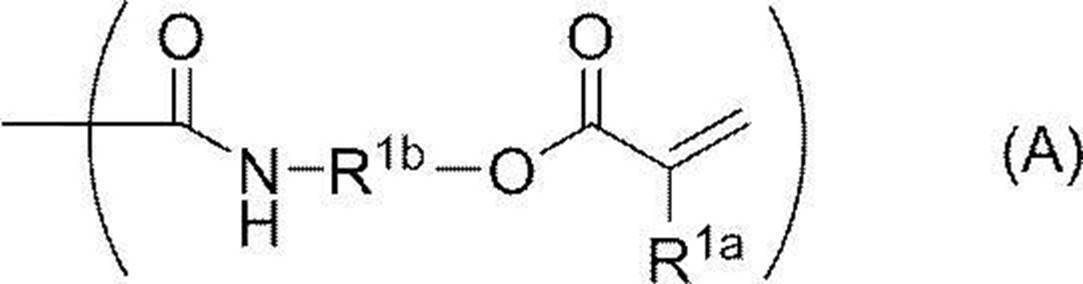
一般式(A)中、R1aは水素原子又はメチル基を示し、R1bは、炭素数2~6の2価の有機基であり、炭素数1~6のアルキル基又は(メタ)アクリロイルオキシアルキレン基で置換されていてもよい。
本開示の歯科材料用モノマー組成物を用いることにより、コンポジットレジン、レジンセメントなどの歯科用充填材としての用途においては硬化物に優れた曲げ強度を与え、ボンディング材などの歯科用接着材としての用途においては接着性を向上させることができる。
一般式(1)中、Xは、酸素原子及び窒素原子からなる群から選択される少なくとも1つを含む炭素数1~200のn価の有機基であるが、上記n価の有機基の炭素数としては、2~150であることが好ましく、3~30であることがより好ましい。
また、酸素原子及び窒素原子からなる群から選択される少なくとも1つを含む有機基としては、主鎖中に酸素原子が連続して存在する構造(例えば、「-O-O-」で表される構造)を有さないことが好ましく、酸素原子及び窒素原子以外の構造は炭化水素基であることが好ましい。
ここで、nは3以上の整数であるが、3~12の整数であることが好ましく、3~6の整数であることがより好ましく、3であることが特に好ましい。
また、酸素原子及び窒素原子からなる群から選択される少なくとも1つを含む有機基としては、主鎖中に酸素原子が連続して存在する構造(例えば、「-O-O-」で表される構造)を有さないことが好ましく、酸素原子及び窒素原子以外の構造は炭化水素基であることが好ましい。
ここで、nは3以上の整数であるが、3~12の整数であることが好ましく、3~6の整数であることがより好ましく、3であることが特に好ましい。
一般式(1)中、Xは下記一般式(X1)~下記一般式(X10)のいずれか1つであることが好ましく、下記一般式(X1)~下記一般式(X7)のいずれか1つで表されることがより好ましく、下記一般式(X1)~下記一般式(X5)のいずれか1つで表されることがさらに好ましく、下記一般式(X1)~下記一般式(X3)のいずれか1つで表されることがさらに好ましい。
ただし、下記一般式(X7)中、nX7は1~40の整数であるが、1~20の整数であることが好ましい。
ただし、下記一般式(X7)中、nX7は1~40の整数であるが、1~20の整数であることが好ましい。

一般式(X1)~一般式(X10)中、*は結合位置(Yとの結合位置)を表す。一般式(X7)中、nX7は1~40の整数である。
一般式(1)中、各Yは、上記の一般式(A)で表される(メタ)アクリロイル基含有基(Y1)、(メタ)アクリロイル基(Y2)、水素原子、又は炭素数1~20の炭化水素基であり、一般式(1)で表される化合物中のすべてのYのうち、少なくとも1つが(メタ)アクリロイル基含有基(Y1)である。
Yは、少なくとも2つ以上が(メタ)アクリロイル基含有基(Y1)であることが好ましく、少なくとも3つ以上が(メタ)アクリロイル基含有基(Y1)であることがより好ましく、すべてのYが(メタ)アクリロイル基含有基(Y1)であることがさらに好ましい。
また、Yが(メタ)アクリロイル基含有基(Y1)以外の基又は水素原子を含む場合、水素原子を含むことが好ましい。例えば、すべてのYのうち1つが水素原子であり、残りのYが(メタ)アクリロイル基含有基(Y1)であることが好ましい。
ここで、炭素数1~20の炭化水素基とは、直鎖の炭化水素基であってもよいし、分岐及び/又は環構造を有する炭化水素基であってもよい。
Yは、少なくとも2つ以上が(メタ)アクリロイル基含有基(Y1)であることが好ましく、少なくとも3つ以上が(メタ)アクリロイル基含有基(Y1)であることがより好ましく、すべてのYが(メタ)アクリロイル基含有基(Y1)であることがさらに好ましい。
また、Yが(メタ)アクリロイル基含有基(Y1)以外の基又は水素原子を含む場合、水素原子を含むことが好ましい。例えば、すべてのYのうち1つが水素原子であり、残りのYが(メタ)アクリロイル基含有基(Y1)であることが好ましい。
ここで、炭素数1~20の炭化水素基とは、直鎖の炭化水素基であってもよいし、分岐及び/又は環構造を有する炭化水素基であってもよい。
また、一般式(1)中、nは3以上の整数であるが、3~12の整数であることが好ましく、3~6の整数であることがより好ましく、3であることが特に好ましい。
一般式(A)中、R1bは、炭素数2~6の2価の有機基であるが、炭素数2~6の直鎖アルキレン基、又は炭素数2~6の直鎖オキシアルキレン基であることが好ましく、炭素数2~4の直鎖アルキレン基、又は炭素数2~4の直鎖オキシアルキレン基であることがより好ましく、炭素数2~4の直鎖アルキレン基であることがさらに好ましい。
また、R1bは、炭素数1~6のアルキル基又は(メタ)アクリロイルオキシアルキレン基で置換されていてもよく、無置換でもよい。
(メタ)アクリロイルオキシアルキレン基におけるアルキレン基は、例えば炭素数1~12であってもよく、具体的には、(メタ)アクリロイルオキシメチレン基、(メタ)アクリロイルオキシエチレン基、(メタ)アクリロイルオキシプロピレン基等であってよい。
また、R1bは、炭素数1~6のアルキル基又は(メタ)アクリロイルオキシアルキレン基で置換されていてもよく、無置換でもよい。
(メタ)アクリロイルオキシアルキレン基におけるアルキレン基は、例えば炭素数1~12であってもよく、具体的には、(メタ)アクリロイルオキシメチレン基、(メタ)アクリロイルオキシエチレン基、(メタ)アクリロイルオキシプロピレン基等であってよい。
(メタ)アクリロイル基含有基(Y1)が、下記一般式(Y1a)~(Y1f)で表される基からなる群より選択される少なくとも1つであることが好ましく、下記一般式(Y1a)~(Y1d)で表される基からなる群より選択される少なくとも1つであることがより好ましく、下記一般式(Y1a)及び(Y1b)で表される基からなる群より選択される少なくとも1つであることがさらに好ましい。

一般式(1)で表される化合物として、下記化合物(1-1)~下記化合物(1-10)からなる群から選択される少なくとも1種を含むことが好ましく、特に、エナメル質に対する接着性が向上することから、下記化合物(1-1)で表される化合物がより好ましい。


一般式(1)で表される化合物の分子量は、350~2000であることが好ましい。
これによって、得られる硬化物の曲げ強度をより向上させることができる。
上記の観点から、一般式(1)で表される化合物の分子量は、380~1500であることがより好ましく、400~700であることがさらに好ましい。
これによって、得られる硬化物の曲げ強度をより向上させることができる。
上記の観点から、一般式(1)で表される化合物の分子量は、380~1500であることがより好ましく、400~700であることがさらに好ましい。
本開示の歯科材料用モノマー組成物は、一般式(1)で表される化合物以外の(メタ)アクリレート化合物(2)をさらに含有することが好ましい。
(メタ)アクリレート化合物(2)は、酸性基含有(メタ)アクリレート、酸性基を有しない単官能(メタ)アクリレート及び酸性基を有しない二官能(メタ)アクリレートからなる群から選択される1つ以上の化合物であることが好ましい。
酸性基含有(メタ)アクリレートに含有される酸性基としては、例えば、カルボン酸基、カルボン酸無水物基、リン酸基、チオリン酸基、ピロリン酸基、チオピロリン酸基、ホスホン酸基、チオホスホン酸基、スルホン酸基が挙げられる。なお、これらの酸性基は、酸塩化物、アルカリ金属塩、アルカリ土類金属塩、アンモニウム塩等の形態であってもよい。
カルボン酸基又はカルボン酸無水物基を有する酸性基含有(メタ)アクリレートとしては、例えば、4-メタクリロイルオキシエチルトリメリット酸(4-MET)及びその無水物等が挙げられる。
リン酸基を有する酸性基含有(メタ)アクリレートとしては、例えば、10-メタクリロイルオキシデシルジハイドロジェンホスフェート(MDP)等が挙げられる。
酸性基を有しない単官能(メタ)アクリレートとしては、2-ヒドロキシエチルアクリレート(HEA)、2-ヒドロキシエチルメタクリレート(HEMA)、2-ヒドロキシプロピルアクリレート(HPA)、2-ヒドロキシプロピルメタクリレート(HPMA)2-イソシアナトエチルメタクリレート等が挙げられる。
酸性基を有しない二官能(メタ)アクリレートとしては、2,2,4-トリメチルヘキサメチレンビス(2-カルバモイルオキシエチル)ジメタクリレート(UDMA)、ネオペンチルジ(メタ)アクリレート、1,4-ブタンジオールジ(メタ)アクリレート、1,6-ヘキサンジオールジ(メタ)アクリレート、1,8-オクタンジオールジ(メタ)アクリレート、1,9-ノナンジオールジ(メタ)アクリレート、1,10-デカンジオールジ(メタ)アクリレート、トリシクロデカンジメタノールジ(メタ)アクリレート、エチレングリコールジ(メタ)アクリレート、ジエチレングリコールジ(メタ)アクリレート、トリエチレングリコールジ(メタ)アクリレート、テトラエチレングリコールジ(メタ)アクリレート、ポリエチレングリコールジ(メタ)アクリレート、トリプロピレングリコールジ(メタ)アクリレート、テトラプロピレングリコールジ(メタ)アクリレート、ポリプロピレングリコールジ(メタ)アクリレート、2,2-ビス〔4-(3-(メタ)アクリロイルオキシ-2-ヒドロキシプロポキシ)フェニル〕プロパン、エチレンオキサイド変性ビスフェノールAジ(メタ)アクリレート、プロピレンオキサイド変性ビスフェノールAジ(メタ)アクリレート、等が挙げられる。
酸性基含有(メタ)アクリレートに含有される酸性基としては、例えば、カルボン酸基、カルボン酸無水物基、リン酸基、チオリン酸基、ピロリン酸基、チオピロリン酸基、ホスホン酸基、チオホスホン酸基、スルホン酸基が挙げられる。なお、これらの酸性基は、酸塩化物、アルカリ金属塩、アルカリ土類金属塩、アンモニウム塩等の形態であってもよい。
カルボン酸基又はカルボン酸無水物基を有する酸性基含有(メタ)アクリレートとしては、例えば、4-メタクリロイルオキシエチルトリメリット酸(4-MET)及びその無水物等が挙げられる。
リン酸基を有する酸性基含有(メタ)アクリレートとしては、例えば、10-メタクリロイルオキシデシルジハイドロジェンホスフェート(MDP)等が挙げられる。
酸性基を有しない単官能(メタ)アクリレートとしては、2-ヒドロキシエチルアクリレート(HEA)、2-ヒドロキシエチルメタクリレート(HEMA)、2-ヒドロキシプロピルアクリレート(HPA)、2-ヒドロキシプロピルメタクリレート(HPMA)2-イソシアナトエチルメタクリレート等が挙げられる。
酸性基を有しない二官能(メタ)アクリレートとしては、2,2,4-トリメチルヘキサメチレンビス(2-カルバモイルオキシエチル)ジメタクリレート(UDMA)、ネオペンチルジ(メタ)アクリレート、1,4-ブタンジオールジ(メタ)アクリレート、1,6-ヘキサンジオールジ(メタ)アクリレート、1,8-オクタンジオールジ(メタ)アクリレート、1,9-ノナンジオールジ(メタ)アクリレート、1,10-デカンジオールジ(メタ)アクリレート、トリシクロデカンジメタノールジ(メタ)アクリレート、エチレングリコールジ(メタ)アクリレート、ジエチレングリコールジ(メタ)アクリレート、トリエチレングリコールジ(メタ)アクリレート、テトラエチレングリコールジ(メタ)アクリレート、ポリエチレングリコールジ(メタ)アクリレート、トリプロピレングリコールジ(メタ)アクリレート、テトラプロピレングリコールジ(メタ)アクリレート、ポリプロピレングリコールジ(メタ)アクリレート、2,2-ビス〔4-(3-(メタ)アクリロイルオキシ-2-ヒドロキシプロポキシ)フェニル〕プロパン、エチレンオキサイド変性ビスフェノールAジ(メタ)アクリレート、プロピレンオキサイド変性ビスフェノールAジ(メタ)アクリレート、等が挙げられる。
一般式(1)で表される化合物と(メタ)アクリレート化合物(2)との合計含有量が、歯科材料用モノマー組成物全体に対して90質量%以上であることが好ましく、95質量%以上であることがより好ましい。
一般式(1)で表される化合物と前記(メタ)アクリレート化合物(2)との合計含有量に対する前記一般式(1)で表される化合物の含有量が、1.0質量%~40.0質量%であることが好ましく、3.0質量%~30.0質量%であることがより好ましい。
ただし、本開示の歯科材料用モノマー組成物をボンディング材、又はプライマーなどの前処理材として使用する場合は、一般式(1)で表される化合物と前記(メタ)アクリレート化合物(2)との合計含有量に対する前記一般式(1)で表される化合物の含有量は、1.0質量%~95質量%であることが好ましく、3.0質量%~60質量%であることがより好ましい。
ただし、本開示の歯科材料用モノマー組成物をボンディング材、又はプライマーなどの前処理材として使用する場合は、一般式(1)で表される化合物と前記(メタ)アクリレート化合物(2)との合計含有量に対する前記一般式(1)で表される化合物の含有量は、1.0質量%~95質量%であることが好ましく、3.0質量%~60質量%であることがより好ましい。
[一般式(1)で表される化合物の製造方法]
一般式(1)で表される化合物は、後述する化合物(X)と後述する化合物(Y)の反応により得られることが好ましい。より具体的には、化合物(X)のヒドロキシ基、1級アミノ基及び2級アミノ基からなる群から選択される少なくとも1つの基と、化合物(Y)のイソシアネート基との反応により得られることが好ましい。
一般式(1)で表される化合物は、後述する化合物(X)と後述する化合物(Y)の反応により得られることが好ましい。より具体的には、化合物(X)のヒドロキシ基、1級アミノ基及び2級アミノ基からなる群から選択される少なくとも1つの基と、化合物(Y)のイソシアネート基との反応により得られることが好ましい。
一般式(1)で表される化合物の原料である化合物(X)として、ヒドロキシ基、1級アミノ基及び2級アミノ基からなる群から選択される少なくとも1つの基を含む化合物が挙げられる。具体的には、酸素原子及び窒素原子からなる群から選択される少なくとも1つを含む炭素数1~200の化合物であり、前記酸素原子及び窒素原子からなる群から選択される少なくとも1つが水素原子と結合している化合物である。
化合物(X)としては、上記一般式(X1)~上記一般式(X10)における結合位置*の少なくとも1つが、水素原子と結合している化合物が好ましい。また、一般式(X1)~上記一般式(X10)の結合位置*は、炭化水素基、(メタ)アクリロイル基等と結合していてもよい。
化合物(X)は、一般式(X1)~上記一般式(X10)のいずれかにおける2つ以上の結合位置*が、水素原子と結合している化合物であることが好ましく、3つの水素原子と結合している化合物であることがより好ましい。
化合物(X)は、一般式(X1)~上記一般式(X10)のいずれかにおける2つ以上の結合位置*が、水素原子と結合している化合物であることが好ましく、3つの水素原子と結合している化合物であることがより好ましい。
一般式(1)で表される化合物の原料である化合物(Y)として、イソシアネート基と(メタ)アクリロイルオキシ基とを含み、イソシアネート基と(メタ)アクリロイルオキシ基とが炭素数2~6の2価の有機基を介して結合した化合物が挙げられる。
化合物(Y)としては、下記の一般式で表される化合物が挙げられる。
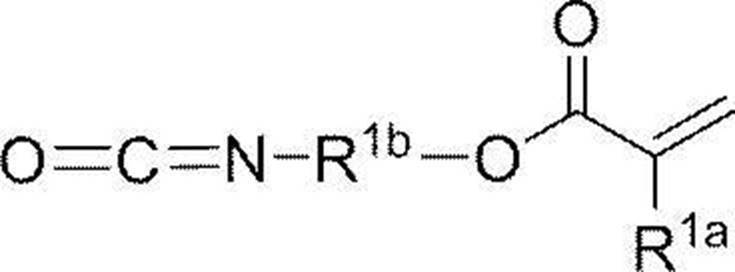
上記一般式中、R1a及びR1bは、前述の一般式(A)のR1a及びR1bと同様である。
化合物(X)と化合物(Y)の反応は、無溶媒中で行ってもよく、溶媒中で行ってもよい。溶媒としては、反応に不活性な溶媒であれば、公知の溶媒を用いることができ、例えば、n-ヘキサン、ベンゼン、トルエン、キシレン等の炭化水素系溶媒等の極性溶媒が挙げられる。
化合物(X)と化合物(Y)を反応させる際には、反応速度向上の点から、触媒を添加してもよい。触媒としては、化合物(X)のヒドロキシ基、1級アミノ基及び2級アミノ基からなる群から選択される少なくとも1つの基と、化合物(Y)のイソシアネート基との反応を加速させる公知の触媒を使用できる。
触媒としては、例えば、ジブチル錫ジラウレート等の有機錫化合物などが挙げられる。
触媒の使用量としては、化合物(X)と化合物(Y)の合計量に対して、0.001質量%~0.1質量%であってもよく、0.01質量%~0.1質量%であってもよい。
反応温度は、特に制限されず、通常20℃~120℃、好ましくは30~100℃の範囲である。
反応時間は、反応温度等の条件に依存するため特に限定されず、通常、数分から数10時間である。反応の終点の確認方法としては、HPLC(高速液体クロマトグラフィー)による分析等が挙げられる。
化合物(X)と化合物(Y)の仕込み量として、モル比(X:Y)で1:1~1:12であることが好ましく、1:1~1:6であることがより好ましい。
[歯科材料用組成物]
本開示の歯科材料用組成物は、本開示の歯科材料用モノマー組成物、及び重合開始剤、を含有する。この歯科材料用組成物は、化学重合性、熱重合性、又は光重合性を有し、例えば歯科修復材料として好ましく使用することができる。
本開示の歯科材料用組成物は、本開示の歯科材料用モノマー組成物、及び重合開始剤、を含有する。この歯科材料用組成物は、化学重合性、熱重合性、又は光重合性を有し、例えば歯科修復材料として好ましく使用することができる。
歯科材料用組成物中の一般式(1)で表される化合物の含有量は、歯科材料用組成物全体の質量に対して0.1質量%~20質量%であることが好ましく、0.5質量%~10質量%であることがより好ましく、1.0質量%~8.0質量%がさらに好ましい。
ただし、ボンディング材等として用いる場合、一般式(1)で表される化合物の含有量は、歯科材料用組成物全体の質量に対して1.0質量%~80質量%であることが好ましく、3.0質量%~60質量%であることがより好ましく、5.0質量%~40質量%であることがさらに好ましい。
ただし、ボンディング材等として用いる場合、一般式(1)で表される化合物の含有量は、歯科材料用組成物全体の質量に対して1.0質量%~80質量%であることが好ましく、3.0質量%~60質量%であることがより好ましく、5.0質量%~40質量%であることがさらに好ましい。
重合開始剤としては、歯科分野で用いられる一般的な重合開始剤を使用することができ、通常、歯科材料用組成物に含まれる一般式(1)で表される化合物等の重合性化合物の重合性と重合条件を考慮して選択される。
化学重合を行う場合には、重合開始剤としては、例えば、酸化剤及び還元剤を組み合わせたレドックス系の重合開始剤が好ましい。レドックス系の重合開始剤を使用する場合、酸化剤と還元剤が別々に包装された形態をとり、使用する直前に両者を混合すればよい。 重合開始剤としては、例えば、一般的に使用されている公知の重合開始剤であれば特に限定されず使用でき、通常、重合性化合物の重合性と重合条件を考慮して選択される。
重合開始剤としては、例えば、ベンゾイルパーオキシド、デカノイルパーオキシド、ジアシルパーオキシドなどの有機過酸化物/芳香族アミン系、クメンヒドロパーオキサイド/チオ尿素系、アスコルビン酸/銅塩系、有機過酸化物/アミン化合物/スルフィン酸(又はその塩)系等のレドックス系重合開始剤を用いることができる。また、重合開始剤として、トリブチルボランおよびその部分酸化物等のトリアルキルボランおよびその部分酸化物、5-ブチルバルビツール酸、5-ブチル-2-チオバルビツール酸系触媒等も好適に用いられる。
加熱による熱重合を行う場合には、過酸化物、アゾ系化合物等の重合開始剤が好ましい。
過酸化物としては特に限定されず、例えば、過酸化ベンゾイル、t-ブチルヒドロペルオキシド、クメンヒドロペルオキシド等が挙げられる。アゾ系化合物としては特に限定されず、例えば、アゾビスイソブチロニトリル等が挙げられる。
過酸化物としては特に限定されず、例えば、過酸化ベンゾイル、t-ブチルヒドロペルオキシド、クメンヒドロペルオキシド等が挙げられる。アゾ系化合物としては特に限定されず、例えば、アゾビスイソブチロニトリル等が挙げられる。
可視光線照射による光重合を行う場合には、カンファーキノン、アセチルベンゾイル等のα-ジケトン;ベンゾイルエチルエーテル等のベンゾイルアルキルエーテル;2-クロロチオキサントン、メチルチオキサントン等のチオキサントン誘導体;ベンゾフェノン、p,p’-メトキシベンゾフェノン等のベンゾフェノン誘導体;2,4,6-トリメチルベンゾイルジフェニルホスフィンオキサイド、2,6-ジメトキシベンゾイルジフェニルホスフィンオキサイド等のアシルフォスフィンオキサイド類等の光重合触媒等が挙げられる。また、これら重合開始剤に加えて、ジメチルアミノエチルメタクリレート、N,N-ジメチル-p-トルイジン、N,N-ジメチル安息香酸エチル等のアミン化合物、シトロネラール、ジメチルアミノベンズアルデヒド等のアルデヒド化合物、2-メルカプトベンゾオキサゾール、デカンチオール等のチオール基を有する化合物等の助触媒成分を併用することが好ましい。
上記重合開始剤は一種単独で用いても、二種以上を用いてもよい。重合開始剤の配合量は、歯科材料用組成物100質量%に対して、0.01質量%~20質量%が好ましく、0.1質量%~5質量%がより好ましい。
本開示の歯科材料用組成物は、フィラーを含んでもよい。フィラーは、歯科分野で用いられる一般的なフィラーであれば特に限定されず使用することができる。フィラーは、通常、有機フィラーと無機フィラーに大別される。
有機フィラーとしては、例えば、ポリメタクリル酸メチル、メタクリル酸メチル-メタクリル酸エチル共重合体、エチレン-酢酸ビニル共重合体、スチレン-ブタジエン共重合体等の微粉末が挙げられる。
有機フィラーとしては、例えば、ポリメタクリル酸メチル、メタクリル酸メチル-メタクリル酸エチル共重合体、エチレン-酢酸ビニル共重合体、スチレン-ブタジエン共重合体等の微粉末が挙げられる。
無機フィラーとしては、例えば、各種ガラス類(二酸化珪素を主成分とし、必要に応じ、重金属、ホウ素、アルミニウム等の酸化物を含有する)、各種セラミック類、珪藻土、カオリン、粘土鉱物(モンモリロナイト等)、活性白土、合成ゼオライト、マイカ、フッ化カルシウム、フッ化イッテルビウム、リン酸カルシウム、硫酸バリウム、二酸化ジルコニウム、二酸化チタン、ヒドロキシアパタイトなどの微粉末が挙げられる。
このような無機フィラーの具体例としては、例えば、バリウムボロシリケートガラス(ショット8235、ショットGM27884、ショットG018-053等)、ストロンチウムボロアルミノシリケートガラス(ショットG018-163等)、ランタンガラス(ショットGM31684等)、フルオロアルミノシリケートガラス(ショットG018-117等)、ジルコニウム、セシウム等を含むボロアルミノシリケートガラス(ショットG018-307等)が挙げられる。
このような無機フィラーの具体例としては、例えば、バリウムボロシリケートガラス(ショット8235、ショットGM27884、ショットG018-053等)、ストロンチウムボロアルミノシリケートガラス(ショットG018-163等)、ランタンガラス(ショットGM31684等)、フルオロアルミノシリケートガラス(ショットG018-117等)、ジルコニウム、セシウム等を含むボロアルミノシリケートガラス(ショットG018-307等)が挙げられる。
また、無機フィラーに重合性化合物を予め添加し、ペースト状にした後、重合硬化させ、粉砕して得られる有機無機複合フィラーを用いてもよい。
また、歯科材料用組成物において、粒径が0.1μm以下のミクロフィラーが配合された組成物は、歯科用コンポジットレジンに好適な態様の一つである。かかる粒径の小さなフィラーの材質としては、シリカ(例えば、商品名アエロジル)、アルミナ、ジルコニア、チタニア等が好ましい。このような粒径の小さい無機フィラーの配合は、コンポジットレジンの硬化物の研磨滑沢性を得る上で有利である。
また、歯科材料用組成物において、粒径が0.1μm以下のミクロフィラーが配合された組成物は、歯科用コンポジットレジンに好適な態様の一つである。かかる粒径の小さなフィラーの材質としては、シリカ(例えば、商品名アエロジル)、アルミナ、ジルコニア、チタニア等が好ましい。このような粒径の小さい無機フィラーの配合は、コンポジットレジンの硬化物の研磨滑沢性を得る上で有利である。
これらのフィラーは、目的に応じて、シランカップリング剤等の表面処理剤により表面処理が施されていてもよい。表面処理剤としては、公知のシランカップリング剤、例えば、メタクリルオキシアルキルトリメトキシシラン(メタクリルオキシ基とケイ素原子との間の炭素数:3~12)、メタクリルオキシアルキルトリエトキシシラン(メタクリルオキシ基と珪素原子との間の炭素数:3~12)、ビニルトリメトキシシラン、ビニルエトキシシラン、ビニルトリアセトキシシラン等の有機珪素化合物が使用される。
これらのフィラーは一種単独で用いても、二種以上を用いてもよい。フィラーの配合量は、歯科材料用組成物(例えばコンポジットレジン組成物)の操作性(粘稠度)、その硬化物の曲げ強度等を考慮して適宜決定すればよく、歯科材料用組成物中に含まれるフィラー以外の全成分100質量部に対して、10質量部~2000質量部が好ましく、50質量部~1000質量部がより好ましく、100質量部~600質量部がさらに好ましい。
本開示の歯科材料用組成物は、本開示のモノマー組成物、及び重合開始剤以外の成分を、目的に応じて適宜含んでもよい。本開示の歯科材料用組成物に含んでもよい成分は公知の成分であれば特に限定されないが、例えば、保存安定性を向上させるために重合禁止剤を含んでもよい。また、色調を調整するために、公知の顔料、染料等の色素を含んでいてもよい。さらに、硬化物の強度を向上させるために、公知のファイバー等の補強材を含んでもよい。また、本開示の歯科材料用組成物は、溶剤(アセトン、蒸留水等)、殺菌剤、消毒剤、安定化剤、保存剤などの添加剤を本開示の発明の効果を奏する限り必要に応じて含有してもよい。
本開示の歯科材料用組成物は、前述の重合開始剤の重合方式にて適切な条件で硬化することができる。例えば、可視光照射による光重合開始剤を含有している本開示の歯科材料用組成物の場合は、歯科材料用組成物を所定の形状に加工したのち、公知の光照射装置を用いて所定の時間可視光を照射することにより、所望の硬化物を得ることができる。照射強度、照射強度等の条件は、歯科材料用組成物の硬化性に合わせて適切に変更することができる。また、可視光をはじめとした、光照射により硬化した硬化物を、さらに適切な条件で熱処理をすることにより、硬化物の曲げ強度を向上させてもよい。
[歯科材料]
本開示の歯科材料は、本開示の歯科材料用組成物の硬化物である。歯科材料用組成物の硬化条件としては、歯科材料用組成物の組成、歯科材料の用途等に応じて適宜定めればよい。
本開示の歯科材料は、本開示の歯科材料用組成物の硬化物である。歯科材料用組成物の硬化条件としては、歯科材料用組成物の組成、歯科材料の用途等に応じて適宜定めればよい。
以上のようにして得られる本開示の歯科材料用組成物の硬化物は、歯科材料として好適に用いることができる。
本開示の歯科材料用組成物の使用方法は、歯科材料の使用法として一般に知られているものであれば、特に制限されない。例えば、本開示の歯科材料用組成物を齲蝕窩洞充填用コンポジットレジンとして使用する場合は、口腔内の窩洞に歯科材料用組成物を充填した後、公知の光照射装置を用いて光硬化させることにより、目的を達成できる。また、歯冠用コンポジットレジンとして使用する場合は、歯科材料用組成物を適切な形状に加工した後、公知の光照射装置を用いて光硬化させ、さらに所定の条件で熱処理を行うことで、所望の歯冠材料を得ることができる。
本開示の歯科材料用組成物の使用方法は、歯科材料の使用法として一般に知られているものであれば、特に制限されない。例えば、本開示の歯科材料用組成物を齲蝕窩洞充填用コンポジットレジンとして使用する場合は、口腔内の窩洞に歯科材料用組成物を充填した後、公知の光照射装置を用いて光硬化させることにより、目的を達成できる。また、歯冠用コンポジットレジンとして使用する場合は、歯科材料用組成物を適切な形状に加工した後、公知の光照射装置を用いて光硬化させ、さらに所定の条件で熱処理を行うことで、所望の歯冠材料を得ることができる。
本開示の歯科材料用組成物及び歯科材料は、例えば、義歯床用レジン、義歯床用裏装材、印象材、合着用材料(レジン添加型グラスアイオノマーセメント等)、歯科用接着材(歯科用接着性レジンセメント、歯牙裂溝封鎖材、歯科用ボンディング材、歯列矯正用接着材等)、CAD/CAM用レジンブロック(インレー、アンレー、クラウン、テンポラリークラウン等)、歯科修復充填材料(歯科用コンポジットレジン、支台築造用コンポジットレジン等)、硬質レジン、人工歯材料等として好ましく使用することができる。これらのうち、本開示の歯科材料用組成物及び歯科材料は、特に歯科用コンポジットレジン、歯科用接着性レジンセメント又は歯科用ボンディング材等に適している。
以下、本開示の実施例を示すが、本開示は以下の実施例によって制限されるものではない。本開示の実施例にて使用した化合物の略号を以下に示す。
[多官能グリセリン(メタ)アクリレート化合物(A)]
TMOIG:トリメタクリロイルオキシエチルカルボニルアミノグリセリン:以下の式(1-1)で表される化合物(公知のウレタン化反応の手法に従い、メタクリロイルオキシエチルイソシアネート(MOI、昭和電工株式会社製)とグリセリン(シグマアルドリッチ社製)をモル比で1:3の割合で反応させて合成した化合物)
TMOIG:トリメタクリロイルオキシエチルカルボニルアミノグリセリン:以下の式(1-1)で表される化合物(公知のウレタン化反応の手法に従い、メタクリロイルオキシエチルイソシアネート(MOI、昭和電工株式会社製)とグリセリン(シグマアルドリッチ社製)をモル比で1:3の割合で反応させて合成した化合物)

DMOIG:ジメタクリロイルオキシエチルカルボニルアミノグリセリン以下の式(1-2)で表される化合物及び下記(1-3)で表される化合物の混合物(公知のウレタン化反応の手法に従い、メタクリロイルオキシエチルイソシアネート(MOI、昭和電工株式会社製)とグリセリン(シグマアルドリッチ社製)をモル比で1:2の割合で反応させて合成した化合物の混合物)

[重合性単量体(B)]
UDMA:2,2,4-トリメチルヘキサメチレンビス(2-カルバモイルオキシエチル)ジメタクリレート(公知のウレタン化反応の手法に従い、2,2,4-トリメチルヘキシルジイソシアネート(TMHDI、東京化成工業株式会社)と2-ヒドロキシエチルメタクリレート(HEMA、三菱ケミカル株式会社)をモル比で1:2の割合で反応させて合成した化合物)
TEGDMA:トリエチレングリコールジメタクリレート(新中村化学工業株式会社製)
HEMA:2-ヒドロキシエチルメタクリレート(三菱ケミカル株式会社製)
UDMA:2,2,4-トリメチルヘキサメチレンビス(2-カルバモイルオキシエチル)ジメタクリレート(公知のウレタン化反応の手法に従い、2,2,4-トリメチルヘキシルジイソシアネート(TMHDI、東京化成工業株式会社)と2-ヒドロキシエチルメタクリレート(HEMA、三菱ケミカル株式会社)をモル比で1:2の割合で反応させて合成した化合物)
TEGDMA:トリエチレングリコールジメタクリレート(新中村化学工業株式会社製)
HEMA:2-ヒドロキシエチルメタクリレート(三菱ケミカル株式会社製)
[酸性基含有重合性単量体(C)]
4-MET:4-メタクリロイルオキシエチルトリメリット酸(4-メタクリロイルオキシエチルトリメリット酸無水物(富士フイルム和光純薬株式会社製)と1.2当量の蒸留水とを反応させて合成した化合物)
MDP:10-メタクリロイルオキシデシルジハイドロジェンホスフェート(富士フイルム和光純薬株式会社製)
4-MET:4-メタクリロイルオキシエチルトリメリット酸(4-メタクリロイルオキシエチルトリメリット酸無水物(富士フイルム和光純薬株式会社製)と1.2当量の蒸留水とを反応させて合成した化合物)
MDP:10-メタクリロイルオキシデシルジハイドロジェンホスフェート(富士フイルム和光純薬株式会社製)
[フィラー(D)]
R812:微粒子シリカ(日本アエロジル株式会社製、商品名「エアロジルR812」)
8235:シラン処理バリウムガラス粉(SCHOTT社製、商品名「8235」、粒径0.7μm、γ-MPTSをフィラー質量に対して6%で処理したもの)
GM27884:シラン処理バリウムガラス粉(SCHOTT社製、商品名「GM27884」、粒径1.5μm、γ-MPTSをフィラー質量に対して1.6%で処理したもの)
R812:微粒子シリカ(日本アエロジル株式会社製、商品名「エアロジルR812」)
8235:シラン処理バリウムガラス粉(SCHOTT社製、商品名「8235」、粒径0.7μm、γ-MPTSをフィラー質量に対して6%で処理したもの)
GM27884:シラン処理バリウムガラス粉(SCHOTT社製、商品名「GM27884」、粒径1.5μm、γ-MPTSをフィラー質量に対して1.6%で処理したもの)
[溶剤(E)]
Acetone:アセトン(富士フイルム和光純薬株式会社製)
蒸留水:蒸留水製造装置(東京理化器械株式会社製)により製造したもの
Acetone:アセトン(富士フイルム和光純薬株式会社製)
蒸留水:蒸留水製造装置(東京理化器械株式会社製)により製造したもの
[光重合開始剤(F)]
CQ:d,l-カンファーキノン(富士フイルム和光純薬株式会社製)
DMABAE:N,N-ジメチル安息香酸エチル(富士フイルム和光純薬株式会社製)
CQ:d,l-カンファーキノン(富士フイルム和光純薬株式会社製)
DMABAE:N,N-ジメチル安息香酸エチル(富士フイルム和光純薬株式会社製)
[その他の成分:重合禁止剤]
BHT:2,6-ジ-t-ブチル-4-メチルフェノール(東京化成工業株式会社製)
MEHQ:4-メトキシフェノール(富士フイルム和光純薬株式会社製)
BHT:2,6-ジ-t-ブチル-4-メチルフェノール(東京化成工業株式会社製)
MEHQ:4-メトキシフェノール(富士フイルム和光純薬株式会社製)
〔実施例1~8及び比較例1~4〕
<歯科材料用組成物の調製>
後述する表1に記載のとおりに各成分を混合し、実施例1、実施例2、実施例3、比較例1の歯科用コンポジットレジンとして使用される歯科材料用組成物を調製した。後述する表2に記載のとおりに各成分を混合し、実施例4、実施例5、比較例2の歯科用ボンディング材として使用される歯科材料用組成物を調製した。後述する表3、表4に記載のとおりに各成分を混合し、実施例6、実施例7、実施例8、比較例3、比較例4の歯科用自己接着性レジンセメントとして使用される歯科材料用組成物を調製した。
<歯科材料用組成物の調製>
後述する表1に記載のとおりに各成分を混合し、実施例1、実施例2、実施例3、比較例1の歯科用コンポジットレジンとして使用される歯科材料用組成物を調製した。後述する表2に記載のとおりに各成分を混合し、実施例4、実施例5、比較例2の歯科用ボンディング材として使用される歯科材料用組成物を調製した。後述する表3、表4に記載のとおりに各成分を混合し、実施例6、実施例7、実施例8、比較例3、比較例4の歯科用自己接着性レジンセメントとして使用される歯科材料用組成物を調製した。
<歯科用組成物の三点曲げ強度測定法:実施例1~3、6~8、比較例1、3、4>
20~25℃に設定した室温下、歯科用練和紙上に採取した実施例1、実施例2、実施例3、実施例6、実施例7、実施例8、比較例1、比較例3、比較例4の歯科材料用組成物を2mm×2mm×25mmの試験体作用の型に充填し、裏表両面からルミラーフィルムで圧接した。歯科材料用組成物を充填した型を技工用LED照射器(アルファライトV、株式会社モリタ製)に設置し、裏表3分ずつ光照射して得られた硬化体を試験体とした。
各々の試験体を型から外して蒸留水に浸漬して、37±1℃の恒温器中で18時間保管後、試験体を取り出し、小型卓上試験機(株式会社島津製作所製)を用いて三点曲げ試験を実施した。前記試験はクロスヘッドスピード1mm/minの荷重速度で試験体が破折するまで荷重を加えて実施し、得られた最大点応力より硬化体の強度を算出した。また、その際弾性率も併せて算出した。その結果を後述する表1に示す。
20~25℃に設定した室温下、歯科用練和紙上に採取した実施例1、実施例2、実施例3、実施例6、実施例7、実施例8、比較例1、比較例3、比較例4の歯科材料用組成物を2mm×2mm×25mmの試験体作用の型に充填し、裏表両面からルミラーフィルムで圧接した。歯科材料用組成物を充填した型を技工用LED照射器(アルファライトV、株式会社モリタ製)に設置し、裏表3分ずつ光照射して得られた硬化体を試験体とした。
各々の試験体を型から外して蒸留水に浸漬して、37±1℃の恒温器中で18時間保管後、試験体を取り出し、小型卓上試験機(株式会社島津製作所製)を用いて三点曲げ試験を実施した。前記試験はクロスヘッドスピード1mm/minの荷重速度で試験体が破折するまで荷重を加えて実施し、得られた最大点応力より硬化体の強度を算出した。また、その際弾性率も併せて算出した。その結果を後述する表1に示す。

表1に示すように、歯科用コンポジットレジンとしての用途において、TMOIGを含む実施例1、実施例2、実施例3の歯科材料用組成物が、TMOIGを含まない比較例1より機械的物性(3点曲げ強度、及び弾性率)が優れていた。
なお、表中の「-」は、該当成分を含んでいないことを示す。また、表中の「SD」は、標準偏差を意味する。以下の表の記載についても同様である。
なお、表中の「-」は、該当成分を含んでいないことを示す。また、表中の「SD」は、標準偏差を意味する。以下の表の記載についても同様である。
<接着強さ評価方法>
牛歯被着体は、抜去した後、冷凍保存した牛下顎前歯を注水下解凍し、歯根切断、抜髄処理した。これを直径25mm、深さ25mmのプラスチック製円筒容器に設置し、アクリル樹脂中に包埋した。牛歯被着体は、使用直前に耐水エメリー紙(P400)にて研磨し、エナメル質及び象牙質の平滑面を削り出して使用した。
接着強さは、牛歯エナメル質あるいは象牙質面に平行、かつ表面に接して1.0mm/分のクロスヘッド速度で剪断負荷を掛け、牛歯表面に柱状に形成させた硬化物が表面から分離する時の剪断負荷より求めた。
各歯科材料用組成物の処理方法を以下に示す。
牛歯被着体は、抜去した後、冷凍保存した牛下顎前歯を注水下解凍し、歯根切断、抜髄処理した。これを直径25mm、深さ25mmのプラスチック製円筒容器に設置し、アクリル樹脂中に包埋した。牛歯被着体は、使用直前に耐水エメリー紙(P400)にて研磨し、エナメル質及び象牙質の平滑面を削り出して使用した。
接着強さは、牛歯エナメル質あるいは象牙質面に平行、かつ表面に接して1.0mm/分のクロスヘッド速度で剪断負荷を掛け、牛歯表面に柱状に形成させた硬化物が表面から分離する時の剪断負荷より求めた。
各歯科材料用組成物の処理方法を以下に示す。
<歯科用ボンディング材の接着強さ評価方法:実施例4、5、比較例2>
被着面に圧縮空気を約1秒間吹き付けて乾燥した後、エナメル質あるいは象牙質の平面に実施例4、実施例5、比較例2の歯科材料用組成物を塗布し、20秒後にそれぞれの歯科材料用組成物に含まれる揮発性の溶剤を歯科用エアーシリンジにて乾燥させた。その後、それぞれの歯科材料用組成物にLED可視光線照射器(トランスルクス 2ウェーブ)を用いて20秒間光照射して硬化させた後、直径2.38mmのプラスチック製モールド(ウルトラデントジャパン株式会社製)を設置し、光重合性材料(クリアフィル エーピーエックス、クラレノリタケデンタル株式会社製)を充填して同じLED可視光線照射器を用いて20秒間光照射して硬化させた。その後、水中浸漬して37℃の恒温機中で18時間保管後に接着強度を測定した。その結果を後述する表2に示す。
被着面に圧縮空気を約1秒間吹き付けて乾燥した後、エナメル質あるいは象牙質の平面に実施例4、実施例5、比較例2の歯科材料用組成物を塗布し、20秒後にそれぞれの歯科材料用組成物に含まれる揮発性の溶剤を歯科用エアーシリンジにて乾燥させた。その後、それぞれの歯科材料用組成物にLED可視光線照射器(トランスルクス 2ウェーブ)を用いて20秒間光照射して硬化させた後、直径2.38mmのプラスチック製モールド(ウルトラデントジャパン株式会社製)を設置し、光重合性材料(クリアフィル エーピーエックス、クラレノリタケデンタル株式会社製)を充填して同じLED可視光線照射器を用いて20秒間光照射して硬化させた。その後、水中浸漬して37℃の恒温機中で18時間保管後に接着強度を測定した。その結果を後述する表2に示す。

表2に示すように、歯科用ボンティング材としての用途において、TMOIGを含む実施例4、実施例5の歯科材料用組成物が、TMOIGを含まない比較例2と比べて歯質接着性に優れていた。
<歯科用自己接着性レジンセメントの接着強さ評価方法:実施例6~8、比較例3、4>
牛歯エナメル質あるいは象牙質の被着面に圧縮空気を約1秒間吹き付けて乾燥した。次に、実施例6~8、比較例3、4の歯科材料用組成物を別途あらかじめ調製しておいた光硬化性組成物(クリアフィル エーピーエックス、クラレノリタケデンタル株式会社製)の円筒柱硬化物(φ2.3mm×高さ2.2mm)の被着面に塗布して、牛歯被着面に設置し、専用冶具を使用して5Nの力で圧接した。その後、それぞれの歯科材料用組成物の余剰分を除去して、LED可視光線照射器(トランスルクス 2ウェーブ、クルツァー・ジャパン株式会社製)を用いて4方向から10秒間ずつ光照射して硬化させた後、水中浸漬して37℃の恒温機中で18時間保管後に接着強度を測定した。
酸性基含有重合性単量体(C)として、MDPと4-METを使用した例(実施例6、7、比較例3)を表3に示し、酸性基含有重合性単量体(C)として、MDPのみを使用した例(実施例8、比較例4)を表4に示す。
牛歯エナメル質あるいは象牙質の被着面に圧縮空気を約1秒間吹き付けて乾燥した。次に、実施例6~8、比較例3、4の歯科材料用組成物を別途あらかじめ調製しておいた光硬化性組成物(クリアフィル エーピーエックス、クラレノリタケデンタル株式会社製)の円筒柱硬化物(φ2.3mm×高さ2.2mm)の被着面に塗布して、牛歯被着面に設置し、専用冶具を使用して5Nの力で圧接した。その後、それぞれの歯科材料用組成物の余剰分を除去して、LED可視光線照射器(トランスルクス 2ウェーブ、クルツァー・ジャパン株式会社製)を用いて4方向から10秒間ずつ光照射して硬化させた後、水中浸漬して37℃の恒温機中で18時間保管後に接着強度を測定した。
酸性基含有重合性単量体(C)として、MDPと4-METを使用した例(実施例6、7、比較例3)を表3に示し、酸性基含有重合性単量体(C)として、MDPのみを使用した例(実施例8、比較例4)を表4に示す。


表3、表4に示すように、歯科用自己接着性レジンセメントとしての用途において、TMOIG又はDMOIGを含む実施例6~8の歯科材料用組成物が、TMOIG及びDMOIGを含まない比較例3又は比較例4より曲げ強度が優れていた。さらに、実施例6~8の歯科材料用組成物の歯質接着性が、比較例3又は比較例4と比較して優れていた。特に、TMOIGを含む実施例6、8の歯科材料用組成物は、曲げ強度が優れていることがわかった。
このことから、歯科材料用組成物がTMOIG又はDMOIGを含むことで、その硬化物に優れた曲げ強度を与えることがわかった。さらに、歯科材料用組成物がTMOIG又はDMOIGを含むことで、良好な歯質接着性を得ることができることがわかった。
2018年12月28日に出願された日本国特許出願2018-247972号の開示は、その全体が参照により本明細書に取り込まれる。
本明細書に記載された全ての文献、特許出願、及び技術規格は、個々の文献、特許出願、及び技術規格が参照により取り込まれることが具体的かつ個々に記された場合と同程度に、本明細書に参照により取り込まれる。
本明細書に記載された全ての文献、特許出願、及び技術規格は、個々の文献、特許出願、及び技術規格が参照により取り込まれることが具体的かつ個々に記された場合と同程度に、本明細書に参照により取り込まれる。
Claims (16)
- 下記一般式(1)で表される化合物を含む歯科材料用モノマー組成物。

(一般式(1)中、Xは酸素原子及び窒素原子からなる群から選択される少なくとも1つを含む炭素数1~200のn価の有機基であり、前記酸素原子及び窒素原子からなる群から選択される少なくとも1つがYと結合し、
前記Yは、下記一般式(A)で表される(メタ)アクリロイル基含有基(Y1)、(メタ)アクリロイル基(Y2)、水素原子、又は炭素数1~20の炭化水素基であり、ただし、一般式(1)で表される化合物中のすべてのYのうち、少なくとも1つ以上は前記(メタ)アクリロイル基含有基(Y1)であり、
複数存在する前記Yはそれぞれ同一でも異なっていてもよく、
nは3以上の整数である。)

(一般式(A)中、R1aは水素原子又はメチル基を示し、R1bは、炭素数2~6の2価の有機基であり、炭素数1~6のアルキル基又は(メタ)アクリロイルオキシアルキレン基で置換されていてもよい。) - 前記一般式(1)で表される化合物の分子量が350~2000である請求項1に記載の歯科材料用モノマー組成物。
- 前記一般式(1)で表される化合物中のすべての前記Yのうち、少なくとも2つ以上が前記(メタ)アクリロイル基含有基(Y1)である請求項1又は請求項2に記載の歯科材料用モノマー組成物。
- 前記一般式(A)中、前記R1bが炭素数2~6の直鎖アルキレン基、又は炭素数2~6の直鎖オキシアルキレン基である請求項1~請求項3のいずれか1項に記載の歯科材料用モノマー組成物。
- 前記nが3~12の整数である請求項1~請求項4のいずれか1項に記載の歯科材料用モノマー組成物。
- 前記Xが、下記一般式(X1)~下記一般式(X10)で表される基のいずれか1つである請求項1~請求項5のいずれか1項に記載の歯科材料用モノマー組成物。
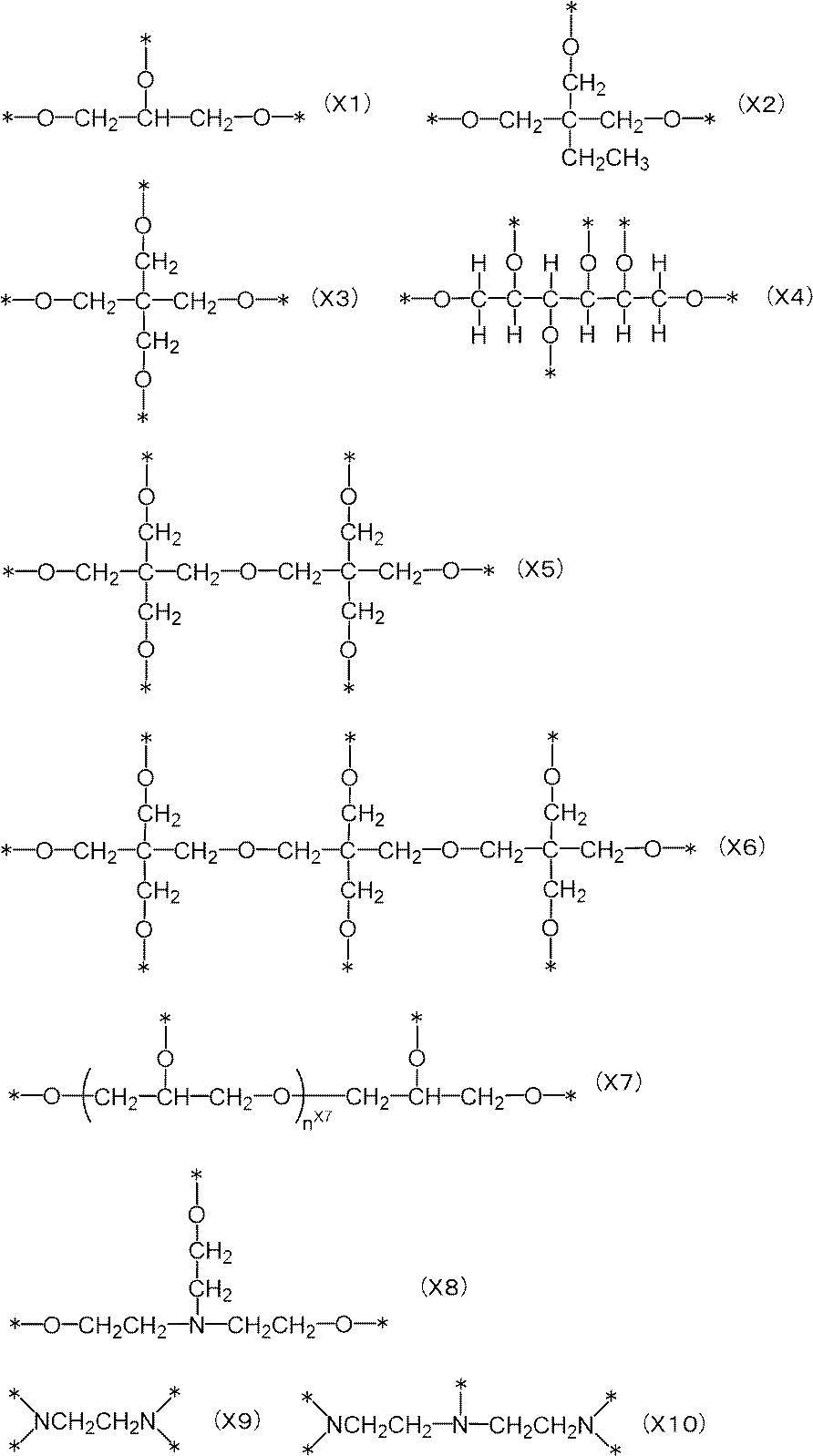
(一般式(X1)~一般式(X10)中、*は結合位置を表す。一般式(X7)中、nX7は1~40の整数である。) - 前記一般式(1)中、前記少なくとも1つの(メタ)アクリロイル基含有基(Y1)が、下記一般式(Y1a)~(Y1f)で表される基からなる群より選択される少なくとも1つを含む請求項1~請求項6のいずれか1項に記載の歯科材料用モノマー組成物。

- 前記一般式(1)で表される化合物として、下記化合物(1-1)~下記化合物(1-10)からなる群から選択される少なくとも1種を含む請求項1~請求項7のいずれか1項に記載の歯科材料用モノマー組成物。


- 前記一般式(1)で表される化合物以外の(メタ)アクリレート化合物(2)をさらに含有する請求項1~請求項8のいずれか1項に記載の歯科材料用モノマー組成物。
- 前記一般式(1)で表される化合物と前記(メタ)アクリレート化合物(2)との合計含有量に対する前記一般式(1)で表される化合物の含有量が、1.0質量%~40.0質量%である請求項9に記載の歯科材料用モノマー組成物。
- 前記(メタ)アクリレート化合物(2)が、酸性基含有(メタ)アクリレート、酸性基を有しない単官能(メタ)アクリレート及び酸性基を有しない二官能(メタ)アクリレートからなる群から選択される1つ以上の化合物である請求項9又は請求項10に記載の歯科材料用モノマー組成物。
- 前記一般式(1)で表される化合物と前記(メタ)アクリレート化合物(2)との合計含有量が、歯科材料用モノマー組成物全体に対して90質量%以上である請求項9~請求項11のいずれか1項に記載の歯科材料用モノマー組成物。
- 請求項1~請求項12のいずれか1項に記載の歯科材料用モノマー組成物、及び重合開始剤を含有する歯科材料用組成物。
- 前記一般式(1)で表される化合物の含有量が、歯科材料用組成物全体の質量に対して0.1質量%~20質量%である請求項13に記載の歯科材料用組成物。
- 歯科用接着性レジンセメント、歯科用コンポジットレジン、又は歯科用ボンディング材として用いられる請求項13又は請求項14に記載の歯科材料用組成物。
- 請求項13~請求項15のいずれか1項に記載の歯科材料用組成物の硬化物である歯科材料。
Priority Applications (3)
| Application Number | Priority Date | Filing Date | Title |
|---|---|---|---|
| US17/286,838 US11951193B2 (en) | 2018-12-28 | 2019-12-24 | Monomer composition for dental materials, composition for dental materials, and dental material |
| JP2020563303A JP7121809B2 (ja) | 2018-12-28 | 2019-12-24 | 歯科材料用モノマー組成物、歯科材料用組成物及び歯科材料 |
| EP19901814.4A EP3861975A4 (en) | 2018-12-28 | 2019-12-24 | Monomer composition for dental materials, composition for dental materials, and dental material |
Applications Claiming Priority (2)
| Application Number | Priority Date | Filing Date | Title |
|---|---|---|---|
| JP2018-247972 | 2018-12-28 | ||
| JP2018247972 | 2018-12-28 |
Publications (1)
| Publication Number | Publication Date |
|---|---|
| WO2020138071A1 true WO2020138071A1 (ja) | 2020-07-02 |
Family
ID=71125787
Family Applications (1)
| Application Number | Title | Priority Date | Filing Date |
|---|---|---|---|
| PCT/JP2019/050586 Ceased WO2020138071A1 (ja) | 2018-12-28 | 2019-12-24 | 歯科材料用モノマー組成物、歯科材料用組成物及び歯科材料 |
Country Status (4)
| Country | Link |
|---|---|
| US (1) | US11951193B2 (ja) |
| EP (1) | EP3861975A4 (ja) |
| JP (1) | JP7121809B2 (ja) |
| WO (1) | WO2020138071A1 (ja) |
Cited By (1)
| Publication number | Priority date | Publication date | Assignee | Title |
|---|---|---|---|---|
| WO2022207879A1 (de) * | 2021-04-02 | 2022-10-06 | Kulzer Gmbh | Selbstadhäsiver fissurenversiegler |
Families Citing this family (2)
| Publication number | Priority date | Publication date | Assignee | Title |
|---|---|---|---|---|
| WO2022009986A1 (ja) * | 2020-07-09 | 2022-01-13 | 三井化学株式会社 | 歯科用接着性組成物及び歯科材料 |
| CA3199666A1 (en) | 2021-01-29 | 2022-08-04 | Matthew Jacob Otto | Work assist system for an industrial vehicle |
Citations (4)
| Publication number | Priority date | Publication date | Assignee | Title |
|---|---|---|---|---|
| WO2011041677A2 (en) * | 2009-10-01 | 2011-04-07 | Septodont, Confi-Dental Division | Novel multifunctional molecules for dental bonding applications having improved adhesion |
| JP2017506245A (ja) * | 2014-02-18 | 2017-03-02 | スリーエム イノベイティブ プロパティズ カンパニー | 歯科用組成物及びその使用 |
| JP2018145133A (ja) | 2017-03-03 | 2018-09-20 | クラレノリタケデンタル株式会社 | 自己接着性歯科用コンポジットレジン |
| WO2018181707A1 (ja) * | 2017-03-31 | 2018-10-04 | 三井化学株式会社 | 歯科材料用接着性モノマー |
Family Cites Families (1)
| Publication number | Priority date | Publication date | Assignee | Title |
|---|---|---|---|---|
| US20140131908A1 (en) * | 2012-11-14 | 2014-05-15 | Dentsply International Inc. | Three-dimensional fabricating material systems for producing dental products |
-
2019
- 2019-12-24 EP EP19901814.4A patent/EP3861975A4/en active Pending
- 2019-12-24 US US17/286,838 patent/US11951193B2/en active Active
- 2019-12-24 JP JP2020563303A patent/JP7121809B2/ja active Active
- 2019-12-24 WO PCT/JP2019/050586 patent/WO2020138071A1/ja not_active Ceased
Patent Citations (4)
| Publication number | Priority date | Publication date | Assignee | Title |
|---|---|---|---|---|
| WO2011041677A2 (en) * | 2009-10-01 | 2011-04-07 | Septodont, Confi-Dental Division | Novel multifunctional molecules for dental bonding applications having improved adhesion |
| JP2017506245A (ja) * | 2014-02-18 | 2017-03-02 | スリーエム イノベイティブ プロパティズ カンパニー | 歯科用組成物及びその使用 |
| JP2018145133A (ja) | 2017-03-03 | 2018-09-20 | クラレノリタケデンタル株式会社 | 自己接着性歯科用コンポジットレジン |
| WO2018181707A1 (ja) * | 2017-03-31 | 2018-10-04 | 三井化学株式会社 | 歯科材料用接着性モノマー |
Non-Patent Citations (1)
| Title |
|---|
| See also references of EP3861975A4 |
Cited By (4)
| Publication number | Priority date | Publication date | Assignee | Title |
|---|---|---|---|---|
| WO2022207879A1 (de) * | 2021-04-02 | 2022-10-06 | Kulzer Gmbh | Selbstadhäsiver fissurenversiegler |
| WO2022207877A1 (de) * | 2021-04-02 | 2022-10-06 | Kulzer Gmbh | Selbstadhäsives dentalmaterial |
| JP2024512755A (ja) * | 2021-04-02 | 2024-03-19 | クルツァー ゲゼルシャフト ミット ベシュレンクテル ハフツング | 自己接着性の小窩裂溝封鎖材 |
| JP2024512756A (ja) * | 2021-04-02 | 2024-03-19 | クルツァー ゲゼルシャフト ミット ベシュレンクテル ハフツング | 自己接着性歯科用材料 |
Also Published As
| Publication number | Publication date |
|---|---|
| EP3861975A1 (en) | 2021-08-11 |
| US20210338537A1 (en) | 2021-11-04 |
| US11951193B2 (en) | 2024-04-09 |
| JPWO2020138071A1 (ja) | 2021-09-09 |
| EP3861975A4 (en) | 2022-06-29 |
| JP7121809B2 (ja) | 2022-08-18 |
Similar Documents
| Publication | Publication Date | Title |
|---|---|---|
| JP5570091B2 (ja) | 歯科用接着剤組成物および方法 | |
| JP6785246B2 (ja) | 歯科用接着材料キット | |
| US11998622B2 (en) | Dental cement compositions and methods of use | |
| WO2010090011A1 (ja) | 歯科用充填修復キット | |
| US12221524B2 (en) | Polymerization initiator, curable composition, dental material, and preparation kit for curable composition | |
| JPH02279615A (ja) | 歯科用接着剤組成物 | |
| JP7121809B2 (ja) | 歯科材料用モノマー組成物、歯科材料用組成物及び歯科材料 | |
| JP5986496B2 (ja) | 歯科用硬化性組成物及びこれを用いた歯科用セメント | |
| WO2019031488A1 (ja) | 分包型硬化性組成物 | |
| JP2006076973A (ja) | 歯質接着用の光重合型接着剤 | |
| JP5683337B2 (ja) | 化学重合型歯科用接着性組成物 | |
| KR102945876B1 (ko) | 치과용 광경화성 조성물용의 아릴요오드늄염을 함유하는 광중합 개시제 | |
| JP4822314B2 (ja) | pH調整接着剤組成物 | |
| JP2008094732A (ja) | 歯科貴金属接着性オペークペースト | |
| JP6548661B2 (ja) | 歯科用材料を調製するためのモノマー混合物 | |
| JP2023095695A (ja) | 歯科用接着キット | |
| JP5483823B2 (ja) | ジルコニア成形体用接着材料 | |
| JP2021054791A (ja) | 低感水性歯質接着性組成物 | |
| JP4562819B2 (ja) | コーティング材組成物 | |
| WO2022270601A1 (ja) | 歯科用接着キット | |
| JP2010202560A (ja) | 歯科用複合硬化性組成物 | |
| JP2578212B2 (ja) | マレイン酸モノエステル化合物及びそれらを含有してなる接着剤 | |
| EP3143979A1 (en) | Dental primer composition having adhesive property to resin cured material | |
| WO2023042715A1 (ja) | (メタ)アクリルアミド化合物、モノマー組成物、歯科材料用組成物及び歯科材料 | |
| JP2023095554A (ja) | 歯科用充填キット |
Legal Events
| Date | Code | Title | Description |
|---|---|---|---|
| 121 | Ep: the epo has been informed by wipo that ep was designated in this application |
Ref document number: 19901814 Country of ref document: EP Kind code of ref document: A1 |
|
| ENP | Entry into the national phase |
Ref document number: 2020563303 Country of ref document: JP Kind code of ref document: A |
|
| ENP | Entry into the national phase |
Ref document number: 2019901814 Country of ref document: EP Effective date: 20210504 |
|
| NENP | Non-entry into the national phase |
Ref country code: DE |