WO2020138491A1 - 神経発達障害の予防または治療剤としてのr-ケタミンおよびその誘導体 - Google Patents
神経発達障害の予防または治療剤としてのr-ケタミンおよびその誘導体 Download PDFInfo
- Publication number
- WO2020138491A1 WO2020138491A1 PCT/JP2019/051605 JP2019051605W WO2020138491A1 WO 2020138491 A1 WO2020138491 A1 WO 2020138491A1 JP 2019051605 W JP2019051605 W JP 2019051605W WO 2020138491 A1 WO2020138491 A1 WO 2020138491A1
- Authority
- WO
- WIPO (PCT)
- Prior art keywords
- therapeutic agent
- ketamine
- neurodevelopmental
- acceptable salt
- preventive
- Prior art date
- Legal status (The legal status is an assumption and is not a legal conclusion. Google has not performed a legal analysis and makes no representation as to the accuracy of the status listed.)
- Ceased
Links
- 0 *c1c([C@](CCCC2)(C2=O)N*)cccc1 Chemical compound *c1c([C@](CCCC2)(C2=O)N*)cccc1 0.000 description 1
Images




Classifications
-
- A—HUMAN NECESSITIES
- A61—MEDICAL OR VETERINARY SCIENCE; HYGIENE
- A61K—PREPARATIONS FOR MEDICAL, DENTAL OR TOILETRY PURPOSES
- A61K31/00—Medicinal preparations containing organic active ingredients
- A61K31/13—Amines
- A61K31/135—Amines having aromatic rings, e.g. ketamine, nortriptyline
-
- A—HUMAN NECESSITIES
- A61—MEDICAL OR VETERINARY SCIENCE; HYGIENE
- A61K—PREPARATIONS FOR MEDICAL, DENTAL OR TOILETRY PURPOSES
- A61K31/00—Medicinal preparations containing organic active ingredients
- A61K31/33—Heterocyclic compounds
- A61K31/395—Heterocyclic compounds having nitrogen as a ring hetero atom, e.g. guanethidine or rifamycins
- A61K31/435—Heterocyclic compounds having nitrogen as a ring hetero atom, e.g. guanethidine or rifamycins having six-membered rings with one nitrogen as the only ring hetero atom
- A61K31/44—Non condensed pyridines; Hydrogenated derivatives thereof
- A61K31/445—Non condensed piperidines, e.g. piperocaine
- A61K31/4453—Non condensed piperidines, e.g. piperocaine only substituted in position 1, e.g. propipocaine, diperodon
-
- A—HUMAN NECESSITIES
- A61—MEDICAL OR VETERINARY SCIENCE; HYGIENE
- A61P—SPECIFIC THERAPEUTIC ACTIVITY OF CHEMICAL COMPOUNDS OR MEDICINAL PREPARATIONS
- A61P25/00—Drugs for disorders of the nervous system
-
- A—HUMAN NECESSITIES
- A61—MEDICAL OR VETERINARY SCIENCE; HYGIENE
- A61P—SPECIFIC THERAPEUTIC ACTIVITY OF CHEMICAL COMPOUNDS OR MEDICINAL PREPARATIONS
- A61P25/00—Drugs for disorders of the nervous system
- A61P25/18—Antipsychotics, i.e. neuroleptics; Drugs for mania or schizophrenia
-
- A—HUMAN NECESSITIES
- A61—MEDICAL OR VETERINARY SCIENCE; HYGIENE
- A61P—SPECIFIC THERAPEUTIC ACTIVITY OF CHEMICAL COMPOUNDS OR MEDICINAL PREPARATIONS
- A61P25/00—Drugs for disorders of the nervous system
- A61P25/28—Drugs for disorders of the nervous system for treating neurodegenerative disorders of the central nervous system, e.g. nootropic agents, cognition enhancers, drugs for treating Alzheimer's disease or other forms of dementia
Definitions
- the present invention relates to a prophylactic or therapeutic agent for neurodevelopmental disorders containing R-ketamine and its derivatives.
- Drug treatment is indispensable for the treatment of schizophrenia, and includes phenothiazine compounds, butyrophenone compounds, benzamide compounds, iminodibenzyl compounds, thiepine compounds, indole compounds and serotonin/dopamine receptor blockers.
- Antipsychotics are used. The antipsychotics actually used in clinical settings are effective for positive symptoms such as hallucinations and delusions, but have little effect on negative symptoms and cognitive impairment, so they are There is a strong demand for the development of therapeutic agents for cognitive impairment.
- PCP phencyclidine
- NNT novel object recognition test
- RS-ketamine is used as an anesthetic, it has problems with mental symptoms such as hallucinations and delusions, side effects such as dissociation symptoms and dependence, and it is difficult to put it into clinical use because it is designated as a drug. is there.
- Non-Patent Document 11 it is known that S-ketamine, which is an S-isomer, has an affinity for the NMDA receptor that is about 4-fold higher than that of R-ketamine, which is an R-isomer.
- R-ketamine has less side effects (psychotic-inducing action, drug dependence, etc.) than S-ketamine, and the intensity of ketamine-inducing action in psychotic symptoms is NMDA receptor. (See Non-Patent Documents 12-14).
- RS-ketamine both the analgesic action and the psychotic symptom-inducing action of RS-ketamine are mediated mainly by blockade of NMDA receptor (Non-patent Document 3), and NMDA receptor of S-ketamine. It is thought that the action of RS-ketamine is mainly caused by S-ketamine because of its high affinity for.
- Non-Patent Document 15 Although cognitive dysfunction is observed in many psychiatric patients including neurodevelopmental disorders such as schizophrenia, autism spectrum disorder, learning disorder and attention deficit hyperactivity disorder (Non-Patent Document 15), these There is no drug to prevent or treat the cognitive dysfunction of.
- Phencyclidine-induced stereotyped behavior and social isolation in rats a possible animal model schizophrenia. Behav. Pharmacol. 1996;7(1):3-23.
- Hashimoto K. et al. Phencyclidine-induced cognitive deficits in mice are improved by subsequent subchronic administration of clozapine, but not haloperidol. Eur. J. Pharmacol. 2005 Sep;519(1-2):114-117.
- Hashimoto K. et al. Phencyclidine-induced cognitive deficits in mice are improved by subsequent subchronic administration of fluvoxamine: role of sigma-1 receptors. Neuropsychopharmacology20072007Mar; 32(3):514-521.
- Phencyclidine-induced cognitive deficits in mice are improved by subsequent subchronic administration of the novel selective alpha-7 nicotinic receptor agonist SSR180711. Biol. Psychiatry;93 Abi-Saab WM. et al. The NMDAantagonist model for schizophrenia: promise and pitfalls. Pharmacopsychiatry 1998 Jul; 31(Suppl 2):104-109. Frohlich J. et al. Reviewing the ketamine model for schizophrenia. J. Psychopharmacol. 2014 Apr; 28(4):287-302. Ebert B. et al. Norketamine, the main metabolite of ketamine, is an non-competitive NMDA receptor antagonist in the rat cortex and spinal cord. Eur. J. Pharmacol.
- the problem to be solved by the present invention is to provide a new compound having a preventive or therapeutic effect on neurodevelopmental disorders.
- the present inventor conducted extensive studies to solve the above problems, found a new compound having a preventive or therapeutic effect on neurodevelopmental disorders, and completed the present invention.
- a prophylactic or therapeutic agent for neurodevelopmental disorders which comprises a compound represented by the following formula (I) or a pharmaceutically acceptable salt thereof as an active ingredient.
- the preventive or therapeutic agent for neurodevelopmental disorders according to (1) which comprises R-ketamine or a pharmacologically acceptable salt thereof.
- Neurodevelopmental disorder is schizophrenia, autism spectrum disorder, attention deficit hyperactivity disorder or learning disorder, preferably schizophrenia or autism spectrum disorder, more preferably schizophrenia A preventive or therapeutic agent for the neurodevelopmental disorder according to (1) or (2).
- Cognitive impairment is impaired attention, reduced fluidity of language, reduced learning and retention of verbal information, reduced processing speed, reduced statement memory, impaired working memory, reduced executive function, or a combination thereof.
- the preventive or therapeutic agent for neurodevelopmental disorders according to (7) which comprises: (9) Negative symptoms of neurodevelopmental disorders according to (7), including social withdrawal, lack of social interest, loss of pleasure, apathy, apathy or inattention to social or cognitive inputs, or a combination thereof. Prophylactic or therapeutic drug. (10) The prophylactic or therapeutic agent for neurodevelopmental disorders according to any one of (1) to (9), which is substantially free of a compound represented by the following formula (II) or a pharmacologically acceptable salt thereof.
- (11) The preventive or therapeutic agent for neurodevelopmental disorders according to any one of (1) to (10), which is substantially free of S-ketamine or a pharmacologically acceptable salt thereof.
- (12) The prophylactic or therapeutic agent for neurodevelopmental disorders according to (11), wherein the amount of S-ketamine or a pharmacologically acceptable salt thereof is 2% by weight or less or 0.15% by weight or less.
- the amount of S-ketamine or a pharmacologically acceptable salt thereof is the amount of S-ketamine or a pharmacologically acceptable salt thereof which does not show the side effects of S-ketamine or a pharmacologically acceptable salt thereof.
- a prophylactic or therapeutic agent for neurodevelopmental disorders which comprises, as an active ingredient, a compound represented by the above formula (I) or a pharmaceutically acceptable salt thereof.
- a preventive or therapeutic agent for neurodevelopmental disorders which comprises R-ketamine or a pharmacologically acceptable salt thereof.
- a pharmaceutical composition comprising the agent for preventing or treating a neurodevelopmental disorder according to any one of (1) to (16).
- the pharmaceutical composition according to (17) which is suitable for intravenous, intramuscular, subcutaneous, nasal, oral, sublingual, rectal or transdermal administration.
- the pharmaceutical composition according to (17) or (18) which is in the form of a liquid, solution, suspension, powder, tablet, coated tablet, capsule, troche, cream, suppository, gel, patch, liniment or aerosol.
- the pharmaceutical composition according to any of (17) to (19) comprising an amount of R-ketamine effective for treating a neurodevelopmental disorder.
- An agent for preventing or treating cognitive dysfunction in a patient which comprises a compound represented by the following formula (I) or a pharmaceutically acceptable salt thereof.
- the amount of S-ketamine or a pharmacologically acceptable salt thereof is the amount of S-ketamine or a pharmacologically acceptable salt thereof which does not show the side effects of S-ketamine or a pharmacologically acceptable salt thereof.
- the neurodevelopmental disorder is a fetal or infant neurodevelopmental disorder.
- Cognitive impairment is impaired attention, reduced fluidity of language, reduced learning and retention of verbal information, reduced processing speed, reduced statement memory, impaired working memory, reduced executive function, or a combination thereof.
- the pharmaceutical composition according to (34) which is suitable for intravenous, intramuscular, subcutaneous, nasal, oral, sublingual, rectal or transdermal administration.
- a pharmaceutical composition for preventing or treating a developmental disorder. (40) A compound represented by the above formula (I) or a pharmaceutically acceptable salt thereof for the prevention or treatment of neurodevelopmental disorders. (42) R-ketamine or a pharmacologically acceptable salt thereof for the prevention or treatment of neurodevelopmental disorders. (43) A method for preventing or treating a neurodevelopmental disorder, which comprises administering a compound represented by the above formula (I) or a pharmaceutically acceptable salt thereof to a patient in need thereof.
- a method for preventing or treating a neurodevelopmental disorder which comprises administering R-ketamine or a pharmacologically acceptable salt thereof to a patient in need thereof.
- the neurodevelopmental disorder may be read as a positive symptom, a negative symptom, and/or a cognitive impairment of the neurodevelopmental disorder, such as schizophrenia, autism spectrum disorder, attention deficit hyperactivity. It may be a disorder or learning disability, and the neurodevelopmental disorder may be a cognitive impairment due to a neurodevelopmental disorder.
- the compound represented by the formula (I) represented by R-ketamine or a pharmacologically acceptable salt thereof is effective for the prevention or treatment of neurodevelopmental disorders.
- BDNF brain-derived neurotrophic factor
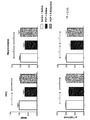
- TrkB BDNF receptor TrkB and phosphorylated TrkB in the isolated frontal cortex and hippocampus. It is a figure explaining the test plan which investigated the effect of R-ketamine in the model animal of schizophrenia.
- physiological saline + solvent/saline administration group PCP+ solvent/saline administration group, PCP+ solvent/R-ketamine administration group, PCP+ANA-12/R-ketamine administration group, PCP+ANA-12/saline administration group , Shows the results of the new object re-recognition test.
- the preventive or therapeutic agent for neurodevelopmental disorders of the present invention contains a compound represented by the following formula (I) or a pharmaceutically acceptable salt thereof as an active ingredient (hereinafter represented by the formula (I))
- the compound may be simply referred to as "Compound I”).
- X is H, F, Cl, Br, I, alkyl, alkenyl or aryl, preferably F or Cl, more preferably Cl.
- R 1 is alkyl, alkenyl or aryl.
- the carbon number of alkyl and alkenyl is preferably 1 to 10, more preferably 1 to 6, and further preferably 1 to 5.
- X and R 1 are alkyl, there is no particular limitation, and examples thereof include methyl, ethyl, propyl, isopropyl, cyclopropyl, butyl, isobutyl, t-butyl, cyclobutyl, cyclopropylmethyl, pentyl, cyclopentyl, and the like. It is preferably straight-chain alkyl, more preferably straight-chain alkyl having 1 to 5 carbon atoms, further preferably methyl or ethyl, and even more preferably methyl.
- alkenyl When X and R 1 are alkenyl, it may be alkenyl, which is a group having one or more double bonds in the group listed as alkyl, and is not particularly limited, and examples thereof include vinyl and allyl. Are listed.
- X and R 1 are aryl, there is no particular limitation, and examples include phenyl and the like.
- the compound in which X is Cl and R 1 is methyl is R-ketamine.
- the preventive or therapeutic agent for neurodevelopmental disorders according to the present invention preferably contains R-ketamine or a pharmacologically acceptable salt thereof as an active ingredient.
- the present invention relates to a drug for preventing or treating neurodevelopmental disorders, which comprises Compound I or a pharmaceutically acceptable salt thereof. Furthermore, the present invention comprises a compound I or a pharmacologically acceptable salt thereof in an amount effective for alleviating the symptoms of neurodevelopmental disorders, and the compound of formula (II) or a pharmacologically acceptable salt thereof. Relates to a pharmaceutical composition for preventing or treating a neurodevelopmental disorder, which is substantially free of a salt (hereinafter, the compound represented by the formula (II) may be simply referred to as “compound II”). .. Formula (II): (In the formula (II), The definitions of X and R 1 are the same as those in formula (I). )
- the term “as an active ingredient” means that it is included as a main active ingredient, and if it contains Compound I or a pharmacologically acceptable salt thereof as a medicinal ingredient, its content is It is not particularly limited. When compound I or a pharmaceutically acceptable salt thereof is contained as an active ingredient, it is preferable that compound II or a pharmaceutically acceptable salt thereof is not substantially contained.
- the term “substantially free of the compound represented by the formula (II) or a pharmaceutically acceptable salt thereof” includes Compound II or a pharmaceutically acceptable salt thereof at all. That it does not exist, or that it may contain Compound II or a pharmaceutically acceptable salt thereof in such an amount that the effects or side effects thereof do not occur, or as an impurity that is unavoidably mixed in the production thereof. It means that it may be included. Further, the term “substantially free of the compound represented by the formula (II) or a pharmacologically acceptable salt thereof” is represented by the formula (I) which is a drug substance when used as a drug.
- the impurity in the “Guideline for Impurities of API in New Drugs Containing New Active Ingredient” is the compound represented by the formula (II) or a pharmacologically acceptable salt thereof.
- "Acceptable salt” may be included, and Compound II may be included at 0.15% or less in the drug substance.
- the “compound represented by the formula (I)” in the “compound represented by the formula (I) or a pharmaceutically acceptable salt thereof” is preferably R-ketamine
- the “compound represented by the formula (II)” in the “compound represented by (II) or a pharmaceutically acceptable salt thereof” is preferably S-ketamine.
- RS-ketamine is a racemate which is a uniform mixture of R-ketamine and S-ketamine.
- the prophylactic or therapeutic agent for neurodevelopmental disorders of the present invention preferably contains substantially no compound represented by formula (II) or a pharmaceutically acceptable salt thereof, and in that case, formula (II)
- the amount of the compound represented by or a pharmacologically acceptable salt thereof, or the amount of S-ketamine or a pharmacologically acceptable salt thereof is preferably 2% by weight or less, and 0.15% by weight. % Or less is preferable.
- the amount of the compound represented by the formula (II) or a pharmaceutically acceptable salt thereof, or the amount of S-ketamine or a pharmaceutically acceptable salt thereof may be 0% by weight. The amount may be not less than wt% or may be more than 0 wt%.
- the amount of the compound represented by the formula (II) or a pharmacologically acceptable salt thereof, or the amount of S-ketamine or a pharmacologically acceptable salt thereof is the total amount of the preventive or therapeutic agent for neurodevelopmental disorders. It may be the content in the above, and weight% may be read as mass%.
- the prophylactic or therapeutic agent for neurodevelopmental disorders of the present invention preferably contains substantially no compound represented by formula (II) or a pharmacologically acceptable salt thereof, but in that case, The amount of the compound represented by II) or a pharmacologically acceptable salt thereof, or the amount of S-ketamine or a pharmacologically acceptable salt thereof is the same as that of the compound represented by the formula (II) or a drug thereof.
- the side effect referred to here may be a psychosis-inducing action, a drug dependence, or the like, and may be a psychiatric disorder-producing action.
- neurodevelopmental disorder refers to a group of diseases caused by defects in the nervous system during development (fetal, infant, childhood, puberty, etc.).
- the neurodevelopmental disorders include, but are not limited to, schizophrenia, autism spectrum disorder, attention deficit hyperactivity disorder and learning disorder.
- the neurodevelopmental disorder is preferably schizophrenia.
- one of the causes of the neurodevelopmental disorder is involvement of maternal inflammation as an epidemiological survey result.
- the neurodevelopmental disorder may be a neurodevelopmental disorder associated with maternal inflammation during pregnancy.
- the preventive or therapeutic agent for neurodevelopmental disorders can be used for preventing or treating positive symptoms, negative symptoms and/or cognitive dysfunction of neurodevelopmental disorders.
- the negative symptom may be social withdrawal, lack of social interest, loss of pleasure, apathy, apathy or inattention to social or cognitive input, or a combination thereof, in addition to the above.
- the preventive or therapeutic agent for neurodevelopmental disorders in the present invention may be used for preventing or treating the above-mentioned cognitive dysfunction or negative symptoms, and used for preventing or treating cognitive dysfunction or negative symptoms based on schizophrenia. It is preferable.
- Compound I or a pharmacologically acceptable salt thereof has a neurotrophic factor action, and therefore is used for the prevention of neurodevelopmental disorders by being administered before the onset of various symptoms of neurodevelopmental disorders.
- the prophylactic or therapeutic agent for neurodevelopmental disorders of the present invention is not particularly limited, but during the developmental stages of the nervous system (fetal period, infant period, childhood period, puberty period, etc.), among them, fetal period and infant period Alternatively, it may be a childhood neurodevelopmental disorder (fetal, infant or childhood neurodevelopmental disorder).
- improvement of neurodevelopmental disorders, preferably cognitive dysfunction, which is a core symptom of schizophrenia may lead to improvement of positive symptoms of neurodevelopmental disorders, preferably schizophrenia.
- neurodevelopmental disorders of the present invention By using the prophylactic or therapeutic agent for neurodevelopmental disorders of the present invention, the onset of neurodevelopmental disorders is prevented, and therapeutic effects such as alleviation and amelioration of symptoms in patients suffering from neurodevelopmental disorders are exerted. Since neurodevelopmental disorder is a symptom that exists for a long time (yearly), it is expected that the initiation of treatment can prevent the progression of the symptom and enable the patient to return to society. To be done.
- the compound represented by formula (I) or a pharmacologically acceptable salt thereof is intended for long-term administration in order to prevent or treat neurodevelopmental disorders.
- the compound represented by I) which is an R-form or a pharmaceutically acceptable salt thereof can be used as a prophylactic or therapeutic agent for neurodevelopmental disorders.
- the preventive agent for neurodevelopmental disorder in the present invention may be a preventive agent for onset of neurodevelopmental disorder or a preventive agent for progression of symptoms.
- the therapeutic agent for neurodevelopmental disorders according to the present invention has therapeutic effects such as preventing the progress of symptoms, relieving or ameliorating the symptoms.
- the compound represented by formula (I) which is the active ingredient in the present invention can be used in the form of both a free base and a pharmaceutically acceptable salt thereof.
- R-ketamine will be described as an example.
- the matters described for R-ketamine can also be applied to the compound represented by the formula (I).
- the place described as S-ketamine can be read as a compound represented by the formula (II).
- R-ketamine is a free base and has a chemical structure represented by the following formula (III).
- an addition salt of a pharmacologically acceptable acid is preferable, and the pharmacologically acceptable acid is not particularly limited, but hydrochloric acid is preferable.
- R-ketamine hydrochloride has a chemical structure represented by the following formula (IV).
- the R-ketamine or a pharmaceutically acceptable salt thereof used in the present invention may be in the form of a hydrate or a solvate.
- R-ketamine or a pharmacologically acceptable salt thereof may be labeled with an isotope.
- the isotope is not particularly limited, and examples thereof include 13 C and 2 H(D), which are stable isotopes.
- R-ketamine hydrochloride labeled with deuterium which has a chemical structure represented by the following formula (V) (wherein D represents a deuterium atom) is considered to slow the metabolism, Expected to last longer.
- the preventive or therapeutic agent, drug and pharmaceutical composition for neurodevelopmental disorder in the present invention can be administered orally or parenterally.
- known dosage forms can be used, such as tablets (including coated tablets), capsules, coated tablets, troches, solutions such as liquids, solutions or suspensions.
- the oral administration may be sublingual administration.
- Parenteral administration includes intravenous, intramuscular or subcutaneous administration by injection, transmucosal administration of nasal cavity and oral cavity using powder, drops, spray or aerosol, and rectal administration using cream or suppository. Administration, transdermal administration using patches, liniments, gels and the like.
- the administration route is preferably transdermal administration, oral administration, nasal administration, intravenous administration by injection, subcutaneous administration, and intramuscular administration.
- the pharmaceutical composition of the present invention comprises, in addition to R-ketamine or a pharmacologically acceptable salt thereof, other medicinal components having a neuroprotective effect other than S-ketamine or a pharmacologically acceptable salt thereof, It may also include other medicinal properties that can be used to treat neurodevelopmental disorders.
- the pharmaceutical composition may optionally contain appropriate pharmaceutically acceptable additives well known to those skilled in the art depending on the administration form and the like.
- the pharmaceutically acceptable additive is not particularly limited, and examples thereof include antioxidants, stabilizers, preservatives, flavoring agents, colorants, solubilizers, solubilizers, surfactants, emulsifiers, defoamers. , Viscosity modifiers, gelling agents, absorption enhancers, dispersants, carriers, diluents, excipients and pH adjusters.
- the drug and the pharmaceutical composition of the present invention are prepared as an injectable preparation, a solution or suspension form of the preparation is preferable, for transmucosal administration such as nasal cavity and oral cavity.
- a preparation it is preferably in the form of powder, drops or aerosol, and when it is prepared as a preparation for rectal administration, it is preferably in the form of a semisolid preparation such as cream or suppository. ..
- Formulations administered orally or parenterally are known to those skilled in the pharmaceutical arts, for example as described in Remington's Pharmaceutical Sciences (Mac Publishing Company, Easton, PA, 1970). It can be prepared by either method.
- Injectable preparations may use, for example, plasma-derived proteins such as albumin, amino acids such as glycine, and sugars such as mannitol as carriers, and buffers, solubilizers, isotonic agents, etc. may be used. ..
- a surfactant such as Tween (registered trademark) 80 and Tween (registered trademark) 20 may be used to prevent aggregation, for example.
- Preparations for parenteral administration other than injection preparations use, for example, distilled water or physiological saline, polyalkylene glycols such as polyethylene glycol, oils of plant origin, and hydrogenated naphthalene as carriers. May be.
- a preparation for rectal administration such as a suppository may use, for example, polyacetylene glycol, petrolatum and cocoa oil as an excipient.
- absorption enhancers such as bile salts, ethylenediamine salts, and citrate salts may be used as carriers.
- the formulation for inhalation may be solid, and lactose may be used as an excipient.
- Drops for nasal administration may be water or oil solutions.
- the accurate dose and administration schedule of the preventive or therapeutic agent for neurodevelopmental disorders, drugs and pharmaceutical compositions according to the present invention depend on the required amount, treatment method, disease or degree of need for each individual subject to be treated. Adjusted.
- the dose can be specifically determined according to age, weight, general health condition, sex, diet, administration time, administration method, excretion rate, drug combination, patient's medical condition, etc. It may be determined in consideration of the factors.
- the preventive or therapeutic agent, drug and pharmaceutical composition for neurodevelopmental disorder of the present invention are administered to a patient having cognitive impairment or negative symptoms of neurodevelopmental disorder, R-ketamine or a pharmacologically acceptable R-ketamine thereof is acceptable.
- the salt is preferably contained in an amount effective for reducing cognitive dysfunction and negative symptoms in patients with neurodevelopmental disorders. Since R-ketamine or a pharmacologically acceptable salt thereof has few side effects observed in S-ketamine and RS-ketamine, it can be safely used, and the daily dosage depends on the patient's condition and body weight.
- the dose is usually about 0.01 to 1000 mg/person/day, preferably 0.1 to 500 mg/person/day, although it varies depending on the compound type, administration route, etc. In the case of, it is usually about 0.01 to 500 mg/person/day, preferably 0.1 to 100 mg/person/day.
- it may be a method for preventing or treating a neurodevelopmental disorder, which comprises administering Compound I or a pharmaceutically acceptable salt thereof to a patient in need thereof.
- the patient in need thereof is not particularly limited and is a mammal, preferably a human.
- Compound I or a pharmaceutically acceptable salt thereof is preferably administered in a therapeutically effective amount.
- R-ketamine hydrochloride and S-ketamine hydrochloride use D-tartaric acid or L-tartaric acid from RS-ketamine (Ketalar®, ketamine hydrochloride, Daiichi Sankyo Co., Ltd., Tokyo, Japan). And prepared by the method described in US Pat. No. 6,040,479.
- FIG. 1 Preparation of a model animal for cognitive dysfunction of schizophrenia and administration of a drug were specifically performed as described below (FIG. 1).
- a male ICR mouse 8 weeks old, Japan SLC Co., Ltd., Hamamatsu, Japan
- the mice had free access to water and food.
- physiological saline 10 mL/kg body weight
- PCP 10 mg/kg body weight
- R-ketamine (10 mg/kg body weight) or vehicle (physiological saline 10 mL/kg) was intraperitoneally administered.
- A physiological saline + physiological saline administration group
- B PCP + physiological saline administration group
- C PCP + R-ketamine administration group.
- the novel object recognition test (NORT) is a system used for evaluation of cognitive function. The NORT was carried out according to a previous report (Hashimoto et al. Eur. J. Pharmacol. 2005; 519(1-2):114-117).
- BDNF Brain-derived neurotrophic factor
- TrkB BDNF receptor TrkB and phosphorylated TrkB in the brain tissue were quantified by Western blotting (FIG. 3).
- TrkB receptor On the first day of the experiment, physiological saline (10 mL/kg body weight) or PCP (10 mg/kg body weight) was subcutaneously administered once a day for 10 days (from experiment day 1 to experiment day 5 and experiment day 8). From the 12th day of the experiment: the 6th and 7th days of the experiment were discontinued).
- solvent (10 mL/kg body weight of PBS containing 17% DMSO)/saline (10 mL/kg body weight), solvent (10 mL/kg body weight) )/R-ketamine (10 mg/kg body weight), ANA-12 (0.5 mg/kg body weight)/R-ketamine (10 mg/kg body weight), or ANA-12 (0.5 mg/kg body weight)/saline (10 mL/kg body weight) was intraperitoneally administered.
- A physiological saline + solvent/saline administration group
- B PCP+ solvent/saline administration group
- C PCP+ solvent/R-ketamine administration group
- D PCP+ANA-12/R-ketamine administration Group
- C PCP+ANA-12/physiological saline administration group.
- the solvent or ANA-12 was intraperitoneally administered 30 minutes before the administration of R-ketamine or physiological saline.
- mice/group Statistical analysis was performed by one-way analysis of variance (one-way ANOVA) followed by Fisher LSD.
- a model animal for neurodevelopmental disorders such as schizophrenia and autism spectrum disorder (maternal immune activation model) and administration of drugs were specifically performed as described below (Fig. 5).
- Pregnant ddY mice (8-10 weeks old, Japan SLC Co., Ltd., Hamamatsu, Japan) were purchased as mice. The mice had free access to water and food. According to previous reports (Han M, et al. Sci Rep 2016; 6:36087.Matsura A, et al. Sci Rep 2018; 8:2158.Ma M, et al.Proc Natl Acad Sci USA 2019-116:70:83:83.
- physiological saline (5 mL/kg body weight) or Poly(I:C) (Sigma-Aldrich: 5 mg/kg body weight) was intraperitoneally administered for 6 days from the 12th to the 17th pregnancy. After giving birth, the animals were raised normally, and at the age of 3 weeks after birth, only male mice were weaned and raised. From 4 weeks after birth to 8 weeks after birth, R-ketamine (10 mg/kg body weight) or vehicle (physiological saline 10 mL/kg) was intraperitoneally administered twice a week for 4 weeks.
- a prophylactic or therapeutic agent for neurodevelopmental disorders containing compound I, preferably R-ketamine or a pharmacologically acceptable salt thereof, as an active ingredient is useful as a novel drug.
Landscapes
- Health & Medical Sciences (AREA)
- Veterinary Medicine (AREA)
- Chemical & Material Sciences (AREA)
- Medicinal Chemistry (AREA)
- Pharmacology & Pharmacy (AREA)
- Life Sciences & Earth Sciences (AREA)
- Animal Behavior & Ethology (AREA)
- General Health & Medical Sciences (AREA)
- Public Health (AREA)
- Engineering & Computer Science (AREA)
- Bioinformatics & Cheminformatics (AREA)
- Biomedical Technology (AREA)
- Neurology (AREA)
- Neurosurgery (AREA)
- Chemical Kinetics & Catalysis (AREA)
- General Chemical & Material Sciences (AREA)
- Nuclear Medicine, Radiotherapy & Molecular Imaging (AREA)
- Organic Chemistry (AREA)
- Epidemiology (AREA)
- Psychiatry (AREA)
- Hospice & Palliative Care (AREA)
- Acyclic And Carbocyclic Compounds In Medicinal Compositions (AREA)
Abstract
本発明は、有効成分として、下記式(I)で表される化合物またはその薬理学的に許容される塩を含む、神経発達障害の予防または治療剤を提供する。
Description
本発明は、R-ケタミンおよびその誘導体を含む神経発達障害の予防または治療剤に関する。
神経発達障害として、統合失調症は、人種や地域に関係なく人口の約1%の割合で起こり、その多くは思春期から青年期に発症する代表的な精神疾患である。統合失調症による入院患者は日本においては、病院の総ベッド数の約15%を占めており、医療経済という点からも大きな問題となっている。症状としては、幻覚、妄想などの陽性症状、感情の鈍麻・平板化、意欲の減退、思考の低下、社会的引きこもりなどの陰性症状、および注意力の低下、作業記憶の低下、遂行機能の低下などの認知機能障害などがある。これらの症状のうち、特に認知機能障害は、統合失調症の中核的な症状である可能性があり、患者の生活の質(QOL)を低下させていると考えられており、患者の社会復帰の妨げになっている(非特許文献1、2)。
統合失調症の治療には、薬物治療が不可欠であり、フェノチアジン系化合物、ブチロフェノン系化合物、ベンズアミド系化合物、イミノジベンジル系化合物、チエピン系化合物、インドール系化合物およびセロトニン・ドーパミン受容体遮断薬などの抗精神病薬が使用されている。臨床の場で実際に使用されている抗精神病薬は、幻覚・妄想などの陽性症状には有効であるが、陰性症状や認知機能障害にはほとんど効果が無いことから、国内外において陰性症状や認知機能障害の治療薬の開発が強く切望されている。
NMDA受容体アンタゴニストであることが知られるフェンサイクリジン(phencyclidine、以下、「PCP」と記載する場合がある。)を健常者に投与すると、統合失調症と酷似した症状(陽性症状、陰性症状、認知機能障害)を惹起することから(非特許文献3,4)、PCPは統合失調症の動物モデルを作成する際に幅広く使用されている(非特許文献5)。特にPCPを繰り返し投与したマウスで新規物体再認識試験(NORT:novel object recognition test)を用いた系は、統合失調症の陰性症状や認知機能障害の動物モデルとして有用であることが報告されている(非特許文献6-8)。
またNMDA受容体アンタゴニストであるRS-ケタミンも、統合失調症のモデルとして健常者や動物に投与されている(非特許文献9,10)。
またNMDA受容体アンタゴニストであるRS-ケタミンも、統合失調症のモデルとして健常者や動物に投与されている(非特許文献9,10)。
RS-ケタミンは、麻酔薬として使用されているが、幻覚や妄想などの精神症状、解離症状および依存性などの副作用が問題となり、麻薬指定されているため、臨床的実用化には困難性がある。
また、RS-ケタミンのうち、S-異性体であるS-ケタミンはNMDA受容体に対する親和性がR-異性体であるR-ケタミンより約4倍高いことが知られている(非特許文献11)。一方、動物実験において、R-ケタミンは、S-ケタミンと比較して、副作用(精神病惹起作用、薬物依存など)が少ないことが報告されており、ケタミンの精神病症状惹起作用の強度はNMDA受容体の遮断強度と相関する(非特許文献12-14)。
さらに、RS-ケタミンの鎮痛作用および精神病症状惹起作用はいずれも、主としてNMDA受容体の遮断により媒介されていると一般的に理解されており(非特許文献3)、S-ケタミンのNMDA受容体への親和性が高いことから、RS-ケタミンの作用は、主にS-ケタミンにより引き起こされると考えられている。
さらに、RS-ケタミンの鎮痛作用および精神病症状惹起作用はいずれも、主としてNMDA受容体の遮断により媒介されていると一般的に理解されており(非特許文献3)、S-ケタミンのNMDA受容体への親和性が高いことから、RS-ケタミンの作用は、主にS-ケタミンにより引き起こされると考えられている。
認知機能障害は、統合失調症、自閉症スペクトラム障害、学習性障害、注意欠陥多動性障害などの神経発達障害を含む多くの精神疾患患者で観察されるが(非特許文献15)、これらの認知機能障害を予防・治療する薬剤は無い。
ElvevB. et al. Cognitive impairment in schizophrenia is the core of the disorder. Crit. Rev. Neurobiol. 2000;14 (1):1-21.
Barch DM. et al. Cognition in schizophrenia: core psychological and neural mechanisms. Trend Cog. Sci. 2012 Jan;16(1):27-34.
Javitt DC. et al. Recent advances in the phencyclidine model of schizophrenia. Am. J. Psychiatry 1991 Oct;148(10):1301-8.
Domino EF. Et al. Phencyclidine/schizophrenia: one view toward the past, the other to the future. Schizophr. Bull. 2012 Sep; 38(5):914-919.
Sams-Dodd F. Phencyclidine-induced stereotyped behavior and social isolation in rats: a possible animal model of schizophrenia. Behav. Pharmacol. 1996;7(1):3-23.
Hashimoto K. et al. Phencyclidine-induced cognitive deficits in mice are improved by subsequent subchronic administration of clozapine, but not haloperidol. Eur. J. Pharmacol. 2005 Sep;519(1-2):114-117.
Hashimoto K. et al. Phencyclidine-induced cognitive deficits in mice are improved by subsequent subchronic administration of fluvoxamine: role of sigma-1 receptors. Neuropsychopharmacology 2007 Mar; 32(3):514-521.
Hashimoto K. et al. Phencyclidine-induced cognitive deficits in mice are improved by subsequent subchronic administration of the novel selective alpha-7 nicotinic receptor agonist SSR180711. Biol. Psychiatry 2008 Jan; 63(1):92-97.
Abi-Saab WM. et al. The NMDA antagonist model for schizophrenia: promise and pitfalls. Pharmacopsychiatry 1998 Jul; 31(Suppl 2):104-109.
Frohlich J. et al. Reviewing the ketamine model for schizophrenia. J. Psychopharmacol. 2014 Apr; 28(4):287-302.
Ebert B. et al. Norketamine, the main metabolite of ketamine, is an non-competitive NMDA receptor antagonist in the rat cortex and spinal cord. Eur. J. Pharmacol. 1997 Aug; 333(1):99-104.
Yang C. et al. HYPERLINK "https://www.ncbi.nlm.nih.gov/pubmed/26327690" R-ketamine: a rapid-onset and sustained antidepressant without psychotomimetic side effects. Transl. Psychiatry 2015 Sep 1; 5:e632.
Yang C. et al. Loss of parvalbumin-immunoreactivity in mouse brain regions after repeated intermittent administration of esketamine, but not R-ketamine. Psychiatry Res. 2016 May 30;239:281-3.
Hashimoto K. et al. Reduction of dopamine D2/3 receptor binding in the striatum after a single administration of esketamine, but not R-ketamine: A PET study in conscious monkeys. Eur. Arch. Psychiatry Clin. Neurosci. 2017 March;267(2):173-176.
Millan MJ. et al. Cognitive dysfunction in psychiatric disorders: characteristics, causes and the quest for improved therapy. Nature Rev. Drug Discov. 2012 Feb;11(2):141-168.
本発明が解決しようとする課題は、神経発達障害に対して予防または治療効果を有する新たな化合物を提供することにある。
本発明者は、上記課題を解決すべく鋭意検討を行って、神経発達障害に対して予防または治療効果を有する新たな化合物を見出し、本発明を完成した。
すなわち、本発明は、以下のとおりである。
(1)
有効成分として、下記式(I)で表される化合物またはその薬理学的に許容される塩を含む、神経発達障害の予防または治療剤。
式(I):

(式(I)中、
Xは、H、F、Cl、Br、I、アルキル、アルケニルまたはアリールであり、
R1は、アルキル、アルケニルまたはアリールである。)
(2)
R-ケタミンまたはその薬理学的に許容される塩を含む、(1)に記載の神経発達障害の予防または治療剤。
(3)
神経発達障害が、統合失調症、自閉症スペクトラム障害、注意欠陥多動性障害または学習性障害であり、好ましくは統合失調症または自閉症スペクトラム障害であり、より好ましくは統合失調症である、(1)または(2)に記載の神経発達障害の予防または治療剤。
(4)
神経発達障害が、小児期の神経発達障害である、(1)~(3)のいずれかに記載の神経発達障害の予防剤または治療剤。
(5)
神経発達障害が胎児または乳児の神経発達障害である、(1)~(3)のいずれかに記載の神経発達障害の予防または治療剤。
(6)
神経発達障害が、妊娠中の母体の炎症に関連する、(1)~(5)のいずれかに記載の神経発達障害のための予防剤または治療剤。
(7)
認知機能障害または陰性症状の予防または治療に用いられ、好ましくは神経発達障害に基づく認知機能障害または陰性症状に用いられ、より好ましくは統合失調症に基づく認知機能障害または陰性症状に用いられる、(1)~(6)のいずれかに記載の神経発達障害の予防または治療剤。
(8)
認知機能障害が、注意力の障害、言語の流動性の低下、言語情報の学習および保持の低下、処理速度の低下、陳述記憶の低下、作業記憶の障害、実行機能の低下、またはそれらの組み合わせを含む、(7)に記載の神経発達障害の予防または治療剤。
(9)
陰性症状が、社会的引きこもり、社会的関心の欠如、快感消失、感情鈍麻、社会的あるいは認知的入力に対する無関心または不注意、またはそれらの組み合わせを含む、(7)に記載の神経発達障害の予防または治療薬。
(10)
下記式(II)で表される化合物またはその薬理学的に許容される塩を実質的に含まない、(1)~(9)のいずれかに記載の神経発達障害の予防または治療剤。
式(II):

(式(II)中、
XおよびR1の定義は、式(I)における定義と同様である。)
(11)
S-ケタミンまたはその薬理学的に許容される塩を実質的に含まない、(1)~(10)のいずれかに記載の神経発達障害の予防または治療剤。
(12)
S-ケタミンまたはその薬理学的に許容される塩の量が、2重量%以下または0.15重量%以下である、(11)に記載の神経発達障害の予防または治療剤。
(13)
S-ケタミンまたはその薬理学的に許容される塩の量が、S-ケタミンまたはその薬理学的に許容される塩の副作用が示されないS-ケタミンまたはその薬理学的に許容される塩の量である、(11)または(12)に記載の神経発達障害の予防または治療剤。
(14)
副作用が精神異常発現作用である、(13)に記載の神経発達障害の予防または治療剤。
(15)
有効成分として、上記式(I)で表される化合物またはその薬理学的に許容される塩からなる神経発達障害の予防または治療剤。
(16)
R-ケタミンまたはその薬理学的に許容される塩からなる神経発達障害の予防または治療剤。
(17)
(1)~(16)のいずれかに記載の神経発達障害の予防または治療剤を含む、医薬組成物。
(18)
静脈内、筋肉内、皮下、経鼻、経口、舌下、直腸または経皮投与に適している、(17)に記載の医薬組成物。
(19)
液体、溶液、懸濁液、粉末、錠剤、被覆錠剤、カプセル、トローチ、クリーム、坐薬、ゲル、パッチ、リニメントまたはエーロゾルの形態である、(17)または(18)に記載の医薬組成物。
(20)
神経発達障害を治療するのに有効な量のR-ケタミンを含む、(17)~(19)のいずれかに記載の医薬組成物。
(21)
下記式(I)で表される化合物またはその薬理学的に許容される塩を含む、患者における認知機能障害の予防または治療剤。
式(I):

(式(I)中、
Xは、H、F、Cl、Br、I、アルキル、アルケニルあるいはアリールであり、
R1は、アルキル、アルケニルまたはアリールである。)
(22)
R-ケタミンまたはその薬理学的に許容される塩を含む、(21)に記載の認知機能障害の予防または治療剤。
(23)
下記式(II)で表される化合物またはその薬理学的に許容される塩を実質的に含まない、(21)または(22)に記載の認知機能障害の予防または治療剤。
式(II):

(式(II)中、
XおよびR1の定義は、式(I)における定義と同様である。)
(24)
S-ケタミンまたはその薬理学的に許容される塩を実質的に含まない、(21)~(23)のいずれかに記載の認知機能障害の予防または治療剤。
(25)
S-ケタミンまたはその薬理学的に許容される塩の量が、2重量%以下または0.15重量%以下である、(24)に記載の認知機能障害の予防または治療剤。
(26)
S-ケタミンまたはその薬理学的に許容される塩の量が、S-ケタミンまたはその薬理学的に許容される塩の副作用が示されないS-ケタミンまたはその薬理学的に許容される塩の量である、(24)または(25)に記載の認知機能障害の予防または治療剤。
(27)
副作用が精神異常発現作用である、(26)に記載の認知機能障害の予防または治療剤。
(28)
認知機能障害が神経発達障害に由来する、(21)~(27)のいずれかに記載の認知機能障害の予防または治療剤。
(29)
神経発達障害が、小児期の神経発達障害である、(28)に記載の認知機能障害の予防剤または治療剤。
(30)
神経発達障害が胎児または乳児の神経発達障害である、(28)に記載の認知機能障害の予防または治療剤。
(31)
神経発達障害が、統合失調症、自閉症スペクトラム障害、学習性障害または注意欠陥多動性障害である、(28)~(30)のいずれかに記載の認知機能障害の予防または治療剤。
(32)
神経発達障害が、妊娠中の母体の炎症に関連する、(28)~(30)のいずれかに記載の認知機能障害の予防剤または治療剤。
(33)
認知機能障害が、注意力の障害、言語の流動性の低下、言語情報の学習および保持の低下、処理速度の低下、陳述記憶の低下、作業記憶の障害、実行機能の低下、またはそれらの組み合わせを含む、(21)~(32)のいずれかに記載の認知機能障害の予防または治療剤。
(34)
(21)~(33)のいずれかに記載の認知機能障害の予防または治療剤、および薬学的に許容可能な担体、希釈剤または賦形剤を含む、医薬組成物。
(35)
静脈内、筋肉内、皮下、経鼻、経口、舌下、直腸または経皮投与に適している、(34)に記載の医薬組成物。
(36)
液体、溶液、懸濁液、粉末、錠剤、被覆錠剤、カプセル、トローチ、クリーム、坐薬、ゲル、パッチ、リニメントまたはエーロゾルの形態である、(34)または(35)に記載の医薬組成物。
(37)
認知機能障害を治療するのに有効な量のR-ケタミンを含む、(34)~(36)のいずれかに記載の医薬組成物。
(38)
上記式(I)で表される化合物またはその薬理学的に許容される塩を神経発達障害の症状の軽減に有効な量を含有し、上記式(II)で表される化合物またはその薬理学的に許容される塩を実質的に含まない、神経発達障害の予防または治療用医薬組成物。
(39)
R-ケタミンまたはその薬理学的に許容される塩を神経発達障害の症状の軽減に有効な量を含有し、S-ケタミンまたはその薬理学的に許容される塩を実質的に含まない、神経発達障害の予防または治療用医薬組成物。
(40)
神経発達障害の予防または治療のための上記式(I)で表される化合物またはその薬理学的に許容される塩。
(42)
神経発達障害の予防または治療のためのR-ケタミンまたはその薬理学的に許容される塩。
(43)
上記式(I)で表される化合物またはその薬理学的に許容される塩を、それを必要とする患者に投与する、神経発達障害の予防または治療方法。
(44)
R-ケタミンまたはその薬理学的に許容される塩を、それを必要とする患者に投与する、神経発達障害の予防または治療方法。
(45)
(38)~(44)において、神経発達障害は、神経発達障害の陽性症状、陰性症状および/または認知機能障害と読み替えてもよく、統合失調症、自閉症スペクトラム障害、注意欠陥多動性障害または学習性障害であってもよく、神経発達障害は、神経発達障害による認知機能障害であってもよい。
(1)
有効成分として、下記式(I)で表される化合物またはその薬理学的に許容される塩を含む、神経発達障害の予防または治療剤。
式(I):
Xは、H、F、Cl、Br、I、アルキル、アルケニルまたはアリールであり、
R1は、アルキル、アルケニルまたはアリールである。)
(2)
R-ケタミンまたはその薬理学的に許容される塩を含む、(1)に記載の神経発達障害の予防または治療剤。
(3)
神経発達障害が、統合失調症、自閉症スペクトラム障害、注意欠陥多動性障害または学習性障害であり、好ましくは統合失調症または自閉症スペクトラム障害であり、より好ましくは統合失調症である、(1)または(2)に記載の神経発達障害の予防または治療剤。
(4)
神経発達障害が、小児期の神経発達障害である、(1)~(3)のいずれかに記載の神経発達障害の予防剤または治療剤。
(5)
神経発達障害が胎児または乳児の神経発達障害である、(1)~(3)のいずれかに記載の神経発達障害の予防または治療剤。
(6)
神経発達障害が、妊娠中の母体の炎症に関連する、(1)~(5)のいずれかに記載の神経発達障害のための予防剤または治療剤。
(7)
認知機能障害または陰性症状の予防または治療に用いられ、好ましくは神経発達障害に基づく認知機能障害または陰性症状に用いられ、より好ましくは統合失調症に基づく認知機能障害または陰性症状に用いられる、(1)~(6)のいずれかに記載の神経発達障害の予防または治療剤。
(8)
認知機能障害が、注意力の障害、言語の流動性の低下、言語情報の学習および保持の低下、処理速度の低下、陳述記憶の低下、作業記憶の障害、実行機能の低下、またはそれらの組み合わせを含む、(7)に記載の神経発達障害の予防または治療剤。
(9)
陰性症状が、社会的引きこもり、社会的関心の欠如、快感消失、感情鈍麻、社会的あるいは認知的入力に対する無関心または不注意、またはそれらの組み合わせを含む、(7)に記載の神経発達障害の予防または治療薬。
(10)
下記式(II)で表される化合物またはその薬理学的に許容される塩を実質的に含まない、(1)~(9)のいずれかに記載の神経発達障害の予防または治療剤。
式(II):
XおよびR1の定義は、式(I)における定義と同様である。)
(11)
S-ケタミンまたはその薬理学的に許容される塩を実質的に含まない、(1)~(10)のいずれかに記載の神経発達障害の予防または治療剤。
(12)
S-ケタミンまたはその薬理学的に許容される塩の量が、2重量%以下または0.15重量%以下である、(11)に記載の神経発達障害の予防または治療剤。
(13)
S-ケタミンまたはその薬理学的に許容される塩の量が、S-ケタミンまたはその薬理学的に許容される塩の副作用が示されないS-ケタミンまたはその薬理学的に許容される塩の量である、(11)または(12)に記載の神経発達障害の予防または治療剤。
(14)
副作用が精神異常発現作用である、(13)に記載の神経発達障害の予防または治療剤。
(15)
有効成分として、上記式(I)で表される化合物またはその薬理学的に許容される塩からなる神経発達障害の予防または治療剤。
(16)
R-ケタミンまたはその薬理学的に許容される塩からなる神経発達障害の予防または治療剤。
(17)
(1)~(16)のいずれかに記載の神経発達障害の予防または治療剤を含む、医薬組成物。
(18)
静脈内、筋肉内、皮下、経鼻、経口、舌下、直腸または経皮投与に適している、(17)に記載の医薬組成物。
(19)
液体、溶液、懸濁液、粉末、錠剤、被覆錠剤、カプセル、トローチ、クリーム、坐薬、ゲル、パッチ、リニメントまたはエーロゾルの形態である、(17)または(18)に記載の医薬組成物。
(20)
神経発達障害を治療するのに有効な量のR-ケタミンを含む、(17)~(19)のいずれかに記載の医薬組成物。
(21)
下記式(I)で表される化合物またはその薬理学的に許容される塩を含む、患者における認知機能障害の予防または治療剤。
式(I):
Xは、H、F、Cl、Br、I、アルキル、アルケニルあるいはアリールであり、
R1は、アルキル、アルケニルまたはアリールである。)
(22)
R-ケタミンまたはその薬理学的に許容される塩を含む、(21)に記載の認知機能障害の予防または治療剤。
(23)
下記式(II)で表される化合物またはその薬理学的に許容される塩を実質的に含まない、(21)または(22)に記載の認知機能障害の予防または治療剤。
式(II):
XおよびR1の定義は、式(I)における定義と同様である。)
(24)
S-ケタミンまたはその薬理学的に許容される塩を実質的に含まない、(21)~(23)のいずれかに記載の認知機能障害の予防または治療剤。
(25)
S-ケタミンまたはその薬理学的に許容される塩の量が、2重量%以下または0.15重量%以下である、(24)に記載の認知機能障害の予防または治療剤。
(26)
S-ケタミンまたはその薬理学的に許容される塩の量が、S-ケタミンまたはその薬理学的に許容される塩の副作用が示されないS-ケタミンまたはその薬理学的に許容される塩の量である、(24)または(25)に記載の認知機能障害の予防または治療剤。
(27)
副作用が精神異常発現作用である、(26)に記載の認知機能障害の予防または治療剤。
(28)
認知機能障害が神経発達障害に由来する、(21)~(27)のいずれかに記載の認知機能障害の予防または治療剤。
(29)
神経発達障害が、小児期の神経発達障害である、(28)に記載の認知機能障害の予防剤または治療剤。
(30)
神経発達障害が胎児または乳児の神経発達障害である、(28)に記載の認知機能障害の予防または治療剤。
(31)
神経発達障害が、統合失調症、自閉症スペクトラム障害、学習性障害または注意欠陥多動性障害である、(28)~(30)のいずれかに記載の認知機能障害の予防または治療剤。
(32)
神経発達障害が、妊娠中の母体の炎症に関連する、(28)~(30)のいずれかに記載の認知機能障害の予防剤または治療剤。
(33)
認知機能障害が、注意力の障害、言語の流動性の低下、言語情報の学習および保持の低下、処理速度の低下、陳述記憶の低下、作業記憶の障害、実行機能の低下、またはそれらの組み合わせを含む、(21)~(32)のいずれかに記載の認知機能障害の予防または治療剤。
(34)
(21)~(33)のいずれかに記載の認知機能障害の予防または治療剤、および薬学的に許容可能な担体、希釈剤または賦形剤を含む、医薬組成物。
(35)
静脈内、筋肉内、皮下、経鼻、経口、舌下、直腸または経皮投与に適している、(34)に記載の医薬組成物。
(36)
液体、溶液、懸濁液、粉末、錠剤、被覆錠剤、カプセル、トローチ、クリーム、坐薬、ゲル、パッチ、リニメントまたはエーロゾルの形態である、(34)または(35)に記載の医薬組成物。
(37)
認知機能障害を治療するのに有効な量のR-ケタミンを含む、(34)~(36)のいずれかに記載の医薬組成物。
(38)
上記式(I)で表される化合物またはその薬理学的に許容される塩を神経発達障害の症状の軽減に有効な量を含有し、上記式(II)で表される化合物またはその薬理学的に許容される塩を実質的に含まない、神経発達障害の予防または治療用医薬組成物。
(39)
R-ケタミンまたはその薬理学的に許容される塩を神経発達障害の症状の軽減に有効な量を含有し、S-ケタミンまたはその薬理学的に許容される塩を実質的に含まない、神経発達障害の予防または治療用医薬組成物。
(40)
神経発達障害の予防または治療のための上記式(I)で表される化合物またはその薬理学的に許容される塩。
(42)
神経発達障害の予防または治療のためのR-ケタミンまたはその薬理学的に許容される塩。
(43)
上記式(I)で表される化合物またはその薬理学的に許容される塩を、それを必要とする患者に投与する、神経発達障害の予防または治療方法。
(44)
R-ケタミンまたはその薬理学的に許容される塩を、それを必要とする患者に投与する、神経発達障害の予防または治療方法。
(45)
(38)~(44)において、神経発達障害は、神経発達障害の陽性症状、陰性症状および/または認知機能障害と読み替えてもよく、統合失調症、自閉症スペクトラム障害、注意欠陥多動性障害または学習性障害であってもよく、神経発達障害は、神経発達障害による認知機能障害であってもよい。
R-ケタミンに代表される式(I)で表される化合物またはその薬理学的に許容し得る塩は、神経発達障害の予防または治療に有効である。
本発明の神経発達障害の予防または治療剤は、有効成分として、下記式(I)で表される化合物またはその薬理学的に許容される塩を含む(以下、式(I)で表される化合物を、単に、「化合物I」と記載する場合がある。)。
式(I):

(式(I)中、
Xは、H、F、Cl、Br、I、アルキル、アルケニルまたはアリールであり、
R1は、アルキル、アルケニルまたはアリールである。)
式(I):
Xは、H、F、Cl、Br、I、アルキル、アルケニルまたはアリールであり、
R1は、アルキル、アルケニルまたはアリールである。)
Xは、H、F、Cl、Br、I、アルキル、アルケニルまたはアリールであり、好ましくは、FまたはCl、より好ましくは、Clである。
R1は、アルキル、アルケニルまたはアリールである。
R1は、アルキル、アルケニルまたはアリールである。
本発明において、アルキルおよびアルケニルの炭素数としては、好ましくは、1~10、より好ましくは、1~6、さらに好ましくは、1~5である。
XおよびR1がアルキルである場合、特に限定されないが、例えば、メチル、エチル、プロピル、イソプロピル、シクロプロピル、ブチル、イソブチル、t-ブチル、シクロブチル、シクロプロピルメチル、ペンチル、シクロペンチルなどが挙げられ、好ましくは、直鎖アルキル、より好ましくは、炭素数1~5の直鎖アルキル、さらに好ましくは、メチルまたはエチル、よりさらに好ましくは、メチルである。
XおよびR1がアルケニルである場合、アルキルとして列記される基に1つまたは2つ以上の二重結合を有する基であるアルケニルであってもよく、特に限定されないが、例えば、ビニル、アリルなどが挙げられる。
XおよびR1がアリールである場合、特に限定されないが、例えば、フェニルなどが挙げられる。
XおよびR1がアルキルである場合、特に限定されないが、例えば、メチル、エチル、プロピル、イソプロピル、シクロプロピル、ブチル、イソブチル、t-ブチル、シクロブチル、シクロプロピルメチル、ペンチル、シクロペンチルなどが挙げられ、好ましくは、直鎖アルキル、より好ましくは、炭素数1~5の直鎖アルキル、さらに好ましくは、メチルまたはエチル、よりさらに好ましくは、メチルである。
XおよびR1がアルケニルである場合、アルキルとして列記される基に1つまたは2つ以上の二重結合を有する基であるアルケニルであってもよく、特に限定されないが、例えば、ビニル、アリルなどが挙げられる。
XおよびR1がアリールである場合、特に限定されないが、例えば、フェニルなどが挙げられる。
式(I)中、XがClであり、R1がメチルである化合物は、R-ケタミンである。
本発明における神経発達障害の予防または治療剤は、有効成分として、好ましくは、R-ケタミンまたはその薬理学的に許容される塩を含む。
本発明における神経発達障害の予防または治療剤は、有効成分として、好ましくは、R-ケタミンまたはその薬理学的に許容される塩を含む。
本発明は、化合物Iまたはその薬理学的に許容される塩からなる神経発達障害の予防または治療用薬剤に関する。さらに、本発明は、化合物Iまたはその薬理学的に許容される塩を神経発達障害の症状の軽減に有効な量を含有し、式(II)で表される化合物またはその薬理学的に許容される塩を実質的に含まない、神経発達障害の予防または治療用医薬組成物に関する(以下、式(II)で表される化合物を、単に、「化合物II」と記載する場合がある。)。
式(II):

(式(II)中、
XおよびR1の定義は、式(I)における定義と同様である。)
式(II):
XおよびR1の定義は、式(I)における定義と同様である。)
本発明において、用語「有効成分として」とは、主要な活性成分として含むという意味であり、化合物Iまたはその薬理学的に許容される塩を薬効成分として含むものであれば、その含有量は特に限定されない。
有効成分として、化合物Iまたはその薬理学的に許容される塩を含む場合、化合物IIまたはその薬理学的に許容される塩を実質的に含まないことが好ましい。
有効成分として、化合物Iまたはその薬理学的に許容される塩を含む場合、化合物IIまたはその薬理学的に許容される塩を実質的に含まないことが好ましい。
本発明において、用語「式(II)で表される化合物またはその薬理学的に許容される塩を実質的に含まない」とは、化合物IIまたはその薬理学的に許容される塩を全く含まないこと、あるいは、化合物IIまたはその薬理学的に許容される塩をその効果や副作用が発生しない程度の量で含んでいてもよいこと、あるいは、その製造上不可避的に混入した程度の不純物として含んでいてもよいことを意味する。
また、用語「式(II)で表される化合物またはその薬理学的に許容される塩を実質的に含まない」とは、医薬品とした場合の原薬である式(I)で表される化合物またはその薬理学的に許容される塩に対して、「新有効成分含有医薬品のうち原薬の不純物に関するガイドライン」における不純物としては、「式(II)で表される化合物またはその薬理学的に許容される塩」を含んでもいいことを意味してもよく、原薬中0.15%以下で化合物IIを含んでもよい。
また、用語「式(II)で表される化合物またはその薬理学的に許容される塩を実質的に含まない」とは、医薬品とした場合の原薬である式(I)で表される化合物またはその薬理学的に許容される塩に対して、「新有効成分含有医薬品のうち原薬の不純物に関するガイドライン」における不純物としては、「式(II)で表される化合物またはその薬理学的に許容される塩」を含んでもいいことを意味してもよく、原薬中0.15%以下で化合物IIを含んでもよい。
本発明において、「式(I)で表される化合物またはその薬理学的に許容される塩」における「式(I)で表される化合物」は、好ましくは、R-ケタミンであり、「式(II)で表される化合物またはその薬理学的に許容される塩」における「式(II)で表される化合物」は、好ましくは、S-ケタミンである。
なお、RS-ケタミンは、R-ケタミンとS-ケタミンの均等混合物であるラセミ体である。
なお、RS-ケタミンは、R-ケタミンとS-ケタミンの均等混合物であるラセミ体である。
本発明の神経発達障害の予防または治療剤は、式(II)で表される化合物またはその薬理学的に許容される塩を実質的に含まないことが好ましいが、その場合の式(II)で表される化合物またはその薬理学的に許容される塩の量、あるいはS-ケタミンまたはその薬理学的に許容される塩の量は、2重量%以下であることが好ましく、0.15重量%以下であることが好ましい。式(II)で表される化合物またはその薬理学的に許容される塩の量、あるいはS-ケタミンまたはその薬理学的に許容される塩の量は、0重量%であってもよく、0重量%以上であってもよく、0重量%を超える量であってもよい。式(II)で表される化合物またはその薬理学的に許容される塩の量、あるいはS-ケタミンまたはその薬理学的に許容される塩の量は、神経発達障害の予防または治療剤の総量中での含有量であってよく、重量%は、質量%と読み替えてもよい。
また、本発明の神経発達障害の予防または治療剤は、式(II)で表される化合物またはその薬理学的に許容される塩を実質的に含まないことが好ましいが、その場合の式(II)で表される化合物またはその薬理学的に許容される塩の量、あるいはS-ケタミンまたはその薬理学的に許容される塩の量は、式(II)で表される化合物またはその薬理学的に許容される塩の副作用が示されない式(II)で表される化合物またはその薬理学的に許容される塩の量であるか、あるいはS-ケタミンまたはその薬理学的に許容される塩の副作用が示されないS-ケタミンまたはその薬理学的に許容される塩の量であってよい。
ここでいう副作用としては、精神病惹起作用や薬物依存などであってよく、精神異常発現作用であってもよい。
また、本発明の神経発達障害の予防または治療剤は、式(II)で表される化合物またはその薬理学的に許容される塩を実質的に含まないことが好ましいが、その場合の式(II)で表される化合物またはその薬理学的に許容される塩の量、あるいはS-ケタミンまたはその薬理学的に許容される塩の量は、式(II)で表される化合物またはその薬理学的に許容される塩の副作用が示されない式(II)で表される化合物またはその薬理学的に許容される塩の量であるか、あるいはS-ケタミンまたはその薬理学的に許容される塩の副作用が示されないS-ケタミンまたはその薬理学的に許容される塩の量であってよい。
ここでいう副作用としては、精神病惹起作用や薬物依存などであってよく、精神異常発現作用であってもよい。
本発明において、用語「神経発達障害」とは、神経系の発達期(胎児期、幼児期、小児期、思春期など)の不具合で生じる一群の疾患である。
神経発達障害としては、特に限定されないが、例えば、統合失調症、自閉症スペクトラム障害、注意欠陥多動性障害または学習性障害などが挙げられる。
神経発達障害としては、好ましくは、統合失調症である。
ここで、神経発達障害の原因の一つとして、疫学的調査結果として、母体の炎症の関与が挙げられる。したがって、神経発達障害が、妊娠中の母体の炎症に関連する神経発達障害であってもよい。
神経発達障害としては、特に限定されないが、例えば、統合失調症、自閉症スペクトラム障害、注意欠陥多動性障害または学習性障害などが挙げられる。
神経発達障害としては、好ましくは、統合失調症である。
ここで、神経発達障害の原因の一つとして、疫学的調査結果として、母体の炎症の関与が挙げられる。したがって、神経発達障害が、妊娠中の母体の炎症に関連する神経発達障害であってもよい。
神経発達障害の一つである統合失調症においては、幻覚、妄想などの陽性症状、感情の鈍麻・平板化、意欲の減退、思考の低下、社会的引きこもりなどの陰性症状、および注意力の低下、作業記憶の低下、遂行機能の低下などの認知機能障害といった症状が確認される。
本発明における神経発達障害の予防または治療剤は、神経発達障害の陽性症状、陰性症状および/または認知機能障害の予防または治療に用いることができる。
陰性症状としては、上記に加え、例えば、社会的引きこもり、社会的関心の欠如、快感消失、感情鈍麻、社会的あるいは認知的入力に対する無関心または不注意、またはそれらの組み合わせであってもよい。
また、認知機能障害としては、上記に加え、例えば、注意力の障害、言語の流動性の低下、言語情報の学習および保持の低下、処理速度の低下、陳述記憶の低下、作業記憶の障害、実行機能の低下、またはそれらの組み合わせであってもよい。
中でも、本発明における神経発達障害の予防または治療剤は、上述の認知機能障害または陰性症状の予防または治療に用いてもよく、統合失調症に基づく認知機能障害または陰性症状の予防または治療に用いることが好ましい。
本発明においては、化合物Iまたはその薬理学的に許容しうる塩は、神経栄養因子作用を有するため、神経発達障害の各種症状を発症する前に投与することにより、神経発達障害の予防に用いてもよく、神経発達障害に関わる神経細胞の脱落軽減作用による、神経発達障害の認知機能障害、陰性症状の治療に用いてもよい。
また、多くの疫学研究から、母体免疫活性化(母体の炎症)で生まれた子供が、神経発達障害を発症するリスクが高くなることが知られている。母体免疫活性化を用いたマウスモデルを用いた薬理試験結果により、R-ケタミンが神経発達障害の予防または治療剤になり得ることとなる。
本発明の神経発達障害の予防または治療剤は、特に限定されるものではないが、神経系の発達期(胎児期、幼児期、小児期、思春期など)の、中でも、胎児期、乳児期または小児期の神経発達障害(胎児、乳児または小児の神経発達障害)であってよい。
加えて、神経発達障害、好ましくは統合失調症の中核症状である認知機能障害が改善されることで、神経発達障害、好ましくは統合失調症の陽性症状の改善にも繋がり得る。
本発明における神経発達障害の予防または治療剤は、神経発達障害の陽性症状、陰性症状および/または認知機能障害の予防または治療に用いることができる。
陰性症状としては、上記に加え、例えば、社会的引きこもり、社会的関心の欠如、快感消失、感情鈍麻、社会的あるいは認知的入力に対する無関心または不注意、またはそれらの組み合わせであってもよい。
また、認知機能障害としては、上記に加え、例えば、注意力の障害、言語の流動性の低下、言語情報の学習および保持の低下、処理速度の低下、陳述記憶の低下、作業記憶の障害、実行機能の低下、またはそれらの組み合わせであってもよい。
中でも、本発明における神経発達障害の予防または治療剤は、上述の認知機能障害または陰性症状の予防または治療に用いてもよく、統合失調症に基づく認知機能障害または陰性症状の予防または治療に用いることが好ましい。
本発明においては、化合物Iまたはその薬理学的に許容しうる塩は、神経栄養因子作用を有するため、神経発達障害の各種症状を発症する前に投与することにより、神経発達障害の予防に用いてもよく、神経発達障害に関わる神経細胞の脱落軽減作用による、神経発達障害の認知機能障害、陰性症状の治療に用いてもよい。
また、多くの疫学研究から、母体免疫活性化(母体の炎症)で生まれた子供が、神経発達障害を発症するリスクが高くなることが知られている。母体免疫活性化を用いたマウスモデルを用いた薬理試験結果により、R-ケタミンが神経発達障害の予防または治療剤になり得ることとなる。
本発明の神経発達障害の予防または治療剤は、特に限定されるものではないが、神経系の発達期(胎児期、幼児期、小児期、思春期など)の、中でも、胎児期、乳児期または小児期の神経発達障害(胎児、乳児または小児の神経発達障害)であってよい。
加えて、神経発達障害、好ましくは統合失調症の中核症状である認知機能障害が改善されることで、神経発達障害、好ましくは統合失調症の陽性症状の改善にも繋がり得る。
本発明における神経発達障害の予防または治療剤を用いることにより、神経発達障害の発症を未然に防いだり、神経発達障害を罹患する患者における症状の緩和や改善といった治療効果を発揮する。
神経発達障害は、長期間(年単位)にわたり存在する症状であることから、早期に治療を開始することで、症状の進行を予防することもでき、患者の社会復帰を可能にすることが期待される。
本発明においては、式(I)で表される化合物またはその薬理学的に許容される塩は、神経発達障害の予防または治療に用いるため、長期間に渡る投薬が予定されるものである。
そこで、R-体である式(I)で表される化合物またはその薬理学的に許容される塩を用いることにより、副作用を発揮せずに、長期に渡る投薬が可能となるため、式(I)で表される化合物またはその薬理学的に許容される塩を神経発達障害の予防または治療剤として用いることができる。
本発明における神経発達障害の予防剤としては、神経発達障害の発症予防剤であってもよく、症状の進行予防剤であってもよい。また、本発明における神経発達障害の治療剤は、症状の進行を防止したり、症状の緩和や改善するといった、治療効果を有する。
神経発達障害は、長期間(年単位)にわたり存在する症状であることから、早期に治療を開始することで、症状の進行を予防することもでき、患者の社会復帰を可能にすることが期待される。
本発明においては、式(I)で表される化合物またはその薬理学的に許容される塩は、神経発達障害の予防または治療に用いるため、長期間に渡る投薬が予定されるものである。
そこで、R-体である式(I)で表される化合物またはその薬理学的に許容される塩を用いることにより、副作用を発揮せずに、長期に渡る投薬が可能となるため、式(I)で表される化合物またはその薬理学的に許容される塩を神経発達障害の予防または治療剤として用いることができる。
本発明における神経発達障害の予防剤としては、神経発達障害の発症予防剤であってもよく、症状の進行予防剤であってもよい。また、本発明における神経発達障害の治療剤は、症状の進行を防止したり、症状の緩和や改善するといった、治療効果を有する。
本発明における有効成分である式(I)で表される化合物は遊離塩基またはその薬理学的に許容し得る塩の両方の形態で用いることができる。
以下、R-ケタミンを例示して、説明する。R-ケタミンについて説明する事項は、式(I)で表される化合物についても適用され得る。その場合に、S-ケタミンとして記載されている箇所は、式(II)で表される化合物として読み替えられる。
R-ケタミンは、遊離塩基であり、下記式(III)で表される化学構造を有する。
式(III):

以下、R-ケタミンを例示して、説明する。R-ケタミンについて説明する事項は、式(I)で表される化合物についても適用され得る。その場合に、S-ケタミンとして記載されている箇所は、式(II)で表される化合物として読み替えられる。
R-ケタミンは、遊離塩基であり、下記式(III)で表される化学構造を有する。
式(III):
R-ケタミンの薬理学的に許容し得る塩としては、薬理学的に許容し得る酸の付加塩が好ましく、薬理学的に許容し得る酸は特に限定されないが、好ましくは塩酸である。
R-ケタミン塩酸塩は、下記式(IV)で表される化学構造を有する。
式(IV):

式(IV):
本発明において用いられるR-ケタミンまたはその薬理学的に許容し得る塩は、水和物の形態であってもよく、溶媒和物の形態であってもよい。
また、R-ケタミンまたはその薬理学的に許容し得る塩は、同位元素標識されていてもよい。
同位元素としては、特に限定されないが、例えば、安定性同位体である13Cや2H(D)などが挙げられる。
同位元素標識を行うことで、同位元素標識を行う前のR-ケタミンまたはその薬理学的に許容し得る塩の生体内動態を変えることができる。例えば、下記式(V)で表される化学構造を有する(式(V)中、Dが重水素原子を表す。)、重水素で標識したR-ケタミン塩酸塩は代謝が遅くなると考えられ、持続時間が長くなると期待される。
式(V):

また、R-ケタミンまたはその薬理学的に許容し得る塩は、同位元素標識されていてもよい。
同位元素としては、特に限定されないが、例えば、安定性同位体である13Cや2H(D)などが挙げられる。
同位元素標識を行うことで、同位元素標識を行う前のR-ケタミンまたはその薬理学的に許容し得る塩の生体内動態を変えることができる。例えば、下記式(V)で表される化学構造を有する(式(V)中、Dが重水素原子を表す。)、重水素で標識したR-ケタミン塩酸塩は代謝が遅くなると考えられ、持続時間が長くなると期待される。
式(V):
本発明における神経発達障害の予防または治療剤、薬剤および医薬組成物は、経口的または非経口的に投与することができる。
経口投与には、錠剤(被覆錠剤を含む)、カプセル、コーティング錠、トローチ、液体、溶液または懸濁液などの液剤といった既知の投与用剤形を用いることができる。経口投与としては、舌下投与であってもよい。また、非経口投与は、注射による静脈内、筋肉内または皮下への投与、粉末、滴剤、スプレーまたはエアロゾルなどを用いた経鼻腔や口腔などの経粘膜投与、クリームまたは坐薬などを用いた直腸投与、パッチ、リニメントまたはゲルなどを用いた経皮投与などが挙げられる。
投与経路は、好ましくは経皮投与、経口投与、経鼻腔投与または注射による静脈内投与や皮下投与、筋肉内投与である。
経口投与には、錠剤(被覆錠剤を含む)、カプセル、コーティング錠、トローチ、液体、溶液または懸濁液などの液剤といった既知の投与用剤形を用いることができる。経口投与としては、舌下投与であってもよい。また、非経口投与は、注射による静脈内、筋肉内または皮下への投与、粉末、滴剤、スプレーまたはエアロゾルなどを用いた経鼻腔や口腔などの経粘膜投与、クリームまたは坐薬などを用いた直腸投与、パッチ、リニメントまたはゲルなどを用いた経皮投与などが挙げられる。
投与経路は、好ましくは経皮投与、経口投与、経鼻腔投与または注射による静脈内投与や皮下投与、筋肉内投与である。
本発明における医薬組成物は、R-ケタミンまたはその薬理学的に許容される塩に加え、S-ケタミンまたはその薬理学的に許容される塩以外の神経保護効果のある他の薬効成分や、神経発達障害の治療に用い得る他の薬効成分を含んでもよい。
また、医薬組成物は、これら薬効成分の他に、適宜、投与形態などに応じて、当業者によく知られた適切な薬学的に許容される添加剤を含んでもよい。
薬学的に許容される添加剤としては、特に限定されないが、例えば、抗酸化剤、安定剤、防腐剤、矯味剤、着色料、溶解剤、可溶化剤、界面活性剤、乳化剤、消泡剤、粘度調整剤、ゲル化剤、吸収促進剤、分散剤、担体、希釈剤、賦形剤およびpH調整剤などが挙げられる。
また、医薬組成物は、これら薬効成分の他に、適宜、投与形態などに応じて、当業者によく知られた適切な薬学的に許容される添加剤を含んでもよい。
薬学的に許容される添加剤としては、特に限定されないが、例えば、抗酸化剤、安定剤、防腐剤、矯味剤、着色料、溶解剤、可溶化剤、界面活性剤、乳化剤、消泡剤、粘度調整剤、ゲル化剤、吸収促進剤、分散剤、担体、希釈剤、賦形剤およびpH調整剤などが挙げられる。
本発明における神経発達障害の予防または治療剤、薬剤および医薬組成物を注射用製剤として調製する場合は、溶液剤または懸濁剤の製剤の形態が好ましく、経鼻腔や口腔などの経粘膜投与用製剤として調製する場合は、粉末、滴剤またはエアロゾル剤の製剤の形態が好ましく、直腸投与用製剤として調製する場合は、クリ-ム剤または坐剤のような半固形剤の製剤の形態が好ましい。
経口的または非経口的に投与される製剤はいずれも、例えばレミントンの製薬科学(マック・パブリッシング・カンパニー、イーストン、PA、1970年)に記載されているような製薬技術上当業者に知られているいずれかの方法によって調製することができる。
注射用製剤は、担体として、例えば、アルブミンなどの血漿由来タンパク、グリシンなどのアミノ酸、およびマンニトールなどの糖を用いてもよく、さらに緩衝剤、溶解補助剤および等張剤などを用いてもよい。また、水溶製剤または凍結乾燥製剤として使用する場合、凝集を防ぐために、例えば、Tween(登録商標)80およびTween(登録商標)20などの界面活性剤を用いてもよい。
注射用製剤以外の非経口投与用製剤は、担体として、例えば、蒸留水または生理食塩液、ポリエチレングリコ-ルのようなポリアルキレングリコ-ル、植物起源の油、および水素化したナフタレンなどを用いてもよい。例えば、坐剤のような直腸投与用製剤は、賦形剤として、例えば、ポリアキレングリコ-ル、ワセリンおよびカカオ油脂などを用いてもよい。膣投与用製剤では、担体として、例えば、胆汁塩、エチレンジアミン塩、およびクエン酸塩などの吸収促進剤を用いてもよい。吸入用製剤は、固体でもよく、賦形剤として、例えば、ラクト-スを用いてもよい。経鼻腔投与用滴剤は、水または油溶液であってもよい。
経口的または非経口的に投与される製剤はいずれも、例えばレミントンの製薬科学(マック・パブリッシング・カンパニー、イーストン、PA、1970年)に記載されているような製薬技術上当業者に知られているいずれかの方法によって調製することができる。
注射用製剤は、担体として、例えば、アルブミンなどの血漿由来タンパク、グリシンなどのアミノ酸、およびマンニトールなどの糖を用いてもよく、さらに緩衝剤、溶解補助剤および等張剤などを用いてもよい。また、水溶製剤または凍結乾燥製剤として使用する場合、凝集を防ぐために、例えば、Tween(登録商標)80およびTween(登録商標)20などの界面活性剤を用いてもよい。
注射用製剤以外の非経口投与用製剤は、担体として、例えば、蒸留水または生理食塩液、ポリエチレングリコ-ルのようなポリアルキレングリコ-ル、植物起源の油、および水素化したナフタレンなどを用いてもよい。例えば、坐剤のような直腸投与用製剤は、賦形剤として、例えば、ポリアキレングリコ-ル、ワセリンおよびカカオ油脂などを用いてもよい。膣投与用製剤では、担体として、例えば、胆汁塩、エチレンジアミン塩、およびクエン酸塩などの吸収促進剤を用いてもよい。吸入用製剤は、固体でもよく、賦形剤として、例えば、ラクト-スを用いてもよい。経鼻腔投与用滴剤は、水または油溶液であってもよい。
本発明における神経発達障害の予防または治療剤、薬剤および医薬組成物の正確な投与量および投与計画は、個々の治療対象毎の所要量、治療方法、疾病または必要性の程度などに依存して調整される。
投与量は、具体的には年齢、体重、一般的健康状態、性別、食事、投与時間、投与方法、排泄速度、薬物の組合せ、および患者の病状などに応じて決めることができ、さらに、その他の要因を考慮して決定してもよい。
本発明における神経発達障害の予防または治療剤、薬剤および医薬組成物を、神経発達障害の認知機能障害や陰性症状を有する患者に投与する場合は、R-ケタミンまたはその薬理学的に許容される塩を、好ましくは神経発達障害患者の認知機能障害や陰性症状の軽減に有効な量で含むことが好ましい。
R-ケタミンまたはその薬理学的に許容しうる塩は、S-ケタミンやRS-ケタミンに認められる副作用が少ないため、安全に使用することができ、1日の投与量は、患者の状態や体重、化合物の種類、投与経路などによって異なるが、非経口投与の場合は、通常、約0.01~1000mg/人/日、好ましくは0.1~500mg/人/日であり、また、経口投与の場合は、通常、約0.01~500mg/人/日、好ましくは0.1~100mg/人/日である。
投与量は、具体的には年齢、体重、一般的健康状態、性別、食事、投与時間、投与方法、排泄速度、薬物の組合せ、および患者の病状などに応じて決めることができ、さらに、その他の要因を考慮して決定してもよい。
本発明における神経発達障害の予防または治療剤、薬剤および医薬組成物を、神経発達障害の認知機能障害や陰性症状を有する患者に投与する場合は、R-ケタミンまたはその薬理学的に許容される塩を、好ましくは神経発達障害患者の認知機能障害や陰性症状の軽減に有効な量で含むことが好ましい。
R-ケタミンまたはその薬理学的に許容しうる塩は、S-ケタミンやRS-ケタミンに認められる副作用が少ないため、安全に使用することができ、1日の投与量は、患者の状態や体重、化合物の種類、投与経路などによって異なるが、非経口投与の場合は、通常、約0.01~1000mg/人/日、好ましくは0.1~500mg/人/日であり、また、経口投与の場合は、通常、約0.01~500mg/人/日、好ましくは0.1~100mg/人/日である。
本発明において、化合物Iまたはその薬理学的に許容しうる塩を、それを必要とする患者に投与することを含む、神経発達障害の予防または治療方法であってもよい。
それを必要とする患者は、特に限定されず、哺乳動物であり、好ましくは、ヒトである。
化合物Iまたはその薬理学的に許容しうる塩は、治療上有効量で投与されることが好ましい。
それを必要とする患者は、特に限定されず、哺乳動物であり、好ましくは、ヒトである。
化合物Iまたはその薬理学的に許容しうる塩は、治療上有効量で投与されることが好ましい。
以下、実施例により本発明をさらに具体的に説明するが、本発明は以下の実施例に限定されない。また、本発明の技術的思想を逸脱しない範囲で種々の変更が可能である。
全ての試験は千葉大学動物実験委員会の許諾の下に実施した。
全ての試験は千葉大学動物実験委員会の許諾の下に実施した。
これまで多くの研究グループで使用されているPCP投与による統合失調症の動物モデルを使用し、該モデル動物の認知機能障害に対する、R-ケタミンおよびS-ケタミンの治療効果を検討した。
R-ケタミン塩酸塩およびS-ケタミン塩酸塩は、RS-ケタミン(Ketalar(登録商標)、ケタミン塩酸塩、第一三共株式会社、東京、日本)から、D-酒石酸またはL-酒石酸を使用して、米国特許第6040479号明細書に記載の方法で調製した。各異性体の純度は、高速液体クロマトグラフィー(CHIRALPAK(登録商標) IA、カラムサイズ:250×4.6mm、移動相;n-ヘキサン/ジクロロメタン/ジエチルアミン(75/25/0.1)、S-ケタミンの保持時間=6.99分、R-ケタミンの保持時間=10.56分、株式会社ダイセル、東京、日本)により確認した。
統合失調症の認知機能障害モデル動物の作成、および薬剤の投与は、具体的には次に記載するように実施した(図1)。マウスは、雄性のICRマウス(8週齢、日本SLC株式会社、浜松、日本)を購入した。マウスには水および飼料を自由に摂取させた。実験第1日目に、生理食塩水(10mL/kg体重)あるいはPCP(10mg/kg体重)を1日に1回10日間皮下投与した(実験1日目から実験5日目および実験8日目から実験12日目:実験6日目と7日目は休薬)。実験15日目、実験18日目、実験22日目、験25日目に、R-ケタミン(10mg/kg体重)あるいは媒体(生理食塩水10mL/kg)を腹腔内投与した。(A)生理食塩水+生理食塩水投与群、(B)PCP+生理食塩水投与群、(C)PCP+R-ケタミン投与群とした。
新規物体再認識試験(NORT:Novbel Object Recognition Test)は、認知機能の評価に使用されている系である。NORTは既報(Hashimoto et al. Eur. J. Pharmacol.2005; 519(1-2):114-117 )に準じて実施した。実験日26日から28日まで、1日10分間NORT装置(50.8 X 50.8 X 25.4 cm)での馴化を行った。実験日29日にNORT装置に二つの形と色の異なる物体を35.5cm離して置き、それぞれの物体を探索する時間を計測する。トレーニングセッション(10分間)を実施し、翌日の実験日30日にテストセッション(5分間)を実施した(図1)。翌日のテストセッションでは、一つの物体を新しい別の物体(新規物体)に変える。二つの物体を探索する時間を計測し、2日目のテストセッションにいて、二つの物体を探索する時間に対する新規物体を探索した時間の割合を計算した。
行動試験終了の翌日にマウスの脳部位(前頭皮質、海馬)を摘出し、脳組織を冷凍庫に保管した。ウェスタンブロット法にて、脳組織における脳由来神経栄養因子(BDNF:brain-drived neurotrophic factor)およびBDNF受容体であるTrkBおよびリン酸化したTrkBを定量した(図3)。
新規物体再認識試験(NORT:Novbel Object Recognition Test)は、認知機能の評価に使用されている系である。NORTは既報(Hashimoto et al. Eur. J. Pharmacol.2005; 519(1-2):114-117 )に準じて実施した。実験日26日から28日まで、1日10分間NORT装置(50.8 X 50.8 X 25.4 cm)での馴化を行った。実験日29日にNORT装置に二つの形と色の異なる物体を35.5cm離して置き、それぞれの物体を探索する時間を計測する。トレーニングセッション(10分間)を実施し、翌日の実験日30日にテストセッション(5分間)を実施した(図1)。翌日のテストセッションでは、一つの物体を新しい別の物体(新規物体)に変える。二つの物体を探索する時間を計測し、2日目のテストセッションにいて、二つの物体を探索する時間に対する新規物体を探索した時間の割合を計算した。
行動試験終了の翌日にマウスの脳部位(前頭皮質、海馬)を摘出し、脳組織を冷凍庫に保管した。ウェスタンブロット法にて、脳組織における脳由来神経栄養因子(BDNF:brain-drived neurotrophic factor)およびBDNF受容体であるTrkBおよびリン酸化したTrkBを定量した(図3)。
前述した方法に従い、S-ケタミンの効果を検討した。実験第1日目に、生理食塩水(10mL/kg体重)あるいはPCP(10mg/kg体重)を1日に1回10日間皮下投与した(実験1日目から実験5日目および実験8日目から実験12日目:実験6日目と7日目は休薬)。実験15日目、実験18日目、実験22日目、実験25日目に、S-ケタミン(10mg/kg体重)あるいは媒体(生理食塩水10mL/kg)を腹腔内投与した。(A)生理食塩水+生理食塩水投与群、(B)PCP+生理食塩水投与群、(C)PCP+S-ケタミン投与群とした。NORTは上述した方法に準じて実施した。
前述した方法に従い、R-ケタミンの効果に対するTrkB受容体の役割を検討した。実験第1日目に、生理食塩水(10mL/kg体重)あるいはPCP(10mg/kg体重)を1日に1回10日間皮下投与した(実験1日目から実験5日目および実験8日目から実験12日目:実験6日目と7日目は休薬)。実験15日目、実験18日目、実験22日目、実験25日目に、溶媒(17%DMSOを含むPBS10mL/kg体重)/生理食塩水(10mL/kg体重)、溶媒(10mL/kg体重)/R-ケタミン(10mg/kg体重)、ANA-12(0.5mg/kg体重)/R-ケタミン(10mg/kg体重)、あるいはANA-12(0.5mg/kg体重)/生理食塩水(10mL/kg体重)を腹腔内投与した。(A)生理食塩水+溶媒/生理食塩水投与群、(B)PCP+溶媒/生理食塩水投与群、(C)PCP+溶媒/R-ケタミン投与群、(D)PCP+ANA-12/R-ケタミン投与群、(C)PCP+ANA-12/生理食塩水投与群とした。溶媒あるいはANA-12は、R-ケタミンあるいは生理食塩水投与30分前に腹腔内投与した。NORTは上述した方法に準じて実施した。
統計分析は、一元配置分散分析(one-way ANOVA)およびそれに続いてフィッシャーLSD(Fisher LSD)を行うことにより実施した。図1のデータは、平均±標準誤差(n=6~8マウス/群)で表す。図2のデータは、平均±標準誤差(n=7~9マウス/群)で表す。図3のデータは、平均±標準誤差(n=10~12マウス/群)で表す。図4のデータは、平均±標準誤差(n=6~9マウス/群)で表す。***p<0.001はPCP+生理食塩水処理マウス群と比較した有意差を示す。
雄性マウスにPCPを投与したマウスでは、有意な認知機能の低下が認められた。R-ケタミンの腹腔内投与は、PCP投与による認知機能の低下を有意に改善した(図1)。
一方、S-ケタミンの腹腔内投与により、PCP投与による認知機能の低下を改善しなかった(図2)。
一方、S-ケタミンの腹腔内投与により、PCP投与による認知機能の低下を改善しなかった(図2)。
これまでの報告から、R-ケタミンの薬理作用にはBDNFおよびその受容体TrkBが関与していることを報告しているので(Yang C, et al.Transla. Psychiatry 2015;5:e632.Fujita A, et al. Psychopharmacology (Berl) 2019 Aug 15;DOI: 10.1007/S00213-019-05346-5)、上記の行動試験後に採取した前頭皮質および海馬におけるBDNF、TrkB受容体およびリン酸化TrkBのタンパク発現を測定した。その結果、PCP投与により、前頭皮質および海馬におけるBDNFおよびp-TrkB/TrkBの比が有意に低下している事、またR-ケタミンにより有意に改善することが判った(図3)。この知見は、PCP投与後の認知機能障害にBDNF-TrkB系の低下が寄与していることが示唆され、R-ケタミンにより改善されることが判った。
雄性マウスにPCPを投与したマウスでは、有意な認知機能の低下が認められた。R-ケタミンの腹腔内投与は、PCP投与による認知機能の低下を有意に改善し、ANA-12の腹腔内前投与により、R-ケタミンの治療効果を抑制した(図4)。この知見は、PCP投与後の認知機能障害に対するR-ケタミンの治療効果にTrkB受容体が関与していることを示唆した。
上記結果から、10mg/kg用量のR-ケタミンの腹腔内投与が、統合失調症の動物モデルであるPCP処置マウスにおいて、治療効果(認知機能障害や陰性症状に対する改善作用)を示すことが明らかになった。しかしながら、10mg/kg用量のS-ケタミンの腹腔内投与が、統合失調症の動物モデルであるPCP処置マウスにおいて、治療効果を示さなかった。ケタミンの両異性体の薬理動態は、同じであることから、薬物動態の相違に起因するものではないと考えられた。
また、本実施例の結果から、S-ケタミンに効果がなく、R-ケタミンに効果が確認されている。NMDA受容体への親和性はS-ケタミンの方が強いため、統合失調症の動物モデルであるPCP処置マウスにおけるR-ケタミンによる治療効果は、NMDA受容体遮断作用以外の機序によるものであると考えられた。また、本実施例の結果から、統合失調症の動物モデルであるPCP処置マウスにおけるR-ケタミンによる治療効果は、BDNF-TrkB系を介していることが判った。
認知機能障害は、統合失調症の中核症状であり、現在の抗精神病薬での改善効果が期待できない。本実施例の結果から、R-ケタミンは統合失調症などの神経発達障害の認知機能障害に有効であると期待される。
また、本実施例の結果から、S-ケタミンに効果がなく、R-ケタミンに効果が確認されている。NMDA受容体への親和性はS-ケタミンの方が強いため、統合失調症の動物モデルであるPCP処置マウスにおけるR-ケタミンによる治療効果は、NMDA受容体遮断作用以外の機序によるものであると考えられた。また、本実施例の結果から、統合失調症の動物モデルであるPCP処置マウスにおけるR-ケタミンによる治療効果は、BDNF-TrkB系を介していることが判った。
認知機能障害は、統合失調症の中核症状であり、現在の抗精神病薬での改善効果が期待できない。本実施例の結果から、R-ケタミンは統合失調症などの神経発達障害の認知機能障害に有効であると期待される。
統合失調症や自閉症スペクトラム障害などの神経発達障害モデル動物(母体免疫活性化モデル)の作成、および薬剤の投与は、具体的には次に記載するように実施した(図5)。マウスは、妊娠ddYマウス(8-10週齢、日本SLC株式会社、浜松、日本)を購入した。マウスには水および飼料を自由に摂取させた。既報に従い(Han M, et al. Sci Rep 2016;6:36087.Matsuura A, et al. Sci Rep 2018;8:2158.Ma M, et al.Proc Natl Acad Sci USA 2019;116:7083-7088)、妊娠12日から妊娠17日まで6日間、生理食塩水(5mL/kg体重)あるいはPoly(I:C)(シグマ・アルドリッチ社:5mg/kg体重)を腹腔内投与した。出産後、通常の飼育を行い、生後3週齢時に雄マウスだけを離乳して飼育した。生後4週から生後8週まで、週に2回4週間、R-ケタミン(10mg/kg体重)あるいは媒体(生理食塩水10mL/kg)を腹腔内投与した。(A)生理食塩水+生理食塩水投与群、(B)Poly(I:C)+生理食塩水投与群、(C)Poly(I:C)+R-ケタミン投与群とした。8週齢以降は通常の飼育を行った。10週齢以降に上記のNORTを実施した。
統計分析は、一元配置分散分析(one-way ANOVA)およびそれに続いてフィッシャーLSD(Fisher LSD)を行うことにより実施した。図5のデータは、平均±標準誤差(n=8マウス/群)で表す。*p<0.05はPoly(I:C)+生理食塩水処理マウス群と比較した有意差を示す。
Poly(I:C)を投与した妊娠マウスから生まれた仔マウス(雄性)は、成熟期(10週齢以降)に有意な認知機能の低下を認めた。R-ケタミンの腹腔内投与(週に2回、4週間)は、Poly(I:C)を投与した妊娠マウスから生まれた仔マウスの成熟期における認知機能障害を抑制した(図5)。
Poly(I:C)を投与した妊娠マウスから生まれた仔マウスは、小児期には自閉症様行動異常や統合失調症の前駆症状を示し、成熟期には自閉症および統合失調症様の行動異常を示すことから、R-ケタミンは自閉症スペクトラム障害や統合失調症などの神経発達障害の予防薬・治療薬として有用であると思われる。
Poly(I:C)を投与した妊娠マウスから生まれた仔マウスは、小児期には自閉症様行動異常や統合失調症の前駆症状を示し、成熟期には自閉症および統合失調症様の行動異常を示すことから、R-ケタミンは自閉症スペクトラム障害や統合失調症などの神経発達障害の予防薬・治療薬として有用であると思われる。
本発明において、有効成分として、化合物I、好ましくは、R-ケタミンまたはその薬理学的に許容される塩を含む神経発達障害の予防または治療剤は、新規医薬品として有用である。
Claims (35)
- 有効成分として、下記式(I)で表される化合物またはその薬理学的に許容される塩を含む、神経発達障害の予防または治療剤。
式(I):

Xは、H、F、Cl、Br、I、アルキル、アルケニルあるいはアリールであり、
R1は、アルキル、アルケニルまたはアリールである。) - R-ケタミンまたはその薬理学的に許容される塩を含む、請求項1に記載の神経発達障害の予防または治療剤。
- 神経発達障害が、統合失調症、自閉症スペクトラム障害、学習性障害または注意欠陥多動性障害である、請求項1または2に記載の神経発達障害の予防または治療剤。
- 神経発達障害が、小児期の神経発達障害である、請求項1~3のいずれか1項に記載の神経発達障害の予防剤または治療剤。
- 神経発達障害が胎児または乳児の神経発達障害である、請求項1~3のいずれか1項に記載の神経発達障害の予防または治療剤。
- 神経発達障害が、妊娠中の母体の炎症に関連する、請求項1~5のいずれか1項に記載の神経発達障害のための予防剤または治療剤。
- 認知機能障害または陰性症状の予防または治療に用いられる、請求項1~6のいずれか1項に記載の神経発達障害の予防または治療剤。
- 認知機能障害が、注意力の障害、言語の流動性の低下、言語情報の学習および保持の低下、処理速度の低下、陳述記憶の低下、作業記憶の障害、実行機能の低下、またはそれらの組み合わせを含む、請求項7に記載の神経発達障害の予防または治療剤。
- 陰性症状が、社会的引きこもり、社会的関心の欠如、快感消失、感情鈍麻、社会的あるいは認知的入力に対する無関心または不注意、またはそれらの組み合わせを含む、請求項7に記載の神経発達障害の予防または治療薬。
- 下記式(II)で表される化合物またはその薬理学的に許容される塩を実質的に含まない、請求項1~9のいずれか1項に記載の神経発達障害の予防または治療剤。
式(II):

XおよびR1の定義は、式(I)における定義と同様である。) - S-ケタミンまたはその薬理学的に許容される塩を実質的に含まない、請求項1~10のいずれか1項に記載の神経発達障害の予防または治療剤。
- S-ケタミンまたはその薬理学的に許容される塩の量が、2重量%以下である、請求項11に記載の神経発達障害の予防または治療剤。
- S-ケタミンまたはその薬理学的に許容される塩の量が、S-ケタミンまたはその薬理学的に許容される塩の副作用が示されないS-ケタミンまたはその薬理学的に許容される塩の量である、請求項11または12に記載の神経発達障害の予防または治療剤。
- 副作用が精神異常発現作用である、請求項13に記載の神経発達障害の予防または治療剤。
- 請求項1~14のいずれか1項に記載の神経発達障害の予防または治療剤を含む、医薬組成物。
- 静脈内、筋肉内、皮下、経鼻、経口、舌下、直腸または経皮投与に適している、請求項15に記載の医薬組成物。
- 液体、溶液、懸濁液、粉末、錠剤、被覆錠剤、カプセル、トローチ、クリーム、坐薬、ゲル、パッチ、リニメントまたはエーロゾルの形態である、請求項15または16に記載の医薬組成物。
- 神経発達障害を治療するのに有効な量のR-ケタミンを含む、請求項15~17のいずれか1項に記載の医薬組成物。
- 下記式(I)で表される化合物またはその薬理学的に許容される塩を含む、患者における認知機能障害の予防または治療剤。
式(I):

Xは、H、F、Cl、Br、I、アルキル、アルケニルあるいはアリールであり、
R1は、アルキル、アルケニルまたはアリールである。) - R-ケタミンまたはその薬理学的に許容される塩を含む、請求項19に記載の認知機能障害の予防または治療剤。
- 下記式(II)で表される化合物またはその薬理学的に許容される塩を実質的に含まない、請求項19または20に記載の認知機能障害の予防または治療剤。
式(II):

XおよびR1の定義は、式(I)における定義と同様である。) - S-ケタミンまたはその薬理学的に許容される塩を実質的に含まない、請求項19~21のいずれか1項に記載の認知機能障害の予防または治療剤。
- S-ケタミンまたはその薬理学的に許容される塩の量が、2重量%以下である、請求項22に記載の認知機能障害の予防または治療剤。
- S-ケタミンまたはその薬理学的に許容される塩の量が、S-ケタミンまたはその薬理学的に許容される塩の副作用が示されないS-ケタミンまたはその薬理学的に許容される塩の量である、請求項22または23に記載の認知機能障害の予防または治療剤。
- 副作用が精神異常発現作用である、請求項24に記載の認知機能障害の予防または治療剤。
- 認知機能障害が神経発達障害に由来する、請求項19~25のいずれか1項に記載の認知機能障害の予防または治療剤。
- 神経発達障害が、小児期の神経発達障害である、請求項26に記載の認知機能障害の予防剤または治療剤。
- 神経発達障害が胎児または乳児の神経発達障害である、請求項26に記載の認知機能障害の予防または治療剤。
- 神経発達障害が、統合失調症、自閉症スペクトラム障害、学習性障害または注意欠陥多動性障害である、請求項26~28のいずれか1項に記載の認知機能障害の予防または治療剤。
- 神経発達障害が、妊娠中の母体の炎症に関連する、請求項26~28のいずれか1項に記載の認知機能障害の予防剤または治療剤。
- 認知機能障害が、注意力の障害、言語の流動性の低下、言語情報の学習および保持の低下、処理速度の低下、陳述記憶の低下、作業記憶の障害、実行機能の低下、またはそれらの組み合わせを含む、請求項19~30のいずれか1項に記載の認知機能障害の予防または治療剤。
- 請求項19~31のいずれか1項に記載の認知機能障害の予防または治療剤、および薬学的に許容可能な担体、希釈剤または賦形剤を含む、医薬組成物。
- 静脈内、筋肉内、皮下、経鼻、経口、舌下、直腸または経皮投与に適している、請求項32に記載の医薬組成物。
- 液体、溶液、懸濁液、粉末、錠剤、被覆錠剤、カプセル、トローチ、クリーム、坐薬、ゲル、パッチ、リニメントまたはエーロゾルの形態である、請求項32または33に記載の医薬組成物。
- 認知機能障害を治療するのに有効な量のR-ケタミンを含む、請求項32~34のいずれか1項に記載の医薬組成物。
Priority Applications (3)
| Application Number | Priority Date | Filing Date | Title |
|---|---|---|---|
| EP19906114.4A EP3903775A4 (en) | 2018-12-27 | 2019-12-27 | R-ketamine and derivative thereof as prophylactic or therapeutic agent for neurodevelopmental disorder |
| US17/417,557 US20220110889A1 (en) | 2018-12-27 | 2019-12-27 | R-ketamine and derivative thereof as prophylactic or therapeutic agent for neurodevelopmental disorder |
| JP2020562548A JP7483630B2 (ja) | 2018-12-27 | 2019-12-27 | 神経発達障害の予防または治療剤としてのr-ケタミンおよびその誘導体 |
Applications Claiming Priority (2)
| Application Number | Priority Date | Filing Date | Title |
|---|---|---|---|
| JP2018245688 | 2018-12-27 | ||
| JP2018-245688 | 2018-12-27 |
Publications (1)
| Publication Number | Publication Date |
|---|---|
| WO2020138491A1 true WO2020138491A1 (ja) | 2020-07-02 |
Family
ID=71127068
Family Applications (1)
| Application Number | Title | Priority Date | Filing Date |
|---|---|---|---|
| PCT/JP2019/051605 Ceased WO2020138491A1 (ja) | 2018-12-27 | 2019-12-27 | 神経発達障害の予防または治療剤としてのr-ケタミンおよびその誘導体 |
Country Status (4)
| Country | Link |
|---|---|
| US (1) | US20220110889A1 (ja) |
| EP (1) | EP3903775A4 (ja) |
| JP (1) | JP7483630B2 (ja) |
| WO (1) | WO2020138491A1 (ja) |
Cited By (6)
| Publication number | Priority date | Publication date | Assignee | Title |
|---|---|---|---|---|
| JP2021073310A (ja) * | 2013-09-13 | 2021-05-13 | 国立大学法人千葉大学 | R−ケタミンおよびその塩の医薬品としての応用 |
| US11426367B2 (en) | 2018-05-04 | 2022-08-30 | Perception Neuroscience, Inc. | Methods of treating substance abuse |
| WO2023064363A1 (en) | 2021-10-12 | 2023-04-20 | Perception Neuroscience, Inc. | R-ketamine salts and methods of use thereof |
| WO2023178039A1 (en) | 2022-03-14 | 2023-09-21 | Perception Neuroscience, Inc. | Pharmaceutical formulations of r-ketamine |
| JP2023152104A (ja) * | 2022-04-01 | 2023-10-16 | 株式会社エル・エスコーポレーション | 認知機能の評価方法、及び、認知機能の評価装置 |
| US11980595B2 (en) | 2018-02-15 | 2024-05-14 | National University Corporation Chiba University | Preventive or therapeutic agent and pharmaceutical composition for inflammatory diseases or bone diseases |
Citations (2)
| Publication number | Priority date | Publication date | Assignee | Title |
|---|---|---|---|---|
| US6040479A (en) | 1996-05-15 | 2000-03-21 | Goedecke Aktiengesellschaft | Racemic separation of ketamine |
| US20150196501A1 (en) * | 2014-01-14 | 2015-07-16 | Children's Hospital Medical Center | Compositions and methods for treating an autism spectrum disorder |
Family Cites Families (7)
| Publication number | Priority date | Publication date | Assignee | Title |
|---|---|---|---|---|
| US20120225949A1 (en) * | 2009-08-14 | 2012-09-06 | Demitri Papalos | Compositions and methods for treating bipolar disorder |
| US9737531B2 (en) * | 2012-07-12 | 2017-08-22 | Glytech, Llc | Composition and method for treatment of depression and psychosis in humans |
| SI3043785T1 (sl) * | 2013-09-13 | 2022-02-28 | National University Corporation Chiba University | Uporaba R-ketamina in njegove soli kot farmacevtska sredstva |
| EP3085366A1 (en) * | 2015-04-22 | 2016-10-26 | Institut du Cerveau et de la Moelle Epiniere-ICM | Nmda antagonists for the treatment of mental disorders with occurrence of aggressive and/or impulsive behavior |
| WO2017180589A1 (en) * | 2016-04-11 | 2017-10-19 | Auspex Pharmaceuticals, Inc. | Deuterated ketamine derivatives |
| JP2020506231A (ja) * | 2017-01-31 | 2020-02-27 | パオロ エル マンフレディ | 神経系の障害並びにその症状及び徴候の処置又は予防のため並びに疾患及び細胞の老化並びにその症状及び徴候に対する細胞保護のための化合物 |
| WO2019065900A1 (ja) * | 2017-09-27 | 2019-04-04 | 国立大学法人千葉大学 | 神経変性疾患あるいは認知機能障害の予防または治療剤としてのr-ケタミンおよびその誘導体 |
-
2019
- 2019-12-27 US US17/417,557 patent/US20220110889A1/en active Pending
- 2019-12-27 WO PCT/JP2019/051605 patent/WO2020138491A1/ja not_active Ceased
- 2019-12-27 EP EP19906114.4A patent/EP3903775A4/en active Pending
- 2019-12-27 JP JP2020562548A patent/JP7483630B2/ja active Active
Patent Citations (2)
| Publication number | Priority date | Publication date | Assignee | Title |
|---|---|---|---|---|
| US6040479A (en) | 1996-05-15 | 2000-03-21 | Goedecke Aktiengesellschaft | Racemic separation of ketamine |
| US20150196501A1 (en) * | 2014-01-14 | 2015-07-16 | Children's Hospital Medical Center | Compositions and methods for treating an autism spectrum disorder |
Non-Patent Citations (27)
| Title |
|---|
| "Remington's Pharmaceutical Sciences", 1970, MACK PUBLISHING CO. |
| ABI-SAAB WM ET AL.: "The NMDA antagonist model for schizophrenia: promise and pitfalls", PHARMACOPSYCHIATRY, vol. 31, July 1998 (1998-07-01), pages 104 - 109 |
| ALIREZA MOHAMMADI, VAHID GHASEM AMOOEIAN, EHSAN RASHIDI: "Dysfunction in Brain-Derived Neurotrophic Factor Signaling Pathway and susceptibility to Schizophrenia, Parkinson's and Alzheimer's Diseases", CURRENT GENE THERAPY, vol. 18, no. 1, 3 May 2018 (2018-05-03), pages 45 - 63, XP055722823, ISSN: 1566-5232, DOI: 10.2174/1566523218666180302163029 * |
| BARCH DM ET AL.: "Cognition in schizophrenia: core psychological and neural mechanisms", TREND COG. SCI., vol. 16, no. l, January 2012 (2012-01-01), pages 27 - 34, XP028121978, DOI: 10.1016/j.tics.2011.11.015 |
| DOMINO EF. ET AL.: "Phencyclidine/schizophrenia: one view toward the past, the other to the future", SCHIZOPHR. BULL., vol. 38, no. 5, September 2012 (2012-09-01), pages 914 - 919 |
| EBERT B. ET AL.: "Norketamine, the main metabolite of ketamine, is an non-competitive NMDA receptor antagonist in the rat cortex and spinal cord", EUR. J. PHARMACOL., vol. 333, no. 1, August 1997 (1997-08-01), pages 99 - 104, XP002277434, DOI: 10.1016/S0014-2999(97)01116-3 |
| ELVEVB ET AL.: "Cognitive impairment in schizophrenia is the core of the disorder", CRIT. REV. NEUROBIOL., vol. 14, no. 1, 2000, pages 1 - 21 |
| FROHLICH J. ET AL.: "Reviewing the ketamine model for schizophrenia", J. PSYCHOPHARMACOL., vol. 28, no. 4, April 2014 (2014-04-01), pages 287 - 302 |
| FUJITA A ET AL., PSYCHOPHARMACOLOGY (BERL, 15 August 2019 (2019-08-15) |
| HAN M ET AL., SCI REP, vol. 6, 2016, pages 36087 |
| HASHIMOTO ET AL., EUR. J. PHARMACOL., vol. 519, no. 1-2, 2005, pages 114 - 117 |
| HASHIMOTO K. ET AL.: "Phencyclidine-induced cognitive deficits in mice are improved by subsequent subchronic administration of clozapine, but not haloperidol.", EUR. J. PHARMACOL., vol. 519, no. 1-2, September 2005 (2005-09-01), pages 114 - 117, XP005052139, DOI: 10.1016/j.ejphar.2005.07.002 |
| HASHIMOTO K. ET AL.: "Phencyclidine-induced cognitive deficits in mice are improved by subsequent subchronic administration of fluvoxamine: role of sigma-1 receptors", NEUROPSYCHOPHARMACOLOGY, vol. 32, no. 3, March 2007 (2007-03-01), pages 514 - 521 |
| HASHIMOTO K. ET AL.: "Phencyclidine-induced cognitive deficits in mice are improved by subsequent subchronic administration of the novel selective alpha-7 nicotinic receptor agonist SSR180711", BIOL. PSYCHIATRY, vol. 63, no. 1, January 2008 (2008-01-01), pages 92 - 97, XP022387473, DOI: 10.1016/j.biopsych.2007.04.034 |
| HASHIMOTO K. ET AL.: "Reduction of dopamine D2/3 receptor binding in the striatum after a single administration of esketamine, but not R-ketamine: A PET study in conscious monkeys", EUR. ARCH. PSYCHIATRY CLIN. NEUROSCI., vol. 267, no. 2, March 2017 (2017-03-01), pages 173 - 176 |
| JAVITT DC. ET AL.: "Recent advances in the phencyclidine model of schizophrenia", AM. J. PSYCHIATRY, vol. 148, no. 10, October 1991 (1991-10-01), pages 1301 - 8 |
| KENNETH M JOHNSON: "Phencyclidine: it ain' t excitin' , but it sure is toxic", AMINO ACIDS, vol. 45, 14 August 2013 (2013-08-14), pages 588 - 589, XP055722830, DOI: 10.1007/s00726-013-1540-y * |
| MA M ET AL., PROC NATL ACAD SCI USA, vol. 116, 2019, pages 7083 - 7088 |
| MATSUURA A ET AL., SCI REP, vol. 8, 2018, pages 2158 |
| MILLAN MJ. ET AL.: "Cognitive dysfunction in psychiatric disorders: characteristics, causes and the quest for improved therapy", NATURE REV. DRUG DISCOV., vol. 11, no. 2, February 2012 (2012-02-01), pages 141 - 168 |
| SAMS-DODD F: "Phencyclidine-induced stereotyped behavior and social isolation in rats: a possible animal model of schizophrenia", BEHAV. PHARMACOL, vol. 7, no. 1, 1996, pages 3 - 23, XP009067115 |
| See also references of EP3903775A4 |
| SHIN-JEN TSAI: "TrkB partial agonists: potential treatment strategy for epilepsy , mania, and autism", MEDICAL HYPOTHESES, vol. 66, no. 1, 1 January 2006 (2006-01-01), pages 173 - 175, XP005155142, ISSN: 0306-9877, DOI: 10.1016/j.mehy.2005.05.033 * |
| YANG C ET AL., TRANSLA. PSYCHIATRY, vol. 5, 2015, pages e632 |
| YANG C ET AL.: "HYPERLINK ''https://www.ncbi.nlm.nih.gov/pubmed/26327690'' R-ketamine: a rapid-onset and sustained antidepressant without psychotomimetic side effects", TRANSL. PSYCHIATRY, vol. 5, 1 September 2015 (2015-09-01), pages e632 |
| YANG C. ET AL.: "Loss of parvalbumin-immunoreactivity in mouse brain regions after repeated intermittent administration of esketamine, but not R-ketamine", PSYCHIATRY RES., vol. 239, 30 May 2016 (2016-05-30), pages 281 - 3, XP029528112, DOI: 10.1016/j.psychres.2016.03.034 |
| YANG C; SHIRAYAMA Y; J-C ZHANG; REN Q; YAO W; MA M; DONG C; HASHIMOTO K: "R-ketamine: a rapid-onset and sustained antidepressant without psychotomimetic side effects", TRANSLATIONAL PSYCHIATRY, vol. 5, no. 9, e632, 1 September 2015 (2015-09-01), pages 1 - 11, XP055683547, DOI: 10.1038/tp.2015.136 * |
Cited By (8)
| Publication number | Priority date | Publication date | Assignee | Title |
|---|---|---|---|---|
| JP2021073310A (ja) * | 2013-09-13 | 2021-05-13 | 国立大学法人千葉大学 | R−ケタミンおよびその塩の医薬品としての応用 |
| US11207279B2 (en) | 2013-09-13 | 2021-12-28 | National University Corporation Chiba University | Application of R-ketamine and salt thereof as pharmaceuticals |
| US12558324B2 (en) | 2013-09-13 | 2026-02-24 | National University Corporation Chiba University | Application of R-ketamine and salt thereof as pharmaceuticals |
| US11980595B2 (en) | 2018-02-15 | 2024-05-14 | National University Corporation Chiba University | Preventive or therapeutic agent and pharmaceutical composition for inflammatory diseases or bone diseases |
| US11426367B2 (en) | 2018-05-04 | 2022-08-30 | Perception Neuroscience, Inc. | Methods of treating substance abuse |
| WO2023064363A1 (en) | 2021-10-12 | 2023-04-20 | Perception Neuroscience, Inc. | R-ketamine salts and methods of use thereof |
| WO2023178039A1 (en) | 2022-03-14 | 2023-09-21 | Perception Neuroscience, Inc. | Pharmaceutical formulations of r-ketamine |
| JP2023152104A (ja) * | 2022-04-01 | 2023-10-16 | 株式会社エル・エスコーポレーション | 認知機能の評価方法、及び、認知機能の評価装置 |
Also Published As
| Publication number | Publication date |
|---|---|
| JPWO2020138491A1 (ja) | 2020-07-02 |
| JP7483630B2 (ja) | 2024-05-15 |
| US20220110889A1 (en) | 2022-04-14 |
| EP3903775A4 (en) | 2022-10-12 |
| EP3903775A1 (en) | 2021-11-03 |
Similar Documents
| Publication | Publication Date | Title |
|---|---|---|
| WO2020138491A1 (ja) | 神経発達障害の予防または治療剤としてのr-ケタミンおよびその誘導体 | |
| JP7398836B2 (ja) | R-ケタミンおよびその塩の医薬品としての応用 | |
| JP7265990B2 (ja) | 神経変性疾患あるいは認知機能障害の予防または治療剤としてのr-ケタミンおよびその誘導体 | |
| EP2164572B1 (en) | Carbamoyl-cyclohexanes for treating acute mania | |
| US20220023316A1 (en) | Methods for the treatment of depression | |
| CN104955483A (zh) | 用低剂量药剂治疗抑郁症和其它疾病 | |
| US20230241024A1 (en) | Methods of treating metabolic disorders | |
| US20140271890A1 (en) | Controlled-release pharmaceutical composition | |
| WO2016149248A1 (en) | N-methyl-d-aspartate receptor (nmdar) potentiators, pharmaceutical compositions, and uses related thereto | |
| JPWO2007046347A1 (ja) | 筋萎縮性側索硬化症患者の運動神経保護用医薬 | |
| US20260001872A1 (en) | Benzisothiazole compound and application thereof, and pharmaceutical composition and application thereof | |
| JP7539898B2 (ja) | オピオイド鎮痛耐性を治療するためのmGluR5アンタゴニストの使用 | |
| US20230372364A1 (en) | Method of treating gaba mediated disorders | |
| HK40063625A (en) | R-ketamine and derivative thereof as prophylactic or therapeutic agent for neurodevelopmental disorder | |
| WO2021010348A1 (ja) | うつ病またはうつ症状の予防または治療剤としてのトランスフォーミング増殖因子β1 | |
| CN111670041A (zh) | 用在组合疗法(睡眠障碍或中枢神经系统障碍)中的nmda受体调节剂(拉帕斯汀)组合 | |
| HK40033382A (en) | R-ketamine and derivative thereof as prophylactic or therapeutic agent for neurodegeneration disease or recognition functional disorder | |
| KR20230056971A (ko) | 신규 케타민 유도체를 포함하는 우울증 예방 또는 치료용 약학적 조성물 | |
| WO2025148954A1 (zh) | 一种glp-1r激动剂药物组合物及其应用 | |
| WO2025245066A1 (en) | Compositions and methods for affecting weight loss, weight management, sexual disorders, well-being, self-esteem, and/or self-confidence | |
| CN119896669A (zh) | 一种包含右美沙芬的药物组合物 | |
| EA046106B1 (ru) | ПРИМЕНЕНИЕ АНТАГОНИСТА mGluR5 ДЛЯ ЛЕЧЕНИЯ ТОЛЕРАНТНОСТИ К ОПИОИДНЫМ АНАЛЬГЕТИКАМ | |
| HK1136984B (en) | Carbamoyl-cyclohexanes for treating acute mania |
Legal Events
| Date | Code | Title | Description |
|---|---|---|---|
| 121 | Ep: the epo has been informed by wipo that ep was designated in this application |
Ref document number: 19906114 Country of ref document: EP Kind code of ref document: A1 |
|
| ENP | Entry into the national phase |
Ref document number: 2020562548 Country of ref document: JP Kind code of ref document: A |
|
| NENP | Non-entry into the national phase |
Ref country code: DE |
|
| ENP | Entry into the national phase |
Ref document number: 2019906114 Country of ref document: EP Effective date: 20210727 |