WO2020144695A1 - Modulators of pin1 activity and uses thereof - Google Patents
Modulators of pin1 activity and uses thereof Download PDFInfo
- Publication number
- WO2020144695A1 WO2020144695A1 PCT/IL2020/050043 IL2020050043W WO2020144695A1 WO 2020144695 A1 WO2020144695 A1 WO 2020144695A1 IL 2020050043 W IL2020050043 W IL 2020050043W WO 2020144695 A1 WO2020144695 A1 WO 2020144695A1
- Authority
- WO
- WIPO (PCT)
- Prior art keywords
- compound
- pinl
- group
- moiety
- formula
- Prior art date
- Legal status (The legal status is an assumption and is not a legal conclusion. Google has not performed a legal analysis and makes no representation as to the accuracy of the status listed.)
- Ceased
Links
Classifications
-
- A—HUMAN NECESSITIES
- A61—MEDICAL OR VETERINARY SCIENCE; HYGIENE
- A61K—PREPARATIONS FOR MEDICAL, DENTAL OR TOILETRY PURPOSES
- A61K31/00—Medicinal preparations containing organic active ingredients
- A61K31/33—Heterocyclic compounds
- A61K31/38—Heterocyclic compounds having sulfur as a ring hetero atom
- A61K31/381—Heterocyclic compounds having sulfur as a ring hetero atom having five-membered rings
-
- C—CHEMISTRY; METALLURGY
- C07—ORGANIC CHEMISTRY
- C07D—HETEROCYCLIC COMPOUNDS
- C07D333/00—Heterocyclic compounds containing five-membered rings having one sulfur atom as the only ring hetero atom
- C07D333/02—Heterocyclic compounds containing five-membered rings having one sulfur atom as the only ring hetero atom not condensed with other rings
- C07D333/04—Heterocyclic compounds containing five-membered rings having one sulfur atom as the only ring hetero atom not condensed with other rings not substituted on the ring sulphur atom
- C07D333/06—Heterocyclic compounds containing five-membered rings having one sulfur atom as the only ring hetero atom not condensed with other rings not substituted on the ring sulphur atom with only hydrogen atoms, hydrocarbon or substituted hydrocarbon radicals, directly attached to the ring carbon atoms
- C07D333/14—Radicals substituted by singly bound hetero atoms other than halogen
- C07D333/16—Radicals substituted by singly bound hetero atoms other than halogen by oxygen atoms
-
- A—HUMAN NECESSITIES
- A61—MEDICAL OR VETERINARY SCIENCE; HYGIENE
- A61K—PREPARATIONS FOR MEDICAL, DENTAL OR TOILETRY PURPOSES
- A61K31/00—Medicinal preparations containing organic active ingredients
- A61K31/12—Ketones
- A61K31/122—Ketones having the oxygen directly attached to a ring, e.g. quinones, vitamin K1, anthralin
-
- A—HUMAN NECESSITIES
- A61—MEDICAL OR VETERINARY SCIENCE; HYGIENE
- A61K—PREPARATIONS FOR MEDICAL, DENTAL OR TOILETRY PURPOSES
- A61K31/00—Medicinal preparations containing organic active ingredients
- A61K31/33—Heterocyclic compounds
- A61K31/395—Heterocyclic compounds having nitrogen as a ring hetero atom, e.g. guanethidine or rifamycins
- A61K31/41—Heterocyclic compounds having nitrogen as a ring hetero atom, e.g. guanethidine or rifamycins having five-membered rings with two or more ring hetero atoms, at least one of which being nitrogen, e.g. tetrazole
- A61K31/4164—1,3-Diazoles
- A61K31/4178—1,3-Diazoles not condensed 1,3-diazoles and containing further heterocyclic rings, e.g. pilocarpine, nitrofurantoin
-
- A—HUMAN NECESSITIES
- A61—MEDICAL OR VETERINARY SCIENCE; HYGIENE
- A61K—PREPARATIONS FOR MEDICAL, DENTAL OR TOILETRY PURPOSES
- A61K31/00—Medicinal preparations containing organic active ingredients
- A61K31/33—Heterocyclic compounds
- A61K31/395—Heterocyclic compounds having nitrogen as a ring hetero atom, e.g. guanethidine or rifamycins
- A61K31/41—Heterocyclic compounds having nitrogen as a ring hetero atom, e.g. guanethidine or rifamycins having five-membered rings with two or more ring hetero atoms, at least one of which being nitrogen, e.g. tetrazole
- A61K31/4192—1,2,3-Triazoles
-
- A—HUMAN NECESSITIES
- A61—MEDICAL OR VETERINARY SCIENCE; HYGIENE
- A61P—SPECIFIC THERAPEUTIC ACTIVITY OF CHEMICAL COMPOUNDS OR MEDICINAL PREPARATIONS
- A61P35/00—Antineoplastic agents
-
- C—CHEMISTRY; METALLURGY
- C07—ORGANIC CHEMISTRY
- C07D—HETEROCYCLIC COMPOUNDS
- C07D333/00—Heterocyclic compounds containing five-membered rings having one sulfur atom as the only ring hetero atom
- C07D333/02—Heterocyclic compounds containing five-membered rings having one sulfur atom as the only ring hetero atom not condensed with other rings
- C07D333/46—Heterocyclic compounds containing five-membered rings having one sulfur atom as the only ring hetero atom not condensed with other rings substituted on the ring sulfur atom
- C07D333/48—Heterocyclic compounds containing five-membered rings having one sulfur atom as the only ring hetero atom not condensed with other rings substituted on the ring sulfur atom by oxygen atoms
-
- C—CHEMISTRY; METALLURGY
- C07—ORGANIC CHEMISTRY
- C07D—HETEROCYCLIC COMPOUNDS
- C07D409/00—Heterocyclic compounds containing two or more hetero rings, at least one ring having sulfur atoms as the only ring hetero atoms
- C07D409/02—Heterocyclic compounds containing two or more hetero rings, at least one ring having sulfur atoms as the only ring hetero atoms containing two hetero rings
- C07D409/12—Heterocyclic compounds containing two or more hetero rings, at least one ring having sulfur atoms as the only ring hetero atoms containing two hetero rings linked by a chain containing hetero atoms as chain links
-
- C—CHEMISTRY; METALLURGY
- C40—COMBINATORIAL TECHNOLOGY
- C40B—COMBINATORIAL CHEMISTRY; LIBRARIES, e.g. CHEMICAL LIBRARIES
- C40B30/00—Methods of screening libraries
- C40B30/04—Methods of screening libraries by measuring the ability to specifically bind a target molecule, e.g. antibody-antigen binding, receptor-ligand binding
Definitions
- the present invention in some embodiments thereof, relates to pharmacology, and more particularly, but not exclusively, to newly designed compounds that covalently bind to, and/or modulate the activity of, Pin! and to uses thereof, for example, in treating diseases associated with Pin! activity.
- Phosphorylation of Serine-Proline or Threonine-Proline motifs (pSer/Thr-Pro) by proline- directed kinases is a central signaling mechanism that is reported to be frequently deregulated in oncogenic pathways, driving cell transformation and downregulating apoptosis [Hanahan & Weinberg, Cell 2011, 144:646-674]
- This motif can be isomerized (from cis to tra or tram to ci ) by peptidyl-prolyl isomerase MMA -interacting- 1 (Pint) [Lu and Zhou, Nat Rev Mol Cell Bio!
- Pint has been reported to be overexpressed and/or overactivated in at least 38 tumor types [Bao et al., Am J Pathol 2004, 164: 1727---! 737], by mechanisms which include transcriptional activation [Rustighi et al., Nat Cell Biol 2009, 11 : 133-142; Ryo et al., Mol Cell Biol 2002, 22:5281 -5295] and post-translational modifications [Lee et al , Mol Cell 2011, 42: 147-159; Rangasamy et al , Proc Natl Acad Sci 2012, 109:8149-8154; Chen et al., Cancer Res 2013, 73: 3951-3962; Eckerdt et al., J Biol Chem 2005, 280:36575-36583] High expression is reported to correlate with poor clinical prognosis [Lu, Cancer Cell 2003, 4: 175—180; Tan et al., Cancer Biol Ther 2010, 9: 1 11-119], whereas polymorph
- Pin! has been reported to sustain proliferative signaling in cancer cells by upregulating over 50 oncogenes or growth-promoting factors [Chen et a!., Cell Death Dis 2018, 9:883], including NF-KB [Ryo et al., Mol Cell 2003, 12: 1413-1426], c-Myc [Farrell et al., Mol Cell Biol 2013, 33 :2930-2949] and Notch!
- Pin 1 depletion was reported to inhibit tumorigenesis in mouse models derived by mutated p53 [Girardini et al., Cancer Cell 2011, 20:79-91], activated HER2/RAS [Wulf et al., EMBO J 2004, 23:3397-3407], or constitutively expressed c-Myc [D’Artista et al., Oncotarget 2016, 7:21786-21798]
- Pint potential as drug target remains elusive because available Pin! inhibitors lack the specificity and/or cell permeability to interrogate its pharmacological function in vivo [Lu & Hunter, Cell Res 2014, 24:1033-1049; Moore & Potter, Bioorganic Med Chem Lett 2013, 23 :4283-4291; Ilia et a!., J Biol Chem. 2008, 283:21714-21724]
- a compound for use in modulating an activity of Pinl comprising an electrophilic moiety and rigid moiety that comprises at least one functional group that is capable of forming hydrogen bonds with hydrogen atoms, wherein the electrophilic moiety and the rigid moiety are arranged such that the electrophilic moiety is capable of covalently binding to the Cysl 13 residue of Pinl, and the rigid moiety is capable of forming hydrogen bonds with the Glnl31 and His 157 residues of Pinl .
- the dashed line represents a saturated or non- saturated bond
- W is selected from the group consisting of O, S and NR3;
- X is halo
- Y and Z are each independently selected from the group consisting of O, S and MI;
- Ra-Rc are each hydrogen
- Li is a bond or alky!ene
- L is alkyl ene
- n 1, 2, 3 or 4;
- Ri is selected from the group consisting of -CH 2 -C(CH 3 )y -Clfr-CHiCH ? )!, a triazole, and alkyl substituted by a triazole and/or by a 5- or 6-membered cycloalkyl;
- R is selected from the group consisting of hydrogen and alkyl when the dashed line represents a saturated bond, and R2 is absent when the dashed line represents an unsaturated bond;
- R ⁇ is selected from the group consisting of hydrogen, alkyl, alkenyl, alkynyl, cycloalkyl, heteroalicyclic, aryl and heteroaryl.
- a screening library comprising at least 30 compounds having Formula Id.
- a method of modulating an activity of Pin! comprising contacting the Pinl with a compound according to any of the respective embodiments described herein.
- a method of identifying a compound capable of modulating an activity of Pint comprising screening a library- comprising at least 30 compounds having Formula IV: E’-L’i-V
- E’ is an electrophilic moiety, capable of forming a covalent bond when reacted with a thiol
- L’ 1 is a linking moiety
- V is a moiety featuring at least two functional groups that are capable of forming hydrogen bonds, and optionally further features at least one lipophilic group,
- a compound identified as capable of interacting at least with the Cysl l3 residue and the Glnl 31 and His 157 residues of Pinl is identified as capable of modifying an activity of Pinl .
- a method of identifying a compound capable of modulating an activity of Pinl comprising: a) contacting a library ; comprising at least 30 compounds represented by Formula Ic:
- the dashed line represents a saturated or non-saturated bond
- X is halo
- Ri is selected from the group consisting of alkyl, alkenyl, alkynyl, cycloalkyl, heteroalicyclic, aryl and heteroaryl;
- R.2 is selected from the group consisting of hydrogen and alkyl when the dashed line represents a saturated bond, and R ? . is absent when the dashed line represents an unsaturated bond. with Pin! under conditions that allow nucleophilic substitution of X by a Cysi l3 residue of Pinl; and
- a screening library comprising at least 30 compounds represented by Formula Ic:
- the dashed line represents a saturated or non-saturated bond
- X is halo
- Ri is selected from the group consisting of alkyl, alkenyl, alkynyi, cycloalkyl, heteroalicyclic, aryl and heteroaryl;
- R is selected from the group consisting of hydrogen and alkyl when the dashed line represents a saturated bond, and Ru is absent when the dashed line represents an unsaturated bond.
- the electrophilic moiety comprises a haloalkyl.
- the electrophilic moiety comprises a haioacetamide.
- the functional group is capable of forming a hydrogen bond with a backbone amide hydrogen of the GlnI31 and/or with an imidazole NH of the Hisl 57
- the hydrogen bond links an atom of the functional group to a nitrogen atom of the Gin 131 or Hisl 57, such that a distance between the atom of the functional group and the nitrogen atom of the Glnl31 or Hisl57 is in a range of from 2.5 to 3.5 A.
- the functional group is an oxygen atom.
- the rigid moiety comprises a sulfone group.
- the rigid moiety is or comprises a sulfolane or a suifolene.
- the compound further comprising a hydrophobic moiety.
- the hydrophobic moiety forms a hydrophobic interaction with Seri 15, Leu 122 and/or Metl3Q of Pin 1.
- the compound has a molecular weight lower than 500 Da.
- the compound is represented by Formula F
- E is an electrophilic moiety (according to any of the respective embodiments described herein);
- Li is a bond or a linking moiety according to any of the respective embodiments described herein);
- G is a rigid moiety according to any of the respective embodiments described herein);
- F are each a functional moiety forming hydrogen bonds (according to any of the respective embodiments described herein);
- n 2, 3 or 4.
- the compound is represented by Formula la: Formula la
- the dashed line represents a saturated or non- saturated bond
- Y and Z are each independently selected from the group consisting of O, S and NH;
- R.2 and Ra-Rc are each independently selected from the group consisting of hydrogen, a!kyl, alkenyl, alkynyl, cycloalkyl, aryl, heteroaryl, heteroa!icyciic, halo, hydroxy, alkoxy, aryloxy, thiohydroxy, thioalkoxy, thioary!oxy, sulfmyl, sulfonyl, sulfonate, sulfate, cyano, nitro, azide, phosphonyl, phosphinyl, carbonyl, thiocarbonyl, a urea group, a thiourea group, O-carbamyl, N- carbamyl, O-thiocarbamyl, N-thiocarbamyl, C-amido, N-amido, C-carboxy, O-carboxy, sulfonamido, guanyl, guanidinyl, hydrazin
- n 1, 2, 3 or 4.
- the compound is represented by Formula lb:
- W is selected from the group consisting of O, S and Ml?;
- X is halo
- Ra-Rc are each hydrogen; Li is a bond or alkyl ene;
- i 2 is alkylene
- Ri and R 3 are each independently selected from the group consisting of hydrogen, alkyl, alkenyl, alkynyl, cycloalkyl, heteroali cyclic, aryl and heteroaryl.
- L 2 is methylene
- W is O.
- n 2
- Y and Z are each O.
- Li is a bond
- the compound is represented by Formula Ic:
- the dashed line represents a saturated or non-saturated bond
- X is halo
- Ri is selected from the group consisting of alkyl, alkenyl, alkynyl, cycloalkyl, heteroali cyclic, aryl and heteroaryl;
- R 2 is selected from the group consisting of hydrogen and alkyl when the dashed line represents a saturated bond, and R - is absent when the dashed line represents an unsaturated bond.
- X is chloro
- Ri has Formula
- R’ I is selected from the group consisting of alkyl, alkenyl, alkynyl, cycloalkyl, aryl, heteroaryl, heteroalicyclic, halo, hydroxy, alkoxy, aryloxy, thiohydroxy, thioalkoxy, thioaryloxy, sulfinyl, sulfonyl, sulfonate, sulfate, cyano, nitro, azide, phosphonyl, phosphinyl, carbonyl, thiocarbonyl, a urea group, a thiourea group, O-carbamyl, N-carbamyl, O-thiocarbamyl, N-thiocarbamyl, C-amido, N-amido, C-carboxy, O-carboxy, sulfonamido, guanyl, guanidinyl, hydrazine, hydrazide, thi
- R’i is a tertiary alkyl, alkenyl, alkynyl, cycloalkyl or heteroalicyclic.
- R’ I is a substituted or un substituted t-butyl.
- R or R’ is heteroaryl
- the heteroaryl is a triazole.
- the triazole has Formula III:
- f is selected from the group consisting of alkyl, alkenyl, alkynyl, cycloalkyl, heteroalicyclic, aryl and heteroaryl.
- R.i is a substituted or unsubstituted phenyl
- R4 is a phenyl substituted by a substituent selected from the group selected from hydroxy, hydroxyalkyl, halo, alkoxy, carbonyl, carboxy and sulfonamido.
- R-i is p-methoxy carbonylphenyi .
- the dashed line represents a saturated bond
- R is hydrogen.
- the compound is for use in treating a condition in which modulating an activity of Pint is beneficial.
- the condition is a proliferative disease or disorder and/or an immune disease or disorder.
- the proliferative disease or disorder is a cancer.
- the proliferative disease or disorder is selected from the group consisting of a pancreatic cancer, a neuroblastoma, a prostate cancer, an ovarian carcinoma, and a breast adenocarcinoma.
- the proliferative disease or disorder is a pancreatic cancer.
- the proliferative disease or disorder is a neuroblastoma.
- the screening is by computational docking.
- the method further comprises contacting the identified compound with Pinl, to thereby determine if the compound binds to Pinl and/or modulate an activity of Pinl,
- the method further comprises screening the library for low reactivity with a thiol other than Cy s 113 of Pinl .
- FIG. 1 presents an exemplary compound determined to covalently bind to Pinl, using an electrophilic library screen and intact protein mass spectroscopic (MS) labeling (200 mM compound for 24 hours at 4 °C).
- MS mass spectroscopic
- FIG. 2 presents a pie chart showing analysis of the Pinl screening hits: 48 hits labeled Pinl (> 75 %) out of 993 fragments, and 9 of these 48 top hits (18.75 %) are chloroacetamides that share cyclic sulfone scaffolds as common motif (right).
- FIG. 3 depicts the structures of 9 compounds which share a similar structural motif (containing a sulfolane or su!fo!ene moiety), from among the 48 top hits from an electrophilic library screen.
- FIG. 4 presents predicted binding modes for exemplary compounds bound to Pinl, as determined by docking simulations: A) the phenyl and cyclohexyl groups of PCM-0102755 (purple) and PCM-0102760 (cyan), respectively, protrude into a hydrophobic cavity build up by Met 130, Glnl31 and Phel34; and B) the cyclopropyl group of PCM-0102832 (orange) covers a shallow hydrophobic patch formed by Seri 15, Leu 122 and Met! 30, whereas the ethyl group of PCM-0102105 (brown) and the cyclopentyl moiety of PCM-0102313 (light brown), respectively, protrude into the solvent.
- FIG . 5 depicts the structures of an exemplary set of tested compounds designed based on preliminary results (“second generation”).
- FIG. 6 depicts the structures of the top 10 binders of Pinl from the exemplary set depicted in FIG. 5, as well as those of a non-reactive (chlorine-free) control compound (Pinl-3-AcA) and juglone (a known Pinl inhibitor).
- a non-reactive (chlorine-free) control compound Pinl-3-AcA
- juglone a known Pinl inhibitor
- FIG. 7 depicts compounds with no Pinl labeling at 2 mM for 1 hour (upper row) and analogous compounds (lower row) with an additional methylene (between amide and lipophilic group) which exhibited 27-65 % labeling of Pinl under the same conditions.
- FIG. 8 depicts the structures of an exemplary set of tested compounds designed based on previous results (“third generation”).
- FIG. 10 presents a bar graph showing the reactivity towards thiols of the top ten hits from an exemplary ' set of tested compounds (“second generation”), using a DTNB (dithionitrobenzoic acid) assay.
- FIG. 11 presents a bar graph showing the reactivity towards thiols of the top ten hits from an exemplary set of tested compounds (“third generation”), using a DTNB (dithionitrobenzoic acid) assay.
- FIG. 12 presents a graph showing catalytic activity of Pin! (%) as a function of concentration of an exemplary compound (Pin 1 -3) or juglone as positive control.
- FIG. 13 presents a graph showing binding of exemplar ⁇ ' compounds to Pint, as determined by fluorescence polarization of an N-terminal fluorescein-labeled peptide (Bth-D-phosThr-Pip- Nal), as a function of compound concentration upon incubation for 14 hours at room temperature (juglone served as positive control and non-reactive Pin 1-3 -Ac A served as negative control).
- FIGs. 14A and I4B present graphs showing percentage of bound Pin 1-3 as a function of time (FIG. 14 A) and a plot of rate as a function of Pin 1-3 concentration for determining K mact and Ki (FIG. 14B).
- FIG. 15 presents a graph showing percentage of Pinl-labeling as a function of reactivity (quantified as log(k)) for the top ten hits from an exemplary set of tested compounds (“second generation”); the reactivities of Pin 1-3, Pinl-3-13 and cytotoxic fragments (Tox) are delineated by dashed lines.
- FIG. 16 presents a graph showing percentage of Pinl-labeling as a function of reactivity (quantified as log(k)) for the top ten hits from an exemplary set of tested compounds (“third generation”).
- FIG. 17 presents an X-ray crystal structure showing continuous electron density between Cysl 13 and Pinl-3.
- FIG. 18 presents an X-ray crystal structure of Pin! in complex with Pinl-3 (1.4 A resolution); hydrogen-bonds are depicted as dashed lines.
- FIG. 19 presents a superposition of the X-ray crystal structure shown in FIG. 18 (Pinl in white, Pinl -3 in salmon) with an X-ray crystal structure (pdb code: 6DUN; 1.6 A resolution) of Pinl (cyan) in complex with arsenic tri oxide (purple); the sulfolane moiety of Pinl-3 and arsenic trioxide occupy the hydrophobic Pro-binding pocket formed by Ml 30, Q 131, F134, Thrl 52 and H157, and the sulfonyl oxygens (red) of Pin 1-3 and arsenic trioxide similarly mediate hydrogen bonds with the backbone amide of Q 131 and the imidazole NH of HI 57.
- FIG. 20 presents the structure of the exemplar ⁇ ' desthiobiotin probe Pinl ⁇ 3 ⁇ DTB.
- FIG. 21 presents a graph showing fluorescence polarization (expressed as a normalized mP value) as a function of concentration of Pin 1-3, Pinl-3-DTB and Pinl-3-AcA.
- FIG. 22 presents a Western blot showing binding of 0 1 , 0.25, 0.5 or 1 mM Pinl -3-DTB to Pin! upon incubation for 1 hour in PAT8988T cell lysates.
- FIG. 23 presents a Western blot showing binding of 1 mM Pinl ⁇ 3 ⁇ DTB to Pinl following exposure of PATU-8988T cells to 1 mM Pinl-3 for 0, 0.5, 1, 2 or 4 hours; Pinl-3 competes with the probe Pinl -3-DTB for Pinl binding in a time-dependent manner (cells were incubated with Pinl -3 for the indicated times, followed by lysis and incubation for with Pinl-3-DTB).
- FIG. 24 presents a Western blot showing binding of 1 mM Pinl-3-DTB to Pinl following exposure of PATU-8988T cel 1s to 0.25, 0.5 or 1 mM Pinl-3 or 1 mM Pinl -3-AcA; Pinl-3 competes with the probe Pinl-3-DTB for Pinl binding in cells in a dose-dependent manner, with full engagement of Pinl at 1 mM, whereas the non-reactive analog Pinl-3-AcA does not (cells were incubated with the tested compound at the indicated concentration for 5 hours, followed by lysis and incubation for 1 hour with Pinl -3-DTB).
- FIG. 25 presents a Western blot showing binding of 1 mM Pinl-3-DTB to Pinl following exposure of PATU-8988T cells to 1 mM Pinl-3 for 24, 48 or 72 hours, significant engagement (>50 %) of Pinl by Pinl-3 is still observed after 72 hours (cells were incubated with or without Pinl-3 for the indicated times, followed by lysis and incubation with Pinl-3-DTB).
- FIG. 26 presents a Western blot showing binding of Pinl -3-DTB to Pinl following exposure of IMR32 cells to 0.25, 0.5 or 1 mM Pinl-3 or 1 mM Pinl-3-AcA; Pinl-3 competes with the probe Pinl -3-DTB for Pinl binding in ceils in a dose-dependent manner, with full engagement of Pinl at 1 mM, whereas the non-reactive analog Pin 1-3 -Ac A does not.
- FIG. 27 presents a Western blot showing binding of 1 mM Pinl-3-DTB to Pinl with or without administration of 10 or 20 mg/kg Pinl-3 to mice; significant engagement of Pinl by Pinl- 3 is observed for at least some of the samples at each Pinl-3 dosage (mice were treated with the indicated amounts of Pinl by oral gavage, once per day for three days, and then the spleens were lysed and incubated with Pinl-3-DTB).
- FIG. 28 presents a schematic depiction of an exemplary CITe-id experiment for identifying competitively labeled cysteine throughout the proteome following a dose response treatment with Pinl -3
- FIG. 29 presents a graph showing results of an exemplary CITe-Id experiment (performed as depicted in FIG. 28); of 162 identified labeled cysteine residues, only Cl 13 in Pinl (indicated by arrow) is labeled in a dose-dependent mariner.
- FIG. 30 presents a bar graph showing the dose-dependence of Pin 1 Cl 13 labeling by Pinl- 3, as determined by an exemplary CITe-Id experiment (performed as depicted in FIG. 28).
- FIG. 31 presents a schematic depiction of an exemplary rdTOP-ABPP experiment for assessing Pin I -3 proteomic selectivity.
- FIG. 32 presents a graph showing the competition ratio of the top 25 peptides identified in the rdTOP-ABPP experiment (as depicted in FIG. 31).
- FIG. 33 presents a graph showing normalized cell growth of wild-type 8988T pancreatic cancer cells as a function of time upon incubation with 1 mM of Pin 1-3 or vehicle (DMSO) (*** p ⁇ 0.001, **** p ⁇ 0.0001).
- FIG. 34 presents a graph showing normalized cell growth of Pinl -knockout 8988T pancreatic cancer ceils as a function of time upon incubation with 1 mM of Pinl -3 or vehicle (DMSO).
- FIG. 35 presents Western blot images showing Pinl expression in wild-type (813) and Pin l -knockout (826) 8988T pancreatic cancer cells (tubulin expression used as loading control).
- FIG. 36 presents a graph showing normalized ceil growth of PC3 cancer cells as a function of time upon incubation with 1 or 2.5 mM Pinl-3, or 2.5 mM Pinl-3-AcA or vehicle (DMSO).
- FIG. 37 presents a graph showing normalized cell growth of Kuramochi cancer cells as a function of time upon incubation with 1 or 2.5 mM Pinl-3, or 2.5 mM Pinl-3-AcA or vehicle (DMSO) (**** p ⁇ 0.0001 ).
- FIG. 38 presents a graph showing normalized cell growth of MDA-MB-468 cancer ceils as a function of time upon incubation with 1 or 2.5 mM Pinl-3, or 2.5 mM PinI-3-AcA or vehicle (DMSO) (**** p ⁇ 0.01).
- FIG. 39 presents a bar graph showing organoid growth (as determined by luminescence measurement) in wild-type (WT) and Pin i ⁇ knockout (KO) 8988T pancreatic cancer cells following treatment with 1 mM Pinl-3 or Pinl-3-AcA, or vehicle (DMSO) (**** p ⁇ 0.0001).
- FIG. 41 presents a bar graph showing results of a gene set enrichment analysis using Enrichr against the ENCODE TF ChIP-seq set; two of the most enriched sets are Myc target genes from different cell lines.
- FIG. 42 presents representative images of embryos (7 dpf) of Tg(dph:EGFP) and Tg(dpirMYCN;dph:EGFP) transgenic zebrafish (upper two images) and Tg(d h:MYCN;d h:EGFP) transgenic zebrafish following a 4 day treatment (from 3 to 7 dpi) with 50 or 100 mM of Pinl-3 (lower two images), in which primordial superior cervical ganglia (SCG) and intrarenal gland (IRG) (observed via EGFP fluorescence) are highlighted by dotted circles.
- SCG primordial superior cervical ganglia
- IRG intrarenal gland
- FIG. 43 presents the distribution of the normalized neuroblastoma tumor area in the primordial superior cervical ganglia (SCG) and intrarenal gland (IRG) zebrafish embryos (7 dpf) following a 4 day treatment (from 3 to 7 dpf) with 0, 25, 50 or 100 mM of Pinl-3MYCN hyperproliferative effect on neuroblasts shown by comparison between EGFP fluorescence of dpirEGFP control reporter line with -lO-fold cross-sectional area in untreated (0 mM) MYCN transgenic line (dph :M Y CN/EGFP) (p values determined by Mann-Whitney test with confidence intervals of 95 % for determining significance; quantitative data shown as median).
- SCG primordial superior cervical ganglia
- IRG intrarenal gland
- FIG. 44 presents representative images of zebrafish embryos transplanted with neuroblastoma cells isolated from a 4-month old Tg(d h:MYCN;d h:EGFP) donor zebrafish and treated with DMSO control (CTR) or 100 mM Pinl-3 added to the fish water.
- CTR DMSO control
- FIG. 45 presents the distribution of the normalized EGFP-positive tumor area in zebrafish embryos treated with DMSO or 100 pM Pinl-3 added to the fish water (p values determined by Mann-Whitney test with confidence intervals of 95 % for determining significance; quantitative data shown as median).
- FIGs. 46A and 4613 presents representative flow cytometric plots (FIG. 46A) and a graph (FIG. 46B) showing quantifcation of FAS Hl CD38 germinal center (GC) cells in WT mice treated with vehicle or Pinl-3, GI days after immunization with NP-OVA (** indicates p ⁇ 0.01 in two tailed Student's t-test).
- FIG. 48 presents graphs showing PD AC cell growth as a function of Pinl-3 concentration following treatment with Pinl-3 for 3 days.
- FIG. 49 presents a Western blot images showing Pinl levels in PD AC cells treated with Pinl -3 for 3 days.
- FIG. 51 presents graphs showing PDAC organoid area as a function of Pin 1-3 concentration following treatment with Pin I -3 for 7 days.
- FIG. 52 presents representative images of PDX tumors in an orthotopic xenograft mouse model with or without administration of 2 or 4 g/kg Pin 1-3.
- FIG. 53 presents a graph showing PDX tumor volume in an orthotopic xenograft mouse model with or without administration of 2 or 4 mg/kg Pin 1-3.
- FIG. 54 presents a graph showing PDX tumor volume as a function of time, in an orthotopic xenograft mouse model with or without administration of 2 or 4 mg/kg Pin 1-3.
- FIG. 55 presents representative images of KPC mouse derived tumor in an orthotopic xenograft mouse model with or without administration of 40 mg/kg Pin 1-3.
- FIG. 56 presents a graph showing KPC tumor volume in an orthotopic xenograft mouse model with or without administration of 40 mg/kg Pint -3.
- FIG. 57 presents a graph showing survival in a KPC ort.hot.opic xenograft mouse model with or without administration of 20 or 40 mg/kg Pin 1-3.
- the present invention in some embodiments thereof, relates to pharmacology, and more particularly, but not exclusively, to newly designed compounds that covalently bind to, and/or modulate the activity of, Pinl and to uses thereof in, for example, treating diseases associated with Pint activity.
- the present inventors have uncovered new compounds for effectively and selectively modulating the activity of Pinl, by laboriously screening compounds capable of covalently reacting with the protein, and studying the relationship between structure and activity and off-target toxicity. While reducing the present invention to practice, the inventors have uncovered exemplary compounds which selectively and covalently react with the active site (catalytic domain) of Pinl, as well as the effects of selective modulation of Pin t activity in various physiological models.
- the phrase“catalytic domain” describes a region of an enzyme, Pinl, in wiiich the catalytic reaction occurs. This phrase therefore describes this part of an enzyme in which the substrate and/or other components that participate in the catalytic reaction interacts with the enzyme. In the context of the present embodiments, this phrase is particularly used to describe this part of an enzyme (a Pin!) to which the substrate binds during the catalytic activity (e.g , phosphorylation). This phrase is therefore also referred to herein and in the art, interchangeably, as“substrate binding pocket”,“catalytic site”“active site” and the like.
- binding site As used herein, the phrases“binding site”,“catalytic binding site” or“binding subsite”, which are used herein interchangeably, describe a specific site in the catalytic domain that includes one or more reactive groups through which the interactions of the enzyme with the substrate and/or an inhibitor can be effected.
- the binding site is composed of one or two amino acid residues, whereby the interactions typically involve reactive groups at the side chains of these amino acids.
- an inhibitor of an enzyme is typically associated with the catalytic domain of the enzyme such that the reactive groups of the inhibitor are positioned in sufficient proximity to corresponding reactive groups (typically side chains of amino acid residues) in the enzyme catalytic binding site, so as to allow the presence of an effective concentration of the inhibitor in the catalytic binding site and, in addition, the reactive groups of the inhibitor are positioned in a proper orientation, to allow overlap and thus a strong chemical interaction and low dissociation.
- An inhibitor therefore typically includes structural elements that are known to be involved in the interactions, and may also have a restriction of its conformational flexibility, so as to avoid conformational changes that w 7 ould affect or weaken its association with catalytic binding site.
- FIG 1 illustrates the use of intact protein mass spectroscopic labeling to screen an electrophilic library for compounds which covalently bind to Pint .
- FIG. 2 briefly summarizes the results of the electrophilic library screen, showing a correlation between activity and a structure comprising a cyclic sulfone moiety.
- FIG. 3 presents all of the top hits which comprise a cyclic sulfone moiety.
- FIG. 4 shows predicted binding modes for compounds with a cyclic sulfone moiety.
- FIGs. 5-6 show second generation compounds for assessing the effect of amide substituents of JV-(sulfolan-3-yl)-2-chloroacetamides on Pin 1 -labeling activity.
- FIG. 8 shows additional (third generation) compounds, generated by click chemistry, for assessing the effect of amide substituents of A ? ⁇ (sulfolan-3-yl)-2-chloroacetarmdes on Pin i-labeling activity.
- FIGs. 12- 14B show that Pint -labeling by exemplary compounds is associated with inhibition of enzymatic activity.
- FIG. 7 shows that a methylene linker adjacent to the amide nitrogen atom is associated with enhanced activity.
- FIGs. 9-11 and 15-16 shows that some compounds, such as Pinl-3 and P1-01-B11, exhibit a particularly lo amount of non-specific reactivity towards thiols and cytotoxicity, for a given degree of Pini-labeling.
- FIGs. 18 and 19 show the structure of an exemplary compound covalently bound to Cysl 13 of Pinl, and further bound by hydrogen bonds between the sulfone oxygens and Glnl31 and Hisl57, as determined by X-ray crystallography.
- FIGs. 21-27 show that exemplar compounds engage Pinl in a time-dependent and dose- dependent manner in vitro and in vivo, and that the covalently reactive chloroacetamide group is important for Pinl -labeling, as a corresponding acetamide does not effectively bind to Pinl .
- FIGs. 28-32 show' selectivity towards Pinl, as compared with other peptides.
- FIGs. 33-39 show that an exemplary Pinl -modulating compound inhibits growth of a variety of cancer cells, in a manner dependent on Pinl .
- FIGs. 47-47 show that an exemplary Pinl- modulating compound inhibits tumor growth in a variety of in vivo models.
- FIGs. 42-45 show ' that an exemplar' Pinl -modulating compound inhibits initiation of neurobl astoma tumors and growth of transplanted neuroblastoma tumors.
- FIGs. 46A and 46B show's that Pinl inhibition results in phenotype similar to that of Pin 1- knockout.
- FIGs. 40-41 show that an exemplary' Pinl-modulating compound inhibits Myc transcription.
- Embodiments of the present invention therefore generally relate to newly designed small molecules and to uses thereof, e.g., in modulating an activity of Pinl .
- a compound as described herein is such that features strong association with the catalytic binding site of Pin!
- the compound is such that, upon contacting the Pinl catalytic binding site, one of its functional groups covalently binds the Cysl 13 residue of Pinl, and one or more other functional groups are in a proximity and orientation, as defined hereinabove, with respect to at least one another amino acid residue within the catalytic binding site of Pinl ⁇
- proximity and orientation it is meant that, as discussed hereinabove, the functional group(s) are sufficiently close and properly oriented so as to strongly interact with the one or more amino acid residues (e.g., other than the Cysl 13) within the catalytic domain of the enzyme.
- interacting in the context of a functional group of the compound and an amino acid residue in the catalytic domain, it is meant a chemical interaction as a result of, for example, non-covalent interactions such as, but not limited to, hydrophobic interactions, including aromatic interactions, electrostatic interactions, Van der Waals interactions and hydrogen bonding.
- the interaction is such that results in the low dissociation constant of the compound-enzyme complex as disclosed herein.
- the compounds described in some embodiments of any of the aspects of the present embodiments, and any combination thereof are characterized by electrophilic moiety and a rigid moiety that comprises at least one functional group that is capable of interacting with one or more amino acid residues in the catalytic domain of Pinl.
- the functional group(s) of the rigid moiety is/are capable of forming hydrogen bonds with hydrogen atoms of one or more amino acid residues in the catalytic domain of Pinl.
- the electrophilic moiety and the rigid moiety are arranged such that the electrophilic moiety is capable of covalently binding to the Cysl 13 residue of the Pinl (SEQ ID NO: 1), and the rigid moiety is capable of forming hydrogen bonds with the Glnl31 and His 157 residues of Pinl (SEQ ID NO: 1).
- the compound is such that when it contacts Pinl, the functional group(s) of the rigid moiety are in proximity and orientation with respect to the electrophilic group (prior to its covalent binding to Cysl 13), and to amino acid residues in the catalytic domain of Pinl (e.g., the Glnl 31 and His 157 residues of Pinl), e g., via hydrogen bonding, such that the electrophilic group is in proximity and orientation with respect to Cysl 13, thereby facilitating covalent binding of the Cysl 13 to the electrophilic group.
- the functional group(s) of the rigid moiety are in proximity and orientation with respect to the electrophilic group (prior to its covalent binding to Cysl 13), and to amino acid residues in the catalytic domain of Pinl (e.g., the Glnl 31 and His 157 residues of Pinl), e g., via hydrogen bonding, such that the electrophilic group is in proximity and orientation with respect to Cysl 13, thereby facilitating covalent binding of the Cys
- the compound is such that when it contacts Pin!, the functional group(s) of the rigid moiety are in proximity and orientation with respect to the electrophilic group after its covalent binding to Cysl 13, that allow interaction, e.g., via hydrogen bonding, with other araino acid residues in the catalytic domain of Pin! (e.g., with the Gin 131 and His 157 residues of Pinl).
- the functional group (comprised by the rigid moiety) is capable of forming a hydrogen bond with a backbone amide hydrogen of the Glnl31 and/or with an imidazole NH of the Hisl57.
- the rigid moiety comprises a functional group capable of forming a hydrogen bond with a backbone amide hydrogen of the Glnl31 , and another functional group capable of forming a hydrogen bond with an imidazole NH of the His! 57.
- a distance between an atom of the functional group (e.g., O, S or N) and a nitrogen atom of GlnI31 or Hisl 57 linked to the functional group via a hydrogen bond is in a range of from 2.5 to 3.5 A, optionally in a range of from 2.7 to 3.3 A.
- a“hydrogen bond” is a relatively w3 ⁇ 4ak bond that forms a type of dipole-dipole attraction which occurs when a hydrogen atom bonded to a strongly electronegative atom exists in the vicinity of another electronegative atom with a lone pair of electrons.
- the hydrogen atom in a hydrogen bond is partly shared between two relatively electronegative atoms.
- Hydrogen bonds typically have energies of 1-3 kcal mol 1 (4-13 kJ mol 1 ), and their bond distances (measured from the hydrogen atom) typically range from 1.5 to 2.6 A.
- a hydrogen-bond donor is the group that includes both the atom to which the hydrogen is more tightly linked and the hydrogen atom itself, whereas a hydrogen-bond acceptor is the atom less tightly linked to the hydrogen atom.
- the relatively electronegative atom to which the hydrogen atom is covalently bonded pulls electron density away from the hydrogen atom so that it develops a partial positive charge (d + ) ⁇ Thus, it can interact with an atom having a partial negative charge (d ) through an electrostatic interaction.
- Atoms that typically participate in hydrogen bond interactions include oxygen, nitrogen and fluorine. These atoms typically form a part of chemical group or moiety such as, for example, carbonyl, carboxylate, amide, hydroxyl, amine, imine, alkyl fluoride, i ; .% and more. However, other electronegative atoms and chemical groups or moieties containing same may participate in hydrogen bonding.
- the compound further comprising a hydrophobic moiety, e.g., attached to the electrophilic moiety and/or to the rigid moiety. In some embodiments, the hydrophobic moiety forms a hydrophobic interaction with Seri 15, Leu 122 and/or Metl30 of Pin! .
- hydrophobic moiety refers to a moiety for which a corresponding compound (i.e., a compound consisting of the moiety and one or more hydrogen atoms attached thereto) is water-insoluble, that is, a solubility of such a compound in water is less than I weight percent, e.g., at room temperature (at a pH of about 7).
- the functional moiety forming hydrogen bonds is an oxygen atom (O), a sulfur atom (S) and/or Nil.
- a plurality of functional moieties may optionally be the same or different, and may optionally be attached to the same position in the rigid moiety (e.g., cyclic moiety) and/or at different positions.
- two or more functional moieties forming hydrogen bonds are attached to the same atom, for example, a sulfur atom, in the rigid moiety.
- the sulfur atom of the sulfone is a member of a ring, that is, a cyclic sulfone (e.g., a sulfolane or sulfoJene).
- the compound has a molecular weight of less than 1000 Da. In some embodiments, the molecular weight is less than 900 Da. In some embodiments, the molecular weight is less than 800 Da. In some embodiments, the molecular weight is less than 700 Da. In some embodiments, the molecular weight is less than 600 Da. In some embodiments, the molecular weight is less than 500 Da. In some embodiments, the molecular weight is less than 400 Da.
- the compound is represented by Formula I:
- E is an electrophilic moiety, according to any of the respective embodiments described herein,
- Li is a bond or a linking moiety
- G is a rigid moiety, according to any of the respective embodiments described herein;
- F is a functional moiety forming hydrogen bonds, according to any of the respective embodiments described herein;
- n 2, 3 or 4.
- the rigid moiety is a cyclic moiety, with 2, 3 or 4 functional moieties represented by variable F atached thereto.
- the cyclic moiety comprises a 4-, 5-, 6-, or 7-membered ring.
- a linking moiety represented by Li may optionally be any linking group described herein, optionally a hydrocarbon (as defined herein).
- Li is methylene. In some exemplary embodiments, Li is a bend.
- the phrase“linking group” describes a group (e.g., a substituent) that is attached to two or more moieties in the compound; whereas the phrase“end group” describes a group (e.g., a substituent) that is attached to a single moiety in the compound via one atom thereof.
- rn is 2, and the two functional moieties forming hydrogen bonds are attached to the same atom, for example, a sulfur atom, in the rigid moiety (according to any of the respective embodiments described herein), for example, wherein the rigid moiety comprises a sulfone (e.g , a sulfolane or sulfolene).
- a sulfone e.g , a sulfolane or sulfolene
- the rigid moiety is a cyclic moiety comprising a sulfur atom
- the compound is represented by Formula la:
- E and Li are as defined herein for Formula I; the dashed line represents a saturated or non- saturated bond;
- Y and Z are each independently O, S and/or NH (according to any of the respective embodiments described herein with respect to variable F in Formula I);
- R2 and Ra-Rc are each independently hydrogen, alkyl, alkenyl, alkynyl, cycloalkyl, aryl, heteroaryl, heteroalicyclic, halo, hydroxy, a!koxy, aryloxy, thiohydroxy, thioalkoxy, thioaryloxy, sulfmyl, sulfonyl, sulfonate, sulfate, cyano, nitro, azide, phosphonyl, phosphinyl, carbonyl, thiocarbonyl, a urea group, a thiourea group, O-carbamyl, N-carbamyL O-thiocarbamyl, N- thiocarbamyl, C-amido, N-amido, C-carboxy, 0-earboxy, sulfonamido, guany!, guanidinyl, hydrazine, hydrazide, thio
- n is 1, 2, 3 or 4, such that there are 1, 2, 3 or 4 units of CRbRc (forming a 4-, 5-, 6- or 7- membered ring, respectively), and when n is 2 or more, the 2 or more units may be the same or different.
- n is 2.
- Y and Z are each oxygen, thus forming a cyclic sulfone.
- n is 2 such that the cyclic sulfone is a sulfolane or sulfolene.
- Ra is hydrogen
- Rb is hydrogen. In some embodiments, Rb and Rc are each hydrogen. In some embodiments, Ra, Rb and Rc are each hydrogen.
- the dashed line represents a saturated bond
- R2 is hydrogen or alkyl. In some embodiments, R2 is hydrogen or Ci-4-alkyl. In some embodiments, R2 is hydrogen or methyl. In some embodiments, R.2 is hydrogen.
- electrophilic moieties typically are electron poor or comprise atoms which are electron poor.
- an electrophilic moiety contains a positive charge or partial positive charge, has a resonance structure which contains a positive charge or partial positive charge or is a moiety in which delocalization or polarization of electrons results in one or more atom which contains a positive charge or partial positive charge.
- the electrophilic moiety comprises conjugated double bonds, for example, an a,b- unsaturated carbonyl.
- the electrophilic moiety may optionally be capable of binding to a sulfur atom of the Cysl 13, for example, by nucleophilic substitution (e.g., of a nucleophilic leaving group) and/or by Michael addition, e.g., to a carbon-carbon unsaturated bond, optionally activated by an adjacent (X) (e.g., of carbonyl, C-carboxy or C-amido) or nitro group.
- nucleophilic substitution e.g., of a nucleophilic leaving group
- Michael addition e.g., to a carbon-carbon unsaturated bond
- X adjacent
- A“leaving group” as used herein and in the art describes a labile atom, group or chemical moiety that readily undergoes detachment from an organic molecule during a chemical reaction, while the detachment is typically facilitated by the relative stability of the leaving atom, group or moiety thereupon.
- any group that is the conjugate base of a strong acid can act as a leaving group.
- a suitable nucleophilic leaving groups may optionally be any group which, when attached to a hydrogen atom, forms an acid having a pKa of less than 7.
- suitable leaving groups include, without limitation, halide (halo, preferably chloro, bromo or iodo), sulfate, sulfonate (e g., tosylate or inflate), trichloroacetimidate, azide, cyanate, thiocyanate, nitrate and O-carboxy (e.g., acetate).
- the nucleophilic leaving group when attached to a hydrogen atom, forms an acid having a pKa of less than 0, e.g., iodo, bromo, chloro, sulfate or sulfonate.
- the electrophilic moiety comprises halo, optionally bromo, chloro or fluoro.
- the electrophilic moiety comprises a haloalkyl group (i.e., alkyl, as defined herein, substituted with halo).
- the haloaikyi is substituted by halo (e.g., chloro or fluoro) at a terminal position thereof (i.e., primary carbon), for example, wherein the haloalkyl is halomethyl (e.g., chloroni ethyl or fluoro ethyl).
- Chloromethyl is an exemplary haloalkyl group.
- Ri is a hydrophobic moiety according to any of the respective embodiments described herein.
- W is O.
- the acryloyl is substituted by alkyl (e.g., Ci-4-alkyl), at the a or b position.
- electrophilic moieties which may be incorporated in compounds described herein are described in U.S. Patent No. 9,227,978 and U.S. Patent No. 7,514,444, the contents of each of which are incorporated herein by reference, particularly contents describing electrophilic moieties.
- an amide linking group (as defined herein) can provide a strong (and readily formed) covalent bond between the electrophilic moiety and the rigid moiety, according to any of the respective embodiments described herein, and may optionally provide an additional covalent bond to a suitable moiety (e.g., a hydrophobic moiety, according to any of the respective embodiments described herein) which may further enhance affinity to Pint, e.g., a moiety represented herein by the variable Ri (according to any of the respective embodiments described herein).
- the compound is represented by Formula la, such that the compound is represented by Formula lb:
- W is O, S and/or NR3;
- X is halo;
- Ra-Rc are optionally each hydrogen;
- Li is a bond or alkylene;
- L2 is alkylene;
- Ri and R are each independently hydrogen, alkyl, alkenyl, a!kynyl, cycloalkyl, heteroalicyclic, aryl and/or heteroaryl.
- the rigid moiety is a sulfolane or suifolene moiety (according to any of the respective embodiments described herein), comprising two oxygen atoms as functional groups capable of forming hydrogen bonds, and the electrophilic moiety is a haloacetamide (according to any of the respective embodiments described herein).
- the compound is represented by Formula Ic:
- X is halo
- Ri and R2 are as defined herein according to any of the respective embodiments.
- X is chloro.
- R - is an a!kyl, alkenyl or alkynyl having Formula II: -CHz-R’i
- R’ is alkenyl (such that Ri as a whole is an alkenyl), alkynyl (such that R as a whole is an alkynyl), alkyl (such that Ri as a whole is a substituted or unsubstituted alkyl), or cycloalky], aryl, heteroaryl, heteroalicyclie, halo, hydroxy, a!koxy, aryloxy, thiohydroxy, thioalkoxy, thioaryloxy, sulfmyl, sulfonyl, sulfonate, sulfate, cyano, nitro, azide, phosphonyl, phosphinyl, carbonyl, thiocarbonyl, a urea group, a thiourea group, O-carbamyl, N-carbamyl, 0 ⁇ thiocarbamyl, N-thiocarbamyl, C-amido, N-amido
- Rh is a branched alkyl, branched alkenyl, branched alkynyl, cycloalkyl or heteroalicyclie.
- R’i is a secondary' alkyl, alkenyl, alkynyl, cycloalkyl or heteroalicyclie, that is, a carbon atom of R’ I proximal to the CH2 (depicted in Formula II) is attached to two other carbon atoms in R’ I.
- K’i is a tertiary alkyl, alkenyl, alkynyl, cycloalkyl or heteroalicyclie, that is, a carbon atom of R’I proximal to the C! I ⁇ (depicted in Formula II) is attached to three other carbon atoms in Rb .
- Exemplary tertiary' R’ I groups include (substituted or unsubstituted) t-butyl (e.g., as in exemplary compounds Pinl -3 and Pinl-3-DTB); and 1-trifluorom ethyl cyclopropyl (e.g., as in exemplary' compound Pin 1-3 -9), a tertiary' cycloalkyl group.
- Ri or R’ I is aryl, for example, wherein R’ I is aryl (and Ri is -CH?-aryl).
- the aryl is a phenyl, which may be unsubstituted or substituted, for example, by alkyl (e.g., methyl), halo (e.g., fiuoro or chloro), aiyl (e.g., phenyl or 3-triflluoromethylphenyi) and/or alkoxy (e.g., benzyloxy).
- Exemplary' phenyls include unsubstituted phenyl (e.g., as in exemplary' compounds Pin 1-437 and Pinl-2-9), m- methylpheny! (e.g., as in exemplary compound Pin 1-2-6), and o-benzyloxyphenyl (e.g., as in exemplary compound Pin I -2-7).
- Ri or R’ is heteroaryl, for example, wherein
- R’ I is heteroaryl (and R is -CEh-heteroaryl).
- the heteroaryl is a triazole, thiophene (e.g., a thiophen-2-yI) or furan (e.g., a furan-2-yl), each of which may be substituted or unsubstituted.
- the heteroaryl is a thiophene (e.g., thiophen-2-yl or 3-methyl- thiophen-2-yl, as in exemplary compounds Pinl-433 and Pinl-2-8, respectively).
- the heteroaryl is a (substituted or unsubstituted) tri azole, which may optionally have Formula III:
- R4 is alkyl, alkenyl, alkynyl, cycloalkyl, heteroalicyclic, and or heteroaryl.
- heteroaryl is substituted by one or more
- R4 in Formula III is a phenyl.
- hydroxyalkyl e.g., hydroxymethyl or hydroxyethyl
- halo e.g., fluoro, chloro or bromo
- alkoxy e.g., methoxy or ethoxy
- carbonyl e.g.
- the phenyl is p-methoxycarbonylphenyl.
- a compound represented by Formula lb wherein W, X, Y, Z, Ra-Rc, L , L2, n, R2 and R3 are as described according to any of the respective embodiments described herein, and Ri is an isobutyl (e.g., -CH2-CH(CH3) 2 ), a neopentyl (e.g., - CH 2 -C(CH 3 )3), an alkyl (e.g., methyl ) substituted by a 5- or 6-membered cydoalkyl, an alkyl (e.g., methyl) substituted by a triazole, or a tri azole (according to any of the respective embodiments described herein).
- Such structures wherein an Ri group is defined in such a manner are also referred to herein as Formula Id.
- Exemplary cycloalkyl groups according to Formula Id include unsubstituted cyclopentyl and unsubstituted cycloalkyl.
- Ri is a neopentyl (e.g., -CH2-C(CH J )3), an alkyl (e.g., methyl) substituted by a triazole, or a triazole (according to any of the respective embodiments described herein).
- Ri is a neopentyl (e.g., -Cl h r ) or an alkyl (e.g., methyl) substituted by a triazole (according to any of the respective embodiments described herein).
- compounds of Formula Id may be readily prepared (e.g., from commonly available precursors) using click chemistry to form a triazole (from an al ynyl precursor, which may be commercially available) or using an aldehyde under reducing conditions to form an (optionally substituted) alkyl group.
- a screening !ibraiy comprising a plurality of compounds according to any of the embodiments described herein, for example, a plurality of compounds according to Formula I, a plurality of compounds according to Formula la, a plurality of compounds according to Formula lb, a plurality' of compounds according to Formula Ic, and/or a plurality of compounds according to Formula Id.
- a method of identifying a compound capable of modulating an activity of Pinl comprises screening a plurality of compounds represented by Formula IV:
- E’ is an electrophilic moiety capable of forming a covalent bond when reacted with a thiol according to any of the respective embodiments described herein;
- L’i is a linking moiety according to any of the respective embodiments described herein (e.g., with respect to Li);
- V is a moiety featuring at least two functional groups that are capable of forming hydrogen bonds, and optionally further features at least one lipophilic group (according to any of the respective embodiments described herein).
- the screening is for compounds that are capable of interacting with a Cys ! 13 residue of Pinl via the electrophilic moiety, of interacting at least with the Gin 131 and His 157 residues of Pinl via the functional groups, and optionally of interacting with at least one amino acid residue in a hydrophobic patch of Pinl via the at least one lipophilic group.
- a compound identified as capable of interacting at least with the Cysl 13 residue and the Gin 131 and His 157 residues of Pinl is identified as capable of modifying an activity of Pinl .
- Screening may optionally be effected by computational docking (e.g., as exemplified herein).
- screening may optionally be effected by contacting the identified compound with Pint, to thereby determine if the compound binds (e.g., covalently) to Pinl and/or modulate an activity of Pint.
- a compound may be identified as capable of modifying an activity of Pinl by direct determination of a capability of such modulation, and/or less directly, wherein a compound that is determined as capable of binding (e.g., covalently) to Pinl is identified as capable of modulating an activity of Pinl.
- the method comprises screening a plurality of compounds according to Formula I, a plurality of compounds according to Formula la, a plurality of compounds according to Formula lb, a plurality of compounds according to Formula Ic, and/or a plurality' of compounds according to Formula Id, with Pinl under conditions that allow covalent binding of a Cysl l3 residue of Pinl to an electrophilic moiety described herein, optionally by nucleophilic substitution of a halo atom in an electrophilic moiety by Cysl 13.
- Suitable conditions for covalent binding of a Cysl 13 residue to an electrophilic moiety may be as exemplified herein, e.g., in an aqueous solution (e.g., buffered at pH 7.4) at room temperature or under refrigeration (e.g , 4 °C).
- the method further comprises screening the library for low reactivity' with a thiol other than Cysl 13 of Pinl.
- reactivity with a thiol is determined by adding a compound (e.g., at a concentration of 200 mM) to an aqueous solution (e.g., buffered at pH 7.4) of thionitrobenzoate (TNB 2 ) (e.g., at 37 °C), optionally at a concentration of 100 mM TNB 2 ; determining absorbance of the TNB 2 over time (e.g., at about 412 nm); and fitting the spectroscopic data to a second order reaction equation such that the rate constant k is the slope of ln([A][Bo]/[B][Ao]), where [Ao] and [Bo] are the initial concentrations of the compound (e.g., 200 mM) and TNB 2 (e.g., 100 mM) respectively, and [A] and [B] are the remaining concentrations as a function of time compounds.
- a compound e.g., at a concentration of 200 mM
- a compound exhibiting low reactivity with a thiol is a compound for which the rate constant k is no more than 3xl0 7 M ⁇ second 1 .
- the rate constant k is no more than 2x1 O 7 M ⁇ second 1
- the rate constant k is no more than IQ 7 M ⁇ second 1 .
- the rate constant k is no more than 5xl0 8 M ! *second ! .
- the rate constant k is no more than 3x10 8 M ⁇ second 1 .
- the rate constant k is no more than 2xl0 s M ⁇ second 1 .
- the rate constant k is no more than 10 8 M ! *second ⁇
- the rate constant k is no more than 5xl0 9 M 1 * second 1 .
- the plurality of compounds comprises at least 30 distinct compounds.
- the library ' comprises at least 50 compounds.
- the library comprises at least 100 compounds.
- the library comprises at least 200 compounds.
- the library comprises at least 300 compounds.
- the library ' ⁇ comprises at least 500 compounds.
- library' compounds encompassed by a relatively narrow formula may provide a relatively high proportion of hits (as the formulas were designed for this purpose), but may suffer from relatively low internal diversity; whereas library compounds encompassed only by a relatively broad formula (e.g., Formula I, Formula la and/or Formula IV) may provide a relatively high internal diversity, at the expense of the proportion of hits.
- a relatively narrow formula e.g., Formula lb, Formula Ic and/or Formula Id
- a relatively broad formula e.g., Formula I, Formula la and/or Formula IV
- the compound(s) according to any of the embodiments described herein may optionally be for use in treating a condition in which modulating an activity of Pin 1 is beneficial.
- a method of treating a condition in which modulating an activity of Pinl is beneficial comprising administering to a subject in need thereof one or more compounds according to any of the embodiments described herein.
- a method of modulating an activity of Pinl comprising contacting the Pinl with one or more compounds according to any of the embodiments described herein.
- Modulation of Pinl activity may optionally be effected in vitro (e.g., for research purposes) or in vivo (e.g., wherein contacting is effected by administration to a subject in need thereof)
- the term“modulation” encompasses up-regulation as well as down-regulation (e.g., by antagonistic binding) of an activity (e.g., of Pinl), and may be effected, e.g., by interacting with an active site (e.g., of Pinl) or by modulating degradation of the protein.
- modulating an activity of Pinl comprises inhibiting an activity of Pinl.
- treating refers to inhibiting, preventing or arresting the development of a pathology (disease, disorder or condition) and/or causing the reduction, remission, or regression of a pathology.
- pathology disease, disorder or condition
- Those of skill in the art will understand that various methodologies and assays can be used to assess the development of a pathology, and similarly, various methodologies and assays may be used to assess the reduction, remissi on or regression of a pathology.
- the term“preventing” refers to keeping a disease, disorder or condition from occurring in a subject who may be at risk for the disease, but has not yet been diagnosed as having the disease.
- the term“subject” includes mammals, preferably human beings at any age which suffer from the pathology. Preferably, this term encompasses individuals who are at risk to develop the pathology.
- Examples of conditions in which modulating an activity of Pinl may be benefi cial include, without limitation, proliferative diseases or disorders and immune diseases or disorders.
- the proliferative disease or disorder may be, for example, a cancer or pre-cancer.
- treatment is for inhibiting initiation of a tumor (optionally neuroblastoma), for example, inhibiting metastases.
- Non-limiting examples of Pinl -associated cancers which can be treated according to some of the respective embodiments of the invention can be any solid or non-solid cancer and/or cancer metastasis, including, but is not limiting to, tumors of the gastrointestinal tract (colon carcinoma, rectal carcinoma, colorectal carcinoma, colorectal cancer, colorectal adenoma, hereditary nonpolyposis type l, hereditary nonpolyposis type 2, hereditary nonpolyposis type 3, hereditary nonpolyposis type 6; colorectal cancer, hereditary nonpolyposis type 7, small and/or large bowel carcinoma, esophageal carcinoma, tylosis with esophageal cancer, stomach carcinoma, pancreatic carcinoma, pancreatic endocrine tumors), endometrial carcinoma, dermatofibrosarconia protuberans, gallbladder carcinoma, Biliary tract tumors, prostate cancer, prostate adenocarcinoma, renal cancer (e.g., Wilm
- Pancreatic cancer e.g., pancreatic adenocarcinoma
- pancreatic adenocarcinoma is an exemplary type of cancer treatable according to some embodiments of the invention.
- Pre-cancers are well characterized and known in the art (refer, for example, to Berman JJ. and Henson DE., 2003. Classifying the precancers: a metadata approach. BMC Med Inform Decis Mak. 3:8). Classes of pre-cancers amenable to treatment via the method of the invention include acquired small or microscopic pre-cancers, acquired large lesions with nuclear atypia, precursor lesions occurring with inherited hyperplastic syndromes that progress to cancer, and acquired diffuse hyperplasias and diffuse metaplasias.
- HGSIL High grade squamous intraepithelial lesion of uterine cervix
- AIN anal intraepithelial neoplasia
- dysplasia of vocal cord a malignant neoplasia
- PIN prostatic intraepithelial neoplasia
- Examples of acquired large lesions with nuclear atypia include tubular adenoma, AILD (angioimmunobiastic lymphadenopathy with dysproteinemia), atypical meningioma, gastric polyp, large plaque parapsoriasis, myelodysplasia, papillary transitional ceil carcinoma in-situ, refractory anemia with excess blasts, and Schneiderian papilloma.
- Examples of precursor lesions occurring with inherited hyperplastic syndromes that progress to cancer include atypical mole syndrome, C cell adenomatosis and MEA.
- Examples of acquired diffuse hyperplasias and diffuse metaplasias include AIDS, atypical lymphoid hyperplasia, Paget’s disease of bone, post-transplant lymphoproliferative disease and ulcerative colitis.
- Therapeutic regimens for treatment of cancer suitable for combination with one or more compounds according to any of the respective embodiments of the invention include, but are not limited to chemotherapy, radiotherapy, phototherapy and photodynamic therapy, surgery', nutritional therapy, ablative therapy, combined radiotherapy and chemotherapy, brachiotherapy, proton beam therapy, immunotherapy, cellular therapy and photon beam radiosurgical therapy.
- Additional antineoplastic agents include those disclosed in Chapter 52, Antineoplastic Agents (Paul Calabresi and Bruce A. Chabner), and the introduction thereto, 1202-1263, of Goodman and Gilman’s "The Pharmacological Basis of Therapeutics”, Eighth Edition, 1990, McGraw-Hill, Inc. (Health Professions Division).
- Additional anti-cancer agents may optionally be selected in accordance with the condition to be treated, for example, by selecting an agent for use in treating a condition for which the agent (per se) has already been approved, e.g., as indicated in the following table:
- IDarbepoetin Treatment of anemia associated with chronic rena! failure.
- interferon aifa-2b Intron A ( ⁇ iitreatment of chronic hepatitis B In patients 18 years of age or olden
- the compounds of some embodiments of the invention can be administered to an organism per se, or in a pharmaceutical composition where it i s mixed with suitable carriers or excipients.
- a“pharmaceutical composition” refers to a preparation of one or more of the active ingredients described herein with other chemical components such as physiologically suitable carriers and excipients.
- the purpose of a pharmaceutical composition is to facilitate administration of a compound to an organism.
- active ingredient refers to one or more compounds (according to any of the respective embodiments described herein) accountable for the biological effect.
- physiologically acceptable carrier and “pharmaceutically acceptable carrier”, which may be interchangeably used, refer to a carrier or a diluent that does not cause significant irritation to an organism and does not abrogate the biological activity and properties of the administered compound.
- An adjuvant is included under these phrases.
- excipient refers to an inert substance added to a pharmaceutical composition to further facilitate administration of an active ingredient. Examples, without limitation, of excipients include calcium carbonate, calcium phosphate, various sugars and types of starch, cellulose derivatives, gelatin, vegetable oils and polyethylene glycols.
- Suitable routes of administration may, for example, include oral, rectal, transmucosal, especially transnasal, intestinal or parenteral delivery, including intramuscular, subcutaneous and intramedullary injections as well as intrathecal, direct intraventricular, intracardiac, e g., into the right or left ventricular cavity, into the common coronary artery, intravenous, intraperitoneal, intranasal, or intraocular injections.
- neurosurgical strategies e.g., intracerebral injection or intracerebroventricular infusion
- molecular manipulation of the agent e.g., production of a chimeric fusion protein that comprises a transport peptide that has an affinity' for an endothelial cell surface molecule in combination with an agent that is itself incapable of crossing the BBB
- pharmacological strategies designed to increase the lipid solubility of an agent (e.g., conjugation of water-soluble agents to lipid or cholesterol carriers)
- the transitory disruption of the integrity of the BBB by hyperosmotic disruption results from the infusion of a mannitol solution into the carotid artery or the use of a biologically active agent such as an angiotensin peptide
- each of these strategies has limitations, such as the inherent risks associated with an invasive surgical procedure, a size limitation imposed by a limitation
- tissue refers to part of an organism consisting of ceils designed to perform a function or functions. Examples include, but are not limited to, brain tissue, retina, skin tissue, hepatic tissue, pancreatic tissue, bone, cartilage, connective tissue, blood tissue, muscle tissue, cardiac tissue brain tissue, vascular tissue, renal tissue, pulmonary tissue, gonadal tissue, hematopoietic tissue.
- compositions of some embodiments of the invention may be manufactured by processes well known in the art, e.g., by means of conventional mixing, dissolving, granulating, dragee-making, levigating, emulsifying, encapsulating, entrapping or lyophilizing processes.
- compositions for use in accordance with some embodiments of the invention thus may be formulated in conventional manner using one or more physiologically acceptable carriers comprising excipients and auxiliaries, which facilitate processing of the acti ve ingredients into preparations which, can be used pharmaceutically. Proper formulation is dependent upon the route of admini stration chosen.
- the active ingredients of the pharmaceutical composition may be formulated in aqueous solutions, preferably in physiologically compatible buffers such as Hank’s solution, Ringer’s solution, or physiological salt buffer.
- physiologically compatible buffers such as Hank’s solution, Ringer’s solution, or physiological salt buffer.
- penetrants appropriate to the barrier to be permeated are used in the formulation. Such penetrants are generally known in the art.
- the pharmaceutical composition can be formulated readily by combining the active compounds with pharmaceutically acceptable carriers well known in the art.
- Such carriers enable the pharmaceutical composition to be formulated as tablets, pills, dragees, capsules, liquids, gels, syrups, slurries, suspensions, and the like, for oral ingestion by a patient.
- Pharmacological preparations for oral use can be made using a solid excipient, optionally grinding the resulting mixture, and processing the mixture of granules, after adding suitable auxiliaries if desired, to obtain tablets or dragee cores
- suitable excipients are, in particular, fillers such as sugars, including lactose, sucrose, mannitol, or sorbitol; cellulose preparations such as, for example, maize starch, wheat starch, rice starch, potato starch, gelatin, gum tragacanth, methyl cellulose, hydroxypropylmethyl-celiulose, sodium carboxymethylceliulose; and/or physiologically acceptable polymers such as polyvinyl pyrrolidone (PVP).
- disintegrating agents may be added, such as cross-linked polyvinyl pyrrolidone, agar, or alginic acid or a salt thereof such as sodium alginate.
- Dragee cores are provided with suitable coatings.
- suitable coatings For this purpose, concentrated sugar solutions may be used which may optionally contain gum arabic, talc, polyvinyl pyrrolidone, carbopol gel, polyethylene glycol, titanium dioxide, lacquer solutions and suitable organic solvents or solvent mixtures.
- Dyestuffs or pigments may be added to the tablets or dragee coatings for identification or to characterize different combinations of active compound doses.
- Pharmaceutical compositions which can be used orally include push-fit capsules made of gelatin as well as soft, sealed capsules made of gelatin and a plasticizer, such as glycerol or sorbitol.
- the push-fit capsules may contain the active ingredients in admixture with filler such as lactose, binders such as starches, lubricants such as talc or magnesium stearate and, optionally, stabilizers.
- filler such as lactose, binders such as starches, lubricants such as talc or magnesium stearate and, optionally, stabilizers.
- the active ingredients may be dissolved or suspended in suitable liquids, such as fatty oils, liquid paraffin, or liquid polyethylene glycols in addition, stabilizers may be added.
- suitable liquids such as fatty oils, liquid paraffin, or liquid polyethylene glycols in addition, stabilizers may be added.
- Ail formulations for oral administration should be in dosages suitable for the chosen route of administration.
- compositions may take the form of tablets or lozenges formulated in conventional manner.
- the active ingredients for use according to some embodiments of the invention are conveniently delivered in the torn of an aerosol spray presentation from a pressurized pack or a nebulizer with the use of a suitable propellant, e.g., dichlorodifluoromethane, trichlorofluoromethane, dichloro-tetrafluoroethane or carbon dioxide.
- a suitable propellant e.g., dichlorodifluoromethane, trichlorofluoromethane, dichloro-tetrafluoroethane or carbon dioxide.
- the dosage unit may be determined by providing a valve to deliver a metered amount.
- Capsules and cartridges of, e.g., gelatin for use in a dispenser may be formulated containing a powder mix of the compound and a suitable powder base such as lactose or starch.
- compositions described herein may be formulated for parenteral administration, e.g., by bolus injection or continuous infusion.
- Formulations for injection may be presented in unit dosage form, e.g., in ampoules or in multi-dose containers with optionally, an added preservative.
- the compositions may be suspensions, solutions or emulsions in oily or aqueous vehicles, and may contain formulatory agents such as suspending, stabilizing and/or dispersing agents.
- compositions for parenteral administration include aqueous solutions of the active preparation in water-soluble form.
- suspensions of the active ingredients may be prepared as appropriate oily or water based injection suspensions.
- Suitable lipophilic solvents or vehicles include fatty oils such as sesame oil, or synthetic fatty acids esters such as ethyl oleate, triglycerides or liposomes.
- Aqueous injection suspensions may contain substances, which increase the viscosity of the suspension, such as sodium carboxymethyl cellulose, sorbitol or dextran.
- the suspension may also contain suitable stabilizers or agents which increase the solubility of the active ingredients to allow for the preparation of highly concentrated solutions.
- the active ingredient may be in powder form for constitution with a suitable vehicle, e.g., sterile, pyrogen-free water based solution, before use.
- compositions of some embodiments of the invention may also be formulated in rectal compositions such as suppositories or retention enemas, using, e.g., conventional suppository bases such as cocoa butter or other glycerides.
- compositions suitable for use in context of some embodiments of the invention include compositions wherein the active ingredients are contained in an amount effective to achieve the intended purpose More specifically, a therapeutically effective amount means an amount of active ingredients (e.g., a compound according to any of the respective embodiments described herein, optionally in combination with an additional agent described herein) effective to prevent, alleviate or ameliorate symptoms of a disorder (e.g., a proliferative disease or disorder) or prolong the survival of the subject being treated.
- a therapeutically effective amount means an amount of active ingredients (e.g., a compound according to any of the respective embodiments described herein, optionally in combination with an additional agent described herein) effective to prevent, alleviate or ameliorate symptoms of a disorder (e.g., a proliferative disease or disorder) or prolong the survival of the subject being treated.
- the therapeutically effective amount or dose can be estimated initially from in vitro and cell culture assays.
- a dose can be formulated in animal models to achieve a desired concentration or titer. Such information can be used to more accurately determine useful doses in humans.
- Toxicity and therapeutic efficacy of the active ingredients described herein can be determined by standard pharmaceutical procedures in vitro, in cell cultures or experimental animals.
- the data obtained from these in vitro and cell culture assays and animal studies can be used in formulating a range of dosage for use in human.
- the dosage may vary depending upon the dosage form employed and the route of administration utilized.
- the exact formulation, route of administration and dosage can be chosen by the individual physician in view of the patient's condition. (See e.g., Fingl, et al., 1975, in“The Pharmacological Basis of Therapeutics”, Ch. 1 P- 1)
- Dosage amount and interval may be adjusted individually to provide levels (e.g., blood levels) of the active ingredient are sufficient to induce or suppress the biological effect (minimal effective concentration, MEC).
- MEC minimum effective concentration
- the MEC will vary' for each preparation, but can be estimated from in vitro data. Dosages necessary to achieve the MEC will depend on individual characteristics and route of administration. Detection assays can be used to determine plasma concentrations. Depending on the severity and responsiveness of the condition to be treated, dosing can be of a single or a plurality of administrations, with course of treatment lasting from several days to several weeks or until cure is effected or diminution of the disease state is achieved.
- compositions to be administered will, of course, be dependent on the subject being treated, the severity of the affliction, the manner of administration, the judgment of the prescribing physician, etc.
- compositions of some embodiments of the invention may, if desired, be presented in a pack or dispenser device, such as an FDA approved kit, which may contain one or more unit dosage forms containing the active ingredient.
- the pack may, for example, comprise metal or plastic foil, such as a blister pack.
- the pack or dispenser device may be accompanied by instructions for administration.
- the pack or dispenser may also be accommodated by a notice associated with the container in a form prescribed by a governmental agency regulating the manufacture, use or sale of pharmaceuticals, which notice is reflective of approval by the agency of the form of the compositions or human or veterinary administration. Such notice, for example, may be of labeling approved by the U.S. Food and Drug Administration for prescription drugs or of an approved product insert.
- Compositions comprising a preparation of the invention formulated in a compatible pharmaceutical carrier may also be prepared, placed in an appropriate container, and labeled for treatment of an indicated condition, as is further detailed herein.
- hydrocarbon describes an organic moiety that includes, as its basic skeleton, a chain of carbon atoms, substituted mainly by hydrogen atoms.
- the hydrocarbon can be saturated or non-saturated, be comprised of aliphatic, ali cyclic or aromatic moieties, and can optionally be substituted by one or more substituents (other than hydrogen).
- a substituted hydrocarbon may have one or more substituents, whereby each substituent group can independently be, for example, cycloalkyl, alkenyl, alkynyl, aryl, heteroaryl, heteroali cyclic, amine, halide, sulfate, sulfonate, sulfonyl, sulfoxide, phosphate, phosphonyl, phosphinyl, hydroxy, alkoxy, aryloxy, thiohydroxy, thioalkoxy, thioaryloxy, oxo, cyano, nitro, azo, azide, sulfonamide, carbonyl, thiocarbonyi, carboxy, thiocarbamate, urea, thiourea, carbamate, amide, epoxide and hydrazine.
- the hydrocarbon can be an end group or a linking group, as these terms are defined herein.
- the hydrocarbon moiety has 1 to 20 carbon atom
- alkyl refers to any saturated aliphatic hydrocarbon including straight chain and branched chain groups.
- the alkyl group has 1 to 20 carbon atoms. Whenever a numerical range; e.g.,“1-20”, is stated herein, it implies that the group, in this case the alkyl group, may contain 1 carbon atom, 2 carbon atoms, 3 carbon atoms, etc., up to and including 20 carbon atoms. More preferably, the alkyl is a medium size alkyl having 1 to 10 carbon atoms. Most preferably, unless otherwise indicated, the alkyl is a lower alkyl having 1 to 4 carbon atoms. The alkyl group may be substituted or non- substituted.
- the substituent group can be, for example, cycloalkyl, aryl, heteroaryl, heteroalicyclic, halo, hydroxy, alkoxy, aryloxy, thiohydroxy, Ihioa!koxy, thioary!oxy, sulfmyl, suifonyl, sulfonate, sulfate, cyano, nitro, azide, phosphonyl, phosphinyl, oxo, carbonyl, thiocarbonyl, a urea group, a thiourea group, O-earbamyl, N-carbamyl, O-thiocarbamyl, N- thiocarbamyl, C -ami do, N-amido, C-carboxy, O-carboxy, su!fonamido, guanyl guanidinyl, hydrazine, hydrazide, thiohydrazide, and amino, as these terms are
- alkenyl describes an unsaturated aliphatic hydrocarbon comprise at least one carbon-carbon double bond, including straight chain and branched chain groups.
- the alkenyl group has 2 to 20 carbon atoms. More preferably, the alkenyl is a medium size alkenyl having 2 to 10 carbon atoms. Most preferably, unless otherwise indicated, the alkenyl is a lower alkenyl having 2 to 4 carbon atoms.
- the alkenyl group may be substituted or non- substituted.
- Substituted alkenyl may have one or more substituents, whereby each substituent group can independently be, for example, alkynyl, cycloalkyl, alkynyl, aryl, heteroaryl, heteroalicyclic, halo, hydroxy, a!koxy, aryloxy, thiohydroxy, thioalkoxy, thioaryloxy, sulfmyl, suifonyl, sulfonate, sulfate, cyano, nitro, azide, phosphonyl, phosphinyl, oxo, carbonyl, thiocarbonyl, a urea group, a thiourea group, O-carbamyl, N-carbamyl, O-thiocarbamyl, N-thiocarbamyl, C-amido, N-amido, C-carboxy, O-carboxy, sulfonamide, guanyl, guanidiny
- alkynyl describes an unsaturated aliphatic hydrocarbon comprise at least one carbon-carbon triple bond, including straight chain and branched chain groups.
- the alkynyl group has 2 to 20 carbon atoms. More preferably, the alkynyl is a medium size alkynyl having 2 to 10 carbon atoms. Most preferably, unless otherwise indicated, the alkynyl is a lower alkynyl having 2 to 4 carbon atoms.
- the alkynyl group may be substituted or non sub sti luted.
- Substituted alkynyl may have one or more substituents, whereby each substituent group can independently be, for example, cycloalkyl, alkenyl, aryl, heteroaryl, heteroalicyclic, halo, hydroxy, alkoxy, aryloxy, thiohydroxy, thioalkoxy, thioaryloxy, sulfmyl, suifonyl, sulfonate, sulfate, cyano, nitro, azide, phosphonyl phosphinyl, oxo, carbonyl, thiocarbonyl, a urea group, a thiourea group, O-carbamyl, N-carbamyl, O-thiocarbamyl, N-thiocarbamyl, C-amido, N-amido, C-carboxy, G-caiboxy, sulfonamido, guanyl, guanidinyl, hydrazin
- alkylene describes a saturated or unsaturated aliphatic hydrocarbon linking group, as this term is defined herein, which differs from an alkyl group (when saturated) or an alkenyl or alkynyi group (when unsaturated), as defined herein, only in that alkylene is a linking group rather than an end group.
- A“cycloalkyl” group refers to a saturated on unsaturated ail-carbon monocyclic or fused ring (i.e., rings which share an adjacent pair of carbon atoms) group wherein one of more of the rings does not have a completely conjugated pi-electron system.
- Examples, without limitation, of cycloalkyl groups are cyclopropane, cyclobutane, cyclopentane, cyclopentene, cyclohexane, cyclohexadiene, cycloheptane, cycloheptatriene, and adamantane.
- a cycloalkyl group may be substituted or non- substituted.
- the substituent group can be, for example, alkyl, alkenyl, alkynyi, cycloalkyl, aryl, heteroaryl, heteroaiicyciic, halo, hydroxy, alkoxy, aryloxy, thiohydroxy, thioaikoxy, thioaryioxy, sulfmyl, sulfonyl, sulfonate, sulfate, cyano, nitro, azide, phosphonyl, phosphinyl, oxo, carbonyl, thioearbonyi, a urea group, a thiourea group, O-carbamyl, N-carbamyl, O-thiocarbamyl, N-thiocarbamyl, C -ami do, N-amido, C-carboxy, O-carboxy, sulfonamido, guanyl, guanidinyl, hydrazine,
- a cycloalkyl group When a cycloalkyl group is unsaturated, it may comprise at least one carbon- carbon double bond and/or at least one carbon-carbon triple bond.
- the cycloalkyl group can be an end group, as this phrase is defined herein, wherein it is attached to a single adjacent atom, or a linking group, as this phrase is defined herein, connecting two or more moieties.
- An“aryl” group refers to an all-carbon monocyclic or fused-ring polycyclic (i .e., rings which share adjacent pairs of carbon atoms) end groups having a completely conjugated pi- electron system. Examples, without limitation, of aryl groups are phenyl, naphthalenyl and anthracenyl. The aryl group may be substituted or non-sub stituted.
- the substituent group can be, for example, alkyl, alkenyl, alkynyi, cycloalkyl, aryl, heteroaryl, heteroaiicyciic, halo, hydroxy, alkoxy, aryloxy, thiohydroxy, thioaikoxy, thioaryioxy, sulfmyl, sulfonyl, sulfonate, sulfate, cyano, nitro, azide, phosphonyl, phosphinyl, oxo, carbonyl, thioearbonyi, a urea group, a thiourea group, O-carbamyl, N-carbamyl, O-thiocarbamyl, N- thiocarbamyl, C-amido, N-amido, C-carboxy, O-carboxy, sulfonamido, guanyl, guanidinyl, hydrazine
- the aryl group can be an end group, as this phrase is defined herein, wherein it is attached to a single adjacent atom, or a linking group, as this phrase is defined herein, connecting two or more moieties.
- A“heteroaryl” group refers to a monocyclic or fused ring (i.e., rings which share an adjacent pair of atoms) end group having in the ling(s) one or more atoms, such as, for example, nitrogen, oxygen and sulfur and, in addition, having a completely conjugated pi-electron system.
- heteroaryl groups examples include pyrrole, furan, thiophene, imidazole, oxazole, thiazole, pyrazole, pyridine, pyrimidine, quinoline, isoquinoline and purine.
- the heteroaryl group may be substituted or non- substituted.
- the substituent group can be, for example, alkyl, alkenyl, aikyny!, cycloalkyl, aryl, heteroaryl, heteroalicyclic, halo, hydroxy, alkoxy, aryloxy, thiohydroxy, thioalkoxy, thioaryloxy, sulfmyJ, su!fonyl, sulfonate, sulfate, cyano, nitro, azide, phosphonyl, phosphinyl, oxo, carbonyl, thiocarbonyl, a urea group, a thiourea group, 0-carbamyl, N-carbamyl, O-thiocarbamyl, N-thiocarbamyl, C-arnido, N-amido, C-carboxy, O-carboxy, sulfonamido, guanyl, guanidinyl, hydrazine, hydrazi
- arylene describes a monocyclic or fused-ring polycyclic linking group, as this term is defined herein, and encompasses linking groups which differ from an aryl or heteroaryl group, as these groups are defined herein, only in that arylene is a linking group rather than an end group.
- A“heteroalicyclic” group refers to a monocyclic or fused ring group having in the ring(s) one or more atoms such as nitrogen, oxygen and sulfur.
- the rings may also have one or more double bonds. However, the rings do not have a completely conjugated pi-electron system.
- the heteroalicyclic may be substituted or non- substituted.
- the substituted group can be, for example, alkyl, alkenyl, alkynyl, cycloalkyl, aryl, heteroaryl, heteroalicyclic, halo, hydroxy, alkoxy, aryloxy, thiohydroxy, thioalkoxy, thioaryloxy, sulfmyl, sulfonyl, sulfonate, sulfate, cyano, nitro, azide, phosphonyl, phosphinyl, oxo, carbonyl, thiocarbonyl, a urea group, a thiourea group, O-carbamyl, N-carbamyl, O-thiocarbamyl, N-thiocarbamyl, C-amido, N-amido, C-carboxy, O-carboxy, sulfonamido, guanyl, guanidinyl, hydrazine, hydrazide
- heteroalicyclic group can be an end group, as this phrase is defined herein, wherein it is atached to a single adjacent atom, or a linking group, as this phrase is defined herein, connecting two or more moieties.
- amine and“amino” each refer to either a -NR’R” end group, a - V R R “ R “ end group, a -NR’- linking group, or a -N + R’R”- linking group, wherein R’, R” and R”’ are each hydrogen or a substituted or non-substituted alkyl, alkenyl, alkynyl, cycloalkyl, heteroalicyclic (linked to amine nitrogen via a ring carbon thereof), aryl, or heteroaryl (linked to amine nitrogen via a ring carbon thereof), as defined herein.
- R’, R” and R’ are hydrogen or alkyl comprising 1 to 4 carbon atoms.
- R’ and R” are hydrogen.
- the carbon atom of an R’ , R’’ or R’’ hydrocarbon moiety which is bound to the nitrogen atom of the amine is preferably not substituted by oxo, such that R , R” and R’” are not (for example) carbonyl, C-carboxy or amide, as these groups are defined herein, unless indicated otherwise.
- An“alkoxy” group refers to both an -O-alkyl and an -O-cycloalkyl end group, as defined herein, or to an -O-alkylene- or -O-cycloalkyl- linking group, as defined herein.
- An“aryloxy” group refers to both an -O-aryl and an -O-heteroaryl end group, as defined herein, or to an -O-arylene- linking group, as defined herein.
- A“hydroxy” group refers to a -OH group.
- A“thiohydroxy” or“thiol” group refers to a -SH group.
- A“thioalkoxy” group refers to both an -S-alkyl end group and an -S-cycloalkyl end group, as defined herein, or to an -S-alkylene- or -S-cycloalkyl- linking group, as defined herein.
- A“thioaryloxy” group refers to both an -S-aryl and an -S-heteroaryl end group, as defined herein, or to an -S-arylene- linking group, as defined herein.
- An“oxo” group refers to a O group.
- A“halo” group refers to fluorine, chlorine, bromine or iodine.
- A“haloalkyl” group refers to an alkyl group substituted by one or more halo groups, as defined herein.
- A“nitro” group refers to an -NCty group.
- A“cyano” group refers to a -CoN group.
- phosphinyl describes a -PR’R’’ end group, or -- PRR - linking group, with each of R’ and R” as defined hereinabove.
- hydrozine describes a -NR’-NR”R’” end group, or -NR’ -NR”- linking group, with R’, R”, and R”’ as defined herein.
- compositions, method or structure may include additional ingredients, steps and/or parts, but only if the additional ingredients, steps and/or parts do not materially alter the basic and novel characteristics of the claimed composition, method or structure.
- a compound or “at least one compound” may include a plurality of compounds, including mixtures thereof.
- range format is merely for convenience and brevity and should not be construed as an inflexible limitation on the scope of the invention. Accordingly, the description of a range should be considered to have specifically disclosed ail the possible subranges as well as individual numerical values within that range. For example, description of a range such as from 1 to 6 should be considered to have specifically disclosed subranges such as from 1 to 3, from 1 to 4, from 1 to 5, from 2 to 4, from 2 to 6, from 3 to 6 etc., as well as individual numbers within that range, for example, 1, 2, 3, 4, 5, and 6. This applies regardless of the breadth of the range.
- method refers to manners, means, techniques and procedures for accomplishing a given task including, but not limited to, those manners, means, techniques and procedures either known to, or readily developed from known manners, means, techniques and procedures by practitioners of the chemical, pharmacological, biological, biochemical and medical arts.
- sequences that substantially correspond to its complementary sequence as including minor sequence variations, resulting from, e.g., sequencing errors, cloning errors, or other alterations resulting in base substitution, base deletion or base addition, provided that the frequency of such variations is less than 1 in 50 nucleotides, alternatively, less than 1 in 100 nucleotides, alternatively, less than 1 in 200 nucleotides, alternatively, less than 1 in 500 nucleotides, alternatively, less than 1 in 1000 nucleotides, alternatively, less than 1 in 5,000 nucleotides, alternatively, less than 1 in 10,000 nucleotides.
- LC-MS-ESI spectra of products and reaction progress were monitored using a Waters UPLC®-MS system: AcquityTM UPLC® H class with PDA detector, AcquityTM UPLC® BEH C 18 1.7 pm 2.1x50 mm Column (PN: 186002350, SN 02703533825836), Waters SQ detector 2.
- 993 compounds were transferred to a 384-well plate working copy by combining 0.5 pi of 20 HIM stock solution of four or five compounds per well.
- the catalytic domain of Pin 1 (2 pM) in 20 mM Tris, 75 raM Nad, pH 7.5 was incubated with 200 pM for each compound and moderately shaken for 24 hours at 4 °C. The reaction was stopped by the addition of formic acid to 0.4 % (v/v) final concentration.
- Liquid chromatography/mass spectroscopy runs were performed on an AcquityTM UPLC® H-class system (Waters) in positive ion mode using electrospray ionization (ESI).
- UPLC separation w3 ⁇ 4s performed on a C4 column (300 A, 1.7 pM, 21 mm x 100 mm). The column w ' as held at 40 °C, and the autosampler at 10 °C.
- Mobile solution A was 0.1 % formic acid in water and mobile phase B was 0.1 % formic acid in acetonitrile Run flow w 0.4 ml/minute; and a gradient of 20 % B for 2 minutes, increasing linearly to 60 % B for 3 minutes, holding at 60 % B for 1 5 minutes, changing to 0 % B in 0.1 minute and holding at 0 % for 1.4 minutes, was used.
- Desolvation temperature was 500 °C with a flow rate of 1000 liters/hour.
- the capillary voltage was 0 69 kV and cone voltage 46 V.
- Raw data was processed using OpenLynxTM software and deconvoluted using the MaxEnt tool . Labeling assignment was performed as described in Resnick et al. [J Am Chem rice 2019, 141 :8951-8968]
- Covalent docking was performed using DOCKovalent 3.7 [London et al., Nat Chem Biol 2014, 10: 1066-1072] against 16 structures of Pin!.
- PDB codes 1PIN, 2ITK, 2Q5A, 2XP3, 2ZQV, 2ZR4, 3 IK 8, 3 AB, 3KCE, SNTP, 30DK, 300B, 3TC5, 3TCZ, 3TDB, 3 WHO.
- the docked compounds included seven sulfolane hits from the electrophilic library with the following IDs: PCM-0102138, PCM-0102178, PCM-0102105, PCM-0102832, PCM-0I023 I3, PCM-0102760, PCM-0102755.
- Each well contained 50 m ⁇ reaction mixture with a final product concentration of 4 mM, provided complete reaction.
- the plate was sealed and incubated overnight on a shaker at room temperature.
- a working plate 3 ⁇ 4s prepared by diluting the products in DMSO to reach a final concentration of 50 mM.
- peaks were searched to match the mass of unlabeled protein or common small adducts of the unlabeled protein, -which were found in the control sample or labeled protein.
- Labeling percentage for a compound w3 ⁇ 4s determined as the labeling of a specific compound divided by the overall detected protein species. Peaks whose mass could not be assigned were discarded from the overall labeling calculation.
- Data was analyzed using a python script for processing the MaxEnt-deconvoluted spectra. Peaks were normalized from ion counts to percentages, where the highest peak is defined as 100 %.
- the unlabeled protein mass is deduced from a reference well that contains just the protein.
- DTNB dithi onitrob enzoi c acid
- 200 mM TCEP tris(2- carboxytehyl)phosphine
- 20 mM sodium phosphate buffer (pH 7.4) with 150 mM Nad
- 150 mM Nad sodium phosphate buffer
- 200 mM compounds were subsequently added to the TNB 2 , followed by immediate UV absorbance measurement at 412 nm (at 37 °C). The UV absorbance was acquired every 15 minutes for 7 hours.
- the assay was performed in a 384-well plate using a SparkTM 10M plate reader (Tecan).
- MDA-MB-231 cells grew in DMEM medium supplemented with 10 % PCS (fetal calf serum), 1 % PS (penicillin-streptomycin) and 1 % L-glutamine (all from Biological Industries). Exclusion of mycoplasma contamination was monitored and conducted by test with MycoAlertTM kit (Lonza). Cells were trypsinized and counted, and 1000 cells/well were plated in 50 m ⁇ of growth medium into 384-weli white TC plates (Greiner) using MultidropTM 384 (Thermo Scientific) Washer Dispenser II. The number of viable cells was monitored using CellTiter-Glo® Luminescent kit (Promega) in accordance with the manufacturer’s protocol.
- Luminescence was measured using luminescence module of PHERAstarTM FS plate reader (BMG Labteeh) Data analysis was performed using GeneData 12 analytic software. Assay ready plate preparation; Compounds transferred into black microplates (Greiner 784900) using Labcyte Echo® acoustic dispensing technology. Assay ready plates were then sealed with heat seals. If not used immediately, plates were frozen at -20 °C and held in polypropylene boxes with silica-gel desiccant. Fluorescence polarization (FP) assay:
- Binding affinity to Pinl was determined using a fluorescence polarization assay to assess competition with an N-terrninai fluorescein-labeled peptide (Bth-D-phosThr-Pip-Nal), which was obtained from JPT Peptide Technologies and Proteintech Group.
- the indicated concentrations of candidate compound were pre-incubated for 12 hours at 4 °C with a solution containing 250 nM glutathione ⁇ -transferase (GST)-Pinl, 5 nM of fluorescein-labeled peptide probe, 10 pg/ml bovine serum albumin, 0.01 % Tw r een-20 and 1 niM DTT (dithiothreitol) in a buffer of 10 mM HEPES, 10 mM Nad and 1 % glycerol (pH 7.4).
- Measurements of FP were performed in black 384-well plates (Corning) using an EnVisionTM reader. Apparent K values (under the tested conditions) obtained from the FP assay results were derived from the Kenakin Ki equation:
- Kenakin Ki (Lb)(EC 5 o)(£ d )/(Lo)(Ro) + Lb(Ro-Lo + Lb -3 ⁇ 4)
- Ka [M] K of the probe
- EC50 [M] obtained from FP assay
- total tracer Lo [M] probe concentration in FP
- bound tracer Lb [M] 85 % of probe concentration binds to target protein
- total receptor Ro [M] Pinl concentration in the FP assay, as described [Auld D.S. et al., Receptor binding assays for HTS and drug discovery in Assay Guidance Manual eds. Sittampalam G.S. et al., Eli Lilly & Company and the National Center for Advancing Translational Sciences, 2004]
- Pinl isomerase activity was determined using the ehymotrypsin-eoup!ed PPIase assay, using GST-Pinl and Suc-Ala-pSer-Pro-Phe-pNA (SEQ ID NO: 2) peptide substrate (50 mM), according to procedures described by Yaffe [Science 1997, 278: 1957-1960] GST-Pinl was pre-incubated with the indicated concentrations of compound for 12 hours at 4 °C in buffer containing 35 mM HEPES (pH 7.8), 0.2 mM DTT, and 0.1 mg/ml BSA (bovine serum albumin).
- BSA bovine serum albumin
- Ki IC50/ (1 + * S7K m )
- K m is the Michaelis constant for the used substrate
- S is the initial concentration of the substrate in the assay
- IC50 is the half-minimal inhibitor ⁇ ' concentration of the inhibitor.
- Whole cell lysates for immunoblotting were prepared by pelleting cells from each cell line at 4 °C (at 300 g) for 5 minutes. The resulting cell pellets were washed lx with ice-cold lx PBS and then re-suspended in the indicated cell lysis buffer. Lysates were clarified at 14,000 rotations per minute for 15 minutes at 4 °C prior to quantification using a BCA assay kit (Pierce, cat. #23225). Whole cell lysates were loaded into BoltTM 4-12 % Bis-Tris Gels (Thermo Fisher, cat. #NW04120BOX) and separated by electrophoreses at 95 V for 1.5 hour.
- BoltTM 4-12 % Bis-Tris Gels Thermo Fisher, cat. #NW04120BOX
- the gels were transferred to a nitrocellulose membrane using the iBlot® Gel Transfer device (Thermo Fisher, cat. #1623001) at P3 for 6 minutes and then blocked for 1 hour at room temperature in Odyssey® blocking buffer (LI-COR Biosciences, cat. #927-50010) Membranes were probed using antibodies against the relevant proteins at 4 °C overnight in 20 % Odyssey® blocking buffer in lx TEST (Tris buffered saline with TweenTM 20).
- Membranes were then washed three times with lx TEST (at least 5 minutes per wash) followed by incubation with the IRDye® goat anti-mouse (LI-COR Biosciences, cat #926-32210) or goat anti-rabbit (LI-COR Biosciences, cat. #926-3221 1) secondary antibody (diluted 1 : 10,000) in 20 % Odyssey® blocking buffer in lx TBST for 1 hour at room temperature. After three washes with lx TBST (at least 5 minutes per wash), the immunoblots were visualized using the Odyssey® Infrared Imaging System (LI-COR Biosciences).
- the indicated cells were treated with increasing concentrations of either DMSO, Pin 1-3, or Pinl-3-AcA for 5 hours.
- Cells were harvested by scraping and washed twice with PBS before lysis with 50 mM HEPES (pH 7.4), 1 niM EDTA, 10 % glycerol, 1 mM TCEP, 150 mM NaCl, 1 rnM EDTA, 0.5 % NP-40, and protease inhibitor tablet (Roche cat. #4693159001). After clarifying (14,000 rp for 15 minutes), samples were treated with the indicated concentrations of Pin 1-3 -DIB at 4 °C for 1 hour.
- Lysates were then incubated with streptavidin agarose resin (Thermo Scientific, cat. #20349) for 1.5 hour at 4 °C. Beads were washed four times with 500 m! of washing buffer (50 mM HEPES (pH 7.5), 10 mM NaC!, 1 mM EDTA, 10 % glycerol), then pelleted by centrifugation and dried. The beads were boiled for 5 minutes at 95 °C in 2x LDS + 10 % b-mercaptoethanol. Proteins of interest w3 ⁇ 4re then assessed via Western blotting using the bolt system (Life Technologies).
- washing buffer 50 mM HEPES (pH 7.5), 10 mM NaC!, 1 mM EDTA, 10 % glycerol
- the indicated cells were plated in 10 cm plates with 2.5 million cells per plate in 6 ml of medium. The day after plating, cells were treated with the indicated concentrations of candidate inhibitor for the indicated time points. The cells were then washed two times with cold phosphate buffer saline (1 ml per 10 cm plate) and collected by scraping with a cell scraper. Cells were lysed in 50 mM HEPES (pH 7.4), 1 mM EDTA, 10 % glycerol, 1 mM TCEP, 150 mM NaCl, 1 mM EDTA, 0.5 % NP-40, and protease inhibitor tablet (Roche) - using 210 m ⁇ of cell lysis buffer per 10 cm plate of cells.
- each lysate sample was combined with 5 m! of 4 x LDS + 10 % b-mercaptoethanol (in a ratio of 3 : 1), boiled for 5 minutes, and set aside for the input loading control. Then, 200 m! of each lysate sample was incubated with l mM of Pinl-3-DTB for 1 hour at 4 °C and processed as described hereinabove for the lysate pull down assays.
- Mi no cells were grown at 37 °C in a 5 % CO humidified incubator and cultured in RPMI-1640 (Biological Industries), supplemented with 15 % fetal bovine serum (Biological Industries) and l % pen-strep solution (Biological Industries). 11 * 10 6 ceils were incubated with 1 mM Pinl-3 (0.02 % DMSO) or with 0.02 % DMSO in triplicates for 6 hours.
- Total RNA was isolated with RNeasyTM kit (Qiagen). RNA libraries were prepared from 2 pg total RNA using SENSETM mKNA-Seq library prep kit V2 (Lexogen).
- RNA and library quality' was analyzed using QubitTM fluorometric and TapeStationTM analysis (Agilent). Samples were sequenced using NextSeqTM 500/550 High Output Kit v2.5 (Il!umina) on NextSeqTM 550.
- RNA-seq reads were aligned to the human genome (hg19 assembly) using STAR [Dobin et ah, Bioinformatics 2013, 29: 15-21 ] and gene expression was determined using RSEM [Li & Dewey, BMC Bioinformatics 2011, 12:323] and RefSeq annotations. Differential expression was computed using DESeq2 [Love et ah, Genome Biol 2014, 15:550] with default parameters. Genes with baseMean >50 that were downregulated with P ⁇ 0.05 were further analyzed using Enrichr [Kuleshov et ah, Nucleic Acids Res 2016, 44:W90-W97]
- MDA-MB-231 cells were cultured at 37 °C under a 5 % (. () ⁇ atmosphere in DMEM culture medium supplemented with 10 % FBS and 1 % PS. Cells were grown to 70 % confluence and incubated with DMSO or 5 mM Pinl-3 for 2 hours with serum-free medium. Cells were harvested, lysed by sonication in ice-cold PBS containing 0.1 % TritonTM X-100 and centrifuged at 100,000 g for 30 minutes to remove ceil debris. Then protein concentrations were determined by BCA protein assay. Proteomes were normalized to 2 mg/ml in l ml for each sample.
- proteomes were treated with 100 mM iodoacetamide alkyne for 1 hour at room temperature The proteomes were then reacted with 1 mM C11SO4, 100 mM TBTA (tris((l-benzyl- 4-triazoIyl)methyl)amine) ligand, 100 mM biotin-acid-Ns tag and 1 mM TCEP (tris(2- carboxyethyljphosphine) for 1 hour. After a click reaction, the proteomes were centrifuged at S000 g for 5 minutes and then the precipitated proteins were washed for two times using cold methanol.
- the proteomes were re-suspended in 1.2 % SDS/PBS and diluted to 0.2 % SDS/PBS. Finally, the samples were prepared, analyzed on LC-MS/MS and quantified according to procedures described in Yang et ah [Anal Chem 2018, 90:9576-9582] Briefly, the beads from trypsin digestion were washed and re-suspended in 100 m ⁇ of TEAB buffer. 8 m ⁇ of 4 % D°CDO or HCHO was added to the Pin 1-3 or DMSO sample respectively. At the same time, 8 ui of 0.6 M NaBITAJN was added and the reaction was lasted for 2 hours at room temperature.
- Zebrafish were used for a model of childhood neuroblastoma, in which the tissue-specific overexpression of the human MYCN transgene using the dopamine b hydroxylase (d
- PSNS peripheral sympathetic nerve system
- the fish are also transgenic for a PSNS- specific dpirEGFP reporter line, so that the tumors can be visualized by EGFP.
- hyperproliferation of sympathetic neuroblasts is evident in the intrarenal gland (counterpart of the adrenal medulla) starting at 4 days post-fertilization (dpf).
- Zebrafish embryos at 3 dpf were treated with different concentrations of the test compound in the egg water (reverse osmosis or RQ water with 0.6 gm/liter instant ocean salts) for 4 days.
- the embryos were transferred to egg water containing freshly diluted drug after 2 days (5 dpf).
- the embryos were then imaged at 7 dpf, and the relative EGFP+MYCN-overexpressing neuroblast cross-sectional area for each experimental group was quantified.
- a construct of full-length human Pinl in a pET28 vector was overexpressed in E. coli BL21 (DE3) in LB medium in the presence of 50 mg/ml of kanamycin. Cells were grown at 37 °C to an optical density (OD) of 0.8, cooled to 17°C, induced with 500 mM isopropyl-l-thio-D- galactopyranoside, incubated overnight at 17°C, collected by centrifugation, and stored at -80 °C.
- OD optical density
- Cell pellets were sonicated in buffer A (50 niM HEPES, pH 7.5, 500 mM NaCl, 10 % glycerol, 20 niM Imidazole, and 7 mM BME) and the resulting lysate was centrifuged at 30,000 x g for 40 minutes.
- Ni-NTA beads Qiagen were mixed with lysate supernatant for 30 min and washed with buffer A.
- Beads were transferred to an FPLC-compatible column and the bound protein was washed with 15 % buffer B (50 mM HEPES, pH 7.5, 500 mM NaCl, 10 % glycerol, 250 M imidazole, and 3 mM BME) and eluted with 100 % buffer B. Thrombin was added to the eluted protein and incubated at 4°C overnight. The sample was concentrated and passed through a SuperdexTM 200 10/300 column (GE Healthcare) in a buffer containing 20 n M HEPES, pH 7.5, 150 rnM NaCl, 5 % glycerol, and 1 mM TCEP. Fractions were pooled, concentrated to approximately 37 mg/ml and frozen at -80 °C.
- buffer B 50 mM HEPES, pH 7.5, 500 mM NaCl, 10 % glycerol, 250 M imidazole, and 3 mM BME
- Thrombin
- Apo protein at a final concentration of 1 mM was crystallized by sitting-drop (200 nL + 200 nL) vapor diffusion at 20 °C in the following crystallization buffer: 3 M NH4SO4, 100 mM HEPES, pH 7 5, 150 mM NaCl, 1 % PEG400, and 10 mM DTT.
- a volume of 200 nL of 1 mM Pin 1-3 was added directly to crystals for soaking at 20 °C for 16 hours. Crystals were transferred briefly into crystallization buffer containing 25 % glycerol prior to flash-freezing in liquid nitrogen.
- Crystallization conditions and data collection and refinement statistics for crystal structures were as follows:
- the 48 most potent hits included 9 chloroacetamides that shared a common cyclic sulfone moiety, indicative of a structure activity relationship (SAR).
- Pin 1 -binding compounds uncovered by screening which comprise a cyclic sulfone moiety (structures depicted in FIG. 3) - labeling percentage determined via intact protein LC/MS after incubation of 2 mM Pint with 200 mM test compound for 24 hours at 4 °C
- DOCKovaient [London et a!., Nat Chem Biol 2014, 10: 1066- 1072] was used to generate docking predictions in order to visualize possible binding modes to Cysl l3 in the active site of Pint .
- Ail sulfolane hits identified according to Example 1 were docked into various Pin! st ctures and highly ranked poses were inspected.
- Table 2 Exemplary Pinl-binding compounds (structures depicted in FIGs. 3 and 5) - labeling percentage determined via intact protein LC/MS after incubation of 2 mM Pinl with 2 mM test compound for 1 hour at room temperature
- the compounds PCM-0102832, PCM-0102313, PCM- 0102760 and PCM-0102755 correspond to Pinl-3-13, Pinl-3-14, Pinl-2-3 and Pinl-437, respectively, without a methylene group adjacent to the nitrogen of the amide group; and exhibited no labeling under the tested conditions, whereas Pinl-3-13, Pint -3 -14, Pin 1-2-3 and Pin 1-437 each exhibited significant labeling under such conditions.
- Table 3 Exemplary Pint -binding compounds (structures depicted in FIGs. 5 and 8) - labeling percentage determined via intact protein LC/MS after incubation of 2 mM Pint with 2 mM test compound for 15 minutes at room temperature
- an alkyne side chain-bearing analog was prepared, which was derivatized with 448 different azides using copper-catalyzed azide -alkyne cycloaddition (CuAAC).
- CuAAC copper-catalyzed azide -alkyne cycloaddition
- PI -01 -B 11 was the fastest binding compound, labeling 89 % of Pint in 15 minutes.
- the reactivities of the top ten third generation binders also vary ' significantly.
- the compounds Pin 1-3 and Pinl-3-13 showed comparable inhibition of Pin! (substrate assay: 103 nM; fluorescence polarization assay: 1 10 nM vs. 121 nM).
- ail tested Pi nl -binding compounds competed in the FP assay at least about as well as juglone, a known Pinl inhibitor.
- Table 4 Exemplar )/ Pin! -binding compounds (structures depicted in FIG. 3) and their labeling percentage (as determined by LC/MS), apparent Ki (as determined by FP assay), IC50, EC50 (as determined by cell viability assay with MDA-MB-231 cells), and reactivity (as determined by DTNB assay) - Pin 1-3 -Ac A and juglone serve as non-reactive and reactive controls, respectively
- the fluorescent polarization assay was performed in a dose-dependent and time-dependent manner, in order to further characterize the kinetic parameters of Pin 1 -3 binding to Pinl.
- the K !nact of Pin 1-3 was determined by fluorescent polarization assay to be 0.03 minute and the ratio K mact /Ki (apparent) was an impressive 29,000 M ⁇ second 1 .
- Pinl-3 exhibits a combination of labeling efficiency and low reactivity.
- P1-01-B 11 also exhibits a combination of labeling efficiency and low reactivity.
- Pinl-3 and Pl-Ol-B I i would be particularly less likely to result in off-target activity.
- Pinl -3 and P1 -01-B1 1 were therefore selected as a lead inhibitor, as previous studies suggest that high warhead reactivity can lead to nonspecific binding, resulting in off-target cytotoxicity [Ward et a!., J Med Chem 2013, 56:7025-7048; Planken et al., J Med Chem 2017, 60:3002-3019; Cheng et al., JMed Chem 2016,
- Exemplar Pin! -binding compounds were also tested for non-selective cytotoxicity in a viability assay against IMR90 lung fibroblasts.
- the cell viability assay confirmed that Pin 1-3 was the least toxic compound with ECso values above 25 mM, whereas other tested compounds exhibited cytotoxic effects with ECso values ranging from 2.8 mM to 11.3 mM.
- Pin 1-3 has the lowest inherent reactivity of the tested top Pinl- binding compounds, and does not exhibit non-selective cytotoxicity, therefore showing a particularly good balance of potency and selectivity.
- Pinl -3 bound to the active site formed a covalent bond with the catalytic Cysi 13, which was clearly visible as continuous electron density in the 2Fo-Fc omit map.
- the sulfolane ring occupies the hydrophobic Pro-binding pocket that is formed by Met 130, Glnl31, Phe134, Thrl52 and His 157, and the sulfonyl oxygens mediate hydrogen bonds with the backbone amide of Q 131 and the imidazole NH of Hisl 57.
- the tert- butyl group of Pin 1-3 covers a hydrophobic patch formed by Seri 15, Leul22 and Met 130. This shallow hydrophobic interface leaves the tert- butyl group mostly solvent-exposed and explains the broad range of hydrophobic moieties that were accepted at this position during the optimization efforts.
- PATU-8988T cells were treated with Pinl-3 (0.25 to 1 mM) for 5 hours. After cell lysis, the lysates were incubated with Pinl-3-DTB (1 mM, 1 hour at 4 °C) and probe-labeled targets were pulled down with streptavidin beads.
- Pinl-3 exhibited dose-dependent inhibition of Pinl-3-DTB pull down, as determined by Western blotting of eluted proteins, with maximal competition observed at a concentration of 1 mM. In contrast, the negative control Pinl-3-AcA exhibited no competition.
- the Pinl-3 maintained significant engagement to Pinl for up to 72 hours in PATU-8988T cells.
- CITe-Id Covalent Inhibitor Target-site Identification
- This chemoproteomic platform enables the identification and quantification of the dose- dependent binding of covalent inhibitors to cysteine residues on a proteome-wide scale.
- live PATU-8988T cells were incubated with Pinl-3 (100, 500 or 1000 nM) for 5 hours, followed by cell lysis and co-incubation with Pinl -3 -DTB (2 mM) for 18 hours.
- Pinl-3 100, 500 or 1000 nM
- Pinl -3 -DTB 2 mM
- This variant of the isoTOP-ABPP technique enables the site-specific quantification of cysteine binding by label-free covalent inhibitors.
- MDA-MB-231 cells were treated with Pinl -3, lysed and labeled with a bioorthogonal iodoacetamide-alkyne probe that was then conjugated to a cleavable biotin tag by copper-catalyzed azide-alkyne cycloaddition (CuAAC). After enrichment on beads, the peptides were isotopieally derivatized by triplex reductive dim ethylation, cleaved and analyzed via LC-MS/MS analysis.
- CuAAC copper-catalyzed azide-alkyne cycloaddition
- the compound was submitted to the PRISM platform (Broad Institute) to evaluate its potency against 300 suspension and hematopoietic human cancer cell lines.
- the PRISM method enables high-throughput, pooled screening of mixtures of cell lines, which are each labeled with a 24-nucleotide barcode [Yu et al., Nat Biotechnol 2016, 34:419-423]
- Pinl-3 demonstrated limited to no anti-proliferative activity after a 5-day treatment, with IC50 values > 3 mM. This result aligns with the initial cytotoxicity screening, as well as data from the Cancer Dependency Map (Broad Institute), in which Pin!
- Pinl-3 was replenished in fresh media every 48 hours.
- FIG. 35 confirms that the Pinl knockout cells indeed lacked Pinl expression.
- Pinl-3 exhibited long-term inhibition of PC3 prostate cancer cells (FIG. 36), Kuramochi ovarian carcinoma cells (FIG. 37) and MDA-MB-468 breast adenocarcinoma cells (FIG. 38), with the most pronounced effects being observed in MDA-MB- 468 cells.
- Pin 1-3 significantly retarded organoid growth in wiid-type 8988T pancreatic cancer cells, but had no effect in Pinl-knockout pancreatic cancer cells, and the inactive Pin 1-3 -Ac A control had no effect in either type of cell
- the observed differences between wild- type and Pinl-knockout cells are indicative of an on-target phenotype.
- Mino B cells were treated with Pinl-3 (1 mM) for 6 hours (in triplicates) or vehicle (DMSO), followed by a global RNA sequencing analysis to detect differentially expressed genes as the result of this perturbation.
- Mye target genes in K562 cells and HeLa-S3 cells appeared as the most enriched set and the 3rd most enriched set, respectively (adjusted p-value of 1.99xl0 lb and 2.00x10 13 respectively) validating a significant downregu!ation of Myc’ s transcriptional signature by Pinl -3.
- Neuroblastoma is a pediatric malignancy derived from the peripheral sympathetic nervous system (PSNS).
- PSNS peripheral sympathetic nervous system
- neural crest- derived PSNS neuroblasts form the primordial superior cervical ganglia (SCG) and intrarenal gland (IRG) at the age of 3 to 7 days post fertilization (dpt), and can be visualized using the dph:EGFP fluorescent reporter [He et ai., Elife 2016, 5]
- SCG primordial superior cervical ganglia
- IRG intrarenal gland
- dpt intrarenal gland
- MYCN oncogene which is the oncogenic driver in approximately 20 % of human high-ri sk neuroblastomas
- Tg(d h:MYCN;dph:EGFP) transgenic zebrafish causes the fish to develop neuroblast hyperplasia (as shown, for example, in FIG.
- Pin 1-3 suppressed the hyperproliferation of MYCN- overexpressing PSNS neuroblasts over a 4 day period from 3 to 7 dpf, in a dose-dependent manner, at concentrations of 25 to 100 mM in the egg water.
- the cross-section of the EGFP-expressing PSNS cells is indistinguishable from that of controls without hyperproliferation.
- MYCN is one of very' few genes that can initiate neuroblastoma when overexpressed in this zebrafish model About 70-80 % of MYCN-overexpressing fish with hyperproliferative PSNS neuroblasts at day 7 will go on to develop fully transformed neuroblastoma by 7 weeks of age.
- the anti-tumor activity of Pinl-3 was then assessed on the maintenance of fully transformed neuroblastoma cells in vivo in primary tumor derived allograft (PDA) models constructed in transplanted zebrafish embryos.
- EGFP-labeled neuroblastoma ceils were dissected from 4-month-old Tg(dph:MYCN;dph:EGFP) donor zebrafish, disaggregated, counted and 200- 400 GFP -labeled tumor cells were injected intravenously into the Duct of Cuvier (common cardinal vein) of 2 dpf zebrafish embryos [He et al, J Pathol 2012, 227:431-445]
- 100 mM Pinl-3 or the DMSO control was added to the fish water containing embryos bearing the transplanted EGFP-iabeled neuroblastoma cells. Five days later, the area of the EGFP- !abeled tumor mass in treated embryos was quantified.
- NMP/Solutol/saline NMP/Solutol/saline or orally (as a 1 mg/ml solution in 5/5/90 NMP/Solutol/saline).
- the intravenous dosage was 2 mg/kg and the oral dosage was 10 mg/kg.
- Table 5 Pharmacokinetic/pharmacodynamic parameters determined in 3 mice following intravenous administration of 2 mg/kg Pin 1-3 (obs. ::: observed, extrap. ::: extrapolated).
- Toxicity of Pinl-3 was then evaluated in an acute toxic model. Mice were injected with 10, 20 or 40 mg/kg Pinl-3 intraperitoneally every day for two weeks. No adverse effects were recorded, weight was normal, and post-mortem examination found no pathologies.
- Pinl-3 exhibits pharmacokinetics and nontoxicity suitable for in vivo use, including oral administration.
- mice 12 wild-type mice were immunized with OVA coupled to the hapten 4-hydroxy -3- nitrophenylacetyl (NP-OVA) precipitated in alum.
- the mice were injected with two doses of Pinl- 3 (IP; 40 mg/kg) or vehicle on days 7 and 9 post immunization, and on day 11 the mice were sacrificed and germinal centers size was assessed in lymph nodes by flow cytometry.
- Pancreatic ductal adenocarcinoma (PDAC) cells (derived from a human patient) were treated with Pin 1-3 for 3 days. PDAC organoids were treated with Pin 1-3 for 7 days (day 7 to day 14).
- Pinl-3 reduced Pin 1 in PDAC cells in a dose-dependent manner, indicating that Pin 1 degradation was induced.
- Pin1-3 inhibited PDAC organoid growth in a dose-dependent manner.
- mice 4x2 mm PDX (patient-derived xenograft) tumors w ? ere transplanted into NSC mouse pancreas (orthotopic xenografts).
- Pinl-3 inhibited PDX tumor growth in mice in a dose-dependent manner.
- Pinl-3 inhibited KPC tumor growth and enhanced survival in mice.
- 3-Ami nosulfolane hydrochloride (1 eq ) is added to a solution of tri ethyl amine (TEA) (0 9 eq.) in dry dimethylformamide (DMF) and stirred for 1 hour at room temperature. Afterwards, an aldehyde (1.1 eq.) and acetic acid (0.2 eq.) are added to the reaction mixture and stirred at room temperature for 1 hour. Sodium triacetoxyborohydride (STAB) (2.1 eq.) is then added at once to the mixture and stirred overnight at room temperature. After evaporation of the solvent, the residue is dissolved with saturated aqueous NaHCO- , and the aqueous solution is extracted with ethyl acetate (2x).
- TAA tri ethyl amine
- DMF dry dimethylformamide
- STAB Sodium triacetoxyborohydride
- 3-Aminosulfolane hydrochloride (100 mg, 0.5B3 mmol, 1 eq.) was added to a solution of triethylamine (TEA) (73.1 ui. 0.524 mmol, 0.9 eq.) in dry dimethylformamide (DMF) (1.4 ml) and stirred for 1 hour at room temperature. Afterwards, pivaldehyde (69.6 m ⁇ , 0.641 mmol, 1.1 eq.) and acetic acid (6.67 m ⁇ , 0.1 17 mmol, 0.2 eq.) were added to the reaction mixture and stirred at room temperature for 1 hour.
- TEA triethylamine
- DMF dry dimethylformamide
- RP-HPLC reverse phase high performance liquid chromatography
- Pln1-3-15 3-Aminosulfolane hydrochloride (90 mg, 0.5:24 mmol, 1 eq.) was added to a solution of triethylamine (TEA) (65.8 ui. 0.474 mmol, 0.9 eq.) in dry dimethylformamide (DMF) (1.3 ml) and stirred for 1 hour at room temperature.
- TEA triethylamine
- DMF dry dimethylformamide
- the secondary amine (78.18 mg, 0.343 mmol, 65.5 % (crude product) was used without purification in the next step.
- Pinl-3-15 Purification of Pinl-3-15 was effected by reverse phase high performance liquid chromatography (RP-HPLC) - 1 3 ⁇ 4 ::: 14 minutes, linear gradient 5 95 % ACN/H2O + 0.1 % TFA in 30 minutes - yielding Pinl-3-15 (29.22 mg, 0.412 mmol, 31.8 %) as white powder.
- RP-HPLC reverse phase high performance liquid chromatography
- Pinl-3-14 Purification of Pinl-3-14 was effected by reverse phase high performance liquid chromatography (RP-HPLC) - ⁇ k :::: 17.5 minutes, linear gradient 5 - 95 % ACN/H2O + 0.1 % TFA in 30 minutes - yielding Pinl-3-14 (23.4 mg, 0.08 mmol, 21.13% (last step)) as white powder.
- RP-HPLC reverse phase high performance liquid chromatography
- RP-HPLC reverse phase high performance liquid chromatography
Landscapes
- Chemical & Material Sciences (AREA)
- Health & Medical Sciences (AREA)
- Organic Chemistry (AREA)
- General Health & Medical Sciences (AREA)
- Veterinary Medicine (AREA)
- Pharmacology & Pharmacy (AREA)
- Life Sciences & Earth Sciences (AREA)
- Animal Behavior & Ethology (AREA)
- Medicinal Chemistry (AREA)
- Public Health (AREA)
- Epidemiology (AREA)
- Chemical Kinetics & Catalysis (AREA)
- General Chemical & Material Sciences (AREA)
- Nuclear Medicine, Radiotherapy & Molecular Imaging (AREA)
- Pharmaceuticals Containing Other Organic And Inorganic Compounds (AREA)
- Plural Heterocyclic Compounds (AREA)
- Enzymes And Modification Thereof (AREA)
- Measuring Or Testing Involving Enzymes Or Micro-Organisms (AREA)
- Investigating Or Analysing Biological Materials (AREA)
Abstract
Description


Claims


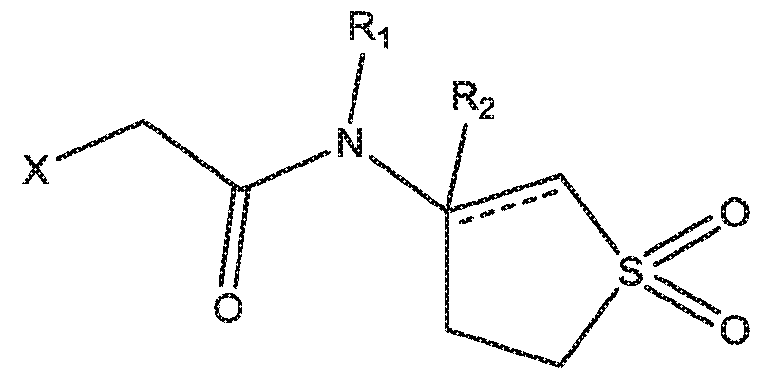


Priority Applications (6)
| Application Number | Priority Date | Filing Date | Title |
|---|---|---|---|
| CA3124951A CA3124951A1 (en) | 2019-01-09 | 2020-01-09 | Modulators of pin1 activity and uses thereof |
| EP20701377.2A EP3908268A1 (en) | 2019-01-09 | 2020-01-09 | Modulators of pin1 activity and uses thereof |
| JP2021539580A JP2022521452A (en) | 2019-01-09 | 2020-01-09 | PIN1 activity modulator and its use |
| CN202080019799.2A CN113939285B (en) | 2019-01-09 | 2020-01-09 | Pin1 activity regulators and uses thereof |
| AU2020206884A AU2020206884A1 (en) | 2019-01-09 | 2020-01-09 | Modulators of Pin1 activity and uses thereof |
| US17/370,216 US20210332024A1 (en) | 2019-01-09 | 2021-07-08 | Modulators of pin1 activity and uses thereof |
Applications Claiming Priority (2)
| Application Number | Priority Date | Filing Date | Title |
|---|---|---|---|
| US201962790133P | 2019-01-09 | 2019-01-09 | |
| US62/790,133 | 2019-01-09 |
Related Child Applications (1)
| Application Number | Title | Priority Date | Filing Date |
|---|---|---|---|
| US17/370,216 Continuation US20210332024A1 (en) | 2019-01-09 | 2021-07-08 | Modulators of pin1 activity and uses thereof |
Publications (2)
| Publication Number | Publication Date |
|---|---|
| WO2020144695A1 true WO2020144695A1 (en) | 2020-07-16 |
| WO2020144695A8 WO2020144695A8 (en) | 2020-10-22 |
Family
ID=69182573
Family Applications (1)
| Application Number | Title | Priority Date | Filing Date |
|---|---|---|---|
| PCT/IL2020/050043 Ceased WO2020144695A1 (en) | 2019-01-09 | 2020-01-09 | Modulators of pin1 activity and uses thereof |
Country Status (7)
| Country | Link |
|---|---|
| US (1) | US20210332024A1 (en) |
| EP (1) | EP3908268A1 (en) |
| JP (1) | JP2022521452A (en) |
| CN (1) | CN113939285B (en) |
| AU (1) | AU2020206884A1 (en) |
| CA (1) | CA3124951A1 (en) |
| WO (1) | WO2020144695A1 (en) |
Cited By (4)
| Publication number | Priority date | Publication date | Assignee | Title |
|---|---|---|---|---|
| WO2022197993A1 (en) * | 2021-03-19 | 2022-09-22 | Dana-Farber Cancer Institute, Inc. | Inhibitors of the peptidyl-prolyl cis/trans isomerase (pin1) and uses thereof |
| WO2024176222A1 (en) * | 2023-02-20 | 2024-08-29 | Yeda Research And Development Co. Ltd. | Modified proteins or peptides for covalent targeting |
| PL448004A1 (en) * | 2024-03-13 | 2025-03-03 | Uniwersytet Marii Curie-Skłodowskiej | Use of 4-((3,5-dichlorophenyl)amino)-sulfol-2-ene in the treatment of osteosarcoma |
| PL448005A1 (en) * | 2024-03-13 | 2025-03-03 | Uniwersytet Marii Curie-Skłodowskiej | Use of 4-((4-(6-methylbenzothiazol-2-yl)phenyl)amino)sulfol-2-ene for the treatment of colon cancer |
Families Citing this family (1)
| Publication number | Priority date | Publication date | Assignee | Title |
|---|---|---|---|---|
| CN116425733B (en) * | 2023-03-24 | 2025-02-18 | 国科大杭州高等研究院 | Compounds targeting ubiquitination degradation of Pin1 protein and pharmaceutical compositions and applications thereof |
Citations (13)
| Publication number | Priority date | Publication date | Assignee | Title |
|---|---|---|---|---|
| US3301873A (en) * | 1964-04-03 | 1967-01-31 | Shell Oil Co | Organophosphorus compounds |
| DE19531300A1 (en) * | 1995-08-25 | 1997-02-27 | Bayer Ag | Fluorobutenic acid amides |
| EP1329453A1 (en) * | 2000-09-04 | 2003-07-23 | Ragactives, S.L. | Method for obtaining 4-(n-alkylamine)-5, 6-dihydro-4h-thieno-(2,3-b)-thiopyran-2-sulfamide-7, 7-dioxides and intermediate products |
| WO2004028535A1 (en) * | 2002-09-26 | 2004-04-08 | Pintex Pharmaceuticals, Inc. | Pin1-modulating compounds and methods of use thereof |
| US7514444B2 (en) | 2006-09-22 | 2009-04-07 | Pharmacyclics, Inc. | Inhibitors of bruton's tyrosine kinase |
| US20090163545A1 (en) * | 2007-12-21 | 2009-06-25 | University Of Rochester | Method For Altering The Lifespan Of Eukaryotic Organisms |
| EP2374802A1 (en) * | 2008-11-10 | 2011-10-12 | Kyowa Hakko Kirin Co., Ltd. | Kynurenine production inhibitor |
| WO2014145051A1 (en) * | 2013-03-15 | 2014-09-18 | Jiazhong Zhang | Heterocyclic compounds and uses thereof |
| US9066951B2 (en) * | 2008-05-29 | 2015-06-30 | Wisconsin Alumni Research Foundation | Drugs to treat HPV infection |
| US9091678B2 (en) * | 2008-08-18 | 2015-07-28 | Centre National De La Recherche Scientifique (Cnrs) | Method for identifying compounds useful for treating and/or preventing disease-associated bone loss |
| US9227978B2 (en) | 2013-03-15 | 2016-01-05 | Araxes Pharma Llc | Covalent inhibitors of Kras G12C |
| WO2019121544A1 (en) * | 2017-12-19 | 2019-06-27 | Bayer Aktiengesellschaft | Substituted thiophenyl uracils, salts thereof and the use thereof as herbicidal agents |
| WO2019241496A1 (en) * | 2018-06-14 | 2019-12-19 | Dana-Farber Cancer Institute, Inc. | Peptidomimetic inhibitors of the peptidyl-prolyl cis/trans isomerase (pin1) |
-
2020
- 2020-01-09 EP EP20701377.2A patent/EP3908268A1/en not_active Withdrawn
- 2020-01-09 AU AU2020206884A patent/AU2020206884A1/en not_active Abandoned
- 2020-01-09 JP JP2021539580A patent/JP2022521452A/en not_active Ceased
- 2020-01-09 WO PCT/IL2020/050043 patent/WO2020144695A1/en not_active Ceased
- 2020-01-09 CN CN202080019799.2A patent/CN113939285B/en active Active
- 2020-01-09 CA CA3124951A patent/CA3124951A1/en active Pending
-
2021
- 2021-07-08 US US17/370,216 patent/US20210332024A1/en not_active Abandoned
Patent Citations (13)
| Publication number | Priority date | Publication date | Assignee | Title |
|---|---|---|---|---|
| US3301873A (en) * | 1964-04-03 | 1967-01-31 | Shell Oil Co | Organophosphorus compounds |
| DE19531300A1 (en) * | 1995-08-25 | 1997-02-27 | Bayer Ag | Fluorobutenic acid amides |
| EP1329453A1 (en) * | 2000-09-04 | 2003-07-23 | Ragactives, S.L. | Method for obtaining 4-(n-alkylamine)-5, 6-dihydro-4h-thieno-(2,3-b)-thiopyran-2-sulfamide-7, 7-dioxides and intermediate products |
| WO2004028535A1 (en) * | 2002-09-26 | 2004-04-08 | Pintex Pharmaceuticals, Inc. | Pin1-modulating compounds and methods of use thereof |
| US7514444B2 (en) | 2006-09-22 | 2009-04-07 | Pharmacyclics, Inc. | Inhibitors of bruton's tyrosine kinase |
| US20090163545A1 (en) * | 2007-12-21 | 2009-06-25 | University Of Rochester | Method For Altering The Lifespan Of Eukaryotic Organisms |
| US9066951B2 (en) * | 2008-05-29 | 2015-06-30 | Wisconsin Alumni Research Foundation | Drugs to treat HPV infection |
| US9091678B2 (en) * | 2008-08-18 | 2015-07-28 | Centre National De La Recherche Scientifique (Cnrs) | Method for identifying compounds useful for treating and/or preventing disease-associated bone loss |
| EP2374802A1 (en) * | 2008-11-10 | 2011-10-12 | Kyowa Hakko Kirin Co., Ltd. | Kynurenine production inhibitor |
| WO2014145051A1 (en) * | 2013-03-15 | 2014-09-18 | Jiazhong Zhang | Heterocyclic compounds and uses thereof |
| US9227978B2 (en) | 2013-03-15 | 2016-01-05 | Araxes Pharma Llc | Covalent inhibitors of Kras G12C |
| WO2019121544A1 (en) * | 2017-12-19 | 2019-06-27 | Bayer Aktiengesellschaft | Substituted thiophenyl uracils, salts thereof and the use thereof as herbicidal agents |
| WO2019241496A1 (en) * | 2018-06-14 | 2019-12-19 | Dana-Farber Cancer Institute, Inc. | Peptidomimetic inhibitors of the peptidyl-prolyl cis/trans isomerase (pin1) |
Non-Patent Citations (94)
| Title |
|---|
| "PubChem Compound ID 1975544 - retrieved from Reaxys", 1 January 2009, article ANONYMOUS: "PubChem Compound ID 1975544 - retrieved from Reaxys", pages: 1 - 26, XP055678486 * |
| ANONYMOUS: "2-Chloro-N-(1,1-dioxo-tetrahydro-1lambda*6*-thiophen-3-yl)-N-isobutyl-acetamide | C10H18ClNO3S - PubChem", PUBCHEM, 1 January 2005 (2005-01-01), pages 1 - 11, XP055678531, Retrieved from the Internet <URL:https://pubchem.ncbi.nlm.nih.gov/compound/3762851> [retrieved on 20200323] * |
| ANONYMOUS: "AID 1259422 - Luminescence cell-based high throughput primary assay to identify inhibitors of TEAD-YAP interaction. - PubChem", PUBCHEM, 31 July 2018 (2018-07-31), pages 1 - 13, XP055678533, Retrieved from the Internet <URL:https://pubchem.ncbi.nlm.nih.gov/bioassay/1259422> [retrieved on 20200323] * |
| ANONYMOUS: "CID 102566267 | C8H11ClN4O3S - PubChem", PUBCHEM, 1 January 2015 (2015-01-01), pages 1 - 7, XP055678558, Retrieved from the Internet <URL:https://pubchem.ncbi.nlm.nih.gov/compound/102566267> [retrieved on 20200323] * |
| ANONYMOUS: "N-(1,1-Dioxothiolan-3-yl)-2-chloro-N-cyclohexylacetamide | C12H20ClNO3S - PubChem", PUBCHEM, 1 January 2005 (2005-01-01), pages 1 - 10, XP055678537, Retrieved from the Internet <URL:https://pubchem.ncbi.nlm.nih.gov/compound/3581036> [retrieved on 20200323] * |
| ANONYMOUS: "PubChem Compound ID 3581036 retrieved from Reaxys", PUBCHEM RETRIEVED FROM REAXYS, 1 January 2005 (2005-01-01), pages 1 - 20, XP055678547, Retrieved from the Internet <URL:https://pubchem.ncbi.nlm.nih.gov/substance/9754670> [retrieved on 20200323] * |
| AULD D.S. ET AL.: "Remington's Pharmaceutical Sciences", 2004, ELI LILLY & COMPANY AND THE NATIONAL CENTER, article "Receptor binding assays for HTS and drug discovery" |
| BAKER ET AL., TRENDS CANCER RES, vol. 2, 2016, pages 176 - 190 |
| BAO ET AL., AM J PATHOL, vol. 164, 2004, pages 1727 - 1737 |
| BASU ET AL., NEOPLASM, vol. 4, 2002, pages 218 - 227 |
| BERMAN JJHENSON DE.: "Classifying the precancers: a metadata approach", BMC MED INFORM DECIS MAK., vol. 3, 2003, pages 8, XP021006654, DOI: 10.1186/1472-6947-3-8 |
| BLUME-JENSENHUNTER, NATURE, vol. 411, 2001, pages 355 - 365 |
| BRENKMAN ET AL., CANCER RES, vol. 68, 2008, pages 6109 - 6117 |
| BROWN ET AL., NAT CELL BIOL, vol. 1, 1999, pages 438 - 443 |
| BROWNE ET AL., J CHEM SOC, vol. 141, 2019, pages 191 - 203 |
| CAMPANER ET AL., NAT COMMUN, vol. 8, 2017, pages 15772 |
| CHEN ET AL., CANCER RES, vol. 73, 2013, pages 3951 - 3962 |
| CHEN ET AL., CELL DEATH DIS, vol. 9, 2018, pages 883 |
| CHENG ET AL., J MED CHEM, vol. 59, 2016, pages 2005 - 2024 |
| DAHAL ET AL., MEDCHEMCOMM, vol. 7, 2016, pages 864 - 872 |
| D'ARTISTA ET AL., ONCOTARGET, vol. 7, 2016, pages 21786 - 21798 |
| DEAN ET AL., NAT REV CANCER, vol. 5, 2005, pages 275 - 284 |
| DOBIN ET AL., BIOINFORMATICS, vol. 29, 2013, pages 15 - 21 |
| DONG ET AL., BIOORGANIC MED CHEM LETT, vol. 20, 2010, pages 2210 - 2214 |
| ECKERDT ET AL., J BIOL CHEM, vol. 280, 2005, pages 36575 - 36583 |
| EFRAT RESNICK ET AL: "Rapid Covalent-Probe Discovery by Electrophile-Fragment Screening", JOURNAL OF THE AMERICAN CHEMICAL SOCIETY, vol. 141, no. 22, 7 May 2019 (2019-05-07), US, pages 8951 - 8968, XP055677690, ISSN: 0002-7863, DOI: 10.1021/jacs.9b02822 * |
| ELENA CAMPANER ET AL: "A covalent PIN1 inhibitor selectively targets cancer cells by a dual mechanism of action", NATURE COMMUNICATIONS, vol. 8, no. 1, 9 June 2017 (2017-06-09), XP055677747, DOI: 10.1038/ncomms15772 * |
| EMSLEYCOWTAN, ACTA CRYSTALLOGR D BIOL CRYSTALLOGR, vol. 60, 2004, pages 2126 - 2132 |
| FARRELL ET AL., MOL CELL BIOL, vol. 33, 2013, pages 2930 - 2949 |
| FILA ET AL., J BIOL CHEM, vol. 283, 2008, pages 21714 - 21724 |
| FLANAGAN ET AL., J MED CHEM, vol. 57, 2014, pages 10072 - 10079 |
| GIANNI ET AL., CANCER RES, vol. 69, 2009, pages 1016 - 1026 |
| GIRARDINI ET AL., CANCER CELL, vol. 20, 2011, pages 79 - 91 |
| GOODMANGILMAN: "The Pharmacological Basis of Therapeutics", 1975, MCGRAW-HILL, INC., pages: l |
| GUO ET AL., BIOORGANIC MED CHEM LETT, vol. 19, 2009, pages 5613 - 5616 |
| GUO ET AL., BIOORGANIC MED CHEM LETT, vol. 24, 2014, pages 4187 - 4191 |
| HANAHANWEINBERG, CELL, vol. 144, 2011, pages 646 - 674 |
| HE ET AL., ELIFE, vol. 5, 2016 |
| HE ET AL., J PATHOL, vol. 227, 2012, pages 431 - 445 |
| HENNIG ET AL., BIOCHEMISTRY, vol. 37, 1998, pages 5952 - 5960 |
| KABSCH, ACTA CRYSTALLOGR D BIOL CRYSTALLOGR, vol. 66, 2010, pages 213 - 221 |
| KATSUNORI TSUBOI ET AL: "Potent and Selective Inhibitors of Glutathione S -Transferase Omega 1 That Impair Cancer Drug Resistance", JOURNAL OF THE AMERICAN CHEMICAL SOCIETY, vol. 133, no. 41, 19 October 2011 (2011-10-19), US, pages 16605 - 16616, XP055479532, ISSN: 0002-7863, DOI: 10.1021/ja2066972 * |
| KATSUNORI TSUBOI ET AL: "Supporting Information - Potent and Selective Inhibitors of Glutathione S-transferase Omega 1 that Impair Cancer Drug Resistance", JOURNAL OF THE AMERICAN CHEMICAL SOCIETY, 19 October 2011 (2011-10-19), pages 1 - 66, XP055678059, Retrieved from the Internet <URL:https://pubs.acs.org/doi/suppl/10.1021/ja2066972/suppl_file/ja2066972_si_001.pdf> [retrieved on 20200319] * |
| KIM ET AL., MOL CANCER THER, vol. 8, 2009, pages 2163 - 2171 |
| KOZONO ET AL., NAT COMMUN, vol. 9, 2018, pages 3069 |
| KULESHOV ET AL., NUCLEIC ACIDS RES, vol. 44, 2016, pages W90 - W97 |
| LAM ET AL., MOL CANCER, vol. 7, 2008, pages 91 |
| LEDA ET AL., BIOORGANIC MED CHEM LETT, vol. 0960-894X, no. 18, 2018, pages 30990 - 9 |
| LEE ET AL., MOL CELL, vol. 42, 2011, pages 147 - 159 |
| LEESONSPRINGTHORPE, NAT REV DRUG DISCOV, vol. 6, 2007, pages 881 - 890 |
| LI ET AL., PLOS ONE, vol. 8, 2013, pages e68148 |
| LIAN ET AL., J HEMATOL ONCOL, vol. 11, 2018, pages 73 |
| LIAO ET AL., ONCOGENE, vol. 28, 2009, pages 2436 - 2445 |
| LIDEWEY, BMC BIOINFORMATICS, vol. 12, 2011, pages 323 |
| LIU ET AL., NAT CELL BIOL, vol. 21, 2019, pages 203 - 213 |
| LONDON ET AL., NAT CHEM BIOL, vol. 10, 2014, pages 1066 - 1072 |
| LONSDALE ET AL., J CHEM INF MODEL, vol. 57, 2017, pages 3124 - 3137 |
| LOVE ET AL., GENOME BIOL, vol. 15, 2014, pages 550 |
| LU, CANCER CELL, vol. 4, 2003, pages 175 - 180 |
| LUHUNTER, CELL RES, vol. 24, 2014, pages 1033 - 1049 |
| LUZHOU, NAT REV MOL CELL BIOL, vol. 8, 2007, pages 904 - 916 |
| MA TIANYI ET AL: "Design, synthesis and biological evaluation of benzimidazole derivatives as novel human Pin1 inhibitors", BIOORGANIC & MEDICINAL CHEMISTRY LETTERS, vol. 29, no. 14, 23 November 2018 (2018-11-23), pages 1859 - 1863, XP085703269, ISSN: 0960-894X, DOI: 10.1016/J.BMCL.2018.11.045 * |
| MCCOY ET AL., J APPL CRYSTALLOGR, vol. 40, 2007, pages 658 - 674 |
| MIN ET AL., MOL CELL, vol. 46, 2012, pages 771 - 783 |
| MOOREPOTTER, BIOORGANIC MED CHEM LETT, vol. 23, 2013, pages 4283 - 4291 |
| PAWSONSCOTT, TRENDS BIOCHEM SCI, vol. 30, 2005, pages 283 - 286 |
| PHAN, NAT IMMUNOL, 2007, pages 1132 - 1139 |
| PLANKEN ET AL., J MED CHEM, vol. 60, 2017, pages 3002 - 3019 |
| RANGASAMY ET AL., PROC NATL ACAD SCI, vol. 109, 2012, pages 8149 - 8154 |
| RESNICK ET AL., J AM CHEM SOC, vol. 141, 2019, pages 8951 - 8968 |
| RESNICK ET AL., JAM CHEM SOC, vol. 141, 2019, pages 8951 - 8968 |
| RUSTIGHI ET AL., NAT CELL BIOL, vol. 11, 2009, pages 133 - 142 |
| RYO ET AL., MOL CELL BIOL, vol. 22, 2002, pages 5281 - 5295 |
| RYO ET AL., MOL CELL, vol. 12, 2003, pages 1413 - 1426 |
| RYO ET AL., NAT CELL BIOL, vol. 3, 2001, pages 793 - 801 |
| SAJADIMAJDYAZDANPARAST, APOPTOSIS, vol. 22, 2017, pages 135 - 144 |
| SANDBERG, J. ET AL: "Use of first generation transplants of a slow-growing solid tumor for the evaluation of new cancer chemotherapeutic agents", CANCER CHEMOTHERAPY REPORTS, PART 1 , 55(3), 233-8 CODEN: CCROBU; ISSN: 0576-6559, 1971, XP009519467 * |
| See also references of EP3908268A1 |
| SUMAN K. SAMANTA ET AL: "Peptidyl-prolyl cis/trans isomerase Pin1 regulates withaferin A-mediated cell cycle arrest in human breast cancer cells", MOLECULAR CARCINOGENESIS, vol. 57, no. 7, 16 April 2018 (2018-04-16), US, pages 936 - 946, XP055678470, ISSN: 0899-1987, DOI: 10.1002/mc.22814 * |
| TADASHI MORI ET AL: "A dual inhibitor against prolyl isomerase Pin1 and cyclophilin discovered by a novel real-time fluorescence detection method", BIOCHEMICAL AND BIOPHYSICAL RESEARCH COMMUNICATIONS, vol. 406, no. 3, 2011, pages 439 - 443, XP028166945, ISSN: 0006-291X, [retrieved on 20110217], DOI: 10.1016/J.BBRC.2011.02.066 * |
| TAN ET AL., CANCER BIOL THER, vol. 9, 2010, pages 111 - 119 |
| WARD ET AL., J MED CHEM, vol. 56, 2013, pages 7025 - 7048 |
| WEERAPANA ET AL., NATURE, vol. 468, 2010, pages 790 - 795 |
| WEI ET AL., NAT MED, vol. 21, 2015, pages 457 - 466 |
| WULF ET AL., EMBO J, vol. 23, 2004, pages 3397 - 3407 |
| XU ET AL., J PROTEOMICS, vol. 129, 2015, pages 16 - 24 |
| YAFFE, SCIENCE, vol. 278, 1997, pages 1957 - 1960 |
| YANG ET AL., ANAL CHEM, vol. 90, 2018, pages 9576 - 9582 |
| YU ET AL., NAT BIOTECHNOL, vol. 34, 2016, pages 419 - 423 |
| ZHANG ET AL., ACS CHEM BIOL, vol. 2, 2007, pages 320 - 328 |
| ZHENG ET AL., ONCOTARGET, vol. 8, 2017, pages 29771 - 29784 |
| ZHOU, MOL CELL, vol. 6, 2000, pages 873 - 883 |
| ZHU ET AL., CANCER CELL, vol. 21, 2012, pages 362 - 373 |
| ZIMMERMAN ET AL., CANCER DISCOV, vol. 8, 2016, pages 320 - 335 |
Cited By (6)
| Publication number | Priority date | Publication date | Assignee | Title |
|---|---|---|---|---|
| WO2022197993A1 (en) * | 2021-03-19 | 2022-09-22 | Dana-Farber Cancer Institute, Inc. | Inhibitors of the peptidyl-prolyl cis/trans isomerase (pin1) and uses thereof |
| WO2024176222A1 (en) * | 2023-02-20 | 2024-08-29 | Yeda Research And Development Co. Ltd. | Modified proteins or peptides for covalent targeting |
| PL448004A1 (en) * | 2024-03-13 | 2025-03-03 | Uniwersytet Marii Curie-Skłodowskiej | Use of 4-((3,5-dichlorophenyl)amino)-sulfol-2-ene in the treatment of osteosarcoma |
| PL448005A1 (en) * | 2024-03-13 | 2025-03-03 | Uniwersytet Marii Curie-Skłodowskiej | Use of 4-((4-(6-methylbenzothiazol-2-yl)phenyl)amino)sulfol-2-ene for the treatment of colon cancer |
| PL248958B1 (en) * | 2024-03-13 | 2026-02-16 | Univ M Curie Sklodowskiej | 4-((3,5-dichlorophenyl)amino)-sulfol-2-ene for use in the treatment of osteosarcoma |
| PL248959B1 (en) * | 2024-03-13 | 2026-02-16 | Univ M Curie Sklodowskiej | 4-((4-(6-methylbenzothiazol-2-yl)phenyl)amino)-sulfol-2-ene for use in the treatment of colon cancer |
Also Published As
| Publication number | Publication date |
|---|---|
| CN113939285B (en) | 2024-11-01 |
| WO2020144695A8 (en) | 2020-10-22 |
| AU2020206884A1 (en) | 2021-08-05 |
| US20210332024A1 (en) | 2021-10-28 |
| EP3908268A1 (en) | 2021-11-17 |
| CA3124951A1 (en) | 2020-07-16 |
| CN113939285A (en) | 2022-01-14 |
| JP2022521452A (en) | 2022-04-08 |
Similar Documents
| Publication | Publication Date | Title |
|---|---|---|
| AU2020206884A1 (en) | Modulators of Pin1 activity and uses thereof | |
| TWI711618B (en) | Selective grp94 inhibitors and uses thereof | |
| JP6887996B2 (en) | TEAD transcription factor autopalmitoylation inhibitor | |
| WO2019005883A1 (en) | Compositions and uses thereof | |
| Wang et al. | Target fishing and mechanistic insights of the natural anticancer drug candidate chlorogenic acid | |
| WO2014033136A1 (en) | Aminoheteroaryl compounds as mth1 inhibitors | |
| Fan et al. | Design, synthesis, and biological evaluation of a novel indoleamine 2, 3-dioxigenase 1 (IDO1) and thioredoxin reductase (TrxR) dual inhibitor | |
| EA010652B1 (en) | Substituted indolyl alkyl amino derivatives as novel inhibitors of histone deacetylase | |
| Gong et al. | Discovery of a miniaturized PROTAC with potent activity and high selectivity | |
| CN103476411B (en) | Targeting human thymonucleotide kinase induces DNA repair toxicity in malignancy | |
| Chen et al. | Design, synthesis, and biological evaluation of tetrahydroquinolin derivatives as potent inhibitors of CBP bromodomain | |
| Yu et al. | Small molecule inhibitors of the prostate cancer target KMT2D | |
| Hua et al. | Novel conjugates with dual suppression of glutathione S-transferases and tryptophan-2, 3-dioxygenase activities for improving hepatocellular carcinoma therapy | |
| Akram et al. | Discovery of W478, a novel SHMT2 inhibitor for the treatment of esophageal carcinoma | |
| US20230406837A1 (en) | Sulfamate modulators of pin1 activity and uses thereof | |
| EP3890727A1 (en) | Inhibitors of erk nuclear translocation | |
| Harris et al. | Flexible small-molecule design and optimization with equivariant diffusion models | |
| WO2022235220A1 (en) | Compounds for use in the treatment of cancer | |
| BR112019019092A2 (en) | methods to treat a subject, to identify a patient, to determine a treatment regimen, to identify a subject, to monitor treatment effectiveness and to detect a mutation in phf5a, and, kit | |
| H. de Souza Gama et al. | Novel dihydropteridinone derivatives as potent and selective inhibitors of the understudied human vaccinia-related kinase 1 (VRK1) | |
| Stockwell et al. | Selective inhibitors of the Aurora A-TPX2 protein-protein interaction exhibit in vivo efficacy as targeted anti-mitotic agents | |
| Zhang et al. | Activatable fluorescence molecular imaging and anti-tumor effects investigation of GSH-sensitive BRD4 ligands | |
| Wei et al. | Linking Intestinal Distribution to Pharmacological Mechanism: Berberine Prevents and Treats Colorectal Cancer by Targeting SIGMAR1 | |
| Zhang et al. | Nicotinic acid suppresses liver cancer metastasis via histone lysine nicotinylation | |
| Zawacka et al. | Novel Allosteric Mechanism of P53 Activation by Small Molecules for Targeted Anticancer Therapy |
Legal Events
| Date | Code | Title | Description |
|---|---|---|---|
| 121 | Ep: the epo has been informed by wipo that ep was designated in this application |
Ref document number: 20701377 Country of ref document: EP Kind code of ref document: A1 |
|
| ENP | Entry into the national phase |
Ref document number: 3124951 Country of ref document: CA |
|
| ENP | Entry into the national phase |
Ref document number: 2021539580 Country of ref document: JP Kind code of ref document: A |
|
| NENP | Non-entry into the national phase |
Ref country code: DE |
|
| ENP | Entry into the national phase |
Ref document number: 2020206884 Country of ref document: AU Date of ref document: 20200109 Kind code of ref document: A |
|
| ENP | Entry into the national phase |
Ref document number: 2020701377 Country of ref document: EP Effective date: 20210809 |
|
| WWW | Wipo information: withdrawn in national office |
Ref document number: 2020701377 Country of ref document: EP |