WO2020145331A1 - 神経変性疾患の予防又は治療薬 - Google Patents
神経変性疾患の予防又は治療薬 Download PDFInfo
- Publication number
- WO2020145331A1 WO2020145331A1 PCT/JP2020/000392 JP2020000392W WO2020145331A1 WO 2020145331 A1 WO2020145331 A1 WO 2020145331A1 JP 2020000392 W JP2020000392 W JP 2020000392W WO 2020145331 A1 WO2020145331 A1 WO 2020145331A1
- Authority
- WO
- WIPO (PCT)
- Prior art keywords
- day
- weight
- parts
- resveratrol
- administration
- Prior art date
- Legal status (The legal status is an assumption and is not a legal conclusion. Google has not performed a legal analysis and makes no representation as to the accuracy of the status listed.)
- Ceased
Links
Images




Classifications
-
- A—HUMAN NECESSITIES
- A61—MEDICAL OR VETERINARY SCIENCE; HYGIENE
- A61P—SPECIFIC THERAPEUTIC ACTIVITY OF CHEMICAL COMPOUNDS OR MEDICINAL PREPARATIONS
- A61P25/00—Drugs for disorders of the nervous system
-
- A—HUMAN NECESSITIES
- A61—MEDICAL OR VETERINARY SCIENCE; HYGIENE
- A61K—PREPARATIONS FOR MEDICAL, DENTAL OR TOILETRY PURPOSES
- A61K31/00—Medicinal preparations containing organic active ingredients
- A61K31/33—Heterocyclic compounds
- A61K31/395—Heterocyclic compounds having nitrogen as a ring hetero atom, e.g. guanethidine or rifamycins
- A61K31/495—Heterocyclic compounds having nitrogen as a ring hetero atom, e.g. guanethidine or rifamycins having six-membered rings with two or more nitrogen atoms as the only ring heteroatoms, e.g. piperazine or tetrazines
- A61K31/496—Non-condensed piperazines containing further heterocyclic rings, e.g. rifampin, thiothixene or sparfloxacin
-
- A—HUMAN NECESSITIES
- A23—FOODS OR FOODSTUFFS; TREATMENT THEREOF, NOT COVERED BY OTHER CLASSES
- A23L—FOODS, FOODSTUFFS OR NON-ALCOHOLIC BEVERAGES, NOT OTHERWISE PROVIDED FOR; PREPARATION OR TREATMENT THEREOF
- A23L33/00—Modifying nutritive qualities of foods; Dietetic products; Preparation or treatment thereof
- A23L33/10—Modifying nutritive qualities of foods; Dietetic products; Preparation or treatment thereof using additives
-
- A—HUMAN NECESSITIES
- A23—FOODS OR FOODSTUFFS; TREATMENT THEREOF, NOT COVERED BY OTHER CLASSES
- A23L—FOODS, FOODSTUFFS OR NON-ALCOHOLIC BEVERAGES, NOT OTHERWISE PROVIDED FOR; PREPARATION OR TREATMENT THEREOF
- A23L33/00—Modifying nutritive qualities of foods; Dietetic products; Preparation or treatment thereof
- A23L33/10—Modifying nutritive qualities of foods; Dietetic products; Preparation or treatment thereof using additives
- A23L33/105—Plant extracts, their artificial duplicates or their derivatives
-
- A—HUMAN NECESSITIES
- A23—FOODS OR FOODSTUFFS; TREATMENT THEREOF, NOT COVERED BY OTHER CLASSES
- A23L—FOODS, FOODSTUFFS OR NON-ALCOHOLIC BEVERAGES, NOT OTHERWISE PROVIDED FOR; PREPARATION OR TREATMENT THEREOF
- A23L33/00—Modifying nutritive qualities of foods; Dietetic products; Preparation or treatment thereof
- A23L33/10—Modifying nutritive qualities of foods; Dietetic products; Preparation or treatment thereof using additives
- A23L33/105—Plant extracts, their artificial duplicates or their derivatives
- A23L33/11—Plant sterols or derivatives thereof, e.g. phytosterols
-
- A—HUMAN NECESSITIES
- A61—MEDICAL OR VETERINARY SCIENCE; HYGIENE
- A61K—PREPARATIONS FOR MEDICAL, DENTAL OR TOILETRY PURPOSES
- A61K31/00—Medicinal preparations containing organic active ingredients
- A61K31/045—Hydroxy compounds, e.g. alcohols; Salts thereof, e.g. alcoholates
- A61K31/05—Phenols
-
- A—HUMAN NECESSITIES
- A61—MEDICAL OR VETERINARY SCIENCE; HYGIENE
- A61K—PREPARATIONS FOR MEDICAL, DENTAL OR TOILETRY PURPOSES
- A61K9/00—Medicinal preparations characterised by special physical form
- A61K9/0012—Galenical forms characterised by the site of application
- A61K9/0043—Nose
-
- A—HUMAN NECESSITIES
- A61—MEDICAL OR VETERINARY SCIENCE; HYGIENE
- A61P—SPECIFIC THERAPEUTIC ACTIVITY OF CHEMICAL COMPOUNDS OR MEDICINAL PREPARATIONS
- A61P25/00—Drugs for disorders of the nervous system
- A61P25/28—Drugs for disorders of the nervous system for treating neurodegenerative disorders of the central nervous system, e.g. nootropic agents, cognition enhancers, drugs for treating Alzheimer's disease or other forms of dementia
-
- A—HUMAN NECESSITIES
- A23—FOODS OR FOODSTUFFS; TREATMENT THEREOF, NOT COVERED BY OTHER CLASSES
- A23V—INDEXING SCHEME RELATING TO FOODS, FOODSTUFFS OR NON-ALCOHOLIC BEVERAGES AND LACTIC OR PROPIONIC ACID BACTERIA USED IN FOODSTUFFS OR FOOD PREPARATION
- A23V2002/00—Food compositions, function of food ingredients or processes for food or foodstuffs
-
- A—HUMAN NECESSITIES
- A23—FOODS OR FOODSTUFFS; TREATMENT THEREOF, NOT COVERED BY OTHER CLASSES
- A23V—INDEXING SCHEME RELATING TO FOODS, FOODSTUFFS OR NON-ALCOHOLIC BEVERAGES AND LACTIC OR PROPIONIC ACID BACTERIA USED IN FOODSTUFFS OR FOOD PREPARATION
- A23V2200/00—Function of food ingredients
- A23V2200/30—Foods, ingredients or supplements having a functional effect on health
- A23V2200/322—Foods, ingredients or supplements having a functional effect on health having an effect on the health of the nervous system or on mental function
-
- A—HUMAN NECESSITIES
- A61—MEDICAL OR VETERINARY SCIENCE; HYGIENE
- A61K—PREPARATIONS FOR MEDICAL, DENTAL OR TOILETRY PURPOSES
- A61K2121/00—Preparations for use in therapy
-
- A—HUMAN NECESSITIES
- A61—MEDICAL OR VETERINARY SCIENCE; HYGIENE
- A61K—PREPARATIONS FOR MEDICAL, DENTAL OR TOILETRY PURPOSES
- A61K2300/00—Mixtures or combinations of active ingredients, wherein at least one active ingredient is fully defined in groups A61K31/00 - A61K41/00
Definitions
- the present invention relates to a drug which is useful for the prevention or treatment of neurodegenerative diseases and whose side effects are suppressed.
- a neurodegenerative disease is a disease that develops in the central nervous system, and its pathological features include a decrease in specific neuronal cell groups and an accumulation of fibrous substances frequently expressed inside and outside nerve cells. ..
- Neurodegenerative diseases include Alzheimer's disease (AD) in which amyloid ⁇ (A ⁇ ) accumulates, tauopathy in which tau accumulates, and synucleinopathy in which ⁇ synuclein accumulates.
- Tauopathy includes frontotemporal lobe degeneration (FTLD) such as Pick's disease, corticobasal degeneration (CBD), and progressive supranuclear palsy (PSP).
- FTLD frontotemporal lobe degeneration
- AD also includes tau in addition to A ⁇ . It may be included at the point of accumulation.
- FTLD is called frontotemporal dementia (FTD) when focusing on dementia, which is a clinical symptom.
- Synucleinopathies include dementia with Lewy bodies (DLB), Parkinson's disease (PD), and multiple system atrophy (MSA).
- Non-Patent Document 5 side effects of resveratrol when taken at high doses or for long periods of time include nausea, diarrhea, weight loss (Non-Patent Document 5), abdominal pain (Non-Patent Document 4), bladder disorder (Non-Patent Document 6), And renal disorders (Non-Patent Document 7) and the like have been reported.
- drug interaction refers to a phenomenon in which rifampicin induces cytochrome P450 (CYP) and P-glycoprotein involved in drug metabolism in hepatocytes, thereby diminishing the effect of another drug taken at the same time. ..
- a first object of the present invention is to provide a pharmaceutical formulation of rifampicin with reduced side effects and capable of long-term administration.
- Item 1 Prevention or treatment of a neurodegenerative disease, which comprises a combination of rifampicins selected from the group consisting of rifampicin, derivatives thereof, and salts thereof, and resveratrol selected from the group consisting of resveratrol and derivatives thereof medicine.
- Item 2. Item 2. The prophylactic or therapeutic drug according to Item 1, wherein the resveratrols are contained in an amount of 1/500 to 500 parts by weight per 1 part by weight of the rifampicins.
- Item 3. Item 3. The prophylactic or therapeutic drug according to Item 1 or 2, wherein the dose of the rifampicins is 3.75 mg/kg ⁇ day or less.
- Item 4. The prophylactic or therapeutic drug according to any one of Items 1 to 3, wherein the dose of the rifampicins is 0.001 to 1.5 mg/kg ⁇ day.
- Item 5. The prophylactic or therapeutic drug according to any one of Items 1 to 4, wherein the dose of the resveratrols is 3.75 mg/kg ⁇ day or less.
- Item 6. The prophylactic or therapeutic drug according to any one of Items 1 to 5, wherein the dose of the resveratrols is 0.001 to 2.5 mg/kg ⁇ day.
- Item 7. Item 7. The prophylactic or therapeutic drug according to any one of Items 1 to 6, which is used for intranasal administration.
- Item 8. Item 8.
- Preventing neurodegenerative diseases for nasal administration which comprises resveratrol selected from the group consisting of resveratrol and its derivatives, and wherein the dose of resveratrol is 0.28 mg/kg ⁇ day or less Remedy.
- Item 12. Item 12. The preventive or therapeutic drug according to Item 11, which is used for prevention or treatment of dementia.
- Item 13. Item 13.
- a food for improving brain function comprising resveratrol selected from the group consisting of resveratrol and its derivatives, and the ingestion amount of said resveratrol is 3.75 mg/kg ⁇ day or less.
- Rifampicins selected from the group consisting of rifampicin, its derivatives, and salts thereof for the manufacture of a medicament for the prevention or treatment of neurodegenerative diseases, and selected from the group consisting of resveratrol and its derivatives Use with resveratrols.
- Item 16 Administering to a patient with neurodegenerative disease an effective amount of rifampicins selected from the group consisting of rifampicin, derivatives thereof and salts thereof, and resveratrol selected from the group consisting of resveratrol and derivatives thereof
- a method for treating a neurodegenerative disease comprising the steps of: Item 17.
- Rifampicins selected from the group consisting of an effective amount of rifampicin, a derivative thereof, and a salt thereof, and resveratrol selected from the group consisting of resveratrol and a derivative thereof, in a non-symptomatic person at high risk of developing a neurodegenerative disease.
- a method for preventing a neurodegenerative disease which comprises the step of administering a trole.
- Resveratrol selected from the group consisting of resveratrol and its derivatives for the manufacture of a nasally administered drug for the prevention or treatment of neurodegenerative diseases administered at a dose of 0.28 mg/kg ⁇ day or less Use of kind.
- the prophylactic or therapeutic agent of the present invention side effects are reduced by prescribing rifampicin as a combination drug with resveratrol, which enables long-term administration for neurodegenerative diseases. Further, according to the prophylactic or therapeutic agent of the present invention, even if a resveratrol is prescribed as a single agent, it exhibits efficacy against neurodegenerative diseases even at an extremely low dose, and thus long-term administration to neurodegenerative diseases becomes possible. Furthermore, according to the food of the present invention, by incorporating resveratrol, long-term ingestion for improving brain function becomes possible.
- the first prophylactic or therapeutic agent of the present invention (hereinafter also referred to as the first pharmaceutical agent of the present invention) is rifampicin, a derivative thereof, and a rifampicin selected from the group consisting of salts thereof, resveratrol, and Resveratrols selected from the group consisting of derivatives thereof and characterized by being used for prevention or treatment of neurodegenerative diseases.
- the first pharmaceutical agent of the present invention comprises rifampicins selected from the group consisting of rifampicin, its derivatives, and salts thereof.
- Rifampicin is a component known as an antibiotic.
- the rifampicins act as active ingredients for removing oligomers of the causative protein of neurodegenerative diseases. For example, it has an action of removing oligomers of amyloid ⁇ (A ⁇ ) that is a causative protein of Alzheimer's disease (AD), oligomers of tau that is a causative protein of tauopathy, and oligomers of ⁇ -synuclein that is a causative protein of synucleinopathies. ..
- Rifampicins have a naphthohydroquinone or naphthoquinone structure, and this structure is considered to contribute to the action of rifampicin as a free radical scavenger.
- rifampicin is also excellent in the inhibitory effect on the aggregating toxicity of the causative protein of neurodegenerative diseases, and, for example, can completely suppress the toxicity of A ⁇ 42, which has higher aggregating ability and strong neurotoxicity. ing.
- Rifampicin is usually a compound represented by the following formula (I).
- the salt of rifampicin is not particularly limited as long as it forms a salt with rifampicin or a derivative of rifampicin and is pharmaceutically acceptable.
- salts of alkali metals potassium, sodium, etc.
- salts of alkaline earth metals calcium, magnesium, etc.
- ammonium salts pharmaceutically acceptable organic amines (tetramethylammonium, triethylamine, methylamine, dimethylamine, Cyclopentylamine, benzylamine, phenethylamine, piperidine, monoethanolamine, diethanolamine, tris(hydroxymethyl)aminomethane, lysine, arginine, N-methyl-D-glucamine, etc.
- salts inorganic acid salts (hydrochloride, hydrogen bromide) Acid salt, hydroiodide, sulfate, phosphate, nitrate, etc., organic acid salt (acetate, lactate, tartrate, benzoate, citrate, methanesulfonate, ethanesulfonate) , Benzene sulfonate, toluene sulfonate, isethionate, glucuronate, gluconate, etc.). These salts may be used alone or in combination of two or more.
- rifampicins one kind may be selected from rifampicin, a salt of rifampicin, a derivative of rifampicin, and a salt of a derivative of rifampicin, and may be used in combination of two or more kinds.
- the content of the rifampicins in the first drug of the present invention is not particularly limited, and is appropriately adjusted so that it can be administered at the dose described below.
- the content of the rifampicins in the first pharmaceutical agent of the present invention is 0.19 w/v% or more, preferably 0.4 w/v% or more, more preferably 0.5 w/v% or more.
- the content of the rifampicins in the first pharmaceutical agent of the present invention is preferably 2 w/v% or more, 2.5 w/v% or more. It may be 5 w/v% or more, or 30 w/v% or more.
- the content of the rifampicins in the first pharmaceutical agent of the present invention is 95 w/v% or less, preferably 85 w/v% or less, or 50 w/v% or less.
- the first drug of the present invention is prepared for nasal administration, it is preferably 85 w/v% or less, or 50 w/v% or less from the viewpoint of obtaining good sprayability of the nasally administered drug.
- Specific ranges of the content of rifampicins in the first pharmaceutical agent of the present invention include, for example, 0.19 to 95 w/v%, 0.19 to 85 w/v%, 0.19 to 50 w/v%.
- resveratrol has a weak effect of suppressing aggregation of a causative protein of a neurodegenerative disease.
- the inhibitory effect of A ⁇ 42 having higher aggregation ability and strong neurotoxicity on toxicity is considerably weaker than that of rifampicin. Confirmed by the inventor.
- the first medicinal product of the present invention has a remarkable side effect reducing effect by combining rifampicin with resveratrol.
- Resveratrol has a surprising side effect-reducing effect that it exerts an effective hepatoprotective action when combined with rifampicin even at a dose which does not exhibit an effective hepatoprotective action alone.
- the first drug of the present invention by combining resveratrol with rifampicin, remarkably improves the action of removing oligomers of the causative protein of neurodegenerative diseases.
- Resveratrol significantly enhances the depleting effect on neurodegenerative disease-causing proteins when combined with rifampicin, even at doses which alone exhibit an insufficient A ⁇ production inhibitory effect.
- resveratrol in the present invention examples include cis isomers of resveratrol, trans isomers of resveratrol, and a mixture of these isomers, preferably trans isomers of resveratrol.
- the trans isomer of resveratrol is a compound represented by the following formula (II).
- Resveratrol may be one purified from a plant extract such as a lingonberry extract, a grape extract, a bilberry extract, a knotweed extract, a merinjo extract, or a chemical synthesis method or a genetic engineering method. Alternatively, it may be obtained by a microbiological method.
- the derivative of resveratrol is not particularly limited as long as it is pharmaceutically acceptable, but for example, a protecting group such as N-phenylacetyl group, 4,4′-dimethoxytrityl (DMT) group; protein; , Biomolecules such as peptides, sugars, lipids and nucleic acids; synthetic macromolecules such as polystyrene, polyethylene, polyvinyl and polyester; and those having functional groups such as ester groups as derivative groups.
- the ester group include aliphatic ester groups such as methyl ester group and ethyl ester group, and aromatic ester groups.
- resveratrols one kind may be selected from resveratrol and resveratrol derivatives and used, or two or more kinds may be used in combination.
- the content of resveratrols in the first drug of the present invention is not particularly limited, and is appropriately adjusted so that it can be administered at the dose described below.
- the content of resveratrols in the first drug of the present invention is 0.19 w/v% or more, preferably 0.4 w/v% or more, more preferably 0.5 w/v% or more.
- the content of resveratrols in the first pharmaceutical agent of the present invention is preferably 2 w/v% or more, 2.5 w/ It may be v% or more, 5 w/v% or more, or 30 w/v% or more.
- the content of resveratrols in the first drug of the present invention is 95 w/v% or less, preferably 85 w/v% or less, or 50 w/v% or less.
- the first drug of the present invention is prepared for nasal administration, it is preferably 85 w/v% or less, or 50 w/v% or less from the viewpoint of obtaining good sprayability of the nasally administered drug. Can be mentioned.
- the specific range of the resveratrol content in the first drug of the present invention is, for example, 0.19 to 95 w/v%, 0.19 to 85 w/v%, 0.19 to 50 w/ v%, 0.4 to 95 w/v%, 0.4 to 85 w/v%, 0.4 to 50 w/v%, 0.5 to 95 w/v%, 0.5 to 85 w/v%, 0.
- the ratio of rifampicins to resveratrols is not particularly limited, and can be determined according to the content of each of the above components.
- the solubility of rifampicins in water for example, in the case of rifampicin is 2.5 mg/mL at 25° C.
- resveratrol The difference in solubility in water (eg, resveratrol 0.03 mg/mL at 25°C) and the less soluble component in water are affected by the movement of the mucus layer by ciliated cells in the nasal cavity
- the resveratrol content may be adjusted to be higher than a predetermined effective amount.
- the first drug of the present invention when considering the difference in solubility in water with rifampicins and resveratrols, when the first drug of the present invention is prepared as a combination drug of rifampicins and resveratrols,
- An example is a case where a kit containing a drug containing rifampicins and a drug containing resveratrols is prepared, and both drugs are prepared using the same base containing at least water.
- the lower limit of the content of resveratrols per 1 part by weight of rifampicins is, for example, 1/500 parts by weight or more, preferably 1/300 parts by weight or more, more preferably 1/200 parts by weight or more. , 1/100 parts by weight or more, more preferably 0.05 parts by weight or more, still more preferably 0.1 parts by weight or more, particularly preferably 0.2 parts by weight or more.
- the content of resveratrols per 1 part by weight of rifampicin is preferably 0, from the viewpoint of obtaining a more preferable side effect reducing effect and/or a further preferable effect of removing a neurodegenerative disease-causing protein oligomer.
- the content of resveratrols per 1 part by weight of rifampicin is more than 1 part by weight, for example, 1.2 parts by weight or more, 1.5 parts by weight or more, 2 parts by weight or more, 3 parts by weight or more. I do not care.
- the upper limit of the content of resveratrols per 1 part by weight of rifampicins is, for example, 500 parts by weight or less, preferably 300 parts by weight or less, more preferably 200 parts by weight or less, further preferably 100 parts by weight or less, 75 parts by weight or less, 50 parts by weight or less, 30 parts by weight or less, 20 parts by weight or less, more preferably 10 parts by weight or less, still more preferably 5 parts by weight or less, particularly preferably 3 parts by weight or less, 2 parts by weight or less,
- the amount may be 1.5 parts by weight or less and 1.2 parts by weight or less.
- Specific ranges of the content of resveratrols per 1 part by weight of rifampicins are 1/500 to 500 parts by weight, 1/500 to 300 parts by weight, 1/500 to 200 parts by weight, 1/500 to 100 parts by weight, 1/500 to 75 parts by weight, 1/500 to 50 parts by weight, 1/500 to 30 parts by weight, 1/500 to 20 parts by weight, 1/500 to 10 parts by weight, 1/500 to 5 parts by weight Parts, 1/500 to 3 parts by weight, 1/500 to 2 parts by weight, 1/500 to 1.5 parts by weight, 1/500 to 1.2 parts by weight, 1/300 to 500 parts by weight, 1/300 to 300 parts by weight, 1/300 to 20 parts by weight, 1/300 to 100 parts by weight, 1/300 to 75 parts by weight, 1/300 to 50 parts by weight, 1/300 to 30 parts by weight, 1/300 to 20 parts by weight Parts, 1/300 to 10 parts by weight, 1/300 to 5 parts by weight, 1/300 to 3 parts by weight, 1/300 to 2 parts by weight
- the first drug of the present invention is prepared by blending the above-mentioned rifampicins and resveratrols, and is formulated by a means known per se. According to the administration method of the first drug, pharmacological The bases and/or additives acceptable to the above may be appropriately mixed.
- Examples of the pharmacologically acceptable bases and/or additives include excipients, thickeners, lubricants, binders, disintegrants, solvents, solubilizers, suspending agents, emulsifiers, etc. Examples include tonicity agents, buffering agents, soothing agents, stabilizers, and the like.
- additives such as a preservative (preservative), a pH adjuster, a cooling agent, an antioxidant, a wetting agent, a pressure-sensitive adhesive, and a flavoring agent may be included as required.
- excipient examples include lactose, sucrose, D-mannitol, starch, corn starch, crystalline cellulose, light anhydrous silicic acid and the like.
- thickener examples include glycerin, polyhydric alcohols such as macrogol, methylcellulose, carboxymethylcellulose, celluloses such as hydroxypropylmethylcellulose, polyvinyl alcohol, polyvinylpyrrolidone, carboxyvinyl polymer, sodium carboxymethylcellulose, methylcellulose, hydroxymethylcellulose, and the like.
- Hydrophilic polymers such as hydroxyethyl cellulose and hydroxypropyl cellulose (preferably sodium carboxymethyl cellulose), sodium alginate, chondroitin sulfate, cyclodextrin, d- ⁇ -tocopheryl polyethylene glycol 1000 succinic acid, polyethylene glycol and the like can be mentioned.
- the lubricant include magnesium stearate, calcium stearate, talc, colloidal silica and the like.
- the binder include crystalline cellulose, sucrose, D-mannitol, dextrin, hydroxypropylcellulose, hydroxypropylmethylcellulose, polyvinylpyrrolidone, starch, sucrose, gelatin, methylcellulose, sodium carboxymethylcellulose and the like.
- disintegrant examples include starch, carboxymethyl cellulose, carboxymethyl cellulose calcium, croscarmellose sodium, carboxymethyl starch sodium, L-hydroxypropyl cellulose and the like.
- solvent examples include water, ethanol, isopropyl alcohol, acetone, propylene glycol, macrogol, sesame oil, corn oil and the like, and preferably at least water is contained.
- solubilizing agent examples include celluloses such as methyl cellulose, carboxymethyl cellulose and hydroxypropyl methyl cellulose; polyethylene glycol, propylene glycol, D-mannitol, benzyl benzoate, ethanol, trisaminomethane, cholesterol, triethanolamine, sodium carbonate, Examples thereof include sodium citrate, polyvinylpyrrolidone, macrogol and the like.
- suspending agent examples include stearyl triethanolamine, sodium lauryl sulfate, lauryl aminopropionic acid, lecithin, benzalkonium chloride, benzethonium chloride, glyceryl monostearate, polyoxyethylene hydrogenated castor oil, and surface active agents such as polysorbate.
- polyhydric alcohols such as glycerin and macrogol
- saccharides such as sorbitol, mannitol and sucrose
- celluloses such as methylcellulose, carboxymethylcellulose and hydroxypropylmethylcellulose
- polyvinyl alcohol polyvinylpyrrolidone
- carboxyvinyl polymer sodium carboxymethylcellulose and methylcellulose.
- Hydrophilic polymers such as hydroxymethyl cellulose, hydroxyethyl cellulose, hydroxypropyl cellulose, and chondroitin sulfate.
- Examples of the tonicity agent include glucose, D-sorbitol, sodium chloride, glycerin, D-mannitol, potassium chloride, concentrated glycerin, propylene glycol, sucrose and the like.
- Examples of the buffer include phosphate (sodium hydrogen phosphate, sodium dihydrogen phosphate, etc.), boric acid, borax, acetate (sodium acetate, etc.), carbonate (sodium carbonate, calcium carbonate, potassium carbonate, etc.). ), citric acid, sodium L-glutamate and the like.
- Examples of soothing agents include benzyl alcohol, chlorobutanol, propylene glycol, ethyl aminobenzoate, lidocaine and the like.
- stabilizer examples include sodium sulfite, sodium bisulfite, sodium metabisulfite, sodium thiosulfate, rongalit, thioglycerol, thioglycolic acid, thiolactic acid, cysteine, glutathione, thioacetic acid, methionine, thiosorbitol, thioglucose.
- Sulfur compounds such as thiourea
- inorganic acids such as boric acid, borax, phosphoric acid, metaphosphoric acid, sodium carbonate, sodium hydrogencarbonate and salts thereof
- organic acids such as formic acid, oxalic acid, tartaric acid, citric acid and edetic acid And salts thereof (sodium edetate, etc.), acetamide, diethylacetamide, nicotinic acid amide, urea, acid amides such as barbital, urea derivatives, glycols, propylene glycol, glycerin, polyethylene glycol, glucose, polyhydric alcohols such as ascorbic acid, Examples thereof include sugars, phenols such as phenol, thymol, quinone, coumarone and isocumalone, dibutylhydroxytoluene, glycine, glutamic acid, lysine, phenylalanine, casein, edestin and other amino acids, proteins and the like.
- glycerin ester glyceryl monooleate
- saponin enjusaponin, quillaia extract, soybean saponin, etc.
- sucrose fatty acid ester lecithin (vegetative lecithin, egg yolk lecithin, soybean lecithin, etc.)
- polyhydric alcohol Olethyl alcohol, stearyl alcohol, cetyl alcohol, etc.
- fatty ester octyldodecyl myristate, etc.
- MCT medium-chain fatty acid triglyceride
- surfactants alkylbenzene sulfonate emulsifier, benzalkonium chloride, sesquioleic acid
- Sorbitan dodecylbenzenesulfonic acid, etc.
- triethanolamine triethanolamine and the like.
- preservatives examples include paraoxybenzoic acid esters such as propyl paraoxybenzoate and butyl paraoxybenzoate, parabens such as methylparaben, ethylparaben, propylparaben, butylparaben, benzalkonium chloride, and benzethonium chloride.
- Chlorhexidine gluconate Chlorhexidine gluconate, inverse soaps such as cetylpyridinium chloride, alcohol derivatives such as chlorobutanol, benzyl alcohol, phenethyl alcohol, sodium dehydroacetate, sorbic acid, organic acids such as sodium sorbate and salts thereof, parachloromethoxy Examples thereof include phenols such as phenol and parachlorometacresol.
- the pH adjuster include sodium hydroxide, potassium hydroxide, trisodium phosphate, disodium hydrogen phosphate, hydrochloric acid, nitric acid, citric acid, boric acid, acetic acid and the like.
- the cooling agent include 1-menthol, camphor, peppermint water and the like.
- antioxidant examples include sulfite, ascorbic acid, citric acid, sodium edetate and the like.
- examples of the wetting agent include propylene glycol, polysorbate, macrogol, glycerin and the like.
- adhesive examples include hydroxypropyl cellulose, hydroxypropylmethyl cellulose 2208, carboxyvinyl polymer, propylene glycol, polysorbate 80 and the like.
- examples of the flavoring agent include trehalose, malic acid, maltose, potassium gluconate, anise essential oil, vanilla essential oil, cardamom essential oil, crude drug components and the like.
- the first pharmaceutical agent of the present invention may be either a liquid agent or a solid agent, preferably a liquid agent.
- a liquid preparation rifampicins and resveratrols are mixed with a solvent, a solubilizing agent, a suspending agent, an isotonicity agent, a buffering agent, a soothing agent, etc., if necessary, and then dissolved or suspended.
- it can be produced by emulsification.
- the first drug of the present invention is prepared as a drug for intranasal administration, it is also preferable to further add a viscous agent to increase the viscosity and impart retention properties.
- rifampicins and resveratrols are mixed, if necessary, with an excipient, a binder, a disintegrating agent or other appropriate additives, and the granulated product is produced by a suitable granulation method. Can be obtained, and further dried as appropriate to obtain powder or fine granules.
- the first drug of the present invention When the first drug of the present invention is prepared as a drug for nasal administration, it can be used by being filled in a container for nasal administration.
- a container for nasal administration a commercially available container can be appropriately used.
- An example of a more specific embodiment of the first pharmaceutical agent of the present invention is a combination drug of rifampicins and resveratrols.
- This compounding agent is a pharmaceutical composition containing rifampicins and resveratrols in a mixed state. According to this compounding agent, rifampicins and resveratrols can be simultaneously administered in any dosage form.
- kits containing a drug containing rifampicins and a drug containing resveratrols are prepared using the same base and/or additive, or prepared using the base and/or additive selected depending on the rifampicins and resveratrols, respectively. May be done.
- rifampicins and resveratrols can be separately administered in any dosage form.
- a nasal administration device including a cartridge filled with a drug containing rifampicins and a separate cartridge filled with a drug containing resveratrol in one nasal administration device, it is a kit.
- both components can be administered simultaneously.
- the first drug of the present invention in which rifampicin is combined with resveratrol, can significantly reduce side effects and can be administered for a long period of time.
- the first drug of the present invention is a combination of rifampicin and resveratrol, which can significantly improve the removal effect on the neurodegenerative disease-causing protein oligomer.
- the pharmaceutical composition of the present invention may be prepared for any administration method such as oral administration, subcutaneous administration and nasal administration.
- the first pharmaceutical agent of the present invention is nasal from the viewpoint of being non-invasive and obtaining a more preferable side effect-reducing effect, and thus of administration at a smaller dose and/or longer-term administration. More preferably, it is prepared for administration.
- the dose of the first pharmaceutical agent of the present invention to humans is the same as that of rifampicins when administered as an antibiotic.
- a dose lower than the dose eg, 7.5 to 10 mg/kg ⁇ day
- the dose of rifampicins is 1 ⁇ 2 or less, preferably 1 ⁇ 3 or less, more preferably 1 ⁇ 3 of the dose (eg, 7.5 to 10 mg/kg ⁇ day) when administered as an antibiotic. 0.75 or less.
- the dose of rifampicins is the dose (eg, 7.5 to 10 mg/kg ⁇ day) when orally administered as an antibiotic. For example, it may be 1/5 or less.
- the lower limit of the dose of rifampicins is, for example, 0.15 mg/kg ⁇ day or more, preferably 0.3 mg from the viewpoint of manifestation of drug efficacy. /Kg ⁇ day or more, more preferably 0.75 mg/kg ⁇ day or more, still more preferably 1 mg/kg ⁇ day or more.
- the upper limit of the dose of rifampicins to humans is, for example, 3.75 mg/kg ⁇ day or less, preferably 2.5 mg/kg ⁇ day or less, and more preferably 2 mg/kg ⁇ day or less from the viewpoint of suppressing side effects. Are listed.
- the lower limit of the administration amount of rifampicins to humans is, for example, 0.001 mg/kg ⁇ day or more, preferably 0. 002 mg/kg ⁇ day or more, more preferably 0.003 mg/kg ⁇ day or more, further preferably 0.005 mg/kg ⁇ day or more, and more preferably 0.01 mg/kg ⁇ day or more.
- the lower limit of the dose of rifampicins to humans is, for example, 0.025 mg/kg ⁇ day or more, preferably 0.05 mg/kg ⁇ day or more, more preferably 0.1 mg/kg. ⁇ I can list more than a day.
- the upper limit of the dose of rifampicins to humans from the viewpoint of further suppressing side effects, 1.5 mg/kg ⁇ day or less, preferably 1 mg/kg ⁇ day or less, more preferably 0.5 mg/kg ⁇ day. Day or less, more preferably 0.1 mg/kg ⁇ day or less, and even more preferably 0.07 mg/kg ⁇ day or less.
- the more specific human dose of the first pharmaceutical agent of the present invention is, for example, 0 as a dose of resveratrol from the viewpoint of reducing side effects and improving the removal effect of neurodegenerative disease-causing protein oligomer.
- 0.025 mg/kg-day or more preferably 0.05 mg/kg-day or more, more preferably 0.1 mg/kg-day or more, still more preferably 0.15 mg/kg-day or more, further preferably 0. 0.3 mg/kg ⁇ day or more, more preferably 0.75 mg/kg ⁇ day or more, particularly preferably 1 mg/kg ⁇ day or more.
- the upper limit of the dose of resveratrol to human is not particularly limited, and examples thereof include 3.75 mg/kg ⁇ day or less.
- Resveratrols combined with rifampicin exert effective hepatoprotective action when combined with rifampicin, even at doses that do not show effective hepatoprotective action alone. Furthermore, resveratrols combined with rifampicin have not been known by themselves to remove oligomers of causative proteins of neurodegenerative diseases that have already occurred. Has been found to work. In the present invention, even if the dose of resveratrol alone shows only the slow A ⁇ production inhibitory action, the effect of removing the neurodegenerative disease causative protein is remarkably improved when combined with rifampicin.
- the lower limit of the dose of resveratrols to humans is, for example, 0.001 mg/kg ⁇ day or more, preferably 0.002 mg/kg ⁇ day from the viewpoint of manifestation of drug efficacy. Day or more, more preferably 0.003 mg/kg ⁇ day or more, further preferably 0.005 mg/kg ⁇ day or more, most preferably 0.01 mg/kg ⁇ day or more.
- the upper limit of the dose of the drug is preferably 2.5 mg/kg-day or less, more preferably 2 mg/kg-day or less, still more preferably 1.5 mg/kg-day or less.
- the upper limit of the dose of resveratrol to human is preferably 1 mg/kg-day or less, more preferably 0.5 mg/kg-day or less, further preferably 0.1 mg/kg-day or less, and further It is preferably 0.07 mg/kg/day or less.
- the specific range of the dose of resveratrol in the first drug of the present invention is 0.001 to 3.75 mg/kg ⁇ day, 0.001 to 2.5 mg/kg ⁇ day, 0.001 ⁇ 2 mg/kg-day, 0.001-1.5 mg/kg-day, 0.001-1 mg/kg-day, 0.001-0.5 mg/kg-day, 0.001-0.1 mg/kg -Day, 0.001 to 0.07 mg/kg-day, 0.002-3.75 mg/kg-day, 0.002-2.5 mg/kg-day, 0.002-2 mg/kg-day, 0 0.002-1.5 mg/kg-day, 0.002-1 mg/kg-day, 0.002-0.5 mg/kg-day, 0.002-0.1 mg/kg-day, 0.002-0 0.07 mg/kg ⁇ day, 0.003 to 3.75 mg/kg ⁇ day, 0.003 to 2.5 mg/kg ⁇ day, 0.003 to 2 mg/kg ⁇ day, 0.003 to 1.5 mg/kg -Day, 0.003-1 mg/kg-day, 0.003-0
- the first drug of the present invention is suitable for continuous administration because side effects are suppressed. Furthermore, the first pharmaceutical agent of the present invention can be administered in a small dose, and thus is more suitable for continuous administration.
- the administration period of the first drug of the present invention to humans is, for example, 1 month or longer, preferably 3 months or longer. Since the first pharmaceutical agent of the present invention can be administered for a longer period of time, a more preferable example of the administration period to humans is, for example, 6 months or more, preferably 1 year or more, more preferably 1.5 years or more. , More preferably 2 years or more, further preferably 2.5 years or more, and the administration period may be 3 years or more.
- the upper limit of the administration period to humans is not particularly limited, and examples thereof include 10 years or less, 8 years or less, 6 years or less, or 4 years or less.
- the upper limit of the administration period may be 3 years or less.
- Specific administration period is 1 month to 10 years, 1 month to 8 years, 1 month to 6 years, 1 month to 4 years, 1 month to 3 years, 3 months to 10 years, 3 months to 8 years, 3 months to 6 years, 3 months to 4 years, 3 months to 3 years, 6 months to 10 years, 6 months to 8 years, 6 months to 6 years, 6 months to 4 years, 6 months to 3 years, 1 to 10 years, 1-8 years, 1-6 years, 1-4 years, 1-3 years, 1.5-10 years, 1.5-8 years, 1.5-6 years, 1.5-4 years , 1.5-3 years, 2-10 years, 2-8 years, 2-6 years, 2-4 years, 2-3 years, 2.5-10 years, 2.5-8 years, 2.5 ⁇ 6 years, 2.5-4 years, 2.5-3 years, 3-10 years, 3-8 years, 3-6 years, 3-4 years.
- the first drug of the present invention can be used for prevention of neurodegenerative diseases and treatment of neurodegenerative diseases.
- the first drug of the present invention is suitable for long-term administration, it can be preferably used for prevention of neurodegenerative diseases.
- neurodegenerative diseases include Alzheimer's disease (AD), tauopathy and synucleinopathies.
- tauopathy include Pick's disease, corticobasal degeneration (CBD), frontotemporal lobe degeneration (FTLD) such as progressive supranuclear palsy (PSP), and AD.
- FTLD frontotemporal lobe degeneration
- PSP progressive supranuclear palsy
- AD progressive supranuclear palsy
- synucleinopathies include dementia with Lewy bodies (DLB), Parkinson's disease (PD), multiple system atrophy (MSA) and the like (preferably dementia with Lewy bodies and Parkinson's disease).
- the subject to be administered is not particularly limited as long as it is a non-symptomatic person who is at high risk of developing the disease.
- a high-risk unaffected person in the case of AD, a healthy person with senile plaque positive in amyloid imaging, a family member of familial Alzheimer's disease family, and the like, in the case of tauopathy, tau inclusion body positive in tau imaging Healthy people, familial tauopathy (FTDP-17 etc.) family members, etc. are mentioned.
- synucleinopathies healthy people with Lewy body positive by synuclein imaging, healthy people with signal abnormality by dopamine transporter scintigraphy.
- Familial synucleinopathies family familial Parkinson's disease, etc.
- the first pharmaceutical agent of the present invention is very excellent in the action of removing the oligomer of the causative protein of neurodegenerative disease, and therefore can be used for the treatment of the onset neurodegenerative disease.
- the subject of administration is not particularly limited as long as it is a patient who is diagnosed with synucleinopathies and needs to prevent or improve the progression of the pathology of synucleinopathies (for example, cognitive function). ..
- it can be applied to patients with dementia with Lewy bodies.
- rifampicins Upon administration, rifampicins reach the brain, and inhibit formation or aggregation of oligomers of a protein causing a neurodegenerative disease, or removal of oligomers of a protein causing formation or aggregation of a neurodegenerative disease. This delays the onset of the neurodegenerative disease or improves the symptoms of the neurodegenerative disease that has occurred (for example, recovery of memory deficits due to restoration of synapses).
- dendrites of olfactory epithelial neurons are present in the nasal mucosa above the nasal cavity, and odor information obtained by olfactory receptors on the cell surface is transmitted to the olfactory bulb of the brain through the axons of olfactory epithelial neurons.
- BBB blood-brain barrier
- Cerebrospinal fluid exists around the nerve bundle that bundles the axons of olfactory epithelial neurons, but there is also no blood-cerebrospinal fluid barrier (BCSFB) that blocks substance exchange between blood and cerebrospinal fluid. ..
- the active ingredient rifampicins that have reached the nasal mucosa is taken up by the olfactory epithelial neurons and cerebrospinal fluid without being damaged by BBB and BCSFB, Can be moved to.
- the first drug of the present invention when administered intranasally, direct transfer of rifampicins to the brain is enhanced, so that the first passage to the liver can be suppressed. Therefore, in this case, the first medicinal product of the present invention is not only non-invasive in terms of the administration form, but also has not only a further improved high efficacy due to the enhanced direct transferability to the brain, A more remarkable side effect reducing effect is exhibited by suppressing the first passage to the liver.
- the second preventive or therapeutic agent of the present invention contains resveratrols selected from the group consisting of resveratrol and its derivatives, and at a predetermined dose It is characterized by being a drug for nasal administration used for the prevention or treatment of neurodegenerative diseases.
- the second drug of the present invention contains resveratrols as a single agent.
- the inclusion of resveratrols as a single agent in the second drug of the present invention means that resveratrol is not used in combination with rifampicins in order to distinguish it from the first drug of the present invention. , It is acceptable to include other medicinal properties.
- the second pharmaceutical agent of the present invention contains resveratrols selected from the group consisting of resveratrol and its derivatives. Resveratrols in the second pharmaceutical agent of the present invention, although being a single agent, continue to be administered nasally at a low dose to slowly remove oligomers of proteins causing neurodegenerative diseases and improve cognitive function. It produces effects and the like.
- resveratrols The details of resveratrols are as described in the above “1.
- Agent for preventing or treating neurodegenerative disease which is a combination of rifampicins and resveratrols”.
- the content of resveratrols in the second drug of the present invention is the first one described in "1.
- a prophylactic or therapeutic drug for neurodegenerative disease comprising a combination of rifampicins and resveratrols”. This is similar to the content of resveratrols in medicines.
- the dosage form of the second pharmaceutical agent of the present invention is the same as the dosage form of the first pharmaceutical agent described in "1.
- a prophylactic or therapeutic drug for neurodegenerative disease comprising a combination of rifampicins and resveratrols”. is there.
- Rifampicin drug Rifampicin drug (RFP; Sigma-Aldrich, Rifampicin ⁇ 97% (HPLC), powder, also known as: 3-(4-methylpiperazinyliminomethyl)rifamycin SV, rifamycin AMP, rifampin, R3501) in the compounding amounts shown in Reference Examples 5 to 6 in Table 3.
- a suspension was prepared to prepare a composition for administration.
- administration compositions were prepared in the same manner as above except that the rifampicin drug was not included.
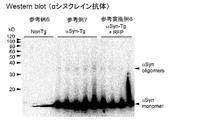
- FIG. 10 shows the results of Western blotting.
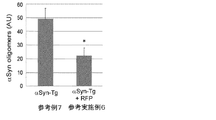
- ⁇ Syn-Tg mice in ⁇ Syn-Tg mice (Reference Example 7), ⁇ -synuclein oligomers that are not found in normal Non-Tg mice (Reference Example 6) are observed, but ⁇ Syn-administered nasally with rifampicin. A decrease in ⁇ -synuclein oligomers was observed in Tg mice (Reference Example 5).
- FIG. 11 shows the quantification result of ⁇ -synuclein obtained from the Western blot result of FIG. As shown in FIG.
Landscapes
- Health & Medical Sciences (AREA)
- Life Sciences & Earth Sciences (AREA)
- Chemical & Material Sciences (AREA)
- Veterinary Medicine (AREA)
- Medicinal Chemistry (AREA)
- Pharmacology & Pharmacy (AREA)
- Animal Behavior & Ethology (AREA)
- General Health & Medical Sciences (AREA)
- Public Health (AREA)
- Engineering & Computer Science (AREA)
- Epidemiology (AREA)
- Botany (AREA)
- Polymers & Plastics (AREA)
- Mycology (AREA)
- Nutrition Science (AREA)
- Food Science & Technology (AREA)
- Neurosurgery (AREA)
- Biomedical Technology (AREA)
- Neurology (AREA)
- Bioinformatics & Cheminformatics (AREA)
- Organic Chemistry (AREA)
- Chemical Kinetics & Catalysis (AREA)
- General Chemical & Material Sciences (AREA)
- Nuclear Medicine, Radiotherapy & Molecular Imaging (AREA)
- Otolaryngology (AREA)
- Hospice & Palliative Care (AREA)
- Psychiatry (AREA)
- Acyclic And Carbocyclic Compounds In Medicinal Compositions (AREA)
- Pharmaceuticals Containing Other Organic And Inorganic Compounds (AREA)
- Coloring Foods And Improving Nutritive Qualities (AREA)
Abstract
Description
項1. リファンピシン、その誘導体、及びそれらの塩よりなる群から選択されるリファンピシン類と、レスベラトロール及びその誘導体からなる群より選択されるレスベラトロール類とを組み合わせてなる、神経変性疾患の予防又は治療薬。
項2. 前記リファンピシン類1重量部当たり、前記レスベラトロール類が1/500~500重量部含まれる、項1に記載の予防又は治療薬。
項3. 前記リファンピシン類の投与量が3.75mg/kg・日以下である、項1又は2に記載の予防又は治療薬。
項4. 前記リファンピシン類の投与量が0.001~1.5mg/kg・日である、項1~3のいずれかに記載の予防又は治療薬。
項5. 前記レスベラトロール類の投与量が3.75mg/kg・日以下である、項1~4のいずれかに記載の予防又は治療薬。
項6. 前記レスベラトロール類の投与量が0.001~2.5mg/kg・日である、項1~5のいずれかに記載の予防又は治療薬。
項7. 経鼻投与に用いられる、項1~6のいずれかに記載の予防又は治療薬。
項8. 認知症の予防又は治療に用いられる、項1~7のいずれかに記載の予防又は治療薬。
項9. 前記リファンピシン類と前記レスベラトロール類との配合剤である、項1~8のいずれかに記載の予防又は治療薬。
項10. 前記リファンピシン類を含む薬剤と前記レスベラトロール類を含む薬剤とを含むキットである、項1~8のいずれかに記載の予防又は治療薬。
項11. レスベラトロール及びその誘導体からなる群より選択されるレスベラトロール類を含み、前記レスベラトロール類の投与量が0.28mg/kg・日以下である、経鼻投与用神経変性疾患の予防又は治療薬。
項12. 認知症の予防又は治療に用いられる、項11に記載の予防又は治療薬。
項13. 投与期間が1ヶ月以上である、項11又は12に記載の予防又は治療薬。
項14. レスベラトロール及びその誘導体からなる群より選択されるレスベラトロール類を含み、前記レスベラトロール類の摂取量が3.75mg/kg・日以下である、脳機能改善用食品。
項15. 神経変性疾患の予防又は治療のための医薬品の製造のための、リファンピシン、その誘導体、及びそれらの塩よりなる群から選択されるリファンピシン類と、レスベラトロール及びその誘導体からなる群より選択されるレスベラトロール類との使用。
項16. 神経変性疾患患者に、有効量のリファンピシン、その誘導体、及びそれらの塩よりなる群から選択されるリファンピシン類と、レスベラトロール及びその誘導体からなる群より選択されるレスベラトロール類とを投与する工程を含む、神経変性疾患の治療方法。
項17. 神経変性疾患発症リスクの高い未発症者に、有効量のリファンピシン、その誘導体、及びそれらの塩よりなる群から選択されるリファンピシン類と、レスベラトロール及びその誘導体からなる群より選択されるレスベラトロール類とを投与する工程を含む、神経変性疾患の予防方法。
項18. 0.28mg/kg・日以下の用量で投与される神経変性疾患の予防又は治療のための経鼻投与医薬品の製造のための、レスベラトロール及びその誘導体からなる群より選択されるレスベラトロール類の使用。
項19. 神経変性疾患患者に、0.28mg/kg・日以下のレスベラトロール及びその誘導体からなる群より選択されるレスベラトロール類を経鼻投与する工程を含む、神経変性疾患の治療方法。
項20. 投与期間が1ヶ月以上である、項19に記載の方法。
項21. 神経変性疾患発症リスクの高い未発症者に、0.28mg/kg・日以下のレスベラトロール及びその誘導体からなる群より選択されるレスベラトロール類を経鼻投与する工程を含む、神経変性疾患の予防方法。
項22. 投与期間が1ヶ月以上である、項21に記載の方法。
項23. 3.75mg/kg・日以下のレスベラトロール及びその誘導体からなる群より選択されるレスベラトロール類を経口摂取させる工程を含む、脳機能改善方法。
本発明の第1の予防又は治療薬(以下、本発明の第1の医薬品とも記載する)は、リファンピシン、その誘導体、及びそれらの塩よりなる群から選択されるリファンピシン類と、レスベラトロール及びその誘導体からなる群より選択されるレスベラトロール類とを含み、神経変性疾患の予防又は治療に用いられることを特徴とする。
本発明の第1の医薬品は、リファンピシン、その誘導体、及びそれらの塩よりなる群から選択されるリファンピシン類を含む。リファンピシンは、抗生物質として公知の成分である。

本発明の第1の医薬品は、レスベラトロール及びその誘導体よりなる群から選択されるレスベラトロール類を含む。レスベラトロールは、3,5,4’-トリヒドロキシスチルベンである。レスベラトロール類は、ガン予防、認知症予防(Aβ生成抑制)、動脈硬化・心臓病予防、抗メタボリック、寿命延長効果、眼病予防が報告されている成分である。また、レスベラトロール類は、肝臓を保護する作用もある。一方、レスベラトロールには、すでに生じた神経変性疾患の原因タンパク質のオリゴマーを除去する作用は知られていない。また、レスベラトロールによる神経変性疾患の原因タンパク質の凝集を抑制する効果は弱く、例えば、より高い凝集能と強力な神経毒性を有するAβ42による毒性に対する抑制効果はリファンピシンに比べるとかなり弱いことが本発明者によって確認されている。

本発明の第1の医薬品は、上述のリファンピシン類及びレスベラトロール類を配合し、それ自体公知の手段によって製剤化されたものであり、第1の医薬品の投与方法に応じて、薬理学的に許容される基剤及び/又は添加物が適宜混合されていてよい。
本発明の第1の医薬品は、リファンピシンにレスベラトロールが組み合わされていることで、副作用を顕著に低減させることができ、長期投与が可能となる。また、本発明の第1の医薬品は、リファンピシンにレスベラトロールが組み合わされていることで、神経変性疾患原因タンパク質オリゴマーに対する除去効果を顕著に向上させることができるため、抗生物質としての有効量よりも少ない用量で投与することができる。従って、本発明の第1の医薬品は、抗生物質として投与される場合よりも少ない用量を、当該場合よりも長期間連続して投与することができる。本発明の医薬組成は、経口投与用、皮下投与用及び経鼻投与用のいずれの投与方法用として調製されてもよい。これらの中でも、本発明の第1の医薬品は、非侵襲的であり、より一層好ましい副作用低減効果を得る観点、ひいては、より少ない用量での投与及び/又はより長期の投与の観点から、経鼻投与用に調製されることがより好ましい。
本発明の第1の医薬品は、神経変性疾患の予防及び神経変性疾患の治療に用いることができる。
リファンピシン類は、投与により脳へ到達し、神経変性疾患の原因タンパク質のオリゴマーの形成又は凝集抑制、若しくは形成又は凝集した神経変性疾患の原因タンパク質のオリゴマーの除去をもたらす。これによって、神経変性疾患の発症を遅延化、又は発症した神経変性疾患の症状改善(例えば、シナプスが復活することによる記憶障害の回復)をもたらす。
本発明の第2の予防又は治療薬(以下、本発明の第2の医薬品とも記載する)は、レスベラトロール及びその誘導体からなる群より選択されるレスベラトロール類を含み、所定の用量で神経変性疾患の予防又は治療に用いられる経鼻投与用医薬品であることを特徴とする。なお、本発明の第2の医薬品は、レスベラトロール類を単剤で含む。本発明の第2の医薬品においてレスベラトロール類を単剤で含むとは、本発明の第1の医薬品と区別するため、レスベラトロール類がリファンピシン類と併用されないことを意味し、その限りにおいて、その他の薬効成分を含むことは許容する。
本発明の第2の医薬品は、レスベラトロール及びその誘導体よりなる群から選択されるレスベラトロール類を含む。本発明の第2の医薬品におけるレスベラトロール類は、単剤でありながらも、低用量で経鼻投与され続けることで、神経変性疾患の原因タンパク質のオリゴマーを緩徐に除去し、認知機能の向上効果等を奏する。
本発明の第2の医薬品の剤型としては、上記「1.リファンピシン類及びレスベラトロール類を組み合わせてなる神経変性疾患の予防又は治療薬」に記載の第1の医薬品の剤型と同様である。
本発明の第2の医薬品は、所定の低用量で神経変性疾患に対する効能を得るために経鼻投与用に調製される。本発明の第2の医薬品のヒトへの投与量については、レスベラトロール類の投与量として、0.28mg/kg・日以下である。本発明の第2の医薬品は、低用量でも緩徐に薬効発現することから、レスベラトロール類の投与量としては、0.24mg/kg・日以下、0.2mg/kg・日以下、0.15mg/kg・日以下、0.1mg/kg・日以下、0.08mg/kg・日以下、又は0.06mg/kg・日以下であってもよい。
本発明の第2の医薬品は、神経変性疾患の予防及び神経変性疾患の治療に用いることができる。
本発明の脳機能改善用食品は、レスベラトロール及びその誘導体からなる群より選択されるレスベラトロール類を含み、所定の用量で脳機能改善用に用いられることを特徴とする。なお、本発明の脳機能改善用食品は、レスベラトロール類を単剤で含む。本発明の脳機能改善用食品においてレスベラトロール類を単剤で含むとは、本発明の第2の医薬品においてレスベラトロール類を単剤で含むのと同様の意味である。
本発明の脳機能改善用食品は、レスベラトロール及びその誘導体よりなる群から選択されるレスベラトロール類を含む。本発明の脳機能改善用食品におけるレスベラトロール類は、単剤でありながらも、低用量で摂取され続けることで、認知機能の向上効果等を奏する。
本発明の脳機能改善用食品の剤型としては、液状であってもよいし、固形状であってもよい。液状の例としては、液剤、飲料剤、乳剤、懸濁剤、酒精剤、シロップ剤、エリキシル剤、軟エキス剤等を含む)等が挙げられ、固形状の例としては、錠剤、丸剤、散剤、細粒剤、顆粒剤、錠剤、カプセル剤(ハードカプセル及びソフトカプセルを含む)、トローチ剤、チュアブル剤、乾燥エキス剤等が挙げられる。
本発明の脳機能改善用食品のヒトの摂取量については、レスベラトロール類の摂取量として、3.75mg/kg・日以下である。本発明の脳機能改善用食品は、低用量でも緩徐に薬効発現することから、レスベラトロール類の摂取量としては、2.5mg/kg・日以下、2mg/kg・日以下、又は1.5mg/kg・日以下であってもよい。
本発明の脳機能改善用食品は、脳機能の衰えによる症状、具体的には認知機能(例えばもの忘れ)の改善を目的として用いることができ、その場合の具体的な投与対象としては、脳機能の衰え、具体的には認知機能の衰えがある人、加齢に伴う認知機能の低下の抑制又は改善を所望する人が挙げられる。また、本発明の脳機能改善用食品は、脳機能の使用による疲労を予防又は改善することを目的として用いることもできる。
[試験例1(参考用)]
リファンピシンを含有する又は含有しない投与組成物を、表1に示す用量及び用法で、表1に示すアルツハイマー病モデルマウスへ1ヶ月毎日投与した。
11カ月齢の雄のAPPOSKマウス(Tomiyama et al. J Neurosci. 2010; 30: 4845-56)を用意した。APPOSKマウスの体重は約30gである。APPOSKマウス60匹を、12匹ずつA-Eの5群に分けた。別途、同月齢の野生型マウス(non-Tg littermate)12匹用意した。なお、APPOSKマウスは、アミロイド前駆体タンパク質(APP)トランスジェニックマウス(アルツハイマー病モデル)であり、アミロイドβ(Aβ)タンパク質の蓄積を示す。
0.5w/v%のカルボキシメチルセルロースナトリウム(CMC;Sigma-Aldrich, Carboxymethylcellulose sodium salt low viscosity, C5678)水溶液(以下、「CMC」と記載する。)にリファンピシン薬(RFP;Sigma-Aldrich, Rifampicin ≧97% (HPLC), powder、別名:3-(4-メチルピペラジニルイミノメチル)リファマイシンSV, リファマイシンAMP, リファンピン, R3501)を表1の参考実施例1~4に示す用量となる配合量で懸濁し、投与組成物を調製した。なお、参考例1~2については、リファンピシン薬を含まないことを除いて上記と同様に投与組成物を調製した。
経口投与はげっ歯類用経口ゾンデを用い、経鼻投与はピペットマン(ホワイトチップ)を用い、皮下投与は注射器を用い、すべて無麻酔下で行った。
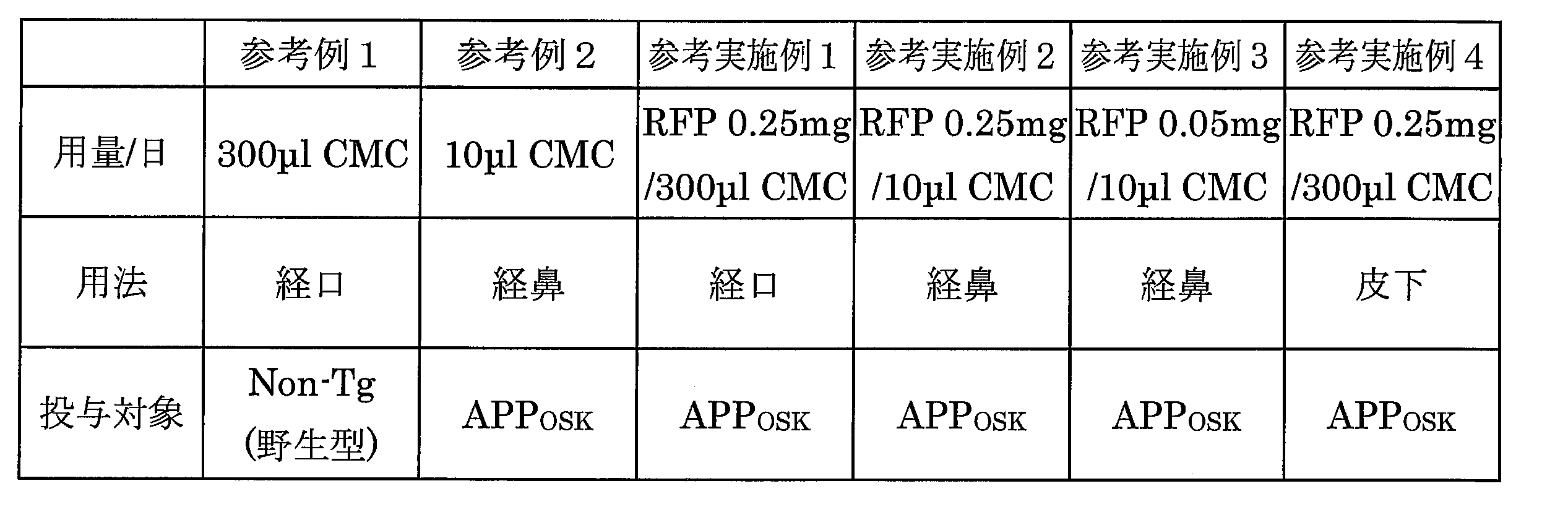
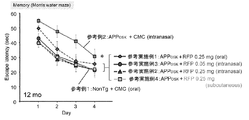
投与終了後(12カ月齢)のマウスを行動試験に供し、マウスの認知機能に対するリファンピシンの効果を比較した。行動試験は、Umeda et al. Brain 2016; 139: 1568-86の方法に従ってモリス水迷路によるマウスの空間参照記憶を測定することにより行った。なお、行動試験に供したマウスは、投与期間中に死亡したマウスを除く、12匹(参考実施例1、参考実施例2、参考実施例3)、11匹(参考例1、参考例2、参考実施例4)である。
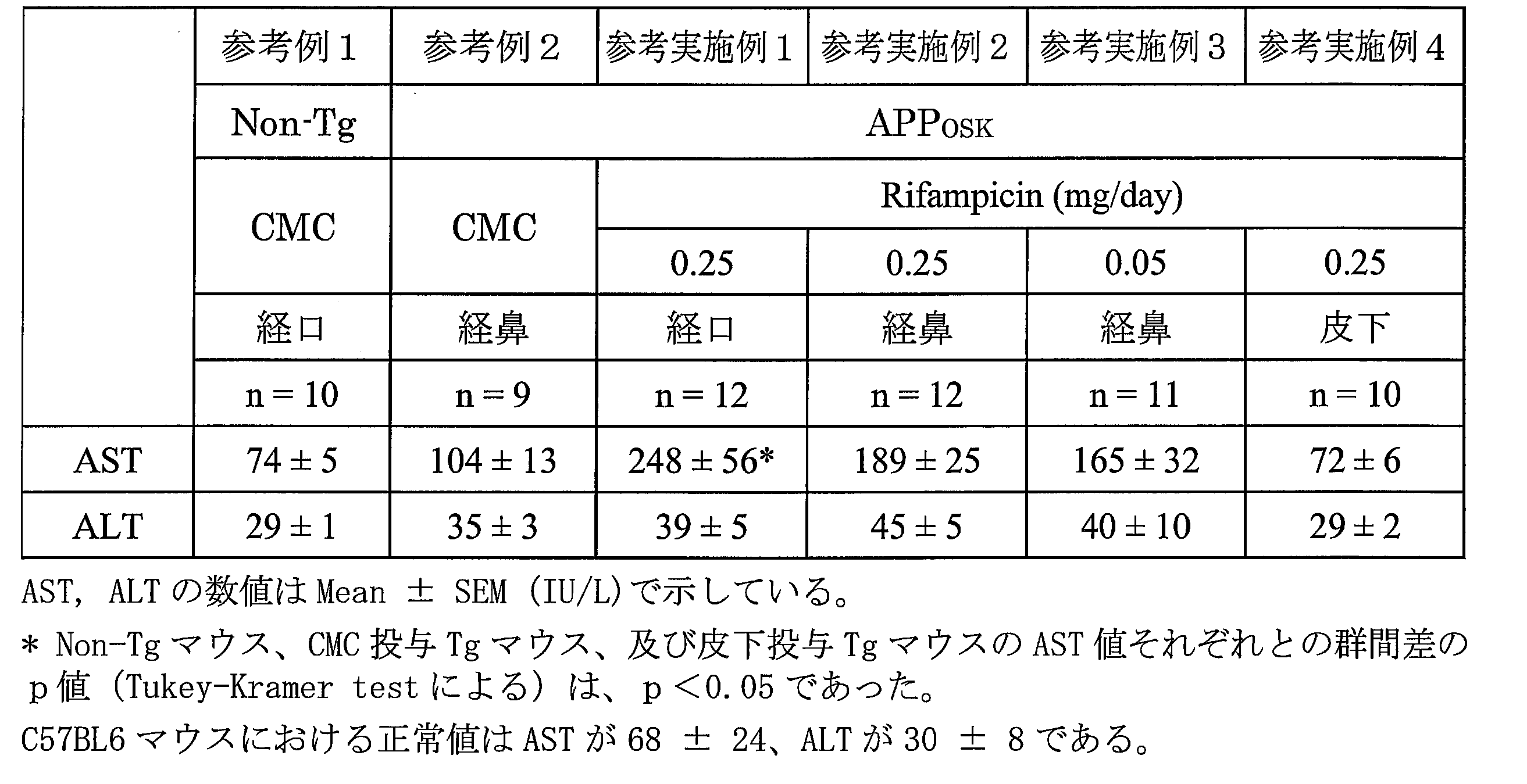
行動試験終了後のマウスから採血し、血清を分離して血清試料を調製した。血清試料の肝酵素AST(GOT)及びALT(GPT)の測定を行い、リファンピシンによる肝機能障害の程度を比較した。
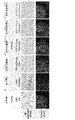
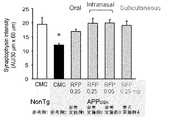
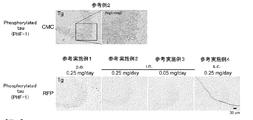
行動試験終了後のマウスから脳を取り出し、免疫組織化学染色によって、Aβオリゴマー、シナプトフィジン、リン酸化タウに対するリファンピシンの効果を比較した。
リファンピシンを含有する又は含有しない投与組成物を、表3に示す用量及び用法で、表3に示すシヌクレイノパチーモデルマウスへ1ヶ月毎日投与した。
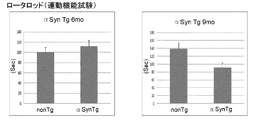
シヌクレイノパチーのモデルとして、A53T変異を持つαシヌクレイントランスジェニック(αSyn-Tg)マウスをJackson Laboratoriesから購入した。このマウスは9か月齢頃より運動機能障害を示す、パーキンソン病のモデル(以下において、αSyn-Tgの9か月(9mo)マウスとも記載する)として報告されている(Lee et al. Proc Natl Acad Sci USA. 2002; 99: 8968-73)。しかし、後述するように、本発明者らが詳細に検討した結果、このマウスは6か月齢頃より運動機能は正常である一方で認知機能の障害を示すことが明らかとなり、6か月齢頃から9か月齢頃まではレビー小体型認知症のモデル(以下において、αSyn-Tgの6か月(6mo)マウスとも記載する)としても使えることがわかった。従って、本試験例では、投与対象として、αSyn-Tgの6か月(6mo)マウス及びαSyn-Tgの9か月(9mo)を用いた。
0.5w/v%のカルボキシメチルセルロースナトリウム(CMC;Sigma-Aldrich, Carboxymethylcellulose sodium salt low viscosity, C5678)水溶液(以下、「CMC」と記載する。)にリファンピシン薬(RFP;Sigma-Aldrich, Rifampicin ≧97% (HPLC), powder、別名:3-(4-メチルピペラジニルイミノメチル)リファマイシンSV, リファマイシンAMP, リファンピン, R3501)を表3の参考実施例5~6に示す用量となる配合量で懸濁し、投与組成物を調製した。なお、参考例4~5については、リファンピシン薬を含まないことを除いて上記と同様に投与組成物を調製した。
試験例1と同様にして経鼻投与を行った。
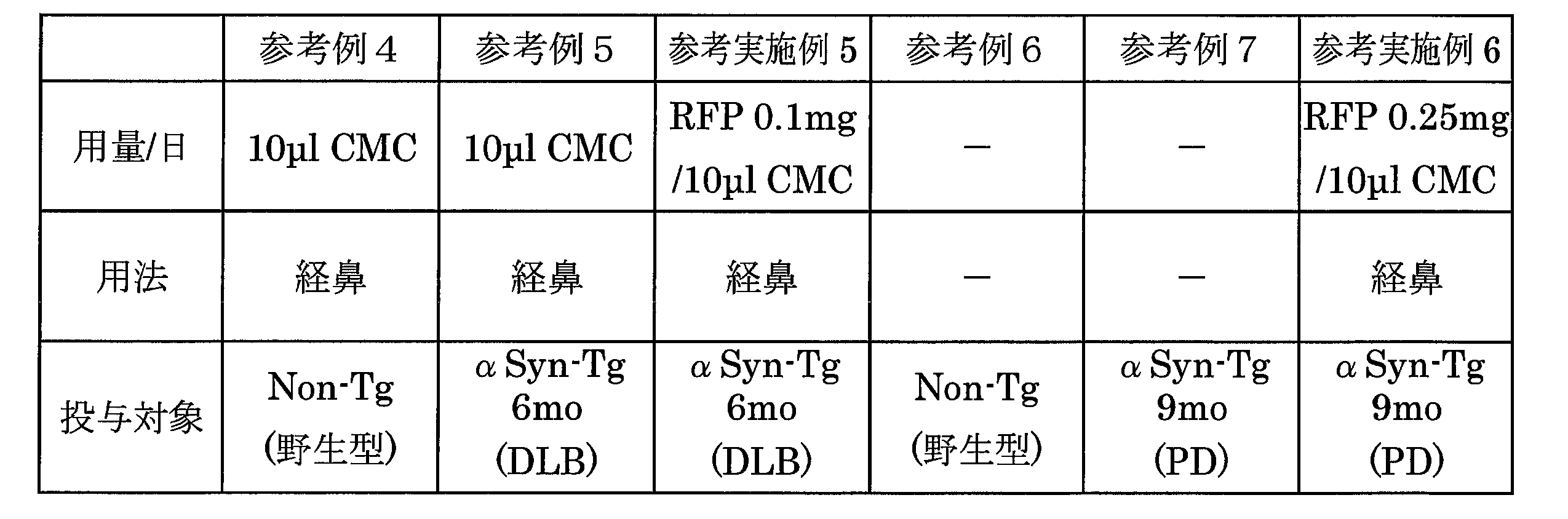
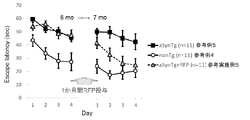
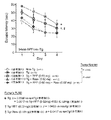
投与前(6か月)及び投与後(7か月)のαSyn-Tgマウスをモリス水迷路による行動試験に供し、マウスの認知機能に対するリファンピシンの効果を比較した。行動試験の結果を図9に示す。投与前において、αSyn-Tgマウス(参考例5、参考実施例5)に記憶障害が認められたが、リファンピシンを経鼻投与されたマウスαSyn-Tgマウス(参考実施例5)では、投与後1日目から記憶障害の改善が認められ、投与後4日目には正常のNon-Tgマウス(参考例4)と同等まで認知機能が回復した。つまり、認知機能が正常に改善するほどにリファンピシンのαシヌクレインを除去する効果が高いことが示された。また、試験例1と同様に、参考実施例5はリファンピシンの経鼻投与であることから、肝機能障害に対する副作用も顕著に低減されている。さらに、参考実施例5は、リファンピシンの投与量が0.1mg/日/匹と低用量であることからも、肝機能障害に対する副作用は一層顕著に低減されている。
αSyn-Tgの9か月(9mo)マウスから脳を取り出し、ウェスタンブロットによって、αシヌクレインオリゴマーに対するリファンピシンの効果を比較した。
リファンピシン(RFP)を単独で含有する投与組成物、レスベラトロール(Res)を単独で含有する投与組成物、リファンピシンとレスベラトロールとを含有する投与組成物、及びリファンピシンもレスベラトロールも含有しない投与組成物を、表4に示す用量及び用法で、表4に示すアルツハイマー病モデルマウスへ1ヶ月毎日投与した。
試験例1と同じAPPOSKマウスを投与対象とした。
0.5w/v%のカルボキシメチルセルロースナトリウム(CMC;Sigma-Aldrich, Carboxymethylcellulose sodium salt low viscosity, C5678)水溶液(以下、「CMC」と記載する。)に、リファンピシン薬(RFP;Sigma-Aldrich, Rifampicin ≧97% (HPLC), powder、別名:3-(4-メチルピペラジニルイミノメチル)リファマイシンSV, リファマイシンAMP, リファンピン, R3501)、及び/又は、レスベラトロール(Res;富士フィルム和光純薬, ≧98% (HPLC),別名:3,5,4'-トリヒドロキシ-trans-スチルベン)を、表4の参考例10、比較例1、及び実施例1に示す用量となる配合量で懸濁し、投与組成物を調製した。なお、参考例8~9については、リファンピシン薬及びレスベラトロールのいずれも含まないことを除いて上記と同様に投与組成物を調製した。
試験例1と同様にして経鼻投与を行った。
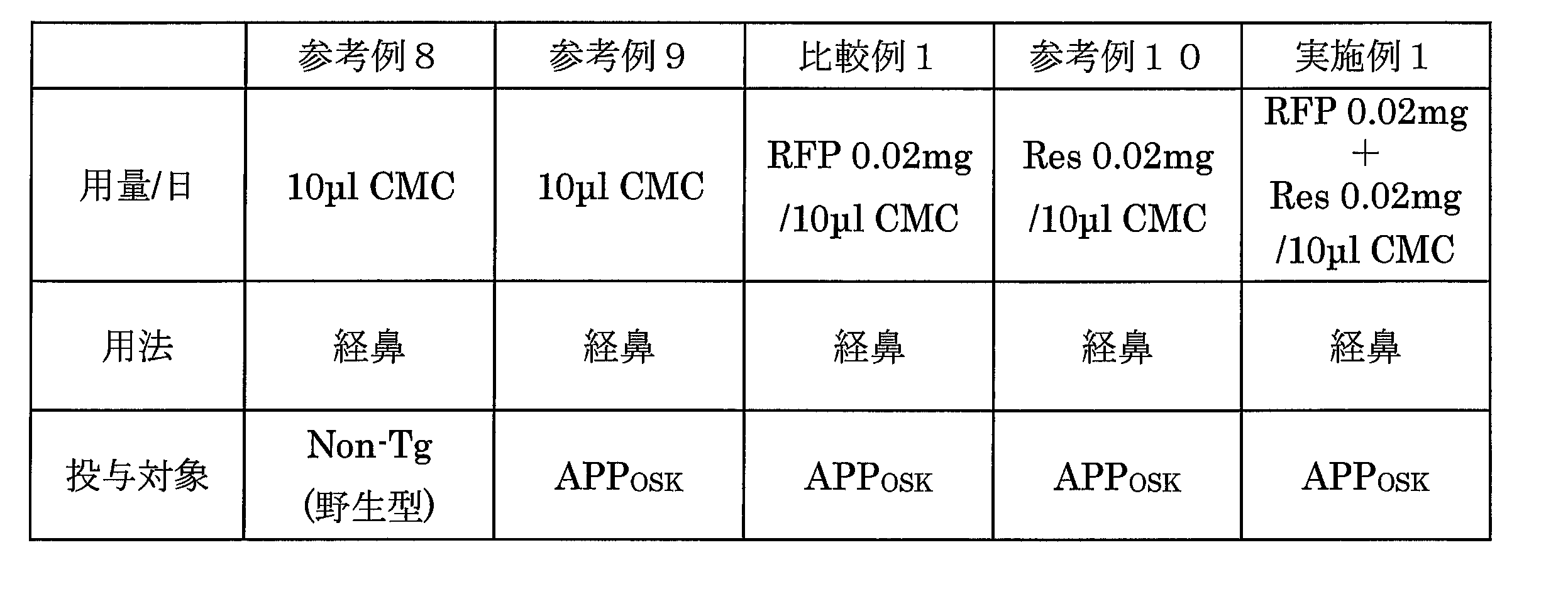
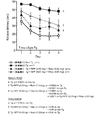
試験例1と同様にして、参考例8~11、比較例1、及び実施例1のマウスに対してモリス水迷路による試験を行った。その結果を図12に示す。リファンピシンを投与しなかったAPP OSKマウス(参考例9)に対し、0.02mgのリファンピシンを投与したAPP OSKマウス(比較例1)では認知機能の改善の傾向が認められた。また、リファンピシンを投与しなかったAPP OSKマウス(参考例9)に対し、0.02mgのレスベラトロールを投与したAPP OSKマウス(参考例10)でも認知機能の改善の傾向が認められた。これに対し、リファンピシンにレスベラトロールを組み合わせて投与したAPP OSKマウス(実施例1)では有意に認知機能が改善され、その改善の程度は、正常のNon-Tgマウス(参考例8)と同程度に達していた。つまり、リファンピシン及びレスベラトロールをそれぞれ単独で投与した場合(比較例1、参考例10)はいずれも認知機能に有意差が出なかったことに鑑みると、リファンピシン及びレスベラトロールを組み合わせること(実施例1)で得られる認知機能改善効果は、リファンピシン及びレスベラトロールそれぞれの単独投与(比較例1、参考例10)による効果の足し合わせで予想される程度を超える顕著な効果であった。
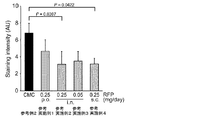
試験例1と同様にして、免疫組織化学染色によって、Aβオリゴマーに対するリファンピシンの効果を比較した。結果を図13(a)に示す。また、図13(a)における染色強度をグラフ化した結果を図13(b)に示す。これらの結果に示されるとおり、正常のNon-Tgマウス(参考例8)ではAβオリゴマーの集積は認められないが、リファンピシンを投与しなかったAPP OSKマウス(参考例9)ではAβオリゴマーの集積が認められた。0.02mgのリファンピシンを投与したAPP OSKマウス(比較例1)及び0.02mgのレスベラトロールを投与したAPP OSKマウス(参考例10)のいずれの場合も、集積したAβオリゴマーの除去効果は認められたものの、その程度としては後述の実施例1ほどではなかった。これに対し、リファンピシンにレスベラトロールを組み合わせて投与したAPP OSKマウス(実施例1)では、集積したAβオリゴマーが充分に除去されたことが示された。
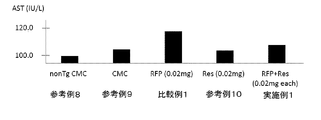
試験例1と同様にして、参考例8~10、比較例1、及び実施例1のマウスについて、リファンピシンによる肝機能障害の程度を、ASTの測定結果に基づいて比較した。結果を図14に示す。
リファンピシン及びレスベラトロールを含有する又は含有しない投与組成物を、表5に示す用量及び用法で、表5に示すシヌクレイノパチーモデルマウスへ1ヶ月毎日投与した。
試験例2に記載したシヌクレイノパチーモデルマウス([A53T]αSyn-Tg)の7月齢(7mo)マウスを投与対象とした。このマウスは、運動機能の異常が無く認知機能が低下しているレビー小体型認知症(DLB)モデルである。
0.5w/v%のカルボキシメチルセルロースナトリウム(CMC;Sigma-Aldrich, Carboxymethylcellulose sodium salt low viscosity, C5678)水溶液にリファンピシン薬(RFP;Sigma-Aldrich, Rifampicin ≧97% (HPLC), powder、別名:3-(4-メチルピペラジニルイミノメチル)リファマイシンSV, リファマイシンAMP, リファンピン, R3501)及びレスベラトロール(Res;富士フィルム和光純薬, ≧98% (HPLC),別名:3,5,4'-トリヒドロキシ-trans-スチルベン)を、表5の実施例2、3に示す用量となる配合量で懸濁し、投与組成物を調製した。なお、参考例11及び12については、リファンピシン薬及びレスベラトロールのいずれも含まないことを除いて上記と同様に投与組成物を調製した。
試験例1と同様にして経鼻投与を行った。
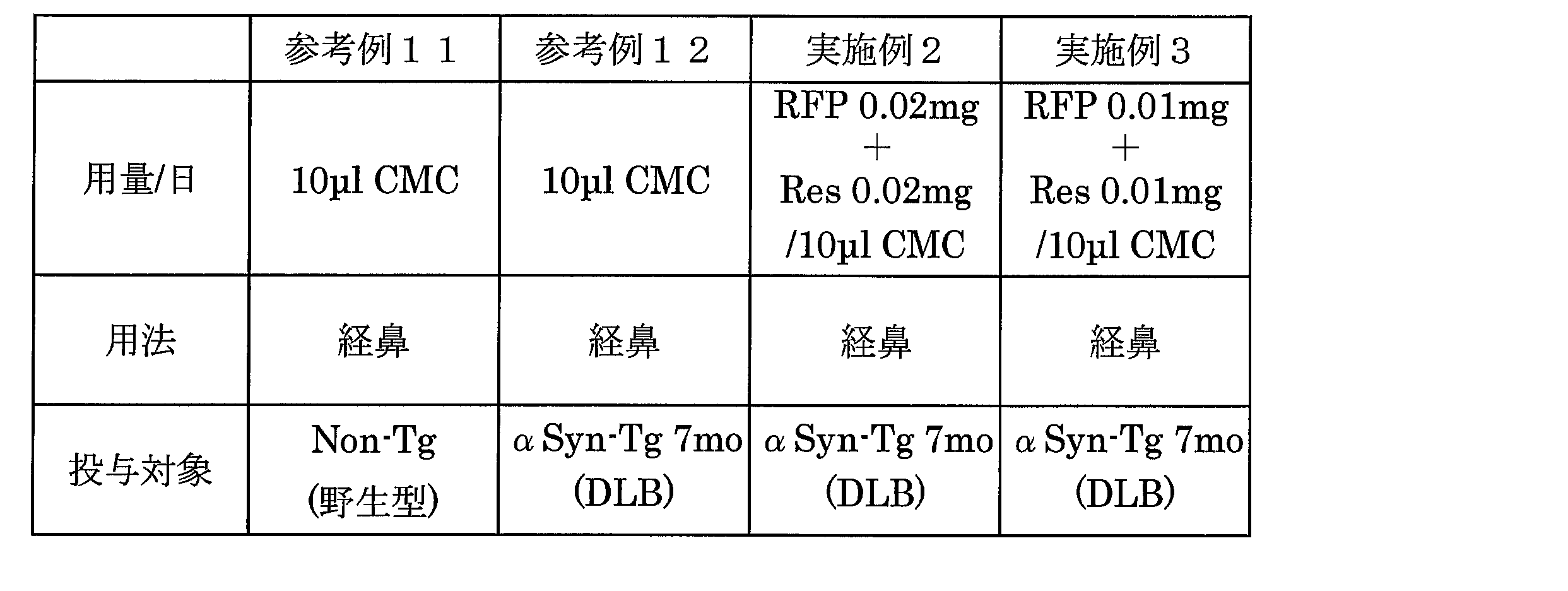
試験例1と同様にして、参考例11及び12並びに実施例1及び2のマウスに対してモリス水迷路による試験を行った。その結果を図15に示す。リファンピシン及びレスベラトロールの合剤を投与しなかったシヌクレイノパチーモデルマウス(参考例12)では、認知機能の改善の傾向はわずかであったことに対し、リファンピシン及びレスベラトロールの合剤を投与したシヌクレイノパチーモデルマウス(実施例2及び3)は、認知機能の改善傾向が顕著にみられ、野生型マウス(参考例11)に近い程度まで認知機能の改善が認められた。更に、リファンピシン及びレスベラトロールの合剤による認知機能の改善効果は、実施例2と実施例3との対比に認められるように、用量依存性が確認できた。
リファンピシン及びレスベラトロールを含有する又は含有しない投与組成物を、表6に示す用量及び用法で、表6に示すタウオパチーモデルマウスへ1ヶ月毎日投与した。
タウオパチーモデルマウス(Umeda T et al., Am. J. Pathol. 183, 211-225, 2013)を用意し、モデルマウスの14~15月齢(14-15mo)のマウスを投与対象として用いた。
0.5w/v%のカルボキシメチルセルロースナトリウム(CMC;Sigma-Aldrich, Carboxymethylcellulose sodium salt low viscosity, C5678)水溶液に、リファンピシン薬(RFP;Sigma-Aldrich, Rifampicin ≧97% (HPLC), powder、別名:3-(4-メチルピペラジニルイミノメチル)リファマイシンSV, リファマイシンAMP, リファンピン, R3501)、及び/又は、レスベラトロール(Res;富士フィルム和光純薬, ≧98% (HPLC),別名:3,5,4'-トリヒドロキシ-trans-スチルベン)を、表6の比較例2、参考例15、実施例4、及び実施例5に示す用量となる配合量で懸濁し、投与組成物を調製した。なお、参考例13~14については、リファンピシン薬及びレスベラトロールのいずれも含まないことを除いて上記と同様に投与組成物を調製した。

試験例1と同様にして、参考例13~15、並びに比較例2、及び実施例4~5のマウスに対してモリス水迷路による試験を行った。その結果を図16に示す。リファンピシンもレスベラトロールも投与しなかったタウオパチーモデルマウス(参考例14)では、認知機能の改善の傾向はわずかであり、リファンピシン単剤又はレスベラトロール単剤を投与したタウオパチーモデルマウス(比較例2及び参考例15)における認知機能の改善効果は緩徐であったことに対し、リファンピシン及びレスベラトロールの合剤を投与したタウオパチーモデルマウス(実施例4及び5)は、認知機能の改善傾向が顕著にみられ、野生型マウス(参考例13)と変わらない程度まで認知機能の改善が認められた。また、リファンピシンとレスバラトロールの合計量が0.02mgである実施例5において、リファンピシン及びレスベラトロールそれぞれの0.02mg単独投与である比較例2又は参考例15と対比して顕著な認知機能の改善効果が得られていることから、リファンピシン及びレスベラトロールを組み合わせること(実施例5)で得られる認知機能改善効果は、リファンピシン及びレスベラトロールそれぞれの単独投与(比較例2、参考例15)による効果の足し合わせで予想される程度を超える顕著な効果であるといえる。
図12の参考例10及び図16の参考例15に示したとおり、0.02mgのレスベラトロールを単独でマウスに1ヶ月投与した場合、神経変性疾患に対して緩徐な認知機能改善効果が得られており、このような効果が緩徐ながら確実に奏されていることは、図13(a)及び図13(b)の参考例10に示した通り、0.02mgのレスベラトロールを単独でマウスに1ヶ月投与した場合も、集積したAβオリゴマーの除去効果が認められていることに実証されている。本試験例では、さらにレスベラトロールを0.1mgの用量でアルツハイマーモデルに投与した場合についても効果を検証した。具体的には、レスベラトロールを単独で含有する又は含有しない投与組成物を、表7に示す用量及び用法で、表7に示すアルツハイマー病モデルマウスへ1ヶ月毎日投与した結果を示す。
試験例1に記載のAPPOSKマウスの13月齢(13mo)を用いた。
0.5w/v%のカルボキシメチルセルロースナトリウム(CMC;Sigma-Aldrich, Carboxymethylcellulose sodium salt low viscosity, C5678)水溶液にレスベラトロール(Res;富士フィルム和光純薬, ≧98% (HPLC),別名:3,5,4'-トリヒドロキシ-trans-スチルベン)を、表7の実施例6、7に示す用量となる配合量で懸濁し、投与組成物を調製した。なお、参考例16及び17については、レスベラトロールを含まないことを除いて上記と同様に投与組成物を調製した。
試験例1と同様にして経鼻投与を行った。
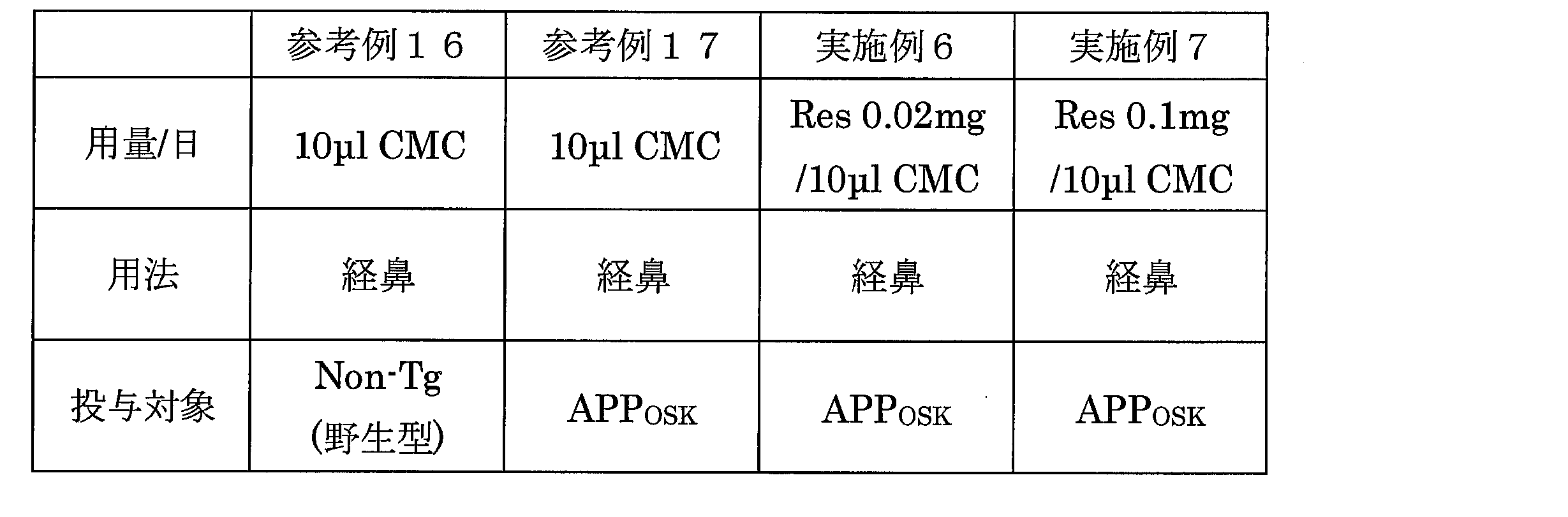
試験例1と同様にして、参考例16、17及び実施例6、7のマウスに対してモリス水迷路による試験を行った。その結果を図17に示す。レスベラトロールを投与しなかったアルツハイマー病モデルマウス(参考例17)の認知機能の改善効果と対比して、レスベラトロールを投与したアルツハイマー病モデルマウス(実施例6、7)では、認知機能の改善効果が認められた。中でも、実施例7に示される通り、レスベラトロールを0.1mg/日の用量で投与した場合(実施例7)は、野生型マウス(参考例16)に近い程度まで認知機能の改善が認められたが、レスベラトロールを0.02mg/日の用量で投与した場合(実施例6)でも、緩徐でありながらも認知機能改善効果が認められた。
上記の実施例に示される通り、第1に、リファンピシン及びレスベラトロールの合剤を、アルツハイマー病モデル、シヌクレイノパチーモデルマウス、及びタウオパチーモデルマウスに投与した結果から、リファンピシン及びレスベラトロールの合剤が、副作用を低減し、低用量で神経変性疾患に対して有効となることが確認され、これにより、長期投与が可能であることが示唆され;第2に、レスベラトロールの単剤をアルツハイマー病モデルに投与した結果から、レスベラトロールの合剤が、低用量で神経変性疾患に対して有効となることが確認され、これにより、長期投与、長期摂取が可能であることが示唆された。事実、上記の実施例に示される通り、マウスに対して1か月という長期間にわたって連続投与が可能であった。
Claims (14)
- リファンピシン、その誘導体、及びそれらの塩よりなる群から選択されるリファンピシン類と、レスベラトロール及びその誘導体からなる群より選択されるレスベラトロール類とを組み合わせてなる、神経変性疾患の予防又は治療薬。
- 前記リファンピシン類1重量部当たり、前記レスベラトロール類が1/500~500重量部含まれる、請求項1に記載の予防又は治療薬。
- 前記リファンピシン類の投与量が3.75mg/kg・日以下である、請求項1又は2に記載の予防又は治療薬。
- 前記リファンピシン類の投与量が0.001~1.5mg/kg・日である、請求項1~3のいずれかに記載の予防又は治療薬。
- 前記レスベラトロール類の投与量が3.75mg/kg・日以下である、請求項1~4のいずれかに記載の予防又は治療薬。
- 前記レスベラトロール類の投与量が0.001~2.5mg/kg・日である、請求項1~5のいずれかに記載の予防又は治療薬。
- 経鼻投与に用いられる、請求項1~6のいずれかに記載の予防又は治療薬。
- 認知症の予防又は治療に用いられる、請求項1~7のいずれかに記載の予防又は治療薬。
- 前記リファンピシン類と前記レスベラトロール類との配合剤である、請求項1~8のいずれかに記載の予防又は治療薬。
- 前記リファンピシン類を含む薬剤と前記レスベラトロール類を含む薬剤とを含むキットである、請求項1~8のいずれかに記載の予防又は治療薬。
- レスベラトロール及びその誘導体からなる群より選択されるレスベラトロール類を含み、前記レスベラトロール類の投与量が0.28mg/kg・日以下である、経鼻投与用神経変性疾患の予防又は治療薬。
- 認知症の予防又は治療に用いられる、請求項11に記載の予防又は治療薬。
- 投与期間が1ヶ月以上である、請求項11又は12に記載の予防又は治療薬。
- レスベラトロール及びその誘導体からなる群より選択されるレスベラトロール類を含み、前記レスベラトロール類の摂取量が3.75mg/kg・日以下である、脳機能改善用食品。
Priority Applications (13)
| Application Number | Priority Date | Filing Date | Title |
|---|---|---|---|
| CA3125913A CA3125913A1 (en) | 2019-01-09 | 2020-01-09 | Prophylactic or therapeutic drug for neurodegenerative diseases |
| JP2020565193A JP7279958B2 (ja) | 2019-01-09 | 2020-01-09 | 神経変性疾患の予防又は治療薬 |
| MX2021008329A MX2021008329A (es) | 2019-01-09 | 2020-01-09 | Farmaco profilactico o terapeutico para enfermedades neurodegenerativas. |
| DK20738553.5T DK3909568T3 (da) | 2019-01-09 | 2020-01-09 | Profylaktisk eller terapeutisk lægemiddel til neurodegenerative lidelser |
| KR1020217023135A KR102896709B1 (ko) | 2019-01-09 | 2020-01-09 | 신경 변성 질환의 예방 또는 치료약 |
| FIEP20738553.5T FI3909568T3 (fi) | 2019-01-09 | 2020-01-09 | Profylaktinen tai terapeuttinen lääke neurodegeneratiivisiin tauteihin |
| US17/421,686 US12521387B2 (en) | 2019-01-09 | 2020-01-09 | Prophylactic or therapeutic drug for neurodegenerative diseases |
| PL20738553.5T PL3909568T3 (pl) | 2019-01-09 | 2020-01-09 | Lek profilaktyczny lub terapeutyczny dla chorób neurodegeneracyjnych |
| ES20738553T ES2989515T3 (es) | 2019-01-09 | 2020-01-09 | Fármaco profiláctico o terapéutico para enfermedades neurodegenerativas |
| EP20738553.5A EP3909568B1 (en) | 2019-01-09 | 2020-01-09 | Prophylactic or therapeutic drug for neurodegenerative diseases |
| CN202080008071.XA CN113260357B (zh) | 2019-01-09 | 2020-01-09 | 神经变性疾病的预防或治疗药 |
| BR112021013582-0A BR112021013582A2 (pt) | 2019-01-09 | 2020-01-09 | Medicamento profilático ou terapêutico para doenças neurodegenerativas |
| US19/420,573 US20260102392A1 (en) | 2019-01-09 | 2025-12-15 | Prophylactic or therapeutic drug for neurodegenerative diseases |
Applications Claiming Priority (2)
| Application Number | Priority Date | Filing Date | Title |
|---|---|---|---|
| JPPCT/JP2019/000278 | 2019-01-09 | ||
| PCT/JP2019/000278 WO2020144753A1 (ja) | 2019-01-09 | 2019-01-09 | 神経変性疾患の予防又は治療薬 |
Related Child Applications (2)
| Application Number | Title | Priority Date | Filing Date |
|---|---|---|---|
| US17/421,686 A-371-Of-International US12521387B2 (en) | 2019-01-09 | 2020-01-09 | Prophylactic or therapeutic drug for neurodegenerative diseases |
| US19/420,573 Continuation US20260102392A1 (en) | 2019-01-09 | 2025-12-15 | Prophylactic or therapeutic drug for neurodegenerative diseases |
Publications (1)
| Publication Number | Publication Date |
|---|---|
| WO2020145331A1 true WO2020145331A1 (ja) | 2020-07-16 |
Family
ID=71520264
Family Applications (2)
| Application Number | Title | Priority Date | Filing Date |
|---|---|---|---|
| PCT/JP2019/000278 Ceased WO2020144753A1 (ja) | 2019-01-09 | 2019-01-09 | 神経変性疾患の予防又は治療薬 |
| PCT/JP2020/000392 Ceased WO2020145331A1 (ja) | 2019-01-09 | 2020-01-09 | 神経変性疾患の予防又は治療薬 |
Family Applications Before (1)
| Application Number | Title | Priority Date | Filing Date |
|---|---|---|---|
| PCT/JP2019/000278 Ceased WO2020144753A1 (ja) | 2019-01-09 | 2019-01-09 | 神経変性疾患の予防又は治療薬 |
Country Status (16)
| Country | Link |
|---|---|
| US (2) | US12521387B2 (ja) |
| EP (1) | EP3909568B1 (ja) |
| JP (1) | JP7279958B2 (ja) |
| KR (1) | KR102896709B1 (ja) |
| CN (1) | CN113260357B (ja) |
| BR (1) | BR112021013582A2 (ja) |
| CA (1) | CA3125913A1 (ja) |
| DK (1) | DK3909568T3 (ja) |
| ES (1) | ES2989515T3 (ja) |
| FI (1) | FI3909568T3 (ja) |
| HU (1) | HUE069327T2 (ja) |
| MX (1) | MX2021008329A (ja) |
| PL (1) | PL3909568T3 (ja) |
| PT (1) | PT3909568T (ja) |
| TW (1) | TWI833874B (ja) |
| WO (2) | WO2020144753A1 (ja) |
Cited By (2)
| Publication number | Priority date | Publication date | Assignee | Title |
|---|---|---|---|---|
| US11977085B1 (en) | 2023-09-05 | 2024-05-07 | Elan Ehrlich | Date rape drug detection device and method of using same |
| WO2025225629A1 (ja) * | 2024-04-23 | 2025-10-30 | 株式会社メディラボRfp | 経鼻投与用組成物 |
Citations (4)
| Publication number | Priority date | Publication date | Assignee | Title |
|---|---|---|---|---|
| JP2008527002A (ja) * | 2005-01-13 | 2008-07-24 | サートリス ファーマシューティカルズ, インコーポレイテッド | 神経変性障害および血液凝固障害を予防および処置するための新規組成物 |
| JP2010524959A (ja) * | 2007-04-17 | 2010-07-22 | コドマン・アンド・シャートレフ・インコーポレイテッド | アルツハイマー病を処置するためのヘリウムガスボーラス中のクルクミンの鼻腔投与 |
| US20110111014A1 (en) * | 2007-06-26 | 2011-05-12 | Parkinson's Institute | Methods and compositions for treatment of neurological disorders |
| JP2013518034A (ja) * | 2010-01-21 | 2013-05-20 | アンスティチュ ナショナル ドゥ ラ サンテ エ ドゥ ラ ルシェルシュ メディカル | 薬物として使用するための特別な組成物 |
Family Cites Families (31)
| Publication number | Priority date | Publication date | Assignee | Title |
|---|---|---|---|---|
| AU2004222529A1 (en) * | 2003-03-19 | 2004-09-30 | Ares Trading S.A. | INF-beta alone or in combination with other medicaments for treating Alzheimer's disease and demens disorders |
| US20070014833A1 (en) | 2005-03-30 | 2007-01-18 | Sirtris Pharmaceuticals, Inc. | Treatment of eye disorders with sirtuin modulators |
| EP2805719A1 (en) | 2005-03-30 | 2014-11-26 | Glaxosmithkline LLC | Nicotinamide riboside and analogues thereof |
| US20060292099A1 (en) | 2005-05-25 | 2006-12-28 | Michael Milburn | Treatment of eye disorders with sirtuin modulators |
| US20070149466A1 (en) | 2005-07-07 | 2007-06-28 | Michael Milburn | Methods and related compositions for treating or preventing obesity, insulin resistance disorders, and mitochondrial-associated disorders |
| US7837832B2 (en) | 2005-12-15 | 2010-11-23 | Dow Global Technologies, Inc. | Additive compositions for treating various base sheets |
| US7842163B2 (en) | 2005-12-15 | 2010-11-30 | Kimberly-Clark Worldwide, Inc. | Embossed tissue products |
| US7803250B2 (en) | 2005-12-15 | 2010-09-28 | Dow Global Technologies, Inc. | Wiping products having enhanced cleaning abilities |
| US7803249B2 (en) | 2005-12-15 | 2010-09-28 | Dow Global Technologies Inc. | Wiping products with controlled lint properties |
| US7879188B2 (en) | 2005-12-15 | 2011-02-01 | Kimberly-Clark Worldwide, Inc. | Additive compositions for treating various base sheets |
| US20070137811A1 (en) | 2005-12-15 | 2007-06-21 | Kimberly-Clark Worldwide, Inc. | Premoistened tissue products |
| US7678231B2 (en) | 2005-12-15 | 2010-03-16 | Dow Global Technologies, Inc. | Process for increasing the basis weight of sheet materials |
| US8282776B2 (en) | 2005-12-15 | 2012-10-09 | Kimberly-Clark Worldwide, Inc. | Wiping product having enhanced oil absorbency |
| US7879191B2 (en) | 2005-12-15 | 2011-02-01 | Kimberly-Clark Worldwide, Inc. | Wiping products having enhanced cleaning abilities |
| US7879189B2 (en) | 2005-12-15 | 2011-02-01 | Kimberly-Clark Worldwide, Inc. | Additive compositions for treating various base sheets |
| US7807023B2 (en) | 2005-12-15 | 2010-10-05 | Kimberly-Clark Worldwide, Inc. | Process for increasing the basis weight of sheet materials |
| US8444811B2 (en) | 2005-12-15 | 2013-05-21 | Kimberly-Clark Worldwide, Inc. | Process for increasing the basis weight of sheet materials |
| US7883604B2 (en) | 2005-12-15 | 2011-02-08 | Kimberly-Clark Worldwide, Inc. | Creping process and products made therefrom |
| US7837831B2 (en) | 2005-12-15 | 2010-11-23 | Kimberly-Clark Worldwide, Inc. | Tissue products containing a polymer dispersion |
| US7820010B2 (en) | 2005-12-15 | 2010-10-26 | Kimberly-Clark Worldwide, Inc. | Treated tissue products having increased strength |
| US20080075671A1 (en) | 2006-09-22 | 2008-03-27 | Di Mauro Thomas M | Intranasally administering curcumin to the brain to treat alzheimer's disease |
| US20090087385A1 (en) | 2006-09-22 | 2009-04-02 | Di Mauro Thomas M | Intranasally administering curcumin in a bolus of helium gas to treat alzheimers disease |
| US8383865B2 (en) | 2007-04-17 | 2013-02-26 | Codman & Shurtleff, Inc. | Curcumin derivatives |
| US7745670B2 (en) | 2008-06-27 | 2010-06-29 | Codman & Shurtleff, Inc. | Curcumin-Resveratrol hybrid molecule |
| US20090324740A1 (en) * | 2008-06-13 | 2009-12-31 | Albritton Iv Ford D | Novel nasal spray |
| US7985776B2 (en) | 2008-06-27 | 2011-07-26 | Codman & Shurtleff, Inc. | Iontophoretic delivery of curcumin and curcumin analogs for the treatment of Alzheimer's Disease |
| GB2480159A (en) * | 2008-11-14 | 2011-11-09 | Parkinson S Inst | Compositions and methods for the treatment of altered a-synuclein function |
| WO2010095926A1 (en) * | 2009-02-20 | 2010-08-26 | N.V. Nutricia | Use of reveratrol for preserving cognitive functioning |
| BRPI1001052A2 (pt) * | 2010-04-22 | 2011-12-13 | União Brasileira De Educação E Assistência - Mantenedora Da Puc Rs | formulação farmacêutica e processo para reduzir hepatotoxicidade |
| US20120058088A1 (en) | 2010-06-28 | 2012-03-08 | Resveratrol Partners, Llc | Resveratrol-Containing Compositions And Methods Of Use |
| WO2012054936A1 (en) | 2010-10-22 | 2012-04-26 | Barber Elizabeth K | Treatment of neurodegenerative disease |
-
2019
- 2019-01-09 WO PCT/JP2019/000278 patent/WO2020144753A1/ja not_active Ceased
-
2020
- 2020-01-09 ES ES20738553T patent/ES2989515T3/es active Active
- 2020-01-09 PL PL20738553.5T patent/PL3909568T3/pl unknown
- 2020-01-09 TW TW109100789A patent/TWI833874B/zh active
- 2020-01-09 PT PT207385535T patent/PT3909568T/pt unknown
- 2020-01-09 WO PCT/JP2020/000392 patent/WO2020145331A1/ja not_active Ceased
- 2020-01-09 JP JP2020565193A patent/JP7279958B2/ja active Active
- 2020-01-09 BR BR112021013582-0A patent/BR112021013582A2/pt unknown
- 2020-01-09 CN CN202080008071.XA patent/CN113260357B/zh active Active
- 2020-01-09 MX MX2021008329A patent/MX2021008329A/es unknown
- 2020-01-09 HU HUE20738553A patent/HUE069327T2/hu unknown
- 2020-01-09 EP EP20738553.5A patent/EP3909568B1/en active Active
- 2020-01-09 CA CA3125913A patent/CA3125913A1/en active Pending
- 2020-01-09 DK DK20738553.5T patent/DK3909568T3/da active
- 2020-01-09 FI FIEP20738553.5T patent/FI3909568T3/fi active
- 2020-01-09 US US17/421,686 patent/US12521387B2/en active Active
- 2020-01-09 KR KR1020217023135A patent/KR102896709B1/ko active Active
-
2025
- 2025-12-15 US US19/420,573 patent/US20260102392A1/en active Pending
Patent Citations (4)
| Publication number | Priority date | Publication date | Assignee | Title |
|---|---|---|---|---|
| JP2008527002A (ja) * | 2005-01-13 | 2008-07-24 | サートリス ファーマシューティカルズ, インコーポレイテッド | 神経変性障害および血液凝固障害を予防および処置するための新規組成物 |
| JP2010524959A (ja) * | 2007-04-17 | 2010-07-22 | コドマン・アンド・シャートレフ・インコーポレイテッド | アルツハイマー病を処置するためのヘリウムガスボーラス中のクルクミンの鼻腔投与 |
| US20110111014A1 (en) * | 2007-06-26 | 2011-05-12 | Parkinson's Institute | Methods and compositions for treatment of neurological disorders |
| JP2013518034A (ja) * | 2010-01-21 | 2013-05-20 | アンスティチュ ナショナル ドゥ ラ サンテ エ ドゥ ラ ルシェルシュ メディカル | 薬物として使用するための特別な組成物 |
Non-Patent Citations (20)
| Title |
|---|
| "WORLD HEALTH STATISTICS OVERVIEW 2019 MONITORING HEALTH FOR THE SDGs", WORLD HEALTH ORGANIZATION |
| BROWN VA. ET AL.: "Repeat dose study of the cancer chemopreventive agent resveratrol in healthy volunteers: safety, pharmacokinetics, and effect on the insulin-like growth factor axis", CANCER RES, vol. 70, 2010, pages 9003 - 9011 |
| EDWARDS JA ET AL.: "Safety of resveratrol with examples for high purity, trans-resveratrol, resVida((R", ANN N Y ACAD SCI, vol. 1215, 2011, pages 131 - 137 |
| IMÉNEZ-ARELLANES MARÍA ADELINA; GUTIÉRREZ-REBOLLEDO GABRIEL ALFONSO; MECKES-FISCHER MARIANA; LEÓN-DÍAZ ROSALBA: "Medical plant extracts and natural compounds with a hepatoprotective effect against damage caused by antitubercular drugs: A review", ASIAN PACIFIC JOURNAL OF TROPICAL MEDICINE, vol. 9, no. 12, 9 November 2016 (2016-11-09), pages 1141 - 1149, XP029834637, ISSN: 1995-7645, DOI: 10.1016/j.apjtm.2016.10.010 * |
| LEE ET AL., PROC NATL ACAD SCI USA., vol. 99, 2002, pages 8968 - 73 |
| MASUDA-SUZUKAKE ET AL., ACTA NEUROPATHOL COMMUN., vol. 2, 2014, pages 88 |
| NATÁLIA F NICOLETTI; VALNÊS RODRIGUES-JUNIOR; ANDRÉ A SANTOS; CARLOS E LEITE; ANA C O DIAS; ERALDO L BATISTA; LUIZ A BASSO; MARIA : "Protective effects of resveratrol on hepatotoxicity induced by isoniazid and rifampicin via SIRT1 modulation", JOURNAL OF NATURAL PRODUCTS, vol. 77, no. 10, 24 October 2014 (2014-10-24), pages 2190 - 2195, XP055724570, ISSN: 0163-3864, DOI: 10.1021/np5003143 * |
| POPAT R ET AL.: "A phase 2 study of SRT501 (resveratrol) with bortezomib for patients with relapsed and or refractory multiple myeloma", BR J HAEMATOL, vol. 160, 2013, pages 714 - 717, XP002769064, DOI: 10.1111/bjh.12154 |
| R. SCOTT TURNER ET AL.: "A randomized, double-blind, placebo-controlled trial of resveratrol for Alzheimer disease", AMERICAN ACADEMY OF NEUROLOGY, 2015 |
| See also references of EP3909568A4 |
| TAKAMI TOMIYAMA : "3. Search for the antidementia drug by drug repositioning", EXPERIMENTAL MEDICINE, vol. 35, no. 12, 30 November 2016 (2016-11-30), pages 233 - 239, XP009522536, ISSN: 0288-5514 * |
| TOMIYAMA ET AL., J NEUROSCI., vol. 30, 2010, pages 4845 - 56 |
| TOMIYAMA, T.: "Inhibition of amyloid beta protein aggregation and neurotoxicity by rifampicin. Its possible function as a hydroxyl radical scavenger", J BIOL CHEM, vol. 271, 1996, pages 6839 - 6844 |
| TOMOHIRO UMEDA; AKIKO TANAKA; AYUMI SAKAI; AKIRA YAMAMOTO; TOSHIYASU SAKANE; TAKAMI TOMIYAMA: "Intranasal rifalllpicin for Alzheimer's disease prevention", ALZHEIMER'S & DEMENTIA: TRANSLATIONAL RESEARCH & CLINICAL INTERVENTIONS, vol. 4, no. 1, 1 January 2018 (2018-01-01), pages 304 - 313, XP055713181, ISSN: 2352-8737, DOI: 10.1016/j.trci.2018.06.012 * |
| TREDICI G ET AL.: "Resveratrol, map kinases and neuronal cells: might wine be a neuroprotectant?", DRUG EXP CLIN RES, vol. 25, 1999, pages 99 - 103 |
| UEDA , TOMOHIRO ET AL.: "Nasal rifampicin - Prevention of dementia by a new administration route of rifampicin", DEMENTIA JAPAN, vol. 32, no. 3, 15 September 2018 (2018-09-15), pages 442, XP009522532, ISSN: 1342-646X * |
| UMEDA ET AL., BRAIN, vol. 139, 2016, pages 1568 - 86 |
| UMEDA T ET AL., AM. J. PATHOL., vol. 183, 2013, pages 211 - 225 |
| YU W. ET AL.: "Cellular and molecular effects of resveratrol in health and disease", J CELL BIOCHEM, vol. 113, 2012, pages 752 - 759 |
| YUICHI YAMASHITA ET AL.: "Induction of prolonged natural lifespans in mice exposed to acoustic environmental enrichment", SCIENTIFIC REPORTS, vol. 8, 2018 |
Cited By (2)
| Publication number | Priority date | Publication date | Assignee | Title |
|---|---|---|---|---|
| US11977085B1 (en) | 2023-09-05 | 2024-05-07 | Elan Ehrlich | Date rape drug detection device and method of using same |
| WO2025225629A1 (ja) * | 2024-04-23 | 2025-10-30 | 株式会社メディラボRfp | 経鼻投与用組成物 |
Also Published As
| Publication number | Publication date |
|---|---|
| CN113260357A (zh) | 2021-08-13 |
| BR112021013582A2 (pt) | 2021-09-21 |
| EP3909568A4 (en) | 2022-07-27 |
| US20260102392A1 (en) | 2026-04-16 |
| US20220125782A1 (en) | 2022-04-28 |
| PT3909568T (pt) | 2024-10-17 |
| CN113260357B (zh) | 2024-11-15 |
| KR102896709B1 (ko) | 2025-12-08 |
| PL3909568T3 (pl) | 2025-01-20 |
| DK3909568T3 (da) | 2024-09-30 |
| EP3909568B1 (en) | 2024-09-18 |
| HUE069327T2 (hu) | 2025-02-28 |
| EP3909568A1 (en) | 2021-11-17 |
| TW202042793A (zh) | 2020-12-01 |
| WO2020144753A1 (ja) | 2020-07-16 |
| JPWO2020145331A1 (ja) | 2021-11-25 |
| US12521387B2 (en) | 2026-01-13 |
| CA3125913A1 (en) | 2020-07-16 |
| ES2989515T3 (es) | 2024-11-26 |
| KR20210113240A (ko) | 2021-09-15 |
| JP7279958B2 (ja) | 2023-05-23 |
| FI3909568T3 (fi) | 2024-10-08 |
| MX2021008329A (es) | 2021-08-05 |
| TWI833874B (zh) | 2024-03-01 |
Similar Documents
| Publication | Publication Date | Title |
|---|---|---|
| ES2585066T3 (es) | Composiciones para el tratamiento de trastornos neurológicos | |
| US20260102392A1 (en) | Prophylactic or therapeutic drug for neurodegenerative diseases | |
| EP4661867A1 (en) | Compositions comprising n,n-dimethyltryptamine, optionally in combination with n-acylethanolamines and uses thereof | |
| JP2018513204A (ja) | 神経保護および神経変性の治療のための組成物および方法 | |
| IL272834B2 (en) | Amantadine compositions, preparations thereof, and methods of use | |
| JP7146281B2 (ja) | 経鼻投与用医薬組成物 | |
| JP2020111518A (ja) | 経鼻投与用医薬組成物 | |
| WO2024228262A1 (ja) | 神経変性疾患の予防又は治療薬 | |
| KR20250157887A (ko) | 신경 변성 질환의 예방 또는 치료약 | |
| WO2024171073A1 (en) | Compositions comprising 3,4-methylenedioxymethamphetamine, optionally in combination with n-acylethanolamines, and uses thereof | |
| JP5366386B2 (ja) | 神経細胞賦活及び神経伸長促進用組成物 | |
| IL323477A (en) | Compounds containing 5-methoxy-2-aminoindan for the treatment of depression | |
| CN117797134A (zh) | 一种4-tmap治疗或缓解抑郁症的用途 | |
| CN119300814A (zh) | 5-甲氧基-2-氨基茚满(“meai”)在用于治疗可卡因成瘾的方法中的用途 |
Legal Events
| Date | Code | Title | Description |
|---|---|---|---|
| 121 | Ep: the epo has been informed by wipo that ep was designated in this application |
Ref document number: 20738553 Country of ref document: EP Kind code of ref document: A1 |
|
| ENP | Entry into the national phase |
Ref document number: 3125913 Country of ref document: CA |
|
| ENP | Entry into the national phase |
Ref document number: 2020565193 Country of ref document: JP Kind code of ref document: A |
|
| NENP | Non-entry into the national phase |
Ref country code: DE |
|
| REG | Reference to national code |
Ref country code: BR Ref legal event code: B01A Ref document number: 112021013582 Country of ref document: BR |
|
| ENP | Entry into the national phase |
Ref document number: 20217023135 Country of ref document: KR Kind code of ref document: A |
|
| ENP | Entry into the national phase |
Ref document number: 2020738553 Country of ref document: EP Effective date: 20210809 |
|
| ENP | Entry into the national phase |
Ref document number: 112021013582 Country of ref document: BR Kind code of ref document: A2 Effective date: 20210709 |
|
| WWG | Wipo information: grant in national office |
Ref document number: 17421686 Country of ref document: US |