WO2020149295A1 - Inhibiteur de l'activité de la v-atpase, agent antibactérien, médicament, procédé antibactérien et procédé de criblage - Google Patents
Inhibiteur de l'activité de la v-atpase, agent antibactérien, médicament, procédé antibactérien et procédé de criblage Download PDFInfo
- Publication number
- WO2020149295A1 WO2020149295A1 PCT/JP2020/001047 JP2020001047W WO2020149295A1 WO 2020149295 A1 WO2020149295 A1 WO 2020149295A1 JP 2020001047 W JP2020001047 W JP 2020001047W WO 2020149295 A1 WO2020149295 A1 WO 2020149295A1
- Authority
- WO
- WIPO (PCT)
- Prior art keywords
- atpase
- group
- carbon atoms
- compound
- activity inhibitor
- Prior art date
- Legal status (The legal status is an assumption and is not a legal conclusion. Google has not performed a legal analysis and makes no representation as to the accuracy of the status listed.)
- Ceased
Links
- DIHBVZFOGTZOQN-UHFFFAOYSA-N CCc(cc1)ccc1-c1nc2cc(C)ccc2[nH]1 Chemical compound CCc(cc1)ccc1-c1nc2cc(C)ccc2[nH]1 DIHBVZFOGTZOQN-UHFFFAOYSA-N 0.000 description 1
- 0 Cc(cc1)cc(N)c1N(***)C(c(cc1)ccc1OC)=C Chemical compound Cc(cc1)cc(N)c1N(***)C(c(cc1)ccc1OC)=C 0.000 description 1
- JMWFFLNHPVUVDJ-UHFFFAOYSA-N Cc1ccc(cnc(-c(cc2)ccc2I)n2)c2c1 Chemical compound Cc1ccc(cnc(-c(cc2)ccc2I)n2)c2c1 JMWFFLNHPVUVDJ-UHFFFAOYSA-N 0.000 description 1
- LWVJBMHQRDXWGN-UHFFFAOYSA-N Cc1ccc2[nH]c(-c(cc3)ccc3Br)nc2c1 Chemical compound Cc1ccc2[nH]c(-c(cc3)ccc3Br)nc2c1 LWVJBMHQRDXWGN-UHFFFAOYSA-N 0.000 description 1
- LCWZNJKBDVZDRF-UHFFFAOYSA-N Cc1ccc2[nH]c(-c3ccc(CC4CCCC4)cc3)nc2c1 Chemical compound Cc1ccc2[nH]c(-c3ccc(CC4CCCC4)cc3)nc2c1 LCWZNJKBDVZDRF-UHFFFAOYSA-N 0.000 description 1
- DCBQWCSRVVGWAN-UHFFFAOYSA-N Cc1ccc2nc(-c(cc3)ccc3N(C)C)[nH]c2c1 Chemical compound Cc1ccc2nc(-c(cc3)ccc3N(C)C)[nH]c2c1 DCBQWCSRVVGWAN-UHFFFAOYSA-N 0.000 description 1
Images





Classifications
-
- A—HUMAN NECESSITIES
- A61—MEDICAL OR VETERINARY SCIENCE; HYGIENE
- A61K—PREPARATIONS FOR MEDICAL, DENTAL OR TOILETRY PURPOSES
- A61K31/00—Medicinal preparations containing organic active ingredients
- A61K31/33—Heterocyclic compounds
- A61K31/395—Heterocyclic compounds having nitrogen as a ring hetero atom, e.g. guanethidine or rifamycins
- A61K31/41—Heterocyclic compounds having nitrogen as a ring hetero atom, e.g. guanethidine or rifamycins having five-membered rings with two or more ring hetero atoms, at least one of which being nitrogen, e.g. tetrazole
- A61K31/4164—1,3-Diazoles
- A61K31/4184—1,3-Diazoles condensed with carbocyclic rings, e.g. benzimidazoles
-
- A—HUMAN NECESSITIES
- A61—MEDICAL OR VETERINARY SCIENCE; HYGIENE
- A61K—PREPARATIONS FOR MEDICAL, DENTAL OR TOILETRY PURPOSES
- A61K31/00—Medicinal preparations containing organic active ingredients
- A61K31/16—Amides, e.g. hydroxamic acids
- A61K31/165—Amides, e.g. hydroxamic acids having aromatic rings, e.g. colchicine, atenolol, progabide
- A61K31/167—Amides, e.g. hydroxamic acids having aromatic rings, e.g. colchicine, atenolol, progabide having the nitrogen of a carboxamide group directly attached to the aromatic ring, e.g. lidocaine, paracetamol
-
- A—HUMAN NECESSITIES
- A61—MEDICAL OR VETERINARY SCIENCE; HYGIENE
- A61K—PREPARATIONS FOR MEDICAL, DENTAL OR TOILETRY PURPOSES
- A61K31/00—Medicinal preparations containing organic active ingredients
- A61K31/33—Heterocyclic compounds
- A61K31/395—Heterocyclic compounds having nitrogen as a ring hetero atom, e.g. guanethidine or rifamycins
- A61K31/41—Heterocyclic compounds having nitrogen as a ring hetero atom, e.g. guanethidine or rifamycins having five-membered rings with two or more ring hetero atoms, at least one of which being nitrogen, e.g. tetrazole
- A61K31/4245—Oxadiazoles
-
- A—HUMAN NECESSITIES
- A61—MEDICAL OR VETERINARY SCIENCE; HYGIENE
- A61K—PREPARATIONS FOR MEDICAL, DENTAL OR TOILETRY PURPOSES
- A61K31/00—Medicinal preparations containing organic active ingredients
- A61K31/33—Heterocyclic compounds
- A61K31/395—Heterocyclic compounds having nitrogen as a ring hetero atom, e.g. guanethidine or rifamycins
- A61K31/41—Heterocyclic compounds having nitrogen as a ring hetero atom, e.g. guanethidine or rifamycins having five-membered rings with two or more ring hetero atoms, at least one of which being nitrogen, e.g. tetrazole
- A61K31/425—Thiazoles
- A61K31/426—1,3-Thiazoles
-
- A—HUMAN NECESSITIES
- A61—MEDICAL OR VETERINARY SCIENCE; HYGIENE
- A61K—PREPARATIONS FOR MEDICAL, DENTAL OR TOILETRY PURPOSES
- A61K31/00—Medicinal preparations containing organic active ingredients
- A61K31/33—Heterocyclic compounds
- A61K31/395—Heterocyclic compounds having nitrogen as a ring hetero atom, e.g. guanethidine or rifamycins
- A61K31/495—Heterocyclic compounds having nitrogen as a ring hetero atom, e.g. guanethidine or rifamycins having six-membered rings with two or more nitrogen atoms as the only ring heteroatoms, e.g. piperazine or tetrazines
- A61K31/505—Pyrimidines; Hydrogenated pyrimidines, e.g. trimethoprim
- A61K31/513—Pyrimidines; Hydrogenated pyrimidines, e.g. trimethoprim having oxo groups directly attached to the heterocyclic ring, e.g. cytosine
- A61K31/515—Barbituric acids; Derivatives thereof, e.g. sodium pentobarbital
-
- A—HUMAN NECESSITIES
- A61—MEDICAL OR VETERINARY SCIENCE; HYGIENE
- A61P—SPECIFIC THERAPEUTIC ACTIVITY OF CHEMICAL COMPOUNDS OR MEDICINAL PREPARATIONS
- A61P31/00—Antiinfectives, i.e. antibiotics, antiseptics, chemotherapeutics
- A61P31/04—Antibacterial agents
-
- A—HUMAN NECESSITIES
- A61—MEDICAL OR VETERINARY SCIENCE; HYGIENE
- A61P—SPECIFIC THERAPEUTIC ACTIVITY OF CHEMICAL COMPOUNDS OR MEDICINAL PREPARATIONS
- A61P43/00—Drugs for specific purposes, not provided for in groups A61P1/00-A61P41/00
-
- C—CHEMISTRY; METALLURGY
- C12—BIOCHEMISTRY; BEER; SPIRITS; WINE; VINEGAR; MICROBIOLOGY; ENZYMOLOGY; MUTATION OR GENETIC ENGINEERING
- C12Q—MEASURING OR TESTING PROCESSES INVOLVING ENZYMES, NUCLEIC ACIDS OR MICROORGANISMS; COMPOSITIONS OR TEST PAPERS THEREFOR; PROCESSES OF PREPARING SUCH COMPOSITIONS; CONDITION-RESPONSIVE CONTROL IN MICROBIOLOGICAL OR ENZYMOLOGICAL PROCESSES
- C12Q1/00—Measuring or testing processes involving enzymes, nucleic acids or microorganisms; Compositions therefor; Processes of preparing such compositions
- C12Q1/02—Measuring or testing processes involving enzymes, nucleic acids or microorganisms; Compositions therefor; Processes of preparing such compositions involving viable microorganisms
- C12Q1/18—Testing for antimicrobial activity of a material
Definitions
- the present invention relates to a V-ATPase activity inhibitor, an antibacterial agent, a drug, an antibacterial method, and a screening method, and in particular, V-ATPase activity inhibition capable of efficiently inhibiting V-ATPase present in microorganisms causing diseases and the like.
- V-ATPase is a supramolecular complex that exists in the organelle membrane of eukaryotes and is composed of a complex subunit structure.
- V-ATPase has a function as an ion transporting molecular motor, and transports ions between the inside and outside of the membrane while a specific fine unit rotates inside the membrane due to the hydrolysis energy of ATP.
- V-ATPase is also known to exist in prokaryotes (bacteria), and is sometimes referred to as A-ATPase.
- V-ATPase is required for cells to grow in a specific environment.
- V-ATPase has a function of hydrolyzing ATP to transfer intracellular sodium ion (Na + ) to the outside of the cell, which causes the intestine to grow under high salt concentration and high pH conditions. Allows cocci to grow.
- V-ATPase which is similar to enterococci, exists in various pathogenic microorganisms and plays an important role in its growth under alkaline conditions. Therefore, a compound that inhibits the ion transport function of V-ATPase is useful as an antibacterial agent for pathogenic bacteria that cause diseases, and is expected as a new therapeutic drug.
- Patent Document 1 describes that a 2-substituted benzimidazole having a specific structure is useful as an antibacterial agent.
- Patent Document 1 exerts an antibacterial effect as a histidine protein kinase inhibitor of microorganisms, which is different from that of inhibiting V-ATPase.
- the inventors conducted extensive research to solve the above problems. As a result, a specific compound having an aromatic ring, an electron-donating group bonded to the aromatic ring, and an arbitrary substituent bonded to the aromatic ring and having a double bond has an effect of inhibiting V-ATPase activity. It was found that the present invention has been completed.
- the present invention is a Na + transporting V-ATPase activity inhibitor characterized by containing a compound represented by the following formula (1).
- R 1 is selected from a hydroxy group, an alkoxy group having 1 to 10 carbon atoms, and a haloalkoxy group having 1 to 3 carbon atoms, each of which is bonded to an adjacent phenyl group through oxygen, or Selected from the dialkylamino group having 1 to 10 carbon atoms, the heterocyclic amine having 2 to 6 carbon atoms, and the carboxylic acid amide group which may have a substituent bonded to a carbon atom.
- R 2 represents hydrogen or a haloalkoxy group having 1 to 3 carbon atoms.
- Z 1 is an aliphatic hydrocarbon group having 5 to 20 carbon atoms, an alicyclic hydrocarbon group having 3 to 20 carbon atoms, an aromatic hydrocarbon group having 6 to 20 carbon atoms, or a heterocyclic ring having 2 to 20 carbon atoms
- a structure containing a double bond selected from the following formulas (1-1) to (1-3) between adjacent phenyl groups, each of which may have an arbitrary substituent.
- * represents a bond with an adjacent phenyl group.
- the compound represented by the above formula (1) is a 2-phenylbenzimidazole derivative represented by the following formula (2).
- R 1 and R 2 are as defined in the formula (1), and R 3 and R 4 are selected from a hydrogen atom, an alkyl group having 1 to 4 carbon atoms, or fluorine, chlorine, bromine, and iodine. And R 3 and R 4 may be the same or different from each other.
- the compound represented by the formula (1) is a (1,2,4-oxadiazol-3-yl)phenyl derivative represented by the following formula (7).
- Item 2 A V-ATPase activity inhibitor according to Item 1.
- R 7 to R 14 represent a hydrogen atom, an alkyl group having 1 to 4 carbon atoms, an amino group, an ether group, a sulfonyl group, a boron group, or a halogen atom selected from fluorine, chlorine, bromine and iodine.
- R 7 to R 14 may be the same or different from each other.
- the compound is characterized by binding to the intra-membrane rotor ring (c ring) of V-ATPase to inhibit the activity.
- the compound of the formula (1) is (Z)-5-(2,4-bis(difluoromethoxy)benzylidene)-2-(cyclopentylamino)thiazol-4(5H)-one, (2E,4E,6E, 8E)-N-(4-hydroxyphenyl)-3,7-dimethyl-9-(2,6,6-trimethylcyclohexyl-1-en-1-yl)nona-2,4,6,8-tetraene Amide, 5-(4-(nonyloxy)benzylidene)pyrimidine-2,4,6(1H,3H,5H)-trione, N,N-dimethyl-4-(6-methyl-1H-benzo[d]imidazole- 2-yl)aniline) or N-(4-(5-((o-triloxy)methyl)-1,2,4-oxadiazol-3-yl)phenyl)thiophene-2-carboxamide preferable.
- the present invention is an antibacterial agent against bacteria having V-ATPase, which is characterized by containing the V-ATPase activity inhibitor described in any of the above.
- the present invention is a medicine characterized by containing the above-mentioned antibacterial agent.
- the present invention relates to a bacterial flora regulator which selectively reduces the bacteria having V-ATPase from the bacterial flora including bacteria having V-ATPase and bacteria not having V-ATPase. 6.
- a bacterial flora regulator comprising the V-ATPase activity inhibitor according to any one of 5 above.
- the present invention is a pharmaceutical characterized by containing the above-mentioned bacterial flora regulator.
- the present invention also provides an antibacterial method for suppressing bacterial growth using the above antibacterial agent, which comprises the step of administering the V-ATPase activity inhibitor to a bacterium having V-ATPase, and And a step of binding the V-ATPase activity inhibitor to the intra-membrane rotor ring (c-ring) of V-ATPase to inhibit the activity of the V-ATPase.
- the present invention is a screening method for selecting a candidate compound of Na + transporting V-ATPase activity inhibitor from a test compound, which comprises contacting a test compound with a bacterium having V-ATPase.
- an untreated evaluation step of evaluating the survival state of the bacterium at a first pH and a second pH that is more alkaline than the first pH, and after contacting a test compound with the bacterium.
- the first pH and the second pH are different by comparing the survival state of the treated evaluation step for evaluating the survival state of the bacterium and the untreated evaluation step and the treated evaluation step.
- a candidate compound specifying step of specifying the test compound in which the test compound has occurred as a candidate compound of the antibacterial agent of the bacterium.
- the present invention is also an antibacterial drug containing a compound having V-ATPase inhibitory activity as an active ingredient.
- the present invention provides the step of administering a compound having V-ATPase inhibitory activity to a bacterium having V-ATPase, and the step of binding the V-ATPase inhibitor to the V-ATPase of the bacterium. And a step of inhibiting the activity of.
- V-ATPase activity inhibitor capable of selectively and efficiently suppressing the growth of bacteria causing diseases and the like, an antibacterial agent containing the same, a medicine and an antibacterial method. .. Further, according to the present invention, it becomes possible to provide a screening method for efficiently screening such a V-ATPase activity inhibitor.
- FIG. 3 is a schematic diagram showing the overall structure of V-ATPase and its expression under a specific environment.
- 3 is a graph showing the inhibition rate of V-ATPase activity and the compound concentration by candidate compounds. It is a graph which shows the result of the growth experiment of the enterococcus by a candidate compound.
- FIG. 3 is a three-dimensional structure diagram showing a state in which a V-ATPase activity inhibitor is bound to the V-ATPase c-ring.
- Example 7 is a graph showing the results of a pathogen inhibition test conducted using the compound of Example 4.
- 3 is a graph showing the results of evaluating the effect on the intestinal environment using the compound of Example 4. It is a graph which shows the result of having measured the intestinal pH of the mouse
- 5 is a graph showing the results of measuring the number of VRE bacteria in VRE-infected mice administered with the compound of Example 4.
- V-ATPase Activity Inhibitor The V-ATPase activity inhibitor of the present invention is a Na + transporting V-ATPase activity inhibitor, and includes a compound represented by the following formula (1).
- R 1 is selected from a hydroxy group, an alkoxy group having 1 to 10 carbon atoms, and a haloalkoxy group having 1 to 3 carbon atoms, each of which is bonded to an adjacent phenyl group through oxygen, or Selected from the dialkylamino group having 1 to 10 carbon atoms, the heterocyclic amine having 2 to 6 carbon atoms, and the carboxylic acid amide group which may have a substituent bonded to a carbon atom.
- R 2 represents hydrogen or a haloalkoxy group having 1 to 3 carbon atoms.
- Z 1 is an aliphatic hydrocarbon group having 5 to 20 carbon atoms, an alicyclic hydrocarbon group having 3 to 20 carbon atoms, an aromatic hydrocarbon group having 6 to 20 carbon atoms, or a heterocyclic ring having 2 to 20 carbon atoms
- a structure containing a double bond selected from the following formulas (1-1) to (1-3) between adjacent phenyl groups, each of which may have an arbitrary substituent.
- * represents a bond with an adjacent phenyl group.
- the hydroxy group is a substituent represented by “—OH”.
- the alkoxy group having 1 to 10 carbon atoms is a substituent represented by “—O—R 1a ”(R 1a represents an alkyl group having 1 to 10 carbon atoms).
- a dialkylamino group having 1 to 10 carbon atoms in each alkyl group is represented by “—N(R 1c )(R 1d )” (R 1c is an alkyl group having 1 to 10 carbon atoms, and R 1d is 1 to 10 carbon atoms. Is an alkyl group, and R 1c and R 1d may be the same or different).
- the carboxylic acid amide group is a substituent represented by “—NH—C( ⁇ O)—”.
- Bromine is a substituent represented by "-Br”
- iodine is a substituent represented by "-I”.
- R 2 hydrogen is a substituent represented by “—H”.
- R 2 may be located at the ortho position or the meta position with respect to Z 1 in the phenyl group.
- the aliphatic hydrocarbon group having 5 to 20 carbon atoms is a substituent selected from alkanes, alkenes, alkynes, alkadienes, conjugated dienes and the like.
- alkanes having 5 to 20 carbon atoms include pentane, hexane, heptane, octane, nonane, decane, undecane, dodecane, tridecane, tetradecane, pentadecane, hexadecane, heptadecane, octadecane, nonadecane, and icosane.
- alkene having 5 to 20 carbon atoms examples include 1-pentene, 2-pentene, 1-hexene, 2-hexene, 3-hexene, 1-heptene, 2-heptene, 3-heptene, 4-heptene, 1-octene, 2-octene, 3-octene, 4-octene, 5-octene, 1-nonene, 2-nonene, 3-nonene, 4-nonene, 5-nonene, 1-decene, 2-decene, 3-decene, 4- Examples thereof include decene, 5-decene and 6-decene.
- alkynes having 5 to 20 carbon atoms include 1-pentyne, 2-pentyne, 1-hexyne, 2-hexyne, 3-hexyne, 1-heptin, 2-heptin, 3-heptine, 4-heptin, 1-octyne, 2-octyne, 3-octyne, 4-octyne, 5-octyne, 1-nonine, 2-nonine, 3-nonine, 4-nonine, 5-nonine, 1-decene, 2-decene, 3-decene, 4- Examples thereof include decene, 5-decene and 6-decene.
- alkadienes having 5 to 20 carbon atoms examples include 1,3-pentadiene, 2,4-heptadiene, 1,4-pentadiene, 1,7-octadiene, 2,5-octadiene, and 2,6-octadiene. it can.
- the conjugated alkenes having 5 to 20 carbon atoms include 1,3,5-heptatriene, 1,3,7-octatriene, 2,4,6-octatriene, 1,2,7,8-nonatetraene and 1,3. , 6,8-Nonatetraene, 2,4,6,8-nonatetraene, 1,2,8,9-decatetraene, 2,4,6,8-decatetraene and the like.
- the alicyclic hydrocarbon group having 3 to 20 carbon atoms is a substituent selected from cycloalkane, cycloalkene, cycloalkyne and the like.
- Examples of the alicyclic hydrocarbon group having 3 to 20 carbon atoms include cyclopropane, cyclobutane, cyclopentane, cyclohexane, cycloheptane, cyclooctane, cyclopropene, cyclobutene, cyclopropene, cyclohexene, cycloheptene, cyclooctene, cyclooctyne and the like. Can be mentioned.
- Examples of the aromatic hydrocarbon group having 6 to 20 carbon atoms include benzene, naphthalene and anthracene.
- a heterocyclic group having 2 to 20 carbon atoms is a substituent having 2 to 20 carbon atoms and containing at least one element selected from nitrogen, oxygen and sulfur in the ring structure.
- Examples of the heterocyclic group having 2 to 20 carbon atoms include aziridine, oxirane, thiirane, 1H-azirine, 2H-azirine, xylene, thiylene, azetidine, oxetane, thietane, azeto, azolidine, oxolane, thiolane, azole, oxole, thiol, Azinane, oxane, thiane, pyridine, azepan, oxepane, thiepan, azepine, oxepin, thiepine, imidazole, pyrazole, oxazole, thiazole, imidazoline, dioxane, morpholine, thi
- Z 1 is, in addition to the above-mentioned substituents, these substituents, in addition to these, an alkyl group, an alkenyl group, an alkynyl group, an aryl group, an oxo group, a halogen atom, a hydroxy group, a nitro group, a sulfo group, an ether group, a thiol group. 1 or 2 groups, ester groups, carbonate groups, carbonyl groups, amide groups, amino groups, azido groups, carbamate groups, cyano groups, hydroxy groups, carboxyl groups, sulfonic acid ester groups, sultone groups, lactone rings, lactam rings, etc. The above may be combined.
- Z 1 preferably contains a ring structure in the molecule.
- the ring structure is preferably a group selected from the alicyclic hydrocarbon group having 3 to 20 carbon atoms, the aromatic hydrocarbon group having 6 to 20 carbon atoms, and the heterocyclic group having 2 to 20 carbon atoms.
- Z 1 only one ring structure may be included, or two or more ring structures may be included.
- the ring structure more preferably has a structure containing a double bond of the above formulas (1-1) to (1-3) in the molecule.
- the compound represented by the above formula (1) is preferably a 2-phenylbenzimidazole derivative represented by the following formula (2).
- R 1 and R 2 are as defined in the formula (1), and R 3 and R 4 are selected from a hydrogen atom, an alkyl group having 1 to 4 carbon atoms, or fluorine, chlorine, bromine, and iodine. And R 3 and R 4 may be the same or different from each other.
- Examples of the 2-phenylbenzimidazole derivative of the above formula (2) include compounds represented by the following formulas (V-161, V-161-01 to V-161-04, V-161-10). You can
- formula V-161 (N,N-dimethyl-4-(6-methyl-1H-benzo[d]imidazol-2-yl)aniline) is preferred because of its high effect of inhibiting V-ATPase activity. ..
- Examples of the compound represented by the above formula (1) include a (1,2,4-oxadiazol-3-yl)phenyl derivative represented by the following formula (6).
- R 1 and R 2 are as defined in the formula (1).
- R 6 represents an aromatic hydrocarbon group having 6 to 20 carbon atoms, and the aromatic hydrocarbon group has 1 to 4 carbon atoms. May be substituted with the alkyl group of.
- the compound represented by the formula (6) is preferably a (1,2,4-oxadiazol-3-yl)phenyl derivative represented by the following formula (7).
- R 7 to R 14 represent a hydrogen atom, an alkyl group having 1 to 4 carbon atoms, an amino group, an ether group, a sulfonyl group, a boron group, or a halogen atom selected from fluorine, chlorine, bromine and iodine.
- R 7 to R 14 may be the same or different from each other.
- Specific examples of the compound represented by the following formula (7) include compounds represented by the following formulas (V-234) and (V-234-01) to (V-234-03).
- Examples of the compound represented by the above formula (1) include compounds represented by the following formula (3). (Here, R 1 and R 2 are as defined in the formula (1).)
- Examples of the compound represented by the above formula (1) include compounds represented by the following formula (4). (Here, R 1 and R 2 are as defined in the formula (1).)
- Examples of the compound represented by the above formula (1) include compounds represented by the following formula (5). (Here, R 1 and R 2 are as defined in the formula (1). R 5 represents an alicyclic hydrocarbon group having 3 to 20 carbon atoms.)
- Examples of the compound of the above formula (1) include the compounds shown below.
- V-6 (Z)-5-(2,4-bis(difluoromethoxy)benzylidene)-2-(cyclopentylamino)thiazol-4(5H)-one-V-84: (2E, 4E, 6E, 8E)-N-(4-hydroxyphenyl)-3,7-dimethyl-9-(2,6,6-trimethylcyclohexyl-1-en-1-yl)nona-2,4,6,8-tetraene Amido.V-130:5-(4-(nonyloxy)benzylidene)pyrimidine-2,4,6(1H,3H,5H)-trione.V-161:N,N-dimethyl-4-(6-methyl-) 1H-benzo[d]imidazol-2-yl)aniline) V-234: N-(4-(5-((o-triloxy)methyl)-1,2,4-oxadiazol-3-yl)phen
- V-6, V-161, and V-234 are particularly preferable because they have less nonspecific binding to other than V-ATPase.
- FIG. 1 is a schematic diagram of V-ATPase of Enterococcus hirae (E. hirae), which is enterococcal streptococcus, and shows Na + -transporting V-ATPase.
- V-ATPase is a complex composed of a plurality of subunits, and is capable of transporting a hydrophilic catalyst head portion (V 1 portion) and sodium ion (Na + ) It is provided with an integral part of the membrane (V o part).
- the V 1 portion is an ATP-driving motor portion, and the A 1 B 3 subunit rotates ATP to rotate the V 1 portion.
- the V o portion uses rotational motion to transport ions and contains an intramembrane rotor ring (c-ring) consisting of a decamer of the c subunit.
- the c-ring has an ionic binding site and is involved in the transport of ions into and out of the membrane.
- V-ATPase hydrolyzes ATP by the V 1 portion and rotates the c-ring of the V o portion by its energy, thereby ejecting sodium ions in the membrane out of the membrane.
- FIG. 3 is a schematic diagram showing how the activity of V-ATPase changes depending on the pH of the external environment in hirae.
- V-ATPase is not expressed at around neutral pH (pH ⁇ 7.0).
- (c) of this figure under alkaline pH (pH>7.0) and high salt concentration, V-ATPase is expressed and sodium ions in the membrane are excreted out of the membrane.
- the E. hirae has a low intracellular Na + and can grow even in an environment of alkali or high salt concentration.
- the V-ATPase activity inhibitor of the present invention has an action of binding to V-ATPase and inhibiting its activity.
- the V-ATPase activity inhibitor of the present invention has the function of inhibiting the transport of ions by binding to the c-ring of V-ATPase and inhibiting its rotation.
- the mechanism of activity inhibition by the V-ATPase activity inhibitor will be described.
- the V-ATPase activity inhibitor of the present invention is a compound represented by the formula (1). This has a phenyl group and an arbitrary substituent as shown in the following formula, and the phenyl group has a structure having an electron-donating group in the para position with respect to the bonding position with the arbitrary substituent. There is.
- each Z 1 has a ring structure.
- the phenyl group having an electron-donating group is bonded to a specific site on the outer periphery of the c-ring of V-ATPase together with an arbitrary substituent and is sandwiched between the c-ring and the a subunit to rotate the c-ring.
- Has the role of inhibiting The phenyl group and optional substituents are hydrophobic and bind to the c-ring by hydrophobic interaction with an amino acid residue having a hydrophobic side chain in the outer periphery of the c-ring.
- the electron-donating group bonded to the para-position of the phenyl group increases the electron density of ⁇ electrons of the benzene ring, thereby activating the benzene ring and contributing to the binding affinity of the V-ATPase activity inhibitor for the c-ring. it seems to do.
- the compound “V-161” described in Examples described later it interacts with an amino acid residue in the vicinity thereof including phenylalanine at the 52nd position of the c-ring to ensure the binding ability of the inhibitor.
- a hydrogen atom supplied from an arbitrary substituent and/or an NH group of an electron donating group serves as a donor, and N atom/O atom/S atom serves as an acceptor. It is speculated that multiple hydrogen bonds are formed.
- the optional substituent and electron-donating group contribute to the improvement of the binding affinity with the c-ring of V-ATPase.
- the optional substituent may be of any structure as long as it has an appropriately large molecular weight and is hydrophobic.
- the substituent preferably has a ring structure. By having a hydrophobic ring structure and increasing the bulkiness of any substituent, the V-ATPase activity inhibitor enhances the c-ring rotation inhibitory effect.
- a basic structure that requires a phenyl group and a double bond existing in a specific direction from the phenyl group to be bonded to the c-ring of V-ATPase is the minimum required.
- a double bond such as formula (1-2) or formula (1-3) is adjacent to a phenyl group
- the double bond and the phenyl group resonate to fix the structure and It is thought that the ⁇ electron plays an important role in binding to the c-ring of V-ATPase.
- the structure containing a double bond may be contained in the linker connecting the phenyl group and the ring structure among arbitrary substituents (for example, V-84, etc.), and may be contained between the phenyl group and the ring structure. If no linker is present in, it may be included in the ring structure (eg, V-161). With such a structure, the V-ATPase activity inhibitor exhibits an effect of inhibiting the V-ATPase activity by binding to the c-ring of V-ATPase and suppressing its rotation.
- V-ATPase activity inhibitor of the present invention inhibits the activity of V-ATPase as described above, and is therefore useful as an antibacterial agent for a microorganism expressing V-ATPase.
- a list of microorganisms expressing V-ATPase is shown in the table below. It is expected that the V-ATPase activity inhibitor of the present invention inhibits the activity of V-ATPase and suppresses the growth of these microorganisms.
- the related disease name indicates a disease that is expected to be treated or prevented by suppressing the growth of microorganisms.
- V-ATPase ring identity (%) indicates the percentage of homology between the V-ATPase c-ring of the microorganism and the V-ATPase c-ring of Enterococcus.
- enterococcal V-ATPase the present inventors have confirmed in the examples described later that the V-ATPase activity inhibitor binds to the c-ring of V-ATPase and exhibits an enterococcal growth inhibitory effect. ..
- the V-ATPase activity inhibitor of the present invention exerts a growth inhibitory effect on the microorganism as in the case of enterococci.
- the V-ATPase activity inhibitor interacts with the outer surface of the c-ring.
- the inventors confirmed that the outer surface of the V-ATPase c-ring has amino acid sequences in many microorganisms. Was relatively highly preserved.
- the microorganism has low homology with the c-ring of V-ATPase of enterococcus, it does not necessarily mean that the V-ATPase activity inhibitor is not effective. It is considered that the suppression effect may be exerted.
- V-ATPase activity inhibitor of the present invention is a novel antibacterial agent, it is expected to exert an effect also on drug-resistant bacteria resistant to conventional antibacterial agents.
- drug-resistant bacteria resistant to conventional antibacterial agents for example, E. coli of drug-resistant enterococci (VRE) against vancomycin and the like. faecalis, E. It is also useful for faecium and the like.
- the V-ATPase activity inhibitor of the present invention is a bacterial flora regulator that selectively reduces bacteria having V-ATPase from bacterial flora containing bacteria having V-ATPase and bacteria not having V-ATPase. It is useful.
- Clostridium perfringens is a so-called bad bacterium, which is a pathogenic bacterium that decomposes proteins in the intestine to produce harmful amines and carcinogens. Many of these microorganisms that lead to deterioration of the intestinal environment have V-ATPase and grow dominantly in an alkaline environment.
- Bifidobacteria (genus Bifidobacterium) and lactic acid bacteria (genus Lactobacillus) are called so-called beneficial bacteria, which produce short-chain fatty acids such as butyric acid and acetic acid that are important for maintaining the health of the host by fermenting dietary fiber in the intestine, It suppresses the growth of bad bacteria and related diseases.
- beneficial bacteria which produce short-chain fatty acids such as butyric acid and acetic acid that are important for maintaining the health of the host by fermenting dietary fiber in the intestine, It suppresses the growth of bad bacteria and related diseases.
- Many of these microorganisms that help improve the intestinal environment do not have V-ATPase. Therefore, the V-ATPase activity inhibitor of the present invention does not exert an effect on the above-mentioned good bacteria but exerts an effect on only the bad bacteria, thereby selectively growing only the bad bacteria having V-ATPase. Since it inhibits, it improves the intestine in an environment where good
- VRE infections and enteritis caused by Clostridium difficile are often caused by disturbance of intestinal microflora due to administration of antibiotics. Abnormalities in the immune system and intestinal microbiota in the intestinal tract may induce autoimmune disease. It is said that the deterioration of the intestinal environment leads to colorectal cancer and liver cancer, and the intestinal microbiota is closely linked to lifestyle-related diseases such as obesity and diabetes. Therefore, the V-ATPase activity inhibitor of the present invention regulates the balance of good bacteria and bad bacteria in the bacterial flora of intestinal bacteria, and is useful as a drug for the prevention and treatment of various diseases.
- the V-ATPase activity inhibitor (antibacterial agent, bacterial flora regulator) of the present invention is useful as an active ingredient in medicines such as medicines and agricultural chemicals, and is particularly preferably used for medicines.
- examples of the type of medicine include tablets, capsules, pills, powders, granules, fine granules, jellies and liquids.
- the concentration of the V-ATPase activity inhibitor contained in the drug can be appropriately determined, but is, for example, in the range of 1 ⁇ M to 100 mM, preferably in the range of 100 ⁇ M to 10 mM.
- the V-ATPase activity inhibitor can be used by dissolving it in a solvent such as water, or can be used in the form of powder.
- the above-mentioned medicaments include solvents, excipients, binders, disintegrating agents, within the range that does not impair the effects of the present invention. It may contain additives such as a lubricant, a stabilizer, and a suspending agent.
- the solvent for formulation include water, ethanol, glycerin and the like.
- excipient examples include lactose, sucrose, glucose, mannitol, sorbitol, corn starch, potato starch, ⁇ -starch, dextrin, carboxymethyl starch, crystalline cellulose, hydroxypropylmethyl cellulose, carboxymethyl cellulose, carboxymethyl cellulose calcium, Arabic.
- examples thereof include rubber, dextran, pullulan, silicates, calcium phosphate, calcium carbonate, calcium sulfate and the like.
- silicates examples include light anhydrous silicic acid, synthetic aluminum silicate, and magnesium aluminometasilicate.
- binder examples include gelatin, polyvinylpyrrolidone, macrogol and the like.
- disintegrant examples include croscarmellose sodium, sodium carboxymethyl starch, crosslinked polyvinylpyrrolidone and the like.
- lubricant examples include talc, stearic acid, calcium stearate, magnesium stearate, colloidal silica, bee gum, beeswax, gallow, boric acid, glycol, fumaric acid, adipic acid, sodium benzoate, sodium sulfate, leucine, lauryl. Examples thereof include sodium sulfate, magnesium lauryl sulfate, silicic acid anhydride, and silicic acid hydrate.
- Examples of the stabilizer include methylparaben, propylparaben, chlorobutanol, benzyl alcohol, phenylethyl alcohol, benzalkonium chloride, phenol, cresol, thimerosal, acetic anhydride, sorbic acid and the like.
- Examples of the suspending agent include polysorbate 80, sodium carboxymethyl cellulose and the like.
- the screening method of the present invention comprises the following (a) primary screening step and (b) secondary screening step.
- a test compound having V-ATPase inhibitory activity is selected from a compound library or the like.
- a compound library a compound database held by a university or the like can be used.
- V-ATPase is reacted with the compound, and the ATPase activity is measured to evaluate whether or not the compound inhibits ATPase.
- the ATPase activity can be measured by the molybdenum blue method in which the absorbance of inorganic phosphoric acid produced by the hydrolysis of ATP is measured.
- As the reaction conditions conditions for measuring ATPase activity can be adopted.
- a Tris-HCl buffer can be used as a buffer used in the reaction.
- the reaction time is usually 10 to 60 minutes, but it can be appropriately adjusted depending on the temperature and the like.
- V-ATPase The reaction of V-ATPase is stopped by adding a surfactant such as SDS, and a coloring solution (ferrous sulphate, etc.) is added for color development, and then the absorbance at 650 nm is measured to measure the inorganic phosphate. The concentration can be calculated.
- a surfactant such as SDS
- a coloring solution ferrous sulphate, etc.
- the inhibition rate of the V-ATPase reaction can be calculated from the concentration of inorganic phosphoric acid calculated above. That is, a graph in which the inhibition rate is plotted on the ordinate and the compound concentration is plotted on the abscissa is prepared, and the concentration at which the inhibition rate is 50% (IC 50 ) is determined.
- the smaller the concentration of the compound having an IC 50 the higher the V-ATPase inhibitory effect at a small amount, and therefore the compound is a candidate compound for the V-ATPase activity inhibitor.
- a compound having an IC 50 of less than 10 ⁇ M hereinafter referred to as “IC50 ⁇ 10 ⁇ M” is used as a candidate compound selected in the primary screening step.
- the secondary screening step is a step of confirming whether or not the compounds selected in the primary screening step inhibit the growth of microorganisms.
- the secondary screening process includes at least (b-1) unprocessed evaluation step, (b-2) processed evaluation step, and (b-3) candidate compound identification step.
- (B-1) Untreated evaluation step In the untreated evaluation step, the bacteria having V-ATPase were exposed to the first pH and to the alkalinity side of the first pH without contacting the test compound with the bacteria. At a second pH, bacterial viability is assessed. V-ATPase is often expressed by microorganisms that grow in an alkaline environment. Therefore, in this step, the microorganisms are grown in two environments of a specific pH (first pH) and a pH on the alkaline side (second pH), and the growth status is confirmed.
- first pH is appropriately selected within the range of pH ⁇ 7.0 and the second pH is within the range of pH>7.0.
- the first pH is pH 7.0 and the second pH is pH 8.0.
- the culture conditions (medium, culture temperature) of the microorganism in the untreated evaluation step can be appropriately determined according to the type of microorganism.
- the microorganism is enterococcus, it is preferably cultured in a liquid medium containing tryptone/yeast extract, and glucose or the like may be added if necessary.
- a medium having a pH that is different between the first pH and the second pH is used.
- the culture temperature of enterococci is preferably 30 to 37°C.
- the growth state of microorganisms can be evaluated by confirming the number of microorganisms.
- the number of microorganisms can be confirmed by a method of measuring the absorbance of a medium in which the microorganisms are cultured, a method of culturing the microorganisms on a plate or the like, and counting the number of the microorganisms.
- the growth state can be evaluated by measuring the absorbance at a wavelength of 600 nm (OD 600 ).
- (B-2) Processed evaluation step: Next, after contacting the test compound with the bacteria, the survival state of the bacteria was measured at a specific pH (first pH) and a pH on the alkaline side (second pH) as in (b-1) above. Evaluate. The culture and growth state of microorganisms are evaluated under the same conditions and methods as in (b-1).
- (B-3) Candidate compound identification step Next, the survival states of the microorganisms in (a) the untreated evaluation step and (b) the treated evaluation step are compared, and the test compound having the difference is specified as a candidate compound of the bacterial antibacterial agent. If the growth of microorganisms was suppressed at (b) treated rather than (a) untreated at a pH more alkaline than a specific pH, the test compound may have suppressed V-ATPase activity. It is determined that the compound has potential, and becomes a candidate compound for a V-ATPase activity inhibitor.
- V-ATPase (a) Acquisition of Compound A compound that is a candidate for an ATPase activity inhibitor was obtained from the compound library of the University of Tokyo Drug Discovery Mechanism. About 70000 kinds of compounds were obtained, and all compounds were subjected to primary screening by measuring ATPase activity described later. (B) Preparation of V-ATPase V-ATPase was prepared by the method described in the following paper. Article 1: Takeshi Murata, et. al., "Purification and Reconstitution of Na ⁇ + > - translocating Vacuum ATPase from Enterococcus hirae", J. Am. Biol. Chem.
- ATPase activity measurement (primary screening) The ATPase activity was measured by the molybdenum blue method, which quantifies the inorganic phosphoric acid generated by the hydrolysis of ATP by measuring the absorbance. The measurement was performed using a 96-well plate, and 0.05% DDM (n-dodecyl- ⁇ -D-maltoside) and 10 ⁇ g/mL were added to Buffer (100 mM Tris-HCl pH 8.5, 100 mM NaCl, 5 mM MgSO 4 , 10% glycerol). V-ATPase (purified from enterococci or recombinant E. coli), 20 ⁇ M compound was added.
- ATP was added to 5 mM, the total amount was 100 ⁇ L, and the reaction was started while stirring with a stirrer, and the reaction time was 30 minutes. Since the ATPase activity greatly changes depending on the reaction temperature, the reaction time was adjusted within the range of 10 minutes to 60 minutes according to the temperature on the day of the experiment.
- V-ATPase was denatured by adding 50 ⁇ L of 20% SDS to stop the reaction, and color was added by adding 75 ⁇ L of a coloring solution (5% ferrous sulphate, 1.6% ammonium molybdate, 1M sulfuric acid). Immediately, the absorbance at 650 nm was measured using a plate reader.
- the activity of V-ATPase was measured by determining the acid concentration. Therefore, with respect to the compound that inhibited the activity by 50% or more, the concentration was serially diluted to 10 ⁇ M, 5 ⁇ M, 2 ⁇ M, 1 ⁇ M, 500 nM, 200 nM, 100 nM, 50 nM, and the same measurement as above was performed.
- a graph of the growth results for 14 types of which "specificity" is "+” is shown (Fig. 3).
- the horizontal axis shows the candidate compounds, and the vertical axis shows the number of bacteria (%) measured by absorbance.
- the graph on the left end is the control, the graph on the left side of each compound shows the results under the culture conditions of pH 7.0, and the graph on the right side shows the results under the culture conditions of pH 8.5.
- this graph it is understood that the growth of enterococci was suppressed at pH 8.5 in all of the candidate compounds as compared with pH 7.0.
- the three types of compounds that did not exist were identified as compounds exhibiting a V-ATPase activity inhibitor with high inhibitory efficiency. Specifically, they are Example 1 (V-6), Example 4 (V-161), and Example 5 (V-234).
- the compound of Example 4 (V-161) (2-phenylbenzimidazole derivative) is considered to be the most useful candidate compound from the results of IC 50 and growth inhibition.
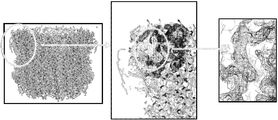
- V-161 and V-ATPase c-ring were co-crystallized and subjected to X-ray crystal structure analysis.
- V-ATPase derived from Enterococcus was expressed in recombinant Escherichia coli by the methods described in the above-mentioned Articles 1 and 2, and purified into a complex, and then the c-ring was isolated.
- the c-ring was prepared at 2 mg/mL, and V-161 was added at 500 ⁇ M. Crystallization was performed at 23° C. under conditions of 100 mM Tris-HCl pH 8.0, 220 mM sodium citrate, 32% PEG400.
- FIG. 4(a) the ribbon-like shape represents the c-ring helix, the stick-like shape around it represents lipid molecules and surfactant molecules, and the central particle represents sodium ion.
- FIG. 4B is an enlarged view of a portion surrounded by a square in FIG.
- FIG. 5 is an electron density map, in which the left side shows the entire structure of the c-ring, and the center and right sides show the structure in which the bonding positions of V-161 are sequentially enlarged. From these structures, it was found that V-161 interacts with the peripheral amino acid residue containing phenylalanine at the 52nd position of the c-ring and binds to the outer peripheral surface.
- V161 grows against pathogenic bacteria having V-ATPase similar to Enterococcus hirae, as in the above “(4) Growth experiment of enterococci” It was confirmed whether it showed inhibition.
- enterococcus faecalis Enterococcus faecium of vancomycin-resistant enterococci (VRE), and Clostridium difficile multidrug-resistant due to deterioration of intestinal environment were prepared.
- VRE is a medium of pH 7.0, pH 7.5, pH 8.0, C.I.
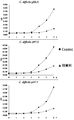
- the difficile was cultivated using a medium having pH 6.5, pH 7.0, and pH 7.5, and OD 600 was measured to confirm the difference in the number of bacteria. The results are shown in FIGS. 6 and 7.
- FIG. 6 shows the results of vancomycin-resistant enterococci (VRE). faecalis, the right side is E.
- VRE vancomycin-resistant enterococci
- faecalis the right side is E.
- This is the faecum data. From the top of this figure, the data are pH 7.0, pH 7.5, and pH 8.0. From this figure, it was found that the growth of all pathogenic bacteria was inhibited in a pH-dependent manner, and that V-161 had a specific growth inhibitory activity under alkaline conditions due to the activity inhibition of V-ATPase. Also, E. faecalis from E. It can be confirmed that faecum is strongly influenced by V-161.
- FIG. 7 is data of pathogenic Clostridium bacteria. From the top of this figure, the data are pH 6.5, pH 7.0, and pH 7.5.
- V-161 Confirmation of action conditions of intestinal environment
- mice C57BL/6, 6 weeks old, body weight about 15 g.
- V-161 was suspended in 20 mM with Soybean PC and Meylon.
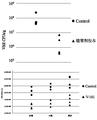
- 0.5 ml of each suspension was orally administered to 4 mice once daily, and after 5 days, the feces and intestinal contents were collected and the intestinal pH and sodium ion concentration were measured.
- the result is shown in FIG.
- the upper part of the figure shows the intestinal pH, and the lower part shows the sodium ion concentration.
- VRE in the small intestine was significantly decreased (97% decrease) when V-161 was added as compared with the control.
- VRE in the cecum, large intestine, and feces were all significantly reduced (about 50% reduction) when V-161 was added, as compared with the control. That is, it was found that V-161 exhibits a VRE growth inhibitory effect in the mouse intestine.
Landscapes
- Health & Medical Sciences (AREA)
- Chemical & Material Sciences (AREA)
- Life Sciences & Earth Sciences (AREA)
- General Health & Medical Sciences (AREA)
- Pharmacology & Pharmacy (AREA)
- Veterinary Medicine (AREA)
- Medicinal Chemistry (AREA)
- Public Health (AREA)
- Animal Behavior & Ethology (AREA)
- Epidemiology (AREA)
- Organic Chemistry (AREA)
- Engineering & Computer Science (AREA)
- Wood Science & Technology (AREA)
- Zoology (AREA)
- Proteomics, Peptides & Aminoacids (AREA)
- General Chemical & Material Sciences (AREA)
- Chemical Kinetics & Catalysis (AREA)
- Bioinformatics & Cheminformatics (AREA)
- Nuclear Medicine, Radiotherapy & Molecular Imaging (AREA)
- General Engineering & Computer Science (AREA)
- Oncology (AREA)
- Biochemistry (AREA)
- Molecular Biology (AREA)
- Microbiology (AREA)
- Immunology (AREA)
- Biotechnology (AREA)
- Biophysics (AREA)
- Communicable Diseases (AREA)
- Genetics & Genomics (AREA)
- Analytical Chemistry (AREA)
- Physics & Mathematics (AREA)
- Toxicology (AREA)
- Pain & Pain Management (AREA)
- Pharmaceuticals Containing Other Organic And Inorganic Compounds (AREA)
- Acyclic And Carbocyclic Compounds In Medicinal Compositions (AREA)
- Micro-Organisms Or Cultivation Processes Thereof (AREA)
- Enzymes And Modification Thereof (AREA)
- Measuring Or Testing Involving Enzymes Or Micro-Organisms (AREA)
Abstract
Priority Applications (4)
| Application Number | Priority Date | Filing Date | Title |
|---|---|---|---|
| CN202080009151.7A CN113286582B (zh) | 2019-01-18 | 2020-01-15 | V-ATPase活性抑制剂、抗菌剂、药物以及抗菌方法和筛选方法 |
| US17/423,598 US12599588B2 (en) | 2019-01-18 | 2020-01-15 | Inhibitor for V-ATPase activity, antibacterial agent, medicine, antibacterial method and screening method |
| JP2020566425A JP7428387B2 (ja) | 2019-01-18 | 2020-01-15 | V-ATPase活性阻害剤、抗菌剤、医薬及び抗菌方法並びにスクリーニング方法 |
| JP2024005736A JP7709788B2 (ja) | 2019-01-18 | 2024-01-18 | V-ATPase活性阻害剤、抗菌剤、医薬及び抗菌方法並びにスクリーニング方法 |
Applications Claiming Priority (2)
| Application Number | Priority Date | Filing Date | Title |
|---|---|---|---|
| JP2019-006819 | 2019-01-18 | ||
| JP2019006819 | 2019-01-18 |
Publications (1)
| Publication Number | Publication Date |
|---|---|
| WO2020149295A1 true WO2020149295A1 (fr) | 2020-07-23 |
Family
ID=71613151
Family Applications (1)
| Application Number | Title | Priority Date | Filing Date |
|---|---|---|---|
| PCT/JP2020/001047 Ceased WO2020149295A1 (fr) | 2019-01-18 | 2020-01-15 | Inhibiteur de l'activité de la v-atpase, agent antibactérien, médicament, procédé antibactérien et procédé de criblage |
Country Status (4)
| Country | Link |
|---|---|
| US (1) | US12599588B2 (fr) |
| JP (2) | JP7428387B2 (fr) |
| CN (1) | CN113286582B (fr) |
| WO (1) | WO2020149295A1 (fr) |
Cited By (4)
| Publication number | Priority date | Publication date | Assignee | Title |
|---|---|---|---|---|
| JP2022054403A (ja) * | 2020-09-25 | 2022-04-06 | ライオン株式会社 | 腸内環境改善剤 |
| WO2022088091A1 (fr) * | 2020-10-26 | 2022-05-05 | 江西施美药业股份有限公司 | Dérivé de bakuchiol, son sel pharmaceutiquement acceptable, procédé de préparation correspondant et utilisation associée |
| WO2024154719A1 (fr) | 2023-01-16 | 2024-07-25 | 国立研究開発法人科学技術振興機構 | Composition antibactérienne, agent pharmaceutique et méthode antibactérienne |
| CN119220579A (zh) * | 2024-10-11 | 2024-12-31 | 江西农业大学 | 一种抑制瓦螨寄生的生物防治方法 |
Families Citing this family (1)
| Publication number | Priority date | Publication date | Assignee | Title |
|---|---|---|---|---|
| US12162845B1 (en) * | 2023-11-02 | 2024-12-10 | King Faisal University | 3-(4-bromophenyl)-5-((2-isopropyl-5-methylphenoxy)methyl)-1,2,4-oxadiazole as an anti-cancer and antimicrobial compound |
Citations (3)
| Publication number | Priority date | Publication date | Assignee | Title |
|---|---|---|---|---|
| JPH08502725A (ja) * | 1992-08-12 | 1996-03-26 | ビオチーネ エセ.ピー.アー. | 液胞型h▲上+▼atpアーゼのインヒビターの使用 |
| WO2014138833A1 (fr) * | 2013-03-13 | 2014-09-18 | União Brasileira De Educação E Assistência , Mantenedora Da Pucrs | Composés, utilisation, composition pharmaceutique inhibitrice de réductase dans des micro-organismes, ligand d'inha et procédé d'obtention de ligands d'inha |
| US20170210741A1 (en) * | 2016-01-27 | 2017-07-27 | Southern Research Institute | Benzimidazole Compounds, Use As Inhibitors of WNT Signaling Pathway in Cancers, and Methods for Preparation Thereof |
Family Cites Families (3)
| Publication number | Priority date | Publication date | Assignee | Title |
|---|---|---|---|---|
| HUT67314A (en) | 1993-04-09 | 1995-03-28 | Egyt Gyogyszervegyeszeti Gyar | Process for prepg. new trisubstituted cykloalkane deriv.s and pharmaceutical compn.s contg. them |
| US5942532A (en) | 1997-09-05 | 1999-08-24 | Ortho Pharmaceutical Corporation | 2-substituted phenyl-benzimidazole antibacterial agents |
| GB9914825D0 (en) * | 1999-06-24 | 1999-08-25 | Smithkline Beecham Spa | Novel compounds |
-
2020
- 2020-01-15 CN CN202080009151.7A patent/CN113286582B/zh active Active
- 2020-01-15 US US17/423,598 patent/US12599588B2/en active Active
- 2020-01-15 WO PCT/JP2020/001047 patent/WO2020149295A1/fr not_active Ceased
- 2020-01-15 JP JP2020566425A patent/JP7428387B2/ja active Active
-
2024
- 2024-01-18 JP JP2024005736A patent/JP7709788B2/ja active Active
Patent Citations (3)
| Publication number | Priority date | Publication date | Assignee | Title |
|---|---|---|---|---|
| JPH08502725A (ja) * | 1992-08-12 | 1996-03-26 | ビオチーネ エセ.ピー.アー. | 液胞型h▲上+▼atpアーゼのインヒビターの使用 |
| WO2014138833A1 (fr) * | 2013-03-13 | 2014-09-18 | União Brasileira De Educação E Assistência , Mantenedora Da Pucrs | Composés, utilisation, composition pharmaceutique inhibitrice de réductase dans des micro-organismes, ligand d'inha et procédé d'obtention de ligands d'inha |
| US20170210741A1 (en) * | 2016-01-27 | 2017-07-27 | Southern Research Institute | Benzimidazole Compounds, Use As Inhibitors of WNT Signaling Pathway in Cancers, and Methods for Preparation Thereof |
Non-Patent Citations (4)
| Title |
|---|
| KAKINUMA, YOSHIMI: "Genetic engineering study on the subunit structure of sodium transporting V-ATPase", GRANTS-IN-AID FOR SCIENTIFIC RESEARCH (GRANTS-IN-AID FOR SCIENTIFIC RESEARCH) RESEARCH RESULTS REPORT, JSPS, JP, no. 21570144, 30 November 2011 (2011-11-30), JP, pages 1 - 5, XP009551693 * |
| KOBAYASHI, HIROSHI: "Bacterial adaptation to change in environmental pH", JAPANESE JOURNAL OF BACTERIOLOGY, vol. 51, no. 3, 1996, pages 745 - 753, XP055726290 * |
| LACHANCE, C. ET AL.: "Deregulated balance of Omega- 6 and Omega-3 polyunsaturated fatty acids following infection by the zoonotic pathogen streptococcus suis", INFECTION AND IMMUNITY, vol. 82, no. 5, 2014, pages 1778 - 1785, XP055726285 * |
| PAULI, I. ET AL.: "Discovery of new inhibitors of mycobacterium tuberculosis InhA enzyme using virtual screening and a 3D-pharmacophore-based approach", JOURNAL OF CHEMICAL INFORMATION AND MODELING, vol. 53, no. 9, 2013, pages 2390 - 2401, XP055726283 * |
Cited By (11)
| Publication number | Priority date | Publication date | Assignee | Title |
|---|---|---|---|---|
| JP2022054403A (ja) * | 2020-09-25 | 2022-04-06 | ライオン株式会社 | 腸内環境改善剤 |
| JP7720734B2 (ja) | 2020-09-25 | 2025-08-08 | ライオン株式会社 | 腸内環境改善剤 |
| WO2022088091A1 (fr) * | 2020-10-26 | 2022-05-05 | 江西施美药业股份有限公司 | Dérivé de bakuchiol, son sel pharmaceutiquement acceptable, procédé de préparation correspondant et utilisation associée |
| KR20230082047A (ko) * | 2020-10-26 | 2023-06-08 | 지앙시 스메이 파마슈티컬 컴퍼니 리미티드 | 바쿠치올 유도체, 이의 약학적으로 허용 가능한 염 및 이의 제조 방법과 응용 |
| JP2023544643A (ja) * | 2020-10-26 | 2023-10-24 | 江西施美薬業股▲分▼有限公司 | バクチオ-ル誘導体、その薬学的に許容される塩及びその調製方法並びに用途 |
| KR102630858B1 (ko) | 2020-10-26 | 2024-01-31 | 지앙시 스메이 파마슈티컬 컴퍼니 리미티드 | 바쿠치올 유도체, 이의 약학적으로 허용 가능한 염 및 이의 제조 방법과 응용 |
| US11912650B2 (en) | 2020-10-26 | 2024-02-27 | Jiangxi Shimei Pharmaceutical Co., Ltd | Bakuchiol derivatives, pharmaceutically acceptable salts thereof, and preparation method and use of the same |
| JP7469567B2 (ja) | 2020-10-26 | 2024-04-16 | 江西施美薬業股▲分▼有限公司 | バクチオ-ル誘導体、その薬学的に許容される塩及びその調製方法並びに用途 |
| WO2024154719A1 (fr) | 2023-01-16 | 2024-07-25 | 国立研究開発法人科学技術振興機構 | Composition antibactérienne, agent pharmaceutique et méthode antibactérienne |
| EP4652995A1 (fr) | 2023-01-16 | 2025-11-26 | Japan Science and Technology Agency | Composition antibactérienne, agent pharmaceutique et méthode antibactérienne |
| CN119220579A (zh) * | 2024-10-11 | 2024-12-31 | 江西农业大学 | 一种抑制瓦螨寄生的生物防治方法 |
Also Published As
| Publication number | Publication date |
|---|---|
| CN113286582B (zh) | 2025-01-10 |
| JP7428387B2 (ja) | 2024-02-06 |
| US12599588B2 (en) | 2026-04-14 |
| CN113286582A (zh) | 2021-08-20 |
| JP2024041962A (ja) | 2024-03-27 |
| JP7709788B2 (ja) | 2025-07-17 |
| JPWO2020149295A1 (fr) | 2020-07-23 |
| US20220105076A1 (en) | 2022-04-07 |
Similar Documents
| Publication | Publication Date | Title |
|---|---|---|
| JP7709788B2 (ja) | V-ATPase活性阻害剤、抗菌剤、医薬及び抗菌方法並びにスクリーニング方法 | |
| US10494332B2 (en) | Protein tyrosine phosphatases or SHP2 inhibitors and uses thereof | |
| US20120264760A1 (en) | Compounds and Methods for Treating Mammalian Gastrointestinal Parasitic Infections | |
| EP1135132A2 (fr) | Inhibiteurs de proteines servant a transporter plusieurs medicaments | |
| RS63534B1 (sr) | Farmaceutske kombinacije koje sadrže inhibitor histon deacetilaze i inhibitor bcl-2 i postupci za njihovu upotrebu | |
| US20240197678A1 (en) | Inhibitors of the peptidyl-prolyl cis/trans isomerase (pin1) and uses thereof | |
| CN106957315B (zh) | N-取代苯磺酰基-氮杂吲哚氧基苯甲酰胺类化合物及其制备药物的用途 | |
| WO2011138142A1 (fr) | Compositions et utilisation de sulfasalazine | |
| EP3522927B1 (fr) | Procédés d'inhibition de la conversion de choline en triméthylamine (tma) | |
| US9956240B2 (en) | Therapeutic monosaccharide-based inhibitors of hexokinase and glucokinase for parasitic diseases, along with methods of their formation and use | |
| CN114025766A (zh) | 用于抑制gapdh的噁噻嗪化合物 | |
| JP7827801B2 (ja) | コハク酸プロドラッグ、コハク酸プロドラッグを含有する組成物、及びその使用 | |
| JP2016510749A (ja) | キナゾリノン抗生物質 | |
| JP2023536666A (ja) | 生物学的老化の減速又は防止のためのサイクリン依存性キナーゼ(cdk)阻害剤の使用 | |
| EP3522878B1 (fr) | Procédés d'inhibition de la conversion de choline en triméthylamine (tma) | |
| ES2659953T3 (es) | Compuestos antibacterianos | |
| EP3522876B1 (fr) | Procédés d'inhibition de la conversion de choline en triméthylamine (tma) | |
| Bicknell et al. | Increased thermal stability and retained antibacterial properties in a sulbactam and amantadine salt: towards effective antibacterial–antiviral combination therapies | |
| US12006297B2 (en) | Antibacterial activity of functionalized dihydropyrimidines | |
| CN102006866B (zh) | 激酶蛋白结合抑制剂 | |
| WO2004103281A2 (fr) | Antagonistes de recepteurs de vanilloides et procedes de fabrication et d'utilisation correspondants | |
| EP4719382A1 (fr) | Inhibiteurs de la méthionyl-arnt synthétase de type 1 et leurs méthodes d'utilisation | |
| Sahu et al. | CHEMISTRY, BIOLOGICAL PROPERTIES AND ANALYTICAL METHODS FOR ESTIMATION OF PROBENECID: AN UPDATED REVIEW | |
| WO2018203564A1 (fr) | Analogue de liphagal et inhibiteur de kinase multi-cible contenant du liphagal ou un analogue de celui-ci |
Legal Events
| Date | Code | Title | Description |
|---|---|---|---|
| 121 | Ep: the epo has been informed by wipo that ep was designated in this application |
Ref document number: 20741882 Country of ref document: EP Kind code of ref document: A1 |
|
| ENP | Entry into the national phase |
Ref document number: 2020566425 Country of ref document: JP Kind code of ref document: A |
|
| NENP | Non-entry into the national phase |
Ref country code: DE |
|
| 122 | Ep: pct application non-entry in european phase |
Ref document number: 20741882 Country of ref document: EP Kind code of ref document: A1 |
|
| WWG | Wipo information: grant in national office |
Ref document number: 202080009151.7 Country of ref document: CN |