WO2020158697A1 - 皮膚貼付材 - Google Patents
皮膚貼付材 Download PDFInfo
- Publication number
- WO2020158697A1 WO2020158697A1 PCT/JP2020/002878 JP2020002878W WO2020158697A1 WO 2020158697 A1 WO2020158697 A1 WO 2020158697A1 JP 2020002878 W JP2020002878 W JP 2020002878W WO 2020158697 A1 WO2020158697 A1 WO 2020158697A1
- Authority
- WO
- WIPO (PCT)
- Prior art keywords
- adhesive layer
- skin
- skin patch
- base material
- pressure
- Prior art date
- Legal status (The legal status is an assumption and is not a legal conclusion. Google has not performed a legal analysis and makes no representation as to the accuracy of the status listed.)
- Ceased
Links
Images

Classifications
-
- A—HUMAN NECESSITIES
- A61—MEDICAL OR VETERINARY SCIENCE; HYGIENE
- A61F—FILTERS IMPLANTABLE INTO BLOOD VESSELS; PROSTHESES; DEVICES PROVIDING PATENCY TO, OR PREVENTING COLLAPSING OF, TUBULAR STRUCTURES OF THE BODY, e.g. STENTS; ORTHOPAEDIC, NURSING OR CONTRACEPTIVE DEVICES; FOMENTATION; TREATMENT OR PROTECTION OF EYES OR EARS; BANDAGES, DRESSINGS OR ABSORBENT PADS; FIRST-AID KITS
- A61F13/00—Bandages or dressings; Absorbent pads
- A61F13/02—Adhesive bandages or dressings
- A61F13/0246—Adhesive bandages or dressings characterised by the skin-adhering layer
- A61F13/0253—Adhesive bandages or dressings characterised by the skin-adhering layer characterized by the adhesive material
-
- A—HUMAN NECESSITIES
- A61—MEDICAL OR VETERINARY SCIENCE; HYGIENE
- A61F—FILTERS IMPLANTABLE INTO BLOOD VESSELS; PROSTHESES; DEVICES PROVIDING PATENCY TO, OR PREVENTING COLLAPSING OF, TUBULAR STRUCTURES OF THE BODY, e.g. STENTS; ORTHOPAEDIC, NURSING OR CONTRACEPTIVE DEVICES; FOMENTATION; TREATMENT OR PROTECTION OF EYES OR EARS; BANDAGES, DRESSINGS OR ABSORBENT PADS; FIRST-AID KITS
- A61F13/00—Bandages or dressings; Absorbent pads
- A61F13/02—Adhesive bandages or dressings
- A61F13/0246—Adhesive bandages or dressings characterised by the skin-adhering layer
- A61F13/025—Adhesive bandages or dressings characterised by the skin-adhering layer having a special distribution arrangement of the adhesive
-
- A—HUMAN NECESSITIES
- A61—MEDICAL OR VETERINARY SCIENCE; HYGIENE
- A61L—METHODS OR APPARATUS FOR STERILISING MATERIALS OR OBJECTS IN GENERAL; DISINFECTION, STERILISATION OR DEODORISATION OF AIR; CHEMICAL ASPECTS OF BANDAGES, DRESSINGS, ABSORBENT PADS OR SURGICAL ARTICLES; MATERIALS FOR BANDAGES, DRESSINGS, ABSORBENT PADS OR SURGICAL ARTICLES
- A61L24/00—Surgical adhesives or cements; Adhesives for colostomy devices
- A61L24/001—Use of materials characterised by their function or physical properties
- A61L24/0036—Porous materials, e.g. foams or sponges
-
- A—HUMAN NECESSITIES
- A61—MEDICAL OR VETERINARY SCIENCE; HYGIENE
- A61L—METHODS OR APPARATUS FOR STERILISING MATERIALS OR OBJECTS IN GENERAL; DISINFECTION, STERILISATION OR DEODORISATION OF AIR; CHEMICAL ASPECTS OF BANDAGES, DRESSINGS, ABSORBENT PADS OR SURGICAL ARTICLES; MATERIALS FOR BANDAGES, DRESSINGS, ABSORBENT PADS OR SURGICAL ARTICLES
- A61L24/00—Surgical adhesives or cements; Adhesives for colostomy devices
- A61L24/04—Surgical adhesives or cements; Adhesives for colostomy devices containing macromolecular materials
- A61L24/06—Surgical adhesives or cements; Adhesives for colostomy devices containing macromolecular materials obtained by reactions only involving carbon-to-carbon unsaturated bonds
-
- C—CHEMISTRY; METALLURGY
- C09—DYES; PAINTS; POLISHES; NATURAL RESINS; ADHESIVES; COMPOSITIONS NOT OTHERWISE PROVIDED FOR; APPLICATIONS OF MATERIALS NOT OTHERWISE PROVIDED FOR
- C09J—ADHESIVES; NON-MECHANICAL ASPECTS OF ADHESIVE PROCESSES IN GENERAL; ADHESIVE PROCESSES NOT PROVIDED FOR ELSEWHERE; USE OF MATERIALS AS ADHESIVES
- C09J133/00—Adhesives based on homopolymers or copolymers of compounds having one or more unsaturated aliphatic radicals, each having only one carbon-to-carbon double bond, and at least one being terminated by only one carboxyl radical, or of salts, anhydrides, esters, amides, imides, or nitriles thereof; Adhesives based on derivatives of such polymers
- C09J133/04—Homopolymers or copolymers of esters
- C09J133/06—Homopolymers or copolymers of esters of esters containing only carbon, hydrogen and oxygen, the oxygen atom being present only as part of the carboxyl radical
- C09J133/10—Homopolymers or copolymers of methacrylic acid esters
-
- C—CHEMISTRY; METALLURGY
- C09—DYES; PAINTS; POLISHES; NATURAL RESINS; ADHESIVES; COMPOSITIONS NOT OTHERWISE PROVIDED FOR; APPLICATIONS OF MATERIALS NOT OTHERWISE PROVIDED FOR
- C09J—ADHESIVES; NON-MECHANICAL ASPECTS OF ADHESIVE PROCESSES IN GENERAL; ADHESIVE PROCESSES NOT PROVIDED FOR ELSEWHERE; USE OF MATERIALS AS ADHESIVES
- C09J7/00—Adhesives in the form of films or foils
- C09J7/20—Adhesives in the form of films or foils characterised by their carriers
- C09J7/22—Plastics; Metallised plastics
- C09J7/26—Porous or cellular plastics
-
- C—CHEMISTRY; METALLURGY
- C09—DYES; PAINTS; POLISHES; NATURAL RESINS; ADHESIVES; COMPOSITIONS NOT OTHERWISE PROVIDED FOR; APPLICATIONS OF MATERIALS NOT OTHERWISE PROVIDED FOR
- C09J—ADHESIVES; NON-MECHANICAL ASPECTS OF ADHESIVE PROCESSES IN GENERAL; ADHESIVE PROCESSES NOT PROVIDED FOR ELSEWHERE; USE OF MATERIALS AS ADHESIVES
- C09J2301/00—Additional features of adhesives in the form of films or foils
- C09J2301/30—Additional features of adhesives in the form of films or foils characterized by the chemical, physicochemical or physical properties of the adhesive or the carrier
- C09J2301/302—Additional features of adhesives in the form of films or foils characterized by the chemical, physicochemical or physical properties of the adhesive or the carrier the adhesive being pressure-sensitive, i.e. tacky at temperatures inferior to 30°C
-
- C—CHEMISTRY; METALLURGY
- C09—DYES; PAINTS; POLISHES; NATURAL RESINS; ADHESIVES; COMPOSITIONS NOT OTHERWISE PROVIDED FOR; APPLICATIONS OF MATERIALS NOT OTHERWISE PROVIDED FOR
- C09J—ADHESIVES; NON-MECHANICAL ASPECTS OF ADHESIVE PROCESSES IN GENERAL; ADHESIVE PROCESSES NOT PROVIDED FOR ELSEWHERE; USE OF MATERIALS AS ADHESIVES
- C09J2301/00—Additional features of adhesives in the form of films or foils
- C09J2301/30—Additional features of adhesives in the form of films or foils characterized by the chemical, physicochemical or physical properties of the adhesive or the carrier
- C09J2301/312—Additional features of adhesives in the form of films or foils characterized by the chemical, physicochemical or physical properties of the adhesive or the carrier parameters being the characterizing feature
-
- C—CHEMISTRY; METALLURGY
- C09—DYES; PAINTS; POLISHES; NATURAL RESINS; ADHESIVES; COMPOSITIONS NOT OTHERWISE PROVIDED FOR; APPLICATIONS OF MATERIALS NOT OTHERWISE PROVIDED FOR
- C09J—ADHESIVES; NON-MECHANICAL ASPECTS OF ADHESIVE PROCESSES IN GENERAL; ADHESIVE PROCESSES NOT PROVIDED FOR ELSEWHERE; USE OF MATERIALS AS ADHESIVES
- C09J2400/00—Presence of inorganic and organic materials
- C09J2400/20—Presence of organic materials
- C09J2400/24—Presence of a foam
- C09J2400/243—Presence of a foam in the substrate
-
- C—CHEMISTRY; METALLURGY
- C09—DYES; PAINTS; POLISHES; NATURAL RESINS; ADHESIVES; COMPOSITIONS NOT OTHERWISE PROVIDED FOR; APPLICATIONS OF MATERIALS NOT OTHERWISE PROVIDED FOR
- C09J—ADHESIVES; NON-MECHANICAL ASPECTS OF ADHESIVE PROCESSES IN GENERAL; ADHESIVE PROCESSES NOT PROVIDED FOR ELSEWHERE; USE OF MATERIALS AS ADHESIVES
- C09J2433/00—Presence of (meth)acrylic polymer
Definitions
- the present invention relates to a skin patch.
- a device worn on the user's body.
- the wearable device has various uses, and examples thereof include measurement of information such as a user's blood glucose level, electrocardiography, myoelectricity, and body temperature.
- Patent Document 1 discloses a device for heart monitoring, which is used by being worn on the skin. For sticking such a device, an adhesive tape-like skin patch may be used.
- the contact surface between the skin and the skin patch becomes damp due to moisture such as sweat, and the adhesive property deteriorates and peels off, discomfort occurs, and sometimes itching or Skin irritation such as inflammation may occur.
- the presence of the wearable device limits the water vapor permeability of the base material surface of the skin patch, so that the skin surface The stuffiness is more likely to occur, and the decrease in adhesiveness, discomfort, and skin irritation are more pronounced.
- the wearable device and skin patch may not follow the expansion and contraction of the skin, and may peel off or feel discomfort (tension) or pain.
- the present invention has been made in view of the above, and an object of the present invention is to provide a skin patch that has less skin irritation, is less likely to peel off, and has less discomfort during application.
- the skin patch of the present invention which solves the above-mentioned problems, is a skin patch having a base material and an adhesive layer, wherein the base material has open cells and the foam rate is 70% or more. It is made of a sheet, and the pressure-sensitive adhesive layer is partially formed on one surface of the substrate. In one aspect of the skin patch of the present invention, another pressure-sensitive adhesive layer may be further provided on the surface of the substrate opposite to the surface having the pressure-sensitive adhesive layer. In one aspect of the skin patch of the present invention, the adhesive layer may be formed in a dot shape, a grid shape, a linear shape, or a wavy line shape. In one aspect of the skin patch of the present invention, the pressure-sensitive adhesive layer may contain an acrylic copolymer.
- the acrylic copolymer is obtained by copolymerizing a monomer mixture containing a (meth)acrylic acid alkyl ester monomer and an alkoxy group-containing ethylenically unsaturated monomer. It may be an acrylic copolymer obtained by the above.
- the foam sheet may have a foam ratio of 70 to 98.5%.
- a skin patch which has less skin irritation, is less likely to peel off, and has suppressed discomfort during application.
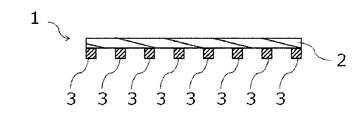
- FIG. 1 is a schematic side view of a skin patch.
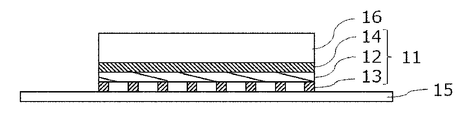
- FIG. 2 is a schematic diagram showing a state in which a wearable device is attached to the skin using a skin patch having adhesive surfaces on both sides.
- FIG. 3 is a schematic diagram showing a state in which a wearable device is attached to the skin using a skin patch having only one surface as an adhesive surface.
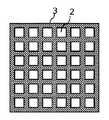
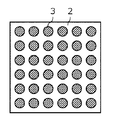
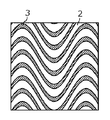
- FIG. 4 is a plan view showing an example of the shape of the adhesive layer.
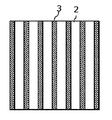
- FIG. 5 is a plan view showing an example of the shape of the adhesive layer.
- FIG. 6 is a plan view showing an example of the shape of the adhesive layer.
- FIG. 7 is a plan view showing an example of the shape of the adhesive layer.
- FIG. 1 A schematic side view of the skin patch according to one aspect of the present embodiment is shown in FIG.
- the skin patch 1 of this embodiment is a skin patch having a base material (support) 2 and an adhesive layer 3.
- the base material 2 has open cells and is made of a foamed sheet having a bubble rate of 70% or more.
- the open cells refer to, among the bubbles in the foam sheet, those that are connected to other bubbles.
- those that are not connected to other bubbles are called closed cells. All the bubbles included in the base material 2 do not have to be continuous cells. That is, the base material 2 may have a form having only open cells (open cell structure) or may have both open cells and closed cells (semi-open semi-closed cell structure).
- the pressure-sensitive adhesive layer 3 is partially formed on one surface of the base material 2.
- the surface of the base material 2 on which the partially formed pressure-sensitive adhesive layer 3 is provided is referred to as a “first surface”, and the surface opposite to the first surface is referred to as a “second surface”. It may be described as "face”.
- the skin patch 1 of this aspect is stuck to the skin via the pressure-sensitive adhesive layer 3. That is, the skin patch 1 of this aspect includes a portion where the pressure-sensitive adhesive layer 3 is not formed on the skin side surface.
- moisture such as sweat generated from the skin reaches the first surface of the base material 2 through a portion where the adhesive layer 3 is not formed, It can escape to the outside from the end surface and the second surface of the base material 2 through the inside of the open cells. That is, the skin patch 1 of this aspect has excellent moisture permeability. Therefore, the skin patch 1 of this aspect suppresses peeling, discomfort, and skin irritation due to moisture such as sweat.
- the foam rate of the base material (foam sheet) is 70% or more, preferably 80% or more, and more preferably 85% or more.
- the bubble ratio of the base material (foam sheet) is preferably 98.5% or less, and more preferably 97.5% or less.
- the base material 2 is made of a foam sheet, it has excellent stretchability. Therefore, peeling, discomfort (tightness), and skin irritation (pain) due to the expansion and contraction of the skin are suppressed.
- the skin patch of this embodiment may have an adhesive surface on only one side or both sides. That is, the skin patch of this embodiment includes only an adhesive layer (hereinafter, also referred to as “first adhesive layer”) partially formed on the first surface of the substrate as an adhesive layer. Alternatively, it may further include another pressure-sensitive adhesive layer formed on the second surface (hereinafter, also referred to as “second pressure-sensitive adhesive layer”). The second pressure-sensitive adhesive layer may be partially formed on the second surface of the base material, or may be formed on the entire second surface of the base material.
- a first pressure-sensitive adhesive layer 13 partially formed on the first surface of the substrate 12 as a pressure-sensitive adhesive layer and a second pressure-sensitive adhesive layer formed on the second surface.
- the schematic diagram showing the state which attached the wearable device 16 to the skin 15 using the skin patch 11 provided with the adhesive layer 14, ie, the skin patch 11 whose both surfaces are an adhesive surface.
- the wearable device 16 is attached to the skin using the skin adhesive material 11 having both adhesive surfaces, for example, the partially formed first adhesive layer 13 is attached to the skin 15, and the second adhesive is used.
- the agent layer 14 is attached to the wearable device 16.
- the wearable device 16 can be attached to the skin 15 while preventing peeling, suppressing discomfort and skin irritation, as described below. It is preferable because it can
- wearable devices do not have water permeability, so it is difficult for sweat generated directly under the wearable device to escape from the surface of the base material to the outside. Therefore, stuffiness on the skin surface becomes remarkable, which causes peeling, discomfort, and skin irritation.
- the wearable device 16 is attached using the skin patch 11 of the present embodiment as shown in FIG. 2, the sweat generated immediately below the wearable device 16 also has a portion where the first adhesive layer 13 is not formed. Since it becomes easy to escape from the end surface of the base material 12 to the outside through the open cells in the foam sheet forming the base material 12, peeling by sweat, discomfort, and skin irritation are unlikely to occur.
- wearable devices are usually hard, they cannot expand and contract following the expansion and contraction of the skin, and it is difficult to control the peeling, tightness, and pain that result from this.
- the wearable device 16 is attached using the skin patch 11 of this aspect as shown in FIG. 2, the base material 12 having excellent cushioning properties is present between the skin 15 and the wearable device 16. .. Therefore, it is possible to relieve the stress caused by the difference in stretchability between the skin 15 and the wearable device 16, and it is possible to suppress the peeling, tightness, and pain caused by this.
- a wearable device when a wearable device is covered with a skin patch using a conventional skin patch and is attached to the skin, the wearable device is pressed against the skin and comes into direct contact with the skin. Skin irritation occurs.
- the wearable device 16 when the wearable device 16 is attached using the skin patch 11 of the present embodiment as shown in FIG. 2, the wearable device 16 comes into contact with the skin 15 via the base material 12 having excellent cushioning properties, and Since it is not pressed against the skin 15, skin irritation is unlikely to occur.
- the wearable device 26 is attached using the skin patch 21 having only one surface as an adhesive surface, that is, the skin patch 21 having no second adhesive layer, as shown in FIG. It is preferable that the adhesive layer 23 is attached to the skin 25, and the wearable device 26 is attached to the second surface of the base material 22 using an adhesive, a double-sided adhesive tape or the like (not shown). By mounting in this way, it is possible to achieve the same effect as in the case of using the skin patch having both adhesive surfaces as described above.
- the application of the skin patch of this embodiment is not limited to this.
- it may be attached to the skin by covering the wearable device with the skin patch of the present embodiment, or the skin patch of the present embodiment can be used to protect a wound like a bandage, or a surgical tape. It can also be used to fix a bandage, gauze, etc. to the affected area.
- the thickness of the base material is preferably large in order to improve the cushioning property of the base material and to facilitate the escape of water from the end surface of the base material. Therefore, the thickness of the base material (foam sheet) is preferably 0.100 mm or more, more preferably 0.150 mm or more, still more preferably 0.200 mm or more. On the other hand, if the base material is too thick, the base material may be easily cracked or misaligned. Therefore, the thickness of the base material (foam sheet) is preferably 3.000 mm or less, more preferably 2.000 mm or less, and further preferably 1.000 mm or less.
- the density of the base material is preferably low. Therefore, the density of the base material (foam sheet) is preferably 0.5 g / cm 3 or less, more preferably 0.4g / cm 3, 0.35g / cm 3 or less is more preferable. On the other hand, from the viewpoint of ensuring the strength of the skin patch, the density of the base material is preferably not too low. Therefore, the density of the base material (foam sheet) is preferably 0.15 g/cm 3 or more, more preferably 0.2 g/cm 3 or more, still more preferably 0.25 g/cm 3 or more.
- the stretchability of the substrate can be evaluated by various methods. For example, it can be evaluated by using the breaking strength and breaking elongation measured by the method described in the Example section.
- the base material has a breaking strength of preferably 20 N/20 mm or less, more preferably 10 N/20 mm or less, further preferably 5 N/20 mm or less, and a breaking elongation. Is preferably 100% or more, more preferably 200% or more, still more preferably 250% or more.
- the material of the base material is not particularly limited, but is, for example, an amorphous cross-linking type such as polyurethane, polyolefin (polyethylene, polypropylene, and copolymers thereof), silicone, acrylic, Examples thereof include rubber, and synthetic rubber (SBR) and polyurethane are particularly preferable.
- the method for producing the base material is not particularly limited, and can be appropriately produced by a known method.
- the pressure-sensitive adhesive layer 3 need only be partially formed on one surface of the base material 2, and the shape thereof is not particularly limited, but for example, a lattice shape, a linear shape (straight line shape, wavy line shape, etc.), It may have a predetermined pattern shape such as a dot shape (dot shape or island shape).
- 4 to 7 show configuration examples of the adhesive layer 3.
- the pressure-sensitive adhesive layer 3 may be formed on the base material 2 in a lattice shape as shown in FIG. 4, or may be formed in a linear shape as shown in FIG. 5, and as shown in FIG. It may be formed in a dot shape, or may be formed in a wavy line shape as shown in FIG. 7.
- the cross-sectional area of the pattern shape does not change with time due to the sticking time, and the adhesiveness on the cut surface is different even if the cut location or direction is different.
- the wavy structure is particularly preferable because the ratio of the area occupied by the agent layer 3 is unlikely to change.
- the ratio of the area occupied by the pressure-sensitive adhesive layer 3 on the cut surface does not change easily, the adhesive strength near the cut portion (the end of the skin patch 1) does not easily change, and the occurrence of peeling from the end is stabilized. Can be suppressed.
- the wavy line shape may be a sine curve, a pseudo sine curve, a triangular wave, an arc wave, or the like, which is symmetrically formed on both sides of the baseline, and only one side of the baseline has an arc, a triangle, an ellipse, or It may be a wavy line that advances in other shapes.
- the line width of the pattern shape, the interval (pitch) between the lines, the amplitude, the period and the like can be appropriately set according to the purpose of use. Note that the above is merely an example, and the configuration of the pressure-sensitive adhesive layer 3 is not limited to these.
- skin adhesive such as acrylic adhesive, rubber adhesive, urethane adhesive, silicone adhesive, etc.
- skin adhesive such as acrylic adhesive, rubber adhesive, urethane adhesive, silicone adhesive, etc.
- Known pressure-sensitive adhesives can be used without particular limitation.
- a pressure-sensitive adhesive containing an acrylic copolymer, that is, an acrylic pressure-sensitive adhesive is preferable because it is easy to adjust the skin adhesive force and has little skin irritation.
- the acrylic copolymer is not particularly limited, for example, an acrylic obtained from a monomer mixture containing a (meth)acrylic acid alkyl ester monomer and an alkoxy group-containing ethylenically unsaturated monomer It is preferable to use a system copolymer.
- the (meth)acrylic acid alkyl ester monomer is a main component that imparts good adhesiveness to the skin in the pressure-sensitive adhesive layer, and particularly has a long chain of 6 to 18 carbon atoms in the alkyl group, and further has 6 to 18 carbon atoms. It is effective to use an alkyl group.
- the (meth)acrylic acid alkyl ester monomer has an advantage that it is relatively less irritating to the skin and the adhesive strength is less likely to decrease even after long-term use.
- (meth)acrylic acid alkyl ester monomer for example, butyl ester, propyl ester, octyl ester, nonyl ester, decyl ester, dodecyl ester, lauryl ester, etc. of acrylic acid or methacrylic acid may be used alone or in combination. The above can be used in combination. Incidentally, these alkyl ester chains may be linear or branched.
- the alkoxy group-containing ethylenically unsaturated monomer is a component that imparts water vapor permeability, so-called moisture permeability, to the acrylic copolymer.
- Such an alkoxy group-containing ethylenically unsaturated monomer is not particularly limited, but, for example, methoxy polyethylene glycol acrylate, ethoxydiethylene glycol acrylate, butoxydiethylene glycol acrylate, methoxyethyl acrylate, ethoxyethyl acrylate, butoxyethyl acrylate, etc. It is preferably an alkoxyalkyl acrylate having 1 to 4 alkoxy groups.
- the acrylic copolymer is preferably an acrylic copolymer obtained from a monomer mixture containing a carboxyl group-containing ethylenically unsaturated monomer.
- the carboxyl group-containing ethylenically unsaturated monomer is a component that improves the cohesive force of the resulting copolymer and is useful in adjusting the properties of the pressure-sensitive adhesive layer.
- Representative examples of such monomers include acrylic acid, itaconic acid, crotonic acid, fumaric acid, (anhydrous) maleic acid, and the like. Of these, acrylic acid is a preferable monomer in terms of copolymerizability and handleability.
- the acrylic copolymer constituting the pressure-sensitive adhesive is preferably one obtained by copolymerizing the (meth)acrylic acid alkyl ester monomer and the alkoxy group-containing ethylenically unsaturated monomer. More preferably, it is obtained by copolymerizing the (meth)acrylic acid alkyl ester monomer, the alkoxy group-containing ethylenically unsaturated monomer, and the carboxyl group-containing ethylenically unsaturated monomer.
- acrylic copolymers include styrene, vinyl acetate, N-vinyl-2-pyrrolidone, etc. as modifying monomers for various modifications such as imparting hydrophilicity.
- the above monomer may be appropriately copolymerized, if necessary.
- the content of the (meth)acrylic acid alkyl ester monomer in the acrylic copolymer is preferably 40% by mass to 80% by mass, more preferably 50% by mass to 75% by mass.
- the content of the (meth)acrylic acid alkyl ester monomer is within the above range, it has good skin-adhesiveness and does not cause adhesive residue phenomenon on the skin when peeled from the skin. It has excellent peelability.
- the content of the alkoxy group-containing ethylenically unsaturated monomer in the acrylic copolymer is preferably 10% by mass to 60% by mass, more preferably 20% by mass to 60% by mass, further preferably 25% by mass. It is up to 50% by mass.
- the content of the alkoxy group-containing ethylenically unsaturated monomer is within the above range, it is possible to impart excellent moisture permeability to the pressure-sensitive adhesive layer.
- the content of the above-mentioned alkoxy group-containing ethylenically unsaturated monomer is preferably 10% by mass to 50% by mass, more preferably 20% by mass. It is up to 45% by mass.
- the content of the carboxyl group-containing ethylenically unsaturated monomer is preferably 1% by mass to 10% by mass, more preferably 3% by mass to 8% by mass.
- the content of the carboxyl group-containing ethylenically unsaturated monomer is within the above range, it is possible to impart excellent cohesive force to the pressure-sensitive adhesive layer, suppress the adhesive residue phenomenon, etc. Can also be suppressed.
- the weight average molecular weight of the soluble component in the solvent for measuring the molecular weight of the acrylic copolymer is preferably 500,000 to 2,500,000, more preferably about 600,000 to 2,000,000.
- the weight average molecular weight is a value measured using gel permeation chromatography (GPC), and a measurement sample is dissolved in tetrahydrofuran and a soluble component that passes through a 0.45 ⁇ m ⁇ membrane filter is used. Calculated in terms of polystyrene.
- the pressure-sensitive adhesive layer (first pressure-sensitive adhesive layer) attached to the skin preferably contains a liquid or paste component at room temperature (25° C.).
- the liquid or paste component at room temperature is a component that imparts flexibility to the pressure-sensitive adhesive layer and suppresses skin irritation when the pressure-sensitive adhesive comes into contact with the skin.
- the liquid or paste component at room temperature is not particularly limited as long as it is compatible with the acrylic copolymer.
- phthalic acid, maleic acid, adipic acid, stearic acid, esters of various fatty acids and alkyl alcohols, esters of polyhydric alcohols such as ethylene glycol, glycerin, and sorbitan can be used.
- monohydric alcohol esters include dibutyl phthalate, di-2-ethylhexyl phthalate, dibutyl adipate, di-2-ethylhexyl sebacate, dibutyl maleate, ethyl myristate, isopropyl myristate, palmitic acid.
- dihydric or higher alcohol esters examples include propylene glycol dicaprylate, propylene glycol dicaprate, propylene glycol diisostearate, glyceryl monocaprylate, glyceryl tricaprylate, glyceryl tri-2-ethylhexanoate, glyceryl tricaprate, and trilaurin.
- Glyceryl acid salt, glyceryl triisostearate, glyceryl trioleate, sorbitan trioleate, trimethylolpropane tri-2-ethylhexanoate and the like can be used alone or in combination of two or more.
- the liquid or pasty component at room temperature is preferably a carboxylic acid ester, more preferably a glycerin fatty acid ester, and even more preferably a glycerin ester of a saturated fatty acid.
- examples of the above fatty acids include saturated fatty acids such as caprylic acid, capric acid, and 2-ethylhexylic acid, and these can be used alone or in combination of two or more. Since these saturated fatty acids have no unsaturated double bond, oxidative deterioration of the pressure-sensitive adhesive, that is, the pressure-sensitive adhesive layer can be prevented.
- glyceryl tricaprylate When the above-mentioned caprylic acid or the like is used as the saturated fatty acid, glyceryl tricaprylate, glyceryl tricaprate, and glyceryl tri-2-ethylhexanoate are obtained as esters of various saturated fatty acids and alcohols.
- carboxylic acid esters glyceryl tricaprylate is particularly preferably used from the viewpoint of compatibility with the acrylic copolymer.
- the content of the liquid or paste component at room temperature is preferably, for example, 10 parts by mass to 100 parts by mass with respect to 100 parts by mass of the acrylic copolymer.
- the content of the component is in the above range, sufficient flexibility can be imparted to the pressure-sensitive adhesive layer, so that the adhesive layer has good skin adhesiveness and physical properties when peeling the patch from the skin. It is possible to suppress skin irritation and realize good peelability.
- the pressure-sensitive adhesive layer (first pressure-sensitive adhesive layer) attached to the skin preferably further contains a tackifier in order to improve the adhesive strength to the skin.
- a rosin type, a terpene type, etc. can be used for such a tackifier.
- the softening point of the tackifier is preferably 60°C or higher, more preferably 80°C or higher, and even more preferably 100°C or higher.
- the content of the tackifier is, for example, preferably 5 parts by mass to 50 parts by mass, more preferably 5 parts by mass to 30 parts by mass, based on 100 parts by mass of the acrylic copolymer. It is more preferably 5 parts by mass to 20 parts by mass.
- plasticizers and softeners, fillers, stabilizers, and the like may be added as necessary within the scope of the object of the present invention. You may mix
- the pressure-sensitive adhesive layer (first pressure-sensitive adhesive layer) attached to the skin is subjected to a crosslinking treatment in order to impart an appropriate cohesive force.
- the cross-linking treatment includes physical cross-linking by irradiation with ionizing radiation such as electron beam, ⁇ -ray and X-ray, and chemical cross-linking by a cross-linking agent. It is preferable to perform a chemical crosslinking treatment with an agent.
- the crosslinking treatment is performed by adding a crosslinking agent to a pressure-sensitive adhesive composition containing a material forming the pressure-sensitive adhesive layer and heating the composition.
- a crosslinking agent an isocyanate-based crosslinking agent, a peroxide-based crosslinking agent, a metal chelate-based crosslinking agent, or the like used in the crosslinking treatment can be used.
- the pressure-sensitive adhesive layer subjected to the cross-linking treatment as described above maintains a balance between appropriate skin adhesiveness and cohesiveness depending on the degree of cross-linking, but the molecular weight and molecular weight distribution of the acrylic copolymer are also these. It affects the adjustment.
- the pressure-sensitive adhesive layer (first pressure-sensitive adhesive layer) attached to the skin is preferably thick from the viewpoint of improving the adhesive force, but if it is too thick, the end portion will be small when it is attached to the skin. It may be easily caught and peeled off, the adhesive layer may stick out from the edge, or the edge may be easily soiled.
- the thickness of the pressure-sensitive adhesive layer (first pressure-sensitive adhesive layer) is preferably 50 ⁇ m or more, more preferably 60 ⁇ m or more, and preferably 120 ⁇ m or less, more preferably 100 ⁇ m or less.
- the skin patch of the present embodiment has a pressure-sensitive adhesive layer (first pressure-sensitive adhesive layer) partially formed on one surface (first surface) of the base material and the other surface (second pressure-sensitive adhesive layer) of the base material.
- first pressure-sensitive adhesive layer partially formed on one surface (first surface) of the base material and the other surface (second pressure-sensitive adhesive layer) of the base material.
- second pressure-sensitive adhesive layer is not particularly limited, but is, for example, 30 to 80 ⁇ m, preferably 40 to 70 ⁇ m. Is.
- the second pressure-sensitive adhesive layer may be partially formed on the second surface of the base material, or may be formed on the entire second surface of the base material.
- Examples of the pressure-sensitive adhesive forming the second pressure-sensitive adhesive layer include acrylic pressure-sensitive adhesives, rubber pressure-sensitive adhesives, urethane pressure-sensitive adhesives, silicone pressure-sensitive adhesives, which are exemplified as pressure-sensitive adhesives forming the first pressure-sensitive adhesive layer. Agents and the like can be used, but are not limited thereto.
- the skin patch of this embodiment may include layers other than the above-mentioned base material and pressure-sensitive adhesive layer as long as the effects of the present invention are exhibited. Further, in the skin patch of the present embodiment, it is preferable that the pressure-sensitive adhesive layer is protected until the time of use in order to prevent the surface of the pressure-sensitive adhesive layer from being contaminated.
- a method of protecting the pressure-sensitive adhesive for example, a method of attaching a release liner to the pressure-sensitive adhesive layer to protect it can be mentioned. When only one surface is an adhesive surface, the surface of the substrate on which the adhesive layer is not formed is subjected to a peeling treatment, and the adhesive layer is wound around the adhesive layer so that the adhesive layer is attached to the surface. The layer may be protected.
- both surfaces are adhesive surfaces
- one release treated surface of a release liner having release treated surfaces on both sides is bonded to one adhesive surface, and the other release treated surface of the release liner is the other.
- Both adhesive layers may be protected by rolling the skin patch so that it contacts the adhesive surface.
- the method for producing the skin patch of this embodiment is not particularly limited.
- the pressure-sensitive adhesive layer and the substrate may be separately formed and then bonded together, or the pressure-sensitive adhesive layer may be formed by applying a solution of the pressure-sensitive adhesive onto the substrate and drying.
- a pressure-sensitive adhesive layer may be formed only on a part of the base material from the beginning to form a partial pressure-sensitive adhesive layer. Initially, the pressure-sensitive adhesive layer may be formed on the entire base material and then partially. Alternatively, the pressure-sensitive adhesive layer may be removed to form a partial pressure-sensitive adhesive layer.
- Base material 1 After adding 2.88 g of a vulcanization accelerator (trade name: CLFB-2, manufactured by Etec Co., Ltd.) to 75 g of a styrene-butadiene copolymer mixture (trade name: AH748-M4, manufactured by Etec Co., Ltd.), a stirrer was used. It was stirred for 5 minutes at a rotation speed of 1800 rpm. This solution was applied to a release-treated surface of a release-treated polyethylene terephthalate film (trade name: Diafoil MRF38, manufactured by Mitsubishi Chemical Co., Ltd.) so that the thickness after drying would be 0.325 mm, and then at 130° C. for 10 minutes. After drying, the coated surface was subjected to plasma treatment to obtain a substrate 1.
- the substrate 1 was a porous sheet having open cells.
- Base material 2 As the substrate 2, a polyurethane foam sheet (trade name: HYDROPHILIC FORM1012, manufactured by Freudenberg) was prepared.
- the base material 2 was a porous sheet having open cells.
- Base material 3 As the base material 3, a polypropylene foam sheet (trade name: FOLEC OPN 1.0t, manufactured by Inoac Corporation) was prepared. The base material 3 was a porous sheet having open cells.
- Base material 4 Base material except that 3.84 g of a vulcanization accelerator (trade name: CLFB-2, manufactured by E-Tech Co., Ltd.) was added to 100 g of a styrene-butadiene copolymer mixture (trade name: AH748-M4, manufactured by E-Tech Co., Ltd.). A substrate 4 was obtained in the same manner as in 1.
- the base material 4 was a porous sheet having open cells.
- Base material 5 A polyethylene foam sheet (trade name: Volara XL-H#03001 (80), manufactured by Sekisui Chemical Co., Ltd.) was corona-treated to obtain a base material 5.
- the base material 5 was a porous sheet having no closed cells but only closed cells.
- Base material 6 As the base material 6, a polyethylene terephthalate nonwoven fabric sheet (trade name: Sontara #8010, manufactured by DuPont) was prepared.
- Base material 7 A polyurethane film (trade name: Esmer URS-210, manufactured by Nippon Matai Co., Ltd.) was subjected to corona treatment to obtain a base material 7.
- the thickness of each base material was measured at 5 points using a dial gauge, and the average value of the measurement results was used as the thickness of each base material.
- Bubble ratio (%) (1 x specific gravity of base material-density) x 100
- Each substrate was cut into a width of 20 mm and a length of 100 mm, placed on a tensile tester (trade name: Autograph AG-IS, manufactured by Shimadzu Corporation) with a chuck distance of 40 mm, and pulled at a pulling speed of 300 mm/min. The load and elongation at break were measured. The same measurement was performed 3 times, and the average value was taken as the breaking strength and breaking elongation of each base material.
- a tensile tester trade name: Autograph AG-IS, manufactured by Shimadzu Corporation
- glyceryl tricaprylate 20 parts
- a rosin ester as a tackifier Compound
- trifunctional isocyanate compound as a cross-linking agent
- Coronate HL Coronate
- this pressure-sensitive adhesive solution was applied to the release-treated surface of release paper (trade name: KP-64 Shiromaru D Marumizu, manufactured by Lintec Co., Ltd.) so that the thickness after drying was 70 ⁇ m, and the width was 0.5 mm.
- release paper trade name: KP-64 Shiromaru D Marumizu, manufactured by Lintec Co., Ltd.
- the pressure-sensitive adhesive layer was formed by drying at 130° C. for 3 minutes. Then, the formed pressure-sensitive adhesive layer was transferred onto the plasma-treated surface of the substrate 1 and stuck together, and left at 60° C. for 72 hours to obtain a skin patch of Example 1.
- Examples 2 to 3, Comparative Examples 1 to 5 A skin patch of Example 2 was obtained in the same manner as in Example 1 except that the substrate 2 was used instead of the substrate 1.
- a skin patch of Example 3 was obtained in the same manner as in Example 1 except that the substrate 3 was used instead of the substrate 1.
- a skin patch of Comparative Example 1 was obtained in the same manner as in Example 1 except that the substrate 4 was used instead of the substrate 1.
- a skin patch of Comparative Example 2 was obtained in the same manner as in Example 1 except that the substrate 5 was used instead of the substrate 1.
- a skin patch of Comparative Example 3 was obtained in the same manner as in Example 1 except that no groove was provided in the adhesive layer.
- a skin patch of Comparative Example 4 was obtained in the same manner as in Example 1 except that the substrate 6 was used instead of the substrate 1.
- a skin patch of Comparative Example 5 was obtained in the same manner as in Example 1 except that the substrate 7 was used instead of the substrate 1.
- a test sample was manufactured by cutting the skin patch of each example into 30 mm ⁇ 30 mm. Further, the collagen film was immersed in purified water for 10 minutes, taken out, wiped off the water on the surface, and attached to a baking plate with a double-sided tape. The water content on the surface of collagen immediately after being attached to a baking plate was measured and used as the initial water content. Then, the pressure-sensitive adhesive layer of the test sample was attached to the collagen film, left at 23° C. for 8 hours, and then peeled off. After the peeling, the water content of the portion of the collagen film where the test sample was attached was measured and used as the water content after storage.
- Moisture reduction rate (%) [(initial water content-water content after storage)/initial water content] x 100 (1)
- Comparative Example 2 In Comparative Example 2 in which the foam sheet having no open cells was used as the base material, the water reduction rate was small. Therefore, the skin patch of Comparative Example 2 is apt to cause peeling, discomfort, and skin irritation due to sweat. Even if the foam sheet having open cells was used as the substrate, in Comparative Example 3 in which the pressure-sensitive adhesive layer was formed on the entire one surface, the water reduction rate was particularly small. Therefore, the skin patch of Comparative Example 3 is particularly liable to be peeled off by sweat, discomfort, and skin irritation. Further, in Comparative Example 1 in which a foam sheet having open cells but having a cell rate of less than 70% was used as a base material, the water reduction rate was not sufficient.
- the skin patch of Comparative Example 1 may cause peeling due to sweat, discomfort, and skin irritation.
- Comparative Example 4 in which a non-woven fabric was used as the base material instead of the foam sheet, the sticking feeling was poorly evaluated. Therefore, the skin patch of Comparative Example 4 is apt to cause peeling, discomfort, and skin irritation due to expansion and contraction of the skin.
- Comparative Example 5 in which the urethane film was used as the base material instead of the foam sheet, the water reduction rate was particularly small. Therefore, the skin patch of Comparative Example 5 is particularly liable to be peeled off by sweat, discomfort, and skin irritation.
- the moisture reduction rate was large and the evaluation results of the sticking feeling were also good. Therefore, the skin patches of Examples 1 to 3 are unlikely to cause peeling, discomfort, or skin irritation due to sweat or expansion and contraction of the skin.
Landscapes
- Health & Medical Sciences (AREA)
- General Health & Medical Sciences (AREA)
- Chemical & Material Sciences (AREA)
- Veterinary Medicine (AREA)
- Public Health (AREA)
- Life Sciences & Earth Sciences (AREA)
- Animal Behavior & Ethology (AREA)
- Engineering & Computer Science (AREA)
- Biomedical Technology (AREA)
- Dermatology (AREA)
- Heart & Thoracic Surgery (AREA)
- Vascular Medicine (AREA)
- Organic Chemistry (AREA)
- Epidemiology (AREA)
- Surgery (AREA)
- Dispersion Chemistry (AREA)
- Chemical Kinetics & Catalysis (AREA)
- Materials Engineering (AREA)
- Medicinal Preparation (AREA)
- Materials For Medical Uses (AREA)
Abstract
本発明は、基材と、粘着剤層とを有する皮膚貼付材であって、基材は連続気泡を有し、気泡率が70%以上の発泡体シートからなり、粘着剤層は基材の片面に部分的に形成されている皮膚貼付材に関する。
Description
本発明は、皮膚貼付材に関する。
従来、ユーザーの身体に装着するデバイス(ウェアラブルデバイス)が知られている。ウェアラブルデバイスの用途は多岐にわたり、例えばユーザーの血糖値、心電、筋電、体温等の情報を測定すること等が挙げられる。
また、ウェアラブルデバイスの装着の態様も様々である。例えば、ユーザーの身体に貼り付けて装着するデバイスが知られている。このようなデバイスは、ユーザーの身体への密着性が高いので測定される情報の精度が高い点や、装着が簡便である点などにおいて優れている。例えば、特許文献1においては、皮膚に装着して用いる心臓モニタリング用のデバイスが開示されている。
このようなデバイスの貼り付けには、粘着性を有するテープ状の皮膚貼付材が用いられる場合がある。
このようなデバイスの貼り付けには、粘着性を有するテープ状の皮膚貼付材が用いられる場合がある。
皮膚貼付材を皮膚に貼付していると、汗等の水分によって皮膚と皮膚貼付材との接触面が蒸れて、接着性が低下して剥がれてしまったり、不快感が生じたり、時には痒みや炎症といった皮膚刺激が生じたりする場合がある。特に、ウェアラブルデバイスやその構成部材等を皮膚貼付材を介して皮膚上に固定する場合、ウェアラブルデバイス等の存在によって皮膚貼付材の基材表面の水蒸気透過性が制限されることから、皮膚面の蒸れがより生じやすくなり、接着性の低下や不快感及び皮膚刺激の発生がより顕著になる。
また、皮膚は柔軟に伸縮するため、ウェアラブルデバイスおよび皮膚貼付材が皮膚の伸縮を追従できずに、剥がれてしまったり、不快感(つっぱり感)や痛みを感じたりする場合がある。
ウェアラブルデバイスはその用途によっては長期間にわたる装着が必要な場合もあり、したがって、皮膚刺激が少なく、剥がれにくく、また、貼付中の不快感が抑制された皮膚貼付材が望まれていた。
本発明は上記に鑑みてなされたものであり、皮膚刺激が少なく、剥がれにくく、また、貼付中の不快感が抑制された皮膚貼付材を提供することを目的とする。
上記の課題を解決する、本発明の皮膚貼付材は、基材と、粘着剤層とを有する皮膚貼付材であって、基材は連続気泡を有し、気泡率が70%以上の発泡体シートからなり、粘着剤層は基材の片面に部分的に形成されている。
本発明の皮膚貼付材の一態様において、基材の粘着剤層を備える面の反対側の面に、他の粘着剤層をさらに備えてもよい。
本発明の皮膚貼付材の一態様において、粘着剤層はドット状、格子状、直線状、又は波線状に形成されていてもよい。
本発明の皮膚貼付材の一態様において、粘着剤層はアクリル系共重合体を含んでもよい。
本発明の皮膚貼付材の一態様において、アクリル系共重合体は、(メタ)アクリル酸アルキルエステル単量体とアルコキシ基含有エチレン性不飽和単量体とを含む単量体混合物を共重合して得られるアクリル系共重合体であってもよい。
本発明の皮膚貼付材の一態様において、発泡体シートの気泡率が70~98.5%であってもよい。
本発明の皮膚貼付材の一態様において、基材の粘着剤層を備える面の反対側の面に、他の粘着剤層をさらに備えてもよい。
本発明の皮膚貼付材の一態様において、粘着剤層はドット状、格子状、直線状、又は波線状に形成されていてもよい。
本発明の皮膚貼付材の一態様において、粘着剤層はアクリル系共重合体を含んでもよい。
本発明の皮膚貼付材の一態様において、アクリル系共重合体は、(メタ)アクリル酸アルキルエステル単量体とアルコキシ基含有エチレン性不飽和単量体とを含む単量体混合物を共重合して得られるアクリル系共重合体であってもよい。
本発明の皮膚貼付材の一態様において、発泡体シートの気泡率が70~98.5%であってもよい。
本発明によれば、皮膚刺激が少なく、剥がれにくく、また、貼付中の不快感が抑制された皮膚貼付材が提供される。
以下、本発明の実施形態について、詳細に説明する。なお、本発明は、以下に説明する実施形態に限定されるものではない。
[皮膚貼付材]
本実施形態の一態様にかかる皮膚貼付材の概略側面図を図1に示す。本態様の皮膚貼付材1は、基材(支持体)2と、粘着剤層3とを有する皮膚貼付材である。
本実施形態の一態様にかかる皮膚貼付材の概略側面図を図1に示す。本態様の皮膚貼付材1は、基材(支持体)2と、粘着剤層3とを有する皮膚貼付材である。
本態様において、基材2は連続気泡を有し、気泡率が70%以上の発泡シートからなる。連続気泡とは、発泡体シート内の気泡のうち、他の気泡とつながっているものを指す。なお、発泡体シート内の気泡の内、他の気泡とつながっていないものは独立気泡という。基材2が有する気泡は全てが連続気泡でなくてもよい。すなわち、基材2は連続気泡のみを有する形態(連続気泡構造)であってもよく、連続気泡と独立気泡の両方を有する形態(半連続半独立気泡構造)であってもよい。
また、本態様において、粘着剤層3は、基材2の片面に部分的に形成されている。なお、以下において、基材2の、部分的に形成された粘着剤層3を備える側の面を「第1の面」と記載し、第1の面の反対側の面を「第2の面」と記載する場合がある。
本態様の皮膚貼付材1は、この粘着剤層3を介して皮膚に貼着される。すなわち、本態様の皮膚貼付材1は、皮膚側の面に粘着剤層3が形成されていない部分を備える。
上記の構成を有する本態様の皮膚貼付材1においては、皮膚から発生した汗等の水分が、粘着剤層3が形成されていない部分を通って基材2の第1の面に到達し、連続気泡内を通って基材2の端面や第2の面から外部に脱出できる。すなわち、本態様の皮膚貼付材1は、水分の透過性に優れる。したがって、本態様の皮膚貼付材1は、汗等の水分による剥離や不快感、皮膚刺激の発生が抑制されている。
また、本態様において、粘着剤層3は、基材2の片面に部分的に形成されている。なお、以下において、基材2の、部分的に形成された粘着剤層3を備える側の面を「第1の面」と記載し、第1の面の反対側の面を「第2の面」と記載する場合がある。
本態様の皮膚貼付材1は、この粘着剤層3を介して皮膚に貼着される。すなわち、本態様の皮膚貼付材1は、皮膚側の面に粘着剤層3が形成されていない部分を備える。
上記の構成を有する本態様の皮膚貼付材1においては、皮膚から発生した汗等の水分が、粘着剤層3が形成されていない部分を通って基材2の第1の面に到達し、連続気泡内を通って基材2の端面や第2の面から外部に脱出できる。すなわち、本態様の皮膚貼付材1は、水分の透過性に優れる。したがって、本態様の皮膚貼付材1は、汗等の水分による剥離や不快感、皮膚刺激の発生が抑制されている。
皮膚貼付材の伸縮性、クッション性、水分の透過性を向上させる観点から、基材(発泡体シート)の気泡率は70%以上であり、80%以上が好ましく、85%以上がより好ましい。
一方、皮膚貼付材の強度を確保する観点からは、基材(発泡体シート)の気泡率は、98.5%以下が好ましく、97.5%以下がより好ましい。
一方、皮膚貼付材の強度を確保する観点からは、基材(発泡体シート)の気泡率は、98.5%以下が好ましく、97.5%以下がより好ましい。
また、基材2は発泡シートからなるため、伸縮性にも優れる。したがって、皮膚の伸縮に起因する剥離や、不快感(つっぱり感)、皮膚刺激(痛み)の発生も抑制されている。
本実施形態の皮膚貼付材は、片面のみが粘着面であっても、両面が粘着面であってもよい。すなわち、本実施形態の皮膚貼付材は、粘着剤層として基材の第1の面に部分的に形成された粘着剤層(以下において、「第1の粘着剤層」ともいう)のみを備えてもよく、更に第2の面に形成された他の粘着剤層(以下において、「第2の粘着剤層」ともいう)を備えてもよい。第2の粘着剤層は、基材の第2の面に部分的に形成されていてもよく、あるいは基材の第2の面の全体に形成されていてもよい。
図2に、本実施形態の一態様として、粘着剤層として基材12の第1の面に部分的に形成された第1の粘着剤層13と、第2の面に形成された第2の粘着剤層14を備える皮膚貼付材11、すなわち両面が粘着面である皮膚貼付材11を用いて皮膚15にウェアラブルデバイス16を装着した状態を表す概略図を示す。両面が粘着面である皮膚貼付材11を用いてウェアラブルデバイス16を皮膚に装着する場合は、例えば、部分的に形成された第1の粘着剤層13を皮膚15に貼付し、第2の粘着剤層14をウェアラブルデバイス16に貼付するようにする。
このように両面が粘着面である本態様の皮膚貼付材11を用いると、以下に説明するように、特にはがれにくく、不快感及び皮膚刺激を抑制して皮膚15にウェアラブルデバイス16を装着することができるため好ましい。
このように両面が粘着面である本態様の皮膚貼付材11を用いると、以下に説明するように、特にはがれにくく、不快感及び皮膚刺激を抑制して皮膚15にウェアラブルデバイス16を装着することができるため好ましい。
通常ウェアラブルデバイスは水分の透過性が無いため、ウェアラブルデバイスの直下に発生した汗は、基材表面から外部への脱出が困難である。そのため、皮膚面の蒸れが顕著になり、剥離や不快感、皮膚刺激の原因となる。一方、本態様の皮膚貼付材11を用いて図2に示すようにウェアラブルデバイス16を装着した場合、ウェアラブルデバイス16の直下に発生した汗も第1の粘着剤層13が形成されていない部分と基材12をなす発泡体シート内の連続気泡を通って基材12の端面から外部に脱出しやすくなるため、汗による剥離や不快感、皮膚刺激が発生しにくい。
また、通常ウェアラブルデバイスは硬質であるため、皮膚の伸縮に追従して伸縮できず、したがって、これに起因する剥離やつっぱり感、痛みの抑制は困難である。一方、本態様の皮膚貼付材11を用いて図2に示すようにウェアラブルデバイス16を装着した場合、皮膚15とウェアラブルデバイス16との間に、クッション性に優れる基材12が存在することとなる。したがって、皮膚15とウェアラブルデバイス16との伸縮性の差に起因する応力を緩和することが可能であり、これに起因する剥離やつっぱり感、痛みを抑制することが可能である。
さらに、従来の皮膚貼付材を用いてウェアラブルデバイスを皮膚貼付材で覆うようにして皮膚に装着すると、ウェアラブルデバイスは皮膚に押し付けられるようにして直接接触することとなるので、皮膚に圧痕や痛み等の皮膚刺激が発生する。一方、本態様の皮膚貼付材11を用いて図2に示すようにウェアラブルデバイス16を装着した場合、ウェアラブルデバイス16はクッション性に優れる基材12を介して皮膚15に接触することとなり、また、皮膚15に押し付けられることもないので、皮膚刺激が発生しにくい。
また、片面のみが粘着面である皮膚貼付材21、すなわち、第2の粘着剤層を備えない皮膚貼付材21を用いてウェアラブルデバイス26を装着する際は、図3に示すように、第1の粘着剤層23を皮膚25に貼付し、基材22の第2の面に粘着剤や両面粘着テープ等(図示省略)を用いてウェアラブルデバイス26を貼付することが好ましい。このように装着することによって、上記のように両面が粘着面である皮膚貼付材を用いた場合と同様の効果を奏することができる。
なお、上記に本実施形態の皮膚貼付材を用いたウェアラブルデバイスの装着の好ましい態様について説明したが、本実施形態の皮膚貼付材の用途はこれに限定されない。例えば本実施形態の皮膚貼付材によりウェアラブルデバイスを覆うようにして皮膚に装着してもよいし、また、本実施形態の皮膚貼付材は絆創膏のように傷口の保護に用いることもできるし、サージカルテープのように包帯やガーゼなどを患部に固定するために用いることもできる。
基材のクッション性を向上させるため、また、基材の端面から水分を脱出させやすくするためには、基材の厚みは大きいことが好ましい。したがって、基材(発泡体シート)の厚みは、0.100mm以上が好ましく、0.150mm以上がより好ましく、0.200mm以上が更に好ましい。
一方、基材が厚すぎると、基材が割れやすくなる恐れやズレやすくなる恐れがある。したがって、基材(発泡体シート)の厚みは、3.000mm以下が好ましく、2.000mm以下がより好ましく、1.000mm以下が更に好ましい。
一方、基材が厚すぎると、基材が割れやすくなる恐れやズレやすくなる恐れがある。したがって、基材(発泡体シート)の厚みは、3.000mm以下が好ましく、2.000mm以下がより好ましく、1.000mm以下が更に好ましい。
基材の伸縮性、クッション性、水分の透過性を向上させるためには、基材の密度は小さいことが好ましい。したがって、基材(発泡体シート)の密度は、0.5g/cm3以下が好ましく、0.4g/cm3以下がより好ましく、0.35g/cm3以下が更に好ましい。
一方、皮膚貼付材の強度を確保する観点からは、基材の密度は小さすぎないことが好ましい。したがって、基材(発泡体シート)の密度は、0.15g/cm3以上が好ましく、0.2g/cm3以上がより好ましく、0.25g/cm3以上が更に好ましい。
一方、皮膚貼付材の強度を確保する観点からは、基材の密度は小さすぎないことが好ましい。したがって、基材(発泡体シート)の密度は、0.15g/cm3以上が好ましく、0.2g/cm3以上がより好ましく、0.25g/cm3以上が更に好ましい。
基材の伸縮性は種々の方法により評価できるが、例えば実施例の欄に記載の方法により測定される破断強度及び破断伸びを用いて評価できる。
ここで、伸縮性を向上させる観点から、基材(発泡体シート)は、破断強度が20N/20mm以下が好ましく、10N/20mm以下がより好ましく、5N/20mm以下が更に好ましく、また、破断伸びが100%以上が好ましく、200%以上がより好ましく、250%以上が更に好ましい。
ここで、伸縮性を向上させる観点から、基材(発泡体シート)は、破断強度が20N/20mm以下が好ましく、10N/20mm以下がより好ましく、5N/20mm以下が更に好ましく、また、破断伸びが100%以上が好ましく、200%以上がより好ましく、250%以上が更に好ましい。
基材(発泡体シート)の材質は特に限定されないが、例えば、非晶質系の架橋タイプであって、例えば、ポリウレタン、ポリオレフィン(ポリエチレン、ポリプロピレン、および、それらのコポリマーなど)、シリコーン、アクリル、ゴムなどが挙げられ、特に合成ゴム(SBR)、ポリウレタンが好ましい。
基材の製造方法も特に限定されず、例えば適宜公知の方法により製造することができる。
基材の製造方法も特に限定されず、例えば適宜公知の方法により製造することができる。
本実施形態において、粘着剤層3は基材2の片面に部分的に形成されていればよく、その形状は特に限定されないが、例えば、格子状、線状(直線状や波線状など)、ドット状(点状または島状)等の所定のパターン形状を有していてもよい。図4~7に粘着剤層3の構成例を示す。例えば粘着剤層3は、基材2上に、図4に示すように格子状に形成されていてもよく、図5に示すように直線状に形成されていてもよく、図6に示すようにドット状に形成されていてもよく、図7に示すように波線状に形成されていてもよい。これらの構成の中でも、本実施形態の皮膚貼付材1を切断して使用する場合において、パターン形状の断面積の貼付時間による経時変化が少なく、切断する箇所や方向が異なっても切断面における粘着剤層3の占める面積の割合が変化しにくいという点から、波線状の構成が特に好ましい。切断面における粘着剤層3の占める面積の割合が変化しにくいと、切断部分(皮膚貼付材1の端部)付近での粘着力が変化しにくく、ひいては端部からの剥離の発生を安定して抑制できる。すなわち、粘着剤層3を波線状に形成することで、本実施形態の皮膚貼付材1を切断する箇所や方向に左右されず、安定して端部からの剥離の発生を抑制できる。波線状の形状については、サインカーブ、疑似サインカーブ、三角波、円弧波等、基線の両側に対称的に形成される波線状であってもよく、基線の片側だけで円弧、三角、楕円、あるいはその他の形状で進行する波線状であってもよい。パターン形状の線幅、線と線との間隔(ピッチ)、振幅、周期等については使用目的に応じて適宜設定することができる。
なお、上記はあくまで例示であり、粘着剤層3の構成はこれらに限定されない。
なお、上記はあくまで例示であり、粘着剤層3の構成はこれらに限定されない。
また、皮膚に貼付される粘着剤層(第1の粘着剤層)を形成する粘着剤としては、アクリル系粘着剤、ゴム系粘着剤、ウレタン系粘着剤、シリコーン系粘着剤等の、皮膚接着用に用いられるうる公知の粘着剤を特に制限なく用いることができる。中でも、皮膚接着力の調整が容易であること、皮膚刺激性が少ないことなどから、アクリル系共重合体を含む粘着剤、即ち、アクリル系粘着剤であることが好ましい。
アクリル系共重合体としては特に限定されるものではないが、例えば、(メタ)アクリル酸アルキルエステル単量体、およびアルコキシ基含有エチレン性不飽和単量体を含む単量体混合物から得られるアクリル系共重合体を用いることが好ましい。
(メタ)アクリル酸アルキルエステル単量体は、粘着剤層に良好な皮膚貼付性を付与する主成分となるものであり、特にアルキル基の炭素数が6以上、さらには6~18の長鎖アルキル基を用いると効果的である。なお、(メタ)アクリル酸アルキルエステル単量体は、皮膚に対する刺激性が比較的少なく、長時間の使用によっても粘着力の低下が起こりにくいという利点を有するものである。
このような(メタ)アクリル酸アルキルエステル単量体としては、例えば、アクリル酸もしくはメタクリル酸のブチルエステル、プロピルエステル、オクチルエステル、ノニルエステル、デシルエステル、ドデシルエステル、ラウリルエステルなどを一種もしくは二種以上併用して用いることができる。なお、これらのアルキルエステル鎖は直鎖であっても、分岐鎖であってもよい。
アルコキシ基含有エチレン性不飽和単量体は、アクリル系共重合体に水蒸気透過性、所謂透湿性を付与する成分である。このようなアルコキシ基含有エチレン性不飽和単量体は特に限定されないが、例えば、メトキシポリエチレングリコールアクリレート、エトキシジエチレングリコールアクリレート、ブトキシジエチレングリコールアクリレート、メトキシエチルアクリレート、エトキシエチルアクリレート、ブトキシエチルアクリレートなどの炭素数が1~4のアルコキシ基を有するアルコキシアルキルアクリレートであることが好ましい。
また、アクリル系共重合体は、カルボキシル基含有エチレン性不飽和単量体を含む単量体混合物から得られるアクリル系共重合体であることが好ましい。カルボキシル基含有エチレン性不飽和単量体は、得られる共重合体の凝集力を向上させる成分であり、粘着剤層の特性を調整する上で有用である。このような単量体の代表例としては、アクリル酸、イタコン酸、クロトン酸、フマール酸、(無水)マレイン酸などが挙げられる。これらのうち、共重合性や取扱性などの点で好ましい単量体としては、アクリル酸が挙げられる。
上記粘着剤を構成するアクリル系共重合体は、上記(メタ)アクリル酸アルキルエステル単量体とアルコキシ基含有エチレン性不飽和単量体とが共重合することによって得られるものであることが好ましく、(メタ)アクリル酸アルキルエステル単量体とアルコキシ基含有エチレン性不飽和単量体とカルボキシル基含有エチレン性不飽和単量体とが共重合することによって得られるものであることがより好ましい。
アクリル系共重合体には、上記各単量体以外に、親水性の付与などの各種改質を行うための改質用単量体として、スチレンや酢酸ビニル、N-ビニル-2-ピロリドンなどの単量体を必要に応じて適宜共重合されてもよい。
アクリル系共重合体における(メタ)アクリル酸アルキルエステル単量体の含有量は、好ましくは40質量%~80質量%、より好ましくは50質量%~75質量%である。(メタ)アクリル酸アルキルエステル単量体の含有量が上記範囲内であれば、良好な皮膚貼着性を有し、皮膚からの剥離の際には当該皮膚に対して糊残り現象が生じず優れた剥離性を有する。
また、アクリル系共重合体におけるアルコキシ基含有エチレン性不飽和単量体の含有量は、好ましくは10質量%~60質量%、より好ましくは20質量%~60質量%、さらに好ましくは25質量%~50質量%である。アルコキシ基含有エチレン性不飽和単量体の含有量が上記範囲内であれば、粘着剤層に優れた透湿性を付与することができる。
なお、カルボキシル基含有エチレン性不飽和単量体を含有させる場合、上述したアルコキシ基含有エチレン性不飽和単量体の含有量は、好ましくは10質量%~50質量%、より好ましくは20質量%~45質量%である。
上記カルボキシル基含有エチレン性不飽和単量体の含有量は、好ましくは1質量%~10質量%、より好ましくは3質量%~8質量%である。カルボキシル基含有エチレン性不飽和単量体の含有量が上記範囲内であれば、粘着剤層に優れた凝集力を付与することができ、糊残り現象などを抑えることができるとともに、皮膚刺激性も抑えることができる。
アクリル系共重合体の分子量測定溶媒に対する可溶分の重量平均分子量は、好ましくは50万~250万、より好ましくは60万~200万程度である。
なお、ここで重量平均分子量は、ゲルパーミエーションクロマトグラフィー(GPC)を用いて測定される値であり、測定サンプルをテトラヒドロフランにて溶解し、0.45μmφのメンブレンフィルタを通過する可溶分について行い、ポリスチレン換算にて算出する。
また、皮膚に貼付される粘着剤層(第1の粘着剤層)は、室温(25℃)で液状もしくはペースト状の成分を含むことが好ましい。室温で液状もしくはペースト状の成分は、粘着剤層に柔軟性を付与し、当該粘着剤が皮膚と接触した場合に、皮膚刺激性を抑える成分である。
このような室温で液状もしくはペースト状の成分としては、アクリル系共重合体と相溶するものであれば特に制限はない。例えば、フタル酸、マレイン酸、アジピン酸、ステアリン酸や各種脂肪酸とアルキルアルコールとのエステル類、エチレングリコール、グリセリン、ソルビタンなどの多価アルコールとのエステル類などを用いることができる。より具体的には、1価のアルコールのエステルとしては、ジブチルフタレート、ジ-2-エチルヘキシルフタレート、ジブチルアジペート、ジ-2-エチルヘキシルセバケート、ジブチルマレエート、ミリスチン酸エチル、ミリスチン酸イソプロピル、パルミチン酸イソプロピル、ステアリン酸ブチル、イソステアリン酸イソプロピル、ラウリン酸ヘキシル、乳酸セチル、乳酸ミリスチル、フタル酸ジエチル、ミリスチン酸オクチルドデシル、オレイン酸オクチルドデシル、ジメチルオクタン酸ヘキシルデシル、2-エチルへキサン酸セチル、2-エチルヘキサン酸イソセチル、2-エチルヘキサン酸ステアリル、コハク酸ジオクチル等が挙げられる。また、2価以上のアルコールのエステルとしては、ジカプリル酸プロピレングリコール、ジカプリン酸プロピレングリコール、ジイソステアリン酸プロピレングリコール、モノカプリル酸グリセリル、トリカプリル酸グリセリル、トリ-2-エチルヘキサン酸グリセリル、トリカプリン酸グリセリル、トリラウリン酸グリセリル、トリイソステアリン酸グリセリル、トリオレイン酸グリセリル、トリオレイン酸ソルビタン、トリ-2-エチルヘキサン酸トリメチロールプロパンなどを1種もしくは2種以上併用して使用することができる。室温で液状もしくはペースト状の成分は、アクリル系共重合体との相溶性の観点から、カルボン酸エステルが好ましく、グリセリン脂肪酸エステルがより好ましく、飽和脂肪酸のグリセリンエステルが更に好ましい。
また、上記脂肪酸として、カプリル酸、カプリン酸、2-エチルヘキシル酸等の飽和脂肪酸を挙げることができ、これらの単独もしくは2以上を用いることができる。これらの飽和脂肪酸は不飽和二重結合を有さないので、粘着剤、すなわち粘着剤層の酸化劣化を防止することができる。
飽和脂肪酸として上述のようなカプリル酸等を用いた場合、各種飽和脂肪酸とアルコールとのエステル類として、トリカプリル酸グリセリルやトリカプリン酸グリセリル、トリ-2-エチルヘキサン酸グリセリルが得られる。これらのカルボン酸エステルの中でも、アクリル系共重合体との相溶性などの点からは、特にトリカプリル酸グリセリルを用いることが好ましい。
なお、室温で液状もしくはペースト状の成分の含有量は、例えば、アクリル系共重合体100質量部に対して10質量部~100質量部であることが好ましい。当該成分の含有量が上記範囲にあることによって、粘着剤層に十分な柔軟性を付与することができるため、良好な皮膚貼付性を有するとともに、皮膚から貼付材を剥離する際の物理的な皮膚刺激を抑え、良好な剥離性を実現することができる。
また、皮膚に貼付される粘着剤層(第1の粘着剤層)は、皮膚への接着力を向上させるため、さらに粘着付与剤を含むことが好ましい。このような粘着付与剤にはロジン系、テルペン系等を用いることができる。また、粘着付与剤の軟化点は60℃以上が好ましく、80℃以上がより好ましく、100℃以上が更に好ましい。
なお、粘着付与剤の含有量は、例えば、アクリル系共重合体100質量部に対して5質量部~50質量部であることが好ましく、5質量部~30質量部であることがより好ましく、5質量部~20質量部であることが更に好ましい。
また、皮膚に貼付される粘着剤層(第1の粘着剤層)には、本発明の目的を逸脱しない範囲で、必要に応じて公知の可塑剤や軟化剤、充填剤、安定化剤、抗酸化剤、抗菌剤、殺菌剤等の各種添加剤を適宜配合してもよい。
また、皮膚に貼付される粘着剤層(第1の粘着剤層)には、適度な凝集力を付与するために架橋処理を施すことが好ましい。架橋処理としては、電子線やγ線、X線などの電離性放射線の照射による物理的架橋と、架橋剤による化学的架橋とがあるが、取扱い性や再現性良く架橋を施すという観点から架橋剤による化学的架橋処理を施すことが好ましい。例えば、粘着剤層を構成する材料を配合した粘着剤組成物に架橋剤を添加して、加熱処理することで架橋処理が施される。このような架橋剤としては、イソシアネート系架橋剤、過酸化物系架橋剤、金属キレート系架橋剤など架橋処理する際に使用される架橋剤を用いることができる。
上記のようにして架橋処理を施した粘着剤層は、架橋度合いによって適度な皮膚貼付性と凝集性とのバランスを保持するものであるが、アクリル系共重合体の分子量や分子量分布もこれらの調整に対して影響を与えるものである。
また、皮膚に貼付される粘着剤層(第1の粘着剤層)は、粘着力を向上させる観点からは厚いことが好ましいが、厚すぎると、皮膚に貼付している際に、端部が引っかかってはがれやすくなったり、端部から粘着剤層がはみ出たり、端部が汚れやすくなったりする。
上記より、粘着剤層(第1の粘着剤層)の厚みは50μm以上が好ましく、60μm以上がより好ましく、また、120μm以下が好ましく、100μm以下がより好ましい。
上記より、粘着剤層(第1の粘着剤層)の厚みは50μm以上が好ましく、60μm以上がより好ましく、また、120μm以下が好ましく、100μm以下がより好ましい。
また、本実施形態の皮膚貼付材が、基材の片面(第1の面)に部分的に形成された粘着剤層(第1の粘着剤層)と、基材の他面(第2の面)に形成された他の粘着剤層(第2の粘着剤層)を有する場合において、第2の粘着剤層の厚みは特に限定されないが、例えば30~80μmであり、好ましくは40~70μmである。
なお、この場合において、第2の粘着剤層は、基材の第2の面に部分的に形成されていてもよく、あるいは基材の第2の面の全体に形成されていてもよい。
また、第2の粘着剤層を形成する粘着剤としては、例えば、第1の粘着剤層を形成する粘着剤として例示したアクリル系粘着剤、ゴム系粘着剤、ウレタン系粘着剤、シリコーン系粘着剤等を使用可能であるが、これに限定されるものではない。
なお、この場合において、第2の粘着剤層は、基材の第2の面に部分的に形成されていてもよく、あるいは基材の第2の面の全体に形成されていてもよい。
また、第2の粘着剤層を形成する粘着剤としては、例えば、第1の粘着剤層を形成する粘着剤として例示したアクリル系粘着剤、ゴム系粘着剤、ウレタン系粘着剤、シリコーン系粘着剤等を使用可能であるが、これに限定されるものではない。
本実施形態の皮膚貼付材は、本発明の効果を奏する限りにおいて、上記の基材と粘着剤層以外の層を備えてもよい。
また、本実施形態の皮膚貼付材は、粘着剤層の表面の汚染を防ぐため、使用時まで粘着剤層が保護されていることが好ましい。粘着剤の保護の方法としては、例えば、粘着剤層に剥離ライナーを貼り合せて保護する方法が挙げられる。また、片面のみが粘着面である場合は、基材の粘着剤層が形成されていない面を剥離処理し、当該面に粘着剤層を貼り合せるようにして皮膚貼付材を巻回して粘着剤層を保護してもよい。加えて、両面が粘着面である場合は、両面に剥離処理面を有する剥離ライナーの一方の剥離処理面を一方の粘着面に貼り合わせた上で、該剥離ライナーの他方の剥離処理面が他方の粘着面に接触するように皮膚貼付材を巻回して両粘着剤層を保護してもよい。
また、本実施形態の皮膚貼付材は、粘着剤層の表面の汚染を防ぐため、使用時まで粘着剤層が保護されていることが好ましい。粘着剤の保護の方法としては、例えば、粘着剤層に剥離ライナーを貼り合せて保護する方法が挙げられる。また、片面のみが粘着面である場合は、基材の粘着剤層が形成されていない面を剥離処理し、当該面に粘着剤層を貼り合せるようにして皮膚貼付材を巻回して粘着剤層を保護してもよい。加えて、両面が粘着面である場合は、両面に剥離処理面を有する剥離ライナーの一方の剥離処理面を一方の粘着面に貼り合わせた上で、該剥離ライナーの他方の剥離処理面が他方の粘着面に接触するように皮膚貼付材を巻回して両粘着剤層を保護してもよい。
<製造方法>
本実施形態の皮膚貼付材の製造方法は特に限定されない。例えば、粘着剤層と基材を別々に形成した後これらを貼り合せてもよいし、あるいは基材上に粘着剤の溶液を塗布し、乾燥することにより粘着剤層を形成してもよい。
また、当初から基材上の一部にのみ粘着剤層を形成して部分的な粘着剤層を形成してもよく、当初は基材上の全体に粘着剤層を形成してその後部分的に粘着剤層を除去することにより部分的な粘着剤層を形成してもよい。
本実施形態の皮膚貼付材の製造方法は特に限定されない。例えば、粘着剤層と基材を別々に形成した後これらを貼り合せてもよいし、あるいは基材上に粘着剤の溶液を塗布し、乾燥することにより粘着剤層を形成してもよい。
また、当初から基材上の一部にのみ粘着剤層を形成して部分的な粘着剤層を形成してもよく、当初は基材上の全体に粘着剤層を形成してその後部分的に粘着剤層を除去することにより部分的な粘着剤層を形成してもよい。
以下に実施例および比較例を挙げて本発明の効果についてより具体的に説明するが、本発明はこれらに何ら限定されるものではない。なお、以下において「部」および「%」とは、それぞれ「質量部」および「質量%」を意味する。
[基材の製造]
(基材1)
スチレン-ブタジエン共重合体混合物(商品名:AH748-M4、株式会社イーテック製)75gに、加硫促進剤(商品名:CLFB-2、株式会社イーテック製)2.88gを添加した後、攪拌機を用いて1800rpmの回転速度で5分間撹拌した。この溶液を剥離処理されたポリエチレンテレフタレートフィルム(商品名:ダイヤホイルMRF38、三菱ケミカル株式会社製)の剥離処理面に乾燥後の厚みが0.325mmになるように塗布した後、130℃で10分間乾燥し、その後塗布面にプラズマ処理を行い、基材1を得た。なお、基材1は連続気泡を有する多孔質シートであった。
(基材1)
スチレン-ブタジエン共重合体混合物(商品名:AH748-M4、株式会社イーテック製)75gに、加硫促進剤(商品名:CLFB-2、株式会社イーテック製)2.88gを添加した後、攪拌機を用いて1800rpmの回転速度で5分間撹拌した。この溶液を剥離処理されたポリエチレンテレフタレートフィルム(商品名:ダイヤホイルMRF38、三菱ケミカル株式会社製)の剥離処理面に乾燥後の厚みが0.325mmになるように塗布した後、130℃で10分間乾燥し、その後塗布面にプラズマ処理を行い、基材1を得た。なお、基材1は連続気泡を有する多孔質シートであった。
(基材2)
基材2として、ポリウレタン発泡体シート(商品名:HYDROPHILIC FORM1012、Freudenberg社製)を用意した。なお、基材2は連続気泡を有する多孔質シートであった。
基材2として、ポリウレタン発泡体シート(商品名:HYDROPHILIC FORM1012、Freudenberg社製)を用意した。なお、基材2は連続気泡を有する多孔質シートであった。
(基材3)
基材3として、ポリプロピレン発泡体シート(商品名:FOLEC OPN 1.0t、株式会社イノアックコーポレーション製)を用意した。なお、基材3は連続気泡を有する多孔質シートであった。
基材3として、ポリプロピレン発泡体シート(商品名:FOLEC OPN 1.0t、株式会社イノアックコーポレーション製)を用意した。なお、基材3は連続気泡を有する多孔質シートであった。
(基材4)
スチレン-ブタジエン共重合体混合物(商品名:AH748-M4、株式会社イーテック製)100gに、加硫促進剤(商品名:CLFB-2、株式会社イーテック製)3.84gを添加した以外は基材1と同様にして、基材4を得た。なお、基材4は連続気泡を有する多孔質シートであった。
スチレン-ブタジエン共重合体混合物(商品名:AH748-M4、株式会社イーテック製)100gに、加硫促進剤(商品名:CLFB-2、株式会社イーテック製)3.84gを添加した以外は基材1と同様にして、基材4を得た。なお、基材4は連続気泡を有する多孔質シートであった。
(基材5)
ポリエチレン発泡体シート(商品名:ボラーラXL-H#03001(80)、積水化学工業株式会社製)にコロナ処理を施して基材5を得た。なお、基材5は連続気泡を有さず、独立気泡のみを有する多孔質シートであった。
ポリエチレン発泡体シート(商品名:ボラーラXL-H#03001(80)、積水化学工業株式会社製)にコロナ処理を施して基材5を得た。なお、基材5は連続気泡を有さず、独立気泡のみを有する多孔質シートであった。
(基材6)
基材6として、ポリエチレンテレフタレート不織布シート(商品名:ソンタラ#8010、デュポン株式会社製)を用意した。
基材6として、ポリエチレンテレフタレート不織布シート(商品名:ソンタラ#8010、デュポン株式会社製)を用意した。
(基材7)
ポリウレタンフィルム(商品名:エスマーURS-210、日本マタイ株式会社製)にコロナ処理を施して基材7を得た。
ポリウレタンフィルム(商品名:エスマーURS-210、日本マタイ株式会社製)にコロナ処理を施して基材7を得た。
[基材の評価]
上記基材1~7について、以下のようにして厚み、密度、気泡率、破断強度、破断伸びを測定した。
上記基材1~7について、以下のようにして厚み、密度、気泡率、破断強度、破断伸びを測定した。
(厚み)
各基材について、ダイヤルゲージを用いて5点の厚みを測定し、測定結果の平均値を各基材の厚みとした。
各基材について、ダイヤルゲージを用いて5点の厚みを測定し、測定結果の平均値を各基材の厚みとした。
(密度)
各基材を5cm×5cmに切断して、重量を測定した。測定された重量と、上記の厚みとを用いて、下記式により密度を算出した。
密度(g/cm3)=重量(g)/(5×5×厚み(cm3))
各基材を5cm×5cmに切断して、重量を測定した。測定された重量と、上記の厚みとを用いて、下記式により密度を算出した。
密度(g/cm3)=重量(g)/(5×5×厚み(cm3))
(気泡率)
下記式により各基材の気泡率を算出した。
気泡率(%)=(1×基材材料の比重-密度)×100
下記式により各基材の気泡率を算出した。
気泡率(%)=(1×基材材料の比重-密度)×100
(破断強度、破断伸び)
各基材を幅20mm、長さ100mmに切断し、引張試験機(商品名:オートグラフAG-IS、株式会社島津製作所製)にチャック間距離40mmで設置して引張り速度300mm/minで引っ張り、破断した際の荷重と伸びを測定した。同様の測定を3回行い、平均値を各基材の破断強度、破断伸びとした。
各基材を幅20mm、長さ100mmに切断し、引張試験機(商品名:オートグラフAG-IS、株式会社島津製作所製)にチャック間距離40mmで設置して引張り速度300mm/minで引っ張り、破断した際の荷重と伸びを測定した。同様の測定を3回行い、平均値を各基材の破断強度、破断伸びとした。
[皮膚貼付材の製造]
(実施例1)
アクリル系共重合体(イソノニルアクリレート:2-メトキシエチルアクリレート:アクリル酸=65部:30部:5部からなる共重合体)100部に、トリカプリル酸グリセリル20部、粘着付与剤としてのロジンエステル類(商品名:ハリタックPCJ、ハリマ化成株式会社製)10部、架橋剤としての三官能性イソシアネート化合物(商品名:コロネートHL、東ソー株式会社製)0.07部をトルエン中にて配合して均一な粘着剤溶液を作製した。
次に、この粘着剤溶液を剥離紙(商品名:KP-64シロマルD マルミズ、リンテック株式会社製)の剥離処理面に、乾燥後の厚みが70μmとなるように塗布し、幅0.5mm、振幅50mm、周期140mm、ピッチ5mmの波状の溝を設けた後、130℃で3分間乾燥して粘着剤層を形成した。次いで、形成した粘着剤層を基材1のプラズマ処理面に転写して貼り合わせ、60℃で72時間放置し、実施例1の皮膚貼付材を得た。
(実施例1)
アクリル系共重合体(イソノニルアクリレート:2-メトキシエチルアクリレート:アクリル酸=65部:30部:5部からなる共重合体)100部に、トリカプリル酸グリセリル20部、粘着付与剤としてのロジンエステル類(商品名:ハリタックPCJ、ハリマ化成株式会社製)10部、架橋剤としての三官能性イソシアネート化合物(商品名:コロネートHL、東ソー株式会社製)0.07部をトルエン中にて配合して均一な粘着剤溶液を作製した。
次に、この粘着剤溶液を剥離紙(商品名:KP-64シロマルD マルミズ、リンテック株式会社製)の剥離処理面に、乾燥後の厚みが70μmとなるように塗布し、幅0.5mm、振幅50mm、周期140mm、ピッチ5mmの波状の溝を設けた後、130℃で3分間乾燥して粘着剤層を形成した。次いで、形成した粘着剤層を基材1のプラズマ処理面に転写して貼り合わせ、60℃で72時間放置し、実施例1の皮膚貼付材を得た。
(実施例2~3、比較例1~5)
基材1にかえて基材2を使用した以外は実施例1と同様にして、実施例2の皮膚貼付材を得た。
基材1にかえて基材3を使用した以外は実施例1と同様にして、実施例3の皮膚貼付材を得た。
基材1にかえて基材4を使用した以外は実施例1と同様にして、比較例1の皮膚貼付材を得た。
基材1にかえて基材5を使用した以外は実施例1と同様にして、比較例2の皮膚貼付材を得た。
粘着剤層に溝を設けなかった以外は実施例1と同様にして、比較例3の皮膚貼付材を得た。
基材1にかえて基材6を使用した以外は実施例1と同様にして、比較例4の皮膚貼付材を得た。
基材1にかえて基材7を使用した以外は実施例1と同様にして、比較例5の皮膚貼付材を得た。
基材1にかえて基材2を使用した以外は実施例1と同様にして、実施例2の皮膚貼付材を得た。
基材1にかえて基材3を使用した以外は実施例1と同様にして、実施例3の皮膚貼付材を得た。
基材1にかえて基材4を使用した以外は実施例1と同様にして、比較例1の皮膚貼付材を得た。
基材1にかえて基材5を使用した以外は実施例1と同様にして、比較例2の皮膚貼付材を得た。
粘着剤層に溝を設けなかった以外は実施例1と同様にして、比較例3の皮膚貼付材を得た。
基材1にかえて基材6を使用した以外は実施例1と同様にして、比較例4の皮膚貼付材を得た。
基材1にかえて基材7を使用した以外は実施例1と同様にして、比較例5の皮膚貼付材を得た。
[皮膚貼付材の評価]
各例の皮膚貼付材について、以下のようにして水分減少率を測定し、また、貼付感を評価した。
各例の皮膚貼付材について、以下のようにして水分減少率を測定し、また、貼付感を評価した。
(水分減少率)
各例の皮膚貼付材を30mm×30mmに切断して試験サンプルを製造した。
また、コラーゲン膜を精製水に10分間浸漬し、取り出して表面の水をふき取り、両面テープによりベーク板に貼り合せた。ベーク板に貼り合せた直後のコラーゲンの表面の水分量を測定し、初期水分率とした。
次いで、試験サンプルの粘着剤層をコラーゲン膜に貼り合わせ、23℃で8時間放置し、その後剥離した。剥離後、コラーゲン膜の試験サンプルが貼り合わされていた部分の水分量を測定し、保存後水分量とした。
なお、水分量の測定にはCorneometer CM825(株式会社インテグラル製)を用いた。また、コラーゲン膜とベーク板の貼り合せ、及び、コラーゲン膜と試験サンプルの貼り合せの際にはハンドローラーを用いた。
上記のようにして測定された初期水分量、及び保存後水分量を用いて、下記式(1)により水分減少率を算出した。
水分減少率(%)=[(初期水分量-保存後水分量)/初期水分量]×100 (1)
各例の皮膚貼付材を30mm×30mmに切断して試験サンプルを製造した。
また、コラーゲン膜を精製水に10分間浸漬し、取り出して表面の水をふき取り、両面テープによりベーク板に貼り合せた。ベーク板に貼り合せた直後のコラーゲンの表面の水分量を測定し、初期水分率とした。
次いで、試験サンプルの粘着剤層をコラーゲン膜に貼り合わせ、23℃で8時間放置し、その後剥離した。剥離後、コラーゲン膜の試験サンプルが貼り合わされていた部分の水分量を測定し、保存後水分量とした。
なお、水分量の測定にはCorneometer CM825(株式会社インテグラル製)を用いた。また、コラーゲン膜とベーク板の貼り合せ、及び、コラーゲン膜と試験サンプルの貼り合せの際にはハンドローラーを用いた。
上記のようにして測定された初期水分量、及び保存後水分量を用いて、下記式(1)により水分減少率を算出した。
水分減少率(%)=[(初期水分量-保存後水分量)/初期水分量]×100 (1)
(貼付感)
各例の皮膚貼付材を10mm×50mmに切断して試験サンプルを製造した。
次いで、剥離紙をはがした試験サンプルの粘着剤層を被験者の人差し指の関節部分に貼付した。その後被験者が人差し指を曲げ、以下の基準で貼付感を評価した。
5:まったくツッパリ感を感じない
4:気にならない程度のツッパリ感を感じる
3:少し気になるが生活できる程度のツッパリ感を感じる
2:気になるが、剥がさずに耐えて生活できる程度のツッパリ感を感じる
1:剥がさなくては耐えられない程度のツッパリ感を感じる
各例の皮膚貼付材を10mm×50mmに切断して試験サンプルを製造した。
次いで、剥離紙をはがした試験サンプルの粘着剤層を被験者の人差し指の関節部分に貼付した。その後被験者が人差し指を曲げ、以下の基準で貼付感を評価した。
5:まったくツッパリ感を感じない
4:気にならない程度のツッパリ感を感じる
3:少し気になるが生活できる程度のツッパリ感を感じる
2:気になるが、剥がさずに耐えて生活できる程度のツッパリ感を感じる
1:剥がさなくては耐えられない程度のツッパリ感を感じる

連続気泡を有さない発泡体シートを基材として使用した比較例2では、水分減少率が小さかった。したがって、比較例2の皮膚貼付材は、汗による剥がれや不快感、皮膚刺激が生じやすい。
たとえ連続気泡を有する発泡体シートを基材として使用したとしても、その一方の面の全体に粘着剤層を形成した比較例3では、水分減少率が特に小さかった。したがって、比較例3の皮膚貼付材は、汗による剥がれや不快感、皮膚刺激が特に生じやすい。
また、連続気泡を有するが気泡率が70%未満である発泡体シートを基材として使用した比較例1では、水分減少率が十分ではなかった。したがって、比較例1の皮膚貼付材は、汗による剥がれや不快感、皮膚刺激が生じるおそれがある。
発泡体シートではなく不織布を基材として使用した比較例4では、貼付感の評価結果が悪かった。したがって、比較例4の皮膚貼付材は、皮膚の伸縮による剥がれや不快感、皮膚刺激が生じやすい。
発泡体シートではなくウレタンフィルムを基材として使用した比較例5では、水分減少率が特に小さかった。したがって、比較例5の皮膚貼付材は、汗による剥がれや不快感、皮膚刺激が特に生じやすい。
一方、実施例1~3では、水分減少率が大きく、貼付感の評価結果も良好であった。したがって、実施例1~3の皮膚貼付材は、汗や皮膚の伸縮による剥がれや不快感、皮膚刺激が生じにくい。
たとえ連続気泡を有する発泡体シートを基材として使用したとしても、その一方の面の全体に粘着剤層を形成した比較例3では、水分減少率が特に小さかった。したがって、比較例3の皮膚貼付材は、汗による剥がれや不快感、皮膚刺激が特に生じやすい。
また、連続気泡を有するが気泡率が70%未満である発泡体シートを基材として使用した比較例1では、水分減少率が十分ではなかった。したがって、比較例1の皮膚貼付材は、汗による剥がれや不快感、皮膚刺激が生じるおそれがある。
発泡体シートではなく不織布を基材として使用した比較例4では、貼付感の評価結果が悪かった。したがって、比較例4の皮膚貼付材は、皮膚の伸縮による剥がれや不快感、皮膚刺激が生じやすい。
発泡体シートではなくウレタンフィルムを基材として使用した比較例5では、水分減少率が特に小さかった。したがって、比較例5の皮膚貼付材は、汗による剥がれや不快感、皮膚刺激が特に生じやすい。
一方、実施例1~3では、水分減少率が大きく、貼付感の評価結果も良好であった。したがって、実施例1~3の皮膚貼付材は、汗や皮膚の伸縮による剥がれや不快感、皮膚刺激が生じにくい。
以上、本発明の好ましい実施の形態について説明したが、本発明は、上述した実施の形態に制限されるものではなく、本発明の範囲を逸脱しない範囲において、上述した実施の形態に種々の変形及び置換を加えることができる。
なお、本出願は、2019年1月28日付で出願された日本特許出願(特願2019-012195)に基づくものであり、その内容は本出願の中に参照として援用される。
1、11、21 皮膚貼付材
2、12、22 基材
3、13、23 粘着剤層(第1の粘着剤層)
14 他の粘着剤層(第2の粘着剤層)
15、25 皮膚
16、26 ウェアラブルデバイス
2、12、22 基材
3、13、23 粘着剤層(第1の粘着剤層)
14 他の粘着剤層(第2の粘着剤層)
15、25 皮膚
16、26 ウェアラブルデバイス
Claims (6)
- 基材と、粘着剤層とを有する皮膚貼付材であって、
前記基材は連続気泡を有し、気泡率が70%以上の発泡体シートからなり、
前記粘着剤層は前記基材の片面に部分的に形成されている皮膚貼付材。 - 前記基材の前記粘着剤層を備える面の反対側の面に、他の粘着剤層をさらに備える請求項1に記載の皮膚貼付材。
- 前記粘着剤層はドット状、格子状、直線状、又は波線状に形成されている請求項1または2に記載の皮膚貼付材。
- 前記粘着剤層はアクリル系共重合体を含む請求項1~3のいずれか1項に記載の皮膚貼付材。
- 前記アクリル系共重合体は、(メタ)アクリル酸アルキルエステル単量体とアルコキシ基含有エチレン性不飽和単量体とを含む単量体混合物を共重合して得られるアクリル系共重合体である請求項4に記載の皮膚貼付材。
- 前記発泡体シートの気泡率が70~98.5%である請求項1~5のいずれか1項に記載の皮膚貼付材。
Priority Applications (4)
| Application Number | Priority Date | Filing Date | Title |
|---|---|---|---|
| EP20749464.2A EP3919032B1 (en) | 2019-01-28 | 2020-01-28 | Adhesive skin patch material |
| CN202080010499.8A CN113316436A (zh) | 2019-01-28 | 2020-01-28 | 皮肤粘贴材料 |
| JP2020569627A JP7473485B2 (ja) | 2019-01-28 | 2020-01-28 | 皮膚貼付材 |
| US17/426,011 US20220151836A1 (en) | 2019-01-28 | 2020-01-28 | Adhesive skin patch material |
Applications Claiming Priority (2)
| Application Number | Priority Date | Filing Date | Title |
|---|---|---|---|
| JP2019-012195 | 2019-01-28 | ||
| JP2019012195 | 2019-01-28 |
Publications (1)
| Publication Number | Publication Date |
|---|---|
| WO2020158697A1 true WO2020158697A1 (ja) | 2020-08-06 |
Family
ID=71841381
Family Applications (1)
| Application Number | Title | Priority Date | Filing Date |
|---|---|---|---|
| PCT/JP2020/002878 Ceased WO2020158697A1 (ja) | 2019-01-28 | 2020-01-28 | 皮膚貼付材 |
Country Status (6)
| Country | Link |
|---|---|
| US (1) | US20220151836A1 (ja) |
| EP (1) | EP3919032B1 (ja) |
| JP (1) | JP7473485B2 (ja) |
| CN (1) | CN113316436A (ja) |
| TW (1) | TW202042765A (ja) |
| WO (1) | WO2020158697A1 (ja) |
Cited By (1)
| Publication number | Priority date | Publication date | Assignee | Title |
|---|---|---|---|---|
| WO2025154669A1 (ja) * | 2024-01-18 | 2025-07-24 | Agc株式会社 | 皮膚貼付材及び電子機器デバイス |
Families Citing this family (1)
| Publication number | Priority date | Publication date | Assignee | Title |
|---|---|---|---|---|
| EP3896135B1 (en) * | 2018-12-12 | 2025-12-03 | Nitto Denko Corporation | Tape or sheet for skin attachment |
Citations (8)
| Publication number | Priority date | Publication date | Assignee | Title |
|---|---|---|---|---|
| JPH045807U (ja) * | 1990-05-02 | 1992-01-20 | ||
| JPH04308526A (ja) * | 1991-04-05 | 1992-10-30 | Sekisui Chem Co Ltd | 医療用貼付剤 |
| JPH0724001A (ja) * | 1993-06-24 | 1995-01-27 | Sekisui Chem Co Ltd | 軟膏付救急絆創膏 |
| JPH10328231A (ja) * | 1997-05-28 | 1998-12-15 | Nitto Denko Corp | 粘着シート |
| JP2015173948A (ja) * | 2014-03-18 | 2015-10-05 | 日東電工株式会社 | 皮膚貼着テープもしくはシート |
| JP2015530225A (ja) | 2012-10-07 | 2015-10-15 | リズム ダイアグノスティック システムズ,インク. | ウェアラブルな心臓モニタ |
| JP2018075057A (ja) * | 2016-11-07 | 2018-05-17 | 東洋インキScホールディングス株式会社 | 皮膚貼付用粘着シートおよびその製造方法 |
| JP2019012195A (ja) | 2017-06-30 | 2019-01-24 | 京セラドキュメントソリューションズ株式会社 | 画像形成装置 |
Family Cites Families (9)
| Publication number | Priority date | Publication date | Assignee | Title |
|---|---|---|---|---|
| EP0106440B1 (en) * | 1982-08-12 | 1987-11-25 | Smith and Nephew Associated Companies p.l.c. | Wound dressing and its manufacture |
| US6998432B2 (en) * | 2000-09-01 | 2006-02-14 | Nitto Denko Corporation | Adhesive composition for skin and adhesive tape or sheet for skin comprising the composition |
| US7531711B2 (en) * | 2003-09-17 | 2009-05-12 | Ossur Hf | Wound dressing and method for manufacturing the same |
| WO2013100015A1 (ja) * | 2011-12-28 | 2013-07-04 | 積水化成品工業株式会社 | ポリオレフィン系樹脂発泡シート、その製造方法、及びその用途 |
| US20140255681A1 (en) * | 2013-03-05 | 2014-09-11 | Avery Dennison Corporation | Differential dual functional foam tapes |
| JP6421019B2 (ja) * | 2014-04-24 | 2018-11-07 | 日東電工株式会社 | 積層シート |
| DE102016008257A1 (de) * | 2016-07-08 | 2018-01-11 | Carl Freudenberg Kg | Hautauflage |
| TW201834544A (zh) * | 2016-08-09 | 2018-09-16 | 日商日東電工股份有限公司 | 皮膚貼附材料及皮膚貼附材料捲繞體 |
| KR102337039B1 (ko) * | 2016-08-09 | 2021-12-08 | 닛토덴코 가부시키가이샤 | 피부 접착재 및 피부 접착재 권회체 |
-
2020
- 2020-01-28 US US17/426,011 patent/US20220151836A1/en not_active Abandoned
- 2020-01-28 WO PCT/JP2020/002878 patent/WO2020158697A1/ja not_active Ceased
- 2020-01-28 EP EP20749464.2A patent/EP3919032B1/en active Active
- 2020-01-28 JP JP2020569627A patent/JP7473485B2/ja active Active
- 2020-01-28 CN CN202080010499.8A patent/CN113316436A/zh active Pending
- 2020-01-30 TW TW109102694A patent/TW202042765A/zh unknown
Patent Citations (8)
| Publication number | Priority date | Publication date | Assignee | Title |
|---|---|---|---|---|
| JPH045807U (ja) * | 1990-05-02 | 1992-01-20 | ||
| JPH04308526A (ja) * | 1991-04-05 | 1992-10-30 | Sekisui Chem Co Ltd | 医療用貼付剤 |
| JPH0724001A (ja) * | 1993-06-24 | 1995-01-27 | Sekisui Chem Co Ltd | 軟膏付救急絆創膏 |
| JPH10328231A (ja) * | 1997-05-28 | 1998-12-15 | Nitto Denko Corp | 粘着シート |
| JP2015530225A (ja) | 2012-10-07 | 2015-10-15 | リズム ダイアグノスティック システムズ,インク. | ウェアラブルな心臓モニタ |
| JP2015173948A (ja) * | 2014-03-18 | 2015-10-05 | 日東電工株式会社 | 皮膚貼着テープもしくはシート |
| JP2018075057A (ja) * | 2016-11-07 | 2018-05-17 | 東洋インキScホールディングス株式会社 | 皮膚貼付用粘着シートおよびその製造方法 |
| JP2019012195A (ja) | 2017-06-30 | 2019-01-24 | 京セラドキュメントソリューションズ株式会社 | 画像形成装置 |
Non-Patent Citations (1)
| Title |
|---|
| See also references of EP3919032A4 |
Cited By (1)
| Publication number | Priority date | Publication date | Assignee | Title |
|---|---|---|---|---|
| WO2025154669A1 (ja) * | 2024-01-18 | 2025-07-24 | Agc株式会社 | 皮膚貼付材及び電子機器デバイス |
Also Published As
| Publication number | Publication date |
|---|---|
| US20220151836A1 (en) | 2022-05-19 |
| EP3919032A1 (en) | 2021-12-08 |
| JP7473485B2 (ja) | 2024-04-23 |
| CN113316436A (zh) | 2021-08-27 |
| TW202042765A (zh) | 2020-12-01 |
| EP3919032A4 (en) | 2022-11-09 |
| EP3919032B1 (en) | 2024-12-04 |
| JPWO2020158697A1 (ja) | 2021-12-02 |
Similar Documents
| Publication | Publication Date | Title |
|---|---|---|
| US6297421B1 (en) | Medical pressure sensitive adhesive tape | |
| JP6329699B2 (ja) | 貼付材及びそれに用いる貼付材用支持体 | |
| EP2921540A1 (en) | Pressure-sensitive adhesive tape or sheet for application on skin | |
| KR20020015967A (ko) | 의료용 감압성 점착 테이프 또는 시트, 및 구급용 반창고 | |
| WO2012151151A1 (en) | Pressure sensitive adhesive for application on skin and process for the production thereof | |
| JP2003190205A (ja) | 皮膚貼付用粘着シートおよびその製造方法 | |
| WO2020158698A1 (ja) | 皮膚貼付材 | |
| JPH09154933A (ja) | 医療用粘着テ−プ及び救急絆創膏 | |
| KR102337039B1 (ko) | 피부 접착재 및 피부 접착재 권회체 | |
| JP2018023785A (ja) | 皮膚貼付材ならびに皮膚貼付材巻回体 | |
| JP7473485B2 (ja) | 皮膚貼付材 | |
| JP7384824B2 (ja) | 皮膚貼着用テープもしくはシート | |
| JP5177726B2 (ja) | 皮膚貼付用粘着剤組成物、および皮膚貼付用粘着テープもしくはシート | |
| JP2000230157A (ja) | 伸縮性粘着テープもしくはシート | |
| JPWO2015072517A1 (ja) | 貼付材 | |
| JP2011246672A (ja) | 皮膚貼付用粘着シート | |
| JP4492868B2 (ja) | 絆創膏又は粘着ドレッシング | |
| JP6697463B2 (ja) | 皮膚縫合用又は皮膚縫合後の補強用テープ | |
| JP4222797B2 (ja) | 医療用粘着テープ及びその製造方法 | |
| WO2023013701A1 (ja) | 皮膚貼付材 |
Legal Events
| Date | Code | Title | Description |
|---|---|---|---|
| 121 | Ep: the epo has been informed by wipo that ep was designated in this application |
Ref document number: 20749464 Country of ref document: EP Kind code of ref document: A1 |
|
| ENP | Entry into the national phase |
Ref document number: 2020569627 Country of ref document: JP Kind code of ref document: A |
|
| NENP | Non-entry into the national phase |
Ref country code: DE |
|
| ENP | Entry into the national phase |
Ref document number: 2020749464 Country of ref document: EP Effective date: 20210830 |