WO2020166094A1 - 情報処理装置、情報処理方法及び情報処理プログラム - Google Patents
情報処理装置、情報処理方法及び情報処理プログラム Download PDFInfo
- Publication number
- WO2020166094A1 WO2020166094A1 PCT/JP2019/009353 JP2019009353W WO2020166094A1 WO 2020166094 A1 WO2020166094 A1 WO 2020166094A1 JP 2019009353 W JP2019009353 W JP 2019009353W WO 2020166094 A1 WO2020166094 A1 WO 2020166094A1
- Authority
- WO
- WIPO (PCT)
- Prior art keywords
- information
- application
- information processing
- user
- music data
- Prior art date
- Legal status (The legal status is an assumption and is not a legal conclusion. Google has not performed a legal analysis and makes no representation as to the accuracy of the status listed.)
- Ceased
Links
Images







Classifications
-
- G—PHYSICS
- G10—MUSICAL INSTRUMENTS; ACOUSTICS
- G10H—ELECTROPHONIC MUSICAL INSTRUMENTS; INSTRUMENTS IN WHICH THE TONES ARE GENERATED BY ELECTROMECHANICAL MEANS OR ELECTRONIC GENERATORS, OR IN WHICH THE TONES ARE SYNTHESISED FROM A DATA STORE
- G10H1/00—Details of electrophonic musical instruments
- G10H1/0008—Associated control or indicating means
- G10H1/0025—Automatic or semi-automatic music composition, e.g. producing random music, applying rules from music theory or modifying a musical piece
-
- G—PHYSICS
- G10—MUSICAL INSTRUMENTS; ACOUSTICS
- G10H—ELECTROPHONIC MUSICAL INSTRUMENTS; INSTRUMENTS IN WHICH THE TONES ARE GENERATED BY ELECTROMECHANICAL MEANS OR ELECTRONIC GENERATORS, OR IN WHICH THE TONES ARE SYNTHESISED FROM A DATA STORE
- G10H1/00—Details of electrophonic musical instruments
- G10H1/0033—Recording/reproducing or transmission of music for electrophonic musical instruments
- G10H1/0041—Recording/reproducing or transmission of music for electrophonic musical instruments in coded form
- G10H1/0058—Transmission between separate instruments or between individual components of a musical system
- G10H1/0066—Transmission between separate instruments or between individual components of a musical system using a MIDI interface
-
- G—PHYSICS
- G10—MUSICAL INSTRUMENTS; ACOUSTICS
- G10H—ELECTROPHONIC MUSICAL INSTRUMENTS; INSTRUMENTS IN WHICH THE TONES ARE GENERATED BY ELECTROMECHANICAL MEANS OR ELECTRONIC GENERATORS, OR IN WHICH THE TONES ARE SYNTHESISED FROM A DATA STORE
- G10H1/00—Details of electrophonic musical instruments
- G10H1/36—Accompaniment arrangements
- G10H1/38—Chord
-
- G—PHYSICS
- G10—MUSICAL INSTRUMENTS; ACOUSTICS
- G10H—ELECTROPHONIC MUSICAL INSTRUMENTS; INSTRUMENTS IN WHICH THE TONES ARE GENERATED BY ELECTROMECHANICAL MEANS OR ELECTRONIC GENERATORS, OR IN WHICH THE TONES ARE SYNTHESISED FROM A DATA STORE
- G10H2210/00—Aspects or methods of musical processing having intrinsic musical character, i.e. involving musical theory or musical parameters or relying on musical knowledge, as applied in electrophonic musical tools or instruments
- G10H2210/101—Music Composition or musical creation; Tools or processes therefor
- G10H2210/125—Medley, i.e. linking parts of different musical pieces in one single piece, e.g. sound collage, DJ mix
-
- G—PHYSICS
- G10—MUSICAL INSTRUMENTS; ACOUSTICS
- G10H—ELECTROPHONIC MUSICAL INSTRUMENTS; INSTRUMENTS IN WHICH THE TONES ARE GENERATED BY ELECTROMECHANICAL MEANS OR ELECTRONIC GENERATORS, OR IN WHICH THE TONES ARE SYNTHESISED FROM A DATA STORE
- G10H2220/00—Input/output interfacing specifically adapted for electrophonic musical tools or instruments
- G10H2220/091—Graphical user interface [GUI] specifically adapted for electrophonic musical instruments, e.g. interactive musical displays, musical instrument icons or menus; Details of user interactions therewith
- G10H2220/101—Graphical user interface [GUI] specifically adapted for electrophonic musical instruments, e.g. interactive musical displays, musical instrument icons or menus; Details of user interactions therewith for graphical creation, edition or control of musical data or parameters
- G10H2220/106—Graphical user interface [GUI] specifically adapted for electrophonic musical instruments, e.g. interactive musical displays, musical instrument icons or menus; Details of user interactions therewith for graphical creation, edition or control of musical data or parameters using icons, e.g. selecting, moving or linking icons, on-screen symbols, screen regions or segments representing musical elements or parameters
-
- G—PHYSICS
- G10—MUSICAL INSTRUMENTS; ACOUSTICS
- G10H—ELECTROPHONIC MUSICAL INSTRUMENTS; INSTRUMENTS IN WHICH THE TONES ARE GENERATED BY ELECTROMECHANICAL MEANS OR ELECTRONIC GENERATORS, OR IN WHICH THE TONES ARE SYNTHESISED FROM A DATA STORE
- G10H2240/00—Data organisation or data communication aspects, specifically adapted for electrophonic musical tools or instruments
- G10H2240/075—Musical metadata derived from musical analysis or for use in electrophonic musical instruments
- G10H2240/081—Genre classification, i.e. descriptive metadata for classification or selection of musical pieces according to style
-
- G—PHYSICS
- G10—MUSICAL INSTRUMENTS; ACOUSTICS
- G10H—ELECTROPHONIC MUSICAL INSTRUMENTS; INSTRUMENTS IN WHICH THE TONES ARE GENERATED BY ELECTROMECHANICAL MEANS OR ELECTRONIC GENERATORS, OR IN WHICH THE TONES ARE SYNTHESISED FROM A DATA STORE
- G10H2240/00—Data organisation or data communication aspects, specifically adapted for electrophonic musical tools or instruments
- G10H2240/095—Identification code, e.g. ISWC for musical works; Identification dataset
-
- G—PHYSICS
- G10—MUSICAL INSTRUMENTS; ACOUSTICS
- G10H—ELECTROPHONIC MUSICAL INSTRUMENTS; INSTRUMENTS IN WHICH THE TONES ARE GENERATED BY ELECTROMECHANICAL MEANS OR ELECTRONIC GENERATORS, OR IN WHICH THE TONES ARE SYNTHESISED FROM A DATA STORE
- G10H2250/00—Aspects of algorithms or signal processing methods without intrinsic musical character, yet specifically adapted for or used in electrophonic musical processing
- G10H2250/311—Neural networks for electrophonic musical instruments or musical processing, e.g. for musical recognition or control, automatic composition or improvisation
Definitions
- the present disclosure relates to an information processing device, an information processing method, and an information processing program. Specifically, it relates to use of music data composed based on machine learning.
- the music data proposed (generated) by the AI can be used in the composition work, so that the user can compose from various viewpoints.
- the present disclosure proposes an information processing device, an information processing method, and an information processing program capable of improving the convenience of the automatic music function by AI.
- an information processing device that controls a first application and a second application that functions as a plug-in that extends the function of the first application.
- the first application includes a control unit that controls an operation of the second application in the first application, and the second application selects setting information for controlling a composition function based on machine learning.
- a transmission/reception unit that transmits the setting information to an external server that executes the composition function based on the machine learning via the network and receives the music data composed by the external server.
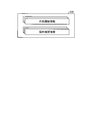
- FIG. 1 It is a conceptual diagram which shows the flow of the information processing which concerns on embodiment. It is a figure (1) which shows an example of the user interface which concerns on embodiment. It is a figure (2) which shows an example of the user interface which concerns on embodiment. It is a figure which shows an example of the style palette which concerns on embodiment. It is a block diagram showing a flow of information processing concerning an embodiment. It is a figure showing an information processing system concerning an embodiment of this indication. It is a figure which shows the structural example of the user terminal which concerns on embodiment. It is a figure showing an example of composition composition information concerning an embodiment. It is a figure which shows an example of the composition music information which concerns on embodiment. It is a figure showing an example of history information concerning an embodiment.
- Embodiment 1-1 Example of information processing according to the embodiment 1-2.
- Configuration of information processing system according to embodiment 1-3 Configuration of information processing apparatus (user terminal) according to the embodiment 1-4.
- Configuration of external server (processing server) according to the embodiment 1-5 Information processing procedure according to the embodiment 2.
- Modification 2-1 Form of music data 2-2.
- Host application 2-3 Control by DAW 2-4.
- Other Embodiments 4. 4. Effect of information processing apparatus according to the present disclosure Hardware configuration
- FIG. 1 is a conceptual diagram showing a flow of information processing according to the embodiment.
- the information processing according to the embodiment is executed by the user terminal 10, which is an example of the information processing apparatus according to the present disclosure, and the processing server 100, which is an example of the external server according to the present disclosure.
- the user terminal 10 and the processing server 100 communicate with each other using the wired or wireless network N (for example, the Internet) shown in FIG.
- the numbers of user terminals 10 and processing servers 100 are not limited to those shown in FIG.
- the user terminal 10 illustrated in FIG. 1 is an example of an information processing device according to the present disclosure.
- the user terminal 10 is an information processing terminal such as a PC (personal computer), a tablet terminal, or a smartphone.
- the user terminal 10 is provided (installed) with various program applications (hereinafter, simply referred to as “apps”).
- the user terminal 10 activates and executes various applications and executes various information processing.
- the user terminal 10 includes an application (so-called DAW) that realizes a comprehensive music production environment.
- DAW application
- the application (DAW) is referred to as a first application or host application.
- the first application according to the embodiment can incorporate (insert) another application for expanding the function. That is, it is assumed that the first application can use a so-called plug-in that is another application for expanding the function. In this case, the first application functions as a host application of the incorporated plug-in.
- the user terminal 10 includes an application having an automatic music composition function by AI.
- the application application having an automatic music composition function by AI
- the application is referred to as a second application or a plug-in.
- the second application according to the embodiment is incorporated as a plug-in of the above-described first application.
- the plug-in can take the form of VST (Steinberg's Virtual Studio Technology) (registered trademark), AudioUnits, AAX (Avid Audio eXtension), or the like, for example.
- the processing server 100 illustrated in FIG. 1 is a server device that executes information processing regarding the second application included in the user terminal 10.
- the processing server 100 is a so-called cloud server, and executes predetermined information processing based on the information instructed from the user terminal 10 via the network N.
- the processing server 100 generates music data based on the information transmitted from the user terminal 10 based on a predetermined learning process and data output from the learned model.
- the processing server 100 executes the automatic song function by AI based on the instruction from the user terminal 10.
- the processing server 100 provides the user terminal 10 with music data that is automatically composed using a Markov model or the like, as shown in the above-mentioned prior art documents and the like.
- the user terminal 10 uses the second application as a plug-in to drag and drop the music data provided from the processing server 100 on the second application onto the first application, or the first application. You can do editing work on the app.
- the automatic music function depends on the processing performance (CPU power etc.) of the terminal on which the processing is executed, but as shown in FIG. 1, the user terminal 10 performs learning processing and the like on its own device. Instead, the processing server 100 is caused to execute the processing.
- the user terminal 10 can execute a process having a relatively high processing load called an automatic music function while conserving the resources of the device itself. Therefore, the user terminal 10 can solve the DAW processing delay (occurrence of latency, etc.) that has been a conventional problem.
- the user terminal 10 according to the present disclosure can improve the convenience of the automatic song function by AI.
- FIG. 1 the outline of the information processing according to the present disclosure will be described along the flow using FIG. 1.
- the user terminal 10 activates the host application (first application) 20 (step S1).
- the user terminal 10 activates a plug-in (second application) 22 as an example of a plug-in that operates on the host application 20 (step S2).
- the user terminal 10 selects setting information of a music piece to be automatically tuned by the plug-in 22 according to the user's operation. Although details will be described later, the user terminal 10 selects setting information such as chord progression of a music piece to be automatically tuned, subjective image of the music piece (dark, bright, etc.), composition of the music piece, and the like according to a user operation. Then, the user terminal 10 transmits the selected setting information to the processing server 100 (step S3).
- the processing server 100 performs a predetermined learning process based on the setting information transmitted from the user terminal 10 and a composition process based on the learning result (step S4).
- a composition process for example, the process described in the above prior art document may be used.
- the processing server 100 generates the composed music data.
- the processing server 100 transmits the generated music data to the user terminal 10 (step S5).
- the user terminal 10 receives the music data transmitted from the processing server 100 in the plug-in 22.
- the music data includes information such as chord progressions, melody, and bass note progressions generated by the processing server 100.
- the music data may be standard data such as MIDI (Musical Instrument Digital Interface) data, waveform data, or DAW original standard data.
- the user may edit the received music data on the plug-in 22, or may copy the music data to the host application 20 and use it on the host application 20.
- the user terminal 10 controls the host application 20 and the plug-in 22 that functions as a plug-in that extends the function of the host application 20. Further, the host application 20 controls the operation of the plug-in 22 in the host application 20. Further, the plug-in 22 selects setting information for controlling the composition function based on machine learning, transmits the setting information to the processing server 100 via the network N, and outputs the music data composed by the processing server 100. To receive.
- the user terminal 10 uses the automatic song function as a DAW plug-in. Therefore, the user can receive the support of the automatic music composition function in the normal working environment of DAW. Further, the user can avoid the occurrence of processing delay in the DAW by causing the processing server 100 to bear the processing load in the automatic music composition function. As a result, the user terminal 10 can improve the convenience of the automatic music composition function by AI.
- FIG. 2 is a diagram (1) showing an example of the user interface according to the embodiment.
- FIG. 2 shows an example of a user interface when the plug-in 22 is displayed on the screen of the user terminal 10.
- the user interface 30 displays the music data received by the plug-in 22.
- the music data in the plug-in 22 is made up of three different types of data: melody, chord, and bass sound.
- the user interface 30 shown in FIG. 2 displays the melody-related data among the three different types of data.
- the setting information 31 displays information about the style palette, which is an example of setting information in the automatic music composition function.
- the style palette is designation information for designating a material music piece as learning data for machine learning.
- the setting information 32 displays information about harmony, which is an example of setting information in the automatic song function.
- the information on harmony is, for example, information for determining the probability that the constituent sounds included in the chord appear in the melody in the music data composed by the processing server 100. For example, when the user sets the information regarding harmony to “strict”, the probability that the constituent sound included in the chord appears in the melody in the music data that is automatically composed increases. On the other hand, when the user sets the information about the harmony to “loose”, the probability that the constituent sound included in the chord appears in the melody in the music data automatically tuned decreases. In the example of FIG. 2, the user has shown that the information regarding the harmony is applied from “strict”.
- the setting information 33 displays note length information, which is an example of setting information in the automatic music function.
- the note length information is, for example, information for determining the note length in the music data composed by the processing server 100. For example, if the user sets the note length information to "long”, the notes in which the length of the note to be pronounced is relatively long (for example, whole note, half note, etc.) ) Will be more likely to appear. On the other hand, if the user sets the note length information to “short”, the notes in which the length of the note to be pronounced is relatively short (for example, an eighth note or a sixteenth note) in the automatically composed music data. Etc.) will be more likely to appear.
- the setting information 34 which is an example of setting information in the automatic music function, displays information for determining the type and amount of material music other than the material music included in the specification information (style palette specified by the user).
- Such information is, for example, information for determining whether or not to strictly perform learning based on the music included in the style palette specified by the user in the music data composed by the processing server 100. For example, when the user sets such information to “never”, the tendency that the music other than the music included in the style palette is used in learning of the automatic music becomes low. On the other hand, if the user sets such information to “only”, there is an increased tendency for music other than the music included in the style palette to be used in learning automatic music.
- the music data 35 displays the specific music data transmitted from the processing server 100.
- the music data 35 includes information indicating chord progressions such as Cm, information indicating pitches within notes and lengths of notes, transitions of note pitches (in other words, melody), and the like.
- the music data 35 may include, for example, four different contents. That is, the processing server 100 may transmit a plurality of pieces of music data instead of transmitting only one kind of music data that is automatically composed. Thereby, the user can select the music data that he/she likes from the generated plurality of music data candidates, or can compose a favorite music by combining the plurality of music data.
- FIG. 3 is a diagram (2) illustrating an example of the user interface according to the embodiment.
- the user terminal 10 displays a user interface 38 that displays data regarding chords and a user interface 39 that displays data regarding bass sounds on the screen. It may be displayed.
- note information different from the music data 35 in the user interface 30 is displayed on the user interface 38 and the user interface 39.
- the user interface 38 displays note information (for example, constituent sounds of the chord Cm) regarding chords corresponding to the melody of the music data.
- the user interface 39 also displays note information (for example, “C” sound for the chord Cm) related to the bass sound corresponding to the melody or chord of the music data.
- the user can perform operations such as selecting information to be copied to the host application 20 from the displayed user interface 30, user interface 38, and user interface 39, and editing some bass sounds, for example. ..
- FIG. 4 is a diagram showing an example of a style palette according to the embodiment.
- the window 40 shown in FIG. 4 is an example of a user interface displayed on the plug-in 22.
- the user refers to the characteristic information of the style palette displayed in the window 40, and selects an image that matches the music piece that the user wants to perform the automatic music piece.
- the user selects the style palette 41 in which the characteristic information “bright” is described, the style palette 42 in which the characteristic information “dark” is described, and the like.
- the user has a style palette 43 in which the genre and type of music are described as characteristic information such as “American” and a style palette in which the composition of music is described as characteristic information such as “A melody ⁇ B melody ⁇ chorus”. Select 44.
- the style palette is information for the processing server 100 to specify the music used for learning. That is, each style palette includes information for specifying an existing song that has been composed in advance. For example, it is assumed that the style palette 41 is associated with the constituent music list 50. The constituent song list 50 includes a plurality of existing songs. Further, it is assumed that the style pallet 42 is associated with the constituent music list 51. The constituent music list 51 includes a plurality of existing music different from the music included in the constituent music list 50.
- the learning model generated by machine learning based on the style palette 41 and the learning model generated by machine learning based on the style palette 42 are different. This is because the learning data in machine learning changes depending on the style palette selected by the user. That is, the style palette can be said to be designation information for designating the learning data in the automatic composition.
- the songs that make up the style palette shall be registered in advance by, for example, the administrator or provider of the plug-in 22.
- the administrator of the plug-in 22 extracts a plurality of songs that are subjectively “bright” to generate the component music list 50, and associates the component music list 50 with the style palette 41.
- the style palette and the music corresponding to the style palette may be arbitrarily edited by the user who uses the plug-in 22.
- the user may select a music from a music distribution service or a web service such as SNS (Social Networking Service), and combine the selected music to generate a desired style palette.
- SNS Social Networking Service
- the user arbitrarily extracts music included in a playlist automatically generated by a predetermined music application or a playlist provided to a user who uses the music application,
- the constituent music of the generated style palette may be changed or a new style palette may be generated. This allows the user to flexibly generate his or her own style palette.
- the user may select multiple style palettes when selecting the style palette as the setting information.
- the user selects the style palette 41 as the setting information for composing a part of the music (for example, the first 8 measures), and composes a different part of the music (for example, the middle 8 measures).
- the style palette 42 may be selected as the setting information.
- Information including such a plurality of style palettes is hereinafter referred to as a style palette sequence.
- the style palette sequence can be said to be combination designation information that is a combination of style palette designation information that specifies music. The user can easily create various music data having a plurality of characteristics in one music by setting a style palette sequence and performing composition.
- FIG. 5 is a block diagram showing the flow of information processing according to the embodiment.
- a processing block 60 shown in FIG. 5 shows a flow of processing executed by the DAW (host application 20) and the plug-in 22.
- a performer records a sound played by a musical instrument and creates data such as MIDI.
- the plug-in 22 generates music data corresponding to a melody, a chord, and a bass sound instead of the performer.
- the performer or the plug-in 22 generates the melody 61, the chord 62, or the bass sound 63.
- the user records the melody 61, the chord 62, and the bass sound 63 used for the music in the recorder related to the DAW, and creates each track corresponding to the melody, the chord, and the bass sound.
- the user sets the musical instrument information indicating the musical instrument used for the performance, for the melody 61 generated by the plug-in 22.
- the user sets musical instrument information such as playing the melody 61 on the guitar registered in the DAW.
- the user records the sound played on the virtual guitar in the recorder and creates a track corresponding to the guitar. Since the DAW can create a plurality of tracks, a track based on the performance sound of the performer and a track based on the music data created by the plug-in 22 may coexist.
- the user mixes on the DAW and creates music data after going down the track.
- the user performs mastering on the DAW, adjusts the acoustic signal level, etc., and then creates a music file 65 that can be played back by a playback device or the like.
- the user uses the data automatically performed by the plug-in 22 in accordance with the performance data performed by the performer and the created MIDI data to perform the DAW.
- a user can create a piece of music on a DAW by mixing the performance data played by the performer with a melody that is automatically composed by AI, or by incorporating a chord progression proposed by AI. it can.
- FIG. 6 is a diagram illustrating an example of the information processing system 1 according to the first embodiment of the present disclosure.
- the information processing system 1 includes a user terminal 10, a processing server 100, and a management server 200.
- the user terminal 10 is an example of an information processing device according to the present disclosure, and controls the operations of the host application 20 and the plug-in 22.
- the processing server 100 is an example of an external server according to the present disclosure, and cooperates with the plug-in 22 to perform automatic music composition processing.
- the management server 200 is a server managed by, for example, a business operator who provides the plug-in 22.
- the management server 200 manages the user authority of the user who uses the plug-in 22 and the information of the style palette that can be used by the plug-in 22. For example, the management server 200 determines whether the user has the authority to use the plug-in 22 based on the user ID that uniquely identifies the user. In addition, the management server 200 creates a style palette, edits music that composes the style palette, and transmits information about the style palette to the user terminal 10 and the processing server 100. The management server 200 may be integrated with the processing server 100.
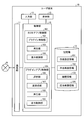
- FIG. 7 is a diagram illustrating a configuration example of the user terminal 10 according to the embodiment of the present disclosure.
- the user terminal 10 includes a communication unit 11, an input unit 12, a display unit 13, a storage unit 15, and a control unit 16.
- the communication unit 11 is realized by, for example, a NIC (Network Interface Card) or the like.
- the communication unit 11 is connected to a network N (Internet or the like) by wire or wirelessly, and transmits/receives information to/from the processing server 100, the management server 200, or the like via the network N.
- a network N Internet or the like
- the input unit 12 is an input device that receives various operations from a user.
- the input unit 12 is realized by an operation key or the like included in the user terminal 10.
- the display unit 13 is a display device for displaying various information.
- the display unit 13 is realized by a liquid crystal display or the like. When a touch panel is used for the user terminal 10, a part of the input unit 12 and the display unit 13 are integrated.
- the storage unit 15 is realized by, for example, a semiconductor memory device such as a RAM (Random Access Memory) or a flash memory (Flash Memory), or a storage device such as a hard disk or an optical disk.
- the storage unit 15 stores various data used for information processing.
- the storage unit 15 stores various information such as composition setting information 151, composition music information 152, history information 153, and musical instrument information 154.
- composition setting information 151 composition setting information 151
- composition music information 152 composition music information 152
- history information 153 history information 153
- musical instrument information 154 musical instrument information 154
- the composition setting information 151 is information used when the plug-in 22 (second application) executes an automatic composition song.
- FIG. 8 shows an example of the composition setting information 151 according to the embodiment.
- FIG. 8 is a diagram showing an example of the composition setting information 151 according to the embodiment.
- the composition setting information 151 includes composition corpus information and performance style information.
- the composition corpus information stores the music data used as the learning data of the automatic music or the location where the music data is stored (for example, the address of the data server). Further, the composition corpus information includes, for example, information such as the average length of notes of each song and modulation.
- the performance style information information such as the performance style of the music used as the learning data of the automatic music is stored.
- the playing style includes, for example, information such as the overall shuffle ratio, the chord and bass note division, and the overall balance.
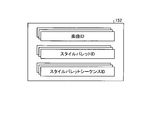
- the composition music information 152 is information of the music used when the plug-in 22 executes the automatic music.
- FIG. 9 shows an example of the composition music information 152 according to the embodiment.
- FIG. 9 is a diagram showing an example of the composition music information 152 according to the embodiment.
- the composition song information 152 includes a song ID, a style palette ID, and a style palette sequence ID.
- the music ID indicates identification information for uniquely identifying an existing music used as learning data.
- the style palette ID indicates identification information for identifying a style palette composed of a plurality of existing songs.
- the style palette sequence ID indicates identification information for identifying a style palette sequence composed of a plurality of style palettes.
- the history information 153 indicates the history of the user's operation in the host application 20 or the plug-in 22 and the history of songs created by the user.
- FIG. 10 shows an example of the history information 153 according to the embodiment.
- FIG. 10 is a diagram showing an example of the history information 153 according to the embodiment.
- the history information 153 includes composition music information.
- the composition music information is composed of music data transmitted from the processing server 100 and a plurality of candidate data included in the music data (for example, as shown in FIG. 2, four types of signatures generated based on certain setting information, etc.). (Including music data 35 including), and music data edited by the user.
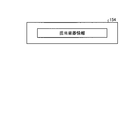
- the assigned musical instrument information 154 indicates musical instrument data transmitted from the processing server 100 and musical instrument information set for a plurality of candidate data included in the musical piece data.
- FIG. 11 shows an example of the assigned instrument information 154 according to the embodiment.
- FIG. 11 is a diagram showing an example of assigned musical instrument information 154 according to the embodiment.
- the assigned instrument information 154 includes assigned instrument information.
- the assigned musical instrument information is set in the song data transmitted from the processing server 100, information for identifying an instrument set to virtually play a plurality of candidate data included in the song data, and set in the song data. Indicates the name of the instrument.
- the assigned musical instrument information can be set to different information for each melody, chord, and bass tone.
- the control unit 16 is a program (for example, an information processing program according to the present disclosure) stored in the user terminal 10 by, for example, a CPU (Central Processing Unit), an MPU (Micro Processing Unit), a GPU (Graphics Processing Unit), or the like. Is implemented by using RAM (Random Access Memory) as a work area.
- the control unit 16 is a controller, and may be realized by an integrated circuit such as an ASIC (Application Specific Integrated Circuit) or an FPGA (Field Programmable Gate Array).
- the control unit 16 has a host application control unit 161 and a plug-in application control unit 165, and realizes or executes the functions and actions of information processing described below.
- the host application control unit 161 includes a plug-in control unit 162, a reproduction unit 163, and a display control unit 164.
- the plug-in application control unit 165 includes a selection unit 166, a transmission/reception unit 167, a reproduction unit 168, and a display control unit 169. Note that the internal configuration of the control unit 16 is not limited to the configuration shown in FIG. 7, and may be another configuration as long as it is a configuration for performing information processing described later.
- the host application control unit 161 controls the host application 20 (DAW which is the first application).
- the plug-in control unit 162 controls the operation of various plug-ins in the host application 20.
- the plug-in control unit 162 controls operations such as calling the plug-in in the host application 20, starting the plug-in on the host application 20, and copying data in the plug-in to the host application 20.
- the plug-in control unit 162 individually sets musical instrument information for designating a tone color for reproducing a chord, a melody or a bass sound included in the music data received by the plug-in from the processing server 100.
- the plug-in control unit 162 reads out information about the virtual musical instrument registered on the DAW, and causes each of the virtual musical instruments to play a chord, a melody, or a bass sound included in the musical piece data of the plug-in. Set the information.
- the playback unit 163 controls the playback processing in the host application 20.
- the reproduction unit 163 has a synchronous reproduction function in the host application 20, a reproduction information transmission function, a sound synthesis reproduction function, a reproduction style arrangement function, and the like.
- the reproducing unit 163 cooperates with the synchronous reproducing function of the reproducing unit 168 of the plug-in to reproduce the music data held by the plug-in.
- the reproduction unit 163 can acquire and reproduce the melody, the chord, and the bass sound of the portion corresponding to the reproduction position by passing the time information indicating the reproduction position of the host application to the plug-in. ..
- the playing unit 163 may process the playing data according to the playing style and play the processed data.
- the display control unit 164 controls display control processing in the host application 20.
- the display control unit 164 has a performance information display function of displaying information of each track on the screen (display unit 13), a composition music information pasting function of copying information such as music data to the track, and the like.
- the display control unit 164 controls so as to individually display windows for displaying information on chords, melody or bass sounds included in the music data received by the plug-in from the processing server 100. For example, the display control unit 164 displays the user interface corresponding to each of the chord, melody, and bass sound on the screen of the DAW, as shown in FIG.
- the display control unit 164 controls transmission/reception of information between each window that displays information about a chord, melody, or bass sound and a window that displays information about a host application according to a user's operation.
- the user can quickly perform processing such as copying the music data that is automatically composed on an arbitrary track on the DAW and performing editing work.
- the display control unit 164 may control not only the information between the host application and the plug-in but also the exchange of information between the windows of the displayed plug-in. That is, the display control unit 164 may control transmission/reception of information between the windows that display information related to chords, melodies, or bass sounds in accordance with the user's operation.
- the plug-in application control unit 165 controls the operation of the plug-in operating on the host application 20.
- the plug-in application control unit 165 activates the plug-in on the host application 20 according to the user's operation.
- the selection unit 166 selects setting information for controlling the composition function based on machine learning. For example, the selection unit 166 selects, as the setting information, designation information for designating a material music piece as learning data for machine learning. Specifically, the style palette shown in FIG. 4 or the like corresponds to the designation information.
- the selection unit 166 includes designation information stored in advance in the storage unit 15 according to a user's operation, the feature information indicating a feature of the designation information, and a plurality of material songs associated with the feature information. Select the specified information. For example, the user refers to the characteristic information (“bright”, “dark”, etc.) of the style palette via the window 40 shown in FIG. Then, the user selects, based on the characteristic information, a style palette including desired characteristic information in the music piece that the AI wants to compose.
- the selection unit 166 is a combination of the first designation information corresponding to some measures of the music data composed by the external server and the second designation information corresponding to some other measures.
- the designated information may be selected.
- the combination designation information corresponds to the style palette sequence.
- the first designation information corresponds to a style palette that is setting information for composing a part of measures.
- the second designation information corresponds to a style palette which is setting information for composing some other bars.
- the selection unit 166 may select detailed setting information regarding music data to be composed.
- the selection unit 166 may select, as the setting information, the note length information included in the music data composed by the processing server 100 based on the style palette. For example, the selection unit 166 accepts the selection of the note length information from the user via the display of the slider or the like of the setting information 33 included in the user interface 30 shown in FIG.
- the selection unit 166 may select, as the setting information, information for determining the probability that the constituent sound included in the chord appears in the melody in the music data composed by the processing server 100 based on the style palette. Good. For example, the selection unit 166 determines the probability that the constituent sound included in the chord appears in the melody from the user via the display of the slider or the like of the setting information 32 included in the user interface 30 or the like shown in FIG. Accept a selection of information.
- the selection unit 166 uses, as the setting information, information for determining the type and amount of the material music other than the material music included in the style palette in the music data composed by the processing server 100 based on the style palette. You may choose. For example, the selection unit 166 determines the type and amount of the material song other than the material song included in the style palette from the user through the display of the slider of the setting information 34 included in the user interface 30 shown in FIG. 2 and the like. Accept the selection of information to do.
- the selection unit 166 may select information other than the style palette as the setting information for allowing the automatic tune.
- the selection unit 166 may select, as the setting information, the chord progression in the song to be composed based on the user's operation. In this case, the processing server 100 automatically generates music data based on the chord progression selected by the user.
- the transmission/reception unit 167 transmits the setting information selected by the selection unit 166 to the processing server 100 that executes the composition function based on machine learning via the network N, and receives the music data composed by the processing server 100. ..
- the transmission/reception unit 167 transmits the style palette selected by the selection unit 166 to the processing server 100. Then, the transmission/reception unit 167 receives the music data generated by the processing server 100 based on the style palette.
- the transmitting/receiving unit 167 receives, for example, a chord in a bar of a specified length, a melody in a bar, and a bass sound in a bar as music data.
- Such information may be data such as MIDI or MusicXML, information of DAW original standard, or waveform data (WAV file or the like).
- the transmitting/receiving unit 167 may also transmit the style palette sequence selected by the selecting unit 166 to the processing server 100. In this case, the transmitting/receiving unit 167 receives the music data generated by the processing server 100 based on the style palette sequence.
- the transmitting/receiving unit 167 may store the style palette sequence and the music data in the storage unit 15 in association with each other. As a result, the user can refer to what kind of music data was created by what kind of style palette sequence as a history, so that such information can be utilized for the composition work.
- the transmission/reception unit 167 may also transmit various setting information other than the style palette and the style palette sequence to the processing server 100.
- the transmission/reception unit 167 uses the note length information set by the user, the information for determining the probability that the constituent sounds included in the chord appear in the melody, and the material music other than the material music included in the style palette. Information for determining the type and amount of the is transmitted to the processing server 100.
- the transmitting/receiving unit 167 after receiving the music data composed by the processing server 100 and then performing a reproduction or editing operation on the music data by the user, transmits information regarding the reproduction or editing operation to the processing server 100. May be.
- the processing server 100 can acquire information such as how or how much the composed song data was used.
- the processing server 100 may adjust the learning method and the generated music data based on the information. For example, the processing server 100 may analyze past music data used by more users and preferentially generate music data having such characteristics.
- the playback unit 168 controls the playback process in the plug-in.
- the reproduction unit 168 reproduces the music data received by the transmission/reception unit 167.
- the reproduction unit 168 sets arbitrary instrument information for each of the melody, chord, and bass sound included in the music data, and reproduces each data.
- the reproducing unit 168 may combine and reproduce each of the melody, the chord, and the bass sound.
- the display control unit 169 controls display processing in the plug-in. For example, the display control unit 169 displays a window such as a user interface showing plug-in information on the screen.
- the display control unit 169 acquires, for example, four types of music data of four measures as shown in FIG. 2, and displays the four candidates side by side in the user interface.
- the user can select a final candidate by connecting good parts from the four types of music data candidates along the time axis (that is, by performing comping). For example, the user can delete some notes of the melody, connect them, change the length of the notes, or change the height of the notes.
- the display control unit 169 may perform a control of displaying a history of past music data composed by the processing server 100 from the storage unit 15 and displaying a history of past music data according to a user operation.
- the user can proceed with the composition work while referring to the data composed by the processing server 100 in the past.
- the user can determine the final candidate by comparing the latest song created by editing with the history of songs edited in the past.
- the display control unit 169 calls from the storage unit 15 a history of editing operations performed on the past song data composed by the processing server 100, and at the same time, displays the editing operations performed on the past song data. You may control to display. As a result, the user can refer to the editing operation performed in the past, the music data generated by the editing operation, and the like, so that the composition work can be efficiently performed.
- FIG. 2 and FIG. 3 show an example in which the music data is displayed on the user interface in a format such as a so-called piano roll, which indicates the pitch and the length of the note, the display control unit 169 uses the staff notation.
- the music data may be displayed in a format unique to DAW.
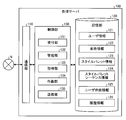
- FIG. 12 is a diagram illustrating a configuration example of the processing server 100 according to the embodiment.
- the processing server 100 has a communication unit 110, a storage unit 120, and a control unit 130.
- the processing server 100 includes an input unit (for example, a keyboard and a mouse) that receives various operations from an administrator who manages the processing server 100, and a display unit (for example, a liquid crystal display) for displaying various information. You may have.
- the communication unit 110 is realized by, for example, NIC.
- the communication unit 210 is connected to the network N by wire or wirelessly, and transmits/receives information to/from the user terminal 10, the management server 20, and the like via the network N.
- the storage unit 120 is realized by, for example, a semiconductor memory device such as a RAM or a flash memory, or a storage device such as a hard disk or an optical disk.
- the storage unit 120 stores various data used for information processing.
- the storage unit 120 stores various information such as user information 121, music information 122, style palette information 123, style palette sequence information 124, user composition information 125, and history information 126. .. Hereinafter, each information will be described.
- the user information 121 indicates information on a user who uses the plug-in 22 (second application).
- FIG. 13 shows an example of the user information 121 according to the embodiment.
- FIG. 13 is a diagram showing an example of the user information 121 according to the embodiment.
- the user information 121 includes a user ID, user meta information, and authority information.
- the user ID indicates identification information for uniquely identifying the user.
- the user meta information is additional information of the user such as the name and address of the user.
- the authority information is, for example, identification information indicating whether the user who uses the plug-in is an administrator, a general user, or a special user.
- the music information 122 indicates information on music used for automatic music processing.
- FIG. 14 shows an example of the music information 122 according to the embodiment.
- FIG. 14 is a diagram showing an example of the music information 122 according to the embodiment.
- the music information 122 includes a music ID, music meta information, melody information, chord progression information, and bass note progression information.
- the song ID indicates identification information for uniquely identifying the song.
- the music meta information is, for example, information such as a music title, a composer, an era, and a genre.
- the melody information is, for example, scale information expressing a vocal part.
- the chord progression information is, for example, time-series information that expresses the transition of chords of music.
- the bass note progress information is time series information indicating the root note of the chord progression information.
- the style palette information 123 indicates information about a style palette used for automatic music composition processing.
- FIG. 15 shows an example of the style palette information 123 according to the embodiment.
- FIG. 15 is a diagram showing an example of the style palette information 123 according to the embodiment.
- the style palette information 123 includes a style palette ID, style palette meta information, and a music ID.
- the style palette ID indicates identification information for uniquely identifying the style palette.
- the style palette meta information is, for example, the name of a style palette, subjective characteristic information such as bright or dark, fast or slow, a structure in which a music structure is composed of A melody, B melody, and rust, and Information such as characteristics of chord progression. Note that the name of the style palette meta information may be accompanied by chord progression information or the like. This allows the user to intuitively understand the characteristics of the style palette. Further, as shown in FIG. 15, a plurality of music IDs are linked and registered in the style palette.
- the style palette information 123 is registered by the management server 200 or the like, for example.
- the style palette sequence information 124 shows information about a style palette sequence used for automatic music composition processing.
- FIG. 16 shows an example of the style palette sequence information 124 according to the embodiment.
- FIG. 16 is a diagram showing an example of the style palette sequence information 124 according to the embodiment.
- the style palette sequence information 124 includes a style palette sequence ID, style palette sequence meta information, style palette ID, and formulation information.
- the style palette sequence ID indicates identification information for uniquely identifying the style palette sequence.
- the style palette sequence meta information is, for example, the name of a style palette sequence, and subjective characteristic information such as bright or dark, fast or slow.
- a plurality of style palette IDs are linked and registered in the style palette sequence.
- the compounding information is information about the arrangement of style palettes in the style palette sequence.
- the user composition information 125 indicates information about composition received from the user terminal 10.
- FIG. 17 shows an example of the user composition information 125 according to the embodiment.
- FIG. 17 is a diagram showing an example of the user composition information 125 according to the embodiment.
- the user composition information 125 includes a user ID, a music ID, a style palette ID, and a style palette sequence ID.
- the user ID indicates identification information for uniquely identifying the user.
- the song ID indicates identification information for identifying a song created for the user identified by the user ID.
- the style palette ID indicates identification information for identifying the style palette transmitted from the user specified by the user ID.
- the style palette sequence ID indicates identification information for identifying the style palette sequence transmitted from the user specified by the user ID.
- the history information 126 is various history related to information processing of the processing server 100.
- FIG. 18 shows an example of the history information 126 according to the embodiment.
- FIG. 18 is a diagram showing an example of the history information 126 according to the embodiment.
- the history information 126 includes composition history information and operation history information.
- the composition history information is a history of songs created by the processing server 100.
- the operation history information is information such as a history of editing operations performed by the user on the user terminal 10.
- the operation history information is, for example, information such as information on re-composition by the user, information on selection of composed music data, information on editing music data, number of times of reproduction, number of times of reproduction skipped, and the like. These pieces of information may be used as learning data of the composition unit 134 described later.
- the control unit 130 is realized, for example, by a CPU, MPU, GPU, or the like executing a program stored inside the processing server 100 using a RAM or the like as a work area. Further, the control unit 130 is a controller, and may be realized by an integrated circuit such as ASIC or FPGA.
- control unit 130 includes a reception unit 131, a management unit 132, an acquisition unit 133, a composition unit 134, and a transmission unit 135, and functions and actions of information processing described below. Realize or execute.
- the internal configuration of the control unit 130 is not limited to the configuration shown in FIG. 12, and may be another configuration as long as it is a configuration for performing information processing described later.
- the reception unit 131 receives various types of information transmitted from the management server 200. For example, the reception unit 131 receives information about a user who uses the plug-in, information about a style palette, information about a material song used as an automatic song, and the like. For example, the reception unit 131 performs a process of issuing a user ID to the user or receiving information about the user when the user activates the product (plug-in, DAW, etc.) when purchasing the product. Execute. In addition, the reception unit 131 receives registration of music associated with the style palette, editing of the style palette, and the like in accordance with operations and commands from the management server 200.
- the management unit 132 manages various information received by the reception unit 131. For example, the management unit 132 stores various types of information in the storage unit 120 and updates the stored information as appropriate.
- the management unit 132 when the management unit 132 completes the style palette registration process, the user can acquire and browse the list of style palette information.
- the acquisition unit 133 acquires a request for an automatic tune transmitted from the user terminal 10.
- the acquisition unit 133 acquires the setting information transmitted with the request.
- the acquisition unit 133 acquires a style palette desired by the user as the setting information.
- the music composition unit 134 composes music based on the setting information acquired by the acquisition unit 133.
- the music composition unit 134 may compose music using various existing music generation algorithms.
- the composition unit 134 may use a music generation algorithm that uses a Markov chain or a music generation algorithm that uses deep learning.
- the composition unit 134 generates a plurality of pieces of music data for one piece of setting information sent by the user. With this, the user can receive a plurality of suggestions from the composition unit 134, and thus can proceed with composition work by using more diverse information.
- the composition unit 134 associates the generated music data with the user ID of the user who has transmitted the style palette, and stores them in the storage unit 120 as history information.
- the transmission unit 135 transmits the music data generated by the composition unit 134 to the user terminal 10.
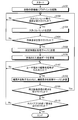
- FIG. 19 is a flowchart showing a procedure of information processing according to the embodiment.
- the user terminal 10 activates the automatic music composition function (plug-in) on the host application according to the user's operation (S101).
- the user terminal 10 determines whether or not the selection of the style palette or the like has been received from the user (step S102). When the selection of the style palette or the like has not been received from the user (step S102; No), the user terminal 10 waits until the selection is received.
- the user terminal 10 selects the style palette according to the user's operation (step S103).
- the user terminal 10 may accept various setting information other than the style palette in step S102.
- the user terminal 10 determines whether or not a composition request is received from the user (step S104). When the composition request is not received from the user (step S104; No), the user terminal 10 waits until the request is received.
- the user terminal 10 transmits the accepted setting information to the processing server 100 together with the composition request (step S105). Then, the user terminal 10 receives the music data composed (generated) by the processing server 100 (step S106).
- the user terminal 10 determines whether or not the edit processing or the like has been performed by the user on the user terminal 10 (step S107).
- the user terminal 10 waits until the editing process is accepted (step S107).
- step S107 when the edit processing or the like has been performed (step S107; Yes), the user terminal 10 reflects the edit and transmits information regarding the edit operation to the processing server 100 (step S108).
- the user terminal 10 determines again whether or not the composition request is received from the user (step S109).
- the user terminal 10 receives new setting information from the user.
- step S109 when the composition request is not accepted from the user (step S109; No), the user terminal 10 determines whether or not the host application end request is accepted (step S110). When the end request of the host application is not received (step S110; No), the user terminal 10 continues the editing process of the music data currently received. On the other hand, when the end request of the host application is received (step S110; Yes), the user terminal 10 ends the host application and the plug-in, and ends the process.
- the type of information set in the musical instrument information 154 of the music data in the plug-in is assumed to be melody, chord, or bass sound, but the present invention is not limited to this.
- the assigned instrument information 154 can be applied not only to the melody, chord, and bass tone, but also to the performance part of each instrument of the full orchestra, for example.
- the DAW is assumed as the host application, but the host application is not limited to this.
- the host application may be a video editing application or the like instead of the music editing application.
- the setting information and the like may be selected by the host application. That is, the user terminal 10 may transmit the setting information (for example, chord progression) selected in the host application to the processing server 100 to execute the automatic song processing.
- the host application provides the plug-in with an API (Application Programming Interface) or the like for the plug-in to use the information of the host application, and obtains the information for generating the style palette from the host application.
- the transmission/reception processing with the processing server 100 may be controlled.
- the user terminal 10 generates an arbitrary chord progression using the chord generation function of the DAW, which is the host application. Then, the user terminal 10 may execute the automatic tune based on the chord progression generated by the DAW. For example, the user terminal 10 inputs the chord progression generated by the DAW into the plug-in, and transmits the chord progression to the processing server 100 via the plug-in.
- the host application controls to send the information about the chord progression generated in the host application to the plug-in. Then, the plug-in selects the chord progression information generated in the host application as the setting information. Further, the plug-in transmits the chord progression information generated in the host application to the processing server 100, and receives the music data composed based on the chord progression information.
- the user terminal 10 may automatically select the style palette to be transmitted to the processing server 100 based on the chord progression generated by the DAW. For example, the user terminal 10 may select a style palette having characteristics similar to the chord progression generated by the DAW and send it to the processing server 100. Also, the user terminal 10 sequentially selects a style palette according to the progress based on the chord progression generated by the DAW, generates a style palette sequence, and transmits the generated style palette sequence to the processing server 100. Good.
- the user terminal 10 may also be set so that the plug-in enables information access to the base track on the host application.
- the user makes a setting such that the base track of the DAW follows the music data in which the track is automatically composed.
- the base track is automatically supplemented in accordance with the music data generated by the processing server 100 and the chord progression generated by the DAW, for example.
- the user terminal 10 may be set so that the plug-in enables information access to the melody track on the host application.
- the user makes a setting such that the melody track of the DAW follows the music data in which the track is automatically composed.
- the generated melody is automatically inserted in the track.
- the user sets the DAW in a mode for editing a combination of a plurality of music data (referred to as Comping mode etc.)
- Comping mode a mode for editing a combination of a plurality of music data
- the user can select a desired portion of a plurality of tracks appearing on the screen to complete the melody. ..
- User terminal 10 may also be configured to allow the plugin to access information to the melody track and MIDI input on the host app.
- the user can compose music by making full use of both the automatic music composition function and the MIDI input.
- the user inputs an arbitrary chord progression in 4 bars and causes the DAW to perform a loop play. Then, the user inputs with the MIDI keyboard in time with the loop performance.
- the user terminal 10 can automatically create a personal style palette on the processing server 100 side.
- the user can instruct start, stop, save, name, delete, etc. of creating these personal style palettes in the newly added style palette menu on the DAW.
- Such personal style palettes may be made publicly available via the style palette menu.
- the user terminal 10 may also be set so that the plug-in enables information access to the audio track on the host application.
- the audio track is, for example, a track in which a musical instrument performance sound is recorded, and is, for example, a chord performance by a piano, a bass sound performance by a bass guitar, a melody by a reed instrument, or the like.
- the plug-in accesses the audio tracks, analyzes audio data such as the melody, chord, and bass sound of each track by signal processing, and obtains NIDI information of the melody, chord progression information, and the like.
- the plug-in may use, for example, a 12-tone analysis technique when analyzing.
- the user terminal 10 may transmit the analyzed information to the processing server 100 and automatically infer the optimum chord progression by machine learning or the like. Then, the processing server 100 defines a style palette sequence based on this chord progression information. As a result, the user can perform the assisted composition work based on the style palette sequence generated by the processing server 100, so that, for example, it is possible to recompose the whole or partially recompose and replace it. Become.
- the user terminal 10 may also be set so that the plug-in enables information access to the existing master track on the host application.
- the master track is, for example, a track down into two stereo channels after mixing in the DAW.
- the plug-in accesses the master track, analyzes the audio data by signal processing, and obtains chord progression information and the like.
- the user terminal 10 may transmit the analyzed information to the processing server 100 and automatically infer the optimum chord progression by machine learning or the like.
- the processing server 100 defines a style palette sequence based on this chord progression information.
- the user can perform the assisted composition work based on the style palette sequence generated by the processing server 100, so that, for example, it is possible to recompose the whole or partially recompose and replace it. Become.
- the user terminal 10 may apply such functions to the plug-in and use them for the information processing according to the present disclosure. For example, as described above, the user terminal 10 generates a style palette sequence based on the chord progression generated by the DAW, or publishes the style palette sequence on the network, thereby performing composition processing between users. Can be activated.
- the processing server 100 is installed on the cloud network, but the present invention is not limited to this example, and if the processing server 100 and the management server 200 can communicate with the user terminal 10, the processing server 100 and the management server 200 can use the LAN It may be installed on a network such as a Local Area Network.
- the first application and the second application may be applications installed in different devices.
- the user terminal 10 may hold only the function of the first application and may play the sound source or the like by controlling the second application installed in another device such as a tablet terminal or a smartphone.
- each component of each illustrated device is functionally conceptual, and does not necessarily have to be physically configured as illustrated. That is, the specific form of distribution/integration of each device is not limited to that shown in the figure, and all or part of the device may be functionally or physically distributed/arranged in arbitrary units according to various loads and usage conditions. It can be integrated and configured.
- the information processing apparatus functions as the first application (the host application 20 in the embodiment) and the plug-in that extends the function of the first application.
- Two applications (plug-in 22 in the embodiment) are controlled.
- the first application includes a control unit (a host application control unit 161 in the embodiment) that controls the operation of the second application in the first application.
- the second application executes a composition function based on machine learning based on the setting information via a network and a selection unit (selection unit 166 in the embodiment) that selects setting information for controlling the composition function based on machine learning.
- a transmission/reception unit (transmission/reception unit 167 in the embodiment) that transmits to an external server (processing server 100 in the embodiment) and receives music data composed by the external server.
- the information processing apparatus handles the second application having the automatic music composition function as a plug-in and causes the external server to execute the actual composition process.
- the information processing apparatus can provide the user with an environment with good work efficiency while suppressing the processing load. That is, the information processing apparatus can improve the convenience of the automatic song function based on AI.
- the transmitting/receiving unit receives, as music data, a chord in a bar of a specified length, a melody in a bar, and a bass sound in a bar.
- the information processing apparatus can individually refer to or edit the music data, so that the convenience of the user can be improved.
- the control unit individually sets the musical instrument information for specifying the tone color when playing a chord, melody or bass tone included in the music data.
- the information processing apparatus can provide various reproduction environments.
- the control unit controls to individually display windows for displaying information on chords, melody or bass sounds included in the music data.
- the information processing apparatus can improve the convenience of the user's editing operation.
- the control unit controls transmission/reception of information between each window displaying information on chords, melody or bass sound and the window displaying information on the first application according to a user's operation. Accordingly, the information processing apparatus can exchange information between the first application and the second application by an operation such as drag and drop, so that the convenience of the user's editing operation can be improved.
- the control unit controls the transmission and reception of information between the windows that display information about chords, melodies or bass sounds.
- the information processing apparatus can improve the convenience of the user's editing operation.
- the selection unit selects, as the setting information, designation information (a style palette in the embodiment) for designating a material song that is learning data for machine learning.
- the transmission/reception unit transmits the designation information selected by the selection unit to the external server.
- the information processing apparatus can specify various characteristics desired by the user and execute the automatic tune.
- the selection unit is designation information that is stored in advance in the storage unit (the storage unit 15 in the embodiment) according to a user's operation, and is characteristic information indicating a feature of the designation information and a plurality of materials associated with the feature information. Select the specified information including the music. With this, the information processing apparatus can improve convenience when the user selects the designated information.
- the selection unit combines combination designation information (first designation information corresponding to some measures of the music data composed by the external server and second designation information corresponding to some other measures) (In the embodiment, the style palette sequence) is selected. Thereby, the information processing apparatus can automatically generate various music pieces.
- the transmission/reception unit When the transmission/reception unit receives the music data composed by the external server based on the combination designation information, the transmission/reception unit stores the combination designation information and the music data in the storage unit in association with each other. As a result, the information processing apparatus can improve the convenience when the user refers to the combination designation information or the like that is the basis of the music data created in the past.
- the selection unit selects, as the setting information, the note length information included in the music data composed by the external server based on the specified information.
- the transmission/reception unit transmits the designation information and the note length information to the external server. As a result, the information processing device can generate music data having characteristics desired by the user.
- the selection unit selects, as the setting information, information for determining the probability that the constituent sound included in the chord appears in the melody in the music data composed by the external server based on the designation information.
- the transmission/reception unit transmits, to the external server, the designation information and information for determining the probability that the constituent sounds included in the chord appear in the melody.
- the information processing device can generate music data having characteristics desired by the user.
- the selection unit selects, as setting information, information for determining the type and amount of material music other than the material music included in the designation information in the music data composed by the external server based on the designation information.
- the transmitting/receiving unit transmits the designation information and information for determining the type and amount of the material song other than the material song included in the designated information to the external server.
- the information processing device can generate music data having characteristics desired by the user.
- the second application calls a history of past music data composed by an external server from a storage unit according to a user's operation, and controls a display control unit (display control in the embodiment to display a history of past music data).
- the unit 169) is further provided.
- the information processing apparatus can improve convenience when the user refers to past operation history and the like.
- the display control unit recalls a history of editing operations performed on the past music data composed by the external server from the storage unit, and controls to display the editing operations performed on the past music data. ..
- the information processing apparatus can improve convenience when the user refers to past operation history and the like.
- the transmitting/receiving unit transmits the information regarding the reproduction or editing operation to the external server when the user performs the reproduction or editing operation on the music data.
- the information processing apparatus can cause the processing server 100 to perform further learning based on the editing performed by the user.
- the selection unit selects the chord progression in the composed song as the setting information based on the user's operation.
- the transmission/reception unit transmits the chord progression selected by the selection unit to the external server. With this, the information processing apparatus can provide the music data desired by the user regardless of the designation information.
- the control unit controls the chord progression information generated in the first application to be sent to the second application.
- the selection unit selects, as the setting information, information on the chord progression generated in the first application.
- the transmission/reception unit transmits the information regarding the chord progression generated in the first application to the external server, and receives the music data composed based on the information regarding the chord progression.
- the information processing apparatus can execute composition processing that makes use of the function of the first application such as DAW.
- FIG. 20 is a hardware configuration diagram showing an example of a computer 1000 that realizes the function of the user terminal 10.
- the computer 1000 has a CPU 1100, a RAM 1200, a ROM (Read Only Memory) 1300, an HDD (Hard Disk Drive) 1400, a communication interface 1500, and an input/output interface 1600.
- the respective units of the computer 1000 are connected by a bus 1050.
- the CPU 1100 operates based on a program stored in the ROM 1300 or the HDD 1400, and controls each part. For example, the CPU 1100 expands a program stored in the ROM 1300 or the HDD 1400 into the RAM 1200 and executes processing corresponding to various programs.
- the ROM 1300 stores a boot program such as a BIOS (Basic Input Output System) executed by the CPU 1100 when the computer 1000 starts up, a program dependent on the hardware of the computer 1000, and the like.
- BIOS Basic Input Output System
- the HDD 1400 is a computer-readable recording medium that non-temporarily records a program executed by the CPU 1100, data used by the program, and the like. Specifically, the HDD 1400 is a recording medium that records an information processing program according to the present disclosure, which is an example of the program data 1450.
- the communication interface 1500 is an interface for connecting the computer 1000 to an external network 1550 (for example, the Internet).
- the CPU 1100 receives data from another device or transmits the data generated by the CPU 1100 to another device via the communication interface 1500.
- the input/output interface 1600 is an interface for connecting the input/output device 1650 and the computer 1000.
- the CPU 1100 receives data from an input device such as a keyboard or a mouse via the input/output interface 1600.
- the CPU 1100 also transmits data to an output device such as a display, a speaker, a printer, etc. via the input/output interface 1600.
- the input/output interface 1600 may function as a media interface for reading a program or the like recorded in a predetermined recording medium (medium).
- Examples of media include optical recording media such as DVD (Digital Versatile Disc) and PD (Phase change rewritable Disk), magneto-optical recording media such as MO (Magneto-Optical disk), tape media, magnetic recording media, and semiconductor memory. Is.
- optical recording media such as DVD (Digital Versatile Disc) and PD (Phase change rewritable Disk)
- magneto-optical recording media such as MO (Magneto-Optical disk), tape media, magnetic recording media, and semiconductor memory.
- the CPU 1100 of the computer 1000 realizes the functions of the control unit 16 and the like by executing the information processing program loaded on the RAM 1200.
- the HDD 1400 stores the information processing program according to the present disclosure and the data in the storage unit 15.
- the CPU 1100 reads the program data 1450 from the HDD 1400 and executes the program data.
- these programs may be acquired from another device via the external network 1550.
- An information processing apparatus that controls a first application and a second application that functions as a plug-in that extends the function of the first application
- the first application is A control unit for controlling the operation of the second application in the first application
- the second application is A selection unit for selecting setting information for controlling the composition function based on machine learning
- a transmission/reception unit that transmits the setting information to an external server that executes the composition function based on the machine learning via a network, and receives the music data composed by the external server.
- An information processing apparatus including.
- the transmitter/receiver is The information processing apparatus according to (1), wherein a chord in a bar having a specified length, a melody in the bar, and a bass sound in the bar are received as the music data.
- the control unit is The information processing apparatus according to (2), wherein the musical instrument information for designating a tone color for reproducing a chord, a melody, or a bass tone included in the music data is individually set.
- the control unit is The information processing apparatus according to (3), wherein each of the windows that displays information about a chord, a melody, or a bass sound included in the music data is individually displayed.
- the control unit is The information processing device according to (4), which controls transmission and reception of information between each window that displays information about the chord, melody, or bass sound and a window in which information about the first application is displayed according to a user operation .. (6)
- the control unit is The information processing apparatus according to (4) or (5), wherein transmission/reception of information between windows that display information about the chord, melody, or bass sound is controlled according to a user operation.
- the selection unit As the setting information, select designation information for designating a material music piece as the learning data of the machine learning,
- the transmitter/receiver is The information processing apparatus according to any one of (1) to (6), wherein the designation information selected by the selection unit is transmitted to the external server.
- the selection unit According to a user's operation, selecting designation information stored in advance in a storage unit, the designation information including feature information indicating a feature of the designation information and a plurality of material songs associated with the feature information is selected.
- the information processing device according to (7).
- the selection unit Select combination designation information that is a combination of first designation information corresponding to some measures and second designation information corresponding to other measures of the music data composed by the external server.
- the information processing apparatus according to (7) or (8).
- the transmitter/receiver is The information processing device according to (9), wherein when the music data composed by the external server based on the combination designation information is received, the combination designation information and the music data are stored in the storage unit in association with each other.
- the selection unit As the setting information, note length information included in music data composed by the external server based on the designation information is selected,
- the transmitter/receiver is The information processing apparatus according to any one of (7) to (10), wherein the designation information and the note length information are transmitted to the external server.
- the selection unit As the setting information, in the music data composed by the external server based on the designation information, information for determining a probability that a constituent sound included in a chord appears in a melody is selected,
- the transmitter/receiver is The information processing device according to any one of (7) to (11), which transmits information for determining a probability that a constituent sound included in the designation information and the chord appears in a melody to the external server.
- the selection unit As the setting information, in the music data composed by the external server based on the designation information, select information for determining the type and amount of the material music other than the material music included in the designation information,
- the transmitter/receiver is The information processing apparatus according to any one of (7) to (12), which transmits the designation information and information for determining the type and amount of the material song other than the material song included in the designated information to the external server. .. (14)
- the second application is According to a user's operation, a history of past music data composed by the external server is retrieved from the storage unit, and a display control unit is further provided for controlling to display the history of the past music data.
- the information processing device according to any one of 13).
- the display control unit The history of the editing operation executed on the past music data composed by the external server is called from the storage unit, and the editing operation executed on the past music data is controlled to be displayed (14) )
- the transmitter/receiver is After the music data composed by the external server is received, when the user performs a reproduction or editing operation on the music data, information regarding the reproduction or editing operation is transmitted to the external server (1) to ( 15. The information processing device according to any one of 15).
- the selection unit As the setting information, the chord progression of the song to be composed is selected based on the user's operation,
- the transmitter/receiver is The information processing apparatus according to any one of (1) to (16), which transmits the chord progression selected by the selection unit to the external server.
- the control unit is Controlling to send the chord progression information generated in the first app to the second app,
- the selection unit As the setting information, select the chord progression information generated in the first application,
- the transmitter/receiver is The information related to chord progression generated in the first application is transmitted to the external server, and the music data composed based on the information regarding chord progression is received.
- the first application is Controlling the operation of the second application in the first application
- the second application is Select setting information to control the composition function based on machine learning
- the first application is Controlling the operation of the second application in the first application
- the second application is Select setting information to control the composition function based on machine learning
- An information processing program that causes the information processing apparatus to function so as to transmit the setting information to an external server that executes a composition function based on the machine learning via a network, and receive music data composed by the external server.
Landscapes
- Engineering & Computer Science (AREA)
- Physics & Mathematics (AREA)
- Acoustics & Sound (AREA)
- Multimedia (AREA)
- Theoretical Computer Science (AREA)
- Electrophonic Musical Instruments (AREA)
- Auxiliary Devices For Music (AREA)
Abstract
Description
1.実施形態
1-1.実施形態に係る情報処理の一例
1-2.実施形態に係る情報処理システムの構成
1-3.実施形態に係る情報処理装置(ユーザ端末)の構成
1-4.実施形態に係る外部サーバ(処理サーバ)の構成
1-5.実施形態に係る情報処理の手順
2.変形例
2-1.楽曲データの形態
2-2.ホストアプリ
2-3.DAWによる制御
2-4.情報処理システムの態様
3.その他の実施形態
4.本開示に係る情報処理装置の効果
5.ハードウェア構成
[1-1.実施形態に係る情報処理の一例]
まず、図1を用いて、本開示に係る情報処理の一例を説明する。図1は、実施形態に係る情報処理の流れを示す概念図である。実施形態に係る情報処理は、本開示に係る情報処理装置の一例であるユーザ端末10、及び、本開示に係る外部サーバの一例である処理サーバ100によって実行される。ユーザ端末10及び処理サーバ100は、図1に示す有線又は無線のネットワークN(例えばインターネット等)を用いて相互に通信を行う。なお、ユーザ端末10及び処理サーバ100の台数は、図1に図示したものに限られない。
[1-2.第1の実施形態に係る情報処理システムの構成]
図6は、本開示の第1の実施形態に係る情報処理システム1の一例を示す図である。図1に示すように、情報処理システム1は、ユーザ端末10と、処理サーバ100と、管理サーバ200とを含む。
次に、図7を用いて、本開示に係る情報処理装置の一例であるユーザ端末10の構成について説明する。図7は、本開示の実施形態に係るユーザ端末10の構成例を示す図である。図7に示すように、ユーザ端末10は、通信部11と、入力部12と、表示部13と、記憶部15と、制御部16とを有する。
次に、本開示に係る外部サーバの一例である処理サーバ100の構成について説明する。図12は、実施形態に係る処理サーバ100の構成例を示す図である。
次に、図19を用いて、実施形態に係る情報処理の手順について説明する。図19は、実施形態に係る情報処理の手順を示すフローチャートである。
上述した情報処理システム1は、上記実施形態以外にも種々の異なる形態にて実施されてよい。そこで、以下では、実施形態の変形例について説明する。
上記実施形態では、プラグインにおける楽曲データの担当楽器情報154等において、設定される情報の種類を、メロディ、コード、ベース音と想定したが、これに限られない。例えば、担当楽器情報154は、メロディ、コード、ベース音のみならず、例えば、フルオーケストラの各楽器の演奏パートにも適用可能である。
上記実施形態では、ホストアプリとしてDAWを想定したが、これに限られない。例えば、ホストアプリは、音楽編集用アプリではなく、映像編集アプリ等であってもよい。
上記実施形態では、ユーザ端末10がプラグイン上で設定情報を選択し、選択した情報を処理サーバ100に送信する例を示した。しかし、設定情報等は、ホストアプリによって選択されてもよい。すなわち、ユーザ端末10は、ホストアプリにおいて選択された設定情報(例えば、コード進行)等を処理サーバ100に送信し、自動作曲処理を実行させてもよい。この場合、ホストアプリは、例えばプラグインがホストアプリの情報を利用するためのAPI(Application Programming Interface)等をプラグインに提供し、スタイルパレットを生成するための情報をホストアプリ上から取得させたり、処理サーバ100との送受信処理等を制御したりしてもよい。
実施形態では、処理サーバ100は、クラウドネットワーク上に設置されることを前提としているが、この例に限られず、ユーザ端末10と通信可能であれば、処理サーバ100や管理サーバ200は、LAN(Local Area Network)等のネットワーク上に設置されてもよい。
上述した各実施形態に係る処理は、上記各実施形態以外にも種々の異なる形態にて実施されてよい。
上述してきたように、本開示に係る情報処理装置(実施形態ではユーザ端末10)は、第1アプリ(実施形態ではホストアプリ20)と、第1アプリの機能を拡張するプラグインとして機能する第2アプリ(実施形態ではプラグイン22)とを制御する。第1アプリは、第1アプリにおける第2アプリの動作を制御する制御部(実施形態ではホストアプリ制御部161)を備える。第2アプリは、機械学習に基づく作曲機能を制御するための設定情報を選択する選択部(実施形態では選択部166)と、ネットワークを介して、設定情報を機械学習に基づく作曲機能を実行する外部サーバ(実施形態では処理サーバ100)に送信し、外部サーバによって作曲された楽曲データを受信する送受信部(実施形態では送受信部167)と、を備える。
上述してきた各実施形態に係るユーザ端末10やや処理サーバ100や管理サーバ200等の情報機器は、例えば図20に示すような構成のコンピュータ1000によって実現される。以下、実施形態に係るユーザ端末10を例に挙げて説明する。図20は、ユーザ端末10の機能を実現するコンピュータ1000の一例を示すハードウェア構成図である。コンピュータ1000は、CPU1100、RAM1200、ROM(Read Only Memory)1300、HDD(Hard Disk Drive)1400、通信インターフェイス1500、及び入出力インターフェイス1600を有する。コンピュータ1000の各部は、バス1050によって接続される。
(1)
第1アプリと、当該第1アプリの機能を拡張するプラグインとして機能する第2アプリとを制御する情報処理装置であって、
前記第1アプリは、
前記第1アプリにおける前記第2アプリの動作を制御する制御部を備え、
前記第2アプリは、
機械学習に基づく作曲機能を制御するための設定情報を選択する選択部と、
ネットワークを介して、前記設定情報を前記機械学習に基づく作曲機能を実行する外部サーバに送信し、当該外部サーバによって作曲された楽曲データを受信する送受信部と、
を備える情報処理装置。
(2)
前記送受信部は、
前記楽曲データとして、規定された長さの小節におけるコード、当該小節におけるメロディ、当該小節におけるベース音を受信する
前記(1)に記載の情報処理装置。
(3)
前記制御部は、
前記楽曲データに含まれるコード、メロディ又はベース音を再生する際の音色を指定するための楽器情報を個別に設定する
前記(2)に記載の情報処理装置。
(4)
前記制御部は、
前記楽曲データに含まれるコード、メロディ又はベース音に関する情報を表示するウインドウを各々個別に表示するよう制御する
前記(3)に記載の情報処理装置。
(5)
前記制御部は、
ユーザの操作に従い、前記コード、メロディ又はベース音に関する情報を表示する各ウインドウと、前記第1アプリに関する情報が表示されたウインドウ間の情報の送受信を制御する
前記(4)に記載の情報処理装置。
(6)
前記制御部は、
ユーザの操作に従い、前記コード、メロディ又はベース音に関する情報を表示する各ウインドウ間の情報の送受信を制御する
前記(4)又は(5)に記載の情報処理装置。
(7)
前記選択部は、
前記設定情報として、前記機械学習の学習データとなる素材楽曲を指定するための指定情報を選択し、
前記送受信部は、
前記選択部によって選択された指定情報を前記外部サーバに送信する
前記(1)~(6)のいずれかに記載の情報処理装置。
(8)
前記選択部は、
ユーザの操作に従い、予め記憶部に記憶された指定情報であって、前記指定情報の特徴を示す特徴情報と、当該特徴情報に対応付けられた複数の素材楽曲とを含む指定情報を選択する
前記(7)に記載の情報処理装置。
(9)
前記選択部は、
前記外部サーバによって作曲される楽曲データのうち一部の小節に対応する第1の指定情報と、他の一部の小節に対応する第2の指定情報とを組み合わせた組み合わせ指定情報を選択する
前記(7)又は(8)に記載の情報処理装置。
(10)
前記送受信部は、
前記組み合わせ指定情報に基づいて前記外部サーバによって作曲された楽曲データを受信した場合、当該組み合わせ指定情報と当該楽曲データとを対応付けて記憶部に格納する
前記(9)に記載の情報処理装置。
(11)
前記選択部は、
前記設定情報として、前記指定情報に基づいて前記外部サーバによって作曲される楽曲データに含まれる音符の長さ情報を選択し、
前記送受信部は、
前記指定情報及び前記音符の長さ情報を前記外部サーバに送信する
前記(7)~(10)のいずれかに記載の情報処理装置。
(12)
前記選択部は、
前記設定情報として、前記指定情報に基づいて前記外部サーバによって作曲される楽曲データにおける、コードに含まれる構成音がメロディに登場する確率を決定するための情報を選択し、
前記送受信部は、
前記指定情報及び前記コードに含まれる構成音がメロディに登場する確率を決定するための情報を前記外部サーバに送信する
前記(7)~(11)のいずれかに記載の情報処理装置。
(13)
前記選択部は、
前記設定情報として、前記指定情報に基づいて前記外部サーバによって作曲される楽曲データにおいて、当該指定情報に含まれる素材楽曲以外の素材楽曲の種別及び量を決定するための情報を選択し、
前記送受信部は、
前記指定情報及び当該指定情報に含まれる素材楽曲以外の素材楽曲の種別及び量を決定するための情報を前記外部サーバに送信する
前記(7)~(12)のいずれかに記載の情報処理装置。
(14)
前記第2アプリは、
ユーザの操作に従い、前記外部サーバによって作曲された過去の楽曲データの履歴を記憶部から呼び出すとともに、当該過去の楽曲データの履歴を表示するよう制御する表示制御部をさらに備える
前記(1)~(13)のいずれかに記載の情報処理装置。
(15)
前記表示制御部は、
前記外部サーバによって作曲された過去の楽曲データに対して実行された編集操作の履歴を記憶部から呼び出すとともに、当該過去の楽曲データに対して実行された編集操作を表示するよう制御する
前記(14)に記載の情報処理装置。
(16)
前記送受信部は、
前記外部サーバによって作曲された楽曲データを受信したのち、ユーザによって当該楽曲データに対する再生もしくは編集操作が行われた場合、当該再生もしくは編集操作に関する情報を当該外部サーバに送信する
前記(1)~(15)のいずれかに記載の情報処理装置。
(17)
前記選択部は、
前記設定情報として、作曲される楽曲におけるコード進行をユーザの操作に基づいて選択し、
前記送受信部は、
前記選択部によって選択されたコード進行を前記外部サーバに送信する
前記(1)~(16)のいずれかに記載の情報処理装置。
(18)
前記制御部は、
前記第1アプリにおいて生成されたコード進行に関する情報を前記第2アプリに送るよう制御し、
前記選択部は、
前記設定情報として、前記第1アプリにおいて生成されたコード進行に関する情報を選択し、
前記送受信部は、
前記第1アプリにおいて生成されたコード進行に関する情報を前記外部サーバに送信し、当該コード進行に関する情報に基づいて作曲された楽曲データを受信する
前記(1)~(17)のいずれかに記載の情報処理装置。
(19)
第1アプリと、当該第1アプリの機能を拡張するプラグインとして機能する第2アプリとを制御する情報処理装置によって実行される情報処理方法であって、
前記第1アプリは、
前記第1アプリにおける前記第2アプリの動作を制御し、
前記第2アプリは、
機械学習に基づく作曲機能を制御するための設定情報を選択し、
ネットワークを介して、前記設定情報を前記機械学習に基づく作曲機能を実行する外部サーバに送信し、当該外部サーバによって作曲された楽曲データを受信する
情報処理方法。
(20)
第1アプリと、当該第1アプリの機能を拡張するプラグインとして機能する第2アプリとを制御する情報処理装置において、
前記第1アプリは、
前記第1アプリにおける前記第2アプリの動作を制御し、
前記第2アプリは、
機械学習に基づく作曲機能を制御するための設定情報を選択し、
ネットワークを介して、前記設定情報を前記機械学習に基づく作曲機能を実行する外部サーバに送信し、当該外部サーバによって作曲された楽曲データを受信する
ように前記情報処理装置を機能させる情報処理プログラム。
10 ユーザ端末
11 通信部
12 入力部
13 表示部
15 記憶部
151 作曲設定情報
152 作曲楽曲情報
153 履歴情報
154 担当楽器情報
16 制御部
161 ホストアプリ制御部
162 プラグイン制御部
163 再生部
164 表示制御部
165 プラグインアプリ制御部
166 選択部
167 送受信部
168 再生部
169 表示制御部
100 処理サーバ
200 管理サーバ
Claims (20)
- 第1アプリと、当該第1アプリの機能を拡張するプラグインとして機能する第2アプリとを制御する情報処理装置であって、
前記第1アプリは、
前記第1アプリにおける前記第2アプリの動作を制御する制御部を備え、
前記第2アプリは、
機械学習に基づく作曲機能を制御するための設定情報を選択する選択部と、
ネットワークを介して、前記設定情報を前記機械学習に基づく作曲機能を実行する外部サーバに送信し、当該外部サーバによって作曲された楽曲データを受信する送受信部と、
を備える情報処理装置。 - 前記送受信部は、
前記楽曲データとして、規定された長さの小節におけるコード、当該小節におけるメロディ、当該小節におけるベース音を受信する
請求項1に記載の情報処理装置。 - 前記制御部は、
前記楽曲データに含まれるコード、メロディ又はベース音を再生する際の音色を指定するための楽器情報を個別に設定する
請求項2に記載の情報処理装置。 - 前記制御部は、
前記楽曲データに含まれるコード、メロディ又はベース音に関する情報を表示するウインドウを各々個別に表示するよう制御する
請求項3に記載の情報処理装置。 - 前記制御部は、
ユーザの操作に従い、前記コード、メロディ又はベース音に関する情報を表示する各ウインドウと、前記第1アプリに関する情報が表示されたウインドウ間の情報の送受信を制御する
請求項4に記載の情報処理装置。 - 前記制御部は、
ユーザの操作に従い、前記コード、メロディ又はベース音に関する情報を表示する各ウインドウ間の情報の送受信を制御する
請求項4に記載の情報処理装置。 - 前記選択部は、
前記設定情報として、前記機械学習の学習データとなる素材楽曲を指定するための指定情報を選択し、
前記送受信部は、
前記選択部によって選択された指定情報を前記外部サーバに送信する
請求項1に記載の情報処理装置。 - 前記選択部は、
ユーザの操作に従い、予め記憶部に記憶された指定情報であって、前記指定情報の特徴を示す特徴情報と、当該特徴情報に対応付けられた複数の素材楽曲とを含む指定情報を選択する
請求項7に記載の情報処理装置。 - 前記選択部は、
前記外部サーバによって作曲される楽曲データのうち一部の小節に対応する第1の指定情報と、他の一部の小節に対応する第2の指定情報とを組み合わせた組み合わせ指定情報を選択する
請求項7に記載の情報処理装置。 - 前記送受信部は、
前記組み合わせ指定情報に基づいて前記外部サーバによって作曲された楽曲データを受信した場合、当該組み合わせ指定情報と当該楽曲データとを対応付けて記憶部に格納する
請求項9に記載の情報処理装置。 - 前記選択部は、
前記設定情報として、前記指定情報に基づいて前記外部サーバによって作曲される楽曲データに含まれる音符の長さ情報を選択し、
前記送受信部は、
前記指定情報及び前記音符の長さ情報を前記外部サーバに送信する
請求項7に記載の情報処理装置。 - 前記選択部は、
前記設定情報として、前記指定情報に基づいて前記外部サーバによって作曲される楽曲データにおける、コードに含まれる構成音がメロディに登場する確率を決定するための情報を選択し、
前記送受信部は、
前記指定情報及び前記コードに含まれる構成音がメロディに登場する確率を決定するための情報を前記外部サーバに送信する
請求項7に記載の情報処理装置。 - 前記選択部は、
前記設定情報として、前記指定情報に基づいて前記外部サーバによって作曲される楽曲データにおいて、当該指定情報に含まれる素材楽曲以外の素材楽曲の種別及び量を決定するための情報を選択し、
前記送受信部は、
前記指定情報及び当該指定情報に含まれる素材楽曲以外の素材楽曲の種別及び量を決定するための情報を前記外部サーバに送信する
請求項7に記載の情報処理装置。 - 前記第2アプリは、
ユーザの操作に従い、前記外部サーバによって作曲された過去の楽曲データの履歴を記憶部から呼び出すとともに、当該過去の楽曲データの履歴を表示するよう制御する表示制御部をさらに備える
請求項1に記載の情報処理装置。 - 前記表示制御部は、
前記外部サーバによって作曲された過去の楽曲データに対して実行された編集操作の履歴を記憶部から呼び出すとともに、当該過去の楽曲データに対して実行された編集操作を表示するよう制御する
請求項14に記載の情報処理装置。 - 前記送受信部は、
前記外部サーバによって作曲された楽曲データを受信したのち、ユーザによって当該楽曲データに対する再生もしくは編集操作が行われた場合、当該再生もしくは編集操作に関する情報を当該外部サーバに送信する
請求項1に記載の情報処理装置。 - 前記選択部は、
前記設定情報として、作曲される楽曲におけるコード進行をユーザの操作に基づいて選択し、
前記送受信部は、
前記選択部によって選択されたコード進行を前記外部サーバに送信する
請求項1に記載の情報処理装置。 - 前記制御部は、
前記第1アプリにおいて生成されたコード進行に関する情報を前記第2アプリに送るよう制御し、
前記選択部は、
前記設定情報として、前記第1アプリにおいて生成されたコード進行に関する情報を選択し、
前記送受信部は、
前記第1アプリにおいて生成されたコード進行に関する情報を前記外部サーバに送信し、当該コード進行に関する情報に基づいて作曲された楽曲データを受信する
請求項1に記載の情報処理装置。 - 第1アプリと、当該第1アプリの機能を拡張するプラグインとして機能する第2アプリとを制御する情報処理装置によって実行される情報処理方法であって、
前記第1アプリは、
前記第1アプリにおける前記第2アプリの動作を制御し、
前記第2アプリは、
機械学習に基づく作曲機能を制御するための設定情報を選択し、
ネットワークを介して、前記設定情報を前記機械学習に基づく作曲機能を実行する外部サーバに送信し、当該外部サーバによって作曲された楽曲データを受信する
情報処理方法。 - 第1アプリと、当該第1アプリの機能を拡張するプラグインとして機能する第2アプリとを制御する情報処理装置において、
前記第1アプリは、
前記第1アプリにおける前記第2アプリの動作を制御し、
前記第2アプリは、
機械学習に基づく作曲機能を制御するための設定情報を選択し、
ネットワークを介して、前記設定情報を前記機械学習に基づく作曲機能を実行する外部サーバに送信し、当該外部サーバによって作曲された楽曲データを受信する
ように前記情報処理装置を機能させる情報処理プログラム。
Priority Applications (6)
| Application Number | Priority Date | Filing Date | Title |
|---|---|---|---|
| EP19914808.1A EP3926619B1 (en) | 2019-02-12 | 2019-03-08 | Information processing device, information processing method, and information processing program |
| CN201980091286.XA CN113424253B (zh) | 2019-02-12 | 2019-03-08 | 信息处理装置、信息处理方法和计算机可读存储介质 |
| US17/310,436 US12159609B2 (en) | 2019-02-12 | 2019-03-08 | Information processing device and information processing method |
| DE112019006852.0T DE112019006852T5 (de) | 2019-02-12 | 2019-03-08 | Datenverarbeitungsvorrichtung, datenverarbeitungsverfahren und datenverarbeitungsprogramm |
| JP2020572065A JP7322900B2 (ja) | 2019-02-12 | 2019-03-08 | 情報処理装置、情報処理方法及び情報処理プログラム |
| JP2023121958A JP7626171B2 (ja) | 2019-02-12 | 2023-07-26 | 情報処理装置、情報処理方法及び情報処理プログラム |
Applications Claiming Priority (2)
| Application Number | Priority Date | Filing Date | Title |
|---|---|---|---|
| US201962804450P | 2019-02-12 | 2019-02-12 | |
| US62/804,450 | 2019-02-12 |
Publications (1)
| Publication Number | Publication Date |
|---|---|
| WO2020166094A1 true WO2020166094A1 (ja) | 2020-08-20 |
Family
ID=72044448
Family Applications (1)
| Application Number | Title | Priority Date | Filing Date |
|---|---|---|---|
| PCT/JP2019/009353 Ceased WO2020166094A1 (ja) | 2019-02-12 | 2019-03-08 | 情報処理装置、情報処理方法及び情報処理プログラム |
Country Status (6)
| Country | Link |
|---|---|
| US (1) | US12159609B2 (ja) |
| EP (1) | EP3926619B1 (ja) |
| JP (2) | JP7322900B2 (ja) |
| CN (1) | CN113424253B (ja) |
| DE (1) | DE112019006852T5 (ja) |
| WO (1) | WO2020166094A1 (ja) |
Cited By (4)
| Publication number | Priority date | Publication date | Assignee | Title |
|---|---|---|---|---|
| JPWO2022044646A1 (ja) * | 2020-08-31 | 2022-03-03 | ||
| JPWO2022113907A1 (ja) * | 2020-11-25 | 2022-06-02 | ||
| JP7738811B2 (ja) | 2023-08-04 | 2025-09-12 | 三菱電機株式会社 | コイル装置および車載機器 |
| WO2025257907A1 (ja) * | 2024-06-10 | 2025-12-18 | AlphaTheta株式会社 | 楽曲生成装置及び楽曲生成プログラム |
Families Citing this family (3)
| Publication number | Priority date | Publication date | Assignee | Title |
|---|---|---|---|---|
| DE112019006852T5 (de) * | 2019-02-12 | 2021-10-28 | Sony Group Corporation | Datenverarbeitungsvorrichtung, datenverarbeitungsverfahren und datenverarbeitungsprogramm |
| US20250191558A1 (en) * | 2023-12-07 | 2025-06-12 | Bandlab Singapore Pte. Ltd. | Digital music composition, performance and production studio system network and methods |
| WO2026009291A1 (ja) * | 2024-07-01 | 2026-01-08 | 株式会社Nttドコモ | 情報処理装置および情報処理方法 |
Citations (4)
| Publication number | Priority date | Publication date | Assignee | Title |
|---|---|---|---|---|
| US20090125799A1 (en) * | 2007-11-14 | 2009-05-14 | Kirby Nathaniel B | User interface image partitioning |
| US9110817B2 (en) | 2011-03-24 | 2015-08-18 | Sony Corporation | Method for creating a markov process that generates sequences |
| KR20180070340A (ko) * | 2016-12-16 | 2018-06-26 | 아주대학교산학협력단 | 인공지능을 이용한 작곡 시스템 및 작곡 방법 |
| US20180190250A1 (en) * | 2016-12-30 | 2018-07-05 | ILIO Enterprises, LLC | Control system for audio production |
Family Cites Families (28)
| Publication number | Priority date | Publication date | Assignee | Title |
|---|---|---|---|---|
| JP2002169570A (ja) | 2000-11-30 | 2002-06-14 | Daiichikosho Co Ltd | オーダーメイドのメドレー楽曲を提供する音楽サーバー |
| IES20020519A2 (en) * | 2001-10-09 | 2004-11-17 | Thurdis Developments Ltd | Multimedia apparatus |
| US7169996B2 (en) * | 2002-11-12 | 2007-01-30 | Medialab Solutions Llc | Systems and methods for generating music using data/music data file transmitted/received via a network |
| US20140000440A1 (en) * | 2003-01-07 | 2014-01-02 | Alaine Georges | Systems and methods for creating, modifying, interacting with and playing musical compositions |
| JP4214932B2 (ja) | 2004-03-18 | 2009-01-28 | ヤマハ株式会社 | サーバコンピュータに適用されるウェブサイト用プログラム |
| KR100731761B1 (ko) | 2005-05-02 | 2007-06-22 | 주식회사 싸일런트뮤직밴드 | 인터넷을 통한 음악제작 시스템 및 방법 |
| US20070044639A1 (en) * | 2005-07-11 | 2007-03-01 | Farbood Morwaread M | System and Method for Music Creation and Distribution Over Communications Network |
| US20090071315A1 (en) * | 2007-05-04 | 2009-03-19 | Fortuna Joseph A | Music analysis and generation method |
| JP2010165160A (ja) | 2009-01-15 | 2010-07-29 | Kddi Corp | 楽曲分類装置、楽曲検索システム及びコンピュータプログラム |
| US9177540B2 (en) * | 2009-06-01 | 2015-11-03 | Music Mastermind, Inc. | System and method for conforming an audio input to a musical key |
| US9257053B2 (en) * | 2009-06-01 | 2016-02-09 | Zya, Inc. | System and method for providing audio for a requested note using a render cache |
| US8779268B2 (en) * | 2009-06-01 | 2014-07-15 | Music Mastermind, Inc. | System and method for producing a more harmonious musical accompaniment |
| JP5471858B2 (ja) * | 2009-07-02 | 2014-04-16 | ヤマハ株式会社 | 歌唱合成用データベース生成装置、およびピッチカーブ生成装置 |
| WO2012021799A2 (en) * | 2010-08-13 | 2012-02-16 | Rockstar Music, Inc. | Browser-based song creation |
| KR101274961B1 (ko) | 2011-04-28 | 2013-06-13 | (주)티젠스 | 클라이언트단말기를 이용한 음악 컨텐츠 제작시스템 |
| US20180374461A1 (en) * | 2014-08-22 | 2018-12-27 | Zya, Inc, | System and method for automatically generating media |
| US9721551B2 (en) * | 2015-09-29 | 2017-08-01 | Amper Music, Inc. | Machines, systems, processes for automated music composition and generation employing linguistic and/or graphical icon based musical experience descriptions |
| CN108292313A (zh) * | 2015-11-30 | 2018-07-17 | 索尼公司 | 信息处理装置、信息处理系统、信息处理方法及程序 |
| JP6058192B1 (ja) | 2016-06-08 | 2017-01-11 | 株式会社ビジョナリスト | 音楽情報生成装置、音楽情報生成方法、プログラム、および記録媒体 |
| GB2551807B (en) * | 2016-06-30 | 2022-07-13 | Lifescore Ltd | Apparatus and methods to generate music |
| KR20180032755A (ko) * | 2016-09-23 | 2018-04-02 | 송완 | 기계 학습을 통한 자동 음악 콘텐츠 제작시스템 |
| US10311848B2 (en) * | 2017-07-25 | 2019-06-04 | Louis Yoelin | Self-produced music server and system |
| DE112019006852T5 (de) * | 2019-02-12 | 2021-10-28 | Sony Group Corporation | Datenverarbeitungsvorrichtung, datenverarbeitungsverfahren und datenverarbeitungsprogramm |
| WO2021005958A1 (ja) * | 2019-07-08 | 2021-01-14 | ソニー株式会社 | 情報処理装置、情報処理方法及び情報処理プログラム |
| CN114730550B (zh) * | 2019-11-26 | 2025-10-17 | 索尼集团公司 | 信息处理装置、信息处理方法和信息处理程序 |
| CN114730551B (zh) * | 2019-11-26 | 2025-03-25 | 索尼集团公司 | 信息处理设备、信息处理方法和信息处理程序 |
| US20230298547A1 (en) * | 2020-08-31 | 2023-09-21 | Sony Group Corporation | Information processing method, information processing program, and information processing device |
| US11183160B1 (en) * | 2021-02-16 | 2021-11-23 | Wonder Inventions, Llc | Musical composition file generation and management system |
-
2019
- 2019-03-08 DE DE112019006852.0T patent/DE112019006852T5/de active Pending
- 2019-03-08 EP EP19914808.1A patent/EP3926619B1/en active Active
- 2019-03-08 WO PCT/JP2019/009353 patent/WO2020166094A1/ja not_active Ceased
- 2019-03-08 CN CN201980091286.XA patent/CN113424253B/zh active Active
- 2019-03-08 US US17/310,436 patent/US12159609B2/en active Active
- 2019-03-08 JP JP2020572065A patent/JP7322900B2/ja active Active
-
2023
- 2023-07-26 JP JP2023121958A patent/JP7626171B2/ja active Active
Patent Citations (4)
| Publication number | Priority date | Publication date | Assignee | Title |
|---|---|---|---|---|
| US20090125799A1 (en) * | 2007-11-14 | 2009-05-14 | Kirby Nathaniel B | User interface image partitioning |
| US9110817B2 (en) | 2011-03-24 | 2015-08-18 | Sony Corporation | Method for creating a markov process that generates sequences |
| KR20180070340A (ko) * | 2016-12-16 | 2018-06-26 | 아주대학교산학협력단 | 인공지능을 이용한 작곡 시스템 및 작곡 방법 |
| US20180190250A1 (en) * | 2016-12-30 | 2018-07-05 | ILIO Enterprises, LLC | Control system for audio production |
Non-Patent Citations (1)
| Title |
|---|
| BRIOT, JEAN-PIERRE ET AL.: "Music Generation by Deep Learning - Challenges and Directions", NEURAL COMPUTING AND APPLICATIONS, 30 September 2018 (2018-09-30), pages 1 - 17, XP081073413 * |
Cited By (8)
| Publication number | Priority date | Publication date | Assignee | Title |
|---|---|---|---|---|
| JPWO2022044646A1 (ja) * | 2020-08-31 | 2022-03-03 | ||
| WO2022044646A1 (ja) * | 2020-08-31 | 2022-03-03 | ソニーグループ株式会社 | 情報処理方法、情報処理プログラム及び情報処理装置 |
| CN116057622A (zh) * | 2020-08-31 | 2023-05-02 | 索尼集团公司 | 信息处理方法、信息处理程序和信息处理装置 |
| JP7794127B2 (ja) | 2020-08-31 | 2026-01-06 | ソニーグループ株式会社 | 情報処理方法、情報処理プログラム及び情報処理装置 |
| JPWO2022113907A1 (ja) * | 2020-11-25 | 2022-06-02 | ||
| JP7593414B2 (ja) | 2020-11-25 | 2024-12-03 | ヤマハ株式会社 | 音楽要素生成支援装置、音楽要素学習装置、音楽要素生成支援方法、音楽要素学習方法、音楽要素生成支援プログラムおよび音楽要素学習プログラム |
| JP7738811B2 (ja) | 2023-08-04 | 2025-09-12 | 三菱電機株式会社 | コイル装置および車載機器 |
| WO2025257907A1 (ja) * | 2024-06-10 | 2025-12-18 | AlphaTheta株式会社 | 楽曲生成装置及び楽曲生成プログラム |
Also Published As
| Publication number | Publication date |
|---|---|
| CN113424253B (zh) | 2025-01-28 |
| JP2023129639A (ja) | 2023-09-14 |
| EP3926619A1 (en) | 2021-12-22 |
| EP3926619A4 (en) | 2022-04-20 |
| US12159609B2 (en) | 2024-12-03 |
| JPWO2020166094A1 (ja) | 2021-12-16 |
| JP7322900B2 (ja) | 2023-08-08 |
| JP7626171B2 (ja) | 2025-02-04 |
| DE112019006852T5 (de) | 2021-10-28 |
| CN113424253A (zh) | 2021-09-21 |
| US20220130359A1 (en) | 2022-04-28 |
| EP3926619B1 (en) | 2025-10-15 |
Similar Documents
| Publication | Publication Date | Title |
|---|---|---|
| JP7626171B2 (ja) | 情報処理装置、情報処理方法及び情報処理プログラム | |
| CN101542588B (zh) | 聚合数据文件、聚合装置和内容创建方法 | |
| CN101454824B (zh) | 用于自动产生音乐作品的方法和装置 | |
| US8732221B2 (en) | System and method of multimedia content editing | |
| US20140121797A1 (en) | System and Method for Combining a Song and Non-Song Musical Content | |
| US6756533B2 (en) | Automatic music composing apparatus and automatic music composing program | |
| JP2019133181A (ja) | オーディオ・ファイルを生成するためのシステム及び方法 | |
| US11869468B2 (en) | Musical composition file generation and management system | |
| CN101197171A (zh) | 分发聚合数据的方法、聚合方法、服务器装置和聚合装置 | |
| CN114730551B (zh) | 信息处理设备、信息处理方法和信息处理程序 | |
| CN101228587A (zh) | 内容的非线性呈现 | |
| JP2019506065A (ja) | 音楽のセグメント別動画再生方法及び装置 | |
| US20120072841A1 (en) | Browser-Based Song Creation | |
| US20240055024A1 (en) | Generating and mixing audio arrangements | |
| CN115064143A (zh) | 一种伴奏音频生成方法、电子设备及可读存储介质 | |
| JP6733240B2 (ja) | コンテンツの一覧の更新方法 | |
| WO2020054064A1 (ja) | 楽曲編集システム、及び楽曲編集方法 | |
| US7612279B1 (en) | Methods and apparatus for structuring audio data | |
| JP2011197664A (ja) | 音楽ファイル再生装置及びシステム | |
| JP6509291B2 (ja) | 楽曲共作支援システム | |
| JP2026061418A (ja) | 情報処理装置、情報処理方法および情報処理プログラム | |
| CN115440177A (zh) | 一种控制电钢琴变音色的方法、装置、系统及介质 | |
| WO2013005301A1 (ja) | 再生装置、再生方法、及びコンピュータプログラム |
Legal Events
| Date | Code | Title | Description |
|---|---|---|---|
| 121 | Ep: the epo has been informed by wipo that ep was designated in this application |
Ref document number: 19914808 Country of ref document: EP Kind code of ref document: A1 |
|
| ENP | Entry into the national phase |
Ref document number: 2020572065 Country of ref document: JP Kind code of ref document: A |
|
| ENP | Entry into the national phase |
Ref document number: 2019914808 Country of ref document: EP Effective date: 20210913 |
|
| WWG | Wipo information: grant in national office |
Ref document number: 201980091286.X Country of ref document: CN |
|
| WWG | Wipo information: grant in national office |
Ref document number: 2019914808 Country of ref document: EP |