WO2020166461A1 - Dispositif de traitement d'informations, dispositif mobile, procédé de traitement d'informations et programme de traitement d'informations - Google Patents
Dispositif de traitement d'informations, dispositif mobile, procédé de traitement d'informations et programme de traitement d'informations Download PDFInfo
- Publication number
- WO2020166461A1 WO2020166461A1 PCT/JP2020/004439 JP2020004439W WO2020166461A1 WO 2020166461 A1 WO2020166461 A1 WO 2020166461A1 JP 2020004439 W JP2020004439 W JP 2020004439W WO 2020166461 A1 WO2020166461 A1 WO 2020166461A1
- Authority
- WO
- WIPO (PCT)
- Prior art keywords
- handover
- base station
- processing
- application
- information
- Prior art date
- Legal status (The legal status is an assumption and is not a legal conclusion. Google has not performed a legal analysis and makes no representation as to the accuracy of the status listed.)
- Ceased
Links
Images















Classifications
-
- H—ELECTRICITY
- H04—ELECTRIC COMMUNICATION TECHNIQUE
- H04W—WIRELESS COMMUNICATION NETWORKS
- H04W36/00—Hand-off or reselection arrangements
- H04W36/24—Reselection being triggered by specific parameters
- H04W36/32—Reselection being triggered by specific parameters by location or mobility data, e.g. speed data
- H04W36/322—Reselection being triggered by specific parameters by location or mobility data, e.g. speed data by location data
-
- H—ELECTRICITY
- H04—ELECTRIC COMMUNICATION TECHNIQUE
- H04W—WIRELESS COMMUNICATION NETWORKS
- H04W36/00—Hand-off or reselection arrangements
- H04W36/0005—Control or signalling for completing the hand-off
- H04W36/0083—Determination of parameters used for hand-off, e.g. generation or modification of neighbour cell lists
- H04W36/00835—Determination of neighbour cell lists
-
- G—PHYSICS
- G06—COMPUTING OR CALCULATING; COUNTING
- G06F—ELECTRIC DIGITAL DATA PROCESSING
- G06F13/00—Interconnection of, or transfer of information or other signals between, memories, input/output devices or central processing units
-
- G—PHYSICS
- G06—COMPUTING OR CALCULATING; COUNTING
- G06F—ELECTRIC DIGITAL DATA PROCESSING
- G06F9/00—Arrangements for program control, e.g. control units
- G06F9/06—Arrangements for program control, e.g. control units using stored programs, i.e. using an internal store of processing equipment to receive or retain programs
- G06F9/46—Multiprogramming arrangements
- G06F9/50—Allocation of resources, e.g. of the central processing unit [CPU]
-
- H—ELECTRICITY
- H04—ELECTRIC COMMUNICATION TECHNIQUE
- H04W—WIRELESS COMMUNICATION NETWORKS
- H04W36/00—Hand-off or reselection arrangements
- H04W36/08—Reselecting an access point
- H04W36/083—Reselecting an access point wherein at least one of the access points is a moving node
-
- H—ELECTRICITY
- H04—ELECTRIC COMMUNICATION TECHNIQUE
- H04W—WIRELESS COMMUNICATION NETWORKS
- H04W36/00—Hand-off or reselection arrangements
- H04W36/24—Reselection being triggered by specific parameters
- H04W36/30—Reselection being triggered by specific parameters by measured or perceived connection quality data
- H04W36/305—Handover due to radio link failure
-
- H—ELECTRICITY
- H04—ELECTRIC COMMUNICATION TECHNIQUE
- H04W—WIRELESS COMMUNICATION NETWORKS
- H04W4/00—Services specially adapted for wireless communication networks; Facilities therefor
- H04W4/30—Services specially adapted for particular environments, situations or purposes
- H04W4/40—Services specially adapted for particular environments, situations or purposes for vehicles, e.g. vehicle-to-pedestrians [V2P]
- H04W4/44—Services specially adapted for particular environments, situations or purposes for vehicles, e.g. vehicle-to-pedestrians [V2P] for communication between vehicles and infrastructures, e.g. vehicle-to-cloud [V2C] or vehicle-to-home [V2H]
-
- H—ELECTRICITY
- H04—ELECTRIC COMMUNICATION TECHNIQUE
- H04W—WIRELESS COMMUNICATION NETWORKS
- H04W36/00—Hand-off or reselection arrangements
- H04W36/08—Reselecting an access point
-
- H—ELECTRICITY
- H04—ELECTRIC COMMUNICATION TECHNIQUE
- H04W—WIRELESS COMMUNICATION NETWORKS
- H04W36/00—Hand-off or reselection arrangements
- H04W36/24—Reselection being triggered by specific parameters
- H04W36/30—Reselection being triggered by specific parameters by measured or perceived connection quality data
- H04W36/302—Reselection being triggered by specific parameters by measured or perceived connection quality data due to low signal strength
-
- H—ELECTRICITY
- H04—ELECTRIC COMMUNICATION TECHNIQUE
- H04W—WIRELESS COMMUNICATION NETWORKS
- H04W36/00—Hand-off or reselection arrangements
- H04W36/24—Reselection being triggered by specific parameters
- H04W36/32—Reselection being triggered by specific parameters by location or mobility data, e.g. speed data
- H04W36/324—Reselection being triggered by specific parameters by location or mobility data, e.g. speed data by mobility data, e.g. speed data
-
- H—ELECTRICITY
- H04—ELECTRIC COMMUNICATION TECHNIQUE
- H04W—WIRELESS COMMUNICATION NETWORKS
- H04W88/00—Devices specially adapted for wireless communication networks, e.g. terminals, base stations or access point devices
- H04W88/02—Terminal devices
-
- H—ELECTRICITY
- H04—ELECTRIC COMMUNICATION TECHNIQUE
- H04W—WIRELESS COMMUNICATION NETWORKS
- H04W92/00—Interfaces specially adapted for wireless communication networks
- H04W92/16—Interfaces between hierarchically similar devices
- H04W92/20—Interfaces between hierarchically similar devices between access points
Definitions
- the present disclosure relates to an information processing device, a mobile device, an information processing method, and an information processing program.
- processing devices for example, server devices
- the user terminal and the processing device have to exchange information on the network, which causes an unavoidable processing delay.
- a large processing delay may not be tolerated depending on the application of the application.
- edge computing has begun to be known in which a processing device on a network located near a device that executes an application performs processing.
- the present disclosure proposes an information processing device, a mobile device, an information processing method, and an information processing program that can realize low-delay processing.
- an information processing device is a predetermined network to which at least one processing device that provides an application processing function to a mobile device via wireless communication is connected.
- the network communication unit to be connected and the application processing being executed by a predetermined processing device connected to the predetermined network or being executed by itself to another processing device connected to the predetermined network.
- a handover processing unit that executes a first handover process for taking over.
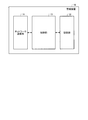
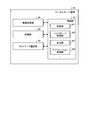
- FIG. 3 is a diagram illustrating a configuration example of a base station device according to an embodiment of the present disclosure.
- FIG. 3 is a diagram illustrating a configuration example of a base station device according to an embodiment of the present disclosure.
- FIG. 3 is a diagram illustrating a configuration example of a base station device according to an embodiment of the present disclosure.
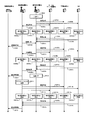
- FIG. 9 is a sequence diagram showing an example in which an information list regarding a base station device is centrally managed in the network N1.
- FIG. 11 is a sequence diagram showing an example in which an information list regarding a base station device is distributed and managed in the network N1.
- FIG. 11 shows the example of the combination of the start criteria of a wireless handover and an application handover.
- FIG. 9 shows the structural example of the mobile body apparatus 50 which integrated the moving function, the communication function, and the application function as an apparatus.
- FIG. 11 is a sequence diagram showing an example in which an information list regarding a base station device is distributed and managed in the network N1.
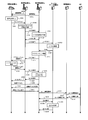
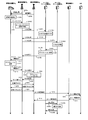
- 14B is a sequence diagram showing a procedure of wireless handover performed subsequent to the application handover shown in FIG. 14A.
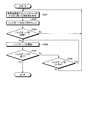
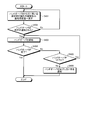
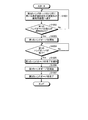
- 15 is a flowchart showing an operation of the base station apparatus related to the handover shown in FIGS. 14A and 14B.
- 15 is a flowchart showing an operation of the mobile unit according to the handover shown in FIGS. 14A and 14B.
- 9 is a flowchart illustrating an example of selecting a base station device as a handover destination. It is a flow chart which shows an example of change judgment processing of an application composition of a mobile unit.
- 7 is a flowchart illustrating an example of application configuration change processing.
- 9 is a flowchart showing an example of an application configuration change process when the mobile device determines the application (re)configuration by itself.
- FIG. 22 is a flowchart showing the operation of the base station device related to the handover shown in FIG. 22 is a flowchart showing the operation of the mobile device related to the handover shown in FIG. 21. 22 is a flowchart showing another example of the operation of the mobile device related to the handover shown in FIG. 21. It is a flowchart which shows the transmission process of additional information.
- FIG. 7 is a sequence diagram showing a procedure of handover when the base station device of the handover source does not have the edge function. It is a sequence diagram which shows the procedure of the hand over when the base station apparatus of a hand-over destination does not have an edge function.
- a plurality of components having substantially the same functional configuration may be distinguished by attaching different numbers after the same reference numerals.
- a plurality of configurations having substantially the same functional configuration are distinguished as in the base station devices 20 1 and 20 2 as necessary.
- only the same reference numeral is given.
- the base station devices 20 1 and 20 2 from each other, they are simply referred to as the base station device 20.
- V2V Vehicle-to-Vehicle
- V2I Vehicle-to-Infrastructure
- V2N Vehicle-to-Network
- V2P Vehicle-to-Pedestrian
- ITS intelligent transportation system
- the information processing apparatus (for example, a base station apparatus) of the present embodiment is connected to a wireless network such as a cellular communication network, and has an execution function (for example, an edge function) of executing an application process to a mobile apparatus via wireless communication.
- the information processing device executes an application handover for transferring the application processing provided to the mobile device to another processing device connected to the wireless network and having a function of executing the application processing.
- the application processing is successively handed over to the processing apparatuses that are located close to the mobile apparatus on the network, so that as the mobile apparatus moves, the processing apparatus that executes the application processing and the mobile apparatus on the network are transferred. A large distance is suppressed. As a result, in many cases, the application processing is executed at a position close to the mobile device on the network, so that low-delay processing is realized.
- information processing device and “processing device” have the same meaning, but in the present embodiment, a device that is a main body of execution of the above process (application handover for handing over an application process to another processing device).
- An "information processing device” and a device that becomes another information processing device when viewed from the execution subject are distinguished as a "processing device”.
- the information processing system 1 is a mobile communication system including a plurality of base station devices having a function of providing an application processing service (for example, an edge function).
- the information processing system 1 provides a predetermined wireless service to a mobile device (for example, a car or a mobile terminal) operated by a user via wireless communication.
- a mobile device for example, a car or a mobile terminal
- the information processing system 1 provides an execution service of information processing (hereinafter, referred to as application processing) requested by the application program to a mobile device in which a predetermined application program is installed via wireless communication. ..
- the application processing performed by the base station device is performed based on a request from a program (for example, an application) included in the mobile device such as recognition processing of an object in an image, or in cooperation with the program.
- a program for example, an application
- the application processing performed by the base station device is edge processing referred to as edge computing.
- the application processing is different from the physical layer, data link layer, network layer, transport layer, session layer, and presentation layer level processing in the OSI reference model.
- the application processing may additionally include processing at the physical layer to presentation layer level.
- application layer level information processing performed by a device on the network (for example, a base station device or a server device) based on a request from a program included in the mobile device, or a program included in the mobile device Information processing at the application layer level performed by devices on the network is called "application processing".
- a device on the network provides processing data of “application processing” to a mobile device, or a device on the network provides a processing function (or processing service) of “application processing” to the mobile device.
- Providing to the device may be referred to as “providing application processing”.
- the information processing system 1 is a wireless communication system using a predetermined wireless access technology (RAT: Radio Access Technology).
- RAT Radio Access Technology
- the information processing system 1 is a cellular communication using wireless access technology such as W-CDMA (Wideband Code Division Multiple Access), cdma2000 (Code Division Multiple Access 2000), LTE (Long Term Evolution), and NR (New Radio). System.
- W-CDMA Wideband Code Division Multiple Access
- cdma2000 Code Division Multiple Access 2000
- LTE Long Term Evolution
- NR New Radio
- the cellular communication system is not limited to the mobile phone communication system, and may be, for example, an intelligent transport system (ITS).
- the information processing system 1 is not limited to a cellular communication system, and may be another wireless communication system such as a wireless LAN (Local Area Network) system, an aviation wireless system, or a space wireless communication system.
- LAN Local Area Network
- the information processing system 1 provides an application processing execution function (eg, edge function) to a mobile device via a wireless network using a wireless access technology such as LTE or NR.
- LTE and NR are types of cellular communication technology, and enable mobile communication of a mobile device by arranging a plurality of areas covered by a base station device in a cell shape.
- LTE includes LTE-A (LTE-Advanced), LTE-A Pro (LTE-Advanced Pro), and EUTRA (Evolved Universal Terrestrial Radio Access).
- NR includes NRAT (New Radio Access Technology) and FEUTRA (Further EUTRA).
- a single base station may manage a plurality of cells.
- a cell corresponding to LTE may be referred to as an LTE cell.
- a cell corresponding to NR may be referred to as an NR cell.
- NR is a radio access technology (RAT) of the next generation (fifth generation) of LTE.
- RAT radio access technology
- NR is a wireless access technology that can support various use cases including eMBB (Enhanced Mobile Broadband), mMTC (Massive Machine Type Communications), and URLLC (Ultra-Reliable and Low Latency Communications).
- eMBB Enhanced Mobile Broadband
- mMTC Massive Machine Type Communications
- URLLC Ultra-Reliable and Low Latency Communications
- the LTE base station is sometimes called eNodeB (Evolved Node B) or eNB.
- the NR base station may be referred to as gNodeB or gNB.
- the mobile device may be referred to as a UE (User Equipment).
- FIG. 1 is a diagram illustrating a configuration example of an information processing system 1 according to an embodiment of the present disclosure.
- the information processing system 1 includes a management device 10, a base station device 20, a base station device 30, a local server device 40, and a mobile device 50.
- FIG. 2 is a diagram showing a specific configuration example of the information processing system 1.
- the information processing system 1 may include a router device RT and a gateway device GW in addition to the above configuration. Further, the information processing system 1 may include the cloud server device CS.
- a network N1 is configured by these multiple devices that configure the information processing system 1.
- the network N1 is, for example, a wireless network.
- the network N1 is a mobile communication network configured using a radio access technology such as LTE and NR.
- the network N1 is composed of a radio access network RAN and a core network CN.
- the devices in the figure may be considered as devices in a logical sense.
- part of the device in the figure may be realized by a virtual machine (VM: Virtual Machine), a container (Container), a docker (Docker), etc., and these may be physically implemented on the same hardware.
- VM Virtual Machine
- Container Container
- Docker docker
- the gateway device is a device that serves as a gateway for the network N1 and a network different from the network N1 (for example, the network N2).
- the gateway device GW is, for example, an S-GW (Serving Gateway), a P-GW (Packet Data Network Gateway), or a Home-Gateway.
- a plurality of devices connected to the network N1 can be connected to devices outside the network N1 via the gateway device GW and the network N2.
- the plurality of devices connected to the network N1 are connected to the cloud server device CS via the gateway device GW and the network N2.
- the network N2 is a communication network such as the Internet, a regional IP (Internet Protocol) network, a telephone network (for example, a fixed telephone network or a mobile telephone network).
- the cloud server device CS is a processing device (for example, a server device) outside the network N1.
- the cloud server device CS is a server host computer that processes a request from a client computer (for example, the mobile device 50).
- the cloud server device CS may be a PC server, a midrange server, or a mainframe server.
- the cloud server device CS has a function of executing application processing, and provides the application processing to the mobile device 50.
- the cloud server device can be restated as a server device or a processing device (or an information processing device).
- the router device RT is a device that relays data between networks.
- the router device RT relays the data from the base station devices 20, 30 to the local server device 40 or the like.
- the solid line is a connection by a wired line.
- the devices may not be directly connected, but may be connected via a router, a switch, or the like.
- the management device 10 is a device that manages a wireless network.
- the management device 10 is a device that functions as an MME (Mobility Management Entity) or an AMF (Access and Mobility Management Function).
- the management device 10 constitutes a part of the core network CN together with the gateway device GW.
- the core network CN is a network owned by a predetermined entity (main body) such as a mobile communication carrier.
- the core network CN is an EPC (Evolved Packet Core) or a 5GC (5G Core network).
- the predetermined entity may be the same as or different from the entity that uses, operates, and/or manages the base station devices 20 and 30.
- the management device 10 may have a gateway function.
- the management device 10 may have a function as an S-GW or a P-GW.
- the management device 10 may have a function as a UPF (User Plane Function).
- the management device 10 does not necessarily have to be a device that constitutes the core network CN.
- the core network CN is a W-CDMA (Wideband Code Division Multiple Access) or cdma2000 (Code Division Multiple Access 2000) core network.
- the management device 10 may be a device that functions as an RNC (Radio Network Controller).
- RNC Radio Network Controller
- the management device 10 is connected to each of the plurality of base station devices 20 and the plurality of base station devices 30.
- the management device 10 manages communication between the base station device 20 and the base station device 30. For example, the management device 10 determines which base station device (or which cell) the mobile device 50 in the network N1 is connected to, and which base station device (or which cell) is in the communication area. , Etc. are grasped and managed for each mobile device 50.
- the cell is, for example, pCell (Primary Cell) or sCell (Secondary Cell).
- the cells may have different radio resources (for example, frequency channels, component carriers, etc.) that can be used by the mobile device 50 for each cell. Further, one base station device may provide a plurality of cells.
- the base station device 20 is a wireless communication device that wirelessly communicates with the mobile device 50.
- the base station device 20 is a type of communication device.
- the base station device 20 is, for example, a device corresponding to a wireless base station (Base Station, Node B, eNB, gNB, etc.) or a wireless access point.
- the base station device 20 may be a wireless relay station.
- the base station device 20 may be a roadside base station device such as an RSU (Road Side Unit). Further, the base station device 20 may be a light projecting device called an RRH (Remote Radio Head).
- the base station of the wireless communication system may be referred to as a base station device.
- the base station device 20 may be configured to be capable of wireless communication with other base station devices 20 and 30.
- the base station device 20 has a function of executing application processing.
- the execution function of application processing is, for example, an edge function.
- edge functions include edge computing (Edge Computing), MEC (Mobile Edge Computing), fog computing (Fog Computing), and cache (Cache).
- the edge function refers to performing processing necessary for an application that the mobile device 50 wants to enjoy.
- the edge function is a function that executes a calculation process that is originally executed by the cloud server device CS (or a part of the calculation process that is executed by the cloud server device CS) or a process related to a certain application. It means a function to share and process.
- the edge function according to the present embodiment may include a function of holding a cache of data related to the application.
- the base station device 30 is a wireless communication device that wirelessly communicates with the mobile device 50.
- the base station device 30 is different from the base station device 20 in that the base station device 30 does not have a function of executing application processing (for example, an edge function).
- the base station device 30, like the base station device 20, is a type of communication device.
- the base station device 30 is a device corresponding to, for example, a wireless base station (Base Station, Node B, eNB, gNB, etc.) or a wireless access point (Access Point).
- the base station device 30 may be a wireless relay station.
- the base station device 30 may be a roadside base station device such as an RSU (Road Side Unit).
- the base station devices 20 and 30 can be used, operated, and/or managed by various entities.
- a mobile communication carrier MNO: Mobile Network Operator
- MVNO Mobile Virtual Network Operator
- MVNE Virtual Mobile Virtual Network Enabler
- NHS neutral Host Network
- the base station devices 20 and 30 may be installed and/or operated by one operator, or may be installed and/or operated by one individual.
- the installation/operation subject of the base station device 20 is not limited to these.
- the base station devices 20 and 30 may be installed and operated jointly by a plurality of businesses or a plurality of individuals.
- the base station devices 20 and 30 may be shared facilities used by a plurality of businesses or a plurality of individuals.
- the installation and/or operation of the equipment may be performed by a third party different from the user.
- a base station device also called a base station
- a base station includes not only a donor base station but also a relay base station (also called a relay station or a relay station device).
- the concept of a base station includes not only a structure having a function of a base station (Structure) but also a device installed in the structure.
- the structure is, for example, a building such as a high-rise building, a house, a steel tower, a station facility, an airport facility, a port facility, and a stadium.
- the concept of a structure includes not only buildings but also non-building structures such as tunnels, bridges, dams, fences, steel columns, and equipment such as cranes, gates, and windmills.
- the concept of a structure includes not only a structure on land (ground in a narrow sense) or a structure in the ground but also a structure on the water such as a jetty and a megafloat, and a structure underwater such as an ocean observation facility.
- the base station device can be restated as a processing device (or an information processing device).
- the base station devices 20 and 30 may be fixed stations or may be movable base station devices (mobile stations).
- the base station devices 20 and 30 may be devices installed in a moving body or may be the moving body itself.
- a relay station device having mobility can be regarded as the base station devices 20 and 30 as mobile stations.
- a device such as a vehicle, a drone, or a smart phone that originally has a moving capability and is equipped with the function of the base station device (at least a part of the function of the base station device) is also a base station device 20 as a mobile station. It corresponds to 30.
- the moving body may be a mobile terminal such as a smartphone or a mobile phone.
- the moving body may be a moving body (for example, a vehicle such as an automobile, a bicycle, a bus, a truck, a motorcycle, a train, or a linear motor car) that moves on land (in the narrow sense), or in the ground ( For example, it may be a moving body (for example, a subway) that moves in a tunnel.
- the moving body may be a moving body that moves on the water (for example, a ship such as a passenger ship, a cargo ship, or a hovercraft), or a moving body that moves underwater (for example, a submersible boat, a submarine, an unmanned submarine, etc.). Submersible).
- the moving body may be a moving body that moves in the atmosphere (for example, an aircraft such as an airplane, an airship, or a drone), or a moving body that moves outside the atmosphere (for example, an artificial satellite, a spacecraft, a space station). , An artificial celestial body such as a probe).
- the base station devices 20 and 30 may be ground base station devices (ground station devices) installed on the ground.
- the base station devices 20 and 30 may be base station devices arranged on a structure on the ground or may be base station devices installed on a moving body moving on the ground.
- the base station devices 20 and 30 may be an antenna installed in a structure such as a building and a signal processing device connected to the antenna.
- the base station devices 20 and 30 may be structures or moving bodies themselves. “Ground” is not only land (narrowly defined ground) but also ground, water, and underwater in a broad sense.
- the base station devices 20 and 30 are not limited to the terrestrial base station devices.
- the base station devices 20 and 30 may be non-ground base station devices (non-ground station devices) that can float in the air or space.
- the base station devices 20 and 30 may be aircraft station devices or satellite station devices.
- the aircraft station device is a wireless communication device that can float in the atmosphere, such as an aircraft.
- the aircraft station device may be a device mounted on an aircraft or the like, or may be the aircraft itself.
- the concept of an aircraft includes not only heavy aircraft such as airplanes and gliders, but also light aircraft such as balloons and airships.
- the concept of an aircraft includes not only heavy aircraft and light aircraft, but also rotary wing aircraft such as helicopters and autogyros.
- the aircraft station device (or the aircraft in which the aircraft station device is mounted) may be an unmanned aircraft such as a drone.
- unmanned aerial vehicles includes unmanned aviation systems (UAS: Unmanned Aircraft Systems) and tethered unmanned aviation systems (tethered UAS).
- unmanned aerial vehicles includes light unmanned aviation systems (LTA: Lighter than Air UAS) and heavy unmanned aviation systems (HTA: Heavier than Air UAS).
- LTA Lighter than Air UAS
- HTA Heavier than Air UAS
- HAPs High Altitude UAS Platforms
- Satellite device is a wireless communication device that can float outside the atmosphere.
- the satellite station device may be a device mounted on a space vehicle such as an artificial satellite, or may be the space vehicle itself.
- the satellite station devices are low earth orbiting (LEO) satellites, medium earth orbiting (MEO) satellites, geostationary earth orbiting (GEO) satellites, and highly elliptical orbiting (HEO). It may be any satellite.
- the satellite station device may be a device mounted on a low orbit satellite, a medium orbit satellite, a geostationary satellite, or a high elliptical orbit satellite.
- the size of the coverage of the base station devices 20 and 30 may be as large as a macro cell or as small as a pico cell. Of course, the size of the coverage of the base station devices 20 and 30 may be extremely small, such as a femtocell.
- the base station devices 20 and 30 may have a beamforming capability. In this case, the base station devices 20 and 30 may form a cell or a service area for each beam.
- the local server device 40 is a processing device (for example, a server device) connected to the network N1.
- local server device 40 is a server host computer that processes requests from client computers (eg, mobile device 50).
- the local server device 40 may be a PC server, a mid-range server, or a mainframe server.
- the local server device 40 can be restated as a server device or a processing device (or an information processing device).
- the local server device 40 has a function of executing application processing (for example, an edge function).
- the local server device 40 is the same as the cloud server device CS in the sense that it has an application processing execution function (application calculation processing function). However, there is a difference that the local server device 40 is arranged inside the network N1 and the cloud server device CS is arranged outside the network N1. Generally, when viewed from the mobile device 50, the communication with the local server device 40 has a small delay, and the communication with the cloud server device CS has a relatively large delay.
- the mobile device 50 is a base station device 20 or a movable wireless communication device that wirelessly communicates with the base station device 20.
- the mobile device 50 is, for example, a mobile phone, a smart device (smartphone or tablet), a PDA (Personal Digital Assistant), or a personal computer.
- the mobile device 50 may be an M2M (Machine to Machine) device or an IoT (Internet of Things) device.
- the mobile device 50 may be a wireless communication device installed in the mobile or the mobile itself.
- the mobile device 50 may be a vehicle that moves on a road such as an automobile, a bus, a truck, or a motorcycle, or a wireless communication device mounted on the vehicle.
- the mobile device 50 may be capable of communicating (side link) with another mobile device 50.
- the "mobile device” is a type of communication device, and is also called a mobile station, mobile station device, terminal device, or terminal.
- the concept of "mobile device” includes not only a communication device configured to be movable but also a mobile device in which the communication device is installed.
- the moving body may be a mobile terminal, or may be a moving body that moves on land (ground in a narrow sense), in the ground, on water, or in water.
- the moving body may be a moving body such as a drone or a helicopter that moves in the atmosphere, or a moving body such as an artificial satellite that moves outside the atmosphere.
- the concept of a communication device includes not only a portable mobile device (terminal device) such as a mobile terminal but also a device installed in a structure or a mobile body.
- the structure or the moving body itself may be regarded as the communication device.
- the concept of a communication device includes not only mobile devices (terminal devices, automobiles, etc.) but also base station devices (donor base stations, relay base stations, etc.).
- the communication device is a kind of processing device and information processing device.
- the mobile device 50 and the base station devices 20, 30 are connected to each other by wireless communication (for example, radio waves or optical wireless).
- wireless communication for example, radio waves or optical wireless.
- the mobile device 50 may simultaneously connect to a plurality of base station devices or a plurality of cells to perform communication. For example, when one base station device supports a communication area via multiple cells (for example, pCell, sCell), carrier aggregation (CA: Carrier Aggregation) technology and dual connectivity (DC: Dual Connectivity) technology With the multi-connectivity (MC) technology, it is possible to bundle the plurality of cells and communicate with the mobile device 50 and the base station device. Alternatively, the mobile device 50 and the plurality of base station devices can communicate with each other through the cells of different base station devices by CoMP (Coordinated Multi-Point Transmission and Reception) technology.
- CoMP Coordinatd Multi-Point Transmission and Reception
- the mobile device 50 does not necessarily have to be a device directly used by a person.
- the mobile device 50 may be a sensor installed in a factory machine or the like, such as a so-called MTC (Machine Type Communication).
- the mobile device 50 may be an M2M (Machine to Machine) device or an IoT (Internet of Things) device.
- the mobile device 50 may be a device having a relay communication function, as represented by D2D (Device to Device) and V2X (Vehicle to everything).
- the mobile device 50 may be a device called CPE (Client Premises Equipment) used in a wireless backhaul or the like.
- CPE Customer Premises Equipment
- the management device 10 is a device that manages a wireless network.
- the management device 10 is a device that manages communication between the base station devices 20 and 30.
- the core network CN is an EPC
- the management device 10 is a device having a function as an MME, for example.
- the core network CN is 5GC
- the management device 10 is a device having a function as an AMF, for example.
- the management device 10 may include an execution function of application processing (for example, an edge function), and may function as the local server device 40.
- the network communication unit 11 is a communication interface for communicating with other devices.
- the network communication unit 11 may be a network interface or a device connection interface.
- the network communication unit 11 has a function of directly or indirectly connecting to the network N1.
- the network communication unit 11 may include a LAN (Local Area Network) interface such as NIC (Network Interface Card), or a USB (Universal Serial Bus) host controller, a USB interface including a USB port, etc. May be.
- the network communication unit 11 may be a wired interface or a wireless interface.
- the network communication unit 11 functions as a communication unit of the management device 10.
- the network communication unit 11 communicates with the base station devices 20 and 30 under the control of the control unit 13.
- the storage unit 12 is a storage device capable of reading and writing data such as DRAM (Dynamic Random Access Memory), SRAM (Static Random Access Memory), flash memory, and hard disk.
- the storage unit 12 functions as a storage unit of the management device 10.
- the storage unit 12 stores, for example, the connection state of the mobile device 50.
- the storage unit 12 stores the RRC (Radio Resource Control) state and the ECM (EPS Connection Management) state of the mobile device 50.
- the storage unit 12 may function as a home memory that stores the position information of the mobile device 50.
- the control unit 13 is a controller that controls each unit of the management device 10.
- the control unit 13 is realized by a processor such as a CPU (Central Processing Unit) and an MPU (Micro Processing Unit).
- the control unit 13 is realized by the processor executing various programs stored in the storage device inside the management device 10 using a RAM (Random Access Memory) or the like as a work area.
- the control unit 13 may be realized by an integrated circuit such as an ASIC (Application Specific Integrated Circuit) or an FPGA (Field Programmable Gate Array).
- ASIC Application Specific Integrated Circuit
- FPGA Field Programmable Gate Array
- the base station device 20 is a wireless communication device that wirelessly communicates with the mobile device 50.
- the base station device 20 is a device that functions as, for example, a wireless base station, a wireless relay station, a wireless access point, or the like.
- the base station device 20 may be a roadside base station device such as RSU or a light projecting device such as RRH.
- the base station device 20 includes an application processing execution function (eg, edge function) and provides the mobile device 50 with application processing (eg, edge processing).
- edge function an application processing execution function
- the application processing execution function is the edge function, but the application processing execution function is not limited to the edge function.
- FIG. 4 is a diagram showing a configuration example of the base station device 20 according to the embodiment of the present disclosure.
- the base station device 20 includes a wireless communication unit 21, a storage unit 22, a network communication unit 23, and a control unit 24.
- the configuration shown in FIG. 4 is a functional configuration, and the hardware configuration may be different from this. Further, the function of the base station device 20 may be distributed and implemented in a plurality of physically separated configurations.
- the wireless communication unit 21 is a wireless communication interface that wirelessly communicates with other wireless communication devices (for example, the mobile device 50, the base station device 30, and the other base station device 20).
- the wireless communication unit 21 operates according to the control of the control unit 24.
- the wireless communication unit 21 may support a plurality of wireless access methods.
- the wireless communication unit 21 may support both NR and LTE.
- the wireless communication unit 21 may support W-CDMA or cdma2000 in addition to NR and LTE.
- the wireless communication unit 21 may be compatible with wireless access methods other than NR, LTE, W-CDMA, and cdma2000.
- the reception processing unit 211 processes the uplink signal received via the antenna 213.
- the reception processing unit 211 includes a wireless reception unit 211a, a demultiplexing unit 211b, a demodulation unit 211c, and a decoding unit 211d.
- the radio reception unit 211a down-converts an uplink signal, removes unnecessary frequency components, controls an amplification level, orthogonal demodulation, converts to a digital signal, removes a guard interval, and removes a frequency domain signal by fast Fourier transform. Extract, etc.
- the demultiplexing unit 211b separates an uplink channel such as PUSCH (Physical Uplink Shared Channel) and PUCCH (Physical Uplink Control Channel) and an uplink reference signal from the signal output from the wireless reception unit 211a.
- PUSCH Physical Uplink Shared Channel
- PUCCH Physical Uplink Control Channel
- the demodulation unit 211c demodulates the received signal using a modulation method such as BPSK (Binary Phase Shift Keying) or QPSK (Quadrature Phase Shift Keying) for the modulation symbol of the uplink channel.
- the modulation method used by the demodulation unit 211c may be 16QAM (Quadrature Amplitude Modulation), 64QAM, or 256QAM.
- the decoding unit 211d performs a decoding process on the coded bits of the demodulated uplink channel.
- the decoded uplink data and uplink control information are output to the control unit 24.
- the transmission processing unit 212 performs transmission processing of downlink control information and downlink data.
- the transmission processing unit 212 includes an encoding unit 212a, a modulation unit 212b, a multiplexing unit 212c, and a wireless transmission unit 212d.
- the encoding unit 212a encodes the downlink control information and downlink data input from the control unit 24 using an encoding method such as block encoding, convolutional encoding, turbo encoding, or the like.
- the modulator 212b modulates the coded bits output from the encoder 212a by a predetermined modulation method such as BPSK, QPSK, 16QAM, 64QAM, 256QAM.
- the multiplexing unit 212c multiplexes the modulation symbol of each channel and the downlink reference signal and arranges them in a predetermined resource element.
- the wireless transmission unit 212d performs various kinds of signal processing on the signal from the multiplexing unit 212c.
- the wireless transmission unit 212d performs conversion into the time domain by fast Fourier transform, addition of a guard interval, generation of a baseband digital signal, conversion into an analog signal, quadrature modulation, up conversion, removal of extra frequency components, Performs processing such as power amplification.
- the signal generated by the transmission processing unit 212 is transmitted from the antenna 213.
- the storage unit 22 is a data readable/writable storage device such as DRAM, SRAM, flash memory, and hard disk.
- the storage unit 22 functions as a storage unit of the base station device 20.
- the storage unit 22 stores an information list, application information, and the like.
- the information list is information about other base station devices 20 and 30 existing around the base station device 20 itself.
- the application information is information necessary for continuing application processing. The information list and application information will be described later in detail.
- the network communication unit 23 is a communication interface for communicating with other devices (for example, management device 10, other base station device 20, base station device 30, local server device 40, gateway GW, cloud server CS, etc.). ..
- the network communication unit 23 has a function of directly or indirectly connecting to the network N1.
- the network communication unit 23 includes a LAN interface such as NIC.
- the network communication unit 23 may be a wired interface or a wireless interface.
- the network communication unit 23 functions as a network communication unit of the base station device 20.
- the network communication unit 23 communicates with other devices (for example, the management device 10, the local server device 40, the gateway GW, the cloud server CS, etc.) under the control of the control unit 24.
- the network communication unit 23 may have the same configuration as the network communication unit 11 of the management device 10.
- the control unit 24 is a controller that controls each unit of the base station device 20.
- the control unit 24 is realized by a processor such as a CPU (Central Processing Unit) and an MPU (Micro Processing Unit).
- the control unit 24 is realized by the processor executing various programs stored in the storage device inside the base station device 20 using a RAM (Random Access Memory) or the like as a work area.
- the control unit 24 may be realized by an integrated circuit such as ASIC (Application Specific Integrated Circuit) and FPGA (Field Programmable Gate Array).
- ASIC Application Specific Integrated Circuit
- FPGA Field Programmable Gate Array
- the control unit 24 includes an acquisition unit 241, a handover processing unit 242, a transmission unit 243, and an application processing unit 244.
- Each block (acquisition unit 241 to application processing unit 244) forming the control unit 24 is a functional block showing the function of the control unit 24.
- These functional blocks may be software blocks or hardware blocks.
- each of the functional blocks described above may be one software module realized by software (including a micro program) or one circuit block on a semiconductor chip (die).
- each functional block may be one processor or one integrated circuit.
- the method of configuring the functional block is arbitrary.
- the control unit 24 may be configured in functional units different from the above functional blocks. The operation of each block (acquisition unit 241 to application processing unit 244) forming the control unit 24 will be described in detail later.
- the base station device 30 is a wireless communication device that wirelessly communicates with the mobile device 50.
- the base station device 30 is a device that functions as, for example, a wireless base station, a wireless relay station, a wireless access point, or the like.
- the base station device 30 may be a roadside base station device such as RSU or a light projecting device such as RRH.
- the base station device 30 is different from the base station device 20 in that it does not have an application processing execution function (for example, an edge function).
- FIG. 5 is a diagram showing a configuration example of the base station device 30 according to the embodiment of the present disclosure.
- the base station device 30 includes a wireless communication unit 31, a storage unit 32, a network communication unit 33, and a control unit 34. Note that the configuration shown in FIG. 5 is a functional configuration, and the hardware configuration may be different from this. Further, the functions of the base station device 30 may be distributed and implemented in a plurality of physically separated configurations.
- the wireless communication unit 31 is a wireless communication interface that wirelessly communicates with other wireless communication devices (for example, the mobile device 50, the base station device 20, and the other base station device 30).
- the wireless communication unit 31 operates according to the control of the control unit 34.
- the wireless communication unit 31 includes a reception processing unit 311, a transmission processing unit 312, and an antenna 313.
- the configuration of the wireless communication unit 31 (reception processing unit 311, transmission processing unit 312, and antenna 313) is the same as that of the wireless communication unit 21 (reception processing unit 211, transmission processing unit 212, and antenna 213) of the base station device 20. ..
- the storage unit 32 is a data readable/writable storage device such as DRAM, SRAM, flash memory, and hard disk.
- the storage unit 32 functions as a storage unit of the base station device 30.
- the configuration of the storage unit 32 is similar to that of the storage unit 22 of the base station device 20.
- the network communication unit 33 is a communication interface for communicating with other devices (for example, management device 10, base station device 20, other base station device 30, local server device 40, gateway GW, cloud server CS, etc.). ..
- the network communication unit 33 has a function of directly or indirectly connecting to the network N1.
- the network communication unit 33 includes a LAN interface such as NIC.
- the network communication unit 33 may be a wired interface or a wireless interface.
- the network communication unit 33 functions as a network communication unit of the base station device 30.
- the configuration of the network communication unit 33 is similar to that of the network communication unit 23 of the base station device 20.
- the control unit 34 is a controller that controls each unit of the base station device 30.
- the control unit 34 is realized by a processor such as a CPU or MPU, for example.
- the control unit 34 is realized by the processor executing various programs stored in the storage device inside the base station device 30 by using the RAM or the like as a work area.
- the control unit 34 may be realized by an integrated circuit such as ASIC or FPGA.
- the CPU, MPU, ASIC, and FPGA can all be regarded as controllers.
- the control unit 34 includes an acquisition unit 341, a handover processing unit 342, and a transmission unit 343.
- Each block (acquisition unit 341 to transmission unit 343) forming the control unit 34 is a functional block showing the function of the control unit 34.
- These functional blocks may be software blocks or hardware blocks.
- each of the functional blocks described above may be one software module realized by software (including a micro program) or one circuit block on a semiconductor chip (die).
- each functional block may be one processor or one integrated circuit.
- the method of configuring the functional block is arbitrary.
- the control unit 34 may be configured in functional units different from the above functional blocks.
- each block of the control unit 34 may be the same as the operation of each block (the acquisition unit 241 to the transmission unit 243) of the control unit 24 described later.
- the descriptions of the acquisition unit 241 to the transmission unit 243 appearing in the following description can be appropriately replaced with the acquisition unit 341 to the transmission unit 343.
- the local server device 40 is a processing device connected to the network N1.
- the local server device 40 is a server device such as a PC server, a midrange server, or a mainframe server.
- the local server device 40 has an execution function (for example, edge function) of application processing, and provides the mobile device 50 with application processing (for example, edge processing).
- the local server device 40 is different from the cloud server device CS in that it is arranged inside the network N1.
- the management device 10 may function as the local server device 40.
- FIG. 6 is a diagram showing a configuration example of the local server device 40 according to the embodiment of the present disclosure.
- the local server device 40 includes a wireless communication unit 41, a storage unit 42, a network communication unit 43, and a control unit 44.
- the configuration shown in FIG. 6 is a functional configuration, and the hardware configuration may be different from this. Further, the functions of the local server device 40 may be distributed and implemented in a plurality of physically separated configurations.
- the wireless communication unit 41 is a wireless communication interface that wirelessly communicates with other wireless communication devices (for example, the mobile device 50, the base station device 20, and the base station device 30).
- the wireless communication unit 41 operates under the control of the control unit 44.
- the local server device 40 does not necessarily have to include the wireless communication unit 41.
- the configuration of the wireless communication unit 41 is similar to that of the wireless communication unit 21 of the base station device 20.
- the storage unit 42 is a data readable/writable storage device such as DRAM, SRAM, flash memory, and hard disk.
- the storage unit 42 functions as a storage unit of the local server device 40.
- the configuration of the storage unit 42 is similar to that of the storage unit 22 of the base station device 20.
- the network communication unit 43 is a communication interface for communicating with other devices (for example, management device 10, base station device 20, base station device 30, other local server device 40, gateway GW, cloud server CS, etc.). ..
- the network communication unit 43 has a function of connecting directly or indirectly to the network N1.
- the network communication unit 43 includes a LAN interface such as NIC.
- the network communication unit 43 may be a wired interface or a wireless interface.
- the network communication unit 43 functions as a network communication unit of the local server device 40.
- the configuration of the network communication unit 43 is similar to that of the network communication unit 23 of the base station device 20.
- the control unit 44 is a controller that controls each unit of the local server device 40.
- the control unit 34 is realized by a processor such as a CPU or MPU, for example.
- the control unit 44 is realized by a processor executing various programs stored in a storage device inside the local server device 40 using a RAM or the like as a work area.
- the control unit 44 may be realized by an integrated circuit such as ASIC or FPGA.
- the CPU, MPU, ASIC, and FPGA can all be regarded as controllers.
- the control unit 44 includes an acquisition unit 441, a handover processing unit 442, a transmission unit 443, and an application processing unit 444.
- Each block (acquisition unit 441 to application processing unit 444) forming the control unit 44 is a functional block showing the function of the control unit 44.
- These functional blocks may be software blocks or hardware blocks.
- each of the functional blocks described above may be one software module realized by software (including a micro program) or one circuit block on a semiconductor chip (die).
- each functional block may be one processor or one integrated circuit.
- the method of configuring the functional block is arbitrary.
- the control unit 44 may be configured in a functional unit different from the above functional blocks. The operation of each block forming the control unit 44 will be described in detail later.
- the mobile device 50 is a movable wireless communication device.
- the mobile device 50 is a vehicle such as an automobile, or a wireless communication device mounted on the vehicle.
- the mobile device 50 may be a mobile terminal device such as a mobile phone or a smart device.
- the mobile device 50 can wirelessly communicate with the base station device 20 and the base station device 30.
- FIG. 7 is a diagram showing a configuration example of the mobile device 50 according to the embodiment of the present disclosure.
- the mobile device 50 includes a wireless communication unit 51, a storage unit 52, a network communication unit 53, an input/output unit 54, and a control unit 55.
- the configuration shown in FIG. 7 is a functional configuration, and the hardware configuration may be different from this. Further, the functions of the mobile device 50 may be distributed and implemented in a plurality of physically separated configurations.
- the wireless communication unit 51 is a wireless communication interface that wirelessly communicates with other wireless communication devices (for example, the base station device 20 and the base station device 30).
- the wireless communication unit 51 operates according to the control of the control unit 55.
- the wireless communication unit 51 supports one or more wireless access methods.
- the wireless communication unit 51 supports both NR and LTE.
- the wireless communication unit 51 may support W-CDMA and cdma2000 in addition to NR and LTE.
- the wireless communication unit 21 supports communication using NOMA. The NOMA will be described in detail later.
- the wireless communication unit 51 includes a reception processing unit 511, a transmission processing unit 512, and an antenna 513.
- the wireless communication unit 51 may include a plurality of reception processing units 511, transmission processing units 512, and antennas 513, respectively.
- each unit of the wireless communication unit 51 can be individually configured for each wireless access system.
- the reception processing unit 511 and the transmission processing unit 512 may be configured separately for LTE and NR.
- the reception processing unit 511 processes the downlink signal received via the antenna 513.
- the reception processing unit 511 includes a wireless reception unit 511a, a demultiplexing unit 511b, a demodulation unit 511c, and a decoding unit 511d.
- the radio reception unit 511a down-converts the downlink signal, removes unnecessary frequency components, controls the amplification level, orthogonal demodulation, converts to a digital signal, removes the guard interval, and removes the frequency domain signal by fast Fourier transform. Extract, etc.
- the demultiplexing unit 511b demultiplexes the downlink channel, the downlink synchronization signal, and the downlink reference signal from the signal output from the wireless reception unit 511a.
- the downlink channels are channels such as PBCH (Physical Broadcast Channel), PDSCH (Physical Downlink Shared Channel), and PDCCH (Physical Downlink Control Channel).
- the demodulation unit 211c demodulates the received signal to the downlink channel modulation symbol using a modulation method such as BPSK, QPSK, 16QAM, 64QAM, 256QAM.
- the decoding unit 511d performs a decoding process on the coded bits of the demodulated downlink channel.
- the decoded downlink data and downlink control information are output to the control unit 55.
- the transmission processing unit 512 performs transmission processing of uplink control information and uplink data.
- the transmission processing unit 512 includes an encoding unit 512a, a modulation unit 512b, a multiplexing unit 512c, and a wireless transmission unit 512d.
- the encoding unit 512a encodes the uplink control information and the uplink data input from the control unit 55 using an encoding method such as block encoding, convolutional encoding, and turbo encoding.
- the modulator 512b modulates the coded bits output from the encoder 512a by a predetermined modulation method such as BPSK, QPSK, 16QAM, 64QAM, 256QAM.
- the multiplexing unit 512c multiplexes the modulation symbol of each channel and the uplink reference signal and arranges them in a predetermined resource element.
- the wireless transmission unit 512d performs various kinds of signal processing on the signal from the multiplexing unit 512c.
- the wireless transmission unit 512d performs conversion into the time domain by inverse fast Fourier transform, addition of a guard interval, generation of a baseband digital signal, conversion into an analog signal, quadrature modulation, up-conversion, removal of extra frequency components. , Processing such as power amplification.
- the signal generated by the transmission processing unit 512 is transmitted from the antenna 513.
- the storage unit 52 is a data readable/writable storage device such as DRAM, SRAM, flash memory, and hard disk.
- the storage unit 52 functions as a storage unit of the mobile device 50.
- the network communication unit 53 is a communication interface for communicating with other devices.
- the network communication unit 53 is a LAN interface such as NIC.
- the network communication unit 53 has a function of connecting directly or indirectly to the network N1.
- the network communication unit 53 may be a wired interface or a wireless interface.
- the network communication unit 53 functions as a network communication unit of the mobile device 50.
- the network communication unit 53 communicates with other devices under the control of the control unit 55.
- the input/output unit 54 is a user interface for exchanging information with the user.
- the input/output unit 54 is an operation device such as a keyboard, a mouse, operation keys, and a touch panel for the user to perform various operations.
- the input/output unit 54 is a display device such as a liquid crystal display (Liquid Crystal Display) or an organic EL display (Organic Electroluminescence Display).
- the input/output unit 54 may be an acoustic device such as a speaker or a buzzer.
- the input/output unit 54 may be a lighting device such as an LED (Light Emitting Diode) lamp.
- the input/output unit 54 functions as an input/output unit (input unit, output unit, operation unit or notification unit) of the mobile device 50.
- the control unit 55 is a controller that controls each unit of the mobile device 50.
- the control unit 55 is realized by a processor such as a CPU or MPU, for example.
- the control unit 55 is realized by the processor executing various programs stored in the storage device inside the mobile device 50 by using the RAM or the like as a work area.
- the control unit 55 may be realized by an integrated circuit such as ASIC or FPGA.
- the CPU, MPU, ASIC, and FPGA can all be regarded as controllers.
- the control unit 55 includes an acquisition unit 551, a handover processing unit 552, a transmission unit 553, an application processing unit 554, and an application configuration changing unit 555.
- Each block (acquisition unit 551 to application configuration changing unit 555) that constitutes the control unit 55 is a functional block showing the function of the control unit 55.
- These functional blocks may be software blocks or hardware blocks.
- each of the functional blocks described above may be one software module realized by software (including a micro program) or one circuit block on a semiconductor chip (die).
- each functional block may be one processor or one integrated circuit.
- the method of configuring the functional block is arbitrary.
- the control unit 55 may be configured in functional units different from the above functional blocks. The operation of each block forming the control unit 44 will be described in detail later.
- FIG. 9 is a figure which shows the structural example of the mobile body apparatus 50 which does not have a moving function.
- the mobile device 50 shown in FIG. 9 has no moving part and cannot move by its own force.
- the mobile device 50 illustrated in FIG. 9 is an example of a device that externally (post-installs) a communication function and an application function to a device having a moving function (for example, a vehicle such as an automobile).
- the mobile device 50 shown in FIG. 9 corresponds to, for example, a case where a navigation system device, a mobile phone device, or a smartphone device is used by being connected to an automobile.
- the base station devices 20 and 30 have information (information list) about other base station devices existing around themselves. The management of the information list will be described below.
- FIG. 10 is an example of an information list regarding other base station devices that the base station devices 20 and 30 have.
- base station device ID "base station host name”, “base station device address”, “position information of base station device”, “presence or absence of edge function” for each of the other base station devices 20 and 30.
- the number of applications provided by the edge function "application ID” of the application provided by the edge function, "the number of cells provided by the base station apparatus”, and “cell ID” of the cell provided by the base station apparatus are recorded. ing.
- the position information of the base station device is information indicating the physical position of the base station device.
- the position information of the base station device is information on the latitude, longitude, and/or altitude of the place where the base station device (or the antenna of the base station device) is installed.
- the presence/absence of edge function is information indicating whether or not the base station device has an edge function.
- the information processing system 1 of the present embodiment allows the base station device 20 having the edge function and the base station device 30 having no edge function to coexist. Therefore, by indicating the presence or absence of the edge function, it becomes possible to appropriately select and switch the handover operation.
- the “number of applications provided by the edge function” shown in FIG. 10 is the number of applications provided by the edge function of the base station device having the edge function.
- the “application ID” shown in FIG. 10 is identification information of an application provided by the edge function.
- the provided applications may be duplicated among different base station devices.
- an edge function of a plurality of base station devices may provide an application. Therefore, the application ID may be duplicated.
- the information list describes the number of cells and cell IDs provided by the base station device.
- the “number of cells provided by the base station device” shown in FIG. 10 is the number of cells provided by the base station device.
- the “cell ID” shown in FIG. 10 is cell identification information provided by the base station device.
- the cell ID basically, different base station devices have different cell IDs from the viewpoint of appropriately controlling/managing the wireless link and the communication area (that is, cell ID duplication between different base station devices does not occur). No) is desirable.
- the information list regarding the base station devices shown in FIG. 10 may be held by devices other than the base station devices 20 and 30.
- the local server device 40, the management device 10, the gateway device GW, etc. may hold the information list regarding the base station device.
- the mobile device 50 may have an information list regarding the base station device.
- FIG. 11 is a sequence diagram showing an example of centrally managing the information list regarding the base station device in the network N1.
- the management device 10 provides a centralized management function of the information list.
- the device that provides the centralized management function of the information list is not limited to the management device 10.
- the device that provides the centralized management function of the information list may be any of the base station device 20, the base station device 30, the local server device 40, and the gateway device GW.
- the local server device 40 1 is shown as the local server device 40 in the example of FIG. 11, the local server device 40 is not limited to the local server device 40 1 .
- the base station devices 20 1 and 20 2 are shown as the base station device 20, but the base station device 20 is not limited to the base station devices 20 1 and 20 2 .
- the base station devices shown in FIG. 11 are all the base station devices 20, but may be the base station devices 30. The description of “base station device 20” can be replaced with “base station device 30” as appropriate.
- the mobile device 50 1 is shown as the mobile device 50, but the mobile device 50 is not limited to the mobile device 50 1 . In the following description, it is assumed that the mobile device 50 1 is connected to the base station device 20 1 .
- the base station device 20 transmits a request for registration/deletion/change of the base station device to the management device 10 at a predetermined timing.
- the following timings (A) to (C) are assumed as the predetermined timing.
- A1 After the power is turned on (for example, when the base station device is newly installed in the network N1, when recovering from maintenance, etc.)
- A2) Before the power is turned off (for example, when the base station device is removed from the network N1 or when maintenance is started)
- A3) When a change occurs in the application processing to be provided (for example, when the edge function is started, when the edge function is ended, when the number of application processing applications to be provided increases, when the application processing application number to be provided decreases. When the application configuration of the provided application processing changes, etc.)
- the base station apparatus 20 2 running the power ON (step S2001). Thereafter, the base station apparatus 20 2, to the management apparatus 10, and sends its registration request (Step S2002).
- Management apparatus 10 receives the registration request of the base station apparatus 20 2, the base station information managed by itself, is updated in accordance with the request (step S2003).
- Management device 10 which has finished the update, transmits a registration response to the base station apparatus 20 2 (step S2004). Further, the management device 10 provides the updated base station information to other devices in the network N1 (steps S2005a to S2005d). At this time, it is desirable that the management device 10 does not include the mobile device 50 among other devices that transmit the base station information. Providing the base station information to the mobile device 50 will be described later.
- the management device 10 may individually transmit (unicast) the base station information to a plurality of other devices, or may transmit the base station information in units of a predetermined group configured by the plurality of other devices ( Multicast) may be performed, or the base station information may be transmitted (broadcast) to all other devices at once.
- Multicast may be performed, or the base station information may be transmitted (broadcast) to all other devices at once.
- the base station information is preferably provided to the mobile device 50 from the base station devices 20 and 30 to which the mobile device 50 is connected at that time.
- the base station device 20 1 provides base station information to the mobile device 50 1 (step S2006).
- the base station devices 20 and 30 may individually unicast the base station information to the subordinate mobile device 50, or may multicast the base station information to a group of subordinate mobile device 50. Good.
- the base station devices 20 and 30 may broadcast the base station information to the communication area provided by themselves.
- the base station devices 20 and 30 may provide the base station information to the mobile device 50 each time the management device 10 provides the base station information.
- the base station devices 20 and 30 may provide the base station information to the mobile device 50 at a predetermined timing (eg, periodically).
- the base station devices 20 and 30 may skip providing the information to the mobile device 50 when the base station information is not updated. ..
- the management apparatus 10 sends its deletion request (step S2007).
- Management apparatus 10 that has received the deletion request of the base station apparatus 20 2, the base station information managed by itself, is updated in accordance with the request (step S2008).
- Management device 10 which has finished the update, transmits a deletion response to the base station apparatus 20 2 (step S2009).
- the base station apparatus 20 2 After receiving the deletion response, executes a power OFF (step S2010).
- the management device 10 provides the updated base station information to other devices in the network N1 (steps S2011a to S2011c).
- the base station device 20 1 that has received the base station information from the management device 10 provides the base station information to the mobile device 50 1 (step S2012).
- the base station apparatus 20 1 is performing the update of the application (step S2013). After application of the update, the base station apparatus 20 1 to the management apparatus 10 transmits an update request of the base station information (step S2014).
- Management apparatus 10 receives the update request of the base station apparatus 20 1, the base station information managed by itself, is updated in accordance with the request (step S2015).
- Management device 10 which has finished the update sends an update response to the base station apparatus 20 1 (step S2016).
- the management device 10 provides the updated base station information to other devices in the network N1 (steps S2017a to S2017d).
- the base station apparatus 20 1 which has received the base station information from the management apparatus 10 to the mobile device 50 1, to provide a base station information (step S2018).
- a device that wants to issue a request for registration or deletion of a base station device may issue a request to a plurality of devices instead of issuing the request to a specific device.
- the request may be sent by broadcast or multicast.
- the device that receives the request adds or deletes the base station information that is the sender of the request to the base station information managed by itself. Further, the device that has received the request may reply (ACK/NACK) that the request has been accepted to the base station device that is the sender of the request.
- the request transmission does not need to be targeted only to the base station devices 20 and 30.
- the request may be transmitted to the local server device 40, the management device 10, the gateway device GW, and the like. In the example of FIG. 12, in addition to the base station device 20, the local server device 40, the management device 10, and the gateway device GW manage the base station information.
- the local server device 40 1 is shown as the local server device 40 in the example of FIG. 12, the local server device 40 is not limited to the local server device 40 1 .
- the base station devices 20 1 and 20 2 are shown as the base station device 20, but the base station device 20 is not limited to the base station devices 20 1 and 20 2 .
- the base station devices shown in FIG. 12 are all the base station devices 20, but may be the base station devices 30. The description of “base station device 20” can be replaced with “base station device 30” as appropriate.
- the mobile device 50 1 is shown as the mobile device 50, but the mobile device 50 is not limited to the mobile device 50 1 . In the following description, it is assumed that the mobile device 50 1 is connected to the base station device 20 1 .
- the base station device 20 transmits a request for registration/deletion/change of the base station device to another device in the network N1 at a predetermined timing.
- the predetermined timing the above timings (A1) to (B3) are assumed.
- the base station apparatus 20 2 running the power ON (step S2001). Thereafter, the base station apparatus 20 2, other devices on the network N1 (local server 40, management device 10, the gateway device GW, and the base station apparatus 20 1) with respect to, and sends its registration request (Steps S2002a to S2002d). Another device which has received the registration request of the base station apparatus 20 2, the base station information managed by itself, is updated in accordance with the request (Step S2003a ⁇ S2003d). At this time, the base station apparatus 20 2 is also updated base station information of own (Step S2003e). Other devices after the update, it transmits a registration response to the base station apparatus 20 2 (step S2004a ⁇ S2004d). The base station device 20 1 that has updated the base station information provides the mobile device 50 1 with the base station information (step S2006).
- a base station apparatus by the base station apparatus 20 2 is OFF the power.
- the base station apparatus 20 2 before the power OFF, to other devices on the network N1, transmits its deletion request (Step S2007a ⁇ S2007d).
- Another device that has received the deletion request of the base station apparatus 20 2 the base station information managed by itself, is updated in accordance with the request (Step S2008a ⁇ S2008d).
- the base station apparatus 20 2 is also updated base station information of own (Step S2008e).
- Other devices after the update it transmits a deletion response to the base station apparatus 20 2 (step S2009a ⁇ S2009d).
- the base station apparatus 20 2 After receiving the deletion response, executes a power OFF (step S2010).
- the base station device 20 1 that has updated the base station information provides the base station information to the mobile device 50 1 (step S2012).
- the base station apparatus 20 1 is performing the update of the application (step S2013). After application of the update, the base station apparatus 20 1, to the other devices on the network N1, transmits a request for updating the base station information (step S2014a ⁇ S2014d). Another device that has received the update request of the base station apparatus 20 1, the base station information managed by itself, is updated in accordance with the request (Step S2015a ⁇ S2015d). At this time, the base station device 202 also updates its own base station information (step S2015e). Other devices after the update, it transmits an update response to the base station apparatus 20 1 (step S2016a ⁇ S2016d). The base station apparatus 20 1 has been updated receives the base station information, to the mobile device 50 1, to provide a base station information (step S2018).
- the wireless handover is a handover for the mobile device 50 to maintain a wireless link connection with a different base station device.
- the application handover is a process for handing over the application processing executed by an application processing apparatus connected to a predetermined network (for example, the network N1) to another application processing apparatus connected to the predetermined network. Is. For example, a handover for the mobile device 50 to maintain a connection at the application level between different application processing devices.
- the application processing device that executes the application process may be the wirelessly connected base station device 20, or a device that is not wirelessly connected (for example, the local server device 40 or a base station that is not wirelessly connected). Device 20).
- the application processing device is a processing device (or information processing device) that provides application processing to the mobile device 50.
- the application processing device is, for example, a base station device having an edge function, a local server device, or a cloud server device on the Internet.
- the application processing device is not limited to this example.
- FIG. 13 is a diagram showing an example of a combination of start criteria (trigger) for wireless handover and application handover.
- the base station device may determine whether to perform the wireless handover and the application handover, based on different measurement values (determination factors). Further, the base station device may determine whether to execute the wireless handover and the application handover, based on the same measurement value (determination factor).
- ⁇ Wireless handover is basically judged based on the measured value of the wireless signal quality (or wireless communication quality) of each of multiple base station devices. Examples of this measurement value are received signal strength, RSSI (Received Signal Strength Indicator), RSRP (Reference Signal Received Power), RSRQ (Reference Signal Received Quality), and signal-to-noise power ratio (SNR: Signal-to-Noise Power).
- RSSI Received Signal Strength Indicator
- RSRP Reference Signal Received Power
- RSRQ Reference Signal Received Quality
- SNR Signal-to-Noise Power
- SIR Signal-to-Interference Power Ratio
- SINR Signal-to-Interference-and-Noise Power Ratio
- channel state information CSI: Channel State Information
- CQI Channel Quality Indicator
- throughput Throughput
- Bit Rate Bit Rate
- the measured value of the signal product (or communication quality) of each of a plurality of base station devices as a reference, and the reference value of the moving state of the mobile device 50 as a reference.
- the latter measured value include moving speed (for example, absolute speed, horizontal speed, vertical speed, etc.), moving direction (for example, horizontal direction, angle, vertical direction, angle, etc.).
- moving speed for example, absolute speed, horizontal speed, vertical speed, etc.
- moving direction for example, horizontal direction, angle, vertical direction, angle, etc.
- the moving state of the mobile device 50 may include the current position of the mobile device 50 (for example, the position in the cell).
- Handover processing (when both have edge functions (1))>> Next, a handover process when the mobile device 50 moves between base station devices having an edge function will be described.
- the handover processing described here is an example of application handover according to the movement status (position information, movement information, etc.) of the mobile device 50.
- FIG. 14A is a sequence diagram showing an example of an application handover procedure.
- FIG. 14A is an example of application handover according to the moving state of the mobile device 50.
- the base station device 20 starts the application handover process based on a criterion different from the wireless handover start criterion.
- the local server device 40 1 is shown as the local server device 40, but the local server device 40 is not limited to the local server device 40 1 .
- the base station devices 20 1 and 20 2 are shown as the base station device 20, but the base station device 20 is not limited to the base station devices 20 1 and 20 2 .
- the mobile device 50 1 is shown as the mobile device 50, but the mobile device 50 is not limited to the mobile device 50 1 .
- the mobile device 50 1 is currently connected to the base station device 20 1 and then connected to the base station device 20 2 .
- the base station apparatus 20 1 and base station apparatus 20 2 are respectively assumed to have edge features.
- the base station device 20 1 to which the mobile device 50 1 is currently connected acquires position information (or movement information) of the mobile device 50 1 and triggers execution of application handover based on the information.
- the application handover (trigger) be performed before the wireless handover.
- the application handover and the wireless handover be individually determined and implemented for each mobile device 50.
- the base station device 20 1 to which the mobile device 50 1 is currently connected sends a request to the mobile device 50 1 to feed back position information or movement information (step S101).
- the base station apparatus 20 1 also may send each time a request to the mobile device 50, pre-configured to the mobile device 50 to feed back regularly positional information or movement information (Configuration or Pre -configuration).
- Mobile device 50 1 which has received the request, measures the positional information or movement information of its own (step S102). Then, the mobile device 50 1 notifies the measurement result to the base station apparatus 20 1 (feedback) (step S103).
- the base station apparatus 20 based on the result notified measured, to determine the application if a handover is necessary (step S104).
- “A-HO” indicates application handover.
- the base station apparatus 20 to the base station apparatus 20 2 new applications handover destination candidate mobile device 50 1 of the target should handover, the mobile device 50 1 is application handover The request to the effect is notified (step S105).
- the handover destination base station apparatus 20 2 candidates determines whether or not accept the request of the application handover (step S106), if it is determined to be acceptable, responds to accept the request (step S107).
- the handover source base station device 20 1 notified that the request can be accepted prepares for application handover related to the mobile device 50 1 (step S108), and carries out application handover to the handover destination base station device 20 2 ( Step S109).
- step S108 prepares for application handover related to the mobile device 50 1
- step S109 carries out application handover to the handover destination base station device 20 2 ( Step S109).
- a specific example of the information passed by the application handover will be described later.
- the base station apparatus 20 2 from the base station apparatus 20 1 of the handover source receiving the application information, build object mobile unit 50 1 of the application (or reconstruction) (step S110).
- the application information is information necessary for continuing application processing.
- the application information is, for example, a user ID, a device ID, a port, a cache, a cookie, a session, time series information, spatial information, position information, VM/Container information, and calculation progress information. Of course, the application information is not limited to this example.
- the base station apparatus 20 2 a notification of completion of the handover source to the base station apparatus 20 1 (step S111).
- the handover source base station device 20 1 notifies the target mobile device 50 1 that the preparation for the application handover is completed (step S112). Then, the mobile device 50 1 performs the (re) building the required application (step S113). When the (re)construction of the application is completed, the mobile device 50 1 notifies the base station device 20 1 of the handover source to that effect (step S114).
- the base station device 20 1 determines the other devices in the information processing system 1 (the base station device 20 2 , the management device 10, the gateway device GW). Etc.) so as to configure a path (route) for data transmission (steps S115 to S119). If you already wirelessly connected to the mobile device 50 1 and the base station apparatus 20 2 is established, the application handover is complete.
- FIG. 14B is a sequence diagram showing a procedure of a wireless handover performed subsequent to the application handover shown in FIG. 14A.
- the mobile device 50 1 receives the reference signal for the radio signal quality measurement from the base station device 20 (step S201a ⁇ S201b). Then, the mobile device 50 1 measures the respective plurality of base station apparatus 20 radio signal quality (step S202). The mobile device 50 1 notifies (feedback) the measurement result to the currently connected base station device 20 1 (step S203).
- the base station apparatus 20 based on the results reported measurement, radio handover determines whether necessary (step S204).
- “W-HO” indicates wireless handover.
- the base station device 20 1 wirelessly hands over the mobile device 50 1 to the base station device 20 2 that is a new candidate for a wireless handover destination to which the target mobile device 50 1 should hand over.
- the request to the effect is notified (step S205).
- the base station apparatus 20 2 of the handover destination candidate it is determined whether or not accept the wireless handover request (step S206), if it is determined to be acceptable, responds to accept the request (step S207).
- the handover source base station device 20 1 notified that the request can be accepted instructs the mobile device 50 1 to perform a wireless handover to the base station device 20 2 (step S208).
- Receiving the instruction the mobile device 50 1 and the base station apparatus 20 2 performs a procedure of initial access (e.g., random access procedure) (Step S209 ⁇ S211).
- the base station apparatus 20 2 After the connection of the mobile device 50 1 is completed, the base station apparatus 20 2, the other devices in the information processing system 1 (the management apparatus 10, the gateway apparatus GW, etc.), so as to constitute a data transmission path (route) To each of them (steps S212 to S215). This completes the wireless handover.
- the wireless connection between the mobile device 50 1 and the base station device 20 2 is performed by the above wireless handover. Will be established. In this case, until the wireless connection is established, the base station apparatus 20 1 rather than the base station apparatus 20 2 is executing the application process, during which the application information changes under the execution of application processing there is a possibility.
- the base station apparatus 20 2 applications handover destination, to the application handover source base station apparatus 20 1, or the base station apparatus 20 1 is no change in application information (difference) from the transmission of the application to date Inquire (step S120).
- the base station apparatus 20 1 determines whether there is no change in application information (step S121). If there is a change, the base station apparatus 20 1, the base station apparatus 20 2, together with the information of the difference, and notifies that there is a change in application information (step S122). With the above, application handover is also completed.
- the base station apparatus 20 1 starts processing of the application handover based on a criterion different from the starting reference radio handover. Therefore, the base station device 20 1 can cause a processing device most suitable for application processing to provide the function of application processing regardless of the wireless connection state with the mobile device 50 1 .
- FIG. 15 is a flowchart showing the operation of the base station device 20 relating to the handover shown in FIGS. 14A and 14B.
- the handover shown in FIG. 15 may be an application handover or a wireless handover.
- the handover shown in FIG. 15 may be both an application handover and a wireless handover.
- the following processing is executed, for example, by the handover source base station apparatus 20.
- the acquisition unit 241 of the base station device 20 acquires the measurement value used for the trigger (judgment) of the handover from the mobile device 50 wirelessly connected (step S301). Then, the handover processing unit 242 of the base station device 20 checks a handover trigger (step S302). When the handover start criterion is not satisfied (step S303: No), the handover processing unit 242 returns the process to step S301 without executing the handover.
- step S303: Yes the handover processing unit 242 starts the handover processing (step S304). Then, the handover processing unit 242 determines whether the handover is completed (step S305). When the handover is completed (step S305: Yes), the handover processing unit 242 ends the process.
- step S305 the handover processing unit 242 determines whether to retry the handover (step S306). When retrying (step S306: Yes), the handover processing unit 242 returns the process to step S304. When not retrying (step S306: No), the handover processing unit 242 returns the processing to step S301.
- FIG. 16 is a flowchart showing the operation of the mobile device 50 related to the handover shown in FIGS. 14A and 14B.
- the handover shown in FIG. 16 may be an application handover or a wireless handover.
- the handover shown in FIG. 16 may be both application handover and wireless handover.
- the following processing is executed by the mobile device 50, for example.
- the transmission unit 553 of the mobile device 50 transmits the measurement value used for the trigger (judgment) of the handover to the base station device 20 that is currently wirelessly connected (step S401). Then, the acquisition unit 551 of the mobile device 50 determines whether or not a handover instruction has been notified from the base station device 20 (step S402). When the handover instruction has not been notified (step S402: No), the handover processing unit 552 of the mobile device 50 returns the process to step S401 without executing the handover.
- step S402 When the handover instruction has been notified (step S402: Yes), the handover processing unit 552 starts the handover processing (step S403). Then, the handover processing unit 552 determines whether the handover is completed (step S404). When the handover is completed (step S404: Yes), the handover processing unit 552 ends the process.
- step S404 determines whether to retry the handover (step S405).
- step S405: Yes the handover processing unit 552 returns the process to step S403.
- step S405: No the transmitting unit 553 of the mobile device 50 notifies the base station device 20 that the handover is not completed (step S406), and ends the process.
- FIG. 17 is a flowchart showing an example of selection of a base station device as a handover destination. The following processing is executed, for example, by the handover source base station apparatus 20.
- the acquisition unit 241 of the base station device 20 acquires information regarding the movement status of the mobile device 50 from the mobile device 50 that is currently wirelessly connected.
- the acquisition unit 241 acquires movement information (for example, moving speed, moving direction, etc.) of the mobile device 50 and information on the current position of the mobile device 50.
- the handover processing unit 242 of the base station device 20 analyzes the movement status of the mobile device 50 based on the acquired information (step S501). At this time, the handover processing unit 242 specifies the destination to be assumed based on the information of at least one of the current position, the moving speed, and the moving direction of the mobile device 50 as the moving status of the mobile device 50. May be.
- the destination information may be information such as longitude and latitude, or may be identification information of a cell formed by the base station device.
- the handover processing unit 242 selects a base station device existing at an assumed destination as a candidate for a handover destination of application handover (step S502). It is also assumed that the selected base station device 20 does not include the base station device 20 having the edge function. Therefore, the handover processing unit 242 may select a server device such as the local server device 40 as a handover destination candidate for application handover.
- the information of the base station devices 20 and 30 is assumed to be shared in advance, as described above.
- the handover processing unit 242 determines whether or not there is a base station device capable of application handover (for example, the base station device 20 having an edge function) among the selected base station devices (step S503). If there is a base station device capable of application handover (step S503: Yes), the base station device 20 of the handover destination is selected from among them (step S504). When there are a plurality of candidates, the base station device 20 to be the handover destination may be selected based on a predetermined condition. For example, the following conditions (B1) to (B3) are assumed as the predetermined conditions.
- the conditions according to the communication delay and the distance of (B1) are, for example, the base station device 20 having the shortest physical distance to the target mobile device 50, the base station device 20 having the smallest number of hops on the route, and the communication.
- the base station device 20 has the smallest delay time.
- the condition according to the radio signal quality of (B2) is, for example, a base station device capable of providing the highest radio signal quality, a base station device 20 having the highest throughput, a base station device 20 having the lowest packet loss, a packet loss rate. Is the base station device 20 or the like with the smallest number.
- the conditions according to the performance of the device of (B3) include, for example, the base station device 20 having the highest calculation processing capacity, the base station device 20 having the largest number of operable CPUs, the number of GPUs, the number of threads, etc.
- the base station device 20 has the largest number, the base station device 20 that supports a predetermined application, and the like.
- the handover processing unit 242 issues a request for application handover to the base station device 20 selected in step S504 (step S505).
- step S503 determines that the application handover is performed in the selected server device. It is determined whether there is a possible local server device 40 (step S506).
- the handover processing unit 242 selects the handover destination local server device 40 from them (step S507).
- the handover processing unit 242 may select the handover destination base station device 20 based on a predetermined condition.
- the predetermined conditions for example, the above conditions (B1) and (B3) are assumed.
- the handover processing unit 242 issues a request for application handover to the local server device 40 selected in step S506 (step S505).
- the handover destination of the wireless handover and the handover destination of the application handover are different devices.
- the handover processing unit 242 reserves the application handover (step S508). In this case, the application processing unit 244 of the handover source base station apparatus 20 may keep the application processing.
- the handover processing unit 242 ends the processing.
- the application (re)configuration process (for example, step S113 in FIG. 14A) executed by the mobile device 50 includes, for example, adjustment of the buffer size of the application executed by the mobile device 50.
- the buffer size is adjusted so as not to cause a problem in the experience (User Experience) of the mobile device 50 and its end user.
- An example of the application (re)configuration process is a process of issuing an application (re)configuration command from the base station device 20 to the mobile device 50.
- the evaluation of the application configuration (for example, the change of the buffer size) is preferably performed by the handover destination base station device 20.
- FIG. 18 is a flowchart showing an example of an application configuration change determination process of the mobile device 50.
- the base station device 20 executes the following process, but other devices such as the base station device 30 and the local server device 40 may execute the following process.
- the device that executes the following processing may be a handover destination device or a handover source device.
- the handover processing unit 242 of the base station device 20 delays communication between the base station device 20 (or the local server device 40) that is the handover source of the target mobile device 50 and the mobile device 50 (in the figure, The delay A) is evaluated (step S601).
- An example of the case where the handover source device is the local server device 40 is a case where the handover source base station device 20 does not have an edge function, as described later.
- the handover processing unit 242 evaluates the communication delay (delay B in the figure) between the base station device 20 (or the local server device 40) that is the handover destination of the mobile device 50 and the mobile device 50 ( Step S602).
- the handover destination device is the local server device 40 is a case where the wireless handover destination base station device 20 does not have an edge function, as described later.
- the handover processing unit 242 compares the magnitude relationship between the delay A and the delay B to determine how to set the buffer size of the target mobile device.
- the buffer size it is desirable to increase the buffer size when the delay is large, and to reduce the buffer size when the delay is small.
- the change amount (increase amount, decrease amount) may be included in the command.
- the transmission unit 243 of the base station device 20 notifies the mobile device 50 of the set command (application configuration command) (step S608).
- the application processing unit 244 of the base station device 20 executes the application processing of the mobile device 50 on the premise of the new application configuration.
- FIG. 19 is a flowchart showing an example of the application configuration changing process. The following processing is executed by the mobile device 50, for example.
- the acquisition unit 551 of the mobile device 50 receives the application (re)configuration command (step S701). Then, the application configuration changing unit 555 of the mobile device 50 determines whether or not there is an instruction regarding the buffer size in the application (re)configuration instruction (step S702).
- step S702 If there is an instruction related to the buffer size (step S702: Yes), the application configuration changing unit 555 changes the configuration of the parameter (the application buffer size in the example of FIG. 19) according to the instruction content (step S703). Note that the amount of change when changing the buffer size will follow that if included in the instruction. It is desirable to increase or decrease the predetermined amount if the change amount is not commanded.
- the minimum buffer size is zero and cannot be less than zero. Since the maximum value of the buffer size is limited by the performance of the mobile device 50, it cannot be set beyond the maximum value.
- the application configuration changing unit 555 may use an upper limit or a lower limit predetermined for each mobile device 50 as the buffer size.
- step S702 when there is no command related to the buffer size (step S702: No), the application configuration changing unit 555 maintains the parameter (the application buffer size in the example of FIG. 19) (step S704).
- the transmission unit 553 of the mobile device 50 Upon completion of the change or maintenance, the transmission unit 553 of the mobile device 50 returns the application (re)configuration completion notification (step S705). When the notification is completed, the mobile device 50 ends the application configuration changing process.
- the application processing unit 554 of the mobile device 50 continues processing the application with the changed or maintained application configuration.
- the mobile device 50 may determine the application (re)configuration by itself during or after the handover.
- FIG. 20 is a flowchart showing an example of application configuration change processing when the mobile device 50 determines the application (re)configuration by itself.
- the mobile device 50 changes the buffer size by itself according to the delay between the mobile device 50 and the base station device 20 (or the local server device 40).
- the application configuration changing unit 555 of the mobile device 50 evaluates the communication delay (delay A in the figure) between the handover source base station device 20 (or local server device 40) and the mobile device 50 ( Step S801).
- the application configuration changing unit 555 also evaluates the communication delay (delay B in the figure) between the base station device 20 (or the local server device 40) that is the handover destination and the mobile device 50 (step S802).
- the application configuration changing unit 555 increases the buffer size of the application (step S804).
- the application processing unit 554 of the mobile device 50 continues to process the application with the changed or maintained application configuration.
- the evaluation device may directly evaluate the delay time of communication between the devices.
- the evaluation device may indirectly evaluate the delay time using an index related to the delay time, instead of directly evaluating the delay time.
- the evaluation device may use the physical distance between the devices as an index that changes into a delay time. For example, the evaluation device may evaluate that the longer the distance, the longer the delay time.
- the physical distance can be calculated because the evaluation device or the like acquires the position information at the time of managing the base station device 20, the base station device 30, and the local server device 40. is there.
- the evaluation device may use the number of hops on the communication path between the devices as an index. For example, the evaluation device may evaluate that the larger the number of hops, the longer the delay time.
- the number of hops can be obtained from commands such as tracert and traceroute, or protocols such as RIP (Routing Information Protocol).
- the evaluation device may use the throughput value between devices as an index. For example, the evaluation device may evaluate that the smaller the throughput, the longer the delay time. Further, the evaluation device may use the packet loss between the devices as an index. For example, the evaluation device may have a longer delay time as the packet loss increases or the packet loss rate increases. These indexes can be directly measured and obtained from the network interface.
- Example of application (re)configuration parameters As an example of an application (re)configuration parameter other than the buffer size, an application corresponding between the handover source base station device 20 (or local server device 40) and the handover destination base station device 20 (or local server device 40) There is a case where the change occurs.
- the mobile device 50 may activate the corresponding application.
- the mobile device 50 may stop (including temporarily stop) the corresponding application. Starting a new application or stopping an application is also a change in the application configuration.
- Handover process (when both have edge function (2))>>
- the handover process described here is an example of application handover according to the quality of the signal that the mobile device 50 acquires from the base station device.
- the base station device 20 executes the wireless handover process after performing a part or all of the application handover process so that the connection destination base station device 20 can immediately execute the application process after the wireless connection is switched. To execute.
- FIG. 21 is a sequence diagram showing an example of an application handover procedure.
- FIG. 21 is an example of application handover according to the signal quality of the base station device 20.
- the base station device 20 starts the application handover process based on the same standard as the wireless handover start standard.
- the base station device 20 executes the application handover with the same base station device as the handover destination of the wireless handover as the handover destination.
- the local server device 40 1 is shown as the local server device 40 as in the examples of FIGS. 14A and 14B, but the local server device 40 is not limited to the local server device 40 1. .
- the base station devices 20 1 and 20 2 are shown as the base station devices 20, but the base station device 20 is not limited to the base station devices 20 1 and 20 2 .
- the mobile device 50 1 is shown as the mobile device 50, but the mobile device 50 is not limited to the mobile device 50 1 .
- the mobile device 50 1 is currently connected to the base station device 20 1 and then connected to the base station device 20 2 .
- the base station apparatus 20 1 and base station apparatus 20 2 are respectively assumed to have edge features.
- the base station device 20 1 to which the mobile device 50 1 is currently connected acquires the measurement result of the radio signal quality of the mobile device 50 1 and triggers execution of application handover based on the measurement result. And It is desirable that the application handover be individually determined and implemented for each mobile device 50.
- the radio signal quality is used as a criterion or a trigger for handover of a radio link.
- this radio signal quality is used not only for the handover of the radio link but also for the trigger (judgment) of the application handover. That is, in this embodiment, the same trigger is associated with the wireless handover and the application handover.
- ⁇ Radio signal quality is not perfectly proportional, but it is often related to the positional relationship between the mobile device and the base station device. Therefore, it can be said that the wireless signal quality is suitable not only for the trigger (judgment) of the wireless handover but also for the trigger (judgment) of the application handover.
- the judgment material of the wireless handover and the application handover common, it becomes possible to reduce the measurement value items and improve the efficiency, and it is possible to perform the application handover in a stable state (or a state where it can be expected that the wireless link is stable).
- the mobile device 50 1 receives the reference signal for the radio signal quality measurement from the base station device 20 (step S201a ⁇ S201b). Then, the mobile device 50 1 measures the respective plurality of base station apparatus 20 radio signal quality (step S202). The mobile device 50 1 notifies (feedback) the measurement result to the currently connected base station device 20 1 (step S203).
- the base station apparatus 20 based on the results reported measurement, radio handover and application handover determines whether necessary (step S104A).
- A-HO indicates application handover.
- W-HO indicates wireless handover.
- the base station device 20 1 moves to the new application handover destination candidate base station device 20 2 to be handed over by the target mobile device 50 1. notifying a request that he would like the body 50 1 is application handover (step S105).
- the base station apparatus 20 2 from the base station apparatus 20 1 of the handover source receiving the application information, build object mobile unit 50 1 of the application (or reconstruction) (step S110). After the application (re) build is complete, the base station apparatus 20 2, a notification of completion of the handover source to the base station apparatus 20 1 (step S111).
- the handover source base station device 20 1 notifies the target mobile device 50 1 that the preparation for the application handover is completed (step S112). Then, the mobile device 50 1 executes the (re) building the required application (step S113). When the (re)construction of the application is completed, the mobile device 50 1 notifies the base station device 20 1 of the handover source to that effect (step S114).
- the application handover is complete.
- the radio connection between the mobile device 50 1 and the base station apparatus 20 2 is established, for example, be arranged to be connectable to the wireless communication unit 21 of the mobile device 50 1 is a plurality of base stations It is assumed that the mobile device 50 1 is connected not only to the base station device 20 1 but also to the base station device 20 2 .
- step S205 to S215 The processing of steps S205 to S215 is the same as the processing of steps S205 to S215 shown in FIG. 14B.
- the wireless handover is completed by the route construction response (step S215).
- the base station device 20 the base station apparatus 20 1 is executing an application process, it is possible that during this time, the application information changes. Therefore, the base station apparatus 20 2 applications handover destination, to the base station apparatus 20 1 application handover source, changes in the application information between the base station apparatus 20 1 to the current from the transmission of the application information (difference) Inquiry is made (step S120).
- the base station apparatus 20 1 judges whether there is a change in application information (step S121). If there is a change, the base station apparatus 20 1 executes processing for the difference information the base station apparatus 20 2 to obtain the transmitted copy information and the current application information in step S109. Specifically, the base station device 20 1 transmits the difference information and notifies the base station device 20 2 that the application information has changed (step S122). This completes the application handover.
- the base station apparatus 20 1 is added after sending a current copy information of the application information to the base station apparatus 20 2, and executes the processing of the radio handover, and, by the application processing after sending copy information when the application information has occurred, sending the additional application information to the base station apparatus 20 2. Therefore, if the additional application process after the transmission of the at least copy information has not been generated, the base station apparatus 20 1, without causing a large delay when the wireless handover, the base station apparatus 20 2, the mobile device it is possible to implement the provision of the application process to the 50 1.
- the base station apparatus 20 1 can continue application processing using the original information. As a result, the base station device 20 1 can provide application processing to the mobile device 50 1 without causing a large delay even when the handover fails.
- the base station apparatus 20 1 transmits the difference information between the copy information and the current application information to the base station apparatus 20 2. Since the information to be transmitted is the difference information, even if additional application information is generated, the base station apparatus 20 1 may be a delay small.
- the base station apparatus 20 1 executes the processing of the application handover the same base station apparatus 20 and base station apparatus 20 as a radio handover handover destination as a handover destination. Therefore, the base station device 20 1 can cause the device closest to the mobile device 50 1 (the base station device 20 wirelessly connected) to provide the function of application processing. As a result, low-delay processing is realized.
- FIG. 22 is a flowchart showing the operation of the base station device 20 related to the handover shown in FIG.
- the first handover shown in FIG. 22 is an application handover, and the second handover is a wireless handover.
- the acquisition unit 241 of the base station device 20 acquires a measurement value used for the trigger (judgment) of the second handover from the wirelessly connected mobile device 50 (step S901). Then, the handover processing unit 242 of the base station device 20 checks the trigger of the second handover (step S902). When the second handover start criterion is not satisfied (step S903: No), the handover processing unit 242 returns the processing to step S901.
- the handover processing unit 242 first starts the first handover processing, not the second handover (step S904). For example, the handover processing unit 242 executes a process for the handover destination device to receive the copy information of the application information. Then, the handover processing unit 242 determines whether the first handover is completed (step S905). When the first handover is completed (step S905: Yes), the handover processing unit 242 shifts the processing to the second handover (step S907 and subsequent steps).
- step S906 determines whether to retry the first handover.
- step S906: Yes the handover processing unit 242 returns the processing to step S904.
- step S906: No the handover processing unit 242 gives up the first handover and shifts the processing to the second handover (after step S907).
- step S908 the base station device 20 handover processing unit 242 determines whether to retry the handover (step S910). When retrying (step S910: Yes), the handover processing unit 242 returns the processing to step S907.
- step S907 When not retrying (step S907: No), the handover processing unit 242 withdraws the first handover (step S911). In addition, when it is determined No in step S906 (that is, when the handover processing unit 242 gives up the first handover), the handover processing unit 242 does not necessarily execute the processing of withdrawing the first handover. Good.
- FIG. 23A is a flowchart showing the operation of the mobile device 50 related to the handover shown in FIG. Similar to the example of FIG. 22, the first handover shown in FIG. 23A is an application handover and the second handover is a wireless handover. The following processing is executed by the mobile device 50, for example.
- the transmission unit 553 of the mobile device 50 transmits the measurement value used for the trigger (judgment) of the handover to the base station device 20 that is currently wirelessly connected (step S1001). Then, the acquisition unit 551 of the mobile device 50 determines whether the instruction of the second handover is notified from the base station device 20 (step S1002). When the instruction of the first handover is not notified (step S1002: No), the handover processing unit 552 of the mobile device 50 returns the process to step S1001 without executing the first handover.
- step S1004 When the instruction of the first handover is notified (step S1002: Yes), the handover processing unit 552 starts the processing of the first handover (step S1003). Then, the handover processing unit 552 determines whether the first handover is completed (step S1004). When the first handover has not been completed (step S1004: No), the handover processing unit 552 repeats step S1004 until the first handover is completed. When the first handover is completed (step S1004: Yes), the transmitter 553 of the mobile device 50 notifies the base station device 20 of the completion of the first handover (step S1005).
- the handover processing unit 552 starts the processing of the second handover (step S1006).
- the process of the second handover is completed (step S1007), the mobile device 50 ends the process.
- the second handover (wireless handover) is completed without failure, but it is also assumed that the second handover fails or is withdrawn.
- the first handover (application handover) is also withdrawn.
- the mobile device 50 needs to restore the application configuration to the configuration before the application configuration change.
- FIG. 23B is a flowchart showing another example of the operation of the mobile device 50 related to the handover shown in FIG. Similar to the example of FIG. 22, the first handover shown in FIG. 23B is an application handover and the second handover is a wireless handover. The following processing is executed by the mobile device 50, for example.
- the transmission unit 553 of the mobile device 50 transmits the measurement value used for the trigger (judgment) of the handover to the base station device 20 that is currently wirelessly connected (step S1001). Then, the acquisition unit 551 of the mobile device 50 determines whether the instruction of the second handover is notified from the base station device 20 (step S1002). When the instruction of the first handover is not notified (step S1002: No), the handover processing unit 552 of the mobile device 50 returns the process to step S1001 without executing the first handover.
- step S1002 When the instruction of the first handover is notified (step S1002: Yes), the handover processing unit 552 starts the processing of the first handover (step S1003). Then, the handover processing unit 552 determines whether the first handover is completed (step S1004). When the first handover has not been completed (step S1004: No), the handover processing unit 552 repeats step S1004 until the first handover is completed.
- the handover processing unit 552 starts the processing of the second handover (step S1006). Then, the handover processing unit 552 determines whether or not the second handover processing has been completed (step S1008). When the second handover process is completed without failure or withdrawal (step S1008: Yes), the mobile device 50 ends the process.
- step S1008 when the processing of the second handover is not completed, that is, when the processing of the second handover fails or is withdrawn (step S1008: No), the application configuration changing unit 555 of the mobile device 50 performs the processing of step S1003. It is determined whether or not the application configuration has been changed in relation to the first handover (step S1009). When it has not been changed (step S1009: No), the mobile device 50 ends the process.
- step S1009 If it has been changed (step S1009: Yes), the application configuration changing unit 555 returns the application configuration to the state before the change (step S1010). Then, the application configuration changing unit 555 notifies the handover source base station device that the application configuration has been restored (step S1011). As a result, the mobile device 50 can continue the execution of the application by receiving the application process from the handover source base station device. When the notification is completed, the mobile device 50 ends the process.
- the handover executed first is the first handover (application handover).
- the handover executed first may be the second handover (wireless handover).
- the measurement value used for the trigger of the first handover may be the trigger of the second handover.
- the base station device 20 may receive the measurement result used for the trigger of the first handover and execute the second handover before the first handover.
- the base station device 20 may receive the measurement result used for the second handover and execute the second handover before the first handover.
- the handover source base station device 20 may additionally process the application information between the completion of the application handover and the start or the completion of the wireless handover. May be implemented. In this case, at the time when the mobile device 50 is connected to the new handover destination base station device 20, a mismatch occurs between the application information required by the mobile device 50 and the application information held by the handover destination base station device 20. there is a possibility.
- additional information Information (hereinafter referred to as additional information) is transmitted.
- the following (C1) or (C2) is assumed as the additional information.
- the additional information is the difference information of (C1), it can be expected to reduce the amount of information that needs to be transmitted.
- FIG. 24 is a flowchart showing a process of transmitting additional information.
- the process shown in FIG. 24 is executed after execution of application handover.
- the process illustrated in FIG. 24 is executed by the handover source base station device 20 after step S119 of FIG. 14A or after step S114 of FIG.
- step S109 application information is transmitted from the handover source base station device 20 to the handover destination base station in step S109.
- the additional information is difference information in the examples of FIGS. 14B and 21 (steps S120 to S122), the additional information may be information of re-copying or re-moving.
- step S1102 when the wireless handover is completed (step S1102: Yes), the handover source base station device 20 transmits the application information to the handover destination base station device 20 and completes the wireless handover. It is determined whether the application information has been changed (step S1103). When there is no change (step S1103: No), the transmission unit 243 of the base station device 20 transmits that there is no change in the application information to the handover destination base station device 20 (step S1104).
- step S1103 when the application information is changed (step S1103: Yes), the transmission unit 243 of the base station device 20 notifies the base station device 20 of the handover destination that there is additional application information (additional information) (step S1103). S1105). Then, the transmission unit 243 notifies the base station device 20 of the handover destination of the additional information (step S1106).
- the additional information may be difference information.
- Handover processing (including base station device without edge function)>>
- a wireless network not all base station devices have an edge function (application processing function).
- the present embodiment provides means for preventing the application service from being delayed even in such a case.
- the local server device 40 1 is shown as the local server device 40, but the local server device 40 is not limited to the local server device 40 1 .
- the base station device 30 1 is shown as the base station device 30, but the base station device 30 is not limited to the base station device 30 1 .
- the base station device 20 3 is shown as the base station device 20, but the base station device 20 is not limited to the base station device 20 3 .
- the moving body device 50 3 is shown as the moving body device 50, but the moving body device 50 is not limited to the moving body device 50 3 .
- the base station device of the wireless handover source is the base station device 30 having no edge function, but the base station device of the wireless handover source is the base station device 20 having the edge function.
- the base station device of the wireless handover source is the base station device 20 having the edge function.
- mobile unit 50 3 receives a reference signal for the radio signal quality measurement from the base station apparatus 20, 30 (Step S201a ⁇ S201b). Then, the mobile device 50 3 measures a respective plurality of base stations 20, 30 wireless signal quality (step S202). Mobile device 50 3 notifies the measurement result to the base station apparatus 30 1 is currently connected (feedback) (step S203).
- the base station apparatus 30 determines whether necessary (step S104B). Handover (wireless handover and / or application handover) when the determined necessary, the base station apparatus 30 1 to the mobile device 50 3 is a base station apparatus of a new application handover destination candidate to hand over 20 3, the mobile device notifying a request that he would like the 50 3 to the application handover (step S105).
- the handover destination base station apparatus 20 3 candidate determines whether accept requests application handover (step S106), if it is determined to be acceptable, responds to accept the request (step S107).
- the handover source base station device 30 which has been notified that the request can be accepted, executes a process for the handover destination base station device 20 3 to obtain the current copy information of the application information. Specifically, the base station device 30 1 executes the application handover to the local server device 40 1 currently providing the edge function to the mobile device 50 3 with the base station device 20 3 as the handover destination. A command is given (step S108B1). This instruction may, for example, is acquired by the acquiring unit 441 of the local server 40 1.
- the local server device 40 1 Upon receiving the instruction, the local server device 40 1 prepares for application handover regarding the mobile device 50 3 (step S108B2). Then, the local server device 40 1 executes the application handover to the handover destination base station device 20 3 (step S109B). Processing of the application handover is performed, for example, by the handover processing unit 442 of the local server 40 1.
- This application handover process may be the same as the process (for example, the process shown in FIG. 15 or FIG. 22) executed by the handover processing unit 242 of the base station device 20 described above. The description of the handover processing unit 242 shown in FIGS. 15 and 22 is replaced with the handover processing unit 442 as appropriate.
- the base station device 20 3 which receives the application information from the local server device 40 1 builds (or rebuilds) the application of the mobile device 50 3 (step S110). After the application (re) build is complete, the base station apparatus 20 2, a notification of completion to the base station apparatus 30 1 (step S111).
- the base station apparatus 30 1 notifies the ready application handover is completed to the mobile device 50 3 (step S112). Then, the mobile device 50 3 performs the (re) building applications (step S113). Mobile device 50 3, Once the application (re) building is completed, notifies the base station apparatus 30 1 (step S114). When the wireless connection between the mobile device 50 3 and the base station device 20 3 has already been established, the application handover is completed as described above.
- step S205 to S215) The processing of steps S205 to S215 is the same as the processing of steps S205 to S215 shown in FIG. 14B.
- step S215 the “base station apparatus 20 1" wherein the “base station apparatus 30 1", wherein the "base station apparatus 20 2" replaced with “base station apparatus 20 3”.
- the wireless handover is completed by the route construction response (step S215).
- the application processing unit 444 of the local server device 40 1 executes the application processing instead of the base station device 20 3 , but during this time, the application information may change. Therefore, the application base station apparatus 20 3 application handover destination, to the application handover source local server device 40 1, the period from the local server device 40 1 transmits the application information to the base station apparatus 20 3 to date An inquiry is made as to whether there is a change (difference) in the information (step S120B). This inquiry may be carried out under the control of the base station apparatus 30 1, the base station apparatus 30 1 may perform. Of course, the base station device 20 3 may directly make an inquiry to the local server device 40 1 .
- Local server device 40 1 determines whether there is a change in application information (step S121B). If there is a change, the local server device 40 1, the base station apparatus 20 3, additional information (e.g., differential information) with, informs that there is a change in application information (step 122 b). Additional information (e.g., differential information) transmission may be performed under the control of the base station apparatus 30 1, it may be performed via the base station apparatus 30 1. Of course, the local server device 40 1 may directly transmit to the base station device 20 3 . Note that additional information local server device 40 1 transmits may be copy information and move information. This completes the application handover.
- additional information e.g., differential information
- the base station device 30 1 executes the wireless handover process after transmitting the current copy information of the application information to the local server device 40 1 . Then, the base station device 30 1 causes the local server device 40 1 to transmit the additional application information when the additional application information is generated by the application processing after the transmission of the copy information. Therefore, if the additional application process after the transmission of the at least copy information has not been generated, the base station apparatus 30 1, without causing a large delay when the wireless handover, the base station apparatus 20 3, the mobile device it is possible to implement the provision of the application process to the 50 1.
- the local server device 40 1 since the information transmitted by the local server device 40 1 to the base station device 20 3 is copy information, the original information remains in the local server device 40 1 . Therefore, when the handover fails, the local server device 40 1 can continue the application processing by using the original information. As a result, the base station device 20 1 can continue to provide the application processing to the mobile device 50 1 without causing a large delay even when the handover fails.
- the base station device 30 1 causes the local server device 40 1 to transmit the difference information between the copy information and the current application information. Since the information to be transmitted is the difference information, even if additional application information is generated, the base station apparatus 30 1 may be a delay small.
- the local server device 40 1 is shown as the local server device 40 in the example of FIG. 26, the local server device 40 is not limited to the local server device 40 1 .
- the base station device 20 3 is shown as the base station device 20, but the base station device 20 is not limited to the base station device 20 3 .
- the base station device 30 2 is shown as the base station device 30, but the base station device 30 is not limited to the base station device 30 2 .
- the moving body device 50 5 is shown as the moving body device 50, but the moving body device 50 is not limited to the moving body device 50 5 .
- the base station device of the wireless handover destination is the base station device 30 having no edge function, but the base station device of the wireless handover destination is the base station device 20 having the edge function.
- the base station device of the wireless handover destination is the base station device 20 having the edge function.
- the mobile device 50 5 is currently being connected to the base station apparatus 20 3, then it is assumed to be connected to the base station apparatus 30 2.
- the base station device 20 3 has an edge function and the base station device 30 2 does not have an edge function.
- the mobile device 50 5 is assumed to have received currently provided from the base station apparatus 20 3 edge function.
- the handover executed by the base station device 20 or the like is a handover according to the signal quality of the base station device, but the movement status of the mobile device 50 (position information, movement information, etc.). ) May be used.
- mobile device 50 5 receives a reference signal for the radio signal quality measurement from the base station apparatus 20, 30 (Step S201a ⁇ S201b). Then, the mobile device 50 5 measures a respective plurality of base stations 20, 30 wireless signal quality (step S202). Mobile device 50 5 notifies the measurement result to the base station apparatus 20 3 currently connected (feedback) (step S203).
- the base station apparatus 20 3 based on the results reported measurement, radio handover and application handover determines whether necessary (step S104C). When it is determined that the handover (wireless handover and/or application handover) is necessary, the base station device 20 3 transfers the new device handover destination candidate local server device 40 1 to which the mobile device 50 5 should hand over to the mobile device 40 1 . 50 5 and notifies the request to the effect that is desired to application handover (step S105c). This notice, for example, is acquired by the acquiring unit 441 of the local server 40 1.
- Handover destination local server 40 1 candidate determines whether accept requests application handover (step S106C). When it is determined to be acceptable, the local server 40 1 responds to accept the request (step S107C).
- the handover source base station apparatus 20 3 that has been notified that the request can be accepted executes processing for the application handover destination local server apparatus 40 1 to obtain the current copy information of the application information. Specifically, the base station device 20 3 prepares for application handover with respect to the mobile device 50 5 (step S108C), and executes the application handover to the handover destination local server device 40 1 (step S109C). Processing of the application handover is performed, for example, by the handover processing unit 242 of the base station apparatus 20 3. In this case, in the processes shown in FIGS. 15 and 23, the application handover destination is not the base station device 20 but the local server device 40.
- Local server device 40 1 receives the application information from the base station apparatus 20 3 to build applications of the mobile device 50 5 (or reconstruction) (step S110c). After the application (re) build is complete, the local server 40 1, a notification of completion to the base station apparatus 20 3 (step S111c).
- the base station apparatus 20 3 notifies the ready application handover is completed to the mobile device 50 5 (step S112). Then, the mobile device 50 5 executes the (re) building applications (step S113). Mobile device 50 5, Once the application (re) building is completed, notifies the base station apparatus 20 3 (step S114). If you already wireless connection between the mobile device 50 5 and the local server 40 1 is established, the application handover is complete.
- steps S205 to S215 are the same as the processing of steps S205 to S215 shown in FIG. 14B. In this case, the description of the "base station apparatus 20 1", “base station apparatus 20 3", wherein the "base station apparatus 20 2" replaced with “base station apparatus 30 2".
- the wireless handover is completed by the route construction response (step S215).
- the base station device 20 3 executes the application processing instead of the local server device 40 1 , but during this time, the application information may change. Therefore, the application handover destination local server device 40 1 inquires of the application handover source base station device 20 3 whether there is any change (difference) in the application information from the transmission of the application information to the present (step S120C). ..
- the base station apparatus 20 3 judges whether there is a change in application information (step S121C). If there is a change, the base station apparatus 20 3, the difference information between the copy information and the current application information transmitted in step S109C executes processing for the local server 40 1 is obtained. Specifically, the base station device 20 3 notifies the local server device 40 1 that there is a change in the application information together with the additional information (for example, difference information) (step S122B). Note that additional information from the base station apparatus 20 3 is transmitted, it may be copy information and move information. This completes the application handover.
- the base station device 20 3 executes the wireless handover process after transmitting the current copy information of the application information to the local server device 40 1 . Then, the base station apparatus 20 3, if the additional application information is generated by the application processing after sending the copy information is transmitting additional application information to the local server 40 1. Therefore, if the additional application process after the transmission of the at least copy information has not been generated, the base station apparatus 20 3, without causing a large delay when the wireless handover, the local server 40 1, the mobile device it is possible to implement the provision of the application process to the 50 1.
- the base station apparatus 20 3 can continue to provide the application processing to the mobile device 50 1 without causing a large delay even when the handover fails.
- the base station apparatus 20 3 is transmitting difference information between the copy information and the current application information to the local server device 40 1. Since the information to be transmitted is the difference information, even if additional application information is generated, the base station apparatus 20 3 may be a delay small.
- FIG. 27 is a sequence diagram showing a handover procedure when neither the handover source nor the handover destination has an edge function.
- the base station device 30 that is the source of the wireless handover starts the processing of the application handover according to the same standard as the standard for starting the wireless handover.
- the base station device 30 of the wireless handover source executes the application handover with the processing device different from the base station device as the handover destination of the wireless handover as the handover destination.
- the processing device that is a wireless handover source and the processing device that is an application source are also different.
- the local server device 40 1 is shown as the local server device 40 in the example of FIG. 27, the local server device 40 is not limited to the local server device 40 1 .
- the base station devices 30 2 and 30 3 are shown as the base station device 30, but the base station device 30 is not limited to the base station devices 30 2 and 30 3 .
- the moving body device 50 6 is shown as the moving body device 50, but the moving body device 50 is not limited to the moving body device 50 6 .
- the mobile device 50 6 is currently being connected to the base station apparatus 30 2, then it is assumed to be connected to the base station apparatus 30 3.
- the base station devices 30 2 and 30 3 do not have the edge function, and the local server devices 40 1 and 40 2 have the edge function.
- the mobile device 50 6 is currently assumed receiving a supply from the local server 40 1 edge function.
- the handover executed by the base station device 20 or the like is a handover according to the signal quality of the base station device. ) May be used.
- both the base station apparatus of the wireless handover source and the base station apparatus of the wireless handover destination are the base station apparatus 30 having no edge function, but the base station apparatus of the wireless handover source is used.
- a modification in which one or both of the wireless handover destination base station device and the base station device 20 having the edge function are also conceivable.
- mobile device 50 6 receives a reference signal for the radio signal quality measurement from the base station apparatus 20, 30 (Step S201a ⁇ S201b). Then, the mobile device 50 6 measures the respective plurality of base stations 20, 30 wireless signal quality (step S202). Mobile device 50 6 measurement results currently connected to notify the base station apparatus 30 2 is (feedback) (step S203).
- the base station apparatus 30 2 based on the result notified measurement, radio handover and application handover determines whether necessary (step S104D).
- a handover wireless handover and / or application handover
- the base station apparatus 30 2 to the local server 40 2 new applications handover destination candidate mobile device 50 6 should handover, the mobile device notifying a request that he would like a 50 6 to the application handover (step S105d).
- Handover destination local server 40 2 candidates it determines whether or not accept the request of the application handover (step S106D), if it is determined to be acceptable, responds to accept the request (step S107D).
- the handover source base station device 30 2 notified that the request can be accepted executes a process for the application handover destination local server device 40 2 to obtain the current copy information of the application information. Specifically, the base station device 30 2 executes an application handover with respect to the local server device 40 1 currently providing the edge function to the mobile device 50 6 with the local server device 40 2 as a handover destination. A command is given (step S108D1).
- the local server device 40 1 that has received the instruction prepares for application handover with respect to the mobile device 50 6 (step S108D2), and executes application handover to the local server device 40 2 that is the handover destination (step S109D). Processing of the application handover is performed, for example, by the handover processing unit 442 of the local server 40 1.
- the description of the handover processing unit 242 shown in FIGS. 15 and 22 is replaced with the handover processing unit 442 as appropriate. In this case, the processing shown in FIG. 15 and FIG. 23, the application handover destination base station apparatus 20 without the local server 40 2.
- Local server 40 2 which has received the application information from the local server device 40 1, to build applications of the mobile device 50 6 (or reconstruction) (step S110d). After the application (re) build is complete, the local server 40 2, a notification of completion to the base station apparatus 30 2 (step S111D).
- the base station apparatus 30 2 notifies the ready application handover is completed to the mobile device 50 6 (step S112). Then, the mobile device 50 6 executes the (re) building applications (step S113). Mobile device 50 6 Once the application (re) building is completed, notifies the base station apparatus 30 2 (step S114). If you already wireless connection between the mobile device 50 6 and the local server 40 2 is established, the application handover is complete.
- step S205 to S215) The processing of steps S205 to S215 is the same as the processing of steps S205 to S215 shown in FIG. 14B.
- the wireless handover is completed by the route construction response (step S215).
- the local server device 40 1 executes the application processing, not the local server device 40 2 , but during this time, the application information may change. Therefore, the local server device 40 2 of the application handover destination changes to the application information from the time when the local server device 40 1 transmits the application information to the local server device 40 1 of the application handover source to the present (difference). Inquire whether there is any (step S120D). This inquiry may be carried out under the control of the base station apparatus 30 2, the base station apparatus 30 2 may be performed. Of course, the local server device 40 2 may directly make an inquiry to the local server device 40 1 .
- Local server 40 1 is changed to the application information determines whether there is (step S121D), if there is a change, the local server 40 1, to the local server 40 2, additional information (e.g., the difference information ), and notifies that there is a change in the application information (step S122D). Additional information (e.g., differential information) transmission may be performed under the control of the base station apparatus 302 may be performed via the base station 30 2. Of course, the local server device 40 1 may directly transmit to the local server device 40 2 . Note that additional information local server device 40 1 transmits may be copy information and move information. This completes the application handover.
- additional information e.g., differential information
- the base station apparatus 30 2 a current copy information of the application information after being sent to the local server device 401, and executes the processing of the radio handover. Then, the base station apparatus 30 2, when the additional application information by the application processing after sending the copy information has occurred, thereby transmitting the additional application information to the local server 40 1. Therefore, if the additional application process after the transmission of the at least copy information has not been generated, the base station apparatus 30 2, without causing a large delay when the wireless handover, the local server 40 2, the mobile device it is possible to implement the provision of the application process to the 50 1.
- the local server device 40 1 can continue the application processing by using the original information.
- the base station device 20 1 can continue to provide the application processing to the mobile device 50 1 without causing a large delay even when the handover fails.
- the base station apparatus 30 2 is to transmit the difference information between the copy information and the current application information to the local server device 40 1. Since the information to be transmitted is the difference information, even if additional application information is generated, the base station apparatus 20 1 may be a delay small.
- the base station device of the wireless handover source may execute a process for each of the plurality of processing devices serving as the application handover destination candidate/the wireless handover destination candidate to obtain the current copy information of the application information. Then, the base station device of the wireless handover source may execute the wireless handover process with one processing device determined as the application handover destination/wireless handover destination among the plurality of processing devices as the application handover destination. After that, the base station device of the wireless handover source may execute a process for the processing device determined as the application handover destination to obtain the difference information between the copy information and the current application information.
- a part of the processing of application handover (transmission of copy information) can be executed in advance at a timing earlier than the timing determined by the wireless handover destination, so that the base station device does not perform after the wireless handover start criterion is satisfied.
- the handover can be completed quickly. As a result, low delay is realized.
- the information processing device such as the base station device 20 executes the application handover as well as the wireless handover.
- the information processing device does not necessarily need to execute the application handover as well as the wireless handover.
- the base station device 20 executes an application handover as well as a wireless handover when the signal quality regarding the wireless communication of the mobile device 50 satisfies a predetermined standard.
- the base station device 20 executes wireless handover without executing application handover.
- the base station device 20 can continue to provide the application processing without disconnecting the wireless connection between the base station device and the mobile device 50.
- the base station device 20 executes the application handover as well as the wireless handover when the movement status of the mobile device 50 specified based on the information of at least one of the moving speed and the moving direction satisfies a predetermined criterion. To do. On the other hand, when the movement status does not satisfy the predetermined criterion, the base station device 20 executes the wireless handover without executing the application handover.
- the base station device 20 can be used. Can continue providing application processing without disconnecting the wireless connection between the base station device and the mobile device 50.
- the application handover destination is one base station device 20 or local server device 40. That is, in the above-described embodiment, one mobile device 50 is connected to one base station device 20 or local server device 40 from the viewpoint of application.
- one mobile device 50 may connect to a plurality of base station devices 20 or local server devices 40.
- the handover source base station device selects the base station device 20 or the local server device 40 to be connected in units of applications. Then, the handover source base station apparatus may carry out the application handover for each application.
- the handover source base station device independently executes the flow of selecting the application handover destination base station device 20 or the local server device 40 (for example, the process shown in FIG. 19) for each application.
- different indexes/criteria for each application may be adopted as the selection indexes/criteria.
- the base station device 20 or the local server device 40 of the application handover destination may be a plurality of devices.
- FIG. 28 is a diagram showing a state in which there are a plurality of handover destination devices.
- the devices that provide application processing to the mobile device 50 are not only the wirelessly connected base station device 20, but also the local server device 40 1 , the local server device 40 2 , and the local server device 40 3. ing.
- the handover destination device or the handover source device sets an instruction to the mobile device 50 for each application (each connection destination processing device) regarding the implementation of the application (re)configuration. Further, the mobile device 50 sets/changes parameters for each application (each processing device at the connection destination).
- the base station device 20, the local server device 40 1 , the local server device 40 2 , and the local server device 40 3 provide the mobile device 50 with application processing of different applications.
- the handover source base station apparatus may allocate an application that matches the characteristics of the handover destination apparatus to the handover destination apparatus.
- the handover source base station apparatus allocates the application processing of an application requiring a small delay time to the base station apparatus 20, and the application processing of an application requiring a small packet loss is a local server apparatus with a small packet loss. 40 1 is assigned. Further, the handover source base station apparatus, the application process of the application multithreading is required, many processes assigned to the local server 40 2 capable of threads, application processing applications where high throughput is required, It is assigned to the local server device 40 3 which is expected to have high throughput.
- the application of this embodiment is a stateful application. For example, those that use caches, cookies, sessions, etc., those that hold and use time-series information, spatial information (positional information), calculations that are necessary for applications, those that are calculated by the edge function, virtual Machines (VM: Virtual Machine), containers (Container), etc. are linked to applications and started.
- VM Virtual Machine
- Container Container
- FIG. 29 is a diagram showing an example of information (application information) exchanged from the handover source device to the handover destination device during application handover.
- the example of FIG. 29 shows an example of application information transmitted from the handover source base station apparatus 20 1 to the handover destination base station apparatus 20 2 at the time of application handover.
- the application information is necessary for providing application processing such as user ID, device ID, port, cache, cookie, session, time series information, spatial information, location information, VM/Container information, and calculation progress information. It is information.
- the application information is not limited to this example.
- Transfer of application information can be realized by copying or moving application information.
- the application information remains in the handover source device, and when the application information is moved, the application information does not remain in the handover source device.
- Dynamic map information is an example of an application suitable for the present embodiment and a system involving the mobile device 50.
- the dynamic map is used, for example, as an aid for recognizing the surrounding environment in the automatic operation of the mobile device 50 (movement based on a program or sensing data, not operated by a person).
- a dynamic map is information related to the road itself, buildings, etc. that have a relatively small time change (or no time change) (static objects (Static Objects)), and information related to the periphery of the target mobile device 50.
- the static object information does not change over time, so it is desirable to be provided by, for example, a network cloud or a server device on the cloud (for example, cloud server device CS).
- a network cloud or a server device on the cloud for example, cloud server device CS.
- cloud server device CS a server device on the cloud
- the frequency with which the mobile device 50 accesses the cloud or the server device to acquire the static object information is not so high.
- the information of the dynamic target object be tracked as the target mobile device 50 moves. Therefore, as described above in the present embodiment, a device having a relatively short distance (physical distance) from the mobile device 50 and having an edge function and a storage/holding function for map data (application data) (for example, It is desirable that the base station device 20 and the local server device 40) arrange and provide the dynamic object information.
- the base station device for example, the base station device 20
- the network device for example, the local server device 40
- Moving images Another example of an application suitable for the present embodiment and a system involving the mobile device 50 is distribution/material transmission of moving images/voices (hereinafter referred to as moving images).
- moving images it is necessary to encode/decode/edit the moving image so as to satisfy an appropriate codec, format, band (data rate, bit rate), quality and the like.
- the cloud side application server device for example, the cloud server device CS
- the user side mobile device 50 terminal device
- the edge function is performed while controlling the band of the moving image in consideration of the situation of the wireless network between the base station (for example, the base station devices 20, 30) and the mobile device 50.
- a device that has the same performs encoding/decoding, transmits only a necessary portion of the same image to the mobile device 50, discards unnecessary portions, and encodes necessary portions and unnecessary portions. Parameter is changed (for example, a high-quality encoding process is performed on a necessary part, and an unnecessary part is lower-grade encoding process than the necessary part).
- the mobile device 50 is notified of the parameters such as the band, the codec, the format, and the encoding method as a result of the control, as the application information.
- the mobile device 50 will perform the decoding of the moving image according to the notified parameter.
- the parameters such as the band, the codec, the format, and the encoding method that the mobile device 50 should use are notified and specified in consideration of the situation of the wireless network.
- the mobile device 50 encodes the moving image to be uploaded according to the notified and designated parameters.
- the control device that controls the management device 10, the base station device 20, the base station device 30, the local server device 40, or the mobile device 50 of the present embodiment may be realized by a dedicated computer system or a general-purpose computer. It may be realized by a system.
- the program for executing the above operation is stored in a computer-readable recording medium such as an optical disc, a semiconductor memory, a magnetic tape, and a flexible disc, and distributed.
- the control device is configured by installing the program in a computer and executing the above processing.
- the control device may be an external device (for example, a personal computer) outside the management device 10, the base station device 20, the base station device 30, the local server device 40, or the mobile device 50.
- the control device is a device inside the management device 10, the base station device 20, the base station device 30, the local server device 40, or the mobile device 50 (for example, the control unit 13, the control unit 24, the control unit 34, the control unit). It may be the unit 44 or the control unit 55).
- the above communication program may be stored in a disk device provided in a server device on a network such as the Internet so that it can be downloaded to a computer.
- the above-mentioned functions may be realized by cooperation between an OS (Operating System) and application software.
- the part other than the OS may be stored in a medium for distribution, or the part other than the OS may be stored in the server device and downloaded to a computer.
- each component of each illustrated device is functionally conceptual, and does not necessarily have to be physically configured as illustrated. That is, the specific form of distribution/integration of each device is not limited to that shown in the figure, and all or part of the device may be functionally or physically distributed/arranged in arbitrary units according to various loads and usage conditions. It can be integrated and configured.
- an information processing device for example, the base station device 20
- a processing device for example, a base station device 20
- the base station device 20, and the local server device 40 are connected to the network N1 to which at least one is connected.
- the information processing apparatus performs an application handover for handing over the application processing executed by a predetermined processing apparatus connected to the network N1 or executed by itself to another processing apparatus connected to the network N1. Execute the process.
- the application processing is successively handed over to the processing device (for example, the base station device 20) that is located near the mobile device 50 on the network N1. Therefore, it is possible to prevent the distance between the processing device that executes the application process and the mobile device 50 on the network from being greatly separated due to the movement of the mobile device 50. As a result, in many cases, application processing will be executed at a location closer to the mobile device 50 on the network. As a result, low-delay processing is realized.
- a network communication unit that connects to a predetermined network to which at least one processing device that provides an application processing function to the mobile device via wireless communication is connected;
- a handover processing unit that executes handover processing;
- An information processing apparatus including.
- the predetermined network is a wireless network including a predetermined wireless access network
- Each of the information processing device and the other processing device is a base station device connected to the wireless network and wirelessly connectable to the mobile device
- the handover processing unit switches a wireless connection between the mobile device and the base station device to a wireless connection between the mobile device and another base station device.
- Perform handover processing The information processing device according to (1) above.
- the handover processing unit executes a part or all of the first handover process, and then executes the second handover process.
- the first handover process includes a process for the other processing device to obtain application information, which is information necessary for continuing the application process,
- the handover processing unit executes a process for the other processing device to obtain the current copy information of the application information, and then executes the second handover process to copy the copy information to the other processing device.
- additional application information is generated by the application processing after the processing for obtaining, the processing for obtaining the additional application information by the other processing device is executed, The information processing device according to (3).
- the first handover process includes a process for the other processing device to obtain application information, which is information necessary for continuing the application process,
- the handover processing unit executes a process for the other processing device to obtain the current copy information of the application information, and then executes the second handover process, and then executes the second handover process. Execute a process for the other processing device to obtain difference information from the application information, The information processing device according to (3).
- the first handover process includes a process for a processing device as a handover destination candidate to obtain application information, which is information necessary for continuing the application process,
- the handover processing unit executes a process for each of a plurality of processing devices serving as handover destination candidates to obtain the current copy information of the application information, and then is determined as a handover destination of the plurality of processing devices.
- the information processing device according to (3).
- the handover processing unit executes the first handover process with the same processing device as a handover destination of the second handover as a handover destination.
- the information processing apparatus executes the first handover process with a processing device different from a processing device serving as a handover destination of the second handover being a handover destination.
- the information processing apparatus according to any one of (2) to (6) above.
- the handover processing unit starts the processing of the first handover according to the same standard as the starting standard of the second handover, The information processing apparatus according to any one of (2) to (8) above.
- the handover processing unit starts the processing of the first handover according to a criterion different from a criterion for starting the second handover, The information processing apparatus according to any one of (2) to (8) above.
- the handover processing unit executes the first handover together with the second handover when the signal quality relating to wireless communication of the mobile device satisfies a predetermined criterion, and the signal quality satisfies the predetermined criterion. If not, perform the second handover without performing the first handover, The information processing apparatus according to any one of (2) to (8) above. (12) The handover processing unit executes the first handover together with the second handover when the movement situation of the mobile device satisfies a predetermined criterion, and when the movement situation does not satisfy the predetermined criterion. Perform the second handover without performing the first handover, The information processing apparatus according to any one of (2) to (8) above.
- the handover processing unit when the movement status of the mobile device specified based on at least one of the current position, the moving speed, and the moving direction of the mobile device satisfies a predetermined criterion, The first handover is executed together with the second handover, and the movement status of the mobile device specified based on information of at least one of the current position, the moving speed, and the moving direction of the mobile device is predetermined. Performing the second handover without performing the first handover if the criteria are not met, The information processing device according to (12). (14) The handover processing unit selects a processing device to be a handover destination of the first handover based on information about a movement status of the mobile device, The information processing apparatus according to any one of (1) to (13) above.
- the handover processing unit selects a processing device to be a handover destination of the first handover based on information of at least one of a current position, a moving speed, and a moving direction of the mobile device, The information processing apparatus according to any one of (1) to (14) above.
- An application processing unit that executes the application processing The handover processing unit executes, as the first handover process, a process for causing the other processing device to take over the application process executed by the application processing unit, The information processing apparatus according to any one of (1) to (15) above.
- the handover processing unit performs, as the first handover process, the application process executed by the predetermined processing device different from the information processing device, and is different from both the information processing device and the predetermined processing device.
- a network communication unit that connects to a predetermined network to which at least one processing device that provides an application processing function to a mobile device via wireless communication is connected, and a predetermined processing device that is connected to the predetermined network is executed.
- a handover processing unit that executes a first handover processing for handing over the application processing executed by the information processing apparatus itself to another processing apparatus connected to the predetermined network
- a wireless communication unit that connects to the information processing device that is provided via the wireless communication;
- An application configuration changing unit that changes an application configuration relating to an application that receives the function of the application processing and executes processing when the first handover is executed;
- a mobile device comprising.
- An acquisition unit for acquiring an instruction to change the application configuration The application configuration changing unit changes the application configuration according to an application configuration change instruction, The mobile device according to (18).
- the acquisition unit acquires the application configuration change command from the other processing device, The mobile device according to (19).
- the acquisition unit acquires an application buffer size change instruction as the application configuration change instruction,
- the application configuration changing unit changes the buffer size of the application according to a buffer size changing instruction,
- the application configuration changing unit configures the application configuration to a configuration determined by itself.
- the change of the application configuration is a change of the buffer size of the application
- the application configuration changing unit changes the buffer size based on a communication delay estimated to occur in communication with the other processing device,
- the predetermined network is a wireless network including a predetermined wireless access network
- Each of the information processing device and the other processing device is a base station device connected to the wireless network and wirelessly connectable to the mobile device,
- a handover processing unit that executes a second handover process for switching the wireless connection between the mobile device and the base station device between the mobile device and another base station device.
- the handover processing unit executes a part or all of the first handover process, and then executes the second handover process.
- the application configuration changing unit changes the application configuration after executing a part or all of the first handover process and before completing the second handover process.
- the application configuration changing unit returns the application configuration to the state before the change.
- Computer A network communication unit that connects to a predetermined network to which at least one processing device that provides an application processing function to the mobile device via wireless communication is connected, A first method for handing over the application processing executed by a predetermined processing device connected to the predetermined network or executed by itself to another processing device connected to the predetermined network.
Landscapes
- Engineering & Computer Science (AREA)
- Computer Networks & Wireless Communication (AREA)
- Signal Processing (AREA)
- Theoretical Computer Science (AREA)
- Physics & Mathematics (AREA)
- General Engineering & Computer Science (AREA)
- General Physics & Mathematics (AREA)
- Software Systems (AREA)
- Mobile Radio Communication Systems (AREA)
Abstract
Priority Applications (5)
| Application Number | Priority Date | Filing Date | Title |
|---|---|---|---|
| JP2020572197A JP7480713B2 (ja) | 2019-02-15 | 2020-02-05 | 情報処理装置、情報処理方法、及び情報処理プログラム |
| CN202080012944.4A CN113412646B (zh) | 2019-02-15 | 2020-02-05 | 信息处理设备、移动体设备、信息处理方法以及信息处理程序 |
| EP20755554.1A EP3927018B1 (fr) | 2019-02-15 | 2020-02-05 | Dispositif de traitement d'informations, procédé de traitement d'informations et programme de traitement d'informations |
| US17/310,484 US12207078B2 (en) | 2019-02-15 | 2020-02-05 | Information processing device, mobile body device, and information processing method |
| KR1020217024257A KR102925544B1 (ko) | 2019-02-15 | 2020-02-05 | 정보 처리 장치, 이동체 장치, 정보 처리 방법 및 컴퓨터 판독가능한 기록 매체에 저장된 정보 처리 프로그램 |
Applications Claiming Priority (2)
| Application Number | Priority Date | Filing Date | Title |
|---|---|---|---|
| JP2019-026094 | 2019-02-15 | ||
| JP2019026094 | 2019-02-15 |
Publications (1)
| Publication Number | Publication Date |
|---|---|
| WO2020166461A1 true WO2020166461A1 (fr) | 2020-08-20 |
Family
ID=72044715
Family Applications (1)
| Application Number | Title | Priority Date | Filing Date |
|---|---|---|---|
| PCT/JP2020/004439 Ceased WO2020166461A1 (fr) | 2019-02-15 | 2020-02-05 | Dispositif de traitement d'informations, dispositif mobile, procédé de traitement d'informations et programme de traitement d'informations |
Country Status (6)
| Country | Link |
|---|---|
| US (1) | US12207078B2 (fr) |
| EP (1) | EP3927018B1 (fr) |
| JP (1) | JP7480713B2 (fr) |
| KR (1) | KR102925544B1 (fr) |
| CN (1) | CN113412646B (fr) |
| WO (1) | WO2020166461A1 (fr) |
Cited By (7)
| Publication number | Priority date | Publication date | Assignee | Title |
|---|---|---|---|---|
| US11284305B1 (en) * | 2020-03-19 | 2022-03-22 | T-Mobile Innovations Llc | Systems and methods for dynamic buffer modification based on application category |
| WO2022138232A1 (fr) * | 2020-12-23 | 2022-06-30 | ソニーグループ株式会社 | Dispositif de communication, procédé de communication et système de communication |
| WO2022215549A1 (fr) * | 2021-04-08 | 2022-10-13 | ソニーグループ株式会社 | Système de traitement, et dispositif et procédé de traitement d'informations |
| JPWO2023062673A1 (fr) * | 2021-10-11 | 2023-04-20 | ||
| WO2024024808A1 (fr) * | 2022-07-26 | 2024-02-01 | エヌ・ティ・ティ・コミュニケーションズ株式会社 | Système et procédé de communication |
| WO2024069872A1 (fr) * | 2022-09-29 | 2024-04-04 | 楽天モバイル株式会社 | Commande d'un équipement terminal se déplaçant entre des nuages |
| JP7490876B1 (ja) | 2023-10-02 | 2024-05-27 | 株式会社インターネットイニシアティブ | クラウド間のレプリケーションのための方法、およびシステム |
Citations (5)
| Publication number | Priority date | Publication date | Assignee | Title |
|---|---|---|---|---|
| JP2008015847A (ja) | 2006-07-07 | 2008-01-24 | Hitachi Ltd | 交通情報システム |
| WO2008114449A1 (fr) * | 2007-03-20 | 2008-09-25 | Fujitsu Limited | Station de base et procédé capables de réduire un retard de transfert causé par un processus de transfert automatique intercellulaire |
| JP2014192619A (ja) * | 2013-03-26 | 2014-10-06 | Kyocera Corp | 無線通信システム、無線通信端末、無線通信装置及び通信方法 |
| JP2015220696A (ja) * | 2014-05-21 | 2015-12-07 | 株式会社日立製作所 | 無線通信システムのハンドオーバ制御方法および基地局 |
| WO2018042572A1 (fr) * | 2016-08-31 | 2018-03-08 | 富士通株式会社 | Système de communication sans fil, dispositif station de base, et procédé de transmission d'informations de commande |
Family Cites Families (16)
| Publication number | Priority date | Publication date | Assignee | Title |
|---|---|---|---|---|
| CA2767302C (fr) | 2006-09-28 | 2012-10-16 | Fujitsu Limited | Appareil de communication sans fil |
| JP4943901B2 (ja) | 2007-03-06 | 2012-05-30 | Kddi株式会社 | ハンドオーバのための移動無線通信用のエッジルータ装置及びプログラム |
| US20110096660A1 (en) * | 2008-06-24 | 2011-04-28 | Panasonic Corporation | Handover processing method, and mobile terminal used in the method |
| JP5521638B2 (ja) * | 2009-09-25 | 2014-06-18 | ソニー株式会社 | 通信システム、中継装置、管理サーバ、および通信端末 |
| US8625532B2 (en) * | 2010-07-08 | 2014-01-07 | Microsoft Corporation | Soft handoffs in networks |
| KR20150005417A (ko) * | 2013-07-05 | 2015-01-14 | 주식회사 케이티 | 이동성 정보 시그널링 방법 및 장치 |
| EP3195682A1 (fr) * | 2014-08-26 | 2017-07-26 | Nokia Solutions and Networks Oy | Accès à un réseau basé sur une diffusion |
| KR20160092389A (ko) * | 2015-01-27 | 2016-08-04 | 한국전자통신연구원 | 이동통신 단말의 이동경로에 기반한 기지국에서의 핸드오버 제어 방법 |
| WO2016155991A1 (fr) * | 2015-03-31 | 2016-10-06 | Sony Corporation | Évitement d'encombrement dans un réseau comprenant une station de base et des nœuds relais |
| US9794842B2 (en) * | 2015-05-21 | 2017-10-17 | At&T Mobility Ii Llc | Facilitation of handover coordination based on voice activity data |
| US9648825B2 (en) * | 2015-05-28 | 2017-05-16 | Monsanto Technology Llc | Soybean variety 01052098 |
| EP3410760B1 (fr) * | 2016-01-27 | 2020-10-21 | Sony Corporation | Dispositif de commande de communication, procédé de commande de communication et programme |
| JP6953706B2 (ja) * | 2016-11-22 | 2021-10-27 | ソニーグループ株式会社 | 基地局 |
| WO2019011408A1 (fr) * | 2017-07-10 | 2019-01-17 | Nokia Solutions And Networks Oy | Transfert d'application mec |
| JP7034682B2 (ja) * | 2017-11-27 | 2022-03-14 | キヤノン株式会社 | 通信装置、通信装置の制御方法、プログラム |
| US11917483B2 (en) * | 2019-01-30 | 2024-02-27 | Telefonaktiebolaget Lm Ericsson (Publ) | Replication in a cloud environment |
-
2020
- 2020-02-05 WO PCT/JP2020/004439 patent/WO2020166461A1/fr not_active Ceased
- 2020-02-05 EP EP20755554.1A patent/EP3927018B1/fr active Active
- 2020-02-05 JP JP2020572197A patent/JP7480713B2/ja active Active
- 2020-02-05 KR KR1020217024257A patent/KR102925544B1/ko active Active
- 2020-02-05 US US17/310,484 patent/US12207078B2/en active Active
- 2020-02-05 CN CN202080012944.4A patent/CN113412646B/zh active Active
Patent Citations (5)
| Publication number | Priority date | Publication date | Assignee | Title |
|---|---|---|---|---|
| JP2008015847A (ja) | 2006-07-07 | 2008-01-24 | Hitachi Ltd | 交通情報システム |
| WO2008114449A1 (fr) * | 2007-03-20 | 2008-09-25 | Fujitsu Limited | Station de base et procédé capables de réduire un retard de transfert causé par un processus de transfert automatique intercellulaire |
| JP2014192619A (ja) * | 2013-03-26 | 2014-10-06 | Kyocera Corp | 無線通信システム、無線通信端末、無線通信装置及び通信方法 |
| JP2015220696A (ja) * | 2014-05-21 | 2015-12-07 | 株式会社日立製作所 | 無線通信システムのハンドオーバ制御方法および基地局 |
| WO2018042572A1 (fr) * | 2016-08-31 | 2018-03-08 | 富士通株式会社 | Système de communication sans fil, dispositif station de base, et procédé de transmission d'informations de commande |
Non-Patent Citations (1)
| Title |
|---|
| See also references of EP3927018A4 |
Cited By (10)
| Publication number | Priority date | Publication date | Assignee | Title |
|---|---|---|---|---|
| US11284305B1 (en) * | 2020-03-19 | 2022-03-22 | T-Mobile Innovations Llc | Systems and methods for dynamic buffer modification based on application category |
| WO2022138232A1 (fr) * | 2020-12-23 | 2022-06-30 | ソニーグループ株式会社 | Dispositif de communication, procédé de communication et système de communication |
| WO2022215549A1 (fr) * | 2021-04-08 | 2022-10-13 | ソニーグループ株式会社 | Système de traitement, et dispositif et procédé de traitement d'informations |
| JPWO2023062673A1 (fr) * | 2021-10-11 | 2023-04-20 | ||
| WO2023062673A1 (fr) * | 2021-10-11 | 2023-04-20 | 日本電気株式会社 | Système de gestion, dispositif de gestion et procédé de gestion |
| WO2024024808A1 (fr) * | 2022-07-26 | 2024-02-01 | エヌ・ティ・ティ・コミュニケーションズ株式会社 | Système et procédé de communication |
| JP2024016723A (ja) * | 2022-07-26 | 2024-02-07 | エヌ・ティ・ティ・コミュニケーションズ株式会社 | 通信システム及び通信方法 |
| WO2024069872A1 (fr) * | 2022-09-29 | 2024-04-04 | 楽天モバイル株式会社 | Commande d'un équipement terminal se déplaçant entre des nuages |
| JP7490876B1 (ja) | 2023-10-02 | 2024-05-27 | 株式会社インターネットイニシアティブ | クラウド間のレプリケーションのための方法、およびシステム |
| JP2025062342A (ja) * | 2023-10-02 | 2025-04-14 | 株式会社インターネットイニシアティブ | クラウド間のレプリケーションのための方法、およびシステム |
Also Published As
| Publication number | Publication date |
|---|---|
| US12207078B2 (en) | 2025-01-21 |
| EP3927018B1 (fr) | 2026-04-01 |
| EP3927018A4 (fr) | 2022-04-06 |
| EP3927018A1 (fr) | 2021-12-22 |
| KR102925544B1 (ko) | 2026-02-11 |
| CN113412646A (zh) | 2021-09-17 |
| JPWO2020166461A1 (ja) | 2021-12-16 |
| CN113412646B (zh) | 2024-08-20 |
| KR20210126570A (ko) | 2021-10-20 |
| JP7480713B2 (ja) | 2024-05-10 |
| US20220124576A1 (en) | 2022-04-21 |
Similar Documents
| Publication | Publication Date | Title |
|---|---|---|
| KR102925544B1 (ko) | 정보 처리 장치, 이동체 장치, 정보 처리 방법 및 컴퓨터 판독가능한 기록 매체에 저장된 정보 처리 프로그램 | |
| JP7711591B2 (ja) | 情報処理装置、情報処理方法、端末装置、基地局装置、及びプログラム | |
| US12580690B2 (en) | Information processing device, information processing method, and communication device to realize high communication performance | |
| JP7571727B2 (ja) | 通信制御装置、通信制御方法および通信制御プログラム | |
| JP7616050B2 (ja) | 基地局装置、基地局装置の制御方法、端末装置、及び端末装置の制御方法 | |
| CN114303422A (zh) | 通信控制设备、通信设备、通信控制方法和通信方法 | |
| WO2022138232A1 (fr) | Dispositif de communication, procédé de communication et système de communication | |
| WO2021132194A1 (fr) | Dispositif terminal, dispositif de gestion et procédé de communication | |
| CN114747192A (zh) | 控制设备、基站设备、控制方法和连接方法 | |
| EP4297500A1 (fr) | Procédé et appareil de positionnement à l'aide d'informations de liaison latérale | |
| JP2024155574A (ja) | 中継装置、通信装置および通信方法 | |
| WO2021192946A1 (fr) | Dispositif de station de base, nœud de fonction d'application et procédé de communication | |
| JP2024155575A (ja) | 中継装置、通信装置および通信方法 | |
| WO2025185663A1 (fr) | Procédé et appareil de communication |
Legal Events
| Date | Code | Title | Description |
|---|---|---|---|
| 121 | Ep: the epo has been informed by wipo that ep was designated in this application |
Ref document number: 20755554 Country of ref document: EP Kind code of ref document: A1 |
|
| ENP | Entry into the national phase |
Ref document number: 2020572197 Country of ref document: JP Kind code of ref document: A |
|
| NENP | Non-entry into the national phase |
Ref country code: DE |
|
| ENP | Entry into the national phase |
Ref document number: 2020755554 Country of ref document: EP Effective date: 20210915 |
|
| WWG | Wipo information: grant in national office |
Ref document number: 2020755554 Country of ref document: EP |