WO2020174552A1 - ユーザ装置及び通信方法 - Google Patents
ユーザ装置及び通信方法 Download PDFInfo
- Publication number
- WO2020174552A1 WO2020174552A1 PCT/JP2019/007148 JP2019007148W WO2020174552A1 WO 2020174552 A1 WO2020174552 A1 WO 2020174552A1 JP 2019007148 W JP2019007148 W JP 2019007148W WO 2020174552 A1 WO2020174552 A1 WO 2020174552A1
- Authority
- WO
- WIPO (PCT)
- Prior art keywords
- band
- rat
- parameter
- inter
- combination
- Prior art date
- Legal status (The legal status is an assumption and is not a legal conclusion. Google has not performed a legal analysis and makes no representation as to the accuracy of the status listed.)
- Ceased
Links
Images

Classifications
-
- H—ELECTRICITY
- H04—ELECTRIC COMMUNICATION TECHNIQUE
- H04W—WIRELESS COMMUNICATION NETWORKS
- H04W76/00—Connection management
- H04W76/10—Connection setup
- H04W76/15—Setup of multiple wireless link connections
- H04W76/16—Involving different core network technologies, e.g. a packet-switched [PS] bearer in combination with a circuit-switched [CS] bearer
-
- H—ELECTRICITY
- H04—ELECTRIC COMMUNICATION TECHNIQUE
- H04W—WIRELESS COMMUNICATION NETWORKS
- H04W8/00—Network data management
- H04W8/22—Processing or transfer of terminal data, e.g. status or physical capabilities
-
- H—ELECTRICITY
- H04—ELECTRIC COMMUNICATION TECHNIQUE
- H04W—WIRELESS COMMUNICATION NETWORKS
- H04W8/00—Network data management
- H04W8/22—Processing or transfer of terminal data, e.g. status or physical capabilities
- H04W8/24—Transfer of terminal data
-
- H—ELECTRICITY
- H04—ELECTRIC COMMUNICATION TECHNIQUE
- H04W—WIRELESS COMMUNICATION NETWORKS
- H04W48/00—Access restriction; Network selection; Access point selection
- H04W48/08—Access restriction or access information delivery, e.g. discovery data delivery
- H04W48/12—Access restriction or access information delivery, e.g. discovery data delivery using downlink control channel
-
- H—ELECTRICITY
- H04—ELECTRIC COMMUNICATION TECHNIQUE
- H04W—WIRELESS COMMUNICATION NETWORKS
- H04W88/00—Devices specially adapted for wireless communication networks, e.g. terminals, base stations or access point devices
- H04W88/02—Terminal devices
- H04W88/06—Terminal devices adapted for operation in multiple networks or having at least two operational modes, e.g. multi-mode terminals
Definitions
- the present invention relates to a user device and a communication method in a wireless communication system.
- NR New Radio Access Technology
- LTE-NR dual connectivity LTE-NR dual connectivity or multi-RAT dual connectivity (hereinafter referred to as “MR-DC”) is under consideration (for example, Non-Patent Document 2).
- Multi-RAT is an abbreviation for multi-radio access technology.
- the user equipment In the MR-DC, the user equipment is notified of a list in which bands specified by E-UTRA (Evolved Universal Terrestrial Radio Access) and bands specified by NR are mixed.
- the user equipment determines the bandwidth combination supported by the user equipment from the list.
- band combination targeted for a bandwidth combination supported by the user equipment inter-band multi-RAT dual connectivity (inter-band EN-DC) and intra-band multi-RAT dual connectivity (in-band EN-) of E-UTRA and NR. DC) band combinations are possible.
- a method for notifying a base station device of a band width combination (BWCS) for a band combination of inter-band EN-DC and intra-band EN-DC is not specified.
- the present invention has been made in view of the above points, and in a wireless communication system using a plurality of RATs (E-UTRA and NR), a bandwidth for a band combination of inter-band EN-DC and intra-band EN-DC.
- An object of the present invention is to provide a technique of notifying a combination from a user apparatus to a base station apparatus.
- a user apparatus includes a receiving unit that receives information on a band of a first radio access technology (RAT) and a second RAT from a base station apparatus, the first RAT, and the second A first parameter indicating a supported bandwidth combination for the portion of the first RAT for inter-band dual connectivity of the RAT (inter-band EN-DC), the inter-band EN-DC and the in-band EN-DC.
- inter-band EN-DC inter-band dual connectivity of the RAT
- the inter-band EN-DC inter-band EN-DC
- the in-band EN-DC inter-band dual connectivity of the RAT
- a control unit that determines that any combination with the first RAT portion of the width combination is supported, and terminal capability information that includes the determined first parameter and the determined second parameter to the base station device. And a transmitter for transmitting.
- the user apparatus can notify the base station apparatus of the information on the dual connectivity band combination even in the wireless communication system using a plurality of RATs.
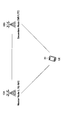
- composition of a radio communications system concerning an embodiment of the present invention.
- FIG. 1 is a configuration example of a wireless communication system according to an embodiment of the present invention.
- the user apparatus 20 includes a base station apparatus 10A and a base station apparatus 10B provided by an LTE system and an NR system, respectively (hereinafter, when the base station apparatus 10A and the base station apparatus 10B are not distinguished from each other, “base May also be referred to as a “station device 10”.) LTE-NR dual connectivity (also referred to as EN-DC) in which the base station device 10A serves as a master base station and the base station device 10B serves as a secondary base station. To support. That is, the user apparatus 20 simultaneously uses a plurality of component carriers provided by the master base station apparatus 10A and the secondary base station apparatus 10B, and performs simultaneous transmission or simultaneous reception with the master base station apparatus 10A and the secondary base station apparatus 10B. It is possible to carry out. In the illustrated embodiment, the LTE system and the NR system each have only one base station, but in general, a large number of base stations are arranged so as to cover the service areas of the LTE system and the NR system.
- LTE-NR dual connectivity LTE-NR dual connectivity
- the user equipment according to the present disclosure is not limited to this, and, for example, the base station apparatus 10A of the NR system is used as the master base station.
- NR-LTE dual connectivity also referred to as NE-DC
- the base station device 10B of the LTE system is a secondary base station, and dual connectivity between a plurality of wireless communication systems using different RATs, That is, it will be easily understood by those skilled in the art that it is applicable to MR-DC.
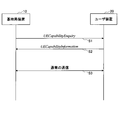
- FIG. 2 is a sequence diagram in which the user apparatus 20 according to the embodiment of the present invention notifies the base station apparatus 10 of terminal capability.
- the base station device 10 transmits a terminal capability notification request to the user device 20, and the user device 20 transmits the terminal capability notification to the base station device 10 in response to the terminal capability notification request.
- the base station device 10 transmits an RRC (Radio Resource Control) message “UECapabilityEnquiry” to the user device 20 as a terminal capability notification request.
- UECapabilityEnquiry is used to obtain information about the wireless access capability of the user equipment 20 in the network.
- the base station apparatus 10 can specify the type of radio access capability included in the information to be notified to the user apparatus 20 by UECapabilityEnquiry.
- the base station device 10 may request notification of the wireless access capability related to the bandwidth combination supported by the user device 20.
- the base station device 10 may request notification of a bandwidth combination supported by the user device 20 for a band combination configured of bands included in the list “requestedFreqBandList” to be notified to the user device 20.
- step S2 the user device 20 transmits an RRC message “UECapabilityInformation” to the base station device 10 as a terminal capability notification.
- the UECapabilityInformation is used to notify the network of information regarding the radio access capability of the user equipment 20.
- the user apparatus 20 transmits, to the base station apparatus 10, information regarding the radio access capability supported by the user apparatus 20, based on the UECapabilityEnquiry received from the base station apparatus 10 in step S1.
- step S3 the base station device 10 performs normal communication adapted to the terminal capability by the UECapabilityInformation received from the user device 20 in step S2. For example, when the UECapabilityInformation received from the user apparatus 20 in step S2 includes a supported bandwidth combination, the base station apparatus 10 performs scheduling within the supported bandwidth combination range.
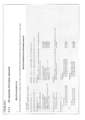
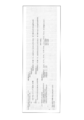
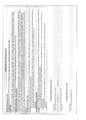
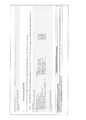
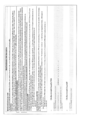
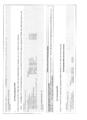
- FIG. 3A, FIG. 3B, FIG. 3C, and FIG. 3D are diagrams showing a notification example (part 1) of the bandwidth combination for the band combination of the inter-band EN-DC and the intra-band EN-DC.
- the user equipment 20 supports as one of the information elements (information element) of the terminal capability transmitted from the user equipment 20 to the base station equipment 10. It includes BandCombinationList, which is a parameter for notifying a bandwidth combination.
- the BandCombinationList includes a supportedBandwidthCombinationSet, which is a field for notifying a bandwidth combination supported by the user apparatus 20.
- the supportedBandwidthCombinationSet is a maximum 32-bit bitmap, and the user equipment 20 can notify up to 32 bandwidth combinations supported by the user equipment 20.
- the field "supportedBandwidthCombinationSet" is applicable to the band combination of NR and LTE and is supported by the user apparatus 20.
- the supported bandwidth combination (supported bandwidth combination set) Support BWCS) is set.
- the first bit (leftmost bit) of the bitmap of the supportedBandwidthCombinationSet corresponds to the bandwidth combination #0 (BWCS#0), and the second bit corresponds to the bandwidth combination #1 (BWCS#1). If the bit is set to 1, the user equipment 20 supports the corresponding bandwidth combination.
- User equipment 20 may support.
- the parameter supportedBandwidthCombinationSetEUTRA is a field included in CA-ParametersEUTRA, which is one of the information elements (information element) of the terminal capability transmitted from the user apparatus 20 to the base station apparatus 10.
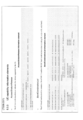
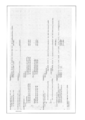
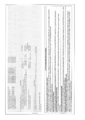
- FIG. 4A, FIG. 4B, FIG. 4C, FIG. 4D, and FIG. 4E are diagrams showing a notification example (No. 2) of the bandwidth combination for the band combination of the inter-band EN-DC and the intra-band EN-DC.
- the BandCombinationList which is a parameter for notifying the bandwidth combination supported by the user equipment 20, is in the band supported by the user equipment 20.
- the field includes supportedBandwidthCombinationSetIntraMRDC, which is a field for notifying a bandwidth combination for the MR-DC band combination.
- a bandwidth combination supported by the user equipment 20 that is applicable to the NR and LTE band combination is set in this field.
- the first bit (leftmost bit) of the bitmap of the supportedBandwidthCombinationSetIntraMRDC corresponds to the bandwidth combination #0 (BWCS#0), and the second bit corresponds to the bandwidth combination #1 (BWCS#1). If the bit is set to 1, the user equipment 20 supports the corresponding bandwidth combination.
- the supported bandwidth combinations are the NR part of the bandwidth combination indicated by supportedBandwidthCombinationSetNR and the E-UTRA part of the E-UTRA part of the bandwidth combination indicated by supportedBandwidthCombinationSetEUTRA. any combination).
- the parameter supportedBandwidthCombinationEUTRA is a field included in CA-ParametersEUTRA which is one of the information elements (information element) of the terminal capability transmitted from the user apparatus 20 to the base station apparatus 10.
- the parameter supportedBandwidthCombinationSetNR is a field included in CA-ParametersNR, which is one of the information elements (information element) of the terminal capability transmitted from the user apparatus 20 to the base station apparatus 10.
- the name of the parameter is not limited to supportedBandwidthCombinationSetNR and may be another name.
- the base station device 10 and the user device 20 each include at least a function of implementing the embodiment. However, each of the base station device 10 and the user device 20 may be provided with only a part of the functions in the embodiment.
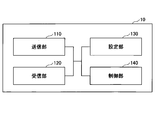
- FIG. 5 is a diagram showing an example of a functional configuration of the base station device 10.
- the base station device 10 includes a transmission unit 110, a reception unit 120, a setting unit 130, and a control unit 140.
- the functional configuration shown in FIG. 5 is merely an example. As long as the operation according to the embodiment of the present invention can be executed, the function categories and the names of the function units may be any names.
- the transmitting unit 110 includes a function of generating a signal to be transmitted to the user device 20 side and wirelessly transmitting the signal.
- the reception unit 120 includes a function of receiving various signals transmitted from the user device 20 and acquiring, for example, information of a higher layer from the received signals. Further, the transmission unit 110 transmits a message for requesting a terminal capability notification and information indicating UL or DL scheduling to the user device 20, and the reception unit 120 receives a message related to the terminal capability notification from the user device 20.
- the setting unit 130 stores preset setting information and various setting information to be transmitted to the user device 20.
- the contents of the setting information are, for example, information on band combinations, information on terminal capabilities, and the like.
- the control unit 140 receives the terminal capability notification request message to the user apparatus 20 in the base station apparatus 10, for example, the control related to the transmission of UECapabilityEnquiry described in the embodiment, and the terminal capability notification from the user apparatus 20, and It controls to execute communication according to the terminal capability.
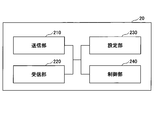
- FIG. 6 is a diagram showing an example of a functional configuration of the user device 20.
- the user device 20 includes a transmission unit 210, a reception unit 220, a setting unit 230, and a control unit 240.
- the functional configuration shown in FIG. 6 is merely an example. As long as the operation according to the embodiment of the present invention can be executed, the function categories and the names of the function units may be any names.
- the transmitter 210 creates a transmission signal from the transmission data and wirelessly transmits the transmission signal.
- the receiving unit 220 wirelessly receives various signals and acquires signals of higher layers from the received physical layer signals. Further, the receiving unit 120 receives a message regarding a terminal capability notification request and information indicating UL or DL scheduling from the base station device 10.
- the setting unit 230 stores various setting information received from the base station device 10 by the receiving unit 220.
- the setting unit 230 also stores preset setting information.
- the contents of the setting information are, for example, information on band combination, information on terminal capability notification, and the like.
- the control unit 240 performs control related to generation and transmission of a terminal capability notification message transmitted from the user device 20 to the base station device 10, for example, UECapabilityInformation described in the embodiment.
- the transmission unit 210 may include a functional unit related to the transmission of the terminal capability notification message in the control unit 240
- the reception unit 220 may include a functional unit related to the reception of the terminal capability notification request message in the control unit 240.
- each functional block may be realized by using one device physically or logically coupled, or directly or indirectly (for example, two or more devices physically or logically separated). , Wired, wireless, etc.) and may be implemented using these multiple devices.
- the functional block may be implemented by combining the one device or the plurality of devices with software.
- Functions include judgment, decision, judgment, calculation, calculation, processing, derivation, investigation, search, confirmation, reception, transmission, output, access, resolution, selection, selection, establishment, comparison, assumption, expectation, observation, Broadcasting, notifying, communicating, forwarding, configuring, reconfiguring, allocating, mapping, assigning, etc., but not limited to these.
- I can't.
- functional blocks (components) that function transmission are called a transmitting unit and a transmitter.
- the implementation method is not particularly limited.
- the base station device 10, the user device 20, and the like according to the embodiment of the present disclosure may function as a computer that performs the process of the wireless communication method of the present disclosure.
- FIG. 7 is a diagram illustrating an example of a hardware configuration of the base station device 10 and the user device 20 according to the embodiment of the present disclosure.
- the base station device 10 and the user device 20 described above are physically configured as a computer device including a processor 1001, a storage device 1002, an auxiliary storage device 1003, a communication device 1004, an input device 1005, an output device 1006, a bus 1007, and the like. May be done.
- the word “apparatus” can be read as a circuit, device, unit, or the like.
- the hardware configurations of the base station device 10 and the user device 20 may be configured to include one or a plurality of each device illustrated in the figure, or may be configured not to include some devices.
- Each function in the base station device 10 and the user device 20 causes a predetermined software (program) to be loaded onto hardware such as the processor 1001, the storage device 1002, etc., so that the processor 1001 performs an arithmetic operation and communication by the communication device 1004. It is realized by controlling or at least one of reading and writing of data in the storage device 1002 and the auxiliary storage device 1003.
- the processor 1001 operates an operating system to control the entire computer, for example.
- the processor 1001 may be configured by a central processing unit (CPU) including an interface with peripheral devices, a control device, a calculation device, a register, and the like.
- CPU central processing unit
- the control unit 140, the control unit 240, and the like described above may be realized by the processor 1001.
- the processor 1001 reads a program (program code), a software module, data or the like from at least one of the auxiliary storage device 1003 and the communication device 1004 to the storage device 1002, and executes various processes according to these.
- a program that causes a computer to execute at least part of the operations described in the above-described embodiments is used.
- the control unit 140 of the base station device 10 illustrated in FIG. 5 may be realized by a control program stored in the storage device 1002 and operated by the processor 1001.
- the control unit 240 of the user device 20 illustrated in FIG. 6 may be realized by a control program stored in the storage device 1002 and operated by the processor 1001.
- the various processes described above are executed by one processor 1001, they may be executed simultaneously or sequentially by two or more processors 1001.
- the processor 1001 may be implemented by one or more chips.
- the program may be transmitted from the network via an electric communication line.
- the storage device 1002 is a computer-readable recording medium, and is, for example, at least one of ROM (Read Only Memory), EPROM (Erasable Programmable ROM), EEPROM (ElectricallyErasable Programmable ROM), RAM (Random Access Memory), and the like. It may be configured.
- the storage device 1002 may be called a register, a cache, a main memory (main storage device), or the like.
- the storage device 1002 can store an executable program (program code), a software module, or the like for implementing the communication method according to the embodiment of the present disclosure.
- the auxiliary storage device 1003 is a computer-readable recording medium, and is, for example, an optical disc such as a CD-ROM (Compact Disc ROM), a hard disk drive, a flexible disc, a magneto-optical disc (for example, a compact disc, a digital versatile disc, a Blu disc). -Ray disk), smart card, flash memory (eg card, stick, key drive), floppy disk, magnetic strip, etc.
- the auxiliary storage device 1003 may be called an auxiliary storage device.
- the above-described storage medium may be, for example, a database including at least one of the storage device 1002 and the auxiliary storage device 1003, a server, or another appropriate medium.
- the communication device 1004 is hardware (transmission/reception device) for performing communication between computers via at least one of a wired network and a wireless network, and is also called, for example, a network device, a network controller, a network card, a communication module, or the like.
- the communication device 1004 includes, for example, a high frequency switch, a duplexer, a filter, a frequency synthesizer, etc. in order to realize at least one of a frequency division duplex (FDD: Frequency Division Duplex) and a time division duplex (TDD: Time Division Duplex). May be composed of
- FDD Frequency Division Duplex
- TDD Time Division Duplex
- the transmitter/receiver may be implemented by physically or logically separating the transmitter and the receiver.
- the input device 1005 is an input device (eg, keyboard, mouse, microphone, switch, button, sensor, etc.) that receives an input from the outside.
- the output device 1006 is an output device (for example, a display, a speaker, an LED lamp, etc.) that outputs to the outside.
- the input device 1005 and the output device 1006 may be integrated (for example, a touch panel).
- each device such as the processor 1001 and the storage device 1002 is connected by a bus 1007 for communicating information.
- the bus 1007 may be configured using a single bus, or may be configured using different buses for each device.
- the base station device 10 and the user device 20 include a microprocessor, a digital signal processor (DSP: Digital Signal Processor), an ASIC (Application Specific Integrated Circuit), a PLD (Programmable Logic Device), an FPGA (Field Programmable Gate Array), and the like. It may be configured to include hardware, and the hardware may implement part or all of each functional block. For example, the processor 1001 may be implemented using at least one of these hardware.
- DSP Digital Signal Processor
- ASIC Application Specific Integrated Circuit
- PLD Programmable Logic Device
- FPGA Field Programmable Gate Array
- a receiving unit that receives band information of a first radio access technology (RAT) and a second RAT from a base station device, and the first RAT. And a first parameter indicating a supported bandwidth combination (supported BWCS) for the portion of the first RAT for inter-band dual connectivity of the second RAT (inter-band EN-DC).
- RAT and the inter-band EN-DC of the second RAT the supported BWCS for the portion of the second RAT is indicated, and the intra-band dual connectivity of the first RAT and the second RAT is indicated.
- In-band EN-DC indicates supported BWCS applicable to the band combination of the first RAT and the second RAT, the inter-band EN-DC and the in-band EN-DC.
- the inter-band EN-DC For dual connectivity of the first RAT and the second RAT comprising a second parameter indicating a supported BWCS over all bands of the inter-band EN-DC and the in-band EN-DC.
- the portion of the second RAT of the BWCS indicated by the second parameter and the first RAT of the BWCS indicated by the first parameter For the band combination of the inter-band EN-DC, the portion of the second RAT of the BWCS indicated by the second parameter and the first RAT of the BWCS indicated by the first parameter.
- a transmitting unit that transmits terminal capability information including the determined first parameter and the determined second parameter to the base station apparatus.
- a user equipment is provided.
- a receiving unit that receives information on the bands of the first radio access technology (RAT) and the second RAT from the base station apparatus, the first RAT and the second A first parameter indicating a supported bandwidth combination (supported BWCS) for the portion of the first RAT for inter-band dual connectivity of the RAT (inter-band EN-DC), the first RAT and the first parameter.
- a second parameter indicating the supported BWCS for the portion of the second RAT for in-band dual connectivity of two RATs (in-band EN-DC) and the first parameter for the in-band EN-DC.
- a third parameter indicating the supported BWCS across all of the inter-band EN-DC and the intra-band EN-DC bands, and here for the inter-band EN-DC band combination. Any combination of the portion of the second RAT of the BWCS indicated by the second parameter and the portion of the first RAT of the BWCS indicated by the first parameter is supported.
- a user apparatus including a control unit and a transmission unit that transmits terminal capability information including the determined first parameter, second parameter, and third parameter to the base station device.
- the operation of the plurality of functional units may be physically performed by one component, or the operation of one functional unit may be physically performed by the plurality of components.
- the order of processing may be changed as long as there is no contradiction.
- the base station apparatus 10 and the user apparatus 20 have been described using functional block diagrams for convenience of processing description, such an apparatus may be realized by hardware, software, or a combination thereof.
- the software operated by the processor included in the base station device 10 according to the embodiment of the present invention and the software operated by the processor included in the user device 20 according to the embodiment of the present invention are respectively a random access memory (RAM), a flash memory, and a read memory. It may be stored in a dedicated memory (ROM), EPROM, EEPROM, register, hard disk (HDD), removable disk, CD-ROM, database, server, or any other suitable storage medium.
- the notification of information is not limited to the mode/embodiment described in the present disclosure, and may be performed using another method.
- information is notified by physical layer signaling (for example, DCI (Downlink Control Information), UCI (Uplink Control Information)), upper layer signaling (for example, RRC (Radio Resource Control) signaling, MAC (Medium Access Control) signaling, It may be implemented by broadcast information (MIB (Master Information Block), SIB (System Information Block)), other signals, or a combination thereof, and RRC signaling may be called an RRC message, for example, RRC message. It may be a connection setup (RRC Connection Setup) message, an RRC connection reconfiguration message, or the like.
- LTE Long Term Evolution
- LTE-A Long Term Evolution-Advanced
- SUPER 3G IMT-Advanced
- 4G fourth generation mobile communication system
- 5G 5th generation mobile communication system
- FRA Full Radio Access
- NR new Radio
- W-CDMA registered trademark
- GSM registered trademark
- CDMA2000 Code Division Multiple Access 2000
- UMB Universal Mobile Broadband
- IEEE 802.11 Wi-Fi (registered trademark)
- IEEE 802.16 WiMAX (registered trademark)
- IEEE 802.20 UWB (Ultra-WideBand)
- Bluetooth registered trademark
- other systems using appropriate systems, and extensions based on these It may be applied to at least one of the next-generation systems.
- a plurality of systems may be combined and applied (for example, a combination of at least one of LTE and LTE-A and 5G).
- the specific operation that is assumed to be performed by the base station device 10 in this specification may be performed by its upper node in some cases.
- various operations performed for communication with the user device 20 are other than the base station device 10 and the base station device 10. It is clear that it can be performed by at least one of the network nodes of (for example, but not limited to, MME or S-GW, etc.).
- the other network node may be a combination of a plurality of other network nodes (for example, MME and S-GW). Good.
- Information, signals, etc. described in the present disclosure may be output from the upper layer (or lower layer) to the lower layer (or upper layer). Input/output may be performed via a plurality of network nodes.
- Information that has been input and output may be stored in a specific location (for example, memory), or may be managed using a management table. Information that is input/output may be overwritten, updated, or added. The output information and the like may be deleted. The input information and the like may be transmitted to another device.
- the determination in the present disclosure may be performed by a value (0 or 1) represented by 1 bit, may be performed by a Boolean value (Boolean: true or false), and may be performed by comparing numerical values (for example, , Comparison with a predetermined value).
- software, instructions, information, etc. may be transmitted and received via a transmission medium.
- the software uses a wired technology (coaxial cable, optical fiber cable, twisted pair, digital subscriber line (DSL: Digital Subscriber Line), etc.) and/or wireless technology (infrared, microwave, etc.) websites, When sent from a server, or other remote source, at least one of these wired and wireless technologies is included within the definition of transmission medium.
- wired technology coaxial cable, optical fiber cable, twisted pair, digital subscriber line (DSL: Digital Subscriber Line), etc.
- wireless technology infrared, microwave, etc.
- data, instructions, commands, information, signals, bits, symbols, chips, etc. that may be referred to throughout the above description include voltage, current, electromagnetic waves, magnetic fields or magnetic particles, optical fields or photons, or any of these. May be represented by a combination of
- At least one of the channel and the symbol may be a signal (signaling).
- the signal may also be a message.
- a component carrier CC may be called a carrier frequency, a cell, a frequency carrier, or the like.
- system and “network” used in this disclosure are used interchangeably.
- the information, parameters, etc. described in the present disclosure may be represented by using an absolute value, may be represented by using a relative value from a predetermined value, or by using other corresponding information. May be represented.
- the radio resources may be those indicated by the index.
- base station Base Station
- radio base station base station
- base station device fixed station
- NodeB NodeB
- eNodeB eNodeB
- GNB nodeB
- access point access point
- transmission point transmission point
- reception point transmission/reception point
- cell cell
- cell group carrier
- component carrier component carrier
- a base station can accommodate one or more (eg, three) cells.
- a base station accommodates multiple cells, the entire coverage area of the base station can be divided into multiple smaller areas, each smaller area being defined by a base station subsystem (eg, indoor small base station (RRH: It is also possible to provide communication services by Remote Radio Head).
- RRH indoor small base station
- the term "cell” or “sector” means a part or the whole coverage area of at least one of the base station and the base station subsystem that perform communication services in this coverage. Refers to.
- MS Mobile Station
- UE User Equipment
- Mobile stations are defined by those skilled in the art as subscriber stations, mobile units, subscriber units, wireless units, remote units, mobile devices, wireless devices, wireless communication devices, remote devices, mobile subscriber stations, access terminals, mobile terminals, wireless. It may also be referred to as a terminal, remote terminal, handset, user agent, mobile client, client, or some other suitable term.
- At least one of the base station and the mobile station may be called a transmission device, a reception device, a communication device, or the like.
- the base station and the mobile station may be a device mounted on the mobile body, the mobile body itself, or the like.
- the moving body may be a vehicle (eg, car, airplane, etc.), an unmanned moving body (eg, drone, self-driving car, etc.), or a robot (manned type or unmanned type).
- At least one of the base station and the mobile station also includes a device that does not necessarily move during communication operation.
- at least one of the base station and the mobile station may be an IoT (Internet of Things) device such as a sensor.
- IoT Internet of Things
- determining and “determining” as used in this disclosure may encompass a wide variety of actions.
- “Judgment” and “decision” are, for example, judgment, calculating, computing, processing, deriving, investigating, and looking up, search, inquiry. (Eg, searching in a table, database, or another data structure), considering ascertaining as “judging” or “deciding”, and the like.
- “decision” and “decision” include receiving (eg, receiving information), transmitting (eg, transmitting information), input (input), output (output), access (accessing) (for example, accessing data in a memory) may be regarded as “judging” or “deciding”.
- judgment and “decision” are considered to be “judgment” and “decision” when things such as resolving, selecting, choosing, selecting, establishing, and comparing are done. May be included. That is, the “judgment” and “decision” may include considering some action as “judgment” and “decision”. In addition, “determination (decision)” may be read as “assuming”, “expecting”, “considering”, and the like.
- connection means any direct or indirect connection or coupling between two or more elements, and It can include the presence of one or more intermediate elements between two elements that are “connected” or “coupled.”
- the connections or connections between the elements may be physical, logical, or a combination thereof.
- connection may be read as “access”.
- two elements are in the radio frequency domain, with at least one of one or more wires, cables and printed electrical connections, and as some non-limiting and non-exhaustive examples. , Can be considered to be “connected” or “coupled” to each other, such as with electromagnetic energy having wavelengths in the microwave and light (both visible and invisible) regions.
- the reference signal may be abbreviated as RS (Reference Signal), or may be referred to as a pilot (Pilot) depending on the applied standard.
- RS Reference Signal
- Pilot pilot
- the phrase “based on” does not mean “based only on,” unless expressly specified otherwise. In other words, the phrase “based on” means both "based only on” and “based at least on.”
- references to elements using designations such as “first”, “second”, etc. used in this disclosure does not generally limit the amount or order of those elements. These designations may be used in this disclosure as a convenient way to distinguish between two or more elements. Thus, references to the first and second elements do not mean that only two elements may be employed, or that the first element must precede the second element in any way.
- a radio frame may be composed of one or more frames in the time domain. Each frame or frames in the time domain may be referred to as a subframe. A subframe may also be composed of one or more slots in the time domain. A subframe may have a fixed time length (eg, 1 ms) that does not depend on numerology.
- Numerology may be a communication parameter applied to at least one of transmission and reception of a certain signal or channel.
- Numerology includes, for example, subcarrier spacing (SCS: SubCarrier Spacing), bandwidth, symbol length, cyclic prefix length, transmission time interval (TTI: Transmission Time Interval), number of symbols per TTI, radio frame configuration, transceiver At least one of a specific filtering process performed in the frequency domain and a specific windowing process performed by the transceiver in the time domain may be shown.
- a slot may be composed of one or more symbols (OFDM (Orthogonal Frequency Division Multiplexing) symbol, SC-FDMA (Single Carrier Frequency Division Multiple Access) symbol, etc.) in the time domain.
- a slot may be a time unit based on numerology.
- a slot may include multiple minislots. Each minislot may be composed of one or more symbols in the time domain. The minislot may also be called a subslot. Minislots may be configured with fewer symbols than slots.
- a PDSCH (or PUSCH) transmitted in a time unit larger than a minislot may be referred to as PDSCH (or PUSCH) mapping type A.
- the PDSCH (or PUSCH) transmitted using the minislot may be referred to as PDSCH (or PUSCH) mapping type B.
- Radio frame, subframe, slot, minislot, and symbol all represent the time unit for signal transmission. Radio frames, subframes, slots, minislots, and symbols may have different names corresponding to them.
- one subframe may be called a transmission time interval (TTI)
- TTI transmission time interval
- TTI transmission time interval
- TTI transmission time interval
- TTI transmission time interval
- TTI means, for example, a minimum time unit of scheduling in wireless communication.
- the base station performs scheduling to allocate radio resources (frequency bandwidth that can be used in each user device 20, transmission power, etc.) to each user device 20 in units of TTI.
- the definition of TTI is not limited to this.
- the TTI may be a transmission time unit of a channel-encoded data packet (transport block), code block, codeword, or the like, or may be a processing unit of scheduling, link adaptation, or the like.
- the time interval eg, the number of symbols
- the transport block, code block, codeword, etc. may be shorter than the TTI.
- one slot or one minislot is called a TTI
- one or more TTIs may be the minimum time unit for scheduling.
- the number of slots (the number of mini-slots) forming the minimum time unit of the scheduling may be controlled.
- a TTI having a time length of 1 ms may be called a normal TTI (TTI in LTE Rel. 8-12), a normal TTI, a long TTI, a normal subframe, a normal subframe, a long subframe, a slot, or the like.
- a TTI shorter than the normal TTI may be called a shortened TTI, a short TTI, a partial TTI (partial or fractional TTI), a shortened subframe, a short subframe, a minislot, a subslot, a slot, and the like.
- a long TTI (eg, normal TTI, subframe, etc.) may be read as a TTI having a time length exceeding 1 ms, and a short TTI (eg, shortened TTI, etc.) is less than the TTI length of the long TTI and 1 ms. It may be read as a TTI having the above TTI length.
- a resource block is a resource allocation unit in the time domain and the frequency domain, and may include one or a plurality of continuous subcarriers in the frequency domain.
- the number of subcarriers included in the RB may be the same regardless of the numerology, and may be 12, for example.
- the number of subcarriers included in the RB may be determined based on numerology.
- the time domain of the RB may include one or more symbols, and may be 1 slot, 1 minislot, 1 subframe, or 1 TTI in length.
- One TTI, one subframe, etc. may be configured with one or a plurality of resource blocks.
- one or more RBs include a physical resource block (PRB: Physical RB), a subcarrier group (SCG: Sub-Carrier Group), a resource element group (REG: Resource Element Group), a PRB pair, an RB pair, etc. May be called.
- PRB Physical resource block
- SCG Sub-Carrier Group
- REG Resource Element Group
- a resource block may be composed of one or more resource elements (RE: Resource Element).
- RE Resource Element
- 1 RE may be a radio resource area of 1 subcarrier and 1 symbol.
- a bandwidth part (may also be called a partial bandwidth) may represent a subset of consecutive common RBs (common resource blocks) for a certain numerology in a certain carrier.
- the common RB may be specified by the index of the RB based on the common reference point of the carrier.
- PRBs may be defined in a BWP and numbered within the BWP.
- BWP may include BWP for UL (UL BWP) and BWP for DL (DL BWP).
- BWP for UL
- DL BWP DL BWP
- one or more BWPs may be set in one carrier.
- At least one of the configured BWPs may be active, and the UE does not have to expect to send and receive a given signal/channel outside the active BWP.
- “cell”, “carrier”, and the like in the present disclosure may be read as “BWP”.
- the structure of the wireless frame, subframe, slot, minislot, symbol, etc. described above is just an example.
- the number of subframes included in a radio frame, the number of slots per subframe or radio frame, the number of minislots included in a slot, the number of symbols and RBs included in a slot or minislot, and included in RBs The number of subcarriers, the number of symbols in the TTI, the symbol length, the cyclic prefix (CP: Cyclic Prefix) length, and the like can be variously changed.
- the term “A and B are different” may mean “A and B are different from each other”.
- the term may mean that “A and B are different from C”.
- the terms “remove”, “coupled” and the like may be construed similarly as “different”.
- the notification of the predetermined information (for example, the notification of “being X”) is not limited to the explicit notification, and is performed implicitly (for example, the notification of the predetermined information is not performed). Good.
- the transmission unit 210 and the reception unit 220 are examples of the communication unit.
- the MN is an example of a first base station device.
- the SN is an example of the second base station device.
- supportedBandwidthCombinationSetEUTRA is an example of the first parameter
- supportedBandwidthCombinationSet and supportedBandwidthInbetthWidthCombinationSetNR are examples of the second parameter
- BthdBidbetthSubbindSetSetNR is an example of the second parameter.
- LTE is an example of the first RAT
- NR is an example of the second RAT.
Landscapes
- Engineering & Computer Science (AREA)
- Computer Networks & Wireless Communication (AREA)
- Signal Processing (AREA)
- Databases & Information Systems (AREA)
- Mobile Radio Communication Systems (AREA)
Abstract
Description
図3A、図3B、図3C、及び図3Dは、バンド間EN-DCとバンド内EN-DCのバンドコンビネーションに対するバンド幅コンビネーションの通知例(その1)を示す図である。
図4A、図4B、図4C、図4D、及び図4Eは、バンド間EN-DCとバンド内EN-DCのバンドコンビネーションに対するバンド幅コンビネーションの通知例(その2)を示す図である。
次に、これまでに説明した処理及び動作を実行する基地局装置10及びユーザ装置20の機能構成例を説明する。基地局装置10及びユーザ装置20はそれぞれ、少なくとも実施例を実施する機能を含む。ただし、基地局装置10及びユーザ装置20はそれぞれ、実施例の中の一部の機能のみを備えることとしてもよい。
上記実施形態の説明に用いたブロック図(図5及び図6)は、機能単位のブロックを示している。これらの機能ブロック(構成部)は、ハードウェア及びソフトウェアの少なくとも一方の任意の組み合わせによって実現される。また、各機能ブロックの実現方法は特に限定されない。すなわち、各機能ブロックは、物理的又は論理的に結合した1つの装置を用いて実現されてもよいし、物理的又は論理的に分離した2つ以上の装置を直接的又は間接的に(例えば、有線、無線などを用いて)接続し、これら複数の装置を用いて実現されてもよい。機能ブロックは、上記1つの装置又は上記複数の装置にソフトウェアを組み合わせて実現されてもよい。
以上、説明したように、本発明の実施形態によれば、第1の無線アクセス技術(RAT)と第2のRATのバンドの情報を基地局装置から受信する受信部と、前記第1のRATと前記第2のRATのバンド間デュアルコネクティビティ(バンド間EN-DC)に対する、前記第1のRATの部分に対するサポートされるバンド幅コンビネーション(被サポートBWCS)を示す第1のパラメータと、前記第1のRATと前記第2のRATの前記バンド間EN-DCに対しては、前記第2のRATの部分に対する被サポートBWCSを示し、前記第1のRATと前記第2のRATのバンド内デュアルコネクティビティ(バンド内EN-DC)に対しては、前記第1のRATと前記第2のRATのバンドコンビネーションに適用可能なサポートされるBWCSを示し、前記バンド間EN-DCおよび前記バンド内EN-DCから成る前記第1のRATと前記第2のRATのデュアルコネクティビティに対しては、前記バンド間EN-DCおよび前記バンド内EN-DCのバンドのすべてにわたる被サポートBWCSを示す、第2のパラメータと、ここで、前記バンド間EN-DCのバンドコンビネーションに対して、前記第2のパラメータによって示されるBWCSの前記第2のRATの部分と、前記第1のパラメータによって示されるBWCSの第1のRATの部分との任意の組合せがサポートされる、を決定する制御部と、決定した前記第1のパラメータと前記第2のパラメータを含む端末能力情報を前記基地局装置に送信する送信部とを有するユーザ装置が提供される。
以上、本発明の実施の形態を説明してきたが、開示される発明はそのような実施形態に限定されず、当業者は様々な変形例、修正例、代替例、置換例等を理解するであろう。発明の理解を促すため具体的な数値例を用いて説明がなされたが、特に断りのない限り、それらの数値は単なる一例に過ぎず適切な如何なる値が使用されてもよい。上記の説明における項目の区分けは本発明に本質的ではなく、2以上の項目に記載された事項が必要に応じて組み合わせて使用されてよいし、ある項目に記載された事項が、別の項目に記載された事項に(矛盾しない限り)適用されてよい。機能ブロック図における機能部又は処理部の境界は必ずしも物理的な部品の境界に対応するとは限らない。複数の機能部の動作が物理的には1つの部品で行われてもよいし、あるいは1つの機能部の動作が物理的には複数の部品により行われてもよい。実施の形態で述べた処理手順については、矛盾の無い限り処理の順序を入れ替えてもよい。処理説明の便宜上、基地局装置10及びユーザ装置20は機能的なブロック図を用いて説明されたが、そのような装置はハードウェアで、ソフトウェアで又はそれらの組み合わせで実現されてもよい。本発明の実施の形態に従って基地局装置10が有するプロセッサにより動作するソフトウェア及び本発明の実施の形態に従ってユーザ装置20が有するプロセッサにより動作するソフトウェアはそれぞれ、ランダムアクセスメモリ(RAM)、フラッシュメモリ、読み取り専用メモリ(ROM)、EPROM、EEPROM、レジスタ、ハードディスク(HDD)、リムーバブルディスク、CD-ROM、データベース、サーバその他の適切な如何なる記憶媒体に保存されてもよい。
200 ユーザ装置
110 送信部
120 受信部
130 設定部
140 制御部
200 ユーザ装置
210 送信部
220 受信部
230 設定部
240 制御部
1001 プロセッサ
1002 記憶装置
1003 補助記憶装置
1004 通信装置
1005 入力装置
1006 出力装置
Claims (4)
- 第1の無線アクセス技術(RAT)と第2のRATのバンドの情報を基地局装置から受信する受信部と、
前記第1のRATと前記第2のRATのバンド間デュアルコネクティビティ(バンド間EN-DC)に対する、前記第1のRATの部分に対するサポートされるバンド幅コンビネーションを示す第1のパラメータと、
前記第1のRATと前記第2のRATのバンド間EN-DCおよび前記バンド内EN-DCから成る前記第1のRATと前記第2のRATのデュアルコネクティビティに対しては、前記バンド間EN-DCおよび前記バンド内EN-DCのバンドのすべてにわたるサポートされるバンド幅コンビネーションを示す、第2のパラメータと、
ここで、前記バンド間EN-DCのバンドコンビネーションに対して、前記第2のパラメータによって示されるバンド幅コンビネーションの前記第2のRATの部分と、前記第1のパラメータによって示されるバンド幅コンビネーションの第1のRATの部分との任意の組合せがサポートされる、
を決定する制御部と、
決定した前記第1のパラメータと前記第2のパラメータを含む端末能力情報を前記基地局装置に送信する送信部とを有する、
ユーザ装置。 - 第1の無線アクセス技術(RAT)と第2のRATのバンドの情報を基地局装置から受信する受信部と、
前記第1のRATと前記第2のRATのバンド間デュアルコネクティビティ(バンド間EN-DC)に対する、前記第1のRATの部分に対するサポートされるバンド幅コンビネーションを示す第1のパラメータと、
前記第1のRATと前記第2のRATのバンド内デュアルコネクティビティ(バンド内EN-DC)に対する、前記第2のRATの部分に対するサポートされるバンド幅コンビネーションを示す第2のパラメータと、
前記バンド間EN-DCおよび前記バンド内EN-DCから成る前記第1のRATと前記第2のRATのデュアルコネクティビティに対しては、前記バンド間EN-DCおよび前記バンド内EN-DCのバンドのすべてにわたるサポートされるバンド幅コンビネーションを示す、第3のパラメータと、
ここで、前記バンド間EN-DCのバンドコンビネーションに対して、前記第2のパラメータによって示されるバンド幅コンビネーションの前記第2のRATの部分と、前記第1のパラメータによって示されるバンド幅コンビネーションの前記第1のRATの部分との任意の組合せがサポートされる、
を決定する制御部と、
決定した前記第1のパラメータと前記第2のパラメータと前記第3のパラメータを含む端末能力情報を前記基地局装置に送信する送信部とを有する、
ユーザ装置。 - 第1の無線アクセス技術(RAT)と第2のRATのバンドの情報を基地局装置から受信するステップと、
前記第1のRATと前記第2のRATのバンド間デュアルコネクティビティ(バンド間EN-DC)に対する、前記第1のRATの部分に対するサポートされるバンド幅コンビネーションを示す第1のパラメータと、
前記第1のRATと前記第2のRATのバンド間EN-DCおよび前記バンド内EN-DCから成る前記第1のRATと前記第2のRATのデュアルコネクティビティに対しては、前記バンド間EN-DCおよび前記バンド内EN-DCのバンドのすべてにわたるサポートされるバンド幅コンビネーションを示す、第2のパラメータと、
ここで、前記バンド間EN-DCのバンドコンビネーションに対して、前記第2のパラメータによって示されるバンド幅コンビネーションの前記第2のRATの部分と、前記第1のパラメータによって示されるバンド幅コンビネーションの第1のRATの部分との任意の組合せがサポートされる、
を決定するステップと、
決定した前記第1のパラメータと前記第2のパラメータを含む端末能力情報を前記基地局装置に送信するステップとを有する、
ユーザ装置の通信方法。 - 第1の無線アクセス技術(RAT)と第2のRATのバンドの情報を基地局装置から受信するステップと、
前記第1のRATと前記第2のRATのバンド間デュアルコネクティビティ(バンド間EN-DC)に対する、前記第1のRATの部分に対するサポートされるバンド幅コンビネーションを示す第1のパラメータと、
前記第1のRATと前記第2のRATのバンド内デュアルコネクティビティ(バンド内EN-DC)に対する、前記第2のRATの部分に対するサポートされるバンド幅コンビネーションを示す第2のパラメータと、
前記バンド間EN-DCおよび前記バンド内EN-DCから成る前記第1のRATと前記第2のRATのデュアルコネクティビティに対しては、前記バンド間EN-DCおよび前記バンド内EN-DCのバンドのすべてにわたるサポートされるバンド幅コンビネーションを示す、第3のパラメータと、
ここで、前記バンド間EN-DCのバンドコンビネーションに対して、前記第2のパラメータによって示されるバンド幅コンビネーションの前記第2のRATの部分と、前記第1のパラメータによって示されるバンド幅コンビネーションの前記第1のRATの部分との任意の組合せがサポートされる、
を決定するステップと、
決定した前記第1のパラメータと前記第2のパラメータと前記第3のパラメータを含む端末能力情報を前記基地局装置に送信するステップとを有する、
ユーザ装置の通信方法。
Priority Applications (7)
| Application Number | Priority Date | Filing Date | Title |
|---|---|---|---|
| US17/432,299 US12507303B2 (en) | 2019-02-25 | 2019-02-25 | User equipment and communication method |
| JP2021501409A JP7168756B2 (ja) | 2019-02-25 | 2019-02-25 | 端末及び無線通信システム |
| BR112021014302-5A BR112021014302A2 (pt) | 2019-02-25 | 2019-02-25 | Equipamento de usuário e método de comunicação |
| PCT/JP2019/007148 WO2020174552A1 (ja) | 2019-02-25 | 2019-02-25 | ユーザ装置及び通信方法 |
| CA3123766A CA3123766A1 (en) | 2019-02-25 | 2019-02-25 | User equipment and communication method |
| CN201980092781.2A CN113455072B (zh) | 2019-02-25 | 2019-02-25 | 用户装置以及通信方法 |
| EP19916764.4A EP3934343A4 (en) | 2019-02-25 | 2019-02-25 | USER DEVICE AND COMMUNICATION METHOD |
Applications Claiming Priority (1)
| Application Number | Priority Date | Filing Date | Title |
|---|---|---|---|
| PCT/JP2019/007148 WO2020174552A1 (ja) | 2019-02-25 | 2019-02-25 | ユーザ装置及び通信方法 |
Publications (1)
| Publication Number | Publication Date |
|---|---|
| WO2020174552A1 true WO2020174552A1 (ja) | 2020-09-03 |
Family
ID=72239091
Family Applications (1)
| Application Number | Title | Priority Date | Filing Date |
|---|---|---|---|
| PCT/JP2019/007148 Ceased WO2020174552A1 (ja) | 2019-02-25 | 2019-02-25 | ユーザ装置及び通信方法 |
Country Status (7)
| Country | Link |
|---|---|
| US (1) | US12507303B2 (ja) |
| EP (1) | EP3934343A4 (ja) |
| JP (1) | JP7168756B2 (ja) |
| CN (1) | CN113455072B (ja) |
| BR (1) | BR112021014302A2 (ja) |
| CA (1) | CA3123766A1 (ja) |
| WO (1) | WO2020174552A1 (ja) |
Families Citing this family (3)
| Publication number | Priority date | Publication date | Assignee | Title |
|---|---|---|---|---|
| WO2020199221A1 (zh) * | 2019-04-04 | 2020-10-08 | Oppo广东移动通信有限公司 | 一种资源配置方法、网络设备、终端设备 |
| WO2021162599A1 (en) * | 2020-02-13 | 2021-08-19 | Telefonaktiebolaget Lm Ericsson (Publ) | Ue capability coordination for ne-dc |
| GB2635158A (en) * | 2023-10-31 | 2025-05-07 | Nokia Technologies Oy | Capability indication |
Citations (2)
| Publication number | Priority date | Publication date | Assignee | Title |
|---|---|---|---|---|
| JP2015506136A (ja) * | 2011-12-01 | 2015-02-26 | クゥアルコム・インコーポレイテッドQualcomm Incorporated | キャリアアグリゲーションのための、サポートされるキャリア帯域幅のシグナリング |
| JP2017069910A (ja) * | 2015-10-02 | 2017-04-06 | 株式会社Nttドコモ | ユーザ装置及び能力情報報告方法 |
Family Cites Families (16)
| Publication number | Priority date | Publication date | Assignee | Title |
|---|---|---|---|---|
| US6600917B1 (en) * | 1999-10-04 | 2003-07-29 | Telefonaktiebolaget Lm Ericsson (Publ) | Telecommunications network broadcasting of service capabilities |
| US9237440B2 (en) * | 2013-01-18 | 2016-01-12 | Qualcomm Incorporated | Methods and apparatus for resolving ambiguous user equipment (UE) capability signaling |
| WO2015174904A1 (en) * | 2014-05-16 | 2015-11-19 | Telefonaktiebolaget L M Ericsson (Publ) | Determination of ue band and synchronization capability in dual connectivity |
| JP6457244B2 (ja) * | 2014-11-07 | 2019-01-23 | 株式会社Nttドコモ | ユーザ装置及びデュアルコネクティビティ通信方法 |
| CN112865847B (zh) * | 2015-04-10 | 2023-09-12 | Lg 电子株式会社 | 在无线通信系统中报告信道状态信息的方法及其设备 |
| US20170019944A1 (en) * | 2015-07-14 | 2017-01-19 | Marvell World Trade Ltd. | Dual Connectivity for User Equipment Having One Carrier Sending Capability |
| CN108141332B (zh) * | 2015-07-22 | 2020-12-18 | 瑞典爱立信有限公司 | 在支持载波聚合的无线通信系统中移动用户设备的rf和bb能力的分开报告 |
| JP6093827B1 (ja) * | 2015-09-24 | 2017-03-08 | 株式会社Nttドコモ | ユーザ端末、無線基地局及び無線通信方法 |
| JP6174735B1 (ja) * | 2016-02-04 | 2017-08-02 | 株式会社Nttドコモ | ユーザ装置及び通信方法 |
| WO2017141571A1 (ja) * | 2016-02-19 | 2017-08-24 | 株式会社Nttドコモ | ユーザ装置 |
| US10660025B2 (en) | 2016-06-23 | 2020-05-19 | Htc Corporation | Device and method for handling dual cellular system aggregation |
| US10660114B2 (en) * | 2017-06-15 | 2020-05-19 | Apple Inc. | FDM transmission for inter-RAT dual connectivity UE |
| US10368384B2 (en) * | 2017-08-09 | 2019-07-30 | Nokia Technologies Oy | Asymmetric capability coordination in dual connectivity |
| US11330604B2 (en) * | 2019-01-09 | 2022-05-10 | Qualcomm Incorporated | Half-duplex operation in dual connectivity |
| KR20200099001A (ko) * | 2019-02-13 | 2020-08-21 | 삼성전자주식회사 | 무선 통신 시스템에서 단말 능력을 보고하기 위한 방법 및 장치 |
| US11765574B2 (en) * | 2019-05-02 | 2023-09-19 | Apple Inc. | Advertising user equipment capability |
-
2019
- 2019-02-25 CN CN201980092781.2A patent/CN113455072B/zh active Active
- 2019-02-25 US US17/432,299 patent/US12507303B2/en active Active
- 2019-02-25 EP EP19916764.4A patent/EP3934343A4/en active Pending
- 2019-02-25 BR BR112021014302-5A patent/BR112021014302A2/pt unknown
- 2019-02-25 WO PCT/JP2019/007148 patent/WO2020174552A1/ja not_active Ceased
- 2019-02-25 CA CA3123766A patent/CA3123766A1/en active Pending
- 2019-02-25 JP JP2021501409A patent/JP7168756B2/ja active Active
Patent Citations (2)
| Publication number | Priority date | Publication date | Assignee | Title |
|---|---|---|---|---|
| JP2015506136A (ja) * | 2011-12-01 | 2015-02-26 | クゥアルコム・インコーポレイテッドQualcomm Incorporated | キャリアアグリゲーションのための、サポートされるキャリア帯域幅のシグナリング |
| JP2017069910A (ja) * | 2015-10-02 | 2017-04-06 | 株式会社Nttドコモ | ユーザ装置及び能力情報報告方法 |
Non-Patent Citations (4)
| Title |
|---|
| "3rd Generation Partnership Project; Technical Specification Group Radio Access Network; NR; Radio Resource Control (RRC) protocol specification (Release 15)", 3GPP TS 38.331 V15.4.0, 14 January 2019 (2019-01-14), pages 361 - 365, XP051576862 * |
| 3GPP TS 37.340, September 2018 (2018-09-01) |
| 3GPP TS 38.300, September 2018 (2018-09-01) |
| See also references of EP3934343A4 |
Also Published As
| Publication number | Publication date |
|---|---|
| JPWO2020174552A1 (ja) | 2021-12-16 |
| JP7168756B2 (ja) | 2022-11-09 |
| CN113455072A (zh) | 2021-09-28 |
| EP3934343A1 (en) | 2022-01-05 |
| CN113455072B (zh) | 2024-08-06 |
| CA3123766A1 (en) | 2020-09-03 |
| BR112021014302A2 (pt) | 2021-09-28 |
| EP3934343A4 (en) | 2022-10-05 |
| US12507303B2 (en) | 2025-12-23 |
| US20220346170A1 (en) | 2022-10-27 |
Similar Documents
| Publication | Publication Date | Title |
|---|---|---|
| JP7548654B2 (ja) | 端末及び通信方法 | |
| WO2020129229A1 (ja) | 無線ノード、及び、無線通信方法 | |
| JP7241172B2 (ja) | ユーザ装置及び基地局装置 | |
| JP7241089B2 (ja) | 端末、基地局装置、通信方法、及び無線通信システム | |
| JP7640204B2 (ja) | 端末、基地局及び通信方法 | |
| WO2021171721A1 (ja) | 端末、無線基地局及び無線通信方法 | |
| JP7386223B2 (ja) | 端末、基地局装置、通信方法、及び無線通信システム | |
| WO2020100559A1 (ja) | ユーザ装置及び基地局装置 | |
| WO2020157873A1 (ja) | ユーザ装置及び基地局装置 | |
| WO2020194636A1 (ja) | ユーザ装置 | |
| JP7168756B2 (ja) | 端末及び無線通信システム | |
| WO2020161907A1 (ja) | ユーザ装置 | |
| WO2020171182A1 (ja) | ユーザ装置及び基地局装置 | |
| WO2020157874A1 (ja) | ユーザ装置及び基地局装置 | |
| WO2021014621A1 (ja) | 端末及び通信方法 | |
| WO2020170445A1 (ja) | ユーザ装置及び基地局装置 | |
| JP7520027B2 (ja) | 端末及び通信方法 | |
| WO2020166028A1 (ja) | ネットワークノード | |
| WO2022208635A1 (ja) | 端末及び通信方法 | |
| WO2022208636A1 (ja) | 端末及び通信方法 | |
| WO2020161824A1 (ja) | ユーザ装置及び基地局装置 | |
| WO2020179037A1 (ja) | ユーザ装置及び基地局装置 | |
| WO2020170457A1 (ja) | 端末及び無線通信制御方法 | |
| WO2020166006A1 (ja) | ネットワークノード | |
| JP7491905B2 (ja) | 端末、基地局装置、通信方法及びシステム |
Legal Events
| Date | Code | Title | Description |
|---|---|---|---|
| 121 | Ep: the epo has been informed by wipo that ep was designated in this application |
Ref document number: 19916764 Country of ref document: EP Kind code of ref document: A1 |
|
| ENP | Entry into the national phase |
Ref document number: 2021501409 Country of ref document: JP Kind code of ref document: A |
|
| ENP | Entry into the national phase |
Ref document number: 3123766 Country of ref document: CA |
|
| REG | Reference to national code |
Ref country code: BR Ref legal event code: B01A Ref document number: 112021014302 Country of ref document: BR |
|
| NENP | Non-entry into the national phase |
Ref country code: DE |
|
| ENP | Entry into the national phase |
Ref document number: 112021014302 Country of ref document: BR Kind code of ref document: A2 Effective date: 20210720 |
|
| ENP | Entry into the national phase |
Ref document number: 2019916764 Country of ref document: EP Effective date: 20210927 |