WO2020176754A1 - Method for treating nasal, sinonasal, and nasopharyngeal tissue infection and/or inflammation - Google Patents
Method for treating nasal, sinonasal, and nasopharyngeal tissue infection and/or inflammation Download PDFInfo
- Publication number
- WO2020176754A1 WO2020176754A1 PCT/US2020/020143 US2020020143W WO2020176754A1 WO 2020176754 A1 WO2020176754 A1 WO 2020176754A1 US 2020020143 W US2020020143 W US 2020020143W WO 2020176754 A1 WO2020176754 A1 WO 2020176754A1
- Authority
- WO
- WIPO (PCT)
- Prior art keywords
- administering
- composition
- sinusitis
- once
- day period
- Prior art date
- Legal status (The legal status is an assumption and is not a legal conclusion. Google has not performed a legal analysis and makes no representation as to the accuracy of the status listed.)
- Ceased
Links
Classifications
-
- A—HUMAN NECESSITIES
- A61—MEDICAL OR VETERINARY SCIENCE; HYGIENE
- A61K—PREPARATIONS FOR MEDICAL, DENTAL OR TOILETRY PURPOSES
- A61K9/00—Medicinal preparations characterised by special physical form
- A61K9/0012—Galenical forms characterised by the site of application
- A61K9/0043—Nose
-
- A—HUMAN NECESSITIES
- A61—MEDICAL OR VETERINARY SCIENCE; HYGIENE
- A61K—PREPARATIONS FOR MEDICAL, DENTAL OR TOILETRY PURPOSES
- A61K45/00—Medicinal preparations containing active ingredients not provided for in groups A61K31/00 - A61K41/00
- A61K45/06—Mixtures of active ingredients without chemical characterisation, e.g. antiphlogistics and cardiaca
-
- A—HUMAN NECESSITIES
- A61—MEDICAL OR VETERINARY SCIENCE; HYGIENE
- A61K—PREPARATIONS FOR MEDICAL, DENTAL OR TOILETRY PURPOSES
- A61K31/00—Medicinal preparations containing organic active ingredients
- A61K31/13—Amines
- A61K31/135—Amines having aromatic rings, e.g. ketamine, nortriptyline
- A61K31/137—Arylalkylamines, e.g. amphetamine, epinephrine, salbutamol, ephedrine or methadone
-
- A—HUMAN NECESSITIES
- A61—MEDICAL OR VETERINARY SCIENCE; HYGIENE
- A61K—PREPARATIONS FOR MEDICAL, DENTAL OR TOILETRY PURPOSES
- A61K31/00—Medicinal preparations containing organic active ingredients
- A61K31/21—Esters, e.g. nitroglycerine, selenocyanates
- A61K31/27—Esters, e.g. nitroglycerine, selenocyanates of carbamic or thiocarbamic acids, meprobamate, carbachol, neostigmine
-
- A—HUMAN NECESSITIES
- A61—MEDICAL OR VETERINARY SCIENCE; HYGIENE
- A61K—PREPARATIONS FOR MEDICAL, DENTAL OR TOILETRY PURPOSES
- A61K31/00—Medicinal preparations containing organic active ingredients
- A61K31/33—Heterocyclic compounds
- A61K31/395—Heterocyclic compounds having nitrogen as a ring hetero atom, e.g. guanethidine or rifamycins
- A61K31/41—Heterocyclic compounds having nitrogen as a ring hetero atom, e.g. guanethidine or rifamycins having five-membered rings with two or more ring hetero atoms, at least one of which being nitrogen, e.g. tetrazole
- A61K31/4164—1,3-Diazoles
-
- A—HUMAN NECESSITIES
- A61—MEDICAL OR VETERINARY SCIENCE; HYGIENE
- A61K—PREPARATIONS FOR MEDICAL, DENTAL OR TOILETRY PURPOSES
- A61K31/00—Medicinal preparations containing organic active ingredients
- A61K31/33—Heterocyclic compounds
- A61K31/395—Heterocyclic compounds having nitrogen as a ring hetero atom, e.g. guanethidine or rifamycins
- A61K31/41—Heterocyclic compounds having nitrogen as a ring hetero atom, e.g. guanethidine or rifamycins having five-membered rings with two or more ring hetero atoms, at least one of which being nitrogen, e.g. tetrazole
- A61K31/4164—1,3-Diazoles
- A61K31/4174—Arylalkylimidazoles, e.g. oxymetazolin, naphazoline, miconazole
-
- A—HUMAN NECESSITIES
- A61—MEDICAL OR VETERINARY SCIENCE; HYGIENE
- A61K—PREPARATIONS FOR MEDICAL, DENTAL OR TOILETRY PURPOSES
- A61K31/00—Medicinal preparations containing organic active ingredients
- A61K31/33—Heterocyclic compounds
- A61K31/395—Heterocyclic compounds having nitrogen as a ring hetero atom, e.g. guanethidine or rifamycins
- A61K31/41—Heterocyclic compounds having nitrogen as a ring hetero atom, e.g. guanethidine or rifamycins having five-membered rings with two or more ring hetero atoms, at least one of which being nitrogen, e.g. tetrazole
- A61K31/4196—1,2,4-Triazoles
-
- A—HUMAN NECESSITIES
- A61—MEDICAL OR VETERINARY SCIENCE; HYGIENE
- A61K—PREPARATIONS FOR MEDICAL, DENTAL OR TOILETRY PURPOSES
- A61K31/00—Medicinal preparations containing organic active ingredients
- A61K31/33—Heterocyclic compounds
- A61K31/395—Heterocyclic compounds having nitrogen as a ring hetero atom, e.g. guanethidine or rifamycins
- A61K31/435—Heterocyclic compounds having nitrogen as a ring hetero atom, e.g. guanethidine or rifamycins having six-membered rings with one nitrogen as the only ring hetero atom
- A61K31/44—Non condensed pyridines; Hydrogenated derivatives thereof
- A61K31/4418—Non condensed pyridines; Hydrogenated derivatives thereof having a carbocyclic group directly attached to the heterocyclic ring, e.g. cyproheptadine
-
- A—HUMAN NECESSITIES
- A61—MEDICAL OR VETERINARY SCIENCE; HYGIENE
- A61K—PREPARATIONS FOR MEDICAL, DENTAL OR TOILETRY PURPOSES
- A61K31/00—Medicinal preparations containing organic active ingredients
- A61K31/33—Heterocyclic compounds
- A61K31/395—Heterocyclic compounds having nitrogen as a ring hetero atom, e.g. guanethidine or rifamycins
- A61K31/495—Heterocyclic compounds having nitrogen as a ring hetero atom, e.g. guanethidine or rifamycins having six-membered rings with two or more nitrogen atoms as the only ring heteroatoms, e.g. piperazine or tetrazines
- A61K31/496—Non-condensed piperazines containing further heterocyclic rings, e.g. rifampin, thiothixene or sparfloxacin
-
- A—HUMAN NECESSITIES
- A61—MEDICAL OR VETERINARY SCIENCE; HYGIENE
- A61K—PREPARATIONS FOR MEDICAL, DENTAL OR TOILETRY PURPOSES
- A61K31/00—Medicinal preparations containing organic active ingredients
- A61K31/33—Heterocyclic compounds
- A61K31/395—Heterocyclic compounds having nitrogen as a ring hetero atom, e.g. guanethidine or rifamycins
- A61K31/495—Heterocyclic compounds having nitrogen as a ring hetero atom, e.g. guanethidine or rifamycins having six-membered rings with two or more nitrogen atoms as the only ring heteroatoms, e.g. piperazine or tetrazines
- A61K31/505—Pyrimidines; Hydrogenated pyrimidines, e.g. trimethoprim
- A61K31/506—Pyrimidines; Hydrogenated pyrimidines, e.g. trimethoprim not condensed and containing further heterocyclic rings
-
- A—HUMAN NECESSITIES
- A61—MEDICAL OR VETERINARY SCIENCE; HYGIENE
- A61K—PREPARATIONS FOR MEDICAL, DENTAL OR TOILETRY PURPOSES
- A61K31/00—Medicinal preparations containing organic active ingredients
- A61K31/56—Compounds containing cyclopenta[a]hydrophenanthrene ring systems; Derivatives thereof, e.g. steroids
- A61K31/57—Compounds containing cyclopenta[a]hydrophenanthrene ring systems; Derivatives thereof, e.g. steroids substituted in position 17 beta by a chain of two carbon atoms, e.g. pregnane or progesterone
- A61K31/573—Compounds containing cyclopenta[a]hydrophenanthrene ring systems; Derivatives thereof, e.g. steroids substituted in position 17 beta by a chain of two carbon atoms, e.g. pregnane or progesterone substituted in position 21, e.g. cortisone, dexamethasone, prednisone or aldosterone
-
- A—HUMAN NECESSITIES
- A61—MEDICAL OR VETERINARY SCIENCE; HYGIENE
- A61K—PREPARATIONS FOR MEDICAL, DENTAL OR TOILETRY PURPOSES
- A61K31/00—Medicinal preparations containing organic active ingredients
- A61K31/70—Carbohydrates; Sugars; Derivatives thereof
- A61K31/7042—Compounds having saccharide radicals and heterocyclic rings
- A61K31/7048—Compounds having saccharide radicals and heterocyclic rings having oxygen as a ring hetero atom, e.g. leucoglucosan, hesperidin, erythromycin, nystatin, digitoxin or digoxin
-
- A—HUMAN NECESSITIES
- A61—MEDICAL OR VETERINARY SCIENCE; HYGIENE
- A61K—PREPARATIONS FOR MEDICAL, DENTAL OR TOILETRY PURPOSES
- A61K9/00—Medicinal preparations characterised by special physical form
- A61K9/06—Ointments; Bases therefor; Other semi-solid forms, e.g. creams, sticks, gels
-
- A—HUMAN NECESSITIES
- A61—MEDICAL OR VETERINARY SCIENCE; HYGIENE
- A61P—SPECIFIC THERAPEUTIC ACTIVITY OF CHEMICAL COMPOUNDS OR MEDICINAL PREPARATIONS
- A61P11/00—Drugs for disorders of the respiratory system
-
- A—HUMAN NECESSITIES
- A61—MEDICAL OR VETERINARY SCIENCE; HYGIENE
- A61P—SPECIFIC THERAPEUTIC ACTIVITY OF CHEMICAL COMPOUNDS OR MEDICINAL PREPARATIONS
- A61P11/00—Drugs for disorders of the respiratory system
- A61P11/02—Nasal agents, e.g. decongestants
-
- A—HUMAN NECESSITIES
- A61—MEDICAL OR VETERINARY SCIENCE; HYGIENE
- A61P—SPECIFIC THERAPEUTIC ACTIVITY OF CHEMICAL COMPOUNDS OR MEDICINAL PREPARATIONS
- A61P29/00—Non-central analgesic, antipyretic or antiinflammatory agents, e.g. antirheumatic agents; Non-steroidal antiinflammatory drugs [NSAID]
-
- A—HUMAN NECESSITIES
- A61—MEDICAL OR VETERINARY SCIENCE; HYGIENE
- A61P—SPECIFIC THERAPEUTIC ACTIVITY OF CHEMICAL COMPOUNDS OR MEDICINAL PREPARATIONS
- A61P31/00—Antiinfectives, i.e. antibiotics, antiseptics, chemotherapeutics
-
- A—HUMAN NECESSITIES
- A61—MEDICAL OR VETERINARY SCIENCE; HYGIENE
- A61P—SPECIFIC THERAPEUTIC ACTIVITY OF CHEMICAL COMPOUNDS OR MEDICINAL PREPARATIONS
- A61P31/00—Antiinfectives, i.e. antibiotics, antiseptics, chemotherapeutics
- A61P31/10—Antimycotics
Definitions
- the nasal cavity, sinonasal cavity and nasopharynx are important components of the human respiratory system and can be affected by diseases or conditions requiring medical intervention. Proper and effective treatment of these diseases and conditions is necessary to promote the health of a patient and to avoid complications due to the disease or condition.
- the treatment involves irrigation of a water-based suspension of an antimicrobial or an antifungal in an in-clinic or hospital procedure that can include IV administration, and that may include anesthesia but most often are treated with nasal sprays at home by the patient, often in multiple daily doses.
- oral antibiotics and antifungals are prescribed.
- the present disclosure is directed to methods for treating diseases and conditions of the nasal, sinonasal and nasopharyngeal tissues.
- a method for treating a subject with a disease or condition associated with the nasal, sinonasal or nasopharyngeal tissues includes the step of
- compositions topically to the sinonasal or nasopharyngeal tissue of the subject, wherein the composition is a cream of high viscosity comprising a steroid and/or an agent with antimicrobial activity.
- FIG. l is a bar graph representing the raw symptom severity scores for the 11 patients of Example 2 (F denoting female and M denoting male) with the blue bars representing the severity score prior to treatment and the red bars representing the severity score after treatment.
- FIG. 2 A represents an endoscopic photograph of the sinus of Patient 7 of Example 2 prior to treatment with the cream composition as described in Example 1.
- FIG. 2B represents an endoscopic photograph of the sinus of Patient 7 of Example 2 prior to treatment with the cream composition as described in Example 1 with the circled portion depicting mucus drainage.
- FIG. 2C represents an endoscopic photograph of the sinus of Patient 7 of Example 2 prior to treatment with the cream composition as described in Example 1 with the circled portion depicting hyperemia.
- FIG. 2D represents an endoscopic photograph of the sinus of Patient 7 of Example 2 two months post-treatment with the cream composition as described in Example 1.
- FIG. 3 A represents an endoscopic photograph of the sinus of Patient 11 of Example 2 prior to treatment with the cream composition as described in Example 1.
- FIG. 3B represents an endoscopic photograph of the sinus of Patient 11 of Example 2 two months post-treatment with the cream composition as described in Example 1.
- Fig. 4A represents a histology specimen taken from the lateral aspect of the middle turbinate of Patient 11 of Example 2 stained with haematoxylin and eosin just prior to initial application.
- Fig. 4B represents a histology specimen taken from the lateral aspect of the middle turbinate of Patient 11 of Example 2 stained with haematoxylin and eosin at 2 months post initial application.
- Fig. 5A represents the SNOT-22 scores for Patient 2 of Example 5 before and after treatment.
- Fig. 5B represents the SNOT-22 scores for Patient 3 of Example 5 before and after treatment.
- Fig. 5C represents the SNOT-22 scores for Patient 6 of Example 5 before and after treatment.
- Fig. 5D represents the average SNOT-22 scores for each SNOT-22 metric for Patients 1-8 in Example 5, before and after ( ⁇ 30 days) treatment.
- Fig. 6 represents the total SNOT-22 scores for patients in Example 5 before and after treatment.
- compositions and methods for treating diseases and conditions of the nasal, sinonasal and nasopharyngeal tissues are provided.
- anti-microorganism such as antibacterial and antifungal.
- an effective amount refers to an amount that is sufficient to bring about a desired pharmacologic and/or pharmacodynamic outcome.
- an effective amount for treatment is an amount that can reduce or eliminate symptoms and/or the pathology of an infection or disease.
- Another example is an effective amount to disrupt or eradicate the biofilms protecting a pathogen to effectively eliminate it.
- the terms“patient,”“individual,” and“subject” are used interchangeably herein, and refer to a mammalian subject to be treated, with human patients being preferred.
- the methods of the invention find use in experimental animals, in veterinary application, and in the development of animal models for disease, including, but not limited to, rodents such as mice, rats, guinea pigs, and hamsters, as well as other animals including, but not limited to canines, felines, horses, and primates.
- “Treatment” is an intervention performed with the intention of preventing the development or altering the pathology or symptoms of a disorder. Accordingly,“treatment” can refer to both therapeutic treatment and prophylactic or preventative measures. Those in need of treatment include those already with the disorder as well as those in which the disorder is to be prevented.
- the term“cream” means semisolid preparations containing one or more medicinal agents dissolved or dispersed in either an oil-in-water emulsion or water-in-oil emulsion.
- a“cream” does not include a“gel” which is a semisolid system consisting of dispersions of small or large molecules in an aqueous liquid vehicle rendered jelly like through addition of a gelling agent.
- the term“cream” does not include a thermoreversible gel, a thermoreversible polymer, or a copolymer of polyoxyethylene and polyoxypropylene.
- a method for treating a disease or condition of the nasal, sinonasal or nasopharyngeal tissues can include the step of administering a composition topically to the sinonasal or nasopharyngeal tissue of the subject, wherein the composition is a cream having a high viscosity comprising a steroid and/or an agent with antimicrobial activity.
- the step of applying the composition is performed as a single administration, which, in some instances, is sufficient to provide an effective treatment of a disease or condition of the nasal, sinonasal or nasopharyngeal tissues.
- the step of applying the cream composition is performed only once per, by way of example but not limitation, every 10-21 days, every 21-30 days, every 30 to 60 days, every 60 to 90 days, every 90 days to 180 days, or every 180 days to 365 days. It should be understood that a“single administration” in most instances refers to sequential bilateral administration via intranasal administration.
- the step of applying the cream composition is performed no more than twice per, by way of example but not limitation, 21, 30, 60, 90, 180, or 365 days.
- the step of administering the cream composition of the present disclosure comprises applying the cream composition via a first intranasal administration to the sinus mucosa. This initial application can be performed using a syringe having a tube or other like tool attached. The syringe having a tube or other like tool attached can be guided by a surgical endoscope. The method may then further comprise use of an instrument to spread the cream composition in a manner sufficient to cover the diseased sinus mucosa. These one or more steps can be repeated via a second intranasal administration to ensure bilateral coverage of the sinus cavity.
- the amount of cream composition applied will vary based on extent of the size of the area of the diseased tissue and the size of the patient.
- the composition can be administered in an amount of from about 0.5 cubic centimeters (cc) to about 5 cc per intranasal application or a total application amount to the diseased sinus tissue of from about 1 cc to about 10 cc, but more commonly from about 2 cc to about 4 cc per intranasal application or a total application amount to the diseased tissue of the sinus mucosa from about 4 cc to about 8 cc.
- the amount of the composition administered per intranasal application can be about 0.5 cc, 0.75 cc, 1 cc, 1.25 cc, 1.5 cc, 1.75 cc, 2 cc, 2.25 cc, 2.5 cc, 2.75 cc, 3 cc, 3.25 cc, 3.5 cc, 3.75 cc, 4 cc, 4.5 cc, or 5 cc. It should be understood that for total bilateral application to the disease sinus mucosa, these recited amounts are doubled unless otherwise stated.
- the composition can be administered in an amount from about 0.5 grams (g) to about 5 g per intranasal administration or a total application amount to the diseased tissue of from about 1 g to about 10 g, but more commonly from about 2 g to about 4 g per intranasal administration or a total application amount to the diseased tissue of from about 4 g to about 8 g.
- the amount of the composition can be about 0.5 g, 0.75 g, 1 g, 1.25 g, 1.5 g, 1.75 g, 2 g, 2.25 g, 2.5 g, 2.75 g, 3 g, 3.25 g, 3.5 g, 3.75 g, 4 g, 4.5 g, or 5 g per intranasal administration. It should be understood that for total bilateral application to the disease sinus mucosa, these recited amounts are doubled unless otherwise stated. [0036]
- the compositions and methods of the present disclosure can be used to treat various conditions of the nasal, sinonasal, and nasopharyngeal tissues.
- such conditions of the nasal, sinonasal and nasopharyngeal tissues can include disease, infections, symptoms and combinations thereof.
- diseases or infections can include chronic sinusitis, acute sinusitis,
- mucormycosis polymicrobic sinusitis, nasal polyps, bacterial sinusitis, allergic fungal sinusitis, chronic bacterial sinusitis, chronic allergic fungal sinusitis, and rhinosinusitis.
- methods of the present disclosure can be used for treating the following sinus symptoms: the need to blow the nose, nasal blockage, sneezing, runny nose, cough, post-nasal discharge, thick nasal discharge, ear fullness, dizziness, ear pain, facial pain or pressure, decreased sense of smell or taste, difficulty falling asleep, waking up at night, lack of a good night’s sleep, waking up tired, fatigue, reduced productivity, reduced
- the condition further includes the need to blow the nose, nasal blockage, sneezing, runny nose, cough, post-nasal discharge, thick nasal discharge, ear fullness, dizziness, ear pain, facial pain or pressure, decreased sense of smell or taste, difficulty falling asleep, waking up at night, lack of a good night’s sleep, waking up tired, fatigue, reduced productivity, reduced concentration, frustration, restlessness or irritability, sadness, embarrassment, or a combination thereof.
- these sinus symptoms can occur in conjunction with a disease, infection or other condition or can be conditions to be treated themselves.
- a subject has previously undergone functional endoscopic sinus surgery (FESS) and thereafter developed a chronic inflammatory response.
- FESS functional endoscopic sinus surgery
- a subject for which the present compositions and methods is useful is suffering from chronic allergic fungal sinusitis after FESS.
- the patient is experiencing an exacerbation of symptoms after a period of mild or no symptoms after FESS with or without the use of nasal steroid sprays, oral antibiotics and/or nasal irrigations.
- a subject has had FESS resulting in abnormal nasal tissue, described as hypertrophic, inflammatory, and granulation type tissue.
- the subject’s post-FESS sinusitis was treated with nasal steroid sprays, oral antibiotics and/or nasal irrigations for a period of a year with minimal to no change in disease state prior to performance of the present methods.
- the subject is suffering from chronic sinus inflammation as a result of a bacterial infection.
- the methods of the present disclosure can be performed at the time of FESS.
- the patient has not previously undergone FESS.
- the methods of the present disclosure can be performed during balloon sinus dilation.
- the compositions of the present disclosure can be administered at the time of FESS.
- the compositions of the present disclosure can be administered during balloon sinus dilation. Even in the instance the chronic inflammation is the result of a bacterial infection, cream compositions comprising clotrimazole may be useful as this active agent has been shown to have antibacterial activity in addition to its antimycotic activity against both gram-positive and gram-negative microorganisms.
- clotrimazole has been shown to result in a reduction in Pseudomonas aeruginosa and to have antibacterial activity against Steptococci, Staphylococci, Gardnerella vaginalis and Corynehacteria.
- the patient has no detectable microbial infection.
- the patient has a detectable microbial infection, such as bacterial or fungal infection.
- the compositions and methods of the present disclosure can be useful in the absence or presence of detectable microbial infection.
- the condition can include a bacterial infection. In some embodiments, the condition is at least partially the result of a bacterial infection and a biofilm has formed on the surface of the sinonasal or nasopharyngeal tissue. In some embodiments, the condition can include a fungal infection. In some embodiments, the condition can include a yeast infection. In some embodiments, the condition can include a polymicrobic infection.
- the cream compositions of the present disclosure may comprise a steroid.
- Various corticosteroids, glucocorticoids or combinations thereof can be used in the compositions and methods of the present disclosure.
- corticosteroids that can be used in the compositions and methods of the present disclosure include cortisone, cortisol, hydrocortisone, methylprednisolone, prednisolone, prednisone, triamcinolone, betamethasone, ciclesonide, dexamethasone, 21-acetoxy pregnenolone, alclometasone, algestone, amcinonide, beclomethasone, budesonide, chloroprednisone, clobetasol,
- esters, derivatives and salts, including hydrates and hydrogen chloride salts of corticosteroids can also be used in the compositions and methods of the present disclosure.
- betamethasone is frequently administered as betamethasone dipropionate (which has the chemical name 9-Fluoro-l ip, 17,21- trihydroxy-16P-methylpregna-l,4-diene-3,20-dione 17,21 -dipropionate, which has an empirical formula of C28H37FO7, and which has a molecular weight of 504.59 g/mol), and the dosage given for betamethasone in Table 1 below is based on this particular salt.
- betamethasone dipropionate which has the chemical name 9-Fluoro-l ip, 17,21- trihydroxy-16P-methylpregna-l,4-diene-3,20-dione 17,21 -dipropionate, which has an empirical formula of C28H37FO7, and which has a molecular weight of 504.59 g/mol
- the amount of steroid in compositions of the present disclosure can vary according to the desired dose to be delivered based on patient status, patient sensitivity, the biological half- life of the steroid, the patient’s age, systemic factors and other factors. In addition, the state of the infection or disease and its susceptibility to the steroid can also be considered. One of skill in the art can determine an appropriate dosage, including determining an“effective amount” of the composition to apply.
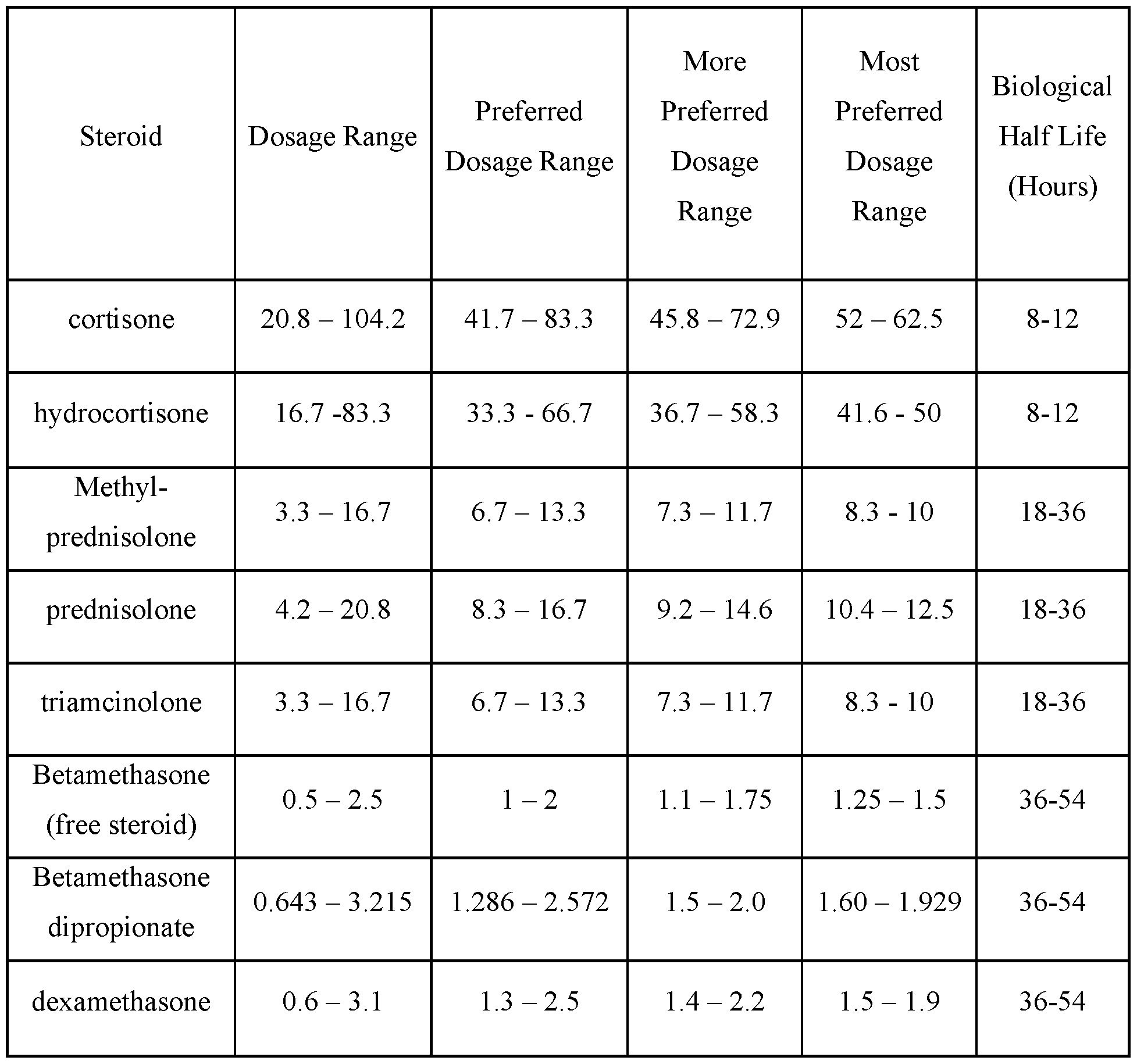
- Exemplary, non-limiting dosage ranges of specific steroids for use in the cream compositions of the present methods are shown below in Table 1.
- the values recited in Table 1 are for use in the current cream compositions and assumes a total single administration (i.e., bilateral intranasal administrations to the sinus mucosa) of cream composition of 5-6 grams (i.e., 2.5 to 3 g per intranasal administration).
- Table 1 Exemplary, non-limiting dosage ranges for corticosteroids (in mg/g of composition)
- the steroid is betamethasone or betamethasone dipropionate and is present in a composition of the present disclosure at from about 0.1 mg to about 0.5 mg per gram of cream composition or from about 0.15 to about 0.64 mg per gram of cream composition, respectively, or more preferably about 0.25 mg per gram of cream composition or about 0.32 mg per gram of cream composition, respectively.
- the total dose of betamethasone dipropionate administered in a single application is from about 0.643 mg to about 3.25 mg, or more preferably from about 0.80 mg to about 2.6 mg, or even more preferably from about 0.95 mg to about 1.93 mg, and even more preferably from about 1.28 mg to about 1.61 mg.
- the steroid is present at about 0.01 to about 1 weight percent of the composition.
- the steroid can be present at 0.01 to 0.5 weight percent of the composition, 0.02 to 0.4 weight percent of the composition, 0.03 to 0.3 weight percent of the composition, 0.04 to 0.2 weight percent of the composition, or 0.05 to 0.1 weight percent of the composition.
- the steroid is betamethasone dipropionate and is present at about 0.03 weight percent of the composition.
- antifungal agents can include natamycin, ciclopirox, fluconazole, terbinafme, clotrimazole, ketoconazole, econazole, miconazole, nystatin, oxiconazole, terconazole, tolnaftate, efmaconazole, abafungin, terbinafme, butenafme, metronidazole and the like as well as combinations thereof.
- the antifungal agent is clotrimazole.
- the antifungal agent can be present in the compositions of the present disclosure at an effective amount.
- the effective amount or total amount of antifungal agent per single administration i.e., bilateral intranasal administration
- the antifungal agent is in an amount of from about 2.5 mg per gram of cream composition to about 10 mg per gram of cream composition, and more preferably, about 5 mg per gram cream composition.
- the antifungal agent is present at about 0.1 to about 5 weight percent of the composition.
- the antifungal agent can be present at 0.1 to 5 weight percent of the composition, 0.5 to 4 weight percent of the composition, 0.5 to 3 weight percent of the composition, 0.5 to 2 weight percent of the composition, 0.5 to 1 weight percent of the composition, 1 to 5 weight percent of the composition, 2 to 5 weight percent of the composition, 3 to 5 weight percent of the
- composition 4 to 5 weight percent of the composition or about 0.1, 0.2, 0.3, 0.4, 0.5, 0.6, 0.7, 0.8, 0.9, 1.0, 1.5, 2.0, 2.5, 3.0, 3.5, 4.0, 4.5 or 5.0 weight percent of the compositions.
- the antifungal agent is clotrimazole and is present at about 0.5 weight percent of the composition.
- a composition of the present disclosure can further comprise an antibiotic.
- antibacterial agents can include flucloxacillin, triclosan (2,4,4'-Trichloro-2'-hydroxydiphenyl ether), alcohols (including ethanol and isopropyl alcohol), peroxides (including benzoyl peroxide), iodine, benzethonium chloride, chloroxylenol and aminoglycoside antibiotics such as ciprofloxacin, and salts or derivatives thereof.
- antibiotics can include amikacin, gentamicin, kanamycin, neomycin, netilmicin, streptomycin, tobramycin, paromycin, geldanamycin, herbimycin, loracarbef, ertapenem, doripenem, imipenem, meropenem, cefaclor, cefamandole, cefotoxin, cefprozil, cefuroxime, cefixime, cefdinir, cefditoren, cefpodoxime, ceftazidime, ceftibuten, ceftizoxime, ceftriaxone, cefepime, ceftobiprole, vancomycin, azithromycin, clarithromycin, dirithromycin, erythromycin, roxithromycin, troleandomycin, telithromycin, spectinomycin, aztreonam, amoxicillin, ampicillin, azociling, carbenicillin
- the therapeutic active agents contemplated within the scope of the invention should be understood to include hydrophobic, hydrophilic and amphiphilic compounds. They may be in their free acid, free base, or pharmaceutically acceptable salt forms and include derivatives, esters or prodrugs. It should be understood that the cream compositions of the present disclosure may comprise only a steroid, only an antimicrobial agent (antifungal, antibacterial, or a combination thereof), or a combination of a steroid and an antimicrobial agent.
- the types of therapeutically active ingredients in the cream composition may be determined based on the condition treated and in some instances, may only require a steroid and in others only an antimicrobial agent, and in further instances both a steroid and an antimicrobial agent.
- the cream composition does not include an antimicrobial agent.
- the cream composition does not include a steroid.
- the cream composition can include only a steroid as a therapeutic active agent, i.e. the cream composition does not include an antimicrobial agent.
- the cream composition can include only an antimicrobial agent as a therapeutic agent, i.e. the cream composition does not include a steroid.
- the total amount of cream composition applied to the diseased region of the subject is from about 4 grams to about 10 grams and more preferably from about 5 grams to about 8 grams. It should be understood therefore that the amount of cream composition administered per intranasal administration is from about 2 grams to about 5 grams and more preferably from about 2.5 grams to about 4 grams.
- compositions described herein are sufficiently viscous that they maintain contact with the tissues of the nasal, sinonasal, nasopharyngeal for a sufficient amount of time to provide effective treatment of those tissues.
- the viscosity values of creams are largely dependent on the method by which viscosity is measured. Accordingly, the viscosity values of the cream compositions of the present disclosure are those generated by a Brookfield HBT with Spindle 21 at room temperature and comprises the following viscosity values under the corresponding recited conditions: (1) from about 220,000 centipoise (cP) to about 260,000 cP at a shear rate of 0.5 RPM, a % torque of 30 at a factor of 8000; (2) from about 140,000 cP to about 170,000 cP at a shear rate of 1.0 RPM, a % torque of 39 at a factor of 4000; (3) from about 75,000 cP to about 90,000 cP at a shear rate of 2.0 RPM, a % torque of 41 at a factor of 2000; (4) from about 55,000 cP to about 74,999 cP at a shear rate of 2.5 R
- compositions described herein include, but are not limited to, nonsteroidal anti-inflammatory drugs, lidocaine, capsaicin, amitriptyline, glyceryl trinitrate, opioids, menthol, pimecrolimus, phenytoin and the like.
- astringents such as aluminum acetate
- topical anti-infectives such as neomycin, clioquinol, or chloramphenicol.
- the composition can further include any of cetostearyl alcohol, cetyl esters wax, sorbitan monostearate, benzyl alcohol, propylene glycol, 2-octyldodecanol, polysorbate 60, sodium hydroxide, carbomer 940 NF, water, and combinations thereof.
- the pharmaceutical compositions described herein will preferably have a pH of less than about 7, since the use of compositions having higher pHs may promote, or inadequately discourage, the growth of bacteria and/or fungi in the target tissues.
- the specific pH, or ranges of pH, prescribed for the pharmaceutical composition may depend on the particular corticosteroid, or combination of corticosteroids, chosen for the composition, since pH can have an effect on the solubility and/or shelf life of these materials.
- a pharmaceutical composition in the form of a cream was prepared.
- the composition contained, as a first active ingredient, betamethasone dipropionate, a synthetic
- Betamethasone dipropionate is the 17,21 -dipropionate ester of betamethasone.
- Betamethasone dipropionate has the empirical formula C28H37FO7 and a molecular weight of 504.59 g/mol, and possesses the following structural formula:
- the cream composition further comprises a second active ingredient, clotrimazole, an antimicrobial agent.
- the cream composition further comprised various inactive ingredients as shown in Table 2 below which shows each active and inactive expressed as %wt based on the total weight of the cream composition.
- Table 2 List of active and inactive ingredients by weight
- This example demonstrates the efficacy of the cream composition described in Example 1 in 11 subjects (6 females and 5 males ranging in age from 17 to 72) who fit the following criteria:
- FIGS. 2A-2D provides pictures of the sinus mucosa in Patient 7 (from FIG.
- FIGS. 3A-3B provides pictures of the sinus mucosa in Patient 11 (from FIG. 1) before treatment (FIG. 3 A) and 2 months post-treatment (FIG. 3B).
- FIG. 3 A shows the left nasal cavity with the middle turbinate noted in the circle. The middle turbinate shows significant hyperemia, edema, granulation changes with minor bleeding.
- FIG. 3B shows a reduction in all of the diseased changes noted prior to treatment most notably reduction in general inflammatory response highlighted by reduction in hyperemia, edema and granulation changes.
- FIGS. 4A-4B provides a histology specimen taken from the lateral aspect of the middle turbinate of Patient 11 (from FIG. 1) just prior to initial application (FIG. 4A) and 2 months post-treatment (FIG. 4B).
- the biopsies were taken with a pair of cup forceps, stored in formalin and haematoxylin and eosin stained and photographed using high-powered magnification by a pathologist utilizing standard techniques.
- the tissue before treatment showed the significant presence of eosinophils (depicted in red) while the post-treatment tissue showed a significant reduction in the presence of eosinophils. It is believed, without being bound to theory, that a reduction in eosinophils can reduce sinus inflammation by reducing edema, thick mucus production and polyp formation that can be caused by inflammatory mediators released from eosinophils.
- This Example demonstrates a substantially complete resolution of symptoms and inflammation which is rarely achieved by the previous standard medical therapies.
- Example 1 Treatment and Outcome: The cream composition of Example 1 was applied bilaterally as described in Example 2 to the ethmoids and maxillary antrostomy regions.
- Example 1 Cream composition of Example 1 was reapplied to the ethmoids and maxillary antrostomy regions and was recalled after 2 weeks.
- Intranasal Examination and Diagnostic Imaging Intranasal examination revealed mucosal inflammation, purulence and congested tissue with crust formation. The patient graded her sinus congestion as 9 on the severity scale described in Example 2. CT sinus was advised and showed chronic pan sinus disease with open ethmoidectomies and obstructed maxillary bilateral antrostomies.
- Treatment After informed consent, patient was placed in supine position. The nasal cavity was sprayed with tetracaine spray w/o epinephrine. Using an antrum suction tube attached to a syringe, the cream composition of Example 1 was applied to maxillary sinus mucosa, osteomeatal complex and nasal mucosa. Patient reported nasal fullness, pressure and congestion at the 24 hour follow up. The patient was recalled after 10 days for a follow up visit.
- Surgically sterile hysterectomy or bilateral oophorectomy
- Surgically sterile bilateral tubal ligation with surgery at least 6 weeks prior to study initiation
- IUD Intrauterine device
- Systemic or topical immunosuppressive drugs or immunomodulators e.g., azathioprine, infliximab, calcineurin inhibitors.
- SNOT-22 Sino-Nasal Outcome Test
- Microbiological specimens from the sinus were collected in addition to biopsy specimens before treatment and at the Exit Visit for assessment of eosinophil count for a subset of patients. Patients were then subjected to mechanical cleansing of the sinus by standard techniques, if indicated. The composition of Example 1 was then applied to the sinus(es) to be treated with a 4-inch flexible tip applicator attached to a syringe containing the composition of Example 1. 0.5 cc to 5 cc was administered per sinus. [0078] 30 +/- 7 days after the initial treatment, patients were assessed at an Exit Visit where a
- CT scan was obtained to assess the treated sinus(es), in addition to microbiological samples from the treated sinus(es) and biopsies from the maxiallary ethmoid junction or lateral surface of the middle turbinate for a subset of patients. Patients also completed the SNOT-22 assessment at the Exit Visit. Exit Visits for Patients 4 and 5 were at 63 and 45 days post treatment, respectively.
- the SNOT-22 results for Patients 2, 3 and 6 are provided in FIGETRES 5A-5C, respectively.
- Patient 2 was evaluated at 29 days post-treatment, Patient 3 was evaluated at 35 days post-treatment and Patient 6 was evaluated at 27 days post-treatment.
- Patient 2 tested positive for 2+ Pseudomonas aeruginosa (Mucoid strain) and 2+ Pseudomonas aeruginosa (Non-Mucoid Strain) as well as 1+ Dematiaceous fungus.
- Patient 3 tested positive for 1+ Staphylococcus aureus.
- Patient 6 did not have a detectable bacterial or fungal infection.
- FIGURE 6 provides a summary of the overall SNOT-22 scores for Patients 1-8 before and after treatment and likewise demonstrates the efficacy of the treatment by a significant reduction in the total SNOT-22 scores for the qualified patients (Patients 2-8).
Landscapes
- Health & Medical Sciences (AREA)
- Life Sciences & Earth Sciences (AREA)
- General Health & Medical Sciences (AREA)
- Pharmacology & Pharmacy (AREA)
- Veterinary Medicine (AREA)
- Chemical & Material Sciences (AREA)
- Medicinal Chemistry (AREA)
- Public Health (AREA)
- Animal Behavior & Ethology (AREA)
- Epidemiology (AREA)
- Organic Chemistry (AREA)
- Nuclear Medicine, Radiotherapy & Molecular Imaging (AREA)
- General Chemical & Material Sciences (AREA)
- Chemical Kinetics & Catalysis (AREA)
- Otolaryngology (AREA)
- Oncology (AREA)
- Communicable Diseases (AREA)
- Pulmonology (AREA)
- Engineering & Computer Science (AREA)
- Bioinformatics & Cheminformatics (AREA)
- Emergency Medicine (AREA)
- Pain & Pain Management (AREA)
- Rheumatology (AREA)
- Molecular Biology (AREA)
- Pharmaceuticals Containing Other Organic And Inorganic Compounds (AREA)
- Medicinal Preparation (AREA)
- Medicines That Contain Protein Lipid Enzymes And Other Medicines (AREA)
Abstract
Description


Claims
Priority Applications (10)
| Application Number | Priority Date | Filing Date | Title |
|---|---|---|---|
| AU2020229360A AU2020229360B2 (en) | 2019-02-27 | 2020-02-27 | Method for treating nasal, sinonasal, and nasopharyngeal tissue infection and/or inflammation |
| CN202080017059.5A CN113543827B (en) | 2019-02-27 | 2020-02-27 | Methods for treating infection and/or inflammation of the nose, sinuses and nasopharyngeal tissues |
| CA3130138A CA3130138A1 (en) | 2019-02-27 | 2020-02-27 | Method for treating nasal, sinonasal, and nasopharyngeal tissue infection and/or inflammation |
| KR1020217026943A KR20210131341A (en) | 2019-02-27 | 2020-02-27 | Methods of treating nasal, sinus, and nasopharyngeal tissue infections and/or inflammations |
| JP2021550109A JP7631212B2 (en) | 2019-02-27 | 2020-02-27 | Methods for treating infection and/or inflammation of nasal, paranasal sinus, and nasopharyngeal tissues - Patents.com |
| EP20763831.3A EP3930808A4 (en) | 2019-02-27 | 2020-02-27 | METHOD OF TREATING NASAL, NASOSINUS AND RHINOPHARYNGEAL INFECTION AND/OR INFLAMMATION |
| US17/459,373 US12097208B2 (en) | 2019-02-27 | 2021-08-27 | Method for treating nasal, sinonasal, and nasopharyngeal tissue infection and/or inflammation |
| US18/809,772 US20240408111A1 (en) | 2019-02-27 | 2024-08-20 | Method for treating nasal, sinonasal, and nasopharyngeal tissue infection and/or inflammation |
| JP2025017250A JP2025069369A (en) | 2019-02-27 | 2025-02-05 | Methods for treating infection and/or inflammation of nasal, paranasal sinus, and nasopharyngeal tissues |
| AU2025201524A AU2025201524A1 (en) | 2019-02-27 | 2025-03-03 | Method for treating nasal, sinonasal, and nasopharyngeal tissue infection and/or inflammation |
Applications Claiming Priority (2)
| Application Number | Priority Date | Filing Date | Title |
|---|---|---|---|
| US201962811169P | 2019-02-27 | 2019-02-27 | |
| US62/811,169 | 2019-02-27 |
Related Child Applications (1)
| Application Number | Title | Priority Date | Filing Date |
|---|---|---|---|
| US17/459,373 Continuation US12097208B2 (en) | 2019-02-27 | 2021-08-27 | Method for treating nasal, sinonasal, and nasopharyngeal tissue infection and/or inflammation |
Publications (1)
| Publication Number | Publication Date |
|---|---|
| WO2020176754A1 true WO2020176754A1 (en) | 2020-09-03 |
Family
ID=72240189
Family Applications (1)
| Application Number | Title | Priority Date | Filing Date |
|---|---|---|---|
| PCT/US2020/020143 Ceased WO2020176754A1 (en) | 2019-02-27 | 2020-02-27 | Method for treating nasal, sinonasal, and nasopharyngeal tissue infection and/or inflammation |
Country Status (8)
| Country | Link |
|---|---|
| US (2) | US12097208B2 (en) |
| EP (1) | EP3930808A4 (en) |
| JP (2) | JP7631212B2 (en) |
| KR (1) | KR20210131341A (en) |
| CN (1) | CN113543827B (en) |
| AU (2) | AU2020229360B2 (en) |
| CA (1) | CA3130138A1 (en) |
| WO (1) | WO2020176754A1 (en) |
Citations (3)
| Publication number | Priority date | Publication date | Assignee | Title |
|---|---|---|---|---|
| US20090253645A1 (en) * | 1997-10-22 | 2009-10-08 | Jens Ponikau | Methods and materials for treating and preventing inflammation of mucosal tissue |
| US20100129316A1 (en) * | 2006-07-11 | 2010-05-27 | Arubor Corp | Rhinosinusitis prevention and therapy with proinflammatory cytokine inhibitors |
| US20150174253A1 (en) * | 2013-12-20 | 2015-06-25 | Mcneil-Ppc, Inc. | Topical gel compositions including poly(monostearoyl glycerol-co-succinate) polymer and methods for enhancing the topical application of a benefit agent |
Family Cites Families (18)
| Publication number | Priority date | Publication date | Assignee | Title |
|---|---|---|---|---|
| DE19825499C2 (en) * | 1998-06-08 | 2003-07-17 | Beiersdorf Ag | Patches containing active ingredients |
| AU2100901A (en) * | 1999-12-15 | 2001-06-25 | Bruce H. Levin | Compositions, kits, apparatus, and methods for inhibiting cephalic inflammation |
| KR100758441B1 (en) * | 2000-04-04 | 2007-09-14 | 스미스클라인비이참피이엘시이 | 2-hydroxy-mutiline carbamate derivatives for antibacterial agents |
| GB0027705D0 (en) * | 2000-11-11 | 2000-12-27 | S P A | Novel compounds |
| US6765001B2 (en) * | 2001-12-21 | 2004-07-20 | Medicis Pharmaceutical Corporation | Compositions and methods for enhancing corticosteroid delivery |
| JP2006520786A (en) * | 2003-03-14 | 2006-09-14 | シネクサス, インコーポレイテッド | Sinus delivery of sustained-release therapeutic agents |
| US9028852B2 (en) * | 2004-09-07 | 2015-05-12 | 3M Innovative Properties Company | Cationic antiseptic compositions and methods of use |
| WO2006041922A2 (en) * | 2004-10-08 | 2006-04-20 | Dara Biosciences, Inc. | Agents and methods for administration to the central nervous system |
| US8337481B2 (en) * | 2005-01-25 | 2012-12-25 | Patrick Slater | Method for treating otitis externa |
| CN101610753A (en) * | 2006-07-10 | 2009-12-23 | 辛奈克萨斯公司 | Implantable sustained drug delivery device for delivering active agents to the ostiomeatal complex |
| JP2010522192A (en) | 2007-03-21 | 2010-07-01 | ボーシュ アンド ローム インコーポレイティド | Compositions and methods for treating, reducing, ameliorating or preventing infections caused by antimicrobial-resistant bacteria |
| US9358242B2 (en) * | 2007-08-30 | 2016-06-07 | Prelief Inc. | Calcium glycerophosphate for treating and preventing respiratory diseases or conditions |
| US20100247694A1 (en) * | 2008-01-31 | 2010-09-30 | Joseph Di Bartolomeo | Composition and method for treament of inflamation and infections of the outer ear canal, nose and paranasal sinuses |
| NZ600803A (en) * | 2008-05-13 | 2013-12-20 | Clarassance Inc | Recombinant human cc10 and compositions thereof for use in the treatment of nasal rhinitis |
| KR101534422B1 (en) * | 2008-05-14 | 2015-07-09 | 오토노미, 인코포레이티드 | Controlled release corticosteroid compositions and methods for the treatment of otic disorders |
| US20140336463A1 (en) * | 2009-03-16 | 2014-11-13 | Alan H. Shikani | Rhinotopic therapy for the treatment of chronic rhinosinusitis biofilm disruption, treatment of mucosal granulation and sinus polyps |
| JP5961062B2 (en) * | 2012-07-25 | 2016-08-02 | 岩城製薬株式会社 | Skin preparation for external use |
| JP6618698B2 (en) * | 2014-11-07 | 2019-12-11 | 三菱商事ライフサイエンス株式会社 | Modified curdlan thickening polysaccharide |
-
2020
- 2020-02-27 EP EP20763831.3A patent/EP3930808A4/en active Pending
- 2020-02-27 JP JP2021550109A patent/JP7631212B2/en active Active
- 2020-02-27 CN CN202080017059.5A patent/CN113543827B/en active Active
- 2020-02-27 WO PCT/US2020/020143 patent/WO2020176754A1/en not_active Ceased
- 2020-02-27 AU AU2020229360A patent/AU2020229360B2/en active Active
- 2020-02-27 KR KR1020217026943A patent/KR20210131341A/en active Pending
- 2020-02-27 CA CA3130138A patent/CA3130138A1/en active Pending
-
2021
- 2021-08-27 US US17/459,373 patent/US12097208B2/en active Active
-
2024
- 2024-08-20 US US18/809,772 patent/US20240408111A1/en active Pending
-
2025
- 2025-02-05 JP JP2025017250A patent/JP2025069369A/en active Pending
- 2025-03-03 AU AU2025201524A patent/AU2025201524A1/en active Pending
Patent Citations (3)
| Publication number | Priority date | Publication date | Assignee | Title |
|---|---|---|---|---|
| US20090253645A1 (en) * | 1997-10-22 | 2009-10-08 | Jens Ponikau | Methods and materials for treating and preventing inflammation of mucosal tissue |
| US20100129316A1 (en) * | 2006-07-11 | 2010-05-27 | Arubor Corp | Rhinosinusitis prevention and therapy with proinflammatory cytokine inhibitors |
| US20150174253A1 (en) * | 2013-12-20 | 2015-06-25 | Mcneil-Ppc, Inc. | Topical gel compositions including poly(monostearoyl glycerol-co-succinate) polymer and methods for enhancing the topical application of a benefit agent |
Non-Patent Citations (3)
| Title |
|---|
| "Haemophilus influenzae", WIKIPEDIA, 2008, XP029344677, Retrieved from the Internet <URL:https://en.wikipedia.org/wiki/Haemophilus_influenzae> [retrieved on 20200501] * |
| "Staphylococcus aureus", WIKIPEDIA, 2001, XP085304779, Retrieved from the Internet <URL:https://en.wikipedia.org/wiki/Staphylococcus_aureus> [retrieved on 20200501] * |
| See also references of EP3930808A4 * |
Also Published As
| Publication number | Publication date |
|---|---|
| EP3930808A4 (en) | 2022-12-14 |
| JP2022522000A (en) | 2022-04-13 |
| JP7631212B2 (en) | 2025-02-18 |
| CN113543827B (en) | 2025-01-21 |
| CN113543827A (en) | 2021-10-22 |
| CA3130138A1 (en) | 2020-09-03 |
| US12097208B2 (en) | 2024-09-24 |
| KR20210131341A (en) | 2021-11-02 |
| AU2020229360A1 (en) | 2021-08-19 |
| AU2025201524A1 (en) | 2025-03-20 |
| US20240408111A1 (en) | 2024-12-12 |
| AU2020229360B2 (en) | 2025-01-23 |
| EP3930808A1 (en) | 2022-01-05 |
| US20210386760A1 (en) | 2021-12-16 |
| JP2025069369A (en) | 2025-04-30 |
Similar Documents
| Publication | Publication Date | Title |
|---|---|---|
| US8030297B2 (en) | Controlled release corticosteroid compositions and methods for the treatment of OTIC disorders | |
| US20230277452A1 (en) | Compositions, devices and methods for treating nasal, otic and other tissue infection and/or inflammation | |
| US9345674B2 (en) | Compositions for treatment of skin and ear infections | |
| US12097208B2 (en) | Method for treating nasal, sinonasal, and nasopharyngeal tissue infection and/or inflammation | |
| JP2025098165A (en) | Otic Formulations, Methods and Devices |
Legal Events
| Date | Code | Title | Description |
|---|---|---|---|
| 121 | Ep: the epo has been informed by wipo that ep was designated in this application |
Ref document number: 20763831 Country of ref document: EP Kind code of ref document: A1 |
|
| ENP | Entry into the national phase |
Ref document number: 3130138 Country of ref document: CA |
|
| ENP | Entry into the national phase |
Ref document number: 2020229360 Country of ref document: AU Date of ref document: 20200227 Kind code of ref document: A |
|
| ENP | Entry into the national phase |
Ref document number: 2021550109 Country of ref document: JP Kind code of ref document: A |
|
| NENP | Non-entry into the national phase |
Ref country code: DE |
|
| ENP | Entry into the national phase |
Ref document number: 2020763831 Country of ref document: EP Effective date: 20210927 |
|
| WWG | Wipo information: grant in national office |
Ref document number: 202080017059.5 Country of ref document: CN |