WO2020176776A1 - Antisense oligomers for treatment of conditions and diseases - Google Patents
Antisense oligomers for treatment of conditions and diseases Download PDFInfo
- Publication number
- WO2020176776A1 WO2020176776A1 PCT/US2020/020175 US2020020175W WO2020176776A1 WO 2020176776 A1 WO2020176776 A1 WO 2020176776A1 US 2020020175 W US2020020175 W US 2020020175W WO 2020176776 A1 WO2020176776 A1 WO 2020176776A1
- Authority
- WO
- WIPO (PCT)
- Prior art keywords
- nucleotides
- fold
- scn1a
- exon
- nie
- Prior art date
- Legal status (The legal status is an assumption and is not a legal conclusion. Google has not performed a legal analysis and makes no representation as to the accuracy of the status listed.)
- Ceased
Links
Classifications
-
- C—CHEMISTRY; METALLURGY
- C12—BIOCHEMISTRY; BEER; SPIRITS; WINE; VINEGAR; MICROBIOLOGY; ENZYMOLOGY; MUTATION OR GENETIC ENGINEERING
- C12N—MICROORGANISMS OR ENZYMES; COMPOSITIONS THEREOF; PROPAGATING, PRESERVING, OR MAINTAINING MICROORGANISMS; MUTATION OR GENETIC ENGINEERING; CULTURE MEDIA
- C12N15/00—Mutation or genetic engineering; DNA or RNA concerning genetic engineering, vectors, e.g. plasmids, or their isolation, preparation or purification; Use of hosts therefor
- C12N15/09—Recombinant DNA-technology
- C12N15/11—DNA or RNA fragments; Modified forms thereof; Non-coding nucleic acids having a biological activity
- C12N15/113—Non-coding nucleic acids modulating the expression of genes, e.g. antisense oligonucleotides; Antisense DNA or RNA; Triplex- forming oligonucleotides; Catalytic nucleic acids, e.g. ribozymes; Nucleic acids used in co-suppression or gene silencing
- C12N15/1138—Non-coding nucleic acids modulating the expression of genes, e.g. antisense oligonucleotides; Antisense DNA or RNA; Triplex- forming oligonucleotides; Catalytic nucleic acids, e.g. ribozymes; Nucleic acids used in co-suppression or gene silencing against receptors or cell surface proteins
-
- C—CHEMISTRY; METALLURGY
- C12—BIOCHEMISTRY; BEER; SPIRITS; WINE; VINEGAR; MICROBIOLOGY; ENZYMOLOGY; MUTATION OR GENETIC ENGINEERING
- C12N—MICROORGANISMS OR ENZYMES; COMPOSITIONS THEREOF; PROPAGATING, PRESERVING, OR MAINTAINING MICROORGANISMS; MUTATION OR GENETIC ENGINEERING; CULTURE MEDIA
- C12N15/00—Mutation or genetic engineering; DNA or RNA concerning genetic engineering, vectors, e.g. plasmids, or their isolation, preparation or purification; Use of hosts therefor
- C12N15/09—Recombinant DNA-technology
- C12N15/11—DNA or RNA fragments; Modified forms thereof; Non-coding nucleic acids having a biological activity
- C12N15/113—Non-coding nucleic acids modulating the expression of genes, e.g. antisense oligonucleotides; Antisense DNA or RNA; Triplex- forming oligonucleotides; Catalytic nucleic acids, e.g. ribozymes; Nucleic acids used in co-suppression or gene silencing
-
- A—HUMAN NECESSITIES
- A61—MEDICAL OR VETERINARY SCIENCE; HYGIENE
- A61P—SPECIFIC THERAPEUTIC ACTIVITY OF CHEMICAL COMPOUNDS OR MEDICINAL PREPARATIONS
- A61P25/00—Drugs for disorders of the nervous system
- A61P25/08—Antiepileptics; Anticonvulsants
-
- C—CHEMISTRY; METALLURGY
- C12—BIOCHEMISTRY; BEER; SPIRITS; WINE; VINEGAR; MICROBIOLOGY; ENZYMOLOGY; MUTATION OR GENETIC ENGINEERING
- C12N—MICROORGANISMS OR ENZYMES; COMPOSITIONS THEREOF; PROPAGATING, PRESERVING, OR MAINTAINING MICROORGANISMS; MUTATION OR GENETIC ENGINEERING; CULTURE MEDIA
- C12N2310/00—Structure or type of the nucleic acid
- C12N2310/10—Type of nucleic acid
- C12N2310/11—Antisense
-
- C—CHEMISTRY; METALLURGY
- C12—BIOCHEMISTRY; BEER; SPIRITS; WINE; VINEGAR; MICROBIOLOGY; ENZYMOLOGY; MUTATION OR GENETIC ENGINEERING
- C12N—MICROORGANISMS OR ENZYMES; COMPOSITIONS THEREOF; PROPAGATING, PRESERVING, OR MAINTAINING MICROORGANISMS; MUTATION OR GENETIC ENGINEERING; CULTURE MEDIA
- C12N2310/00—Structure or type of the nucleic acid
- C12N2310/10—Type of nucleic acid
- C12N2310/14—Type of nucleic acid interfering nucleic acids [NA]
-
- C—CHEMISTRY; METALLURGY
- C12—BIOCHEMISTRY; BEER; SPIRITS; WINE; VINEGAR; MICROBIOLOGY; ENZYMOLOGY; MUTATION OR GENETIC ENGINEERING
- C12N—MICROORGANISMS OR ENZYMES; COMPOSITIONS THEREOF; PROPAGATING, PRESERVING, OR MAINTAINING MICROORGANISMS; MUTATION OR GENETIC ENGINEERING; CULTURE MEDIA
- C12N2310/00—Structure or type of the nucleic acid
- C12N2310/30—Chemical structure
- C12N2310/31—Chemical structure of the backbone
- C12N2310/315—Phosphorothioates
-
- C—CHEMISTRY; METALLURGY
- C12—BIOCHEMISTRY; BEER; SPIRITS; WINE; VINEGAR; MICROBIOLOGY; ENZYMOLOGY; MUTATION OR GENETIC ENGINEERING
- C12N—MICROORGANISMS OR ENZYMES; COMPOSITIONS THEREOF; PROPAGATING, PRESERVING, OR MAINTAINING MICROORGANISMS; MUTATION OR GENETIC ENGINEERING; CULTURE MEDIA
- C12N2310/00—Structure or type of the nucleic acid
- C12N2310/30—Chemical structure
- C12N2310/32—Chemical structure of the sugar
- C12N2310/321—2'-O-R Modification
-
- C—CHEMISTRY; METALLURGY
- C12—BIOCHEMISTRY; BEER; SPIRITS; WINE; VINEGAR; MICROBIOLOGY; ENZYMOLOGY; MUTATION OR GENETIC ENGINEERING
- C12N—MICROORGANISMS OR ENZYMES; COMPOSITIONS THEREOF; PROPAGATING, PRESERVING, OR MAINTAINING MICROORGANISMS; MUTATION OR GENETIC ENGINEERING; CULTURE MEDIA
- C12N2320/00—Applications; Uses
- C12N2320/10—Applications; Uses in screening processes
- C12N2320/11—Applications; Uses in screening processes for the determination of target sites, i.e. of active nucleic acids
-
- C—CHEMISTRY; METALLURGY
- C12—BIOCHEMISTRY; BEER; SPIRITS; WINE; VINEGAR; MICROBIOLOGY; ENZYMOLOGY; MUTATION OR GENETIC ENGINEERING
- C12N—MICROORGANISMS OR ENZYMES; COMPOSITIONS THEREOF; PROPAGATING, PRESERVING, OR MAINTAINING MICROORGANISMS; MUTATION OR GENETIC ENGINEERING; CULTURE MEDIA
- C12N2320/00—Applications; Uses
- C12N2320/30—Special therapeutic applications
- C12N2320/33—Alteration of splicing
Definitions
- Nervous system disorders are often associated with channelopathy, characterized by the disturbed function of ion channels that mediate neuronal excitability, neuronal interactions, and brain functions at large.
- Mutations in the SCN1A gene which is part of the SCN1A-SCN2A-SCN3A gene cluster that encodes alpha-pore forming subunits of the neuronal voltage gated sodium channel, are associated with development of disease number of diseases and conditions, such as Dravet Syndrome (DS) (Miller, et al., 1993-2015, GeneReviews, Eds. Pagon RA, et al. Seattle (WA): University of Washington, Seattle, Bookshelf ID: NBK1318, and Mulley, et al., 2005, Hum. Mutat. 25: 535-542).
- DS Dravet Syndrome
- a method of modulating expression of SCN1A protein in a cell having an mRNA that contains a non-sense mediated RNA decay-inducing exon (NMD exon mRNA) and encodes SCN1A protein comprising contacting a therapeutic agent to the cell, whereby the therapeutic agent modulates splicing of the NMD exon from the NMD exon mRNA encoding SCN1A protein, thereby modulating the level of processed mRNA encoding SCN1A protein, and modulating expression of SCN1A protein in the cell, wherein the therapeutic agent binds to a targeted portion of the NMD exon mRNA encoding SCN1 A, and wherein the targeted portion is: from about 1000 nucleotides upstream from the 5’ end of an NMD-inducing exon (NIE) to about 100 nucleotides upstream from the 5’ end of the NIE; or from about 100 nucleotides downstream
- the therapeutic agent interferes with binding of a factor involved in splicing of the NMD exon from a region of the targeted portion.
- the targeted portion is at most about 800 nucleotides, about 700 nucleotides, about 600 nucleotides, about 500 nucleotides, about 400 nucleotides, about 300 nucleotides, about 200 nucleotides, about 100 nucleotides, about 80 nucleotides, about 70 nucleotides, about 60 nucleotides, about 50 nucleotides upstream of 5’ end of the NIE.
- the targeted portion is at least about 800 nucleotides, about 700 nucleotides, about 600 nucleotides, about 500 nucleotides, about 400 nucleotides, about 300 nucleotides, about 200 nucleotides, about 100 nucleotides, about 80 nucleotides, about 70 nucleotides, about 60 nucleotides, about 50 nucleotides, about 40 nucleotides, about 30 nucleotides, about 20 nucleotides, about 10 nucleotides, about 5 nucleotides, about 4 nucleotides, about 2 nucleotides, about 1 nucleotides upstream of 5’ end of the NIE.
- the targeted portion is at most about 800 nucleotides, about 700 nucleotides, about 600 nucleotides, about 500 nucleotides, about 400 nucleotides, about 300 nucleotides, about 200 nucleotides, about 100 nucleotides, about 80 nucleotides, about 70 nucleotides, about 60 nucleotides, about 50 nucleotides downstream of 3’ end of the NIE.
- the targeted portion is at least about 800 nucleotides, about 700 nucleotides, about 600 nucleotides, about 500 nucleotides, about 400 nucleotides, about 300 nucleotides, about 200 nucleotides, about 100 nucleotides, about 80 nucleotides, about 70 nucleotides, about 60 nucleotides, about 50 nucleotides, about 40 nucleotides, about 30 nucleotides, about 20 nucleotides, about 10 nucleotides, about 5 nucleotides, about 4 nucleotides, about 2 nucleotides, about 1 nucleotides downstream of 3’ end of the NIE.
- the therapeutic agent is an antisense oligomer (ASO).
- ASO comprises a sequence that is at least about 80%, 85%, 90%, 95%, 97%, or 100% identity to any one of SEQ ID NOs: 12-731.
- the therapeutic agent promotes exclusion of the NMD exon from the processed mRNA encoding SCN1A protein.
- exclusion of the NMD exon from the processed mRNA encoding SCN1 A protein in the cell contacted with the therapeutic agent is increased about 1.1 to about 10-fold, about 1.5 to about 10-fold, about 2 to about 10-fold, about 3 to about 10-fold, about 4 to about 10-fold, about 1.1 to about 5-fold, about 1.1 to about 6-fold, about 1.1 to about 7-fold, about 1.1 to about 8-fold, about 1.1 to about 9-fold, about 2 to about 5-fold, about 2 to about 6-fold, about 2 to about 7-fold, about 2 to about 8-fold, about 2 to about 9-fold, about 3 to about 6-fold, about 3 to about 7-fold, about 3 to about 8-fold, about 3 to about 9-fold, about 4 to about 7-fold, about 4 to about 8-fold, about 4 to about 9-fold, at least about 1.1 -fold, at least about 1.5-fold, at least about 2-fold, at least about 2.5-fold, at least about 3-fold, at least about 3.5-fold, at least
- the therapeutic agent increases level of the processed mRNA encoding SCN1A protein in the cell.
- an amount of the processed mRNA encoding SCN1 A protein in the cell contacted with the therapeutic agent is increased about 1.1 to about 10-fold, about 1.5 to about 10-fold, about 2 to about 10-fold, about 3 to about 10- fold, about 4 to about 10-fold, about 1.1 to about 5-fold, about 1.1 to about 6-fold, about 1.1 to about 7-fold, about 1.1 to about 8-fold, about 1.1 to about 9-fold, about 2 to about 5-fold, about 2 to about 6-fold, about 2 to about 7-fold, about 2 to about 8-fold, about 2 to about 9-fold, about 3 to about 6- fold, about 3 to about 7-fold, about 3 to about 8-fold, about 3 to about 9-fold, about 4 to about 7-fold, about 4 to about 8-fold, about 4 to about 9-fold, at least about 1.1-fold, at least about 1.5-fold, at least about 2-fold, at least
- a method of treating a disease or condition in a subj ect in need thereof by modulating expression of SCN1 A protein in a cell of the subj ect comprising: contacting the cell of the subject with a therapeutic agent that modulates splicing of a non-sense mediated mRNA decay-inducing exon (NMD exon) from an mRNA in the cell that contains the NMD exon and encodes SCN1A, thereby modulating the level of processed mRNA encoding the SCN1A protein, and modulating expression of SCN1 A protein in the cell of the subject; wherein the therapeutic agent binds to a targeted portion of the NMD exon mRNA encoding SCN1 A, and wherein the targeted portion is: from about 1000 nucleotides upstream from the 5’ end of an NMD-inducing exon (NIE) to about 100 nucleotides upstream from the 5’ end of the NIE
- NMD exon non-sense mediated mRNA decay
- the therapeutic agent interferes with binding of a factor involved in splicing of the NMD exon from a region of the targeted portion.
- the targeted portion is at most about 800 nucleotides, about 700 nucleotides, about 600 nucleotides, about 500 nucleotides, about 400 nucleotides, about 300 nucleotides, about 200 nucleotides, about 100 nucleotides, about 80 nucleotides, about 70 nucleotides, about 60 nucleotides, about 50 nucleotides upstream of 5’ end of the NIE.
- the targeted portion is at least about 800 nucleotides, about 700 nucleotides, about 600 nucleotides, about 500 nucleotides, about 400 nucleotides, about 300 nucleotides, about 200 nucleotides, about 100 nucleotides, about 80 nucleotides, about 70 nucleotides, about 60 nucleotides, about 50 nucleotides, about 40 nucleotides, about 30 nucleotides, about 20 nucleotides, about 10 nucleotides, about 5 nucleotides, about 4 nucleotides, about 2 nucleotides, about 1 nucleotides upstream of 5’ end of the NIE.
- the targeted portion is at most about 800 nucleotides, about 700 nucleotides, about 600 nucleotides, about 500 nucleotides, about 400 nucleotides, about 300 nucleotides, about 200 nucleotides, about 100 nucleotides, about 80 nucleotides, about 70 nucleotides, about 60 nucleotides, about 50 nucleotides downstream of 3’ end of the NIE.
- the targeted portion is at least about 800 nucleotides, about 700 nucleotides, about 600 nucleotides, about 500 nucleotides, about 400 nucleotides, about 300 nucleotides, about 200 nucleotides, about 100 nucleotides, about 80 nucleotides, about 70 nucleotides, about 60 nucleotides, about 50 nucleotides, about 40 nucleotides, about 30 nucleotides, about 20 nucleotides, about 10 nucleotides, about 5 nucleotides, about 4 nucleotides, about 2 nucleotides, about 1 nucleotides downstream of 3’ end of the NIE.
- the therapeutic agent is an antisense oligomer (ASO).
- ASO comprises a sequence that is at least about 80%, 85%, 90%, 95%, 97%, or 100% identity to any one of SEQ ID NOs: 12-731.
- the therapeutic agent promotes exclusion of the NMD exon from the processed mRNA encoding SCN1A protein.
- exclusion of the NMD exon from the processed mRNA encoding SCN1 A protein in the cell contacted with the therapeutic agent is increased about 1.1 to about 10-fold, about 1.5 to about 10-fold, about 2 to about 10-fold, about 3 to about 10-fold, about 4 to about 10-fold, about 1.1 to about 5-fold, about 1.1 to about 6-fold, about 1.1 to about 7-fold, about 1.1 to about 8-fold, about 1.1 to about 9-fold, about 2 to about 5-fold, about 2 to about 6-fold, about 2 to about 7-fold, about 2 to about 8-fold, about 2 to about 9-fold, about 3 to about 6-fold, about 3 to about 7-fold, about 3 to about 8-fold, about 3 to about 9-fold, about 4 to about 7-fold, about 4 to about 8-fold, about 4 to about 9-fold, at least about 1.1 -fold, at least about 1.5-fold, at least about 2-fold, at least about 2.5-fold, at least about 3-fold, at least about 3.5-fold, at least
- the therapeutic agent increases level of the processed mRNA encoding SCN1A protein in the cell.
- an amount of the processed mRNA encoding SCN1 A protein in the cell contacted with the therapeutic agent is increased about 1.1 to about 10-fold, about 1.5 to about 10-fold, about 2 to about 10-fold, about 3 to about 10- fold, about 4 to about 10-fold, about 1.1 to about 5-fold, about 1.1 to about 6-fold, about 1.1 to about 7-fold, about 1.1 to about 8-fold, about 1.1 to about 9-fold, about 2 to about 5-fold, about 2 to about 6-fold, about 2 to about 7-fold, about 2 to about 8-fold, about 2 to about 9-fold, about 3 to about 6- fold, about 3 to about 7-fold, about 3 to about 8-fold, about 3 to about 9-fold, about 4 to about 7-fold, about 4 to about 8-fold, about 4 to about 9-fold, at least about 1.1-fold, at least about 1.5-fold, at least about 2-fold, at least
- the disease or condition is induced by a loss-of-function mutation in Na v l .1.
- the disease or condition is associated with haploinsufficiency of the SCN1A gene, and wherein the subject has a first allele encoding a functional SCN1A, and a second allele from which SCN1A is not produced or produced at a reduced level, or a second allele encoding a nonfunctional SCN1A or a partially functional SCN1A.
- the disease or condition is encephalopathy. In some embodiments, the encephalopathy is epileptic encephalopathy.
- the disease or condition is Dravet Syndrome (DS); severe myoclonic epilepsy of infancy (SMEI)-borderland (SMEB); Febrile seizure (FS); epilepsy, generalized, with febrile seizures plus (GEFS+); epileptic encephalopathy, early infantile, 13; cryptogenic generalized epilepsy; cryptogenic focal epilepsy; myoclonic-astatic epilepsy; Lennox - Gastaut syndrome; West syndrome; idiopathic spasms; early myoclonic encephalopathy; progressive myoclonic epilepsy; alternating hemiplegia of childhood; unclassified epileptic encephalopathy; sudden unexpected death in epilepsy (SUDEP); sick sinus syndrome 1; autism; or malignant migrating partial seizures of infancy.
- DS Dravet Syndrome
- SMEI severe myoclonic epilepsy of infancy
- SMEB Febrile seizure
- epilepsy generalized, with febrile seizures plus
- GEFS+ is epilepsy, generalized, with febrile seizures plus, type 2.
- the Febrile seizure is Febrile seizures, familial, 3A.
- SMEB is SMEB without generalized spike wave (SMEB-SW), SMEB without myoclonic seizures (SMEB-M), SMEB lacking more than one feature of SMEI (SMEB-O), or intractable childhood epilepsy with generalized tonic-clonic seizures (ICEGTC).
- a method of modulating expression of SCN1A protein in a cell having an mRNA that contains a non-sense mediated RNA decay-inducing exon (NMD exon mRNA) and encodes SCN1A protein comprising contacting a therapeutic agent to the cell, whereby the therapeutic agent modulates splicing of the NMD exon from the NMD exon mRNA encoding SCN1A protein, thereby modulating the level of processed mRNA encoding SCN1A protein, and modulating expression of SCN1A protein in the cell, wherein the therapeutic agent binds to a targeted portion of the NMD exon mRNA encoding SCN1 A, and wherein the targeted portion is from about 1000 nucleotides upstream from the 5’ end of an NMD-inducing exon (NIE) to about 1000 nucleotides downstream of the 3’ end of the NIE.
- NMD exon mRNA non-sense mediated RNA decay-inducing exon
- a method of treating a disease or condition in a subj ect in need thereof by modulating expression of SCN1 A protein in a cell of the subj ect comprising: contacting the cell of the subject with a therapeutic agent that modulates splicing of a non-sense mediated mRNA decay-inducing exon (NMD exon) from an mRNA in the cell that contains the NMD exon and encodes SCN1A, thereby modulating the level of processed mRNA encoding the SCN1A protein, and modulating expression of SCN1 A protein in the cell of the subject; wherein the therapeutic agent binds to a targeted portion of the NMD exon mRNA encoding SCN1 A, and wherein the targeted portion is from about 1000 nucleotides upstream from the 5’ end of an NMD-inducing exon (NIE) to about 1000 nucleotides downstream of the 3’ end of the NIE.
- NMD exon non-sense mediated mRNA decay-
- an antisense oligomer comprising a sequence that is at least about 80%, 85%, 90%, 95%, 97%, or 100% identity to any one of SEQ ID NOs: 12-731.
- an antisense oligomer consisting of a sequence selected from SEQ ID NOs: 12-731.
- a method of treating a disease or condition in a subj ect in need thereof by modulating expression of SCN1 A protein in a cell of the subj ect comprising: contacting the cell of the subject with an ASO comprising a sequence that is at least about 80%, 85%, 90%, 95%, 97%, or 100% identity to any one of SEQ ID NOs: 12-731; or an ASO consisting of a sequence selected from SEQ ID NOs: 12-731.
- kits comprising an ASO comprising a sequence that is at least about 80%, 85%, 90%, 95%, 97%, or 100% identity to any one of SEQ ID NOs: 12- 731; or an ASO consisting of a sequence selected from SEQ ID NOs: 12-731.
- FIG. 1 depicts a schematic representation of a target mRNA that contains a non-sense mediated RNA decay-inducing exon (NMD exon mRNA) and therapeutic agent-mediated exclusion of the nonsense-mediated mRNA decay-inducing exon to increase expression of the full-length target protein or functional RNA.
- FIG. 1A shows a cell divided into nuclear and cytoplasmic
- a pre-mRNA transcript of a target gene undergoes splicing to generate mRNA, and this mRNA is exported to the cytoplasm and translated into target protein.
- some fraction of the mRNA contains a nonsense-mediated mRNA decay-inducing exon (NMD exon mRNA) that is degraded in the cytoplasm, thus leading to no target protein production.
- NMD exon mRNA nonsense-mediated mRNA decay-inducing exon
- IB shows an example of the same cell divided into nuclear and cytoplasmic compartments.
- FIG. 1C is a schematic representation of therapeutic ASO-mediated exclusion of a nonsense-mediated mRNA decay-inducing exon, which decreases non-productive mRNA and increases productive mRNA and increases expression of the full-length target protein from the productive mRNA.
- ASO antisense oligomer
- FIG. 2 depicts identification of an exemplary nonsense-mediated mRNA decay (NMD)- inducing exon in the SCN1A gene.
- NMD nonsense-mediated mRNA decay
- exon 20x an exon-like sequence of 64 bp (bottom panel, sequence highlighted in grey) flanked by 3’ and 5’ splice sites (underlined sequence), which we refer to as exon 20x. Inclusion of this exon leads to a frameshift and the introduction of a premature termination codon in exon 21 rendering the transcript a target of NMD.
- FIG. 3A depicts confirmation of NMD-inducing exon via cycloheximide treatment.
- RT-PCR analysis using cytoplasmic RNA from DMSO-treated (CHX-) or cycloheximide-treated (CHX+) Neuro 2A (mouse neural progenitor cells) and primers in exon 21 and a downstream exon confirmed the presence of a band corresponding to the NMD-inducing exon (2 lx). The identity of the product was confirmed by sequencing. Densitometry analysis of the bands was performed to calculate percent exon 21x inclusion of total SCN1A transcript.
- FIG. 3B depicts confirmation of NMD-inducing exon via cycloheximide treatment.
- RT-PCR analysis using cytoplasmic RNA from DMSO-treated (CHX-) or cycloheximide-treated (CHX+) RenCell VM (human neural progenitor cells) and primers in exon 20 and exon 23 confirmed the presence of a band corresponding to the NMD-inducing exon (20x). The identity of the product was confirmed by sequencing. Densitometry analysis of the bands was performed to calculate percent exon 20x inclusion of total SCN1A transcript.
- FIG. 4. depicts an exemplary graphic representation of an ASO walk performed for SCN1A exon 20x region targeting two indicated regions (region 1 and region 2) upstream of the 3’ splice site of exon 20x and two indicated regions (region 3 and region 4) downstream of the 5’ splice site of exon 20x.
- ASOs were designed to cover these regions by shifting 5 nucleotides at a time.
- FIG. 5A depicts SCN1A exon 20x region ASOs selected from an extended ASO walk evaluated by RT-PCR.
- a representative PAGE shows SYBR-safe-stained RT-PCR products of SCN1A mock-treated, control ASO treated (NT), SCN1A exon 20x region ASOs from an extended walk in RenCells via nucleofection at luM for 24 hrs.
- FIG. 5B depicts a graph plotting the percent exon 20x inclusion from the data in FIG. 5A.
- FIG. 5C depicts a graph of qPCR results of an extended ASO walk using the samples of FIG. 5 A normalized to RPL32 internal control and the fold-change of SCN1A mRNA relative to mock is plotted.
- Intervening sequences or introns are removed by a large and highly dynamic RNA-protein complex termed the spliceosome, which orchestrates complex interactions between primary transcripts, small nuclear RNAs (snRNAs) and a large number of proteins.
- Spliceosomes assemble ad hoc on each intron in an ordered manner, starting with recognition of the 5’ splice site (5’ss) by U1 snRNA or the 3’ splice site (3’ss) by the U2 pathway, which involves binding of the U2 auxiliary factor (U2AF) to the 3’ ss region to facilitate U2 binding to the branch point sequence (BPS).
- U2 auxiliary factor U2 auxiliary factor
- U2AF is a stable heterodimer composed of a U2AF2-encoded 65-kD subunit (U2AF65), which binds the polypyrimidine tract (PPT), and a U2AF1 -encoded 35-kD subunit (U2AF35), which interacts with highly conserved AG dinucleotides at 3‘ss and stabilizes U2AF65 binding.
- U2AF65 U2AF2-encoded 65-kD subunit
- PPT polypyrimidine tract
- U2AF35 U2AF1 -encoded 35-kD subunit
- accurate splicing requires auxiliary sequences or structures that activate or repress splice site recognition, known as intronic or exonic splicing enhancers or silencers.
- RNA-binding proteins trans-acting RNA-binding proteins
- SR proteins serine- and arginine-rich family of RBPs
- SR proteins promote exon recognition by recruiting components of the pre- spliceosome to adjacent splice sites or by antagonizing the effects of ESSs in the vicinity.
- ESSs can be mediated by members of the heterogeneous nuclear ribonucleoprotein (hnRNP) family and can alter recruitment of core splicing factors to adjacent splice sites.
- hnRNP nuclear ribonucleoprotein
- silencer elements are suggested to have a role in repression of pseudo-exons, sets of decoy intronic splice sites with the typical spacing of an exon but without a functional open reading frame.
- ESEs and ESSs in cooperation with their cognate trans acting RBPs, represent important components in a set of splicing controls that specify how, where and when mRNAs are assembled from their precursors.
- sequences marking the exon-intron boundaries are degenerate signals of varying strengths that can occur at high frequency within human genes.
- different pairs of splice sites can be linked together in many different combinations, creating a diverse array of transcripts from a single gene. This is commonly referred to as alternative pre-mRNA splicing.
- alternative pre-mRNA splicing Although most mRNA isoforms produced by alternative splicing can be exported from the nucleus and translated into functional polypeptides, different mRNA isoforms from a single gene can vary greatly in their translation efficiency.
- mRNA isoforms with premature termination codons (PTCs) at least 50 bp upstream of an exon junction complex are likely to be targeted for degradation by the nonsense- mediated mRNA decay (NMD) pathway.
- Mutations in traditional (BPS/PPT/3’ss/5’ss) and auxiliary splicing motifs can cause aberrant splicing, such as exon skipping or cryptic (or pseudo-) exon inclusion or splice-site activation, and contribute significantly to human morbidity and mortality. Both aberrant and alternative splicing patterns can be influenced by natural DNA variants in exons and introns.
- exon-intron boundaries can occur at any of the three positions of a codon, it is clear that only a subset of alternative splicing events can maintain the canonical open reading frame. For example, only exons that are evenly divisible by 3 can be skipped or included in the mRNA without any alteration of reading frame. Splicing events that do not have compatible phases will induce a frame-shift. Unless reversed by downstream events, frame-shifts can certainly lead to one or more PTCs, probably resulting in subsequent degradation by NMD.
- NMD is a translation-coupled mechanism that eliminates mRNAs containing PTCs. NMD can function as a surveillance pathway that exists in all eukaryotes.
- NMD can reduce errors in gene expression by eliminating mRNA transcripts that contain premature stop codons. Translation of these aberrant mRNAs could, in some cases, lead to deleterious gain-of-function or dominant-negative activity of the resulting proteins. NMD targets not only transcripts with PTCs but also a broad array of mRNA isoforms expressed from many endogenous genes, suggesting that NMD is a master regulator that drives both fine and coarse adjustments in steady-state RNA levels in the cell.
- a NMD-inducing exon is an exon or a pseudo-exon that is a region within an intron and can activate the NMD pathway if included in a mature RNA transcript.
- the intron containing an NIE is usually spliced out, but the intron or a portion thereof (e.g. NIE) can be retained during alternative or aberrant splicing events.
- Mature mRNA transcripts containing such an NIE can be non-productive due to frame shift which induce NMD pathway. Inclusion of a NIE in mature RNA transcripts can downregulate gene expression.
- mRNA transcripts containing an NIE can be referred as“NIE containing mRNA” or“NMD exon mRNA” in the current disclosure.
- Cryptic (or pseudo- splice sites) have the same splicing recognition sequences as genuine splice sites but are not used in the splicing reactions. They outnumber genuine splice sites in the human genome by an order of a magnitude and are normally repressed by thus far poorly understood molecular mechanisms.
- Cryptic 5’ splice sites have the consensus NNN/GETNNNN or NNN/GCNNNN where N is any nucleotide and / is the exon-intron boundary.
- Cryptic 3’ splice sites have the consensus NAG/N.
- Splice sites and their regulatory sequences can be readily identified by a skilled person using suitable algorithms publicly available, listed for example in Kralovicova, J. and Vorechovsky, I. (2007) Global control of aberrant splice site activation by auxiliary splicing sequences: evidence for a gradient in exon and intron definition. Nucleic Acids Res., 35, 6399-
- the cryptic splice sites or splicing regulatory sequences may compete for RNA-binding proteins such as U2AF with a splice site of the NIE.
- an agent may bind to the cryptic splice site or splicing regulatory sequences to prevent the binding of RNA-binding proteins and thereby favoring utilization of the NIE splice sites.
- the cryptic splice site may not comprise the 5’ or 3’ splice site of the NIE.
- the cryptic splice site may be at least 10 nucleotides upstream of the NIE 5’ splice site.
- the cryptic splice site may be at least 20 nucleotides upstream of the NIE 5’ splice site.
- the cryptic splice site may be at least 50 nucleotides upstream of the NIE 5’ splice site.
- the cryptic splice site may be at least 100 nucleotides upstream of the NIE 5’ splice site.
- the cryptic splice site may be at least 200 nucleotides upstream of the NIE 5’ splice site.
- the cryptic splice site may be at least 10 nucleotides downstream of the NIE 3’ splice site.
- the cryptic splice site may be at least 20 nucleotides downstream of the NIE 3’ splice site.
- the cryptic splice site may be at least 50 nucleotides downstream of the NIE 3’ splice site.
- the cryptic splice site may be at least 100 nucleotides downstream of the NIE 3’ splice site.
- the cryptic splice site may be at least 200 nucleotides downstream of the NIE 3’ splice site.
- the methods of the present disclosure exploit the presence of NIE in the pre-mRNA transcribed from the SCN1A gene.
- Splicing of the identified SCN1A NIE pre-mRNA species to produce functional mature SCN1A mRNA can be induced using a therapeutic agent such as an ASO that stimulates exon skipping of an NIE. Induction of exon skipping can result in inhibition of an NMD pathway.
- the resulting mature SCN1A mRNA can be translated normally without activating NMD pathway, thereby increasing the amount of SCN1A protein in the patient’s cells and alleviating symptoms of a condition associated with SCN1A deficiency, such as Dravet Syndrome (DS); Epilepsy, generalized, with febrile seizures plus, type 2; Febrile seizures, familial, 3A; Autism; Epileptic encephalopathy, early infantile, 13; Sick sinus syndrome 1; Alzheimer’s disease; or SUDEP.
- Dravet Syndrome DS
- Epilepsy generalized, with febrile seizures plus, type 2; Febrile seizures, familial, 3A; Autism
- Epileptic encephalopathy early infantile, 13
- Sick sinus syndrome 1 Alzheimer’s disease
- Alzheimer’s disease or SUDEP.
- the present disclosure provides a therapeutic agent which can target SCN1A mRNA transcripts to modulate, e.g., enhance or inhibit, splicing or protein expression level.
- the therapeutic agent can be a small molecule, polynucleotide, or polypeptide.
- the therapeutic agent is an ASO.
- Various regions or sequences on the SCN1A pre-mRNA can be targeted by a therapeutic agent, such as an ASO.
- the ASO targets a SCN1A pre- mRNA transcript containing an NIE.
- the ASO targets a sequence within an NIE of a SCN1A pre-mRNA transcript.
- the ASO targets a sequence upstream (or 5’) from the 5’ end of an NIE (3’ss) of a SCN1A pre-mRNA transcript. In some embodiments, the ASO targets a sequence downstream (or 3’) from the 3’ end of an NIE (5’ss) of a SCN1A pre-mRNA transcript. In some embodiments, the ASO targets a sequence that is within an intron flanking on the 5’ end of the NIE of a SCN1A pre-mRNA transcript. In some embodiments, the ASO targets a sequence that is within an intron flanking the 3’ end of the NIE of a SCN1A pre-mRNA transcript.
- the ASO targets a sequence comprising an NIE-intron boundary of a SCN1A pre-mRNA transcript.
- An NIE-intron boundary can refer to the junction of an intron sequence and an NIE region. The intron sequence can flank the 5’ end of the NIE, or the 3’ end of the NIE.
- the ASO targets a sequence within an exon of a SCN1A pre-mRNA transcript.
- the ASO targets a sequence within an intron of a SCN1A pre-mRNA transcript.
- the ASO targets a sequence comprising both a portion of an intron and a portion of an exon.
- a therapeutic agent described herein modulates binding of a factor involved in splicing of the NMD exon mRNA.
- a therapeutic agent described herein interferes with binding of a factor involved in splicing of the NMD exon mRNA. [0035] In some embodiments, a therapeutic agent described herein prevents binding of a factor involved in splicing of the NMD exon mRNA.
- a therapeutic agent targets a targeted portion located in an intronic region between two canonical exonic regions of the NMD exon mRNA encoding SCN1 A, and wherein the intronic region contains the NMD exon.
- a therapeutic agent targets a targeted portion at least partially overlaps with the NMD exon.
- a therapeutic agent targets a targeted portion that is at least partially overlaps with an intron upstream of the NMD exon.
- a therapeutic agent targets a targeted portion within the NMD exon.
- a therapeutic agent targets a targeted portion comprising at least about 5, 6, 7, 8, 9, 10, 11, 12, 13, 14, 15, 16, 17, 18, 19, 20, 21, 22, 23, 24, 25, 26, 27, 28, 29, 30, or more consecutive nucleotides of the NMD exon. In some embodiments, a therapeutic agent targets a targeted portion comprising at most about 5, 6, 7, 8, 9, 10, 11, 12, 13, 14, 15, 16, 17, 18, 19, 20, 21, 22, 23, 24, 25, 26, 27, 28, 29, 30, or more consecutive nucleotides of the NMD exon. In some embodiments, a therapeutic agent targets a targeted portion comprising about 5, 6, 7, 8, 9, 10, 11, 12, 13, 14, 15, 16, 17, 18, 19, 20, 21, 22, 23, 24, 25, 26, 27, 28, 29, 30, or more consecutive nucleotides of the NMD exon.
- a therapeutic agent targets a targeted portion proximal to the NMD exon.
- the ASO targets a sequence from about 1 to about 5000 nucleotides downstream from the 5’ end of the intron comprising the NIE. In some embodiments, the ASO targets a sequence from about 1 to about 20 nucleotides, about 20 to about 50 nucleotides, about 50 to about 100 nucleotides, about 100 to about 150 nucleotides, about 150 to about 200 nucleotides, about 200 to about 250 nucleotides, about 250 to about 300, about 250 to about 300 nucleotides, about 350 to about 400 nucleotides, about 450 to about 500 nucleotides, about 550 to about 600 nucleotides, about 650 to about 700 nucleotides, about 750 to about 800 nucleotides, about 850 to about 900 nucleotides, about 950 to about 1000 nucleotides, about 1050 to about 1100 nucleotides, about 1150 to about 1200 nucleotides, about 1250 to about
- the ASO targets a sequence from about 1 to about 20 nucleotides, about 20 to about 50 nucleotides, about 50 to about 100 nucleotides, about 100 to about 150 nucleotides, about 150 to about 200 nucleotides, about 200 to about 250 nucleotides, about 250 to about 300, about 250 to about 300 nucleotides, about 350 to about 400 nucleotides, about 450 to about 500 nucleotides, about 550 to about 600 nucleotides, about 650 to about 700 nucleotides, about 750 to about 800 nucleotides, about 850 to about 900 nucleotides, or about 950 to about 1000 nucleotides downstream from the 5’ end of the intron comprising the NIE.
- the ASO targets a sequence at least about 1 nucleotide, at least about 10 nucleotides, at least about 20 nucleotides, at least about 50 nucleotides, at least about 80 nucleotides, at least about 85 nucleotides, at least about 90 nucleotides, at least about 95 nucleotides, at least about 96 nucleotides, at least about 97 nucleotides, at least about 98 nucleotides, at least about 99 nucleotides, at least about 100 nucleotides, at least about 101 nucleotides, at least about 102 nucleotides, at least about 103 nucleotides, at least about 104 nucleotides, at least about 105 nucleotides, at least about 110 nucleotides, at least about 120 nucleotides, at least about 150 nucleotides, at least about 200 nucleotides, at least about 300 nucleotides, at least
- the ASO targets a sequence from about 1 to about 2000 nucleotides upstream (or 5’) from the 5’ end of the NIE. In some embodiments, the ASO targets a sequence from about 1 to about 20 nucleotides, about 20 to about 50 nucleotides, about 50 to about 100 nucleotides, about 100 to about 150 nucleotides, about 150 to about 200 nucleotides, about 200 to about 250 nucleotides, about 250 to about 300, about 250 to about 300 nucleotides, about 350 to about 400 nucleotides, about 450 to about 500 nucleotides, about 550 to about 600 nucleotides, about 650 to about 700 nucleotides, about 750 to about 800 nucleotides, about 850 to about 900 nucleotides, about 950 to about 1000 nucleotides, about 1050 to about 1100 nucleotides, about 1150 to about 1200 nucleotides, about 1250 to about
- the ASO targets a sequence from about 1 to about 20 nucleotides, about 20 to about 50 nucleotides, about 50 to about 100 nucleotides, about 100 to about 150 nucleotides, about 150 to about 200 nucleotides, about 200 to about 250 nucleotides, about 250 to about 300, about 250 to about 300 nucleotides, about 350 to about 400 nucleotides, about 450 to about 500 nucleotides, about 550 to about 600 nucleotides, about 650 to about 700 nucleotides, about 750 to about 800 nucleotides, about 850 to about 900 nucleotides, or about 950 to about 1000 nucleotides upstream (or 5’) from the 5’ end of the NIE.
- the ASO targets a sequence at least about 1 nucleotide, at least about 10 nucleotides, at least about 20 nucleotides, at least about 50 nucleotides, at least about 80 nucleotides, at least about 85 nucleotides, at least about 90 nucleotides, at least about 95 nucleotides, at least about 96 nucleotides, at least about 97 nucleotides, at least about 98 nucleotides, at least about 99 nucleotides, at least about 100 nucleotides, at least about 101 nucleotides, at least about 102 nucleotides, at least about 103 nucleotides, at least about 104 nucleotides, at least about 105 nucleotides, at least about 110 nucleotides, at least about 120 nucleotides, at least about 150 nucleotides, at least about 200 nucleotides, at least about 300 nucleotides, at least
- the ASO targets a sequence from about 1 to about 500 nucleotides downstream from the 5’ end of the NIE. In some embodiments, the ASO targets a sequence at least about 1 nucleotide, at least about 10 nucleotides, at least about 20 nucleotides, at least about 50 nucleotides, at least about 80 nucleotides, at least about 85 nucleotides, at least about 90 nucleotides, at least about 95 nucleotides, at least about 96 nucleotides, at least about 97 nucleotides, at least about 98 nucleotides, at least about 99 nucleotides, at least about 100 nucleotides, at least about 101 nucleotides, at least about 102 nucleotides, at least about 103 nucleotides, at least about 104 nucleotides, at least about 105 nucleotides, at least about 110 nucleotides, at least about 120 nucleot
- the ASO targets a sequence from about 1 to about 500 nucleotides upstream from the 3’ end of the NIE. In some embodiments, the ASO targets a sequence at least about 1 nucleotide, at least about 10 nucleotides, at least about 20 nucleotides, at least about 50 nucleotides, at least about 80 nucleotides, at least about 85 nucleotides, at least about 90 nucleotides, at least about 95 nucleotides, at least about 96 nucleotides, at least about 97 nucleotides, at least about 98 nucleotides, at least about 99 nucleotides, at least about 100 nucleotides, at least about 101 nucleotides, at least about 102 nucleotides, at least about 103 nucleotides, at least about 104 nucleotides, at least about 105 nucleotides, at least about 110 nucleotides, at least about 120 nucleo
- the ASO targets a sequence from about 1 to about 2000 nucleotides downstream (or 3’) from the 3’ end of the NIE. In some embodiments, the ASO targets a sequence from about 1 to about 20 nucleotides, about 20 to about 50 nucleotides, about 50 to about 100 nucleotides, about 100 to about 150 nucleotides, about 150 to about 200 nucleotides, about 200 to about 250 nucleotides, about 250 to about 300, about 250 to about 300 nucleotides, about 350 to about 400 nucleotides, about 450 to about 500 nucleotides, about 550 to about 600 nucleotides, about 650 to about 700 nucleotides, about 750 to about 800 nucleotides, about 850 to about 900 nucleotides, about 950 to about 1000 nucleotides, about 1050 to about 1100 nucleotides, about 1150 to about 1200 nucleotides, about 1250 to about 1
- the ASO targets a sequence from about 1 to about 20 nucleotides, about 20 to about 50 nucleotides, about 50 to about 100 nucleotides, about 100 to about 150 nucleotides, about 150 to about 200 nucleotides, about 200 to about 250 nucleotides, about 250 to about 300, about 250 to about 300 nucleotides, about 350 to about 400 nucleotides, about 450 to about 500 nucleotides, about 550 to about 600 nucleotides, about 650 to about 700 nucleotides, about 750 to about 800 nucleotides, about 850 to about 900 nucleotides, or about 950 to about 1000 nucleotides downstream (or 3’) from the 3’ end of the NIE.
- the ASO targets a sequence at least about 1 nucleotide, at least about 10 nucleotides, at least about 20 nucleotides, at least about 50 nucleotides, at least about 80 nucleotides, at least about 85 nucleotides, at least about 90 nucleotides, at least about 95 nucleotides, at least about 96 nucleotides, at least about 97 nucleotides, at least about 98 nucleotides, at least about 99 nucleotides, at least about 100 nucleotides, at least about 101 nucleotides, at least about 102 nucleotides, at least about 103 nucleotides, at least about 104 nucleotides, at least about 105 nucleotides, at least about 110 nucleotides, at least about 120 nucleotides, at least about 150 nucleotides, at least about 200 nucleotides, at least about 300 nucleotides, at least
- the ASO targets a sequence from about 1 to about 5000 nucleotides upstream from the 3’ end of the intron comprising the NIE. In some embodiments, the ASO targets a sequence from about 1 to about 20 nucleotides, about 20 to about 50 nucleotides, about 50 to about 100 nucleotides, about 100 to about 150 nucleotides, about 150 to about 200 nucleotides, about 200 to about 250 nucleotides, about 250 to about 300, about 250 to about 300 nucleotides, about 350 to about 400 nucleotides, about 450 to about 500 nucleotides, about 550 to about 600 nucleotides, about 650 to about 700 nucleotides, about 750 to about 800 nucleotides, about 850 to about 900 nucleotides, about 950 to about 1000 nucleotides, about 1050 to about 1100 nucleotides, about 1150 to about 1200 nucleotides, about 1250 to
- the ASO targets a sequence from about 1 to about 20 nucleotides, about 20 to about 50 nucleotides, about 50 to about 100 nucleotides, about 100 to about 150 nucleotides, about 150 to about 200 nucleotides, about 200 to about 250 nucleotides, about 250 to about 300, about 250 to about 300 nucleotides, about 350 to about 400 nucleotides, about 450 to about 500 nucleotides, about 550 to about 600 nucleotides, about 650 to about 700 nucleotides, about 750 to about 800 nucleotides, about 850 to about 900 nucleotides, or about 950 to about 1000 nucleotides upstream from the 3’ end of the intron comprising the NIE.
- the ASO targets a sequence at least about 1 nucleotide, at least about 10 nucleotides, at least about 20 nucleotides, at least about 50 nucleotides, at least about 80 nucleotides, at least about 85 nucleotides, at least about 90 nucleotides, at least about 95 nucleotides, at least about 96 nucleotides, at least about 97 nucleotides, at least about 98 nucleotides, at least about 99 nucleotides, at least about 100 nucleotides, at least about 101 nucleotides, at least about 102 nucleotides, at least about 103 nucleotides, at least about 104 nucleotides, at least about 105 nucleotides, at least about 110 nucleotides, at least about 120 nucleotides, at least about 150 nucleotides, at least about 200 nucleotides, at least about 300 nucleotides, at least
- the ASO targets a sequence from about 4 to about 300 nucleotides upstream (or 5’) from the 5’ end of the NIE. In some embodiments, the ASO targets a sequence from about 1 to about 20 nucleotides, about 20 to about 50 nucleotides, about 50 to about 100 nucleotides, about 100 to about 150 nucleotides, about 150 to about 200 nucleotides, about 200 to about 250 nucleotides, about 250 to about 300, about 250 to about 300 nucleotides, about 350 to about 400 nucleotides, about 450 to about 500 nucleotides, about 550 to about 600 nucleotides, about 650 to about 700 nucleotides, about 750 to about 800 nucleotides, about 850 to about 900 nucleotides, about 950 to about 1000 nucleotides, about 1050 to about 1100 nucleotides, about 1150 to about 1200 nucleotides, about 1250 to about
- the ASO may target a sequence more than 300 nucleotides upstream from the 5’ end of the NIE. In some embodiments, the ASO targets a sequence from about 4 to about 300 nucleotides downstream (or 3’) from the 3’ end of the NIE.
- the ASO targets a sequence about 1 to about 20 nucleotides, about 20 to about 50 nucleotides, about 50 to about 100 nucleotides, about 100 to about 150 nucleotides, about 150 to about 200 nucleotides, about 200 to about 250 nucleotides, about 250 to about 300 nucleotides, about 350 to about 400 nucleotides, about 450 to about 500 nucleotides, about 550 to about 600 nucleotides, about 650 to about 700 nucleotides, about 750 to about 800 nucleotides, about 850 to about 900 nucleotides, about 950 to about 1000 nucleotides, about 1050 to about 1100 nucleotides, about 1150 to about 1200 nucleotides, about 1250 to about 1300 nucleotides, about 1350 to about 1400 nucleotides, or about 1450 to about 1500 nucleotides downstream from the 3’ end of the NIE.
- the ASO targets a sequence about 1
- the ASO targets a sequence from about 4 to about 300 nucleotides upstream (or 5’) from the 5’ end of the NIE. In some embodiments, the ASO targets a sequence at least about 1 nucleotide, at least about 10 nucleotides, at least about 20 nucleotides, at least about 50 nucleotides, at least about 80 nucleotides, at least about 85 nucleotides, at least about 90 nucleotides, at least about 95 nucleotides, at least about 96 nucleotides, at least about 97 nucleotides, at least about 98 nucleotides, at least about 99 nucleotides, at least about 100 nucleotides, at least about 101 nucleotides, at least about 102 nucleotides, at least about 103 nucleotides, at least about 104 nucleotides, at least about 105 nucleotides, at least about 110 nucleotides, at least about
- the ASO targets a sequence about 4 to about 300 nucleotides downstream (or 3’) from the 3’ end of the NIE. In some embodiments, the ASO targets a sequence at least about 1 nucleotide, at least about 10 nucleotides, at least about 20 nucleotides, at least about 50 nucleotides, at least about 80 nucleotides, at least about 85 nucleotides, at least about 90 nucleotides, at least about 95 nucleotides, at least about 96 nucleotides, at least about 97 nucleotides, at least about 98 nucleotides, at least about 99 nucleotides, at least about 100 nucleotides, at least about 101 nucleotides, at least about 102 nucleotides, at least about 103 nucleotides, at least about 104 nucleotides, at least about 105 nucleotides, at least about 110 nucleotides, at least about 120 nucleot
- the ASO targets a sequence from about 4 to about 300 nucleotides upstream (or 5’) from the 5’ end of the NIE. In some embodiments, the ASO targets a sequence at most about 10 nucleotides, at most about 20 nucleotides, at most about 50 nucleotides, at most about 80 nucleotides, at most about 85 nucleotides, at most about 90 nucleotides, at most about 95 nucleotides, at most about 96 nucleotides, at most about 97 nucleotides, at most about 98 nucleotides, at most about 99 nucleotides, at most about 100 nucleotides, at most about 101 nucleotides, at most about 102 nucleotides, at most about 103 nucleotides, at most about 104 nucleotides, at most about 105 nucleotides, at most about 110 nucleotides, at most about 120 nucleotides, at most
- the ASO targets a sequence about 4 to about 300 nucleotides downstream (or 3’) from the 3’ end of the NIE. In some embodiments, the ASO targets a sequence at most about 10 nucleotides, at most about 20 nucleotides, at most about 50 nucleotides, at most about 80 nucleotides, at most about 85 nucleotides, at most about 90 nucleotides, at most about 95 nucleotides, at most about 96 nucleotides, at most about 97 nucleotides, at most about 98 nucleotides, at most about 99 nucleotides, at most about 100 nucleotides, at most about 101 nucleotides, at most about 102 nucleotides, at most about 103 nucleotides, at most about 104 nucleotides, at most about 105 nucleotides, at most about 110 nucleotides, at most about 120 nucleotides, at most about 150 nucleot
- the NIE (exon 23) as described herein is located between GRCh38/hg38: chr2: 166007230 and chr2: 166007293.
- the 5’ end of the NIE is located at GRCh38/hg38: chr2: 166007230.
- the 3’ end of the NIE is located at GRCh38/hg38: chr2: 166007293.
- the ASO targets a sequence from about 1 to about 2000 nucleotides upstream (or 5’) from genomic site GRCh38/hg38: chr2: 166007230. In some embodiments, the ASO targets a sequence from about 1 to about 20 nucleotides, about 20 to about 50 nucleotides, about 50 to about 100 nucleotides, about 100 to about 150 nucleotides, about 150 to about 200 nucleotides, about 200 to about 250 nucleotides, about 250 to about 300, about 250 to about 300 nucleotides, about 350 to about 400 nucleotides, about 450 to about 500 nucleotides, about 550 to about 600 nucleotides, about 650 to about 700 nucleotides, about 750 to about 800 nucleotides, about 850 to about 900 nucleotides, about 950 to about 1000 nucleotides, about 1050 to about 1100 nucleotides, about 1150 to about 1
- the ASO targets a sequence from about 1 to about 20 nucleotides, about 20 to about 50 nucleotides, about 50 to about 100 nucleotides, about 100 to about 150 nucleotides, about 150 to about 200 nucleotides, about 200 to about 250 nucleotides, about 250 to about 300, about 250 to about 300 nucleotides, about 350 to about 400 nucleotides, about 450 to about 500 nucleotides, about 550 to about 600 nucleotides, about 650 to about 700 nucleotides, about 750 to about 800 nucleotides, about 850 to about 900 nucleotides, or about 950 to about 1000 nucleotides upstream (or 5’) from genomic site GRCh38/hg38: chr2: 166007230.
- the ASO targets a sequence at least about 1 nucleotide, at least about 10 nucleotides, at least about 20 nucleotides, at least about 50 nucleotides, at least about 80 nucleotides, at least about 85 nucleotides, at least about 90 nucleotides, at least about 95 nucleotides, at least about
- nucleotides at least about 97 nucleotides, at least about 98 nucleotides, at least about 99 nucleotides, at least about 100 nucleotides, at least about 101 nucleotides, at least about 102 nucleotides, at least about 103 nucleotides, at least about 104 nucleotides, at least about 105 nucleotides, at least about 110 nucleotides, at least about 120 nucleotides, at least about 150 nucleotides, at least about 200 nucleotides, at least about 300 nucleotides, at least about 400 nucleotides, at least about 500 nucleotides, at least about 600 nucleotides, at least about 700 nucleotides, at least about 800 nucleotides, at least about 900 nucleotides, at least about 1000 nucleotides, at least about 1200 nucleotides, at least about 1400 nucleotides, at least about 1500 nucleot
- the ASO targets a sequence from about 1 to about 500 nucleotides downstream from genomic site GRCh38/hg38: chr2: 166007230. In some embodiments, the ASO targets a sequence at least about 1 nucleotide, at least about 10 nucleotides, at least about 20 nucleotides, at least about 50 nucleotides, at least about 80 nucleotides, at least about 85 nucleotides, at least about 90 nucleotides, at least about 95 nucleotides, at least about 96 nucleotides, at least about
- nucleotides at least about 98 nucleotides, at least about 99 nucleotides, at least about 100 nucleotides, at least about 101 nucleotides, at least about 102 nucleotides, at least about 103 nucleotides, at least about 104 nucleotides, at least about 105 nucleotides, at least about 110 nucleotides, at least about 120 nucleotides, at least about 150 nucleotides, at least about 200 nucleotides, at least about 300 nucleotides, at least about 400 nucleotides, or at least about 500 nucleotides downstream from genomic site GRCh38/hg38: chr2: 166007230.
- the ASO targets a sequence from about 1 to about 500 nucleotides upstream from genomic site GRCh38/hg38: chr2: 166007293. In some embodiments, the ASO targets a sequence at least about 1 nucleotide, at least about 10 nucleotides, at least about 20 nucleotides, at least about 50 nucleotides, at least about 80 nucleotides, at least about 85 nucleotides, at least about 90 nucleotides, at least about 95 nucleotides, at least about 96 nucleotides, at least about 97 nucleotides, at least about 98 nucleotides, at least about 99 nucleotides, at least about 100 nucleotides, at least about 101 nucleotides, at least about 102 nucleotides, at least about 103 nucleotides, at least about 104 nucleotides, at least about 105 nucleotides, at least about 110 nucleotides, at least about
- the ASO targets a sequence from about 1 to about 2000 nucleotides downstream (or 3’) from genomic site GRCh38/hg38: chr2: 166007293. In some embodiments, the ASO targets a sequence from about 1 to about 20 nucleotides, about 20 to about 50 nucleotides, about 50 to about 100 nucleotides, about 100 to about 150 nucleotides, about 150 to about 200 nucleotides, about 200 to about 250 nucleotides, about 250 to about 300, about 250 to about 300 nucleotides, about 350 to about 400 nucleotides, about 450 to about 500 nucleotides, about 550 to about 600 nucleotides, about 650 to about 700 nucleotides, about 750 to about 800 nucleotides, about 850 to about 900 nucleotides, about 950 to about 1000 nucleotides, about 1050 to about 1100 nucleotides, about 1150 to about 1200
- the ASO targets a sequence from about 1 to about 20 nucleotides, about 20 to about 50 nucleotides, about 50 to about 100 nucleotides, about 100 to about 150 nucleotides, about 150 to about 200 nucleotides, about 200 to about 250 nucleotides, about 250 to about 300, about 250 to about 300 nucleotides, about 350 to about 400 nucleotides, about 450 to about 500 nucleotides, about 550 to about 600 nucleotides, about 650 to about 700 nucleotides, about 750 to about 800 nucleotides, about 850 to about 900 nucleotides, or about 950 to about 1000 nucleotides downstream (or 3’) from genomic site GRCh38/hg38: chr2: 166007293.
- the ASO targets a sequence at least about 1 nucleotide, at least about 10 nucleotides, at least about 20 nucleotides, at least about 50 nucleotides, at least about 80 nucleotides, at least about 85 nucleotides, at least about 90 nucleotides, at least about 95 nucleotides, at least about 96 nucleotides, at least about 97 nucleotides, at least about 98 nucleotides, at least about 99 nucleotides, at least about 100 nucleotides, at least about 101 nucleotides, at least about 102 nucleotides, at least about 103 nucleotides, at least about 104 nucleotides, at least about 105 nucleotides, at least about 110 nucleotides, at least about 120 nucleotides, at least about 150 nucleotides, at least about 200 nucleotides, at least about 300 nucleotides, at least
- the intron comprising the NIE is located between GRCh38/hg38: chr2: 166002754 and chr2: 166009718.
- the 5’ end of the intron comprising the NIE is located at GRCh38/hg38: chr2: 166002754.
- the 3’ end of the intron comprising the NIE is located at GRCh38/hg38: chr2: 166009718.
- the ASO targets a sequence from about 1 to about 5000 nucleotides downstream from genomic site GRCh38/hg38: chr2: 166002754. In some embodiments, the ASO targets a sequence from about 1 to about 20 nucleotides, about 20 to about 50 nucleotides, about 50 to about 100 nucleotides, about 100 to about 150 nucleotides, about 150 to about 200 nucleotides, about 200 to about 250 nucleotides, about 250 to about 300, about 250 to about 300 nucleotides, about 350 to about 400 nucleotides, about 450 to about 500 nucleotides, about 550 to about 600 nucleotides, about 650 to about 700 nucleotides, about 750 to about 800 nucleotides, about 850 to about 900 nucleotides, about 950 to about 1000 nucleotides, about 1050 to about 1100 nucleotides, about 1150 to about 1200 nucleotides
- the ASO targets a sequence from about 1 to about 20 nucleotides, about 20 to about 50 nucleotides, about 50 to about 100 nucleotides, about 100 to about 150 nucleotides, about 150 to about 200 nucleotides, about 200 to about 250 nucleotides, about 250 to about 300, about 250 to about 300 nucleotides, about 350 to about 400 nucleotides, about 450 to about 500 nucleotides, about 550 to about 600 nucleotides, about 650 to about 700 nucleotides, about 750 to about 800 nucleotides, about 850 to about 900 nucleotides, or about 950 to about 1000 nucleotides downstream from genomic site GRCh38/hg38: chr2: 166002754.
- the ASO targets a sequence at least about 1 nucleotide, at least about 10 nucleotides, at least about 20 nucleotides, at least about 50 nucleotides, at least about 80 nucleotides, at least about 85 nucleotides, at least about 90 nucleotides, at least about 95 nucleotides, at least about 96 nucleotides, at least about 97 nucleotides, at least about 98 nucleotides, at least about 99 nucleotides, at least about 100 nucleotides, at least about 101 nucleotides, at least about 102 nucleotides, at least about 103 nucleotides, at least about 104 nucleotides, at least about 105 nucleotides, at least about 110 nucleotides, at least about 120 nucleotides, at least about 150 nucleotides, at least about 200 nucleotides, at least about 300 nucleotides, at least
- the ASO targets a sequence from about 1 to about 5000 nucleotides upstream from genomic site GRCh38/hg38: chr2: 166007229. In some embodiments, the ASO targets a sequence from about 1 to about 20 nucleotides, about 20 to about 50 nucleotides, about 50 to about 100 nucleotides, about 100 to about 150 nucleotides, about 150 to about 200 nucleotides, about 200 to about 250 nucleotides, about 250 to about 300, about 250 to about 300 nucleotides, about 350 to about 400 nucleotides, about 450 to about 500 nucleotides, about 550 to about 600 nucleotides, about 650 to about 700 nucleotides, about 750 to about 800 nucleotides, about 850 to about 900 nucleotides, about 950 to about 1000 nucleotides, about 1050 to about 1100 nucleotides, about 1150 to about 1200 nucleo
- the ASO targets a sequence from about 1 to about 20 nucleotides, about 20 to about 50 nucleotides, about 50 to about 100 nucleotides, about 100 to about 150 nucleotides, about 150 to about 200 nucleotides, about 200 to about 250 nucleotides, about 250 to about 300, about 250 to about 300 nucleotides, about 350 to about 400 nucleotides, about 450 to about 500 nucleotides, about 550 to about 600 nucleotides, about 650 to about 700 nucleotides, about 750 to about 800 nucleotides, about 850 to about 900 nucleotides, or about 950 to about 1000 nucleotides upstream from genomic site GRCh38/hg38: chr2: 166007229.
- the ASO targets a sequence at least about 1 nucleotide, at least about 10 nucleotides, at least about 20 nucleotides, at least about 50 nucleotides, at least about 80 nucleotides, at least about 85 nucleotides, at least about 90 nucleotides, at least about 95 nucleotides, at least about 96 nucleotides, at least about 97 nucleotides, at least about 98 nucleotides, at least about 99 nucleotides, at least about 100 nucleotides, at least about 101 nucleotides, at least about 102 nucleotides, at least about 103 nucleotides, at least about 104 nucleotides, at least about 105 nucleotides, at least about 110 nucleotides, at least about 120 nucleotides, at least about 150 nucleotides, at least about 200 nucleotides, at least about 300 nucleotides, at least
- the ASO targets a sequence from about 1 to about 5000 nucleotides downstream from genomic site GRCh38/hg38: chr2: 166007294. In some embodiments, the ASO targets a sequence from about 1 to about 20 nucleotides, about 20 to about 50 nucleotides, about 50 to about 100 nucleotides, about 100 to about 150 nucleotides, about 150 to about 200 nucleotides, about 200 to about 250 nucleotides, about 250 to about 300, about 250 to about 300 nucleotides, about 350 to about 400 nucleotides, about 450 to about 500 nucleotides, about 550 to about 600 nucleotides, about 650 to about 700 nucleotides, about 750 to about 800 nucleotides, about 850 to about 900 nucleotides, about 950 to about 1000 nucleotides, about 1050 to about 1100 nucleotides, about 1150 to about 1200 nucleot
- the ASO targets a sequence from about 1 to about 20 nucleotides, about 20 to about 50 nucleotides, about 50 to about 100 nucleotides, about 100 to about 150 nucleotides, about 150 to about 200 nucleotides, about 200 to about 250 nucleotides, about 250 to about 300, about 250 to about 300 nucleotides, about 350 to about 400 nucleotides, about 450 to about 500 nucleotides, about 550 to about 600 nucleotides, about 650 to about 700 nucleotides, about 750 to about 800 nucleotides, about 850 to about 900 nucleotides, or about 950 to about 1000 nucleotides downstream from genomic site GRCh38/hg38: chr2: 166007294.
- the ASO targets a sequence at least about 1 nucleotide, at least about 10 nucleotides, at least about 20 nucleotides, at least about 50 nucleotides, at least about 80 nucleotides, at least about 85 nucleotides, at least about 90 nucleotides, at least about 95 nucleotides, at least about 96 nucleotides, at least about 97 nucleotides, at least about 98 nucleotides, at least about 99 nucleotides, at least about 100 nucleotides, at least about 101 nucleotides, at least about 102 nucleotides, at least about 103 nucleotides, at least about 104 nucleotides, at least about 105 nucleotides, at least about 110 nucleotides, at least about 120 nucleotides, at least about 150 nucleotides, at least about 200 nucleotides, at least about 300 nucleotides, at least
- the ASO targets a sequence from about 1 to about 5000 nucleotides upstream from genomic site GRCh38/hg38: chr2: 166009718. In some embodiments, the ASO targets a sequence from about 1 to about 20 nucleotides, about 20 to about 50 nucleotides, about 50 to about 100 nucleotides, about 100 to about 150 nucleotides, about 150 to about 200 nucleotides, about 200 to about 250 nucleotides, about 250 to about 300, about 250 to about 300 nucleotides, about 350 to about 400 nucleotides, about 450 to about 500 nucleotides, about 550 to about 600 nucleotides, about 650 to about 700 nucleotides, about 750 to about 800 nucleotides, about 850 to about 900 nucleotides, about 950 to about 1000 nucleotides, about 1050 to about 1100 nucleotides, about 1150 to about 1200 nucleo
- the ASO targets a sequence from about 1 to about 20 nucleotides, about 20 to about 50 nucleotides, about 50 to about 100 nucleotides, about 100 to about 150 nucleotides, about 150 to about 200 nucleotides, about 200 to about 250 nucleotides, about 250 to about 300, about 250 to about 300 nucleotides, about 350 to about 400 nucleotides, about 450 to about 500 nucleotides, about 550 to about 600 nucleotides, about 650 to about 700 nucleotides, about 750 to about 800 nucleotides, about 850 to about 900 nucleotides, or about 950 to about 1000 nucleotides upstream from genomic site GRCh38/hg38: chr2: 166009718.
- the ASO targets a sequence at least about 1 nucleotide, at least about 10 nucleotides, at least about 20 nucleotides, at least about 50 nucleotides, at least about 80 nucleotides, at least about 85 nucleotides, at least about 90 nucleotides, at least about 95 nucleotides, at least about 96 nucleotides, at least about 97 nucleotides, at least about 98 nucleotides, at least about 99 nucleotides, at least about 100 nucleotides, at least about 101 nucleotides, at least about 102 nucleotides, at least about 103 nucleotides, at least about 104 nucleotides, at least about 105 nucleotides, at least about 110 nucleotides, at least about 120 nucleotides, at least about 150 nucleotides, at least about 200 nucleotides, at least about 300 nucleotides, at least
- the NIE as described herein is located between GRCh37/hgl9: chr2: 166,863,740 and GRCh37/hgl9: chr2: 166,863,803, as depicted in FIG. 2.
- the 5’ end of the NIE is located at GRCh37/hgl9: chr2: 166,863,803.
- the 3’ end of the NIE is located at GRCh37/hgl9: chr2: 166,863,740.
- the ASO targets a sequence from about 4 to about 300 nucleotides upstream (or 5’) from genomic site GRCh37/hgl9: chr2: 166,863,803.
- the ASO targets a sequence about 1 to about 20 nucleotides, about 20 to about 50 nucleotides, about 50 to about 100 nucleotides, about 100 to about 150 nucleotides, about 150 to about 200 nucleotides, about 200 to about 250 nucleotides, about 250 to about 300, about 250 to about 300 nucleotides, about 350 to about 400 nucleotides, about 450 to about 500 nucleotides, about 550 to about 600 nucleotides, about 650 to about 700 nucleotides, about 750 to about 800 nucleotides, about 850 to about 900 nucleotides, about 950 to about 1000 nucleotides, about 1050 to about 1100 nucleotides, about 1150 to about 1200 nucleotides, about 1250 to about 1300 nucleotides, about 1350 to about 1400 nucleotides, or about 1450 to about 1500 nucleotides upstream (or 5’) from genomic site GR
- the ASO may target a sequence more than 300 nucleotides upstream from genomic site GRCh37/hgl9: chr2: 166,863,803. In some embodiments, the ASO targets a sequence from about 4 to about 300 nucleotides downstream (or 3’) from GRCh37/hgl9: chr2: 166,863,740.
- the ASO targets a sequence about 1 to about 20 nucleotides, about 20 to about 50 nucleotides, about 50 to about 100 nucleotides, about 100 to about 150 nucleotides, about 150 to about 200 nucleotides, about 200 to about 250 nucleotides, about 250 to about 300 nucleotides, about 350 to about 400 nucleotides, about 450 to about 500 nucleotides, about 550 to about 600 nucleotides, about 650 to about 700 nucleotides, about 750 to about 800 nucleotides, about 850 to about 900 nucleotides, about 950 to about 1000 nucleotides, about 1050 to about 1100 nucleotides, about 1150 to about 1200 nucleotides, about 1250 to about 1300 nucleotides, about 1350 to about 1400 nucleotides, or about 1450 to about 1500 nucleotides downstream from GRCh37/hgl9: chr2:
- the ASO targets a sequence from about 4 to about 300 nucleotides upstream (or 5’) from genomic site GRCh37/hgl9: chr2: 166,863,803. In some embodiments, the ASO targets a sequence at least about 1 nucleotide, at least about 10 nucleotides, at least about 20 nucleotides, at least about 50 nucleotides, at least about 80 nucleotides, at least about 85 nucleotides, at least about 90 nucleotides, at least about 95 nucleotides, at least about 96 nucleotides, at least about
- nucleotides at least about 98 nucleotides, at least about 99 nucleotides, at least about 100 nucleotides, at least about 101 nucleotides, at least about 102 nucleotides, at least about 103 nucleotides, at least about 104 nucleotides, at least about 105 nucleotides, at least about 110 nucleotides, at least about 120 nucleotides, at least about 150 nucleotides, at least about 200 nucleotides, at least about 300 nucleotides, at least about 400 nucleotides, at least about 500 nucleotides, at least about 600 nucleotides, at least about 700 nucleotides, at least about 800 nucleotides, at least about 900 nucleotides, or at least about 1000 nucleotides upstream (or 5’) from genomic site GRCh37/hgl9: chr2: 166,863,803.
- the ASO targets a sequence from about 4 to about 300 nucleotides downstream (or 3’) from GRCh37/hgl9: chr2: 166,863,740. In some embodiments, the ASO targets a sequence at least about 1 nucleotide, at least about 10 nucleotides, at least about 20 nucleotides, at least about 50 nucleotides, at least about 80 nucleotides, at least about 85 nucleotides, at least about 90 nucleotides, at least about 95 nucleotides, at least about 96 nucleotides, at least about 97 nucleotides, at least about 98 nucleotides, at least about 99 nucleotides, at least about 100 nucleotides, at least about 101 nucleotides, at least about 102 nucleotides, at least about 103 nucleotides, at least about 104 nucleotides, at least about 105 nucleotides, at least about
- the ASO targets a sequence from about 4 to about 300 nucleotides upstream (or 5’) from genomic site GRCh37/hgl9: chr2: 166,863,803. In some embodiments, the ASO targets a sequence at most about 10 nucleotides, at most about 20 nucleotides, at most about 50 nucleotides, at most about 80 nucleotides, at most about 85 nucleotides, at most about 90 nucleotides, at most about 95 nucleotides, at most about 96 nucleotides, at most about 97 nucleotides, at most about
- nucleotides at most about 99 nucleotides, at most about 100 nucleotides, at most about 101 nucleotides, at most about 102 nucleotides, at most about 103 nucleotides, at most about 104 nucleotides, at most about 105 nucleotides, at most about 110 nucleotides, at most about 120 nucleotides, at most about 150 nucleotides, at most about 200 nucleotides, at most about 300 nucleotides, at most about 400 nucleotides, at most about 500 nucleotides, at most about 600 nucleotides, at most about 700 nucleotides, at most about 800 nucleotides, at most about 900 nucleotides, at most about 1000 nucleotides, at most about 1100 nucleotides, at most about 1200 nucleotides, at most about 1300 nucleotides, at most about 1400 nucleotides, or at most about 1500 nucleo
- the ASO targets a sequence from about 4 to about 300 nucleotides downstream (or 3’) from GRCh37/hgl9: chr2: 166,863,740. In some embodiments, the ASO targets a sequence at most about 10 nucleotides, at most about 20 nucleotides, at most about 50 nucleotides, at most about 80 nucleotides, at most about 85 nucleotides, at most about 90 nucleotides, at most about 95 nucleotides, at most about 96 nucleotides, at most about 97 nucleotides, at most about 98 nucleotides, at most about 99 nucleotides, at most about 100 nucleotides, at most about 101 nucleotides, at most about 102 nucleotides, at most about 103 nucleotides, at most about 104 nucleotides, at most about 105 nucleotides, at most about 110 nucleotides, at most about
- the SCN1A gene (SEQ ID NO. 1) was analyzed for NIE and inclusion of a portion of intron 20 (see SEQ ID NO. 6 which encodes the Intron 20 pre-mRNA) (this portion is referred as Exon 23 or Exon 20x throughout the present disclosure) was observed.
- the ASOs disclosed herein target a NIE containing pre-mRNA (SEQ ID NO. 2) transcribed from &SCN1A genomic sequence.
- the ASO targets a NIE containing pre-mRNA transcript from a SCN1A genomic sequence comprising a portion of intron 20.
- the ASO targets a NIE containing pre-mRNA transcript from a SCN1A genomic sequence comprising exon 23 (or exon 20x) (SEQ ID NO. 4). In some embodiments, the ASO targets a NIE containing pre-mRNA transcript of SEQ ID NO. 2 or 9. In some embodiments, the ASO targets a NIE containing pre-mRNA transcript of SEQ ID NO. 2 or 9 comprising an NIE. In some embodiments, the ASO targets a NIE containing pre-mRNA transcript of SEQ ID NO. 2 comprising exon 23 (or exon 20x) (SEQ ID NO. 7). In some embodiments, the ASOs disclosed herein target a SCN1A pre-mRNA sequence (SEQ ID NO.
- the ASO targets a SCN1A pre-mRNA sequence comprising an NIE (SEQ ID NO. 7 or 11). In some embodiments, the ASO targets a SCN1A pre-mRNA sequence according to any one of SEQ ID NOs: 6, 7, 10, or 11. In some embodiments, the ASO has a sequence according to any one of SEQ ID NOs: 12-731. In some embodiments, the ASO has a sequence according to any one of SEQ ID NOs: 12-371. In some embodiments, the ASO has a sequence according to any one of SEQ ID NOs: 372-731.
- the SCN1A NIE containing pre-mRNA transcript is encoded by a genetic sequence with at least about 80%, 85%, 90%, 95%, 96%, 97%, 98%, 99% or 100% sequence identity to SEQ ID NO.: 1 or 8.
- the SCN1A NIE pre-mRNA transcript comprises a sequence with at least about 80%, 85%, 90%, 95%, 96%, 97%, 98%, 99% or 100% sequence identity to any one of SEQ ID NOs.: 2-7 and 9-11.
- the SCN1A NIE containing pre-mRNA transcript (or NMD exon mRNA) comprises a sequence with at least about 80%, 85%, 90%, 95%, 97%, or 100% sequence identity to any one of SEQ ID NOs: 2, 6, 7, 9, 10, and 12.
- SCN1A NIE containing pre-mRNA transcript (or NMD exon mRNA) is encoded by a sequence with at least about 80%, 85%, 90%, 95%, 97%, or 100% sequence identity to SEQ ID NOs: 1 and 8.
- the targeted portion of the NMD exon mRNA comprises a sequence with at least 80%, 85%, 90%, 95%, 97%, or 100% sequence identity to a region comprising at least 8 contiguous nucleic acids of SEQ ID NOs: 2, 6, 7, 9, 10, and 12
- the ASO targets a sequence upstream from the 5’ end of an NIE.
- ASOs targeting a sequence upstream from the 5’ end of an NIE e.g. exon 23 (or exon 20x) in human SCN1A , or exon 21x in mouse SCN1A
- ASOs targeting a sequence upstream from the 5’ end of an NIE e.g.
- exon 23 (or exon 20x) in human SCN1A , or exon 21x in mouse SCN1A ) can comprise a sequence with at least 80%, 85%, 90%, 95%, 97%, or 100% sequence identity to any one of SEQ ID NOs: 12-191.
- ASOs targeting a sequence upstream from the 5’ end of an NIE e.g. exon 23 (or exon 20x) in human SCN1A , or exon 21x in mouse SCN1A
- the ASO targets exon 23 (or exon 20x) in a SCN1A NIE containing pre- mRNA comprising exon 23. In some embodiments, the ASO targets an exon 23 sequence downstream (or 3’) from the 5’ end of the exon 23 of a SCN1 A pre-mRNA. In some embodiments, the ASO targets an exon 23 sequence upstream (or 5’) from the 3’ end of the exon 20x of a SCN1A pre-mRNA.
- the ASO targets a sequence downstream from the 3’ end of an NIE.
- ASOs targeting a sequence downstream from the 3’ end of an NIE e.g. exon 23 (or exon 20x) in human SCN1A , or exon 21x in mouse SCN1A
- ASOs targeting a sequence downstream from the 3’ end of an NIE e.g.
- exon 23 (or exon 20x) in human SCN1A , or exon 21x in mouse SCN1A ) can comprise a sequence with at least 80%, 85%, 90%, 95%, 97%, or 100% sequence identity to any one of SEQ ID NOs: 192-371.
- ASOs targeting a sequence downstream from the 3’ end of an NIE e.g. exon 23 (or exon 20x) in human SCN1A , or exon 21x in mouse SCN1A
- the targeted portion of the SCN1A NIE containing pre-mRNA is in intron 1, 2, 3, 4, 5, 6, 7, 8, 9, 10, 11, 12, 13, 14, 15, 16, 17, 18, 19, 20, 21, 22, 23, 24, or 25 (intron numbering corresponding to the mRNA sequence at NM 006920).
- hybridization of an ASO to the targeted portion of the NIE pre-mRNA results in exon skipping of at least one of NIE within intron 1, 2, 3, 4, 5, 6, 7, 8, 9, 10, 11, 12, 13, 14, 15, 16, 17, 18, 19, 20, 21, 22, 23, 24, or 25, and subsequently increases SCN1A protein production.
- hybridization of an ASO to the targeted portion of the NIE pre-mRNA inhibits or blocks exon skipping of at least one of NIE within intron 1, 2, 3, 4, 5, 6, 7, 8, 9, 10, 11, 12, 13, 14, 15, 16, 17, 18, 19, 20, 21, 22, 23, 24, or 25, and subsequently decreases SCN1A protein production.
- the targeted portion of the SCN1A NIE containing pre-mRNA is in intron 20.
- One of skill in the art can determine the corresponding intron number in any isoform based on an intron sequence provided herein or using the number provided in reference to the mRNA sequence at NM_006920, NM_001202435, NM_001165964, or NM_001165963.
- One of skill in the art also can determine the sequences of flanking exons in any SCN1A isoform for targeting using the methods of the invention, based on an intron sequence provided herein or using the intron number provided in reference to the mRNA sequence at NM_006920, NM_001202435, NM_001165964, or NM_001165963.
- the methods and compositions of the present disclosure are used to modulate, e.g., increase or decrease, the expression of SCN1 A by inducing or inhibiting exon skipping of a pseudo-exon of an SCN1A NIE containing pre-mRNA.
- the pseudo-exon is a sequence within any of introns 1-25.
- the pseudo-exon is a sequence within any of introns 2, 4, 6, 13, 14, 15, 16, 17, 18, 20, 21, 22, 23, 24, and 25.
- the pseudo-exon is a sequence within any of introns 15, 18, and 19.
- the pseudo exon can be any SCN1A intron or a portion thereof.
- the pseudo-exon is within intron 20.
- the SCN1A intron numbering used herein corresponds to the mRNA sequence at NM 006920. It is understood that the intron numbering may change in reference to a different SCN1A isoform sequence.
- the SCN1A gene can encode SCN1A (sodium channel, voltage-gated, type I, alpha subunit) protein, which can also be referred to as alpha-subunit of voltage-gated sodium channel Na v l.l.
- SCN1A mutations in DS are spread across the entire protein. More than 100 novel mutations have been identified throughout the gene with the more debilitating arising de novo. These comprise of truncations (47%), missense (43%), deletions (3%), and splice site mutations (7%). The percentage of subjects carrying SCN1A mutations varies between 33 and 100%. The majority of mutations are novel changes (88%).
- the methods described herein are used to modulate, e.g., increase or decrease, the production of a functional SCN1A protein.
- the term“functional” refers to the amount of activity or function of a SCN1 A protein that is necessary to eliminate any one or more symptoms of a treated condition, e.g., Dravet syndrome; Epilepsy, generalized, with febrile seizures plus, type 2; Febrile seizures, familial, 3A; Autism; Epileptic encephalopathy, early infantile, 13; Sick sinus syndrome 1; Alzheimer’s disease; or SUDEP.
- the methods are used to increase the production of a partially functional SCN1 A protein.
- partially functional refers to any amount of activity or function of the SCN1A protein that is less than the amount of activity or function that is necessary to eliminate or prevent any one or more symptoms of a disease or condition.
- a partially functional protein or RNA will have at least 10%, at least 20%, at least 30%, at least 40%, at least 50%, at least 60%, at least 70%, at least 75%, at least 80%, at least 85%, at least 90%, or at least 95% less activity relative to the fully functional protein or RNA.
- the method is a method of increasing the expression of the SCN1A protein by cells of a subj ect having a NIE containing pre-mRNA encoding the SCN1 A protein, wherein the subject has Dravet syndrome caused by a deficient amount of activity of SCN1A protein, and wherein the deficient amount of the SCN1A protein is caused by haploinsufficiency of the SCN1A protein.
- the subject has a first allele encoding a functional SCN1A protein, and a second allele from which the SCN1A protein is not produced.
- the subject has a first allele encoding a functional SCN1A protein, and a second allele encoding a nonfunctional SCN1A protein. In another such embodiment, the subject has a first allele encoding a functional SCN1A protein, and a second allele encoding a partially functional SCN1A protein.
- the antisense oligomer binds to a targeted portion of the NIE containing pre- mRNA transcribed from the second allele, thereby inducing exon skipping of the pseudo-exon from the pre-mRNA, and causing an increase in the level of mature mRNA encoding functional SCN1A protein, and an increase in the expression of the SCN1A protein in the cells of the subject.
- the method is a method of using an ASO to increase the expression of a protein or functional RNA.
- an ASO is used to increase the expression of SCN1A protein in cells of a subject having a NIE containing pre-mRNA encoding SCN1A protein, wherein the subject has a deficiency, e.g., Dravet Syndrome (DS) (also known as SMEI); severe myoclonic epilepsy of infancy (SMEI)-borderland (SMEB); Febrile seizure (FS); epilepsy, generalized, with febrile seizures plus (GEFS+); epileptic encephalopathy, early infantile, 13; cryptogenic generalized epilepsy; cryptogenic focal epilepsy; myoclonic-astatic epilepsy; Lennox - Gastaut syndrome; West syndrome; idiopathic spasms; early myoclonic encephalopathy; progressive myoclonic epilepsy; alternating hemiplegia of childhood
- DS Dravet Syndrome
- an ASO is used to increase the expression of SCN1A protein in cells of a subject, wherein the subject has a deficiency, e.g., Epileptic encephalopathy, early infantile, 13; in the amount or function of a SCN8A protein.
- an ASO is used to increase the expression of SCN1A protein in cells of a subject, wherein the subject has a deficiency, e.g., Sick sinus syndrome 1; in the amount or function of a SCN5A protein.
- the NIE containing pre-mRNA transcript that encodes the protein that is causative of the disease or condition is targeted by the ASOs described herein.
- a NIE containing pre-mRNA transcript that encodes a protein that is not causative of the disease is targeted by the ASOs.
- a disease that is the result of a mutation or deficiency of a first protein in a particular pathway may be ameliorated by targeting a NIE containing pre-mRNA that encodes a second protein, thereby increasing production of the second protein.
- the function of the second protein is able to compensate for the mutation or deficiency of the first protein (which is causative of the disease or condition).
- the subject has:
- the SCN1A protein is produced in a form having reduced function compared to an equivalent wild-type protein
- the SCN1A protein is produced in a form having reduced function compared to an equivalent wild-type protein
- the SCN1A protein is not produced, and wherein the NIE containing pre-mRNA is transcribed from the first allele and/or the second allele.
- the ASO binds to a targeted portion of the NIE containing pre-mRNA transcribed from the first allele or the second allele, thereby inducing exon skipping of the pseudo-exon from the NIE containing pre-mRNA, and causing an increase in the level of mRNA encoding SCN1A protein and an increase in the expression of the target protein or functional RNA in the cells of the subject.
- the target protein or functional RNA having an increase in expression level resulting from the exon skipping of the pseudo-exon from the NIE containing pre-mRNA is either in a form having reduced function compared to the equivalent wild-type protein (partially-functional), or having full function compared to the equivalent wild-type protein (fully-functional).
- the level of mRNA encoding SCN1A protein is increased 1.1 to 10- fold, when compared to the amount of mRNA encoding SCN1A protein that is produced in a control cell, e.g., one that is not treated with the antisense oligomer or one that is treated with an antisense oligomer that does not bind to the targeted portion of the SCN1A NIE containing pre-mRNA.
- a subject treated using the methods of the present disclosure expresses a partially functional SCN1A protein from one allele, wherein the partially functional SCN1A protein is caused by a frameshift mutation, a nonsense mutation, a missense mutation, or a partial gene deletion.
- a subject treated using the methods of the invention expresses a nonfunctional SCN1 A protein from one allele, wherein the nonfunctional SCN1 A protein is caused by a frameshift mutation, a nonsense mutation, a missense mutation, a partial gene deletion, in one allele.
- a subject treated using the methods of the invention has a SCN1A whole gene deletion, in one allele.
- the method is a method of decreasing the expression of the SCN1A protein by cells of a subject having a NIE containing pre-mRNA encoding the SCN1A protein, and wherein the subject has a gain-of-function mutation in Na v l .1.
- the subject has an allele from which the SCN1A protein is produced in an elevated amount or an allele encoding a mutant SCN1A that induces increased activity of Na v l . l in the cell.
- the increased activity of Na v l .1 is characterized by a prolonged or near persistent sodium current mediated by the mutant Na v l .
- the antisense oligomer binds to a targeted portion of the NIE containing pre-mRNA transcribed from the second allele, thereby inhibiting or blocking exon skipping of the pseudo-exon from the pre-mRNA, and causing a decrease in the level of mature mRNA encoding functional SCN1A protein, and a decrease in the expression of the SCN1A protein in the cells of the subject.
- the method is a method of using an ASO to decrease the expression of a protein or functional RNA.
- an ASO is used to decrease the expression of SCN1A protein in cells of a subject having a NIE containing pre-mRNA encoding SCN1A protein.
- the subject has a gain-of-function mutation in Na v l . l, e.g., migraine.
- an ASO is used to decrease the expression of SCN1A protein in cells of a subject, the subject has a gain-of-function mutation in Na v l . l, e.g., migraine, familial hemiplegic, 3.
- the level of mRNA encoding SCN1A protein is decreased 1.1 to 10- fold, when compared to the amount of mRNA encoding SCN1A protein that is produced in a control cell, e.g., one that is not treated with the antisense oligomer or one that is treated with an antisense oligomer that does not bind to the targeted portion of the SCN1A NIE containing pre-mRNA.
- a subject treated using the methods of the present disclosure expresses a mutant SCN1 A protein from one allele, wherein the mutant SCN1 A protein is caused by a frameshift mutation, a nonsense mutation, a missense mutation, or a partial gene deletion, and wherein the mutant SCN1A protein causes an elevated activity level of Na v l . l .
- a subject treated using the methods of the present disclosure expresses an elevated amount of SCN1 A protein from one allele due to a frameshift mutation, a nonsense mutation, a missense mutation, or a partial gene deletion.
- a subject can have a mutation in SCN1A. Mutations in SCN1A can be spread throughout said gene.
- SCN1A protein can consist of four domains. Said SCN1A domains can have transmembrane segments. Mutations in said SCN1A protein may arise throughout said protein.
- Said SCN1A protein may consist of at least two isoforms. Mutations in SCN1 A may comprise of R931C, R946C, M934I, R1648C, or R1648H. In some cases, mutations may be observed in a C-terminus of a SCN1 A protein.
- Mutations in a SCN1 A protein may also be found in loops between segments 5 and 6 of the first three domains of said SCN1A protein. In some cases, mutations may be observed in an N-terminus of a SCN1A protein. Exemplary mutations within SCN1A include, but are not limited to, R222X, R712X, I227S, R1892X, W952X, R1245X, R1407X, W1434R, c.4338+lG>A, S1516X, L1670fsX1678, or K1846fsX1856. Mutations that can be targeted with the present invention may also encode a pore of an ion channel.
- the methods and compositions described herein can be used to treat DS. In other embodiments, the methods and compositions described herein can be used to treat severe myclonic epilepsy of infancy (SMEI). In other embodiments, the methods and compositions described herein can be used to treat borderline Dravet syndrome; Epilepsy, generalized, with febrile seizures plus, type 2; Febrile seizures, familial, 3A; Migraine, familial hemiplegic, 3; Autism; Epileptic encephalopathy, early infantile, 13; Sick sinus syndrome 1; Alzheimer’s disease or SUDEP. The methods and compositions described herein can also be used to treat borderline SMEI.
- GEFS+ may be associated with mutations in epilepsy-associated ion channel subunits such as SCN1B or GABRG2.
- the methods and compositions described herein can also be used to treat sodium channelopathies.
- Sodium channelopathies may be associated with mutations in SCN1A.
- Sodium channelopathies may also be associated with subunits of SCN1A, such as the beta subunit, SCN1B.
- additional diseases associated with SCN1A mutations may also be treated with the present disclosure.
- Related SCN1A diseases associated with SCN1A mutations include, but are not limited to, atypical myotonia congenita, hyperkalemic periodic paralysis, and paramyotonia congenita.
- a subject having any SCN1A mutation known in the art and described in the literature referenced above e.g ., by Hamdan, et al ., 2009, Mulley, el al ., 2005
- the mutation is within any SCN1A intron or exon.
- a“NIE containing pre-mRNA” is a pre-mRNA transcript that contains at least one pseudo-exon. Alternative or aberrant splicing can result in inclusion of the at least one pseudo exon in the mature mRNA transcripts.
- the terms“mature mRNA,” and“fully-spliced mRNA,” are used interchangeably herein to describe a fully processed mRNA. Inclusion of the at least one pseudo exon can be non-productive mRNA and lead to NMD of the mature mRNA. NIE containing mature mRNA may sometimes lead to aberrant protein expression.
- the included pseudo-exon is the most abundant pseudo-exon in a population of NIE containing pre-mRNAs transcribed from the gene encoding the target protein in a cell. In some embodiments, the included pseudo-exon is the most abundant pseudo-exon in a population of NIE containing pre-mRNAs transcribed from the gene encoding the target protein in a cell, wherein the population of NIE containing pre-mRNAs comprises two or more included pseudo exons.
- an antisense oligomer targeted to the most abundant pseudo-exon in the population of NIE containing pre-mRNAs encoding the target protein induces exon skipping of one or two or more pseudo-exons in the population, including the pseudo-exon to which the antisense oligomer is targeted or binds.
- the targeted region is in a pseudo-exon that is the most abundant pseudo-exon in a NIE containing pre-mRNA encoding the SCN1 A protein.
- the degree of exon inclusion can be expressed as percent exon inclusion, e.g., the percentage of transcripts in which a given pseudo-exon is included. In brief, percent exon inclusion can be calculated as the percentage of the amount of RNA transcripts with the exon inclusion, over the sum of the average of the amount of RNA transcripts with exon inclusion plus the average of the amount of RNA transcripts with exon exclusion.
- an included pseudo-exon is an exon that is identified as an included pseudo-exon based on a determination of at least about 5%, at least about 10%, at least about 15%, at least about 20%, at least about 25%, at least about 30%, at least about 35%, at least about 40%, at least about 45%, or at least about 50%, inclusion.
- a included pseudo-exon is an exon that is identified as a included pseudo-exon based on a determination of about 5% to about 100%, about 5% to about 95%, about 5% to about 90%, about 5% to about 85%, about 5% to about 80%, about 5% to about 75%, about 5% to about 70%, about 5% to about 65%, about 5% to about 60%, about 5% to about 55%, about 5% to about 50%, about 5% to about 45%, about 5% to about 40%, about 5% to about 35%, about 5% to about 30%, about 5% to about 25%, about 5% to about 20%, about 5% to about 15%, about 10% to about 100%, about 10% to about 95%, about 10% to about 90%, about 10% to about 85%, about 10% to about 80%, about 10% to about 75%, about 10% to about 70%, about 10% to about 65%, about 10% to about 60%, about 10% to about 55%, about 10% to about 50%, about 10% to about 45%, about 10% to about 40%, about 10% to about 100%,
- ENCODE data (described by, e.g., Tilgner, et al, 2012,“Deep sequencing of subcellular RNA fractions shows splicing to be predominantly co-transcriptional in the human genome but inefficient for IncRNAs,” Genome Research 22(9): 1616-25) can be used to aid in identifying exon inclusion.
- contacting cells with an ASO that is complementary to a targeted portion of a SCN1A pre-mRNA transcript results in an increase in the amount of SCN1A protein produced by at least 10, 20, 30, 40, 50, 60, 80, 100, 150, 200, 250, 300, 350, 400, 450, 500, or 1000%, compared to the amount of the protein produced by a cell in the absence of the ASO/absence of treatment.
- the total amount of SCN1A protein produced by the cell to which the antisense oligomer is contacted is increased about 1.1 to about 10-fold, about 1.5 to about 10-fold, about 2 to about 10-fold, about 3 to about 10-fold, about 4 to about 10-fold, about 1.1 to about 5-fold, about 1.1 to about 6-fold, about 1.1 to about 7-fold, about 1.1 to about 8-fold, about 1.1 to about 9- fold, about 2 to about 5-fold, about 2 to about 6-fold, about 2 to about 7-fold, about 2 to about 8-fold, about 2 to about 9-fold, about 3 to about 6-fold, about 3 to about 7-fold, about 3 to about 8-fold, about 3 to about 9-fold, about 4 to about 7-fold, about 4 to about 8-fold, about 4 to about 9-fold, at least about 1.1-fold, at least about 1.5-fold, at least about 2-fold, at least about 2.5-fold, at least about 3- fold, at least about 3.5-fold, at least about 4-fold, at least about 1.1 to
- contacting cells with an ASO that is complementary to a targeted portion of a SCN1A pre-mRNA transcript results in a decrease in the amount of SCN1A protein produced by at least 10, 20, 30, 40, 50, 60, 80, 100, 150, 200, 250, 300, 350, 400, 450, 500, or 1000%, compared to the amount of the protein produced by a cell in the absence of the ASO/absence of treatment.
- the total amount of SCN1A protein produced by the cell to which the antisense oligomer is contacted is decreased about 1.1 to about 10-fold, about 1.5 to about 10-fold, about 2 to about 10-fold, about 3 to about 10-fold, about 4 to about 10-fold, about 1.1 to about 5-fold, about 1.1 to about 6-fold, about 1.1 to about 7-fold, about 1.1 to about 8-fold, about 1.1 to about 9- fold, about 2 to about 5-fold, about 2 to about 6-fold, about 2 to about 7-fold, about 2 to about 8-fold, about 2 to about 9-fold, about 3 to about 6-fold, about 3 to about 7-fold, about 3 to about 8-fold, about 3 to about 9-fold, about 4 to about 7-fold, about 4 to about 8-fold, about 4 to about 9-fold, at least about 1.1-fold, at least about 1.5-fold, at least about 2-fold, at least about 2.5-fold, at least about 3- fold, at least about 3.5-fold, at least about 4-fold, at least about 1.1 to
- contacting cells with an ASO that is complementary to a targeted portion of a SCN1A pre-mRNA transcript results in an increase in the amount of mRNA encoding SCN1A, including the mature mRNA encoding the target protein.
- the amount of mRNA encoding SCN1A protein, or the mature mRNA encoding the SCN1A protein is increased by at least 10, 20, 30, 40, 50, 60, 80, 100, 150, 200, 250, 300, 350, 400, 450, 500, or 1000%, compared to the amount of the protein produced by a cell in the absence of the ASO/absence of treatment.
- the total amount of the mRNA encoding SCN1A protein, or the mature mRNA encoding SCN1 A protein produced in the cell to which the antisense oligomer is contacted is increased about 1.1 to about 10-fold, about 1.5 to about 10-fold, about 2 to about 10-fold, about 3 to about 10- fold, about 4 to about 10-fold, about 1.1 to about 5-fold, about 1.1 to about 6-fold, about 1.1 to about 7-fold, about 1.1 to about 8-fold, about 1.1 to about 9-fold, about 2 to about 5-fold, about 2 to about
- a control compound can be, for example, an oligonucleotide that is not complementary to a targeted portion of the SCN1 A NIE containing pre-mRNA.
- contacting cells with an ASO that is complementary to a targeted portion of a SCN1A pre-mRNA transcript results in a decrease in the amount of mRNA encoding SCN1A, including the mature mRNA encoding the target protein.
- the amount of mRNA encoding SCN1 A protein, or the mature mRNA encoding the SCN1 A protein is decreased by at least 10, 20, 30, 40, 50, 60, 80, 100, 150, 200, 250, 300, 350, 400, 450, 500, or 1000%, compared to the amount of the protein produced by a cell in the absence of the ASO/absence of treatment.
- the total amount of the mRNA encoding SCN1A protein, or the mature mRNA encoding SCN1 A protein produced in the cell to which the antisense oligomer is contacted is decreased about 1.1 to about 10-fold, about 1.5 to about 10-fold, about 2 to about 10-fold, about 3 to about 10- fold, about 4 to about 10-fold, about 1.1 to about 5-fold, about 1.1 to about 6-fold, about 1.1 to about
- a control compound can be, for example, an oligonucleotide that is not complementary to a targeted portion of the SCN1 A NIE containing pre-mRNA.
- the NIE can be in any length. In some embodiments, the NIE comprises a full sequence of an intron, in which case, it can be referred to as intron retention. In some embodiments, the NIE can be a portion of the intron. In some embodiments, the NIE can be a 5’ end portion of an intron including a 5’ss sequence. In some embodiments, the NIE can be a 3’ end portion of an intron including a 3’ss sequence. In some embodiments, the NIE can be a portion within an intron without inclusion of a 5’ss sequence.
- the NIE can be a portion within an intron without inclusion of a 3’ss sequence. In some embodiments, the NIE can be a portion within an intron without inclusion of either a 5’ss or a 3’ss sequence.
- the NIE can be from 5 nucleotides to 10 nucleotides in length, from 10 nucleotides to 15 nucleotides in length, from 15 nucleotides to 20 nucleotides in length, from 20 nucleotides to 25 nucleotides in length, from 25 nucleotides to 30 nucleotides in length, from 30 nucleotides to 35 nucleotides in length, from 35 nucleotides to 40 nucleotides in length, from 40 nucleotides to 45 nucleotides in length, from 45 nucleotides to 50 nucleotides in length, from 50 nucleotides to 55 nucleotides in length, from 55 nucleotides to 60 nucleotides in length, from 60 nucleotides to 65 nucleotides in length, from 65 nucleotides to 70 nucleotides in length, from 70 nucleotides to 75 nucleotides in length, from 75 nucleotides
- the NIE can be at least 10 nucleotides, at least 20 nucleotides, at least 30 nucleotides, at least 40 nucleotides, at least 50 nucleotides, at least 60 nucleoids, at least 70 nucleotides, at least 80 nucleotides in length, at least 90 nucleotides, or at least 100 nucleotides in length.
- the NIE can be from 100 to 200 nucleotides in length, from 200 to 300 nucleotides in length, from 300 to 400 nucleotides in length, from 400 to 500 nucleotides in length, from 500 to 600 nucleotides in length, from 600 to 700 nucleotides in length, from 700 to 800 nucleotides in length, from 800 to 900 nucleotides in length, from 900 to 1,000 nucleotides in length. In some embodiments, the NIE may be longer than 1,000 nucleotides in length.
- a pseudo-exon can lead to a frameshift and the introduction of a premature termination codon (PIC) in the mature mRNA transcript rendering the transcript a target of NMD.
- Mature mRNA transcript containing NIE can be non-productive mRNA transcript which does not lead to protein expression.
- the PIC can be present in any position downstream of an NIE. In some embodiments, the PIC can be present in any exon downstream of an NIE. In some embodiments, the PIC can be present within the NIE.
- inclusion of exon 20x in an mRNA transcript encoded by the SCN1A gene can induce a PIC in the mRNA transcript, e.g., a PIC in exon 21 of the mRNA transcript.
- compositions and methods comprising a therapeutic agent are provided to modulate protein expression level of SCN1 A.
- compositions and methods to modulate alternative splicing of SCNA1 pre-mRNA are provided herein.
- compositions and methods to induce exon skipping in the splicing of SCN1A pre-mRNA e.g., to induce skipping of a pseudo-exon during splicing of SCN1A pre-mRNA.
- therapeutic agents may be used to induce the inclusion of an exon in order to decrease the protein expression level.
- a therapeutic agent disclosed herein is a small molecule, a polypeptide, or a polynucleic acid polymer.
- the therapeutic agent is a small molecule.
- the therapeutic agent is a polypeptide.
- the therapeutic agent is a polynucleic acid polymer.
- the therapeutic agent is a repressor agent.
- the therapeutic agent is an enhancer agent.
- a therapeutic agent disclosed herein can be a NIE repressor agent.
- a therapeutic agent may comprise a polynucleic acid polymer.
- a method of treatment or prevention of a condition associated with a functional-SCNIA protein deficiency comprising administering a NIE repressor agent to a subject to increase levels of functional SCN1A protein, wherein the agent binds to a region of the pre-mRNA transcript to decrease inclusion of the NIE in the mature transcript.
- a method of treatment or prevention of a condition associated with a functional-SCNIA protein deficiency comprising administering a NIE repressor agent to a subject to increase levels of functional SCN1 A protein, wherein the agent binds to a region of an intron containing an NIE (e.g., intron 20 in human SCN1A gene) of the pre-mRNA transcript or to a NIE-activating regulatory sequence in the same intron.
- a NIE repressor agent to a subject to increase levels of functional SCN1 A protein, wherein the agent binds to a region of an intron containing an NIE (e.g., intron 20 in human SCN1A gene) of the pre-mRNA transcript or to a NIE-activating regulatory sequence in the same intron.
- the reduction may be complete, e.g., 100%, or may be partial.
- the reduction may be clinically significant.
- the reduction/correction may be relative to the level of NIE inclusion in the subject without treatment, or relative to the amount of NIE inclusion in a population of similar subjects.
- the reduction/correction may be at least 10% less NIE inclusion relative to the average subject, or the subject prior to treatment.
- the reduction may be at least 20% less NIE inclusion relative to an average subject, or the subject prior to treatment.
- the reduction may be at least 40% less NIE inclusion relative to an average subject, or the subject prior to treatment.
- the reduction may be at least 50% less NIE inclusion relative to an average subject, or the subject prior to treatment.
- the reduction may be at least 60% less NIE inclusion relative to an average subject, or the subject prior to treatment.
- the reduction may be at least 80% less NIE inclusion relative to an average subject, or the subject prior to treatment.
- the reduction may be at least 90% less NIE inclusion relative to an average subject, or the subject prior to treatment.
- the increase may be clinically significant.
- the increase may be relative to the level of active-SCNIA protein in the subject without treatment, or relative to the amount of active-SCNIA protein in a population of similar subjects.
- the increase may be at least 10% more active-SCNIA protein relative to the average subject, or the subject prior to treatment.
- the increase may be at least 20% more active-SCNIA protein relative to the average subject, or the subject prior to treatment.
- the increase may be at least 40% more active- SCNIA protein relative to the average subject, or the subject prior to treatment.
- the increase may be at least 50% more active-SCNIA protein relative to the average subject, or the subject prior to treatment.
- the increase may be at least 80% more active-SCNIA protein relative to the average subject, or the subject prior to treatment.
- the increase may be at least 100% more active-SCNIA protein relative to the average subject, or the subject prior to treatment.
- the increase may be at least 200% more active-SCN 1 A protein relative to the average subj ect, or the subj ect prior to treatment.
- the increase may be at least 500% more active-SCNIA protein relative to the average subject, or the subject prior to treatment.
- the polynucleic acid polymer may be about 50 nucleotides in length.
- the polynucleic acid polymer may be about 45 nucleotides in length.
- the polynucleic acid polymer may be about 40 nucleotides in length.
- the polynucleic acid polymer may be about 35 nucleotides in length.
- the polynucleic acid polymer may be about 30 nucleotides in length.
- the polynucleic acid polymer may be about 24 nucleotides in length.
- the polynucleic acid polymer may be about 25 nucleotides in length.
- the polynucleic acid polymer may be about 20 nucleotides in length.
- the polynucleic acid polymer may be about 19 nucleotides in length.
- the polynucleic acid polymer may be about 18 nucleotides in length.
- the polynucleic acid polymer may be about 17 nucleotides in length.
- the polynucleic acid polymer may be about 16 nucleotides in length.
- the polynucleic acid polymer may be about 15 nucleotides in length.
- the polynucleic acid polymer may be about 14 nucleotides in length.
- the polynucleic acid polymer may be about 13 nucleotides in length.
- the polynucleic acid polymer may be about 12 nucleotides in length.
- the polynucleic acid polymer may be about 11 nucleotides in length.
- the polynucleic acid polymer may be about 10 nucleotides in length.
- the polynucleic acid polymer may be between about 10 and about 50 nucleotides in length.
- the polynucleic acid polymer may be between about 10 and about 45 nucleotides in length.
- the polynucleic acid polymer may be between about 10 and about 40 nucleotides in length.
- the polynucleic acid polymer may be between about 10 and about 35 nucleotides in length.
- the polynucleic acid polymer may be between about 10 and about 30 nucleotides in length.
- the polynucleic acid polymer may be between about 10 and about 25 nucleotides in length.
- the polynucleic acid polymer may be between about 10 and about 20 nucleotides in length.
- the polynucleic acid polymer may be between about 15 and about 25 nucleotides in length.
- the polynucleic acid polymer may be between about 15 and about 30 nucleotides in length.
- the polynucleic acid polymer may be between about 12 and about 30 nucleotides in length.
- the sequence of the polynucleic acid polymer may be at least 50%, 55%, 60%, 65%, 70%, 75%, 80%, 85%, 90%, 91%, 92%, 93%, 94%, 95%, 96%, 97%, 98%, 99%, or 99.5% complementary to a target sequence of an mRNA transcript, e.g., a partially processed mRNA transcript.
- the sequence of the polynucleic acid polymer may be 100% complementary to a target sequence of a pre-mRNA transcript.
- the sequence of the polynucleic acid polymer may have 4 or fewer mismatches to a target sequence of the pre-mRNA transcript.
- the sequence of the polynucleic acid polymer may have 3 or fewer mismatches to a target sequence of the pre-mRNA transcript.
- the sequence of the polynucleic acid polymer may have 2 or fewer mismatches to a target sequence of the pre-mRNA transcript.
- the sequence of the polynucleic acid polymer may have 1 or fewer mismatches to a target sequence of the pre-mRNA transcript.
- the sequence of the polynucleic acid polymer may have no mismatches to a target sequence of the pre-mRNA transcript.
- the polynucleic acid polymer may specifically hybridize to a target sequence of the pre- mRNA transcript.
- the polynucleic acid polymer may have 91%, 92%, 93%, 94%, 95%, 96%, 97%, 98%, 99%, 99.5% or 100% sequence complementarity to a target sequence of the pre- mRNA transcript.
- the hybridization may be under high stringent hybridization conditions.
- the polynucleic acid polymer may have a sequence with at least 50%, 55%, 60%, 65%, 70%, 75%, 80%, 85%, 90%, 91%, 92%, 93%, 94%, 95%, 96%, 97%, 98%, 99%, or 99.5% sequence identity to a sequence selected from the group consisting of SEQ ID NOs: 12-731.
- the polynucleic acid polymer may have a sequence with 100% sequence identity to a sequence selected from the group consisting of SEQ ID NOs: 12-731.
- the polynucleic acid polymer may have a sequence with at least 50%, 55%, 60%, 65%, 70%, 75%, 80%, 85%, 90%, 91%, 92%, 93%, 94%, 95%, 96%, 97%, 98%, 99%, or 99.5% sequence identity to a sequence selected from the group consisting of SEQ ID NOs: 12-371. In some cases, the polynucleic acid polymer may have a sequence with 100% sequence identity to a sequence selected from the group consisting of SEQ ID NOs: 12-371.
- the polynucleic acid polymer may have a sequence with at least 50%, 55%, 60%, 65%, 70%, 75%, 80%, 85%, 90%, 91%, 92%, 93%, 94%, 95%, 96%, 97%, 98%, 99%, or 99.5% sequence identity to a sequence selected from the group consisting of SEQ ID NOs: 372-731. In some cases, the polynucleic acid polymer may have a sequence with 100% sequence identity to a sequence selected from the group consisting of SEQ ID NOs: 372-731.
- sequence identity may be determined by BLAST sequence alignment using standard/default parameters. For example, the sequence may have 99% identity and still function according to the present disclosure. In other embodiments, the sequence may have 98% identity and still function according to the present disclosure. In another embodiment, the sequence may have 95% identity and still function according to the present disclosure. In another embodiment, the sequence may have 90% identity and still function according to the present disclosure.
- composition comprising an antisense oligomer that induces exon skipping by binding to a targeted portion of a SCN1A NIE containing pre-mRNA.
- ASO antisense oligomer
- antisense oligomer refers to an oligomer such as a polynucleotide, comprising nucleobases that hybridizes to a target nucleic acid (e.g ., a SCN1A NIE containing pre-mRNA) sequence by Watson-Crick base pairing or wobble base pairing (G-U).
- the ASO may have exact sequence complementary to the target sequence or near complementarity (e.g., sufficient complementarity to bind the target sequence and enhancing splicing at a splice site).
- ASOs are designed so that they bind (hybridize) to a target nucleic acid (e.g, a targeted portion of a pre- mRNA transcript) and remain hybridized under physiological conditions. Typically, if they hybridize to a site other than the intended (targeted) nucleic acid sequence, they hybridize to a limited number of sequences that are not a target nucleic acid (to a few sites other than a target nucleic acid).
- Design of an ASO can take into consideration the occurrence of the nucleic acid sequence of the targeted portion of the pre-mRNA transcript or a sufficiently similar nucleic acid sequence in other locations in the genome or cellular pre-mRNA or transcriptome, such that the likelihood the ASO will bind other sites and cause“off-target” effects is limited.
- Any antisense oligomers known in the art for example in PCT Application No. PCT/US2014/054151, published as WO 2015/035091, titled“Reducing Nonsense-Mediated mRNA Decay,” incorporated by reference herein, can be used to practice the methods described herein.
- ASOs“specifically hybridize” to or are“specific” to a target nucleic acid or a targeted portion of a NIE containing pre-mRNA typically such hybridization occurs with a T m substantially greater than 37 °C, preferably at least 50 °C, and typically between 60 °C to approximately 90 °C.
- T m substantially greater than 37 °C, preferably at least 50 °C, and typically between 60 °C to approximately 90 °C.
- Such hybridization preferably corresponds to stringent hybridization conditions.
- the T m is the temperature at which 50% of a target sequence hybridizes to a complementary oligonucleotide.
- Oligomers such as oligonucleotides, are“complementary” to one another when hybridization occurs in an antiparallel configuration between two single- stranded polynucleotides.
- a double- stranded polynucleotide can be“complementary” to another polynucleotide, if hybridization can occur between one of the strands of the first polynucleotide and the second.
- Complementarity (the degree to which one polynucleotide is complementary with another) is quantifiable in terms of the proportion (e.g ., the percentage) of bases in opposing strands that are expected to form hydrogen bonds with each other, according to generally accepted base-pairing rules.
- ASO antisense oligomer
- ASOs can comprise at least 70%, at least 75%, at least 80%, at least 85%, at least 90%, at least 95%, at least 96%, at least 97%, at least 98%, or at least 99% sequence complementarity to a target region within the target nucleic acid sequence to which they are targeted.
- an ASO in which 18 of 20 nucleobases of the oligomeric compound are complementary to a target region, and would therefore specifically hybridize would represent 90 percent complementarity.
- the remaining non-complementary nucleobases may be clustered together or interspersed with complementary nucleobases and need not be contiguous to each other or to complementary nucleobases.
- Percent complementarity of an ASO with a region of a target nucleic acid can be determined routinely using BLAST programs (basic local alignment search tools) and PowerBLAST programs known in the art (Altschul, et al, J. Mol. Biol., 1990, 215, 403-410; Zhang and Madden, Genome Res., 1997, 7, 649-656).
- An ASO need not hybridize to all nucleobases in a target sequence and the nucleobases to which it does hybridize may be contiguous or noncontiguous. ASOs may hybridize over one or more segments of a pre-mRNA transcript, such that intervening or adjacent segments are not involved in the hybridization event (e.g., a loop structure or hairpin structure may be formed). In certain embodiments, an ASO hybridizes to noncontiguous nucleobases in a target pre-mRNA transcript. For example, an ASO can hybridize to nucleobases in a pre-mRNA transcript that are separated by one or more nucleobase(s) to which the ASO does not hybridize.
- the ASOs described herein comprise nucleobases that are complementary to nucleobases present in a targeted portion of a NIE containing pre-mRNA.
- the term ASO embodies oligonucleotides and any other oligomeric molecule that comprises nucleobases capable of hybridizing to a complementary nucleobase on a target mRNA but does not comprise a sugar moiety, such as a peptide nucleic acid (PNA).
- PNA peptide nucleic acid
- the ASOs may comprise naturally-occurring nucleotides, nucleotide analogs, modified nucleotides, or any combination of two or three of the preceding.
- nucleotides includes deoxyribonucleotides and ribonucleotides.
- modified nucleotides includes nucleotides with modified or substituted sugar groups and/or having a modified backbone. In some embodiments, all of the nucleotides of the ASO are modified nucleotides.
- Chemical modifications of ASOs or components of ASOs that are compatible with the methods and compositions described herein will be evident to one of skill in the art and can be found, for example, in U.S. Patent No. 8,258,109 B2, U.S. Patent No. 5,656,612, U.S. Patent Publication No. 2012/0190728, and Dias and Stein, Mol. Cancer Ther. 2002, 347-355, herein incorporated by reference in their entirety.
- nucleobases of an ASO may be any naturally occurring, unmodified nucleobase such as adenine, guanine, cytosine, thymine and uracil, or any synthetic or modified nucleobase that is sufficiently similar to an unmodified nucleobase such that it is capable of hydrogen bonding with a nucleobase present on a target pre-mRNA.
- modified nucleobases include, without limitation, hypoxanthine, xanthine, 7-methylguanine, 5, 6-dihydrouracil, 5-methylcytosine, and 5- hydroxymethoylcytosine.
- the ASOs described herein also comprise a backbone structure that connects the components of an oligomer.
- the term“backbone structure” and“oligomer linkages” may be used interchangeably and refer to the connection between monomers of the ASO.
- the backbone comprises a 3’ -5’ phosphodiester linkage connecting sugar moieties of the oligomer.
- the backbone structure or oligomer linkages of the ASOs described herein may include (but are not limited to) phosphorothioate, phosphorodithioate, phosphoroselenoate, phosphorodiselenoate, phosphoroanilothioate, phosphoraniladate, phosphoramidate, and the like. See, e.g., LaPlanche, et al ., Nucleic Acids Res. 14:9081 (1986); Stec, et al., J. Am. Chem. Soc. 106:6077 (1984), Stein, et al., Nucleic Acids Res. 16:3209 (1988), Zon, et al.
- the backbone structure of the ASO does not contain phosphorous but rather contains peptide bonds, for example in a peptide nucleic acid (PNA), or linking groups including carbamate, amides, and linear and cyclic hydrocarbon groups.
- PNA peptide nucleic acid
- the backbone modification is a phosphothioate linkage. In some embodiments, the backbone modification is a phosphoramidate linkage.
- the stereochemistry at each of the phosphorus internucleotide linkages of the ASO backbone is random. In embodiments, the stereochemistry at each of the phosphorus internucleotide linkages of the ASO backbone is controlled and is not random.
- U.S. Pat. App. Pub. No. 2014/0194610 “Methods for the Synthesis of Functionalized Nucleic Acids,” incorporated herein by reference, describes methods for independently selecting the handedness of chirality at each phosphorous atom in a nucleic acid oligomer.
- an ASO used in the methods of the invention comprises an ASO having phosphorus intemucleotide linkages that are not random.
- a composition used in the methods of the invention comprises a pure diastereomeric ASO.
- a composition used in the methods of the invention comprises an ASO that has diastereomeric purity of at least about 90%, at least about 91%, at least about 92%, at least about 93%, at least about 94%, at least about 95%, at least about 96%, at least about 97%, at least about 98%, at least about 99%, about 100%, about 90% to about 100%, about 91% to about 100%, about 92% to about 100%, about 93% to about 100%, about 94% to about 100%, about 95% to about 100%, about 96% to about 100%, about 97% to about 100%, about 98% to about 100%, or about 99% to about 100%.
- the ASO has a nonrandom mixture of Rp and Sp configurations at its phosphorus intemucleotide linkages.
- Rp and Sp are required in antisense oligonucleotides to achieve a balance between good activity and nuclease stability (Wan, et al ., 2014,“Synthesis, biophysical properties and biological activity of second generation antisense oligonucleotides containing chiral phosphorothioate linkages,” Nucleic Acids Research 42(22): 13456-13468, incorporated herein by reference).
- an ASO used in the methods of the invention comprises about 5-100% Rp, at least about 5% Rp, at least about 10% Rp, at least about 15% Rp, at least about 20% Rp, at least about 25% Rp, at least about 30% Rp, at least about 35% Rp, at least about 40% Rp, at least about 45% Rp, at least about 50% Rp, at least about 55% Rp, at least about 60% Rp, at least about 65% Rp, at least about 70% Rp, at least about 75% Rp, at least about 80% Rp, at least about 85% Rp, at least about 90% Rp, or at least about 95% Rp, with the remainder Sp, or about 100% Rp.
- an ASO used in the methods of the invention comprises about 10% to about 100% Rp, about 15% to about 100% Rp, about 20% to about 100% Rp, about 25% to about 100% Rp, about 30% to about 100% Rp, about 35% to about 100% Rp, about 40% to about 100% Rp, about 45% to about 100% Rp, about 50% to about 100% Rp, about 55% to about 100% Rp, about 60% to about 100% Rp, about 65% to about 100% Rp, about 70% to about 100% Rp, about 75% to about 100% Rp, about 80% to about 100% Rp, about 85% to about 100% Rp, about 90% to about 100% Rp, or about 95% to about 100% Rp, about 20% to about 80% Rp, about 25% to about 75% Rp, about 30% to about 70% Rp, about 40% to about 60% Rp, or about 45% to about 55% Rp, with the remainder Sp.
- an ASO used in the methods of the invention comprises about 5-100% Sp, at least about 5% Sp, at least about 10% Sp, at least about 15% Sp, at least about 20% Sp, at least about 25% Sp, at least about 30% Sp, at least about 35% Sp, at least about 40% Sp, at least about 45% Sp, at least about 50% Sp, at least about 55% Sp, at least about 60% Sp, at least about 65% Sp, at least about 70% Sp, at least about 75% Sp, at least about 80% Sp, at least about 85% Sp, at least about 90% Sp, or at least about 95% Sp, with the remainder Rp, or about 100% Sp.
- an ASO used in the methods of the invention comprises about 10% to about 100% Sp, about 15% to about 100% Sp, about 20% to about 100% Sp, about 25% to about 100% Sp, about 30% to about 100% Sp, about 35% to about 100% Sp, about 40% to about 100% Sp, about 45% to about 100% Sp, about 50% to about 100% Sp, about 55% to about 100% Sp, about 60% to about 100% Sp, about 65% to about 100% Sp, about 70% to about 100% Sp, about 75% to about 100% Sp, about 80% to about 100% Sp, about 85% to about 100% Sp, about 90% to about 100% Sp, or about 95% to about 100% Sp, about 20% to about 80% Sp, about 25% to about 75% Sp, about 30% to about 70% Sp, about 40% to about 60% Sp, or about 45% to about 55% Sp, with the remainder Rp.
- Any of the ASOs described herein may contain a sugar moiety that comprises ribose or deoxyribose, as present in naturally occurring nucleotides, or a modified sugar moiety or sugar analog, including a morpholine ring.
- Non-limiting examples of modified sugar moieties include 2’ substitutions such as 2’-0-methyl (2’-0-Me), T -O-m ethoxy ethyl (2’MOE), 2’-0-aminoethyl, 2’F; N3’->P5’ phosphoramidate, 2’dimethylaminooxyethoxy, T dimethyl aminoethoxy ethoxy, T - guanidinidium, 2’-0-guanidinium ethyl, carbamate modified sugars, and bicyclic modified sugars.
- the sugar moiety modification is selected from 2’-0-Me, 2’F, and 2’MOE.
- the sugar moiety modification is an extra bridge bond, such as in a locked nucleic acid (LNA).
- the sugar analog contains a morpholine ring, such as phosphorodiamidate morpholino (PMO).
- the sugar moiety comprises a ribofuransyl or 2’deoxyribofuransyl modification.
- the sugar moiety comprises T 4’ -constrained T O-methyl oxyethyl (cMOE) modifications.
- the sugar moiety comprises cEt 2’, 4’ constrained 2’-0 ethyl BNA modifications.
- the sugar moiety comprises tricycloDNA (tcDNA) modifications.
- the sugar moiety comprises ethylene nucleic acid (ENA) modifications.
- the sugar moiety comprises MCE modifications. Modifications are known in the art and described in the literature, e.g., by Jarver, et al ., 2014,“A Chemical View of Oligonucleotides for Exon Skipping and Related Drug Applications,” Nucleic Acid Therapeutics 24(1): 37-47, incorporated by reference for this purpose herein.
- each monomer of the ASO is modified in the same way, for example each linkage of the backbone of the ASO comprises a phosphorothioate linkage or each ribose sugar moiety comprises a 2’0-methyl modification.
- Such modifications that are present on each of the monomer components of an ASO are referred to as“uniform modifications.”
- a combination of different modifications may be desired, for example, an ASO may comprise a combination of phosphorodiamidate linkages and sugar moieties comprising morpholine rings (morpholinos).
- Combinations of different modifications to an ASO are referred to as“mixed modifications” or“mixed chemistries.”
- the ASO comprises one or more backbone modifications. In some embodiments, the ASO comprises one or more sugar moiety modification. In some embodiments, the ASO comprises one or more backbone modifications and one or more sugar moiety modifications. In some embodiments, the ASO comprises a 2’MOE modification and a phosphorothioate backbone. In some embodiments, the ASO comprises a phosphorodiamidate morpholino (PMO). In some embodiments, the ASO comprises a peptide nucleic acid (PNA).
- PMO phosphorodiamidate morpholino
- any of the ASOs or any component of an ASO may be modified in order to achieve desired properties or activities of the ASO or reduce undesired properties or activities of the ASO.
- an ASO or one or more components of any ASO may be modified to enhance binding affinity to a target sequence on a pre-mRNA transcript; reduce binding to any non-target sequence; reduce degradation by cellular nucleases (i.e., RNase H); improve uptake of the ASO into a cell and/or into the nucleus of a cell; alter the pharmacokinetics or pharmacodynamics of the ASO; and/or modulate the half-life of the ASO.
- the ASOs are comprised of 2'-0-(2-methoxyethyl) (MOE) phosphorothioate-modified nucleotides.
- MOE 2-methoxyethyl
- ASOs comprised of such nucleotides are especially well- suited to the methods disclosed herein; oligomers having such modifications have been shown to have significantly enhanced resistance to nuclease degradation and increased bioavailability, making them suitable, for example, for oral delivery in some embodiments described herein. See e.g., Geary, et al. , J Pharmacol Exp Ther. 2001; 296(3):890-7; Geary, et al., J Pharmacol Exp Ther. 2001; 296(3):898- 904.
- ASOs may be obtained from a commercial source.
- the left-hand end of single-stranded nucleic acid (e.g., pre-mRNA transcript, oligonucleotide, ASO, etc.) sequences is the 5’ end and the left-hand direction of single or double-stranded nucleic acid sequences is referred to as the 5’ direction.
- the right-hand end or direction of a nucleic acid sequence (single or double stranded) is the 3’ end or direction.
- nucleotides that are upstream of a reference point in a nucleic acid may be designated by a negative number, while nucleotides that are downstream of a reference point may be designated by a positive number.
- a reference point e.g ., an exon-exon junction in mRNA
- a nucleotide that is directly adjacent and upstream of the reference point is designated“minus one,” e.g.,“-1,” while a nucleotide that is directly adjacent and downstream of the reference point is designated“plus one,” e.g.,“+1.”
- the ASOs are complementary to (and bind to) a targeted portion of a SCN1A NIE containing pre-mRNA that is downstream (in the 3’ direction) of the 5’ splice site (or 3’ end of the NIE) of the included exon in a SCN1A NIE containing pre-mRNA (e.g, the direction designated by positive numbers relative to the 5’ splice site).
- the ASOs are complementary to a targeted portion of the SCN1A NIE containing pre-mRNA that is within the region about +1 to about +500 relative to the 5’ splice site (or 3’ end) of the included exon.
- the ASOs may be complementary to a targeted portion of a SCN1A NIE containing pre- mRNA that is within the region between nucleotides +6 and +496 relative to the 5’ splice site (or 3’ end) of the included exon.
- the ASOs are complementary to a targeted portion that is within the region about +1 to about +500, about +1 to about +490, about +1 to about +480, about +1 to about +470, about +1 to about +460, about +1 to about +450, about +1 to about +440, about +1 to about +430, about +1 to about +420, about +1 to about +410, about +1 to about +400, about +1 to about +390, about +1 to about +380, about +1 to about +370, about +1 to about +360, about +1 to about +350, about +1 to about +340, about +1 to about +330, about +1 to about +320, about +1 to about +310, about +1 to about +300, about +1 to about +290, about +1 to about +280, about +1 to about +270, about +1 to about +260, about +1 to about +250, about +1 to about +240, about +1 to about +230, about +1 to about +220,
- the ASOs are complementary to a targeted portion that is within the region from about +1 to about +100, from about +100 to about +200, from about +200 to about +300, from about +300 to about +400, or from about +400 to about +500 relative to 5’ splice site (or 3’ end) of the included exon.
- the ASOs are complementary to (and bind to) a targeted portion of a SCN1A NIE containing pre-mRNA that is upstream (in the 5’ direction) of the 5’ splice site (or 3’ end) of the included exon in a SCN1A NIE containing pre-mRNA (e.g, the direction designated by negative numbers relative to the 5’ splice site).
- the ASOs are complementary to a targeted portion of the SCN1A NIE containing pre-mRNA that is within the region about -4 to about - 270 relative to the 5’ splice site (or 3’ end) of the included exon.
- the ASOs may be complementary to a targeted portion of a SCN1A NIE containing pre-mRNA that is within the region between nucleotides -1 and -264 relative to the 5’ splice site (or 3’ end) of the included exon.
- the ASOs are complementary to a targeted portion that is within the region about -1 to about -270, about -1 to about -260, about -1 to about -250, about -1 to about -240, about -1 to about -230, about -1 to about -220, about -1 to about -210, about -1 to about -200, about -1 to about -190, about -1 to about -180, about -1 to about -170, about -1 to about -160, about -1 to about -150, about - 1 to about -140, about -1 to about -130, about -1 to about -120, about -1 to about -110, about -1 to about -100, about -1 to about -90, about -1 to about -80, about -1 to about -70, about -1 to about -60, about -1 to about -50, about -1 to about -40, about -1 to about -30, or about -1 to about -20 relative to 5’
- the ASOs are complementary to a targeted portion that is within the region from about -1 to about -50, from about -50 to about -100, from about -100 to about -150, from about -150 to about -200, or from about -200 to about -250 relative to 5’ splice site (or 3’ end) of the included exon.
- the ASOs are complementary to a targeted region of a SCN1A NIE containing pre-mRNA that is upstream (in the 5’ direction) of the 3’ splice site (or 5’ end) of the included exon in a SCN1A NIE containing pre-mRNA (e.g, in the direction designated by negative numbers).
- the ASOs are complementary to a targeted portion of the SCN1A NIE containing pre-mRNA that is within the region about -1 to about -500 relative to the 3’ splice site (or 5’ end) of the included exon.
- the ASOs are complementary to a targeted portion of the SCN1A NIE containing pre-mRNA that is within the region -1 to -496 relative to the 3’ splice site of the included exon. In some aspects, the ASOs are complementary to a targeted portion that is within the region about -1 to about -500, about -1 to about -490, about -1 to about -480, about - 1 to about -470, about -1 to about -460, about -1 to about -450, about -1 to about -440, about -1 to about -430, about -1 to about -420, about -1 to about -410, about -1 to about -400, about -1 to about - 390, about -1 to about -380, about -1 to about -370, about -1 to about -360, about -1 to about -350, about -1 to about -340, about -1 to about -330, about -1 to about -320, about -1 to about
- the ASOs are complementary to a targeted portion that is within the region from about -1 to about -100, from about -100 to about -200, from about -200 to about -300, from about -300 to about - 400, or from about -400 to about -500 relative to 3’ splice site of the included exon.
- the ASOs are complementary to a targeted region of a SCN1A NIE containing pre-mRNA that is downstream (in the 3’ direction) of the 3’ splice site (5’ end) of the included exon in a SCN1A NIE containing pre-mRNA (e.g., in the direction designated by positive numbers). In some embodiments, the ASOs are complementary to a targeted portion of the SCN1A NIE containing pre-mRNA that is within the region of about +1 to about +100 relative to the 3’ splice site of the included exon.
- the ASOs are complementary to a targeted portion that is within the region about +1 to about +90, about +1 to about +80, about +1 to about +70, about +1 to about +60, about +1 to about +50, about +1 to about +40, about +1 to about +30, about +1 to about +20, or about +1 to about +10 relative to 3’ splice site of the included exon.
- the targeted portion of the SCN1A NIE containing pre-mRNA is within the region +100 relative to the 5’ splice site (3’ end) of the included exon to -100 relative to the 3’ splice site (5’ end) of the included exon. In some embodiments, the targeted portion of the SCN1A NIE containing pre-mRNA is within the NIE. In some embodiments, the targeted portion of the SCN1A NIE containing pre-mRNA comprises a pseudo-exon and intron boundary.
- the ASOs may be of any length suitable for specific binding and effective enhancement of splicing.
- the ASOs consist of 8 to 50 nucleobases.
- the ASO may be 8, 9, 10, 11, 12, 13, 14, 15, 16, 17, 18, 19, 20, 21, 22, 23, 24, 25, 26, 27, 28, 29, 30, 31, 32, 33, 34, 35, 40, 45, or 50 nucleobases in length.
- the ASOs consist of more than 50 nucleobases.
- the ASO is from 8 to 50 nucleobases, 8 to 40 nucleobases, 8 to 35 nucleobases, 8 to 30 nucleobases, 8 to 25 nucleobases, 8 to 20 nucleobases, 8 to 15 nucleobases, 9 to 50 nucleobases, 9 to 40 nucleobases, 9 to 35 nucleobases, 9 to 30 nucleobases, 9 to 25 nucleobases, 9 to 20 nucleobases, 9 to 15 nucleobases, 10 to 50 nucleobases, 10 to 40 nucleobases, 10 to 35 nucleobases, 10 to 30 nucleobases, 10 to 25 nucleobases, 10 to 20 nucleobases, 10 to 15 nucleobases, 11 to 50 nucleobases, 11 to 40 nucleobases, 11 to 35 nucleobases, 11 to 30 nucleobases, 11 to 25 nucleobases, 11 to 20 nucleobases, 11 to
- the ASOs are 18 nucleotides in length. In some embodiments, the ASOs are 15 nucleotides in length. In some embodiments, the ASOs are 15 nucleotides in length. In some embodiments, the ASOs are 18 nucleotides in length. In some embodiments, the ASOs are 15 nucleotides in length. In some embodiments, the ASOs are 18 nucleotides in length. In some embodiments, the ASOs are 15 nucleotides in length. In some embodiments, the ASOs are 15 nucleotides in length. In some embodiments, the ASOs are 18 nucleotides in length. In some embodiments, the ASOs are 15 nucleotides in length. In some embodiments, the ASOs are 15 nucleotides in length. In some embodiments, the ASOs are 18 nucleotides in length. In some embodiments, the ASOs are 15 nucleotides in length. In some embodiments, the ASOs are 18 nu
- two or more ASOs with different chemistries but complementary to the same targeted portion of the NIE containing pre-mRNA are used. In some embodiments, two or more ASOs that are complementary to different targeted portions of the NIE containing pre-mRNA are used.
- the antisense oligonucleotides of the invention are chemically linked to one or more moieties or conjugates, e.g., a targeting moiety or other conjugate that enhances the activity or cellular uptake of the oligonucleotide.
- moieties include, but are not limited to, a lipid moiety, e.g., as a cholesterol moiety, a cholesteryl moiety, an aliphatic chain, e.g., dodecandiol or undecyl residues, a polyamine or a polyethylene glycol chain, or adamantane acetic acid.
- the antisense oligonucleotide is conjugated with a moiety including, but not limited to, an abasic nucleotide, a polyether, a polyamine, a polyamide, a peptides, a carbohydrate, e.g., N-acetylgalactosamine (GalNAc), N-Ac-Glucosamine (GluNAc), or mannose (e.g., mannose-6- phosphate), a lipid, or a polyhydrocarbon compound.
- a moiety including, but not limited to, an abasic nucleotide, a polyether, a polyamine, a polyamide, a peptides, a carbohydrate, e.g., N-acetylgalactosamine (GalNAc), N-Ac-Glucosamine (GluNAc), or mannose (e.g., mannose-6- phosphate), a lipid, or a polyhydrocarbon compound.
- Conjugates can be linked to one or more of any nucleotides comprising the antisense oligonucleotide at any of several positions on the sugar, base or phosphate group, as understood in the art and described in the literature, e.g., using a linker.
- Linkers can include a bivalent or trivalent branched linker.
- the conjugate is attached to the 3’ end of the antisense oligonucleotide.
- the nucleic acid to be targeted by an ASO is a SCN1A NIE containing pre-mRNA expressed in a cell, such as a eukaryotic cell.
- the term“cell” may refer to a population of cells.
- the cell is in a subject.
- the cell is isolated from a subject.
- the cell is ex vivo.
- the cell is a condition or disease-relevant cell or a cell line.
- the cell is in vitro (e.g, in cell culture).
- compositions or formulations comprising the agent, e.g., antisense oligonucleotide, of the described compositions and for use in any of the described methods can be prepared according to conventional techniques well known in the pharmaceutical industry and described in the published literature.
- a pharmaceutical composition or formulation for treating a subject comprises an effective amount of any antisense oligomer as described herein, or a pharmaceutically acceptable salt, solvate, hydrate or ester thereof.
- the pharmaceutical formulation comprising an antisense oligomer may further comprise a pharmaceutically acceptable excipient, diluent or carrier.
- salts are suitable for use in contact with the tissues of humans and lower animals without undue toxicity, irritation, allergic response, etc., and are commensurate with a reasonable benefit/risk ratio. (See, e.g., S. M. Berge, et ah, J. Pharmaceutical Sciences, 66: 1-19 (1977), incorporated herein by reference for this purpose.
- the salts can be prepared in situ during the final isolation and purification of the compounds, or separately by reacting the free base function with a suitable organic acid.
- Examples of pharmaceutically acceptable, nontoxic acid addition salts are salts of an amino group formed with inorganic acids such as hydrochloric acid, hydrobromic acid, phosphoric acid, sulfuric acid and perchloric acid or with organic acids such as acetic acid, oxalic acid, maleic acid, tartaric acid, citric acid, succinic acid or malonic acid or by using other documented methodologies such as ion exchange.
- inorganic acids such as hydrochloric acid, hydrobromic acid, phosphoric acid, sulfuric acid and perchloric acid
- organic acids such as acetic acid, oxalic acid, maleic acid, tartaric acid, citric acid, succinic acid or malonic acid or by using other documented methodologies such as ion exchange.
- salts include adipate, alginate, ascorbate, aspartate, benzenesulfonate, benzoate, bisulfate, borate, butyrate, camphorate, camphorsulfonate, citrate, cyclopentanepropionate, digluconate, dodecyl sulfate, ethanesulfonate, formate, fumarate, glucoheptonate, glycerophosphate, gluconate, hemi sulfate, heptanoate, hexanoate, hydroiodide, 2-hydroxy-ethanesulfonate, lactobionate, lactate, laurate, lauryl sulfate, malate, maleate, malonate, methanesulfonate, 2-naphthalenesulfonate, nicotinate, nitrate, oleate, oxalate, palmitate, pamoate, pec
- alkali or alkaline earth metal salts include sodium, lithium, potassium, calcium, magnesium, and the like.
- Further pharmaceutically acceptable salts include, when appropriate, nontoxic ammonium, quaternary ammonium, and amine cations formed using counterions such as halide, hydroxide, carboxylate, sulfate, phosphate, nitrate, loweralkyl sulfonate and aryl sulfonate.
- the compositions are formulated into any of many possible dosage forms such as, but not limited to, tablets, capsules, gel capsules, liquid syrups, soft gels, suppositories, and enemas.
- the compositions are formulated as suspensions in aqueous, non-aqueous or mixed media.
- Aqueous suspensions may further contain substances that increase the viscosity of the suspension including, for example, sodium carboxymethylcellulose, sorbitol and/or dextran.
- the suspension may also contain stabilizers.
- a pharmaceutical formulation or composition of the present invention includes, but is not limited to, a solution, emulsion, microemulsion, foam or liposome-containing formulation (e.g ., cationic or noncationic liposomes).
- the pharmaceutical composition or formulation described herein may comprise one or more penetration enhancers, carriers, excipients or other active or inactive ingredients as appropriate and well known to those of skill in the art or described in the published literature.
- liposomes also include sterically stabilized liposomes, e.g., liposomes comprising one or more specialized lipids. These specialized lipids result in liposomes with enhanced circulation lifetimes.
- a sterically stabilized liposome comprises one or more glycolipids or is derivatized with one or more hydrophilic polymers, such as a polyethylene glycol (PEG) moiety.
- a surfactant is included in the pharmaceutical formulation or compositions.
- the present invention employs a penetration enhancer to effect the efficient delivery of the antisense oligonucleotide, e.g., to aid diffusion across cell membranes and /or enhance the permeability of a lipophilic drug.
- the penetration enhancers are a surfactant, fatty acid, bile salt, chelating agent, or non-chelating nonsurfactant.
- the pharmaceutical formulation comprises multiple antisense oligonucleotides.
- the antisense oligonucleotide is administered in combination with another drug or therapeutic agent.
- the ASOs disclosed in the present disclosure can be used in combination with one or more additional therapeutic agents.
- the one or more additional therapeutic agents can comprise a small molecule.
- the one or more additional therapeutic agents can comprise a small molecule described in WO2016128343A1, WO2017053982A1, WO2016196386A1, WO201428459A1, WO201524876 A2, WO2013119916 A2, and WO2014209841A2, which are incorporated by reference herein in their entirety.
- the one or more additional therapeutic agents comprise an ASO that can be used to correct intron retention.
- the one or more other agents are selected from the ASOs listed in Table 4.
- compositions provided herein may be administered to an individual.“Individual” may be used interchangeably with“subject” or“patient.”
- An individual may be a mammal, for example a human or animal such as a non-human primate, a rodent, a rabbit, a rat, a mouse, a horse, a donkey, a goat, a cat, a dog, a cow, a pig, or a sheep.
- the individual is a human.
- the individual is a fetus, an embryo, or a child.
- the individual may be another eukaryotic organism, such as a plant.
- the compositions provided herein are administered to a cell ex vivo.
- the compositions provided herein are administered to an individual as a method of treating a disease or disorder.
- the individual has a genetic disease, such as any of the diseases described herein.
- the individual is at risk of having a disease, such as any of the diseases described herein.
- the individual is at increased risk of having a disease or disorder caused by insufficient amount of a protein or insufficient activity of a protein. If an individual is“at an increased risk” of having a disease or disorder caused insufficient amount of a protein or insufficient activity of a protein, the method involves preventative or prophylactic treatment. For example, an individual may be at an increased risk of having such a disease or disorder because of family history of the disease.
- a fetus is treated in utero, e.g., by administering the ASO composition to the fetus directly or indirectly (e.g., via the mother).
- Suitable routes for administration of ASOs of the present invention may vary depending on cell type to which delivery of the ASOs is desired. Multiple tissues and organs are affected by Dravet syndrome; Epilepsy, generalized, with febrile seizures plus, type 2; Febrile seizures, familial, 3A; Migraine, familial hemiplegic, 3; Autism; Epileptic encephalopathy, early infantile, 13; Sick sinus syndrome 1; Alzheimer’s disease or SUDEP, with the brain being the most significantly affected tissue.
- the ASOs of the present invention may be administered to patients parenterally, for example, by intrathecal injection, intracerebroventricular injection, intraperitoneal injection, intramuscular injection, subcutaneous injection, intravitreal injection, or intravenous injection.
- the disease or condition is induced by a mutation in Na v l . l (a protein encoded by the SCN1A gene).
- the mutation is a loss-of-function mutation in Na v l .1.
- the loss-of-function mutation in Na v l .1 comprises one or more mutations that decreases or impairs the function of Na v l.l (e.g., by 10%, 20%, 30%, 40%, 50%, 60%, 70%, 80%, 90%, 95%, or more) relative to the function of a wild-type Na v l. l.
- the loss-of-function mutation in Na v l.l comprises one or more mutations that result in a disease phenotype.
- Exemplary loss-of- function mutations include, but are not limited to, R859C, T875M, V1353L, I1656M, R1657C, A1685V, M1841T, and R1916G.
- the mutation is a gain-of-function mutation in Na v l.l.
- the gain-of-function mutation comprises one or more mutations that prolongs activation of Na v l.l (e.g., by 10%, 20%, 30%, 40%, 50%, 60%, 70%, 80%, 90%, 95%, or more) relative to the function of a wild-type Na v l.l.
- the gain-of-function mutation in Na v l .l comprises one or more mutations that result in a disease phenotype.
- Exemplary gain-of-function mutations include, but are not limited to, D188V, W1204R, R1648H, and D1866Y.
- the disease or condition is an encephalopathy.
- the encephalopathy is induced by a loss-of-function mutation in Na v l .1.
- the encephalopathy is epileptic encephalopathy.
- epileptic encephalopathies include, but are not limited to, Dravet Syndrome (DS) (also known as severe myoclonic epilepsy of infancy or SMEI); severe myoclonic epilepsy of infancy (SMEI)-borderland (SMEB); Febrile seizure (FS); epilepsy, generalized, with febrile seizures plus (GEFS+); epileptic encephalopathy, early infantile, 13; cryptogenic generalized epilepsy; cryptogenic focal epilepsy; myoclonic-astatic epilepsy; Lennox-Gastaut syndrome; West syndrome; idiopathic spasms; early myoclonic encephalopathy; progressive myoclonic epilepsy; alternating hemiplegia of childhood; unclassified epileptic encephalopathy; sudden unexpected death in epilepsy (SUDEP); early infantile SCN1A encephalopathy; early infantile epileptic encephalopathy
- the disease or condition is epileptic encephalopathy, optionally selected from Dravet Syndrome (DS) (also known as severe myoclonic epilepsy of infancy or SMEI); severe myoclonic epilepsy of infancy (SMEI)-borderland (SMEB); Febrile seizure (FS); epilepsy, generalized, with febrile seizures plus (GEFS+); epileptic encephalopathy, early infantile, 13; cryptogenic generalized epilepsy; cryptogenic focal epilepsy; myoclonic-astatic epilepsy; Lennox- Gastaut syndrome; West syndrome; idiopathic spasms; early myoclonic encephalopathy; progressive myoclonic epilepsy; alternating hemiplegia of childhood; unclassified epileptic encephalopathy; sudden unexpected death in epilepsy (SUDEP); and sick sinus syndrome 1.
- DS Dravet Syndrome
- SMEI severe myoclonic epilepsy of infancy
- SMEI severe myoclonic epile
- GEFS+ is epilepsy, generalized, with febrile seizures plus, type 2.
- the Febrile seizure is Febrile seizures, familial, 3A.
- SMEB is SMEB without generalized spike wave (SMEB-SW), SMEB without myoclonic seizures (SMEB-M), SMEB lacking more than one feature of SMEI (SMEB-O), or intractable childhood epilepsy with generalized tonic-clonic seizures (ICEGTC).
- the diseases or conditions induced by a loss-of-function mutation in Na v l .1 include, but are not limited to, Dravet Syndrome (DS) (also known as SMEI); severe myoclonic epilepsy of infancy (SMEI)-borderland (SMEB); Febrile seizure (FS); epilepsy, generalized, with febrile seizures plus (GEFS+); epileptic encephalopathy, early infantile, 13; cryptogenic generalized epilepsy; cryptogenic focal epilepsy; myoclonic-astatic epilepsy; Lennox-Gastaut syndrome; West syndrome; idiopathic spasms; early myoclonic encephalopathy; progressive myoclonic epilepsy; alternating hemiplegia of childhood; unclassified epileptic encephalopathy; sudden unexpected death in epilepsy (SUDEP); sick sinus syndrome 1; early infantile SCN1A encephalopathy; early infantile epileptic encephalopathy (EIEE);
- DS Dravet
- the disease or condition is induced by a gain-of-function mutation in Na v l . l .
- Exemplary diseases or conditions associated with a gain-of-function mutation in Na v l . l include, but are not limited to, migraine.
- the disease or condition induced by a gain- of-function mutation in Na v l .1 is migraine.
- the migraine is migraine, familial hemiplegic, 3.
- the disease or condition is a Na v l . l genetic epilepsy.
- the Na v l . l genetic epilepsy can include a loss-of-function mutation in Na v l . l or a gain-of-function mutation in Na v l .1.
- the Na v l .1 genetic epilepsy includes one or more hereditary mutations.
- the Na v l . l genetic epilepsy includes one or more de novo mutations.
- Dravet Syndrome also known as severe myoclonic epilepsy of infancy or SMEI
- severe myoclonic epilepsy of infancy SMEI
- SMEI severe myoclonic epilepsy of infancy
- SMEB Febrile seizure
- epilepsy generalized, with febrile seizures plus (GEFS+); epileptic encephalopathy, early infantile, 13; cryptogenic generalized epilepsy; cryptogenic focal epilepsy; myoclonic-astatic epilepsy; Lennox- Gastaut syndrome; West syndrome; idiopathic spasms; early myoclonic encephalopathy; progressive myoclonic epilepsy; alternating hemiplegia of childhood; unclassified epileptic encephalopathy; early infantile SCN1A encephalopathy; early infantile epileptic encephalopathy (EIEE); sudden unexpected death in epilepsy (SUDEP); or malignant migrating partial seizures of infancy.
- DS Dravet Syndrome
- the Na v l . l genetic epilepsy associated with a loss-of-function mutation in Na v l . l includes Dravet Syndrome (DS) (also known as severe myoclonic epilepsy of infancy or SMEI); severe myoclonic epilepsy of infancy (SMEI)-borderland (SMEB); Febrile seizure (FS); epilepsy, generalized, with febrile seizures plus (GEFS+); epileptic encephalopathy, early infantile, 13; cryptogenic generalized epilepsy; cryptogenic focal epilepsy; myoclonic-astatic epilepsy; Lennox-Gastaut syndrome; West syndrome; idiopathic spasms; early myoclonic encephalopathy; progressive myoclonic epilepsy; alternating hemiplegia of childhood; unclassified epileptic encephalopathy; early infantile SCN1A encephalopathy; early infantile epileptic encephalopathy (EIEE); sudden unexpected death in epile
- the disease or condition is associated with a haploinsufficiency of the SCN1A gene.
- exemplary diseases or conditions associated with a haploinsufficiency of the SCN1A gene include, but are not limited to, Dravet Syndrome (DS) (also known as SMEI); severe myoclonic epilepsy of infancy (SMEI)-borderland (SMEB); Febrile seizure (FS); epilepsy, generalized, with febrile seizures plus (GEFS+); epileptic encephalopathy, early infantile, 13; cryptogenic generalized epilepsy; cryptogenic focal epilepsy; myoclonic-astatic epilepsy; Lennox-Gastaut syndrome; West syndrome; idiopathic spasms; early myoclonic encephalopathy; progressive myoclonic epilepsy; alternating hemiplegia of childhood; unclassified epileptic encephalopathy; sudden unexpected death in epilepsy (SUDEP); sick sinus syndrome 1; early infantile S
- DS Dra
- the disease or condition is Dravet Syndrome (DS) (also known as SMEI); severe myoclonic epilepsy of infancy (SMEI)-borderland (SMEB); Febrile seizure (FS); epilepsy, generalized, with febrile seizures plus (GEFS+); epileptic encephalopathy, early infantile, 13; cryptogenic generalized epilepsy; cryptogenic focal epilepsy; myoclonic-astatic epilepsy; Lennox-Gastaut syndrome; West syndrome; idiopathic spasms; early myoclonic encephalopathy; progressive myoclonic epilepsy; alternating hemiplegia of childhood; unclassified epileptic encephalopathy; sudden unexpected death in epilepsy (SUDEP); sick sinus syndrome 1; early infantile SCN1A encephalopathy; early infantile epileptic encephalopathy (EIEE); or malignant migrating partial seizures of infancy.
- DS Dravet Syndrome
- SMEI severe myoclonic epilepsy
- the disease or condition is Dravet Syndrome (DS).
- Dravet syndrome otherwise known as severe myoclonic epilepsy of infancy (SMEI) is an epileptic encephalopathy presenting in the first year of life. Dravet syndrome is an increasingly recognized epileptic encephalopathy in which the clinical diagnosis is supported by the finding of sodium channel gene mutations in approximately 70-80% of patients. Mutations of ion channel genes play a major role in the pathogenesis of a range of epilepsy syndromes, resulting in some epilepsies being regarded as channelopathies. Voltage-gated sodium channels (VGSCs) play an essential role in neuronal excitability; therefore, it is not surprising that many mutations associated with DS have been identified in the gene encoding a VGSC subunit.
- VGSCs Voltage-gated sodium channels
- SCN1A mutations comprise splice-site and missense mutations, most of which fall into the pore-forming region of the sodium channel. At present, over 500 mutations have been associated with DS and are randomly distributed along the gene (Mulley, et al., Neurol. 2006, 67, 1094-1095).
- the SCN1A gene is located in the cluster of sodium channel genes on human chromosome 2q24 and encodes the a-pore forming subunits known as Navl . l of the neuronal voltage gated sodium channel.
- the SCN1A gene spans approximately 100 kb of genomic DNA and comprises 26 exons.
- the SCN1 A protein consists of four domains, each with six -transmembrane segments.
- Alternative splicing events in SCN1A gene can lead to non-productive mRNA transcripts which in turn can lead to aberrant protein expression, and therapeutic agents which can target the alternative splicing events in SCN1A gene can modulate the expression level of functional proteins in DS patients and/or inhibit aberrant protein expression.
- therapeutic agents can be used to treat a condition caused by SCN1A protein deficiency.
- compositions and methods for modulating alternative splicing of SCN1A to increase the production of protein-coding mature mRNA, and thus, translated functional SCN1A protein include antisense oligomers (ASOs) that can cause exon skipping and promote constitutive splicing of SCN1A pre-mRNA.
- ASOs antisense oligomers
- functional SCN1A protein can be increased using the methods of the disclosure to treat a condition caused by SCN1A protein deficiency.
- the disease or condition is SMEB.
- the disease or condition is GEFS+.
- the disease or condition is a Febrile seizure (e.g., Febrile seizures, familial, 3A).
- the disease or condition is autism (also known as autism spectrum disorder or ASD).
- the disease or condition is migraine (e.g., migraine, familial hemiplegic, 3).
- the disease or condition is Alzheimer’s disease.
- the disease or condition is SCN2A encephalopathy.
- the disease or condition is SCN8A encephalopathy.
- the disease or condition is SCN5A arrhythmia.
- the antisense oligonucleotide is administered with one or more agents capable of promoting penetration of the subject antisense oligonucleotide across the blood-brain barrier by any method known in the art.
- agents capable of promoting penetration of the subject antisense oligonucleotide across the blood-brain barrier by any method known in the art.
- delivery of agents by administration of an adenovirus vector to motor neurons in muscle tissue is described in U.S. Pat. No. 6,632,427, “Adenoviral-vector-mediated gene transfer into medullary motor neurons,” incorporated herein by reference. Delivery of vectors directly to the brain, e.g., the striatum, the thalamus, the hippocampus, or the substantia nigra, is described, e.g, in U.S. Pat. No. 6,756,523,“Adenovirus vectors for the transfer of foreign genes into cells of the central nervous system particularly in brain,” incorporated herein by reference.
- the antisense oligonucleotides are linked or conjugated with agents that provide desirable pharmaceutical or pharmacodynamic properties.
- the antisense oligonucleotide is coupled to a substance, known in the art to promote penetration or transport across the blood-brain barrier, e.g, an antibody to the transferrin receptor.
- the antisense oligonucleotide is linked with a viral vector, e.g, to render the antisense compound more effective or increase transport across the blood-brain barrier.
- osmotic blood brain barrier disruption is assisted by infusion of sugars, e.g, meso erythritol, xylitol, D(+) galactose, D(+) lactose, D(+) xylose, dulcitol, myo-inositol, L(-) fructose, D(-) mannitol, D(+) glucose, D(+) arabinose, D(-) arabinose, cellobiose, D(+) maltose, D(+) raffmose, L(+) rhamnose, D(+) melibiose, D(-) ribose, adonitol, D(+) arabitol, L(-) arabitol, D(+) fucose, L(-) fucose, D(-) lyxose, L(+) lyxose, and L(-) ly
- an ASO of the invention is coupled to a dopamine reuptake inhibitor (DRI), a selective serotonin reuptake inhibitor (SSRI), a noradrenaline reuptake inhibitor (NRI), a norepinephrine-dopamine reuptake inhibitor (NDRI), and a serotonin-norepinephrine-dopamine reuptake inhibitor (SNDRI), using methods described in, e.g ., U.S. Pat. No. 9,193,969, incorporated herein by reference.
- DRI dopamine reuptake inhibitor
- SSRI selective serotonin reuptake inhibitor
- NRI noradrenaline reuptake inhibitor
- NDRI norepinephrine-dopamine reuptake inhibitor
- SNDRI serotonin-norepinephrine-dopamine reuptake inhibitor
- subjects treated using the methods and compositions are evaluated for improvement in condition using any methods known and described in the art.
- a method can comprise identifying or determining ASOs that induce pseudo-exon skipping of a SCN1A NIE containing pre-mRNA.
- ASOs that specifically hybridize to different nucleotides within the target region of the pre-mRNA may be screened to identify or determine ASOs that improve the rate and/or extent of splicing of the target intron.
- the ASO may block or interfere with the binding site(s) of a splicing repressor(s)/silencer.
- Any method known in the art may be used to identify (determine) an ASO that when hybridized to the target region of the exon results in the desired effect (e.g., pseudo-exon skipping, protein or functional RNA production). These methods also can be used for identifying ASOs that induce exon skipping of the included exon by binding to a targeted region in an intron flanking the included exon, or in a non-included exon. An example of a method that may be used is provided below.
- a round of screening may be performed using ASOs that have been designed to hybridize to a target region of a pre-mRNA.
- the ASOs used in the ASO walk can be tiled every 5 nucleotides from approximately 100 nucleotides upstream of the 3’ splice site of the included exon (e.g, a portion of sequence of the exon located upstream of the target/included exon) to approximately 100 nucleotides downstream of the 3’ splice site of the target/included exon and/or from approximately 100 nucleotides upstream of the 5’ splice site of the included exon to approximately 100 nucleotides downstream of the 5’ splice site of the target/included exon (e.g, a portion of sequence of the exon located downstream of the target/included exon).
- a first ASO of 15 nucleotides in length may be designed to specifically hybridize to nucleotides +6 to +20 relative to the 3’ splice site of the target/included exon.
- a second ASO may be designed to specifically hybridize to nucleotides +11 to +25 relative to the 3’ splice site of the target/included exon.
- ASOs are designed as such spanning the target region of the pre-mRNA. In embodiments, the ASOs can be tiled more closely, e.g., every 1, 2, 3, or 4 nucleotides.
- the ASOs can be tiled from 100 nucleotides downstream of the 5’ splice site, to 100 nucleotides upstream of the 3’ splice site. In some embodiments, the ASOs can be tiled from about 1,160 nucleotides upstream of the 3’ splice site, to about 500 nucleotides downstream of the 5’ splice site. In some embodiments, the ASOs can be tiled from about 500 nucleotides upstream of the 3’ splice site, to about 1,920 nucleotides downstream of the 3’ splice site.
- One or more ASOs, or a control ASO are delivered, for example by transfection, into a disease relevant cell line that expresses the target pre-mRNA (e.g, a NIE containing pre-mRNA described herein).
- a disease relevant cell line that expresses the target pre-mRNA (e.g, a NIE containing pre-mRNA described herein).
- the exon skipping effects of each of the ASOs may be assessed by any method known in the art, for example by reverse transcriptase (RT)-PCR using primers that span the splice junction, as described in Example 4.
- RT reverse transcriptase
- the exon skipping efficiency (or the splicing efficiency to splice the intron containing the NIE), the ratio of spliced to unspliced pre-mRNA, the rate of splicing, or the extent of splicing may be improved using the ASOs described herein.
- the amount of protein or functional RNA that is encoded by the target pre-mRNA can also be assessed to determine whether each ASO achieved the desired effect (e.g, enhanced functional protein production). Any method known in the art for assessing and/or quantifying protein production, such as Western blotting, flow cytometry, immunofluorescence microscopy, and ELISA, can be used.
- a second round of screening referred to as an ASO“micro-walk” may be performed using ASOs that have been designed to hybridize to a target region of a pre-mRNA.
- the ASOs used in the ASO micro-walk are tiled every 1 nucleotide to further refine the nucleotide acid sequence of the pre- mRNA that when hybridized with an ASO results in exon skipping (or enhanced splicing of NIE).
- Regions defined by ASOs that promote splicing of the target intron are explored in greater detail by means of an ASO“micro-walk”, involving ASOs spaced in 1-nt steps, as well as longer ASOs, typically 18-25 nt.
- the ASO micro-walk is performed by delivering one or more ASOs, or a control ASO (an ASO with a scrambled sequence, sequence that is not expected to hybridize to the target region), for example by transfection, into a disease-relevant cell line that expresses the target pre-mRNA.
- the splicing-inducing effects of each of the ASOs may be assessed by any method known in the art, for example by reverse transcriptase (RT)-PCR using primers that span the NIE, as described herein (see, e.g, Example 4).
- a reduction or absence of a longer RT-PCR product produced using the primers spanning the NIE in ASO-treated cells as compared to in control ASO-treated cells indicates that exon skipping (or splicing of the target intron containing an NIE) has been enhanced.
- the exon skipping efficiency (or the splicing efficiency to splice the intron containing the NIE), the ratio of spliced to unspliced pre-mRNA, the rate of splicing, or the extent of splicing may be improved using the ASOs described herein.
- the amount of protein or functional RNA that is encoded by the target pre-mRNA can also be assessed to determine whether each ASO achieved the desired effect ( e.g ., enhanced functional protein production). Any method known in the art for assessing and/or quantifying protein production, such as Western blotting, flow cytometry, immunofluorescence microscopy, and ELISA, can be used.
- ASOs that when hybridized to a region of a pre-mRNA result in exon skipping (or enhanced splicing of the intron containing a NIE) and increased protein production may be tested in vivo using animal models, for example transgenic mouse models in which the full-length human gene has been knocked-in or in humanized mouse models of disease. Suitable routes for administration of ASOs may vary depending on the disease and/or the cell types to which delivery of the ASOs is desired. ASOs may be administered, for example, by intrathecal injection, intracerebroventricular injection, intraperitoneal injection, intramuscular injection, subcutaneous injection, intravitreal injection, or intravenous injection.
- the cells, tissues, and/or organs of the model animals may be assessed to determine the effect of the ASO treatment by for example evaluating splicing (efficiency, rate, extent) and protein production by methods known in the art and described herein.
- the animal models may also be any phenotypic or behavioral indication of the disease or disease severity.
- exon 20x in human SCN1A gene is equivalent to exon 2 lx in mouse SCN1A gene.
- a method to identify or validate an NMD- inducing exon in the presence of an NMD inhibitor for example, cycloheximide.
- An exemplary method is provided in FIG. 3 and Example 2.
- Embodiment 1 A method of modulating expression of SCN1A protein in a cell having an mRNA that contains a non-sense mediated RNA decay-inducing exon (NMD exon mRNA) and encodes SCN1A protein, the method comprising contacting a therapeutic agent to the cell, whereby the therapeutic agent modulates splicing of the NMD exon from the NMD exon mRNA encoding SCN1A protein, thereby modulating the level of processed mRNA encoding SCN1A protein, and modulating expression of SCN1 A protein in the cell, wherein the therapeutic agent binds to a targeted portion of the NMD exon mRNA encoding SCN1A, and wherein the targeted portion is: from about 1000 nucleotides upstream from the 5’ end of an NMD-inducing exon (NIE) to about 100 nucleotides upstream from the 5’ end of the NIE; or from about 100 nucleotides downstream of the 3’ end of the N
- Embodiment 2 A method of treating a disease or condition in a subject in need thereof by modulating expression of SCN1A protein in a cell of the subject, comprising: contacting the cell of the subject with a therapeutic agent that modulates splicing of a non-sense mediated mRNA decay- inducing exon (NMD exon) from an mRNA in the cell that contains the NMD exon and encodes SCN1A, thereby modulating the level of processed mRNA encoding the SCN1A protein, and modulating expression of SCN1 A protein in the cell of the subject; wherein the therapeutic agent binds to a targeted portion of the NMD exon mRNA encoding SCN1 A, and wherein the targeted portion is: from about 1000 nucleotides upstream from the 5’ end of an NMD-inducing exon (NIE) to about 100 nucleotides upstream from the 5’ end of the NIE; or from about 100 nucleotides downstream of the 3’ end of the
- Embodiment 3 The method of embodiment 1 or 2, wherein the therapeutic agent interferes with binding of a factor involved in splicing of the NMD exon from a region of the targeted portion.
- Embodiment 4 The method of embodiment 1 or 2, wherein the targeted portion is at most about 800 nucleotides, about 700 nucleotides, about 600 nucleotides, about 500 nucleotides, about 400 nucleotides, about 300 nucleotides, about 200 nucleotides, about 100 nucleotides, about 80 nucleotides, about 70 nucleotides, about 60 nucleotides, about 50 nucleotides upstream of 5’ end of the NIE.
- Embodiment 5 The method of embodiment 1 or 2, wherein the targeted portion is at least about 800 nucleotides, about 700 nucleotides, about 600 nucleotides, about 500 nucleotides, about 400 nucleotides, about 300 nucleotides, about 200 nucleotides, about 100 nucleotides, about 80 nucleotides, about 70 nucleotides, about 60 nucleotides, about 50 nucleotides, about 40 nucleotides, about 30 nucleotides, about 20 nucleotides, about 10 nucleotides, about 5 nucleotides, about 4 nucleotides, about 2 nucleotides, about 1 nucleotides upstream of 5’ end of the NIE.
- Embodiment 6 The method of embodiment 1 or 2, wherein the targeted portion is at most about 800 nucleotides, about 700 nucleotides, about 600 nucleotides, about 500 nucleotides, about 400 nucleotides, about 300 nucleotides, about 200 nucleotides, about 100 nucleotides, about 80 nucleotides, about 70 nucleotides, about 60 nucleotides, about 50 nucleotides downstream of 3’ end of the NIE.
- Embodiment 7 The method of embodiment 1 or 2, wherein the targeted portion is at least about 800 nucleotides, about 700 nucleotides, about 600 nucleotides, about 500 nucleotides, about 400 nucleotides, about 300 nucleotides, about 200 nucleotides, about 100 nucleotides, about 80 nucleotides, about 70 nucleotides, about 60 nucleotides, about 50 nucleotides, about 40 nucleotides, about 30 nucleotides, about 20 nucleotides, about 10 nucleotides, about 5 nucleotides, about 4 nucleotides, about 2 nucleotides, about 1 nucleotides downstream of 3’ end of the NIE.
- Embodiment 8 The method of any one of the embodiments 1-7, wherein the therapeutic agent is an antisense oligomer (ASO).
- ASO antisense oligomer
- Embodiment 9 The method of embodiment 8, wherein the ASO comprises a sequence that is at least about 80%, 85%, 90%, 95%, 97%, or 100% identity to any one of SEQ ID NOs: 12-731.
- Embodiment 10 The method of any one of the embodiments 1-9, wherein the therapeutic agent promotes exclusion of the NMD exon from the processed mRNA encoding SCN1 A protein.
- Embodiment 11 The method of embodiment 10, wherein exclusion of the NMD exon from the processed mRNA encoding SCN1A protein in the cell contacted with the therapeutic agent is increased about 1.1 to about 10-fold, about 1.5 to about 10-fold, about 2 to about 10-fold, about 3 to about 10-fold, about 4 to about 10-fold, about 1.1 to about 5-fold, about 1.1 to about 6-fold, about 1.1 to about 7-fold, about 1.1 to about 8-fold, about 1.1 to about 9-fold, about 2 to about 5-fold, about 2 to about 6-fold, about 2 to about 7-fold, about 2 to about 8-fold, about 2 to about 9-fold, about 3 to about
- Embodiment 12 The method of embodiment 10, wherein the therapeutic agent increases level of the processed mRNA encoding SCN1A protein in the cell.
- Embodiment 13 The method of embodiment 10, wherein an amount of the processed mRNA encoding SCN1 A protein in the cell contacted with the therapeutic agent is increased about 1.1 to about 10-fold, about 1.5 to about 10-fold, about 2 to about 10-fold, about 3 to about 10-fold, about 4 to about 10-fold, about 1.1 to about 5-fold, about 1.1 to about 6-fold, about 1.1 to about 7-fold, about 1.1 to about 8-fold, about 1.1 to about 9-fold, about 2 to about 5-fold, about 2 to about 6-fold, about 2 to about 7-fold, about 2 to about 8-fold, about 2 to about 9-fold, about 3 to about 6-fold, about 3 to about 6-fold, about 3 to about
- Embodiment 14 The method of embodiment 2, wherein the disease or condition is induced by a loss-of-function mutation in Navi .1.
- Embodiment 15 The method of embodiment 14, wherein the disease or condition is associated with haploinsufficiency of the SCN1A gene, and wherein the subject has a first allele encoding a functional SCN1 A, and a second allele from which SCN1 A is not produced or produced at a reduced level, or a second allele encoding a nonfunctional SCN1A or a partially functional SCN1A.
- Embodiment 16 The method of embodiment 14, wherein the disease or condition is encephalopathy.
- Embodiment 17 The method of embodiment 16, wherein the encephalopathy is epileptic encephalopathy.
- Embodiment 18 The method of embodiment 14, wherein the disease or condition is Dravet Syndrome (DS); severe myoclonic epilepsy of infancy (SMEI)-borderland (SMEB); Febrile seizure (FS); epilepsy, generalized, with febrile seizures plus (GEFS+); epileptic encephalopathy, early infantile, 13; cryptogenic generalized epilepsy; cryptogenic focal epilepsy; myoclonic-astatic epilepsy; Lennox-Gastaut syndrome; West syndrome; idiopathic spasms; early myoclonic encephalopathy; progressive myoclonic epilepsy; alternating hemiplegia of childhood; unclassified epileptic encephalopathy; sudden unexpected death in epilepsy (SUDEP); sick sinus syndrome 1; autism; or malignant migrating partial seizures of infancy.
- DS Dravet Syndrome
- SMEI severe myoclonic epilepsy of infancy
- SMEB Febrile seizure
- epilepsy generalized
- Embodiment 19 The method of embodiment 18, wherein GEFS+ is epilepsy, generalized, with febrile seizures plus, type 2.
- Embodiment 20 The method of embodiment 18, wherein the Febrile seizure is Febrile seizures, familial, 3A.
- Embodiment 21 The method of embodiment 18, wherein SMEB is SMEB without generalized spike wave (SMEB-SW), SMEB without myoclonic seizures (SMEB-M), SMEB lacking more than one feature of SMEI (SMEB-O), or intractable childhood epilepsy with generalized tonic- clonic seizures (ICEGTC).
- SMEB-SW generalized spike wave
- SMEB-M SMEB without myoclonic seizures
- SMEB-O SMEB lacking more than one feature of SMEI
- ICGTC intractable childhood epilepsy with generalized tonic- clonic seizures
- Embodiment 22 The method of embodiments 1 or 2, wherein the ASO consists of a sequence selected from SEQ ID NOs: 72 or 432.
- Embodiment 23 The method of embodiments 1 or 2, wherein the ASO consists of a sequence selected from SEQ ID NOs: 73 or 433.
- Embodiment 24 The method of embodiments 1 or 2, wherein the ASO consists of a sequence selected from SEQ ID NOs: 76 or 436.
- Embodiment 25 The method of embodiments 1 or 2, wherein the ASO consists of a sequence selected from SEQ ID NOs: 181 or 541.
- Embodiment 26 The method of embodiments 1 or 2, wherein the ASO consists of a sequence selected from SEQ ID NOs: 220 or 580.
- Embodiment 27 A method of modulating expression of SCN1A protein in a cell having an mRNA that contains a non-sense mediated RNA decay-inducing exon (NMD exon mRNA) and encodes SCN1A protein, the method comprising contacting a therapeutic agent to the cell, whereby the therapeutic agent modulates splicing of the NMD exon from the NMD exon mRNA encoding SCN1A protein, thereby modulating the level of processed mRNA encoding SCN1A protein, and modulating expression of SCN1 A protein in the cell, wherein the therapeutic agent binds to a targeted portion of the NMD exon mRNA encoding SCN1A, and wherein the targeted portion is from about 1000 nucleotides upstream from the 5’ end of an NMD-inducing exon (NIE) to about 1000 nucleotides downstream of the 3’ end of the NIE.
- NMD exon mRNA non-sense mediated RNA decay-inducing ex
- Embodiment 28 A method of treating a disease or condition in a subject in need thereof by modulating expression of SCN1A protein in a cell of the subject, comprising: contacting the cell of the subject with a therapeutic agent that modulates splicing of a non-sense mediated mRNA decay- inducing exon (NMD exon) from an mRNA in the cell that contains the NMD exon and encodes SCN1A, thereby modulating the level of processed mRNA encoding the SCN1A protein, and modulating expression of SCN1 A protein in the cell of the subject; wherein the therapeutic agent binds to a targeted portion of the NMD exon mRNA encoding SCN1A, and wherein the targeted portion is from about 1000 nucleotides upstream from the 5’ end of an NMD-inducing exon (NIE) to about 1000 nucleotides downstream of the 3’ end of the NIE.
- NMD exon non-sense mediated mRNA decay- inducing exon
- Embodiment 29 An antisense oligomer (ASO) comprising a sequence that is at least about 80%, 85%, 90%, 95%, 97%, or 100% identity to any one of SEQ ID NOs: 12-731.
- Embodiment 30 An antisense oligomer (ASO) consisting of a sequence selected from SEQ ID NOs: 12-731.
- Embodiment 31 A method of treating a disease or condition in a subject in need thereof by modulating expression of SCN1A protein in a cell of the subject, comprising: contacting the cell of the subject with an ASO of embodiment 29 or embodiment 30.
- Embodiment 32 A kit comprising an ASO of embodiment 29 or embodiment 30.
- Example 1 Identification of NMD-inducing Exon Inclusion Events in SCN1A Transcripts by RNAseq using Next Generation Sequencing
- SCN1A gene, pre-mRNA, exon, and intron sequences are summarized in Table 1. The sequence for each exon or intron is summarized in Table 2.
- Table 1 List of target SCN1A gene and pre-mRNA sequences.
- RT-PCR analysis using cytoplasmic RNA from DMSO-treated (CHX-) or cycloheximide- treated (CHX+) mouse Neuro 2A cells (FIG. 3A) and RenCell VM (human neuroprogenitor cells) (FIG. 3B) and primers in exon 20 and exon 23 confirmed the presence of a band corresponding to the NMD-inducing exon (20x). The identity of the product was confirmed by sequencing. Densitometry analysis of the bands was performed to calculate percent exon 20x inclusion of total SCN1 A transcript.
- ASOs were designed to cover a region from about 1000 to about 100 nucleotides upstream of the 5’ end of the SCN1A exon 23 (exon 20x) gene by shifting 5 nucleotides at a time. ASOs were also designed to cover a second region from about 1000 to about 100 nucleotides downstream from the 3’ end of the SCN1A exon 23 (exon 20x) gene by shifting 5 nucleotides at a time.
- a list of ASOs targeting SCN1A is summarized in Table 3. Sequences of ASOs are summarized in Table 4.
- Example 4 SCN1A Exon 23 (Exon 20x) Region Extended ASO Walk Evaluated by RT-PCR
- ASO walk sequences can be evaluated by for example RT-PCR.
- FIG. 5A a representative PAGE shows SYBR-safe-stained RT-PCR products of SCN1A mock-treated, control ASO treated, targeting the exon 20x region as described herein in the Example 3 and in the description of FIG. 3, at 1 mM concentration in RenCells by nucleofection.
- Two products, one comprising the exon 20x and one excluding exon 20x were quantified and the percent exon 20x inclusion is plotted in the bar graph (FIG. 5B).
- Taqman q PCR products were also normalized to RPL32 internal control and fold-change relative to mock is plotted in the bar graph (FIG. 5C).
Landscapes
- Health & Medical Sciences (AREA)
- Engineering & Computer Science (AREA)
- Life Sciences & Earth Sciences (AREA)
- Genetics & Genomics (AREA)
- Biomedical Technology (AREA)
- Organic Chemistry (AREA)
- Bioinformatics & Cheminformatics (AREA)
- Chemical & Material Sciences (AREA)
- General Engineering & Computer Science (AREA)
- Molecular Biology (AREA)
- Biotechnology (AREA)
- Wood Science & Technology (AREA)
- Zoology (AREA)
- General Health & Medical Sciences (AREA)
- Microbiology (AREA)
- Physics & Mathematics (AREA)
- Biochemistry (AREA)
- Plant Pathology (AREA)
- Biophysics (AREA)
- Neurosurgery (AREA)
- Pharmacology & Pharmacy (AREA)
- Medicinal Chemistry (AREA)
- Animal Behavior & Ethology (AREA)
- Veterinary Medicine (AREA)
- Public Health (AREA)
- Chemical Kinetics & Catalysis (AREA)
- General Chemical & Material Sciences (AREA)
- Neurology (AREA)
- Pain & Pain Management (AREA)
- Nuclear Medicine, Radiotherapy & Molecular Imaging (AREA)
- Pharmaceuticals Containing Other Organic And Inorganic Compounds (AREA)
- Medicines That Contain Protein Lipid Enzymes And Other Medicines (AREA)
- Peptides Or Proteins (AREA)
Abstract
Description


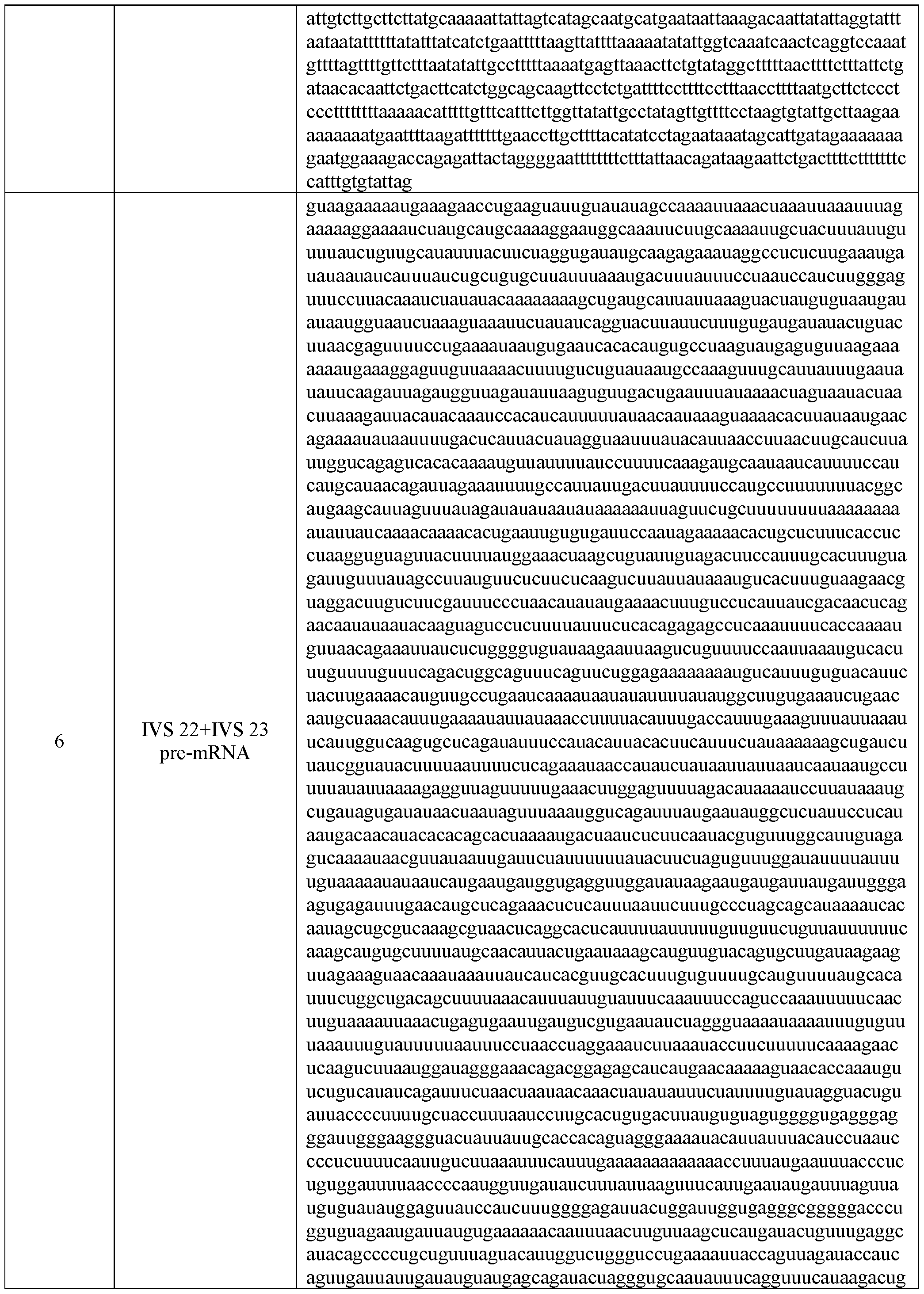


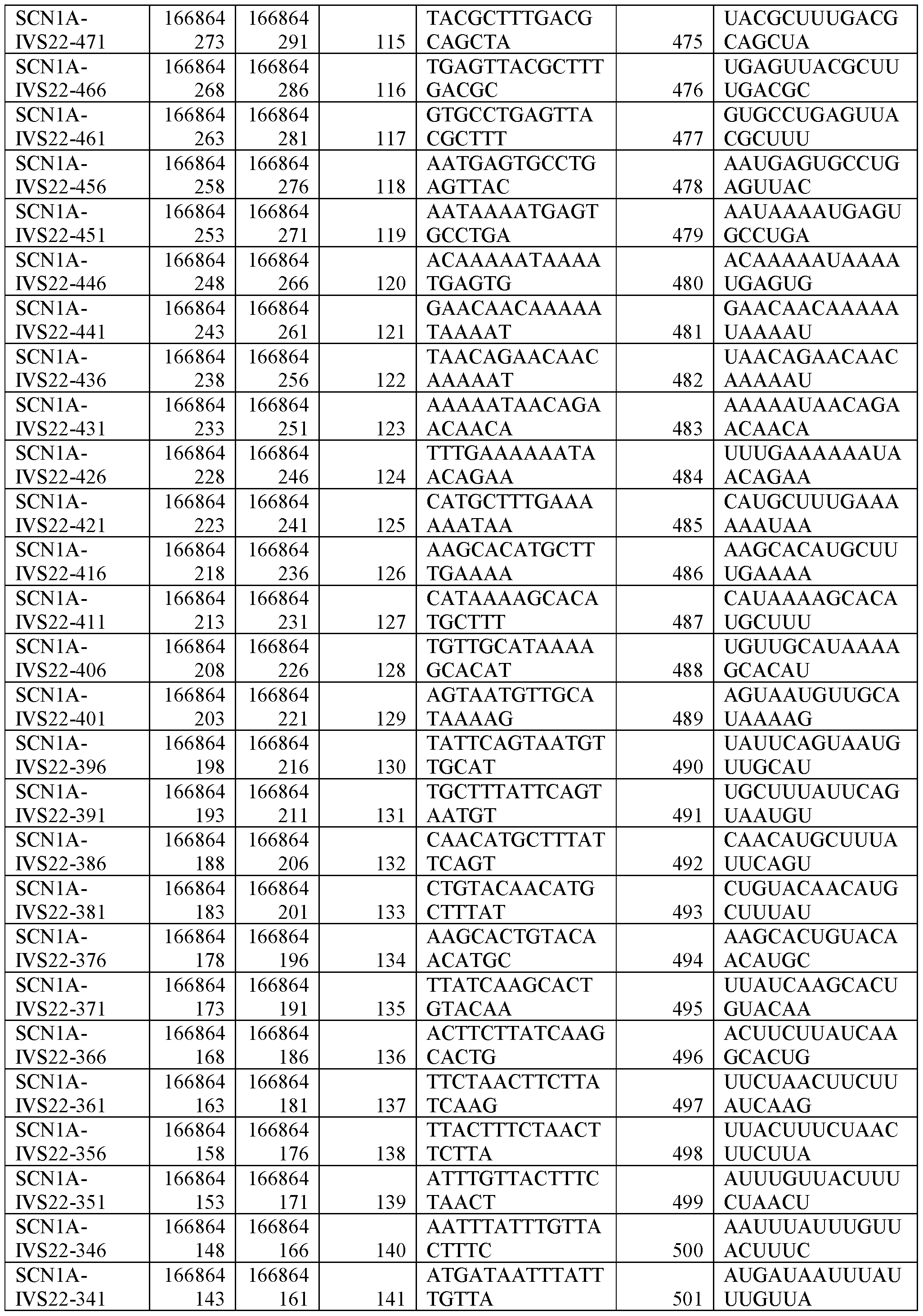


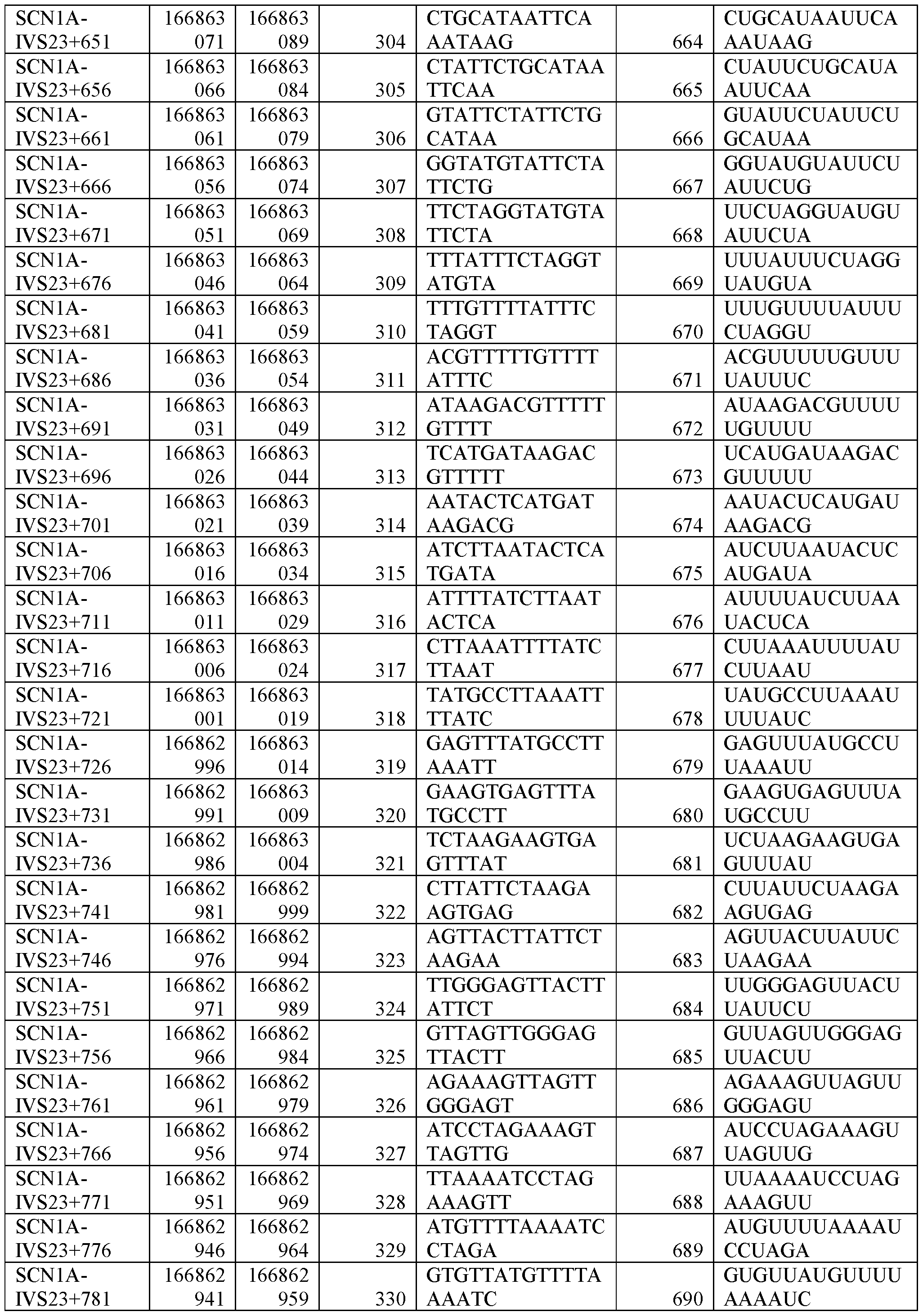


Claims
Priority Applications (10)
| Application Number | Priority Date | Filing Date | Title |
|---|---|---|---|
| SG11202109371VA SG11202109371VA (en) | 2019-02-27 | 2020-02-27 | Antisense oligomers for treatment of conditions and diseases |
| KR1020217031019A KR20210134003A (en) | 2019-02-27 | 2020-02-27 | Antisense oligomers for the treatment of conditions and diseases |
| CA3131591A CA3131591A1 (en) | 2019-02-27 | 2020-02-27 | Antisense oligomers for treatment of conditions and diseases |
| EP20763143.3A EP3931329A4 (en) | 2019-02-27 | 2020-02-27 | ANTISENSE OLIGOMERS FOR THE TREATMENT OF SUFFERINGS AND DISEASES |
| CN202080031771.0A CN113748209A (en) | 2019-02-27 | 2020-02-27 | Antisense oligomers for the treatment of conditions and diseases |
| JP2021550217A JP7660515B2 (en) | 2019-02-27 | 2020-02-27 | Antisense oligomers for treating pathologies and diseases |
| AU2020227825A AU2020227825B2 (en) | 2019-02-27 | 2020-02-27 | Antisense oligomers for treatment of conditions and diseases |
| IL285867A IL285867A (en) | 2019-02-27 | 2021-08-25 | Antisense oligomers for treatment of conditions and diseases |
| US17/412,664 US12577561B2 (en) | 2019-02-27 | 2021-08-26 | Antisense oligomers for treatment of conditions and diseases |
| JP2025060382A JP2025098252A (en) | 2019-02-27 | 2025-04-01 | Antisense oligomers for treating conditions and diseases |
Applications Claiming Priority (2)
| Application Number | Priority Date | Filing Date | Title |
|---|---|---|---|
| US201962811511P | 2019-02-27 | 2019-02-27 | |
| US62/811,511 | 2019-02-27 |
Related Child Applications (1)
| Application Number | Title | Priority Date | Filing Date |
|---|---|---|---|
| US17/412,664 Continuation US12577561B2 (en) | 2019-02-27 | 2021-08-26 | Antisense oligomers for treatment of conditions and diseases |
Publications (1)
| Publication Number | Publication Date |
|---|---|
| WO2020176776A1 true WO2020176776A1 (en) | 2020-09-03 |
Family
ID=72239261
Family Applications (1)
| Application Number | Title | Priority Date | Filing Date |
|---|---|---|---|
| PCT/US2020/020175 Ceased WO2020176776A1 (en) | 2019-02-27 | 2020-02-27 | Antisense oligomers for treatment of conditions and diseases |
Country Status (10)
| Country | Link |
|---|---|
| US (1) | US12577561B2 (en) |
| EP (1) | EP3931329A4 (en) |
| JP (2) | JP7660515B2 (en) |
| KR (1) | KR20210134003A (en) |
| CN (1) | CN113748209A (en) |
| AU (1) | AU2020227825B2 (en) |
| CA (1) | CA3131591A1 (en) |
| IL (1) | IL285867A (en) |
| SG (1) | SG11202109371VA (en) |
| WO (1) | WO2020176776A1 (en) |
Cited By (5)
| Publication number | Priority date | Publication date | Assignee | Title |
|---|---|---|---|---|
| WO2021113541A1 (en) * | 2019-12-06 | 2021-06-10 | Stoke Therapeutics, Inc. | Antisense oligomers for treatment of conditions and diseases |
| US11083745B2 (en) | 2015-12-14 | 2021-08-10 | Cold Spring Harbor Laboratory | Antisense oligomers for treatment of autosomal dominant mental retardation-5 and Dravet Syndrome |
| US11873490B2 (en) | 2017-08-25 | 2024-01-16 | Stoke Therapeutics, Inc. | Antisense oligomers for treatment of conditions and diseases |
| US12338437B2 (en) | 2020-05-11 | 2025-06-24 | Stoke Therapeutics, Inc. | OPA1 antisense oligomers for treatment of conditions and diseases |
| US12577561B2 (en) | 2019-02-27 | 2026-03-17 | Stoke Therapeutics, Inc. | Antisense oligomers for treatment of conditions and diseases |
Families Citing this family (1)
| Publication number | Priority date | Publication date | Assignee | Title |
|---|---|---|---|---|
| WO2026065401A1 (en) * | 2024-09-30 | 2026-04-02 | 时夕(广州)生物科技有限公司 | Method for regulating mrna and protein expression of scn1a gene, and compound |
Citations (3)
| Publication number | Priority date | Publication date | Assignee | Title |
|---|---|---|---|---|
| US20100088778A1 (en) * | 2005-06-16 | 2010-04-08 | John Charles Mulley | Methods of Treatment, and Diagnosis of Epilepsy by Detecting Mutations in the SCN1A Gene |
| US20130096183A1 (en) * | 2010-06-23 | 2013-04-18 | Curna, Inc. | Treatment of sodium channel, voltage-gated, alpha subunit (scna) related diseases by inhibition of natural antisense transcript to scna |
| WO2017106377A1 (en) * | 2015-12-14 | 2017-06-22 | Cold Spring Harbor Laboratory | Antisense oligomers for treatment of autosomal dominant mental retardation-5 and dravet syndrome |
Family Cites Families (293)
| Publication number | Priority date | Publication date | Assignee | Title |
|---|---|---|---|---|
| US3933961A (en) | 1974-12-13 | 1976-01-20 | Pennwalt Corporation | Tabletting spherical dental amalgam alloy |
| US4522811A (en) | 1982-07-08 | 1985-06-11 | Syntex (U.S.A.) Inc. | Serial injection of muramyldipeptides and liposomes enhances the anti-infective activity of muramyldipeptides |
| US4476116A (en) | 1982-12-10 | 1984-10-09 | Syntex (U.S.A.) Inc. | Polypeptides/chelating agent nasal compositions having enhanced peptide absorption |
| WO1986005519A1 (en) | 1985-03-15 | 1986-09-25 | James Summerton | Polynucleotide assay reagent and method |
| US5185444A (en) | 1985-03-15 | 1993-02-09 | Anti-Gene Deveopment Group | Uncharged morpolino-based polymers having phosphorous containing chiral intersubunit linkages |
| US4866042A (en) | 1987-11-18 | 1989-09-12 | Neuwelt Edward A | Method for the delivery of genetic material across the blood brain barrier |
| US6294520B1 (en) | 1989-03-27 | 2001-09-25 | Albert T. Naito | Material for passage through the blood-brain barrier |
| WO1992003568A1 (en) | 1990-08-13 | 1992-03-05 | Isis Pharmaceuticals, Inc. | Sugar modified oligonucleotides that detect and modulate gene expression |
| US5914396A (en) | 1990-01-11 | 1999-06-22 | Isis Pharmaceuticals, Inc. | 2'-O-modified nucleosides and phosphoramidites |
| US7101993B1 (en) | 1990-01-11 | 2006-09-05 | Isis Pharmaceuticals, Inc. | Oligonucleotides containing 2′-O-modified purines |
| US5151510A (en) | 1990-04-20 | 1992-09-29 | Applied Biosystems, Inc. | Method of synethesizing sulfurized oligonucleotide analogs |
| US7015315B1 (en) | 1991-12-24 | 2006-03-21 | Isis Pharmaceuticals, Inc. | Gapped oligonucleotides |
| ATE299509T1 (en) | 1992-07-23 | 2005-07-15 | Isis Pharmaceuticals Inc | NEW 2'-O-ALKYL NUCLEOSIDES AND PHOSPHORAMIDITES, METHOD FOR THEIR PRODUCTION AND USES THEREOF |
| ATE404683T1 (en) | 1992-09-25 | 2008-08-15 | Aventis Pharma Sa | ADENOVIRUS VECTORS FOR TRANSFER OF FOREIGN GENES INTO CELLS OF THE CENTRAL NERVOUS SYSTEM, ESPECIALLY IN THE BRAIN |
| DE69435005T2 (en) | 1993-05-11 | 2008-04-17 | The University Of North Carolina At Chapel Hill | Antisense oligonucleotides that prevent abnormal splicing and their use |
| AU1322795A (en) | 1993-12-24 | 1995-07-17 | Erasmus University Rotterdam | Tuberous sclerosis 2 gene and uses thereof |
| US5656612A (en) | 1994-05-31 | 1997-08-12 | Isis Pharmaceuticals, Inc. | Antisense oligonucleotide modulation of raf gene expression |
| FR2727867B1 (en) | 1994-12-13 | 1997-01-31 | Rhone Poulenc Rorer Sa | GENE TRANSFER IN MEDULLAR MOTONURONES USING ADENOVIRAL VECTORS |
| US6166197A (en) | 1995-03-06 | 2000-12-26 | Isis Pharmaceuticals, Inc. | Oligomeric compounds having pyrimidine nucleotide (S) with 2'and 5 substitutions |
| NZ331217A (en) | 1996-02-14 | 2000-02-28 | Novartis Ag | Sugar-modified gapped oligonucleotides for eliciting RNase H activity for strand cleavage in an opposing strand |
| GB9605808D0 (en) | 1996-03-20 | 1996-05-22 | Isis Innovation | CFTR gene regulator |
| US5898031A (en) | 1996-06-06 | 1999-04-27 | Isis Pharmaceuticals, Inc. | Oligoribonucleotides for cleaving RNA |
| US5955279A (en) | 1996-06-13 | 1999-09-21 | Gatti; Richard A. | Ataxia-telangiectasia: mutations in the ATM gene |
| US6770748B2 (en) | 1997-03-07 | 2004-08-03 | Takeshi Imanishi | Bicyclonucleoside and oligonucleotide analogue |
| USRE44779E1 (en) | 1997-03-07 | 2014-02-25 | Santaris Pharma A/S | Bicyclonucleoside and oligonucleotide analogues |
| JP3756313B2 (en) | 1997-03-07 | 2006-03-15 | 武 今西 | Novel bicyclonucleosides and oligonucleotide analogues |
| US7011973B1 (en) | 1997-06-03 | 2006-03-14 | Max-Planck-Gesellschaft Zur Foerderung Der Wissenschaften E.V. | Regulatory sequences capable of conferring expression of a heterologous DNA sequence in endothelial cells in vivo and uses thereof |
| US6963589B1 (en) | 1997-07-03 | 2005-11-08 | Canon Kabushiki Kaisha | Information processing apparatus for and method of transmitting and/or receiving broadcast signal |
| US6391452B1 (en) | 1997-07-18 | 2002-05-21 | Bayer Corporation | Compositions for nasal drug delivery, methods of making same, and methods of removing residual solvent from pharmaceutical preparations |
| GB9716231D0 (en) | 1997-07-31 | 1997-10-08 | Amersham Int Ltd | Base analogues |
| JP4236812B2 (en) | 1997-09-12 | 2009-03-11 | エクシコン エ/エス | Oligonucleotide analogues |
| US6794499B2 (en) | 1997-09-12 | 2004-09-21 | Exiqon A/S | Oligonucleotide analogues |
| US7572582B2 (en) | 1997-09-12 | 2009-08-11 | Exiqon A/S | Oligonucleotide analogues |
| US7045610B2 (en) | 1998-04-03 | 2006-05-16 | Epoch Biosciences, Inc. | Modified oligonucleotides for mismatch discrimination |
| WO2000010608A1 (en) | 1998-08-24 | 2000-03-02 | Meiji Milk Products Co., Ltd. | Preventives/remedies for arteriosclerosis and post-ptca reangiostenosis |
| US6210892B1 (en) | 1998-10-07 | 2001-04-03 | Isis Pharmaceuticals, Inc. | Alteration of cellular behavior by antisense modulation of mRNA processing |
| US7071324B2 (en) | 1998-10-13 | 2006-07-04 | Brown University Research Foundation | Systems and methods for sequencing by hybridization |
| US20030224514A1 (en) | 2002-05-31 | 2003-12-04 | Isis Pharmaceuticals Inc. | Antisense modulation of PPAR-delta expression |
| US6436657B1 (en) | 1998-12-18 | 2002-08-20 | E. I. Du Pont De Nemours And Company | Polynucleotides encoding aminomethyltransferases |
| ES2234563T5 (en) | 1999-02-12 | 2018-01-17 | Daiichi Sankyo Company, Limited | New nucleoside and oligonucleotide analogs |
| KR20020013513A (en) | 1999-03-18 | 2002-02-20 | 추후제출 | XYLO-LNA analogues |
| US7084125B2 (en) | 1999-03-18 | 2006-08-01 | Exiqon A/S | Xylo-LNA analogues |
| DE60029314T2 (en) | 1999-03-24 | 2007-07-12 | Exiqon A/S | Improved synthesis for -2.2.1. I bicyclo nucleosides |
| US6734291B2 (en) | 1999-03-24 | 2004-05-11 | Exiqon A/S | Synthesis of [2.2.1]bicyclo nucleosides |
| US6383752B1 (en) | 1999-03-31 | 2002-05-07 | Hybridon, Inc. | Pseudo-cyclic oligonucleobases |
| US7053207B2 (en) | 1999-05-04 | 2006-05-30 | Exiqon A/S | L-ribo-LNA analogues |
| US6083482A (en) | 1999-05-11 | 2000-07-04 | Icn Pharmaceuticals, Inc. | Conformationally locked nucleosides and oligonucleotides |
| US6531591B1 (en) | 1999-07-07 | 2003-03-11 | Exiqon A/S | Synthesis of stable quinone and photoreactive ketone phosphoramidite reagents for solid phase synthesis of photoreactive-oligomer conjugates |
| JP4151751B2 (en) | 1999-07-22 | 2008-09-17 | 第一三共株式会社 | New bicyclonucleoside analogues |
| US6458536B1 (en) | 1999-07-23 | 2002-10-01 | The Regents Of The University Of California | Modified SSCP method using sequential electrophoresis of multiple nucleic acid segments |
| US6677445B1 (en) | 1999-08-27 | 2004-01-13 | Chiron Corporation | Chimeric antisense oligonucleotides and cell transfecting formulations thereof |
| US6187586B1 (en) | 1999-12-29 | 2001-02-13 | Isis Pharmaceuticals, Inc. | Antisense modulation of AKT-3 expression |
| US6784291B2 (en) | 2000-05-04 | 2004-08-31 | Avi Biopharma, Inc. | Splice-region antisense composition and method |
| US6809194B1 (en) | 2000-05-10 | 2004-10-26 | Chiron Corporation | Akt3 inhibitors |
| CA2395781C (en) | 2000-07-13 | 2010-04-13 | The Johns Hopkins University School Of Medicine | Detection and treatment of polycystic kidney disease |
| US7053199B2 (en) | 2000-08-29 | 2006-05-30 | Takeshi Imanishi | Nucleoside analogs and oligonucleotide derivatives containing these analogs |
| AU2001295531A1 (en) | 2000-09-02 | 2002-03-13 | Grünenthal GmbH | Antisense oligonucleotides against vanilloid receptor 1 |
| JP4413493B2 (en) | 2000-10-04 | 2010-02-10 | サンタリス ファーマ アー/エス | Improved method for the synthesis of purine LNA analogues |
| JP2002345489A (en) | 2000-11-03 | 2002-12-03 | Astrazeneca Ab | Chemical substance |
| NZ530101A (en) | 2001-05-17 | 2007-01-26 | Avi Biopharma Inc | Methods for treating cancer by administering an oligomer antisense to c-myc together with a cancer chemotherapeutic agent |
| ATE287413T1 (en) | 2001-07-12 | 2005-02-15 | Santaris Pharma As | METHOD FOR PRODUCING THE LNA PHOSPHORAMIDITE |
| AU2002336367A1 (en) | 2001-08-16 | 2003-03-03 | The Regents Of The University Of Michigan | Adamts13 genes and proteins and variants, and uses thereof |
| CA2459347C (en) | 2001-09-04 | 2012-10-09 | Exiqon A/S | Locked nucleic acid (lna) compositions and uses thereof |
| US6936589B2 (en) | 2001-09-28 | 2005-08-30 | Albert T. Naito | Parenteral delivery systems |
| WO2003040395A2 (en) | 2001-11-07 | 2003-05-15 | Applera Corporation | Universal nucleotides for nucleic acid analysis |
| EP1481983A4 (en) | 2002-02-13 | 2008-04-02 | Takeshi Imanishi | Nucleoside analogues and oligonucleotide derivative comprising nucleotide analogue thereof |
| AU2003222743B2 (en) | 2002-05-08 | 2008-12-11 | Roche Innovation Center Copenhagen A/S | Synthesis of locked nucleic acid derivatives |
| US7569575B2 (en) | 2002-05-08 | 2009-08-04 | Santaris Pharma A/S | Synthesis of locked nucleic acid derivatives |
| AU2003247610A1 (en) | 2002-06-21 | 2004-01-06 | Ptc Therapeutics, Inc. | METHODS FOR IDENTIFYING SMALL MOLECULES THAT MODULATE PREMATURE TRANSLATION TERMINATION AND NONSENSE MEDIATED mRNA DECAY |
| US20040023220A1 (en) | 2002-07-23 | 2004-02-05 | Lawrence Greenfield | Integrated method for PCR cleanup and oligonucleotide removal |
| AU2003259803B2 (en) | 2002-08-12 | 2007-08-02 | The Regents Of The University Of Michigan | Diagnosis and treatment of tuberous sclerosis |
| US20060058253A1 (en) | 2002-08-12 | 2006-03-16 | Benoit Chabot | Methods to reprogram splice site selection in pre-messenger rnas |
| WO2004041889A2 (en) | 2002-11-05 | 2004-05-21 | Isis Pharmaceuticals, Inc. | Polycyclic sugar surrogate-containing oligomeric compounds and compositions for use in gene modulation |
| AU2003291755A1 (en) | 2002-11-05 | 2004-06-07 | Isis Pharmaceuticals, Inc. | Oligomers comprising modified bases for binding cytosine and uracil or thymine and their use |
| AU2003295600A1 (en) | 2002-11-14 | 2004-06-15 | Dharmacon, Inc. | Functional and hyperfunctional sirna |
| WO2004046160A2 (en) | 2002-11-18 | 2004-06-03 | Santaris Pharma A/S | Amino-lna, thio-lna and alpha-l-oxy-ln |
| US7217807B2 (en) | 2002-11-26 | 2007-05-15 | Rosetta Genomics Ltd | Bioinformatically detectable group of novel HIV regulatory genes and uses thereof |
| CA2518475C (en) | 2003-03-07 | 2014-12-23 | Alnylam Pharmaceuticals, Inc. | Irna agents comprising asymmetrical modifications |
| AU2003225410A1 (en) | 2003-03-21 | 2004-10-11 | Academisch Ziekenhuis Leiden | Modulation of exon recognition in pre-mrna by interfering with the secondary rna structure |
| ATE443765T1 (en) | 2003-03-21 | 2009-10-15 | Santaris Pharma As | ANALOGUE OF SHORT INTERFERING RNA (SIRNA) |
| NZ542687A (en) | 2003-04-13 | 2010-02-26 | Enzon Pharmaceuticals Inc | Polymeric oligonucleotide prodrugs |
| US20050053981A1 (en) | 2003-09-09 | 2005-03-10 | Swayze Eric E. | Gapped oligomeric compounds having linked bicyclic sugar moieties at the termini |
| US20070009899A1 (en) | 2003-10-02 | 2007-01-11 | Mounts William M | Nucleic acid arrays for detecting gene expression in animal models of inflammatory diseases |
| GB0326578D0 (en) | 2003-11-14 | 2003-12-17 | Univ Belfast | Cancer diagnosis and therapy |
| US20050221354A1 (en) | 2004-02-18 | 2005-10-06 | Wyeth | Nucleic acid arrays for monitoring expression profiles of drug target genes |
| JP2007534772A (en) | 2004-04-27 | 2007-11-29 | イルミジェン バイオサイエンシーズ, インコーポレイテッド | Methods and compositions for specifically targeting human hepatocellular carcinoma cells |
| JP5697297B2 (en) | 2004-05-14 | 2015-04-08 | ロゼッタ ジノミクス リミテッド | Micro NAS and its use |
| US8394947B2 (en) | 2004-06-03 | 2013-03-12 | Isis Pharmaceuticals, Inc. | Positionally modified siRNA constructs |
| US20070087376A1 (en) | 2004-08-30 | 2007-04-19 | Potashkin Judith A | Splice variants of pre-mRNA transcripts as biomarkers in idiopathic neurodegenerative diseases |
| US20060134670A1 (en) | 2004-11-19 | 2006-06-22 | Fabrice Piu | Enabling tools to identify ligands for hormone nuclear receptors |
| WO2006081311A2 (en) | 2005-01-26 | 2006-08-03 | Medical College Of Georgia Research Institute | Compositions and methods for the intracellular disruption of vegf and vegfr-2 by intraceptors |
| US7718625B2 (en) | 2005-01-27 | 2010-05-18 | University Of South Florida | Polynucleotides targeted against the extended 5′-UTR region of argininosuccinate synthase and uses thereof |
| US20100150839A1 (en) | 2005-02-04 | 2010-06-17 | Massachusetts Institute Of Technology | Compositions and Methods for Modulating Cognitive Function |
| ES2732071T3 (en) | 2005-04-01 | 2019-11-20 | Univ Florida | Biomarkers of liver lesions |
| ATE544866T1 (en) | 2005-06-17 | 2012-02-15 | Baxter Int | COMPOSITIONS CONTAINING ADAMTS13 WITH THROMBOLYTIC ACTION |
| EP3470072A1 (en) | 2005-06-23 | 2019-04-17 | Biogen MA Inc. | Compositions and methods for modulation of smn2 splicing |
| PL2578685T3 (en) | 2005-08-23 | 2020-01-31 | The Trustees Of The University Of Pennsylvania | Rna containing modified nucleosides and methods of use thereof |
| US8501703B2 (en) | 2005-08-30 | 2013-08-06 | Isis Pharmaceuticals, Inc. | Chimeric oligomeric compounds for modulation of splicing |
| WO2007047913A2 (en) | 2005-10-20 | 2007-04-26 | Isis Pharmaceuticals, Inc | Compositions and methods for modulation of lmna expression |
| US20080280848A1 (en) | 2005-10-28 | 2008-11-13 | Volker Patzel | Structures of Active Guide Rna Molecules and Method of Selection |
| WO2007048629A2 (en) | 2005-10-28 | 2007-05-03 | MAX-PLANCK-Gesellschaft zur Förderung der Wissenschaften e.V. | Modulation of rna silencing efficiency by argonaute proteins |
| US20100022495A1 (en) | 2005-11-01 | 2010-01-28 | President And Fellows Of Harvard College | Modulating endoplasmic reticulum stress in the treatment of tuberous sclerosis |
| US20090291437A1 (en) | 2005-11-02 | 2009-11-26 | O'brien Sean | Methods for targeting quadruplex sequences |
| US7785834B2 (en) | 2005-11-10 | 2010-08-31 | Ercole Biotech, Inc. | Soluble TNF receptors and their use in treatment of disease |
| EP1792981A1 (en) | 2005-12-02 | 2007-06-06 | Humboldt-Universität zu Berlin | Microginin producing proteins and nucleic acids encoding a microginin gene cluster as well as methods for creating microginins |
| EP1991677A2 (en) | 2006-01-26 | 2008-11-19 | Isis Pharmaceuticals, Inc. | Compositions and their uses directed to huntingtin |
| WO2007090071A2 (en) | 2006-01-27 | 2007-08-09 | Isis Pharmaceuticals, Inc. | 6-modified bicyclic nucleic acid analogs |
| US7569686B1 (en) | 2006-01-27 | 2009-08-04 | Isis Pharmaceuticals, Inc. | Compounds and methods for synthesis of bicyclic nucleic acid analogs |
| AU2007211082B2 (en) | 2006-01-27 | 2012-09-27 | Isis Pharmaceuticals, Inc. | Oligomeric compounds and compositions for the use in modulation of microRNAs |
| US8007790B2 (en) | 2006-04-03 | 2011-08-30 | Stowers Institute For Medical Research | Methods for treating polycystic kidney disease (PKD) or other cyst forming diseases |
| JP2009536222A (en) | 2006-05-05 | 2009-10-08 | アイシス ファーマシューティカルズ, インコーポレーテッド | Compounds and methods for modulating the expression of PCSK9 |
| AU2007249349B2 (en) | 2006-05-11 | 2012-03-08 | Isis Pharmaceuticals, Inc. | 5'-Modified bicyclic nucleic acid analogs |
| US7666854B2 (en) | 2006-05-11 | 2010-02-23 | Isis Pharmaceuticals, Inc. | Bis-modified bicyclic nucleic acid analogs |
| EP1857548A1 (en) | 2006-05-19 | 2007-11-21 | Academisch Ziekenhuis Leiden | Means and method for inducing exon-skipping |
| US8927704B2 (en) | 2006-06-08 | 2015-01-06 | Amino Up Chemical Co., Ltd | Sense oligonucleotide capable of controlling the expression of iNOS and composition comprising the same |
| JPWO2008001778A1 (en) | 2006-06-27 | 2009-11-26 | 武田薬品工業株式会社 | Genetically modified animals and uses thereof |
| WO2008094194A2 (en) | 2006-07-24 | 2008-08-07 | Athena Diagnostics, Inc. | Pkd mutations and evaluation of same |
| ES2526295T5 (en) | 2006-10-18 | 2021-05-04 | Ionis Pharmaceuticals Inc | Antisense compounds |
| US20090264353A1 (en) | 2007-10-19 | 2009-10-22 | Santaris Pharma A/S | Splice Switching Oligomers for TNF Superfamily Receptors and their Use in Treatment of Disease |
| DK2099461T3 (en) | 2006-11-13 | 2012-07-02 | Santaris Pharma As | LNA Nucleoside Phosphoramidates |
| US8293684B2 (en) | 2006-11-29 | 2012-10-23 | Exiqon | Locked nucleic acid reagents for labelling nucleic acids |
| WO2008086807A2 (en) | 2007-01-19 | 2008-07-24 | Exiqon A/S | Mediated cellular delivery of lna oligonucleotides |
| EP2114981B1 (en) | 2007-01-29 | 2013-05-08 | Isis Pharmaceuticals, Inc. | Compounds and methods for modulating protein expression |
| AR065648A1 (en) | 2007-03-09 | 2009-06-24 | Pioneer Hi Bred Int | IDENTIFICATION OF AMMONIUM CONVEYORS (AMTS) FOR THE REGULATION OF NITROGEN METABOLISM IN PLANTS |
| EP2130835B1 (en) | 2007-03-09 | 2012-05-23 | Riken | Compound having structure derived from mononucleoside or mononucleotide, nucleic acid, labeling substance, and method and kit for detection of nucleic acid |
| WO2008111908A1 (en) | 2007-03-15 | 2008-09-18 | Jyoti Chattopadhyaya | Five- and six-membered conformationally locked 2',4'- carbocyclic ribo-thymidines for the treatment of infections and cancer |
| EP2149605B1 (en) | 2007-03-22 | 2013-07-03 | Santaris Pharma A/S | Short RNA antagonist compounds for the modulation of target mRNA |
| CA2688321A1 (en) | 2007-05-30 | 2008-12-11 | Isis Pharmaceuticals, Inc. | N-substituted-aminomethylene bridged bicyclic nucleic acid analogs |
| DK2173760T4 (en) | 2007-06-08 | 2016-02-08 | Isis Pharmaceuticals Inc | Carbocyclic bicyclic nukleinsyreanaloge |
| AU2008272918B2 (en) | 2007-07-05 | 2012-09-13 | Isis Pharmaceuticals, Inc. | 6-disubstituted bicyclic nucleic acid analogs |
| KR101654007B1 (en) | 2007-08-15 | 2016-09-05 | 아이오니스 파마수티컬즈, 인코포레이티드 | Tetrahydropyran nucleic acid analogs |
| ES2639852T3 (en) | 2007-10-26 | 2017-10-30 | Academisch Ziekenhuis Leiden | Means and methods to counteract muscle disorders |
| WO2009064920A2 (en) | 2007-11-13 | 2009-05-22 | Isis Pharmaceuticals, Inc. | Compounds and methods for modulating protein expression |
| WO2009067647A1 (en) | 2007-11-21 | 2009-05-28 | Isis Pharmaceuticals, Inc. | Carbocyclic alpha-l-bicyclic nucleic acid analogs |
| WO2009073809A2 (en) | 2007-12-04 | 2009-06-11 | Alnylam Pharmaceuticals, Inc. | Carbohydrate conjugates as delivery agents for oligonucleotides |
| US8846386B2 (en) | 2007-12-18 | 2014-09-30 | University Of Kentucky Research Foundation | sVEGFR-2 and its role in lymphangiogenesis modulation |
| JP5608863B2 (en) | 2007-12-28 | 2014-10-15 | 公立大学法人横浜市立大学 | Methods for detecting refractory epilepsy from neonatal to infancy |
| WO2009099942A2 (en) | 2008-01-31 | 2009-08-13 | Alnylam Pharmaceuticals, Inc. | Chemically modified oligonucleotides and uses thereof |
| WO2009100320A2 (en) | 2008-02-07 | 2009-08-13 | Isis Pharmaceuticals, Inc. | Bicyclic cyclohexitol nucleic acid analogs |
| WO2009151691A2 (en) | 2008-03-13 | 2009-12-17 | Celera Corporation | Genetic polymorphisms associated wiith venous thrombosis, methods of detection and uses thereof |
| EP2274423A2 (en) | 2008-04-04 | 2011-01-19 | Isis Pharmaceuticals, Inc. | Oligomeric compounds comprising bicyclic nucleosides and having reduced toxicity |
| US9290534B2 (en) | 2008-04-04 | 2016-03-22 | Ionis Pharmaceuticals, Inc. | Oligomeric compounds having at least one neutrally linked terminal bicyclic nucleoside |
| EP2119783A1 (en) | 2008-05-14 | 2009-11-18 | Prosensa Technologies B.V. | Method for efficient exon (44) skipping in Duchenne Muscular Dystrophy and associated means |
| WO2009149921A2 (en) | 2008-06-11 | 2009-12-17 | Bionucleon S.R.L. | Inhibition of hrp-3 using modified oligonucleotides |
| EP2151248A1 (en) | 2008-07-30 | 2010-02-10 | Johann Bauer | Improved pre-mRNA trans-splicing molecule (RTM) molecules and their uses |
| US8084601B2 (en) | 2008-09-11 | 2011-12-27 | Royal Holloway And Bedford New College Royal Holloway, University Of London | Oligomers |
| DK2356129T3 (en) | 2008-09-24 | 2013-05-13 | Isis Pharmaceuticals Inc | Substituted alpha-L bicyclic nucleosides |
| EP2364325A4 (en) | 2008-11-07 | 2012-07-25 | Ct Hospitalier Universitaire Sainte Justine | SYNGAP1 DYSFUNCTIONS AND USES THEREOF IN DIAGNOSTIC AND THERAPEUTIC APPLICATIONS OF INTELLECTUAL DISABILITIES |
| ES2600781T3 (en) | 2008-12-04 | 2017-02-10 | Curna, Inc. | Treatment for diseases related to vascular endothelial growth factor (vegf) by inhibiting natural antisense transcripts of vegf |
| US9006194B2 (en) | 2008-12-19 | 2015-04-14 | Drexel University | Compositions and methods for diminishing viral infection and inflammation associated with viral infection |
| US20100166784A1 (en) | 2008-12-30 | 2010-07-01 | The Washington University | Method and compositions for modulating th17 cell development |
| CA2750379A1 (en) | 2009-01-14 | 2010-07-22 | Gordon J. Lutz | Modulation of pre-mrna using splice modulating oligonucleotides as therapeutic agents in the treatment of disease |
| JP5931720B2 (en) | 2009-05-08 | 2016-06-08 | クルナ・インコーポレーテッド | Treatment of dystrophin family-related diseases by suppression of natural antisense transcripts on the DMD family |
| ES2699827T3 (en) | 2009-06-17 | 2019-02-13 | Biogen Ma Inc | Compositions and methods for SMN2 splicing modulation in a subject |
| EP2275545A1 (en) | 2009-07-16 | 2011-01-19 | Julius-Maximilians-Universität Würzburg | Use of microRNA-24 and/or its targets for the treatment and prevention of ischemia and induction of angiogenesis |
| US9012421B2 (en) | 2009-08-06 | 2015-04-21 | Isis Pharmaceuticals, Inc. | Bicyclic cyclohexose nucleic acid analogs |
| US20120252877A1 (en) | 2009-08-14 | 2012-10-04 | Theramind Research, Llc | Methods and compositions for treatment of tuberous sclerosis complex |
| CN102918163B (en) | 2009-09-08 | 2016-10-05 | 美国控股实验室公司 | Compositions and methods for diagnosing autism spectrum disorder |
| WO2011032034A2 (en) | 2009-09-10 | 2011-03-17 | University Of Idaho | Nucleobase-functionalized conformationally restricted nucleotides and oligonucleotides for targeting nucleic acids |
| CA2778171C (en) | 2009-10-29 | 2017-07-25 | Osaka University | Bridged artificial nucleoside and nucleotide |
| TR201816523T4 (en) | 2009-11-12 | 2018-11-21 | Univ Western Australia | Antisense molecules and methods for the treatment of pathologies. |
| US9334495B2 (en) | 2009-11-25 | 2016-05-10 | Elitechgroup B.V. | Minor groove binder (MGB)-oligonucleotide miRNA antagonists |
| WO2011085102A1 (en) | 2010-01-11 | 2011-07-14 | Isis Pharmaceuticals, Inc. | Base modified bicyclic nucleosides and oligomeric compounds prepared therefrom |
| US8957040B2 (en) | 2010-02-08 | 2015-02-17 | Isis Pharmaceuticals, Inc. | Selective reduction of allelic variants |
| US9193752B2 (en) | 2010-03-17 | 2015-11-24 | Isis Pharmaceuticals, Inc. | 5′-substituted bicyclic nucleosides and oligomeric compounds prepared therefrom |
| JP2013529181A (en) | 2010-03-25 | 2013-07-18 | ザ ジェイ. デヴィッド グラッドストーン インスティテューツ | Compositions and methods for treating neurological disorders |
| WO2011127210A1 (en) | 2010-04-06 | 2011-10-13 | Massachusetts Institute Of Technology | Targeted delivery of nucleic acids |
| CA2796722C (en) | 2010-04-19 | 2021-06-01 | Nlife Therapeutics, S.L. | Compositions and methods for selective delivery of oligonucleotide molecules to specific neuron types |
| US20110269735A1 (en) | 2010-04-19 | 2011-11-03 | Celera Corporation | Genetic polymorphisms associated with statin response and cardiovascular diseases, methods of detection and uses thereof |
| US9156873B2 (en) | 2010-04-28 | 2015-10-13 | Isis Pharmaceuticals, Inc. | Modified 5′ diphosphate nucleosides and oligomeric compounds prepared therefrom |
| US8802642B2 (en) | 2010-04-28 | 2014-08-12 | Iowa State University Research Foundation, Inc. | Spinal muscular atrophy treatment via targeting SMN2 catalytic core |
| US20130184223A1 (en) | 2010-05-20 | 2013-07-18 | University Of Rochester | Methods and compositions related to modulating autophagy |
| US8957200B2 (en) | 2010-06-07 | 2015-02-17 | Isis Pharmaceuticals, Inc. | Bicyclic nucleosides and oligomeric compounds prepared therefrom |
| EP2580228B1 (en) | 2010-06-08 | 2016-03-23 | Ionis Pharmaceuticals, Inc. | Substituted 2'-amino and 2'-thio-bicyclic nucleosides and oligomeric compounds prepared therefrom |
| US9518259B2 (en) | 2010-06-15 | 2016-12-13 | Ionis Pharmaceuticals, Inc. | Compounds and methods for modulating interaction between proteins and target nucleic acids |
| KR101865433B1 (en) | 2010-10-22 | 2018-07-13 | 큐알엔에이, 인크. | Treatment of alpha-l-iduronidase (idua) related diseases by inhibition of natural antisense transcript to idua |
| US8853377B2 (en) | 2010-11-30 | 2014-10-07 | Shire Human Genetic Therapies, Inc. | mRNA for use in treatment of human genetic diseases |
| US20130309246A1 (en) | 2011-02-02 | 2013-11-21 | The Trustees Of Princeton University | Jagged1 as a marker and therapeutic target for breast cancer bone metastasis |
| WO2012138487A2 (en) | 2011-04-07 | 2012-10-11 | The Board Of Regents Of The University Of Texas System | Oligonucleotide modulation of splicing |
| US9644035B2 (en) | 2011-04-08 | 2017-05-09 | Omeros Corporation | Methods for treating conditions associated with MASP-2 dependent complement activation |
| EP3495497B1 (en) | 2011-04-28 | 2021-03-24 | Life Technologies Corporation | Methods and compositions for multiplex pcr |
| WO2012168435A1 (en) | 2011-06-10 | 2012-12-13 | INSERM (Institut National de la Santé et de la Recherche Médicale) | Methods for the treatment of leber congenital amaurosis |
| US20140357558A1 (en) | 2011-06-24 | 2014-12-04 | Cold Spring Harbor Laboratory | Compositions and methods for treatment of spinal muscular atrophy |
| CN103796657B (en) | 2011-07-19 | 2017-07-11 | 波涛生命科学有限公司 | Methods of Synthesizing Functionalized Nucleic Acids |
| US8592156B2 (en) | 2011-08-08 | 2013-11-26 | Roche Molecular Systems, Inc. | Predicting response to anti-CD20 therapy in DLBCL patients |
| WO2013033230A1 (en) | 2011-08-29 | 2013-03-07 | Isis Pharmaceuticals, Inc. | Oligomer-conjugate complexes and their use |
| EP2753694B1 (en) | 2011-09-05 | 2017-08-23 | Stichting Katholieke Universiteit | Antisense oligonucleotides for the treatment of leber congenital amaurosis |
| MX365525B (en) | 2011-09-06 | 2019-06-06 | Curna Inc | TREATMENT OF DISEASES RELATED TO ALPHA SUBUNITS OF SODIUM CHANNELS, VOLTAGE-GATED (SCNxA) WITH SMALL MOLECULES. |
| WO2013043878A2 (en) | 2011-09-20 | 2013-03-28 | The George Washington University | Alternative splicing variants of genes associated with prostate cancer risk and survival |
| WO2013068441A1 (en) | 2011-11-11 | 2013-05-16 | Santaris Pharma A/S | Compounds for the modulation of smn2 splicing |
| WO2013074814A2 (en) | 2011-11-15 | 2013-05-23 | University Of Utah Research Fourdation | Morpholinos, morpholino upregulating, and associated methods |
| EP2966180B1 (en) | 2011-11-29 | 2017-08-16 | Life Technologies Corporation | Methods and compositions for multiplex pcr |
| EP2802674B1 (en) | 2012-01-11 | 2020-12-16 | Ionis Pharmaceuticals, Inc. | Compositions and methods for modulation of ikbkap splicing |
| WO2013120003A1 (en) | 2012-02-08 | 2013-08-15 | Isis Pharmaceuticals, Inc. | Modulation of rna by repeat targeting |
| DK2812004T3 (en) | 2012-02-10 | 2018-10-15 | Ptc Therapeutics Inc | COMPOUNDS FOR TREATMENT OF SPINAL MUSCLE DROPHY |
| US8846885B2 (en) | 2012-02-17 | 2014-09-30 | Ajinomoto Co., Inc. | Oligonucleotide with protected base |
| EP2850092B1 (en) | 2012-04-09 | 2017-03-01 | Ionis Pharmaceuticals, Inc. | Tricyclic nucleic acid analogs |
| WO2013159108A2 (en) | 2012-04-20 | 2013-10-24 | Isis Pharmaceuticals, Inc. | Oligomeric compounds comprising bicyclic nucleotides and uses thereof |
| US20140378526A1 (en) | 2012-05-11 | 2014-12-25 | City Of Hope | Design of nucleic acid binding molecules with non-watson crick and non-canonical pairing based on artificial mutation consensus sequences to counter escape mutations |
| WO2013177188A1 (en) | 2012-05-22 | 2013-11-28 | Idenix Pharmaceuticals, Inc. | 3',5'-cyclic phosphoramidate prodrugs for hcv infection |
| US9296778B2 (en) | 2012-05-22 | 2016-03-29 | Idenix Pharmaceuticals, Inc. | 3′,5′-cyclic phosphate prodrugs for HCV infection |
| WO2013185067A1 (en) | 2012-06-08 | 2013-12-12 | Shire Human Genetic Therapies, Inc. | Nuclease resistant polynucleotides and uses thereof |
| KR102213609B1 (en) | 2012-07-13 | 2021-02-08 | 웨이브 라이프 사이언시스 리미티드 | Chiral control |
| US8729263B2 (en) | 2012-08-13 | 2014-05-20 | Novartis Ag | 1,4-disubstituted pyridazine analogs there of and methods for treating SMN-deficiency-related conditions |
| CN104781271B (en) | 2012-08-20 | 2018-07-06 | 加利福尼亚大学董事会 | Polynucleotides with bioreversible groups |
| WO2014045283A1 (en) | 2012-09-24 | 2014-03-27 | Yissum Research Development Company Of The Hebrew University Of Jerusalem Ltd. | Restoration of the cftr function by splicing modulation |
| WO2014049536A2 (en) | 2012-09-25 | 2014-04-03 | Universidade De Lisboa | Drug targets for cystic fibrosis and other conditions |
| WO2014052638A1 (en) | 2012-09-27 | 2014-04-03 | Idenix Pharmaceuticals, Inc. | Esters and malonates of sate prodrugs |
| UA116639C2 (en) | 2012-10-09 | 2018-04-25 | Рег'Юлес Терап'Ютікс Інк. | Methods for treatment of alport syndrome |
| US9029335B2 (en) | 2012-10-16 | 2015-05-12 | Isis Pharmaceuticals, Inc. | Substituted 2′-thio-bicyclic nucleosides and oligomeric compounds prepared therefrom |
| WO2014066915A2 (en) | 2012-10-26 | 2014-05-01 | Smith Larry J | Methods and compositions to produce ss-rnai activity with enhanced potency |
| HRP20190303T1 (en) | 2012-10-31 | 2019-05-17 | Ionis Pharmaceuticals, Inc. | CANCER TREATMENT |
| US9909128B2 (en) | 2012-11-15 | 2018-03-06 | The Regents Of The University Of California | Splice modulating oligonucleotides that inhibit cancer |
| EP2935304A1 (en) | 2012-12-19 | 2015-10-28 | IDENIX Pharmaceuticals, Inc. | 4'-fluoro nucleosides for the treatment of hcv |
| CN103667438B (en) | 2013-01-07 | 2015-04-01 | 赵晨 | A method for screening pathogenic mutations of HRDs and related gene chip hybridization probe design method |
| CA2897522A1 (en) | 2013-01-18 | 2014-07-24 | Anna Mary Rose | Therapeutics and diagnostics based on minisatellite repeat element 1 (msr1) |
| WO2014121287A2 (en) | 2013-02-04 | 2014-08-07 | Isis Pharmaceuticals, Inc. | Selective antisense compounds and uses thereof |
| WO2014126229A1 (en) | 2013-02-18 | 2014-08-21 | 塩野義製薬株式会社 | Nucleoside and nucleotide, having nitrogen-containing hetercycle structure |
| WO2014137930A1 (en) | 2013-03-04 | 2014-09-12 | Idenix Pharmaceuticals, Inc. | Thiophosphate nucleosides for the treatment of hcv |
| WO2014137926A1 (en) | 2013-03-04 | 2014-09-12 | Idenix Pharmaceuticals, Inc. | 3'-deoxy nucleosides for the treatment of hcv |
| EP2981542B1 (en) | 2013-04-01 | 2021-09-15 | Idenix Pharmaceuticals LLC | 2',4'-fluoro nucleosides for the treatment of hcv |
| US10590412B2 (en) | 2013-04-19 | 2020-03-17 | Ionis Pharmaceuticals, Inc. | Compositions and methods for modulation nucleic acids through nonsense mediated decay |
| DK2992098T3 (en) | 2013-05-01 | 2019-06-17 | Ionis Pharmaceuticals Inc | COMPOSITIONS AND METHODS FOR MODULATION OF HBV AND TTR EXPRESSION |
| US9549909B2 (en) | 2013-05-03 | 2017-01-24 | The Katholieke Universiteit Leuven | Method for the treatment of dravet syndrome |
| WO2014198890A1 (en) | 2013-06-13 | 2014-12-18 | INSERM (Institut National de la Santé et de la Recherche Médicale) | Methods and pharmaceutical compositions for the treatment of erythropoietic protoporphyria |
| WO2014201413A1 (en) | 2013-06-14 | 2014-12-18 | Isis Pharmaceuticals, Inc. | Compounds and methods for modulating non-coding rna |
| WO2014209841A2 (en) | 2013-06-25 | 2014-12-31 | F. Hoffmann-La Roche Ag | Compounds for treating spinal muscular atrophy |
| WO2015023938A1 (en) | 2013-08-16 | 2015-02-19 | Rana Therapeutics, Inc. | Epigenetic regulators of frataxin |
| US20160201064A1 (en) | 2013-08-16 | 2016-07-14 | Rana Therapeutics, Inc. | Compositions and methods for modulating expression of frataxin |
| CA2921556A1 (en) | 2013-08-16 | 2015-02-19 | Rana Therapeutics, Inc. | Compositions and methods for modulating rna |
| JP2016531570A (en) | 2013-08-16 | 2016-10-13 | ラナ セラピューティクス インコーポレイテッド | Oligonucleotides targeting the euchromatin region |
| WO2015024876A2 (en) | 2013-08-19 | 2015-02-26 | F. Hoffmann-La Roche Ag | Screening method |
| EP3041958B1 (en) | 2013-09-04 | 2019-12-04 | Cold Spring Harbor Laboratory | Reducing nonsense-mediated mrna decay |
| US11236338B2 (en) | 2013-09-05 | 2022-02-01 | Sarepta Therapeutics, Inc. | Antisense-induced exon2 inclusion in acid alpha-glucosidase |
| EP3044315B1 (en) | 2013-09-11 | 2019-02-20 | Synthena AG | Nucleic acids and methods for the treatment of pompe disease |
| AU2014352773B2 (en) | 2013-11-21 | 2021-04-29 | Memorial Sloan-Kettering Cancer Center | Specification of functional cranial placode derivatives from human pluripotent stem cells |
| US10119168B2 (en) | 2014-03-12 | 2018-11-06 | The Brigham And Women's Hospital, Inc. | Methods for the treatment of kidney fibrosis |
| US20170044540A1 (en) | 2014-04-22 | 2017-02-16 | Mina Therapeutics Limited | Sarna compositions and methods of use |
| KR102524543B1 (en) | 2014-06-10 | 2023-04-20 | 에라스무스 유니버시티 메디컬 센터 로테르담 | Antisense oligonucleotides useful in treatment of Pompe Disease |
| GB201410693D0 (en) | 2014-06-16 | 2014-07-30 | Univ Southampton | Splicing modulation |
| GB201411468D0 (en) | 2014-06-27 | 2014-08-13 | Univ Edinburgh | Novel treatment for endometriosis |
| WO2016027168A2 (en) | 2014-08-20 | 2016-02-25 | Lifesplice Pharma Llc | Splice modulating oligonucleotides and methods of use thereof |
| CA2958524A1 (en) | 2014-08-20 | 2016-02-25 | Lifesplice Pharma Llc | Splice modulating oligonucleotides and methods of use thereof |
| AU2015327836B2 (en) | 2014-10-03 | 2021-07-01 | Cold Spring Harbor Laboratory | Targeted augmentation of nuclear gene output |
| EP3207048A4 (en) | 2014-10-17 | 2018-05-30 | The Broad Institute, Inc. | Compositions and methods of treating muscular dystrophy |
| CA2964979A1 (en) | 2014-11-14 | 2016-05-19 | Ionis Pharmaceuticals, Inc. | Compounds and methods for the modulation of proteins |
| GB201421379D0 (en) | 2014-12-02 | 2015-01-14 | Isis Innovation Ltd And Medical Res Council | Molecule |
| JP2018509387A (en) | 2015-01-21 | 2018-04-05 | フェーズアールエックス インコーポレイテッド | Methods, compositions, and systems for delivering therapeutic and diagnostic agents to cells |
| WO2016128343A1 (en) | 2015-02-09 | 2016-08-18 | F. Hoffmann-La Roche Ag | Compounds for the treatment of cancer |
| EP3259356B1 (en) | 2015-02-20 | 2021-12-01 | Rosalind Franklin University of Medicine and Science | Antisense compounds targeting genes associated with cystic fibrosis |
| EP3262056A4 (en) | 2015-02-27 | 2018-09-19 | Sarepta Therapeutics, Inc. | Antisense-induced exon2 inclusion in acid alpha-glucosidase |
| MX2017012426A (en) | 2015-04-03 | 2018-01-26 | Ionis Pharmaceuticals Inc | Compounds and methods for modulating tmprss6 expression. |
| EP4249472A3 (en) | 2015-05-30 | 2023-12-13 | PTC Therapeutics, Inc. | Methods for modulating rna splicing |
| US20180265911A1 (en) | 2015-09-24 | 2018-09-20 | The Trustees Of The University Of Pennsylvania | Triptycene derivatives for nucleic acid junction stabilization |
| GB2591194B (en) | 2015-10-09 | 2021-10-13 | Univ Southampton | Modulation of gene expression and screening for deregulated protein expression |
| CN108603230A (en) | 2015-10-09 | 2018-09-28 | 南安普敦大学 | The screening of the adjusting of gene expression and protein expression imbalance |
| JP2018531975A (en) | 2015-10-30 | 2018-11-01 | ピーティーシー セラピューティクス,インコーポレーテッド | How to treat epilepsy |
| JP2019500345A (en) | 2015-12-14 | 2019-01-10 | コールド スプリング ハーバー ラボラトリー | Compositions and methods for the treatment of liver disease |
| EP3390666A4 (en) | 2015-12-14 | 2019-08-07 | Cold Spring Harbor Laboratory | COMPOSITIONS AND METHODS FOR TREATING RENAL DISEASES |
| US11096956B2 (en) | 2015-12-14 | 2021-08-24 | Stoke Therapeutics, Inc. | Antisense oligomers and uses thereof |
| JP2018538287A (en) | 2015-12-14 | 2018-12-27 | コールド スプリング ハーバー ラボラトリー | Antisense oligomers for the treatment of polycystic kidney disease |
| ES2903394T3 (en) | 2015-12-14 | 2022-04-01 | Cold Spring Harbor Laboratory | Compositions for the treatment of retinitis pigmentosa 13 |
| JP7049249B2 (en) | 2015-12-14 | 2022-04-06 | コールド スプリング ハーバー ラボラトリー | Compositions and Methods for the Treatment of Central Nervous System Diseases |
| EP3390635A4 (en) | 2015-12-14 | 2019-05-01 | Cold Spring Harbor Laboratory | ANTISENSE OLIGOMERS FOR THE TREATMENT OF TUBEROUS SCLEROSIS IN BOURNEVILLE |
| JP7036723B2 (en) | 2015-12-14 | 2022-03-15 | コールド スプリング ハーバー ラボラトリー | Compositions and Methods for the Treatment of Eye Diseases |
| CA3005245A1 (en) | 2015-12-14 | 2017-06-22 | Cold Spring Harbor Laboratory | Antisense oligomers for treatment of alagille syndrome |
| US11446398B2 (en) | 2016-04-11 | 2022-09-20 | Obsidian Therapeutics, Inc. | Regulated biocircuit systems |
| CN109843914B (en) | 2016-07-06 | 2024-03-15 | 沃泰克斯药物股份有限公司 | Materials and methods for treating pain-related conditions |
| US20190218255A1 (en) | 2016-09-16 | 2019-07-18 | Olipass Corporation | Scn9a antisense oligonucleotides |
| MX2019011772A (en) | 2017-04-03 | 2020-01-09 | Encoded Therapeutics Inc | SELECTIVE TRANSGENIC EXPRESSION OF TISSUES. |
| CA3059775A1 (en) | 2017-04-13 | 2018-10-18 | Ovid Therapeutics Inc. | Methods of treating developmental encephalopathies |
| JP2020519594A (en) | 2017-05-09 | 2020-07-02 | ゾゲニクス インターナショナル リミテッド | How to treat Douse syndrome with fenfluramine |
| US20200085838A1 (en) | 2017-05-16 | 2020-03-19 | Praxis Precision Medicines, Inc. | Methods of treating epilepsy and neurodevelopmental disorders |
| KR102318434B1 (en) * | 2017-08-25 | 2021-11-01 | 스톡 테라퓨틱스, 인크. | Antisense oligomers for the treatment of conditions and diseases |
| HUE070436T2 (en) | 2017-10-23 | 2025-06-28 | Stoke Therapeutics Inc | Antisense oligomers for treatment of non-sense mediated rna decay based conditions and diseases |
| EP3717505A4 (en) | 2017-12-01 | 2021-12-01 | Encoded Therapeutics, Inc. | MODIFIED DNA BINDING PROTEINS |
| WO2019191341A1 (en) | 2018-03-27 | 2019-10-03 | Factor Bioscience Inc. | Nucleic acid-based therapeutics |
| CA3096407A1 (en) | 2018-04-09 | 2019-10-17 | Allen Institute | Rescuing voltage-gated sodium channel function in inhibitory neurons |
| WO2019224864A1 (en) | 2018-05-21 | 2019-11-28 | 国立研究開発法人理化学研究所 | Method for enhancing scn1a gene expression and method for treating dravet syndrome thereby |
| EP3806834A4 (en) | 2018-05-25 | 2022-07-27 | The Florey Institute of Neuroscience and Mental Health | DYNAMIC CLAMPS AND METHODS OF USE THEREOF |
| US20210228531A1 (en) | 2018-06-05 | 2021-07-29 | Tufts Medical Center, Inc. | Targeted treatment of autism spectrum disorder and other neurological or psychiatric disorders |
| EP3810776A1 (en) | 2018-06-22 | 2021-04-28 | F. Hoffmann-La Roche AG | Oligonucleotides for modulating scn9a expression |
| CN112399849A (en) | 2018-06-26 | 2021-02-23 | 日本新药株式会社 | Compositions containing antisense oligonucleotides and use thereof in the treatment of Duchenne muscular dystrophy |
| BR112021003224A2 (en) | 2018-08-20 | 2021-07-20 | Rogcon, Inc. | scn2a-targeted antisense oligonucleotides for the treatment of scn1a encephalopathies |
| US10905778B2 (en) | 2018-09-26 | 2021-02-02 | Case Western Reserve University | Methods and compositions for treating a premature stop codon-mediated disorder |
| AU2020227825B2 (en) | 2019-02-27 | 2026-03-26 | Stoke Therapeutics, Inc. | Antisense oligomers for treatment of conditions and diseases |
| BR112022010882A2 (en) | 2019-12-06 | 2022-10-04 | Stoke Therapeutics Inc | ANTISENSE OLIGOMERS FOR TREATMENT OF CONDITIONS AND DISEASES |
| JP2024534157A (en) | 2021-08-27 | 2024-09-18 | アイオーニス ファーマシューティカルズ, インコーポレーテッド | Compounds and methods for modulating SCN1A expression |
| KR20250087733A (en) | 2022-07-29 | 2025-06-16 | 스톡 테라퓨틱스, 인크. | Compounds for the treatment of conditions and diseases |
| CN121194802A (en) | 2023-02-14 | 2025-12-23 | 斯托克制药公司 | Antisense oligomer formulations |
| CN121969747A (en) | 2023-07-24 | 2026-05-01 | 斯托克治疗公司 | Methods for treating disorders and diseases |
| US20250066781A1 (en) | 2023-07-24 | 2025-02-27 | Stoke Therapeutics, Inc. | Methods for treating conditions and diseases |
| WO2025199503A1 (en) | 2024-03-22 | 2025-09-25 | Stoke Therapeutics, Inc. | Methods for treating conditions and diseases |
-
2020
- 2020-02-27 AU AU2020227825A patent/AU2020227825B2/en active Active
- 2020-02-27 SG SG11202109371VA patent/SG11202109371VA/en unknown
- 2020-02-27 CA CA3131591A patent/CA3131591A1/en active Pending
- 2020-02-27 KR KR1020217031019A patent/KR20210134003A/en active Pending
- 2020-02-27 JP JP2021550217A patent/JP7660515B2/en active Active
- 2020-02-27 WO PCT/US2020/020175 patent/WO2020176776A1/en not_active Ceased
- 2020-02-27 EP EP20763143.3A patent/EP3931329A4/en active Pending
- 2020-02-27 CN CN202080031771.0A patent/CN113748209A/en active Pending
-
2021
- 2021-08-25 IL IL285867A patent/IL285867A/en unknown
- 2021-08-26 US US17/412,664 patent/US12577561B2/en active Active
-
2025
- 2025-04-01 JP JP2025060382A patent/JP2025098252A/en active Pending
Patent Citations (3)
| Publication number | Priority date | Publication date | Assignee | Title |
|---|---|---|---|---|
| US20100088778A1 (en) * | 2005-06-16 | 2010-04-08 | John Charles Mulley | Methods of Treatment, and Diagnosis of Epilepsy by Detecting Mutations in the SCN1A Gene |
| US20130096183A1 (en) * | 2010-06-23 | 2013-04-18 | Curna, Inc. | Treatment of sodium channel, voltage-gated, alpha subunit (scna) related diseases by inhibition of natural antisense transcript to scna |
| WO2017106377A1 (en) * | 2015-12-14 | 2017-06-22 | Cold Spring Harbor Laboratory | Antisense oligomers for treatment of autosomal dominant mental retardation-5 and dravet syndrome |
Non-Patent Citations (3)
| Title |
|---|
| MANTEGAZZA ET AL.: "Identification Of An Nav1.1 Sodium Channel (SCN1A) Loss-Of-Function Mutation Associated With Familial Simple Febrile Seizures", PNAS, vol. 102, no. 50, 13 December 2005 (2005-12-13), pages 18177 - 18182, XP055735805 * |
| PECCARELLI ET AL.: "Regulation of Natural mRNAs by the Nonsense-Mediated mRNA Decay Pathway", EUKARYOTIC CELL, vol. 13, no. 9, September 2014 (2014-09-01), pages 1126 - 1135, XP055735806, DOI: 10.1128/EC.00090-14 * |
| See also references of EP3931329A4 * |
Cited By (5)
| Publication number | Priority date | Publication date | Assignee | Title |
|---|---|---|---|---|
| US11083745B2 (en) | 2015-12-14 | 2021-08-10 | Cold Spring Harbor Laboratory | Antisense oligomers for treatment of autosomal dominant mental retardation-5 and Dravet Syndrome |
| US11873490B2 (en) | 2017-08-25 | 2024-01-16 | Stoke Therapeutics, Inc. | Antisense oligomers for treatment of conditions and diseases |
| US12577561B2 (en) | 2019-02-27 | 2026-03-17 | Stoke Therapeutics, Inc. | Antisense oligomers for treatment of conditions and diseases |
| WO2021113541A1 (en) * | 2019-12-06 | 2021-06-10 | Stoke Therapeutics, Inc. | Antisense oligomers for treatment of conditions and diseases |
| US12338437B2 (en) | 2020-05-11 | 2025-06-24 | Stoke Therapeutics, Inc. | OPA1 antisense oligomers for treatment of conditions and diseases |
Also Published As
| Publication number | Publication date |
|---|---|
| EP3931329A4 (en) | 2023-12-13 |
| US12577561B2 (en) | 2026-03-17 |
| IL285867A (en) | 2021-10-31 |
| AU2020227825B2 (en) | 2026-03-26 |
| JP2025098252A (en) | 2025-07-01 |
| US20220162605A1 (en) | 2022-05-26 |
| CA3131591A1 (en) | 2020-09-03 |
| CN113748209A (en) | 2021-12-03 |
| AU2020227825A1 (en) | 2021-10-07 |
| JP7660515B2 (en) | 2025-04-11 |
| KR20210134003A (en) | 2021-11-08 |
| JP2022522205A (en) | 2022-04-14 |
| SG11202109371VA (en) | 2021-09-29 |
| EP3931329A1 (en) | 2022-01-05 |
Similar Documents
| Publication | Publication Date | Title |
|---|---|---|
| US11873490B2 (en) | Antisense oligomers for treatment of conditions and diseases | |
| EP3700570B1 (en) | Antisense oligomers for treatment of non-sense mediated rna decay based conditions and diseases | |
| EP3390636B1 (en) | Antisense oligomers for treatment of dravet syndrome | |
| IL272766B2 (en) | Indwelling pump for facilitating removal of urine from the urinary tract | |
| JP7660515B2 (en) | Antisense oligomers for treating pathologies and diseases | |
| EP4359538A2 (en) | Antisense oligomers for treatment of non-sense mediated rna decay based conditions and diseases | |
| US20260035694A1 (en) | Antisense oligomers for treatment of non-sense mediated rna decay based conditions and diseases | |
| JP2024507717A (en) | Compositions for the treatment of conditions and diseases associated with polycystin expression | |
| HK40071463A (en) | Antisense oligomers for treatment of conditions and diseases | |
| HK40064034A (en) | Antisense oligomers for treatment of conditions and diseases | |
| HK40105710A (en) | Antisense oligomers for treatment of conditions and diseases | |
| EA045521B1 (en) | ANTISENSE OLIGOMERS FOR TREATING CONDITIONS AND DISEASES | |
| EA053104B1 (en) | Antisense Oligomers for the Treatment of Conditions and Diseases | |
| HK40038008A (en) | Antisense oligomers for treatment of non-sense mediated rna decay based conditions and diseases | |
| HK40038008B (en) | Antisense oligomers for treatment of non-sense mediated rna decay based conditions and diseases | |
| HK1262955B (en) | Antisense oligomers for treatment of dravet syndrome |
Legal Events
| Date | Code | Title | Description |
|---|---|---|---|
| 121 | Ep: the epo has been informed by wipo that ep was designated in this application |
Ref document number: 20763143 Country of ref document: EP Kind code of ref document: A1 |
|
| ENP | Entry into the national phase |
Ref document number: 3131591 Country of ref document: CA |
|
| ENP | Entry into the national phase |
Ref document number: 2021550217 Country of ref document: JP Kind code of ref document: A |
|
| NENP | Non-entry into the national phase |
Ref country code: DE |
|
| ENP | Entry into the national phase |
Ref document number: 20217031019 Country of ref document: KR Kind code of ref document: A |
|
| ENP | Entry into the national phase |
Ref document number: 2020763143 Country of ref document: EP Effective date: 20210927 |
|
| ENP | Entry into the national phase |
Ref document number: 2020227825 Country of ref document: AU Date of ref document: 20200227 Kind code of ref document: A |
|
| WWG | Wipo information: grant in national office |
Ref document number: 11202109371V Country of ref document: SG |
|
| WWP | Wipo information: published in national office |
Ref document number: 11202109371V Country of ref document: SG |