WO2020179370A1 - 表面修飾ナノダイヤモンド、ナノダイヤモンド分散組成物、及び表面修飾ナノダイヤモンドの製造方法 - Google Patents
表面修飾ナノダイヤモンド、ナノダイヤモンド分散組成物、及び表面修飾ナノダイヤモンドの製造方法 Download PDFInfo
- Publication number
- WO2020179370A1 WO2020179370A1 PCT/JP2020/005094 JP2020005094W WO2020179370A1 WO 2020179370 A1 WO2020179370 A1 WO 2020179370A1 JP 2020005094 W JP2020005094 W JP 2020005094W WO 2020179370 A1 WO2020179370 A1 WO 2020179370A1
- Authority
- WO
- WIPO (PCT)
- Prior art keywords
- nanodiamond
- group
- modified
- particles
- bond
- Prior art date
- Legal status (The legal status is an assumption and is not a legal conclusion. Google has not performed a legal analysis and makes no representation as to the accuracy of the status listed.)
- Ceased
Links
Images
Classifications
-
- C—CHEMISTRY; METALLURGY
- C09—DYES; PAINTS; POLISHES; NATURAL RESINS; ADHESIVES; COMPOSITIONS NOT OTHERWISE PROVIDED FOR; APPLICATIONS OF MATERIALS NOT OTHERWISE PROVIDED FOR
- C09D—COATING COMPOSITIONS, e.g. PAINTS, VARNISHES OR LACQUERS; FILLING PASTES; CHEMICAL PAINT OR INK REMOVERS; INKS; CORRECTING FLUIDS; WOODSTAINS; PASTES OR SOLIDS FOR COLOURING OR PRINTING; USE OF MATERIALS THEREFOR
- C09D7/00—Features of coating compositions, not provided for in group C09D5/00; Processes for incorporating ingredients in coating compositions
- C09D7/40—Additives
- C09D7/60—Additives non-macromolecular
- C09D7/61—Additives non-macromolecular inorganic
- C09D7/62—Additives non-macromolecular inorganic modified by treatment with other compounds
-
- C—CHEMISTRY; METALLURGY
- C01—INORGANIC CHEMISTRY
- C01B—NON-METALLIC ELEMENTS; COMPOUNDS THEREOF; METALLOIDS OR COMPOUNDS THEREOF NOT COVERED BY SUBCLASS C01C
- C01B32/00—Carbon; Compounds thereof
- C01B32/25—Diamond
- C01B32/28—After-treatment, e.g. purification, irradiation, separation or recovery
-
- C—CHEMISTRY; METALLURGY
- C08—ORGANIC MACROMOLECULAR COMPOUNDS; THEIR PREPARATION OR CHEMICAL WORKING-UP; COMPOSITIONS BASED THEREON
- C08L—COMPOSITIONS OF MACROMOLECULAR COMPOUNDS
- C08L101/00—Compositions of unspecified macromolecular compounds
-
- C—CHEMISTRY; METALLURGY
- C09—DYES; PAINTS; POLISHES; NATURAL RESINS; ADHESIVES; COMPOSITIONS NOT OTHERWISE PROVIDED FOR; APPLICATIONS OF MATERIALS NOT OTHERWISE PROVIDED FOR
- C09C—TREATMENT OF INORGANIC MATERIALS, OTHER THAN FIBROUS FILLERS, TO ENHANCE THEIR PIGMENTING OR FILLING PROPERTIES ; PREPARATION OF CARBON BLACK ; PREPARATION OF INORGANIC MATERIALS WHICH ARE NO SINGLE CHEMICAL COMPOUNDS AND WHICH ARE MAINLY USED AS PIGMENTS OR FILLERS
- C09C1/00—Treatment of specific inorganic materials other than fibrous fillers; Preparation of carbon black
- C09C1/44—Carbon
-
- C—CHEMISTRY; METALLURGY
- C09—DYES; PAINTS; POLISHES; NATURAL RESINS; ADHESIVES; COMPOSITIONS NOT OTHERWISE PROVIDED FOR; APPLICATIONS OF MATERIALS NOT OTHERWISE PROVIDED FOR
- C09C—TREATMENT OF INORGANIC MATERIALS, OTHER THAN FIBROUS FILLERS, TO ENHANCE THEIR PIGMENTING OR FILLING PROPERTIES ; PREPARATION OF CARBON BLACK ; PREPARATION OF INORGANIC MATERIALS WHICH ARE NO SINGLE CHEMICAL COMPOUNDS AND WHICH ARE MAINLY USED AS PIGMENTS OR FILLERS
- C09C3/00—Treatment in general of inorganic materials, other than fibrous fillers, to enhance their pigmenting or filling properties
- C09C3/12—Treatment with organosilicon compounds
-
- C—CHEMISTRY; METALLURGY
- C09—DYES; PAINTS; POLISHES; NATURAL RESINS; ADHESIVES; COMPOSITIONS NOT OTHERWISE PROVIDED FOR; APPLICATIONS OF MATERIALS NOT OTHERWISE PROVIDED FOR
- C09D—COATING COMPOSITIONS, e.g. PAINTS, VARNISHES OR LACQUERS; FILLING PASTES; CHEMICAL PAINT OR INK REMOVERS; INKS; CORRECTING FLUIDS; WOODSTAINS; PASTES OR SOLIDS FOR COLOURING OR PRINTING; USE OF MATERIALS THEREFOR
- C09D17/00—Pigment pastes, e.g. for mixing in paints
-
- B—PERFORMING OPERATIONS; TRANSPORTING
- B82—NANOTECHNOLOGY
- B82Y—SPECIFIC USES OR APPLICATIONS OF NANOSTRUCTURES; MEASUREMENT OR ANALYSIS OF NANOSTRUCTURES; MANUFACTURE OR TREATMENT OF NANOSTRUCTURES
- B82Y30/00—Nanotechnology for materials or surface science, e.g. nanocomposites
-
- B—PERFORMING OPERATIONS; TRANSPORTING
- B82—NANOTECHNOLOGY
- B82Y—SPECIFIC USES OR APPLICATIONS OF NANOSTRUCTURES; MEASUREMENT OR ANALYSIS OF NANOSTRUCTURES; MANUFACTURE OR TREATMENT OF NANOSTRUCTURES
- B82Y40/00—Manufacture or treatment of nanostructures
-
- C—CHEMISTRY; METALLURGY
- C01—INORGANIC CHEMISTRY
- C01P—INDEXING SCHEME RELATING TO STRUCTURAL AND PHYSICAL ASPECTS OF SOLID INORGANIC COMPOUNDS
- C01P2004/00—Particle morphology
- C01P2004/51—Particles with a specific particle size distribution
-
- C—CHEMISTRY; METALLURGY
- C01—INORGANIC CHEMISTRY
- C01P—INDEXING SCHEME RELATING TO STRUCTURAL AND PHYSICAL ASPECTS OF SOLID INORGANIC COMPOUNDS
- C01P2004/00—Particle morphology
- C01P2004/60—Particles characterised by their size
- C01P2004/64—Nanometer sized, i.e. from 1-100 nanometer
-
- C—CHEMISTRY; METALLURGY
- C08—ORGANIC MACROMOLECULAR COMPOUNDS; THEIR PREPARATION OR CHEMICAL WORKING-UP; COMPOSITIONS BASED THEREON
- C08K—Use of inorganic or non-macromolecular organic substances as compounding ingredients
- C08K2201/00—Specific properties of additives
- C08K2201/011—Nanostructured additives
-
- C—CHEMISTRY; METALLURGY
- C08—ORGANIC MACROMOLECULAR COMPOUNDS; THEIR PREPARATION OR CHEMICAL WORKING-UP; COMPOSITIONS BASED THEREON
- C08K—Use of inorganic or non-macromolecular organic substances as compounding ingredients
- C08K3/00—Use of inorganic substances as compounding ingredients
- C08K3/02—Elements
- C08K3/04—Carbon
-
- C—CHEMISTRY; METALLURGY
- C08—ORGANIC MACROMOLECULAR COMPOUNDS; THEIR PREPARATION OR CHEMICAL WORKING-UP; COMPOSITIONS BASED THEREON
- C08K—Use of inorganic or non-macromolecular organic substances as compounding ingredients
- C08K9/00—Use of pretreated ingredients
- C08K9/04—Ingredients treated with organic substances
- C08K9/06—Ingredients treated with organic substances with silicon-containing compounds
Definitions
- the present invention relates to surface-modified nanodiamonds, nanodiamond dispersion compositions, and methods for producing surface-modified nanodiamonds. More specifically, the present invention relates to surface-modified nanodiamonds, nanodiamond dispersion compositions containing the surface-modified nanodiamonds, and methods for producing the surface-modified nanodiamonds.
- the present application claims the priority of Japanese Patent Application No. 2019-040189 filed in Japan on March 6, 2019, the contents of which are incorporated herein by reference.
- nano-sized fine substances have new properties that cannot be expressed in the bulk state.
- nanodiamond particles generally have a large proportion of surface atoms, the sum of van der Waals forces that can act between the surface atoms of adjacent particles is large, and they are likely to aggregate.
- a phenomenon called agglutination can occur in which the inter-crystal face-to-crystal Coulomb interaction of adjacent crystallites contributes and very strongly aggregates.
- nanodiamond for example, nanodiamond whose surface is modified with polyethylene glycol chain (polyethylene glycol chain surface-modified nanodiamond) is known. By modifying the surface with a polyethylene glycol chain, amphipathicity can be imparted to the nanodiamond.
- Non-Patent Document 1 a nanodiamond having a carboxyl group on its surface is reacted with thionyl chloride to form an acid chloride on the surface of the nanodiamond, and an alcohol or an amine having a polyethylene glycol chain is further reacted to form polyethylene.
- a method of making glycol chain surface modified nanodiamonds is disclosed.
- Non-Patent Document 1 nanodiamond is reacted with 2-bromoisobutyryl bromide, a bromo group is introduced on the surface of nanodiamond, and polyethylene glycol methyl ether methacrylate (PEGMA) is further reacted and polymerized to carry out poly.
- PEGMA polyethylene glycol methyl ether methacrylate
- Non-Patent Document 2 discloses a method of introducing a specific chain transfer agent into the surface of nanodiamond and further reacting and polymerizing PEGMA to produce nanodiamond surface-modified with poly (PEGMA). ..
- Non-Patent Document 1 the reaction using thionyl chloride disclosed in Non-Patent Document 1 is dangerous. Also, the reaction time tended to be long.
- the method using PEGMA disclosed in Non-Patent Documents 1 and 2 involves a polymerization reaction, so that it is difficult to control the reaction. As described above, when the polyethylene glycol chain surface-modified nanodiamond is produced by the conventional method, there are problems such as danger and poor productivity.
- an object of the present invention is to provide polyoxyalkylene chain surface-modified nanodiamonds having excellent safety during production and excellent productivity. Another object of the present invention is to provide a nanodiamond dispersion composition in which the surface-modified nanodiamonds are dispersed. Another object of the present invention is to provide a method for producing a polyoxyalkylene chain surface-modified nanodiamond which is excellent in safety and productivity.
- the present inventors have obtained safety during production by using a silane coupling agent having a polyoxyalkylene chain as a polyoxyalkylene chain-containing raw material for surface-modifying nanodiamond. It was found that the polyoxyalkylene chain surface-modified nanodiamond can be produced by a method excellent in excellent productivity and excellent in productivity.
- the present invention has been completed based on these findings.
- the present invention provides surface-modified nanodiamonds containing nanodiamond particles and surface-modifying groups having polyoxyalkylene chains and silicon atoms that surface-modify the nanodiamond particles.
- the surface modifying group preferably contains a urethane bond.
- the polyoxyalkylene chain in the surface modifying group preferably has a number average molecular weight of 500 or more as the polyoxyalkylene.
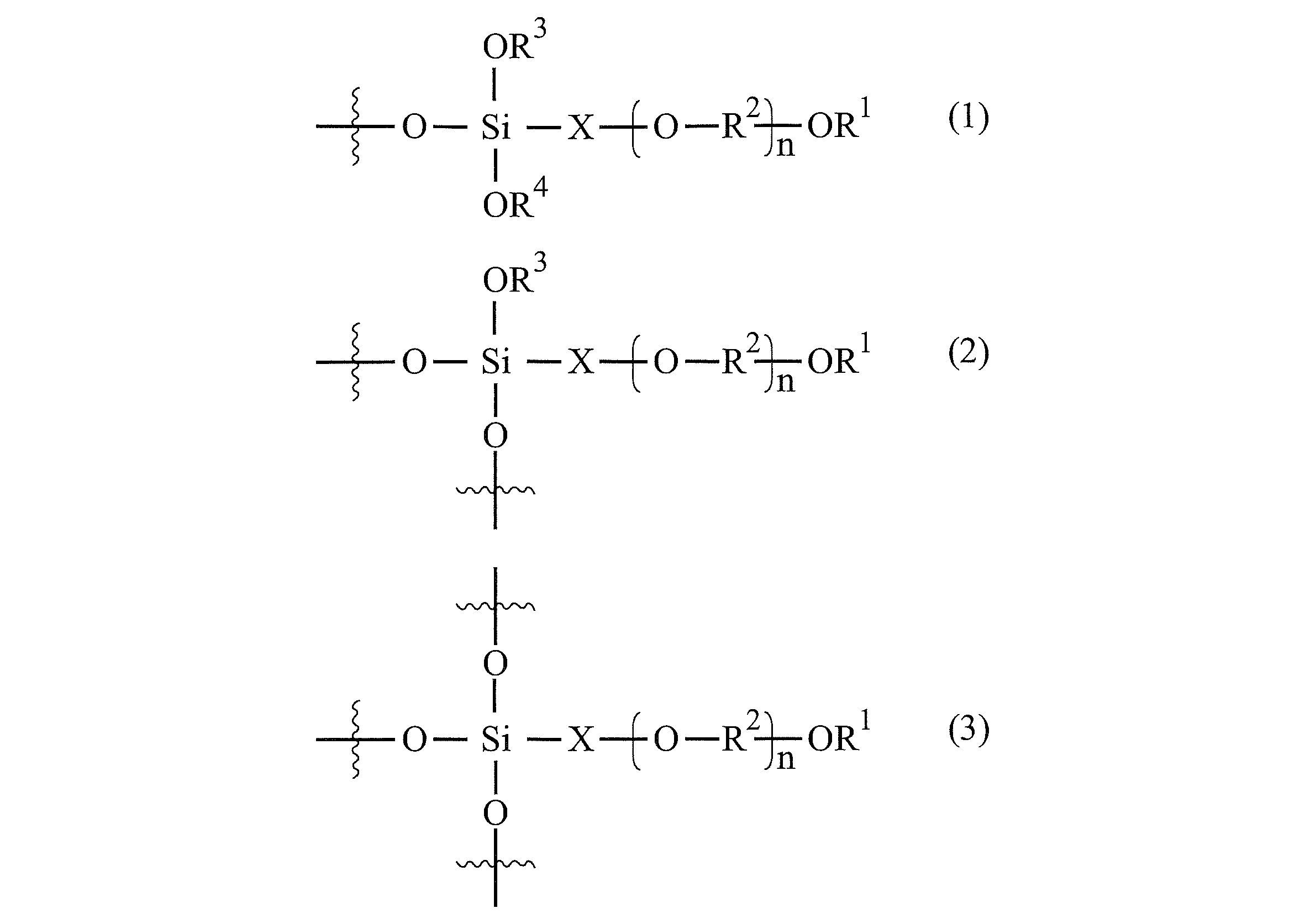
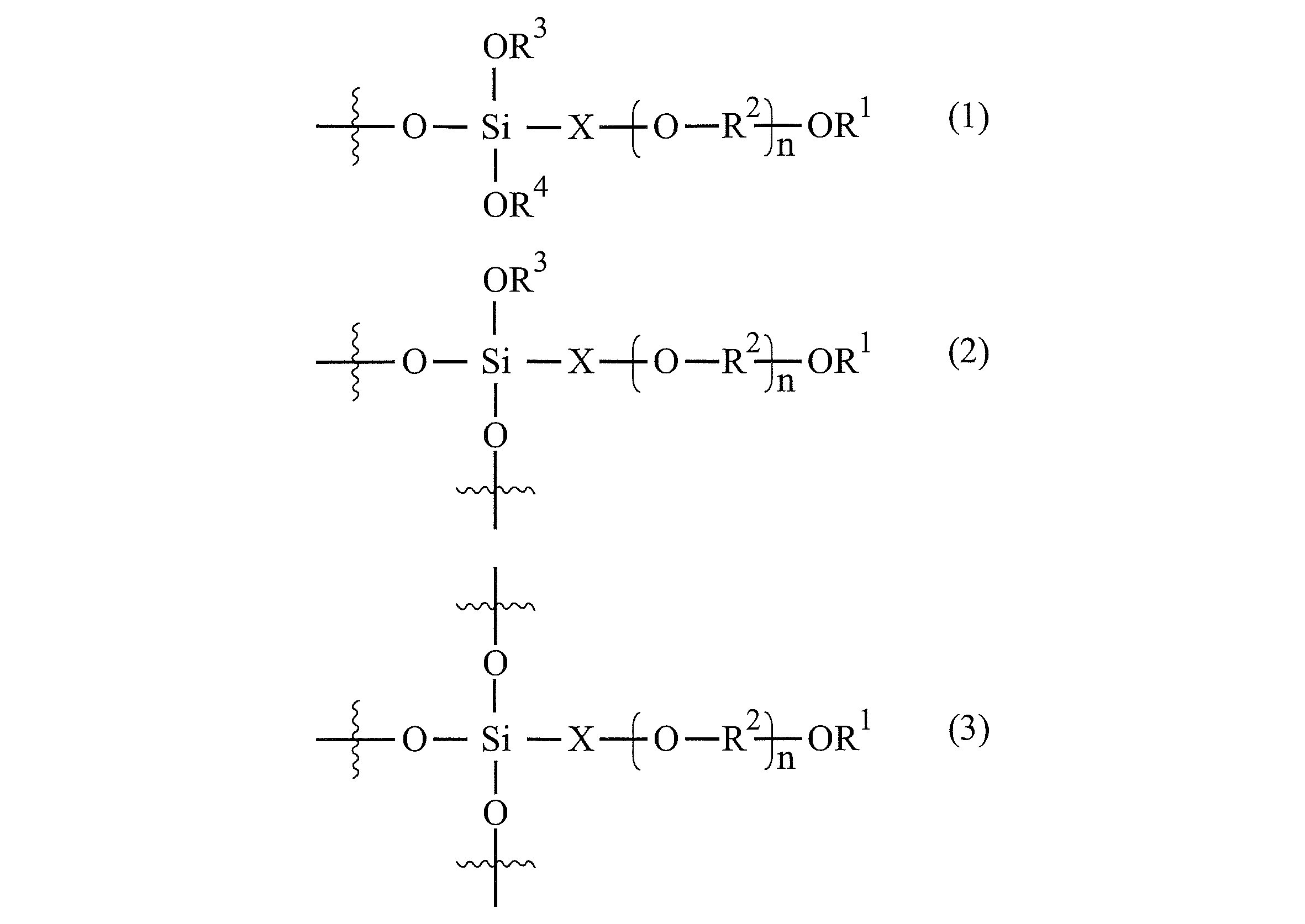
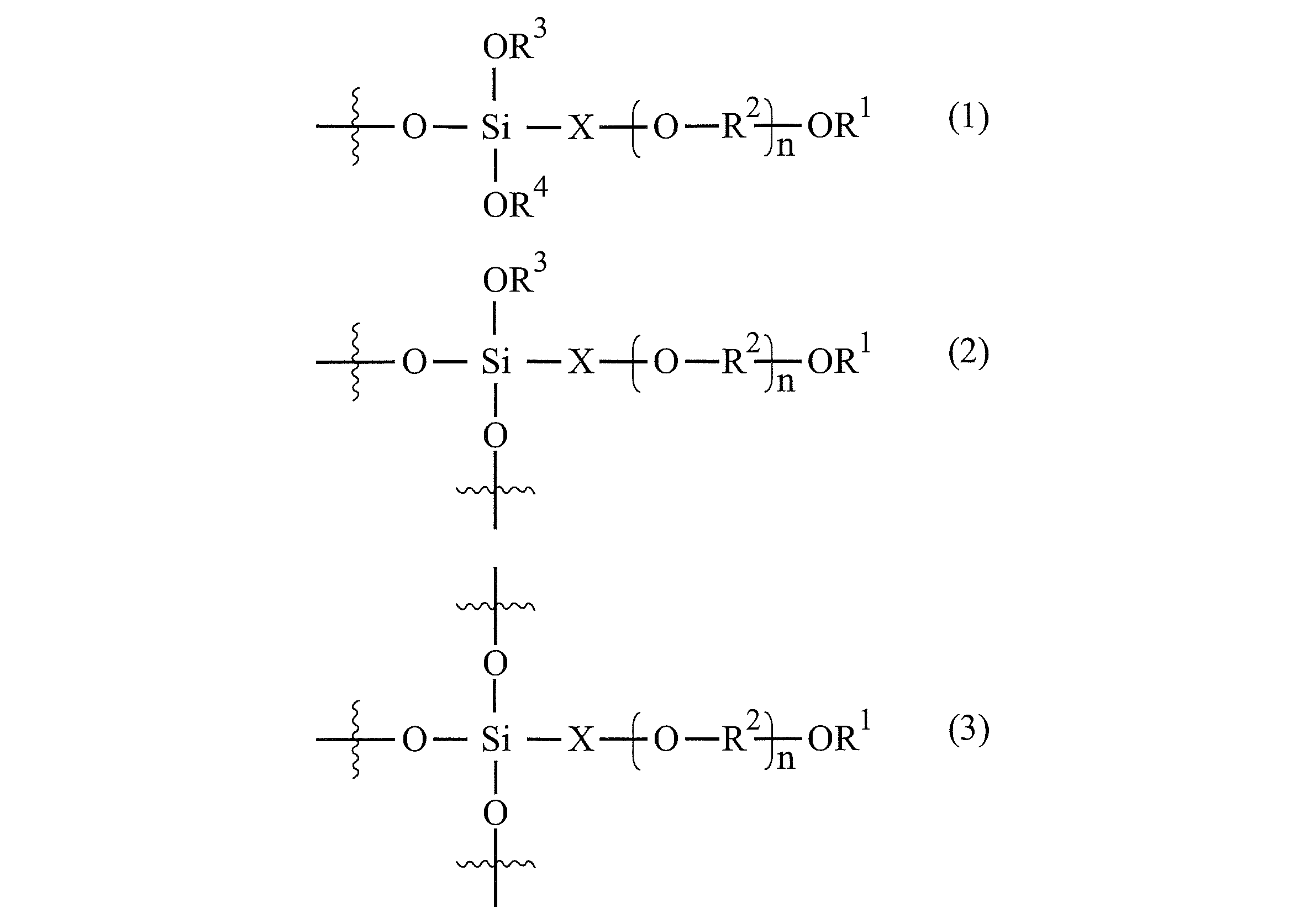
- the surface modifying group is one or more groups selected from the group consisting of a group represented by the following formula (1), a group represented by the following formula (2), and a group represented by the following formula (3). Is preferable.
- R 1 represents a hydrogen atom or an aliphatic hydrocarbon group.
- R 2 represents an alkylene group, and a plurality of R 2 may be the same or different.
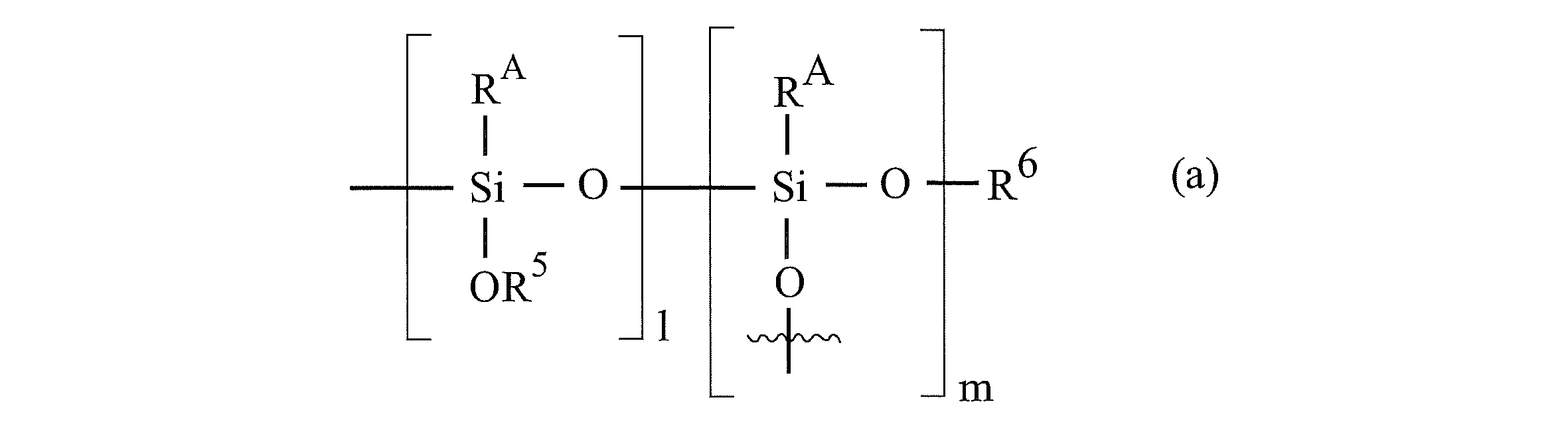
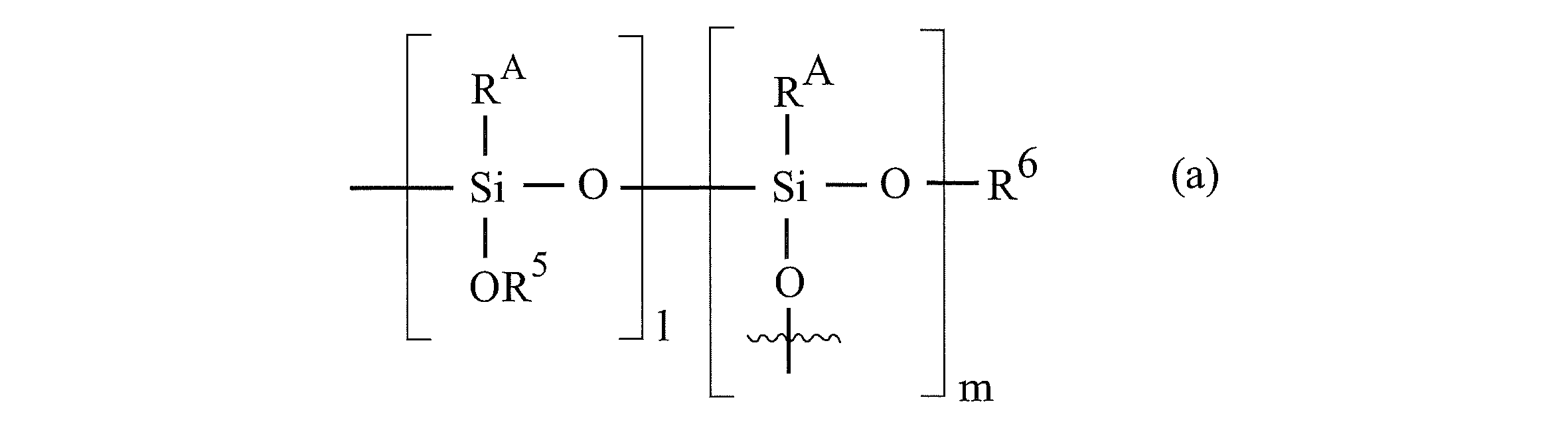
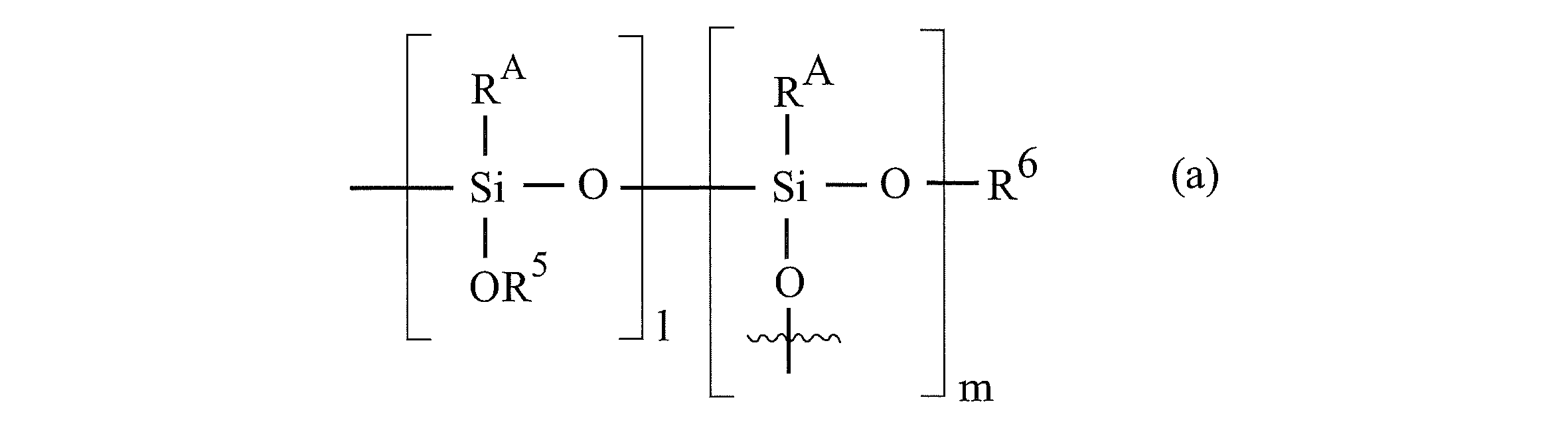
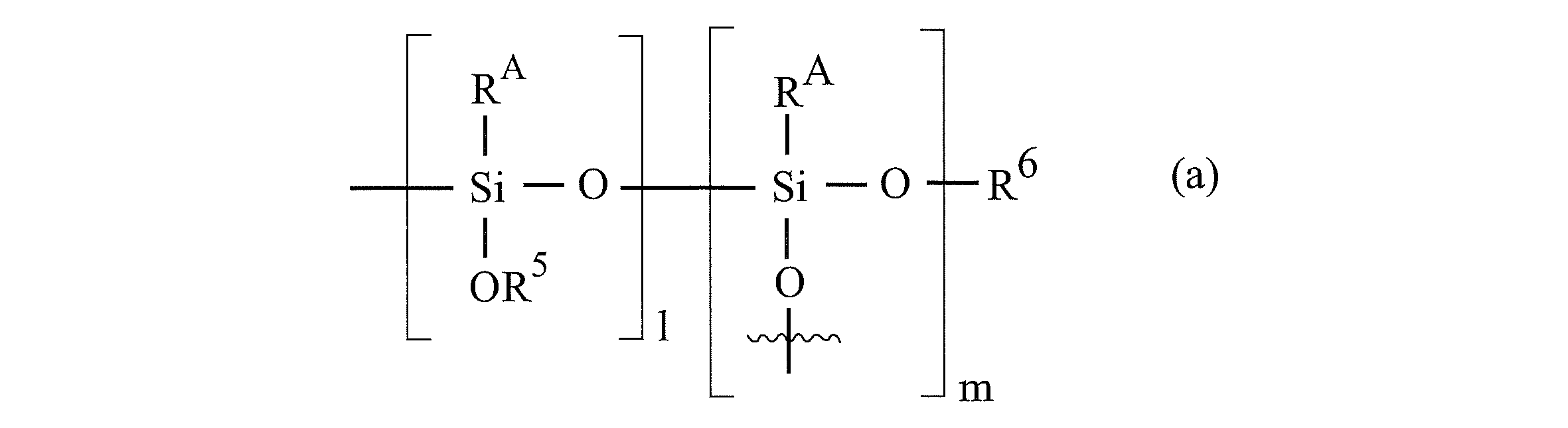
- R 3 and R 4 are the same or different, and represent a hydrogen atom, an aliphatic hydrocarbon group having 1 to 3 carbon atoms, or a group represented by the following formula (a).
- X represents a single bond or a linking group.
- n represents an integer of 2 or more.
- RA represents [-X- (OR 2 ) n-OR 1 ] in the above formulas (1) to (3).
- R 5 and R 6 are the same or different. Indicates a hydrogen atom or an aliphatic hydrocarbon group having 1 to 3 carbon atoms.
- L and m represent the same or different integers of 0 or more. Note that the bond extending to the left from the silicon atom bonds to the oxygen atom.
- the wavy bond in the equation binds to the surface of the nanodiamond particles.
- the bond order of the constitutive unit with l and the constitutive unit with m is not limited. One of l and m is 1. When the above is an integer and the other is an integer of 2 or more, the bonding method of the structural unit marked with 1 and the structural unit marked with m may be random, alternating, or block.)]
- the above X preferably contains a urethane bond.
- the present invention also provides a surface-modified nanodiamond composite containing the surface-modified nanodiamond and zirconia attached to the surface-modified nanodiamond.
- the present invention also provides a nanodiamond dispersion composition containing the dispersion medium and the surface-modified nanodiamonds dispersed in the dispersion medium.
- the nanodiamond dispersion composition may further contain zirconia.
- the present invention also provides a method for producing the above surface-modified nanodiamond, which includes a modification step of reacting nanodiamond particles with a polyoxyalkylene chain-containing silane coupling agent.
- the surface-modified nanodiamond of the present invention whose surface is modified by a polyoxyalkylene chain can be produced by a method having excellent safety during production and excellent productivity.
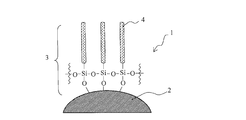
- FIG. 5 is an enlarged schematic view showing an example of the surface-modified nanodiamond of the present invention, wherein the surface-modified ND [1] is a surface provided with a polyoxyalkylene chain-containing group [4] on the surface of ND particles (parts) [2]. It has a modifying group [3].
- nanodiamond The surface-modified nanodiamond of the present invention (hereinafter, nanodiamond may be referred to as “ND”) is a surface-modifying group having nanodiamond particles and a polyoxyalkylene chain and a silicon atom that surface-modifies the nanodiamond particles. And include.
- the group having the polyoxyalkylene chain and the silicon atom may be referred to as "the surface modifying group of the present invention”.
- the surface-modified ND of the present invention may have only one type of surface-modifying group of the present invention, or may have two or more types.
- FIG. 1 is an enlarged schematic view showing an example of the surface-modified ND of the present invention.
- the surface-modified ND [1] is a surface-modified surface modified with a polyoxyalkylene chain-containing group [4] on the surface of the ND particles [2]. It has a group (the surface-modifying group of the present invention) [3].
- the ND particles constituting the surface-modified ND preferably include primary particles of nanodiamond. In addition, it may contain secondary particles in which several to several tens of the primary particles are aggregated (adhered). Further, the surface of the surface-modified ND may have one or more types of other surface functional groups (for example, amino group, hydroxyl group, carboxyl group, etc.) in addition to the surface modifying group of the present invention. ..
- ND particles for example, detonation method ND (that is, ND produced by detonation method) or high temperature and high pressure method ND (that is, ND produced by high temperature and high pressure method) can be used.
- detonation method ND that is, ND produced by detonation method
- high temperature and high pressure method ND that is, ND produced by high temperature and high pressure method
- the detonation method ND is preferable in that the dispersibility in the dispersion medium is more excellent, that is, the particle size of the primary particles is one digit nanometer.
- the above-mentioned detonation method ND includes an air-cooled detonation method ND (that is, an ND produced by an air-cooled detonation method) and a water-cooled detonation method ND (that is, an ND produced by a water-cooled detonation method). .. Among them, the air-cooled detonation method ND is preferable because the primary particles are smaller than the water-cooled detonation method ND.
- the surface modifying group of the present invention is a group having a polyoxyalkylene chain and a silicon atom.
- the silicon atom is preferably present between the polyoxyalkylene chain and the ND particles to be surface modified.
- the silicon atom is preferably present in the surface modifying group of the present invention as a Si—O bond.
- the surface-modified ND of the present invention preferably has a structure in which a silicon atom in the surface-modified group of the present invention is bonded to ND particles via an oxygen atom.
- the polyoxyalkylene chain examples include a polyethylene glycol chain, a polypropylene glycol chain, a polytetramethylene glycol chain, and a polybutylene glycol chain. Further, in each surface-modifying group of the present invention, the polyoxyalkylene chain may be composed of only one kind of oxyalkylene, or may be composed of two or more kinds of oxyalkylene. Examples of the polyoxyalkylene chain composed of two or more kinds of oxyalkylenes include polyethylene glycol-polypropylene glycol chains. When the surface modifying group of the present invention is composed of two or more kinds of oxyalkylene, the bonding form of the two or more kinds of oxyalkylene may be random, alternating or block.
- the surface modifying group of the present invention preferably has a structure in which the end of the polyoxyalkylene chain is sealed with an aliphatic hydrocarbon group. That is, it is preferable that the hydrogen atom in the hydroxyl group at one end of the polyoxyalkylene chain is replaced with an aliphatic hydrocarbon group.
- the aliphatic hydrocarbon group that seals the end of the polyoxyalkylene chain is preferably an aliphatic hydrocarbon group having 1 to 10 carbon atoms, and more preferably an aliphatic hydrocarbon group having 1 to 6 carbon atoms.
- Examples of the aliphatic hydrocarbon group having 1 to 10 carbon atoms include methyl group, ethyl group, propyl group, isopropyl group, butyl group, isobutyl group, s-butyl group, t-butyl group, pentyl group, hexyl group and heptyl group.
- Examples include straight-chain or branched-chain alkyl groups such as octyl group, 2-ethylhexyl group, and decyl group; straight-chain or branched alkenyl groups such as vinyl and allyl groups; alkynyl groups such as ethynyl group and propynyl group. Be done. Of these, a linear or branched alkyl group is preferable.
- the polyoxyalkylene chain in the surface modifying group of the present invention has a number average molecular weight as polyoxyalkylene, preferably 100 or more (eg 100 to 10000), more preferably 200 or more (eg 200 to 5000), further preferably 300.
- the above for example, 300 to 4000
- more preferably 400 or more for example, 400 to 2500
- particularly preferably 500 or more for example, 500 to 3000.
- the average degree of polymerization (number average degree of polymerization) of the oxyalkylene group in the polyoxyalkylene chain is preferably 2 to 50, more preferably 4 to 45, and further preferably 6 to 40.
- the average degree of polymerization is 2 or more, the steric hindrance between the surface modifying groups of the present invention is sufficient and it is easy to disperse in the dispersion medium.
- n is 50 or less, the surface-modifying groups of the present invention are prevented from being entangled with each other and easily dispersed in the dispersion medium. In addition, it is difficult to impair the characteristics of the diamond material.
- the surface modifying group of the present invention preferably contains a urethane bond.
- the urethane bond is preferably provided between the silicon atom in the surface modifying group of the present invention and the polyoxyalkylene chain.
- the surface modifying group of the present invention is one or more selected from the group consisting of a group represented by the following formula (1), a group represented by the following formula (2), and a group represented by the following formula (3). It is preferable that it is a group of.
- the wavy bonds in the following formulas (1) to (3) bond to the surface of the nanodiamond particles.
- R 1 represents a hydrogen atom or an aliphatic hydrocarbon group.
- the aliphatic hydrocarbon group is preferably an aliphatic hydrocarbon group having 1 to 10 carbon atoms, and more preferably an aliphatic hydrocarbon group having 1 to 6 carbon atoms.
- Examples of the aliphatic hydrocarbon group having 1 to 10 carbon atoms include methyl group, ethyl group, propyl group, isopropyl group, butyl group, isobutyl group, s-butyl group, t-butyl group, pentyl group, hexyl group and heptyl group.
- Linear or branched alkyl group such as octyl group, 2-ethylhexyl group, decyl group; linear or branched alkenyl group such as vinyl and allyl group; alkynyl group such as ethynyl group and propynyl group.
- a linear or branched alkyl group is preferable.
- R 2 represents an alkylene group, preferably an alkylene group having 1 to 4 carbon atoms.
- alkylene group having 1 to 4 carbon atoms include an ethylene group, an isopropylene group, an isobutylene group, and a tetramethylene group. Of these, ethylene group and isopropylene group are preferable.
- a plurality of R 2 may be the same or different. When the plurality of R 2s are different, the binding form of the oxyalkylene chain (—OR 2 ) may be random, alternating, or block.
- n is the average degree of polymerization (number average degree of polymerization) of the oxyalkylene chain (—OR 2 ), and represents an integer of 2 or more.
- n is preferably an integer of 2 to 50, more preferably an integer of 4 to 45, and even more preferably an integer of 6 to 40.
- n is 2 or more, the steric hindrance between the surface modifying groups of the present invention is sufficient and the particles are easily dispersed in the dispersion medium.
- n is 50 or less, the surface modifying groups of the present invention are suppressed from being entangled with each other, and it is easy to disperse in the dispersion medium. In addition, it is difficult to impair the characteristics of the diamond material.
- X represents a single bond or a linking group (a divalent group having one or more atoms).
- the linking group include a divalent hydrocarbon group, a urethane bond, a carbonyl group, an ether bond, an ester bond, a carbonate group, an amide group, and a group in which a plurality of these groups are linked.
- Examples of the divalent hydrocarbon group include linear or branched alkylene groups having 1 to 18 carbon atoms and divalent alicyclic hydrocarbon groups.
- Examples of the linear or branched alkylene group having 1 to 18 carbon atoms include a methylene group, a methylmethylene group, a dimethylmethylene group, an ethylene group, a propylene group and a trimethylene group.
- Examples of the divalent alicyclic hydrocarbon group include 1,2-cyclopentylene group, 1,3-cyclopentylene group, cyclopentylidene group, 1,2-cyclohexylene group and 1,3-.
- Examples thereof include a cycloalkylene group (including a cycloalkylidene group) such as a cyclohexylene group, a 1,4-cyclohexylene group and a cyclohexylidene group.
- the number of carbon atoms in the divalent hydrocarbon group is preferably 1 to 10, and more preferably 2 to 6.
- linking group for X it is particularly preferable to include a urethane bond, and a group in which a divalent hydrocarbon group (particularly a linear or branched alkylene group) and a urethane bond are linked is more preferable. Further, it is preferable that the silicon atom in the above formulas (1) to (3) and the divalent hydrocarbon group in X (particularly, a linear or branched alkylene group) are directly bonded.
- k represents an integer of 1 to 18, preferably an integer of 1 to 6, and more preferably an integer of 1 to 3.
- R 3 and R 4 are the same or different and each represents a hydrogen atom, an aliphatic hydrocarbon group having 1 to 3 carbon atoms, or a group represented by the following formula (a).
- the aliphatic hydrocarbon group having 1 to 3 carbon atoms include linear or branched alkyl groups such as methyl, ethyl, propyl and isopropyl groups; linear or branched chain groups such as vinyl and allyl groups. Alkenyl group; alkynyl groups such as ethynyl group and propynyl group. Of these, a linear or branched alkyl group is preferable.
- R 3 in the formula (2) is the same as R 3 in the formula (1).
- R A represents [-X-(OR 2 )n-OR 1 ].
- X, R 1 , R 2 and n in R A are the same as those exemplified and described for the above formulas (1) to (3), respectively, and the preferred embodiments are also the same.
- the bonding form in the case of having two or more kinds of (OR 2 ) is also as described above. The bond extending from the silicon atom to the left bonds to the oxygen atom. The bond with a wavy line in the formula bonds to the surface of the nanodiamond particle.
- R 5 and R 6 represent hydrogen atoms or aliphatic hydrocarbon groups having 1 to 3 carbon atoms, which are the same or different.
- the aliphatic hydrocarbon group having 1 to 3 carbon atoms include linear or branched alkyl groups such as methyl, ethyl, propyl and isopropyl groups; linear or branched chain groups such as vinyl and allyl groups. Alkenyl group; alkynyl groups such as ethynyl group and propynyl group. Of these, a linear or branched alkyl group is preferable.
- l and m are the same or different and each represents an integer of 0 or more.
- the bonding order of the structural unit marked with 1 and the structural unit marked with m there is no particular limitation on the bonding order of the structural unit marked with 1 and the structural unit marked with m. That is, the silicon atom in the formula (a) that is bonded to the oxygen atom in the formula (1) or (2) may be the silicon atom in the structural unit labeled with l, or the structural unit labeled with m. It may be a silicon atom in.
- the oxygen atom in the formula (a) that binds to R 6 in the formula (a) may be an oxygen atom in the structural unit marked with l, or an oxygen atom in the structural unit marked with m. It may be.
- the bonding form of the structural unit with l and the structural unit with m is random, alternating, or block. It may be any of.
- the surface-modified ND of the present invention has a plurality of R 1 to R 6 , X, l, m, or n
- the plurality of R 1 to R 6 , X, l, m, and n are the same. It may be different or it may be different.
- the structure in which R 3 and R 4 are hydrogen atoms is a structure in which an unreacted alkoxysilyl group in the surface modifying group of the present invention bonded to ND particles is hydrolyzed. And so on. Further, the structure in which R 3 and R 4 are aliphatic hydrocarbon groups having 1 to 3 carbon atoms includes a structure in which an unreacted alkoxysilyl group in the surface modifying group of the present invention bonded to ND particles remains. Is shown. Further, the structure in which R 3 and R 4 are groups represented by the above formula (a) includes an unreacted alkoxysilyl group in the surface modifying group of the present invention bonded to ND particles and an unreacted poly described later. It shows a structure in which an oxyalkylene chain-containing silane coupling agent and/or ND particles are reacted with an alkoxysilyl group in another surface-modifying group of the present invention bonded by dehydration condensation.
- Zirconia may be attached (fixed) to the surface-modified ND of the present invention.
- the zirconia attached to the surface-modified nanodiamond of the present invention may be referred to as the “surface-modified nanodiamond composite of the present invention”. That is, the surface-modified ND composite of the present invention contains the surface-modified nanodiamond of the present invention and zirconia attached to the surface-modified nanodiamond of the present invention.
- the adhesion state of zirconia may be physical adhesion (adhesion, adhesion, etc.) or chemical adhesion (covalent bond with ND particles or the surface modifying group of the present invention, bond by intermolecular force, hydrogen bond). , Ionic bond, etc.), or both of them.
- Zirconia may use only 1 type and may use 2 or more types.
- the surface-modifying group of the present invention modifies the surface of hydrophilic ND particles, thereby exhibiting affinity for both water and organic solvents, thereby exhibiting amphipathic properties.
- the polarity of the ND particles by controlling the polarity of the ND particles by adjusting the branched structure of the polyoxyalkylene chain or the length of the alkylene chain, dispersibility in various dispersion media and affinity for the resin are realized. Therefore, it can be used in engineering application fields such as abrasives and dressers for CMP, corrosion resistant electrode plating materials for fuel cells, high hardness surface coating layer forming materials such as cutting tools, and high heat resistance and high heat conduction materials. Further, the surface-modified ND of the present invention has excellent dispersibility under high salt concentration and is suitable for use in medical applications.
- the particle size (D50) of the surface-modified ND of the present invention is, for example, 400 nm or less, preferably 300 nm or less, more preferably 100 nm or less, and further preferably 50 nm or less.
- the lower limit of the particle diameter (D50) of the surface-modified ND is, for example, 5 nm.
- the particle size (D90) is, for example, 500 nm or less, preferably 180 nm or less, and more preferably 170 nm or less.
- the lower limit of the particle diameter (D90) of the surface-modified ND is, for example, 50 nm.
- the smaller the particle size of the surface-modified ND the higher the transparency of the composite material described later, which is preferable.
- the (average) particle size of the surface-modified ND can be measured by the dynamic light scattering method.
- Nanodiamond dispersion composition contains a dispersion medium and the surface-modified ND of the present invention dispersed in the dispersion medium.
- the dispersion medium is a medium for dispersing the surface-modified ND of the present invention, and examples thereof include water, organic solvents, ionic liquids, and the like.
- the dispersion medium only one kind may be used, or two or more kinds may be used.
- organic solvent examples include aliphatic hydrocarbons such as hexane, heptane and octane (particularly linear saturated aliphatic hydrocarbons); aromatic hydrocarbons such as benzene, toluene and xylene; cyclohexane, methylcyclohexane and the like.
- Alicyclic hydrocarbons; aprotic polar solvents such as dimethylformamide (DMF), dimethylacetamide, N-methylpyrrolidone, dimethylsulfoxide; halogenation of chloroform, dichloromethane, dichloroethane, carbon tetrachloride, chlorobenzene, trifluoromethylbenzene, etc.
- Chain or cyclic ethers such as diethyl ether, diisopropyl ether, dimethoxyethane, tetrahydrofuran (THF) and dioxane; Esters such as ethyl acetate and butyl acetate; Chain ketones such as methyl ethyl ketone (MEK) and methyl isobutyl ketone; Acetonitrile And the like.
- cyclic ethers or chain ketones are preferable because they are particularly excellent in dispersibility of the surface-modified ND of the present invention, and chain ketones are particularly preferable.
- the ND dispersion composition of the present invention may contain zirconia.
- the ND dispersion composition of the present invention may contain the surface-modified ND of the present invention and zirconia separately, and these may be included in the surface-modified ND composite of the present invention. It may be included as a body. Zirconia may use only 1 type and may use 2 or more types.
- the content ratio of the ND particles in the ND dispersion composition of the present invention is not particularly limited, but is, for example, 0.1 mass ppm to 10 mass%.
- the content ratio of the ND particles can be calculated from the absorbance at 350 nm.
- a compound that surface-modified the ND particles is detected by high-frequency inductively coupled plasma emission spectroscopy (ICP emission spectroscopy). , Can also be obtained based on the detected amount.
- ICP emission spectroscopy high-frequency inductively coupled plasma emission spectroscopy
- the content of the dispersion medium in the ND dispersion composition of the present invention is, for example, 90 to 99.9999% by mass.
- the upper limit is 100% by mass.
- the content ratio of zirconia in the ND dispersion composition of the present invention is, for example, 0.001 to 10% by mass, preferably 0.01 to 1.0% by mass, and more preferably 0.05 to 0.5% by mass. ..
- the content ratio of zirconia can be calculated based on the detected amount of Zr based on the dispersion liquid whose content ratio is known by detecting Zr by high-frequency inductively coupled plasma emission spectroscopy (ICP emission spectroscopy).
- ICP emission spectroscopy high-frequency inductively coupled plasma emission spectroscopy
- the mass ratio [former / latter] of zirconia to the surface-modified ND particles in the ND dispersion composition of the present invention is, for example, 0.01 to 1.0, preferably 0.05 to 0.75, and more preferably 0. .1 to 0.5.
- the mass ratio is 0.2 or more, the effect of containing zirconia can be more sufficiently exhibited.
- the mass ratio is 3.0 or less, the effect of the surface-modified ND particles can be more sufficiently exhibited.
- the ND dispersion composition of the present invention may consist only of the surface-modified ND of the present invention and a dispersion medium, or may contain other components.
- Other components include, for example, in addition to the above-mentioned zirconia, surfactants, thickeners, coupling agents, dispersants, rust preventives, corrosion inhibitors, freezing point lowering agents, defoaming agents, abrasion resistant additives, and the like. Preservatives, coloring agents and the like can be mentioned.
- the content ratio of the other components is, for example, 30% by mass or less, preferably 20% by mass or less, more preferably 10% by mass or less, still more preferably 5% by mass or less, based on the total amount of the ND dispersion composition of the present invention.
- the total content ratio of the surface-modified ND and the dispersion medium of the present invention is, for example, 70% by mass or more, preferably 80% by mass or more, more preferably 90% by mass or more, based on the total amount of the ND dispersion composition of the present invention. , More preferably 95% by mass or more, particularly preferably 99% by mass or more.
- the ND dispersion composition of the present invention contains the surface-modified ND of the present invention in a highly dispersed state.
- the average dispersed particle diameter (D50) of the ND particles in the ND dispersion composition of the present invention is, for example, 100 nm or less, preferably 60 nm or less, more preferably 50 nm or less, still more preferably 30 nm or less.
- the lower limit of the average dispersed particle diameter of the ND particles is, for example, 10 nm.
- the haze value of the ND dispersion composition of the present invention is preferably 5 or less, more preferably 3 or less, still more preferably 1 or less. Since the ND dispersion composition of the present invention is excellent in the dispersibility of the surface-modified ND of the present invention, the ND dispersion composition having the above haze value can be obtained. The haze value can be measured based on JIS K 7136.
- the ND dispersion composition of the present invention has, for example, characteristics of fine ND particles (for example, mechanical strength, high refractive index, thermal conductivity, insulating property, antioxidant property, crystallization promoting action, dendrite suppressing action, etc.).
- characteristics of fine ND particles for example, mechanical strength, high refractive index, thermal conductivity, insulating property, antioxidant property, crystallization promoting action, dendrite suppressing action, etc.
- the composition obtained by adding the ND dispersion composition of the present invention to a resin is, for example, a functional hybrid material, a thermal function (heat resistance, heat storage, heat conduction, heat insulation, etc.) material, photonics (organic EL element, (LED, liquid crystal display, optical disk, etc.) material, bio / biocompatible material, coating material, film (hard coat film for touch panel and various displays, heat shield film, etc.) material, sheet material, screen (transmissive transparent screen, etc.) It can be preferably used as a material, a filler (heat radiation filler, mechanical property improving filler, etc.) material, a heat-resistant plastic substrate (flexible display substrate, etc.) material, a lithium ion battery material, and the like.
- the ND dispersion composition of the present invention can also be used as an anti-friction agent or a lubricant applied to medical applications and sliding parts of mechanical parts (for example, automobiles, aircraft, etc.).
- the surface-modified ND of the present invention can be produced, for example, through a modification step of reacting ND particles with a polyoxyalkylene chain-containing silane coupling agent.
- the ND particles reacted with the silane coupling agent preferably have a hydroxyl group on the surface.
- the ND particles that are not surface-modified usually have hydroxyl groups (—OH) on the surface.
- the ND particles may be used alone or in combination of two or more.
- the polyoxyalkylene chain-containing silane coupling agent is preferably a compound represented by the following formula (1').
- the polyoxyalkylene chain-containing silane coupling agent only one kind may be used, or two or more kinds may be used.
- R 1 , R 2 , X, and n are the same as those exemplified and described as those in the above formulas (1) to (3), respectively, and the preferred embodiments are also the same. Is. When two or more compounds represented by the above formula (1′) are used, a plurality of R 1 , R 2 , X, and n may be the same or different.
- R 7 is the same or different and represents an aliphatic hydrocarbon group having 1 to 3 carbon atoms.
- the aliphatic hydrocarbon group having 1 to 3 carbon atoms include linear or branched alkyl groups such as methyl, ethyl, propyl and isopropyl groups; linear or branched chain groups such as vinyl and allyl groups. Alkenyl group; alkynyl groups such as ethynyl group and propynyl group. Of these, a linear or branched alkyl group is preferable.
- the above modification step is preferably performed in a solvent.
- the solvent include those exemplified and described as the dispersion medium.
- the solvent used in the above-mentioned ND dispersion composition cyclic ether (for example, THF), and chain ketone (for example, MEK and MIBK) are preferable.
- the solvent may be used alone or in combination of two or more.
- the above modification step is performed by stirring a mixed solution containing dry nanodiamond, a silane coupling agent, and a solvent in a reaction container.
- the ND particles when the ND particles contain ND particle aggregates (adherent bodies) in which the ND particles adhere to form secondary particles, the ND particles are combined with the polyoxyalkylene chain-containing silane coupling agent.
- the reaction with the ND particles may be performed while crushing or dispersing the ND particles.
- the ND particle agglomerates can be crushed into primary particles, the surface of the ND primary particles can be modified, and the dispersibility of the ND particles can be improved.
- Examples of the method of disintegrating or dispersing the ND particles include a method of treating with a high shear mixer, high shear mixer, homomixer, ball mill, bead mill, high pressure homogenizer, ultrasonic homogenizer, colloid mill, jet mill and the like. .. Above all, it is preferable to perform the ultrasonic treatment in the presence of a crushing medium (for example, zirconia beads or the like). By using zirconia beads as a crushing medium, the surface-modified ND composite of the present invention or an ND dispersion composition containing zirconia can be obtained as a result.
- a crushing medium for example, zirconia beads or the like.
- ND particles are disintegrated (crushed) from the ND aggregate, and the silane coupling agent acts on the ND particles in the dissociated state to bind them.
- the ND particles include an ND aggregate formed by adhering the ND particles, the ND aggregate can be disintegrated into primary particles, the surface of the ND primary particles can be modified, and the dispersibility can be improved. This is because an excellent surface-modified ND can be obtained.
- the diameter of the crushing medium (for example, zirconia beads) is, for example, 15 to 500 ⁇ m, preferably 15 to 300 ⁇ m, and particularly preferably 15 to 100 ⁇ m.
- the ratio of the ND particles to be subjected to the reaction to the silane coupling agent is, for example, 2: 1 to 1:80.
- the concentration of ND particles in the solvent is, for example, 0.5 to 10% by mass, and the concentration of the silane coupling agent in the solvent is, for example, 5 to 60% by mass.
- the reaction time between the ND particles and the silane coupling agent is, for example, 4 to 20 hours. Further, the reaction is preferably performed while cooling the generated heat with ice water or the like.
- the surface-modified ND of the present invention and the ND dispersion composition of the present invention in which the surface-modified ND of the present invention is dispersed in a dispersion medium are obtained.
- the ND aggregate remains after the completion of the reaction, it is preferable to leave the solution after the completion of the reaction and then collect the supernatant to obtain the ND dispersion composition.
- a solvent advantageous for the reaction for surface treatment is used in the modification step, after the dispersion liquid of the surface-modified ND particles is once obtained, the dispersion medium in the dispersion liquid is distilled off with an evaporator or the like.
- the ND dispersion composition of the present invention can also be produced by mixing and stirring a new dispersion medium, that is, by exchanging the solvent.
- the ND particles can be manufactured, for example, by the detonation method.
- the detonation method include an air-cooled detonation method and a water-cooled detonation method.
- the air-cooled detonation method is preferable in that ND particles having smaller primary particles can be obtained than the water-cooled detonation method.
- Detonation may be performed in the atmosphere, or in an inert gas atmosphere such as a nitrogen atmosphere, an argon atmosphere, or a carbon dioxide atmosphere.
- an inert gas atmosphere such as a nitrogen atmosphere, an argon atmosphere, or a carbon dioxide atmosphere.
- ND particles used in the present invention are not limited to those obtained by the following production methods.
- a molded explosive equipped with an electric detonator is installed inside a pressure-resistant container for detonation, and the container is hermetically sealed in a state in which the atmospheric gas of atmospheric composition and the explosive used coexist. ..
- the container is made of, for example, iron, and the volume of the container is, for example, 0.5 to 40 m 3 .
- As the explosive a mixture of trinitrotoluene (TNT) and cyclotrimethylene trinitroamine or hexogen (RDX) can be used.
- TNT / RDX The mass ratio of TNT to RDX (TNT / RDX) is, for example, in the range of 40/60 to 60/40.
- the electric detonator is then detonated and the explosive is detonated in the container.
- Detonation refers to an explosion caused by a chemical reaction, in which the flame surface in which the reaction occurs moves at a high speed exceeding the speed of sound.
- ND particles are generated by the action of the pressure and energy of the shock wave generated by the explosion, using the carbon released as the starting explosive partially incompletely combusted.
- the generated ND particles are extremely strongly assembled between adjacent primary particles or crystallites due to the Coulomb interaction between crystal faces in addition to the action of Van der Waals force, and form an aggregate.
- the container and its inside are then cooled by allowing it to cool at room temperature for about 24 hours.
- the ND particle crude product (including the agglomerates and soot of the ND particles produced as described above) adhering to the inner wall of the container was scraped off with a spatula to remove the ND particle coarse particles. Collect the product.
- a crude product of ND particles (crude product of ND particles) can be obtained by the above method.
- it is possible to obtain a desired amount of the crude ND particle product by performing the above-described nanodiamond generating step a necessary number of times.
- the ND particle crude product as a raw material is treated with a strong acid, for example, in a water solvent to remove the metal oxide.
- a strong acid for example, in a water solvent to remove the metal oxide.
- a crude product of ND particles obtained by the detonation method easily contains a metal oxide, and the metal oxide is an oxide such as Fe, Co, or Ni derived from a container or the like used in the detonation method. ..
- the metal oxide can be dissolved and removed from the ND particle crude product by applying a strong acid in an aqueous solvent (acid treatment).
- the strong acid used in this acid treatment is preferably a mineral acid, and examples thereof include hydrochloric acid, hydrofluoric acid, sulfuric acid, nitric acid, and aqua regia.
- the strong acid may be used alone or in combination of two or more.
- the concentration of the strong acid used in the acid treatment is, for example, 1 to 50% by mass.
- the acid treatment temperature is, for example, 70 to 150°C.
- the acid treatment time is, for example, 0.1 to 24 hours.
- the acid treatment can be performed under reduced pressure, normal pressure, or increased pressure.
- the solid content (including the nanodiamond aggregate) is washed with water, for example, by decantation. It is preferable to repeatedly wash the solid content with water by decantation until the pH of the precipitation liquid reaches, for example, 2 to 3.
- the above acid treatment may be omitted.
- the oxidation treatment step is a step of removing graphite from the ND particle crude product using an oxidizing agent.
- the ND particle crude product obtained by the detonation method contains graphite (graphite), but this graphite does not form ND particle crystals out of carbon released by the partially explosive combustion of the explosive used. Derived from carbon.
- the graphite can be removed from the ND particle crude product by reacting the ND particle crude product with an oxidizing agent in a water solvent. Further, by allowing an oxidizing agent to act on the surface of the ND particles, an oxygen-containing group such as a carboxyl group or a hydroxyl group can be introduced.
- Examples of the oxidizing agent used in this oxidation treatment include chromic acid, chromic anhydride, dichromic acid, permanganic acid, perchloric acid, nitric acid, a mixture thereof, and at least one acid selected from these.
- Examples thereof include mixed acids with other acids (for example, sulfuric acid) and salts thereof.
- it is preferable to use a mixed acid particularly, a mixed acid of sulfuric acid and nitric acid because it is environmentally friendly and has an excellent effect of oxidizing and removing graphite.
- the mixing ratio (former / latter; mass ratio) of sulfuric acid and nitric acid in the mixed acid is, for example, 60/40 to 95/5, even under pressure near normal pressure (for example, 0.5 to 2 atm).
- the upper limit is, for example, 200° C.
- graphite can be efficiently oxidized and removed, which is preferable.
- the lower limit is preferably 65/35, more preferably 70/30.
- the upper limit is preferably 90/10, more preferably 85/15, further preferably 80/20.
- the mixing ratio is 60/40 or more, the content of sulfuric acid having a high boiling point is high, so that the reaction temperature is, for example, 120° C.
- the graphite removal efficiency tends to be improved. If the mixing ratio is 95/5 or less, the content of nitric acid, which greatly contributes to the oxidation of graphite, increases, so that the graphite removal efficiency tends to improve.
- the amount of the oxidizing agent (particularly the mixed acid) used is, for example, 10 to 50 parts by mass, preferably 15 to 40 parts by mass, and more preferably 20 to 40 parts by mass with respect to 1 part by mass of the crude ND particle product.
- the amount of sulfuric acid used in the mixed acid is, for example, 5 to 48 parts by mass, preferably 10 to 35 parts by mass, and more preferably 15 to 30 parts by mass with respect to 1 part by mass of the crude ND particle product.
- the amount of nitric acid used in the mixed acid is, for example, 2 to 20 parts by mass, preferably 4 to 10 parts by mass, and more preferably 5 to 8 parts by mass with respect to 1 part by mass of the crude ND particle product.
- a catalyst may be used together with the mixed acid.
- the efficiency of removing graphite can be further improved.
- the catalyst include copper (II) carbonate and the like.
- the amount of the catalyst used is, for example, about 0.01 to 10 parts by mass with respect to 100 parts by mass of the crude ND particle product.
- the oxidation treatment temperature is 100 to 200° C., for example.
- the oxidation treatment time is, for example, 1 to 24 hours.
- the oxidation treatment can be performed under reduced pressure, normal pressure, or increased pressure.
- the concentration of alkali is, for example, 0.1 to 10% by mass
- the concentration of hydrogen peroxide is, for example, 1 to 15% by mass
- the treatment temperature is, for example, 40 to 100° C.
- the treatment time is For example, 0.5 to 5 hours.
- the alkaline hydrogen peroxide treatment can be performed under reduced pressure, normal pressure, or increased pressure.
- the oxidation treatment step or the alkaline hydrogen peroxide treatment step it is preferable to remove the supernatant by, for example, decantation. Moreover, it is preferable to wash the solid content with water during decantation. Although the supernatant liquid at the beginning of washing with water is colored, it is preferable to repeatedly wash the solid content with water until the supernatant liquid becomes transparent visually.
- the ND particles may be subjected to a crushing treatment, if necessary.
- a crushing treatment for example, a high shear mixer, a high shear mixer, a homomixer, a ball mill, a bead mill, a high pressure homogenizer, an ultrasonic homogenizer, a colloid mill and the like can be used.
- the crushing treatment may be performed by a wet method (for example, a crushing process in a state of being suspended in water or the like) or by a dry method. When it is carried out by a dry method, it is preferable to provide a drying step before the crushing treatment. Further, the crushing treatment step may be carried out after these when the oxidation treatment or the hydrogenation treatment is carried out.
- drying process It is preferable to provide a drying step after the above alkaline hydrogen peroxide treatment step.
- the liquid component is evaporated from the ND particle-containing solution obtained through the above-mentioned alkaline hydrogen peroxide treatment step by using a spray dryer or an evaporator, the residual solid component generated by this is heated in a drying oven. Dry by drying.
- the heating and drying temperature is, for example, 40 to 150°C. ND particles are obtained through such a drying process.
- the ND particles may be subjected to an oxidation treatment (for example, oxygen oxidation) or a reduction treatment (for example, hydrogenation treatment) in the gas phase, if necessary.
- an oxidation treatment for example, oxygen oxidation
- a reduction treatment for example, hydrogenation treatment
- ND particles having many CH groups on the surface can be obtained.
- Example 1 The surface-modified ND particles and the nanodiamond dispersion composition were manufactured through the following steps.
- a nanodiamond generation process by the detonation method was performed.
- a molded explosive with an electric detonator attached was installed inside a pressure-resistant container for detonation, and the container was sealed.
- the container is made of iron and has a volume of 15 m 3 .
- As the explosive 0.50 kg of a mixture of TNT and RDX was used.
- the mass ratio of TNT and RDX (TNT/RDX) in this explosive is 50/50.
- the electric detonator was detonated and the explosive was detonated in the container (generation of nanodiamonds by the detonation method).
- the container and the inside thereof were cooled by leaving them to stand at room temperature for 24 hours. After this cooling, a work of scraping off the nano-diamond crude product (including the agglomerate of ND particles produced by the above detonation method and soot) adhering to the inner wall of the container with a spatula is performed. The product was recovered.
- an acid treatment step was performed on the crude nanodiamond product obtained by performing the above-described production steps multiple times. Specifically, a slurry obtained by adding 6 L of 10 mass% hydrochloric acid to 200 g of the nanodiamond crude product was subjected to a heat treatment for 1 hour under reflux under normal pressure conditions. The heating temperature in this acid treatment is 85 to 100°C. Next, after cooling, the solid content (including the nanodiamond aggregate and soot) was washed with water by decantation. The solid content was repeatedly washed with water by decantation until the pH of the precipitation liquid reached 2 from the low pH side.
- an oxidation process was performed. Specifically, 6 L of 98% by mass sulfuric acid and 1 L of 69% by mass nitric acid were added to a precipitate (including nanodiamond adherents) obtained through decantation after acid treatment to form a slurry, which was then added to form a slurry.
- This slurry was subjected to a heat treatment for 48 hours under reflux under normal pressure conditions. The heating temperature in this oxidation treatment is 140 to 160°C.
- the solid content including the nanodiamond aggregate was washed with water by decantation. When the supernatant liquid at the beginning of water washing was colored, the solid content was repeatedly washed with water by decantation until the supernatant liquid was visually transparent.
- the precipitate liquid (liquid containing the nanodiamond adhering body) obtained through the above-mentioned washing treatment was subjected to a drying step to obtain a dry powder (nanodiamond cohesive body). Evaporation to dryness performed using an evaporator was adopted as the method of the drying treatment in the drying step.
- the nanodiamond particles were reacted with the polyoxyalkylene chain-containing silane coupling agent. It was gray at first, but gradually became smaller in diameter and dispersed, and finally became a uniform and black liquid. This is because the nanodiamond particles are sequentially unraveled (crushed) from the nanodiamond adhering body, and the polyoxyalkylene chain-containing silane coupling agent acts on the dissociated nanodiamond particles to bond them and surface-modify them. It is considered that this is because the nanodiamond particles are dispersed and stabilized in the toluene solvent. The obtained dispersion was centrifuged at 13000 G for 15 minutes to obtain a supernatant.
- the median diameter (particle size D50) of the surface-modified nanodiamond particles measured by the above method of the obtained surface-modified nanodiamond dispersion was 32 nm.
- Example 2 As a polyoxyalkylene chain-containing silane coupling agent, instead of 10 mmol of the trade name "Uniox M-1000" (manufactured by Nichiyu Co., Ltd.) used in the modification step of Example 1, the trade name "Uniox M-2000" (Manufactured by NOF CORPORATION), a polyoxyalkylene chain-containing silane coupling agent ([(MeO) 3 SiC 3 H 6 NHC( ⁇ O)-PEG], synthesized by using 10 mmol, terminal: an aliphatic hydrocarbon group, Nanodiamond particles were ultrasonicated for 15 hours in the same manner as in Example 1 except that 8 g of polyoxyalkylene having a number average molecular weight of 2000) was used and 15 cc of tetrahydrofuran was used instead of 15 cc of methyl ethyl ketone.
- a polyoxyalkylene chain-containing silane coupling agent [(MeO) 3 SiC 3
- Example 3 As the polyoxyalkylene chain-containing silane coupling agent, the trade name "UNILOV MB-7" was used instead of the trade name “UNIOX M-1000" (manufactured by NOF CORPORATION) used in the modification step of Example 1.
- Example 4 As the silane coupling agent containing a polyoxyalkylene chain, the trade name "UNILOUB MB-11" was used instead of the trade name “UNIOX M-1000" (manufactured by NOF CORPORATION) used in the modification step of Example 1.
- Example 5 As the polyoxyalkylene chain-containing silane coupling agent, the trade name "UNILOVE MB-370" was used instead of the trade name “UNIOX M-1000" (manufactured by NOF CORPORATION) used in the modification step of Example 1.
- the obtained dispersion was centrifuged at 13000 G for 15 minutes to obtain a supernatant.
- the median diameter (particle diameter D50) of the surface-modified nanodiamond particles measured by the above method was 328 nm.
- Example 6 As the polyoxyalkylene chain-containing silane coupling agent, the trade name "UNIOX M-550" (manufactured by NOF CORPORATION) used in the modification step of Example 1 was replaced with the trade name "UNIOX M-550".
- the obtained dispersion was centrifuged at 13000 G for 15 minutes to obtain a supernatant.
- the median diameter (particle diameter D50) of the surface-modified nanodiamond particles measured by the above method was 48 nm.
- Example 7 As the silane coupling agent containing a polyoxyalkylene chain, the trade name "UNILOX 50MB-11" was used instead of the trade name “UNIOX M-1000" (manufactured by NOF CORPORATION) used in the modification step of Example 1.
- polyoxyalkylene chain-containing silane coupling agent [(MeO) 3 SiC 3 H 6 NHC( ⁇ O)-PPG-PEG], terminal: aliphatic hydrocarbon group , Number average molecular weight as polyoxyalkylene: 1000, bond form of PPG and PEG: block)
- sonication was performed for 15 hours to obtain nanodiamond particles and polyoxyalkylene.
- the chain-containing silane coupling agent was reacted. After sonication for 15 hours, the obtained dispersion was centrifuged at 13000 G for 15 minutes to obtain a supernatant.
- the median diameter (particle diameter D50) of the surface-modified nanodiamond particles measured by the above method was 63 nm.
- Example 8 Instead of the polyoxyalkylene chain-containing silane coupling agent 8g used in Example 1, trade name "Dynasylan4150" (Evonik Industries Ltd., [(MeO) 3 SiC 3 H 6 -PEG], end: aliphatic hydrocarbon group , Number average molecular weight as polyoxyalkylene: 500) 3 g, and using 15 cc of tetrahydrofuran instead of 15 cc of methyl ethyl ketone, in the same manner as in Example 1, ultrasonically treating for 15 hours to give a nanodiamond. The particles were reacted with a polyoxyalkylene chain-containing silane coupling agent.
- the obtained dispersion was centrifuged at 13000 G for 15 minutes to obtain a supernatant.
- the median diameter (particle diameter D50) of the surface-modified nanodiamond particles measured by the above method was 140 nm.
- Example 1 except that 1.2 g of hexyltrimethoxysilane was used in place of 8 g of the polyoxyalkylene chain-containing silane coupling agent used in Example 1 and that tetrahydrofuran 15 cc was used in place of methyl ethyl ketone 15 cc.
- ultrasonic treatment was carried out for 15 hours to react the nanodiamond particles with the alkyl chain-containing silane coupling agent. After sonication for 15 hours, the obtained dispersion was centrifuged at 13000 G for 15 minutes to obtain a supernatant.
- the median diameter (particle diameter D50) of the surface-modified nanodiamond particles measured by the above method was 21 nm.
- ⁇ Grain size D50> The median diameter (particle size D50) of the nanodiamond dispersions of Examples and Comparative Examples obtained as described above was measured from the particle size distribution of nanodiamonds obtained by the dynamic light scattering method. Specifically, the particle size distribution is measured by a dynamic light scattering method (non-contact backscattering method) using a device manufactured by Malvern (trade name "Zetasizer Nano ZS"). did.
- [Supplementary Note 1] A surface-modified nanodiamond comprising nanodiamond particles and a surface-modifying group having a polyoxyalkylene chain and a silicon atom, which surface-modifies the nanodiamond particles.
- [Appendix 2] The surface-modified nanodiamond according to Appendix 1, wherein the silicon atom is present in the surface-modifying group as a Si—O bond.
- the aliphatic hydrocarbon group is an aliphatic hydrocarbon group having 1 to 10 carbon atoms (preferably an aliphatic hydrocarbon group having 1 to 6 carbon atoms, and more preferably a linear or branched alkyl group). 5.
- the urethane bond is provided between a silicon atom in the surface-modifying group and a polyoxyalkylene chain.
- the polyoxyalkylene chain in the surface modifying group has a number average molecular weight as polyoxyalkylene of 100 or more ((eg 100 to 10000), preferably 200 or more (eg 200 to 5000), more preferably 300 or more. (Eg 300 to 4000), more preferably 400 or more (eg 400 to 2500), particularly preferably 500 or more (eg 500 to 3000)), The surface-modified nanodiamond according to any one of appendices 1 to 8.
- R 2 represents an alkylene group, and the plurality of R 2 may be the same or different.
- R 3 and R 4 are the same or different and each represents a hydrogen atom, an aliphatic hydrocarbon group having 1 to 3 carbon atoms, or a group represented by the following formula (a).
- X represents a single bond or a linking group.
- n represents an integer of 2 or more. The bond with a wavy line in the formula bonds to the surface of the nanodiamond particle.
- R A represents [—X—(O—R 2 )n—OR 1 ] in the above formulas (1) to (3).
- R 5 and R 6 are the same or different, A hydrogen atom or an aliphatic hydrocarbon group having 1 to 3 carbon atoms is shown, and l and m are the same or different and each is an integer of 0 or more.
- the bond extending left from the silicon atom is bonded to the oxygen atom.
- the bond with a wavy line in the formula is bonded to the surface of the nanodiamond particle.
- the bonding order of the structural unit with l and the structural unit with m is not limited.
- the bonding method of the structural unit marked with 1 and the structural unit marked with m may be random, alternating, or block.)]
- Appendix 12 The surface-modified nanodiamond according to Appendix 11, wherein X contains a urethane bond.
- Subsupplementary Note 13 The surface-modified nanodiamond according to any one of Supplementary Notes 1 to 12, wherein the nanodiamond particles include a detonation method nanodiamond (preferably an air-cooled detonation method nanodiamond).
- [Supplementary Note 14] The surface-modified nanodiamond according to any one of Supplementary Notes 1 to 13, which has a particle diameter (D50) of 400 nm or less (preferably 300 nm or less, more preferably 100 nm or less, still more preferably 50 nm or less).
- D50 particle diameter
- Appendix 15 The surface-modified nanodiamond according to any one of Appendixes 1 to 14, which has a particle diameter (D90) of 500 nm or less (preferably 180 nm or less, more preferably 170 nm or less).
- [Supplementary Note 16] A surface-modified nanodiamond composite comprising the surface-modified nanodiamond according to any one of Supplementary Notes 1 to 15 and zirconia attached to the surface-modified nanodiamond.
- [Supplementary Note 17] A nanodiamond dispersion composition comprising a dispersion medium and the surface-modified nanodiamond according to any one of Supplementary Notes 1 to 15 dispersed in the dispersion medium.
- Appendix 18 The nanodiamond dispersion composition according to Annex 17, further comprising zirconia.
Landscapes
- Chemical & Material Sciences (AREA)
- Organic Chemistry (AREA)
- Engineering & Computer Science (AREA)
- Life Sciences & Earth Sciences (AREA)
- Inorganic Chemistry (AREA)
- Medicinal Chemistry (AREA)
- Health & Medical Sciences (AREA)
- Chemical Kinetics & Catalysis (AREA)
- Geology (AREA)
- Polymers & Plastics (AREA)
- General Life Sciences & Earth Sciences (AREA)
- Materials Engineering (AREA)
- Nanotechnology (AREA)
- Wood Science & Technology (AREA)
- Physics & Mathematics (AREA)
- General Physics & Mathematics (AREA)
- Crystallography & Structural Chemistry (AREA)
- Condensed Matter Physics & Semiconductors (AREA)
- Manufacturing & Machinery (AREA)
- Composite Materials (AREA)
- Carbon And Carbon Compounds (AREA)
- Compositions Of Macromolecular Compounds (AREA)
- Pigments, Carbon Blacks, Or Wood Stains (AREA)
Abstract
Description
本発明の表面修飾ナノダイヤモンド(以後、ナノダイヤモンドを「ND」と称する場合がある)は、ナノダイヤモンド粒子と、上記ナノダイヤモンド粒子を表面修飾する、ポリオキシアルキレン鎖及びケイ素原子を有する表面修飾基とを含む。なお、本明細書において、上記ポリオキシアルキレン鎖及びケイ素原子を有する基を「本発明の表面修飾基」と称する場合がある。本発明の表面修飾NDは、本発明の表面修飾基を一種のみ有していてもよいし、二種以上を有していてもよい。
本発明のナノダイヤモンド分散組成物(ND分散組成物)は、分散媒と、上記分散媒中に分散している本発明の表面修飾NDとを含む。
本発明の表面修飾NDは、例えば、ND粒子とポリオキシアルキレン鎖含有シランカップリング剤とを反応させる修飾化工程を経て製造することができる。

成形された爆薬に電気雷管が装着されたものを爆轟用の耐圧性容器の内部に設置し、容器内において大気組成の常圧の気体と使用爆薬とが共存する状態で、容器を密閉する。容器は例えば鉄製で、容器の容積は例えば0.5~40m3である。爆薬としては、トリニトロトルエン(TNT)とシクロトリメチレントリニトロアミンすなわちヘキソーゲン(RDX)との混合物を使用することができる。TNTとRDXの質量比(TNT/RDX)は、例えば40/60~60/40の範囲である。
酸処理工程では、原料であるND粒子粗生成物に例えば水溶媒中で強酸を作用させて金属酸化物を除去する。爆轟法で得られるND粒子粗生成物には金属酸化物が含まれやすく、この金属酸化物は、爆轟法に使用される容器などに由来するFe、Co、Niなどの酸化物である。例えば水溶媒中で強酸を作用させることにより、ND粒子粗生成物から金属酸化物を溶解・除去することができる(酸処理)。この酸処理に用いられる強酸としては、鉱酸が好ましく、例えば、塩酸、フッ化水素酸、硫酸、硝酸、王水が挙げられる。上記強酸は、一種を用いてもよいし、二種以上を用いてもよい。酸処理で使用される強酸の濃度は例えば1~50質量%である。酸処理温度は例えば70~150℃である。酸処理時間は例えば0.1~24時間である。また、酸処理は、減圧下、常圧下、又は加圧下で行うことが可能である。このような酸処理の後、例えばデカンテーションにより、固形分(ナノダイヤモンド凝着体を含む)の水洗を行う。沈殿液のpHが例えば2~3に至るまで、デカンテーションによる当該固形分の水洗を反復して行うのが好ましい。爆轟法で得られるND粒子粗生成物における金属酸化物の含有量が少ない場合には、以上のような酸処理を省略してもよい。
酸化処理工程は、酸化剤を用いてND粒子粗生成物からグラファイトを除去する工程である。爆轟法で得られるND粒子粗生成物にはグラファイト(黒鉛)が含まれるが、このグラファイトは、使用爆薬が部分的に不完全燃焼を起こして遊離した炭素のうちND粒子結晶を形成しなかった炭素に由来する。ND粒子粗生成物に、水溶媒中で酸化剤を作用させることにより、ND粒子粗生成物からグラファイトを除去することができる。また、酸化剤を作用させることにより、ND粒子表面にカルボキシル基やヒドロキシル基などの酸素含有基を導入することができる。
上記酸処理工程を経た後であっても、ND粒子に除去しきれなかった金属酸化物が残存する場合は、一次粒子間が非常に強く相互作用して集成している凝着体(二次粒子)の形態をとる。このような場合には、ND粒子に対して水溶媒中でアルカリ及び過酸化水素を作用させてもよい。これにより、ND粒子に残存する金属酸化物を除去することができ、凝着体から一次粒子の分離を促進することができる。この処理に用いられるアルカリとしては、例えば、水酸化ナトリウム、アンモニア、水酸化カリウムなどが挙げられる。アルカリ過水処理において、アルカリの濃度は例えば0.1~10質量%であり、過酸化水素の濃度は例えば1~15質量%であり、処理温度は例えば40~100℃であり、処理時間は例えば0.5~5時間である。また、アルカリ過水処理は、減圧下、常圧下、又は加圧下で行うことが可能である。
ND粒子には、必要に応じて、解砕処理を施してもよい。解砕処理には、例えば、高剪断ミキサー、ハイシアーミキサー、ホモミキサー、ボールミル、ビーズミル、高圧ホモジナイザー、超音波ホモジナイザー、コロイドミルなどを使用することができる。なお、解砕処理は湿式(例えば、水等に懸濁した状態での解砕処理)で行ってもよいし、乾式で行ってもよい。乾式で行う場合は、解砕処理前に乾燥工程を設けることが好ましい。また、解砕処理工程は、酸化処理又は水素化処理を行う場合はこれらの後に行ってもよい。
上記アルカリ過水処理工程の後、乾燥工程を設けることが好ましい。例えば、上記アルカリ過水処理工程を経て得られたND粒子含有溶液から噴霧乾燥装置やエバポレーターなどを使用して液分を蒸発させた後、これによって生じる残留固形分を乾燥用オーブン内での加熱乾燥によって乾燥させる。加熱乾燥温度は、例えば40~150℃である。このような乾燥工程を経ることにより、ND粒子が得られる。
下記工程を経て、表面修飾ND粒子及びナノダイヤモンド分散組成物を製造した。
まず、爆轟法によるナノダイヤモンドの生成工程を行った。本工程では、まず、成形された爆薬に電気雷管が装着されたものを爆轟用の耐圧性容器の内部に設置して容器を密閉した。容器は鉄製で、容器の容積は15m3である。爆薬としては、TNTとRDXとの混合物0.50kgを使用した。この爆薬におけるTNTとRDXの質量比(TNT/RDX)は、50/50である。次に、電気雷管を起爆させ、容器内で爆薬を爆轟させた(爆轟法によるナノダイヤモンドの生成)。次に、室温での24時間の放置により、容器及びその内部を降温させた。この放冷の後、容器の内壁に付着しているナノダイヤモンド粗生成物(上記爆轟法で生成したND粒子の凝着体と煤を含む)をヘラで掻き取る作業を行い、ナノダイヤモンド粗生成物を回収した。
ポリオキシアルキレン鎖含有シランカップリング剤として、実施例1の修飾化工程で用いた商品名「ユニオックスM-1000」(日油株式会社製)10mmolの代わりに、商品名「ユニオックスM-2000」(日油株式会社製)10mmolを用いて合成したポリオキシアルキレン鎖含有シランカップリング剤([(MeO)3SiC3H6NHC(=O)-PEG]、末端:脂肪族炭化水素基、ポリオキシアルキレンとしての数平均分子量:2000)8gを用いたこと、及び、メチルエチルケトン15ccの代わりにテトラヒドロフラン15ccを用いたこと以外は実施例1と同様にして、15時間超音波処理してナノダイヤモンド粒子とポリオキシアルキレン鎖含有シランカップリング剤を反応させた。15時間超音波処理後、得られた分散液に対して13000G、15分の条件で遠心分離を行い上澄み液を得た。上記方法で測定した表面修飾ナノダイヤモンド粒子のメディアン径(粒径D50)は、80nmであった。
ポリオキシアルキレン鎖含有シランカップリング剤として、実施例1の修飾化工程で用いた商品名「ユニオックスM-1000」(日油株式会社製)10mmolの代わりに、商品名「ユニルーブMB-7」(日油株式会社製)10mmolを用いて合成したポリオキシアルキレン鎖含有シランカップリング剤([(MeO)3SiC3H6NHC(=O)-PPG]、末端:脂肪族炭化水素基、ポリオキシアルキレンとしての数平均分子量:700)4gを用いたこと以外は実施例1と同様にして、15時間超音波処理してナノダイヤモンド粒子とポリオキシアルキレン鎖含有シランカップリング剤を反応させた。15時間超音波処理後、得られた分散液に対して13000G、15分の条件で遠心分離を行い上澄み液を得た。上記方法で測定した表面修飾ナノダイヤモンド粒子のメディアン径(粒径D50)は、35nmであった。
ポリオキシアルキレン鎖含有シランカップリング剤として、実施例1の修飾化工程で用いた商品名「ユニオックスM-1000」(日油株式会社製)10mmolの代わりに、商品名「ユニルーブMB-11」(日油株式会社製)10mmolを用いて合成したポリオキシアルキレン鎖含有シランカップリング剤([(MeO)3SiC3H6NHC(=O)-PPG]、末端:脂肪族炭化水素基、ポリオキシアルキレンとしての数平均分子量:1000)4gを用いたこと以外は実施例1と同様にして、15時間超音波処理してナノダイヤモンド粒子とポリオキシアルキレン鎖含有シランカップリング剤を反応させた。15時間超音波処理後、得られた分散液に対して13000G、15分の条件で遠心分離を行い上澄み液を得た。上記方法で測定した表面修飾ナノダイヤモンド粒子のメディアン径(粒径D50)は、104nmであった。
ポリオキシアルキレン鎖含有シランカップリング剤として、実施例1の修飾化工程で用いた商品名「ユニオックスM-1000」(日油株式会社製)10mmolの代わりに、商品名「ユニルーブMB-370」(日油株式会社製)10mmolを用いて合成したポリオキシアルキレン鎖含有シランカップリング剤([(MeO)3SiC3H6NHC(=O)-PPG]、末端:脂肪族炭化水素基、ポリオキシアルキレンとしての数平均分子量:2300)8gを用いたこと、及び、メチルエチルケトン15ccの代わりにテトラヒドロフラン15ccを用いたこと以外は実施例1と同様にして、15時間超音波処理してナノダイヤモンド粒子とポリオキシアルキレン鎖含有シランカップリング剤を反応させた。15時間超音波処理後、得られた分散液に対して13000G、15分の条件で遠心分離を行い上澄み液を得た。上記方法で測定した表面修飾ナノダイヤモンド粒子のメディアン径(粒径D50)は、328nmであった。
ポリオキシアルキレン鎖含有シランカップリング剤として、実施例1の修飾化工程で用いた商品名「ユニオックスM-1000」(日油株式会社製)10mmolの代わりに、商品名「ユニオックスM-550」(日油株式会社製)10mmolを用いて合成したポリオキシアルキレン鎖含有シランカップリング剤([(MeO)3SiC3H6NHC(=O)-PPG-PEG]、末端:脂肪族炭化水素基、ポリオキシアルキレンとしての数平均分子量:550、PPGとPEGの結合形態:ブロック)8gを用いたこと、及び、メチルエチルケトン15ccの代わりにテトラヒドロフラン15ccを用いたこと以外は実施例1と同様にして、15時間超音波処理してナノダイヤモンド粒子とポリオキシアルキレン鎖含有シランカップリング剤を反応させた。15時間超音波処理後、得られた分散液に対して13000G、15分の条件で遠心分離を行い上澄み液を得た。上記方法で測定した表面修飾ナノダイヤモンド粒子のメディアン径(粒径D50)は、48nmであった。
ポリオキシアルキレン鎖含有シランカップリング剤として、実施例1の修飾化工程で用いた商品名「ユニオックスM-1000」(日油株式会社製)10mmolの代わりに、商品名「ユニルーブ50MB-11」(日油株式会社製)10mmolを用いて合成したポリオキシアルキレン鎖含有シランカップリング剤([(MeO)3SiC3H6NHC(=O)-PPG-PEG]、末端:脂肪族炭化水素基、ポリオキシアルキレンとしての数平均分子量:1000、PPGとPEGの結合形態:ブロック)4gを用いたこと以外は実施例1と同様にして、15時間超音波処理してナノダイヤモンド粒子とポリオキシアルキレン鎖含有シランカップリング剤を反応させた。15時間超音波処理後、得られた分散液に対して13000G、15分の条件で遠心分離を行い上澄み液を得た。上記方法で測定した表面修飾ナノダイヤモンド粒子のメディアン径(粒径D50)は、63nmであった。
実施例1で用いたポリオキシアルキレン鎖含有シランカップリング剤8gの代わりに、商品名「Dynasylan4150」(Evonik Industries製、[(MeO)3SiC3H6-PEG]、末端:脂肪族炭化水素基、ポリオキシアルキレンとしての数平均分子量:500)3gを用いたこと、及び、メチルエチルケトン15ccの代わりにテトラヒドロフラン15ccを用いたこと以外は実施例1と同様にして、15時間超音波処理してナノダイヤモンド粒子とポリオキシアルキレン鎖含有シランカップリング剤を反応させた。15時間超音波処理後、得られた分散液に対して13000G、15分の条件で遠心分離を行い上澄み液を得た。上記方法で測定した表面修飾ナノダイヤモンド粒子のメディアン径(粒径D50)は、140nmであった。
実施例1で用いたポリオキシアルキレン鎖含有シランカップリング剤8gの代わりに、ヘキシルトリメトキシシラン1.2gを用いたこと、及び、メチルエチルケトン15ccの代わりにテトラヒドロフラン15ccを用いたこと以外は実施例1と同様にして、15時間超音波処理してナノダイヤモンド粒子とアルキル鎖含有シランカップリング剤を反応させた。15時間超音波処理後、得られた分散液に対して13000G、15分の条件で遠心分離を行い上澄み液を得た。上記方法で測定した表面修飾ナノダイヤモンド粒子のメディアン径(粒径D50)は、21nmであった。
上述のようにして得られた実施例及び比較例のナノダイヤモンド分散液のメディアン径(粒径D50)は、動的光散乱法によって得られたナノダイヤモンドの粒度分布から測定した。上記粒度分布は、具体的には、Malvern社製の装置(商品名「ゼータサイザー ナノZS」)を使用して、ナノダイヤモンドの粒度分布を動的光散乱法(非接触後方散乱法)によって測定した。
[付記1]ナノダイヤモンド粒子と、上記ナノダイヤモンド粒子を表面修飾する、ポリオキシアルキレン鎖及びケイ素原子を有する表面修飾基とを含む、表面修飾ナノダイヤモンド。
[付記2]上記ケイ素原子はSi-O結合として上記表面修飾基に存在する付記1に記載の表面修飾ナノダイヤモンド。
[付記3]上記ケイ素原子は酸素原子を介して上記ナノダイヤモンド粒子と結合した構造を有する付記1又は2に記載の表面修飾ナノダイヤモンド。
[付記4]上記ポリオキシアルキレン鎖はポリエチレングリコール鎖、ポリプロピレングリコール鎖、ポリテトラメチレングリコール鎖、及びポリブチレングリコール鎖からなる群より選択される1以上を含む付記1~3のいずれか1つに記載の表面修飾ナノダイヤモンド。
[付記5]上記表面修飾基は上記ポリオキシアルキレン鎖の末端が脂肪族炭化水素基で封止された構造を有する付記1~4のいずれか1つに記載の表面修飾ナノダイヤモンド。
[付記6]上記脂肪族炭化水素基は炭素数1~10の脂肪族炭化水素基(好ましくは炭素数1~6の脂肪族炭化水素基、より好ましくは直鎖状又は分岐鎖状アルキル基)である付記5に記載の表面修飾ナノダイヤモンド。
[付記7]上記表面修飾基がウレタン結合を含む付記1~6のいずれか1つに記載の表面修飾ナノダイヤモンド。
[付記8]上記ウレタン結合は上記表面修飾基中のケイ素原子とポリオキシアルキレン鎖の間に有する付記7に記載の表面修飾ナノダイヤモンド。
[付記9]上記表面修飾基におけるポリオキシアルキレン鎖は、ポリオキシアルキレンとしての数平均分子量で100以上((例えば100~10000)、好ましくは200以上(例えば200~5000)、より好ましくは300以上(例えば300~4000)、さらに好ましくは400以上(例えば400~2500)、特に好ましくは500以上(例えば500~3000))である付記1~8のいずれか1つに記載の表面修飾ナノダイヤモンド。
[付記10]上記ポリオキシアルキレン鎖におけるオキシアルキレン基の平均重合度(数平均重合度)は2~50(好ましくは4~45、より好ましくは6~40)である付記1~9のいずれか1つに記載の表面修飾ナノダイヤモンド。
[付記11]上記表面修飾基が、下記式(1)で表される基、下記式(2)で表される基、及び下記式(3)で表される基からなる群より選択される1以上の基である付記1~10のいずれか1つに記載の表面修飾ナノダイヤモンド。
[付記12]上記Xがウレタン結合を含む付記11に記載の表面修飾ナノダイヤモンド。
[付記13]上記ナノダイヤモンド粒子は爆轟法ナノダイヤモンド(好ましくは空冷式爆轟法ナノダイヤモンド)を含む付記1~12のいずれか1つに記載の表面修飾ナノダイヤモンド。
[付記14]粒子径(D50)が400nm以下(好ましくは300nm以下、より好ましくは100nm以下、さらに好ましくは50nm以下)である付記1~13のいずれか1つに記載の表面修飾ナノダイヤモンド。
[付記15]粒子径(D90)が500nm以下(好ましくは180nm以下、より好ましくは170nm以下)である付記1~14のいずれか1つに記載の表面修飾ナノダイヤモンド。
[付記16]付記1~15のいずれか1つに記載の表面修飾ナノダイヤモンドと、上記表面修飾ナノダイヤモンドに付着したジルコニアとを含む表面修飾ナノダイヤモンド複合体。
[付記17]分散媒と、上記分散媒中に分散している付記1~15のいずれか1つに記載の表面修飾ナノダイヤモンドとを含む、ナノダイヤモンド分散組成物。
[付記18]さらにジルコニアを含む付記17に記載のナノダイヤモンド分散組成物。
[付記19]ナノダイヤモンド粒子とポリオキシアルキレン鎖含有シランカップリング剤とを反応させる修飾化工程を含む付記1~15のいずれか1つに記載の表面修飾ナノダイヤモンドの製造方法。
2 ナノダイヤモンド粒子
3 本発明の表面修飾基
4 ポリオキシアルキレン鎖含有基
Claims (9)
- ナノダイヤモンド粒子と、前記ナノダイヤモンド粒子を表面修飾する、ポリオキシアルキレン鎖及びケイ素原子を有する表面修飾基とを含む、表面修飾ナノダイヤモンド。
- 前記表面修飾基がウレタン結合を含む請求項1に記載の表面修飾ナノダイヤモンド。
- 前記表面修飾基におけるポリオキシアルキレン鎖は、ポリオキシアルキレンとしての数平均分子量で500以上である、請求項1又は2に記載の表面修飾ナノダイヤモンド。
- 前記表面修飾基が、下記式(1)で表される基、下記式(2)で表される基、及び下記式(3)で表される基からなる群より選択される1以上の基である請求項1~3のいずれか1項に記載の表面修飾ナノダイヤモンド。

- 前記Xがウレタン結合を含む請求項4に記載の表面修飾ナノダイヤモンド。
- 請求項1~5のいずれか1項に記載の表面修飾ナノダイヤモンドと、前記表面修飾ナノダイヤモンドに付着したジルコニアとを含む表面修飾ナノダイヤモンド複合体。
- 分散媒と、前記分散媒中に分散している請求項1~5のいずれか1項に記載の表面修飾ナノダイヤモンドとを含む、ナノダイヤモンド分散組成物。
- さらにジルコニアを含む請求項7に記載のナノダイヤモンド分散組成物。
- ナノダイヤモンド粒子とポリオキシアルキレン鎖含有シランカップリング剤とを反応させる修飾化工程を含む請求項1~5のいずれか1項に記載の表面修飾ナノダイヤモンドの製造方法。
Priority Applications (8)
| Application Number | Priority Date | Filing Date | Title |
|---|---|---|---|
| SG11202107484VA SG11202107484VA (en) | 2019-03-06 | 2020-02-10 | Surface-modified nanodiamond, nanodiamond dispersion composition, and surface-modified nanodiamond production method |
| CA3126381A CA3126381C (en) | 2019-03-06 | 2020-02-10 | Surface-modified nanodiamond, nanodiamond dispersion composition, and surface-modified nanodiamond production method |
| AU2020232494A AU2020232494B2 (en) | 2019-03-06 | 2020-02-10 | Surface-modified nanodiamond, nanodiamond dispersion composition, and surface-modified nanodiamond production method |
| KR1020217029352A KR102617099B1 (ko) | 2019-03-06 | 2020-02-10 | 표면 수식 나노 다이아몬드, 나노 다이아몬드 분산 조성물, 및 표면 수식 나노 다이아몬드의 제조 방법 |
| US17/422,481 US12378122B2 (en) | 2019-03-06 | 2020-02-10 | Surface-modified nanodiamond, nanodiamond dispersion composition, and surface-modified nanodiamond production method |
| EP20765836.0A EP3936477A4 (en) | 2019-03-06 | 2020-02-10 | SURFACE MODIFIED NANODIAMOND, NANODIAMOND DISPERSION COMPOSITION AND PRODUCTION PROCESS FOR SURFACE MODIFIED NANODIAMOND |
| CN202080014970.0A CN113439068A (zh) | 2019-03-06 | 2020-02-10 | 表面修饰纳米金刚石、纳米金刚石分散组合物、及表面修饰纳米金刚石的制造方法 |
| IL284786A IL284786A (en) | 2019-03-06 | 2021-07-12 | A nanodiamond with a tailored surface, a composition of a nanodiamond dispersion, and a method of producing a nanodiamond with a tailored surface |
Applications Claiming Priority (2)
| Application Number | Priority Date | Filing Date | Title |
|---|---|---|---|
| JP2019-040189 | 2019-03-06 | ||
| JP2019040189A JP6730479B1 (ja) | 2019-03-06 | 2019-03-06 | 表面修飾ナノダイヤモンド、ナノダイヤモンド分散組成物、及び表面修飾ナノダイヤモンドの製造方法 |
Publications (1)
| Publication Number | Publication Date |
|---|---|
| WO2020179370A1 true WO2020179370A1 (ja) | 2020-09-10 |
Family
ID=71738537
Family Applications (1)
| Application Number | Title | Priority Date | Filing Date |
|---|---|---|---|
| PCT/JP2020/005094 Ceased WO2020179370A1 (ja) | 2019-03-06 | 2020-02-10 | 表面修飾ナノダイヤモンド、ナノダイヤモンド分散組成物、及び表面修飾ナノダイヤモンドの製造方法 |
Country Status (10)
| Country | Link |
|---|---|
| US (1) | US12378122B2 (ja) |
| EP (1) | EP3936477A4 (ja) |
| JP (1) | JP6730479B1 (ja) |
| KR (1) | KR102617099B1 (ja) |
| CN (1) | CN113439068A (ja) |
| AU (1) | AU2020232494B2 (ja) |
| CA (1) | CA3126381C (ja) |
| IL (1) | IL284786A (ja) |
| SG (1) | SG11202107484VA (ja) |
| WO (1) | WO2020179370A1 (ja) |
Cited By (1)
| Publication number | Priority date | Publication date | Assignee | Title |
|---|---|---|---|---|
| JPWO2022138986A1 (ja) * | 2020-12-25 | 2022-06-30 |
Families Citing this family (3)
| Publication number | Priority date | Publication date | Assignee | Title |
|---|---|---|---|---|
| WO2022091725A1 (ja) * | 2020-10-30 | 2022-05-05 | 株式会社ダイセル | ナノダイヤモンド分散組成物 |
| CN115895452A (zh) * | 2022-11-01 | 2023-04-04 | 湖南三安半导体有限责任公司 | 复合型抛光液及其制备方法 |
| CN118581454B (zh) * | 2024-06-27 | 2024-12-24 | 山东大学 | 铜表面微蚀刻液及其应用方法 |
Citations (7)
| Publication number | Priority date | Publication date | Assignee | Title |
|---|---|---|---|---|
| JP2010202458A (ja) * | 2009-03-03 | 2010-09-16 | Daicel Chem Ind Ltd | 表面修飾ナノダイヤモンド及びその製造法 |
| US20110172132A1 (en) * | 2010-01-12 | 2011-07-14 | Branson Blake T | Materials comprising deaggregated diamond nanoparticles |
| JP2012082103A (ja) * | 2010-10-12 | 2012-04-26 | Shiga Univ Of Medical Science | サイズ制御された表面修飾ナノダイヤモンド |
| KR20130002085A (ko) * | 2011-06-28 | 2013-01-07 | 한국원자력연구원 | 소수성 실란으로 표면 코팅된 나노 다이아몬드, 이의 제조방법 및 이를 포함하는 엔진 오일 |
| JP2017519240A (ja) * | 2014-05-13 | 2017-07-13 | 深▲ちぇん▼市繹立鋭光科技開発有限公司 | 波長変換装置、光源システム及び投影システム |
| WO2018186382A1 (ja) * | 2017-04-07 | 2018-10-11 | 株式会社ダイセル | 表面修飾ナノダイヤモンド、表面修飾ナノダイヤモンド分散液、及び樹脂分散体 |
| JP2019040189A (ja) | 2017-08-28 | 2019-03-14 | キヤノン株式会社 | 画像形成装置 |
Family Cites Families (5)
| Publication number | Priority date | Publication date | Assignee | Title |
|---|---|---|---|---|
| CN1560161A (zh) * | 2004-03-01 | 2005-01-05 | 长沙矿冶研究院 | 一种水基纳米金刚石抛光液及其制造方法 |
| AU2006210497A1 (en) * | 2005-02-04 | 2006-08-10 | Mineral And Coal Technologies, Inc. | Improving the separation of diamond from gangue minerals |
| KR102680638B1 (ko) * | 2016-03-18 | 2024-07-03 | 주식회사 다이셀 | 경화성 수지 조성물 및 광학 부재 |
| CN107163217B (zh) * | 2017-05-22 | 2020-06-09 | 昆山嘉力普制版胶粘剂油墨有限公司 | 一种纳米金刚石改性水性聚氨酯的制备方法 |
| WO2018235599A1 (ja) * | 2017-06-19 | 2018-12-27 | 株式会社ダイセル | 表面修飾ナノダイヤモンド、表面修飾ナノダイヤモンドを含む分散液、及び樹脂分散体 |
-
2019
- 2019-03-06 JP JP2019040189A patent/JP6730479B1/ja active Active
-
2020
- 2020-02-10 KR KR1020217029352A patent/KR102617099B1/ko active Active
- 2020-02-10 EP EP20765836.0A patent/EP3936477A4/en active Pending
- 2020-02-10 SG SG11202107484VA patent/SG11202107484VA/en unknown
- 2020-02-10 US US17/422,481 patent/US12378122B2/en active Active
- 2020-02-10 CA CA3126381A patent/CA3126381C/en active Active
- 2020-02-10 WO PCT/JP2020/005094 patent/WO2020179370A1/ja not_active Ceased
- 2020-02-10 AU AU2020232494A patent/AU2020232494B2/en active Active
- 2020-02-10 CN CN202080014970.0A patent/CN113439068A/zh active Pending
-
2021
- 2021-07-12 IL IL284786A patent/IL284786A/en unknown
Patent Citations (7)
| Publication number | Priority date | Publication date | Assignee | Title |
|---|---|---|---|---|
| JP2010202458A (ja) * | 2009-03-03 | 2010-09-16 | Daicel Chem Ind Ltd | 表面修飾ナノダイヤモンド及びその製造法 |
| US20110172132A1 (en) * | 2010-01-12 | 2011-07-14 | Branson Blake T | Materials comprising deaggregated diamond nanoparticles |
| JP2012082103A (ja) * | 2010-10-12 | 2012-04-26 | Shiga Univ Of Medical Science | サイズ制御された表面修飾ナノダイヤモンド |
| KR20130002085A (ko) * | 2011-06-28 | 2013-01-07 | 한국원자력연구원 | 소수성 실란으로 표면 코팅된 나노 다이아몬드, 이의 제조방법 및 이를 포함하는 엔진 오일 |
| JP2017519240A (ja) * | 2014-05-13 | 2017-07-13 | 深▲ちぇん▼市繹立鋭光科技開発有限公司 | 波長変換装置、光源システム及び投影システム |
| WO2018186382A1 (ja) * | 2017-04-07 | 2018-10-11 | 株式会社ダイセル | 表面修飾ナノダイヤモンド、表面修飾ナノダイヤモンド分散液、及び樹脂分散体 |
| JP2019040189A (ja) | 2017-08-28 | 2019-03-14 | キヤノン株式会社 | 画像形成装置 |
Non-Patent Citations (4)
| Title |
|---|
| See also references of EP3936477A4 |
| TOSHIKI TSUBOTA; SHINTARO IDA; OSAMU HIRABAYASHI; SHOJI NAGAOKA; SANPEI NAGAYAMA; MASANORI NAGATA; YASUMICHI MATSUMOTO: "Surface reforming of the oxidized diamond surface with silane coupling reagents", JOURNAL OF THE CERAMIC SOCIETY OF JAPAN, vol. 110, no. 10, 2002, pages 904 - 910, XP002738194, ISSN: 0914-5400, DOI: 10.2109/jcersj.110.904 * |
| ZHANGXIAOYONG ET AL., APPLIED SURFACE SCIENCE, vol. 357, 2015, pages 2147 - 2153 |
| ZHANGXIAOYONG ET AL., POLYMER, vol. 53, 2012, pages 3178 - 3184 |
Cited By (4)
| Publication number | Priority date | Publication date | Assignee | Title |
|---|---|---|---|---|
| JPWO2022138986A1 (ja) * | 2020-12-25 | 2022-06-30 | ||
| WO2022138986A1 (ja) * | 2020-12-25 | 2022-06-30 | 株式会社ダイセル | ナノダイヤモンド分散組成物の製造方法およびナノダイヤモンド分散組成物 |
| EP4269339A4 (en) * | 2020-12-25 | 2025-03-26 | Daicel Corporation | METHOD FOR PRODUCING NANODIAMOND DISPERSION COMPOSITION, AND NANODIAMOND DISPERSION COMPOSITION |
| TWI910298B (zh) * | 2020-12-25 | 2026-01-01 | 日商大賽璐股份有限公司 | 奈米鑽石分散組成物的製造方法及奈米鑽石分散組成物 |
Also Published As
| Publication number | Publication date |
|---|---|
| US20220064007A1 (en) | 2022-03-03 |
| CA3126381A1 (en) | 2020-09-10 |
| JP2020142948A (ja) | 2020-09-10 |
| IL284786A (en) | 2021-08-31 |
| KR102617099B1 (ko) | 2023-12-27 |
| EP3936477A4 (en) | 2023-01-04 |
| EP3936477A1 (en) | 2022-01-12 |
| AU2020232494A1 (en) | 2021-08-19 |
| US12378122B2 (en) | 2025-08-05 |
| JP6730479B1 (ja) | 2020-07-29 |
| SG11202107484VA (en) | 2021-08-30 |
| CN113439068A (zh) | 2021-09-24 |
| KR20210125567A (ko) | 2021-10-18 |
| AU2020232494B2 (en) | 2023-02-23 |
| CA3126381C (en) | 2023-08-01 |
Similar Documents
| Publication | Publication Date | Title |
|---|---|---|
| AU2020232494B2 (en) | Surface-modified nanodiamond, nanodiamond dispersion composition, and surface-modified nanodiamond production method | |
| CN113993612B (zh) | 表面修饰纳米金刚石及表面修饰纳米金刚石的制造方法 | |
| JP7094283B2 (ja) | 表面修飾ナノダイヤモンド、表面修飾ナノダイヤモンドを含む分散液、及び樹脂分散体 | |
| JP7094267B2 (ja) | 表面修飾ナノダイヤモンド、表面修飾ナノダイヤモンド分散液、及び樹脂分散体 | |
| Etmimi et al. | New approach to the synthesis of exfoliated polymer/graphite nanocomposites by miniemulsion polymerization using functionalized graphene | |
| JP6755020B2 (ja) | 表面修飾ナノダイヤモンド、前記表面修飾ナノダイヤモンドを含む分散液及び複合材料 | |
| Feng et al. | Reinforcement of organo-modified molybdenum disulfide nanosheets on the mechanical and thermal properties of polyurethane acrylate films | |
| WO2020095581A1 (ja) | ナノダイヤモンド分散組成物 | |
| RU2780325C1 (ru) | Поверхностно-модифицированный наноалмаз, дисперсная композиция наноалмаза и способ производства поверхностно-модифицированного наноалмаза | |
| JP7263260B2 (ja) | ナノダイヤモンド粒子分散液 | |
| JPWO2020026790A1 (ja) | 表面修飾ナノダイヤモンド、前記表面修飾ナノダイヤモンドを含む分散液、及び複合材料 | |
| JP7850164B2 (ja) | ナノダイヤモンド水分散液 | |
| TWI910298B (zh) | 奈米鑽石分散組成物的製造方法及奈米鑽石分散組成物 |
Legal Events
| Date | Code | Title | Description |
|---|---|---|---|
| 121 | Ep: the epo has been informed by wipo that ep was designated in this application |
Ref document number: 20765836 Country of ref document: EP Kind code of ref document: A1 |
|
| ENP | Entry into the national phase |
Ref document number: 3126381 Country of ref document: CA |
|
| ENP | Entry into the national phase |
Ref document number: 2020232494 Country of ref document: AU Date of ref document: 20200210 Kind code of ref document: A |
|
| NENP | Non-entry into the national phase |
Ref country code: DE |
|
| ENP | Entry into the national phase |
Ref document number: 20217029352 Country of ref document: KR Kind code of ref document: A |
|
| ENP | Entry into the national phase |
Ref document number: 2020765836 Country of ref document: EP Effective date: 20211006 |
|
| WWG | Wipo information: grant in national office |
Ref document number: 17422481 Country of ref document: US |