WO2020189544A1 - 空調機の予冷運転又は予暖運転の運転条件を決定する機械学習装置 - Google Patents
空調機の予冷運転又は予暖運転の運転条件を決定する機械学習装置 Download PDFInfo
- Publication number
- WO2020189544A1 WO2020189544A1 PCT/JP2020/011038 JP2020011038W WO2020189544A1 WO 2020189544 A1 WO2020189544 A1 WO 2020189544A1 JP 2020011038 W JP2020011038 W JP 2020011038W WO 2020189544 A1 WO2020189544 A1 WO 2020189544A1
- Authority
- WO
- WIPO (PCT)
- Prior art keywords
- machine learning
- precooling
- prewarming
- learning device
- unit
- Prior art date
- Legal status (The legal status is an assumption and is not a legal conclusion. Google has not performed a legal analysis and makes no representation as to the accuracy of the status listed.)
- Ceased
Links
Images


Classifications
-
- F—MECHANICAL ENGINEERING; LIGHTING; HEATING; WEAPONS; BLASTING
- F24—HEATING; RANGES; VENTILATING
- F24F—AIR-CONDITIONING; AIR-HUMIDIFICATION; VENTILATION; USE OF AIR CURRENTS FOR SCREENING
- F24F11/00—Control or safety arrangements
- F24F11/62—Control or safety arrangements characterised by the type of control or by internal processing, e.g. using fuzzy logic, adaptive control or estimation of values
- F24F11/63—Electronic processing
- F24F11/64—Electronic processing using pre-stored data
-
- F—MECHANICAL ENGINEERING; LIGHTING; HEATING; WEAPONS; BLASTING
- F24—HEATING; RANGES; VENTILATING
- F24F—AIR-CONDITIONING; AIR-HUMIDIFICATION; VENTILATION; USE OF AIR CURRENTS FOR SCREENING
- F24F11/00—Control or safety arrangements
- F24F11/30—Control or safety arrangements for purposes related to the operation of the system, e.g. for safety or monitoring
- F24F11/48—Control or safety arrangements for purposes related to the operation of the system, e.g. for safety or monitoring prior to normal operation, e.g. pre-heating or pre-cooling
-
- G—PHYSICS
- G05—CONTROLLING; REGULATING
- G05D—SYSTEMS FOR CONTROLLING OR REGULATING NON-ELECTRIC VARIABLES
- G05D23/00—Control of temperature
- G05D23/19—Control of temperature characterised by the use of electric means
- G05D23/1917—Control of temperature characterised by the use of electric means using digital means
-
- G—PHYSICS
- G06—COMPUTING OR CALCULATING; COUNTING
- G06N—COMPUTING ARRANGEMENTS BASED ON SPECIFIC COMPUTATIONAL MODELS
- G06N3/00—Computing arrangements based on biological models
- G06N3/02—Neural networks
- G06N3/08—Learning methods
- G06N3/092—Reinforcement learning
-
- F—MECHANICAL ENGINEERING; LIGHTING; HEATING; WEAPONS; BLASTING
- F24—HEATING; RANGES; VENTILATING
- F24F—AIR-CONDITIONING; AIR-HUMIDIFICATION; VENTILATION; USE OF AIR CURRENTS FOR SCREENING
- F24F2110/00—Control inputs relating to air properties
- F24F2110/10—Temperature
-
- F—MECHANICAL ENGINEERING; LIGHTING; HEATING; WEAPONS; BLASTING
- F24—HEATING; RANGES; VENTILATING
- F24F—AIR-CONDITIONING; AIR-HUMIDIFICATION; VENTILATION; USE OF AIR CURRENTS FOR SCREENING
- F24F2110/00—Control inputs relating to air properties
- F24F2110/10—Temperature
- F24F2110/12—Temperature of the outside air
-
- F—MECHANICAL ENGINEERING; LIGHTING; HEATING; WEAPONS; BLASTING
- F24—HEATING; RANGES; VENTILATING
- F24F—AIR-CONDITIONING; AIR-HUMIDIFICATION; VENTILATION; USE OF AIR CURRENTS FOR SCREENING
- F24F2130/00—Control inputs relating to environmental factors not covered by group F24F2110/00
- F24F2130/10—Weather information or forecasts
-
- F—MECHANICAL ENGINEERING; LIGHTING; HEATING; WEAPONS; BLASTING
- F24—HEATING; RANGES; VENTILATING
- F24F—AIR-CONDITIONING; AIR-HUMIDIFICATION; VENTILATION; USE OF AIR CURRENTS FOR SCREENING
- F24F2130/00—Control inputs relating to environmental factors not covered by group F24F2110/00
- F24F2130/20—Sunlight
-
- F—MECHANICAL ENGINEERING; LIGHTING; HEATING; WEAPONS; BLASTING
- F24—HEATING; RANGES; VENTILATING
- F24F—AIR-CONDITIONING; AIR-HUMIDIFICATION; VENTILATION; USE OF AIR CURRENTS FOR SCREENING
- F24F2140/00—Control inputs relating to system states
-
- F—MECHANICAL ENGINEERING; LIGHTING; HEATING; WEAPONS; BLASTING
- F24—HEATING; RANGES; VENTILATING
- F24F—AIR-CONDITIONING; AIR-HUMIDIFICATION; VENTILATION; USE OF AIR CURRENTS FOR SCREENING
- F24F2140/00—Control inputs relating to system states
- F24F2140/20—Heat-exchange fluid temperature
-
- F—MECHANICAL ENGINEERING; LIGHTING; HEATING; WEAPONS; BLASTING
- F24—HEATING; RANGES; VENTILATING
- F24F—AIR-CONDITIONING; AIR-HUMIDIFICATION; VENTILATION; USE OF AIR CURRENTS FOR SCREENING
- F24F2140/00—Control inputs relating to system states
- F24F2140/60—Energy consumption
-
- G—PHYSICS
- G06—COMPUTING OR CALCULATING; COUNTING
- G06N—COMPUTING ARRANGEMENTS BASED ON SPECIFIC COMPUTATIONAL MODELS
- G06N3/00—Computing arrangements based on biological models
- G06N3/02—Neural networks
- G06N3/08—Learning methods
Definitions
- a machine learning device that determines the operating conditions for precooling or prewarming operation of an air conditioner.
- Patent Document 1 Patent No. 6270996 discloses an absence control that controls an air conditioner when there is no user in the space to be air-conditioned. This absence control is performed for the purpose of improving comfort when the user returns to the space to be air-conditioned.
- the absence control the length of the absence time, the skeleton performance of the building having the space to be air-conditioned, and the presence of the room are determined in order to determine the length of time for operating the air conditioner and the load processing amount of the air conditioner. Refer to the air conditioning load at the start.
- the machine learning device determines the operating conditions for the precooling operation or the prewarming operation of the air conditioner.
- the machine learning device includes an acquisition unit and a learning unit.
- the acquisition unit acquires room temperature data, set temperature data, and outside air temperature data during precooling operation or prewarming operation as state variables.
- the learning unit learns the operating conditions of the precooling operation or the prewarming operation based on the state variables and the room temperature and the set temperature after the start of the precooling operation or the prewarming operation.
- the operating conditions for precooling operation or prewarming operation are derived by machine learning. Therefore, the user's comfort or energy saving effect is improved.
- the machine learning device according to the second viewpoint is the machine learning device according to the first viewpoint, and the operating conditions of the precooling operation or the prewarming operation include the operation start time.
- the machine learning apparatus is the machine learning apparatus according to the first aspect or the second aspect, and the air conditioner has a utilization heat exchanger, a utilization fan, and a compressor.
- the operating conditions of the pre-cooling operation or the pre-warming operation include at least one of the temperature of the heat exchanger used, the rotation speed of the fan used, and the rotation speed of the compressor.
- the machine learning device is the machine learning device according to the third viewpoint, in which the acquisition unit uses data on the amount of heat treatment of the air conditioner and the frame surrounding the space air-conditioned by the air conditioner utilization unit as the state variables.
- Data outside temperature data before precooling or prewarming operation, solar radiation data before precooling or prewarming operation, meteorological data before precooling or prewarming operation, and season or month during precooling or prewarming operation Further acquire at least one of.
- the machine learning apparatus is the machine learning apparatus according to the fourth aspect. Includes at least one of the suction temperatures measured on the intake side.
- the machine learning device is the machine learning device according to the fourth or fifth viewpoint
- the data of the skeleton is the age of the skeleton, the heat insulating property of the skeleton, the specifications of the windows of the skeleton, and the room composed of the skeleton.
- the machine learning device further includes a reward setting unit in the machine learning device according to any one of the first to sixth viewpoints.
- the reward setting unit determines the reward based on the room temperature and the set temperature after the start of the precooling operation or the prewarming operation.
- the learning unit learns the operating conditions of the precooling operation or the prewarming operation based on the state variables and the reward.
- the machine learning device is the machine learning device according to the seventh aspect, and the reward setting unit further rewards based on the amount of electric energy required up to a certain point after the start of the precooling operation or the prewarming operation. To determine.
- the machine learning device is the machine learning device according to the eighth aspect, and a certain point after the start of the precooling operation or the prewarming operation is the end of the precooling operation or the prewarming operation.
- the machine learning device is the machine learning device according to the eighth or ninth viewpoint, and the reward setting unit rewards when the difference between the room temperature and the set temperature at the end of the precooling operation or the prewarming operation is small. Or increase the reward when the amount of power is small.
- the machine learning device is the machine learning device according to any one of the seventh to tenth viewpoints, wherein the learning unit holds the action value function holding unit and the action value function. It also has an action value function update unit that updates.
- the behavioral value function indicates the expected value of the reward expected to be received for the driving conditions.
- the action value function update unit updates the action value function based on the reward actually obtained.
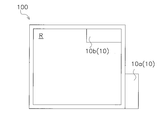
- FIG. 1 shows a machine learning device 100.
- the machine learning device 100 includes an air conditioner 10.
- the air conditioner 10 has a heat source unit 10a and a utilization unit 10b.
- the air conditioner 10 is installed in the room R to be air-conditioned.
- the machine learning device 100 can perform absence control. Absence control is control of the air conditioner 10 that is performed when there is no user in the space (room R) to be air-conditioned.
- the cooling operation performed in the absence control is called the precooling operation.
- the heating operation performed in the absence control is called the prewarming operation.
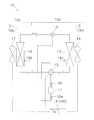
- FIG. 2 shows the configuration of the air conditioner 10.
- the air conditioner 10 includes a compressor 11, a four-way switching valve 12, a heat source heat exchanger 13, a heat source fan 14, an expansion valve 15, a utilization heat exchanger 16, a utilization fan 17, and a control unit 40.
- the air conditioner 10 further includes an outside temperature sensor 19a, a room temperature sensor 19b, a heat source heat exchanger temperature sensor 19c, a utilization heat exchanger temperature sensor 19d, a compressor suction temperature sensor 19e, a compressor discharge temperature sensor 19f, and a pressure sensor (not shown). And so on.
- the refrigerant circulates in the direction of the solid arrow.
- the refrigerant circulates in the direction of the dashed arrow.
- one heat source unit 10a and one utilization unit 10b are connected.
- a configuration may be adopted in which a plurality of utilization units 10b are connected to one heat source unit 10a.
- the control unit 40 may be mounted on either the heat source unit 10a or the utilization unit 10b. Alternatively, the control unit 40 may be separately mounted on both the heat source unit 10a and the utilization unit 10b.
- FIG. 3 is a block diagram of the control unit 40.
- the control unit 40 is, for example, a microcomputer.
- the control unit 40 functions as an air conditioner control unit 41, an occupancy information acquisition unit 44, and an operation content determination unit 45 by executing a dedicated program.
- the air conditioner control unit 41 controls the air conditioner 10. Specifically, as shown in FIG. 2, the air conditioner control unit 41 controls the operations of the compressor 11, the four-way switching valve 12, the heat source fan 14, the expansion valve 15, and the utilization fan 17. Further, the air conditioner control unit 41 acquires temperature information from the temperature sensors 19a to 19f. Further, the air conditioner control unit 41 holds the set temperature data Ts input by the user. Further, the air conditioner control unit 41 grasps the power consumption of the air conditioner 10.
- the occupancy information acquisition unit 44 shown in FIG. 3 acquires information about the time when the user leaves the room R and the time when the user returns to the room R, for example, based on the statistical result of the motion sensor output. .. Alternatively, the occupancy information acquisition unit 44 may manually input information about the time when the user leaves the room R and the time when the user returns to the room R.
- the operation content determination unit 45 comprehensively determines how to operate the air conditioner 10 in the precooling operation or the prewarming operation to be executed.
- FIG. 4 is a block diagram of the machine learning device 100.
- the operation content determination unit 45 has an acquisition unit 451 and a learning unit 452.
- the acquisition unit 451 acquires the outputs of the temperature sensors 19a to 19f of the air conditioner 10, the output of the occupancy information acquisition unit 44, and other signals as state variables. For example, the acquisition unit 451 acquires room temperature data and outside air temperature data as state variables, respectively, based on the outputs of the room temperature sensor 19b and the outside air temperature sensor 19a. The acquisition unit 451 further acquires the set temperature data Ts held by the air conditioner control unit 41 as a state variable. Further, the acquisition unit 451 acquires the time until the user returns to the room R as a state variable based on the output of the room information acquisition unit 44. The acquisition unit 451 uses the state variable as a state variable.
- -Data on the amount of heat treatment of the air conditioner 10 (for example, the number of revolutions of the compressor 11, the temperature of the utilization heat exchanger 16, the suction temperature measured on the intake side of the utilization heat exchanger 16 (that is, room temperature)).
- -Data of the skeleton surrounding the space (room R) air-conditioned by the unit 10b used in the air conditioner 10 (for example, the age of the skeleton, the heat insulating property of the skeleton, the specifications of the windows of the skeleton, the size of the room composed of the skeleton, and the skeleton Ventilation volume, orientation of the skeleton, operation information of the air conditioner in the room adjacent to the room R composed of the skeleton), -Outside temperature data before pre-cooling operation or pre-warming operation, -Solar data before pre-cooling operation or pre-warming operation, -Meteorological data before pre-cooling operation or pre-warming operation, and-Season or month during pre-cooling operation or pre-warming operation,
- the learning unit 452 sets the operating conditions of the precooling operation or the prewarming operation based on the training data set composed of the state variables, the room temperature data at a certain time after the start of the precooling operation or the prewarming operation, and the set temperature data Ts. learn.
- the operating conditions referred to here may include the operation start time of the precooling operation or the prewarming operation.
- the operating conditions may include at least one of the temperature of the utilization heat exchanger 16, the rotation speed of the utilization fan 17, and the rotation speed of the compressor 11.
- the learning unit 452 has a reward setting unit 453, an action value function update unit 454, and an action value function holding unit 455.
- the reward setting unit 453 calculates the reward based on the following values when the precooling operation or the prewarming operation is performed. -(A) Difference between room temperature and set temperature at the time when the user returns to room R. -(B) The amount of electric energy required by a certain time point after the start of the precooling operation or the prewarming operation (for example, at the end of the precooling operation or the prewarming operation).
- the reward setting unit 453 gives a large reward when the "(A) difference” is small, and gives a small reward when the "(A) difference” is large.
- the reward setting unit 453 gives a large reward when the "(B) electric energy” is small, and gives a small reward when the "(B) electric energy” is large.
- the action value function holding unit 455 holds a function (behavior value function) for calculating how to control the precooling operation or the prewarming operation.
- the function referred to here also includes a numerical value (action value table) expressed in the form of a table.
- the function may indicate the expected value of the reward expected to be received for the driving conditions.
- the action value function update unit 454 updates the action value function held in the action value function holding unit 455 based on the state variable acquired by the acquisition unit 451 and the reward calculated by the reward setting unit 453.
- the learning unit 452 learns the operating conditions of the precooling operation or the prewarming operation based on the state variables and the reward.
- the learning unit 452 may update the action value function in real time. Further, for that purpose, the learning unit 452 may calculate the state variables acquired from the acquisition unit 451 by the multi-layer neural network. At this time, preferably, the learning unit 452 performs reinforcement learning.
- the operation content determination unit 45 determines the operation content of the air conditioner 10.
- the operation content of the air conditioner 10 may include the operation start time of the air conditioner 10.
- the operating conditions may include at least one of the temperature of the utilization heat exchanger 16, the rotation speed of the utilization fan 17, and the rotation speed of the compressor 11.
- FIG. 5 is a flowchart showing processing of the machine learning device 100.
- the initial value of "behavior" of reinforcement learning may be randomly selected.
- step S1 the control parameters of the air conditioner 10 are randomly selected.
- step S2 the acquisition unit 451 acquires the state variable.
- the state variables include at least a part of the outputs of the temperature sensors 19a to 19f of the air conditioner 10, the outputs of the occupancy information acquisition unit 44, and other signals.
- the state variables include the room temperature at the time of step S2, the outside air temperature, the power consumption of the air conditioner 10, the time until the user returns to the room R, and the like.
- step S3 when the reward setting unit 453 performs a certain precooling operation or prewarming operation, whether or not the magnitude of the difference between the room temperature and the set temperature at the time when the user returns to the room R is less than the specified value. To determine. If it is determined that the magnitude of the difference is less than the specified value, the reward setting unit 453 increases the reward in step S4. On the other hand, when it is determined that the magnitude of the difference is equal to or larger than the specified value, the reward setting unit 453 reduces the reward in step S5.
- step S6 when the reward setting unit 453 performs a certain precooling operation or prewarming operation, if it is determined that the magnitude of the electric energy required for the precooling operation or the prewarming operation is less than the specified value, In step S7, the reward setting unit 453 increases the reward. On the other hand, when it is determined that the magnitude of the electric energy is equal to or larger than the specified value, the reward setting unit 453 reduces the reward in step S8.
- step S9 the action value function update unit 454 updates the function (action value function) for calculating the control parameter based on the state variable and the reward.
- step S10 it is determined whether or not the determination condition is satisfied.
- the determination condition may be a command input by the user. Alternatively, the determination condition may be the event that a given relational expression is satisfied. If the determination condition is satisfied, the process proceeds to step S11. If the determination condition is not satisfied, the process returns to step S2.
- step S11 the action value function update unit 454 determines the control parameters of the pre-cooling operation or the pre-warming operation from which the most reward is obtained based on the function.
- Air conditioner 11 Compressor 13: Heat source heat exchanger 14: Heat source fan 15: Expansion valve 16: Utilized heat exchanger 17: Utilized fan 19a: Outside temperature sensor 19b: Room temperature sensor 40: Control unit 100: Machine learning device 451: Acquisition unit 452: Learning unit 453: Reward setting unit 454: Action value function update unit 455: Action value function holding unit R: Room Ts: Set temperature data
Landscapes
- Engineering & Computer Science (AREA)
- General Engineering & Computer Science (AREA)
- Physics & Mathematics (AREA)
- Mechanical Engineering (AREA)
- Combustion & Propulsion (AREA)
- Chemical & Material Sciences (AREA)
- Signal Processing (AREA)
- Mathematical Physics (AREA)
- General Physics & Mathematics (AREA)
- Fuzzy Systems (AREA)
- Theoretical Computer Science (AREA)
- Automation & Control Theory (AREA)
- Biophysics (AREA)
- Computing Systems (AREA)
- Molecular Biology (AREA)
- General Health & Medical Sciences (AREA)
- Software Systems (AREA)
- Evolutionary Computation (AREA)
- Data Mining & Analysis (AREA)
- Computational Linguistics (AREA)
- Biomedical Technology (AREA)
- Artificial Intelligence (AREA)
- Life Sciences & Earth Sciences (AREA)
- Health & Medical Sciences (AREA)
- Air Conditioning Control Device (AREA)
Abstract
機械学習装置(100)は、空調機(10)の予冷運転又は予暖運転の運転条件を決定する。機械学習装置(100)は、取得部(451)と、学習部(452)と、を備える。取得部(451)は、予冷運転又は予暖運転時の室温データ、設定温度データ(Ts)、および外気温データを状態変数として取得する。学習部(452)は、状態変数と、予冷運転又は予暖運転の開始後の室温および設定温度データ(Ts)に基づいて、予冷運転又は予暖運転の運転条件を学習する。
Description
空調機の予冷運転又は予暖運転の運転条件を決定する機械学習装置。
特許文献1(特許6270996号公報)には、空気調和対象の空間にユーザがいない時間に空調機を制御する不在制御が開示されている。この不在制御は、空気調和対象の空間にユーザが帰ってきた時に快適性を向上させる目的で行われる。不在制御においては、空調機を動作させる時間の長さ、及び、空調機の負荷処理量を決定するために、不在時間の長さ、空気調和対象の空間を持つ建物の躯体性能、及び在室開始時の空調負荷が参照される。
上述の特許文献においては、機械学習への言及はない。
第1観点に係る機械学習装置は、空調機の予冷運転又は予暖運転の運転条件を決定する。機械学習装置は、取得部と、学習部と、を備える。取得部は、予冷運転又は予暖運転時の室温データ、設定温度データ、および外気温データを状態変数として取得する。学習部は、状態変数と、予冷運転又は予暖運転の開始後の室温および設定温度に基づいて、予冷運転又は予暖運転の運転条件を学習する。
この構成によれば、予冷運転又は予暖運転の運転条件が、機械学習によって導出される。したがって、ユーザの快適性又は省エネ効果が向上する。
第2観点に係る機械学習装置は、第1観点に係る機械学習装置において、予冷運転又は予暖運転の運転条件は、運転開始時刻、を含む。
第3観点に係る機械学習装置は、第1観点又は第2観点に係る機械学習装置において、空調機は、利用熱交換器と、利用ファンと、圧縮機と、を有する。予冷運転又は予暖運転の運転条件は、利用熱交換器の温度、利用ファンの回転数、圧縮機の回転数、のうちの少なくとも1つを含む。
第4観点に係る機械学習装置は、第3観点に係る機械学習装置において、取得部は、前記状態変数として、空調機の熱処理量に関するデータ、空調機の利用ユニットが空調する空間を囲う躯体のデータ、予冷運転又は予暖運転前の外気温データ、予冷運転又は予暖運転前の日射データ、予冷運転又は予暖運転前の気象データ、及び、予冷運転又は記予暖運転時の季節又は月、の少なくとも1つを、さらに取得する。
第5観点に係る機械学習装置は、第4観点に係る機械学習装置において、空調機の熱処理量に関する前記データは、圧縮機の前記回転数、利用熱交換器の前記温度、利用熱交換器の吸気側において測定される吸込温度、の少なくとも1つを含む。
第6観点に係る機械学習装置は、第4観点又は第5観点に係る機械学習装置において、躯体のデータは、躯体の経年数、躯体の断熱性、躯体の窓の仕様、躯体が構成する部屋のサイズ、躯体の換気量、躯体の向き、躯体が構成する部屋に隣接する部屋の空調機の運転情報、のうちの少なくとも1つを含む。
第7観点に係る機械学習装置は、第1観点から第6観点のいずれか1つに係る機械学習装置において、学習部が、報酬設定部、をさらに備える。報酬設定部は、予冷運転又は予暖運転の開始後の室温および設定温度、に基づいて報酬を決定する。学習部は、状態変数と、報酬と、に基づいて予冷運転又は予暖運転の運転条件を学習する。
第8観点に係る機械学習装置は、第7観点に係る機械学習装置において、報酬設定部は、さらに、予冷運転又は予暖運転の開始後のある時点までに要した電力量、に基づいて報酬を決定する。
第9観点に係る機械学習装置は、第8観点に係る機械学習装置において、予冷運転又は予暖運転の開始後のある時点は、予冷運転又は予暖運転の終了時である。
第10観点に係る機械学習装置は、第8観点又は第9観点に係る機械学習装置において、報酬設定部は、予冷運転又は予暖運転の終了時における室温および設定温度の差が小さいときに報酬を増大させ、又は、電力量が小さいときに前記報酬を増大させる。
第11観点に係る機械学習装置は、第7観点から第10観点のいずれか1つに係る機械学習装置において、学習部が、行動価値関数を保持する行動価値関数保持部と、前記行動価値関数を更新する行動価値関数更新部と、をさらに有する。行動価値関数は、運転条件に対して受け取ることが期待される報酬の期待値を示す。行動価値関数更新部は、実際に得られた報酬に基づいて行動価値関数を更新する。
(1)全体構成
図1は、機械学習装置100を示す。機械学習装置100は、空調機10を含む。空調機10は、熱源ユニット10a、利用ユニット10bを有する。空調機10は、空気調和対象の部屋Rに設置される。
図1は、機械学習装置100を示す。機械学習装置100は、空調機10を含む。空調機10は、熱源ユニット10a、利用ユニット10bを有する。空調機10は、空気調和対象の部屋Rに設置される。
機械学習装置100は、不在制御を行うことができる。不在制御とは、空気調和対象の空間(部屋R)にユーザがいない時間に行う空調機10の制御である。不在制御において行う冷房運転を予冷運転という。不在制御において行う暖房運転を予暖運転という。
(2)詳細構成
(2-1)空調機10
空調機10は、部屋Rの空気を調和する。図2は空調機10の構成を示す。空調機10は、圧縮機11、四路切換弁12、熱源熱交換器13、熱源ファン14、膨張弁15、利用熱交換器16、利用ファン17、制御部40を有する。空調機10は、さらに、外気温センサ19a、室温センサ19b、熱源熱交換器温度センサ19c、利用熱交換器温度センサ19d、圧縮機吸入温度センサ19e、圧縮機吐出温度センサ19f、図示しない圧力センサなどを有する。冷房運転の場合には、冷媒は実線の矢印の方向に循環する。暖房運転の場合には、冷媒は破線の矢印の方向に循環する。
(2-1)空調機10
空調機10は、部屋Rの空気を調和する。図2は空調機10の構成を示す。空調機10は、圧縮機11、四路切換弁12、熱源熱交換器13、熱源ファン14、膨張弁15、利用熱交換器16、利用ファン17、制御部40を有する。空調機10は、さらに、外気温センサ19a、室温センサ19b、熱源熱交換器温度センサ19c、利用熱交換器温度センサ19d、圧縮機吸入温度センサ19e、圧縮機吐出温度センサ19f、図示しない圧力センサなどを有する。冷房運転の場合には、冷媒は実線の矢印の方向に循環する。暖房運転の場合には、冷媒は破線の矢印の方向に循環する。
図2の構成では、1台の熱源ユニット10aと1台の利用ユニット10bが接続されている。これに代えて、1台の熱源ユニット10aに複数の利用ユニット10bが接続される構成を採用してもよい。制御部40は、熱源ユニット10a及び利用ユニット10bのいずれに搭載されてもよい。あるいは、制御部40は、熱源ユニット10a及び利用ユニット10bの両方に分かれて搭載されてもよい。
(2-2)制御部40
図3は制御部40のブロック図である。制御部40は、例えばマイクロコンピュータである。制御部40は、専用のプログラムを実行することにより、空調機制御部41、在室情報取得部44、運転内容決定部45として機能する。
図3は制御部40のブロック図である。制御部40は、例えばマイクロコンピュータである。制御部40は、専用のプログラムを実行することにより、空調機制御部41、在室情報取得部44、運転内容決定部45として機能する。
空調機制御部41は、空調機10を制御する。具体的には、図2に示すように、空調機制御部41は、圧縮機11、四路切換弁12、熱源ファン14、膨張弁15、利用ファン17の動作を制御する。さらに、空調機制御部41は、温度センサ19a~19fから温度情報を取得する。さらに、空調機制御部41は、ユーザにより入力された設定温度データTsを保持する。さらに、空調機制御部41は、空調機10の消費電力を把握する。
図3に示す在室情報取得部44は、部屋Rからユーザが出て行く時刻、及び部屋Rにユーザが戻ってくる時刻についての情報を、例えば人感センサ出力の統計結果に基づいて取得する。代替的に、在室情報取得部44は、部屋Rからユーザが出て行く時刻、及び部屋Rにユーザが戻ってくる時刻についての情報を、マニュアル入力により受け取ってもよい。
運転内容決定部45は、実行すべき予冷運転又は予暖運転において、空調機10をどのように運転させるかを総合的に決定する。
(3)運転内容決定部45の詳細
(3-1)構成
図4は、機械学習装置100のブロック図である。運転内容決定部45は、取得部451、学習部452を有する。
(3-1)構成
図4は、機械学習装置100のブロック図である。運転内容決定部45は、取得部451、学習部452を有する。
取得部451は、空調機10の温度センサ19a~19fの出力、在室情報取得部44の出力、その他の信号を状態変数として取得する。例えば、取得部451は、室温センサ19b、外気温センサ19aの出力に基づいて、それぞれ、室温データ、外気温データを状態変数として取得する。取得部451はさらに、空調機制御部41が保持している設定温度データTsを状態変数として取得する。さらに、取得部451は、在室情報取得部44の出力に基づいて、ユーザが部屋Rに帰ってくるまでの時間を状態変数として取得する。取得部451は、状態変数として、
- 空調機10の熱処理量に関するデータ(例えば、圧縮機11の回転数、利用熱交換器16の温度、利用熱交換器16の吸気側において測定される吸込温度(すなわち室温))、
- 空調機10の利用ユニット10bが空調する空間(部屋R)を囲う躯体のデータ(例えば、躯体の経年数、躯体の断熱性、躯体の窓の仕様、躯体が構成する部屋のサイズ、躯体の換気量、躯体の向き、躯体が構成する部屋Rに隣接する部屋の空調機の運転情報)、
- 予冷運転又は予暖運転前の外気温データ、
- 予冷運転又は予暖運転前の日射データ、
- 予冷運転又は予暖運転前の気象データ、及び
- 予冷運転又は予暖運転時の季節又は月、
の少なくとも1つを、取得してもよい。
- 空調機10の熱処理量に関するデータ(例えば、圧縮機11の回転数、利用熱交換器16の温度、利用熱交換器16の吸気側において測定される吸込温度(すなわち室温))、
- 空調機10の利用ユニット10bが空調する空間(部屋R)を囲う躯体のデータ(例えば、躯体の経年数、躯体の断熱性、躯体の窓の仕様、躯体が構成する部屋のサイズ、躯体の換気量、躯体の向き、躯体が構成する部屋Rに隣接する部屋の空調機の運転情報)、
- 予冷運転又は予暖運転前の外気温データ、
- 予冷運転又は予暖運転前の日射データ、
- 予冷運転又は予暖運転前の気象データ、及び
- 予冷運転又は予暖運転時の季節又は月、
の少なくとも1つを、取得してもよい。
学習部452は、状態変数によって構成される訓練データセットと、予冷運転又は予暖運転の開始後のある時点の室温データおよび設定温度データTsに基づいて、予冷運転又は予暖運転の運転条件を学習する。ここでいう運転条件は、予冷運転又は予暖運転の運転開始時刻を含んでもよい。あるいは、運転条件は、利用熱交換器16の温度、利用ファン17の回転数、圧縮機11の回転数、のうちの少なくとも1つを含んでもよい。
学習部452は、報酬設定部453、行動価値関数更新部454、行動価値関数保持部455を有する。報酬設定部453は、予冷運転又は予暖運転を行ったときに次の値に基づいて報酬を計算する。
- (A)部屋Rにユーザが戻ってくる時刻における室温と設定温度の差分。
- (B)予冷運転又は予暖運転の開始後のある時点(例えば、予冷運転又は予暖運転の終了時)までに要した電力量。
- (A)部屋Rにユーザが戻ってくる時刻における室温と設定温度の差分。
- (B)予冷運転又は予暖運転の開始後のある時点(例えば、予冷運転又は予暖運転の終了時)までに要した電力量。
具体的には、報酬設定部453は、「(A)差分」が小さいときは大きな報酬を与え、「(A)差分」が大きいときは小さな報酬を与える。加えて、報酬設定部453は、「(B)電力量」が小さいときは大きな報酬を与え、「(B)電力量」が大きいときは小さな報酬を与える。
行動価値関数保持部455は、予冷運転又は予暖運転の制御の仕方を計算するための関数(行動価値関数)を保持する。ここで言う関数には、テーブルの形で表現された数値(行動価値テーブル)も含まれる。関数は、運転条件に対して受け取ることが期待される前記報酬の期待値を示してもよい。
行動価値関数更新部454は、取得部451によって取得された状態変数、及び報酬設定部453によって計算された報酬に基づいて、行動価値関数保持部455に保持される行動価値関数を更新する。
このように、学習部452は、状態変数と、報酬と、に基づいて予冷運転又は予暖運転の前記運転条件を学習する。学習部452は、行動価値関数をリアルタイムで更新してもよい。さらに、そのために、学習部452は、取得部451から取得される状態変数を多層ニューラルネットワークによって演算してもよい。この時、好ましくは、学習部452は強化学習を行う。
(3-2)運転内容
運転内容決定部45は、空調機10の運転内容を決定する。ここで、空調機10の運転内容は、空調機10の運転開始時刻を含んでもよい。あるいは、運転条件は、利用熱交換器16の温度、利用ファン17の回転数、圧縮機11の回転数、のうちの少なくとも1つを含んでもよい。
運転内容決定部45は、空調機10の運転内容を決定する。ここで、空調機10の運転内容は、空調機10の運転開始時刻を含んでもよい。あるいは、運転条件は、利用熱交換器16の温度、利用ファン17の回転数、圧縮機11の回転数、のうちの少なくとも1つを含んでもよい。
(4)処理
図5は、機械学習装置100の処理を示すフローチャートである。強化学習の「行動」の初期値はランダムに選択されることがある。ステップS1において、空調機10の制御パラメータがランダムに選択される。
図5は、機械学習装置100の処理を示すフローチャートである。強化学習の「行動」の初期値はランダムに選択されることがある。ステップS1において、空調機10の制御パラメータがランダムに選択される。
ステップS2において、取得部451が状態変数を取得する。ここで、状態変数は、空調機10の温度センサ19a~19fの少なくとも一部の出力、在室情報取得部44の出力、その他の信号を含む。例えば、状態変数は、ステップS2の時点の室温、外気温、空調機10の消費電力、ユーザが部屋Rに帰ってくるまでの時間、などを含む。
ステップS3において、報酬設定部453は、ある予冷運転又は予暖運転を行ったときに、部屋Rにユーザが戻ってくる時刻における室温と設定温度の差分の大きさが規定値未満であるか否かを判別する。差分の大きさが規定値未満であると判定された場合は、ステップS4において、報酬設定部453は報酬を増やす。一方、差分の大きさが規定値以上であると判定された場合は、ステップS5において、報酬設定部453は報酬を減らす。
ステップS6において、報酬設定部453は、ある予冷運転又は予暖運転を行ったときに、予冷運転又は予暖運転に要した電力量の大きさが規定値未満であると判定された場合は、ステップS7において、報酬設定部453は報酬を増やす。一方、電力量の大きさが規定値以上であると判定された場合は、ステップS8において、報酬設定部453は報酬を減らす。
ステップS9において、行動価値関数更新部454は、状態変数及び報酬に基づいて、制御パラメータを計算するための関数(行動価値関数)を更新する。
ステップS10において、決定条件が満足されるか否かを判別する。決定条件は、ユーザによるコマンドの入力であってもよい。代替的に、決定条件は、所定の関係式が満足されるという事象であってもよい。決定条件が満足される場合、処理はステップS11に進む。決定条件が満足されない場合は、処理はステップS2に戻る。
ステップS11において、行動価値関数更新部454は、関数に基づき、報酬が最も多く得られることになる予冷運転又は予暖運転の制御パラメータを決定する。
(5)特徴
予冷運転又は予暖運転の運転条件が、機械学習によって導出される。したがって、ユーザの快適性又は省エネ効果が向上する。
予冷運転又は予暖運転の運転条件が、機械学習によって導出される。したがって、ユーザの快適性又は省エネ効果が向上する。
(6)変形例
- (A)部屋Rにユーザが戻ってくる時刻における室温と設定温度の差分。
の代わりに、
- (C)部屋Rにユーザが戻ってくる時刻と、室温が実際に設定温度に達した時刻と、の差分時間。
を処理に用いても良い。
- (A)部屋Rにユーザが戻ってくる時刻における室温と設定温度の差分。
の代わりに、
- (C)部屋Rにユーザが戻ってくる時刻と、室温が実際に設定温度に達した時刻と、の差分時間。
を処理に用いても良い。
(7)むすび
以上、本開示の実施形態を説明したが、請求の範囲に記載された本開示の趣旨及び範囲から逸脱することなく、形態や詳細の多様な変更が可能なことが理解されるであろう。
以上、本開示の実施形態を説明したが、請求の範囲に記載された本開示の趣旨及び範囲から逸脱することなく、形態や詳細の多様な変更が可能なことが理解されるであろう。
10 :空調機
11 :圧縮機
13 :熱源熱交換器
14 :熱源ファン
15 :膨張弁
16 :利用熱交換器
17 :利用ファン
19a :外気温センサ
19b :室温センサ
40 :制御部
100 :機械学習装置
451 :取得部
452 :学習部
453 :報酬設定部
454 :行動価値関数更新部
455 :行動価値関数保持部
R :部屋
Ts :設定温度データ
11 :圧縮機
13 :熱源熱交換器
14 :熱源ファン
15 :膨張弁
16 :利用熱交換器
17 :利用ファン
19a :外気温センサ
19b :室温センサ
40 :制御部
100 :機械学習装置
451 :取得部
452 :学習部
453 :報酬設定部
454 :行動価値関数更新部
455 :行動価値関数保持部
R :部屋
Ts :設定温度データ
Claims (11)
- 空調機(10)の予冷運転又は予暖運転の運転条件を決定する機械学習装置(100)であって、
前記予冷運転又は前記予暖運転時の室温データ、設定温度データ、および外気温データを状態変数として取得する取得部(451)と、
前記状態変数と、前記予冷運転又は前記予暖運転の開始後の室温および設定温度に基づいて、前記予冷運転又は前記予暖運転の前記運転条件を学習する学習部(452)と、
を備える、機械学習装置(100)。 - 前記予冷運転又は前記予暖運転の前記運転条件は、運転開始時刻、を含む、
請求項1に記載の機械学習装置。 - 前記空調機は、
利用熱交換器(16)と、
利用ファン(17)と、
圧縮機(11)と、
を有し、
前記予冷運転又は前記予暖運転の前記運転条件は、
前記利用熱交換器の温度、
前記利用ファンの回転数、
前記圧縮機の回転数、
のうちの少なくとも1つを含む、
請求項1又は請求項2に記載の機械学習装置。 - 前記取得部は、前記状態変数として、
前記空調機の熱処理量に関するデータ、
前記空調機の利用ユニットが空調する空間を囲う躯体のデータ、
前記予冷運転又は前記予暖運転前の外気温データ、
前記予冷運転又は前記予暖運転前の日射データ、
前記予冷運転又は前記予暖運転前の気象データ、及び
前記予冷運転又は前記予暖運転時の季節又は月、
の少なくとも1つを、さらに取得する、
請求項3に記載の機械学習装置。 - 前記空調機の前記熱処理量に関する前記データは、
前記圧縮機の前記回転数、
前記利用熱交換器の前記温度、
前記利用熱交換器の吸気側において測定される吸込温度、
の少なくとも1つを含む、
請求項4に記載の機械学習装置。 - 前記躯体のデータは、
前記躯体の経年数、
前記躯体の断熱性、
前記躯体の窓の仕様、
前記躯体が構成する部屋のサイズ、
前記躯体の換気量、
前記躯体の向き、
前記躯体が構成する前記部屋に隣接する部屋の空調機の運転情報、
のうちの少なくとも1つを含む、
請求項4又は請求項5に記載の機械学習装置。 - 前記学習部は、
前記予冷運転又は前記予暖運転の開始後の室温および設定温度、に基づいて報酬を決定する報酬設定部(453)、
をさらに備え、
前記学習部は、前記状態変数と、前記報酬と、に基づいて前記予冷運転又は前記予暖運転の前記運転条件を学習する、
請求項1から6のいずれか1つに記載の機械学習装置。 - 前記報酬設定部は、さらに、前記予冷運転又は前記予暖運転の開始後のある時点までに要した電力量、に基づいて前記報酬を決定する、
請求項7に記載の機械学習装置。 - 前記予冷運転又は前記予暖運転の開始後の前記ある時点は、前記予冷運転又は前記予暖運転の終了時である、
請求項8に記載の機械学習装置。 - 前記報酬設定部は、
前記予冷運転又は前記予暖運転の終了時における前記室温および前記設定温度の差が小さいときに前記報酬を増大させ、又は、
前記電力量が小さいときに前記報酬を増大させる、
請求項8又は請求項9に記載の機械学習装置。 - 前記学習部は、
行動価値関数を保持する行動価値関数保持部(455)と、
前記行動価値関数を更新する行動価値関数更新部(454)と、
をさらに有し、
前記行動価値関数は、前記運転条件に対して受け取ることが期待される前記報酬の期待値を示し、
前記行動価値関数更新部は、実際に得られた前記報酬に基づいて前記行動価値関数を更新する、
請求項7から10のいずれか1つに記載の機械学習装置。
Priority Applications (3)
| Application Number | Priority Date | Filing Date | Title |
|---|---|---|---|
| US17/437,773 US11885520B2 (en) | 2019-03-18 | 2020-03-13 | Machine learning apparatus for determining operation condition of precooling operation or preheating operation of air conditioner |
| EP20774451.7A EP3943826A4 (en) | 2019-03-18 | 2020-03-13 | Machine learning device for determining operation condition of precooling operation or preheating operation of air conditioner |
| CN202080018090.0A CN113508268A (zh) | 2019-03-18 | 2020-03-13 | 决定空调机的预冷运转或预热运转的运转条件的机械学习装置 |
Applications Claiming Priority (2)
| Application Number | Priority Date | Filing Date | Title |
|---|---|---|---|
| JP2019049521A JP7173907B2 (ja) | 2019-03-18 | 2019-03-18 | 空調機の予冷運転又は予暖運転の運転条件を決定する機械学習装置 |
| JP2019-049521 | 2019-03-18 |
Publications (1)
| Publication Number | Publication Date |
|---|---|
| WO2020189544A1 true WO2020189544A1 (ja) | 2020-09-24 |
Family
ID=72519398
Family Applications (1)
| Application Number | Title | Priority Date | Filing Date |
|---|---|---|---|
| PCT/JP2020/011038 Ceased WO2020189544A1 (ja) | 2019-03-18 | 2020-03-13 | 空調機の予冷運転又は予暖運転の運転条件を決定する機械学習装置 |
Country Status (5)
| Country | Link |
|---|---|
| US (1) | US11885520B2 (ja) |
| EP (1) | EP3943826A4 (ja) |
| JP (1) | JP7173907B2 (ja) |
| CN (1) | CN113508268A (ja) |
| WO (1) | WO2020189544A1 (ja) |
Families Citing this family (3)
| Publication number | Priority date | Publication date | Assignee | Title |
|---|---|---|---|---|
| WO2020261317A1 (ja) * | 2019-06-24 | 2020-12-30 | 三菱電機株式会社 | 空気調和装置および空気調和システム |
| WO2022097225A1 (ja) * | 2020-11-05 | 2022-05-12 | 三菱電機株式会社 | 空気調和機制御装置 |
| JP7827218B1 (ja) * | 2024-09-11 | 2026-03-10 | 三菱電機株式会社 | 空調制御装置 |
Citations (5)
| Publication number | Priority date | Publication date | Assignee | Title |
|---|---|---|---|---|
| JPS629137A (ja) * | 1985-07-06 | 1987-01-17 | Daikin Ind Ltd | 空気調和機 |
| JP2001021198A (ja) * | 1999-07-12 | 2001-01-26 | Mitsubishi Heavy Ind Ltd | 空気調和機 |
| WO2015079502A1 (ja) * | 2013-11-26 | 2015-06-04 | 三菱電機株式会社 | 空調装置の制御装置 |
| JP6270996B2 (ja) | 2014-05-12 | 2018-01-31 | 三菱電機株式会社 | 空調装置 |
| JP2018071853A (ja) * | 2016-10-27 | 2018-05-10 | インフォグリーン株式会社 | 学習装置、制御装置、学習方法、制御方法、学習プログラムおよび制御プログラム |
Family Cites Families (25)
| Publication number | Priority date | Publication date | Assignee | Title |
|---|---|---|---|---|
| JPS60142136A (ja) | 1983-12-28 | 1985-07-27 | Fujitsu Ltd | 空調機器前倒し運転制御方式 |
| JPH06270996A (ja) | 1993-03-17 | 1994-09-27 | Tokico Ltd | エンジンオイル交換装置 |
| JP3456590B2 (ja) | 1993-05-20 | 2003-10-14 | 三菱化学株式会社 | 製造機器表面からの付着ポリマーの除去方法 |
| JP2953317B2 (ja) | 1994-07-21 | 1999-09-27 | 日立プラント建設株式会社 | 空調熱負荷予測システム |
| JPH08210689A (ja) | 1995-02-07 | 1996-08-20 | Hitachi Plant Eng & Constr Co Ltd | 空調熱負荷予測システム |
| CN100595490C (zh) * | 2008-04-03 | 2010-03-24 | 东南大学 | 基于热湿独立处理的冷水机组及其空气处理方法 |
| JP2012083001A (ja) * | 2010-10-07 | 2012-04-26 | Shimizu Corp | 空調制御装置、空調制御方法 |
| CN103229116B (zh) * | 2010-12-31 | 2016-12-07 | 谷歌公司 | 智能恒温器控制hvac系统的灵活功能划分 |
| CN104487778B (zh) | 2012-07-23 | 2017-05-17 | 三菱电机株式会社 | 空调装置以及空调控制方法 |
| US9568201B2 (en) * | 2014-03-28 | 2017-02-14 | Google Inc. | Environmental control system retrofittable with multiple types of boiler-based heating systems |
| US10012406B2 (en) * | 2014-05-15 | 2018-07-03 | Samsung Electronics Co., Ltd. | Method and apparatus for controlling temperature |
| JP2016061487A (ja) | 2014-09-18 | 2016-04-25 | 三菱電機エンジニアリング株式会社 | 空調システムの最適起動制御装置および空調システムの最適起動制御方法 |
| US10465931B2 (en) * | 2015-01-30 | 2019-11-05 | Schneider Electric It Corporation | Automated control and parallel learning HVAC apparatuses, methods and systems |
| KR102424689B1 (ko) * | 2015-05-15 | 2022-07-26 | 삼성전자 주식회사 | 공조 기기의 기동 제어 방법 및 장치 |
| JP6059375B1 (ja) | 2016-02-09 | 2017-01-11 | ファナック株式会社 | 生産制御システムおよび統合生産制御システム |
| JP2018048750A (ja) | 2016-09-20 | 2018-03-29 | 株式会社東芝 | 空調制御装置、空調制御方法及び空調制御プログラム |
| US20180100662A1 (en) | 2016-10-11 | 2018-04-12 | Mitsubishi Electric Research Laboratories, Inc. | Method for Data-Driven Learning-based Control of HVAC Systems using High-Dimensional Sensory Observations |
| KR102393418B1 (ko) * | 2017-03-30 | 2022-05-03 | 삼성전자주식회사 | 데이터 학습 서버 및 이의 학습 모델 생성 및 이용 방법 |
| US11274849B2 (en) * | 2017-04-28 | 2022-03-15 | Johnson Controls Tyco IP Holdings LLP | Smart thermostat with model predictive control and demand response integration |
| JP7053180B2 (ja) | 2017-07-11 | 2022-04-12 | 株式会社東芝 | 情報処理装置、情報処理方法、プログラム、及び情報処理システム |
| US20190101302A1 (en) * | 2017-10-03 | 2019-04-04 | Michael Rainone | Air pressure controller for air ventilation devices |
| US10852023B2 (en) * | 2018-05-15 | 2020-12-01 | Johnson Controls Technology Company | Building management autonomous HVAC control using reinforcement learning with occupant feedback |
| US10908564B2 (en) * | 2018-06-08 | 2021-02-02 | Smithgroup, Inc. | Intelligent building management systems |
| US11578889B2 (en) * | 2018-10-02 | 2023-02-14 | Mitsubishi Electric Corporation | Information processing apparatus and air-conditioning system provided with the same |
| US11592199B2 (en) * | 2019-01-28 | 2023-02-28 | Enerallies, Inc. | Energy efficiency and comfort optimization through extreme weather adaptivity and AI |
-
2019
- 2019-03-18 JP JP2019049521A patent/JP7173907B2/ja active Active
-
2020
- 2020-03-13 US US17/437,773 patent/US11885520B2/en active Active
- 2020-03-13 CN CN202080018090.0A patent/CN113508268A/zh active Pending
- 2020-03-13 WO PCT/JP2020/011038 patent/WO2020189544A1/ja not_active Ceased
- 2020-03-13 EP EP20774451.7A patent/EP3943826A4/en not_active Withdrawn
Patent Citations (5)
| Publication number | Priority date | Publication date | Assignee | Title |
|---|---|---|---|---|
| JPS629137A (ja) * | 1985-07-06 | 1987-01-17 | Daikin Ind Ltd | 空気調和機 |
| JP2001021198A (ja) * | 1999-07-12 | 2001-01-26 | Mitsubishi Heavy Ind Ltd | 空気調和機 |
| WO2015079502A1 (ja) * | 2013-11-26 | 2015-06-04 | 三菱電機株式会社 | 空調装置の制御装置 |
| JP6270996B2 (ja) | 2014-05-12 | 2018-01-31 | 三菱電機株式会社 | 空調装置 |
| JP2018071853A (ja) * | 2016-10-27 | 2018-05-10 | インフォグリーン株式会社 | 学習装置、制御装置、学習方法、制御方法、学習プログラムおよび制御プログラム |
Non-Patent Citations (1)
| Title |
|---|
| See also references of EP3943826A4 |
Also Published As
| Publication number | Publication date |
|---|---|
| US11885520B2 (en) | 2024-01-30 |
| JP2020153530A (ja) | 2020-09-24 |
| CN113508268A (zh) | 2021-10-15 |
| EP3943826A1 (en) | 2022-01-26 |
| EP3943826A4 (en) | 2022-05-04 |
| JP7173907B2 (ja) | 2022-11-16 |
| US20220154962A1 (en) | 2022-05-19 |
Similar Documents
| Publication | Publication Date | Title |
|---|---|---|
| CN107621048B (zh) | 一种空调的控制方法及装置 | |
| CN103940058B (zh) | 空调器的控制方法、空调器的控制装置和空调器 | |
| CN104110799B (zh) | 空调器电子膨胀阀的综合控制方法及电路 | |
| CN104406251B (zh) | 空调器除湿方法及空调器 | |
| WO2020189544A1 (ja) | 空調機の予冷運転又は予暖運転の運転条件を決定する機械学習装置 | |
| CN112567183A (zh) | 空调装置、控制装置、空气调节方法以及程序 | |
| CN104949270A (zh) | 空调器的制冷控制方法、装置及空调器 | |
| CN111102729B (zh) | 一种空调及其防凝露的方法 | |
| CN112944572A (zh) | 用于空调除湿的控制方法、装置和空调 | |
| CN110440401B (zh) | 一种控温除湿控制方法 | |
| WO2018177080A1 (zh) | 空调器制热控制方法和控制装置 | |
| CN110736248A (zh) | 空调出风温度的控制方法和装置 | |
| CN105928136A (zh) | 空调节能控制方法、控制装置及空调 | |
| CN113865057B (zh) | 湿度控制方法、装置及空调器 | |
| CN106196441A (zh) | 实现空调制冷控制的方法及装置 | |
| CN106440266A (zh) | 一种空调节能控制方法 | |
| CN111102726B (zh) | 一种空调及其防凝露的方法 | |
| CN110986300B (zh) | 空调器的智能制热控制方法及空调器 | |
| CN114061106B (zh) | 空调系统的控制方法、装置、设备及存储介质 | |
| CN111102715B (zh) | 一种空调及其防凝露的方法 | |
| CN111102728B (zh) | 一种空调及其防凝露的方法 | |
| JP6881642B2 (ja) | 空調機の予冷運転又は予暖運転の運転条件決定システム | |
| CN111536670B (zh) | 空调高温除菌控制方法、空调设备及可读存储介质 | |
| CN110398036B (zh) | 一种空调制冷控制方法及系统 | |
| CN106610087A (zh) | 实现空调制冷控制的方法及装置 |
Legal Events
| Date | Code | Title | Description |
|---|---|---|---|
| 121 | Ep: the epo has been informed by wipo that ep was designated in this application |
Ref document number: 20774451 Country of ref document: EP Kind code of ref document: A1 |
|
| NENP | Non-entry into the national phase |
Ref country code: DE |
|
| ENP | Entry into the national phase |
Ref document number: 2020774451 Country of ref document: EP Effective date: 20211018 |