WO2020196344A1 - シラン化合物の製造方法 - Google Patents
シラン化合物の製造方法 Download PDFInfo
- Publication number
- WO2020196344A1 WO2020196344A1 PCT/JP2020/012525 JP2020012525W WO2020196344A1 WO 2020196344 A1 WO2020196344 A1 WO 2020196344A1 JP 2020012525 W JP2020012525 W JP 2020012525W WO 2020196344 A1 WO2020196344 A1 WO 2020196344A1
- Authority
- WO
- WIPO (PCT)
- Prior art keywords
- compound
- siloxane
- group
- carbonate
- producing
- Prior art date
- Legal status (The legal status is an assumption and is not a legal conclusion. Google has not performed a legal analysis and makes no representation as to the accuracy of the status listed.)
- Ceased
Links
- LMLZKSKDZSNJNH-UHFFFAOYSA-N CS(Oc1ccccc1)Oc1ccccc1 Chemical compound CS(Oc1ccccc1)Oc1ccccc1 LMLZKSKDZSNJNH-UHFFFAOYSA-N 0.000 description 1
- ARJYJZLLHZJUOI-UHFFFAOYSA-N C[SiH-](C)(Oc1ccccc1)O[Si](C)(C)Oc1ccccc1 Chemical compound C[SiH-](C)(Oc1ccccc1)O[Si](C)(C)Oc1ccccc1 ARJYJZLLHZJUOI-UHFFFAOYSA-N 0.000 description 1
- ROORDVPLFPIABK-UHFFFAOYSA-N O=C(Oc1ccccc1)Oc1ccccc1 Chemical compound O=C(Oc1ccccc1)Oc1ccccc1 ROORDVPLFPIABK-UHFFFAOYSA-N 0.000 description 1
- ODQIMXLPEYFORB-UHFFFAOYSA-N c(cc1)ccc1[N-](Oc1ccccc1)(Oc1ccccc1)O[O-](c1ccccc1)(Oc1ccccc1)Oc1ccccc1 Chemical compound c(cc1)ccc1[N-](Oc1ccccc1)(Oc1ccccc1)O[O-](c1ccccc1)(Oc1ccccc1)Oc1ccccc1 ODQIMXLPEYFORB-UHFFFAOYSA-N 0.000 description 1
Classifications
-
- C—CHEMISTRY; METALLURGY
- C07—ORGANIC CHEMISTRY
- C07F—ACYCLIC, CARBOCYCLIC OR HETEROCYCLIC COMPOUNDS CONTAINING ELEMENTS OTHER THAN CARBON, HYDROGEN, HALOGEN, OXYGEN, NITROGEN, SULFUR, SELENIUM OR TELLURIUM
- C07F7/00—Compounds containing elements of Groups 4 or 14 of the Periodic Table
- C07F7/02—Silicon compounds
- C07F7/08—Compounds having one or more C—Si linkages
- C07F7/18—Compounds having one or more C—Si linkages as well as one or more C—O—Si linkages
- C07F7/1804—Compounds having Si-O-C linkages
-
- C—CHEMISTRY; METALLURGY
- C07—ORGANIC CHEMISTRY
- C07F—ACYCLIC, CARBOCYCLIC OR HETEROCYCLIC COMPOUNDS CONTAINING ELEMENTS OTHER THAN CARBON, HYDROGEN, HALOGEN, OXYGEN, NITROGEN, SULFUR, SELENIUM OR TELLURIUM
- C07F7/00—Compounds containing elements of Groups 4 or 14 of the Periodic Table
- C07F7/02—Silicon compounds
- C07F7/08—Compounds having one or more C—Si linkages
- C07F7/18—Compounds having one or more C—Si linkages as well as one or more C—O—Si linkages
- C07F7/1804—Compounds having Si-O-C linkages
- C07F7/1872—Preparation; Treatments not provided for in C07F7/20
- C07F7/188—Preparation; Treatments not provided for in C07F7/20 by reactions involving the formation of Si-O linkages
-
- C—CHEMISTRY; METALLURGY
- C07—ORGANIC CHEMISTRY
- C07F—ACYCLIC, CARBOCYCLIC OR HETEROCYCLIC COMPOUNDS CONTAINING ELEMENTS OTHER THAN CARBON, HYDROGEN, HALOGEN, OXYGEN, NITROGEN, SULFUR, SELENIUM OR TELLURIUM
- C07F7/00—Compounds containing elements of Groups 4 or 14 of the Periodic Table
- C07F7/02—Silicon compounds
- C07F7/08—Compounds having one or more C—Si linkages
- C07F7/0834—Compounds having one or more O-Si linkage
- C07F7/0838—Compounds with one or more Si-O-Si sequences
Definitions
- the present invention relates to a method for producing a silane compound, particularly a method for producing a silane compound such as an aryloxysilane compound and an alkoxysilane compound.
- a phenol derivative is obtained against a dihalogenated silane compound typified by a dichlorosilane compound and a diacyloxysilane compound typified by a diacetoxysilane compound. And a method of reacting various alcohol compounds are generally known.
- Patent Document 1 discloses a method for producing dimethyldiphenoxysilane from dimethyldichlorosilane and phenol.
- a step of treating hydrogen chloride gas produced at the same time as the production of dimethyldiphenoxysilane a washing step of washing the product before distillation purification with a base, an extraction step using an organic solvent, etc.
- Various steps are required.
- Patent Document 2 discloses a production method for obtaining dimethyldiphenoxysilane from polydimethylsiloxane and phenol, but a solvent is also used in this reaction, and a sufficient yield has not been obtained.
- a method for producing a silane compound such as a triaryloxysilane compound or a trialkoxysilane compound
- a method of reacting a trihalogenated silane compound typified by a trichlorosilane compound with a phenol derivative or various alcohol compounds is generally used.
- a trihalogenated silane compound typified by a trichlorosilane compound with a phenol derivative or various alcohol compounds.
- Patent Document 3 discloses a production method for obtaining methyltriphenoxysilane from methyltrichlorosilane and phenol. Since this reaction is an equilibrium reaction, how to remove by-produced hydrogen chloride to the outside of the reaction system is the rate-determining step of the reaction. Like the above-mentioned diaryloxysilane compound, the target triaryloxysilane compound is often unstable in an acidic aqueous solution, and a step of removing hydrogen chloride is performed in order to suppress a hydrolysis reaction or a condensation reaction. is necessary. As described above, it has not always been easy to safely and efficiently produce a silane compound in the conventional production method.
- Silane compounds such as diaryloxysilane compounds, dialkoxysilane compounds, triaryloxysilane compounds, and trialkoxysilane compounds that do not generate corrosive substances such as hydrochloric acid and acetic acid, do not use organic solvents, and lead to a reduction in environmental load.
- Silane compounds such as diaryloxysilane compounds, dialkoxysilane compounds, triaryloxysilane compounds, and trialkoxysilane compounds that do not generate corrosive substances such as hydrochloric acid and acetic acid, do not use organic solvents, and lead to a reduction in environmental load.
- the present invention is the method for producing a silane compound described below, which can reduce the environmental load and efficiently produce the target compound.
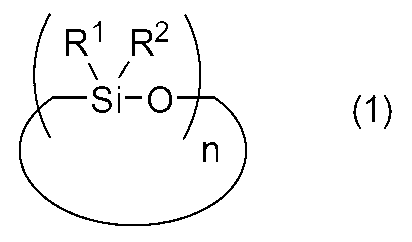
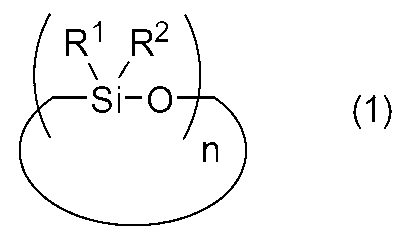
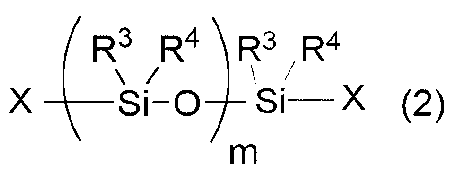
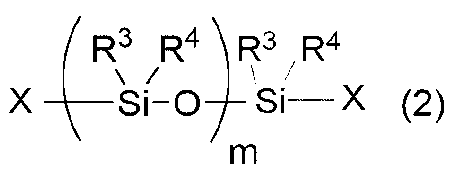
- a siloxane compound which is a silsesquioxane compound represented by the following formula (3), B) a carbonate compound containing at least one of a diaryl carbonate, a dialkyl carbonate, and a monoalkyl monoaryl carbonate, and C) It has a D) siloxane decomposition step of heating a mixture containing a basic compound catalyst to alkoxylate and / or aryloxylate the siloxane compound of A).
- a method for producing a silane compound which comprises at least one of a diaryloxysilane compound, a dialkoxysilane compound, a monoaryloxymonoalkoxysilane compound, a triaryloxysilane compound, and a trialkoxysilane compound.
- R 1 and R 2 each independently represent an alkyl group, an alkenyl group, or an aryl group which may have a substituent.
- n represents an integer of 3 or more and 30 or less.
- R 3 and R 4 each independently represent an alkyl group, an alkenyl group, or an aryl group which may have a substituent.
- m represents an integer of 2 or more and 10000 or less.
- Each of X may independently have a hydrogen atom, a hydroxyl group, a substituent, an alkoxy group having a total carbon number of 1 to 10, a substituent, and may have an oxygen atom or a nitrogen atom. It represents a hydrocarbon group having a good total carbon number of 1 to 10 or an amino group which may have a substituent.
- R 5 represents an alkyl group having 1 to 4 carbon atoms, an alkenyl group having 2 to 4 carbon atoms, or an aryl group having 6 to 12 carbon atoms, which may have a substituent.
- p is a number of 4 or more and 24 or less.
- a method for producing a silane compound which comprises at least one of a diaryloxysilane compound, a dialkoxysilane compound, and a monoaryloxymonoalkoxysilane compound.
- R 1 and R 2 each independently represent an alkyl group, an alkenyl group, or an aryl group which may have a substituent.
- n represents an integer of 3 or more and 30 or less.
- R 3 and R 4 each independently represent an alkyl group, an alkenyl group, or an aryl group which may have a substituent.
- m represents an integer of 2 or more and 10000 or less.
- Each of X may independently have a hydrogen atom, a hydroxyl group, a substituent, an alkoxy group having a total carbon number of 1 to 10, a substituent, and may have an oxygen atom or a nitrogen atom.
- the R 1 to R 4 each independently represent an alkyl group having a total carbon number of 1 to 8 which may have a substituent, an alkenyl group, or an aryl group having a total carbon number of 6 to 30.
- R 1 to R 4 are each independently selected from the group consisting of a methyl group, a phenyl group, a vinyl group, and a propyl group. Manufacturing method.
- the ratio x of the molar amount of the B) carbonate compound to the Si molar amount of the A) siloxane compound is x ⁇ 1.
- the ratio x of the molar amount of the B) carbonate compound to the Si molar amount of the A) siloxane compound is 0.8 ⁇ x ⁇ 1.6.
- the ratio y of the molar amount of the C) basic compound catalyst to the Si molar amount of the A) siloxane compound is 0.0001 mmol / mol ⁇ y ⁇ 20 mmol / mol.
- a corrosive substance such as an acid is not produced as a by-product, and the number of required steps can be suppressed to efficiently produce a silane compound. Therefore, according to the present invention, it is possible to provide a method for efficiently producing a target silane compound while reducing the environmental load.
- the method for producing a silane compound in the present invention is A) Cyclic siloxane compounds, linear siloxane compounds, and / or silsesquioxane compounds, the details of which will be described later.
- At least one of a diaryloxysilane compound, a dialkoxysilane compound, a monoaryloxymonoalkoxysilane compound, and a triaryloxysilane compound and a trialkoxysilane compound is produced. ..
- the method for producing the silane compound according to the present invention will be described in detail.
- R 1 and R 2 each independently represent an alkyl group, an alkenyl group, or an aryl group which may have a substituent.
- R 1 and R 2 in the formula (1) may be an alkyl group having a total carbon number of 1 to 8 and an alkenyl group, or an aryl group having a total carbon number of 6 to 30, respectively, which may have a substituent. preferable.
- R 1 and R 2 are an alkyl group which may have a substituent or an alkenyl group which may have a substituent
- the total carbon number is preferably 1 to 6, and the total carbon number is preferably 1. Is more preferably 1 to 4, and the total number of carbon atoms is particularly preferably 1 or 2.
- R 1 and R 2 are aryl groups that may have a substituent
- the total number of carbon atoms is preferably 6 to 20, and more preferably 6 to 12 carbon atoms. It is particularly preferable that the total number of carbon atoms is 6 to 8.
- R 1 and R 2 in the formula (1) include a methyl group, a phenyl group, a vinyl group, and a propyl group.
- n represents an integer of 3 or more and 30 or less.
- the value of n in the formula (1) is preferably 3 or more and 15 or less, more preferably 3 or more and 10 or less, still more preferably 3 or more and 8 or less, and particularly preferably 3 or more and 5 or less.
- the cyclic siloxane compound represented by the formula (1) may be a mixture of compounds having different n values, a mixture of compounds having different molecular structures, or a mixture of compounds having different n values and molecular structures.
- the molecular weight of the cyclic siloxane compound represented by the formula (1) is preferably 2,000 or less, more preferably 1,600 or less, further preferably 1,200 or less, and 1,000. The following is particularly preferable.
- the molecular weight of the cyclic siloxane compound represented by the formula (1) is, for example, 100 or more, preferably 150 or more, and more preferably 200 or more.
- the linear siloxane compound is represented by the following formula (2).
- R 3 and R 4 each independently represent an alkyl group, an alkenyl group, or an aryl group which may have a substituent.
- R 3 and R 4 in the formula (2) may be an alkyl group having a total carbon number of 1 to 8 and an alkenyl group, or an aryl group having a total carbon number of 6 to 30, respectively, which may have a substituent. preferable.
- R 3 and R 4 are an alkyl group which may have a substituent or an alkenyl group which may have a substituent
- the total carbon number is preferably 1 to 6, and the total carbon number is preferably 1. Is more preferably 1 to 4, and the total number of carbon atoms is particularly preferably 1 or 2.
- R 3 and R 4 are aryl groups that may have a substituent
- the total number of carbon atoms is preferably 6 to 20, and more preferably 6 to 12 carbon atoms. It is particularly preferable that the total number of carbon atoms is 6 to 8.
- R 3 and R 4 in the formula (2) include a methyl group, a phenyl group, a vinyl group, and a propyl group.
- m represents an integer of 2 or more and 10,000 or less.
- the value of m in the formula (2) is preferably 10 or more and 7,000 or less, more preferably 20 or more and 2,000 or less, still more preferably 30 or more and 1,000 or less, and particularly preferably. Is 40 or more and 800 or less.
- the linear siloxane compound represented by the formula (2) may be a mixture having a different m value, a mixture having a different molecular structure, or a mixture having a different m value and a molecular structure. ..
- X may independently have a hydrogen atom, a hydroxyl group, a substituent, an alkoxy group having a total carbon number of 1 to 10, and a substituent, and may have an oxygen atom or a nitrogen atom.
- X may independently have a hydrogen atom, a hydroxyl group, and an alkoxy group having a total carbon number of 1 to 10 and a substituent, and may have an oxygen atom or a nitrogen atom.
- alkyl group having a total carbon number of 1 to 10 which may be present, more preferably an alkyl group having a total carbon number of 1 to 10 which may have a hydroxyl group or a substituent, and further preferably.
- substituent of X include a hydroxyl group, a halogen, an amino group, a vinyl group, a carboxyl group, a cyano group, a (meth) acrylic oxy group, a glycidyl oxy group, a mercapto group and the like.
- the molecular weight of the linear siloxane compound represented by the formula (2) is preferably 60,000 or less, more preferably 56,000 or less, further preferably 50,000 or less, 45, It is particularly preferably 000 or less.
- the molecular weight of the linear siloxane compound represented by the formula (2) is, for example, 1,000 or more, preferably 2,000 or more, and more preferably 3,000 or more.
- silsesquioxane compound Among the siloxane compounds used in the siloxane decomposition step, the silsesquioxane compound is a siloxane-based compound having a siloxane bond (Si—O—Si bond) as the main chain skeleton. , It is represented by the following formula (3). [R 5 SiO 1.5 ] p (or formula [R 5 SiO 3/2 ] p) (3)
- silsesquioxane of the formula (3) for example, a ladder type, a net type, a basket type, a random type and the like are used. Of these, cage-type silsesquioxane is preferable in terms of solubility in carbonate compounds.
- a basket-type silsesquioxane represented by the following formula (3') can be mentioned (R in the formula (3') is a substituent similar to R 5 below).
- R 5 is an alkyl group which may having 1 to 4 carbon atoms have a substituent, an alkenyl group having 2 to 4 carbon atoms, or an aryl group having 6 to 12 carbon atoms.
- R 5 in the formula (3) is an alkyl group having a total carbon number of 1 or 2 which may have a substituent, an alkenyl group having a total carbon number of 2 or 3 which may have a substituent, or a total. It is preferably an aryl group having 6 to 10 carbon atoms. Further, when R 5 is an aryl group which may have a substituent, the total number of carbon atoms is more preferably 6 to 8. Examples of the above-mentioned substituent include a hydroxyl group, a halogen, an amino group, a vinyl group, a carboxyl group, a cyano group, a (meth) acrylicoxy group, a glycidyloxy group, a mercapto group and the like. Specific preferred examples of R 5 in the formula (3), a methyl group, a phenyl group, a vinyl group, and, a propyl group.
- p represents an integer of 4 or more and 24 or less.
- the value of p in the formula (3) is preferably 5 or more and 20 or less, and more preferably 6 or more and 18 or less. More preferably, the value of p is 8-14, especially 8, 10, 12 or 14.
- the silsesquioxane of the formula (3) preferably has the above-mentioned p value and is of a basket type. Further, the silsesquioxane compound represented by the formula (3) may be a mixture having a different p value, a mixture having a different molecular structure, or a mixture having a different p value and a molecular structure. ..
- silsesquioxane compound of formula (3) preferably having a p value of 8 to 14, the silsesquioxane compound of the formula (3) having a typical substituent.
- a preferred range of molecular weight is defined. That is, the molecular weight of the silsesquioxane compound represented by the formula (3) is preferably 3,500 or less, more preferably 3,100 or less, and further preferably 1,900 or less. , 1,600 or less, and particularly preferably 1,300 or less.
- the molecular weight of the silsesquioxane compound of the formula (3) represented by the formula (3) is, for example, 100 or more, preferably 150 or more, more preferably 200 or more, still more preferably 250. That is all.
- cyclic siloxane compound of the above formula (1) Only one of the cyclic siloxane compound of the above formula (1), the linear siloxane compound represented by the formula (2), and the silsesquioxane compound of the formula (3) is used.
- any one of a cyclic siloxane compound, a linear siloxane compound, and a silsesquioxane compound may be used as a mixture.
- These siloxane compounds can be synthesized by a known method, and commercially available ones may be used.
- the cyclic siloxane compound of the formula (1) and the linear siloxane compound represented by the formula (2) are any silane compound of a diaryloxysilane compound, a dialkoxysilane compound, or a monoaryloxymonoalkoxysilane compound. It is suitably used for production.
- the silsesquioxane compound of the formula (3) is suitably used for producing at least one silane compound of a triaryloxysilane compound and
- the carbonate compound used in the siloxane decomposition step at least one of diaryl carbonate, dialkyl carbonate, and monoalkyl monoaryl carbonate is used.
- the diaryl carbonate and the monoalkyl monoaryl carbonate preferably have an aryl group having a total carbon number of 6 to 30, and the total carbon number of the aryl group is preferably 6 to 20, and the total carbon number is 6 to 20. It is more preferably 12, and it is particularly preferable that the total number of carbon atoms is 6 to 8.
- a phenyl group is mentioned as a preferable specific example of the above-mentioned aryl group, and when diaryl carbonate is used as a carbonate compound, it is preferable to contain at least diphenyl carbonate.
- dialkyl carbonate as the carbonate compound and the monoalkyl monoaryl carbonate preferably have an alkyl group having a total carbon number of 1 to 8, and more preferably the total carbon number of the alkyl group is 1 to 6. It is more preferable that the total number of carbon atoms is 1 to 4, that is, the alkyl group is 4 or less.
- the above-mentioned carbonate compound can be synthesized by a known method, and a commercially available compound may be used.
- Examples of the basic compound catalyst used in the siloxane decomposition step include alkali metal compounds and alkaline earth metal compounds, and examples of such compounds include alkali metals and organic acid salts such as alkaline earth metal compounds. Inorganic salts, oxides, hydroxides, hydrides or alkoxides, quaternary ammonium hydroxides and salts thereof, amines and the like are used, and these compounds can be used alone or in combination of two or more. ..
- the basic compound catalyst more preferably contains an alkali metal carbonate or an alkali metal hydroxide in order to improve the efficiency of the reaction in the siloxane decomposition step.
- the basic compound catalyst include cesium carbonate, potassium carbonate, sodium carbonate, sodium hydrogen carbonate, cesium hydroxide, potassium hydroxide, sodium hydroxide and the like.
- the above-mentioned basic compound catalyst can be prepared by a known method, or a commercially available catalyst may be used. Further, the basic compound catalyst may be added to the reaction system as an aqueous solution, or may be added to the reaction system as a powder.
- siloxane decomposition step In the siloxane decomposition step, a mixture containing the cyclic siloxane compound of A) and / or the linear siloxane compound of B) and the carbonate compound of B) is heated in the presence of the basic compound catalyst of C). Then, the siloxane compound of A) above is alkoxylated and / or aryloxylated to decompose the siloxane. As described above, the siloxane decomposition reaction of the siloxane compound of A) produces a silane compound in which an aryl group and / or an alkyl group of the carbonate compound of B) is introduced.
- the silane compound produced when diaryl carbonate is used as the carbonate compound of B) above, the silane compound produced is a diaryloxysilane compound, and when dialkyl carbonate is used as the carbonate compound of B) above, the silane produced is The compound is a dialkoxysilane compound, and when a monoalkyl monoaryl carbonate is used as the carbonate compound of B) above, the silane compound produced is a monoaryloxymonoalkoxysilane compound.
- the siloxane decomposition reaction when diphenyl carbonate is used as the carbonate compound of B) and decamethylcyclopentasiloxane is used as the cyclic siloxane compound of A) is represented by the following formula (4) and is mainly produced.
- dimethyldiphenoxysilane hereinafter, also referred to as DMDPS
- the formula (4) schematically shows the siloxane decomposition reaction, and a small amount of by-products that can be produced are omitted, and each compound of diphenyl carbonate, decamethylcyclopentasiloxane, and dimethyldiphenoxysilane The molar ratio between them has not been adjusted.
- the decomposition of the siloxane compound means that the molar amount of the carbonate compound of B) used is equal to or greater than the Si molar amount of the siloxane compound of A), that is, the molar amount of the silicon atom in the siloxane compound.
- Preferred for promoting the reaction That is, A) the ratio of the molar amount of the carbonate compound to the Si molar amount of the siloxane compound x (that is, the value of the Si molar amount of the A) siloxane compound / the molar amount of the B) carbonate compound) is x ⁇ 1. It is preferable to satisfy the relationship.
- the molar amount of the carbonate compound may be 1.1 times or more (x ⁇ 1.1), for example, about 1.5 times the Si molar amount of the siloxane compound.
- the ratio x is preferably 0.8 ⁇ x ⁇ 2.0, more preferably 0.8 ⁇ x ⁇ 1.8. It is more preferably 0.8 ⁇ x ⁇ 1.6, and particularly preferably 0.9 ⁇ x ⁇ 1.5. In this case, it is possible to suppress the remaining amount of the siloxane compound, which is the raw material, remaining unreacted.
- the value of the ratio x can be adjusted depending on the type of the siloxane compound as the raw material.
- the ideal ratio of the molar amount of the carbonate compound to the Si molar amount of the siloxane compound is 1. Since it is 1, the value of the ratio x may be about 0.8 ⁇ x ⁇ 1.2, and preferably about 0.9 ⁇ x ⁇ 1.1.
- the ideal ratio of the molar amount of the carbonate compound and the Si molar amount of the siloxane compound is 1: 1.5, so the above ratio x
- the value of may be about 1.0 ⁇ x ⁇ 1.8, preferably about 1.3 ⁇ x ⁇ 1.7.
- the ratio of the basic compound catalyst of C) to the Si molar amount of the siloxane compound of A) y (that is, the molar amount of the basic compound catalyst of C) / the Si molar amount of the siloxane compound The value) shall be 0.0001 mmol / mol ⁇ y ⁇ 20 mmol / mol (the value of y is 0.0001 mmol / mol or more and 20 mmol / mol or less) from the viewpoint of improving the efficiency of the decomposition reaction and suppressing the excessive use of the catalyst.
- the temperature of the siloxane decomposition reaction in the siloxane decomposition step is preferably 50 ° C. or higher and 300 ° C. or lower, preferably 50 ° C. or higher and 150 ° C. or higher, from the viewpoint of efficiency and yield of the decomposition reaction. It may be below ° C.
- the temperature in the siloxane decomposition step is more preferably 70 ° C. or higher and 250 ° C. or lower, further preferably 80 ° C. or higher and 240 ° C. or lower, and particularly preferably 90 ° C. or higher and 220 ° C. or lower.
- the siloxane decomposition reaction in the siloxane decomposition step can proceed at normal pressure, and there is no need to adjust the pressure by pressurizing or reducing the pressure.
- the pressure in the distillation step is preferably 1 hPa or more and 20 hPa or less, more preferably 2 hPa or more and 10 hPa or less, and further preferably 3 hPa or more and 5 hPa or less for efficient distillation.
- the temperature in the distillation step is preferably 50 ° C. or higher and 300 ° C. or lower, more preferably 70 ° C. or higher and 250 ° C. or lower, and further preferably 100 ° C. or higher and 200 ° C. or lower for efficient distillation. It is particularly preferable that the temperature is 120 ° C. or higher and 180 ° C. or lower.
- a recrystallization solvent selected according to the properties of the produced silane compound, particularly the solubility, etc. is used.
- the recrystallization solvent heptane, octane, and toluene are used from the viewpoint of solubility in the product. , Benzene, cyclohexane, hexane and the like are preferable. Further, it is preferable to dissolve the silane compound in a solvent at a temperature of 50 ° C. or higher and 120 ° C. or lower, and cool the solution at 0.5 ° C./min or higher and 1 ° C./min or lower.
- [F) Dropping step] In the method for producing a silane compound, it is preferable that a raw material other than A) the siloxane compound and the catalyst are mixed in advance, and the A) siloxane compound is added dropwise to the obtained mixture, mainly the mixed solution.
- the F) dropping step of gradually dropping the A) siloxane compound to the mixture containing at least the B) carbonate compound and the C) basic compound catalyst the safety of the method for producing the silane compound is provided. You can improve your sex.
- the dropping rate of the A) siloxane compound in the dropping step is generally 0.1 ml / min to 10 l (liter) / min, and 1.0 ml / min to 7.0 l / min, although it is adjusted by the reaction scale. It is preferably minutes, more preferably 10 ml / min to 5.0 l / min, and particularly preferably 100 ml / min to 1.0 l / min. Further, the dropping rate of the A) siloxane compound may be, for example, about 1 to 100 ml / min.
- the siloxane compound when about 250 g of diphenyl carbonate is used, it is preferable that about 0.23 mol of a siloxane compound is added at a dropping rate of about 1 ml / min and the total dropping time is about 90 minutes.
- the optimum dropping rate in the dropping step varies depending on the reaction scale, but the preferable total time for dropping does not change so much, and is preferably about 30 minutes to 3 hours, more preferably about 1 to 2 hours. For example, it takes about 90 minutes.
- the siloxane compound may be dissolved in an appropriate solvent to facilitate the adjustment of the dropping rate.
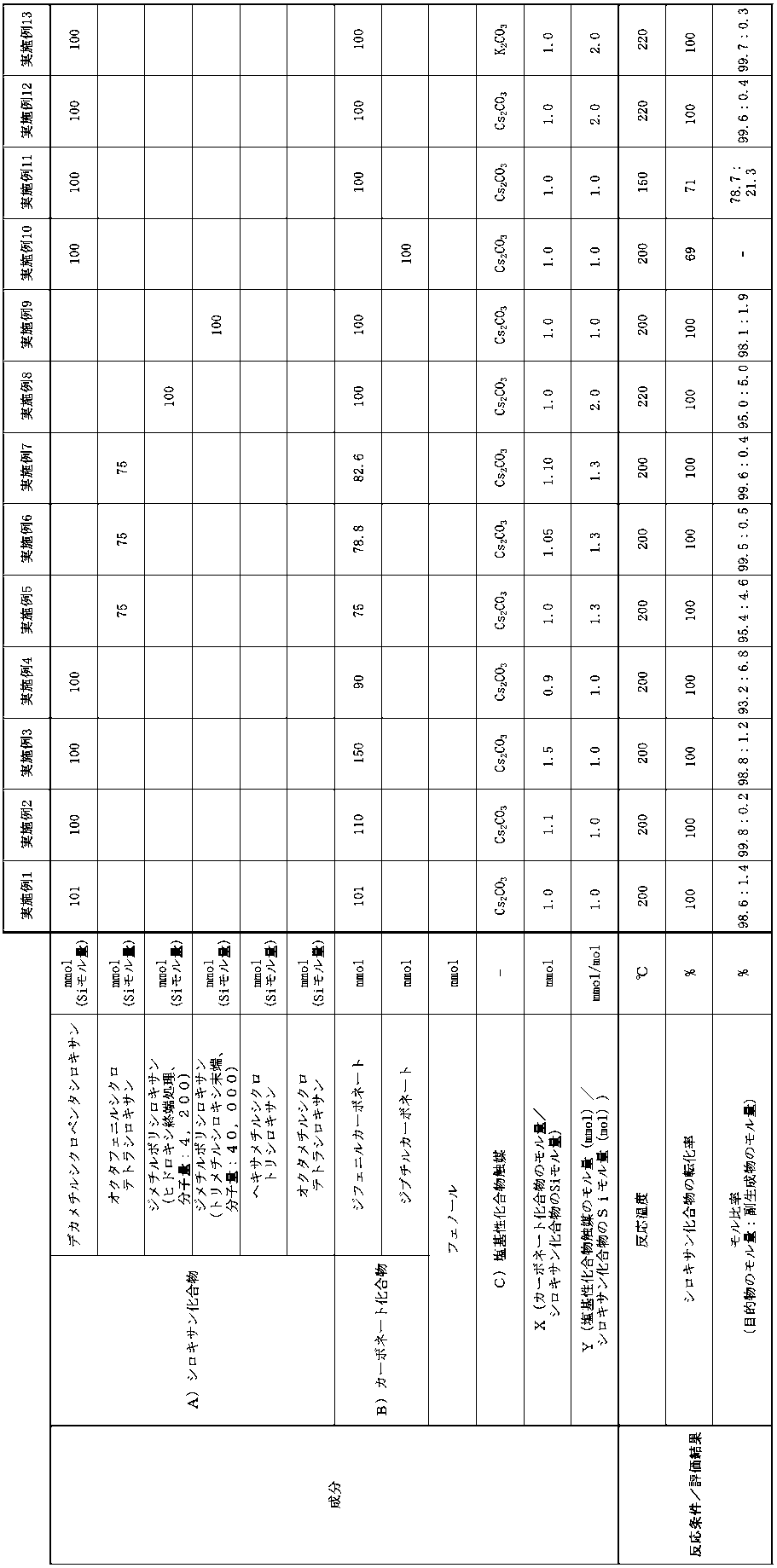
- Example 1 7.5 g (20.2 mmol, Si molar amount: 101.0 mmol) of decamethylcyclopentasiloxane, 21.6 g (101.0 mmol) of diphenyl carbonate, and 33 mg (0.1 mmol) of cesium carbonate as a catalyst in a nitrogen atmosphere. Substituted below and stirred at 200 ° C. for 60 minutes. As a result of 1 H-NMR analysis of the reaction mixture, no peak of the proton of the methyl group on silicon based on decamethylcyclopentasiloxane was observed, and it was confirmed that the conversion rate of decamethylcyclopentasiloxane was 100%. It was. Subsequently, the reaction mixture was cooled to 40 ° C. and then distilled under reduced pressure at a reduced pressure of 4 hPa and 150 ° C. to obtain 23.7 g of a colorless oily component.
- the yield of the molar amount of dimethyldiphenoxysilane determined from the weight of the obtained oily component and the above molar ratio was 96.0% with respect to the molar amount of silicon atoms contained in decamethylcyclopentasiloxane.
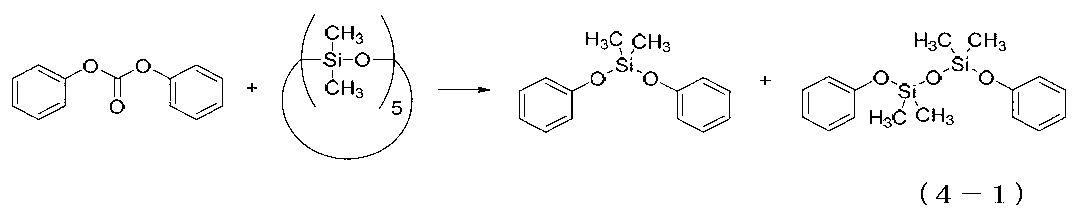
- the siloxane decomposition reaction in this example is represented by the following formula (4-1), and in addition to DMDPS, which is the main product, 1,1,3,3-tetramethyl-1,3 as a by-product. -Diphenoxydisiloxane was obtained.
- Example 2 7.4 g (20.0 mmol, Si molar amount: 100.0 mmol) of decamethylcyclopentasiloxane, 23.6 g (110.0 mmol) of diphenyl carbonate, and 33 mg (0.1 mmol) of cesium carbonate as a catalyst in a nitrogen atmosphere. Substituted below and stirred at 200 ° C. for 60 minutes. As a result of 1 H-NMR analysis of the reaction mixture, no peak of the proton of the methyl group on silicon based on decamethylcyclopentasiloxane was observed, and it was confirmed that the conversion rate of decamethylcyclopentasiloxane was 100%. It was. Subsequently, the reaction mixture was cooled to 40 ° C. and then distilled under reduced pressure at a reduced pressure of 4 hPa and 150 ° C. to obtain 25.1 g of a colorless oily component.
- the weight of diphenyl carbonate calculated from the peak area derived from the mixed diphenyl carbonate was subtracted from the weight of the obtained oil component, and the yield of the molar amount of dimethyldiphenoxysilane obtained from the above molar ratio was calculated as decamethylcyclopentasiloxane. It was 97.7% based on the molar amount of silicon atoms contained.
- Example 3 7.4 g (20.0 mmol, Si molar amount: 100.0 mmol) of decamethylcyclopentasiloxane, 32.1 g (150.0 mmol) of diphenyl carbonate, and 33 mg (0.1 mmol) of cesium carbonate as a catalyst in a nitrogen atmosphere. Substituted below and stirred at 200 ° C. for 60 minutes. As a result of 1 H-NMR analysis of the reaction mixture, no peak of the proton of the methyl group on silicon based on decamethylcyclopentasiloxane was observed, and it was confirmed that the conversion rate of decamethylcyclopentasiloxane was 100%. It was.
- Example 4 7.4 g (20.0 mmol, Si molar amount: 100.0 mmol) of decamethylcyclopentasiloxane, 19.3 g (90.0 mmol) of diphenyl carbonate, and 33 mg (0.1 mmol) of cesium carbonate as a catalyst in a nitrogen atmosphere. Substituted below and stirred at 200 ° C. for 60 minutes. As a result of 1 H-NMR analysis of the reaction mixture, no peak of the proton of the methyl group on silicon based on decamethylcyclopentasiloxane was observed, and the conversion rate of decamethylcyclopentasiloxane was 100%.
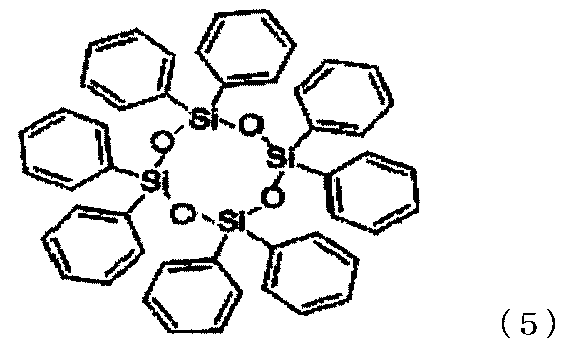
- Octaphenylcyclotetrasiloxane (melting point: 197 ° C., molecular weight: 793.17) represented by the following formula (5), 14.9 g (18.8 mmol, Si molar amount: 75.0 mmol), diphenyl carbonate 16.1 g (75). .0 mmol) and 33 mg (0.1 mmol) of cesium carbonate as a catalyst were replaced under a nitrogen atmosphere, and the mixture was stirred at 200 ° C. for 10 minutes.
- the yield of the molar amount of diphenyldiphenoxysilane determined from the weight of the obtained white powder and the above molar ratio was 81.1% with respect to the molar amount of silicon atoms contained in octaphenylcyclotetrasiloxane.
- Example 6 14.9 g (18.8 mmol, Si molar amount: 75.0 mmol) of octaphenylcyclotetrasiloxane, 16.9 g (78.8 mmol) of diphenyl carbonate, and 33 mg (0.1 mmol) of cesium carbonate as a catalyst in a nitrogen atmosphere. Substituted below and stirred at 200 ° C. for 10 minutes. As a result of 1 H-NMR analysis of the reaction mixture, no peak of protons based on the para position of octaphenylcyclotetrasiloxane was observed, and it was confirmed that the conversion rate of octaphenylcyclotetrasiloxane was 100%.
- Example 7 14.9 g (18.8 mmol, Si molar amount: 75.0 mmol) of octaphenylcyclotetrasiloxane, 17.7 g (82.6 mmol) of diphenyl carbonate, and 33 mg (0.1 mmol) of cesium carbonate as a catalyst in a nitrogen atmosphere. Substituted below and stirred at 200 ° C. for 60 minutes. As a result of 1 H-NMR analysis of the reaction mixture, no peak of protons based on the para position of octaphenylcyclotetrasiloxane was observed, and it was confirmed that the conversion rate of octaphenylcyclotetrasiloxane was 100%.
- Example 8 7.4 g (1.8 mmol, Si molar amount: 100.0 mmol) of dimethylpolysiloxane (hydroxy-terminated, molecular weight: 4,200) represented by the following formula (6), 21.4 g (100.0 mmol) of diphenyl carbonate. ) And 65 mg (0.2 mmol) of cesium carbonate as a catalyst were replaced under a nitrogen atmosphere, and the mixture was stirred at 220 ° C. for 30 minutes.
- Example 9 7.4 g (0.19 mmol, Si molar amount: 100.0 mmol) of dimethylpolysiloxane (manufactured by Shin-Etsu Chemical Co., Ltd., KF-96-3000 cs, trimethylsiloxy terminal, molecular weight: 40,000) represented by the following formula (7).
- 21.4 g (100.0 mmol) of diphenyl carbonate and 33 mg (0.1 mmol) of cesium carbonate as a catalyst were replaced under a nitrogen atmosphere, and the mixture was stirred at 200 ° C. for 60 minutes.
- Example 10 7.4 g (20.0 mmol, Si molar amount: 100.0 mmol) of decamethylcyclopentasiloxane, 17.4 g (100.0 mmol) of dibutyl carbonate, and 33 mg (0.1 mmol) of cesium carbonate as a catalyst in a nitrogen atmosphere. Substituted below and stirred at 200 ° C. for 60 minutes. As a result of 1 H-NMR analysis of the reaction mixture, a peak of 0.055 ppm of a proton based on decamethylcyclopentasiloxane and a peak of 0.070 ppm based on dimethyldibutoxysilane were observed as the peak of the proton of the methyl group on silicon. It was. The conversion rate of decamethylcyclopentasiloxane calculated from the ratio of both peak areas was 69%.
- Example 11 7.4 g (20.0 mmol, Si molar amount: 100.0 mmol) of decamethylcyclopentasiloxane, 21.4 g (100.0 mmol) of diphenyl carbonate, and 33 mg (0.1 mmol) of cesium carbonate as a catalyst in a nitrogen atmosphere. Substituted below and stirred at 150 ° C. for 60 minutes. As a result of 1 H-NMR analysis of the reaction mixture, the peak of the proton of the methyl group on silicon was 0.055 ppm, the peak of the proton based on decamethylcyclopentasiloxane, and the peak of the proton based on dimethyldiphenoxysilane was 0.378 ppm. Was observed.
- the conversion rate of decamethylcyclopentasiloxane calculated from the ratio of both peak areas was 71%.
- a peak of the proton of the methyl group on silicon a peak of 0.378 ppm based on dimethyldiphenoxysilane and a peak of 0.222 ppm based on 1,1,3,3-tetramethyl-1,3-diphenoxydisiloxane were observed.
- the molar ratio of dimethyldiphenoxysilane and 1,1,3,3-tetramethyl-1,3-diphenoxydisiloxane was calculated from both peak area ratios and was 78.7: 21.3.
- Example 12 7.4 g (20.0 mmol, Si molar amount: 100.0 mmol) of decamethylcyclopentasiloxane, 21.4 g (100.0 mmol) of diphenyl carbonate, and 65 mg (0.2 mmol) of cesium carbonate as a catalyst in a nitrogen atmosphere. Substituted below and stirred at 220 ° C. for 30 minutes. As a result of 1 H-NMR analysis of the reaction mixture, no peak of the proton of the methyl group on silicon based on decamethylcyclopentasiloxane was observed, and it was confirmed that the conversion rate of decamethylcyclopentasiloxane was 100%. It was.
- Example 13 7.4 g (20.0 mmol, Si molar amount: 100.0 mmol) of decamethylcyclopentasiloxane, 21.4 g (100.0 mmol) of diphenyl carbonate, and 28 mg (0.2 mmol) of potassium carbonate as a catalyst in a nitrogen atmosphere. Substituted below and stirred at 220 ° C. for 30 minutes. As a result of 1 H-NMR analysis of the reaction mixture, no peak of the proton of the methyl group on silicon based on decamethylcyclopentasiloxane was observed, and the conversion rate of decamethylcyclopentasiloxane was 100%.
- Example 14 7.4 g (20.0 mmol, Si molar amount: 100.0 mmol) of decamethylcyclopentasiloxane, 21.4 g (100.0 mmol) of diphenyl carbonate, and 21 mg (0.2 mmol) of sodium carbonate as a catalyst in a nitrogen atmosphere. Substituted below and stirred at 220 ° C. for 30 minutes. As a result of 1 H-NMR analysis of the reaction mixture, the peak of the proton of the methyl group on silicon was 0.055 ppm, the peak of the proton based on decamethylcyclopentasiloxane, and the peak of the proton based on dimethyldiphenoxysilane was 0.378 ppm. Was observed.
- the conversion rate of decamethylcyclopentasiloxane calculated from the ratio of both peak areas was 89%.
- peaks of methyl group protons on silicon a peak of 0.378 ppm based on dimethyldiphenoxysilane and a peak of 0.222 ppm based on 1,1,3,3-tetramethyl-1,3-diphenoxydisiloxane were observed. It was.
- the molar ratio of dimethyldiphenoxysilane and 1,1,3,3-tetramethyl-1,3-diphenoxydisiloxane was calculated from both peak area ratios and was 94.3: 5.7.
- the conversion rate of decamethylcyclopentasiloxane calculated from the ratio of both peak areas was 87%.
- peaks of methyl group protons on silicon a peak of 0.378 ppm based on dimethyldiphenoxysilane and a peak of 0.222 ppm based on 1,1,3,3-tetramethyl-1,3-diphenoxydisiloxane were observed. It was.
- the molar ratio of dimethyldiphenoxysilane and 1,1,3,3-tetramethyl-1,3-diphenoxydisiloxane was calculated from the two peak area ratios and found to be 97.4: 2.6.
- Example 16 7.4 g (33.3 mmol, Si molar amount: 100.0 mmol) of hexamethylcyclotrisiloxane represented by the following formula (8), 21.4 g (100.0 mmol) of diphenyl carbonate, and 65 mg of cesium carbonate as a catalyst. (0.2 mmol) was replaced with a nitrogen atmosphere and stirred at 220 ° C. for 30 minutes.
- Example 17 7.4 g (25.0 mmol, Si molar amount: 100.0 mmol) of octamethylcyclotetrasiloxane represented by the following formula (9), 21.4 g (100.0 mmol) of diphenyl carbonate, and 65 mg of cesium carbonate as a catalyst. (0.2 mmol) was replaced with a nitrogen atmosphere and stirred at 220 ° C. for 30 minutes.
- Example 18 7.4 g (20.0 mmol, Si molar amount: 100.0 mmol) of decamethylcyclopentasiloxane, 21.4 g (100.0 mmol) of diphenyl carbonate, and 75 mg (0.5 mmol) of cesium hydroxide as a catalyst, nitrogen. The mixture was replaced under an atmosphere and stirred at 200 ° C. for 60 minutes. As a result of 1 H-NMR analysis of the reaction mixture, no peak of the proton of the methyl group on silicon based on decamethylcyclopentasiloxane was observed, and the conversion rate of decamethylcyclopentasiloxane was 100%.
- Example 19 7.4 g (20.0 mmol, Si molar amount: 100.0 mmol) of decamethylcyclopentasiloxane, 21.4 g (100.0 mmol) of diphenyl carbonate, and 11 mg (0.2 mmol) of potassium hydroxide as a catalyst were added to nitrogen. The mixture was replaced under an atmosphere and stirred at 200 ° C. for 60 minutes. As a result of 1 H-NMR analysis of the reaction mixture, no peak of the proton of the methyl group on silicon based on decamethylcyclopentasiloxane was observed, and the conversion rate of decamethylcyclopentasiloxane was 100%.
- Example 20 7.4 g (20.0 mmol, Si molar amount: 100.0 mmol) of decamethylcyclopentasiloxane, 21.4 g (100.0 mmol) of diphenyl carbonate, and 12 mg (0.3 mmol) of sodium hydroxide as a catalyst, nitrogen.
- the mixture was replaced under an atmosphere and stirred at 200 ° C. for 60 minutes.
- the peaks of methyl group protons on silicon were 0.055 ppm, which is a proton peak based on decamethylcyclopentasiloxane, and 0.378 ppm, which is a proton peak based on dimethyldiphenoxysilane.
- 0.055 ppm which is a proton peak based on decamethylcyclopentasiloxane
- 0.378 ppm which is a proton peak based on dimethyldiphenoxysilane.
- the conversion rate of decamethylcyclopentasiloxane calculated from the ratio of both peak areas was 66%.
- a peak of the proton of the methyl group on silicon a peak of 0.378 ppm based on dimethyldiphenoxysilane and a peak of 0.222 ppm based on 1,1,3,3-tetramethyl-1,3-diphenoxydisiloxane were observed.
- the molar ratio of dimethyldiphenoxysilane and 1,1,3,3-tetramethyl-1,3-diphenoxydisiloxane was calculated from both peak area ratios and was 94.4: 5.6.
- Example 21 7.4 g (20.0 mmol, Si molar amount: 100.0 mmol) of decamethylcyclopentasiloxane, 21.4 g (100.0 mmol) of diphenyl carbonate, and 33 mg (0.1 mmol) of cesium carbonate as a catalyst in a nitrogen atmosphere. Substituted below and stirred at 120 ° C. for 60 minutes. As a result of 1 H-NMR analysis of the reaction mixture, the peak of the proton of the methyl group on silicon was 0.055 ppm, the peak of the proton based on decamethylcyclopentasiloxane, and the peak of the proton based on dimethyldiphenoxysilane was 0.378 ppm. Was observed.
- the conversion rate of decamethylcyclopentasiloxane calculated from the ratio of both peak areas was 67%.
- a peak of the proton of the methyl group on silicon a peak of 0.378 ppm based on dimethyldiphenoxysilane and a peak of 0.222 ppm based on 1,1,3,3-tetramethyl-1,3-diphenoxydisiloxane were observed.
- the molar ratio of dimethyldiphenoxysilane and 1,1,3,3-tetramethyl-1,3-diphenoxydisiloxane was calculated from both peak area ratios and was 82.0: 18.0.
- Example 22 7.4 g (20.0 mmol, Si molar amount: 100.0 mmol) of decamethylcyclopentasiloxane, 21.4 g (100.0 mmol) of diphenyl carbonate, and 33 mg (0.1 mmol) of cesium carbonate as a catalyst in a nitrogen atmosphere. Substituted below and stirred at 90 ° C. for 60 minutes. As a result of 1 H-NMR analysis of the reaction mixture, the peak of the proton of the methyl group on silicon was 0.055 ppm, the peak of the proton based on decamethylcyclopentasiloxane, and the peak of the proton based on dimethyldiphenoxysilane was 0.378 ppm. Was observed.
- the conversion rate of decamethylcyclopentasiloxane calculated from the ratio of both peak areas was 2%.
- a peak of the proton of the methyl group on silicon a peak of 0.378 ppm based on dimethyldiphenoxysilane and a peak of 0.222 ppm based on 1,1,3,3-tetramethyl-1,3-diphenoxydisiloxane were observed.
- the molar ratio of dimethyldiphenoxysilane and 1,1,3,3-tetramethyl-1,3-diphenoxydisiloxane was calculated from both peak area ratios and was 33.3: 66.7.
- the molar ratio of methyltriphenoxysilane and 1,3-dimethyl-1,1,3,3-tetraphenoxydisiloxane was calculated from the two peak area ratios and found to be 93.7: 6.3.
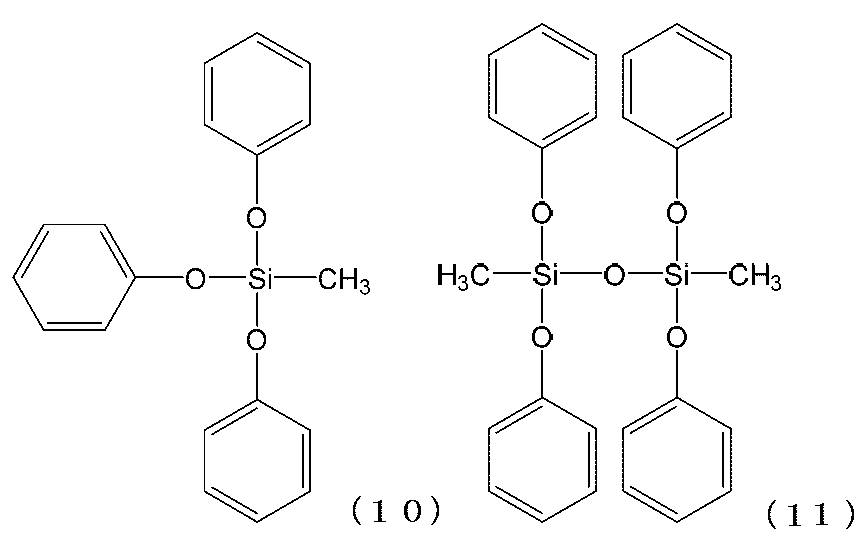
- the chemical formulas of the product, such as the triaryloxysilane compound, are shown below.
- the following formula (10) represents methyltriphenoxysilane
- the following formula (11) represents 1,3-dimethyl-1,1,3,3-tetraphenoxydisiloxane.
- the yield of the molar amount of phenyltriphenoxysilane determined from the weight of the obtained white powder and the above molar ratio was 76.8% with respect to the molar amount of silicon atoms contained in octaphenylcyclotetrasiloxane.
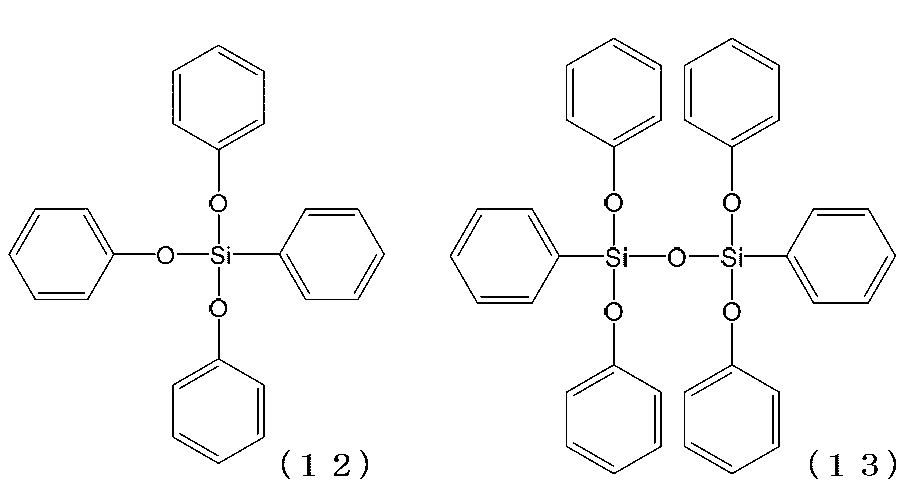
- the chemical formulas of the product, such as the triaryloxysilane compound, are shown below.
- the following formula (12) represents phenyltriphenoxysilane
- the following formula (13) represents 1,3-diphenyl-1,1,3,3-tetraphenoxydisiloxane.
- Example 25 A dropping funnel, a thermometer, and a cooling tube were attached to a 500 ml 4-diameter flask, and 246.35 g of diphenyl carbonate (1.15 mol) and 0.3748 g (1.15 mmol) of cesium carbonate as a catalyst were charged and 180 ° C. without stirring. Heated to. The diphenyl carbonate was dissolved at around 100 ° C. After reaching 180 ° C., 85.30 g (0.23 mol) of decamethylcyclopentasiloxane was added dropwise at a dropping rate of 1 ml / min over 90 minutes. Immediately after dropping decamethylcyclopentasiloxane, CO 2 gas was generated.
- the conversion rate of decamethylcyclopentasiloxane calculated from the ratio of both peak areas was 4%.
- a peak of the proton of the methyl group on silicon a peak of 0.378 ppm based on dimethyldiphenoxysilane and a peak of 0.222 ppm based on 1,1,3,3-tetramethyl-1,3-diphenoxydisiloxane were observed.
- the molar ratio of dimethyldiphenoxysilane and 1,1,3,3-tetramethyl-1,3-diphenoxydisiloxane was calculated from both peak area ratios and was 59.6: 40.4.
Landscapes
- Chemical & Material Sciences (AREA)
- Organic Chemistry (AREA)
- Chemical Kinetics & Catalysis (AREA)
- Silicon Polymers (AREA)
- Low-Molecular Organic Synthesis Reactions Using Catalysts (AREA)
Abstract
Description
さらに、廃液処理工程も必要となる特許文献1に記載の上記プロセスにおいては、環境負荷が大きい。
また、特許文献2にはポリジメチルシロキサンとフェノールからジメチルジフェノキシシランを得る製造方法が開示されているが、本反応においても溶媒が使用されており、かつ十分な収率が得られていない。
以上のように、従来の製法においては、シラン化合物を安全かつ効率的に製造することが必ずしも容易であるとはいえなかった。
B)ジアリールカーボネート、ジアルキルカーボネート、及び、モノアルキルモノアリールカーボネートの少なくともいずれかを含むカーボネート化合物、及び、
C)塩基性化合物触媒
を含有する混合物を加熱して、前記A)のシロキサン化合物をアルコキシ化及び/又はアリールオキシ化させるD)シロキサン分解工程を有する、
ジアリールオキシシラン化合物、ジアルコキシシラン化合物、モノアリールオキシモノアルコキシシラン化合物、トリアリールオキシシラン化合物、及び、トリアルコキシシラン化合物の少なくともいずれかを含む、シラン化合物の製造方法。
nは、3以上30以下の整数を表わす。)

mは、2以上10000以下の整数を表わし、
Xは、それぞれ独立に、水素原子、水酸基、置換基を有してもよい合計炭素数1~10のアルコキシ基、置換基を有してもよく、酸素原子又は窒素原子を有していてもよい合計炭素数1~10の炭化水素基、又は、置換基を有してもよいアミノ基を表わす。)
[R5SiO1.5]p (3)
(式中、R5は、置換基を有してもよい炭素数1~4のアルキル基、炭素数2~4のアルケニル基、又は、炭素数6~12のアリール基を表わし、
pは、4以上24以下の数である。)
[2]A)下記式(1)で表されるA-1)環状シロキサン化合物、及び/又は、下記式(2)で表されるA-2)直鎖状シロキサン化合物、
B)ジアリールカーボネート、ジアルキルカーボネート、及び、モノアルキルモノアリールカーボネートの少なくともいずれかを含むカーボネート化合物、及び、
C)塩基性化合物触媒
を含有する混合物を加熱して、前記A)のシロキサン化合物をアルコキシ化及び/又はアリールオキシ化させるD)シロキサン分解工程を有する、
ジアリールオキシシラン化合物、ジアルコキシシラン化合物、及び、モノアリールオキシモノアルコキシシラン化合物の少なくともいずれかを含む、シラン化合物の製造方法。
nは、3以上30以下の整数を表わす。)
mは、2以上10000以下の整数を表わし、
Xは、それぞれ独立に、水素原子、水酸基、置換基を有してもよい合計炭素数1~10のアルコキシ基、置換基を有してもよく、酸素原子又は窒素原子を有していてもよい合計炭素数1~10の炭化水素基、又は、置換基を有してもよいアミノ基を表わす。)
[3]前記R1~R4が、それぞれ独立に、置換基を有してもよい合計炭素数1~8のアルキル基、アルケニル基、又は、合計炭素数6~30のアリール基を表わす、上記[1]又は[2]に記載のシラン化合物の製造方法。
[4]前記R1~R4が、それぞれ独立に、メチル基、フェニル基、ビニル基、及び、プロピル基からなる群から選択されるいずれか一種である、上記[3]に記載のシラン化合物の製造方法。
[5]前記B)ジアリールカーボネートが、ジフェニルカーボネートを含む、上記[1]~[4]のいずれかに記載のシラン化合物の製造方法。
[6]前記B)ジアルキルカーボネートにおける、アルキル基の炭素数が4以下である、上記[1]~[4]のいずれか一項に記載のシラン化合物の製造方法。
[7]前記C)塩基性化合物触媒が、アルカリ金属炭酸塩、又は、アルカリ金属水酸化物を含む、上記[1]~[6]のいずれか一項に記載のシラン化合物の製造方法。
[8]前記C)塩基性化合物触媒が、炭酸セシウム及び炭酸カリウムの少なくともいずれかを含む、上記[7]に記載のシラン化合物の製造方法。
[9]前記D)シロキサン分解工程において、前記A)シロキサン化合物のSiモル量に対する前記B)カーボネート化合物のモル量の比xがx≧1である、上記[1]~[8]のいずれか一項に記載のシラン化合物の製造方法。
[10]前記D)シロキサン分解工程において、前記A)シロキサン化合物の前記Siモル量に対する前記B)カーボネート化合物のモル量の比xが、0.8<x<1.6である上記[1]~[8]のいずれか一項に記載のシラン化合物の製造方法。
[11]前記D)シロキサン分解工程において、前記A)シロキサン化合物の前記Siモル量に対する前記C)塩基性化合物触媒のモル量の比yが、0.0001mmol/mol≦y≦20mmol/molである、上記[1]~[10]のいずれか一項に記載のシラン化合物の製造方法。
[12]前記D)シロキサン分解工程において、前記シロキサン化合物を分解させる温度が50℃以上300℃以下である、上記[1]~[11]のいずれか一項に記載のシラン化合物の製造方法。
[13]前記D)シロキサン分解工程において、前記温度が50℃以上150℃以下である、上記[12]に記載のシラン化合物の製造方法。
[14]前記式(1)で表される前記A-1)環状シロキサン化合物の分子量が2,000以下であり、前記式(2)で表される前記A-2)直鎖状シロキサン化合物の分子量が60,000以下であり、前記式(3)で表される前記A-3)シルセスキオキサン化合物の分子量が3,500以下である、上記[1]に記載のシラン化合物の製造方法。
[15]前記D)シロキサン分解工程により生成された前記シラン化合物を蒸留する蒸留工程と、前記D)シロキサン分解工程により生成された前記シラン化合物を再結晶させる再結晶工程との少なくともいずれかのE)蒸留工程/再結晶工程をさらに有する、上記[1]~[14]のいずれか一項に記載のシラン化合物の製造方法。
[16]前記E)の前記蒸留工程における圧力が1hPa以上20hPa以下である、上記[15]に記載のシラン化合物の製造方法。
[17]前記B)カーボネート化合物及び前記C)塩基性化合物触媒を含む混合物に対して、前記A)シロキサン化合物を滴下させるF)滴下工程をさらに有する、上記[1]~[16]のいずれか一項に記載のシラン化合物の製造方法。
A)詳細を後述する、環状シロキサン化合物、直鎖状シロキサン化合物、及び/又は、シルセスキオキサン化合物、
B)ジアリールカーボネート、ジアルキルカーボネート、及び、モノアルキルモノアリールカーボネートの少なくともいずれかを含むカーボネート化合物、及び、
C)塩基性化合物触媒
を含有する混合物を加熱して、前記A)のシロキサン化合物をアルコキシ化及び/又はアリールオキシ化させるシロキサン分解工程を有する。
本発明の製造方法によれば、ジアリールオキシシラン化合物、ジアルコキシシラン化合物、モノアリールオキシモノアルコキシシラン化合物、及び、トリアリールオキシシラン化合物、トリアルコキシシラン化合物の少なくともいずれかのシラン化合物が製造される。
以下、本発明に係るシラン化合物の製造方法について、詳細に説明する。
A-1)環状シロキサン化合物
シロキサン分解工程において用いられるシロキサン化合物のうち、環状シロキサン化合物は、下記式(1)で表される。

R1及びR2が、置換基を有してもよいアルキル基、又は、置換基を有してもよいアルケニル基である場合、合計炭素数が1~6であることが好ましく、合計炭素数が1~4であることがより好ましく、合計炭素数が1又は2であることが特に好ましい。
また、R1及びR2が、置換基を有してもよいアリール基である場合、合計炭素数が6~20であることが好ましく、合計炭素数が6~12であることがより好ましく、合計炭素数が6~8であることが特に好ましい。
上述の置換基としては、水酸基、ハロゲン、アミノ基、ビニル基、カルボキシル基、シアノ基、(メタ)アクリルオキシ基、グリシジルオキシ基、メルカプト基等が挙げられる。
式(1)におけるR1及びR2の好ましい具体例としては、メチル基、フェニル基、ビニル基、及び、プロピル基が挙げられる。
また、式(1)で表される環状シロキサン化合物は、nの値が異なるものの混合物、分子構造が異なるものの混合物、nの値と分子構造とがいずれも異なるものの混合物であっても良い。
シロキサン分解工程において用いられるシロキサン化合物のうち、直鎖状シロキサン化合物は、下記式(2)で表される。
R3及びR4が、置換基を有してもよいアルキル基、又は、置換基を有してもよいアルケニル基である場合、合計炭素数が1~6であることが好ましく、合計炭素数が1~4であることがより好ましく、合計炭素数が1又は2であることが特に好ましい。
また、R3及びR4が、置換基を有してもよいアリール基である場合、合計炭素数が6~20であることが好ましく、合計炭素数が6~12であることがより好ましく、合計炭素数が6~8であることが特に好ましい。
上述の置換基としては、水酸基、ハロゲン、アミノ基、ビニル基、カルボキシル基、シアノ基、(メタ)アクリルオキシ基、グリシジルオキシ基、メルカプト基等が挙げられる。
式(2)におけるR3及びR4の好ましい具体例としては、メチル基、フェニル基、ビニル基、及び、プロピル基が挙げられる。
また、式(2)で表される直鎖状シロキサン化合物は、mの値が異なるものの混合物、分子構造が異なるものの混合物、mの値と分子構造とがいずれも異なるものの混合物であっても良い。
上述のXの置換基としては、水酸基、ハロゲン、アミノ基、ビニル基、カルボキシル基、シアノ基、(メタ)アクリルオキシ基、グリシジルオキシ基、メルカプト基等が挙げられる。
シロキサン分解工程において用いられるシロキサン化合物のうち、シルセスキオキサン化合物は、シロキサン結合(Si-O-Si結合)を主鎖骨格とするシロキサン系の化合物であって、下記式(3)で表される。
[R5SiO1.5]p(あるいは式[R5SiO3/2]p) (3)

式(3)におけるR5は、それぞれ、置換基を有してもよい合計炭素数1又は2のアルキル基、置換基を有してもよい合計炭素数2又は3のアルケニル基、又は、合計炭素数6~10のアリール基であることが好ましい。また、R5が、置換基を有してもよいアリール基である場合、合計炭素数が6~8であることがより好ましい。
上述の置換基としては、水酸基、ハロゲン、アミノ基、ビニル基、カルボキシル基、シアノ基、(メタ)アクリルオキシ基、グリシジルオキシ基、メルカプト基等が挙げられる。
式(3)におけるR5の好ましい具体例としては、メチル基、フェニル基、ビニル基、及び、プロピル基が挙げられる。
また、式(3)で表されるシルセスキオキサン化合物は、pの値が異なるものの混合物、分子構造が異なるものの混合物、pの値と分子構造とがいずれも異なるものの混合物であっても良い。
すなわち、式(3)で表されるシルセスキオキサン化合物の分子量は、3,500以下であることが好ましく、3,100以下であることがより好ましく、1,900以下であることがさらに好ましく、1,600以下であることがなお好ましく、1,300以下であることが特に好ましい。また、式(3)で表される式(3)のシルセスキオキサン化合物の分子量は、例えば、100以上であり、好ましくは150以上であり、より好ましくは200以上であり、さらに好ましくは250以上である。
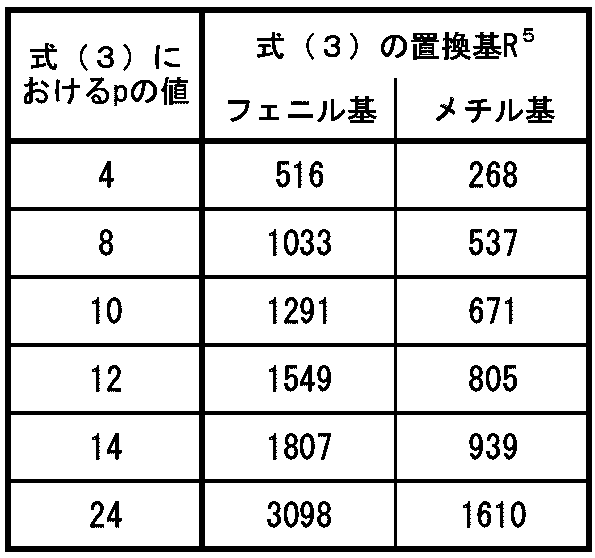
なお、式(1)の環状シロキサン化合物及び式(2)で表される直鎖状シロキサン化合物は、ジアリールオキシシラン化合物、ジアルコキシシラン化合物、モノアリールオキシモノアルコキシシラン化合物のいずれかのシラン化合物の製造に好適に用いられる。また、式(3)のシルセスキオキサン化合物は、トリアリールオキシシラン化合物及びトリアルコキシシラン化合物の少なくともいずれかのシラン化合物の製造に好適に用いられる。
シロキサン分解工程において用いられるカーボネート化合物として、ジアリールカーボネート、ジアルキルカーボネート、及び、モノアルキルモノアリールカーボネートの少なくともいずれかが用いられる。
ジアリールカーボネート、及び、モノアルキルモノアリールカーボネートは、合計炭素数6~30のアリール基を有することが好ましく、アリール基の合計炭素数は、6~20であることが好ましく、合計炭素数が6~12であることがより好ましく、合計炭素数が6~8であることが特に好ましい。
また、上述のアリール基の好ましい具体例としてフェニル基が挙げられ、ジアリールカーボネートをカーボネート化合物として用いる場合、少なくともジフェニルカーボネートを含むことが好ましい。
なお、上述のカーボネート化合物は、公知の手法により合成可能であり、また、市販されているものを用いても良い。
シロキサン分解工程において用いられる塩基性化合物触媒としては、アルカリ金属化合物、アルカリ土類金属化合物等があげられ、このような化合物としては、アルカリ金属、及び、アルカリ土類金属化合物等の有機酸塩、無機塩、酸化物、水酸化物、水素化物あるいはアルコキシド、4級アンモニウムヒドロキシド及びそれらの塩、アミン類等が用いられ、これらの化合物は単独で、もしくは複数の種類を組み合わせて用いることができる。塩基性化合物触媒は、シロキサン分解工程の反応の効率化のために、アルカリ金属炭酸塩、又は、アルカリ金属水酸化物を含むことがより好ましい。
塩基性化合物触媒の好ましい具体例として、炭酸セシウム、炭酸カリウム、炭酸ナトリウム、炭酸水素ナトリウム、水酸化セシウム、水酸化カリウム、水酸化ナトリウム等が挙げられる。
なお、上述の塩基性化合物触媒は、公知の手法により調製可能であり、また、市販されているものを用いても良い。また、塩基性化合物触媒を水溶液として反応系に添加してもよく、粉体として反応系に添加してもよい。
シロキサン分解工程においては、上記A)の環状シロキサン化合物、及び/又は、直鎖状シロキサン化合物と、上記B)のカーボネート化合物とを含む混合物を、上記C)の塩基性化合物触媒の存在下で加熱し、上記A)のシロキサン化合物をアルコキシ化及び/又はアリールオキシ化させ、シロキサン分解させる。このように、上記A)のシロキサン化合物のシロキサン分解反応により、上記B)のカーボネート化合物のアリール基、及び/又はアルキル基の導入されたシラン化合物が生成される。
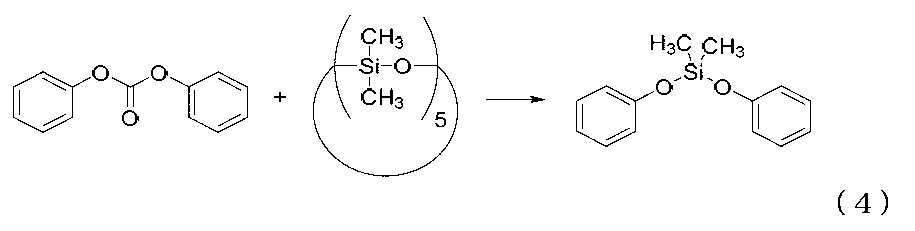
また、シロキサン化合物の分解反応の効率化のために、上記比xが、0.8<x<2.0であることが好ましく、0.8<x<1.8であることがより好ましく、0.8<x<1.6であることがさらに好ましく、特に好ましくは、0.9<x<1.5である。この場合、原料であるシロキサン化合物について、未反応のまま残る残量を抑えることができる。
なお、原料であるシロキサン化合物の種類によって上記比xの値を調整し得る。
例えば、原料として、上述のA-1)環状シロキサン化合物、又は、A-2)直鎖状シロキサン化合物を用いる場合、カーボネート化合物のモル量とシロキサン化合物のSiモル量との理想的な比率が1:1であるため、上記比xの値は、0.8<x<1.2程度であってもよく、0.9<x<1.1程度であることが好ましい。また、上述のA-3)シルセスキオキサン化合物を原料とする場合、カーボネート化合物のモル量とシロキサン化合物のSiモル量との理想的な比率が1:1.5であるため、上記比xの値は、1.0<x<1.8程度であってもよく、1.3<x<1.7程度であることが好ましい。
本発明におけるシラン化合物の製造方法においては、シラン化合物の純度を向上させるべく、シロキサン分解工程により生成されたシラン化合物を蒸留する蒸留工程と、シロキサン分解工程により生成されたシラン化合物を再結晶させる再結晶工程との少なくともいずれかをさらに有することが好ましい。
また、蒸留工程における温度は、効率的な蒸留のために50℃以上300℃以下であることが好ましく、より好ましくは、70℃以上250℃以下であり、さらに好ましくは、100℃以上200℃以下であり、特に好ましくは、120℃以上180℃以下である。
シラン化合物の製造方法においては、A)シロキサン化合物以外の原料と触媒を予め混合させておき、得られる混合物、主として混合溶液に対し、A)シロキサン化合物を滴下させることが好ましい。このように、少なくとも、B)カーボネート化合物及びC)塩基性化合物触媒を含む混合物に対して、A)シロキサン化合物を徐々に滴下させるF)滴下工程をさらに設けることにより、シラン化合物の製造方法の安全性をより高めることができる。
F)滴下工程におけるA)シロキサン化合物の滴下速度は、反応スケールによっても調整されるものの、概ね、0.1ml/分~10l(リットル)/分であり、1.0ml/分~7.0l/分であることが好ましく、10ml/分~5.0l/分であることがより好ましく、100ml/分~1.0l/分であることが特に好ましい。また、A)シロキサン化合物の滴下速度は、例えば、1~100ml/分程度であってもよい。
例えば、ジフェニルカーボネート約250gを用いる場合において、0.23molほどのシロキサン化合物を滴下速度1ml/分ほどで添加させ、滴下時間の合計が90分程度であることが好ましい。F)滴下工程における最適な滴下速度は、反応スケールに応じて異なるものの、滴下にかける好ましい合計時間はさほど変化せず、概ね30分~3時間程度が好ましく、1時間~2時間程度がより好ましく、例えば、90分程度である。
また、A)シロキサン化合物を適当な溶媒に溶解させ、滴下速度を調整容易にしてもよい。
NMR:以下の1H-NMR分析におけるケミカルシフトは、CDCl3のピークである7.24ppmを基準とした。
デカメチルシクロペンタシロキサン7.5g(20.2mmol、Siモル量:101.0mmol)、ジフェニルカーボネート21.6g(101.0mmol)、及び、触媒としての炭酸セシウム33mg(0.1mmol)を、窒素雰囲気下に置換して200℃で60分間攪拌した。
反応混合物を1H-NMRで分析した結果、デカメチルシクロペンタシロキサンに基づくケイ素上のメチル基のプロトンのピークは観測されず、デカメチルシクロペンタシロキサンの転化率が100%であることが確認された。
続いて、反応混合物を40℃まで冷却した後、減圧度4hPa、150℃で減圧蒸留することにより、無色の油状成分23.7gを得た。
得られた油状成分の重量と上記モル比率から求めたジメチルジフェノキシシランのモル量の収率は、デカメチルシクロペンタシロキサンに含まれるケイ素原子のモル量に対し、96.0%であった。
ジメチルジフェノキシシラン(1H-NMR(CDCl3,500MHz,δ;ppm)=0.378(s;6H)、6.942、6.944(d;4H)、6.959、6.961、6.995(t;2H)、7.230、7.245、7.257(t;4H)) 。
デカメチルシクロペンタシロキサン7.4g(20.0mmol、Siモル量:100.0mmol)、ジフェニルカーボネート23.6g(110.0mmol)、及び、触媒としての炭酸セシウム33mg(0.1mmol)を、窒素雰囲気下に置換して200℃で60分間攪拌した。
反応混合物を1H-NMRで分析した結果、デカメチルシクロペンタシロキサンに基づくケイ素上のメチル基のプロトンのピークは観測されず、デカメチルシクロペンタシロキサンの転化率が100%であることが確認された。
続いて、反応混合物を40℃まで冷却した後、減圧度4hPa、150℃で減圧蒸留することにより、無色の油状成分25.1gを得た。
得られた油状成分重量から、混入したジフェニルカーボネート由来のピーク面積より算出したジフェニルカーボネートの重量を差し引き、上記モル比率から求めたジメチルジフェノキシシランのモル量の収率は、デカメチルシクロペンタシロキサンに含まれるケイ素原子のモル量に対し、97.7%であった。
デカメチルシクロペンタシロキサン7.4g(20.0mmol、Siモル量:100.0mmol)、ジフェニルカーボネート32.1g(150.0mmol)、及び、触媒としての炭酸セシウム33mg(0.1mmol)を、窒素雰囲気下に置換して200℃で60分間攪拌した。
反応混合物を1H-NMRで分析した結果、デカメチルシクロペンタシロキサンに基づくケイ素上のメチル基のプロトンのピークは観測されず、デカメチルシクロペンタシロキサンの転化率が100%であることが確認された。
ケイ素上のメチル基のプロトンのピークとして、ジメチルジフェノキシシランに基づくピーク0.378ppm、及び1,1,3,3-テトラメチル-1,3-ジフェノキシジシロキサンに基づくピーク0.222ppmのみが観測された。ピーク面積比率からジメチルジフェノキシシランと1,1,3,3-テトラメチル-1,3-ジフェノキシジシロキサンのモル比率を求めると、98.8:1.2であった。
デカメチルシクロペンタシロキサン7.4g(20.0mmol、Siモル量:100.0mmol)、ジフェニルカーボネート19.3g(90.0mmol)、及び、触媒としての炭酸セシウム33mg(0.1mmol)を、窒素雰囲気下に置換して200℃で60分間攪拌した。
反応混合物を1H-NMRで分析した結果、デカメチルシクロペンタシロキサンに基づくケイ素上のメチル基のプロトンのピークは観測されず、デカメチルシクロペンタシロキサンの転化率は100%であった。
ケイ素上のメチル基のプロトンのピークとして、ジメチルジフェノキシシランに基づくピーク0.378ppm、及び1,1,3,3-テトラメチル-1,3-ジフェノキシジシロキサンに基づくピーク0.222ppmのみが観測された。ピーク面積比率からジメチルジフェノキシシランと1,1,3,3-テトラメチル-1,3-ジフェノキシジシロキサンのモル比率を求めると、93.2:6.8であった。
下記式(5)で表されるオクタフェニルシクロテトラシロキサン(融点:197℃、分子量:793.17)14.9g(18.8mmol、Siモル量:75.0mmol)、ジフェニルカーボネート16.1g(75.0mmol)、及び、触媒としての炭酸セシウム33mg(0.1mmol)を、窒素雰囲気下に置換して200℃で10分間攪拌した。
室温冷却後に固化した反応混合物に20gのヘプタンを加え、90℃とした後熱時濾過を行った。得られた濾液を室温で3日間放置することで白色結晶を析出させた。さらに5℃に冷却したヘプタン10gを加えた混合物の濾過により得られた濾紙上の結晶を取り出し、40℃、減圧度1hPaで45時間乾燥させたところ、24.1gの白色粉末が得られた。得られた粉末を1H-NMRで分析した結果、ジフェニルジフェノキシシランと1、3-ジフェノキシー1、1、3、3―テトラフェニルジシロキサン由来のピークが観測された。ピーク面積比率からジメチルジフェノキシシランと1、3-ジフェノキシー1、1、3、3―テトラフェニルジシロキサンのモル比率を求めると、95.4:4.6であった。
ジフェニルジフェノキシシラン(1H-NMR(CDCl3,500MHz,δ;ppm)=6.915、6.927、6.939、6.952、6.965(p;6H)、7.142、7.155、7.169(t;4H)、7.354、7.366、7.379(t;4H)、7.425、7.437、7.449(t;2H))、7.750、7.762(d;4H) 。
オクタフェニルシクロテトラシロキサン14.9g(18.8mmol、Siモル量:75.0mmol)、ジフェニルカーボネート16.9g(78.8mmol)、及び、触媒としての炭酸セシウム33mg(0.1mmol)を、窒素雰囲気下に置換して200℃で10分間攪拌した。
反応混合物を1H-NMRで分析した結果、オクタフェニルシクロテトラシロキサンのパラ位に基づくプロトンのピークは観測されず、オクタフェニルシクロテトラシロキサンの転化率が100%であることが確認された。
室温冷却後に固化した反応混合物に20gのヘプタンを加え、90℃とした後熱時濾過を行った。得られた濾液を室温で3日間放置することで白色結晶を析出させた。さらに5℃に冷却したヘプタン10gを加えた混合物の濾過により得られた濾紙上の結晶を取り出し、40℃、減圧度1hPaで45時間乾燥させたところ、24.4gの白色粉末が得られた。
得られた白色粉末重量と上記モル比率から求めたジフェニルジフェノキシシランのモル量の収率は、オクタフェニルシクロテトラシロキサンに含まれるケイ素原子のモル量に対し87.6%であった。
オクタフェニルシクロテトラシロキサン14.9g(18.8mmol、Siモル量:75.0mmol)、ジフェニルカーボネート17.7g(82.6mmol)、及び、触媒としての炭酸セシウム33mg(0.1mmol)を、窒素雰囲気下に置換して200℃で60分間攪拌した。
反応混合物を1H-NMRで分析した結果、オクタフェニルシクロテトラシロキサンのパラ位に基づくプロトンのピークは観測されず、オクタフェニルシクロテトラシロキサンの転化率が100%であることが確認された。
室温冷却後に固化した反応混合物に20gのヘプタンを加え、90℃とした後熱時濾過を行った。得られた濾液を室温で3日間放置することで白色結晶を析出させた。さらに5℃に冷却したヘプタン10gを加えた混合物の濾過により得られた濾紙上の結晶を取り出し、40℃、減圧度1hPaで45時間乾燥させたところ、23.1gの白色粉末が得られた。
得られた白色粉末重量と上記モル比率から求めたジフェニルジフェノキシシランのモル量の収率は、オクタフェニルシクロテトラシロキサンに含まれるケイ素原子のモル量に対し83.1%であった。
下記式(6)で表されるジメチルポリシロキサン(ヒドロキシ終端処理済み、分子量:4,200)7.4g(1.8mmol、Siモル量:100.0mmol)、ジフェニルカーボネート21.4g(100.0mmol)、及び、触媒としての炭酸セシウム65mg(0.2mmol)を窒素雰囲気下に置換して220℃で30分間攪拌した。
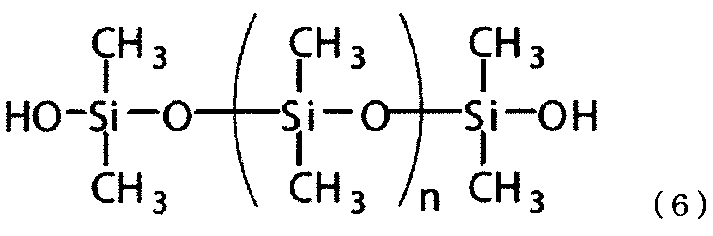
ケイ素上のメチル基のプロトンのピークとして、ジメチルジフェノキシシランに基づくピーク0.378ppm、及び1,1,3,3-テトラメチル-1,3-ジフェノキシジシロキサンに基づくピーク0.222ppmのみが観測された。ピーク面積比率からジメチルジフェノキシシランと1,1,3,3-テトラメチル-1,3-ジフェノキシジシロキサンのモル比率を求めると、95.0:5.0であった。
下記式(7)で表されるジメチルポリシロキサン(信越化学工業製、KF-96-3000cs、トリメチルシロキシ末端、分子量:40,000)7.4g(0.19mmol、Siモル量:100.0mmol)、ジフェニルカーボネート21.4g(100.0mmol)、及び、触媒としての炭酸セシウム33mg(0.1mmol)を、窒素雰囲気下に置換して200℃で60分間攪拌した。
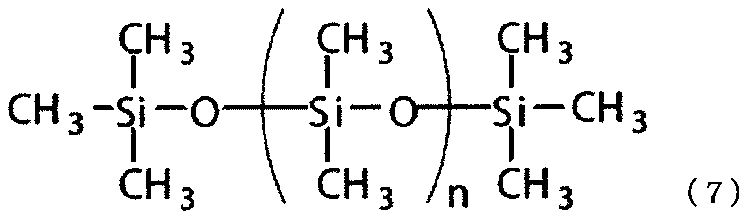
ケイ素上のメチル基のプロトンのピークとして、ジメチルジフェノキシシランに基づくピーク0.378ppm、及び1,1,3,3-テトラメチル-1,3-ジフェノキシジシロキサンに基づくピーク0.222ppmのみが観測された。ピーク面積比率からジメチルジフェノキシシランと1,1,3,3-テトラメチル-1,3-ジフェノキシジシロキサンのモル比率を求めると、98.1:1.9であった。
デカメチルシクロペンタシロキサン7.4g(20.0mmol、Siモル量:100.0mmol)、ジブチルカーボネート17.4g(100.0mmol)、及び、触媒としての炭酸セシウム33mg(0.1mmol)を、窒素雰囲気下に置換して200℃で60分間攪拌した。
反応混合物を1H-NMRで分析した結果、ケイ素上のメチル基のプロトンのピークとして、デカメチルシクロペンタシロキサンに基づくプロトンのピーク0.055ppm及びジメチルジブトキシシランに基づくピーク0.070ppmが観測された。両ピーク面積の比率より算出したデカメチルシクロペンタシロキサンの転化率は69%であった。
デカメチルシクロペンタシロキサン7.4g(20.0mmol、Siモル量:100.0mmol)、ジフェニルカーボネート21.4g(100.0mmol)、及び、触媒としての炭酸セシウム33mg(0.1mmol)を、窒素雰囲気下に置換して150℃で60分間攪拌した。
反応混合物を1H-NMRで分析した結果、ケイ素上のメチル基のプロトンのピークとして、デカメチルシクロペンタシロキサンに基づくプロトンのピーク0.055ppm及びジメチルジフェノキシシシランに基づくプロトンのピーク0.378ppmが観測された。両ピーク面積の比率より算出したデカメチルシクロペンタシロキサンの転化率は71%であった。
ケイ素上のメチル基のプロトンのピークとして、ジメチルジフェノキシシランに基づくピーク0.378ppm、及び1,1,3,3-テトラメチル-1,3-ジフェノキシジシロキサンに基づくピーク0.222ppmが観測された。両ピーク面積比率からジメチルジフェノキシシランと1,1,3,3-テトラメチル-1,3-ジフェノキシジシロキサンのモル比率を求めると、78.7:21.3であった。
デカメチルシクロペンタシロキサン7.4g(20.0mmol、Siモル量:100.0mmol)、ジフェニルカーボネート21.4g(100.0mmol)、及び、触媒としての炭酸セシウム65mg(0.2mmol)を、窒素雰囲気下に置換して220℃で30分間攪拌した。
反応混合物を1H-NMRで分析した結果、デカメチルシクロペンタシロキサンに基づくケイ素上のメチル基のプロトンのピークは観測されず、デカメチルシクロペンタシロキサンの転化率が100%であることが確認された。
ケイ素上のメチル基のプロトンのピークとして、ジメチルジフェノキシシランに基づくピーク0.378ppm、及び1,1,3,3-テトラメチル-1,3-ジフェノキシジシロキサンに基づくピーク0.222ppmのみが観測された。ピーク面積比率からジメチルジフェノキシシランと1,1,3,3-テトラメチル-1,3-ジフェノキシジシロキサンのモル比率を求めると、99.6:0.4であった。
デカメチルシクロペンタシロキサン7.4g(20.0mmol、Siモル量:100.0mmol)、ジフェニルカーボネート21.4g(100.0mmol)、及び、触媒としての炭酸カリウム28mg(0.2mmol)を、窒素雰囲気下に置換して220℃で30分間攪拌した。
反応混合物を1H-NMRで分析した結果、デカメチルシクロペンタシロキサンに基づくケイ素上のメチル基のプロトンのピークは観測されず、デカメチルシクロペンタシロキサンの転化率は、100%であった。
ケイ素上のメチル基のプロトンのピークとして、ジメチルジフェノキシシランに基づくピーク0.378ppm、及び1,1,3,3-テトラメチル-1,3-ジフェノキシジシロキサンに基づくピーク0.222ppmのみが観測された。ピーク面積比率からジメチルジフェノキシシランと1,1,3,3-テトラメチル-1,3-ジフェノキシジシロキサンのモル比率を求めると、99.7:0.3であった。
デカメチルシクロペンタシロキサン7.4g(20.0mmol、Siモル量:100.0mmol)、ジフェニルカーボネート21.4g(100.0mmol)、及び、触媒としての炭酸ナトリウム21mg(0.2mmol)を、窒素雰囲気下に置換して220℃で30分間攪拌した。
反応混合物を1H-NMRで分析した結果、ケイ素上のメチル基のプロトンのピークとして、デカメチルシクロペンタシロキサンに基づくプロトンのピーク0.055ppm及びジメチルジフェノキシシシランに基づくプロトンのピーク0.378ppmが観測された。両ピーク面積の比率より算出したデカメチルシクロペンタシロキサンの転化率は89%であった。
ケイ素上のメチル基のプロトンのピークとして、ジメチルジフェノキシシランに基づくピーク0.378ppm及び1,1,3,3-テトラメチル-1,3-ジフェノキシジシロキサンに基づくピーク0.222ppmが観測された。両ピーク面積比率からジメチルジフェノキシシランと1,1,3,3-テトラメチル-1,3-ジフェノキシジシロキサンのモル比率を求めると、94.3:5.7であった。
デカメチルシクロペンタシロキサン7.4g(20.0mmol、Siモル量:100.0mmol)、ジフェニルカーボネート21.4g(100.0mmol)、及び、触媒としての炭酸水素ナトリウム17mg(0.2mmol)を、窒素雰囲気下に置換して220℃で30分間攪拌した。
反応混合物を1H-NMRで分析した結果、ケイ素上のメチル基のプロトンのピークとして、デカメチルシクロペンタシロキサンに基づくプロトンのピーク0.055ppm及びジメチルジフェノキシシシランに基づくプロトンのピーク0.378ppmが観測された。両ピーク面積の比率より算出したデカメチルシクロペンタシロキサンの転化率は87%であった。
ケイ素上のメチル基のプロトンのピークとして、ジメチルジフェノキシシランに基づくピーク0.378ppm及び1,1,3,3-テトラメチル-1,3-ジフェノキシジシロキサンに基づくピーク0.222ppmが観測された。両ピーク面積比率からジメチルジフェノキシシランと1,1,3,3-テトラメチル-1,3-ジフェノキシジシロキサンのモル比率を求めると、97.4:2.6であった。
下記式(8)で表されるヘキサメチルシクロトリシロキサン7.4g(33.3mmol、Siモル量:100.0mmol)、ジフェニルカーボネート21.4g(100.0mmol)、及び、触媒としての炭酸セシウム65mg(0.2mmol)を、窒素雰囲気下に置換して220℃で30分間攪拌した。
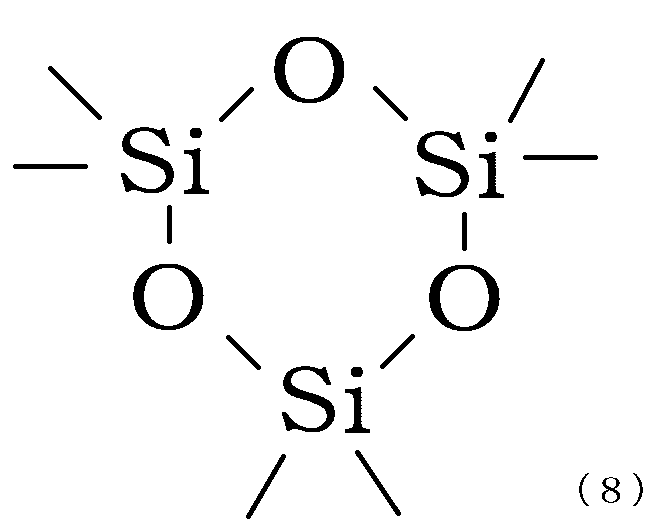
ケイ素上のメチル基のプロトンのピークとして、ジメチルジフェノキシシランに基づくピーク0.378ppm及び1,1,3,3-テトラメチル-1,3-ジフェノキシジシロキサンに基づくピーク0.222ppmのみが観測された。両ピーク面積比率からジメチルジフェノキシシランと1,1,3,3-テトラメチル-1,3-ジフェノキシジシロキサンのモル比率を求めると、99.3:0.7であった。
下記式(9)で表されるオクタメチルシクロテトラシロキサン7.4g(25.0mmol、Siモル量:100.0mmol)、ジフェニルカーボネート21.4g(100.0mmol)、及び、触媒としての炭酸セシウム65mg(0.2mmol)を、窒素雰囲気下に置換して220℃で30分間攪拌した。
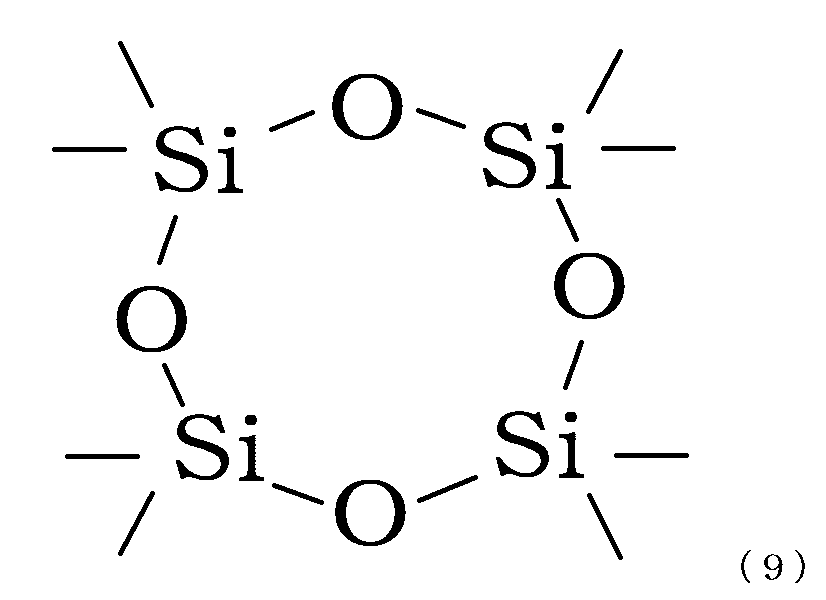
ケイ素上のメチル基のプロトンのピークとして、ジメチルジフェノキシシランに基づくピーク0.378ppm、及び1,1,3,3-テトラメチル-1,3-ジフェノキシジシロキサンに基づくピーク0.222ppmのみが観測された。両ピーク面積比率からジメチルジフェノキシシランと1,1,3,3-テトラメチル-1,3-ジフェノキシジシロキサンのモル比率を求めると、99.4:0.6であった。
デカメチルシクロペンタシロキサン7.4g(20.0mmol、Siモル量:100.0mmol)、ジフェニルカーボネート21.4g(100.0mmol)、及び、触媒としての水酸化セシウム75mg(0.5mmol)を、窒素雰囲気下に置換して200℃で60分間攪拌した。
反応混合物を1H-NMRで分析した結果、デカメチルシクロペンタシロキサンに基づくケイ素上のメチル基のプロトンのピークは観測されず、デカメチルシクロペンタシロキサンの転化率は、100%であった。
ケイ素上のメチル基のプロトンのピークとして、ジメチルジフェノキシシランに基づくピーク0.378ppm、及び1,1,3,3-テトラメチル-1,3-ジフェノキシジシロキサンに基づくピーク0.222ppmのみが観測された。両ピーク面積比率からジメチルジフェノキシシランと1,1,3,3-テトラメチル-1,3-ジフェノキシジシロキサンのモル比率を求めると、98.2:1.8であった。
デカメチルシクロペンタシロキサン7.4g(20.0mmol、Siモル量:100.0mmol)、ジフェニルカーボネート21.4g(100.0mmol)、及び、触媒としての水酸化カリウム11mg(0.2mmol)を、窒素雰囲気下に置換して200℃で60分間攪拌した。
反応混合物を1H-NMRで分析した結果、デカメチルシクロペンタシロキサンに基づくケイ素上のメチル基のプロトンのピークは観測されず、デカメチルシクロペンタシロキサンの転化率は、100%であった。
ケイ素上のメチル基のプロトンのピークとして、ジメチルジフェノキシシランに基づくピーク0.378ppm、及び1,1,3,3-テトラメチル-1,3-ジフェノキシジシロキサンに基づくピーク0.222ppmのみが観測された。両ピーク面積比率からジメチルジフェノキシシランと1,1,3,3-テトラメチル-1,3-ジフェノキシジシロキサンのモル比率を求めると、97.6:2.4であった。
デカメチルシクロペンタシロキサン7.4g(20.0mmol、Siモル量:100.0mmol)、ジフェニルカーボネート21.4g(100.0mmol)、及び、触媒としての水酸化ナトリウム12mg(0.3mmol)を、窒素雰囲気下に置換して200℃で60分間攪拌した。
反応混合物を1H-NMRで分析した結果、ケイ素上のメチル基のプロトンのピークとして、デカメチルシクロペンタシロキサンに基づくプロトンのピーク0.055ppm及びジメチルジフェノキシシシランに基づくプロトンのピーク0.378ppmが観測された。両ピーク面積の比率より算出したデカメチルシクロペンタシロキサンの転化率は66%であった。
ケイ素上のメチル基のプロトンのピークとして、ジメチルジフェノキシシランに基づくピーク0.378ppm、及び1,1,3,3-テトラメチル-1,3-ジフェノキシジシロキサンに基づくピーク0.222ppmが観測された。両ピーク面積比率からジメチルジフェノキシシランと1,1,3,3-テトラメチル-1,3-ジフェノキシジシロキサンのモル比率を求めると、94.4:5.6であった。
デカメチルシクロペンタシロキサン7.4g(20.0mmol、Siモル量:100.0mmol)、ジフェニルカーボネート21.4g(100.0mmol)、及び、触媒としての炭酸セシウム33mg(0.1mmol)を、窒素雰囲気下に置換して120℃で60分間攪拌した。
反応混合物を1H-NMRで分析した結果、ケイ素上のメチル基のプロトンのピークとして、デカメチルシクロペンタシロキサンに基づくプロトンのピーク0.055ppm及びジメチルジフェノキシシシランに基づくプロトンのピーク0.378ppmが観測された。両ピーク面積の比率より算出したデカメチルシクロペンタシロキサンの転化率は67%であった。
ケイ素上のメチル基のプロトンのピークとして、ジメチルジフェノキシシランに基づくピーク0.378ppm、及び1,1,3,3-テトラメチル-1,3-ジフェノキシジシロキサンに基づくピーク0.222ppmが観測された。両ピーク面積比率からジメチルジフェノキシシランと1,1,3,3-テトラメチル-1,3-ジフェノキシジシロキサンのモル比率を求めると、82.0:18.0であった。
デカメチルシクロペンタシロキサン7.4g(20.0mmol、Siモル量:100.0mmol)、ジフェニルカーボネート21.4g(100.0mmol)、及び、触媒としての炭酸セシウム33mg(0.1mmol)を、窒素雰囲気下に置換して90℃で60分間攪拌した。
反応混合物を1H-NMRで分析した結果、ケイ素上のメチル基のプロトンのピークとして、デカメチルシクロペンタシロキサンに基づくプロトンのピーク0.055ppm及びジメチルジフェノキシシシランに基づくプロトンのピーク0.378ppmが観測された。両ピーク面積の比率より算出したデカメチルシクロペンタシロキサンの転化率は2%であった。
ケイ素上のメチル基のプロトンのピークとして、ジメチルジフェノキシシランに基づくピーク0.378ppm、及び1,1,3,3-テトラメチル-1,3-ジフェノキシジシロキサンに基づくピーク0.222ppmが観測された。両ピーク面積比率からジメチルジフェノキシシランと1,1,3,3-テトラメチル-1,3-ジフェノキシジシロキサンのモル比率を求めると、33.3:66.7であった。
1,3,5,7,9,11,13,15-オクタメチルペンタシクロ[9.5.1.13,9.15,15.17,13]オクタシロキサン2.06g(3.83mmol、Siモル量:30.7mmol)、ジフェニルカーボネート9.85g(46.0mmol)、及び、触媒としての炭酸セシウム15mg(0.05mmol)を、窒素雰囲気下に置換して180℃で150分間攪拌した。
反応混合物を1H-NMRで分析した結果、1,3,5,7,9,11,13,15-オクタメチルペンタシクロ[9.5.1.13,9.15,15.17,13]オクタシロキサンに基づくケイ素上のメチル基のプロトンのピークは観測されず、1,3,5,7,9,11,13,15-オクタメチルペンタシクロ[9.5.1.13,9.15,15.17,13]オクタシロキサンの転化率は、100%であった。
ケイ素上のメチル基のプロトンのピークとして、メチルトリフェノキシシランに基づくピーク0.483ppm、及び1,3-ジメチル-1,1,3,3-テトラフェノキシジシロキサンに基づくピーク0.289ppmのみが観測された。両ピーク面積比率からメチルトリフェノキシシランと1,3-ジメチル-1,1,3,3-テトラフェノキシジシロキサンのモル比率を求めると、93.7:6.3であった。
生成物であるトリアリールオキシシラン化合物等の化学式を以下に示す。下記式(10)はメチルトリフェノキシシラン、下記式(11)は1,3-ジメチル-1,1,3,3-テトラフェノキシジシロキサンを示す。
1,3,5,7,9,11,13,15-オクタフェニルペンタシクロ[9.5.1.13,9.15,15.17,13]オクタシロキサン3.96g(3.83mmol、Siモル量:30.6mmol)、ジフェニルカーボネート9.85g(46.0mmol)、及び、触媒としての炭酸セシウム15mg(0.05mmol)を、窒素雰囲気下に置換して180℃で150分間攪拌した。
反応混合物を1H-NMRで分析した結果、1,3,5,7,9,11,13,15-オクタフェニルペンタシクロ[9.5.1.13,9.15,15.17,13]オクタシロキサンのパラ位に基づくプロトンのピークは観測されず、1,3,5,7,9,11,13,15-オクタフェニルペンタシクロ[9.5.1.13,9.15,15.17,13]オクタシロキサンの転化率が100%であることが確認された。
室温冷却後に固化した反応混合物に10gのヘプタンを加え、90℃とした後熱時濾過を行った。得られた濾液を室温で3日間放置することで白色結晶を析出させた。さらに5℃に冷却したヘプタン5gを加えた混合物の濾過により得られた濾紙上の結晶を取り出し、40℃、減圧度1hPaで45時間乾燥させたところ、9.42gの白色粉末が得られた。
得られた粉末を1H-NMRで分析した結果、フェニルトリフェノキシシランと1,3-ジフェニル-1,1,3,3-テトラフェノキシジシロキサン由来のピークが観測された。ピーク面積比率からフェニルトリフェノキシシランと1、3-ジフェノキシー1、1、3、3―テトラフェニルジシロキサンのモル比率を求めると、96.0:4.0であった。
得られた白色粉末重量と上記モル比率から求めたフェニルトリフェノキシシランのモル量の収率は、オクタフェニルシクロテトラシロキサンに含まれるケイ素原子のモル量に対し76.8%であった。
生成物であるトリアリールオキシシラン化合物等の化学式を以下に示す。下記式(12)はフェニルトリフェノキシシラン、下記式(13)は1,3-ジフェニル-1,1,3,3-テトラフェノキシジシロキサンを示す。
500ml4径フラスコに滴下ロート、温度計、冷却管を取り付け、ジフェニルカーボネート246.35g、1.15mol)、及び、触媒としての炭酸セシウム0.3748g(1.15mmol)を仕込み、撹拌をしないで180℃に加熱した。100℃付近でジフェニルカーボネートが溶解した。180℃到達後、90分かけてデカメチルシクロペンタシロキサン85.30g(0.23mol)を滴下速度1ml/分で滴下した。デカメチルシクロペンタシロキサン滴下直後からCO2ガスが発生した。デカメチルシクロペンタシロキサン滴下終了後に200℃まで昇温し、200℃で90分加熱後に加熱を停止して反応を終了した。
続いて、反応混合物を40℃まで冷却した後、減圧度4hPa、150℃で減圧蒸留することにより、実施例1と同様の無色の油状成分270gを得た。
デカメチルシクロペンタシロキサン7.4g(20.0mmol、Siモル量:100.0mmol)、ジフェニルカーボネート21.4g(100.0mmol)、及び、触媒としての炭酸セシウム33mg(0.1mmol)を、窒素雰囲気下に置換して60分間室温にて攪拌した。
混合物を1H-NMRで分析した結果、ケイ素上のメチル基のプロトンのピークとして、デカメチルシクロペンタシロキサンに基づくプロトンのピークのみが観測され、デカメチルシクロペンタシロキサンの転化率は0%であった。
デカメチルシクロペンタシロキサン7.4g(20.0mmol、Siモル量:100.0mmol)、及び、ジフェニルカーボネート21.4g(100.0mmol)を窒素雰囲気下に置換して、200℃で60分間攪拌した。
混合物を1H-NMRで分析した結果、ケイ素上のメチル基のプロトンのピークとして、デカメチルシクロペンタシロキサンに基づくプロトンのピークのみが観測され、デカメチルシクロペンタシロキサンの転化率は0%であった。
デカメチルシクロペンタシロキサン0.37g(1.0mmol、Siモル量:5.0mmol)、フェノール0.94g(10.0mmol)、及び、触媒としての炭酸セシウム3.3mg(0.01mmol)を、窒素雰囲気下に置換して175℃で90分間攪拌した。
反応混合物を1H-NMRで分析した結果、ケイ素上のメチル基のプロトンのピークとして、デカメチルシクロペンタシロキサンに基づくプロトンのピーク0.055ppm及びジメチルジフェノキシシシランに基づくプロトンのピーク0.378ppmが観測された。両ピーク面積の比率より算出したデカメチルシクロペンタシロキサンの転化率は4%であった。
ケイ素上のメチル基のプロトンのピークとして、ジメチルジフェノキシシランに基づくピーク0.378ppm、及び1,1,3,3-テトラメチル-1,3-ジフェノキシジシロキサンに基づくピーク0.222ppmが観測された。両ピーク面積比率からジメチルジフェノキシシランと1,1,3,3-テトラメチル-1,3-ジフェノキシジシロキサンのモル比率を求めると、59.6:40.4であった。

Claims (17)
- A)下記式(1)で表されるA-1)環状シロキサン化合物、
下記式(2)で表されるA-2)直鎖状シロキサン化合物、及び/又は、
シロキサン結合を主鎖骨格とする、下記式(3)で表されるシルセスキオキサン化合物、であるシロキサン化合物、
B)ジアリールカーボネート、ジアルキルカーボネート、及び、モノアルキルモノアリールカーボネートの少なくともいずれかを含むカーボネート化合物、及び、
C)塩基性化合物触媒
を含有する混合物を加熱して、A)のシロキサン化合物をアルコキシ化及び/又はアリールオキシ化させるD)シロキサン分解工程を有する、
ジアリールオキシシラン化合物、ジアルコキシシラン化合物、モノアリールオキシモノアルコキシシラン化合物、トリアリールオキシシラン化合物、及び、トリアルコキシシラン化合物の少なくともいずれかを含む、シラン化合物の製造方法。

nは、3以上30以下の整数を表わす。)
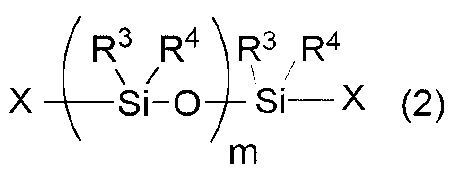
mは、2以上10000以下の整数を表わし、
Xは、それぞれ独立に、水素原子、水酸基、置換基を有してもよい合計炭素数1~10のアルコキシ基、置換基を有してもよく、酸素原子又は窒素原子を有していてもよい合計炭素数1~10の炭化水素基、又は、置換基を有してもよいアミノ基を表わす。)
[R5SiO1.5]p (3)
(式中、R5は、置換基を有してもよい炭素数1~4のアルキル基、炭素数2~4のアルケニル基、又は、炭素数6~12のアリール基を表わし、
pは、4以上24以下の数である。) - A)下記式(1)で表されるA-1)環状シロキサン化合物、及び/又は、下記式(2)で表されるA-2)直鎖状シロキサン化合物、
B)ジアリールカーボネート、ジアルキルカーボネート、及び、モノアルキルモノアリールカーボネートの少なくともいずれかを含むカーボネート化合物、及び、
C)塩基性化合物触媒
を含有する混合物を加熱して、A)のシロキサン化合物をアルコキシ化及び/又はアリールオキシ化させるD)シロキサン分解工程を有する、
ジアリールオキシシラン化合物、ジアルコキシシラン化合物、及び、モノアリールオキシモノアルコキシシラン化合物の少なくともいずれかを含む、シラン化合物の製造方法。
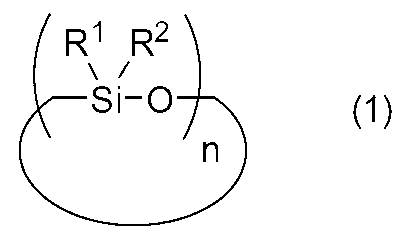
nは、3以上30以下の整数を表わす。)
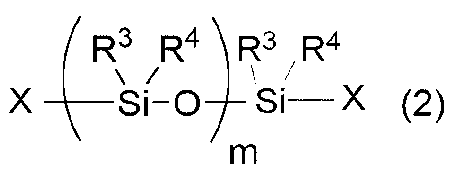
mは、2以上10000以下の整数を表わし、
Xは、それぞれ独立に、水素原子、水酸基、置換基を有してもよい合計炭素数1~10のアルコキシ基、置換基を有してもよく、酸素原子又は窒素原子を有していてもよい合計炭素数1~10の炭化水素基、又は、置換基を有してもよいアミノ基を表わす。) - 前記R1~R4が、それぞれ独立に、置換基を有してもよい合計炭素数1~8のアルキル基、アルケニル基、又は、合計炭素数6~30のアリール基を表わす、請求項1又は2に記載のシラン化合物の製造方法。
- 前記R1~R4が、それぞれ独立に、メチル基、フェニル基、ビニル基、及び、プロピル基からなる群から選択されるいずれか一種である、請求項3に記載のシラン化合物の製造方法。
- 前記B)ジアリールカーボネートが、ジフェニルカーボネートを含む、請求項1~4のいずれかに記載のシラン化合物の製造方法。
- 前記B)ジアルキルカーボネートにおける、アルキル基の炭素数が4以下である、請求項1~4のいずれか一項に記載のシラン化合物の製造方法。
- 前記C)塩基性化合物触媒が、アルカリ金属炭酸塩、又は、アルカリ金属水酸化物を含む、請求項1~6のいずれか一項に記載のシラン化合物の製造方法。
- 前記C)塩基性化合物触媒が、炭酸セシウム及び炭酸カリウムの少なくともいずれかを含む、請求項7に記載のシラン化合物の製造方法。
- 前記D)シロキサン分解工程において、前記A)シロキサン化合物のSiモル量に対する前記B)カーボネート化合物のモル量の比xがx≧1である、請求項1~8のいずれか一項に記載のシラン化合物の製造方法。
- 前記D)シロキサン分解工程において、前記A)シロキサン化合物の前記Siモル量に対する前記B)カーボネート化合物のモル量の比xが、0.8<x<2.0である請求項1~8のいずれか一項に記載のシラン化合物の製造方法。
- 前記D)シロキサン分解工程において、前記A)シロキサン化合物の前記Siモル量に対する前記C)塩基性化合物触媒のモル量の比yが、0.0001mmol/mol≦y≦20mmol/molである、請求項1~10のいずれか一項に記載のシラン化合物の製造方法。
- 前記D)シロキサン分解工程において、前記A)シロキサン化合物を分解させる温度が50℃以上300℃以下である、請求項1~11のいずれか一項に記載のシラン化合物の製造方法。
- 前記D)シロキサン分解工程において、前記温度が50℃以上150℃以下である、請求項12に記載のシラン化合物の製造方法。
- 式(1)で表される前記A-1)環状シロキサン化合物の分子量が2,000以下であり、式(2)で表される前記A-2)直鎖状シロキサン化合物の分子量が60,000以下であり、式(3)で表される前記A-3)シルセスキオキサン化合物の分子量が3,500以下である、請求項1に記載のシラン化合物の製造方法。
- 前記D)シロキサン分解工程により生成された前記シラン化合物を蒸留する蒸留工程と、前記D)シロキサン分解工程により生成された前記シラン化合物を再結晶させる再結晶工程との少なくともいずれかのE)蒸留工程/再結晶工程をさらに有する、請求項1~14のいずれか一項に記載のシラン化合物の製造方法。
- 前記E)の前記蒸留工程における圧力が1hPa以上20hPa以下である、請求項14に記載のシラン化合物の製造方法。
- 前記B)カーボネート化合物及び前記C)塩基性化合物触媒を含む混合物に対して、前記A)シロキサン化合物を滴下させるF)滴下工程をさらに有する、請求項1~16のいずれか一項に記載のシラン化合物の製造方法。
Priority Applications (5)
| Application Number | Priority Date | Filing Date | Title |
|---|---|---|---|
| US17/439,954 US12344628B2 (en) | 2019-03-22 | 2020-03-19 | Method for producing silane compound |
| EP20779346.4A EP3943471B1 (en) | 2019-03-22 | 2020-03-19 | Method for producing silane compound |
| CN202080021789.2A CN113574034B (zh) | 2019-03-22 | 2020-03-19 | 硅烷化合物的制造方法 |
| KR1020217020893A KR102860785B1 (ko) | 2019-03-22 | 2020-03-19 | 실란 화합물의 제조 방법 |
| JP2021509354A JP7643332B2 (ja) | 2019-03-22 | 2020-03-19 | シラン化合物の製造方法 |
Applications Claiming Priority (2)
| Application Number | Priority Date | Filing Date | Title |
|---|---|---|---|
| JP2019-055617 | 2019-03-22 | ||
| JP2019055617 | 2019-03-22 |
Publications (1)
| Publication Number | Publication Date |
|---|---|
| WO2020196344A1 true WO2020196344A1 (ja) | 2020-10-01 |
Family
ID=72610987
Family Applications (1)
| Application Number | Title | Priority Date | Filing Date |
|---|---|---|---|
| PCT/JP2020/012525 Ceased WO2020196344A1 (ja) | 2019-03-22 | 2020-03-19 | シラン化合物の製造方法 |
Country Status (7)
| Country | Link |
|---|---|
| US (1) | US12344628B2 (ja) |
| EP (1) | EP3943471B1 (ja) |
| JP (1) | JP7643332B2 (ja) |
| KR (1) | KR102860785B1 (ja) |
| CN (1) | CN113574034B (ja) |
| TW (1) | TWI850354B (ja) |
| WO (1) | WO2020196344A1 (ja) |
Citations (5)
| Publication number | Priority date | Publication date | Assignee | Title |
|---|---|---|---|---|
| JPH10218885A (ja) | 1997-02-06 | 1998-08-18 | Toshiba Silicone Co Ltd | ヒドロカルビルオキシケイ素化合物の製造方法 |
| JP2000169484A (ja) * | 1998-12-07 | 2000-06-20 | Yazaki Corp | シリコーン化合物の再資源化方法 |
| JP2008297227A (ja) | 2007-05-30 | 2008-12-11 | Mitsubishi Chemicals Corp | アルコキシシランの製造方法 |
| US20120184702A1 (en) | 2011-01-19 | 2012-07-19 | Basf Se | Process for producing a composite material |
| JP2012188398A (ja) * | 2011-03-11 | 2012-10-04 | Toray Res Center:Kk | 有機ケイ素化合物の製造方法 |
Family Cites Families (3)
| Publication number | Priority date | Publication date | Assignee | Title |
|---|---|---|---|---|
| JP2010218885A (ja) | 2009-03-17 | 2010-09-30 | Nuflare Technology Inc | 電子銃のコンディショニング処理方法 |
| CN107868101A (zh) * | 2016-09-26 | 2018-04-03 | 青岛九洲千和机械有限公司 | 一种甲基三烷氧基硅烷的制备方法 |
| US11319335B2 (en) * | 2018-09-07 | 2022-05-03 | Dow Silicones Corporation | Method for preparing hydrocarbylhydrocarbyloxysilanes |
-
2020
- 2020-03-19 KR KR1020217020893A patent/KR102860785B1/ko active Active
- 2020-03-19 CN CN202080021789.2A patent/CN113574034B/zh active Active
- 2020-03-19 WO PCT/JP2020/012525 patent/WO2020196344A1/ja not_active Ceased
- 2020-03-19 JP JP2021509354A patent/JP7643332B2/ja active Active
- 2020-03-19 TW TW109109215A patent/TWI850354B/zh active
- 2020-03-19 US US17/439,954 patent/US12344628B2/en active Active
- 2020-03-19 EP EP20779346.4A patent/EP3943471B1/en active Active
Patent Citations (5)
| Publication number | Priority date | Publication date | Assignee | Title |
|---|---|---|---|---|
| JPH10218885A (ja) | 1997-02-06 | 1998-08-18 | Toshiba Silicone Co Ltd | ヒドロカルビルオキシケイ素化合物の製造方法 |
| JP2000169484A (ja) * | 1998-12-07 | 2000-06-20 | Yazaki Corp | シリコーン化合物の再資源化方法 |
| JP2008297227A (ja) | 2007-05-30 | 2008-12-11 | Mitsubishi Chemicals Corp | アルコキシシランの製造方法 |
| US20120184702A1 (en) | 2011-01-19 | 2012-07-19 | Basf Se | Process for producing a composite material |
| JP2012188398A (ja) * | 2011-03-11 | 2012-10-04 | Toray Res Center:Kk | 有機ケイ素化合物の製造方法 |
Non-Patent Citations (3)
| Title |
|---|
| OKAMOTO, MASAKI ET AL.: "Deoligomerization of Cyclooligosiloxanes with Dimethyl Carbonate Over Solid-Base Catalysts", CATALYSIS LETTERS, vol. 88, no. 3-4, 2003, pages 115 - 118, XP055846972, ISSN: 1011-372X * |
| OKAMOTO, MASAKI ET AL.: "Polysiloxane depolymerization with dimethyl carbonate using alkali metal halide catalysts", APPLIED CATALYSIS , A: GENERAL, vol. 261, no. 2, 2004, pages 239 - 245, XP004500622, ISSN: 0926-860X, DOI: 10.1016/j.apcata.2003.11.005 * |
| See also references of EP3943471A4 |
Also Published As
| Publication number | Publication date |
|---|---|
| EP3943471A4 (en) | 2022-05-04 |
| CN113574034B (zh) | 2024-03-08 |
| KR20210143714A (ko) | 2021-11-29 |
| US20220185830A1 (en) | 2022-06-16 |
| KR102860785B1 (ko) | 2025-09-16 |
| CN113574034A (zh) | 2021-10-29 |
| EP3943471B1 (en) | 2025-09-10 |
| TWI850354B (zh) | 2024-08-01 |
| EP3943471A1 (en) | 2022-01-26 |
| TW202100534A (zh) | 2021-01-01 |
| JPWO2020196344A1 (ja) | 2020-10-01 |
| JP7643332B2 (ja) | 2025-03-11 |
| US12344628B2 (en) | 2025-07-01 |
Similar Documents
| Publication | Publication Date | Title |
|---|---|---|
| JP3616757B2 (ja) | 環状シラザン、その製法およびビスアミノアルキル−末端ジシロキサンの製法 | |
| JPWO2019167770A1 (ja) | ヘキサフルオロイソプロパノール基を含む珪素化合物、およびその製造方法 | |
| JPH10287685A (ja) | イソシアナトオルガノシランの製造方法 | |
| JP2009263316A (ja) | 不完全縮合オリゴシルセスキオキサンの製造方法 | |
| US10590150B2 (en) | Preparation of fluorosilicon compounds | |
| JP2003532734A (ja) | 第二級アミノイソブチルアルコキシシラン類の調製 | |
| JPH03197486A (ja) | アルコキシシリル基を有するオルガノシロキサンの製造方法 | |
| JP7643332B2 (ja) | シラン化合物の製造方法 | |
| JP7322762B2 (ja) | ケチミン構造を有する有機ケイ素化合物の製造方法 | |
| JP5170834B2 (ja) | 脱アルコール型室温硬化性シリコーンゴム組成物の保存安定性付与剤 | |
| CN102803275B (zh) | 制备有机烷氧基氢硅烷的方法 | |
| JPH03157388A (ja) | シラノール類の製造方法 | |
| CN113260622B (zh) | 制备官能化有机硅烷醇化合物的方法 | |
| JP5420751B2 (ja) | 1,3−ビス(アミノアルキル)ジシロキサンの合成方法 | |
| EP0423686A2 (en) | Silacyclobutanes and process for preparation | |
| JP7350253B2 (ja) | ビスハロアルキルシロキサン化合物及びその製造方法、並びに、両末端官能性のシロキサン化合物の製造方法 | |
| JP2012107011A (ja) | アルコキシ置換された1,2−ビス−シリル−エタンの製造法 | |
| JPH0977762A (ja) | 2−アリロキシメチル−1,4−ジオキサンの製造方法 | |
| US9073952B1 (en) | Synthesis method for carbosilanes | |
| JP3486203B2 (ja) | アルコキシシランの製造方法 | |
| JP2619086B2 (ja) | アミノシラン化合物の製造方法 | |
| JPH07196805A (ja) | フェノール基を有するシロキサン化合物 | |
| JP2019182793A (ja) | 第三級炭化水素基を有するハロシラン化合物の製造方法 | |
| JP2000072781A (ja) | アリールシリルエーテル化合物の脱シリル化方法およびフェノール基含有ケイ素化合物の製造方法 | |
| EP1797103B1 (en) | Preparation of an aminoaryl-containing organosilicon compound and intermediate used in its preparation |
Legal Events
| Date | Code | Title | Description |
|---|---|---|---|
| 121 | Ep: the epo has been informed by wipo that ep was designated in this application |
Ref document number: 20779346 Country of ref document: EP Kind code of ref document: A1 |
|
| ENP | Entry into the national phase |
Ref document number: 2021509354 Country of ref document: JP Kind code of ref document: A |
|
| NENP | Non-entry into the national phase |
Ref country code: DE |
|
| WWE | Wipo information: entry into national phase |
Ref document number: 2020779346 Country of ref document: EP |
|
| WWG | Wipo information: grant in national office |
Ref document number: 17439954 Country of ref document: US |
|
| WWG | Wipo information: grant in national office |
Ref document number: 2020779346 Country of ref document: EP |