WO2020209185A1 - 情報処理装置、情報処理方法、及びプログラム - Google Patents
情報処理装置、情報処理方法、及びプログラム Download PDFInfo
- Publication number
- WO2020209185A1 WO2020209185A1 PCT/JP2020/015265 JP2020015265W WO2020209185A1 WO 2020209185 A1 WO2020209185 A1 WO 2020209185A1 JP 2020015265 W JP2020015265 W JP 2020015265W WO 2020209185 A1 WO2020209185 A1 WO 2020209185A1
- Authority
- WO
- WIPO (PCT)
- Prior art keywords
- information
- tactile
- unit
- search
- presentation information
- Prior art date
- Legal status (The legal status is an assumption and is not a legal conclusion. Google has not performed a legal analysis and makes no representation as to the accuracy of the status listed.)
- Ceased
Links
Images










Classifications
-
- G—PHYSICS
- G06—COMPUTING OR CALCULATING; COUNTING
- G06F—ELECTRIC DIGITAL DATA PROCESSING
- G06F3/00—Input arrangements for transferring data to be processed into a form capable of being handled by the computer; Output arrangements for transferring data from processing unit to output unit, e.g. interface arrangements
- G06F3/01—Input arrangements or combined input and output arrangements for interaction between user and computer
- G06F3/016—Input arrangements with force or tactile feedback as computer generated output to the user
-
- G—PHYSICS
- G06—COMPUTING OR CALCULATING; COUNTING
- G06F—ELECTRIC DIGITAL DATA PROCESSING
- G06F16/00—Information retrieval; Database structures therefor; File system structures therefor
- G06F16/20—Information retrieval; Database structures therefor; File system structures therefor of structured data, e.g. relational data
- G06F16/23—Updating
-
- G—PHYSICS
- G06—COMPUTING OR CALCULATING; COUNTING
- G06F—ELECTRIC DIGITAL DATA PROCESSING
- G06F16/00—Information retrieval; Database structures therefor; File system structures therefor
- G06F16/90—Details of database functions independent of the retrieved data types
- G06F16/903—Querying
- G06F16/9035—Filtering based on additional data, e.g. user or group profiles
-
- G—PHYSICS
- G06—COMPUTING OR CALCULATING; COUNTING
- G06F—ELECTRIC DIGITAL DATA PROCESSING
- G06F16/00—Information retrieval; Database structures therefor; File system structures therefor
- G06F16/90—Details of database functions independent of the retrieved data types
- G06F16/906—Clustering; Classification
-
- G—PHYSICS
- G06—COMPUTING OR CALCULATING; COUNTING
- G06F—ELECTRIC DIGITAL DATA PROCESSING
- G06F16/00—Information retrieval; Database structures therefor; File system structures therefor
- G06F16/90—Details of database functions independent of the retrieved data types
- G06F16/907—Retrieval characterised by using metadata, e.g. metadata not derived from the content or metadata generated manually
-
- G—PHYSICS
- G06—COMPUTING OR CALCULATING; COUNTING
- G06F—ELECTRIC DIGITAL DATA PROCESSING
- G06F16/00—Information retrieval; Database structures therefor; File system structures therefor
- G06F16/90—Details of database functions independent of the retrieved data types
- G06F16/95—Retrieval from the web
- G06F16/953—Querying, e.g. by the use of web search engines
- G06F16/9535—Search customisation based on user profiles and personalisation
-
- G—PHYSICS
- G06—COMPUTING OR CALCULATING; COUNTING
- G06F—ELECTRIC DIGITAL DATA PROCESSING
- G06F2203/00—Indexing scheme relating to G06F3/00 - G06F3/048
- G06F2203/01—Indexing scheme relating to G06F3/01
- G06F2203/014—Force feedback applied to GUI
Definitions
- This disclosure relates to information processing devices, information processing methods, and programs.
- Patent Document 1 describes a technique of generating a signal configured to cause a tactile effect according to a predetermined condition and outputting the generated signal to a tactile presentation device.
- a new and improved information processing apparatus and information processing capable of providing information for more appropriately realizing the tactile sensation desired by the user based on the information for searching the tactile sensation. Propose methods and programs.
- the tactile presentation information and one or more tactile metas associated with the tactile presentation information are based on the tactile search information used for searching the tactile presentation information for realizing the tactile sensation presented to the user.
- An information processing apparatus includes a search unit that searches for the tactile presentation information from a tactile database including information, and an output unit that outputs information related to the searched tactile presentation information.
- the processor is associated with the tactile presentation information and the tactile presentation information based on the tactile search information used for searching the tactile presentation information for realizing the tactile sensation presented to the user.
- An information processing method is provided, which includes searching the tactile presentation information from a tactile database including one or more tactile meta information, and outputting information related to the searched tactile presentation information.
- the computer is associated with the tactile presentation information and the tactile presentation information based on the tactile search information used for searching the tactile presentation information for realizing the tactile sensation presented to the user.
- a program that functions as an information processing device, including a search unit that searches for the tactile presentation information from a tactile database including one or more tactile meta information, and an output unit that outputs information related to the searched tactile presentation information. Is provided.
- the searched tactile presentation information it is a figure which shows the signal waveform of vibration. It is a figure which shows the frequency spectrum of the signal waveform shown in FIG.
- the network 40 may include a public network such as a telephone line network, the Internet, and a satellite communication network, a LAN (Local Area Network), a WAN (Wide Area Network), and the like. Further, the network 40 may include a dedicated line network such as IP-VPN (Internet Protocol-Virtual Private Network).
- a public network such as a telephone line network, the Internet, and a satellite communication network, a LAN (Local Area Network), a WAN (Wide Area Network), and the like.
- the network 40 may include a dedicated line network such as IP-VPN (Internet Protocol-Virtual Private Network).
- the server 10 stores information collected based on various known services such as SNS (Social Networking Service). More specifically, the server 10 stores information transmitted by the user based on SNS or the like. For example, the information stored in the server 10 includes tactile presentation information for realizing tactile sensation. Further, the tactile presentation information may be stored in the server 10 together with at least one of various information such as text information, image information, and voice information. Various types of information stored in the server 10 are transmitted to the information processing apparatus 20 via the network 40 as needed. In the present specification, the tactile sensation may be various sensations felt by the skin such as pressure sensation, force sensation, pain sensation, and temperature, in addition to the sensation perceived by the vibration stimulus.
- SNS Social Networking Service
- the information processing device 20 searches the tactile database for tactile presentation information for realizing the tactile sensation presented to the user, based on the tactile search information. Further, the information processing device 20 transmits the searched tactile presentation information to the user terminal 30.
- the tactile database is stored in the information processing device 20, but the tactile database may be stored in any device of the server 10, the information processing device 20, or the user terminal 30. .. The details of the data structure of the tactile database will be described later.
- the user terminal 30 presents the tactile sensation to the user based on the information related to the tactile presentation information transmitted from the information processing device 20.
- the user terminal 30 presents a tactile sensation by, for example, giving a vibration stimulus to the user's hand or the like. Further, the user terminal 30 has a function of displaying various information such as a search result of tactile presentation information by the information processing device 20.
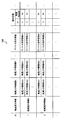
- FIG. 2 is a diagram showing an example of the data structure of the tactile database DB.
- the tactile database DB includes tactile presentation information and one or more tactile meta information associated with the tactile presentation information.
- the tactile meta information is information for classifying the tactile presentation information.
- the tactile database DB according to the present embodiment preferably includes device-dependent information depending on the device on which the tactile sensation is presented.
- a plurality of tactile presentation information is stored in the tactile database DB.
- the tactile presentation information A and the tactile presentation information B are shown in the tactile database DB of FIG.
- the above two tactile presentation information is shown in FIG. 2, three or more tactile presentation information may be stored in the tactile database DB.
- the tactile presentation information is information for realizing the tactile sensation presented to the user. More specifically, the user terminal 30 presents the tactile sensation to the user by generating, for example, a vibration corresponding to the tactile presentation information based on the tactile presentation information.
- the tactile presentation information may be information representing a vibration signal waveform presented to the user. Further, the tactile presentation information may be data representing one or a plurality of parameters extracted from the vibration signal waveform presented to the user.
- tactile meta information is associated with these tactile presentation information.
- tactile meta information is stored for each tactile meta information type in which tactile meta information is classified.
- FIG. 2 shows two types of tactile meta information, that is, tactile meta information type A and tactile meta information type B.
- the tactile meta information type stored in the tactile database DB may be one type or three or more types.
- tactile meta information AA1 and tactile meta information AA2 of tactile meta information type A tactile meta information AB1 and tactile meta information of tactile meta information type B are shown.
- AB2 is shown.
- each tactile meta information about the tactile meta information type A and the tactile meta information type B may be associated with each other.
- shared tactile meta information may exist in a plurality of tactile presentation information.
- FIG. 2 shows two tactile meta information for the tactile meta information type A as the tactile meta information associated with the tactile presentation information A, but for one or three or more tactile meta information types A.
- Tactile meta information may be associated with tactile presentation information A.
- one or more tactile meta information may be associated with each tactile presentation information.
- the tactile meta information related to all the tactile meta information types does not necessarily have to be associated with the tactile presentation information.
- the tactile sensation felt by the user differs depending on the shape or mechanism of the device that presents the tactile sensation. Therefore, it is difficult to make different devices present an appropriate tactile sensation with one tactile presentation information. Therefore, in order for the device to present an appropriate tactile sensation, it is necessary to process the tactile sensation presentation information into information corresponding to the device. Therefore, by processing the tactile presentation information using the device-dependent information, the user can feel an appropriate tactile sensation according to the device.
- device-dependent information is associated with each of the tactile presentation information.
- the device-dependent information is information corresponding to the device that presents the tactile sensation based on the tactile sensation presentation information. More specifically, the device-dependent information is information for converting tactile presentation information into information according to the device.
- Such a device may be provided, for example, in a tactile presentation unit described later, which is provided in the user terminal 30.
- the data structure of the tactile database DB has been explained above.
- the tactile search information is information that can be compared with the tactile meta information, and is information related to the tactile image desired by the user. More specifically, the tactile search information is information having contents as listed in the list of tactile meta information types described later with reference to FIG. Further, the tactile search information may be the tactile presentation information itself, or may be a combination of the tactile presentation information and the processed information.
- the processed information may be, for example, information for processing the tactile presentation information into information according to the device in order to cause various devices to present the tactile sensation.
- the tactile presentation information is searched, for example, the same or similar tactile meta information as the tactile search information is searched for, and the tactile presentation information associated with the found tactile meta information is searched.
- the tactile sensation is presented to the user based on the searched tactile sensation presentation information.
- the tactile presentation information search method described here is only an example of the search method, and the tactile presentation information search method using the tactile database DB is not limited to such a search method.
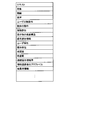
- FIG. 3 is a list showing an example of tactile meta information species.
- the tactile meta information types shown in FIG. 3 will be described in order from the top.
- the tactile meta information type may be text.
- the tactile meta information of the text may be text information such as "fluffy”.
- the text information may be associated with, for example, tactile presentation information for realizing a fluffy tactile sensation.
- the tactile meta information type may be a still image.
- the tactile meta information of the still image may be image information such as a photograph or a stamp, for example.
- the image information may be information representing a still image included in the image of the chick.
- the image information of a chick can be pronounced of the "fluffy" tactile sensation of a chick's hair. Therefore, the image information may be associated with the tactile presentation information for realizing a fluffy tactile sensation.
- the tactile meta information type may be a moving image as well as a still image.
- the tactile meta information type may include voice information related to the user's voice.
- the voice information may be information about the speed, pitch, or emotion of the user's utterance.
- the tactile presentation information stored in the tactile database is searched using, for example, the tactile search information input by the user.
- the tactile search information may be the voice of the user.
- the information processing device 20 may extract information on the speed, pitch, or emotion of the utterance from the input voice.
- the tactile search information may be searched by comparing the extracted information with the tactile meta information which is the voice information stored in the tactile database. For example, suppose that the user inputs the utterance content of "fluffy" as the tactile search information.
- the voice information may include, for example, information about the user's emotion, which is estimated from the speed of utterance and the like, in addition to the character information of "fluffy". Therefore, by including the voice information in the tactile meta information, it is possible to more appropriately provide the information for realizing the tactile sensation according to, for example, the emotion of the user.
- the tactile meta information type may be a tactile motion.
- the tactile motion of the user is the motion of the user who is presented with the tactile sensation.
- the tactile meta information of the user's tactile motion may be, for example, motion data such as a vector related to motion data representing the motion (movement) of the user's finger or the like touching a device or the like.
- the tactile meta information of the user's tactile motion may be a physical quantity such as the user's acceleration, velocity, displacement amount, or conversion of these into unit times.
- the information regarding the tactile motion is information that can more directly express the tactile sensation desired by the user. Therefore, by including the information related to the tactile motion in the tactile meta information, the information for realizing the tactile sensation desired by the user can be more appropriately provided.
- the tactile meta information type may be the movement of an object. More specifically, the tactile meta information type may be the operation of an object (hereinafter, also referred to as “presentation”) assumed as a tactile sensation presented to the user.
- the tactile meta information related to the movement of the presentation may be motion data such as a vector of motion data of the presentation, for example.
- the tactile meta information related to the movement of the presented object may be a physical quantity such as acceleration, velocity, displacement amount of the presented object, or conversion of these into unit times.
- the tactile meta information type may be a user's part (hereinafter, also referred to as “contact part”) to which the device touches and the tactile sensation is presented.
- contact part a user's part
- the way the user feels the tactile sensation differs depending on the contact site. Therefore, by presenting the tactile sensation corresponding to the tactile meta information of the contact portion to the user, the tactile sensation desired by the user is presented more appropriately.
- the tactile meta information species may be the surface structure of the presentation.
- the tactile meta information regarding the surface structure of the presentation may be, for example, information regarding the unevenness, hardness, or softness of the surface of the presentation.
- the tactile meta information type may be signal waveform information.
- the signal waveform information is information about a signal waveform representing a tactile sensation presented to the user.
- the tactile meta information regarding the signal waveform information may be, for example, information such as the frequency characteristic of the signal waveform, the beat component, the ratio of the bass component, the ratio of the treble component, or ASRD (Attack Decay Sustain Release).
- ADSR is four parameters related to the characteristic shape of the sound waveform, and represents Rise (Attack), Attenuation (Decay), Retention after attenuation (Stain), and Release, respectively. Parameters and the like can be mentioned.
- the tactile meta information type may be a user characteristic of the user to whom the tactile sensation is presented.
- the tactile meta information of the user characteristic may be the user information representing the user characteristic.
- the user information may be, for example, information such as a target age or physique. By including the user information in the tactile meta information, the user is more appropriately provided with the information for realizing the tactile sensation according to the user characteristic.
- the tactile meta information type is the target age of the user to whom the tactile sensation is presented, the age may be restricted according to the content of the tactile sensation presentation information or the part of the user to which the tactile sensation is presented.
- the tactile meta information type may be the type of the presentation part which is the part of the user to which the tactile sensation is presented.
- the frequency of vibration that is easily perceived differs depending on the part presented to the user. Therefore, by associating the tactile meta information regarding the presentation site with the tactile presentation information, it is possible to present the tactile sensation according to the presentation site.
- a waveform signal corresponding to the presentation site may be stored in the tactile database DB.
- the tactile database DB only the waveform signal for presenting the tactile sensation to the palm may be stored as the tactile sensation presentation information.
- parameters corresponding to each part are stored in the tactile database DB as tactile presentation information.
- the waveform signal for presenting the tactile sensation to the palm is processed based on the parameters corresponding to the presented part.
- the tactile sensation is presented to the user based on the processed information. More specifically, in the tactile database DB, the difference in frequency from the palm may be stored as a parameter for a part other than the palm.
- the frequency of the waveform signal for presenting the tactile sensation to the palm is corrected to a desired frequency by such a difference.
- the basic signal waveform is not limited to the signal waveform for presenting the tactile sensation to the palm, and the signal waveform related to other parts may be used as the basis.
- the tactile database DB does not need to store the waveform signal corresponding to each of the parts where the tactile sensation is presented. Therefore, since the tactile database DB only needs to store the parameter information realized with a smaller amount of data than the waveform signal information, the tactile database DB can be realized with a smaller amount of data.
- the processing of the waveform signal described above is performed, for example, by the processing unit 252 described later.
- the tactile meta information type may be a type of information regarding the frequency of the signal waveform realized by the tactile presentation information.
- the tactile meta information type may be monotonicity or clarity of the signal waveform.
- the monotonicity is the degree of frequency change per unit time in the signal waveform representing the tactile sensation presented, the degree of amplitude change per unit time, and the like.
- the tactile meta information species may be clarity. Clarity is, for example, the degree of roughness or clarity. In general, the more types of frequencies are included in a tactile waveform signal per unit time, the more "coarse" the tactile sensation becomes. On the other hand, when less types of frequencies are included in the tactile waveform signal per unit time, the tactile sensation becomes a "clearer" tactile sensation.
- the tactile meta information type may be a continuous presentation amplification factor.
- the tactile meta information regarding the continuous presentation amplification factor is a parameter for enhancing the intensity of the tactile sensation presented over time, for example, depending on the content of the tactile sensation presented or the site where the tactile sensation is presented.
- humans become accustomed (or numb) to the sensations of the tactile sensations. For this reason, humans feel that when a stimulus of the same intensity is presented, the stimulus becomes weaker at the site where the tactile sensation is presented.
- the user can continue to feel the same tactile sensation at the site where the tactile sensation is presented without causing habituation or the like.
- the tactile presentation information may be included in the content stored in the server 10 using SNS or the like.
- the tactile database DB may store the tactile presentation information included in the content.
- the tactile presentation information may include information about the creator of such content. More specifically, the tactile presentation information may include a profile of an informant who provides the tactile presentation information. As a result, the tactile presentation information is searched based on the profile of the information provider, so that the user can more appropriately present the tactile sensation intended by the creator of the content.
- the tactile meta information type may be search information.
- the search information is information that can be used to search for tactile presentation information.
- the search information may be generated based on AI (Artificial Intelligence) technology.
- the search information may be generated based on, for example, various known machine learning algorithms.
- the tactile meta information species have been described above with reference to FIG.
- the information regarding the signal waveform, monotonicity, or clarity may be a parameter constituting the tactile presentation information.
- the tactile meta information type is not limited to the example described with reference to FIG.
- the tactile meta information species may be appropriately deleted from the list shown in FIG. 3 or added to such a list.
- the tactile search information includes information regarding the content corresponding to the above-mentioned tactile meta information type. Therefore, the tactile presentation information can be information that more embodies the tactile sensation that the user imagines.
- FIG. 4 is a functional block diagram showing the configuration of the information processing device 20 according to the embodiment of the present disclosure.
- the information processing device 20 according to the embodiment of the present disclosure has a function of searching tactile presentation information from a tactile database based on tactile search information for searching tactile presentation information for realizing tactile sensation presented to a user.
- the information processing device 20 has a function of outputting information related to the searched tactile presentation information.
- the information processing device 20 has a function of updating the relationship in at least two or more of the plurality of tactile presentation information or the plurality of tactile meta information included in the tactile database.
- the communication control unit 210, the communication unit 215, the storage unit 220, the update unit 230, the search unit 240, the processing unit 250, and the output unit 255 of the information processing device 20 cooperate with each other for these functions of the information processing device 20. It is realized by. Hereinafter, each functional unit included in the information processing apparatus 20 will be described.
- the communication control unit 210 has a function of controlling communication performed between the information processing device 20 and various devices connected to the network 40. More specifically, the communication control unit 210 controls the communication between the information processing device 20 and various devices connected to the network 40 by controlling the communication unit 215.
- the communication unit 215 receives, for example, the information stored in the server 10 and transmits it to the communication control unit 210. Further, the communication unit 215 transmits the tactile search information transmitted from the user terminal 30 to the communication control unit 210. Further, the communication unit 215 transmits the tactile presentation information searched from the tactile database to the user terminal 30 via the network 40.
- the storage unit 220 stores various types of information such as information transmitted to the information processing device 20 or information generated by the information processing device 20.
- the storage unit 220 stores a tactile database.
- the tactile database is used for searching by the search unit 240, if necessary. Further, the tactile database is updated by the update unit 230 as needed.
- the storage unit 220 may store the tactile search information transmitted from the user terminal 30 or the like to the information processing device 20. Such tactile search information is used, for example, for the search unit 240 to search for tactile presentation information.
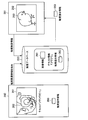
- the tactile database 221 shown in the center of FIG. 5 is stored in the storage unit 220.
- Various information such as tactile presentation information, image information (for example, photo or stamp), voice information, text information, etc. are transmitted to the information processing device 20 from various external devices such as the server 10 via the network 40. Will be done.
- This information is transmitted from the communication control unit 210 to the update unit 230.
- the update unit 230 extracts tactile-related information related to tactile sensation from the transmitted information and stores it in the tactile sensation database 221.
- tactile-related information is extracted from the first information 260 and the second information 270 in the tactile database 221 and stored in the tactile database 221.
- the first information 260 is information in which the first image information 261 including the image 262 of the chick, the first text information "fluffy", and the first tactile presentation information 263 are integrated. is there.
- the first tactile presentation information 263 is tactile presentation information for realizing the tactile sensation of the body hair of a chick included in the first image information 261.
- the second information 270 is a combination of the second image information 271 including the image 272 of the teddy bear, the second text information "fluffy", and the second tactile presentation information 273. This is the information that has become.
- the second tactile presentation information 273 is tactile presentation information for realizing the tactile sensation of a teddy bear.
- the update unit 230 includes the first image information 261 and the second image information 271, the first text information, the second text information, and the first tactile sensation included in the first information 260 and the second information 270.
- the presentation information 263 and the second tactile presentation information 273 are extracted and stored in the tactile database 221.
- the update unit 230 stores the first tactile presentation information 263 included in the first information 260 in the tactile database 221 in association with the first image information 261 and the first text information.
- the update unit 230 stores the second tactile presentation information 273 included in the second information 270 in the tactile database 221 in association with the second image information 271 and the second text information.
- these image information or text information are associated with tactile presentation information as tactile meta information.
- the update unit 230 updates the tactile database based on the mutual relationship in the plurality of tactile meta information stored in the tactile database 221. More specifically, the update unit 230 determines that the first tactile presentation information associated with the first tactile meta information is based on the similarity between the first tactile meta information and the second tactile meta information.
- the tactile similarity with the second tactile presentation information associated with the second tactile meta information is updated. For example, there may be a positive correlation between the similarity and the tactile similarity. That is, if the similarity is high, the tactile similarity may also be high. In the present embodiment, when certain tactile presentation information is searched, tactile presentation information similar to the tactile presentation information can also be searched.
- the update unit 230 has the first tactile presentation information 263 and the second tactile presentation information 273. Increase the tactile similarity with.
- the first and second tactile meta information is text information
- the tactile database 221 stores the first text information "fluffy" and the second text information.
- the update unit 230 determines that the first text information and the second text information are the same.
- “matching” is included in the expression “similar”. Therefore, the update unit 230 raises the tactile similarity between the first tactile presentation information 263 associated with the first text information and the second tactile presentation information 273 associated with the second text information.
- the second tactile presentation information 273 may be more tactile presentation information that can realize the tactile sensation desired by the user than the first tactile presentation information 263. Therefore, as described above, the similarity between the first tactile presentation information and the second tactile presentation information is modified according to the similarity between the first tactile meta information and the second tactile meta information. This makes it possible to more appropriately present the tactile sensation desired by the user.
- the update unit 230 can utilize the big data stored in the server 10 to associate the tactile presentation information with the tactile meta information.
- the above big data includes information indicating that the sand, which is a product purchased by the user, has been evaluated as "rough” or "wet". To do.
- the update unit 230 may update the tactile database by associating the tactile presentation information with the character information "sand" as the tactile meta information.
- the update unit 230 may update the tactile similarity in a plurality of tactile presentation information according to the number of times the tactile presentation information is used (that is, transmitted to the user terminal 30 or the like). Specifically, when each of a plurality of tactile presentation information is used at the same ratio based on a certain tactile search information, the update unit 230 raises the tactile similarity in the tactile presentation information. For example, when a certain tactile presentation information and a tactile presentation information different from the tactile presentation information are transmitted to the user terminal 30 about the same number of times based on the tactile search information of "roughness", the update unit 230 uses these 2 The tactile similarity in one tactile presentation information may be increased. In this way, the update unit 230 can update the tactile database based on the number of times the tactile presentation information is actually used.
- the tactile database is a database that matches the usage status of the tactile presentation information by the user. As a result, the user is provided with more appropriate information for realizing the tactile sensation.
- the update unit 230 raises the tactile similarity in the tactile presentation information associated with the two text information based on the similarity of the two text information.
- the updating unit 230 may update the tactile similarity in the tactile presentation information associated with the two image information based on the similarity of the two image information.
- the update unit 230 may update the tactile database based on the search result by the search unit 240 described later. As a result, the tactile database is updated with a more appropriate tactile database according to the past search results. As a result, the accuracy of searching the tactile presentation information is improved, and the information for realizing the tactile sensation is more appropriately provided to the user. For example, when a plurality of tactile presentation information is searched by the search unit 240, the update unit 230 may update the tactile database by increasing the tactile similarity between the plurality of tactile presentation information. When a plurality of tactile presentation information is searched based on a certain tactile search information, it is possible that these tactile presentation information can realize similar tactile sensations.
- the update unit 230 may update the tactile database based on the frequency at which the tactile presentation information is adopted (adoption frequency) and the tactile search information used for searching the adopted tactile presentation information.
- the adoption of the tactile presentation information may mean that the searched tactile presentation information is used to realize the tactile sensation actually presented to the user.
- the updating unit 230 may update, for example, the probability that the tactile presentation information is searched based on the adoption frequency of the tactile presentation information and the tactile search information used for searching the adopted tactile presentation information.
- a plurality of tactile presentation information is searched based on specific tactile search information will be described.
- the update unit 230 updates the tactile database so that the more frequently adopted tactile presentation information is searched with a higher probability based on the specific tactile search information among the plurality of tactile presentation information. May be good. Further, the update unit 230 may update the tactile database so that the less frequently adopted tactile presentation information is, the lower the probability that the tactile presentation information is searched based on the specific tactile search information. In the present embodiment, even if the tactile presentation information is searched, for example, when the user determines that the tactile presentation information is inappropriate, the tactile presentation information may not be used for realizing the tactile sensation. Therefore, it is considered that the more frequently adopted tactile sensation information is, the more appropriately the tactile sensation desired by the user can be realized.
- the update unit 230 updates the tactile database based on the frequency of adoption of the tactile presentation information and the tactile search information used for searching the adopted tactile presentation information, thereby realizing information for the user to realize the tactile sensation. Will be able to be provided more appropriately. Further, the update unit 230 detects tactile presentation information similar to the tactile presentation information that is the target of the adoption frequency, based on the adoption frequency of the tactile presentation information and the tactile search information used for searching the adopted tactile presentation information. The tactile database may be updated with respect to. For example, the update unit 230 also uses the tactile search information used for searching the frequently adopted tactile presentation information for the tactile presentation information similar to the frequently adopted tactile presentation information among the plurality of searched tactile presentation information. The tactile database may be updated to be searched with a higher probability.
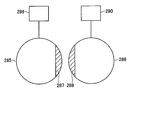
- FIGS. 6 and 7 are diagrams for explaining an example in which the update unit 230 updates the tactile database based on the relationship between the two tactile meta information groups.
- the tactile meta information group is a set of a plurality of tactile meta information.
- FIG. 6 shows a first tactile meta information group 280, which is a first set of tactile meta information stored in the tactile database, and a second tactile meta information group 281 which is a second set. ..
- a third tactile presentation information 283 or a fourth tactile presentation information 284 is associated with the first tactile meta information group 280 and the second tactile meta information group 281, respectively.
- the first tactile meta information group 280 and the second tactile meta information group 281 have a tactile meta information group 282 shared with each other.
- the search unit 240 has a function of searching the tactile presentation information from the tactile database by using the tactile search information for searching the tactile presentation information.
- the search unit 240 uses the tactile search information transmitted from the user terminal 30 or the like to the information processing device 20 via the network 40, for example.
- the search unit 240 transmits the searched tactile presentation information to the processing unit 250 or the output unit 255.
- the search unit 240 may transmit the ID corresponding to the searched tactile presentation information to the output unit 255.
- Such an ID is transmitted to the user terminal 30 via the network 40.
- the user terminal 30 may inquire of, for example, a mirror server of the information processing device 20 existing in the vicinity of the user terminal 30 and acquire tactile presentation information.
- the user terminal 30 may inquire of another user terminal or the like to acquire tactile presentation information.
- Peer to Peer communication, Bluetooth (registered trademark) connection, or the like may be used without going through the network 40.
- the processing unit 250 has a function of executing various processes based on the search result of the search unit 240. More specifically, the processing unit 250 has a function of generating information based on the tactile search information searched by the search unit 240 and generating information representing information regarding the search result. The processing unit 250 transmits the processing result to the output unit 255. Further, the processing unit 250 transmits the processing result to the updating unit 230 as needed.
- FIG. 8 is a functional block diagram showing the configuration of the processing unit 250. As shown in FIG. 8, the processing unit 250 includes an extraction unit 251, a processing unit 252, and an image creation unit 253.
- the extraction unit 251 has a function of extracting feature information representing the features of the tactile presentation information searched by the search unit 240.
- the extracted feature information is transmitted to the processing unit 252.
- the amount of data of the extracted feature information may be smaller than the amount of data of the tactile presentation information to be extracted.
- the extracted feature information is transmitted to the communication control unit 210 and transmitted to the user terminal 30.
- the tactile sensation is presented to the user by the user terminal 30 based on the transmitted feature information.
- the extracted feature information may be extracted based on the tactile search information corresponding to the searched tactile presentation information.
- the tactile search information includes information on the tactile sensation that the user imagines. Therefore, the feature information extracted based on the tactile search information may be information that matches the tactile sensation desired by the user. Therefore, by extracting the feature information based on the tactile search information, it is possible to more appropriately provide the information for realizing the tactile sensation desired by the user.
- the extraction unit 251 may extract information representing one cycle of the above waveforms as feature information. Good. For example, the extraction unit 251 may calculate the autocorrelation function of the tactile presentation information and extract the information for one cycle. Further, the extraction unit 251 may extract information representing one cycle based on the tactile meta information associated with the searched tactile presentation information. The extraction unit 251 transmits the extracted information for one cycle and the information indicating how many pieces of information for one cycle are included in the tactile presentation information to the communication control unit 210. These transmitted information are transmitted to the user terminal 30 and used for realizing the tactile sensation. By extracting the information for one cycle from the tactile presentation information in this way, the amount of data transmitted by the information processing apparatus 20 to the user terminal 30 can be reduced.
- the extracted feature information may be extracted based on the emotion information related to the user's emotion included in the tactile search information.
- the emotional information may be, for example, information about emotions such as "joy” or "anger".
- the tactile search information is image information
- the emotional information may be acquired from the image information.
- the tactile search information is image information including an image of a person's smile
- various known image recognition techniques may be used to acquire emotional information of "joy" from the image of the smile.
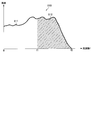
- FIG. 9 shows a vibration signal waveform 500 represented by tactile search information, with time on the horizontal axis and amplitude on the vertical axis.
- the frequency spectrum 510 of the signal waveform 500 shown in FIG. 9 is shown with the horizontal axis representing the frequency f and the vertical axis representing the intensity.
- the signal waveform 500 has components having frequencies from 0 to f2.
- the emotion of "joy” is expressed by a vibration stimulus with a higher frequency than other emotions. Therefore, when the tactile sensation due to the vibration stimulus of a higher frequency is presented to the user, the user may recall the feeling of "joy” by the stimulus. Therefore, when the tactile search information includes information related to the emotion of "joy", the extraction unit 251 extracts the information related to the signal waveform having a higher frequency from the signal waveforms and transmits it to the communication control unit 210. You may. For example, the extraction unit 251 may extract the frequency component 512 having a frequency of f1 or more indicated by the diagonal line shown in FIG. 10 and transmit it to the communication control unit 210. Further, the extraction unit 251 may perform processing such as frequency thinning or low resolution for the frequency component 511 having a frequency less than f1 and transmit it to the communication control unit 210.
- the emotion of "anger” is expressed by a vibration stimulus with a lower frequency than other emotions. Therefore, when the tactile sensation due to the vibration stimulus of a lower frequency is presented to the user, the user may recall the feeling of "anger” by the stimulus.
- the extraction unit 251 may extract the frequency component 511 whose frequency shown in FIG. 10 is lower than f1 and transmit it to the communication control unit 210.
- the extraction unit 251 may perform processing such as frequency thinning or low resolution on the frequency component 512 having a frequency of f1 or more and transmit it to the communication control unit 210. As described above, by extracting the feature information from the tactile presentation information based on the user's emotional information, it is possible to more appropriately present the user with a tactile sensation that matches the emotion.
- the feature information extracted from the tactile presentation information may be the same as the tactile meta information associated with the tactile presentation information. In this case, the extraction unit 251 does not have to transmit the feature information to the output unit 255. Further, when all the extracted feature information is covered by the tactile meta information associated with the tactile presentation information to be extracted, the extraction unit 251 transmits all the feature information to the output unit 255. You don't have to. In this case, the extraction unit 251 transmits the tactile meta information associated with the tactile presentation information to the output unit 255. The transmitted tactile meta information is output to the user terminal 30 or the like via the communication control unit 210.
- the processing unit 252 has a function of processing the tactile presentation information searched by the search unit 240. For example, when the tactile presentation information is represented by a parameter or the like instead of the signal waveform itself, the processing unit 252 generates information representing the signal waveform based on the parameter or the like. Further, when it is necessary to process the tactile presentation information into information corresponding to the device that presents the tactile sensation to the user, the processing unit 252 processes the tactile presentation information into information according to the device. The processing unit 252 may process the tactile presentation information into information according to the device based on the device-dependent information stored in the tactile database. In addition, the processing unit 252 may summarize the tactile presentation information.
- the processing unit 252 may summarize the tactile presentation information by performing a process of lowering the resolution of the signal waveform represented by the tactile presentation information.
- the summarized tactile presentation information may be used, for example, to confirm whether the tactile sensation based on the searched tactile presentation information is the desired tactile sensation by the user. Further, the processing unit 252 may process the tactile presentation information according to the part of the user to which the tactile sensation is presented.
- the image creation unit 253 creates image data for displaying the image on the user terminal 30 or the like. For example, the image creation unit 253 creates image data for displaying the result searched by the search unit 240 on the user terminal 30. Specifically, the image creation unit 253 may create image data for displaying the number or contents of the searched tactile presentation information on the user terminal 30. Further, when the tactile presentation information is not searched, the image creation unit 253 may create image data for displaying that the tactile presentation information has not been searched.
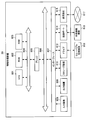
- FIG. 11 is a functional block diagram showing the configuration of the user terminal 30.
- the user terminal 30 has a function of acquiring tactile search information and transmitting the acquired tactile search information to the information processing device 20. Further, the user terminal 30 has a function of presenting a tactile sensation to the user based on the tactile sensation presentation information searched by the information processing device 20. Further, the user terminal 30 has a function of displaying the result of the information processing device 20 searching the tactile presentation information from the tactile database.
- the functions of the user terminal 30 are realized by the input unit 310, the communication control unit 320, the communication unit 325, the tactile presentation unit 330, the storage unit 340, the display control unit 350, and the display unit 355 included in the user terminal 30.
- the input unit 310 has a function of acquiring various kinds of information according to an operation by the user.
- the input unit 310 is realized by various known input devices such as a mouse or a keyboard.
- the input unit 310 acquires tactile search information by, for example, a user operation.
- the tactile search information may be, for example, information such as text information, image information, or voice information.
- the input unit 310 transmits the acquired information to the communication control unit 320.
- the information processing device 20 may search for a plurality of tactile presentation information, and information related to these tactile presentation information may be transmitted to the user terminal 30.
- the display unit 355, which will be described later, may display, for example, information representing the contents of the plurality of searched tactile presentation information.
- the user refers to the contents of the plurality of tactile presentation information displayed on the display unit 355, selects the tactile presentation information that realizes the desired tactile sensation, and inputs the information representing the selected tactile presentation information to the input unit 310. be able to.
- the input unit 310 can transmit information representing the tactile presentation information input by the user to the information processing device 20 via the communication control unit 320, the communication unit 325, and the network 40. As a result, the information processing device 20 can recognize the result of the user selecting the tactile presentation information.
- the communication unit 325 has a function of transmitting and receiving various information.
- the communication unit 325 has a function of transmitting various information acquired by the input unit 310 to the information processing device 20 or the like via the network 40.
- the communication unit 325 receives the tactile presentation information searched by the information processing device 20 via the network 40.
- the communication unit 325 may receive the result of the information processing device 20 searching for the tactile presentation information.
- the information received by the communication unit 325 via the network 40 is transmitted to the communication control unit 320.
- the tactile presentation unit 330 may convert the information related to the tactile presentation information into the signal waveform information according to the device included in the tactile presentation unit 330, if necessary.
- the tactile presentation unit 330 presents the tactile sensation to the user based on the converted signal waveform information. Thereby, the tactile sensation can be more appropriately presented to the user according to the shape or mechanism of the device.
- the tactile presentation unit 330 may acquire information for converting into signal waveform information according to the device from the storage unit 340. Further, when the information related to the tactile presentation information is a parameter or the like that characterizes the signal waveform information, the tactile presentation unit 330 may generate the signal waveform information based on the parameter or the like and present the tactile sensation. ..
- the tactile presentation unit 330 when the tactile presentation unit 330 is provided with a plurality of devices for presenting the tactile sensation, the tactile sensation presentation by the plurality of devices may be controlled in chronological order. This makes it possible to present the tactile sensation to the user through complex perception.
- the tactile presentation unit 330 may control the presentation of tactile sensations by the plurality of devices based on the information regarding the plurality of tactile presentation information. For example, when a plurality of devices are arranged along the user's right shoulder to the left flank, the tactile presentation unit 330 controls the plurality of devices to give the user the right shoulder to the left flank. It is possible to present a tactile sensation that is torn diagonally.
- the storage unit 340 stores various information such as information acquired by the user terminal 30 or information necessary for processing by the user terminal 30. For example, the storage unit 340 stores information or search results related to the searched tactile presentation information transmitted from the information processing device 20. Further, the storage unit 340 stores information necessary for the tactile presentation unit 330 to present the tactile sensation. For example, the storage unit 340 stores information for the tactile presentation unit 330 to convert the tactile presentation information into information according to the device. Further, the storage unit 340 may store a database similar to the tactile database stored in the information processing device 20. The information stored in the storage unit 340 is referred to by the communication control unit 320, the tactile presentation unit 330, or the display control unit 350, if necessary.
- the display control unit 350 has a function of controlling the display of various information by the display unit 355 based on the image data created by the information processing device 20. For example, the display control unit 350 acquires image data related to the search result of the tactile presentation information by the information processing device 20 from the communication control unit 320, transmits the image data to the display unit 355, and causes the display unit 355 to display the search result. Further, the display control unit 350 may process the acquired image data and transmit it to the display unit 355, if necessary. For example, the display control unit 350 may have acquired image data indicating that a plurality of tactile presentation information has been searched.
- the display control unit 350 processes the image data so that the information representing the plurality of tactile presentation information is displayed in order from the top of the screen on the display unit 355 in descending order of the number of times the user has used the information. You may.
- the user can recognize the tactile presentation information that is frequently used by referring to the display unit 355. It is presumed that the tactile presentation information that is frequently used can realize the tactile sensation desired by the user. Therefore, the contents of the tactile presentation information are displayed on the display unit 355 in descending order of the number of times of use, so that the user can present an appropriate tactile sensation.
- the display unit 355 has a function of displaying various information as an image to the user.
- the display unit 355 is realized by various known image display devices such as a liquid crystal display.
- the display unit 355 may display an image showing the content of the searched tactile presentation information. More specifically, the display unit 355 may display an image reminiscent of the tactile sensation presented based on the searched tactile sensation presentation information. The user can recall the tactile sensation presented by referring to such an image. Further, when the information processing apparatus 20 searches for a plurality of tactile presentation information, the display unit 355 may display an image reminiscent of each of the tactile sensations corresponding to the plurality of tactile presentation information.
- the user can select an image most pronounced of the tactile sensation desired by the user from the plurality of images displayed on the display unit 355, and input information on the tactile sensation corresponding to the selected image to the input unit 310.
- the tactile presentation unit 330 can present the selected tactile sensation to the user.
- FIG. 12 is a diagram showing how the tactile presentation information is searched.
- the tactile database 223 stored in the storage unit 220 included in the information processing device 20 is shown. It is assumed that the tactile database 223 stores the tactile-related information acquired from the first information 260 described with reference to FIG. More specifically, the first image information 261 including the image 262 of the chick shown in FIG. 5, the first text information "fluffy", and the first tactile presentation information 263 are stored in the tactile database 223. It is assumed that it is stored.
- the user inputs the third information 291 to the input unit 310 of the user terminal 30.
- the third information 291 includes a third image information 292 having a chick image 293.
- the third image information 292 is transmitted from the user terminal 30 to the information processing device 20 as tactile search information. Further, in conjunction with this transmission, a signal requesting the information processing device 20 to search for the tactile presentation information is transmitted from the user terminal 30.
- the information processing device 20 searches the tactile database 223 using the third image information 292.
- the image 262 of the chick included in the first image information 261 and the image 293 of the chick included in the third image information 292 are similar.
- the information processing device 20 determines that the first image information 261 stored in the tactile database 223 and the third image information 292 transmitted from the user terminal 30 are similar.
- the information processing device 20 searches for the first tactile presentation information 263 associated with the first image information 261 and transmits the first tactile presentation information 263 to the user terminal 30.
- the tactile presentation unit 330 can present the tactile sensation based on the transmitted first tactile presentation information 263.
- the first tactile presentation information 263 received by the user terminal 30 is stored in the storage unit 340 included in the user terminal 30 together with the third image information 292.
- the user terminal 30 can transmit the third image information 292 together with the first tactile presentation information 263 to, for example, various servers connected to the network.
- the user terminal 30 requests the information processing device 20 to search for the tactile presentation information and the time when the user terminal 30 presents the tactile sensation.
- a user is viewing a moving image displayed on the display unit 355, for example, he / she may want the moving image to present a tactile sensation to the tactile presentation unit 330 in real time.
- an analysis unit included in the user terminal 30 analyzes a moving image displayed on the display unit 355, and requests the information processing device 20 to search for tactile presentation information based on the analysis result. For example, when the display unit 355 displays a moving image showing a horse running "fluffy", the analysis unit analyzes that the moving image contains an image showing that the horse is running. ..
- the user terminal 30 requests that the information processing device 20 transmit the information indicating the state when the horse is running "Pakapaka" as the tactile search information to search the tactile presentation information. To do.
- the tactile presentation unit 330 since the above-mentioned time lag occurs, it may be difficult for the tactile presentation unit 330 to present the tactile sensation in real time while waiting for the tactile presentation information to be searched by the information processing apparatus 20. Therefore, during such a time lag, by presenting a provisional tactile sensation to the user based on the tactile presentation information stored in the user terminal 30, it is possible to prevent the user from feeling the above time lag.
- FIG. 13 is a diagram showing a signal waveform of vibration related to the sense of touch presented to the user.
- the first vibration waveform 520 related to the provisional tactile sensation presented based on the tactile presentation information stored in the user terminal 30, and the tactile presentation information searched by the information processing apparatus 20 are shown.
- a second vibration waveform 523 relating to the presented tactile sensation and a vibration waveform 524 which is a superposition of the first vibration waveform 520 and the second vibration waveform 523 are shown.
- the horizontal axis indicates the time, and the time when the user inputs the tactile search information to the user terminal 30 is set to 0.
- the vertical axis shows the amplitude of each vibration waveform.
- the user terminal 30 presents the tactile sensation to the user based on the tactile sensation presentation information stored in the storage unit 340. More specifically, the tactile presentation unit 330 presents the tactile sensation represented by the first vibration waveform 520 to the user.
- the first vibration waveform 520 is a waveform different from the vibration waveform 522 shown by the broken line in the middle stage, which corresponds to the desired tactile sensation.
- a person cannot accurately sense the sense of touch when he or she begins to feel the sense of touch. Therefore, even if the first vibration waveform 520 has a waveform different from the desired vibration waveform 522, the user can feel the tactile sensation without feeling any discomfort.
- the amplitude of the first vibration waveform 520 is smaller than that of the vibration waveform 521 represented by the tactile presentation information stored in the user terminal 30 from time t1 to t2. That is, from time t1 to t2, the first vibration waveform 520 fades out. On the other hand, from time t1 to t2, the second vibration waveform 523 fades in. After time t2, the second vibration waveform 523 becomes a tactile waveform desired by the user.
- the vibration waveform 524 in which the first vibration waveform 520 and the second vibration waveform 523, which have been described above, are superimposed is shown at the bottom of FIG.
- the tactile sensation is presented to the user based on the tactile sensation presented information stored in the user terminal 30.
- the timing at which the moving image is displayed can be delayed.
- the timing at which the tactile sensation is presented and the timing at which the moving image is displayed can be matched, and the tactile sensation can be presented to the user without discomfort.
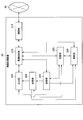
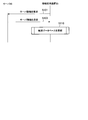
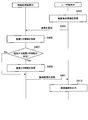
- FIG. 14 is a flowchart showing a flow in which the information processing apparatus 20 according to the embodiment of the present disclosure updates the tactile database.
- description will be given with reference to the flowchart shown in FIG.
- the information processing device 20 requests the server information from the server 10 (step S101). More specifically, the communication unit 215 transmits a signal requesting tactile-related information to the server 10 via the network 40.
- the information processing device 20 updates the tactile database (step S110). More specifically, the update unit 230 updates the tactile database stored in the storage unit 220 based on the server information. A more detailed update process will be described with reference to FIG. FIG. 15 is a flowchart showing an update process of the tactile database. Hereinafter, the description will be given with reference to the flowchart shown in FIG.
- the update unit 230 acquires the server information (step S111). Next, the update unit 230 determines whether or not the server information includes the tactile presentation information (step S112). If it is determined that the server information includes the tactile presentation information (step S112: Yes), the process proceeds to step S113. When it is determined that the server information does not include the tactile presentation information (step S112: No), the update process ends.
- the update unit 230 extracts tactile meta information from the server information (step S113).
- the tactile meta information is extracted from image information, text information, voice information, tactile presentation information, and the like included in the server information.
- information related to the sense of touch is extracted as the sense of touch meta information.
- the server information includes the text information "It's fluffy", the text information is extracted as the tactile meta information.
- the update unit 230 confirms the tactile meta information included in the tactile database (step S114). More specifically, the update unit 230 compares each of the tactile meta information extracted in step S113 with each of the tactile meta information included in the tactile database. When the tactile meta information that completely matches the extracted tactile meta information exists as the tactile meta information associated with the tactile presentation information detected in step S112 in the tactile database (step S115: Yes), FIG. The update process shown in is completed. That is, when the extracted tactile meta information exists as registered data in the tactile database, the update process shown in FIG. 15 ends. On the other hand, if the extracted tactile meta information does not exist as the data registered in the tactile database (step S115: No), the process proceeds to step S116.
- the update unit 230 determines whether or not the tactile meta information extracted in step S113 contains tactile meta information similar to any of the tactile meta information included in the tactile database (step). S116). If it is determined that there is extracted tactile meta information that is similar to any of the tactile meta information contained in the tactile database (step S116: Yes), the process proceeds to step S117. On the other hand, if it is determined that there is no extracted tactile meta information similar to any of the tactile meta information contained in the tactile database (step S116), the process proceeds to step S118.
- step S116 the update unit 230 stores in the storage unit 220 that the extracted tactile meta information and the tactile meta information included in the tactile database are similar (step S117).
- the update unit 230 updates the tactile database (step S118). More specifically, the update unit 230 stores the tactile presentation information in the tactile database in a state in which the tactile meta information extracted from the tactile presentation information included in the server information is associated with the tactile meta information. When the tactile database is updated, the update process ends.
- the server information of the server 10 is transmitted to the information processing device 20 as needed, and the information processing device 20 is tactile based on the server information. Update the database. Therefore, as the information is accumulated in the server 10, the tactile database stored in the information processing apparatus 20 is updated. As a result, the information processing device 20 can search the tactile presentation information more accurately, and can provide information for realizing a more appropriate tactile sensation to the user.
- the information processing apparatus 20 searches the tactile presentation information from the tactile database, and the user terminal 30 presents the tactile sensation based on the searched tactile presentation information. Will be described.
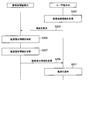
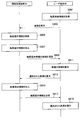
- FIG. 16 is a flowchart showing an outline of a processing example by the information processing apparatus 20 and the user terminal 30 according to the embodiment of the present disclosure.
- the user terminal 30 acquires tactile search information (step S201). More specifically, the input unit 310 acquires tactile search information composed of image information, voice information, text information, and the like by an operation of a user or the like. The acquired tactile search information is transmitted to the communication control unit 320.
- the information processing device 20 searches the tactile presentation information from the tactile database (step S205). More specifically, the communication unit 215 receives the tactile search information and the request information. The received tactile search information and request information are transmitted to the search unit 240 via the communication control unit 210. The search unit 240 receives the request information and uses the transmitted tactile search information to search the tactile search information from the tactile database stored in the storage unit 220.
- the information processing device 20 acquires the tactile presentation information (step S207). More specifically, the search unit 240 acquires the tactile presentation information searched in step S205.
- the information processing device 20 transmits the tactile presentation information to the user terminal 30 (step S209). More specifically, the search unit 240 transmits the searched tactile presentation information to the processing unit 250 or the output unit 255. The tactile presentation information transmitted to the processing unit 250 is subjected to various processing and transmitted to the output unit 255. The output unit 255 transmits the tactile presentation information transmitted from the search unit 240 or the tactile presentation information processed by the processing unit 250 to the communication control unit 210 as information related to the tactile presentation information. The communication control unit 210 causes the communication unit 215 to transmit information related to the searched tactile presentation information to the user terminal 30 via the network 40.
- the user terminal 30 presents a tactile sensation (step S211). More specifically, the communication unit 325 receives information related to the tactile presentation information. For example, the communication control unit 320 acquires the received tactile presentation information and transmits it to the tactile presentation unit 330. The tactile presentation unit 330 presents the tactile sensation to the user based on the transmitted tactile sensation presentation information.
- the information processing apparatus 20 searches the tactile presentation information from the tactile database using the tactile search information, and outputs the information related to the searched tactile presentation information. In this way, since the information related to the tactile presentation information is output based on the tactile presentation information searched using the tactile search information, the information for realizing the tactile sensation desired by the user is provided more appropriately. To.
- tactile search information using text information, image information, voice information, etc. alone or in combination of these information is used.
- the tactile sensation that the user imagines is expressed more concretely.
- more accurate tactile search information is searched, and information for realizing a more appropriate tactile sensation is provided to the user.
- FIG. 17 is a flowchart showing a first specific example of the information processing device 20 and the user terminal 30 according to the embodiment of the present disclosure.
- the method in which the information processing apparatus 20 acquires the tactile presentation information will be described more specifically.
- the first specific example will be described with reference to the flowchart shown in FIG.
- steps S301 and S303 are carried out, but since these processes are substantially the same as the processes of steps S201 and S203 shown in FIG. 16, description thereof will be omitted here.
- step S305 the information processing device 20 searches for tactile meta information. More specifically, the search unit 240 searches the tactile database for tactile meta information similar to the tactile search information.
- the search unit 240 determines whether or not there is tactile meta information similar to the tactile search information in the tactile database (step S307). If it is determined that there is tactile meta information similar to the tactile search information (step S307: Yes), the process proceeds to step S309. On the other hand, if it is determined that there is no tactile meta information similar to the tactile search information (step S307: No), the process proceeds to step S311.
- step S307 the information processing device 20 acquires the tactile presentation information (step S309). More specifically, the search unit 240 acquires the tactile presentation information associated with the tactile meta information determined to be similar to the tactile search information in step S307.
- the information processing device 20 transmits the search result to the user terminal 30 (step S311). More specifically, when the search unit 240 has acquired the tactile presentation information in step S309, the search unit 240 transmits the acquired tactile presentation information to the processing unit 250 or the output unit 255. The output unit 255 transmits information related to the tactile presentation information to the communication control unit 210 as a search result. On the other hand, when the tactile presentation information is not acquired, the search unit 240 transmits the information indicating that the tactile presentation information was not searched as the search result to the communication control unit 320. The communication control unit 320 controls the communication unit 325 so as to transmit the search result to the user terminal 30. The communication unit 325 transmits the search result to the user terminal 30 via the network 40.
- the user terminal 30 outputs the search result (step S313). More specifically, the communication unit 325 receives the search result and transmits the received search result to the communication control unit 320.
- the communication control unit 320 transmits the tactile presentation information to the tactile presentation unit 330.
- the tactile presentation unit 330 presents the tactile sensation to the user based on the transmitted tactile sensation presentation information.
- the communication control unit 320 transmits information indicating that the tactile presentation information has not been searched to the display control unit 350.
- the display control unit 350 causes the display unit 355 to display information indicating that the tactile presentation information has not been searched, for example, as image information. As a result, the user can recognize that the tactile presentation information has not been searched.
- FIG. 18 is a flowchart showing a second specific example of the information processing system 1 according to the embodiment of the present disclosure.
- the second specific example differs from the first specific example in that the search unit 240 acquires tactile meta information from the tactile database.
- the search unit 240 acquires tactile meta information from the tactile database.
- steps S401 to S407 are carried out, but since these processes are substantially the same as the processes of steps S301 to S307 shown in FIG. 17, description thereof will be omitted here.
- the information processing device 20 acquires the tactile meta information (step S409). More specifically, the search unit 240 acquires the tactile meta information determined to be similar to the tactile search information from the tactile database.
- the information processing device 20 transmits the search result to the user terminal 30 (step S411).
- the search unit 240 transmits the acquired tactile meta information to the communication control unit 210 as a search result.
- the search unit 240 transmits the information indicating that the tactile meta information was not searched to the communication control unit 210 as a search result.
- the communication control unit 210 transmits the transmitted search result to the communication unit 215.
- the communication unit 215 transmits the search result to the user terminal 30 via the network 40.
- the user terminal 30 outputs the search result (step S413). More specifically, the communication unit 325 receives the search result and transmits the received search result to the communication control unit 320.
- the communication control unit 320 transmits the tactile meta information to the tactile presentation unit 330.
- the tactile presentation information associated with the tactile meta information is stored in the storage unit 340. That is, it is assumed that the storage unit 340 stores a database similar to the tactile database stored in the information processing device 20.
- the tactile presentation unit 330 searches the transmitted tactile meta information from the storage unit 340, and presents the tactile sensation to the user based on the tactile presentation information associated with the searched tactile meta information.
- the communication control unit 320 transmits information indicating that the tactile sensation is not presented by the tactile presentation unit 330 to the display control unit 350. Based on the transmitted information, the display control unit 350 causes the display unit 355 to display information indicating that the tactile sensation is not presented by the tactile sensation presenting unit 330. This allows the user to recognize that the tactile sensation is not presented.
- FIG. 19 is a flowchart showing a first application example of processing by the information processing device 20 and the user terminal 30 according to the embodiment of the present disclosure.
- the first application example will be described with reference to the flowchart shown in FIG.
- steps S501 and S503 are carried out, but since these processes are substantially the same as the processes of steps S201 and S203 shown in FIG. 16, description thereof will be omitted here.
- the information processing device 20 searches for tactile presentation information (step S505). More specifically, the communication unit 215 receives the tactile search information from the user terminal 30 and transmits the received tactile search information to the communication control unit 210. The communication control unit 210 transmits the transmitted tactile search information to the search unit 240. The search unit 240 searches the tactile presentation information from the tactile database by using the transmitted tactile search information. In the first application example, the search unit 240 searches for a plurality of tactile presentation information. The search unit 240 transmits the searched plurality of tactile presentation information to the processing unit 250 or the output unit 255 as candidates for the tactile presentation information.
- the information processing device 20 transmits a candidate for tactile presentation information to the user terminal 30 (step S507). More specifically, the output unit 255 transmits information related to the plurality of tactile presentation information to the communication control unit 210 as candidates for the tactile presentation information.
- the communication control unit 210 controls the communication unit 215 so as to transmit the transmitted tactile presentation information candidate to the user terminal 30. As a result, candidates for tactile presentation information are transmitted to the user terminal 30.
- the user terminal 30 outputs a tactile candidate (step S509). More specifically, the communication unit 325 receives the candidate for the tactile presentation information and transmits the received candidate for the tactile presentation information to the communication control unit 320. The communication control unit 320 transmits the transmitted tactile presentation information candidate to the tactile presentation unit 330. The tactile presentation unit 330 presents tactile candidates to the user based on the transmitted tactile presentation information candidates.
- the user terminal 30 requests the selected tactile candidate (step S511). More specifically, the user selects a tactile sensation that most closely matches the tactile sensation desired by the user from the tactile sensation candidates presented in step S509, and inputs information corresponding to the selected tactile sensation to the input unit 310.
- the input unit 310 transmits the input information to the communication control unit 320.
- the communication control unit 320 controls the communication unit 325 so as to transmit the information corresponding to the selected tactile sensation to the information processing device 20. As a result, information about the selected tactile sensation is transmitted to the information processing device 20.
- the information processing device 20 updates the tactile database (step S513). More specifically, the communication unit 215 transmits information corresponding to the selected tactile candidate to the update unit 230 via the communication control unit 210.
- the update unit 230 updates the tactile database with respect to the tactile presentation information for realizing the selected tactile sensation. For example, the update unit 230 uses the tactile search information used for the search or the information extracted from the tactile search information as tactile meta information associated with the tactile presentation information for realizing the selected tactile sensation. It may be stored in the database.
- the update unit 230 may update the tactile database according to the degree of selectivity of the presented tactile sensation. For example, when two tactile presentation information searched based on a certain tactile search information are selected by the user at a similar ratio, the update unit 230 raises the tactile similarity of the two tactile presentation information to the tactile database. May be updated. As a result, the user is provided with more appropriate information for realizing the tactile sensation.
- the information processing device 20 transmits the tactile presentation information to the user terminal 30 (step S515). More specifically, the communication control unit 210 controls the communication unit 215 so as to transmit information related to the tactile presentation information for realizing the selected tactile sensation to the user terminal 30.
- the user terminal 30 presents the selected tactile sensation (step S517). More specifically, the communication unit 325 receives the information related to the tactile presentation information for realizing the selected tactile sensation, and transmits the information related to the received tactile presentation information to the communication control unit 320. The communication control unit 320 transmits the transmitted information to the tactile presentation unit 330, and the tactile presentation unit 330 presents the tactile sensation to the user.
- the information processing device 20 updated the tactile database based on the selection result of information related to the tactile presentation information by the user.
- the tactile database is updated in a manner more in line with the user's wishes.
- the user is more appropriately provided with information for achieving the desired tactile sensation.
- FIG. 20 is a flowchart showing a second application example of processing by the information processing device 20 and the user terminal 30 according to the embodiment of the present disclosure.
- the second application example will be described with reference to the flowchart shown in FIG.
- steps S601 and S603 are carried out, but since these processes are substantially the same as the processes of steps S201 and S203 shown in FIG. 16, description thereof will be omitted here.
- the information processing device 20 searches for the tactile presentation information (step S605). More specifically, the communication unit 215 transmits the tactile search information to the search unit 240 via the communication control unit 210. The search unit 240 searches a plurality of tactile presentation information from the tactile database using the transmitted tactile search information. The searched plurality of tactile presentation information is transmitted to the processing unit 250.
- the information processing device 20 processes the tactile presentation information (step S607). More specifically, the processing unit 252 included in the processing unit 250 processes each of the plurality of tactile presentation information based on the confirmation information.
- the confirmation information is information used to convert the tactile presentation information into information for realizing the tactile sensation for the user to confirm the tactile sensation.
- the processing unit 252 creates a digest version of the tactile presentation information based on the confirmation information. For example, the time for which the tactile sensation is presented based on the tactile sensation presentation information of the digest version may be shorter than the time for which the tactile sensation is presented based on the tactile sensation presentation information before processing. That is, the tactile sensation presented based on the tactile sensation presentation information after processing may be a simplified tactile sensation than the tactile sensation presented based on the tactile sensation presentation information before processing.
- the information processing device 20 transmits a candidate for tactile presentation information to the user terminal 30 (step S609). More specifically, the processing unit 250 transmits each of the processed tactile presentation information to the communication control unit 320 via the output unit 255 as a candidate for the tactile presentation information. The communication control unit 320 controls the communication unit 325 so as to transmit a candidate for the tactile presentation information transmitted to the user terminal 30.
- the user terminal 30 presents a tactile candidate (step S611). More specifically, the communication unit 325 receives the candidate for the tactile presentation information, and transmits the received candidate for the tactile presentation information to the tactile presentation unit 330 via the communication control unit 320. The tactile presentation unit 330 presents tactile candidates to the user based on the transmitted tactile presentation information candidates.
- the user terminal 30 requests the information processing device 20 for the selected tactile sensation (step S613).
- the user selects a tactile sensation that best matches the tactile sensation desired by the user from the presented tactile sensation candidates, and inputs information representing the selected tactile sensation to the input unit 310.
- the input unit 310 transmits the input information to the communication control unit 320.
- the communication control unit 320 controls the communication unit 325 so as to transmit the transmitted information to the information processing device 20.
- the information processing device 20 processes the tactile presentation information (step S615). More specifically, the communication unit 215 receives the information regarding the selected tactile sensation, and transmits the received information to the processing unit 250 via the communication control unit 210. The processing unit 252 processes the tactile presentation information for realizing the transmitted tactile sensation based on the usage information.
- the usage information is information for processing the tactile presentation information into information for more appropriately realizing the tactile sensation presented to the user.
- the usage information may be information for processing the tactile presentation information into information corresponding to the devices constituting the tactile presentation unit 330.
- the information processing device 20 transmits the tactile presentation information to the user terminal 30 (step S617). More specifically, the processing unit 252 transmits the tactile presentation information processed in step S615 to the communication control unit 210.
- the communication control unit 210 controls the communication unit 215 so as to transmit the processed tactile presentation information to the user terminal 30.
- the user terminal 30 presents the selected tactile sensation (step S619). More specifically, the communication unit 325 receives the tactile presentation information and transmits the received tactile presentation information to the tactile presentation unit 330 via the communication control unit 320. The tactile presentation unit 330 presents the tactile sensation to the user based on the transmitted tactile sensation presentation information.
- the second application example has been described above with reference to FIG. 20.
- the processing unit 252 generated a digest version of the tactile presentation information, and the user terminal 30 presented the tactile sensation based on the tactile presentation information.
- the amount of information data transmitted by the information processing device 20 to the user terminal 30 is reduced.
- the presented tactile sensation is simplified, the user can select the tactile sensation more easily. As a result, the user will be provided with information for realizing the tactile sensation more easily.
- the information processing device 20 constituting the information processing system 1 mainly includes a CPU 601, a ROM 602, and a RAM 603. Further, the information processing device 20 further includes a host bus 604, a bridge 605, an external bus 606, an interface 607, an input device 608, an output device 609, a storage device 610, a drive 612, and a connection port 614. And a communication device 616.
- the CPU 601 functions as an arithmetic processing device and a control device, and controls all or a part of the operation in the information processing device 20 according to various programs recorded in the ROM 602, the RAM 603, the storage device 610, or the removable recording medium 613.
- the ROM 602 stores programs, calculation parameters, and the like used by the CPU 601.
- the RAM 603 primarily stores a program used by the CPU 601 and parameters that change as appropriate in the execution of the program. These are connected to each other by a host bus 604 composed of an internal bus such as a CPU bus.
- the communication control unit 210, the update unit 230, the search unit 240, the processing unit 250, and the output unit 255 shown in FIG. 4 may be configured by the CPU 601.
- the host bus 604 is connected to an external bus 606 such as a PCI (Peripheral Component Interconnect / Interface) bus via a bridge 605. Further, an input device 608, an output device 609, a storage device 610, a drive 612, a connection port 614, and a communication device 616 are connected to the external bus 606 via the interface 607.
- PCI Peripheral Component Interconnect / Interface
- the input device 608 is an operating means operated by the user, such as a mouse, keyboard, touch panel, buttons, switches, levers, and pedals. Further, the input device 608 may be, for example, a remote control means (so-called remote controller) using infrared rays or other radio waves, or an externally connected device such as a mobile phone or PDA that supports the operation of the information processing device 20. It may be 615. Further, the input device 608 is composed of, for example, an input control circuit that generates an input signal based on the information input by the user using the above-mentioned operating means and outputs the input signal to the CPU 601. By operating the input device 608, the user of the information processing device 20 can input various data to the information processing device 20 and instruct the processing operation.
- a remote control means such as a mobile phone or PDA that supports the operation of the information processing device 20. It may be 615.
- the input device 608 is composed of, for example, an input control circuit that generates an input signal based on the information
- the output device 609 is composed of a device capable of visually or audibly notifying the user of the acquired information.
- Such devices include display devices such as CRT display devices, liquid crystal display devices, plasma display devices, EL display devices and lamps, audio output devices such as speakers and headphones, and printer devices.
- the output device 609 outputs, for example, the results obtained by various processes performed by the information processing device 20.
- the display device displays the results obtained by various processes performed by the information processing device 20 as text or an image.
- the audio output device converts an audio signal composed of reproduced audio data, acoustic data, and the like into an analog signal and outputs the signal.
- the output device 609 may be a device capable of presenting a tactile sense based on the tactile sense presentation information. As a result, the user can confirm the tactile sensation by using the device of the information processing apparatus 20.
- the storage device 610 is a data storage device configured as an example of the storage unit of the information processing device 20.
- the storage device 610 is composed of, for example, a magnetic storage device such as an HDD (Hard Disk Drive), a semiconductor storage device, an optical storage device, an optical magnetic storage device, or the like.
- the storage device 610 stores programs executed by the CPU 601, various data, and the like.
- the storage unit 220 shown in FIG. 4 may be configured by the storage device 610.
- the drive 612 is a reader / writer for a recording medium, and is built in or externally attached to the information processing device 20.
- the drive 612 reads the information recorded on the removable recording medium 613 such as the mounted magnetic disk, optical disk, magneto-optical disk, or semiconductor memory, and outputs the information to the RAM 603.
- the drive 612 can also write a record to a removable recording medium 613 such as a mounted magnetic disk, optical disk, magneto-optical disk, or semiconductor memory.
- the removable recording medium 613 is, for example, DVD media, HD-DVD media, Blu-ray (registered trademark) media, or the like.
- the removable recording medium 613 may be a compact flash (registered trademark) (CF: CompactFlash), a flash memory, an SD memory card (Secure Digital memory card), or the like. Further, the removable recording medium 613 may be, for example, an IC card (Integrated Circuit card) or an electronic device equipped with a non-contact type IC chip.
- CF CompactFlash
- SD memory card Secure Digital memory card
- the connection port 614 is a port for directly connecting to the information processing device 20.
- Examples of the connection port 614 include a USB (Universal Serial Bus) port, an IEEE1394 port, a SCSI (Small Computer System Interface) port, and the like.
- Other examples of the connection port 614 include an RS-232C port, an optical audio terminal, an HDMI (registered trademark) (High-Definition Multimedia Interface) port, and the like.
- the communication device 616 is, for example, a communication interface composed of a communication device or the like for connecting to a communication network (network) 617.
- the communication device 616 is, for example, a communication card for a wired or wireless LAN (Local Area Network), Bluetooth (registered trademark), WUSB (Wireless USB), or the like.
- the communication device 616 may be a router for optical communication, a router for ADSL (Asymmetric Digital Subscriber Line), a modem for various communications, or the like.
- the communication device 616 can transmit and receive signals and the like to and from the Internet and other communication devices in accordance with a predetermined protocol such as TCP / IP.
- the communication network 617 connected to the communication device 616 is composed of a network connected by wire or wireless, and may be, for example, the Internet, a home LAN, infrared communication, radio wave communication, satellite communication, or the like. ..
- the above is an example of a hardware configuration capable of realizing the functions of the information processing device 20 constituting the information processing system 1 according to the embodiment of the present disclosure.
- Each of the above components may be configured by using general-purpose members, or may be configured by hardware specialized for the function of each component. Therefore, it is possible to appropriately change the hardware configuration to be used according to the technical level at each time when the present embodiment is implemented.
- various configurations corresponding to the information processing apparatus 20 constituting the information processing system 1 are naturally provided.
- the recording medium is, for example, a magnetic disk, an optical disk, a magneto-optical disk, a flash memory, or the like.
- the above computer program may be distributed via a network, for example, without using a recording medium.
- the number of computers for executing the computer program is not particularly limited. For example, a plurality of computers (for example, a plurality of servers, etc.) may execute the computer program in cooperation with each other.
- the tactile database may be stored in the user terminal 30.
- the user terminal 30 may have a function of searching the tactile database, or the information processing device 20 or the like may search the tactile database stored in the user terminal 30.
- the update unit includes the first tactile presentation information associated with the first tactile meta information and the second tactile presentation information based on the similarity between the first tactile meta information and the second tactile meta information.
- the updating unit determines the tactile similarity between the first tactile presentation information and the second tactile presentation information. increase, The information processing device according to (3) above.
- the update unit when the first tactile meta information group, which is the first set of the tactile meta information, and the second tactile meta information group, which is the second set, have tactile meta information groups similar to each other. By associating the tactile presentation information that is not associated with the second tactile meta information group and is associated with the first tactile meta information group with the second tactile meta information group, the tactile sensation Update the database, The information processing device according to any one of (2) to (4) above.
- the update unit updates the tactile database based on the search result by the search unit.
- the information processing device according to any one of (2) to (5) above.
- the update unit updates the tactile database by increasing the tactile similarity between the plurality of tactile presentation information.
- the information processing device according to (6) above.
- the update unit updates the tactile database based on the result of the user selecting information related to the tactile presentation information output by the output unit.
- the information processing device according to any one of (2) to (7) above. (9) Claims (2) to (8), wherein the updating unit updates the tactile database based on the frequency at which the tactile presentation information is adopted and the tactile search information used for searching the adopted tactile presentation information.
- the information processing apparatus according to any one of the above items.
- an extraction unit for extracting feature information representing the characteristics of the searched tactile presentation information from the tactile presentation information searched by the search unit is provided.
- the information processing device according to any one of (1) to (9) above.
- (11) The feature information is extracted based on the tactile search information corresponding to the searched tactile presentation information.
- the information processing device according to (10) above.
- (12) The feature information is extracted based on the information about the user's emotion included in the tactile search information.
- (13) When the tactile sensation presented based on the tactile sensation presentation information is represented by a waveform having periodicity,
- the feature information is information representing one cycle of the waveform.
- the information processing device according to (10) or (11).
- the tactile meta information includes user information about the user.
- the information processing device includes any one of (1) to (13).
- the tactile meta information includes information about the part of the user to whom the tactile sensation is presented based on the tactile presentation information.
- the information processing device according to any one of (1) to (14) above.
- a processing unit for processing the searched tactile presentation information into information according to the user's part is provided.
- the information processing device according to (15) above.
- the tactile meta information includes tactile motion information relating to the tactile motion of the user.
- the information processing device according to any one of (1) to (16).
- the tactile meta information includes information about voice by the user.
- the information processing device according to any one of (1) to (17).
- the tactile meta information includes information on the frequency of the signal waveform realized by the tactile presentation information.
- the information processing device according to any one of (1) to (18).
- the processor From a tactile database containing the tactile presentation information and one or more tactile meta information associated with the tactile presentation information, based on the tactile search information used to search for the tactile presentation information to realize the tactile sensation presented to the user.
- Searching for the tactile presentation information To output information related to the searched tactile presentation information, Information processing methods, including. (21) Computer, From a tactile database containing the tactile presentation information and one or more tactile meta information associated with the tactile presentation information, based on the tactile search information used to search for the tactile presentation information to realize the tactile sensation presented to the user.
- a search unit that searches for the tactile presentation information
- An output unit that outputs information related to the searched tactile presentation information
- a program that functions as an information processing device.
Landscapes
- Engineering & Computer Science (AREA)
- Theoretical Computer Science (AREA)
- General Engineering & Computer Science (AREA)
- Databases & Information Systems (AREA)
- Physics & Mathematics (AREA)
- General Physics & Mathematics (AREA)
- Data Mining & Analysis (AREA)
- Human Computer Interaction (AREA)
- Library & Information Science (AREA)
- Computational Linguistics (AREA)
- Information Retrieval, Db Structures And Fs Structures Therefor (AREA)
- User Interface Of Digital Computer (AREA)
Abstract
Description
1.情報処理システムの全体構成
1.1.触覚データベース
1.2.情報処理装置の構成及び機能
1.3.ユーザ端末の構成及び機能
2.更新例
3.処理例
3.1.処理例の概要
3.2.第1の具体例
3.3.第2の具体例
4.応用例
4.1.第1の応用例
4.2.第2の応用例
5.ハードウェア構成例
6.補足
まず、図1を参照して、本開示の一実施形態に係る情報処理システム1について説明する。図1は、本開示の一実施形態に係る情報処理システム1の構成を示す図である。本開示の一実施形態に係る情報処理システム1は、サーバ10、情報処理装置20、及びユーザ端末30を備える。サーバ10、情報処理装置20、及びユーザ端末30は、互いにネットワーク40により接続されている。
ここで、触覚データベースのデータ構造の一例について、図2を参照して説明する。図2は、触覚データベースDBのデータ構造の一例を示す図である。触覚データベースDBは、触覚提示情報と、触覚提示情報に関連付けられた1以上の触覚メタ情報とを含む。ここで、触覚メタ情報は、触覚提示情報を分類する情報である。さらに、本実施形態に係る触覚データベースDBは、触覚が提示されるデバイスに依存するデバイス依存情報を含むことが好ましい。
次に、図4を参照して、本開示の一実施形態に係る情報処理装置20の構成について説明する。図4は、本開示の一実施形態に係る情報処理装置20の構成を示す機能ブロック図である。本開示の一実施形態に係る情報処理装置20は、ユーザに提示される触覚を実現するための触覚提示情報を検索するための触覚検索情報に基づいて、触覚データベースから触覚提示情報を検索する機能を有する。また、情報処理装置20は、検索された触覚提示情報に関連する情報を出力する機能を有する。さらに、情報処理装置20は、触覚データベースに含まれる複数の触覚提示情報又は複数の触覚メタ情報の少なくとも2以上における関係を更新する機能を有する。情報処理装置20が有するこれらの機能は、情報処理装置20が備える通信制御部210、通信部215、記憶部220、更新部230、検索部240、処理部250、及び出力部255が協働することにより実現される。以下、情報処理装置20が備える各機能部について説明する。
次に、図11を参照して、ユーザ端末30について説明する。図11は、ユーザ端末30の構成を示す機能ブロック図である。ユーザ端末30は、触覚検索情報を取得し、情報処理装置20に取得した触覚検索情報を送信する機能を有する。また、ユーザ端末30は、情報処理装置20が検索した触覚提示情報に基づき、ユーザに触覚を提示する機能を有する。さらに、ユーザ端末30は、情報処理装置20が触覚データベースから触覚提示情報を検索した結果を表示する機能を有する。ユーザ端末30が有する機能は、ユーザ端末30が備える入力部310、通信制御部320、通信部325、触覚提示部330、記憶部340、表示制御部350、及び表示部355により実現される。
次に、図14を参照して、情報処理装置20が記憶部220に記憶された触覚データベースを更新する例について説明する。図14は、本開示の一実施形態に係る情報処理装置20が触覚データベースを更新する流れを示すフローチャート図である。以下、図14に示すフローチャート図に沿って、説明する。
次に、図16~図20を参照して、情報処理装置20が触覚データベースから触覚提示情報を検索し、検索された触覚提示情報に基づいて、ユーザ端末30が触覚を提示するまでの処理例について説明する。
まず、図16に示すフローチャートを参照して、情報処理装置20及びユーザ端末30による処理例の概要について説明する。図16は、本開示の一実施形態に係る情報処理装置20及びユーザ端末30による処理例の概要を示すフローチャート図である。
次に、図17を参照して、情報処理装置20及びユーザ端末30による処理の第1の具体例について説明する。図17は、本開示の一実施形態に係る情報処理装置20及びユーザ端末30による第1の具体例を示すフローチャート図である。第1の具体例では、情報処理装置20が触覚提示情報を取得する方法についてより具体的に説明する。以下、図17に示すフローチャート図に沿って、第1の具体例について説明する。
次に、図18を参照して、第2の具体例について説明する。図18は、本開示の一実施形態に係る情報処理システム1による第2の具体例を示すフローチャート図である。第2の具体例は、検索部240が触覚データベースから触覚メタ情報を取得する点で第1の具体例と異なる。以下、図18に示すフローチャートに沿って第2の具体例について説明する。
次に、図19及び図20を参照して、本開示の一実施形態に係る情報処理装置20及びユーザ端末30による処理の応用例について説明する。
まず、図19を参照して、本開示の一実施形態に係る情報処理装置20及びユーザ端末30による処理の第1の応用例について説明する。図19は、本開示の一実施形態に係る情報処理装置20及びユーザ端末30による処理の第1の応用例を示すフローチャート図である。以下、図19に示すフローチャートに沿って、第1の応用例について説明する。
次に、図20を参照して、本開示の一実施形態に係る情報処理装置20及びユーザ端末30による処理の第2の応用例について説明する。図20は、本開示の一実施形態に係る情報処理装置20及びユーザ端末30による処理の第2の応用例を示すフローチャート図である。以下、図20に示すフローチャート図に沿って、第2の応用例について説明する。
続いて、図21を参照しながら、前述した情報処理装置20のように、本開示の一実施形態に係る情報処理システム1を構成する情報処理装置20のハードウェア構成の一例について、詳細に説明する。図21は、本開示の一実施形態に係る情報処理システム1を構成する情報処理装置20のハードウェア構成の一構成例を示す機能ブロック図である。
以上、添付図面を参照しながら本開示の好適な実施形態について詳細に説明したが、本開示の技術的範囲はかかる例に限定されない。本開示の技術分野における通常の知識を有する者であれば、請求の範囲に記載された技術的思想の範疇内において、各種の変更例または修正例に想到し得ることは明らかであり、これらについても、当然に本開示の技術的範囲に属するものと了解される。
ユーザに提示される触覚を実現するための触覚提示情報の検索に用いられる触覚検索情報に基づいて、前記触覚提示情報と前記触覚提示情報に関連付けられた1以上の触覚メタ情報と含む触覚データベースから前記触覚提示情報を検索する検索部と、
前記検索された触覚提示情報に関連する情報を出力する出力部と、
を備える、情報処理装置。
(2)
前記触覚データベースに含まれる複数の前記触覚提示情報又は複数の前記触覚メタ情報のうちの2以上における関係を更新する更新部を、更に備える、
前記(1)に記載の情報処理装置。
(3)
前記更新部は、第1の前記触覚メタ情報と第2の前記触覚メタ情報との類似度に基づいて、第1の前記触覚メタ情報に関連付けられた第1の前記触覚提示情報と、第2の前記メタ検索情報に関連付けられた第2の前記触覚提示情報と、の触覚類似度を更新する、
前記(2)に記載の情報処理装置。
(4)
前記更新部は、第1の前記触覚メタ情報と第2の前記触覚メタ情報とが類似している場合に、第1の前記触覚提示情報と第2の前記触覚提示情報との触覚類似度を上げる、
前記(3)に記載の情報処理装置。
(5)
前記更新部は、前記触覚メタ情報の第1の集合である第1の触覚メタ情報群と第2の集合である第2の触覚メタ情報群とが、互いに類似する触覚メタ情報群を有する場合において、前記第2の触覚メタ情報群に関連付けられておらず、前記第1の触覚メタ情報群と関連付けられた前記触覚提示情報を、前記第2の触覚メタ情報群と関連付けることにより、前記触覚データベースを更新する、
前記(2)~(4)のいずれか1項に記載の情報処理装置。
(6)
前記更新部は、前記検索部による検索結果に基づいて、前記触覚データベースを更新する、
前記(2)~(5)のいずれか1項に記載の情報処理装置。
(7)
前記検索部により複数の前記触覚提示情報が検索された場合に、前記更新部は、前記複数の触覚提示情報における互いの触覚類似度を上げることにより、前記触覚データベースを更新する、
前記(6)に記載の情報処理装置。
(8)
前記更新部は、前記ユーザが前記出力部により出力された前記触覚提示情報に関連する情報を選択した結果に基づいて、前記触覚データベースを更新する、
前記(2)~(7)のいずれか1項に記載の情報処理装置。
(9)
前記更新部は、前記触覚提示情報が採用された頻度及び前記採用された触覚提示情報の検索に用いられた触覚検索情報に基づき、前記触覚データベースを更新する、請求項(2)~(8)のいずれか1項に記載の情報処理装置。
(10)
前記検索部により検索された触覚提示情報から、前記検索された触覚提示情報の特徴を表す特徴情報を抽出する抽出部を、更に備える、
前記(1)~(9)のいずれか1項に記載の情報処理装置。
(11)
前記特徴情報は、前記検索された触覚提示情報に対応する前記触覚検索情報に基づいて抽出される、
前記(10)に記載の情報処理装置。
(12)
前記特徴情報は、前記触覚検索情報に含まれる前記ユーザの感情に関する情報に基づいて抽出される、
前記(11)に記載の情報処理装置。
(13)
前記触覚提示情報に基づき提示される触覚が周期性を有する波形で表される場合には、
前記特徴情報は、前記波形のうちの1周期分を表す情報である、
前記(10)又は(11)に記載の情報処理装置。
(14)
前記触覚メタ情報は、前記ユーザに関するユーザ情報を含む、
前記(1)~(13)のいずれか1項に記載の情報処理装置。
(15)
前記触覚メタ情報は、前記触覚提示情報に基づく触覚が提示される前記ユーザの部位に関する情報を含む、
前記(1)~(14)のいずれか1項に記載の情報処理装置。
(16)
前記検索された触覚提示情報を前記ユーザの部位に応じた情報に加工する加工部を、更に備える、
前記(15)に記載の情報処理装置。
(17)
前記触覚メタ情報は、前記ユーザの触動作に関する触動作情報を含む、
前記(1)~(16)のいずれか1項に記載の情報処理装置。
(18)
前記触覚メタ情報は、前記ユーザによる音声に関する情報を含む、
前記(1)~(17)のいずれか1項に記載の情報処理装置。
(19)
前記触覚メタ情報は、前記触覚提示情報で実現される信号波形の周波数に関する情報を含む、
前記(1)~(18)のいずれか1項に記載の情報処理装置。
(20)
プロセッサが、
ユーザに提示される触覚を実現するための触覚提示情報の検索に用いられる触覚検索情報に基づいて、前記触覚提示情報と前記触覚提示情報に関連付けられた1以上の触覚メタ情報と含む触覚データベースから前記触覚提示情報を検索することと、
前記検索された触覚提示情報に関連する情報を出力することと、
を含む、情報処理方法。
(21)
コンピュータを、
ユーザに提示される触覚を実現するための触覚提示情報の検索に用いられる触覚検索情報に基づいて、前記触覚提示情報と前記触覚提示情報に関連付けられた1以上の触覚メタ情報と含む触覚データベースから前記触覚提示情報を検索する検索部と、
前記検索された触覚提示情報に関連する情報を出力する出力部と、
を備える、情報処理装置として機能させるプログラム。
20 情報処理装置
210 通信制御部
215 通信部
220 記憶部
230 更新部
240 検索部
250 処理部
255 出力部
251 抽出部
252 加工部
253 画像作成部
30 ユーザ端末30
310 入力部
320 通信制御部
325 通信部
330 触覚提示部
340 記憶部
350 表示制御部
355 表示部
DB 触覚データベース
Claims (21)
- ユーザに提示される触覚を実現するための触覚提示情報の検索に用いられる触覚検索情報に基づいて、前記触覚提示情報と前記触覚提示情報に関連付けられた1以上の触覚メタ情報と含む触覚データベースから前記触覚提示情報を検索する検索部と、
前記検索された触覚提示情報に関連する情報を出力する出力部と、
を備える、情報処理装置。 - 前記触覚データベースに含まれる複数の前記触覚提示情報又は複数の前記触覚メタ情報のうちの2以上における関係を更新する更新部を、更に備える、
請求項1に記載の情報処理装置。 - 前記更新部は、第1の前記触覚メタ情報と第2の前記触覚メタ情報との類似度に基づいて、第1の前記触覚メタ情報に関連付けられた第1の前記触覚提示情報と、第2の前記メタ検索情報に関連付けられた第2の前記触覚提示情報と、の触覚類似度を更新する、
請求項2に記載の情報処理装置。 - 前記更新部は、第1の前記触覚メタ情報と第2の前記触覚メタ情報とが類似している場合に、第1の前記触覚提示情報と第2の前記触覚提示情報との触覚類似度を上げる、
請求項3に記載の情報処理装置。 - 前記更新部は、前記触覚メタ情報の第1の集合である第1の触覚メタ情報群と第2の集合である第2の触覚メタ情報群とが、互いに類似する触覚メタ情報群を有する場合において、前記第2の触覚メタ情報群に関連付けられておらず、前記第1の触覚メタ情報群と関連付けられた前記触覚提示情報を、前記第2の触覚メタ情報群と関連づけることにより、前記触覚データベースを更新する、
請求項2に記載の情報処理装置。 - 前記更新部は、前記検索部による検索結果に基づいて、前記触覚データベースを更新する、
請求項2に記載の情報処理装置。 - 前記検索部により複数の前記触覚提示情報が検索された場合に、前記更新部は、前記複数の触覚提示情報における互いの触覚類似度を上げることにより、前記触覚データベースを更新する、
請求項6に記載の情報処理装置。 - 前記更新部は、前記ユーザが前記出力部により出力された前記触覚提示情報に関連する情報を選択した結果に基づいて、前記触覚データベースを更新する、
請求項2に記載の情報処理装置。 - 前記更新部は、前記触覚提示情報が採用された頻度及び前記採用された触覚提示情報の検索に用いられた触覚検索情報に基づき、前記触覚データベースを更新する、請求項2に記載の情報処理装置。
- 前記検索部により検索された触覚提示情報から、前記検索された触覚提示情報の特徴を表す特徴情報を抽出する抽出部を、更に備える、
請求項1に記載の情報処理装置。 - 前記特徴情報は、前記検索された触覚提示情報に対応する前記触覚検索情報に基づいて抽出される、
請求項10に記載の情報処理装置。 - 前記特徴情報は、前記触覚検索情報に含まれる前記ユーザの感情に関する情報に基づいて抽出される、
請求項11に記載の情報処理装置。 - 前記触覚提示情報に基づき提示される触覚が周期性を有する波形で表される場合には、
前記特徴情報は、前記波形のうちの1周期分を表す情報である、
請求項10に記載の情報処理装置。 - 前記触覚メタ情報は、前記ユーザに関するユーザ情報を含む、
請求項1に記載の情報処理装置。 - 前記触覚メタ情報は、前記触覚提示情報に基づく触覚が提示される前記ユーザの部位に関する情報を含む、
請求項1に記載の情報処理装置。 - 前記検索された触覚提示情報を前記ユーザの部位に応じた情報に加工する加工部を、更に備える、
請求項15に記載の情報処理装置。 - 前記触覚メタ情報は、前記ユーザの触動作に関する触動作情報を含む、
請求項1に記載の情報処理装置。 - 前記触覚メタ情報は、前記ユーザによる音声に関する情報を含む、
請求項1に記載の情報処理装置。 - 前記触覚メタ情報は、前記触覚提示情報で実現される信号波形の周波数に関する情報を含む、
請求項1に記載の情報処理装置。 - プロセッサが、
ユーザに提示される触覚を実現するための触覚提示情報の検索に用いられる触覚検索情報に基づいて、前記触覚提示情報と前記触覚提示情報に関連付けられた1以上の触覚メタ情報と含む触覚データベースから前記触覚提示情報を検索することと、
前記検索された触覚提示情報に関連する情報を出力することと、
を含む、情報処理方法。 - コンピュータを、
ユーザに提示される触覚を実現するための触覚提示情報の検索に用いられる触覚検索情報に基づいて、前記触覚提示情報と前記触覚提示情報に関連付けられた1以上の触覚メタ情報と含む触覚データベースから前記触覚提示情報を検索する検索部と、
前記検索された触覚提示情報に関連する情報を出力する出力部と、
を備える、情報処理装置として機能させるプログラム。
Priority Applications (5)
| Application Number | Priority Date | Filing Date | Title |
|---|---|---|---|
| US17/600,914 US20220187921A1 (en) | 2019-04-10 | 2020-04-03 | Information processing apparatus, information processing method, and program |
| KR1020217030610A KR20210151793A (ko) | 2019-04-10 | 2020-04-03 | 정보 처리 장치, 정보 처리 방법 및 프로그램 |
| EP20786981.9A EP3955137A4 (en) | 2019-04-10 | 2020-04-03 | INFORMATION PROCESSING DEVICE, INFORMATION PROCESSING METHOD AND PROGRAM |
| CN202080015577.3A CN113454620B (zh) | 2019-04-10 | 2020-04-03 | 信息处理装置、信息处理方法及程序 |
| JP2021513609A JP7484899B2 (ja) | 2019-04-10 | 2020-04-03 | 情報処理装置、情報処理方法、及びプログラム |
Applications Claiming Priority (2)
| Application Number | Priority Date | Filing Date | Title |
|---|---|---|---|
| JP2019-074616 | 2019-04-10 | ||
| JP2019074616 | 2019-04-10 |
Publications (1)
| Publication Number | Publication Date |
|---|---|
| WO2020209185A1 true WO2020209185A1 (ja) | 2020-10-15 |
Family
ID=72751544
Family Applications (1)
| Application Number | Title | Priority Date | Filing Date |
|---|---|---|---|
| PCT/JP2020/015265 Ceased WO2020209185A1 (ja) | 2019-04-10 | 2020-04-03 | 情報処理装置、情報処理方法、及びプログラム |
Country Status (6)
| Country | Link |
|---|---|
| US (1) | US20220187921A1 (ja) |
| EP (1) | EP3955137A4 (ja) |
| JP (1) | JP7484899B2 (ja) |
| KR (1) | KR20210151793A (ja) |
| CN (1) | CN113454620B (ja) |
| WO (1) | WO2020209185A1 (ja) |
Cited By (2)
| Publication number | Priority date | Publication date | Assignee | Title |
|---|---|---|---|---|
| JP2023148855A (ja) * | 2022-03-30 | 2023-10-13 | 株式会社栗本鐵工所 | 仮想オブジェクト触覚提示装置、仮想オブジェクト触覚提示方法及び制御プログラム |
| WO2025197504A1 (ja) * | 2024-03-21 | 2025-09-25 | ソニーグループ株式会社 | 情報処理装置および方法、並びにプログラム |
Families Citing this family (2)
| Publication number | Priority date | Publication date | Assignee | Title |
|---|---|---|---|---|
| KR20230065817A (ko) | 2021-11-05 | 2023-05-12 | 현대모비스 주식회사 | 차량용 전동식 브레이크 및 그 제어방법 |
| CN116662300A (zh) * | 2023-05-25 | 2023-08-29 | 武汉市聚芯微电子有限责任公司 | 一种波形库的构建方法、装置、设备以及计算机存储介质 |
Citations (3)
| Publication number | Priority date | Publication date | Assignee | Title |
|---|---|---|---|---|
| JP2007034439A (ja) * | 2005-07-22 | 2007-02-08 | Advanced Telecommunication Research Institute International | 触力覚検索システムおよび触力覚検索プログラム |
| JP2016122445A (ja) * | 2014-12-19 | 2016-07-07 | イマージョン コーポレーションImmersion Corporation | 触覚フィードバックを伴うオブジェクト操作のためのシステム及び方法 |
| JP2017194981A (ja) | 2012-05-16 | 2017-10-26 | イマージョン コーポレーションImmersion Corporation | 触覚対応メタデータのためのシステム及び方法 |
Family Cites Families (14)
| Publication number | Priority date | Publication date | Assignee | Title |
|---|---|---|---|---|
| JP2003178078A (ja) * | 2001-12-12 | 2003-06-27 | Matsushita Electric Ind Co Ltd | 画像、音声データへの付加用標識データとその付加方法 |
| KR20100008775A (ko) * | 2008-07-16 | 2010-01-26 | 한국전자통신연구원 | 실감 효과 표현 방법 및 그 장치 및 사용자 환경 정보 메타데이터가 기록된 컴퓨터로 읽을 수 있는 기록 매체 |
| AU2009303298B2 (en) * | 2008-10-10 | 2013-05-23 | Internet Services, Llc | Haptic output device for use with haptic encoded media |
| JP2012014375A (ja) * | 2010-06-30 | 2012-01-19 | Kyocera Corp | 触感呈示装置および触感呈示装置の制御方法 |
| US9891709B2 (en) * | 2012-05-16 | 2018-02-13 | Immersion Corporation | Systems and methods for content- and context specific haptic effects using predefined haptic effects |
| JP2014164518A (ja) * | 2013-02-25 | 2014-09-08 | Nippon Hoso Kyokai <Nhk> | 提示装置 |
| US9866924B2 (en) * | 2013-03-14 | 2018-01-09 | Immersion Corporation | Systems and methods for enhanced television interaction |
| US9652945B2 (en) * | 2013-09-06 | 2017-05-16 | Immersion Corporation | Method and system for providing haptic effects based on information complementary to multimedia content |
| WO2016043570A1 (ko) * | 2014-09-19 | 2016-03-24 | 삼성전자 주식회사 | 단말장치, 단말장치의 구동방법 및 컴퓨터 판독가능 기록매체 |
| KR20160034789A (ko) * | 2014-09-19 | 2016-03-30 | 삼성전자주식회사 | 단말장치, 단말장치의 구동방법 및 컴퓨터 판독가능 기록매체 |
| US9971406B2 (en) * | 2014-12-05 | 2018-05-15 | International Business Machines Corporation | Visually enhanced tactile feedback |
| US9880627B2 (en) * | 2015-12-15 | 2018-01-30 | Immersion Corporation | Automated haptic setting generation |
| US20170262446A1 (en) * | 2016-03-08 | 2017-09-14 | Gerald McLaughlin | Method and system for description database creation, organization, and use |
| US10275032B2 (en) * | 2016-12-22 | 2019-04-30 | Immersion Corporation | Pressure-sensitive suspension system for a haptic device |
-
2020
- 2020-04-03 KR KR1020217030610A patent/KR20210151793A/ko active Pending
- 2020-04-03 CN CN202080015577.3A patent/CN113454620B/zh active Active
- 2020-04-03 US US17/600,914 patent/US20220187921A1/en not_active Abandoned
- 2020-04-03 EP EP20786981.9A patent/EP3955137A4/en active Pending
- 2020-04-03 JP JP2021513609A patent/JP7484899B2/ja active Active
- 2020-04-03 WO PCT/JP2020/015265 patent/WO2020209185A1/ja not_active Ceased
Patent Citations (3)
| Publication number | Priority date | Publication date | Assignee | Title |
|---|---|---|---|---|
| JP2007034439A (ja) * | 2005-07-22 | 2007-02-08 | Advanced Telecommunication Research Institute International | 触力覚検索システムおよび触力覚検索プログラム |
| JP2017194981A (ja) | 2012-05-16 | 2017-10-26 | イマージョン コーポレーションImmersion Corporation | 触覚対応メタデータのためのシステム及び方法 |
| JP2016122445A (ja) * | 2014-12-19 | 2016-07-07 | イマージョン コーポレーションImmersion Corporation | 触覚フィードバックを伴うオブジェクト操作のためのシステム及び方法 |
Cited By (3)
| Publication number | Priority date | Publication date | Assignee | Title |
|---|---|---|---|---|
| JP2023148855A (ja) * | 2022-03-30 | 2023-10-13 | 株式会社栗本鐵工所 | 仮想オブジェクト触覚提示装置、仮想オブジェクト触覚提示方法及び制御プログラム |
| JP7796576B2 (ja) | 2022-03-30 | 2026-01-09 | 株式会社栗本鐵工所 | 仮想オブジェクト触覚提示装置、仮想オブジェクト触覚提示方法及び制御プログラム |
| WO2025197504A1 (ja) * | 2024-03-21 | 2025-09-25 | ソニーグループ株式会社 | 情報処理装置および方法、並びにプログラム |
Also Published As
| Publication number | Publication date |
|---|---|
| CN113454620B (zh) | 2025-11-07 |
| JPWO2020209185A1 (ja) | 2020-10-15 |
| KR20210151793A (ko) | 2021-12-14 |
| CN113454620A (zh) | 2021-09-28 |
| EP3955137A4 (en) | 2022-06-15 |
| EP3955137A1 (en) | 2022-02-16 |
| JP7484899B2 (ja) | 2024-05-16 |
| US20220187921A1 (en) | 2022-06-16 |
Similar Documents
| Publication | Publication Date | Title |
|---|---|---|
| JP7484899B2 (ja) | 情報処理装置、情報処理方法、及びプログラム | |
| CN109313576B (zh) | 跨设备任务执行 | |
| KR102477925B1 (ko) | 디지털 어시스턴트의 동기화 및 태스크 위임 | |
| EP2846221A1 (en) | Method, system and computer program product for transforming haptic signals | |
| JP6939797B2 (ja) | 情報処理装置、情報処理方法、及びプログラム | |
| JP6841239B2 (ja) | 情報処理装置、情報処理方法、およびプログラム | |
| JP2017534132A5 (ja) | ||
| JP2015232868A (ja) | 音声認識機能を用いた情報提供方法および機器の制御方法 | |
| CN107735776A (zh) | 信息处理设备、信息处理方法和程序 | |
| JP2005011180A (ja) | Url検索システム及びそれに使用するサーバ並びにurl検索方法 | |
| JP5743976B2 (ja) | 情報処理装置、プログラム、及び情報処理方法 | |
| CN103309914A (zh) | 信息处理设备、信息处理方法和程序 | |
| JP2018073019A (ja) | 感覚情報提示システム及び感覚情報提示方法 | |
| CN113068077B (zh) | 一种字幕文件处理方法及装置 | |
| US20250173059A1 (en) | Predictive Input Interface Having Improved Robustness for Processing Low Precision Inputs | |
| WO2024129352A1 (en) | Systems and methods for generating images to achieve a style | |
| JP2020037155A (ja) | 仕草制御装置及び仕草制御プログラム | |
| US20200234187A1 (en) | Information processing apparatus, information processing method, and program | |
| JP6993034B1 (ja) | コンテンツ再生方法、及びコンテンツ再生システム | |
| CN118251878A (zh) | 使用多模态合成进行通信的方法和设备 | |
| JP2019056913A (ja) | 音声認識機能を用いた情報提供方法および機器の制御方法 | |
| US11681434B2 (en) | Method and apparatus for setting virtual keys, medium, and electronic device | |
| JP2024118670A (ja) | 触感伝達システム、触感伝達方法及び触感伝達プログラム | |
| CN111276259B (zh) | 服务确定、网络交互、分类方法和客户端、服务器和介质 | |
| JP2020190865A (ja) | 情報処理装置、ユーザ端末装置、制御方法および制御プログラム |
Legal Events
| Date | Code | Title | Description |
|---|---|---|---|
| 121 | Ep: the epo has been informed by wipo that ep was designated in this application |
Ref document number: 20786981 Country of ref document: EP Kind code of ref document: A1 |
|
| ENP | Entry into the national phase |
Ref document number: 2021513609 Country of ref document: JP Kind code of ref document: A |
|
| NENP | Non-entry into the national phase |
Ref country code: DE |
|
| ENP | Entry into the national phase |
Ref document number: 2020786981 Country of ref document: EP Effective date: 20211110 |
|
| WWG | Wipo information: grant in national office |
Ref document number: 202080015577.3 Country of ref document: CN |