WO2020209635A1 - 수분산성 그래핀 나노 시트 - Google Patents
수분산성 그래핀 나노 시트 Download PDFInfo
- Publication number
- WO2020209635A1 WO2020209635A1 PCT/KR2020/004833 KR2020004833W WO2020209635A1 WO 2020209635 A1 WO2020209635 A1 WO 2020209635A1 KR 2020004833 W KR2020004833 W KR 2020004833W WO 2020209635 A1 WO2020209635 A1 WO 2020209635A1
- Authority
- WO
- WIPO (PCT)
- Prior art keywords
- water
- dispersible graphene
- dispersible
- graphene
- persulfate
- Prior art date
- Legal status (The legal status is an assumption and is not a legal conclusion. Google has not performed a legal analysis and makes no representation as to the accuracy of the status listed.)
- Ceased
Links
Images



Classifications
-
- C—CHEMISTRY; METALLURGY
- C30—CRYSTAL GROWTH
- C30B—SINGLE-CRYSTAL GROWTH; UNIDIRECTIONAL SOLIDIFICATION OF EUTECTIC MATERIAL OR UNIDIRECTIONAL DEMIXING OF EUTECTOID MATERIAL; REFINING BY ZONE-MELTING OF MATERIAL; PRODUCTION OF A HOMOGENEOUS POLYCRYSTALLINE MATERIAL WITH DEFINED STRUCTURE; SINGLE CRYSTALS OR HOMOGENEOUS POLYCRYSTALLINE MATERIAL WITH DEFINED STRUCTURE; AFTER-TREATMENT OF SINGLE CRYSTALS OR A HOMOGENEOUS POLYCRYSTALLINE MATERIAL WITH DEFINED STRUCTURE; APPARATUS THEREFOR
- C30B29/00—Single crystals or homogeneous polycrystalline material with defined structure characterised by the material or by their shape
- C30B29/02—Elements
-
- C—CHEMISTRY; METALLURGY
- C01—INORGANIC CHEMISTRY
- C01B—NON-METALLIC ELEMENTS; COMPOUNDS THEREOF; METALLOIDS OR COMPOUNDS THEREOF NOT COVERED BY SUBCLASS C01C
- C01B32/00—Carbon; Compounds thereof
- C01B32/15—Nano-sized carbon materials
- C01B32/182—Graphene
- C01B32/184—Preparation
- C01B32/19—Preparation by exfoliation
-
- C—CHEMISTRY; METALLURGY
- C01—INORGANIC CHEMISTRY
- C01B—NON-METALLIC ELEMENTS; COMPOUNDS THEREOF; METALLOIDS OR COMPOUNDS THEREOF NOT COVERED BY SUBCLASS C01C
- C01B32/00—Carbon; Compounds thereof
- C01B32/15—Nano-sized carbon materials
- C01B32/182—Graphene
- C01B32/184—Preparation
-
- B—PERFORMING OPERATIONS; TRANSPORTING
- B82—NANOTECHNOLOGY
- B82Y—SPECIFIC USES OR APPLICATIONS OF NANOSTRUCTURES; MEASUREMENT OR ANALYSIS OF NANOSTRUCTURES; MANUFACTURE OR TREATMENT OF NANOSTRUCTURES
- B82Y30/00—Nanotechnology for materials or surface science, e.g. nanocomposites
-
- B—PERFORMING OPERATIONS; TRANSPORTING
- B82—NANOTECHNOLOGY
- B82Y—SPECIFIC USES OR APPLICATIONS OF NANOSTRUCTURES; MEASUREMENT OR ANALYSIS OF NANOSTRUCTURES; MANUFACTURE OR TREATMENT OF NANOSTRUCTURES
- B82Y40/00—Manufacture or treatment of nanostructures
-
- C—CHEMISTRY; METALLURGY
- C01—INORGANIC CHEMISTRY
- C01B—NON-METALLIC ELEMENTS; COMPOUNDS THEREOF; METALLOIDS OR COMPOUNDS THEREOF NOT COVERED BY SUBCLASS C01C
- C01B32/00—Carbon; Compounds thereof
- C01B32/15—Nano-sized carbon materials
- C01B32/182—Graphene
- C01B32/194—After-treatment
-
- C—CHEMISTRY; METALLURGY
- C25—ELECTROLYTIC OR ELECTROPHORETIC PROCESSES; APPARATUS THEREFOR
- C25B—ELECTROLYTIC OR ELECTROPHORETIC PROCESSES FOR THE PRODUCTION OF COMPOUNDS OR NON-METALS; APPARATUS THEREFOR
- C25B1/00—Electrolytic production of inorganic compounds or non-metals
- C25B1/01—Products
- C25B1/135—Carbon
-
- C—CHEMISTRY; METALLURGY
- C25—ELECTROLYTIC OR ELECTROPHORETIC PROCESSES; APPARATUS THEREFOR
- C25B—ELECTROLYTIC OR ELECTROPHORETIC PROCESSES FOR THE PRODUCTION OF COMPOUNDS OR NON-METALS; APPARATUS THEREFOR
- C25B1/00—Electrolytic production of inorganic compounds or non-metals
- C25B1/01—Products
- C25B1/28—Per-compounds
-
- C—CHEMISTRY; METALLURGY
- C25—ELECTROLYTIC OR ELECTROPHORETIC PROCESSES; APPARATUS THEREFOR
- C25B—ELECTROLYTIC OR ELECTROPHORETIC PROCESSES FOR THE PRODUCTION OF COMPOUNDS OR NON-METALS; APPARATUS THEREFOR
- C25B1/00—Electrolytic production of inorganic compounds or non-metals
- C25B1/01—Products
- C25B1/28—Per-compounds
- C25B1/29—Persulfates
-
- C—CHEMISTRY; METALLURGY
- C30—CRYSTAL GROWTH
- C30B—SINGLE-CRYSTAL GROWTH; UNIDIRECTIONAL SOLIDIFICATION OF EUTECTIC MATERIAL OR UNIDIRECTIONAL DEMIXING OF EUTECTOID MATERIAL; REFINING BY ZONE-MELTING OF MATERIAL; PRODUCTION OF A HOMOGENEOUS POLYCRYSTALLINE MATERIAL WITH DEFINED STRUCTURE; SINGLE CRYSTALS OR HOMOGENEOUS POLYCRYSTALLINE MATERIAL WITH DEFINED STRUCTURE; AFTER-TREATMENT OF SINGLE CRYSTALS OR A HOMOGENEOUS POLYCRYSTALLINE MATERIAL WITH DEFINED STRUCTURE; APPARATUS THEREFOR
- C30B29/00—Single crystals or homogeneous polycrystalline material with defined structure characterised by the material or by their shape
- C30B29/60—Single crystals or homogeneous polycrystalline material with defined structure characterised by the material or by their shape characterised by shape
- C30B29/64—Flat crystals, e.g. plates, strips or discs
-
- C—CHEMISTRY; METALLURGY
- C30—CRYSTAL GROWTH
- C30B—SINGLE-CRYSTAL GROWTH; UNIDIRECTIONAL SOLIDIFICATION OF EUTECTIC MATERIAL OR UNIDIRECTIONAL DEMIXING OF EUTECTOID MATERIAL; REFINING BY ZONE-MELTING OF MATERIAL; PRODUCTION OF A HOMOGENEOUS POLYCRYSTALLINE MATERIAL WITH DEFINED STRUCTURE; SINGLE CRYSTALS OR HOMOGENEOUS POLYCRYSTALLINE MATERIAL WITH DEFINED STRUCTURE; AFTER-TREATMENT OF SINGLE CRYSTALS OR A HOMOGENEOUS POLYCRYSTALLINE MATERIAL WITH DEFINED STRUCTURE; APPARATUS THEREFOR
- C30B33/00—After-treatment of single crystals or homogeneous polycrystalline material with defined structure
- C30B33/005—Oxydation
-
- C—CHEMISTRY; METALLURGY
- C01—INORGANIC CHEMISTRY
- C01B—NON-METALLIC ELEMENTS; COMPOUNDS THEREOF; METALLOIDS OR COMPOUNDS THEREOF NOT COVERED BY SUBCLASS C01C
- C01B2204/00—Structure or properties of graphene
- C01B2204/20—Graphene characterized by its properties
- C01B2204/22—Electronic properties
-
- C—CHEMISTRY; METALLURGY
- C01—INORGANIC CHEMISTRY
- C01B—NON-METALLIC ELEMENTS; COMPOUNDS THEREOF; METALLOIDS OR COMPOUNDS THEREOF NOT COVERED BY SUBCLASS C01C
- C01B2204/00—Structure or properties of graphene
- C01B2204/20—Graphene characterized by its properties
- C01B2204/32—Size or surface area
Definitions
- the present invention relates to a graphene nanosheet and a method of manufacturing the same, and more specifically to a water-dispersible graphene nanosheet and a method for preparing the same, and a composition comprising the graphene nanosheet.
- Graphene is a carbon material in the form of a two-dimensional thin film in which carbon atoms with sp 2 hybrid orbits are arranged in a hexagonal honeycomb crystal lattice structure and are stacked in atomic-level thinness.
- Graphene is a structurally and chemically very stable material, and not only has a tensile strength of about 130 GPa and a thermal conductivity of about 4,800-5,300 W/m ⁇ K, but also a maximum allowable current density of about 10 8 A/cm 2 or more, about 280,000. It has been reported to have high electrical characteristics of charge mobility of cm 2 /V ⁇ s.
- the characteristics of graphene as an excellent conductor is that it has a charge mobility that is about 100 times faster than that of silicon, and can flow about 100 times more current than that of copper.
- graphene may have a higher transparency than indium tin oxide (ITO) used as a conventional transparent electrode. Research is being conducted to apply graphene in various industrial fields by using the properties of graphene as described above.
- ITO indium tin oxide
- graphene is made of carbon, and is mainly used in industrial fields in the form of being dispersed in organic solvents by coating the surface of graphene or by bonding chemical functional groups to the surface of graphene.
- the technical and economic advantages of water-dispersible graphene nanosheets stably dispersed in water are very large, so the demand for water-dispersible graphene nanosheets Has been.
- the graphene nanosheet prepared by peeling the graphite carbon layer is dispersed in water using an organic or inorganic dispersant, the purity of the graphene nanosheet in the graphene composition containing the graphene nanosheet, the graphene nanosheet and the In addition to the problem of phase separation between dispersants and precipitation of graphene nanosheets, there is a disadvantage in that the application of the graphene nanosheets is greatly limited depending on the type and characteristics of the organic or inorganic dispersant used.
- the present invention is to provide a water-dispersible graphene nanosheet stably dispersed in water, a method for manufacturing the same, and a water-dispersible graphene composition including the water-dispersible graphene nanosheet. More specifically, graphene nanosheets that can exhibit excellent mechanical, electrical, chemical, and thermal properties of graphene and can be stably dispersed in water without using a separate dispersant, and a method of manufacturing the same, and It is intended to provide a graphene composition obtained.
- the present invention provides a water-dispersible graphene nanosheet in which at least a portion of an edge of a carbon layer basal plane is sulfated.
- the present invention provides a water-dispersible graphene composition comprising a water-dispersible graphene nanosheet and water according to the present invention, and substantially does not contain a dispersant.
- the present invention is a mixed electrolyte solution containing persulfate ions (S 2 O 8 2 - ) and a basic salt (base) and a buffer (buffer) at least of the anode of the graphite material and the cathode of the metal material.
- a mixed electrolyte solution containing persulfate ions (S 2 O 8 2 - ) and a basic salt (base) and a buffer (buffer) at least of the anode of the graphite material and the cathode of the metal material.
- the water-dispersible graphene nanosheet of the present invention can be stably dispersed in water, and more specifically, it is possible to provide a water-dispersible graphene composition having excellent dispersibility and dispersion stability without substantially using a dispersant while using water as a solvent. I can. Accordingly, it is possible to provide various and easily technical, economic and environmental applications and utilization methods of materials using graphene.
- water-dispersible graphene nanosheet of the present invention can exhibit excellent mechanical, electrical, chemical and thermal properties inherent in graphene.
- FIG. 1 shows an X-ray photoelectron spectrophotometer (XPS) analysis result of a water-dispersible graphene nanosheet according to the present invention.
- XPS X-ray photoelectron spectrophotometer
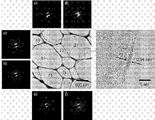
- FIG. 2 shows a transmission electron microscope (TEM) observation result of the water-dispersible graphene nanosheet according to the present invention.
- FIG. 3 shows an atomic force microscope observation result (a) of the water-dispersible graphene nanosheet according to the present invention, and shows the statistical analysis result (b) after measuring the thickness distribution with an atomic electron microscope.
- the inventors of the present invention prepared a graphene nanosheet in which at least a part of the base plane end of the graphene carbon layer was sulfated after intensive research to prepare a graphene nanosheet having excellent water dispersibility, and thus prepared
- the resulting graphene nanosheets maintain the structure and physical properties of graphene's unique base plane without destruction and distortion of the carbon atomic structure of the graphene base plane by oxygen functional groups in the graphene oxide, and water without a separate dispersant.
- the present invention was completed by discovering that there is a property to be stably dispersed in.
- the water-dispersible graphene nanosheet according to the present invention can maintain a single-crystal carbon layer of the base plane, exclude random oxidation of graphene, and selectively sulfate the edge of graphene. , It can induce a strong surface charge and exhibit excellent water dispersibility.
- the water-dispersible graphene nanosheet according to the present invention has a structure in which at least a part of the base plane end of the carbon layer is sulfated. Specifically, it may have a structure in which the edge of the base plane is selectively sulfated.
- the base plane may be made of a single crystal carbon layer, and the single crystal carbon layer represents a carbon layer in which carbon atoms are regularly arranged in a hexagonal structure.
- the water-dispersible graphene nanosheets have at least a part of the base plane end, more specifically, the edges are selectively sulfated, and thus polarity can be induced in the graphene nanosheets dispersed in water. More specifically, it is possible to induce a negative (-) surface charge on the graphene nanosheets dispersed in water.
- the'water dispersibility' of the water-dispersible graphene nanosheet may be due to a polarity imparted by a sulfate group formed on at least a part of the base plane end.
- the zeta potential ( ⁇ ) of the water-dispersible graphene nanosheets dispersed in water may be -25 mV or less ( ⁇ ⁇ -25 mV).
- the zeta potential may have a measurement error depending on the measuring device, but after preparing a dispersion containing a water-dispersible graphene nanosheet at a concentration of 0.01 wt.% using water as a solvent, the zeta potential is prepared. A value measured using a measuring device (ELSZ-1000, OTSUKA Electronics) can be displayed.
- the degree of sulfateization of the water-dispersible graphene nanosheet can be determined by the ratio of sulfur and carbon atoms on the graphene nanosheet, and the sulfur and carbon atom ratio in the water-dispersible graphene nanosheet according to the present invention
- the (S/C ratio) is not limited thereto, but may be, for example, 0.005 to 0.05, and may be 0.008 to 0.02 in one embodiment.
- the ratio of sulfur and carbon atoms is within the above range, there may be an effect showing excellent water dispersibility.
- the ratio of sulfur and carbon atoms represents the ratio of these atomic concentrations based on a value obtained by measuring the atomic concentration (%) of each of carbon and sulfur using an X-ray photoelectron spectroscopy (XPS).
- the average diameter of the base plane of the water-dispersible graphene nanosheet is not limited thereto, but may be 0.1 to 10 ⁇ m, specifically 0.5 to 5 ⁇ m, and the average thickness of the base plane is not limited thereto, but 1 to 6 nm, specifically 2 to 4 nm.
- a specific surface area is very large and there may be an effect of exhibiting excellent mechanical, electrical, and thermal properties.
- the average diameter of the base plane is a statistical value after measuring the diameter of each of 100 water-dispersed graphene nanosheets among a plurality of graphene nanosheets applied on a silicon oxide (SiO 2 ) substrate. It means, and the average diameter may be a value measured according to a commonly used method, for example, may be a value measured using an atomic force microscope (AFM).
- AFM atomic force microscope
- the average thickness of the base plane refers to a statistical value after measuring the thickness of each of 100 water-dispersed graphene nanosheets among a plurality of graphene nanosheets applied on a silicon oxide (SiO 2 ) substrate, the The average thickness may be a value measured according to a commonly used method, and may be, for example, a value measured using an atomic force microscope.
- the present invention can provide a water-dispersible graphene composition comprising a water-dispersible graphene nanosheet and water according to the present invention, and the water-dispersible graphene due to the excellent water dispersibility of the water-dispersible graphene nanosheet
- the fin composition may be substantially free of dispersants.
- the dispersant refers to a material that is arbitrarily added to improve the dispersibility of the water-dispersible graphene nanosheets in water, and the kind is not limited thereto, for example, a known organic dispersant And inorganic dispersants.
- the organic dispersant is not limited thereto, but for example, formic acid, acetic acid, propionic acid, butanoic acid, hexanoic acid, heptanoic acid, octanoic acid, nonanoic acid, decanoic acid, undecanoic acid, lauric acid, myristic acid, palmitic acid , Saturated and unsaturated carboxylic acids having 1 to 20 carbon atoms, such as stearic acid, oleic acid, linoleic acid, and linolenic acid, hydroxycarboxylic acids, and alicyclic and aromatic carboxylic acids having 6 to 34 carbon atoms.
- alkenyl succinic anhydrides include octenyl succinic anhydride, dodecenyl succinic anhydride, hexadecenyl succinic anhydride and the like.
- an organic dispersant having a thiol group for example, mercaptoethanol, mercapto-2-propanol, 1-mercapto-2, 3-propanediol, 3-mercaptopropyltrimethoxysilane, mercaptosuccinic acid, hexanethiol , Alcanthiols such as pentanedithiol, dodecanethiol, undecanthiol, and decanethiol.
- Examples of the organic dispersant having a phenol ring include triphenylphosphine, tributylphosphine, trioctylphosphine, and tributylphosphine.
- an organic dispersant having an amino group for example, propylamine, butylamine, hexylamine, heptylamine, octylamine, 2-ethylhexylamine, nonylamine, decylamine, dodecylamine, hexadecylamine, oleylamine And the like.
- surfactants include, for example, anionic surfactants, nonionic surfactants, amphoteric surfactants, and cationic surfactants
- the anionic surfactants are, for example, higher fatty acid salts, alkyl sulfonates, ⁇ -olefin sulfonic acid salts, alkanesulfonic acid salts, alkylbenzene sulfonates, sulfosuccinic acid ester salts, alkyl sulfuric acid ester salts, alkyl ether sulfuric acid ester salts, alkyl phosphoric acid Ester salts, alkyl ether phosphoric acid ester salts, alkyl ether carboxylate salts, ⁇ -sulfone fatty acid methyl ester salts, methyl tauric acid salts, and the like.
- nonionic surfactant examples include glycerin fatty acid ester, polyglycerol fatty acid ester, sucrose fatty acid ester, sorbitan fatty acid ester, polyoxyethylene sorbitan fatty acid ester, polyoxyethylene alkyl ether, polyoxyethylene alkylphenyl ether, Polyoxyethylene fatty acid ester, fatty acid alkanolamide, alkyl glycoside, and the like.
- amphoteric surfactant include alkyl betaine, fatty acid amide propyl betaine, and alkylamine oxide.
- cationic surfactant examples include alkyltrimethylammonium salt, dialkyldimethylammonium salt, alkyldimethylbenzylammonium salt, alkylpyridinium salt, and the like.
- polymer surfactants such as fluorine-based surfactants, cellulose derivatives, polycarboxylates, and polystyrene sulfonic acid salts may be mentioned.
- the water-dispersible graphene composition uses water as a solvent and does not substantially contain a dispersant, and that the content of the dispersant is substantially free of the dispersant is the total weight of the composition including the water and the water-dispersible graphene nanosheets. Based on 5 wt% or less, for example, 4 wt% or less, 3 wt% or less, 2 wt% or less, 1 wt% or less, or 0 wt% (ie, not included at all).
- the water-dispersible graphene composition includes a water-dispersible graphene nanosheet according to the present invention, and the water-dispersible graphene nanosheet may be composed of, for example, a single layer, and a plurality of carbon layers It may include a multilayer water-dispersible graphene nanosheet made of, and may include a mixed form thereof, but is not limited thereto.
- the content of the water-dispersible graphene nanosheets in the water-dispersible graphene composition may be prepared by adjusting as necessary, but is not limited thereto, for example, 0.01 to 10% by weight based on the total weight of the composition. It can be included in content.
- the water dispersible graphene composition may exhibit excellent effects in water dispersibility and water dispersion stability.
- the water-dispersible graphene composition may exhibit a change in optical transparency of 5% or less when stored for 12 weeks at room temperature, and may exhibit excellent water dispersibility as well as water dispersion stability.
- the change in optical transparency may represent 5% or less, preferably 1% to 4%, more preferably 0.1% to 3%, and most preferably 0.01% to 2%.
- the optical transparency can be measured using a known method.
- a water-dispersible graphene composition including 0.01 wt.% of water-dispersible graphene nanosheets was prepared using water as a solvent, and then a turbiscan ( Turbiscan Lab Expert, Leanontech) equipment (light source: 880 nm near-infrared) was used to measure the optical transparency (transmittance, %) immediately after manufacture, and then stored at room temperature for 12 weeks, and then the change in optical transparency was calculated using the measured value. Can be indicated.
- Turbiscan Turbiscan Lab Expert, Leanontech
- the present invention provides a method of manufacturing the water-dispersible graphene nanosheets.
- the method for preparing the water-dispersible graphene nanosheets includes at least a positive electrode made of a graphite material and a negative electrode made of a metal material in a mixed electrolyte solution containing a persulfate and a basic salt and a buffer containing persulfate ions (S 2 O 8 2- ). And immersing one portion and inducing sulfate at the end of the graphene nanosheet derived from graphite by electrochemical reaction. Specifically, in order to induce sulfate at the end of the graphene nanosheet, a pH of the mixed electrolyte aqueous solution maintained at 7 or higher during the electrochemical reaction in the mixed electrolyte aqueous solution is used.
- a persulfate electrolyte aqueous solution containing persulfate ions must be prepared in order to induce selective sulphation at the edge of the graphite carbon layer through an electrochemical reaction.
- the persulfate electrolyte aqueous solution may be directly prepared and used, or a commercially available product may be obtained and used, but is not limited thereto.
- the persulfate electrolyte aqueous solution is selected from the group consisting of ammonium persulfate (NH 4 ) 2 S 2 O 8 ), potassium persulfate (K 2 S 2 O 8 ), and sodium persulfate (Na 2 S 2 O 8 )
- NH 4 ) 2 S 2 O 8 ammonium persulfate
- K 2 S 2 O 8 potassium persulfate
- Na 2 S 2 O 8 sodium persulfate
- the concentration of the molar concentration of persulfate ions in the aqueous persulfate electrolyte solution is preferably in the range of 0.01 M to 2 M.
- the inventors of the present invention believe that persulfate ions contained in the mixed electrolyte aqueous solution containing persulfate are hydrolyzed when the pH of the mixed electrolyte aqueous solution is 7 or less, so that a part of the end of the carbon layer through an electrochemical reaction, specifically It was confirmed through an experiment that it was difficult to induce sulfateization at the end of the carbon layer. Therefore, the mixed electrolyte aqueous solution may be prepared by adding a basic salt in addition to the persulfate to adjust the pH to 7 or more, preferably to 8 or more.
- the basic salt that may be added here is not limited thereto, but for example, selected from the group consisting of lithium hydroxide, sodium hydroxide, potassium hydroxide, ammonium hydroxide, lithium carbonate, sodium carbonate and potassium carbonate. It may be to include at least one of.
- the amount of the basic salt added is preferably added so that the pH of the mixed electrolyte aqueous solution containing the persulfate and the basic salt is adjusted within the range of 8 to 13.
- the pH of the mixed electrolyte aqueous solution must be stably maintained at 7 or higher to prevent hydrolysis of persulfate ions to prevent sulfate formation at the edge of the carbon layer. It can be induced stably. Therefore, it is preferable to additionally add a buffer for maintaining the pH of the mixed electrolyte aqueous solution containing the persulfate and the basic salt to 7 or more during the electrochemical reaction.
- the buffer added at this time is not limited thereto, but for example, ammonium acetate, ammonium carbonate, ammonium nitrate, methyl ammonium acetate, methyl ammonium carbonate, methyl ammonium sulfate, methyl ammonium nitrate, lithium bicarbonate, sodium bicarbonate , Potassium bicarbonate, lithium acetate, sodium acetate, potassium acetate, lithium sulfate, sodium sulfate, potassium sulfate, lithium dihydrogen phosphate, sodium dihydrogen phosphate, and potassium dihydrogen phosphate, including at least one selected from the group consisting of It may be, and it is preferable in terms of the homogeneity of the mixed electrolyte aqueous solution to be mixed and then stirred to use.
- the amount of the added buffer is preferably added so that the pH of the mixed electrolyte aqueous solution containing persulfate, basic salt, and buffer is adjusted within the range of 8 to
- an oxide electrode (anode) for an electrochemical reaction is used.
- Graphite material is used.
- the shape of the anode of such a graphite material is not particularly limited as long as it is formed of a graphite material, but, for example, a known graphite rod or graphite foil may be used.
- cathode a metal material as the cathode (cathode), for example, a known metal wire, a metal foil or a metal net may be used, but the cathode of a metal material is also not particularly limited in its shape.
- the positive electrode and the negative electrode is immersed in a mixed electrolyte aqueous solution containing a persulfate, a basic salt and a buffering agent prepared above, and a constant voltage or a constant current is applied to the positive electrode.
- a constant voltage or a constant current is applied to the positive electrode.
- V +1 to +30 volts
- the sulfated water-dispersible graphene nanosheets at the ends of the carbon layer are floated in the mixed electrolyte aqueous solution or sedimented at the bottom of the reaction vessel. It is preferable to collect the prepared water-dispersible graphene nanosheets and sufficiently wash them with distilled water to completely remove the remaining persulfate, basic salt and/or buffer. Thereafter, an excess of distilled water may be added to the washed water-dispersible graphene nanosheets, and a water-dispersible graphene composition may be prepared through commercial ultrasonic dispersion, and the water-dispersible graphene composition is described in the form of a dispersion. As described above, even if a dispersant is not substantially included, the water dispersibility and water dispersion stability are excellent.
- the amount of production, the degree of sulfate, and the zeta potential of the prepared water-dispersible graphene nanosheets are determined by the concentration of persulfate in the aqueous mixed electrolyte solution containing the persulfate, basic salt, and buffer, and the pH of the mixed electrolyte, and the applied constant voltage or It is possible to control over a wide range by the constant current value and the electrochemical reaction time, but it is preferable to maintain the pH of the mixed electrolyte solution at 7 or higher during the electrochemical reaction.
- ammonium persulfate was added to distilled water and stirred to prepare a 0.35 M persulfate electrolyte aqueous solution.
- Lithium hydroxide as a basic salt and ammonium acetate as a buffer were added to the prepared 0.35 M persulfate electrolyte aqueous solution, followed by stirring to adjust the pH of the mixed electrolyte containing persulfate, basic salt, and buffer to 11.
- an electrochemical reaction was performed for 1 hour by applying a constant current of 5A to the anode.
- the electrochemical reaction started from 11, which is the initial pH of the mixed electrolyte aqueous solution, and terminated 1 hour after the pH of the mixed electrolyte dropped to about 7.
- Photoelectron spectroscopy (XPS), transmission electron microscopy (TEM), and atomic force microscopy (AFM) analysis were performed to confirm the thickness, radius, structure and composition of the water-dispersible graphene nanosheets prepared as described above, and the results are shown in FIGS. 1 to 3 Shown in.
- FIG. 1 shows a graph showing the results of an X-ray photoelectron spectroscopy (X-ray photoelectron spectroscopy, XPS, AXIS Ultra DLD, Kratos) analysis of the water-dispersible graphene nanosheet, which is the chemical composition and chemical composition of the water-dispersible graphene nanosheet.
- the binding is measured and analyzed using a photoelectron spectroscopy.
- C1s, O1s, and S2p XPS peaks of the water-dispersible graphene nanosheet according to the present invention can be confirmed.
- the carbon (C) atoms of the water-dispersible graphene nanosheet according to the present invention are carbon-carbon bonds (sp 2 and sp 3 ) And carbon-oxygen bonds (C-OH and C(O)O).
- the water-dispersible graphene nanosheet does not contain a carbon-sulfur (CS) bond
- the carbon atom is bonded to sulfur and is not sulfonated (C-SO 3 H, sulfonated).
- CO-SO 3 H, sulfate carbon-oxygen atoms
- SO 4 2- , 532.2 eV sulfate
- Figure 2 shows the observation result of the transmission electron microscope (Transmission Electron Microscopy, TEM, JEOL) of the water-dispersed graphene nanosheets according to the present invention.
- TEM Transmission Electron Microscopy
- JEOL JEOL
- the water-dispersible graphene nanosheet may be made of a single crystal carbon layer, and the single crystal carbon layer has a radius of several micrometers, and a plurality of thin layers It can be seen that it is a graphene nanosheet made of a carbon layer. More specifically, referring to FIGS. 2a) to 2f), it can be seen that the base plane of the water-dispersible graphene nanosheet is a single crystal graphene nanosheet in which carbon atoms are regularly arranged in a hexagonal crystal structure. . 2a) to 2f) show points at which a SAED (Selected Area Electron Diffraction) pattern of the water-dispersible graphene nanosheets is observed.
- SAED Select Area Electron Diffraction
- the base plane of the water-dispersible graphene nanosheet according to the present invention is composed of a single crystal graphene nanosheet composed of sp 2 covalent bonds between carbon-carbon atoms, and the edges are selectively sulfated. It can be confirmed that it is.
- FIG 3 is a result of statistical analysis after measuring the radius and thickness distribution of the water-dispersible graphene nanosheet according to the present invention with an atomic force microscope (AFM, Park System AFM).
- the water-dispersible graphene nanosheets according to the present invention have an average radius of several micrometers or more, specifically an average radius of 0.5 to 5 micrometers. You can see that it has.
- most of the water-dispersible graphene nanosheets according to the present invention are less than 5 nanometers (nm) (about 99%). It can be seen that it is composed of graphene nanosheets having an average thickness.
- the degree of sulfateization of the water-dispersible graphene nanosheets according to the present invention is mainly determined by the pH of the mixed electrolyte aqueous solution containing persulfate, basic salt, and buffer.
- the concentration of the ammonium persulfate electrolyte is fixed to 0.35 M, and the initial pH of the mixed electrolyte aqueous solution containing ammonium persulfate, a basic salt (lithium hydroxide) and a buffer (ammonium acetate) is set to 8, 9, It was adjusted to 10, 11, 12 and 13, respectively.
- an electrochemical reaction of 5A was applied to the anode of the graphite material for 1 hour to prepare an aqueous dispersion graphene nanosheet.
- the addition amount of the buffer (ammonium acetate) was adjusted so that the final pH of the mixed electrolyte solution was terminated at about 7 after 1 hour of the electrochemical reaction.
- the degree of sulphation at the edges of the water-dispersible graphene nanosheets prepared under the initial pH condition of each of the mixed electrolyte aqueous solutions was determined by using a photoelectron spectroscopy (X-ray photoelectron spectroscopy, XPS, AXIS Ultra DLD, Kratos) to determine the atomic concentration of carbon and sulfur. (Atomic concentration, %) was measured and analyzed.
- X-ray photoelectron spectroscopy X-ray photoelectron spectroscopy, XPS, AXIS Ultra DLD, Kratos
- the water-dispersible graphene nanosheet prepared in Example 2 was dispersed in water to prepare a dispersion of 0.01 wt.%, and then the zeta potential was measured using a zeta potential meter (ELSZ-1000, OTSUKA Electronics).
- the water-dispersible graphene nanosheets according to the present invention exhibit different sized surface charges when the edges of the carbon layer are water-dispersed according to the degree of induction of cellulose formation.
- the fact that the water-dispersed graphene nanosheet according to the present invention exhibits a strong negative (-) surface charge in the water-dispersed state can be explained because the ionization constant of the sulfate functional group induced at the edge of the carbon layer is very large.
- the initial pH of the mixed electrolyte solution was 11 and a constant current of 5A was applied to the graphite oxide electrode in the mixed electrolyte, and the final pH of the mixed electrolyte was set to about 7 after 1 hour of electrochemical reaction.
- dispersion stability was measured for 12 weeks (user: 880 nm near-infrared). 4 shows the results of observing the water dispersion stability of the water-dispersible graphene composition including the prepared water-dispersible graphene nanosheets using a Turbiscan Lab Expert (Lenontech) equipment.
- the carbon layer edge is sulfated through an electrochemical reaction in a mixed electrolyte aqueous solution containing a persulfate, a basic salt, and a buffer, and the base plane is single crystal carbon. It was found that it was a graphene nanosheet composed of layers. In addition, it was confirmed that a graphene composition dispersed in a stable aqueous dispersion without the use of an organic or inorganic dispersant can be prepared due to the sulfate functional group induced at the edge of the carbon layer.
- Comparative Example 1 Evaluation of the effect of pH of the mixed electrolyte aqueous solution during electrochemical reaction in the mixed electrolyte aqueous solution for the production of water-dispersible graphene
- the pH of the mixed electrolyte maintained during the electrochemical reaction is very important.
- the concentration of the ammonium persulfate electrolyte was fixed to 0.35 M, and a basic salt was added to adjust the initial pH of the aqueous persulfate mixed electrolyte solution to 11.
- a buffering agent added to maintain the pH of the mixed electrolyte at 7 during electrochemical reaction was omitted.
- the graphene nanosheets prepared by electrochemical reaction in an aqueous solution of the mixed electrolyte without the buffering agent are not dispersed in water, so they are sufficiently washed with an aqueous solution and then subjected to the same ultrasonic dispersing process to use a DMF (dimethylforamide) organic solvent.
- a solvent graphene nanosheet dispersion was prepared.
- the photoelectron spectrophotometer analysis results of the graphene nanosheets dispersed in the prepared DMF are shown in FIG. 5.
- FIG. 5 shows a graph showing the analysis results of graphene nanosheets (X-ray photoelectron spectroscopy, XPS, AXIS Ultra DLD, Kratos) prepared by electrochemical reaction in an aqueous mixed electrolyte solution lacking the buffer. And, this shows the result of measuring and analyzing the chemical composition and chemical bonding of the graphene nanosheets dispersed in the organic solvent using a photoelectron spectrometer.
Landscapes
- Chemical & Material Sciences (AREA)
- Engineering & Computer Science (AREA)
- Organic Chemistry (AREA)
- Materials Engineering (AREA)
- Nanotechnology (AREA)
- Inorganic Chemistry (AREA)
- Metallurgy (AREA)
- Crystallography & Structural Chemistry (AREA)
- Electrochemistry (AREA)
- Chemical Kinetics & Catalysis (AREA)
- Physics & Mathematics (AREA)
- Condensed Matter Physics & Semiconductors (AREA)
- General Physics & Mathematics (AREA)
- Composite Materials (AREA)
- Manufacturing & Machinery (AREA)
- Carbon And Carbon Compounds (AREA)
Abstract
본 발명은 그래핀 나노 시트 및 이의 제조 방법에 관한 것으로, 보다 구체적으로 수분산 가능한 그래핀 나노 시트 및 이의 제조 방법에 관한 것이다. 본 발명의 수분산성 그래핀 나노 시트는 기저 평면(basal plane)의 단부의 적어도 일부가 설페이트화 되어 있는 것을 특징으로 한다.
Description
본 발명은 그래핀 나노 시트 및 이의 제조 방법에 관한 것으로, 보다 구체적으로 수분산 가능한 그래핀 나노 시트 및 이의 제조 방법과, 상기 그래핀 나노 시트를 포함하는 조성물에 관한 것이다.
그래핀 (graphene)은 sp2 혼성 궤도를 가진 탄소원자들이 육각형 벌집구조의 결정격자구조로 배열되어 원자수준의 얇은 두께로 쌓여있는 2차원적 박막 형태의 탄소 물질이다. 그래핀은 구조적, 화학적으로 매우 안정한 물질이며, 약 130 GPa의 인장강도 및 약 4,800 - 5,300 W/m·K의 열전도도 특성뿐만 아니라, 약 108 A/cm2 이상의 최대 허용 전류밀도, 약 280,000 cm2/V·s의 전하이동도의 높은 전기적 특성을 가지는 것으로 보고되어 있다. 그래핀의 우수한 전도체로서의 특성은 실리콘(Silicone)보다 약 100 배 정도 빠른 전하이동도를 갖는 것이며, 구리보다는 약 100 배 정도 많은 전류를 흐르게 할 수 있는 것이다. 또한, 그래핀은 종래의 투명 전극으로 사용되던 ITO(indium Tin Oxide) 보다 높은 투명도를 가질 수 있음이 알려져 있다. 상술한 바와 같은 그래핀의 특성들을 이용하여 다양한 산업 분야에서 그래핀을 적용하고자 하는 연구들이 진행되고 있다.
한편, 그래핀은 탄소로 이루어져있고, 그래핀의 표면을 코팅하거나 그래핀의 표면에 화학작용기 (chemical functional groups)들을 결합하여 주로 유기 용매에 분산된 형태로만 산업 분야에서 이용되고 있는 실정이나, 그래핀의 우수한 물성을 소재 산업 분야에서 효율적으로 응용 및 구현하기 위해서는 물(water)에 안정적으로 분산되는 수분산성 그래핀 나노 시트의 기술 및 경제적 이점이 매우 크기 때문에 수분산 가능한 그래핀 나노 시트에 대한 요구가 있어 왔다.
이에 따라, 그래핀을 물에 분산시키기 위해 종래 흑연 탄소층을 산화(oxidation)하여 탄소층의 일부에 무작위적으로 산소 작용기(oxygen functional group)들을 결합시킨 산화 그래핀(graphene oxide)의 제조방법이나, 위와 같은 산화 그래핀에 무작위적으로 결합되어 있는 산소 작용기를 설포네이트화(sulfonated)하여 산소 작용기의 일부 또는 전부를 설포네이트 작용기로 치환함으로써 국소적으로 컨쥬게이션(conjugation) 구조를 회복시키고 강한 표면 전하를 유도하여 수분산시키는 방법이 알려져 있다. 또한, 흑연 탄소층을 기계적으로 박리(exfoliation)하여 제조되는 그래핀 나노 시트를 유기 또는 무기 분산제를 사용하여 수분산시키는 방법이 알려져 있다.
그러나, 상기 산화 그래핀은 무작위적으로 과량의 산소 작용기가 탄소층에 결합되어 그래핀 고유의 구조를 심각하게 파괴하기 때문에, 그래핀의 기계적, 전기적, 화학적 및 열적 특성들이 크게 상실되는 것으로 알려져 있다. 또한, 산화 그래핀의 설포네이트화를 통한 수분산 그래핀의 경우 그래핀을 먼저 산화 및 환원하고, 설포네이트화하는 다중 공정(multistep process)이 필요할 뿐만 아니라, 산소 작용기의 설포네이션 치환이 국소적이기 때문에 상술한 산화 그래핀의 구조 왜곡 및 물성 저하의 문제를 상쇄하기 어려운 것으로 알려져 있다. 또한, 흑연 탄소층을 박리하여 제조되는 그래핀 나노 시트를 유기 또는 무기 분산제를 사용하여 수분산하는 경우, 그래핀 나노 시트를 함유하는 그래핀 조성물에서 그래핀 나노 시트의 순도, 그래핀 나노 시트와 분산제간의 상분리 및 그래핀 나노 시트 침전의 문제뿐만 아니라, 사용되는 유기 또는 무기 분산제의 종류 및 특성에 따라서 그래핀 나노 시트의 응용이 크게 제한되는 단점이 있다.
따라서, 종래 알려진 방법들 외에, 단순하면서도 그래핀의 구조 왜곡 및 이에 따른 물성 저하의 문제를 개선하면서도, 수분산성이 우수한 그래핀 나노 시트에 대한 요구가 계속되고 있는 실정이다.
본 발명은 물에 안정적으로 분산되는 수분산성 그래핀 나노 시트 및 이의 제조 방법과, 상기 수분산성 그래핀 나노 시트를 포함하는 수분산성 그래핀 조성물을 제공하고자 한다. 보다 구체적으로 그래핀의 기계적, 전기적, 화학적 및 열적 특성을 우수하게 나타낼 수 있고, 별도의 분산제를 사용하지 않고서도 물에 안정적으로 분산될 수 있는 그래핀 나노 시트 및 이의 제조 방법과, 이를 이용하여 얻어지는 그래핀 조성물을 제공하고자 한다.
위와 같은 목적을 달성하기 위하여, 본 발명은 탄소층 기저 평면(basal plane) 단부 (edge)의 적어도 일부가 설페이트화(sulfated) 되어 있는 수분산성 그래핀 나노 시트를 제공한다.
또한, 본 발명은 본 발명에 따른 수분산성 그래핀 나노 시트 및 물을 포함하는 수분산성 그래핀 조성물로서, 실질적으로 분산제를 포함하지 않는 수분산성 그래핀 조성물을 제공한다.
또한, 본 발명은 과황산 이온(S2O8
2-)을 함유한 과황산염과 염기성 염(base) 및 완충제(buffer)를 포함하는 혼합전해질 수용액에 흑연 소재의 양극 및 금속 소재의 음극의 적어도 한 부분을 침지하고 전기화학반응에 의해서 흑연 유래의 그래핀 나노 시트의 단부에 설페이트화를 유도하는 단계를 포함하고, 상기 혼합전해질 수용액 내에서의 전기화학반응시 혼합전해질 수용액의 pH가 7 이상으로 유지되는 수분산성 그래핀 나노 시트의 제조 방법을 제공한다.
본 발명의 수분산성 그래핀 나노 시트는 물에 안정적으로 분산될 수 있으며, 보다 구체적으로 물을 용매로 사용하면서도 분산제를 실질적으로 사용하지 않고서 분산성 및 분산 안정성이 우수한 수분산성 그래핀 조성물을 제공할 수 있다. 이로써 그래핀을 이용하는 소재의 기술적, 경제적 및 환경적 응용 및 활용 방법을 다양하고 용이하게 제공할 수 있다.
또한, 본 발명의 수분산성 그래핀 나노 시트는 그래핀 고유의 기계적, 전기적, 화학적 및 열적 특성을 우수하게 나타낼 수 있다.
또한, 본 발명의 수분산성 그래핀 나노 시트의 제조 방법을 이용하면 위와 같은 물에 대한 분산성이 우수한 그래핀 나노 시트, 및 이를 이용한 그래핀 조성물을 제공할 수 있다.
본 명세서에 첨부되는 다음의 도면들은 본 발명의 바람직한 실시예를 예시하는 것이며, 전술한 발명의 내용과 함께 본 발명의 기술사항들에 대한 이해를 용이하게하는 역할을 하는 것이므로, 본 발명은 그러한 도면에 기재된 사항에만 한정되어 해석되어서는 아니 된다.
도 1은 본 발명에 따른 수분산성 그래핀 나노 시트의 엑스레이 광전자분광기 (XPS) 분석 결과를 나타낸다.
도 2는 본 발명에 따른 수분산성 그래핀 나노 시트의 투과전자현미경(TEM) 관찰 결과를 나타낸다.
도 3은 본 발명에 따른 수분산성 그래핀 나노 시트에 대한 원자현미경 관찰 결과(a)를 나타내며, 그 두께 분포를 원자전자현미경으로 측정 후 통계 분석한 결과(b)를 나타낸다.
도 4는 본 발명에 따른 수분산성 그래핀 나노 시트의 수분산 안정도를 터비스캔(Turbiscan)을 통해 관찰한 결과를 나타낸다.
도 5는 본 발명에 따른 수분산성 그래핀 나노 시트의 제조방법과 달리 혼합전해질 수용액 내에서의 전기화학반응 시 혼합전해질 수용액의 pH가 7 이하로 유지되는 조건에서 제조된 비수분산성 (water-non-dispersible) 그래핀 나노 시트에 대한 광전자분광기 분석 결과를 나타낸다.
수분산성 그래핀 나노 시트
본 발명의 발명자들은 수분산성이 우수한 그래핀 나노 시트를 제조하기 위해 예의 연구를 진행한 끝에, 그래핀 탄소층의 기저 평면 단부의 적어도 일부가 설페이트화된 그래핀 나노 시트를 제조하였으며, 이와 같이 제조된 그래핀 나노 시트는 산화 그래핀에서의 산소 작용기에 의한 그래핀 기저 평면의 탄소원자구조에 대한 파괴 및 왜곡없이, 그래핀의 고유한 기저 평면의 구조 및 물성을 유지하고, 별도의 분산제 없이 물에 안정적으로 분산되는 특성이 있음을 발견하여 본 발명을 완성하였다.
보다 구체적으로, 본 발명에 따른 수분산성 그래핀 나노 시트는 기저 평면의 단결정(single-crystal) 탄소층을 유지할 수 있고, 그래핀의 무작위적인 산화를 배제하고 그래핀의 가장자리를 선택적으로 설페이트화함으로써, 강한 표면 전하를 유도하여 우수한 수분산성을 나타낼 수 있다.
본 발명에 따른 수분산성 그래핀 나노 시트는 탄소층 기저 평면 단부의 적어도 일부가 설페이트화 되어 있는 구조를 갖는다. 구체적으로는, 기저 평면의 가장자리가 선택적으로 설페이트화 되어 있는 구조를 갖는 것일 수 있다.
본 발명에 있어서, 상기 기저 평면은 단결정의 탄소층으로 이루어진 것일 수 있으며, 상기 단결정의 탄소층은 탄소 원자들이 육방정계구조(hexagonal structure)로 규칙적으로 배열된 탄소층을 나타낸다.
상기 수분산성 그래핀 나노 시트는 기저 평면 단부의 적어도 일부, 보다 구체적으로 가장자리가 선택적으로 설페이트화 되어 있는 것이고, 이에 따라 물에 분산된 그래핀 나노 시트에 극성을 유도할 수 있다. 보다 더 구체적으로, 물에 분산된 그래핀 나노 시트에 음(-)의 표면 전하를 유도할 수 있다. 본 발명의 효과가 이에 한정되는 것은 아니나, 상기 수분산성 그래핀 나노 시트의 '수분산성'은 기저 평면 단부의 적어도 일부에 형성된 설페이트기에 의해 부여된 극성에 기인한 것일 수도 있다. 일 실시예에서, 상기 물에 분산된 수분산성 그래핀 나노 시트의 제타 전위(ζ)가 -25 mV 이하 (ζ ≤ -25 mV)를 나타낼 수 있다.
본 발명의 명세서에 있어서, 상기 제타 전위는 측정 기기에 따라 측정 오차가 있을 수 있으나, 물을 용매로 하여 수분산성 그래핀 나노 시트를 0.01 wt.%의 농도로 함유하는 분산액을 제조한 후 제타 전위 측정기(ELSZ-1000, OTSUKA Electronics)를 이용하여 측정한 값을 나타낼 수 있다.
일 실시예에서, 상기 수분산성 그래핀 나노 시트의 설페이트화 정도는 그래핀 나노 시트 상의 황 및 탄소 원자의 비율로 확인할 수 있으며, 본 발명에 따른 수분산성 그래핀 나노 시트에 있어서 황 및 탄소 원자 비율(S/C ratio)은 이에 제한되는 것은 아니나, 예를 들어 0.005 내지 0.05일 수 있으며, 일 실시예에서 0.008 내지 0.02 일 수 있다. 상기 황 및 탄소 원자 비율이 상기 범위 내인 경우에 수분산성을 우수하게 나타내는 효과가 있을 수 있다.
본 발명의 명세서에 있어서, 상기 황 및 탄소 원자 비율은 엑스레이 광전자분광기(XPS)를 이용하여 탄소와 황 각각의 원자 농도(atomic concentration, %)를 측정한 값을 기초로 이들 원자 농도의 비율을 나타낸 것이다.
또한, 상기 수분산성 그래핀 나노 시트의 기저 평면의 평균 직경은 이에 제한되는 것은 아니나, 0.1 내지 10μm, 구체적으로 0.5 내지 5 μm일 수 있으며, 기저 평면의 평균 두께는 이에 제한되는 것은 아니나 1 내지 6 nm, 구체적으로 2 내지 4 nm일 수 있다. 상기 수분산성 그래핀 나노 시트의 기저 평면의 평균 직경 및 평균 두께가 상기 범위인 경우, 비표면적이 매우 크며 우수한 기계적, 전기적, 열적 특성들을 나타내는 효과가 있을 수 있다.
본 발명의 명세서에 있어서, 상기 기저 평면의 평균 직경은 산화실리콘 (SiO2) 기판상에 도포된 다수의 그래핀 나노 시트 중 100개의 수분산 그래핀 나노 시트 각각의 직경을 측정 후 통계한 값을 의미하는 것이며, 상기 평균 직경은 통상적으로 사용하는 방법에 따라 측정된 값일 수 있으며, 예를 들어 원자현미경 (Atomic Force Microscope, AFM)을 이용하여 측정한 값일 수 있다. 또한, 상기 기저 평면의 평균 두께는 산화실리콘 (SiO2) 기판 상에 도포된 다수의 그래핀 나노시트 중 100개의 수분산 그래핀 나노 시트 각각의 두께를 측정 후 통계한 값을 의미하는 것이며, 상기 평균 두께는 통상적으로 사용하는 방법에 따라 측정된 값일 수 있으며, 예를 들어 원자현미경을 이용하여 측정한 값일 수 있다.
수분산성 그래핀 조성물
일 측면에서, 본 발명은 본 발명에 따른 수분산성 그래핀 나노 시트 및 물을 포함하는 수분산성 그래핀 조성물을 제공할 수 있으며, 상기 수분산성 그래핀 나노 시트의 우수한 수분산성으로 인해서 상기 수분산성 그래핀 조성물은 실질적으로 분산제를 포함하지 않을 수 있다.
본 발명의 명세서에 있어서, 상기 분산제는 상기 수분산성 그래핀 나노 시트의 물에 대한 분산성 향상을 위해서 임의로 첨가하는 물질을 나타내는 것이며, 그 종류가 이에 한정되는 것은 아니나, 예를 들어 공지된 유기 분산제 및 무기 분산제 등을 의미할 수 있다. 상기 유기 분산제는 이에 한정되는 것은 아니나 예를 들어 포름산, 아세트산, 프로피온산, 부탄산, 헥산산, 헵탄산, 옥탄산, 노난산, 데칸산, 운데칸산, 라우린산, 미리스트산, 팔미트산, 스테아린산, 올레산, 리놀산, 리놀렌산 등의 탄소수 1~20의 포화 및 불포화의 카르복실산류, 히드록시카르복실산류, 탄소수 6~34의 지환족 및 방향족 카르복실산류 등을 들 수 있다. 또한 알케닐숙신산 무수물류로서, 옥테닐숙신산 무수물, 도데세닐숙신산 무수물, 헥사데세닐숙신산 무수물 등을 들 수 있다. 티올기를 갖는 유기 분산제로서, 예를 들면, 메르캅토에탄올, 메르캅토-2-프로판올, 1-메르캅토-2, 3-프로판디올, 3-메르캅토프로필트리메톡시실란, 메르캅토숙신산, 헥산티올, 펜탄디티올, 도데칸티올, 운데칸티올, 데칸티올 등의 알칸티올을 들 수 있다. 페놀환을 갖는 유기 분산제로는, 예를 들면 트리페닐포스핀, 트리부틸포스핀, 트리옥틸포스핀, 트리부틸포스핀 등이 있다. 아미노기를 갖는 유기 분산제로는, 예를 들면, 프로필아민, 부틸아민, 헥실아민, 헵틸아민, 옥틸아민, 2-에틸헥실아민, 노닐아민, 데실아민, 도데실아민, 헥사데실아민, 올레일아민 등을 들 수 있다.
또한, 분산제로도 사용될 수 있는 공지의 계면활성제 또한 포함하지 않을 수 있으며, 그러한 계면활성제는 예를 들어 음이온 계면활성제, 비이온 계면활성제, 양쪽성 계면활성제, 및 양이온 계면활성제 등을 들 수 있고, 상기 음이온 계면활성제는 예를 들면, 고급 지방산염, 알킬술폰산염, α-올레핀술폰산염, 알칸술폰산염, 알킬벤젠술폰산염, 술포숙신산 에스테르염, 알킬황산 에스테르염, 알킬에테르황산 에스테르염, 알킬인산 에스테르염, 알킬에테르인산 에스테르염, 알킬에테르 카르복실산염, α-술폰지방산 메틸에스테르염, 메틸타우린산염 등을 들 수 있다. 상기 비이온 계면활성제로서는, 예를 들면, 글리세린 지방산 에스테르, 폴리글리세린 지방산 에스테르, 자당 지방산 에스테르, 솔비탄 지방산 에스테르, 폴리옥시에틸렌솔비탄 지방산 에스테르, 폴리옥시에틸렌알킬에테르, 폴리옥시에틸렌알킬페닐에테르, 폴리옥시에틸렌 지방산 에스테르, 지방산알카놀아미드, 알킬글리코시드 등을 들 수 있다. 상기 양쪽성 계면활성제로서는, 예를 들면, 알킬베타인, 지방산 아미드프로필베타인, 알킬아민옥사이드 등을 들 수 있다. 상기 양이온 계면활성제로서는, 예를 들면, 알킬트리메틸암모늄염, 디알킬디메틸암모늄염, 알킬디메틸벤질암모늄염, 알킬피리디늄염 등이 있다. 그밖에, 불소계 계면활성제나 셀룰로오스 유도체, 폴리카르복실산염, 폴리스틸렌술폰산염 등의 고분자 계면활성제를 예로 들 수 있다.
상기 수분산성 그래핀 조성물은 물을 용매로 하고 분산제를 실질적으로 포함하지 않는 것이며, 여기서 실질적으로 포함하지 않는다는 것은 상기 분산제의 함량이 상기 물과 상기 수분산성 그래핀 나노 시트를 포함하는 조성물의 총 중량을 기준으로 5 중량% 이하, 예를 들어, 4 중량% 이하, 3 중량% 이하, 2 중량% 이하, 1 중량% 이하, 또는 0 중량%(즉, 아예 포함하지 않음)임을 나타내는 것일 수 있다.
상기 수분산성 그래핀 조성물은 본 발명에 따른 수분산성 그래핀 나노 시트를 포함하는 것이며, 상기 수분산성 그래핀 나노 시트는 예를 들어 단일층(a single layer)으로 이루어진 것일 수 있으며, 복수의 탄소층으로 이루어진 다층(multilayer) 수분산성 그래핀 나노 시트를 포함하는 것일 수 있고, 이들의 혼합 형태를 포함하는 것일 수 있으나, 이에 제한되는 것은 아니다.
또한, 상기 수분산성 그래핀 조성물에서 상기 수분산성 그래핀 나노 시트의 함량은 필요에 따라 조절하여 제조할 수 있는 것이며 이에 제한되는 것은 아니나, 예를 들어 조성물 총 중량을 기준으로 0.01 내지 10 중량%의 함량으로 포함될 수 있다.
상기 수분산성 그래핀 조성물은 수분산성 및 수분산 안정성이 우수한 효과를 나타낼 수 있다. 구체적으로, 상기 수분산성 그래핀 조성물은 상온에서 12주 보관 시 광학 투명도의 변화가 5% 이하로 나타날 수 있으며, 수분산성뿐만 아니라 수분산 안정도를 우수하게 나타낼 수 있다. 일 실시예에서, 상기 광학 투명도의 변화는 5% 이하, 바람직하게는 1% 내지 4%, 더욱 바람직하게는 0.1% 내지 3%, 가장 바람직하게는 0.01% 내지 2%를 나타낼 수 있다.
본 발명의 명세서에 있어서, 상기 광학 투명도는 공지된 방법을 이용하여 측정할 수 있다. 일 실시예에서 상기 수분산성 그래핀 조성물의 수분산 안정도를 측정하기 위해서, 물을 용매로 하여 0.01 wt.%의 수분산성 그래핀 나노 시트를 포함하는 수분산성 그래핀 조성물을 제조한 후 터비스캔(Turbiscan Lab Expert, Leanontech) 장비(광원: 880 nm 근적외선)를 이용하여 제조 직후의 광학 투명도(Transmittance, %)를 측정한 후 상온에서 12주 보관 후 측정된 값을 이용하여 광학 투명도의 변화를 계산하여 나타낼 수 있다.
수분산성 그래핀 나노 시트의 제조 방법
일 측면에서, 본 발명은 상기 수분산성 그래핀 나노 시트의 제조 방법을 제공한다.
상기 수분산성 그래핀 나노 시트의 제조 방법은 과황산 이온(S2O8
2-)을 함유한 과황산염과 염기성 염 및 완충제를 함유한 혼합전해질 수용액에 흑연 소재의 양극 및 금속 소재의 음극의 적어도 한 부분을 침지하고 전기화학반응에 의해서 흑연 유래의 그래핀 나노 시트의 단부에 설페이트화를 유도하는 단계를 포함한다. 구체적으로, 그래핀 나노 시트의 단부에 설페이트화를 유도하기 위해서 상기 혼합전해질 수용액 내에서의 전기화학반응시 혼합전해질 수용액의 pH가 7 이상으로 유지하는 것을 사용한다.
구체적으로, 상기 혼합전해질 수용액과 흑연 소재의 양극 및 금속 소재의 음극을 준비하여 전기화학반응을 위한 반응로를 준비한 후, 상기 양극 및 음극의 적어도 한 부분을 상기 준비된 혼합전해질 수용액에 침지한 후 전기장을 인가하면 상기 양극 소재인 흑연의 탄소층 단부의 적어도 일부, 구체적으로 가장자리에 과황산 이온이 전기화학반응하여 설페이트화되는 것을 유도할 수 있다. 상기 전기장 내에서 전기화학반응을 통해 유도되는 탄소층 단부의 적어도 일부에의 설페이트화 반응은 아래 식 1로 표현될 수 있으며, 하기 식 1에서 C-H는 흑연 탄소층 가장 자리(edge of carbon layer in graphite)에 존재하는 결합을 나타내며, 과황산 이온(persulfate ion)은 과황산염을 함유한 혼합전해질 수용액 내 존재하는 것이며, 이로써 가장자리가 설페이트화된 그래핀 나노 시트(edge-sulfated graphene nanosheet)가 형성되는 것을 나타낸다.
[식 1]
C-H + S2O8
2- → C-O-SO3- + H+ + SO4
-
먼저, 상기 흑연 탄소층 가장자리의 선택적 셀페이트화를 전기화학반응으로 유도하기 위해서 과황산 이온을 포함하는 과황산염 전해질 수용액을 준비하여야 한다. 상기 과황산염 전해질 수용액은 직접 제조하여 사용하거나, 시판되는 제품을 입수하여 사용할 수 있으며, 이에 제한되는 것은 아니다.
구체적으로, 상기 과황산염 전해질 수용액은 과황산 암모늄(NH4)2S2O8), 과황산칼륨(K2S2O8), 과황산나트륨(Na2S2O8)으로 이루어진 군으로부터 선택되는 적어도 하나를 포함하는 것일 수 있으며, 상기 과황산염 전해질 수용액의 제조를 위해서는 상기 과황산 암모늄, 과황산칼륨, 과황산나트륨으로 이루어진 군으로부터 선택되는 적어도 하나를 증류수에 투입 후 교반하여 과황산염 전해질 수용액으로 제조할 수 있으나, 제조 방법이 이에 제한되는 것은 아니다. 이때 과황산염 전해질 수용액 내 과황산 이온의 몰 농도(Molar concentration)의 농도는 0.01 M 내지 2 M의 범위인 것이 바람직하다.
본 발명의 발명자들은 상기 과황산염을 함유한 혼합전해질 수용액에 포함된 과황산 이온은 혼합전해질 수용액의 pH가 7 이하일 때 가수분해(hydrolysis)되기 때문에 전기화학반응을 통한 탄소층 단부의 일부, 구체적으로 탄소층 단부의 설페이트화를 유도하기 어렵다는 것을 실험을 통해 확인하였다. 따라서 상기 혼합전해질 수용액은 상기 과황산염 외에 염기성 염을 추가하여 pH를 7 이상으로, 바람직하게는 pH를 8 이상으로 조절하여 준비할 수 있다. 여기서 추가될 수 있는 상기 염기성 염은 이에 제한되는 것은 아니나 예를 들어 리튬 하이드록사이드, 소듐 하이드록사이드, 포타슘 하이드록사이드, 암모늄 하이드록사이드, 리튬 카보네이트, 소듐 카보네이트 및 포타슘 카보네이트로 이루어진 군으로부터 선택되는 적어도 하나를 포함하는 것일 수 있다. 상기 염기성 염을 추가할 때 균질한 전해질 수용액의 제조를 위해 이들을 혼합한 후 교반하여 사용하는 것이 바람직하다. 이때 첨가되는 염기성 염의 양은 과황산염과 염기성 염을 함유하는 혼합전해질 수용액의 pH가 8 내지 13의 범위 내에서 조절되도록 첨가하는 것이 바람직하다.
또한, 상기 과황산염과 염기성 염을 함유한 혼합 전해질 수용액 내에서의 전기화학반응시 혼합 전해질 수용액의 pH를 7 이상으로 안정적으로 유지하여야 과황산이온의 가수분해를 방지하여 탄소층 가장자리의 설페이트화를 안정적으로 유도할 수 있다. 따라서 상기 과황산염과 염기성 염을 함유한 혼합 전해질 수용액의 pH를 전기화학반응시 7 이상으로 유지시키기 위한 완충제를 추가로 첨가하는 것이 바람직하다. 이때 첨가되는 완충제는 이에 제한되는 것은 아니나 예를 들어 암모늄 아세테이트, 암모늄 카보네이트, 암모늄 나이트레이트, 메틸암모늄 아세테이트, 메틸암모늄 카보네이트, 메틸암모늄 설페이트, 메틸암모늄 나이트레이트, 리튬 바이카보네이트, 소듐 바이카보네아이트, 포타슘 바이카보네이트, 리튬 아세테이트, 소듐 아세테이트, 포타슘 아세테이트, 리튬 설페이트, 소듐 설페이트, 포타슘 설페이트, 리튬 디하이드로젠 포스페이트, 소듐 디하이드로젠 포스페이트 및 포타슘 디하이드로젠 포스페이트으로 이루어진 군으로부터 선택되는 적어도 하나를 포함하는 것일 수 있으며, 이들을 혼합한 후 교반하여 사용하는 것이 혼합전해질 수용액의 균질성의 측면에서 바람직하다. 이때 첨가되는 완충제의 양은 과황산염, 염기성 염 및 완충제를 포함하는 혼합전해질 수용액의 pH가 8 내지 13의 범위 내에서 조절되도록 첨가하는 것이 바람직하다.
상기 과황산염과 염기성 염 및 완충제를 함유한 혼합전해질 수용액을 이용하여 그래핀 나노시트를 구성하고 있는 탄소층 단부의 적어도 일부에 설페이트화를 유도하기 위해서는, 전기화학반응을 위한 산화극(양극)으로 흑연 소재를 사용한다. 이러한 흑연 소재의 양극으로는 흑연 소재로 형성된 것이라면 그 형태는 특별히 제한되지 않으나 예를 들어 공지된 흑연봉 또는 흑연 호일을 사용할 수 있다. 또한, 환원극(음극)으로는 금속 소재를 사용하는 것이 바람직하며, 예를 들어 공지된 금속선, 금속 호일 또는 금속망을 사용할 수 있으나, 금속 소재의 환원극 또한 그 형태에 특별히 제한되는 것은 아니다.
상기 전기화학반응을 위해서, 상기 양극과 음극의 적어도 일부를 상기에서 준비한 과황산염과 염기성 염 및 완충제를 함유한 혼합전해질 수용액 내에 침지하고 상기 양극에 정전압(constant voltage) 또는 정전류(constant current)를 인가하여 흑연 탄소층 가장자리에 설페이트화를 유도한다. 이때 양극에 인가되는 정전압은 +1 내지 +30 볼트(volt, V)의 범위에서 조절하는 것이 바람직하며, 정전류를 인가하는 경우에는 1 내지 50 암페어(ampere, A)의 범위에서 인가하는 것이 반응의 안정성 측면에서 바람직할 수 있다.
상기 전기화학반응을 통해 탄소층 단부의 설페이트화된 수분산성 그래핀 나노 시트는 상기 전기화학반응 후 혼합전해질 수용액 내에 부유(floating)하거나 반응용기 바닥에 침전(sedimentation)된다. 상기 제조된 수분산성 그래핀 나노 시트를 채집하여 증류수(distilled water)로 충분히 세척하여 잔존하는 과황산염, 염기성 염 및/또는 완충제를 완전히 제거하는 것이 바람직하다. 이 후, 세척된 수분산성 그래핀 나노 시트에 과량의 증류수를 첨가하고 상용적인 초음파분산(ultrasonication)을 통해 수분산성 그래핀 조성물을 제조할 수 있으며, 상기 수분산성 그래핀 조성물은 분산액의 형태로서 상술한 바와 같이 분산제를 실질적으로 포함하지 않아도 수분산성 및 수분산 안정성이 우수한 효과를 나타낸다.
상기 제조되는 수분산성 그래핀 나노 시트의 제조양, 설페이트화 정도 및 제타 전위 등은 상기 과황산염과 염기성 염 및 완충제를 함유한 혼합전해질 수용액 내 과황산염의 농도 및 혼합전해질의 pH, 인가되는 정전압 또는 정전류값, 및 전기화학반응 시간에 의해 넓은 범위에서 제어가 가능하나 전기화학반응시 혼합전해질 수용액의 pH를 7 이상으로 유지하는 것이 바람직하다.
이하, 본 발명의 이해를 돕기 위하여 실시예 등을 들어 상세하게 설명하기로 한다. 그러나, 본 발명에 따른 실시예들은 여러 가지 다른 형태로 변형될 수 있으며, 본 발명의 범위가 하기 실시예들에 한정되는 것으로 해석되어서는 안 된다. 본 발명의 실시예들은 본 발명이 속한 분야에서 평균적인 지식을 가진 자에게 본 발명을 보다 완전하게 설명하기 위해 제공되는 것이다.
실시예 1. 수분산성 그래핀 나노 시트의 제조
먼저, 증류수에 과황산 암모늄을 투입 후 교반하여 0.35 M의 과황산염 전해질 수용액을 제조하였다. 상기 제조된 0.35 M의 과황산염 전해질 수용액에 염기성 염으로서 리튬 하이드록사이드 및 완충제로서 암모늄 아세테이트를 추가 투입 후 교반하여 과황산염과 염기성 염 및 완충제를 함유한 혼합전해질의 pH를 11로 조절하였다. 상기 제조된 혼합전해질 수용액에 흑연호일 양극과 백금호일 음극을 침지한 후 양극에 5A의 정전류를 인가하여 1시간 동안 전기화학반응을 수행하였다. 전기화학반응은 상기 혼합전해질 수용액의 초기 pH인 11로부터 시작하여 혼합전해질의 pH가 약 7로 떨어진 1 시간 후에 종결하였다. 이와 같이 제조된 수분산성 그래핀 나노 시트의 두께, 반경, 구조 및 조성을 확인하기 위하여 광전자 분광 (XPS), 투과전자현미경 (TEM) 및 원자현미경 (AFM) 분석을 수행하여 그 결과를 도 1 내지 3에 나타내었다.
이하, 도면을 참조하여 상세히 설명한다.
도 1에는 상기 수분산성 그래핀 나노 시트의 광전자분광기(X-ray photoelectron spectroscopy, XPS, AXIS Ultra DLD, Kratos) 분석 결과를 나타낸 그래프가 기재되어 있으며, 이는 수분산성 그래핀 나노 시트의 화학 조성 및 화학적 결합을 광전자분광기를 사용하여 측정 분석한 결과를 도시하는 것이다.
도 1 a)의 넓은 결합에너지 (binding energy) 범위의 XPS 서베이 스펙트럼 (survey spectrum)을 참조하면, 본 발명에 따른 수분산성 그래핀 나노 시트의 C1s, O1s, S2p XPS 피크들을 확인할 수 있다. 보다 자세한 화학조성 및 화학결합분석을 위해 도 1 b)의 C1s XPS 피크를 참조하면, 본 발명에 따른 수분산성 그래핀 나노 시트의 탄소(C) 원자는 탄소-탄소 결합(sp2와 sp3)과 탄소-산소 결합(C-OH와 C(O)O)만으로 이루어져 있는 것임을 확인할 수 있다. 구체적으로, 위의 결과로부터 상기 수분산성 그래핀 나노 시트는 탄소-황(C-S) 결합을 함유하는 것이 아니므로, 탄소 원자가 황과 결합하여 설포네이트화(C-SO3H, sulfonated)되어 있지 않고, 설페이트화(C-O-SO3H, sulfate)되어 있음을 유추할 수 있다. 또한 더 구체적으로, 도 1 c)의 O1s 피크를 참조하면, 탄소-산소 원자간의 결합 (C-O와 C=O)과 더불어 산소-황 원자간의 결합인 설페이트 (SO4
2-, 532.2 eV) 결합이 직접적으로 관찰되었으며, 도 1 d)의 S2p 피크를 참조하면, 설포네이트 (SO3
2-) 결합이 아닌 설페이트 결합(SO4
2-, 168.9 eV)이 직접적으로 관찰되는 것을 확인할 수 있다. 이를 통해, 본 발명에 따른 수분산성 그래핀의 나노 시트는 기저 평면의 단부의 적어도 일부가 설페이트화 되어 있는 것을 확인할 수 있다.
도 2는 본 발명에 따른 수분산 그래핀 나노 시트의 투과전자현미경(Transmission Electron Microscopy, TEM, JEOL) 관찰 결과를 나타낸다. 상기 TEM 관찰 결과를 통해 상기 수분산성 그래핀의 나노 시트의 가장자리가 선택적으로 설페이트화 되어 있음을 확인할 수 있다.
구체적으로, 도 2의 TEM 관찰 결과를 참조하면, 상기 수분산성 그래핀 나노 시트는 단결정의 탄소층으로 이루어진 것일 수 있으며, 이러한 단결정의 탄소층은 수 마이크로미터 단위의 반경을 가지고, 복수 층의 얇은 탄소층으로 이루어진 그래핀 나노 시트임을 알 수 있다. 보다 구체적으로, 도 2 a) 내지 f)를 참조하면, 상기 수분산성 그래핀 나노 시트의 기저 평면은 탄소 원자들이 육방정계의 결정 구조로 규칙적으로 정렬되어 있는 단결정 그래핀 나노 시트인 것을 알 수 있다. 도 2의 a) 내지 f)는 수분산성 그래핀 나노 시트에 대한 SAED(Selected Area Electron Diffraction) 패턴이 관찰된 지점을 도시한 것이다. 탄소-탄소 원자의 sp2 공유결합으로 이루어진 그래핀의 구조에서 기저 평면에 결합하고 있는 탄소 원자에 설페이트 결합이 유도되면 육방정계 구조로 이루어진 탄소 원자의 배열이 교란(distortion and dislocation)되어 상기 SAED 결과에서 도시된 단결정 회절 패턴을 관찰할 수 없다. 따라서, 도 2의 TEM 결과로부터, 본 발명에 따른 수분산성 그래핀 나노 시트의 기저 평면은 탄소-탄소원자들간의 sp2 공유결합으로 이루어진 단결정 그래핀 나노 시트로 이루어져 있고, 가장자리가 선택적으로 설페이트화되어 있음을 확인할 수 있다. 이를 통해 본 발명에 따른 수분산성 그래핀 나노 시트는 그래핀 내 탄소-탄소 간의 공유 결합이 해리되고 설페이트화되는 것보다는 가장자리의 C-H 결합만이 선택적으로 설페이트화되어 있는 것을 확인할 수 있다.
도 3은 본 발명에 따른 수분산성 그래핀 나노 시트의 반경 및 두께 분포를 원자현미경(Atomic Force Microscopy, AFM, Park System AFM)으로 측정한 후 통계분석 한 결과이다.
도 3 a)에 도시된 다수의 수분산성 그래핀 나노 시트에 대한 AFM 관찰 결과로부터, 본 발명에 따른 수분산성 그래핀 나노 시트는 수 마이크로미터 이상의 평균 반경, 구체적으로 0.5 내지 5 마이크로미터의 평균 반경을 가지는 것을 알 수 있다. 또한 도 3 b)에 도시된 100개의 수분산성 그래핀 나노 시트에 대한 AFM 두께 측정 결과를 바탕으로 본 발명에 따른 수분산성 그래핀 나노 시트는 대부분 (약 99%) 5 나노미터 (nm) 이하의 평균 두께를 가지는 그래핀 나노 시트로 구성되어 있다는 것을 알 수 있다.
실시예 2. 혼합전해질 수용액의 pH에 따른 그래핀 나노 시트의 설페이트화 평가
본 발명에 따른 수분산성 그래핀 나노 시트의 설페이트화 정도는 과황산염, 염기성 염 및 완충제를 포함하는 혼합전해질 수용액의 pH에 의해 주요하게 결정된다.
이의 확인을 위하여, 먼저 과황산 암모늄 전해질의 농도를 0.35 M로 고정하고 과황산 암모늄과 염기성 염(리튬 하이드록사이드) 및 완충제(암모늄 아세테이트)를 함유하는 혼합전해질 수용액의 초기 pH를 8, 9, 10, 11, 12, 13으로 각각 조절하였다. 상기 혼합전해질 수용액내에서 흑연 소재의 양극에 5A의 정전류를 인가하여 전기화학반응을 1시간 진행하여 수분산 그래핀 나노시트를 제조하였다. 이때 전기화학반응 1시간 후 혼합전해질 수용액의 최종 pH가 약 7에서 동일하게 종료되도록 완충제(암모늄 아세테이트)의 첨가량을 각각 조절하였다.
상기 각각의 혼합전해질 수용액의 초기 pH조건에서 제조된 수분산성 그래핀 나노 시트의 가장자리 설페이트화 정도를 광전자분광기(X-ray photoelectron spectroscopy, XPS, AXIS Ultra DLD, Kratos)를 이용하여 탄소와 황의 원자 농도(atomic concentration, %)를 측정하여 분석하였다.
상기 각각의 혼합전해질 수용액의 전기화학반응 개시전 초기 pH를 8, 9, 10, 11, 12, 13으로 조절하였을 때 제조되는 수분산성 그래핀 나노 시트의 탄소와 황의 원자농도(%) 및 황/탄소 (S/C) 원자 비율을 표 1에 나타내었다.
| Peak/초기 pH | pH 8 | pH 9 | pH 10 | pH 11 | pH 12 | pH 13 |
| C 1s | 90.17 | 89.83 | 89.28 | 88.38 | 89.12 | 87.76 |
| S 2p | 0.72 | 0.90 | 1.16 | 1.41 | 1.60 | 1.49 |
| S/C ratio | 0.008 | 0.010 | 0.013 | 0.016 | 0.018 | 0.017 |
실시예 3. 설페이트화 정도에 따른 수분산성 그래핀 나노 시트의 표면전하 평가
상기 실시예 2에서 제조한 수분산성 그래핀 나노 시트를 물에 분산시켜 0.01 wt.%의 분산액을 제조한 후 제타 전위 측정기(ELSZ-1000, OTSUKA Electronics)를 이용하여 제타 전위를 측정하였다.
상기 과황산염 혼합전해질 수용액 내에서의 전기화학반응 1시간 후 최종 pH가 약 7인 조건에서 혼합전해질 수용액의 초기 pH를 8, 9, 10, 11, 12, 13으로 조절하였을 때 제조되는 수분산성 그래핀 나노 시트를 포함하는 분산액의 제타 전위를 표 2에 나타내었다.
| 초기 pH | 8 | 9 | 10 | 11 | 12 | 13 |
| 표면전하(mV) | -25.4 | -28.73 | -30.91 | -33.34 | -34.68 | -34.40 |
표 2에서 확인할 수 있는 바와 같이, 본 발명에 따른 수분산성 그래핀 나노 시트는 탄소층 가장자리가 셀페이트화 유도된 정도에 따라 수분산 되었을 때 각각 다른 크기의 표면전하를 띄는 것을 알 수 있다. 본 발명에 따른 수분산 그래핀 나노 시트가 수분산 상태에서 강한 음 (-)의 표면 전하를 띄는 것은 탄소층 가장자리에 유도된 설페이트 작용기의 이온화 상수가 매우 큰 이유로 설명될 수 있다. 일 예로 아황산 이온의 이온화 상수는 Ka1 = 1.2 x 10⁻² 이다.
실시예 4. 수분산성 그래핀 조성물의 제조 및 수분산 안정도 평가
상기 수분산성 그래핀 나노 시트의 제조 조건 중 혼합전해질 수용액의 초기 pH를 11 그리고 혼합전해질 내에서의 흑연 산화극에 5A의 정전류를 인가하고 전기화학반응 1시간 후 혼합전해질의 최종 pH를 약 7로 조절하여 제조한 수분산 그래핀 나노 시트를 0.01 wt.%의 함량으로 포함하는 수분산성 그래핀 조성물을 제조한 후 12주간 분산 안정도를 측정하였다 (사용관원: 880 nm 근적외선). 제조된 수분산성 그래핀 나노 시트를 포함하는 수분산성 그래핀 조성물의 수분산 안정도를 터비스캔 (Turbiscan Lab Expert, Leanontech) 장비를 이용하여 관찰한 결과를 도 4에 도시하였다.
도 4에서 확인할 수 있는 바와 같이, 터비스캔 측정 12주 후에 그래핀 조성물의 광학 투명도(transmittance, %)가 17%에서 19%로 증가하였으며 TSI (turbiscan stability index)값이 약 0.4 정도로서 매우 안정적인 수분산 상태임을 확인하였다.
상기 결과들로부터, 본 발명에 따른 수분산성 그래핀 나노 시트는 과황산염과 염기성 염 및 완충제를 함유한 혼합전해질 수용액 내에서의 전기화학반응을 통해 탄소층 가장자리가 셀페이트화 되고 기저 평면은 단결정 탄소층으로 구성되어 있는 그래핀 나노시트인것을 알 수 있었다. 또한, 탄소층 가장 자리에 유도된 설페이트 작용기로 인해 유기 또는 무기 분산제를 사용하지 않고 안정한 수분산액으로 분산되는 그래핀 조성물을 제조할 수 있음을 확인하였다.
비교예 1. 수분산성 그래핀의 제조를 위한 혼합전해질 수용액 내에서의 전기화학반응시 혼합전해질 수용액 pH의 영향 평가
본 발명에 따른 그래핀 나노 시트의 단부의 적어도 일부에 설페이트화를 유도를 통한 수분산성 그래핀 나노시트의 제조를 위해서는 전기화학반응시 유지되는 혼합전해질의 pH가 매우 중요하게 작용한다.
이의 확인을 위하여 과황산 암모늄 전해질의 농도를 0.35 M로 고정하고 염기성 염을 첨가하여 과황산염 혼합전해질 수용액의 초기 pH를 11으로 조절하였다. 다만, 상기 혼합전해질 수용액과 달리 전기화학반응시 혼합전해질의 pH를 7로 유지하기 위해 첨가하는 완충제의 첨가를 생략하였다.
수분산성 그래핀 나노 시트의 제조를 위한 혼합전해질 수용액 내에서의 전기화학반응시 혼합전해질 수용액 pH의 영향을 평가하기 위하여 흑연호일 산화극에 동일한 5A의 정전류값을 인가하고 1시간동안 전기화학반응을 진행하였다. 상기 완충제가 첨가되지 않은 혼합전해질 수용액의 pH는 전기화학반응 개시 후 초기 pH 11 으로부터 급속히 낮아져 전기화학반응 1시간 후 과황산염과 염기성 염만이 포함된 혼합전해질 수용액의 pH는 약 2로 변화한것을 확인하였다. 상기 완충제가 함유되지 않은 혼합전해질의 수용액 내에서의 전기화학반응으로 제조된 그래핀 나노시트는 물에 분산되지 않으므로 수용액으로 충분히 세척 후 동일한 초음파분산 과정을 거쳐 DMF (dimethylforamide) 유기용제를 사용하여 유기용제 그래핀 나노시트 분산액을 제조하였다. 상기 제조된 DMF에 분산된 그래핀 나노 시트의 광전자분광기 분석결과를 도 5에 도시하였다.
도 5에는 상기 완충제가 결여된 혼합전해질 수용액 내에서의 전기화학반응으로 제조된 그래핀 나노시트의 광전자분광기(X-ray photoelectron spectroscopy, XPS, AXIS Ultra DLD, Kratos) 분석 결과를 나타낸 그래프가 기재되어 있으며, 이는 상기 유기용제에 분산된 그래핀 나노 시트의 화학 조성 및 화학적 결합을 광전자분광기를 사용하여 측정 분석한 결과를 도시하는 것이다.
도 5 a)의 넓은 결합에너지 (binding energy)범위의 XPS 서베이 스텍트럼 (survey spectrum)을 참조하면, 상기 과황산염과 염기성 염으로만 구성된 혼합전해질내에서의 전기화학반응으로 제조된 그래핀 나노막의 C1s와 O1s XPS 피크들만을 확인할 수 있다. 이는 실시예 1 및 도 1에서 명기 및 도시한 수분산성 그래핀 나노시트의 XPS 서베이 스텍트럼 (survey spectrum)과 비교하여 S2p XPS 피크가 관찰되지 않는 결과이며 탄소-황 및 산소-황의 화학결합이 부재하다는 것을 의미하는 것이다. 보다 자세한 화학조성 및 화학결합분석을 위해 도 5 b)의 C1s XPS 피크를 참조하면, 상기 과황산염과 염기성 염으로만 구성된 혼합전해질내에서의 전기화학반응으로 제조된 그래핀 나노막에 대한 탄소(C) 원자는 탄소-탄소 결합(sp2와 sp3)와 탄소-산소 결합(C-OH와 C(O)O)만으로 이루어져 있는 것임을 확인할 수 있다. 이는 실시예 1 및 도 1에서 명기 및 도시한 수분산성 그래핀 나노시트의 C1s XPS 피크와 동일한 결과이다.
하지만 보다 구체적으로, 도 5 c)의 O1s 피크를 참조하면, 실시예 1 및 도 1에서 명기 및 도시한 수분산성 그래핀 나노시트와 달리 탄소-산소 원자간의 결합 (C-O와 C=O)들만이 관찰되며 산소-황 원자간의 결합인 설페이트 (SO4
2-, 532.2 eV) 결합이 부재한 것을 관찰할 수 있다. 더욱 구체적으로, 도 5 d)의 S2p 피크를 참조하면, 실시예 1 및 도 1에서 명기 및 도시한 수분산성 그래핀 나노시트와 달리 설포네이트 (SO3
2-) 및 설페이트 결합(SO4
2-, 168.9 eV)을 포함한 어떠한 S2p XPs 피크가 관찰되지 않는 것을 확인할 수 있다. 이는 본 발명에 따른 과황산염과 염기성 염 및 완충제로 구성된 혼합전해질 수용액 내에서의 전기화학반응시 혼합전해질 수용액의 pH를 7이상 유지하여 최종 제조되는 그래핀 나노시트 단부의 적어도 일부를 선택적으로 설페이트화하여 수분산성 그래핀 나노시트로 제조할 수 있음을 나타내는 중요한 결과이다.
Claims (17)
- 탄소층 기저 평면(basal plane) 단부의 적어도 일부가 설페이트화 되어 있는 수분산성 그래핀 나노 시트.
- 청구항 1에 있어서,탄소층 기저 평면은 단결정의 탄소층으로 이루어진 것인 수분산성 그래핀 나노 시트.
- 청구항 1에 있어서,제타 전위(ζ) ≤ -25 mV인 것인 수분산성 그래핀 나노 시트.
- 청구항 1에 있어서,황/탄소(S/C) 원자 비율이 0.005 내지 0.05인 것인 수분산성 그래핀 나노 시트.
- 청구항 1에 있어서,상기 탄소층 기저 평면의 평균 직경이 0.1 내지 10 μm인 것인 수분산성 그래핀 나노 시트.
- 청구항 1에 있어서,상기 기저 평면의 평균 두께가 1 내지 6 nm인 것인 수분산성 그래핀 나노 시트.
- 청구항 1 내지 청구항 6 중 어느 한 항의 수분산성 그래핀 나노 시트 및 물을 포함하는 수분산성 그래핀 조성물로서,실질적으로 분산제를 포함하지 않는 것인 수분산성 그래핀 조성물.
- 청구항 7에 있어서,복수의 수분산성 그래핀 나노 시트로 이루어진 단층 또는 적층체를 포함하는 것인 수분산성 그래핀 조성물.
- 청구항 7에 있어서,상기 수분산성 그래핀 조성물의 총 중량을 기준으로 5 중량% 이하의 분산제를 포함하고,상기 분산제는 유기 분산제 및 무기 분산제 중의 적어도 하나를 포함하는 것인 수분산성 그래핀 조성물.
- 과황산 이온(S2O8 2-)을 함유한 과황산염; 염기성 염; 및 완충제;를 함유한 혼합전해질 수용액에 흑연 소재의 양극 및 금속 소재의 음극의 적어도 한 부분을 침지하고 전기화학반응에 의해서 흑연 유래의 그래핀 나노 시트의 단부에 설페이트화를 유도하는 단계를 포함하고,상기 혼합전해질 수용액 내에서의 전기화학반응 시 pH는 7 이상으로 유지하는 것인 수분산성 그래핀 나노 시트의 제조 방법.
- 청구항 10에 있어서,상기 혼합전해질 수용액 내에 함유되는 과황산염은 과황산 암모늄((NH4)2S2O8), 과황산 칼륨(K2S2O8) 및 과황산 나트륨(Na2S2O8)으로 이루어진 군으로부터 선택되는 적어도 하나를 포함하는 것인 수분산성 그래핀 나노 시트의 제조 방법.
- 청구항 10에 있어서,상기 혼합전해질 수용액 내에 함유되는 과황산염의 몰 농도는 0.01 내지 2 M인 것인 수분산성 그래핀 나노 시트의 제조 방법.
- 청구항 10에 있어서,상기 혼합전해질 수용액의 pH가 8 이상으로 조절된 것인 수분산성 그래핀 나노 시트의 제조 방법.
- 청구항 10에 있어서,상기 염기성 염은 리튬 하이드록사이드, 소듐 하이드록사이드, 포타슘 하이드록사이드, 암모늄 하이드록사이드, 리튬 카보네이트, 소듐 카보네이트 및 포타슘 카보네이트로 이루어진 군으로부터 선택되는 적어도 하나를 포함하는 것인 수분산성 그래핀 나노 시트의 제조 방법.
- 청구항 13에 있어서,상기 혼합전해질 수용액의 pH는 8 내지 13인 것인 수분산성 그래핀 나노 시트의 제조 방법.
- 청구항 10에 있어서,상기 완충제는 암모늄 아세테이트, 암모늄 카보네이트, 암모늄 나이트레이트, 메틸암모늄 아세테이트, 메틸암모늄 카보네이트, 메틸암모늄 설페이트, 메틸암모늄 나이트레이트, 리튬 바이카보네이트, 소듐 바이카보네아이트, 포타슘 바이카보네이트, 리튬 아세테이트, 소듐 아세테이트, 포타슘 아세테이트, 리튬 설페이트, 소듐 설페이트, 포타슘 설페이트, 리튬 디하이드로젠 포스페이트, 소듐 디하이드로젠 포스페이트 및 포타슘 디하이드로젠 포스페이트로 이루어진 군으로부터 선택되는 적어도 하나를 포함하는 것인 수분산성 그래핀 나노 시트의 제조 방법.
- 청구항 10 내지 16 중 어느 한 항에 있어서,상기 수분산성 그래핀 나노 시트는 탄소층 기저 평면(basal plane)의 단부의 적어도 일부가 설페이트화 되어 있는 것인 수분산성 그래핀 나노 시트의 제조 방법.
Priority Applications (4)
| Application Number | Priority Date | Filing Date | Title |
|---|---|---|---|
| US17/602,600 US11851330B2 (en) | 2019-04-11 | 2020-04-09 | Water dispersible graphene nanosheet |
| CN202080027947.5A CN113677832B (zh) | 2019-04-11 | 2020-04-09 | 水分散性石墨烯纳米片 |
| EP20788015.4A EP3954652B1 (en) | 2019-04-11 | 2020-04-09 | Water-dispersible graphene nanosheet |
| ES20788015T ES2988017T3 (es) | 2019-04-11 | 2020-04-09 | Nanohoja de grafeno dispersable en agua |
Applications Claiming Priority (2)
| Application Number | Priority Date | Filing Date | Title |
|---|---|---|---|
| KR10-2019-0042597 | 2019-04-11 | ||
| KR1020190042597A KR102151481B1 (ko) | 2019-04-11 | 2019-04-11 | 수분산성 그래핀 나노 시트 |
Publications (1)
| Publication Number | Publication Date |
|---|---|
| WO2020209635A1 true WO2020209635A1 (ko) | 2020-10-15 |
Family
ID=72469488
Family Applications (1)
| Application Number | Title | Priority Date | Filing Date |
|---|---|---|---|
| PCT/KR2020/004833 Ceased WO2020209635A1 (ko) | 2019-04-11 | 2020-04-09 | 수분산성 그래핀 나노 시트 |
Country Status (6)
| Country | Link |
|---|---|
| US (1) | US11851330B2 (ko) |
| EP (1) | EP3954652B1 (ko) |
| KR (1) | KR102151481B1 (ko) |
| CN (1) | CN113677832B (ko) |
| ES (1) | ES2988017T3 (ko) |
| WO (1) | WO2020209635A1 (ko) |
Families Citing this family (7)
| Publication number | Priority date | Publication date | Assignee | Title |
|---|---|---|---|---|
| US11827850B2 (en) * | 2020-07-24 | 2023-11-28 | Saudi Arabian Oil Company | Enhanced oil recovery with janus nanoparticles |
| CN115182022A (zh) * | 2021-04-01 | 2022-10-14 | 浙江正泰电器股份有限公司 | 复配型分散剂及制备方法、混合电镀液及制备方法 |
| CN113527673A (zh) * | 2021-06-24 | 2021-10-22 | 安徽理工大学 | 一种氧化石墨烯/聚苯胺复合材料的制备方法及其应用 |
| AU2023289337A1 (en) * | 2022-06-20 | 2025-01-02 | Stepan Company | Alkaline suspending systems constructed from hydrotropes and amines |
| CN115650223B (zh) * | 2022-08-30 | 2024-05-03 | 福建华峰新材料有限公司 | 分形聚集的氧化石墨烯纳米粒子及其制备和应用 |
| CN116873910B (zh) * | 2023-08-22 | 2025-11-04 | 陕西科技大学 | 一种硬碳/石墨烯复合材料及其制备方法 |
| US12352146B2 (en) | 2023-09-11 | 2025-07-08 | Saudi Arabian Oil Company | Method for well stimulation using nanobubbles |
Citations (4)
| Publication number | Priority date | Publication date | Assignee | Title |
|---|---|---|---|---|
| KR20150121793A (ko) * | 2014-04-21 | 2015-10-30 | 국립대학법인 울산과학기술대학교 산학협력단 | 폴리도파민 처리 그래핀옥사이드-폴리비닐알콜 복합체 필름 제조방법 및 이를 이용한 습도 측정방법 |
| KR20170061121A (ko) * | 2017-05-26 | 2017-06-02 | 주식회사 멕스플로러 | 과황산염 수용액에 전기화학 박리작용을 적용하는 그래핀 나노막 및 나노 잉크의 제조방법 |
| KR20180040800A (ko) * | 2016-10-13 | 2018-04-23 | 영남대학교 산학협력단 | 술폰화된 탄소나노튜브 및 술폰화된 그래핀 옥사이드를 포함하는 친수성 분리막 제조용 고분자 조성물 |
| KR20180044615A (ko) * | 2016-10-24 | 2018-05-03 | 영남대학교 산학협력단 | 공유결합으로 이루어진 환원된 산화그래핀/폴리아닐린 복합체 제조방법 |
Family Cites Families (7)
| Publication number | Priority date | Publication date | Assignee | Title |
|---|---|---|---|---|
| KR101430361B1 (ko) | 2013-06-12 | 2014-08-13 | 서울대학교산학협력단 | 크기선택적 침전방법을 이용한 그래핀 양자점의 제조방법 |
| EP3081530B1 (en) * | 2013-12-31 | 2021-02-17 | Shenzhen Cantonnet Energy Services Co. , Ltd. | Anthracite-based method for preparation of graphene and graphene oxide |
| CN105131321A (zh) | 2014-06-04 | 2015-12-09 | 苏州高通新材料科技有限公司 | 用酸处理有机高分子材料的方法,以及表面附碳材料、含有官能化石墨烯的粉末产品 |
| KR20160072535A (ko) * | 2014-12-15 | 2016-06-23 | 주식회사 멕스플로러 | 과황산염 수용액에 전기화학 박리작용을 적용하는 그래핀 나노막 및 나노 잉크의 제조방법 |
| US20160318766A1 (en) * | 2015-04-29 | 2016-11-03 | Thanasis GEORGIOU | High Monolayer Yield Graphene and Methods for Making the Same |
| CN106315542A (zh) * | 2015-06-24 | 2017-01-11 | Bgt材料有限公司 | 高产量单层石墨烯及其制造方法 |
| CN107235486B (zh) * | 2016-03-23 | 2019-11-29 | 上海新池能源科技有限公司 | 水溶性石墨烯的制备方法 |
-
2019
- 2019-04-11 KR KR1020190042597A patent/KR102151481B1/ko active Active
-
2020
- 2020-04-09 WO PCT/KR2020/004833 patent/WO2020209635A1/ko not_active Ceased
- 2020-04-09 US US17/602,600 patent/US11851330B2/en active Active
- 2020-04-09 EP EP20788015.4A patent/EP3954652B1/en active Active
- 2020-04-09 ES ES20788015T patent/ES2988017T3/es active Active
- 2020-04-09 CN CN202080027947.5A patent/CN113677832B/zh active Active
Patent Citations (4)
| Publication number | Priority date | Publication date | Assignee | Title |
|---|---|---|---|---|
| KR20150121793A (ko) * | 2014-04-21 | 2015-10-30 | 국립대학법인 울산과학기술대학교 산학협력단 | 폴리도파민 처리 그래핀옥사이드-폴리비닐알콜 복합체 필름 제조방법 및 이를 이용한 습도 측정방법 |
| KR20180040800A (ko) * | 2016-10-13 | 2018-04-23 | 영남대학교 산학협력단 | 술폰화된 탄소나노튜브 및 술폰화된 그래핀 옥사이드를 포함하는 친수성 분리막 제조용 고분자 조성물 |
| KR20180044615A (ko) * | 2016-10-24 | 2018-05-03 | 영남대학교 산학협력단 | 공유결합으로 이루어진 환원된 산화그래핀/폴리아닐린 복합체 제조방법 |
| KR20170061121A (ko) * | 2017-05-26 | 2017-06-02 | 주식회사 멕스플로러 | 과황산염 수용액에 전기화학 박리작용을 적용하는 그래핀 나노막 및 나노 잉크의 제조방법 |
Non-Patent Citations (2)
| Title |
|---|
| LU , JINLIN ET AL.: "Self-assembled platinum nanoparticles on sulfonic acid-grafted graphene as effective eleclrocatalysts for methanol oxidation in direct methanol fuel cells", SCIENTIFIC REPORTS, vol. 6, 2016, XP055748616 * |
| See also references of EP3954652A4 * |
Also Published As
| Publication number | Publication date |
|---|---|
| ES2988017T3 (es) | 2024-11-19 |
| EP3954652A1 (en) | 2022-02-16 |
| CN113677832B (zh) | 2024-02-09 |
| EP3954652B1 (en) | 2024-08-28 |
| EP3954652A4 (en) | 2022-06-15 |
| US20220204347A1 (en) | 2022-06-30 |
| KR102151481B1 (ko) | 2020-09-03 |
| CN113677832A (zh) | 2021-11-19 |
| US11851330B2 (en) | 2023-12-26 |
Similar Documents
| Publication | Publication Date | Title |
|---|---|---|
| KR102151481B1 (ko) | 수분산성 그래핀 나노 시트 | |
| KR101299863B1 (ko) | 용액 중의 단일 및 다중 그래핀층의 안정한 분산물 | |
| Xu et al. | Preparation and characterization of CdS nanowire arrays by dc electrodeposit in porous anodic aluminum oxide templates | |
| US8715610B2 (en) | Process for the preparation of graphene | |
| Yang et al. | Growth of CdS nanorods in nonionic amphiphilic triblock copolymer systems | |
| KR101666478B1 (ko) | 그래핀의 제조 방법과, 그래핀의 분산 조성물 | |
| CN107001047A (zh) | 部分氧化石墨烯及其制备方法 | |
| WO2013081248A1 (ko) | 양이온-파이 상호작용에 의해 고농도 분산된 산화 그래핀 환원물 및 그 제조방법 | |
| Mao et al. | Composition and shape control of crystalline Ca1–xSrxTiO3 perovskite nanoparticles | |
| CN110407183B (zh) | 一种碲纳米棒,储能器件及其制备方法,制备碲纳米材料的方法 | |
| Peng et al. | Fabrication of patterned reduced graphene oxide nanosheet field-emission cathodic film at room-temperature | |
| Wang et al. | Synthesis, photoluminescence and bio-targeting applications of blue graphene quantum dots | |
| CN115717262A (zh) | 一种Zeta电位控制电泳沉积制备石墨烯薄膜的方法 | |
| DE102022114594A1 (de) | Doppelschicht-metalldichalkogenide, synthesen davon und verwendungen davon | |
| Pak et al. | Crystalline transformation of colloidal nanoparticles on graphene oxide | |
| Li et al. | Photoluminescence enhancement of ZnO nanocrystallites with BN capsules | |
| WO2021060692A1 (ko) | 고내열성 산화그래핀, 이를 이용한 전도성 그래핀 섬유의 제조방법 및 이로부터 제조되는 전도성 그래핀 섬유 | |
| KR102292018B1 (ko) | 수분산성 그래핀 나노 시트 | |
| WO2013111947A1 (ko) | 산화 그래핀의 분리 방법 | |
| US20190300371A1 (en) | Method of producing graphene | |
| CN117343467A (zh) | 一种胶束-二氧化硅非对称杂化材料及其制备方法 | |
| CN112661140A (zh) | 一种新型石墨烯纳米窄带的制备方法 | |
| WO2020050436A1 (ko) | 그래핀 양자점의 제조 방법 | |
| Jianjun et al. | Synthesis of highly ordered SnO2/Fe2O3 composite nanowire arrays by electrophoretic deposition method | |
| KR100843666B1 (ko) | 초음파 및 전기화학적 방식을 이용한 탄소나노 콜로이드용액의 제조방법 및 탄소나노 콜로이드 용액 |
Legal Events
| Date | Code | Title | Description |
|---|---|---|---|
| 121 | Ep: the epo has been informed by wipo that ep was designated in this application |
Ref document number: 20788015 Country of ref document: EP Kind code of ref document: A1 |
|
| NENP | Non-entry into the national phase |
Ref country code: DE |
|
| ENP | Entry into the national phase |
Ref document number: 2020788015 Country of ref document: EP Effective date: 20211111 |