WO2020217811A1 - 通信装置、通信装置の制御方法およびプログラム - Google Patents
通信装置、通信装置の制御方法およびプログラム Download PDFInfo
- Publication number
- WO2020217811A1 WO2020217811A1 PCT/JP2020/012825 JP2020012825W WO2020217811A1 WO 2020217811 A1 WO2020217811 A1 WO 2020217811A1 JP 2020012825 W JP2020012825 W JP 2020012825W WO 2020217811 A1 WO2020217811 A1 WO 2020217811A1
- Authority
- WO
- WIPO (PCT)
- Prior art keywords
- communication device
- communication
- wireless terminal
- authentication
- dpp
- Prior art date
- Legal status (The legal status is an assumption and is not a legal conclusion. Google has not performed a legal analysis and makes no representation as to the accuracy of the status listed.)
- Ceased
Links
Images



Classifications
-
- H—ELECTRICITY
- H04—ELECTRIC COMMUNICATION TECHNIQUE
- H04W—WIRELESS COMMUNICATION NETWORKS
- H04W8/00—Network data management
- H04W8/22—Processing or transfer of terminal data, e.g. status or physical capabilities
- H04W8/24—Transfer of terminal data
-
- H—ELECTRICITY
- H04—ELECTRIC COMMUNICATION TECHNIQUE
- H04L—TRANSMISSION OF DIGITAL INFORMATION, e.g. TELEGRAPHIC COMMUNICATION
- H04L69/00—Network arrangements, protocols or services independent of the application payload and not provided for in the other groups of this subclass
- H04L69/24—Negotiation of communication capabilities
-
- H—ELECTRICITY
- H04—ELECTRIC COMMUNICATION TECHNIQUE
- H04W—WIRELESS COMMUNICATION NETWORKS
- H04W12/00—Security arrangements; Authentication; Protecting privacy or anonymity
- H04W12/03—Protecting confidentiality, e.g. by encryption
-
- H—ELECTRICITY
- H04—ELECTRIC COMMUNICATION TECHNIQUE
- H04W—WIRELESS COMMUNICATION NETWORKS
- H04W12/00—Security arrangements; Authentication; Protecting privacy or anonymity
- H04W12/04—Key management, e.g. using generic bootstrapping architecture [GBA]
- H04W12/047—Key management, e.g. using generic bootstrapping architecture [GBA] without using a trusted network node as an anchor
-
- H—ELECTRICITY
- H04—ELECTRIC COMMUNICATION TECHNIQUE
- H04W—WIRELESS COMMUNICATION NETWORKS
- H04W12/00—Security arrangements; Authentication; Protecting privacy or anonymity
- H04W12/06—Authentication
-
- H—ELECTRICITY
- H04—ELECTRIC COMMUNICATION TECHNIQUE
- H04W—WIRELESS COMMUNICATION NETWORKS
- H04W4/00—Services specially adapted for wireless communication networks; Facilities therefor
- H04W4/50—Service provisioning or reconfiguring
-
- H—ELECTRICITY
- H04—ELECTRIC COMMUNICATION TECHNIQUE
- H04W—WIRELESS COMMUNICATION NETWORKS
- H04W76/00—Connection management
- H04W76/10—Connection setup
-
- H—ELECTRICITY
- H04—ELECTRIC COMMUNICATION TECHNIQUE
- H04W—WIRELESS COMMUNICATION NETWORKS
- H04W12/00—Security arrangements; Authentication; Protecting privacy or anonymity
- H04W12/60—Context-dependent security
- H04W12/69—Identity-dependent
- H04W12/77—Graphical identity
-
- H—ELECTRICITY
- H04—ELECTRIC COMMUNICATION TECHNIQUE
- H04W—WIRELESS COMMUNICATION NETWORKS
- H04W76/00—Connection management
- H04W76/10—Connection setup
- H04W76/14—Direct-mode setup
-
- H—ELECTRICITY
- H04—ELECTRIC COMMUNICATION TECHNIQUE
- H04W—WIRELESS COMMUNICATION NETWORKS
- H04W8/00—Network data management
- H04W8/22—Processing or transfer of terminal data, e.g. status or physical capabilities
- H04W8/24—Transfer of terminal data
- H04W8/245—Transfer of terminal data from a network towards a terminal
-
- H—ELECTRICITY
- H04—ELECTRIC COMMUNICATION TECHNIQUE
- H04W—WIRELESS COMMUNICATION NETWORKS
- H04W84/00—Network topologies
- H04W84/02—Hierarchically pre-organised networks, e.g. paging networks, cellular networks, WLAN [Wireless Local Area Network] or WLL [Wireless Local Loop]
- H04W84/10—Small scale networks; Flat hierarchical networks
- H04W84/12—WLAN [Wireless Local Area Networks]
-
- H—ELECTRICITY
- H04—ELECTRIC COMMUNICATION TECHNIQUE
- H04W—WIRELESS COMMUNICATION NETWORKS
- H04W92/00—Interfaces specially adapted for wireless communication networks
- H04W92/16—Interfaces between hierarchically similar devices
- H04W92/18—Interfaces between hierarchically similar devices between terminal devices
Definitions
- the present invention relates to a communication device or the like that provides communication parameters.
- DPP Wi-Fi Device Provisioning Protocol
- DPP there is a device called a configurator that provides communication parameters and a device called an enrolly that requests and acquires communication parameters.
- the enrolle obtained from the configurator for communication parameters is either a station (Station, hereinafter referred to as "STA") or an access point (Access Point, hereinafter referred to as "AP”) in the IEEE802.11 standard.
- STA station
- AP access point
- the configurator When providing communication parameters by DPP, the configurator adds identification information called AKM (Authentication and Key Management) that identifies the type of communication parameters to be provided.
- AKM Authentication and Key Management
- the present invention has been made in view of the above problems, and an object of the present invention is to enable the partner device to provide the partner device with communication parameters of the type corresponding to the version of the corresponding DPP.
- the communication device is determined by the first determination means for determining the version of the Device Provisioning Protocol (DPP) supported by the other communication device and the first determination means. Based on the version, a second determination means for determining the type of communication parameter provided to the other communication device, information indicating the type determined by the second determination means, and corresponding to the type. It has a communication parameter and a providing means for providing the other communication device.
- DPP Device Provisioning Protocol
- the other device with communication parameters of the type corresponding to the version of the DPP supported by the other device.
- the communication device sets the communication parameters required for wireless LAN communication by using the Wi-Fi Device Provisioning Protocol (DPP)
- DPP Wi-Fi Device Provisioning Protocol
- a communication device that holds communication parameters required for wireless LAN communication functions as a configurator and provides communication parameters to other communication devices.
- the communication device provided with the communication parameters functions as an Enrollee, sets the provided communication parameters in the own device, and connects to the wireless network.
- the enrolly can operate as either an access point (AP) or a station (STA).
- the communication system uses a wireless LAN system compliant with the IEEE (The Institute of Electrical and Electronics Engineers, Inc.) 802.11 series
- the communication mode in this embodiment is not necessarily limited to the IEEE802.11 series compliant wireless LAN, and other communication modes can also be used.
- FIG. 1 is a diagram showing an example of a network configuration of a communication system according to the present embodiment.
- the communication system of FIG. 1 includes wireless terminals 1 and 2 and an access point 3.
- the wireless terminal 1 has a wireless LAN (Local Area Network) communication function, and operates as, for example, a configurator specified in DPP. Therefore, the wireless terminal 1 provides the wireless terminal 2 with communication parameters for connecting to the wireless network 4, and provides the access point (AP) 3 with communication parameters for constructing the wireless network 4. be able to.
- LAN Local Area Network
- the wireless terminal 2 is a station (STA) that has a wireless LAN communication function and operates as an enroller defined in DPP, for example. Therefore, the wireless terminal 2 acquires communication parameters from the wireless terminal 1 operating as a configurator, and connects to the wireless network 4 constructed by AP3 based on the acquired communication parameters.
- STA station
- the wireless terminal 2 acquires communication parameters from the wireless terminal 1 operating as a configurator, and connects to the wireless network 4 constructed by AP3 based on the acquired communication parameters.
- the AP3 operates as, for example, an access point (AP) defined in the DPP, and constructs the wireless LAN network 4 based on the communication parameters provided by the wireless terminal 1.
- AP access point
- the wireless network 4 is, for example, a wireless LAN network constructed by AP3.
- the communication parameters include setting items necessary for executing wireless communication such as a network identifier SSID (Service Set Identification), an encryption method, an encryption key, and an authentication method.
- SSID Service Set Identification
- Communication parameters also include AKM (Authentication and Key Management).
- AKM is information indicating which authentication protocol or key exchange algorithm is used during wireless communication, and is identification information for identifying the type of communication parameter.
- the communication parameter when AKM is "dpp", the communication parameter includes a connector which is information for connecting to an AP corresponding to DPP.
- This connector is various information used in the authentication protocol and key exchange algorithm defined by DPP.
- the communication parameter includes a password which is information for connecting to an AP that does not support DPP. This password is used for wireless connection with WPA (Wi-Fi Protected Access) 3.
- WPA Wi-Fi Protected Access
- the communication parameter includes PSK (Pre-Shared Key) / passphrase which is information for connecting to an AP that does not support DPP.
- PSK Pre-Shared Key
- This PSK / passphrase is used for wireless connection with WPA2.
- the password and PSK / passphrase are encryption keys for performing authentication / key exchange based on WPA or IEEE (The Institute of Electrical and Electronics Engineers, Inc.) 802.11.
- each wireless terminal in the present embodiment may be a device capable of wireless communication with another wireless terminal, and is not limited to the device shown in the drawing.
- the wireless terminal may be, for example, another device such as a mobile phone, a smartphone, a digital camera, a PC, a video camera, a smart watch, or a personal digital assistant (PDA).
- PDA personal digital assistant
- two wireless terminals are shown in FIG. 1, the number of wireless terminals is not limited to two and may be three or more.
- FIG. 2 is a diagram showing an example of a hardware configuration and a functional configuration of the wireless terminal 1 according to the present embodiment.
- the functional configuration of the wireless terminal 2 is the same as that of the wireless terminal 1.
- Each functional unit shown in FIG. 2 can be realized by one or more CPUs (not shown) executing a program stored in the storage unit 106. That is, each flowchart described later can be realized by one or more CPUs executing a program stored in the storage unit 106, calculating and processing information, and controlling each hardware. However, some or all of the functional parts shown in FIG. 2 may be realized by dedicated hardware.
- the wireless terminal 1 of FIG. 2 includes a wireless communication control unit 101, a transmission / reception unit 102, an operation unit 103, a display unit 104, a control unit 105, a storage unit 106, an image pickup unit 107, and an image processing unit 108.
- the wireless terminal 1 further includes a code generation unit 109, a parameter processing unit 110, a parameter updating unit 111, an authentication unit 112, and an antenna 113.
- the wireless communication control unit 101 controls the antenna 113 and the wireless circuit (not shown) in order to transmit and receive wireless signals in wireless LAN communication conforming to the IEEE802.11 series with other wireless terminals.
- the wireless communication control unit 101 may be configured by a chip that executes wireless LAN communication.
- the transmission / reception unit 102 controls the transmission / reception of data according to the protocol of each communication layer via the wireless communication control unit 101.
- the operation unit 103 is used for the user to operate the wireless terminal 1, and may include a button or the like for activating the image pickup unit 107.
- the operation unit 103 may be configured by hardware, or may be configured by a UI (User Interface) provided by software using the display unit 104.
- the display unit 104 is composed of an LCD (Liquid Crystal Display), an LED (Light Emitting Diode), or the like, and performs various display processes.
- the display unit 104 may also have a function capable of outputting audio from a speaker or the like.
- the control unit 105 comprehensively controls the operation of the wireless terminal 1, and controls each component (101 to 104, 106 to 112) via the system bus. That is, the control unit 105 loads a program or the like required from the storage unit 106 when executing various processes, and executes the program or the like to realize various functional operations.
- the control unit 105 is composed of, for example, one or a plurality of CPUs (Central Processing Units).
- the storage unit 106 stores various data such as a control program executed by the control unit 105, image data, and communication parameters. Various operations described later are realized by the control unit 105 executing the control program stored in the storage unit 106.
- the storage unit 106 may function as a main memory, a work area, or the like of the control unit 105, and may include a RAM (Random Access Memory) for temporarily storing programs and data.
- the storage unit 106 may also include a ROM (Read Only Memory), which is a non-volatile memory for storing control programs, parameters, and the like that do not require changes and are required for the control unit 105 to execute various processes.
- the storage unit 106 may further include an external storage medium such as an HDD (Hard Disk Drive), a flash memory, or a removable SD (Secure Digital) card.
- the image pickup unit 107 is composed of an image pickup element, a lens, and the like, and executes imaging of a still image or a moving image.
- the imaging unit 107 images an image of a one-dimensional code such as a barcode or a two-dimensional code such as a QR code (registered trademark).
- the image processing unit 108 performs image processing such as an image captured by the imaging unit 107.
- the image processing unit 108 analyzes the image of the QR code captured by the imaging unit 107, decodes the encoded information, and acquires the QR code information.
- the code generation unit 109 generates QR code information of the wireless terminal 1 and executes control for displaying the generated QR code information as a QR code (image) on the display unit 104.
- QR code image
- the code information that can be used in the present embodiment is not limited to the QR code, and a one-dimensional code such as a barcode or the like can be used. , Other two-dimensional codes and the like may be used.
- the parameter processing unit 110 performs processing for providing and acquiring communication parameters for connecting to the wireless network 4.
- the parameter update unit 111 performs various update processes related to the communication parameter providing process. For example, the parameter update unit 111 updates AKM, which is identification information for identifying communication parameters. In the present embodiment, when the enrollment is determined to be invalid in the predetermined AKM, the configurator updates the AKM included in the communication parameter. The details of the updated AKM setting process will be described later with reference to FIG.
- the authentication unit 112 performs control (authentication processing) for authenticating other communication devices.
- the antenna 113 can communicate in a band such as 2.4 GHz band and / or 5 GHz band for communication by wireless LAN.
- the above functional block is an example, and a plurality of functional blocks may form one functional block, or any of the functional blocks may be further divided into blocks that perform a plurality of functions.
- the communication parameter providing process shown in FIG. 3 is activated when the operation unit 103 receives an instruction to provide parameters from the user as a trigger.
- the control unit 105 of the wireless terminal 1 activates the imaging unit 107 to capture an image including the QR code displayed by the wireless terminal 2.
- the QR code imaged in S1 includes a public key for authentication of the wireless terminal 2.
- the control unit 105 determines whether or not the image pickup unit 107 has captured the QR code.
- the QR code displayed by the wireless terminal 2 is not limited to the one displayed on the display unit 104 or the like of the wireless terminal 2, but is printed on the housing or the label attached to the accessory of the wireless terminal 2. It may be. Alternatively, the QR code may be described in, for example, a manual for the wireless terminal 2. If the QR code cannot be imaged within a predetermined time after the imaging unit 107 is started in S1, the wireless terminal 1 may time out and end the communication parameter providing process.
- the process returns to S2 and the control unit 105 of the wireless terminal 1 waits for the image of the QR code.
- the process proceeds to S3, and the image processing unit 108 of the wireless terminal 1 includes the public key for authentication of the wireless terminal 2 from the imaged QR code. Acquire QR code information.
- the authentication unit 112 of the wireless terminal 1 transmits an authentication request to the wireless terminal 2 via the transmission / reception unit 102.
- the authentication request transmitted by the wireless terminal 1 which is the configurator in S4 to the wireless terminal 2 which is the enroller is, for example, a DPP Association Request frame defined by the DPP standard.
- This authentication request includes authentication information used for authentication, identification information of wireless terminal 1, random numbers, and a public key for generating a shared key.
- This authentication information may be the hash value of the public key for authentication of the wireless terminal 2 included in the QR code acquired in S3.
- the identification information of the wireless terminal 1 may be a hash value of the public key for authentication of the wireless terminal 1. Random numbers can be used for authentication when receiving an authentication response described below.
- the public key for generating the shared key may be a key that is a source of generating the shared key generated between the wireless terminal 1 and the wireless terminal 2.
- the wireless terminal 2 that has received the authentication request transmitted in S4 determines whether or not the source device of the authentication request is the wireless terminal 1 that has imaged the QR code. Whether or not the source device of the authentication request is the wireless terminal 1 that has imaged the QR code may be determined by using the authentication information included in the authentication request.
- the wireless terminal 2 calculates the hash value of the public key included in the QR code displayed on the display unit 104 of the own device, and the calculated hash value and the hash value (authentication information) included in the authentication request. ), And if both match, it is judged that the verification was successful. It is assumed that the hash function used for calculating the hash value at this time has been agreed in advance with the wireless terminal 1 that transmits the authentication request.
- the transmission / reception unit 102 of the wireless terminal 1 waits for receiving the authentication response from the wireless terminal 2 in S5. While the authentication response is not received from the wireless terminal 2 (S5: N), the process returns to S5 and the standby process for the authentication response is repeated. However, if the authentication response cannot be received from the wireless terminal 2 within the time, a timeout occurs and the communication parameter May be terminated.
- the authentication response is, for example, a DPP Association Response frame defined by the DPP standard.
- This authentication response includes public key, random number, and tag information for generating the shared key of the wireless terminal 2.
- the authentication unit 112 of the wireless terminal 1 verifies the content of the received authentication response and determines whether or not the authentication is successful.
- the authentication unit 112 of the wireless terminal 1 has both a public key for generating the shared key of the wireless terminal 2 included in the authentication response and a private key for generating the shared key of the wireless terminal 1 itself.
- a shared key generation method for the wireless terminal 1 that operates as a configurator, and the wireless terminal 2 that operates as an enroller is used for generating a public key for generating the shared key of the wireless terminal 1 and a shared key for generating the wireless terminal 2.
- the shared key may be generated based on, for example, the ECDH (Elliptic Curve Diffie-Hellman) method.
- the shared key will be generated based on this ECDH method, but is not limited to this method, and may be generated by another public key cryptosystem.
- the authentication unit 112 of the wireless terminal 1 determines whether or not the authentication is successful by using the tag information included in the authentication response. Specifically, in this tag information, the random numbers included in the authentication request transmitted by the wireless terminal 1 are the private key for generating the shared key of the wireless terminal 2 and the public key for generating the shared key of the wireless terminal 1. It is encrypted with a shared key generated using both of.
- the authentication unit 112 of the wireless terminal 1 determines that the authentication is successful when the tag information included in the authentication response can be correctly decrypted with the shared key generated by itself.
- the authentication unit 112 of the wireless terminal 1 determines that the authentication is successful when the tag information can be decrypted with the shared key generated by itself, and determines that the authentication is unsuccessful when the tag information cannot be decrypted.
- the process branches to S11, the control unit 105 of the wireless terminal 1 displays a message indicating an authentication error on the display unit 104, and ends the parameter providing process. ..
- the process proceeds to S7, and the authentication unit 112 of the wireless terminal 1 transmits the authentication confirmation to the wireless terminal 2 via the transmission / reception unit 102.
- this certification confirmation is, for example, a DPP Association Confirm frame defined by the DPP standard.
- This authentication confirmation includes tag information. This tag information is obtained by encrypting a random number included in the authentication response transmitted by the wireless terminal 2 with the generated shared key.
- the transmission / reception unit 102 of the wireless terminal 1 waits for the communication parameter setting request to be transmitted from the wireless terminal 2 which is an enrollment after transmitting the authentication confirmation in S7.
- the wireless terminal 2 receives the authentication confirmation transmitted from the wireless terminal 1 in S7, and determines that the authentication is successful when the tag information included in the authentication confirmation can be correctly decrypted with the shared key generated by itself. To do.
- the wireless terminal 2 certifies the wireless terminal 1 that has transmitted the authentication request as a configurator, and transmits a communication parameter setting request to the wireless terminal 1.
- this setting request is, for example, a DPP Configuration Request frame defined by the DPP standard.
- This setting request includes device information and role information of the wireless terminal 2.
- the device information is a device name or the like of the wireless terminal 2.
- the role information is information indicating a role after receiving the communication parameter, and is an "access point (AP)" or a "station (STA)".
- the information included in the setting request is encrypted with the shared key used by the wireless terminal 2 when generating the tag information included in the authentication response.
- the parameter processing unit 110 and the parameter update unit 111 of the wireless terminal 1 execute a process of setting AKM in the communication parameters to be provided to the wireless terminal 2. Details of this AKM setting process will be described later with reference to FIG.
- the parameter processing unit 110 of the wireless terminal 1 provides the communication parameter to the wireless terminal 1 via the transmission / reception unit 102.
- the parameter processing unit 110 of the wireless terminal 1 transmits a setting response including communication parameters for constructing the wireless network 4 to the wireless terminal 2 via the transmission / reception unit 102.
- This setting response is, for example, a DPP Configuration Response frame defined by the DPP standard.
- the setting response includes communication parameters, parameter expiration dates, a public key dedicated to the configurator of the wireless terminal 1, role information, and the like.
- the information included in the setting response is encrypted with the shared key used when the tag information was generated in S7.
- the communication parameters provided in S10 include a connector, password, PSK / passphrase, and AKM.
- the wireless terminal 2 operating as an enroller can determine whether or not each of the connector, the password, and the PSK / passphrase is included in the communication parameters based on the value of AKM.
- the wireless terminal 2 After transmitting the setting request, the wireless terminal 2 waits for the setting response to be transmitted from the wireless terminal 1 operating as a configurator.
- the wireless terminal 2 that has received the setting response decodes the communication parameters included in the setting response with the shared key used when generating the tag information.
- the wireless terminal 2 sets the communication parameters obtained by decoding in its own device, and can connect to the wireless network 4.
- a wireless terminal 1 that supports DPP function expansion provides communication parameters including AKM added by the function expansion to a wireless terminal 2 that does not support DPP function expansion.
- the wireless terminal 2 determines that the value of AKM included in the communication parameter is unknown and therefore is invalid, and as a result, discards the communication parameter and cannot connect to the wireless network 4.
- the communication parameter including the AKM that can be recognized by the wireless terminal 2 is provided so that the value of the AKM is not determined to be invalid in the wireless terminal 2.
- the wireless terminal 1 provides the wireless terminal 2 with communication parameters updated to AKM that can be recognized by the wireless terminal 2 that does not support the DPP function expansion will be described.
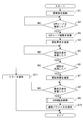
- FIG. 4 shows that the wireless terminal 1 that wants to provide the communication parameter including the AKM added by the function expansion of the DPP determines whether or not the wireless terminal 2 supports the function expansion, and inputs the communication parameter to the wireless terminal 2. It is a flowchart which shows the process to provide.
- the control unit 105 of the wireless terminal 1 sets the AKM included in the communication parameter to be provided to the wireless terminal 2 of the DPP. It is determined whether or not the AKM is added by the function expansion.
- the AKM added by the function expansion is, for example, a value indicating the communication parameter of "WPA4" which is the successor of WPA3, or a value indicating a plurality of communication parameters such as "both DPP and WPA3".
- the parameter processing unit 110 of the wireless terminal 1 transmits the communication parameter to the wireless terminal 2 via the transmission / reception unit 102 as a setting response without changing the AKM by the parameter update unit 111.
- the process proceeds to S92, and the control unit 105 of the wireless terminal 1 determines whether or not the wireless terminal 2 supports the function expansion. To do. That is, in this step, it is determined which version of DPP the wireless terminal 2 corresponds to.
- Whether or not the wireless terminal 2 supports the function expansion can be determined from, for example, the information included in the authentication response and the setting request transmitted by the wireless terminal 2. Specifically, it can be determined based on whether or not a predetermined flag bit is set in a predetermined field in the authentication response or the setting request. Further, the determination may be made based on the version information indicated by a number such as "1" or "2", which is notified by being included in the authentication response or the setting request. In addition to the version information directly indicated by the latter number or the like, the version information includes information on the corresponding function of the wireless terminal 2 indicated by the former flag bit or the like.
- the wireless terminal 2 when the information that can determine whether or not the wireless terminal 2 supports the function expansion cannot be received from the wireless terminal 2, it may be determined that the wireless terminal 2 does not support the function expansion. For example, if the above-mentioned predetermined field or the information indicating the version itself is not included in the authentication response or the setting request, it may be determined that the function extension is not supported.
- the parameter processing unit 110 When it is determined that the version of the wireless terminal 2 is not old and supports the function expansion (S92: N), the parameter processing unit 110 does not change the AKM by the parameter update unit 111, and as a setting response, the transmission / reception unit 110 Communication parameters are transmitted to the wireless terminal 2 via 102.
- the parameter update unit 111 of the wireless terminal 1 updates the AKM included in the communication parameter to a value other than the AKM added by the function expansion, that is, the value of the AKM supported before the function expansion.
- the parameter processing unit 110 of the wireless terminal 1 transmits the communication parameter updated by AKM to the wireless terminal 2 via the transmission / reception unit 102 as a setting response.
- the AKM that the wireless terminal 1 wants to send has a value indicating information of a plurality of connection destinations such as "both DPP and WPA3"
- the AKM update process is supported before the function expansion. Update to either the value of "dpp” or "say” that was set.
- the information of the connection destination is such that the version of the standard is identified by a number such as “1" or “2” like WPA
- the AKM to be sent indicates, for example, "WPA4" or "both WPA4 and WPA3".
- "say” indicating WPA3 which is the forward standard, is selected to update AKM. Further, it may be updated to a predetermined AKM, for example, "dpp", without being based on the AKM to be sent.
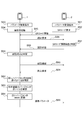
- FIG. 5 shows an example of an operation sequence of the communication parameter providing process between the wireless terminal 1 which is a configurator and the wireless terminal 2 which is an enroller.
- the wireless terminal 2 receives an instruction for receiving communication parameters from the user via the operation unit 103.
- the wireless terminal 2 displays the QR code on the display unit 104 and waits for the authentication request from the wireless terminal 1. If the authentication request cannot be received within a predetermined time, the wireless terminal 2 may end the standby for the authentication request. Further, the wireless terminal 2 does not necessarily have to include a display unit 104 or the like for displaying a QR code. If the QR code is printed on the housing of the wireless terminal 2 or the label attached to the accessory, S52 may be skipped. In this case, when the wireless terminal 2 receives the instruction to receive the parameter in S51, it waits for the authentication request without performing the process in S52.
- the wireless terminal 1 receives an instruction from the user to provide communication parameters via the operation unit 103.
- the wireless terminal 1 activates the imaging unit 107 to image the QR code displayed by the wireless terminal 2.
- the imaging unit 107 of the wireless terminal 1 acquires the QR code information indicated by the QR code by imaging the QR code displayed by the wireless terminal 2.
- the authentication unit 112 of the wireless terminal 1 that has acquired the QR code information indicated by the QR code generates an authentication request (DPP Authentication Request) in S56 via the transmission / reception unit 102, transmits the authentication request to the wireless terminal 2, and transmits the authentication request to the wireless terminal 2. Receives this authentication request.
- the wireless terminal 2 verifies the content of the authentication request received from the wireless terminal 1 in S56.
- the details of the process for verifying the authentication request are as described above with reference to FIG.
- the wireless terminal 2 When it is verified that the wireless terminal 1 that is the source of the authentication request is a device that has imaged the QR code, in S58, the wireless terminal 2 generates an authentication response (DPP Activation Response) and transmits it to the wireless terminal 1. To do. The wireless terminal 2 that has transmitted the authentication response to the wireless terminal 1 waits for the authentication confirmation to be transmitted from the wireless terminal 1.
- DPP Activation Response an authentication response
- the wireless terminal 1 verifies the content of the authentication response received from the wireless terminal 2 in S58.
- the details of the process for verifying the authentication response are as described above with reference to FIG.
- the authentication unit 112 of the wireless terminal 1 determines that the authentication is successful, it transmits an authentication confirmation (DPP Authentication Confirm) to the wireless terminal 2 via the transmission / reception unit 102.
- DPP Authentication Confirm an authentication confirmation
- the wireless terminal 2 that has received the authentication confirmation from the wireless terminal 1 verifies the content of the authentication confirmation.
- the wireless terminal 2 determines that the authentication is successful when the tag information can be correctly decrypted with the shared key generated by the wireless terminal 2.
- the wireless terminal 2 transmits a setting request (DPP Configuration Request) in order to perform the communication parameter setting process, and the wireless terminal 1 transmits a setting response. Wait.
- DPP Configuration Request DPP Configuration Request
- the parameter processing unit 110 of the wireless terminal 1 that has received the setting request from the wireless terminal 2 determines whether or not the communication parameter to be transmitted includes the AKM added by the function expansion.
- the parameter processing unit 110 of the wireless terminal 1 determines whether or not the wireless terminal 2 supports the function expansion.
- the parameter update unit 111 of the wireless terminal 1 sets the AKM included in the communication parameter to the AKM that has been supported before the function expansion, that is, the wireless terminal 2. Update to a recognizable AKM.
- the wireless terminal 1 that has updated the AKM transmits the communication parameter including the updated AKM to the wireless terminal 2 via the transmission / reception unit 102 in S65, including the communication parameter including the updated AKM in the setting response (DPP Configuration Response).
- the updated AKM is stored in the AKM field in the setting response and transmitted.
- the wireless terminal 2 that has received the setting response connects to the wireless network 4 using the communication parameters included in the received setting response.
- the wireless terminal 1 as the configurator can provide the communication parameter to the access point (AP) 3 which is the enroller by the same process as the process described with reference to FIGS. 3 to 5.
- the AP3 can construct the wireless network 4 with the communication parameters provided by the wireless terminal 1.
- the wireless terminal 1 determines whether or not the wireless terminal 2 supports the function expansion before determining whether or not the AKM is added by the function expansion of DPP (S91 in FIG. 4). 4 S92) may be used. Further, even if the wireless terminal 1 determines whether or not the wireless terminal 2 supports the function expansion based on the information included in the received authentication response before transmitting the authentication confirmation (S7 in FIG. 3). Good. In this case, if it is determined that the AKM is added by the function expansion after receiving the setting request (S8: Y in FIG. 3) (S91: Y in FIG. 4), is the wireless terminal 2 compatible with the function expansion? The AKM can be updated without determining whether or not.
- the communication device as the configurator can provide the enroller with the communication parameter updated to AKM, which is not the value added by the function expansion. ..
- the communication device which is an enroller provided with the communication parameters, can recognize the AKM normally, effectively prevents the communication parameters from being illegally determined and making the wireless connection impossible, and improves the convenience of the wireless connection. To do.
- wireless communication such as NFC (Near Field Communication) or Bluetooth (registered trademark) may be used.
- wireless communication such as IEEE802.11ad or TransferJet (registered trademark) may be used.
- the QR code (registered trademark) to be read may be not only the QR code displayed on the display unit but also the QR code attached to the housing of the communication device in the form of a sticker or the like. Further, the QR code (registered trademark) to be read may be affixed to an instruction manual or a package such as corrugated cardboard at the time of sale of communication equipment. Further, instead of the QR code, a one-dimensional code such as a barcode, another two-dimensional code, or the like may be used. Further, the information may be in a user-readable format instead of the machine-readable information such as a QR code.
- the wireless communication method applicable to the present embodiment is not limited to this.
- it may be carried out using wireless communication media such as wireless USB, MBOA (Multi Band OFDM Alliance), Bluetooth (registered trademark), UWB (Ultra Wide Band), ZigBee, and NFC.
- UWB also includes wireless USB, wireless 1394, WINET and the like.
- the communication device may provide communication parameters for connecting to a Wi-Fi Direct® group owner.
- the present invention can also be realized by a program that realizes one or more functions of the above-described embodiment. That is, it can be realized by supplying the program to the system or device via a network or storage medium, and reading and executing the program by one or more processors in the computer (or CPU, MPU, etc.) of the system or device. is there. Further, the program may be recorded and provided on a computer-readable recording medium. It can also be realized by a circuit (for example, ASIC) that realizes one or more functions.
- a circuit for example, ASIC
- the above-described embodiment may be applied to a system composed of a plurality of devices, for example, a host computer, an interface device, an imaging device, a web application, or the like, or may be applied to a device composed of one device. ..
- the function of the embodiment is not limited to the one realized by executing the program read by the computer.
- the operating system (OS) running on the computer may perform a part or all of the actual processing based on the instruction of the program, and the function of the above-described embodiment may be realized by the processing.
Landscapes
- Engineering & Computer Science (AREA)
- Computer Networks & Wireless Communication (AREA)
- Signal Processing (AREA)
- Computer Security & Cryptography (AREA)
- Databases & Information Systems (AREA)
- Mobile Radio Communication Systems (AREA)
- Telephonic Communication Services (AREA)
- Telephone Function (AREA)
Abstract
Description
図1は、本実施形態に係る通信システムのネットワーク構成の一例を示す図である。
図2は、本実施形態に係る無線端末1のハードウエア構成および機能構成の一例を示す図である。なお、無線端末2の機能構成も、無線端末1と同様である。
図3および図4を参照して、コンフィギュレータとして動作する無線端末1が、エンローリとして動作する無線端末2を無線ネットワークへ接続させるために、DPPで規定された通信パラメータを提供する処理を説明する。
次に、図4を参照して、図3のS9で無線端末1が実行するAKM設定処理の詳細を説明する。
図5は、コンフィギュレータである無線端末1とエンローリである無線端末2との間の通信パラメータ提供処理の動作シーケンスの一例を示す。
Claims (14)
- 通信装置であって、
他の通信装置が対応するDevice Provisioning Protocol(DPP)のバージョンを判定する第1の判定手段と、
前記第1の判定手段により判定された前記バージョンに基づいて、前記他の通信装置に提供する通信パラメータの種別を判定する第2の判定手段と、
前記第2の判定手段により判定された前記種別を示す情報と、当該種別に対応する通信パラメータと、を前記他の通信装置に提供する提供手段と、
を有することをする通信装置。 - 前記他の通信装置からDPP規格に準拠した信号を受信する受信手段を更に有し、
前記受信手段により受信された前記信号に基づいて、前記第1の判定手段は、前記他の通信装置が対応するDPPのバージョンを判定することを特徴とする請求項1に記載の通信装置。 - 前記受信手段により受信される前記信号は、前記他の通信装置が対応するDPPのバージョンを示す情報を含むことを特徴とする請求項2に記載の通信装置。
- 前記受信手段により受信される前記信号に、前記他の通信装置が対応するDPPのバージョンを示すフィールドが含まれないことに基づいて、前記第1の判定手段は、前記他の通信装置が対応するDPPのバージョンを判定することを特徴とする請求項2に記載の通信装置。
- 前記受信手段により受信される前記信号は、前記通信装置に通信パラメータを要求する信号であることを特徴とする請求項2から4のいずれか1項に記載の通信装置。
- 前記他の通信装置を認証するための認証処理を行う認証手段を更に有し、
前記認証手段による前記認証処理において前記他の通信装置の認証に成功した場合に、前記提供手段は、前記第2の判定手段により判定された前記種別を示す情報と、当該種別に対応する通信パラメータと、を前記他の通信装置に提供することを特徴とする請求項1から5のいずれか1項に記載の通信装置。 - 前記他の通信装置の公開鍵の情報を含むコードを撮像する撮像手段を更に有し、
前記認証手段は、前記撮像手段により撮像された前記コードに含まれる前記公開鍵の情報を用いて、前記認証処理を行うことを特徴とする請求項6に記載の通信装置。 - 前記提供手段は、前記第2の判定手段により判定された前記種別に対応する通信パラメータを暗号化して前記他の通信装置に提供することを特徴とする請求項1から7のいずれか1項に記載の通信装置。
- 前記第2の判定手段により判定された前記種別を示す情報は、AKM(Authentication and Key Management)フィールドに格納されて、前記他の通信装置に提供されることを特徴とする請求項1から8のいずれか1項に記載の通信装置。
- 前記第1の判定手段により判定された前記バージョンに基づいて、前記AKMフィールドに格納される情報が、前記第2の判定手段により判定された前記種別を示す情報となるように更新する更新手段を更に有することを特徴とする請求項9に記載の通信装置。
- 前記第1の判定手段により判定された前記バージョンに基づいて、前記提供手段が、前記他の通信装置に複数の種別の通信パラメータを提供するか、1つの種別の通信パラメータを提供するかを決定する決定手段を更に有することを特徴とする請求項1から10のいずれか1項に記載の通信装置。
- 前記通信装置は、DPP規格に準拠したコンフィギュレータであり、前記他の通信装置は、DPP規格に準拠したエンローリであることを特徴とする請求項1から11のいずれか1項に記載の通信装置。
- 通信装置の制御方法であって、
他の通信装置が対応するDevice Provisioning Protocol(DPP)のバージョンを判定する第1の判定工程と、
前記第1の判定工程において判定された前記バージョンに基づいて、前記他の通信装置に提供する通信パラメータの種別を判定する第2の判定工程と、
前記第2の判定工程において判定された前記種別を示す情報と、当該種別に対応する通信パラメータと、を前記他の通信装置に提供する提供工程と、
を有することを特徴とする制御方法。 - コンピュータを、請求項1から12のいずれか1項に記載の通信装置の各手段として機能させるためのプログラム。
Priority Applications (4)
| Application Number | Priority Date | Filing Date | Title |
|---|---|---|---|
| EP20794999.1A EP3962054B1 (en) | 2019-04-22 | 2020-03-24 | Communication device, control method of communication device, and program |
| CN202080030435.4A CN113711633B (zh) | 2019-04-22 | 2020-03-24 | 通信设备、以及用于通信设备的控制方法和存储介质 |
| KR1020217037042A KR102592486B1 (ko) | 2019-04-22 | 2020-03-24 | 통신 장치, 통신 장치의 제어 방법 및 컴퓨터 프로그램 |
| US17/506,535 US20220046414A1 (en) | 2019-04-22 | 2021-10-20 | Communication device, and control method and computer-readable medium storing program for communication device |
Applications Claiming Priority (2)
| Application Number | Priority Date | Filing Date | Title |
|---|---|---|---|
| JP2019-081068 | 2019-04-22 | ||
| JP2019081068A JP7387283B2 (ja) | 2019-04-22 | 2019-04-22 | 通信装置、通信装置の制御方法およびプログラム |
Related Child Applications (1)
| Application Number | Title | Priority Date | Filing Date |
|---|---|---|---|
| US17/506,535 Continuation US20220046414A1 (en) | 2019-04-22 | 2021-10-20 | Communication device, and control method and computer-readable medium storing program for communication device |
Publications (1)
| Publication Number | Publication Date |
|---|---|
| WO2020217811A1 true WO2020217811A1 (ja) | 2020-10-29 |
Family
ID=72937352
Family Applications (1)
| Application Number | Title | Priority Date | Filing Date |
|---|---|---|---|
| PCT/JP2020/012825 Ceased WO2020217811A1 (ja) | 2019-04-22 | 2020-03-24 | 通信装置、通信装置の制御方法およびプログラム |
Country Status (6)
| Country | Link |
|---|---|
| US (1) | US20220046414A1 (ja) |
| EP (1) | EP3962054B1 (ja) |
| JP (1) | JP7387283B2 (ja) |
| KR (1) | KR102592486B1 (ja) |
| CN (1) | CN113711633B (ja) |
| WO (1) | WO2020217811A1 (ja) |
Cited By (1)
| Publication number | Priority date | Publication date | Assignee | Title |
|---|---|---|---|---|
| JP2023176539A (ja) * | 2022-05-31 | 2023-12-13 | キヤノン株式会社 | 通信装置、その制御方法及びプログラム |
Families Citing this family (1)
| Publication number | Priority date | Publication date | Assignee | Title |
|---|---|---|---|---|
| JP7413879B2 (ja) * | 2020-03-26 | 2024-01-16 | ブラザー工業株式会社 | 通信システム、電子デバイス、およびプログラム |
Citations (4)
| Publication number | Priority date | Publication date | Assignee | Title |
|---|---|---|---|---|
| US20170295448A1 (en) | 2016-04-08 | 2017-10-12 | Blackberry Limited | Managed object to provision a device according to one of plural provisioning techniques |
| JP2018042058A (ja) * | 2016-09-06 | 2018-03-15 | キヤノン株式会社 | 通信装置、通信装置の制御方法及びプログラム |
| WO2019021770A1 (ja) * | 2017-07-28 | 2019-01-31 | キヤノン株式会社 | 通信装置、通信装置の制御方法及びプログラム |
| JP2019081068A (ja) | 2019-03-04 | 2019-05-30 | 株式会社大一商会 | 遊技機 |
Family Cites Families (11)
| Publication number | Priority date | Publication date | Assignee | Title |
|---|---|---|---|---|
| US20060168291A1 (en) * | 2005-01-05 | 2006-07-27 | Van Zoest Alexander | Interactive multichannel data distribution system |
| US8306523B2 (en) * | 2008-02-15 | 2012-11-06 | Qualcomm Incorporated | Methods and apparatuses supporting multiple positioning protocol versions in wireless communication networks |
| US7877503B2 (en) * | 2008-07-02 | 2011-01-25 | Verizon Patent And Licensing Inc. | Method and system for an intercept chain of custody protocol |
| CN101686458B (zh) * | 2008-09-28 | 2013-06-12 | 华为技术有限公司 | 一种终端配置和管理方法及终端装置 |
| US20110219427A1 (en) * | 2010-03-04 | 2011-09-08 | RSSBus, Inc. | Smart Device User Authentication |
| CN105530593B (zh) * | 2014-09-30 | 2019-04-30 | 中国移动通信集团公司 | 一种用户设备间的状态同步方法及装置 |
| EP3396928B1 (en) * | 2016-01-11 | 2021-06-30 | Huawei Technologies Co., Ltd. | Method for managing network access rights and related device |
| JP6702833B2 (ja) * | 2016-09-15 | 2020-06-03 | キヤノン株式会社 | 通信装置、通信装置の制御及びプログラム |
| JP7091781B2 (ja) * | 2018-03-30 | 2022-06-28 | ブラザー工業株式会社 | 通信装置と通信装置のためのコンピュータプログラム |
| US10169587B1 (en) * | 2018-04-27 | 2019-01-01 | John A. Nix | Hosted device provisioning protocol with servers and a networked initiator |
| US11665662B2 (en) * | 2018-10-17 | 2023-05-30 | Wilus Institute Of Standards And Technology Inc. | Method for onboarding in multiple access point network and access point using same |
-
2019
- 2019-04-22 JP JP2019081068A patent/JP7387283B2/ja active Active
-
2020
- 2020-03-24 KR KR1020217037042A patent/KR102592486B1/ko active Active
- 2020-03-24 CN CN202080030435.4A patent/CN113711633B/zh active Active
- 2020-03-24 EP EP20794999.1A patent/EP3962054B1/en active Active
- 2020-03-24 WO PCT/JP2020/012825 patent/WO2020217811A1/ja not_active Ceased
-
2021
- 2021-10-20 US US17/506,535 patent/US20220046414A1/en not_active Abandoned
Patent Citations (4)
| Publication number | Priority date | Publication date | Assignee | Title |
|---|---|---|---|---|
| US20170295448A1 (en) | 2016-04-08 | 2017-10-12 | Blackberry Limited | Managed object to provision a device according to one of plural provisioning techniques |
| JP2018042058A (ja) * | 2016-09-06 | 2018-03-15 | キヤノン株式会社 | 通信装置、通信装置の制御方法及びプログラム |
| WO2019021770A1 (ja) * | 2017-07-28 | 2019-01-31 | キヤノン株式会社 | 通信装置、通信装置の制御方法及びプログラム |
| JP2019081068A (ja) | 2019-03-04 | 2019-05-30 | 株式会社大一商会 | 遊技機 |
Non-Patent Citations (2)
| Title |
|---|
| ANONYMOUS: "Device Provisioning Protocol Specification", 1 April 2018 (2018-04-01), pages 1 - 124, XP055670685 * |
| See also references of EP3962054A4 |
Cited By (1)
| Publication number | Priority date | Publication date | Assignee | Title |
|---|---|---|---|---|
| JP2023176539A (ja) * | 2022-05-31 | 2023-12-13 | キヤノン株式会社 | 通信装置、その制御方法及びプログラム |
Also Published As
| Publication number | Publication date |
|---|---|
| EP3962054A1 (en) | 2022-03-02 |
| JP2020178310A (ja) | 2020-10-29 |
| US20220046414A1 (en) | 2022-02-10 |
| JP7387283B2 (ja) | 2023-11-28 |
| KR102592486B1 (ko) | 2023-10-25 |
| EP3962054B1 (en) | 2025-06-18 |
| CN113711633A (zh) | 2021-11-26 |
| CN113711633B (zh) | 2024-07-23 |
| EP3962054A4 (en) | 2023-01-04 |
| KR20210151936A (ko) | 2021-12-14 |
Similar Documents
| Publication | Publication Date | Title |
|---|---|---|
| US12108249B2 (en) | Communication device, control method for communication device, and non-transitory computer-readable storage medium | |
| US11683382B2 (en) | Communication device, method for controlling communication device, and program | |
| US12016066B2 (en) | Communication device, non-transitory computer-readable recording medium storing computer-readable instructions for communication device, and non-transitory computer-readable recording medium storing computer-readable instructions for first external device | |
| JP6759011B2 (ja) | 通信装置、通信方法、及びプログラム | |
| KR20190049774A (ko) | 통신 장치, 통신 장치의 제어 방법 및 프로그램 | |
| JP7258493B2 (ja) | 通信装置、通信装置の制御方法およびプログラム | |
| US10575171B2 (en) | Communication apparatus, communication method, and storage medium | |
| WO2020054365A1 (ja) | 通信装置、通信方法及びプログラム | |
| US11706620B2 (en) | Communication device and non-transitory computer-readable medium storing computer-readable instructions for communication device | |
| KR101963545B1 (ko) | 통신 장치, 통신 방법, 및 프로그램 | |
| JP7705429B2 (ja) | 通信装置、制御方法、およびプログラム | |
| WO2020054364A1 (ja) | 通信装置、通信方法及びプログラム | |
| KR102592486B1 (ko) | 통신 장치, 통신 장치의 제어 방법 및 컴퓨터 프로그램 | |
| JP7406893B2 (ja) | 通信装置、制御方法およびプログラム | |
| JP7804526B2 (ja) | 通信装置およびその制御方法、通信システム |
Legal Events
| Date | Code | Title | Description |
|---|---|---|---|
| 121 | Ep: the epo has been informed by wipo that ep was designated in this application |
Ref document number: 20794999 Country of ref document: EP Kind code of ref document: A1 |
|
| NENP | Non-entry into the national phase |
Ref country code: DE |
|
| ENP | Entry into the national phase |
Ref document number: 20217037042 Country of ref document: KR Kind code of ref document: A |
|
| ENP | Entry into the national phase |
Ref document number: 2020794999 Country of ref document: EP Effective date: 20211122 |
|
| WWG | Wipo information: grant in national office |
Ref document number: 2020794999 Country of ref document: EP |