WO2020230221A1 - ユーザ装置、及び通信方法 - Google Patents
ユーザ装置、及び通信方法 Download PDFInfo
- Publication number
- WO2020230221A1 WO2020230221A1 PCT/JP2019/018840 JP2019018840W WO2020230221A1 WO 2020230221 A1 WO2020230221 A1 WO 2020230221A1 JP 2019018840 W JP2019018840 W JP 2019018840W WO 2020230221 A1 WO2020230221 A1 WO 2020230221A1
- Authority
- WO
- WIPO (PCT)
- Prior art keywords
- resource
- resources
- transmission
- user device
- pscch
- Prior art date
- Legal status (The legal status is an assumption and is not a legal conclusion. Google has not performed a legal analysis and makes no representation as to the accuracy of the status listed.)
- Ceased
Links
Images







Classifications
-
- H—ELECTRICITY
- H04—ELECTRIC COMMUNICATION TECHNIQUE
- H04W—WIRELESS COMMUNICATION NETWORKS
- H04W72/00—Local resource management
- H04W72/02—Selection of wireless resources by user or terminal
-
- H—ELECTRICITY
- H04—ELECTRIC COMMUNICATION TECHNIQUE
- H04L—TRANSMISSION OF DIGITAL INFORMATION, e.g. TELEGRAPHIC COMMUNICATION
- H04L1/00—Arrangements for detecting or preventing errors in the information received
- H04L1/12—Arrangements for detecting or preventing errors in the information received by using return channel
- H04L1/16—Arrangements for detecting or preventing errors in the information received by using return channel in which the return channel carries supervisory signals, e.g. repetition request signals
- H04L1/18—Automatic repetition systems, e.g. Van Duuren systems
- H04L1/1867—Arrangements specially adapted for the transmitter end
- H04L1/1893—Physical mapping arrangements
-
- H—ELECTRICITY
- H04—ELECTRIC COMMUNICATION TECHNIQUE
- H04L—TRANSMISSION OF DIGITAL INFORMATION, e.g. TELEGRAPHIC COMMUNICATION
- H04L1/00—Arrangements for detecting or preventing errors in the information received
- H04L1/12—Arrangements for detecting or preventing errors in the information received by using return channel
- H04L1/16—Arrangements for detecting or preventing errors in the information received by using return channel in which the return channel carries supervisory signals, e.g. repetition request signals
- H04L1/18—Automatic repetition systems, e.g. Van Duuren systems
- H04L1/1867—Arrangements specially adapted for the transmitter end
- H04L1/1887—Scheduling and prioritising arrangements
-
- H—ELECTRICITY
- H04—ELECTRIC COMMUNICATION TECHNIQUE
- H04L—TRANSMISSION OF DIGITAL INFORMATION, e.g. TELEGRAPHIC COMMUNICATION
- H04L1/00—Arrangements for detecting or preventing errors in the information received
- H04L1/12—Arrangements for detecting or preventing errors in the information received by using return channel
- H04L1/16—Arrangements for detecting or preventing errors in the information received by using return channel in which the return channel carries supervisory signals, e.g. repetition request signals
- H04L1/18—Automatic repetition systems, e.g. Van Duuren systems
- H04L1/1867—Arrangements specially adapted for the transmitter end
- H04L1/189—Transmission or retransmission of more than one copy of a message
-
- H—ELECTRICITY
- H04—ELECTRIC COMMUNICATION TECHNIQUE
- H04W—WIRELESS COMMUNICATION NETWORKS
- H04W72/00—Local resource management
- H04W72/04—Wireless resource allocation
- H04W72/044—Wireless resource allocation based on the type of the allocated resource
- H04W72/0446—Resources in time domain, e.g. slots or frames
-
- H—ELECTRICITY
- H04—ELECTRIC COMMUNICATION TECHNIQUE
- H04W—WIRELESS COMMUNICATION NETWORKS
- H04W72/00—Local resource management
- H04W72/20—Control channels or signalling for resource management
-
- H—ELECTRICITY
- H04—ELECTRIC COMMUNICATION TECHNIQUE
- H04W—WIRELESS COMMUNICATION NETWORKS
- H04W74/00—Wireless channel access
- H04W74/08—Non-scheduled access, e.g. ALOHA
- H04W74/0808—Non-scheduled access, e.g. ALOHA using carrier sensing, e.g. carrier sense multiple access [CSMA]
-
- H—ELECTRICITY
- H04—ELECTRIC COMMUNICATION TECHNIQUE
- H04W—WIRELESS COMMUNICATION NETWORKS
- H04W92/00—Interfaces specially adapted for wireless communication networks
- H04W92/16—Interfaces between hierarchically similar devices
- H04W92/18—Interfaces between hierarchically similar devices between terminal devices
Definitions
- the present invention relates to a user device in a wireless communication system.
- LTE Long Term Evolution
- LTE-A Long Term Evolution Advanced
- NR New Radio
- 5G New Radio
- D2D reduces the traffic between the user device and the base station device, and enables communication between the user devices even when the base station device becomes incommunicable due to a disaster or the like.
- D2D is referred to as a "sidelink".
- D2D communication includes D2D discovery (also referred to as D2D discovery) for discovering other user devices that can communicate, and D2D communication (D2D direct communication, D2D communication, terminal) for direct communication between user devices. It is also roughly divided into (also called direct communication, etc.).
- D2D discovery also referred to as D2D discovery
- D2D communication D2D direct communication, D2D communication, terminal
- the user device In the side link, there is a mode in which the user device autonomously selects the transmission resource. In this mode, the user device performs sensing to select a resource that is not occupied by another user device.
- the present invention has been made in view of the above points, and an object of the present invention is to provide a technique that enables a user device to select a resource in consideration of retransmission in a side link.
- a control unit that selects a sidelink resource from candidate resources excluding selected resources and further resources within a predetermined time window.
- a user apparatus including a transmission unit that transmits or retransmits using a resource selected by the control unit is provided.
- a technology that enables a user device to select a resource in consideration of retransmission is provided.
- V2X It is a figure for demonstrating V2X. It is a figure for demonstrating the example (1) of the transmission mode of V2X. It is a figure for demonstrating the example (2) of the transmission mode of V2X. It is a figure for demonstrating the example (3) of the transmission mode of V2X. It is a figure for demonstrating the example (4) of the transmission mode of V2X. It is a figure which shows the example of a channel structure. It is a figure for demonstrating resource selection. It is a figure which shows the example of the selected resource. It is a figure which shows the example of the resource selection procedure. It is a figure which shows the example of the selected resource. It is a figure which shows the example of the selected resource. It is a figure which shows the example of the selected resource. It is a figure which shows the example of the selected resource.
- existing technology may be used as appropriate.
- the existing technology is, for example, existing LTE or NR, but is not limited to existing LTE or NR.
- the duplex system may be a TDD (Time Division Duplex) system, an FDD (Frequency Division Duplex) system, or other system (for example, Flexible Duplex, etc.). Method may be used.
- TDD Time Division Duplex
- FDD Frequency Division Duplex
- Method may be used.
- FIG. 1 is a diagram for explaining V2X.
- V2X Vehicle to Everything
- eV2X enhanced V2X
- FIG. 1 V2X is a part of ITS (Intelligent Transport Systems), V2V (Vehicle to Vehicle) which means a communication mode between vehicles, and a roadside installed between a vehicle and a roadside.
- ITS Intelligent Transport Systems
- V2V Vehicle to Vehicle
- V2I Vehicle to Infrastructure
- V2N Vehicle to Network
- V2P Vehicle to Pedestrian
- V2X using LTE or NR cellular communication and terminal-to-terminal communication is being studied.
- V2X using cellular communication is also referred to as cellular V2X.
- studies are underway to realize large capacity, low delay, high reliability, and QoS (Quality of Service) control.
- LTE or NR V2X it is expected that studies not limited to 3GPP specifications will be promoted in the future. For example, ensuring interoperability, reducing costs by implementing higher layers, using or switching between multiple RATs (RadioAccess Technology), supporting regulations in each country, data acquisition, distribution, database management, and LTE or NR V2X platform. It is expected that the usage method will be examined.
- RATs RadioAccess Technology
- a communication device such as a user device (UE) is mounted on the vehicle, but the embodiment of the present invention is not limited to this mode.
- the communication device may be a terminal held by a person, or the communication device may be a device mounted on a drone or an aircraft.
- SL may be distinguished based on any or combination of UL (Uplink) or DL (Downlink) and the following 1) -4). Further, SL may have another name. 1) Resource allocation in the time domain. 2) Resource allocation in the frequency domain. 3) Reference synchronization signal (including SLSS (Sidelink Synchronization Signal)). 4) A reference signal used for path loss measurement for transmission power control.
- SL or UL OFDM Orthogonal Frequency Division Multiplexing
- CP-OFDM Cyclic-Prefix OFDM
- DFT-S-OFDM Discrete Fourier Transform-Spread-OFDM
- Transform Precoded OFDM Transferformed Any of the above OFDM may be applied.
- the wireless communication system has a plurality of user devices 20 and a base station device 10.
- the base station device 10 may not be provided.
- a plurality of user devices 20 that perform side-link communication are referred to as user device 20A, user device 20B, and the like.
- the physical resources of the wireless signal are defined in the time domain and the frequency domain
- the time domain may be defined by the number of OFDM symbols
- the frequency domain is the number of subcarriers or the resource block. It may be defined by a number.
- the TTI Transmission Time Interval
- the TTI may be a slot, or the TTI may be a subframe.
- the base station device 10 is a communication device that provides one or more cells and performs wireless communication with the user device 20.
- the base station apparatus 10 transmits a synchronization signal and system information to the user apparatus 20. Synchronous signals are, for example, PSS and SSS.
- the system information is transmitted by, for example, PBCH or PDSCH, and is also referred to as broadcast information.
- the base station apparatus 10 transmits a control signal or data to the user apparatus 20 by DL (Downlink), and receives the control signal or data from the user apparatus 20 by UL (Uplink).
- DL Downlink
- UL Uplink
- what is transmitted through a control channel such as PUCCH or PDCCH is called a control signal
- PUSCH or PDSCH shared channel
- data data.
- the control signal and the data may be collectively called a "signal".
- the user device 20 is a communication device having a wireless communication function such as a smartphone, a mobile phone, a tablet, a wearable terminal, and a communication module for M2M (Machine-to-Machine). Further, for example, as described above, the user device 20 is a communication device mounted on a vehicle.
- a wireless communication function such as a smartphone, a mobile phone, a tablet, a wearable terminal, and a communication module for M2M (Machine-to-Machine).
- M2M Machine-to-Machine
- the user device 20 uses various communication services provided by the wireless communication system by receiving the control signal or data from the base station device 10 by DL and transmitting the control signal or data to the base station device 10 by UL. ..
- the user device 20 may be referred to as a UE, and the base station device 10 may be referred to as a gNB (or eNB).
- the side link it is possible to dynamically allocate the transmission resource of the side link by DCI (Downlink Control Information) transmitted from the base station device 10 to the user device 20.
- DCI Downlink Control Information
- SPS Semi Persistent Scheduling
- the user apparatus 20 autonomously sidelinks from the resource pool, which is a resource that can be used and selected by the base station apparatus 10. It is also possible to select the transmission resource of.
- the slot in the embodiment of the present invention may be read as a symbol, a mini slot, a sub slot, a sub frame, a wireless frame, and a TTI (Transmission Time Interval).
- the cell in the embodiment of the present invention may be read as a cell group, a carrier component, a BWP, a resource pool, a resource, a RAT (Radio Access Technology), a system (including a wireless LAN), or the like.
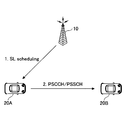
- FIG. 2 is a diagram for explaining an example (1) of the transmission mode of V2X.
- the base station apparatus 10 transmits the side link scheduling information to the user apparatus 20A.
- the user device 20A transmits PSCCH (Physical Sidelink Control Channel) and PSCH (Physical Sidelink Shared Channel) to the user device 20B based on the received scheduling information (step 2).
- the transmission mode of the side link communication shown in FIG. 2 may be referred to as the side link transmission mode 3 in LTE.
- sidelink transmission mode 3 in LTE Uu-based sidelink scheduling is performed.
- Uu is a wireless interface between UTRAN (Universal Terrestrial Radio Access Network) and UE (User Equipment).
- the transmission mode of the side link communication shown in FIG. 2 may be referred to as the side link transmission mode 1 in NR. In this case, the Uu becomes NR-Uu, which is a wireless interface between the NR and the UE.
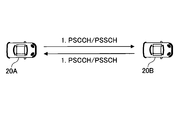
- FIG. 3 is a diagram for explaining an example (2) of the transmission mode of V2X.
- the user apparatus 20A transmits the PSCCH and the PSCH to the user apparatus 20B using the autonomously selected resource.
- the user apparatus 20B transmits the PSCCH and the PSCH to the user apparatus 20A using the autonomously selected resource (step 1).
- the transmission mode of the side link communication shown in FIG. 3 may be referred to as the side link transmission mode 2a in NR.
- the UE In the side link transmission mode 2a in NR, the UE itself executes resource selection. Further, the mode shown in FIG. 3 may be referred to as resource allocation mode 2 (resource allocation mode 2).
- the user device 20 on the transmitting side performs sensing and selects a free resource.
- the sensing procedure may be executed by decoding SCI (Sidelink Control Information) transmitted from another user device 20, or may be executed based on the received power by the side link measurement.
- SFCI Sidelink Feedback Control Information
- PSFCH Physical Sidelink Feedback Channel
- the resource selection procedure which determines the resources used for sidelink transmission, is performed based on the results of the sensing procedure.
- the particle size of the resource applied to the sensing procedure and the resource selection procedure may be defined in units of PRB, slot, subslot, minislot, and other resource patterns.
- Decoding the SCI applied to the sensing procedure obtains at least information about the sidelink resources notified by the user device 20 transmitting the SCI. The details of the resource selection method in the present embodiment will be described later.
- FIG. 4 is a diagram for explaining an example (3) of the transmission mode of V2X.
- the base station apparatus 10 transmits the pattern of available resources of the side link to the user apparatus 20A via the RRC (Radio Resource Control) setting. Alternatively, it is set (in advance) in the user device 20A. Subsequently, the user apparatus 20A transmits the PSCH to the user apparatus 20B based on the pattern of the available resources (step 1).
- the transmission mode of the side link communication shown in FIG. 4 may be referred to as the side link transmission mode 2c in NR.
- FIG. 5 is a diagram for explaining an example (4) of the transmission mode of V2X.
- the user device 20C transmits the side link scheduling information to the user device 20A via the PSCCH.
- the user apparatus 20A transmits the PSCCH and the PSCH to the user apparatus 20B based on the received scheduling information (step 2).
- the transmission mode of the side link communication shown in FIG. 5 may be referred to as the side link transmission mode 2d in NR.
- “transmitting PSCCH” may be paraphrased as transmitting control information using PSCCH.
- transmitting PSSCH may be paraphrased as transmitting data using PSSCH.
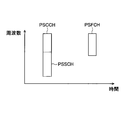
- FIG. 6 is an example of a side link channel configuration.
- the PSCCH and the PSCH are arranged adjacent to each other in the frequency domain, and the transmission of the SCI by the PSCCH and the transmission of the data by the PSCH are performed simultaneously (for example, in one slot or one subframe).
- the PSFCH is placed after the PSCCH / PSSCH (after the time domain).
- resource selection in the mode in which the user device 20 autonomously selects resources (resource allocation mode 2 and the like described above) and data transmission using the selected resources will be described in detail.
- the user device 20 is sensing in the background.
- the user apparatus UE reads control information (including resource reservation information and the like) and measures an interference pattern by power detection. Then, when the transmission data is generated, the user apparatus UE has low interference in the resource selection window (that is, reserved or used by another user apparatus) based on the sensing result from the past predetermined time (for example, 1000 ms) to the present time. Select a resource from multiple resources (candidate resources) and send data using that resource.
- the user equipment UE reads control information (including resource reservation information, etc.) and measures interference by power detection.
- the user apparatus UE selects the resource in the resource selection window from among a plurality of resources (candidate resources) having low interference based on the sensing result related to the control information that reserves the resource in the resource selection window. Select a resource and use that resource to send data.
- TB transport block
- packet packet
- the data transmission by the side link in the embodiment of the present invention is performed periodically or aperiodically.
- periodic transmission if the user apparatus 20 continues to use the same resource in each transmission cycle, the data to be transmitted may continue to collide with the data transmitted from the other user apparatus 20. Therefore, a selection counter for reselecting resources may be used. When the selection counter is used, the selection counter is subtracted each time the transmission is performed from the time of transmission in the first cycle, and the user apparatus 20 reselects the resource when the selection counter becomes 0.
- resource selection is to include resource selection as described above as well as resource selection when transmission data is newly generated.
- selectable resources resources that remain without being excluded in the resource selection window are referred to as “candidate resources”.
- the outline of the resource selection operation in the user device 20 is as follows. As shown in FIG. 7, the user device 20 grasps the reserved resource (transmission resource of the other user device) by decoding the control information of the other user device 20 received in the sensing window, and the resource. May be excluded from the candidate resources. In the example of FIG. 7, it is shown that the PSCCH / PSCH resources of other user devices are excluded. In addition, "PSCCH / PSSCH" means PSCCH only, PSCCH only, or PSCCH and PSCH.
- the user device 20 After resource exclusion, the user device 20 performs processing such as ranking and selection of candidate resources to obtain a set of candidate resources that can be selected for transmission. The user device 20 selects a resource from the set of candidate resources thus obtained and transmits the resource.
- NR sidelinks support HARQ-ACK-based retransmissions. That is, regarding the transmission / reception of a certain PSSCH, when the NACK is transmitted by the HARQ-ACK feedback, the PSSCH can be retransmitted.
- the user apparatus 20 selects a maximum of N resources from the candidate resources in the resource selection window in consideration of HARQ-ACK-based retransmission.
- N is an integer of 0 or more.
- N may include a resource for performing a HARQ-ACK-based retransmission, or may include a resource for performing a non-HARQ-ACK-based retransmission (for example, it may be referred to as a Blind Retransmission, Repetition, etc.). However, both of the above may be included.
- the user device 20 may determine the maximum number of retransmissions (number of times including the first transmission) based on, for example, CBR (Channel busy ratio). Further, N may be the maximum number of retransmissions, a value determined regardless of the maximum number of retransmissions, or a value set from the base station apparatus 10. It may be a value predetermined by specifications or the like.
- the maximum number of retransmissions may be a value for a HARQ-ACK-based retransmission, a value for a retransmission not based on HARQ-ACK, or a value for both of the above.
- HARQ-ACK-based retransmission is supported, and when the user device 20 selects a plurality of resources, it is necessary to appropriately select the resources in order to secure a sufficient number of retransmissions.
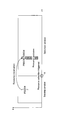
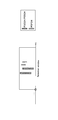
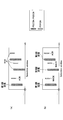
- Figure 8 (a) shows an example in which inappropriate resource selection was made when retransmission was taken into consideration.
- the vertical axis of FIG. 8A is the frequency. The same applies to the following figures.
- the PSCCH / PSCH resource and the PSFCH resource are selected near the end of the resource selection window. In this case, the first transmission (first transmission) and HARQ-ACK feedback are performed with this selected resource. However, since the resource after the PSFCH resource is not selected, retransmission cannot be performed.
- FIG. 8B shows an example in which appropriate resource selection is made.
- the next resource can be used for retransmission, and if necessary, the next resource can be used for retransmission.
- Example 1 the specific processing content of resource selection will be described as Example 1, and the specific processing content of transmission using the selected resource will be described as Example 2.
- Example 2 the specific processing content of resource selection will be described as Example 1, and the specific processing content of transmission using the selected resource will be described as Example 2.
- the second embodiment is premised on the resource selection in the first embodiment. However, the second embodiment may be executed regardless of the resource selection in the first embodiment.
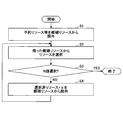
- FIG. 9 is an operation example of resource selection executed by the user device 20 when a resource selection trigger (example: new transmission data generation, resource reselection trigger generation) occurs in the user device 20.
- the user device 20 is constantly sensing.
- step 1 the user device 20 excludes the resources reserved by the other user device 20 obtained by sensing from the candidate resources in the resource selection window.
- step 2 the user device 20 selects one resource from the remaining candidate resources.
- N resources are selected (Yes in step 3)
- the resource selection process is terminated, and for example, the set of selected resources is reported to the upper layer.
- step 4 the user device 20 removes the selected resource + ⁇ from the candidate resources, returns to the process of step 2, and repeats the process from step 2.
- processing content described in FIG. 9 is only an example. For example, instead of selecting resources one by one, a plurality of resources may be selected together. Further, the resource selection process may be terminated even when N pieces are not selected. Further, S1 and S4 may be executed separately instead of a series of processes.
- ⁇ Operation example 1 (related to step 2)>
- the user device 20 selects the first resource from the candidate resources remaining without being excluded
- the user device 20 randomly selects one resource from all the candidate resources remaining without being excluded.
- the operation of randomly selecting one resource from all the remaining candidate resources that are not excluded may be applied to the selection of the second and subsequent resources.
- the "one resource” may be a PSCCH / PSCH resource (that is, a PSCCH resource, a PSCH resource, or a PSCCH resource + PSCH resource), or a PSFCH resource, or a PSCCH / PSCH resource and a PSFCH resource. It may be a set of.
- FIG. 10 shows an example in which the PSCCH / PSCH resource and the PSFCH resource are selected as a set.
- the PSCCH / PSCH resource and the PSFCH resource are associated with each other, and if the PSCCH / PSCH resource is selected, the PSCCH / PSCH resource is associated with the PSCCH / PSCH resource.
- the PSFCH resource may be determined.
- the size of one PSCCH / PSCH resource may be determined as a size that can accommodate the size of data to be transmitted, or may be a predetermined size.
- the particle size of one resource is not particularly limited.
- the time domain may be in slot units, subslot units, minislot units, symbol units, or subframe units.
- the frequency domain may be a resource block unit, a subchannel unit, or an arbitrary frequency unit.
- ⁇ Operation example 2 (related to step 4)> Basically, after the user device 20 selects a resource and then before selecting another resource, the user device 20 excludes the already selected resource from the candidate resources. The user device 20 selects another resource from the candidate resources excluding the already selected resource.
- the user device 20 after the user device 20 selects a certain resource and then before selecting another resource, the user device 20 adds a resource (for convenience, this is referred to as a resource ⁇ ) in addition to the resource already selected. ) Is excluded from the candidate resources. The user device 20 selects another resource from the candidate resources excluding "already selected resource + resource ⁇ ".
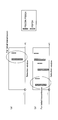
- the user apparatus 20 selects the PSCCH / PSCH resource and the PSFCH resource related to the PSCCH / PSCH resource, and then before selecting another resource, the PSCCH / PSCH resource and the PSFCH resource Is excluded from the candidate resources, and the resource between the PSCCH / PSCH resource and the PSFCH resource in the time domain is excluded.
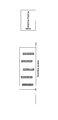
- An example of the resources thus excluded is shown in FIG.
- the user apparatus 20 can appropriately perform data transmission by the PSCCH / PSCH resource indicated by A and HARQ-ACK feedback reception by the PSFCH resource indicated by B.
- the user apparatus 20 after the user apparatus 20 selects the PSCCH / PSCH resource and then before selecting another resource, the user apparatus 20 adds the PSCCH / PSCH resource already selected to the PSCCH / in the time domain.
- a resource having a predetermined time width may be excluded from the candidate resources immediately after the PSCH resource.
- the user apparatus 20 selects the PSCCH / PSCH resource and the PSFCH resource related to the PSCCH / PSCH resource, and then before selecting another resource, the PSCCH / PSCH resource and the PSFCH resource are selected.
- a resource may be excluded from the candidate resources, and a resource having a predetermined time width from immediately before the PSCCH / PSCH resource in the time domain may be excluded from the candidate resources.
- the resource of the predetermined time width is excluded from the candidate resource immediately after the PSFCH resource in the time domain. You may. This makes it possible to avoid, for example, the case where the PSFCH resource and the immediately following PSCCH / PSCH resource are too close in the time domain to be used for HARQ-ACK-based retransmission.
- ⁇ Operation example 3 (related to step 2)>
- the user device 20 selects the resource according to the constraint.
- the user device 20 may randomly select a resource within the range of candidate resources that comply with this constraint.
- the constraint is, for example, a constraint on the positional relationship in the time domain between the selected resource and the selected specific resource.
- the user apparatus 20 performs the following option 1 or option 2 operation when selecting a PSCCH / PSCH resource and a PSFCH resource associated with the PSCCH / PSCH resource.
- Option 1 If there is a previously selected PSCCH / PSCH resource, the user equipment 20 will combine the PSCCH / PSCH resource with the PSCCH / PSCH resource so that the selected PSFCH resource precedes the selected PSCCH / PSCH resource in the time domain. Select a PSFCH resource.
- Option 2 If there is a previously selected PSFCH resource, select the PSCCH / PSCH resource and PSFCH resource so that the PSCCH / PSCH resource to be selected follows the selected PSFCH resource in the time domain.
- the user device 20 may select a plurality of PSFCH resources for one PSCCH / PSCH resource.
- the “selected PSFCH resource” of option 1 is the last PSFCH resource among the plurality of PSFCH resources.
- the “selected PSFCH resource” of the option 2 is the last PSFCH resource among the plurality of PSFCH resources.
- FIG. 11 shows an example of the execution result of option 1.
- the PSFCH resource is selected in front of the selected PSCCH / PSSCH resource.
- the PSCCH / PSCH resource and the PSFCH resource are selected separately, there may be a constraint that the time between the PSCCH / PSCH resource and the PSFCH resource is a predetermined time or more.
- the user apparatus 20 transmits a signal for resource reservation in order to reserve a resource for retransmission based on HARQ-ACK feedback.
- the user apparatus 20 receives the PSCCH / PSCH resource and the resource reservation signal (may be referred to as "resource reservation signaling") associated with the PSCCH / PSCH resource from the candidate resources remaining without being excluded.
- the user apparatus 20 performs the selection so that the resource reserved signal resource to be selected is after the selected PSFCH resource in the time domain.
- the "selected PSFCH resource" is the last PSFCH resource among the plurality of selected PSFCH resources.
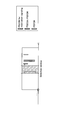
- FIG. 12 shows an example when selection is made under this constraint.
- a resource reserved signal resource (PSCCH resource in the example of FIG. 12) is selected after the selected PSFCH resource.
- the signal for resource reservation can also be applied to transmission not related to HARQ-ACK feedback (for example, initial transmission and / or retransmission not based on HARQ-ACK), and the above restriction is also applied in this case. You may.
- the user device 20 can quickly execute resource reservation for retransmission when NACK is received by the PSFCH resource.
- Operation example 1 to operation example 3 may be combined.
- the user device 20 executes the operation example 1 in the first step 2, and then executes the operation example 2 in the step 4. Further, the user apparatus 20 executes the operation example 1 in the first step 2, excludes only the selected resource in the step 4, and executes the operation example 3 in the next step 2.
- the user device 20 executes the operation example 1 in the first step 2, executes the operation example 2 in the step 4, and executes the operation example 3 in the subsequent step 2.
- the user device 20 repeats this operation until, for example, N resources are selected.
- ⁇ Operation example 5 (related to step 3)> If the number of selected resources is less than N after the user device 20 performs any one or more of the operation examples 1 to 4, the user device 20 has any one of the operation examples 2 to 3. Or perform both actions.
- ⁇ Operation example 6 (related to step 3)> If the number of selected resources is less than N after the user device 20 performs any one or more of the operation examples 1 to 4, both the operation example 2 and the operation example 3 are the same. When the execution conditions are not satisfied (that is, when neither the operation example 2 nor the operation example 3 can be executed), the user device 20 executes, for example, the following option 1 or option 2.
- Option 1 The user device 20 randomly selects a resource from the candidate resources without considering (without executing) both the resource exclusion of "+ ⁇ " in the operation example 2 and the constraint of the operation example 3.
- Option 2 The user device 20 does not select any further resources. That is, the resource selection is finished. In this case, as a result of resource selection, less than N resources are selected.
- the user device 20 may execute the operation that can be executed, or execute either the above option 1 or the option 2. You may.
- FIG. 13 shows an example when option 1 of operation example 6 is executed. As shown in FIG. 13, for example, the restriction that the PSFCH resource is arranged before the PSCCH / PSSCH resource is not satisfied.
- the user device 20 may not perform the HARQ-ACK feedback operation using the PSFCH by setting from the base station device 10 or by its own judgment. In that case, for example, as shown in FIG. 14, only the PSCCH / PSCH resource may be selected.
- Example 1 a sufficient number of resources can be selected in consideration of HARQ-ACK feedback.
- Example 2 Next, as Example 2, an example of a transmission method using the selected resource will be described.
- the user device 20 executes the following option 1 or option 2.
- the user apparatus 20 executes data transmission (or data retransmission) using the resource having the fastest time among the selected resources, that is, the resource having the shortest time index.
- the resource here may be one resource or a plurality of resources.
- the user device 20 may notify another nearby user device of the dropped resource (that is, the resource has been released).
- the user apparatus 20 performs transmission using, for example, the plurality of PSCCH / PSCH resources before the earliest PSFCH resource.
- Whether or not the selected resource is used depends on the result of HARQ-ACK feedback. If the user device 20 receives the ACK, the subsequent resources are not used.
- the user device 20 performs the first data transmission with the first PSCCH / PSCH resource.
- the PSFCH resource is notified to the data transmission destination. Then, when the user device 20 receives the ACK for the first transmission, the subsequent resources are dropped.
- the user device 20 receives the ACK after performing two retransmissions (second transmission and third transmission). In this case, the selected resource is not dropped.
- the user apparatus 20 transmits twice using the two PSCCH / PSSCH resources before the earliest PSFCH resource, and receives the ACK with the earliest PSFCH resource. ..
- Option 2 The user device 20 transmits data in all the selected resources. All resources here may be all PSCCH / PSCH resources. For example, as shown in the example shown in FIG. 15B, the user device 20 performs transmission (repeated transmission three times) with all PSCCH / PSSCH resources. In option 2, the user apparatus 20 does not have to perform an operation based on the HARQ-ACK feedback even when receiving the HARQ-ACK feedback.
- the user device 20 when only five PSCCH / PSCH resources are selected, the user device 20 repeatedly transmits five times.
- the user device 20 when additional resources are required for data transmission (or retransmission), the user device 20 triggers resource selection (reselection here). Perform the resource selection described in Example 1.
- the user device 20 can efficiently perform transmission using a plurality of selected resources.
- the technique according to the present embodiment can be applied without depending on the type of resource selection mechanism in the resource allocation mode 2 (example: chain reservation based, short term reservation based or random selection based).
- the base station apparatus 10 and the user apparatus 20 include all the functions in the above-described embodiment. However, the base station device 10 and the user device 20 may each include only a part of the functions of all the functions in the embodiment (for example, only the first embodiment or only the second embodiment).
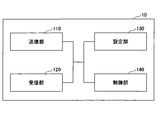
- FIG. 17 is a diagram showing an example of the functional configuration of the base station apparatus 10.
- the base station apparatus 10 includes a transmission unit 110, a reception unit 120, a setting unit 130, and a control unit 140.
- the functional configuration shown in FIG. 17 is only an example. Any function classification and name of the functional unit may be used as long as the operation according to the embodiment of the present invention can be executed.
- the transmission unit 110 includes a function of generating a signal to be transmitted to the user device 20 side and transmitting the signal wirelessly.
- the receiving unit 120 includes a function of receiving various signals transmitted from the user apparatus 20 and acquiring information of, for example, a higher layer from the received signals. Further, the transmission unit 110 has a function of transmitting NR-PSS, NR-SSS, NR-PBCH, DL / UL control signal, DL reference signal, RRC message, etc. to the user device 20.
- the setting unit 130 stores preset setting information and various setting information to be transmitted to the user device 20 in the storage device of the setting unit 130, and reads the setting information from the storage device as needed.
- the content of the setting information is, for example, information related to the setting of N.
- the control unit 140 controls the base station device 10.
- the function unit related to signal transmission in the control unit 140 may be included in the transmission unit 110, and the function unit related to signal reception in the control unit 140 may be included in the reception unit 120.
- FIG. 18 is a diagram showing an example of the functional configuration of the user device 20.
- the user device 20 includes a transmission unit 210, a reception unit 220, a setting unit 230, and a control unit 240.
- the functional configuration shown in FIG. 18 is only an example. Any function classification and name of the functional unit may be used as long as the operation according to the embodiment of the present invention can be executed.
- the transmission unit 210 creates a transmission signal from the transmission data and wirelessly transmits the transmission signal.
- the receiving unit 220 wirelessly receives various signals and acquires a signal of a higher layer from the received signal of the physical layer. Further, the receiving unit 220 has a function of receiving NR-PSS, NR-SSS, NR-PBCH, DL / UL / SL control signal, RRC message, reference signal and the like transmitted from the base station apparatus 10. Further, for example, the transmission unit 210 connects the other user device 20 to the PSCCH (Physical Sidelink Control Channel), PSSCH (Physical Sidelink Shared Channel), PSDCH (Physical Sidelink Discovery Channel), PSBCH (Physical Sidelink Broadcast) as side link communication. Channel), PSFCH (Physical Sidelink Feedback Channel), etc. are transmitted, and the receiving unit 220 receives PSCCH, PSCH, PSDCH, PSBCH, PSFCH, etc. from another user device 20.
- PSCCH Physical Sidelink Control Channel
- the setting unit 230 stores various setting information received from the base station device 10 or another user device 20 by the receiving unit 220 in the storage device of the setting unit 230, and reads it out from the storage device as needed.
- the setting unit 230 also stores preset setting information.
- the content of the setting information is, for example, information related to the setting of N.
- the control unit 240 controls the user device 20. Further, the control unit 240 executes the resource selection operation described in the first and second embodiments.
- the function unit related to signal transmission in the control unit 240 may be included in the transmission unit 210, and the function unit related to signal reception in the control unit 240 may be included in the reception unit 220.
- each functional block may be realized by using one device that is physically or logically connected, or directly or indirectly (for example, by two or more devices that are physically or logically separated). , Wired, wireless, etc.) and may be realized using these plurality of devices.
- the functional block may be realized by combining the software with the one device or the plurality of devices.
- Functions include judgment, decision, judgment, calculation, calculation, processing, derivation, investigation, search, confirmation, reception, transmission, output, access, solution, selection, selection, establishment, comparison, assumption, expectation, and assumption.
- broadcasting notifying, communicating, forwarding, configuring, reconfiguring, allocating, mapping, assigning, etc., but only these. I can't.
- a functional block (constituent unit) that functions transmission is called a transmitting unit or a transmitter.
- the method of realizing each of them is not particularly limited.
- the base station device 10, the user device 20, and the like in one embodiment of the present disclosure may function as a computer that processes the wireless communication method of the present disclosure.
- FIG. 19 is a diagram showing an example of the hardware configuration of the base station device 10 and the user device 20 according to the embodiment of the present disclosure.
- the above-mentioned base station device 10 and user device 20 are physically configured as a computer device including a processor 1001, a storage device 1002, an auxiliary storage device 1003, a communication device 1004, an input device 1005, an output device 1006, a bus 1007, and the like. May be done.
- the word “device” can be read as a circuit, device, unit, etc.
- the hardware configuration of the base station device 10 and the user device 20 may be configured to include one or more of the devices shown in the figure, or may be configured not to include some of the devices.
- the processor 1001 For each function in the base station device 10 and the user device 20, by loading predetermined software (program) on the hardware such as the processor 1001 and the storage device 1002, the processor 1001 performs an calculation and the communication device 1004 performs communication. It is realized by controlling or controlling at least one of reading and writing of data in the storage device 1002 and the auxiliary storage device 1003.
- the processor 1001 operates, for example, an operating system to control the entire computer.
- the processor 1001 may be composed of a central processing unit (CPU: Central Processing Unit) including an interface with a peripheral device, a control device, an arithmetic unit, a register, and the like.
- CPU Central Processing Unit
- control unit 140, control unit 240, and the like may be realized by the processor 1001.
- the processor 1001 reads a program (program code), a software module, data, or the like from at least one of the auxiliary storage device 1003 and the communication device 1004 into the storage device 1002, and executes various processes according to these.
- a program that causes a computer to execute at least a part of the operations described in the above-described embodiment is used.
- the control unit 140 of the base station device 10 shown in FIG. 17 may be realized by a control program stored in the storage device 1002 and operated by the processor 1001.
- the control unit 240 of the user device 20 shown in FIG. 18 may be realized by a control program stored in the storage device 1002 and operated by the processor 1001.
- Processor 1001 may be implemented by one or more chips.
- the program may be transmitted from the network via a telecommunication line.
- the storage device 1002 is a computer-readable recording medium, for example, by at least one of ROM (Read Only Memory), EPROM (Erasable Programmable ROM), EPROM (Electrically Erasable Programmable ROM), RAM (Random Access Memory), and the like. It may be configured.
- the storage device 1002 may be referred to as a register, a cache, a main memory (main storage device), or the like.
- the storage device 1002 can store a program (program code), a software module, or the like that can be executed to implement the communication method according to the embodiment of the present disclosure.
- the auxiliary storage device 1003 is a computer-readable recording medium, for example, an optical disk such as a CD-ROM (Compact Disc ROM), a hard disk drive, a flexible disk, a magneto-optical disk (for example, a compact disk, a digital versatile disk, Blu).
- -It may be composed of at least one of a ray (registered trademark) disk), a smart card, a flash memory (for example, a card, a stick, a key drive), a floppy (registered trademark) disk, a magnetic strip, and the like.
- the storage medium described above may be, for example, a database, server or other suitable medium containing at least one of the storage device 1002 and the auxiliary storage device 1003.
- the communication device 1004 is hardware (transmission / reception device) for communicating between computers via at least one of a wired network and a wireless network, and is also referred to as, for example, a network device, a network controller, a network card, a communication module, or the like.
- the communication device 1004 includes, for example, a high frequency switch, a duplexer, a filter, a frequency synthesizer, and the like in order to realize at least one of frequency division duplex (FDD: Frequency Division Duplex) and time division duplex (TDD: Time Division Duplex). It may be composed of.
- FDD Frequency Division Duplex
- TDD Time Division Duplex
- the transmission / reception unit may be physically or logically separated from each other in the transmission unit and the reception unit.
- the input device 1005 is an input device (for example, a keyboard, a mouse, a microphone, a switch, a button, a sensor, etc.) that receives an input from the outside.
- the output device 1006 is an output device (for example, a display, a speaker, an LED lamp, etc.) that outputs to the outside.
- the input device 1005 and the output device 1006 may have an integrated configuration (for example, a touch panel).
- each device such as the processor 1001 and the storage device 1002 is connected by a bus 1007 for communicating information.
- the bus 1007 may be configured by using a single bus, or may be configured by using a different bus for each device.
- the base station device 10 and the user device 20 include a microprocessor, a digital signal processor (DSP: Digital Signal Processor), an ASIC (Application Specific Integrated Circuit), a PLD (Programmable Logic Device), an FPGA (Field Programmable Gate Array), and the like. It may be configured to include hardware, and the hardware may realize a part or all of each functional block. For example, processor 1001 may be implemented using at least one of these hardware.
- DSP Digital Signal Processor
- ASIC Application Specific Integrated Circuit
- PLD Programmable Logic Device
- FPGA Field Programmable Gate Array
- At least the user apparatus and the communication method described in the following items are provided.
- (Section 1) A control unit that selects a sidelink resource from candidate resources excluding selected resources and further resources within a predetermined time window.
- a user device including a transmission unit that transmits or retransmits using a resource selected by the control unit.
- (Section 2) The user apparatus according to paragraph 1, wherein the additional resource is a resource between the selected resource for data transmission and the selected resource for HARQ-ACK feedback.
- (Section 3) A control unit that selects sidelink resources from candidate resources in a given time window under certain constraints. A transmitter that transmits or retransmits using the selected resource.
- the predetermined constraint is a user device that is a constraint on the positional relationship in the time domain between the selected resource and the selected specific resource.
- the user apparatus according to any one of items 1 to 3, further comprising a receiving unit that receives HARQ-ACK feedback using the resource selected by the control unit.
- the user device according to any one of items 1 to 4, wherein the transmission unit drops an unused resource after the resource when the data transmission using the resource is successful.
- a selection step that selects a sidelink resource from candidate resources that exclude selected resources and additional resources within a given time window.
- a communication method executed by a user apparatus comprising a transmission step of transmitting or retransmitting using the resource selected by the selection step.
- any of the techniques of paragraphs 1 to 6 provides a technique that enables the user apparatus to select a resource in consideration of retransmission. Further, according to the second term, it is possible to select a resource suitable for the operation of HARQ-ACK feedback. According to the fourth item, it is possible to determine whether or not to retransmit by receiving the HARQ-ACK feedback. According to the fifth item, resources can be effectively utilized.
- the operation of the plurality of functional units may be physically performed by one component, or the operation of one functional unit may be physically performed by a plurality of components.
- the order of processing may be changed as long as there is no contradiction.
- the base station apparatus 10 and the user apparatus 20 have been described with reference to functional block diagrams, but such devices may be implemented in hardware, software, or a combination thereof.
- the software operated by the processor of the base station apparatus 10 according to the embodiment of the present invention and the software operated by the processor of the user apparatus 20 according to the embodiment of the present invention are random access memory (RAM), flash memory, and read, respectively. It may be stored in a dedicated memory (ROM), EPROM, EEPROM, registers, hard disk (HDD), removable disk, CD-ROM, database, server or any other suitable storage medium.
- information notification includes physical layer signaling (for example, DCI (Downlink Control Information), UCI (Uplink Control Information)), higher layer signaling (for example, RRC (Radio Resource Control) signaling, MAC (Medium Access Control) signaling, etc. Broadcast information (MIB (Master Information Block), SIB (System Information Block)), other signals, or a combination thereof may be used.
- RRC signaling may be referred to as an RRC message, for example, RRC. It may be a connection setup (RRCConnectionSetup) message, an RRC connection reconfiguration (RRCConnectionReconfiguration) message, or the like.
- Each aspect / embodiment described in the present disclosure includes LTE (Long Term Evolution), LTE-A (LTE-Advanced), SUPER 3G, IMT-Advanced, 4G (4th generation mobile communication system), and 5G (5th generation mobile communication).
- system FRA (Future Radio Access), NR (new Radio), W-CDMA (registered trademark), GSM (registered trademark), CDMA2000, UMB (Ultra Mobile Broadband), IEEE 802.11 (Wi-Fi (registered trademark)) )), LTE 802.16 (WiMAX®), IEEE 802.20, UWB (Ultra-WideBand), Bluetooth®, and other systems that utilize suitable systems and have been extended based on these. It may be applied to at least one of the next generation systems. Further, a plurality of systems may be applied in combination (for example, a combination of at least one of LTE and LTE-A and 5G).
- the specific operation performed by the base station apparatus 10 in the present specification may be performed by its upper node (upper node).
- various operations performed for communication with the user device 20 are other than the base station device 10 and the base station device 10. It is clear that this can be done by at least one of the network nodes (eg, MME or S-GW, etc., but not limited to these).
- the network nodes eg, MME or S-GW, etc., but not limited to these.
- the other network nodes may be a combination of a plurality of other network nodes (for example, MME and S-GW). Good.
- the information, signals, etc. described in the present disclosure can be output from the upper layer (or lower layer) to the lower layer (or upper layer). Input / output may be performed via a plurality of network nodes.
- the input / output information and the like may be saved in a specific location (for example, memory), or may be managed using a management table. Input / output information and the like can be overwritten, updated, or added. The output information and the like may be deleted. The input information or the like may be transmitted to another device.
- the determination in the present disclosure may be made by a value represented by 1 bit (0 or 1), by a true / false value (Boolean: true or false), or by comparing numerical values (for example). , Comparison with a predetermined value).
- Software is an instruction, instruction set, code, code segment, program code, program, subprogram, software module, whether called software, firmware, middleware, microcode, hardware description language, or another name.
- Applications, software applications, software packages, routines, subroutines, objects, executable files, execution threads, procedures, functions, etc. should be broadly interpreted to mean.
- software, instructions, information, etc. may be transmitted and received via a transmission medium.
- a transmission medium For example, a website that uses at least one of wired technology (coaxial cable, fiber optic cable, twist pair, digital subscriber line (DSL: Digital Subscriber Line), etc.) and wireless technology (infrared, microwave, etc.) When transmitted from a server, or other remote source, at least one of these wired and wireless technologies is included within the definition of transmission medium.
- data, instructions, commands, information, signals, bits, symbols, chips, etc. may be voltage, current, electromagnetic waves, magnetic fields or magnetic particles, light fields or photons, or any of these. It may be represented by a combination of.
- a channel and a symbol may be a signal (signaling).
- the signal may be a message.
- the component carrier CC: Component Carrier
- CC Component Carrier
- system and “network” used in this disclosure are used interchangeably.
- the information, parameters, etc. described in the present disclosure may be expressed using absolute values, relative values from predetermined values, or using other corresponding information. It may be represented.
- the radio resource may be one indicated by an index.
- base station Base Station
- wireless base station base station
- base station device fixed station
- NodeB nodeB
- eNodeB eNodeB
- GNB nodeB
- access point “ transmission point (transmission point) ”,“ reception point ”,“ transmission / reception point (transmission / reception point) ”,“ cell ”,“ sector ”,
- Terms such as “cell group,” “carrier,” and “component carrier” can be used interchangeably.
- Base stations are sometimes referred to by terms such as macrocells, small cells, femtocells, and picocells.
- the base station can accommodate one or more (for example, three) cells.
- a base station accommodates multiple cells, the entire coverage area of the base station can be divided into multiple smaller areas, each smaller area being a base station subsystem (eg, a small indoor base station (RRH:)).
- Communication services can also be provided by (Remote Radio Head).
- the term "cell” or “sector” is a part or all of the coverage area of at least one of the base station and the base station subsystem that provides the communication service in this coverage. Point to.
- MS Mobile Station
- UE User Equipment
- Mobile stations can be subscriber stations, mobile units, subscriber units, wireless units, remote units, mobile devices, wireless devices, wireless communication devices, remote devices, mobile subscriber stations, access terminals, mobile terminals, wireless, depending on the trader. It may also be referred to as a terminal, remote terminal, handset, user agent, mobile client, client, or some other suitable term.
- At least one of the base station and the mobile station may be called a transmitting device, a receiving device, a communication device, or the like.
- At least one of the base station and the mobile station may be a device mounted on the mobile body, the mobile body itself, or the like.
- the moving body may be a vehicle (eg, car, airplane, etc.), an unmanned moving body (eg, drone, self-driving car, etc.), or a robot (manned or unmanned). ) May be.
- at least one of the base station and the mobile station includes a device that does not necessarily move during communication operation.
- at least one of the base station and the mobile station may be an IoT (Internet of Things) device such as a sensor.
- IoT Internet of Things
- the base station in the present disclosure may be read by the user terminal.
- the communication between the base station and the user terminal is replaced with the communication between a plurality of user devices 20 (for example, it may be called D2D (Device-to-Device), V2X (Vehicle-to-Everything), etc.).
- D2D Device-to-Device
- V2X Vehicle-to-Everything
- Each aspect / embodiment of the present disclosure may be applied to the configuration.
- the user device 20 may have the functions of the base station device 10 described above.
- words such as "up” and “down” may be read as words corresponding to inter-terminal communication (for example, "side").
- the uplink, downlink, and the like may be read as side channels.
- the user terminal in the present disclosure may be read as a base station.
- the base station may have the functions of the user terminal described above.
- determining and “determining” used in this disclosure may include a wide variety of actions.
- “Judgment” and “decision” are, for example, judgment (judging), calculation (calculating), calculation (computing), processing (processing), derivation (deriving), investigation (investigating), search (looking up, search, inquiry). It may include (eg, searching in a table, database or another data structure), ascertaining as “judgment” or “decision”.
- judgment and “decision” are receiving (for example, receiving information), transmitting (for example, transmitting information), input (input), output (output), and access. (Accessing) (for example, accessing data in memory) may be regarded as “judgment” or “decision”.
- judgment and “decision” mean that “resolving”, “selecting”, “choosing”, “establishing”, “comparing”, etc. are regarded as “judgment” and “decision”. Can include. That is, “judgment” and “decision” may include that some action is regarded as “judgment” and “decision”. Further, “judgment (decision)” may be read as “assuming”, “expecting”, “considering” and the like.
- connection means any direct or indirect connection or connection between two or more elements, and each other. It can include the presence of one or more intermediate elements between two “connected” or “combined” elements.
- the connection or connection between the elements may be physical, logical, or a combination thereof.
- connection may be read as "access”.
- the two elements use at least one of one or more wires, cables and printed electrical connections, and, as some non-limiting and non-comprehensive examples, the radio frequency domain. Can be considered to be “connected” or “coupled” to each other using electromagnetic energies having wavelengths in the microwave and light (both visible and invisible) regions.
- the reference signal can also be abbreviated as RS (Reference Signal), and may be called a pilot (Pilot) depending on the applicable standard.
- RS Reference Signal
- Pilot Pilot
- references to elements using designations such as “first”, “second”, etc. as used in this disclosure does not generally limit the quantity or order of those elements. These designations can be used in the present disclosure as a convenient way to distinguish between two or more elements. Thus, references to the first and second elements do not mean that only two elements can be adopted, or that the first element must somehow precede the second element.
- the wireless frame may be composed of one or more frames in the time domain. Each one or more frames in the time domain may be referred to as a subframe. Subframes may further consist of one or more slots in the time domain.
- the subframe may have a fixed time length (eg, 1 ms) that is independent of numerology.
- the numerology may be a communication parameter that applies to at least one of the transmission and reception of a signal or channel.
- Numerology includes, for example, subcarrier spacing (SCS: SubCarrier Spacing), bandwidth, symbol length, cyclic prefix length, transmission time interval (TTI: Transmission Time Interval), number of symbols per TTI, wireless frame configuration, transmitter / receiver.
- SCS subcarrier spacing
- TTI Transmission Time Interval
- At least one of a specific filtering process performed in the frequency domain, a specific windowing process performed by the transmitter / receiver in the time domain, and the like may be indicated.
- the slot may be composed of one or more symbols (OFDM (Orthogonal Frequency Division Multiplexing) symbols, SC-FDMA (Single Carrier Frequency Division Multiple Access) symbols, etc.) in the time domain. Slots may be time units based on new melody.
- OFDM Orthogonal Frequency Division Multiplexing
- SC-FDMA Single Carrier Frequency Division Multiple Access
- the slot may include a plurality of mini slots. Each minislot may consist of one or more symbols in the time domain. Further, the mini slot may be called a sub slot. A minislot may consist of a smaller number of symbols than the slot.
- a PDSCH (or PUSCH) transmitted in time units larger than the minislot may be referred to as a PDSCH (or PUSCH) mapping type A.
- the PDSCH (or PUSCH) transmitted using the minislot may be referred to as PDSCH (or PUSCH) mapping type B.
- the wireless frame, subframe, slot, minislot and symbol all represent the time unit when transmitting a signal.
- the radio frame, subframe, slot, minislot and symbol may have different names corresponding to each.
- one subframe may be called a transmission time interval (TTI), a plurality of consecutive subframes may be called TTI, and one slot or one minislot may be called TTI.
- TTI transmission time interval
- the unit representing TTI may be called a slot, a mini slot, or the like instead of a subframe.
- TTI refers to, for example, the minimum time unit of scheduling in wireless communication.
- the base station schedules each user device 20 to allocate radio resources (frequency bandwidth that can be used in each user device 20, transmission power, etc.) in TTI units.
- the definition of TTI is not limited to this.
- the TTI may be a transmission time unit such as a channel-encoded data packet (transport block), a code block, or a code word, or may be a processing unit such as scheduling or link adaptation.
- the time interval for example, the number of symbols
- the transport block, code block, code word, etc. may be shorter than the TTI.
- one or more TTIs may be the minimum time unit for scheduling. Further, the number of slots (number of mini-slots) constituting the minimum time unit of the scheduling may be controlled.
- a TTI having a time length of 1 ms may be referred to as a normal TTI (TTI in LTE Rel. 8-12), a normal TTI, a long TTI, a normal subframe, a normal subframe, a long subframe, a slot, or the like.
- TTIs shorter than normal TTIs may be referred to as shortened TTIs, short TTIs, partial TTIs (partial or fractional TTIs), shortened subframes, short subframes, minislots, subslots, slots, and the like.
- the long TTI (for example, normal TTI, subframe, etc.) may be read as a TTI having a time length of more than 1 ms, and the short TTI (for example, shortened TTI, etc.) is less than the TTI length of the long TTI and 1 ms. It may be read as a TTI having the above TTI length.
- the resource block (RB) is a resource allocation unit in the time domain and the frequency domain, and may include one or a plurality of continuous subcarriers in the frequency domain.
- the number of subcarriers contained in the RB may be the same regardless of the numerology, and may be, for example, 12.
- the number of subcarriers contained in the RB may be determined based on numerology.
- the time domain of RB may include one or more symbols, and may have a length of 1 slot, 1 mini slot, 1 subframe, or 1 TTI.
- Each 1TTI, 1 subframe, etc. may be composed of one or a plurality of resource blocks.
- one or more RBs include a physical resource block (PRB: Physical RB), a sub-carrier group (SCG: Sub-Carrier Group), a resource element group (REG: Resource Element Group), a PRB pair, an RB pair, and the like. May be called.
- PRB Physical resource block
- SCG Sub-Carrier Group
- REG Resource Element Group
- PRB pair an RB pair, and the like. May be called.
- the resource block may be composed of one or a plurality of resource elements (RE: Resource Element).
- RE Resource Element
- 1RE may be a radio resource area of 1 subcarrier and 1 symbol.
- Bandwidth part (which may also be called partial bandwidth) may represent a subset of consecutive common resource blocks (RBs) for a certain neurology in a carrier.
- the common RB may be specified by the index of the RB with respect to the common reference point of the carrier.
- PRBs may be defined in a BWP and numbered within that BWP.
- the BWP may include a BWP for UL (UL BWP) and a BWP for DL (DL BWP).
- UL BWP UL BWP
- DL BWP DL BWP
- One or more BWPs may be set in one carrier for the UE.
- At least one of the configured BWPs may be active, and the UE may not expect to send or receive a given signal / channel outside the active BWP.
- “cell”, “carrier” and the like in this disclosure may be read as “BWP”.
- the above-mentioned structures such as wireless frames, subframes, slots, mini slots and symbols are merely examples.
- the number of subframes contained in a wireless frame the number of slots per subframe or wireless frame, the number of minislots contained within a slot, the number of symbols and RBs contained in a slot or minislot, included in the RB.
- the number of subcarriers, the number of symbols in the TTI, the symbol length, the cyclic prefix (CP: Cyclic Prefix) length, and other configurations can be changed in various ways.
- the term "A and B are different” may mean “A and B are different from each other”.
- the term may mean that "A and B are different from C”.
- Terms such as “separate” and “combined” may be interpreted in the same way as “different”.
- the notification of predetermined information (for example, the notification of "being X") is not limited to the explicit one, but is performed implicitly (for example, the notification of the predetermined information is not performed). May be good.
- side link communication is an example of direct communication between terminals.
- SCI is an example of control information for direct communication between terminals.
- a slot is an example of a predetermined time domain interval.
- Base station device 110 Transmission unit 120 Reception unit 130 Setting unit 140 Control unit 20 User device 210 Transmission unit 220 Reception unit 230 Setting unit 240 Control unit 1001 Processor 1002 Storage device 1003 Auxiliary storage device 1004 Communication device 1005 Input device 1006 Output device
Landscapes
- Engineering & Computer Science (AREA)
- Computer Networks & Wireless Communication (AREA)
- Signal Processing (AREA)
- Mobile Radio Communication Systems (AREA)
Abstract
Description
前記制御部により選択されたリソースを用いて送信又は再送を行う送信部と
を備えるユーザ装置が提供される。
1)時間領域のリソース配置。
2)周波数領域のリソース配置。
3)参照する同期信号(SLSS(Sidelink Synchronization Signal)を含む)。
4)送信電力制御のためのパスロス測定に用いる参照信号。
リソース選択の概要について説明する。なお、ここでのセンシング、予約リソース除外等の動作は非特許文献1等に記載のLTE技術をベースとしている。NRにおいてもセンシング、予約リソース除外についてLTE技術をベースとする技術が使用されてもよいし、LTE技術とは異なる技術が使用されてもよい。
図9は、ユーザ装置20においてリソース選択トリガ(例:新規の送信データ発生、リソース再選択トリガ発生)が発生した場合に、ユーザ装置20が実行するリソース選択の動作例である。なお、ユーザ装置20は常時センシングを行っている。
ユーザ装置20が、除外されずに残っている候補リソースから最初のリソースを選択する際に、ユーザ装置20は、除外されずに残っている全ての候補リソースからランダムに1つのリソースを選択する。除外されずに残っている全ての候補リソースからランダムに1つのリソースを選択する動作は、2番目及びそれ以降のリソースの選択に適用されてもよい。
基本的に、ユーザ装置20があるリソースを選択した後、次に他のリソースを選択する前に、ユーザ装置20は、既に選択したリソースを候補リソースから除外する。ユーザ装置20は、既に選択したリソースを除外した候補リソースの中から他のリソースを選択する。
ユーザ装置20は、除外されずに残った候補リソースからリソースを選択する際に、制約に従ってリソースの選択を行う。ユーザ装置20は、この制約に従う候補リソースの範囲でランダムにリソース選択を行ってよい。当該制約は、例えば、選択するリソースと選択済みの特定のリソースとの間の時間ドメインにおける位置関係の制約である。
動作例1~動作例3が組み合わされてもよい。この場合、ユーザ装置20は、例えば、最初に実行するステップ2で動作例1を実行し、次に、ステップ4で動作例2を実行する。また、ユーザ装置20は、最初に実行するステップ2で動作例1を実行し、ステップ4では選択済みリソースのみを除外し、次に実行するステップ2で動作例3を実行する。
ユーザ装置20が動作例1~4のうちのいずれか1つ又は複数の動作を行った後、選択したリソースの個数がN未満である場合、ユーザ装置20は、動作例2~3のいずれか又は両方の動作を実行する。
ユーザ装置20が動作例1~4のうちのいずれか1つ又は複数の動作を行った後、選択したリソースの個数がN未満である場合において、もしも動作例2、動作例3のいずれもその実行条件が満足されない場合(つまり、動作例2、動作例3のいずれも実行できない場合)、ユーザ装置20は、例えば、下記のオプション1又はオプション2を実行する。
ユーザ装置20は、動作例2の「+α」のリソース除外と、動作例3の制約のいずれも考慮せずに(実行せずに)、候補リソースからランダムにリソースを選択する。
ユーザ装置20は、更なるリソースの選択を行わない。つまり、リソース選択を終了する。この場合、リソース選択の結果、N個未満の個数のリソースが選択される。
ユーザ装置20は、基地局装置10からの設定あるいは自身の判断により、PSFCHを用いたHARQ-ACKフィードバック動作を行わないことも可能である。その場合、例えば、図14に示すように、PSCCH/PSSCHリソースのみを選択してもよい。
次に、実施例2として、選択されたリソースを使用した送信方法の例を説明する。実施例2において、ユーザ装置20は、下記のオプション1又はオプション2を実行する。
ユーザ装置20は、選択されたリソースのうち、時間が最も早いリソース、つまり、最小の時間インデックスを持つリソースを使用してデータ送信(又はデータ再送)を実行する。ここでのリソースは1つのリソースでもよいし、複数のリソースでもよい。
ユーザ装置20は、選択した全てのリソースにおいてデータ送信を行う。ここでの全てのリソースは、全てのPSCCH/PSSCHリソースであってもよい。例えば、図15(b)に示す例のように、ユーザ装置20は、全てのPSCCH/PSSCHリソースで送信(3回繰り返し送信)を行う。オプション2では、ユーザ装置20は、HARQ-ACKフィードバックを受信する場合でも、HARQ-ACKフィードバックに基づく動作を行わなくてもよい。
以上説明した本実施の形態に係る技術により、HARQ-ACKフィードバックを前提としたデータ送信(又は再送)のために必要な十分な数のリソースを選択することが可能となる。
次に、これまでに説明した処理及び動作を実行する基地局装置10及びユーザ装置20の機能構成例を説明する。基地局装置10及びユーザ装置20は上述した実施の形態における全ての機能を含む。ただし、基地局装置10及びユーザ装置20はそれぞれ、実施の形態における全ての機能のうちの一部の機能のみ(例えば、実施例1のみ、あるいは、実施例2のみ)を備えることとしてもよい。
図17は、基地局装置10の機能構成の一例を示す図である。図17に示されるように、基地局装置10は、送信部110と、受信部120と、設定部130と、制御部140とを有する。図17に示される機能構成は一例に過ぎない。本発明の実施の形態に係る動作を実行できるのであれば、機能区分及び機能部の名称はどのようなものでもよい。
図18は、ユーザ装置20の機能構成の一例を示す図である。図18に示されるように、ユーザ装置20は、送信部210と、受信部220と、設定部230と、制御部240とを有する。図18に示される機能構成は一例に過ぎない。本発明の実施の形態に係る動作を実行できるのであれば、機能区分及び機能部の名称はどのようなものでもよい。
上記実施形態の説明に用いたブロック図(図17及び図18)は、機能単位のブロックを示している。これらの機能ブロック(構成部)は、ハードウェア及びソフトウェアの少なくとも一方の任意の組み合わせによって実現される。また、各機能ブロックの実現方法は特に限定されない。すなわち、各機能ブロックは、物理的又は論理的に結合した1つの装置を用いて実現されてもよいし、物理的又は論理的に分離した2つ以上の装置を直接的又は間接的に(例えば、有線、無線などを用いて)接続し、これら複数の装置を用いて実現されてもよい。機能ブロックは、上記1つの装置又は上記複数の装置にソフトウェアを組み合わせて実現されてもよい。
本実施の形態では、少なくとも下記の各項に記載されたユーザ装置、及び通信方法が提供される。
(第1項)
所定の時間ウィンドウ内において、選択済みのリソースと更なるリソースとを除外した候補リソースからサイドリンクのリソースを選択する制御部と、
前記制御部により選択されたリソースを用いて送信又は再送を行う送信部と
を備えるユーザ装置。
(第2項)
前記更なるリソースは、データ送信用の選択済みリソースとHARQ-ACKフィードバック用の選択済みリソースとの間のリソースである
第1項に記載のユーザ装置。
(第3項)
所定の時間ウィンドウ内の候補リソースから、所定の制約の下でサイドリンクのリソースを選択する制御部と、
選択されたリソースを用いて送信又は再送を行う送信部と、を備え、
前記所定の制約は、選択するリソースと選択済みの特定のリソースとの間の時間ドメインにおける位置関係の制約である
ユーザ装置。
(第4項)
前記制御部により選択されたリソースを用いてHARQ-ACKフィードバックを受信する受信部
を備える第1項ないし第3項のうちいずれか1項に記載のユーザ装置。
(第5項)
前記送信部は、あるリソースを使用したデータ送信に成功した場合に、当該リソースよりも後の未使用のリソースをドロップする
第1項ないし第4項のうちいずれか1項に記載のユーザ装置。
(第6項)
所定の時間ウィンドウ内において、選択済みのリソースと更なるリソースとを除外した候補リソースからサイドリンクのリソースを選択する選択ステップと、
前記選択ステップにより選択されたリソースを用いて送信又は再送を行う送信ステップと
を備える、ユーザ装置が実行する通信方法。
以上、本発明の実施の形態を説明してきたが、開示される発明はそのような実施形態に限定されず、当業者は様々な変形例、修正例、代替例、置換例等を理解するであろう。発明の理解を促すため具体的な数値例を用いて説明がなされたが、特に断りのない限り、それらの数値は単なる一例に過ぎず適切な如何なる値が使用されてもよい。上記の説明における項目の区分けは本発明に本質的ではなく、2以上の項目に記載された事項が必要に応じて組み合わせて使用されてよいし、ある項目に記載された事項が、別の項目に記載された事項に(矛盾しない限り)適用されてよい。機能ブロック図における機能部又は処理部の境界は必ずしも物理的な部品の境界に対応するとは限らない。複数の機能部の動作が物理的には1つの部品で行われてもよいし、あるいは1つの機能部の動作が物理的には複数の部品により行われてもよい。実施の形態で述べた処理手順については、矛盾の無い限り処理の順序を入れ替えてもよい。処理説明の便宜上、基地局装置10及びユーザ装置20は機能的なブロック図を用いて説明されたが、そのような装置はハードウェアで、ソフトウェアで又はそれらの組み合わせで実現されてもよい。本発明の実施の形態に従って基地局装置10が有するプロセッサにより動作するソフトウェア及び本発明の実施の形態に従ってユーザ装置20が有するプロセッサにより動作するソフトウェアはそれぞれ、ランダムアクセスメモリ(RAM)、フラッシュメモリ、読み取り専用メモリ(ROM)、EPROM、EEPROM、レジスタ、ハードディスク(HDD)、リムーバブルディスク、CD-ROM、データベース、サーバその他の適切な如何なる記憶媒体に保存されてもよい。
110 送信部
120 受信部
130 設定部
140 制御部
20 ユーザ装置
210 送信部
220 受信部
230 設定部
240 制御部
1001 プロセッサ
1002 記憶装置
1003 補助記憶装置
1004 通信装置
1005 入力装置
1006 出力装置
Claims (6)
- 所定の時間ウィンドウ内において、選択済みのリソースと更なるリソースとを除外した候補リソースからサイドリンクのリソースを選択する制御部と、
前記制御部により選択されたリソースを用いて送信又は再送を行う送信部と
を備えるユーザ装置。 - 前記更なるリソースは、データ送信用の選択済みリソースとHARQ-ACKフィードバック用の選択済みリソースとの間のリソースである
請求項1に記載のユーザ装置。 - 所定の時間ウィンドウ内の候補リソースから、所定の制約の下でサイドリンクのリソースを選択する制御部と、
選択されたリソースを用いて送信又は再送を行う送信部と、を備え、
前記所定の制約は、選択するリソースと選択済みの特定のリソースとの間の時間ドメインにおける位置関係の制約である
ユーザ装置。 - 前記制御部により選択されたリソースを用いてHARQ-ACKフィードバックを受信する受信部
を備える請求項1ないし3のうちいずれか1項に記載のユーザ装置。 - 前記送信部は、あるリソースを使用したデータ送信に成功した場合に、当該リソースよりも後の未使用のリソースをドロップする
請求項1ないし4のうちいずれか1項に記載のユーザ装置。 - 所定の時間ウィンドウ内において、選択済みのリソースと更なるリソースとを除外した候補リソースからサイドリンクのリソースを選択する選択ステップと、
前記選択ステップにより選択されたリソースを用いて送信又は再送を行う送信ステップと
を備える、ユーザ装置が実行する通信方法。
Priority Applications (7)
| Application Number | Priority Date | Filing Date | Title |
|---|---|---|---|
| JP2021519061A JP7391955B2 (ja) | 2019-05-10 | 2019-05-10 | 端末、及び通信方法 |
| ES19928415T ES3064557T3 (en) | 2019-05-10 | 2019-05-10 | User equipment and communication method |
| US17/608,922 US12289171B2 (en) | 2019-05-10 | 2019-05-10 | User equipment and communication method |
| EP19928415.9A EP3968710B1 (en) | 2019-05-10 | 2019-05-10 | User equipment and communication method |
| PCT/JP2019/018840 WO2020230221A1 (ja) | 2019-05-10 | 2019-05-10 | ユーザ装置、及び通信方法 |
| CN201980096080.6A CN113785636A (zh) | 2019-05-10 | 2019-05-10 | 用户装置和通信方法 |
| PT199284159T PT3968710T (pt) | 2019-05-10 | 2019-05-10 | Equipamento de utilizador e método de comunicação |
Applications Claiming Priority (1)
| Application Number | Priority Date | Filing Date | Title |
|---|---|---|---|
| PCT/JP2019/018840 WO2020230221A1 (ja) | 2019-05-10 | 2019-05-10 | ユーザ装置、及び通信方法 |
Publications (1)
| Publication Number | Publication Date |
|---|---|
| WO2020230221A1 true WO2020230221A1 (ja) | 2020-11-19 |
Family
ID=73289005
Family Applications (1)
| Application Number | Title | Priority Date | Filing Date |
|---|---|---|---|
| PCT/JP2019/018840 Ceased WO2020230221A1 (ja) | 2019-05-10 | 2019-05-10 | ユーザ装置、及び通信方法 |
Country Status (7)
| Country | Link |
|---|---|
| US (1) | US12289171B2 (ja) |
| EP (1) | EP3968710B1 (ja) |
| JP (1) | JP7391955B2 (ja) |
| CN (1) | CN113785636A (ja) |
| ES (1) | ES3064557T3 (ja) |
| PT (1) | PT3968710T (ja) |
| WO (1) | WO2020230221A1 (ja) |
Cited By (1)
| Publication number | Priority date | Publication date | Assignee | Title |
|---|---|---|---|---|
| EP4304269A4 (en) * | 2021-03-01 | 2024-08-07 | Sony Group Corporation | TERMINAL DEVICE, BASE STATION DEVICE AND COMMUNICATION METHOD |
Families Citing this family (7)
| Publication number | Priority date | Publication date | Assignee | Title |
|---|---|---|---|---|
| KR20220097904A (ko) * | 2019-11-08 | 2022-07-08 | 엘지전자 주식회사 | Nr v2x에서 사이드링크 전송 자원을 선택하는 방법 및 장치 |
| WO2022030828A1 (en) * | 2020-08-03 | 2022-02-10 | Samsung Electronics Co., Ltd. | Method and device for transmitting and receiving |
| CN114071635A (zh) * | 2020-08-04 | 2022-02-18 | 索尼公司 | 电子设备、无线通信方法和计算机可读存储介质 |
| US11917582B2 (en) * | 2021-04-15 | 2024-02-27 | Qualcomm Incorporated | Sidelink coverage extension using repeated transmission |
| US11871379B2 (en) * | 2021-06-07 | 2024-01-09 | Qualcomm Incorporated | Techniques for enhanced resource sensing in sidelink communication |
| JP7755087B2 (ja) | 2022-09-28 | 2025-10-15 | 上▲海▼移▲遠▼通信技▲術▼股▲分▼有限公司 | サイドリンク通信のための方法およびデバイス |
| CN118647030A (zh) * | 2022-09-28 | 2024-09-13 | 上海移远通信技术股份有限公司 | 侧行通信的方法及装置 |
Citations (2)
| Publication number | Priority date | Publication date | Assignee | Title |
|---|---|---|---|---|
| WO2019064983A1 (ja) * | 2017-09-27 | 2019-04-04 | ソニー株式会社 | 通信装置 |
| WO2019064465A1 (ja) * | 2017-09-28 | 2019-04-04 | 株式会社Nttドコモ | ユーザ装置、及びリソース選択方法 |
Family Cites Families (54)
| Publication number | Priority date | Publication date | Assignee | Title |
|---|---|---|---|---|
| KR101295580B1 (ko) * | 2011-07-15 | 2013-08-09 | 엘지전자 주식회사 | 무선접속시스템에서 harq 채널식별자를 이용한 harq 동작 지원방법 및 장치 |
| WO2013055175A2 (ko) * | 2011-10-14 | 2013-04-18 | 엘지전자 주식회사 | 기기간 통신을 지원하는 무선 접속 시스템에서 데이터를 재전송하는 방법 및 이를 지원하는 장치 |
| WO2014123386A1 (en) * | 2013-02-08 | 2014-08-14 | Lg Electronics Inc. | Method and apparatus for reporting downlink channel state |
| EP3108708A1 (en) * | 2014-02-20 | 2016-12-28 | Nokia Solutions and Networks Oy | Proximity-based service allocation |
| WO2016089185A1 (ko) * | 2014-12-05 | 2016-06-09 | 엘지전자 주식회사 | 기기 간 사이드링크를 이용하여 단말이 신호를 송수신하는 방법 및 장치 |
| US10172101B2 (en) * | 2015-03-09 | 2019-01-01 | Telefonaktiebolaget Lm Ericsson (Publ) | Network nodes, a wireless device and methods therein for enabling transmissions in a wireless communications network |
| US10051566B2 (en) * | 2015-04-30 | 2018-08-14 | Futurewei Technologies, Inc. | System and method for data communication in a decentralized and power efficient manner |
| US10841935B2 (en) * | 2015-08-31 | 2020-11-17 | Ntt Docomo, Inc. | User terminal, radio base station and radio communication method |
| WO2017082805A1 (en) * | 2015-11-09 | 2017-05-18 | Telefonaktiebolaget Lm Ericsson (Publ) | Network node, wireless device and methods performed therein for enabling positioning of the wireless device |
| CN107182023A (zh) * | 2016-03-09 | 2017-09-19 | 索尼公司 | 无线通信系统中的用户设备和基站以及无线通信方法 |
| EP3282618A1 (en) * | 2016-08-09 | 2018-02-14 | Panasonic Intellectual Property Corporation of America | Improved initial and retransmissions of data for v2x transmissions |
| WO2018030788A1 (ko) * | 2016-08-09 | 2018-02-15 | 엘지전자 주식회사 | 무선 통신 시스템에서 단말의 사이드링크 신호 송수신 방법 |
| JP6357509B2 (ja) * | 2016-08-10 | 2018-07-11 | 株式会社Nttドコモ | ユーザ装置及び信号送信方法 |
| CN109804683B (zh) * | 2016-08-11 | 2023-08-04 | Lg电子株式会社 | 在无线通信系统中终端向另一终端发送数据的方法 |
| WO2018038496A1 (ko) * | 2016-08-22 | 2018-03-01 | 엘지전자 주식회사 | 무선 통신 시스템에서 단말의 측정을 통한 자원 선택 및 데이터 전송 방법 및 장치 |
| CN116600392A (zh) * | 2016-09-10 | 2023-08-15 | Lg电子株式会社 | 执行副链路操作的方法和用户设备以及控制该设备的设备 |
| US11375558B2 (en) * | 2016-12-02 | 2022-06-28 | Apple Inc. | LWIP (LTE/WLAN radio level integration using IPSEC tunnel) packet acknowledgement using GRE (generic routing encapsulation) header |
| EP3334237A1 (en) * | 2016-12-06 | 2018-06-13 | Gemalto M2M GmbH | Method for reliable data transmission |
| WO2018145067A1 (en) * | 2017-02-06 | 2018-08-09 | Intel Corporation | Partial sensing and congestion control for long term evolution (lte) vehicular communication |
| EP3574705A1 (en) * | 2017-02-23 | 2019-12-04 | Huawei Technologies Co., Ltd. | Network entity for flexibly managing radio resources for user equipments in a d2d communication network |
| US10779333B2 (en) * | 2017-09-28 | 2020-09-15 | Apple Inc. | Early data transmission in wireless communication system |
| WO2019066558A1 (en) * | 2017-09-29 | 2019-04-04 | Lg Electronics Inc. | METHOD AND APPARATUS FOR EMPTYING HARQ BUFFER MEMORY IN WIRELESS COMMUNICATION SYSTEM |
| KR102421255B1 (ko) * | 2017-10-17 | 2022-07-18 | 삼성전자주식회사 | 음성 신호를 제어하기 위한 전자 장치 및 방법 |
| JP2021508185A (ja) * | 2017-11-03 | 2021-02-25 | オッポ広東移動通信有限公司Guangdong Oppo Mobile Telecommunications Corp., Ltd. | D2d通信におけるリソース選択方法及び端末機器 |
| US11229054B2 (en) * | 2017-11-06 | 2022-01-18 | Lg Electronics Inc. | Method for feedback for device-to-device communication in wireless communication system, and device for same |
| WO2019093816A1 (ko) * | 2017-11-10 | 2019-05-16 | 엘지전자 주식회사 | 사이드링크 신호를 위한 수신 윈도우를 제어하는 방법 및 장치 |
| EP3503635A1 (en) * | 2017-12-22 | 2019-06-26 | Fraunhofer-Gesellschaft zur Förderung der angewandten Forschung e.V. | Emergency notification (urllc) requesting spontaneous grant free transmission for v2x |
| CN112398633B (zh) * | 2018-04-03 | 2024-01-09 | 维沃移动通信有限公司 | 一种信息上报方法、终端及网络设备 |
| WO2019197025A1 (en) * | 2018-04-11 | 2019-10-17 | Telefonaktiebolaget Lm Ericsson (Publ) | Technique for sidelink feedback transmissions |
| WO2019199146A1 (ko) * | 2018-04-13 | 2019-10-17 | 엘지전자 주식회사 | 무선통신시스템에서 단말 대 단말 통신을 위한 동기식 빔 탐색 신호를 송수신하는 방법 |
| WO2019212298A1 (ko) * | 2018-05-03 | 2019-11-07 | 엘지전자 주식회사 | 무선통신시스템에서 복수의 반송파를 통해 사이드 링크 신호를 전송하는 방법 |
| WO2019216747A1 (ko) * | 2018-05-10 | 2019-11-14 | 엘지전자 주식회사 | 무선 통신 시스템에서 사이드링크 채널/신호를 전송하는 방법 및 단말 |
| US11848878B2 (en) * | 2018-05-11 | 2023-12-19 | Mediatek Inc. | BWP operation in NR-based unlicensed spectrum |
| US11382083B2 (en) * | 2018-07-23 | 2022-07-05 | Samsung Electronics Co., Ltd. | Method and apparatus for high reliability transmission in vehicle to everything (V2X) communication |
| US12219443B2 (en) * | 2018-08-09 | 2025-02-04 | Interdigital Patent Holdings, Inc. | Broadcast, multicast, and unicast on sidelink for 5G eV2X |
| WO2020032687A1 (ko) * | 2018-08-09 | 2020-02-13 | 엘지전자 주식회사 | Nr v2x에서 혼잡 제어를 수행하는 방법 및 장치 |
| US11864160B2 (en) * | 2018-08-10 | 2024-01-02 | Lg Electronics Inc. | Method and terminal for communicating with other terminal in wireless communication system |
| WO2020029279A1 (zh) * | 2018-08-10 | 2020-02-13 | 北京小米移动软件有限公司 | 车联网设备之间的反馈信息传输方法、装置及系统 |
| EP3621252B1 (en) * | 2018-09-10 | 2023-08-16 | ASUSTek Computer Inc. | Method and apparatus for improving initialization of sidelink duplication reception in a wireless communication system |
| WO2020060214A1 (ko) * | 2018-09-20 | 2020-03-26 | 엘지전자 주식회사 | 무선 통신 시스템에서 신호를 송수신하는 방법 및 단말 |
| CN110944394B (zh) * | 2018-09-25 | 2023-04-21 | 华硕电脑股份有限公司 | 无线通信中导出用于侧链路传送的反馈资源的方法和设备 |
| US12279231B2 (en) * | 2018-09-28 | 2025-04-15 | Lg Electronics Inc. | Terminal and method for transmitting signal in wireless communication system |
| JP7018137B2 (ja) * | 2018-10-25 | 2022-02-09 | エルジー エレクトロニクス インコーポレイティド | 無線通信システムにおけるサイドリンクharqフィードバックと関連した情報に基づいてリソース選択ウィンドウを決定する方法及び装置 |
| EP4236163B1 (en) * | 2018-10-28 | 2024-05-22 | LG Electronics Inc. | Method by which terminal performs sidelink operation in wireless communication system, and terminal using method |
| US11818597B2 (en) * | 2018-11-02 | 2023-11-14 | Lg Electronics Inc. | Method and user equipment for measuring channel occupancy ratio in wireless communication system |
| WO2020146853A1 (en) * | 2019-01-11 | 2020-07-16 | Apple Inc. | User equipment processing time relaxation for multi-dci nc-jt pdsch reception |
| US11239941B2 (en) * | 2019-01-20 | 2022-02-01 | Qualcomm Incorporated | Feedback techniques for wireless communications |
| US20220095250A1 (en) * | 2019-02-01 | 2022-03-24 | Lg Electronics Inc. | Method for measuring location of terminal in wireless communication system and terminal thereof |
| BR112021015734A2 (pt) * | 2019-02-12 | 2021-10-26 | Idac Holdings, Inc. | Método para monitoramento de link de rádio sidelink e determinação de falha de link de rádio |
| US12464496B2 (en) * | 2019-02-25 | 2025-11-04 | Nokia Technologies Oy | Coordination of sidelink mode-2 resource reservation for V2X communications |
| US11356979B2 (en) * | 2019-04-24 | 2022-06-07 | Samsung Electronics Co., Ltd. | Method and apparatus for NR V2X sidelink HARQ procedure |
| US12308655B2 (en) * | 2019-04-30 | 2025-05-20 | Michael Gurin | Dynamic systems leveraging decoupled wireless power with integral energy storage |
| US11695531B2 (en) * | 2019-05-02 | 2023-07-04 | Intel Corporation | Resources selection for feedback based NR-V2X communication |
| EP3735075B1 (en) * | 2019-05-02 | 2026-01-07 | Comcast Cable Communications, LLC | D2d sidelink wireless communications with indication of receiver information |
-
2019
- 2019-05-10 EP EP19928415.9A patent/EP3968710B1/en active Active
- 2019-05-10 PT PT199284159T patent/PT3968710T/pt unknown
- 2019-05-10 JP JP2021519061A patent/JP7391955B2/ja active Active
- 2019-05-10 US US17/608,922 patent/US12289171B2/en active Active
- 2019-05-10 WO PCT/JP2019/018840 patent/WO2020230221A1/ja not_active Ceased
- 2019-05-10 ES ES19928415T patent/ES3064557T3/es active Active
- 2019-05-10 CN CN201980096080.6A patent/CN113785636A/zh not_active Withdrawn
Patent Citations (2)
| Publication number | Priority date | Publication date | Assignee | Title |
|---|---|---|---|---|
| WO2019064983A1 (ja) * | 2017-09-27 | 2019-04-04 | ソニー株式会社 | 通信装置 |
| WO2019064465A1 (ja) * | 2017-09-28 | 2019-04-04 | 株式会社Nttドコモ | ユーザ装置、及びリソース選択方法 |
Non-Patent Citations (3)
| Title |
|---|
| 3GPP TS 36.213 |
| CATT: "Discussion on in-device coexistence of LTE and NR sidelink in NR V2X", 3GPP TSG RAN WG1 MEETING #96BIS R1-1905355, vol. RAN WG1, 3 April 2019 (2019-04-03), XP051707429 * |
| See also references of EP3968710A4 |
Cited By (1)
| Publication number | Priority date | Publication date | Assignee | Title |
|---|---|---|---|---|
| EP4304269A4 (en) * | 2021-03-01 | 2024-08-07 | Sony Group Corporation | TERMINAL DEVICE, BASE STATION DEVICE AND COMMUNICATION METHOD |
Also Published As
| Publication number | Publication date |
|---|---|
| EP3968710A4 (en) | 2022-11-16 |
| EP3968710A1 (en) | 2022-03-16 |
| US12289171B2 (en) | 2025-04-29 |
| EP3968710B1 (en) | 2026-02-18 |
| JP7391955B2 (ja) | 2023-12-05 |
| JPWO2020230221A1 (ja) | 2020-11-19 |
| PT3968710T (pt) | 2026-03-11 |
| US20220216956A1 (en) | 2022-07-07 |
| CN113785636A (zh) | 2021-12-10 |
| ES3064557T3 (en) | 2026-04-27 |
Similar Documents
| Publication | Publication Date | Title |
|---|---|---|
| JPWO2020136852A1 (ja) | ユーザ装置、及び通信装置 | |
| JP7391955B2 (ja) | 端末、及び通信方法 | |
| JPWO2020136855A1 (ja) | ユーザ装置 | |
| JPWO2020136854A1 (ja) | ユーザ装置 | |
| WO2020202483A1 (ja) | ユーザ装置 | |
| WO2020202485A1 (ja) | ユーザ装置 | |
| WO2021059462A1 (ja) | 端末及び通信方法 | |
| JPWO2020144825A1 (ja) | ユーザ装置及び基地局装置 | |
| WO2021048990A1 (ja) | 端末 | |
| JPWO2020136851A1 (ja) | ユーザ装置 | |
| WO2020222265A1 (ja) | ユーザ装置、及び通信方法 | |
| WO2021124418A1 (ja) | 端末及び通信方法 | |
| WO2020245895A1 (ja) | 端末 | |
| WO2021029083A1 (ja) | 端末及び通信方法 | |
| WO2020188831A1 (ja) | ユーザ装置 | |
| WO2020202480A1 (ja) | ユーザ装置 | |
| WO2022153548A1 (ja) | 端末及び通信方法 | |
| WO2022085204A1 (ja) | 端末及び通信方法 | |
| WO2020230369A1 (ja) | ユーザ装置 | |
| WO2021205664A1 (ja) | 端末及び通信方法 | |
| WO2021157042A1 (ja) | 端末及び通信方法 | |
| WO2020222266A1 (ja) | ユーザ装置 | |
| WO2021065014A1 (ja) | 端末及び通信方法 | |
| WO2021090459A1 (ja) | 端末及び通信方法 | |
| WO2022153547A1 (ja) | 端末及び通信方法 |
Legal Events
| Date | Code | Title | Description |
|---|---|---|---|
| 121 | Ep: the epo has been informed by wipo that ep was designated in this application |
Ref document number: 19928415 Country of ref document: EP Kind code of ref document: A1 |
|
| ENP | Entry into the national phase |
Ref document number: 2021519061 Country of ref document: JP Kind code of ref document: A |
|
| NENP | Non-entry into the national phase |
Ref country code: DE |
|
| ENP | Entry into the national phase |
Ref document number: 2019928415 Country of ref document: EP Effective date: 20211210 |
|
| WWG | Wipo information: grant in national office |
Ref document number: 17608922 Country of ref document: US |
|
| WWG | Wipo information: grant in national office |
Ref document number: 2019928415 Country of ref document: EP |