WO2020235500A1 - 電力変換装置及び電気式駆動ユニット - Google Patents
電力変換装置及び電気式駆動ユニット Download PDFInfo
- Publication number
- WO2020235500A1 WO2020235500A1 PCT/JP2020/019507 JP2020019507W WO2020235500A1 WO 2020235500 A1 WO2020235500 A1 WO 2020235500A1 JP 2020019507 W JP2020019507 W JP 2020019507W WO 2020235500 A1 WO2020235500 A1 WO 2020235500A1
- Authority
- WO
- WIPO (PCT)
- Prior art keywords
- power converter
- solid
- power
- conversion device
- power conversion
- Prior art date
- Legal status (The legal status is an assumption and is not a legal conclusion. Google has not performed a legal analysis and makes no representation as to the accuracy of the status listed.)
- Ceased
Links
Images



Classifications
-
- H—ELECTRICITY
- H02—GENERATION; CONVERSION OR DISTRIBUTION OF ELECTRIC POWER
- H02P—CONTROL OR REGULATION OF ELECTRIC MOTORS, ELECTRIC GENERATORS OR DYNAMO-ELECTRIC CONVERTERS; CONTROLLING TRANSFORMERS, REACTORS OR CHOKE COILS
- H02P27/00—Arrangements or methods for the control of AC motors characterised by the kind of supply voltage
- H02P27/04—Arrangements or methods for the control of AC motors characterised by the kind of supply voltage using variable-frequency supply voltage, e.g. inverter or converter supply voltage
- H02P27/06—Arrangements or methods for the control of AC motors characterised by the kind of supply voltage using variable-frequency supply voltage, e.g. inverter or converter supply voltage using DC to AC converters or inverters
-
- H—ELECTRICITY
- H02—GENERATION; CONVERSION OR DISTRIBUTION OF ELECTRIC POWER
- H02M—APPARATUS FOR CONVERSION BETWEEN AC AND AC, BETWEEN AC AND DC, OR BETWEEN DC AND DC, AND FOR USE WITH MAINS OR SIMILAR POWER SUPPLY SYSTEMS; CONVERSION OF DC OR AC INPUT POWER INTO SURGE OUTPUT POWER; CONTROL OR REGULATION THEREOF
- H02M3/00—Conversion of DC power input into DC power output
- H02M3/003—Constructional details, e.g. physical layout, assembly, wiring or busbar connections
-
- H—ELECTRICITY
- H01—ELECTRIC ELEMENTS
- H01M—PROCESSES OR MEANS, e.g. BATTERIES, FOR THE DIRECT CONVERSION OF CHEMICAL ENERGY INTO ELECTRICAL ENERGY
- H01M10/00—Secondary cells; Manufacture thereof
- H01M10/05—Accumulators with non-aqueous electrolyte
- H01M10/052—Li-accumulators
- H01M10/0525—Rocking-chair batteries, i.e. batteries with lithium insertion or intercalation in both electrodes; Lithium-ion batteries
-
- H—ELECTRICITY
- H01—ELECTRIC ELEMENTS
- H01M—PROCESSES OR MEANS, e.g. BATTERIES, FOR THE DIRECT CONVERSION OF CHEMICAL ENERGY INTO ELECTRICAL ENERGY
- H01M10/00—Secondary cells; Manufacture thereof
- H01M10/05—Accumulators with non-aqueous electrolyte
- H01M10/056—Accumulators with non-aqueous electrolyte characterised by the materials used as electrolytes, e.g. mixed inorganic/organic electrolytes
- H01M10/0561—Accumulators with non-aqueous electrolyte characterised by the materials used as electrolytes, e.g. mixed inorganic/organic electrolytes the electrolyte being constituted of inorganic materials only
- H01M10/0562—Solid materials
-
- H—ELECTRICITY
- H01—ELECTRIC ELEMENTS
- H01M—PROCESSES OR MEANS, e.g. BATTERIES, FOR THE DIRECT CONVERSION OF CHEMICAL ENERGY INTO ELECTRICAL ENERGY
- H01M10/00—Secondary cells; Manufacture thereof
- H01M10/05—Accumulators with non-aqueous electrolyte
- H01M10/056—Accumulators with non-aqueous electrolyte characterised by the materials used as electrolytes, e.g. mixed inorganic/organic electrolytes
- H01M10/0564—Accumulators with non-aqueous electrolyte characterised by the materials used as electrolytes, e.g. mixed inorganic/organic electrolytes the electrolyte being constituted of organic materials only
- H01M10/0565—Polymeric materials, e.g. gel-type or solid-type
-
- H—ELECTRICITY
- H01—ELECTRIC ELEMENTS
- H01M—PROCESSES OR MEANS, e.g. BATTERIES, FOR THE DIRECT CONVERSION OF CHEMICAL ENERGY INTO ELECTRICAL ENERGY
- H01M10/00—Secondary cells; Manufacture thereof
- H01M10/42—Methods or arrangements for servicing or maintenance of secondary cells or secondary half-cells
- H01M10/48—Accumulators combined with arrangements for measuring, testing or indicating the condition of cells, e.g. the level or density of the electrolyte
-
- H—ELECTRICITY
- H01—ELECTRIC ELEMENTS
- H01M—PROCESSES OR MEANS, e.g. BATTERIES, FOR THE DIRECT CONVERSION OF CHEMICAL ENERGY INTO ELECTRICAL ENERGY
- H01M10/00—Secondary cells; Manufacture thereof
- H01M10/60—Heating or cooling; Temperature control
- H01M10/61—Types of temperature control
- H01M10/613—Cooling or keeping cold
-
- H—ELECTRICITY
- H01—ELECTRIC ELEMENTS
- H01M—PROCESSES OR MEANS, e.g. BATTERIES, FOR THE DIRECT CONVERSION OF CHEMICAL ENERGY INTO ELECTRICAL ENERGY
- H01M10/00—Secondary cells; Manufacture thereof
- H01M10/60—Heating or cooling; Temperature control
- H01M10/62—Heating or cooling; Temperature control specially adapted for specific applications
- H01M10/625—Vehicles
-
- H—ELECTRICITY
- H01—ELECTRIC ELEMENTS
- H01M—PROCESSES OR MEANS, e.g. BATTERIES, FOR THE DIRECT CONVERSION OF CHEMICAL ENERGY INTO ELECTRICAL ENERGY
- H01M10/00—Secondary cells; Manufacture thereof
- H01M10/60—Heating or cooling; Temperature control
- H01M10/65—Means for temperature control structurally associated with the cells
- H01M10/653—Means for temperature control structurally associated with the cells characterised by electrically insulating or thermally conductive materials
-
- H—ELECTRICITY
- H01—ELECTRIC ELEMENTS
- H01M—PROCESSES OR MEANS, e.g. BATTERIES, FOR THE DIRECT CONVERSION OF CHEMICAL ENERGY INTO ELECTRICAL ENERGY
- H01M10/00—Secondary cells; Manufacture thereof
- H01M10/60—Heating or cooling; Temperature control
- H01M10/65—Means for temperature control structurally associated with the cells
- H01M10/655—Solid structures for heat exchange or heat conduction
- H01M10/6554—Rods or plates
-
- H—ELECTRICITY
- H02—GENERATION; CONVERSION OR DISTRIBUTION OF ELECTRIC POWER
- H02K—DYNAMO-ELECTRIC MACHINES
- H02K11/00—Structural association of dynamo-electric machines with electric components or with devices for shielding, monitoring or protection
- H02K11/30—Structural association with control circuits or drive circuits
- H02K11/33—Drive circuits, e.g. power electronics
-
- H—ELECTRICITY
- H02—GENERATION; CONVERSION OR DISTRIBUTION OF ELECTRIC POWER
- H02M—APPARATUS FOR CONVERSION BETWEEN AC AND AC, BETWEEN AC AND DC, OR BETWEEN DC AND DC, AND FOR USE WITH MAINS OR SIMILAR POWER SUPPLY SYSTEMS; CONVERSION OF DC OR AC INPUT POWER INTO SURGE OUTPUT POWER; CONTROL OR REGULATION THEREOF
- H02M7/00—Conversion of AC power input into DC power output; Conversion of DC power input into AC power output
- H02M7/003—Constructional details, e.g. physical layout, assembly, wiring or busbar connections
-
- H—ELECTRICITY
- H05—ELECTRIC TECHNIQUES NOT OTHERWISE PROVIDED FOR
- H05K—PRINTED CIRCUITS; CASINGS OR CONSTRUCTIONAL DETAILS OF ELECTRIC APPARATUS; MANUFACTURE OF ASSEMBLAGES OF ELECTRICAL COMPONENTS
- H05K7/00—Constructional details common to different types of electric apparatus
- H05K7/14—Mounting supporting structure in casing or on frame or rack
- H05K7/1422—Printed circuit boards receptacles, e.g. stacked structures, electronic circuit modules or box like frames
- H05K7/1427—Housings
- H05K7/1432—Housings specially adapted for power drive units or power converters
- H05K7/14322—Housings specially adapted for power drive units or power converters wherein the control and power circuits of a power converter are arranged within the same casing
-
- H—ELECTRICITY
- H05—ELECTRIC TECHNIQUES NOT OTHERWISE PROVIDED FOR
- H05K—PRINTED CIRCUITS; CASINGS OR CONSTRUCTIONAL DETAILS OF ELECTRIC APPARATUS; MANUFACTURE OF ASSEMBLAGES OF ELECTRICAL COMPONENTS
- H05K7/00—Constructional details common to different types of electric apparatus
- H05K7/20—Modifications to facilitate cooling, ventilating, or heating
- H05K7/2089—Modifications to facilitate cooling, ventilating, or heating for power electronics, e.g. for inverters for controlling motor
- H05K7/20927—Liquid coolant without phase change
-
- H—ELECTRICITY
- H01—ELECTRIC ELEMENTS
- H01M—PROCESSES OR MEANS, e.g. BATTERIES, FOR THE DIRECT CONVERSION OF CHEMICAL ENERGY INTO ELECTRICAL ENERGY
- H01M2220/00—Batteries for particular applications
- H01M2220/20—Batteries in motive systems, e.g. vehicle, ship, plane
-
- Y—GENERAL TAGGING OF NEW TECHNOLOGICAL DEVELOPMENTS; GENERAL TAGGING OF CROSS-SECTIONAL TECHNOLOGIES SPANNING OVER SEVERAL SECTIONS OF THE IPC; TECHNICAL SUBJECTS COVERED BY FORMER USPC CROSS-REFERENCE ART COLLECTIONS [XRACs] AND DIGESTS
- Y02—TECHNOLOGIES OR APPLICATIONS FOR MITIGATION OR ADAPTATION AGAINST CLIMATE CHANGE
- Y02E—REDUCTION OF GREENHOUSE GAS [GHG] EMISSIONS, RELATED TO ENERGY GENERATION, TRANSMISSION OR DISTRIBUTION
- Y02E60/00—Enabling technologies; Technologies with a potential or indirect contribution to GHG emissions mitigation
- Y02E60/10—Energy storage using batteries
Definitions
- the present invention relates to a power converter and an electric drive unit.
- the present application claims priority based on Japanese Patent Application No. 2019-094956 filed in Japan on May 21, 2019, the contents of which are incorporated herein by reference.
- Patent Document 1 discloses a power conversion device including a battery module mounted on an electric vehicle and a power converter that boosts the power output from the battery module and converts it into alternating current. Both the battery module and the power converter generate a large amount of heat. Therefore, it is necessary to maintain the operating temperatures of the battery module and the power converter below the rated upper limit.
- Lithium-ion batteries are often used for the above battery modules, and the rated upper limit of the operating temperature is generally low.
- the power converter includes a semiconductor element for high power.
- the power converter generates more heat due to power loss than the battery module, and has a higher rated upper limit of operating temperature than the lithium ion battery. Therefore, conventionally, in order to control the operating temperatures of the battery module and the power converter below the rated upper limit, the battery module and the power converter are structurally separated from each other so as not to interfere with each other, and each is cooled differently. It is cooled by the device. As a result, the power converter has become larger.
- the present invention has been made in view of such circumstances, and an object of the present invention is to suppress an increase in size of a power conversion device.
- One aspect of the present invention is a thermal coupling that thermally couples an all-solid-state battery, a power converter that performs power conversion between the all-solid-state battery and a load, and the all-solid-state battery and the power converter. It is a power conversion device including a member.
- the power converter according to (1) comprising a first circuit board having a first surface and a second surface opposite to the first surface, the all-solid-state battery and the above.
- the power converter is mounted on the first surface, and the heat coupling member may be arranged on the second surface.
- the switching element included in the inverter and the boost converter may be a switching element of a wide-gap semiconductor.
- a second circuit board having a third surface facing the first surface and a fourth surface opposite to the third surface is provided, and the first control device comprises the all-solid-state battery. It is mounted on at least one of the third surface and the fourth surface so as to be located above, and the second control device is located above the third surface and the first surface so as to be located above the power converter. It may be mounted on at least one of the four surfaces.
- the electric power converter according to any one of (2) to (5) and a motor as the load are provided, and the motor comes into contact with the thermal coupling member to bring the all-solid-state battery and the electric power.
- It is an electric drive unit characterized by being thermally coupled to a converter.
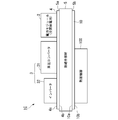
- FIG. 1 is a diagram showing an example of a side view of the power conversion device 1 according to the first embodiment.
- FIG. 2 is a diagram showing an example of a specific configuration of the power conversion device 1 according to the first embodiment.
- the power conversion device 1 is mounted on the vehicle.
- the vehicle is, for example, a hybrid vehicle or an electric vehicle.
- the power converter 1 includes a battery module 2, a power converter 3, a circuit board 4, and a heat coupling member 5.
- the circuit board 4 corresponds to the "first circuit board" of the present invention.
- the battery module 2 includes a plurality of all-solid-state batteries 20.
- the all-solid-state battery 20 is a battery using a solid electrolyte that does not contain an organic electrolyte.
- the all-solid-state battery 20 has a higher heat-resistant temperature (operating temperature is the rated upper limit) than the lithium-ion battery.
- the heat-resistant temperature of the all-solid-state battery 20 is about 150 ° C.
- the heat-resistant temperature of the lithium-ion battery is about 60 ° C.
- the plurality of all-solid-state batteries 20 are mounted on the circuit board 4.
- the battery module 2 includes a plurality of all-solid-state batteries 20, but the present invention is not limited to this, and one or more all-solid-state batteries 20 may be provided. That is, the power conversion device 1 may include one or more all-solid-state batteries 20, and the number of all-solid-state batteries 20 is not particularly limited.
- the power converter 3 performs power conversion between the battery module 2 and the load.
- the load is, for example, a motor for traveling the vehicle.
- the power converter 3 is mounted on the circuit board 4.
- the power converter 3 includes a boost converter 31 and an inverter 32.
- the boost converter 31 boosts the power output from the plurality of all-solid-state batteries 20 at a predetermined boost ratio and outputs the power to the inverter 32.
- the boost converter 31 may further have a function of stepping down the regenerative power input from the inverter 32 at a predetermined step-down ratio and outputting it to the plurality of all-solid-state batteries 20.
- the boost converter 31 includes a smoothing capacitor C, a reactor L, and switching elements T1 and T2 connected in series with each other.
- the smoothing capacitor C smoothes the voltage output from the battery module 2.
- One end of the reactor L is connected to the output terminal of the battery module 2 (the positive electrode terminal of the all-solid-state battery 20), and the other end is connected to the connection point between the switching element T1 and the switching element T2.
- the switching elements T1 and T2 are semiconductor elements.
- the case where the switching elements T1 and T2 of the present embodiment are IGBTs (Insulated Gate Bipolar Transistors) will be described, but the present invention is not limited to this, and for example, FETs (Field Effective Transistors; field effect transistors) are described. It may be a transistor) or the like.
- the switching elements T1 and T12 may be switching elements of a wide-gap semiconductor such as SiC (silicon carbide) or GaN (gallium nitride).
- the boost converter 31 turns on / off the switching elements T1 and T2, and alternately repeats the accumulation and release of the magnetic energy of the reactor L to boost the power output from the battery module 2.
- the boost converter 31 supplies boosted power to the inverter 32.
- the boost converter 31 may include a smoothing capacitor for smoothing the boosted voltage.
- the inverter 32 converts the power output from the boost converter 31 into AC power and supplies it to a load such as a motor.
- the inverter 32 is a three-phase inverter and includes three switching legs corresponding to each phase.
- the inverter 32 includes switching elements T11 to T16, which are semiconductor elements.
- the switching elements T11 to T16 may be IGBTs or FETs.
- the switching elements T11 and T14 are connected in series to form a pair, and the switching elements T12 and T15 are connected in series to form a pair.
- the switching elements T13 and T16 are connected in series to form a pair.
- the windings of the three phases (U phase, V phase, and W phase) of the motor are connected to each of the connection points of the paired switching elements T11 to T16 via the terminal M.
- the switching elements T11 to T16 may be switching elements of wide-gap semiconductors such as SiC and GaN.
- the circuit board 4 has a first surface 4a and a second surface 4b which is a surface opposite to the first surface 4a.
- the battery module 2 and the power converter 3 are mounted on the first surface 4a of the circuit board 4.
- the battery module 2 and the power converter 3 are mounted on the same surface of the circuit board 4.
- the inverter 32, the boost converter 31, and the battery module 2 are mounted in this order from the first end side to the second end side.
- a heat coupling member 5 is arranged on the second surface 4b of the circuit board 4.
- the thermal coupling member 5 thermally couples the battery module 2 (a plurality of all-solid-state batteries 20) and the power converter 3.
- the thermal coupling is a state in which heat is thermally coupled, and in the present embodiment, heat is transferred between the battery module 2 and the power converter 3 via the thermal coupling member 5.
- the heat coupling member 5 is a material having high thermal conductivity, and is, for example, a metal such as aluminum, iron, or copper.
- the heat coupling member 5 is a heat sink.
- the heat sink is a substantially rectangular parallelepiped member made of a metal such as aluminum.
- the heat sink may be provided with one or more refrigerant flow paths R through which the refrigerant flows.
- the operating temperatures of the battery module 2 and the power converter 3 are controlled to be equal to or lower than the rated upper limit by the refrigerant flowing in the refrigerant flow path R. That is, since the heat coupling member 5 according to the present embodiment is a heat sink, it has a first function of thermally coupling the battery module 2 (a plurality of all-solid-state batteries 20) and the power converter 3, and the battery module 2 and the electric power. It has a second function of cooling the heat generated with the converter 3. For example, the refrigerant flows in the direction from the first end side to the second end side of the circuit board 4. That is, the refrigerant flows from the power converter 3 toward the battery module 2 in the refrigerant flow path R.
- the power converter 1 is a thermal coupling member that thermally couples the battery module 2 having the all-solid-state battery 20, the power converter 3, and the battery module 2 and the power converter 3. 5 is provided.
- the power conversion device 1 of the first embodiment since the all-solid-state battery 20 and the power converter 3 are thermally coupled by using the heat coupling member 5, one cooling device can be used.
- the operating temperatures of the battery module 2 and the power converter 3 can be controlled to be equal to or lower than the rated upper limit. As a result, the power converter becomes smaller.
- the heat generated by the battery module is cooled by an electric fan, and the power converter is cooled by a water cooling system. Therefore, in the conventional power converter, two cooling devices, an electric fan and a water cooling system, are required to cool each of the battery module and the power converter.
- the battery module 2 is composed of an all-solid-state battery 20, and the all-solid-state battery 20 and the power converter 3 are thermally coupled by using a heat coupling member 5 such as a heat sink. I'm letting you. Thereby, for example, the temperatures of the all-solid-state battery 20 and the power converter 3 can be controlled by one cooling device.
- the battery capacity of the all-solid-state battery 20 is increased at a high temperature, and the life characteristic at a high temperature is also significantly improved as compared with the lithium ion battery. Therefore, in the power converter 1 according to the first embodiment, the heat of the power converter 3 is completely removed by thermally coupling the all-solid-state battery 20 and the power converter 3 with the heat coupling member 5 such as a heat sink. It is moved to the solid-state battery 20 to efficiently heat the all-solid-state battery 20. As a result, the power conversion device 1 according to the first embodiment can maximize the performance of the all-solid-state battery 20.
- the all-solid-state battery 20 and the power converter 3 are mounted on the first surface 4a of the circuit board 4.
- the inverter 32, the boost converter 31, and the all-solid-state battery 20 are mounted in this order from the first end side to the second end side.
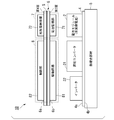
- FIG. 3 is a side view of the power conversion device 1B according to the second embodiment.
- the power converter 1B controls the first control device 7 and the power converter 3 that monitor and control the state of the battery module 2 as compared with the power converter 1 of the first embodiment.
- the difference is that the second control device 8 is provided.
- the same or similar parts may be designated by the same reference numerals to omit duplicate explanations.
- the power converter 1B includes a battery module 2, a power converter 3, a circuit board 4, a heat coupling member 5, a control circuit board 6, a first control device 7, and a second control device 8.
- the control circuit board 6 corresponds to the "second circuit board" of the present invention.
- the control circuit board 6 has a third surface 6b facing the first surface 4a of the circuit board 4 and a fourth surface 6a which is a surface opposite to the third surface 6b.
- the third surface 6b and the fourth surface 6a are surfaces on which component mounting and wiring are performed. Further, a shield layer S is interposed between the third surface 6b and the fourth surface 6a.
- the first control device 7 monitors and controls the state of the battery module 2.
- the first control device 7 includes a battery monitoring unit 71 and a charge / discharge control unit 72.
- the battery monitoring unit 71 monitors the state (for example, output voltage) of the plurality of all-solid-state batteries 20 constituting the battery module 2.
- the battery monitoring unit 71 includes a plurality of ICs (integrated circuits).
- the battery monitoring unit 71 is mounted on the third surface 6b of the control circuit board 6.
- the battery monitoring unit 71 is mounted so as to be located above the battery module 2 on the third surface 6b.
- the charge / discharge control unit 72 controls the charge / discharge of a plurality of all-solid-state batteries 20 constituting the battery module 2.
- the charge / discharge control unit 72 is a battery ECU (Electronic Control Unit).
- the charge / discharge control unit 72 is mounted on the fourth surface 6a of the control circuit board 6.
- the charge / discharge control unit 72 is mounted so as to be located above the battery module 2 on the fourth surface 6a.
- the present invention is not limited to this, and the battery monitoring unit 71 and the charge / discharge control unit 72 may be mounted on at least one of the third surface 6b and the fourth surface 6a.
- the second control device 8 includes a drive circuit 81 and a control unit 82.
- the drive circuit 81 includes a gate driver that drives the switching elements T11 to T16. Further, the drive circuit 81 includes a gate driver for driving the switching elements T1 and T1 and 2.
- the drive circuit 81 is mounted on the third surface 6b of the control circuit board 6. The drive circuit 81 is mounted so as to be located above the power converter 3 on the third surface 6b.
- the control unit 82 controls the drive of the drive circuit 81 to switch and control the switching elements T11 to T16 and the switching elements T1 and T1 and 2.
- the control unit 82 is, for example, a so-called motor ECU having a microcomputer.
- the control unit 82 is mounted on the fourth surface 6a of the control circuit board 6.
- the control unit 82 is mounted so as to be located above the power converter 3 on the fourth surface 6a.
- the present invention is not limited to this, and the drive circuit 81 and the control unit 82 may be mounted on at least one of the third surface 6b and the fourth surface 6a.
- the power converter 1B has the battery module 2 having the all-solid-state battery 20, the power converter 3, the battery module 2, and the power converter, as in the first embodiment.
- a heat coupling member 5 that thermally couples with 3 is provided.
- the all-solid-state battery 20 and the power converter 3 are thermally coupled by using the heat coupling member 5, so that one cooling device can be used.
- the operating temperatures of the battery module 2 and the power converter 3 can be controlled to be equal to or lower than the rated upper limit. As a result, the power converter becomes smaller.
- the heat of the power converter 3 is completely removed by thermally coupling the all-solid-state battery 20 and the power converter 3 with the heat coupling member 5 such as a heat sink. It is moved to the solid-state battery 20 to efficiently heat the all-solid-state battery 20. As a result, the power conversion device 1B according to the second embodiment can maximize the performance of the all-solid-state battery 20.
- the all-solid-state battery 20 and the power converter 3 are mounted on the first surface 4a of the circuit board 4.
- the inverter 32, the boost converter 31, and the all-solid-state battery 20 are mounted in this order from the first end side to the second end side.
- the first control device 7 is mounted on at least one of the third surface 6b and the fourth surface 6a so as to be located above the all-solid-state battery 20.
- the second control device 8 is mounted on at least one of the third surface 6b and the fourth surface 6a so as to be located above the power converter 3.
- the power conversion device 1B can shorten the wiring distance of each component as compared with the conventional one, and contributes to reduction of smoothing capacitors, noise reduction, and miniaturization of the device.
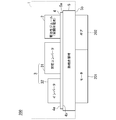
- FIG. 4 is a side view of the power conversion device 1C according to the third embodiment.
- the power conversion device 1C according to the third embodiment is different from the power conversion device 1 of the first embodiment in that it includes a heat source device 100.
- the same or similar parts may be designated by the same reference numerals to omit duplicate explanations.
- the power converter 1C includes a battery module 2, a power converter 3, a circuit board 4, a heat coupling member 5, a circuit board 10, and a heat source device 100.
- the first surface 5a is in contact with the second surface 4b of the circuit board 4, and the second surface 5b is in contact with the circuit board 10.
- the circuit board 10 has a first surface 10a and a second surface 10b which is a surface opposite to the first surface 10a.
- the second surface 5b of the heat coupling member 5 is in contact with the first surface 10a of the circuit board 10.
- the heat source device 100 is mounted on the second surface 10b of the circuit board 10.
- the heat source device 100 is a heat source device other than the power converter 3 and the battery module 2, and is, for example, a DCDC converter (for example, a buck converter) or a charging device for charging the battery module 2.
- a DCDC converter for example, a buck converter
- the battery module 2 having the all-solid-state battery 20, the power converter 3, and the battery module 2 and the power converter 3 are thermally coupled.
- the member 5 is provided.
- the power conversion device 1C of the third embodiment can exert the same effect as that of the first embodiment.
- the power converter 1C according to the third embodiment further includes a heat source device 100, and heat-couples the battery module 2, the power converter 3, and the heat source device 100 via the heat coupling member 5. According to such a configuration, the power converter 1C does not need to cool the battery module 2, the power converter 3, and the heat source device 100 by different cooling devices, and can be cooled by one cooling device. Contributes to the miniaturization of equipment.
- the battery module 2 and the power converter 3 do not necessarily have to be mounted on the same surface.
- the battery module 2 may be mounted on the second surface 10b of the circuit board 10.
- FIG. 6 is a schematic configuration diagram of the electric drive unit 200.
- the same or similar parts may be designated by the same reference numerals to omit duplicate explanations.
- the electric drive unit 200 drives the wheels of the vehicle with the electric power of the battery module 2.
- the electric drive unit 200 integrally includes a power conversion device 1, a motor 201, and a gear 202.
- the power conversion device 1 boosts the power of the battery module 2 and converts it into AC power by the power converter 3 and supplies it to the motor 201.
- the motor 201 is a traveling motor that rotates with the electric power supplied from the electric power converter 1.
- the motor 201 is provided on the second surface 5b of the heat coupling member 5.
- the gear 202 drives the wheels by transmitting the rotational force of the motor 201 to the wheels of the vehicle.
- the gear 202 is provided on the second surface 5b of the heat coupling member 5.
- the heat coupling member 5 thermally couples the battery module 2, the power converter 3, and the motor 201 having the all-solid-state battery 20.
- the operating temperatures of the battery module 2, the power converter 3, and the motor 201 can be controlled to be equal to or lower than the rated upper limit by one cooling device.
- the electric drive unit 200 having the power conversion device is miniaturized. Further, the electric drive unit 200 can efficiently transfer the heat generated by the motor 201 to the all-solid-state battery 20, and can maximize the performance of the all-solid-state battery 20.
- the all-solid-state battery 20 and the power converter 3 are provided on the first surface 5a side of the heat coupling member 5, and the motor 201 is the heat coupling member 5. It is provided on the second surface 5b side of the above.
- the wiring distance between the motor 201 and the power conversion device 1 can be shortened, which contributes to reduction of smoothing capacitors, noise reduction, and miniaturization of the device.
- the electric power conversion device 1 according to the first embodiment, the electric power conversion device 1B according to the second embodiment, and the electric drive unit 200 according to the fourth embodiment are heat source devices according to the third embodiment. It may be provided with 100.
- the circuit board 10 may be provided on the second surface 5b of the heat coupling member 5, and the heat source device 100 may be mounted on the circuit board 10.
- the circuit board 10 may be provided on the second surface 5b of the heat coupling member 5, and the heat source device 100 may be mounted on the circuit board 10.
- the electric drive unit 200 may be provided with a circuit board 10 on the second surface 5b of the heat coupling member 5, and the heat source device 100 may be mounted on the circuit board 10.
- Modification 2 The power conversion device 1 of the first embodiment, the power conversion device 1C of the third embodiment, and the electric drive unit 200 according to the fourth embodiment are controlled according to the second embodiment.
- the circuit board 6, the first control device 7, and the second control device 8 may be provided.
- the heat coupling member 5 does not have to include the refrigerant flow path R.
- the heat-coupling member 5 may be a member that heat-bonds the all-solid-state battery 20 and the power converter 3, and may not have a cooling capacity.
- the electric power converter 3 is a heat coupling member 5
- the battery module 2 may be provided on the first surface 5a side of the above, and may be provided on the second surface 5b side of the thermal coupling member 5. That is, the power conversion device 1, the power conversion device 1B, and the electric drive unit 200 may have a structure in which the heat coupling member 5 is sandwiched between the battery module 2 and the power converter 3 from both sides.
- the battery module 2 and the power converter 3 are respectively limited to the battery module 2 and the power converter 3 via a circuit board when thermally coupling with the heat coupling member 5. Not done. That is, the battery module 2 may come into direct contact with the first surface 5a or the second surface 5b of the heat coupling member 5. The power converter 3 may come into direct contact with the first surface 5a or the second surface 5b of the heat coupling member 5.
Landscapes
- Engineering & Computer Science (AREA)
- Chemical & Material Sciences (AREA)
- Manufacturing & Machinery (AREA)
- General Chemical & Material Sciences (AREA)
- Electrochemistry (AREA)
- Chemical Kinetics & Catalysis (AREA)
- Power Engineering (AREA)
- Microelectronics & Electronic Packaging (AREA)
- Physics & Mathematics (AREA)
- Inorganic Chemistry (AREA)
- General Physics & Mathematics (AREA)
- Condensed Matter Physics & Semiconductors (AREA)
- Thermal Sciences (AREA)
- Dispersion Chemistry (AREA)
- Materials Engineering (AREA)
- Inverter Devices (AREA)
- Dc-Dc Converters (AREA)
- Cooling Or The Like Of Electrical Apparatus (AREA)
Abstract
Description
本願は、2019年5月21日に、日本に出願された特願2019-094956号に基づき優先権を主張し、その内容をここに援用する。
図1は、第1の実施形態に係る電力変換装置1の側面図の一例を示す図である。図2は、第1の実施形態に係る電力変換装置1の具体的な構成の一例を示す図である。電力変換装置1は、車両に搭載される。前記車両は、例えばハイブリッド自動車や電気自動車である。
図1に示すように、電力変換装置1は、電池モジュール2、電力変換器3、回路基板4及び熱結合部材5を備える。なお、回路基板4は、本発明の「第1回路基板」に相当する。
なお、スイッチング素子T11~T16は、SiCやGaN等のワイドギャップ半導体のスイッチング素子であってもよい。
具体的には、回路基板4の第1面4aにおいて、第1端部側から第2端部側に向かって、インバータ32、昇圧コンバータ31、電池モジュール2の順に実装されている。
回路基板4の第2面4bには、熱結合部材5が配置されている。
すなわち、本実施形態に係る熱結合部材5は、ヒートシンクであるため、電池モジュール2(複数の全固体電池20)と電力変換器3とを熱結合する第1の機能と、電池モジュール2と電力変換器3との発熱を冷却する第2の機能を有する。
なお、例えば、冷媒は、回路基板4の第1端部側から第2端部側に向かう方向に流れる。すなわち、冷媒は、冷媒流路Rにおいて、電力変換器3から電池モジュール2に向かって流れる。
一方、第1の実施形態に係る電力変換装置1は、電池モジュール2を全固体電池20で構成し、ヒートシンク等の熱結合部材5を用いて全固体電池20と電力変換器3とを熱結合させている。これにより、例えば、一つの冷却装置で全固体電池20と電力変換器3とのそれぞれの温度を制御することができる。
次に、第2の実施形態に係る電力変換装置1Bについて説明する。図3は、第2の実施形態に係る電力変換装置1Bの側面図である。
電池監視部71は、電池モジュール2を構成する複数の全固体電池20の状態(例えば、出力電圧)を監視する。電池監視部71は、複数のIC(集積回路;integrated circuit)を備える。電池監視部71は、制御用回路基板6の第3面6bに実装されている。電池監視部71は、第3面6bにおいて、電池モジュール2の上方に位置するように実装されている。
ただし、これに限定されず、電池監視部71及び充放電制御部72は、第3面6b及び第4面6aの少なくもいずれかの面に実装されていればよい。
駆動回路81は、スイッチング素子T11~T16を駆動するゲートドライバを備える。また、駆動回路81は、スイッチング素子T1,2を駆動するゲートドライバを備える。駆動回路81は、制御用回路基板6の第3面6bに実装されている。駆動回路81は、第3面6bにおいて、電力変換器3の上方に位置するように実装されている。
制御部82は、駆動回路81の駆動を制御して、スイッチング素子T11~T16及びスイッチング素子T1,2をスイッチング制御する。制御部82は、例えば、マイコンを有するいわゆるモータECUである。制御部82は、制御用回路基板6の第4面6aに実装されている。制御部82は、第4面6aにおいて、電力変換器3の上方に位置するように実装されている。
ただし、これに限定されず、駆動回路81及び制御部82は、第3面6b及び第4面6aの少なくもいずれかの面に実装されていればよい。
次に、第3の実施形態に係る電力変換装置1Cについて説明する。図4は、第3の実施形態に係る電力変換装置1Cの側面図である。
回路基板10は、第1面10aと、第1面10aとは反対の面である第2面10bと、を有する。回路基板10の第1面10aには、熱結合部材5の第2面5bが接触している。回路基板10の第2面10bには、熱源機器100が実装されている。
このような構成によれば、電力変換装置1Cは、電池モジュール2、電力変換器3及び熱源機器100のそれぞれを異なる冷却装置で冷却する必要がなく、一の冷却装置で冷却することができ、装置の小型化に寄与する。
次に、第4の実施形態に係る電気式駆動ユニット200について説明する。図6は、電気式駆動ユニット200の概略構成図である。なお、図面において、同一又は類似の部分には同一の符号を付して、重複する説明を省く場合がある。
モータ201は、電力変換装置1から供給される電力で回転する走行用モータである。モータ201は、熱結合部材5の第2面5bに設けられている。
ギア202は、モータ201の回転力を上記車両の車輪に伝達することで車輪を駆動する。ギア202は、熱結合部材5の第2面5bに設けられている。
2 電池モジュール
3 電力変換器
4 回路基板(第1回路基板)
5 熱結合部材
6 制御用回路基板(第2回路基板)
20 全固体電池
31 昇圧コンバータ
32 インバータ
T1,T2 スイッチング素子
T11~T16 スイッチング素子
200 電気式駆動ユニット
201 モータ
Claims (6)
- 全固体電池と、
前記全固体電池と負荷との間で電力変換を行う電力変換器と、
前記全固体電池と前記電力変換器とを熱結合する熱結合部材と、
を備える電力変換装置。 - 第1面と、前記第1面とは反対の面である第2面と、を有する第1回路基板を備え、
全固体電池と前記電力変換器とは、前記第1面に実装されており、
前記熱結合部材は、前記第2面に配置されている、
請求項1に記載の電力変換装置。 - 前記電力変換器は、インバータ及び昇圧コンバータを備え、
前記第1面の第1端部側から第2端部側に向かって、前記インバータ、前記昇圧コンバータ、前記全固体電池の順に実装されている、
請求項2に記載の電力変換装置。 - 前記インバータ及び前記昇圧コンバータに含まれるスイッチング素子は、ワイドギャップ半導体のスイッチング素子である、請求項3に記載の電力変換装置。
- 前記全固体電池の状態を監視する第1制御装置と、
前記電力変換器を制御する第2制御装置と、
前記第1面と対向する第3面と、前記第3面と反対の面である第4面と、を有する第2回路基板と、
を備え、
前記第1制御装置は、前記全固体電池の上方に位置するように前記第3面及び前記第4面の少なくともいずれかに実装されており、
前記第2制御装置は、前記電力変換器の上方に位置するように前記第3面及び前記第4面の少なくともいずれかに実装されている、
請求項2から請求項4のいずれか一項に記載の電力変換装置。 - 請求項2から5のいずれか一項に記載の電力変換装置と、
前記負荷としてのモータと、
を備え、
前記モータは、前記熱結合部材と接触することで前記全固体電池及び前記電力変換器と熱結合している、
電気式駆動ユニット。
Priority Applications (4)
| Application Number | Priority Date | Filing Date | Title |
|---|---|---|---|
| JP2021520772A JP7153137B2 (ja) | 2019-05-21 | 2020-05-15 | 電力変換装置及び電気式駆動ユニット |
| EP20810226.9A EP3975407B1 (en) | 2019-05-21 | 2020-05-15 | Power conversion device and electric drive unit |
| US17/612,112 US11894789B2 (en) | 2019-05-21 | 2020-05-15 | Power conversion device and electric drive unit |
| CN202080037039.4A CN113841329A (zh) | 2019-05-21 | 2020-05-15 | 电力转换装置以及电驱动单元 |
Applications Claiming Priority (2)
| Application Number | Priority Date | Filing Date | Title |
|---|---|---|---|
| JP2019-094956 | 2019-05-21 | ||
| JP2019094956 | 2019-05-21 |
Publications (1)
| Publication Number | Publication Date |
|---|---|
| WO2020235500A1 true WO2020235500A1 (ja) | 2020-11-26 |
Family
ID=73458291
Family Applications (1)
| Application Number | Title | Priority Date | Filing Date |
|---|---|---|---|
| PCT/JP2020/019507 Ceased WO2020235500A1 (ja) | 2019-05-21 | 2020-05-15 | 電力変換装置及び電気式駆動ユニット |
Country Status (5)
| Country | Link |
|---|---|
| US (1) | US11894789B2 (ja) |
| EP (1) | EP3975407B1 (ja) |
| JP (1) | JP7153137B2 (ja) |
| CN (1) | CN113841329A (ja) |
| WO (1) | WO2020235500A1 (ja) |
Cited By (2)
| Publication number | Priority date | Publication date | Assignee | Title |
|---|---|---|---|---|
| JP7184138B1 (ja) | 2021-10-01 | 2022-12-06 | 富士電機株式会社 | 電力変換装置 |
| JP7243892B1 (ja) | 2021-10-01 | 2023-03-22 | 富士電機株式会社 | 昇圧コンバータ装置 |
Families Citing this family (1)
| Publication number | Priority date | Publication date | Assignee | Title |
|---|---|---|---|---|
| WO2025002599A1 (de) * | 2023-06-28 | 2025-01-02 | Vitesco Technologies GmbH | Hochvoltbox für ein elektrisch angetriebenes fahrzeug |
Citations (7)
| Publication number | Priority date | Publication date | Assignee | Title |
|---|---|---|---|---|
| JP2005135601A (ja) * | 2003-10-28 | 2005-05-26 | Sony Corp | 電池パック |
| JP2014076781A (ja) | 2012-10-12 | 2014-05-01 | Hino Motors Ltd | 車載用電力制御装置の冷却システム及びその異常診断方法 |
| JP2016021817A (ja) * | 2014-07-14 | 2016-02-04 | 三菱電機株式会社 | 電力変換装置 |
| KR101824695B1 (ko) * | 2017-08-07 | 2018-02-01 | 성대경 | 에너지 하베스팅 방열구조체 |
| WO2018061814A1 (ja) * | 2016-09-29 | 2018-04-05 | パナソニックIpマネジメント株式会社 | 電源装置 |
| WO2018092751A1 (ja) * | 2016-11-15 | 2018-05-24 | 株式会社桑田 | 蓄電モジュールおよび蓄電モジュール急速充電システム |
| JP2019094956A (ja) | 2017-11-21 | 2019-06-20 | 株式会社ブリヂストン | アクティブダンパ用アッパーマウント |
Family Cites Families (7)
| Publication number | Priority date | Publication date | Assignee | Title |
|---|---|---|---|---|
| JP2012257394A (ja) * | 2011-06-09 | 2012-12-27 | Toyota Motor Corp | 車両の電源システムおよびそれを備える車両 |
| JP5725064B2 (ja) * | 2012-09-21 | 2015-05-27 | トヨタ自動車株式会社 | 電動車両 |
| KR101637763B1 (ko) * | 2014-12-04 | 2016-07-07 | 현대자동차주식회사 | 전고체 배터리 팩 조립체, 이를 갖는 차량 냉각수 순환 시스템 및 이의 제조 방법 |
| JP6163477B2 (ja) * | 2014-12-24 | 2017-07-12 | 本田技研工業株式会社 | 電力制御ユニット及び電気デバイス |
| KR102603036B1 (ko) * | 2016-11-30 | 2023-11-16 | 현대자동차주식회사 | 자동차 구동모터용 인버터 |
| JP2019022300A (ja) * | 2017-07-14 | 2019-02-07 | パナソニックIpマネジメント株式会社 | 電源装置 |
| US10442375B2 (en) * | 2017-07-20 | 2019-10-15 | Nio Usa, Inc. | Integrated power systems for electric vehicles |
-
2020
- 2020-05-15 WO PCT/JP2020/019507 patent/WO2020235500A1/ja not_active Ceased
- 2020-05-15 JP JP2021520772A patent/JP7153137B2/ja active Active
- 2020-05-15 US US17/612,112 patent/US11894789B2/en active Active
- 2020-05-15 CN CN202080037039.4A patent/CN113841329A/zh active Pending
- 2020-05-15 EP EP20810226.9A patent/EP3975407B1/en active Active
Patent Citations (7)
| Publication number | Priority date | Publication date | Assignee | Title |
|---|---|---|---|---|
| JP2005135601A (ja) * | 2003-10-28 | 2005-05-26 | Sony Corp | 電池パック |
| JP2014076781A (ja) | 2012-10-12 | 2014-05-01 | Hino Motors Ltd | 車載用電力制御装置の冷却システム及びその異常診断方法 |
| JP2016021817A (ja) * | 2014-07-14 | 2016-02-04 | 三菱電機株式会社 | 電力変換装置 |
| WO2018061814A1 (ja) * | 2016-09-29 | 2018-04-05 | パナソニックIpマネジメント株式会社 | 電源装置 |
| WO2018092751A1 (ja) * | 2016-11-15 | 2018-05-24 | 株式会社桑田 | 蓄電モジュールおよび蓄電モジュール急速充電システム |
| KR101824695B1 (ko) * | 2017-08-07 | 2018-02-01 | 성대경 | 에너지 하베스팅 방열구조체 |
| JP2019094956A (ja) | 2017-11-21 | 2019-06-20 | 株式会社ブリヂストン | アクティブダンパ用アッパーマウント |
Non-Patent Citations (1)
| Title |
|---|
| See also references of EP3975407A4 |
Cited By (4)
| Publication number | Priority date | Publication date | Assignee | Title |
|---|---|---|---|---|
| JP7184138B1 (ja) | 2021-10-01 | 2022-12-06 | 富士電機株式会社 | 電力変換装置 |
| JP7243892B1 (ja) | 2021-10-01 | 2023-03-22 | 富士電機株式会社 | 昇圧コンバータ装置 |
| JP2023053656A (ja) * | 2021-10-01 | 2023-04-13 | 富士電機株式会社 | 電力変換装置 |
| JP2023053875A (ja) * | 2021-10-01 | 2023-04-13 | 富士電機株式会社 | 昇圧コンバータ装置 |
Also Published As
| Publication number | Publication date |
|---|---|
| US11894789B2 (en) | 2024-02-06 |
| US20220255484A1 (en) | 2022-08-11 |
| CN113841329A (zh) | 2021-12-24 |
| JP7153137B2 (ja) | 2022-10-13 |
| EP3975407B1 (en) | 2025-10-15 |
| JPWO2020235500A1 (ja) | 2020-11-26 |
| EP3975407A4 (en) | 2023-06-07 |
| EP3975407A1 (en) | 2022-03-30 |
Similar Documents
| Publication | Publication Date | Title |
|---|---|---|
| US12159978B2 (en) | Mobile energy supply system with battery modules, battery module and method for operating a mobile energy supply system | |
| JP5488540B2 (ja) | 半導体モジュール | |
| RU2691964C1 (ru) | Преобразователь мощности | |
| JP5544255B2 (ja) | 半導体パワーモジュール及び電力変換装置 | |
| JP5109528B2 (ja) | 電力変換ユニット | |
| US7333331B2 (en) | Power unit device and power converter device | |
| CN112951813B (zh) | 用于电子部件的装置 | |
| KR100992674B1 (ko) | 냉각성능 확보를 위한 인버터의 직류입력단 필름캐패시터의구조 | |
| US20130264872A1 (en) | Power conversion apparatus including a plurality of power conversion circuits and filter circuit shared thereby | |
| US10141862B1 (en) | Power supply device | |
| JP7153137B2 (ja) | 電力変換装置及び電気式駆動ユニット | |
| CN109716638B (zh) | 功率转换装置 | |
| JP2009188346A (ja) | 半導体モジュール | |
| JP7840417B2 (ja) | 一体型モータ制御装置、電気組立体、および車両 | |
| JP6932225B1 (ja) | 電力変換装置 | |
| JP6471659B2 (ja) | インバータ制御基板 | |
| CN112564534A (zh) | 操作车辆的电动驱动器的控制器和制造该控制器的方法 | |
| CN113728546A (zh) | 电力转换装置 | |
| JP6180489B2 (ja) | 電力変換装置 | |
| JP2019122064A (ja) | 電力変換装置 | |
| JP5420080B2 (ja) | 電力変換装置 | |
| JP7119923B2 (ja) | 電力変換器 | |
| JP7391134B2 (ja) | 電力変換装置 | |
| US10903409B1 (en) | Thermoelectric generator for semiconductor power module | |
| JP2025175399A (ja) | 電力変換装置 |
Legal Events
| Date | Code | Title | Description |
|---|---|---|---|
| 121 | Ep: the epo has been informed by wipo that ep was designated in this application |
Ref document number: 20810226 Country of ref document: EP Kind code of ref document: A1 |
|
| ENP | Entry into the national phase |
Ref document number: 2021520772 Country of ref document: JP Kind code of ref document: A |
|
| NENP | Non-entry into the national phase |
Ref country code: DE |
|
| ENP | Entry into the national phase |
Ref document number: 2020810226 Country of ref document: EP Effective date: 20211221 |
|
| WWG | Wipo information: grant in national office |
Ref document number: 2020810226 Country of ref document: EP |